Most folding knives compromise somewhere. The blade steel holds an edge but rusts easily. The handle looks gorgeous but feels slippery when wet. The action is butter-smooth out of the box but develops wobble after six months of carry. MIH spent months asking a simpler question: what if you refused to compromise at all? What if you stripped away every feature that didn’t directly serve the three things a knife actually needs to do well, and then executed those three things with materials that cost more but last longer?
The GraphiX is the answer to that question. M390 steel, the supersteel standard, cuts 959mm of cardboard before dulling compared to 420HC’s 200mm. Ceramic bearings that will never rust paired with phosphor bronze washers that will never wear out. A titanium frame machined from Grade 5 aerospace alloy with a deep-carry clip milled directly into the structure. Carbon fiber scales with a tactile weave that ensures control even with gloves on. At $120 for the D2 version, this is a folder designed to be carried daily, used hard, and maintained rarely. It disappears in your pocket and appears in your hand exactly when you need it.
M390 is composed of 1.9% carbon for hardness, 20% chromium for corrosion protection, and 4% vanadium for edge life. That formula puts it at the top of the stainless steel hierarchy, well above the AUS-8 and 8Cr13MoV alloys found in budget production knives. The CATRA cardboard test proves it: M390 slices through nearly five times as much material as 420HC before edge degradation becomes noticeable. Heat-treated to 62 HRC and ground to a 15-degree edge angle per side, the blade hits the balance point where sharpness meets durability. You sharpen other knives. You just use this one. For those who prioritize toughness over ultimate edge retention, the D2 variant delivers serious cutting performance at 58-60 HRC, a tool steel with a long history of reliability in hard-use folders.
Grade 5 titanium, also known as Ti-6Al-4V, carries a strength-to-weight ratio that makes it the default choice in aerospace and medical implants. MIH machines the entire frame from this alloy, creating a structure light enough to disappear in your pocket at 5.6 ounces but strong enough to resist the kinds of lateral stresses that would bend a stainless steel liner. The frame curves to follow the natural contour of your palm, and the carbon fiber scales layered on top provide texture without aggression. Each scale displays a unique weave pattern since carbon fiber, by nature, never replicates exactly. Red, blue, or black colorways let you choose between bold presence, understated elegance, or low-visibility stealth. At the base of the blade, subtle jimping creates a tactile index point for your finger during detail work, the kind of small addition that only matters when you’re making precise cuts and suddenly realize how much control it gives you.
Ceramic bearings handle the pivot rotation while phosphor bronze washers distribute the load. Steel bearings corrode. Ceramic bearings don’t. Plastic washers compress and wear. Phosphor bronze doesn’t. The result is a deployment action that feels smooth the day it arrives and stays smooth years later. A strong detent keeps the blade locked closed during carry with no risk of accidental opening, but when you engage the flipper tab, the blade snaps out with a satisfying, controlled authority. The lock face and pivot are precision-machined to eliminate tolerances, which translates to zero blade play when the knife is open. No wobble. No lateral movement. Just solid lockup you can trust under hard use.
The blade runs a drop point profile, which means the spine curves gently downward to meet the tip, creating a strong point with plenty of belly for slicing. Drop point is the workhorse geometry for EDC because it excels at the tasks you actually do daily: opening packages, cutting cordage, preparing food, stripping wire, shaving wood. The tip is strong enough for piercing but not so aggressive that it tears through pocket fabric or catches on material when you’re making controlled cuts. At 62 HRC with a 15-degree edge angle, the M390 blade slices through cardboard, rope, plastic banding, and food prep tasks without requiring frequent touch-ups, while the D2 variant trades some of that extreme edge retention for better toughness under hard lateral loads. This is a knife built for the person who’s tired of pocket clips that loosen after a month, blades that need constant sharpening, and folders that feel like they were designed by a committee instead of someone who actually carries a knife daily.
MIH milled the clip channel directly into the titanium frame so the clip sits flush with the handle contour, machined from spring-grade titanium so it grips firmly without deforming and releases smoothly without snagging fabric. Precision-machined tritium slots measuring 1.5x6mm sit on both sides of the handle, ready to accept self-illuminating vials if you want a subtle glow-in-the-dark locator, or you can leave them empty and enjoy the clean lines. A lanyard hole at the tail end gives you the option to attach a bead or cord for wrist retention or easier pocket extraction. Closed, the GraphiX measures 4.71 inches. Open, 8.27 inches. The balance ratio hits 0.618, essentially the golden ratio applied to weight distribution, which means the knife pivots naturally in your hand without feeling blade-heavy or handle-heavy.
The D2 variant starts at $120, making it the accessible entry point into a titanium-framed folder with ceramic bearings and a carbon fiber inlay. The M390 version commands a premium for the superior edge retention. Add-ons include custom engraving, alternate carbon fiber colors (blue or black if you don’t want the default red), luminous vials, tritium vials, a titanium lanyard bead, and a foldable knife sharpener. The GraphiX ships worldwide with no additional shipping fees, and delivery is expected in August-September 2026 for backers who secure their spot during the campaign window.
Your desk says a lot about the way you think. The objects you deliberately choose for it, rather than the ones that simply accumulate, reflect your values, your taste, and the kind of environment you want to work in. A great desk clock earns its place twice over: as a functional tool and as something genuinely worth looking at every day. The market is full of forgettable options, but the most interesting clocks right now are rethinking what a clock even needs to be, questioning material, interaction, and presence in equal measure.
Whether you work from a home studio, a shared office, or somewhere between the two, the right clock changes the feeling of an entire space. These five designs prove that telling time is still a conversation worth having, and that choosing a clock carefully is an act worth taking seriously.
1. Rolling World Clock
For anyone who regularly works across time zones, converting time in your head is a small but persistent irritation. The Rolling World Clock removes that friction with an approach so intuitive it almost feels obvious: a 12-sided form with a major city on each face, from London and Paris to Tokyo, Sydney, and New York, read by a single hand. Roll the clock until your desired city faces upward and the hand tells you exactly where things stand. No screen, no calculation, no second device needed.
What keeps this clock compelling beyond its core function is the physicality of using it. Rolling a 12-sided object to check the time in Cape Town or Karachi is a tactile experience that no phone interface can replicate; it turns a routine check into something deliberate and satisfying. The minimalist form, available in both black and white, sits cleanly on any desk without visual competition, and the single hand keeps everything honest and uncluttered. It is a rare thing: a genuine conversation piece with a practical reason to exist.
The rolling interaction gives checking global time a tactile quality that feels intentional rather than reflexive, adding a small moment of satisfaction to an everyday action.
The minimal form in black or white works across almost any desk aesthetic, functioning equally well as a decorative object and a practical timekeeping tool.
What We Dislike
Only 12 cities are represented, which means time zones outside those locations will still require some mental conversion on your part.
As an analog clock, precision is limited to the nearest quarter-hour, which may not suit those who need exact time readings at a glance.
2. Minimalist Desk Clock
Products that combine two functions usually compromise on both. This desk clock concept draws inspiration from Dieter Rams’ legendary Braun DN40, channeling the same visual restraint while placing a wireless charging pad on the top surface in a way that actually makes sense for daily use. The digital time display sits off to one side of the matte face, balanced by a date readout on the opposite end. Both are embedded flush into the surface, creating a presence that is visible when needed but never demanding your attention when you do not.
The placement of the wireless charger on top is obvious in the best possible way: your phone charges exactly where you can still see it, and the clock keeps doing its job without either function disrupting the other. The asymmetrical display layout reflects genuine compositional thinking, creating deliberate visual balance rather than defaulting to center alignment. For a desk already holding a notebook, a coffee cup, and a tangle of cables, this clock earns its spot by doing double duty without making a scene about it.
What We Like
The wireless charging surface sits intuitively on top, keeping your phone visible and accessible while it charges, without requiring a separate pad taking up additional desk space.
The asymmetrical display arrangement shows real compositional intention, making the object feel considered and specific rather than generically functional.
What We Dislike
This is currently a concept design and is not available to purchase, which limits it to an aspirational reference rather than a practical recommendation right now.
The matte embedded displays may lose legibility in dim environments without a backlight or ambient brightness adjustment, which the concept does not appear to address.
3. CAST
Meetings lose things. Good ideas get spoken into the room and never make it to a document, and most tools designed to fix that problem are more intrusive than the problem itself. CAST, a concept by designer Minseo Lee, takes a different approach entirely. Drawing its form from the Braun BC22, the device arrives as an arch-shaped tabletop companion with a circular display, tactile buttons, and a neutral finish that reads as a clock before it reads as anything else. It sits on the conference table and quietly gets to work.
During a meeting, CAST listens, identifies key points, and generates a concise summary when the session ends. A QR code appears on the display, and participants scan it to access their notes instantly, with no app download or login required. Outside of meetings, it functions as a standard clock, maintaining its understated presence without demanding attention. The dotted graphic details and calm proportions mean it suits an open-plan office as naturally as a private home studio. The best AI tools do not announce themselves; they simply make the room function a little more smoothly, and CAST embodies that idea completely.
What We Like
The QR code summary system is a genuinely clever solution, distributing meeting notes to every participant instantly without requiring anyone to install a specific app or create an account.
The Braun-inspired design ensures CAST reads as a clock first, which meaningfully reduces the psychological discomfort of having a recording device present during a conversation.
What We Dislike
As a concept, CAST is not yet available for purchase, meaning its real-world performance in noisy or complex meeting environments remains completely untested.
The quality of the AI-generated summaries will depend on microphone sensitivity and processing power, which are factors the industrial design itself ultimately cannot control.
4. Wooden Desk Clock
There is something quietly refreshing about a clock that does not try to do anything beyond telling the time beautifully. This wooden desk clock, developed in collaboration with Shapr3D, is exactly that kind of object. CNC-machined from walnut, cherry, or maple, each version uses the natural contrast of warm wood tones and smooth curved surfaces to create something that belongs on a desk the way a well-chosen book or a ceramic cup does. The analog face reads the hour in the most satisfying way possible, without apology.
The clock comprises two parts: a clock head that displays the time and a supportive frame that serves as both a base and a functional handle for adjusting the vertical viewing angle. It is a small detail, but one that shows genuine thought about how the object actually gets used on a real desk by a real person. In an era dominated by aluminum, glass, and screens, a clock machined from actual wood makes a quiet but firm statement about material honesty and the pleasure of things that simply do what they are supposed to do.
What We Like
Three wood type options, walnut, cherry, and maple, give the clock a material warmth and versatility that suits a genuinely wide range of desk setups and personal aesthetics.
The adjustable vertical viewing angle through the supportive frame reflects thoughtful, user-centered design that considers how the object will actually be used day to day.
What We Dislike
Natural wood requires more care than synthetic materials and may be susceptible to scratches or moisture damage over time without proper surface treatment or regular maintenance.
The purely analog format offers no smart features, which will not appeal to anyone who expects additional functionality beyond time-telling from a desk object in this category.
5. Moon Rocket Clock
A note upfront: this is not a typical desk clock. It is larger than everything else on this list, more visually assertive, and designed to occupy space rather than disappear into it. Made from specially polished stainless steel, the Moon Rocket Clock is a circular timepiece where printed numbers appear to float and gradually fade around the edges of the face, echoing the visual rhythm of the moon’s phases. The second hand carries a small rocket ship on its tip, which sounds ornamental until you watch it move and recognize the emotional charge the detail actually carries.
This clock works best where it has room to be itself, on a wide desk, a generous shelf, or a statement surface in a home studio. The polished stainless steel construction is durable and catches light in ways that cheaper materials simply do not, giving it a presence that reads as genuinely considered rather than simply bold. More than any other clock on this list, this one carries emotional meaning: a daily reminder to take your ambitions seriously, framed through the imagery of space travel and lunar exploration. It is bigger than usual, demands more visual real estate than a standard timepiece, and earns every bit of space it claims.
The specially polished stainless steel construction gives the clock a premium material quality that holds up to daily visual scrutiny and looks better the more closely you examine it.
The rocket ship, second-hand, transforms an ordinary glance at the time into a small, recurring moment of inspiration that does not wear out with repetition.
What We Dislike
The larger footprint demands more desk space than a standard clock and may feel visually overwhelming on smaller or more tightly curated setups.
The bold, distinctive aesthetic is strong enough to require a specific kind of environment to land well, meaning it will not suit every desk or room it is placed in.
The Best Desk Objects Ask Nothing Back
A desk clock was never supposed to disappear. It got displaced gradually by phones and computers, and the slow collapse of single-purpose objects into multipurpose screens. But these five designs are a reminder of what that displacement costs. A clock sitting on your desk is a fundamentally different presence than a clock on your phone. It exists only to mark time, without asking you to respond to anything, check a message, or make a decision. That kind of quiet object has a value that is easy to underestimate and harder to replace.
Good design does not need to solve every problem at once. Sometimes it is about doing one thing well and doing it in a way that earns a permanent place in a room. Whether it is a rolling 12-sided clock that translates time zones through touch or a stainless steel moon keeping a rocket on its seconds hand, each of these clocks has earned its spot. The best desk objects are the ones that make you glad they are there each morning, and every single one of these is exactly that kind of thing.
Most portable speakers these days are designed to disappear. They’re compact, wireless, and largely anonymous, blending into whatever surface they rest on until a voice command kicks things off. Music has become a background utility, something that happens to you rather than something you actively choose. The ritual of physically engaging with sound has faded quietly, replaced by convenience that’s smooth, automatic, and almost entirely invisible.
The BB-777 from Bumpboxx addresses that shift in a very deliberate way. Inspired by the legendary GF-777 of the ’80s, it brings back the classic boombox in a form that captures the unmistakable look and feel of the original, while updating everything under the hood. It’s the kind of design that immediately signals its intent: put music back at the center of the room, loud and visible.
Part of what makes the BB-777 so compelling is just how much it commits to the aesthetic. The wide, horizontal body stretches 29.6 inches across, with dual cassette bays, a central control section, a long analog tuner strip, and four large drivers across the lower half. Paired with two telescoping antennas and a carry handle, the whole thing stays true to the iconic boombox design of the ’80s, built to be seen, not tucked away.
What really sets the experience apart, though, is how it feels to operate. Bass, treble, balance, and master volume are shaped through solid knobs that respond instantly, giving a direct connection to the music. Each adjustment is tactile and precise, bringing back the simple satisfaction of tuning sound with real hardware. There’s also a wireless remote for those moments when you’d rather adjust the sound from across the room without getting up from wherever you’ve settled in.
Then there’s the format support, and it’s where the BB-777 truly stands apart from other retro-styled speakers. It plays dual cassette tapes, loads CDs, tunes the radio, and connects via AUX, USB, or Bluetooth. It also handles CD-R and CD-RW discs, AM, FM, FM stereo, and shortwave radio. Old mixtapes, burned discs, streamed playlists, and radio stations all coexist in one machine without any compromise.
Beyond playback, the BB-777 brings old recordings back to life. Audio from cassettes, CDs, or radio can be recorded directly to a USB drive as clean WAV files, turning a retro boombox into a straightforward way to digitize your favorite recordings. The cassette deck supports cassette-to-cassette dubbing at high speed, and a built-in microphone with dual wired mic inputs and echo and volume controls means it handles voice recordings and live sessions just as comfortably.
Of course, the sound system is equally serious and modern. Inside the wide enclosure sits a 270W system built for bold, room-filling audio, with a 3-way setup featuring dedicated isolated woofers, full-range drivers, and horn tweeters delivering deep bass, clear mids, and sharp highs. The internally chambered housing with bass ports and a fan-cooled amplifier round out an acoustic architecture built for real performance. The low end carries genuine weight, and the highs cut through cleanly.
Running all of that for up to 15 hours is a TSA-approved 97.6 Wh Li-ion rechargeable and interchangeable battery pack. With a 4-to-6-hour recharge window and 100 to 240V multi-voltage input, the battery can be charged either inside the unit or separately, and keeping a spare means the music never has to stop. It’s a smart upgrade from vintage boomboxes, which drained stacks of D batteries far faster than anyone expected.
For those wanting a bigger setup, two BB-777 units can be paired via TWS for true stereo sound, with dedicated left and right channels working together for deeper, more immersive audio across every format. The 100 to 240V AC input makes it ready for use almost anywhere in the world, with no voltage converters needed. It comes in Classic Silver, Radical Red, and Onyx Black, with removable magnetic front grills and a shoulder strap included.
What the BB-777 ultimately offers is something most audio products stopped trying to give people a long time ago: the feeling that music occupies real space. It sits in a room with a presence that commands attention, rewards the people who use it with a physical connection, and carries enough history in its silhouette to feel like it genuinely belongs to culture, not just a shelf.
Copper weighs 8.96 grams per cubic centimeter. Brass comes in at around 8.5. Those densities mean something when you’re holding a pencil for hours at a time, and Nicholas Hemingway has built an entire design philosophy around that fact. His clutch pencils are machined from solid metal bar stock rather than hollowed-out tubes or plastic barrels wrapped in metallic finishes. The result is a tool that sits differently in your hand, one that uses its own mass to reduce the pressure you need to apply to the page. Hemingway calls it a “gravity-feed” approach, where the weight of the copper body does the work, allowing for longer, more comfortable creative sessions without the hand fatigue that comes from gripping too hard or pressing too firmly.
The 10th anniversary collection includes three pencils, each one a celebration of a decade spent refining manual lathe craftsmanship. The 5.6mm Copper and Brass Hybrid is the heaviest at 58 grams, designed for shading and life drawing, with a built-in lead sharpener in the push button. The 2mm Precision series comes in brass or copper, each weighing around 30 grams, and is aimed at technical drafting and fine-line illustration. Hemingway ships the brass version with an HB lead and the copper version with a 2B lead (the 5.6mm version gets the darkest 5B lead), a pairing he uses in his own studio to avoid having to swap leads mid-workflow. Both are standard clutch formats, fully compatible with any lead brand you prefer.
The clutch mechanism is simple, proven, and deliberately old-fashioned. Press the top button to release the jaws, advance or retract the lead, then release the button to lock it in place. There are no springs to fatigue, no ratcheting internals to gum up with graphite dust, and no plastic components to crack under pressure. The 5.6mm version includes a sharpening chamber machined directly into the push button, a detail that keeps the pencil self-sufficient without requiring a separate pocket sharpener. The mechanism works identically whether you’re using the factory-supplied HB or a softer 6B lead you’ve swapped in yourself. Hemingway designed these pencils to accept any standard 2mm or 5.6mm lead on the market, which means you can dial in exactly the hardness and texture you prefer without being locked into proprietary refills.
The 5.6mm Copper & Brass Clutch
The material choice drives the entire experience and stands as a direct antidote to disposable culture. C101 copper is a high-conductivity grade typically used in electrical applications, chosen here for its density, workability, and willingness to develop a rich patina over time. The 360 brass, a free-machining alloy, delivers a brighter, more clinical aesthetic and holds its finish longer before tarnishing. Hemingway leaves both materials raw, with no lacquer, no powder coating, and no protective sealant. The copper will darken and mottle as it reacts to the oils in your skin and the humidity of your studio. The brass will develop a warmer, more subdued tone, though it resists the transformation longer than copper does. This is slow design in practice, where the aging process becomes part of the design language, carrying the visible marks of its owner’s journey rather than something to prevent or hide.
The 2mm Brass
The 2mm Copper & Brass
Dimensionally, the 5.6mm Copper and Brass Hybrid measures 115mm in length with a 12mm diameter barrel, while the 2mm Precision series comes in at 140mm long with a 7mm diameter. The 2mm pencils are slimmer and longer, built for precision linework and extended drafting sessions where fine motor control matters. The 5.6mm version is shorter and thicker, designed to sit further back in your hand for broader, more gestural strokes. At 58 grams, the 5.6mm Hybrid has real heft, the kind of weight that anchors your hand to the page and makes you slow down, think about each mark, and commit to your lines. The balance has been engineered around the nib, shifting the center of gravity forward so the pencil glides across the paper rather than requiring constant pressure from your wrist.
Hemingway machines every pencil in-house at his London workshop on a manual lathe, hand-finishing each piece and inspecting it personally before it ships. The production model is bespoke and made-to-order, which eliminates the supply chain drama that plagues most crowdfunded EDC launches. If 100 people order a pencil, Hemingway machines 100 pencils. There are no minimum order quantities with overseas factories, no shipping containers stuck in customs, and no quality control surprises three months into fulfillment. Every tool is built to the same standard Hemingway uses for his own work, and the track record backs that up. This is his 17th Kickstarter campaign, and all 16 previous projects delivered on time. These are engineered to be the last drawing tools a creative will ever need to buy, true heirlooms designed for a lifetime of use and capable of being passed down.
Whether you opt for the copper or brass variant, or even the 5.6mm or 2mm model, Hemingway’s set the pricing at £59 ($79 USD), discounted off its £85 MSRP. Each pencil comes with its own lead, along with a hand-written note in a wonderful gift box. International shipping starts July 2026, and Hemingway packages everything in recycled cardboard with zero single-use plastics. All waste metal from the workshop gets collected and sent back to be melted down and reused, keeping the production cycle as tight and sustainable as the pencils themselves.
Most desk setups are inherited. The nomad’s is earned. Everything that makes it into the bag has already passed a strict and largely unconscious test — weight, versatility, the ability to make a stranger’s table feel like a place worth working from. Over months and years of moving between cities, time zones, and co-working spaces, the digital nomad ends up with a carefully curated set of tools that are small by necessity but thoughtful by design.
The interesting thing about these objects is what happens when the travel slows down. When a lease gets signed, a proper desk arrives, and the bag starts being unpacked with more intention. The tools that survived the road do not lose their relevance on a permanent surface. Many of them were built with the kind of considered design that rewards exactly this kind of scrutiny. They look better than most things bought specifically for a home office, hold up longer, and carry the kind of personal history that makes a workspace feel genuinely inhabited. This is for that moment. Eight objects that lived in the bag for a reason, and deserve a permanent home for the same one.
1. OrigamiSwift Folding Mouse
The OrigamiSwift is what happens when industrial design takes portability seriously. Weighing just 40 grams and folding flat to a profile thin enough to slip between notebook pages, it removes the usual tension between compact and comfortable. On a desk, it unfolds in under half a second, snapping into a full-sized ergonomic shape that sits naturally in the hand. For anyone who has suffered through the cramped mechanics of a standard travel mouse, this feels like a genuine upgrade.
The Bluetooth connectivity is quick, and the origami-inspired fold keeps the mechanism tactile enough that using it becomes a small ritual rather than a chore. At the desk, it earns a permanent spot not because it compensates for a lack of options, but because the transformation itself is satisfying. It is the kind of tool that makes you reconsider how you work, and then makes the work feel slightly more considered. Portable by design, permanent by choice.
Folds to near-invisible thinness at just 4.5mm, making it one of the most carry-friendly mice ever built without compromising on ergonomic full-size comfort
Activates in under half a second with a single flip, making the transition from travel bag to working mouse feel immediate and effortless
What we dislike
At 40 grams, the lightweight build may feel insubstantial for users accustomed to the heft and resistance of a traditional full-sized mouse
Bluetooth-only connectivity means no wired fallback for tasks where even minor wireless latency becomes a frustration
2. Fidget Cube
The Fidget Cube arrived at a time when open-plan offices made visible restlessness a liability and invisible anxiety a norm. Antsy Labs built something straightforward in response: a small cube with six distinct tactile surfaces, each mapped to a different kind of fidget. Click. Glide. Flip. Breathe. Roll. Spin. The vocabulary is simple, the execution is precise, and the result is a desk object that earns its keep without demanding attention from anyone but you.
For digital nomads who have spent years suppressing the impulse to tap or spin something through a long layover or tense client call, the Fidget Cube offers quiet permission. On a permanent desk, it sits within reach without asking for attention. The black and graphite colorways blend cleanly into most setups, looking less like a toy and more like a considered detail. It is not a gimmick. It is self-awareness shaped into an object.
What we like
Six distinct tactile surfaces cover a wide range of fidgeting behaviors in a single pocket-sized cube, making it genuinely versatile across different stress responses and focus modes
Discreet colorways like Midnight Black and Graphite blend seamlessly into professional setups without drawing unwanted attention in shared or client-facing workspaces
What we dislike
The clicking surfaces can produce audible sounds that may distract colleagues in quiet, open-plan, or library-style work environments
The cube format offers no digital or productivity-tracking integration for users who want data on their focus habits or stress patterns
3. Nothing Power (1) Battery Bank
Nothing built its reputation on the Glyph interface, a grid of LED lights that turned the back of a phone into a notification display and a design statement. The Power (1) carries that language into a battery bank, using transparent layers, bold light paths, and illuminated interactions to make a utilitarian object feel worth looking at. The design philosophy is direct: good design is not just about appearance, it is about how an object makes you feel when you reach for it.
For a nomad who has charged devices from airport benches and café stools, a power bank is rarely a display piece. The Nothing Power (1) challenges that. Sitting on a desk, the Glyph illumination gives charging status a visual presence that feels more like an ambient display than a simple indicator light. It treats the desk as a stage and every object on it as a conscious choice. Few battery banks have ever earned that kind of consideration.
What we like
The Glyph interface turns a charging indicator into a visual experience, making it arguably the only power bank designed to look genuinely intentional, sitting on a desk permanently
Transparent design layers reflect Nothing’s ethos of honest, open construction, giving the object a premium quality that stands apart from every other battery bank on the market
What we dislike
The Nothing Power (1) is currently a concept design and is not yet available as a finished commercial product
Exact battery capacity, output wattage, and pricing remain unconfirmed, making direct comparison with available alternatives difficult at this stage
4. HubKey Gen2
Desk clutter tends to accumulate in layers: a dock for the monitor, an adapter for the second screen, a hub for storage. Somewhere between them sits a tangle of cables that each solves a single problem in isolation. The HubKey Gen2 treats that as a design problem worth solving from the inside out. It is an 11-in-1 USB-C hub with a hardware control surface on top, offering programmable shortcut keys, a central dial, 100W power delivery, and 2.5Gbps Ethernet in a compact cube footprint.
The display support is what separates it from a standard hub. Two HDMI ports, each running a 4K display at 60Hz, mean a laptop becomes a proper dual-monitor workstation without extra adapters. For a nomad settling in, that shift from single-screen café work to a dual-screen editing setup is significant. The shortcut keys and central dial bring a physical control layer to software-heavy workflows, keeping hands on the desk rather than hunting through menus on a trackpad.
What we like
Dual 4K HDMI outputs at 60Hz eliminate the need for a separate display dock when transitioning from a travel setup to a full home workstation
The programmable shortcut keys and central knob return a satisfying physical dimension to digital workflows, reducing time spent navigating software menus
What we dislike
The compact cube form factor may feel crowded once all 11 ports are simultaneously in active use, which limits clean cable management around the unit
Fully customizing the shortcut keys requires additional software configuration, adding a setup investment before the productivity benefit becomes fully apparent
5. Rolling World Clock
Keeping track of time zones is one of the quieter friction points of nomadic life. The Rolling World Clock solves it most physically: you roll it. A 12-sided form with each face representing a major timezone city, a single hand reads the local time wherever it lands. London. Tokyo. New York. The gesture is intuitive, and the result is a genuinely useful desk object without trying to be more.
Available in black and white, this is the kind of object that earns its place through curiosity rather than scale. Guests pick it up. Colleagues ask about it. It turns a functional necessity into a small conversation. For the nomad who has lived across time zones and built relationships across continents, there is something quietly satisfying about having those cities represented not on a screen, but held in your hand.
The tactile rolling interaction makes checking international time a deliberate, physical gesture rather than a reflexive phone unlock
Covers 12 major timezone cities in a clean, minimalist form that works equally well as a functional desk piece or a shelf object
What we dislike
Limited to 12 preset cities, which may not include every timezone relevant to users with contacts in less commonly represented regions
The single analog hand offers general time orientation rather than precise minute-level accuracy, which may not suit users with tight cross-timezone scheduling needs
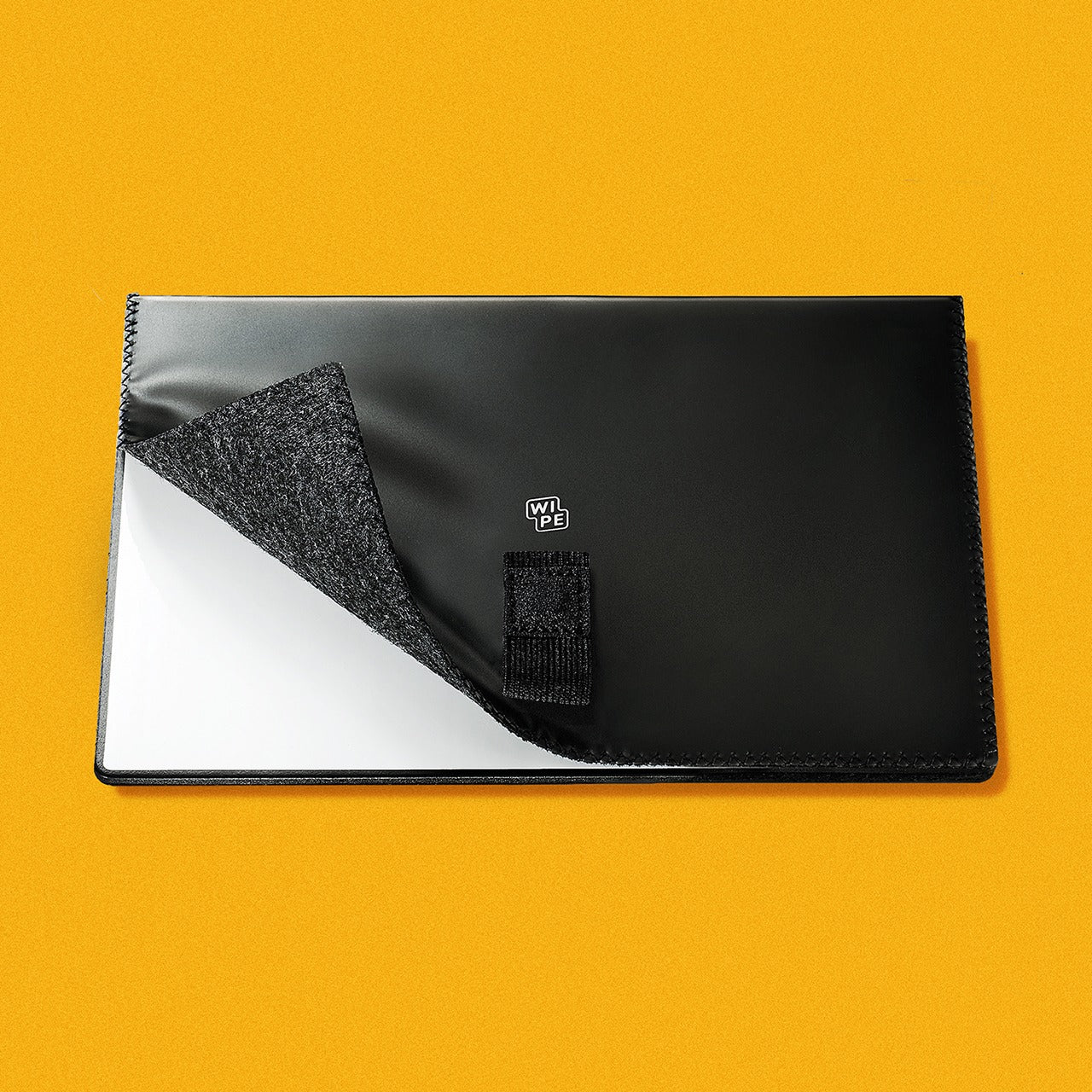
6. Orbitkey Desk Mat Slim
A desk mat either disappears into the background or it becomes the visual anchor of the entire setup. The Orbitkey Desk Mat Slim is built for the second outcome, designed with the restraint of the first. Made from premium vegan leather on top and 100% recycled PET felt underneath, it layers material integrity with practical function. The anti-slip backing holds the mat planted, while the magnetic cable holder keeps wires from drifting toward the edges, where they become a distraction.
Notes, receipts, and napkin sketches are the inevitable artifacts of nomadic work, and they tend to pile up without a clear home. The document hideaway is the detail that tips this mat from surface to organizer. The slim front pocket keeps loose papers horizontal, accessible, and out of sight. For someone accustomed to a shared café counter or a hotel tray table, this level of surface order feels less like a feature and more like a quiet exhale.
What we like
The document hideaway pocket reduces visible desk clutter without adding bulk, making it one of the more intelligent storage details found on any desk mat
Vegan leather and recycled PET felt construction deliver both a refined visual quality and a material responsibility that most desk accessories still lack
What we dislike
The slim format may feel too narrow for users with wide multi-monitor setups who need significant horizontal coverage across their full desk surface
The magnetic cable holder works best with a small number of cables and may become less effective in more heavily wired configurations
7. Flow Timer
The Pomodoro method has been around since the late 1980s, and most people who use it rely on a phone timer or a browser tab. Neither is ideal. The Flow Timer replaces that with something solid. Cast in metal, with dual customizable presets for focus and break intervals, it lives on the desk as a functional timer and an object of intention. The visual arc tells you where you are in the session without a notification or a screen unlock.
For nomads who have long been their own productivity managers, a physical timer brings a different quality of commitment than a screen-based one. The act of setting it is deliberate. The focus-to-break transition is automatic. Sitting in a permanent spot, it becomes a small anchor for the rhythm of the day. Available in three colorways, the Flow Timer is one of those rare accessories that improves both how you work and how the desk looks while you do it.
What we like
Automatic switching between focus and break intervals removes the friction of resetting a timer mid-session, keeping the workflow continuous and uninterrupted
Solid metal construction and three considered colorways make it an aesthetic desk object as much as a productivity tool
What we dislike
The absence of a digital display means reading the visual arc requires a brief adjustment period before the feedback becomes truly instinctive
As a dedicated single-function device, it competes for surface space against multi-purpose tools in more minimal or compact desk setups
8. Memento Business Card Log
There is a specific quality to the business cards that collect at the bottom of a travel bag. Each one marks a moment, a conversation, a person worth remembering. The Memento Business Card Log was made for exactly this. Designed by Re+g, a Japanese brand with roots in thoughtful stationery craft, it holds up to 120 cards with a dedicated handwriting space beside each one for a characteristic, a date, or a detail that brings the memory back clearly.
The two-point slit system keeps cards secure without sleeves or adhesive, and the special binding allows pages to be easily reordered as professional relationships evolve. For a nomad building a network across cities and industries, this is the kind of object that earns its desk placement not through technology but through intention. It is a record of everywhere you have been and everyone who mattered enough to keep. That is rare, and the design knows it.
The two-point slit system and reorderable binding make the organization genuinely flexible, allowing the log to grow and shift alongside a professional network over time
Handwritten note spaces beside each card transform a simple storage product into a meaningful personal archive of the conversations that shaped a career on the road
What we dislike
A maximum of 120 cards may feel limiting for high-volume networkers who accumulate contacts rapidly across multiple cities, conferences, and industries
The analog format, while entirely intentional, offers no digital sync or search capability for users who need to cross-reference contacts across devices
These Gadgets Were Never Just for the Bag
There is a moment in every nomad’s life when the bag starts feeling less like freedom and more like a deadline. When the tools that carried you through airports and co-working spaces deserve something more settled. These eight objects were always portable by design, but built with the kind of intention that reads just as well on a permanent desk. Good design does not ask where it is. It just works.
The idea here is not to stop moving. It is to stop treating permanence as a downgrade. A folding mouse, a tactile timer, a rolling clock, a mat that holds your cables and your notes — taken together, they form a desk that feels chosen rather than assembled. The nomad who gives these a home is not giving anything up. They are just finally working somewhere worthy of the tools they already carry.
Sleep has quietly become one of the most closely watched aspects of personal health. Around one in three people struggle with it, and roughly half of Americans already use a wearable device to track their sleep each night. That growing awareness has made sleep monitoring mainstream, turning the wrist and the finger into familiar real estate for all kinds of sleep-tracking sensors.
The irony, of course, is that wearing a device to bed can get in the way of the very thing you’re trying to improve. A watch or ring adds a layer of physical awareness that makes settling in harder, especially for someone who already struggles with sleep. Sleepal addresses that contradiction by embedding the tracking technology inside something already on your nightstand: a bedside lamp.
That choice of form factor carries real design logic. Around 70% of people already own a bedside lamp, and it’s naturally tied to the rituals of winding down and waking up. Building contactless sleep monitoring into that familiar object means Sleepal enters the bedroom without asking anything of you. No new habits to form, no extra device to charge, nothing to adjust to before lights out.
And setting it up is just as effortless. You plug it in, scan the device with the app, and after that, there’s really nothing else to manage. No nightly adjustments, no calibrations, nothing to put on before getting into bed. You simply sleep as you normally would and check your sleep report the next morning, which makes the whole experience feel remarkably frictionless.
Behind that calm, unhurried exterior sits some serious sensing technology. Sleepal uses 60 GHz millimeter-wave radar with a detection precision of 0.1 mm, picking up the subtle chest micro-movements that come with breathing and a heartbeat. Those signals combine with environmental data and run through a sleep AI model built from scratch with nearly 100 million parameters, making the sleep-stage picture both thorough and precise.
And that technical foundation is backed by genuine clinical work. Sleepal collaborated with multiple hospitals to build one of the world’s largest radar-based sleep databases, including more than 2,000 datasets collected alongside polysomnography testing. This medical-grade data foundation is a key source of its accuracy, and based on Sleepal’s test results, its sleep-tracking accuracy is higher than that of most mainstream wearables.
Because it functions as a lamp, the light itself becomes part of how it supports your sleep. It adapts through the night, softening as you settle in and brightening gently as morning approaches. Plus, it reads the room’s environmental conditions, capturing the ambient factors that affect rest and giving you a fuller picture of your night by combining physiological and environmental data.
The wake-up experience gets the same level of thought. When you set a target time in the app, Sleepal doesn’t just ring at that exact moment. It looks for a more natural waking window, steering clear of deep sleep and REM in favor of lighter stages. A turn of the body triggers snooze, and if you drift off again, the alarm continues until it detects you’ve left the bed.
Getting to sleep is handled just as carefully. Breathing guidance, meditation, and relaxation audio are all built in, giving you a non-pharmaceutical way to ease into rest before the tracking even begins. Heck, for a lot of people, better sleep doesn’t come from gathering more data alone; it comes from having practical tools to actually wind down, and Sleepal has a solid set of those.
One of the more quietly impressive things about Sleepal is how much it conceals. There’s no camera, and a physical control for key sensors adds a layer of discretion, while all that advanced sensing sits behind a lamp that simply looks like it belongs. The design emphasizes comfort and calm over any overt technological statement, making it easy to trust in a space as personal as a bedroom.
April 1st, 2026, marks fifty years since Steve Jobs, Steve Wozniak, and Ronald Wayne signed the papers that would quietly reshape everything: how we listen to music, how we communicate, how we take photographs, and how we think about the relationship between technology and beauty. Apple was founded on April 1, 1976, and fifty years later, it stands as one of the most influential companies in human history. That kind of milestone deserves more than a software update or a casual scroll through the App Store. It deserves a proper celebration, one that reflects the same values Apple has championed since the beginning: precision, intentionality, and the conviction that design is never just decoration.
For true Apple fans, the way you celebrate is in the details. Owning an iPhone, a MacBook, or an Apple Watch is the baseline — everyone has one. The real devotees are the ones who care about how their setup looks, what story it tells, and whether the accessories surrounding their devices feel worthy of the ecosystem. With Apple turning 50 this April, there’s never been a better time to take stock of your setup and fill in the gaps. From a retro watch case that pays tribute to the device that put a thousand songs in your pocket, to a Leica-built camera grip that transforms your iPhone into something you’d actually want to carry into the field, these seven accessories are the ones worth owning.
1. Pod Case
When a design can make you feel genuinely nostalgic the first time you see it, it’s doing something right. The Pod Case wraps your Apple Watch in the silhouette of a classic iPod Nano, arguably one of the most emotionally resonant gadgets Apple ever made. Crafted from silicone, it slides directly over the watch body without obstructing any of its core functions, giving your wrist a retro identity that’s unique and, honestly, a little bit joyful every time you glance down.
What makes the Pod Case especially clever is how it honors Apple’s past without making your watch feel dated. The dummy jog wheel on the front is a warm nod to the scroll wheel that once defined a generation of music listeners, while the watch’s touchscreen remains fully accessible underneath the case. The watch’s screen roughly matches the display size found in classic iPod Nanos, making the illusion feel remarkably convincing. With Apple’s 50th birthday just around the corner, there’s no more fitting way to wear that history on your wrist.
What we like:
The silicone build slides on and off cleanly, so you can commit to the retro look when the moment calls for it without any permanence
It taps into Apple’s most beloved design legacy in a way that feels celebratory rather than costume-y
What we dislike:
The jog wheel is non-functional, which feels like a genuinely missed opportunity for Bluetooth-enabled scroll control
The added thickness may feel noticeable against Apple Watch’s characteristically slim and precise silhouette
2. NightWatch
Some accessories solve problems you didn’t know you had until they’re solved, and the NightWatch is exactly that product. Shaped like a generous, luminous orb made entirely from lucite, this dock does three things beautifully: it charges your Apple Watch, magnifies the watch face into a clearly legible bedside display, and amplifies the watch’s alarm through acoustically engineered channels routed beneath the speaker. There are no hidden electronics, no batteries, no inner mechanisms. Just thoughtful geometry working in complete silence.
The NightWatch’s touch-sensitive surface is its most quietly brilliant detail. A single tap on the lucite orb wakes your Apple Watch screen instantly, meaning no fumbling in the dark and no squinting across a dim room at a tiny display. For anyone using their Watch as a sleep tracker and morning alarm, this dock transforms the entire overnight routine. It’s the kind of product that earns its space on your nightstand not through novelty but through genuine, repeatable usefulness that compounds every single morning.
What we like:
The all-lucite, zero-electronics construction is beautifully minimal and requires no power source of its own
The touch-to-wake surface interaction is intuitive and immediately feels like something Apple itself should have shipped
What we dislike:
The orb’s sculptural shape is confident and bold, which may not suit more minimal or tightly curated bedside setups
Passive sound amplification through acoustic channels means volume results will vary slightly depending on which Apple Watch model you’re using
3. AirTag Carabiner
The AirTag Carabiner might be the most practical Apple accessory on this list, and that practicality is housed inside a build quality that punches well above its category. Machined from Duralumin composite alloy, the same material used in aircraft, spacecraft, and high-performance watercraft, it’s designed to handle the kind of daily wear and environmental abuse that standard carabiners can’t sustain. Snap one onto your bag, bike frame, or umbrella, and Apple’s Find My network handles everything else without any additional configuration on your end.
What separates this from the flood of plastic AirTag holders on the market is the craft behind it. Each carabiner is individually hand-finished, and the Duralumin composite holds up equally well in water and at altitude, making it genuinely suited to real-world conditions. It’s available in untreated brass and stainless steel as well, for users who prefer warmer or more industrial finishes. For an Apple fan who wants every piece of their setup to feel considered and intentional, this is the kind of detail that quietly elevates the whole picture. The AirTag itself is sold separately.
Duralumin composite construction brings authentic aerospace-grade durability to a carry item most people treat as disposable
The choice of brass, stainless steel, and treated alloy finishes makes personalization genuinely easy and meaningful
What we dislike:
The AirTag is sold separately, which adds a layer of additional cost for users who are new to Apple’s tracking ecosystem
The premium build quality may feel like overkill when attached to lower-stakes items like an umbrella or a gym bag
4. Magic Bar
Apple’s Touch Bar had a short and controversial run, but the idea underneath it, a programmable, context-aware strip that adapts to whatever you’re working on, was always more interesting than its execution. The Magic Bar takes that concept and frees it from the MacBook Pro entirely, reimagining it as a standalone, portable accessory that pairs with any Apple peripheral. Built from aluminum to match the existing Magic Keyboard and trackpad lineup, it sits in the setup as naturally as if Apple had always intended it to ship this way.
The proposition is clean and direct: a plug-and-play toolbar that clips horizontally alongside the Magic Keyboard and keeps your most-used shortcuts, smart home automations, and app-specific functions at constant reach. Combined with the iPhone, the use case expands meaningfully, with media controls, quick-launch tools, and home shortcuts all living in a single strip without requiring any window switching. For the Apple power user who lives inside their setup all day, the Magic Bar is the kind of accessory that changes the way you work once you’ve had even a single session with it.
What we like:
The aluminum construction and horizontal layout integrate seamlessly into Apple’s existing peripheral design language without any visual friction
Plug-and-play setup eliminates configuration headaches, making it immediately useful from the moment it lands on your desk
What we dislike:
As a concept design, the final feature set and commercial availability are yet to be officially confirmed by any manufacturer
Compatibility appears optimized for Apple peripherals specifically, which limits the appeal for anyone running a mixed operating system setup
5. Spigen Classic LS AirPods Pro 3 Case
Spigen’s retro-Mac collection is one of the more quietly delightful things to emerge from the Apple accessory market in recent years, and the Classic LS AirPods Pro 3 case is its most charming entry yet. Modeled directly after the original Apple mouse, the flat, single-button input device that debuted with the first Macintosh, it borrows the mouse’s warm, stone-colored plastic, its compact proportions, and most importantly, its most satisfying tactile feature. It’s the kind of object that makes you want to pull it out and show someone immediately.
The “Push to Unlock” mechanism built into the front is the detail that takes this from novelty to genuinely considered product design. Placed exactly where the original mouse button sat, pressing it releases the hinged lid with a deliberate, mechanical click that makes the gesture feel purposeful rather than accidental. It joins a phone strap and a MagFit floppy disk wallet in a cohesive four-piece retro set. With Apple celebrating fifty years this April, carrying this case is one of the most eloquent tributes any fan can make to the design language that started everything.
What we like:
The “Push to Unlock” button is a genuinely tactile, mechanically satisfying feature that pays direct homage to the original mouse button in the most intuitive way possible
Being part of a four-piece retro collection means fans can build a fully coordinated Apple heritage accessory set that tells a coherent visual story
What we dislike:
The warm beige colorway, while historically faithful and correct, may feel too vintage for users who prefer accessories that match Apple’s current aesthetic language
The case is specific to AirPods Pro 3, meaning it offers no crossover value outside that particular model
6. Battery-Free Amplifying iSpeaker
There’s something deeply satisfying about a product that works entirely without power, and the iSpeaker earns that satisfaction honestly. Made from Duralumin metal, the same aerospace-grade alloy that appears throughout the best entries on this list, it uses pure acoustic physics to amplify your iPhone’s audio without drawing a single watt of electricity. Designed using the golden ratio, it doubles as a piece of desk sculpture that holds its own even when your phone isn’t sitting inside it. Function and form, neither compromising the other.
This is the kind of accessory built for a very specific Apple user: one who values craft over convenience, and objects that reward close attention over ones that simply check a box. The Duralumin construction resonates with your music rather than dampening it, producing a warmer, more enveloping sound than plastic or silicone alternatives can manage. It’s also portable enough to take to a hotel room, a client’s office, or a weekend away without any packing anxiety. No cables, no setup, no charging required. Just place your phone inside and let the material do its work.
Zero power required makes it genuinely portable and one of the more eco-conscious accessories in any Apple setup
The Duralumin body produces a noticeably richer, warmer acoustic resonance than plastic and silicone competitors at this price tier
What we dislike:
Output, while impressively improved for a passive speaker, will never match the volume or bass of a powered Bluetooth speaker in the same price range
The +Bloom and +Jet directional sound mods that extend its capabilities are sold separately, meaning full functionality requires an additional purchase
7. Leica Lux Grip
Leica doesn’t make many mistakes when it comes to product design, and the Lux Grip is a strong argument for that reputation. Built for iPhone photographers who want DSLR-level ergonomics without abandoning the convenience of a smartphone, it attaches via MagSafe and works with every iPhone from the 12 onward. Machined from high-grade aluminum with a matte black finish, it adds a reassuring heft to the setup that transforms how the whole device sits and moves in your hands: purposeful, balanced, and undeniably premium.
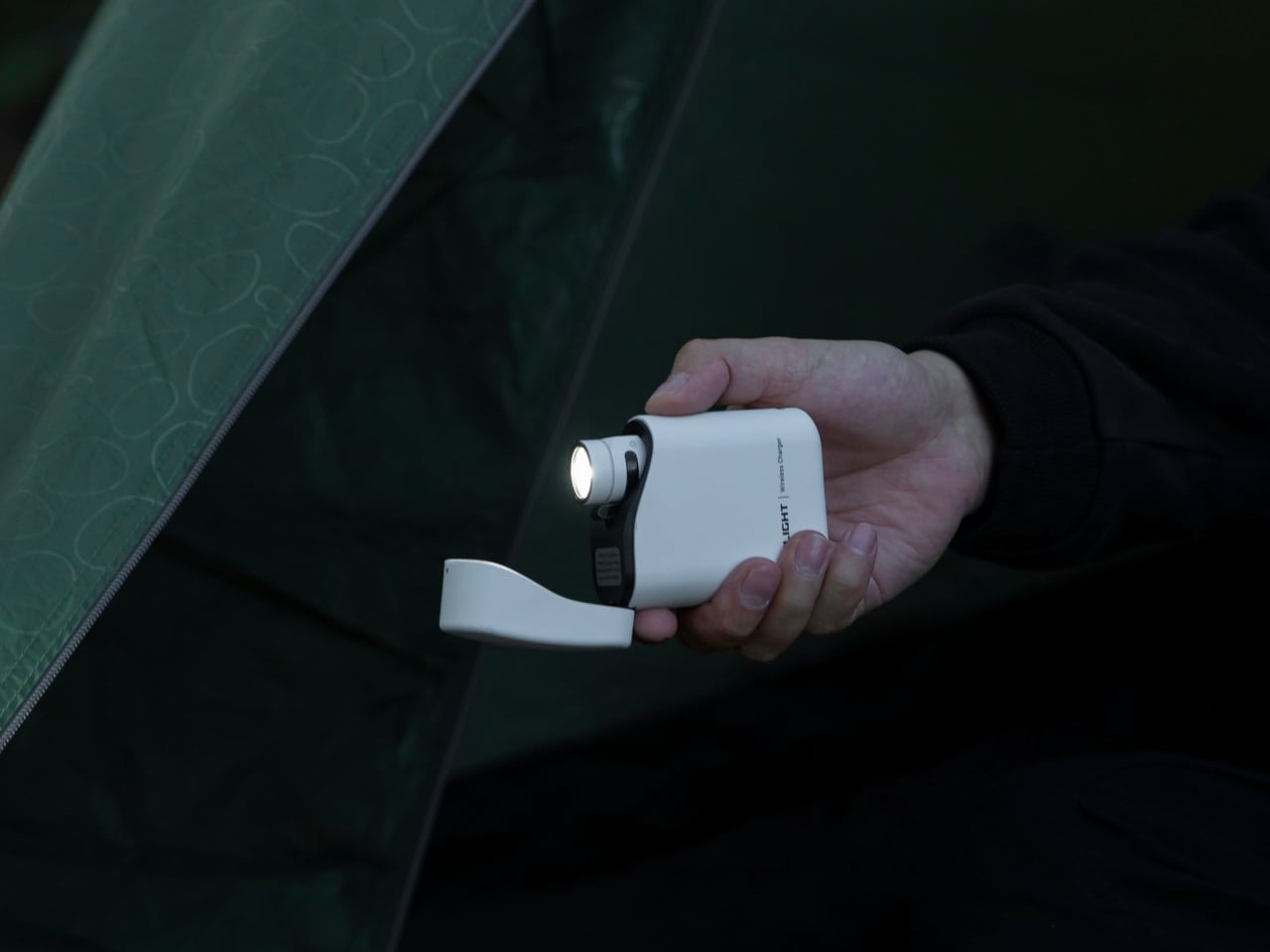
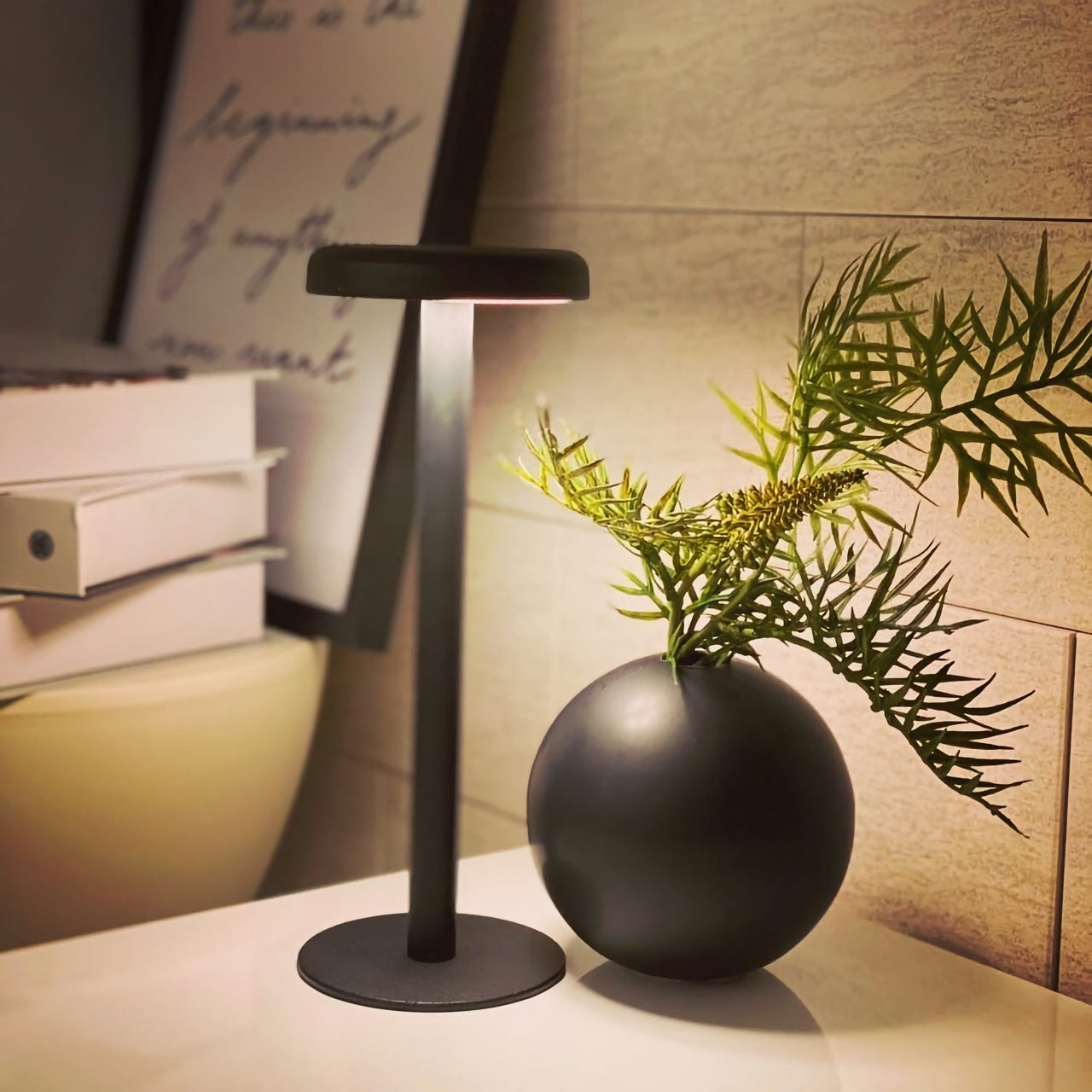
The cylindrical grip along the left side creates a natural resting point for the fingers that you only realize you’ve been missing once you’ve shot without it. Paired with the Leica Lux app, the mechanical controls provide genuine shutter, aperture, and zoom inputs that touchscreen photography will never replicate in feel or reliability. For the Apple fan who takes mobile photography seriously, the Lux Grip doesn’t just improve how you shoot. It changes how you think about the iPhone as a camera, and that’s the kind of shift that earns its place in any serious setup.
What we like:
MagSafe attachment is secure and broadly compatible, working cleanly across multiple iPhone generations without any adapters or compromises
The mechanical shutter and physical controls provide tactile shooting feedback that touchscreen photography categorically lacks, making sessions feel more considered
What we dislike:
The premium aluminum build and Leica branding command a price point that will be a genuine barrier for casual iPhone photographers on a tighter budget
The added weight and bulk, while ergonomically intentional, may not appeal to users who prioritize a slim, pocketable iPhone profile above all else
Fifty Years In, the Details Still Matter
Apple turning 50 on April 1st is the kind of milestone that asks you to pause, look around your setup, and ask whether the things surrounding your devices actually reflect the standard Apple itself has set. The best anniversary gift you can give yourself isn’t necessarily the newest device on the shelf. It’s the accessories that turn what you already own into something that feels curated, intentional, and worth coming back to every day. That’s always been the Apple promise.
These seven picks honor that promise in different ways: some through heritage, some through clever engineering, and some through the kind of craft that simply makes an ordinary moment feel better. Whether you’re celebrating five decades of Apple with a retro-inspired AirPods case or finally shooting iPhone photos with a grip worthy of the camera you’re already carrying, each one earns its place. Here’s to fifty more years of thinking differently, and the accessories that help you live up to it.
Speed settles a lot of arguments. Ask anyone who carries a knife daily and they’ll eventually get around to the deployment question: how fast can you get the blade out, how cleanly, and with how many fingers occupied. Folders demand a pivot, a swing, and depending on the locking mechanism, a deliberate wrist motion before the blade is truly ready. OTF knives skip all of that. One thumb movement sends the blade straight out the front in a single linear motion, and it locks automatically. There’s no arc, no fiddle factor, and no grip position the hand needs to be in before deployment works. That mechanical simplicity is a genuine advantage that compounds across every use case, whether it’s emergency cutting, utility tasks, or the kind of one-handed operation that makes a real difference when your other hand is occupied.
The A3 Delta, the A5 Spry, and the Spry Mini all operate on that same core principle: forward, fast, locked. Tekto’s folder range earns its place as refined everyday carry, but the OTF models are engineered around the reality that access speed and single-hand operation are non-negotiable for a tool you actually rely on. The A5 Spry, carrying an S35VN blade in a precision-contoured handle, represents the tactical end of that thinking. The A3 Delta Mini takes the same OTF discipline and packages it into a compact, California-legal form. The through-line across the range is a commitment to the mechanism itself, treating the out-the-front action as a feature worth designing around, a mechanical conviction rather than a marketing angle.
Single-Motion Deployment Changes the Entire Calculation
The A3 Delta
The core mechanical difference between a folder and an OTF comes down to the number of steps involved in getting the blade ready. A folder, even a fast one with ball bearings, requires the user to find a stud or flipper, apply pressure in a specific direction to initiate a pivot, and wait for the lock to engage. That sequence takes a fraction of a second for a practiced user, but it’s still a sequence. An OTF knife reduces that sequence to a single linear push. The thumb finds the switch and moves it forward; the knife does the rest. This removes the pivot, the swing, and the lock engagement from the user’s list of responsibilities.
This single-motion system translates to a higher degree of real-world reliability. When one hand is busy holding something in place, there’s no need to adjust your grip or use a second hand to get the blade out. The best OTF designs place the deployment switch exactly where the thumb naturally falls, making the act of gripping the knife and deploying it part of the same fluid motion. It’s a small ergonomic detail that makes a huge operational difference, turning the knife into an extension of the hand in a way a folder’s more complex mechanics can’t quite match.
Grip Position Has No Bearing on Whether the Knife Opens
The A5 SPRY
Folders have a specific vulnerability that rarely gets acknowledged: they require a deliberate, practiced grip to open reliably. The thumb has to find its target, and the wrist needs to be oriented correctly for the blade to swing out without obstruction. In calm, controlled conditions, this is a minor point of practice. But in a hurry, or when wearing gloves, or when your hands are wet or cold, that small dependency becomes a legitimate failure point. OTF knives are functionally immune to this problem. Because the blade travels on an internal, linear track, the mechanism doesn’t care how the handle is being held.
This operational consistency is one of the strongest arguments for the OTF format, and it becomes even more apparent in smaller knives. Compact folders can be notoriously fiddly, with tiny thumb studs and short handles that are hard to manage. A compact OTF, however, deploys with the same authority as its full-sized counterpart. Models with blade lengths under two inches still offer an excellent blade-to-handle ratio and a full, confident grip, proving that the mechanism scales down without losing its inherent mechanical advantage.
Retraction Is as Fast as Deployment, and That Actually Matters
The A5 SPRY MINI
Closing a folding knife is a deliberate act. You have to consciously disengage the liner lock, frame lock, or button lock, then carefully fold the blade back into the handle, making sure your fingers are clear. On a well-made folder, it’s a secure process, but it requires your full attention. An OTF knife retracts with the same speed and simplicity as it deploys. A single pull on the switch sends the blade back into the handle, where it locks just as securely as it does when open. The knife is either fully engaged or fully stowed, with no hazardous in-between state.
This bidirectional action has practical value in any scenario where a tool needs to be put away quickly and safely. It also introduces a level of safety that folders can’t offer. A half-closed folder is a risk; a retracted OTF is a mechanically secured object. The confidence this provides is tangible for anyone who uses their knife frequently throughout the day. The crisp, reliable action of modern OTF mechanisms, both in and out, is a testament to how mature the engineering has become.
The Slim Profile Comes Without Mechanical Trade-offs
The A3 DELTA MINI
Many thin folding knives make compromises to achieve their slim profile. The pivot area is often a point of weakness, and a thin handle can make a strong locking mechanism difficult to integrate. OTF knives, by their very nature, are built on a linear chassis. The internal mechanism runs along the length of the handle, not across its width. This means the design can be inherently slim and narrow without sacrificing the strength of the lock or the reliability of the deployment. Thinness is a natural byproduct of the OTF’s structure, not an afterthought achieved by removing material.
This structural advantage allows for knives that are remarkably easy to carry while still being built from robust, high-performance materials. It’s common to see OTF models with a handle width of less than half an inch that are still equipped with premium steels like S35VN, rated for exceptional hardness and edge retention. These builds demonstrate that a slim, pocket-friendly profile and genuine, hard-use strength are not mutually exclusive concepts. The OTF format delivers both, proving you don’t have to choose between a comfortable carry and a capable tool.
The Blade Style Options Are No Longer an OTF Limitation
One of the oldest criticisms leveled against OTF knives was a perceived lack of versatility in blade shapes. For a long time, the market was dominated by a few basic drop point or dagger styles. That criticism is now completely outdated. The modern OTF category has evolved to a point where it offers the same full spectrum of blade geometries available in the high-end folder market. Whether you need the piercing capability of a tanto, the slicing efficiency of a drop point, or the specialized profile of a dagger, there is an OTF knife built for the task.
This expansion of options has effectively eliminated the last significant advantage that folders held. It is now common for a single, popular OTF model to be offered in multiple blade configurations, and even in both full-size and compact versions. This allows users to select the precise tool they need without having to abandon the superior mechanical advantages of the OTF platform. Blade selection used to be a compelling reason to stick with a folder; today, it’s just another area where OTF knives have achieved, and in some cases surpassed, parity.
Pocket pens usually ask for compromise. Full size fountain pens usually ask for commitment. Lumink tries to bridge that divide with a titanium body that collapses to pocket size and unfolds into a full-length pen in seconds. The silhouette is crisp and faceted, with a restrained metallic finish that reads as precision tool before it reads as stationery. It is a concept that feels immediately relevant in a world where everyday tools are expected to be portable, tactile, and visually disciplined.
Much of its appeal comes from how clearly the design serves the use case. The faceted barrel prevents rolling and sharpens the pen’s visual identity, the milled titanium clip reinforces its EDC credentials, and the airtight chamber speaks directly to the realities of carrying a fountain pen on the move. Grade 5 titanium gives the body a durability-to-weight ratio that very few materials can match at this scale. Paired with a German Schmidt nib, the whole package feels engineered around readiness and repeat use. Those choices position Lumink at the intersection of EDC gear and serious writing instruments, which is a tighter niche than it sounds.
The folding mechanism itself is the main event. It’s not a simple cap that posts on the back; the rear section threads onto the pen, extending the body from a stubby 3.8 inches (96mm) to a very comfortable 5.51 inches (140mm). That pivot point, accented with a brass ring, creates a satisfying mechanical action that feels both precise and robust. This kind of transformability is what draws people to well-made gear. It turns the simple act of preparing to write into a small, tactile ritual, giving the object a character that a static pen, however beautiful, just can’t replicate.
Grade 5 titanium, formally Ti-6Al-4V, produces tensile strength around 950 MPa at a density of 4.43 g/cm3. For non-nerds, it means that it’s harder than steel, while being roughly 40-45% lighter. Aerospace and orthopedic implant manufacturers rely on the same alloy, which tells you the performance tier. Applied to a pen, that combination should produce a carry object that feels substantive in hand without adding real burden to a pocket. Besides, Aluminum dents easily, Titanium resists any form of damage. EyeQ says the Lumink should last you a 100 years. The material, the mechanism, the craftsmanship, it’s all designed to withstand a century of sustained use.
Carrying a fountain pen daily has historically meant accepting certain risks: leaked ink, dried-out nibs, and the grim experience of a pressure-driven blowout mid-flight. Lumink’s threaded isolation system addresses those by sealing the nib section from the reservoir during transport, creating an airtight chamber. The logic is sound: threaded seals operate in environments far more demanding than a shirt pocket. The entire pen is made from metal – not a single plastic part, no glue, nothing that even hints at cost-cutting.
Even the clip uses metal, and features a construction that’s about as carefully considered as the design itself. The clip sits perfectly straight, aligning vertically with the pen to the point of obsessiveness. The reason? Absolute balance. The pen shouldn’t look or feel un-balanced – it should project the confidence that it expects from you, as you use it to write or sign documents. A ball-shaped ceramic insert in the pen clip holds onto book covers, pads, or shirt pockets confidently too, without damaging anything. Slide it into your pocket and the ceramic insert glides smoothly along the fabric, without creasing or damaging it. Meanwhile the clip itself is made from the same titanium as the pen, which means it’ll never bend, warp, or break.
A fancy body is nothing if the writing experience falls flat, so anchoring the pen with a German Schmidt nib was a solid decision. Schmidt is a known quantity in the pen world, a reliable manufacturer whose nibs are used in countless pens far more expensive than this one. It’s the equivalent of a boutique car builder using a proven, well-regarded engine. The nibs are standard, replaceable, and available independently… which means even after a 100 years, you should find yourself with access to more nibs that you can swap in or out whenever you need. The pen’s designed to resist aging.
The three available finishes each cater to a different aesthetic: a raw Sandblasted Titanium for purists, a warm Anodized Gold, and a stealthy PVD Matte Black. The Physical Vapor Deposition coating on the black variant is notably harder than the titanium itself, offering serious scratch resistance, while the sandblasted finish is designed to develop a natural patina with use over time. Early bird pledge tiers started around the $65 mark. You are, after all, paying for Grade 5 Titanium along with Schmidt refills, beyond just the fact that this pen is designed and engineered to perfection. The $65 package includes the pen itself, the Schmidt nib, and a Schneider ink cartridge. You could spring extra for custom engraving, or opt for EyeQ’s leather sleeve for the pen. Personally, a pen that gorgeous shouldn’t be sheathed. It should be flaunted, fidgeted with, and frankly, turned into a heirloom for the next few generations.
Pocket pens usually ask for compromise. Full size fountain pens usually ask for commitment. Lumink tries to bridge that divide with a titanium body that collapses to pocket size and unfolds into a full-length pen in seconds. The silhouette is crisp and faceted, with a restrained metallic finish that reads as precision tool before it reads as stationery. It is a concept that feels immediately relevant in a world where everyday tools are expected to be portable, tactile, and visually disciplined.
Much of its appeal comes from how clearly the design serves the use case. The faceted barrel prevents rolling and sharpens the pen’s visual identity, the milled titanium clip reinforces its EDC credentials, and the airtight chamber speaks directly to the realities of carrying a fountain pen on the move. Grade 5 titanium gives the body a durability-to-weight ratio that very few materials can match at this scale. Paired with a German Schmidt nib, the whole package feels engineered around readiness and repeat use. Those choices position Lumink at the intersection of EDC gear and serious writing instruments, which is a tighter niche than it sounds.
The folding mechanism itself is the main event. It’s not a simple cap that posts on the back; the rear section threads onto the pen, extending the body from a stubby 3.8 inches (96mm) to a very comfortable 5.51 inches (140mm). That pivot point, accented with a brass ring, creates a satisfying mechanical action that feels both precise and robust. This kind of transformability is what draws people to well-made gear. It turns the simple act of preparing to write into a small, tactile ritual, giving the object a character that a static pen, however beautiful, just can’t replicate.
Grade 5 titanium, formally Ti-6Al-4V, produces tensile strength around 950 MPa at a density of 4.43 g/cm3. For non-nerds, it means that it’s harder than steel, while being roughly 40-45% lighter. Aerospace and orthopedic implant manufacturers rely on the same alloy, which tells you the performance tier. Applied to a pen, that combination should produce a carry object that feels substantive in hand without adding real burden to a pocket. Besides, Aluminum dents easily, Titanium resists any form of damage. EyeQ says the Lumink should last you a 100 years. The material, the mechanism, the craftsmanship, it’s all designed to withstand a century of sustained use.
Carrying a fountain pen daily has historically meant accepting certain risks: leaked ink, dried-out nibs, and the grim experience of a pressure-driven blowout mid-flight. Lumink’s threaded isolation system addresses those by sealing the nib section from the reservoir during transport, creating an airtight chamber. The logic is sound: threaded seals operate in environments far more demanding than a shirt pocket. The entire pen is made from metal – not a single plastic part, no glue, nothing that even hints at cost-cutting.
Even the clip uses metal, and features a construction that’s about as carefully considered as the design itself. The clip sits perfectly straight, aligning vertically with the pen to the point of obsessiveness. The reason? Absolute balance. The pen shouldn’t look or feel un-balanced – it should project the confidence that it expects from you, as you use it to write or sign documents. A ball-shaped ceramic insert in the pen clip holds onto book covers, pads, or shirt pockets confidently too, without damaging anything. Slide it into your pocket and the ceramic insert glides smoothly along the fabric, without creasing or damaging it. Meanwhile the clip itself is made from the same titanium as the pen, which means it’ll never bend, warp, or break.
A fancy body is nothing if the writing experience falls flat, so anchoring the pen with a German Schmidt nib was a solid decision. Schmidt is a known quantity in the pen world, a reliable manufacturer whose nibs are used in countless pens far more expensive than this one. It’s the equivalent of a boutique car builder using a proven, well-regarded engine. The nibs are standard, replaceable, and available independently… which means even after a 100 years, you should find yourself with access to more nibs that you can swap in or out whenever you need. The pen’s designed to resist aging.
The three available finishes each cater to a different aesthetic: a raw Sandblasted Titanium for purists, a warm Anodized Gold, and a stealthy PVD Matte Black. The Physical Vapor Deposition coating on the black variant is notably harder than the titanium itself, offering serious scratch resistance, while the sandblasted finish is designed to develop a natural patina with use over time. Early bird pledge tiers started around the $65 mark. You are, after all, paying for Grade 5 Titanium along with Schmidt refills, beyond just the fact that this pen is designed and engineered to perfection. The $65 package includes the pen itself, the Schmidt nib, and a Schneider ink cartridge. You could spring extra for custom engraving, or opt for EyeQ’s leather sleeve for the pen. Personally, a pen that gorgeous shouldn’t be sheathed. It should be flaunted, fidgeted with, and frankly, turned into a heirloom for the next few generations.