The EDC community is particular about what earns a place in their pockets. Titanium hardware, precision multitools, and machined accessories all go through plenty of scrutiny before they make the cut. Yet for all that attention to detail, accurate measurement is still largely a workshop activity. A full-size caliper stays on the bench. A rough estimate fills the gap. Something between the two has been missing.
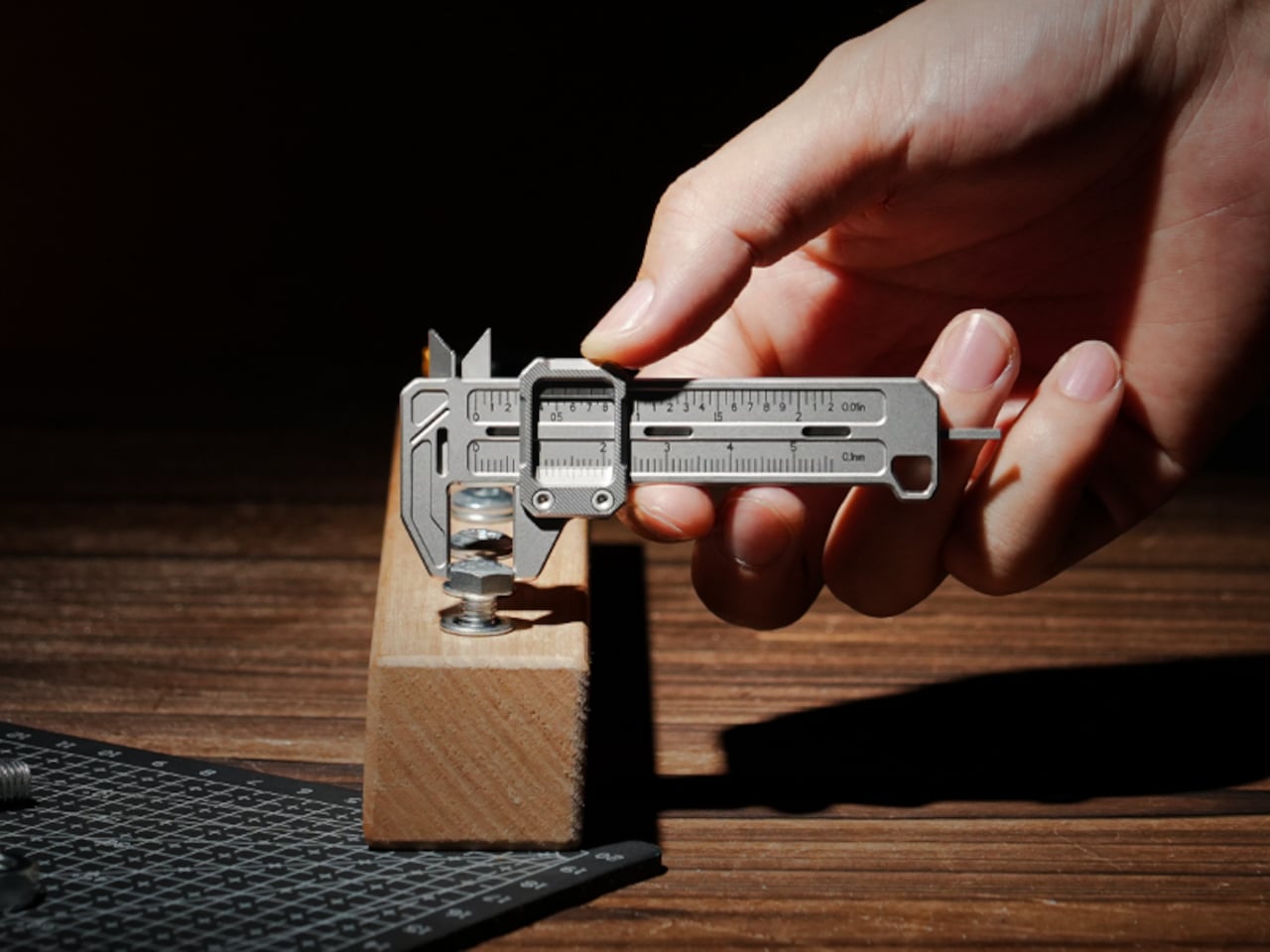
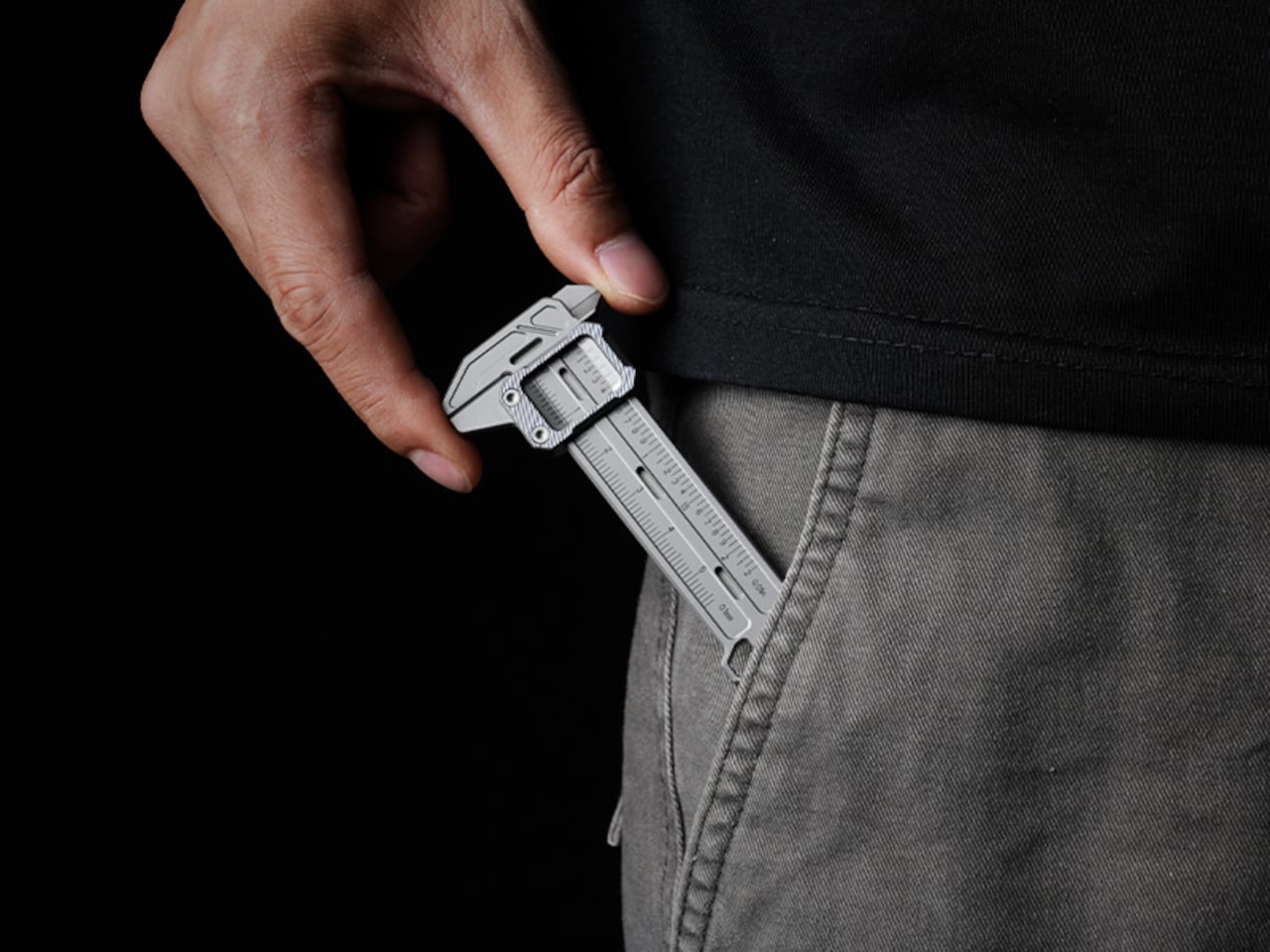
TiCal Pro 2.0 is designed to fill that gap and makes a bold case for being the first pocket caliper you’d actually trust for real measurement work. It’s not trying to replace the full-size tool on your workbench, but to bring genuine vernier precision down to something that clips to your keychain, hangs from a cord, or disappears into your pocket.
What sets it apart from the usual pocket-tool crowd is a deliberate narrowness of purpose. There’s no bottle opener, no ruler on the back, and no attempt to make it busier than it needs to be. TiCal Pro 2.0 does one thing: it measures. Outer diameters, inner diameters, and depth, with jaws and a depth rod machined as integral parts of a single titanium frame.
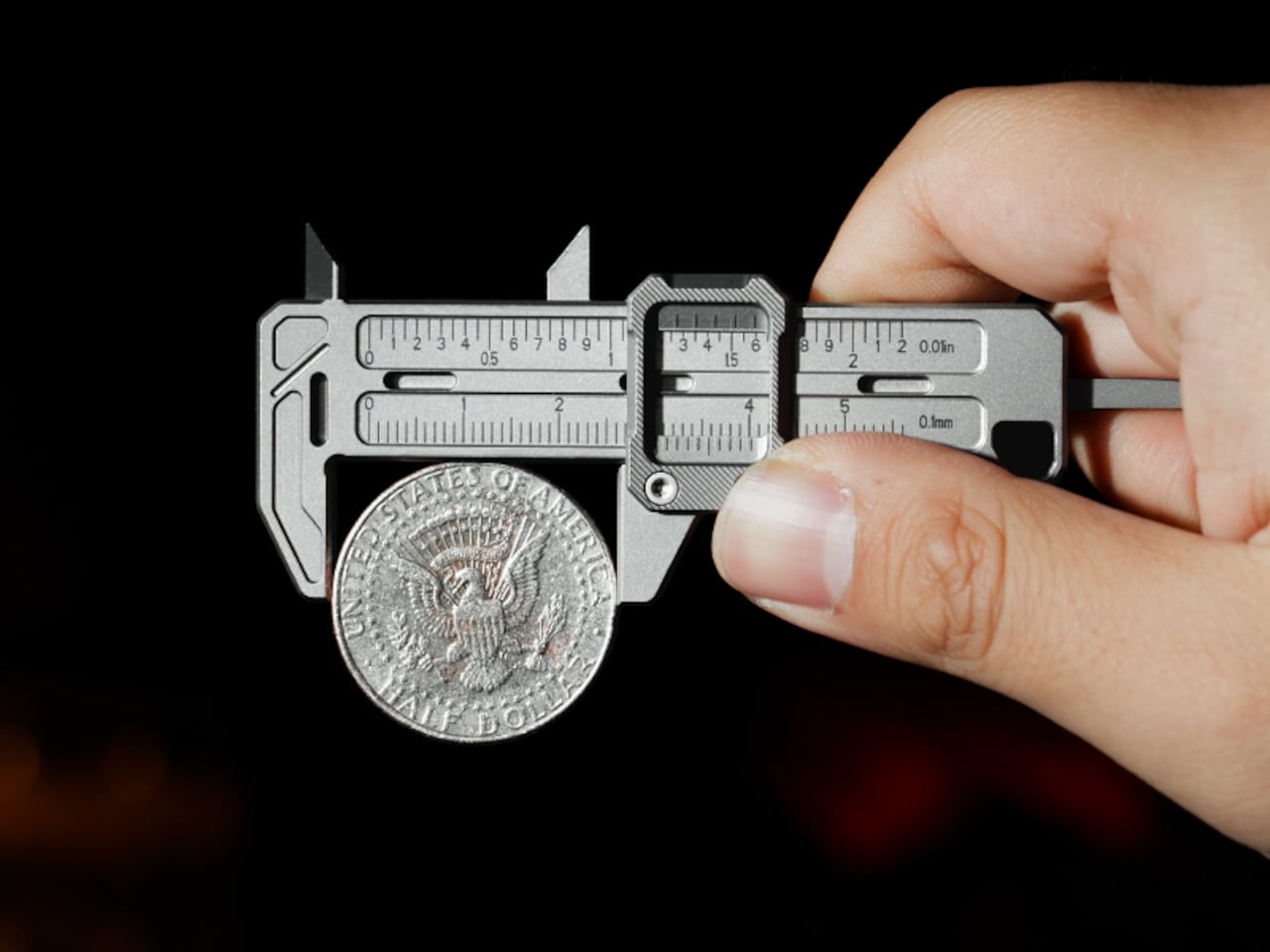
One of the more practical details is the dual-scale vernier system. Makers who move between metric drawings and imperial hardware know the frustration of converting on the fly. TiCal Pro 2.0 carries both inch and millimeter scales simultaneously, synchronized so that a single glance gives you both readings at once. There’s no mental math involved and far less room for the errors that unit conversion can invite.
With a resolution down to 0.01-inch for imperial measurements and 0.1mm for metric ones, it’s built for the kind of small-dimension work that usually gets left to guesswork outside the workshop. The scales themselves are laser-engraved deeply enough to resist daily wear, which matters a lot for something that lives in your pocket. Shallow printed markings fade quickly; these stay sharp and legible through regular carry.
Precision tools have a tactile dimension that often gets overlooked. TiCal Pro 2.0 addresses this with a self-lubricating POM ball rail system that delivers a silk-smooth slide with no oil and no grinding. The damping is also adjustable with a standard T5H driver, letting you set the slide resistance to your preference so the jaw stays exactly where you put it, no locking screw needed.
The choice of Grade 5 titanium for the body is practical rather than decorative. It offers the strength of steel at half the weight and is corrosion-proof, shrugging off sweat, rain, and shop fluids without complaint. For a tool meant to stay on your person at all times, that kind of durability makes a genuine difference in how willing you’ll actually be to carry it.
Think about the moments when a precise measurement would’ve been useful. A screw that looks like the right size but isn’t. A 3D-printed part that fits almost perfectly but not quite. A watch lug you’re trying to match without guessing. A keyboard stabilizer that needs a bit of finessing. These are the moments where a quick estimate wins by default simply because the right tool isn’t close enough.
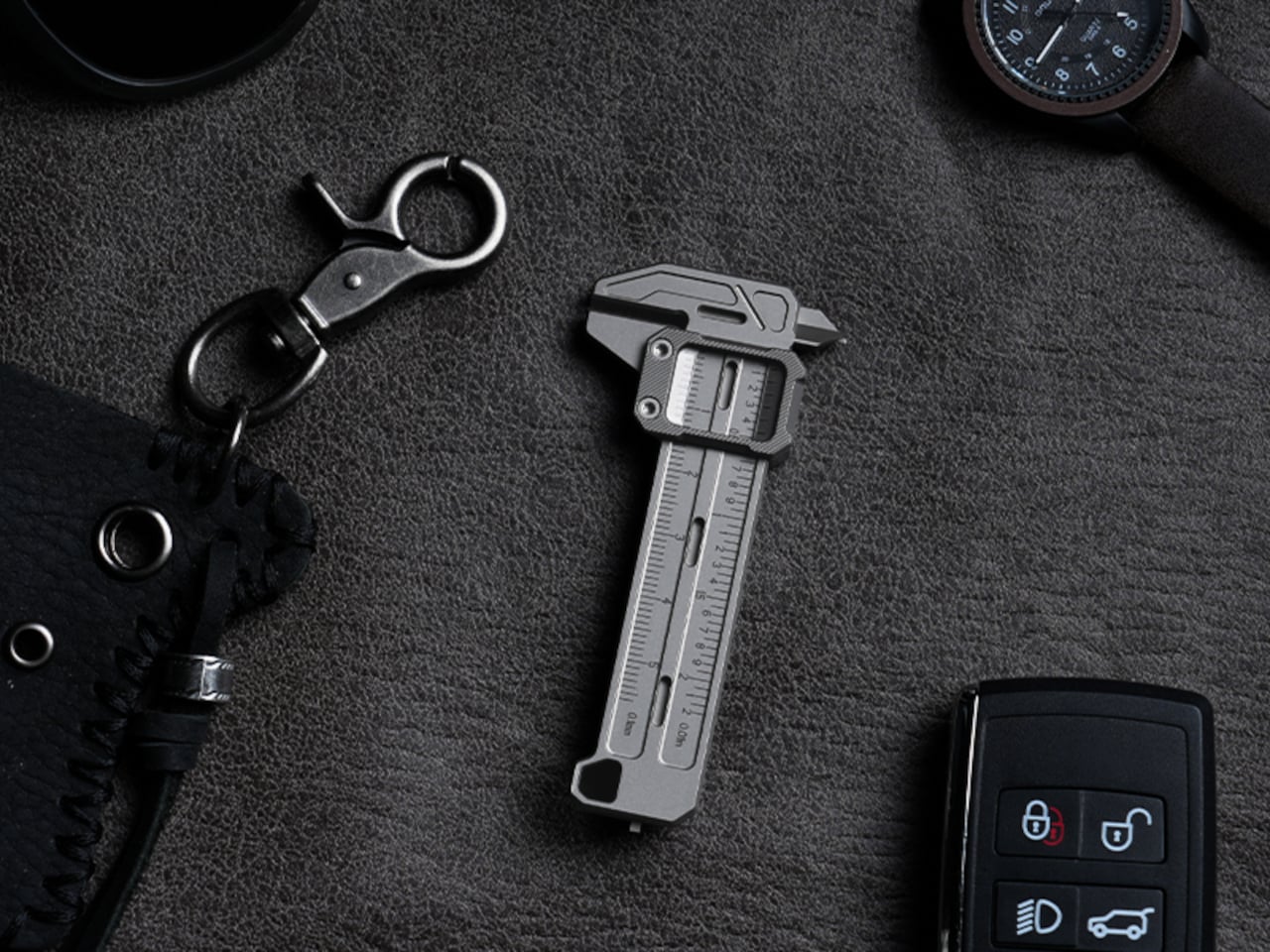
At 3.37 inches long and weighing only 37.6g (1.33 oz), it’s compact enough to clip to a keychain or hang as a pendant, always within reach but never in the way. Four integrated tritium slots add a subtle glow for low-light situations, and the tool is available in either Sandblast Titanium or PVD Black, two very different expressions of the same object.
None of that changes the fact that a full-size caliper will always offer more range and a longer measurement stroke. But TiCal Pro 2.0 isn’t competing with the bench tool; it’s filling the space where that tool never goes. Precision doesn’t always happen in a workshop, and this small titanium instrument quietly makes the case that it doesn’t have to.
Most Father’s Day gifts start and end with good intentions. A nice watch, a tool kit, a gift card wrapped in tissue paper. They say “I thought of you” without really saying much else. But some dads notice when something is well-made, keep objects long after they stop being new, and believe the things around them say something about how they live. If that sounds familiar, this list is for you.
The five gifts below aren’t the most expensive things you’ll find this season, and that’s the point. Each one earns its place through material honesty, considered proportions, or a mechanical logic that just feels right. Some are built to last decades. One runs indefinitely without a refill. Another turns a scattered desk into something worth photographing. All five were chosen because they respect the intelligence of the person receiving them.
1. Pininfarina Aero Ethergraf — The Forever Pen
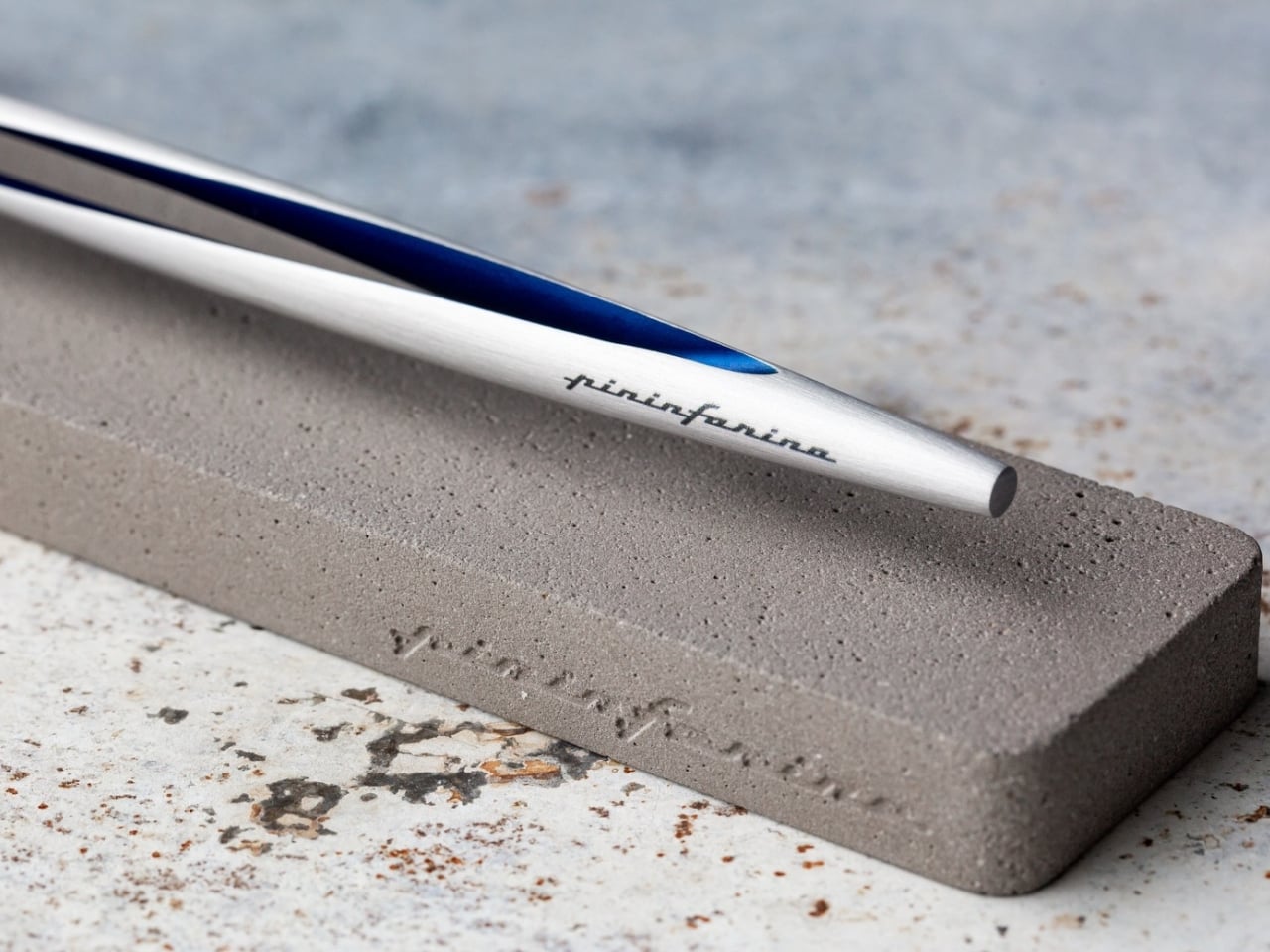
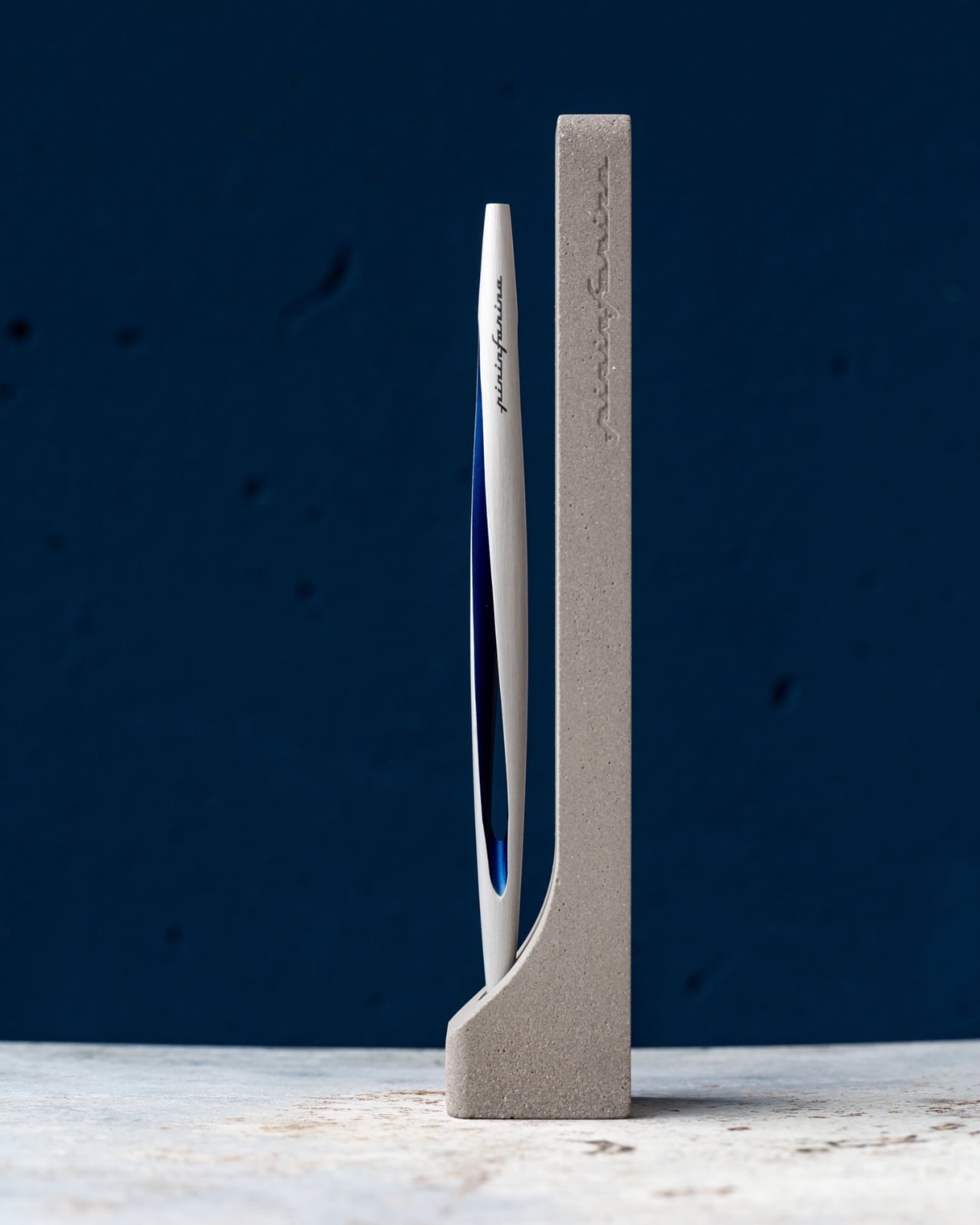
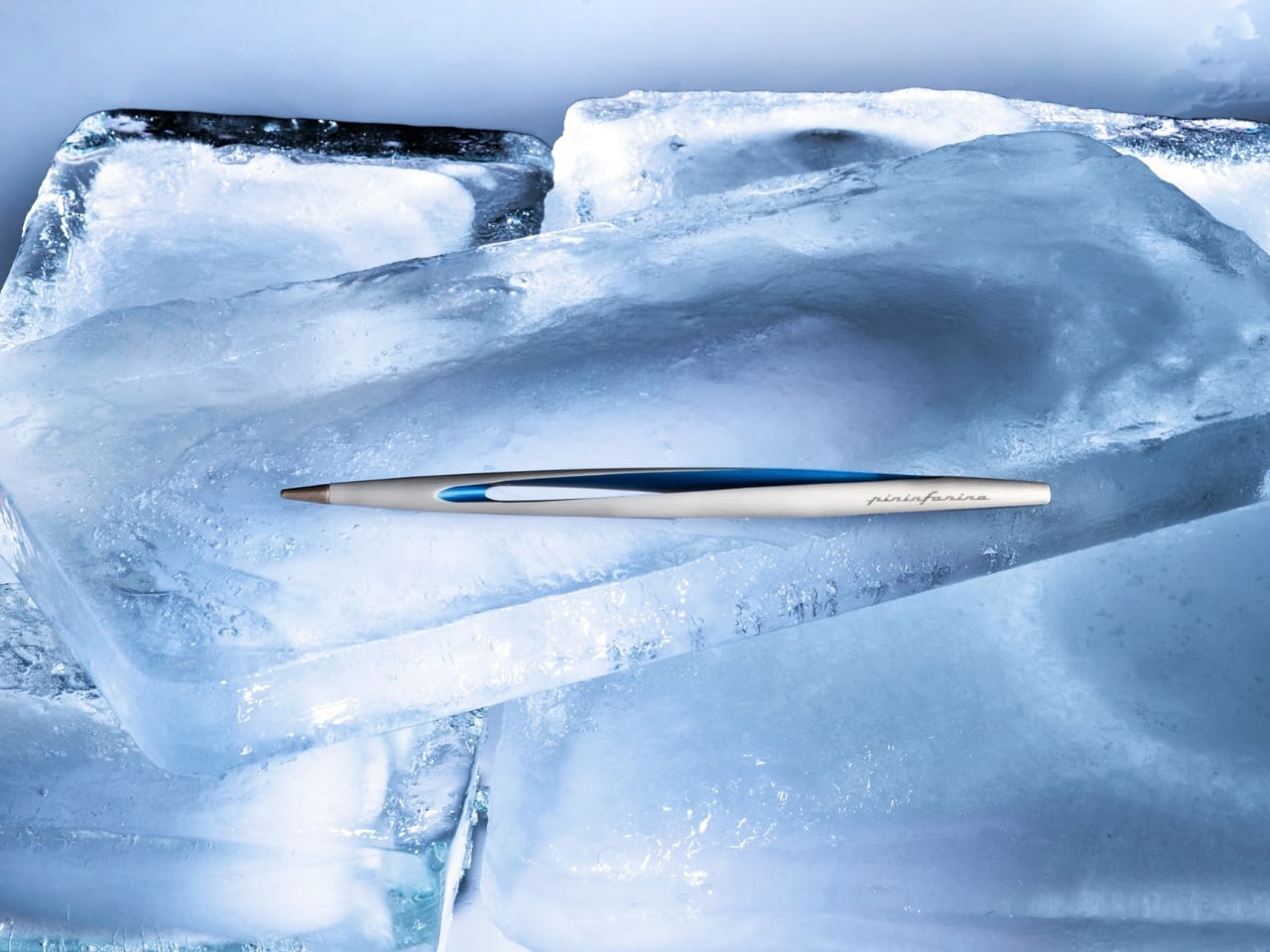
Pininfarina built its reputation on some of the most celebrated automotive silhouettes in history, including Ferrari and Maserati bodies that turned heads for decades. The Aero Ethergraf brings that same design philosophy down to the scale of a writing instrument. Crafted from aerospace-grade aluminum, weighing just 17 grams and measuring 160mm in length, it arrives paired with a raw concrete stand that sits beside it on the desk like a quiet still-life. Made in Italy, built to last.
What makes it genuinely unusual is that it contains no ink. The Ethergraf metal alloy tip writes through oxidation, leaving a graphite-like mark on paper without a cartridge, a cap to misplace, or a refill cycle to manage. The line is precise and smudge-resistant. The pen never dries out and never runs out. For someone who has spent years maintaining fountain pens or replacing rollerball inserts, this inverts the entire expectation of what a writing tool asks of you.
What We Like:
The Ethergraf tip writes indefinitely through oxidation, with no ink, no cartridges, and no refills ever needed
Pininfarina’s automotive design DNA reads clearly in the body: aerodynamic, precise, and quietly confident about its own beauty
What We Dislike:
The oxidation-based line runs lighter than a standard ballpoint, which will not suit every writing style or paper type
The raw concrete stand, while a genuinely beautiful pairing, adds considerable volume and weight to the overall package
2. Foldline Pen Roll
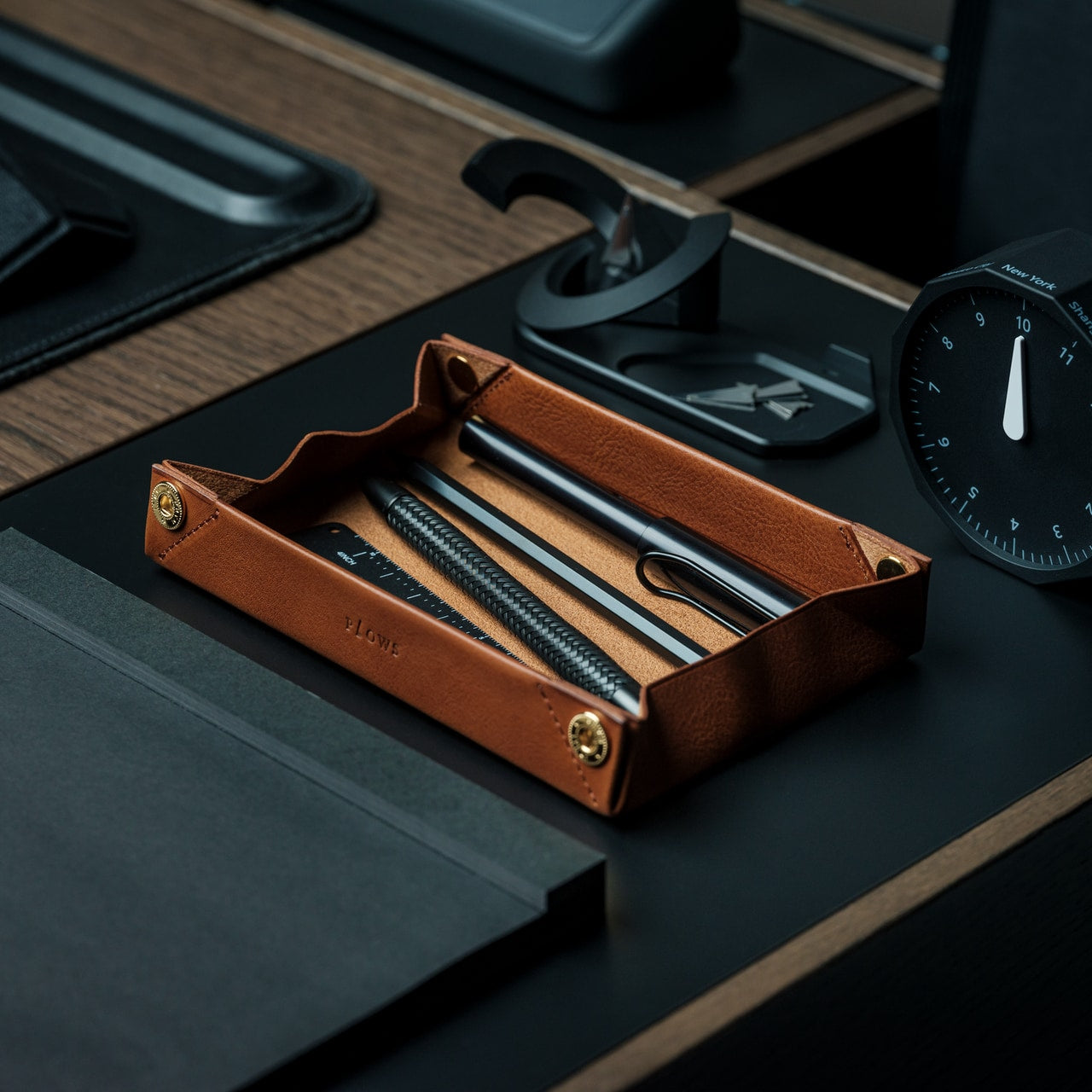
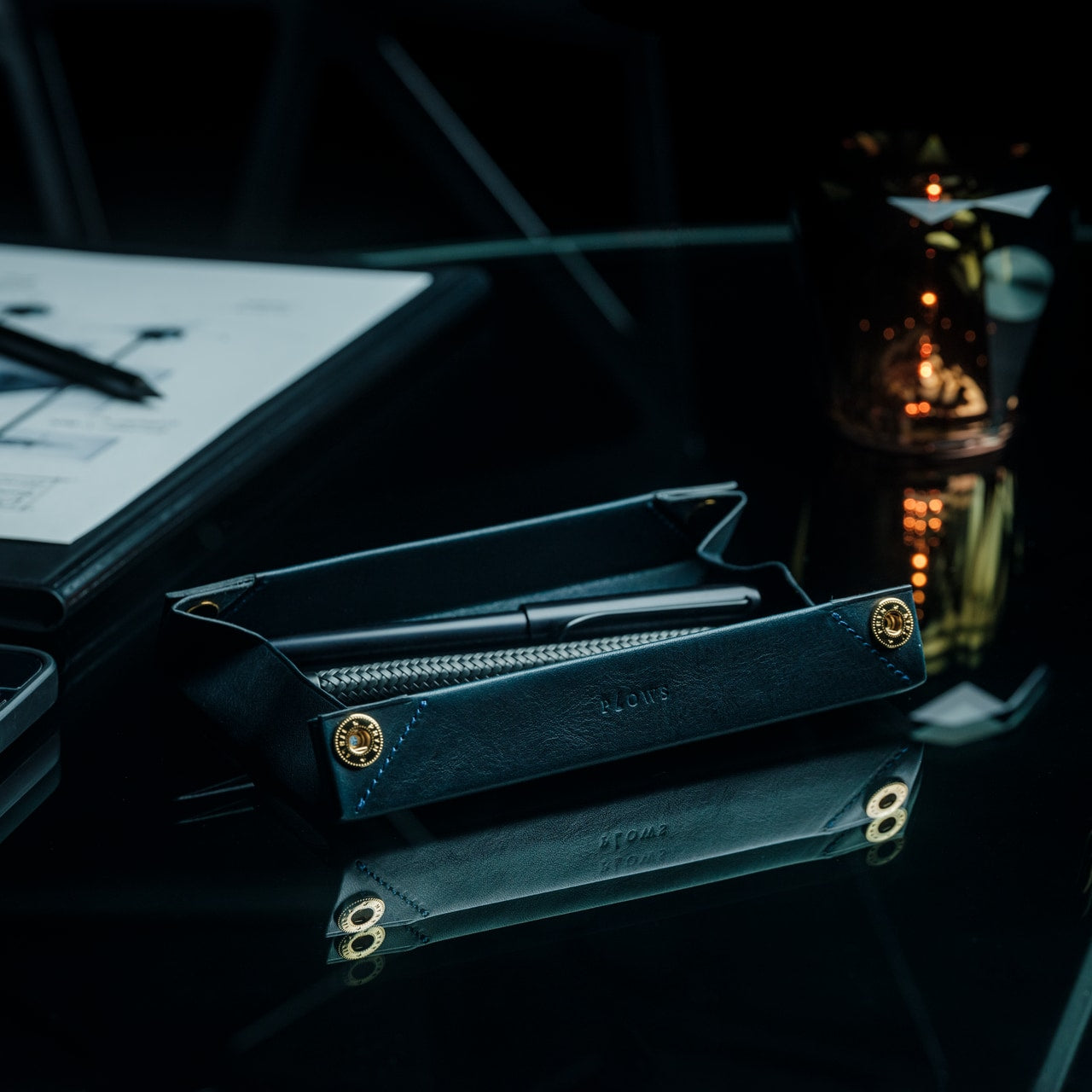
The FoldLine Pen Roll comes from PLOWS, a Japanese leather goods brand founded by a farming company, which may explain why its objects carry a particular kind of patience. The roll is cut from a single piece of Minerva Box leather sourced from Badalassi Carlo, an Italian tannery known for vegetable-tanned hides enriched with cow leg oil. That combination of material sourcing and hand-formed construction produces something that develops a patina entirely personal to how it is used and who carries it.
Structurally, it unfolds in two steps and under two seconds into a tray that holds pens in place without stitched slots or rattling. The entire form comes from precise folds rather than seams or inserts. A large machined snap from Italy’s PRYM closes the roll with satisfying solidity. The symmetrical design opens cleanly from either side, making it equally usable whether you are left- or right-handed.
A single piece of Minerva Box leather that develops a personal patina over time, making each roll gradually distinct to its owner
No designated top or bottom, no correct side to open from: a small but considered detail that removes daily friction entirely
What We Dislike:
The value is only legible to someone who already appreciates quality leather goods, making it a harder sell as a blind gift
Only a few units remain in stock, so availability is not guaranteed as Father’s Day approaches
3. Orbitkey Grid Desk Organizer
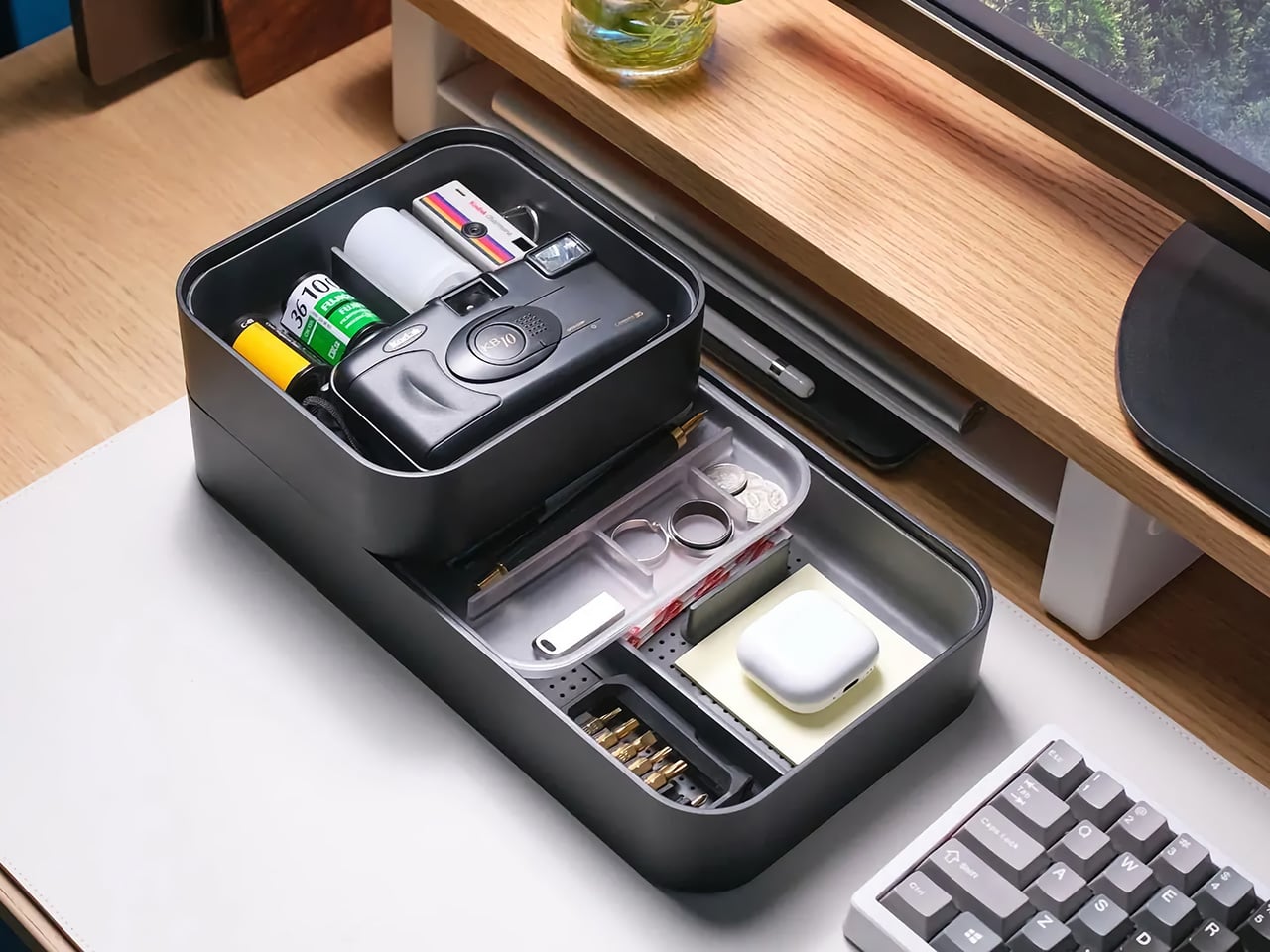
Orbitkey built its name around the idea that small daily frictions deserve serious design attention. The Grid Desk Organizer extends that logic into a broader desktop format. Its perforated tray base accepts snap-in dividers at any position, so the internal layout responds to whatever lives inside it rather than demanding objects conform to fixed compartments. Long dividers run the full tray depth while shorter ones slot in crosswise, and any arrangement can be lifted out and reconfigured in seconds. The system earns the word modular.
A soft-touch rubberized interior lining protects items from scratching and gives the tray a tactile quality that cheaper desk accessories rarely bother with. Silicone feet on the base prevent it from migrating across hard surfaces. The lid doubles as a valet tray on top, and its handle converts into a portrait phone stand when set upright.
The patent-pending snap-divider system adapts to the contents rather than demanding conformity, a structural logic that sounds minor until you experience the alternative
Three colorways (Black, Stone, and Terracotta) land in the space between generic and overdone, making it a natural fit for almost any desk setup
What We Dislike:
The $42 base price covers the standard configuration, but adding the Mini version raises the total cost beyond the initial impression
4. Olight Oclip Pro S EDC Flashlight
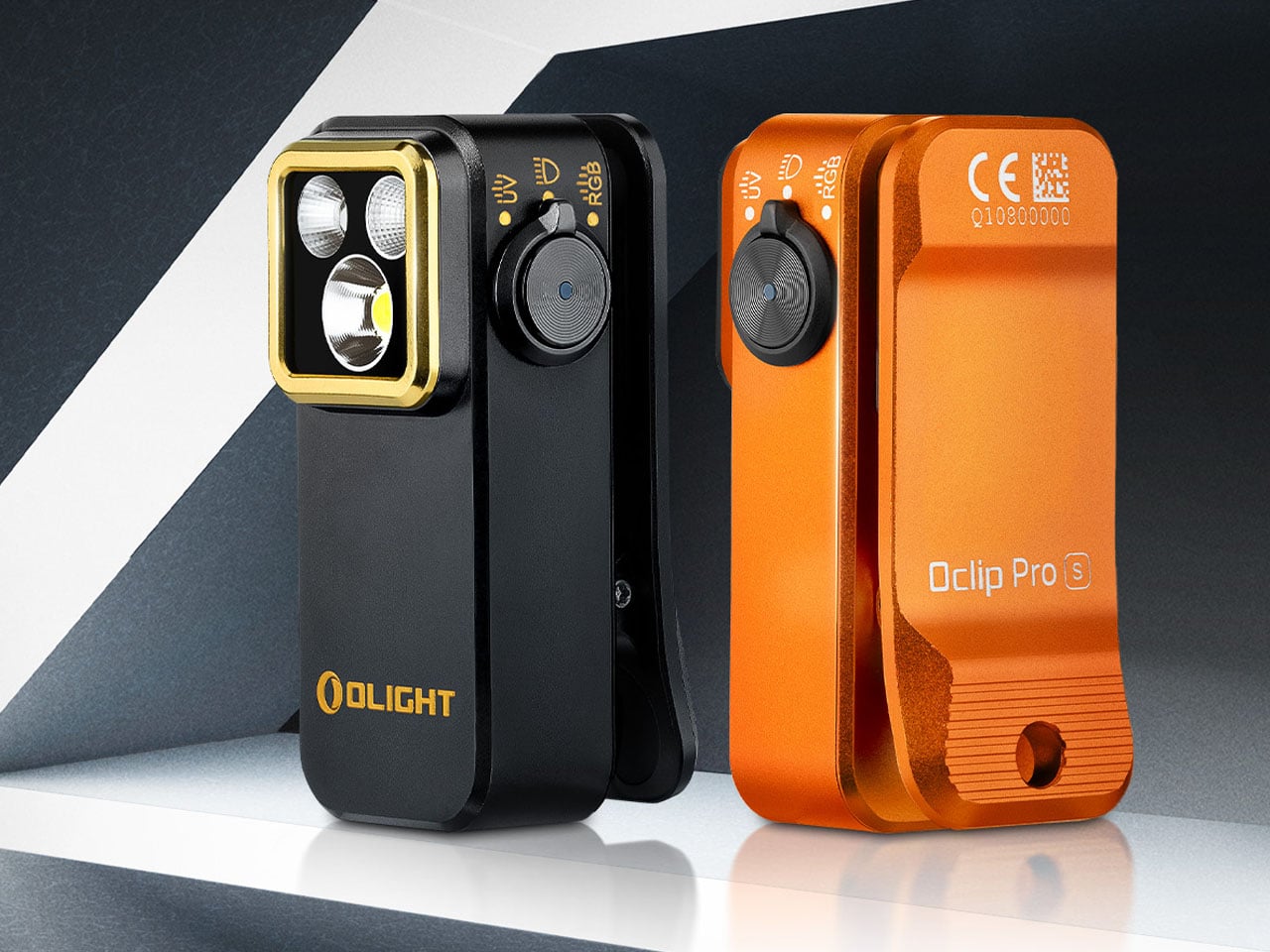
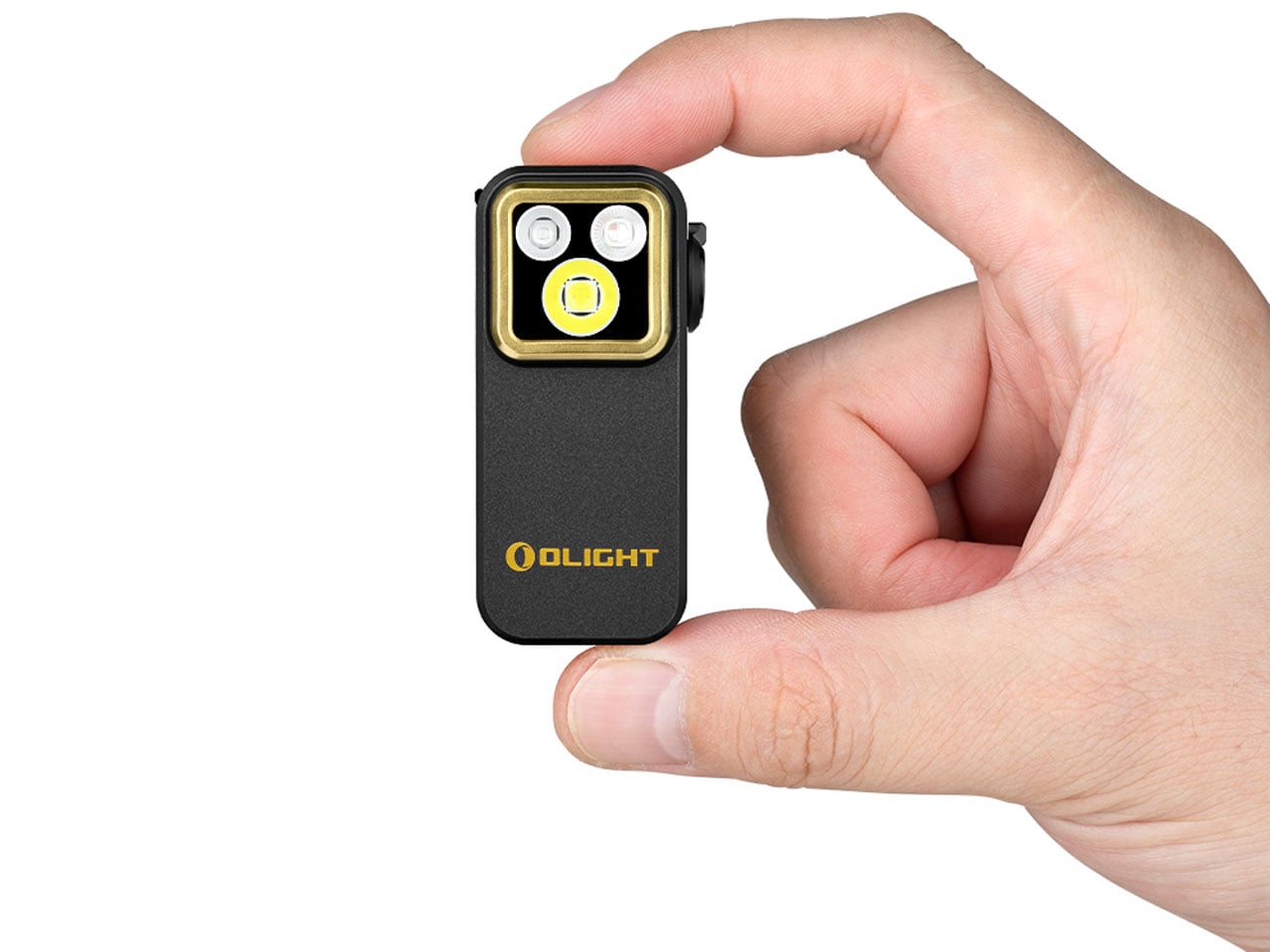
At 57 × 28 × 27 mm and 53 grams, the Olight Oclip Pro S is the kind of EDC tool that earns its carry weight by doing considerably more than one thing. Its integrated clip handles pockets, bags, and gear straps, while a magnetic attachment option makes it a capable hands-free light for tasks that require both hands. The body is compact enough to disappear in a pocket until it becomes exactly what is needed, which is the best quality a carry tool can have.
The 5-in-1 lighting system is what elevates it beyond a simple flashlight. Primary white LEDs deliver up to 600 lumens with an 80-meter beam distance, switchable between flood and spotlight modes. RGB illumination adds red, green, and blue signaling options. A 365nm UV light extends its usefulness into detecting fluorescent materials and checking cleanliness in specialized situations. A side dial controls the entire system intuitively, and battery life reaches up to 144 hours in low mode with USB-C charging throughout.
What We Like:
Five distinct lighting modes packed into a 53-gram body is a genuine engineering feat, and the UV capability is the kind of quiet surprise that distinguishes thoughtful design from merely competent design
USB-C charging integrates it cleanly into any modern kit without the need for proprietary cables or spare batteries
What We Dislike:
A dad who primarily needs a reliable everyday flashlight may never explore most of what the Oclip Pro S actually offers
At maximum brightness, thermal management limits extended runtime, which is a reasonable engineering trade-off but worth knowing before relying on it in demanding conditions
5. Side A Cassette Speaker
The Side A Cassette Speaker is shaped exactly like a real mixtape: transparent shell, side A label, the whole thing, and it makes no apologies for that. At $49, it is a speaker you would buy for what it looks like before you hear what it sounds like. The design is faithful enough to prompt a genuine double-take. Weighing just 80 grams with the clear storage case that doubles as a display stand, it occupies almost no space on a shelf but immediately defines wherever it sits.
Bluetooth 5.3 handles wireless connection to phones, tablets, and laptops. A microSD card slot supports offline MP3 playback for anyone who still curates music rather than just streaming it. Battery life runs to six hours at full volume, with a two-hour recharge via the included USB-C cable. The sound is tuned to evoke analog warmth rather than clinical accuracy, which is entirely the right call for the character of the object. For a dad who remembers making mixtapes, this does the emotional work before it plays a single note.
The cassette form is executed with enough fidelity to spark a real conversation, not just a brief smile before it gets set aside on a shelf
microSD offline playback is a thoughtful addition for anyone who still curates their own playlists rather than surrendering entirely to an algorithm
What We Dislike:
Audio performance leans toward warmth and character rather than reference quality, which suits the object perfectly but is worth setting expectations for anyone anticipating hi-fi output at this price
Six-hour battery life is modest compared to larger Bluetooth speakers, though the size makes the trade-off obvious and entirely forgivable
Good Design Doesn’t Need a Bow on Top
The best gift for a design-minded dad isn’t the most expensive thing on the shelf. It’s the one that shows you understood something about how he thinks and what he values. A pen that never needs ink. A leather roll shaped by hand in Japan. A flashlight that carries five functions in a 53-gram body. These aren’t objects that need explaining when someone picks them up. They make their case on their own.
Each pick here falls under $135 and spans a range of interests from desk organization to EDC carry to audio nostalgia. What they share is a commitment to material honesty and considered function. Father’s Day doesn’t have to be another gift that gets thanked and quietly forgotten. Give something built to last, and there is a good chance it becomes the thing he mentions to people for years, without quite being able to explain why.
There are two kinds of home gym gear in the world. One category gets bought with optimism, posed with for a week, then quietly graduates into becoming a very expensive clothes-rack (I’m looking at you, Peloton). The other category earns permanent floor space because it’s bought with a mindset of seriousness, and it actually changes how you train. Most of the fitness industry, with its pastel palettes, subscription apps, and gamified streaks, has spent years chasing that first category. RVL Wings lands squarely in the second, with the kind of brutal, industrial confidence that speaks directly to power-lifters who care more about mechanics than motivational slogans.
Mounted onto a power rack, RVL Wings transform an already serious setup into something far more versatile. The system brings fluid, plate-loaded resistance to a structure that usually lives and dies by barbells, safeties, and pull-up bars. That means presses, rows, unilateral work, and controlled strength movements can all happen in the same footprint, with your existing rack and plates doing the heavy lifting. The Seattle-based RVL Strength team designed the system in collaboration with personal trainers, physical therapists, and biomechanics, and built it from high-quality powder-coated steel that reflects that intent. For a category that has historically delivered flimsy attachments that rattle under any real load, the material choice alone signals a different standard.
Free weights shift their load vector as you move through a range of motion, creating inconsistency that forces you to compensate with stabilizer muscles rather than loading the target muscle cleanly. Single-plane cable machines solve that partially but lock you into one fixed movement path. The torque-based design at the heart of RVL Wings addresses both problems, creating consistent resistance that follows the movement and delivers smoother reps, reduced friction, and better flow through the full range. That’s the quality of feel serious lifters associate with commercial cable stations, and finding it on a rack attachment is a genuine engineering achievement. Having physical therapists and biomechanics specialists in the development loop shows in how the resistance actually behaves under load.
Training alone with heavy loads is the reality for most home gym owners, and it’s a problem most attachment products quietly ignore. RVL Wings address it directly, designing for a stable and controlled movement experience that reduces reliance on a spotter even during heavy or complex sets. The system lets lifters maintain control through a full range of motion and push intensity with confidence, shifting the mental focus from managing risk to managing performance. That’s a specific and important distinction for athletes who train solo and want to push hard without turning every top-set press into a survival exercise. Designing with physical therapists in the loop makes that claim feel grounded rather than aspirational.
RVL Wings run independently or in tandem, stow cleanly when not in use, and allow rapid exercise transitions that make supersets and circuits genuinely seamless. The movement library currently sits at approximately 20 to 24 gym-quality exercises spanning upper body push, upper body pull, lower body, unilateral training, and core and athletic movements. New exercises are being developed continuously by both the RVL Strength team and the user community, which means the ceiling keeps moving upward as the product matures. Moving fluidly between a chest press, a row, a lateral raise, and a single-arm pull without restructuring the entire setup used to require either a commercial gym or a very large dedicated cable station. On a home rack footprint, that kind of range is a meaningful shift.
RVL Wings work with standard uprights common to commercial and premium home racks, including 3″x3″, 3″x2″, and 2″x2″. Each system ships pre-configured for a 3″x3″ rack by default and includes the hardware needed to convert to the smaller upright sizes. Three variants exist based on through-hole pin size: 1″/25mm, 3/4″/19mm, and 5/8″/16mm, with buyers specifying their pin size at order. RVL Strength provides a full compatibility checklist and recommends contacting the team directly before purchasing if there’s any uncertainty about fit. The setup breaks down into three steps: mounting RVL Wings to the rack, adjusting the main arm and modular base mounts, and attaching grips or weight horns via the quick-release couplers.
Pricing runs from $1,999 at the Founder Tier, $2,199 at the Early Bird Tier, and $2,349 at the standard tier. Every unit ships with two Main Mount Assemblies (Left and Right), four Spotter Pins, two Rotation Limiter Pins, two 4-foot Main Arms, four Modular Mounts, two Deluxe Rotating Grips, two Weight Horns, eight Main Mount Shims with hex key sized for multiple upright types, and a full installation guide. Additional grip styles and expanded accessory components are already in development and will be sold separately. Units ship within the United States as early as July 2026.
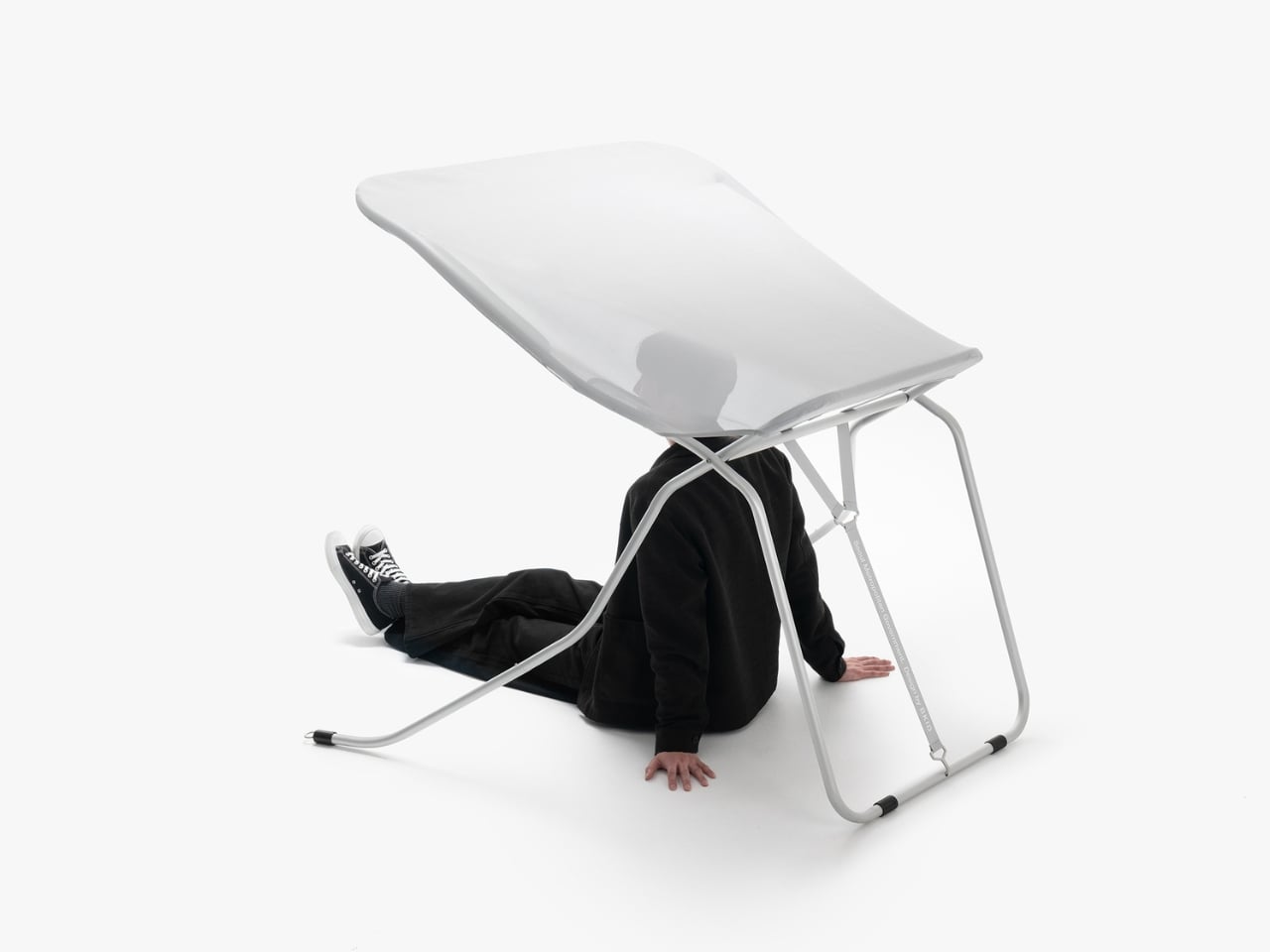
Most urban design conversations center on permanence: the building, the plaza, the park. Fixed, costly, and slow to adapt. Seoul-based studio BKID Co is thinking differently, and the result is the Seoul Shade, a compact, foldable sunshade that quietly challenges the idea that public comfort has to be built into the ground.
BKID, founded by BongKyu Song in 2006, is the kind of studio that doesn’t stay in one lane. Song is a former Samsung designer who helped lead the design of the original Galaxy Tab. Over the years, BKID has built a portfolio that spans medical devices, car diffusers, furniture, and smart home tech, earning 13 iF Design Awards along the way and ranking number one in Korea for public design. The Seoul Shade feels very much like a continuation of that public-minded design ethos, this time applied to something deceptively simple: personal shade.
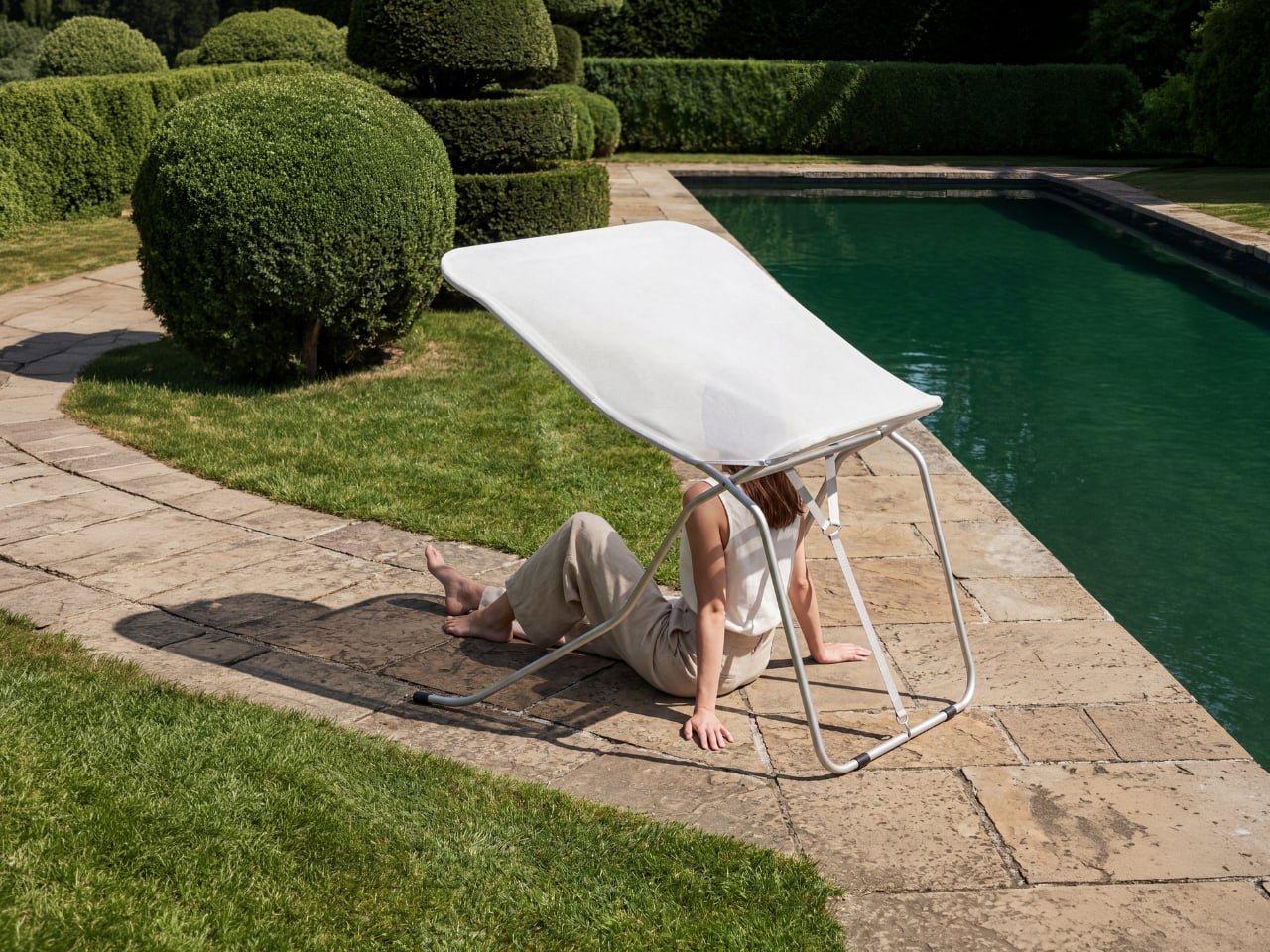
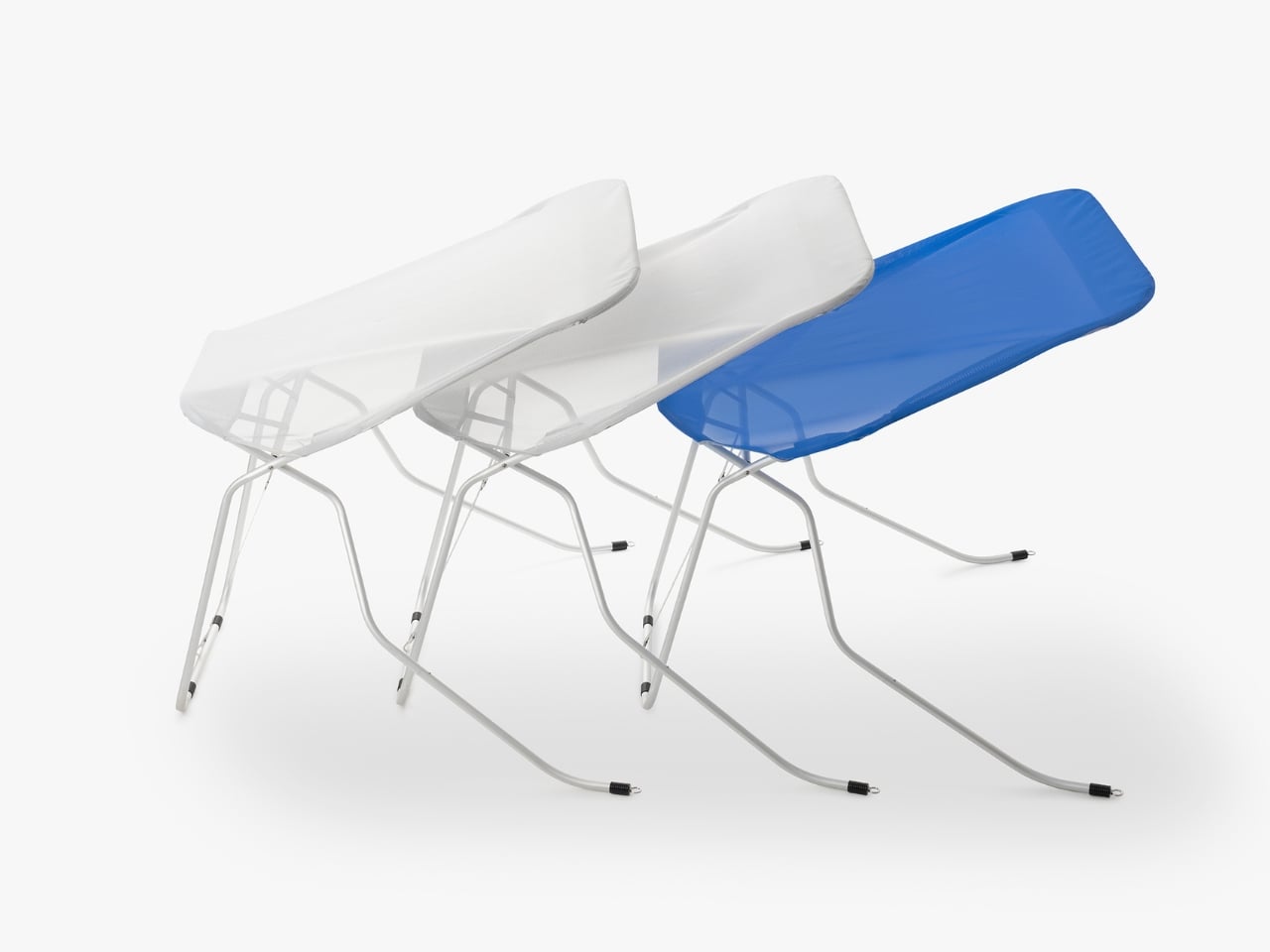
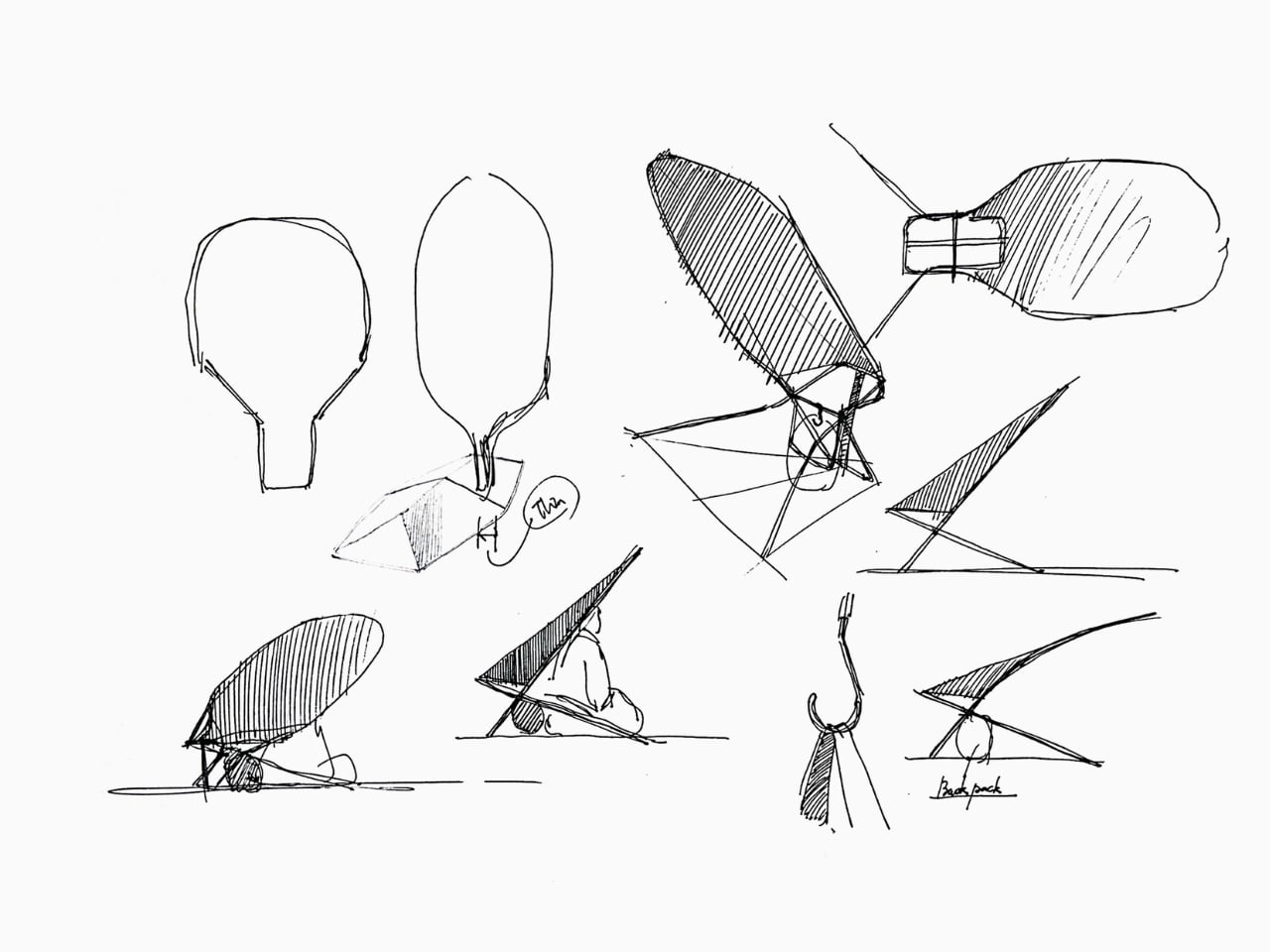
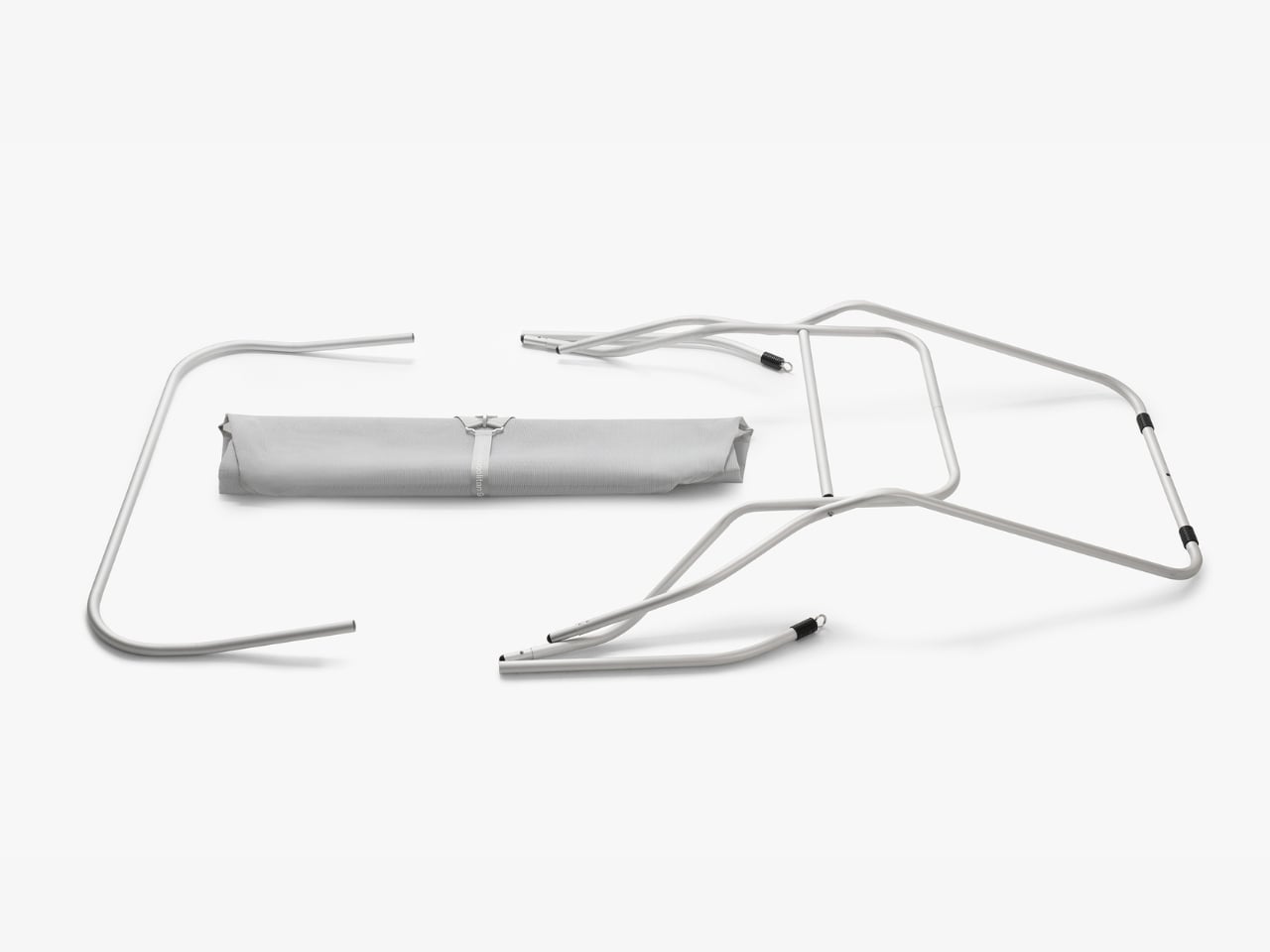
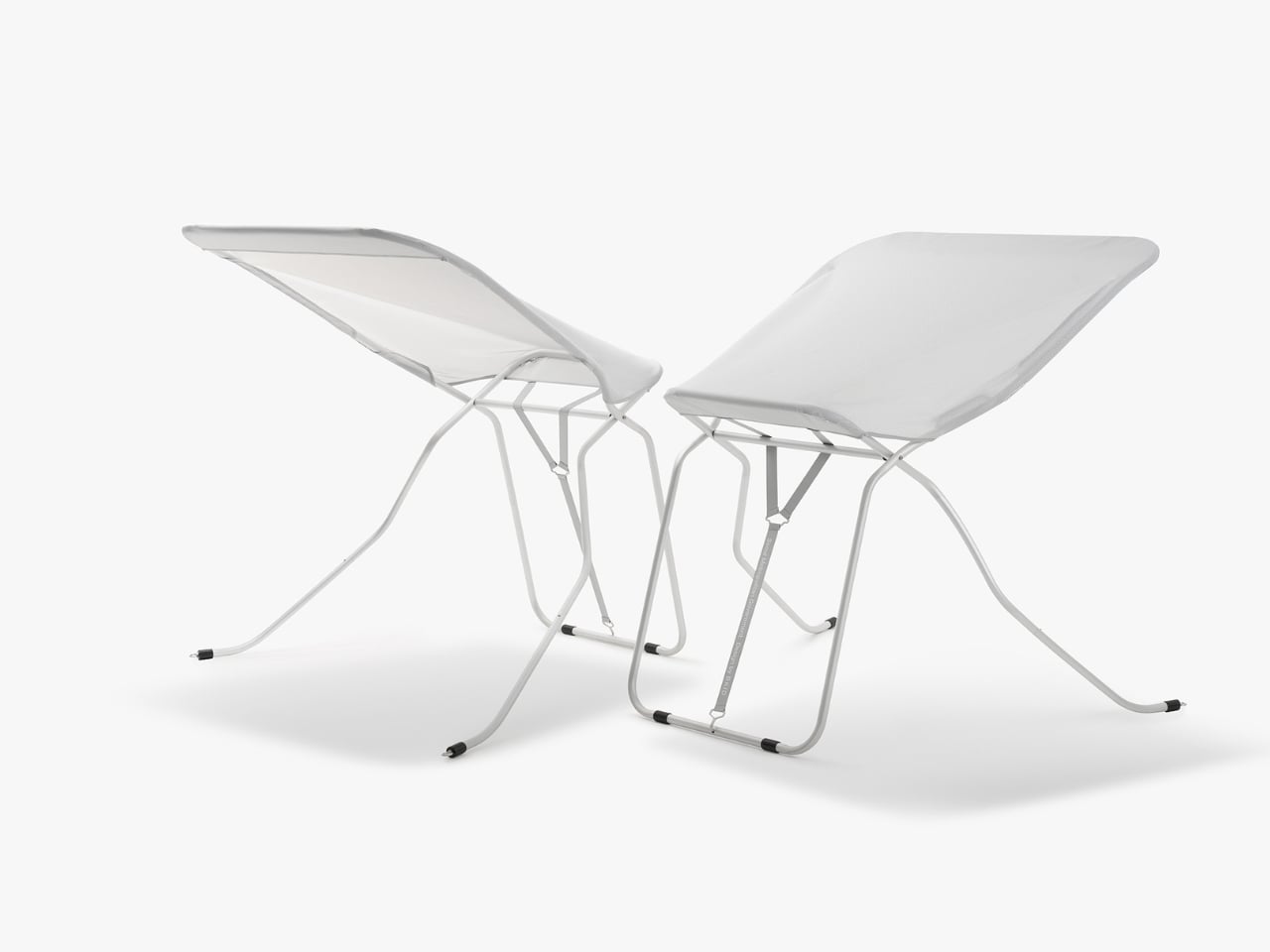
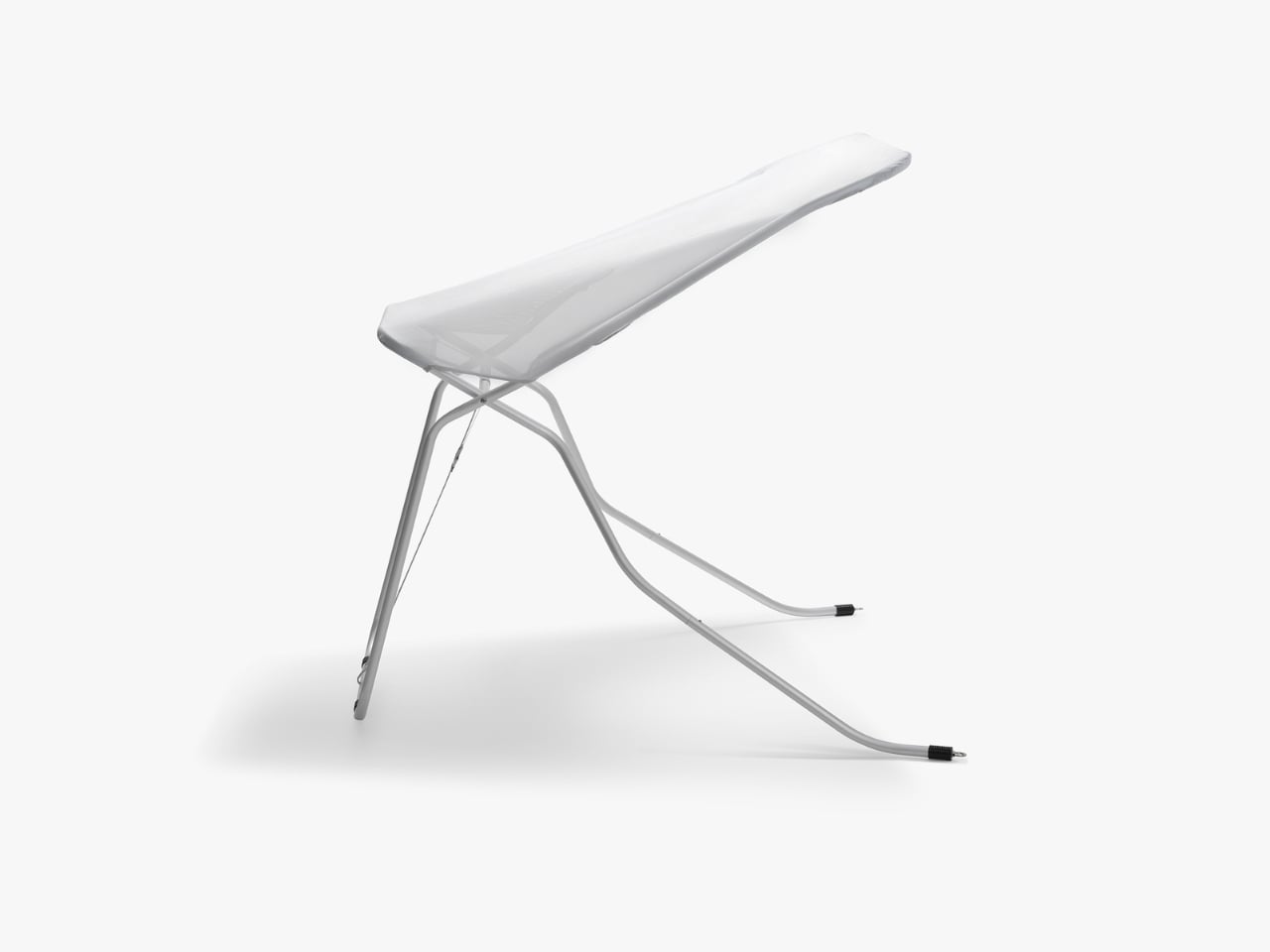
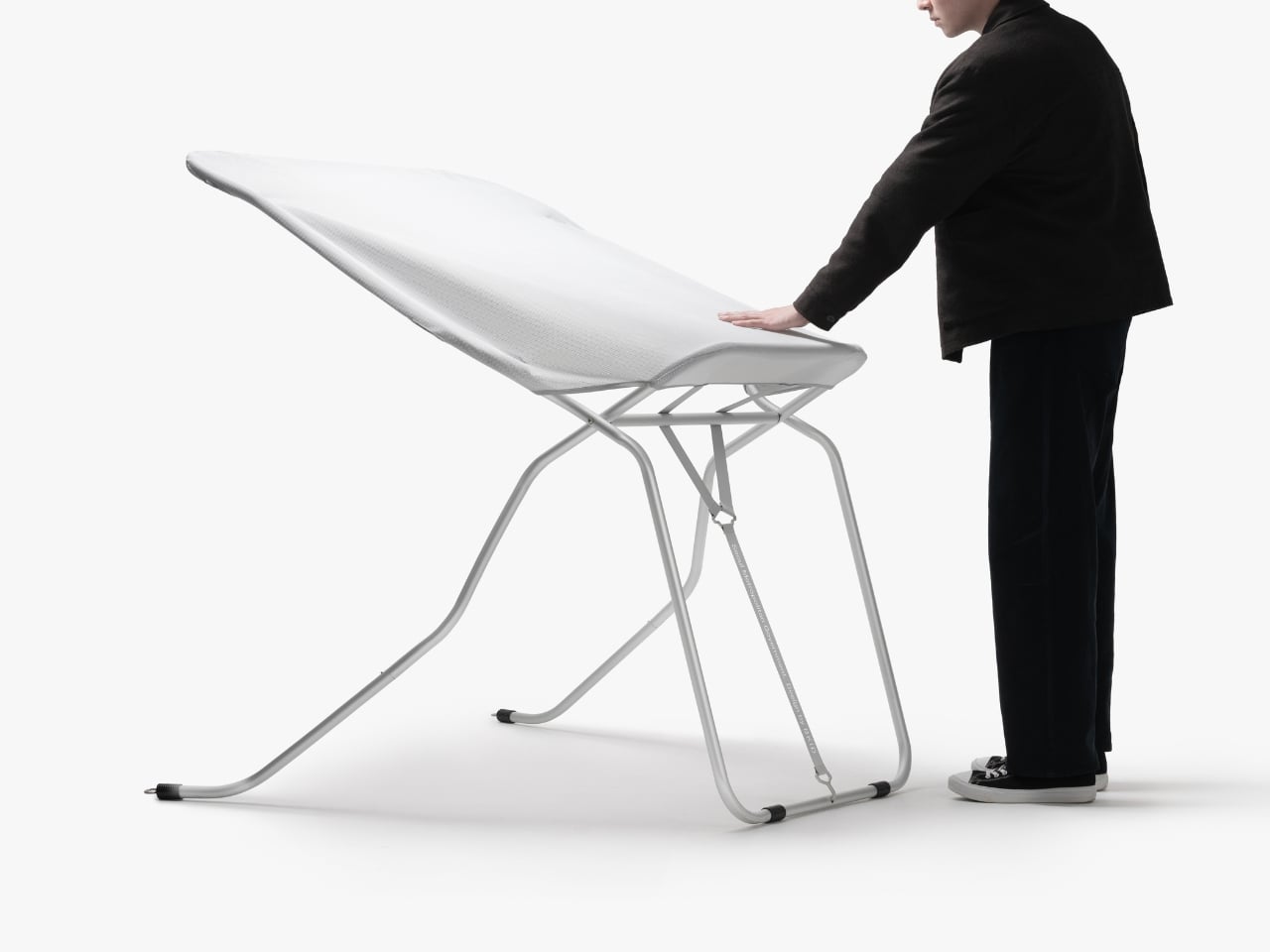
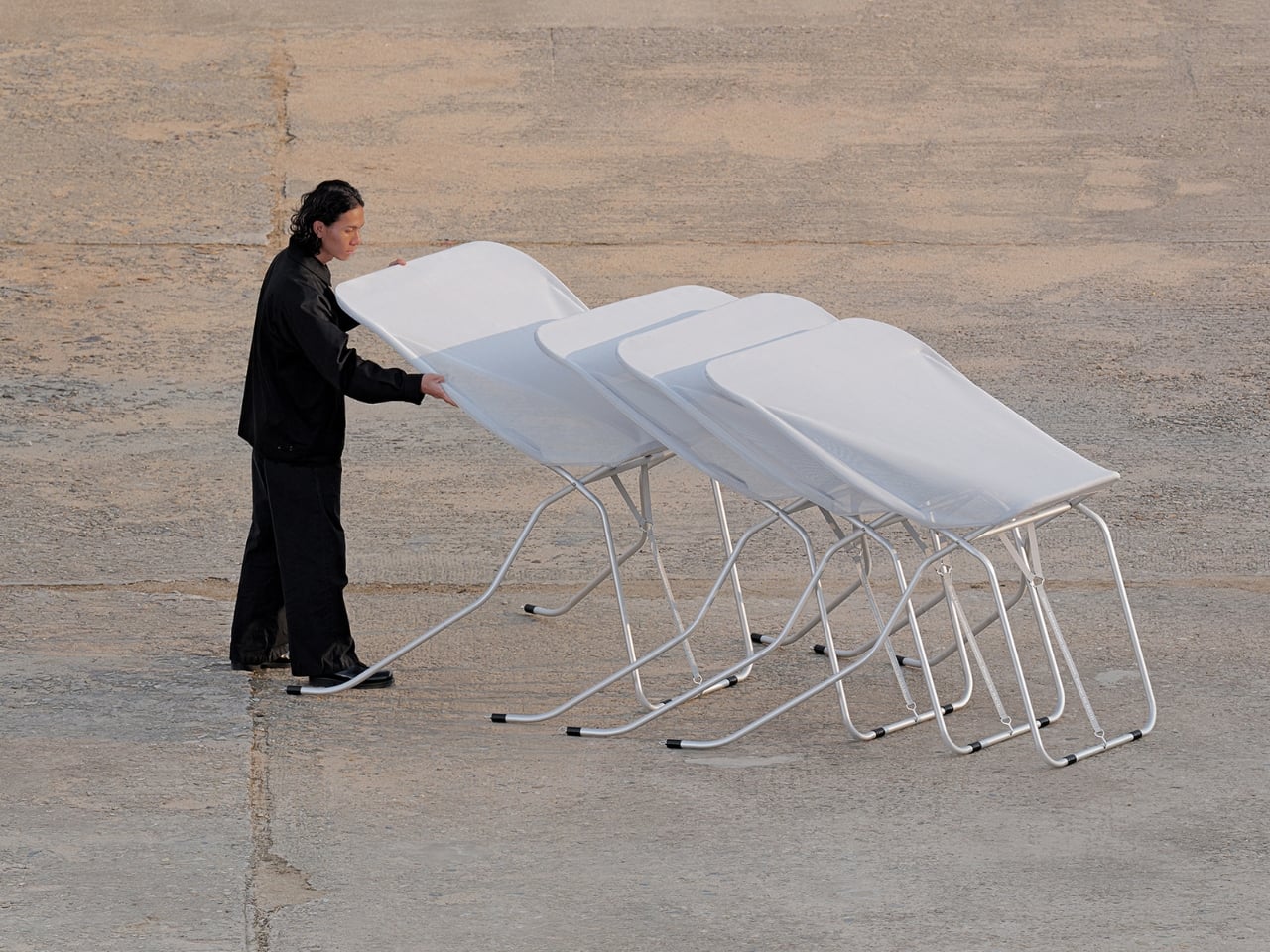
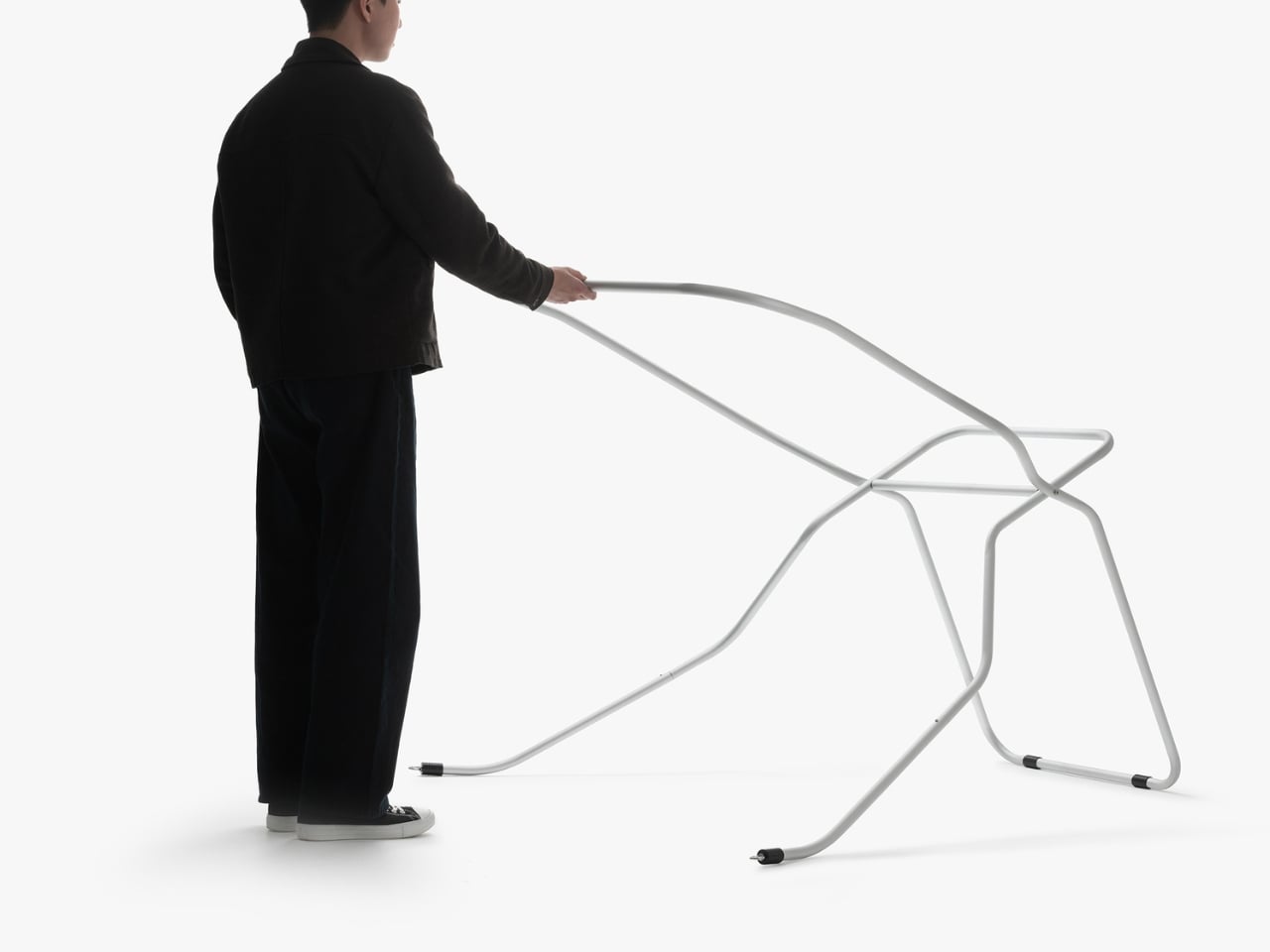
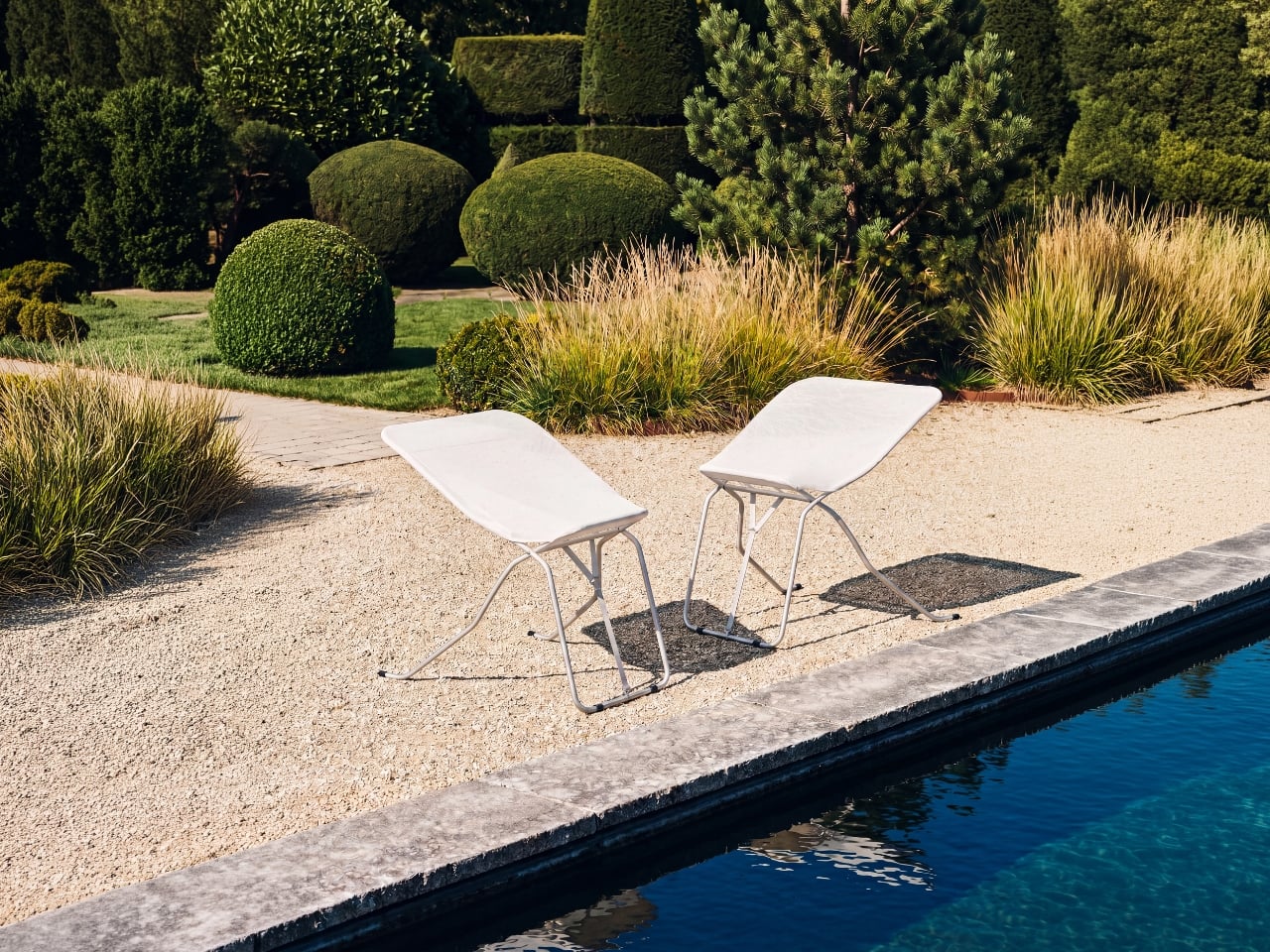
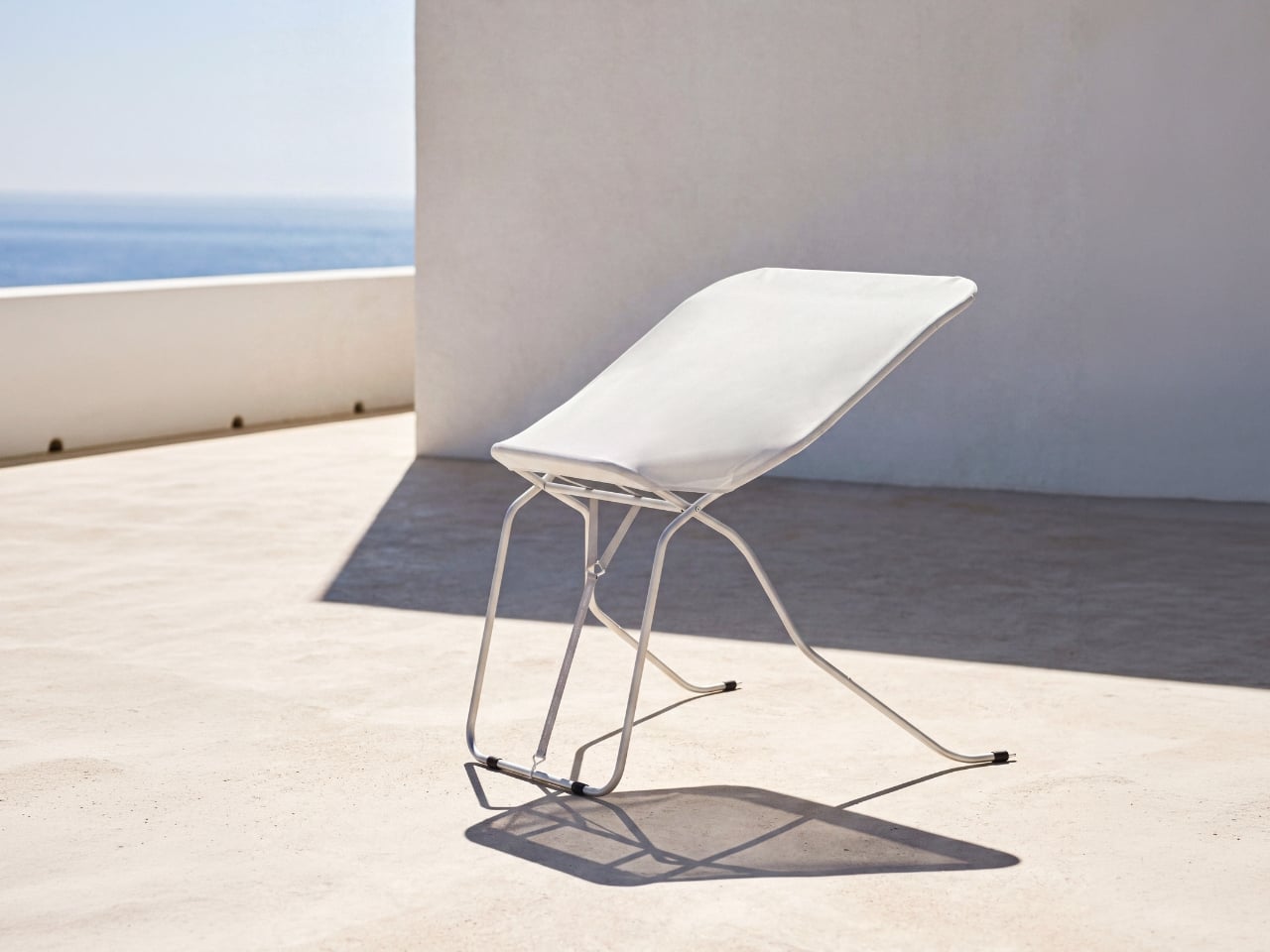
The concept takes the folding mechanism of a camping chair and applies it to a canopy structure sized for one to two people. Set it up in a few steps, pack it down flat, carry it with you. The whole thing is disarmingly low-tech, which is actually the point. When a design works this well without a battery or an app, you notice.
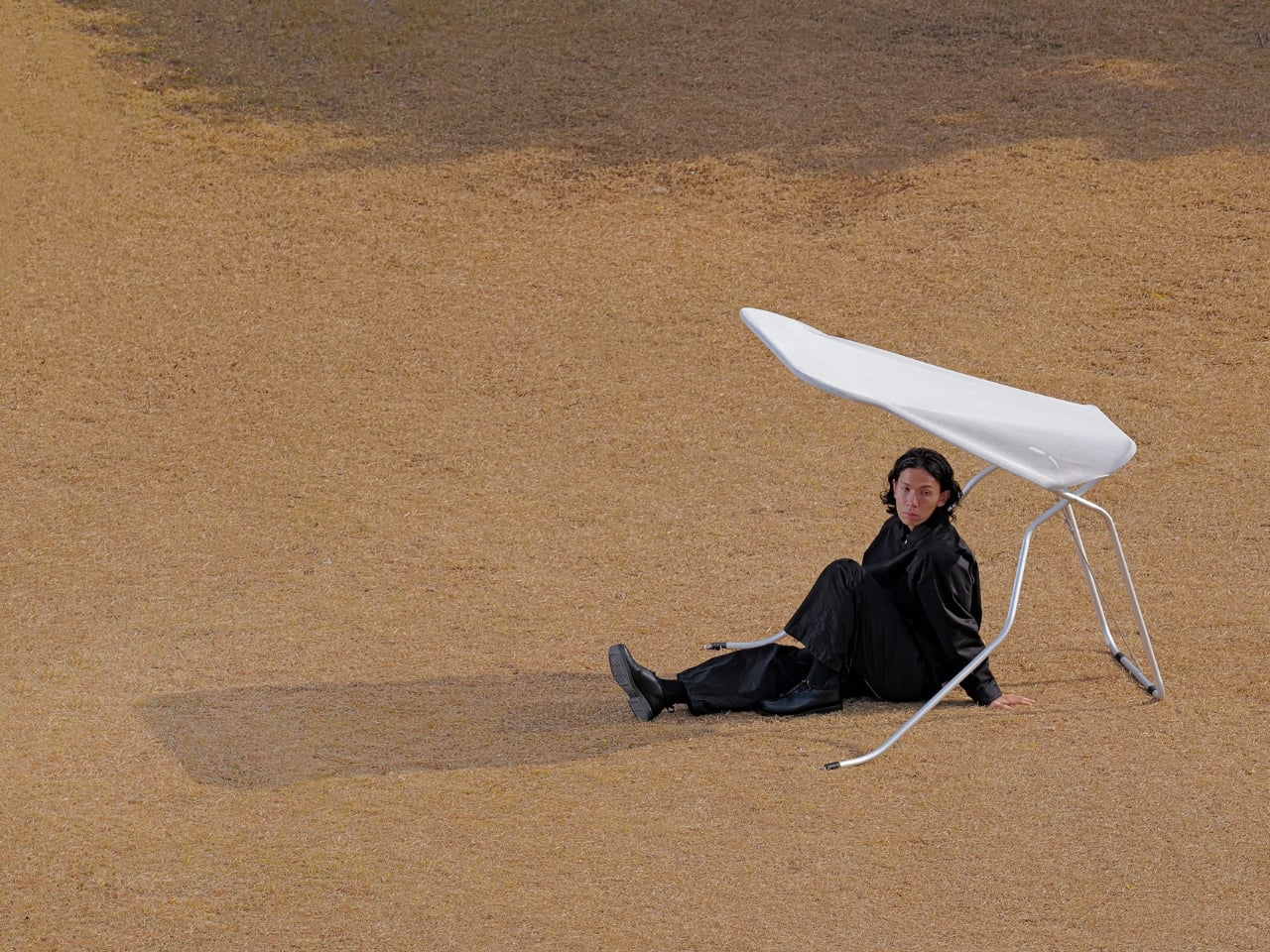
Visually, the Seoul Shade earns its place. The canopy is a stretched fabric panel held aloft by a lightweight tubular frame, and depending on the angle you catch it from, it looks like a wing, a sail, or a sculptor’s study of tension and curve. The product shots are beautiful, with users tucking themselves underneath in sandy fields and poolside terraces, which might feel aspirational to the point of absurdity, but they do communicate one thing clearly: the form has real presence. It’s not just a utility item. It looks considered.
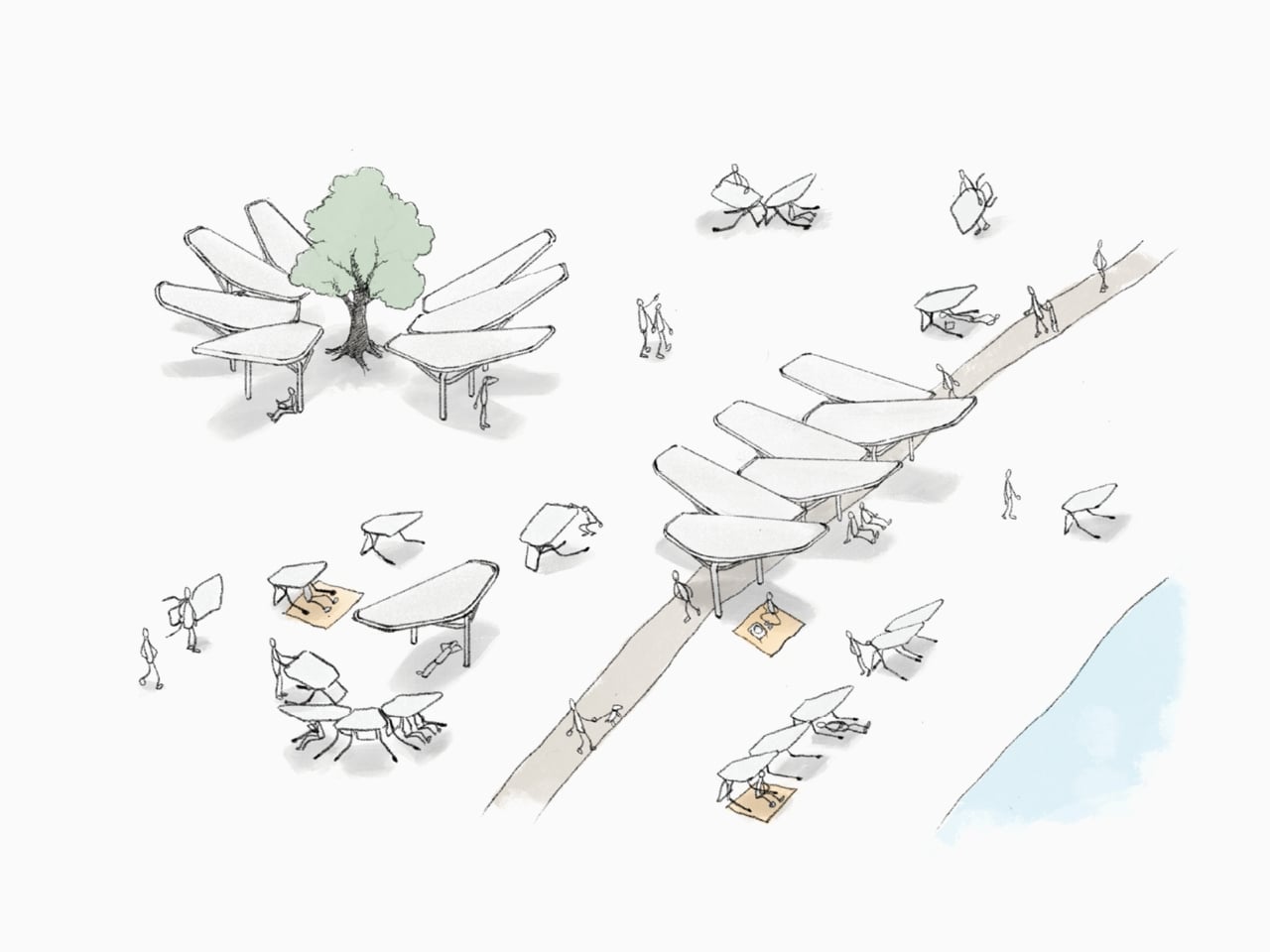
What makes this more than a clever camping accessory is the urban application BKID has built into the concept. The studio envisions these shades deployed collectively, arranged in rows along pathways, fanned out around trees, clustered at event spaces. A single unit is practical. A fleet of them becomes temporary infrastructure, which is genuinely interesting from a city planning standpoint. Seoul’s summers are increasingly brutal, and heat-related interventions at the city scale are becoming less optional. The Seoul Shade proposes a lightweight, human-scale response that doesn’t require the city to commit to anything permanent.
There’s a part of me that wonders how this holds up in actual use. Wind is the obvious concern for any canopy-style structure that isn’t staked to the ground, and the images, as carefully styled as they are, don’t really address that. But this is still a concept, and BKID has a track record of bringing things to production in ways that account for those engineering realities. The studio describes its process as a balance between emotional aesthetics and logical engineering, which suggests they’re not ignoring the practical questions so much as staging the presentation around the vision first.
The broader appeal here, I think, is that the Seoul Shade represents a shift in how we think about personal comfort in public spaces. The expectation has long been that cities provide the shade, usually through trees that take decades to mature or structures that cost a fortune to install. Seoul Shade flips that: it says maybe comfort is portable, personalized, and doesn’t have to wait for infrastructure funding. That’s a genuinely useful reframe.
BKID has been consistent about designing objects that propose new behaviors rather than just solving obvious problems. The Seoul Shade is less about fixing shade scarcity and more about introducing the idea that public space can be made adaptive, one foldable canopy at a time. Whether it ends up being produced for mass distribution, deployed as a public event furnishing, or stays a proposal, the conversation it starts is worth having.
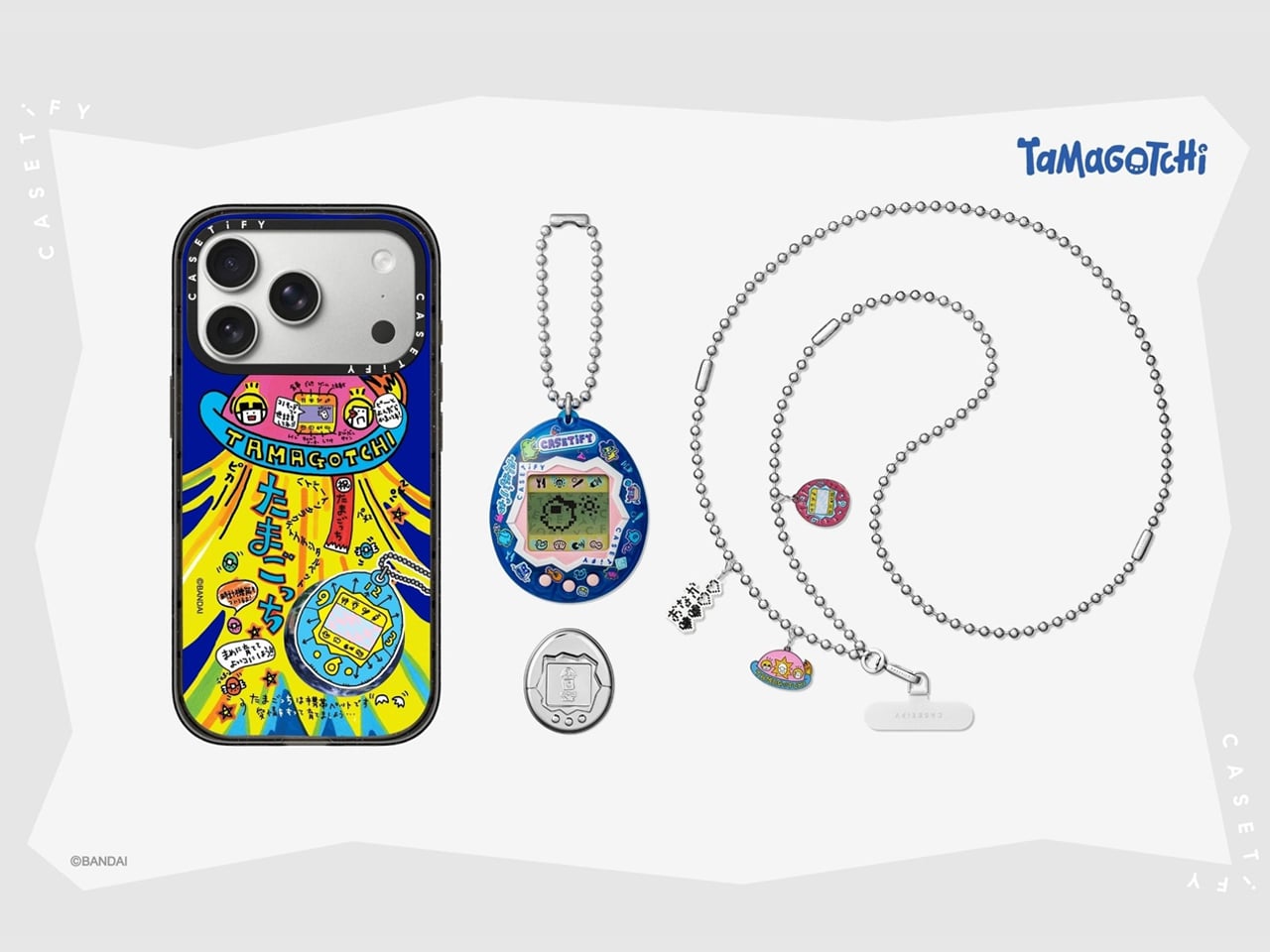
Tamagotchi, the virtual pet created by Bandai, a Japanese toy manufacturer, was seen constantly hanging from schoolbags in the late 1990s and early 2000s, when I was growing up. As brands now consistently mine millennial nostalgia for Gen-Z delight, many collaborations in the recent past have given birth to or revived the Y2K-era devices, of which the new Tamagotchi x CASETiFY collaboration is a true testament.
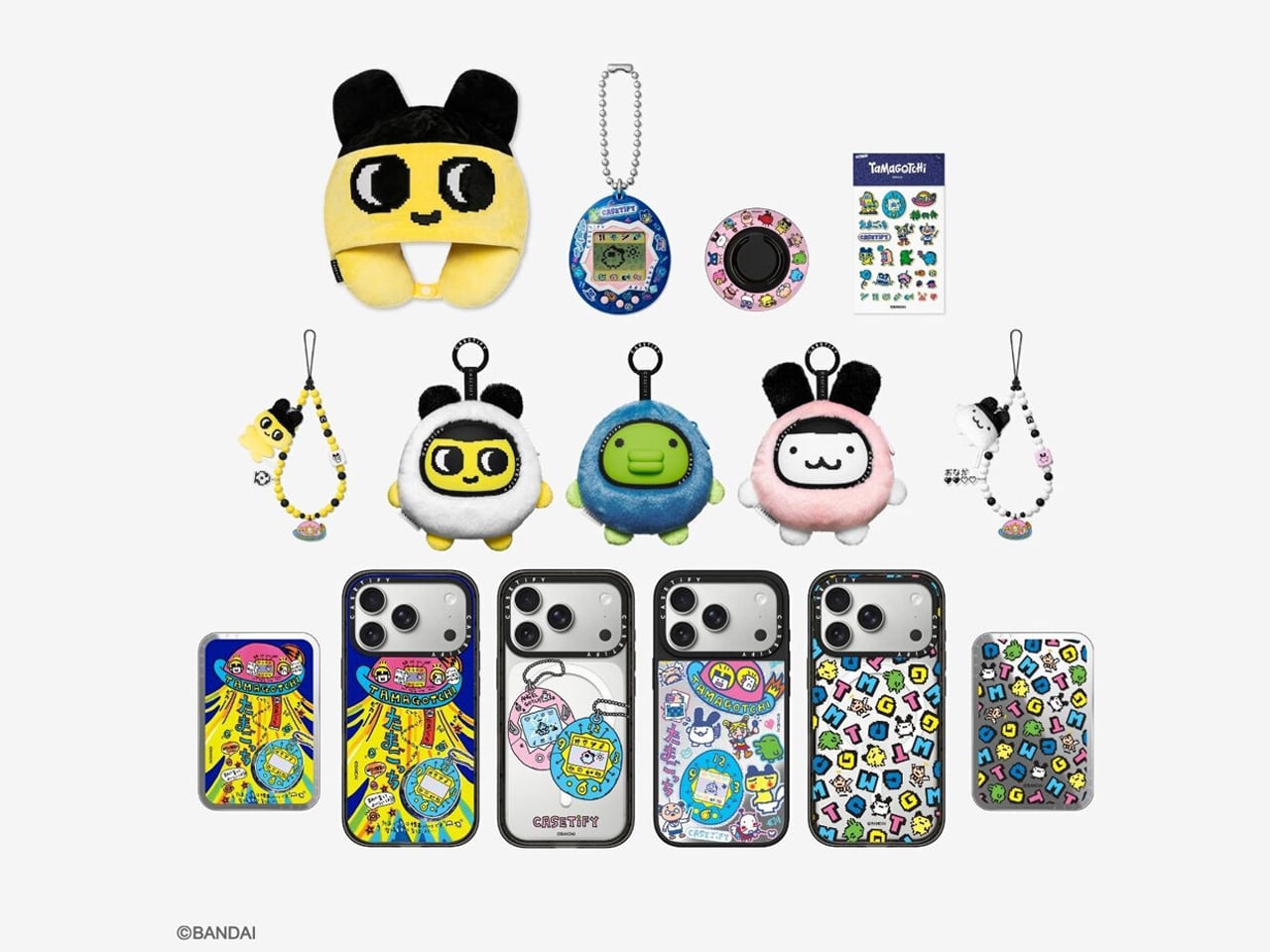
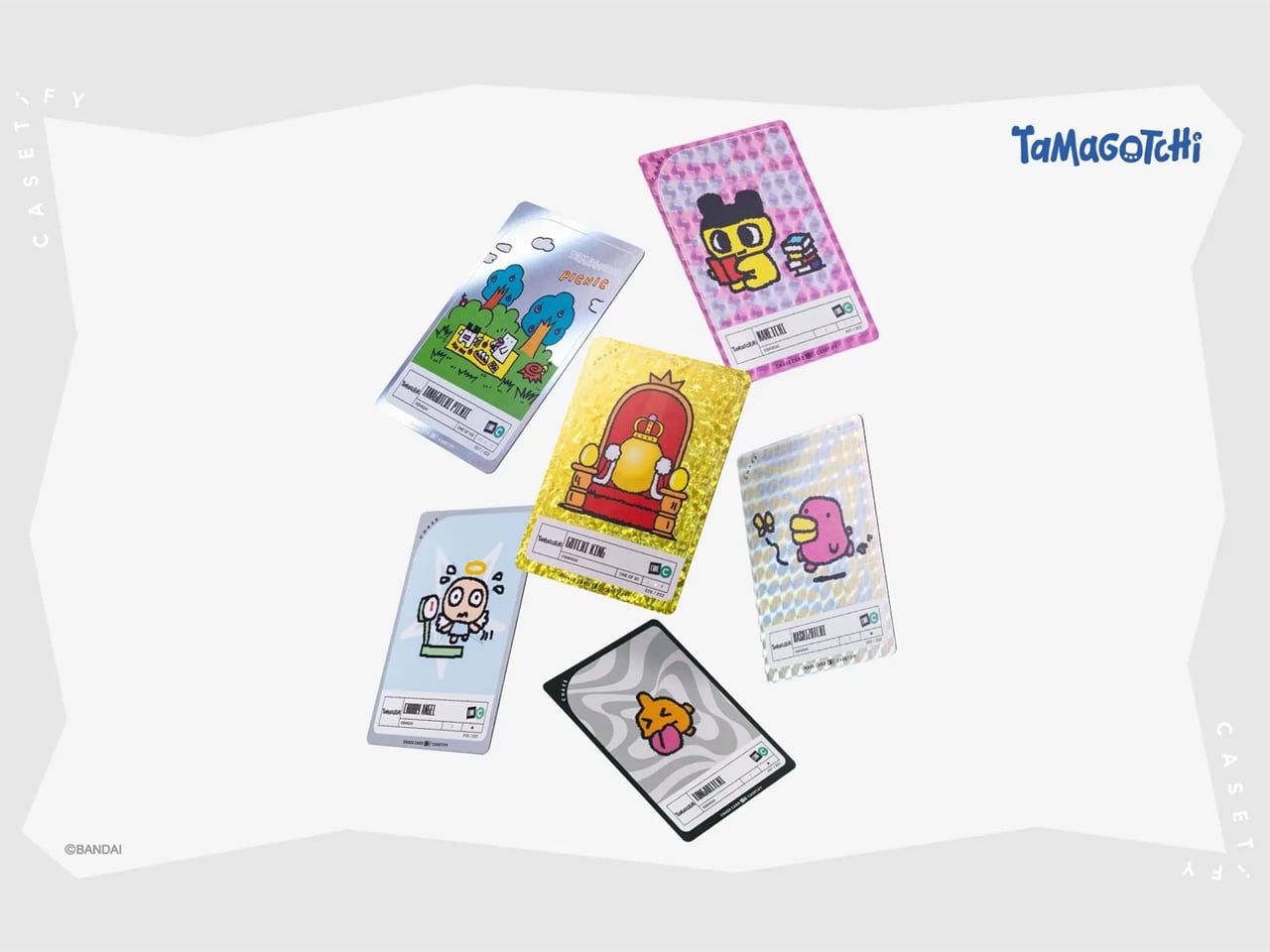
The device, which was a consistent charm for people, especially the kids, appeared clipped onto keychains or held as fidgets in the hand, is now getting a new life through the charismatic collaboration. The collection transforms the favorite nostalgic character into smartphone and tablet cases, charms, collectible accessories, and Tamagotchi chase cards.
Officially launched on May 29, 2026, the CASETiFY’s Tamagotchi lineup includes customizable phone cases, earbud pouches, charms, a carry-on suitcase, and also features an original, limited-edition Tamagotchi device, each designed to be styled with interchangeable modular accessories. The exclusive range of products starts at roughly around $15 and goes up to $799.
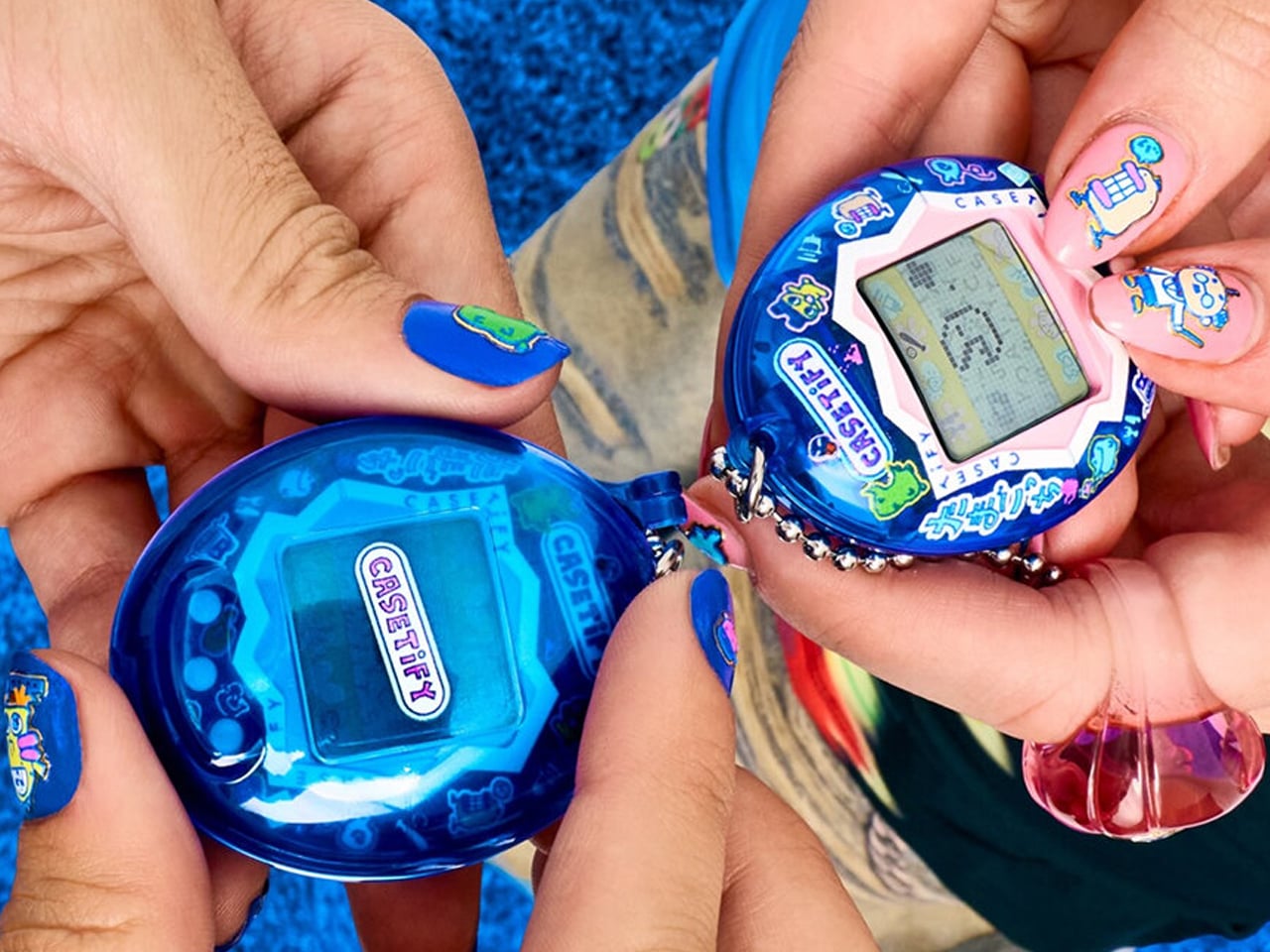
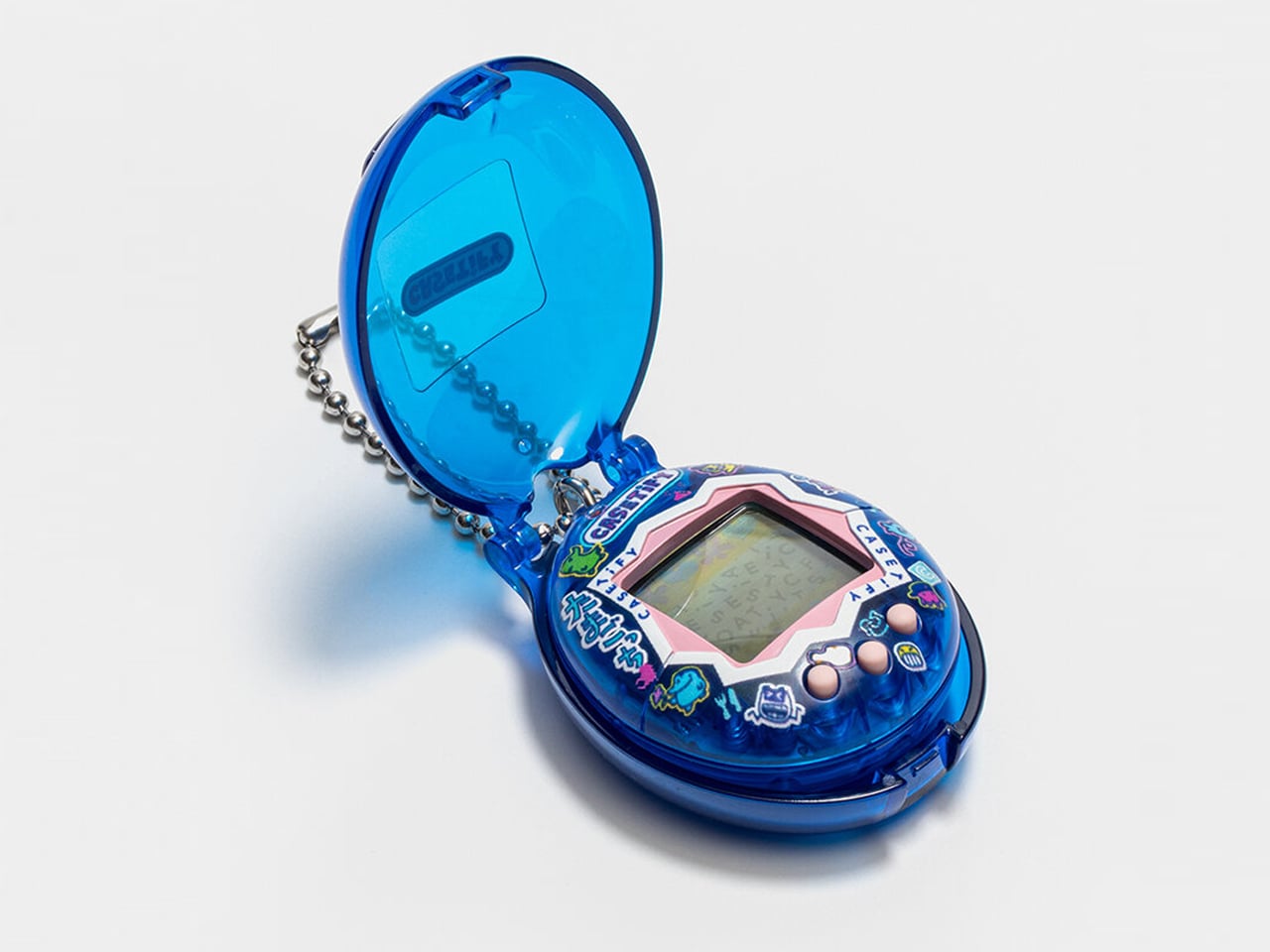
The highlight here, of course, is the release of the Original Tamagotchi Casetify Limited Edition. This collectible object, reimagined as a usable tech accessory, is priced at $45, and comes in a small, egg-shaped form factor with three buttons, just like the real thing launched in 1996. This playable device will be available in a strictly numbered quantity through CASETiFY.
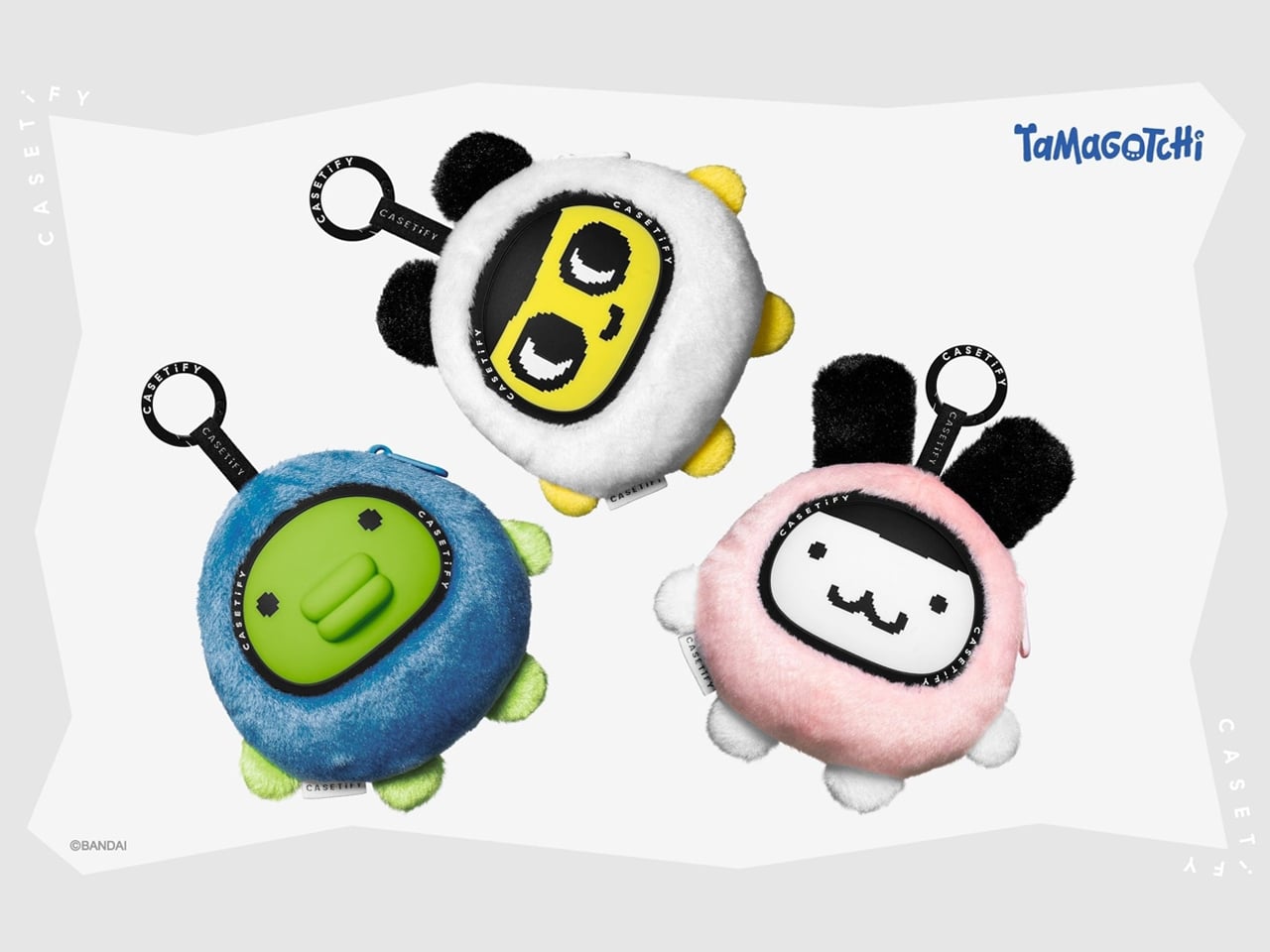
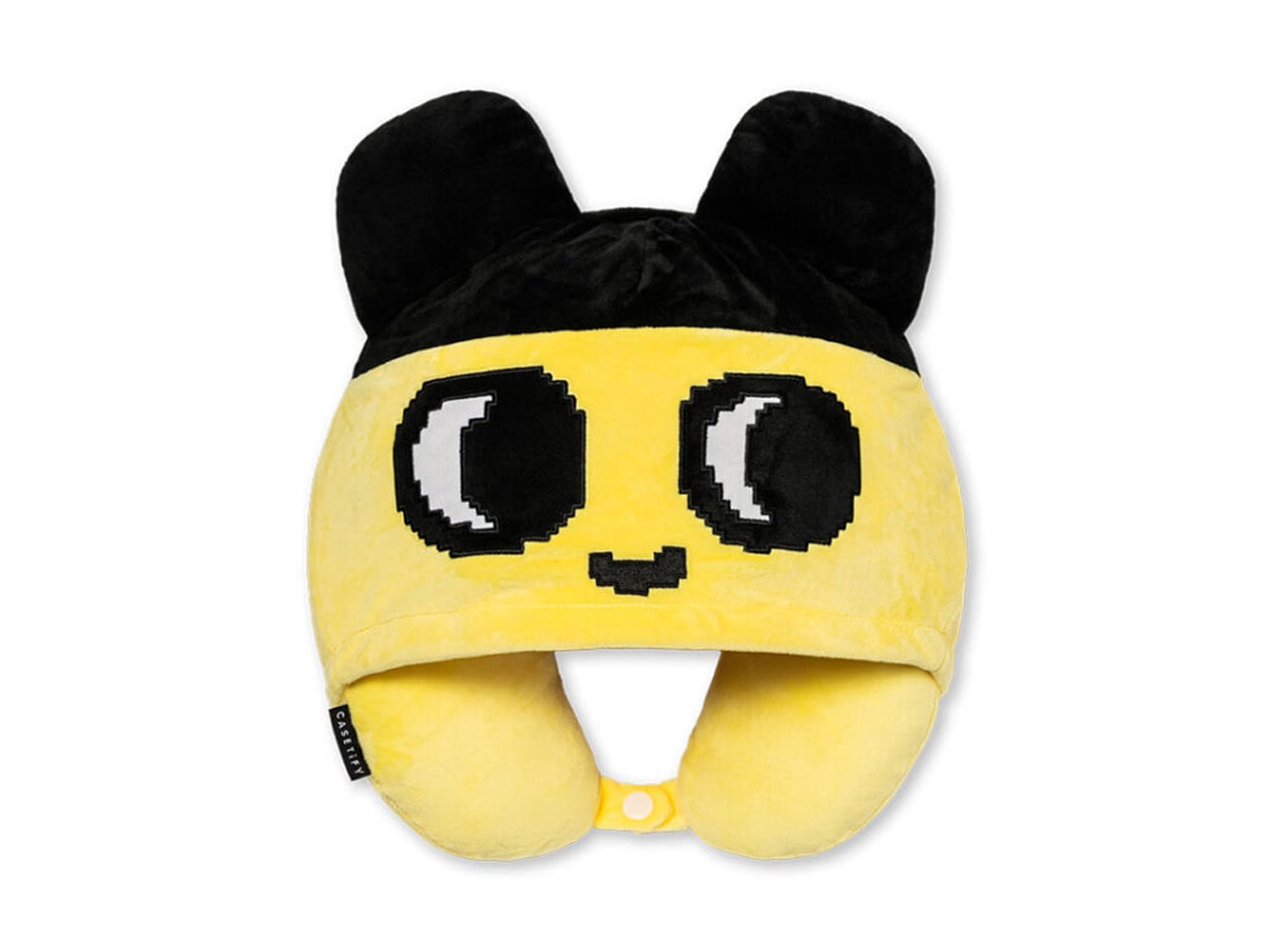
The full collection, including the original Tamagotchi, is now available at casetify.com and CASETiFY stores worldwide. Besides the rare piece, the collaboration, reviving the retro gaming imagery includes, Tamagotchi Collectible Plush Charm for $70, Tamagotchi Jumbo Pattern Snappy Cardholder Stand (MagSafe compatible) for $40, and Egg Tablet Case for the iPad at $79.
A restoration of the bright colors, character graphics, and the pixilated interfaces that made the Tamagotchi a force to reckon with is seen in the accessories covered in the character’s motifs, beyond the phone, tablet cases, detachable phone charms, and patterned straps. Amid these, the plush pouches designed to hold earbuds really stand out.
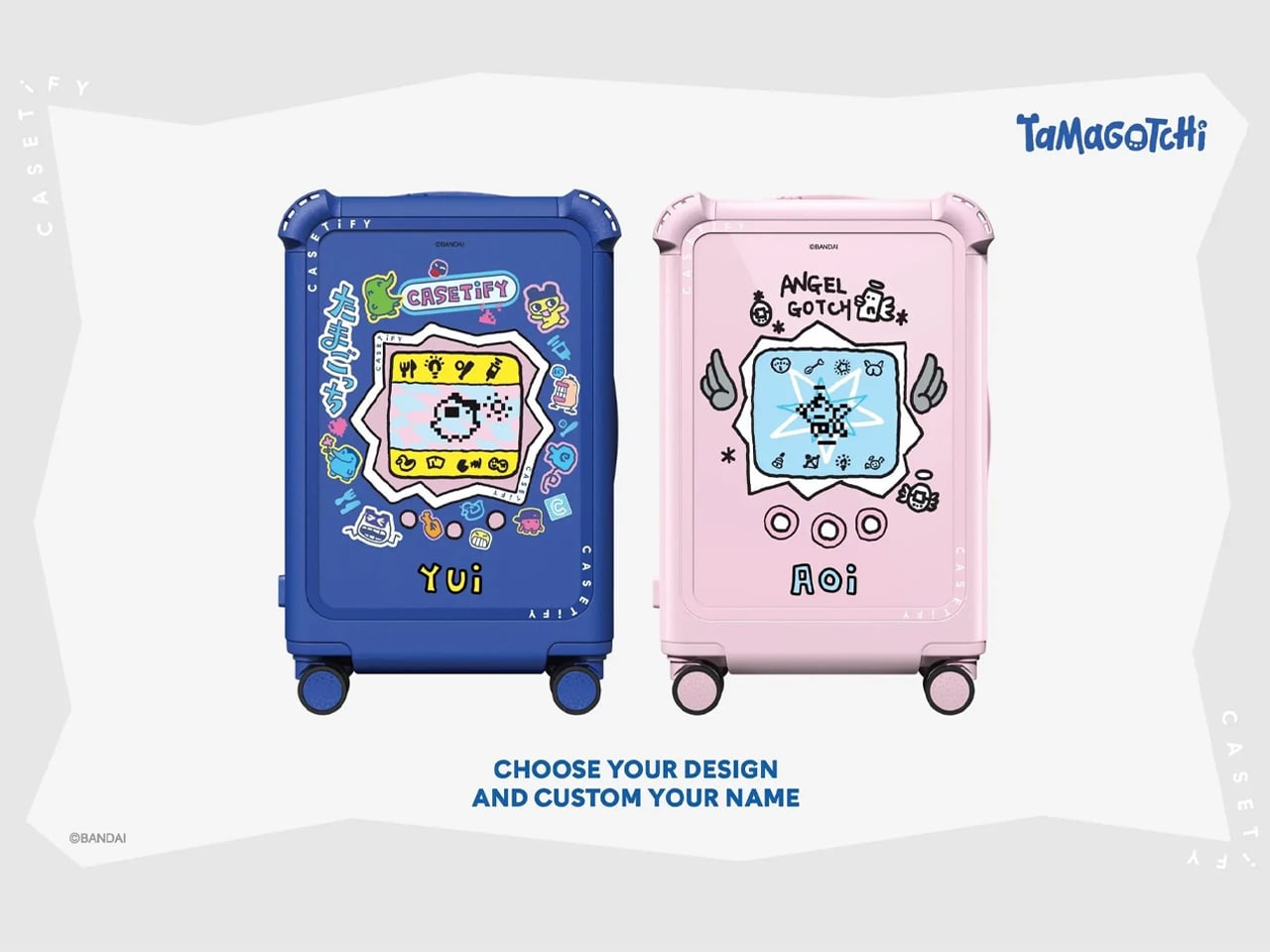
The collection, however, is not just about these smaller accessories. In fact, it comprises a customizable carry-on luggage from the CASETiFY Travel Tamagotchi luggage series. Using different Tamagotchi characters and retro typography, the appeal of the suitcase, available in pink and blue colors, can be enhanced to a decorative height that fans cannot deny.
It is difficult to point directly at what instigated Bandai for this collaboration with CASETiFY. But how it stands out, Tamagotchi nostalgia is seeing a rise in Japan. Themed displays inspired by Tamagotchi’s cute universe are everywhere, from cafes to parties. Reminding us that even after 30 years of its launch, Tamagotchi continues to have a fan following, which the two companies are leveraging through this collaboration.
Gaming peripherals have gradually crossed from purely functional tools into design objects that enthusiasts keep, display, and collect alongside their builds. Limited-edition anniversary hardware has become part of that culture, giving manufacturers a chance to honor their history while reminding the community why certain names still carry weight. Making those commemorative pieces feel genuinely worthy of the occasion, however, is always the trickier part.
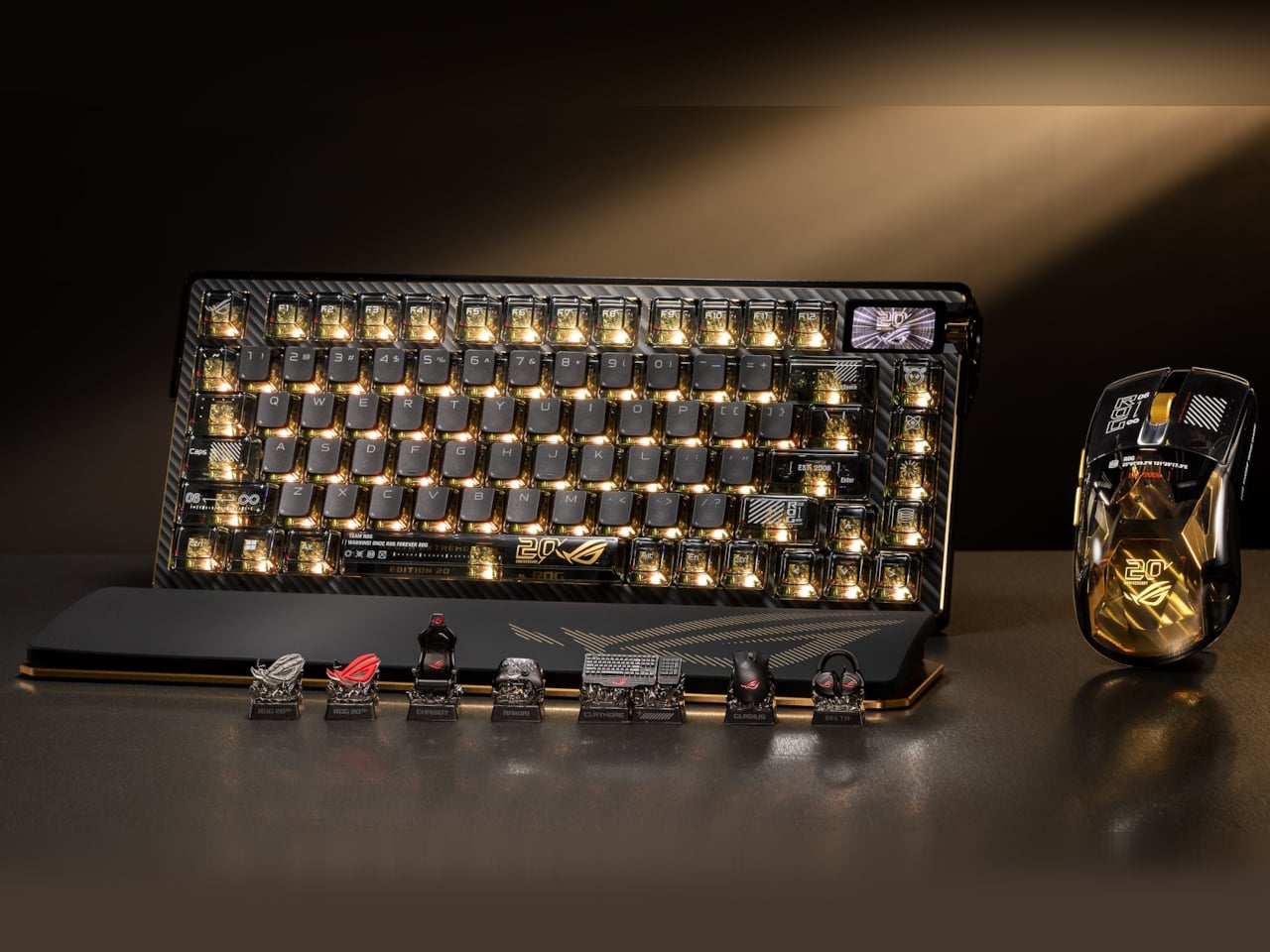
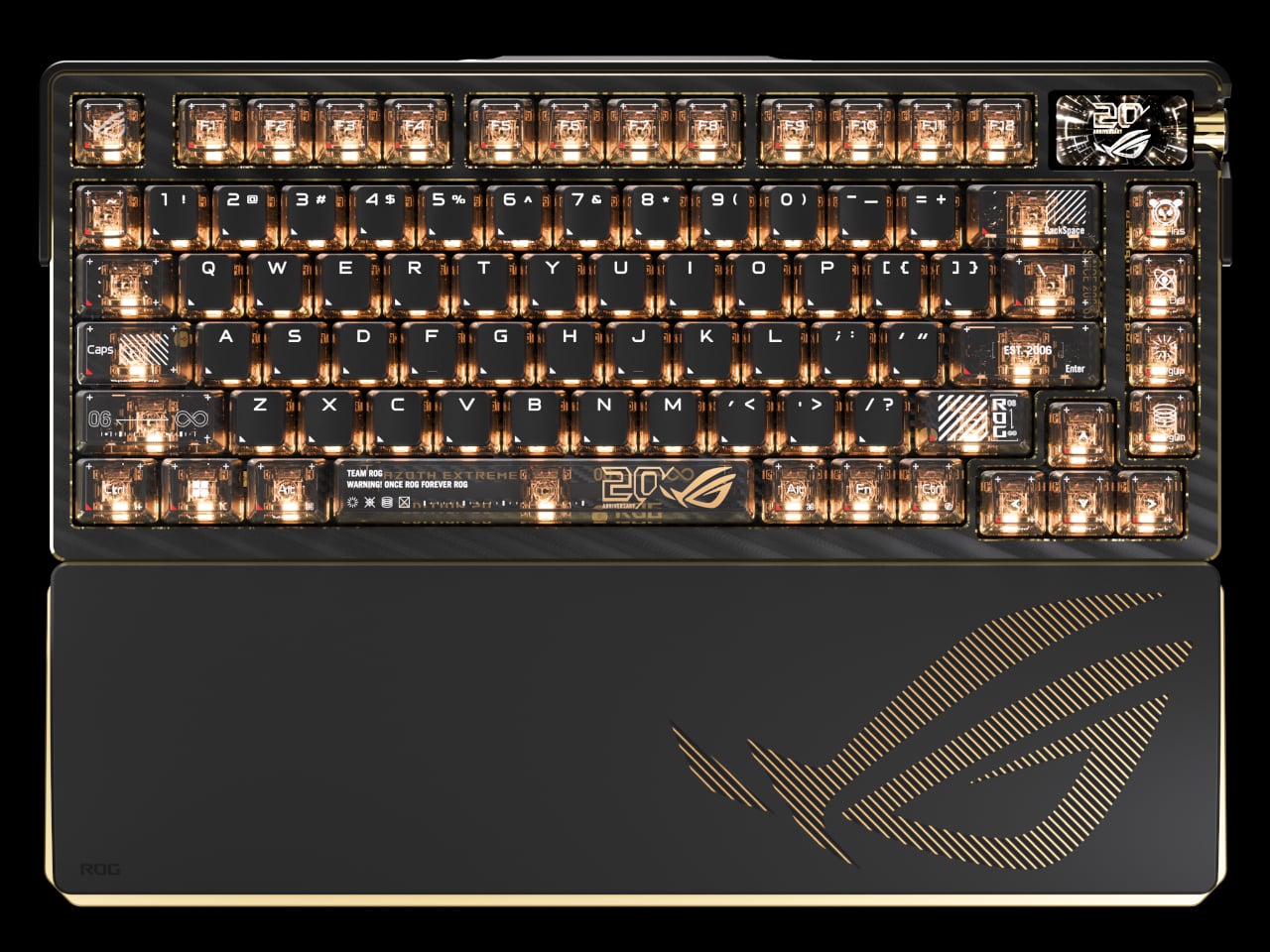
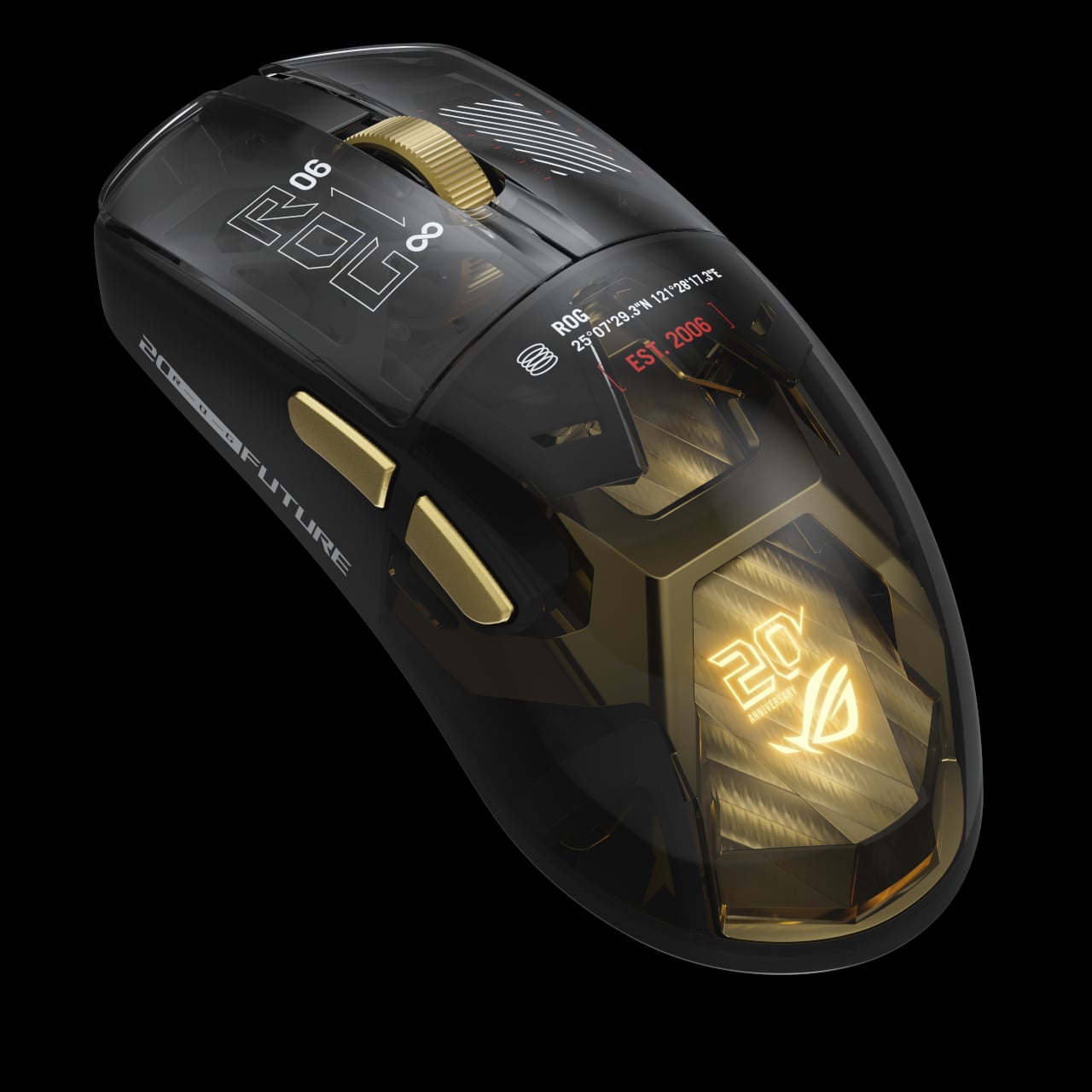
ROG, short for ASUS’ Republic of Gamers brand, is marking 20 years of gaming innovation with an anniversary lineup centered on a gold-and-black design identity it calls the Edition 20 colorway. Three peripheral additions sit at the heart of it, namely the Azoth Extreme Edition 20 keyboard, the Harpe II Extreme Edition 20 mouse, and the Keycap Mystery Box Edition 20, each making the case that high-performance hardware and collector-worthy design don’t have to live separately.
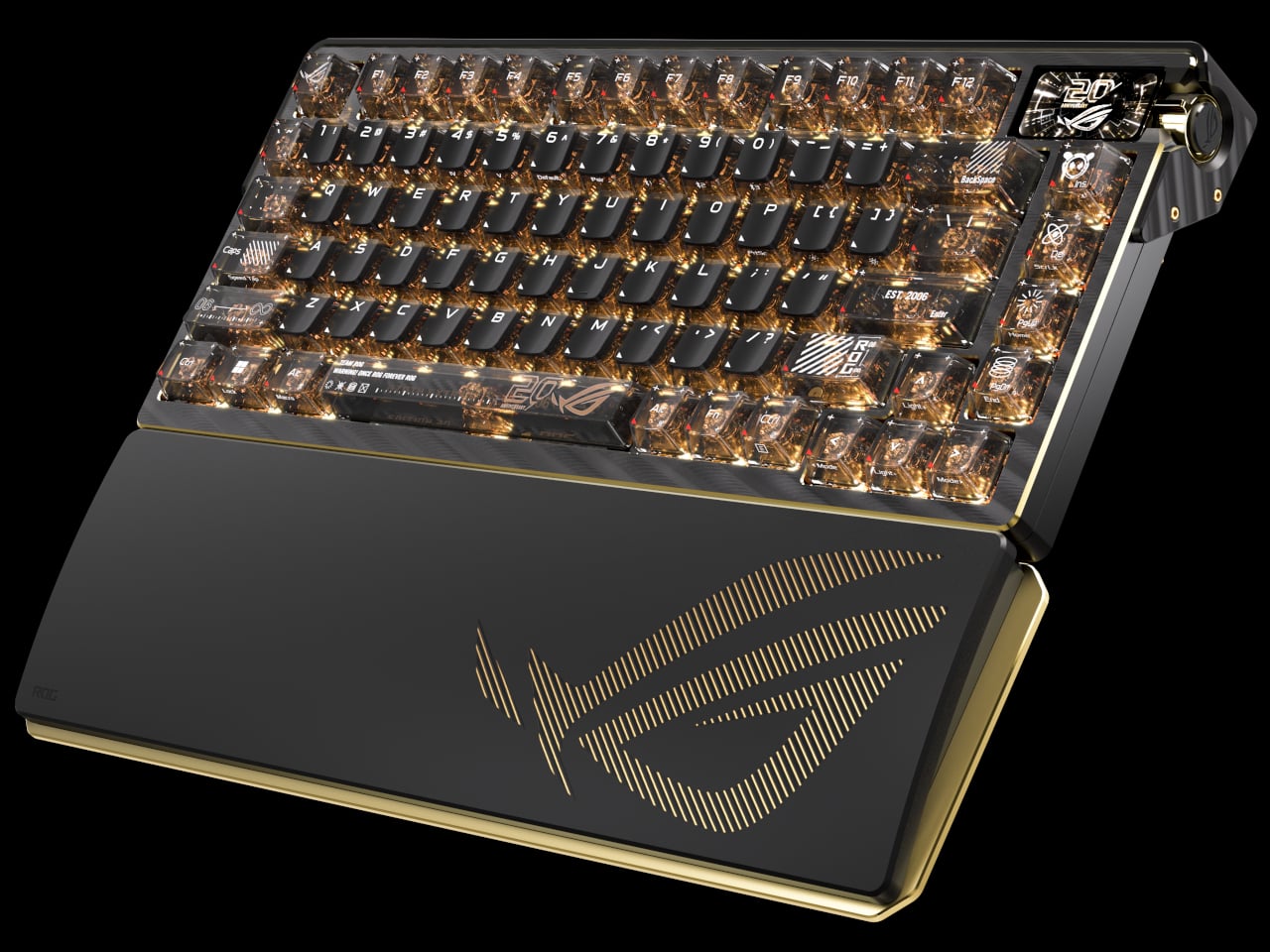
The Azoth Extreme Edition 20 is a 75% gaming keyboard that wears the anniversary theme without being heavy-handed about it. Translucent keycaps reveal the mechanics below, and a detachable 24K-gold-plated nameplate at the front makes the occasion official without being excessive. The extended silicone wrist rest adds completeness to the package, anchored by a gold-toned aluminum-alloy base that ties everything together without introducing anything out of place.
Beneath that exterior, an adjustable gasket mount toggles between Hard and Soft typing modes, useful for anyone who games and types for long hours in the same session. The custom ROG NX Edition 20 mechanical switches are transparent, factory pre-lubed, and hot-swappable, while an OLED touchscreen with a three-way control knob handles quick adjustments. In 2.4GHz wireless mode, battery life stretches to up to 1,600 hours.
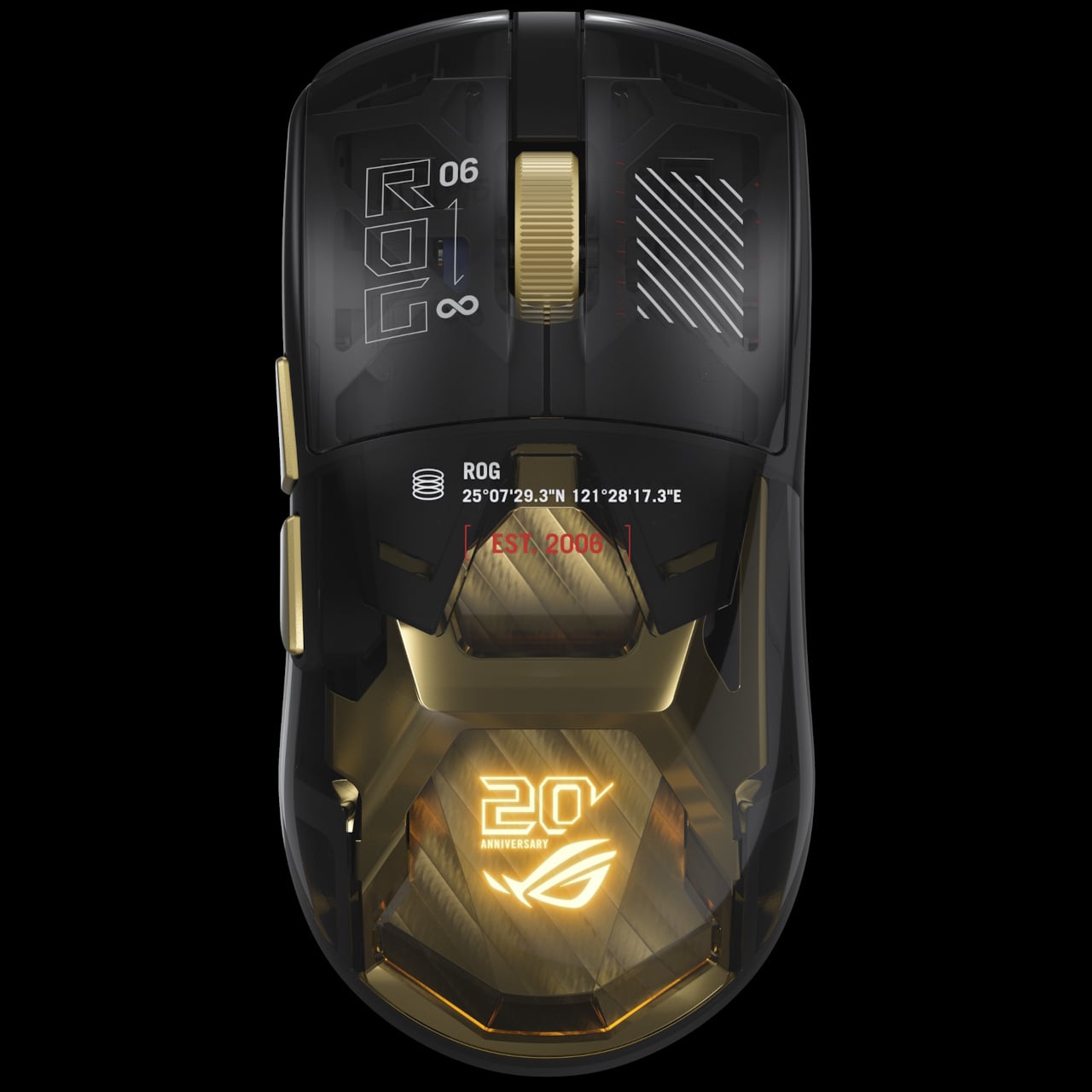
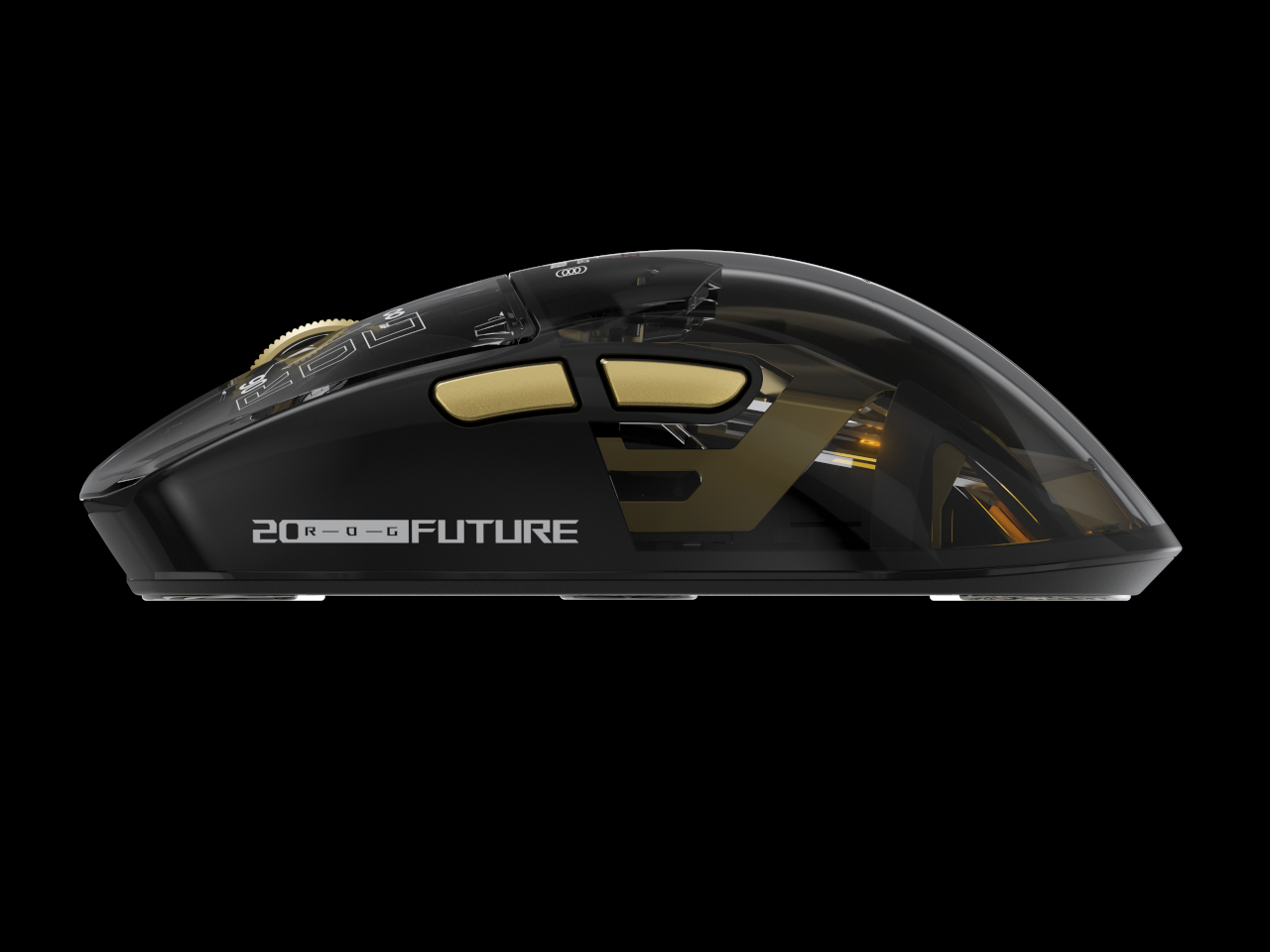
The Harpe II Extreme Edition 20 shares the same design language and makes a natural companion to the keyboard. Built on the pro-tested shape of the Harpe II Ace, it houses a 24K-gold-plated metal interior frame inside a crystal-clear shell, with an RGB light guide plate illuminating the components within. A display case ships with the mouse in the box, which feels entirely appropriate given how it looks at rest.
The ROG AimPoint Pro 65K sensor delivers 65,000 dpi with less than 1% CPI deviation and 8,000Hz wireless polling through ROG SpeedNova technology. At 82g with glass mouse feet already included, it’s ready for competitive play immediately. Battery life holds at up to 90 hours over 2.4GHz RF and 98.5 hours in Bluetooth mode, both measured with the lighting switched off.
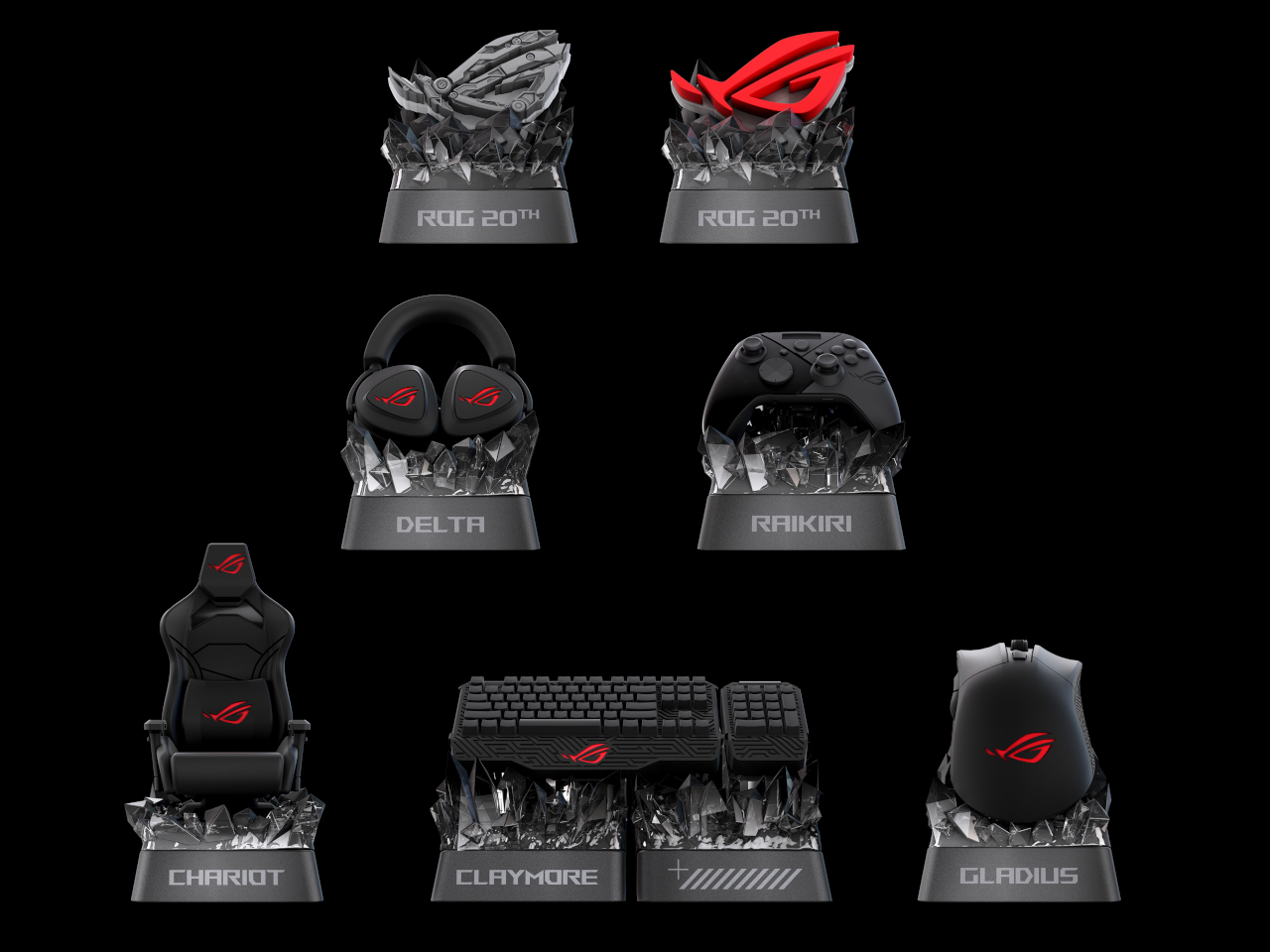
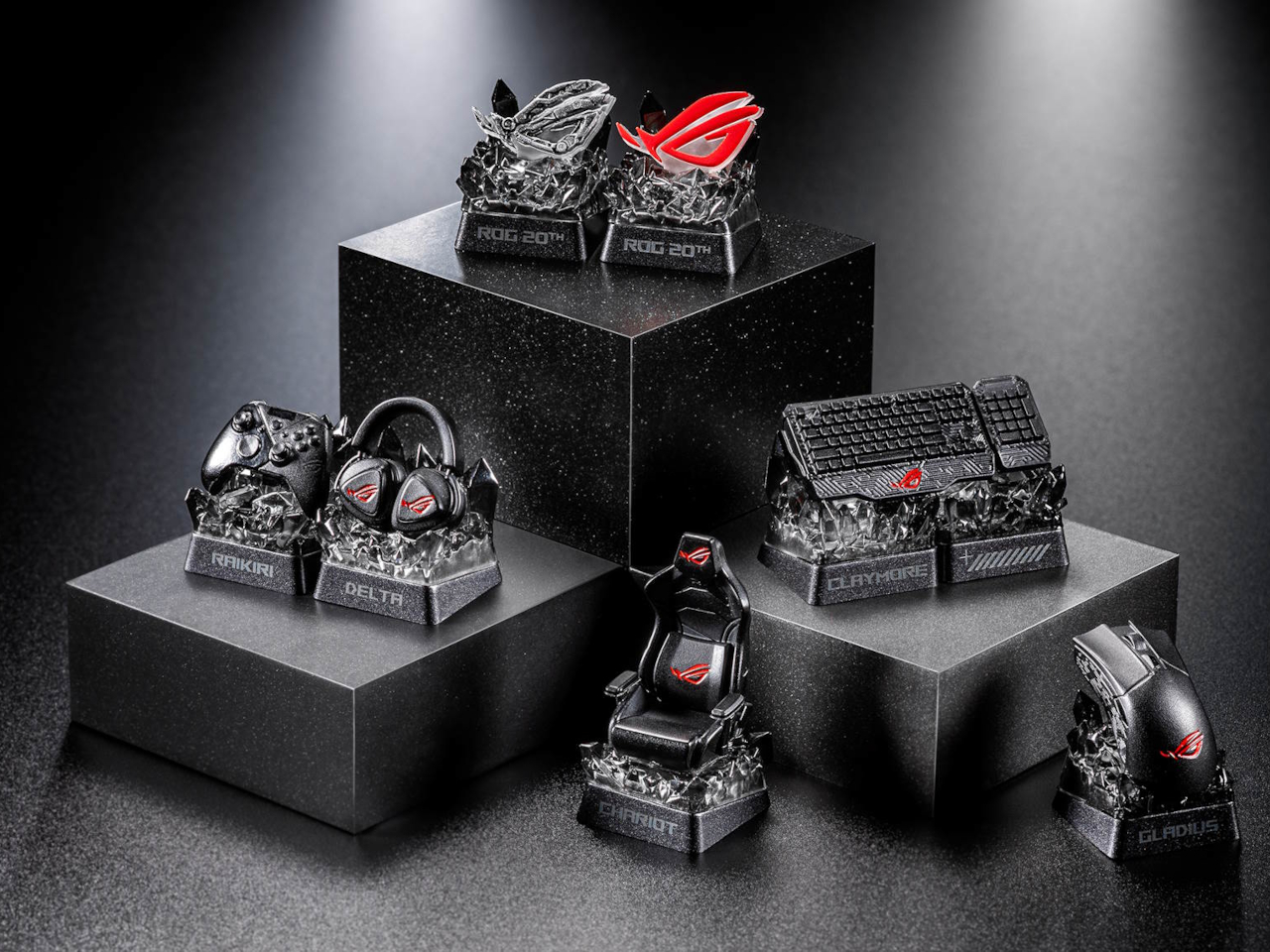
For those who aren’t swapping out their entire setup, the Keycap Mystery Box Edition 20 is the most accessible entry into the anniversary series. Each box holds a randomly selected keycap in one of seven designs inspired by iconic ROG peripherals and the ROG Fearless Eye logo, built through casting, high-pressure forming, hand-painted finishing, and structural assembly. The obsidian-inspired base and refined detailing make each piece genuinely display-worthy.
The ROG Claymore design is the one most worth watching for, as it includes two interlocking keycaps that reference the original keyboard’s modular layout. A Special Edition crystal-like ROG Logo keycap is also in the pool. Available as a single unit or a six-piece box with no duplicates, the Mystery Box turns 20 years of ROG hardware history into something you can keep in the palm of your hand.
Gaming peripherals have gradually crossed from purely functional tools into design objects that enthusiasts keep, display, and collect alongside their builds. Limited-edition anniversary hardware has become part of that culture, giving manufacturers a chance to honor their history while reminding the community why certain names still carry weight. Making those commemorative pieces feel genuinely worthy of the occasion, however, is always the trickier part.
ROG, short for ASUS’ Republic of Gamers brand, is marking 20 years of gaming innovation with an anniversary lineup centered on a gold-and-black design identity it calls the Edition 20 colorway. Three peripheral additions sit at the heart of it, namely the Azoth Extreme Edition 20 keyboard, the Harpe II Extreme Edition 20 mouse, and the Keycap Mystery Box Edition 20, each making the case that high-performance hardware and collector-worthy design don’t have to live separately.
The Azoth Extreme Edition 20 is a 75% gaming keyboard that wears the anniversary theme without being heavy-handed about it. Translucent keycaps reveal the mechanics below, and a detachable 24K-gold-plated nameplate at the front makes the occasion official without being excessive. The extended silicone wrist rest adds completeness to the package, anchored by a gold-toned aluminum-alloy base that ties everything together without introducing anything out of place.
Beneath that exterior, an adjustable gasket mount toggles between Hard and Soft typing modes, useful for anyone who games and types for long hours in the same session. The custom ROG NX Edition 20 mechanical switches are transparent, factory pre-lubed, and hot-swappable, while an OLED touchscreen with a three-way control knob handles quick adjustments. In 2.4GHz wireless mode, battery life stretches to up to 1,600 hours.
The Harpe II Extreme Edition 20 shares the same design language and makes a natural companion to the keyboard. Built on the pro-tested shape of the Harpe II Ace, it houses a 24K-gold-plated metal interior frame inside a crystal-clear shell, with an RGB light guide plate illuminating the components within. A display case ships with the mouse in the box, which feels entirely appropriate given how it looks at rest.
The ROG AimPoint Pro 65K sensor delivers 65,000 dpi with less than 1% CPI deviation and 8,000Hz wireless polling through ROG SpeedNova technology. At 82g with glass mouse feet already included, it’s ready for competitive play immediately. Battery life holds at up to 90 hours over 2.4GHz RF and 98.5 hours in Bluetooth mode, both measured with the lighting switched off.
For those who aren’t swapping out their entire setup, the Keycap Mystery Box Edition 20 is the most accessible entry into the anniversary series. Each box holds a randomly selected keycap in one of seven designs inspired by iconic ROG peripherals and the ROG Fearless Eye logo, built through casting, high-pressure forming, hand-painted finishing, and structural assembly. The obsidian-inspired base and refined detailing make each piece genuinely display-worthy.
The ROG Claymore design is the one most worth watching for, as it includes two interlocking keycaps that reference the original keyboard’s modular layout. A Special Edition crystal-like ROG Logo keycap is also in the pool. Available as a single unit or a six-piece box with no duplicates, the Mystery Box turns 20 years of ROG hardware history into something you can keep in the palm of your hand.
Most wearables make a generous promise: that daily wear will eventually help you understand your body better. In practice, though, many end up on a nightstand by Tuesday because the battery died or the data was too much to decode. The market for health wearables has grown quickly, but the friction hasn’t cleared as fast as the feature lists have gotten longer.
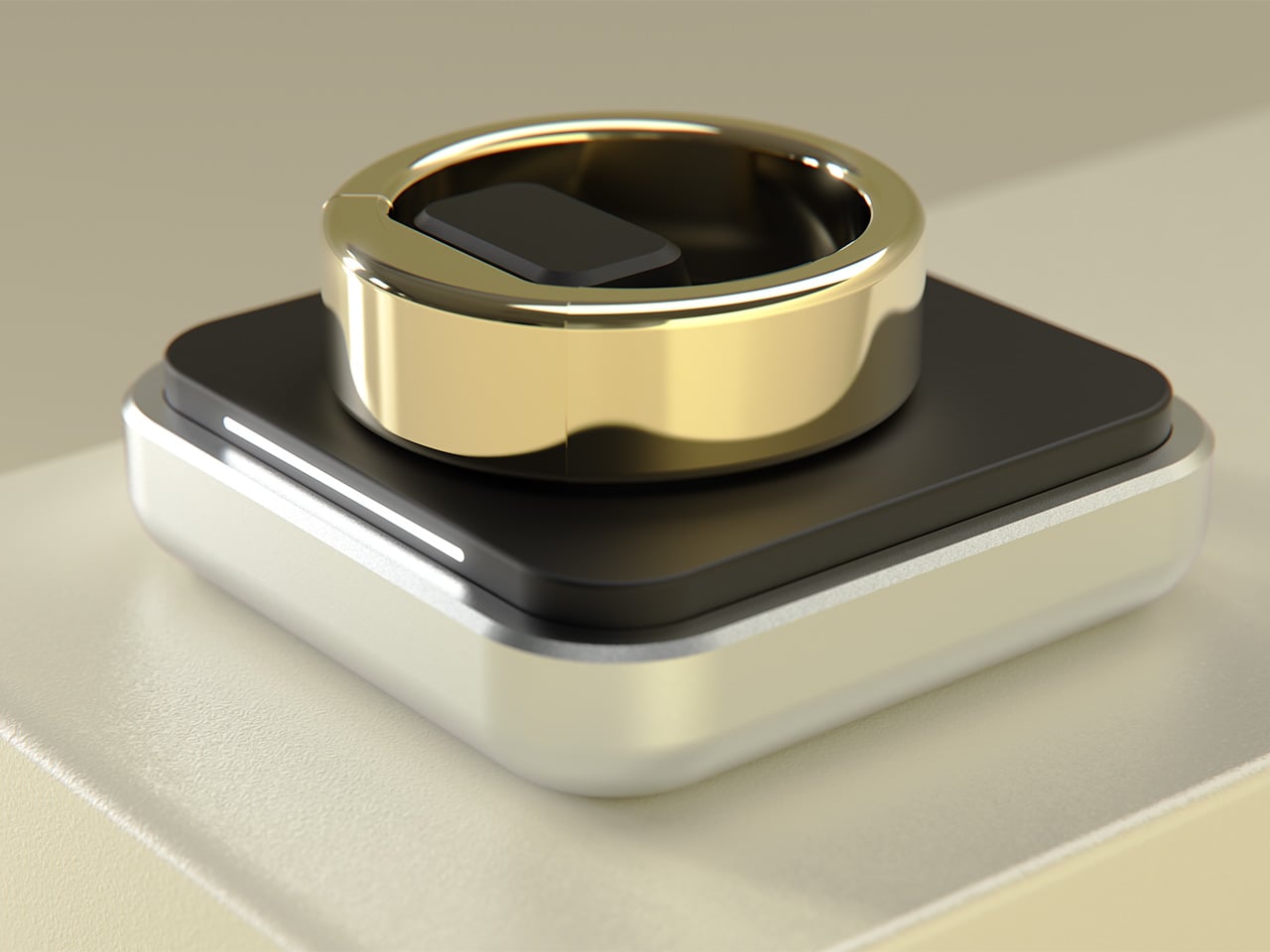
Smart rings have been one answer to that problem. They’re smaller, quieter, and don’t ask for your attention the way a smartwatch does. Ultrahuman’s Ring PRO is the company’s third-generation take on that idea, and it comes with a compact Mini Charger built around the same philosophy. Together, they’re designed to make health tracking feel like something running in the background rather than a habit you have to maintain.
A big part of that comes down to battery life. The Ring PRO offers up to 15 days on a single charge, roughly three to four times what most competing smart rings manage. That means fewer interruptions during long trips, consistent overnight tracking without data gaps, and no anxiety about a dead ring. The pocket-sized Mini Charger handles the rest, plugging in via Type-C and fitting easily into any bag. Utilizing the new UltraSnap Charging Technology, the Ring PRO magnetically clicks into place, removing the stress of trying to aim for perfect alignment. The charger also generates less heat while in use, thanks to an energy-efficient mechanism.
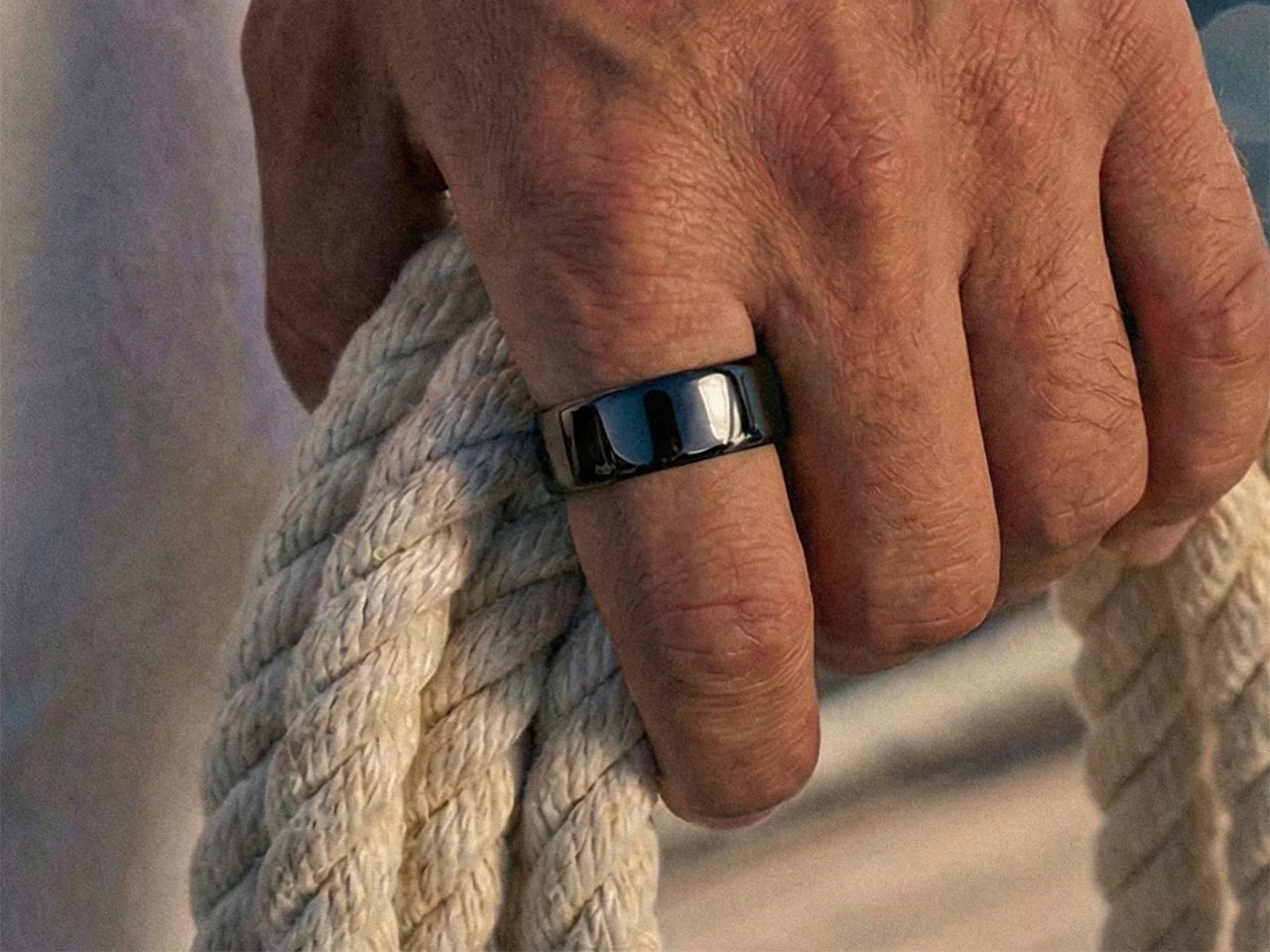
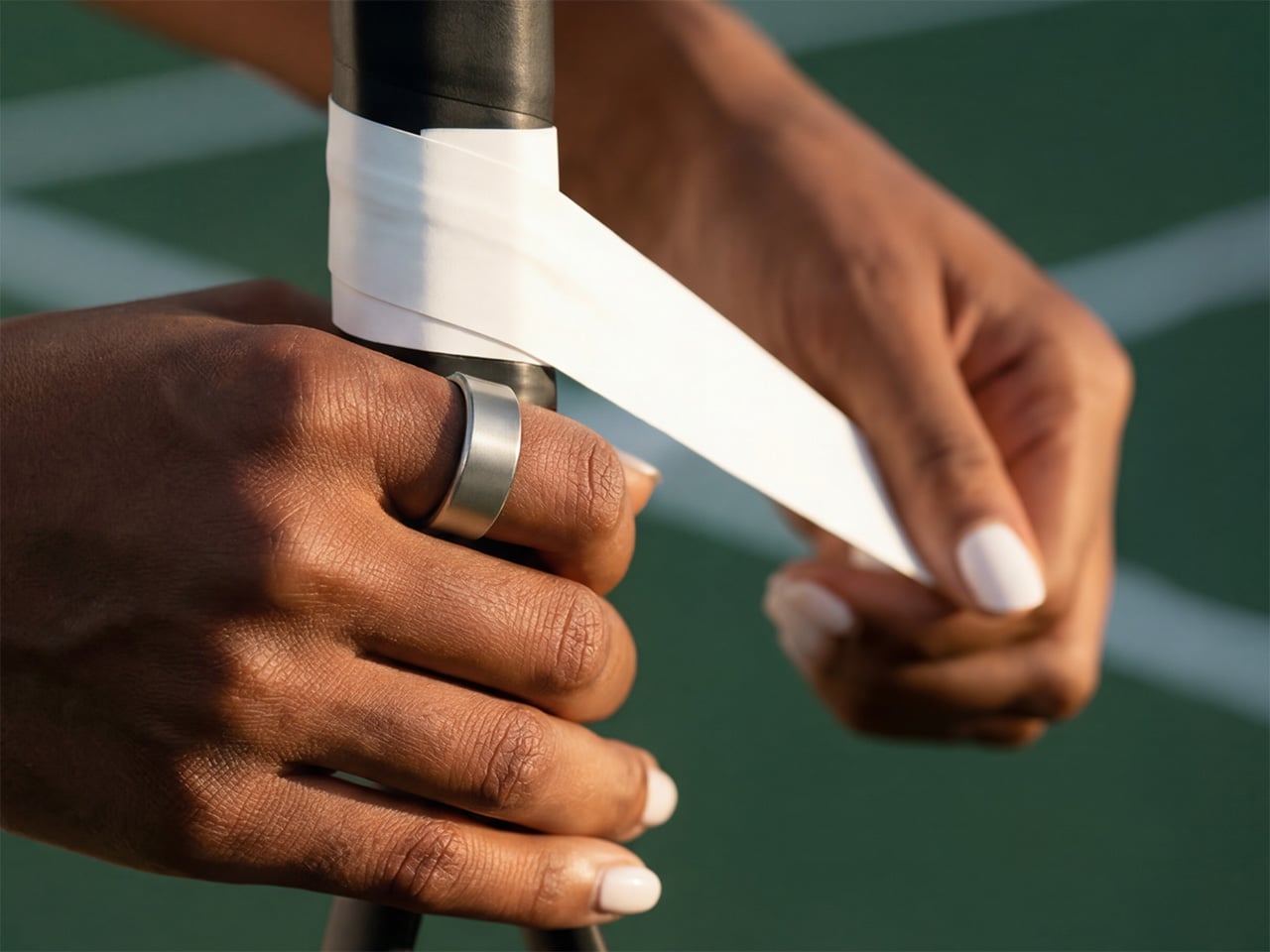
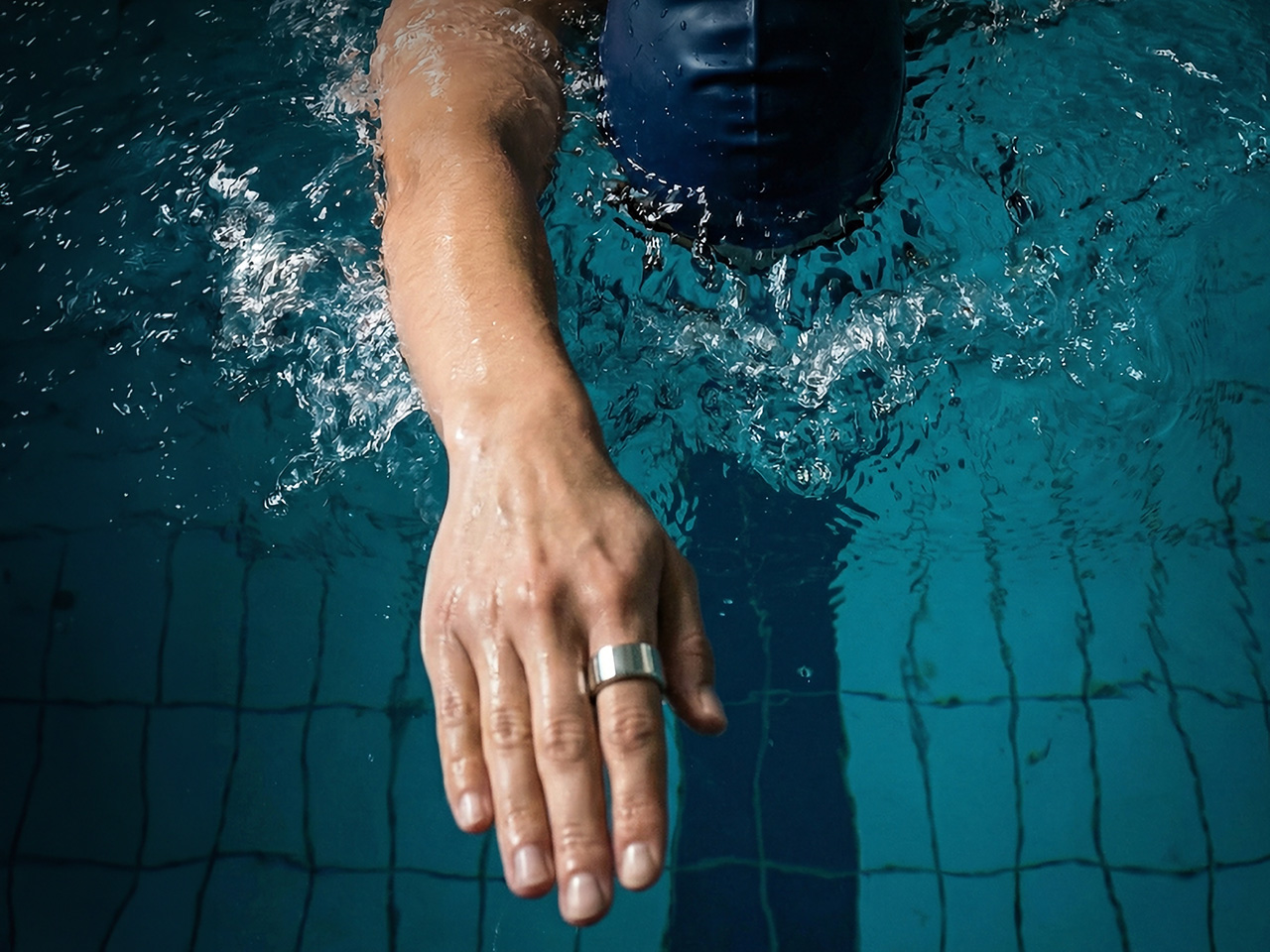
The ring sports a unibody titanium build, using the same fighter jet-grade material that has defined the Ultrahuman Ring from the beginning, keeping it lightweight yet durable enough for continuous wear. It’s water-resistant to 100m, so showers, swims, and more demanding water activities don’t require taking it off. It comes in sizes 5 to 14 and in four finishes: Bionic Gold, Aster Black, Space Silver, and Raw Titanium.
What sets Ring PRO apart, though, is a layer of real-time biointelligence called Jade AI. Rather than presenting raw data on a dashboard for you to decode, Jade reads across ring biometrics, blood biomarkers, and environmental data, then tells you what it all means for your health. It offers both quick answers for everyday use and a deeper research mode for tracking longer patterns and trends.
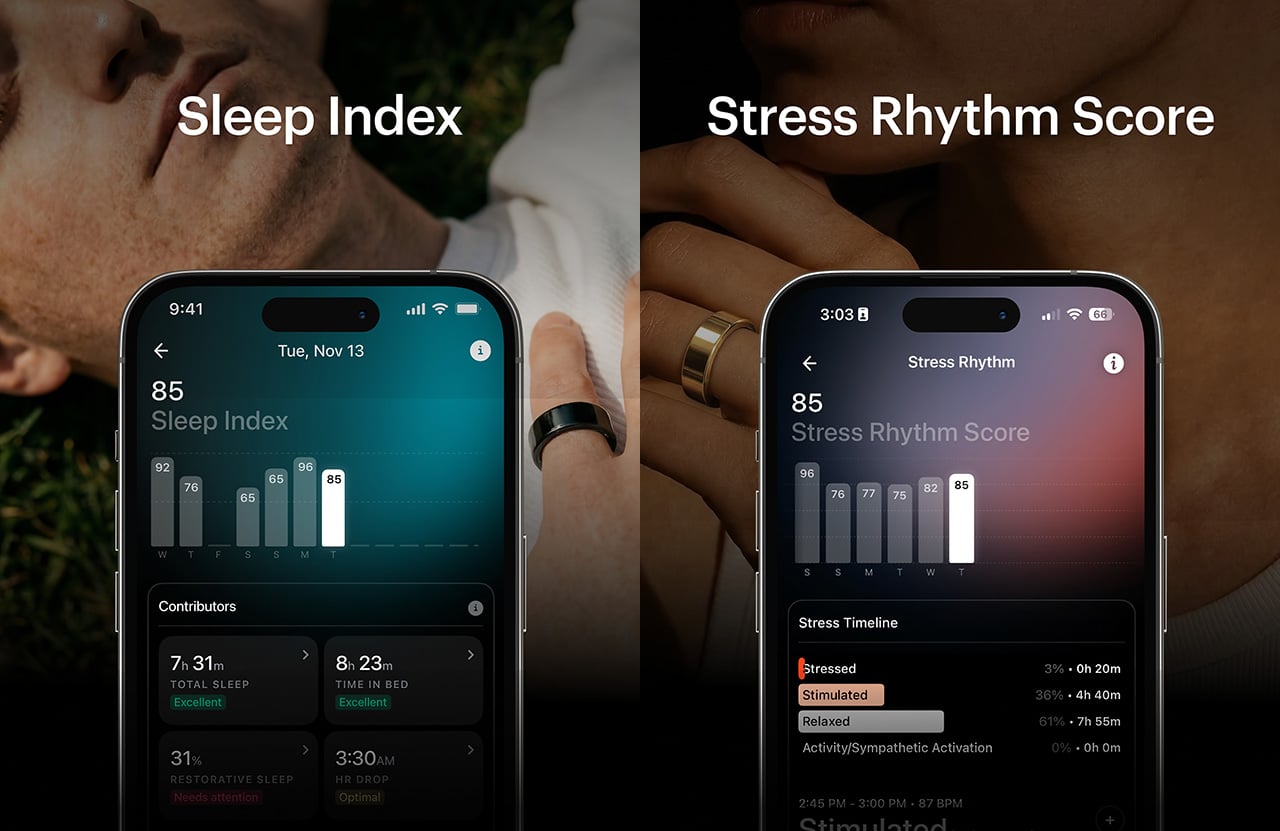
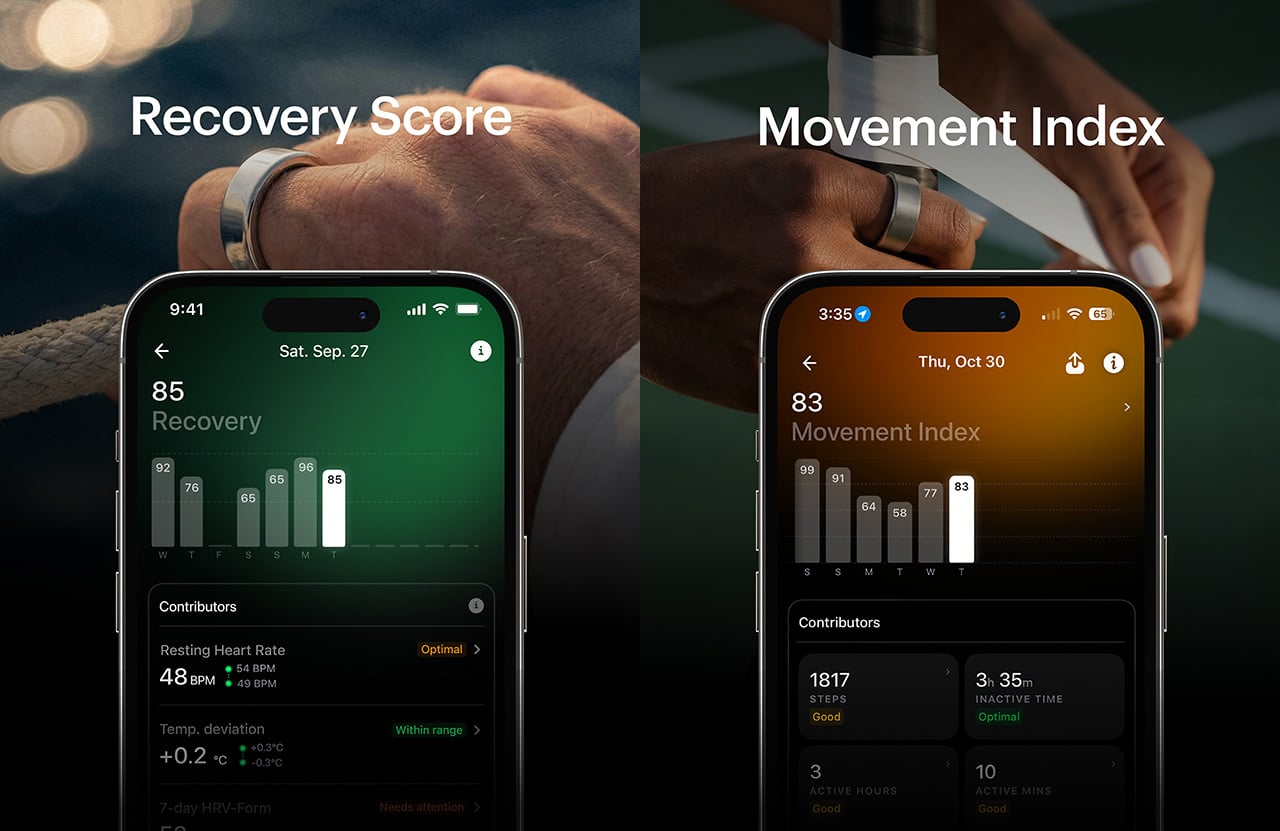
The core tracking covers the health signals most people care about: sleep stages, resting heart rate, HRV, body temperature, and daily movement. The Sleep Index and Dynamic Recovery don’t just score your rest or readiness; they aim to interpret those signals and adjust guidance as your body changes. The Stress Rhythm feature adds another layer by analyzing how your heart responds throughout the day against your circadian backdrop. Finally, Ultra Age can track how improving your lifestyle positively impacts your aging trajectory, giving you a competitive edge against time.
Beyond the basics, Ring PRO includes a library of more targeted health tools called PowerPlugs, precision micro-tools designed for highly personalized health insights. The Caffeine Window, for example, maps the best times for coffee against your recovery data and shifts your daily cutoff based on how well you slept. The Circadian Alignment tool tracks your body’s internal rhythm and flags when light, movement, or rest will have the most impact on energy and sleep quality.
The ring also adapts to different life stages rather than assuming everyone shares the same baseline. There are also dedicated modes for shift workers, new parents, and people with irregular schedules, where the scoring accounts for unconventional sleep timing and focuses on quality rather than rigid duration rules.
Women’s health is an extra strong focus for the Ultrahuman Ring PRO, and it goes beyond just covering cycle tracking, ovulation prediction, and logging symptoms. Cycle Flags, for example, offer insights that let women take a more proactive approach rather than just waiting for things to happen. With over 90% accuracy for ovulation confirmation, OvuSense Technology helps you understand your body better, whether you’re trying to conceive or navigating an irregular cycle.
Health tracking only works if you wear the device consistently enough for the data to build into something meaningful. Ring PRO’s combination of up to 250 days of on-ring storage, a dual-core processor with on-chip machine learning for speed, efficiency, and reliability, and a build designed for 24-hour wear makes a fairly pointed argument that the biggest obstacle between most people and better health data has always been friction, not features.
Most wearables make a generous promise: that daily wear will eventually help you understand your body better. In practice, though, many end up on a nightstand by Tuesday because the battery died or the data was too much to decode. The market for health wearables has grown quickly, but the friction hasn’t cleared as fast as the feature lists have gotten longer.
Smart rings have been one answer to that problem. They’re smaller, quieter, and don’t ask for your attention the way a smartwatch does. Ultrahuman’s Ring PRO is the company’s third-generation take on that idea, and it comes with a compact Mini Charger built around the same philosophy. Together, they’re designed to make health tracking feel like something running in the background rather than a habit you have to maintain.
A big part of that comes down to battery life. The Ring PRO offers up to 15 days on a single charge, roughly three to four times what most competing smart rings manage. That means fewer interruptions during long trips, consistent overnight tracking without data gaps, and no anxiety about a dead ring. The pocket-sized Mini Charger handles the rest, plugging in via Type-C and fitting easily into any bag. Utilizing the new UltraSnap Charging Technology, the Ring PRO magnetically clicks into place, removing the stress of trying to aim for perfect alignment. The charger also generates less heat while in use, thanks to an energy-efficient mechanism.
The ring sports a unibody titanium build, using the same fighter jet-grade material that has defined the Ultrahuman Ring from the beginning, keeping it lightweight yet durable enough for continuous wear. It’s water-resistant to 100m, so showers, swims, and more demanding water activities don’t require taking it off. It comes in sizes 5 to 14 and in four finishes: Bionic Gold, Aster Black, Space Silver, and Raw Titanium.
What sets Ring PRO apart, though, is a layer of real-time biointelligence called Jade AI. Rather than presenting raw data on a dashboard for you to decode, Jade reads across ring biometrics, blood biomarkers, and environmental data, then tells you what it all means for your health. It offers both quick answers for everyday use and a deeper research mode for tracking longer patterns and trends.
The core tracking covers the health signals most people care about: sleep stages, resting heart rate, HRV, body temperature, and daily movement. The Sleep Index and Dynamic Recovery don’t just score your rest or readiness; they aim to interpret those signals and adjust guidance as your body changes. The Stress Rhythm feature adds another layer by analyzing how your heart responds throughout the day against your circadian backdrop. Finally, Ultra Age can track how improving your lifestyle positively impacts your aging trajectory, giving you a competitive edge against time.
Beyond the basics, Ring PRO includes a library of more targeted health tools called PowerPlugs, precision micro-tools designed for highly personalized health insights. The Caffeine Window, for example, maps the best times for coffee against your recovery data and shifts your daily cutoff based on how well you slept. The Circadian Alignment tool tracks your body’s internal rhythm and flags when light, movement, or rest will have the most impact on energy and sleep quality.
The ring also adapts to different life stages rather than assuming everyone shares the same baseline. There are also dedicated modes for shift workers, new parents, and people with irregular schedules, where the scoring accounts for unconventional sleep timing and focuses on quality rather than rigid duration rules.
Women’s health is an extra strong focus for the Ultrahuman Ring PRO, and it goes beyond just covering cycle tracking, ovulation prediction, and logging symptoms. Cycle Flags, for example, offer insights that let women take a more proactive approach rather than just waiting for things to happen. With over 90% accuracy for ovulation confirmation, OvuSense Technology helps you understand your body better, whether you’re trying to conceive or navigating an irregular cycle.
Health tracking only works if you wear the device consistently enough for the data to build into something meaningful. Ring PRO’s combination of up to 250 days of on-ring storage, a dual-core processor with on-chip machine learning for speed, efficiency, and reliability, and a build designed for 24-hour wear makes a fairly pointed argument that the biggest obstacle between most people and better health data has always been friction, not features.
Streaming lights have quietly become a staple of the modern content creator’s travel kit. The compact ones clip onto a laptop screen and add professional-grade lighting without adding much bulk. That portability comes with a real catch, though. Without built-in protection, the light panel is vulnerable once it’s packed alongside cables, drives, and adapters. Few of these devices ship with any kind of case, and creators often have to improvise.
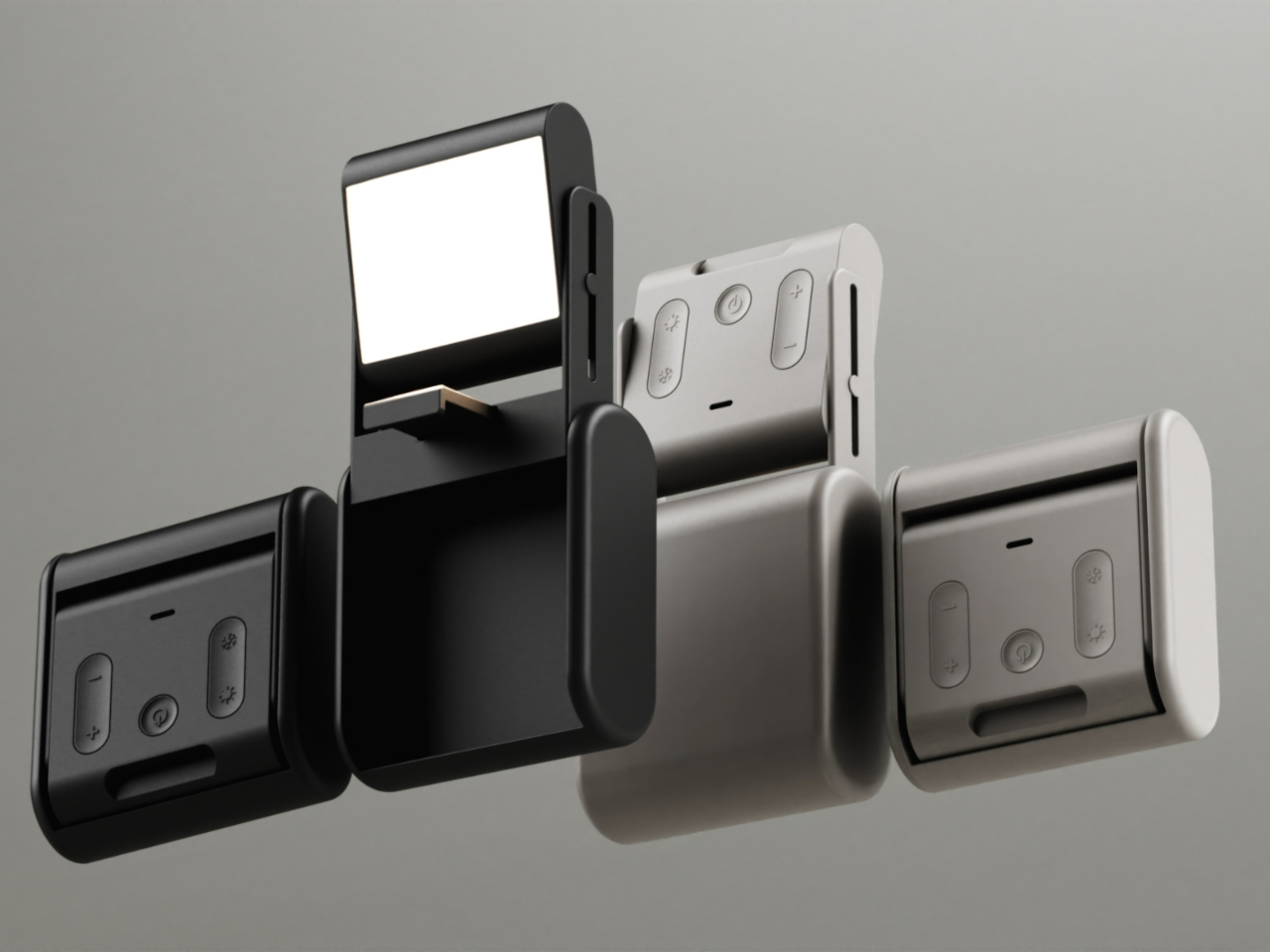
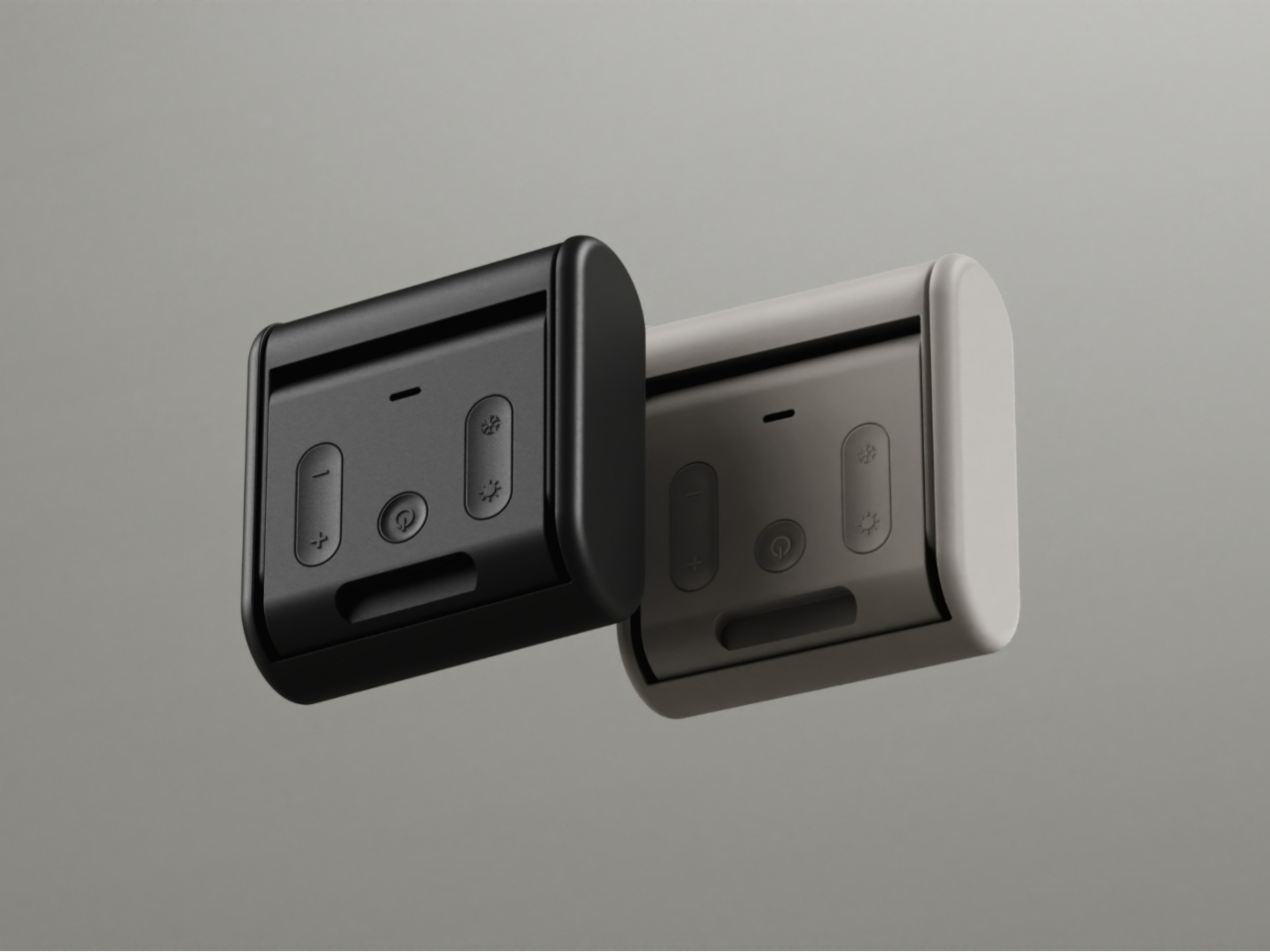
Litra Lumen is an unofficial concept, not affiliated with or made by Logitech, that takes the Litra Glow as its starting point and rethinks it for creators constantly on the move. The central idea is straightforward: instead of needing a case, what if the device simply became one? That single premise shaped almost every decision that followed, from the overall form factor down to how the light opens and deploys.
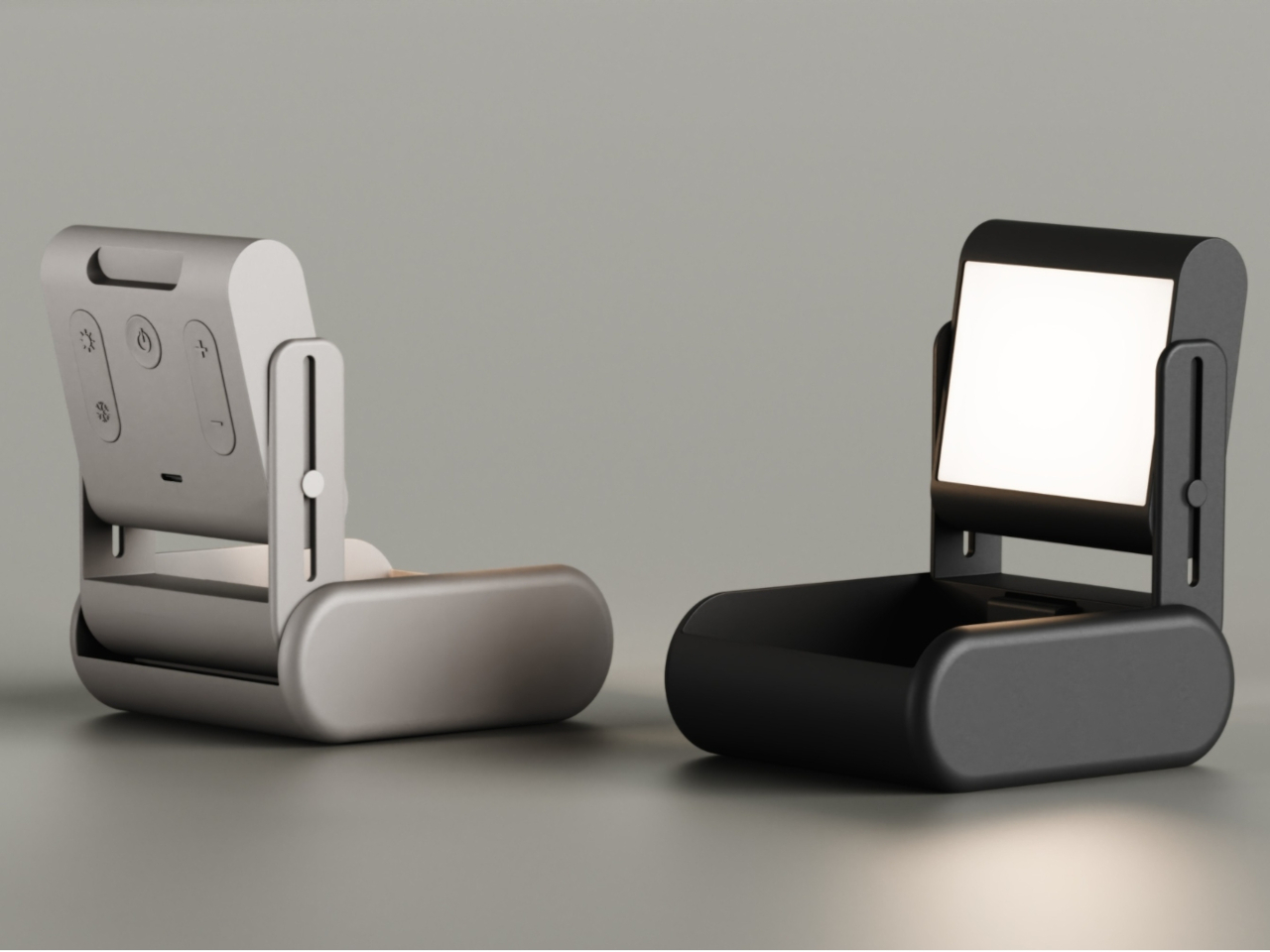
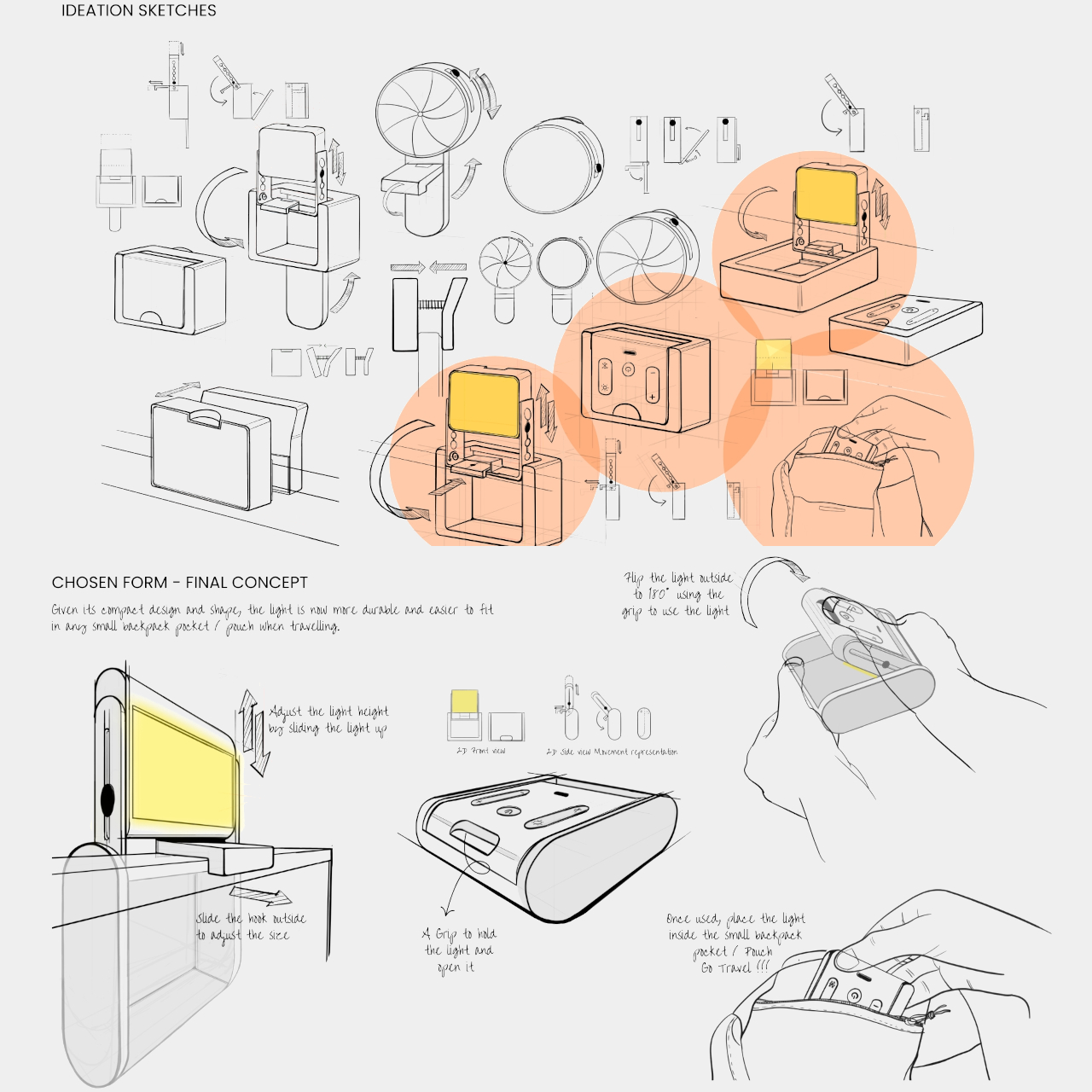
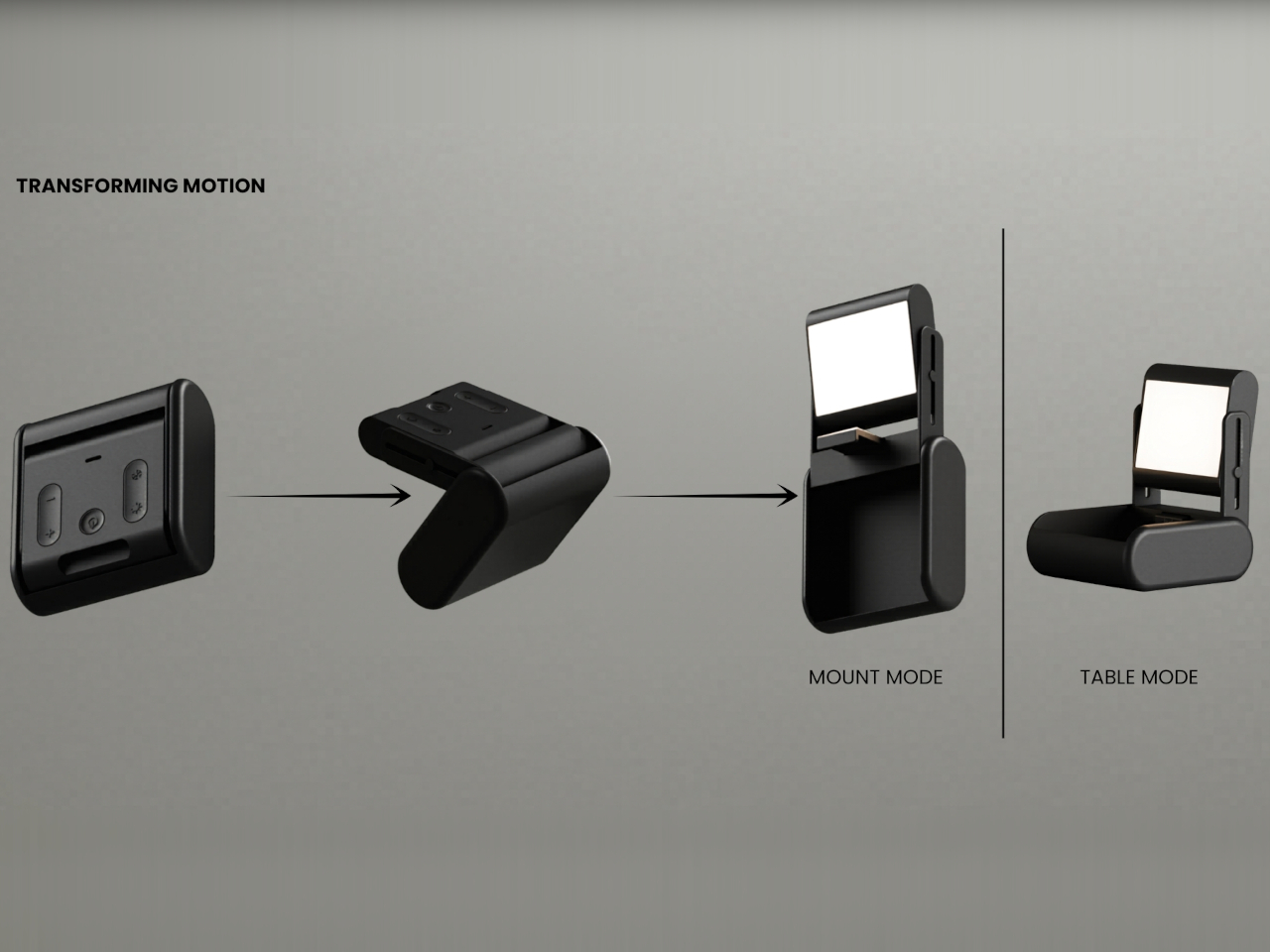
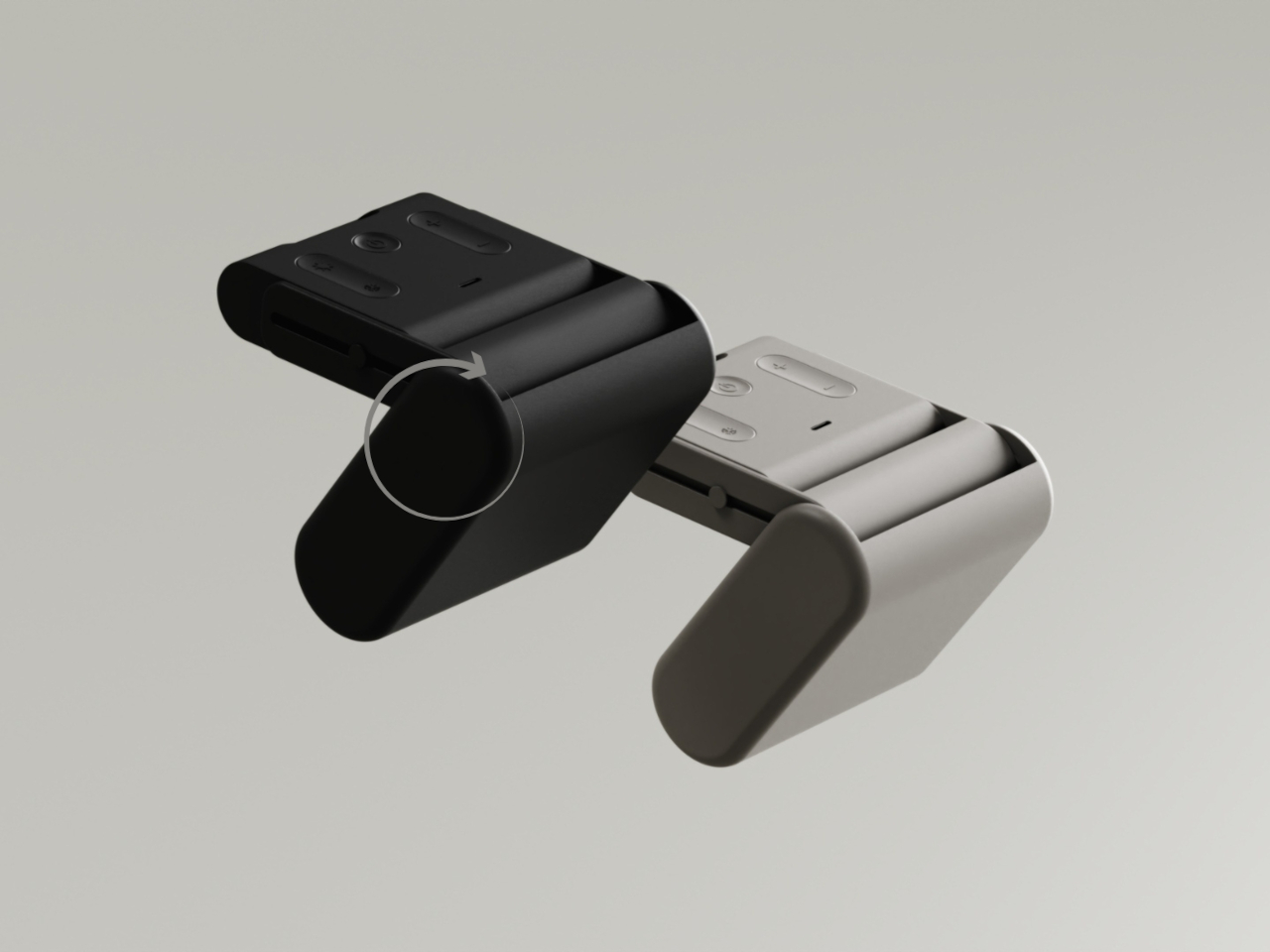
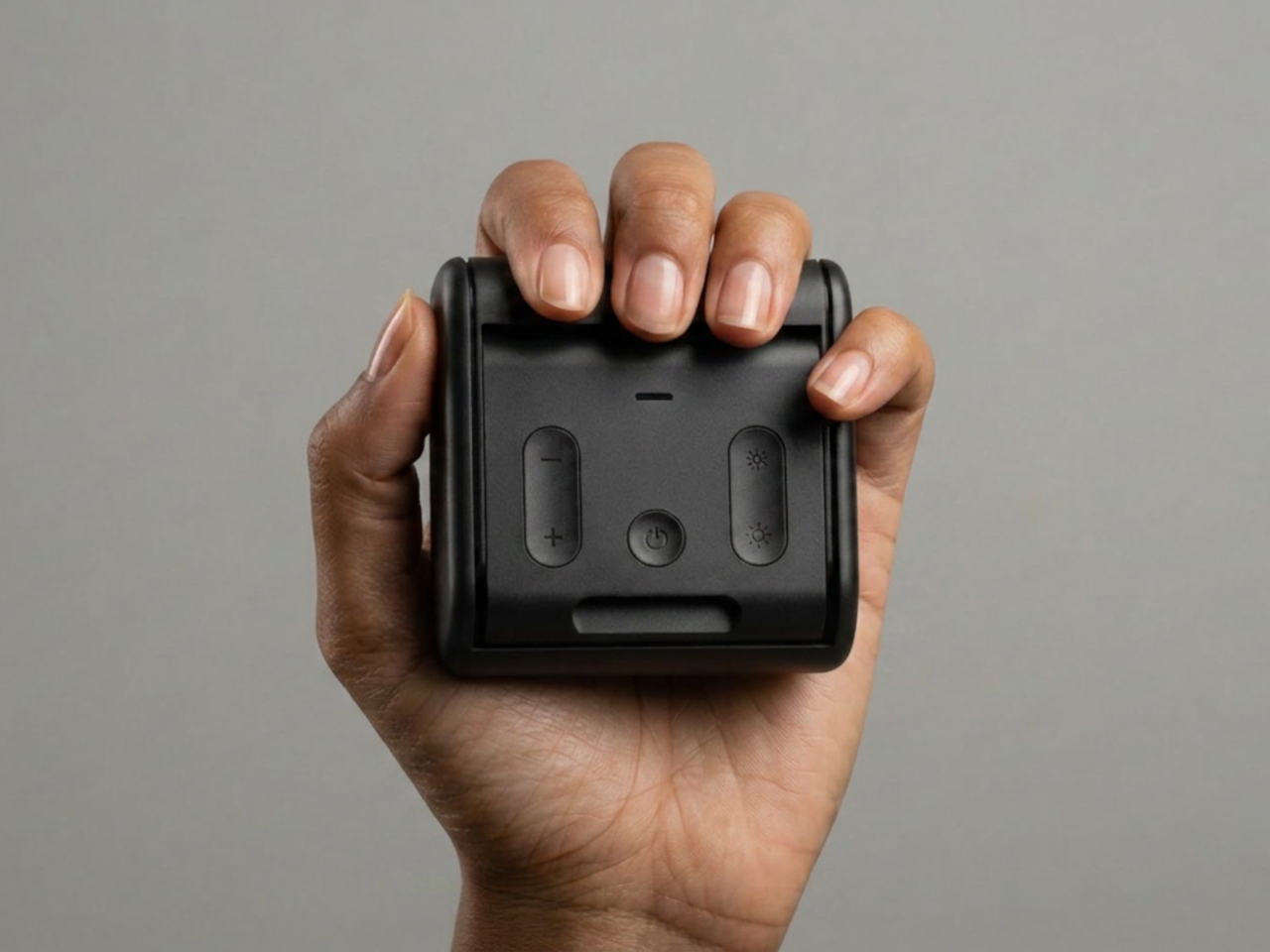
The mechanism at the heart of the concept is a rotation. The light panel pivots inward, nestling into a hollow protective body that shields it completely during transport. The result is a compact rectangular block with a pill-shaped base, small enough to slip into a backpack side pocket without a second thought. Nothing protrudes, nothing needs wrapping, and there’s no dedicated pouch to hunt for before heading out.
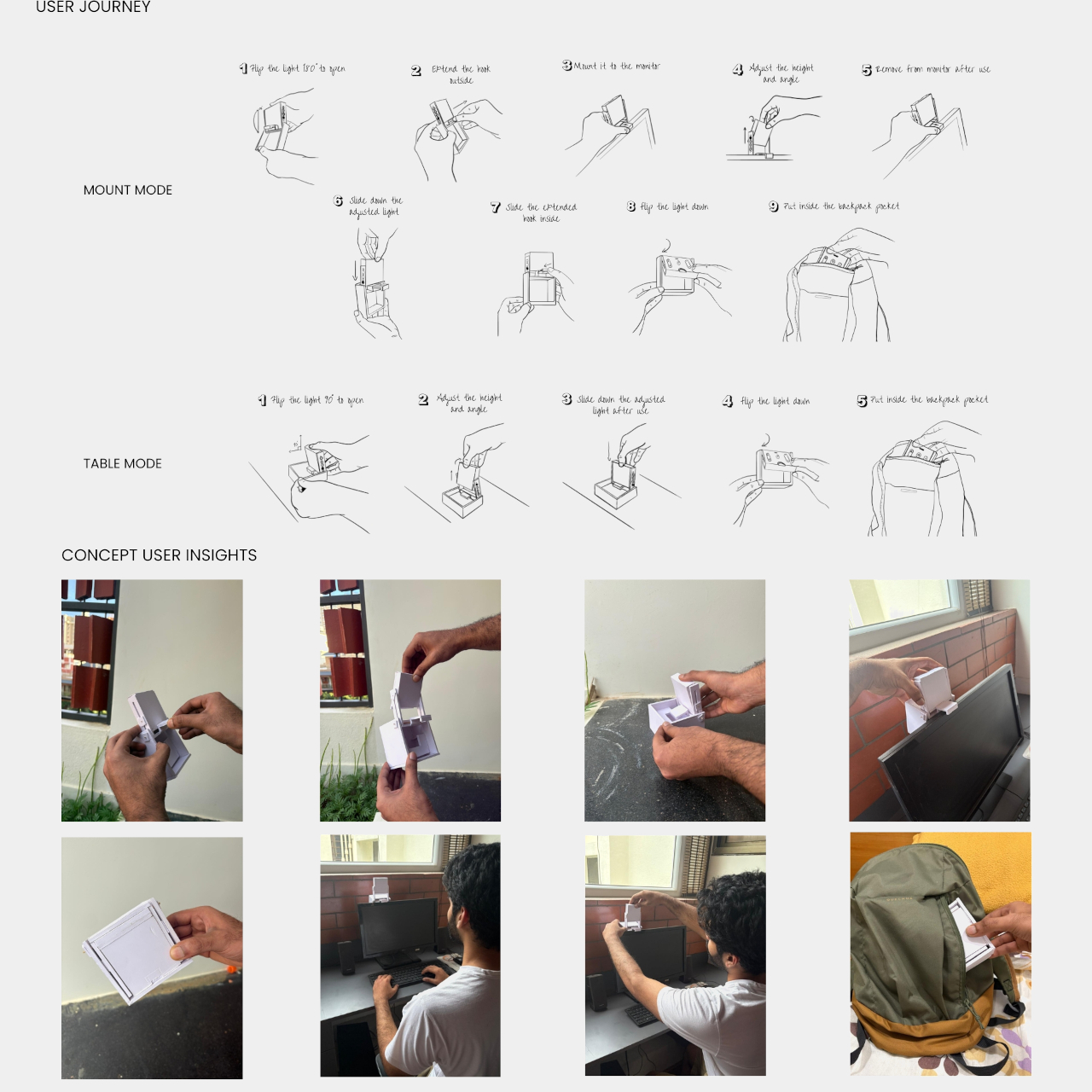
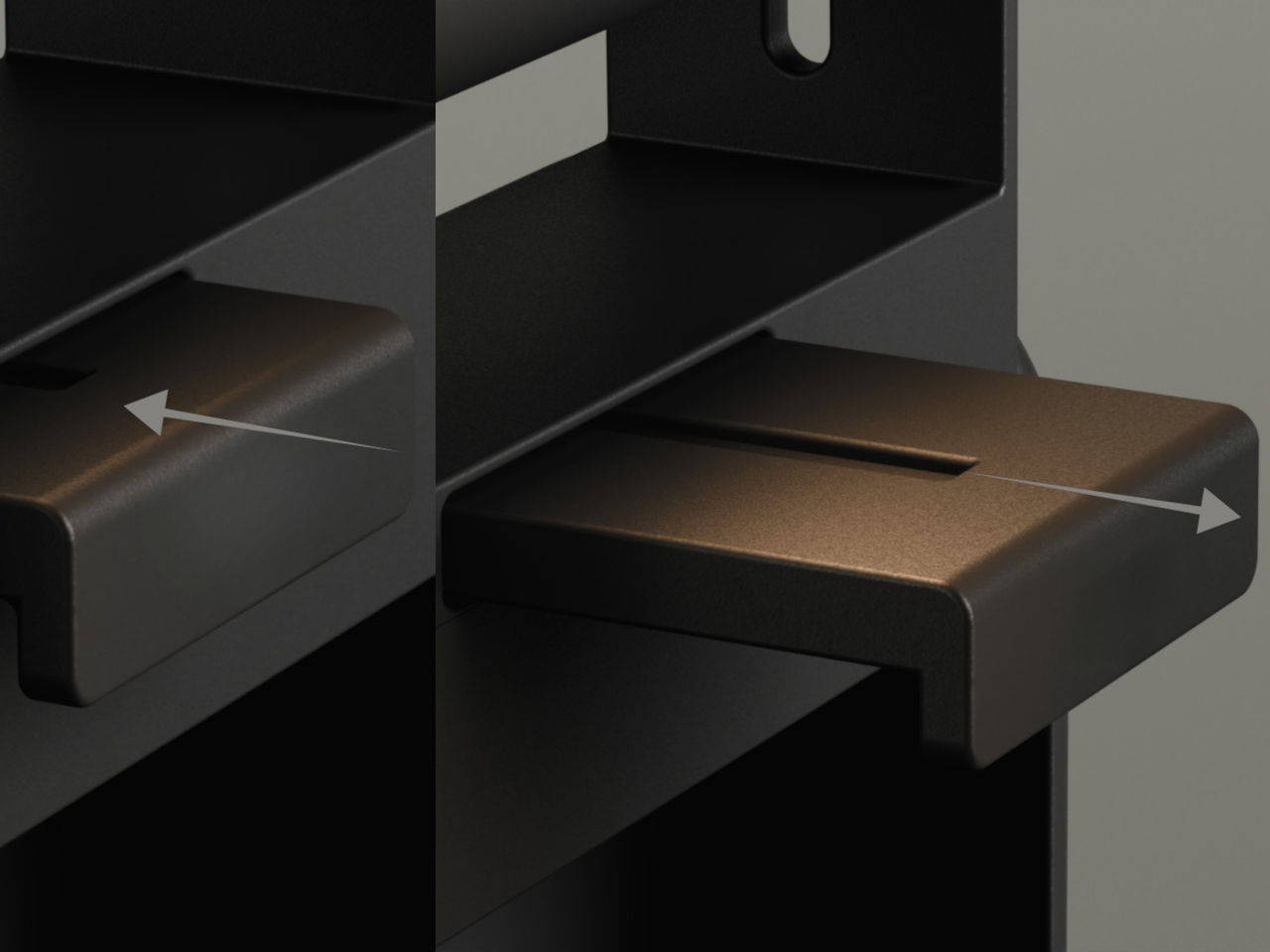
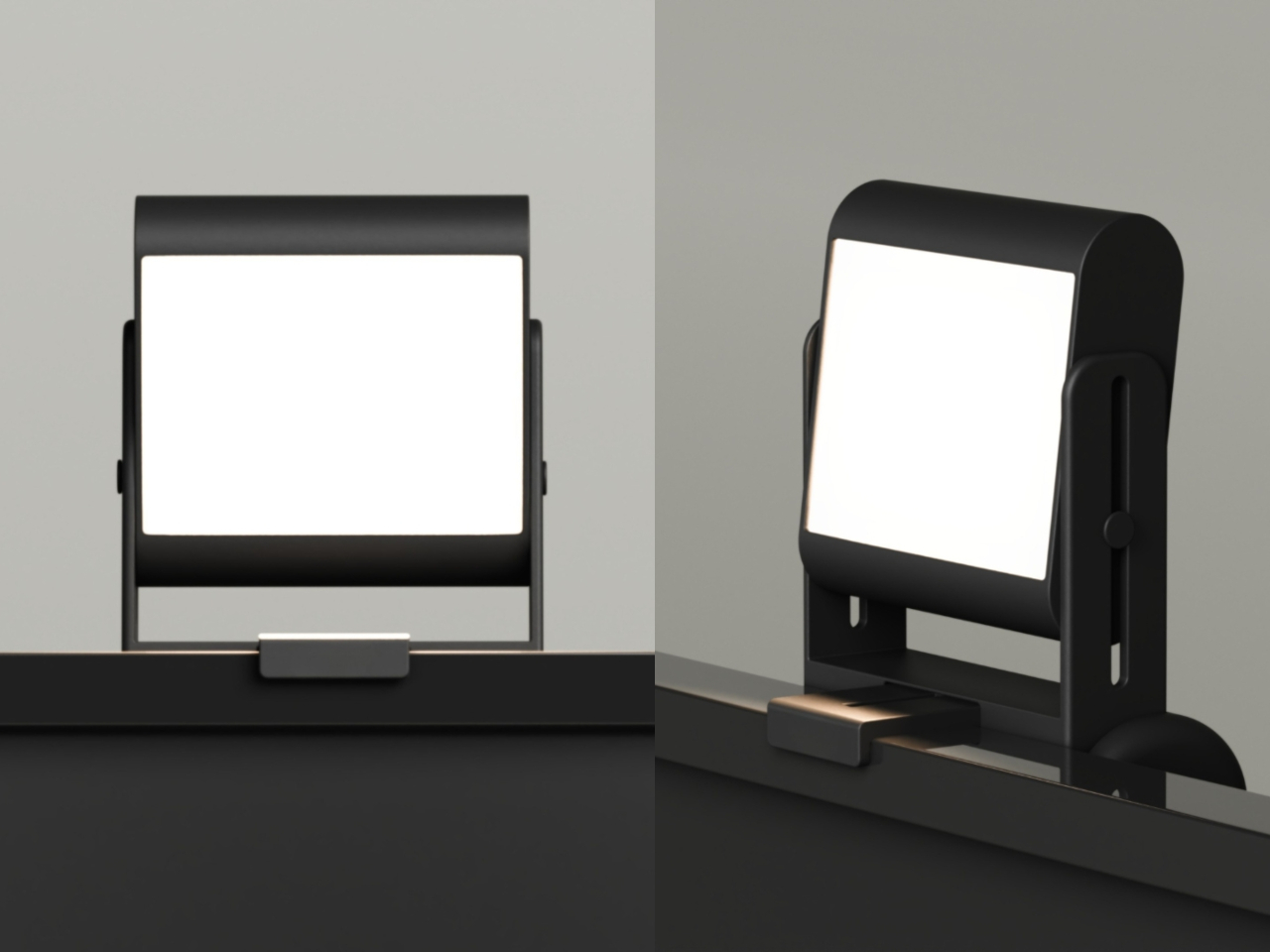
Flipping the light panel 90 degrees is all it takes to go from travel mode to working mode. In mount mode, an extendable hook slides out from the base and clips onto the top edge of a monitor or laptop screen. The light can then be slid up or down the arm to find the ideal height, the same way you’d adjust any conventional monitor-mounted key light.
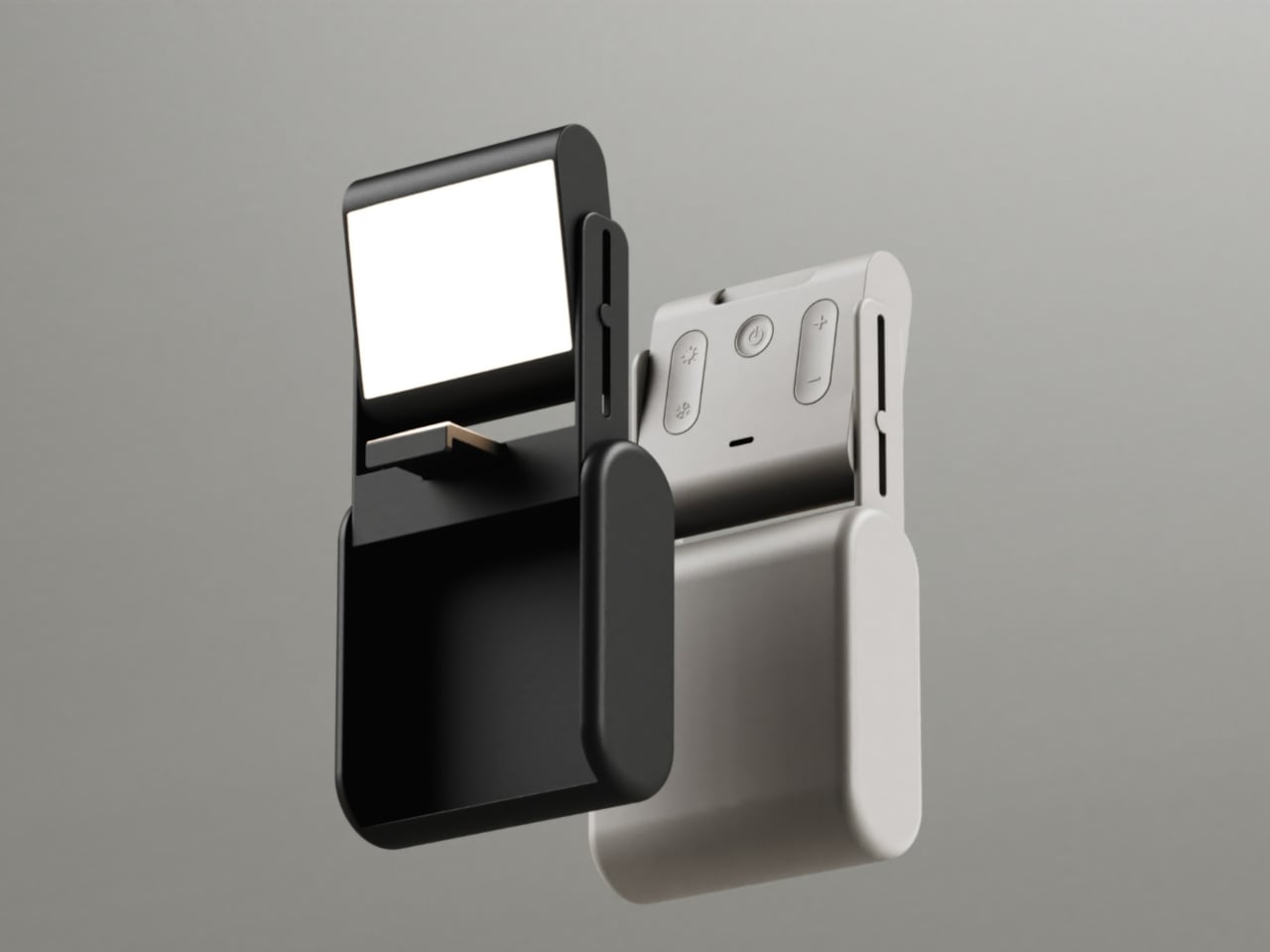
For setups without a screen to clip onto, a table mode turns the base into a freestanding stand. The light panel rotates up and angles toward the subject, making it just as capable on a café table or a hotel desk as it would be in a full home studio. Physical buttons on the back panel control brightness and color temperature, keeping essential adjustments simple and tactile.
The design draws from Logitech’s existing visual language, with matte surfaces, rounded proportions, and a restrained control layout that feels familiar without being derivative. Two colorways, a dark charcoal and a light off-white gray, give the concept a quiet, product-ready confidence. A complementary visual identity was also developed alongside the hardware, imagining how this kind of device might communicate its purpose as a distinct product line.
What makes Litra Lumen compelling isn’t any single feature but the discipline behind all of them. The rotational mechanism, the extendable hook, and the base that doubles as a stand, each answers the same question in a different context. For a creator moving between a studio, a café, and an overnight bag in the same week, a streaming light that packs without thought is one that actually comes along.