Tiny home concept will have you living in a futuristic capsule house

There are no signs that our population will stop growing any time soon, and the amount of livable space continues to shrink. We need more space-efficient residences that aren’t just towering skyscrapers, which is part of the appeal of tiny home trends. The majority of the designs for these petite residences seem to be made from wood or repurposed trailers and aluminum vans, mostly because these are the easiest foundations to work with. In the future, however, we don’t have to be restricted to these materials and plain rectangular shapes, like this compact capsule that definitely looks the part of a futuristic residence both from the outside and especially inside.

Designer: Antoniel Felainne

A capsule is admittedly not the most efficient shape if you’re considering either stacking houses on top of each other or joining them from end to end in a grid. But while space considerations are definitely important in an ever-shrinking planet, it is equally or perhaps even more important to consider the human factors. After all, humans will be living inside that space and they need to feel comfortable, safe, and, well, at home.

The ONCO Capsule House concept tries to deliver all those while also paying close attention to aesthetics. They say beauty is in the eye of the beholder, but it’s hard to deny that the capsule’s shape is interesting and pleasing thanks to the absence of sharp edges and corners. The white exterior of the capsule gives it a clean appearance, though it will probably be difficult to maintain as time goes by, and this motif extends inside the capsule.

The interior of the capsule looks like a sci-fi movie set, with plenty of strip lights lining the walls and door frames as well as screens and panels everywhere you turn. Of course, other interior designs can also be used, though the capsule seems to lend itself perfectly to minimalist furniture with lighter color schemes. Although a capsule will technically have less space inside than a straightforward box shape, the circular interior actually gives the illusion of having more.

The design concept also includes provisions for having parts of the capsule actually transparent, like having floor-to-ceiling windows built directly into the design. Ideally, these would be tint-controllable windows so you can maintain your privacy when you need to but also enjoy the view when you want to. Constructing such a capsule house won’t be easy or cheap, but in a future where tiny homes are the norm, this could very well become a standard design anyway.

The post Tiny home concept will have you living in a futuristic capsule house first appeared on Yanko Design.

Smart display concept puts a cute face on smart home technology

As our homes start to get more connected to devices and the Internet, the number of screens also starts to increase. In addition to the phones, tablets, computers, and TVs that are already a staple of modern life, there are also smart displays that try to offer visual feedback to the things we usually only hear by voice from an AI-powered assistant. While many smart display designs try to blend in with the rest of the room, it’s really hard to hide a large conspicuous screen that needs to always to in view to be useful. This design concept tries to soften the blow of having such impersonal tech products inside your living space by giving a smart display a rather comical face that makes it feel more alive and a little bit friendlier.

Designer: Kai Xia

Smart displays are pretty much the evolution of voice-controlled smart speakers, giving a visual representation of the information you would normally get only through audio. Of course, it could also be used for other purposes, like displaying photos similar to a digital photo frame, playing videos, or even making video calls. The standard design of these devices, however, has more in common with those speakers or, worse, simply look like tablets slapped onto cylinders and boxes.

The Smart Pad concept tries to liven things up by changing the core design of the smart display. Objectively speaking, the 4-inch screen might actually seem too small for its purpose, but that also means you’re forced to show only the essentials rather than flooding the user with information. The smart display is also shaped like an egg, reminiscent of the old, colorful iMacs or even some vintage CRT TVs. This angles the screen at a comfortable level without having to resort to stands and external mechanisms.

The more important feature of the concept, however, is the cartoon-y face that can be displayed on the small screen. It might be a minor and optional detail, but it lends the gadget a bit of personality, making it feel more approachable and even human to some extent. It makes the Smart Pad feel less like an appliance and more like a companion, putting a face to that disembodied voice we always hear when we talk to such devices.

Of course, it’s also capable of the standard things that smart displays can do, at least in theory. That screen can play videos, display photos, and show information, but it might be less expressive because of its small size. That makes the device more suited for desks and bedside tables rather than living rooms, where seeing the screen up close is more natural.

The post Smart display concept puts a cute face on smart home technology first appeared on Yanko Design.

A Headphone Stand To Bring In a Tale From Nature To Your Desk

In the realm of design, every product tells a story, weaving together elements of inspiration and functionality. The KIWI Headphone Stand is no exception, offering a unique blend of creativity and purpose that transcends the ordinary. As we delve into the backstory of this captivating creation, we find ourselves drawn into a narrative where nature, aspirations, and practicality converge.

Designers: Jeongjun Kim and Jinhyoung Choi

At the heart of the KIWI Headphone Stand’s conception lies the tale of a Kiwi bird with a desire for change. This peculiar bird, known for its short legs, yearned for the elegance and grace that came with longer limbs. Every day, it dreamt of standing tall alongside other magnificent birds, its imagination soaring with the possibilities of elongated legs.

One fateful day, the Kiwi bird awoke to a startling realization—its wish had come true. To its astonishment, the once stubby legs were now elongated, granting the bird a newfound stature. However, as reality often proves, ideals and wishes can have unintended consequences.

The Kiwi bird, now burdened with the challenges of its elongated legs, found itself in difficulty. The very feature it had longed for had become a hindrance. In a quest to revert to its original form, the Kiwi bird pondered creative solutions, leading to a unique association with everyday objects.

Taking inspiration from the Kiwi’s plight, the designer of the KIWI Headphone Stand ingeniously incorporated elements from various birds, including the Kiwi and the duck. The elongation of certain parts of these birds served as the foundation for a headphone stand that seamlessly merged functionality with aesthetic appeal.

To maintain a harmonious blend with nature, the designer opted for wood as the primary material for the KIWI Headphone Stand. This choice not only adds warmth and elegance to the product but also pays homage to the organic inspiration derived from the Kiwi bird and other avian counterparts.

In a stroke of brilliance, the designer introduced two similar design iterations, allowing the KIWI Headphone Stand to cradle not just one but possibly two headphones at a time or maybe use that as a hook for something else. This thoughtful addition enhances the product’s appeal, making it a practical and visually striking accessory for any workspace.

The KIWI Headphone Stand is more than just a functional accessory for your desk; it’s a testament to the symbiotic relationship between design and nature. By intertwining the story of the Kiwi bird with the practical needs of headphone storage, this product is a conversation piece that resonates with those who appreciate the artistry behind everyday objects.

The post A Headphone Stand To Bring In a Tale From Nature To Your Desk first appeared on Yanko Design.

Smart device reminds you to take your meds when you have to

When I was diagnosed with a certain condition a couple of years ago, it also comes with the tedious (and expensive) “habit” of drinking all kinds of medication. While in my head I know I have to drink these meds at certain times of the day, there are still a lot of times that I actually forget. Sure, we can always add reminders on our phones but sometimes we just snooze those reminders. Or that may just be me. But in reality, people still need all kinds of reminders to take their meds.

Designer: Rume Studio

Ownum Pod is a concept for a device that may be the first one with a smart reminder for medication. This isn’t just an app that can give you notifications when it’s time to take your meds. It’s actually a smart device where you can put your medicine bottle in it and then configure the app to give you reminders when to take it. There is a precision scale inside the device so it knows whether or not you took the correct dosage of your pills or tablets.

The pod itself looks like a smartphone or device charger with a space in the middle to put the medicine bottle. It probably has a standard bottle where you can just store your respective medicine in. And if you’re like me that takes several different meds, you can interconnect multiple pods with just one power cable / charging connection. It has a rubber base and is also modular so you can place double or multiple pods together.

The UI and function seems pretty simple based on the product renders, although there wasn’t much explanation or visuals of the connected app. I don’t know if something like this can help discipline someone like me into taking their meds regularly. But having an option like this may be helpful.

The post Smart device reminds you to take your meds when you have to first appeared on Yanko Design.

Mixed reality headset bucks design trends for a complete audiovisual experience

Thanks to the Apple Vision Pro, mixed reality is back in the news along with the hardware that will enable people to experience them. We have yet to hit the Holy Grail of headset design that will allow people to wear these devices on their heads for long periods, but brands like Apple and Meta definitely have that goal in their sights. MR headsets are getting lighter and slimmer, but that will always come at the cost of sacrificing some functionality that has to be offloaded to some other product you will have to buy and use separately. This concept design, however, goes in the other direction and tries to actually include everything you need for a more believable mixed reality experience, including the oft-neglected audio for your ears.

Designer: Dohyuk Joo

It’s harder to fool the eyes, which is why most of the focus in developing these mixed reality headsets is on the optics. But we don’t experience the real world with just our eyes, and a more immersive virtual world will also need to do more than just feed us visual data. Just like in the real world, audio is either taken for granted or at least takes second place only, but this headset design tries to balance the scales, even if it means going back to the days of bulky headsets.

WavVision, whose name tries to embody the combination of sound and sight, attempts to be an all-in-one mixed reality solution for our eyes and our ears. In a nutshell, the headset includes over-ear headphones to deliver audio, particularly spatial audio, that would complete the immersion of existing in a virtual space. This wouldn’t be the first headset to attempt that combination, but it is definitely one of the few that make it painfully obvious. The Meta Quest 3, for example, does have built-in speakers but uses an open-ear design that simply directs the audio waves toward your ear.

In addition to having over-ear cups built into the design, the very form and construction of WavVision go against the dominant trend in this niche market. The frame is made from thick steel plates bent to loosely follow the shape of the head. It’s a material that suggests quite a bit of weight and sharpness, which is the opposite of what headsets today are aiming for. It gives the design a distinct industrial aesthetic, which is intentional but also questionable.

One of the reasons why headsets don’t include dedicated headphones is because the audio experience could probably be delivered by more dedicated hardware that’s specially designed for performance as well as comfort. Building that part into the headset only weighs the product down, both literally as well as in terms of costs. Conversely, an integrated design ensures a unified appearance and, at least theoretically, a more complete experience. Admittedly, few of the mixed reality brands today seem to be paying that much attention to the audio aspect, but if Apple will be playing this game for long, it will undoubtedly dip its toes in that area sooner or later.

The post Mixed reality headset bucks design trends for a complete audiovisual experience first appeared on Yanko Design.

Discreet hearing aid concept empowers people with hearing disabilities

Many people try to deny experiencing physical disabilities for fear of making them look weak. This is especially true when it comes to hearing problems that people feel they can simply ignore or wave off easily. Those who do admit to having some hearing disabilities, however, are hesitant to get hearing aids that are expensive, fragile, uncomfortable, and too conspicuous, as if announcing their handicap to everyone around them. That doesn’t have to be the case, especially with today’s advancements in technology, and fortunately, some people are indeed stepping up to design a less obnoxious and more reliable hearing aid, such as this concept that tries to check all the boxes that would encourage more people to wear them and enjoy the world as it was meant to be heard.

Designers: Jitendra Kakade, Nikhil Srikrishnan, Riddhiman Dutta Choudhury

Despite how electronic components can now be so minuscule, most hearing aids still come in a large, two-piece design that, more often than not, clamps to the back of your ear. Such hearing aids are not only uncomfortable to wear, they also tend to put a very visible stigma on wearers, making them feel self-conscious and even ashamed to wear one. This leads to many owners abandoning these devices altogether, willing to sacrifice their happiness for the sake of their image.

Rezonance is a concept design that tries to think of a better solution that isn’t just more discreet but also more affordable and accessible in the long run. Instead of the typical clamping design, Rezonance employs bone conduction technology to be almost invisible. It’s a technology that is already used today on some wireless headphones, so it’s already a proven solution. By using bone conduction, there doesn’t need to be any visible part going into the person’s ear and Rezonance can stay hidden from view behind the wearer’s ear.

Instead of using clamping force to stay in place, the concept suggests an adhesive pad that’s similar to sports tape, ensuring that the material is not only waterproof but also reusable. Additionally, the components used to make the actual hearing aid are claimed to be quite cheap and easily available, which means that the final product itself doesn’t have to cost people an arm in exchange for their ear.

The design doesn’t specify whether Rezonance works only as a single piece or if you will need two for the full audio experience. Even then, it would still be a lot less cumbersome compared to the traditional hearing aid design. Of course, such a design will need to be verified first, especially by professionals, because a design that’s elegant yet ineffective will just end up disappointing and turning away people all the same.

The post Discreet hearing aid concept empowers people with hearing disabilities first appeared on Yanko Design.

Ergonomic mouse concept oddly looks like a familiar home appliance

Computer mice have been around for decades, and despite their form making no objective sense, they remain the most basic and most common pointing device that we now use intuitively. The core design of the mouse hasn’t changed significantly since its inception, which unfortunately means they’re still one of the biggest causes of repetitive strain injury or RSI for many people. Ergonomic mice are starting to gain traction, particularly the vertically oriented designs that promise a more natural and comfortable grip for your hand. This device concept builds on that same premise, but the execution is a bit puzzling considering how it looks less like a mouse and more like a miniature clothes iron.

Designer: Pranav Kuber

The rationale behind vertical mice is that the normal orientation of human hands has the palms facing inward rather than downward. With a regular mouse, users are forced to keep their hands at an unnatural angle, whether or not they’re moving the mouse at that moment. Of course, a vertical mouse would still need to provide the basic functions of a conventional mouse, which includes left and right buttons as well as a scroll wheel.

At first glance, the Ergo ergonomic mouse concept is just like any other vertical mouse now available for purchase, but examining its form and silhouette generates a slightly different image. The top plane’s wide surface tapers sharply toward the front, while the wide middle section looks rectangular when viewed from above. If not for the actual bottom of the mouse, which merges two vertical sides like the keel of a ship, the Ergo looks almost like a clothes iron, albeit one without a handle to grip.

Aside from the peculiar shape, the mouse design also raises a few other questions. The buttons on the outer or right side are clearly marked, but they don’t look like buttons you can physically click at first glance. The position of the mouse wheel on the opposite side is even more puzzling, as it will require a lot of swinging movement from the thumb that could actually put more strain on its joint. The rather wide rear might also make it harder to grasp the mouse, potentially resulting in more discomfort in the long run.

The post Ergonomic mouse concept oddly looks like a familiar home appliance first appeared on Yanko Design.

Tumbler-shaped portable projector concept promises entertainment freedom

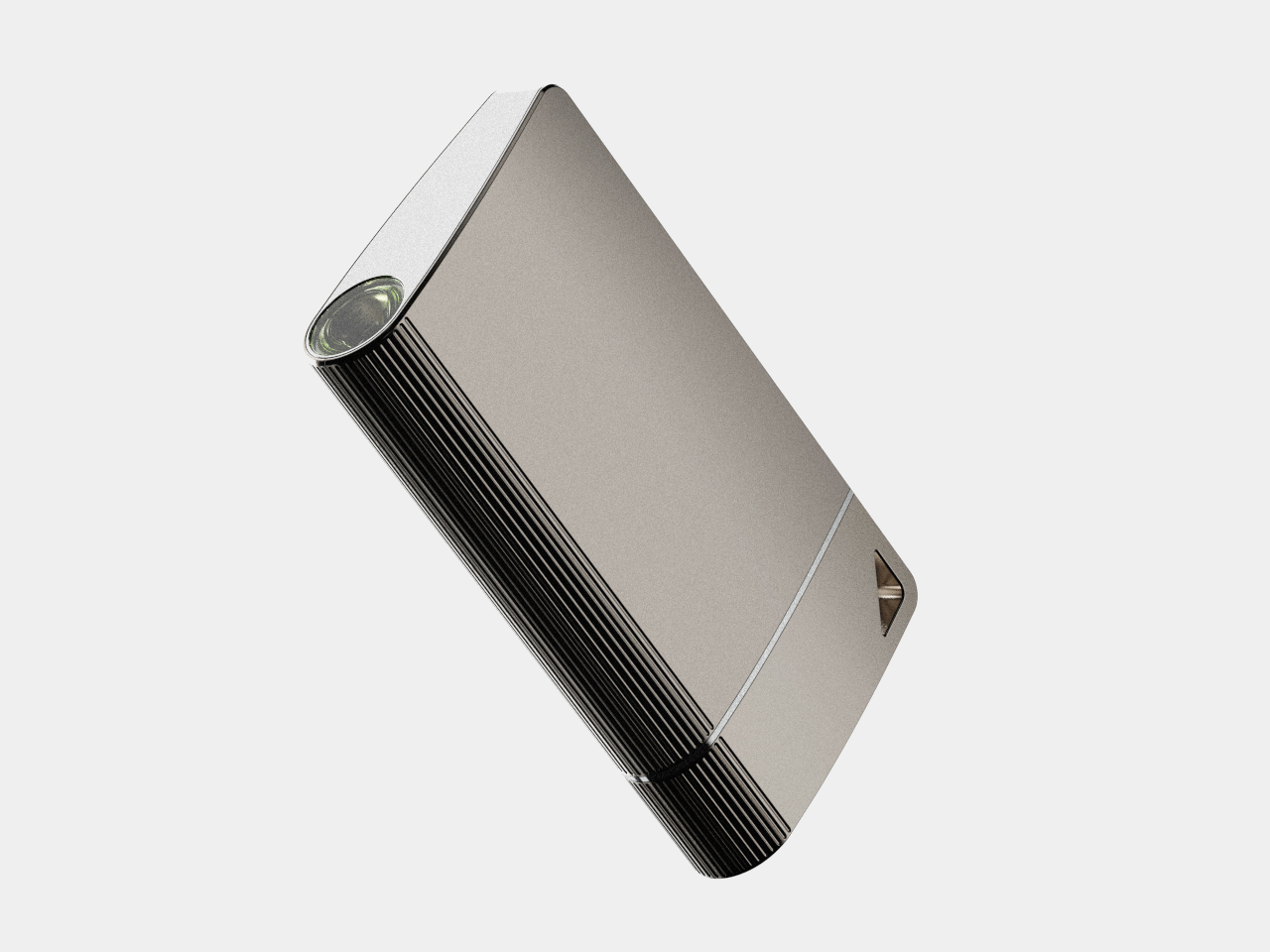
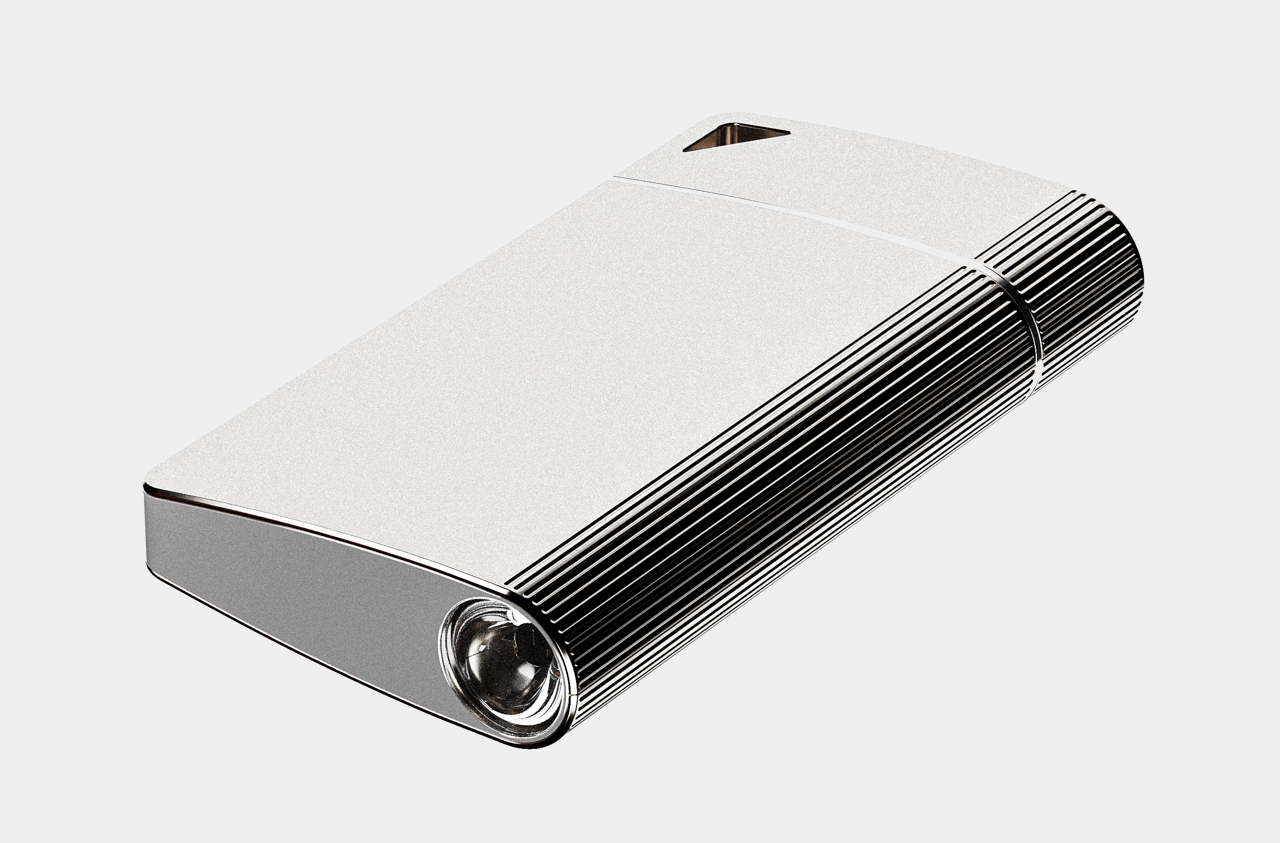
Projectors are becoming a popular alternative to extra large screens like TVs, mostly at home but sometimes even outdoors. Product design trends have started to move away from bulky boxes to more compact forms, but most of them are still restricted by a few design considerations. Even projectors that are supposedly designed for portability often come with clunky and sometimes unattractive stands, or worse, require setting up on tripods just to get the perfect angle. This concept design tries to solve that problem in a rather creative way, offering a highly compact and portable projector that can be propped up and angled conveniently, all without using a tripod or even a stand.

Designer: Hana Belassi

Thanks to progress in technology and manufacturing, it’s now possible to cram much of the electronics that powered large, hulking projectors into something the size of a small box or even a cylinder. But despite the smaller designs, or probably because of their more cramped designs, these portable projectors often rely on an external mechanism like a tripod or stand to prop them up at the desired angle. Not only does this ruin the aesthetics of the otherwise beautiful product, it also makes it cumbersome to bring the projector along wherever you go.

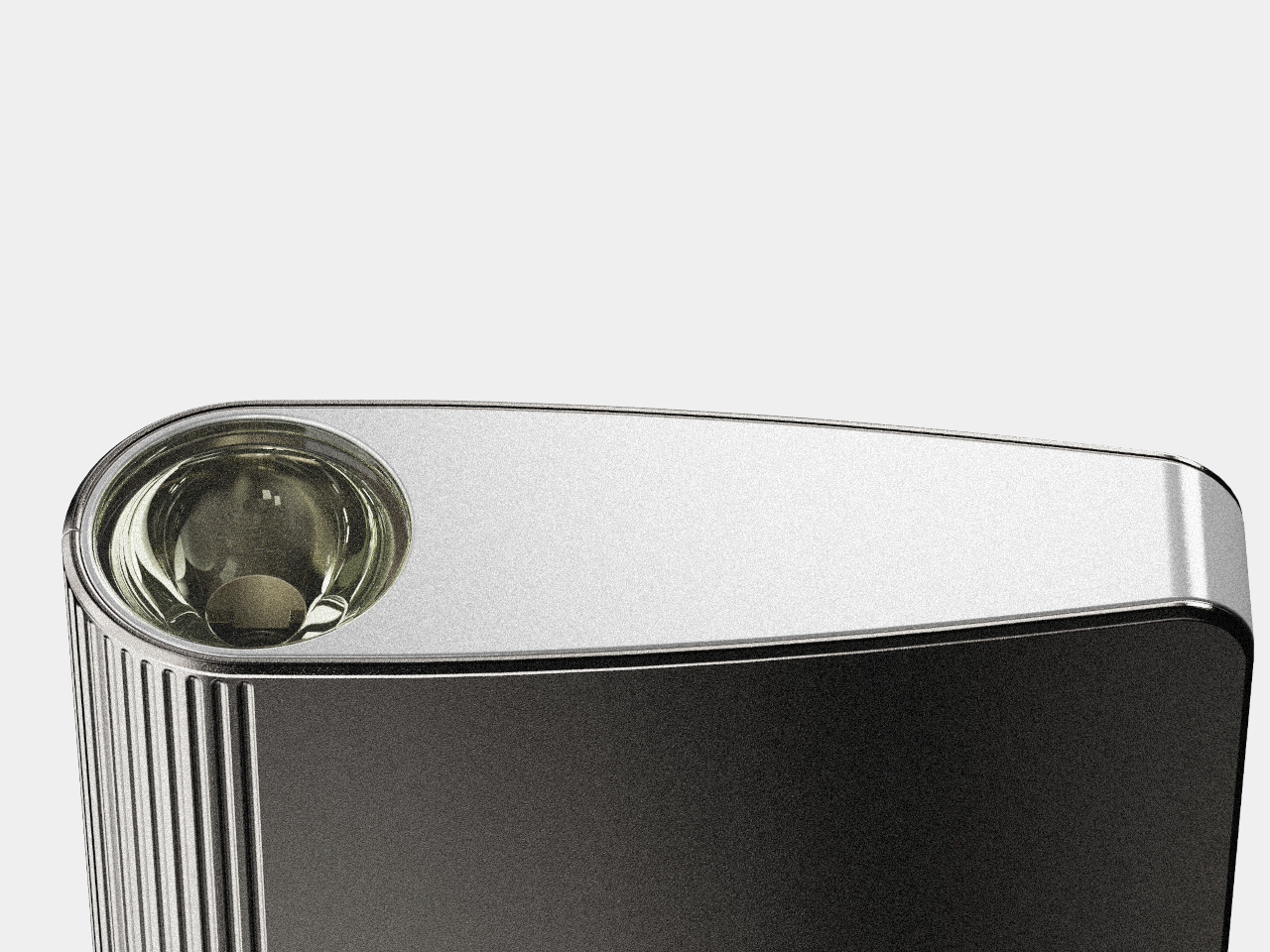
The Slim.VU concept tries to offer the ultimate on-the-go entertainment experience by encapsulating all the needed parts and design in a single, compact, and portable package. A projector with a built-in battery is not exactly new, but one that comes with 4G connectivity is still unheard of. That enables the projector to function not only without an external power source but even without a Wi-Fi connection, allowing it to access streaming sources without having to use up your phone’s cellular data.

1

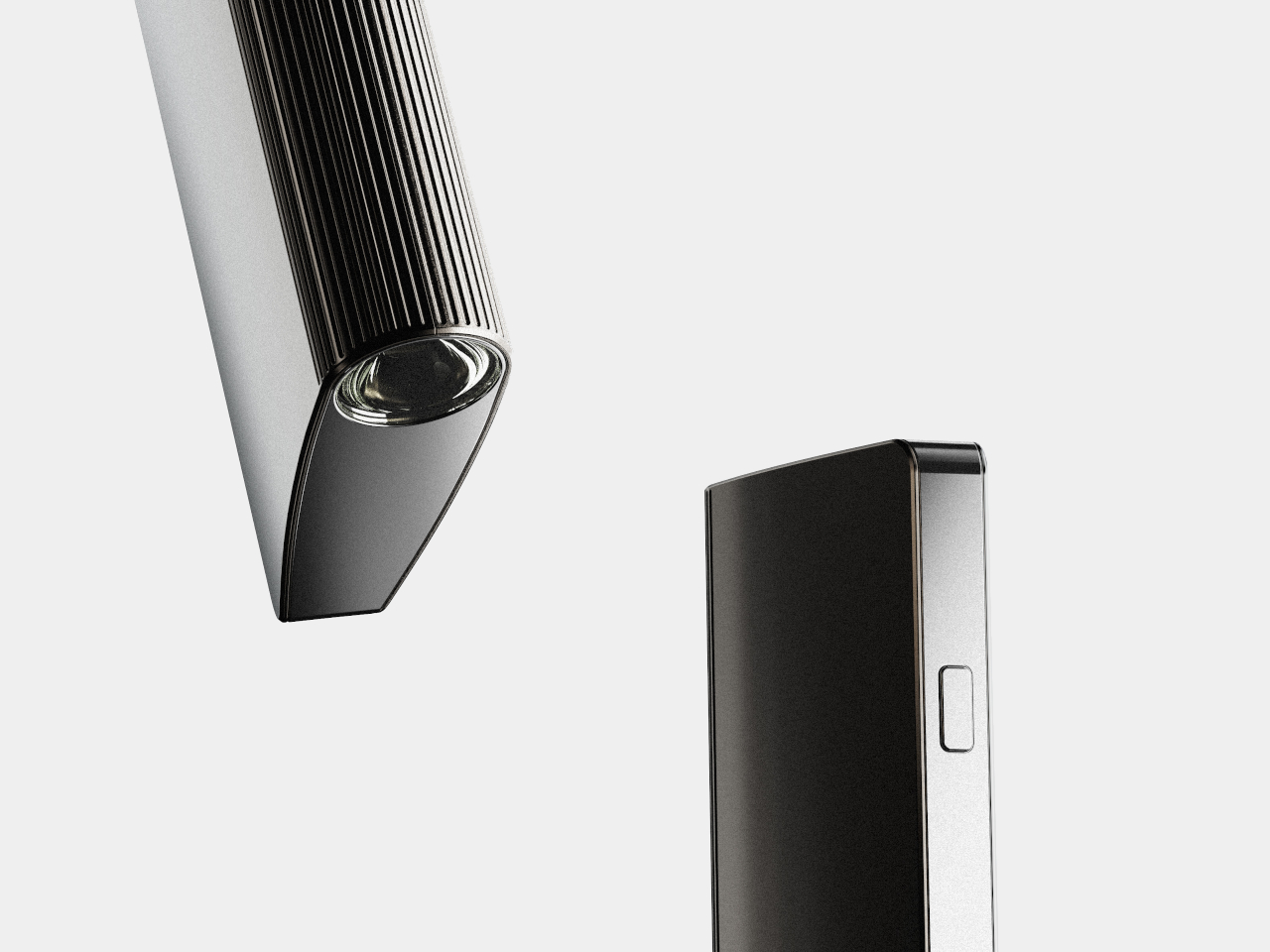
The more interesting aspect of the projector’s design, however, is the built-in stand that looks nothing like a stand. The removable “cap” of this tumbler-like projector functions as this stand, holding the projector in its place magnetically. The curved shape of this stand lets you rotate the cylindrical projector and angle it properly. This way, you don’t need any other accessory to enjoy a video anytime you want, anywhere you go.

The Slim.VU projector concept contains everything you need, freeing you from concerns about power, connectivity, and stability. Of course, actually implementing such a projector is a different matter entirely, and it might need to make a few compromises in exchange for its compact form. Audio and video quality might actually take a hit just to cram this much technology inside a canister shape, making the portable projector less ideal for outdoor use, or even indoor when there’s too much ambient light.

The post Tumbler-shaped portable projector concept promises entertainment freedom first appeared on Yanko Design.

Wireless earbuds concept suggests a novel and weird way to clean it

Wireless earbuds, particularly the so-called True Wireless Stereo or TWS earbuds, have now become a common sight, in no small part thanks to Apple retiring the headphone jack and pushing the AirPods as a solution. These accessories come in different shapes and sizes, but the one common design they share is that the buds are enclosed in a container that acts as their charger as well. As any user of these tiny buds has experienced by now, both the buds and their are often exposed to dirt and grime that could become a health issue over time. Cleaning the earbuds themselves might be trivial, but when that dirt gets deep inside the case, the task becomes significantly more difficult. This concept tries to solve that problem by practically overhauling the charging case design, and it takes inspiration from the weirdest source to implement the strangest cleaning method.

Designer: Seungjae Lee

For TWS earbuds that store the buds’ stems vertically like with the Apple AirPods, the charging cases have a small and deep tunnel where dirt and bacteria can get in and fester. It’s not impossible to clean but it does take some effort, requiring you to really stop and use some tools to wipe the dirt deep inside. If only you could blow the dust and dirt away quickly when you need to, just like with many other objects you might have with you.

The Double Barrel Bluetooth Earbuds concept offers that convenience by turning the charging case into two hollow tubes with openings on both ends. The inspiration for this design was, apparently, a double-barrel shotgun, which is probably the last thing you’d expect to associate with non-violent wireless earbuds. As a visual embellishment, inserting and removing the earbuds would light up LEDs inside the barrel, as if you were shooting bullets.

For this to work, however, the buds themselves have to be straight, which would have been awkward to wear inside our ears. The concept proposes to make the tips foldable so they would take the form of typical earbuds that you can comfortably wear in your ears. And because of the double-ended opening, you can actually put in or remove the buds in either direction.

While the concept design is definitely interesting, it is based on the rather shaky premise that cleaning the earbuds case by blowing into them is actually a smart idea. Our breaths aren’t exactly clean and, more importantly, they also carry with them small saliva particles that could damage the charging contacts inside. And by keeping both ends open, the case would actually invite even more dirt and particles inside, making regular cleaning even more of a chore.

The post Wireless earbuds concept suggests a novel and weird way to clean it first appeared on Yanko Design.
Magnifying glasses turn into classic magnifying lens when not in use

One of the things that I have to accept as a person that’s getting older and that has bad eyesight is the fact that I can’t read books with small fonts anymore. I’m not yet at the point where magnifying glasses are actually needed but I know we’ll eventually get there. There are more convenient ways now of using magnifying lenses instead of the old school way of actually holding a lens in one hand with the reading material on the other hand. This concept for magnifying glasses is something I may eventually want or need.
Designer: Jongcheol Yang

The VAN magnifying glasses concept fixes the problem of unnecessary parts that may cause inconvenience or even dizziness to those that need to use this kind of glasses. The idea is for this to be similar to reading glasses in a sense that you only wear them when you need to use them. The magnifying part is only placed on the lower part where the magnifying lens is located. And when you’re feeling dizzy or you need to rest your eyes, you just have to look straight ahead since the lens part will not be there anymore.

The other cool thing about this concept is that if you don’t need to wear the glasses, you can just fold up the front and then the “legs”. It will then turn into the classic magnifying glass that we’re used to and then you can store it in your bag. They don’t show it in the product renders but maybe if you just rotate the lens itself away from the stem, then you can use it like a regular magnifying glass without having to wear it as actual glasses.

It’s an interesting concept for sure, particularly for people who already have a hard time reading things that have small prints. Of course it’s another thing to add to things you need to bring and to mind. But at least it solves some of the issues that come with current magnifying glasses.

The post Magnifying glasses turn into classic magnifying lens when not in use first appeared on Yanko Design.