Think about the last time you actually used the right half of your keyboard while gaming. Your right hand was on the mouse, your left hand was camped on WASD, and every key to the right of G and T was essentially decorative. The numpad, the arrow keys, the entire right side of your keyboard sat there collecting dust while you were busy fragging opponents or managing cooldowns. Keyboards have been designed for typists since the 1860s, and the gaming world has largely just accepted that and moved on.
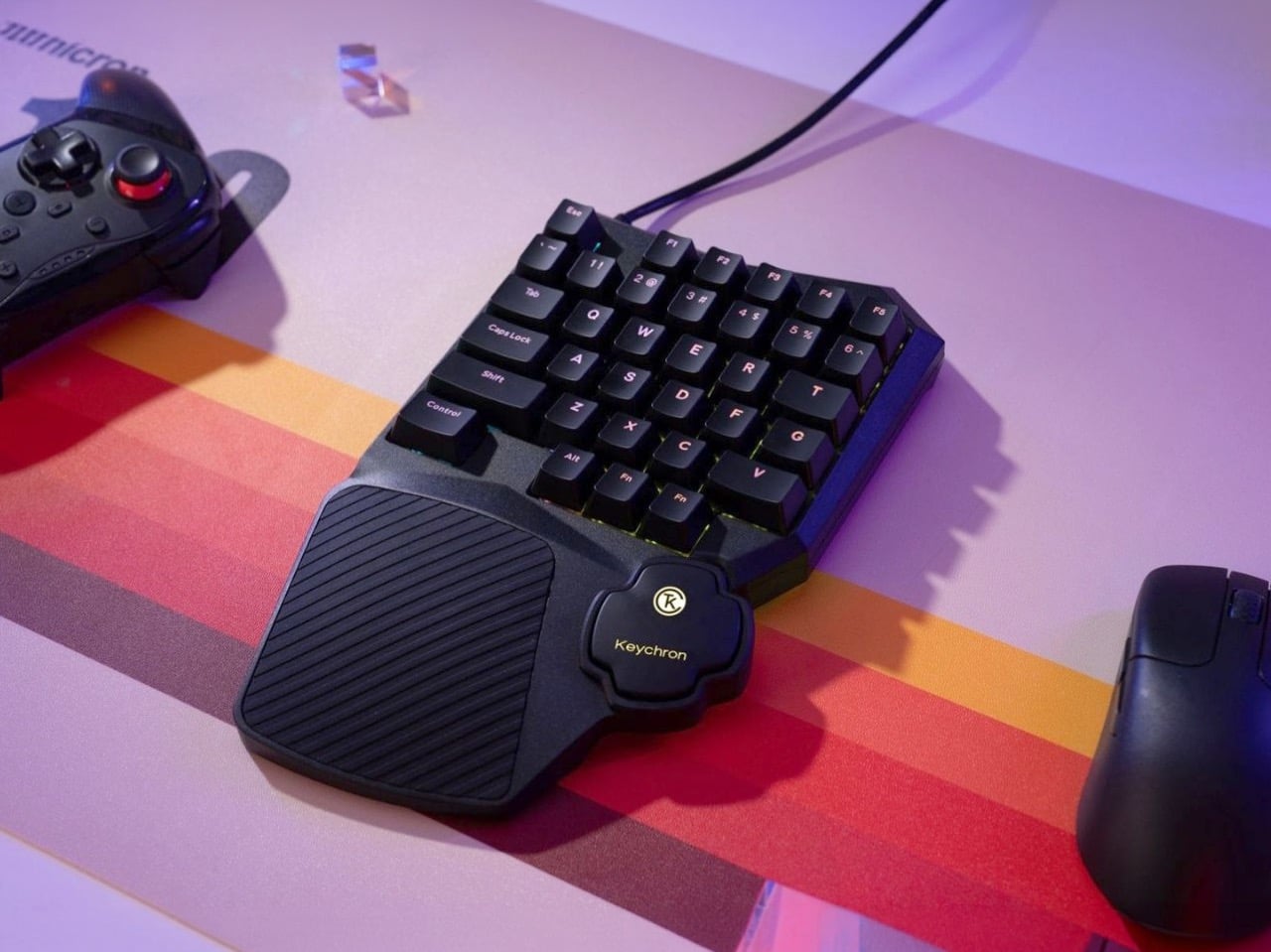
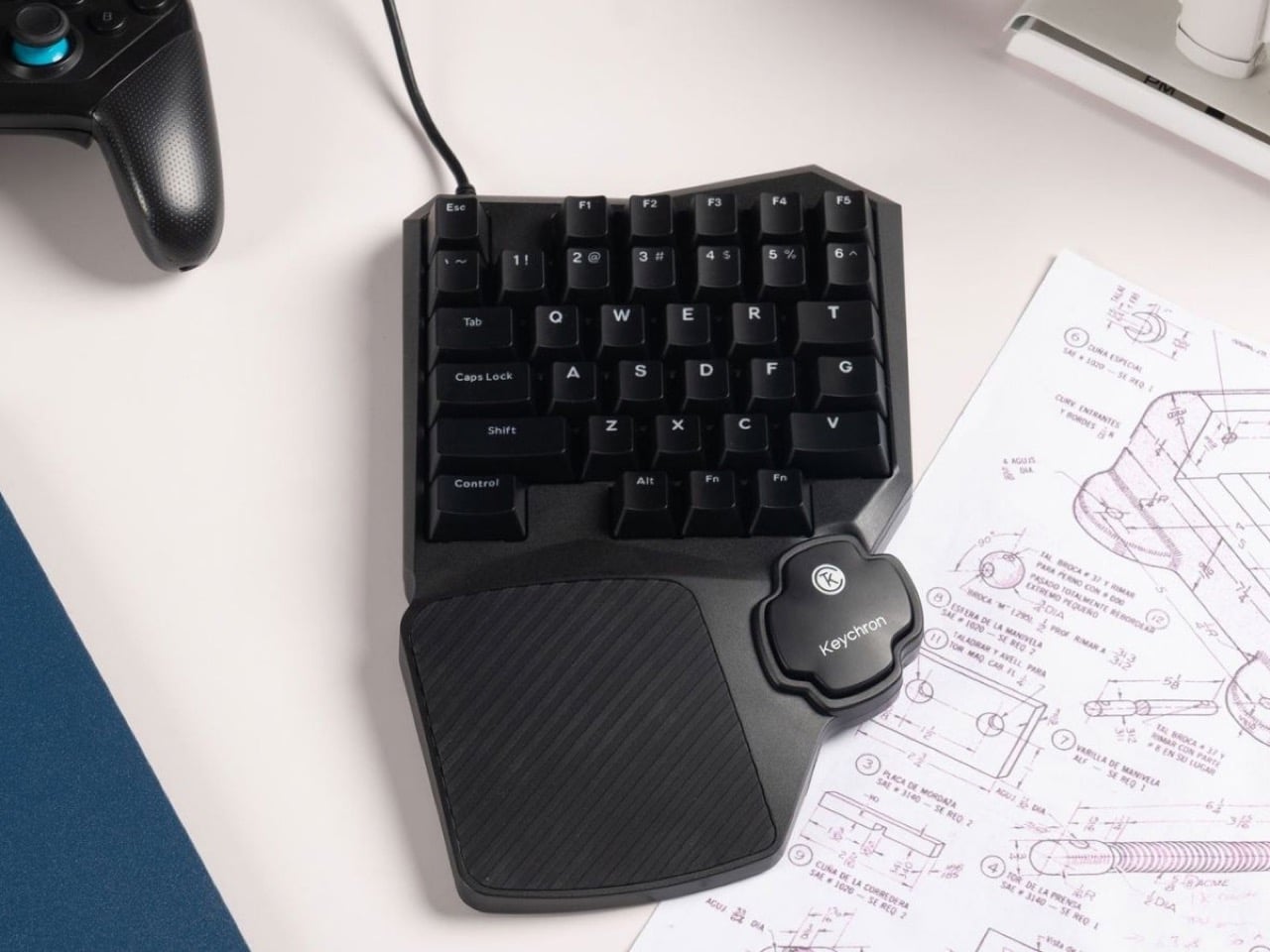
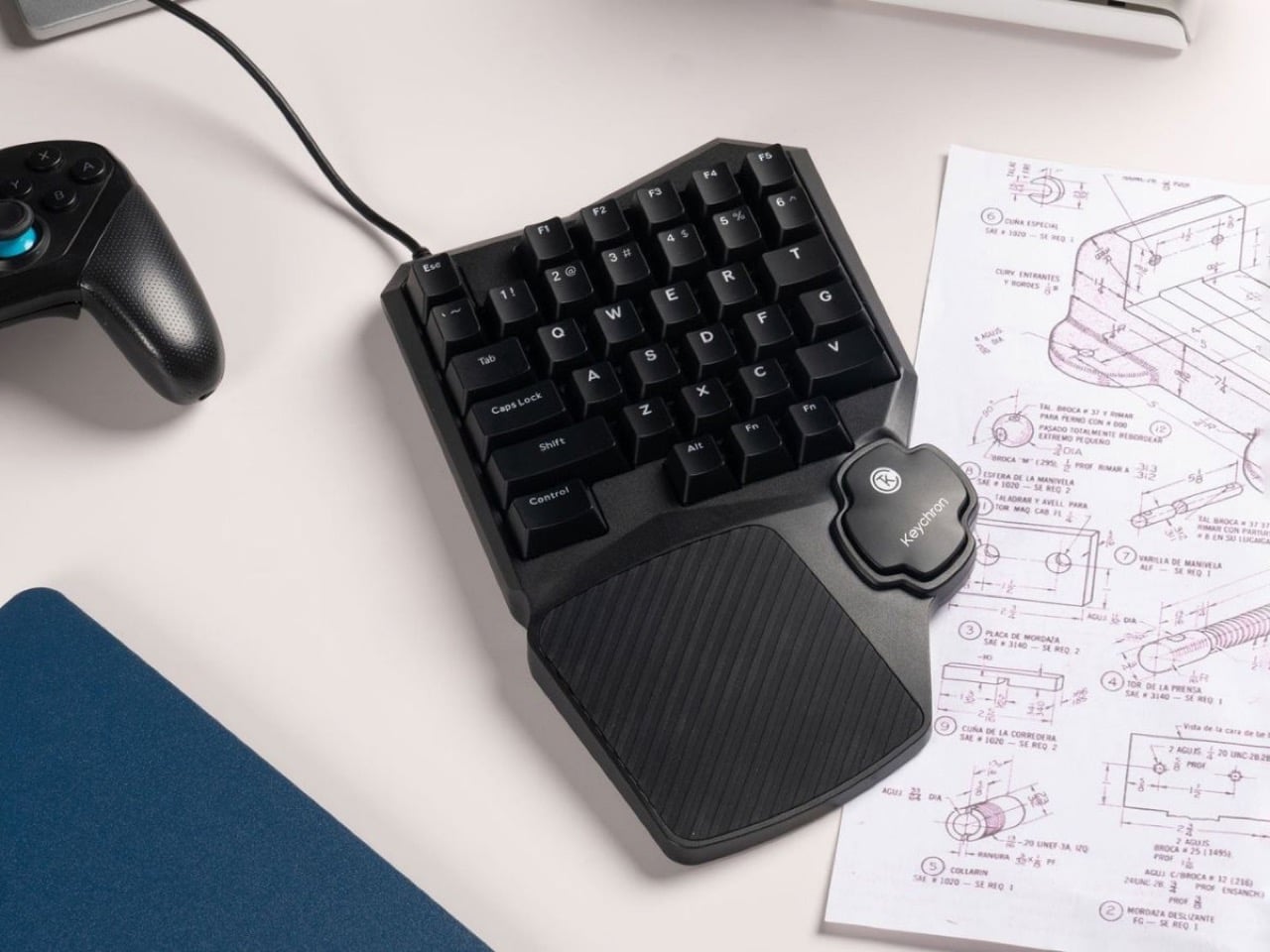
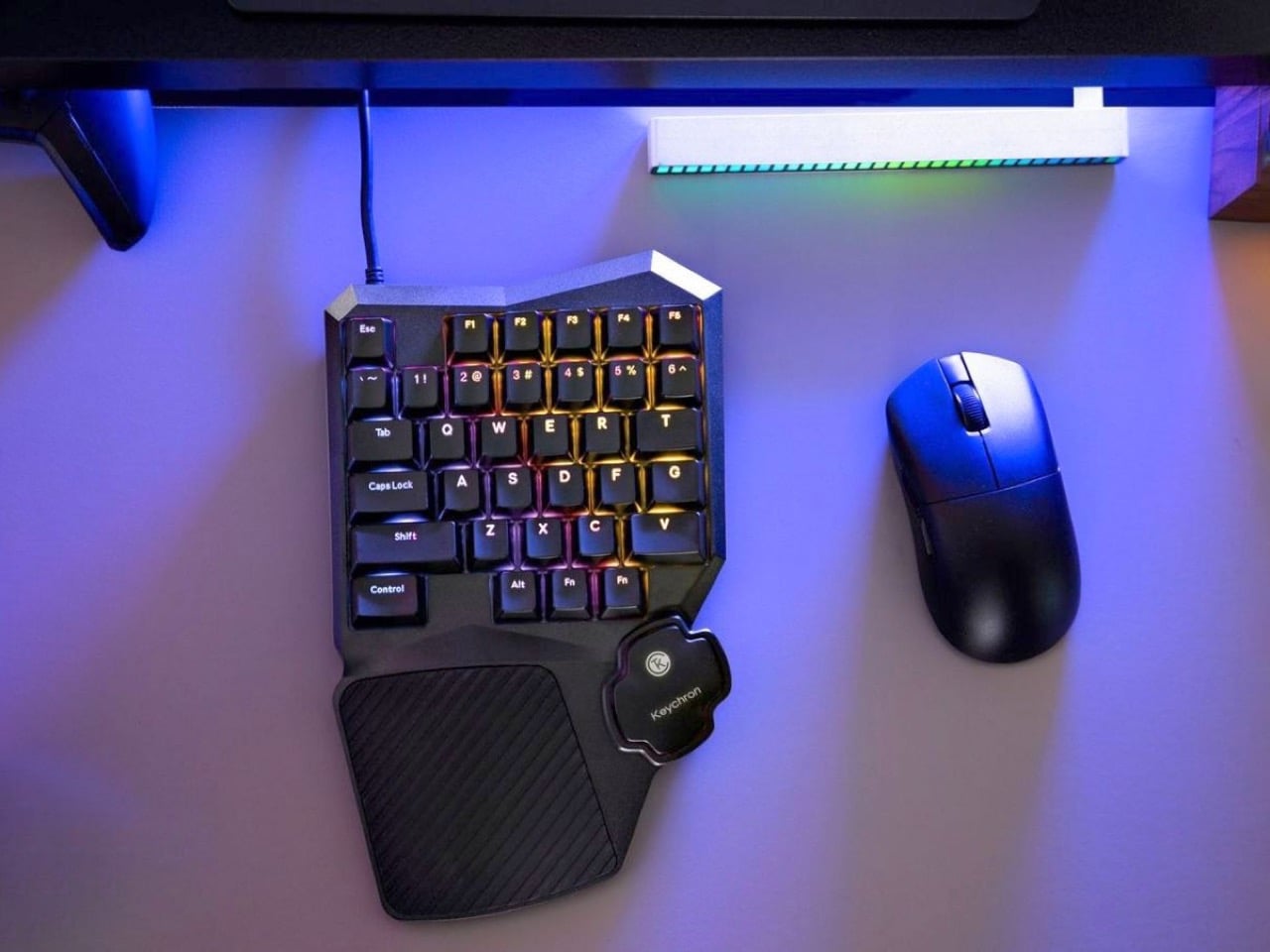
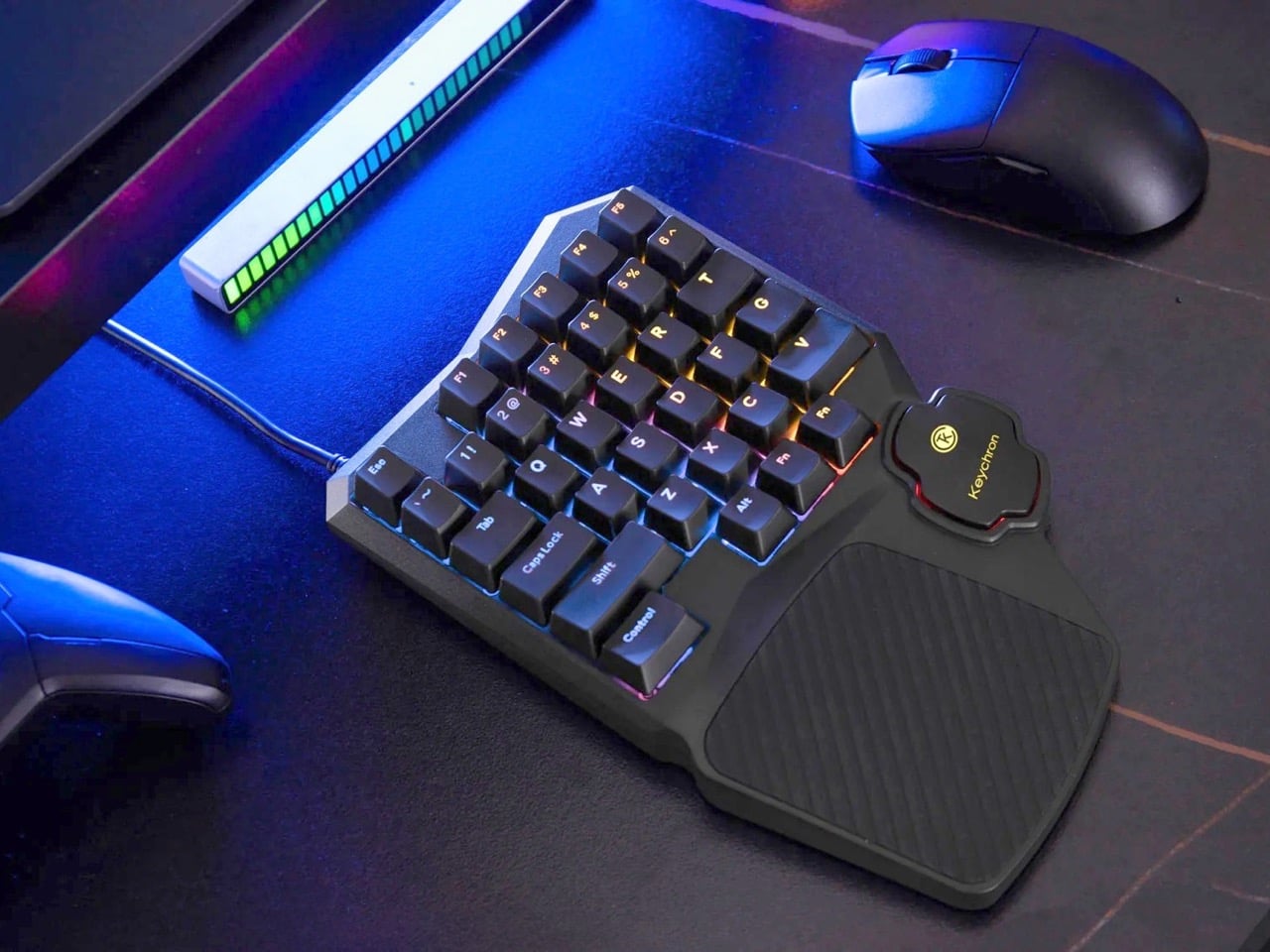
Keychron hasn’t. The C0 HE 8K is a 35-key one-handed gaming keypad that takes the left half of a conventional keyboard, wraps it in an aggressive chassis with a built-in palm rest, and throws Hall Effect magnetic switches and an 8,000 Hz polling rate at it. The result is a peripheral built entirely around how PC gamers actually use their keyboards, rather than how office workers do.
Designer: Keychron
Hall Effect magnetic switches read actuation depth using sensors rather than physical contact between two metal points, which means the switches don’t wear out the same way traditional mechanicals do since there’s no metal-on-metal degradation over time. More practically, you can set exactly how deep each key needs to travel before it registers, right down to fractions of a millimeter, through Keychron’s browser-based Launcher app. Set a shallow actuation for your sprint key, a deeper one for an ability you don’t want to fat-finger, and a rapid trigger profile for keys where you need near-instant re-registration. This level of per-key granularity has historically lived in expensive enthusiast boards, and Keychron is bringing it to a purpose-built gaming pad that fits in half the desk footprint.
At 8,000 Hz, the C0 HE 8K reports its key state to your PC eight times more frequently than the 1,000 Hz ceiling most gaming keyboards hit. You can switch between 1,000, 4,000, and 8,000 Hz in the Launcher app depending on whether you want to conserve USB bandwidth or go full competitive. For most players the difference is nearly imperceptible in casual play, but in titles where frame timing and input consistency matter at the margins, having that headroom available without buying a separate board is a genuinely useful option.
The faceted, angular chassis has beveled edges cutting across the top corners that give the C0 HE 8K a visual identity most gaming peripherals lack entirely. The integrated silicone palm rest flows organically out of the bottom of the unit, wide enough to actually support your wrist rather than just gesture at the concept. North-facing RGB shines through double-shot ABS keycaps in over 22 lighting modes with per-key control, keeping legends readable even in dim setups where the backlighting does most of the work.
Pricing remains under wraps for now. The C0 HE 8K sits in a niche that the Razer Tartarus and Logitech G13 have occupied for years, but neither brought Hall Effect switches or sub-millisecond polling to the category. Keychron has built a reputation on mechanical keyboards that punch above their price point, and if the C0 HE 8K lands anywhere near the $80 to $100 range its feature set suggests, it will be a serious conversation starter for anyone who has ever looked at the right half of their keyboard mid-game and wondered why it exists.
The first thing most people reach for in the morning isn’t a glass of water or a cup of coffee; it’s the phone. From there, it’s a quick trip through news alerts, emails, and a social media feed that didn’t exist last night. Screen fatigue is well-documented at this point, and the solutions that have emerged tend to be more digital tools designed to manage other digital tools.
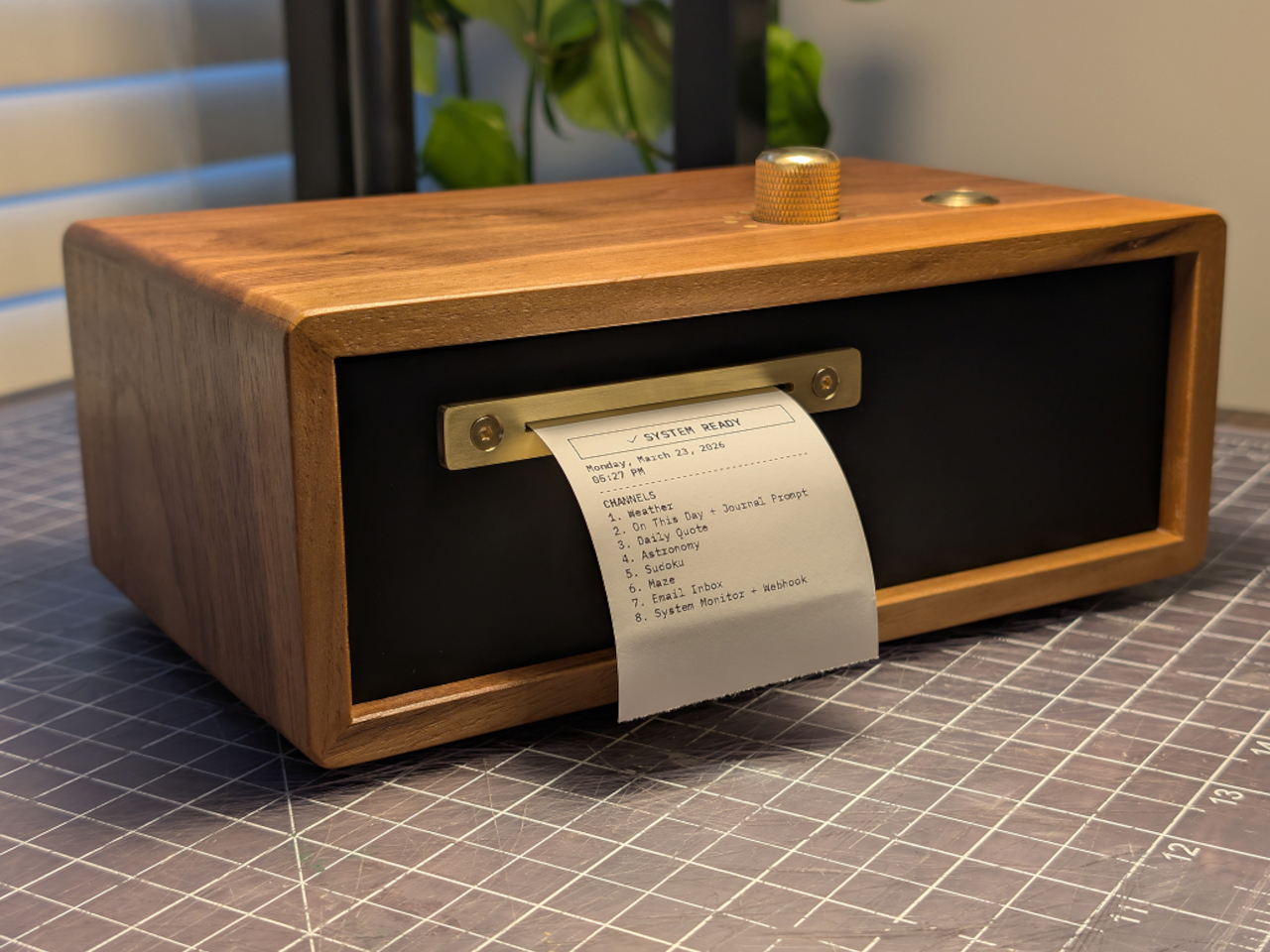
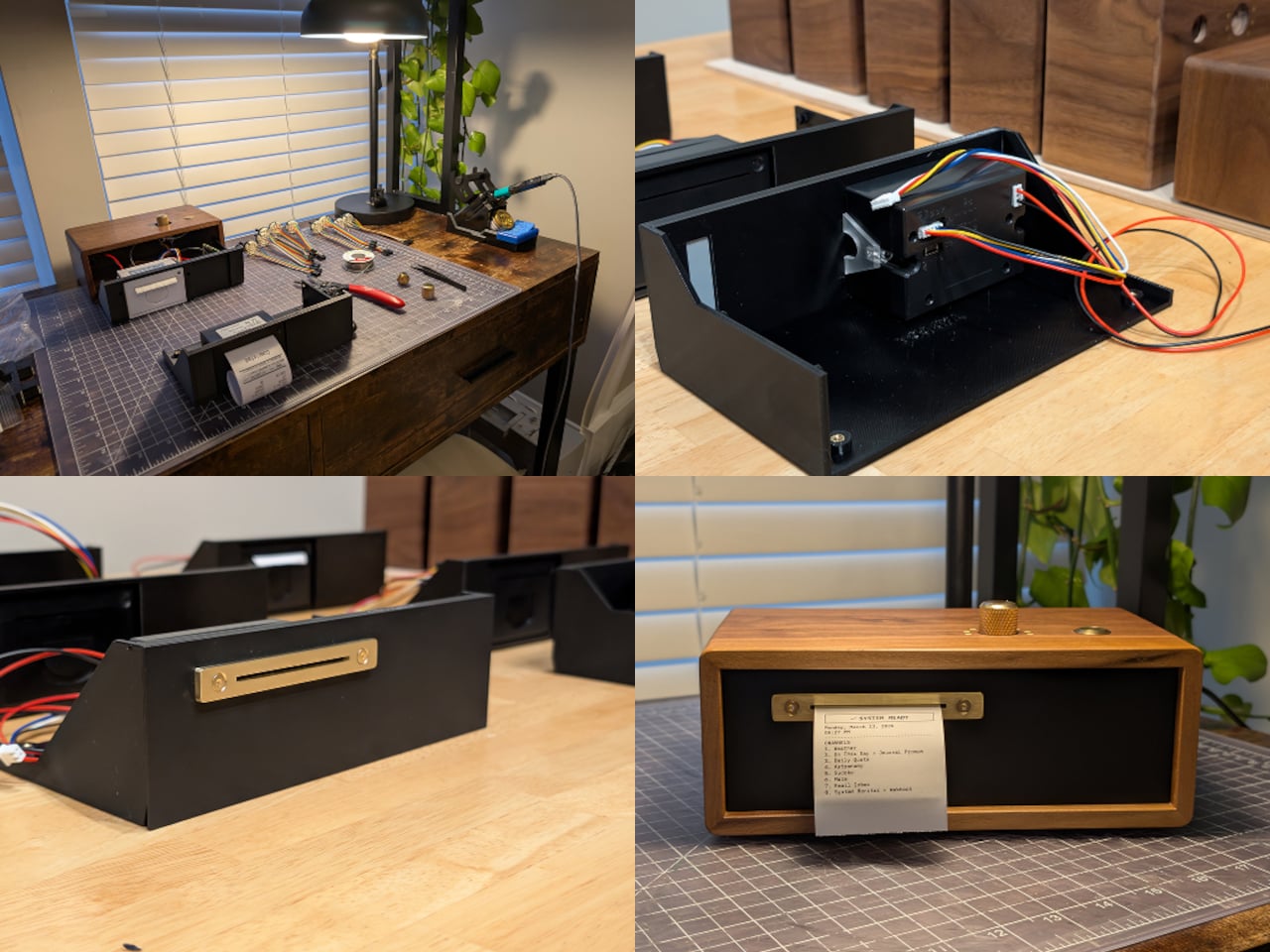
Designer and furniture maker Travis Miller decided to approach the problem differently. His Paper Console PC-1 doesn’t ask you to manage your screen time; it simply offers an alternative that doesn’t involve one. The device is about the size of a toaster and sits on a desk or nightstand, printing your news, weather, puzzles, and other personally selected content on demand, one strip of thermal paper at a time.
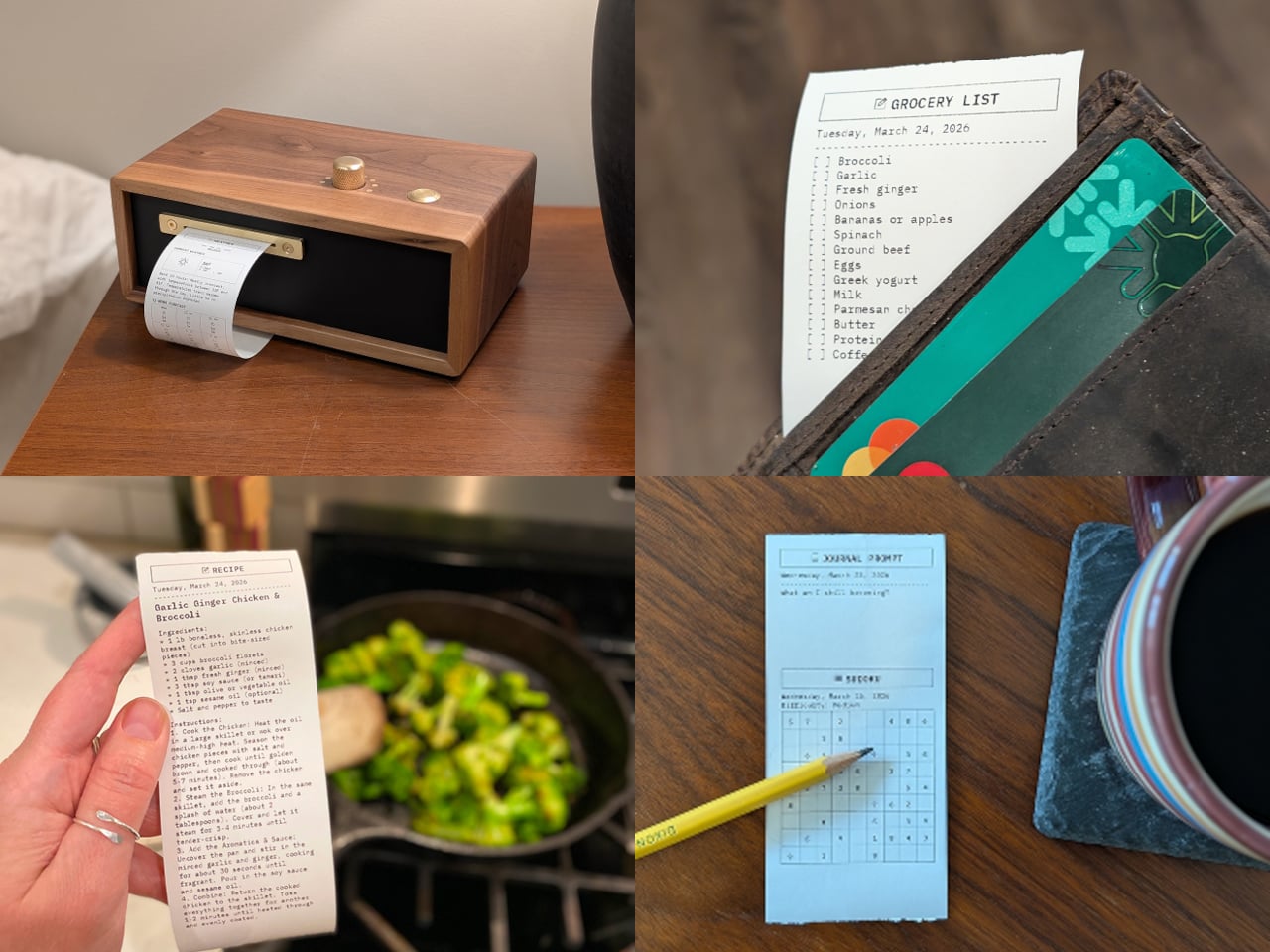
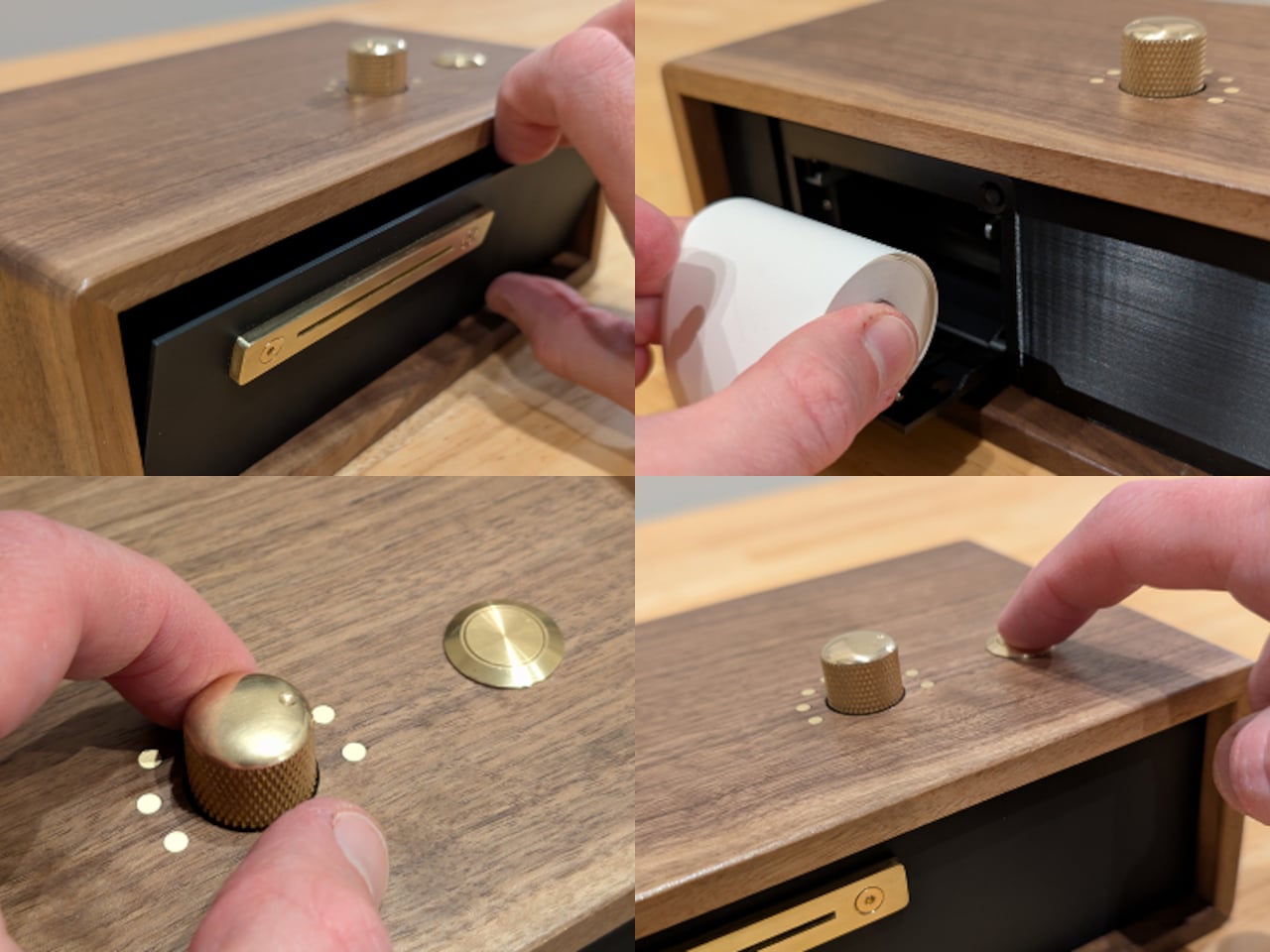
The interaction is deliberately simple. A brass rotary dial on the front selects from up to eight customizable channels, and a single button triggers printing. No menus, no tap targets, no notifications pulling your attention away. The channels can be loaded with whatever content matters most to you, from top news headlines and RSS feeds to weather forecasts, email summaries, astronomy updates, and puzzles like Sudoku and mazes.
Each channel can hold multiple modules stacked in whatever order you prefer, so a single press can deliver a full morning digest: weather first, then headlines, then a journal prompt to think about over coffee. Scheduling is built in as well, so the device can print automatically at set times, silently delivering the day’s content without any input. It’s passive in the best sense.
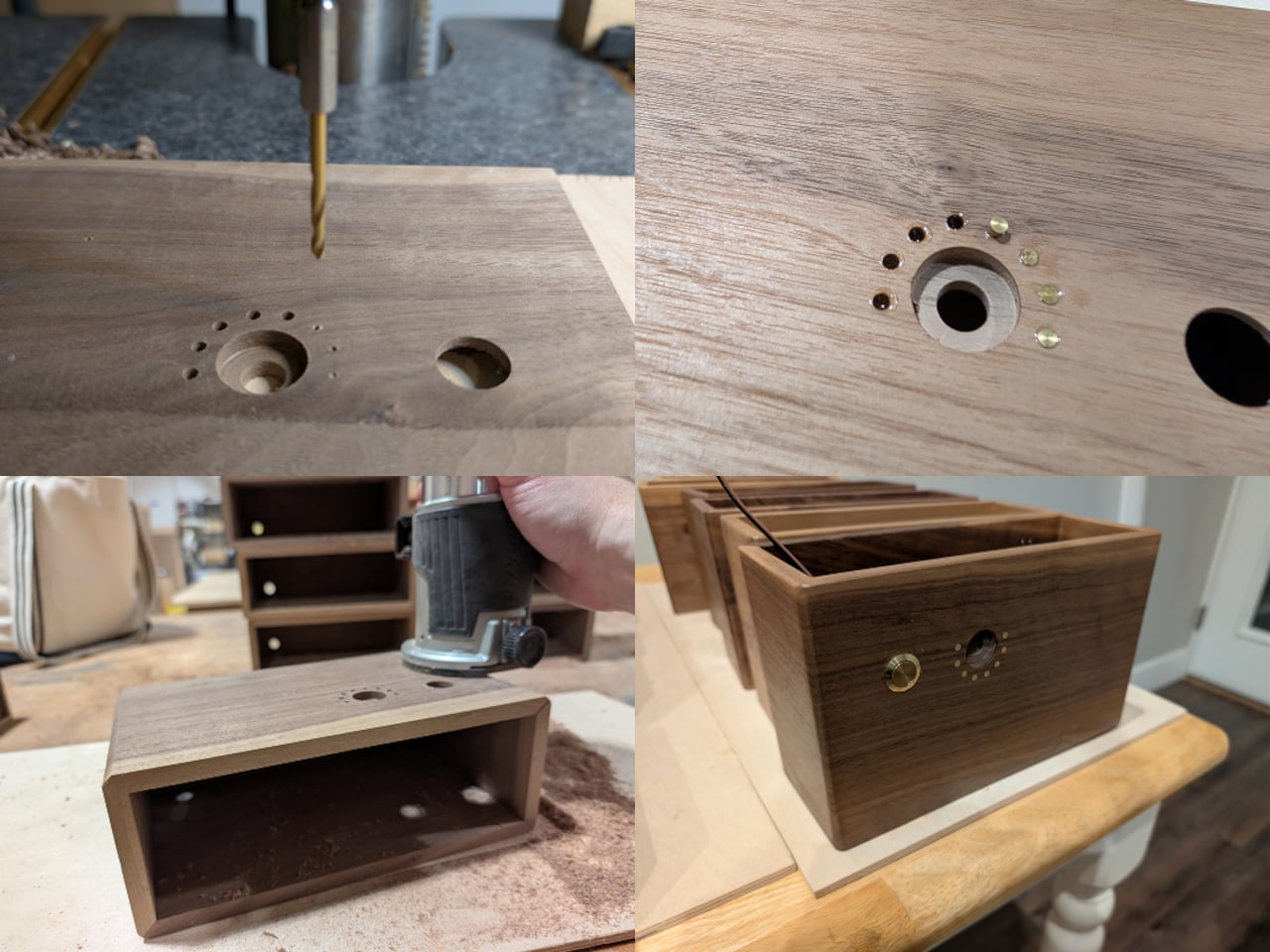
Inside the walnut and brass enclosure is a Raspberry Pi Zero 2 W paired with a 58mm thermal printer. Miller designed and fabricated the case himself, drawing on six years of furniture making, and a 3D-printed internal sled keeps the electronics tidy and mounted. The brass faceplate gives the device the kind of weight and finish that puts it a long way from anything that comes in a retail box.
Miller made only 10 units in this first run, though the full project is open-sourced and documented on GitHub for anyone who wants to build one. That openness suits it well. The PC-1 isn’t a product category or a commercial platform; it’s a personal project that turned out well enough to share. The GitHub documentation is detailed enough to follow and honest about what the build actually involves.
There’s something genuinely refreshing about a device that asks nothing of you except a button press. The Paper Console PC-1 isn’t anti-technology; it’s just more selective about what earns a spot on the desk. Information printed on paper, held in your hand, and torn off when you’re done has a finality that a notification never manages, and for a growing number of people, that difference matters quite a lot.
Screen time has crept up to the point where most people spend more waking hours staring at a phone than almost anything else. Smartphones aren’t particularly kind about it, with vivid, high-brightness displays that perform well in demos but aren’t gentle over long stretches. Eye fatigue and dryness have become almost expected, yet most people aren’t ready to swap their phones for e-readers just to get some relief.
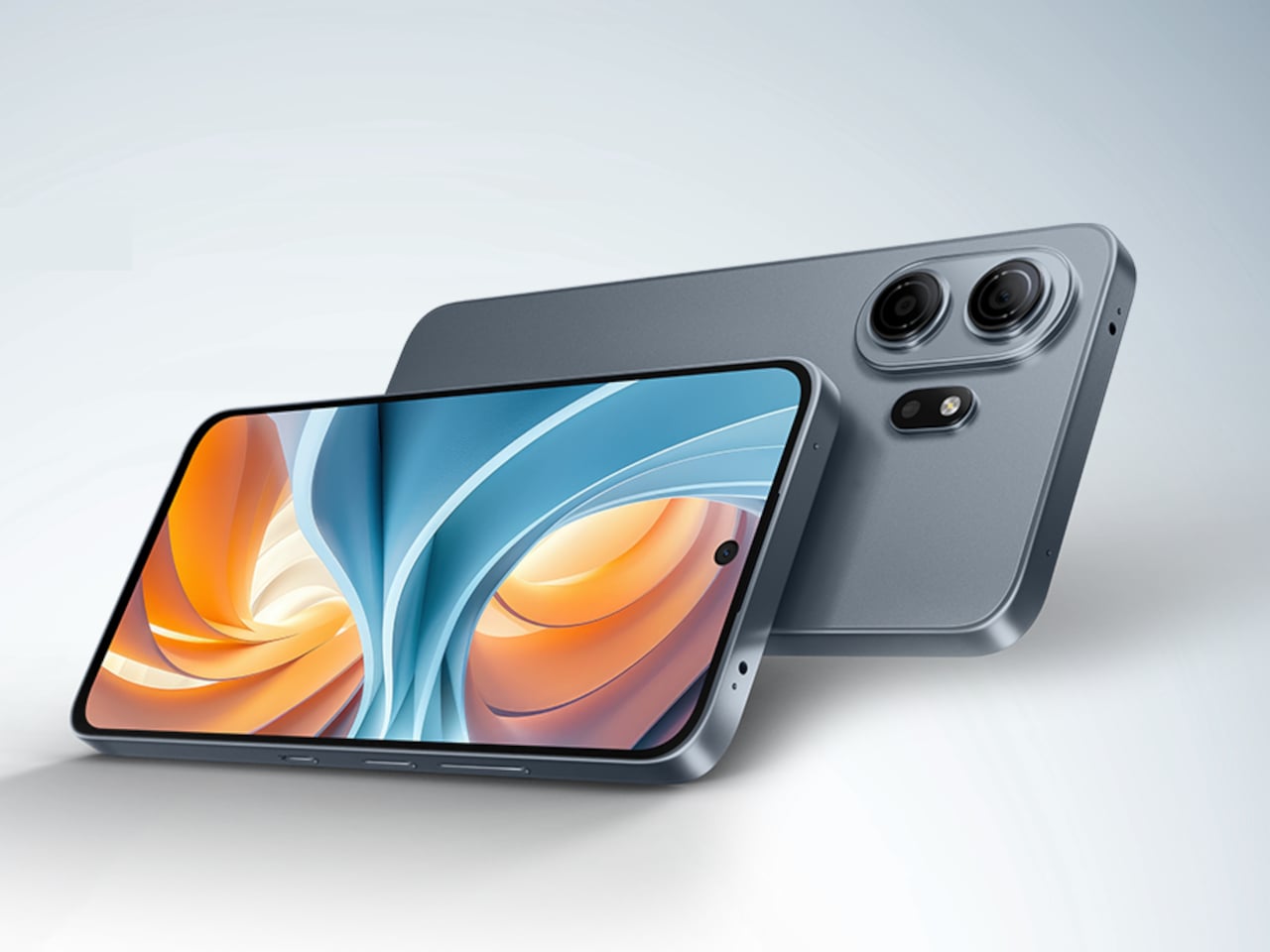
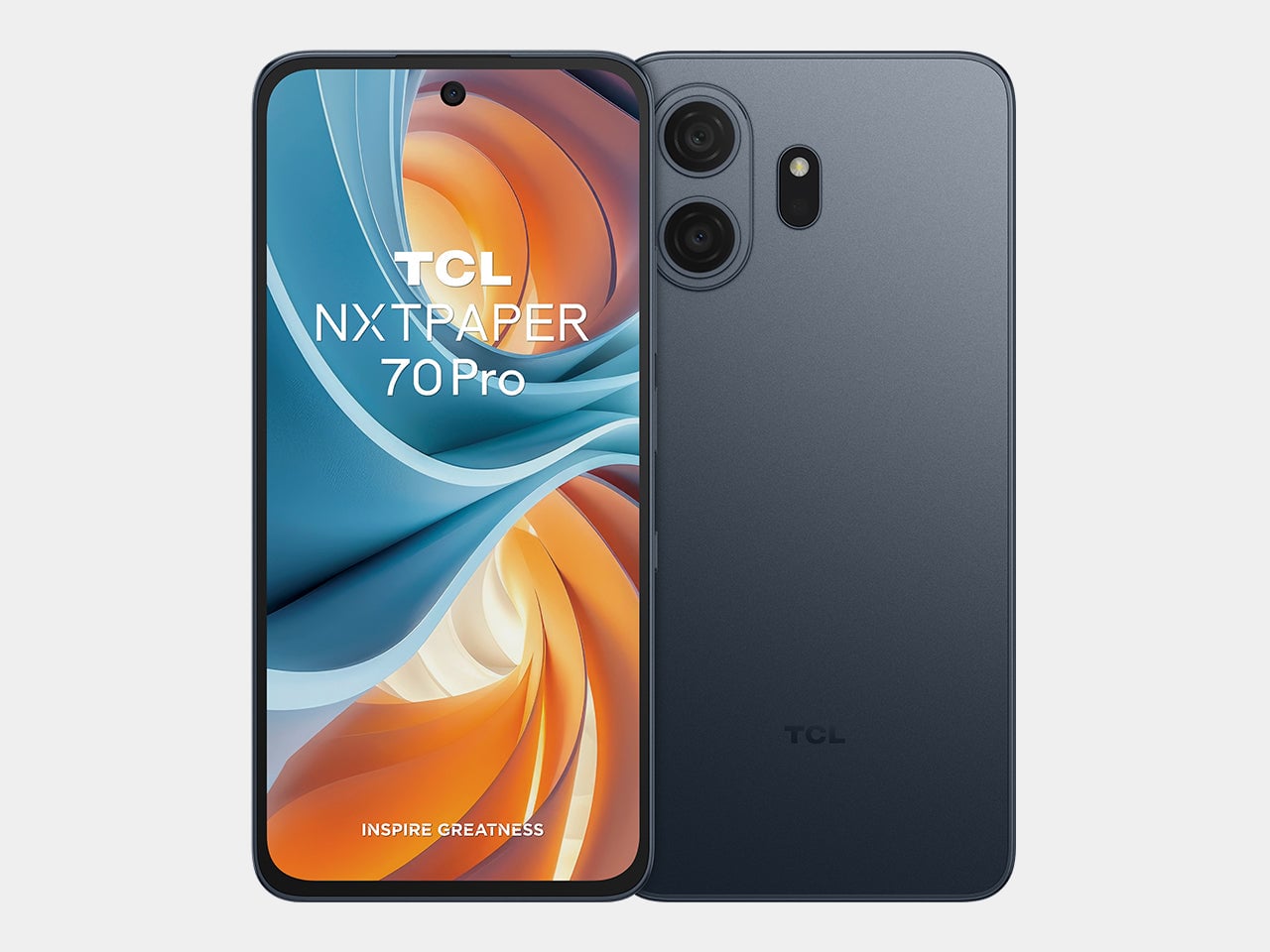
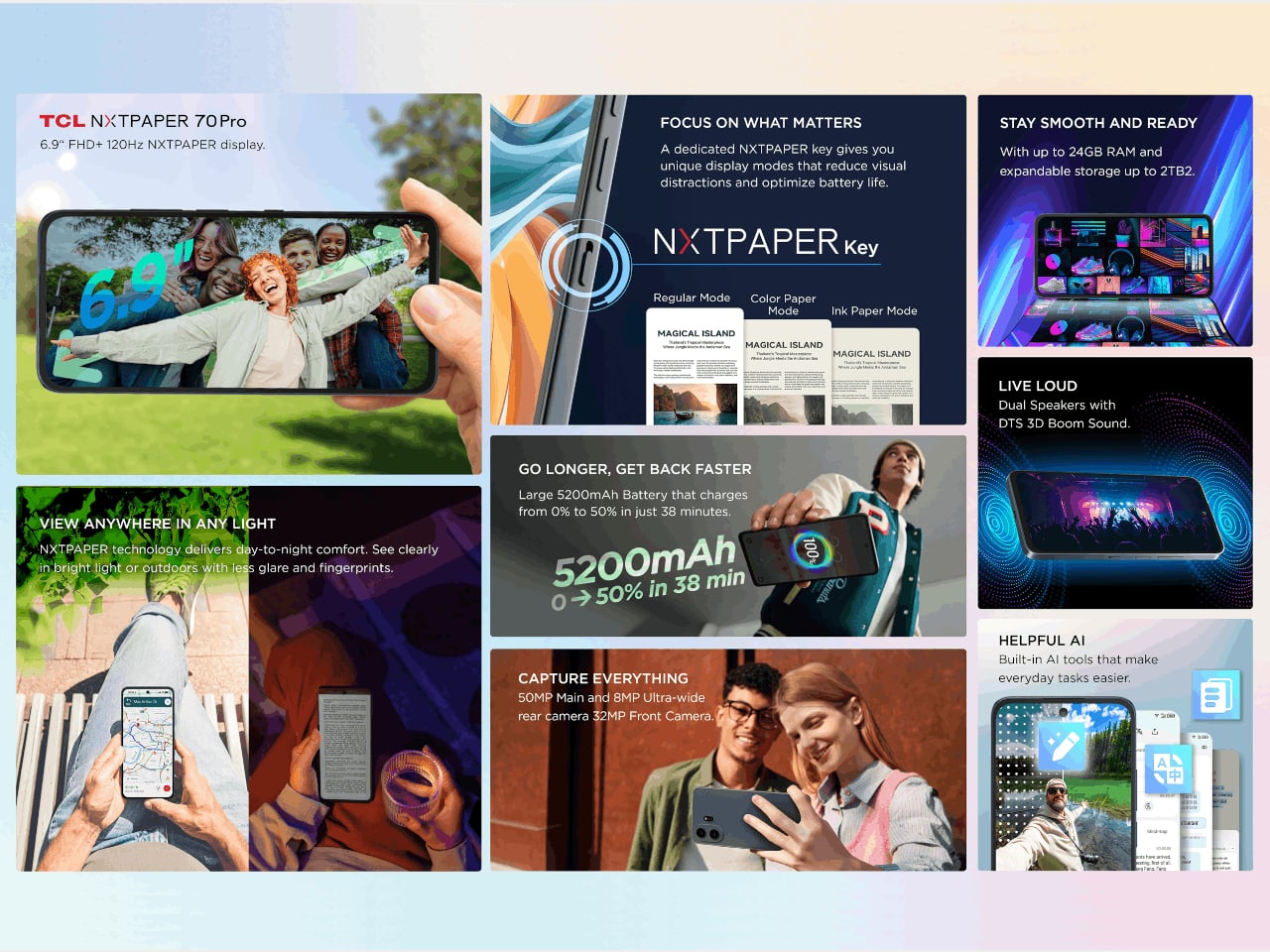
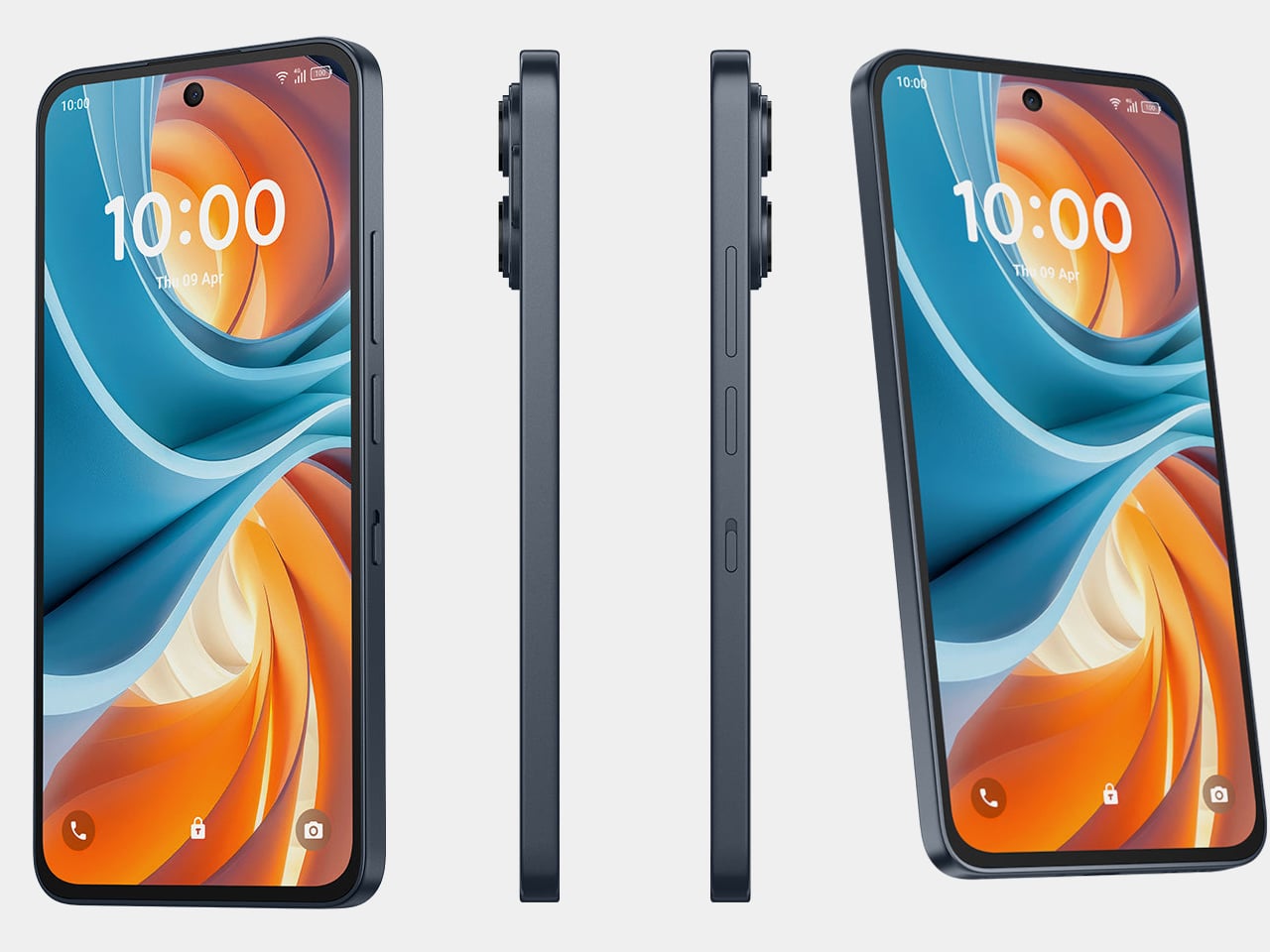
TCL has spent the better part of four years building an answer to that problem through its NXTPAPER line, and the NXTPAPER 70 Pro is the most capable version yet. It’s a full Android smartphone with eye-care features pushed to their highest iteration, now available in the US at $199.99 through T-Mobile and Metro by T-Mobile, and at $299.99 unlocked.
The centerpiece is the 6.9-inch NXTPAPER display, an IPS LCD panel with a matte, anti-glare surface built using nano-matrix lithography. It cuts harmful blue light at the hardware level down to 3.41%, uses DC dimming to eliminate flicker entirely, and applies circular polarized light to simulate diffused daylight that’s easier on the eyes. Independent certification from TÜV and SGS backs those claims up.
A physical NXTPAPER Key on the side cycles through three viewing modes. Regular keeps full-color smartphone output, Color Paper shifts to a warmer and more subdued tone suited for long reading sessions, and Ink Paper dials the display down to a near-monochrome, paper-like appearance that also conserves battery. Switching between them takes a single press, keeping the feature genuinely useful rather than buried in a settings menu.
That Ink Paper mode also unlocks the phone’s most impressive feature: battery life, which TCL claims can stretch to seven days when reading. The 5,200 mAh cell with 33W fast charging handles everyday use comfortably and reaches 50% in about 38 minutes, but it’s the combination of a power-efficient display mode and capable hardware that pushes endurance well past what most phones manage.
The camera doesn’t feel like an afterthought either. A 50 MP main sensor with optical image stabilization handles everyday shots and difficult lighting well, paired with an 8 MP ultrawide and a 32 MP front camera that covers video calls and social content. Storage starts at 256 GB and expands via microSD to 2 TB, while a MediaTek Dimensity 7300 chip keeps things running on Android 16.
Built-in AI tools can summarize articles, transcribe audio, and help clean up text you’re writing, which fits the device’s clear lean toward readers, students, and anyone who uses their phone for focused work. The IP68 rating handles rain and spills without fuss, and at 207g, the large frame doesn’t feel excessive in hand. Unfortunately, it seems that T-Pen stylus support won’t be making its way to this US variant, a feature that has been revealed for the global version.
What’s notable about the NXTPAPER 70 Pro isn’t any single feature taken alone, but how they all pull toward the same priority. Eye-care display technology has mostly lived on phones that cost well over a thousand dollars, which puts it out of reach for most buyers. At $199.99 on T-Mobile, that changes, and the argument for a phone your eyes might actually thank you for becomes genuinely hard to ignore.
Gen Z isn’t chasing spec sheets or benchmark scores. They’re chasing objects that fit the way they actually live: portable, intentional, and quietly smart. April 2026 delivered a lineup that genuinely gets that energy. From satellite-connected wearables to battery-free speakers, these ten gadgets are doing something harder than simply being powerful. They’re being useful, and in a market saturated with noise and empty promise, that distinction is becoming genuinely rare.
The gadgets on this list aren’t competing for attention. They’re designed around how people actually behave: working from cafés, traveling between cities, tuning out distractions, or surviving in places where infrastructure doesn’t reach. Some rethink materials, some rethink interfaces, and some rethink habits entirely. What they share is a design sensibility that respects the user’s time and intelligence. That’s the standard Gen Z holds, and this month, these ten deliver.
1. O-Boy Satellite Smartwatch
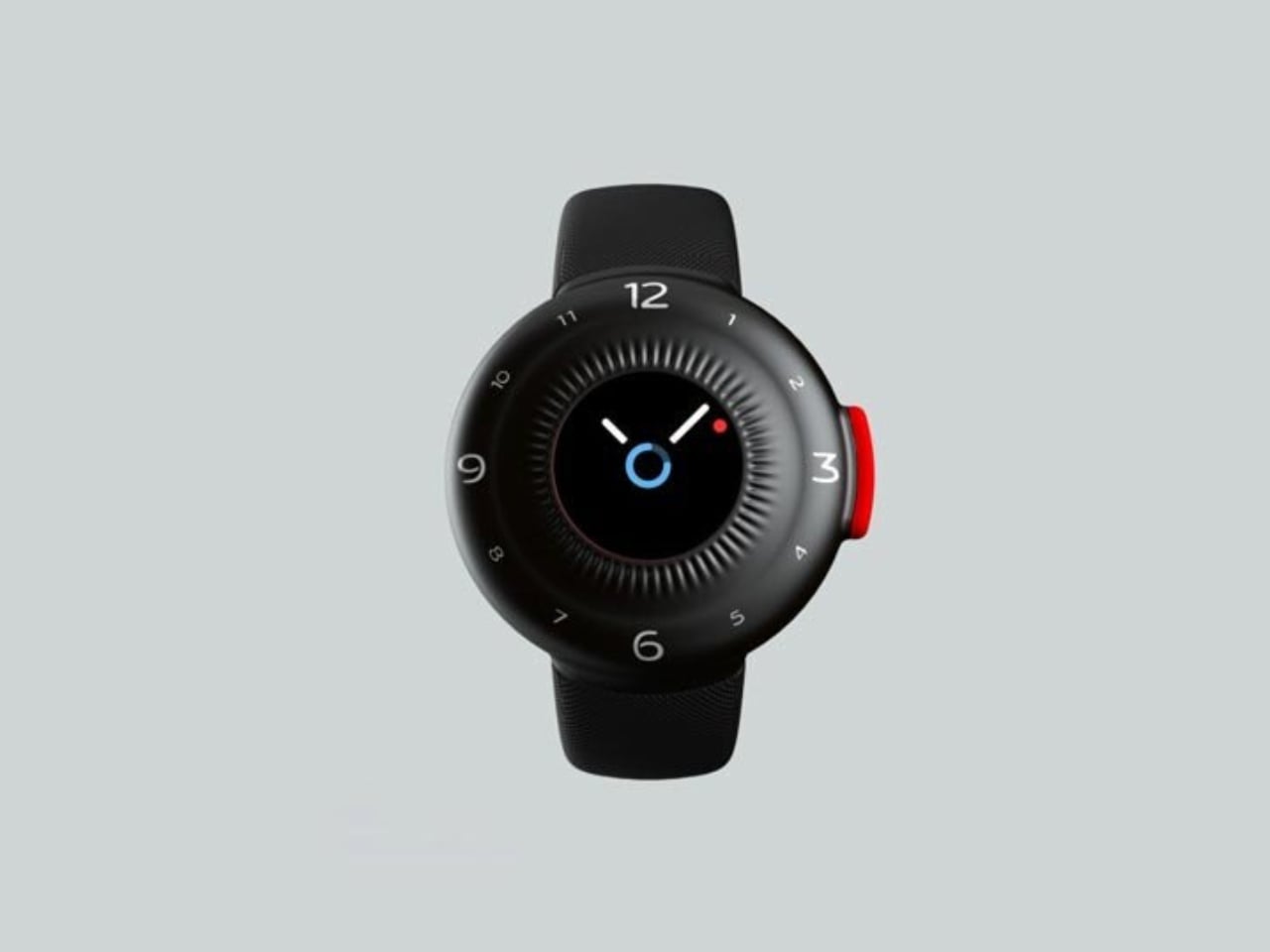
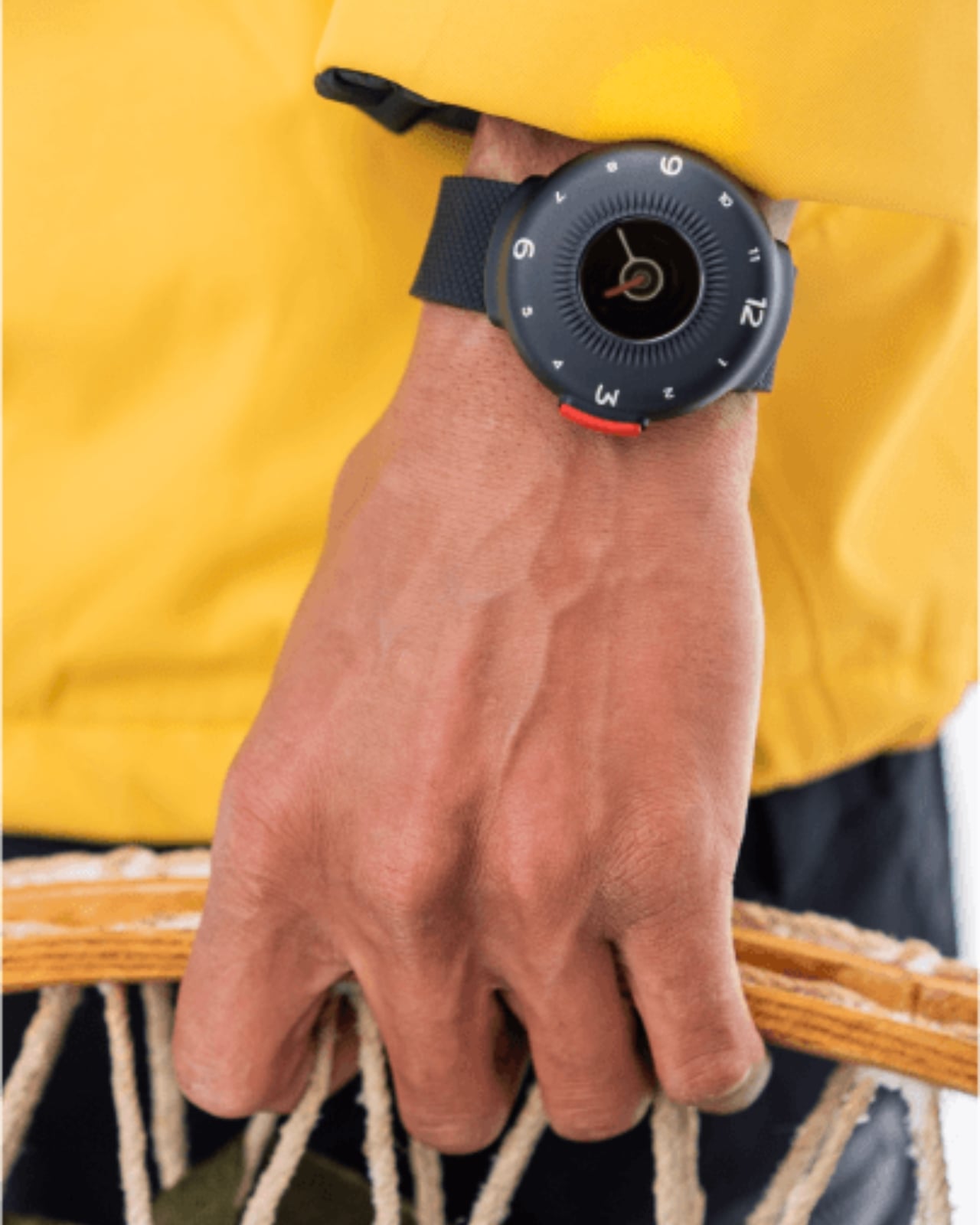
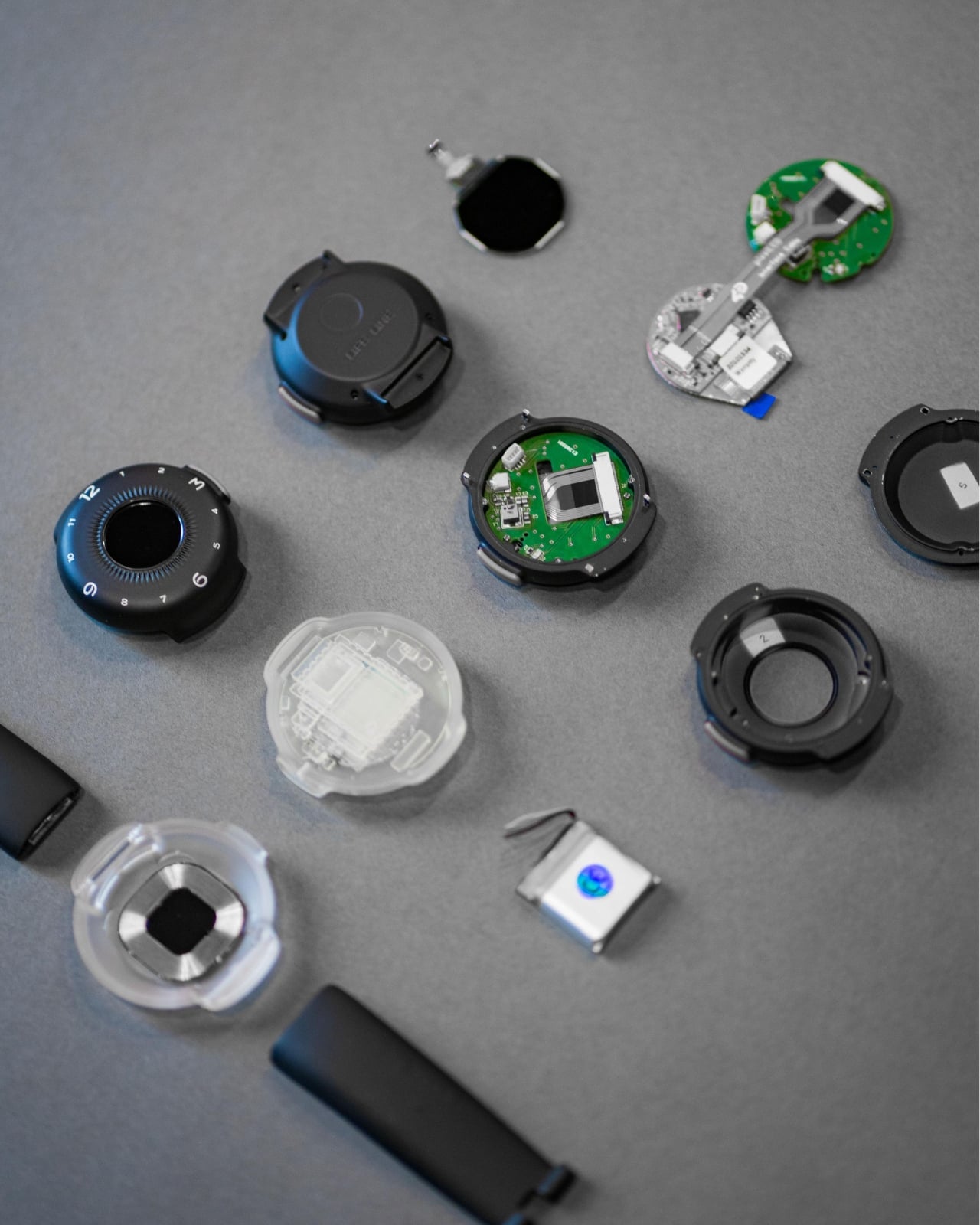
The O-Boy is built for the places where your phone gives up. Brussels-based studio Futurewave designed this satellite-connected smartwatch for emergencies in environments where mobile networks simply don’t exist: open ocean, mountain terrain, remote job sites. No bars, no Wi-Fi, no backup signal required. The watch transmits an emergency alert directly via satellite, making it one of the few wearables that actually keeps its promise when conditions are worst.
What makes the O-Boy genuinely impressive isn’t just the satellite capability; it’s how it was achieved. Futurewave pulled together product designers, electronics engineers, and antenna specialists and rethought the assembly process from the ground up. Getting satellite hardware into a compact, wearable form factor is not a small engineering feat. The result is a device that pushes the category forward rather than iterating on what already exists, and that distinction matters.
What We Like
Satellite communication works completely off the grid
Cross-disciplinary engineering produced a genuinely compact wearable form factor
What We Dislike
Designed primarily for emergencies, limiting everyday lifestyle appeal
Satellite connectivity may come with additional subscription costs
2. Minimal Laptop UI Concept
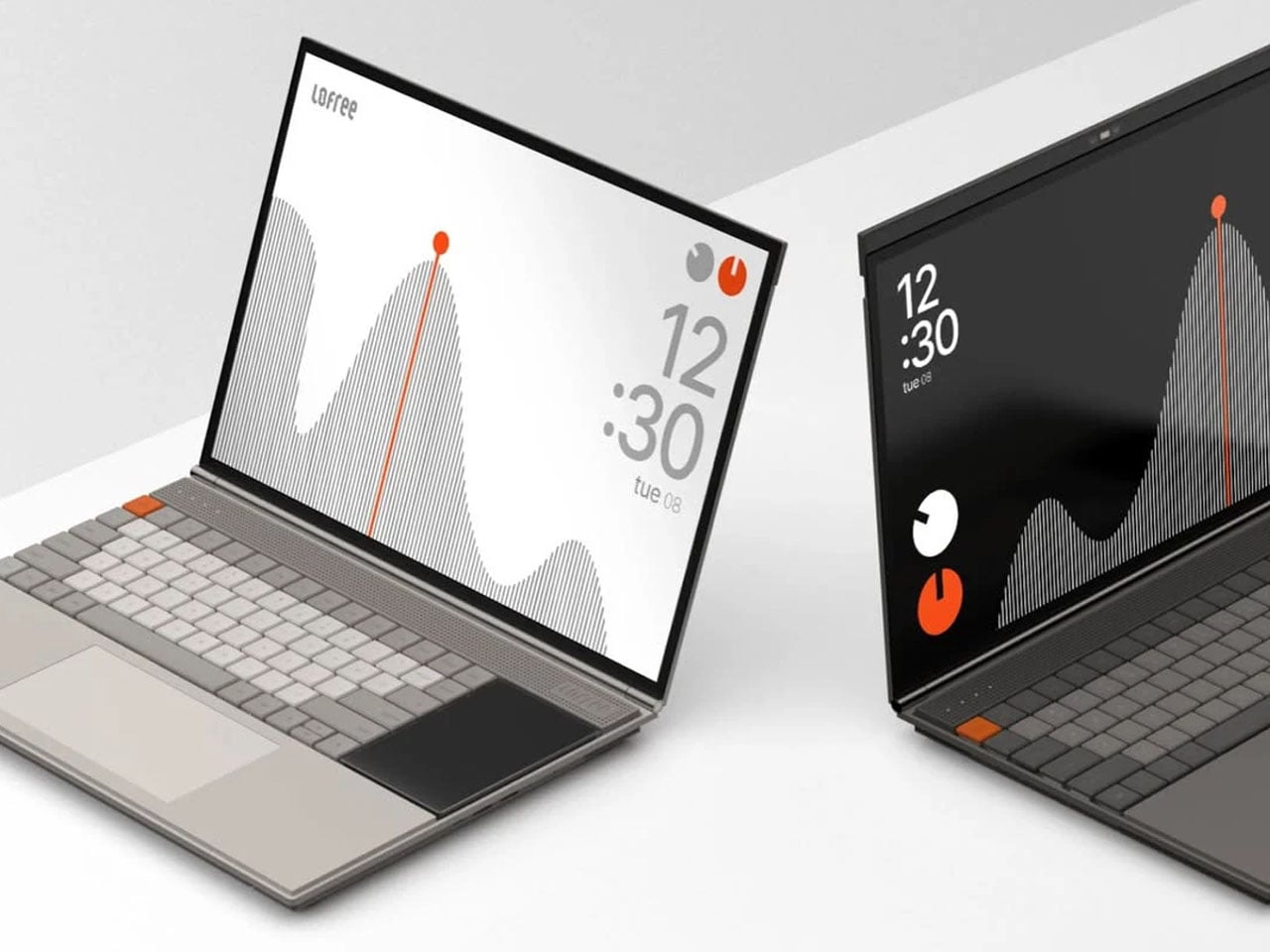
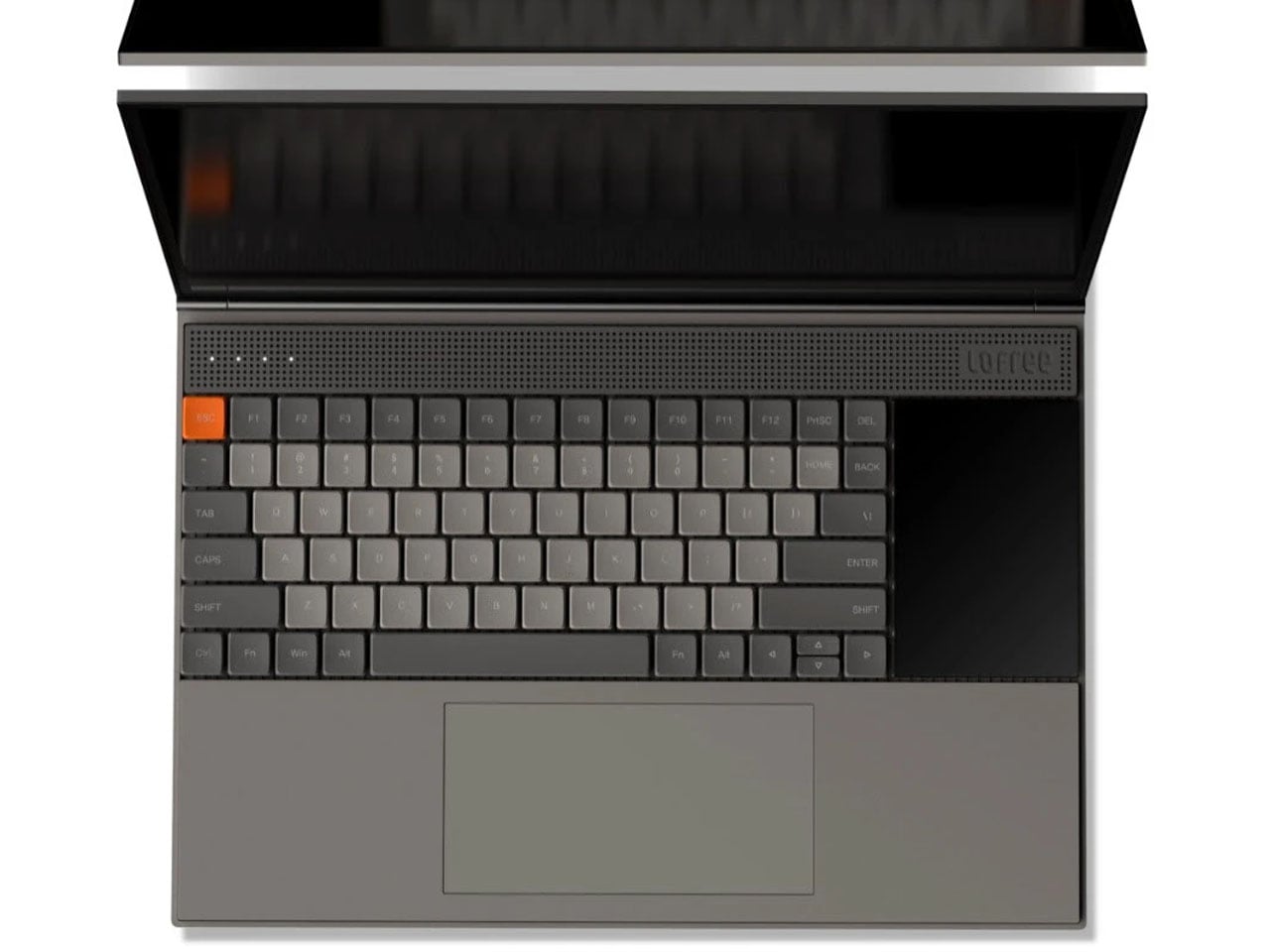
Inspired by the design philosophy of Teenage Engineering, the Minimal Laptop UI concept imagines what a laptop would look like if hardware and software were built around the same principle: less friction, more focus. The interface relies on strong visual hierarchy, generous spacing, and elements that appear only when necessary. Toolbars, panels, and persistent notifications are stripped away entirely, leaving a workspace that feels calm rather than cluttered.
For a generation that grew up multitasking across four open tabs and a split screen, this concept offers something surprisingly radical: a single surface to think on. Typography is clean and deliberate, icons are reduced to their most recognizable forms, and content stays at the center. It’s not about doing less. It’s about designing a machine that doesn’t compete with the work you’re trying to do on it, and that’s a harder problem than it sounds.
What We Like
Interface is designed around focus rather than feature density
Aesthetic language is distinctive and quietly confident
What We Dislike
Remains a concept with no confirmed production timeline
Minimal UI may not suit users who rely on multi-panel workflows
3. Battery-Free Amplifying iSpeakers
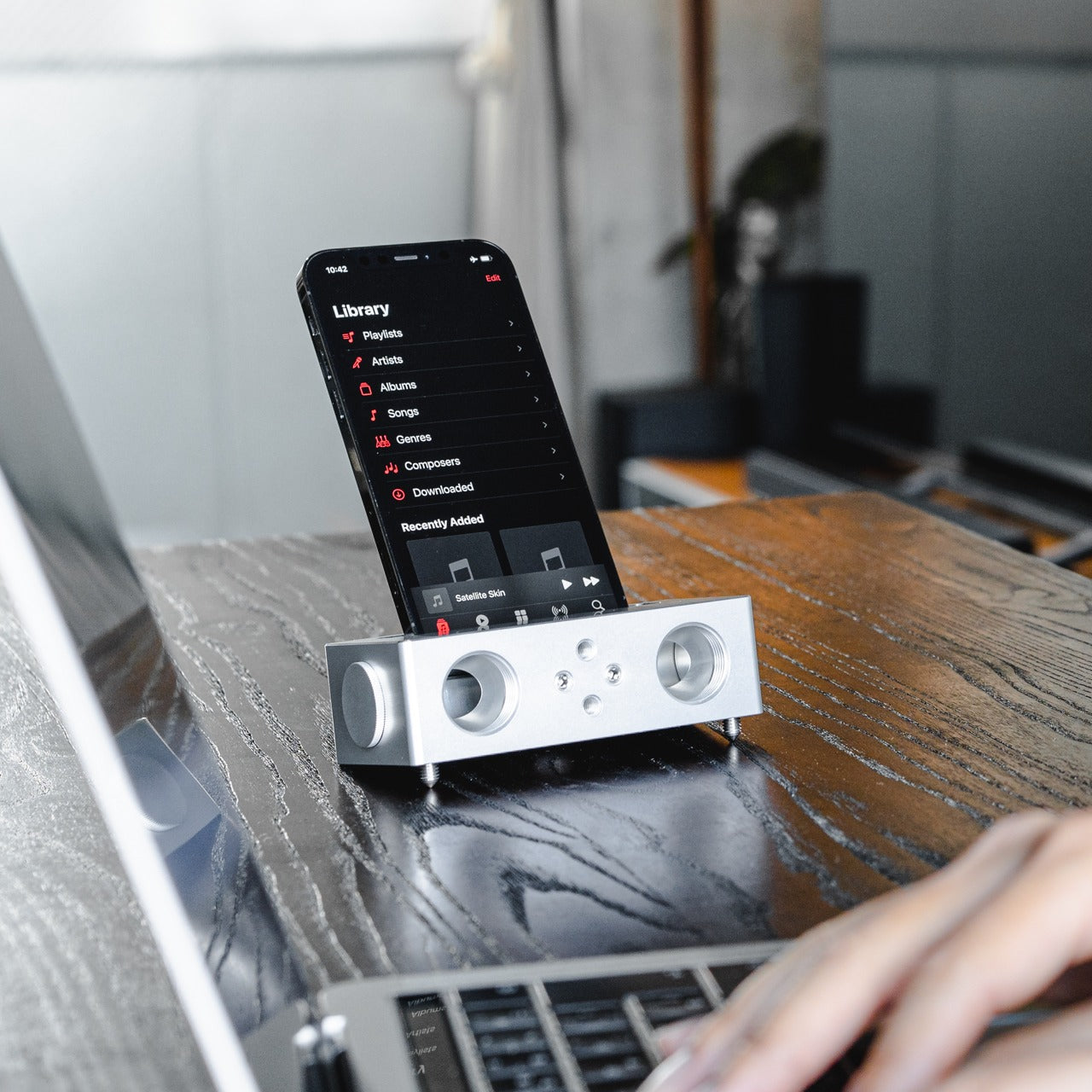
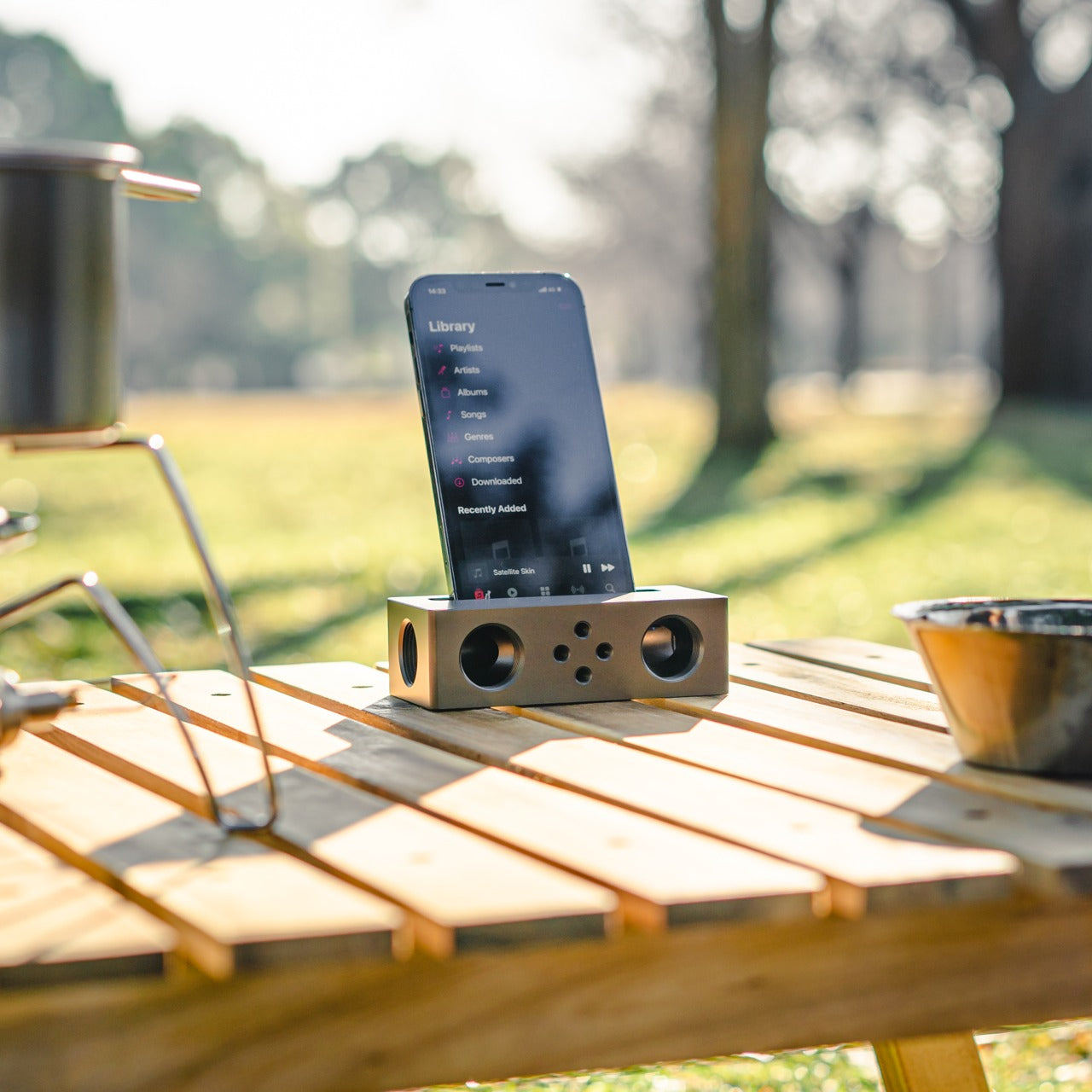
No power outlet, no battery, no Bluetooth pairing. Place your phone in the iSpeakers, and the sound amplifies. Built from Duralumin, the aluminum alloy used in aircraft construction, this passive speaker uses the golden ratio in its geometry to enhance resonance naturally. The result is an amplifier that genuinely improves your phone’s audio without asking anything of your power strip or your patience, which is a more elegant solution than most audio hardware manages.
The iSpeakers work anywhere, which makes them useful in a way that over-engineered audio gear often isn’t. A desk speaker that never needs charging is always ready. The aesthetic is understated and precise, the kind of object that improves a space by being in it rather than demanding attention. For anyone tired of hunting for cables and waiting for Bluetooth to pair, this is a refreshingly simple alternative that earns its place on any desk.
Zero power requirement means zero limitations on where it works
Duralumin construction gives it both durability and a premium, clean look
What We Dislike
Audio output depends entirely on the quality of the phone’s built-in speaker
Sound-directing mods are sold separately, adding to the total cost
4. Xiaomi UltraThin Magnetic Power Bank 5000 15W
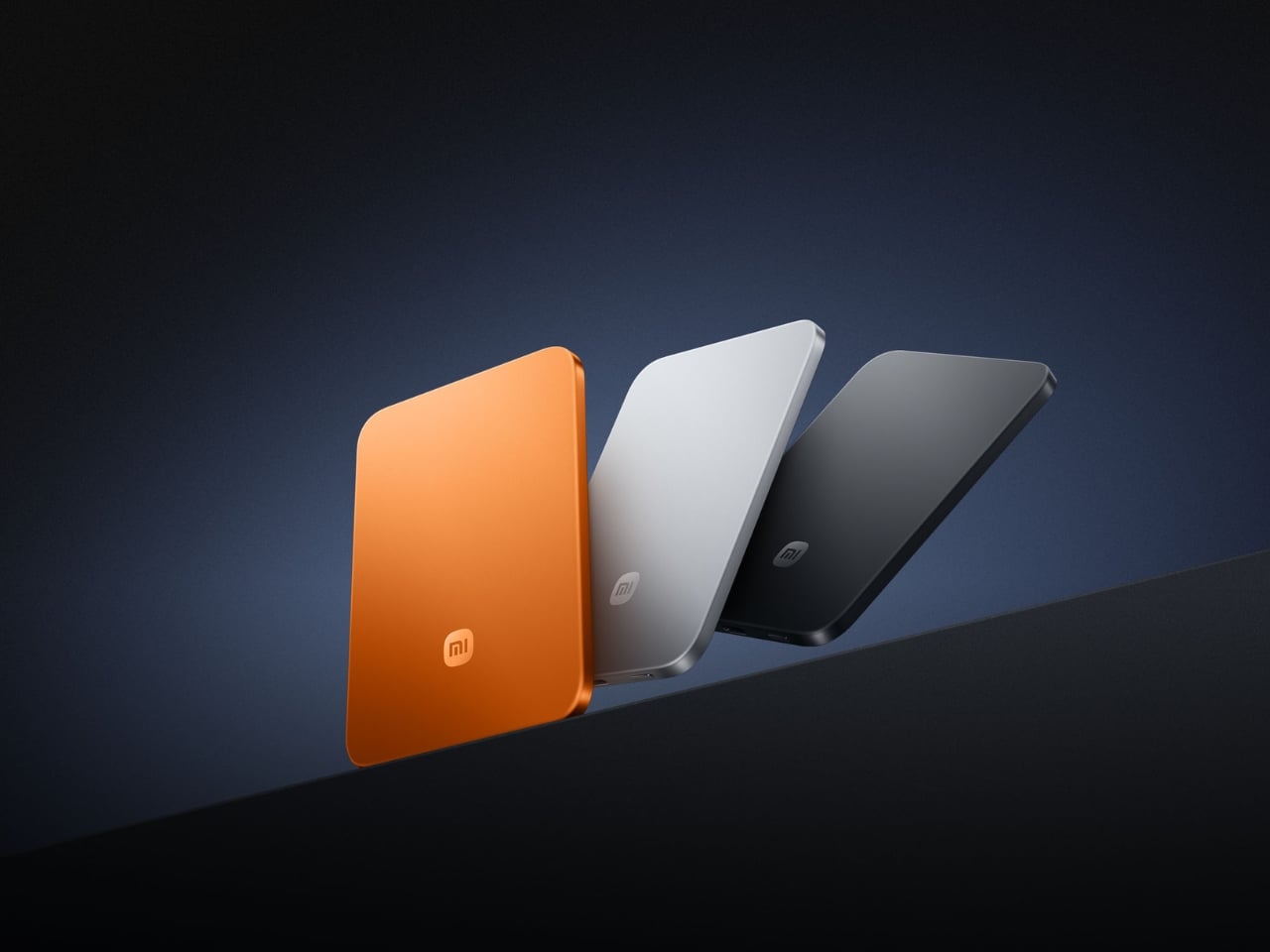
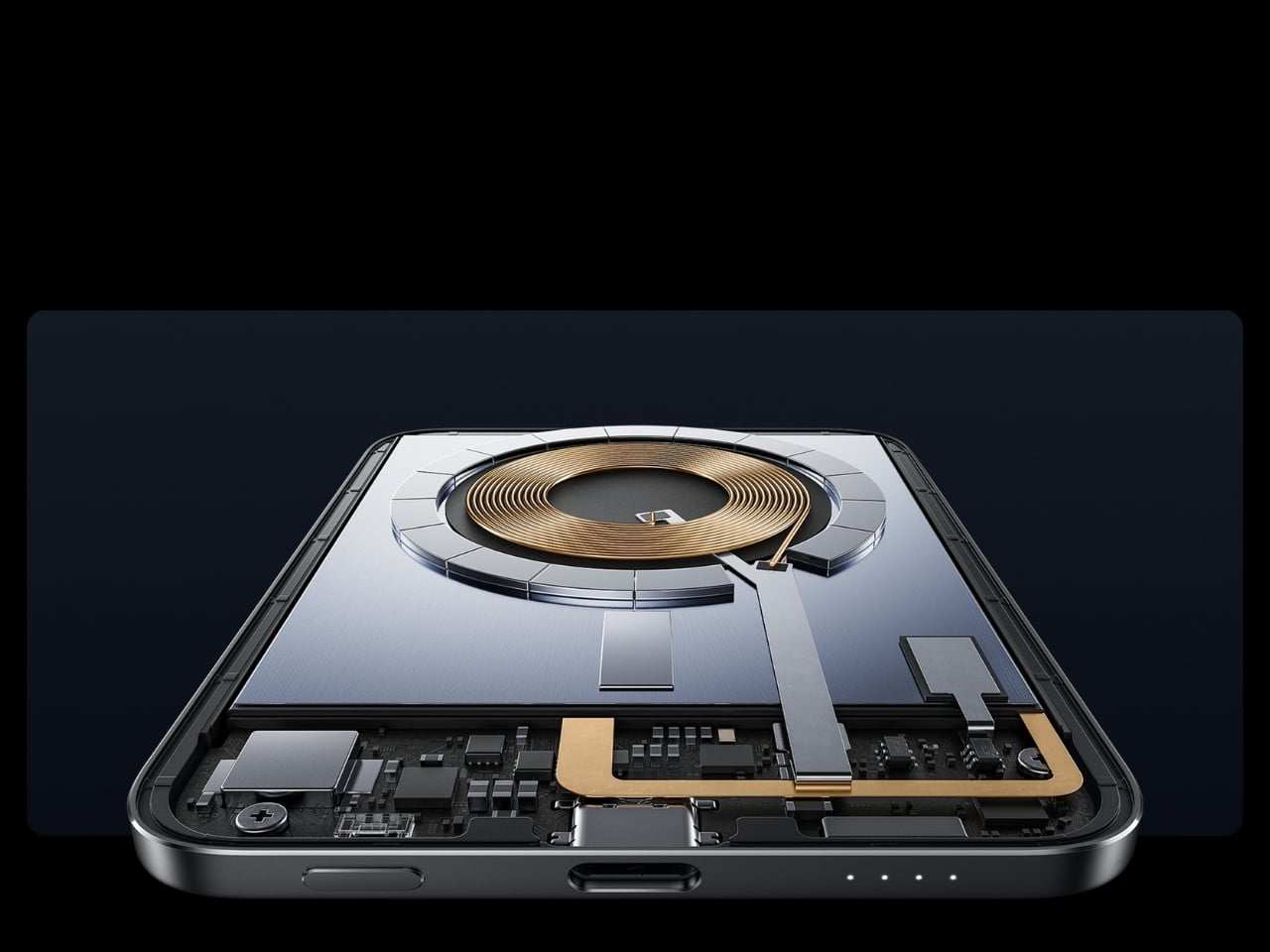
At 6mm thick, the Xiaomi UltraThin Magnetic Power Bank is thinner than any smartphone currently on the market. Using silicon-carbon battery chemistry with 16% silicon content, Xiaomi managed to pack 5,000mAh into something that looks and feels like a metal business card. The aluminum alloy shell has a smooth, understated finish, and a photolithographically etched logo on the back signals a product designed with care rather than simply manufactured to a spec sheet.
Available in Glacier Silver, Graphite Black, and Radiant Orange, this power bank debuted in Japan, expanded across Australia, Singapore, South Korea, and Europe, and made its global appearance at MWC 2026 in Barcelona. European pricing sits around €60, which is reasonable for what it delivers. The phone-facing surface uses fire-resistant fiberglass with an excimer coating for heat management, a detail that matters when you’re charging magnetically and want the hardware to stay cool.
What We Like
Silicon-carbon battery achieves 5,000mAh in a 6mm profile
Premium materials and finish at an accessible price point
What We Dislike
15W wireless charging is modest compared to faster wired alternatives
The ultra-slim design means no additional ports or USB-A pass-through
5. tinyBook Flip
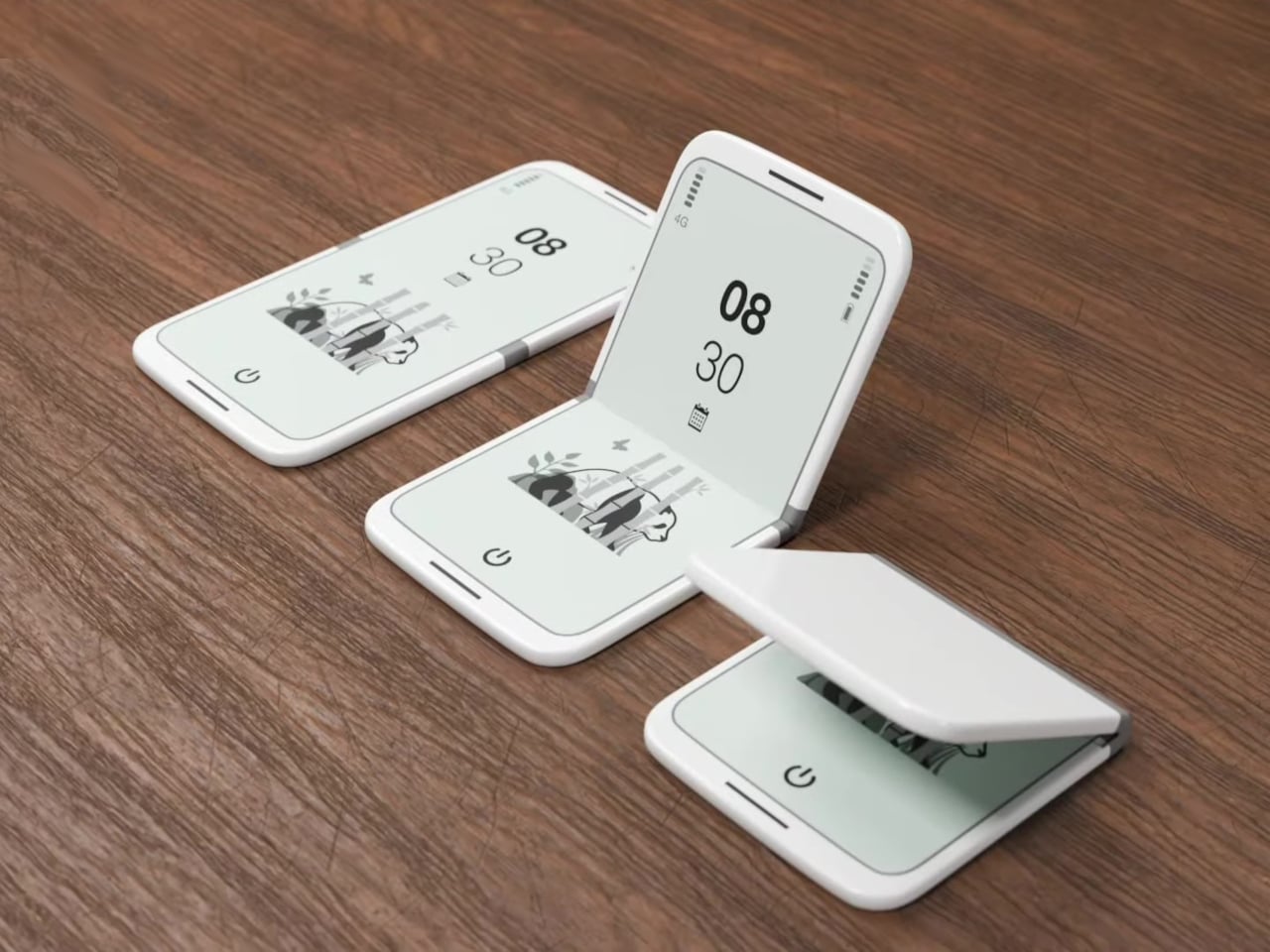
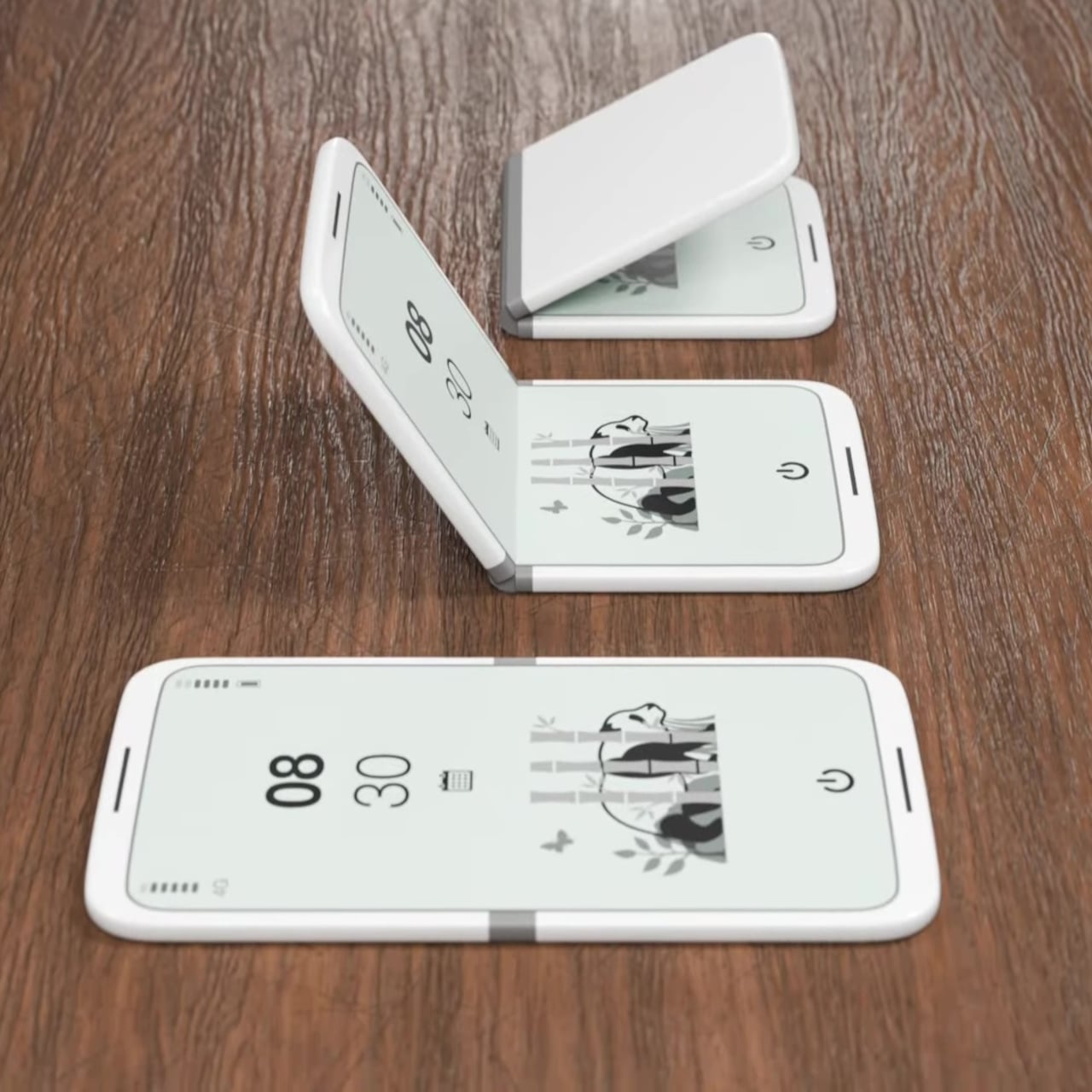
The tinyBook Flip is a foldable phone concept built around a 6.1-inch E Ink display. Closed, it collapses into a near-square form with a matte white finish and rounded corners, closer in proportion to a folded notecard than a smartphone. When shut, the screen disappears entirely. No glowing rectangle sitting face-up on the desk, no ambient reminder that there are things to check. Just a small, quiet object doing nothing at all.
That quietness is the design feature. Opening the phone requires a deliberate physical action, and that two-second pause changes the behavioral math around screen time. A reflexive grab becomes a conscious decision. The concept treats this friction as intentional, a design choice rather than an inconvenience. For anyone who has tried every screen time app and still reaches for their phone without thinking, the tinyBook Flip proposes something more honest: a phone that makes you choose to open it.
What We Like
Foldable form adds physical friction that genuinely interrupts mindless scrolling
Matte E Ink display avoids unnecessary glow and is easy on the eyes
What We Dislike
E Ink refresh rates remain too slow for video or fast-moving content
Currently a concept with no confirmed production or pricing information
6. OrigamiSwift Folding Mouse
The OrigamiSwift is a Bluetooth mouse that folds flat for travel and springs back to full size in under 0.5 seconds. Weighing 40 grams, it’s light enough to forget it’s in your bag until you need it. Inspired by origami, the foldable structure doesn’t sacrifice ergonomics for portability. It’s shaped to fit naturally in the hand during long work sessions, whether at a co-working space, a café, or an airport gate somewhere between time zones.
For digital nomads and students tired of trackpads and bulky peripherals, the OrigamiSwift makes a compelling case for carrying a full-sized experience in a pocket-sized package. The slim profile keeps it flat and unobtrusive in any bag, and the Bluetooth connection removes the need for a dongle. It’s the kind of product that solves a problem you’ve quietly accepted as unsolvable, and does it with a detail-first design sensibility that genuinely earns the attention it’s getting.
Folds flat without compromising ergonomic performance when open
The 40-gram weight makes it genuinely unnoticeable in a bag
What We Dislike
No published DPI range or click precision specifications available
May not satisfy users who prefer a heavier, more substantial mouse feel
7. DuRobo Krono
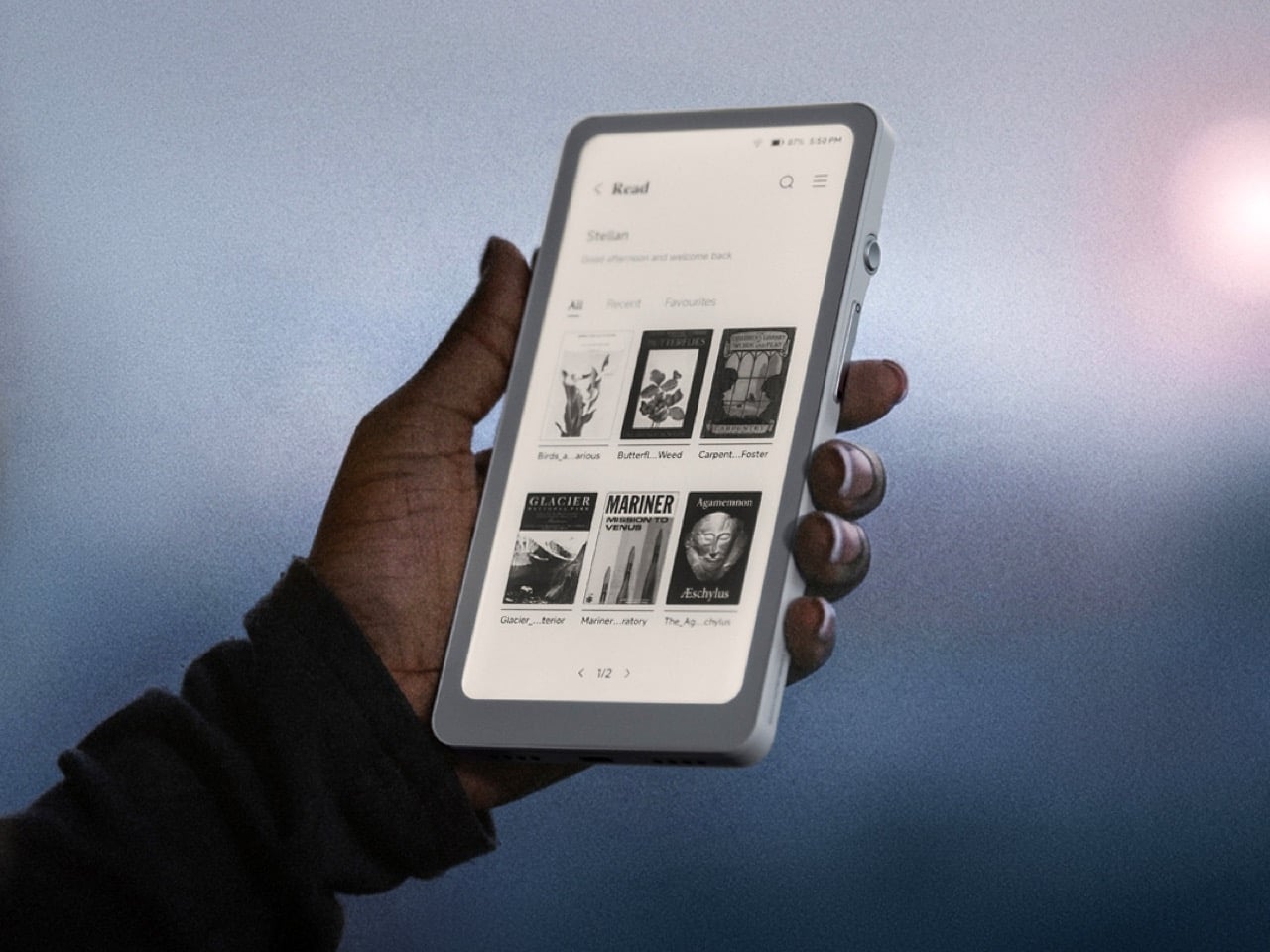
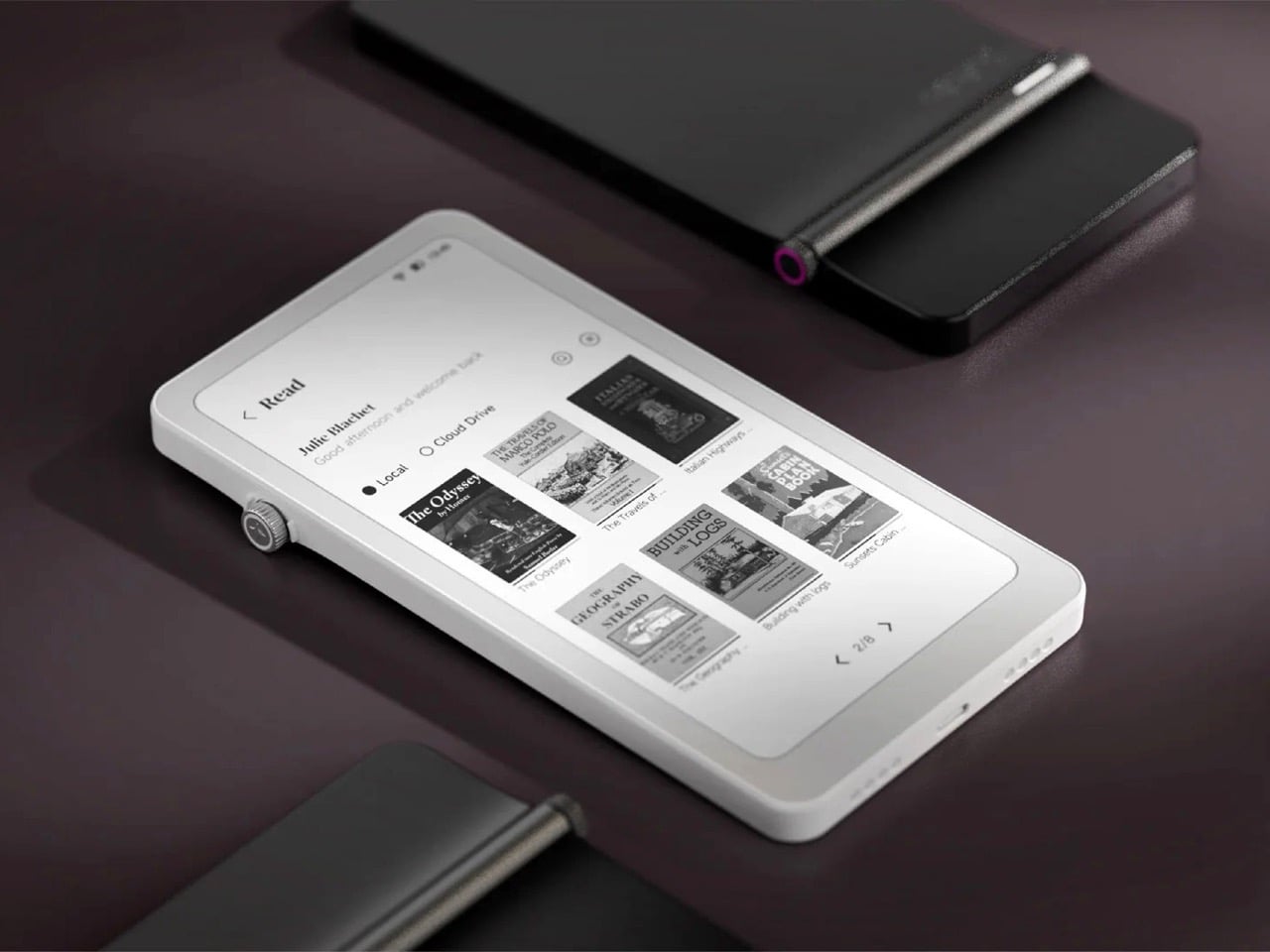
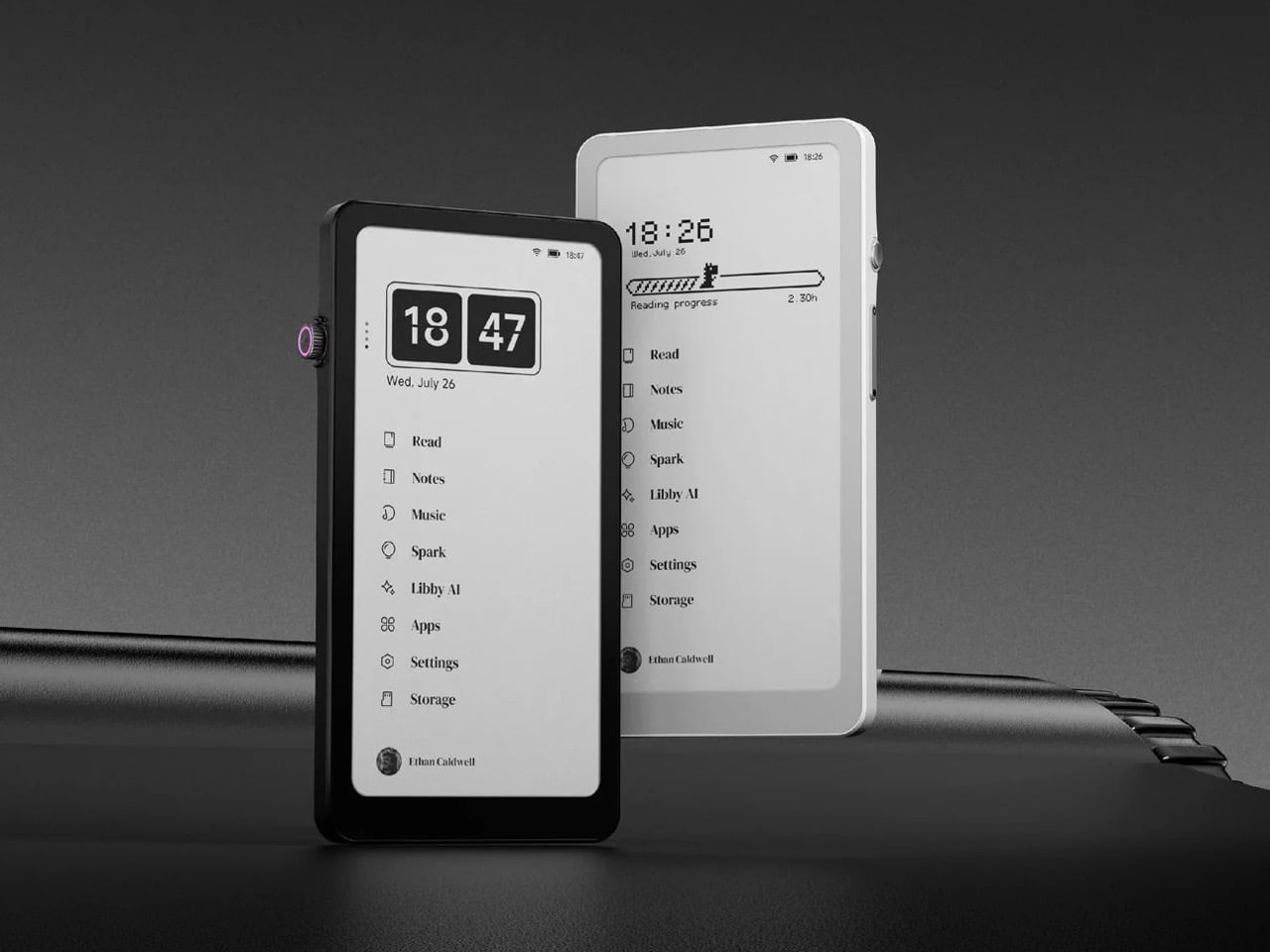
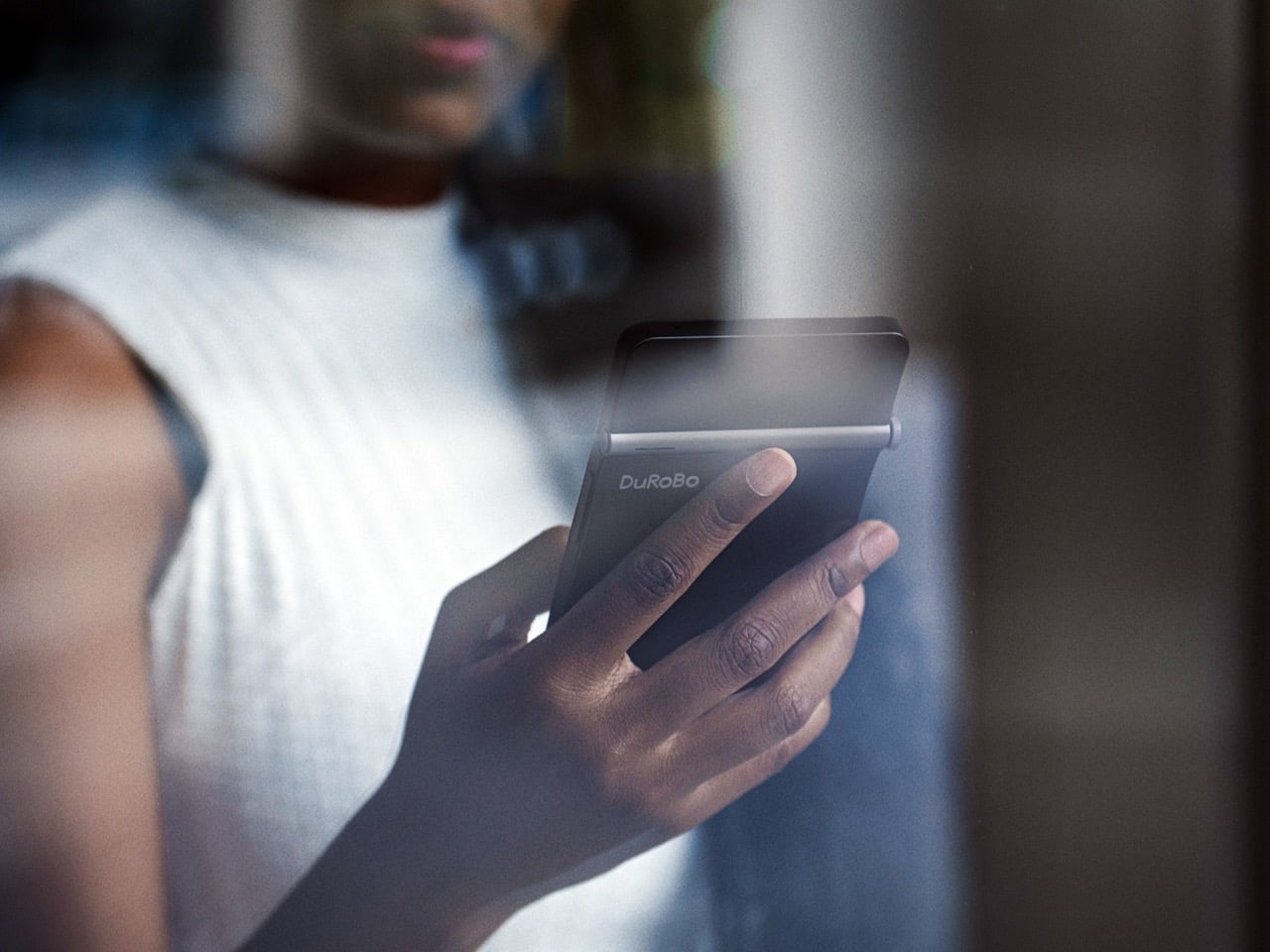
The DuRobo Krono puts a 6.13-inch E Ink Carta 1200 display in a form factor that fits a jacket pocket. At 300 PPI with an 18:9 aspect ratio and a weight of 173 grams, it reads more like a physical book than most dedicated e-readers manage. Eight subtle breathing lights run across the back panel, a quiet visual indicator during focused sessions that adds character without becoming a distraction. The matte finish and geometric build keep it composed in any setting.
The Krono’s standout feature is the smart dial on its left side. Press and hold to record voice notes, and the onboard AI transcribes your words into searchable text, generating summaries of longer recordings automatically. For readers who take notes in the margins or thinkers who process ideas out loud, that combination of reading tool and voice capture is genuinely useful. It positions the Krono somewhere between a dedicated e-reader and a thinking device, which is a more interesting category entirely.
What We Like
AI voice recording and transcription work directly on the device
300 PPI display and pocket-friendly form factor rival premium reading devices
What We Dislike
The 18:9 aspect ratio may feel narrow for reading PDFs or documents
Breathing lights, while subtle, may distract in dark reading environments
8. StillFrame Headphones
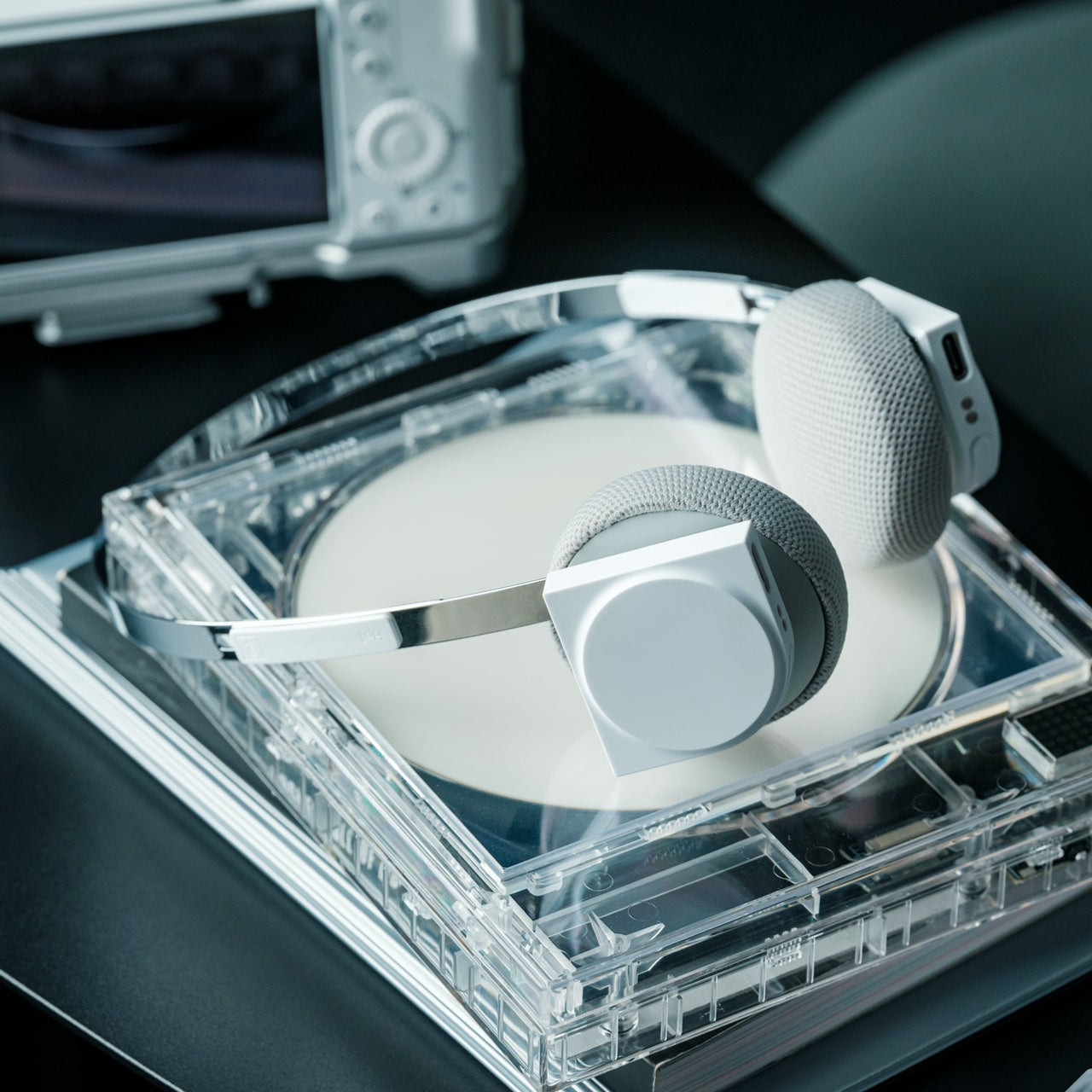
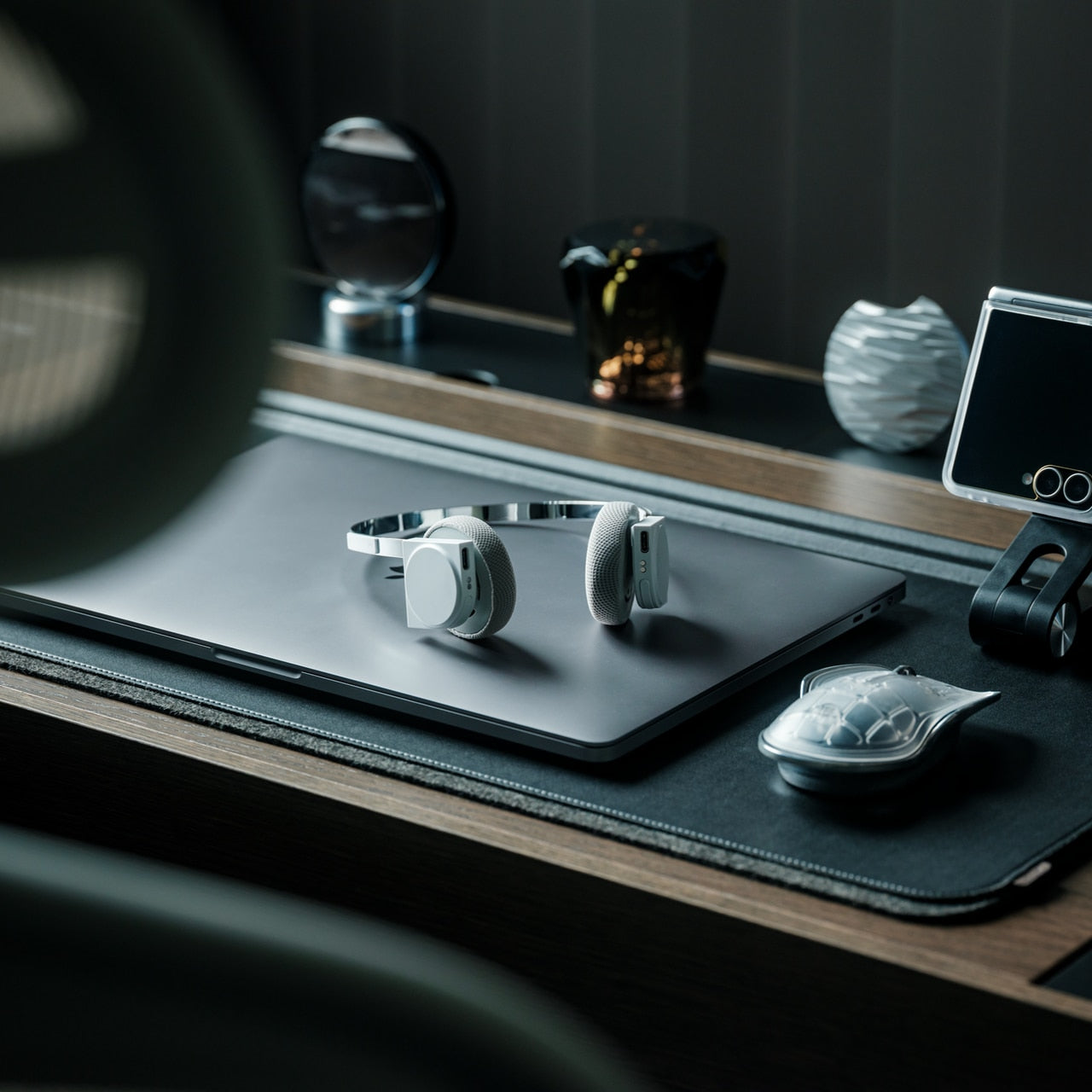
StillFrame headphones are built around a quieter philosophy: slow listening, deliberate sound, the kind that rewards attention. The 40mm drivers deliver a wide, open soundstage that turns quiet tracks into something textured and spatial. The form references the geometry of ’80s and ’90s CDs and sits in quiet visual dialogue with the ClearFrame CD Player, a nod to an era when music had physical weight, and the act of listening was its own ritual worth showing up for.
The StillFrame sits between in-ears and over-ears in both feel and philosophy: more open than the former, more relaxed than the latter. Noise-cancelling and transparency mode let you shift between solitude and awareness with a single tap, making them genuinely adaptable across environments. They’re featherlight without feeling hollow, and the overall build is measured and considered. For a generation rediscovering vinyl and physical media, StillFrame offers that same intentional energy in a wireless headphone.
Wide soundstage from 40mm drivers gives music genuine spatial depth
Noise-cancelling and transparency modes make it adaptable across daily environments
What We Dislike
An on-ear fit may cause discomfort during extended listening sessions
Retro aesthetic is distinctive but may not appeal to all personal tastes
9. HubKey Gen2
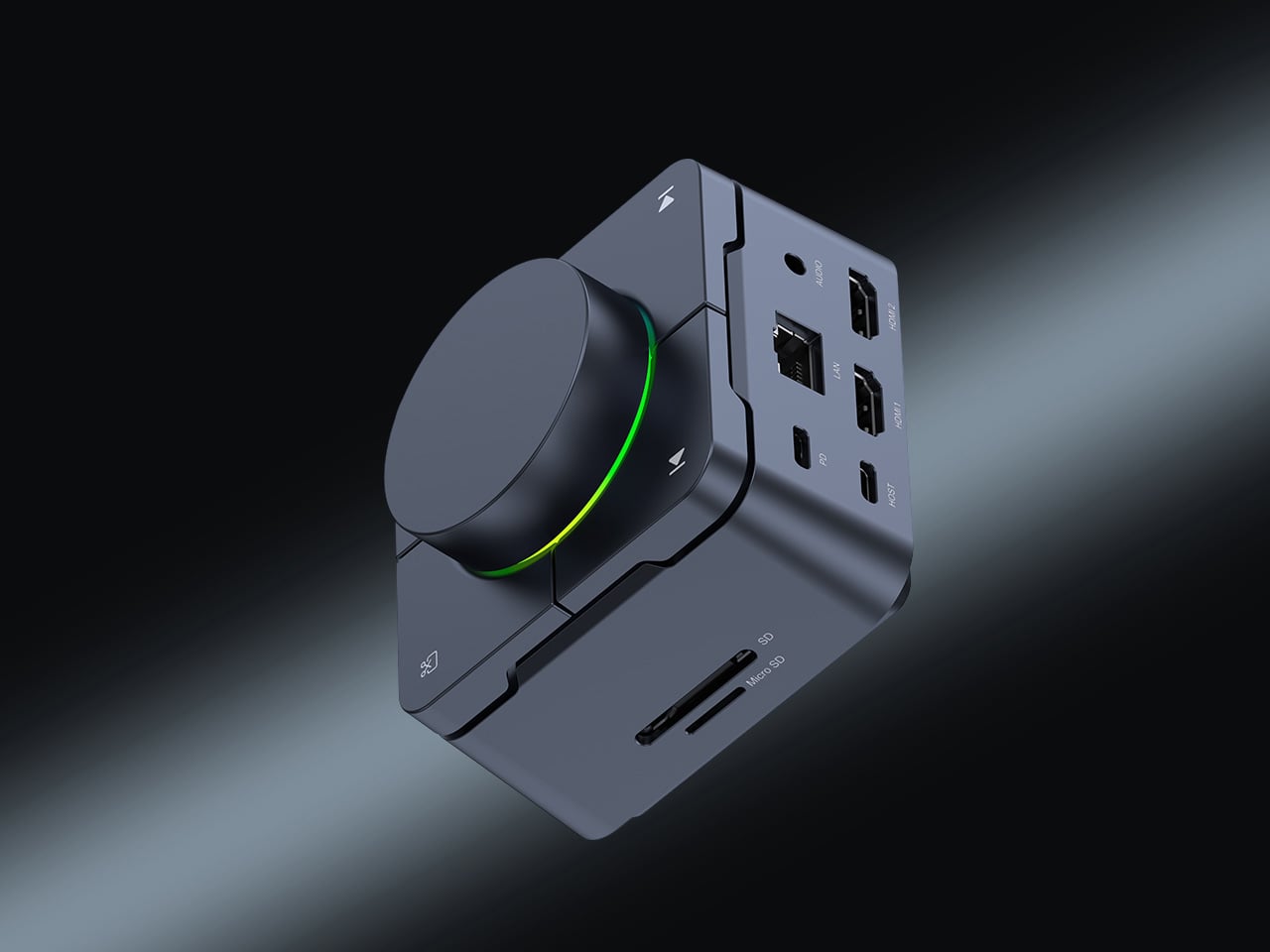
The HubKey Gen2 solves the dongle problem that every ultrabook user has quietly accepted as part of working life. Eleven connections are consolidated into a palm-sized cube: dual 4K display support, Ethernet, USB-A and USB-C, and power pass-through included. For anyone working across monitors and peripherals from a laptop with two USB-C ports, this is the kind of product that makes the workspace actually functional without turning the desk into a cable graveyard piled with adapters.
Four programmable keys and a central control knob are what separate the HubKey Gen2 from a standard hub. Muting a microphone, adjusting volume, toggling camera privacy: these are actions that get buried in menus and keyboard shortcuts during live calls. The Gen2 makes them physical, tactile, and immediate. For remote workers, creators, and students who live on video calls, having media controls within arm’s reach rather than three clicks deep is a quality-of-life upgrade that’s hard to give back.
What We Like
Eleven connections in one compact cube eliminate dongle accumulation entirely
Programmable keys and control knob bring commonly buried actions to the surface
What We Dislike
Cables from all eleven ports could still create desk clutter around the hub
Programmable keys may require setup time and dedicated software to configure properly
10. Razer Raiju V3 Pro
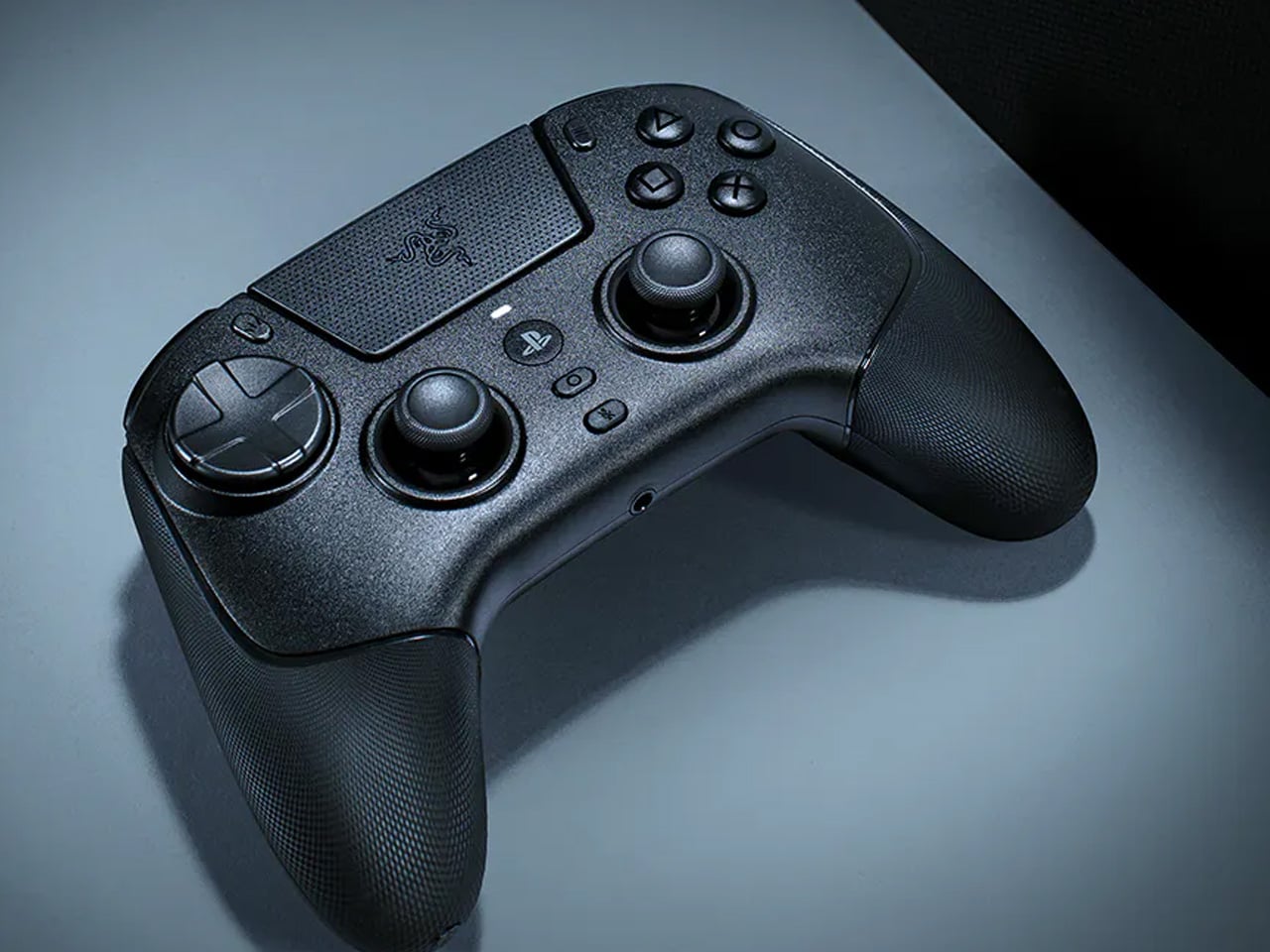
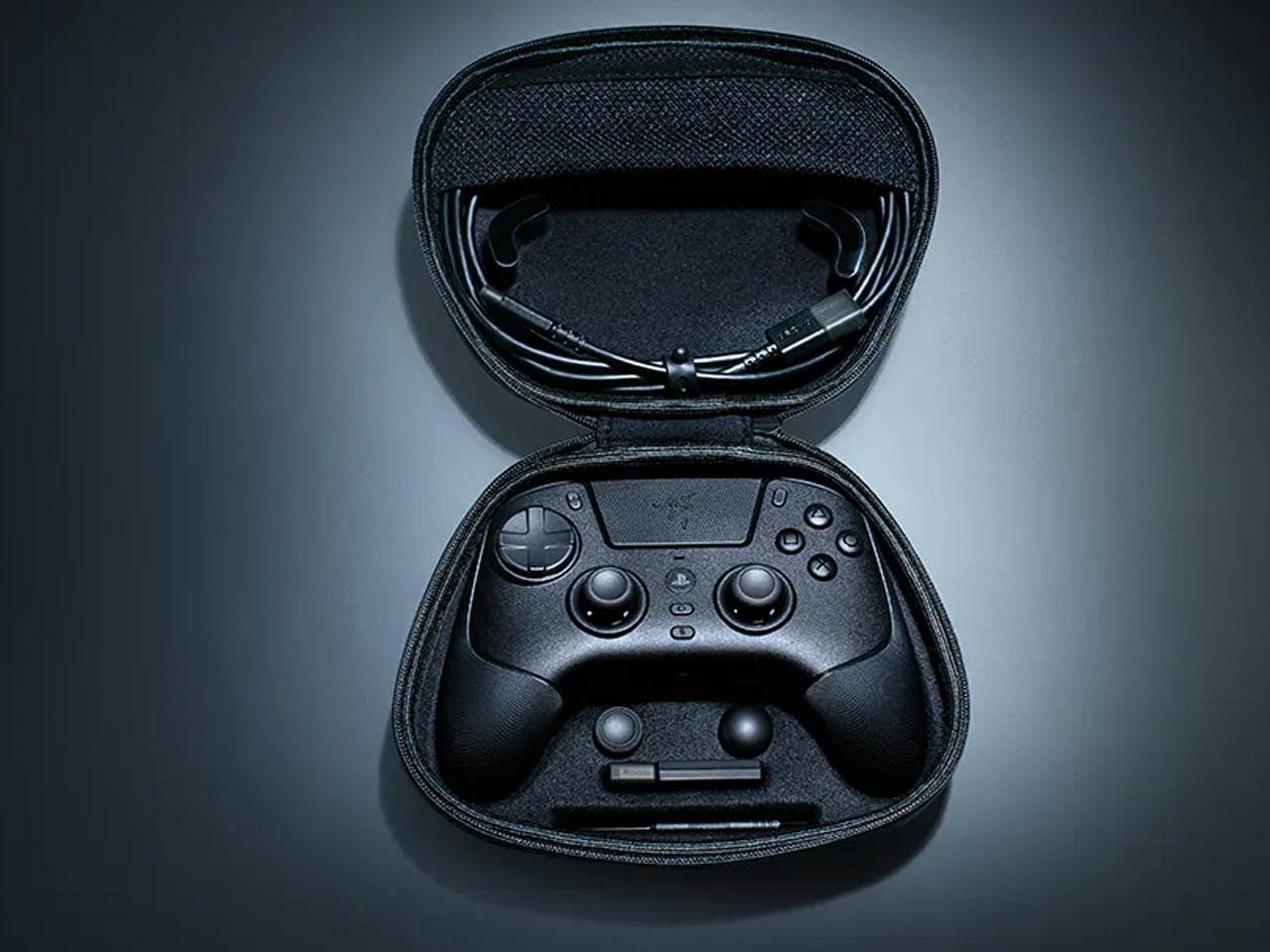
The Razer Raiju V3 Pro takes the sensor thinking behind high-performance gaming mice and applies it to a PlayStation-compatible controller. Tunnel Magnetoresistance thumbsticks use weak electromagnetic waves to detect movement with higher resolution than standard Hall Effect sensors. Drift is addressed at the hardware level, not patched in software. Hall Effect triggers cover the remaining high-wear inputs. At 258 grams, it sits lighter than the DualSense Edge without feeling insubstantial in the hand.
Six additional inputs are distributed across the frame: four removable back buttons in the rubberized handles and two claw-grip bumpers flanking the triggers, all fully remappable. Razer’s HyperSpeed 2.4GHz wireless reaches a 2,000Hz polling rate on PC. Battery life is rated at 36 hours, nearly triple the DualSense standard. Officially licensed for PlayStation 5, it requires no adapters and connects as a native peripheral. For competitive players who want every hardware advantage in one place, the Raiju V3 Pro sets the current ceiling.
What We Like
TMR thumbsticks offer finer movement resolution with hardware-level drift prevention
36-hour battery life and 2,000Hz polling rate on PC are best-in-class figures
What We Dislike
At 258 grams, it may feel heavy for players accustomed to lighter controllers
Six extra inputs and full remapping may overwhelm casual or new users
The Gadgets That Actually Deserve the Hype
April 2026’s best gadgets share a common thread: they were designed around how people actually behave, not how manufacturers hope they will. Whether it’s a satellite smartwatch that works when nothing else does or a foldable phone that makes you pause before opening it, the most interesting tech this month isn’t louder or flashier. It’s more considered, and that’s a harder thing to consistently get right.
Gen Z has always been quick to call out products that look useful but don’t deliver. This list holds up to that standard. From a power bank thinner than any phone to an AI e-reader that captures your thoughts out loud, these are gadgets that earn their place on a desk or in a bag, and that’s a harder standard to meet than it might seem to anyone designing in this space.
The mechanical keyboard hobby has never really been just about typing. Enthusiasts spend hours swapping switches, tuning dampeners, and modifying cases in search of a very specific sound and feel. That pursuit of precision runs deep when it comes to custom parts, because even a millimeter off means a plate that doesn’t sit right or a case that won’t close without some convincing.
Keychron, one of the most recognizable names in the space, just made that work a lot more straightforward. The company published a GitHub repository with actual production-grade CAD files for its keyboards and mice, covering 83 device models across its major lines, all free to download. For a community that’s long relied on unofficial measurements and reverse-engineered dimensions, it’s a considerable change.
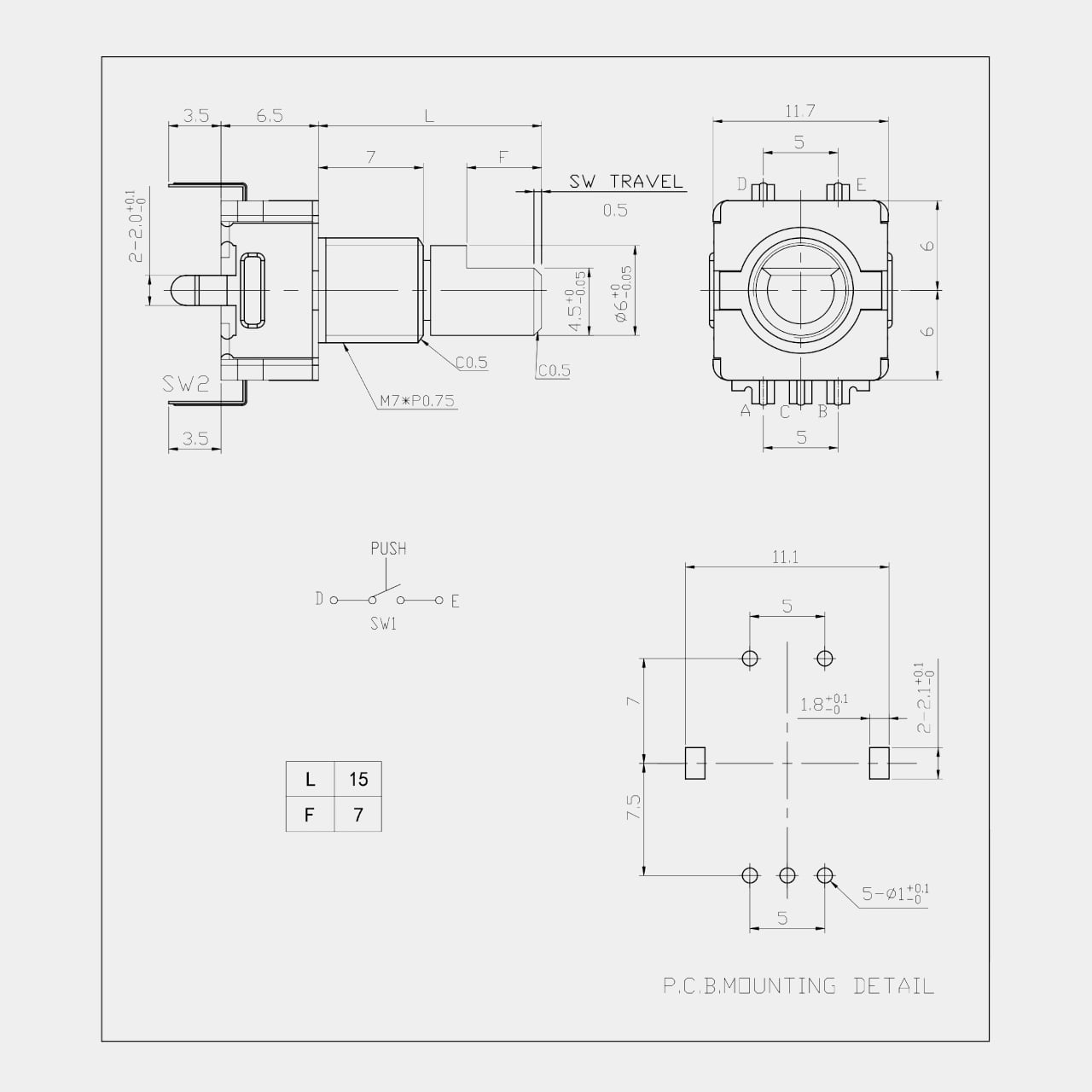
The repository spans the Q, K Pro, K HE, V Max, P HE, and L series, along with 11 mouse models from the M and G lines. Each entry includes some combination of case geometry, plate profiles, full assembly models, and stabilizer data. Files come in STEP for 3D CAD work, DXF for 2D plate cutting, and DWG for engineering drawings.
For someone who already owns one of these boards, the implications are immediate. The plate DXF files can go straight into a CNC or laser-cutting job, making it possible to cut a replacement plate in brass, carbon fiber, or FR4 without a single caliper measurement. The tolerances are exact because they came from the same data used to manufacture the originals.
The STEP files serve a different crowd. Accessory designers can import a full case model and build around it, checking that a travel pouch or a custom stand actually fits the geometry rather than hoping it does. Students studying industrial product design can see how a commercial manufacturer handles switch cutouts, case draft angles, and stacking tolerances on a real product that ships in volume.
It’s worth noting what the repository isn’t. Keychron’s own license FAQ is clear that this is “source-available,” not open source in the formal sense. Commercial use is prohibited, so these files can’t be used to manufacture products for sale or redistributed to design libraries. Personal builds, hobby projects, and educational work fall within what’s allowed, and that’s where the real value for the community sits.
Still, that puts Keychron ahead of most hardware brands, which don’t share their design data at all. The company has previously published QMK and ZMK firmware source code for many of its boards, and this release adds a physical dimension to that ecosystem. The files are also accessible through Keychron’s own website, where you select a model from a dropdown and download it through the regular store checkout.
The move is described as “a meaningful contribution to the broader hardware and keyboard community.” That’s probably underselling it. Most keyboard companies keep their design data locked away, treating physical geometry as proprietary. Having 83 real products available for study and personal modification, even under a restricted license, gives hobbyists and designers something that’s genuinely hard to come by anywhere else.
Anyone who’s owned a modern smartphone knows the frustration. The front camera you rely on for selfies and vlogs is almost always the weakest lens on the device. Rear cameras have grown increasingly capable, packing larger sensors, multiple focal lengths, and advanced computational photography, yet most people never use them for self-facing shots because there’s simply no way to see what’s being captured.
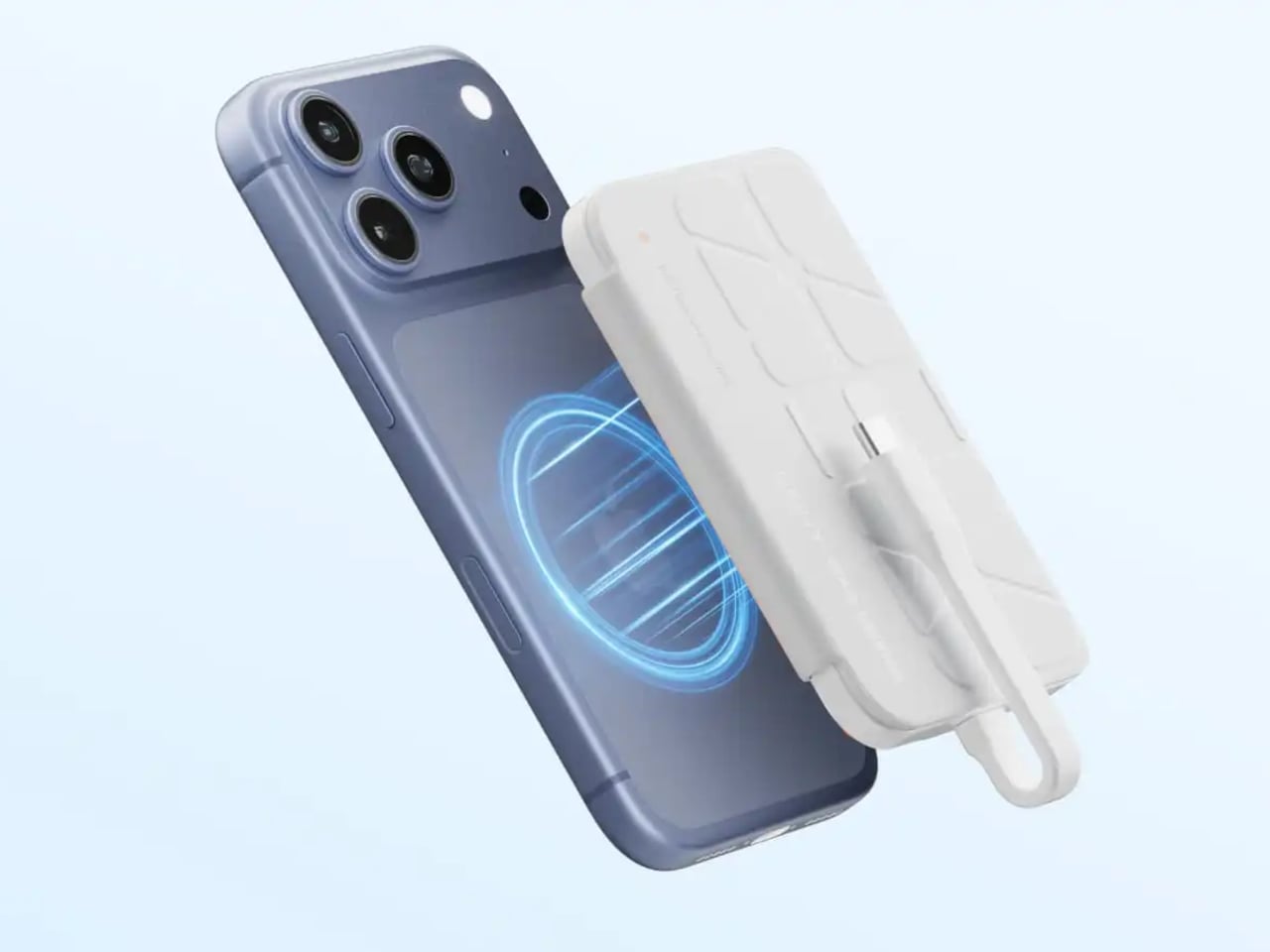
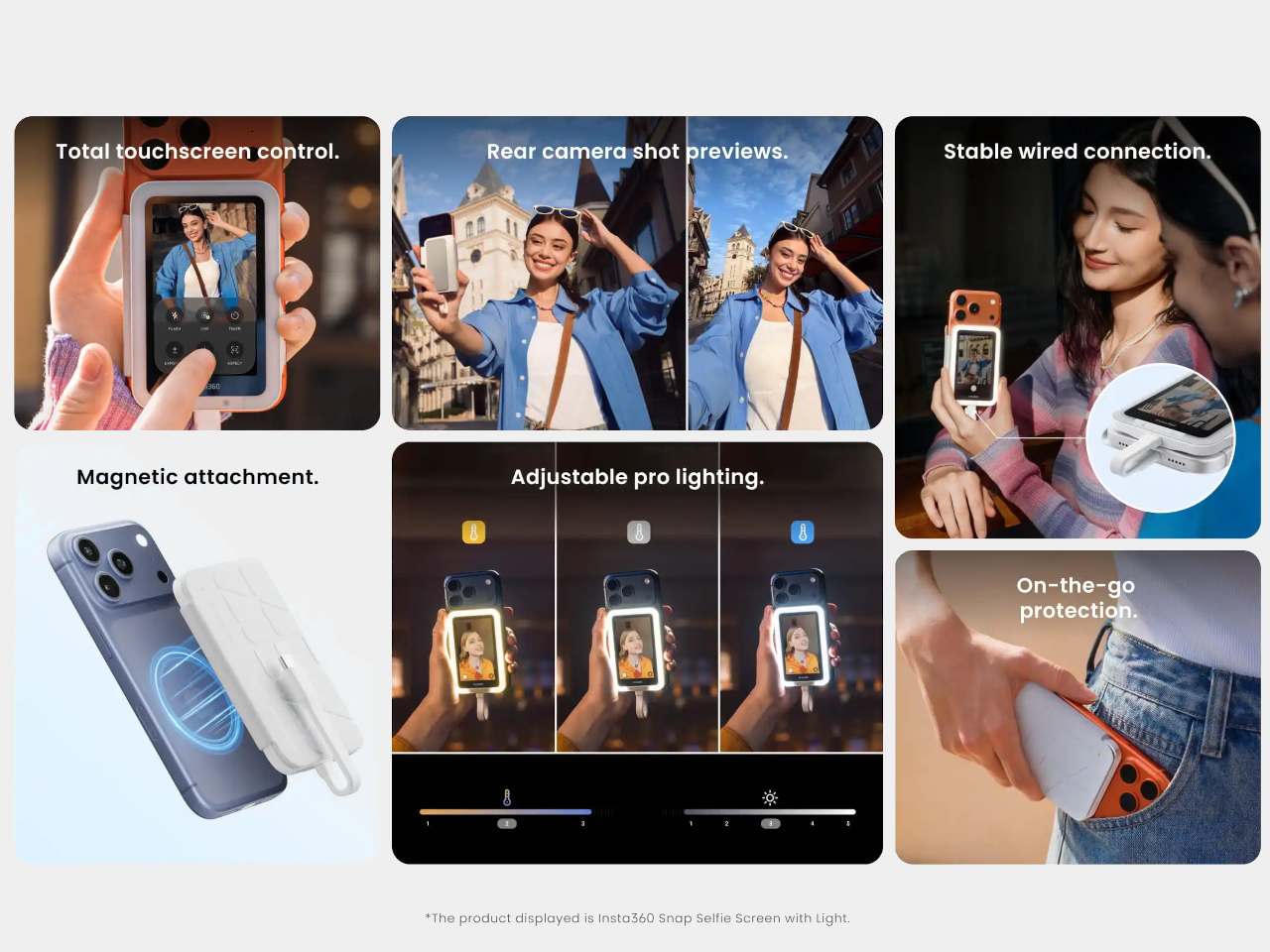
That’s the problem Insta360 is solving with the Snap Selfie Screen, a portable magnetic display that attaches to the back of your phone and gives you a live view of what the rear camera sees. It’s a fairly obvious idea in hindsight, one that’s been a long time coming, but there’s enough thoughtfulness in the execution to make it feel like a genuinely practical accessory.
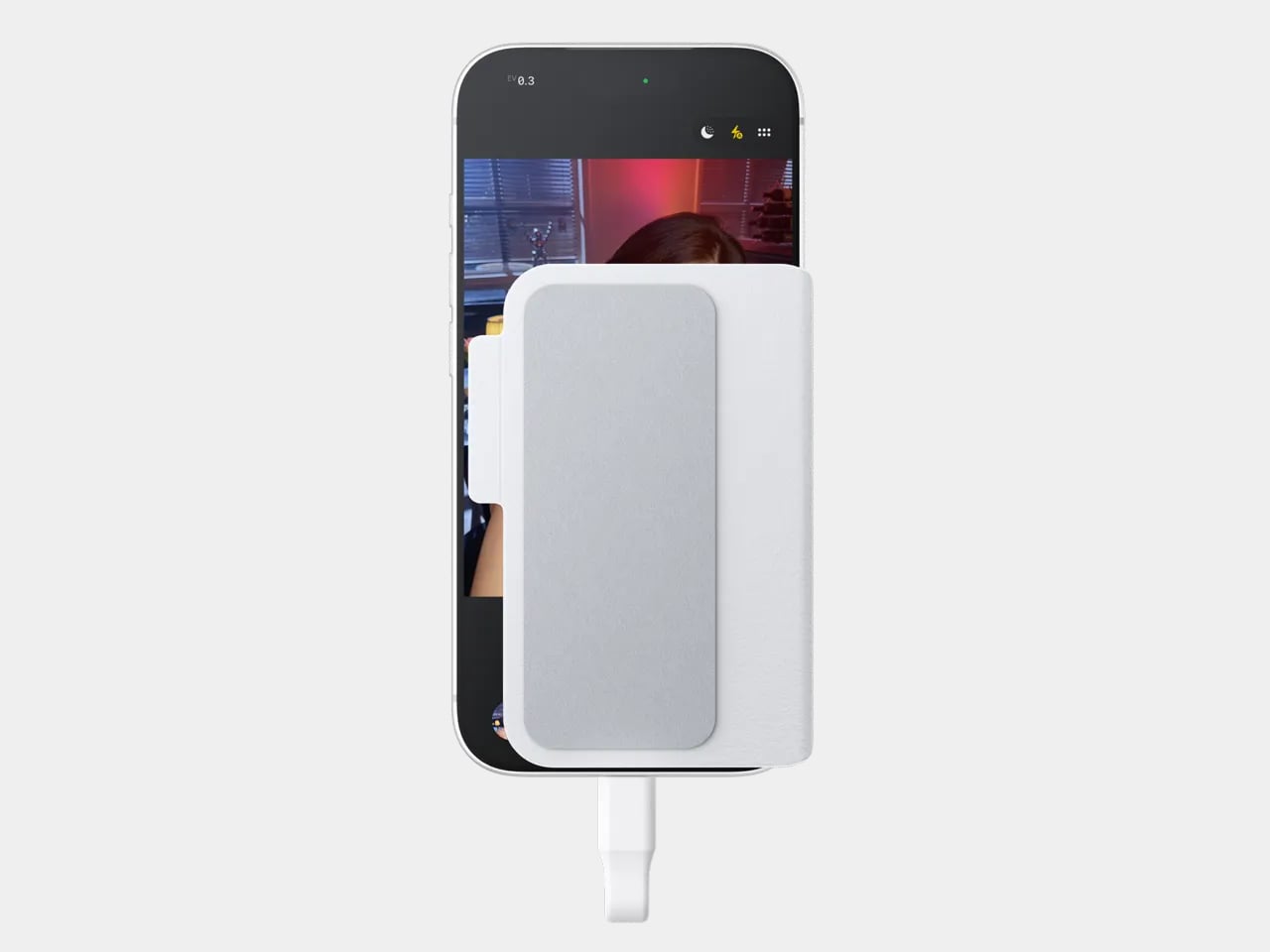
On iPhones, the Snap attaches magnetically to any MagSafe-compatible model from the iPhone 15 series onward and connects through the USB-C port. That wired link is what keeps the preview stable and responsive, in a way that Bluetooth or Wi-Fi-based alternatives simply can’t match. The Snap draws power directly from the phone as well, so there’s nothing separate to charge or carry.
Insta360 says the wired connection keeps latency down to around 30ms during 4K recording, close enough to real time that there’s no discernible gap between movement and what appears on the screen. Android users aren’t left out either, as those with USB-C and DisplayPort Alt Mode support can use the Snap with the magnetic ring adapter that comes included in the box.
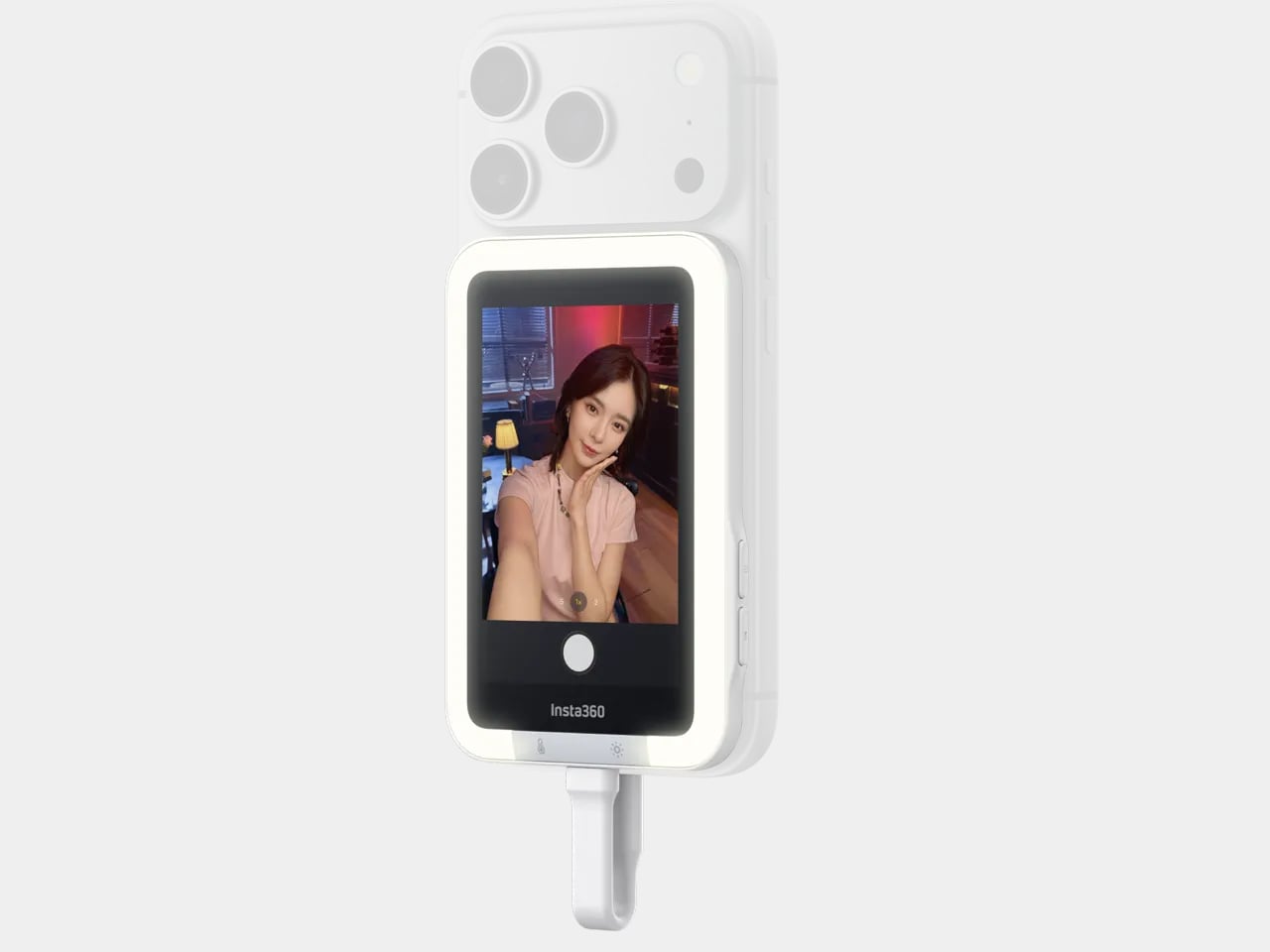
The 3.5-inch touchscreen goes well past a passive viewfinder. It fully mirrors your phone’s display and responds to touch, so you can adjust exposure, switch focal lengths, change apps, and tap the shutter all from the back of the device. Any camera app on your phone works exactly as it normally would, including Instagram, so you’re not tied to Insta360’s own software.
The premium edition adds a ring light around the screen, co-developed with beauty-tech company AMIRO. It comes with three color settings and five brightness levels, which makes a real difference when shooting indoors under flat lighting or outdoors at an awkward hour. For content creators who’d rather not carry a separate panel light, this version handles fill lighting without adding much to the bag.
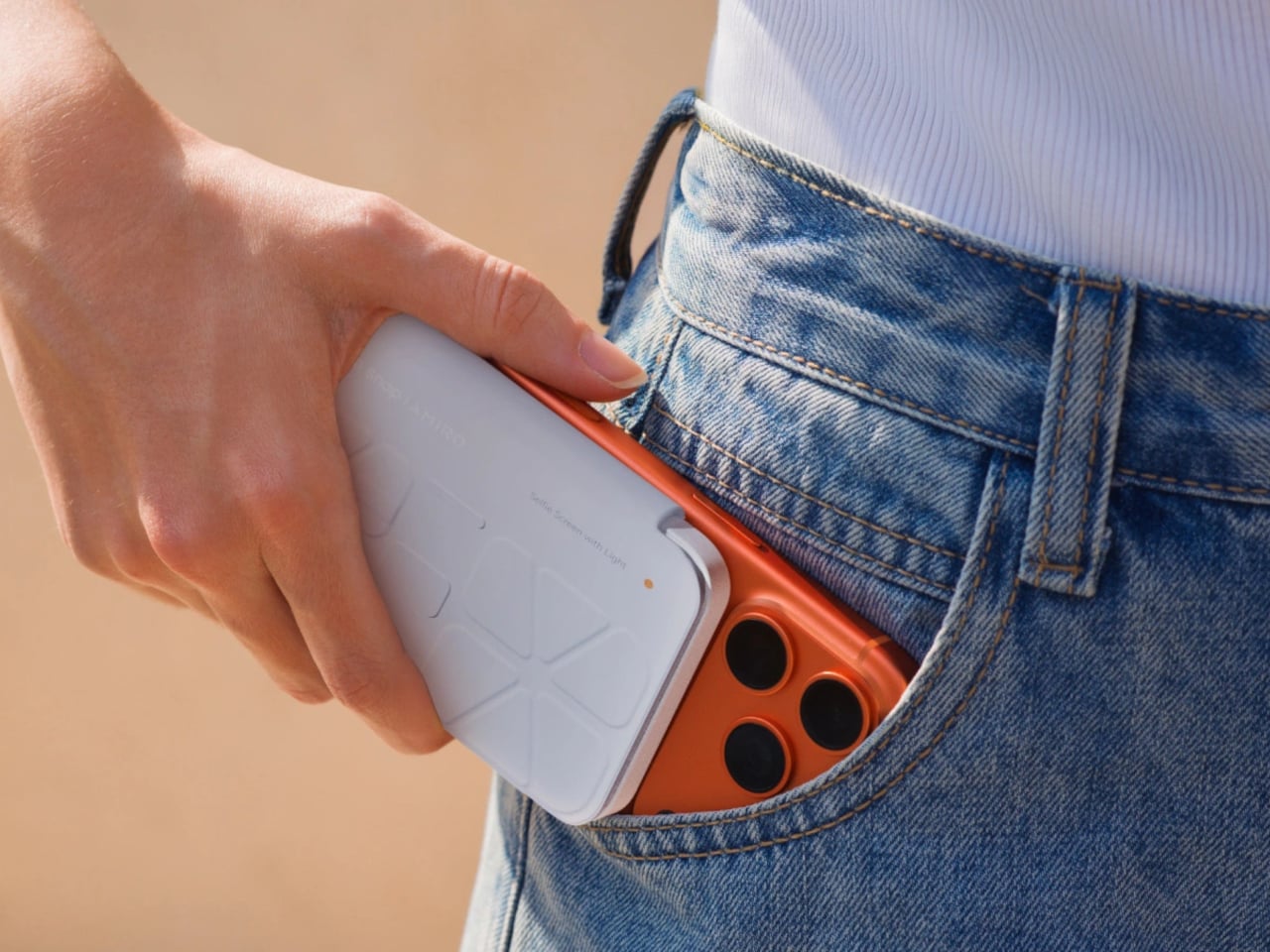
At just 6.8mm thick, the Snap fits into a bag without adding much. The protective cover that folds over the screen also secures the USB-C cable when not in use, so nothing tangles with other gear. That tidy design makes daily carry feel easy, and it’s especially handy for solo travelers who’d rather have a reliable way to photograph themselves than hope a willing passerby is nearby.
Both editions are available now through Insta360’s store and Amazon. The standard version starts at $79.99, with the ring-light edition at $89.99. Smartphone cameras have been improving for years, but always with the assumption that you’d be shooting other things. The Snap flips that around, putting the device’s most capable optics in the hands of the person holding it.
Walk through any serious diecast collector’s room and you’ll find the same creative workarounds repeated everywhere: IKEA glass cabinets with extra shelves shoehorned in, acrylic risers stacked along surfaces, custom wooden racks built from scratch, pizza savers tacked to walls as makeshift holders. The 1:64 community is one of the most dedicated in the collectibles world, and it has spent years engineering its own display solutions because no purpose-built hardware has bothered to meet it there.
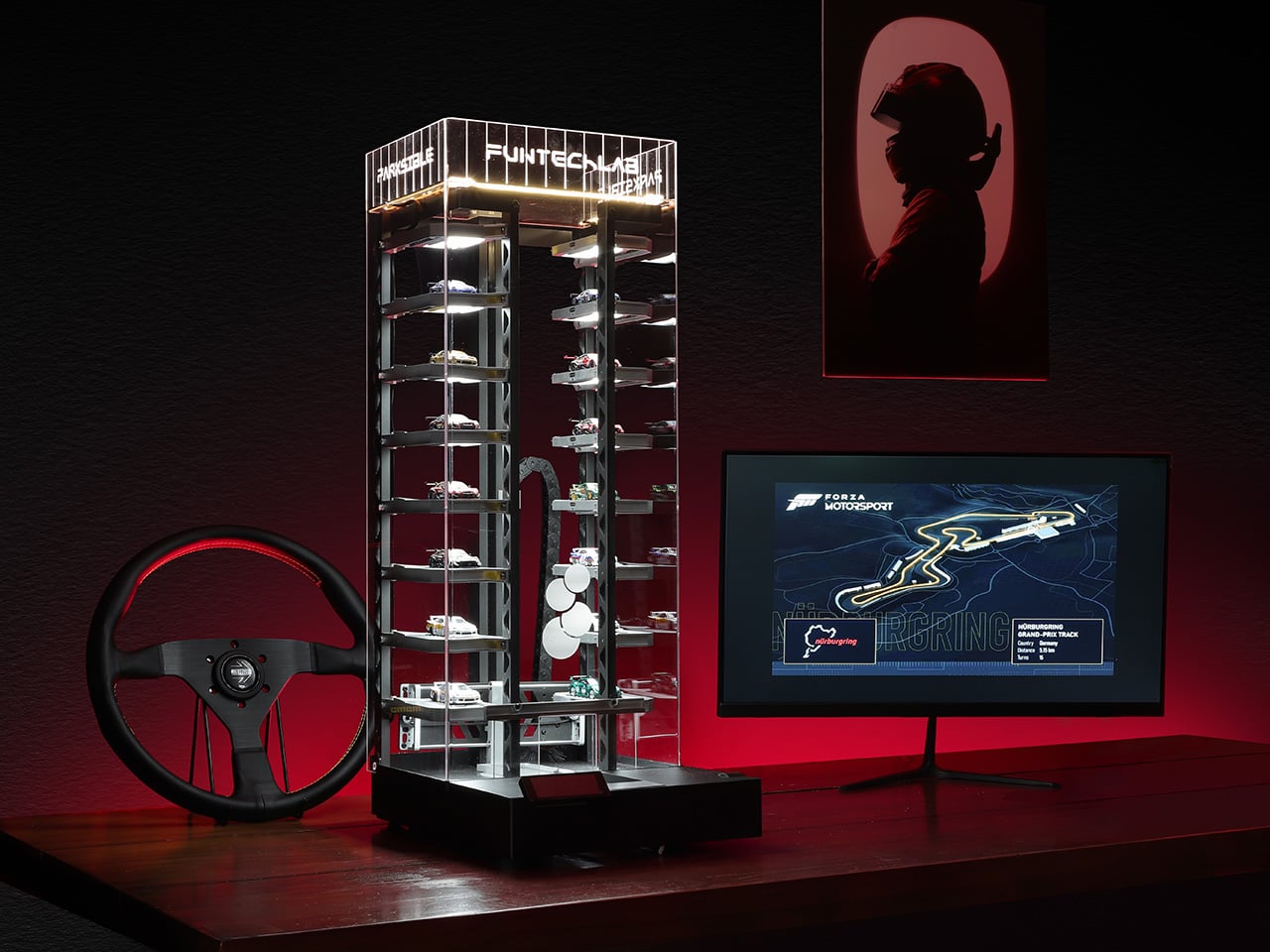
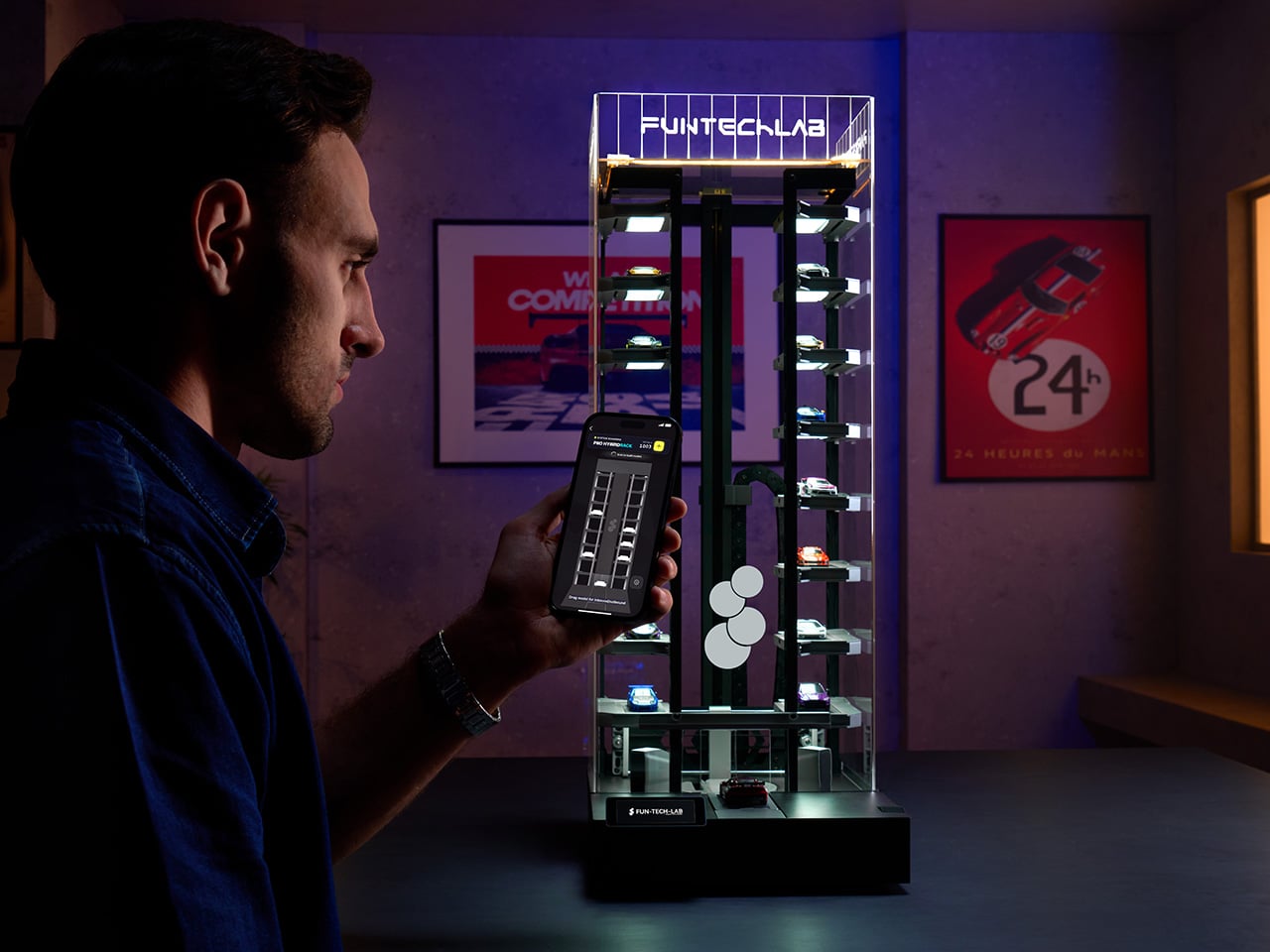
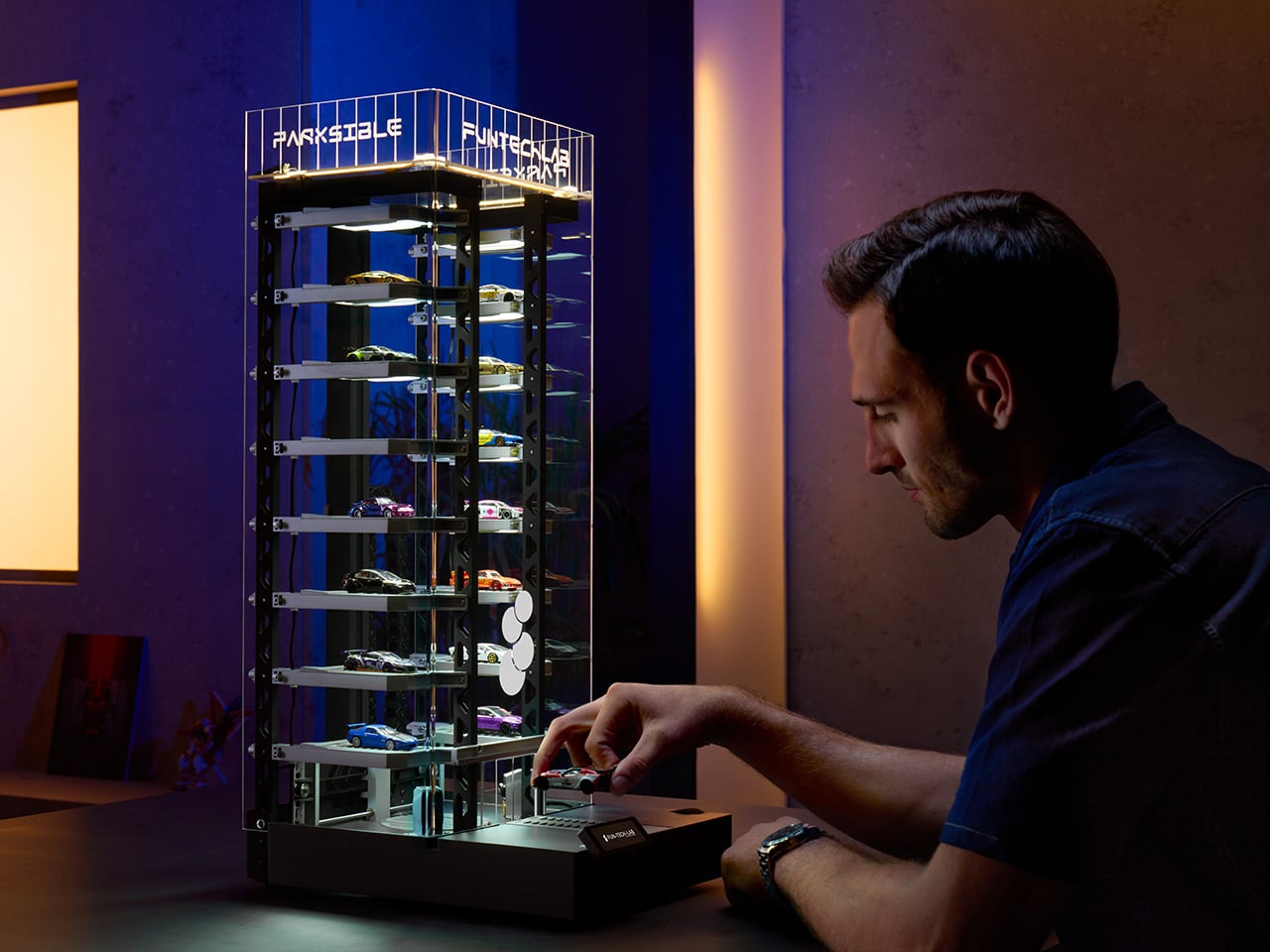
Fun-Tech-Lab, a Hong Kong-based team that already reached over 300 million impressions through its earlier desktop products Windsible and Runsible, is taking a proper engineering swing at that problem with Parksible. The unit holds 14 cars across motorized trays, handles loading and retrieval automatically, monitors temperature and humidity around the clock, and syncs to a companion app for remote control and full collection management. The PRO version adds a built-in camera that scans each model on arrival and builds a digital inventory with 360-degree views inside the app.
The Parksible stands at 2’4” tall and weighs under 7.5kg, which puts it comfortably on a desk without dominating the entire surface. Each of the 14 trays measures 102 by 45mm, fitting the vast majority of 1:64 scale models from Hot Wheels to Tomica to premium resin manufacturers. The motorized carriage handles loading and retrieval automatically, which sounds like a minor convenience until you’ve manually pulled a specific model from a crowded shelf for the hundredth time. A removable rear panel provides direct manual access to any tray, and it also hides power cable routing so the desk setup stays visually clean. Power-loss protection is built in, which means every model stays locked in place even if the power cuts out mid-cycle.
The PRO version introduces a recognition camera that performs a 360-degree scan of each model as it parks. Every scanned model gets logged into a personal digital garage inside the app, where you can locate any car instantly and view its full 360-degree record without needing to physically retrieve it. That feature effectively automates the cataloguing process that serious collectors used to handle through spreadsheets, manual photography sessions, and handwritten logs. Brand and series metadata syncs automatically in the PRO tier, and the app builds a searchable, visual database of the entire collection over time. For collectors managing hundreds of models across multiple storage solutions, having one system that does the inventory work passively while the cars park is a legitimate workflow upgrade.
The product doesn’t demand app dependency to function, which immediately separates it from the category of smart gadgets that become expensive paperweights when the server dies or the phone isn’t nearby. A 2.79-inch display and a physical rotary knob on the front provide full garage control offline. You can scroll through trays, select a parking spot, trigger retrieval, and adjust lighting brightness without ever opening the app. That offline-first design suggests Fun-Tech-Lab has spent time around collectors who value reliability over novelty, and it shows in the execution. The app exists to enhance the experience, not hold it hostage.
Inside the Parksible app, you assign parking slots to specific models, switch between Standard Mode, Random Mode, and Snake Mode for display choreography, and monitor environmental data in real time. Standard Mode likely presents cars in a predictable sequence, Random Mode cycles through the collection unpredictably, and Snake Mode appears to weave through slots in a serpentine pattern. Smart ambient lighting runs through the entire unit with adjustable brightness, so you can dial it down to a soft glow during the day or crank it up to full exhibition focus when showing off a particular model. The interface is built around remote control and digital oversight, turning what used to be a static shelf into something with actual behavior.
Temperature and humidity sensors monitor conditions around the clock, which matters significantly more than casual observers might assume. Rare Hot Wheels from the Redline era, premium resin limited editions, and vintage Tomica castings can degrade under poor environmental conditions, and collectors sitting on four-figure individual models have genuine reason to care about stable air quality. Parksible logs that data continuously and surfaces it in the app, giving collectors the kind of passive environmental oversight that used to require standalone sensors and manual logging. The unit also earned an iF Design Award in 2026, which signals the industrial design holds up under formal scrutiny.
The standard Parksible is available for $399 (down from a $528 MSRP) and the Parksible PRO stands at $499 (down from $659 MSRP), both at 24% off. Each unit ships with the main Parksible unit, 14 tray inserts with trailer-ramp styling, a power adapter, user manual, and the 2.79-inch interactive display. Add-ons include things like EPP foam packaging for $99, and even access to Fun-Tech-Lab’s earlier products like the 64 Windsible and Runsible set bundled at $259, individual Windsible units ranging from $239 to $669 depending on scale, a 64 Runsible at $39.90, and a series of FTL-exclusive diecast models priced at $32.50 to $89. Fun-Tech-Lab ships items globally, with the US and East Asia paying $75, the EU and UK at $85, Australia at $80, Canada at $95, and the rest of the world at $135, though add-on items ship free to most regions.
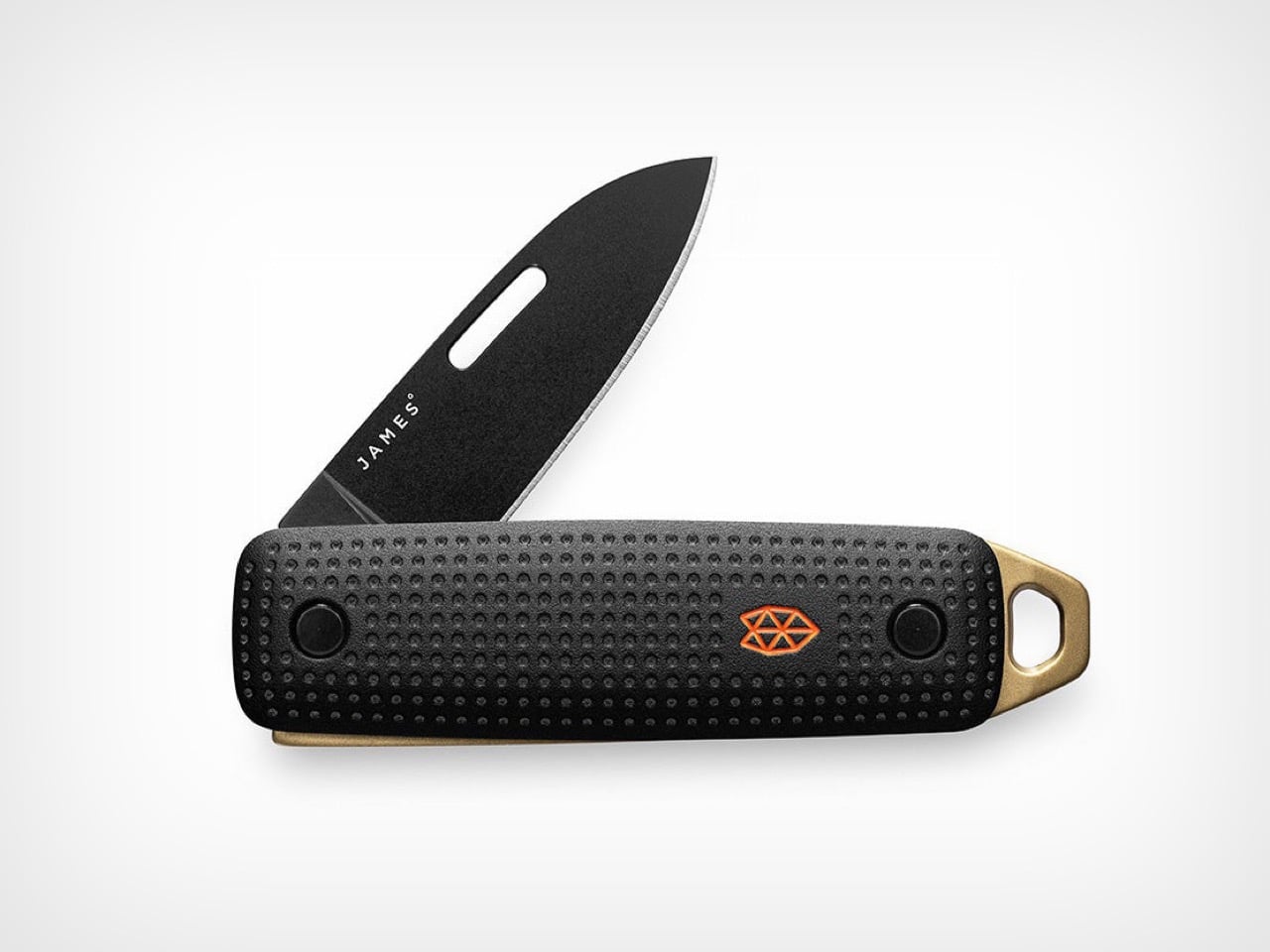
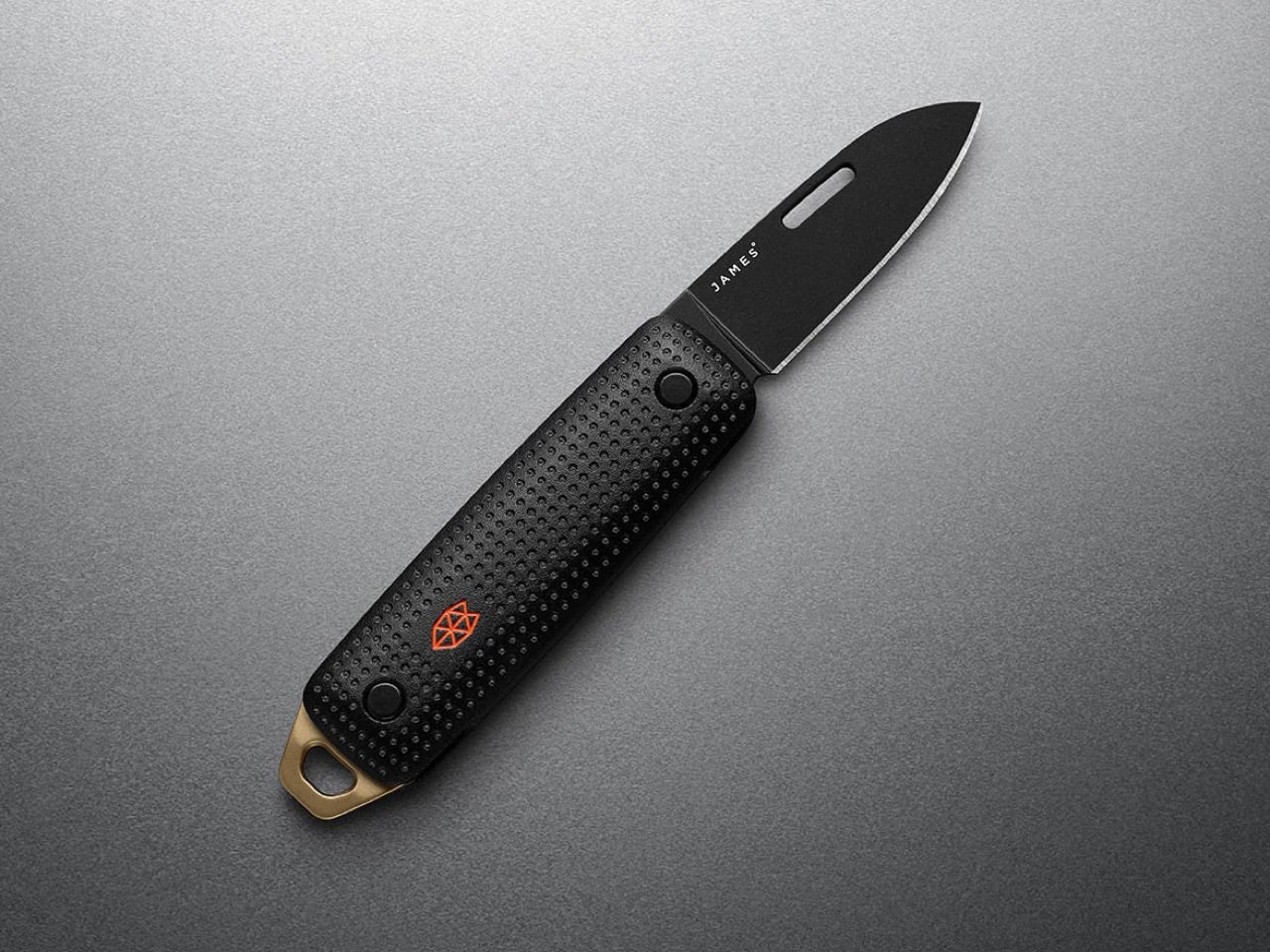
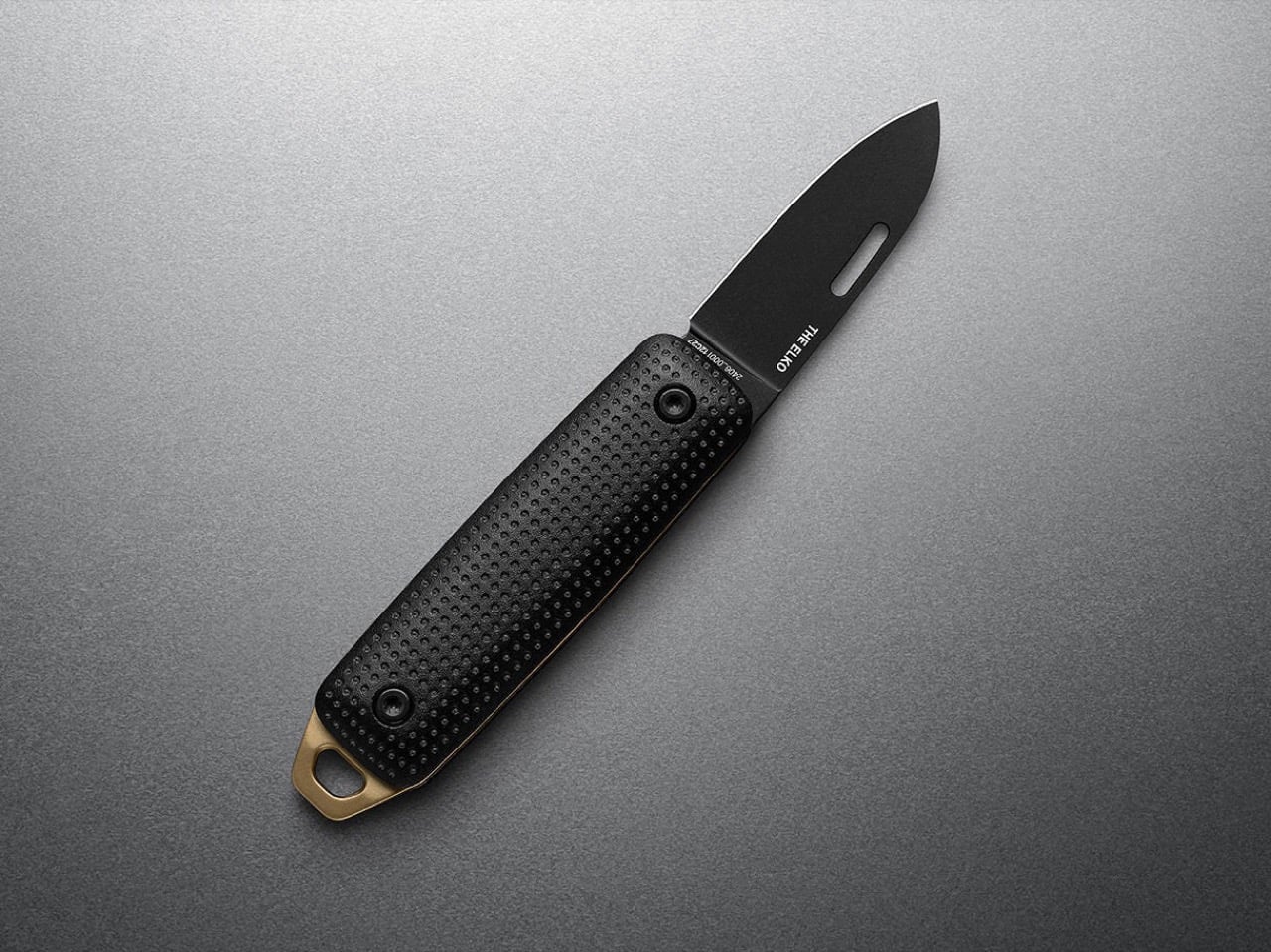
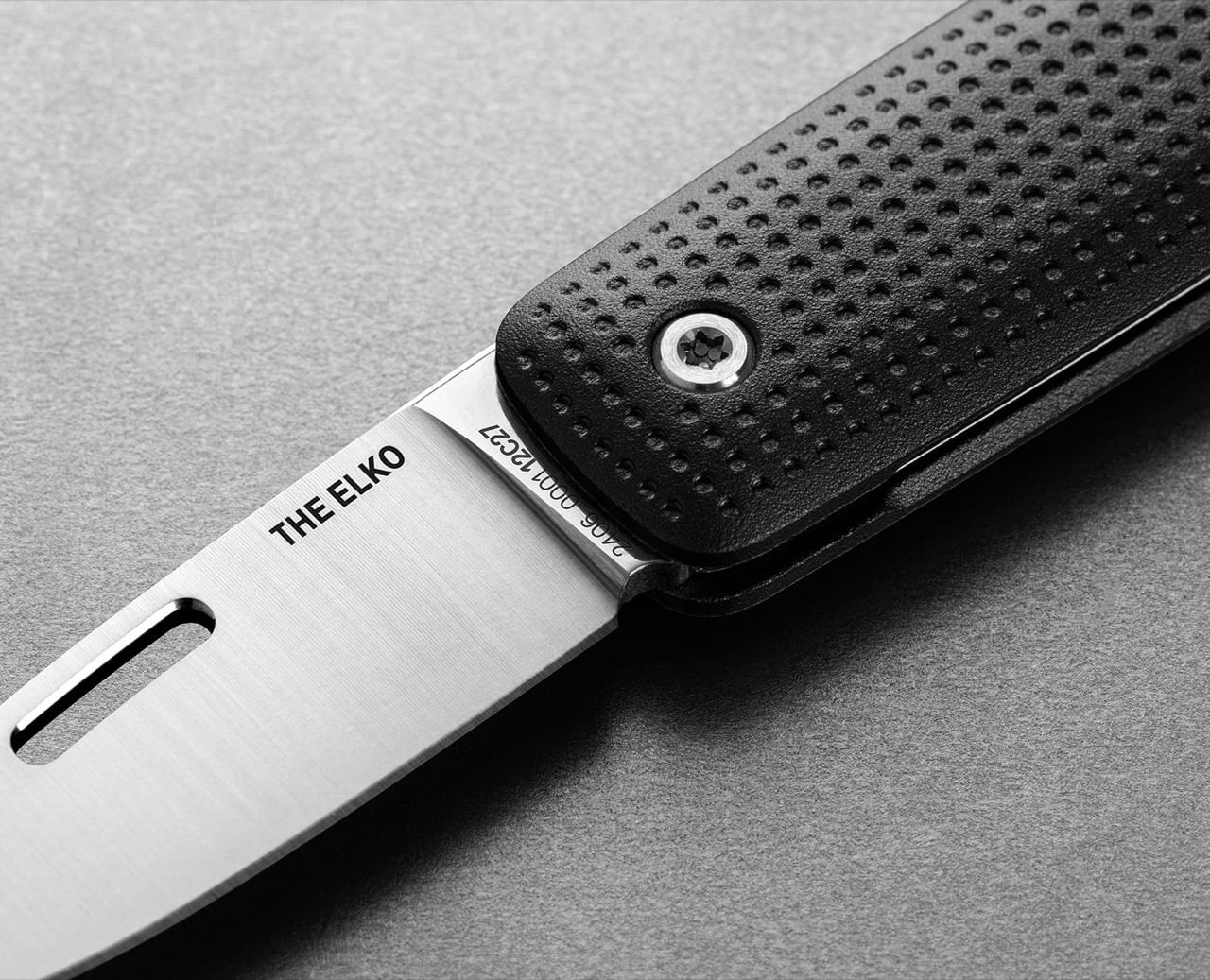
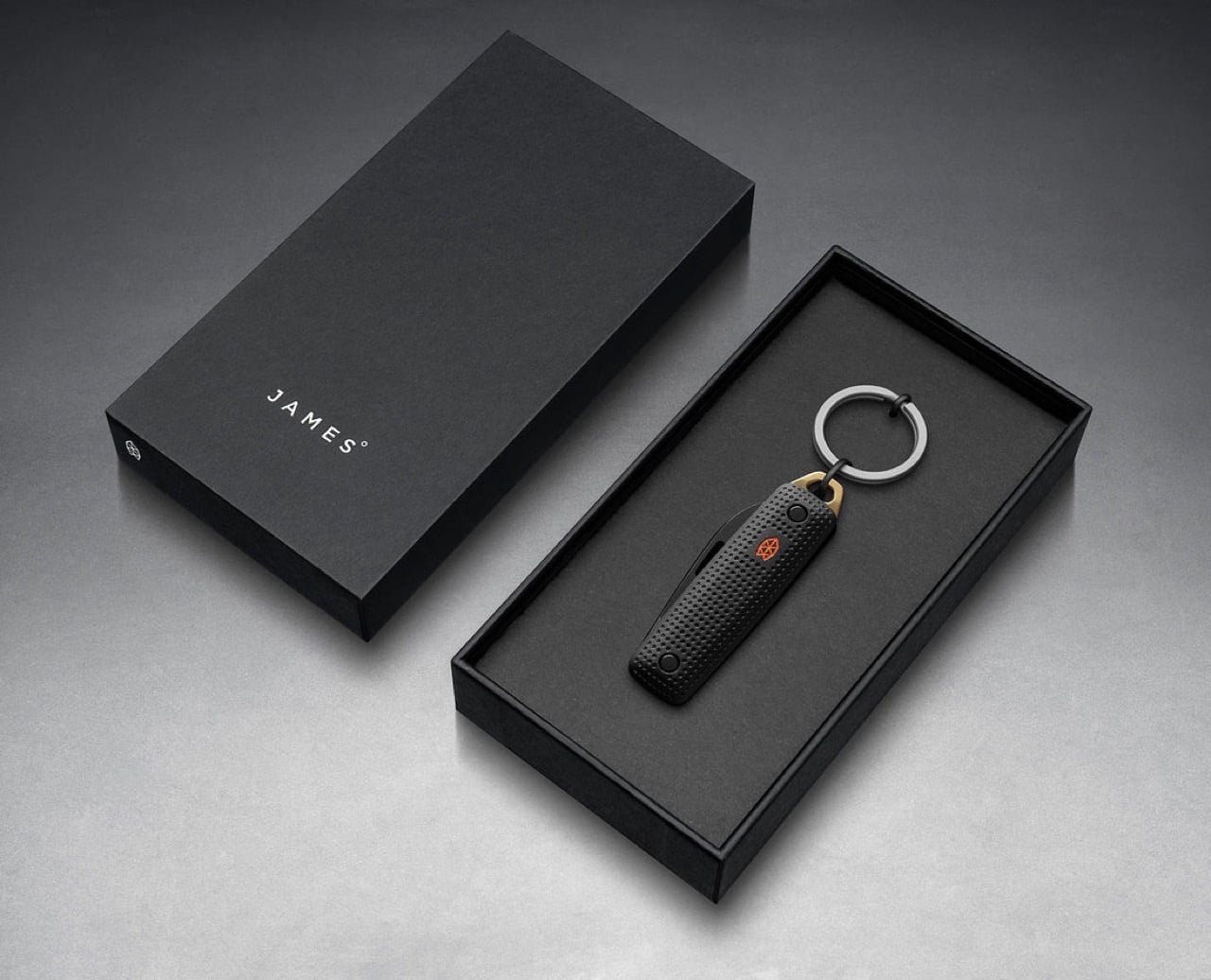
Refinement in knife design can mean two different things. Sometimes it means polishing the details on an already-successful platform, smoothing out the rough edges and tweaking the ergonomics until the product feels 5% better across the board. Other times it means stripping the design down to its founding idea and rebuilding it with better materials, tighter tolerances, and a clearer sense of what the knife is actually supposed to do in someone’s pocket. The James Brand took the second path with the Elko Gen 2, keeping the original’s core identity as a compact, non-threatening, legally unambiguous keychain blade while re-engineering nearly everything else. Machined aluminum handles replace the acetate and titanium options from the first generation, bringing a raised dot-matrix texture that wraps the entire surface. The slip-joint mechanism, nail-nick deployment, and sub-3-inch closed length remain untouched because those were the decisions that made the original Elko work in the first place.
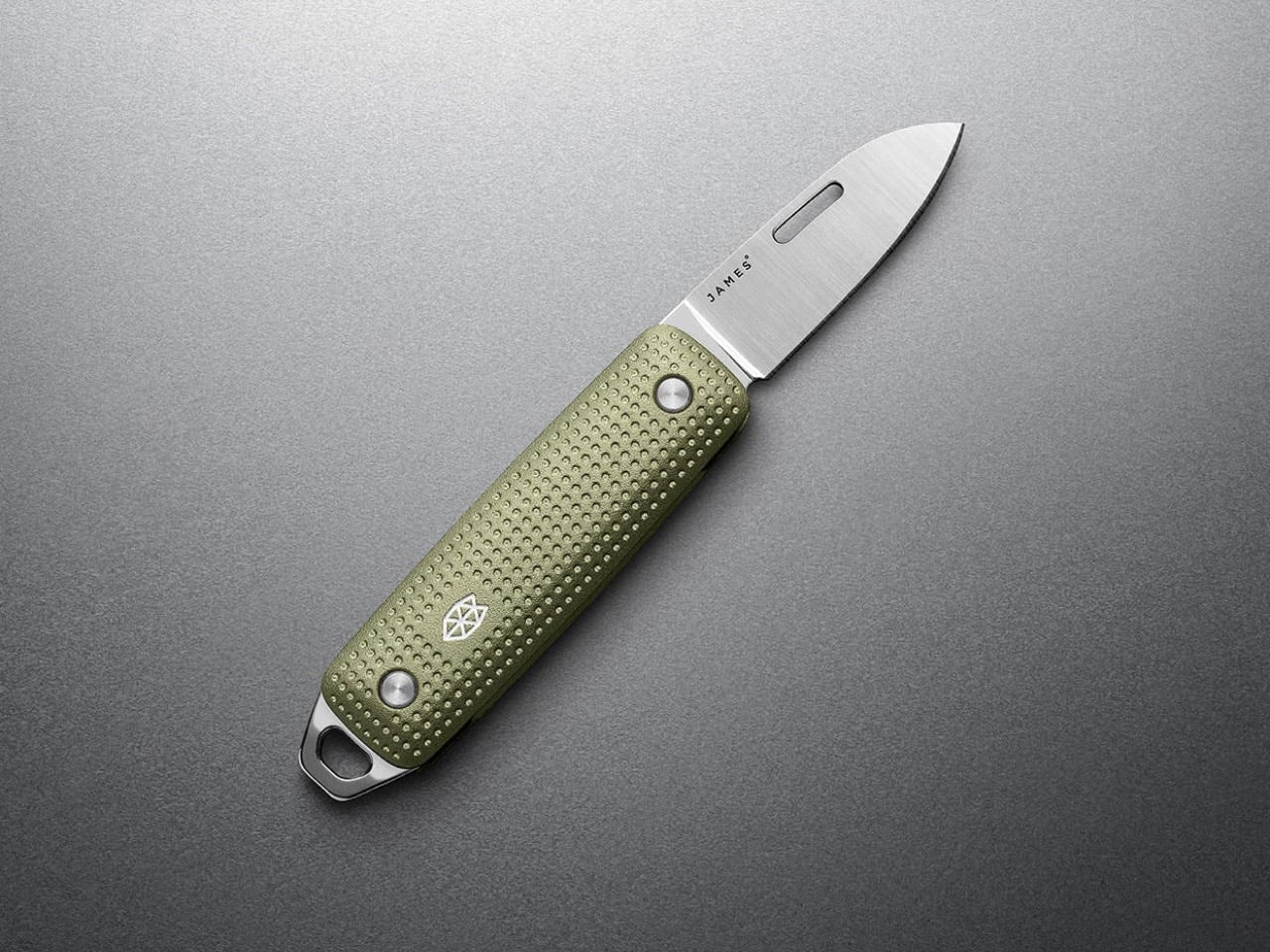
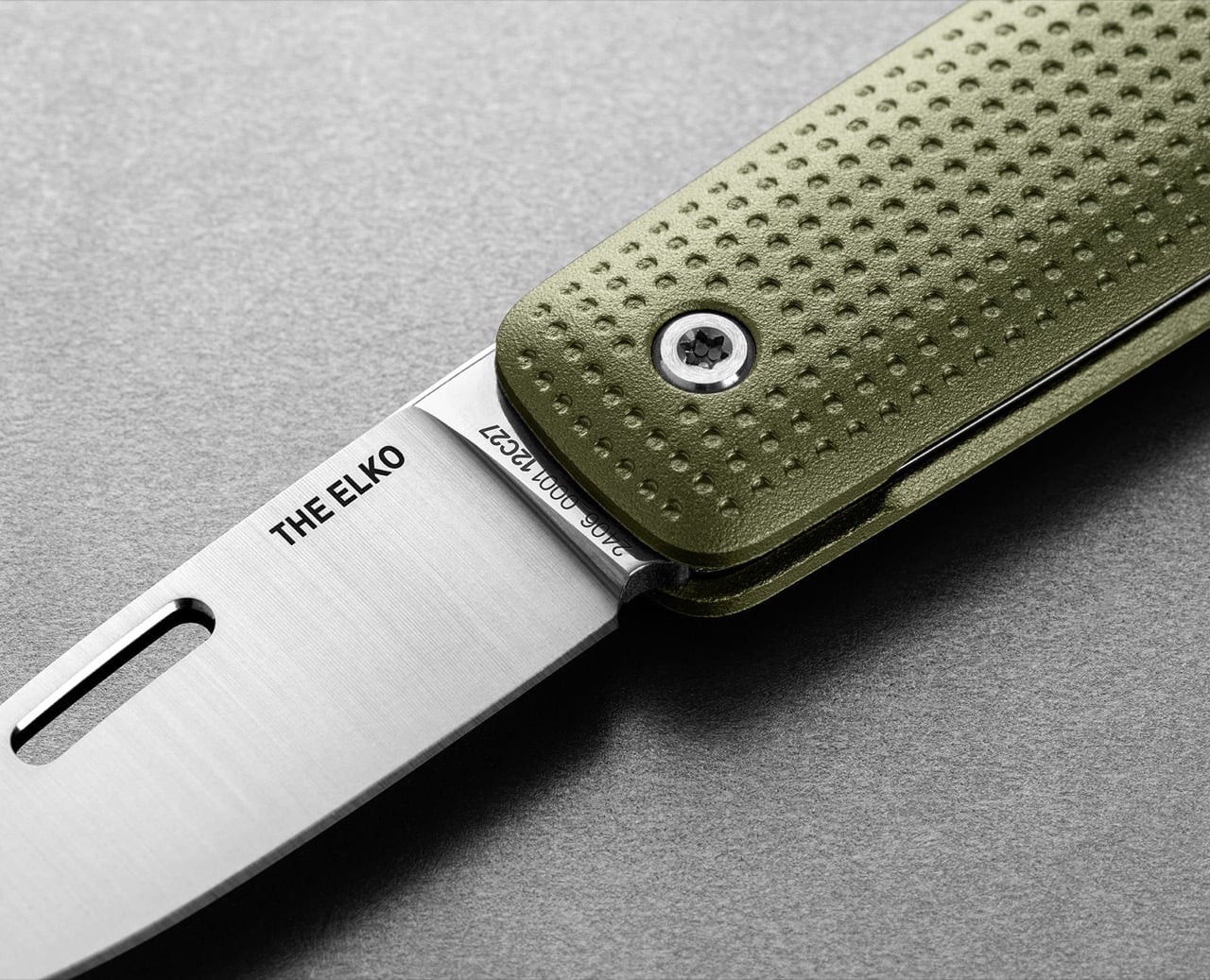
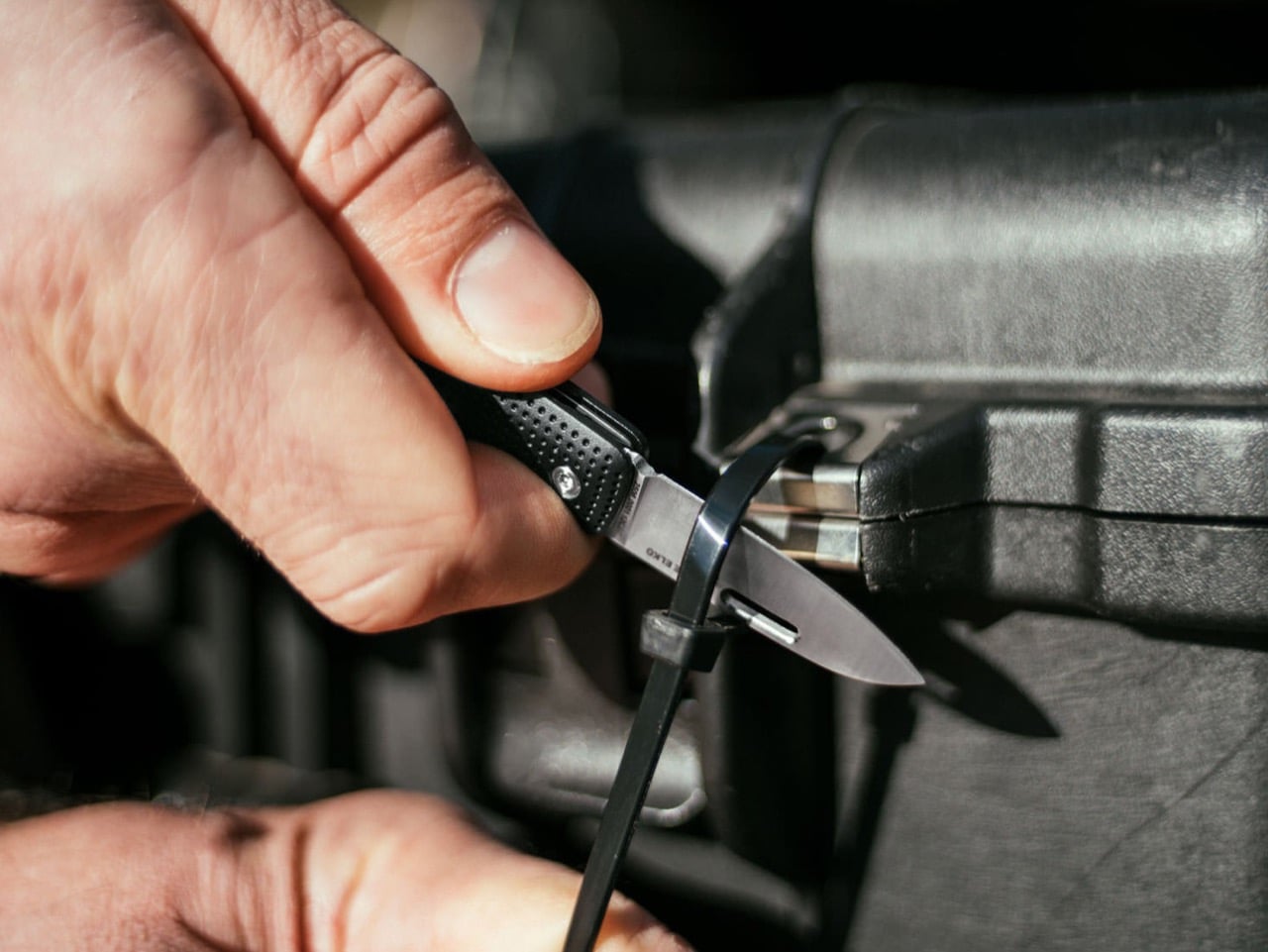
Sandvik 12C27 stainless steel drives the cutting performance, a Swedish alloy that holds an edge well above its price class and resists corrosion in ways that matter when a knife lives on a keychain exposed to sweat, rain, and pocket lint. The blade measures 1.6 inches with a drop-point profile, short enough to avoid intimidating coworkers but long enough to handle the micro-tasks that define daily carry: packages, tags, threads, tape. Four anodized aluminum colorways span the Gen 2 lineup, from the monochrome Black + Black to the warmer Black + Fire variant with its brass-toned scraper accent. That scraper, called the All Things tool, functions as a pry bar, bottle opener, and flathead screwdriver while doubling as the attachment point for the included titanium key ring. The James Brand is pricing the Gen 2 at $65, a number that sits comfortably in the zone where people actually carry and use their knives instead of storing them in a drawer.
Designer: James Brand
The weight tells you everything about what changed between generations. The original Elko clocked in at 1.3 ounces, light enough to disappear completely on a keychain and occasionally feel insubstantial in hand during actual use. The Gen 2 hits 3.5 ounces, a nearly three-fold increase driven entirely by the shift to CNC-machined aluminum handles. That extra heft registers immediately when you pick it up, transforming the knife from something you forget you’re carrying into something that feels deliberately present without crossing into burdensome. The raised dot-matrix texture across the handle faces amplifies that sense of solidity. Each dimple is uniform and precisely machined, creating a grip surface that works without resorting to aggressive jimping or rubberized inserts. It’s the kind of detail that separates a thoughtfully executed product from one that just checks spec boxes.
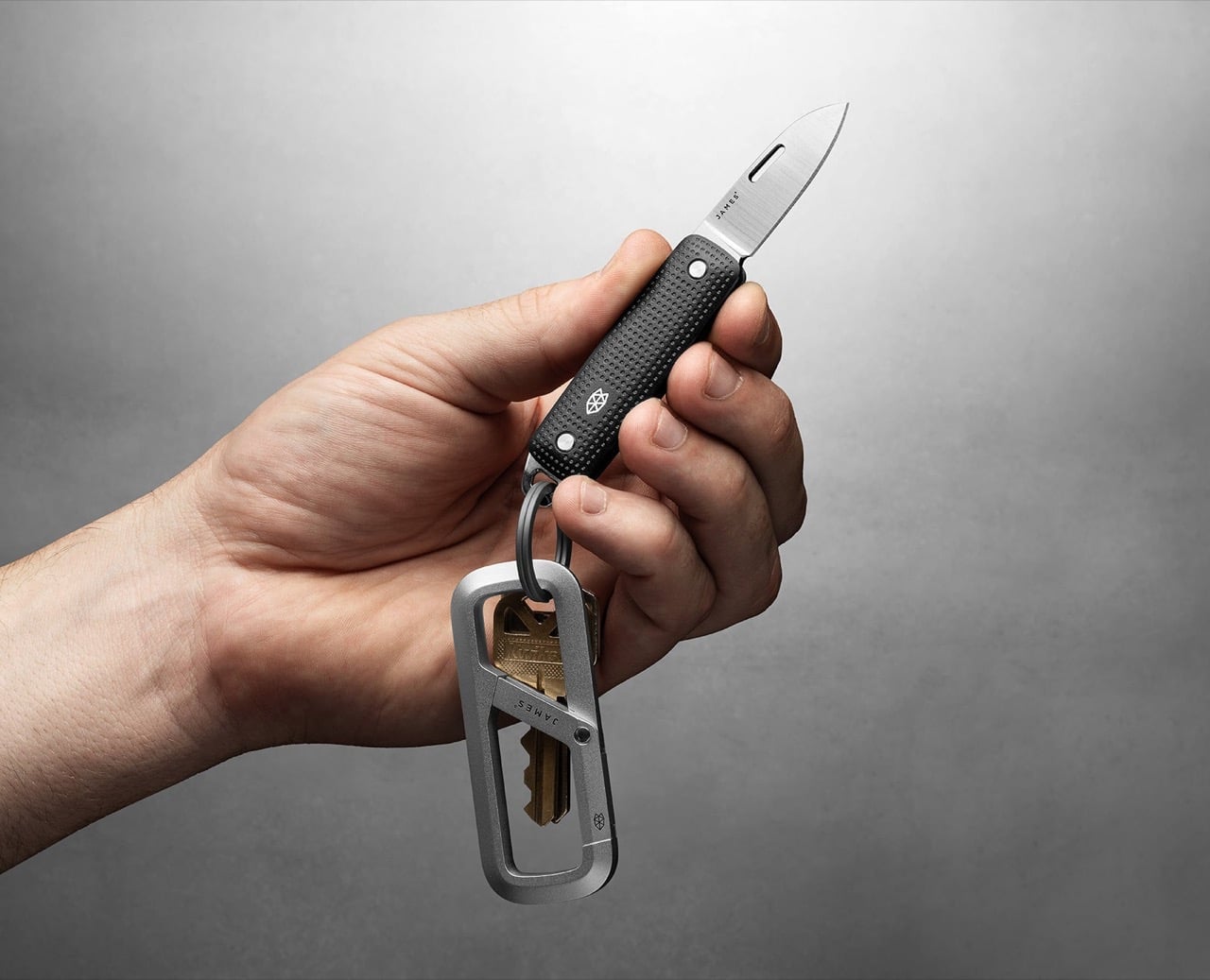
The slip-joint mechanism operates with the kind of snap you’d expect from a knife twice this size. There’s no lock here, which keeps the Elko legal in jurisdictions where locking blades trigger stricter carry laws, but the spring tension holds the blade open firmly enough that it won’t fold during normal cutting tasks. The nail nick is slotted longer than most compact knives bother with, making it easy to catch with a thumbnail even if you’re working quickly or wearing gloves. Opening the blade feels deliberate in a way that thumb studs and flippers sometimes don’t, a tactile ritual that reminds you you’re deploying an edge rather than flicking a fidget toy. Closed, the knife measures 2.6 inches, which makes it shorter than a standard tube of ChapStick and small enough to coexist on a keychain with a car fob, house keys, and a carabiner organizer without turning the whole setup into a pocket brick.
The All Things scraper at the butt end pulls more weight than most integrated tools on keychain knives. The brass-toned version on the Black + Fire colorway is particularly striking, a warm accent that contrasts sharply against the PVD-coated black blade and anodized black aluminum. Functionally, it’s wide enough to catch a bottle cap, thin enough to slot into most flathead screws, and sturdy enough to pry open a paint can lid without bending. The titanium key ring threads directly through the scraper, creating a clean attachment point that doesn’t require a separate lanyard hole or awkward clip orientation. In practice, this means the Elko hangs naturally on a carabiner or split ring without the blade rattling loose or the scales scratching against your keys. The Grove + Stainless colorway leans more understated, pairing an army green anodized finish with a brushed satin blade and stainless scraper that reads almost utilitarian. Black + Stainless offers the most versatile aesthetic, the kind of knife that doesn’t announce itself visually but still looks intentional when you pull it out to open a package in a meeting.
The Elko Gen 2 competes in a category that’s crowded with compromises. Most keychain knives either go too light and feel like toys, or pack in unnecessary features that bloat the form factor beyond what a keychain can reasonably support. The Benchmade Proper series offers superior blade steel and build quality, but at nearly double the price and with a larger closed footprint. Victorinox’s 58mm Swiss Army Knives deliver more tools in a similar package, but sacrifice blade length and lockup in the process. The Elko stakes out the middle ground: a single-purpose blade with one genuinely useful integrated tool, built well enough to last years but priced accessibly enough that you won’t hesitate to actually use it. It’s a knife designed to live on your keys, get deployed daily, and still feel like a deliberate choice five years from now rather than something you’ve been meaning to replace.
Amazon has spent nearly two decades perfecting the Kindle, turning it into the default eReader for millions of people, and in all that time they’ve steadfastly refused to shrink it down to pocket size or open it up to the broader Android ecosystem. They had every opportunity to merge the best parts of their Kindle line with the form factor of a smartphone, creating a distraction-free reading and productivity device that could actually fit in your jeans pocket and run the apps you already use. Instead, they kept the Kindle locked into its walled garden, kept it at 6 inches or larger, and left a gaping hole in the market for anyone willing to build what they wouldn’t. DuRoBo took that opportunity and ran with it, launching the Krono, a 6.13-inch E Ink tablet running full Android 15 that costs $279.99 and does exactly what Amazon has spent years pretending nobody wants.
The Krono packs an E Ink Carta 1200 display at 300 PPI (matching the sharpness of a Kindle Paperwhite), an octa-core processor, 6GB of RAM, 128GB of storage, a 3,950 mAh battery, and a unique side-mounted Smart Dial that controls screen refresh, frontlight adjustment, voice recording, and web browsing through a single rotary knob. It weighs just 173 grams, measures 154 x 80 x 9 mm, and is available in black or white from DuRoBo’s site or Amazon US. The pitch is straightforward: it’s an eReader, a voice note-taker, a podcast player, and a music device all in one, built on an open platform that lets you install whatever reading app, productivity tool, or communication software you actually want to use. It launched in August 2025 and started shipping in September, quietly carving out space in the niche that BOOX’s Palma lineup has been dominating for the past year.
Six gigs of RAM in an E Ink device is borderline excessive in the best possible way, especially when most eReaders ship with 2GB or less and struggle the moment you try to run anything beyond the stock reading app. The 128GB of storage means you can load an absurd library of ebooks, PDFs, audiobooks, and whatever else without ever worrying about running out of room. Running Android 15 (not some ancient fork, but the actual current OS) gives the Krono access to the full Play Store ecosystem, which is exactly what Amazon has been allergic to for years. You want Kindle, Libby, Moon+ Reader, Pocket, Instapaper, Obsidian, and Spotify all on one device? The Krono lets you do that. A Kindle will let you read Kindle books and maybe listen to Audible if you’re lucky. That’s the entire difference.
The Smart Dial highlights DuRoBo’s industrial design philosophy most clearly – instead of burying every interaction behind capacitive touch menus (which E Ink refresh rates make tedious), they mounted a physical rotary dial on the side of the device that you can press and rotate to trigger different actions depending on context. It’s a design choice borrowed more from cameras and audio gear than from tablets, and it gives the Krono a tactile, mechanical quality that most E Ink slabs completely lack. The back of the device features what DuRoBo calls the Axis, a strip housing six small breathing lights that glow softly on a schedule to gently nudge you back toward focused reading or work. It’s a wellness-adjacent UX detail that could easily feel gimmicky, but in the context of a device explicitly marketed as a “focus hub,” it at least makes thematic sense. The whole package is clearly designed to feel intentional and calm, a deliberate counterpoint to the dopamine-optimized chaos of a smartphone.
DuRoBo is positioning the Krono hard into the distraction-free productivity and mindfulness lane, framing it as the device you reach for when you want to read long-form content, capture ideas through voice notes, or listen to podcasts without getting dragged into Instagram or TikTok. The dual-tone frontlight (warm and cool adjustment) and the paper-like texture of the Carta 1200 display are meant to make extended reading sessions comfortable in a way that backlit screens never quite manage. The built-in speaker and Bluetooth support let it double as a surprisingly capable audio player for music, audiobooks, and podcasts, which gives it utility beyond just being a reading slab. The open Android platform means you can customize it to fit whatever workflow you actually need, whether that’s Notion for notes, Pocket for saved articles, or Spotify for background music while you write. Amazon would never build this, because opening the Kindle platform would undermine their entire content ecosystem lock-in strategy.
The Krono is available now for $279.99; with a fitted TPU case is sold separately, designed to accommodate both the Smart Dial and the Axis breathing lights without blocking either. At that price point, it’s competing directly with the BOOX Palma (which runs around $280 depending on configuration) and sits well above Amazon’s Kindle Paperwhite but below their Kindle Scribe. Whether the Smart Dial, the breathing lights, and DuRoBo’s focus-first branding are enough to justify choosing it over a Palma or just installing a launcher on a Kindle will depend entirely on how much you value that design identity over raw software polish.
By 1996, the arcade was dying. Virtua Fighter and Tekken had the crowds. Sega’s racing cabinets had the spectacle. The conventional wisdom was that 2D games were finished, and anyone still making pixel art sidescrollers was simply behind the curve. Then Nazca Corporation released Metal Slug on SNK’s Neo Geo hardware, and the conventional wisdom had to sit quietly in a corner for a while. The game’s hand-animated sprites moved with a fluidity that polygon games couldn’t touch, and the humor, panicking soldiers, grateful POWs tossing rocket launchers, a tank that waddled like a toy, made the whole thing feel alive in a way that pure technical showmanship never quite manages.
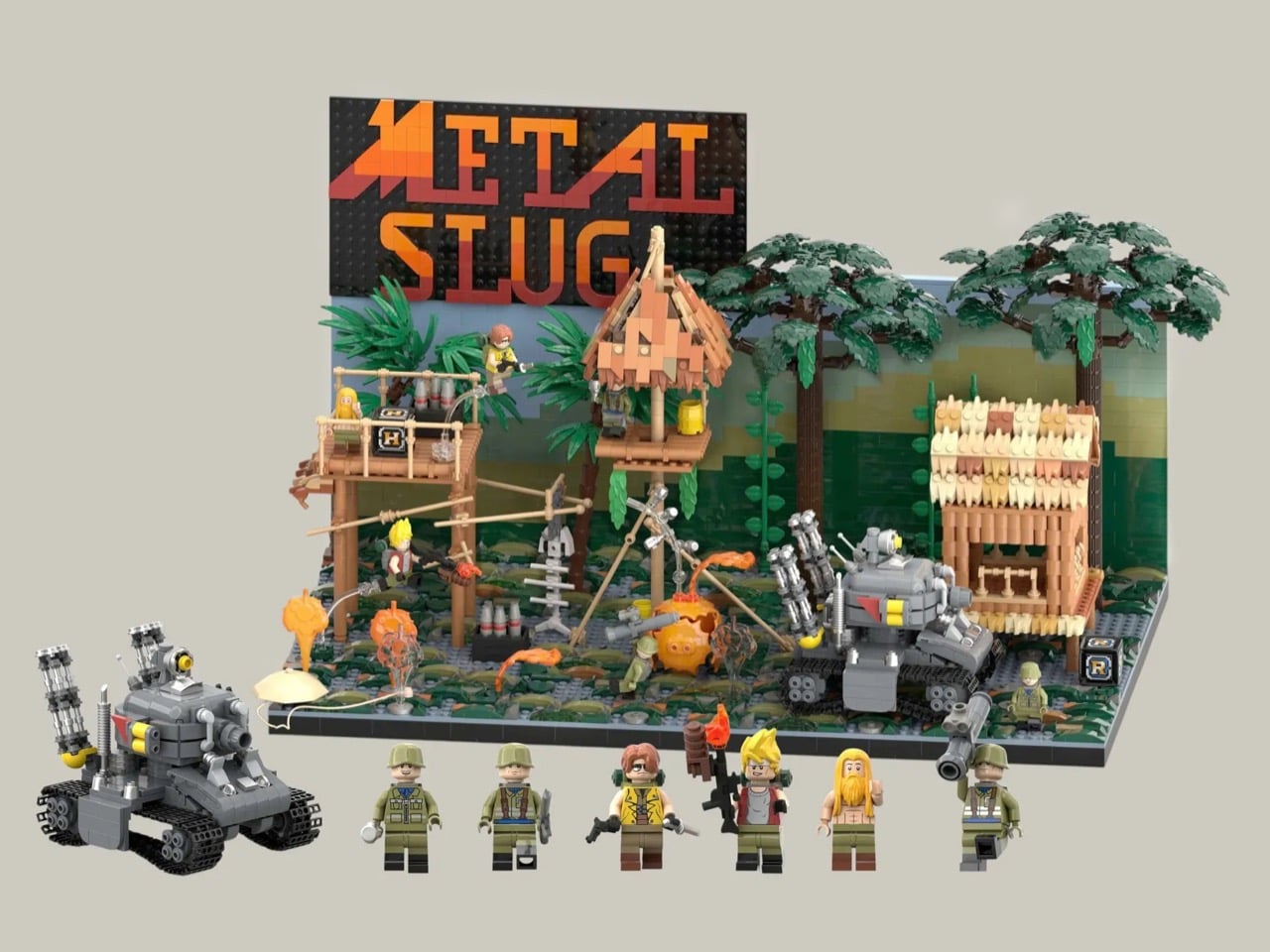
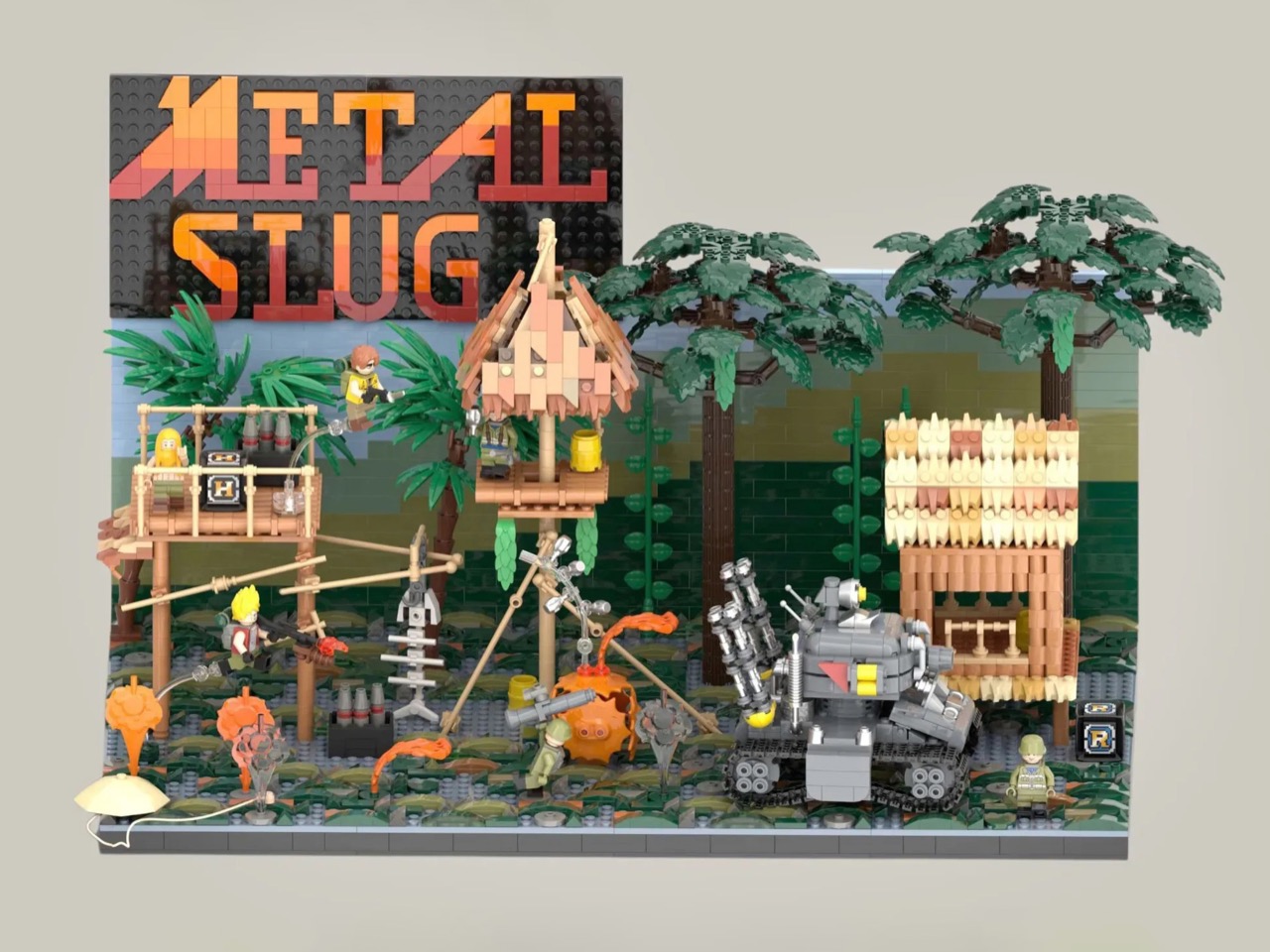
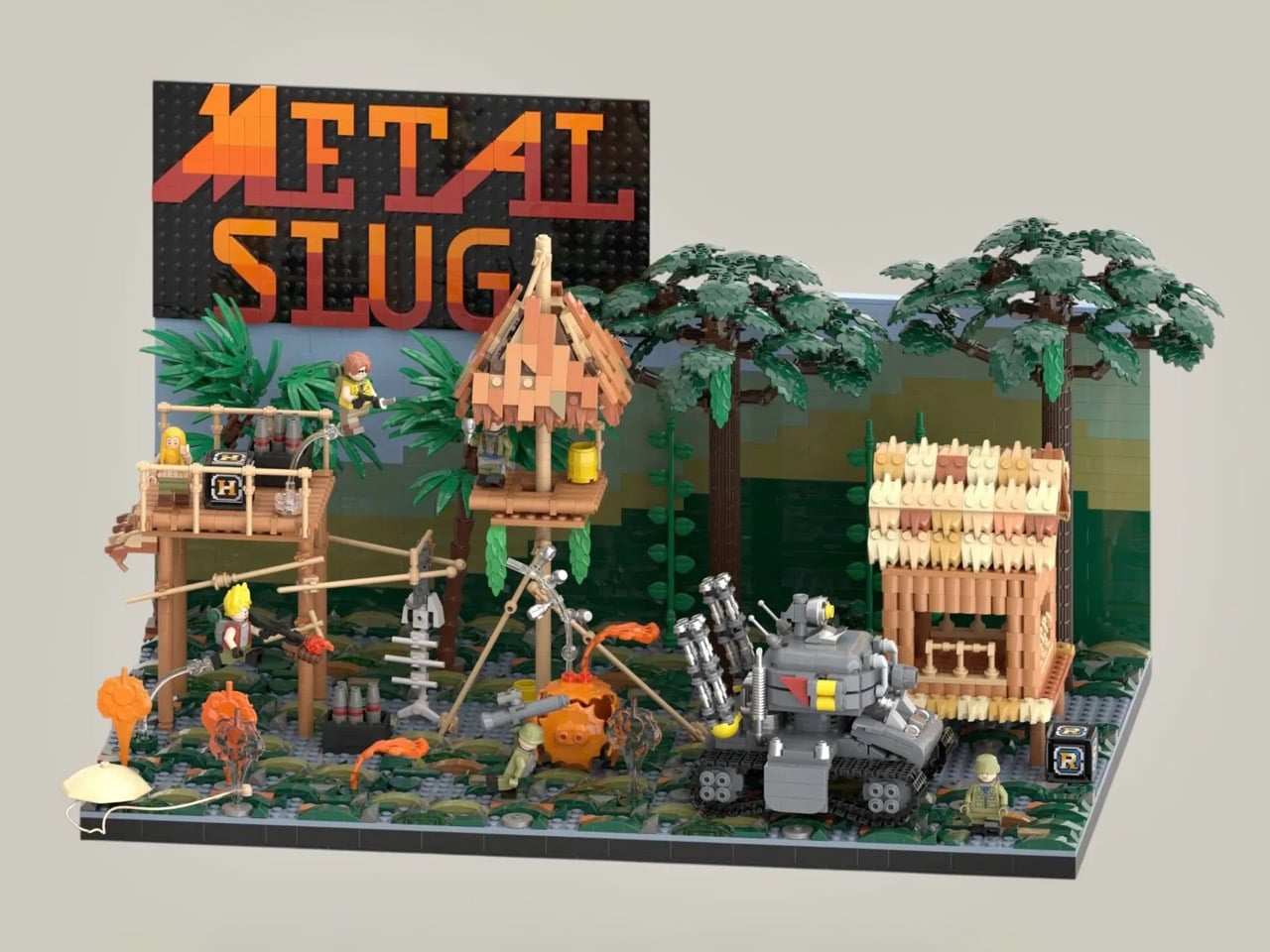
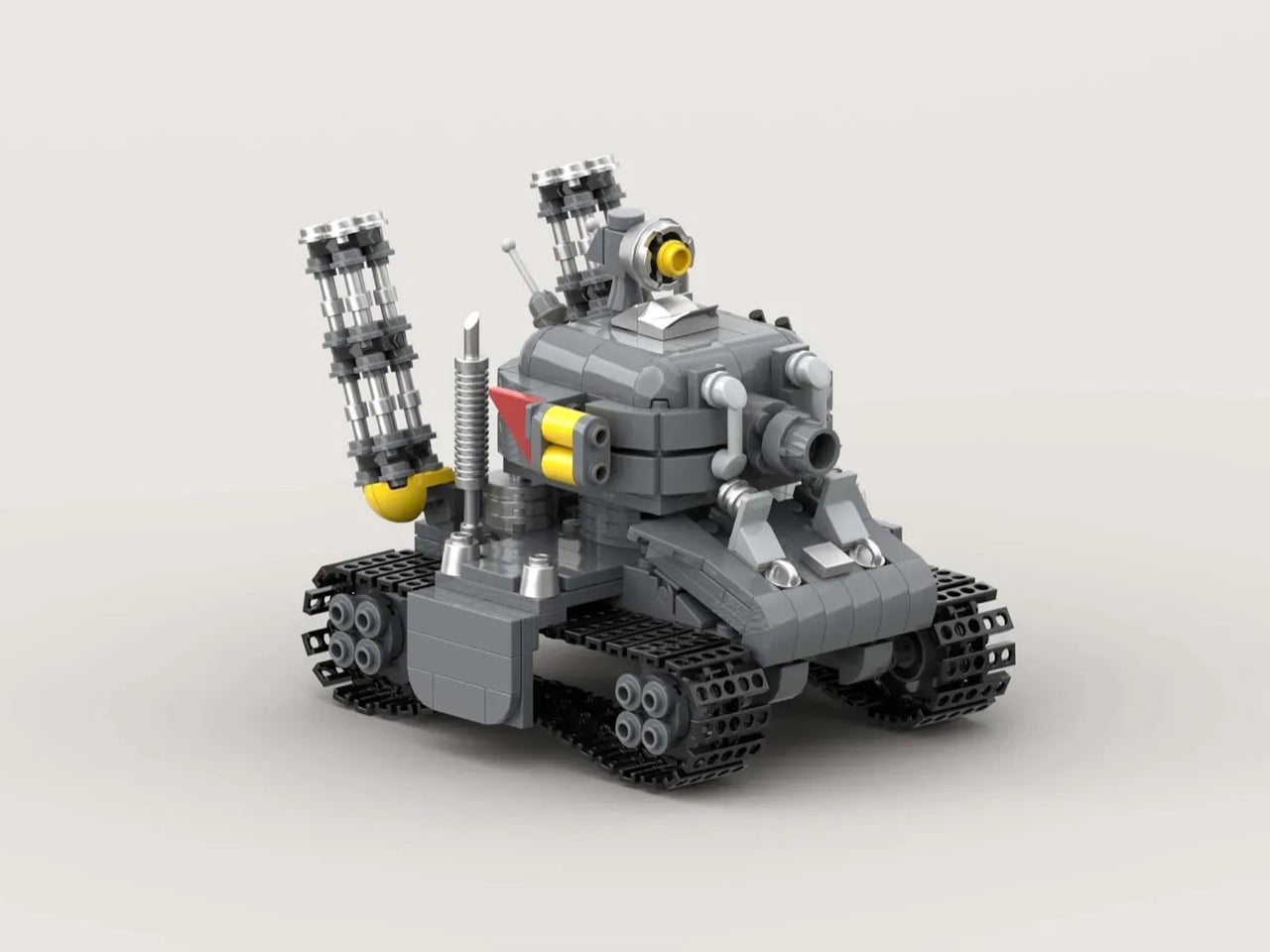
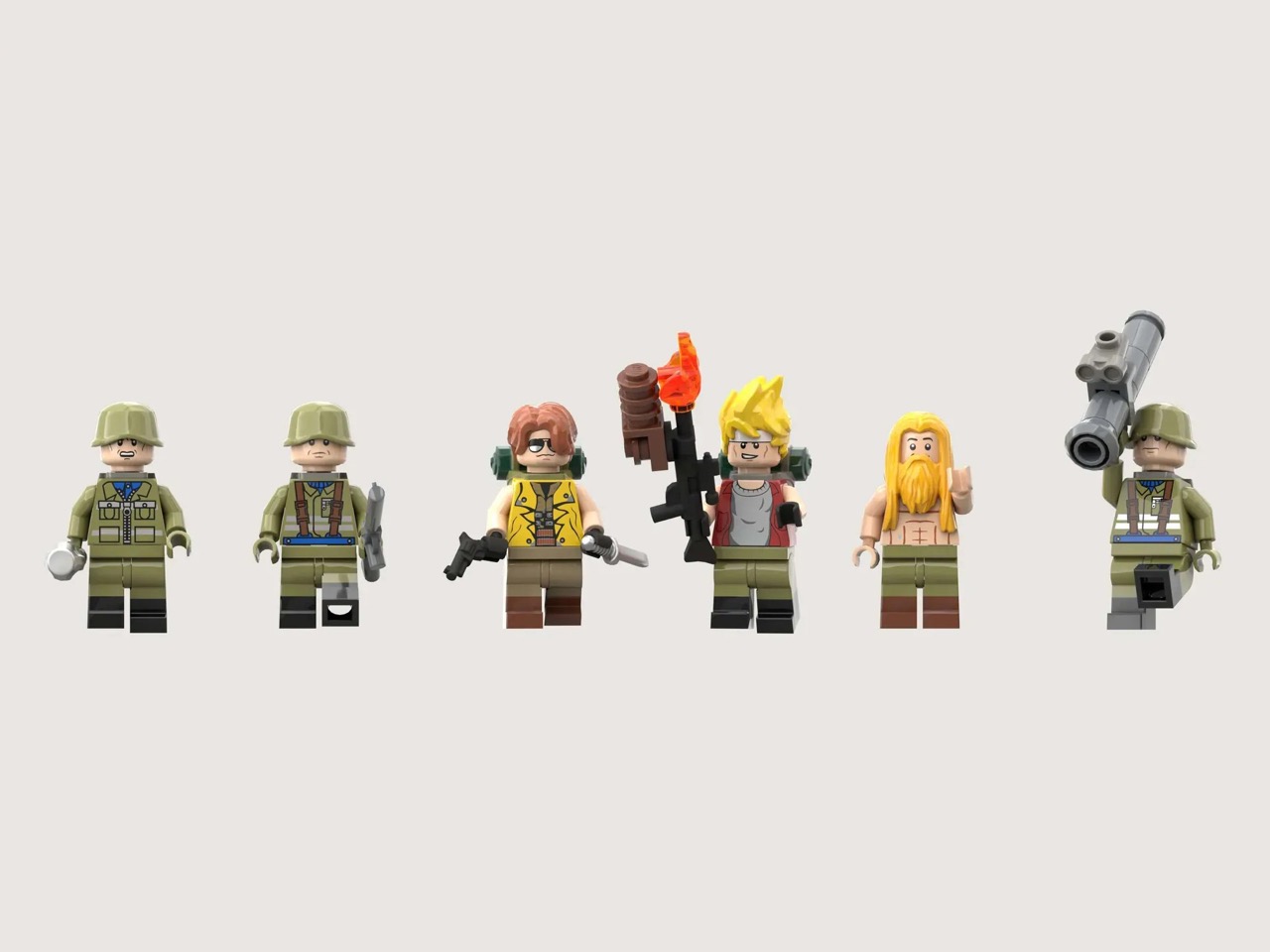
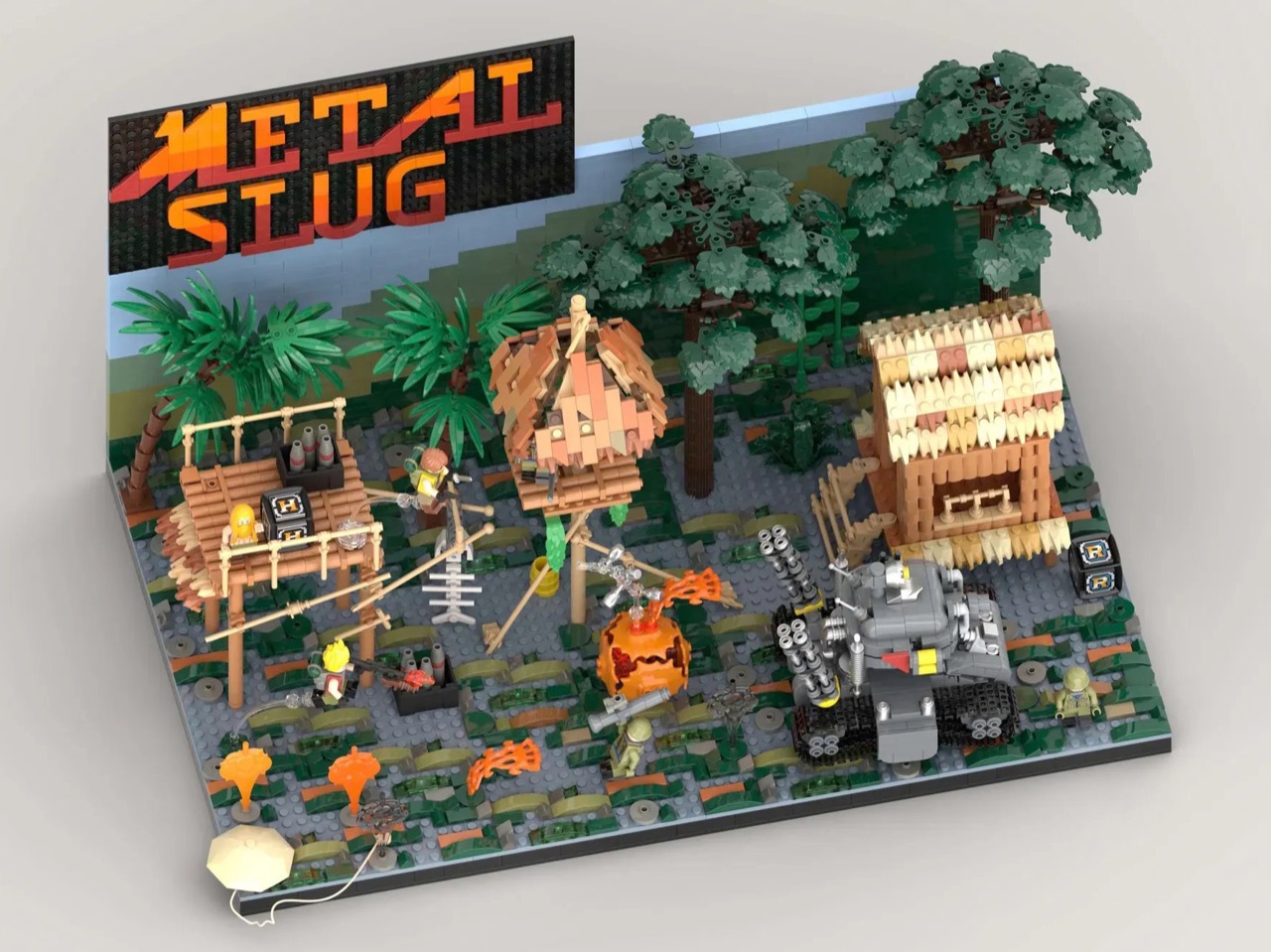
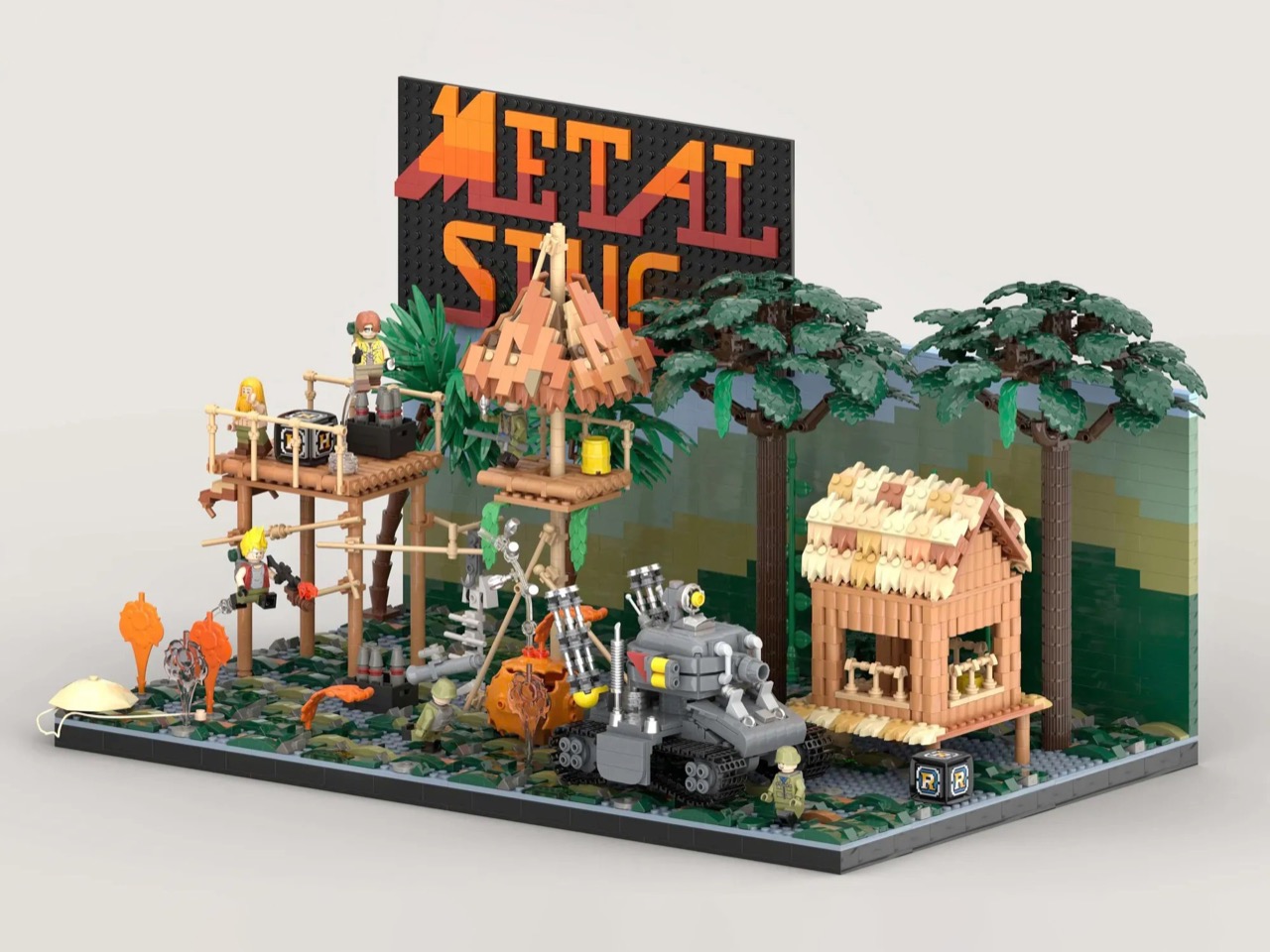
LEGO Ideas builder MagicBrick has captured a freeze-frame of that world in brick form, reconstructing the game’s iconic jungle mission with 2,701 pieces and 6 minifigures locked into a scene of swamp terrain, rebel soldiers, dense jungle vegetation, and the squat, waddling Super Vehicle-001 tank at the center of it all. It’s a dense, affectionate build made by someone who clearly lost many, many credits to this game, and it shows in every deliberately chosen detail, from the mid-jump Marco Rossi clutching a Heavy Machine Gun to the bearded POW standing by with a reward.
Designer: MagicBrick
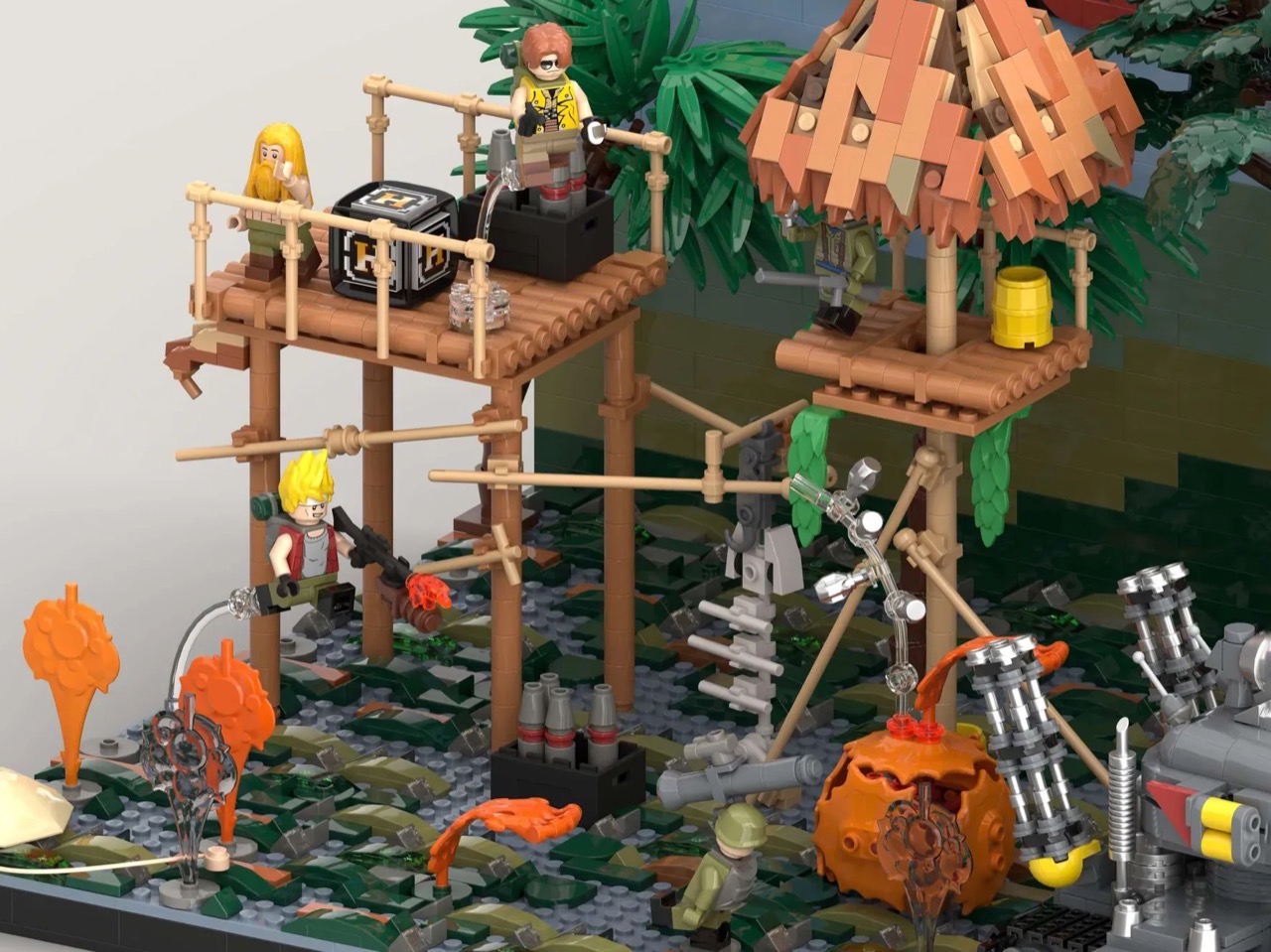
The scene is structured like a freeze-frame from the game itself, which is exactly the right instinct. MagicBrick describes the goal as capturing “a dynamic instant where everything is in motion: jumps, actions, and interactions come together to recreate the fast-paced feeling typical of the game,” and the build delivers on that. Marco Rossi in his red jacket is airborne, Heavy Machine Gun in hand. Tarma Roving, yellow jacket, stands ready with a pistol and knife. Three Rebel Army soldiers in green uniforms and helmets fill out the opposition, armed with bazookas and rifles. The swamp base uses tiles in multiple shades to sell the terrain, jungle trees and palms crowd the background, and the brick-built backdrop reflects the arcade color palette of the original game rather than any attempt at realism. That last decision is a smart one. Metal Slug was never interested in realism, and neither is this.
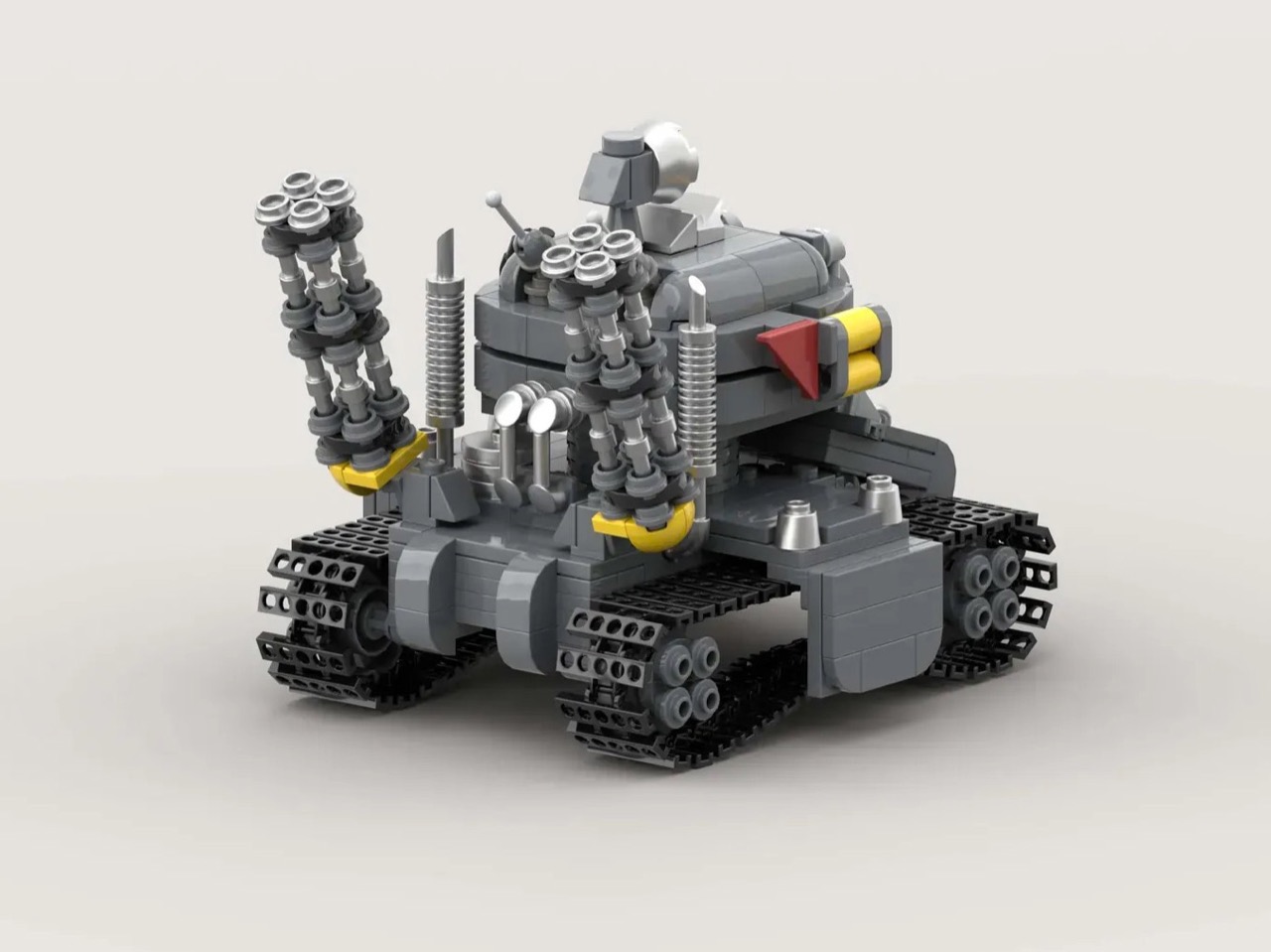
The Super Vehicle-001 is the centerpiece, and MagicBrick has packed a surprising amount of function into a compact footprint. The rear cannons are adjustable, the tracks are functional, and antennas complete the silhouette. Scattered across the scene are the environmental details that will hit Metal Slug veterans like a reflex: ammo crates, yellow barrels, a hanging fish skeleton, a parachute, and both the Heavy Machine Gun and Rocket Launcher power-up pickups rendered in brick. My favorite touch, though, is the grenade sequence, a classic cartoon-logic arc of thrown grenades ending in a mid-air explosion, frozen in plastic at exactly the right moment of absurdity.
Topping the whole structure is the Metal Slug logo itself, rendered in a red-to-orange gradient that makes the build read as a display piece as much as a playset. It’s that combination of environmental storytelling, playable features, and genuine fan knowledge that separates builds like this from generic video game tributes.
LEGO Ideas is the platform where fan-designed MOCs (My Own Creations) gather community votes, with 10,000 supporters needed to trigger an official LEGO review and potential production as a retail set. MagicBrick’s Metal Slug submission hit 100 supporters almost immediately after going live and has been picking up Reddit traction since. If you grew up feeding tokens into a Neo Geo cabinet, head to the LEGO Ideas page and cast your vote here.