5 Best EDC Drops for April 2026 That Are Actually Worth the Pocket Space

Pocket real estate is non-negotiable. Every gram you carry should earn its spot — by solving a problem you actually face, doing it better than what’s already in your rotation, or pulling off both without adding the kind of bulk that defeats the purpose of carrying light. April delivered a focused set of drops that clear that bar across the board.

The drops include a tool built on a patent that predates the first World War, a carabiner that turns an AirTag into proper hardware, a collaboration piece that turns Japanese wave motifs into functional grip texture, and a flashlight that rethinks how a carry light should deploy. None of these is an impulse purchase. They’re the work of people who thought seriously about what an object owes the person carrying it.

1. MetMo Pocket Grip — A 1913 Patent, Finally Fulfilled

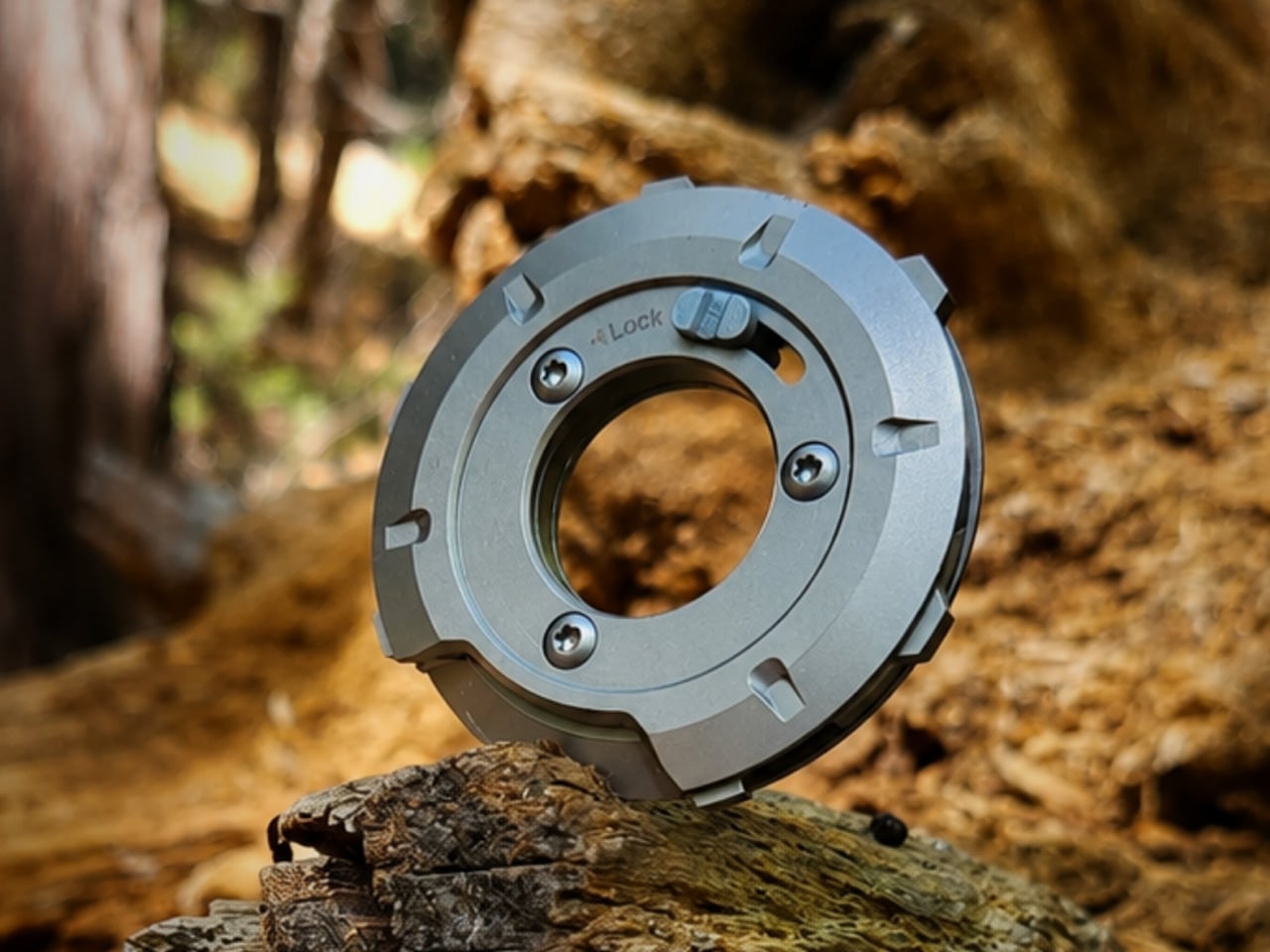
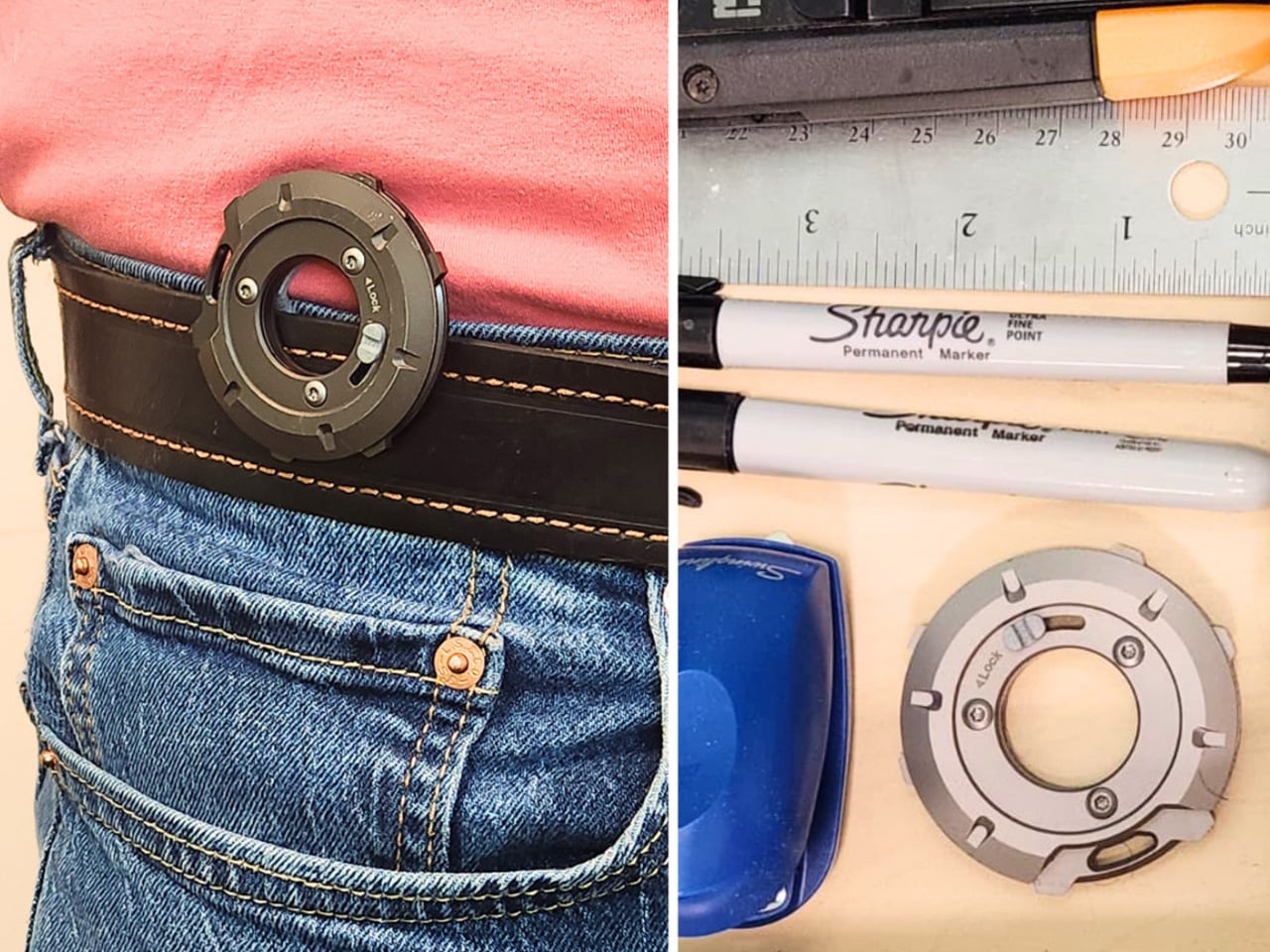
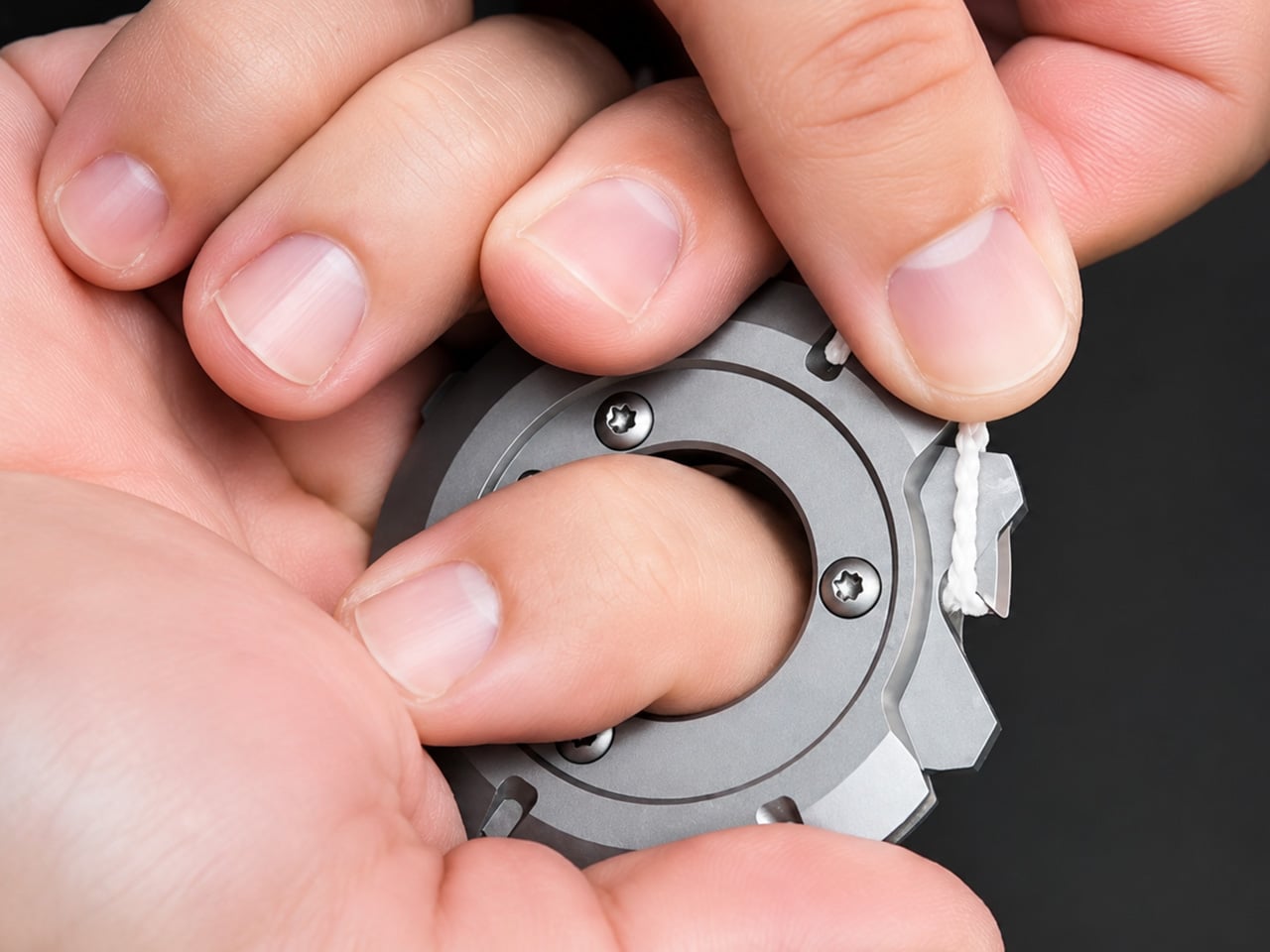
The Pocket Grip is proof that the best ideas don’t expire — they wait for the manufacturing era that can do them justice. MetMo pulled a 1913 Anderson patent from near-total obscurity and rebuilt the concept from scratch using CNC machining and modern metallurgy. The double-ended, central-pivot architecture that made the original mechanically clever is still the structural engine here, but the tolerances, surface finishing, and material quality are generations ahead of what Anderson’s era could produce. It doesn’t feel like a revival. It feels like the tool is arriving for the first time, fully formed.

What keeps it from becoming a novelty is the design discipline packed into every surface. The central pivot, a structural requirement in the 1913 concept, is machined to serve as a 1/4-inch hex drive for standard bits. The jaws split into distinct functional zones: a chomping area for raw grip, dedicated geometry for round and flat objects, and a nipping point for edge work. Nothing is decorative. Every millimeter carries a job, which is a genuinely rare quality in a category that usually trades specificity for the appearance of versatility.

What We Like

  • CNC precision transforms a century-old mechanical concept into a tool that performs to modern standards
  • Jaw geometry, divided into distinct zones, removes the clumsy generalism of traditional multi-tool pliers

What We Dislike

  • The central-pivot format will feel unfamiliar to anyone who’s built habits around conventional plier-style tools
  • Specialized architecture means it won’t replace a full multi-tool on extended technical trips

2. AirTag Carabiner — Aerospace-Grade Metal for Your Most-Forgotten Gear

The problem with most AirTag holders isn’t the tracker — it’s the housing. Plastic shells and rubber sleeves cheapen what should feel like a permanent fixture in your carry system. This Duralumin composite carabiner takes a different position entirely, using a material cleared for aircraft, spacecraft, and marine environments to do a job most people hand off to a keyring loop. The result is a carabiner that snaps onto a bag strap, bike frame, or umbrella handle and genuinely disappears into the hardware without looking like an afterthought.

What makes it worth calling out specifically is the handcrafted construction and the material choices available at checkout. Duralumin keeps the weight negligible while delivering structural integrity that synthetic alternatives simply can’t match at this scale. Untreated brass and stainless steel variants let you match the finish to what’s already on your keychain or bag without compromising the function. The AirTag sits cleanly inside the carabiner body, turning a tracker that would otherwise rattle around a pocket into something secured, accessible, and built to last well beyond the device it’s carrying.

Click Here to Buy Now: $149.00

What We Like

  • Duralumin construction brings aerospace-grade material standards to an everyday carry accessory without adding perceptible weight
  • Multiple finish options in brass and stainless steel let it integrate into an existing carry system rather than clash with it

What We Dislike

  • AirTag is not included, meaning the full cost of the setup requires accounting for Apple’s tracker price separately
  • Carabiner-style attachment won’t suit minimalist setups where a slim keyring profile is a priority

3. Audacious Concept x URBAN Tool XS — Chaos Seigaiha Edition

The collaboration between Audacious Concept and URBAN EDC produced something the limited-edition tool market rarely manages — a piece that’s genuinely better because of its design, not just more expensive because of its branding. The titanium body is milled with the Chaos Seigaiha pattern, a Japanese wave motif that reads immediately as art on a shelf. Hold it, and the texture resolves into a real grip surface, tactile enough to prevent slip under pressure without being rough against pocket fabric or a keychain ring. Lightweight, corrosion-resistant, and built to outlast most objects you’ll carry alongside it for the next decade.

Inside the body, a neodymium magnetic core holds seven micro bits in place and releases them cleanly on demand. The selection covers Phillips and flathead sizes, which handle the practical scope of most small-scale fastener work — eyeglass adjustments, consumer electronics, and pocket gear maintenance. Bit retention is tight enough that nothing rattles loose in a jacket pocket, but the swap is smooth and one-handed. For something designed to live on a keychain, the functional depth is serious enough to make reaching for a larger screwdriver feel unnecessary for anything outside heavy-torque work.

What We Like

  • The Seigaiha milling functions simultaneously as a visual identity marker and a genuine grip surface
  • Magnetic core bit retention secures seven micro bits without adding measurable weight to the titanium body

What We Dislike

  • Limited-edition status means supply is finite, and secondary market pricing will reflect that quickly
  • Micro bit format won’t satisfy tasks requiring full-size driver torque or a longer shaft reach

4. 8-in-1 EDC Scissors — The Tool That Benefits From Being Underestimated

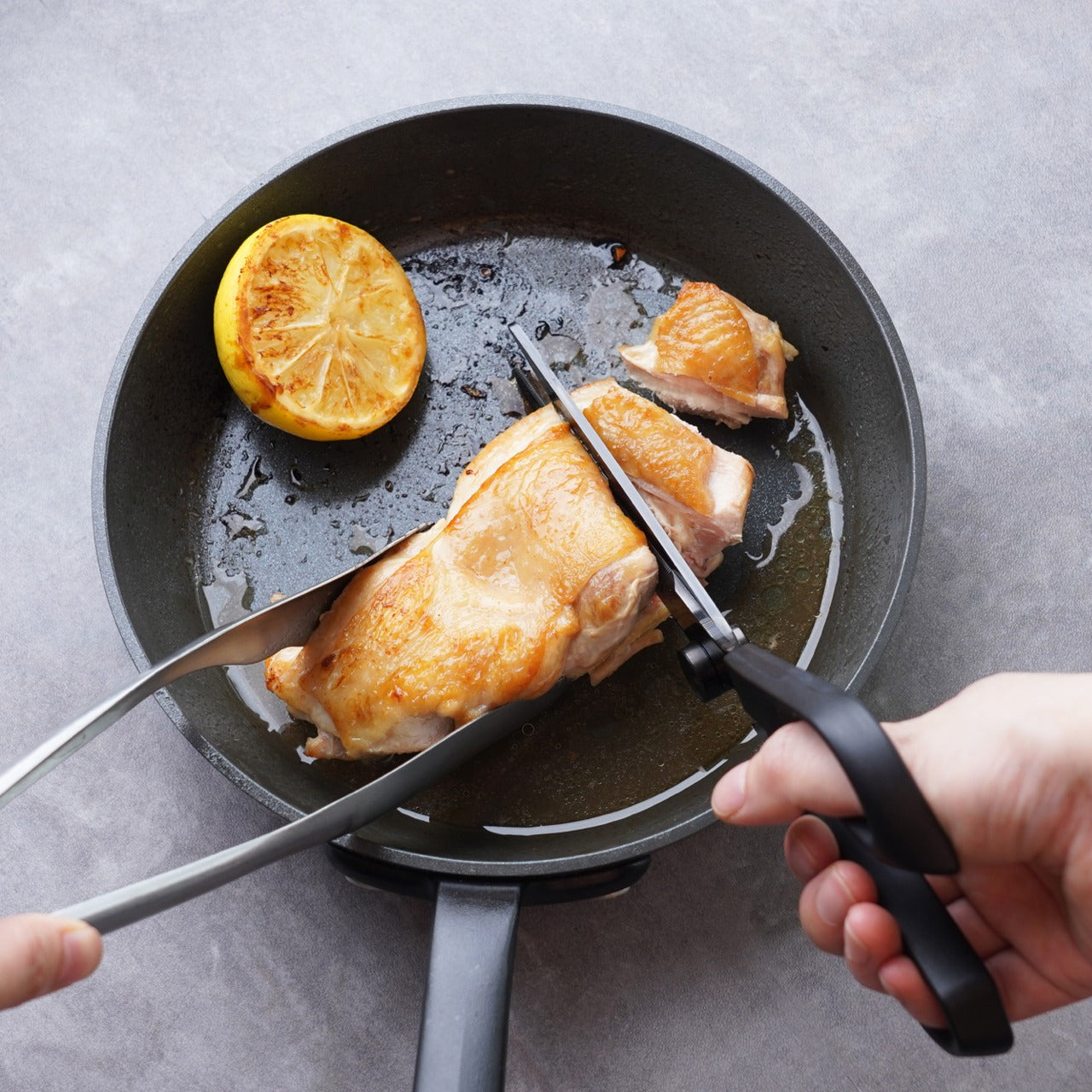
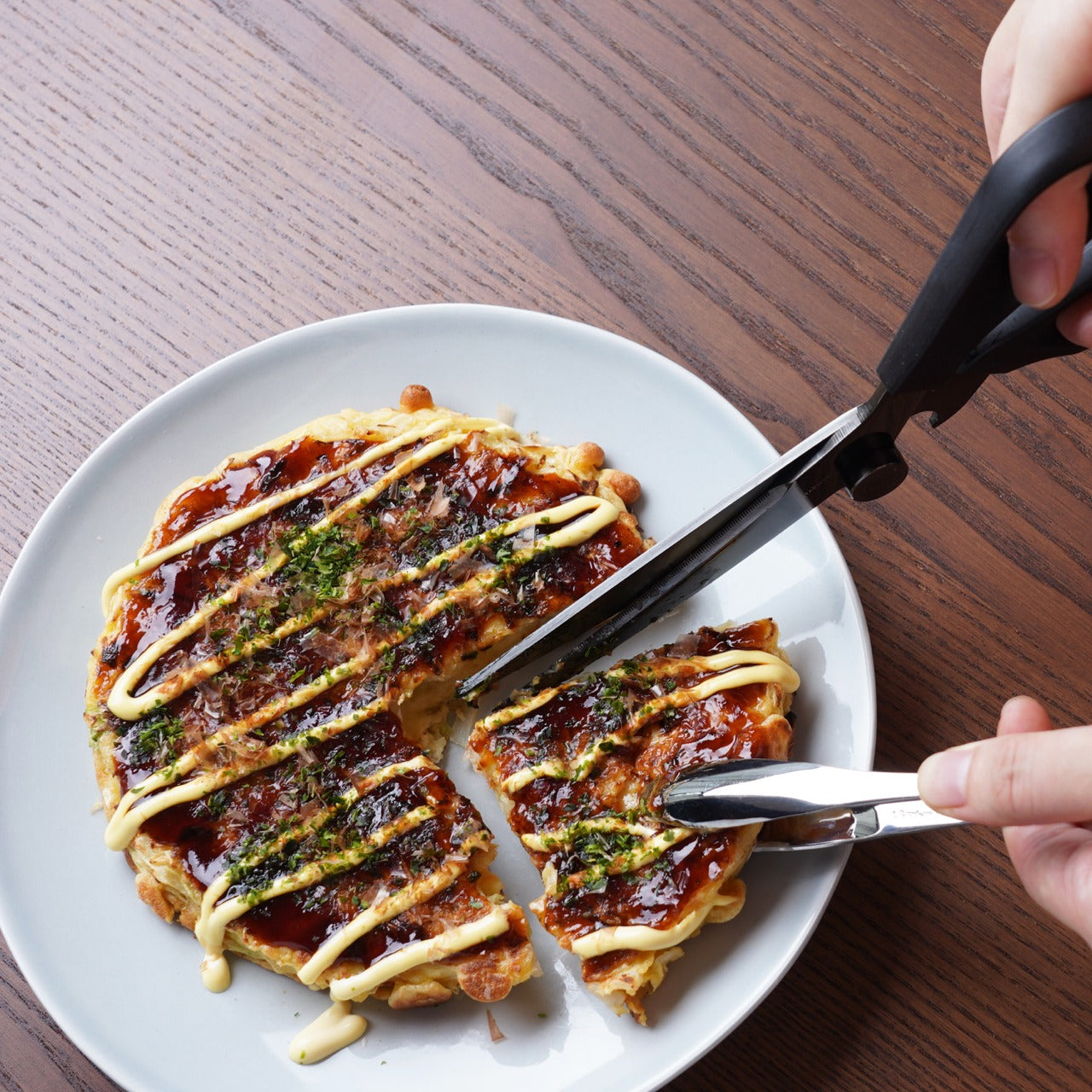
The instinct to dismiss a palm-sized pair of scissors is exactly what makes this carry piece a reliable surprise. At 13 centimeters, it disappears into a zipper pocket or bag compartment without registering as weight or bulk — but the eight integrated tools inside that frame cover a range of everyday situations that most dedicated items can’t individually match. Scissors, knife, lid opener, can opener, cap opener, bottle opener, shell splitter, and degasser. The oxidation film finish resists rust and gives the whole object a clean matte black profile that holds its look through daily contact and pocket friction without complaint.

Where compact multi-tools often make you feel the engineering compromises in your hand, these scissors stay intuitive throughout. The scissors work like scissors. The openers work without awkward repositioning or a three-step learning process. The geometry is uncomplicated, and the execution is clean, which matters more than mechanical cleverness when you’re opening a can at a campsite or dealing with packaging without a workspace. This is the kind of tool that earns its spot precisely by disappearing into the carry and only surfacing when it’s actually needed.

Click Here to Buy Now: $59.00

What We Like

  • 13cm form factor fits cleanly into zipper pockets and bag compartments without displacing other carry items
  • Eight functions without mechanical complexity keep the tool immediately usable under real-world time pressure

What We Dislike

  • Compact size limits leverage, meaning heavier cutting tasks will push past what the scissors can comfortably handle
  • First-time users need a short adjustment period to locate each function quickly without looking

5. Olight Baton 4 Premium Edition — The Flashlight That Figured Out Deployment

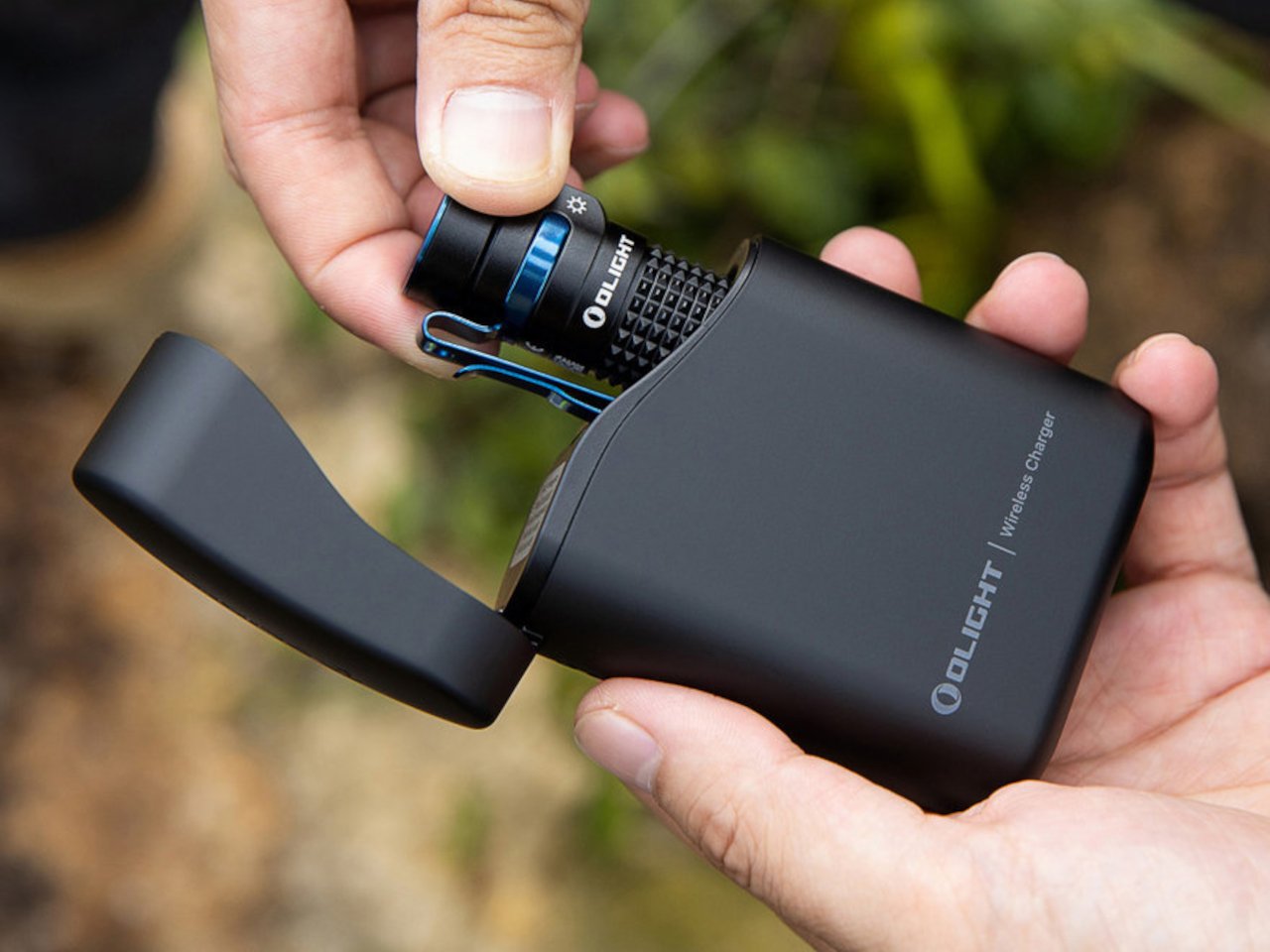
The 5,000mAh flip-top charging case is the real innovation here, and it changes how a flashlight behaves as an EDC item in a way that’s easy to underestimate until you use it in the dark. Flip the cover, press the side button, and 1,300 lumens activate while the light stays seated and secured inside the case. That one design decision removes the most persistent friction point in carry lighting — the fumble of finding, pulling, and orienting the flashlight when time actually matters. The case fits jacket pockets and pack hip belts without issue, keeping the light charged and immediately accessible across a full day of use.

The Baton 4 flashlight itself delivers 1,300 lumens at a 170-meter throw from a cylinder compact enough to stop registering as a presence after the first few carries. LED indicators display brightness level and remaining battery without guesswork, which becomes meaningful on longer backcountry trips where runtime management is part of staying prepared. One-handed case operation keeps the other hand free on technical terrain. The case charges other compatible Olight models, which adds genuine ecosystem value for anyone already carrying their hardware. For the output-to-size ratio it delivers, this is a difficult flashlight to argue against at any level of the carry conversation.

What We Like

  • Flip-top case enables immediate one-handed light activation without removing the flashlight from its housing
  • Case charges multiple compatible Olight models, turning one accessory into a multi-device carry solution

What We Dislike

  • Premium pricing places it well above the entry-level EDC flashlight bracket, narrowing its practical audience
  • The charging case adds volume that won’t suit ultra-minimalist or slim front-pocket carry configurations

The Best EDC Gear Doesn’t Ask for Attention — It Just Performs

What connects these five drops isn’t price point or category — it’s intentionality. Each one reflects a design process where the question wasn’t “what can we add?” but “what does this object actually owe the person carrying it?” That shift in thinking is what separates a tool worth carrying from one that looks convincing in product photography but quietly disappears from rotation after the first week. April’s strongest EDC offerings share that quality, and it shows.

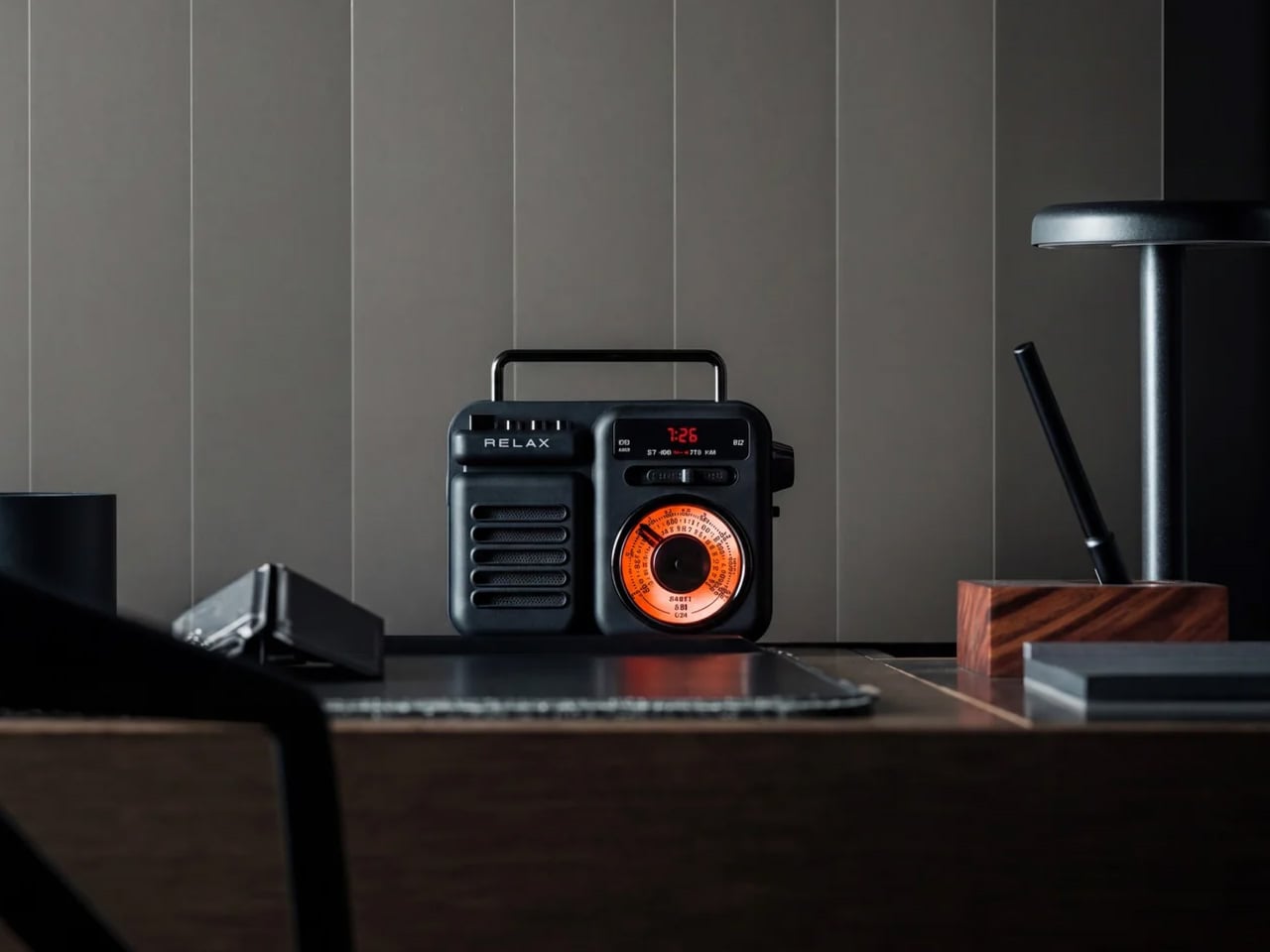
The carry conversation has matured past the spec sheet arms race. Lumen counts, blade counts, and material callouts matter less than how an object behaves in the hand at the moment it’s needed. The MetMo earns its pivot. The RetroWave earns its seven roles. The Baton 4 earns its case. When gear is designed with that level of accountability, it doesn’t just fill pocket space — it justifies every square centimeter of it.

The post 5 Best EDC Drops for April 2026 That Are Actually Worth the Pocket Space first appeared on Yanko Design.
The Best Neck Air Conditioner for Hot Flashes Is Also the Best Mother’s Day Gift Right Now

A few years ago, I bought my mom a simple powerful handheld fan that she now swears by (it’s small enough to be a permanent fixture in her purse). She discovered it also works as a perfect cool-air hair dryer for her, a small, unexpected bonus that turned a simple gadget into an indispensable tool. Finding a truly great Mother’s Day gift is a unique challenge, but it’s exactly these kinds of gifts that make a lasting impression, the ones that solve a small daily annoyance and bring a little bit of comfort into her life. It is about gifting an experience, the experience of personal comfort, which is something that can be appreciated whether she is gardening, running errands, or just relaxing.

This is where a device like the TORRAS COOLiFY takes that concept of personal comfort to an entirely new level. It is a piece of technology built to provide that relief, anytime and anywhere. The concept moves beyond just moving air and into active cooling, using technology to help manage everything from a hot day to an unexpected hot flash. The COOLiFY lineup offers two great choices; the Cyber Fold delivers the strongest cooling performance for immediate and powerful relief, while the 2S Pro is built for lightness, comfort, and longer battery life, making it an easy and practical part of her daily routine.

The Cyber Fold: Maximum Cooling Power

The TORRAS COOLiFY Cyber Fold is for the mom who wants the most powerful cooling she can get – think 100°F weather, sweltering summers, unbearable days and nights. Its main claim to fame is having the largest cooling coverage of any device of its kind, and it backs that up with some impressive tech. Instead of just blowing air, it uses three cooling plates that get genuinely cold to the touch, wrapping the entire neck, face, and back in a refreshing wave of coolness. This is the kind of device you reach for when you need immediate, serious relief from the heat. The design is also surprisingly clever; a smart hinge system allows it to fold down to half its size for easy storage and adjust to fit her neck perfectly, while a neat color-changing surface turns blue when it is cool so you can see it working.

Beyond its raw power, the Cyber Fold is also smart. It has automatic sensors that detect the surrounding temperature and adjust the cooling levels on their own, so she does not have to constantly fiddle with the settings. This makes it a truly set-it-and-forget-it experience. The battery is large and charges quickly, getting to 80% in about an hour, even while it is still running. For moms who experience intense hot flashes or simply want the absolute best cooling technology for their time outdoors, the Cyber Fold is the top-tier choice that delivers on its promise of immersive, powerful relief.

Click Here to Buy Now: $215.99 $299.99 (28% off, use coupon code “RW7VNB6K”). Hurry, deal ends in 48-hours! Website Link Here.

The 2S Pro: All-Day Comfort and Endurance

Where the Cyber Fold focuses on power, the COOLiFY 2S Pro is all about all-day comfort and endurance. It uses a similar cooling plate technology to deliver that same instant relief, but it is engineered to be lighter and more comfortable for long periods of wear. It is the kind of device she can put on in the morning and almost forget it is there. The battery life is the real standout feature here, offering up to 28 hours of use in fan mode, which is more than enough for a full day of errands, gardening, or relaxing on the patio. When it does need a charge, it powers up fully in just a couple of hours.

The design of the 2S Pro is focused on a comfortable and secure fit. Its patented hinge not only adapts to various neck shapes without pinching, but also allows her to rotate it to adjust the airflow direction, putting the breeze exactly where she wants it. Combined with soft memory foam cushions, it rests gently on her neck without feeling bulky, making the wearing experience even more comfortable. It also has smart controls through a mobile app and a memory function that saves her favorite settings, making it incredibly easy to use. The display is hidden, giving it a clean, modern look. For the mom who values practicality and wants a reliable companion to keep her cool throughout her entire day, the 2S Pro is the perfect fit. It delivers that essential cooling comfort in a lightweight, easy-to-wear package that is built to last.

Click Here to Buy Now: $179.99 $219.99 (18% off, use coupon code “RW7VNB6K”). Hurry, deal ends in 48-hours! Website Link Here.

Both devices are built on the thoughtful idea of giving moms more control over their personal comfort. They are designed to help relieve the discomfort from temperature fluctuations or hot flashes that can interrupt an otherwise perfect day. Giving a gift like this is about helping her enjoy being outside again, without having to give up the moments she loves because of the heat. Choosing between the two simply comes down to her lifestyle; whether she would appreciate the maximum cooling power of the Cyber Fold or the lightweight, all-day endurance of the 2S Pro.

The post The Best Neck Air Conditioner for Hot Flashes Is Also the Best Mother’s Day Gift Right Now first appeared on Yanko Design.
TORRAS x FPF Limited Edition Review: Portugal’s 2026 World Cup Case With a Stand

PROS:


  • Thoughtful Portugal-inspired design

  • Award-winning rotating Ostand system

  • Fully MagSafe-compatible

  • Secure textured side detailing

CONS:


  • Portugal and football connection may not resonate with everyone

  • Expressive color palette and graphics are too bold for minimalist tastes

  • Higher price point compared to other cases

RATINGS:

AESTHETICS
ERGONOMICS
PERFORMANCE
SUSTAINABILITY / REPAIRABILITY
VALUE FOR MONEY

EDITOR'S QUOTE:

The TORRAS × FPF Limited Edition earns its stripes through genuine design depth and a rotating stand that quietly changes how you use your phone every day.

The premium phone case market has refined itself to a point where technical competence is almost a given. Protection ratings, slim profiles, and magnetic compatibility have become standard expectations rather than differentiating features. That baseline has pushed the most interesting cases in this space to compete on a different level entirely, one defined by design identity, material intelligence, and a sense of purpose that goes beyond the purely utilitarian.

The TORRAS Q3 Air Portugal National Football Team Limited Edition for iPhone 17 Pro Max is precisely that kind of case. Built on the Q3 Air Ostand platform, it brings Portugal’s national team identity, its colors, maritime heritage, and championship legacy into a functional accessory with a rotating stand, magnetic compatibility, and solid protective architecture. It’s a combination that genuinely earns the “limited edition” label.

Designer: TORRAS

Click Here to Buy Now: $69.99 | Website Link Here.

Aesthetics

Portugal’s national colors aren’t subtle, and this case doesn’t try to temper them. The translucent crimson shell gives the design a vivid, confident presence while still letting the case’s structural layers show through, which adds depth that solid-color shells typically can’t offer. The result is visually bold in a way that feels deliberate and controlled, leaning into the energy of Portuguese football culture without tipping into anything that feels overwrought.

The back of the case is where the design story gets specific. Fine horizontal striping draws a clear visual reference to the texture of a football jersey, while the circular framing around the magnetic ring gives the composition a natural focal center. Gold accents on the ring stand connect to Portugal’s championship legacy, and Portugal’s Quinas emblem appears in the airbag structure as a rewarding detail on closer inspection.

What separates this collaboration from typical team merchandise is the depth of the cultural reference. The wave patterns running through the design draw from Portugal’s maritime history rather than just the football crest, and the gold elements speak to themes of honor and achievement that run through both the country’s history and its footballing legacy. These aren’t decorative choices; they’re a considered visual language built from real cultural material.

The lateral profile adds another layer to the overall composition. A teal green accent runs along the side rails, creating a sharp contrast against the red shell that reads as unmistakably Portuguese in its color pairing. The buttons carry a warm metallic finish that echoes the gold used across the design, and the tactile grip texturing on the edges reinforces that every surface of this case has been considered.

Ergonomics

The Q3 Air Ostand platform was designed for daily carry from the ground up, and the Q3 Air Portugal Football Edition fully inherits those ergonomic priorities. The textured side rails give the phone a secure grip in hand, and the overall profile adds enough structure to feel purposeful without pushing into the territory of cumbersome bulk. It’s comfortable to hold for extended stretches and easy to manage with one hand.

The ring stand, folded flat against the back, adds a natural grip point that makes single-handed use of the iPhone 17 Pro Max genuinely more manageable. On a device this size, that matters more than it might seem on paper. When deployed, the stand clicks into place and holds whatever angle you set, making hands-free viewing a quick and reliable option rather than an occasional curiosity.

The case also carries well in a pocket, which isn’t always a given with stand-equipped accessories. The ring folds flat enough to avoid catching on fabric, and the overall thickness stays reasonable for an iPhone case with a fully integrated hardware mechanism. Moving between a bag, a desk, and a hand throughout a busy day feels natural, which is what you’d want from something worn this often.

Performance

The functional centerpiece of the Ostand series is its rotating magnetic ring stand, which supports 360-degree rotation, 180-degree flipping, and a magnetic hold that snaps securely onto metal surfaces and stays put once set. Propping the iPhone hands-free on a flat surface for a video call, a watch-party stream, or a spontaneous recording takes seconds, and the stand holds whatever angle you choose without needing adjustment.

That hands-free capability sits at the heart of what TORRAS calls “Record Your Passion,” the campaign built around the idea that documenting training sessions, matchday rituals, and shared moments is part of the sporting experience itself. Setting the phone down on a gym floor, snapping it onto lockers and training equipment, or propping it on a table during a watch party transforms it from a passive device into an active participant.

On the protective side, the case uses airbag technology that hugs the top and bottom edges and wraps around the corners. This air-cushioning structure, one of the Q3 Air’s signature innovations, protects the areas where drops tend to concentrate their force. By buffering and dispersing the force of impact, the TORRAS Q3 Air Portugal Football Limited Edition provides peace of mind for those unavoidable accidents of life.

A raised camera lip also keeps the lenses from direct contact with flat surfaces, an often unforeseen consequence in everyday use. The reinforced frame wraps the phone’s edges in a way that provides structural confidence throughout. It’s the kind of protection that works quietly in the background rather than advertising itself through unnecessary bulk.

The case is also fully MagSafe compatible, preserving the magnetic ring system so that wireless charging and MagSafe accessories work without interruption. For iPhone 17 Pro Max owners already invested in the magnetic ecosystem, that compatibility keeps everything running as expected. The full suite of MagSafe accessories, from chargers to wallets, connects and functions just as reliably as it would with any premium iPhone case.

Sustainability

The most honest form of sustainability in phone accessories comes down to longevity, even if the product itself is made of your typical synthetic materials. A case that holds its structural integrity and visual quality over years of daily use reduces the frequency of replacement, which matters more than most people consider. The Portugal Football Edition is built on a platform engineered for resilience, with reinforced corners, a durable shell, and a stand mechanism that holds up through consistent use.

The limited-edition format adds an interesting dimension to the longevity argument. Objects with cultural weight tend to stay in people’s hands rather than getting rotated out at the next refresh. A case tied to Portugal’s journey through the 2026 World Cup carries a specific cultural moment with it, giving it an emotional durability that significantly extends its useful life past what a generic alternative could claim.

Value

Limited-edition collaboration cases carry a $69.99 price premium by nature, and this one makes a clear case (pun intended) for that premium being earned rather than simply charged. The FPF edition packages the Q3 Air Ostand’s rotating stand, air-cushion protection, and full MagSafe compatibility inside a design rooted in Portuguese heritage and a genuinely considered visual system. That’s a lot of functional hardware and design thinking in one accessory.

For someone already drawn to the Ostand’s stand functionality, the Portugal Football Edition makes the value proposition even clearer. The design premium doesn’t come at any cost to the case’s functional strengths. You’re getting the same protective architecture and rotating stand mechanism, with the added dimension of a culturally layered identity that gives the accessory a meaning and visual presence that plain cases simply can’t offer.

The limited availability also factors into the value equation. This isn’t a mass-produced accessory available at any time; it’s tied to a specific cultural collaboration with a defined production run. For buyers who value their accessories carrying a genuine story rather than a borrowed aesthetic, the FPF edition offers something that feels irreplaceable in a way that standard catalog options simply aren’t positioned to match.

Verdict

The TORRAS Q3 Air Portugal Football Limited Edition for iPhone 17 Pro Max is a premium phone case that earns its place in that category through functional integrity and genuine design depth. The rotating stand is a practical differentiator that changes daily phone habits in a meaningful way, the protective architecture is solid, and the cultural design language is rich enough to hold up far beyond the initial impression.

For football fans with an eye for design, or iPhone 17 Pro Max owners who want a case that carries a real story behind its finish, the timing of this collaboration is excellent. Portugal is heading into the 2026 World Cup cycle with a clear sense of purpose, and TORRAS has built an accessory that connects to that energy in a way that’s both functional and genuinely worth holding onto.

Click Here to Buy Now: $69.99 | Website Link Here.

The post TORRAS x FPF Limited Edition Review: Portugal’s 2026 World Cup Case With a Stand first appeared on Yanko Design.

5 Best Gifts of April 2026 for the Person Who Already Has Everything (That They’ll Actually Display)

Finding a gift for someone who already has everything is less a shopping problem than a design problem. The question is not what they are missing — they have likely found the answer and already bought it. The real question is what kind of object earns a permanent, visible place in their space. Something they set down and never want to store away. Something that changes how a room actually feels.

This April, five objects have made a strong case for exactly that kind of staying power. Each carries a distinct personality — some earn their place through material quality, the weight of brass or natural wood grain pushing through pigment. Others earn it through a clever reimagining of something familiar. A few earn their place through ritual. None are impulse buys, and all are built for people who aren’t easily impressed.

1. Perch Double-Sided Wall Clock

Most wall clocks are passive. They sit flat against a surface and wait to be glanced at from a single fixed position — a design that assumes you always approach from the same direction and that time only needs to be readable when you happen to be standing in the right spot. The Perch clock rethinks that assumption entirely. By extending out from the wall and displaying time on both faces, it becomes part of how you actually move through a room rather than something you consult only when facing the right way. Walk into a space, pass through a corridor, glance back as you leave — time is always within sight.

The visual language leans into restrained warmth rather than the clinical precision that often defines minimalist design. Available in three colors, the Perch holds a quiet presence without demanding attention. There is also something unmistakably reminiscent of vintage railway clocks in its silhouette — those objects that once shaped shared, public notions of time and movement. Functionally, it runs on two AA batteries and hangs from a simple bracket that allows it to be lifted off cleanly when the batteries need changing. No wiring, no complicated installation. Living with it is entirely effortless, and effortless is exactly the quality that makes something worth keeping on the wall for years.

What We Like:

  • Readable from both directions, making it genuinely useful in corridors, open-plan rooms, and pass-through spaces
  • Requires no wiring — two AA batteries and a simple bracket keep installation and maintenance completely straightforward

What We Dislike:

  • The bracket system may require specific wall types or additional anchoring for a fully stable hang
  • Only three colorways available, which may not suit every interior palette or design preference

2. Harmony Flame Fireplace

No LED strip or ambient bulb has ever replicated what a real flame does to a room. The Harmony Flame Lamp is a handcrafted brass bioethanol fireplace built using the same techniques applied when making brass musical instruments — and that level of craft is immediately apparent the moment you hold it. Place it at the center of a dining table or carry it to a patio and the flame catches and reflects across the polished surface, casting a living play of light and shadow that shifts with every movement of air. It transforms whatever surface it sits on into something worth gathering around.

The fuel is eco-friendly bioethanol, which burns without producing odor or smoke, making it fully safe to use indoors without ventilation or installation of any kind. There is nothing to wire, nothing to mount, and no complicated process to get it going. For someone with a strong sense of how their space should feel, this is the kind of object that earns its placement not on a back shelf, but at the center of the table where it can do exactly what it was designed to do. The craftsmanship alone justifies where it ends up.

Click Here to Buy Now: $240.00

What We Like:

  • Burns odorless and smokeless bioethanol fuel indoors without any ventilation or installation requirements
  • Handcrafted by brass instrument makers, giving it a material quality and finish that is immediately apparent

What We Dislike:

  • Requires bioethanol fuel that needs to be sourced and replenished separately as an ongoing consumable cost
  • An open-flame product that may not be suitable for homes with young children or pets

3. Timemore Electric Coffee Grinder


For the person who already takes their coffee seriously, the Timemore Electric Grinder is the kind of upgrade that changes the entire shape of a morning. Its patented 078 Turbo Burrs feature three layers of teeth that deliver fast, consistent grinding while meaningfully reducing the fine particles that accumulate in a cup and dull its flavor. A sensory brushless motor handles the work without vibration, using PID control and Hall components to maintain stability and precision across every grind. It does not simply produce ground coffee. It makes the whole process feel like it was properly thought through.

Two burr configurations mean it adapts to different brewing methods without compromise. The 078S flat burrs deliver the fine, high-uniformity grind that espresso demands, while the Turbo burrs handle pour-over with equal confidence. A patented rotary knocker clears stubborn fines from the grinder spout with a single turn — a small feature that makes a genuine difference at six in the morning. The magnetic bean lid keeps things sealed and tidy between uses. For someone who already has the kettle, the scale, and the dripper lined up on the counter, this is the final piece of the setup they have been quietly looking for and will be glad to leave on full display.

What We Like:

  • Two interchangeable burr options handle both espresso and pour-over brewing styles without needing a second machine
  • The brushless motor and rotary knocker deliver a level of precision and cleanliness that surpasses most standard electric grinders

What We Dislike:

  • The dual-burr system and technical setup may be more involved than casual coffee drinkers are looking for

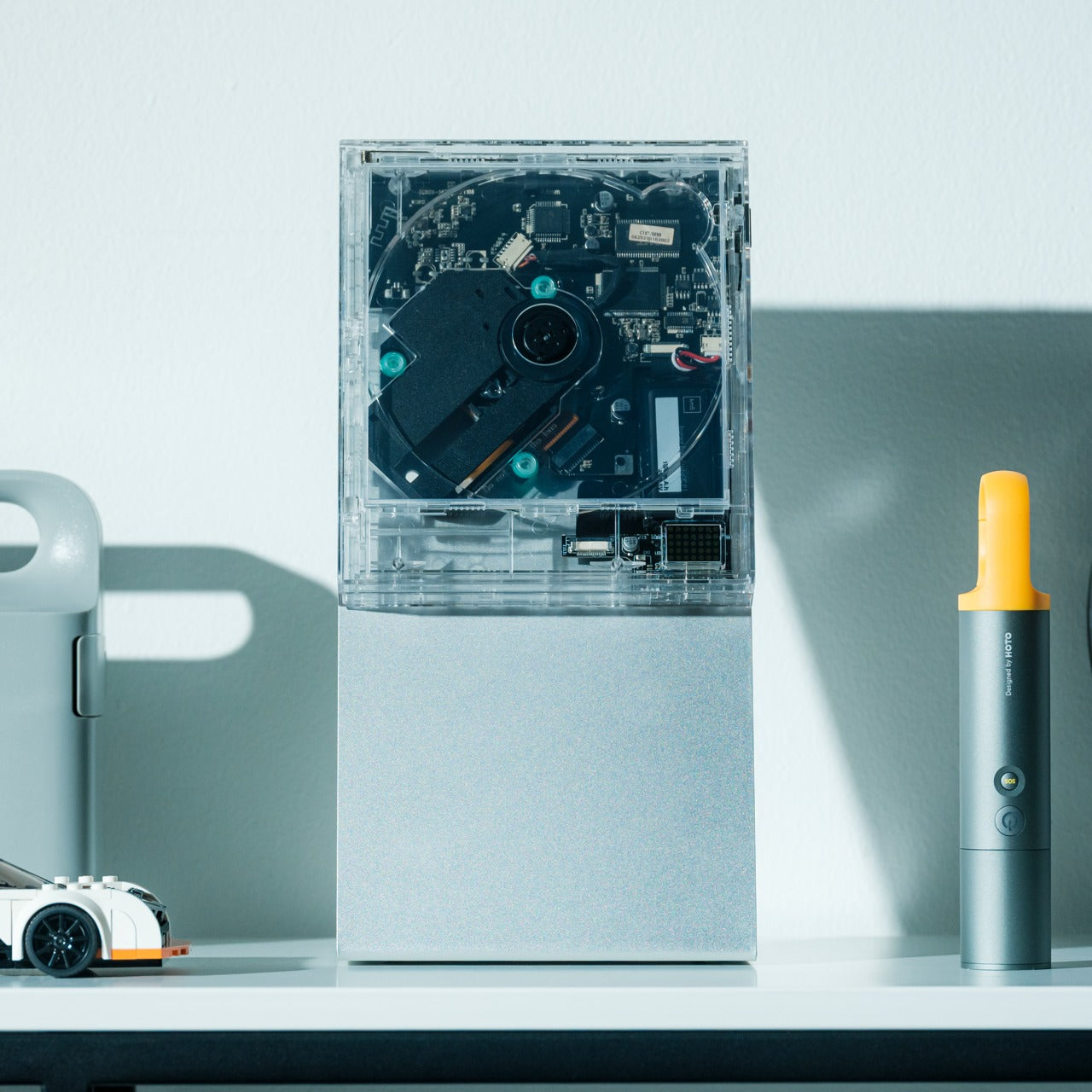
4. Portable CD Cover Player

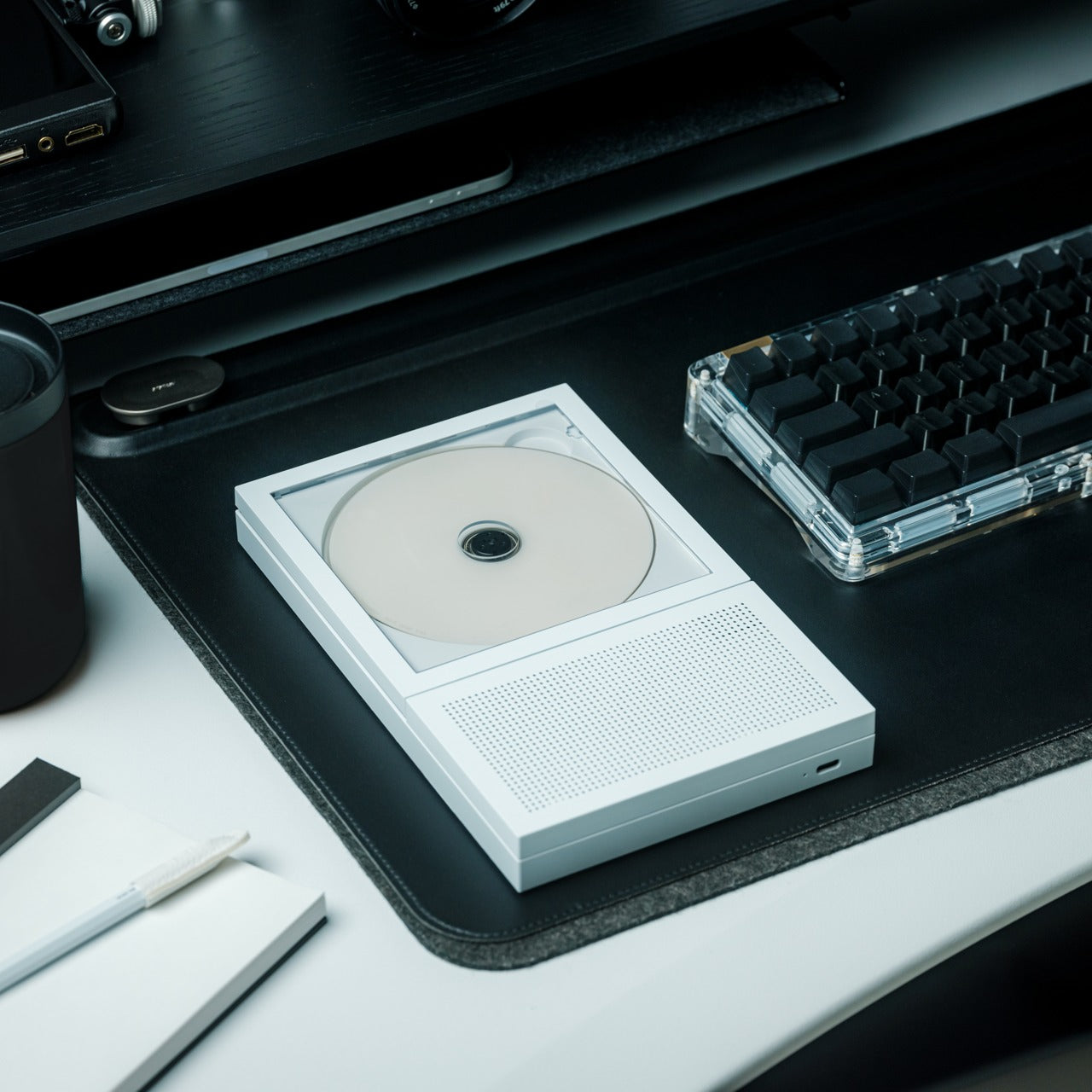
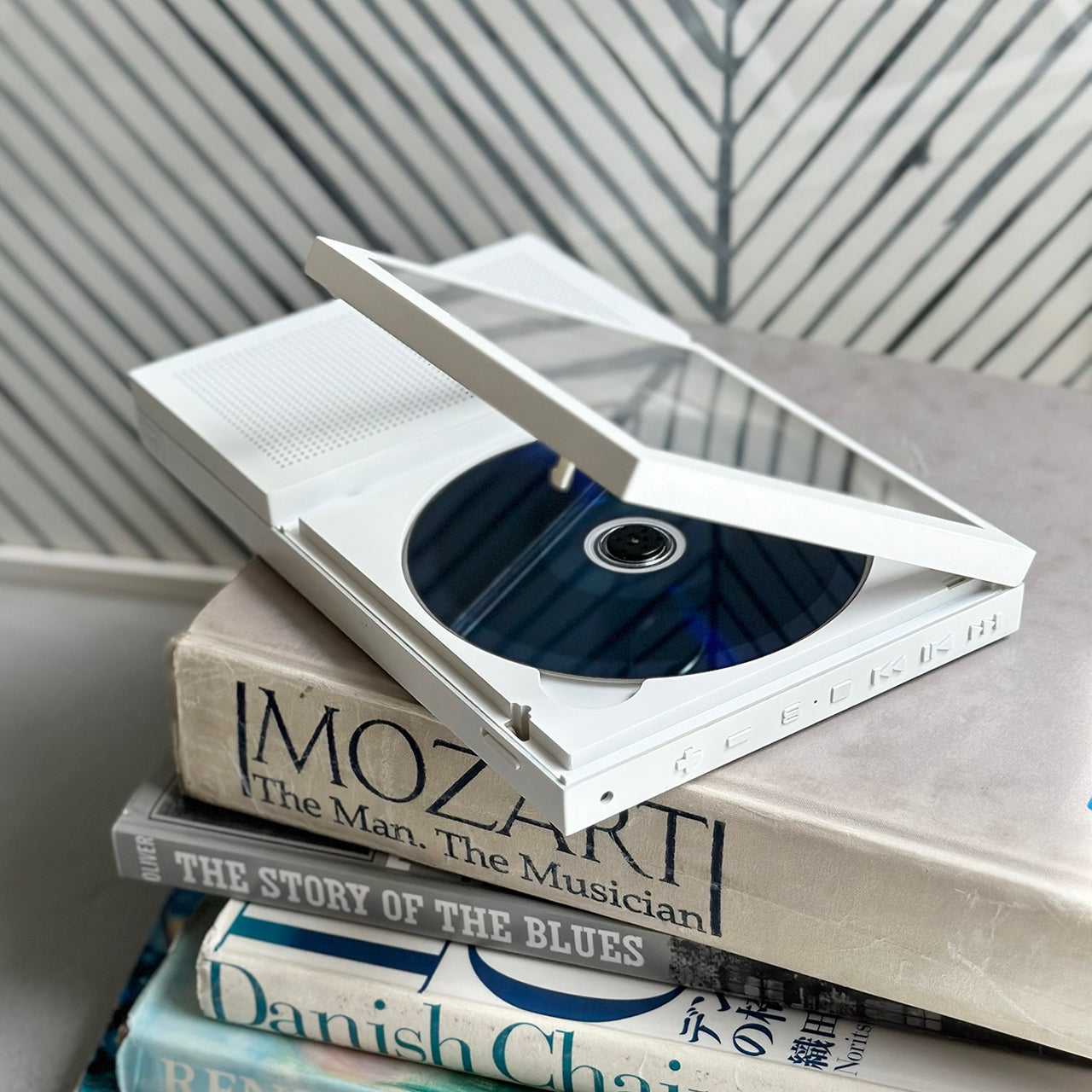
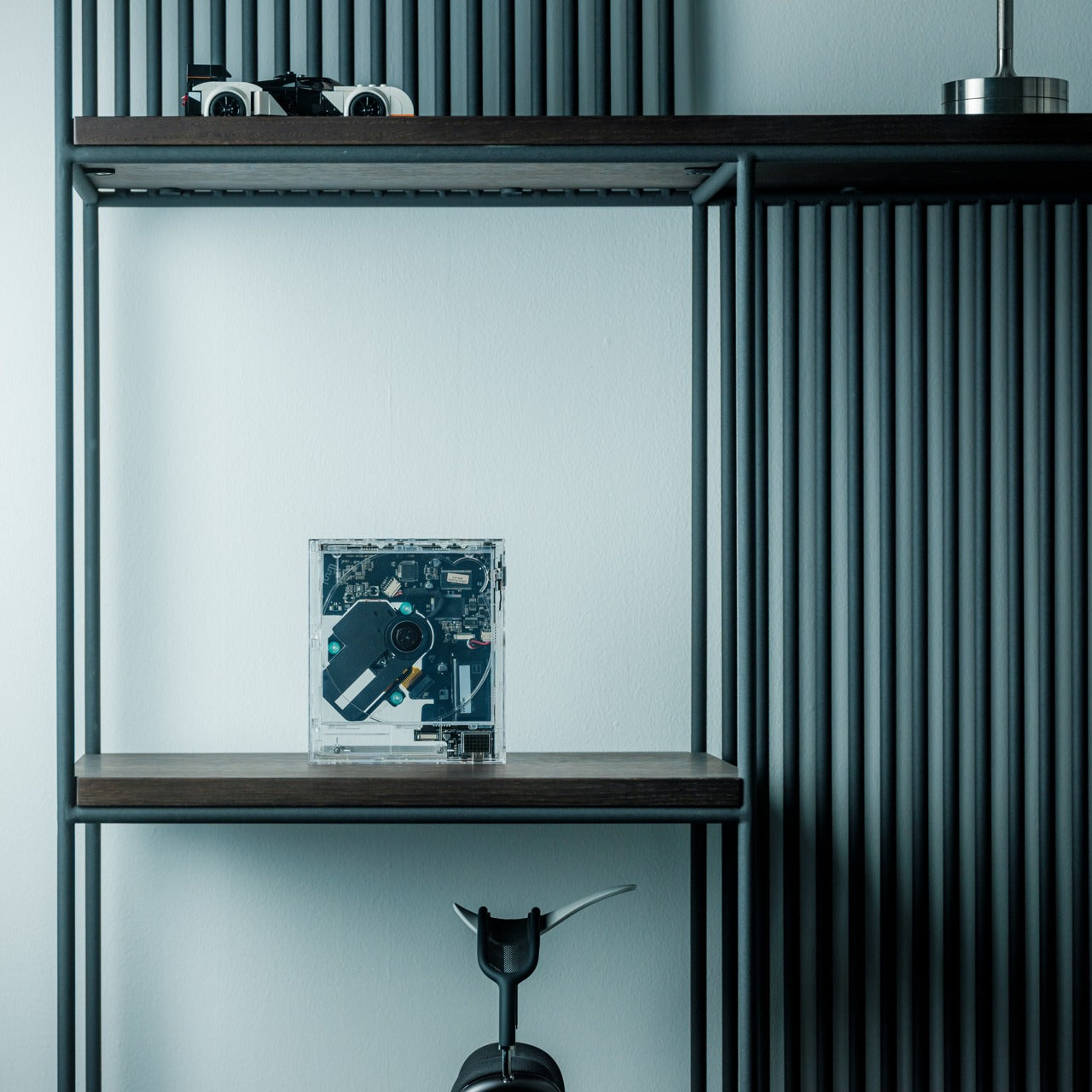
The CD player should not still feel this relevant in 2026, and yet this one earns it entirely through a single, genuinely clever idea. The Portable CD Cover Player has a transparent front pocket that displays the album’s jacket art while the music plays — turning a listening device into a small, rotating gallery piece. Whether it is sitting on a shelf, resting on a desk, or hung on the wall using the optional bracket, it gives physical music a visual presence and a context that streaming has never been able to offer. That visibility is precisely the point, and it lands.

The design is clean and minimal, built around the conviction that visual and audio experience belong together rather than being treated as separate acts. A built-in speaker and rechargeable battery untether it from any power source, meaning it moves with you — to a different room, to a balcony, to wherever the afternoon takes shape. For someone who still collects CDs, inherited a catalog worth rediscovering, or simply believes that an album cover is a piece of art that deserves to be seen while being heard, this is the object that makes analog listening feel deliberate and considered rather than merely nostalgic.

Click Here to Buy Now: $199.00

What We Like:

  • Displays album jacket art while playing, merging audio and visual experience into a single displayable object
  • Rechargeable battery and built-in speaker allow it to be placed or carried anywhere without wired speakers or a power source

What We Dislike:

  • The wall mount bracket is sold separately, which adds to the total cost for those wanting to display it as a wall-hung piece
  • Limited to CDs only, which may be a drawback for listeners who have fully transitioned to streaming or vinyl formats

5. Lito Classic Book Lamp

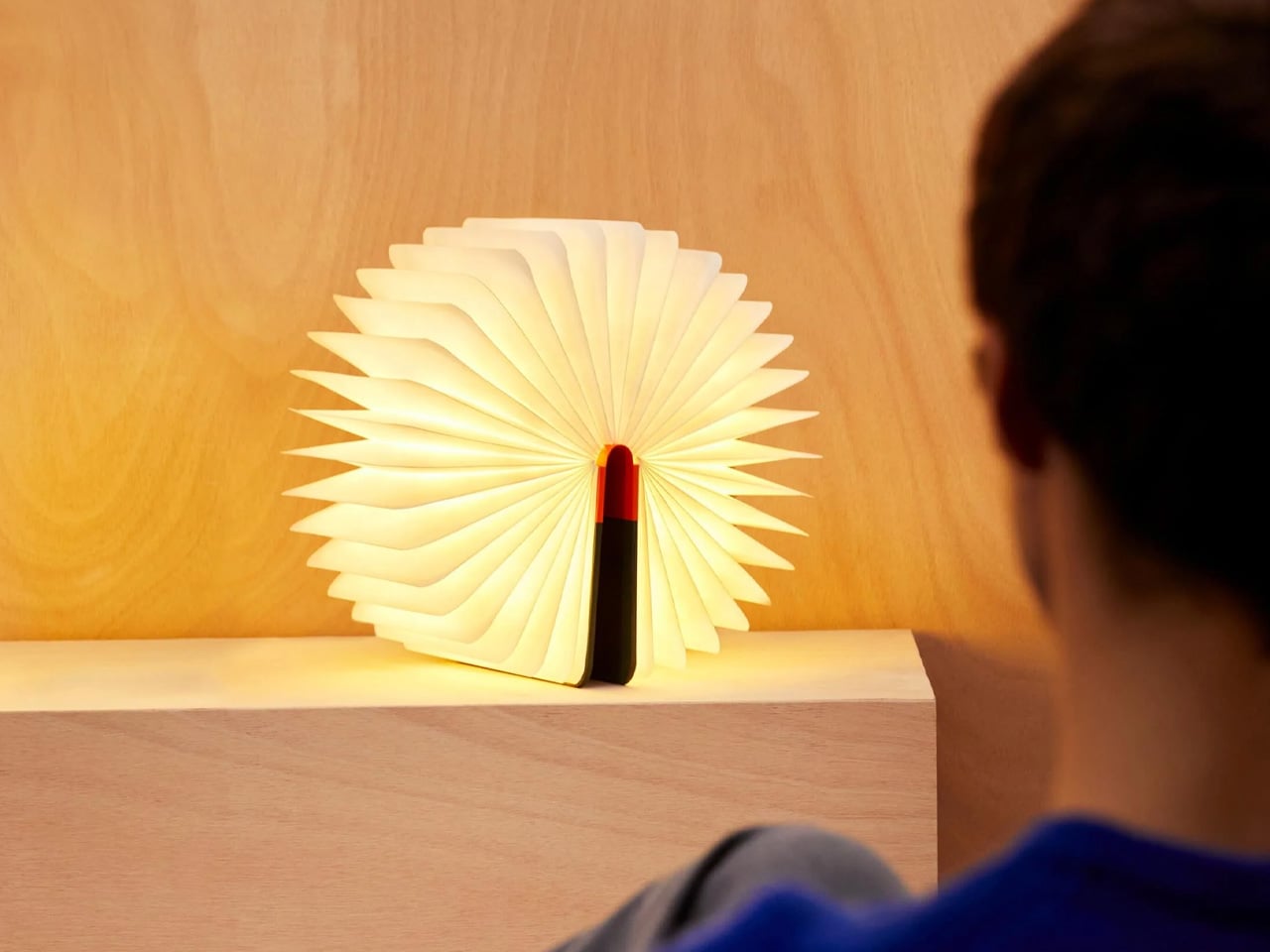
The Lito Classic does not announce what it is. Sitting on a shelf or a side table, it reads exactly like a hardcover book — considered and quiet, unremarkable until someone picks it up or opens the cover and finds a sculptural lamp inside. That moment of recognition is built into the design, and it is the kind of detail that works at a dinner table, on an outdoor terrace, or in a corner of a living room that needed one more thing to feel complete. It goes wherever the atmosphere needs it most and carries its own presence without trying.

The 2026 collection introduces British Racing Green, Navy Blue, and Vibrant Red, each finished in a way that lets the natural wood grain push through, giving every piece a texture that feels crafted rather than manufactured. Lito has earned both the Red Dot and Good Design awards, and The New York Times described it as “a gift that amazes.” With an eight-hour battery life and a form that holds its visual appeal whether the light is on or off, it is one of those rare objects that earns its place from every angle — lit or closed, given or kept on the shelf indefinitely.

What We Like:

  • Disguised as a hardcover book, it functions as a striking decorative object on any shelf even when switched off
  • Red Dot and Good Design award winner with an eight-hour battery life for fully portable, untethered use

What We Dislike:

  • The book format means it can blend into a crowded shelf and be overlooked, which reduces some of its potential visual impact
  • Sits at a premium price point that places it at the higher end of what most people would consider a casual or spontaneous gift

The Verdict

The best gifts for someone who has everything are not necessarily the most expensive or the most technically sophisticated — they are the ones that fit naturally into a life and earn a visible, permanent place in the room. Objects that feel worth setting out rather than storing away after the first week of novelty fades.

The Perch clock becomes part of how you move through a space. The Harmony lamp turns a table into a reason to gather. The Timemore makes the counter worth showing off. The CD player gives physical music a home it has never quite had. And the Lito sits patiently on a shelf pretending to be a book until someone opens it and everything shifts. April 2026 has some genuinely considered options for the person who seems to have everything. These five are the ones worth wrapping.

The post 5 Best Gifts of April 2026 for the Person Who Already Has Everything (That They’ll Actually Display) first appeared on Yanko Design.
Grade 5 Titanium, D2 Steel, Smaller Than An AirPod: The Natanto Folding Knife Has Nothing Left to Prove

Tanto blades were originally developed for armor penetration, ground with a reinforced tip geometry that could punch through hardened surfaces where a conventional drop point would snap or deflect. That heritage tends to disappear when the profile gets shrunk to keychain scale, mostly because the execution rarely holds up at that size. The geometry promises precision and the material delivers something fragile. TiMav’s Natanto takes the tanto format at its word, pairing the profile with a D2 tool steel blade that carries a 2.7mm spine, the same thickness found on full-size production folders, and a 15-degree V-grind on each side that keeps cutting resistance genuinely low.

The whole knife closes to 39.7mm and weighs 10.8g, which makes the spec list that follows feel like it was lifted from a larger product. The Grade 5 titanium frame is CNC-milled from a solid billet, no welds, no seams, no structural compromise. Dual brass washers carry the pivot with smooth, even resistance rather than the spring-loaded snap of ball bearings. A frame lock clicks into place at full extension and stays there until deliberately released. The 4.5mm keychain aperture threads onto standard rings, bag pulls, and headphone cases without forcing, and two finish options, sandblasted titanium and PVD black, round out a package that ships worldwide with no additional charge.

Designer: TiMav EDC Design Team

Click Here to Buy Now: $32 $55 (42% off). Hurry, only a few left!

D2 tool steel is a fitting choice for a knife this small because edge retention matters more when the blade gives you very little room to waste motion. Natanto’s modified tanto shape concentrates that usefulness into the tip, giving it the kind of precise entry that helps with tape seams, plastic blister packs, zip ties, and other annoying materials that usually punish tiny blades first. The 15-degree V-grind on each side keeps the knife slicing cleanly instead of wedging its way through a cut, and the 2.7mm spine adds the kind of stiffness that makes the blade feel planted rather than flimsy. For a micro folder, that thickness changes the experience immediately. You press down and the blade holds its line.

Closed, the knife is only 39.7mm long, or 1.56 inches, and when opened it stretches to 63.3mm, about 2.49 inches. It weighs 10.8 grams, roughly 0.38 ounces, which puts it firmly in the category of tools you can forget you are carrying until the exact moment you need them. That is really the whole appeal of the Natanto. It is sized for the kind of cutting jobs that appear constantly and disappear just as fast, opening deliveries, trimming loose threads, cutting tags, slicing tape, nicking into sealed bags, or cutting zip ties without fumbling for scissors. TiMav clearly designed it for people who want a real blade on hand without committing to a full-size folder in their pocket.

That sense of seriousness carries into the frame too. The handle is made from Grade 5 titanium and CNC-milled from solid stock rather than assembled from multiple cheap parts. At the same strength, titanium comes in far lighter than steel, which is exactly why it makes sense on a keychain knife where every gram counts. The frame has milled finger channels that create actual indexing points for your grip, a small detail that matters more here than it would on a larger knife. With a tiny form factor, control is everything. A slippery handle turns every cut into guesswork, while a shaped frame lets your fingers settle into place quickly and keeps the knife from shifting mid-cut. The handle measures 13.7mm wide and 7mm thick, enough to feel stable in hand without becoming a bulky object hanging off your keys.

Opening the blade looks refreshingly free of gimmicks. Natanto uses dual thumb studs placed for a natural pinch motion, so you are not digging at a nail nick or trying to pry the blade loose with a fingertip. The action rides on dual brass washers, which gives the movement a measured, deliberate feel rather than a loose, snappy flick. That suits a knife this size much better. Once open, the frame lock engages with a distinct click and holds the blade securely in place. TiMav also claims the blade floats within the titanium frame when closed, avoiding internal contact and wear over time, which should help preserve the action instead of letting it get sloppy with repeated use.

The Natanto closes to 39.7mm, making it shorter than a standard house key, and weighs 10.8 grams, lighter than half an AA battery. That size makes it smaller than the average house-key, earning a place on your keychain. The 4.5mm keychain aperture accommodates most keyrings, carabiner clips, and bag pulls without forcing or scraping. This is a knife for people who want a blade available without the commitment of pocket carry. It sits on your keys, in your EDC pouch, or clipped to a belt loop, and it handles the micro-tasks that tend to accumulate throughout a day. Opening mail. Cutting tags off new purchases. Stripping wire insulation. Breaking down a shipping box. Tasks that take seconds with the right tool and minutes without one. Just remember to take it off your keys when traveling by flights, since the knife isn’t airline-compliant.

Two finish options are available: sandblasted titanium, which carries a raw, matte surface, and PVD black, which adds a stealth coating over the titanium frame. Both finishes share the same construction, materials, and engineering. The Natanto is currently available for $32 USD, with free worldwide shipping included.

Click Here to Buy Now: $32 $55 (42% off). Hurry, only a few left!

The post Grade 5 Titanium, D2 Steel, Smaller Than An AirPod: The Natanto Folding Knife Has Nothing Left to Prove first appeared on Yanko Design.
Lymow One Plus Review: The Tank Got an Engineering Degree

PROS:


  • LiFePO4 battery rated 2,000+ cycles outlasts all lithium-ion competitors

  • Heated cameras eliminate morning fog and dew navigation issues

  • 1,785W motor handles thick, wet, overgrown grass without bogging

  • Cyclone Airflow deck lifts flattened grass for a cleaner cut

  • Self-cleaning tracks and redesigned hub motors reduce long-term maintenance

CONS:


  • Blades, batteries, and chargers not cross-compatible with Gen 1

  • Pre-order starts at $2,699, $300 more than the Gen 1 launch price

RATINGS:

AESTHETICS
ERGONOMICS
PERFORMANCE
SUSTAINABILITY / REPAIRABILITY
VALUE FOR MONEY

EDITOR'S QUOTE:

The Lymow One Plus is the robot mower that finally makes traditional mowing obsolete.

When I reviewed the original Lymow One last August, I called it nimble, powerful, and reliable. It was the first robot mower I had tested that did not just shave my lawn with tiny razor discs. It actually mowed. Real rotary blades, tank treads, and the kind of cutting power that could handle thick St. Augustine grass without flinching. On my property, with 32 massive oak trees creating GPS dead zones and physical obstacle courses that make other robot mowers throw in the towel, the Lymow One earned its spot.

But first-gen hardware always comes with rough edges. The bottom-mounted charging contacts turned into mud magnets. The cameras fogged up during early morning dew. If you cranked the speed to maximum in a treed section, this thing would literally try to climb the trunk. I learned that lesson the hard way. It is those exact war stories that made the mapping and setup process for this new One Plus the very first thing I scrutinized. I began by mapping my 6,777 square foot property via the app, which serves as the foundation for the performance results that follow.

Designer: Lymow

Click Here to Buy Now: $2699 $2999 ($300 off). Hurry, deal ends in 48-hours!

Lymow collected feedback from the entire first production run and, instead of shipping a minor refresh, completely re-engineered the machine for its CES 2026 debut. The result is the Lymow One Plus: same tank-track DNA, same dual rotary blade philosophy, but with targeted fixes for every friction point Gen 1 owners identified. I have been running the One Plus on the same property, same 32 oaks, same slopes, and same thick grass, for several weeks now. This is not a fresh review. It is a direct continuation from someone who knows exactly where the Gen 1 fell short.

How I’m Testing the Lymow One Plus

To give this mower a proper workout, I started with the wire-free setup and mapping process. Since this system does not require a perimeter wire, the initial installation is relatively straightforward. I began by driving the mower like a remote-control car to define the boundaries of my 6,777 square foot property, which served as the foundation for the weeks of testing that followed. My test property in central Texas features 32 mature oak trees that create GPS dead zones across roughly half the yard and exposed root systems that have defeated every wheeled robot mower I have tested.

Design/Ergonomics

The transition from a traditional mower to a robot requires a shift in how you think about your yard. As I noted in my original Lymow One review, the setup is the most critical part of the user journey. For this review, I mapped my 6,777 square foot property entirely via the app.

LySee 2.0: The Cameras Can Finally See in the Morning

My property is the worst-case scenario for robot mower navigation. Thirty-two mature oaks with canopies thick enough to block satellite signals across half the yard. The original Lymow One’s RTK-VSLAM hybrid handled this better than any GPS-only mower I had tested, seamlessly handing off between satellite positioning in the open sections and visual navigation under the canopy. The transition was nearly invisible.

The weak spot was early morning. Texas humidity and morning dew would fog the stereo cameras during those pre-dawn sessions, and the visual system would degrade until the lenses warmed up. I noticed occasional “drift” under the heavy canopy during early runs that corrected itself once the sun burned off the moisture.

The One Plus addresses this directly with integrated heating elements in the camera housings. The lenses maintain a temperature above the dew point. This prevents condensation from forming in the first place. During my testing, the cameras stayed clear even in high humidity conditions.

The obstacle avoidance system has undergone extensive training to improve its real-world performance. Instead of just identifying objects, the mower now uses a combination of AI vision and ultrasonic sensors to determine how to handle obstacles. For smaller items like garden hoses or sprinkler heads, the AI recognizes the object and steers clear. For more complex terrain challenges like large oak roots or uneven ground, the ultrasonic sensors provide precision distance data that allows the mower to navigate the crossing safely without getting stuck. While the cameras identify everything from yard clutter to pets, it is important to note that all image processing happens locally on the mower. No video data is sent to the cloud, providing a layer of privacy for your home.

Interactive Status Display

The One Plus features a built-in LCD screen that provides real-time status updates directly on the machine. By separating this display from the LySee camera system, Lymow has made it easier to check battery levels, connection status, and current operation modes at a glance without needing to pull out your phone.

Heated cameras are not something you can isolate in a single controlled test. Fog, dew, and humidity vary day to day, and the real proof shows up over weeks of early morning sessions, not one dramatic before-and-after. I will be updating this section as I accumulate more pre-dawn runs throughout the spring, comparing the One Plus’s FPV clarity and navigation confidence to what I experienced with the Gen 1 under similar conditions. Obstacle avoidance around oak roots, garden hoses, and yard clutter will get the same ongoing treatment. Check back for updates as testing continues.

Performance

LyCut 2.0: The Blades Got Meaner, the Deck Got Smarter

The original Lymow One ran a 1,200W peak motor that I praised for tackling thick St. Augustine at my preferred 3,000 RPM “slow and steady” setting. At that speed, the blades cut clean and the yard looked professional. Crank it to 6,000 RPM for quick touch-ups and the power was there when I needed it.

The One Plus bumps peak power to 1,785W. That is a 50% increase, and the practical difference shows up in the worst-case scenarios: dense spring growth that has not been cut in two weeks, wet grass that clumps and resists cutting, or the thick patches near the base of my oaks where grass grows wild between root systems. The Gen 1 could handle most of this. The Gen 2 should handle all of it without the blade speed dropping under load.

But the bigger story is the new Cyclone Airflow system in the LyCut 2.0 deck. The original cutting deck was a standard floating dual-rotary setup. It worked, but “laid-over” grass, which are blades bent flat by foot traffic, rain, or the mower’s own tracks, would sometimes pass under the blades uncut. You would see patches where the grass was creased but not trimmed.

The redesigned deck creates a vacuum effect that pulls flattened grass upright just before the SK5 steel blades make contact. It is the difference between cutting what is standing and cutting everything. The blades themselves remain the same SK5 tool steel with 50 HRC hardness, now backed by a floating cutting deck that adapts to terrain variations independently from the chassis. Cutting height stays adjustable from 1.2 to 4.0 inches, and the 16-inch width covers serious ground on each pass.

I ran my usual test: I walked a grid pattern across a section of thick St. Augustine to flatten it, then sent the One Plus through. The Gen 1 would leave visible creased patches where the grass had been pushed flat by foot traffic. You would see these sad little stripes where the blades passed right over without cutting. The One Plus left a noticeably cleaner finish on the same test. It is not perfect, because nothing short of a reel mower handles fully matted St. Augustine flawlessly, but the improvement is real. The worst laid-over patches that the Gen 1 would completely miss now get at least partially caught. You can see the airflow pulling blades upright before the cut happens if you watch closely from the side.

What Early Adopters Reported (and What I Actually Found)

Three issues surfaced consistently in early 2026 user feedback: pathfinding “world tours” where the mower takes massive detours between zones, tread scuffing on wet turf during multi-point turns, and an app refresh bug that requires force-closing to see updated battery percentages. I went looking for all three. None of them showed up.

The One Plus navigated between my front and back yards through the narrow side channels without any detours or wasted battery. This model introduces significantly expanded multi-zone capability, allowing you to manage and customize up to 80 or more distinct zones. This is a major plus for complex properties with isolated grass patches or different landscaping requirements. You can set specific schedules and cutting heights for each area individually, which gives you much more granular control than the previous generation.

Tread scuffing was not an issue either. I ran multi-point turns on wet St. Augustine after morning rain, which is the exact scenario early adopters flagged, and saw no tearing or lasting marks. The tracks compress the grass temporarily, but it bounces back within a few hours. On established turf, this is a non-issue.

The app refresh bug is the only one I cannot fully rule out yet. I have not encountered it personally, but I also have not been obsessively checking battery percentages mid-session. I will keep an eye on it, though so far the app has shown accurate, real-time status every time I have opened it.

Sustainability

Self-Cleaning Tracks and Motors Built for the Long Haul

The original Lymow One’s tank treads were its signature feature and they performed exactly as advertised on slopes, roots, and uneven ground. However, over months of daily use, grass clippings and small gravel could accumulate inside the wheel wells. While not catastrophic, this was a maintenance item that added up and was reported by Gen 1 owners as a source of mechanical strain on the hub motors.

The One Plus addresses these concerns with self-cleaning side brushes that sweep debris out of the wheel wells during operation and a detachable track cover that allows for deeper cleaning without tools. Most importantly, Lymow completely redesigned the drivetrain with more robust motors. These improved hub motors feature 200% higher rigidity, meaning they are built to handle the constant stress of climbing 45-degree slopes without the mechanical fatigue that could shorten the lifespan of the machine. In my testing on steep embankments, the drive system felt noticeably more stable and sounded smoother under load.

The Efficiency of the 5A and 10A Fast Chargers

While the 5A charger serves as a more affordable entry point, covering approximately 1.1 acres per day, the high-performance 10A fast charger is the standard for those with larger properties. The 10A unit refills the LiFePO4 battery (15,000 mAh) from 10% to 90% in about 90 minutes. This allows for up to three mowing cycles per day, covering a total of 1.73 acres. Providing both options gives users the flexibility to choose the setup that best fits their yard size and budget.

The LiFePO4 chemistry remains the same, which is the right call. Standard lithium-ion batteries start losing meaningful capacity after two to three years of daily cycling. LiFePO4 at 2,000+ cycles means the battery should outlast the useful life of the machine. At $2,899, knowing you will not face a $500 battery replacement in year three is a real cost of ownership advantage.

The operating temperature range is also worth noting. It allows for 1 degree F to 134 degrees F for discharge and 37 degrees F to 134 degrees F for charging. That covers everything from an early spring morning to a Texas August afternoon without battery management concerns.

Value/Verdict

Is the One Plus Worth It

At a starting pre-order price of $2,699 for the 5A version, which sits $300 above the Gen 1’s launch price, or $2,899 for the 10A model, the Lymow One Plus brings substantial hardware upgrades to the table. That delta buys you the top-mounted charging system that eliminates the single most annoying maintenance task, a 50% power bump that shows up in thick spring growth, heated cameras for reliable early morning navigation, self-cleaning tracks, improved hub motors, and access to a professional-grade 10A fast charger. For anyone upgrading from the Gen 1, Lymow’s exclusive program offering up to 40% off or a trade-in makes the math straightforward. The charging fix and fast charger alone would justify it.

Compared to the competition, the value equation holds up. The Navimow X450 retails for $2,999 and is an AWD powerhouse with a class-leading 17-inch cutting deck. While its 84 percent slope rating is impressive for a wheeled machine, it cannot match the raw mechanical grip of the Lymow tracks on loose soil or 100 percent inclines. It also relies on standard lithium-ion batteries. This means you will likely see capacity degradation years before the Lymow battery shows its age.

The ECOVACS GOAT A3000 is the more budget-friendly pick at $2,099 to $2,499, but you sacrifice significant cutting width and the ability to handle anything beyond a standard suburban slope. Even the Mammotion LUBA 3 AWD, which features a similar tri-fusion navigation system, still uses wheels and standard lithium-ion chemistry. By choosing the One Plus, you are getting nearly triple the battery cycle life because of the LiFePO4 cells. While other packs might require a replacement after five or six years of use, this battery is designed to outlive the mower itself.

The LiFePO4 battery is the hidden value play that most spec comparisons miss. At 2,000+ cycles, you are looking at five to seven years of daily use before meaningful capacity loss. Every competitor in this price range uses lithium-ion chemistry rated for 500 to 800 cycles. Over a five-year ownership window, the Lymow saves you a $400 to $600 battery replacement that the others will eventually require. Factor that into the purchase price and the One Plus is actually the cheapest option to own long-term for properties that need tracked, heavy-duty mowing.

Pricing, Availability, and the Upgrade Program

The Lymow One Plus is available for pre-order at $2,699 for the 5A model and $2,899 for the 10A model, representing a $300 discount off the eventual retail prices. The 5A model covers 1.1 acres per day, and the 10A model covers 1.73 acres per day with faster charging.

US shipping begins April 20 for both versions. Canadian shipping starts April 15 for the 5A and May 18 for the 10A. The box includes the mower, charging station with adapter and 10m extension cable, RTK reference station with antenna and mounting hardware, and documentation.

For existing Lymow One owners, the company is running an exclusive upgrade program with up to 40% off or a trade-in option for the One Plus. One important note for Gen 1 owners planning to upgrade: blades, batteries, and other accessories are not interchangeable between the two models. The One Plus uses redesigned components throughout, so do not count on carrying over spare parts from your original machine.

The Verdict

The Lymow One Plus is what the original should have been. That is not a knock on the Gen 1, which I still think was a genuinely impressive first attempt at a tracked rotary robot mower. But the Plus fixes the things that made daily ownership frustrating: the charging contacts that required constant maintenance, the cameras that could not see through morning fog, and the previous charging limitations. Every major pain point I identified in my original review got a direct, engineered solution.

I will continue updating the heated camera section as spring testing progresses. But the core mowing experience, the cut quality, the terrain capability, and the autonomous reliability are the best I have tested in this category.

FAQ

What changed from the original Lymow One to the One Plus?

The biggest changes are the top-mounted charging contacts (moved from the bottom), 50% more peak cutting power (1,200W to 1,785W), and the Cyclone Airflow cutting deck. Hardware reliability has also been a major focus, with the addition of heated camera housings for all-weather navigation, a self-cleaning track system, and improved hub motors that have been completely redesigned for better long-term durability. Additionally, the One Plus offers a professional-grade 10A fast charger as a new configuration option.

Can the Lymow One Plus handle steep slopes?

It’s rated for 45 degrees (100% incline), the highest in the consumer market. The improved hub motors with 200% higher rigidity are designed to maintain traction without mechanical fatigue on sustained climbs.

Are Lymow One and One Plus accessories interchangeable?

The tracks are actually compatible between the two models, so you can keep those as spares. However, the blades, batteries, and chargers are not interchangeable because the One Plus uses upgraded components throughout the power system.

How long does the battery last?

The LiFePO4 battery provides approximately three hours of runtime per charge and is rated for 2,000+ cycles, significantly outlasting standard lithium-ion batteries.

Does it work without RTK signal?

It can mow small areas (0.025 to 0.037 acres) for up to 10 minutes without RTK, which covers brief signal drops but isn’t intended for sustained operation without the reference station.

Is there an upgrade program for Lymow One owners?

Yes. Lymow offers up to 40% off or a trade-in for original owners. Check the Lymow website for eligibility details and trade-in terms based on your unit’s serial number.

Click Here to Buy Now: $2699 $2999 ($300 off). Hurry, deal ends in 48-hours!

The post Lymow One Plus Review: The Tank Got an Engineering Degree first appeared on Yanko Design.
The All-Black Kitchen Is 2026’s Hottest Design Trend — Here Are 8 Products That Nail It

Black has always carried weight in design. Authority, restraint, a quiet elegance that needs no announcement. In 2026, the all-black kitchen has shifted from a bold statement to a genuine design movement. What once felt too dramatic for the most-used room in the home now feels precisely considered. Designers and homeowners alike are gravitating toward the palette for its ability to make a space feel curated, intentional, and deeply sophisticated when executed well.

The shift runs deeper than cabinetry and countertops. It lives in the tools, the cookware, the lighting, every touchpoint that shapes how a kitchen performs and how it looks doing it. Finding pieces that commit to the aesthetic without sacrificing function is the real challenge. These eight products do exactly that, from carbon graphite cookware rooted in Japanese craft to a precision pour-over kettle engineered for serious brewing.

1. ANAORI Kakugama

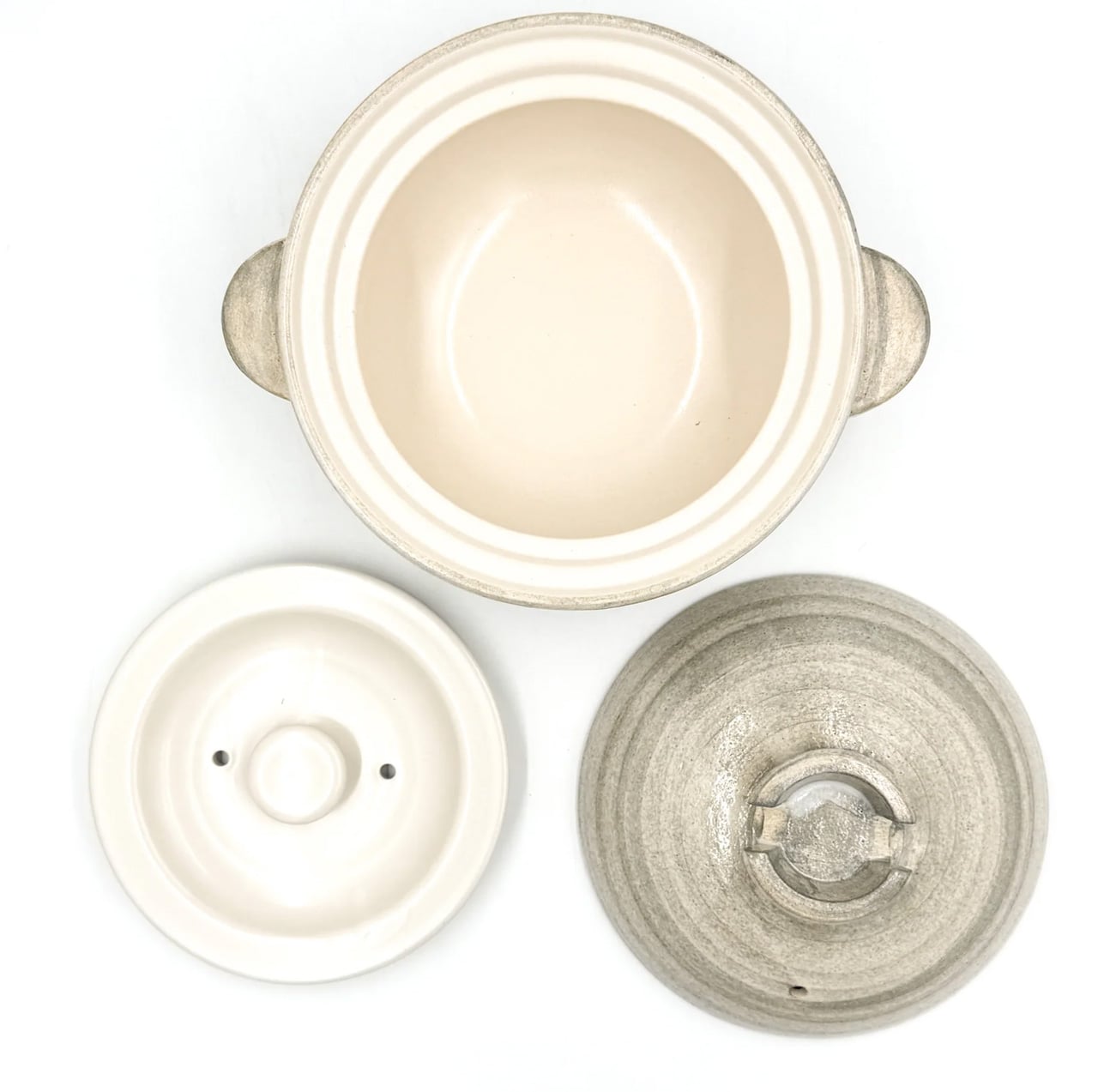
Carbon graphite isn’t a material you encounter in the kitchen, which is precisely what makes the ANAORI Kakugama so compelling. Crafted from solid carbon graphite, this Japanese cooking vessel carries a physical and conceptual weight that coated pans simply can’t match. Its matte black surface distributes heat with uncommon efficiency, significantly reducing the risk of scorching while preserving the natural flavors and nutrients of whatever is being prepared. This is cookware that approaches food with genuine respect.

The kakugama’s range is quietly impressive. Designed to steam, poach, simmer, grill, and fry, it handles each technique without compromise, making it the kind of piece that earns a permanent position in the kitchen. The fragrant Japanese cypress lid adds something unexpected: as it heats, it releases a subtle, earthy aroma that transforms an ordinary cooking session into something closer to ritual. For the design-conscious cook who values craft as much as performance, this vessel is essentially irreplaceable.

What We Like

  • Carbon graphite construction delivers exceptional, even heat retention across every cooking method
  • The Japanese cypress lid adds a rare aromatic quality to cooking that no synthetic material can replicate

What We Dislike

  • The premium material and craftsmanship place this vessel at a significant price point above conventional cookware
  • Carbon graphite requires more attentive handling and care than standard kitchen materials

2. Obsidian Black Precision Chopstick Tongs

There’s a particular satisfaction in a kitchen tool that commits fully to its concept. Part of the Obsidian Black Kitchen Collection, the Precision Chopstick Tongs take their form directly from traditional Japanese chopsticks and engineer it for the demands of a modern kitchen. Made from SUS821L1 stainless steel, they’re light enough to handle delicate pieces of sushi yet durable enough for daily stovetop use. The result is a utensil that genuinely bridges the line between cooking instrument and tableware.

What sets these tongs apart from anything else in the drawer is the finish. A special metal processing technique ensures the obsidian’s black color resists scratching and peeling, maintaining its appearance through repeated use and washing. They work just as confidently plating sashimi at the table as they do flipping proteins in a pan. That dual-purpose quality is rare, and it’s exactly what earns a piece a permanent place in a kitchen where aesthetics and performance are equally weighted.

Click Here to Buy Now: $25.00

What We Like

  • The obsidian black finish is scratch and peel-resistant, holding its appearance through sustained daily use
  • Designed to function as both a cooking utensil and tableware, bridging the kitchen and dining with a single tool

What We Dislike

  • The chopstick form may require a brief adjustment period for those accustomed to conventional tong grips
  • The precision-focused design is less suited to tasks requiring wide or bulky gripping

3. Samsung Bake Ultra Concept

Concept appliances rarely look this resolved. Designed by Octavio Leon Villareal, the Samsung Bake Ultra approaches the compact electric oven with a formal discipline that separates considered design from merely clever design. Its two-tone composition, a soft gray body anchored by a black glass front, achieves a visual balance that reads as both contemporary and enduring. This isn’t minimalism for its own sake. It’s a deliberate formal decision that allows the Bake Ultra to feel entirely at home in kitchens ranging from industrial-chic to warm and considered.

The rounded edges are doing significant work. By softening what could easily have read as an overly boxy silhouette, Villareal gives the Bake Ultra an approachability that most compact ovens lack entirely. It doesn’t demand attention, but it consistently earns it. In an all-black kitchen where every object contributes to the room’s visual tone, an appliance this compositionally assured is genuinely valuable. The Bake Ultra wasn’t designed just to function. It was designed to belong.

What We Like

  • The two-tone design with black glass front integrates cleanly into an all-black kitchen without disrupting the visual flow
  • Rounded edges give the compact form an approachability that’s rarely achieved in kitchen appliance design

What We Dislike

  • As a concept design, the Bake Ultra is not yet available for consumer purchase
  • The soft gray body, while elegant, slightly departs from a fully committed all-black aesthetic

4. Iron Frying Plate

The Iron Frying Plate operates on a beautifully simple premise: eliminate the plate. Made from 1.6mm-thick mill scale steel, this uncoated, rust-resistant piece of cookware is designed to go from stove to table without interruption. There’s no ceramic coating to chip, no synthetic surface to question, just raw, well-engineered steel that builds character and natural seasoning with every use. The matte black mill scale finish slots into an all-black kitchen without any deliberate effort at all.

Its detachable wooden handle is one of those small design decisions that reveal serious thought about every moment of use. Attach it for cooking, remove it for serving, one-handed, no tools required. That seamless transition from cooking vessel to serving piece is exactly the kind of dual-function thinking that earns a product permanent space in a curated kitchen. JIU doesn’t try to be more than it is. It’s a frying plate, and it’s an excellent one.

Click Here to Buy Now: $69.00

What We Like

  • The uncoated mill scale steel surface develops natural seasoning over time, building flavor with every use
  • The one-handed detachable wooden handle enables a smooth transition from stovetop cooking directly to table service

What We Dislike

  • An uncoated steel surface requires regular seasoning and more attentive care than nonstick alternatives
  • The minimal form is best suited to simple preparations rather than sauce-heavy or complex dishes

5. HA1 Expert Hard Anodized Nonstick 10-Piece Set

If the all-black kitchen needs a workhorse, the All-Clad HA1 Expert set fills that role without compromise. Ten pieces of hard anodized, scratch-resistant nonstick cookware finished in a deep, uniform black that holds up to both heavy daily use and visual scrutiny. The anodized aluminum construction is reinforced with a stainless-steel base, delivering warp resistance and the kind of even, consistent heat distribution that makes routine cooking genuinely more reliable. This is a set built for people who cook seriously and care deeply about how their kitchen looks.

The range covers everything a fully functioning kitchen demands: two fry pans, two saucepans, a sauté pan, and a stockpot, each paired with a matching lid. Oven-safe to 500°F and induction-compatible, very little is left unaddressed. Double-riveted stainless steel handles hold securely through extended use, while tempered glass lids allow for monitoring without lifting. As a complete, coherent system in black, this set reads less like a collection of pots and more like an intentional design decision.

What We Like

  • Hard-anodized, scratch-resistant construction paired with long-lasting PTFE nonstick delivers durable, professional-grade performance
  • Fully induction compatible and oven safe to 500°F, covering virtually every cooking scenario without exception

What We Dislike

  • Glass lids are only oven safe to 350°F, considerably lower than the pans themselves
  • PTFE nonstick requires careful utensil choice and hand washing to preserve its surface longevity

6. Precision Chef Kitchen Scissors

Kitchen scissors rarely receive the design attention they deserve. The Precision Chef Kitchen Scissors are a deliberate exception. The oxidation-colored black finish isn’t cosmetic; it’s a durable surface treatment that resists deterioration, holding its appearance through years of regular use. The curved serrated blade is engineered specifically for cutting meat, reducing effort while improving both control and safety. In a kitchen where every object is chosen with intention, a pair of scissors is considered a meaningful detail that most kitchens quietly overlook.

The ergonomic structure goes beyond grip comfort. When laid flat, the blade is designed to avoid contact with the counter surface, a small but precise detail that speaks to the level of thought invested in this tool. Cutting through steaks, portioning pizza, or trimming vegetables, these scissors approach each task with the same quiet authority that an all-black kitchen demands. They are scissors genuinely designed to be seen as well as used, and they meet that standard on both counts.

Click Here to Buy Now: $95.00

What We Like

  • Oxidation coloring creates a durable black finish that resists fading and surface deterioration through sustained use
  • The curved serrated blade is purpose-engineered for meat cutting, improving control and reducing the effort required

What We Dislike

  • The specialized curved blade may feel less versatile for tasks that go beyond protein and general food prep
  • Ergonomic scissors with complex geometry can be more difficult to sharpen at home than straight-bladed alternatives

7. Melrose Pendant Light

Lighting in an all-black kitchen isn’t merely functional; it’s structural. The Steel Lighting Co. Melrose pendant operates as both. The 18-inch industrial dome in matte black is proportioned specifically for kitchen island use, casting a wide, even wash of light across the work surface below. American-made and UL-approved for both indoor and outdoor installation, this is a pendant built to perform as well as it looks. At 300 watts, it carries the capacity to anchor a kitchen island with genuine visual authority.

What makes the Melrose particularly thoughtful is its configurable interior. Available in white, matte black, or brass, the interior color shapes both the quality of reflected light and the overall tone of the fixture without altering its profile. In a black kitchen, a brass interior introduces a warm, considered counterpoint that prevents the space from reading as flat or one-dimensional. The matte black exterior remains constant throughout: commanding, clean, and entirely at home in a kitchen built around the same commitment to the color.

What We Like

  • Configurable interior color options in white, matte black, or brass allow for subtle tonal customization within a consistent exterior
  • American-made with indoor and outdoor UL approval, signaling a meaningful commitment to build quality and longevity

What We Dislike

  • At 12 pounds, installation may require additional structural consideration, depending on the ceiling construction
  • The industrial farmhouse silhouette may not suit kitchens with a strictly contemporary or ultra-minimal design direction

8. Fellow Stagg EKG Pro Electric Pour-Over Kettle

The Fellow Stagg EKG Pro is the kind of object that reframes where coffee fits in the morning. Its signature gooseneck spout delivers precise control over flow rate and stream consistency, the kind of control that produces a measurable difference in pour-over extraction. To the degree, temperature control heats and holds water exactly as programmed, while a high-resolution color display allows complete customization of brewing schedules, altitude adjustments, and temperature units. This is a kettle engineered with the seriousness typically reserved for professional brewing equipment.

The EKG Pro’s WiFi connectivity and scheduling capabilities are where it shifts from impressive to genuinely integrated into daily life. Program brewing schedules that adapt to your routine so the kettle is ready precisely when you are, no preheating, no guesswork. The sleek industrial design holds its own on a countertop alongside thoughtfully chosen cookware and tools. The hold function maintains brewing temperature for extended periods without wasting energy. In an all-black kitchen, this kettle earns its visible place every single morning.

What We Like

  • To-the-degree temperature control, combined with a gooseneck spout, delivers precision that measurably improves pour-over coffee quality
  • WiFi connectivity and programmable scheduling mean the kettle is ready exactly when needed, without any manual preheating

What We Dislike

  • Advanced features like WiFi and the color display come at a price point that significantly exceeds basic kettle alternatives
  • The gooseneck form is optimized for pour-over brewing and is less suited to general-purpose boiling tasks

The Kitchen Finally Got the Design Treatment It Deserved

The all-black kitchen doesn’t ask for compromise. Every product here demonstrates that designing in black means choosing objects with a strong point of view, ones crafted carefully, finished deliberately, and considered at every stage. The color is what makes the curation visible. It’s a shared language between objects that have little else in common except that they were each made to last, made to perform, and made to matter in the space they occupy.

What’s striking about 2026’s black kitchen movement is how completely it spans every category. Cookware, utensils, lighting, kettles: the commitment runs through the entire room. When each element carries the same visual weight, a kitchen stops being a collection of appliances and tools and becomes a genuinely designed space. That’s the standard these eight products are held to, and without exception, it’s the standard each one meets.

The post The All-Black Kitchen Is 2026’s Hottest Design Trend — Here Are 8 Products That Nail It first appeared on Yanko Design.
The All-Black Kitchen Is 2026’s Hottest Design Trend — Here Are 8 Products That Nail It

Black has always carried weight in design. Authority, restraint, a quiet elegance that needs no announcement. In 2026, the all-black kitchen has shifted from a bold statement to a genuine design movement. What once felt too dramatic for the most-used room in the home now feels precisely considered. Designers and homeowners alike are gravitating toward the palette for its ability to make a space feel curated, intentional, and deeply sophisticated when executed well.

The shift runs deeper than cabinetry and countertops. It lives in the tools, the cookware, the lighting, every touchpoint that shapes how a kitchen performs and how it looks doing it. Finding pieces that commit to the aesthetic without sacrificing function is the real challenge. These eight products do exactly that, from carbon graphite cookware rooted in Japanese craft to a precision pour-over kettle engineered for serious brewing.

1. ANAORI Kakugama

Carbon graphite isn’t a material you encounter in the kitchen, which is precisely what makes the ANAORI Kakugama so compelling. Crafted from solid carbon graphite, this Japanese cooking vessel carries a physical and conceptual weight that coated pans simply can’t match. Its matte black surface distributes heat with uncommon efficiency, significantly reducing the risk of scorching while preserving the natural flavors and nutrients of whatever is being prepared. This is cookware that approaches food with genuine respect.

The kakugama’s range is quietly impressive. Designed to steam, poach, simmer, grill, and fry, it handles each technique without compromise, making it the kind of piece that earns a permanent position in the kitchen. The fragrant Japanese cypress lid adds something unexpected: as it heats, it releases a subtle, earthy aroma that transforms an ordinary cooking session into something closer to ritual. For the design-conscious cook who values craft as much as performance, this vessel is essentially irreplaceable.

What We Like

  • Carbon graphite construction delivers exceptional, even heat retention across every cooking method
  • The Japanese cypress lid adds a rare aromatic quality to cooking that no synthetic material can replicate

What We Dislike

  • The premium material and craftsmanship place this vessel at a significant price point above conventional cookware
  • Carbon graphite requires more attentive handling and care than standard kitchen materials

2. Obsidian Black Precision Chopstick Tongs

There’s a particular satisfaction in a kitchen tool that commits fully to its concept. Part of the Obsidian Black Kitchen Collection, the Precision Chopstick Tongs take their form directly from traditional Japanese chopsticks and engineer it for the demands of a modern kitchen. Made from SUS821L1 stainless steel, they’re light enough to handle delicate pieces of sushi yet durable enough for daily stovetop use. The result is a utensil that genuinely bridges the line between cooking instrument and tableware.

What sets these tongs apart from anything else in the drawer is the finish. A special metal processing technique ensures the obsidian’s black color resists scratching and peeling, maintaining its appearance through repeated use and washing. They work just as confidently plating sashimi at the table as they do flipping proteins in a pan. That dual-purpose quality is rare, and it’s exactly what earns a piece a permanent place in a kitchen where aesthetics and performance are equally weighted.

Click Here to Buy Now: $25.00

What We Like

  • The obsidian black finish is scratch and peel-resistant, holding its appearance through sustained daily use
  • Designed to function as both a cooking utensil and tableware, bridging the kitchen and dining with a single tool

What We Dislike

  • The chopstick form may require a brief adjustment period for those accustomed to conventional tong grips
  • The precision-focused design is less suited to tasks requiring wide or bulky gripping

3. Samsung Bake Ultra Concept

Concept appliances rarely look this resolved. Designed by Octavio Leon Villareal, the Samsung Bake Ultra approaches the compact electric oven with a formal discipline that separates considered design from merely clever design. Its two-tone composition, a soft gray body anchored by a black glass front, achieves a visual balance that reads as both contemporary and enduring. This isn’t minimalism for its own sake. It’s a deliberate formal decision that allows the Bake Ultra to feel entirely at home in kitchens ranging from industrial-chic to warm and considered.

The rounded edges are doing significant work. By softening what could easily have read as an overly boxy silhouette, Villareal gives the Bake Ultra an approachability that most compact ovens lack entirely. It doesn’t demand attention, but it consistently earns it. In an all-black kitchen where every object contributes to the room’s visual tone, an appliance this compositionally assured is genuinely valuable. The Bake Ultra wasn’t designed just to function. It was designed to belong.

What We Like

  • The two-tone design with black glass front integrates cleanly into an all-black kitchen without disrupting the visual flow
  • Rounded edges give the compact form an approachability that’s rarely achieved in kitchen appliance design

What We Dislike

  • As a concept design, the Bake Ultra is not yet available for consumer purchase
  • The soft gray body, while elegant, slightly departs from a fully committed all-black aesthetic

4. Iron Frying Plate

The Iron Frying Plate operates on a beautifully simple premise: eliminate the plate. Made from 1.6mm-thick mill scale steel, this uncoated, rust-resistant piece of cookware is designed to go from stove to table without interruption. There’s no ceramic coating to chip, no synthetic surface to question, just raw, well-engineered steel that builds character and natural seasoning with every use. The matte black mill scale finish slots into an all-black kitchen without any deliberate effort at all.

Its detachable wooden handle is one of those small design decisions that reveal serious thought about every moment of use. Attach it for cooking, remove it for serving, one-handed, no tools required. That seamless transition from cooking vessel to serving piece is exactly the kind of dual-function thinking that earns a product permanent space in a curated kitchen. JIU doesn’t try to be more than it is. It’s a frying plate, and it’s an excellent one.

Click Here to Buy Now: $69.00

What We Like

  • The uncoated mill scale steel surface develops natural seasoning over time, building flavor with every use
  • The one-handed detachable wooden handle enables a smooth transition from stovetop cooking directly to table service

What We Dislike

  • An uncoated steel surface requires regular seasoning and more attentive care than nonstick alternatives
  • The minimal form is best suited to simple preparations rather than sauce-heavy or complex dishes

5. HA1 Expert Hard Anodized Nonstick 10-Piece Set

If the all-black kitchen needs a workhorse, the All-Clad HA1 Expert set fills that role without compromise. Ten pieces of hard anodized, scratch-resistant nonstick cookware finished in a deep, uniform black that holds up to both heavy daily use and visual scrutiny. The anodized aluminum construction is reinforced with a stainless-steel base, delivering warp resistance and the kind of even, consistent heat distribution that makes routine cooking genuinely more reliable. This is a set built for people who cook seriously and care deeply about how their kitchen looks.

The range covers everything a fully functioning kitchen demands: two fry pans, two saucepans, a sauté pan, and a stockpot, each paired with a matching lid. Oven-safe to 500°F and induction-compatible, very little is left unaddressed. Double-riveted stainless steel handles hold securely through extended use, while tempered glass lids allow for monitoring without lifting. As a complete, coherent system in black, this set reads less like a collection of pots and more like an intentional design decision.

What We Like

  • Hard-anodized, scratch-resistant construction paired with long-lasting PTFE nonstick delivers durable, professional-grade performance
  • Fully induction compatible and oven safe to 500°F, covering virtually every cooking scenario without exception

What We Dislike

  • Glass lids are only oven safe to 350°F, considerably lower than the pans themselves
  • PTFE nonstick requires careful utensil choice and hand washing to preserve its surface longevity

6. Precision Chef Kitchen Scissors

Kitchen scissors rarely receive the design attention they deserve. The Precision Chef Kitchen Scissors are a deliberate exception. The oxidation-colored black finish isn’t cosmetic; it’s a durable surface treatment that resists deterioration, holding its appearance through years of regular use. The curved serrated blade is engineered specifically for cutting meat, reducing effort while improving both control and safety. In a kitchen where every object is chosen with intention, a pair of scissors is considered a meaningful detail that most kitchens quietly overlook.

The ergonomic structure goes beyond grip comfort. When laid flat, the blade is designed to avoid contact with the counter surface, a small but precise detail that speaks to the level of thought invested in this tool. Cutting through steaks, portioning pizza, or trimming vegetables, these scissors approach each task with the same quiet authority that an all-black kitchen demands. They are scissors genuinely designed to be seen as well as used, and they meet that standard on both counts.

Click Here to Buy Now: $95.00

What We Like

  • Oxidation coloring creates a durable black finish that resists fading and surface deterioration through sustained use
  • The curved serrated blade is purpose-engineered for meat cutting, improving control and reducing the effort required

What We Dislike

  • The specialized curved blade may feel less versatile for tasks that go beyond protein and general food prep
  • Ergonomic scissors with complex geometry can be more difficult to sharpen at home than straight-bladed alternatives

7. Melrose Pendant Light

Lighting in an all-black kitchen isn’t merely functional; it’s structural. The Steel Lighting Co. Melrose pendant operates as both. The 18-inch industrial dome in matte black is proportioned specifically for kitchen island use, casting a wide, even wash of light across the work surface below. American-made and UL-approved for both indoor and outdoor installation, this is a pendant built to perform as well as it looks. At 300 watts, it carries the capacity to anchor a kitchen island with genuine visual authority.

What makes the Melrose particularly thoughtful is its configurable interior. Available in white, matte black, or brass, the interior color shapes both the quality of reflected light and the overall tone of the fixture without altering its profile. In a black kitchen, a brass interior introduces a warm, considered counterpoint that prevents the space from reading as flat or one-dimensional. The matte black exterior remains constant throughout: commanding, clean, and entirely at home in a kitchen built around the same commitment to the color.

What We Like

  • Configurable interior color options in white, matte black, or brass allow for subtle tonal customization within a consistent exterior
  • American-made with indoor and outdoor UL approval, signaling a meaningful commitment to build quality and longevity

What We Dislike

  • At 12 pounds, installation may require additional structural consideration, depending on the ceiling construction
  • The industrial farmhouse silhouette may not suit kitchens with a strictly contemporary or ultra-minimal design direction

8. Fellow Stagg EKG Pro Electric Pour-Over Kettle

The Fellow Stagg EKG Pro is the kind of object that reframes where coffee fits in the morning. Its signature gooseneck spout delivers precise control over flow rate and stream consistency, the kind of control that produces a measurable difference in pour-over extraction. To the degree, temperature control heats and holds water exactly as programmed, while a high-resolution color display allows complete customization of brewing schedules, altitude adjustments, and temperature units. This is a kettle engineered with the seriousness typically reserved for professional brewing equipment.

The EKG Pro’s WiFi connectivity and scheduling capabilities are where it shifts from impressive to genuinely integrated into daily life. Program brewing schedules that adapt to your routine so the kettle is ready precisely when you are, no preheating, no guesswork. The sleek industrial design holds its own on a countertop alongside thoughtfully chosen cookware and tools. The hold function maintains brewing temperature for extended periods without wasting energy. In an all-black kitchen, this kettle earns its visible place every single morning.

What We Like

  • To-the-degree temperature control, combined with a gooseneck spout, delivers precision that measurably improves pour-over coffee quality
  • WiFi connectivity and programmable scheduling mean the kettle is ready exactly when needed, without any manual preheating

What We Dislike

  • Advanced features like WiFi and the color display come at a price point that significantly exceeds basic kettle alternatives
  • The gooseneck form is optimized for pour-over brewing and is less suited to general-purpose boiling tasks

The Kitchen Finally Got the Design Treatment It Deserved

The all-black kitchen doesn’t ask for compromise. Every product here demonstrates that designing in black means choosing objects with a strong point of view, ones crafted carefully, finished deliberately, and considered at every stage. The color is what makes the curation visible. It’s a shared language between objects that have little else in common except that they were each made to last, made to perform, and made to matter in the space they occupy.

What’s striking about 2026’s black kitchen movement is how completely it spans every category. Cookware, utensils, lighting, kettles: the commitment runs through the entire room. When each element carries the same visual weight, a kitchen stops being a collection of appliances and tools and becomes a genuinely designed space. That’s the standard these eight products are held to, and without exception, it’s the standard each one meets.

The post The All-Black Kitchen Is 2026’s Hottest Design Trend — Here Are 8 Products That Nail It first appeared on Yanko Design.

VitaLink Just Put a 13-Inch Screen and Keyboard Into One Foldable Slab

Working on the go rarely looks as tidy as productivity-tool adverts suggest. Most people who travel with serious work needs end up carrying at least two or three things that don’t quite fit together: a tablet or laptop, a compact keyboard if the touchscreen isn’t enough, maybe a portable monitor, and a cable situation that somehow multiplies every time you pack.

VitaLink is trying to simplify that. The concept combines a full-size keyboard and a large touch display into one foldable object in a CNC aluminum shell. Connect it to any USB-C device and your workspace expands immediately, without a separate stand, a monitor arm, or a bag pocket devoted to adapters. It folds down to 20mm and opens into something that feels genuinely designed.

Designer: VitaLink

Click Here to Buy Now: $279 $658 (58% off). Hurry, only 491/600 left! Raised over $37,000.

The integrated 13-inch display sits directly above the keyboard in what amounts to a compact laptop form factor. The screen runs at a 3840×1600 pixel resolution, a 2.4:1 ultra-wide format rather than a standard 16:9 panel, giving it an unusual amount of horizontal room. There’s enough space to keep two apps open side by side without either feeling squeezed into a corner.

The 180-degree hinge is what makes the compact form actually practical. When you’re done, everything closes into a flat 20mm slab that slips into a laptop sleeve without awkward bulk. The open footprint sits at around 34 × 15 cm, compact enough for a plane tray table, a crowded café counter, or a hotel desk that never seems to fit anything comfortably.

The panel supports 10-point touch, runs at 60 Hz, and delivers 298 PPI pixel density with 100% sRGB color coverage. Touching a screen this size changes how you interact with content. You can swipe, drag, and tap directly on the display while still using the keyboard below, which means managing layers in an editor, scrubbing a timeline, or pulling up references doesn’t require switching between input modes.

The keyboard uses scissor-switch mechanisms with 0.8mm of key travel and wider-than-typical spacing. That added spacing sounds like a minor detail until you’ve spent an hour trying to type accurately on a portable board that prioritizes size above everything else. Three RGB backlight modes let you set the visual tone, and the keys are designed to stay quiet enough for cafés and shared offices.

Two USB-C ports handle video, data, and power delivery through a single cable, and the plug-and-play setup works across Windows, macOS, Linux, iOS, and Android without requiring additional drivers. That compatibility extends to mini PCs, tablets, and handheld gaming consoles, so VitaLink isn’t tied to one kind of device. You’re not locked into a single workflow or a single ecosystem, which is most of the appeal.

Think about what that actually means. You’re in a hotel room with just your iPad and need a proper keyboard and enough screen space to write, edit, and reference something at once. Or you’re at a café with a mini PC and want a setup that doesn’t take over the whole table. Those are the moments where having the keyboard and the display in one object makes a real difference.

The aluminum body does more than keep things thin. CNC-machined aluminum with a frosted anodized finish gives it a rigidity that plastic travel accessories rarely have, protecting the display in transit and keeping the keyboard deck from flexing during typing sessions. It carries more like a slim hardcover notebook than a peripheral, which is a meaningful difference for anyone who’s dealt with a flimsy portable monitor in a crowded bag.

There’s something worth noting in the fact that portable work setups have gotten faster without necessarily getting more cohesive. The bag is still a loose collection of things that don’t quite belong together. VitaLink is at least making a case that the keyboard and the display belong in a single intentional object, built from the start for people whose work doesn’t stay in one place.

Click Here to Buy Now: $279 $658 (58% off). Hurry, only 491/600 left! Raised over $37,000.

The post VitaLink Just Put a 13-Inch Screen and Keyboard Into One Foldable Slab first appeared on Yanko Design.
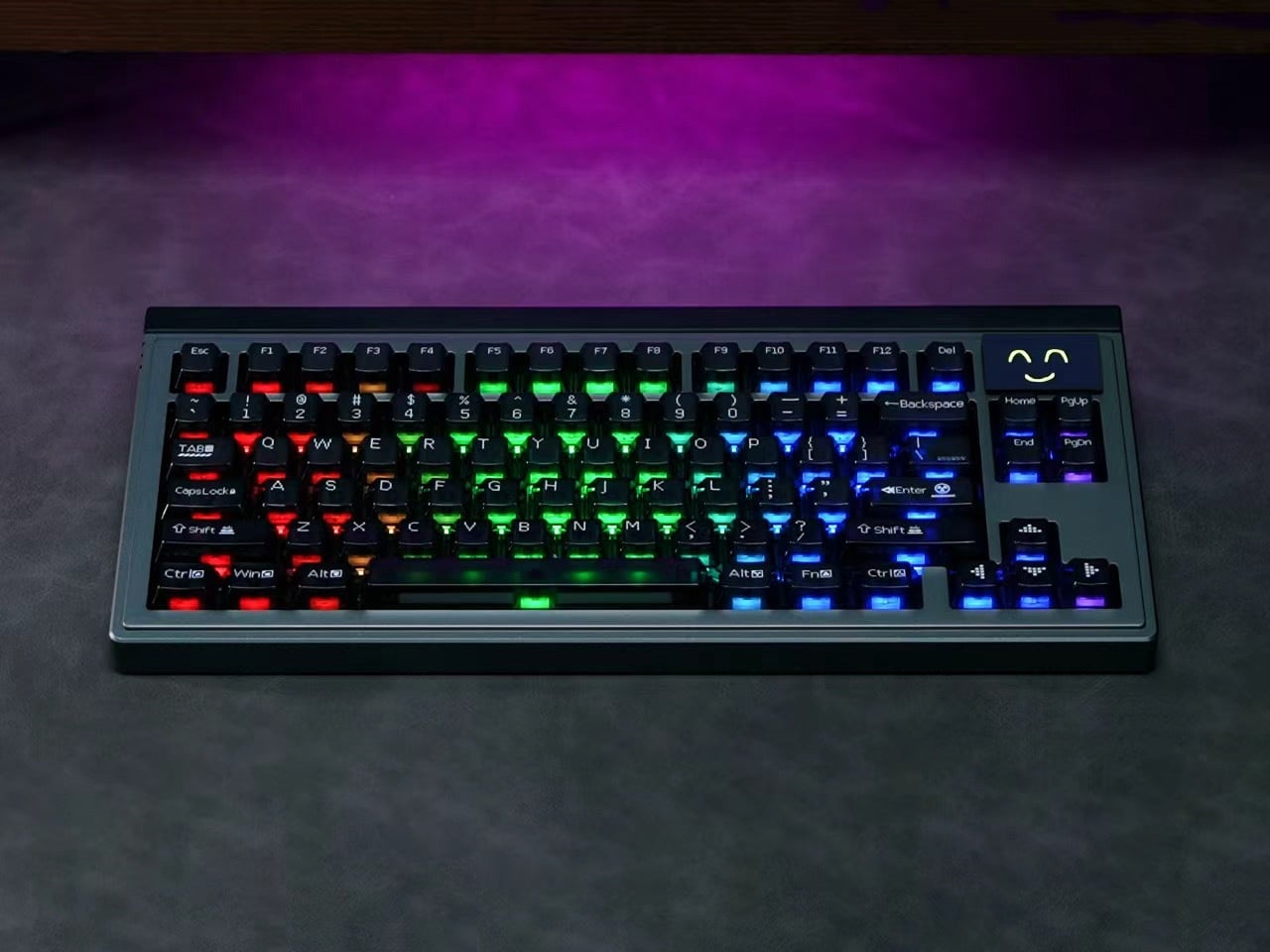
Forget Taking Notes — These 5 Genuis Tools Do It Better Than Your Brain Ever Could

The meeting ends. The ideas fade. The action items that felt so clear twenty minutes ago are now a blur of half-remembered phrases scrawled in a margin you’ll never look at again. Note-taking has been a productivity staple for decades. Yet, most people are still terrible at it — not because they’re disorganized, but because the tools they’ve been handed have never really matched how the brain works under pressure, in flow, or during creative momentum.
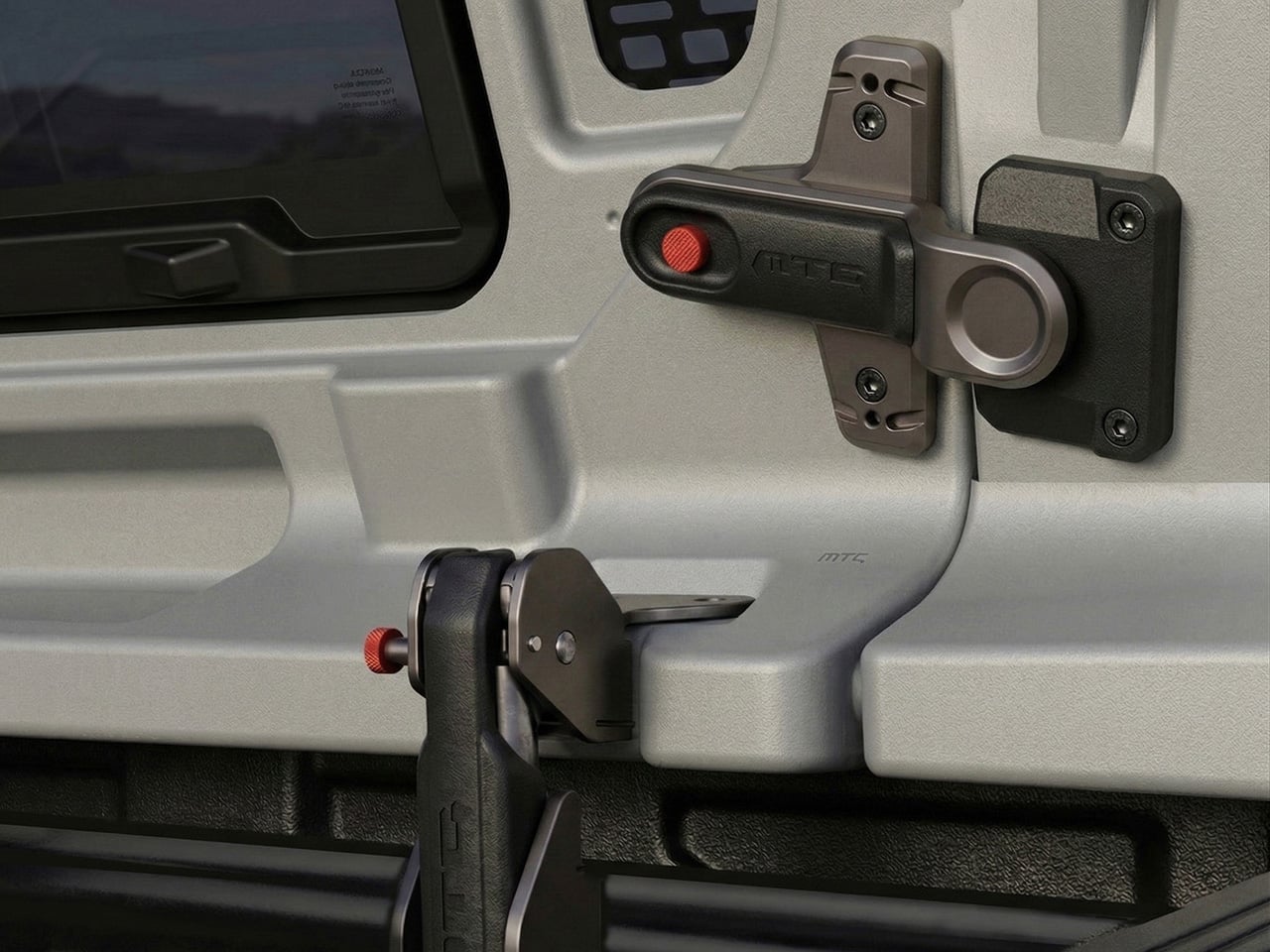

These five tools take a different approach. Some are physical, some are digital, and one sits somewhere elegantly in between. What they share is a willingness to rethink the ritual from scratch: whether that means flipping a desk whiteboard to reveal a second surface, whispering a half-formed idea into your earbuds mid-walk, or letting a handwritten time cue trigger its own reminder automatically. Note-taking doesn’t have to be a discipline you fail at. These are the tools that prove it.

1. Note

The Note desk whiteboard is exactly what it sounds like, and that restraint is the point. A small vertical slate designed for the kind of thinking that doesn’t need to last: quick diagrams, passing ideas, calculations that only need to survive the afternoon. It sits on your desk without drama, works without setup, and erases with a single cloth wipe. For anyone who has stared at a page of old notes and wondered why they kept them, the appeal is immediate. Temporary thinking deserves a temporary surface.

What earns Note a place on this list beyond the obvious is the flip mechanism. The whiteboard rotates to reveal a second surface, doubling your working space without claiming any extra desk real estate. One side can carry a dotted grid for structured diagrams and spatial thinking, while the other stays plain for freeform notes. The vertical format also accepts sticky notes directly on the surface, so you’re never locked into one method. A quick wipe resets everything, and you’re back to a blank slate without the guilt of wasted paper or the overhead of an app.

What we like

  • The double-sided flip mechanism gives you twice the working surface while keeping the desk footprint identical
  • Accepts sticky notes directly on the board, so you can blend methods without committing to just one

What we dislike

  • Notes are entirely temporary, meaning anything worth keeping still needs to be photographed or transferred before you wipe
  • The vertical format may feel unnecessary for people whose thinking is already fully digital

2. HiNotes 3.0

Most meeting tools solve the easy part. They record, they transcribe, and they deliver a summary you’ll skim once and never open again. HiNotes 3.0 is built around what happens after that. The HiDock P1 hardware works through your own earbuds with no bots, no awkward announcements, no friction at the point of capture. As founder Sean Song puts it, the real productivity crisis was never about recording: “We have built some of the most sophisticated recording and transcription technology in history, and we are still leaving meetings with a list of things we never act on.” HiNotes is an attempt to fix the silence that follows.

Where HiNotes 3.0 genuinely separates itself is in two places: context and capture on the move. Action items come with the original conversation attached, not just a stripped-down to-do. The transcript lives behind a dedicated button in each note, expandable inline so you can cross-reference the AI output against what was actually said. Speaker labels are editable after the fact. And Whisper Notes handles the other end of the problem entirely: a low-friction way to voice-record ideas wherever they arrive, pulling scattered recordings from across the day into a single coherent summary. Seven frontier models, including GPT, Claude Sonnet, and Gemini Pro, are switchable per meeting, because different content asks for different kinds of intelligence.

Explore HiNotes 3.0 Here

What we like

  • Whisper Notes captures ideas on the move with zero friction, solving the single biggest gap that every other meeting tool leaves open
  • Per-meeting model switching gives users real control over how their content gets synthesized, rather than burying a single default choice

What we dislike

  • The full feature set requires the HiDock P1 hardware, which adds a meaningful cost above the software alone
  • Seven model options, while genuinely useful, may feel like unnecessary complexity for users who want one reliable tool and nothing more

3. Almo

Almo starts from one quietly brilliant question: what if your handwritten notes could set their own reminders? The premise sounds minor until you’ve lost track of a time-sensitive idea because writing it down felt like enough. Almo reads the time you scrawl next to a note and sets a gentle alert automatically, with no menus, no switching apps, no separate alarm to configure. It respects the ritual of writing by hand while adding the one layer of intelligence that handwriting has always lacked. The result is a device that feels less like a gadget and more like a natural extension of how most people already think.

The hardware is designed to live on a desk without demanding attention. A sturdy kickstand and a magnetic back mean it can sit upright on a surface, attach to a metal cabinet, or move between both throughout the day. The dedicated pen clips magnetically to the top, so it’s never missing when you need it. Writing and erasing feel immediate and light, which matters more than it sounds. A note-taking device that creates friction is one you quietly stop reaching for. Almo removes that excuse with a form that stays out of your way until the moment it needs to be useful.

What we like

  • Automatic reminders triggered by handwritten time cues remove a step that most people skip, which is the very step that causes ideas to go unfollowed
  • The magnetic pen attachment solves a persistently annoying problem with stylus-based devices in a way that feels genuinely considered

What we dislike

  • As a concept design, production availability remains uncertain, and the final version may differ from what has been shown
  • Handwriting recognition accuracy depends on legibility, which could limit reliability for fast writers or people with naturally loose handwriting

4. Rocketbook Reusable Sticky Notes

The sticky note is one of the most quietly brilliant office inventions ever made. Small, repositionable, and readable wherever you place it, it solves a spatial problem that digital tools have never fully replicated. The Rocketbook version keeps everything that works about the format and fixes the one thing that doesn’t: waste. Using the same whiteboard-like paper surface that Rocketbook has built its name on, these sticky notes wipe clean, hold their adhesive across multiple uses, and work in every situation where you’d reach for a regular one. The familiar format does most of the heavy lifting, and Rocketbook doesn’t get in its way.

The size itself is doing real design work here. Because sticky notes are small, the reusable format doesn’t feel like a compromise or a replacement for something better. You still get the spatial flexibility of rearranging your thinking across a wall, a whiteboard, or a monitor frame. The hoarding problem disappears too: one pad replaces the rotating stack of barely-used sheets that most people accumulate and eventually discard in bulk because the adhesive has given out. Sustainability and function are pointing in the same direction, which is rarer in stationery than it should be.

What we like

  • The reusable adhesive retains its stickiness across multiple uses, unlike standard sticky notes that degrade and lose grip over time
  • The small format preserves the spatial flexibility that makes sticky notes worth using, rather than scaling up into something that changes the whole behavior

What we dislike

  • The whiteboard surface requires a compatible marker rather than any pen, which introduces a small but real dependency into an otherwise simple system
  • Erasing requires a damp cloth, a noticeable shift from the instant-disposal habit that most sticky note users have spent years building

5. Personal Whiteboard

There is a version of note-taking that doesn’t need to be precious. No archiving, no syncing, no formatting decisions. Just a surface to think on and a way to clear it when you’re done. The Personal Whiteboard Notebook is built precisely for that kind of thinking: compact enough to carry anywhere, works with any standard whiteboard marker, and resets completely clean when you need it to. The object makes no claims beyond what it is. It gives fast, temporary thinking the right kind of home, and it does it without asking for anything complicated in return.

What makes the notebook more considered than it first appears is how the cover functions. It acts as an eraser, a built-in stand, and a storage pocket, so the entire system travels as a single self-contained unit. The Mag Force system doubles as a handle for the cover and a holder for the marker pen, keeping everything tight and within reach. Snap a photo before you wipe, and your notes move to wherever you need them without the board ever needing connectivity of its own. It is portable thinking fully resolved, in a format that fits in a bag without negotiation.

Click Here to Buy Now: $49.00

What we like

  • The multi-functional cover as eraser, stand, and storage pocket means the entire system is contained in one slim, travel-ready object
  • Compatible with any standard whiteboard marker, so there is no proprietary dependency keeping you tied to a specific brand or refill

What we dislike

  • The single-surface format limits working space compared to double-sided or larger alternatives if your thinking runs long
  • Cloud backup depends entirely on the user remembering to photograph before wiping, which is easy to forget in the middle of a fast-moving session

The Best Tool Is the One That Gets Out of Your Way

The brain is genuinely bad at holding onto things under pressure. Meetings, momentum, ideas that arrive mid-walk — they all create cognitive load that makes reliable recall harder than it feels in the moment. Research suggests that nearly 44% of action items go unexecuted after meetings, not because people lack the intention, but because the tools designed to help have been solving the wrong problem entirely. These five objects aim for the actual gap: the distance between capturing something and doing something with it.

None of them asks you to become a better note-taker. That’s what makes them worth paying attention to. The best productivity tools are the ones that disappear into how you already work, removing friction at exactly the right moment without adding new habits on top. Whether that means a wipe-clean surface on your desk or an AI that reads context back to you after the room empties, the logic is the same: less distance between the thought and what happens next. That’s not laziness. That’s design working the way it’s supposed to.

The post Forget Taking Notes — These 5 Genuis Tools Do It Better Than Your Brain Ever Could first appeared on Yanko Design.