Satechi 7-in-1 Hub Retracts Its Cable and Sticks Magnetically

Travel adapters and USB hubs have always been a necessary evil for anyone working on the go. You need the ports, but you definitely don’t want the mess of cables tangling in your bag or the clunky rectangle of plastic taking up desk space. Most hubs solve the functionality problem while creating new ones, giving you dongles that dangle awkwardly or adapters so bulky they block adjacent ports. Heck, some of them are so ugly you’d rather hide them under your laptop than let anyone see what you’re working with.

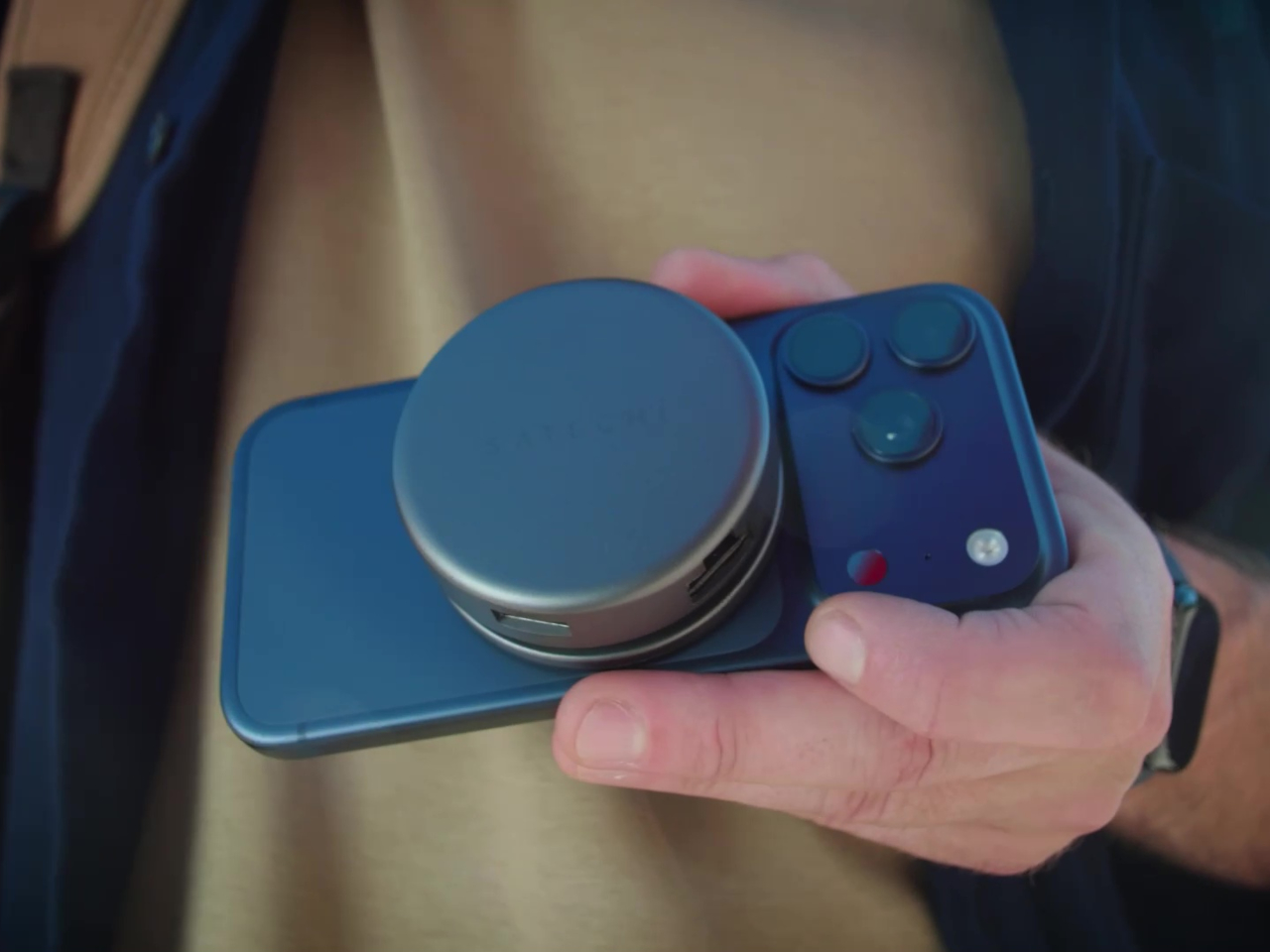
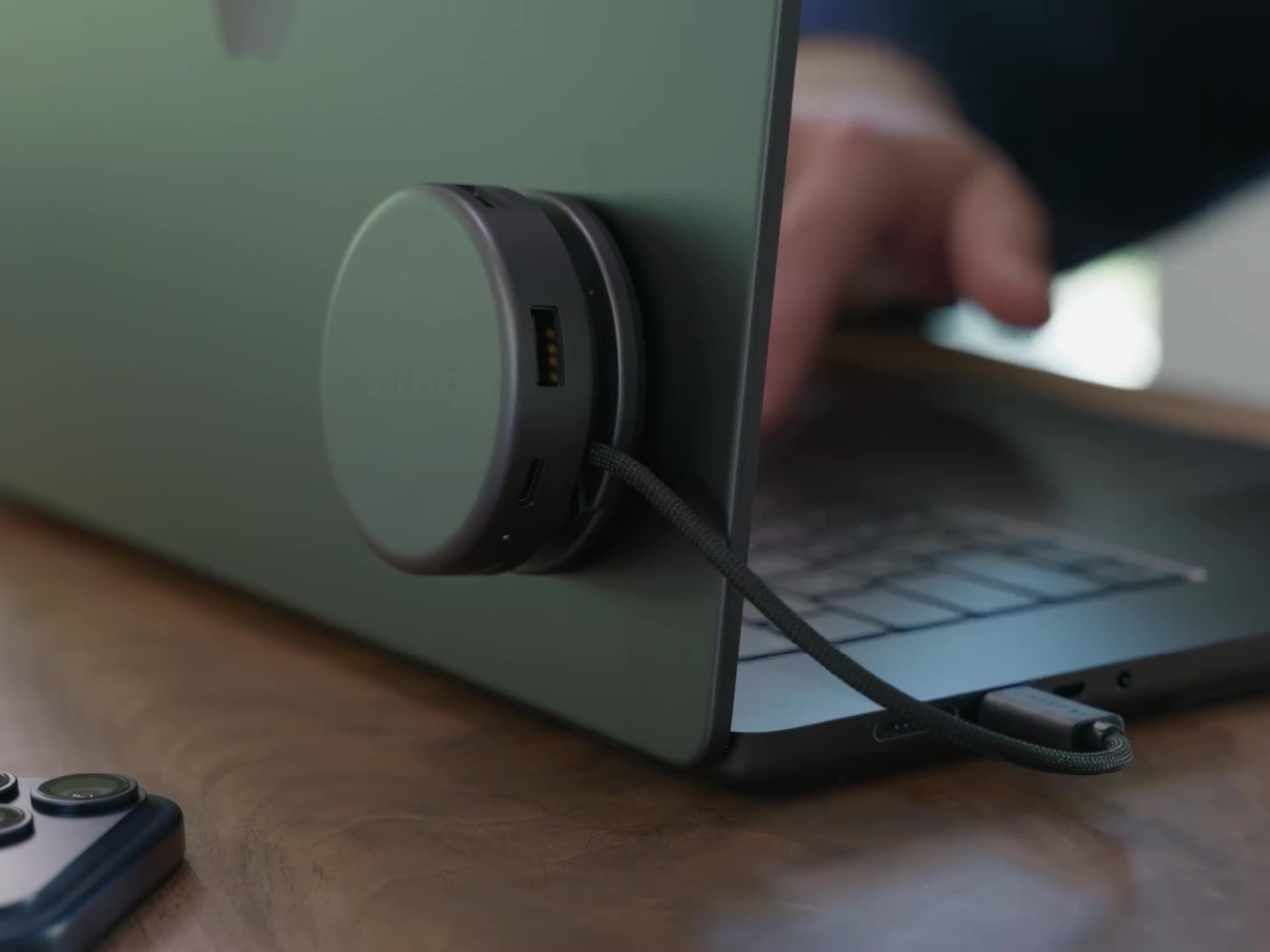
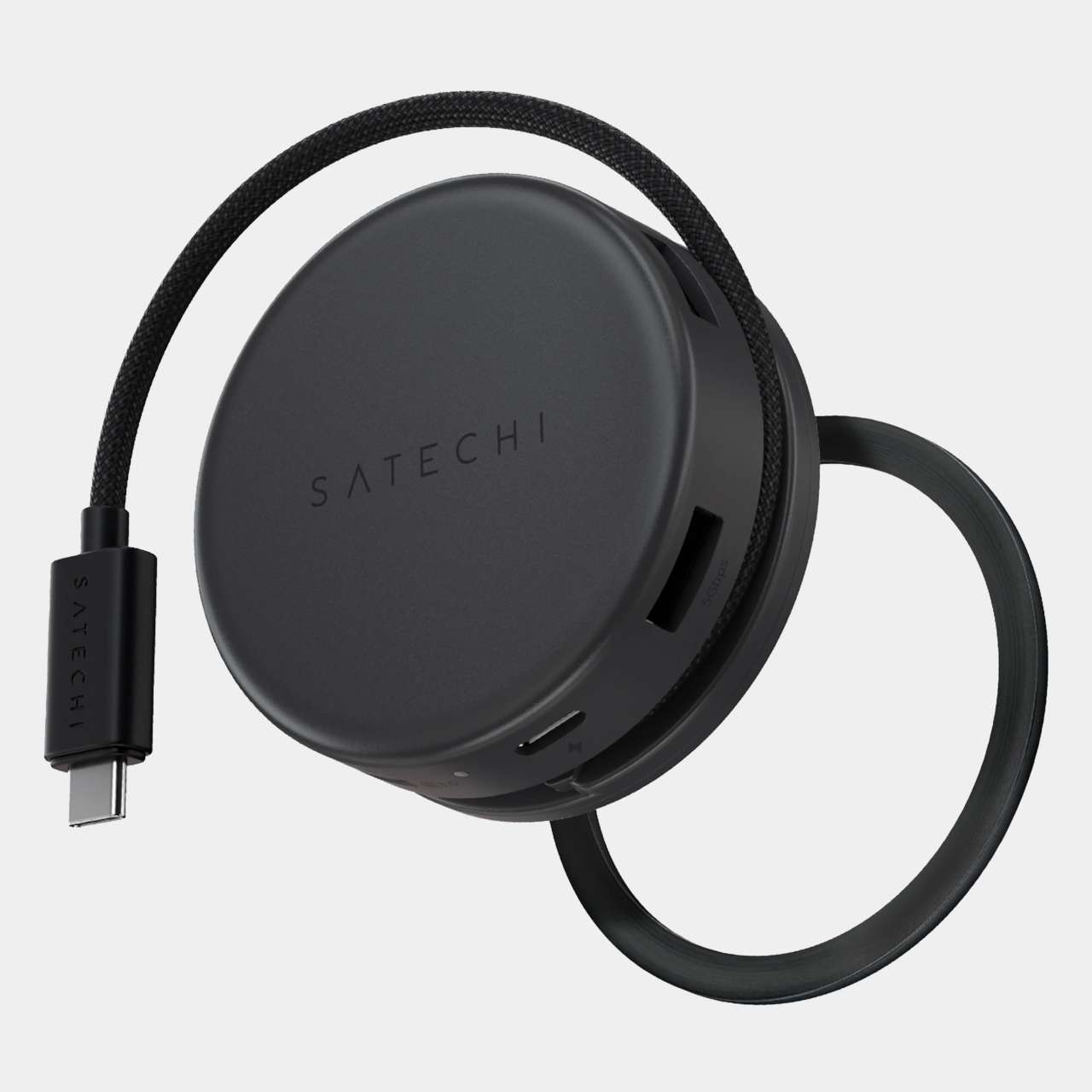
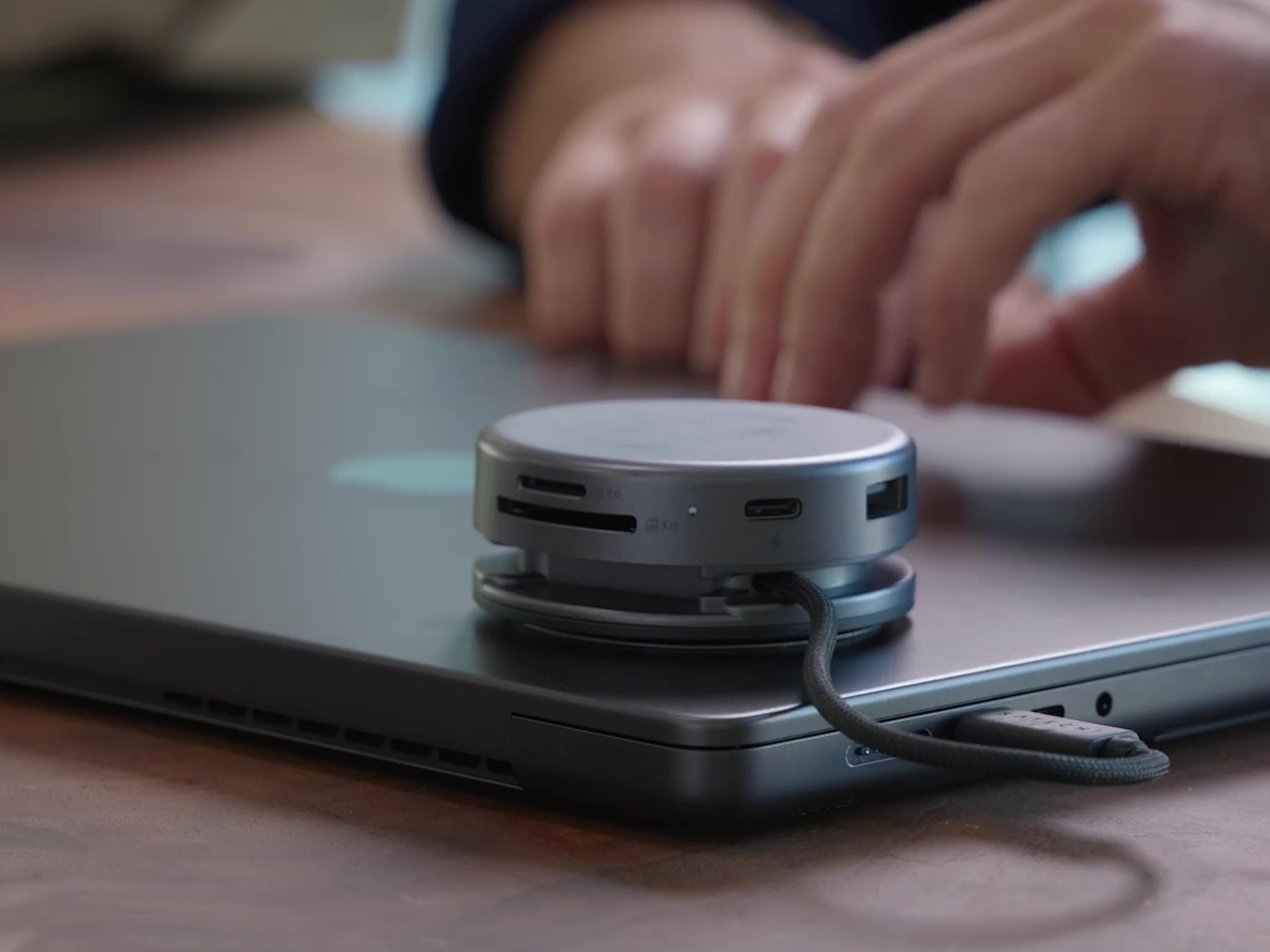
Satechi’s OntheGo 7-in-1 Multiport Adapter takes a different approach, packing seven essential ports into a compact, round design that actually looks like something you’d want to carry around. The real trick is how it handles cables and portability. Instead of a short, rigid cable that forces the hub to sit awkwardly next to your device, this one uses a coiled, braided USB-C cable that retracts neatly around the base when not in use, keeping everything tidy and tangle-free.

Designer: Satechi

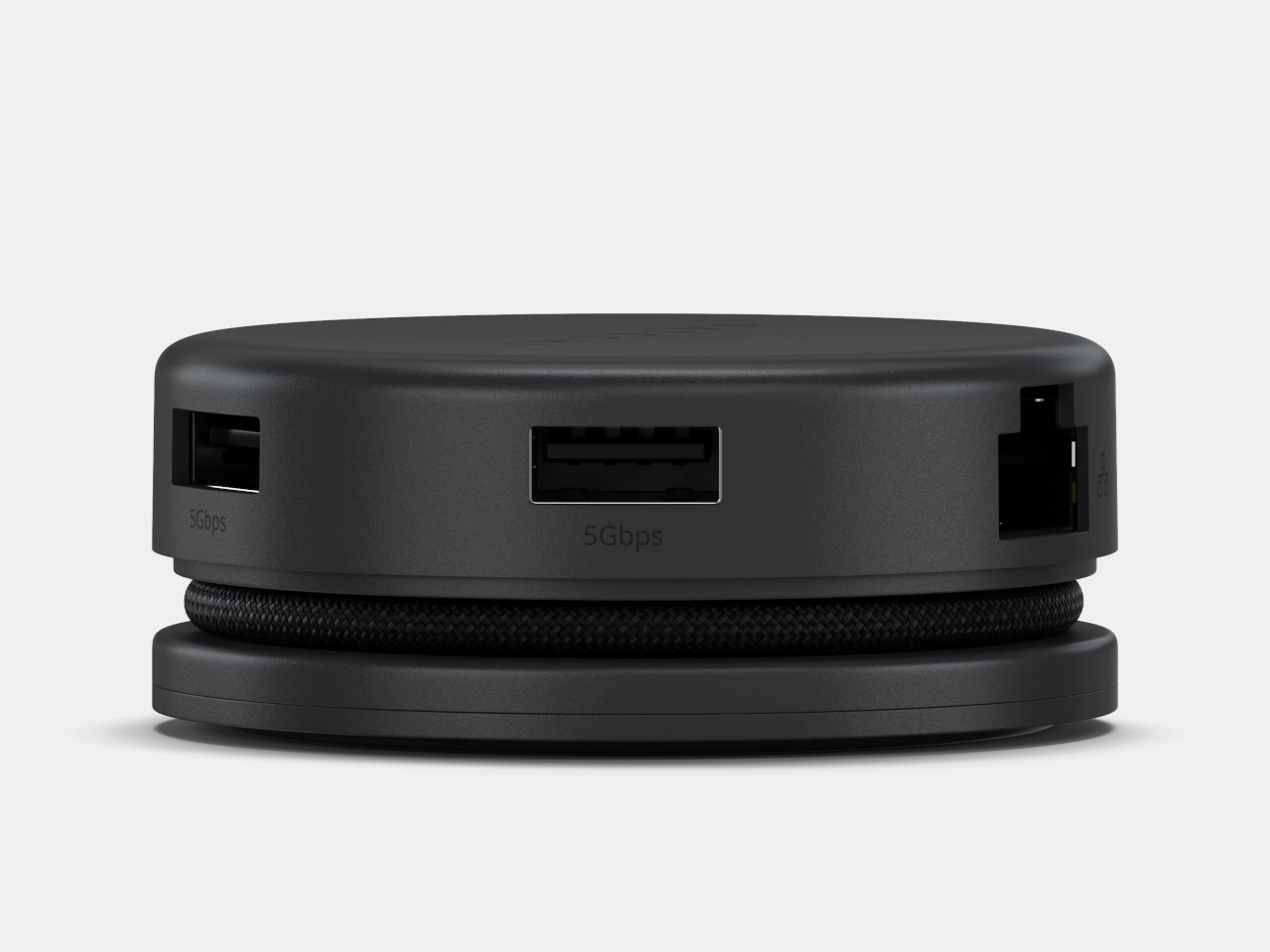
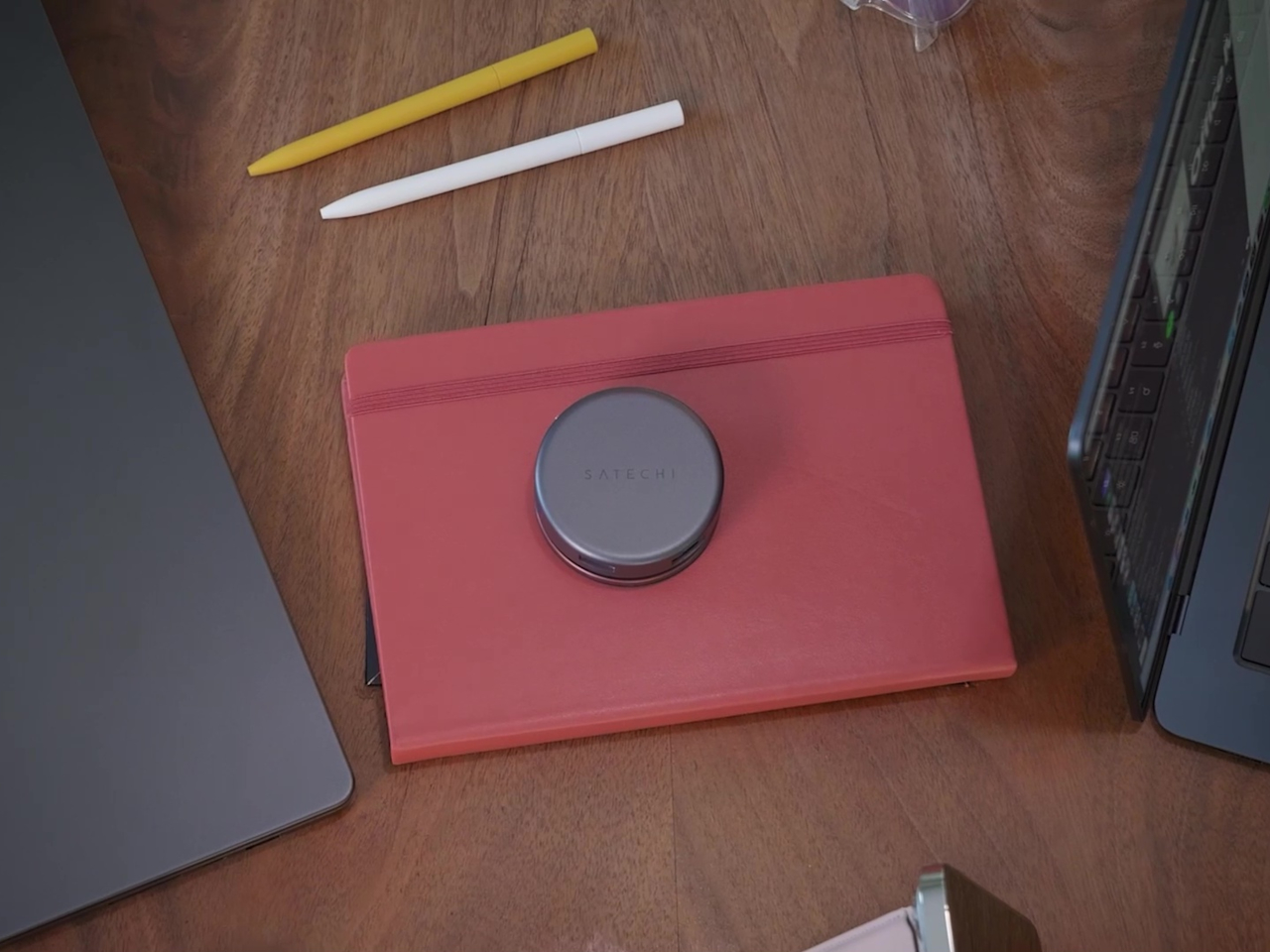
The adapter itself is a matte black puck measuring just 2.6 inches across and one inch thick, small enough to fit in your pocket next to an AirPods case. Subtle Satechi branding sits embossed on the top, while the edges feature knurled grips that make it easy to handle. The ports wrap around the perimeter, including HDMI for displays up to 4K at 60Hz, gigabit Ethernet for reliable wired connections, two USB-A ports running at 5Gbps, and slots for both SD and microSD cards supporting UHS-I speeds up to 104MB/s.

Of course, there’s also USB-C Power Delivery that accepts up to 100W input and delivers up to 80W output, so you can charge your laptop while using all the other ports. That’s particularly useful when you’re working from a coffee shop or airport lounge and need to plug in everything at once without running out of power halfway through your tasks.

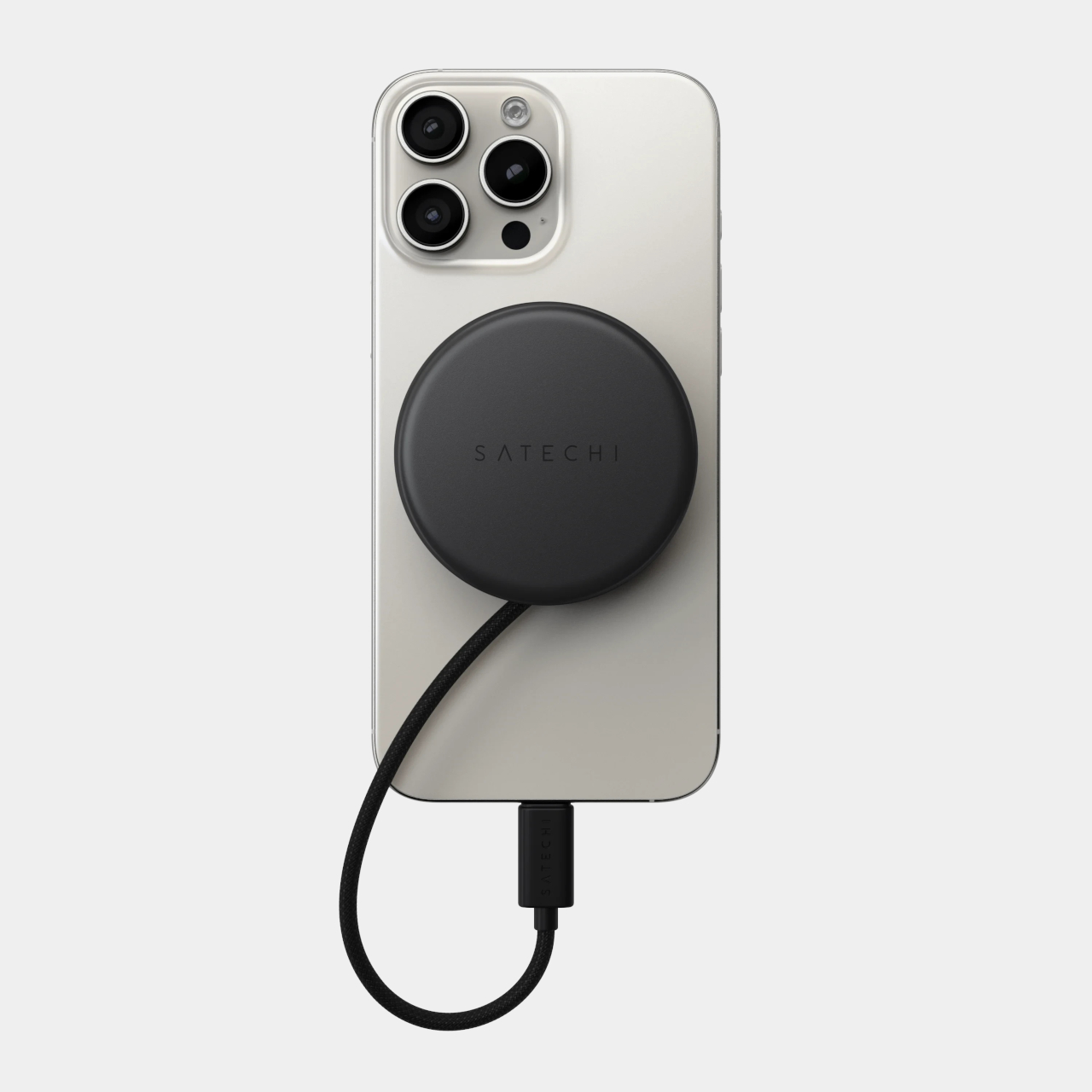
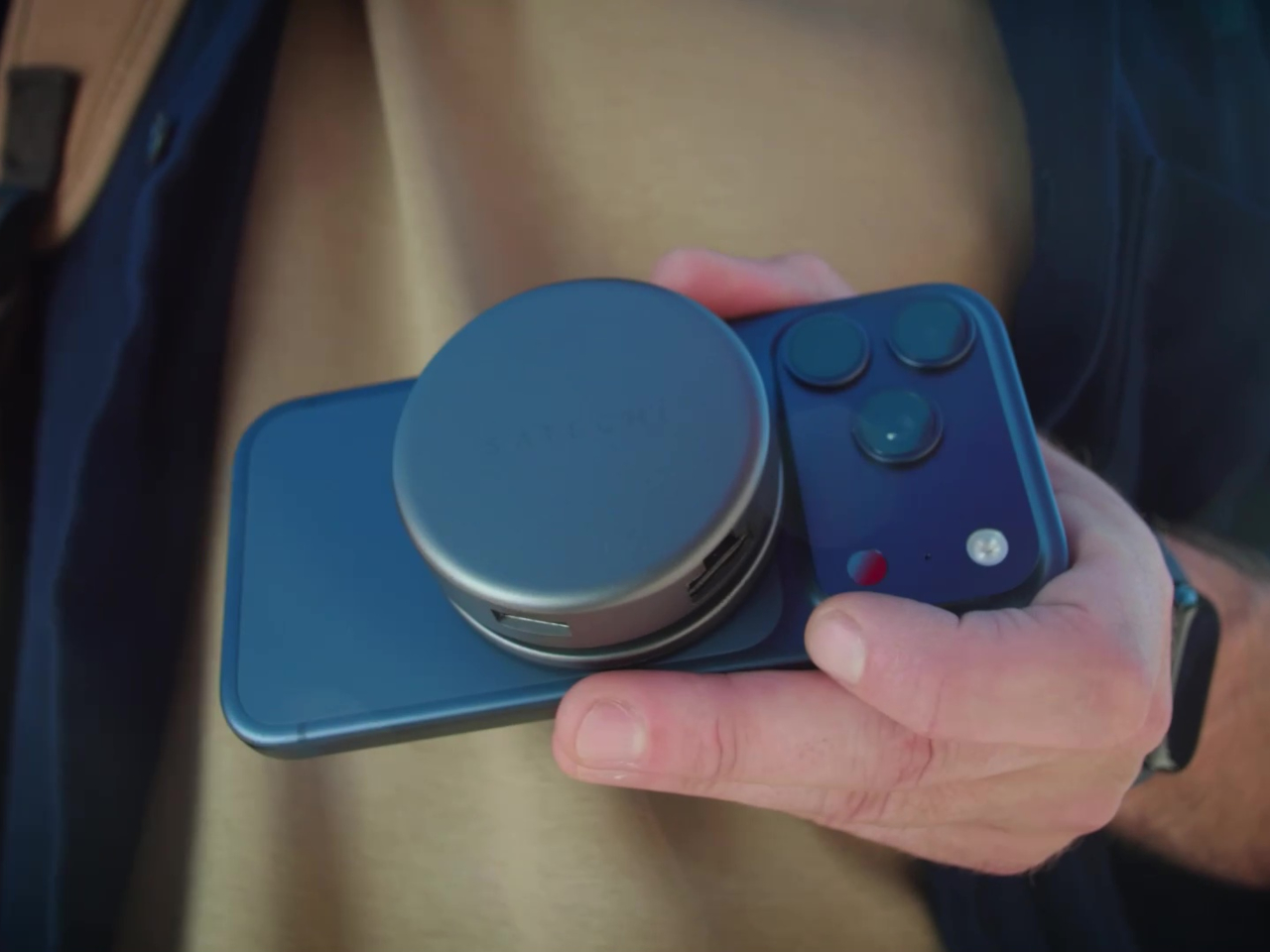
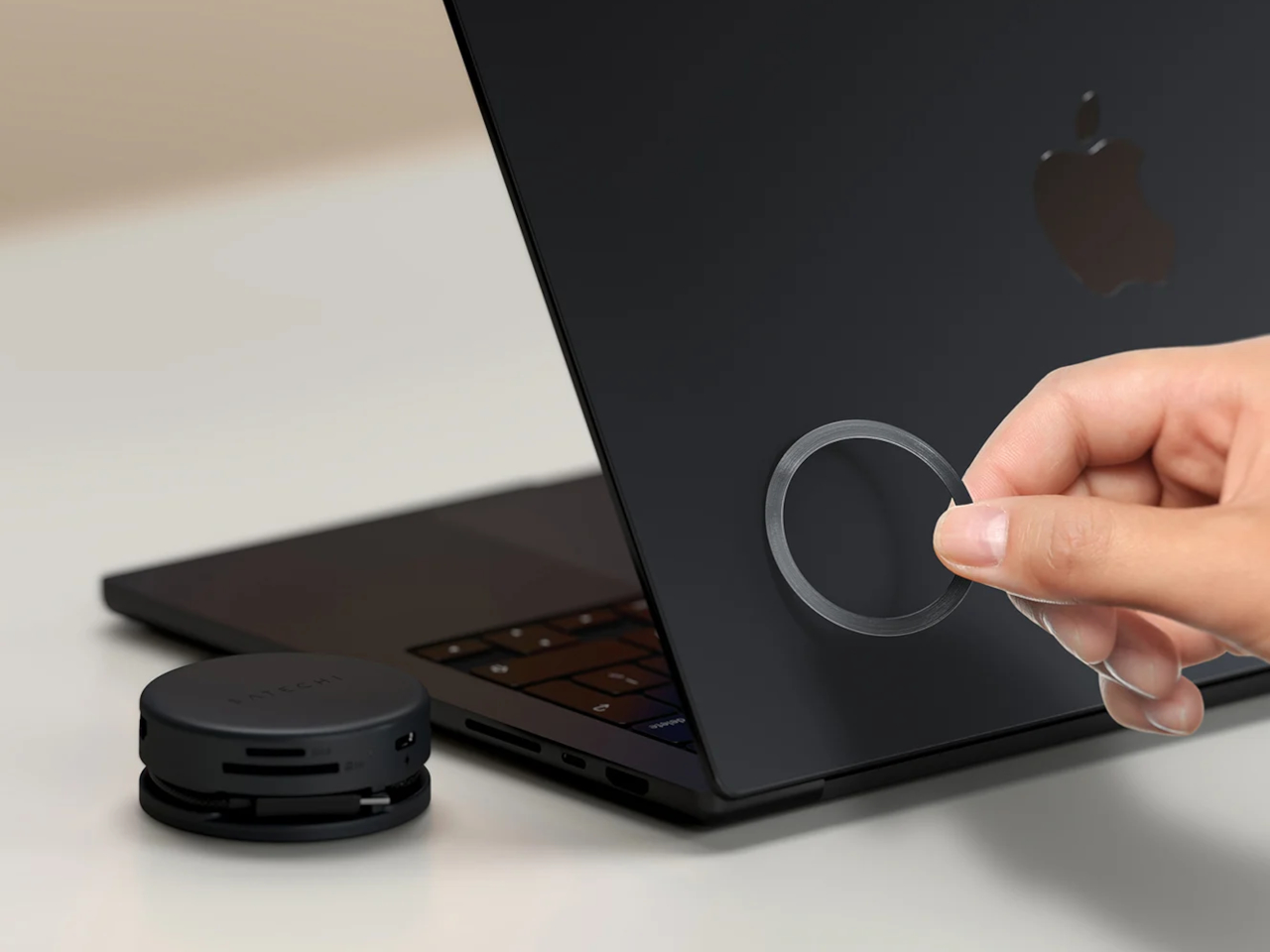
What makes the OntheGo adapter feel genuinely clever is the magnetic mounting. It snaps directly onto MagSafe iPhones, or you can stick the included adhesive ring onto the back of any tablet or laptop to create a magnetic surface. That means the hub stays attached to your device when you pack it away, eliminating the usual hunt through your bag for a missing adapter. It’s a small detail, but one that makes the whole experience feel more intentional.

At $59.99, the OntheGo sits between cheap adapters that barely work and premium options that cost twice as much. For anyone tired of tangled cables and bulky hubs cluttering their bag, that’s a reasonable price for something that actually fits how people work these days. The fact that it magnetically sticks to your devices and stores its own cable means you might actually stop losing dongles in the depths of your backpack for once.

The post Satechi 7-in-1 Hub Retracts Its Cable and Sticks Magnetically first appeared on Yanko Design.

The Best Travel Bags Under $100 Are Made From Recycled Materials

For decades, the gospel of good design was chanted in a simple two-part harmony: form and function. An object had to look good, and it had to work well. But a third, more urgent verse has been added to the chorus in recent years: impact. Today, truly exceptional design must also be responsible design. It has to account for its lifecycle, its materiality, and its effect on the world it inhabits. This evolution in thinking is a necessary one, pushing creatives to solve for more than just aesthetics and ergonomics. It demands a deeper consideration of the entire ecosystem a product touches, from its origin as raw material to its eventual end of life.

This very philosophy is captured with pointed clarity by the mantra behind Uniq’s new Arden line: “Carry Light, Tread Lighter.” The phrase itself serves as a new mission statement for the gear we integrate into our lives. “Carry Light” speaks to the classic tenets of user-centric functionality and minimalist appeal, the tangible feeling of a well-balanced, unobtrusive tool. “Tread Lighter,” however, addresses the critical demand for sustainability, framing each bag not merely as an accessory, but as an artifact of a more conscious era in product design. It’s a compelling narrative that warrants a closer look at the hardware itself to see if the promise holds up.

Designer: Gladys Phan

Click here to Buy Now: 10% off. Use coupon code “YANKOxUNIQ10”. Hurry, deal ends in 48-hours!

Arden Backpack

First in the lineup is the Arden Backpack, an 18-liter pack aimed squarely at the urban professional who rejects the bulky, over-engineered look. It presents a slim, almost architectural profile that hides its generous capacity well. The material story here is central; the entire shell is crafted from a water-resistant rPET ripstop fabric. This means recycled plastic bottles are woven into a durable material with a grid pattern that prevents small tears from becoming catastrophic failures. Inside, the organization is logical, not excessive. A deep, padded sleeve secures a 15-inch laptop, while a few hidden pockets and a magnetic key tether handle the small essentials without demanding you memorize a complex schematic of compartments.

This is a bag that understands its context. A luggage pass-through strap is a non-negotiable feature for anyone who travels, and its inclusion here signals an awareness of the modern workflow, which often blurs the line between the daily commute and a cross-country flight. The backpack’s design feels intentional, a direct counterpoint to bags that scream for attention with countless molle straps and attachment points. Instead, the Arden focuses on quiet competence. It’s for the person who values a clean aesthetic and wants their gear to be a silent partner, reliably performing its function while carrying a lighter environmental weight. It’s a thoughtful execution that respects both the user’s needs and their principles.

Arden Sling Bag

Not every day calls for a full pack. For essentials-only missions, the collection scales down its thinking into a much smaller, nimbler form factor: the Arden Sling Bag. At a compact 2-liter capacity, this is a piece designed for maximum mobility. It’s large enough to accommodate an iPad Mini, a wallet, and a phone, making it a perfect companion for navigating crowded city streets, running quick errands, or traveling where you want your valuables secured to your front. The same durable and eco-conscious rPET ripstop material makes a return, offering protection from an unexpected drizzle.

The sling’s cleverness is in its details. An anti-theft zipper provides a subtle but welcome layer of security, while a quick-release magnetic buckle makes for a satisfyingly fluid on-and-off experience. What really elevates its utility is the detachable strap, allowing the bag to convert from a crossbody sling into a tech pouch you can toss into a larger piece of luggage. This duality transforms it from a single-purpose bag into a versatile component of a larger travel system. It’s a smartly designed piece for the minimalist who has their everyday carry dialed in, proving that a smaller footprint can apply to both physical size and ecological impact.

Arden Tote

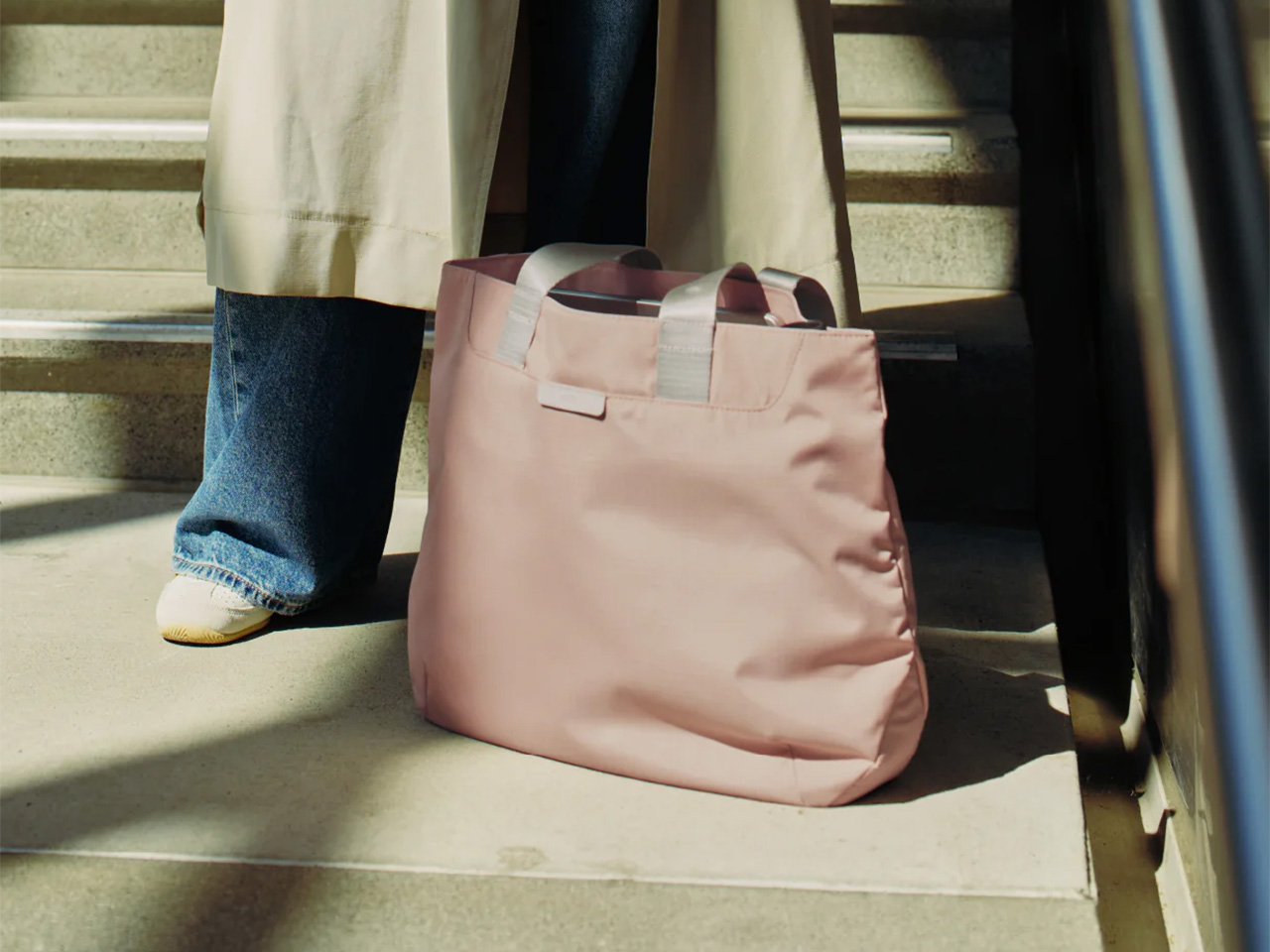
Rounding out the collection is the Arden Tote, a 16-liter bag that tackles one of the most persistent frustrations with the classic tote design. Finally, here is a tote that does not immediately collapse into a puddle of fabric the moment you set it down. Its structured walls give it the ability to stand on its own, making it far easier to load, unload, and access its contents. This simple structural integrity completely changes the user experience, turning a notoriously chaotic bag into an organized and dependable carry-all. It’s a prime example of how a small design intervention can solve a huge usability problem that most other brands simply ignore.

Inside, the tote subverts the “bottomless pit” stereotype with seven distinct compartments, including a padded sleeve for a 15-inch laptop. The magnetic key tether, a signature of the Arden line, ensures your keys are always within reach. Crafted from the same recycled ripstop material, the tote is both resilient and water-resistant, ready to handle everything from a day at the office to a trip to the farmer’s market. It’s built for the person who needs the open-top accessibility of a tote but demands the intelligent organization of a proper work bag, embodying a solution that is both practical and philosophically sound.

The Arden collection successfully translates its core mantra into three distinct, high-performing pieces. They are available now across the full lineup, each in multiple colorways that cover a broad spectrum from understated neutrals to subtle pops of color. The Backpack comes in Nocturne Blue, Driftwood Beige, and Black, offered in both 18L ($89.90) and 24L ($99.90) sizes. The Sling Bag, priced at $45.90, is available in Midnight Black, Driftwood Beige, Nocturne Blue, and Blush Coral (sometimes listed as Pink). The Tote Bag rounds out the series at $65.90 with its 16L capacity in Driftwood Beige, Black, and Blush Coral. All three bags ship with a one-year limited warranty that covers defects in materials and workmanship, with the option to extend to two years when you register the product using its serial number through Uniq’s official site.

Click here to Buy Now: 10% off. Use coupon code “YANKOxUNIQ10”. Hurry, deal ends in 48-hours!

The post The Best Travel Bags Under $100 Are Made From Recycled Materials first appeared on Yanko Design.

RITFIT M2 Smith Machine: A Complete Home Gym in 23 Sq. Ft.

Home gyms usually mean choosing between what you want and what fits. A power rack takes up the space that cables need. Cable systems leave no room for free weights. Buy multiple machines, and spare rooms turn into equipment warehouses where getting to the actual workout requires navigating around gear. Safety becomes another issue when lifting heavy alone without the spotting or the guided rails that commercial gyms provide.

The RITFIT M2 combines a Smith machine, power rack, cable station, and storage into roughly 23 sq. ft. by stacking everything vertically and using attachments that pull double duty. Four configurations range from stripped-down to fully loaded with weight stacks, letting you match the setup to how you train instead of adapting your workouts around what the equipment allows.

Designer: RITFIT

Click Here to Buy Now: $1870 $2199.99 ($329.99 off). Hurry, deal ends in 48-hours!

The frame uses thick steel uprights with black and red finishes that look serious. 2,000 lbs total capacity means heavy squats and deadlifts happen without stability concerns. The construction feels planted when you’re under a loaded bar, which matters more than numbers suggest until you’re actually using it and trusting the frame to hold.

Smith machines guide barbells vertically for exercises like squats and bench press when training solo. The three-dimensional version adds horizontal movement to vertical travel, letting the bar move more like it does during free weight lifts. Bodies don’t move in perfect straight lines naturally, so equipment that allows some horizontal drift builds strength that transfers better outside the gym.

Cable stations on both sides feature pulleys that are adjustable along the full upright height. Pro models include weight stacks with thirteen plates per side that adjust through selector pins. Base versions use plate loading, which costs less and delivers the same exercise range with slightly more setup time between weight changes.

Sixteen adjustment holes mean bars, safety arms, and cable attachments position exactly where your height and exercise selection require them. Tall lifters set things higher. Shorter athletes drop everything down. The system adapts to you rather than forcing average positions that work poorly for most people, regardless of what equipment manufacturers claim.

Storage pegs and hooks keep plates and attachments organized instead of scattered. The machine stays tidy even in smaller rooms where equipment typically dominates every surface. Everything needed for a session stays within reach, eliminating those annoying trips across the room to grab different handles or bars that somehow migrated since the last workout.

Morning sessions might start with pull-ups flowing into cable rows and shoulder work, finishing with Smith squats that feel secure alone. Evening training could hit chest and arms entirely through cables and dips. Weekends might mean sharing the machine with family who adjust everything to their heights in seconds using those selector pins on Pro versions.

The system works equally well for building strength through heavy compounds, bodybuilding splits isolating specific muscles, functional training mixing movement patterns, or careful rehab requiring controlled ranges. The modular design supports these different approaches without requiring new equipment purchases as goals change or training phases rotate throughout the year.

The RITFIT M2 delivers what commercial gyms offer within footprints where traditional multi-machine setups would create chaos. It handles comprehensive training across different fitness goals while maintaining the safety rails, weight capacity, and exercise variety serious progression requires, all without consuming entire rooms or forcing constant compromises between what you want to do and what the equipment actually allows.

Click Here to Buy Now: $1870 $2199.99 ($329.99 off). Hurry, deal ends in 48-hours!

The post RITFIT M2 Smith Machine: A Complete Home Gym in 23 Sq. Ft. first appeared on Yanko Design.

Audi Concept C Hands-On: When Athletic Minimalism Becomes Tangible Reality

At Audi’s Formula 1 event in Munich, I finally got hands-on time with the Concept C that sat on display. Between interviews, roundtable and briefings on F1 operations and facility tours, I had uninterrupted access to experience every surface, control, and detail I’d only theorized about in my September analysis of the Concept C’s athletic minimalism philosophy. This wasn’t a drive review. This was the kind of access that lets you understand whether a design philosophy actually translates from renderings and press materials into physical reality.

Designer: Audi

What I found validated nearly everything I wrote three months ago while also revealing gaps that photographs and specifications simply cannot capture. Some design elements photograph better than they feel. Others hide their sophistication until your hands confirm what your eyes suspected. The Concept C falls decisively into the latter category.

The Vertical Frame Confronts You Differently in Person

Photographs suggested authority. Physical presence delivers something closer to architectural permanence. The vertical frame that defines the Concept C’s face doesn’t just command attention when you approach. It fundamentally alters your spatial relationship with the car.

Most sports cars crouch. The Concept C stands. This creates an unexpected psychological effect. You don’t feel like you’re approaching a predatory machine that wants to intimidate you. You feel like you’re approaching a piece of industrial sculpture that happens to be engineered for motion. The distinction matters more than I anticipated when writing about this design from press images.

The vertical orientation creates visual weight without aggression, exactly as Audi’s design team intended. But the physical execution elevates this from interesting design choice to genuinely novel automotive presence.

That Cylindrical Center Console Element Exceeds Expectations

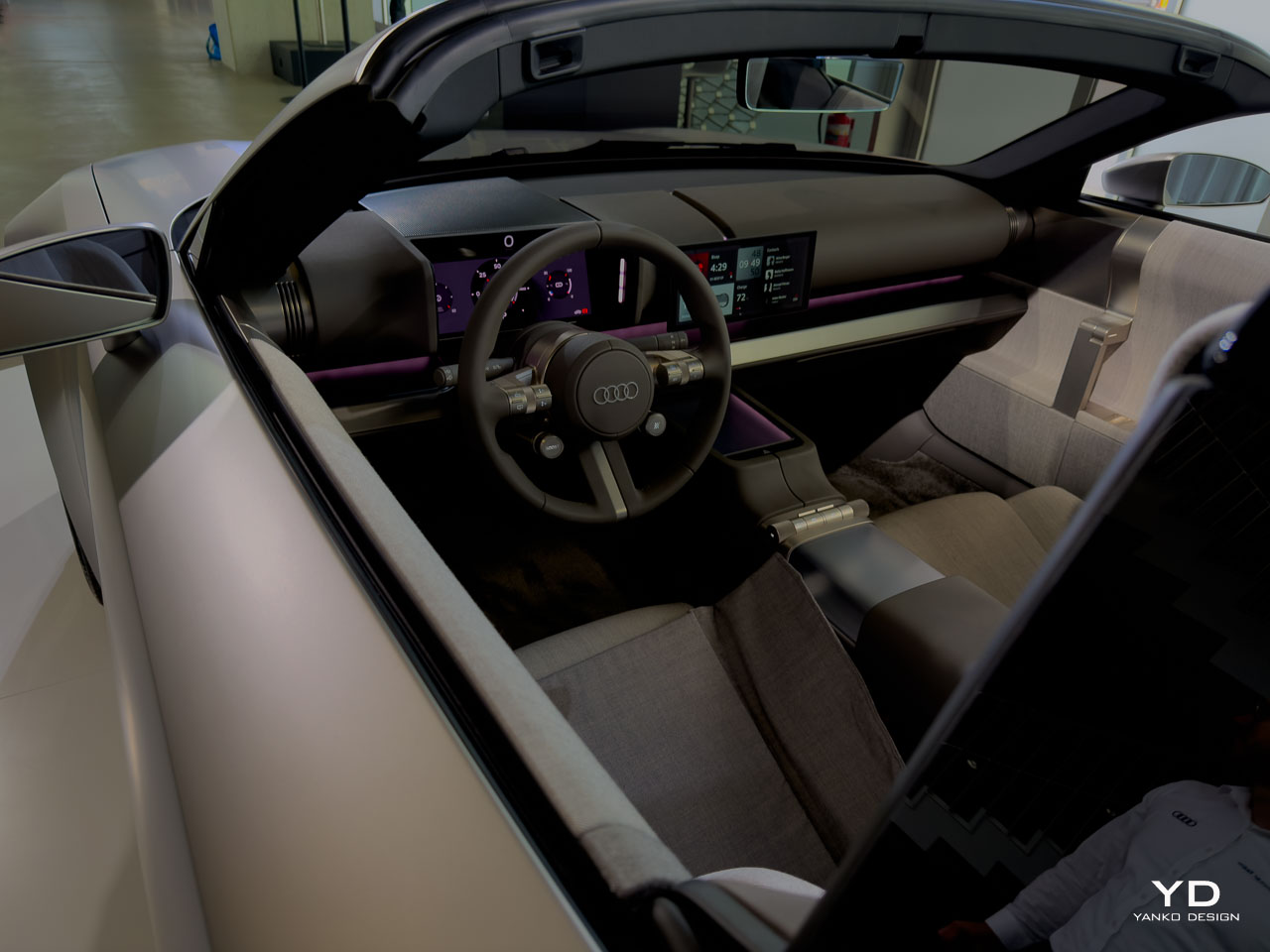
I wrote in September that this single component made me “giddy as a designer” based on photographs. Seeing it in person, feeling the machined surfaces, rotating it through its detent positions: I underestimated its impact.

This isn’t automotive jewelry. This is mechanical watchmaking philosophy applied to interior controls. The tolerances are absurd. When you rotate the cylinder, each detent click communicates precision through sound, resistance, and tactile feedback simultaneously. The aluminum surface treatment creates visual depth through subtle anodizing variations that photographs flatten into uniform gray.

Under Munich’s overcast afternoon light, the cylinder surface revealed micro-textures that shift as your viewing angle changes. This component alone justifies the athletic minimalism philosophy because it demonstrates how eliminating visual complexity forces every remaining element to achieve perfection.

I spent probably three minutes just rotating this control and feeling the mechanical quality. Each click produces the same resistance. Each detent holds position with identical firmness. This is the kind of obsessive engineering refinement that luxury brands promise but rarely deliver. The Concept C delivers it in a component most drivers will interact with dozens of times per drive.

That consistency between philosophy and execution separates serious design work from concept car theatrics.

The Steering Wheel Fulfills Its Round Promise

My September analysis praised the steering wheel’s return to pure circular form after years of flat-bottom, button-laden steering wheels became industry standard. Holding it confirms the decision’s wisdom.

Your hands find natural positions immediately. The rim diameter feels slightly larger than typical sports car wheels, which initially seems counterintuitive until you realize the extra circumference distributes grip pressure more evenly during spirited driving. The machined aluminum spokes telegraph structural purpose without decorative pretense.

When you grip the wheel and apply rotational force (not enough to actually turn the stationary wheels, just enough to test structural rigidity): zero flex. Zero creaking. Zero anything except the sensation of holding something engineered to communicate road surface information without filtration or interpretation.

Modern steering wheels often feel like they’re designed to protect you from feedback. This wheel feels designed to deliver it. The absence of buttons, paddles, and switches reinforces the minimalist commitment. In an era when steering wheels increasingly resemble game controllers, this wheel returns to its core purpose: connecting human inputs to mechanical outputs with maximum fidelity and zero distraction.

Every other function lives in its proper place, leaving the steering wheel to focus on steering.

The Retractable Hardtop Mechanism Reveals Sophisticated Engineering

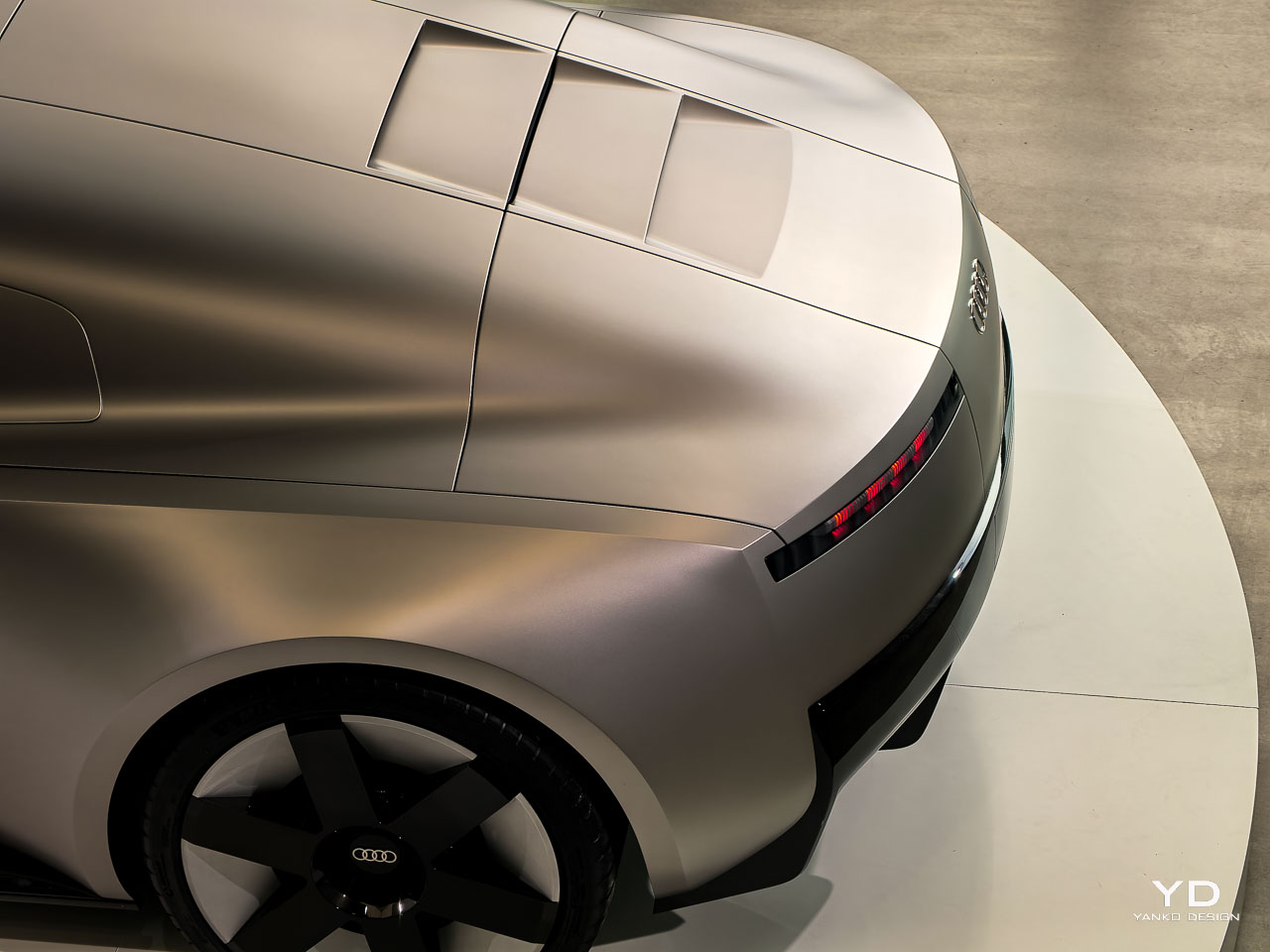
I watched the roof cycle through its transformation sequence twice. The two-element system maintains the monolithic silhouette exactly as promised in official descriptions. What those descriptions don’t communicate: the mechanical choreography’s absolute precision.

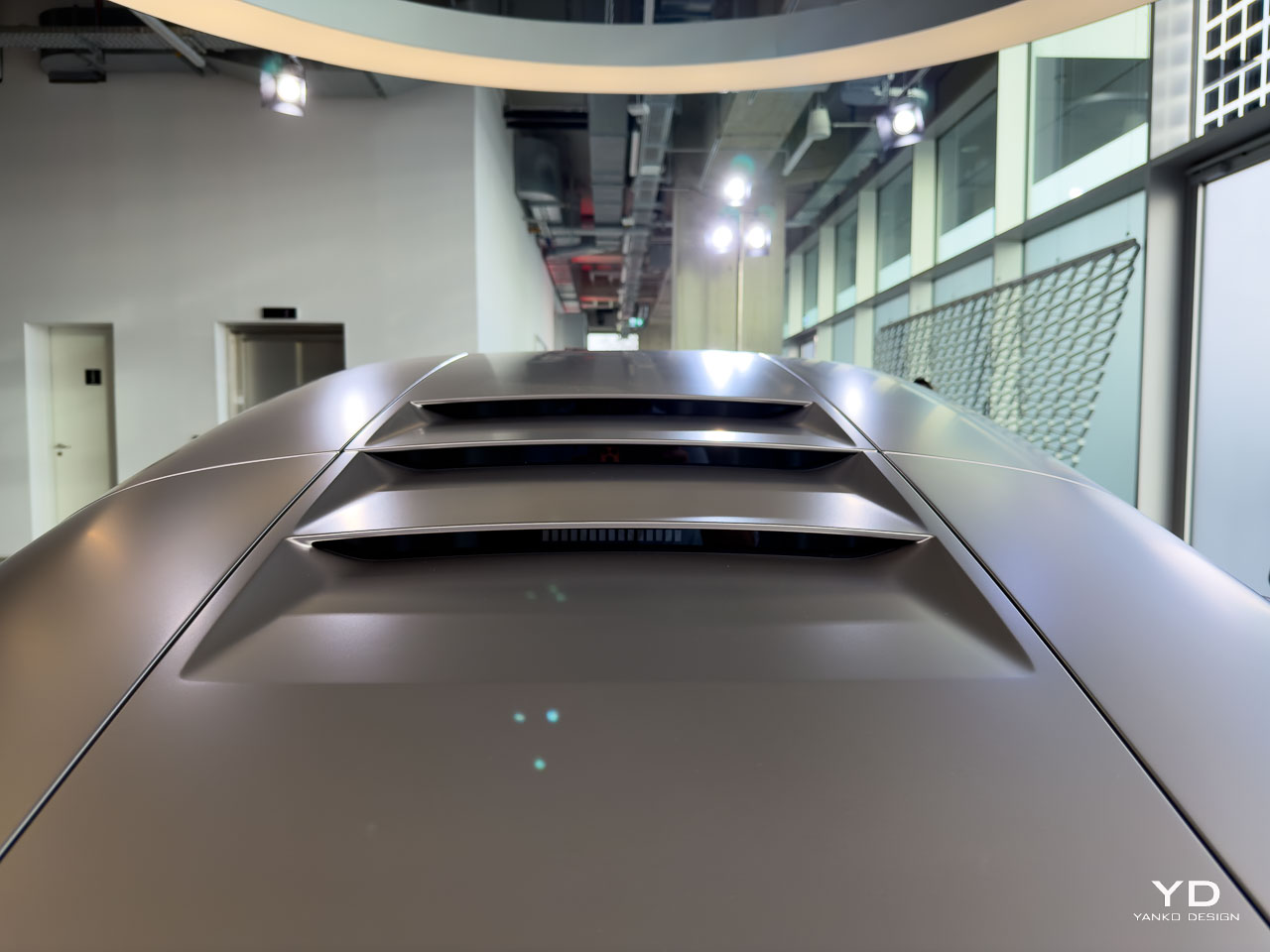
The roof elements move in coordinated sequence with zero hesitation, zero adjustment, zero apparent searching for alignment points. Most retractable hardtops reveal their compromise through visible gaps, adjustment pauses, or mechanical complexity that dominates the aesthetic when deployed. The Concept C’s system disappears completely when lowered.


The rear deck maintains clean surfacing without visible storage bulges or panel interruptions. When raised, the roofline integrates so seamlessly that you’d never suspect it retracts. This achievement separates competent engineering from obsessive refinement.

What Static Observation Cannot Reveal (And What It Can)

Twenty minutes of hands-on time creates different understanding than twenty minutes of driving would provide. I cannot tell you how the Concept C handles mountain roads or how the electric powertrain delivers power through corner exits. Those experiences require the motion I didn’t get.

But I can tell you that athletic minimalism creates manufacturing challenges that traditional design approaches avoid. The center console cylinder alone probably costs more to manufacture than entire interior control assemblies in volume-market vehicles. The steering wheel’s machined aluminum components require precision manufacturing that doesn’t scale easily. The hardtop mechanism’s sophisticated engineering demands expensive components and careful assembly.

Athletic minimalism creates cost pressures that traditional design approaches avoid by hiding cheaper materials behind visual complexity.

I left my Munich appointment with the Concept C convinced of two things: First, this design philosophy works in physical reality as effectively as it promised on paper. Second, production versions will necessarily compromise somewhere between current concept execution and market realities.

The question that matters: which compromises will Audi accept, and will the production car maintain enough of this concept’s essence to justify the bold philosophical claims.

What Hands-On Time Confirms

Three months ago I analyzed the Concept C from photographs, specifications, and official descriptions. I concluded that athletic minimalism represented genuine design evolution rather than momentary styling exercise. Forty minutes of physical interaction with surfaces, mechanisms, and materials confirms that assessment while deepening appreciation for execution quality.

The Concept C demonstrates that radical simplicity creates more challenges than traditional complexity because every remaining element must achieve excellence. Audi met those challenges in this concept. Whether production versions maintain this standard determines if athletic minimalism becomes genuine brand direction or remains concept car philosophy that reality couldn’t sustain.

But today, standing in Munich with the vertical frame commanding presence in front of me and that perfect cylindrical control under my fingertips, I experienced design philosophy transformed into tangible reality. The question isn’t whether this approach works. The question is whether the automotive industry possesses sufficient courage to follow where Audi leads.

The post Audi Concept C Hands-On: When Athletic Minimalism Becomes Tangible Reality first appeared on Yanko Design.

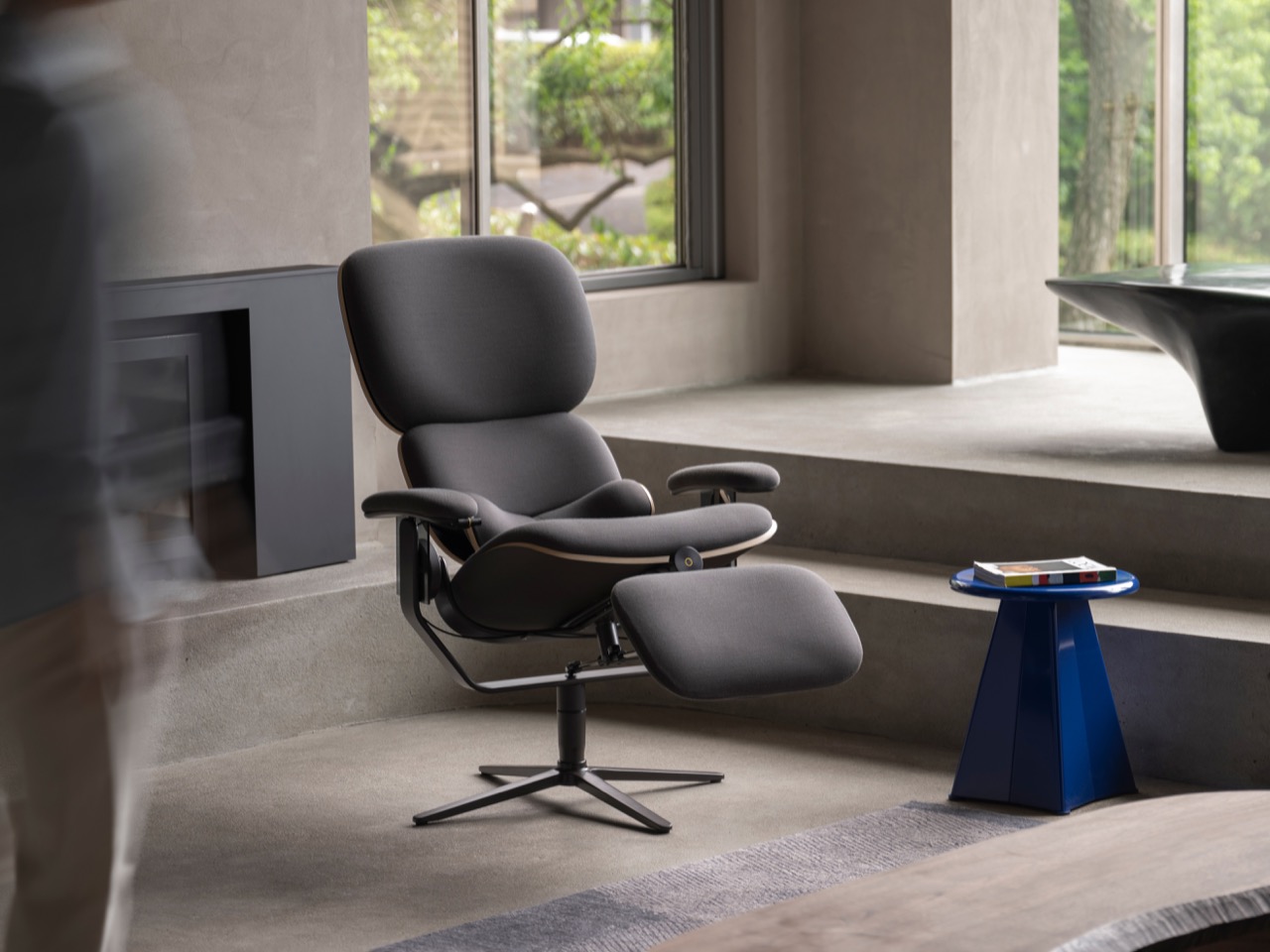
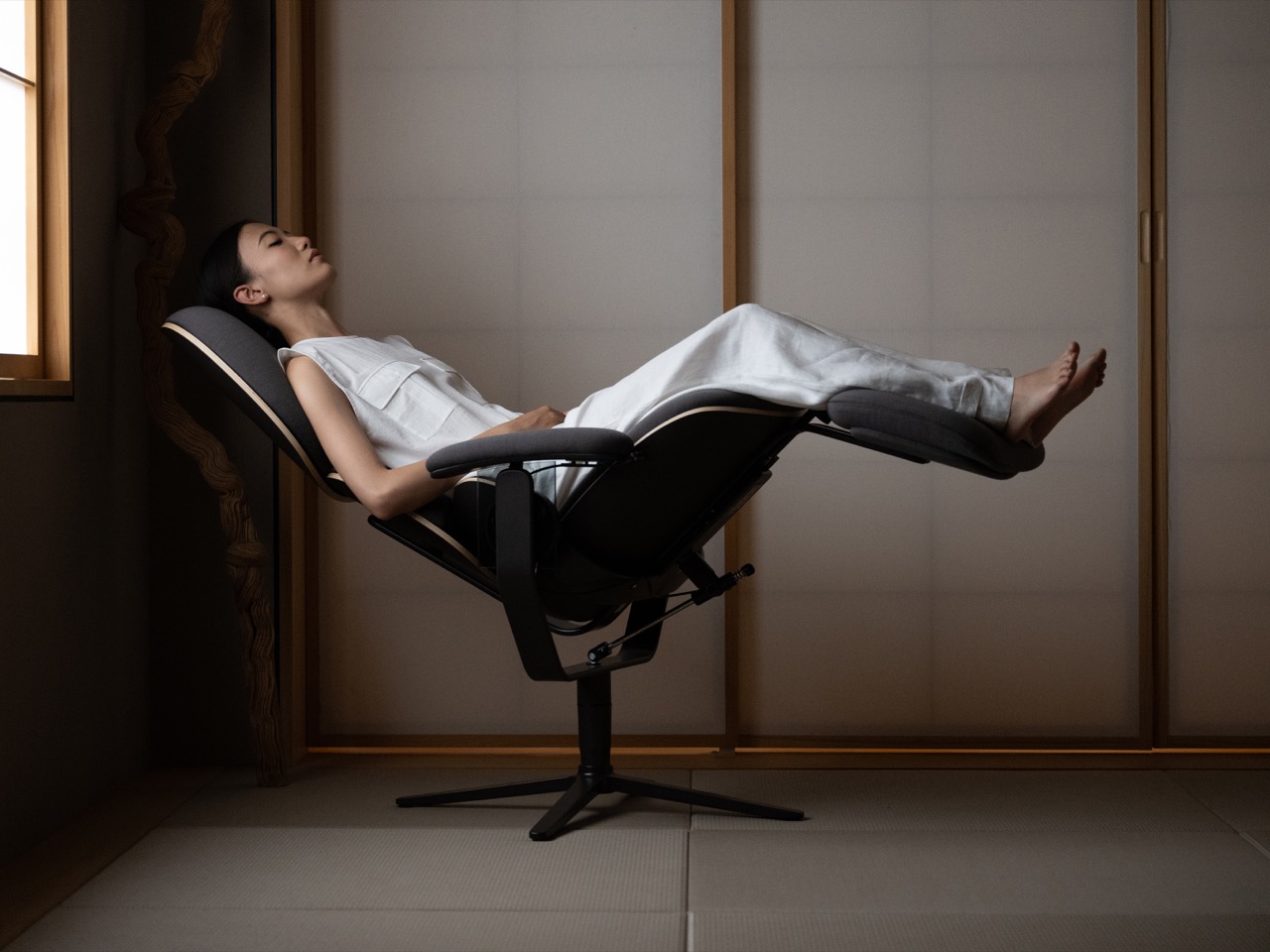
This £5,700 ‘Weightless’ Recliner Is So Sensitive, It Responds To Your Breathing Patterns

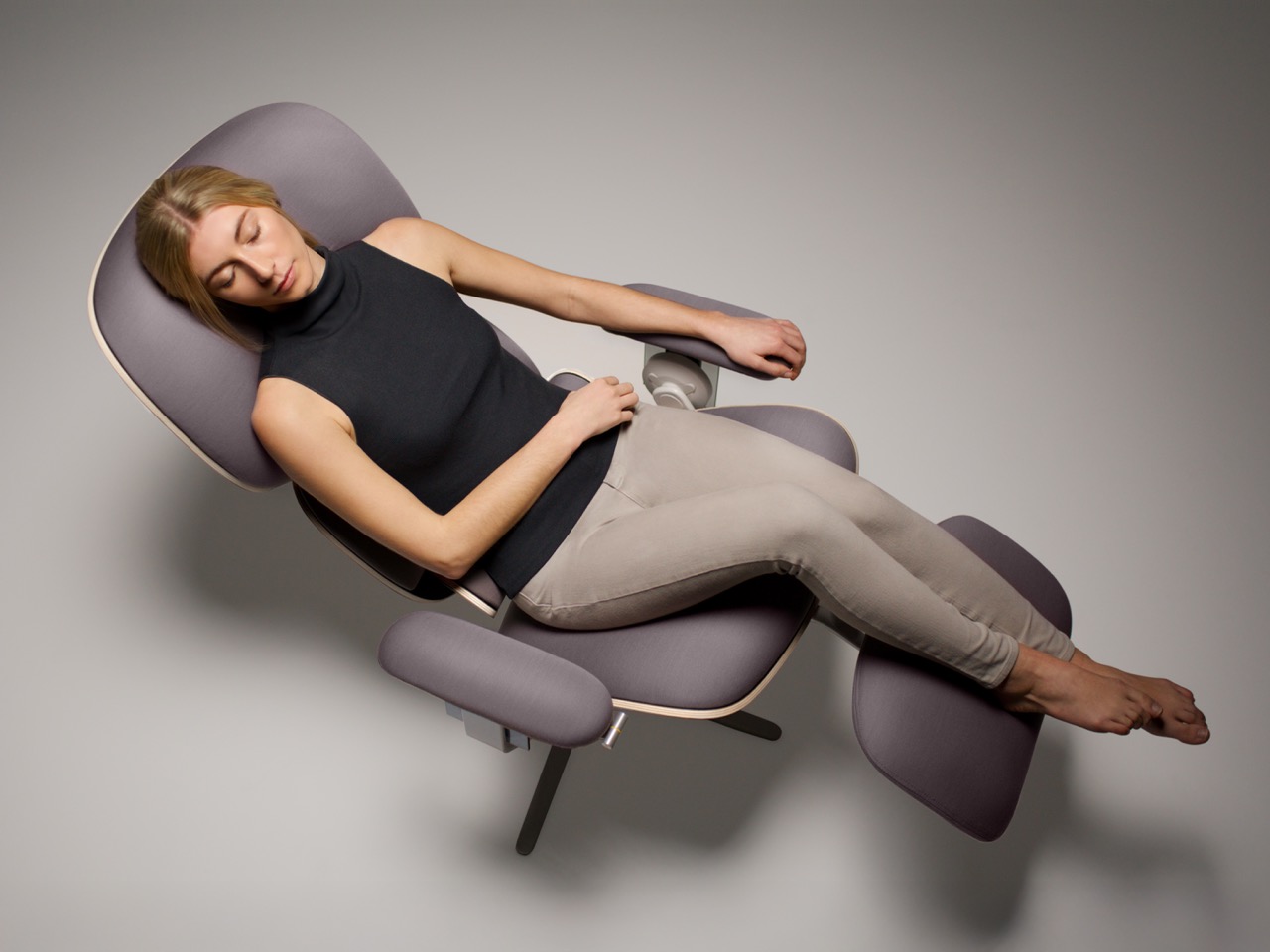
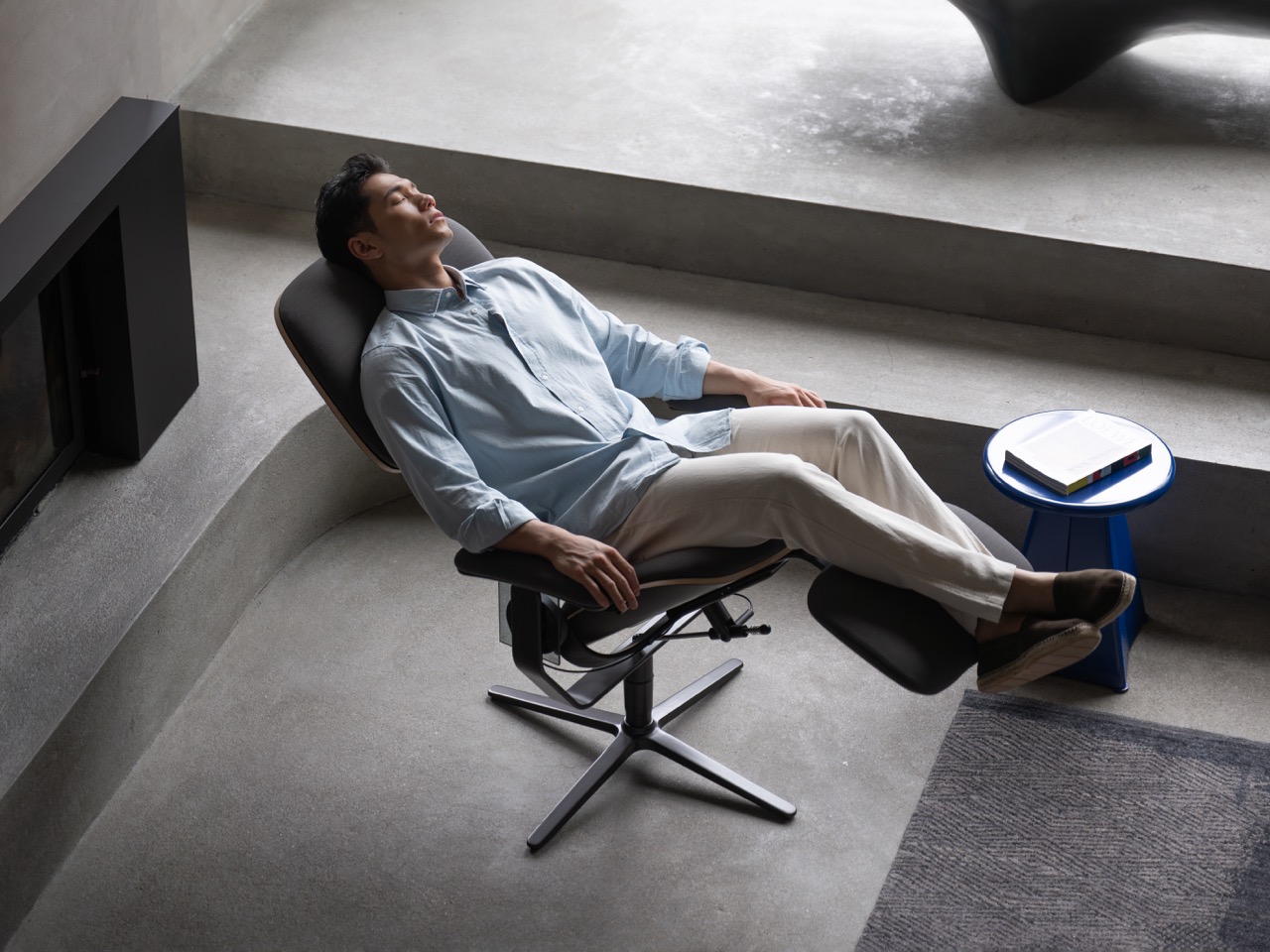
Weightlessness as a design goal is usually reserved for space agencies or sensory deprivation tanks. DavidHugh decided to build it into a chair. The Aiora uses what they call Floatation technology, a system of planar motion mechanics so sensitive that the act of breathing creates visible movement. You’re held in perfect equilibrium with zero external force, which sounds like marketing copy until you realize there are published neuroscience studies backing up their claims about induced meditative states.

This is the culmination of two decades of work from a Cambridge-based team that started in furniture design and ended up deep in biomedical engineering and consciousness research. The new model, priced at £5,700, follows their flagship Elysium chair and aims to be more accessible while maintaining the core technology that makes DavidHugh interesting: the ability to disconnect users from external sensory input and redirect their awareness inward, all through precision-engineered mechanics.

Designer: DavidHugh

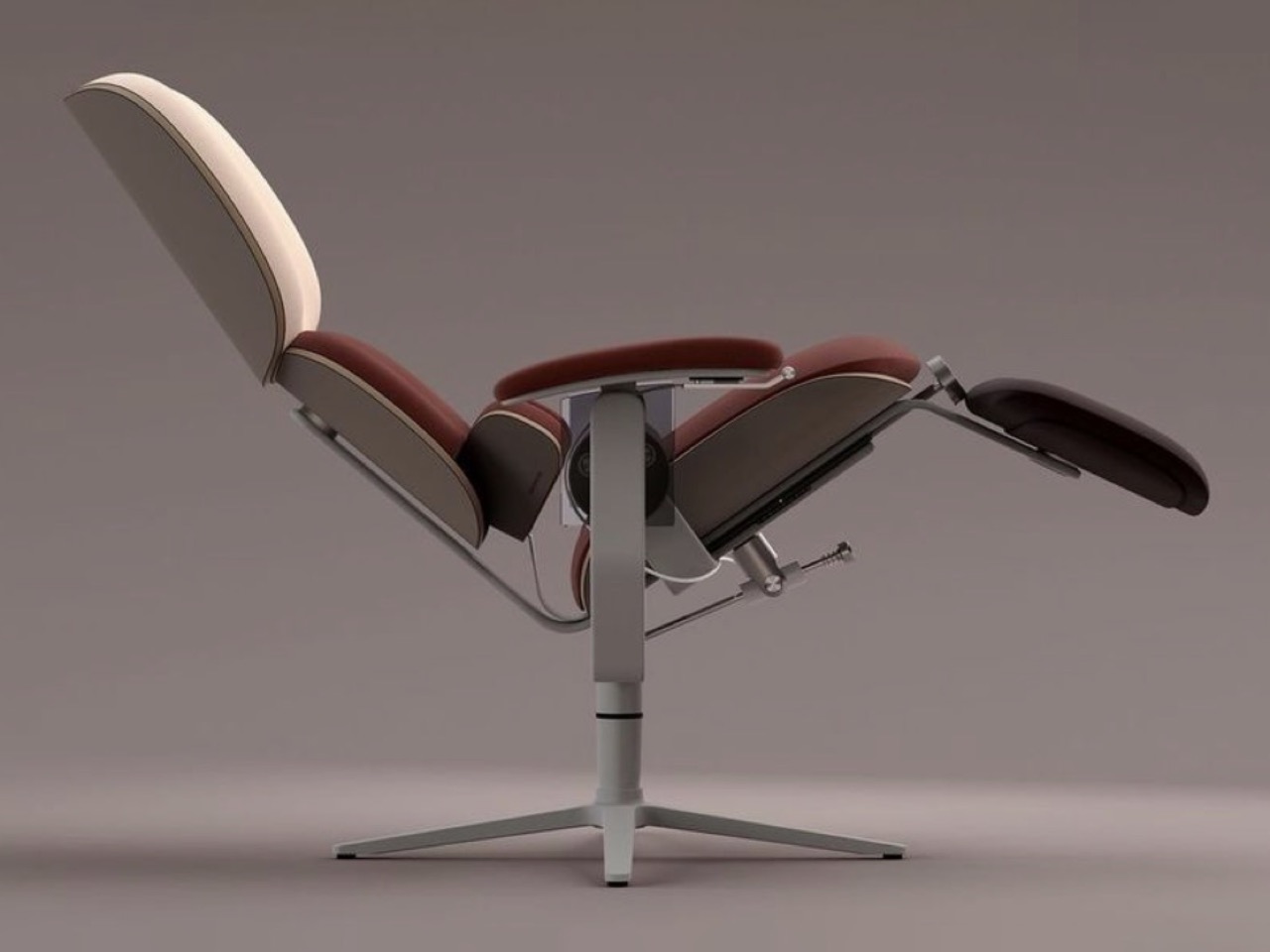
The tech itself is refreshingly analog in an era obsessed with app-connected everything. There are no motors, no springs, no batteries to charge. The Floatation system relies on roller bearings moving along a specific path to create what the company describes as frictionless continuous balance. In practice, this means you can shift positions without the usual resistance or effort, and the chair responds to the slightest movement, including the rise and fall of your chest as you breathe. The sensation has been compared to saltwater flotation, where the buoyancy removes the constant feedback your body gets from gravity and surfaces.

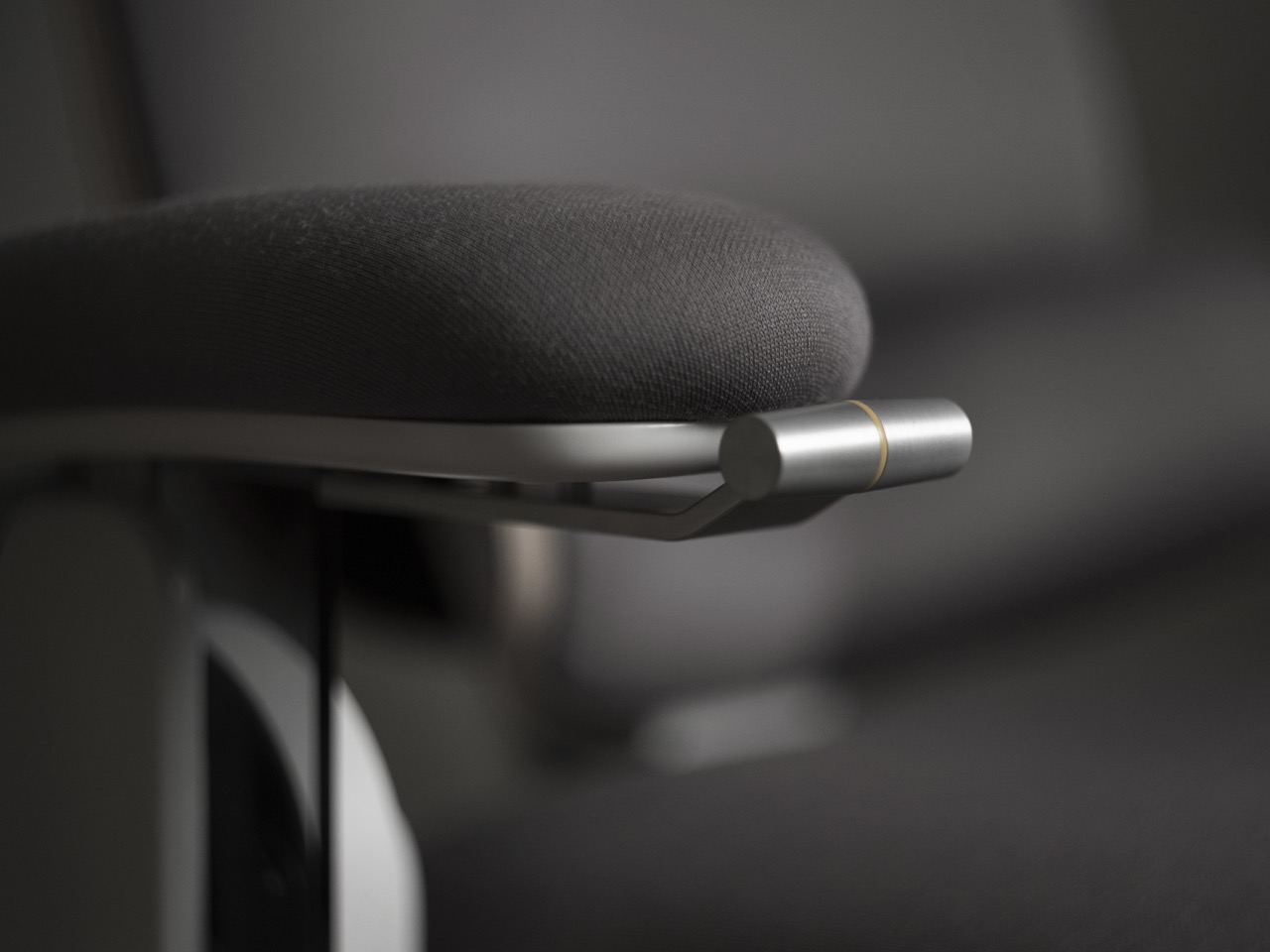
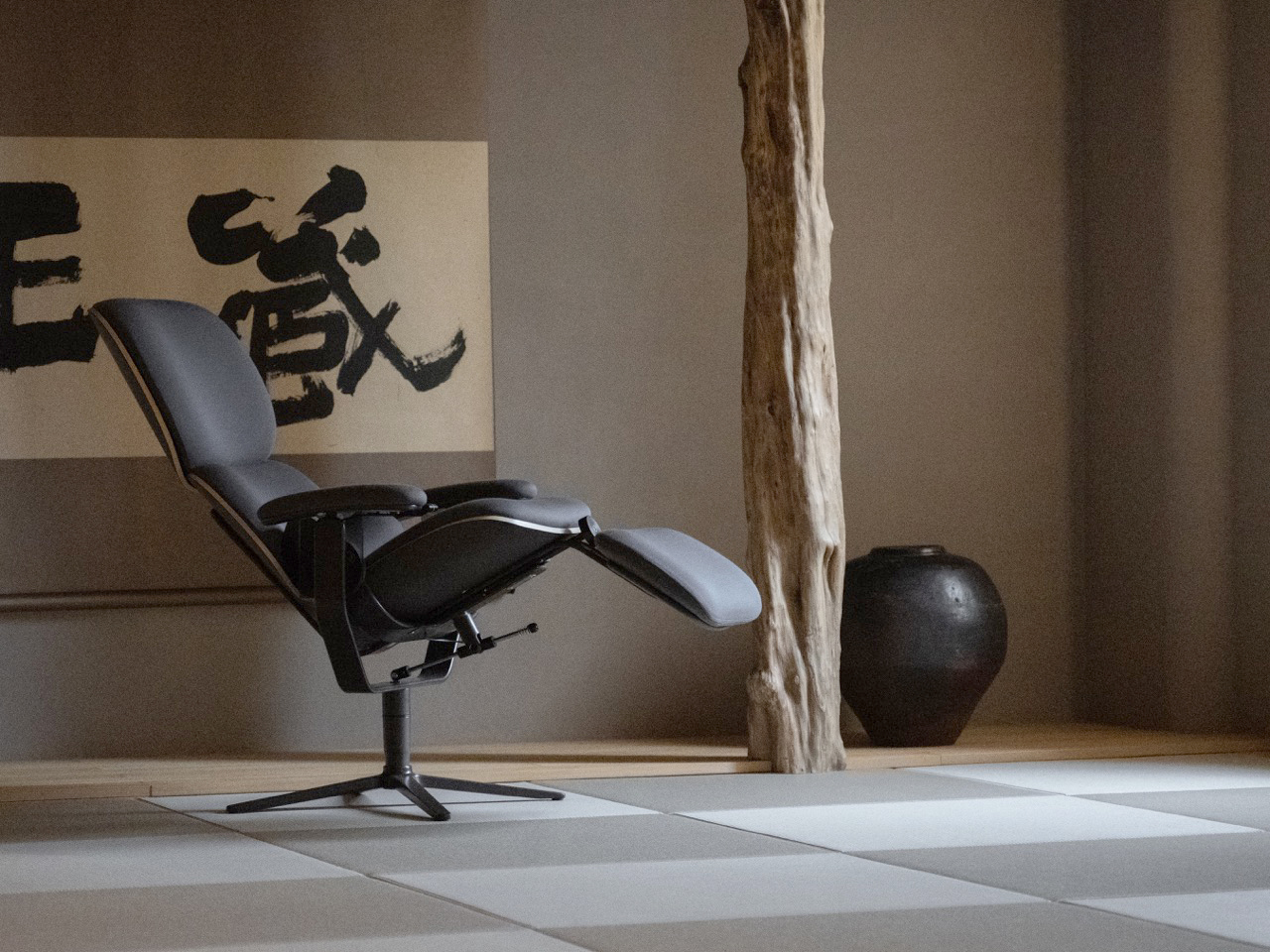
Construction-wise, the Aiora leans heavily into modular design and premium materials. The frame is precision-engineered aluminum and steel, double powder-coated for durability. The shells incorporate Fenix surfaces from Italy, known for their soft-touch matte finish and self-healing properties. Cushioning comes with options for Danish Kvadrat wool-blend fabrics or full Muirhead leather, depending on whether you’re going for the Monochrome collection (minimalist elegance), Soul (vibrant colors), or Signature (full leather craftsmanship). The modular approach also means the chair is designed for servicing, renewal, and upgradability, which is a smart counter to the usual luxury furniture model of “buy it once, keep it forever or landfill it.”

What’s compelling here isn’t just the engineering, though that’s certainly part of the appeal. It’s the way DavidHugh is positioning this as wellness technology rather than furniture. The neuroscience research they’ve published shows EEG patterns in first-time users that mirror advanced meditators, people who have spent years developing that capacity. If those findings hold up under scrutiny, it suggests the chair isn’t just comfortable, it’s actively creating conditions for specific brain states that are usually only accessible through extensive practice or pharmaceutical intervention.

That shifts the value proposition considerably. At £5,700, you’re not paying for a really nice recliner. You’re paying for access to a mental state that would otherwise require significant time investment or specialized environments like float tanks. Whether that’s worth it depends entirely on how much value you place on meditative states and whether you trust the research, but the ambition is undeniable.

The post This £5,700 ‘Weightless’ Recliner Is So Sensitive, It Responds To Your Breathing Patterns first appeared on Yanko Design.

Is This The Most Ergonomic Mouse Ever Designed Or Just Another Ambitious Idea?

Memory foam mattresses have continuously been pitched as the most ergonomic surfaces to sleep on. The way they work is by being a standard shape, but contouring to your body when you lie down on them, adapting exactly to your profile. It’s a brilliant example of a cookie-cutter product that is truly ergonomic for almost everyone. Somehow consumer tech didn’t get the memo on this…

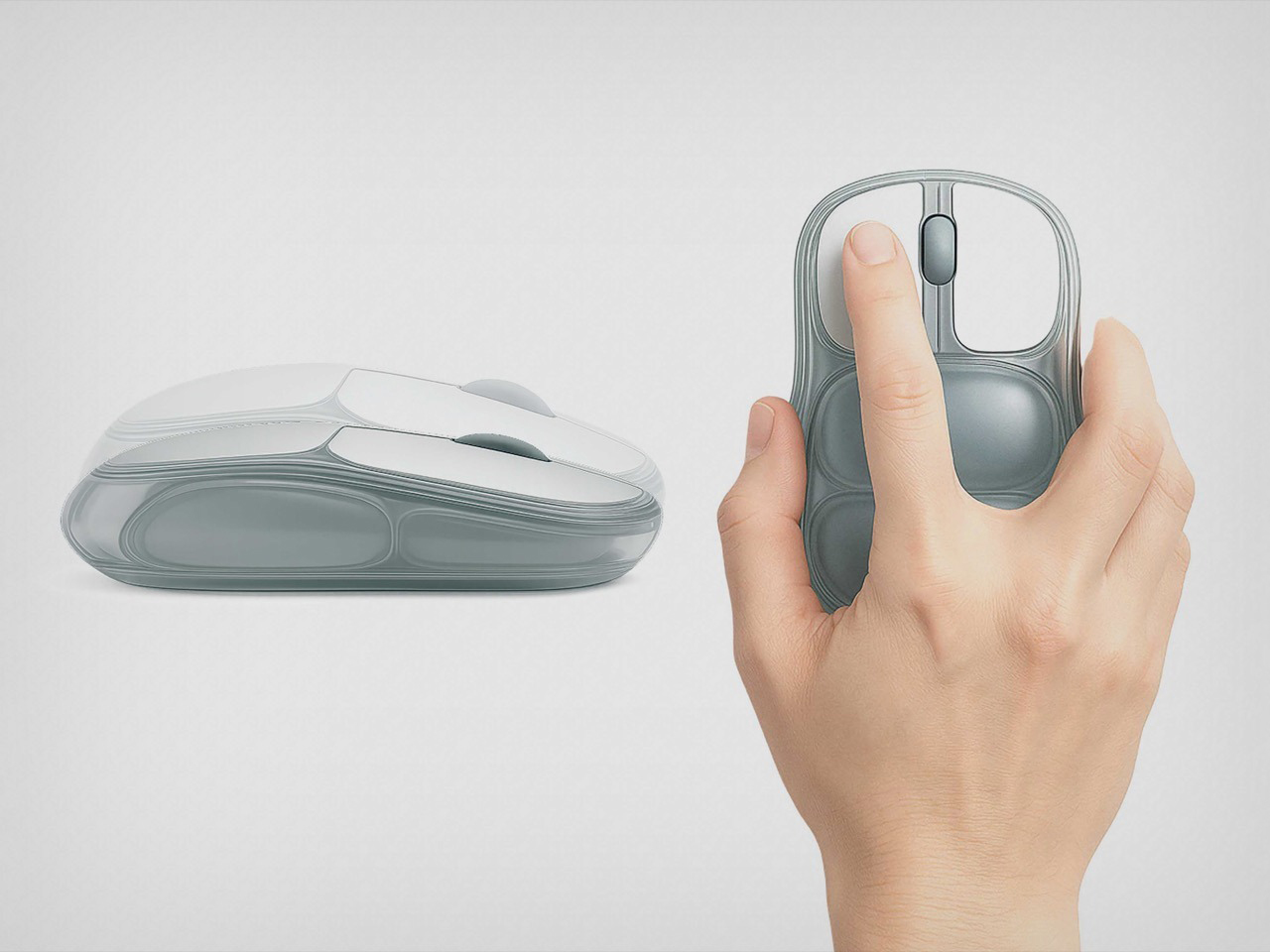
Last week I covered this ‘hideous but comfortable’ ergonomic mouse, designed using play dough and 3D printing. The problem with such a mouse is that it took ergonomics too seriously, and still resorted to a rigid 3D printed outer shell. But what if you just applied memory-foam-style ergonomics to consumer tech? What if you could make a mouse that just fits to the shape of your hand rather than the other way around? This Red-Dot Award-winning ergonomic mouse proposes something pretty clever – a computer peripheral with an inflatable body that you can ‘adjust’ to the shape of your palm. Two cushions, both independently adjustable, give you a mouse that’s made for YOU, not a mouse that touts ergonomics but may or may not work for your hand shape, wrist flexibility, or finger size.

Designer: iRest Health Science and Technology Co., Ltd.

The mouse, designed by iRest Health Science and Technology, is just a concept for now, but it does make a fairly radical proposal that a lot of companies could consider for breaking the mold on ergonomic devices. The mouse looks standard at first, but the palm rest features two air-filled cushions that can be adjusted via a smartphone app. Increase or decrease their size through the app, and the shape of the mouse inherently changes, fitting your palm just the way you need it. The result is a mouse that’s calibrated to YOUR hand.

Admittedly, the idea is fabulous but the execution is a little janky. This mouse would effectively need air pumps to intake or release the air, which would result in a severe drain on batteries while complicating the build. The immediate solution is to not use air at all, but rely on something more convenient. In-ear monitors rely on silicone gel implants for a bespoke fit, but those are administered by medical professionals. However, imagine a mouse with a silicone outer shell that can be molded to your hand. Or perhaps a series of mechanical parts that can be adjusted to shape the mouse based on palm height, etc – sort of like how you adjust parts on an ergonomic chair.

For now, this is just a concept, but it proposes a fairly new idea as far as ergonomic tech is considered. For too long, we’ve seen ergonomic tech that is painstakingly designed for the 95th percentile, but seldom is as comfortable as something that is truly tailor-made FOR you. We’ve covered inflatable mice before, funnily enough, and those concepts were manually inflated, which also sounds like a fairly good option. I wouldn’t mind someone actually building a prototype!

The post Is This The Most Ergonomic Mouse Ever Designed Or Just Another Ambitious Idea? first appeared on Yanko Design.

Bang & Olufsen celebrates 100 years with the Beolab 90 Titan Edition floorstanding speakers

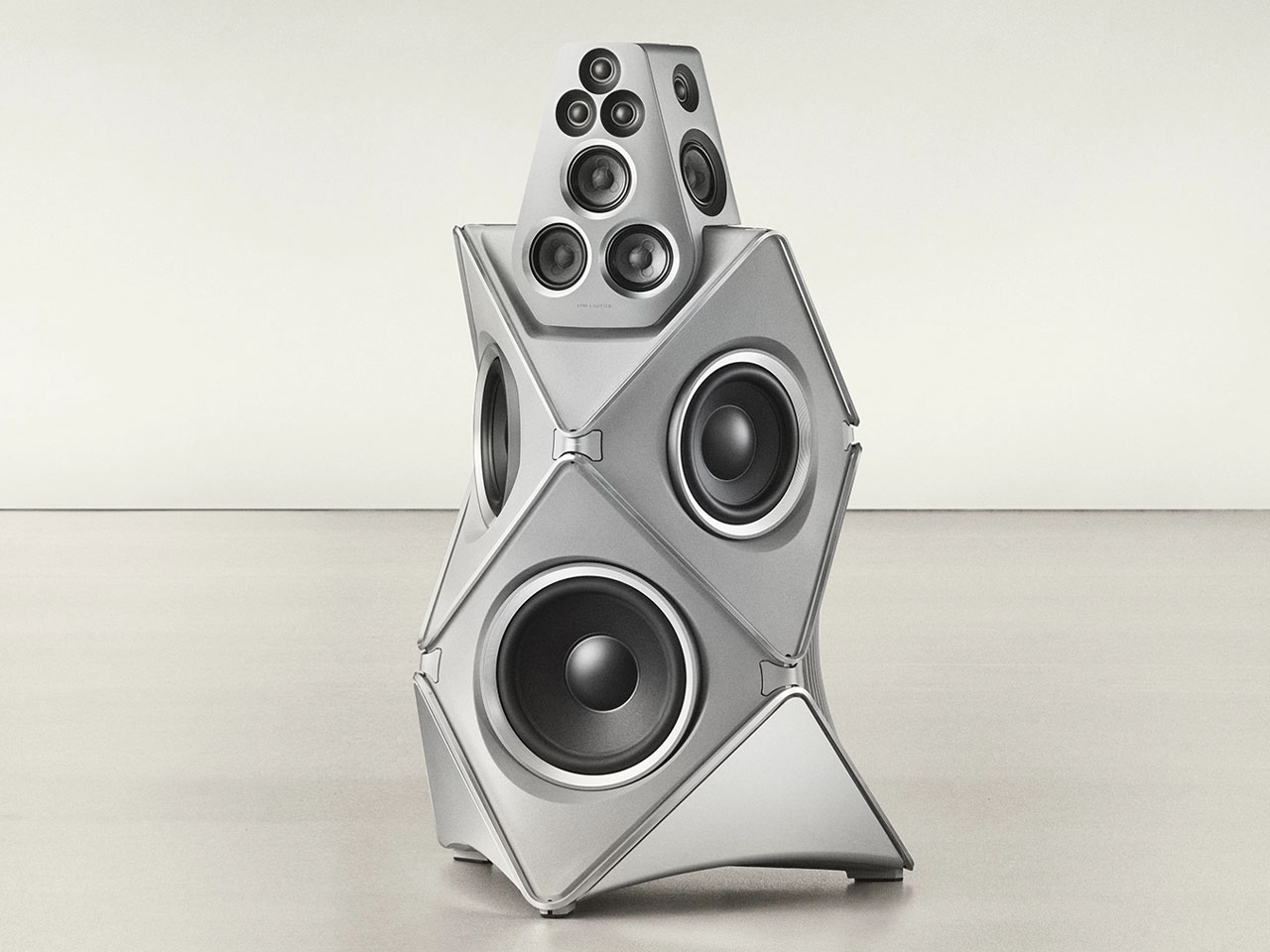
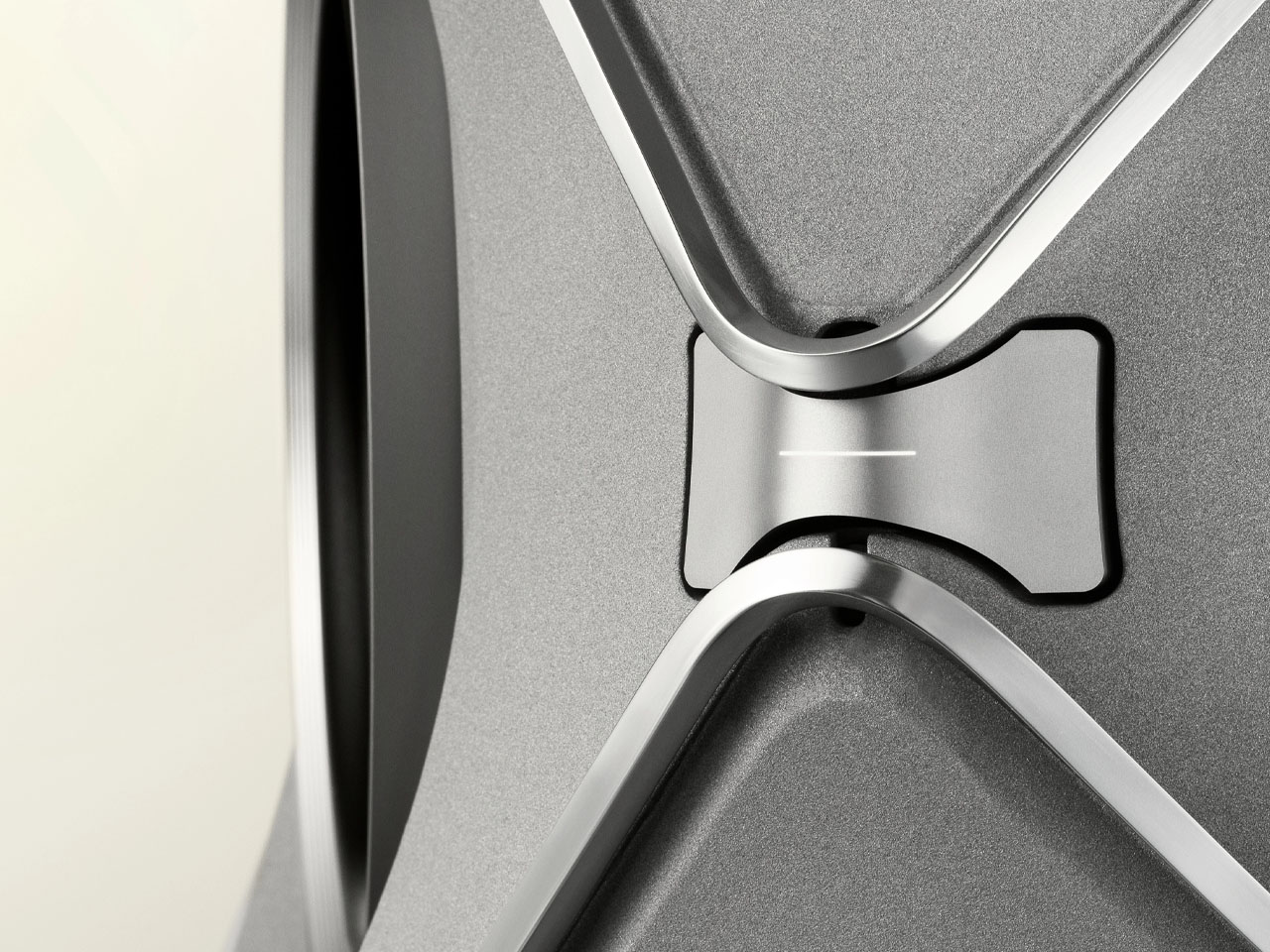
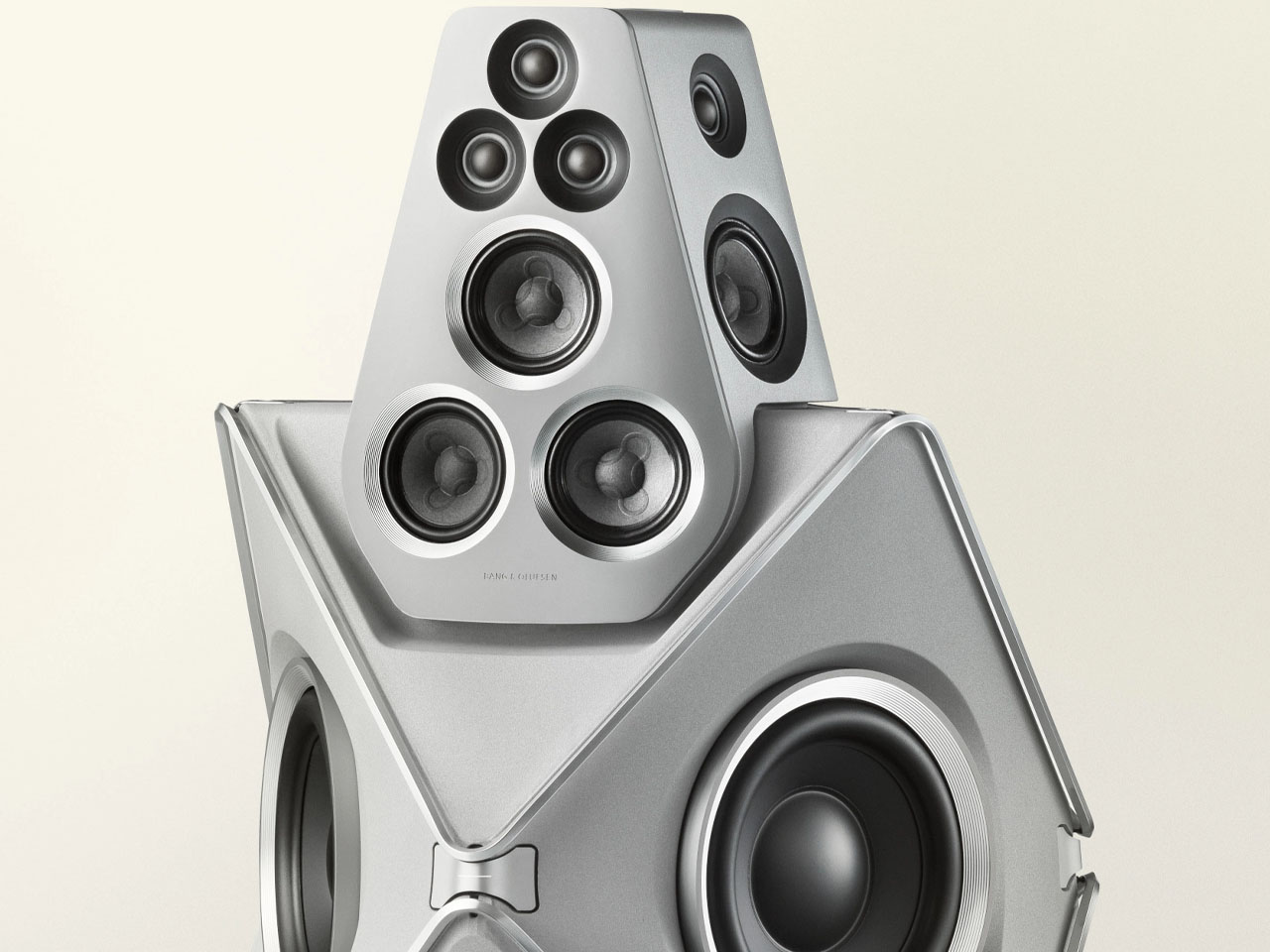
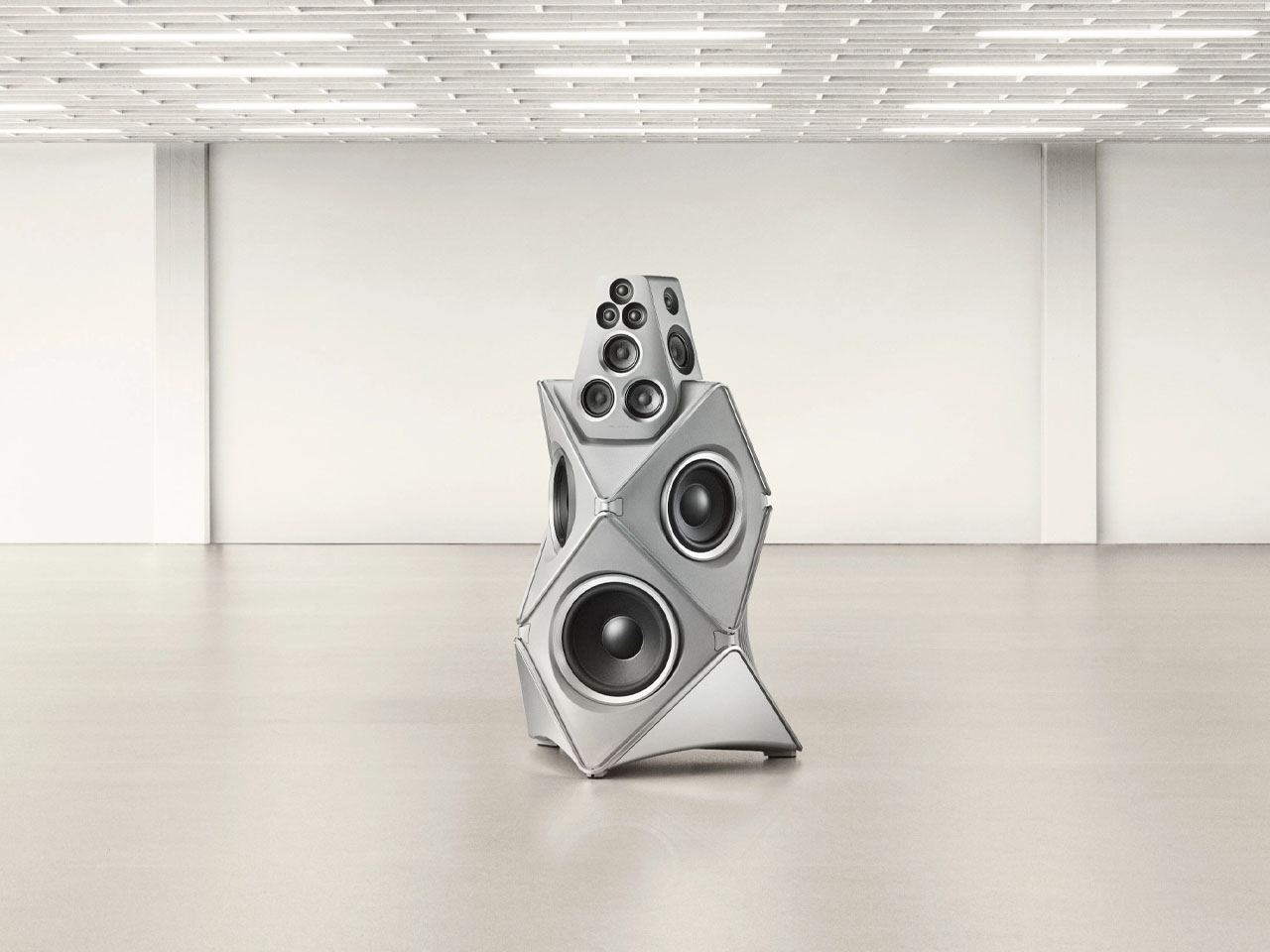
I haven’t seen a speaker with an awkward shape like this. But then, I haven’t seen a lot of things, and that especially includes what’s under the hood of Beolab 90 floorstanding speakers from Bang & Olufsen. For its 100th anniversary, the Danish giant has taken its flagship speaker, stripped it down to its skeleton, and made it to look as striking as it could be with volcanic rocks and aluminum construction. And now I know what with the looks!

Centenary celebrations bring out the best in the iconic brands that have stood the test of time and the change in generations. Arguably, watchmakers are the best at revisiting their iconic timepieces and launching them with charisma and finesse to celebrate their 100th year; furniture makers follow closely. Now, Bang & Olufsen is treading the route with this stunning speaker – if you like what you see i.e., by reimaging its star from a decade ago.

Designer: Bang & Olufsen

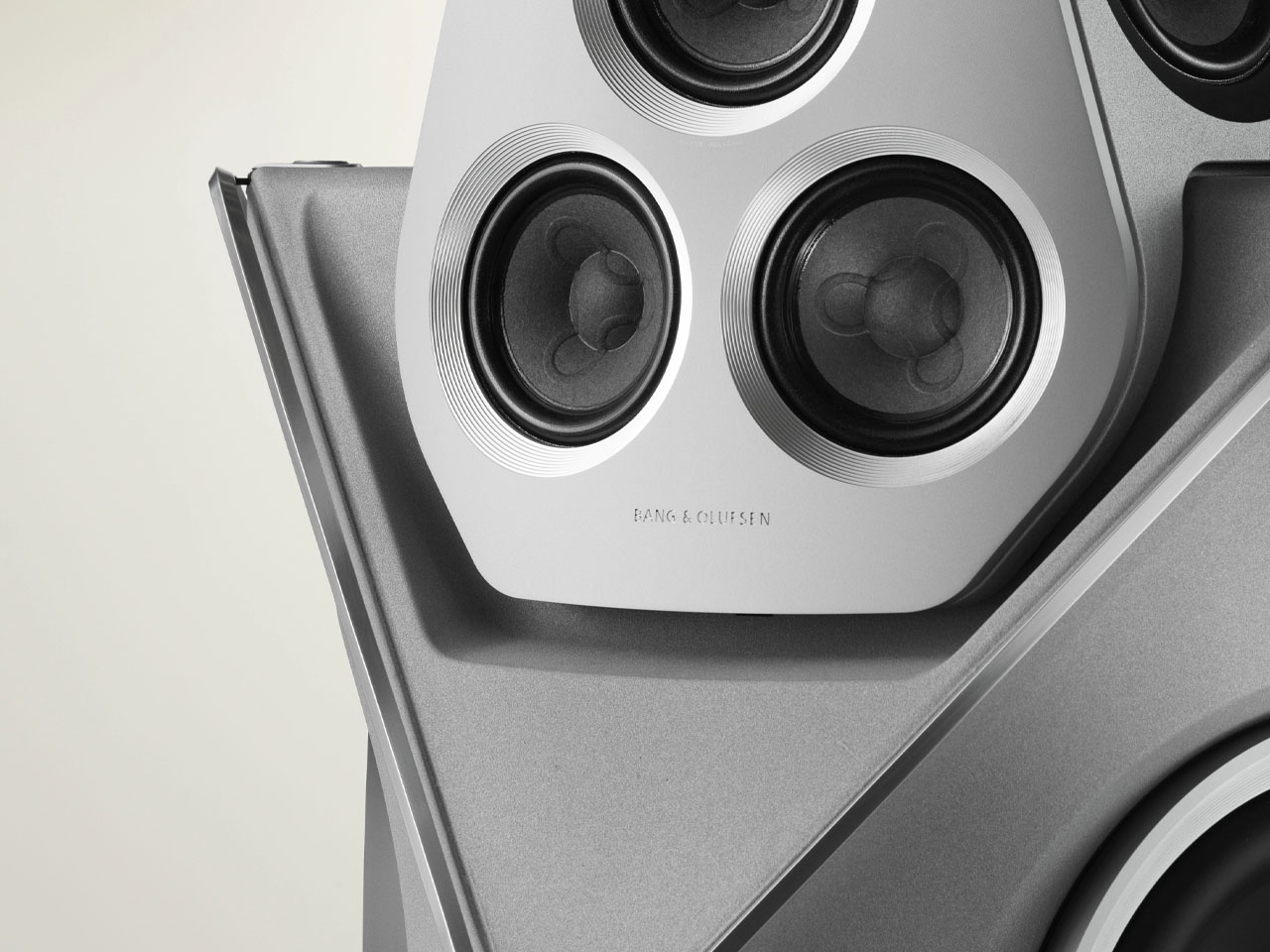
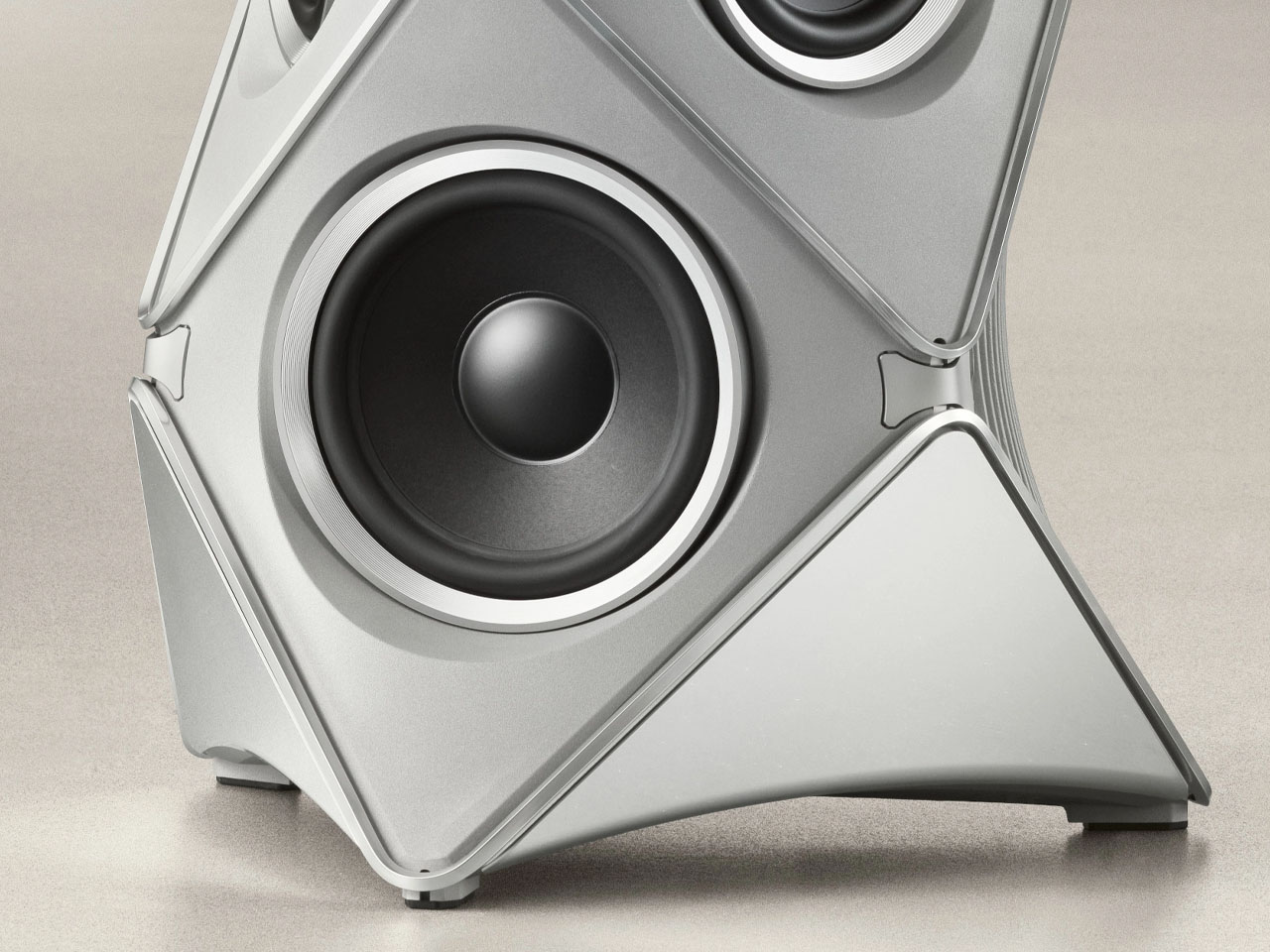
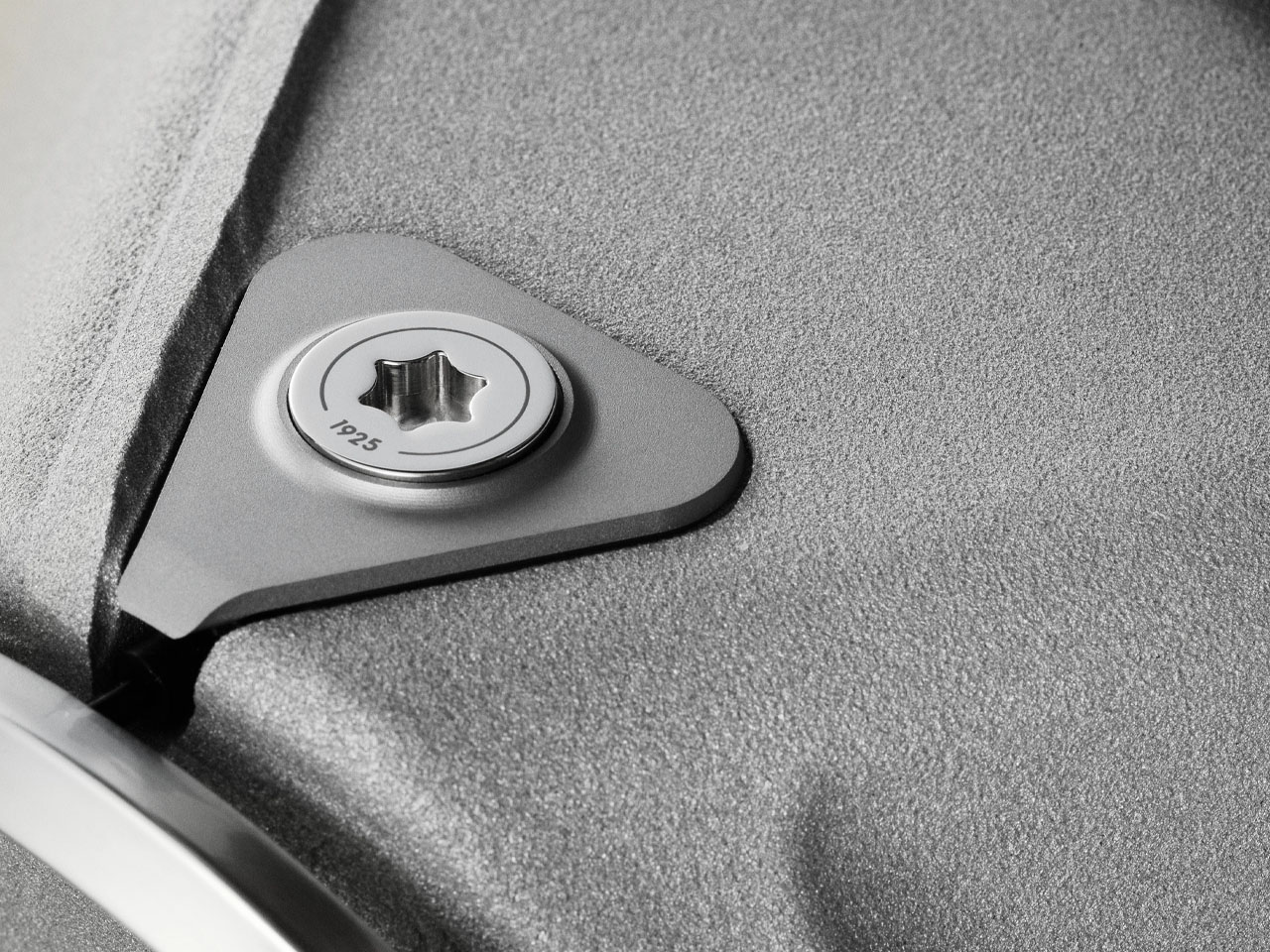
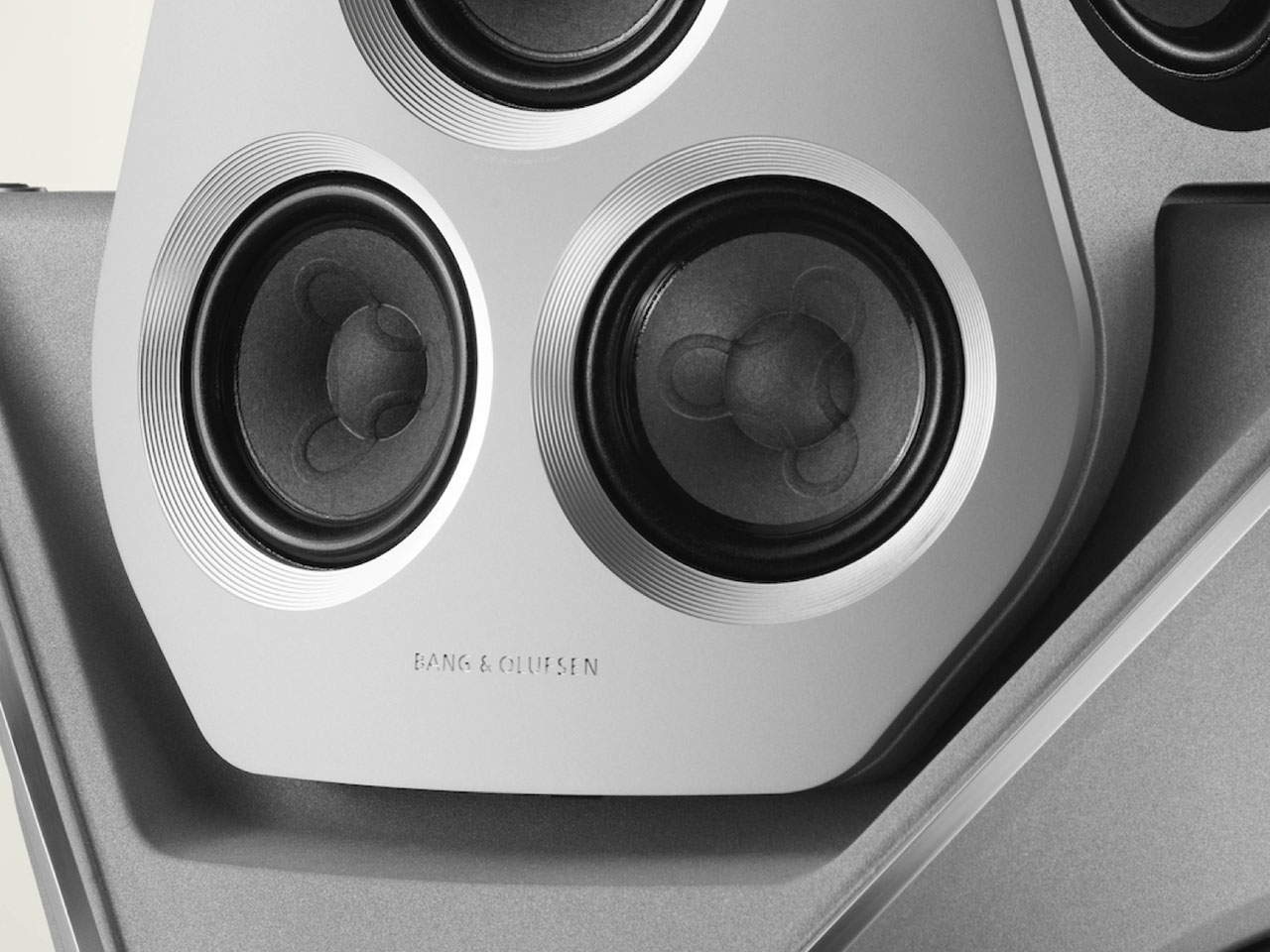
The revisited stunner is called the Beolab 90 Titan Edition, and it highlights a raw, textured finish achieved with 65kg aluminum sandblasted using particles from crushed volcanic rock. It is decorated with commemorative laser-engraved details on each speaker fastener and drivers, and forms part of a series of interesting products the brand has designed to commemorate its 100th anniversary.

Bang & Olufsen, earlier this year, launched another sensation: Atelier Limited Edition Art Deco collection comprising Beolab 28 speakers and the Beovision Theatre soundbar. And recently, we were privy to the three special edition pieces. These, if you are unaware, were the gorgeous pair of Beoplay H100 headphones, Beosound A5 portable wireless speaker that charmed with its vintage radio vibes, and the showstopper, the Beosound A9, which flaunted Kvadrat’s Centennial Cadence fabric alongside a natural aluminum ring and brushed legs.

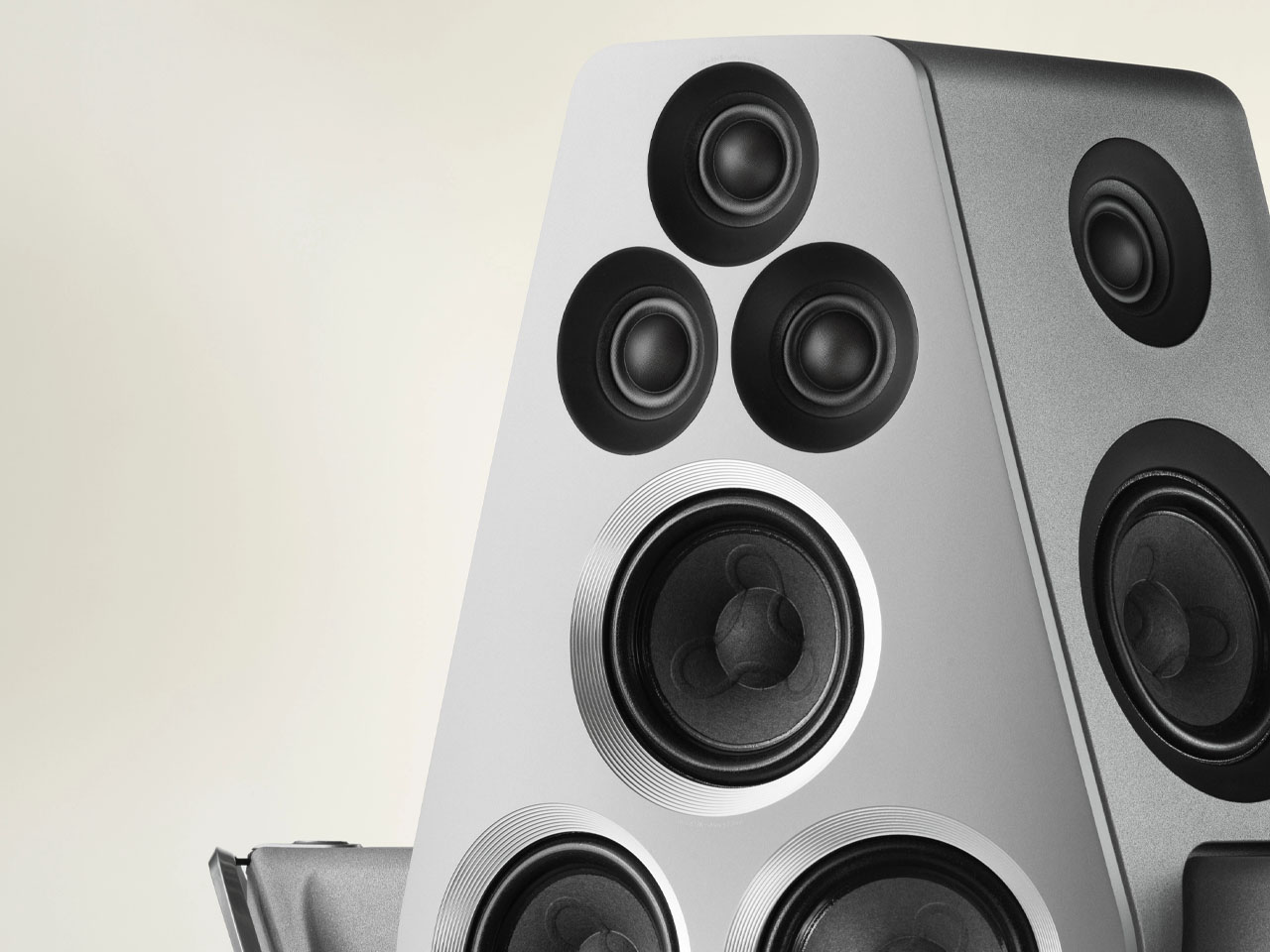
The new Titan Edition floorstanding speakers are fundamentally the most interesting entrant in the brand’s Centennial Collection. By the sight of it, the speakers are a replica of the original Beolab 90. It looks stunning, but really, it’s almost the same speaker with the outer housings removed to showcase the impressive array of drive units, which were earlier in the hiding beneath it.

The angular design and solid aluminum construction make the speakers seem unearthly, but a calm, closer look reveals the magnanimity of their 360-degree design, where no less than 18 premium drivers are firing in different directions to create the most thrilling surround sound in the room. The speakers also feature seven 30mm tweeters, as many 8.6cm midrange drivers, a trio of 21cm side and rear woofers, and the solitary 26cm front woofer.

The Beolab 90 Titan Edition floorstanding speakers are available, but we are short on the pricing information. The Titan Edition will be built to order, so its anyone’s guess that it will be way more expensive than the OG Beolab 90, that’s $185,000 for a set. B&O says four more editions of the Beolab 90 will be released in the coming months, also as part of the centenary celebrations.


The post Bang & Olufsen celebrates 100 years with the Beolab 90 Titan Edition floorstanding speakers first appeared on Yanko Design.

Aqara FP300 Detects You Even When You’re Sitting Perfectly Still

Smart home sensors have gotten pretty good at detecting when you walk into a room, but they’re still terrible at knowing when you’re actually there. Most motion sensors trigger when you move, then assume you’ve left the moment you sit down to read or work at a desk. That means your lights flicker off while you’re still in the room, forcing you to wave your arms like you’re trying to flag down a rescue helicopter. It’s the kind of everyday annoyance that makes smart homes feel less smart and more like they’re making educated guesses.

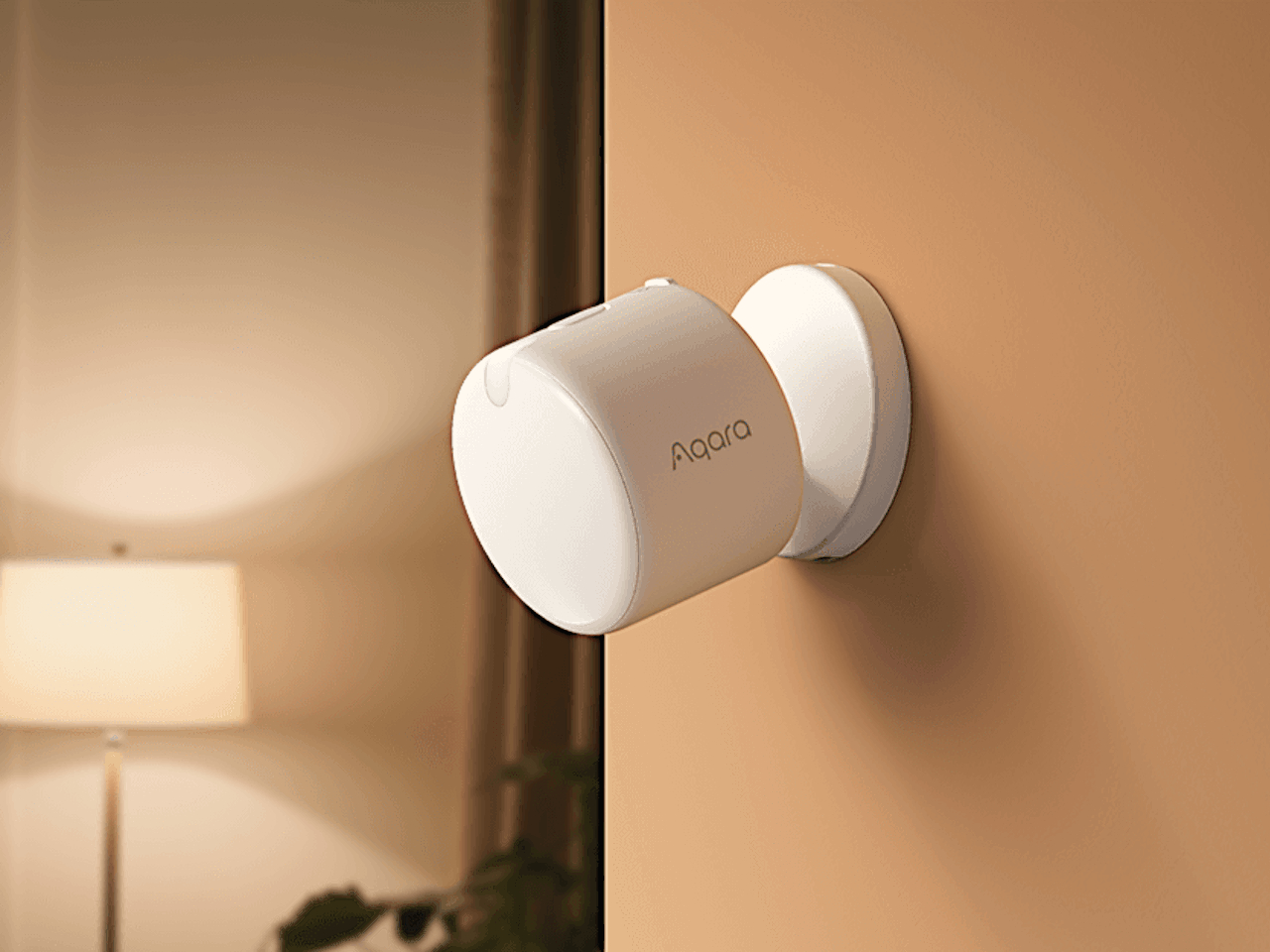
The Aqara Presence Multi-Sensor FP300 solves this with a combination of PIR and 60GHz mmWave radar sensors that detect both motion and stationary presence. That dual-sensor setup means the device knows you’re there even if you’re sitting perfectly still, which is exactly what presence detection should have been doing all along. The sensor also packs temperature, humidity, and light sensors into its compact body, turning it into a five-in-one device that can automate everything from lighting to climate control based on actual occupancy.

Designer: Aqara

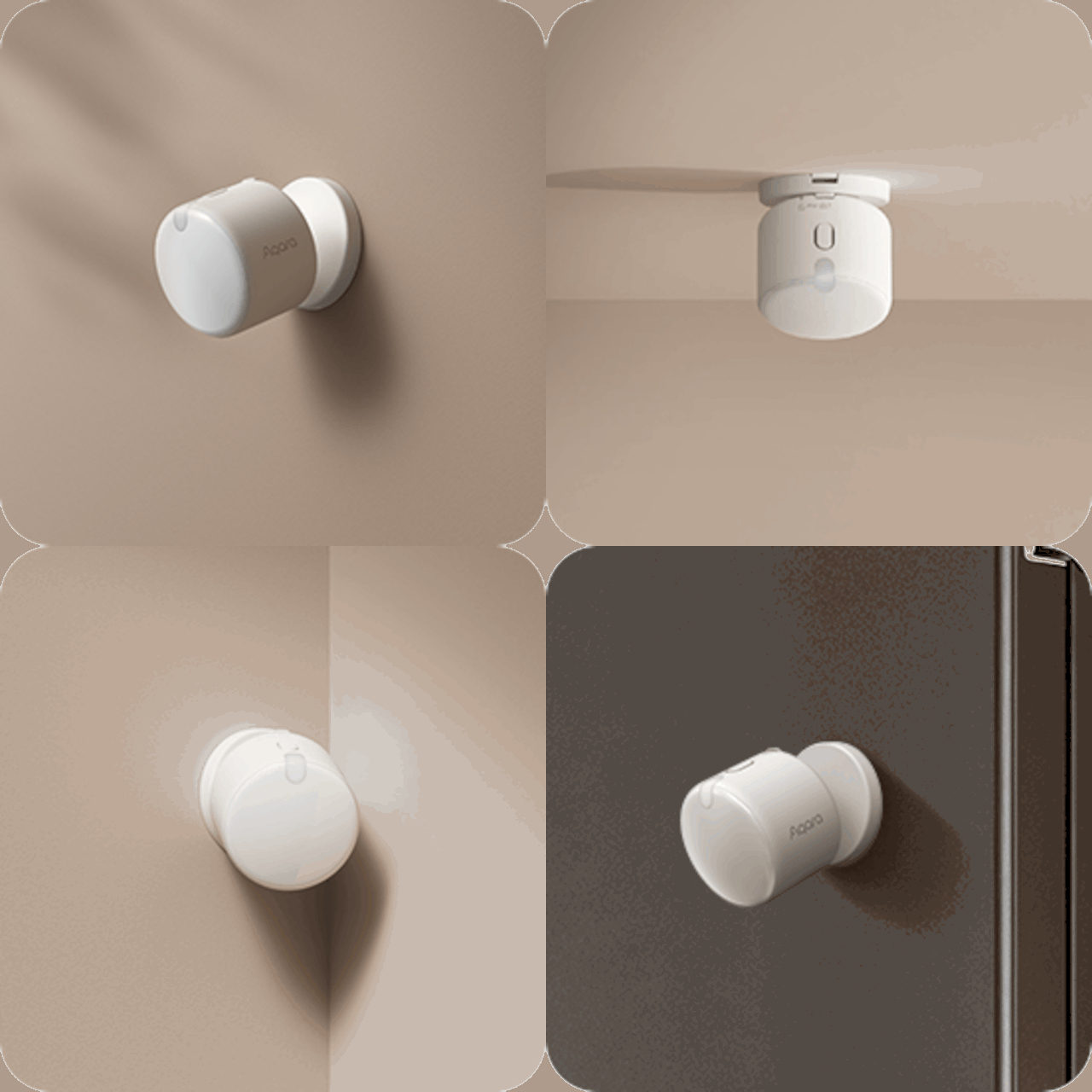
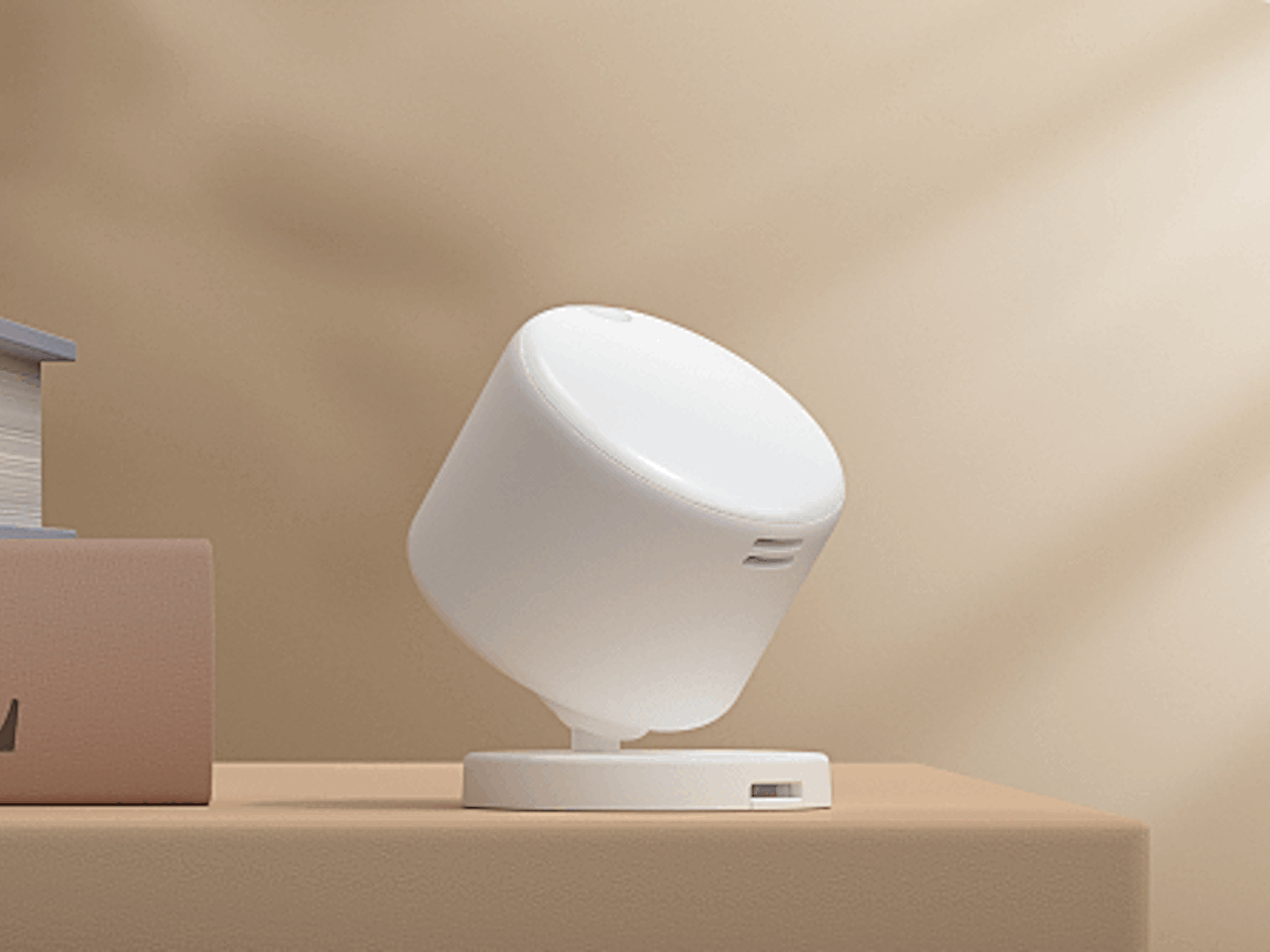
The FP300 itself is a small, cylindrical unit that measures just 42mm on each side and 50mm tall. It’s designed to blend in rather than stand out, with a clean white finish and subtle Aqara branding. The real advantage is how flexible placement can be. You can mount it on walls or ceilings, stick it in corners, attach it to magnetic surfaces like refrigerators, or just set it on a shelf or desk without any mounting hardware at all. That wireless freedom is rare for presence sensors, which usually require wired power or specific mounting positions.

Of course, being battery-powered raises questions about longevity, but Aqara claims up to three years of battery life when using Zigbee, or two years with Thread. That’s running on two replaceable CR2450 coin cells, which is surprisingly long for a device that’s constantly monitoring presence and environmental conditions. You can extend that further by disabling certain sensors or adjusting reporting intervals if you don’t need every data point the device can collect.

The FP300 supports both Zigbee and Thread protocols, which means it works with pretty much every major smart home platform through Matter. Apple Home, Google Home, Alexa, SmartThings, and Home Assistant are all compatible, though you’ll need either an Aqara hub for Zigbee or a Thread border router to get everything working. Using Zigbee unlocks extra customization options in the Aqara Home app, like adjusting detection sensitivity and tweaking reporting intervals.

What makes the FP300 feel genuinely useful is how those five sensors work together. The presence detection ensures lights stay on when you’re in the room, while the light sensor prevents them from turning on during the day. The temperature and humidity data can trigger your HVAC system only when someone’s actually home, saving energy without sacrificing comfort. It’s the kind of layered automation that makes smart homes feel less gimmicky and more practical.

At around $50, the FP300 sits between basic motion sensors that miss half your movements and wired presence sensors that cost more and require professional installation. For anyone building out a smart home without tearing into walls or dealing with complicated wiring, that’s a reasonable trade-off. The fact that you can just plop it on a shelf and have it start working makes the whole setup feel refreshingly simple for once.

The post Aqara FP300 Detects You Even When You’re Sitting Perfectly Still first appeared on Yanko Design.

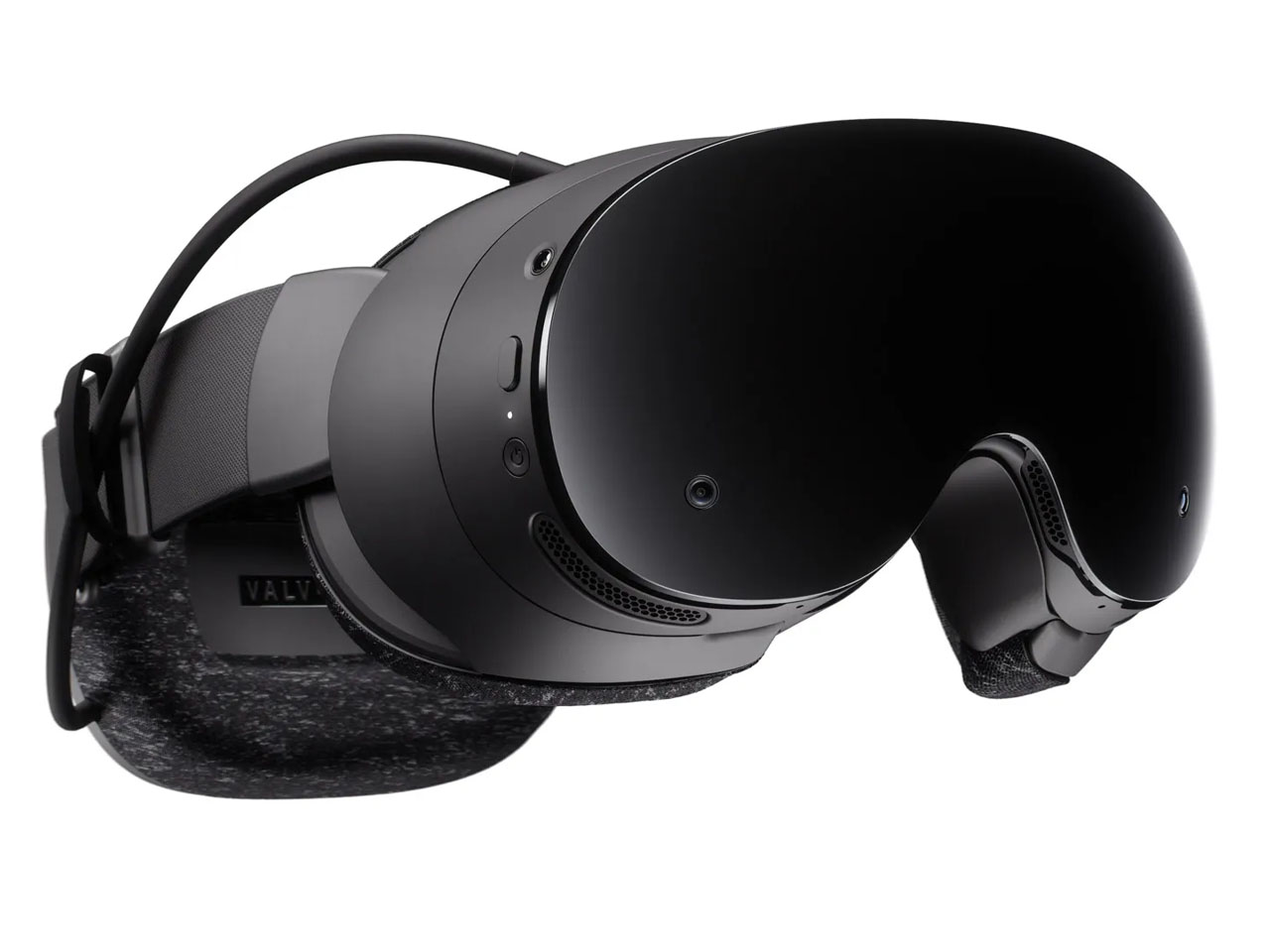
Valve Steam Frame standalone VR headset could be the game changer Industry’s been waiting for

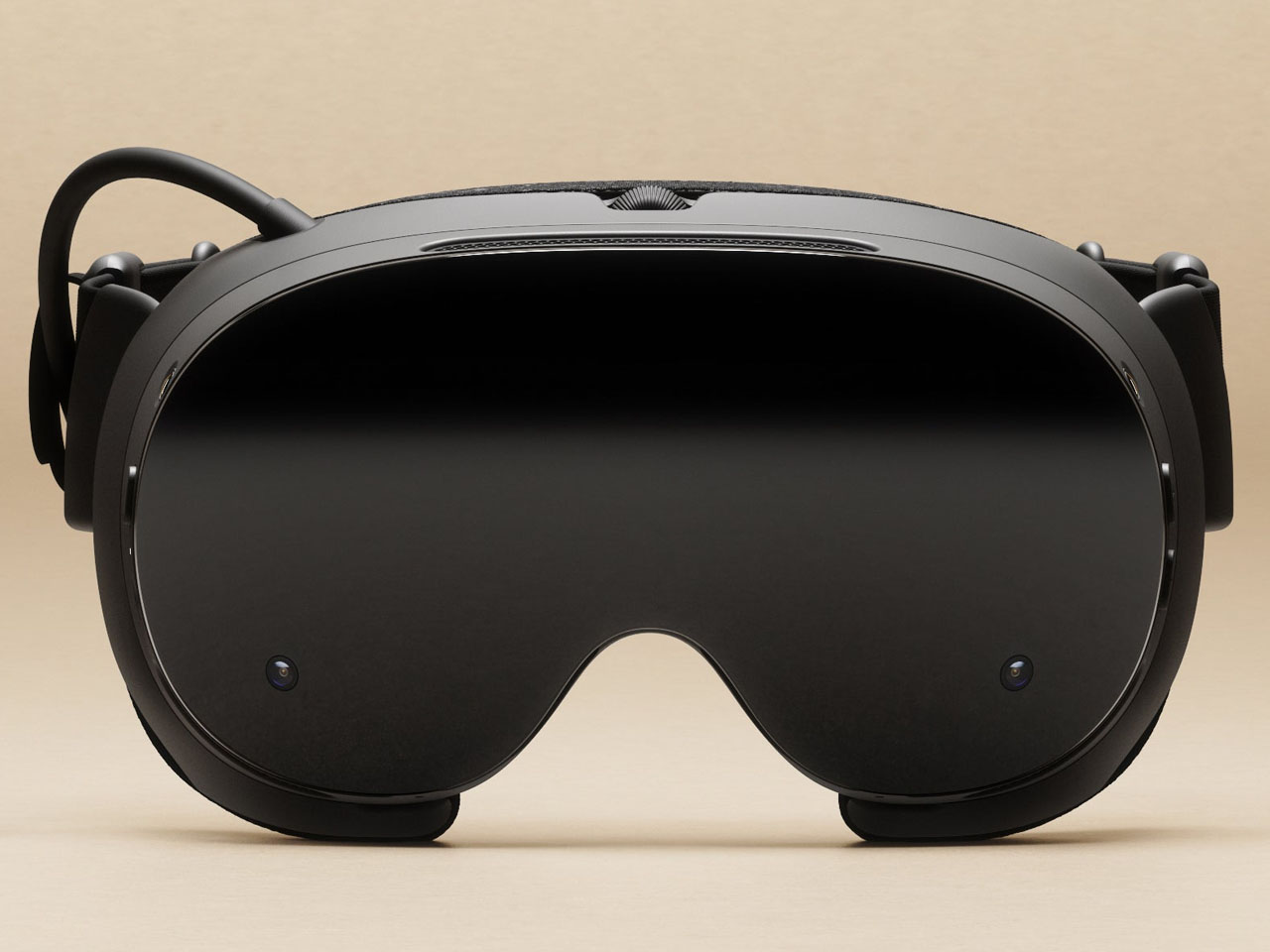
I can recall my experience strapping on a virtual reality headset for the first time. It promised me a new world experience, but the immersive presence was nothing more than stained eyes and a throbbing head. VR headsets have come a long way since then, and now the tech has advanced into a more comfortable and untethered domain. It has advanced beyond requiring cables and now connects to Steam wirelessly. Yes, this is made possible by the Steam Frame: a standalone VR headset that Valve Corporation has just announced silently on its website.

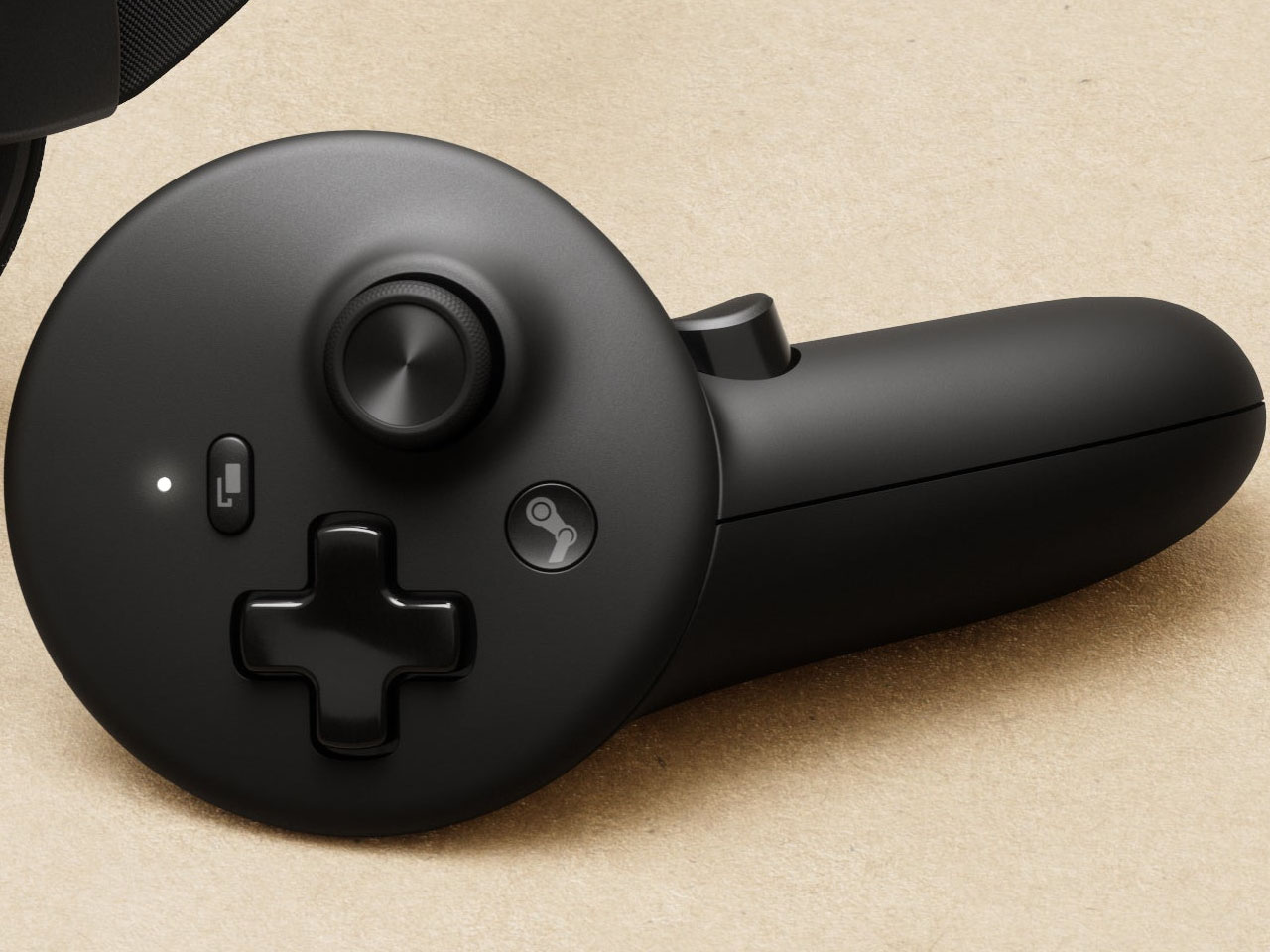
The new Steam Frame is designed to seamlessly connect with both PC and Steam games. You can also play games locally on the VR headset, thanks to an ARM chip onboard. After making its presence felt in the living room gaming scene, the American gaming giant, already recognized for its handheld Steam Deck, is now entering the immersive virtual reality gaming with the Steam Frame, which has been announced alongside the company’s gaming console, called the Steam Machine, and the Steam Controller featuring a cleaner design and a joystick.

Designer: Valve

While the cube-shaped Steam Machine gaming console is created to take on the market dominated by the PlayStation 5 and Xbox. To that accord, it is built compact, but it does not compromise power, which is assured by the custom AMD Zen 4 CPU, RDNA 3 GPU paired with Linux-based SteamOS. We have a detailed report on the gaming console here. Coming back to the Steam Frame, let’s try and understand what the VR headset entails.

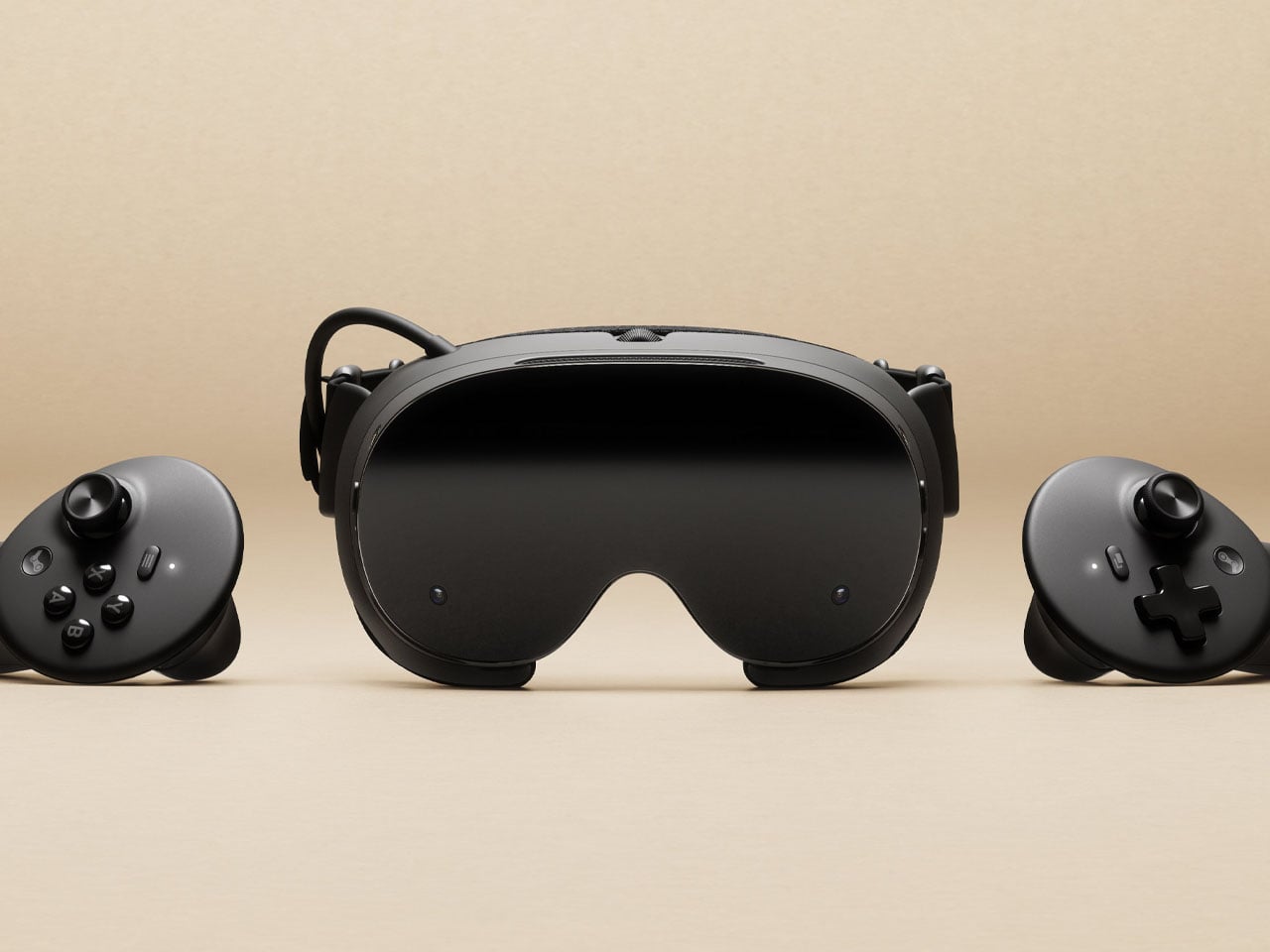
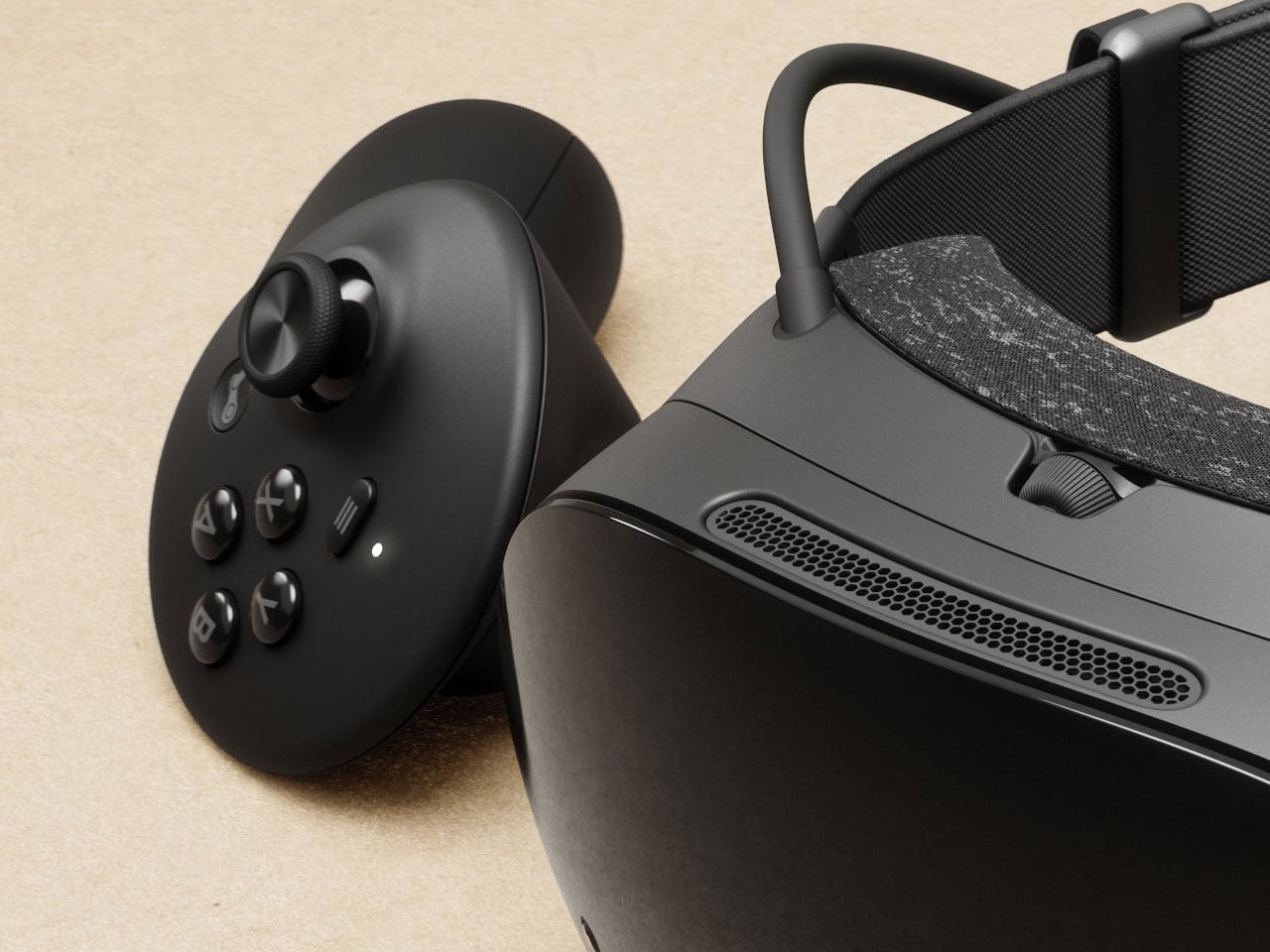
The first standalone, wireless Steam VR headset comes with its own hand controller and is designed to handle your entire Steam game library. Whether it’s an immersive VR or no VR game, the standalone headset supports both. Unlike those initial headsets, Steam Frame is designed with comfort and ease of use in mind, and it is powered by an ARM processor for local emulation of PC games as well. For streaming games directly from the computer, Valve provides a 6GHz wireless dongle, which it claims provides low latency and high bandwidth to ensure a smooth game experience.

The headset draws its processing power from a Snapdragon 8 Gen 3 chip onboard, which is paired with 16GB of LPDDR5X RAM. It is available in two storage variants: 256GB or 1TB of UFS internal storage, which can be expanded using a microSD card. The Steam Frame features a rechargeable 21.6Whr battery with 45W fast charging support, and the device runs on SteamOS 3.

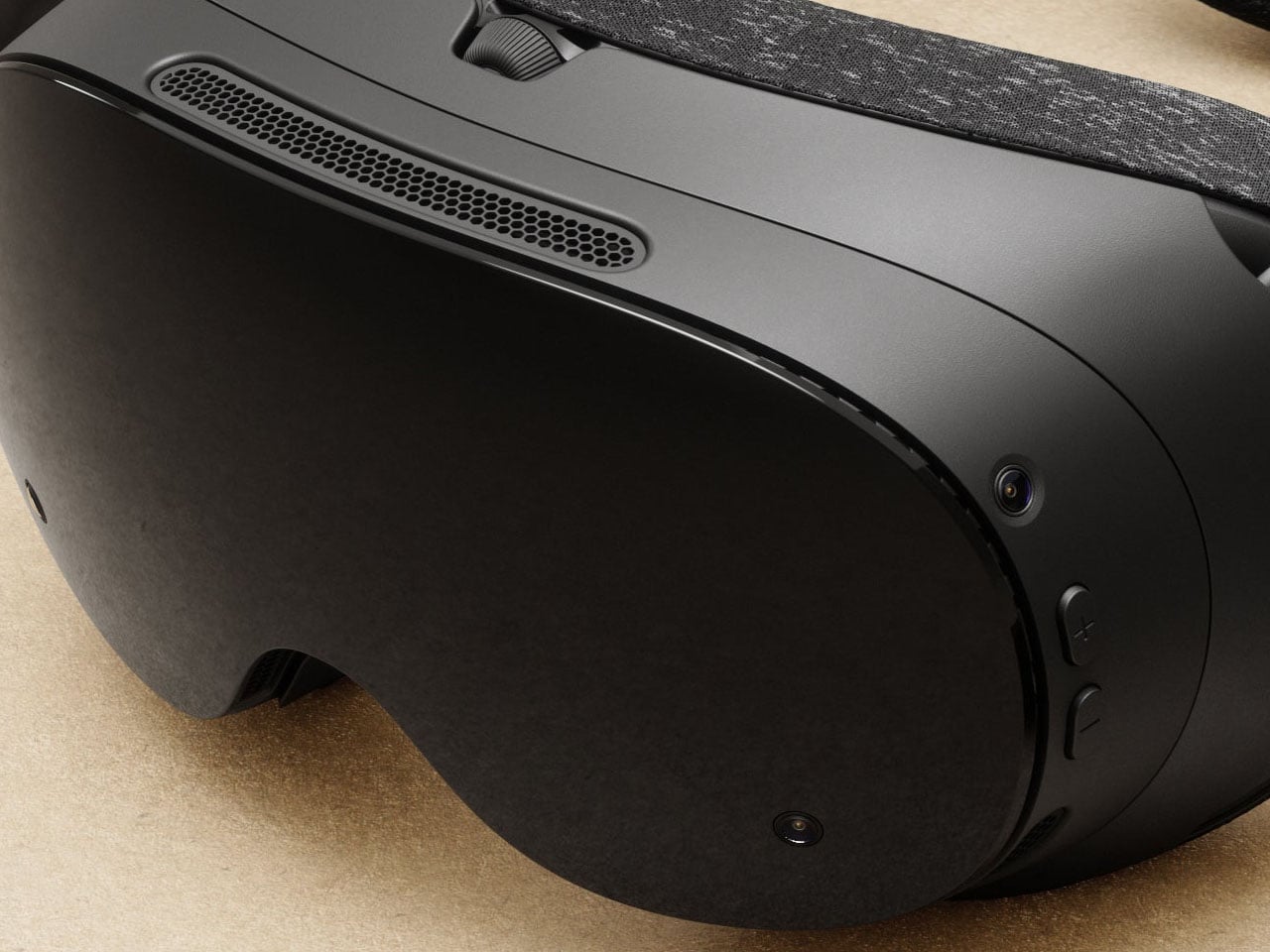
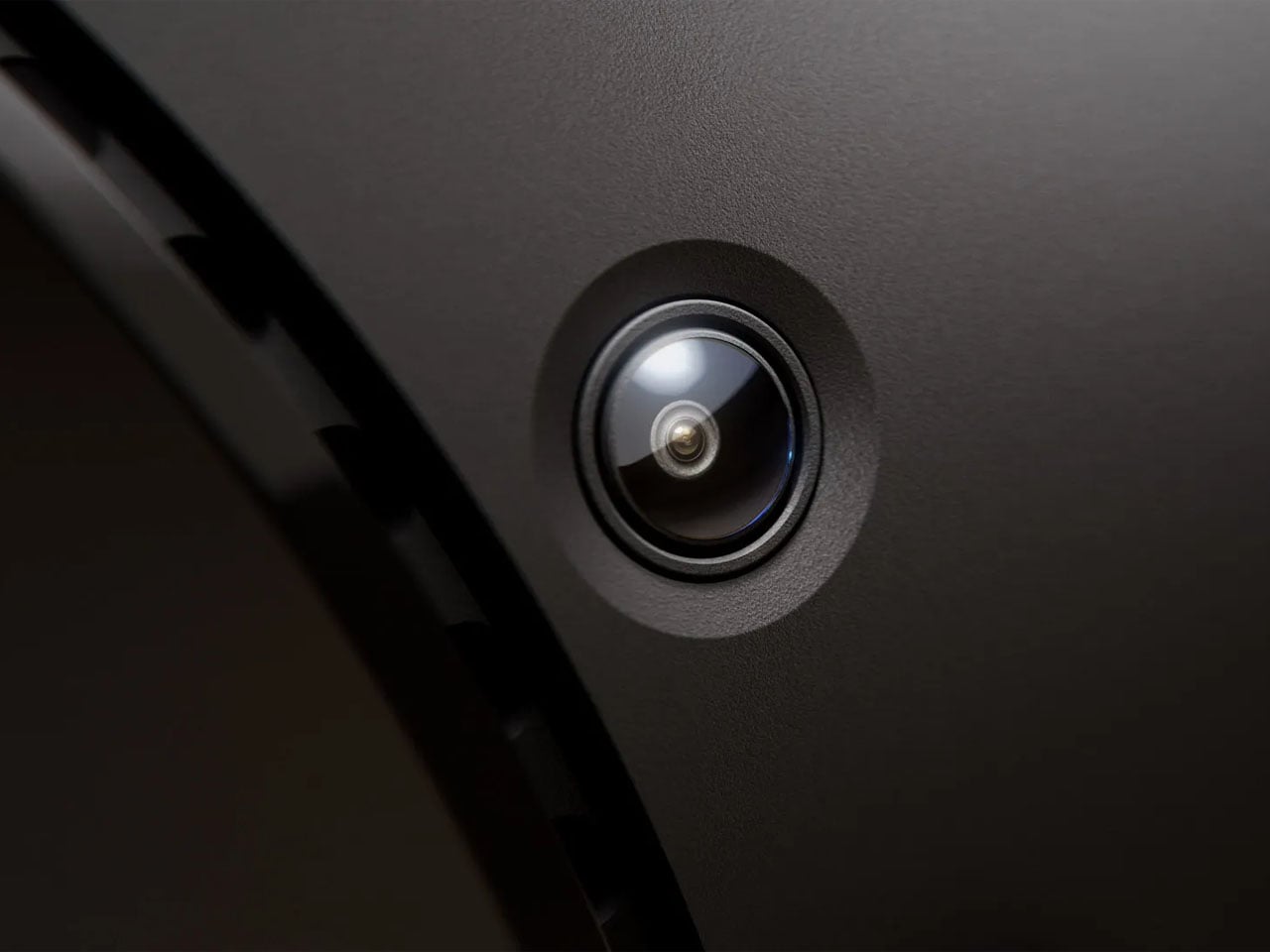
Starting off with the Steam Frame is as easy as lifting it up, strapping it around the head, and you’re right into the game. No setup, no wires required. The four high-res monochrome cameras are straight at tracking the headset and its controller, while the 2160 x 2160 LCD panels, one for each eye, with support for up to 144 Hz refresh rate make gameplay smooth and immersive. Thin and light custom pancake lenses provide up to 110 degrees FOV while infrared LEDs on the outside ensure the headset’s tracking right in all light conditions, even in a dark bedroom (letting you play quietly while your partner sleeps undisturbed).

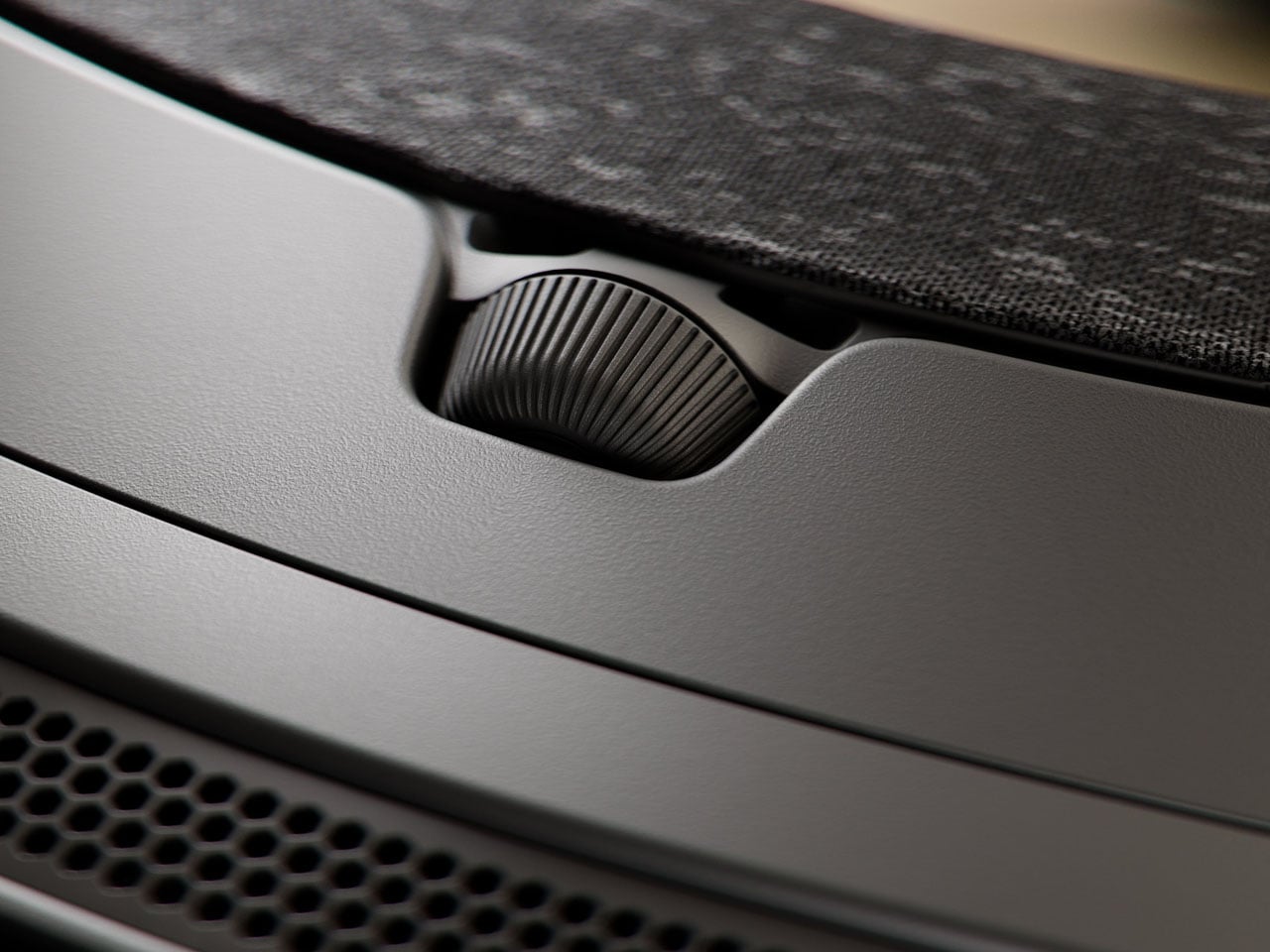
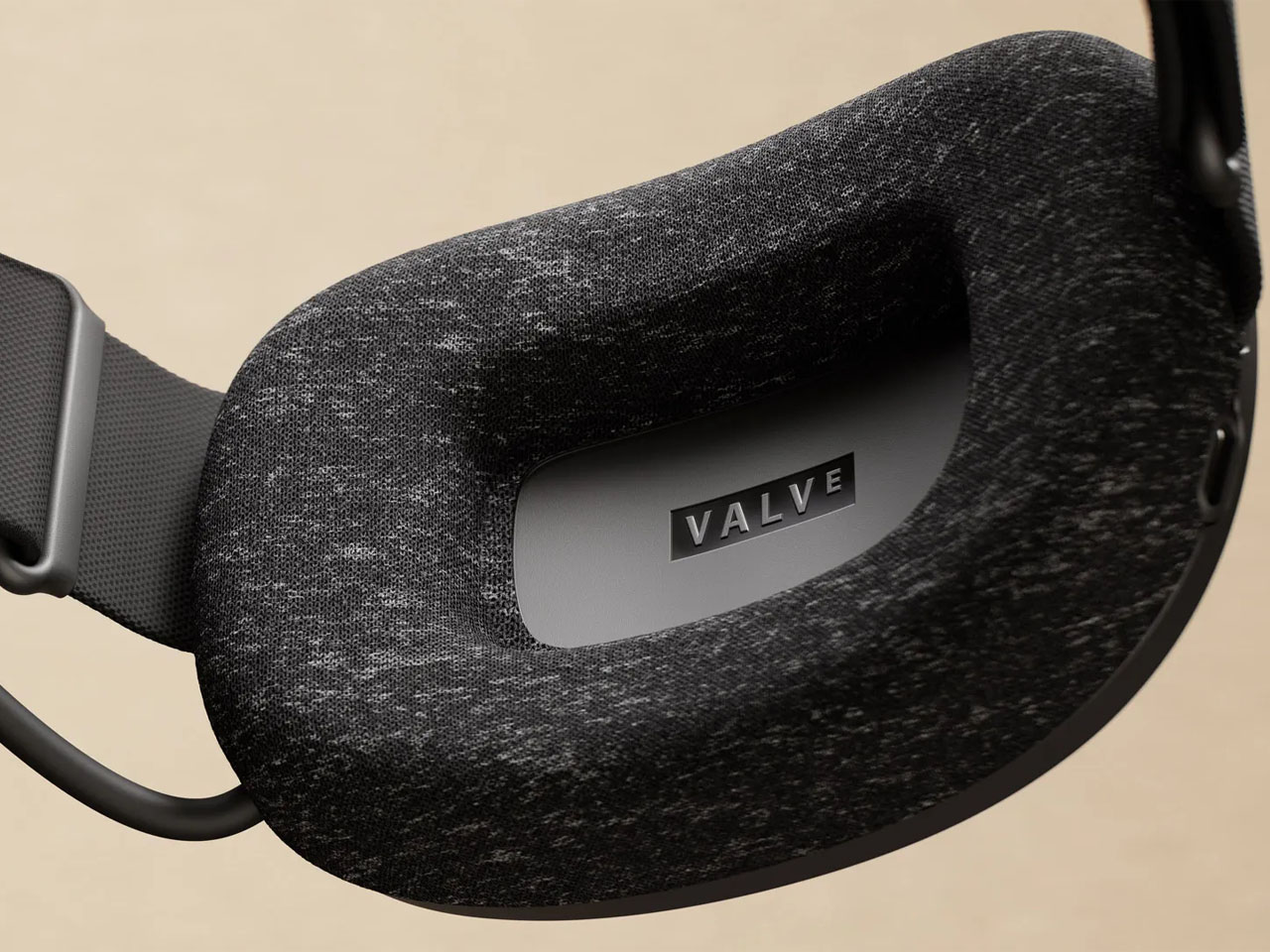
The pricing structure of the Steam Frame VR headset remains unconfirmed at the time of writing, but rumors suggest a tentative $1,000 tag for it. What we know for certain is that the headset will ship in Spring 2026 with a detachable head strap featuring integrated dual-speakers, a battery that keeps it going for up to 40 hours, and its charging port. The 440g headset will support dual-band Wi-Fi 7 and Bluetooth 5.3 for connectivity. One of the biggest selling points of the Steam Frame could be the Steam Frame developer kit program that Valve is offering developers to bring their Android apps to Steam as well.

The post Valve Steam Frame standalone VR headset could be the game changer Industry’s been waiting for first appeared on Yanko Design.

7 Best Coffee & Tea Gifts Every Caffeine Connoisseur Needs This Holiday Season

The holiday season presents the perfect moment to celebrate coffee and tea enthusiasts in your life with gifts that transform daily brewing rituals into extraordinary experiences. These thoughtfully curated selections represent the pinnacle of design innovation, combining cutting-edge technology with timeless craftsmanship. From precision temperature control to ergonomic comfort, each carefully chosen piece elevates the ordinary act of drinking into something truly sublime for today’s most discerning caffeine connoisseurs everywhere.

Whether your loved one is a methodical pour-over purist or an adventurous flavor explorer, these gifts promise to awaken their senses and inspire deeper appreciation for their beloved beverages. Each selection has been carefully chosen for its ability to enhance the daily rituals of coffee and tea consumption, transforming routine caffeine breaks into moments of genuine pleasure and sophisticated appreciation that will be treasured for many years ahead.

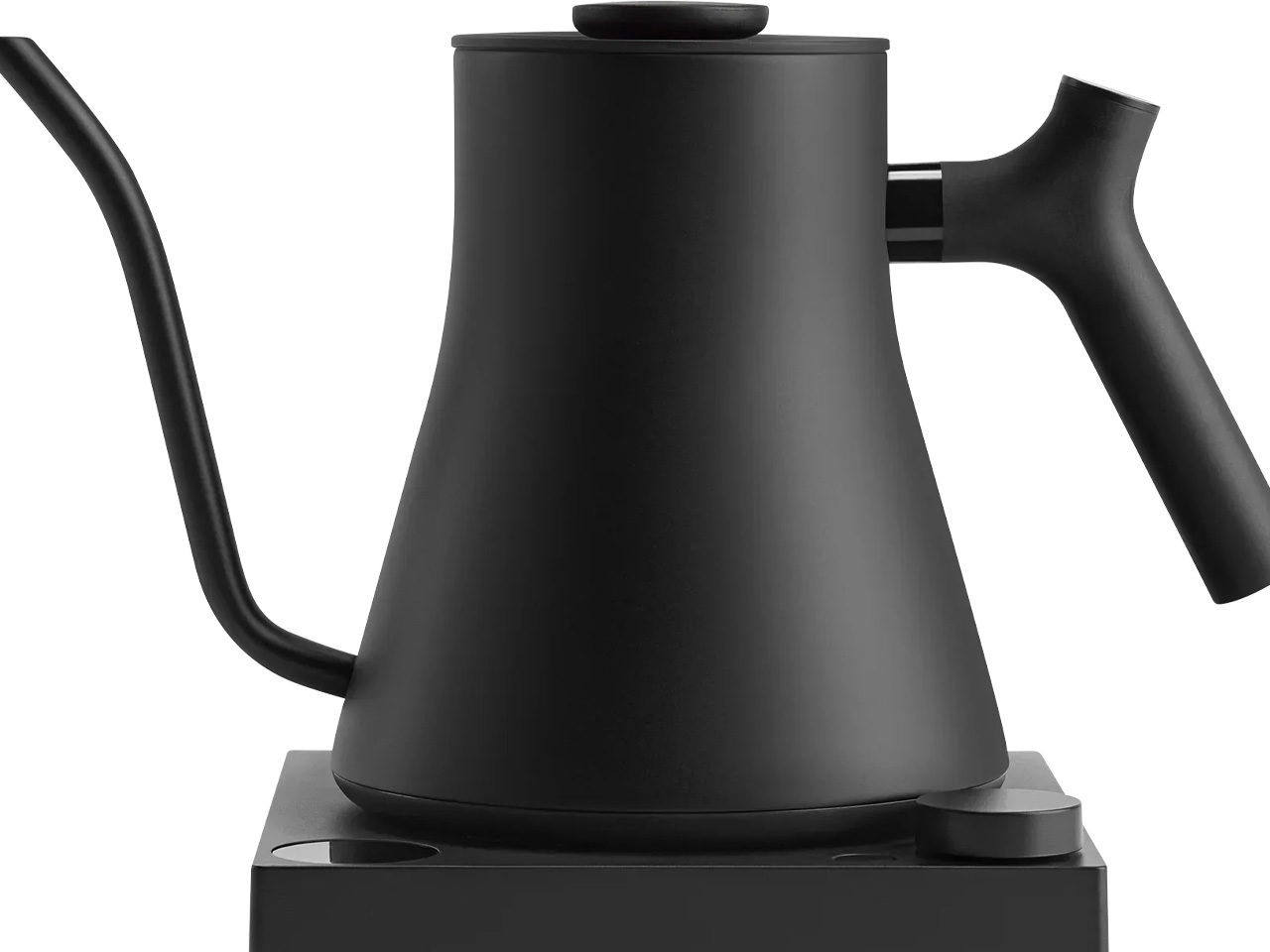
1. Fellow Stagg EKG Pro Electric Pour-Over Kettle

The Fellow Stagg EKG Pro represents the evolution of precision brewing technology, engineered specifically for pour-over coffee perfection. Its signature gooseneck spout delivers unmatched control over flow rate and stream consistency, while the to-the-degree temperature control heats and holds water exactly as programmed. The high-resolution color display allows complete customization of brewing schedules, altitude adjustments, and temperature units through intuitive navigation.

This kettle transcends basic functionality through its WiFi connectivity and advanced scheduling capabilities that adapt to your lifestyle. The precision spout ensures optimal water saturation of coffee grounds, while the rapid heating system brings water to target temperatures faster than traditional stovetop methods. The sleek industrial design complements modern kitchen aesthetics, while the hold function maintains perfect brewing temperature for extended periods without energy waste.

Click Here to Buy Now

What we like

• WiFi updates keep the kettle current with new features and improvements.

• Scheduling function allows pre-programmed brewing times for morning convenience.

What we dislike

• Premium price point significantly exceeds basic electric kettles.

• WiFi connectivity requires a stable internet connection for full functionality.

2. Ceramic Cup
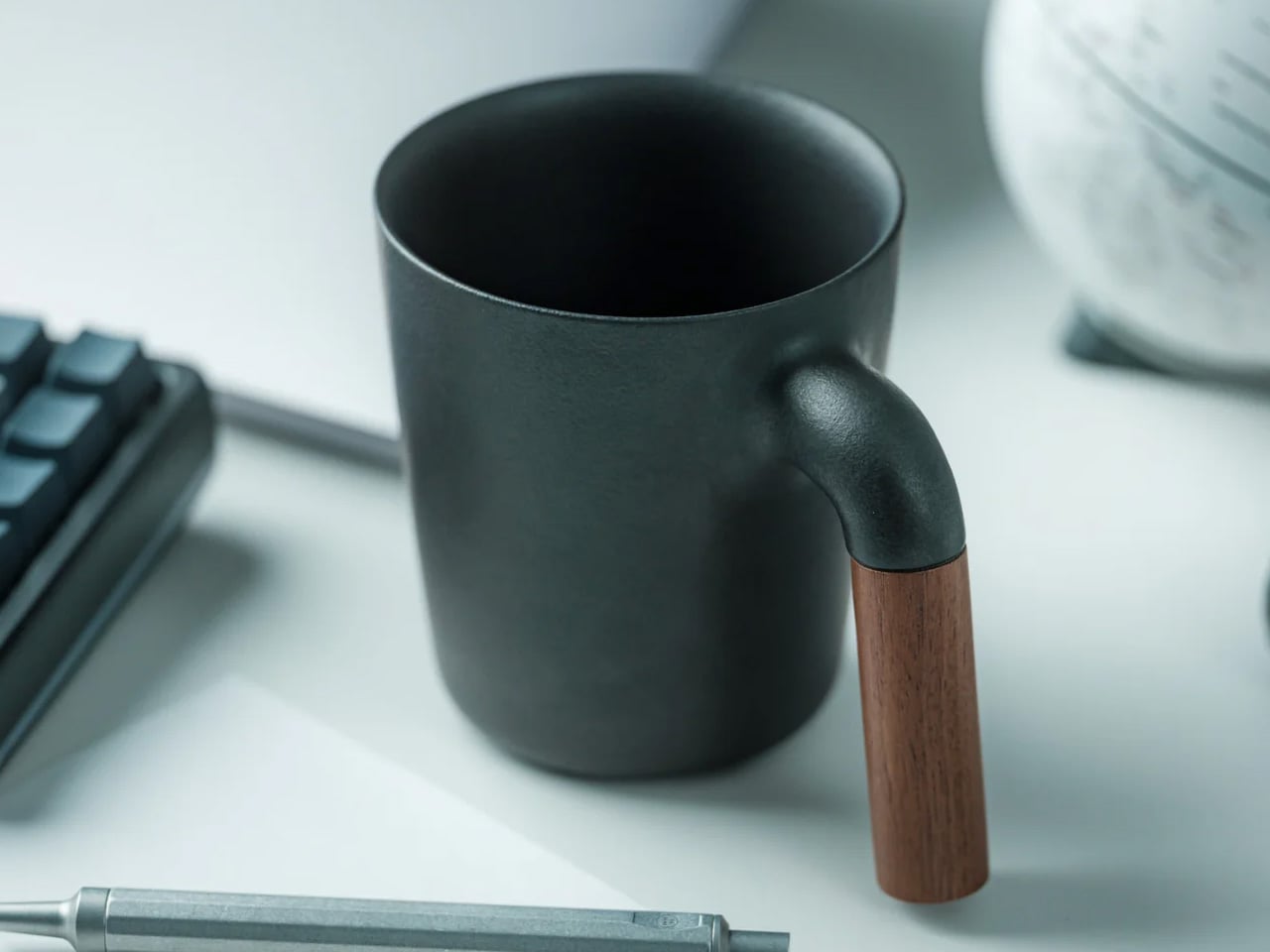
The ceramic cup transforms the mechanical act of drinking into a mindful, meditative experience through its thoughtful Japanese-inspired design. Crafted from premium Japanese ceramic with a natural wood handle, this 12-ounce vessel mimics the appearance of traditional cast iron while delivering the smooth, cool texture of refined ceramics. The earthy aesthetic creates an immediate sense of calm, encouraging users to slow down and truly savor their beverages.

The humble yet sophisticated design philosophy behind this mug emphasizes the beauty found in simplicity and natural materials. Each cup is individually crafted, ensuring subtle variations that make every piece unique while maintaining consistent quality and functionality. The wooden handle stays comfortable during extended use, while the ceramic construction retains heat effectively without becoming uncomfortably hot to touch.

Click Here to Buy Now: $60.00

What we like

• Japanese ceramic construction provides superior heat retention and durability.

• Zen-inspired design promotes mindful drinking and stress reduction.

What we dislike

• Hand-wash only requirement creates additional maintenance considerations.

• Cannot be microwaved, limiting convenience for reheating beverages.

3. Three Cup Handblown CHEMEX

The handblown CHEMEX represents the pinnacle of artisanal coffee brewing equipment, where each piece is individually crafted by skilled glassblowers in Croatia. These stunning vessels combine scientific precision with artistic beauty, creating unique works of functional art that transform every brewing session into a ceremonial experience. The small-batch production ensures exceptional quality control while celebrating traditional European glassmaking techniques.

The borosilicate glass construction matches laboratory-grade standards, ensuring complete flavor neutrality while withstanding thermal shock from hot water pours. When paired with scientifically designed CHEMEX Bonded filters, this system removes fats, bitterness, acidity, and sediments that compromise coffee clarity and taste. The polished wood collar with leather tie adds an elegant tactile element while providing safe handling of the heated vessel.

Click Here to Buy Now

What we like

• Each piece is individually handblown, making every CHEMEX a unique work of art.

• Scientifically designed filters produce exceptionally clean, bright coffee flavors.

What we dislike

• Handblown glass construction makes replacement difficult and expensive.

• Requires specialized CHEMEX filters that cost more than standard alternatives.

4. Smart Tea Pot
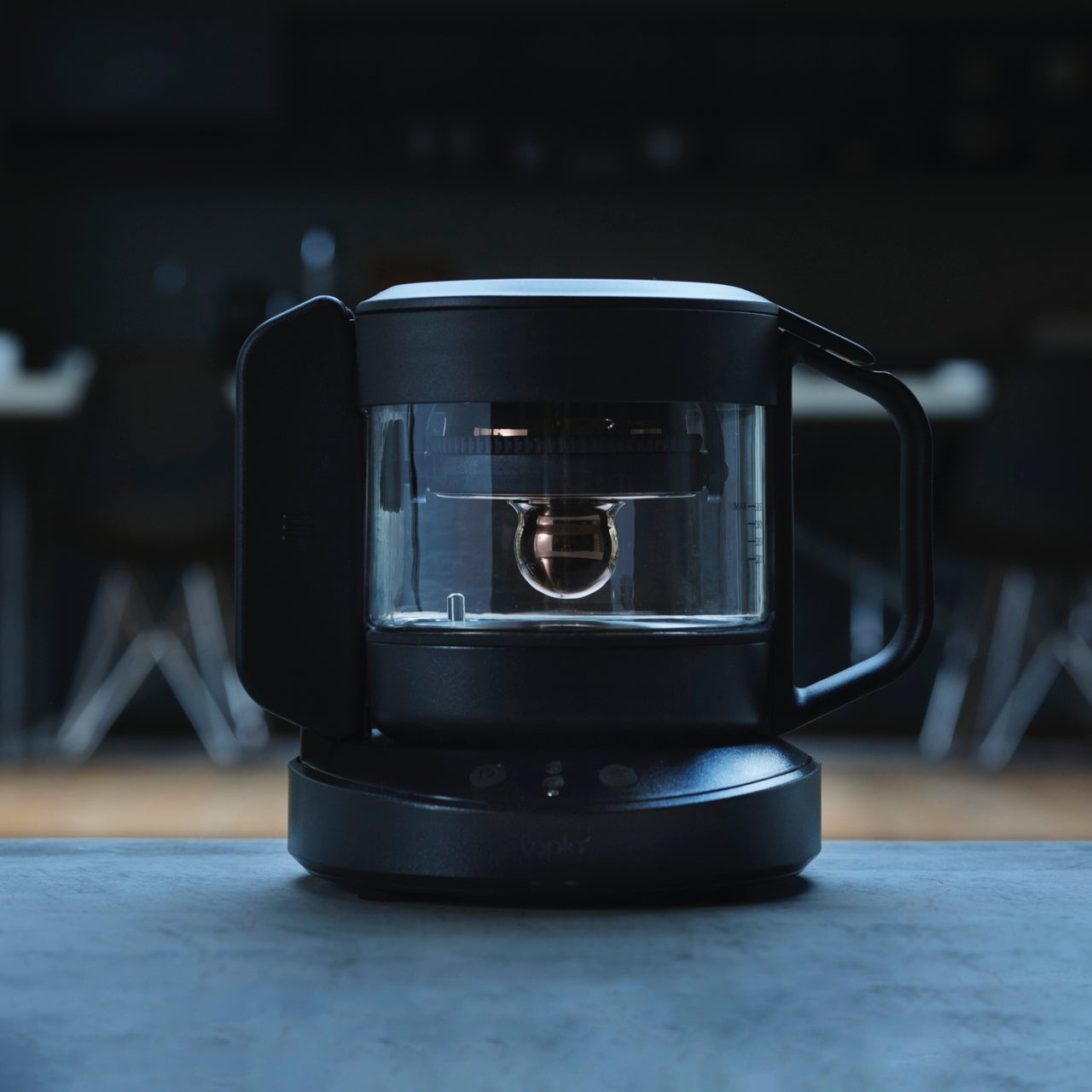
This revolutionary smart teapot transforms tea preparation through cutting-edge sensor technology that personalizes every cup based on physiological and environmental factors. Six advanced sensors continuously monitor heart rate, finger temperature, and ambient conditions to tailor brewing parameters automatically. The app-connected system eliminates guesswork by selecting optimal steeping times, water temperatures, and tea-to-water ratios for different varieties. The technology creates a harmonious symphony of flavor and aroma that adapts to individual preferences and moods.

The personalized brewing experience extends beyond simple temperature control, analyzing biometric data to determine whether you need energizing or calming tea preparations. Professional-grade results become accessible to home users through intelligent automation that learns from usage patterns. The sleek design integrates seamlessly with modern kitchen technology, while the intuitive app interface makes sophisticated brewing techniques approachable for beginners and experts alike.

Click Here to Buy Now: $349.00

What we like

• Biometric sensors create truly personalized tea experiences based on physical state.

• App connectivity provides access to extensive tea knowledge and brewing guides.

What we dislike

• Complex technology may intimidate traditional tea brewing enthusiasts.

• Dependence on app functionality could limit use during technical issues.

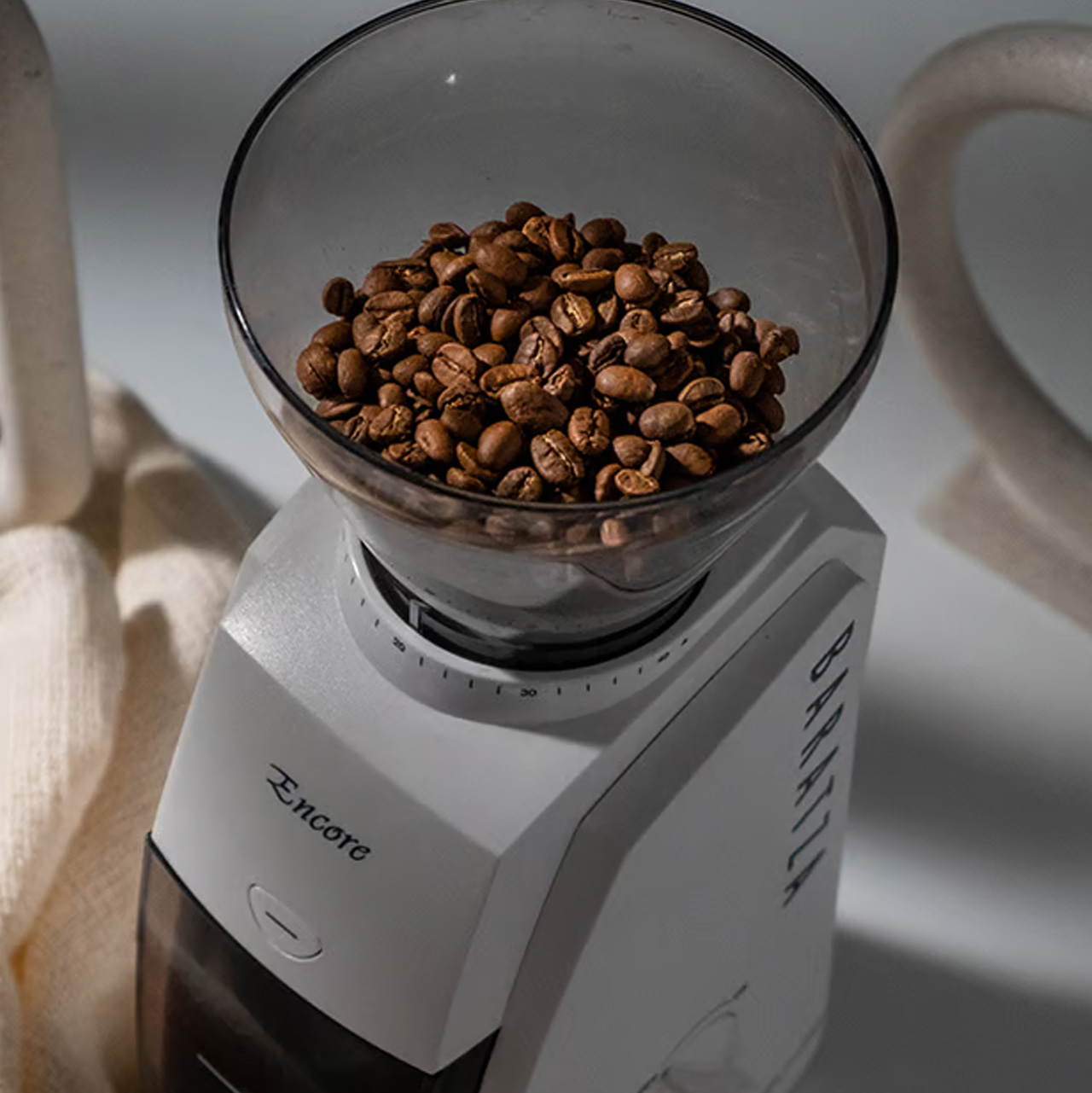
5. Baratza Encore Coffee Grinder
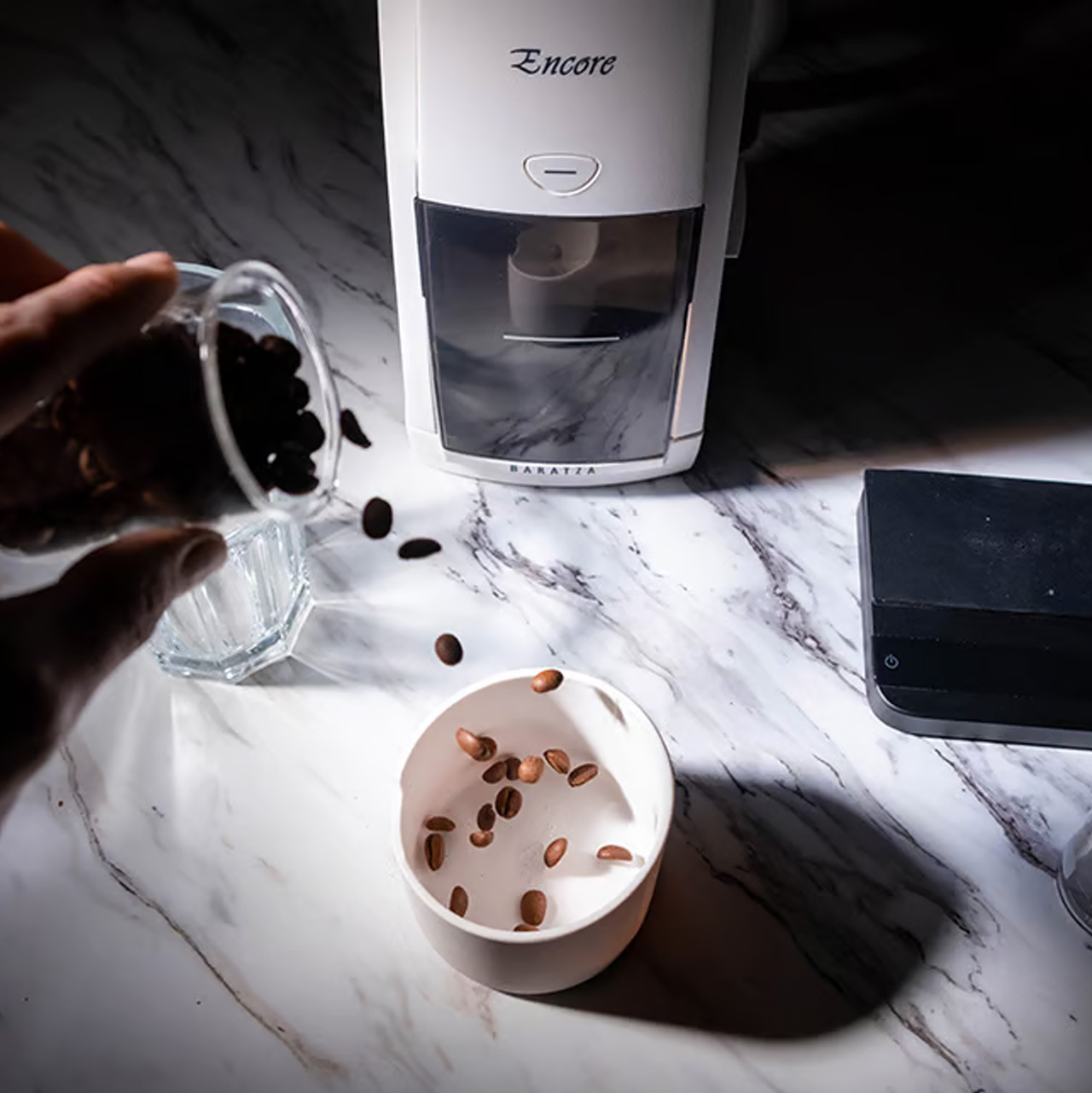
The Baratza Encore stands as the industry standard for entry-level burr grinding, recommended by professional baristas worldwide for its consistent particle size distribution across 40 distinct grind settings. This versatile grinder accommodates every brewing method from cold brew coarse to espresso fine with simple hopper adjustments. The conical burr mechanism produces uniform grounds that extract evenly, eliminating the bitter over-extraction and sour under-extraction common with blade grinders.

Built for longevity, the Encore’s components are engineered to withstand approximately ten years of regular home use while maintaining grinding precision. The thermal overload protection prevents motor damage during extended grinding sessions, while the large capacity hopper reduces the frequency of bean refills. User-serviceable parts and readily available replacements ensure this grinder remains functional throughout its extended lifespan, making it an exceptional long-term investment for serious coffee enthusiasts.

Click Here to Buy Now

What we like

• Forty grind settings accommodate every brewing method from French press to espresso.

• Ten-year expected lifespan with user-serviceable parts provides exceptional value.

What we dislike

• Larger footprint requires dedicated counter space in compact kitchens.

• Some grind retention between different bean types can waste premium coffee.

6. Ember Temperature Control Tumbler
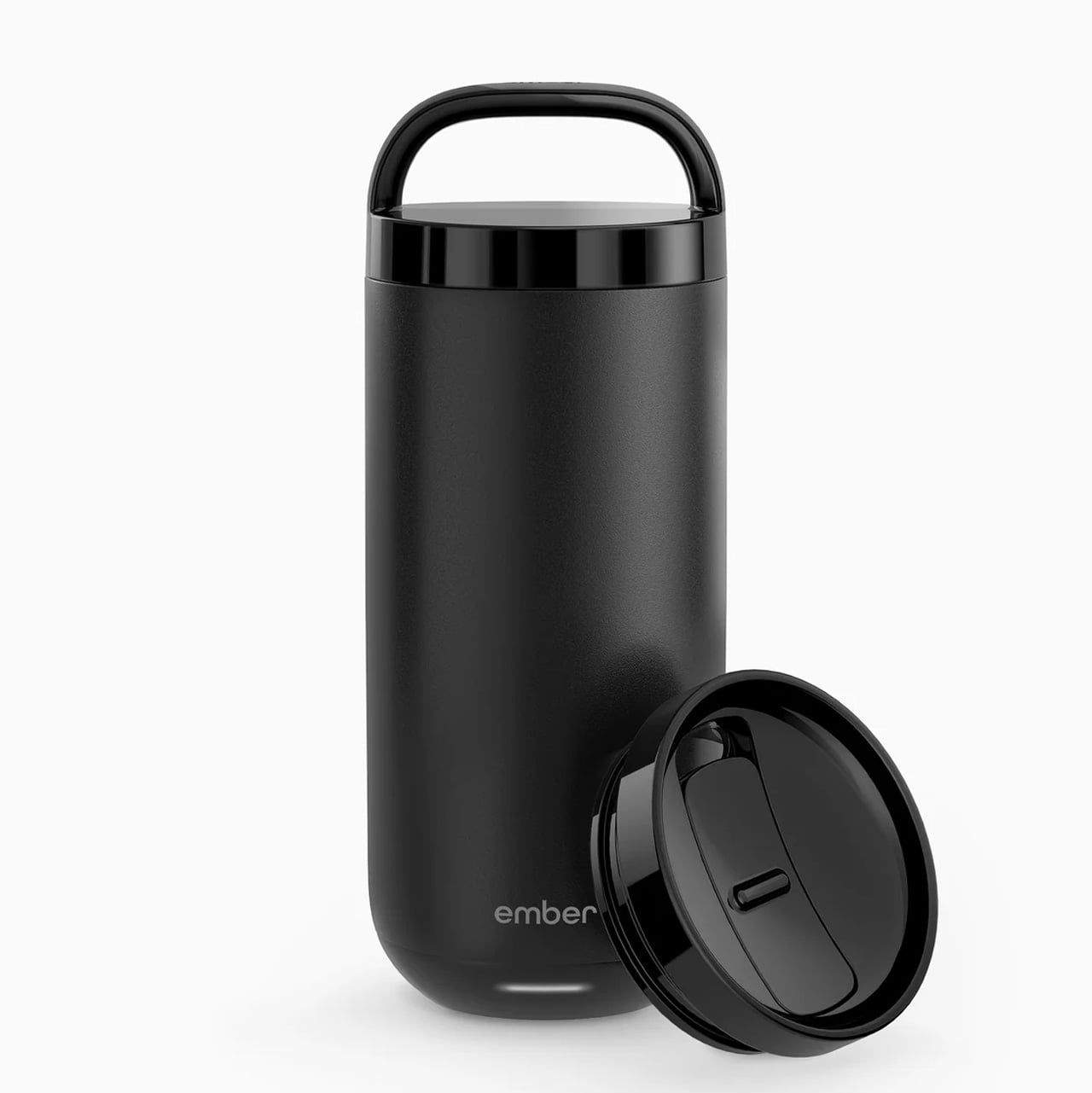
The Ember Tumbler redefines portable beverage consumption through precise temperature control technology that maintains drinks at optimal warmth for up to three hours. This 16-ounce vessel represents Ember’s largest capacity offering, featuring their most advanced Bluetooth chip for improved connectivity and simplified pairing processes. The durable stainless steel construction withstands daily use while remaining fully submersible up to one meter, making cleaning effortless and worry-free.

The innovative dual-lid system provides versatility for different usage scenarios, with both leak-proof Handle Lid and spill-proof Sliding Lid options included. Temperature precision eliminates the common problems of drinks becoming too cold or remaining dangerously hot, creating consistently pleasant drinking experiences. The tumbler fits standard car cup holders while maintaining elegant aesthetics that complement professional and casual environments equally well.

Click Here to Buy

What we like

• Three-hour battery life maintains perfect drinking temperature throughout extended use.

• Dual lid system adapts to different activities and spill-prevention needs.

What we dislike

• Premium pricing significantly exceeds traditional insulated travel mugs.

• Electronic components require careful handling despite water-resistant construction.

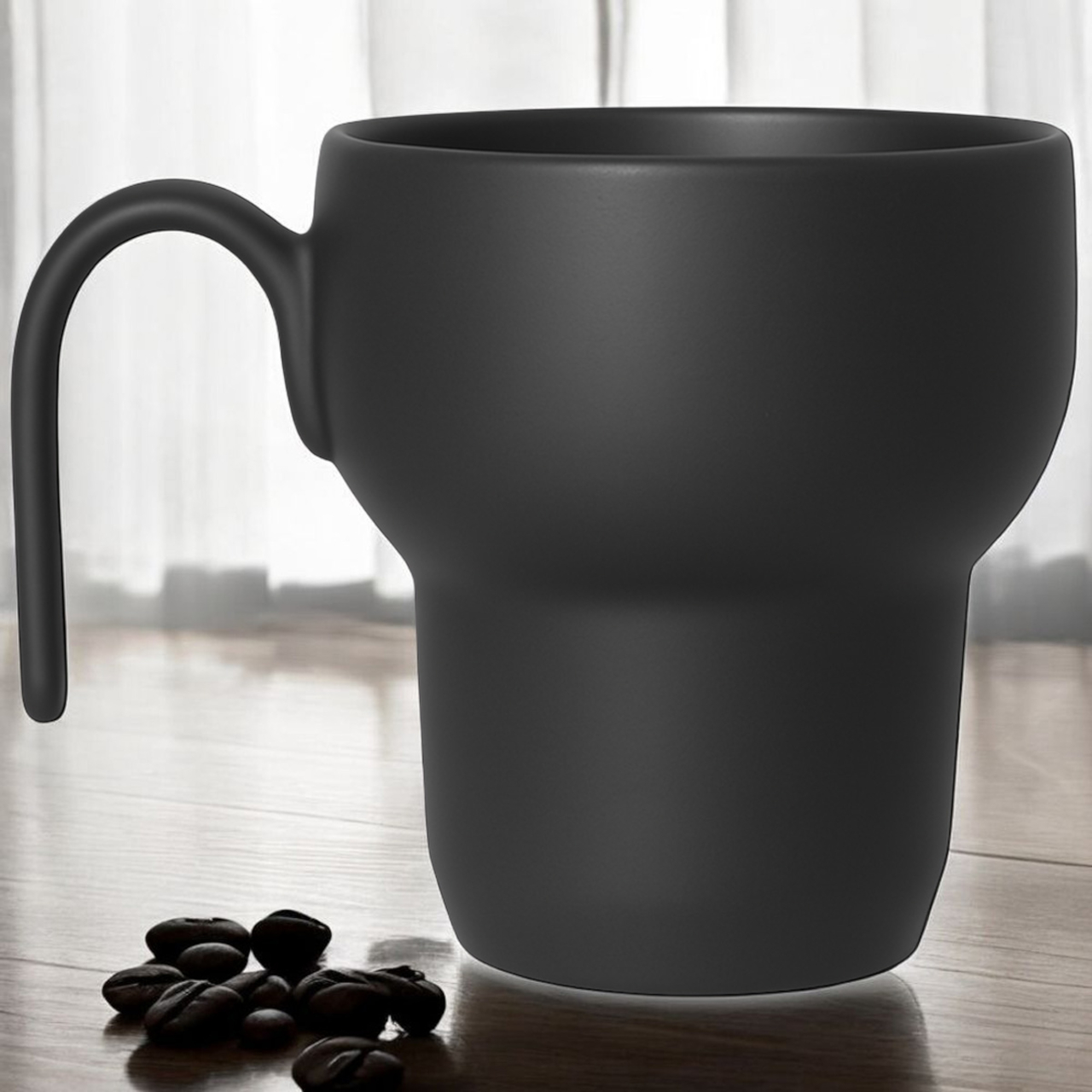
7. ErgoCup Redesigned Coffee Mug
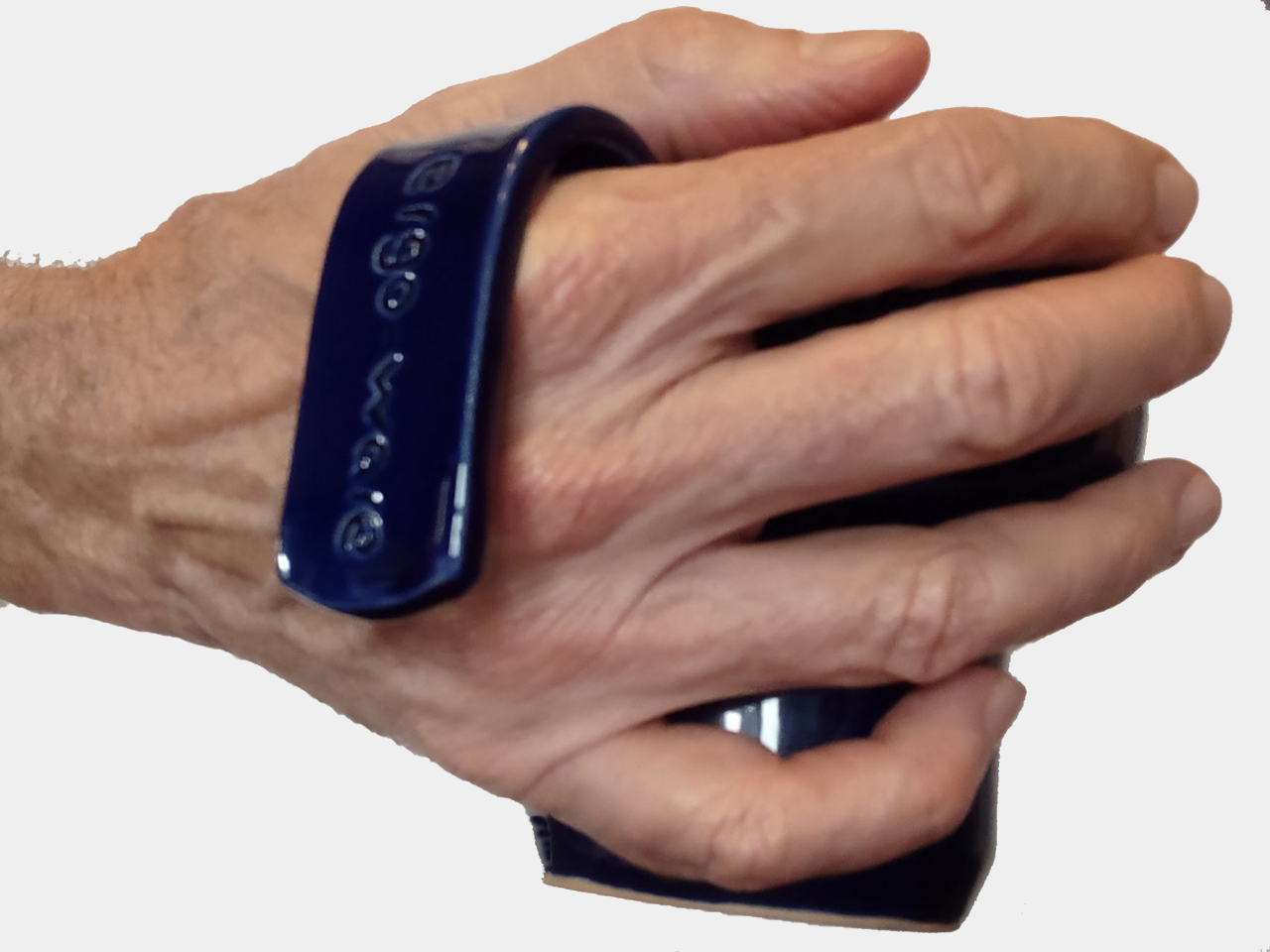
The ErgoCup revolutionizes traditional mug design through ergonomic innovation that eliminates the joint strain and awkward positioning associated with conventional handles. The breakthrough open-ended handle allows natural palm placement while fingers wrap comfortably around the vessel without forcing unnatural grip positions. This design philosophy prioritizes long-term comfort during extended drinking sessions, making it ideal for office workers and leisurely coffee enthusiasts alike.

The integrated flange concept provides subtle thumb and hand support, distributing weight more evenly across the palm while reducing pressure on individual joints. The ergonomic benefits become particularly apparent during longer drinking sessions, where traditional handles can cause discomfort and cramping. The thoughtful design makes holding feel effortless and natural, as though the cup wants to be held rather than fighting against your grip.

Click Here to Buy

What we like

• Open-ended handle design eliminates joint strain during extended use.

• Weight distribution flange reduces pressure on individual fingers and joints.

What we dislike

• Unconventional design may require an adjustment period for traditional mug users.

• Limited availability compared to standard mug designs in retail environments.

The Perfect Holiday Collection for Discerning Tastes

These seven exceptional gifts represent the perfect intersection of innovative design, functional excellence, and aesthetic beauty for discerning caffeine enthusiasts everywhere. From the precision engineering of temperature control systems to the artisanal craftsmanship of handblown glass, these carefully selected pieces cater to every aspect of sophisticated coffee and tea appreciation. Each thoughtfully chosen item transforms ordinary beverage consumption into moments of genuine pleasure and deeply mindful appreciation for quality craftsmanship.

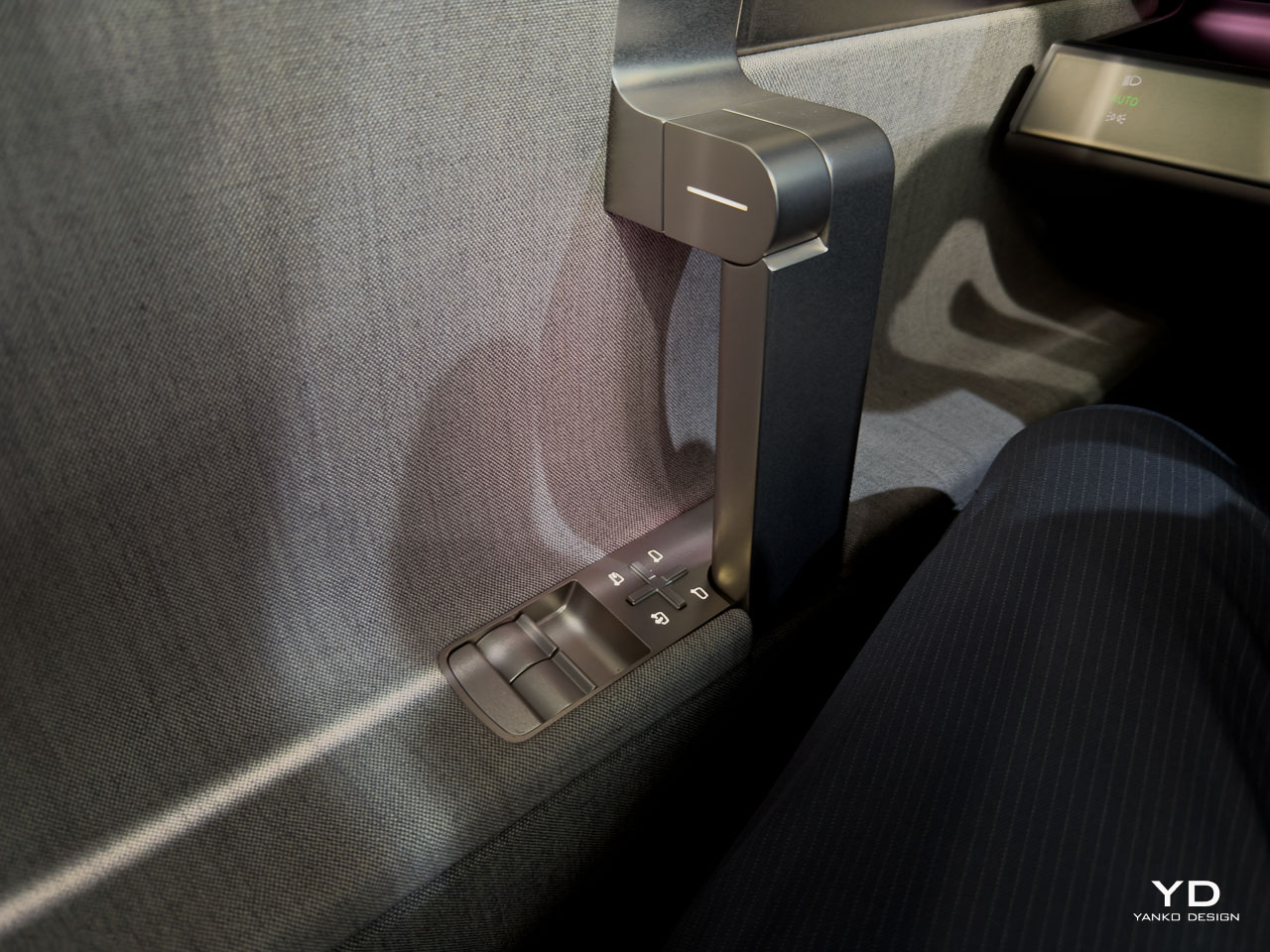
Whether seeking to upgrade brewing equipment, enhance drinking comfort, or explore new flavor territories, these gifts promise to delight and inspire the most discerning coffee and tea enthusiasts throughout the holiday season and beyond. Each selection offers lasting value that extends far beyond the initial unwrapping, providing years of enhanced beverage experiences that celebrate the artistry behind exceptional drinks while creating memorable moments of daily indulgence and truly sophisticated appreciation.

The post 7 Best Coffee & Tea Gifts Every Caffeine Connoisseur Needs This Holiday Season first appeared on Yanko Design.