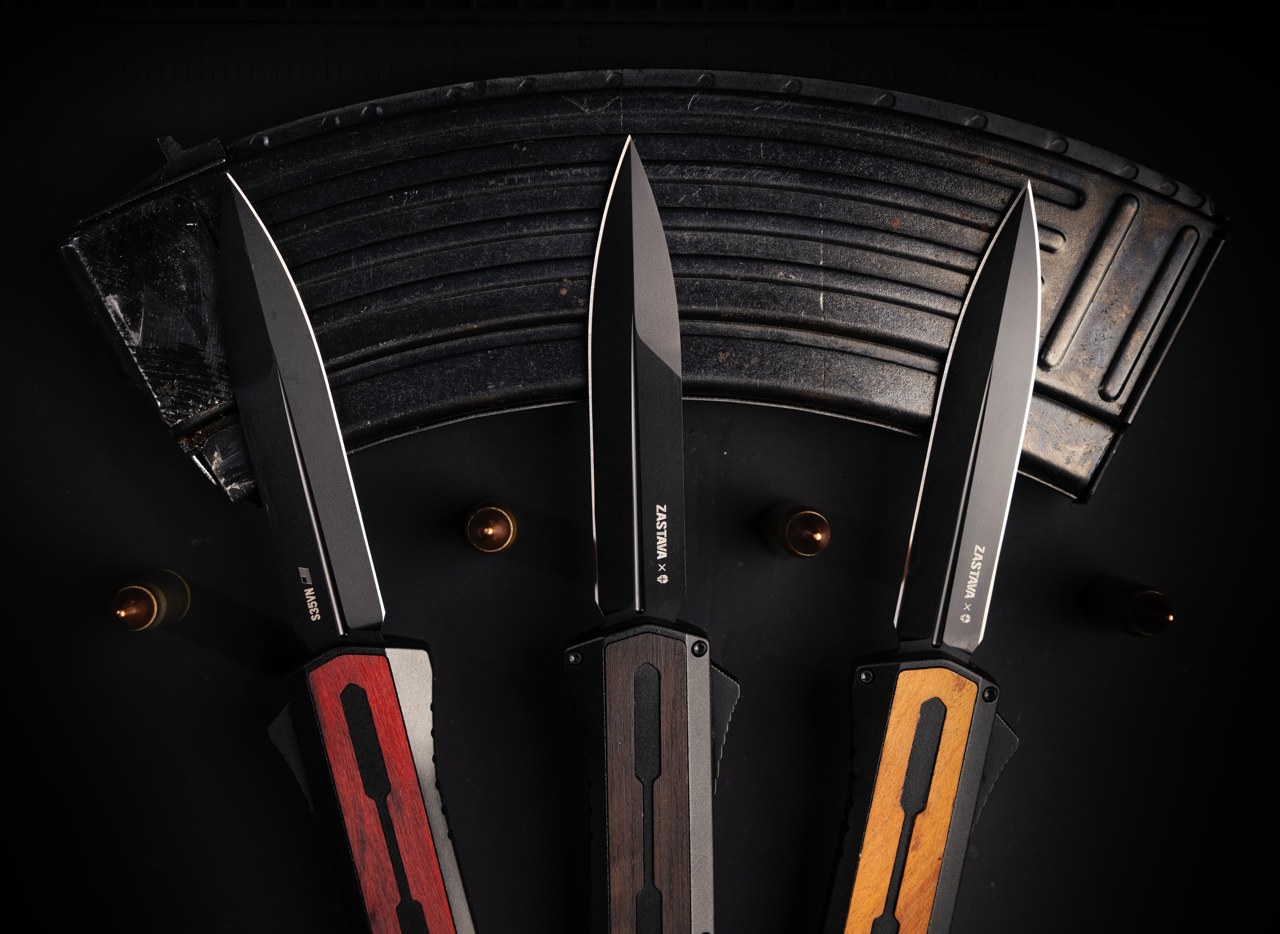
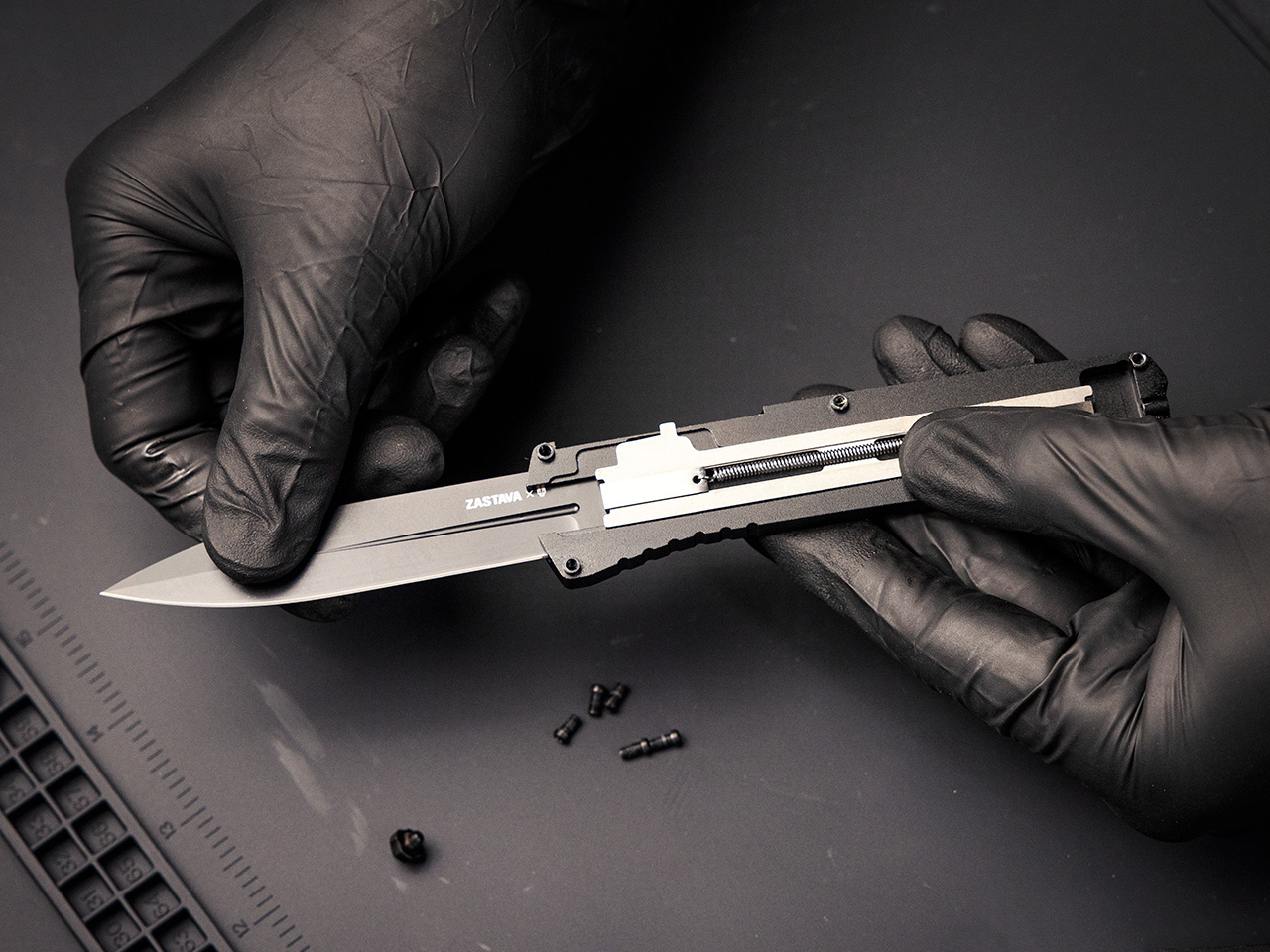
Tactical knives have become an important part of people’s tool kits, whether they’re for cutting through rope, preparing food outdoors, or even carving wooden figures and toys. Many EDC knives try to appeal to common aesthetic tastes, offering designs that look suave and sometimes even luxurious rather than the rugged style that usually comes to mind. While there’s definitely nothing wrong with a variety of designs, there are times when you want a knife that doesn’t try to hide its sharpness, strength, and tactical versatility. That’s the kind of experience that the new Tekto A7 Zastava brings to the table, an automatic out-the-front switchblade that delivers performance, reliability, and handsome good looks that proudly display its battle-hardened heritage.
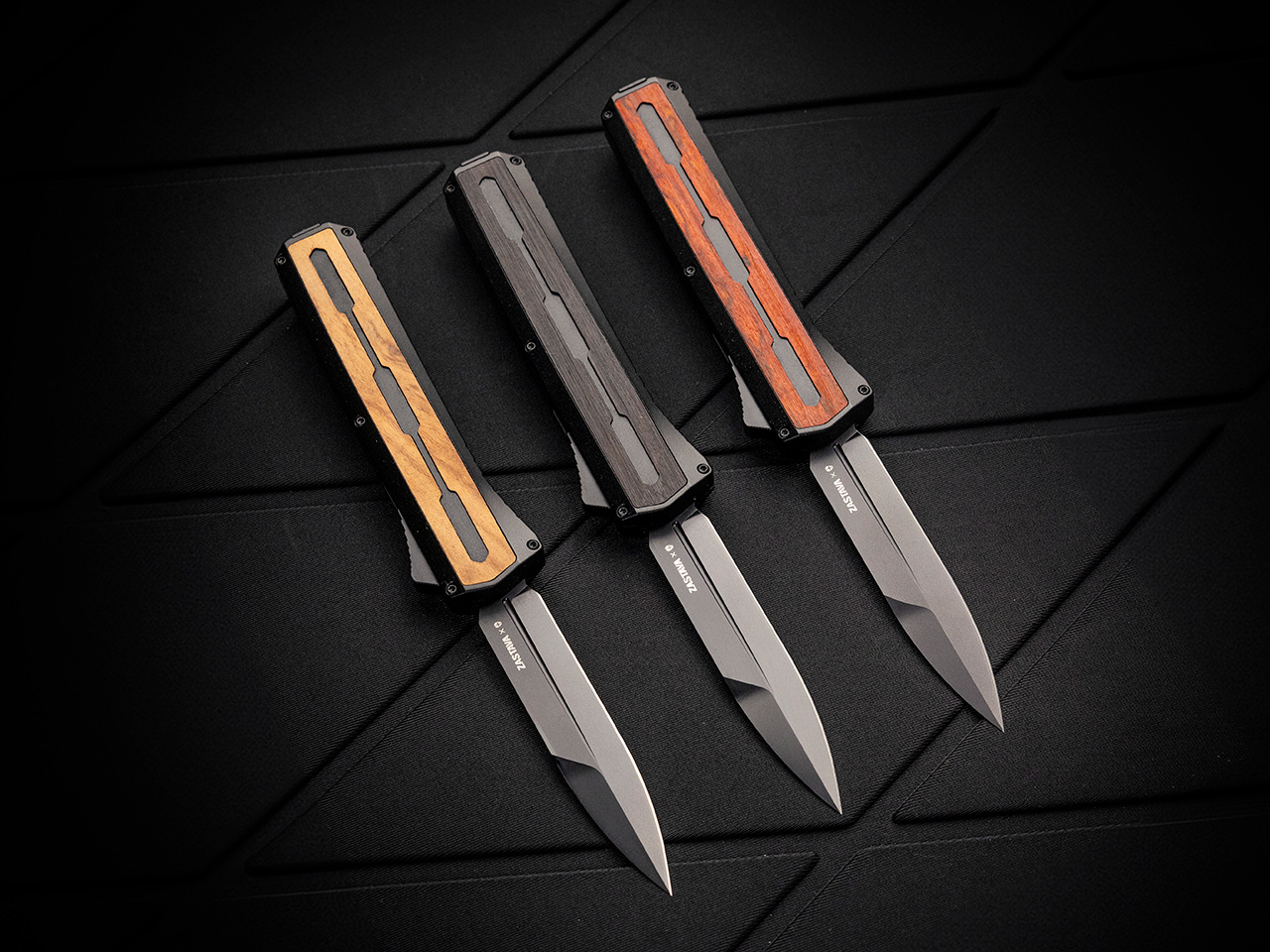
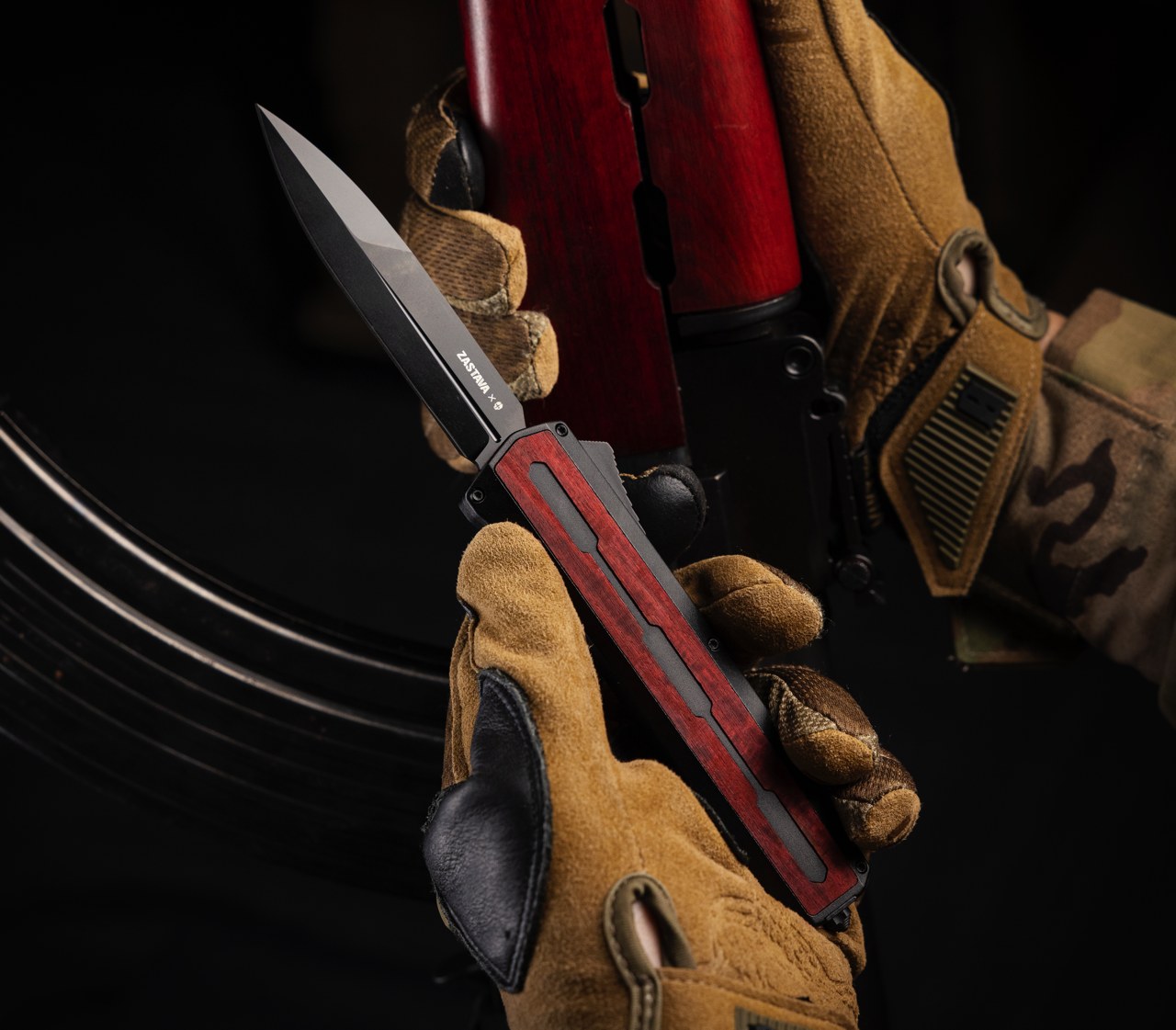
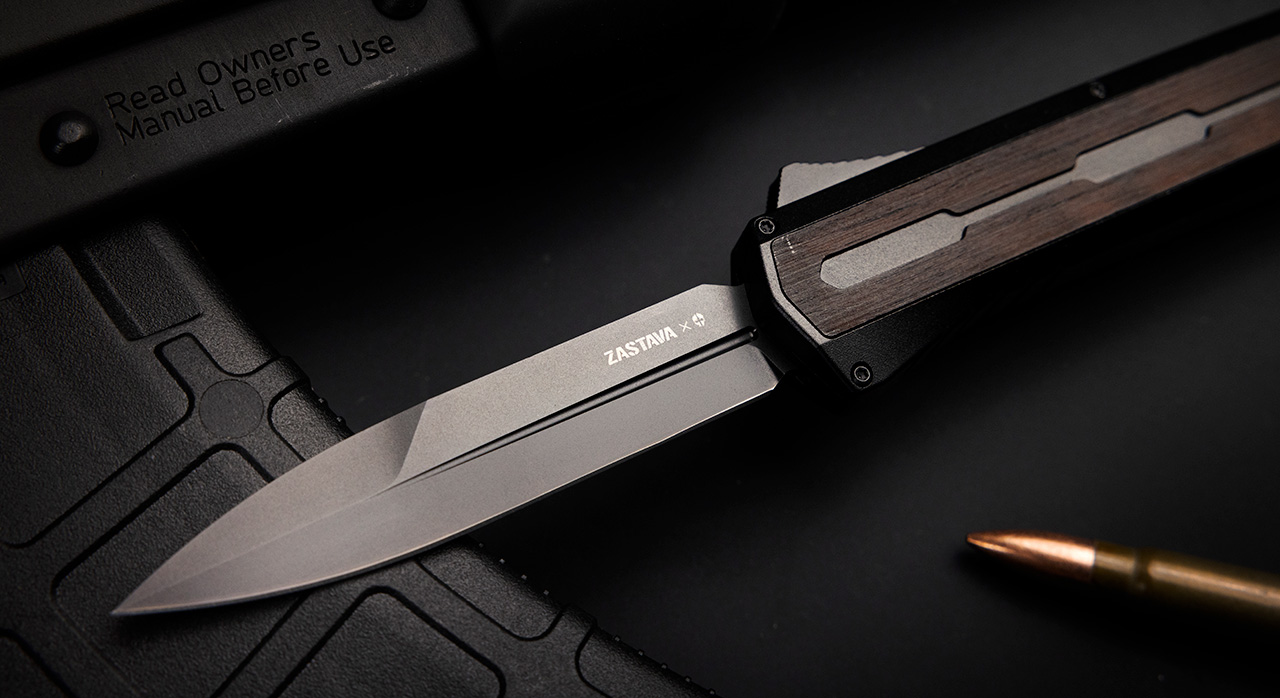
Outdoor ruggedness has a negative connotation of looking rough, unpolished, and unappealing. The Tekto A7 Zastava clearly lays those doubts to rest with a design that evokes a sense of sophistication without hiding its robust nature. It takes its cue from the design of the iconic Zastava M70 rifle, particularly in the wood inlays that grace its sides. Each inlay varies in grain and actual color, which makes each A7 Zastava OTF knife a one-of-a-kind item. The wood material also beautifully contrasts with the dark black handle and blade, giving it a premium appearance that will make it the star of your EDC collection.
Made from premium S35VN steel, the blade offers two versatile configurations—double-edged dagger and spear point—delivering superior strength and precision.
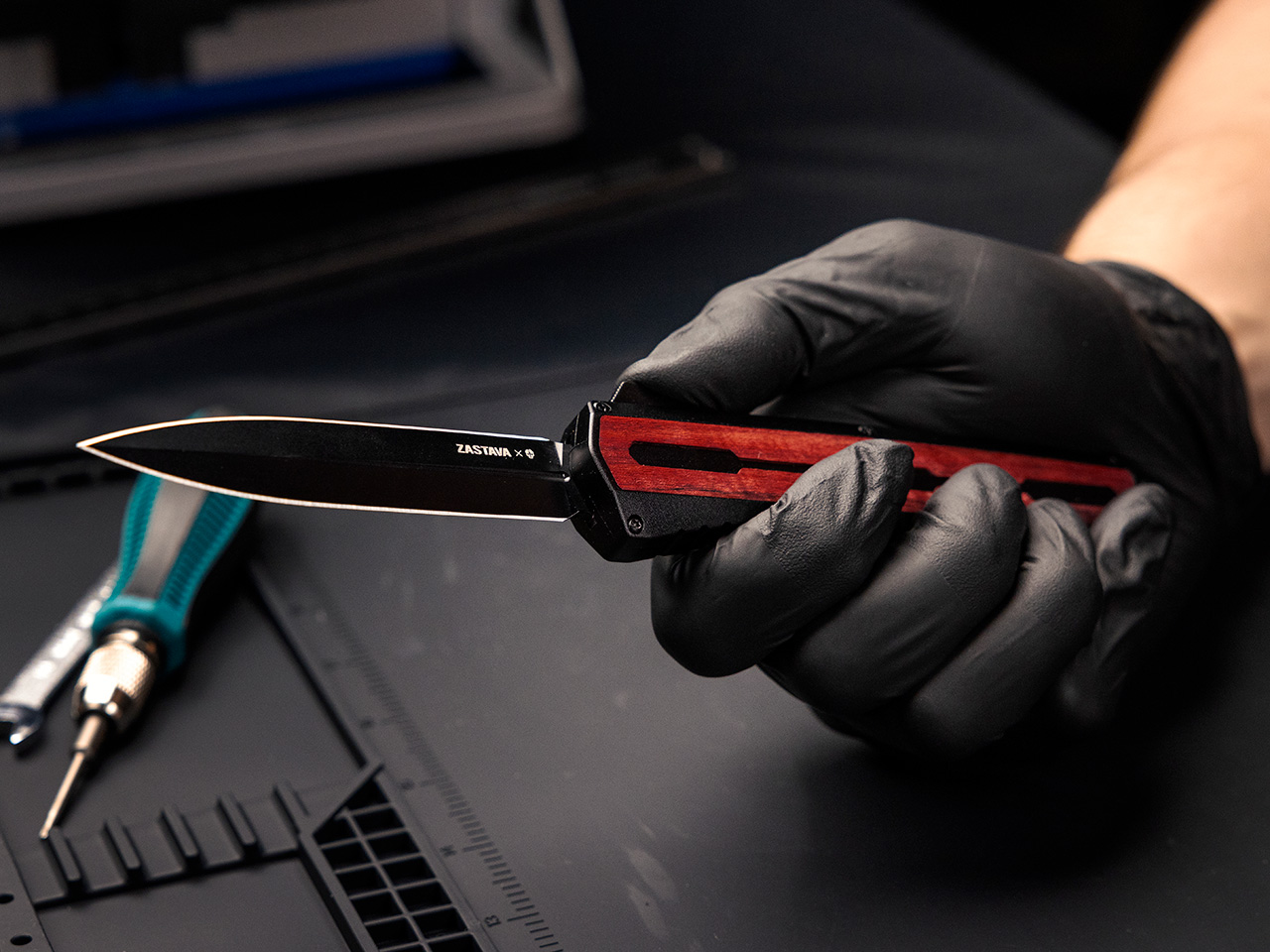
Of course, this tactical knife isn’t made just to be displayed, and its blade is ready to prove its mettle, whatever the task it faces. Made from high-performance S35VN steel, the 3.6-inch titanium-coated blade isn’t just sharp and tough but also offers excellent wear and corrosion resistance. Available in spear and double-edged dagger point configurations, the A7 Zastava OTF knife offers the versatility you need to meet the challenges of any outdoor task or mission.
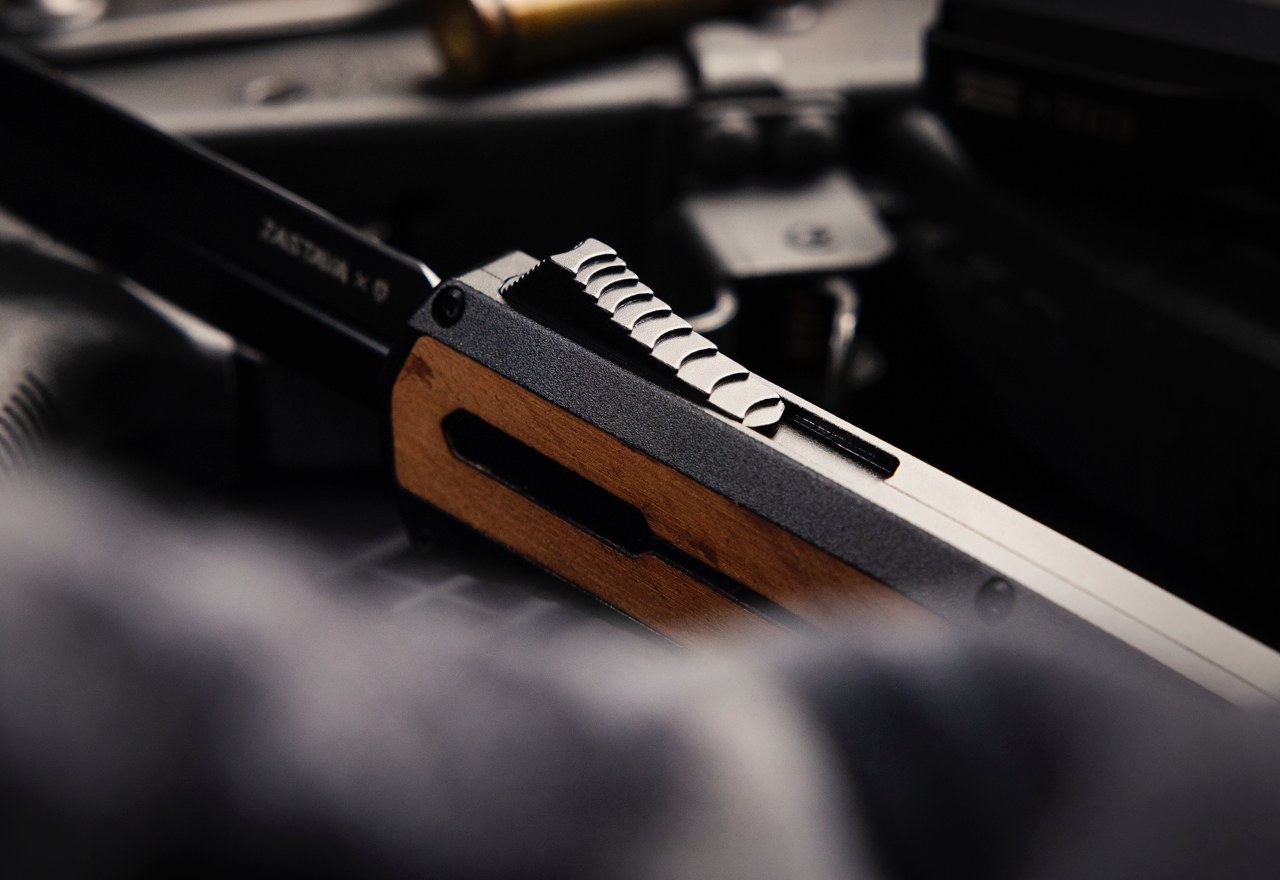
Despite its powerful disposition, the A7 Zastava is designed to be easy to use and, most importantly, safe and secure. Jimping points on the handle offer a secure grip, and the contoured button delivers not only a smooth and reliable operation but also a satisfying feeling with every deployment. A reversible clip secures the knife in your pocket or bag and accommodates both left-handed and right-handed users. Last but not least, a tungsten glass breaker is integrated into the handle, making emergencies less stressful. With this variety of features, you get not just a tool but a dependable partner that’s ready to cut through tasks and challenges wherever you go.
With an exceptional blade and handsome looks, the Tetko A7 Zastava OTF knife elevates tactical knives from just cutting tools into works of high-quality craftsmanship. From the strategically placed jimping to the wood inlays to the reversible clip, Tekto’s meticulous attention to detail and partnership with Zastava Arms has given birth to an automatic tactical knife that exudes a character that is both rough yet elegant at the same time. Whether you’re camping outdoors, crafting a project, or responding to a crisis, the Tekto A7 Zastava OTF knife delivers the performance that you need in a stylish yet powerful design that will appeal to pros and enthusiasts alike.
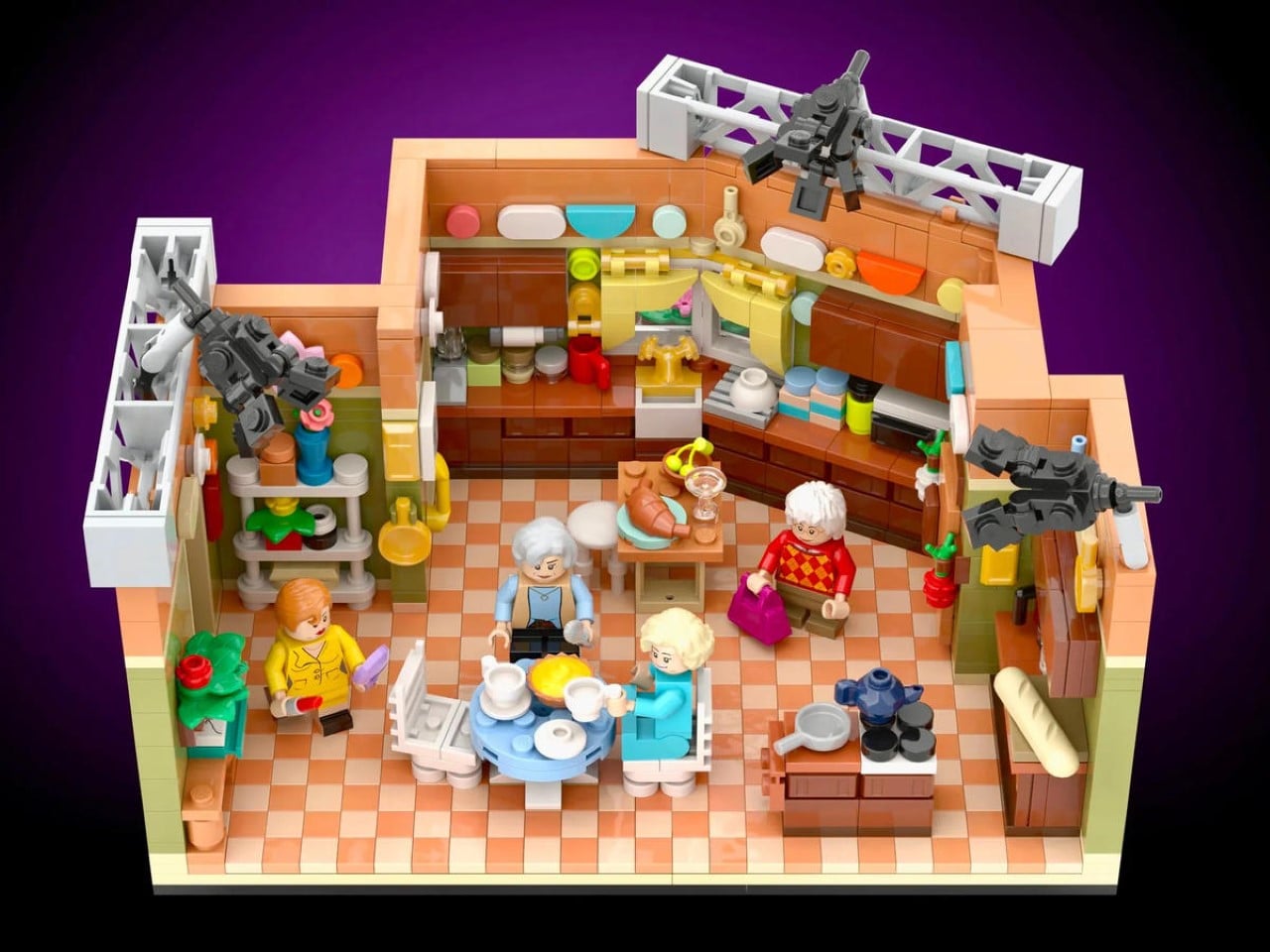
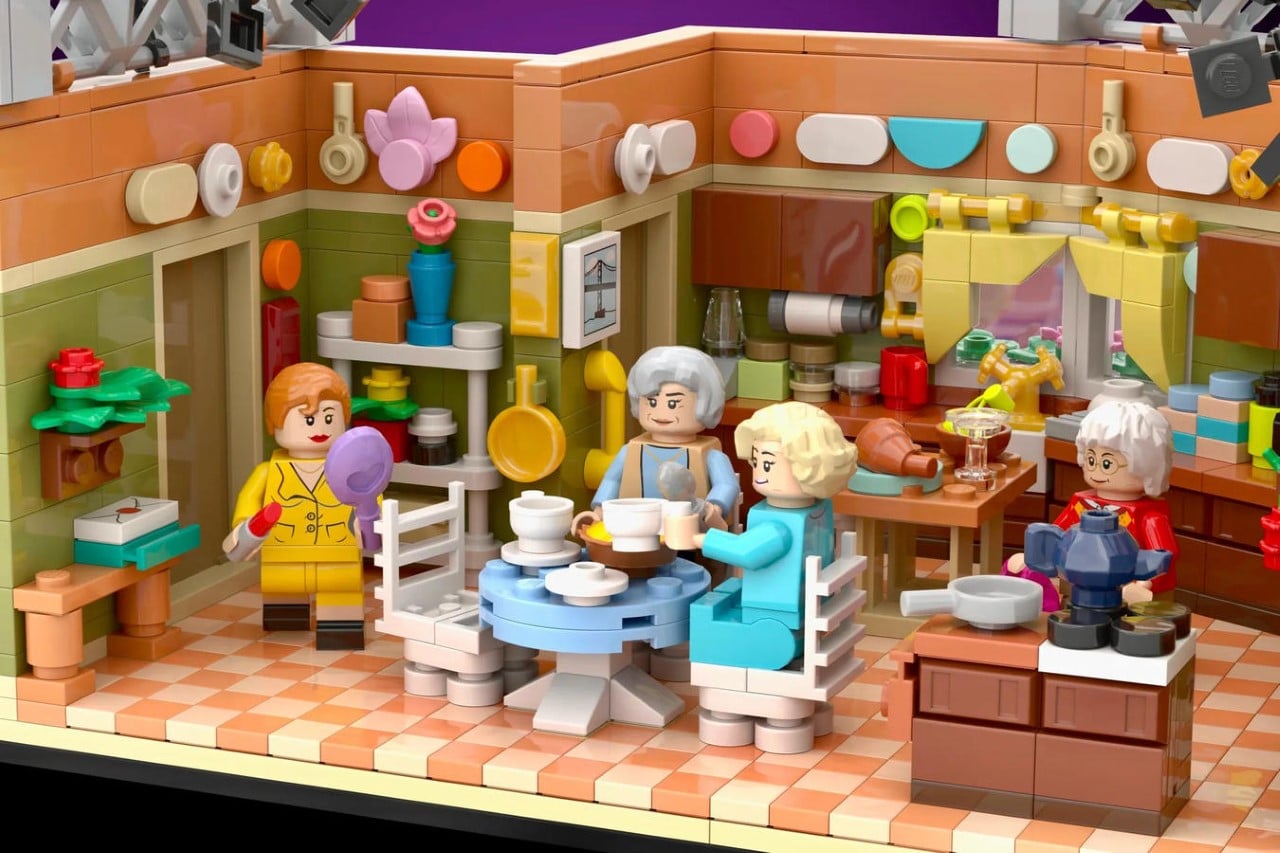
I’m a 90s kid myself, but the beauty of growing up in the 90s was to see sitcoms building on the success of great comedies of the 70s and 80s. I was raised on Full House, Cartoon Network, and Nickelodeon, but also on the greats before it – Diff’rent Strokes, Small Wonder, Three’s Company, and Golden Girls. I was raised on these shows because of how mom would watch them on TV, while I hung around in the background, chuckling away at funny moments. Decades later, LEGO sets like these bring back that familiar feeling, as they capture the intricate details of our favorite shows. Designed by Martin_Studio, this fan-made recreation of award-winning show Golden Girls captures the iconic kitchen setting where protagonists Dorothy, Blanche, Rose, and Sophia tackled important issues like aging and friendship in a way that was both relatable and uplifting.
Designer: Martin_Studio
“The Golden Girls won Emmys and Golden Globes, showcasing its quality and impact on television. The show’s clever writing, exceptional performances, and heartfelt storytelling have left an enduring legacy that continues to delight audiences,” says designer Martin_Studio. “A LEGO set based on the show would not only celebrate its remarkable history but also offer a unique way for fans to engage with it.”
Imagine building the iconic Miami home of Dorothy, Blanche, Rose, and Sophia with LEGO bricks. This fan-made set offers a detailed recreation of the show’s most recognizable rooms, from the cozy kitchen where countless conversations were shared over cheesecake to the sun-drenched lanai where the girls enjoyed their morning coffee. The minifigures, each with their own distinctive personalities captured through facial expressions and accessories, would allow fans to recreate their favorite scenes or create new adventures entirely.
Beyond the nostalgia factor, a Golden Girls LEGO set offers a delightful building experience for fans of all ages. Although Martin_Studio doesn’t declare how many pieces the set uses, it caters to both casual builders and experienced LEGO enthusiasts. The building process itself is a fun and engaging activity, allowing fans to relive cherished moments from the show while putting their creativity to the test. The kitchen scene even features studio lights on the top, bringing the feeling of being on set down to the small LEGO mini-scale.
The appeal of this potential set extends far beyond just fans of the show too. LEGO is known for its ability to bridge generations through its building sets, and a Golden Girls set could be a wonderful way for families to connect. Parents who grew up watching the show can introduce their children to the characters and themes in a new and interactive way, quite like the Full House LEGO Ideas set we covered just last month. Building the set together can spark conversations about friendship, aging, and the enduring power of laughter.
The LEGO Ideas Golden Girls set is currently a submission on the LEGO Ideas forum, where fans build and share their own creations with the global LEGO community. You can vote for the set on the LEGO Ideas website, and if it hits the 10,000 vote mark, LEGO might turn it into a retail kit for everyone to buy!
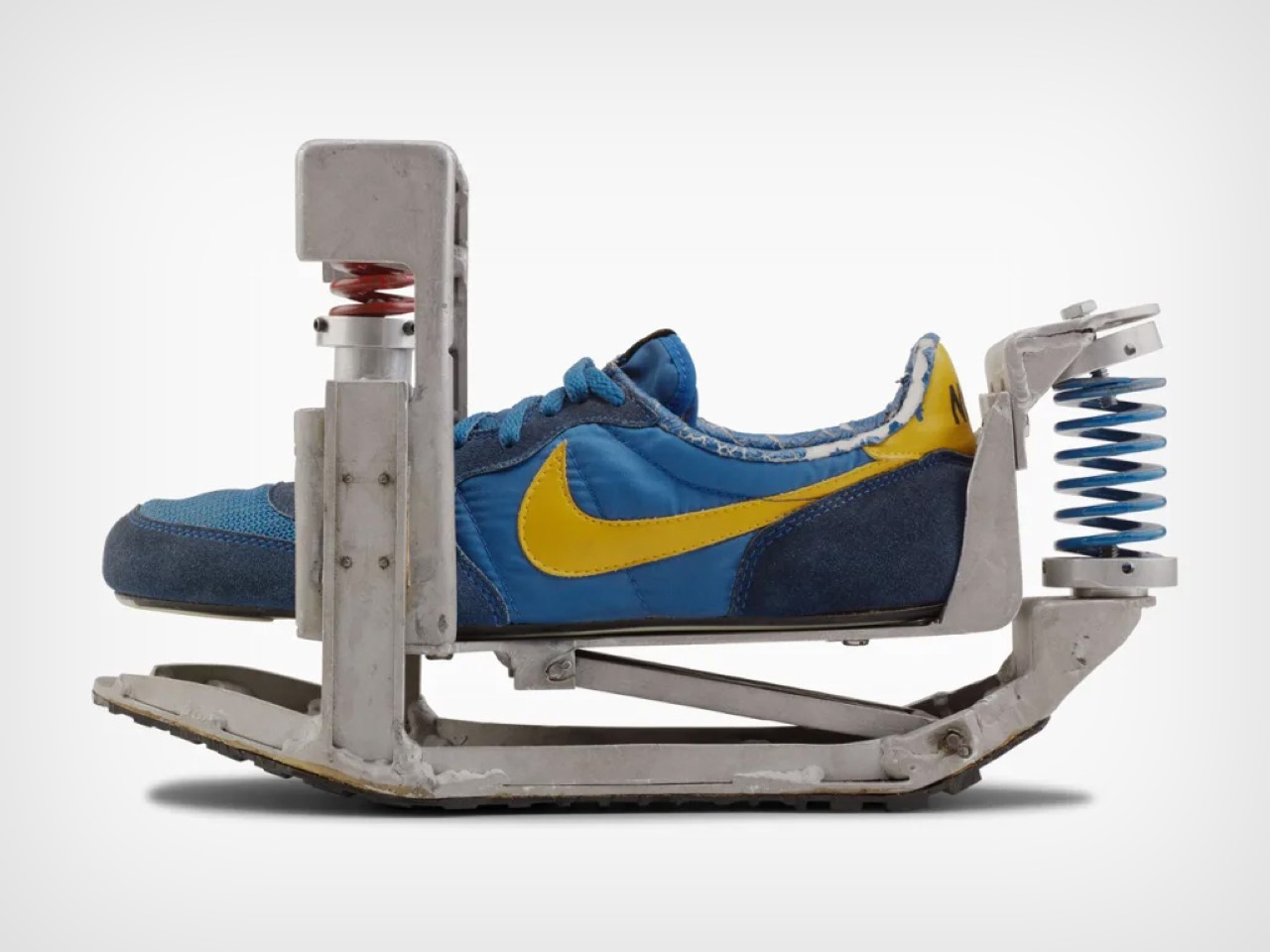
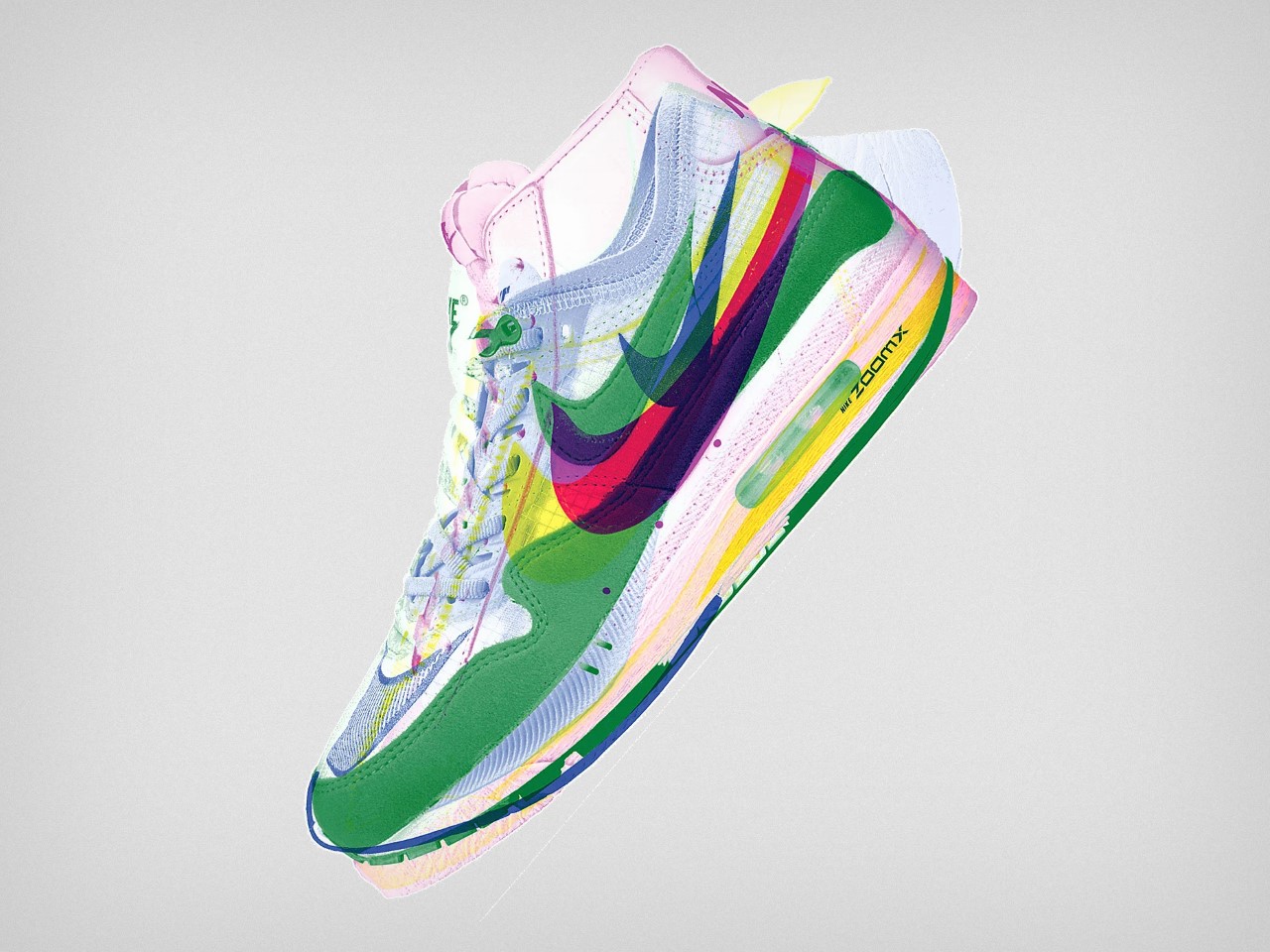
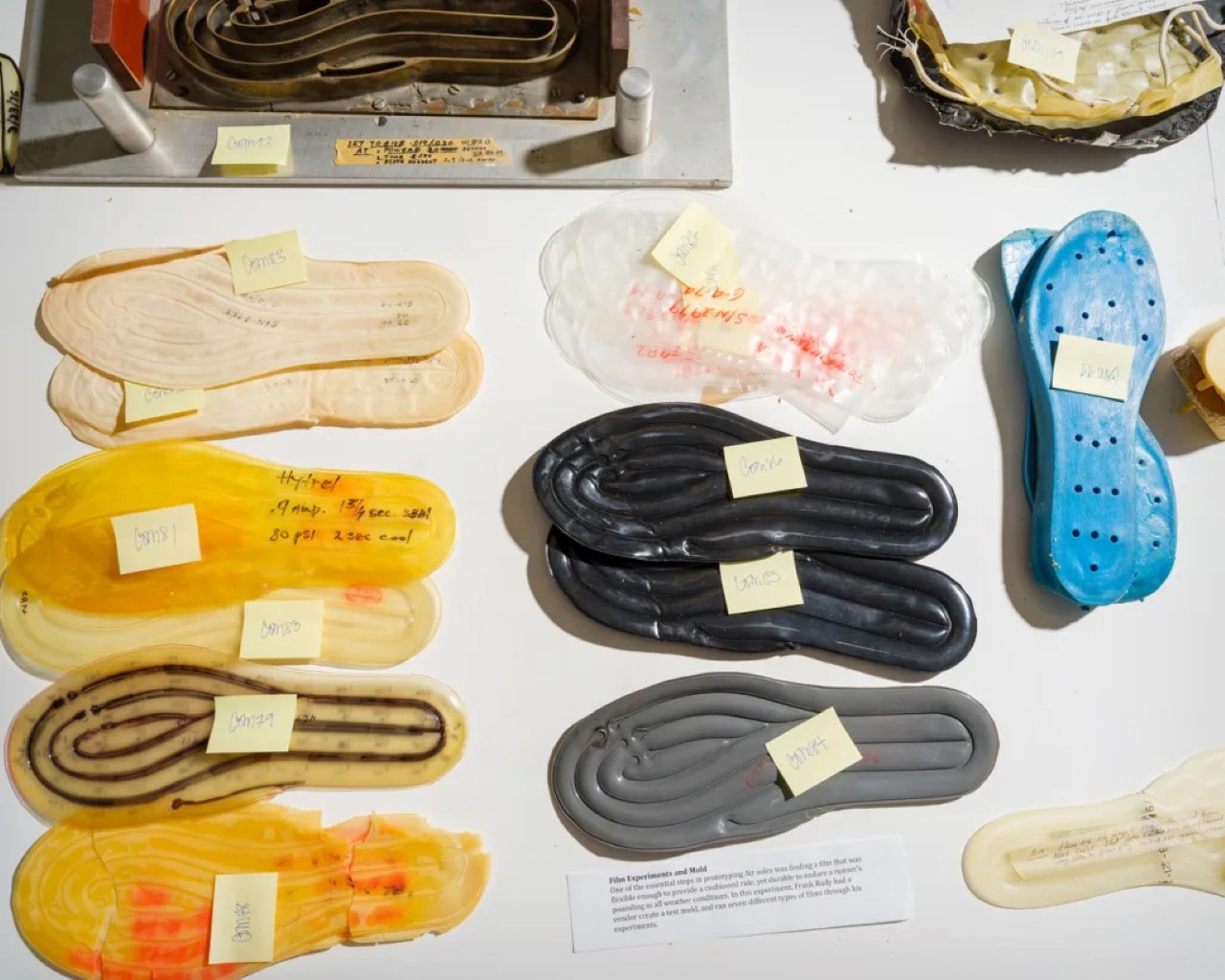
Early Mechanical Shox Prototype (1981) from the Department of Nike Archives
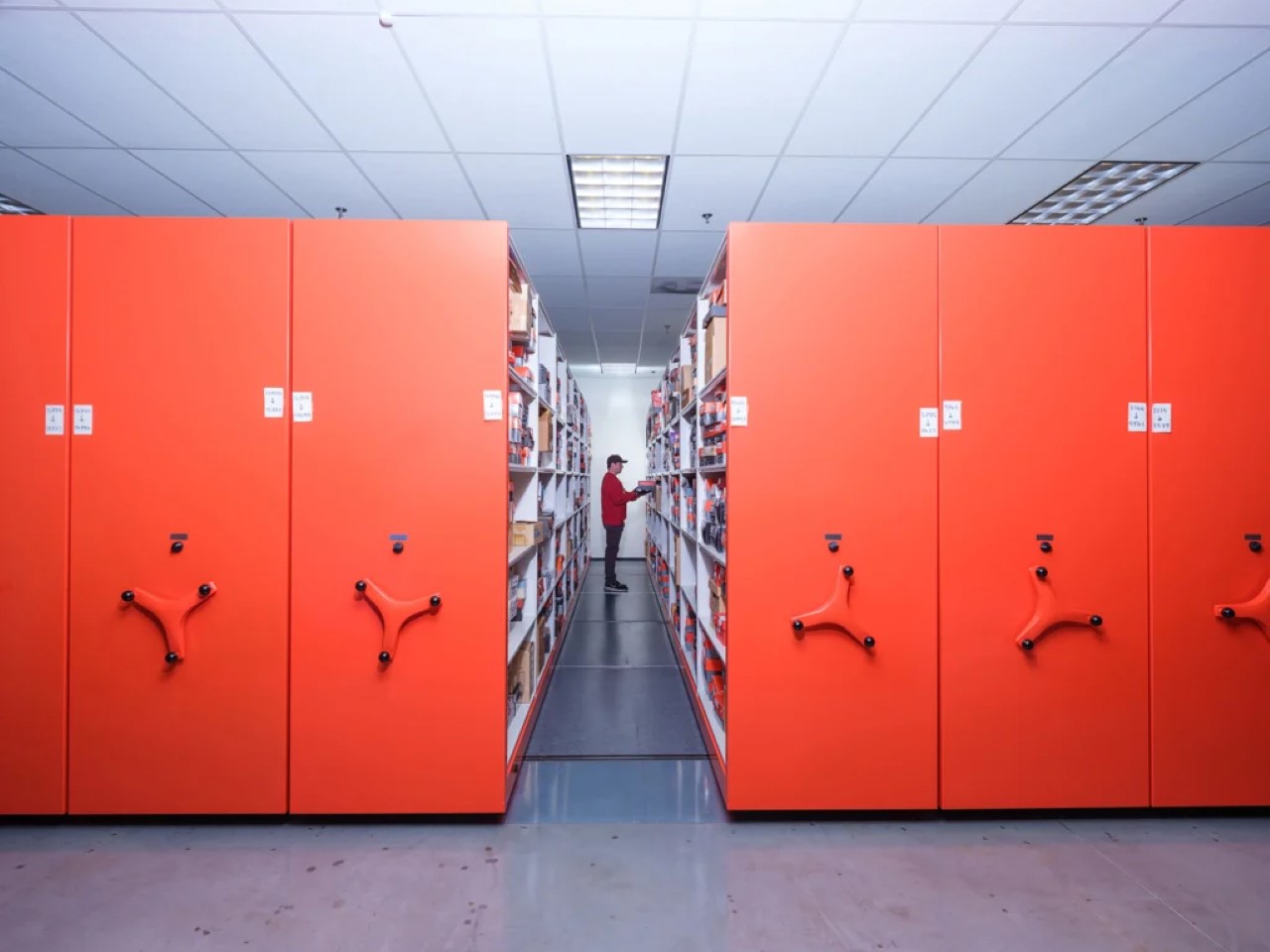
Nestled in an unassuming building, Nike’s top-secret design archive, known as the Department of Nike Archives (DNA), houses a treasure trove of over 200,000 rare artifacts. From never-before-seen sneaker prototypes to the original Nike “swoosh” sketch, the DNA is a sneaker lover’s paradise. Recently, the DNA opened its doors to curators for the first time, leading to the creation of the groundbreaking exhibition, “Nike: Form Follows Motion.” For the first time, Nike has opened its doors to a select group of curators who have scoured these holdings to create an exhibition at the Vitra Design Museum in Germany. The exhibition offers a rare glimpse into the brand’s history and design philosophy.
Set to run from September 21, 2024, to May 2025, the exhibition is the first of its kind dedicated solely to Nike. It traces the company’s journey from its founding in 1964 to its current position as the largest apparel company in the world. Curated by Glenn Adamson, who also co-edited a book to accompany the exhibition, the show seeks to explore Nike’s unique approach to design. According to Adamson, Nike’s design thinking is intensely creative and complex, rivaling that of any other company in the industry. The exhibition is structured into four chronological sections, each representing a significant phase in Nike’s evolution.
“Nike: Form Follows Motion” is divided into four chronological sections: “Track,” “Air,” “Sensation,” and “Relation.” The first section, “Track,” offers a look at Nike’s early years when jogging was a niche activity. This period is marked by the brand’s first product innovations, including the release of the waffle-soled trainer in the early 1970s. The next section, “Air,” covers Nike’s expansion into sports advertising, bolstered by high-profile partnerships with athletes like Michael Jordan. The “Sensation” section focuses on Nike’s extensive sports research programs, highlighting the brand’s commitment to pushing the boundaries of performance wear. Finally, the “Relation” section reflects on Nike’s history of collaborations with external designers, showcasing the brand’s willingness to embrace new ideas and technologies.
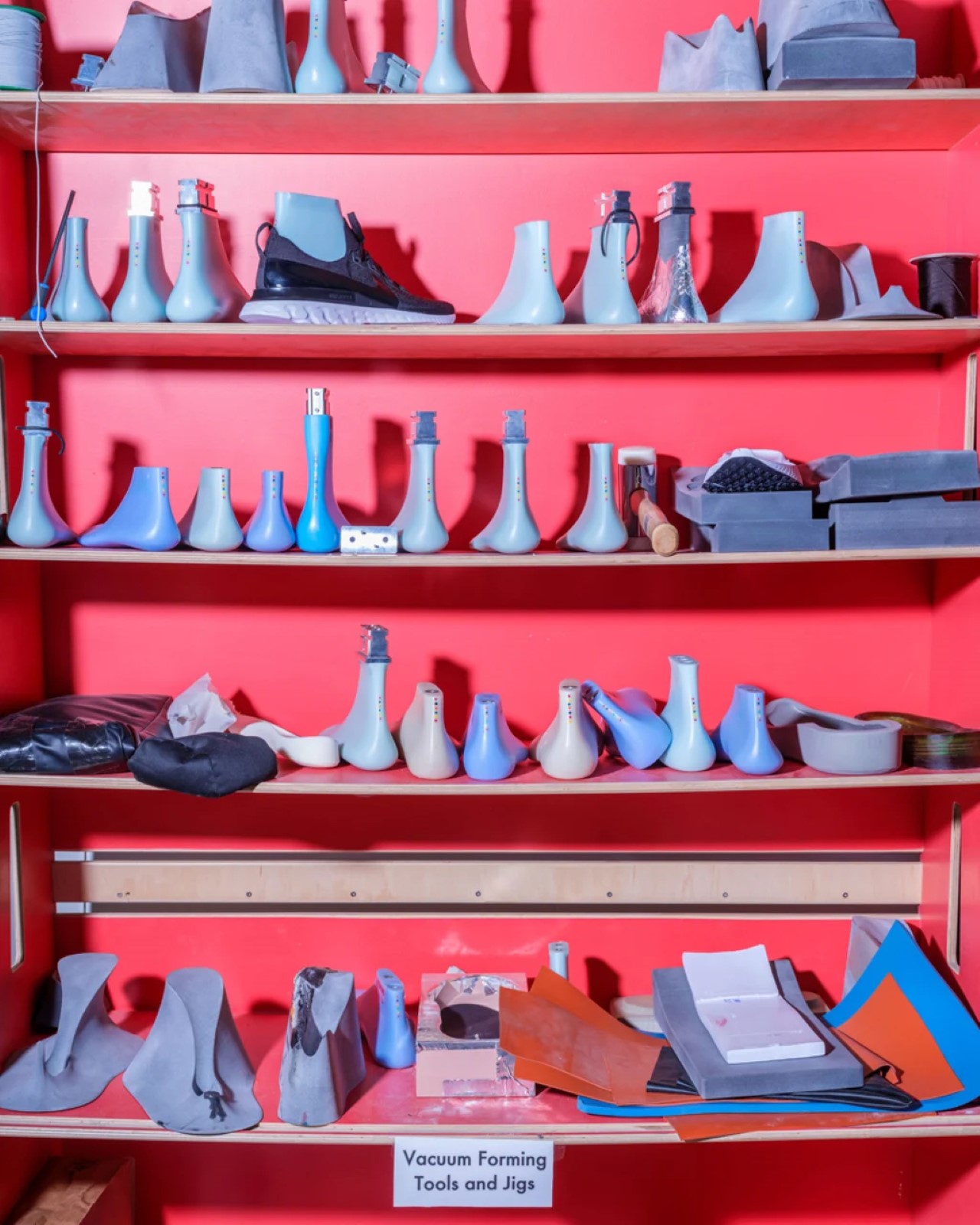
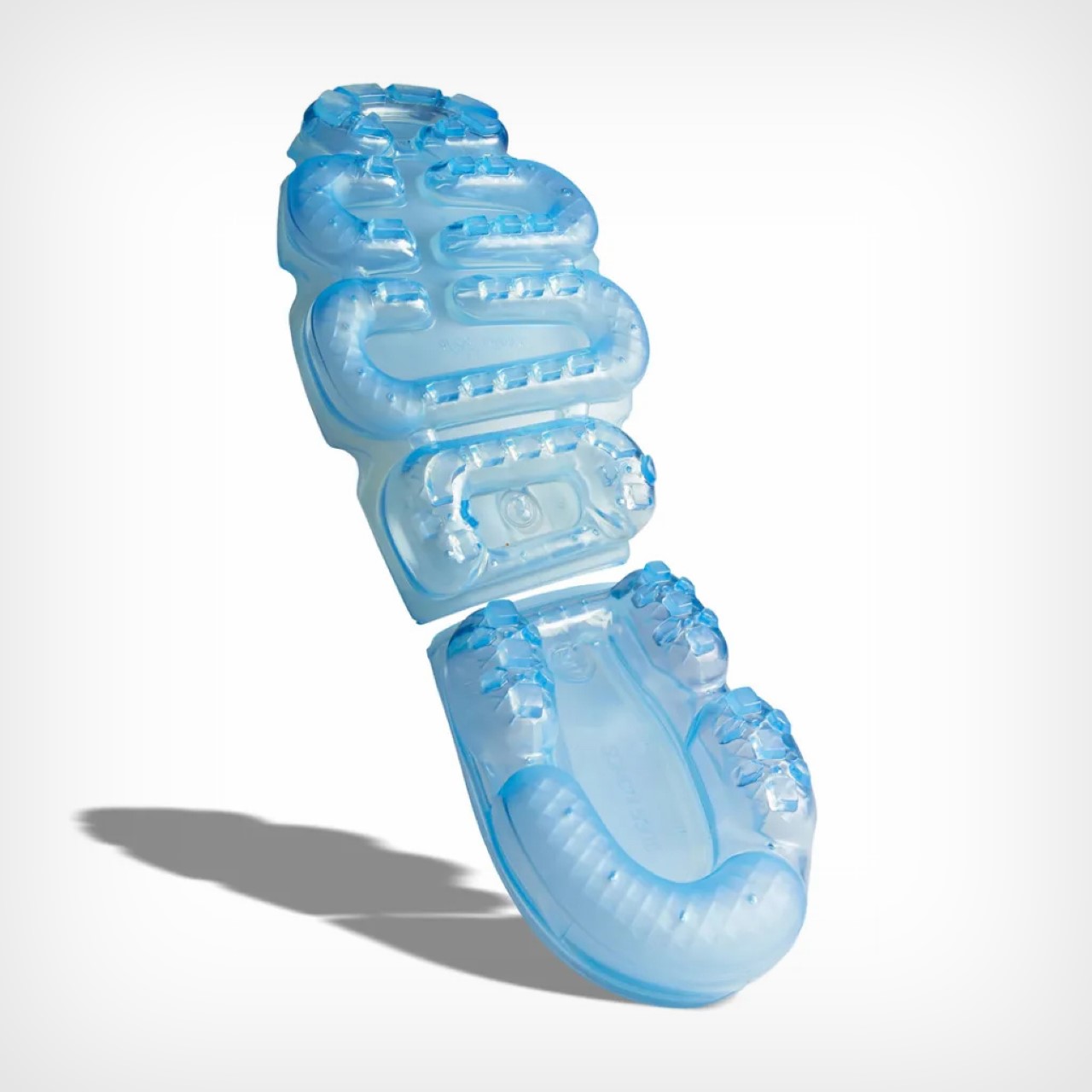
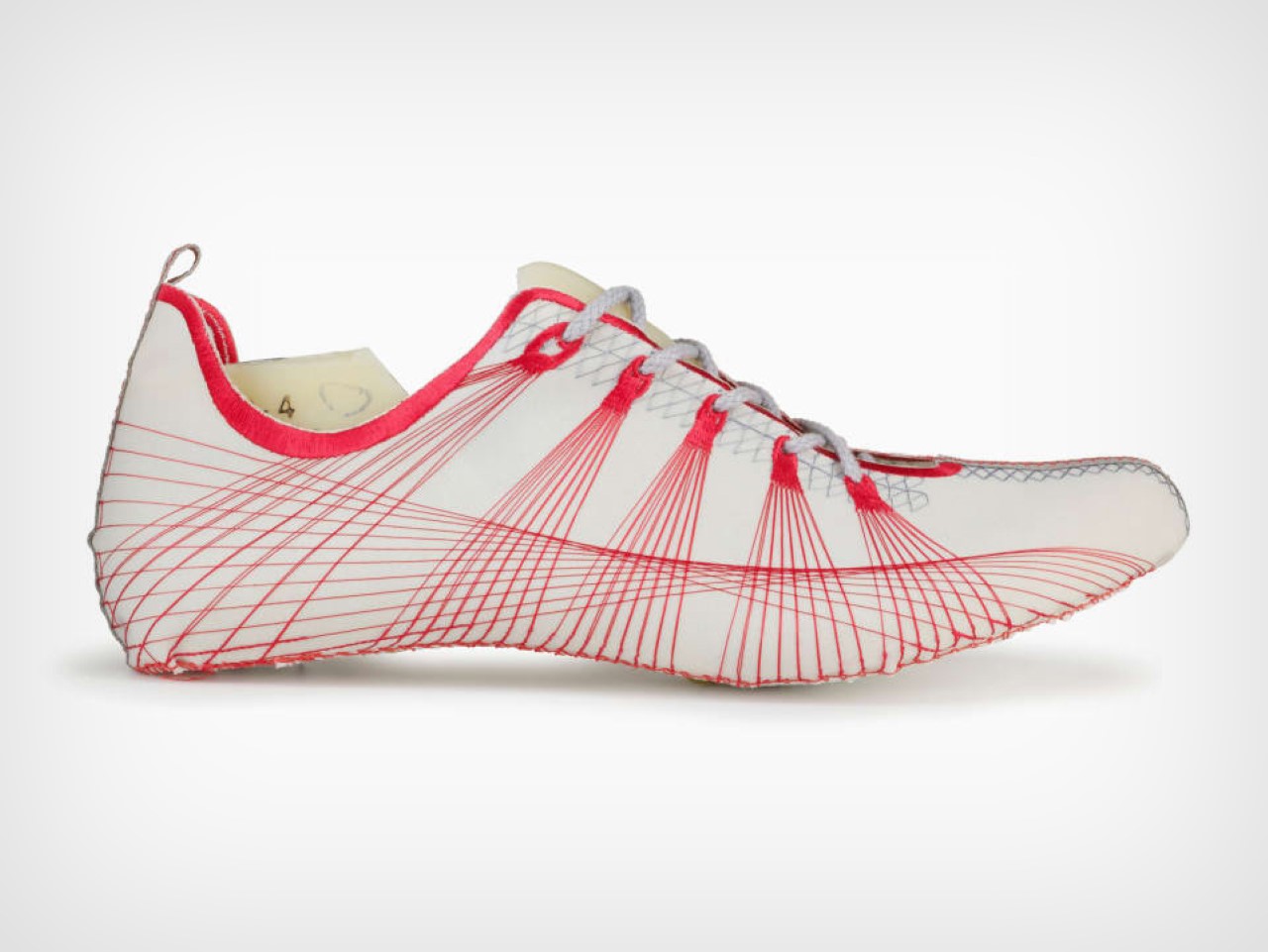
To create this exhibition, Adamson made several trips to the DNA, where he had access to materials that had never been publicly displayed. The archive itself is unremarkable from the outside, but inside, it’s a veritable wonderland for sneaker enthusiasts. The space is filled with moving shelves, each stacked with shoeboxes containing some of Nike’s most significant designs. Among the highlights are prototypes of the Air Force One that never made it to market and the original stock of the Air Max shoe, known for its revolutionary see-through soles designed by aeronautical engineer Frank Rudy.
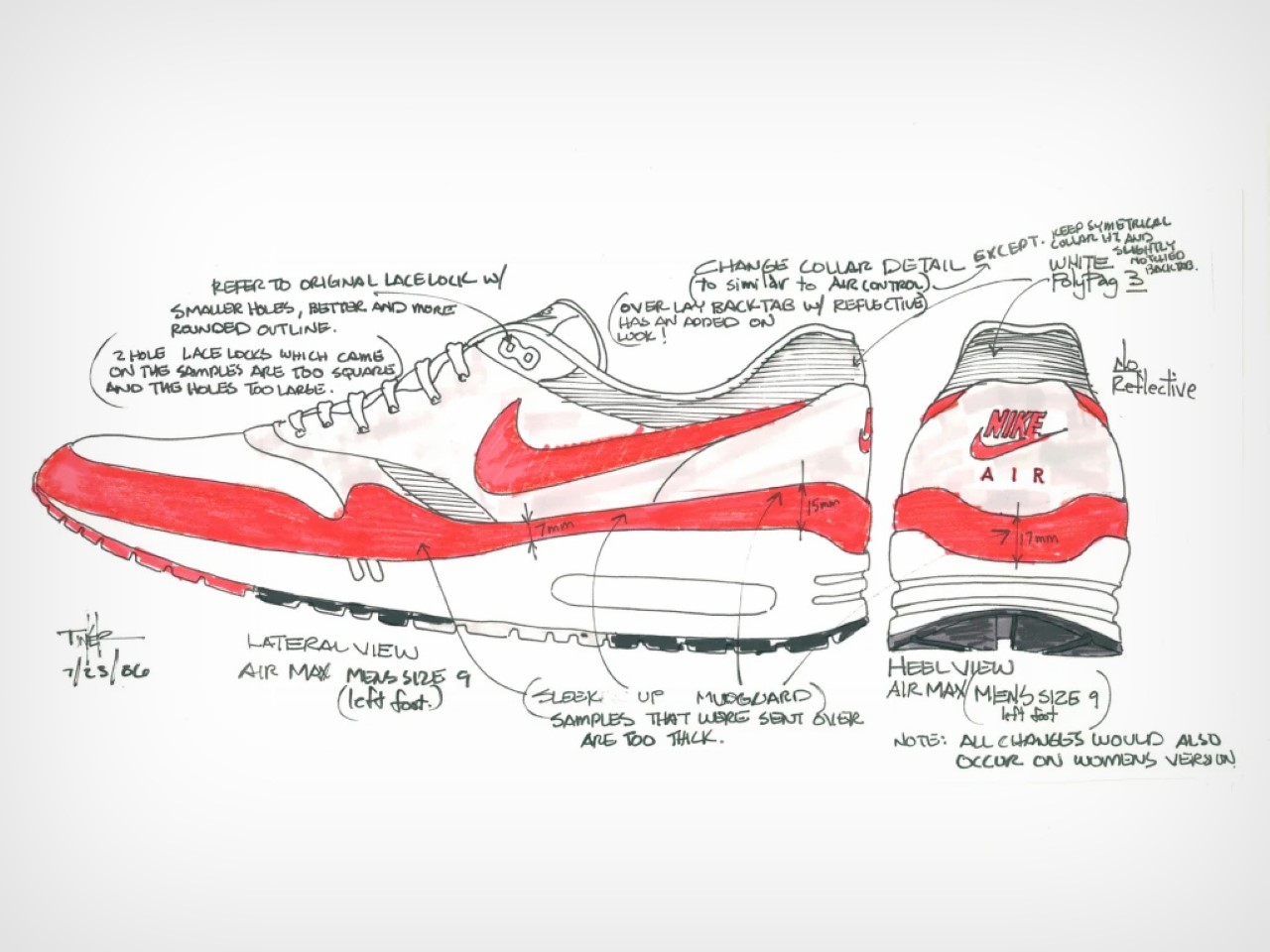
Sketch of Air Max, Tinker Hatfield (1986)
The exhibition also features deadstock shoes and prototypes that have remained hidden in the DNA until now. These include early mechanical prototypes of the Shox line, which featured external shock mounts designed to improve athletic performance. Adamson describes one such prototype as a “Frankenstein object,” a bizarre yet fascinating piece of Nike’s design history that had to be included in the exhibition (image at the beginning).
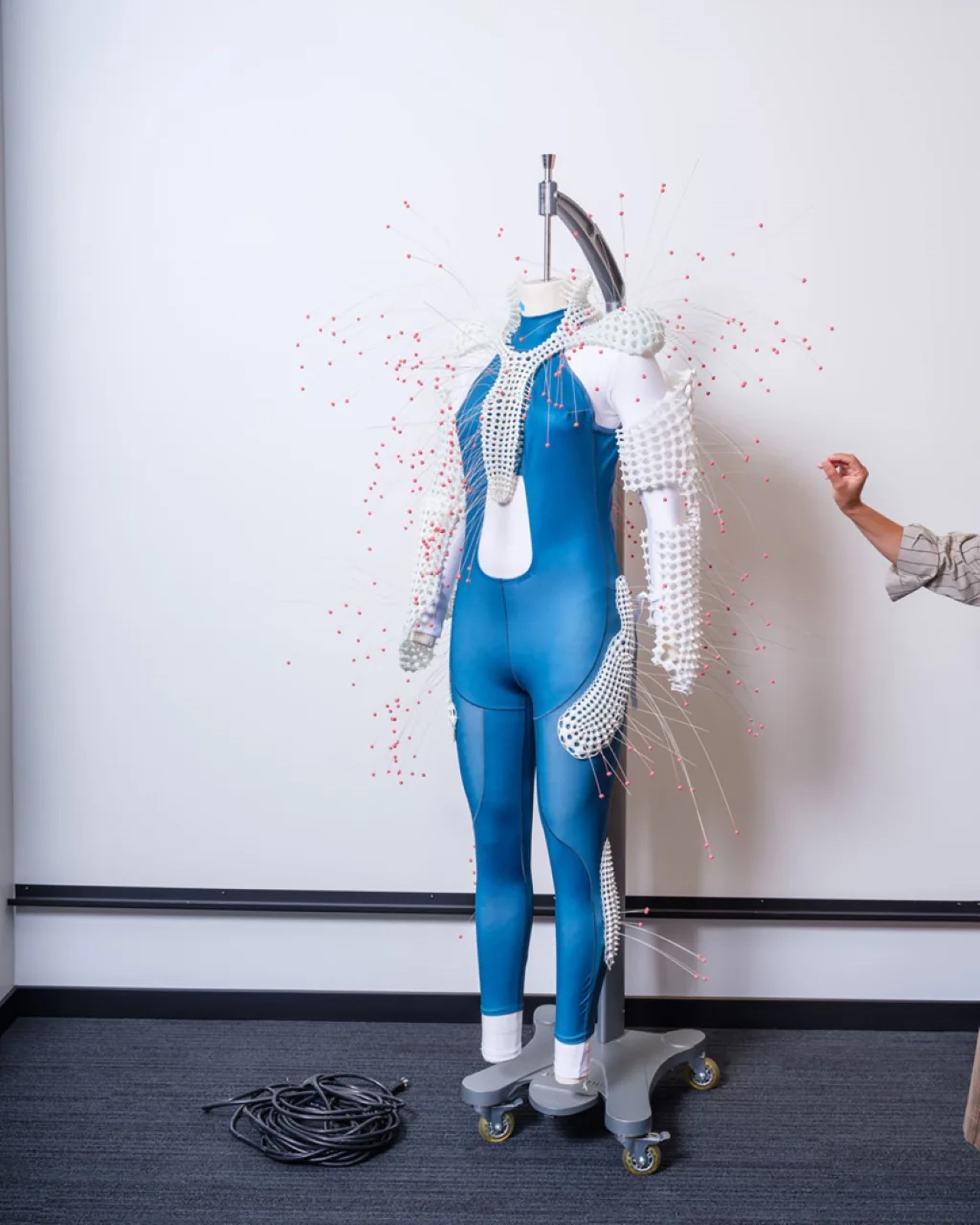
In addition to these historical artifacts, the exhibition also offers a keen insight into Nike’s current design practices. One of the most impressive innovation centers is the Nike Sport Research Lab (NSRL) in Beaverton, Oregon. The 85,000-square-foot facility is equipped with cutting-edge technology, including hundreds of cameras and dozens of force plates that track athletes’ movements. The insights gathered from this research are used to develop new products like the Vapormax running shoe, which is one of Nike’s most studied shoes to date.
Nike: Form Follows Motion comes at a crucial time for the company. In recent years, Nike has faced challenges, including supply chain issues and increased competition from other running shoe brands like Hoka and Brooks. Despite these obstacles, Nike remains committed to innovation. The company recently launched an AI platform called Blackbox to aid in the design of new products. According to CEO John Donahoe, Nike is poised to make a comeback with bold, new releases that will once again set the standard in the industry.
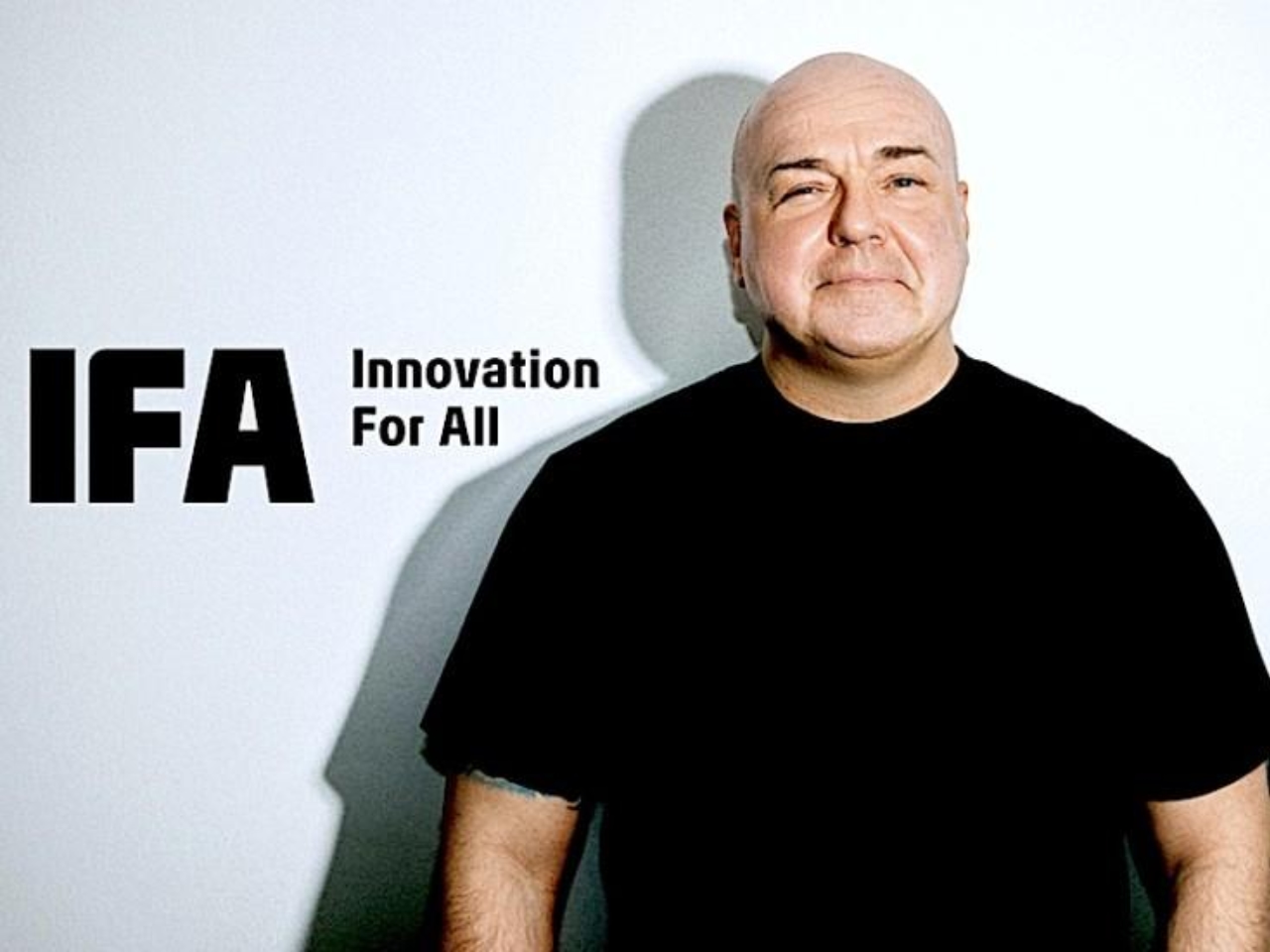
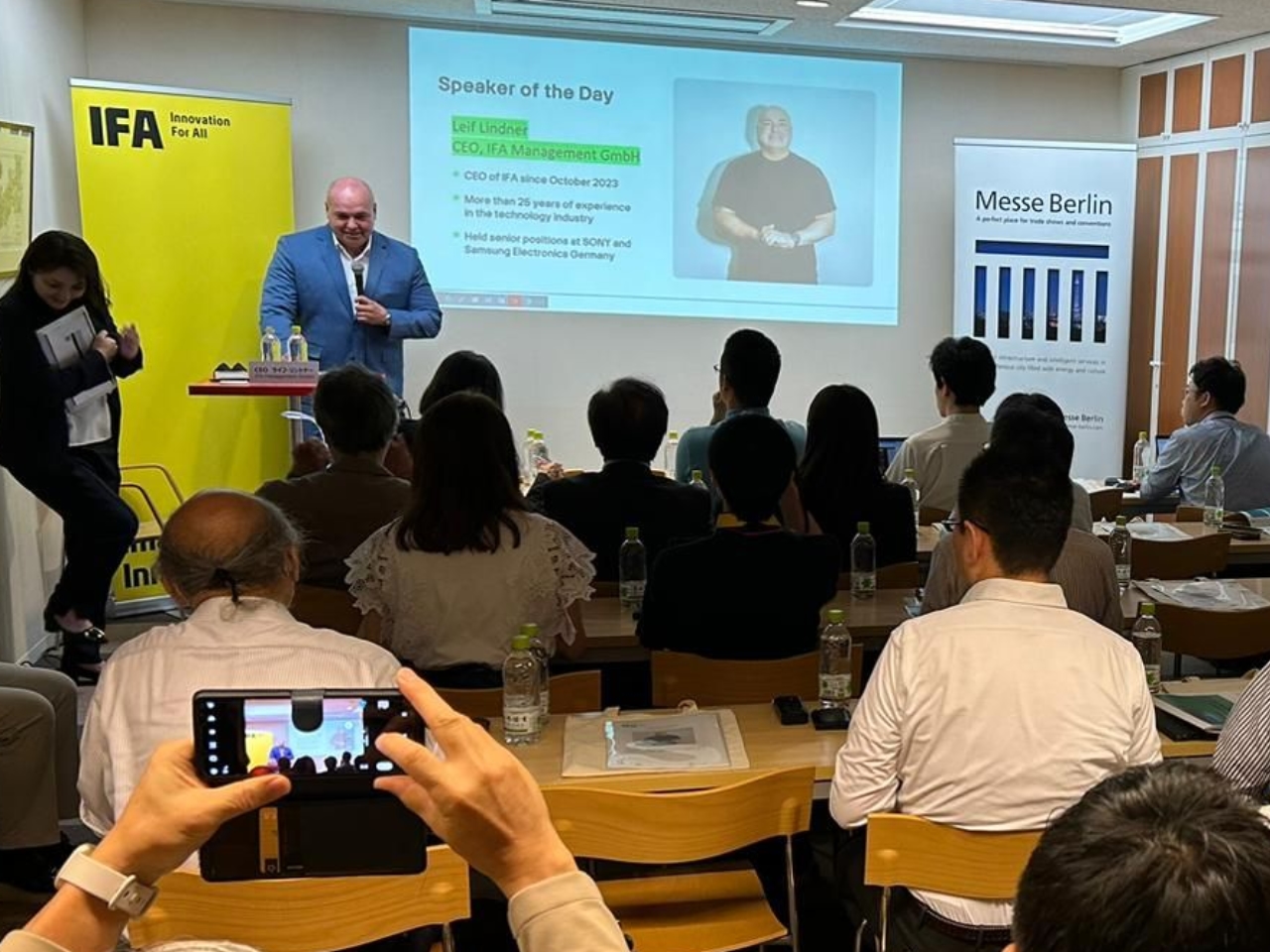
As the Internationale Funkausstellung Berlin (IFA) gears up to celebrate its 100th anniversary, the tech industry focuses on Berlin, where tradition meets innovation. IFA, one of the world’s leading trade shows for consumer electronics and home appliances, has long been a platform where global brands showcase their latest innovations, set trends, and connect with industry professionals and consumers alike. It’s an event that shapes the direction of technology, influencing the products and services that will define the market in the years to come. Leading this transformation into its next century is Leif Lindner, the CEO of IFA Management GmbH since October 1, 2023. With over 25 years of industry experience, including a significant tenure at Samsung Electronics Germany, Lindner brings a wealth of knowledge and a strong network to his role as CEO. His experience in multicultural settings enhances his leadership as he guides IFA into a new era. In this interview, I explore how Lindner balances IFA’s storied history with a fresh approach to ensure it remains at the forefront of global technology showcases.
Vincent Nguyen:Good afternoon! Thank you for taking the time to chat with me. You’ve been traveling all over the world recently. Is this normal for a CEO in your position, especially right before the show?
Leif Lindner: “Yes, it’s part of the job. I’ve been with IFA for a relatively short time, but given the importance of the 100th anniversary and the transition we’re going through, it’s crucial for me to be hands-on.”
This response underscores Lindner’s commitment to being actively involved in the evolution of IFA during such a pivotal year. His hands-on approach ensures that the event reflects his vision and strategy. Adapting and leading from the front is essential in an industry as fast-paced as technology.
Leif Lindner traveled to Tokyo with Jan Kronenberger (IFA, Head of PR and Content) to promote IFA Berlin.
Nguyen:How does IFA plan to balance the needs of big brands with the rising importance of smaller innovators?
Lindner: “Smaller brands can become significant players quickly, and they need special attention. At the same time, we must keep our mature, long-term partners in the spotlight.”
Lindner’s strategy to balance attention between established giants and emerging innovators is crucial. It shows that IFA is a platform where future technology leaders can emerge, ensuring that both new and established companies have the space to thrive. His approach fosters an environment where innovation from both large corporations and smaller, agile startups can flourish.
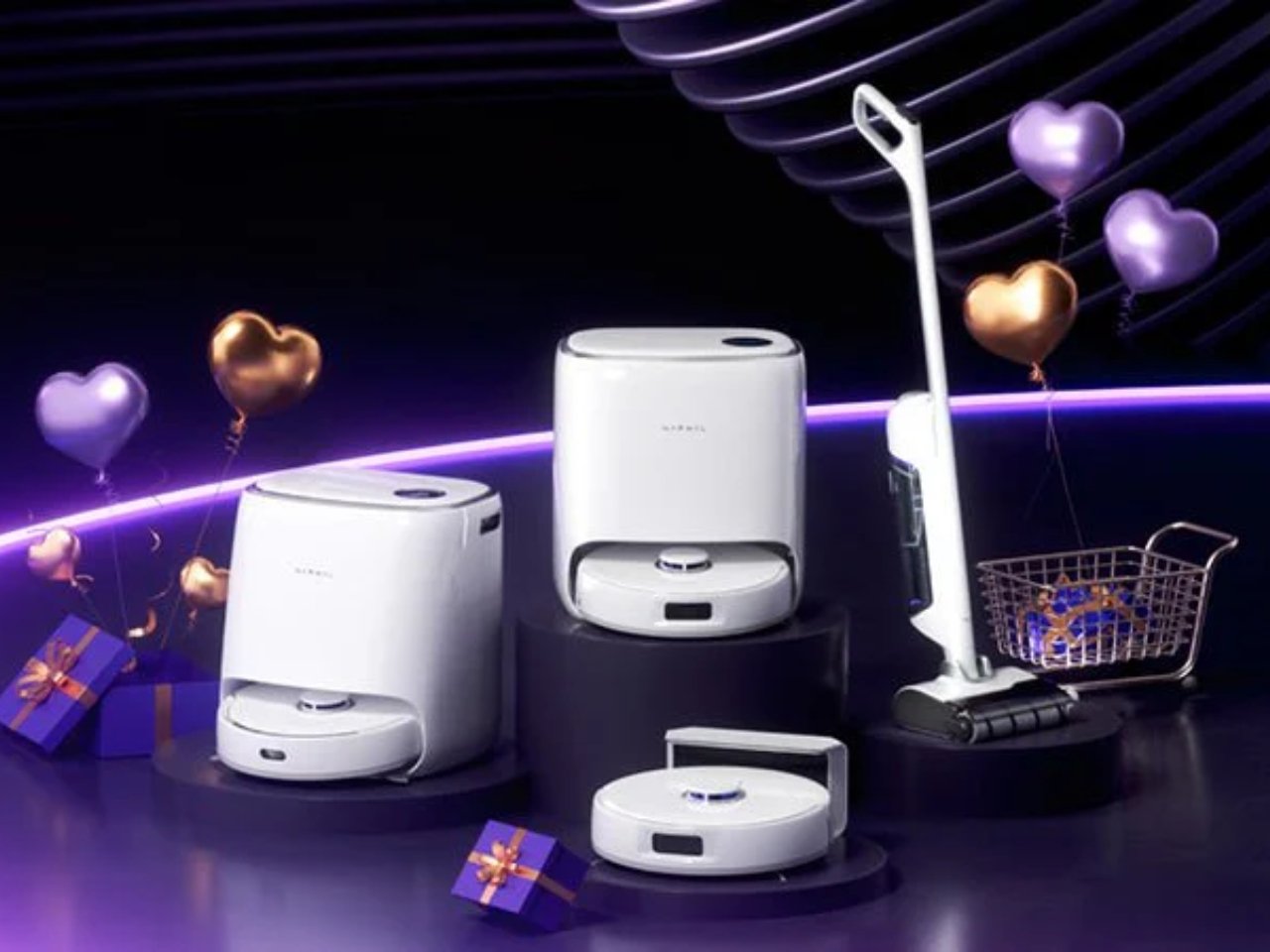
A prime example of a growing brand poised to make a significant impact at IFA 2024 is Narwal, a company that has rapidly ascended to the forefront of the smart home cleaning industry since its founding in 2016 in Shenzhen, China. Narwal is set to unveil its latest groundbreaking innovation in the smart home cleaning sector at IFA 2024 in Berlin, and we’re looking forward to seeing what they have in store. Its pioneering products, such as the world’s first self-cleaning mop and vacuum robot, highlight the company’s success. With over 1,200 international patents and a team of more than 700 R&D engineers, Narwal showcases the kind of innovation and technological leadership that IFA aims to highlight. The brand has received significant industry recognition, winning prestigious awards, including the CES Innovation Awards, Red Dot Design Awards, and the Edison Gold Award.
Narwal’s strategic expansion into key markets like North America, Europe, and Asia has solidified its leadership in the smart home sector. In Europe, particularly Germany, the company has built strong partnerships with major retailers like OTTO, MediaMarkt, and Saturn, making its products widely available. By investing in local research and partnerships, Narwal’s long-term vision focuses on further growth in Europe, with Germany as a crucial market. This commitment to meeting European consumers’ needs and delivering intelligent cleaning solutions aligns with the innovative spirit that IFA showcases.
Narwal’s mission is to give people more freedom to do what they love and with who they love.
Nguyen:Can you explain the rebranding process you’ve initiated? What is your vision for the new IFA?
Lindner: “We wanted to create a visual identity that’s more colorful and youthful, while also incorporating entertainment into the show. We want IFA to be seen not just as a tech show, but as a cultural event that resonates with younger audiences.”
The rebranding of IFA is about transforming the event into something that resonates with the next generation of tech enthusiasts. By incorporating elements of entertainment and culture, Lindner is positioning IFA as a multifaceted experience rather than just an exhibition. This approach aligns with broader trends where the lines between technology, culture, and lifestyle are increasingly blurred, making IFA a must-experience event.
As part of the IFA 100 celebrations, the “IFA 100 Years The Exhibition” reflects this transformation. After a successful summer run at Bikini Berlin, the exhibition now opens its doors to all IFA visitors at the Palais. This exhibition goes beyond commemorating IFA’s centennial—it sparks a dynamic dialogue at the intersection of technology and creativity, encouraging attendees to explore innovation’s impact on our lives.
Eight Berlin-based artists were engaged to interpret IFA’s history and future through art, each piece representing a distinct theme. Their works, accessible to Berliners and international visitors, draw from an inspiring past and a visionary future. The exhibition also features extraordinary technology exhibits that offer a glimpse back to the beginnings of technology, bridging the gap between past and future innovations.
Visitors can even take a piece of the exhibition home by creating their own personal AI avatar with the IFA avatar generator, highlighting the event’s integration of cutting-edge technology with personal and creative expression.
The themes explored by the artists include:
Radio, where the journey from early broadcasting to the era of podcasts, highlights the social relevance of media and its evolution. Video, an exploration of the transition from black-and-white television to on-demand video services, illustrates the evolution of visual media. Audio, which celebrates music from vinyl records to cloud streaming, captures sound’s emotional and experiential aspects—online, showcasing the transformative impact of the Internet and digitalization on society, from early telecommunication to the Internet of Things. Computers and Games offers an artistic take on the evolution of gaming and computing, from home PCs to mobile gaming and digital culture. Digital Lifestyle, portraying the smartphone’s role in shaping global, connected lifestyles, from telephony to social media and AI. Home Appliances & Networking, examining the evolution of household appliances, from traditional stoves to smart home networks. Finally, Creation & Social Media digs into content creation in the digital age, from analog photography to influencer-driven social media.
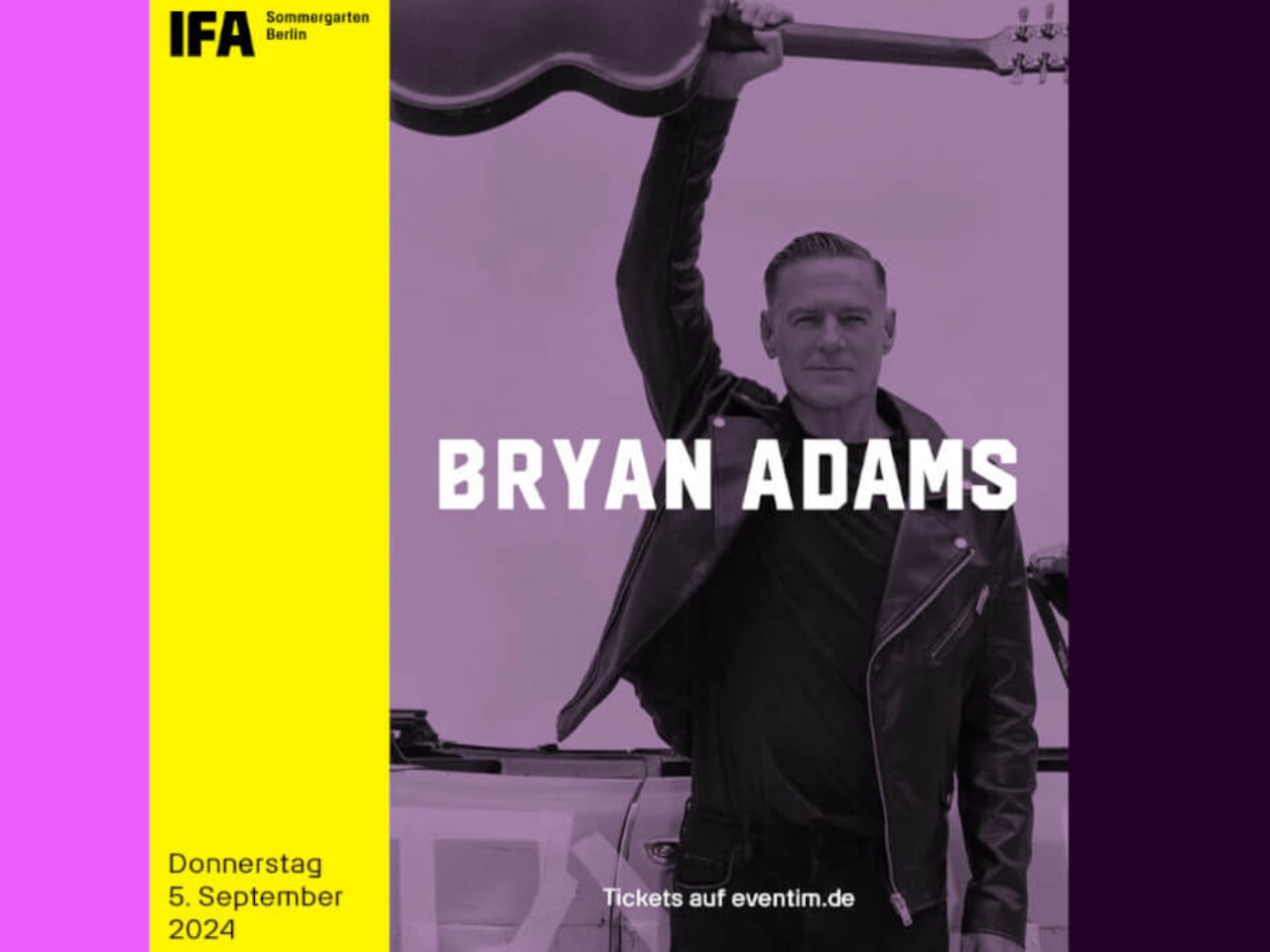
Bryan Adams concert at IFA 2024
IFA 2024 will also feature a special open-air concert by Bryan Adams at the Sommergarten Stage, adding a lively cultural dimension that sets the tone for the event. This reflects Lindner’s commitment to reimagining IFA as a vibrant experience that blends technology with entertainment and appeals to a diverse, younger audience, ensuring its relevance as it enters its second century.
Nguyen:How do you plan to address the risk of losing pillar brands that have supported IFA over the years?
Lindner: “It’s a real concern. We’ve already seen some brands pull out in recent years. My job is to bring them back by proving that we understand the changing landscape and are evolving to offer more value.”
Lindner’s candidness about the challenges IFA faces highlights his proactive approach to leadership. His focus on evolving IFA’s value proposition to re-engage these key brands demonstrates that he’s not content with maintaining the status quo. He’s actively seeking to adapt IFA’s offerings to better align with the needs of today’s tech giants. This strategy is vital for keeping IFA relevant in an industry constantly in flux.
Nguyen:Are you expanding IFA’s global reach, particularly in regions like India or China?
Lindner: “This year, we’ve focused on balancing our exhibitor base, especially bringing back more Korean, Japanese, and Taiwanese brands. India has a lot of potential, but we need to approach it with a full-speed strategy, which requires the right local partnerships.”
This strategy to expand IFA’s reach into Asia reflects an understanding of where the future of technology is being shaped. By strengthening ties with key markets like Korea, Japan, and Taiwan and recognizing the potential in India, Lindner is ensuring that IFA remains relevant on a global scale. His emphasis on local partnerships shows a thoughtful, sustainable approach to expansion, extending IFA’s influence well beyond Europe.
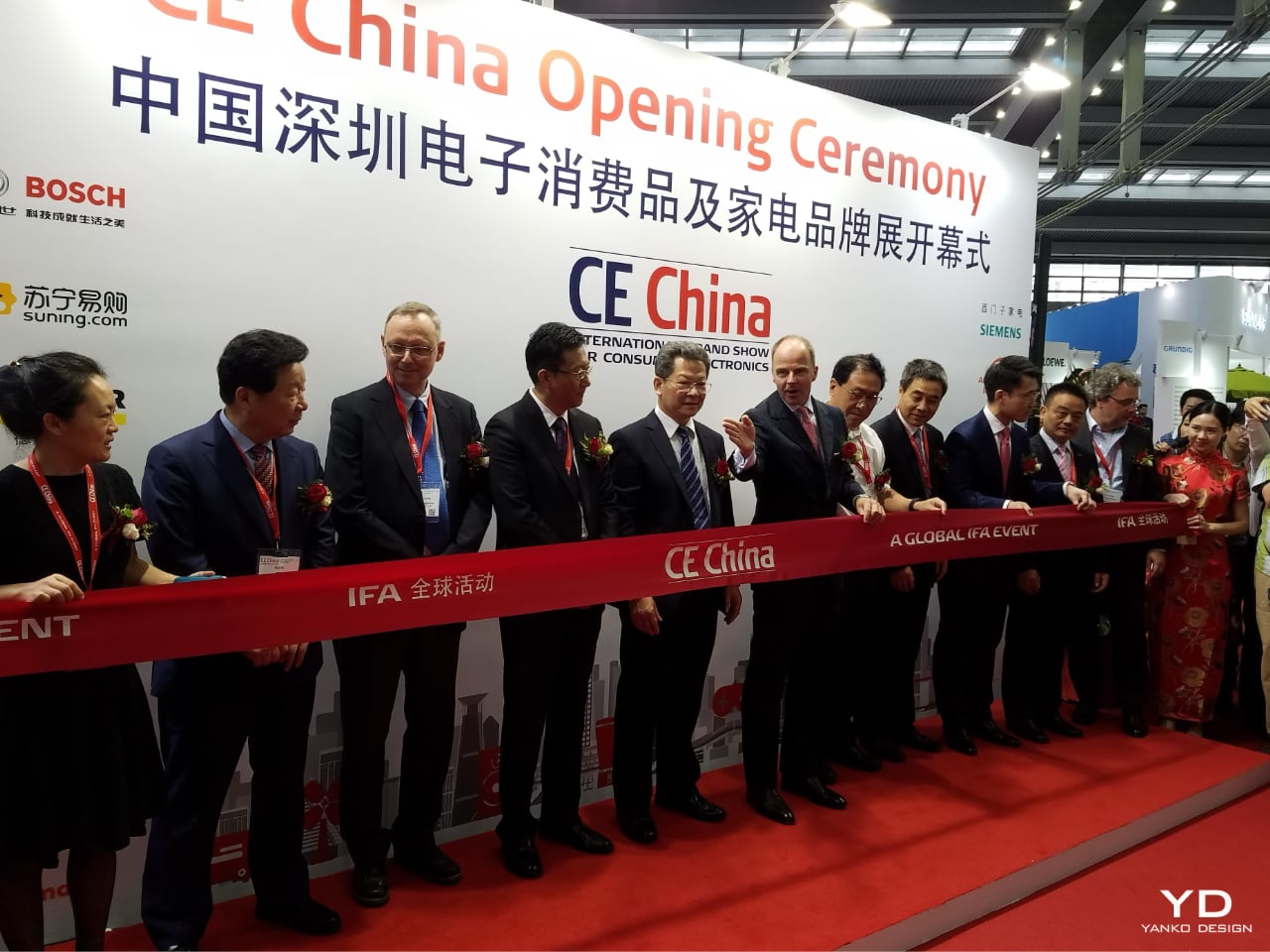
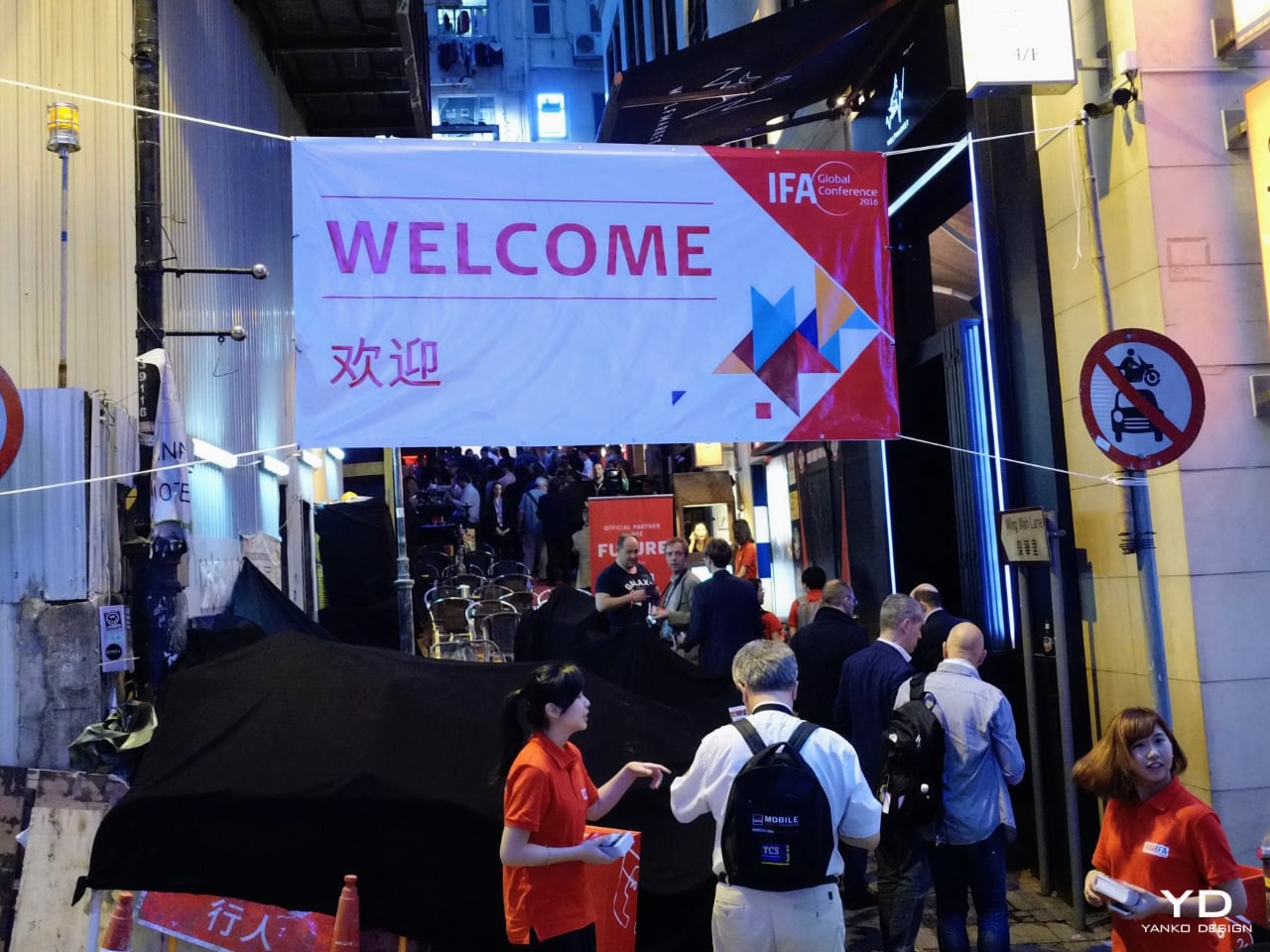
IFA Global Press Conference – Shanghai 2016
IFA Global Press Conference – Shanghai 2016
Nguyen:IFA often coincides with Labor Day in the US. Has the show always been scheduled during the first week of September?
Lindner: “Yes, it has traditionally been around this time. The dates for the next several years are already fixed. While it’s a challenge for US companies, especially with Labor Day, we believe this timing is right overall. The first week of September positions IFA at a critical juncture in the calendar, just before the peak sales season in Europe. This timing allows brands to showcase their latest innovations and launch products when consumer interest is at its highest. It also gives companies the opportunity to generate buzz and secure media coverage ahead of the crucial fourth quarter, which is often a make-or-break period for many in the consumer electronics industry.”
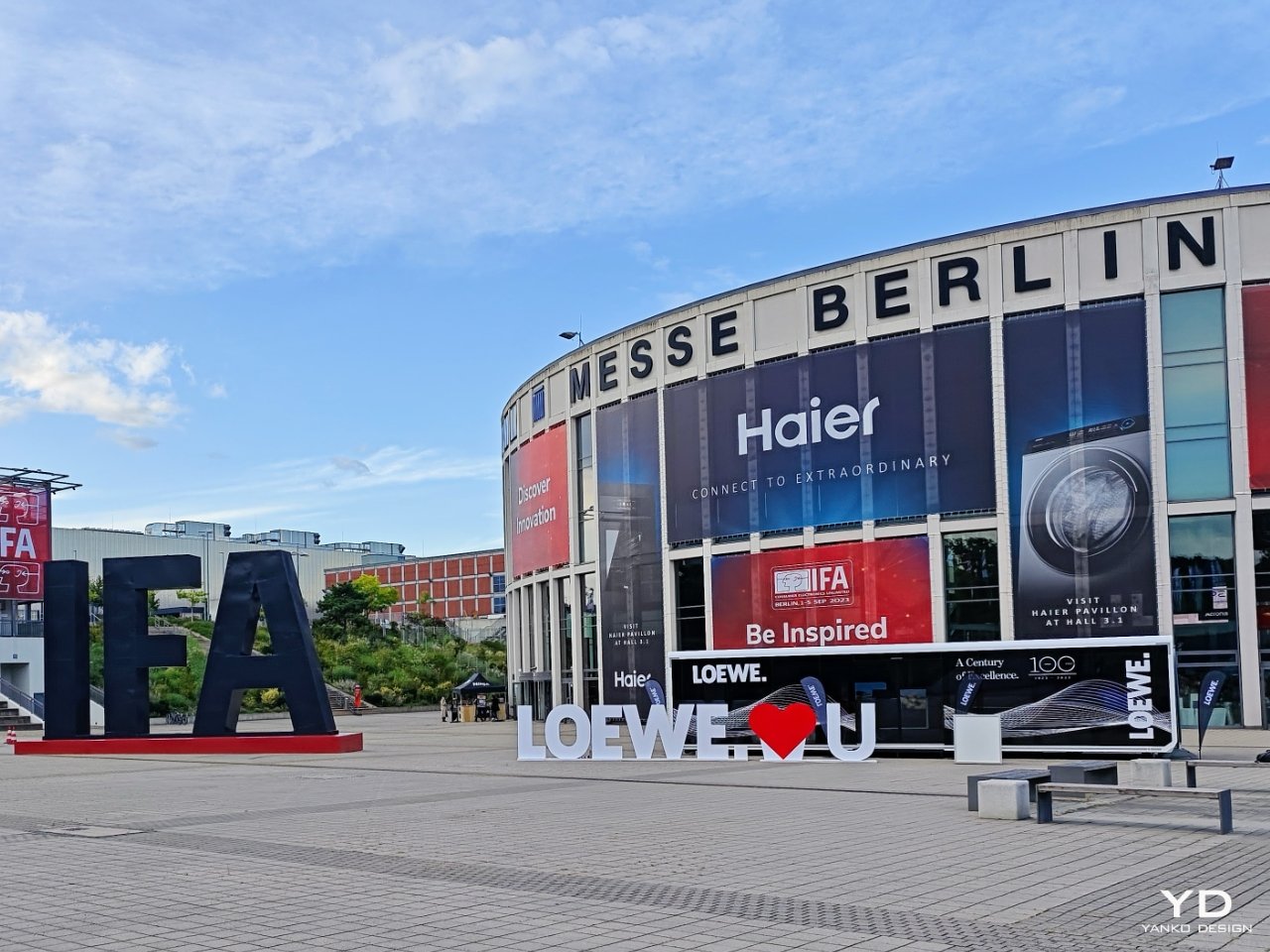
IFA Messe Berlin
Lindner elaborated on the rationale behind maintaining this traditional schedule despite potential conflicts for some international participants. He emphasized that the timing of IFA is not arbitrary; it has been carefully chosen to align with the European market’s key sales cycles. This alignment ensures that the event remains strategically positioned to offer maximum value to exhibitors and attendees. By scheduling IFA just before the peak sales season, the event becomes a pivotal platform for brands looking to make significant announcements and capture the attention of both the media and consumers at a time when it matters most.
He acknowledged the challenges that this timing presents for US companies, particularly given the overlap with Labor Day, a major holiday in the United States. However, the benefits of holding IFA during this period far outweigh the drawbacks. The fixed schedule allows companies to plan their product launches and marketing strategies well in advance, ensuring they can fully leverage the opportunities that IFA presents.
Moreover, Lindner pointed out that the consistency of IFA’s schedule has helped to establish the event as a key fixture in the global tech calendar. Companies and industry professionals know exactly when to expect IFA each year, which has contributed to its reputation as a must-attend event for anyone involved in the consumer electronics sector.
Vincent:There’s often a comparison between IFA and CES, especially since they’re so close together. How do you handle the competition, especially for brands that might only have the budget for one major event?
Lindner: “I believe IFA and CES can coexist because they serve different focuses. IFA is a comprehensive showcase right before the peak sales season in Europe, which is crucial for many brands.”
Lindner’s perspective clearly explains how IFA differentiates itself from CES. By emphasizing IFA’s unique timing and focus on the European market, Lindner highlights the event’s strategic importance for brands looking to engage with this critical audience. It’s not about competing head-to-head with CES but about offering a direct connection to the European market at a pivotal moment in the sales cycle.
Vincent:Are there any brands that have particularly impressed you this year that you think Yanko Design readers should check out?
Lindner: “There are several. For example, SharkNinja has been particularly innovative, releasing numerous products in Europe. Samsung continues to impress with their holistic approach to technology, and Chinese brands like DJI are also setting new standards in the market. We should also not underestimate how Chinese brands like Hisense and Haier are bringing power to the market. They understand the market better than before and are moving toward a more quality-driven approach. Their understanding and perception of the market always impress me.”
Lindner’s recognition of these brands highlights the tech industry’s diverse and dynamic nature today, emphasizing IFA’s role as a global platform where both established leaders and emerging innovators can shine.
SharkNinja has been making waves in Europe with various new products that combine cutting-edge tech with everyday practicality. Whether it’s their powerful vacuum cleaners or smart kitchen gadgets, SharkNinja has found a way to make life at home easier and more efficient, which has helped them become a household name in the appliance market.
Samsung, a tech giant, continues dominating a wide range of electronics—from smartphones and home appliances to smart home systems. Their latest advancements in QLED and OLED TVs keep them ahead of the curve in display technology. Samsung’s approach blends sustainability with innovation, making its products forward-thinking and eco-friendly and solidifying its leadership in the industry.
DJI, the brand that revolutionized the drone industry, continues to set higher aerial photography and cinematography standards. Their drones are known for their exceptional camera quality, user-friendly controls, and reliable performance, making them a favorite among professional filmmakers and hobbyists. But their innovation doesn’t stop at drones. They’ve expanded into handheld stabilizers, action cameras, and more. At IFA, there’s a lot of excitement around what they will unveil, particularly with the buzz surrounding the rumored Neo, which is expected to be a game-changer. We’re also eagerly anticipating their entry into the mirrorless camera market, which could bring their imaging expertise to new heights. Additionally, their entry into portable power solutions, including impressive battery technology, and their move into e-bikes are developments we’re watching closely. This expansion into new areas could significantly impact the market and add even more excitement to an impressive lineup.
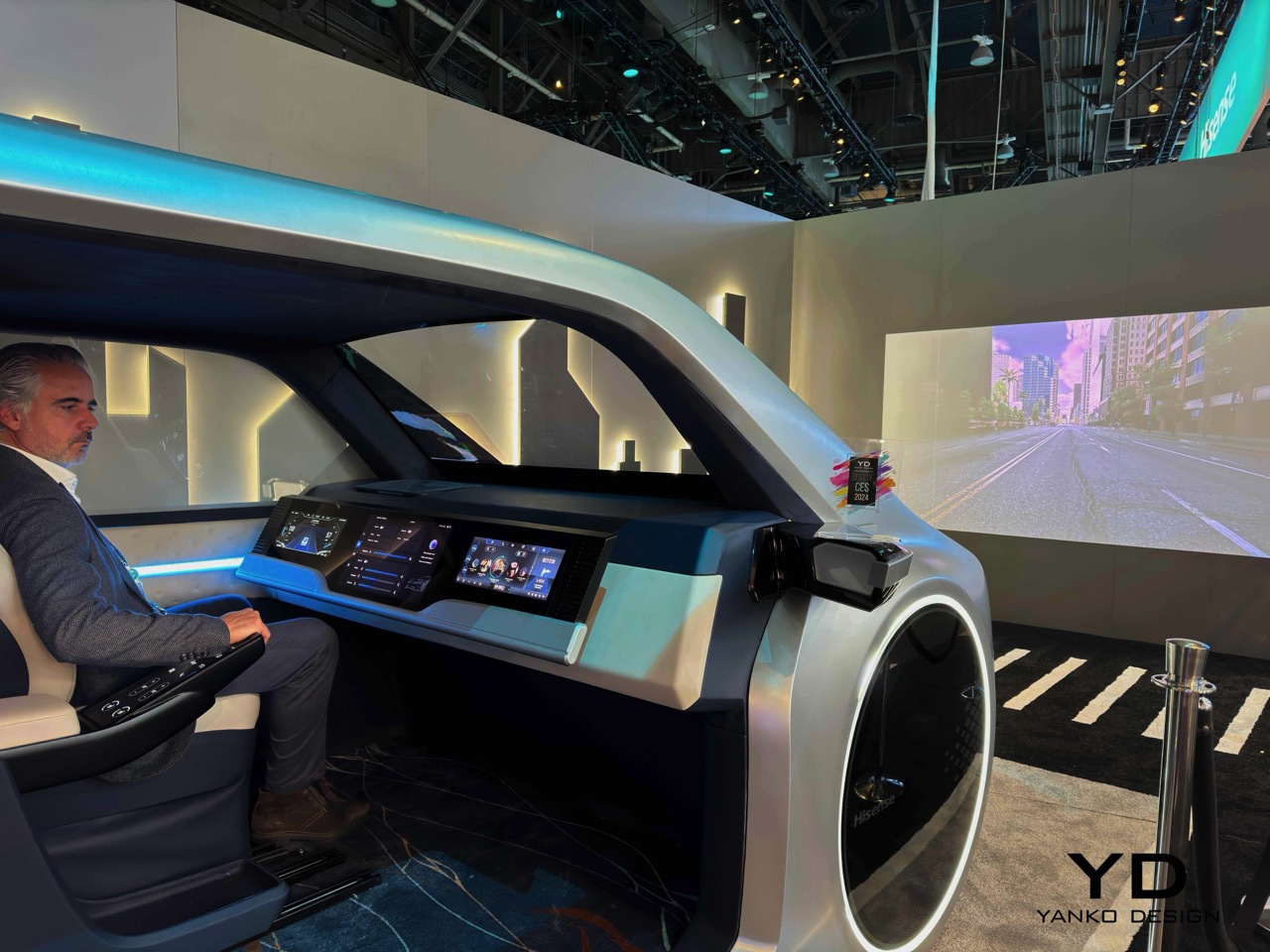
Hisense has significantly impacted the TV and projector markets, particularly with their massive 100-inch-plus TVs and innovative projector technologies. Their commitment to delivering a cinema-like experience at home has made them a top choice for those seeking high-quality, immersive viewing. The Canvas TV, for example, combines a massive screen with a sleek, minimalist design that easily blends into any living space. This modular design allows users to arrange the display panels in various configurations, creating a customizable viewing experience. It’s about integrating technology seamlessly into the home environment.
In addition to their impressive TVs, Hisense has also gained attention with their short-throw projectors. These projectors deliver bright, sharp images from just a short distance, making them ideal for smaller spaces where a traditional projector setup might not be feasible. Hisense’s Laser TVs, which function as ultra-short-throw projectors, offer 4K resolution, HDR support, and vibrant colors while maintaining a compact and easy-to-install form factor. These projectors can display images over 100 inches in size, providing a theater-like experience without needing a dedicated projection room.
Hisense’s advancements in projector technology also include features like ALR (Ambient Light Rejection) screens, which enhance viewing even in well-lit rooms, and integrated smart platforms that offer easy access to streaming services, apps, and more. Their focus on innovation has positioned Hisense as a leader in the home entertainment market, allowing consumers to enjoy a big-screen experience at home without compromising on quality or convenience.
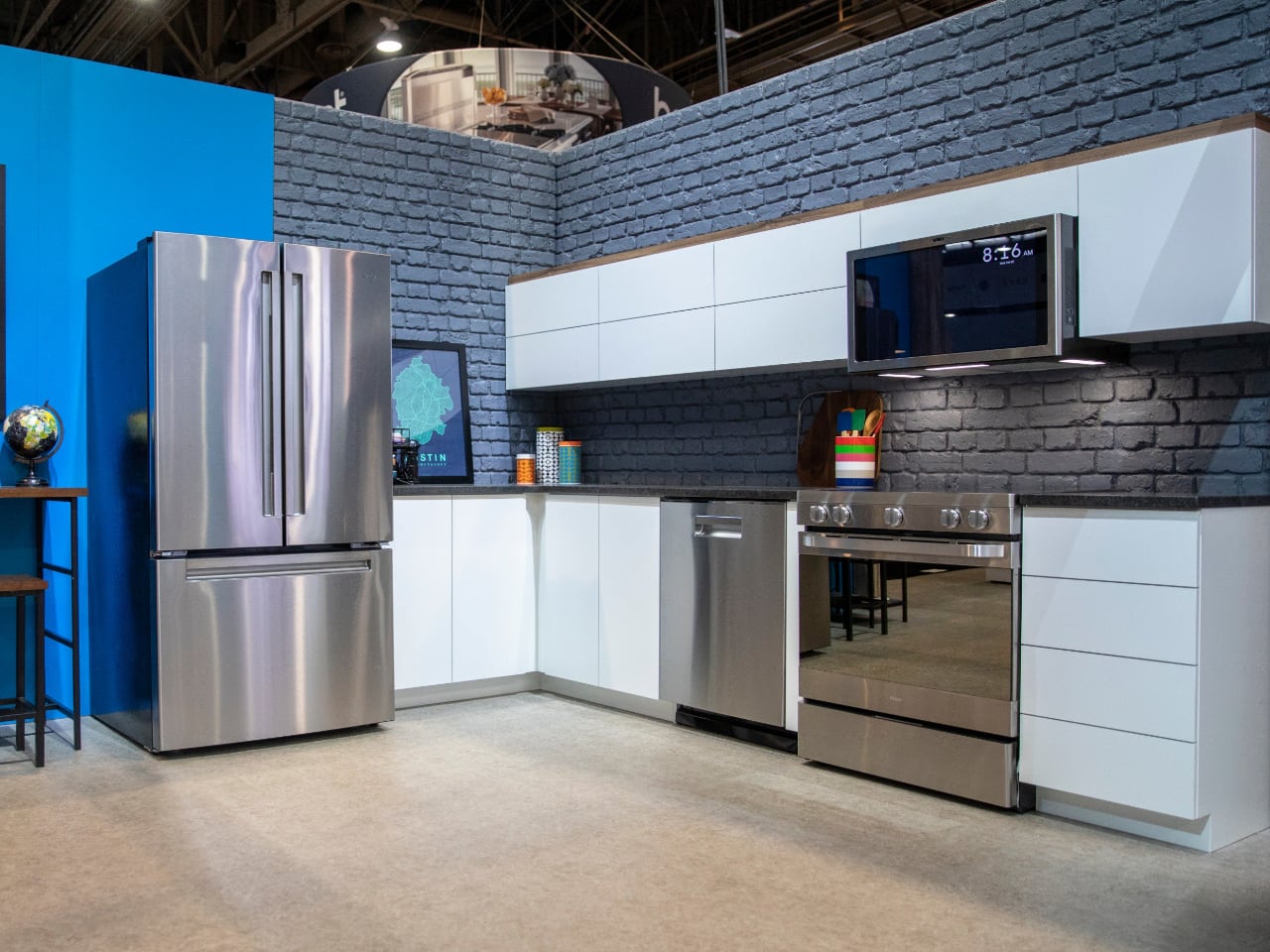
Haier, another major player from China, continues to grow its presence in the home appliance industry by focusing on quality and innovation. They offer various products, from refrigerators and washing machines to air conditioners and smart home devices. Haier’s commitment to creating durable, efficient, and easy-to-use appliances has earned them a solid reputation worldwide. As they continue to push into more advanced smart home technology, Haier is helping to shape the future of how we live at home.
Haier Appliances
These brands are pushing the boundaries of what’s possible, and their presence at IFA underscores the event’s position as a global stage for the best in technology. Lindner’s comments emphasize IFA’s role as a platform for showcasing established leaders and emerging innovators, highlighting the event’s importance in the ever-evolving tech landscape.
Vincent:Finally, can you share three personal things about yourself that we can share with our readers?
Lindner: “Sure! First, as a child, I was fascinated by consumer electronics, particularly TVs. That passion led me to where I am today. Second, I relax by listening to heavy metal music and attending concerts. Metallica is one of my favorites. And third, I box once a week to clear my head and stay fit.”
These personal insights provide a deeper understanding of the person behind the role. Lindner’s early fascination with consumer electronics reminds us that passion can drive a career, shaping his path to where he is today. His love for heavy metal and boxing shows a balance between intensity and focus—qualities undoubtedly reflected in his leadership style. It’s clear that his personal interests and professional approach are intertwined, bringing a level of passion and energy to his role at IFA that is both inspiring and effective.
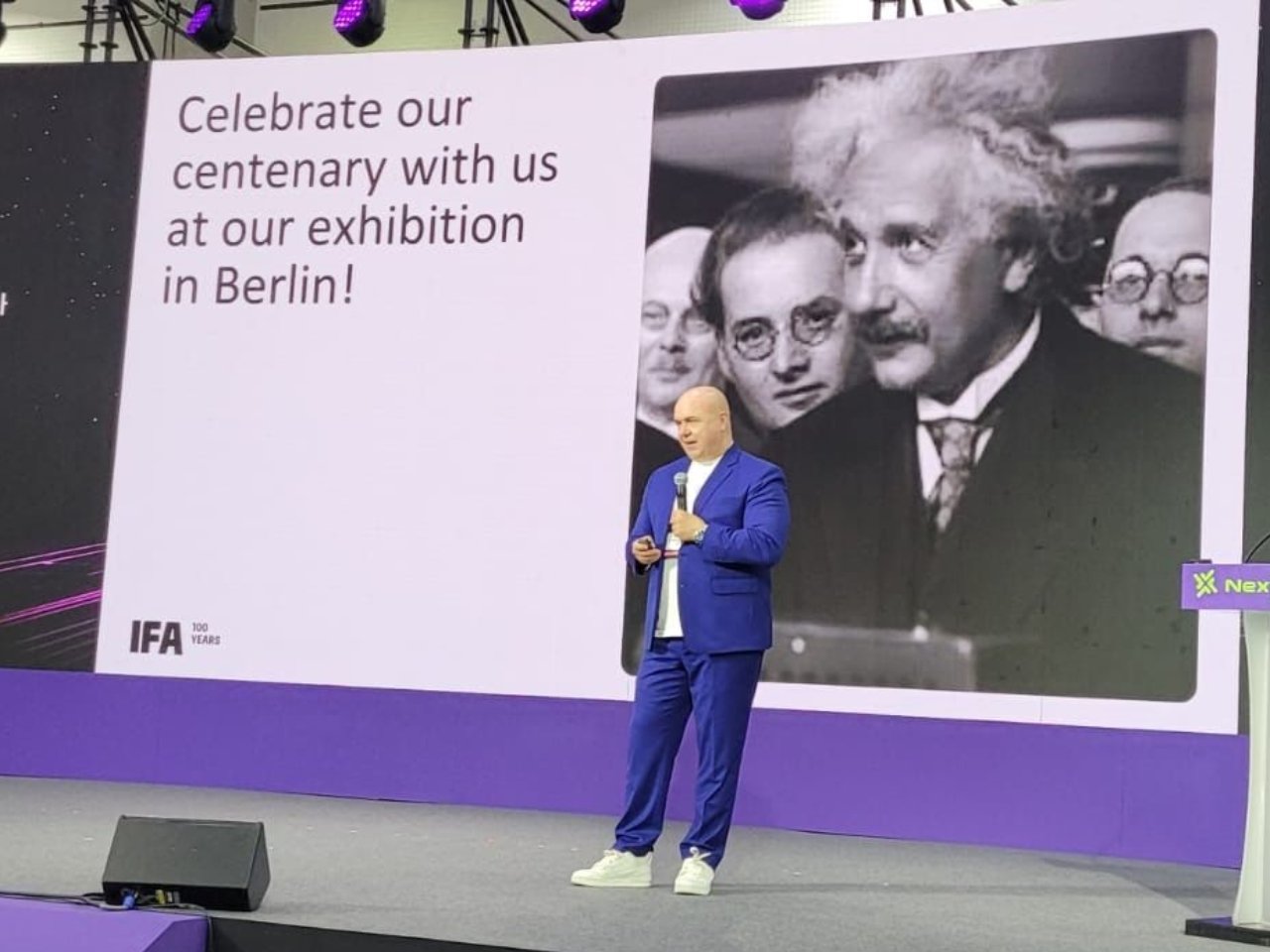
Leif Lindner speaking at NextRise2024 Coex
As IFA embarks on its second century, Leif Lindner is guiding the event into a new era where technology and culture intersect, innovation is accessible to all, and the event remains as dynamic and forward-thinking as the industry it represents. This interview offers insight into the thoughtful leadership and clear vision driving IFA forward. Lindner’s commitment to making “innovation for all” a reality ensures IFA’s position as a cornerstone of the global tech calendar, drawing both established industry giants and rising innovators. His strategic focus on inclusivity, global expansion, and cultural relevance is actively shaping IFA’s future while preserving and redefining its legacy. Under Lindner’s leadership, IFA is set to remain a leading platform where innovation meets opportunity, influencing the tech world for many years to come. Starting this Wednesday, our team will be on the ground to bring you the latest and greatest products showcasing at IFA 2024. We invite you to check back often for coverage.
Indoor gardening can be a soothing and relaxing hobby. It is an extremely therapeutic activity, and though I may not engage in it all the time, the few times that I have, I found it delightful and soothing. Growing, tending to, and being surrounded by plants is intensely satisfying. All your worries slowly fade away, and you are simply enthralled by nature. Indoor gardening has become one of the major trends these days! Plants can truly transform a living space with their gentle presence. They add a touch of green and nature and create a serene and zen atmosphere. But tending to them is not always the easiest task. You must pay special attention to your beloved plants and give them the best care to ensure they grow well. And, we’ve curated a whole collection of product designs to help you with that – happy gardening!
1. Briiv Pro
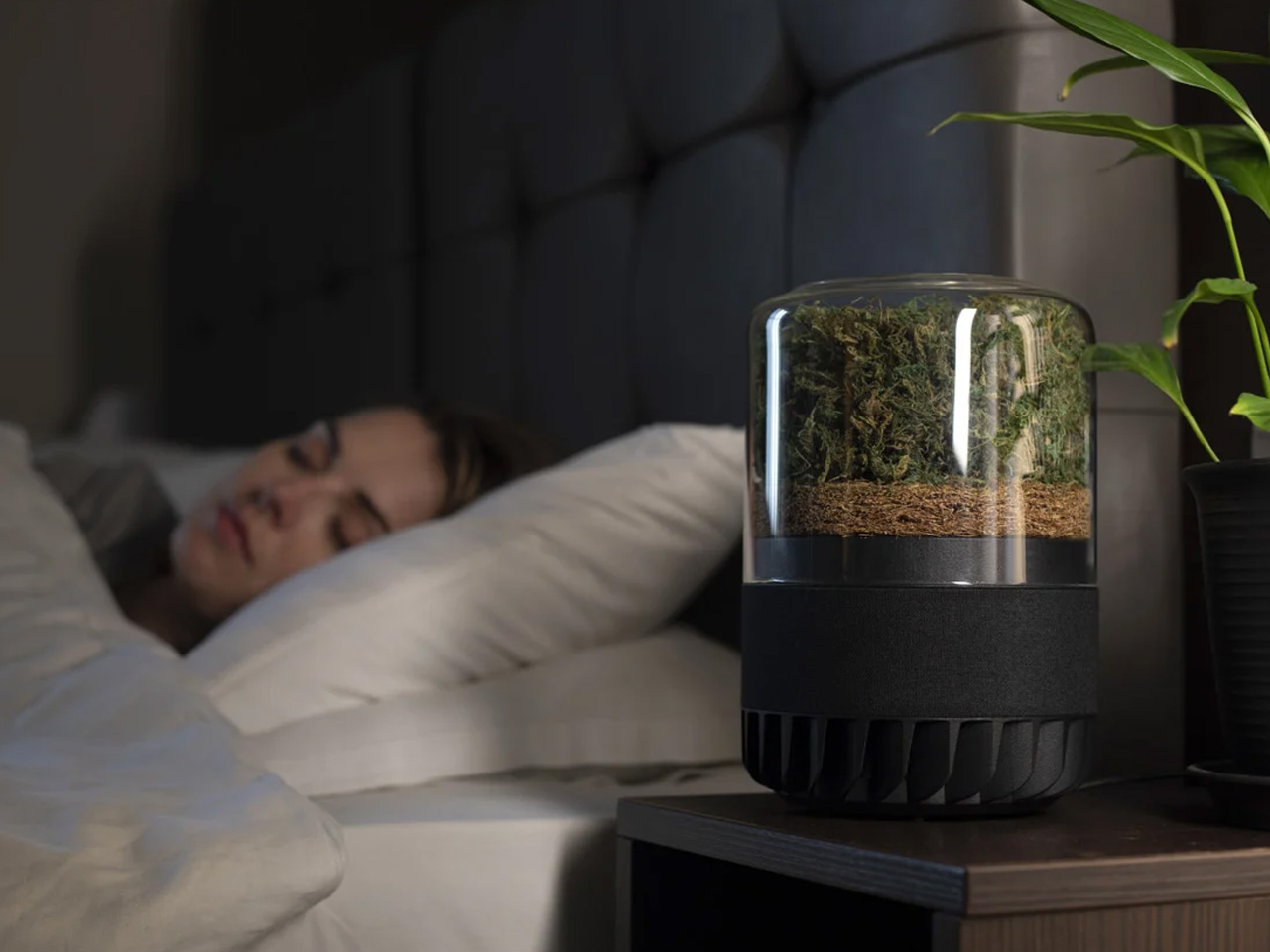
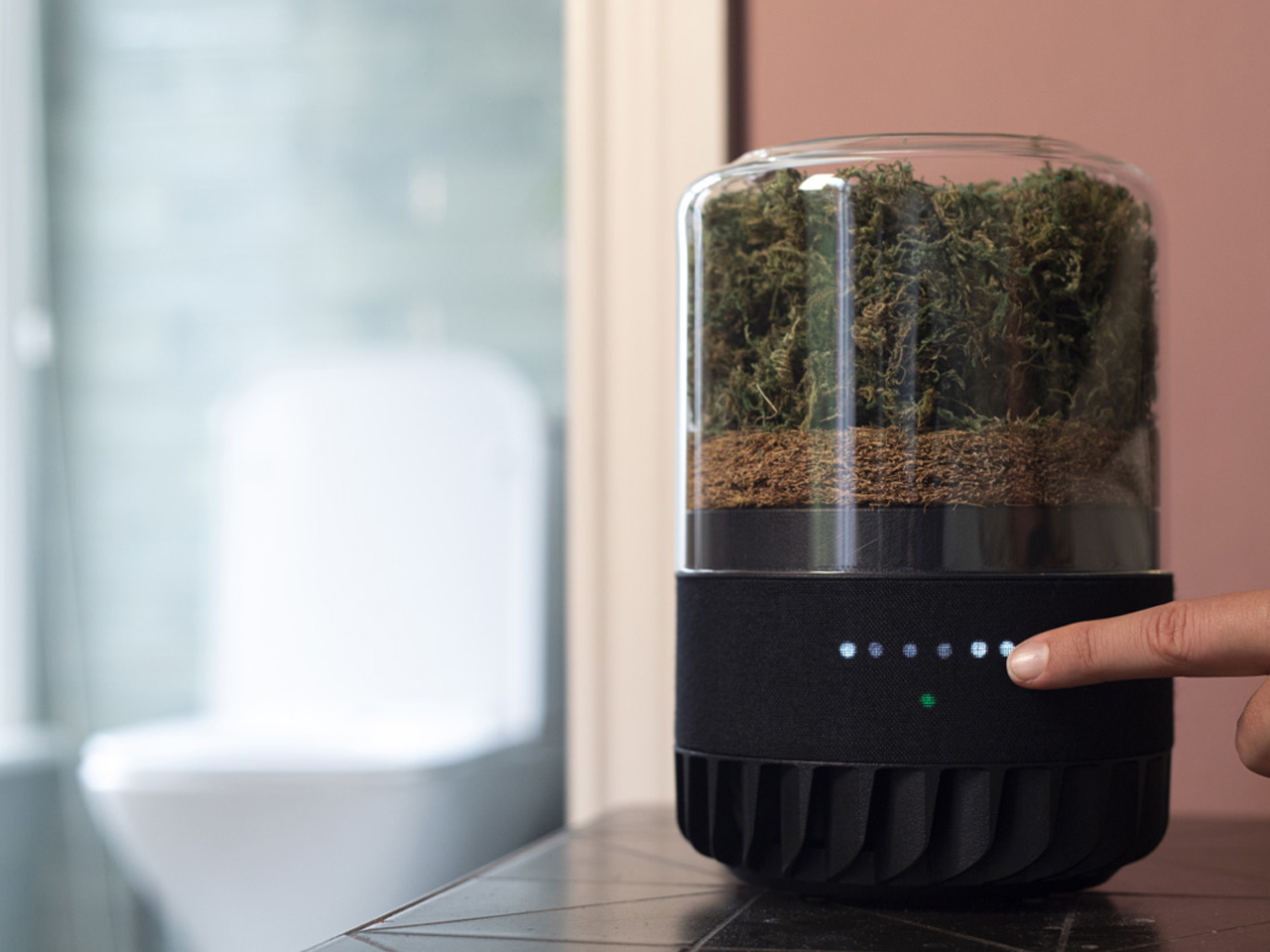
Named the Briiv Pro, this eco-friendly purifier utilizes a mix of nature and technology to clean and purify the air within your home. The Briiv Pro is a new and improved version of the original Briiv, and it is more powerful than ever. Designed to be a ‘mini forest’, the air purifier can cleanse a 16 sq.m. room in 21 minutes. It is 6900% more effective than house plants!
Why is it noteworthy?
Since the Briiv Pro is 6900% more effective and efficient than house plants, it is a truly commendable feat considering its size. The purifier is not only functional but also pretty good-looking, unlike the bulky and ugly appliances that you get on the market these days.
What we like
Features an AI-based sensor
Equipped with a layered trifecta of moss, coconut fiber, and a silk nanofiber matrix with activated carbon
What we dislike
The Briiv Pro isn’t as fast as other air purifiers on the market, and it is quite expensive as well
2. Patella Crescenda
Named the Patella Crescenda, this planter fits perfectly in both your palms and lets you grow greens with complete ease and efficiency. The planter has a unique shape, which lets it water itself, ensuring you don’t need to. You can grow seeds without any soil, and the sprouts grow in about a week. The planter is reusable as well, ensuring you always have a fresh supply of microgreens.
Why is it noteworthy?
The planter includes four parts – a base tray, two reusable steel seed plates, and a water bulb that fits on top. All the parts come together, helping your greens sprout within a week. They grow in the water, without any soil, so you don’t even need to clean them.
What we like
Intuitive design
Fun to use product
What we dislike
It works only for micro-greens and cannot be converted into long-lasting plants
3. Green Hideaway Chair
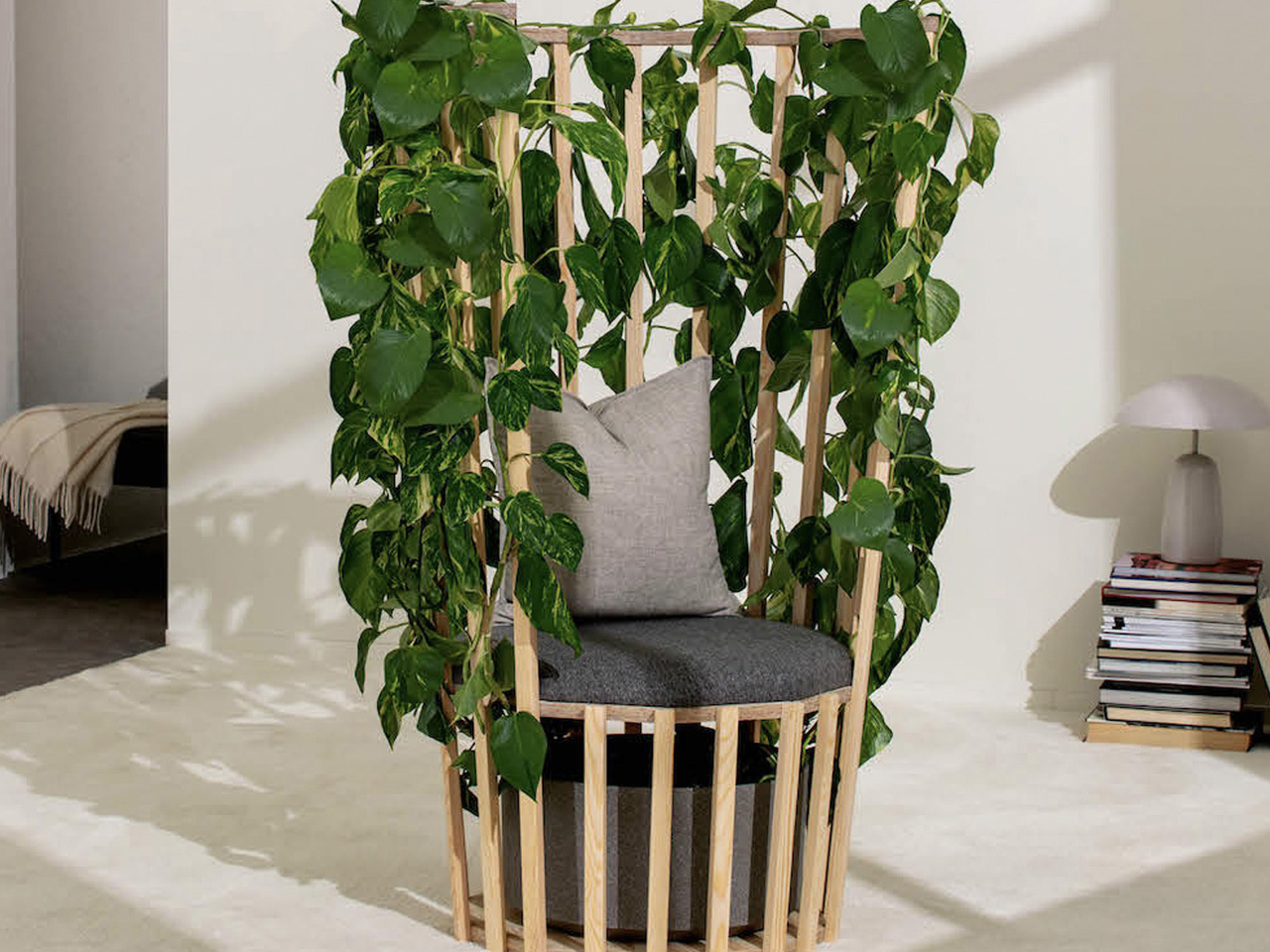
Dubbed the Green Hideaway Chair, this DIY living plant chair lets you connect with nature. It is created by Stockholm-based studio Front/ in collaboration with the European DIY chain HORNBACH, and its creative agency HeimatTBWA. With the Hideaway Chair, you can add a touch of green to your home.
Why is it noteworthy?
The Green Hideaway Chair doesn’t need any professional expertise to set it up. DIYers of all skill levels can easily set up this simple chair. The chair is accompanied by illustrated, step-by-step instructions, a template, as well as an entire list of tools and materials that you may need. The entire process is laid out for you.
What we like
Makes nature accessible to you in your own home
What we dislike
It will occupy some space, so you need to make sure you have sufficient space to add it to your home
4. Noku Canvas
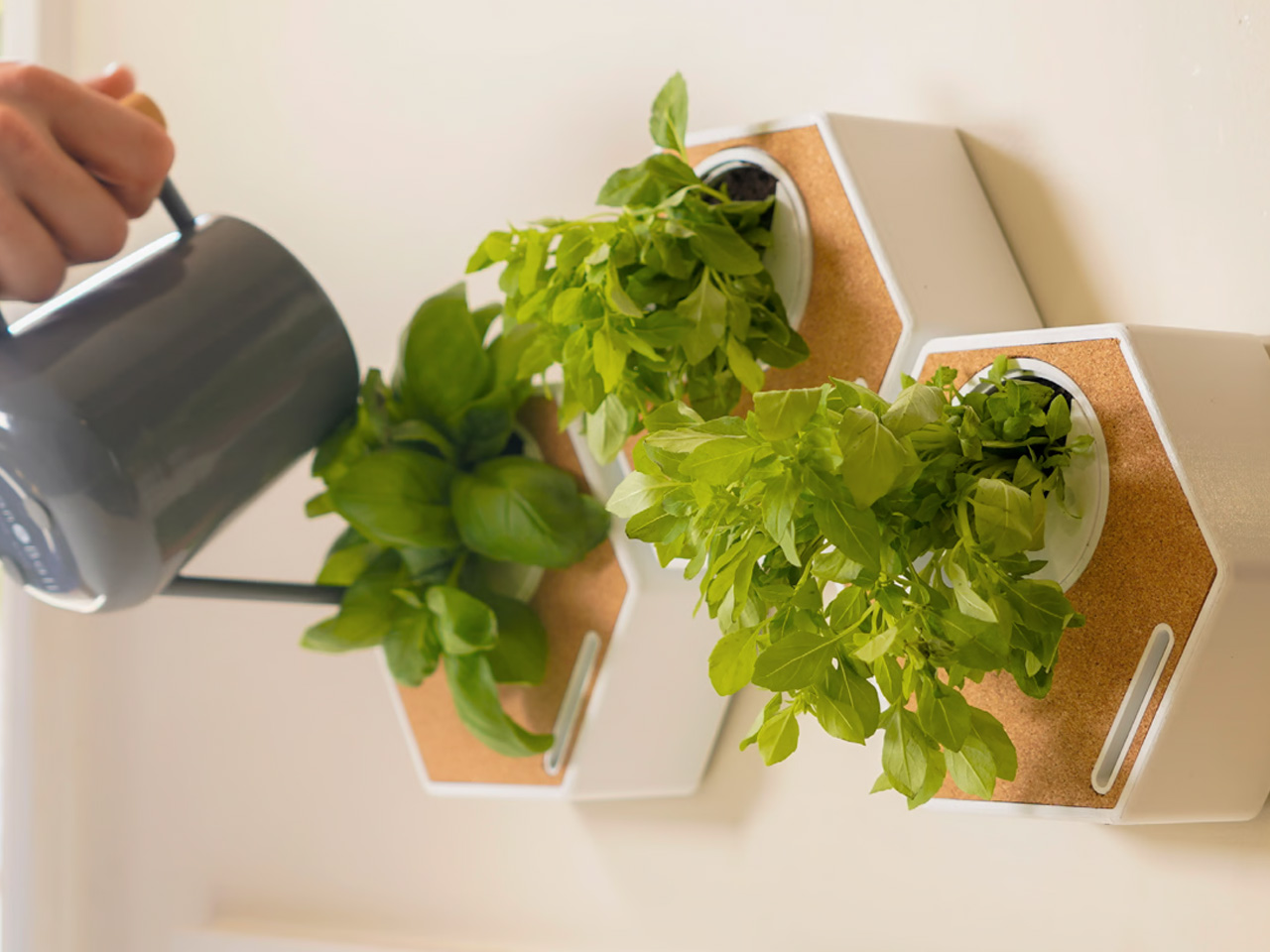
Called the Noku Canvas, this self-watering and modular greenwall is designed for your home. It converts your houseplants into wall-mounted hydroponic marvels, letting you add a touch of green to any room in your home, whether it is your home office, living room, or even the kitchen!
Why is it noteworthy?
The Noku Canvas is self-watering, as it is amped with wicking hydroponics that water your plants for you. It is equipped with a useful little water gauge which reminds you when to refill the water.
What we like
Modular design, so you can customize it however you want
Built from recycled plastic and natural cork
What we dislike
It only includes a wall-mounted version, there is a limited choice
5. Totam Planter
Say hello to the totam planter – a modular self-watering indoor garden that is created to enhance your space. You can personalize the planter according to your taste and needs. It is a one-of-a-kind vertical indoor garden that showcases and displays your beloved plants with pride. You can grow microgreens, succulents, food, flowers, whatever you like!
Why is it noteworthy?
It is a modular design, so you can build your own customized totam planter using a combination of different modules. You can use a whole bunch of different modules to create your own perfect tower. By adding vertical modules to the tower, you can create extra space for tall or trailing plants to grow freely.
What we like
Packs a whole bunch of greens into a small countertop footprint
You can schedule lighting at the touch of a button
What we dislike
They currently don’t offer any Matter/HomeKit support for their lighting
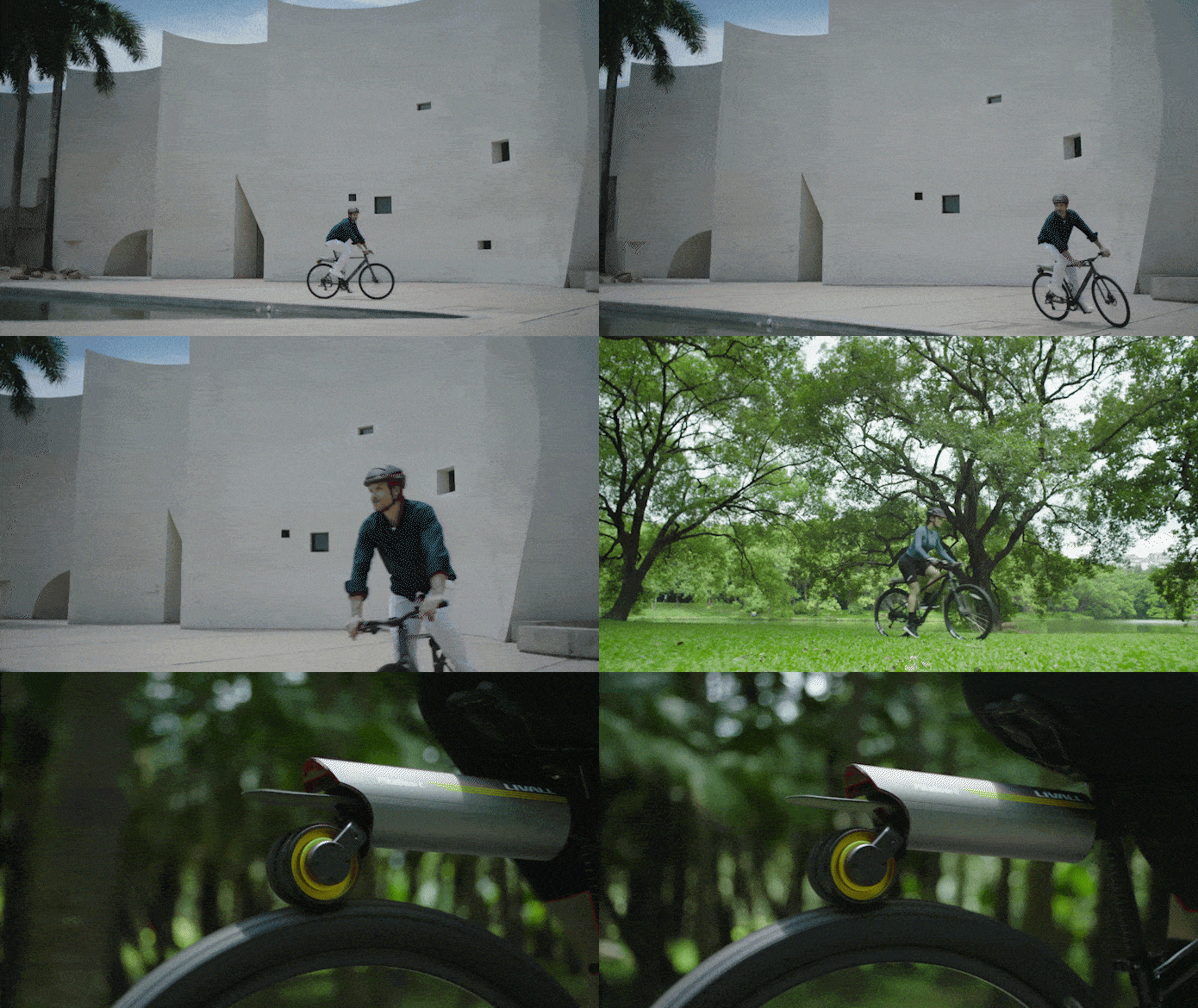
In 2022, the folks at LIVALL unveiled the PikaBoost, a simple battery-powered motor that could attach to any bicycle, giving it an electric upgrade. Now, the PikaBoost 2 comes with the same pitch as its predecessor, but with a power upgrade, better range, an anti-theft design, and swappable batteries. All you really do is strap the PikaBoost 2 to the back of your bicycle, right above the rear wheel and you’re good to go. The process takes under a minute, but gives your bicycle quite the upgrade, with a motor-assisted drive that can be accessed across 4 riding modes. The best part? Unlike e-bikes that can cost upward of $800-1000, the PikaBoost 2 is a simple under-$300 accessory that pretty much attaches to any existing bicycle.
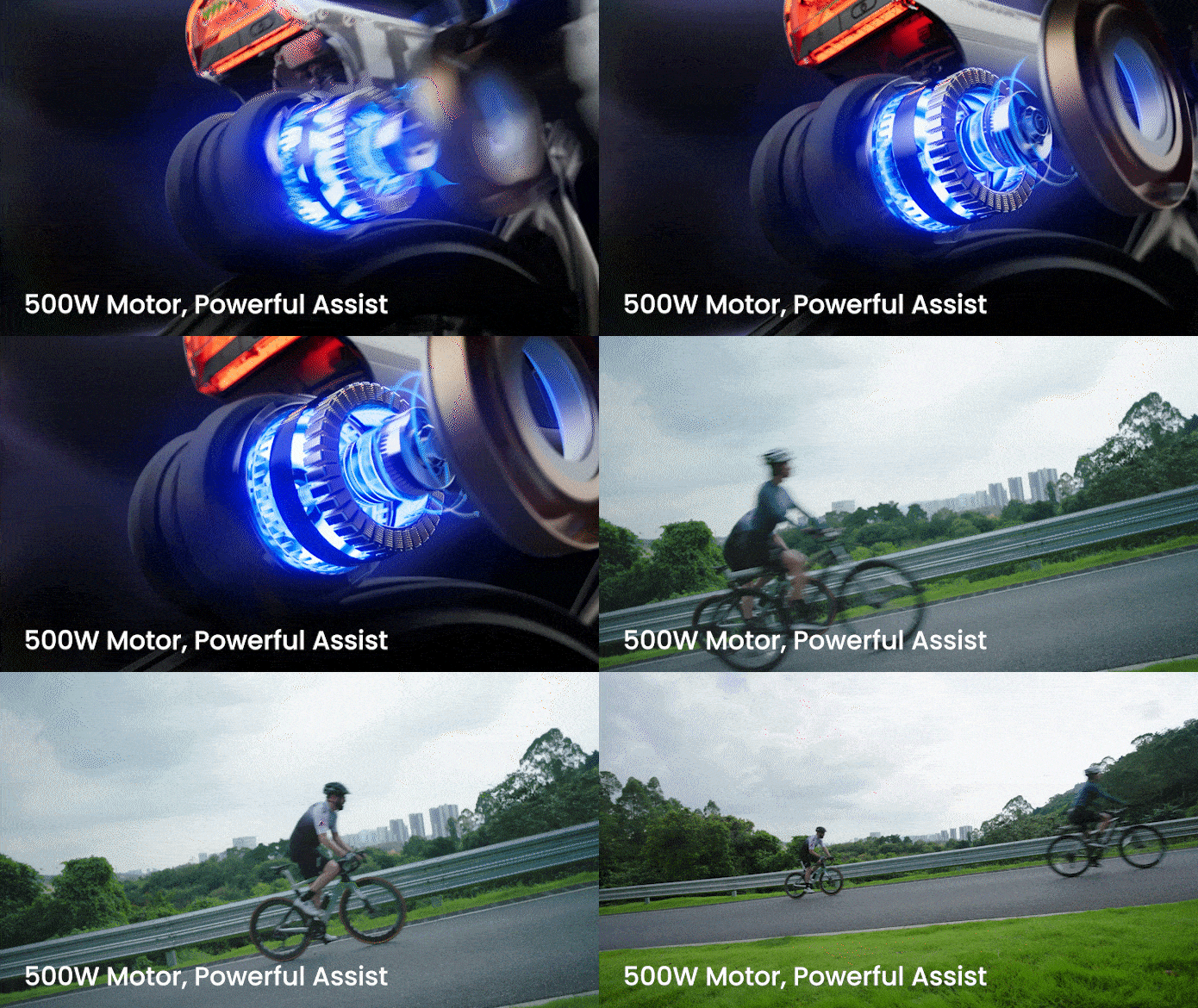
Do you remember when Elon Musk put jet thrusters on the Tesla Roadster to make it go even faster? The PikaBoost 2 is sort of the same thing, but scaled down to less mad-scientist and more practical-genius levels. In essence, it just adds a motor to your existing bicycle, so that you don’t have to rely entirely on pedal power. The PikaBoost 2 outputs an impressive 500W, which when coupled with its high RPM capacity, allows cyclists to conquer steep inclines effortlessly, reaching speeds of up to 32 km/h (19mph) without rider exertion. On flat land, the PikaBoost 2 is a nice way to turn your bicycle from an exercise machine to an effortless mode of transport, allowing you to travel farther and faster without splurging for a gas-powered motorbike or an e-bike.
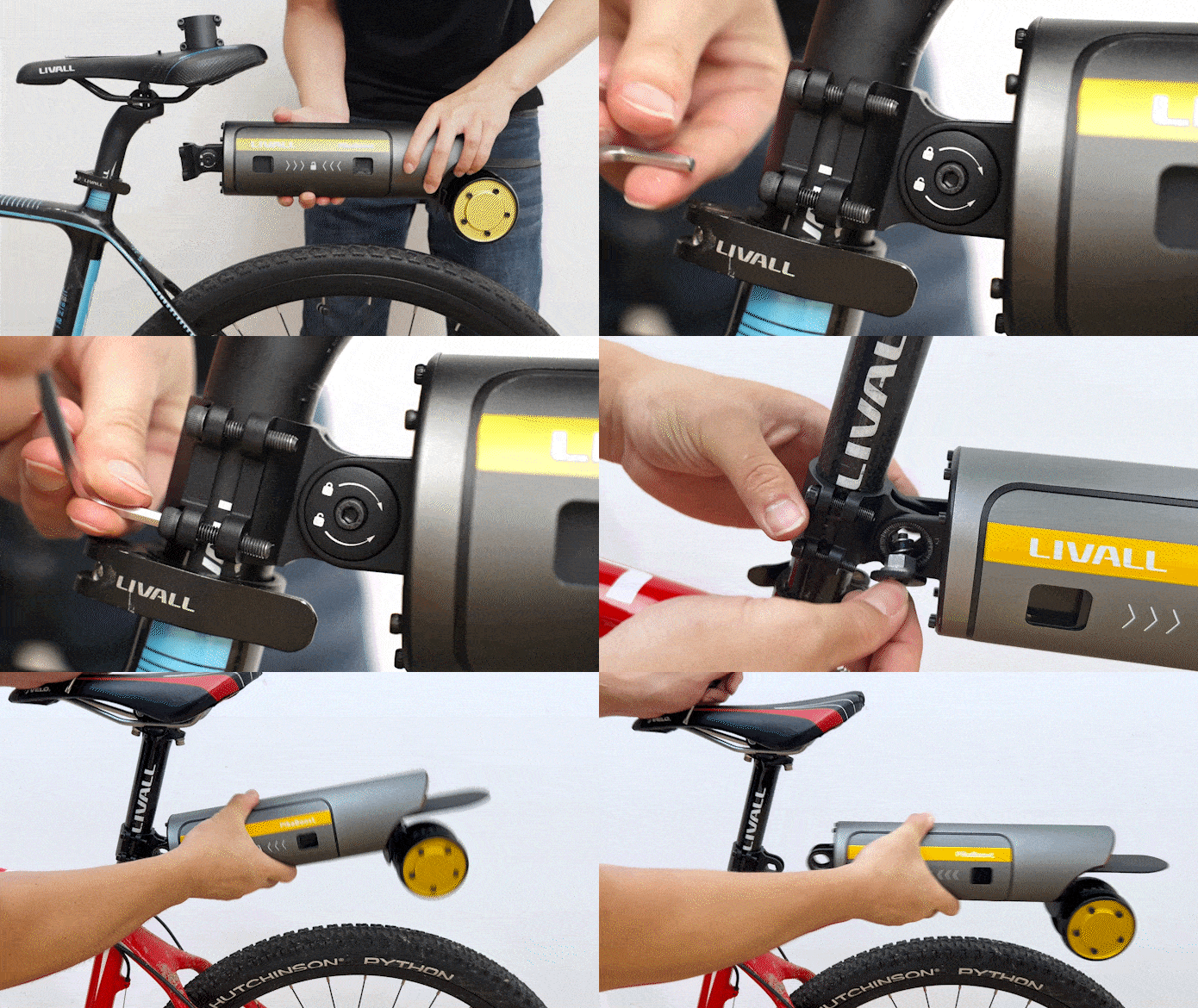
The slick device retrofits onto almost any existing bicycle simply by attaching itself firmly to the frame right under the seat. Traditional e-bike conversion kits often require significant time and effort to install, with many models being incompatible with a range of bike sizes. In contrast, PikaBoost 2 can be installed or removed in under a minute, thanks to its simplified design that fits most bike models and tire sizes. The system includes a proprietary tool that secures the unit with four anti-theft screws, ensuring a secure fit that’s impossible to remove without the specific tools if you’re a thief… but very easy for you to detach and take home at the end of the day by using the proprietary screw. Additionally, its shock-absorbing spring design helps maintain stability, even on rough terrain, while preventing screw loosening.
PikaBoost 2’s adjustable design seamlessly integrates with wheel sizes from 14 to 29 inches, accommodating mountain bikes, road bikes, and hybrids. LIVALL also provides its own tire designs for the PikaBoost, allowing you to adjust based on road or mountain driving. Once installed, the PikaBoost 2’s wheel rests on the top of your bicycle’s rear wheel, gripping it securely to ensure high traction so it can efficiently transfer kinetic power to your bike’s rear wheel. The V-shaped grooves on the PikaBoost 2 interlock with your bike’s treads, while also providing channels to direct water/mud when you’re riding in the rain or on wet/muddy roads.
One of the standout features of the PikaBoost 2 (and an upgrade from its predecessor) is its AAR2.0 technology, which offers personalized e-bike assistance. Unlike traditional systems that rely on torque sensors, AAR2.0 continuously learns and adapts to your riding style, providing precise power assistance that matches your needs. The regenerative braking system further extends your ride by capturing and converting kinetic energy back into electricity, adding sustainability to your journey. At 25 km/h, the RBS (regenerative braking system) can generate about 100 watts of power to recharge your battery.
Although it seems like the original PikaBoost had a bigger 234Wh battery, the one on the PikaBoost 2 is smaller but MUCH more efficient. Equipped with a 158Wh lithium-ion battery, the system offers a range of up to 70 kilometers or 43.4 miles (an upgrade over the 30 kilometers on the previous model). This size reduction comes with a good reason too, as the folks at LIVALL wanted the battery pack to be ‘airline-friendly’. For those seeking even greater endurance, an optional 220Wh battery extends the range to 96 kilometers or 59.6 miles. Both batteries support fast-charging technology, allowing for a full charge in just three hours. Beyond powering your ride, the battery can also function as a portable power station, with up to 100W of output power, making it versatile for charging everything from your phone to even your laptop.
Each PikaBoost 2 is paired with a remote controller that attaches to your handlebars, allowing you to switch between modes while riding. Notably, the 2nd gen device also gets a few nifty design and safety upgrades in the form of an LED taillight that automatically shines as you slow down or make turns (and also works as a charging status light), as well as fall or slip detection that automatically kills the motor to prevent accidents or injury. The PikaBoost 2 also comes with its own smartphone app, available for both Android and iOS devices. Aside from letting you perform actions like switching between modes, the app also lets you track your PikaBoost 2, as well as uses your location to automatically adjust its output based on riding regulations of the country you’re in (European users will see their speeds capped at 25 km/h to comply with the maximum speed limit). The entire device weighs 6.6lbs or 3 kilograms, and is IP66 water-resistant, making it fairly weatherproof. The PikaBoost 2 ships globally, along with the remote controller, the 158Wh battery, a mudguard, and the proprietary accessories for upgrading your bicycle. An upgrade gets you the 220Wh battery along with mountain and road bike tire attachments, and a fast-charging setup. Additionally, LIVALL also sells its own bicycle helmet with a built-in rear LED light that synchronizes with the PikaBoost 2 to shine automatically when you slow down, turn, or come to a stop.
Anyone who has cooked food will have come across a situation where they need to pick up a piece to either turn it over to cook the other side or to take it out of the pan or pot. Large portions are no problem for turners and tongs, but more delicate pieces can end up being an exercise in patience and dexterity. Smaller tongs aren’t always the answer because of the standard design of these tools and their wide, often spoon-shaped, heads that don’t afford precision and dexterity of movement. Some situations call for a radical change in that design, which is what these chopsticks-like pair try to offer, taking a page from one of the most precise utensils ever invented.
Some ingredients or pieces of food are so delicate that they need to be handled with a bit more care than what large cooking tools often provide. That’s true whether you’re trying to flip thin strips of meat on a frying pan, taking out cooked flakes of fish, putting in ingredients in a hot pot, or even just creating a complex arrangement of small fruits. Some of these you can’t even do by hand, while others are possible but not ideal for safety and hygiene. These specially designed tongs solve that problem in a rather fun-looking way that makes you feel you’re really in control.
Unlike your typical tongs, these Chopsticks Tongs don’t have large or wide tips, so picking up and holding small, delicate pieces isn’t a chore. And while they may look like chopsticks from one angle, they don’t require as much dexterity any more than normal tongs. They’re still made from a single piece of metal bent in the middle, so you won’t have to worry about juggling sticks and accidentally dropping them into a pot. Unlike conventional chopsticks, the tips are flat and ridged, preventing food from escaping its grasp. The tongs have a slender form and a minimalist aesthetic that not only saves space but even gives it an elegant design that looks stunning whether it’s in your hand or hanging in your kitchen.
Of course, normal chopsticks aren’t made for use in high heat, so these lifestyle tongs use SUS821L1 two-phase stainless steel that is known to be stronger than the SUS304 variant that’s commonly used. More importantly, the steel used for these tongs is made from recycled offcuts and scraps, giving it a more sustainable and environment-friendly characteristic. What’s interesting about these tongs is that their black color doesn’t come from paint or similar coating materials. Instead, it’s the product of a special metal processing that ensures the color won’t scratch or peel over time. That black oxide coating also ensures the safety of the food you’re cooking or the tableware you put in your mouth.
Durable, precise, and elegant, these Chopstick-shaped Tongs give you the perfect tool for managing small and delicate pieces of food. And while the 275mm (10.8in) Chopstick Tongs are great for keeping your hand at a safe distance, the shorter 175mm (6.9in) Lifestyle Tongs are better for smaller and more precise movements. You might even want to use it for actually eating your food without having to worry about how to use chopsticks properly. Whether you’re frying strips of meat, preparing a hotpot, or simply enjoying a healthy salad, these handsome Chopstick Tongs add a whole new flavor to your culinary experience.
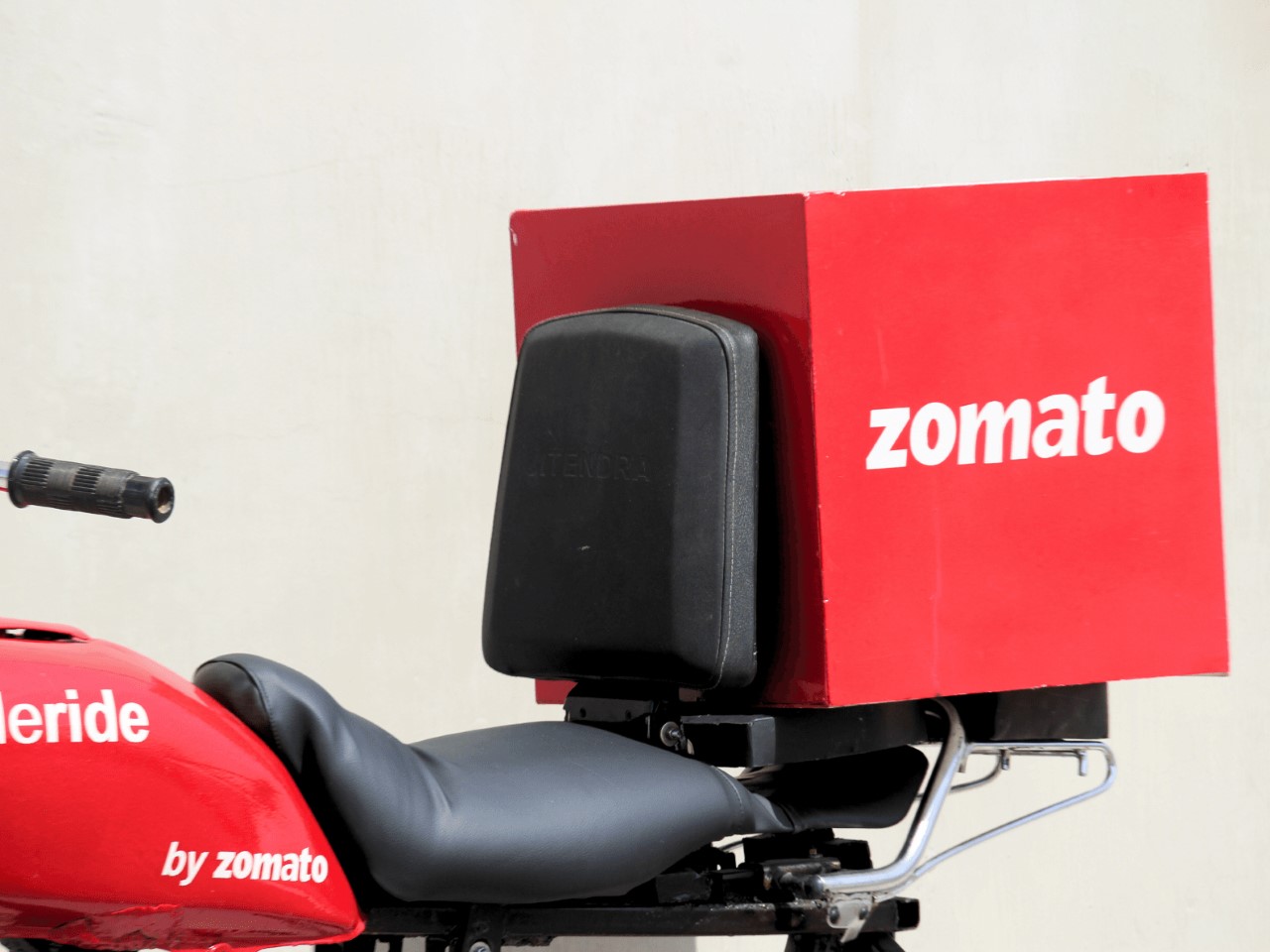
Zomato, one of India’s largest and most internationally recognized food delivery companies, owes much of its success to dedicated riders who navigate various terrains and weather conditions to ensure timely deliveries. These riders spend countless hours on their motorcycles, which have become indispensable companions in their daily lives. However, the motorcycles used are often purely utilitarian, lacking the comfort features that could make these long hours more bearable. Recognizing this gap, a group of designers embarked on a mission to redesign these motorcycles, focusing on enhancing the rider’s experience through basic yet impactful upgrades.
The initiative began with a thorough analysis of the pain points experienced by riders during extended periods on their bikes. The goal was to enhance the food delivery experience by identifying sources of discomfort and providing ergonomic solutions. This redesign was not just about minor tweaks but involved a comprehensive rethinking of the rider’s journey, addressing key areas that affect comfort and functionality.
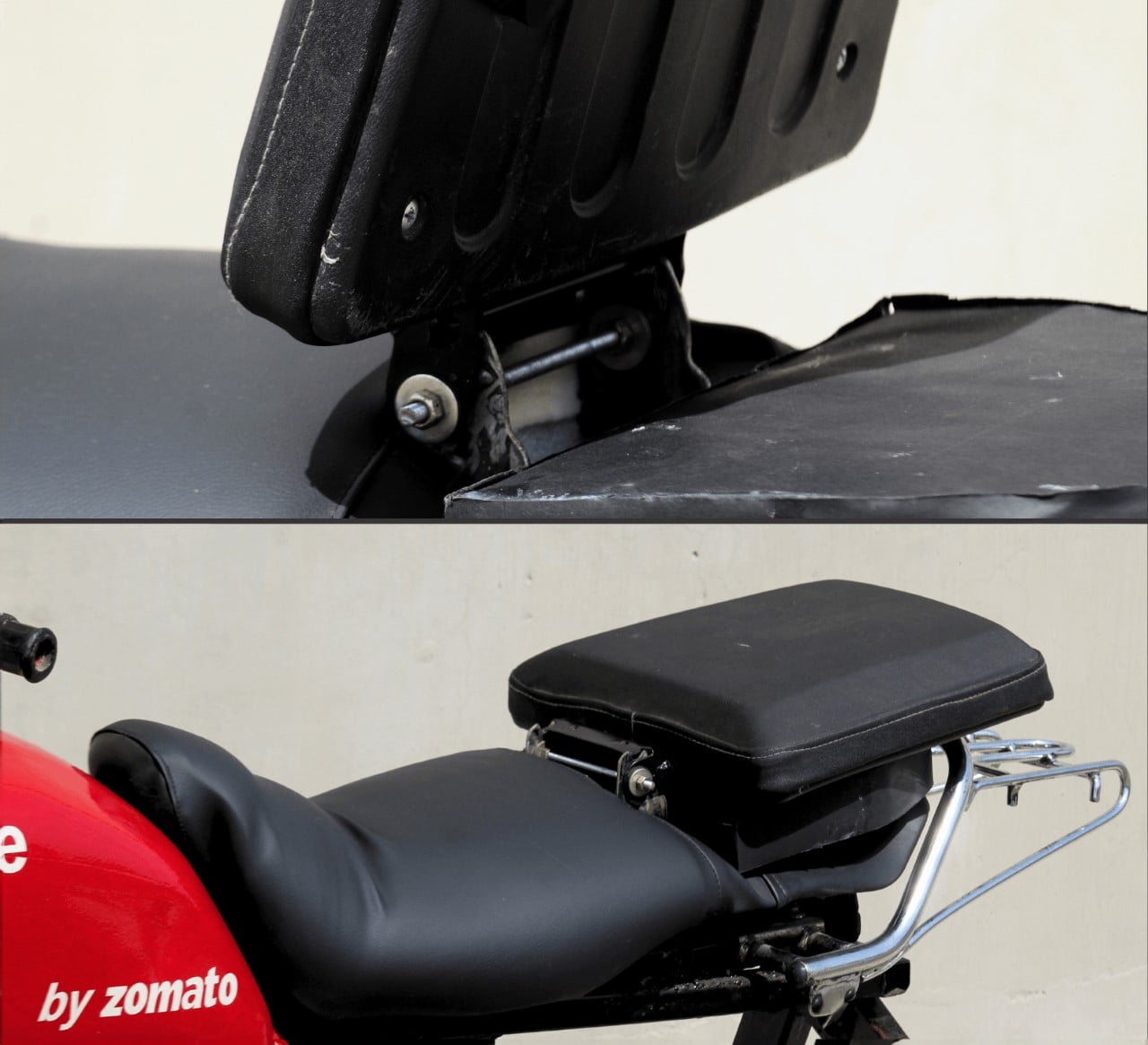
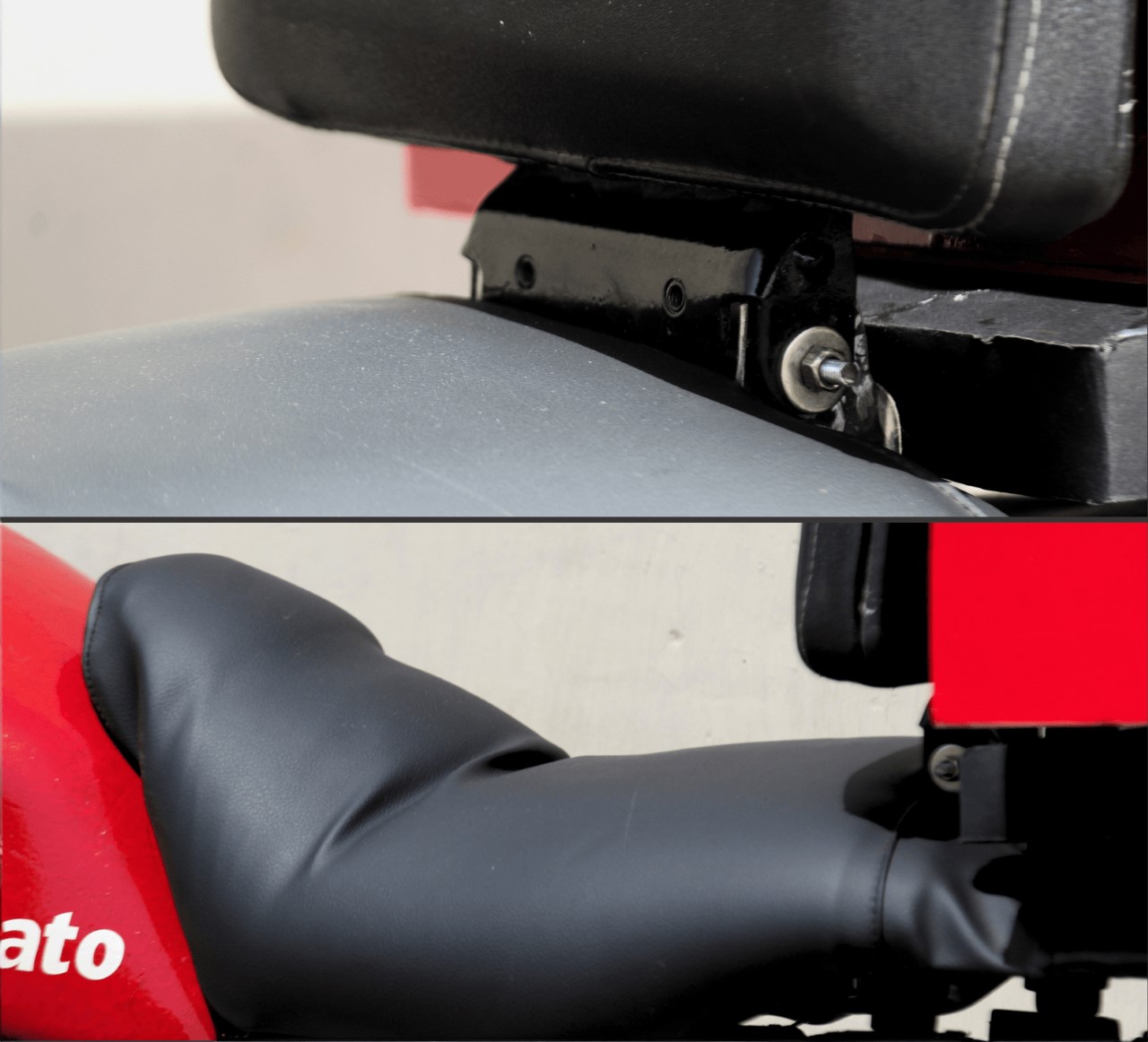
Traditional motorcycle seats tend to become squeezed and ripped over time, causing discomfort. To address this, the new design incorporates improved cushioning to ensure long-lasting comfort. Riders often rely on the storage box for back support, leading to improper posture and discomfort. The redesigned motorcycle features a collapsible backrest that provides adequate support during breaks or long waits in traffic which aligns with the large Zomato delivery boxes. This addition provides much-needed support during traffic halts or short breaks. It can also collapse down to act as a seat for a second passenger if and when required.
Additionally, the absence of adequate storage for personal belongings has been addressed by creating designated storage areas, allowing riders to keep their essentials secure and accessible. Another key issue is the sudden break between the seat and the fuel tank, creating an uncomfortable riding position. The new design extends the seat cushioning towards the tank, ensuring a smoother transition and better support.
The redesign process also involved analyzing the comfort levels of riders of extreme heights and weights. For a rider who is taller than usual, the handlebar was found to be too low, causing the rider to lean forward and touch the handlebar with their legs while turning, and the footrest was positioned too upright. For a rider with an average height but a slightly healthier side of the scale, the handlebar and footrest positions were appropriate but the seat cushioning needed improvement.
By addressing these critical design gaps, the GlideRide project aims to make the lives of food delivery riders more comfortable and enjoyable. These basic upgrades are not just about improving physical comfort but are also a step towards acknowledging and valuing the hard work and dedication of these riders who play a pivotal role in delivering happiness to our doorsteps.
If looks could kill, the Sandstorm 2.0 pocket knife would’ve eliminated you already.
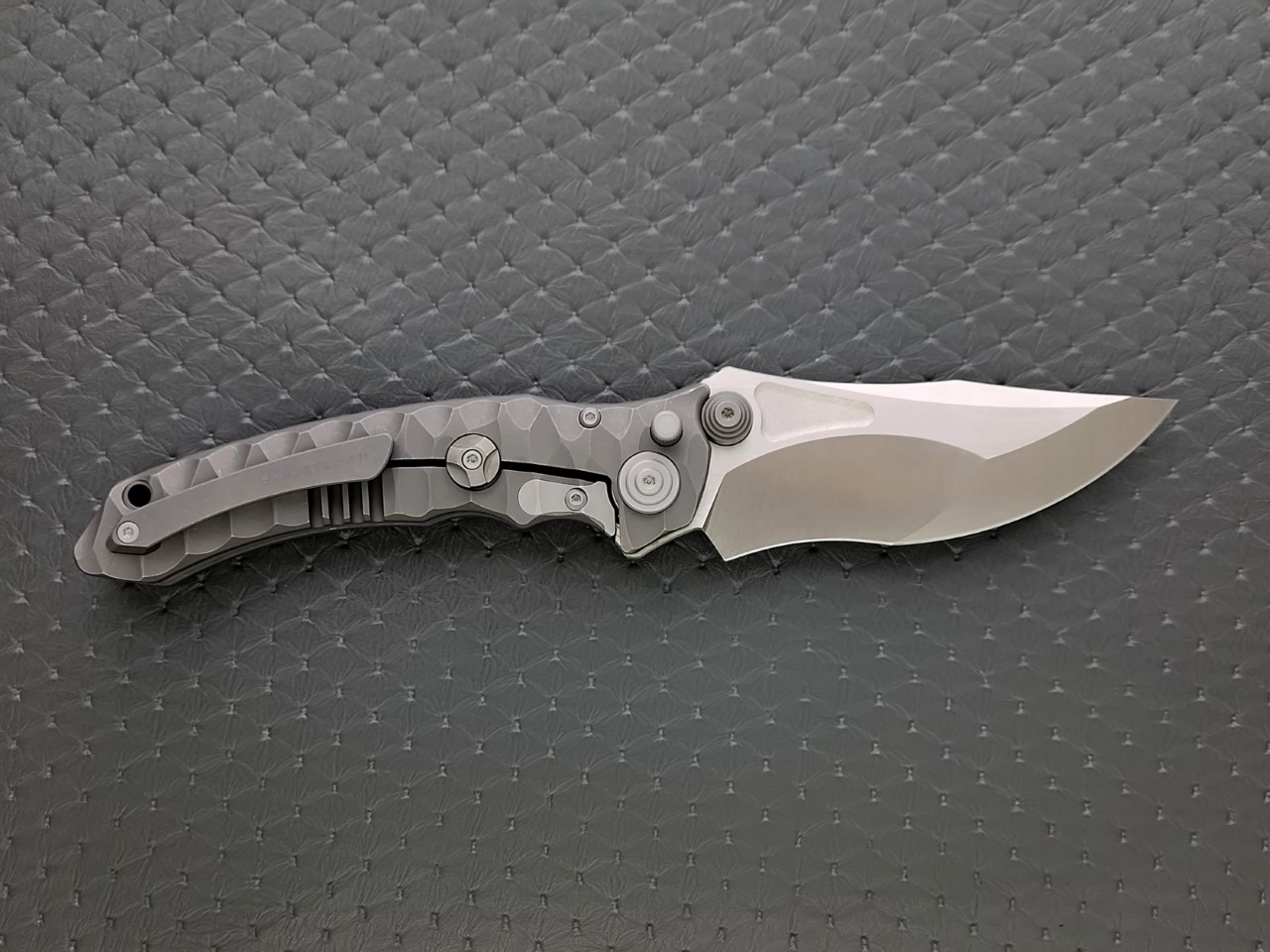
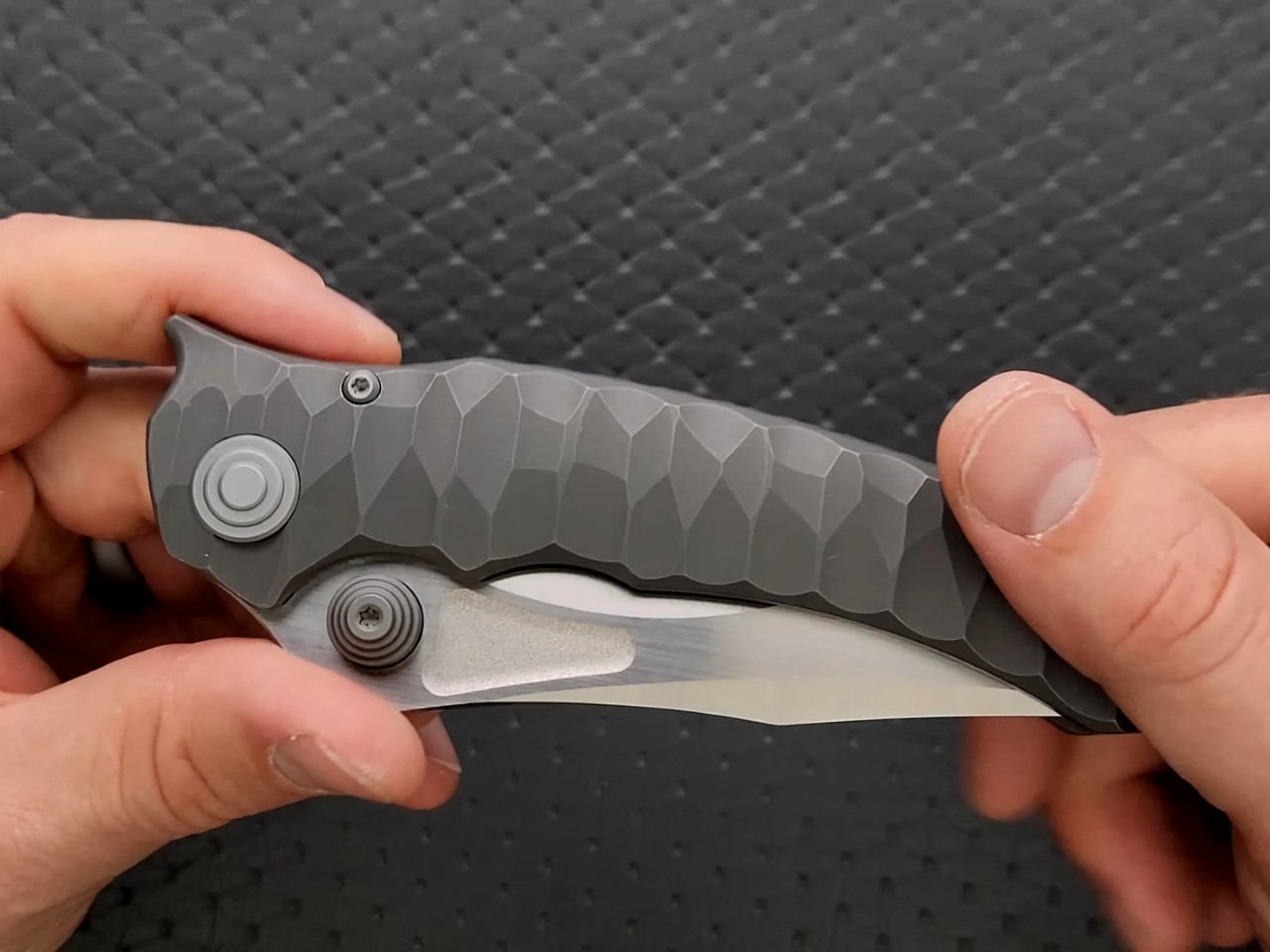
The Maxace Sandstorm 2.0 isn’t for the faint-hearted. Whether it’s the dangerously sharp Kukri-style blade on the front, the 10-ounce hefty weight, the 10-inch overall length, or that viciously rustic titanium handle, every part of the Sandstorm 2.0 screams “BEWARE”. I wouldn’t be surprised if I had to sign a waiver before I bought this thing. It’s durable, meaty, well-weighted, and is ferocious enough to scare your enemies away before you get a chance to use it.
Designer: Maxace
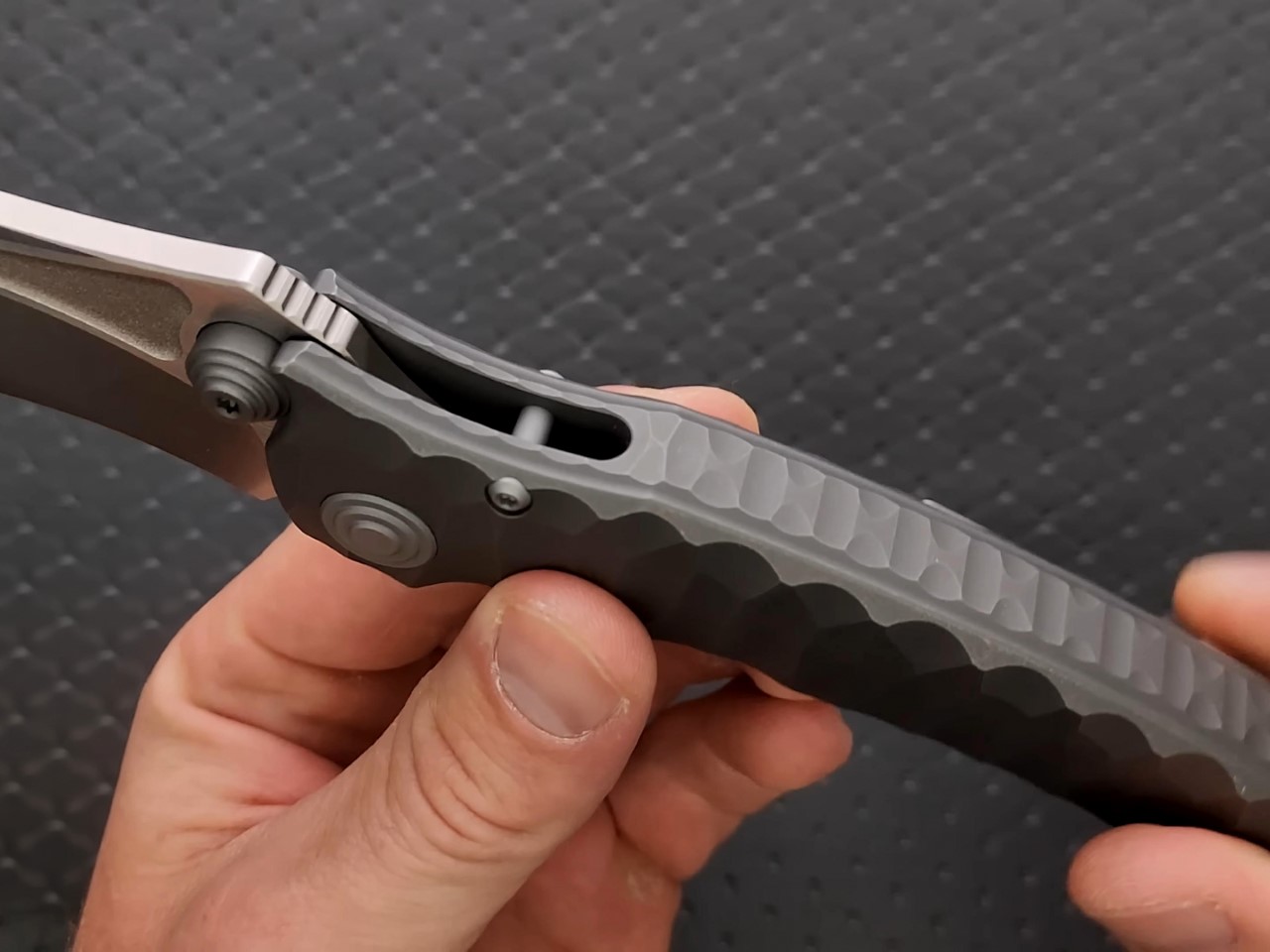
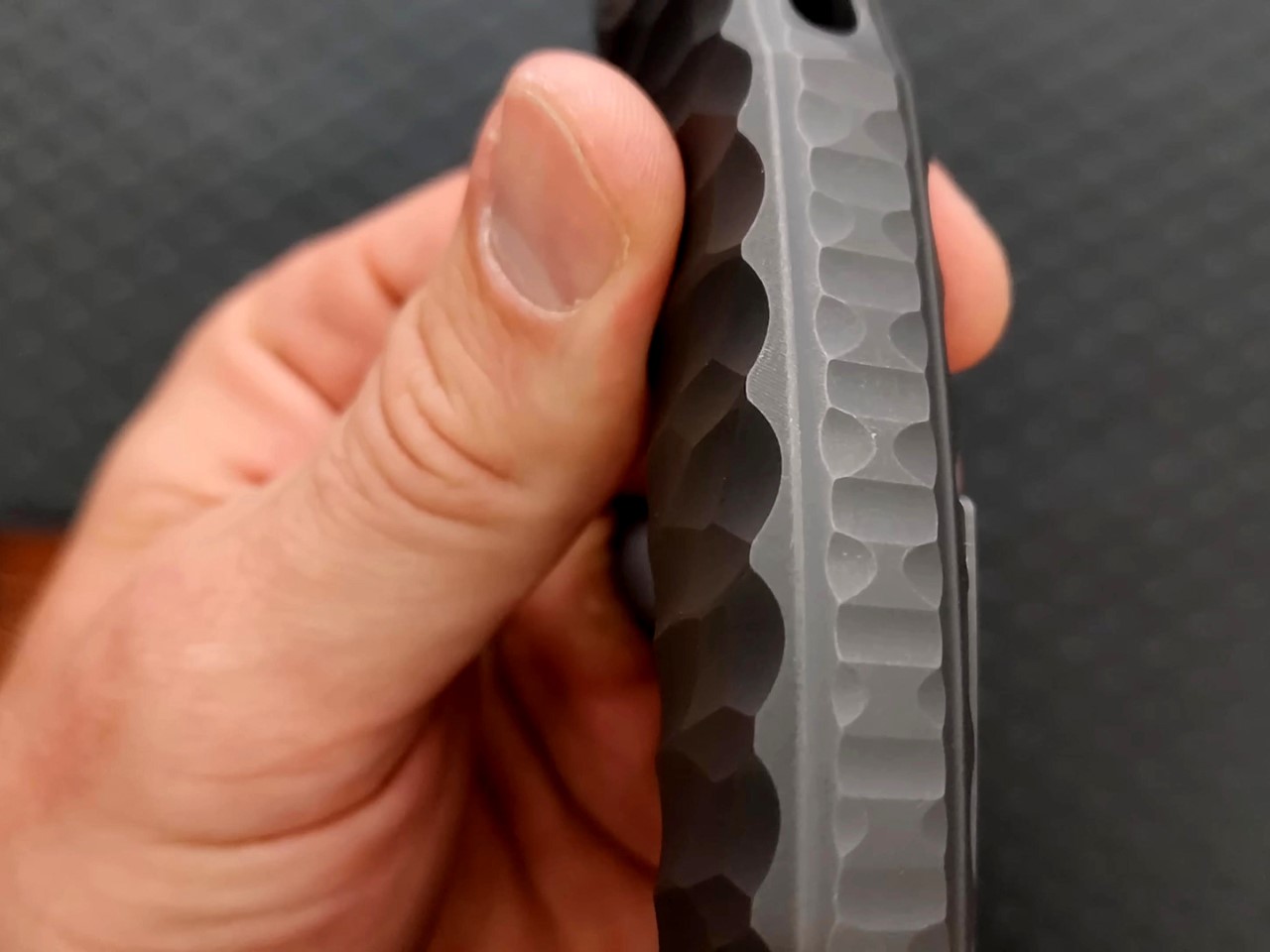
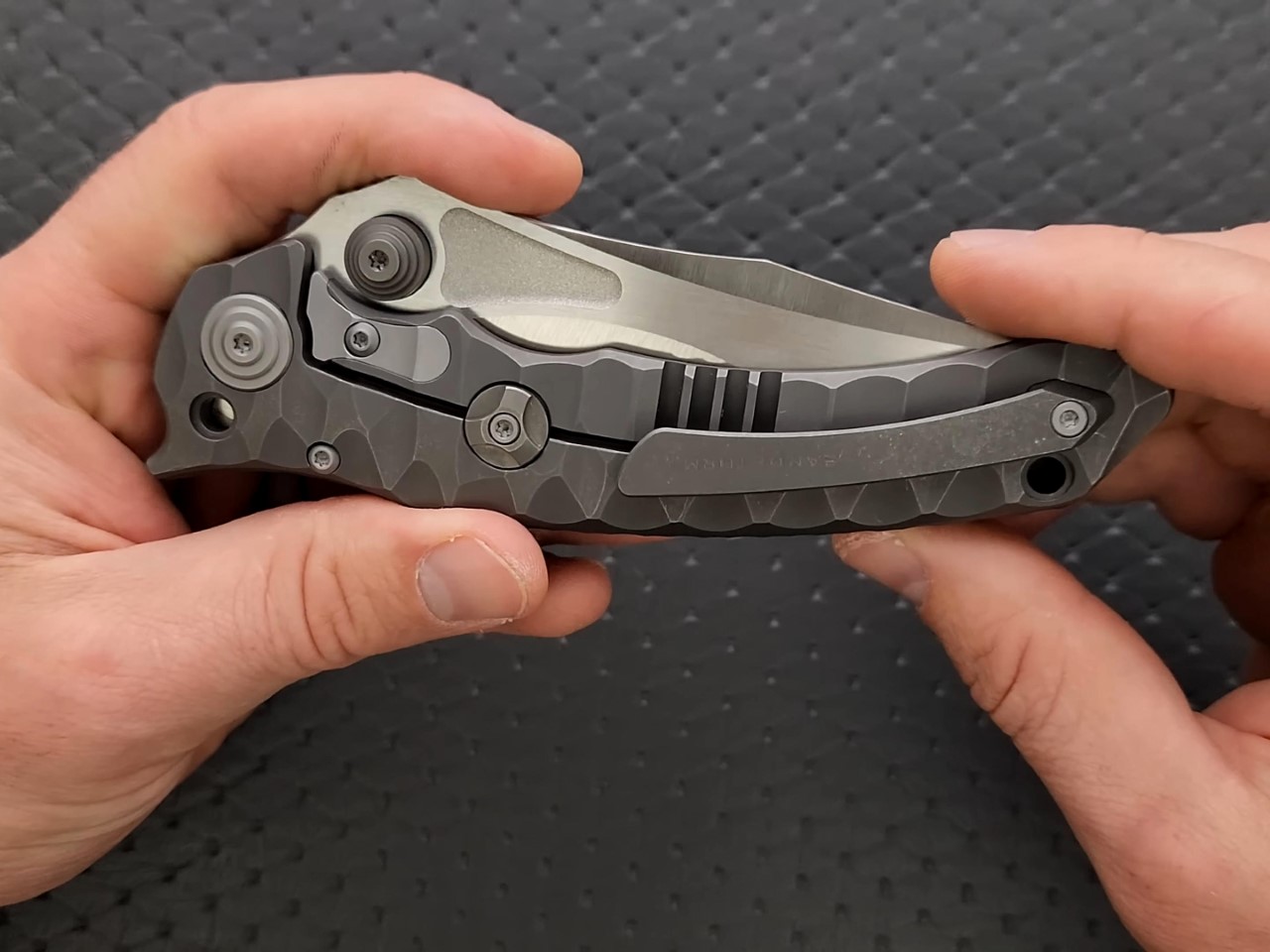
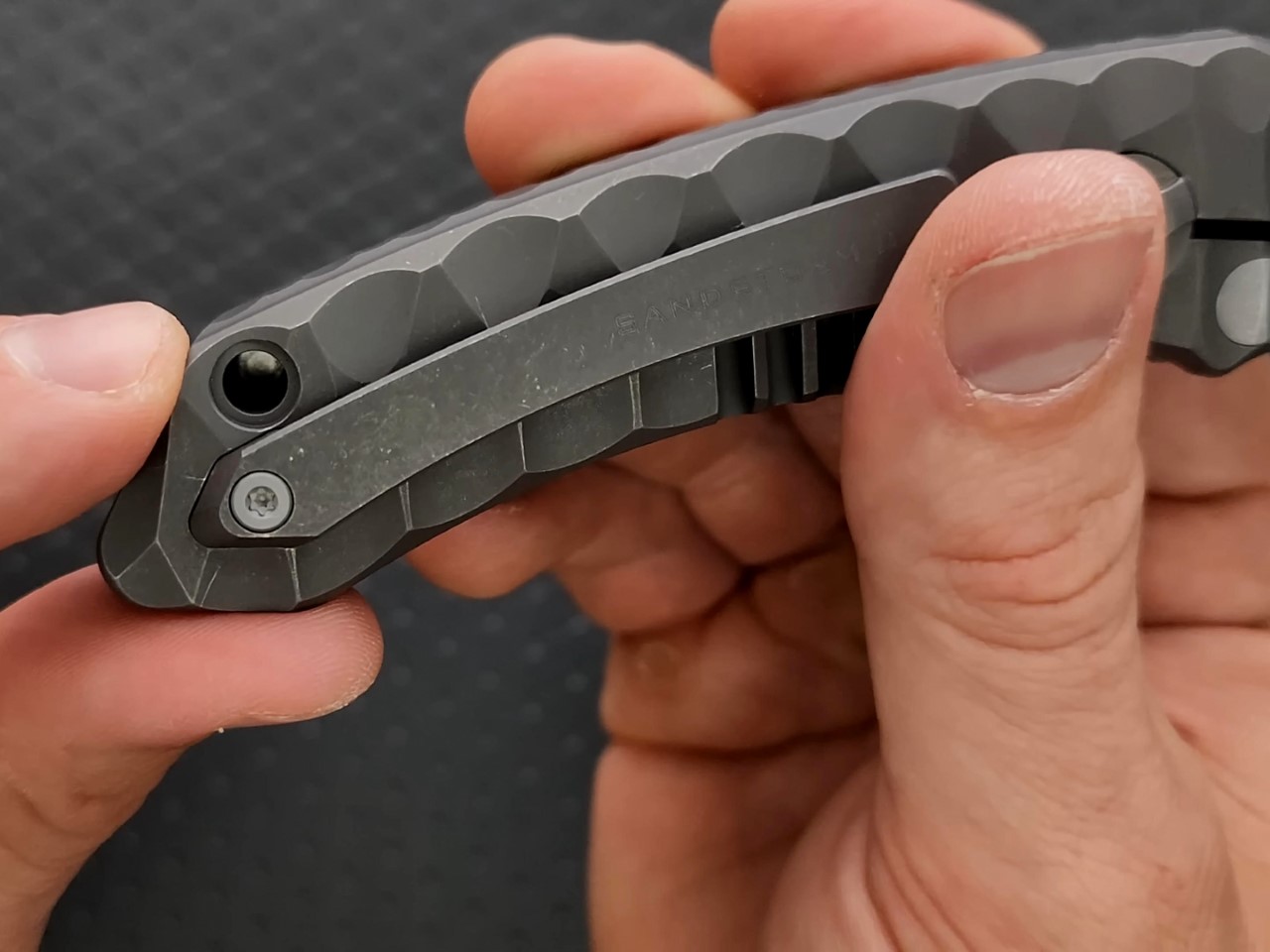
I have an innate appreciation for good craftsmanship. Whether it’s the dragon-inspired pocket knife from a few weeks ago, to this beaut here, there’s something about nature-inspired detailing that makes a knife look more raw, rustic, beastly. Don’t get me wrong, I love a good minimalist flipper, but sometimes a pocket knife just needs to feel like it could get your adrenaline going. The Sandstorm 2.0 is one of those knives. That almost chipped-Obsidian-style texture on the handle catches light wonderfully (in part thanks to the stonewashed finish). The handle is entirely machined from a single piece of Titanium, so don’t expect to see seam lines. It’s a major deviation from most knives that come with two or three-part handles sandwiched together. This single-piece handle is absolutely astounding to look at, although that also adds to its overall cost.
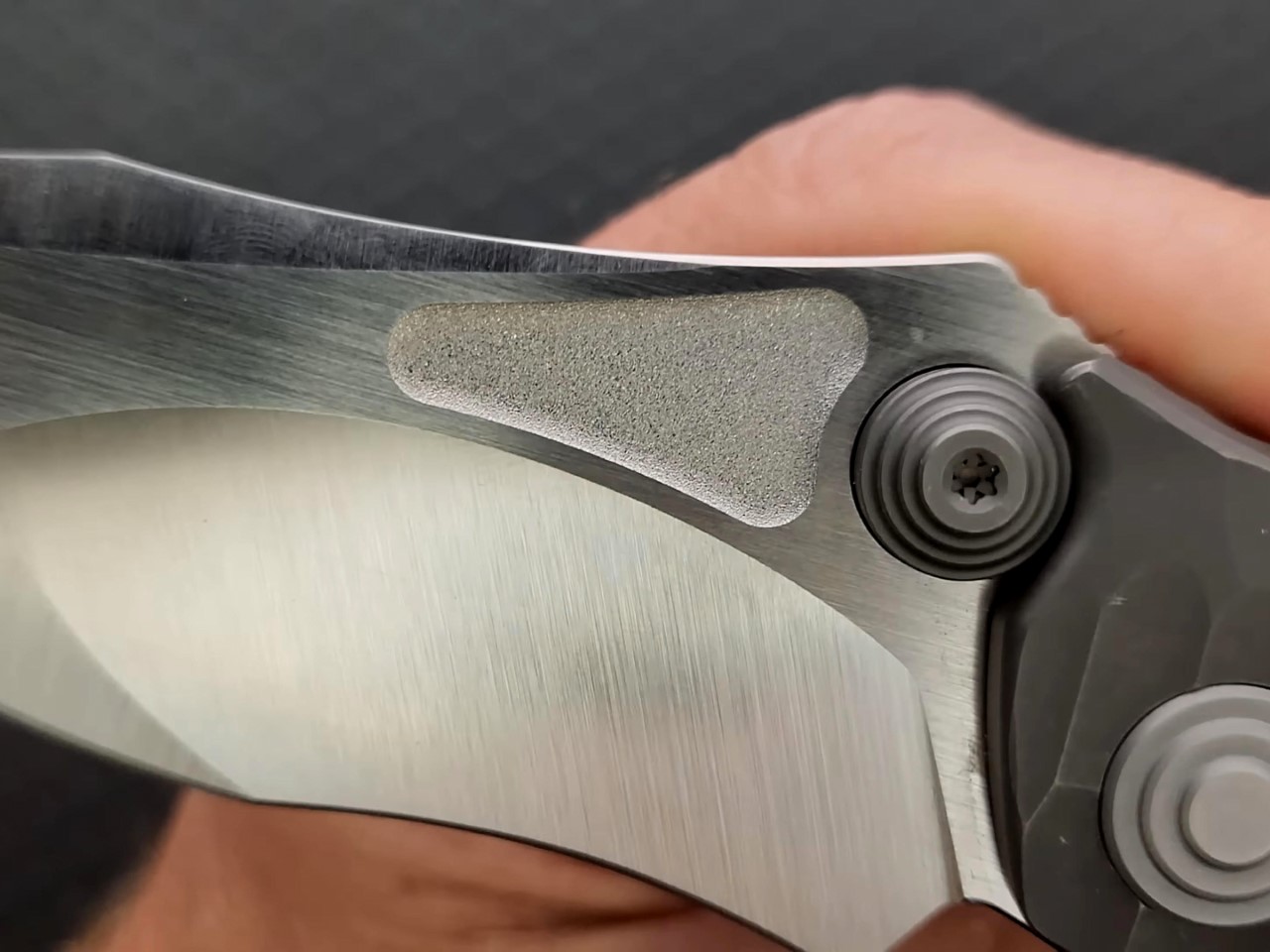
The gorgeous handle is just one aspect of what makes the Sandstorm 2.0 such a great knife. The M390 blade, which measures a whopping 4.62 inches in length is yet another thing of beauty. At that size, the blade becomes fairly heavy, which can be a boon when it comes to maneuvering or working the knife. The M390 blade doesn’t sport a conventional drop-point mechanism. Instead, it has a combination of design styles that pretty much mirror the complexity of the handle’s chipped design. The silhouette feels very similar to that of a Nepali khukri knife, albeit without a continuous curve. There’s a slight sharp turn at the belly, before the knife ends at a sharp tip. The spine of the blade has a clip-point-style faceted curve too, giving you a blade that has a much more complex character than your average drop-pointed folder.
The hefty blade feels incredibly satisfying to open too, thanks to a thumb stud that lets you flick the Sandstorm 2.0 open in seconds. A frame lock helps click the blade in place, which you can then disengage as you shut the blade. With a knife that heavy and a blade that sharp, it’s best do shut the blade with both hands rather than trying to singlehandedly shut the blade. I guess that’s a small price to pay for overall safety. A rotating LBS helps you lock the frame lock, preventing the blade from disengaging. You’ve also got space for a screw-in stop-head to lock your blade in position.
All this heft, sharpness, intricate detailing, artistry, and sheer complexity results in a knife that doesn’t come cheap. At $399, the Sandstorm 2.0 is definitely on the more expensive side… but it’s also worth every penny, given how at the end of the day you don’t get a knife that just looks good… It could inflict some serious tactical damage on enemies too.
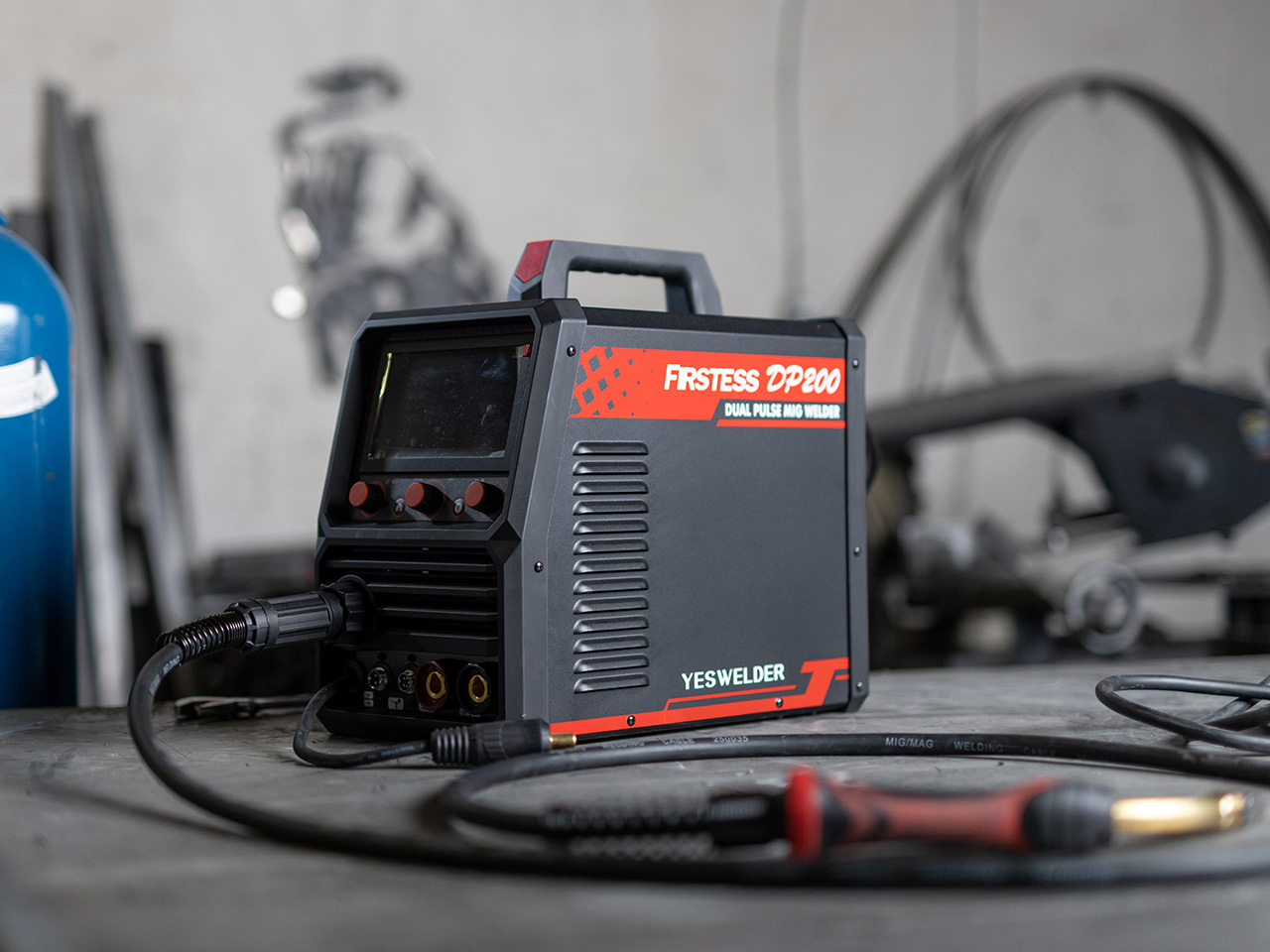
Not all repairs can be handled by adhesives, and not all artistic creations can be made using a 3D printer. Whether you’re repairing a motorbike, designing a piece of furniture, or giving birth to your next metallic masterpiece, you will undoubtedly need a welder, a tool whose sheer power and complexity fazes even the most seasoned worker, let alone beginners and hobbyists. With today’s technologies and design expertise, that shouldn’t be the case anymore, and the YesWelder Firstess DP200 offers a multi-process MIG welder whose simple controls belie its superior capabilities. Mend those metal fences and assemble that metal sculpture with this simple yet ample welder that will satisfy both greenhorns and pros.
Welding is one of those fascinating aspects of metalwork that feels like you’re playing with fire, and quite literally, too. Electric arc welding has made it easier and safer, but the process is still daunting and possibly frightening for a beginner. Add to that the fact that welders are literally complex machines, and you’ve got a situation that stumps not just novices but even experts.
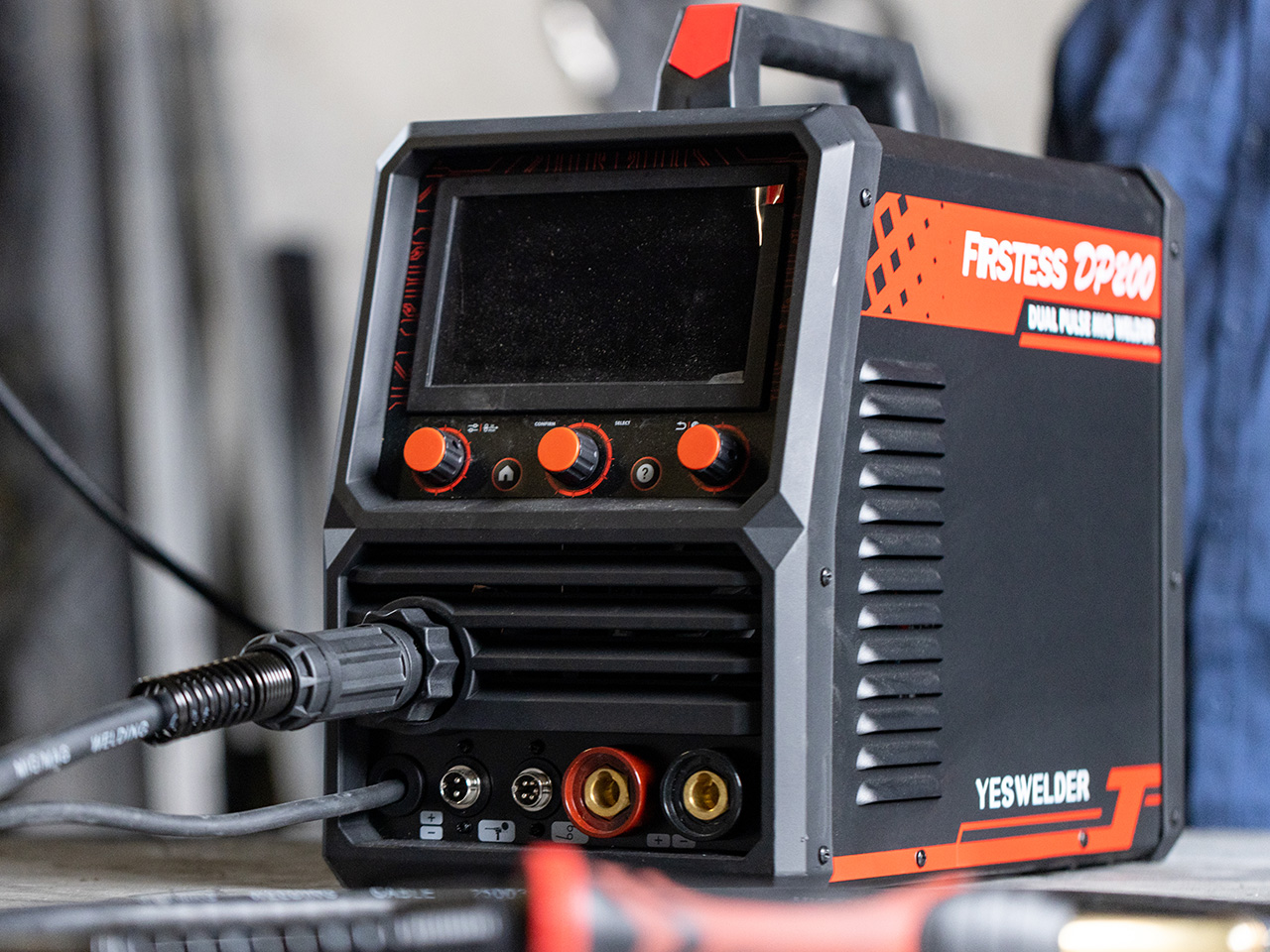
Enter the YesWelder Firstess DP200, a multi-process MIG welder that gets with the times to offer an unbeatable mix of easy-to-use controls and powerful features. Designed to make welding less daunting, simpler, and more fun, the DP200 puts the power you need behind a system that gets you up and running in no time flat, letting you start welding anytime and even anywhere.
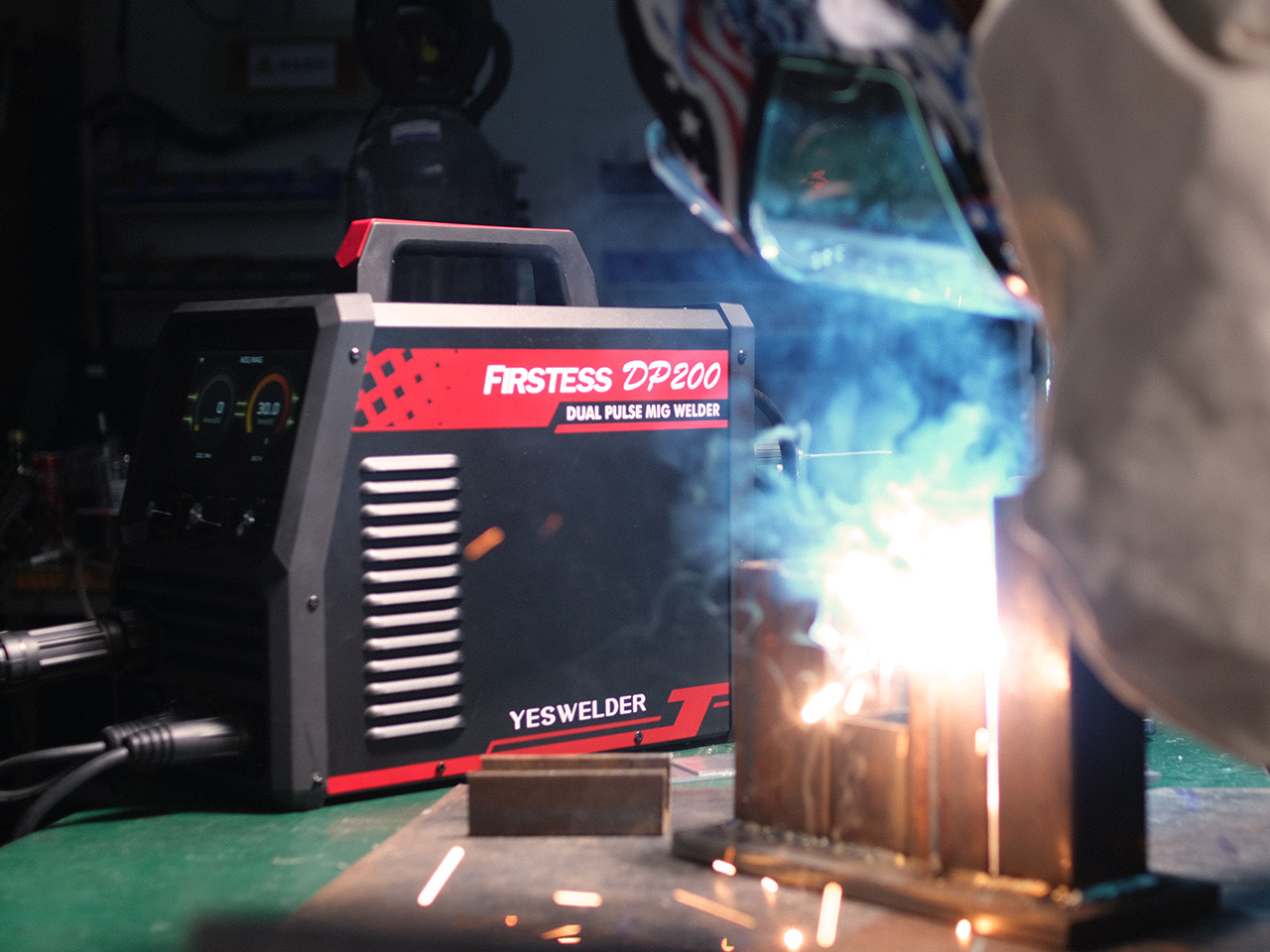
Users will fall in love with the large 7-inch screen that can be easily seen from multiple angles. With a high level of brightness, it brings clear visibility even in dark environments. That means you’ll be able to see the welder’s important information even when sparks are flying all around. The Firstess DP200 offers intelligent settings recommendations and cautions, guiding welders through some of the more mundane aspects of the process. With a USB-C port, the machine’s software can be easily updated with bug fixes and features based on user feedback, keeping the smart welder alive and usable for a very long time.
The Firstess DP200 also has plenty of features to woo more seasoned craftsmen as well. The Pulse MIG and DualPulse MIG welding delivers low spatter and minimal heat buildup, making it easy to work with ultra-thin materials, including aluminum. At the same time, the Flux-cored welding also makes it suitable for thicker materials, while Lift TIG, which can also be controlled by a foot pedal, and Stick welding offer even more flexibility, allowing the DP200 to handle any welding material, need, or environment. And with dual-volt support, the Firstess DP200 is ready for use anywhere in the world and in any location, whether you’re at home or in a workshop.
With a welder, safety is just as critical as the output, and YesWelder doesn’t disappoint here either. Even before you begin welding, the machine does a 10-second self-check to make sure it’s in good working condition. Dual high-speed fans ensure it’s only the metal that melts under extreme heat, not the welder. Convenient and easy to use, powerful and adaptable to any welding use case, and, best of all, accessible to all kinds of users, the YesWelder Firstess DP200 lets you elevate your craft to the next level, making repairs and metalwork a cinch.































 MIG welding delivers low spatter and minimal heat buildup, making it easy to work with ultra-thin materials, including aluminum. At the same time, the Flux-cored welding also makes it suitable for thicker materials, while Lift TIG, which can also be controlled by a foot pedal, and Stick welding offer even more flexibility, allowing the DP200 to handle any welding material, need, or environment. And with dual-volt support, the Firstess DP200 is ready for use anywhere in the world and in any location, whether you’re at home or in a workshop.