French artist Céleste Boursier-Mougenot is widely known for uncovering the musical potential of objects and materials that were never intended to function as instruments. Rather than composing music in a conventional sense, he creates situations in which sound emerges through movement, interaction, chance, and the surrounding environment. His exhibition points de suspension, presented at Frac Normandie in Caen as part of the Normandie Impressionniste Festival, extends this approach across the cloister and galleries of a former seventeenth-century convent.
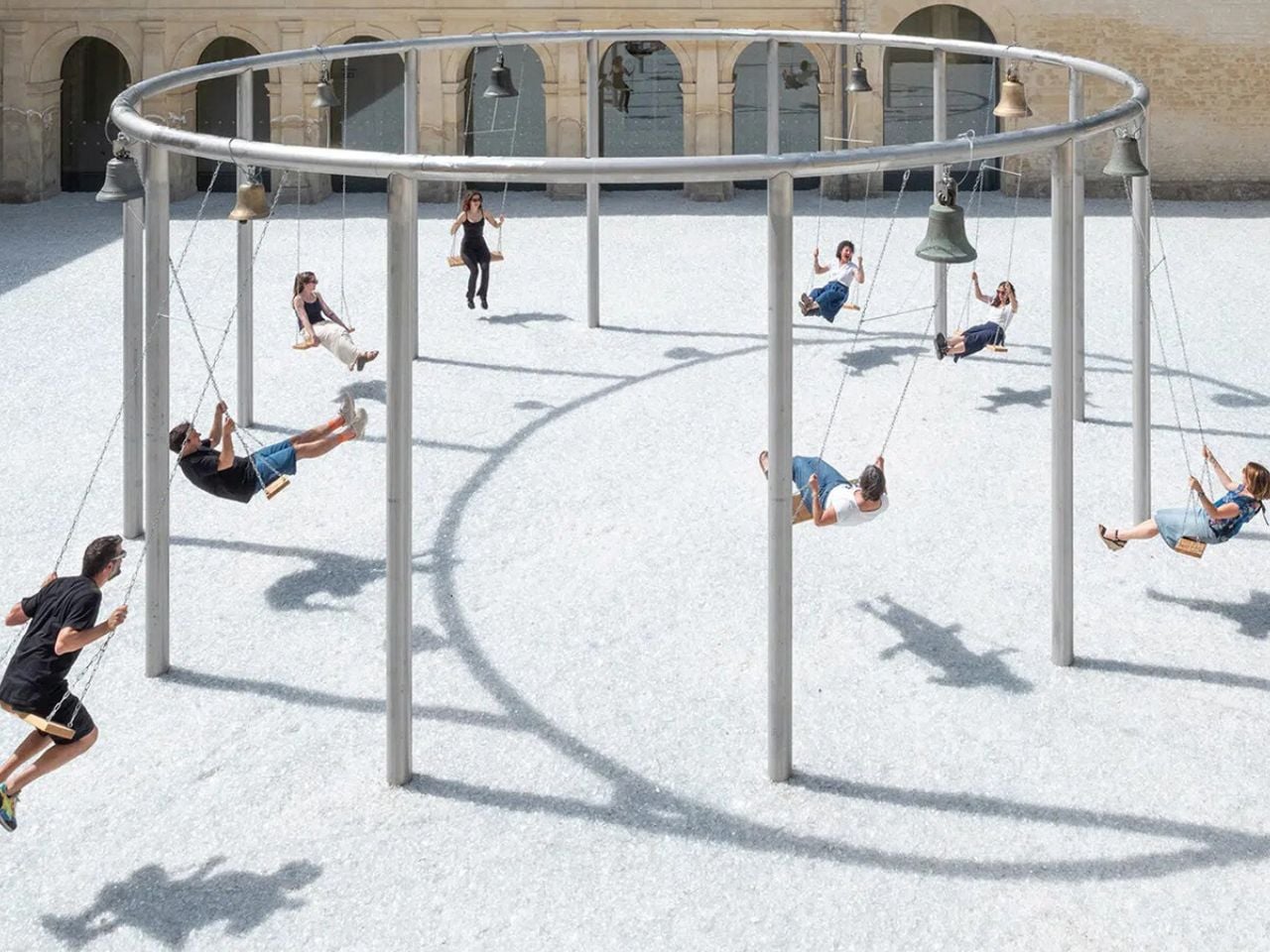
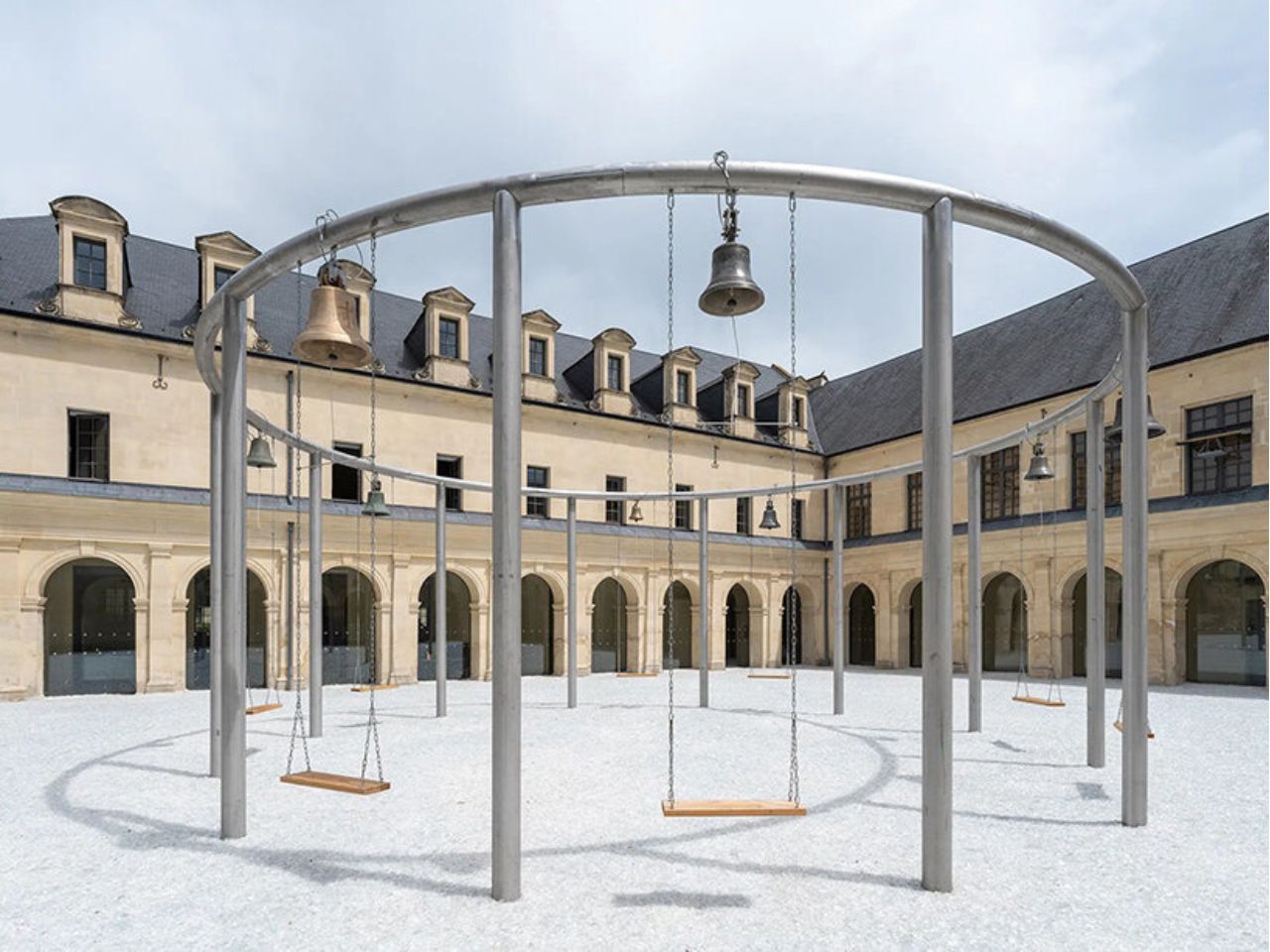
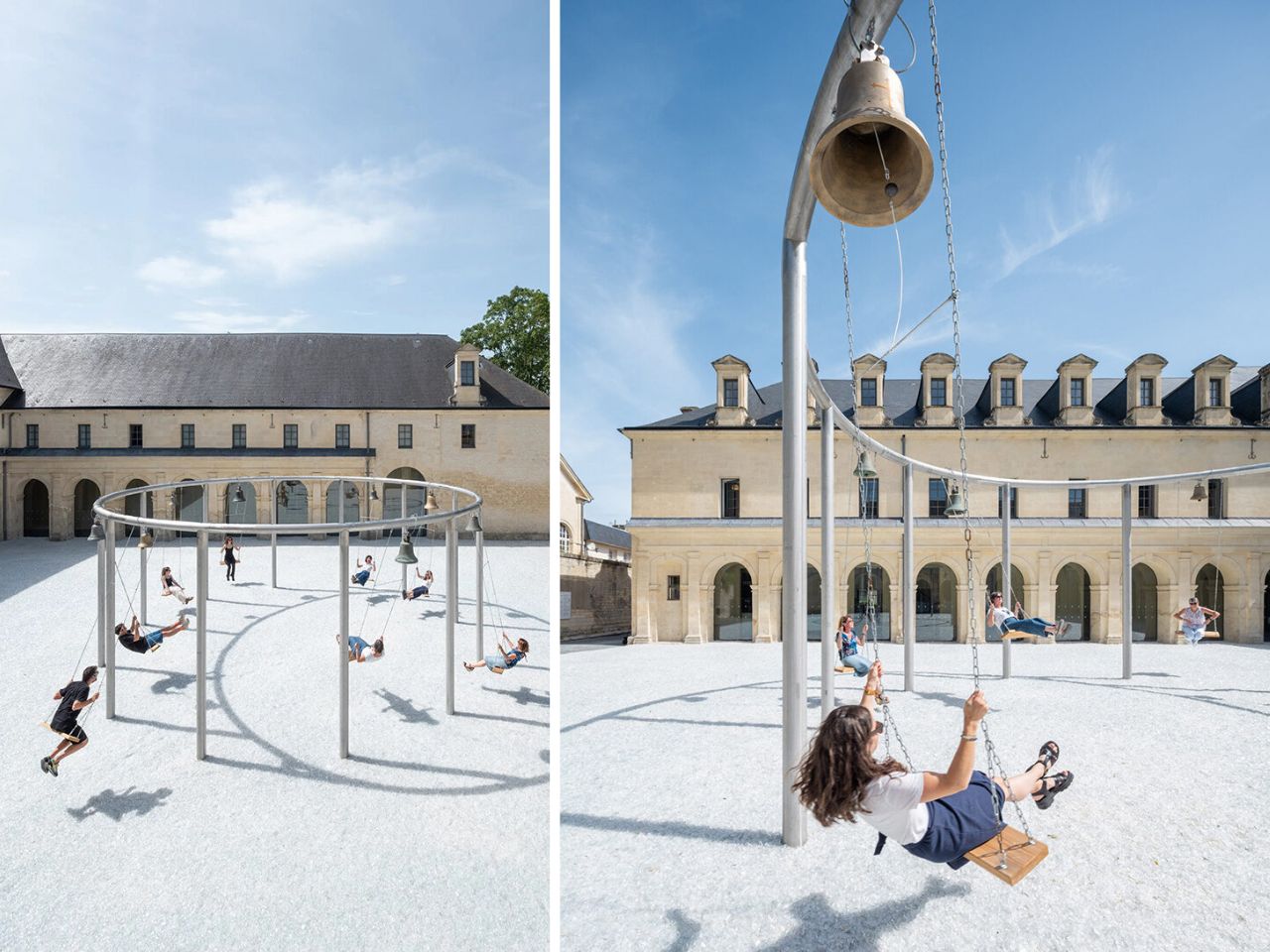
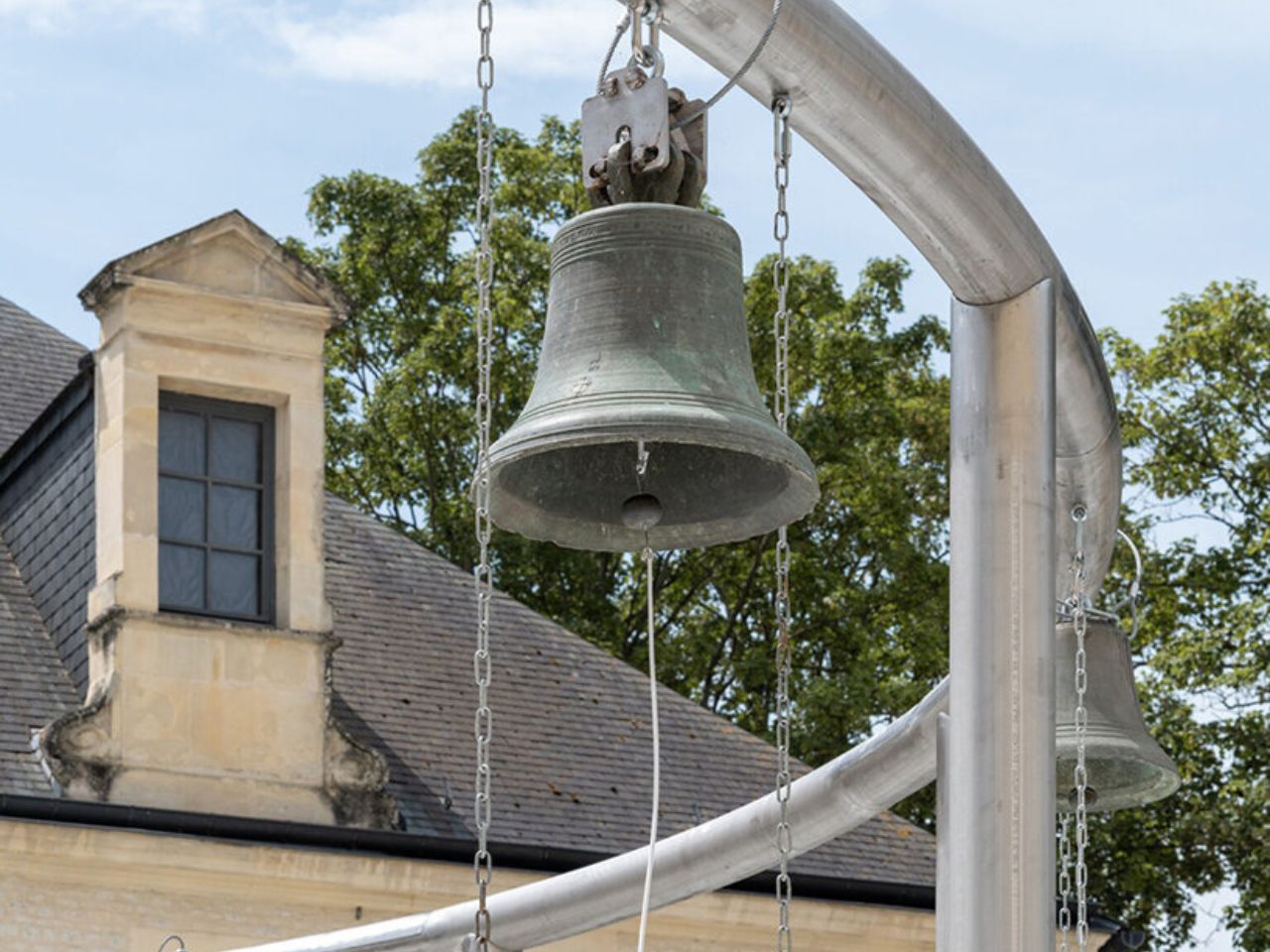
At the center of the courtyard is envolée, a playable musical installation made from swings and antique church bells. A circular steel structure, reminiscent of the bandstands that once animated public gardens, supports eight wooden swings. Above each one hangs a bronze bell of a different size, allowing every swing to produce its own distinct tone when set in motion.
Visitors are invited to sit, push away from the ground, and activate the installation through the familiar movement of swinging. As the wooden seats rise and fall, the bells respond with changing rhythms and overlapping tones. No two performances can be repeated precisely. The resulting composition depends on how many people participate, how quickly they move, and whether their rhythms align or interrupt one another.
Boursier-Mougenot does not prescribe a melody for the group to perform. Instead, he designs the conditions from which a collective composition can emerge. The work only becomes fully active through the gestures of its participants, temporarily transforming strangers into performers. Individual actions accumulate into a shared sonic environment, allowing visitors to influence one another without needing to speak or coordinate deliberately.
The swing itself introduces another cultural and emotional layer to the installation. Appearing across civilizations as an object of ritual and recreation, it has been associated with ancient Egypt, seasonal festivities, springtime renewal, and the ornamental gardens of seventeenth-century France. It has also been understood as an object marking transitions between childhood and adulthood.
Within envolée, this nostalgic object is reframed as a device for reconsidering how bodies inhabit a public space. Swinging no longer belongs exclusively to childhood. It becomes a method of synchronizing movement, sound, attention, and proximity. The participant is simultaneously a listener, a performer, and an active component within the installation.
Extending beneath the structure is plage, a 900-square-meter field of crushed glass. Its shimmering surface resembles a crystalline body of water, reflecting the architecture, changing light, and movements of the visitors above it. The material produces an intentionally ambiguous landscape: dry yet apparently fluid, solid yet visually unstable. The courtyard of the former convent is consequently transformed into a glittering garden or an abstract lake, where the church bells form an evolving open-air score.
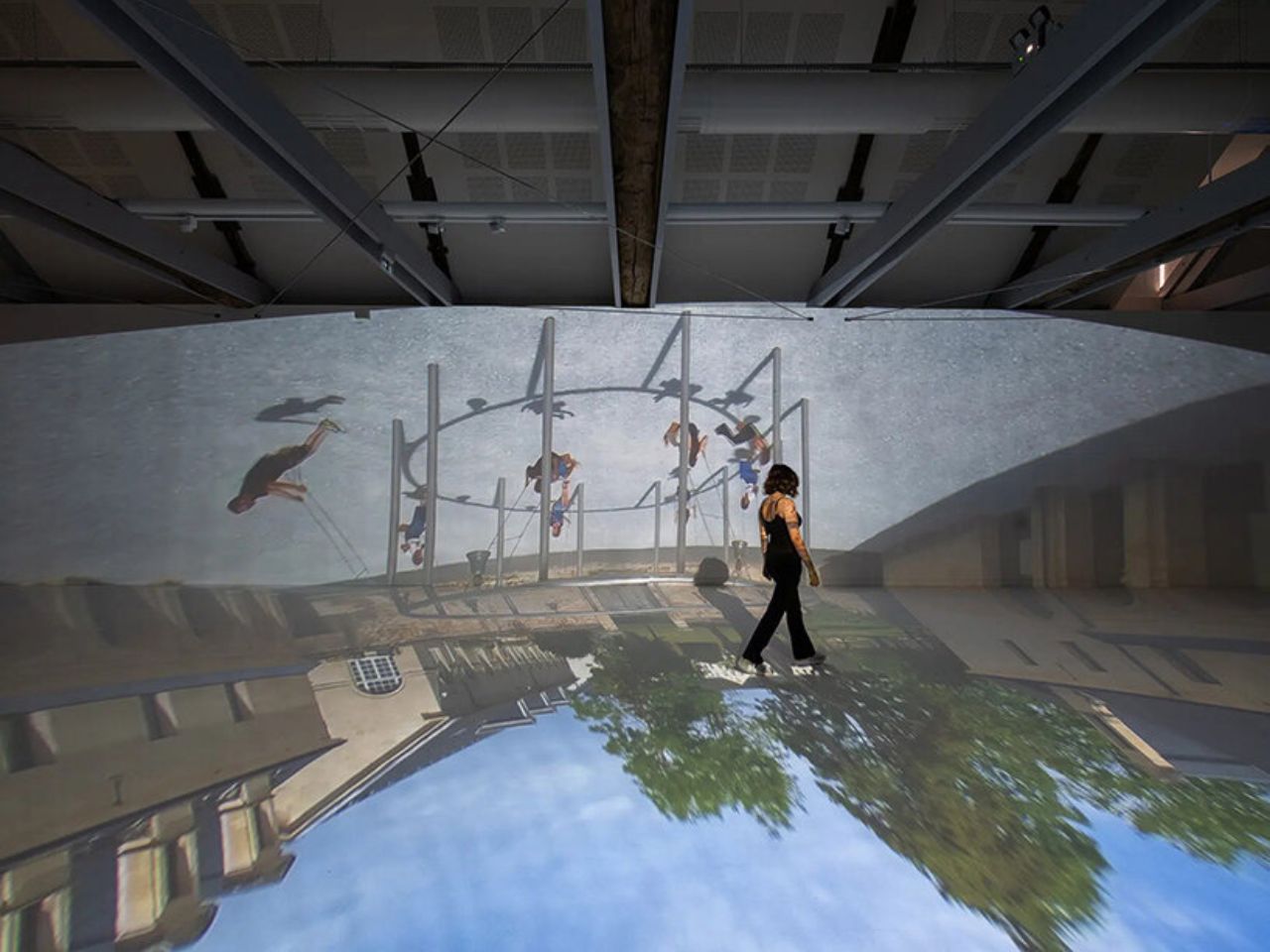
The experience continues inside the galleries with cameraobscura. Here, Boursier-Mougenot enlarges the optical principle of the camera obscura to the scale of an exhibition room. The exterior courtyard and its moving installation are projected upside down across the interior space, creating an immersive, inverted landscape. Suspended swings encourage visitors to pause beneath this reversed horizon, observing the world outside from an unfamiliar perspective.
The ringing bells remain audible indoors, connecting the projected image with the actions taking place outside. Sound shapes the perception of the moving image, while the projected movement gives visual form to the composition being created in the courtyard. Seeing and listening can no longer be understood as separate experiences. Instead, the two installations operate together, collapsing the boundaries between image, sound, architecture, and bodily movement.
Throughout his practice, Boursier-Mougenot draws resonance from ordinary materials and situations. At Frac Normandie, however, the instrument expands beyond the swings and bells to include the convent’s architecture, the reflective glass landscape, the changing light, and the people who temporarily occupy the site.
Points de suspension does more than ask visitors to interact with an artwork. It proposes another way of inhabiting public space—one that values curiosity, play, unplanned encounters, and collective attention. Through a simple act of swinging, visitors are encouraged to remain in the space a little longer, listen to those around them, and participate in a composition that belongs to no single person.
Summer is the most unforgiving season to find out your gear isn’t up to the job. The heat is relentless, the trails are at peak capacity, and every extra ounce you’re carrying becomes personal by mile three. The best camping products aren’t the ones with the longest feature lists – they’re the ones that solve a real problem, disappear into your pack, and earn their spot back every single trip. These five picks do exactly that.
July 2026 has been a quietly strong month for outdoor gear worth paying attention to. None of these products are flashy for the sake of it. They’re well-reasoned objects designed by people who clearly spend time outside – a five-function flashlight that costs less than dinner, a grill plate that packs flat as a paperback, a fire pit stand that respects the ground beneath it. Together they cover a surprising spread of camp needs without turning your bag into dead weight.
1. 5-in-1 EDC Flashlight
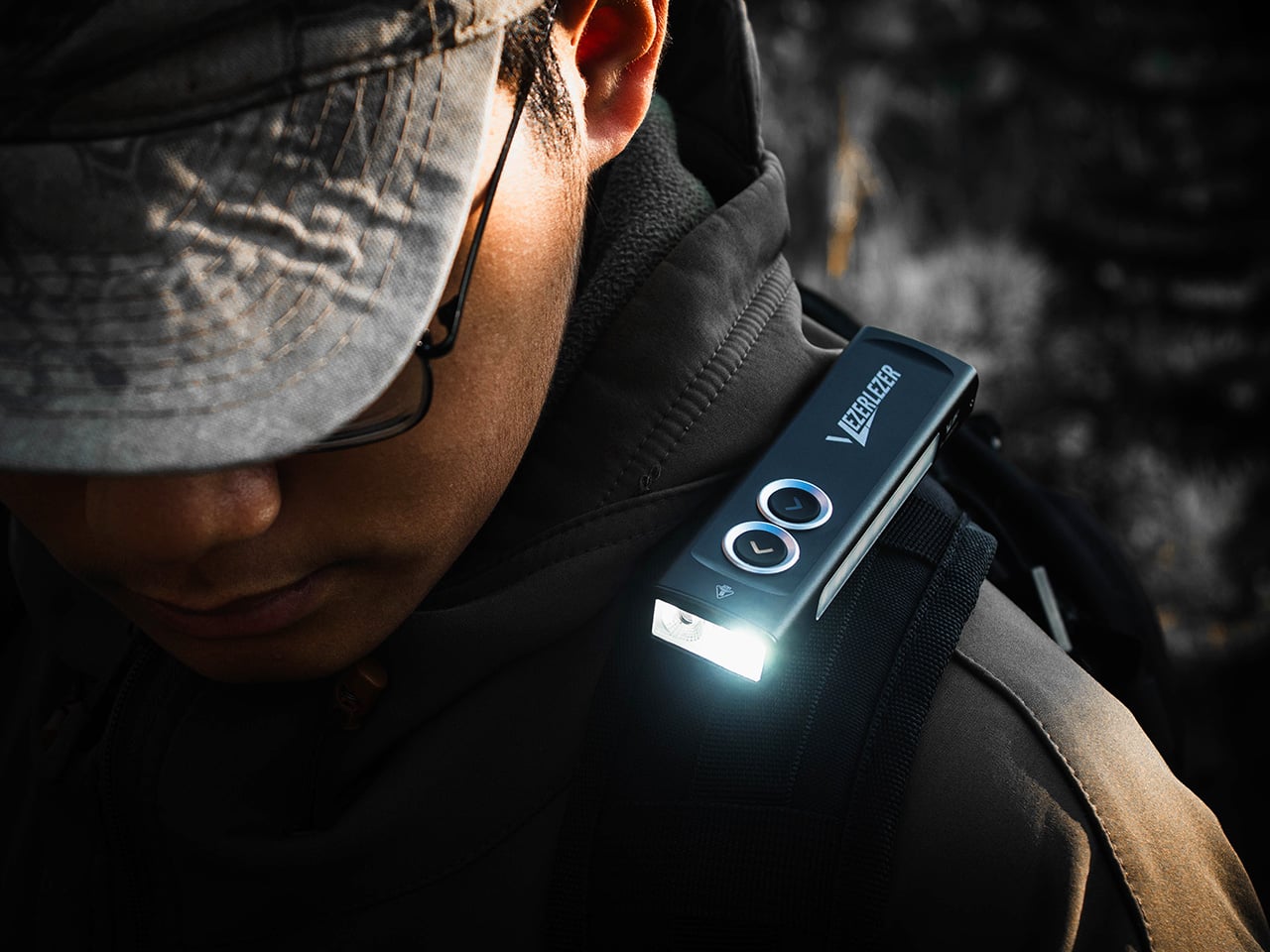
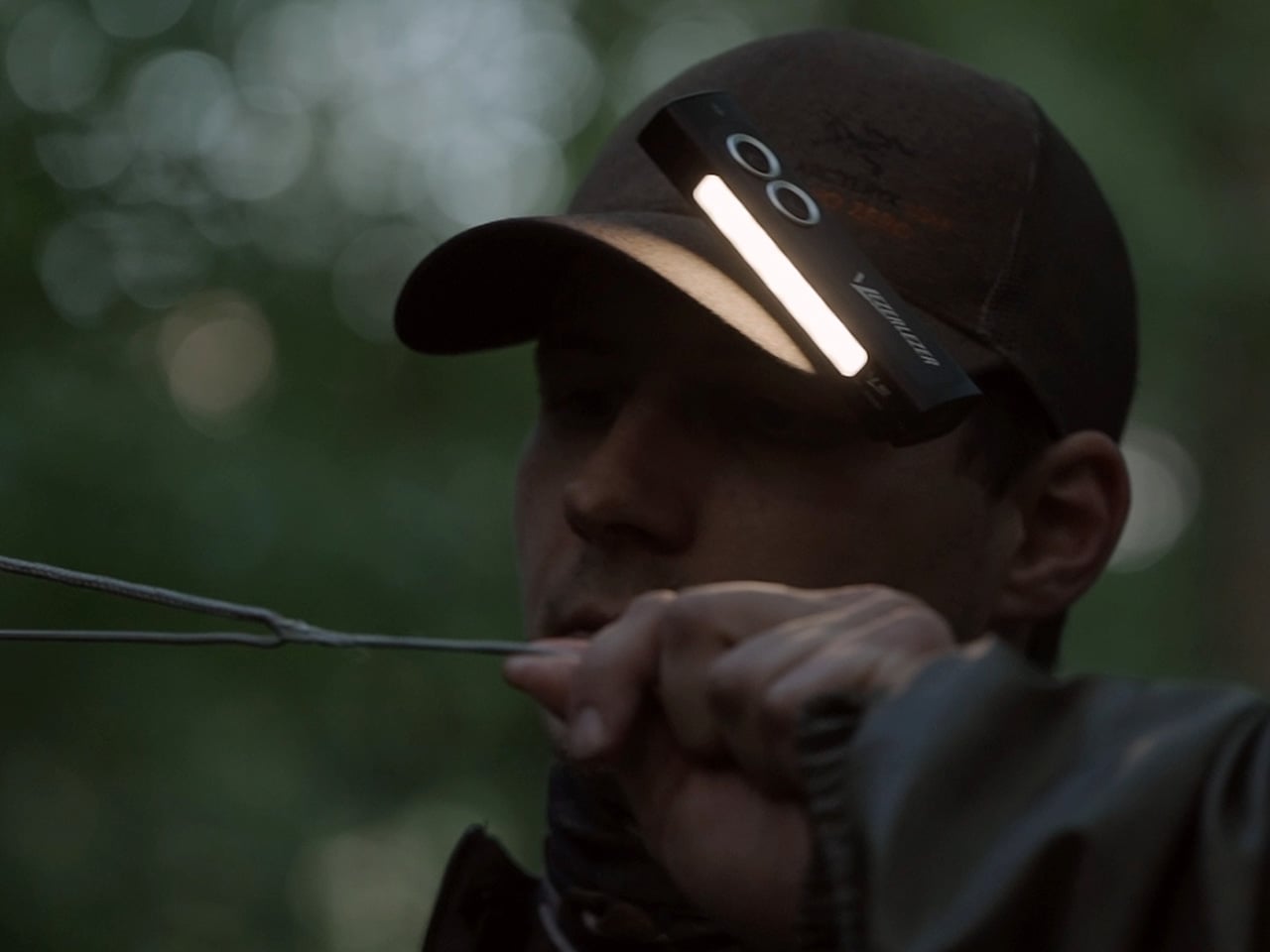
For under $20, this flashlight does something most multi-tools twice its price fail to manage -it stays genuinely useful across completely different situations. The 1,300-lumen main beam is bright enough to light a campsite perimeter, navigate a midnight trail, or serve as a serious deterrent in an unexpected encounter. The UV mode is quietly one of the most underrated additions in any outdoor tool: scorpion detection in arid terrain, stain checks in a tent, and quick gear inspections that a standard beam simply can’t offer. Five functions, one body, one price point that removes every excuse not to carry it.
What really sets this apart from the sea of budget flashlights is the green laser. Whether you’re pointing out trail features in low light, doing a clear-sky star trace with a group, or signaling across a campsite, the laser gives the tool a second personality that standard lights don’t have. It lives comfortably on a keychain or clipped to a carabiner, which means it’s the kind of EDC piece that becomes automatic – you stop thinking about it and just always have it. At this price, losing it stings far less than losing a $90 flashlight, which matters more than people admit.
What we like:
1,300-lumen output is genuinely strong for the price category
UV mode adds practical utility well beyond standard lighting
What we dislike:
Five modes cycled through a single interface takes a learning curve in the dark
Long-term durability at this price point is worth watching over a full season
2. Portable Fire Pit Stand
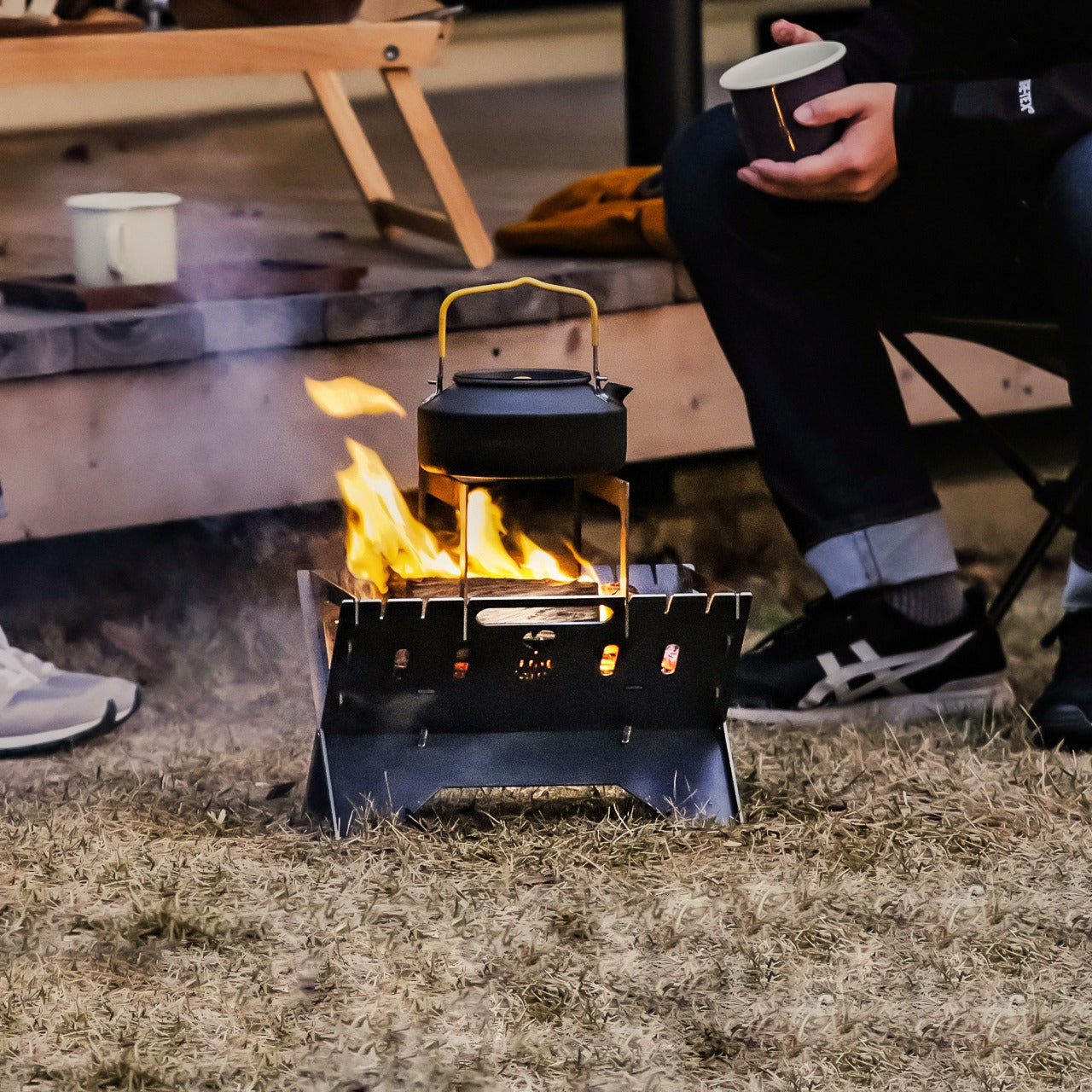
A fire pit stand sounds like a camping luxury until you’re on a site that specifically prohibits ground fires – a dry meadow, a wooden deck platform, a national park with strict leave-no-trace rules. This portable stand elevates your fire off the surface below it, protecting the ground from direct heat damage and keeping ash contained in a way that a loose ring of rocks never quite achieves. It also makes the whole camp setup look considered rather than improvised, which counts for more than it sounds when you’re spending three nights in the same spot.
The portability design is what makes this more than a base-camp accessory. It folds or collapses into a compact carry form that works for car camping and overlanding without demanding dedicated storage. Setting it up is fast, and the elevated position actually improves the fire’s performance – air circulation underneath the fuel means a cleaner, more consistent burn through the night rather than the smothered, smoky result of a fire sitting directly on compacted ground. For anyone who builds a fire as part of the ritual of camping rather than just a heat source, this stand makes that ritual a lot more intentional.
Elevates fire off the ground, meeting leave-no-trace standards on most sites
Improved airflow beneath the fire produces a cleaner, more consistent burn
What we dislike:
Adds weight that dedicated ultralight backpackers will feel over a long carry
Works best with manageable fuel sizes; very large logs can be awkward to balance
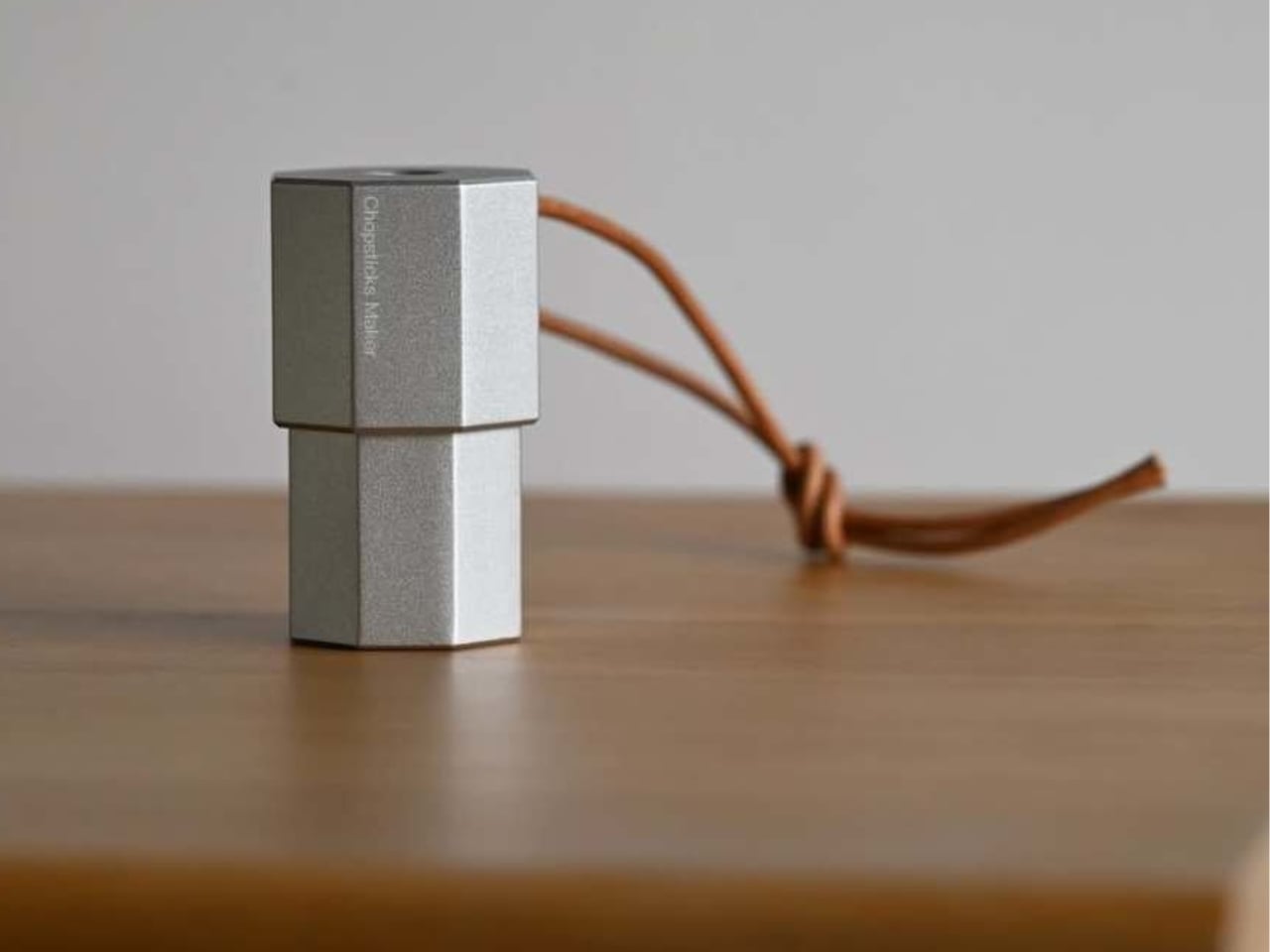
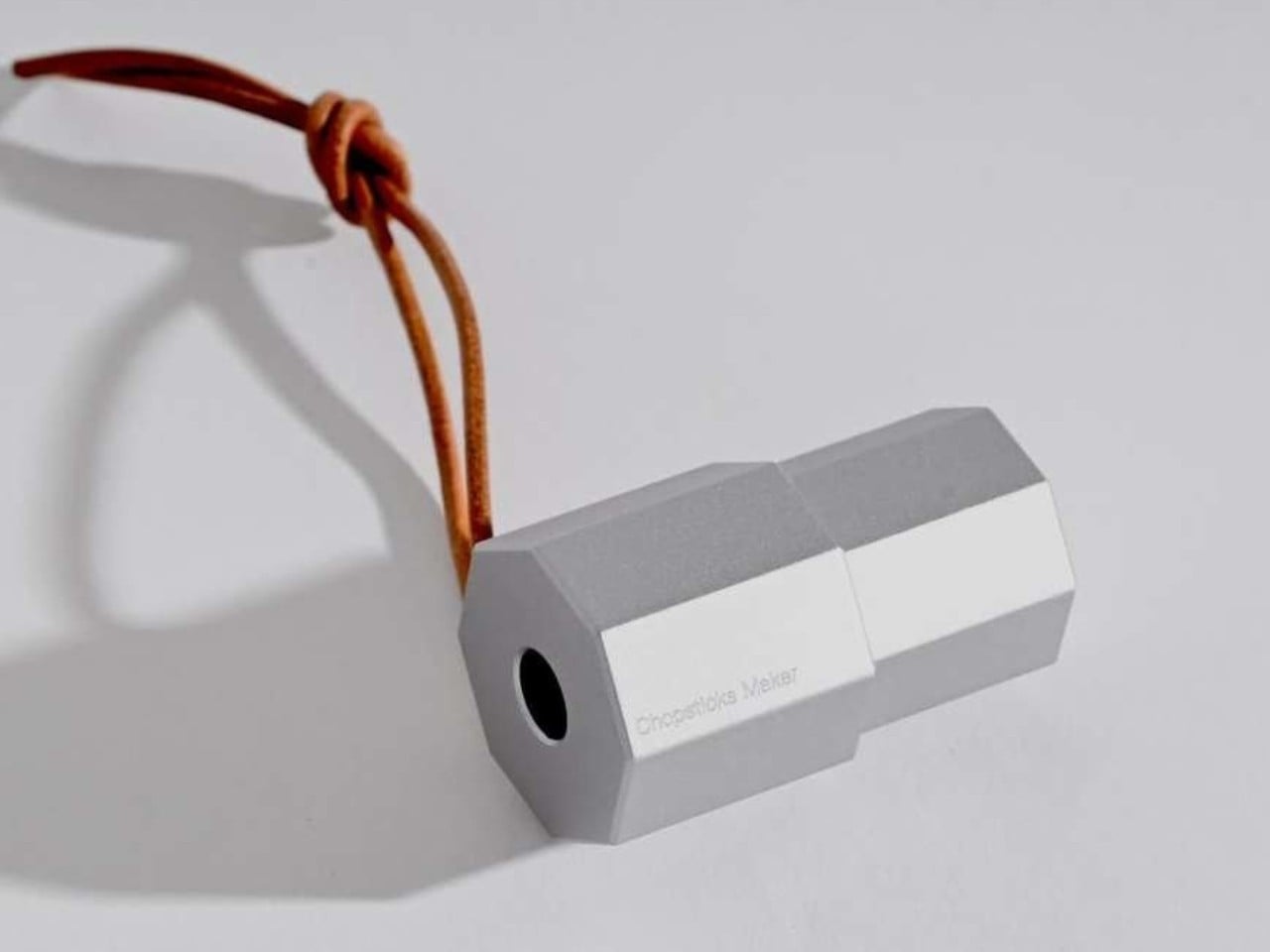
3. The Chopsticks Maker
The best camp tools are the ones where the form has been interrogated as hard as the function, and this cutlery set is a clear example of that principle at work. Drawn from the geometry of a pencil sharpener, the design nests every component inward in a compact, cylindrical body that takes up less space than a granola bar and doesn’t produce the loose-rattling frustration of a roll-up pouch at the bottom of a bag. It’s the kind of solution that makes you wonder why camp cutlery looked like it did for so long – the problem wasn’t hard, it just needed someone to think about it differently.
Beyond the cleverness of the form, this is a practical piece of kit that pays off most at the end of a long trail day when patience for fiddly gear is essentially zero. The nesting mechanism keeps everything secured during transport, so there’s no digging for a stray fork or knife at dinnertime. For solo campers and minimalist packers in particular, this delivers the full utensil experience without the footprint or the assembly drama. It’s also the kind of object that earns quiet admiration at a campsite – a small, well-made thing that communicates that you’ve thought about your gear rather than just grabbed it.
What we like:
Pencil-sharpener nesting form is genuinely space-efficient and well-reasoned
Secure internal assembly means no loose components rattling around in a pack
What we dislike:
Reassembling cleanly takes some practice in the first few uses
Best suited for solo use; group trips would require multiples
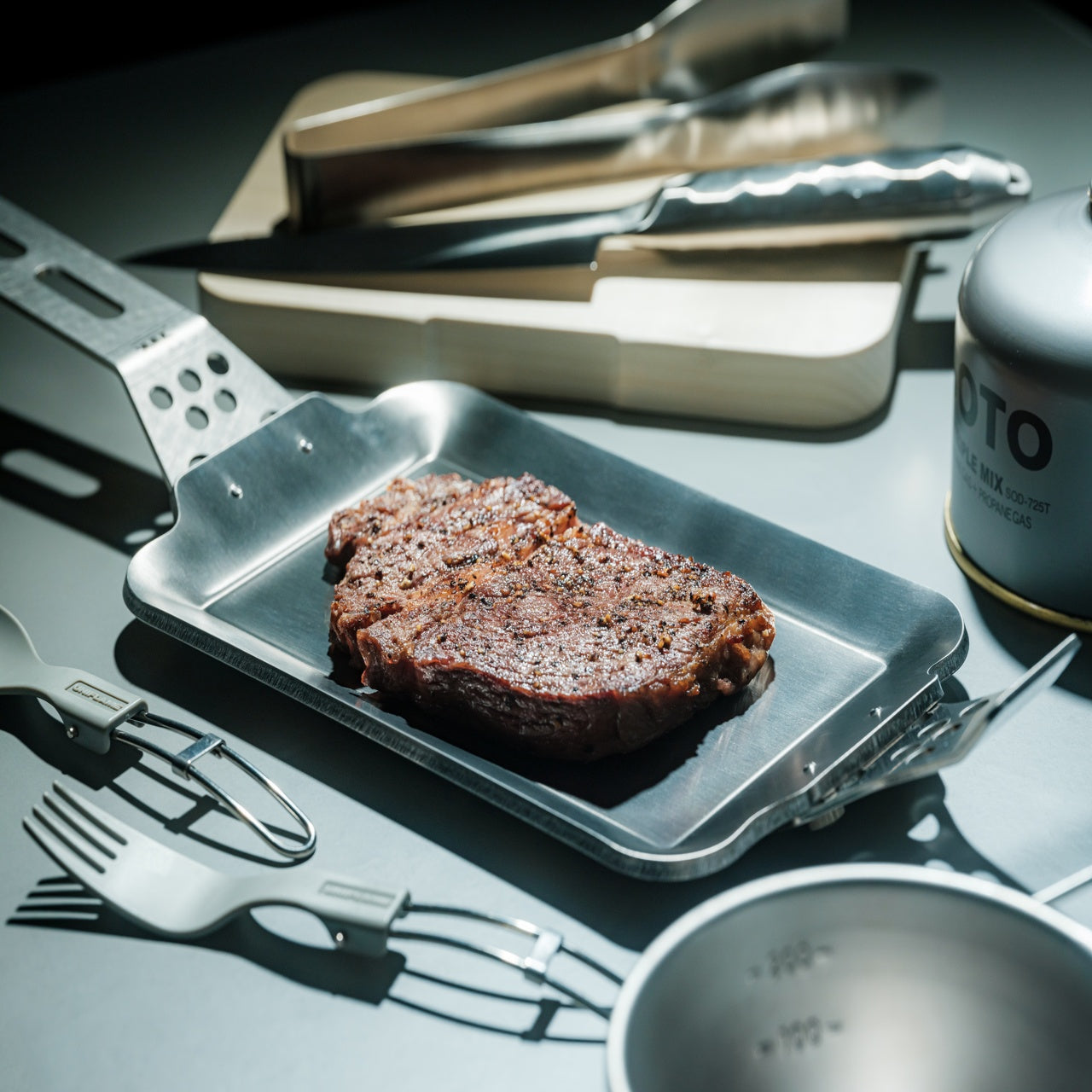
4. Compact Modular Grill Plate
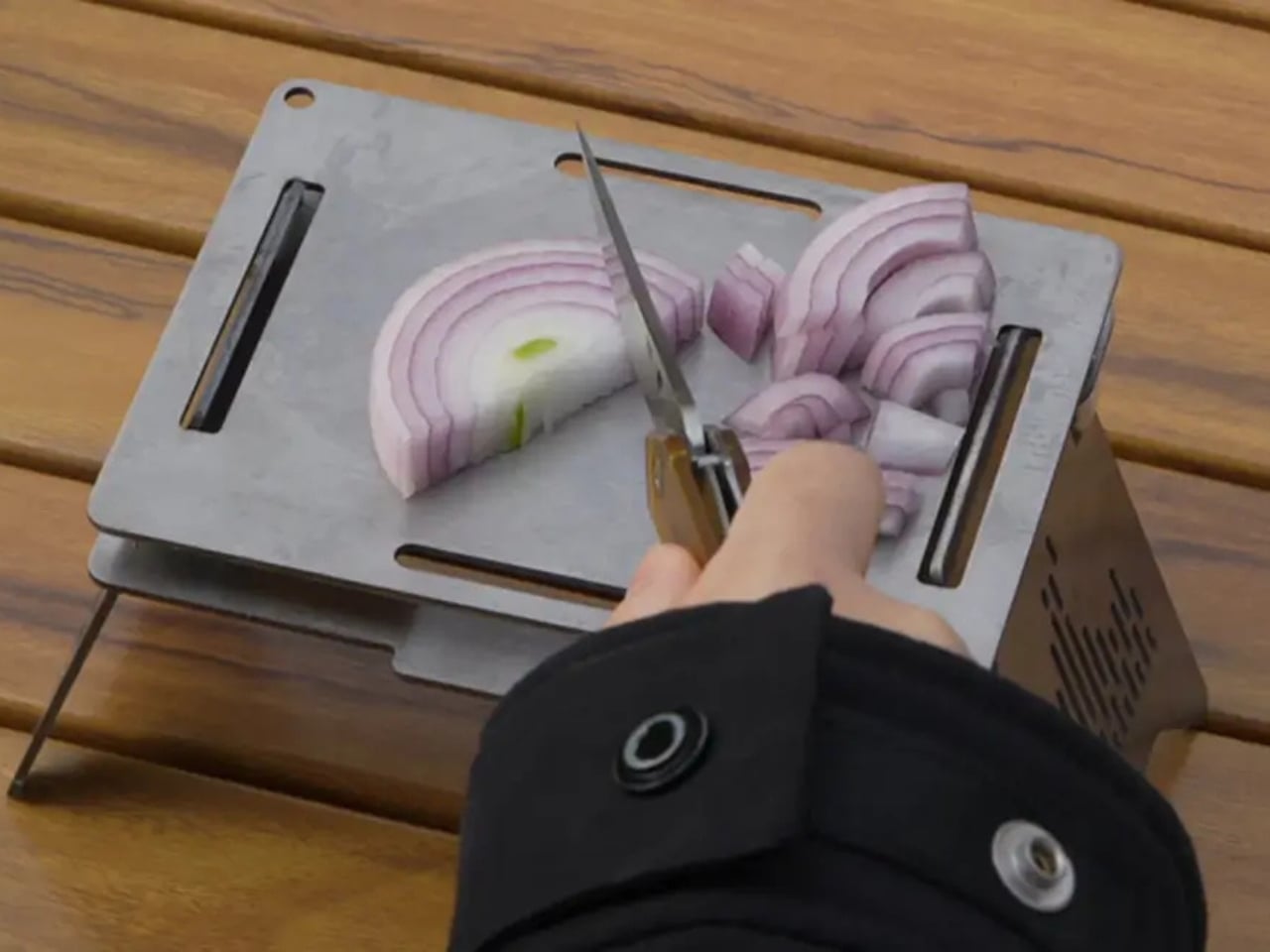
Most camp grill solutions force you into a choice between portability and an actual usable cooking surface. This modular plate refuses that trade-off. It packs flat, assembles fast, and gives you a legitimate grilling surface over an open fire or camp stove without demanding a dedicated stuff sack or adding meaningful weight to the load. Anyone who has tried to cook a piece of fish or a proper piece of chicken on a wobbly, undersized grate understands immediately what a well-designed flat grill plate changes about the whole experience.
The modular configuration is what makes this more versatile than a single-use accessory. It adapts across different heat sources and cooking setups, which matters on trips where the terrain and conditions aren’t always cooperative. Cleanup is also more straightforward than a traditional grate – the flat surface doesn’t trap debris in the same way, and a flat piece of steel is simply easier to wipe down or rinse in the field. For anyone who treats camp cooking as something more than fuel intake, this plate raises the standard of what’s achievable without a kitchen, and it does it without adding the kind of bulk that makes you leave things behind.
Flat pack profile adds minimal bulk and fits naturally into a camp kitchen kit
Modular design adapts to open fire and stove setups with equal ease
What we dislike:
Cooking surface area may feel limited when cooking for more than two people
Requires a stable heat source; uneven ground setups need more care
5. Flextail Tiny Pump 2X
Anyone who camps on an inflatable sleeping pad knows the specific indignity of inflating it by mouth – it takes longer than it should, leaves you lightheaded, and is a particularly poor way to start an evening outdoors. The Flextail Tiny Pump 2X is about the size of a thick marker, rechargeable via USB-C, and moves enough air to inflate a full sleeping pad efficiently without any of that effort. It is genuinely one of those products that feels disproportionately capable given how small it is, and once it’s in your kit, it’s the kind of thing you stop leaving behind.
Where the 2X specifically earns its designation is in the reversal to vacuum mode. Packing down an air mattress or inflatable camp pillow by hand is slow, incomplete, and eats into your morning breakdown time – which is real time when you’re trying to make miles before it gets hot. In deflation mode, the pump draws air out and compresses your inflatables faster and tighter than manual effort allows, which translates directly into better overall pack compression. For anyone who values a fast, tidy morning strike as much as a comfortable setup the night before, this small pump genuinely changes how the rhythm of a trip feels from first light.
What we like:
Dual inflate and deflate functionality in a USB-C rechargeable, pocket-sized form
Vacuum mode compresses inflatables significantly tighter than manual packing
What we dislike:
Battery capacity is best matched to smaller inflatables; large mattresses may need a recharge mid-session
The compact size makes it easy to misplace inside a busy gear bag
Gear That Earns Its Place Every Trip
None of these five products are trying to do everything at once – and that’s exactly what makes them worth adding to a July kit. The best camp gear in 2026 is defined by restraint: a tool that does its specific job better than anything else its size, then gets out of the way. That’s a harder design brief than it sounds, and each of these picks meets it cleanly. They don’t ask for more space or attention than they deserve, which is the quietest compliment you can pay a piece of outdoor gear.
The through-line across all five is an understanding that the field is not the place to figure out your gear. The flashlight needs to be second nature at 2 a.m. The grill plate needs to be set up before your fire burns down. The pump needs to be in your hand before your patience runs out. These products were designed with that understanding built in, which is why they belong in a real pack rather than a product photography setup.
Portable architecture is shifting how space, ownership, and mobility are defined. What once existed as temporary or emergency structures now evolves into refined, design-led systems that move with the user. Compact cabins and adaptable living units reflect a growing demand for flexibility while maintaining comfort, function, and a strong sense of identity.
A clear transition is visible from static buildings toward environments that can expand, relocate, and adjust over time. This evolution aligns with changing lifestyles where mobility, efficiency, and intentional living shape how spaces are experienced. The result is a new architectural language where structures are no longer fixed, but responsive and continuously adaptable.
1. Fold-Out Cabins with Compact Design That Expands on Demand
Fold-out cabins transform the way space is utilized by shifting from compact units into fully functional living environments within minutes. Designed for flexibility, they can be transported and deployed wherever required, making them suitable for remote work, short-term retreats, or temporary housing. Smart layouts integrate sleeping, cooking, and storage within a minimal footprint, ensuring efficiency without compromising comfort.
Their appeal lies in balancing mobility with a sense of permanence. These structures can be placed in natural landscapes, urban backyards, or transitional sites, creating continuity between movement and stability. For Gen Z and minimal living approaches, they reflect a lifestyle that prioritizes flexibility, purpose, and essential comfort.
The modern world is increasingly shaped by overlapping crises such as climate change, displacement, and large-scale emergencies, pushing architects to rethink how shelter can be delivered quickly and effectively. In this context, Hariri & Hariri, a New York–based architecture practice founded by Gisue and Mojgan Hariri, developed a prefabricated folding cabin designed to provide immediate, functional housing without the need for tools, hardware, or manual assembly.
Inspired by origami, the cabin is engineered as a compact folded structure that can be transported efficiently on flatbed trucks. Once placed on site, it unfolds into a fully formed modular unit, expanding rapidly into a single-story living space. The design emphasizes speed and autonomy, allowing the structure to self-deploy when activated, which is especially critical in emergency conditions where time and resources are limited. Lightweight materials such as glass and Equitone panels ensure portability while maintaining durability and usability across diverse environments and needs.
2. Portable Saunas for Recreation and Wellness on the Move
Portable saunas shift the focus from living to recreation by bringing wellness into flexible, transportable formats. These compact units allow users to create a sauna experience wherever they choose, from outdoor settings to travel destinations, without relying on permanent installations. Designed for ease of setup and use, they make relaxation and recovery more accessible in changing environments.
This evolution highlights how portable architecture is extending into lifestyle and leisure. It is not about redefining home, but about enhancing moments of pause and restoration. By integrating heat therapy into mobile setups, portable saunas support a routine centered on well-being, adaptability, and everyday recreation.
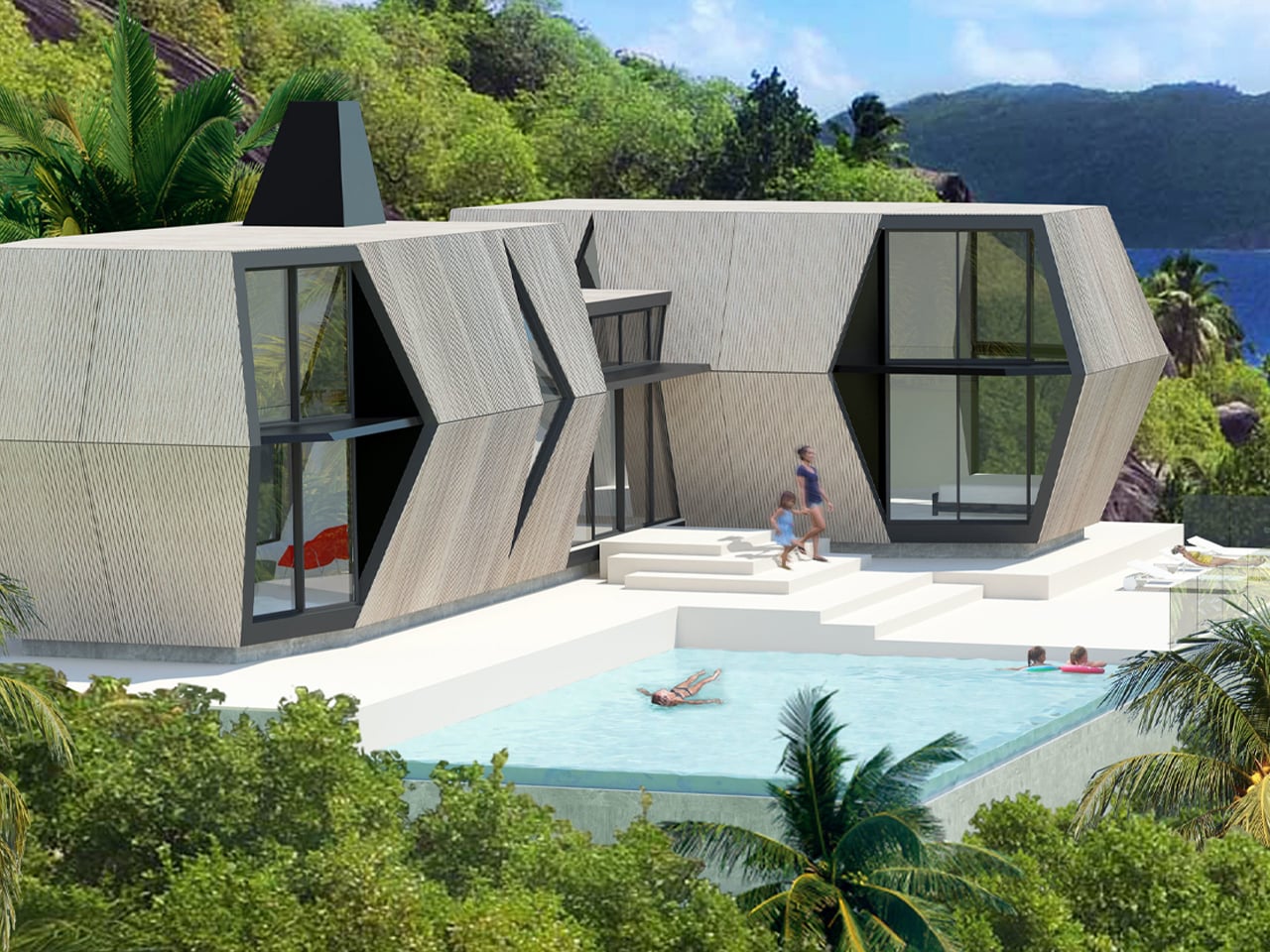
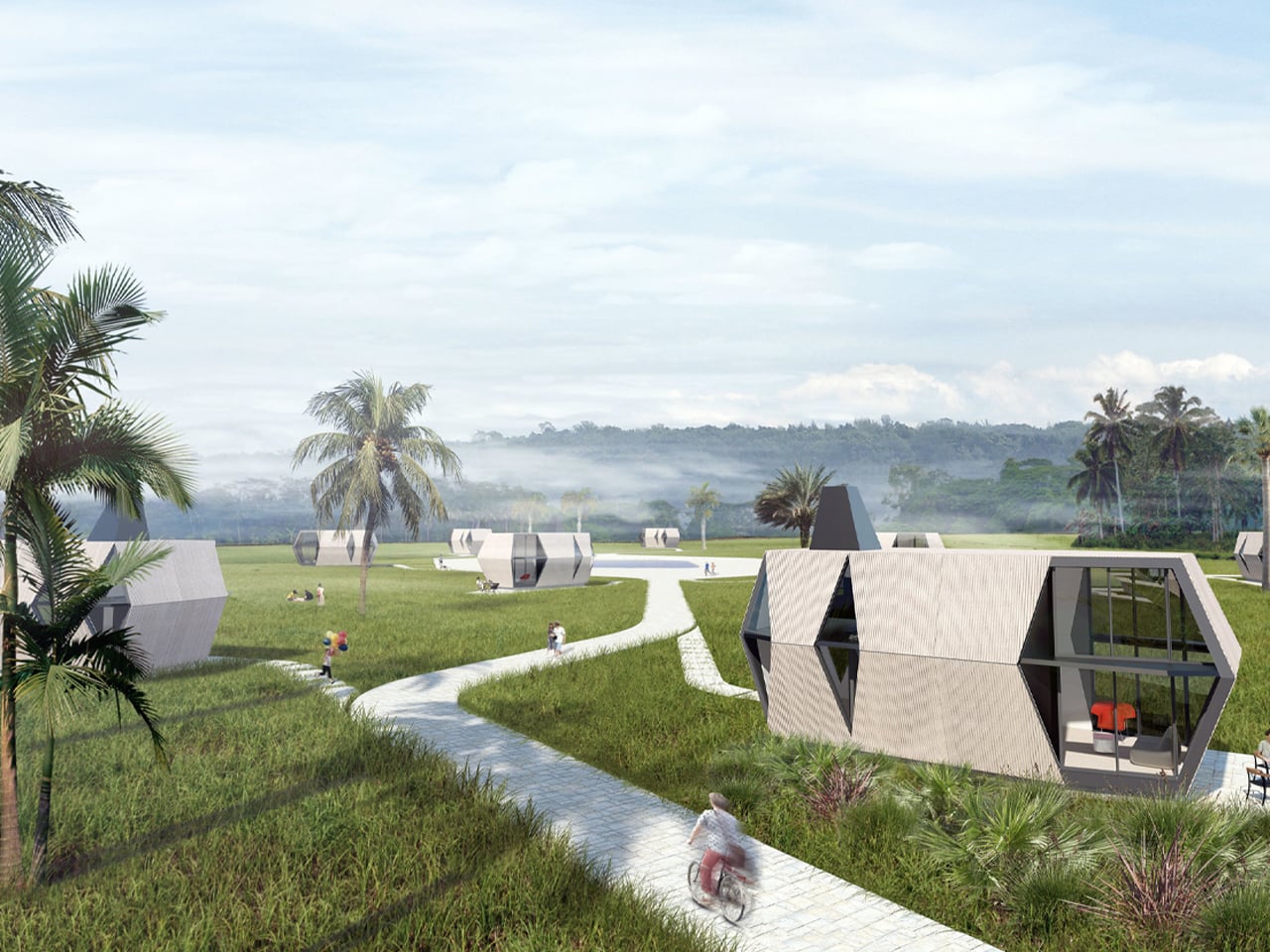
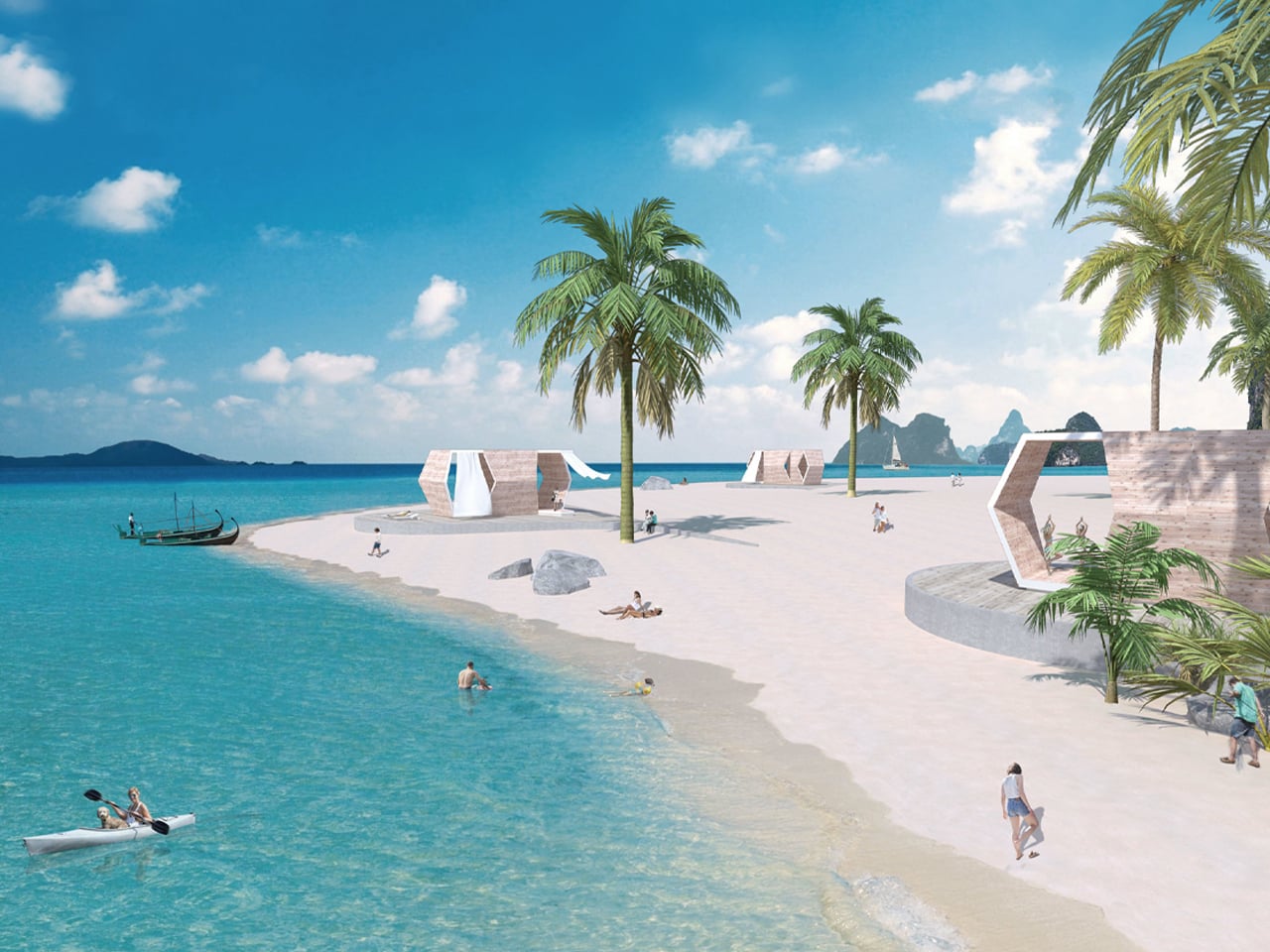
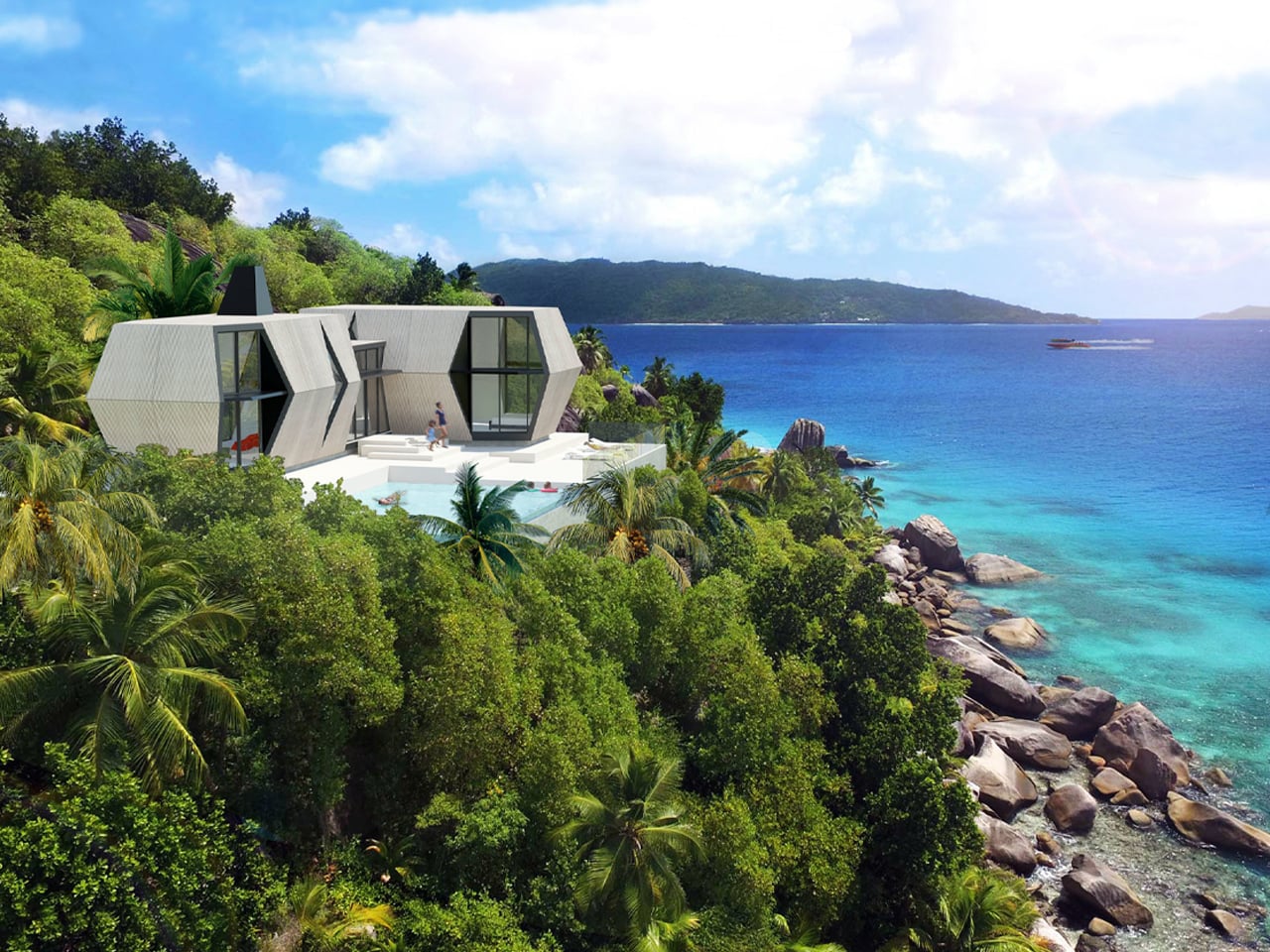
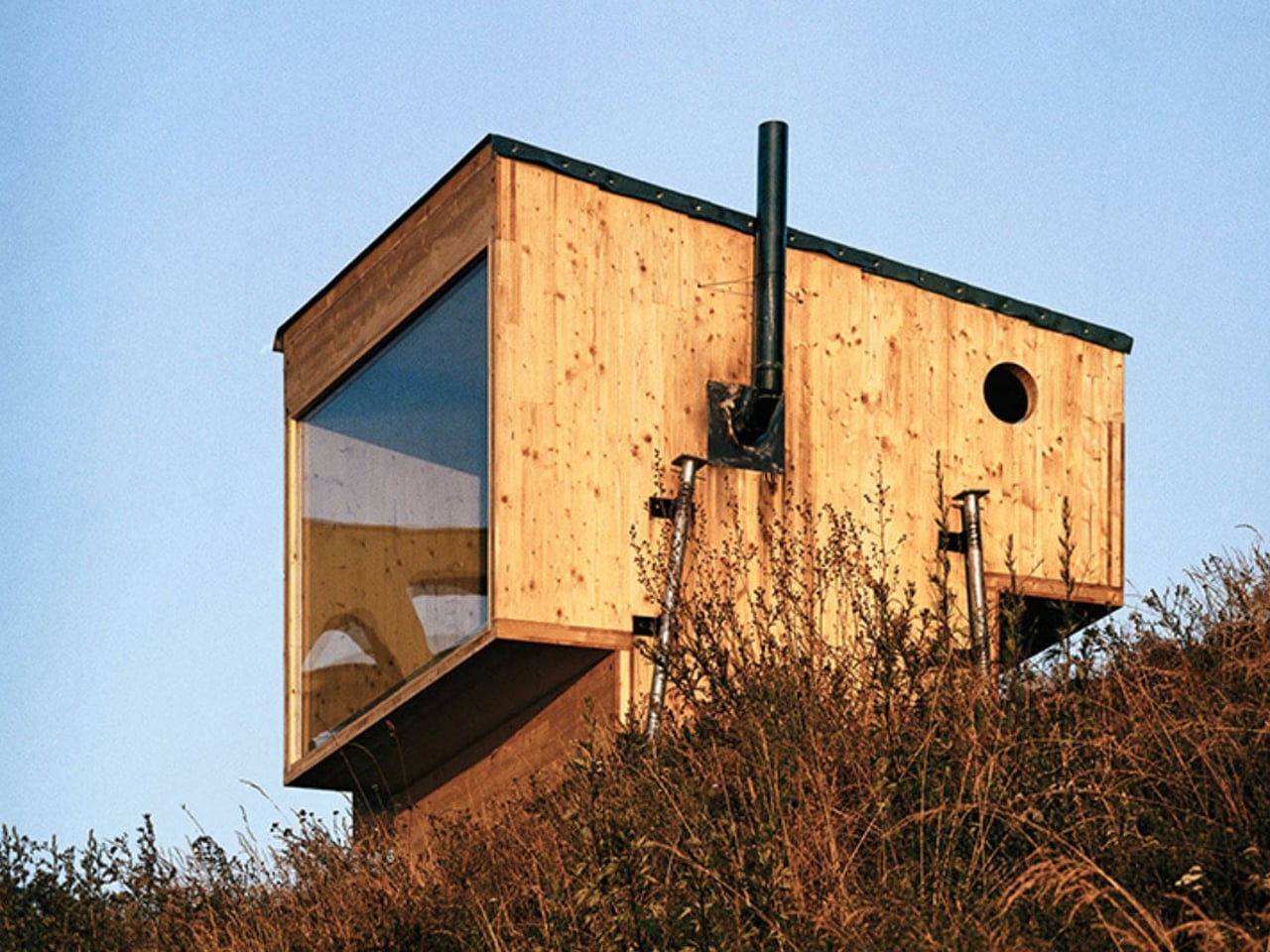
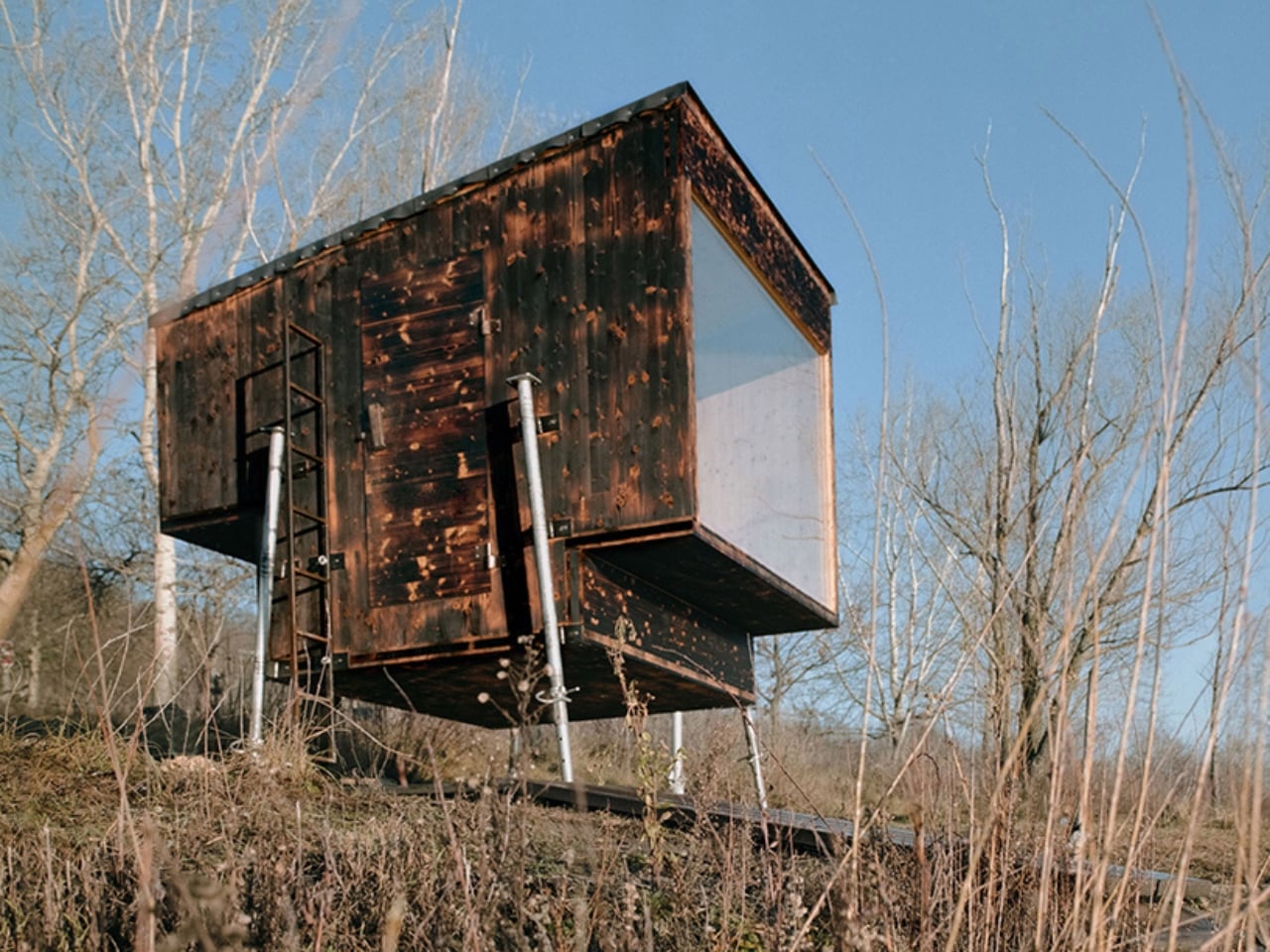
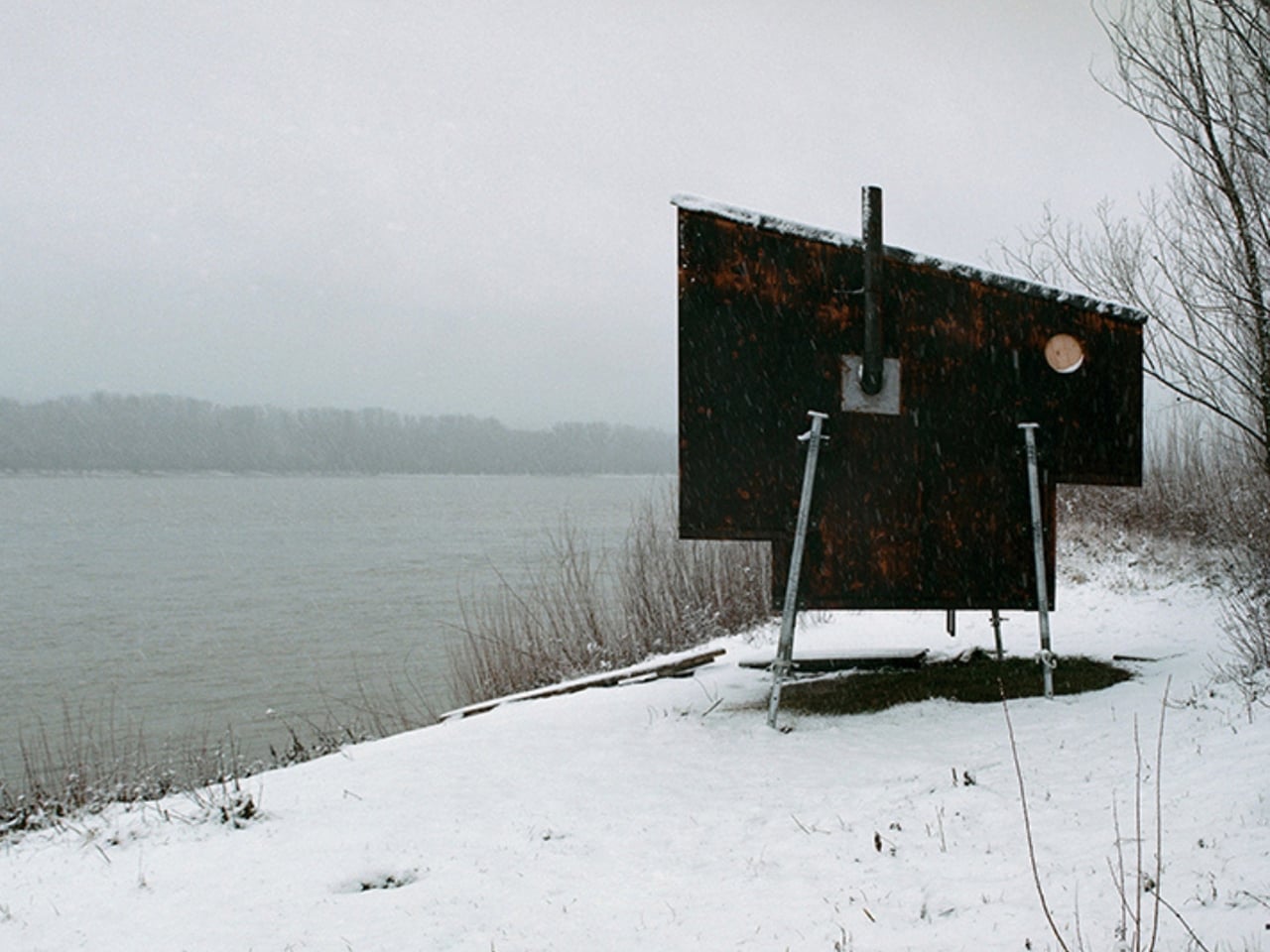
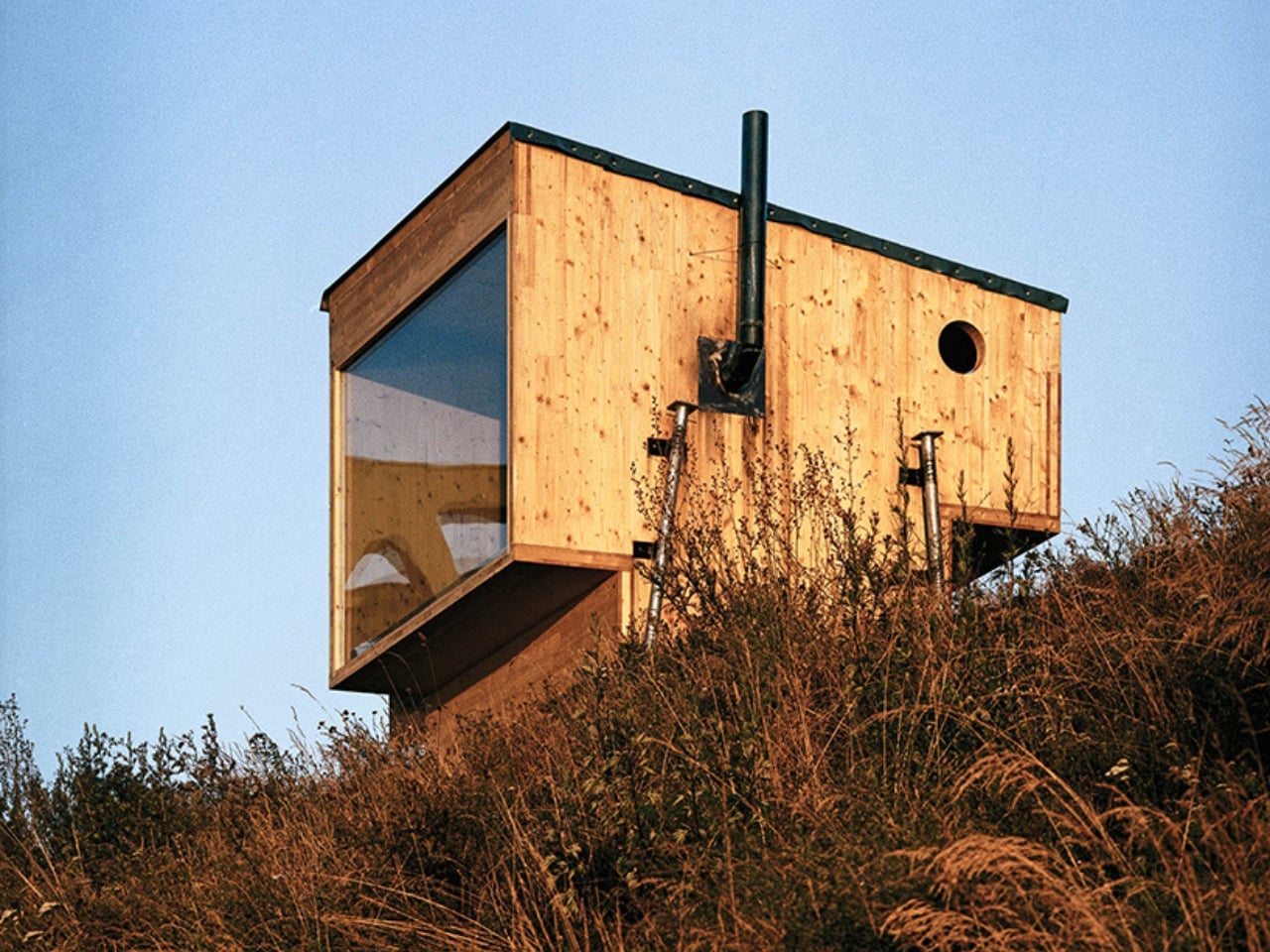
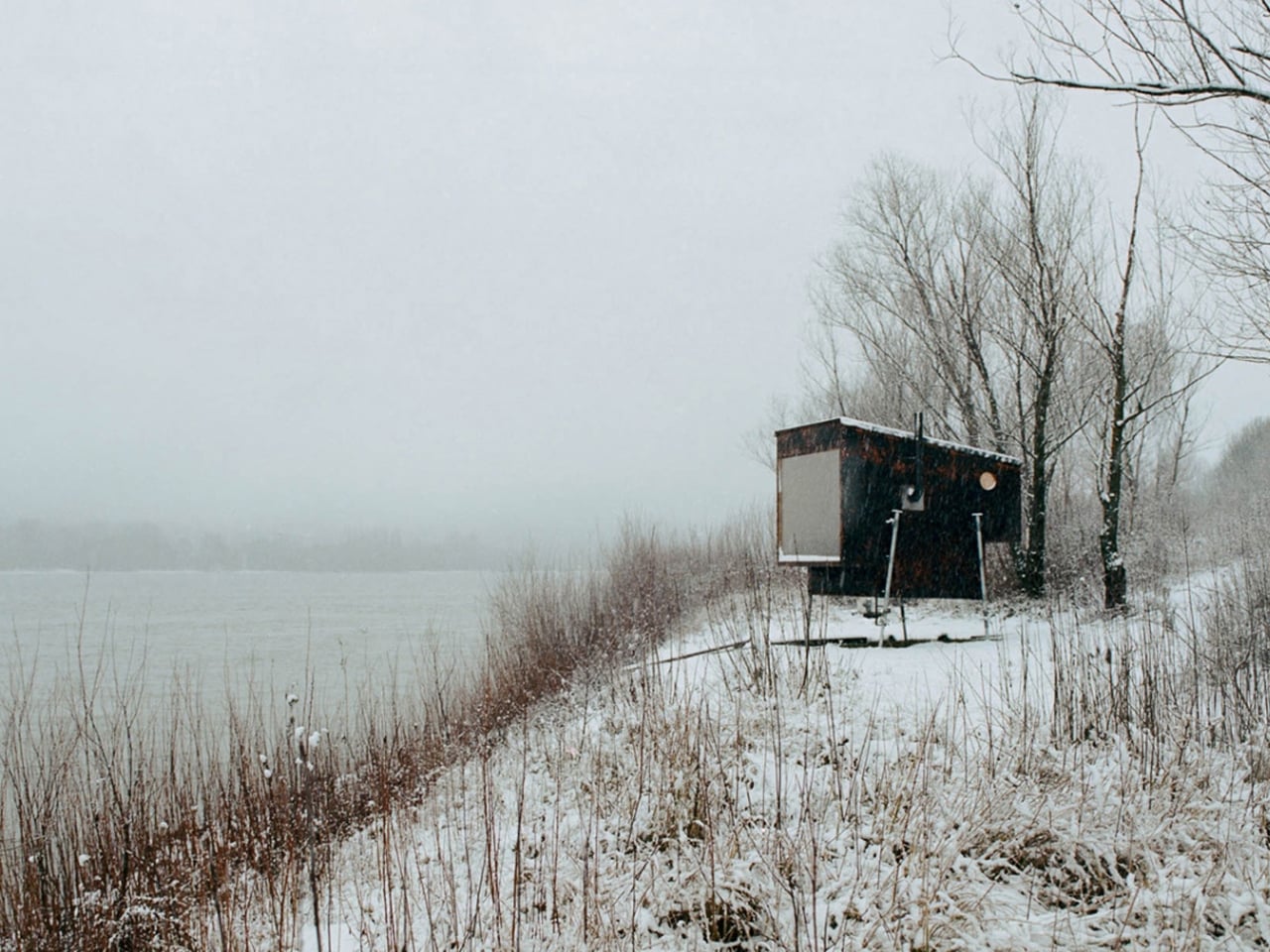
For those who enjoy saunas, the idea of a semi-portable structure that can be transported, assembled, and disassembled across different terrains offers a new way to experience relaxation in nature. Instead of being tied to a fixed location, this concept allows wellness spaces to move with the user, opening possibilities for retreats in forests, mountains, or coastal landscapes. Designed by BIVAK Studio, the SAUNABIVAK explores this idea through a prefabricated, transportable sauna system intended for ease of setup and mobility.
The structure features a double-layer glass wall that preserves views of the surrounding environment while maintaining insulation. It is built using cross-laminated timber panels for strength and lightness, supported on four legs that eliminate the need for permanent foundations. Treated with linseed oil for durability, it is weather-resistant and insect-protected, with natural ventilation and a firewood heating system inside. Designed within European towing limits, it can be installed by two people in about an hour, making it a practical blend of mobility, simplicity, and immersive outdoor wellness.
3. Micro Offices That Redefine Work Beyond Fixed Spaces
Micro offices respond to evolving work culture by offering compact, transportable environments designed for focus and flexibility. These units can be placed in a range of settings, providing a private workspace without the need for long-term leases or permanent infrastructure. Their efficient design supports daily productivity while adapting to changing professional needs.
They enable greater control over how and where work happens while maintaining mobility. Positioned in gardens, rooftops, or shared environments, micro offices challenge traditional office models by removing fixed spatial limits and supporting a more adaptable, self-directed way of working.
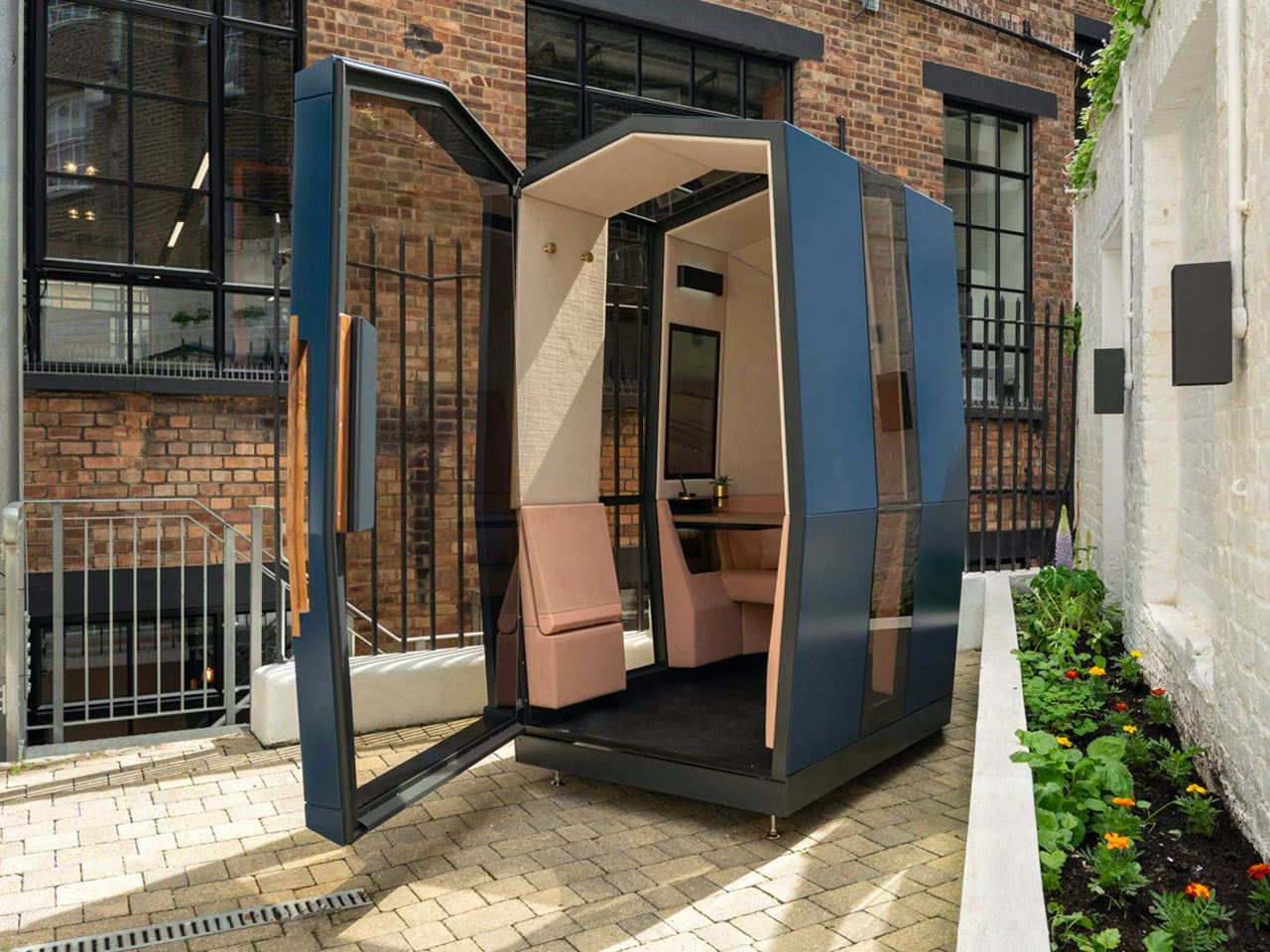
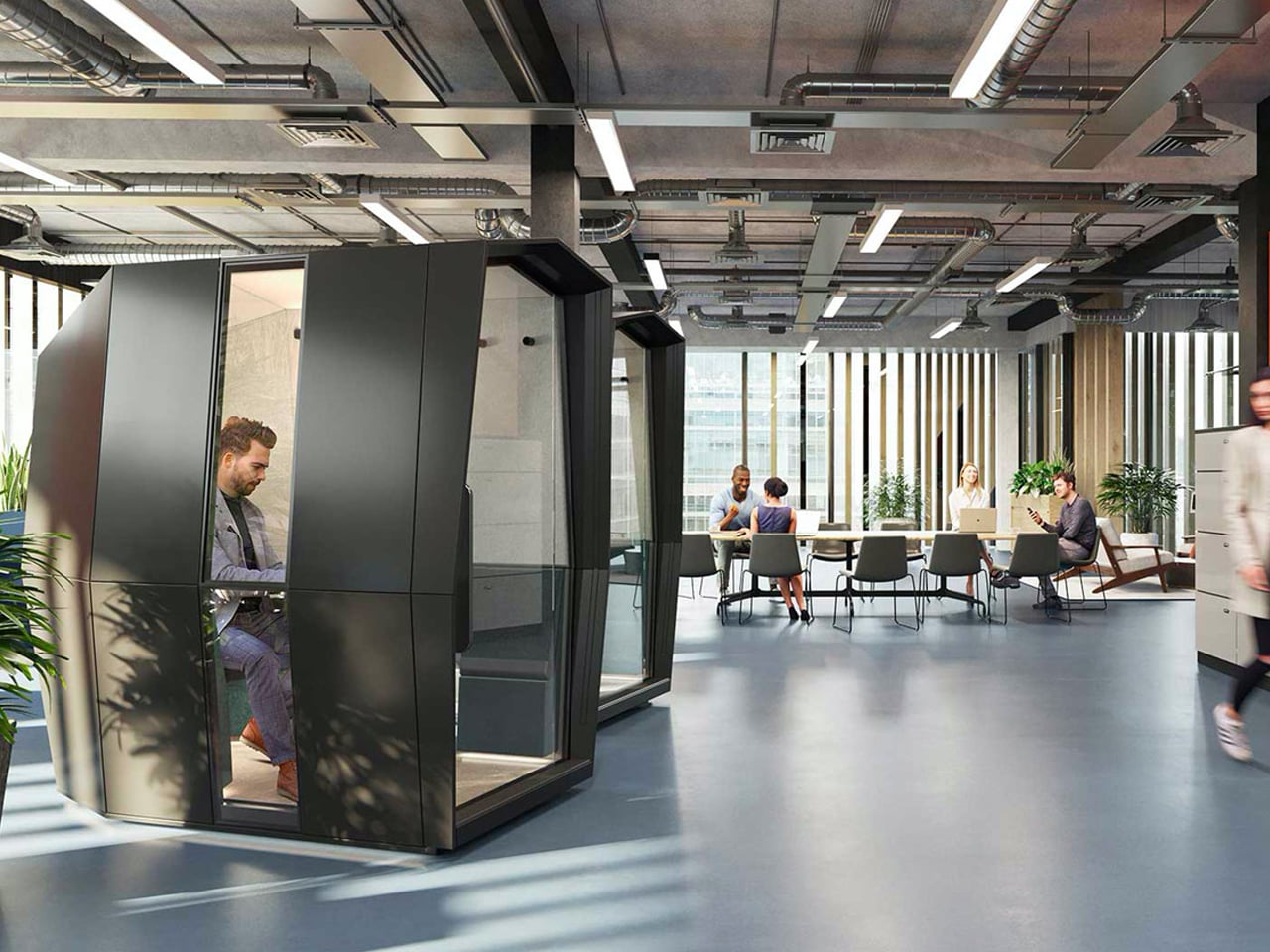
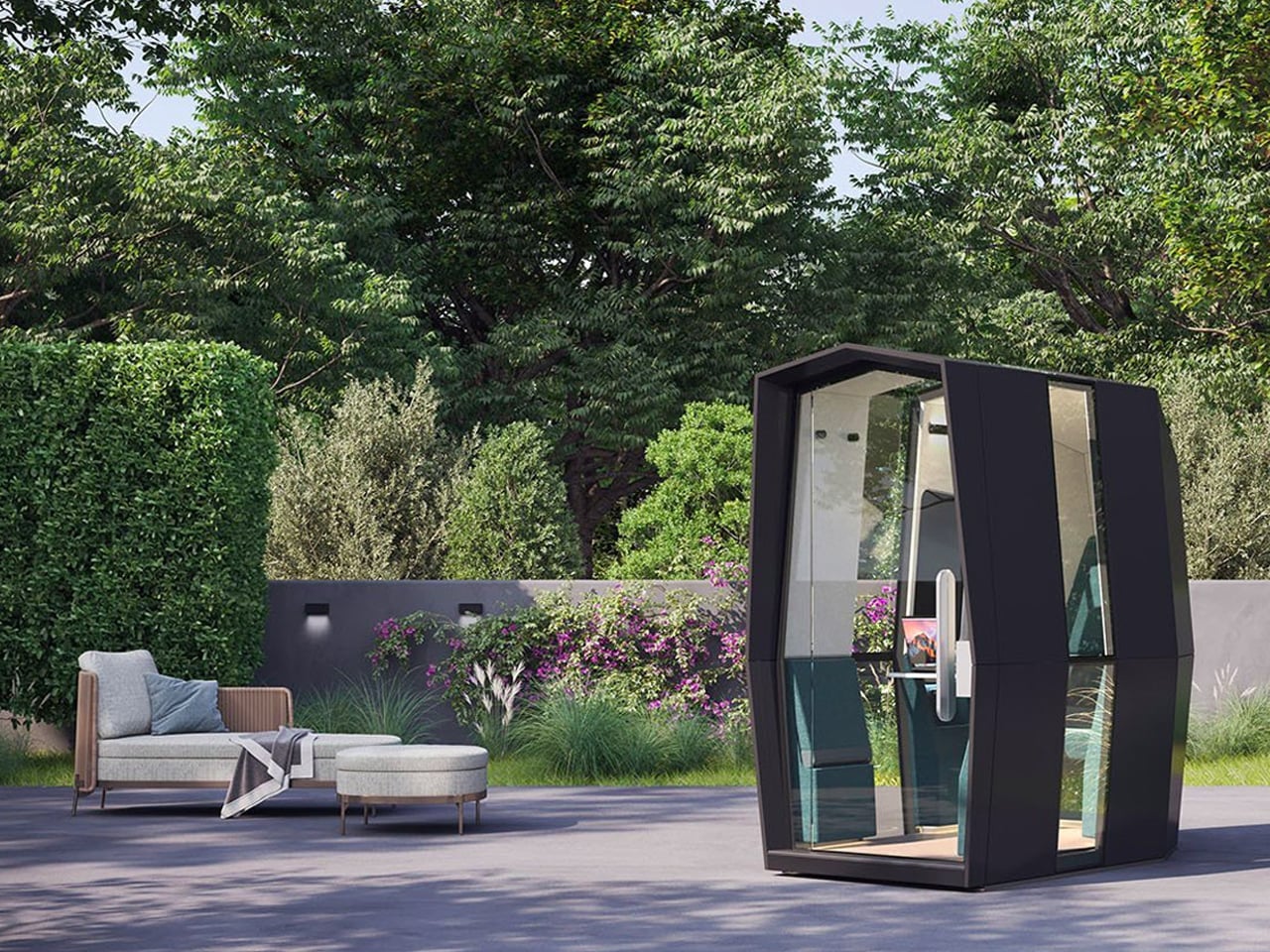
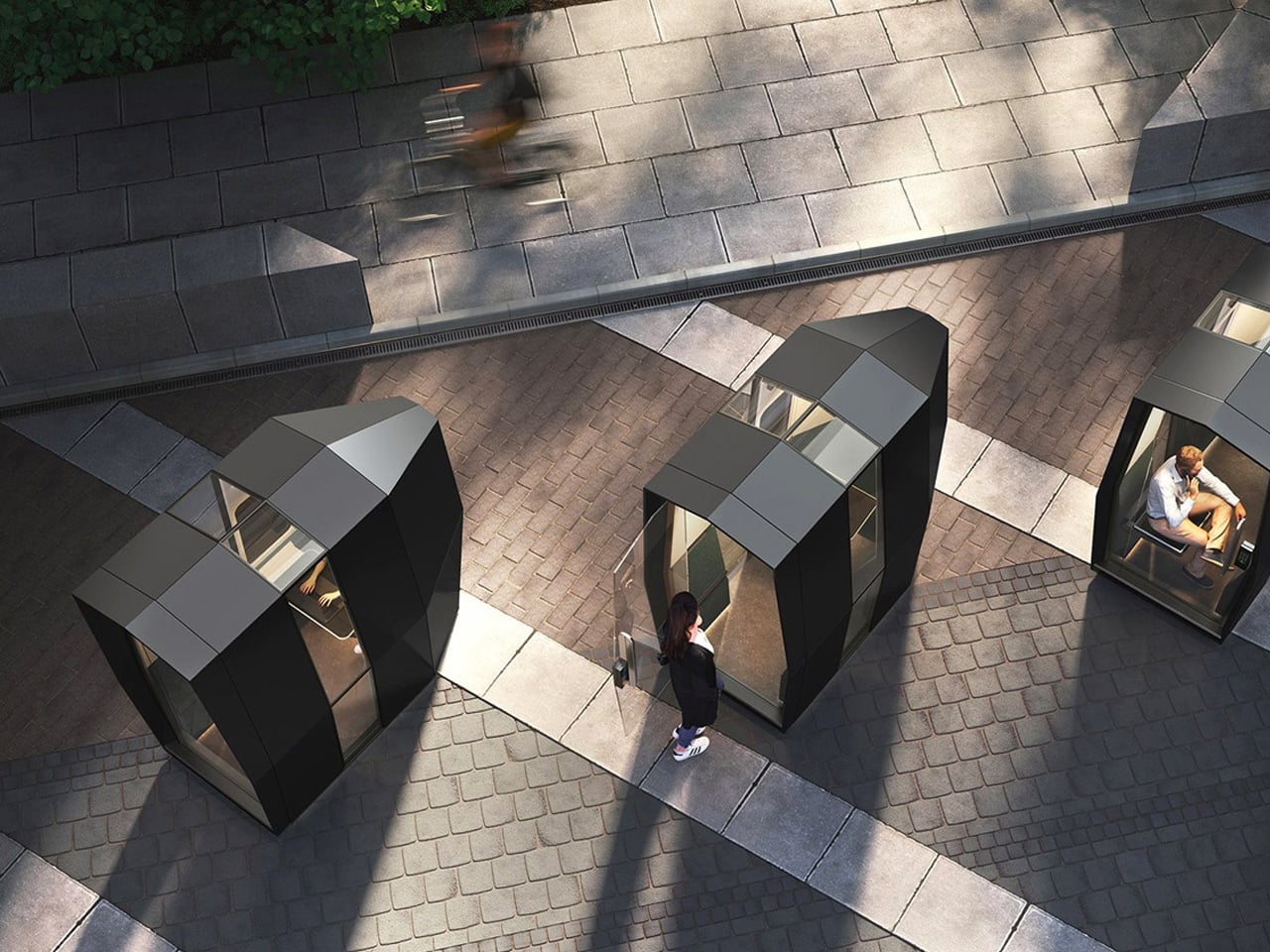
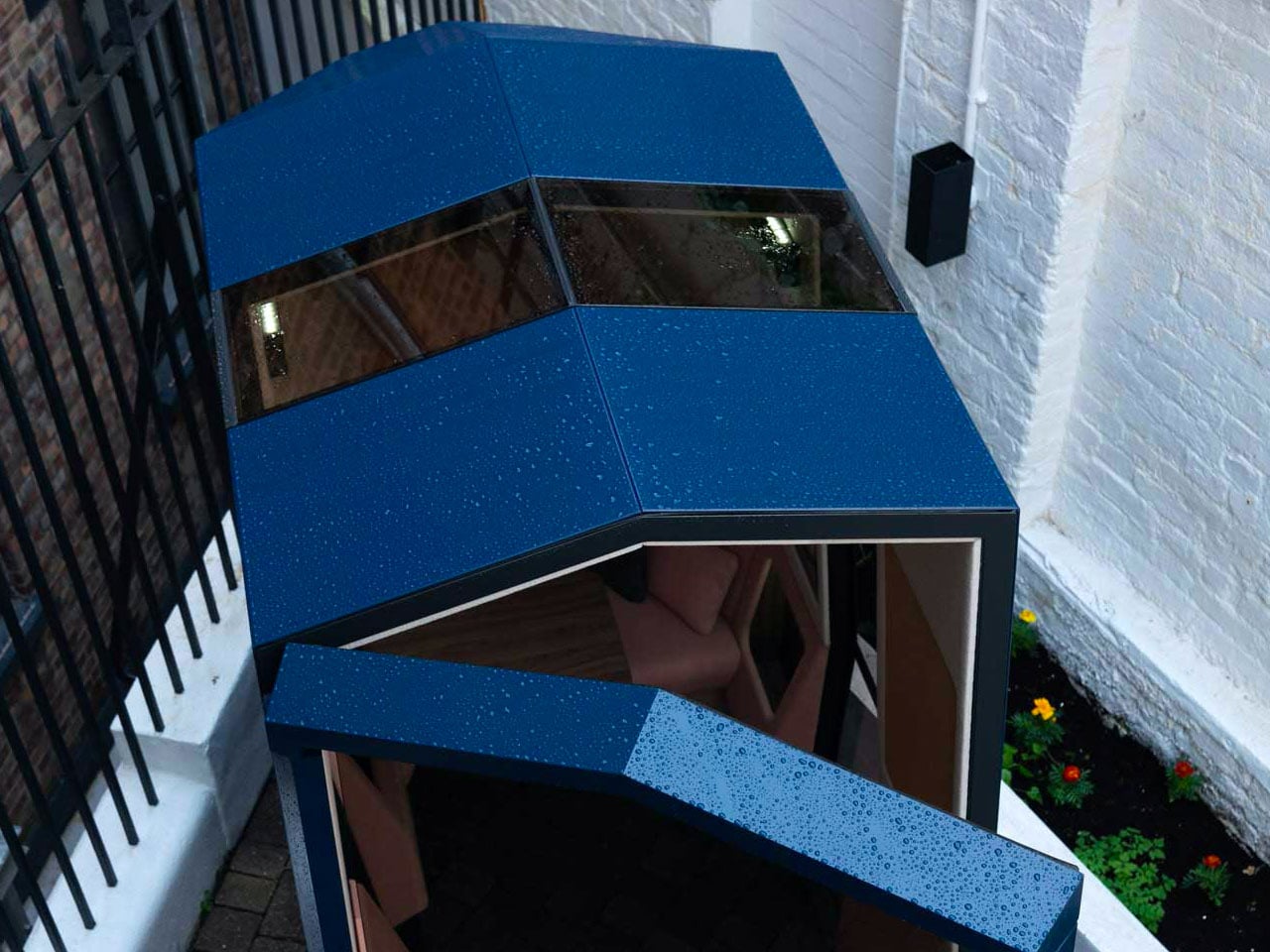
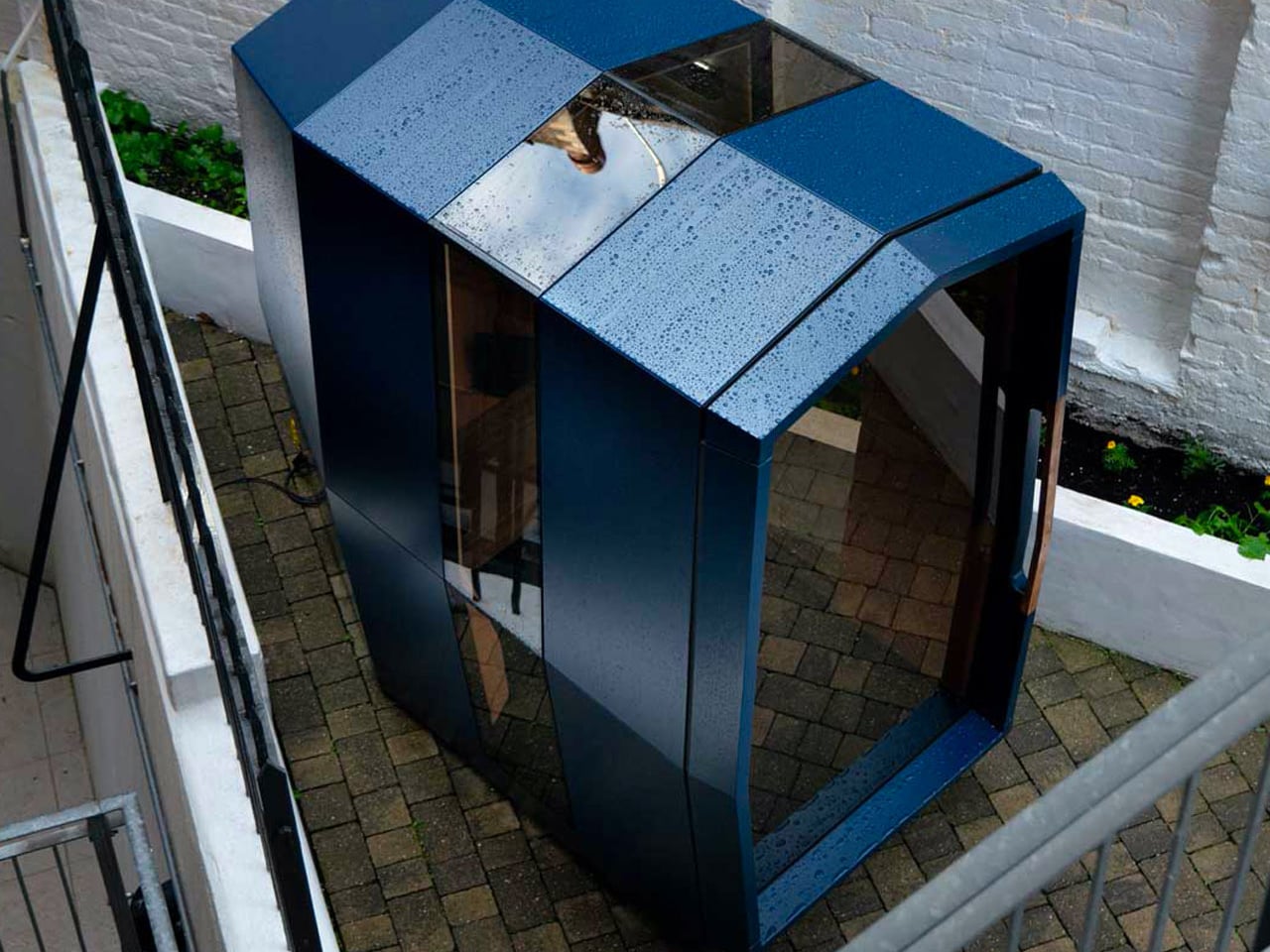
The rise of micro offices has introduced a new way of thinking about workspaces, focusing on compact, flexible environments that support concentration and privacy. In this context, Make.Work.Space presents itself as a personal work pod designed to function as a private productivity zone. It can be installed in homes, corporate offices, or even public environments, adapting easily to different spatial needs while improving efficiency and comfort.
The system is available in three modular versions: Micro-Office 1, 2, and 3, each designed for varying levels of use and comfort. The most compact model includes essential features such as a fixed desk, acoustic paneling, lighting, and built-in power access. The larger versions expand functionality with ergonomic tables, panoramic windows, ventilation systems, and optional air conditioning. Across all versions, the design prioritizes privacy, focus, and adaptability, while also making better use of underutilized spaces. Make.Work.Space offers a flexible solution for modern working, resting, or retreating within limited environments.
4. Houses on Wheels Enabling Fully Mobile Living
Houses on wheels merge the idea of home with continuous mobility, creating self-contained living systems designed for travel. Unlike temporary shelters, they support long-term habitation, often incorporating kitchens, bathrooms, and sleeping areas within a compact structure. This integration allows everyday living to function seamlessly while on the move.
They appeal to those seeking to move beyond fixed living patterns without losing a sense of stability. Relocation becomes part of routine life, not a disruption, allowing continuity across changing locations while maintaining comfort, familiarity, and independence.
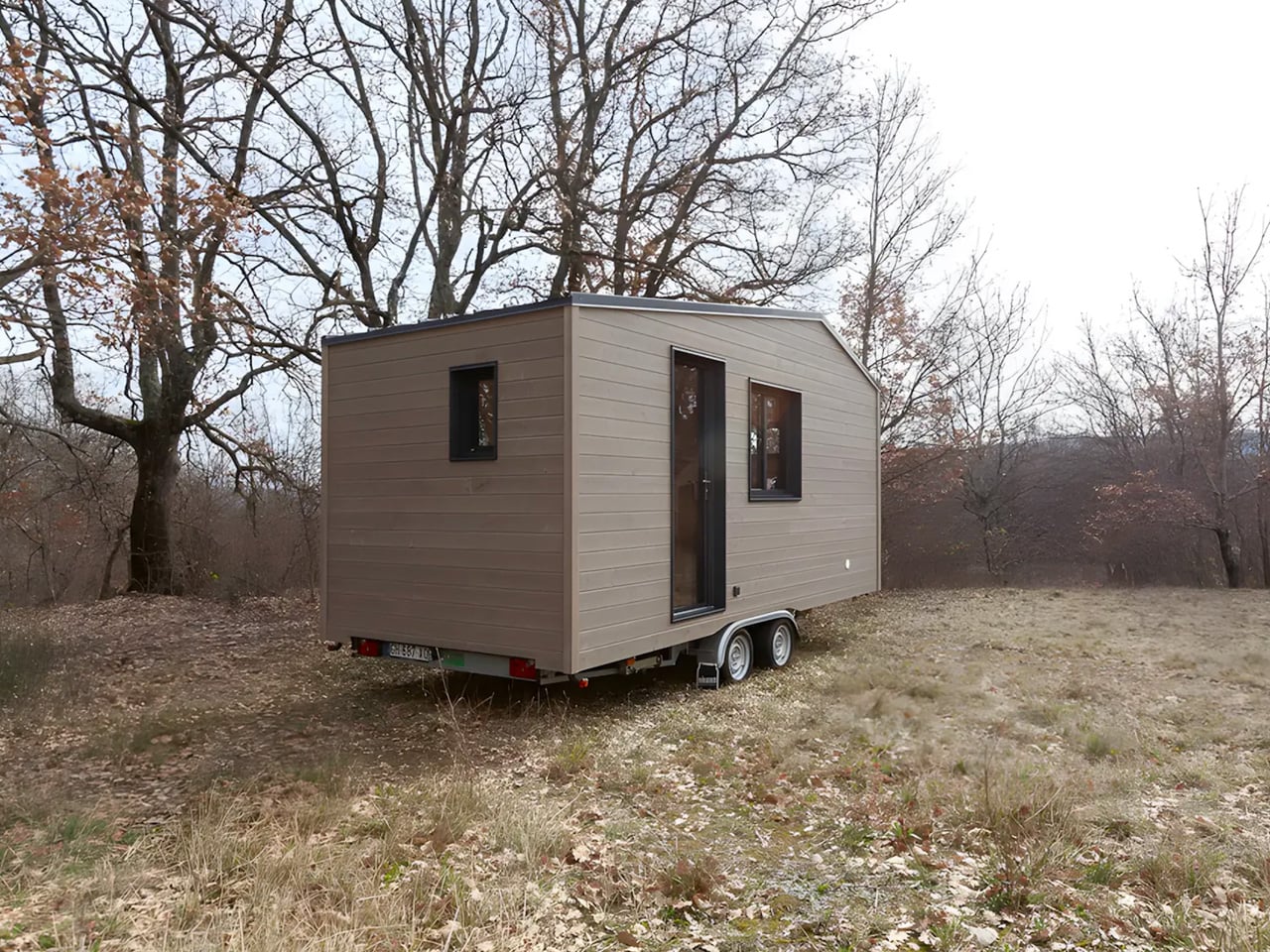
Tiny House du Lac by Plume is designed within the constraints of France’s strict towing regulations, which often result in more compact and highly efficient mobile homes. At just 17.8 feet in length, the structure prioritizes portability while still accommodating up to two people comfortably, or a small family of three in a more tightly arranged layout. The design reflects a clear focus on minimal footprint and mobility without sacrificing essential living functions.
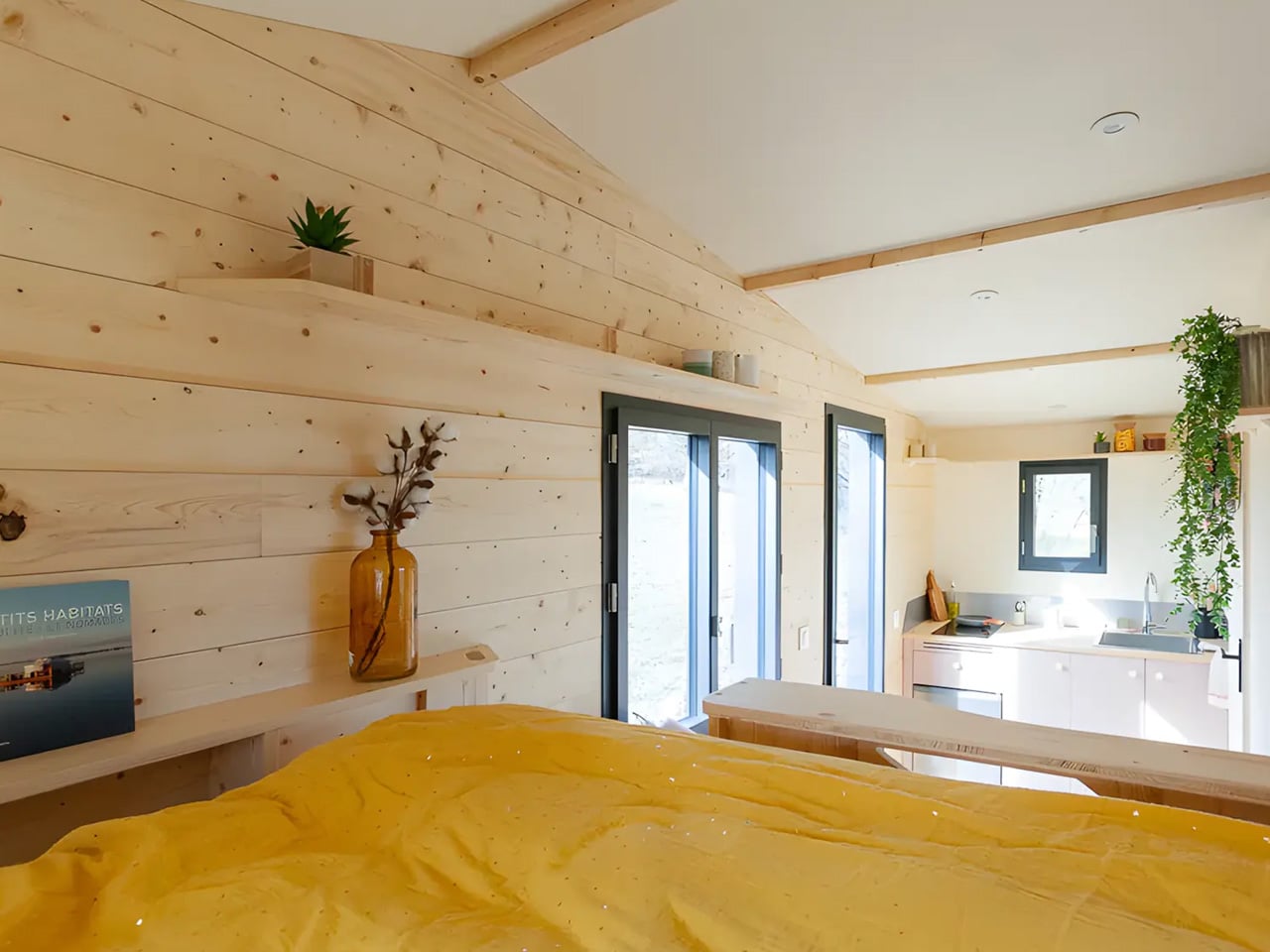
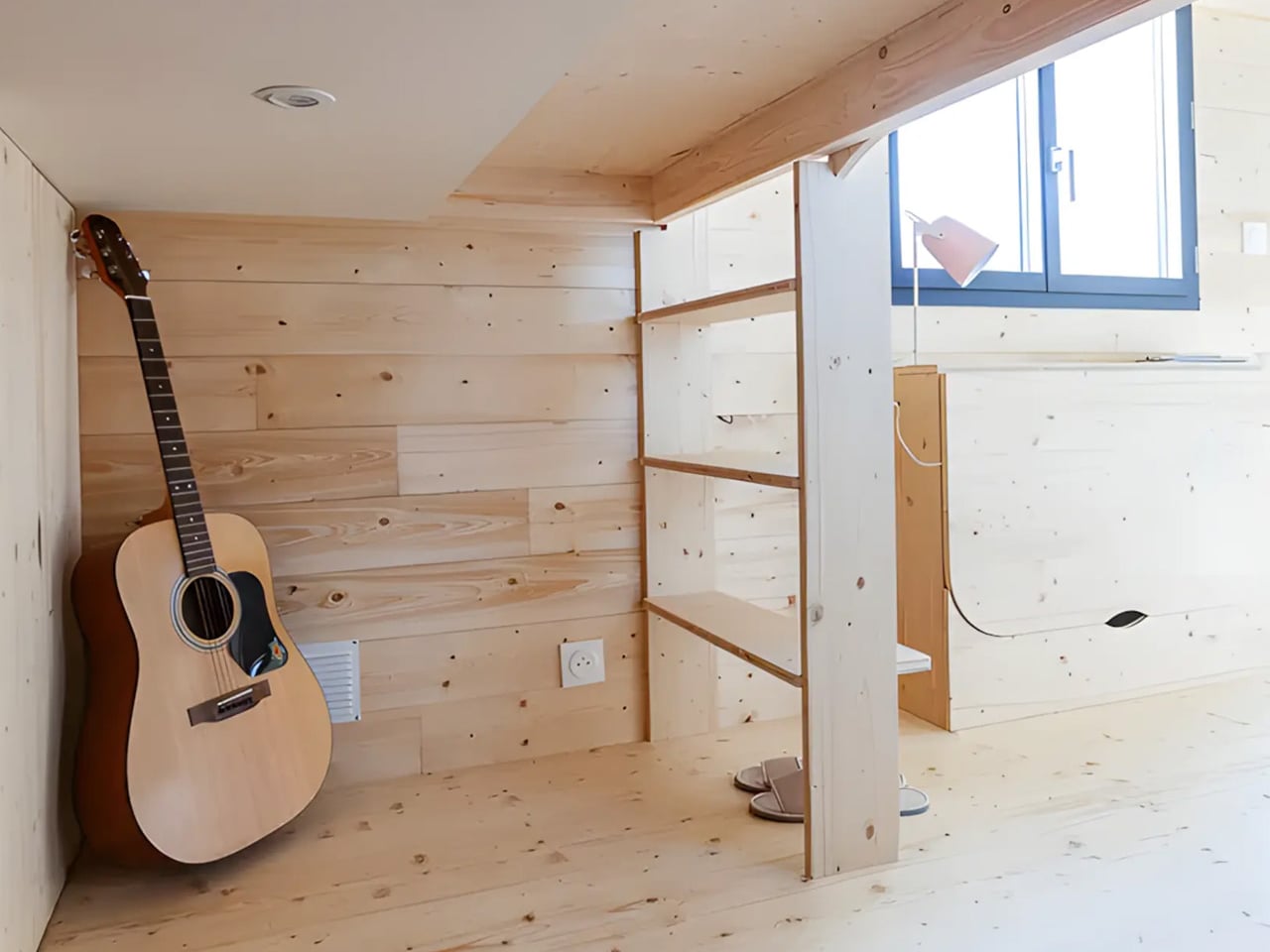
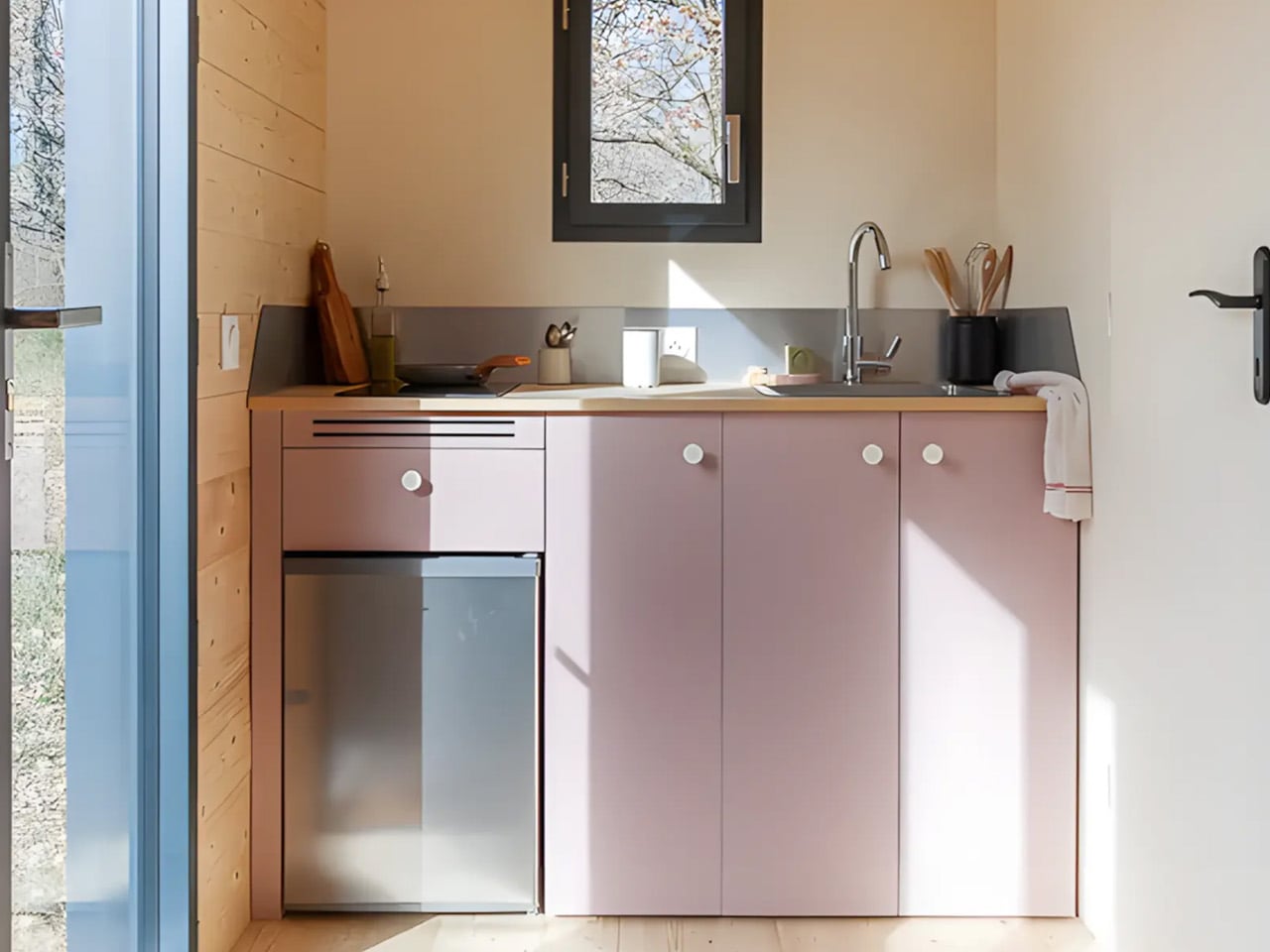
Inside, the layout is defined by a single continuous space that maximizes every inch of the interior. The kitchen is compact yet fully equipped with essential fittings, while the adjacent living area includes a small sofa and a fold-down dining table, maintaining a sense of openness through light tones and wooden finishes. At the opposite end, the bedroom is designed as a loft-style sleeping area accessed by wooden steps, with the space beneath adapted for storage or additional use.
5. Towable Stores Bringing Retail Directly to Changing Locations
Towable stores place commerce in motion by enabling businesses to operate through mobile retail units. These setups can be moved across locations, events, or neighborhoods, allowing brands to engage directly with audiences without depending on fixed storefronts. Their compact and adaptable design supports quick deployment and efficient operation in varied settings.
This approach encourages flexibility and experimentation within retail. Businesses can test new markets, respond to shifting demand, and create immediate, location-driven shopping experiences. It redefines how products are presented and accessed, making retail more responsive, mobile, and connected to its audience.
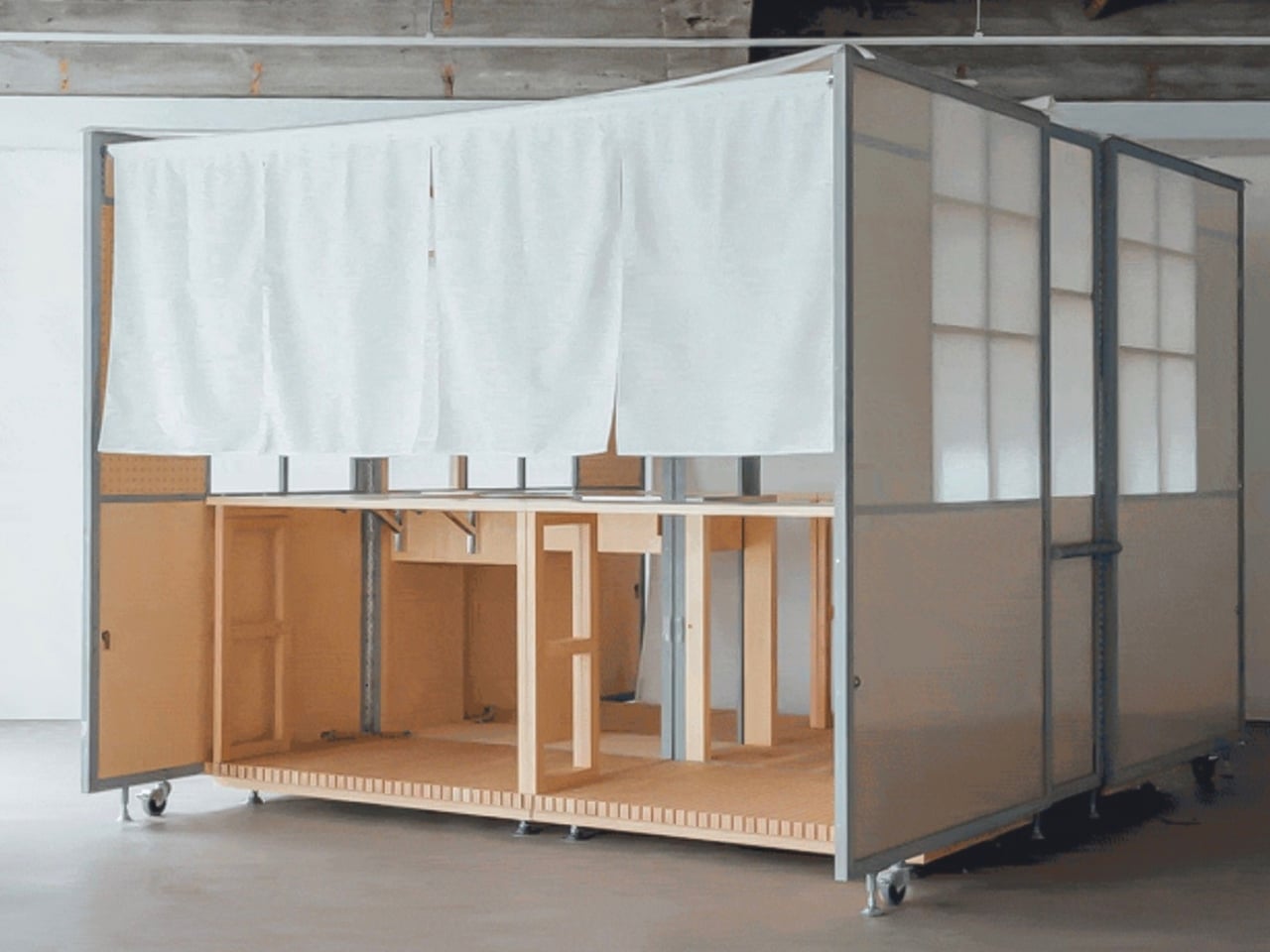
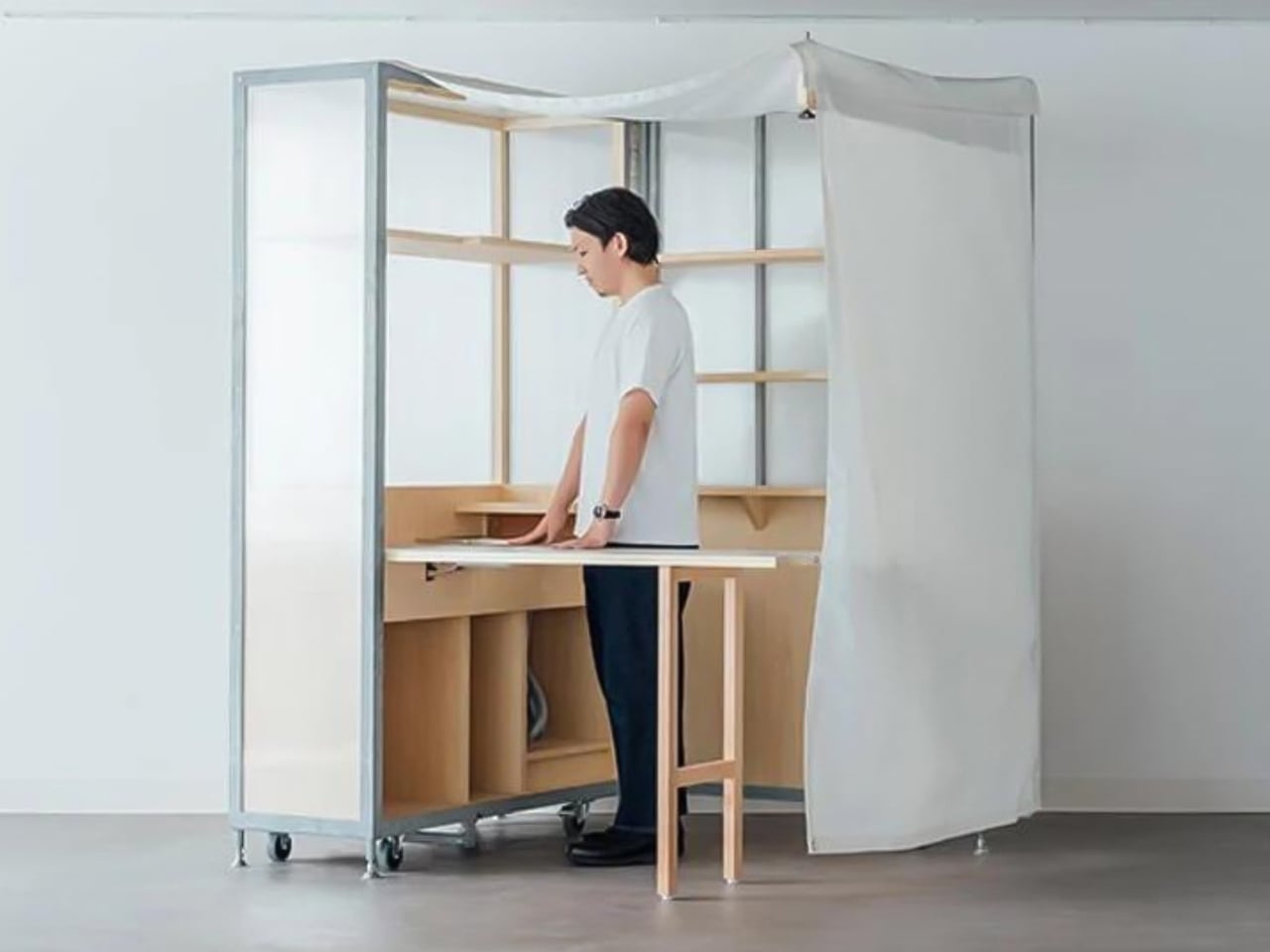
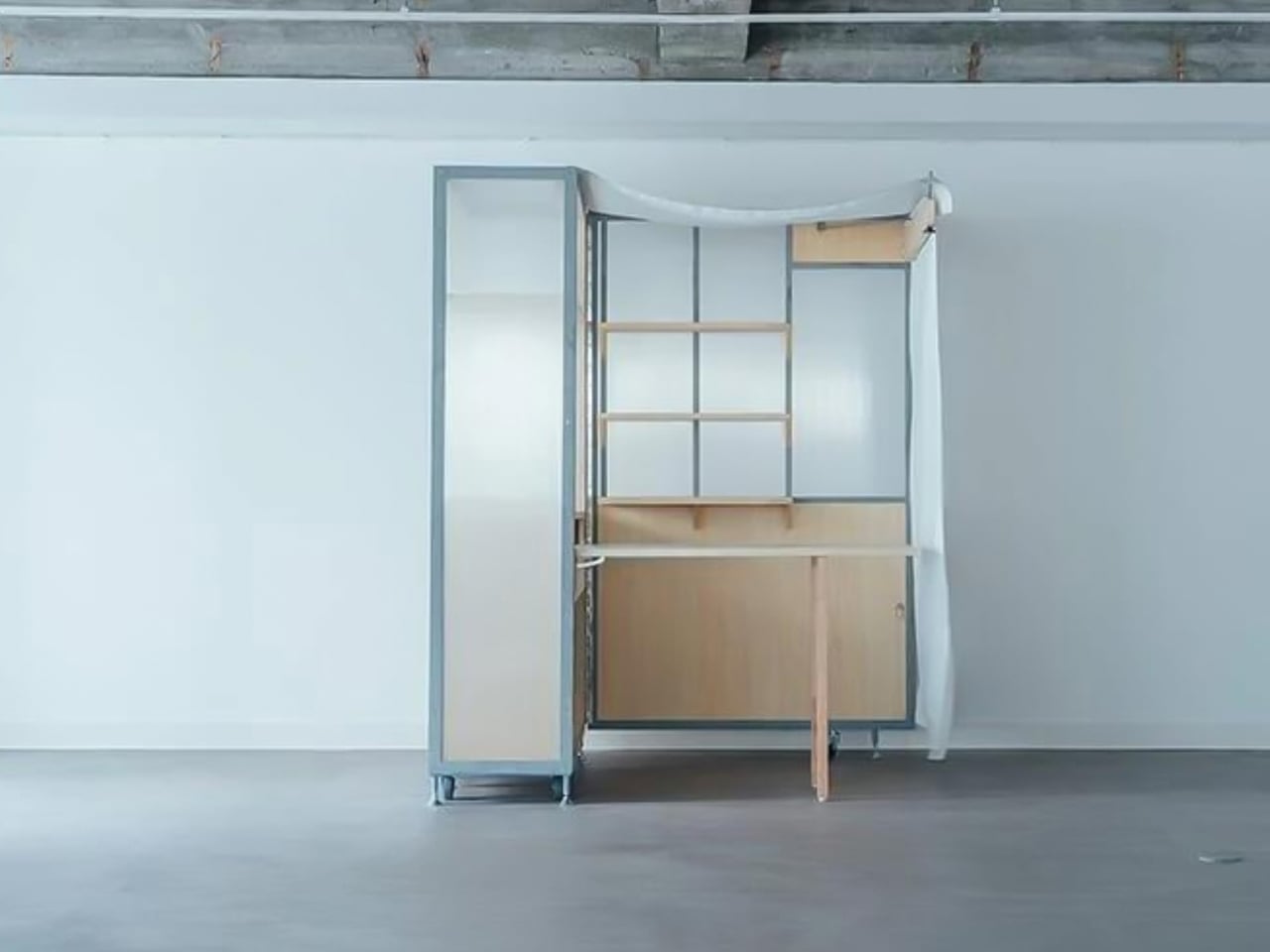
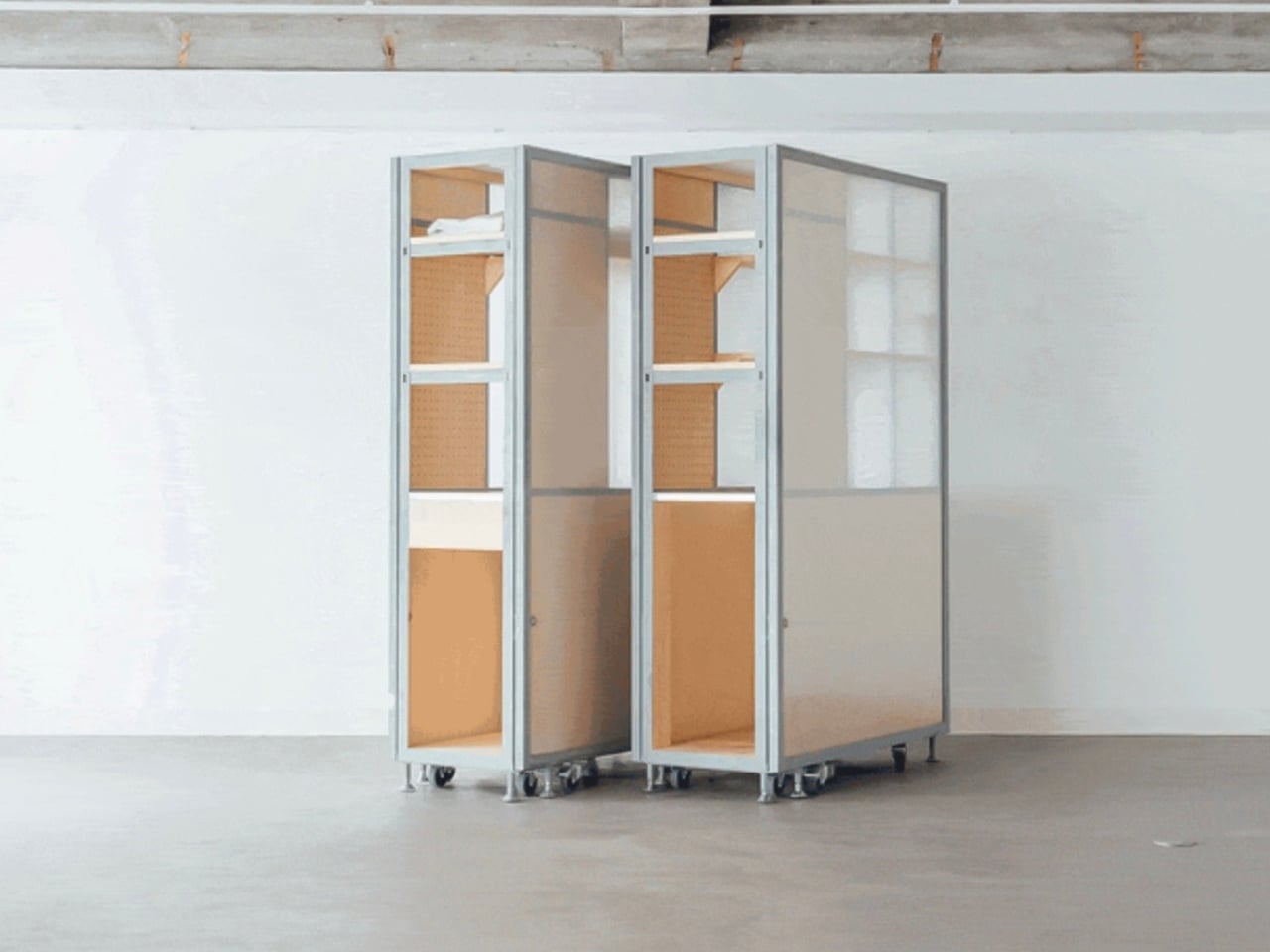
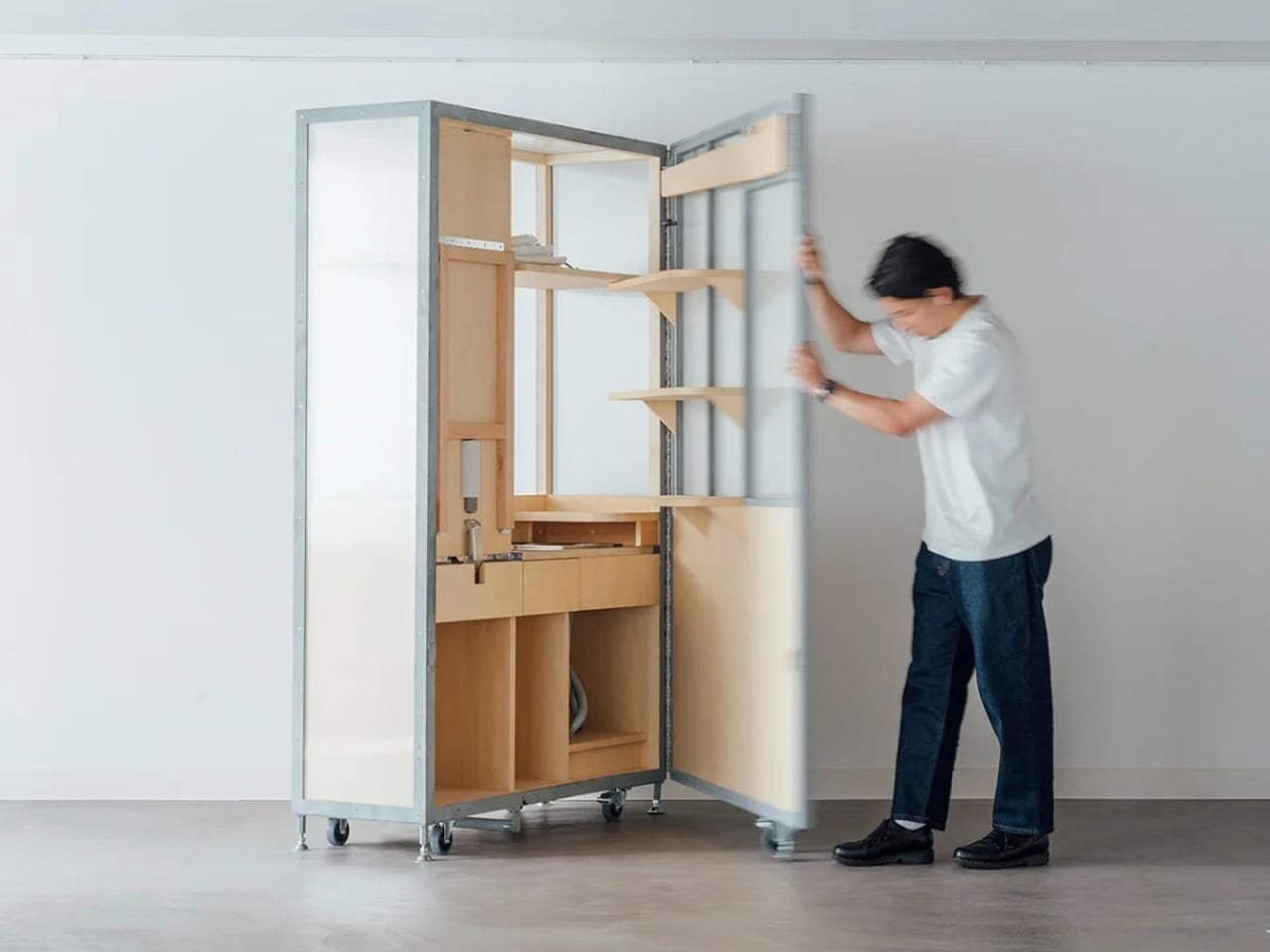
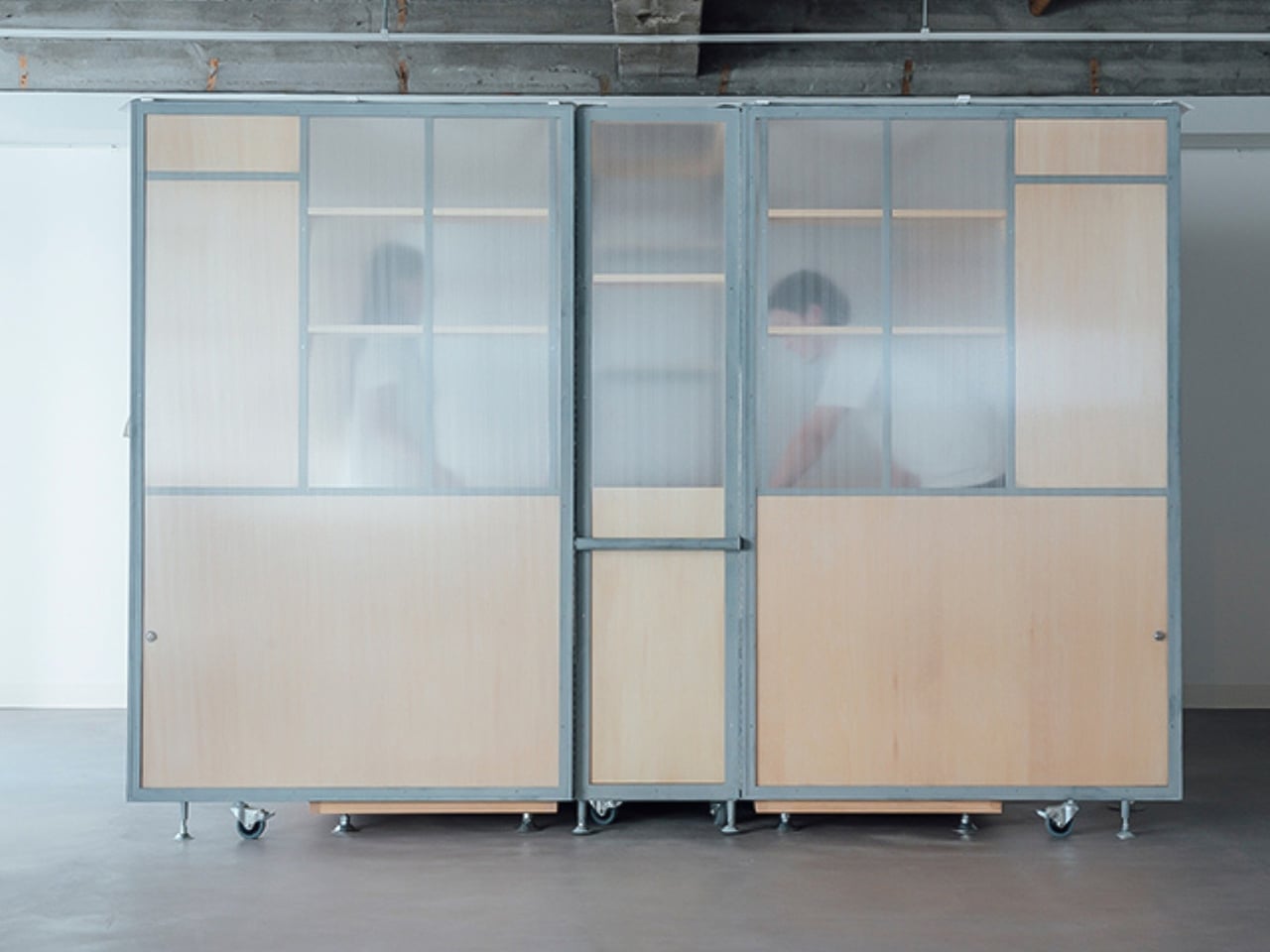
SHOPKIT, designed by Japanese studio COC, is a modular mobile store system created for easy setup, transport, and reuse in different environments. It functions as a compact retail unit that can be quickly assembled and disassembled, making it suitable for events, exhibitions, trade fairs, or temporary shop installations. Built with materials like wood, steel, and polycarbonate, the structure maintains a clean, minimal design while remaining durable and adaptable across various urban and outdoor settings.
The system is available in two configurations: a single-door version and a larger double-door version. The single-door unit offers a simple, compact retail setup, while the double-door option expands into a more functional store layout with counters, translucent panels for natural lighting, and space for display and interaction. Designed to be portable and efficient, SHOPKIT transforms temporary retail needs into a structured mobile shop that can be placed wherever selling space is required.
Portable architecture reflects a shift toward flexible, mobile living where spaces adapt to changing needs. It spans living, work, and recreation, rethinking how environments function and respond to users. Mobility, efficiency, and intentional use become central to contemporary design, replacing fixed and static spatial models.
The Netherlands has a space problem. It always has. With one of the highest population densities in Europe and a long cultural tradition of engineering its way out of geographical constraints, the Dutch have spent centuries figuring out how to fit more into less. So maybe it was only a matter of time before someone turned that exact tension into art and called it camping.
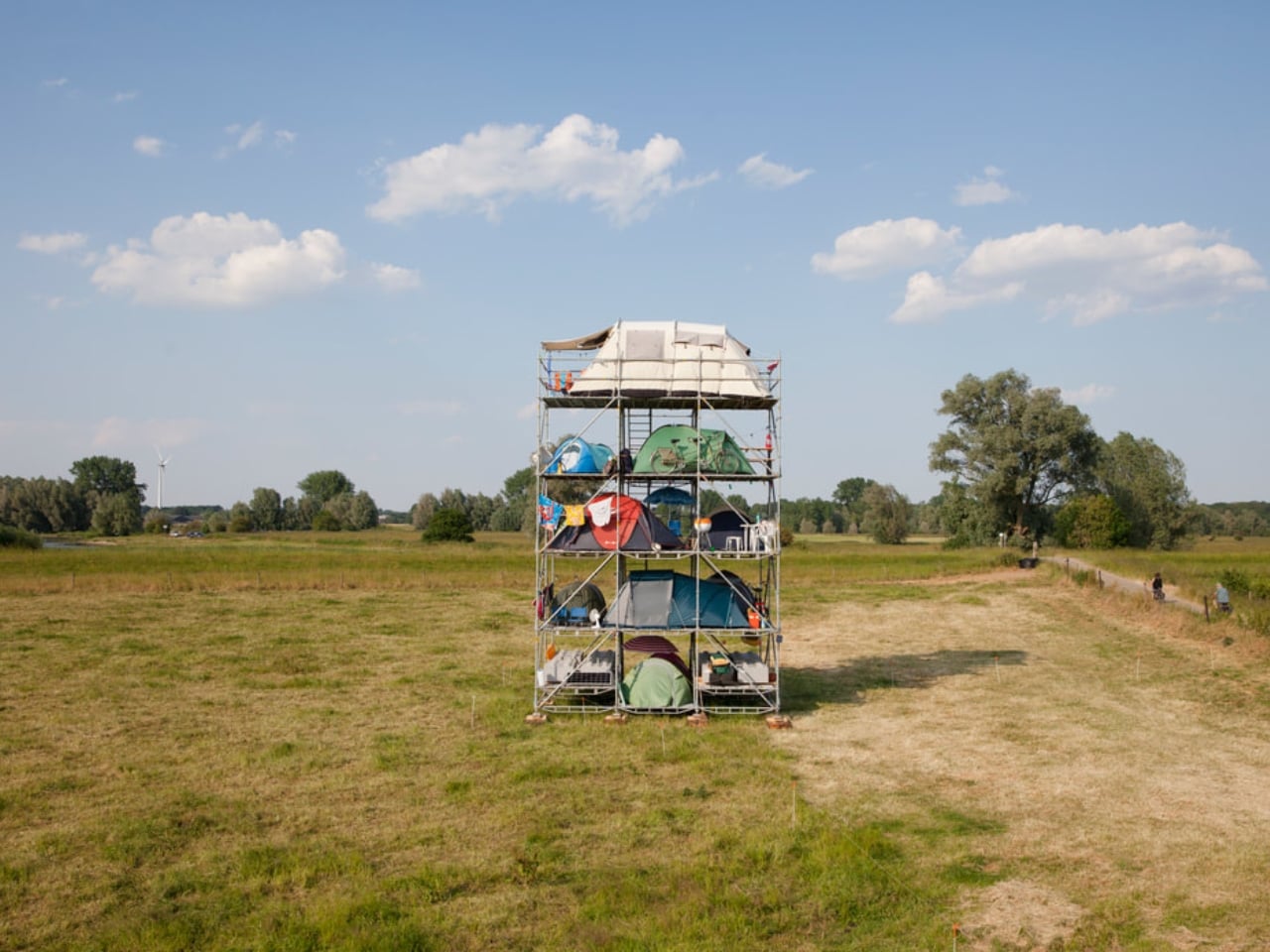
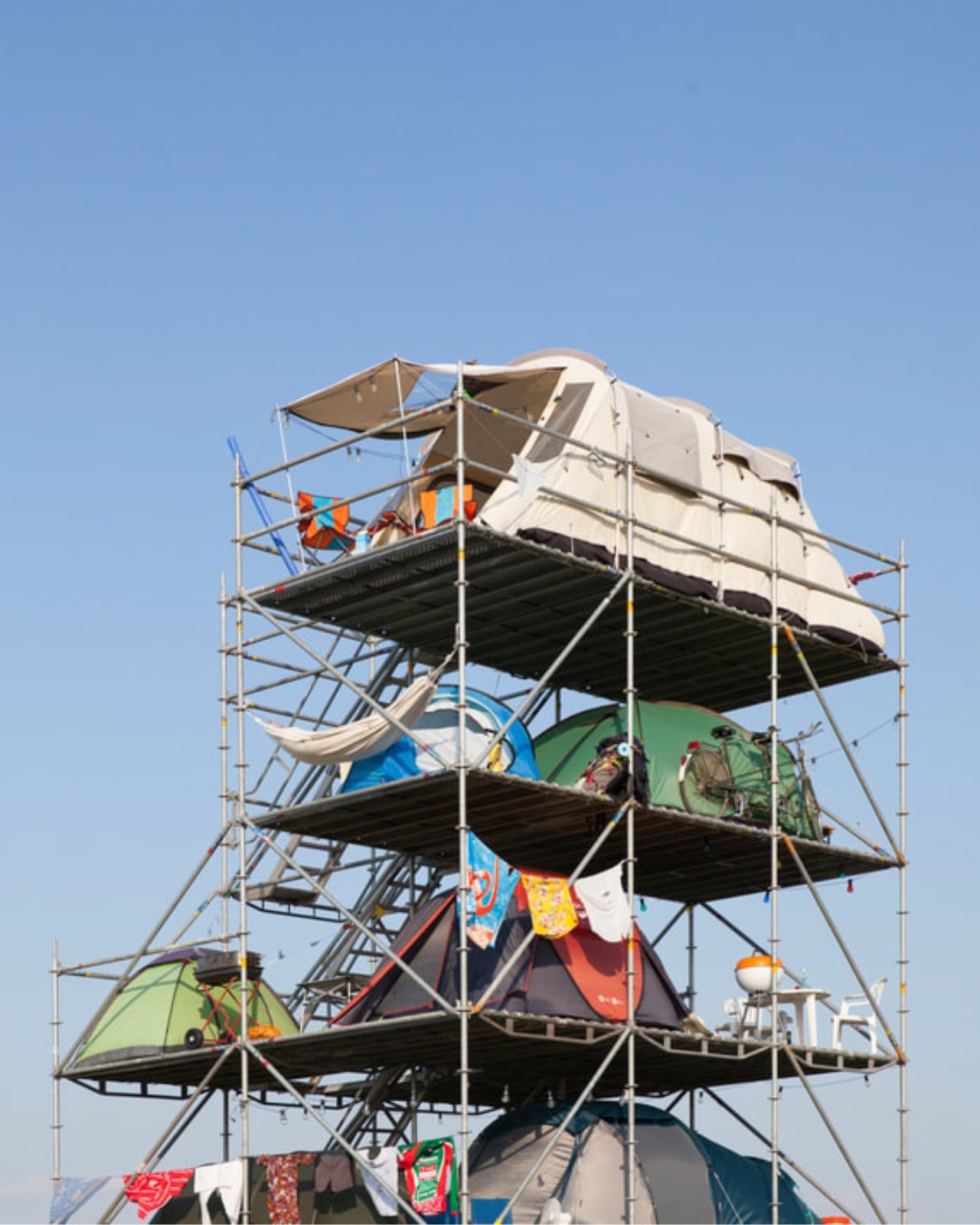
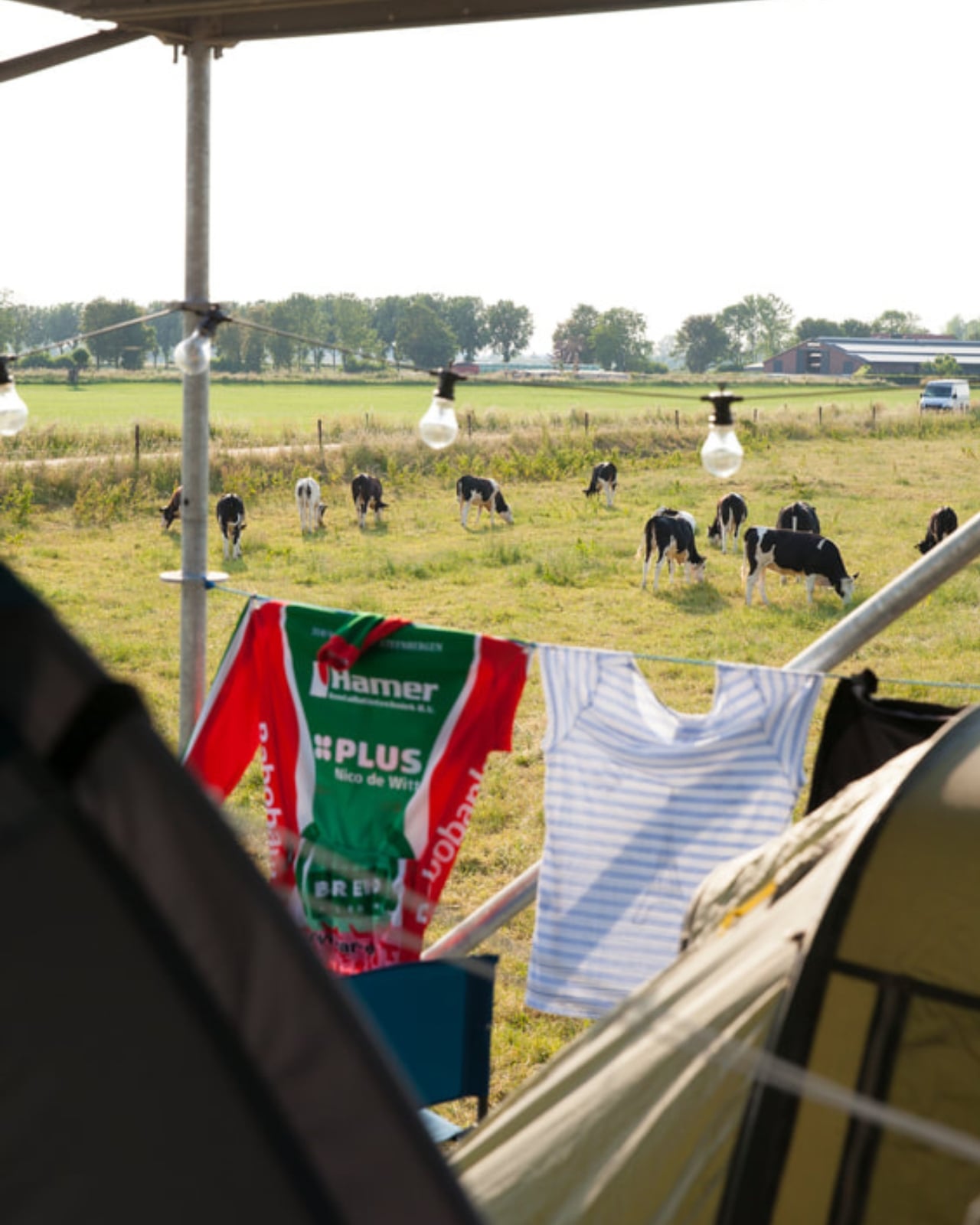
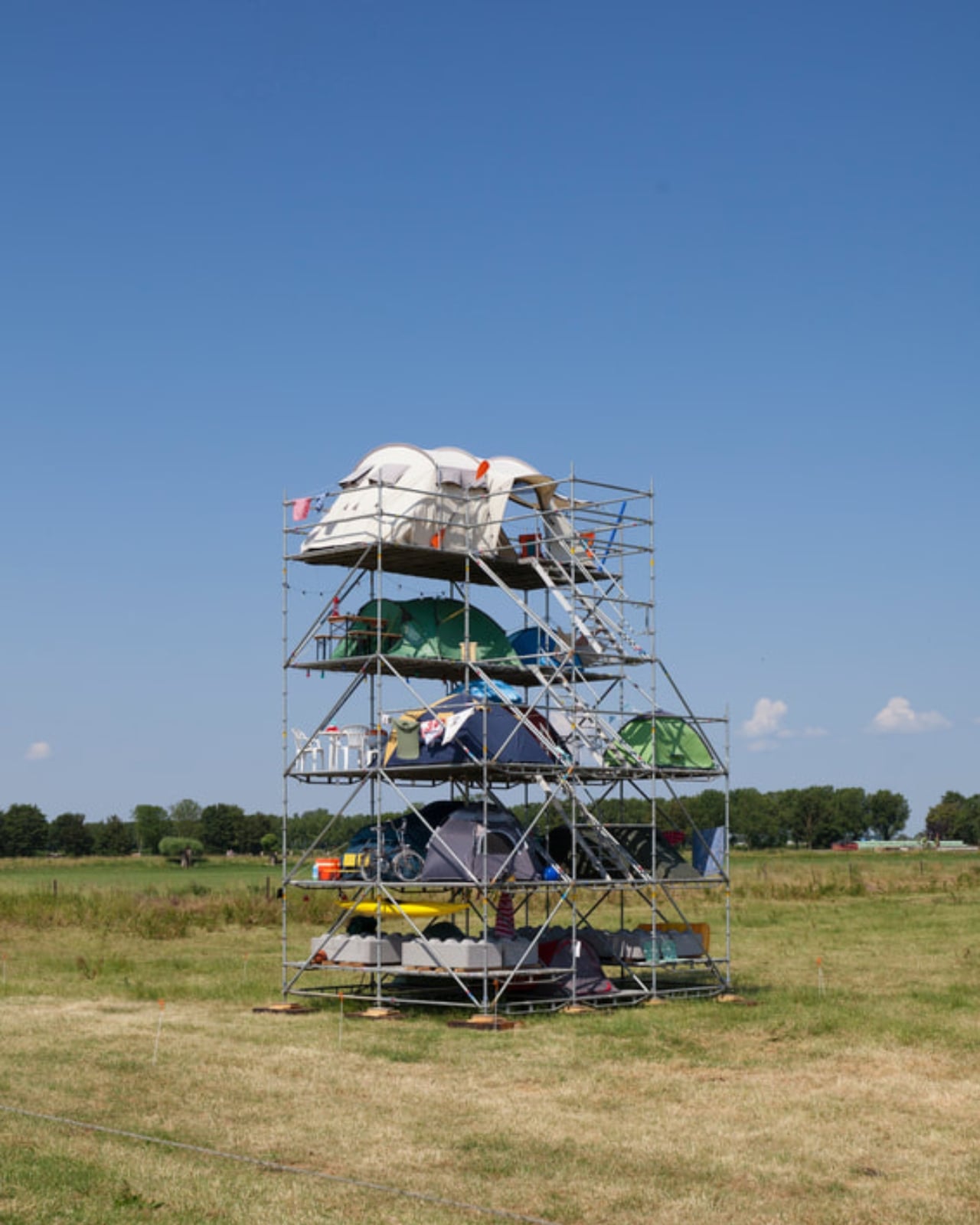
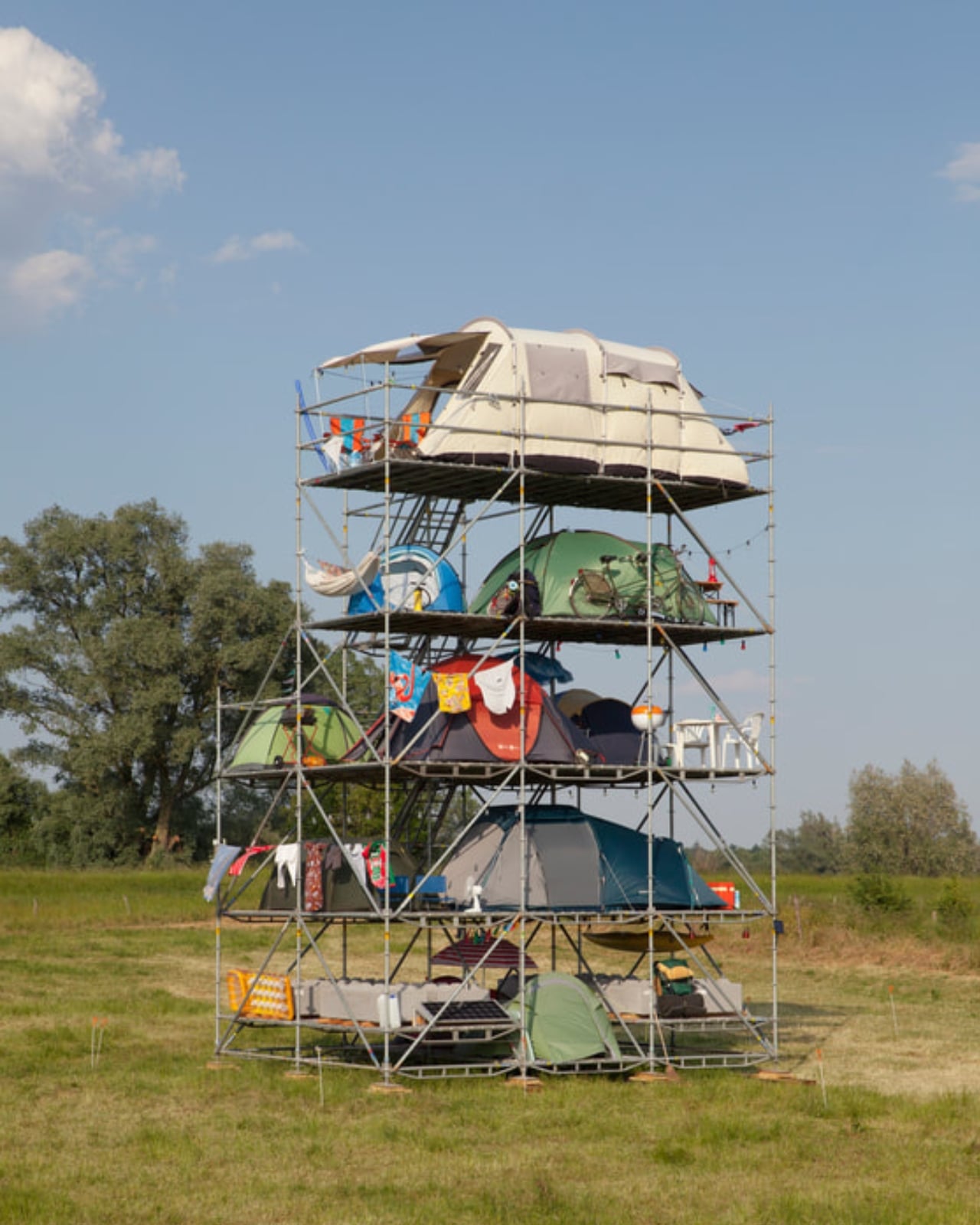
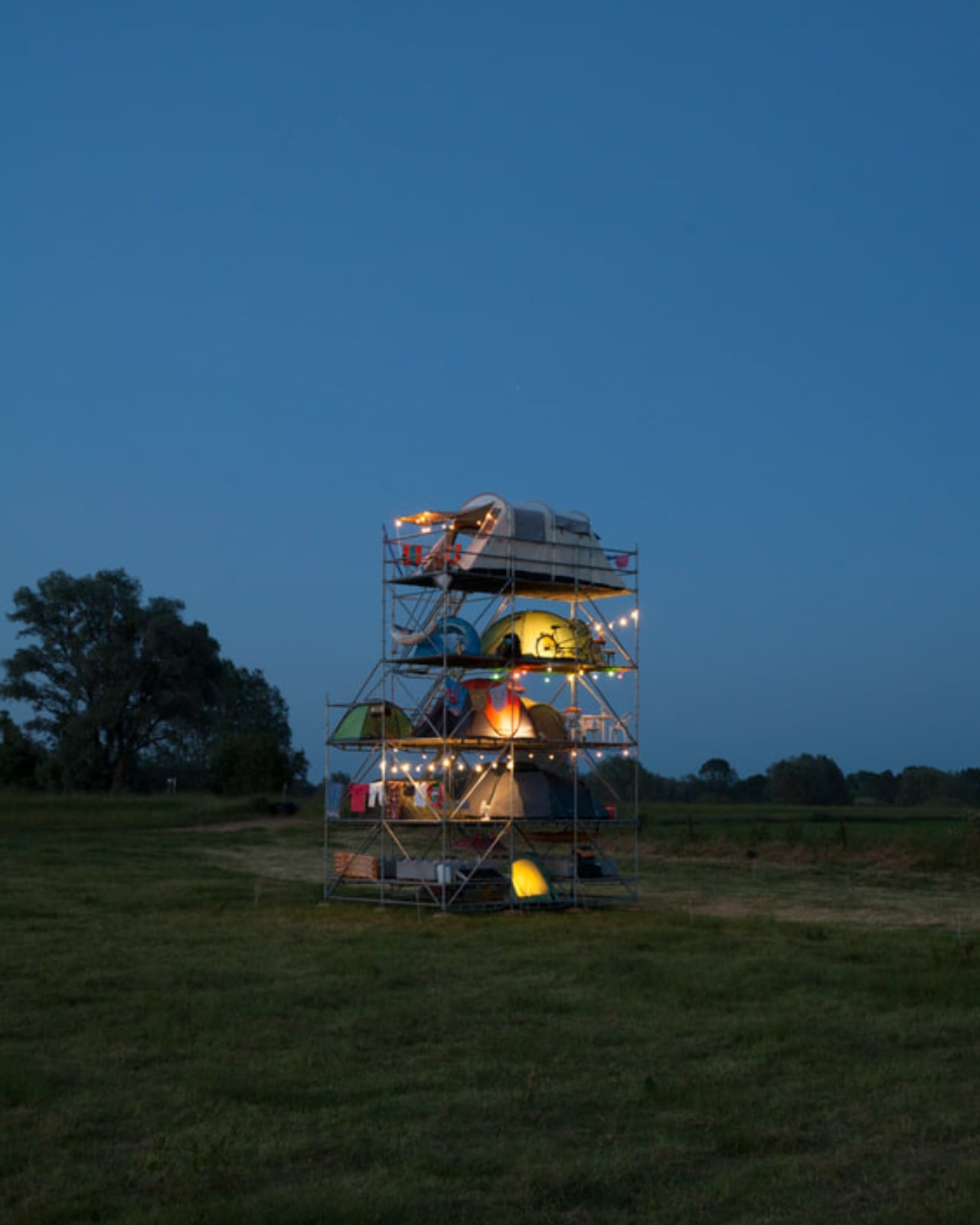
Dutch artist Willem de Haan did exactly that with his 2023 installation, Highrise Campsite: Nature City. The premise is straightforward and slightly absurd in the best way: twelve camping tents arranged vertically on an 11-meter (about 36 feet) tower of construction scaffolding, set against the quiet banks of the IJssel river in the Dutch countryside. String lights hang from the frame. The tents are pitched at each level like floors in a low-rise apartment block. And the whole thing sits in the kind of peaceful open field that makes you momentarily forget why anyone thought this was necessary. That’s the joke, and it’s also the point.
De Haan’s installation was first presented as part of IJsselbiënnale 2023 and later traveled to NDSM in Amsterdam. The materials are deliberately unromantic: scaffolding, gear, and fairy lights. There’s no bespoke fabrication, no premium finishes, nothing that says “this was expensive to make.” What it says instead is: we’ve run out of room, so we’re stacking things. Which is essentially what cities have been doing for a hundred years with apartment buildings, parking garages, and multi-level malls. De Haan just applied that logic to a campsite, plopped it in nature, and let the contradiction breathe.
I’ve thought a lot about why this works so well as a piece of art, beyond just the visual novelty of it. Camping, at its core, is supposed to be an escape from exactly the kind of density and constraint that urban life imposes on us. We camp to get away from neighbors and deadlines and the feeling that someone else is always a floor above or below you. De Haan collapses that fantasy without being heavy-handed about it. He doesn’t put the structure in a city park or on a rooftop; he places it in a genuinely serene natural landscape, which makes the point land much harder. Even out here, the battle for space follows you.
It’s the kind of art that rewards a second look. The scaffolding reads initially as something temporary, something that hasn’t been finished yet. Construction scaffolding is everywhere in urban environments precisely because it signals transition. The city is always mid-sentence, always becoming something else. Applying that visual language to a campsite turns the whole thing into a question: is this a solution or a warning? I suspect de Haan would say it’s both.
The installation also holds up against the broader housing conversation happening across Europe. The Netherlands, like most of Western Europe, is grappling with a serious shortage of affordable space. Urban density is rising, rural areas are under development pressure, and the idea of simply going somewhere open and uncrowded feels increasingly like a privilege. Highrise Campsite makes that tension visible without screaming at you about it. It’s quietly funny and quietly uncomfortable, which is exactly where the best social commentary lives.
De Haan has a knack for that kind of duality. His work tends to take familiar forms and push them just far enough out of context to become unsettling. Twelve tents is still twelve tents. A scaffold is still a scaffold. But together, stacked vertically in an open field, they stop being themselves and start being a question about how we share space, whether that’s in a city, in the countryside, or eventually, at some point, everywhere in between.
The internet has had its expected moment with this one. It made the rounds, racked up likes, and got called both genius and dystopian in the same comment sections. I think it earns both labels. The best design tends to do that: look like a good idea and a terrible one at the same time, and leave you sitting with the tension.
The RV market has never asked more interesting questions of itself. Whether you are planning your first camping trip or refining years of experience on the road, 2026 is delivering some of the most considered mobile homes the industry has produced. From a $64,000 entry-level trailer built to make the lifestyle genuinely reachable, to six-figure touring coaches that rival boutique hotels in finish and detail, the conversation around what a motorhome can be has shifted significantly.
This roundup spans a wide price bracket and an equally wide range of design philosophies. Some of these are built for couples chasing quiet weekends. Others are built for people who refuse to leave their mountain bikes or surfboards at home. One is still a concept, but an important one. What links all five is a commitment to design that goes beyond the floor plan and asks bigger questions about how we want to travel.
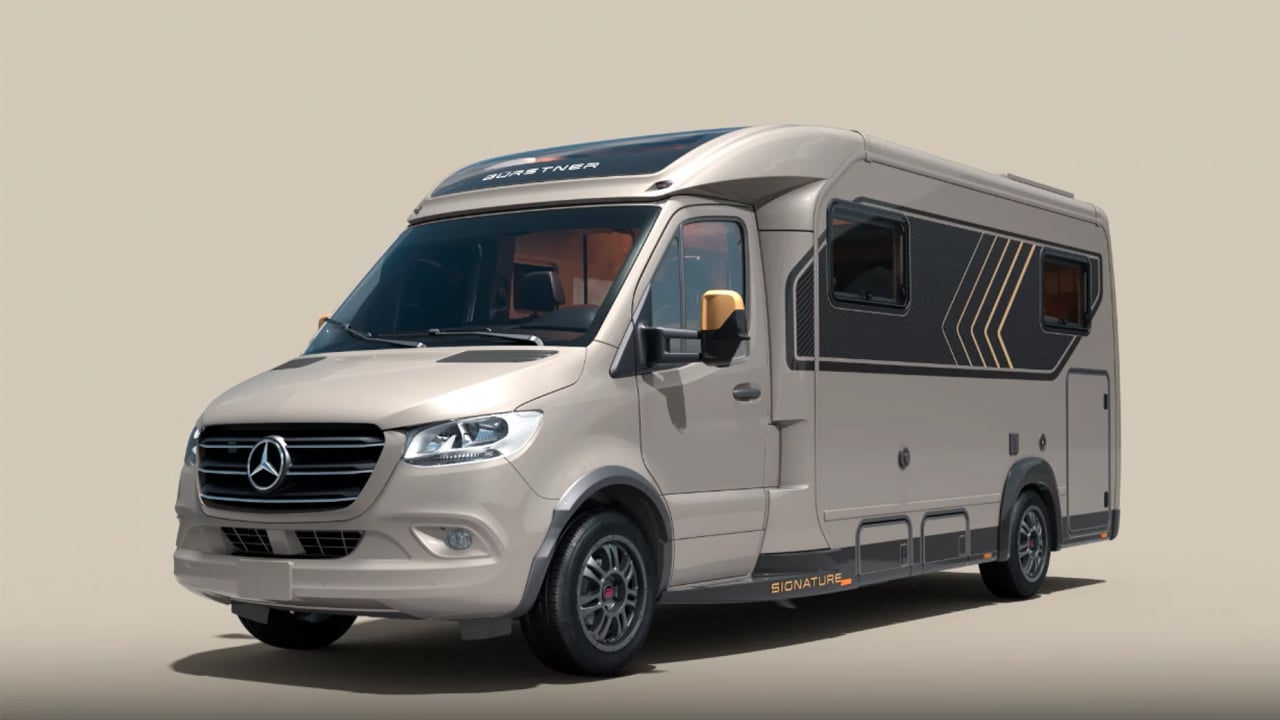
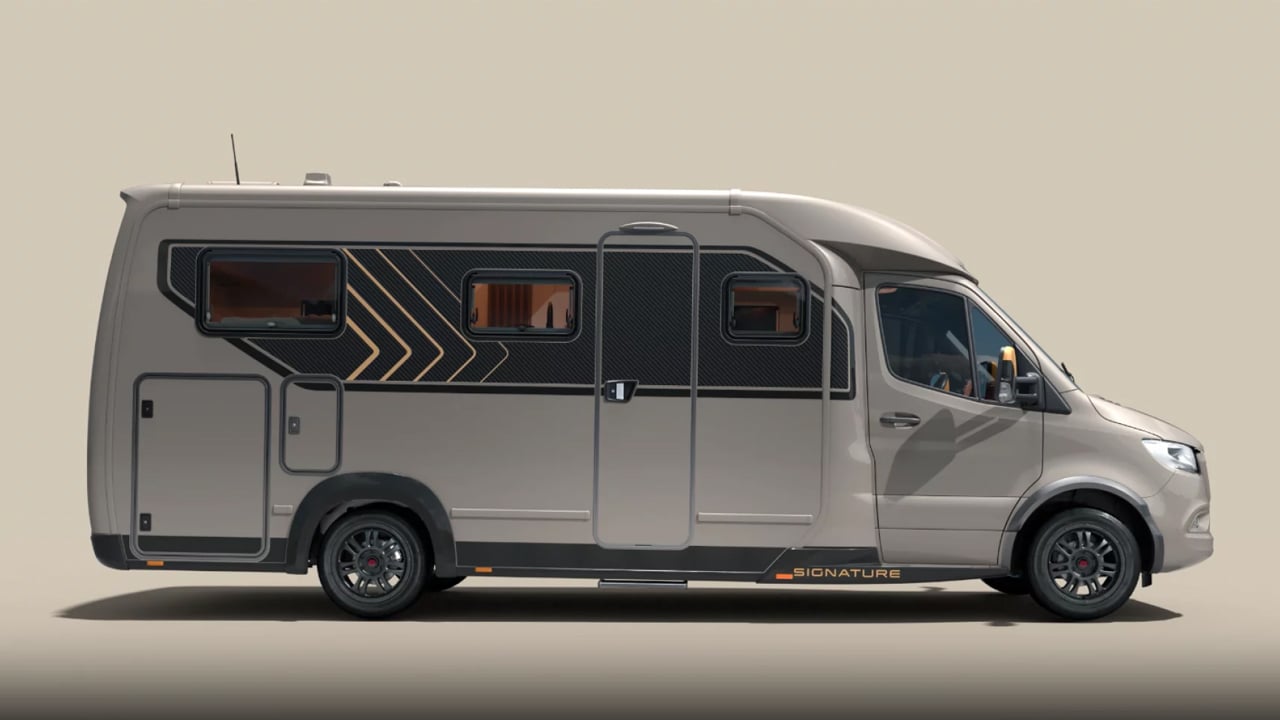
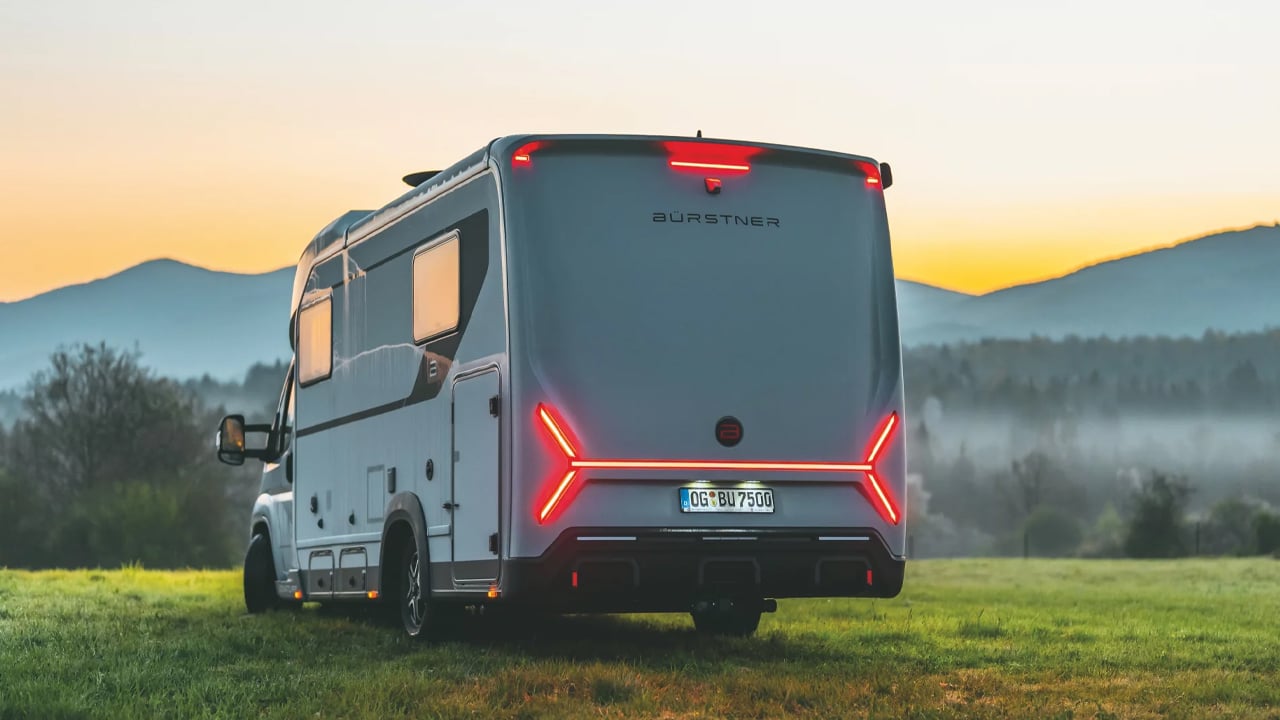
1. Bürstner Signature SMT
Germany’s Bürstner has spent years building some of the most carefully engineered compact motorhomes on the market, and the Signature SMT is their most resolved model yet. Built on a Mercedes-Benz Sprinter chassis and finished in fiberglass for a lightweight, durable shell, it leads with modularity. A privacy shutter between the kitchen and the rear bedroom means the space can be configured for a couple or adapted to host guests without sacrificing the feeling of a private retreat at the back.
For you, the Signature’s real strength is in what disappears. The drop-down double bed folds into the ceiling completely when not in use, returning the front lounge to full functionality. The retractable kitchen shelf doubles as a divider wall when raised. The bathroom’s sliding front wall retracts to free up the shower space. These are not gimmicks. They are genuine solutions to the tension between space and privacy that most motorhomes never quite resolve. Pricing starts at approximately $107,000 for the 735cm base model.
What we like:
The retractable shelf that doubles as a bedroom privacy wall is one of the cleverest interior details in its class
The raised roofline at the front gives the drop-down bed a genuinely comfortable clearance that most vans cannot match
What we dislike:
European pricing and limited US dealer networks make purchasing and servicing more complicated for American buyers
The modular interior requires occupants to actively manage transitions between configurations throughout the day
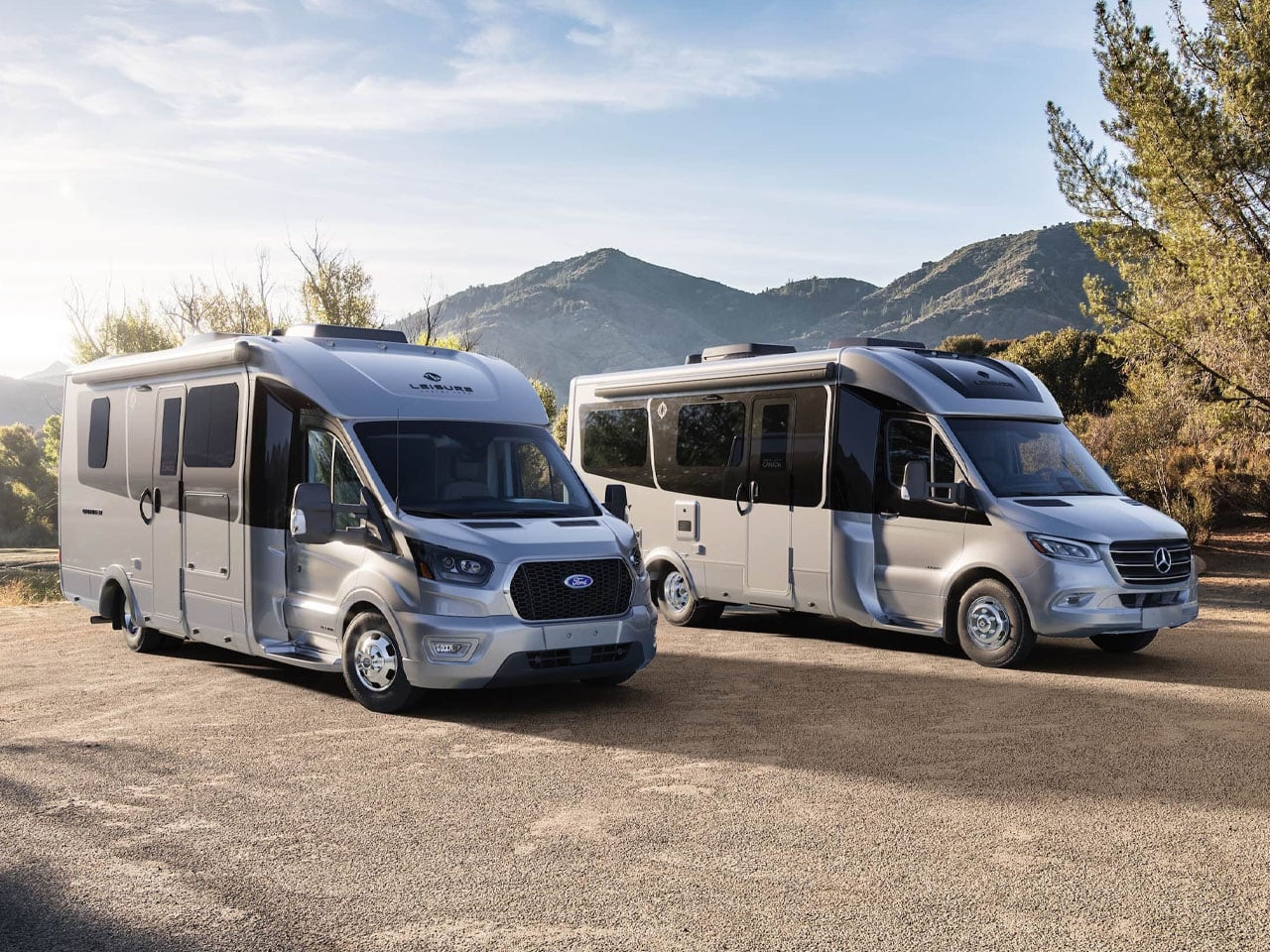
2. Leisure Travel Vans Unity TBX
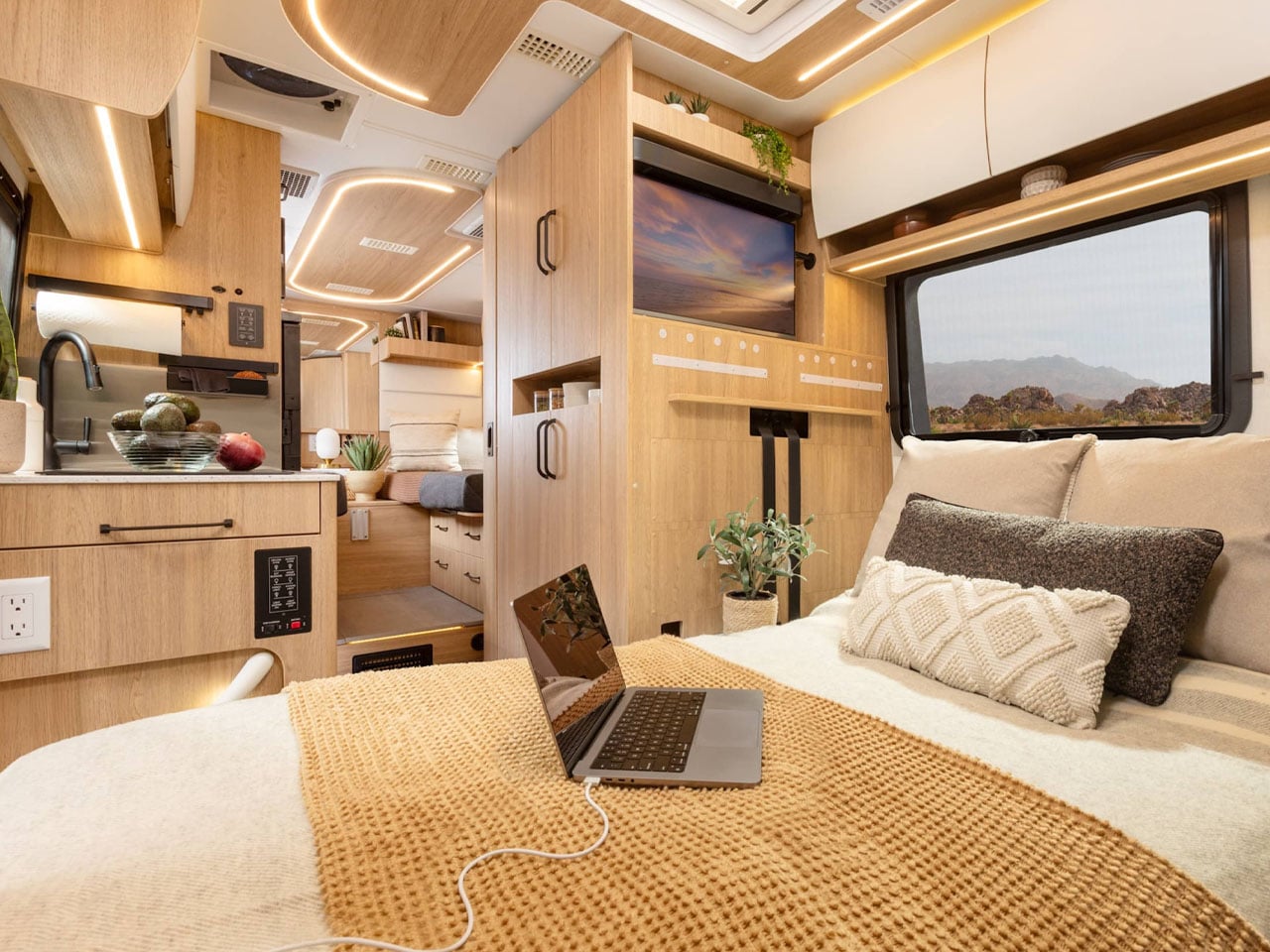
The Unity TBX is what happens when a luxury motorhome builder takes the idea of an adventure garage seriously. Built on a Mercedes-Benz Sprinter 3500, the 25-foot Canadian-made coach puts a 1,727-liter pass-through cabinet at the center of its design identity. That is not a storage afterthought. It is a decision that fundamentally changes what a motorhome can carry. Mountain bikes, surfboards, skis, fishing gear: it all fits, with 12- and 120-V outlets inside to charge electric bikes on the move.
For you, the TBX means you no longer have to choose between comfort and the gear that makes your adventures worth having. The interior sleeps four, with a convertible front lounge, twin beds in the rear, and a full kitchen featuring dual-burner induction, a compressor fridge, and a pull-out pantry. A 270-Ah lithium battery, 400 watts of solar, and AWD capability make this genuinely capable across all seasons. Starting at $237,000, it demands serious commitment, but it delivers a serious machine.
What we like:
The 1,727-liter pass-through garage is genuinely functional and not a marketing add-on
All-wheel-drive capability and four-season climate systems make it a credible year-round vehicle
What we dislike:
The $237,000 starting price, rising to $245,000 for AWD, puts it well out of reach for most buyers
At 25 feet, navigating tighter campgrounds and urban environments will require patience
3. Airstream Atlas 25RT
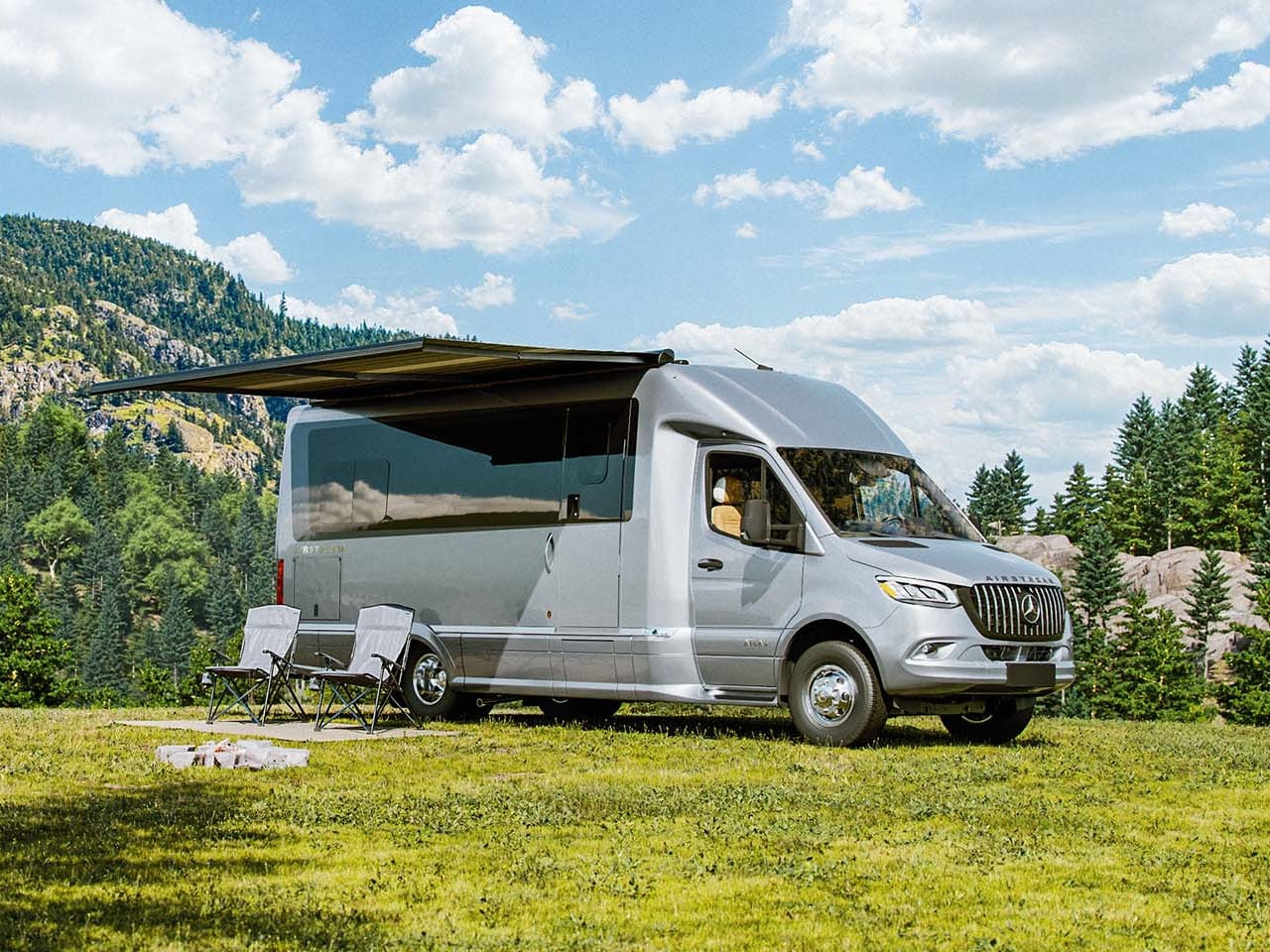
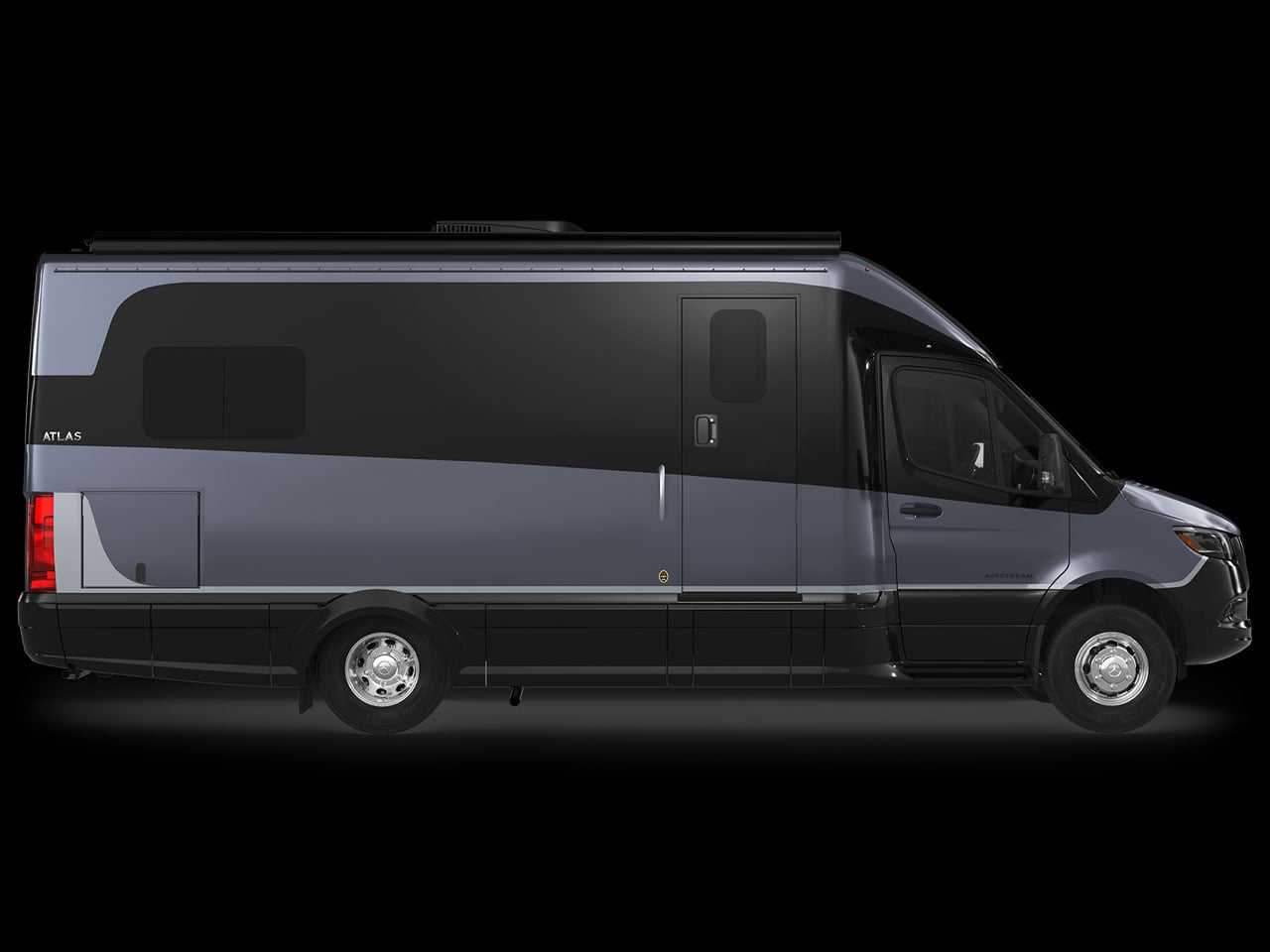
Airstream has a long history of making things feel more refined than their footprint has any right to suggest, and the Atlas 25RT applies that instinct to the Class B+ motorhome. At 25 feet, riding on a Mercedes-Benz platform, this is a touring coach designed for two people who want everything in one compact form: a proper galley, a split dry bath with a separate shower and toilet area, a twin bed layout in the rear, and a pass-through garage for outdoor gear.
What makes the Atlas 25RT feel genuinely suited to longer trips is the Garmin multiplex system, which centralizes lighting, climate, and onboard functions into a single interface. For you, that means less time managing controls and more time at the destination. The JBL stereo system with four speakers and a subwoofer makes evenings inside feel considered rather than compromised. At $290,000, it sits at the top of the Class B+ segment, but the Mercedes running gear and Airstream build quality justify the positioning.
What we like:
The induction cooktop that stores in a drawer is a genuinely smart use of limited surface area
The Garmin multiplex system simplifies onboard living in a way that makes a real difference over extended trips
What we dislike:
A single floor plan with no alternatives limits flexibility for buyers with different space requirements
Designed strictly for two, meaning families or groups looking for adaptability will need to look elsewhere
4. HYTTE by RE:BURO
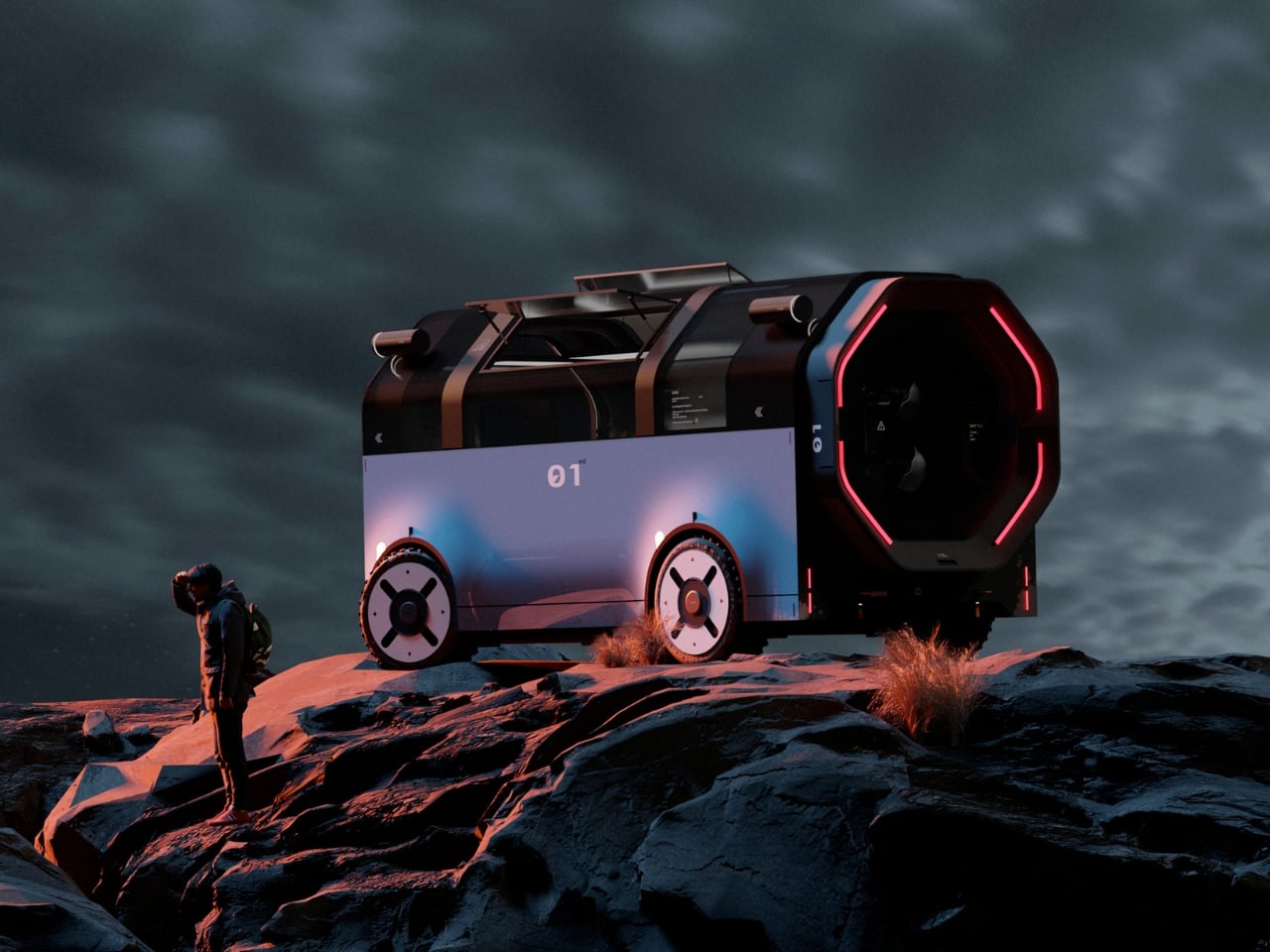
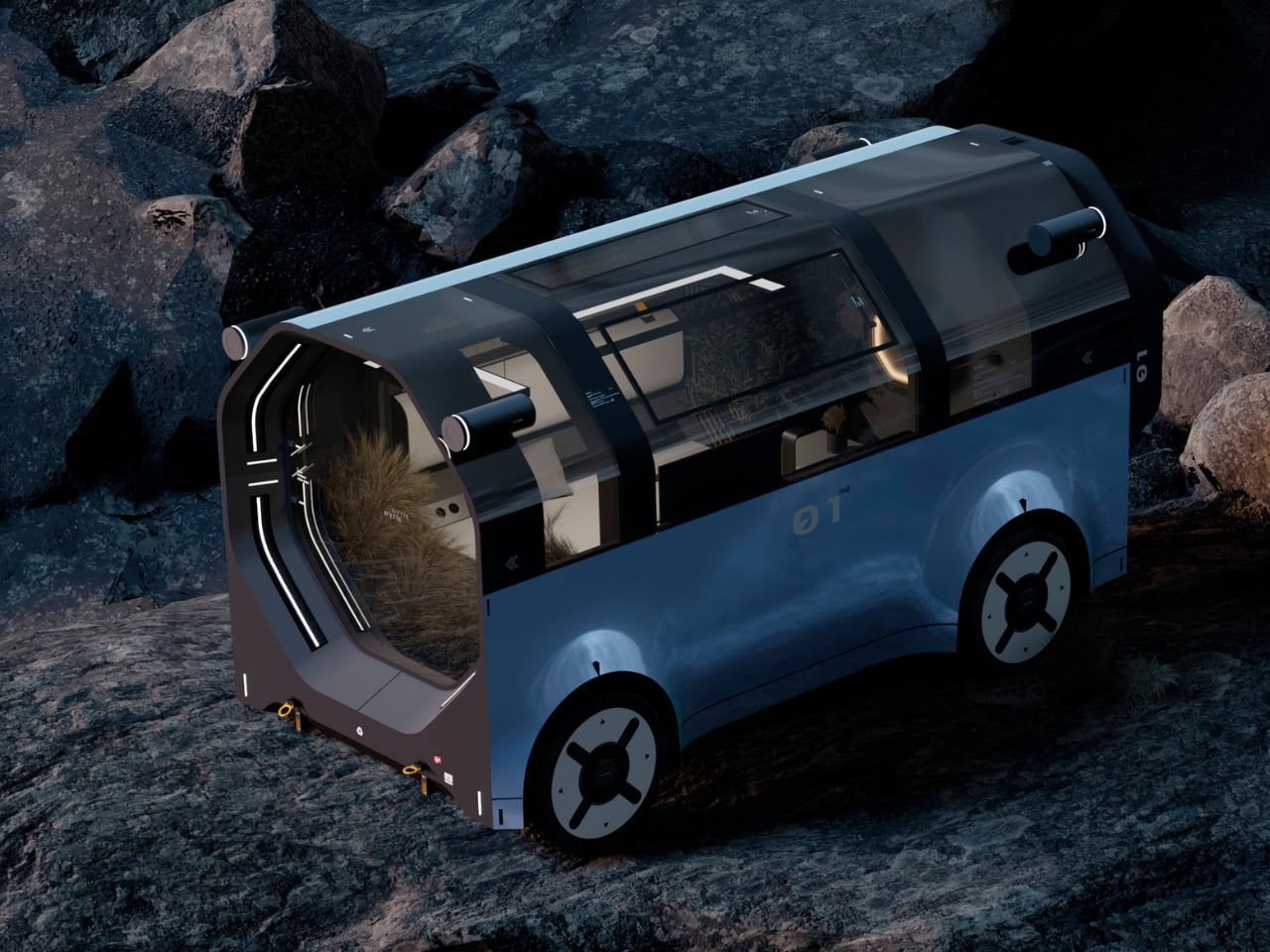
HYTTE is still a concept, but it is the kind of concept that asks better questions than most production vehicles bother to answer. Designed by RE:BURO, a studio describing itself as a bureau of technical aesthetics, the name draws from the Scandinavian tradition of the hytte, a simple countryside cabin. The exterior is dark, barrel-shaped, and compact, with a signature octagonal face framed by a red LED ring. It reads less like a motorhome and more like a piece of land architecture that happens to move.
What makes HYTTE worth taking seriously is the interior logic. An electric heater styled as a modern fireplace anchors the space psychologically, signaling rest in a way that no storage solution ever could. The modular chassis uses clamp-like grippers to bind the living compartment, allowing adaptation across different configurations. There are dedicated spaces for houseplants and pets, small details that reveal a design team thinking about how people actually inhabit a space. For you, HYTTE represents what the motorhome could look like with genuine architectural ambition applied from scratch.
What we like:
The fireplace-style electric heater is an original way to define the emotional character of a mobile interior
The modular chassis concept suggests a platform that could adapt to multiple configurations beyond a single fixed layout
What we dislike:
HYTTE remains a concept with no confirmed production timeline or pricing, making it an inspiration rather than an actual purchase
The compact barrel form may limit interior volume compared to more conventional motorhome layouts of similar overall length
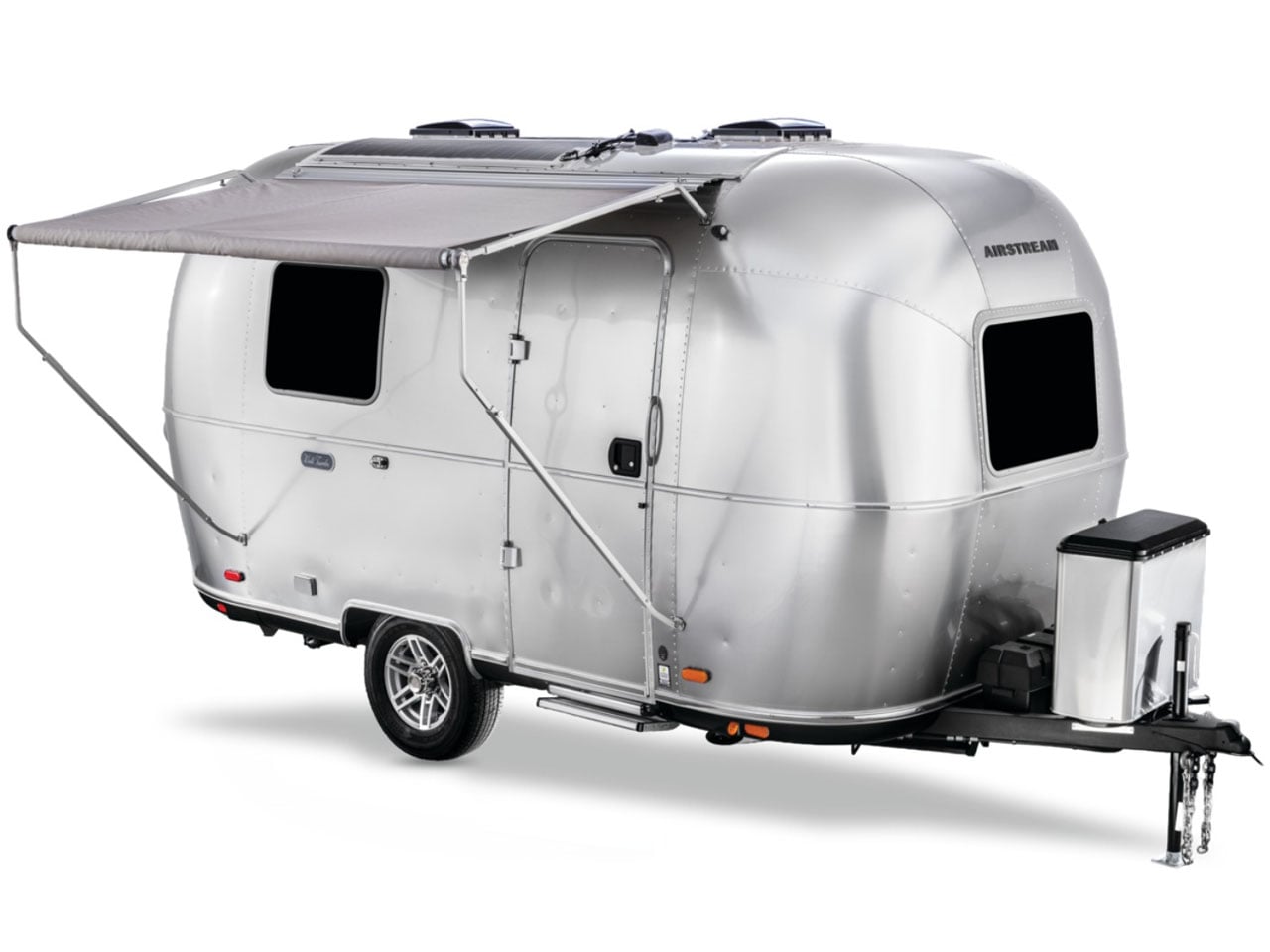
5. Airstream World Traveler 17RB
At $64,400, the World Traveler 17RB is the most accessible Airstream the brand has ever produced, undercutting the previous entry-level Bambi by $4,500. At 17 feet, it is lightweight enough to be towed by an SUV or a compact truck like the Toyota Tacoma or Ford Maverick, which immediately broadens who can realistically own one. The signature riveted aluminum shell is preserved on the outside, maintaining the Airstream identity even as the interior reflects the decisions made to hit the price point.
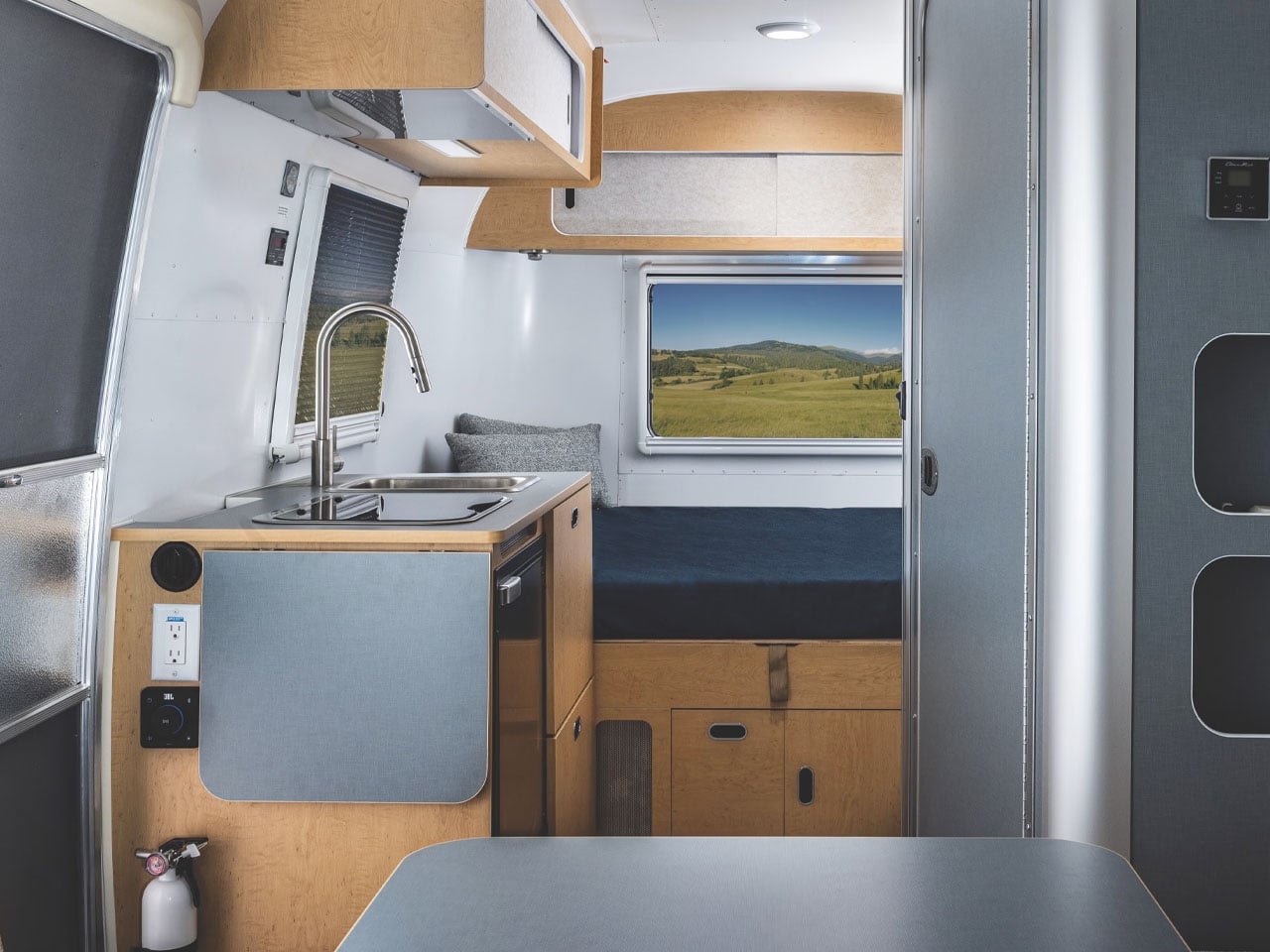
For you, the 17RB is a genuine entry point to a style of travel that usually costs considerably more. The Scandinavian-inspired interior keeps things clean with white aluminum walls and a choice of upholstery, while the extendable countertop and convertible dinette make the space work above its size. A 24-inch Smart TV, JBL audio, and Truma heating are included as standard. An optional 200W solar panel and 2.5 kWh lithium battery extend its capability into off-grid territory without needing a full electrical overhaul.
What we like:
The most affordable Airstream ever made, without sacrificing the brand’s signature exterior design language
A 3,500 lb GVWR makes it compatible with a wide range of tow vehicles most buyers already own
What we dislike:
Smaller rectangular windows replace the wrap-around glass found on pricier models, which is the most visible cost-saving trade-off on the exterior
The 2.1 cubic foot refrigerator is genuinely limited for anything beyond a short weekend trip
The Best RVs Ask More of Themselves
What the strongest RV designs of 2026 share is a refusal to treat the motorhome as a compromise. The Leisure Travel Vans and Airstream flagships push toward a level of finish that genuinely challenges what a home on wheels can offer. The Bürstner takes modularity seriously. The World Traveler 17RB makes the lifestyle reachable. HYTTE imagines what becomes possible when someone applies real architectural thinking to the category from the ground up.
Whether you are working with a $64,000 budget or closer to $290,000, the common thread running through all five is that design decisions make the difference. The cleverest storage, the most considered material choices, the layouts that genuinely account for how people move and rest in a small space: those are the things that separate a motorhome you simply tolerate from one you actually want to be inside.
Most emergency gear has a problem that rarely gets discussed: people don’t actually carry it. A multi-tool left in a drawer or a whistle packed inside a bag at home might as well not exist. Rescue whistles, in particular, haven’t changed much over the years. They’re usually afterthoughts, built to make noise rather than to be trusted or carried without a second thought.
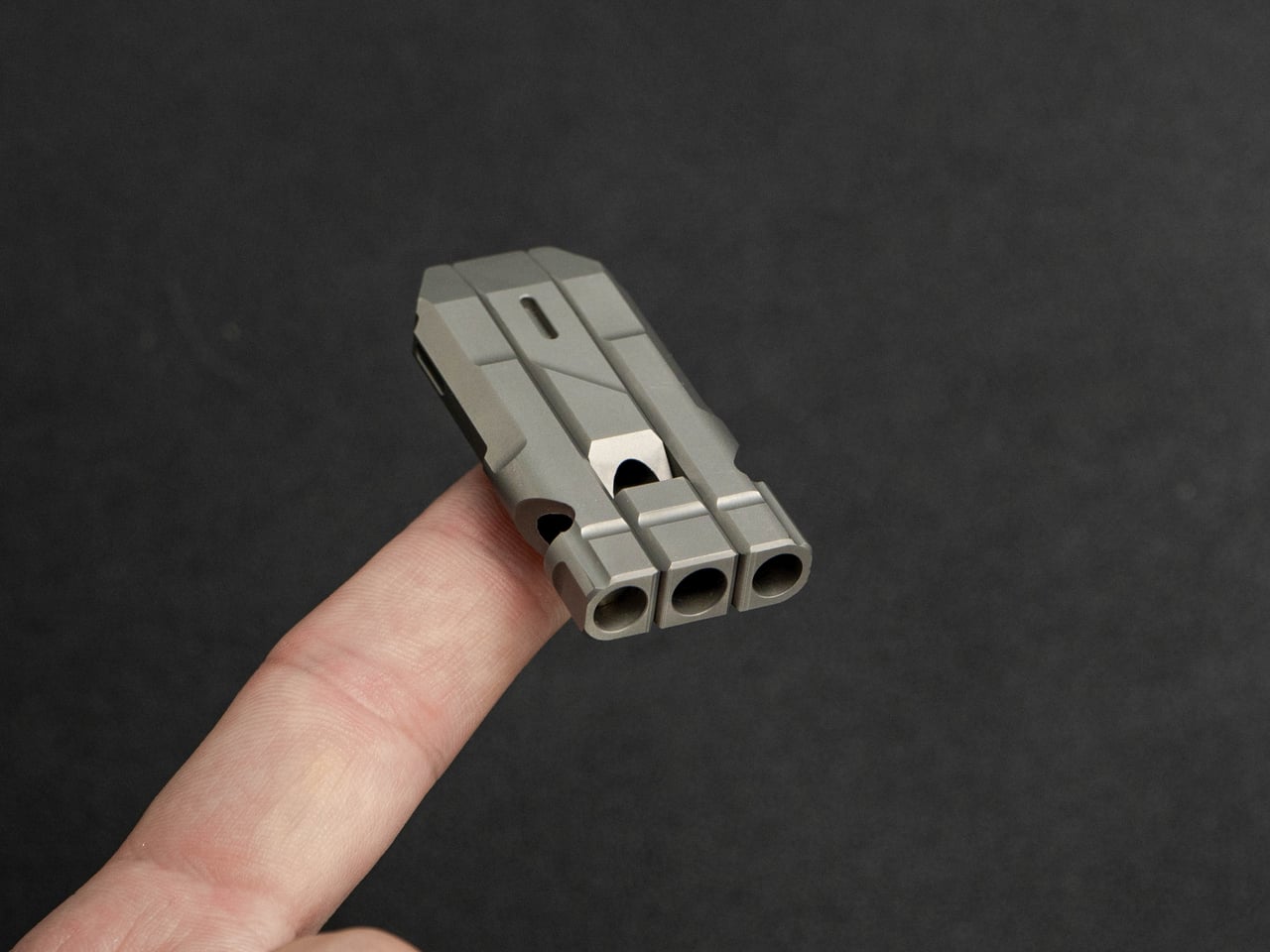
TriReso is Spark Cube’s answer to that problem. Rather than building a louder whistle, the team spent nearly two years designing a three-module system that borrows from the acoustic logic of emergency sirens: irregular, shifting frequencies that are harder for the human brain to ignore. Volume matters, of course, but the real focus is a signal that people actually hear, recognize, and can locate under pressure.
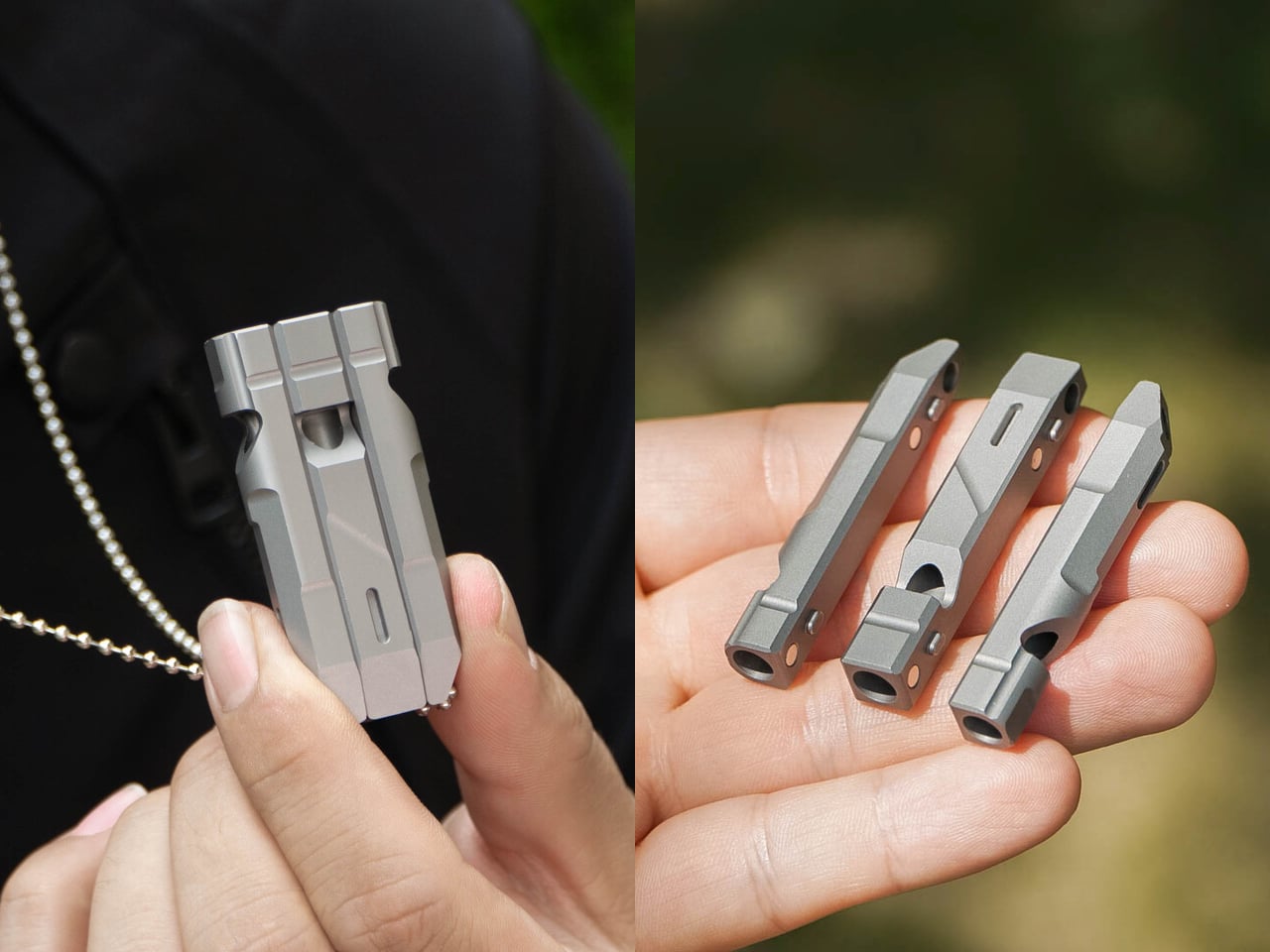
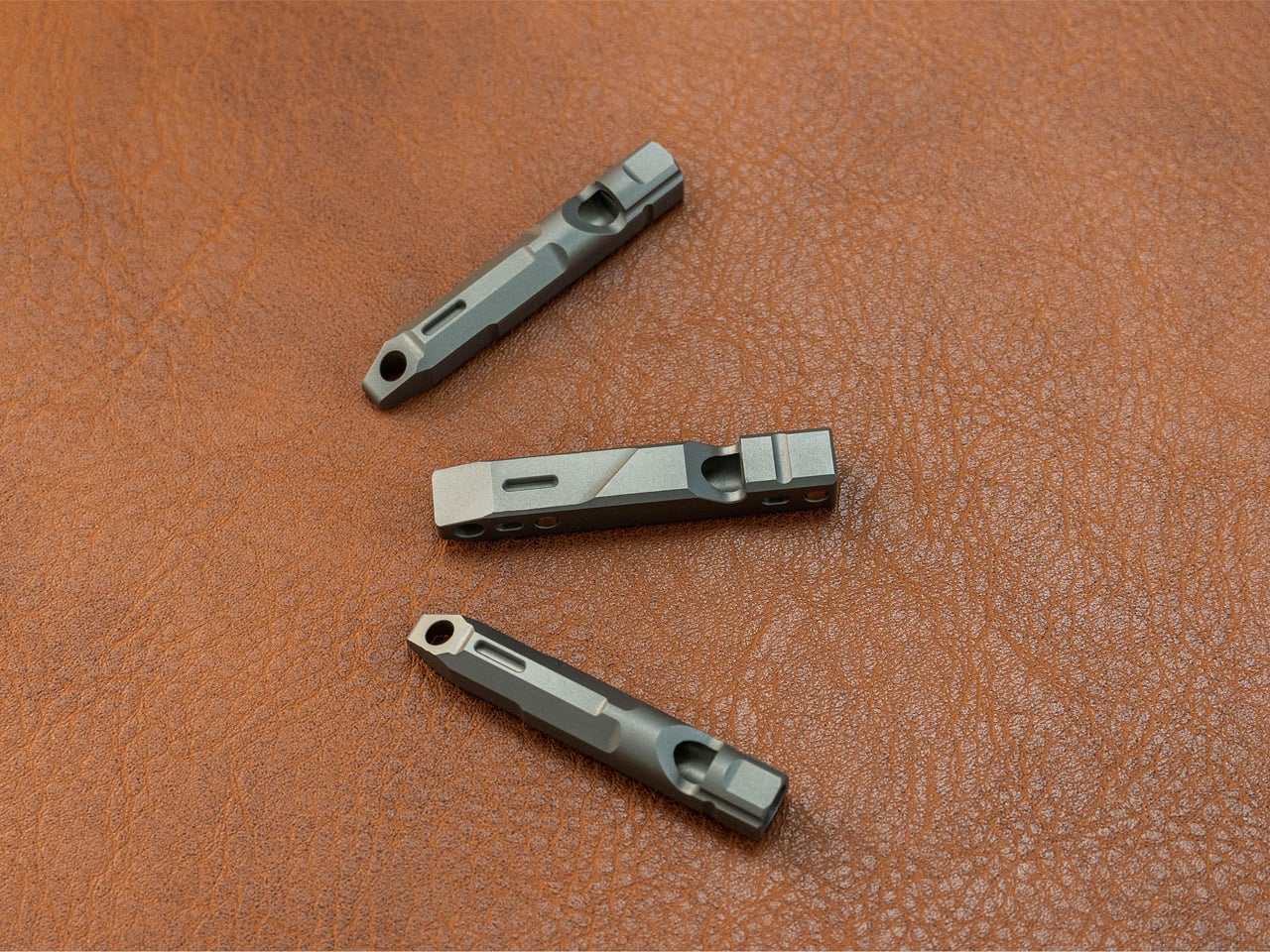
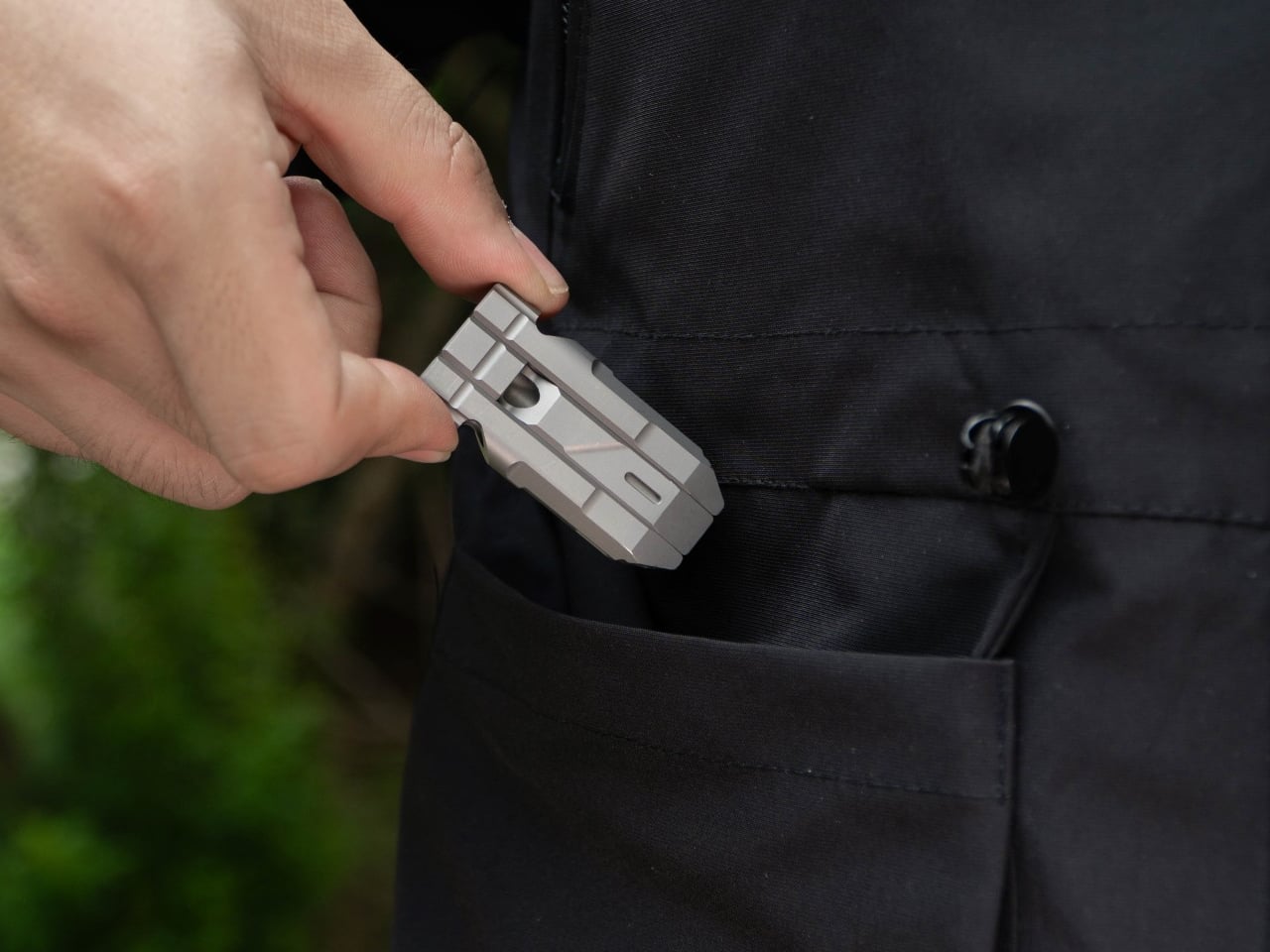
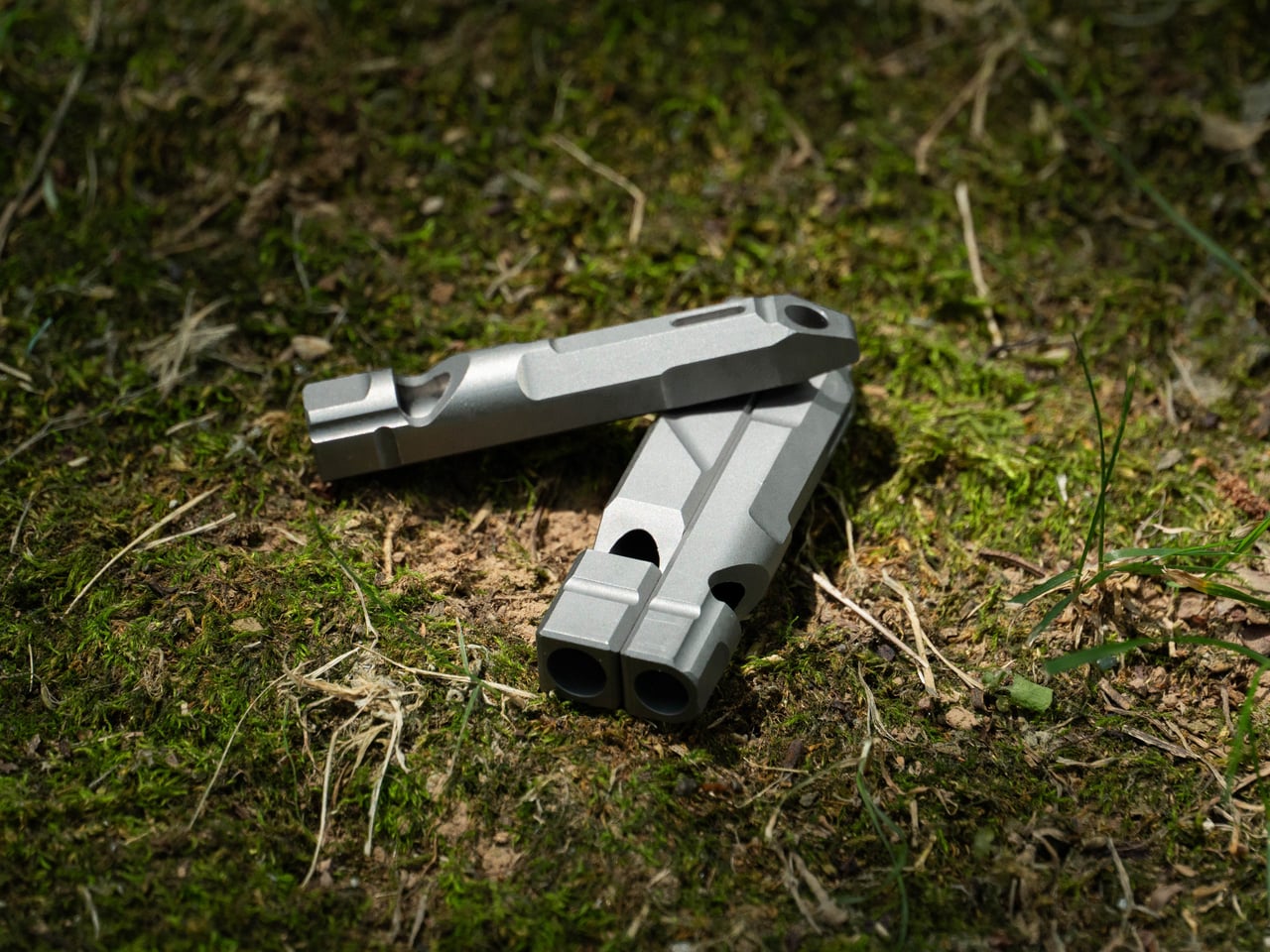
Each of TriReso’s three modules is a fully functional whistle tuned to a different frequency. The Power Chamber sits at 3,600 Hz and 110 dB, built for open terrain and heavy wind. The Alert Chamber pushes up to 4,800 Hz at 105 dB, sharp enough to cut through crowd noise. The Echo Chamber runs at 3,800 Hz and 100 dB, adding a layered resonance to the combined signal.
What makes the system interesting is what happens when those modules combine. Snap any two together, and you get one of three dual-chamber configurations, each with its own blended sound profile. Snap all three and TriReso reaches up to 120 dB, producing an irregular, multi-frequency output that shifts the way a siren does, spanning a range from 3,600 to 4,800 Hz.
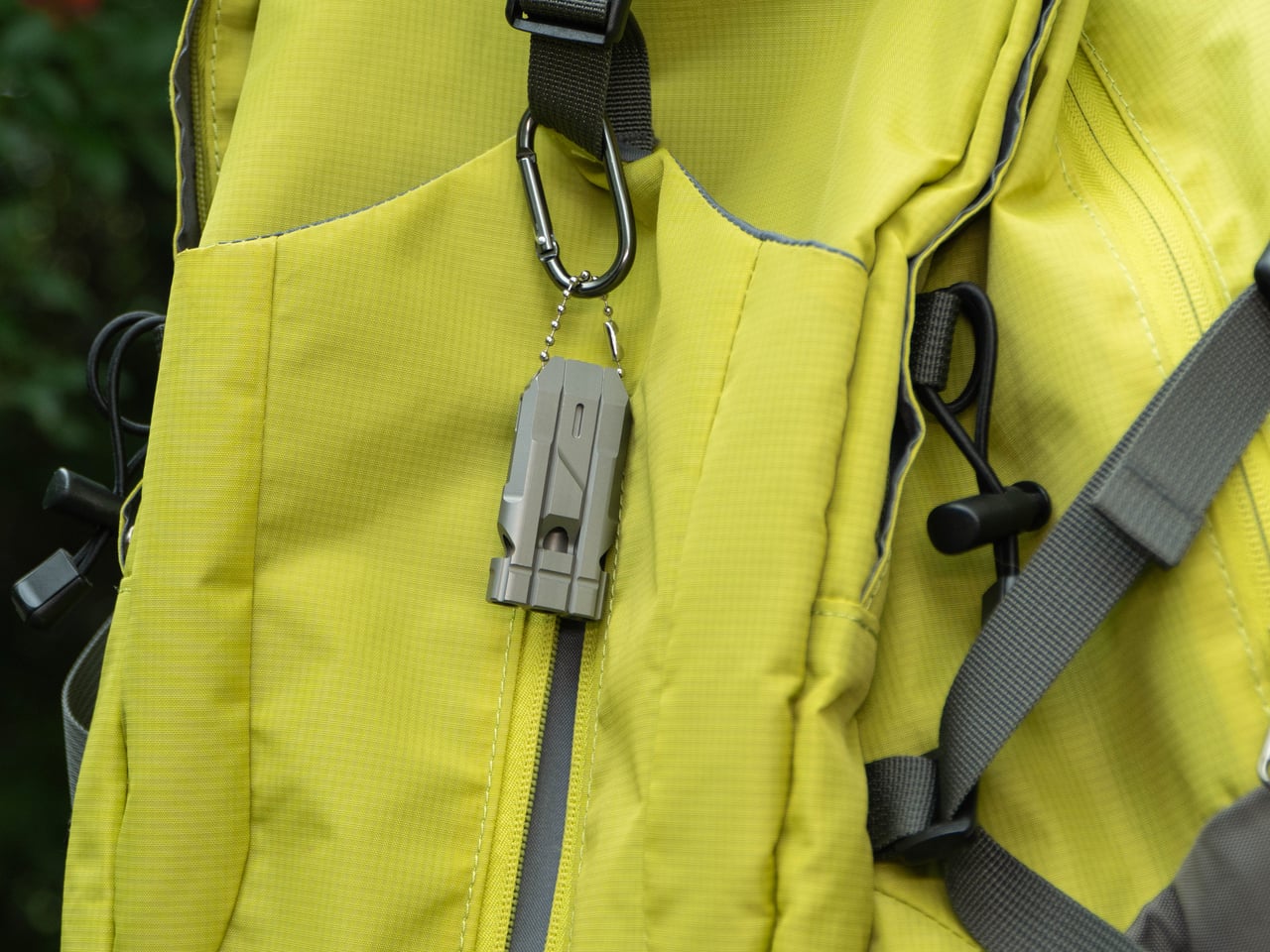
The assembly is just as considered as the acoustic concept. The modules connect through a triple-lock structure using hidden multi-point magnets and guided alignment grooves that snap them into position quickly and securely. When threaded together on a chain or cord, the lanyard holes also merge, adding another layer of physical retention. It’s a satisfying mechanism that makes switching between modes feel deliberate rather than fussy.
That modularity opens up something a standard whistle simply can’t do. Since each piece works independently, one TriReso system can be split among up to three people, which is particularly handy for group hikes, trail-running teams, or outdoor families. Instead of everyone carrying a separate whistle, one compact system distributes the coverage without adding meaningful weight or bulk to anyone’s kit.
Reliability was clearly a priority in the build. TriReso uses a pealess design, so there’s no moving ball inside that could freeze, corrode, jam with sand, or swell from moisture. Whether you’re hiking in wet weather, scrambling through dusty terrain, or digging it out of a cold jacket pocket in winter, it doesn’t need warming up. Pick it up, blow, and it works.
The material options are titanium and aluminum, and neither feels like a compromise. Titanium delivers strength, corrosion resistance, and a premium, machined feel, available in sandblasted gray or an optional PVD black finish. Aluminum keeps things lighter, coming in orange by default, with blue and green as options. Both bring the kind of build quality that makes a small tool feel worth keeping for years.
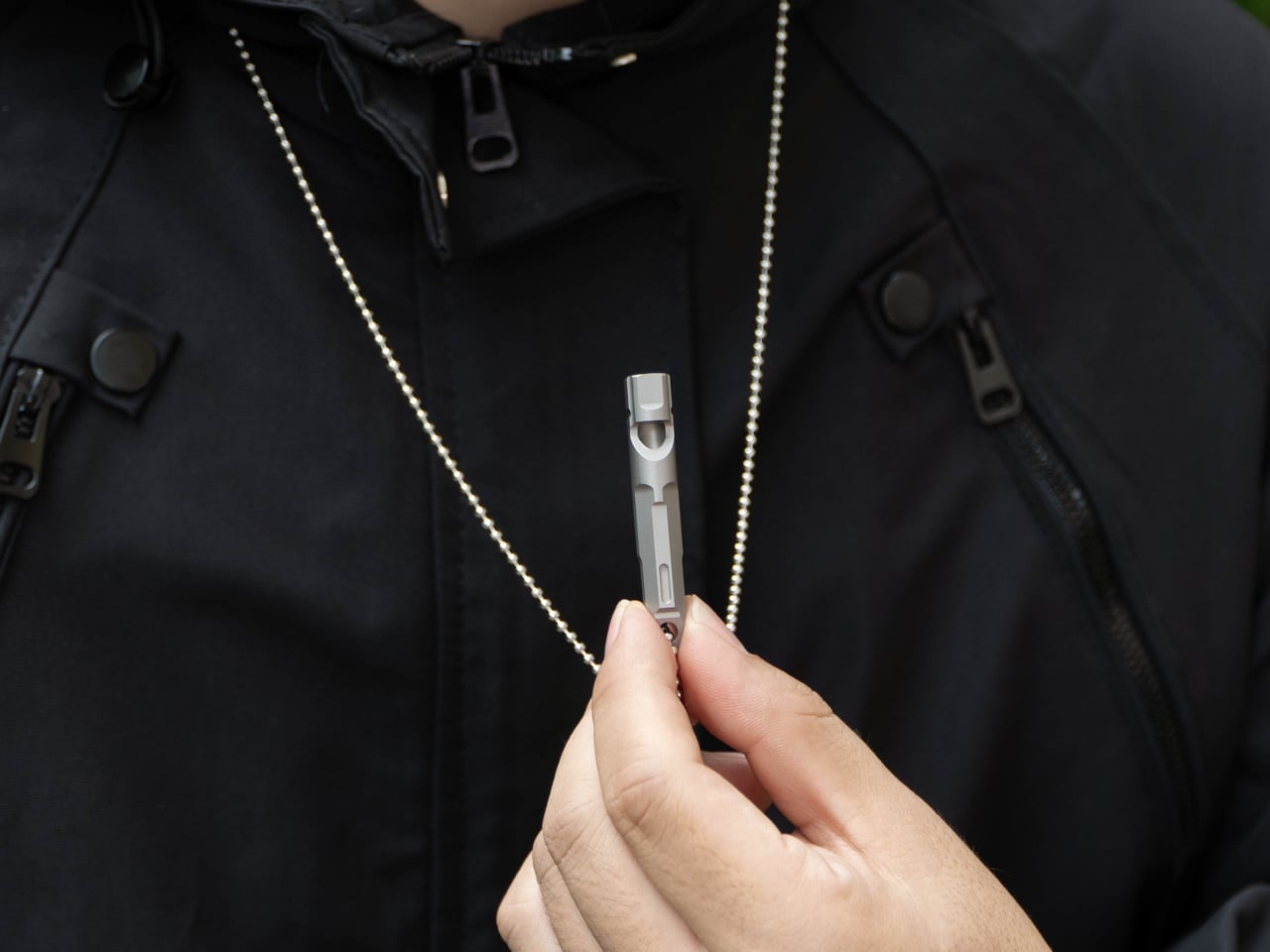
Each module has a dedicated tritium slot, which means the full system can hold up to three tritium tubes. Tritium produces its own glow for up to 25 years without a battery or charge, which keeps TriReso easy to spot in the dark. It’s a handy feature for something small enough to clip to a keychain, slide onto a backpack strap, or wear as a necklace.
There’s also an optional custom engraving, which turns it into a thoughtful safety gift for a partner, a child, or a friend. It’s a subtle touch that says something about what TriReso is going for: a tool personal enough to keep close, reliable enough to trust when things go wrong, and well-designed enough to actually want to carry every single day.
July is when outdoor gear gets honest. The products that looked good in product photography either hold up to real conditions or reveal exactly why they never should have left the studio. This month’s eight picks have done the work. Each one addresses a specific problem that the outdoor category has been managing adequately for years, then makes adequately feel like an embarrassingly low standard to have accepted.
The list covers the full arc of what a serious camp setup demands: footwear, light, power, shelter, sound, heat, inflation, and the surface you cook on. Eight products, eight design decisions that changed how their categories think about familiar problems. All of them pass the test that matters most. You pack them once and never pull them back out of the kit bag.
1. New Balance TDS MSNB1
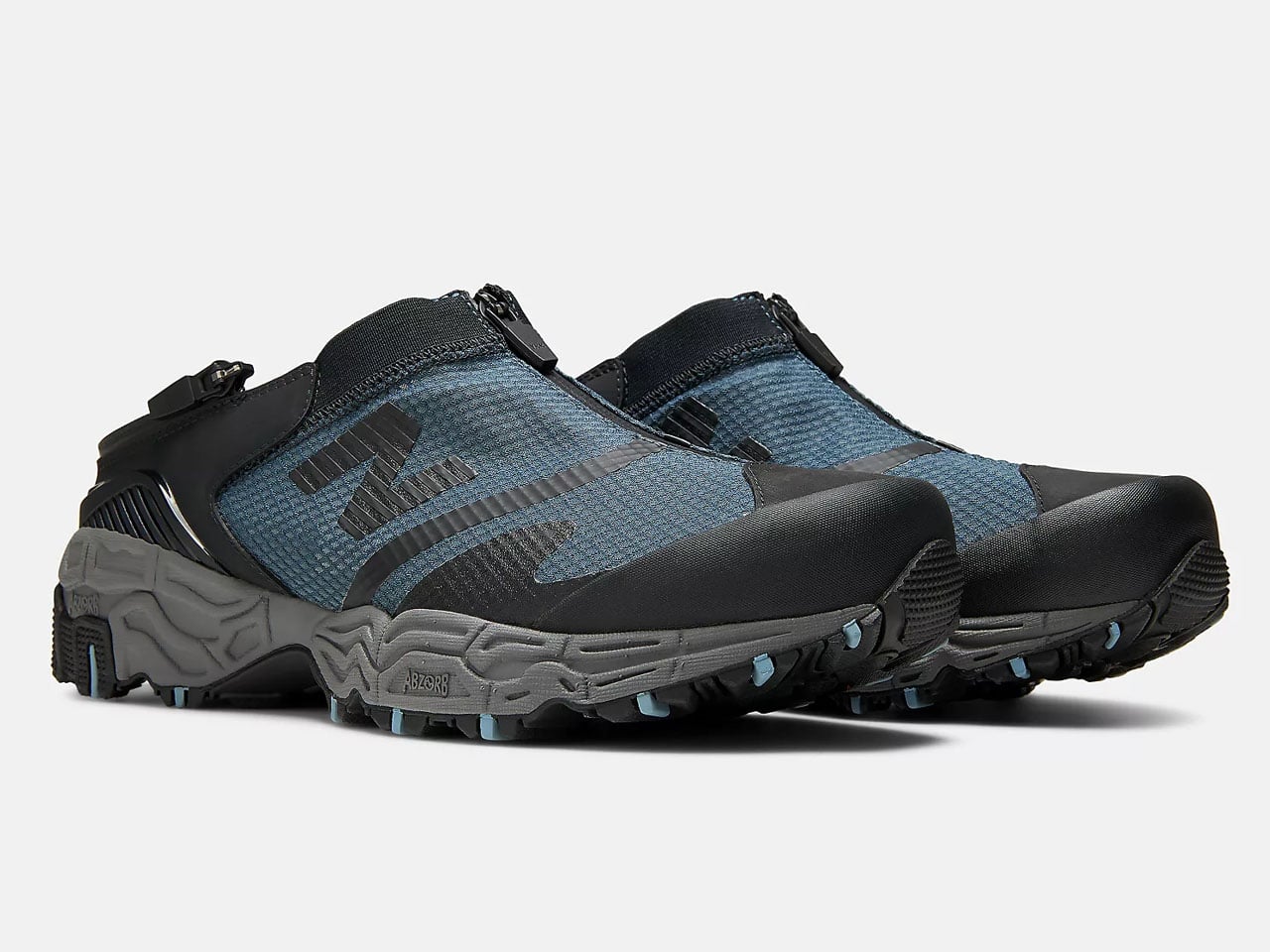
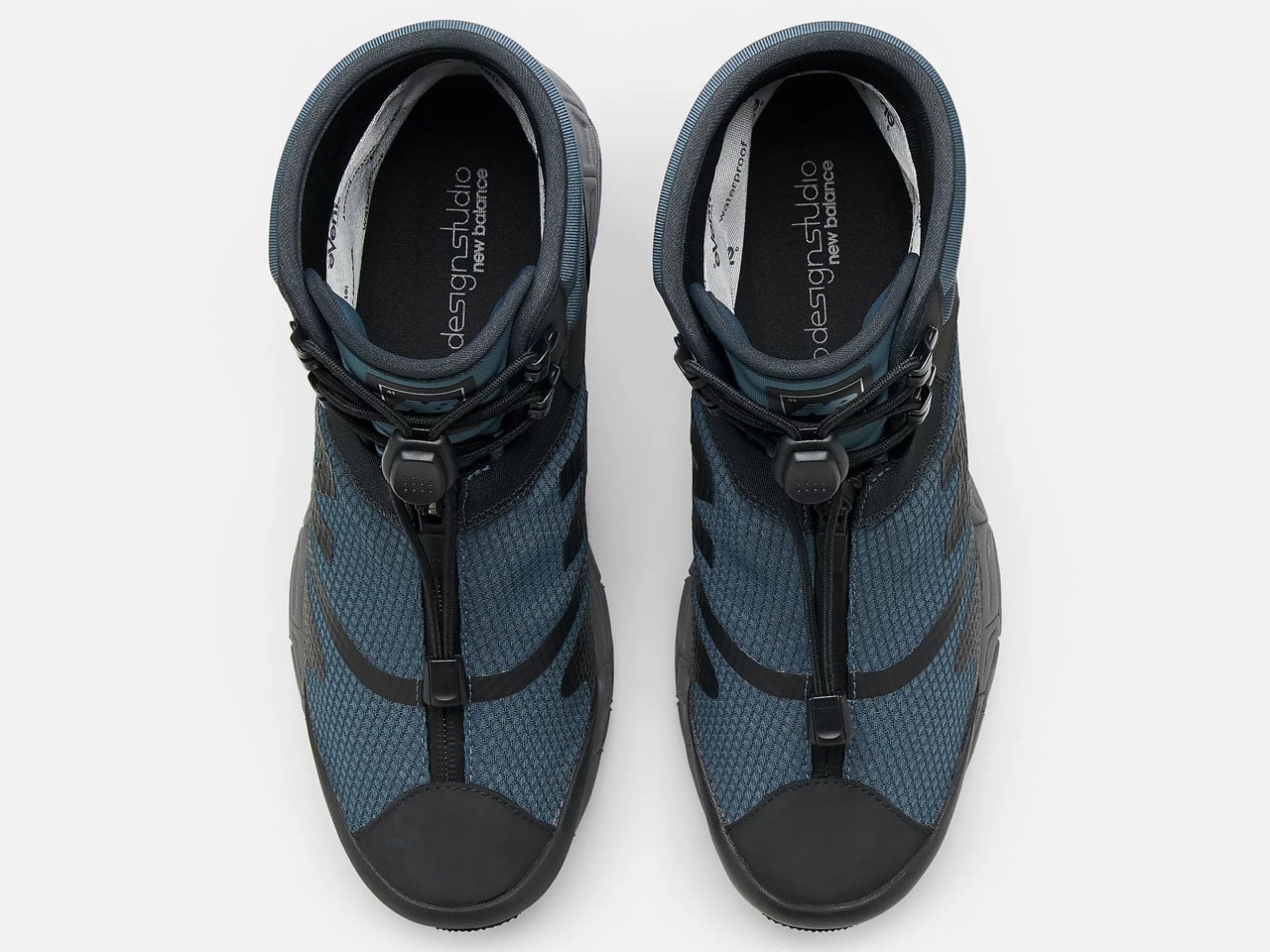
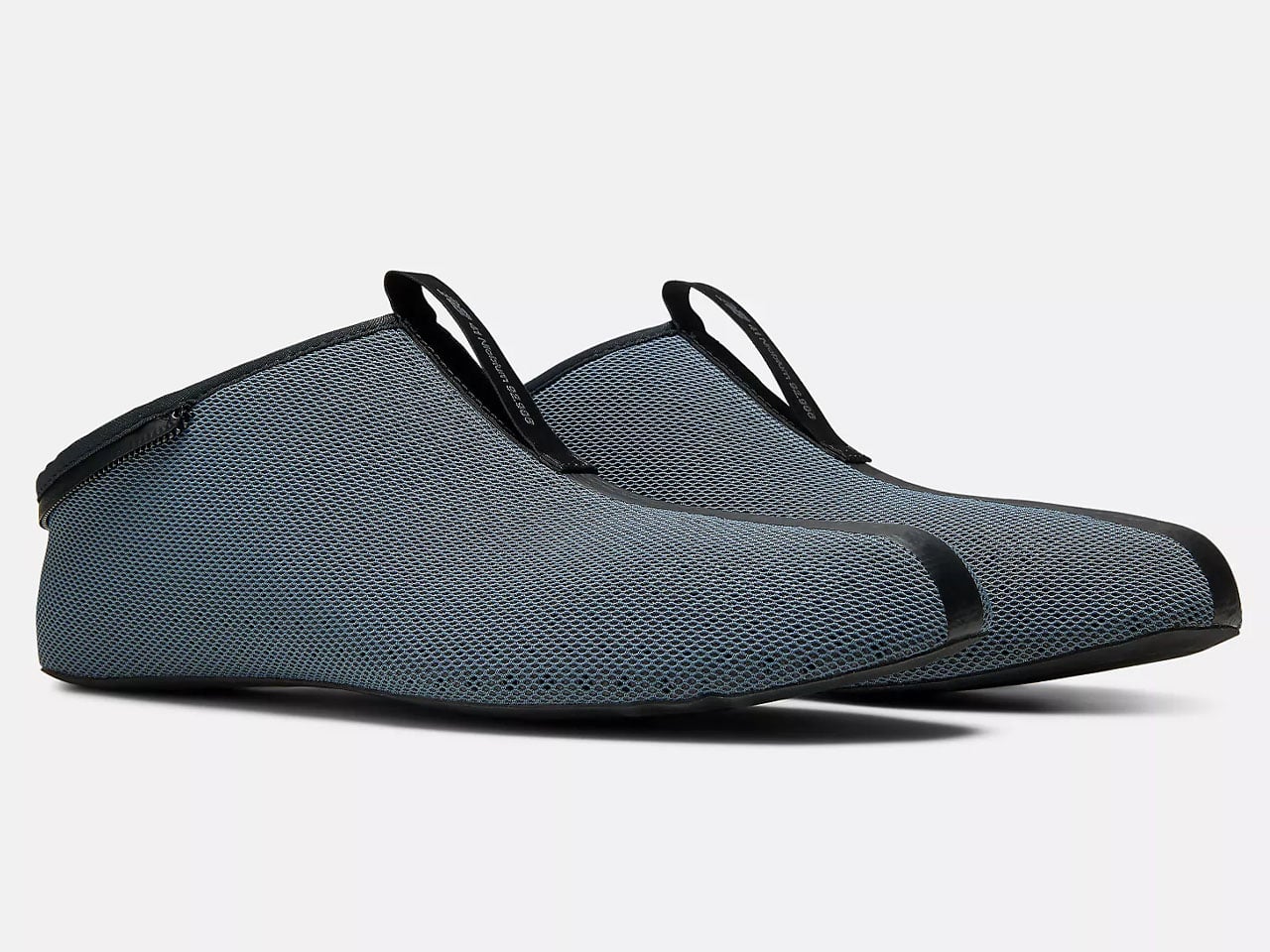
New Balance has been working through modular footwear ideas for years, and the TDS MSNB1 is where that thinking lands with real conviction. Developed alongside Tokyo Design Studio Revive, it revives the 2020 Niobium Concept 1 with the studio’s signature lifestyle sensibility built directly into the construction. The silhouette moves through three distinct configurations: a rugged waterproof boot for the trail, an outdoor mule when the terrain softens, and a camp slipper once the day is done. Three problems, one pair of shoes.
The mechanism behind all three is a zipper system that runs down the tongue and wraps around the heel, allowing components to be assembled or removed without tools, effort, or compromise to any of the individual forms. The upper is built from stretch rip-stop with welded PU overlays and an eVent waterproof membrane, while bungee elastic laces handle closure without external lace hardware. Two colorways: Zinc Blue and the more visually distinct Pistachio Butter.
What we like
One shoe, three fully resolved configurations that replace what most campers pack as three separate pairs
Tokyo Design Studio Revive’s involvement brings genuine lifestyle credibility to a performance-first silhouette
What we dislike
Three hundred dollars places it well above the casual camping footwear bracket
The bungee lace system takes a few outings to trust on uneven or technical ground fully
2. Camp Napper
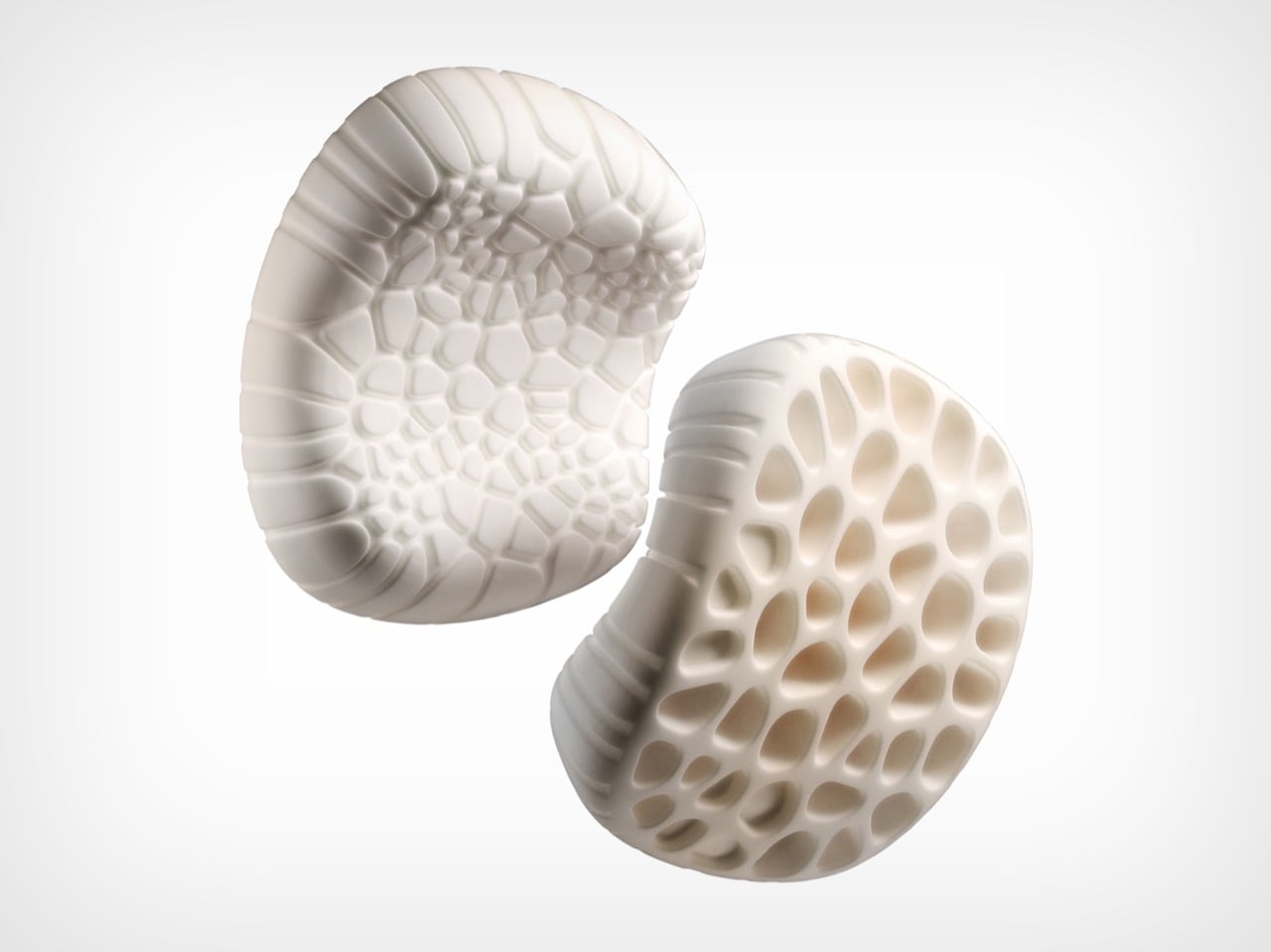
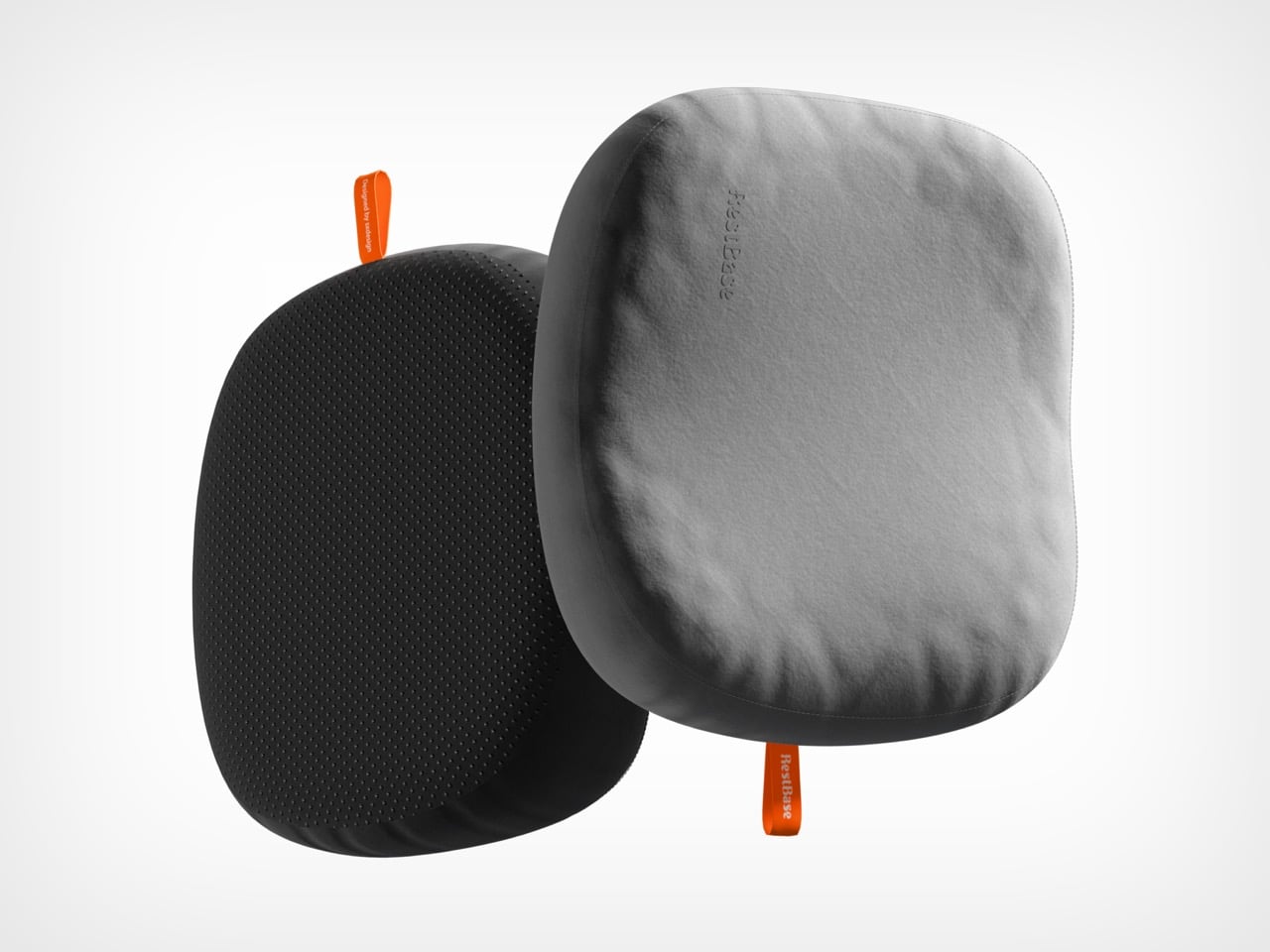
Most camping pillows solve exactly one problem: they pack small. Chen Xu started somewhere more interesting. The Camp Napper draws its form from two biological references. The surface texture of fungal spores shaped the contact face, and the hollow vascular geometry of plant stems informed the core. Voronoi polygon modelling then mapped how pressure distributes beneath a sleeping head, engineering each protrusion and recess to respond to that specific load data rather than convention or instinct.
The front face carries raised cellular structures that increase skin contact area and channel airflow through the same geometry. Four tactile zones on the back face offer orientation-dependent customization, a level of adaptability uncommon in this category. Memory foam holds the bionic form through repeated use, anti-slip rubber particles keep it stable across sleeping pads and hard floors, and the hollow stem-derived core brings total weight to around 400 grams. Packed, it reaches roughly the volume of a water cup. The cellular patterning is not for the trypophobic.
What we like
Voronoi-mapped surface addresses pressure distribution and airflow through one structural solution, not two separate ones
Four tactile zones on the back face give orientation-dependent comfort options uncommon in this category
What we dislike
The cellular surface patterning will be a hard stop for anyone with trypophobia
No published compression specification for cold-weather performance, where memory foam typically stiffens
3. BLUETTI Handsfree 2
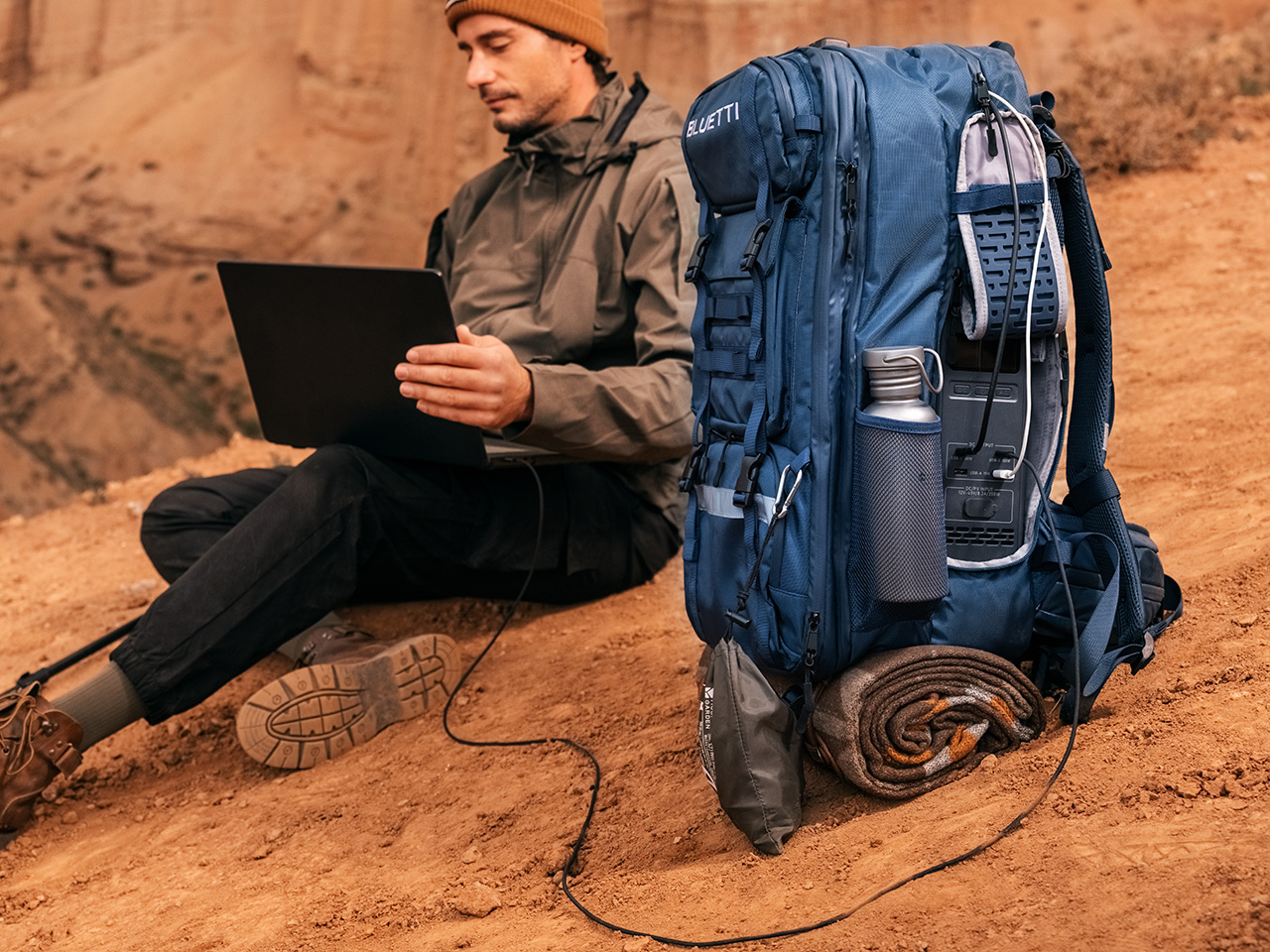
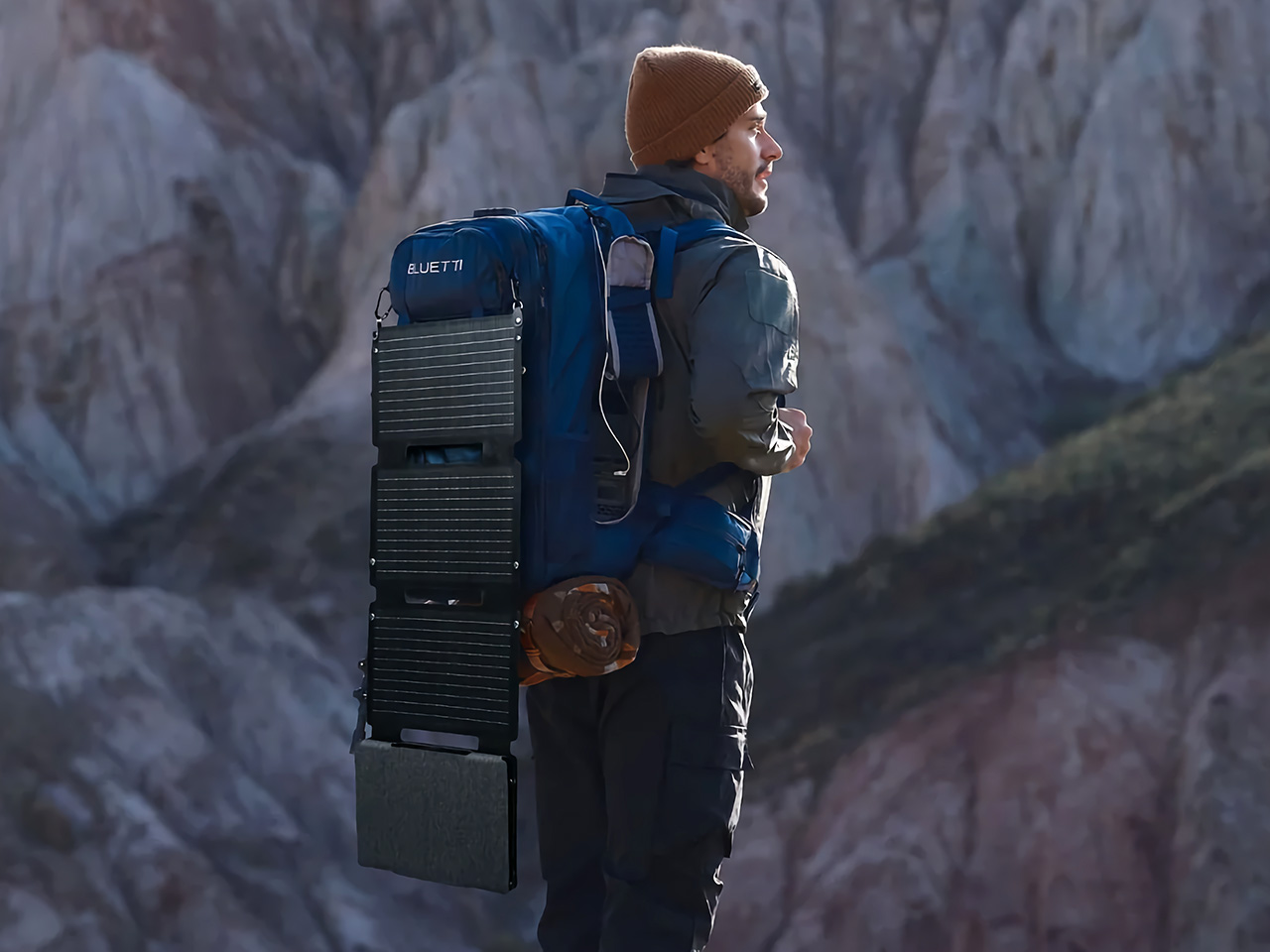
Portable power stations have always had one structural problem: they require a second carry. The BLUETTI Handsfree 2 removes it. A 512Wh LFP power station is integrated directly into a 60-liter backpack, with solar panels mounted to the pack face that charge the unit while you walk. Transit becomes charging time. The pack becomes the power plant, and the hours spent moving between locations stop being hours lost to a depleted battery waiting on a car charger.
The station delivers 700W of continuous output through dual 100W USB-C ports, dual USB-A, and a full AC outlet, with capacity for up to 350W of solar input. The LFP battery is rated for 4,000 charge cycles, placing its useful life comfortably into the next decade. The full system sits at 21.4 pounds, a real consideration on longer trail days. For photographers, van lifers, and anyone running critical devices off-grid, that trade-off is quickly resolved.
What we like
Solar panels charge the station during transit, converting walking hours into productive charging time
LFP battery rated for 4,000 cycles delivers reliable daily use across years of regular outdoor use
What we dislike
The combined 21.4-pound system weight is a genuine consideration on longer or more technical trail days
Price sits significantly above standard portable power alternatives for casual campers
4. iKamper Skycamp 3.0
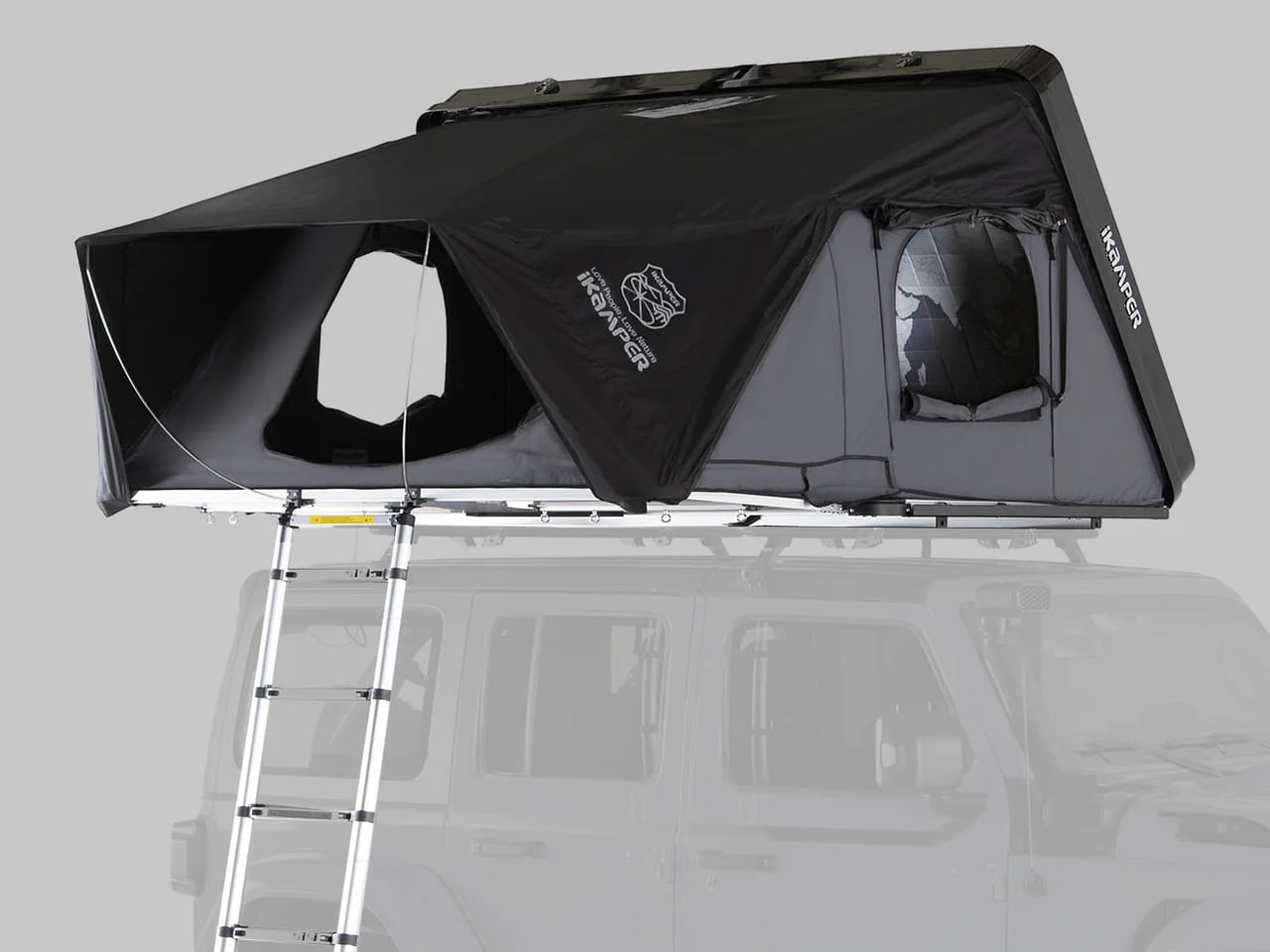
The case for sleeping on a car roof sounds counterintuitive right up until the moment you actually do it. The iKamper Skycamp 3.0 takes under 60 seconds to open from a closed hardshell into a king-size sleeping area with a 9-zone insulated mattress, blackout poly-cotton canvas, and enough interior volume to sit upright. It mounts to any standard roof rack, folds flat for regular highway driving, and eliminates the ground-level problems that experienced campers have been quietly accepting as part of the deal.
The 3.0 revision addresses what earlier versions received measured criticism on: weatherproofing, ladder rigidity, and seam integrity under sustained rain. The aerodynamic FRP hardshell manages highway speeds without lift or noise, and the quilted interior handles both summer heat and serious cold across a genuine four-season range. It sleeps four comfortably and works best as a two-person setup, where the extra space becomes a reason to extend the trip rather than wrap it up on schedule.
What we like
Sub-60-second deployment from closed hardshell to king-size sleeping area makes spontaneous overnight stops entirely viable
Four-season construction handles real weather without requiring a specific temperature window to perform
What we dislike
At 163 pounds, installation requires additional hands and a roof rack rated for significant dynamic load
Premium price presents a genuine barrier for campers who head out only a handful of times a year
5. TMB The Modular Bottle
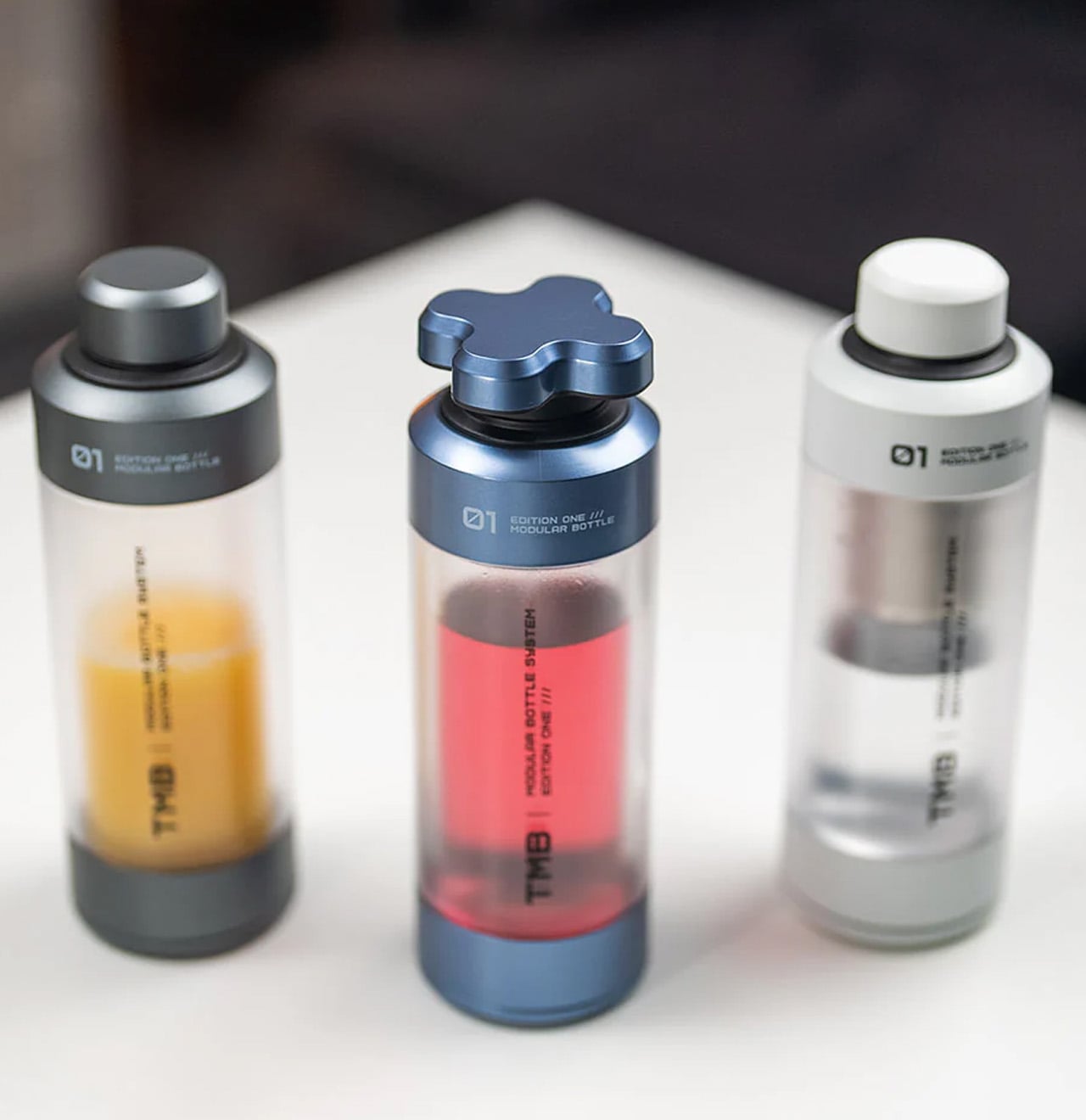
Hydration gear has a design problem few products acknowledge: one bottle cannot simultaneously optimize for commuting, exercise, and trail hiking. The TMB Modular Bottle builds adaptation into the object itself rather than asking the user to compromise. The borosilicate glass interior preserves drink flavor without absorbing taste or odor, a material property that separates it from the steel and plastic alternatives dominating this category. A translucent mid-section gives a constant view of remaining liquid, removing minor but real friction from the outdoor day.
The modular design allows configuration changes based on activity. For camping specifically, the glass interior means whatever goes in tastes like itself rather than the container it traveled in. Easy disassembly addresses the stale odor buildup that makes most reusable bottles genuinely unpleasant after weeks of real use, a problem the category rarely admits exists and rarely solves structurally.
What we like
Borosilicate glass preserves drink flavor without imparting taste or odor, a material advantage over steel or plastic
The translucent mid-section gives a real-time view of remaining liquid that opaque bottles hide
What we dislike
Glass interiors, even borosilicate, carry more breakage risk than steel alternatives in rough outdoor handling
Modular assembly adds cleaning complexity compared to a single-body bottle
6. Camprit TiStove
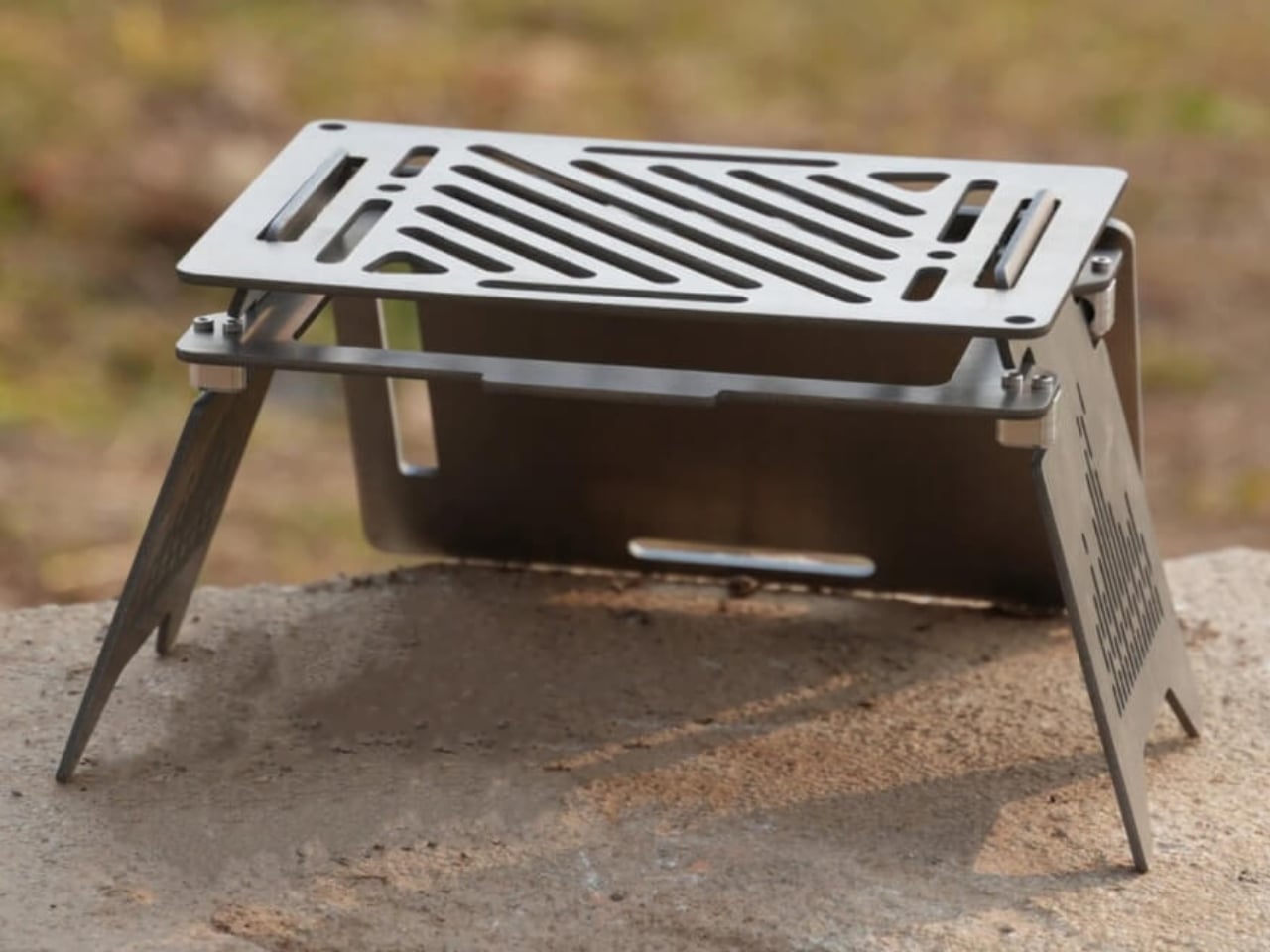
Five flat pieces of Grade 5 titanium: two foldable legs and three interchangeable cooking panels that pack completely flat and come in under 1.5 pounds. Camprit’s insight was direct. Most camp stoves commit you to a single cooking method. The TiStove gives you three, with panels that reconfigure for boiling, grilling, or open-fire cooking. The spare panels double as a windshield. As heat accumulates, the titanium changes color naturally, giving each stove a cooking history that is entirely its own.
What the design removes is as important as what it adds. No ignition system to fail at altitude. No gas canister threading to seize in the cold. No assembly logic that requires a manual at a dark campsite. The pieces lock together mechanically without fasteners and come apart in seconds. Compatible with wood, gas burner, and alcohol, it stays adaptable wherever the trip leads. For anyone who has stood over a failed stove in deteriorating conditions, this addresses that problem at its origin.
What we like
Packs completely flat at under 1.5 pounds with three interchangeable cooking panel configurations
Compatible with any fuel source including wood, removing dependency on specific cartridges or canisters
What we dislike
Nothing is self-contained: a separate burner or fuel source is required out of the box
Titanium panels need careful stacking during packing to avoid surface contact and scratching in transit
7. FLEXTAIL TINY PUMP 2X
Inflating a sleeping pad by lung at the end of a long trail day is one of camping’s least dignified rituals, and the FLEXTAIL TINY PUMP 2X removes it without adding meaningful weight to the kit. At 96 grams and sized to fit inside a closed fist, it inflates a full sleeping pad in under a minute using AIRVORTECH technology that pushes moisture-free air through the valve, protecting pad materials from the internal condensation damage that repeated lung inflation causes over time. One button. Multiple inflation cycles per charge.
The TINY PUMP 2X earns its slot beyond inflation. It deflates gear for packing, functions as a vacuum pump for compression bags, and directs focused airflow onto embers to get a fire going, a genuinely useful cross-category function that most camp pumps never consider. A lantern mode adds ambient light during tent setup. At 96 grams covering inflation, deflation, vacuum, fire-starting, and ambient lighting, it permanently displaces four separate tools from the kit without a moment of regret.
What we like
Moisture-free airflow protects sleeping pad materials from internal condensation damage caused by repeated lung inflation
96 grams covers five distinct camp functions, replacing multiple tools at almost no weight cost to the pack
What we dislike
Output pressure suits camping inflatables rather than high-pressure tasks like bike tires or boat chambers
Lantern mode is ambient rather than functional and not a substitute for dedicated camp lighting
8. Hot Pocket
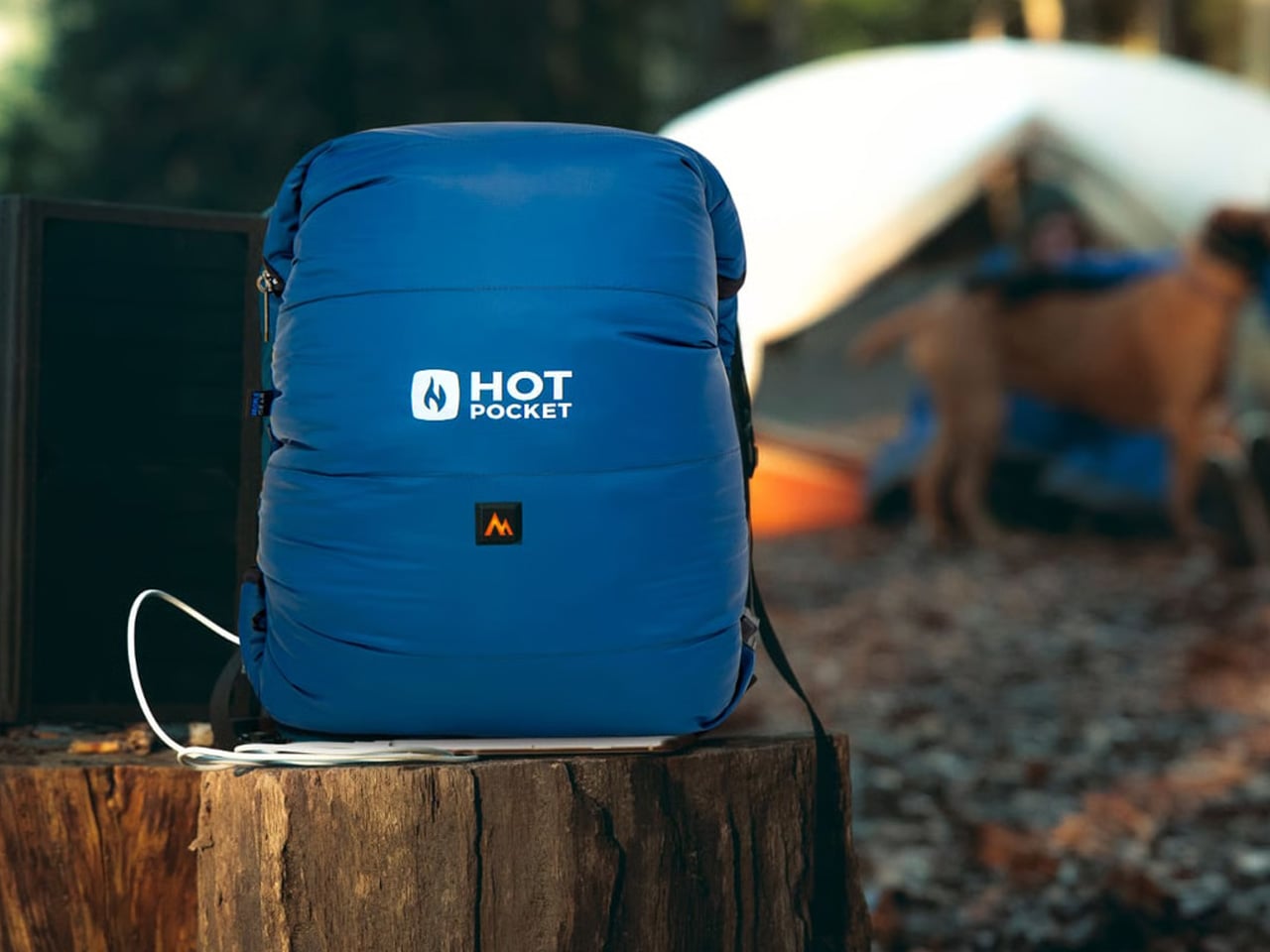
Cold sleeping bag syndrome follows a predictable pattern: zip in, spend the first twenty minutes waiting for body heat to build, arrive at warmth already half-asleep and irritated. The Hot Pocket, created by the Sierra Madre team, breaks that cycle before it starts. Rather than relying on the sleeper’s body to do the thermal work, it pre-heats the insulation directly, so the first moment of contact is already warm rather than a test of patience.
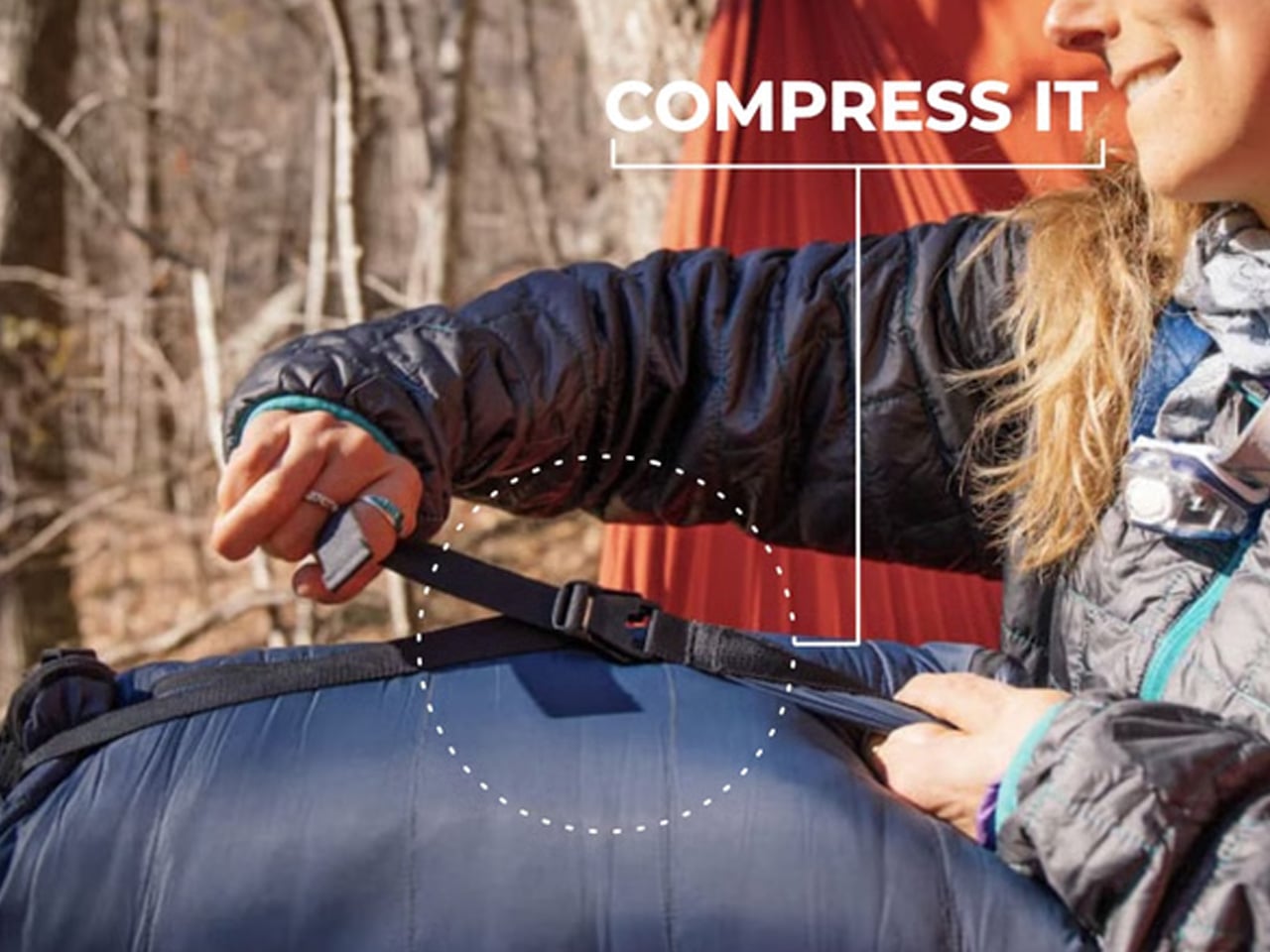
The system is wireless and portable, designed for use beyond the campsite: ski slopes, sports sidelines, anywhere pre-warmed insulation changes the experience. It also handles compression and storage during the day, integrating a task the sleeping bag needed done regardless and adding warmth as a built-in function of the same object. The on-demand heating replaces disposable chemical heat packs, which degrade after a single use and accumulate as waste across a season of regular use.
What we like
Pre-heating eliminates the body-heat warm-up window that makes the first stretch in a cold sleeping bag genuinely unpleasant
Integrated compression and heating replace disposable chemical packs with a reusable, on-demand solution
What we dislike
Wireless operation adds battery management to the camping checklist, with no published battery life data to plan around
Pre-heating duration and heat retention remain unspecified, making it difficult to judge the product’s actual warming window in practice
The Gear Holds. The Excuses Don’t.
July outdoor gear earns its weight in both directions: what it contributes to the trip and what it removes from the planning. Everything here does both. The New Balance shoe replaces three pairs. The TINY PUMP displaces four separate tools. The design intelligence in this month’s picks is not decorative. It is structural, built into the objects from the first decision made about each one.
The best outdoor gear disappears into the experience. None of these products demand attention or special handling once they are in use. They function across the full range of what a day and night outdoors requires without asking to be managed. That reliability is what separates a product worth keeping in the kit permanently from one that earns a single trip and gets quietly phased out before the next one is ever planned.
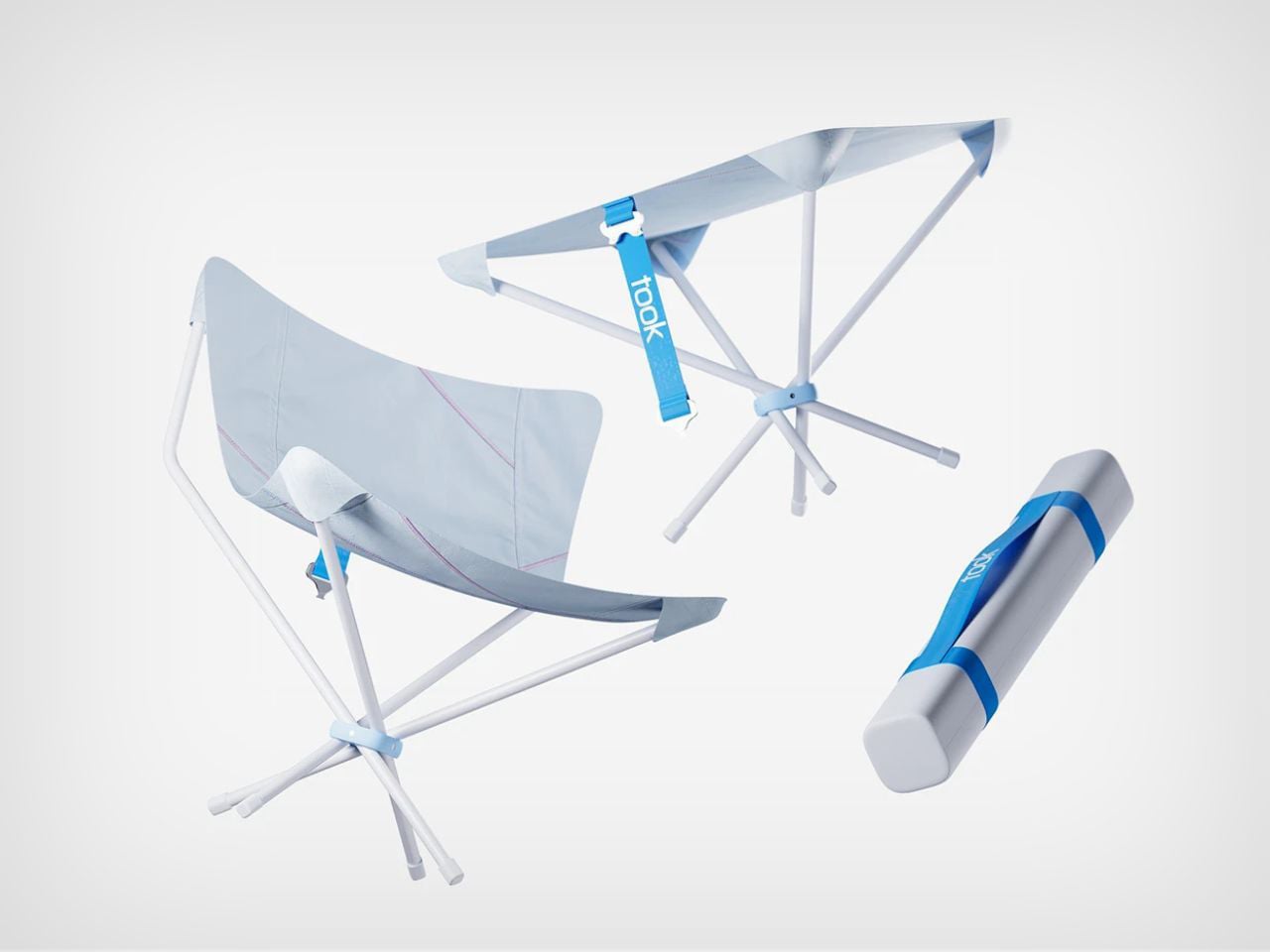
A car may be designed to get you from one place to another, but the most memorable parts of a journey often happen in the pauses. The roadside stop. The quiet view after a long drive. The spontaneous coffee break that turns into an afternoon outside. Took, an industrial design and mobility lifestyle concept, builds its entire experience around those in-between moments.
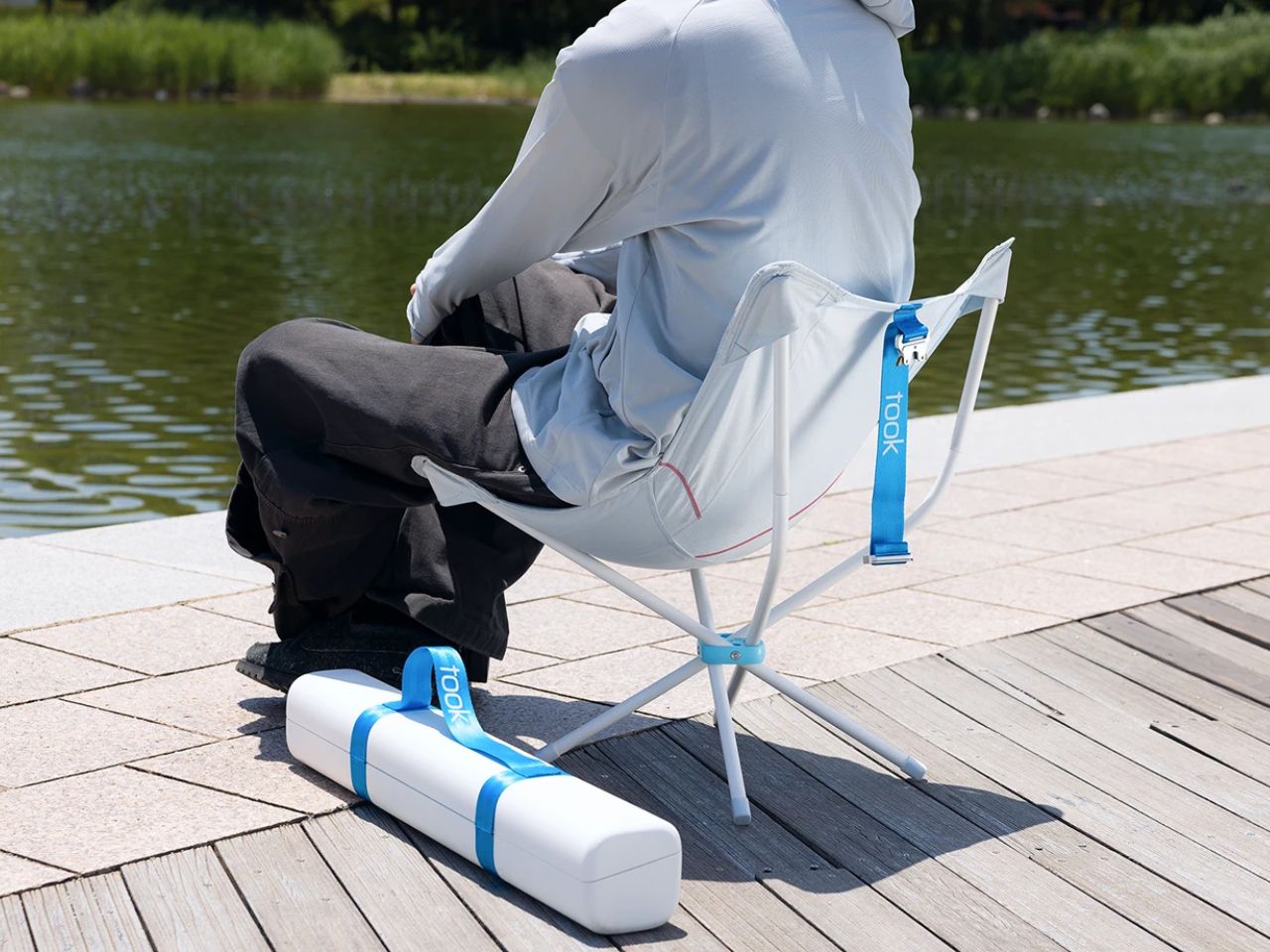
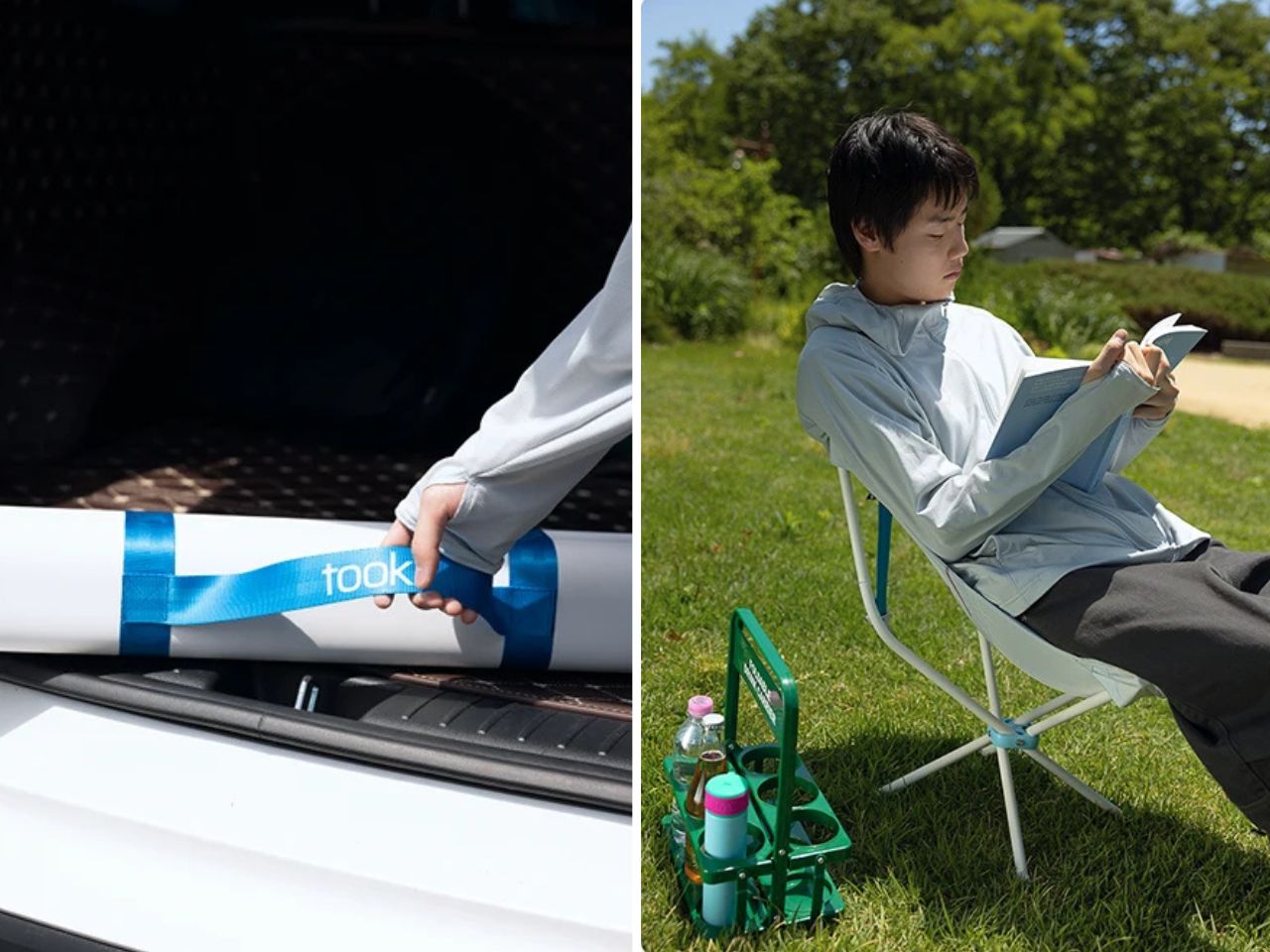
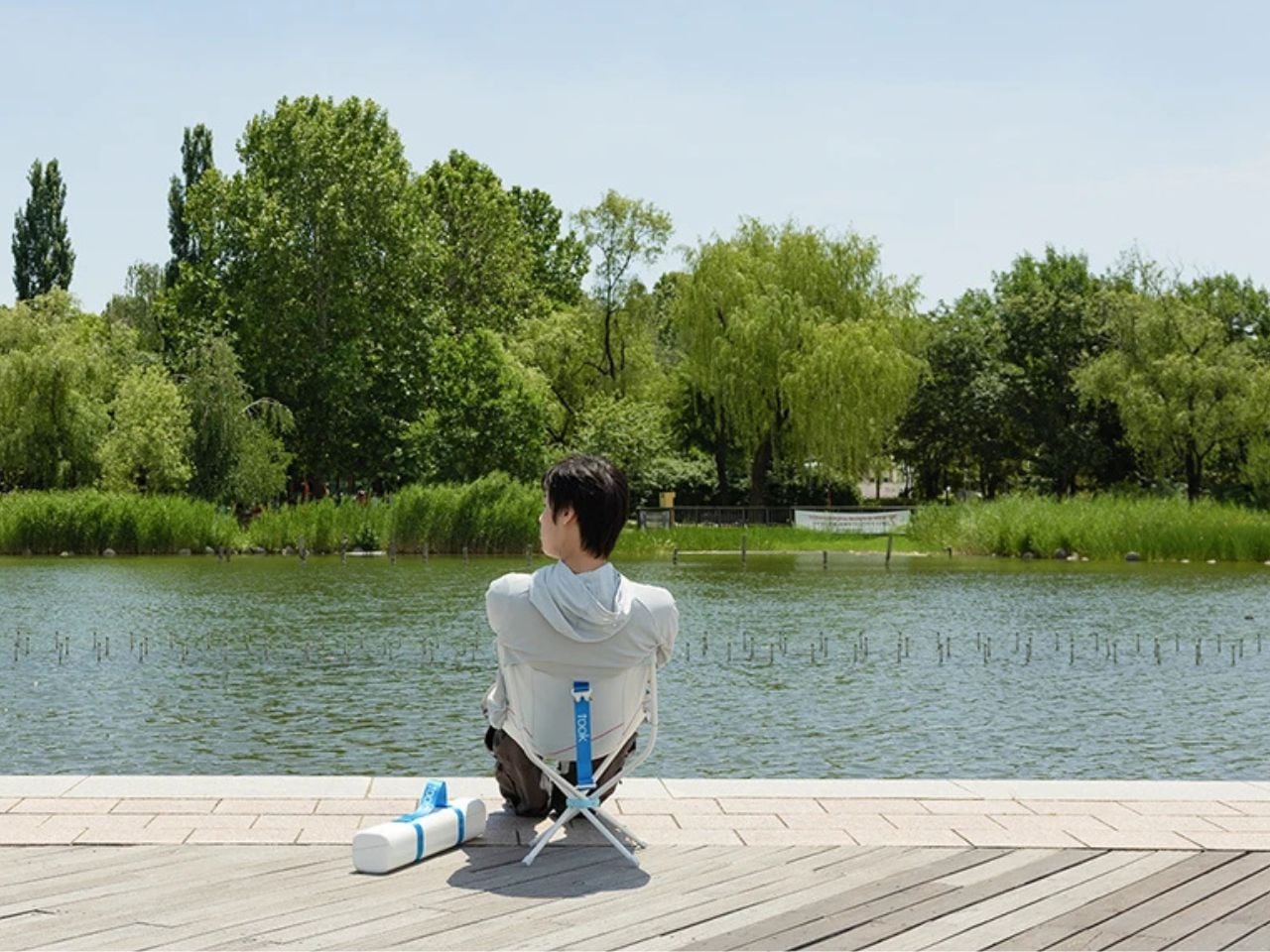
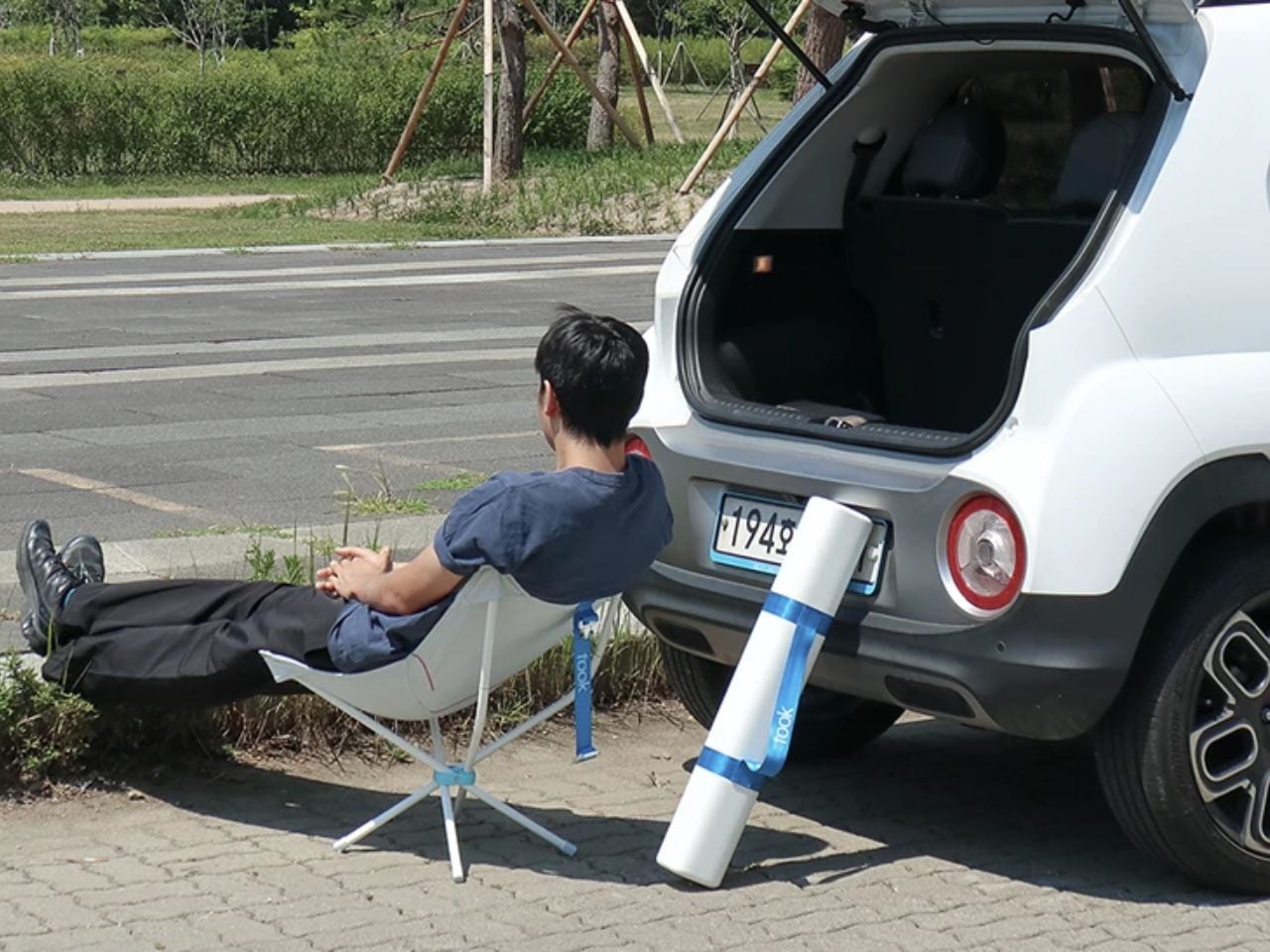
At its core, Took is a portable chair system designed for people who see driving as more than transportation. It responds to a growing shift in mobility culture, where car-based lifestyles are becoming lighter, more casual, and more integrated into everyday life. Auto camping and quick outdoor breaks turn the vehicle into a small basecamp for rest, play, and self-expression. Took fits neatly into this world by staying ready in the trunk, waiting for the moment someone decides to stop, unfold, and simply enjoy where they are.
What makes the idea compelling is that it does not frame sustainability as a heavy responsibility. Instead, Took presents it as a style of living. The project defines this attitude as “Eco-core,” a lifestyle where green values become part of personal expression rather than a grand statement. Much like carrying a tumbler or picking up litter during a walk, sustainability here feels casual, visual, and habitual. Took imagines what that mindset could look like in a mobility lifestyle: familiar drives becoming small adventures, and ordinary stops becoming opportunities for more mindful rest.
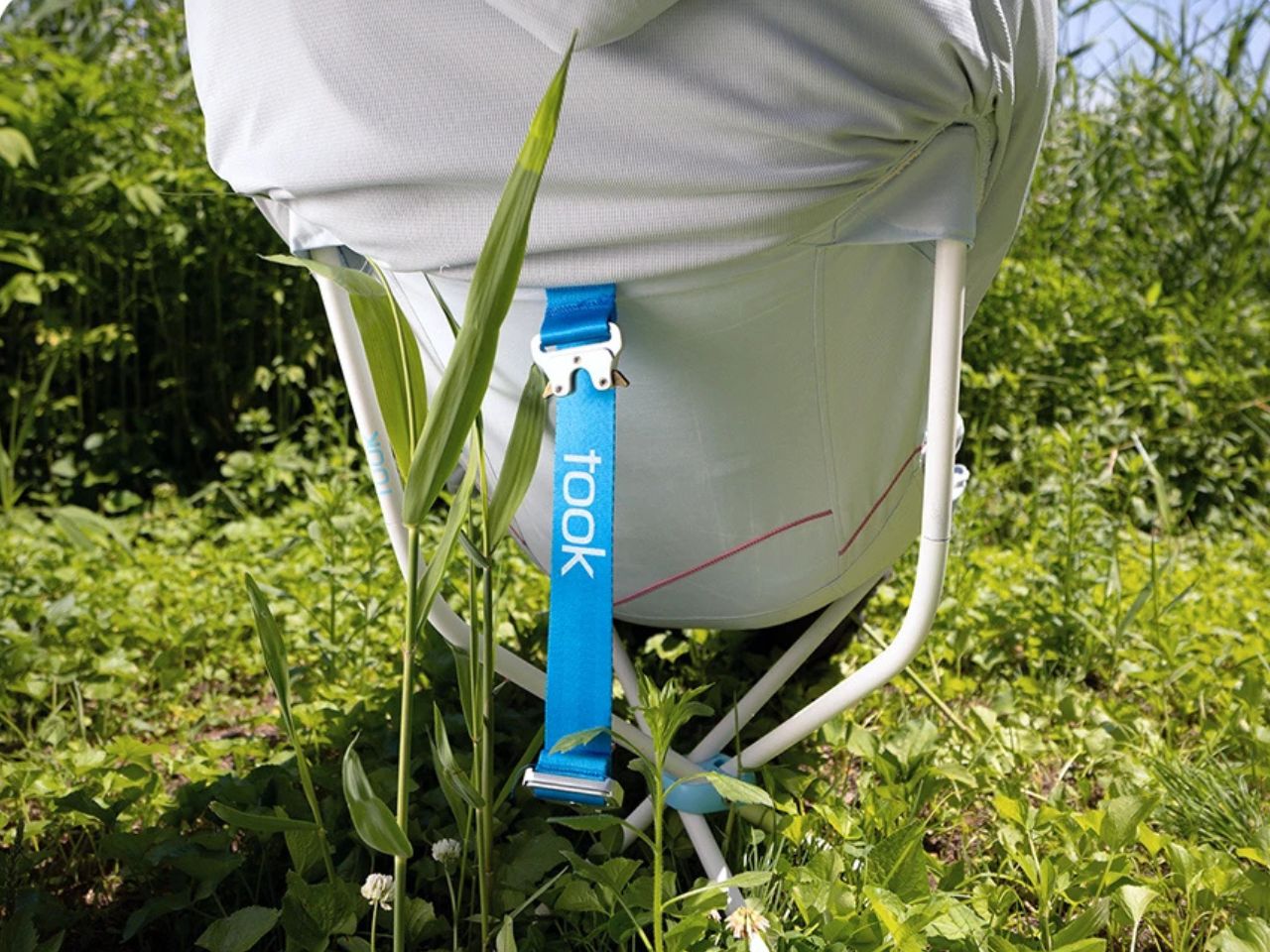
The material story gives the product its emotional weight. When cars reach the end of their life, airbags and seatbelts are usually discarded, despite being made from materials engineered to protect, absorb impact, and bear load. Took reclaims these materials and gives them a second role. Once designed to guard the driver during movement, they now support the driver during stillness. It is a thoughtful form of recycling because it preserves the memory of the car’s protective function while giving it a new, softer purpose.
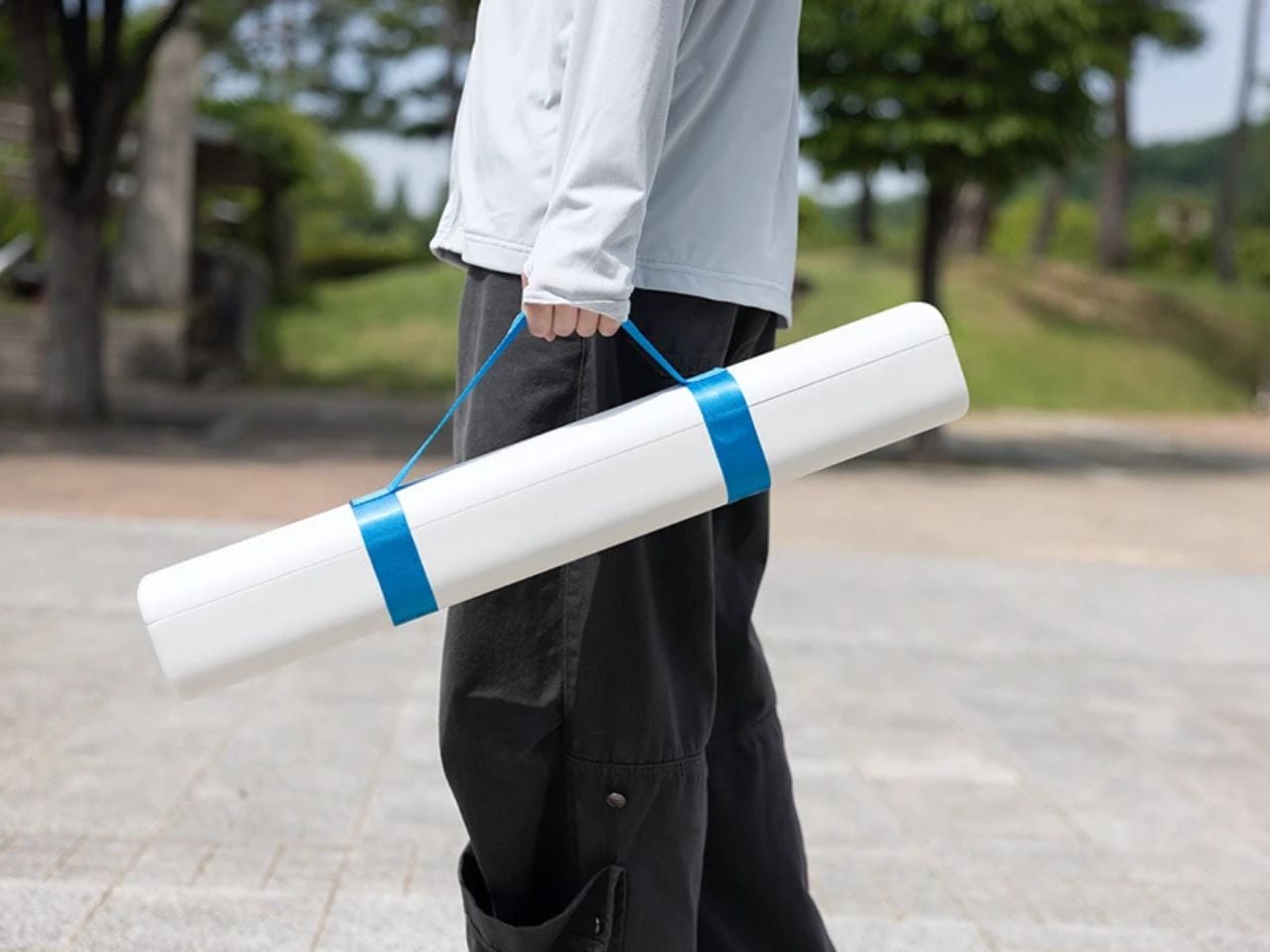
The chair itself is designed around immediacy. Conventional outdoor gear can feel like an entire event before the actual rest even begins. Took removes that friction through a compact case, strap handle, and one-touch hinge mechanism. The case fits neatly in the trunk, keeps the chair protected, and makes it easy to carry from car to destination. Once there, the system unfolds in a single motion. Extend the legs, drape the recycled skin, and the chair is ready. The gesture is simple enough to feel almost ceremonial: arrive, open, rest.
That simplicity is important because Took is not trying to compete with heavy-duty camping equipment. It is designed for the light, everyday outdoor moment. A short break during a road trip. A sunset stop after work. A quiet parking spot by the water. It makes comfort feel accessible without demanding planning, packing, or a complicated setup.
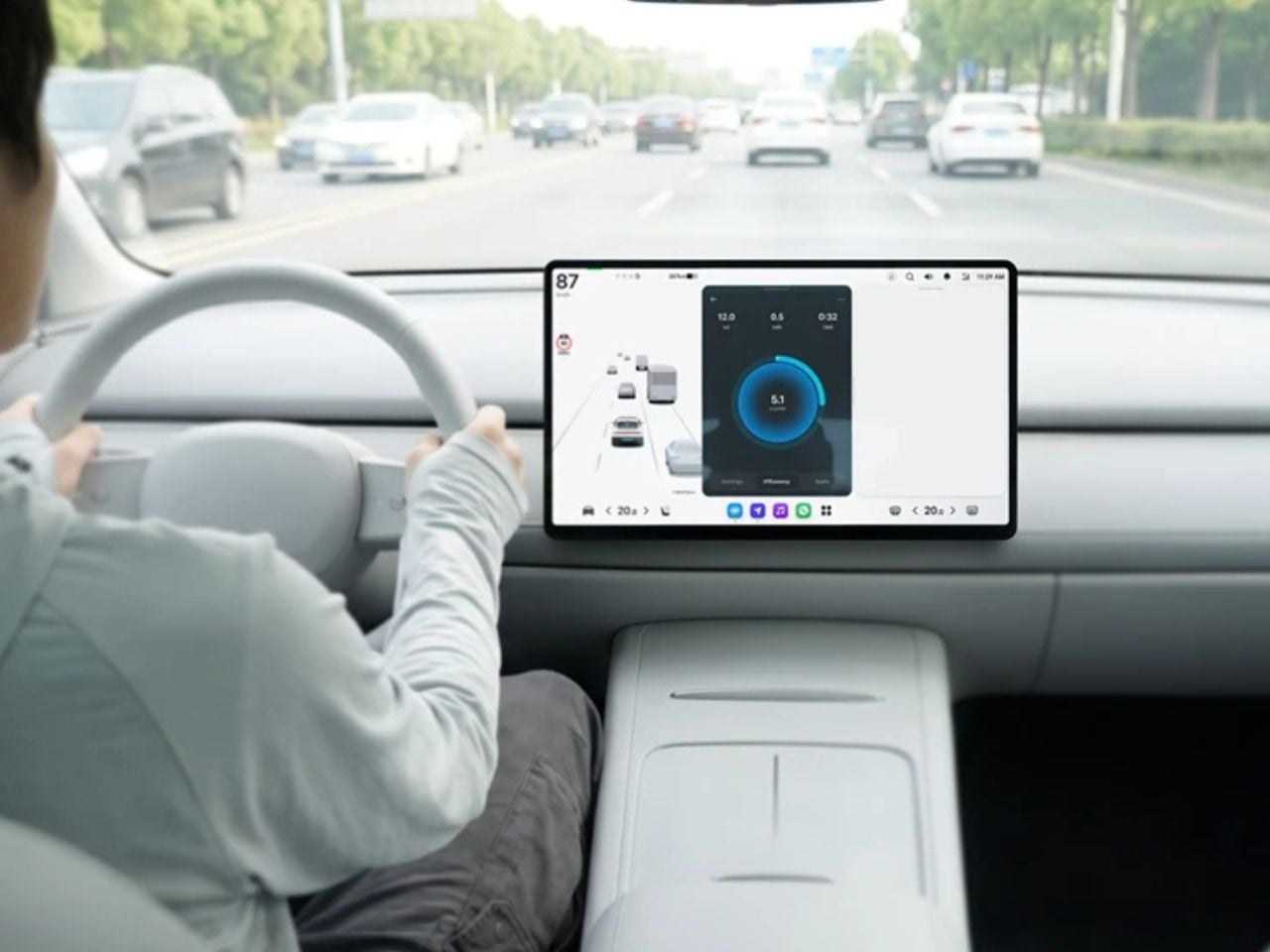
The concept also extends beyond the physical chair. Took imagines driving itself as a more engaging sensory experience through a digital layer called “Play Your Drive.” Instead of treating efficiency as a dry metric, the interface turns it into live feedback. Fluid circles respond to pedaling behavior, while an energy recovery ring helps the driver understand and balance their movement. The result is a playful system where greener driving feels visible, responsive, and rewarding.
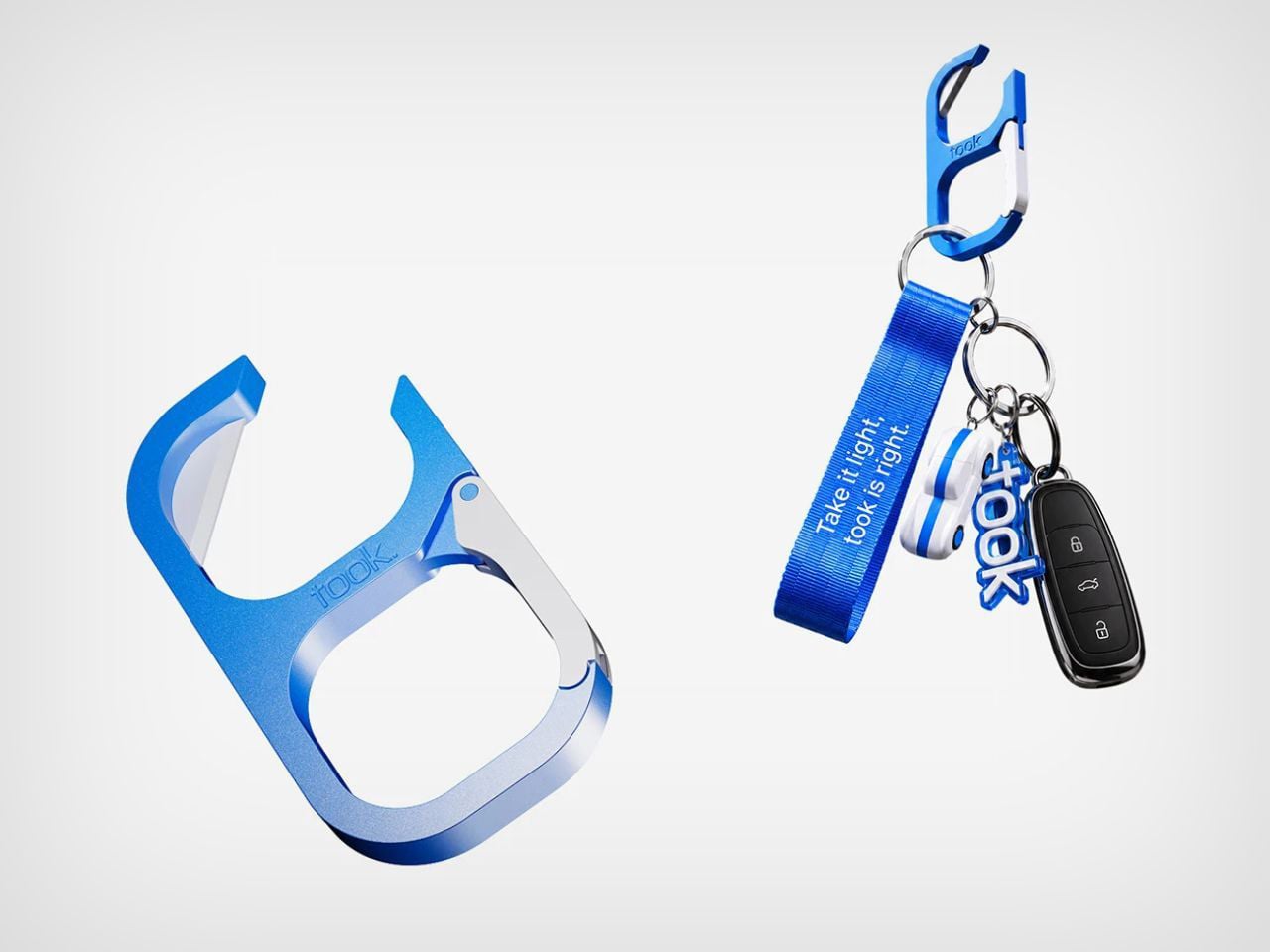
This lifestyle approach continues through small accessories, including a carabiner for the car key. It acts as both a practical holder and a personal object, something that can reflect the driver’s identity. With an added opener function, it quietly supports the kind of relaxed, outdoor ritual Took is built around. Even the welcome package considers the full journey, from active driving to parking, offering the brand’s first greeting as a thoughtful gesture of privacy and care.
Took feels relevant because it understands that future mobility will not only be about smarter vehicles or autonomous systems. It will also be about how people inhabit the spaces around those vehicles. As software-defined vehicles and seamless mobility experiences continue to evolve, the car may become less of a machine we operate and more of a companion in daily life. Took leans into that possibility with warmth, lightness, and a clear sense of purpose.
It does not ask users to become outdoor experts or sustainability activists. It simply makes room for a better pause. With one compact chair, recycled automotive materials, and a playful driving ecosystem, Took turns the ordinary car journey into something more personal, more expressive, and more worth remembering.
There is a specific kind of frustration that only comes from a pack that fights you. Zippers that won’t close. Straps digging in because the load is too heavy for a day hike. Gear that solves one problem while creating two others. The five products on this list were chosen with a single constraint: they need to justify their existence in a bag that has no spare room and no patience for dead weight.
Each one earns its place by solving a specific outdoor problem without giving anything back in bulk or effort. The Nimbus Inflatable Umbrella leads the group as its most radical thinker, but the logic runs through every pick here. Weight matters. Packability matters. The kind of reliability that doesn’t require checking before you leave the house matters most. This is the kit you build once and stop thinking about.
1. Nimbus Inflatable Umbrella
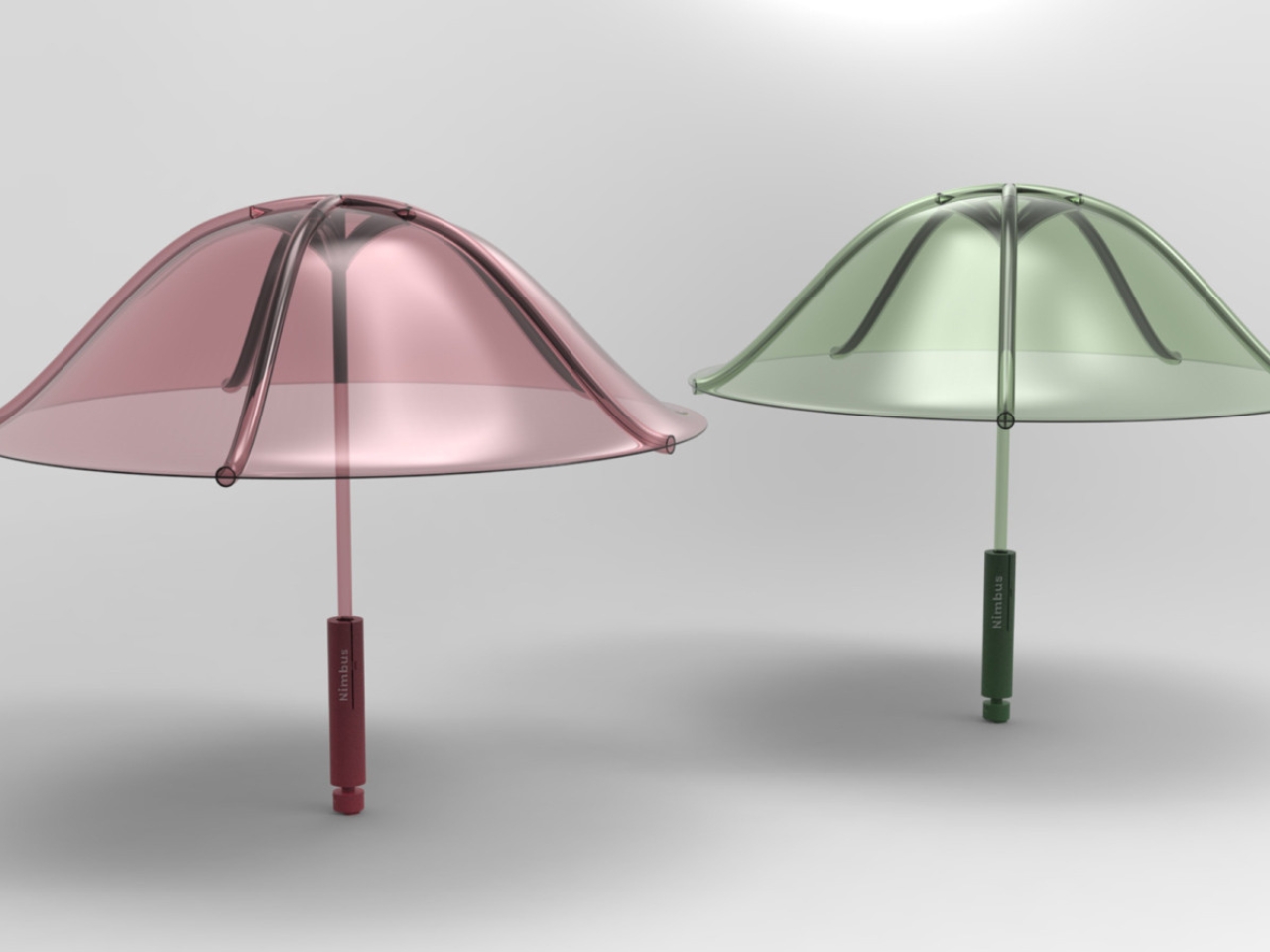
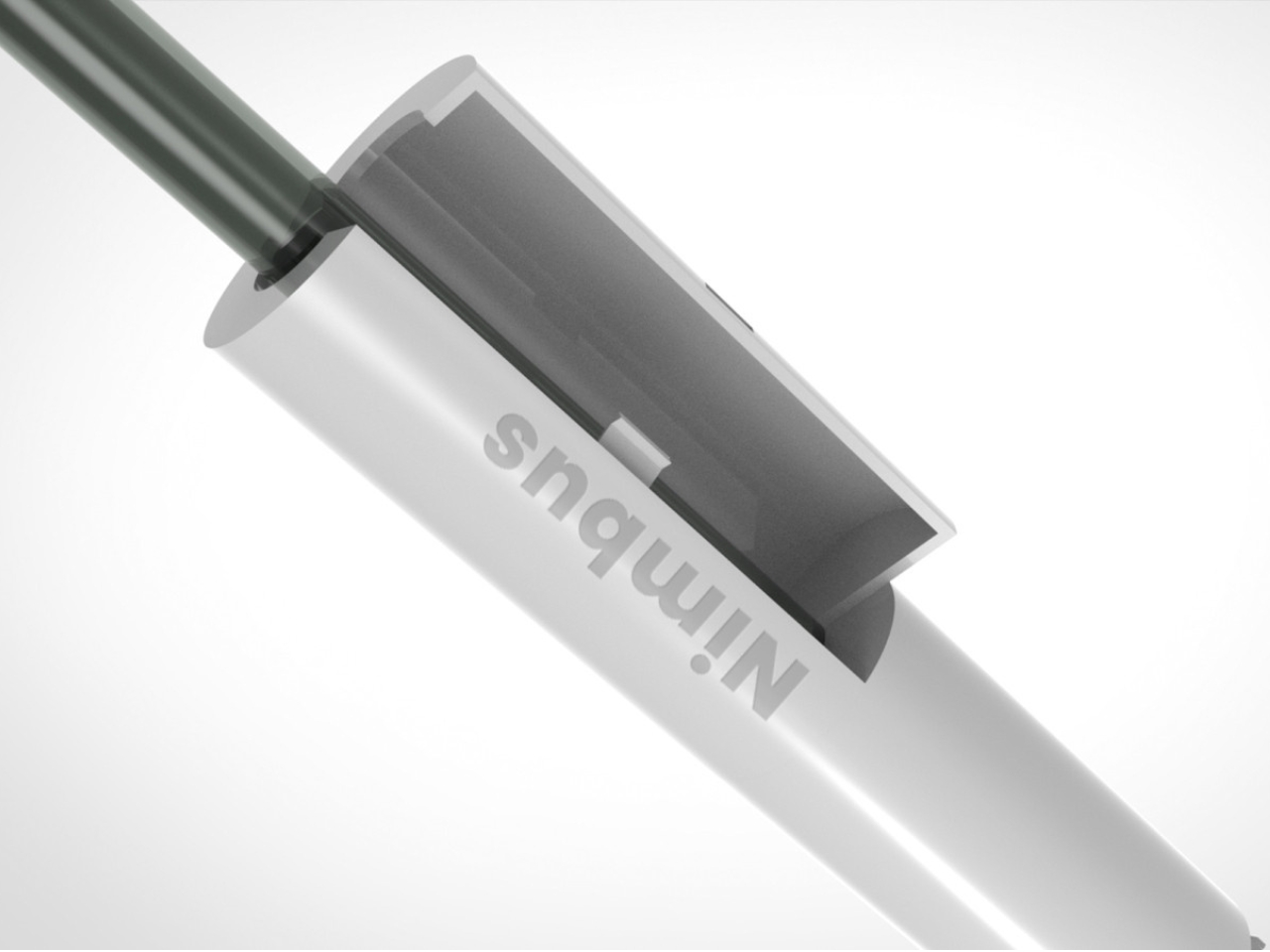
The standard umbrella has one guaranteed flaw: every rib is a failure point waiting for wind. The Nimbus, designed by four SCAD graduate students as part of their Master’s in Design for Sustainability, removes the premise entirely. Made from a single material, recyclable thermoplastic polyurethane, it inflates into structure rather than relying on a metal skeleton to hold its shape. No ribs. No joints. No layered materials that make the whole thing unrecyclable when it finally gives up.
A life cycle assessment puts the Nimbus at 99% lower environmental impact than a conventional umbrella, which is a number worth sitting with. The single-material construction also makes it repairable in ways that standard umbrellas never were, and the design team built in a buy-back program before the product even reached production scale. It has earned recognition from the Green Product Award. While it remains a concept rather than a retail product, the argument it makes is already complete.
What we like
Single TPU construction removes every mechanical failure point that standard umbrellas share
99% lower environmental impact verified through a full life cycle assessment
What we dislike
Currently a concept product and not yet available for retail purchase
Inflation before use adds a step that a conventional umbrella does not require
2. Blackout Beam Tactical Flashlight
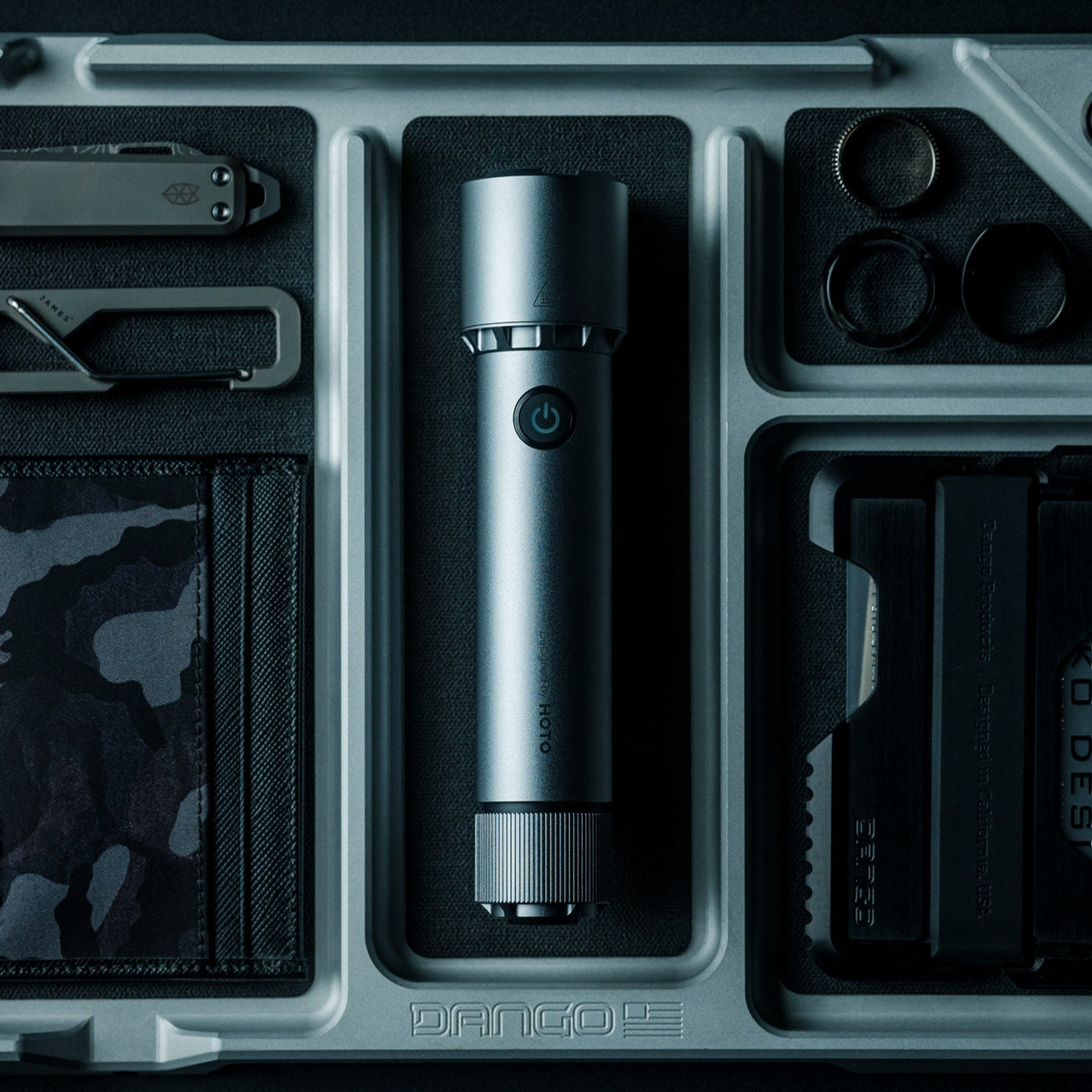
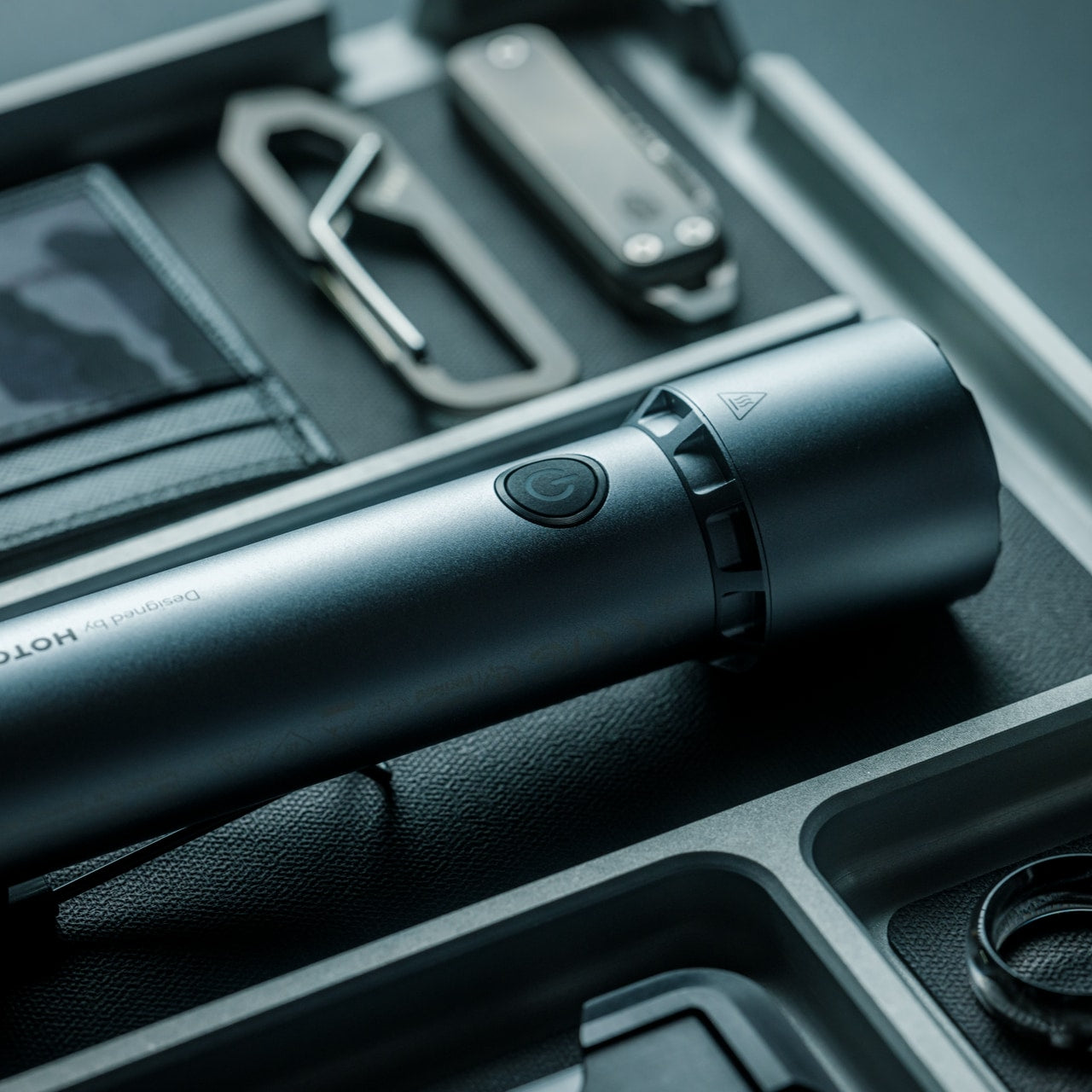
A flashlight earns its place in a packable kit by being the one you actually have on you when the light fails. The Blackout Beam Tactical Flashlight makes that case on size before it gets to output. It delivers enough brightness to handle trail navigation and campsite tasks in a body compact enough to sit alongside the rest of this kit without occupying space the rest of the bag has already negotiated for.
Tactical flashlights tend to be engineered for demands most outdoor users will never encounter, which means the camper or day hiker ends up with hardware overspecified for the task. That margin matters more than it sounds. When navigating an unfamiliar trail after dark or searching a tent interior in total darkness, a light that performs beyond what the moment requires is a light that has never let you down. The Blackout Beam earns its slot by being ready before you are.
Compact form factor carries without claiming dedicated pack real estate
Built to a performance standard that comfortably exceeds typical outdoor demands
What we dislike
Tactical construction favors utility over refined aesthetics
Requires battery management like any powered carry item in an active kit
3. NoxTi Tritium Keychain
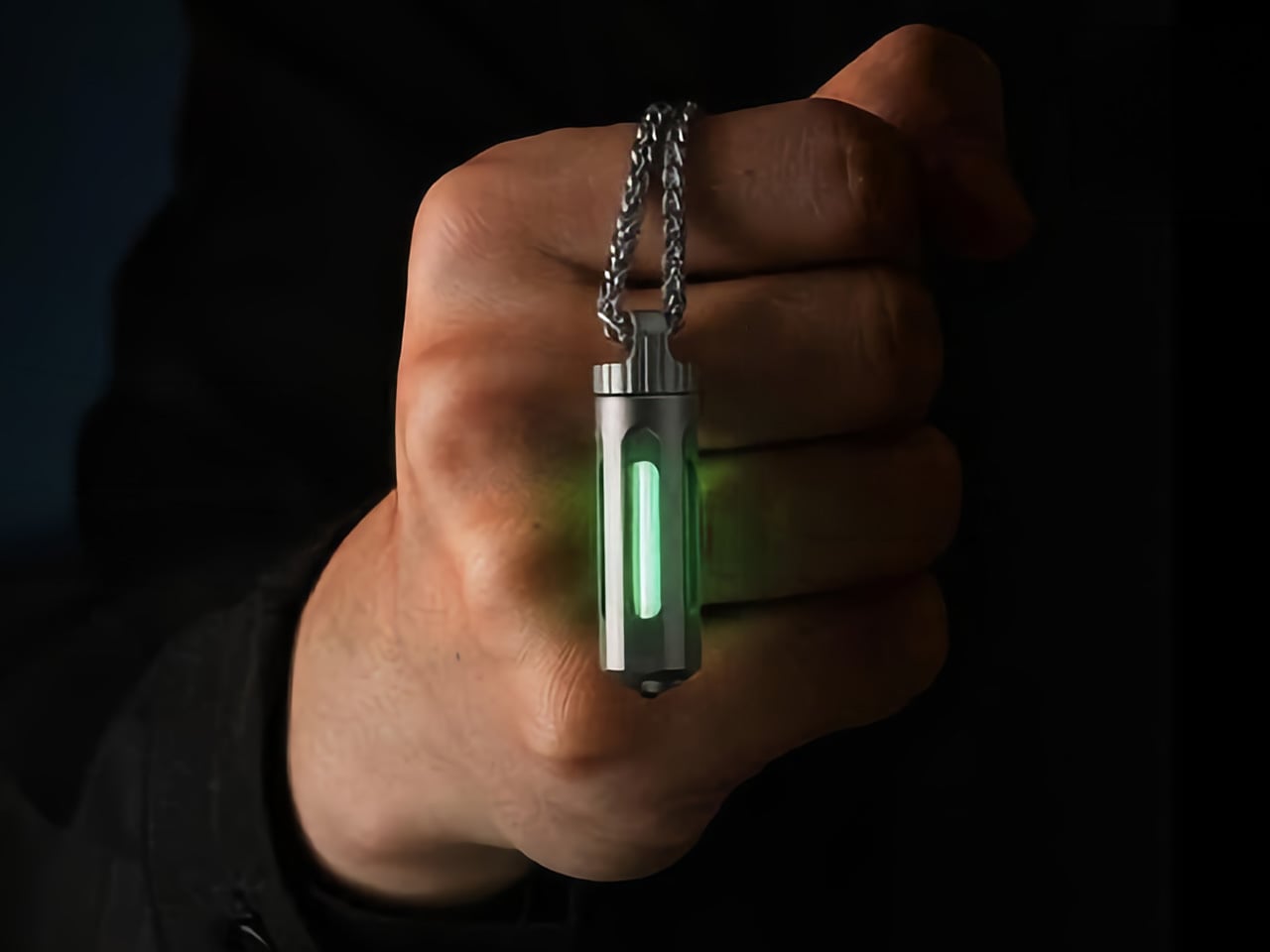
The NoxTi does not run on anything you pack. A 45mm Grade 5 titanium cylinder weighing 10.7 grams, it houses a tritium vial inside a precision quartz tube with 92% light transmission. Tritium is a hydrogen isotope whose beta particle decay strikes a phosphor coating and produces continuous light as a straightforward byproduct of existing. The glow runs for 25 years without a switch, battery, or charge cycle. You add it to the kit and stop tracking it entirely.
In outdoor use, the NoxTi handles a job the Blackout Beam cannot: passive location without activation. It marks your keys at the bottom of a bag, identifies your tent entrance without a search, and stays visible through a full night without being switched on. Six glow colors address different use cases, with red available for night-vision preservation borrowed from military and aviation practice. The ceramic-tipped tail adds a glass breaker for genuine emergency utility without changing the carry footprint.
What we like
25-year continuous glow powered by physics with no battery, switch, or charging required
Fully user-serviceable body becomes a permanent platform with swappable tritium cores
What we dislike
Intentionally faint glow marks and locates rather than providing meaningful illumination
Tritium classification may restrict import or carry in certain countries
4. Camprit TiStove
Five flat titanium pieces. That is the entire TiStove. Two foldable legs and three interchangeable cooking panels that pack completely flat, come in under 1.5 pounds, and assemble without fasteners, threading, or a manual. Camprit’s logic was that most camp stoves lock you into a single cooking method and add bulk to compensate. The TiStove removes that assumption. Three panels reconfigure for boiling, grilling, or open-fire cooking, and the spare panels function as a windshield when conditions require one.
There is no ignition system to fail at altitude, no gas canister threading to seize in cold weather, no proprietary fuel that limits what the trip can include. The TiStove accepts wood, gas, and alcohol, adapting to what the trail provides rather than what you remembered to bring. Titanium picks up color from heat over time, marking each stove with its own record of use. For a camp kitchen with no single point of failure, this is where it starts.
What we like
Packs completely flat at under 1.5 lbs with three interchangeable cooking configurations
Compatible with any fuel source including wood, gas, and alcohol without modification
What we dislike
Requires a separate burner or fuel source since nothing in the system is self-contained
Titanium panels need careful packing to avoid surface contact and scratching
5. Aero Spork (0.25 oz)
Quarter of an ounce. That figure sounds like marketing until you hold the Aero Spork and realize the engineers took it seriously. Titanium construction at that weight means the tradeoff between durability and gram savings, the negotiation that haunts most ultralight gear, simply does not apply here. The curved ergonomic form handles soup, pasta, and everything in between without requiring the compromises that most sporks impose on at least one function. It does both jobs properly without apologizing for either.
The Aero Spork stacks cleanly, which matters more on group trips than solo ones. When each person brings their own, and the pack reaches capacity, they consolidate without adding bulk. The tapered end handles noodle twirling with enough precision to feel intentional rather than approximate. It is the kind of object whose design becomes invisible because every decision was made correctly. You stop noticing it and start using it, which is the goal of any good tool.
0.25 oz titanium construction removes any weight penalty from the carry decision
Stackable design scales cleanly for group trips without multiplying bulk
What we dislike
Small form factor requires some adjustment from standard cutlery sizing
Single utensil format means committing to the spork over carrying separate pieces
The Lightest Kit Is the One That Never Comes Back Out of the Bag
Five products, five outdoor problems, and a combined carry weight that barely registers. What connects them is a refusal to make you choose between function and footprint. The Nimbus reframes what a weather shelter can weigh. The NoxTi removes an entire category of gear from your charge list. The TiStove reduces the camp kitchen to a flat stack of metal. Each one solves its problem at the root rather than working around it.
The best outdoor kits are not the ones with the most options. They are the ones where every item has earned its place, and nothing remains by default. Pull any of these five out of the bag, and you know exactly why it made the cut. Pack all five, and you will start wondering what else you have been carrying that cannot answer the same question. Light is a habit. Once you build it, everything else starts to feel like excess.
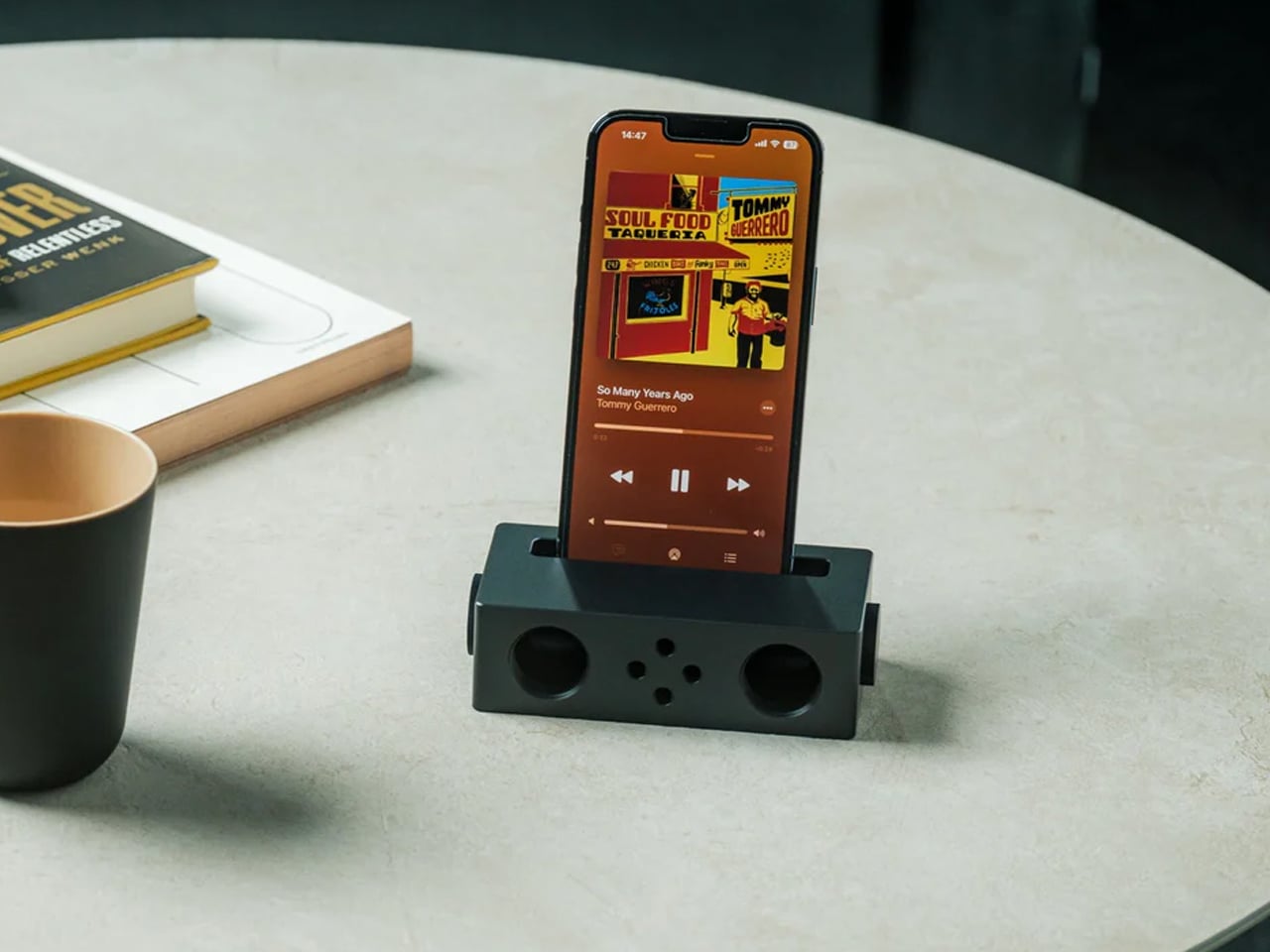
Every speaker you own needs something. The Bluetooth speaker needs charging – and the charging case, and the cable for the case. The wireless earbuds need their own ritual before the music starts. The smart speaker needs a wall outlet, a WiFi password, and a company’s servers staying online on a Tuesday. The Battery-free Amplifying iSpeakers from Yanko Design need none of it. They need your iPhone and the physics of a sound wave moving through precision-machined metal, and that is the complete technical brief.
No battery. No Bluetooth. No electricity. No app. No pairing. No charging. Just your phone, a slot in a piece of metal, and the same acoustic principle that made the phonograph work before Edison’s power grid reached the average American home.
The Battery-free Amplifying iSpeakers use acoustic resonance – the same principle that powered phonographs before electricity reached the average home – to make your iPhone louder without touching a single cable or draining a single milliamp.
One Slot, A Louder Room
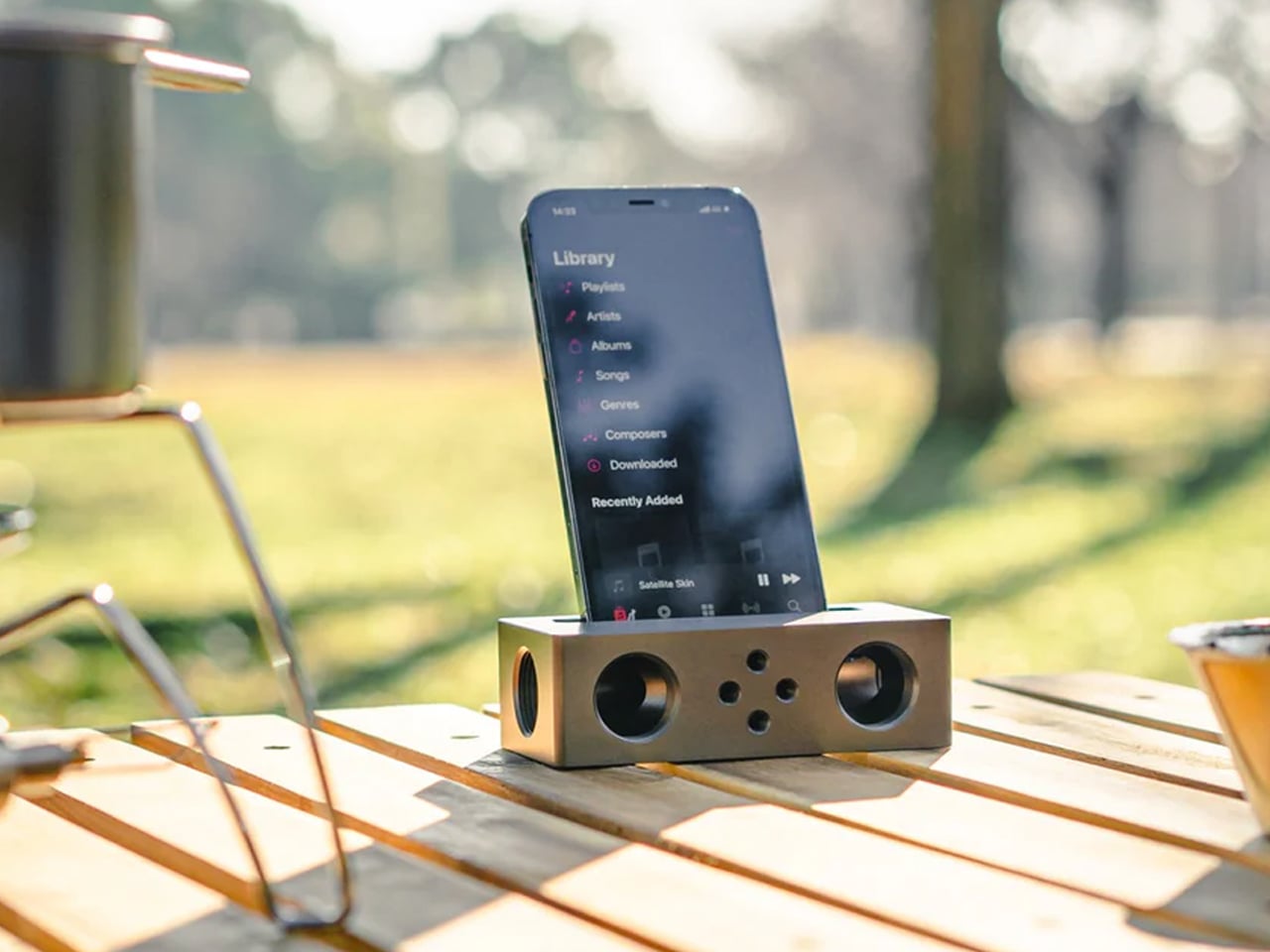
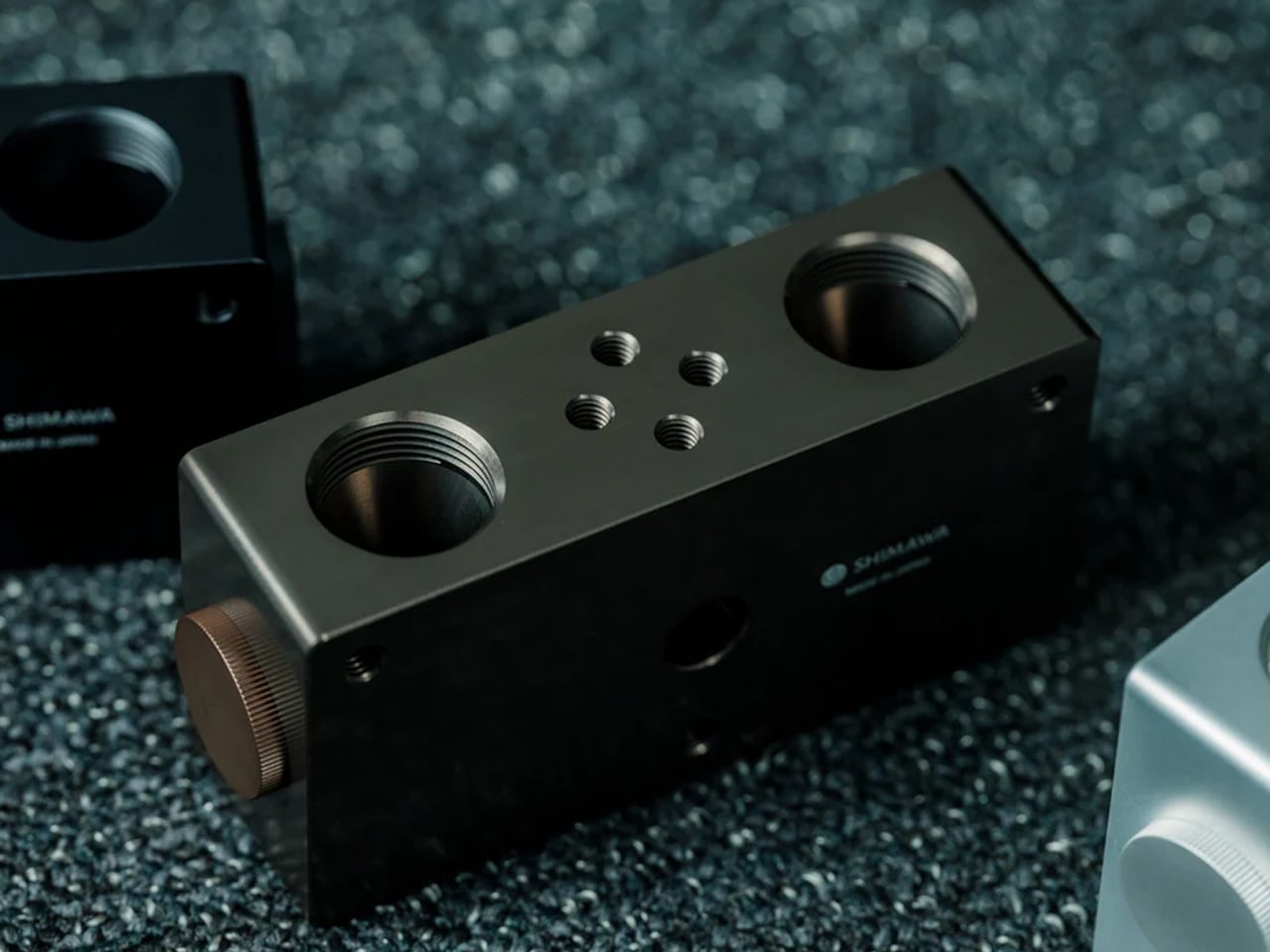
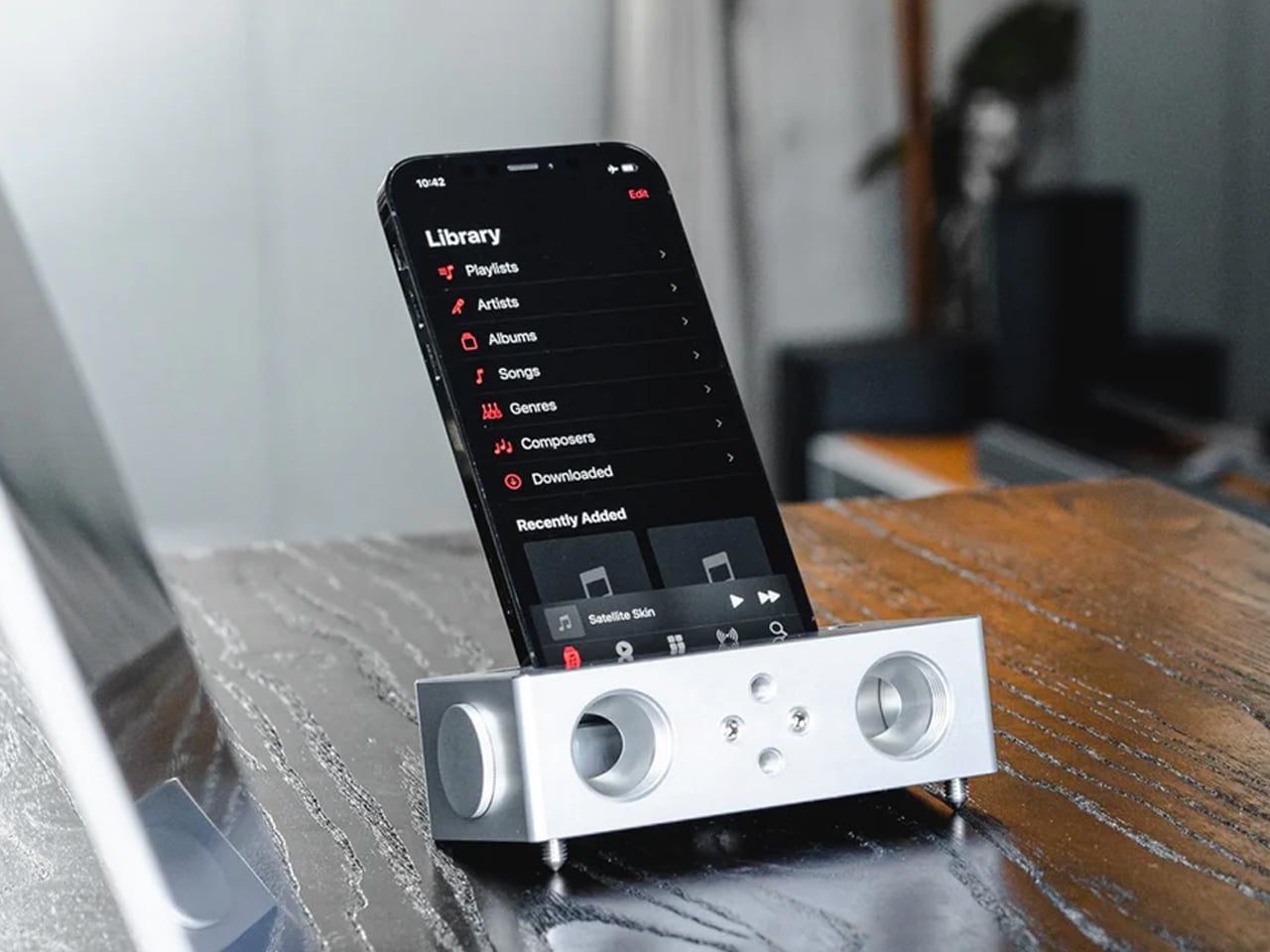
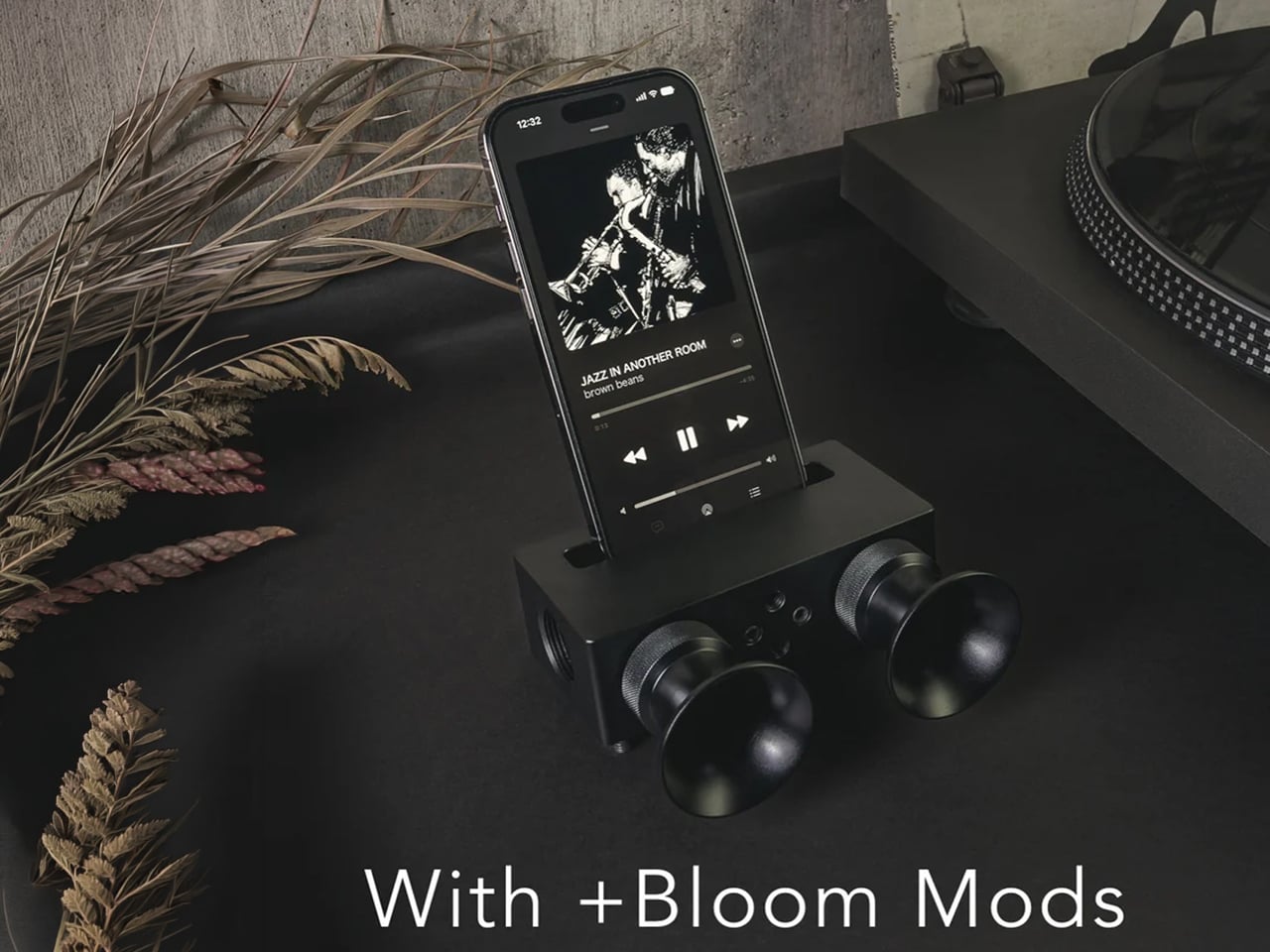
The amplification here is acoustic, not electronic. A phonograph built in 1877 used the same governing principle – a horn-shaped resonance chamber that directed and amplified sound waves using geometry rather than power. The iSpeakers apply that same physics, precision-machined into a metal chassis designed specifically to receive a modern iPhone. The phone’s speaker fires into the chamber. The chamber’s interior geometry redirects, focuses, and amplifies the sound wave. Music comes out measurably louder on the other side – with no battery depleting silently in the background, no Bluetooth connection to drop at the moment the song hits its best part, and no firmware to update before any of it works.
We placed a phone into the iSpeakers and left it there for a week on the desk. The first thing that registers is not the volume, it is the silence around the process. No pairing animation. No connection sound. No status LED cycling through colours. Phone in, music louder. Phone out, music stops. There is no standby mode because there is nothing to stand by. The speaker is a shaped piece of metal that does one thing through pure acoustic engineering, and it does it every single time without being asked twice.
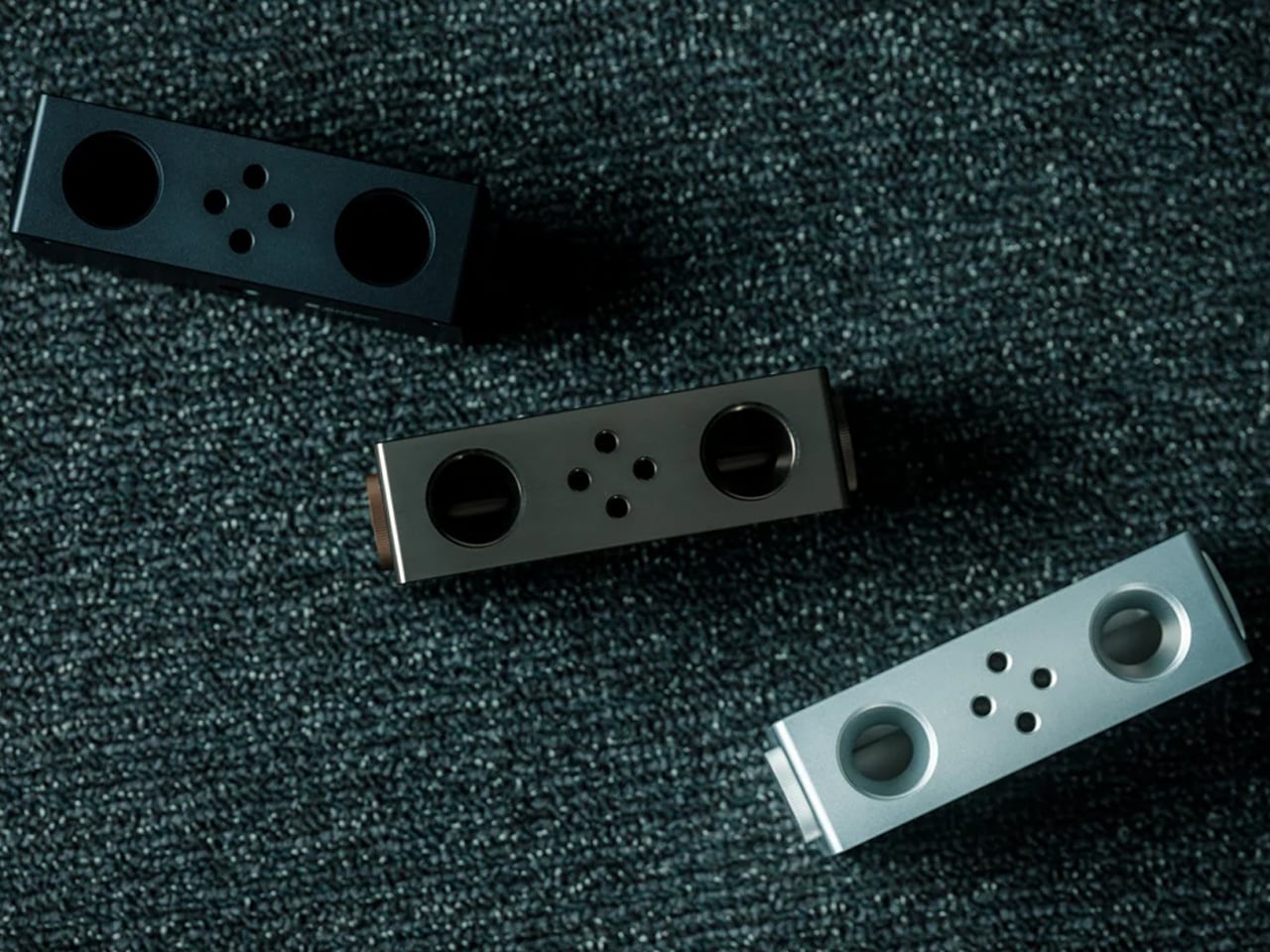
The second thing that registers is the material. Metal sounds different from wood. The passive amplifier market is dominated almost entirely by handcrafted wooden alternatives – walnut, maple, bamboo, each with their own warmth and grain character. Metal amplifies differently: crisper, more present, with a clarity that wood’s natural porosity softens. Whether that is better or worse is a matter of what you are listening to and what you are listening for. As a desk object in a considered setup, it is audibly distinct from every wooden alternative in the category and visually distinct from all of them.
Built for the Desk That Has Everything Except One More Cable
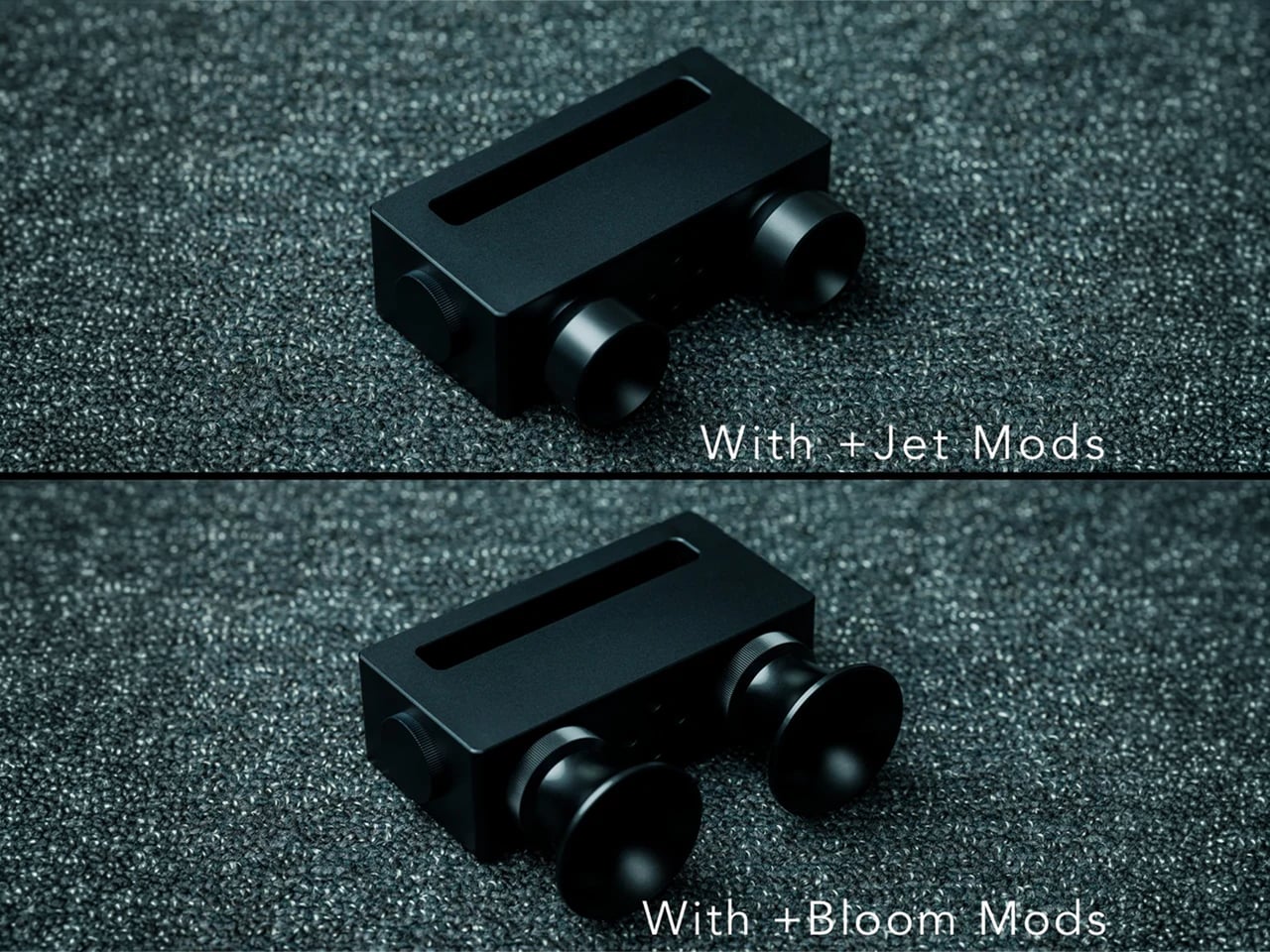
The iSpeakers are available in Silver in two configurations: Speaker Only at $179 and a modified configuration at $299 for extended iPhone compatibility. The price is unambiguously at the premium end of a market, and it deserves the scrutiny that premium pricing invites.
What the $179 buys over the Etsy wooden alternatives – which start at $15 and top out around $60 for handcrafted versions – is precision-machined metal construction, iPhone-specific acoustic tuning, and a design that belongs on the same surface as a considered desk setup rather than looking like a craft project that migrated indoors. The gap between a $25 3D-printed passive speaker and this one is not a matter of degree. It is a matter of what category the object belongs to.
For the remote worker, the minimalist desk builder, or anyone who has spent real money getting every wire off the surface and every device intentional – a speaker that contributes zero cables, zero charging cycles, and zero connectivity requirements to that arrangement is not a convenience. It is the only version of a speaker that is actually consistent with that philosophy.
What We Like
Zero power required of any kind – no battery, no USB, no wall outlet, no Bluetooth radio, no WiFi; the amplification is entirely acoustic, which means it works at 3am in a power cut and never needs to be charged before a trip
Precision-machined metal construction delivers a distinctly different acoustic character than the wooden alternatives that dominate this category – crisper and more present, with a clarity that reflects the material’s acoustic properties rather than softening them
iPhone-specific acoustic geometry means the channel dimensions and chamber angles are tuned to the iPhone’s speaker placement rather than being universal and therefore approximate – specificity in passive amplifier design is not a minor variable
Instant-on, always-ready operation – phone in the slot, music plays louder; no pairing sequence, no app, no startup delay, no connection to lose; this is the simplest possible interaction model because there is no interaction model
Zero cable contribution to the desk – in a setup where cable management is the work, a speaker that adds nothing to that count is a different category of object than one that adds even one
What We Dislike
For this design the buyer has already decided that acoustic amplification, cable-free operation, and metal construction are the priorities – anyone arriving at this product from a Bluetooth speaker mindset will not find the value immediately obvious
iPhone-specific design is a strength acoustically but a limitation categorically – Android users, regardless of budget or intent, are not the audience for this product, and that is not stated prominently enough before purchase
The Speaker That Remembered How Sound Works
The Battery-free Amplifying iSpeakers do not fix a problem most people knew they had. They reveal one. Once your music plays louder through a piece of metal that asked nothing of your power bank, your charging cable, or your WiFi router – the Bluetooth speaker on the desk feels exactly like what it is: a device that solved a problem by adding four more problems underneath it.
For the audio-minded, it is a precision-machined object applying one hundred and fifty years of acoustic physics to a twenty-first century pocket computer, with the restraint to leave electricity entirely out of the conversation. For everyone else, the Battery-free Amplifying iSpeakers is a $179 answer to the question of why a speaker needs a battery in the first place.
Either way, once it earns its place on the desk, a charging cable will not be going back.