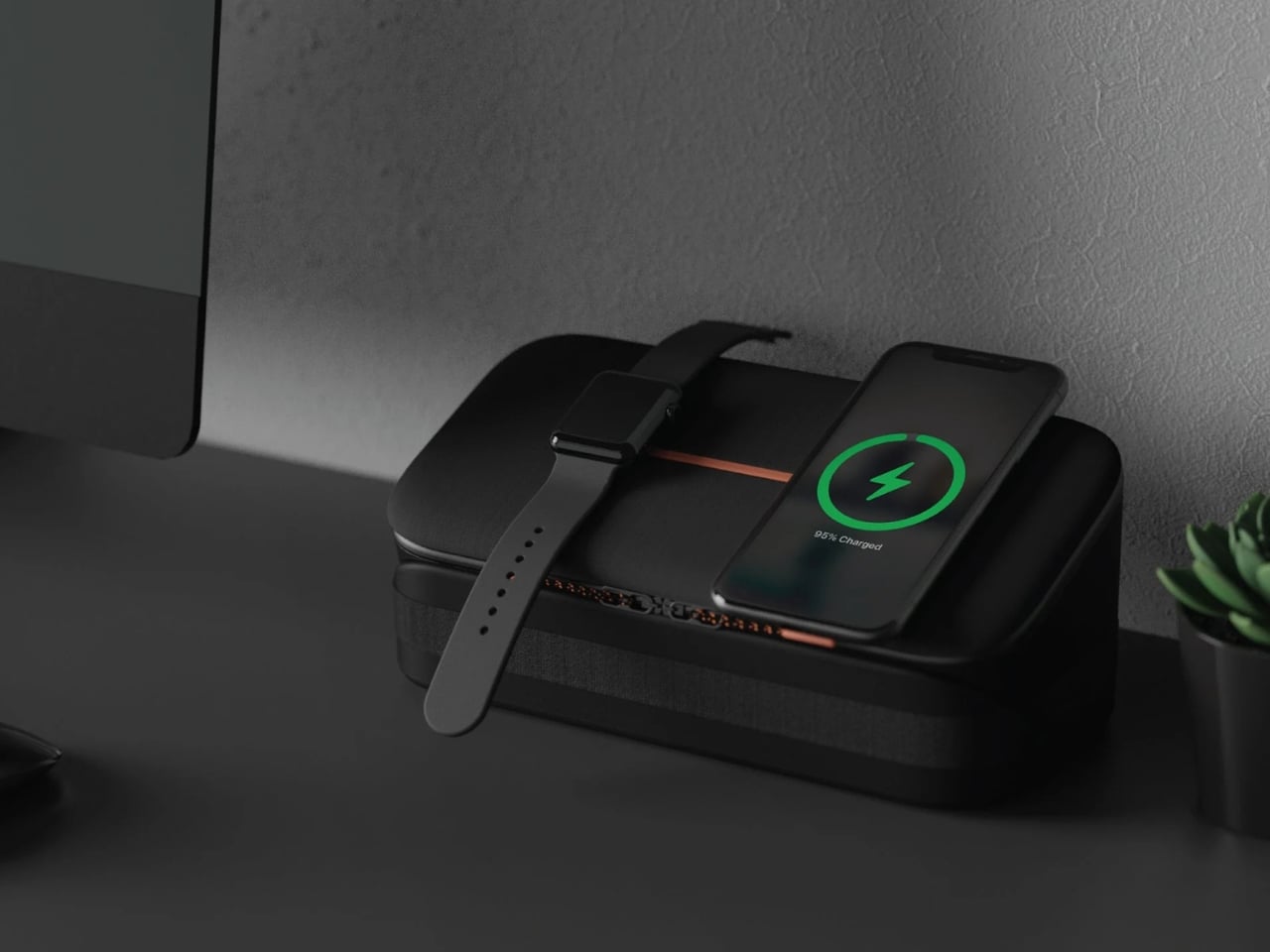
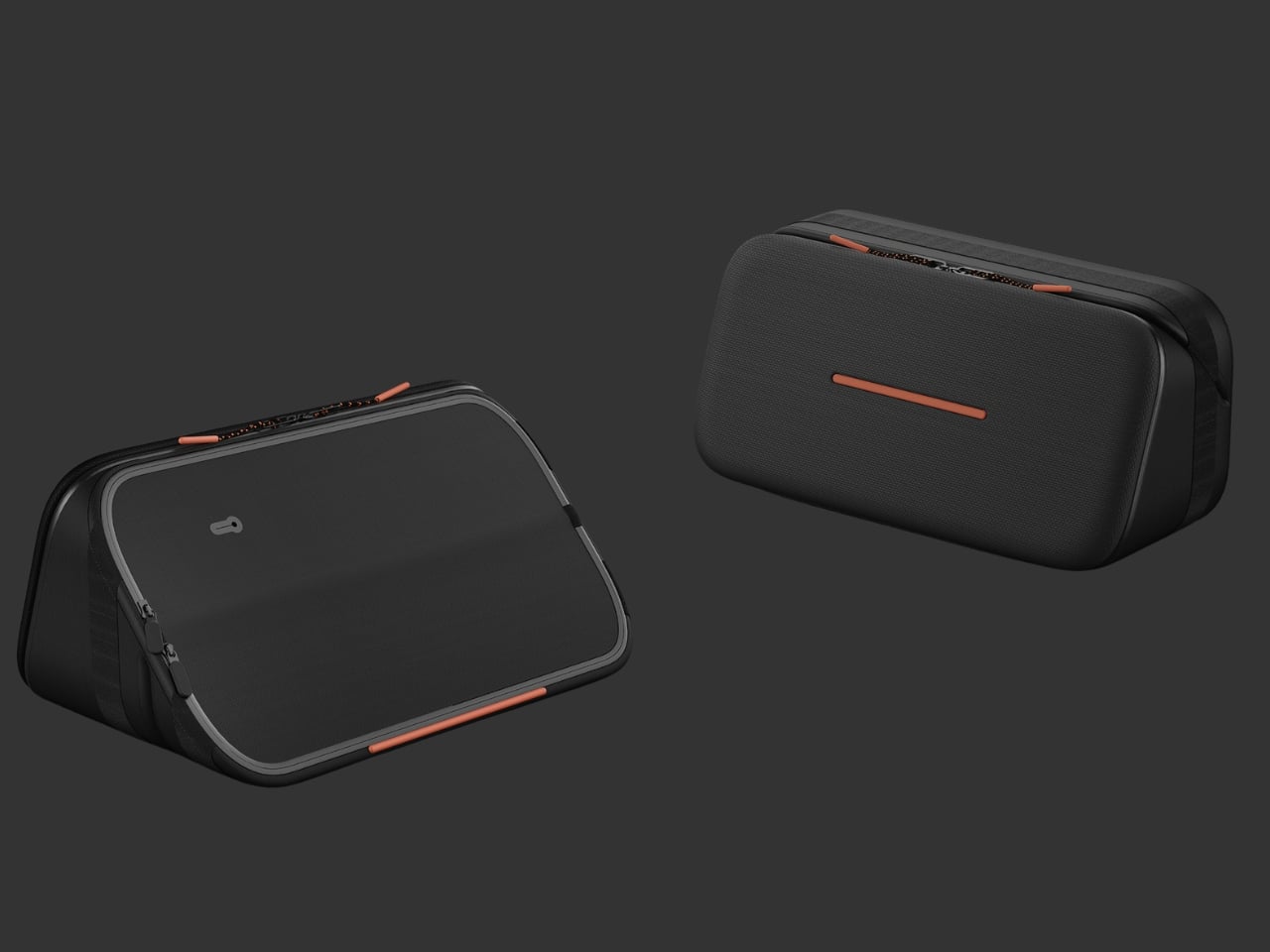
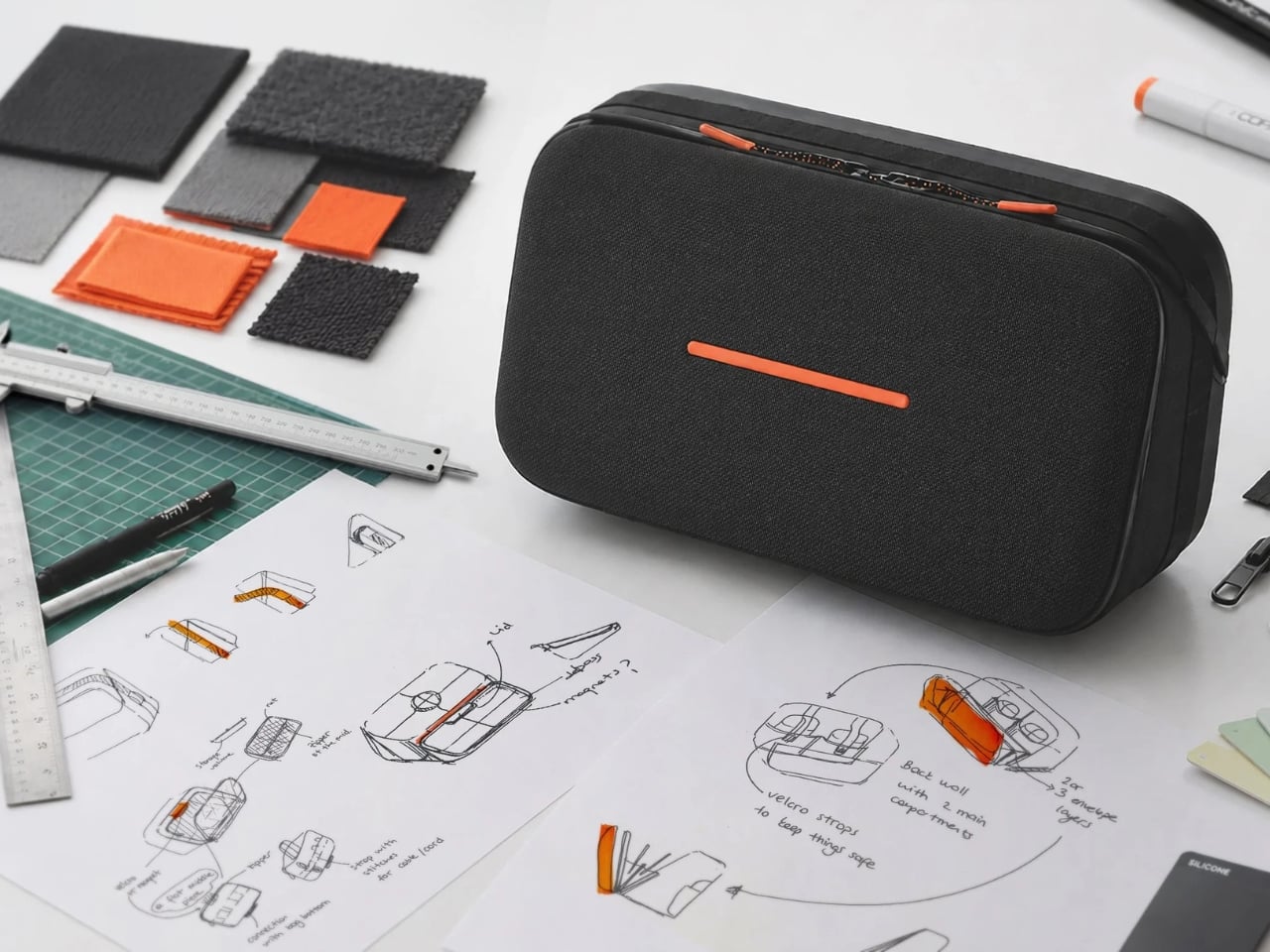
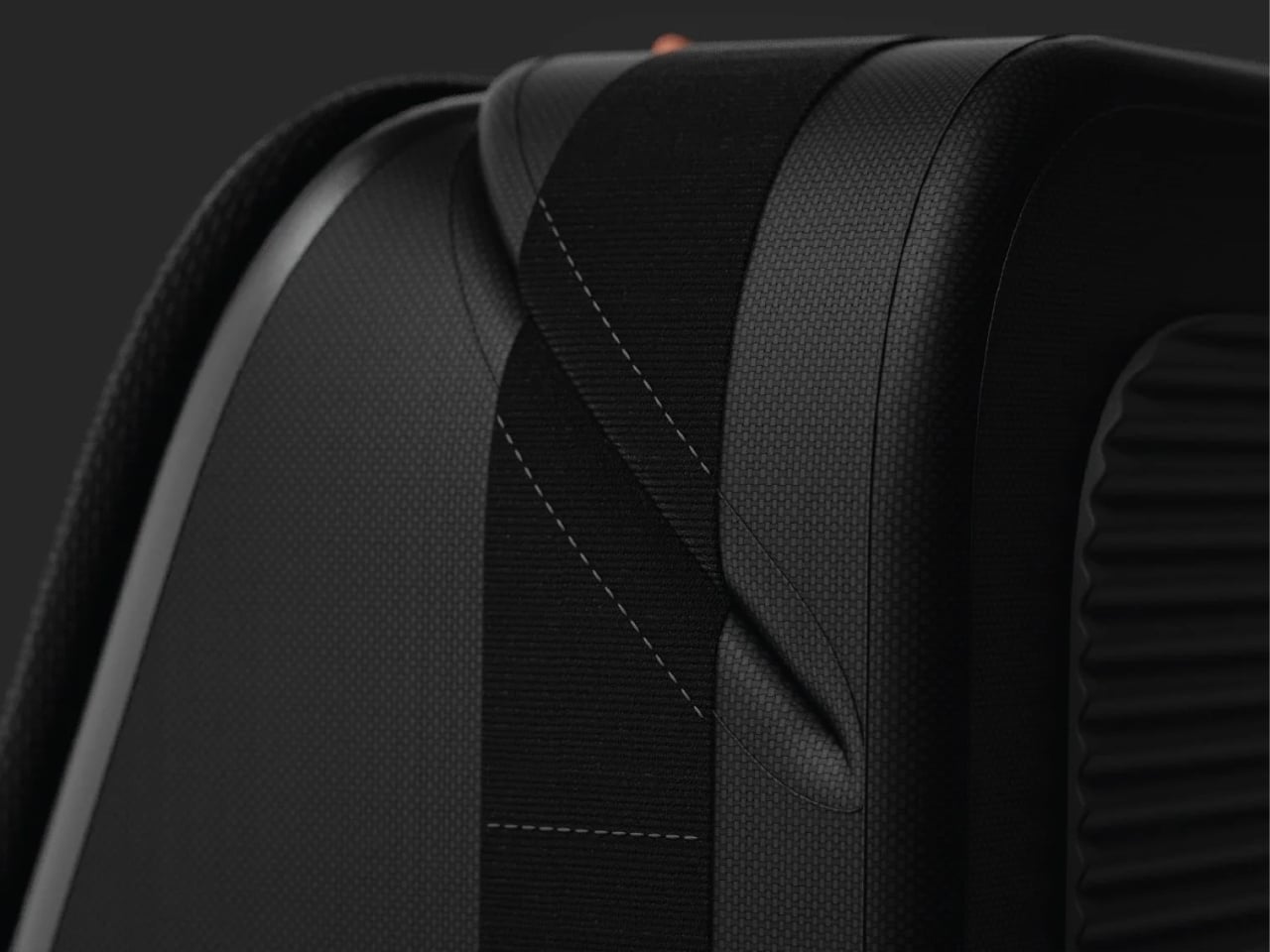
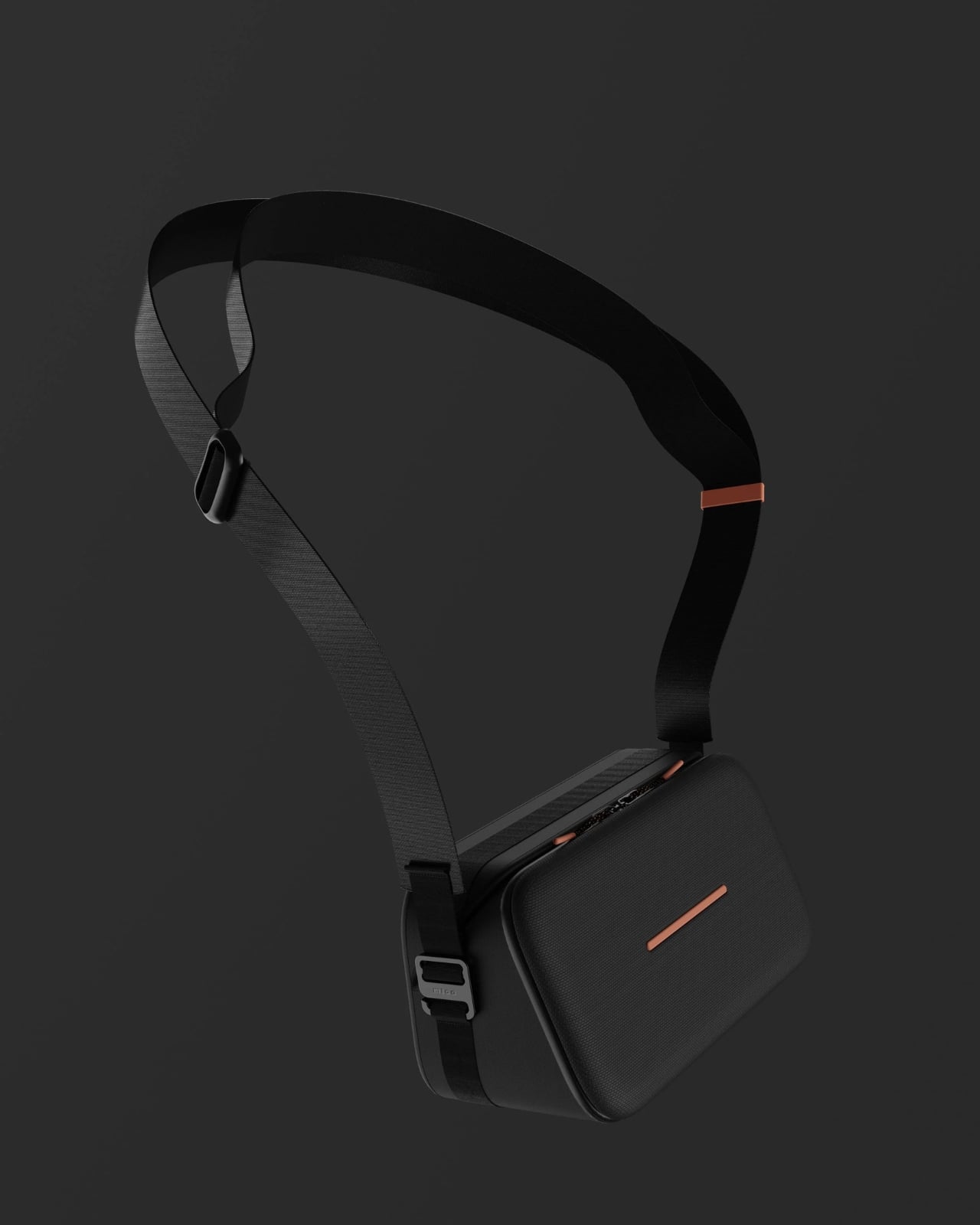
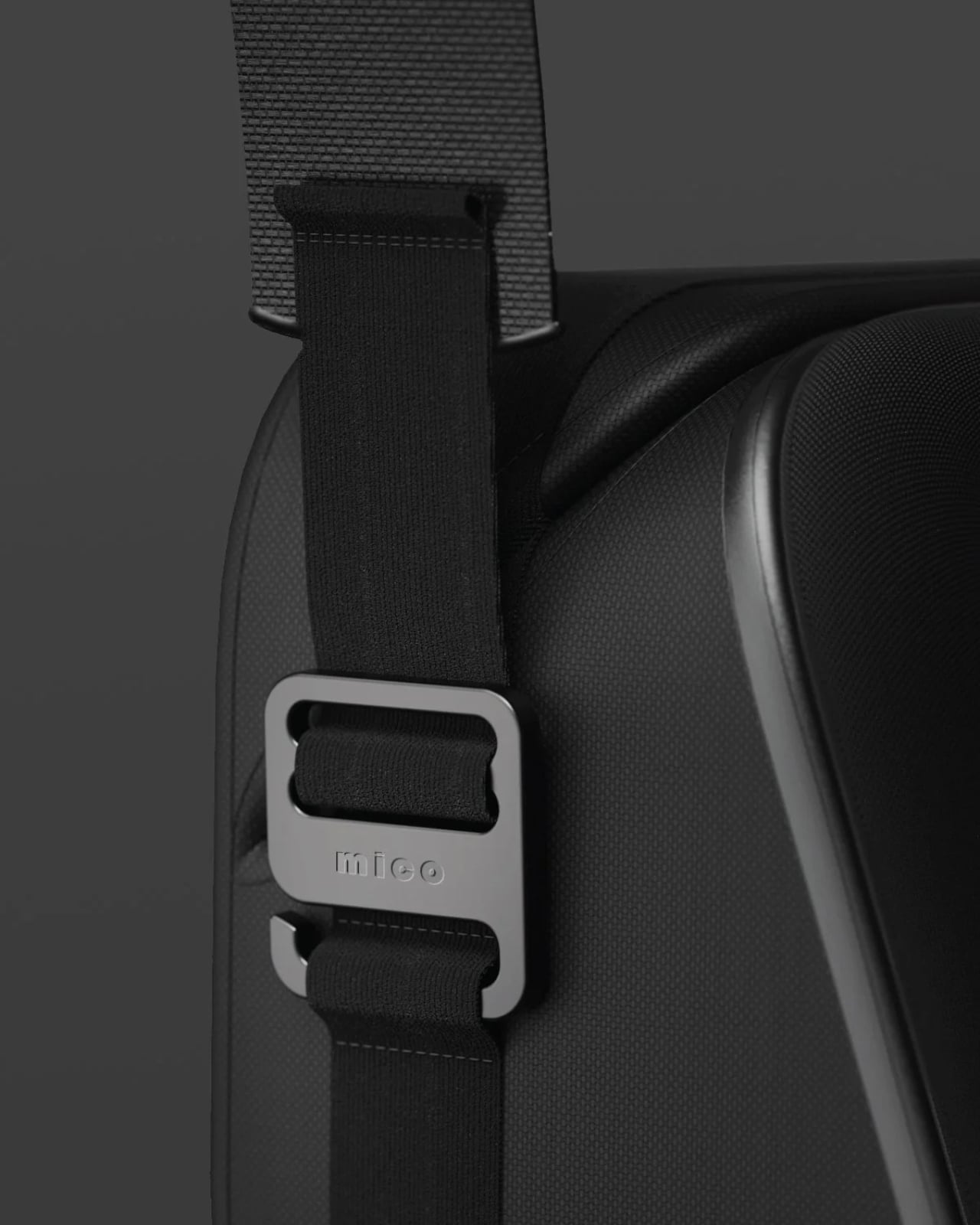
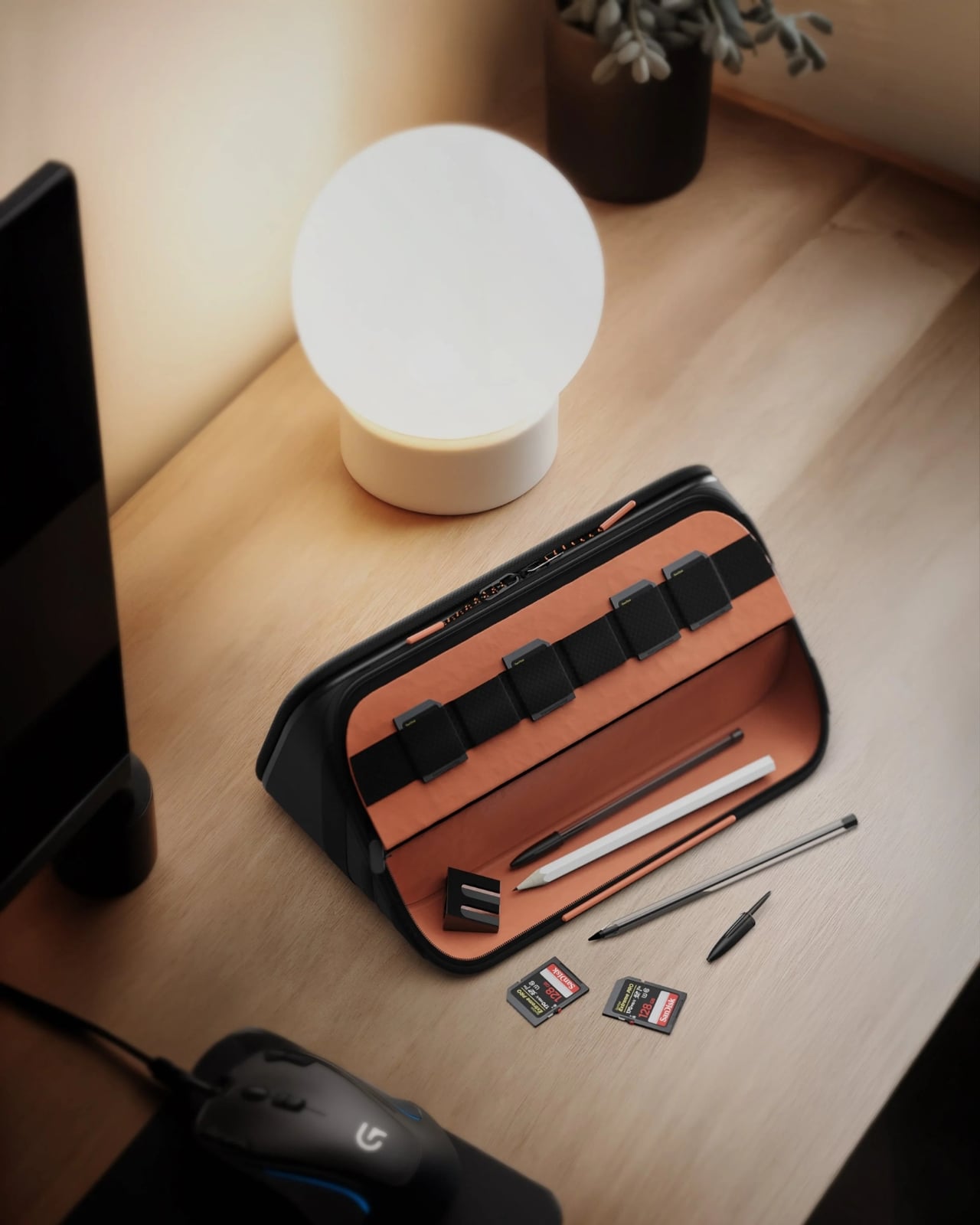
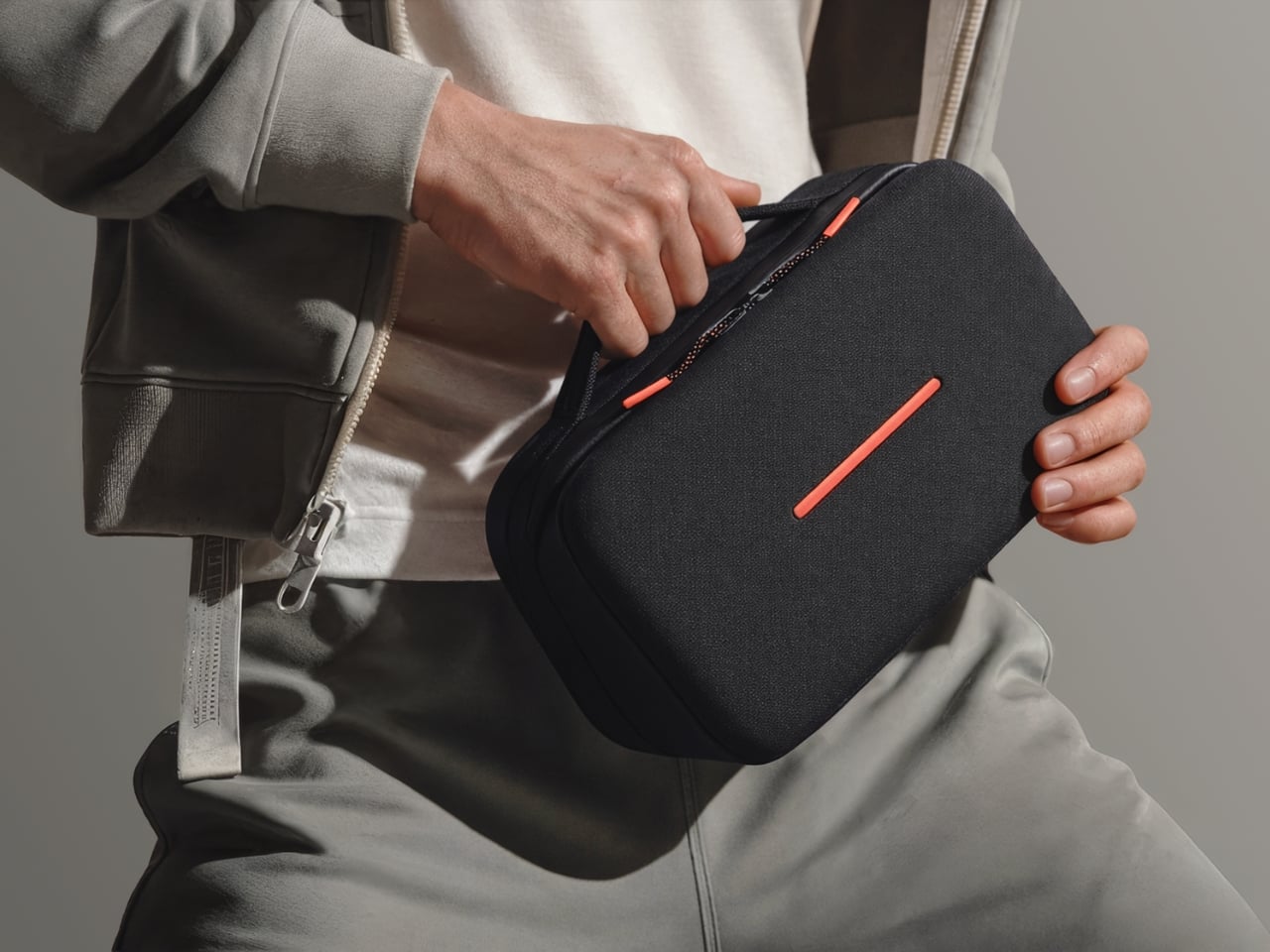
Every time I travel for work or even just settle into a coffee shop for a few hours, I find myself unpacking the same small chaos from my bag. A charging cable here, a power bank there, earbuds somewhere, a phone stand that I bought separately and never quite like. It’s the modern tech tax: you carry things that exist only because the other things you carry aren’t designed well enough to stand on their own. MICO, a transformable tech pouch designed by Fulden Dehneli of Fuldende Design, is a direct, elegant argument against all of that.
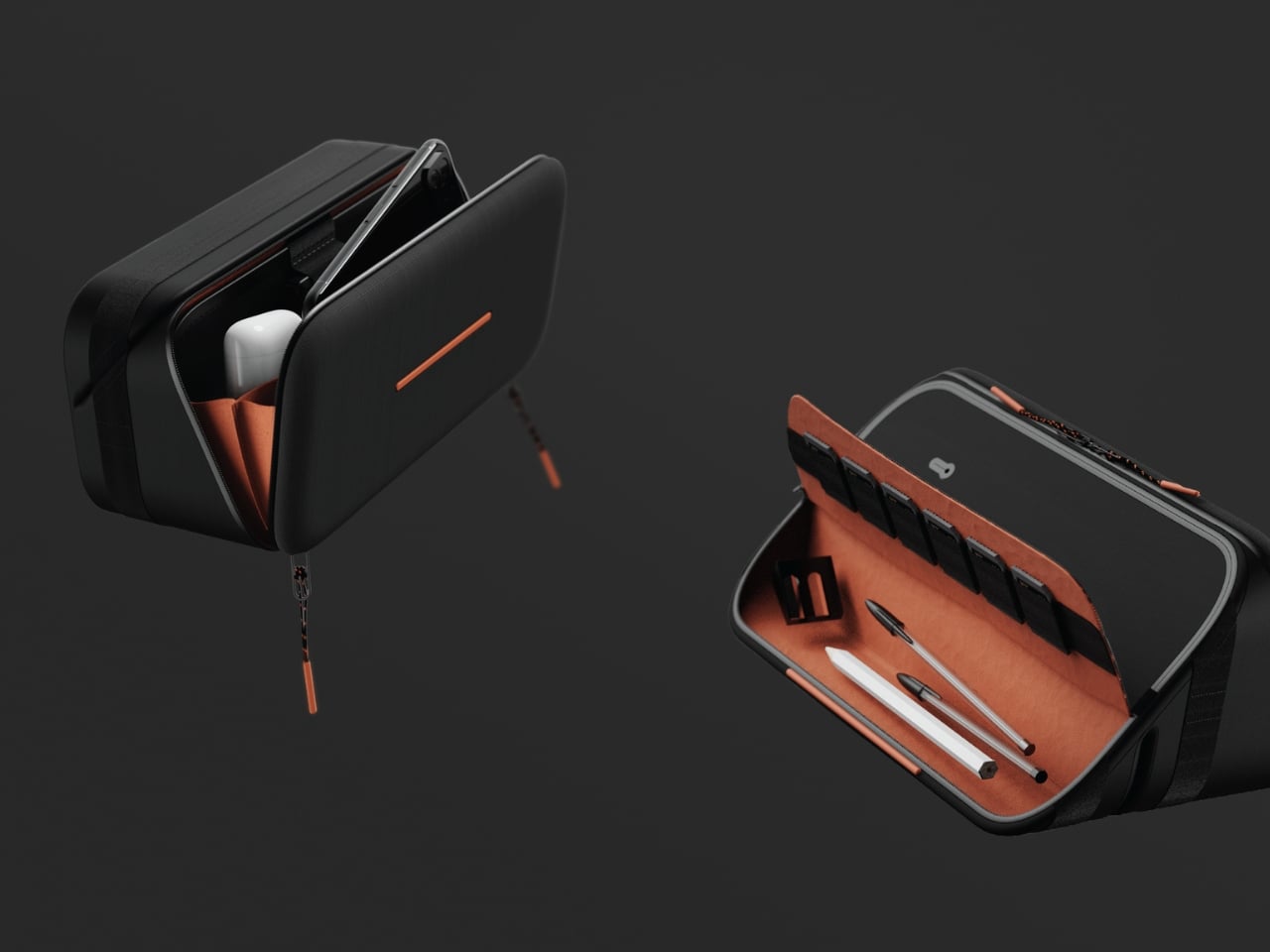
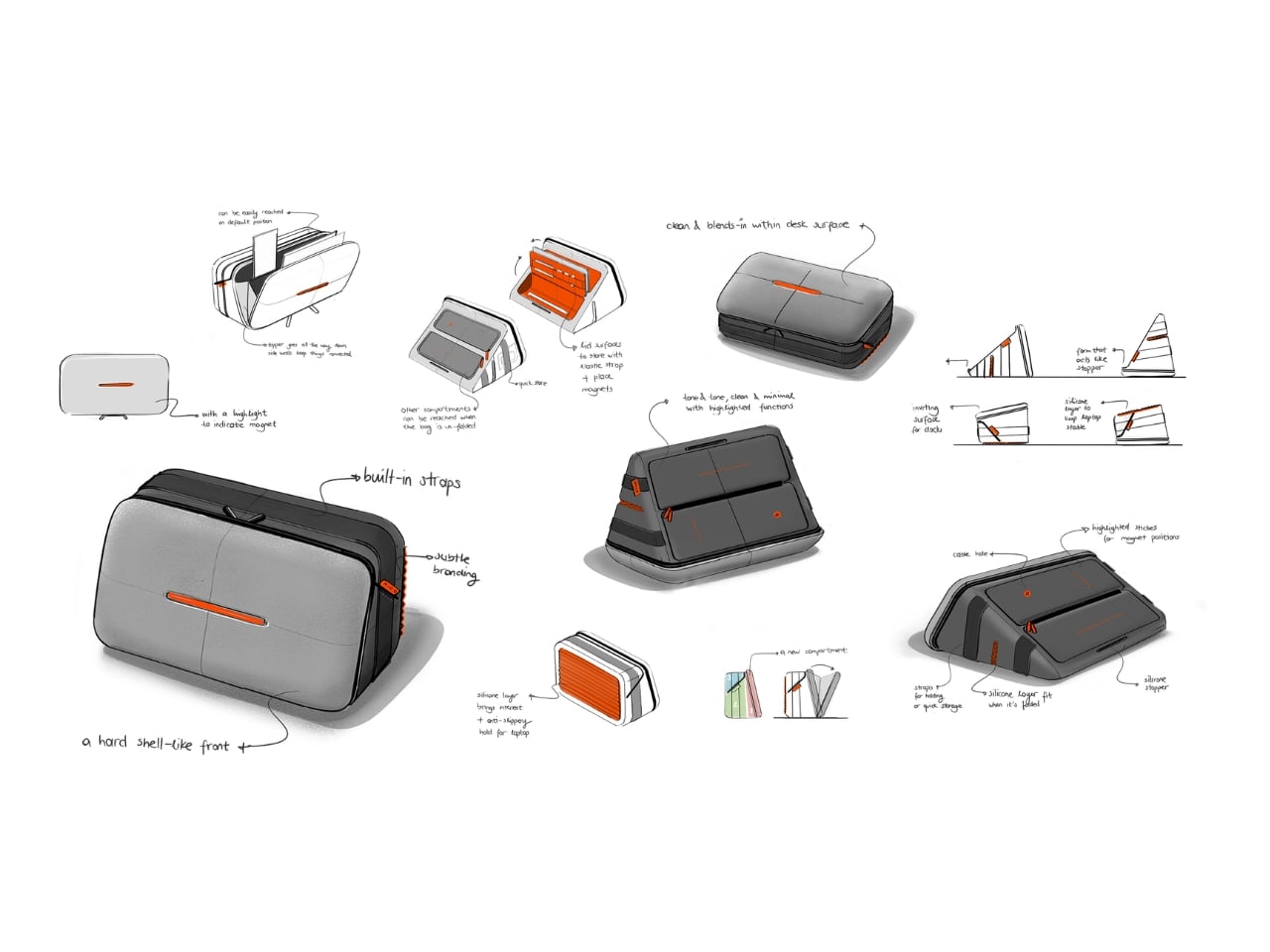
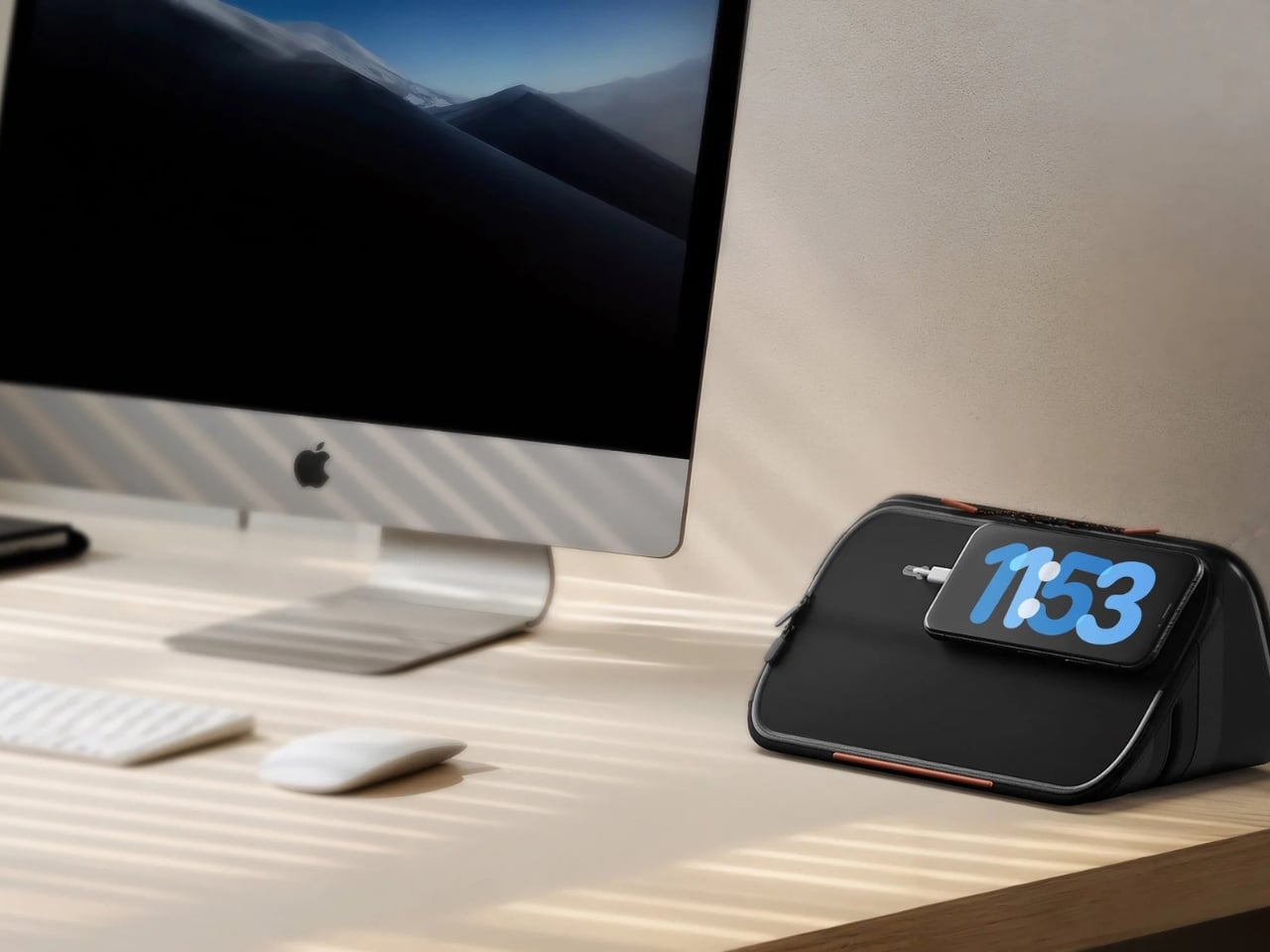
The concept is straightforward, but the execution is genuinely clever. MICO folds through an intuitive mechanism to transform into a laptop stand, a phone stand, and a charging dock, all within seconds. It also comes with a built-in tracker, a built-in alarm, and a wirelessly rechargeable battery. And it does all of this while sitting at just 10mm thin. That last detail is worth pausing on. Ten millimeters is barely thicker than a pencil, and yet the thing is designed to hold your tech, prop up your laptop, and charge your devices.
The philosophy behind MICO is what Dehneli calls minimalist consumption: the idea that a well-designed product should let you do more with less. It’s a principle worth taking seriously right now, when most of us are already drowning in accessories and adapters that promise to solve one problem but quietly become another. A pouch that organizes your gear, charges it, props it up, and tracks it is not just convenient. It’s a genuinely different way of thinking about what an everyday object can be.
Dehneli is an award-winning industrial designer and the founder and creative director of Fuldende Design, a global design consultancy she established in Shanghai in 2019. She started her career in Stockholm, and over more than 13 years of practice across Turkey, Sweden, and China, she’s built a cross-cultural perspective that shows up in her work. Her portfolio has earned her multiple Red Dot and iF Product Design Awards, and MICO itself holds a Red Dot Award in the Design Concept category for Travel. That recognition isn’t incidental. It signals that the design community sees something in this product beyond a clever prototype.
The folding mechanism is where the real thinking shows. Instead of adding complexity to look impressive, it keeps things intuitive and human-friendly. You don’t need instructions. The transformation from pouch to stand to dock is the sort of thing that makes people at the airport stare for a moment before quietly wishing they had one. It doesn’t try to be beautiful in a loud way either. It’s clean, slim, considered. The kind of object you pick up and immediately understand.
The tech accessories market is crowded with products that do too much or too little. There’s rarely a middle ground where every feature actually earns its place. MICO sits in that rare zone, and the 10mm profile is a big reason why. Working within that kind of physical constraint forces better decisions across the board. You can’t be lazy about materials or mechanisms when you have almost no room to hide your shortcuts.
MICO is currently listed as Ready to Launch, meaning it hasn’t hit the mass market yet. But the interest is already there. The design has been celebrated on Behance with thousands of views, earned its Red Dot recognition, and comes from a designer with a consistent track record of taking strong ideas all the way through. If it makes it to production without losing what makes it interesting on paper, it has a real shot at changing how people think about the things they carry.
The best kind of product design doesn’t ask for your attention. It just shows up, does exactly what you need, and leaves you wondering why no one thought of it sooner. That’s the energy MICO is bringing to a category that was long overdue for a rethink.
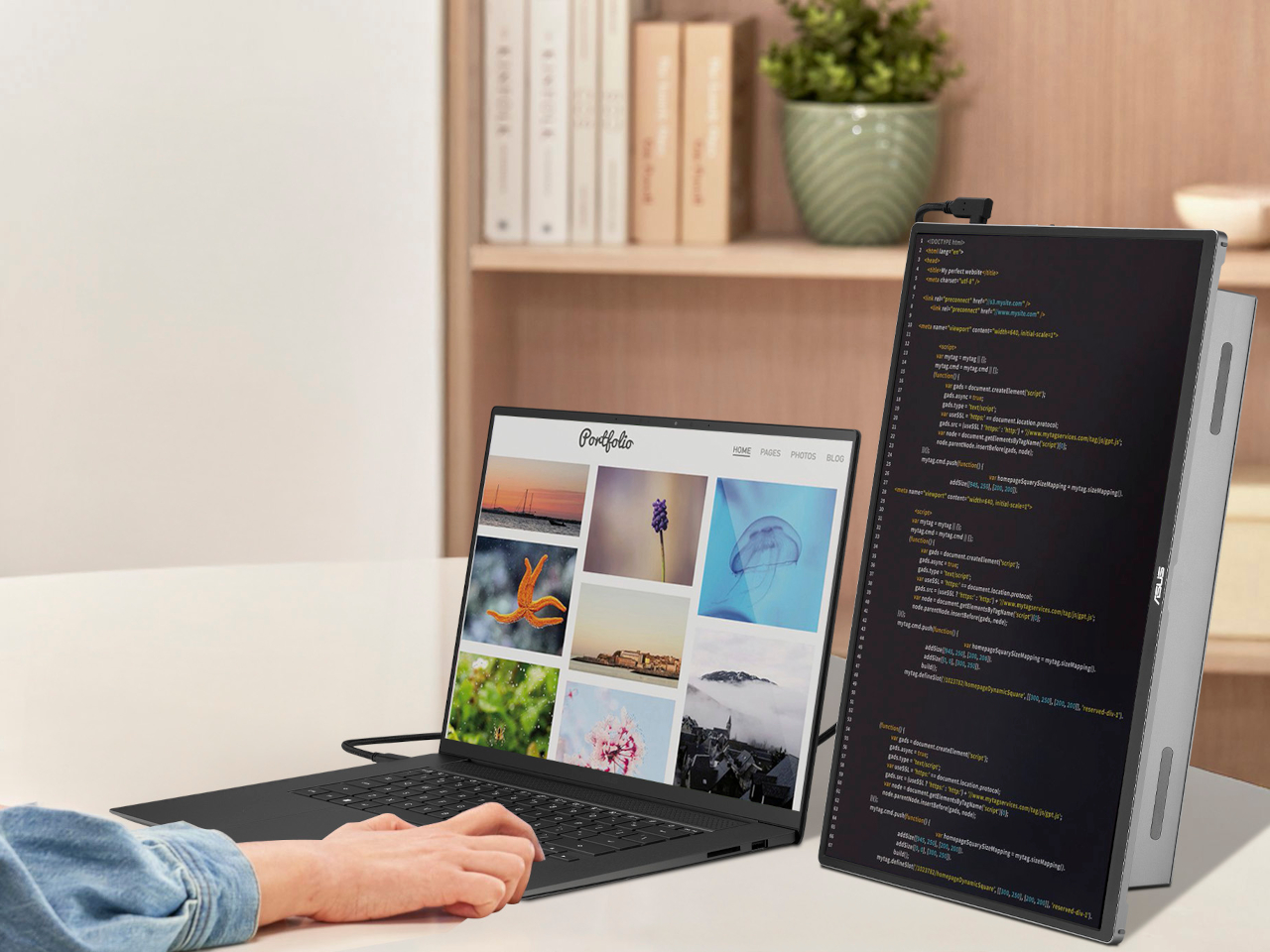
Portable monitors have quietly become one of the most appealing accessories for people who work on the go. Pack a slim second screen, connect it to your laptop, and you’ve doubled your workspace without lugging a desktop around. What nobody really advertises, though, is the trade-off: those displays almost always draw power from the laptop they’re attached to, cutting into the battery life you were counting on.
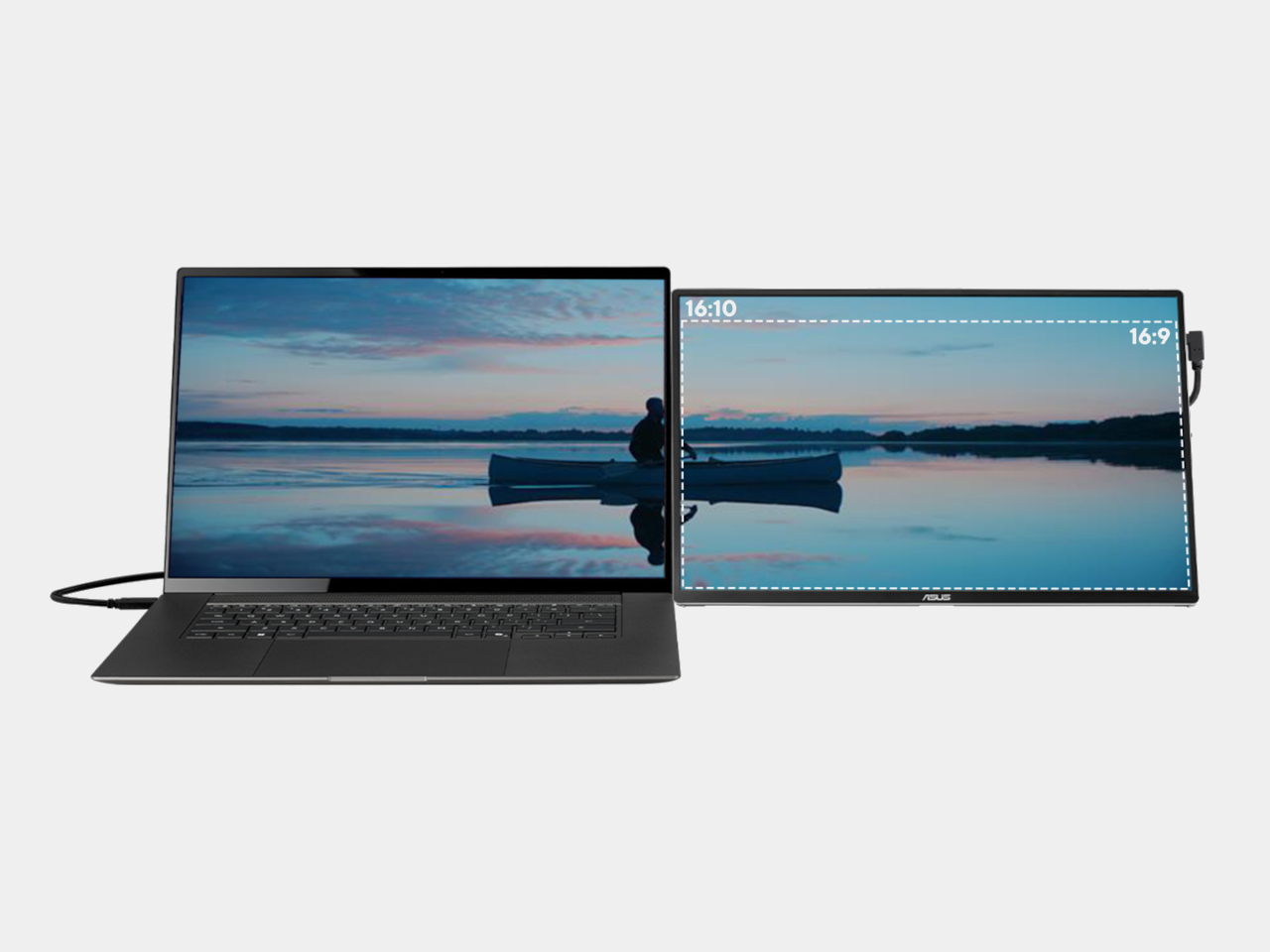
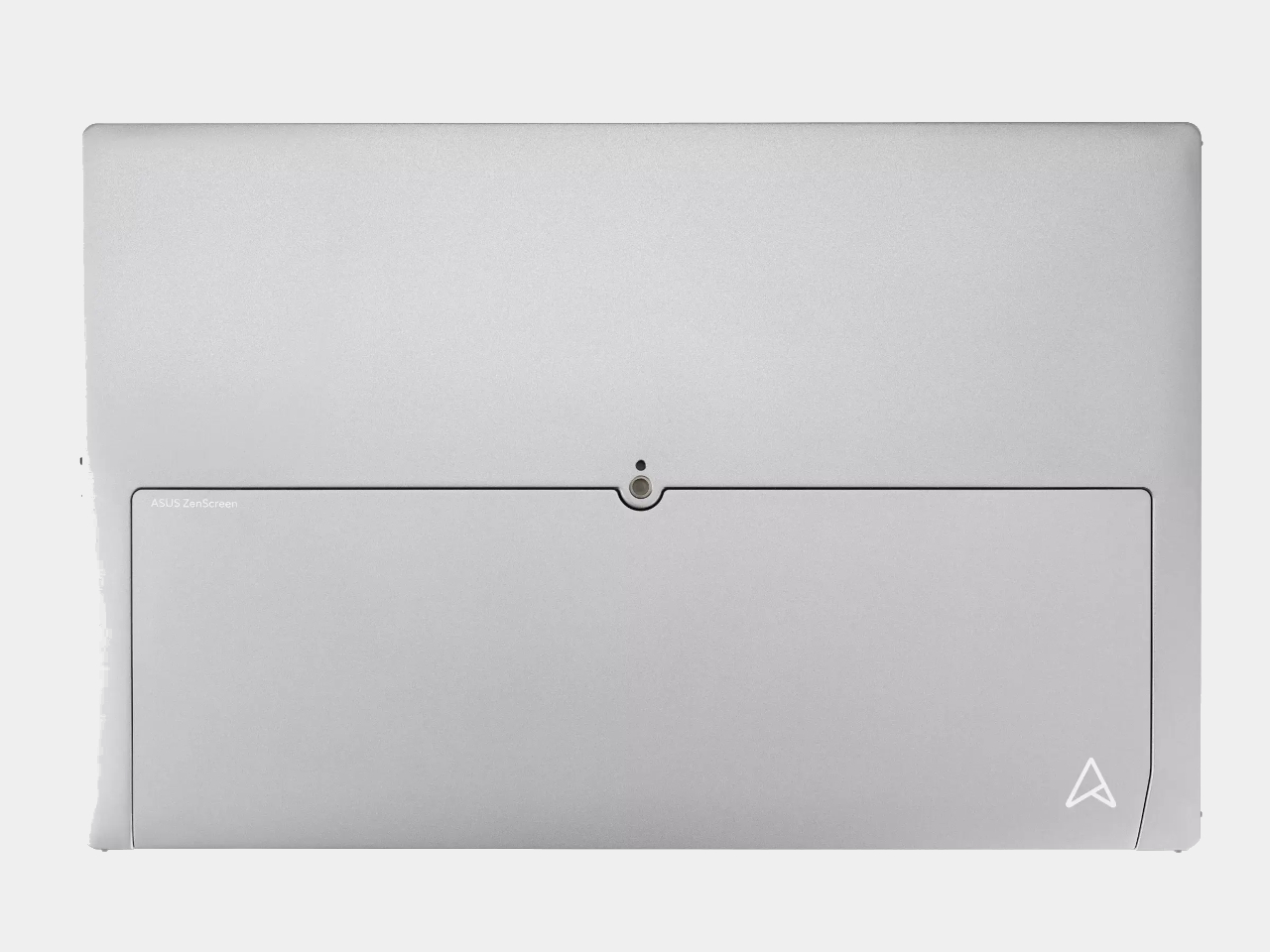
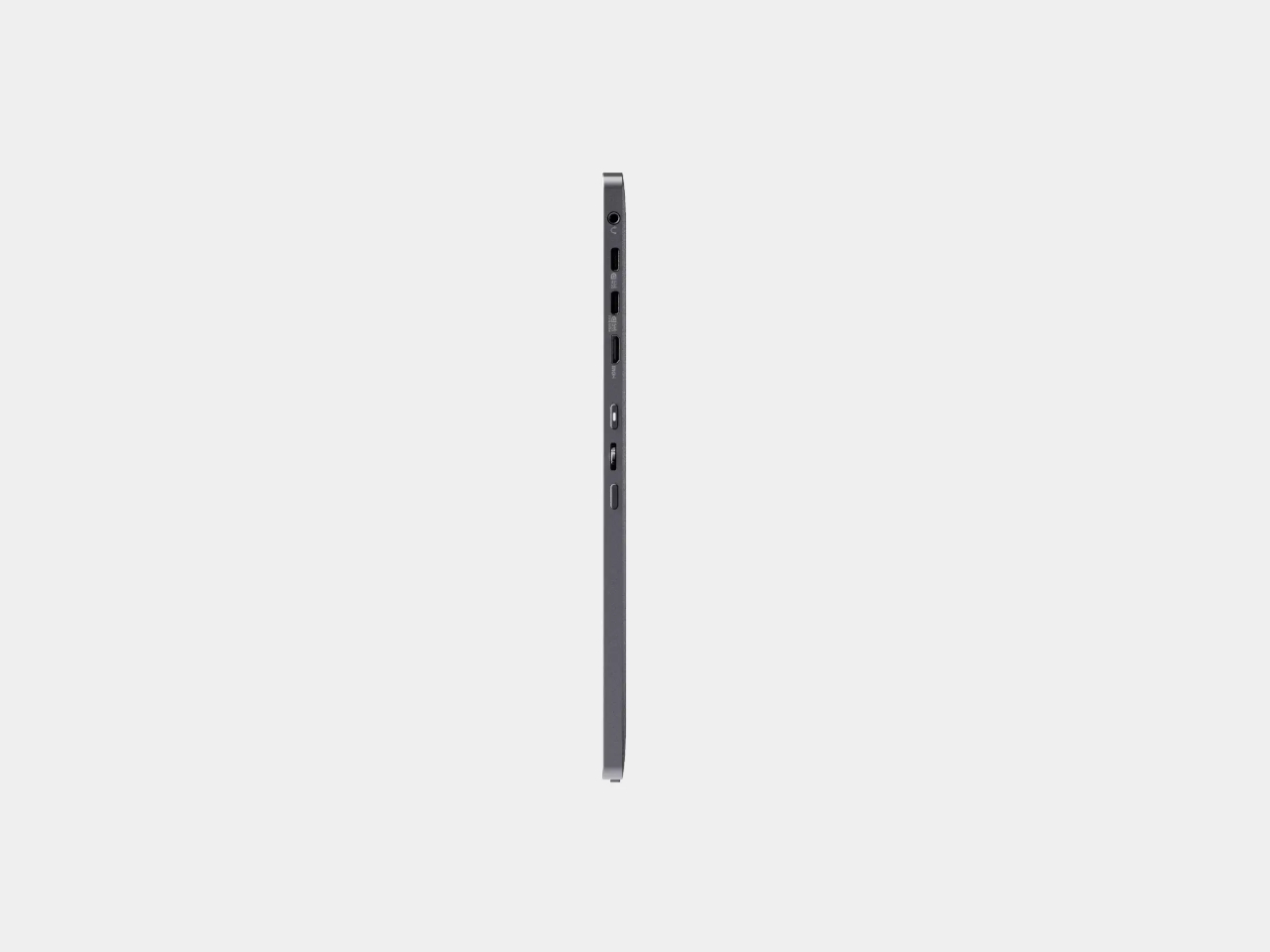
The ASUS ZenScreen OLED MQ16FC tries to fix that. It’s a 16-inch portable OLED display that launched in Europe in early May 2026 at around €280 to €300, measuring 9mm thin and weighing roughly 0.68 kilograms. Those are already respectable numbers for a display of this size, but what actually sets it apart is buried in the port specification: two USB-C connections that can send power in either direction.
Here’s how that works in practice. Plug a USB-C charger into one port on the monitor, then run a single cable from the second port to your laptop. That cable carries both the video signal and up to 65 watts of power, so your notebook keeps charging while the display is running. No power brick plugged separately into the laptop, no second cable hunting for a free port.
It’s worth pausing on why that matters. Most portable monitors are passive in the power conversation; they take whatever the laptop offers and give nothing back. ASUS’s approach treats the power relationship between screen and computer as something the monitor has a responsibility to manage. That’s a small but meaningful shift in thinking, one that asks the accessory to do more work instead of quietly billing the host.
Beyond the power story, the MQ16FC has a display worth carrying. The OLED panel covers 95% of the DCI-P3 color gamut at a 1920 x 1200 WUXGA resolution in a 16:10 aspect ratio, which adds that extra vertical breathing room that widescreen layouts tend to cut off. Contrast is practically infinite by OLED standards, and a 1ms response time keeps things clean enough for video and everyday multitasking.
That said, the MQ16FC isn’t without its quiet losses. There’s no internal battery, so without a charger in the loop, the monitor can still draw from your laptop’s reserves. The 60Hz refresh rate and WUXGA resolution are competent but not particularly exciting for a display positioned as premium. The kickstand-only stand can be awkward on tray tables, and the glossy OLED panel isn’t always your friend in brighter environments.
None of those shortcomings cancels out what makes the MQ16FC interesting. Adding a second screen to a laptop has always been a negotiation between convenience and cable chaos, and for years, the hardware hasn’t done much to simplify that deal. A portable monitor that treats power routing as part of its job description is making a quiet argument about what the category should have been doing all along.
There’s a quiet lie running through every automotive options sheet. It tells you that safety, intelligence, and situational awareness are features you earn by selecting the right trim level, ticking the right package, or visiting the right dealership. The implication is that proper capability lives at the factory and nowhere else. These five gadgets disagree loudly. Each one does something that costs hundreds or thousands of dollars as a factory option, and does it better, for less money, without requiring a new vehicle or a dealer appointment.
The aftermarket has always had better answers than the showroom — that’s not a new observation. What is new is how sophisticated those answers have become. These aren’t optimistic spec sheets printed on cheap plastic. They are purpose-built tools with genuine engineering behind them, from tungsten-carbide emergency escape instruments to AI-vision heads-up displays. Together, they make a compelling case that the best version of your car is assembled in parts, not ordered off a build sheet.
1. WYN Bullet
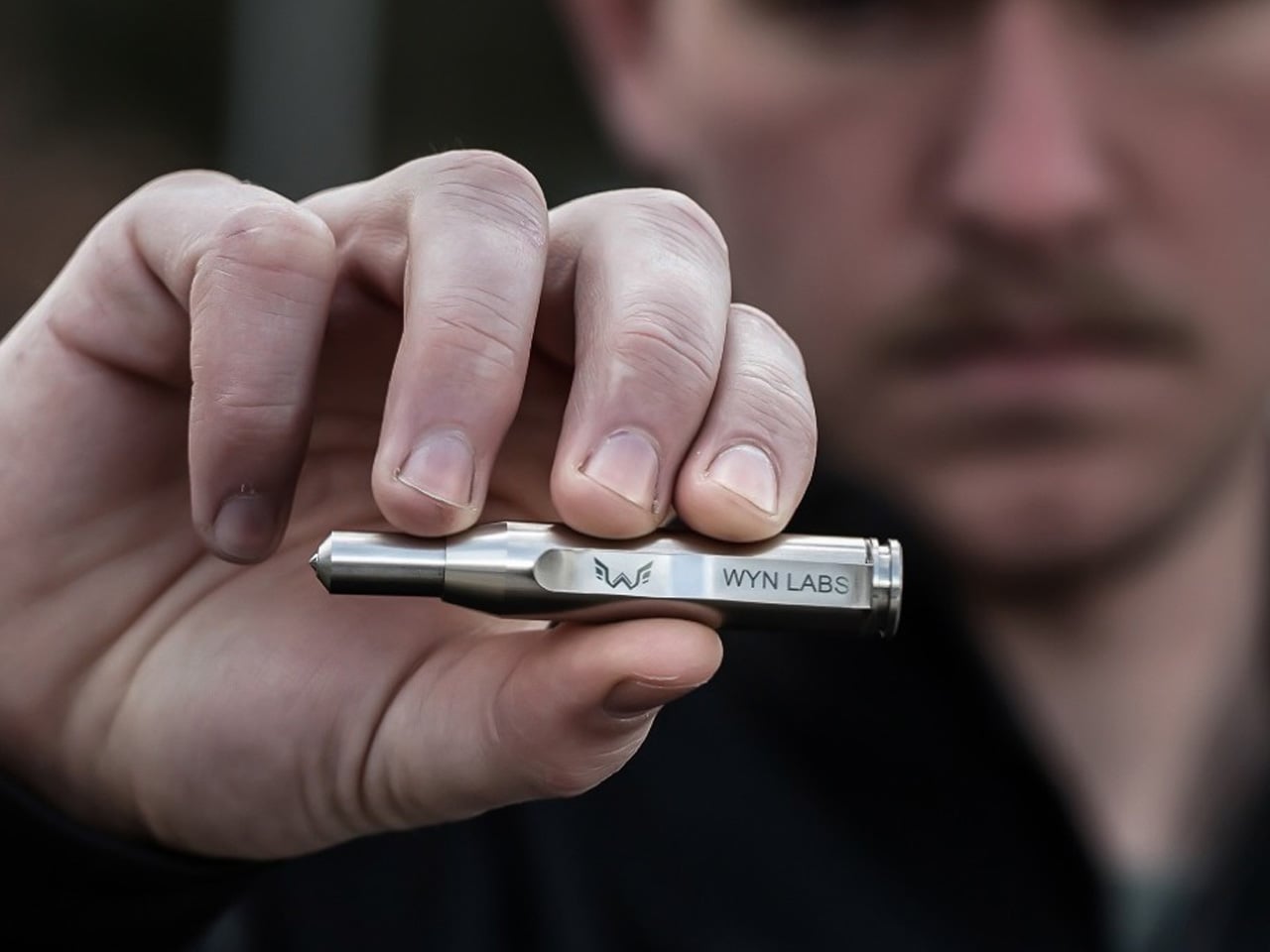
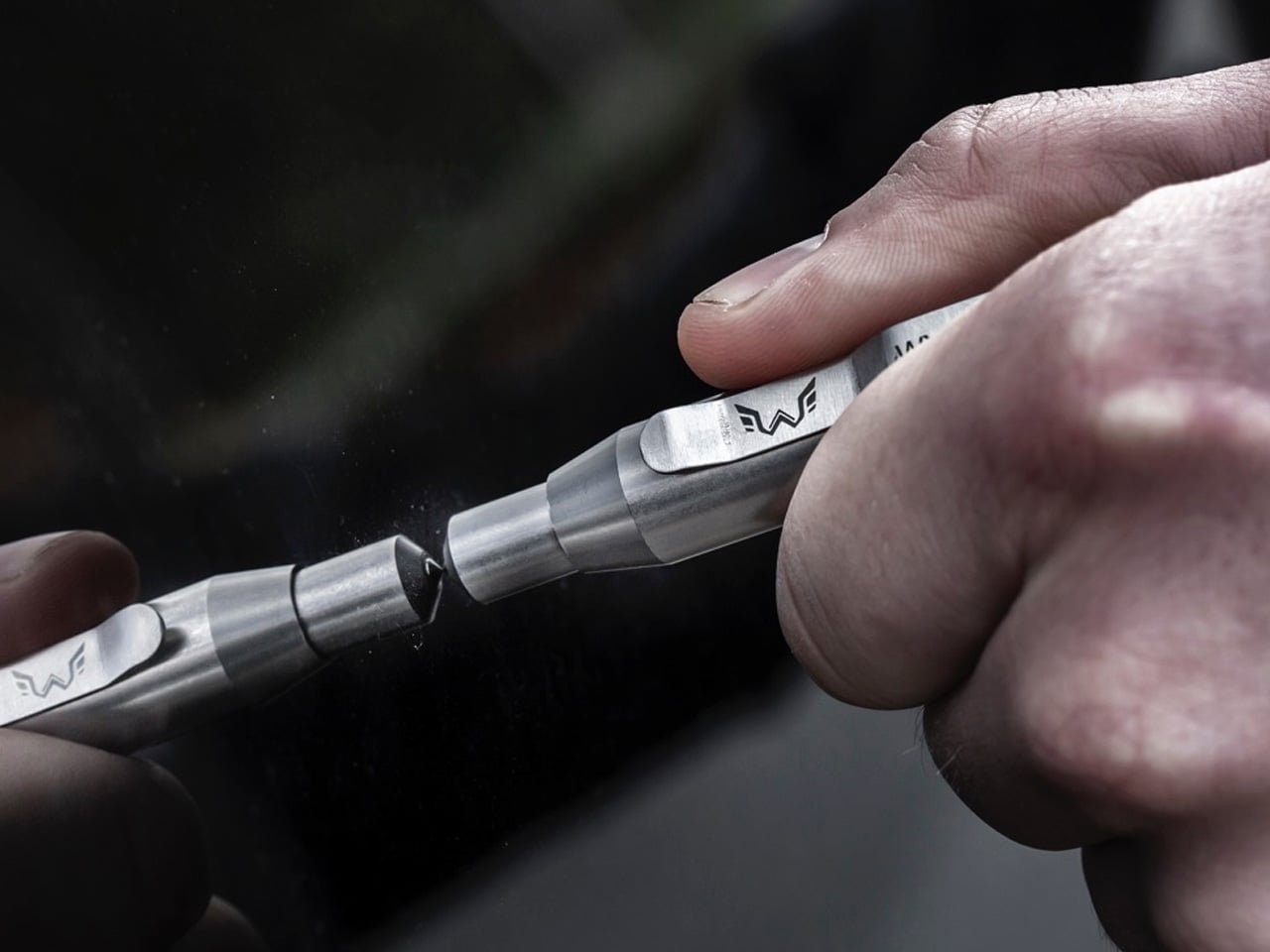
In 2017, over 20,800 US accidents involved fire or water submersion, resulting in nearly 1,900 deaths. A significant portion involved drivers who couldn’t exit their vehicles quickly enough — doors jammed on impact, electrical systems failed, windows stopped responding, and the compression of panic turned every second into a decision too difficult to make clearly. Every premium automaker sells a safety package. Not one of them ships an emergency glass-breaking tool. The WYN Bullet, developed alongside first responders and machined from stainless steel with a tungsten-carbide tip, is exactly that tool — small enough to clip to a keychain and powerful enough to shatter a tempered glass window in under a second with a single push.
The engineering behind it is precise where it needs to be. Toughened glass is designed to withstand the broad, flat impact of a panicked human fist. The WYN Bullet’s patent-pending direct-impact mechanism positions the internal striker directly behind the tungsten-carbide tip, concentrating force into a contact area so small it creates shock waves that fracture the entire panel instantly—no technique required, no repetitive strikes, no Dwayne Johnson-level force. The tool measures 77mm, weighs 45 grams, and ships with both a pocket clip and a keyring loop in stainless steel or black oxide finish. This is AAA-endorsed emergency equipment built for firefighters and EMTs, now available to anyone for the price of a dinner out.
What we like:
One-push mechanism requires no practice or upper-body strength to activate
Dual carry options — pocket clip and keyring — keep it genuinely reachable in an emergency
What we dislike:
The tool’s fidget mechanism makes accidental discharge in a pocket a real possibility
No protective case is included, leaving the tungsten tip exposed in storage
2. TrantorVision NeuroHUD
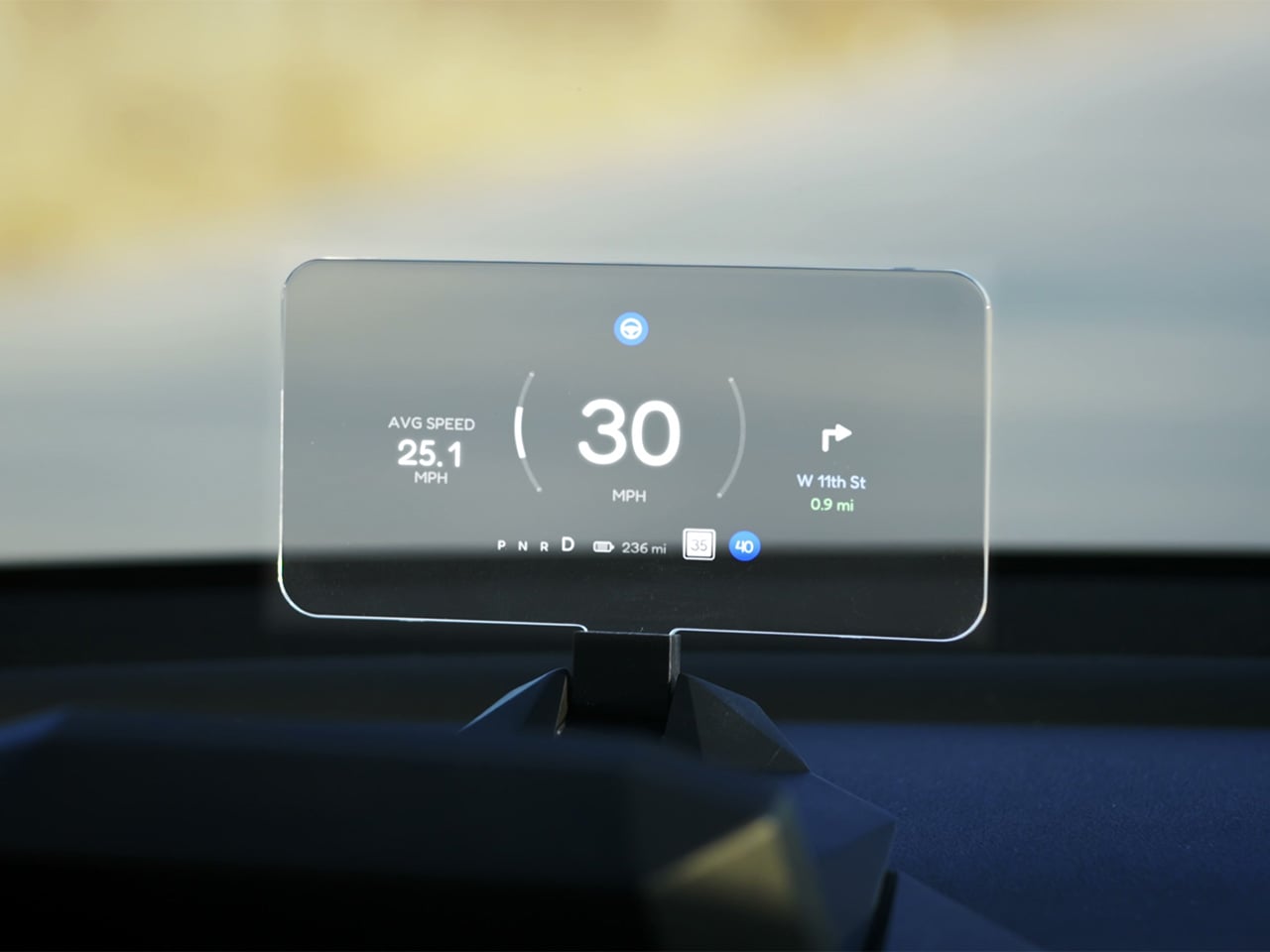
General Motors put a heads-up display in the Oldsmobile Cutlass Supreme in 1988. By 2026, BMW charges $1,200 for one, Porsche charges $2,600 for an augmented reality version, and Tesla — a company founded on the premise that software could replace hardware — ships every Model 3 and Model Y without one, directing all critical driving data to a center-console touchscreen roughly 30 degrees below the driver’s natural forward sightline. TrantorVision built the NeuroHUD specifically for that gap. It installs without tools in under a minute, clips behind the center screen, draws power through a single USB-C cable, and leaves the factory wiring completely untouched.
The dual-channel data architecture is what separates it from the category. A pair of 150-degree AI fisheye cameras face Tesla’s display and read high-frequency data — speed, gear state — at 50Hz, with end-to-end latency as low as 20 milliseconds. Battery range and navigation pull through the Tesla API on a separate channel. The output is a 1,500-nit, 4-inch TFT panel at 480×800 resolution, visible in direct sunlight, projecting information into the driver’s sightline through either a combiner screen or directly onto the windshield — switchable without tools. Screen mirroring, GPS-triggered garage automation, CarPlay, Android Auto, an open API, and a community layout library round out a software stack designed to grow over-the-air. No new hardware required when new features ship.
Dual-channel architecture matches production-fitted HUDs in latency and data richness without touching factory wiring
Open API and community layouts mean the display continues evolving after purchase
What we dislike:
Shipping begins September–October 2026, making this a pre-delivery commitment at checkout
Windshield Projection Mode and deeper Tesla API integration require the Pro tier at $429, not the standard $379
3. GOOLOO DS200 DeepScan
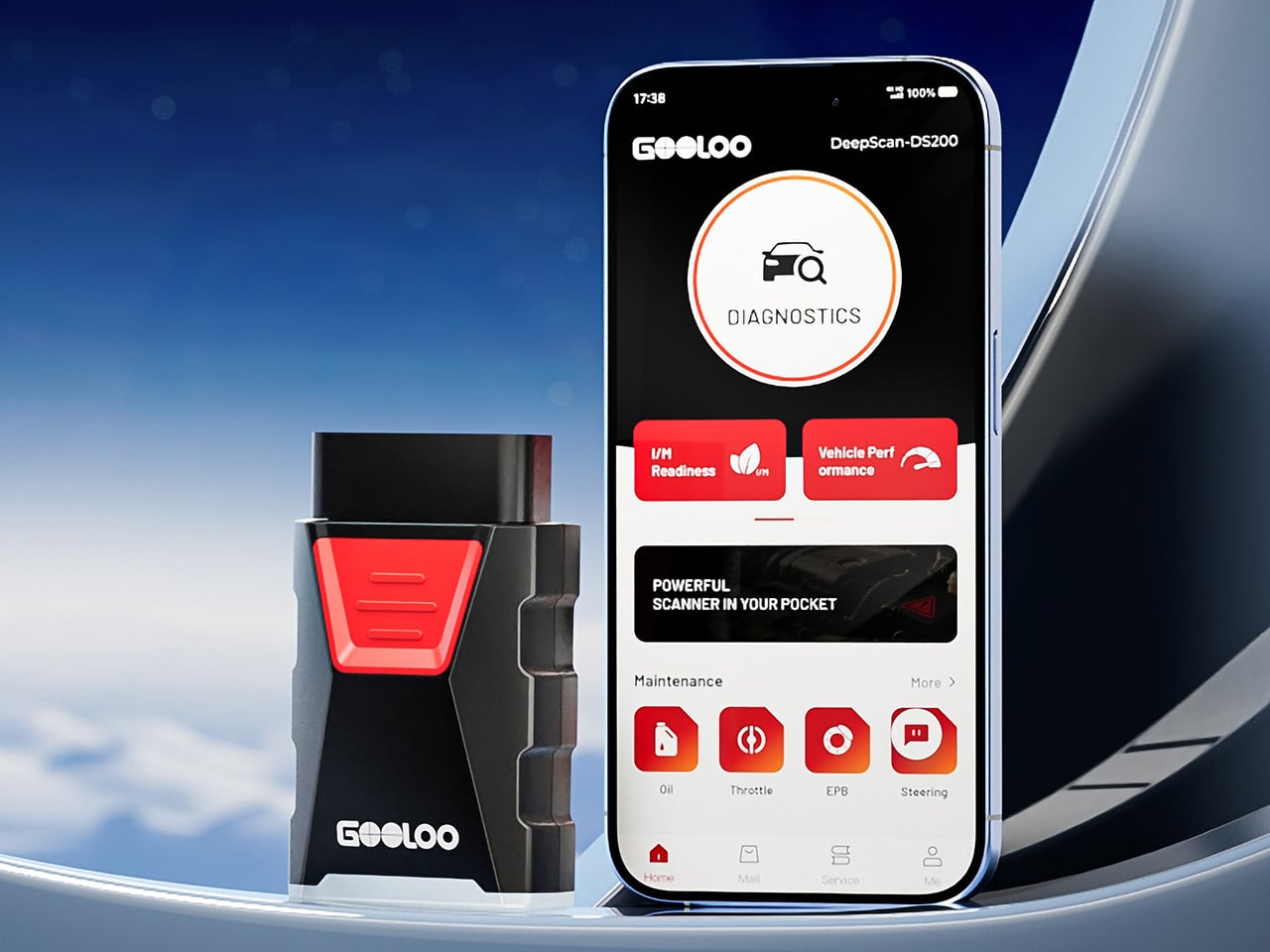
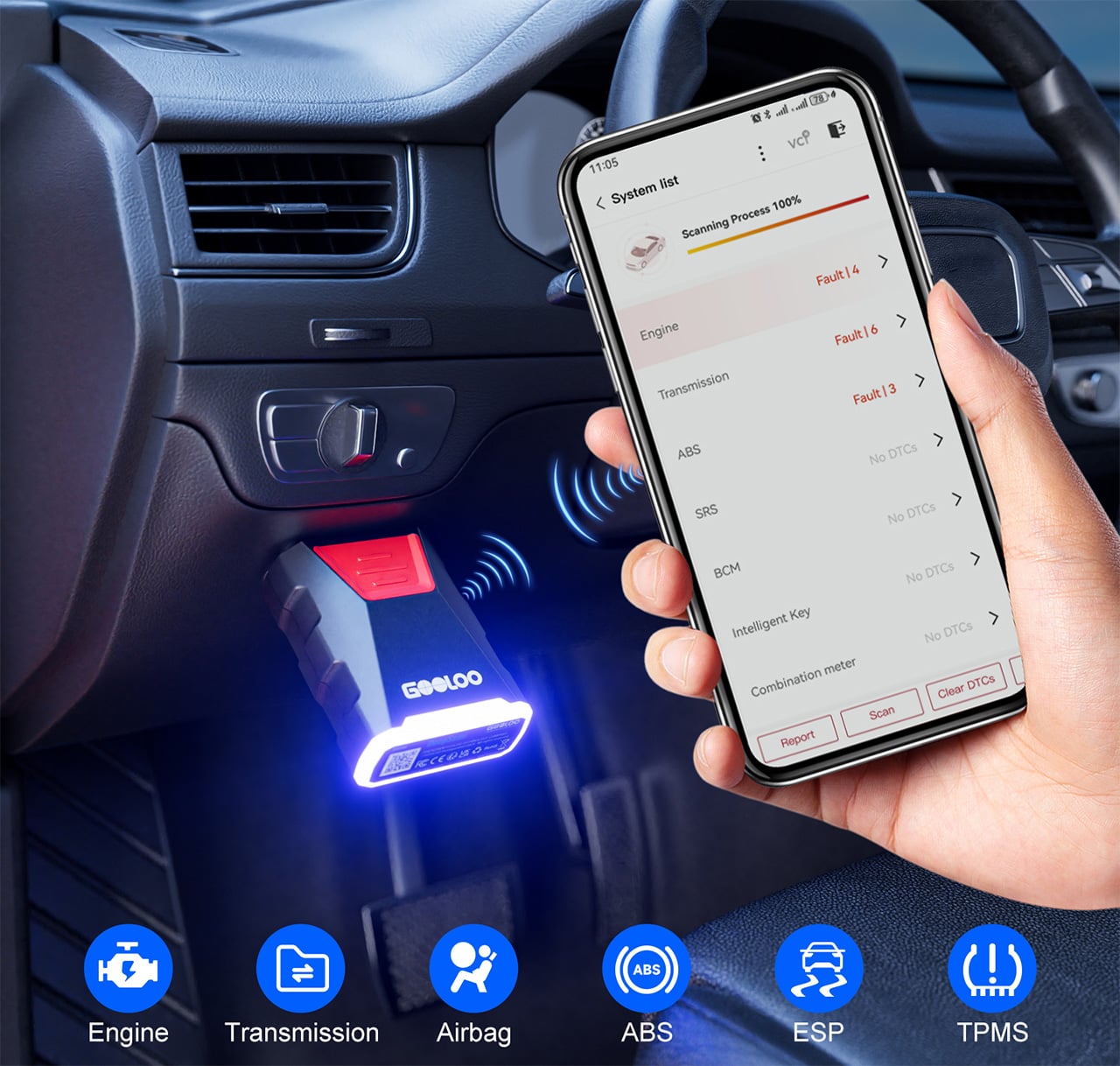
Every car sold in the United States since 1996 carries an OBD2 port — a standardized diagnostic socket that must be present, accessible, and readable by any compliant tool. Dealers have known this for thirty years and built a reliable business around owning the only compliant tool in the conversation, charging $100 to $200 every time a warning light appears to read data that has been sitting in the car’s computer the entire time. The GOOLOO DS200 DeepScan is a Bluetooth dongle the size of a matchbox that performs a full-system scan across engine, transmission, ABS, airbags, stability control, TPMS, steering, and air conditioning, then delivers every result to your phone in plain language, without a waiting room.
What separates the DS200 from the basic code readers that have existed for a decade is the breadth of the scan and the intelligence layered on top of it. It doesn’t hand you a code number to Google separately — it calculates volumetric efficiency, logs fault histories with timestamps, and performs active maintenance functions including oil light reset, electronic parking brake recalibration, steering angle sensor reset, and DPF regeneration. Secure gateway unlock for FCA and Renault vehicles is built in, giving access past the authentication wall that stops most competing tools cold. AutoVIN identifies the vehicle automatically. Bluetooth 5.0 holds a stable connection at 33 feet. The unit weighs 2.89 ounces. The diagnostic intelligence that used to require a $10,000 workshop scanner now fits in a $60 dongle that stays plugged in permanently.
What we like:
Full-system sweep across 20+ vehicle systems, not just engine and emissions codes
Secure gateway unlock is a genuinely rare capability at this price point
What we dislike:
Full functionality requires an annual subscription after the first year of use
The $129.99/year tier for advanced special functions is a meaningful ongoing cost for casual home users
4. Tymate TM7
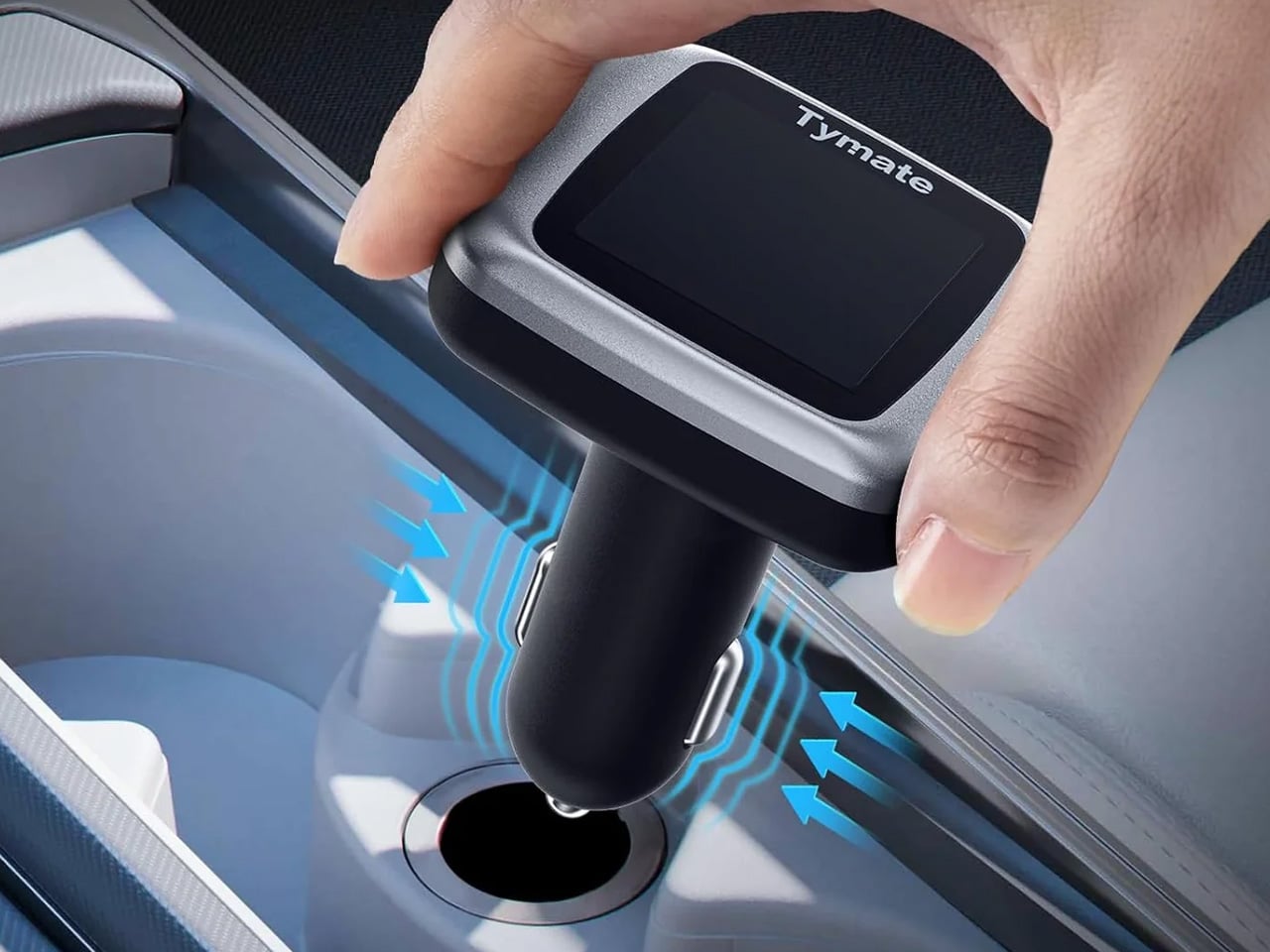
The factory TPMS experience goes like this: a yellow icon appears on the dashboard. It says a tire is low. It does not say which tire, by how much, or at what temperature — only that something somewhere is wrong. The drive to a dealer follows. A service advisor explains that the sensor in question has failed and needs to be replaced. The part costs $150, reprogramming adds another fee, and a four-sensor job on a well-maintained vehicle can clear $1,000 without touching anything else. The Tymate TM7 screws four external sensors onto existing valve stems in under five minutes. From that moment, it monitors pressure and temperature on all four tires simultaneously with ±1.5 PSI and ±3°F accuracy, displayed live on a solar-charged color LCD receiver that plugs into the cigarette lighter with no wiring.
Six independent alarm modes cover every meaningful failure scenario: high pressure, low pressure, rapid leakage, high temperature, low sensor battery, and signal loss. The receiver includes two USB charging ports, turning the cigarette socket from a single-use outlet into a charging hub. The display adjusts its backlight for direct sunlight and near-darkness without manual input. Pressure range runs from 0 to 87 PSI, covering sedans, SUVs, trucks, and RVs. Sensors run on replaceable CR1632 batteries with a guided video for the swap. For vehicles that shipped with no meaningful TPMS feedback at all, the TM7 converts a vague warning light into four individual readings refreshing throughout every drive — which is a more honest picture of what’s happening under the car than most factory systems bother to provide.
What we like:
Six distinct alarm types give genuinely comprehensive coverage across failure modes
Solar charging on the receiver removes one more thing to remember to plug in
What we dislike:
External cap sensors sit exposed on the valve stems, making them easier to steal or damage than internal units
Trailers over 36 feet require an additional repeater module, sold separately
5. 70mai 4K T800
BMW’s Driving Assistant Professional — the camera suite with cross-traffic alerts and the full parking sensor array — runs around $1,700. Volvo’s Pilot Assist Pro is closer to $2,000. What those factory systems deliver is a collection of cameras engineered primarily for driver assistance, not evidence. The 70mai 4K T800 works the problem from the other direction: it’s built first for documentation, with the understanding that a camera that captures everything is ultimately more useful than one that warns you about things. Its triple-channel system pairs two Sony STARVIS 2 IMX678 4K sensors for the front and rear — the same sensor class found in flagship smartphones — with a 1080p interior camera backed by four 940nm infrared LEDs. Three synchronized angles, running continuously, all the time.
The engineering decisions that matter most are the ones that don’t surface until something goes wrong. A three-minute pre-collision buffer means the camera was already recording before the accident happened, capturing the context that determines fault. Wi-Fi 6 on the 5GHz band transfers footage at up to 40MB/s, making roadside evidence retrieval a seconds-long task rather than a twenty-minute wait. A supercapacitor replaces the traditional battery, operating cleanly from -40°C to 85°C without the swelling that terminates most consumer dashcams after a few summer cycles. 70mai Lumi Vision handles nighttime parking surveillance across all three channels simultaneously. ADAS alerts cover lane departure, forward collision, and separate detection for pedestrians and cyclists. The system supports up to 512GB of storage, meaning weeks of continuous footage before anything loops.
What we like:
Identical 4K quality front and rear — most competing systems give the rear a significantly weaker sensor
Pre-collision buffer captures the lead-up to an incident, not just the moment of impact
What we dislike:
Running the rear camera cable through the headliner is a job most owners will want professional help with
Full parking surveillance with the UP05 hardwire kit pushes total cost well above $500
The Best Version of Your Car Isn’t on the Options Sheet
The factory narrative has always relied on convenience — the idea that buying everything at once, from one source, is simpler than assembling capabilities piece by piece. That’s true, as far as it goes. What it leaves out is that the pieces you’d assemble are often better. A tungsten-carbide escape tool, a full-system diagnostic scanner, four live tire readings, three-angle 4K documentation, and a pilot-grade heads-up display — none of these required a new car. They required a valve stem, a USB port, an OBD2 socket, and a windshield.
What connects all five is something more specific than price. Each one solves a problem the car was designed around without solving — the emergency exit nobody plans for, the check engine light nobody decodes, the tire warning nobody quantifies, the blind spot nobody documents, the HUD nobody included. The aftermarket has always been where honest engineering lives. Right now, it’s producing some of the most considered, driver-focused products available at any price point, and the options sheet doesn’t get a vote.
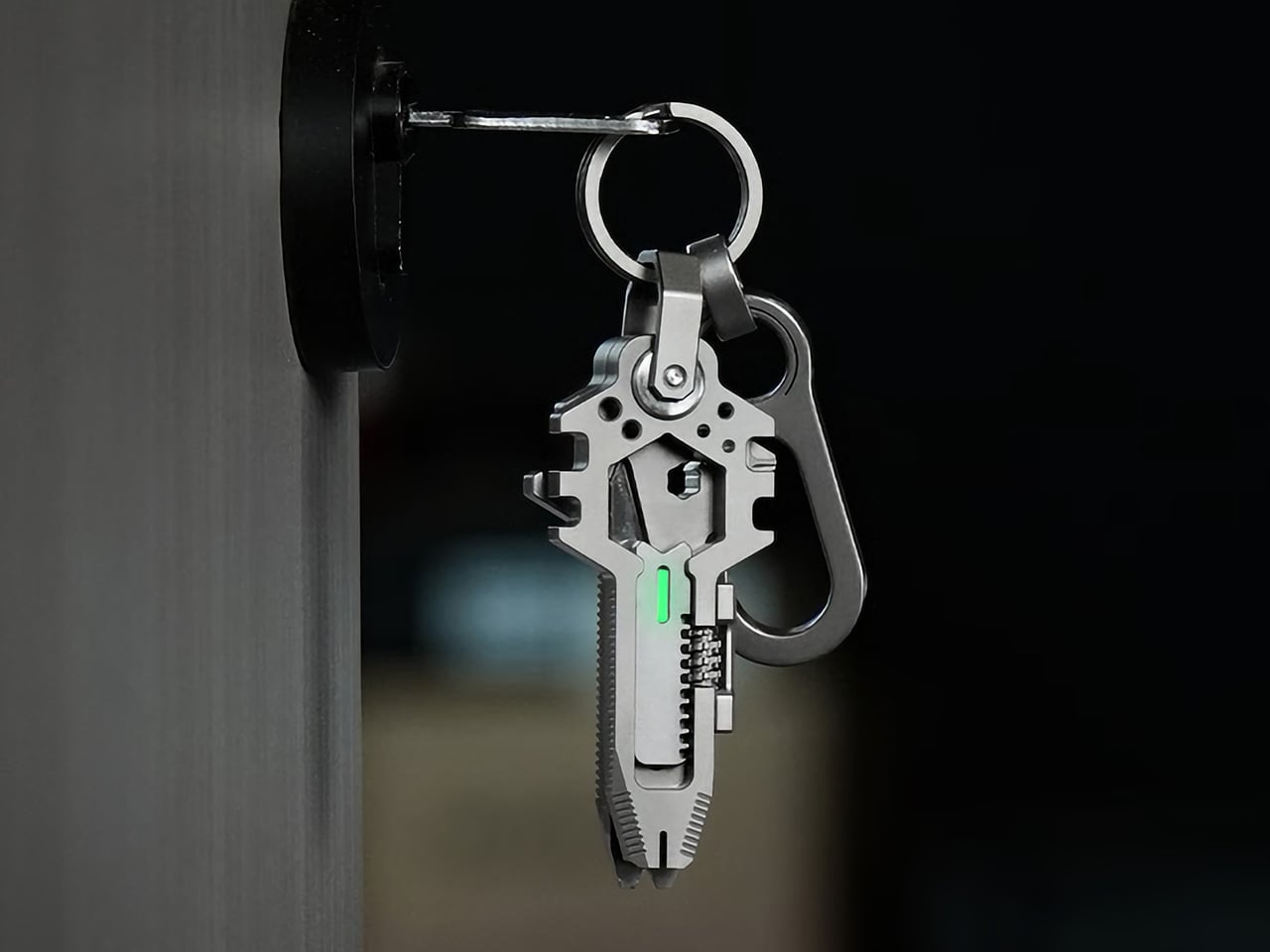
Keys are the only objects humans carry with religious consistency. Wallet habits change, phone pockets shift, watches come and go, but keys stay anchored to the same loop every single day. That makes the key form factor the most reliable real estate in EDC. A tool that mimics a key doesn’t just blend into your carry, it hijacks the one item you’ll never leave behind. EDC Monster understood this from the start when they launched the original KeyMaster in 2023, a 14-in-1 titanium multitool that slipped onto keyrings and disappeared. Version 2.0 expanded to 18 functions, refining the tool selection and ergonomics. Now, three generations and three years later, they’ve perfected the shape that hides in plain sight. KeyMaster 3.0 proves that sticking with a form factor long enough to truly master it beats chasing novelty every product cycle.
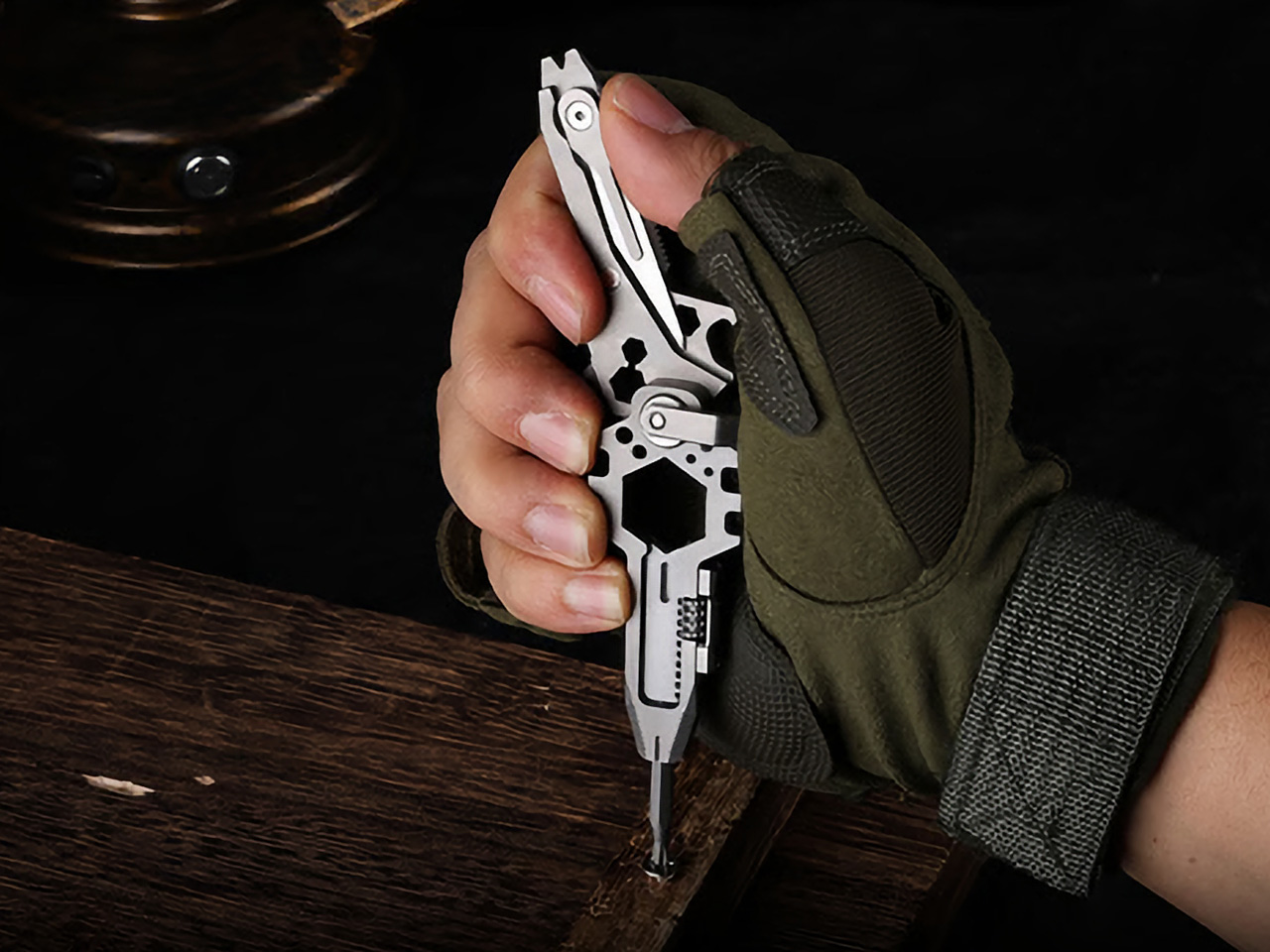
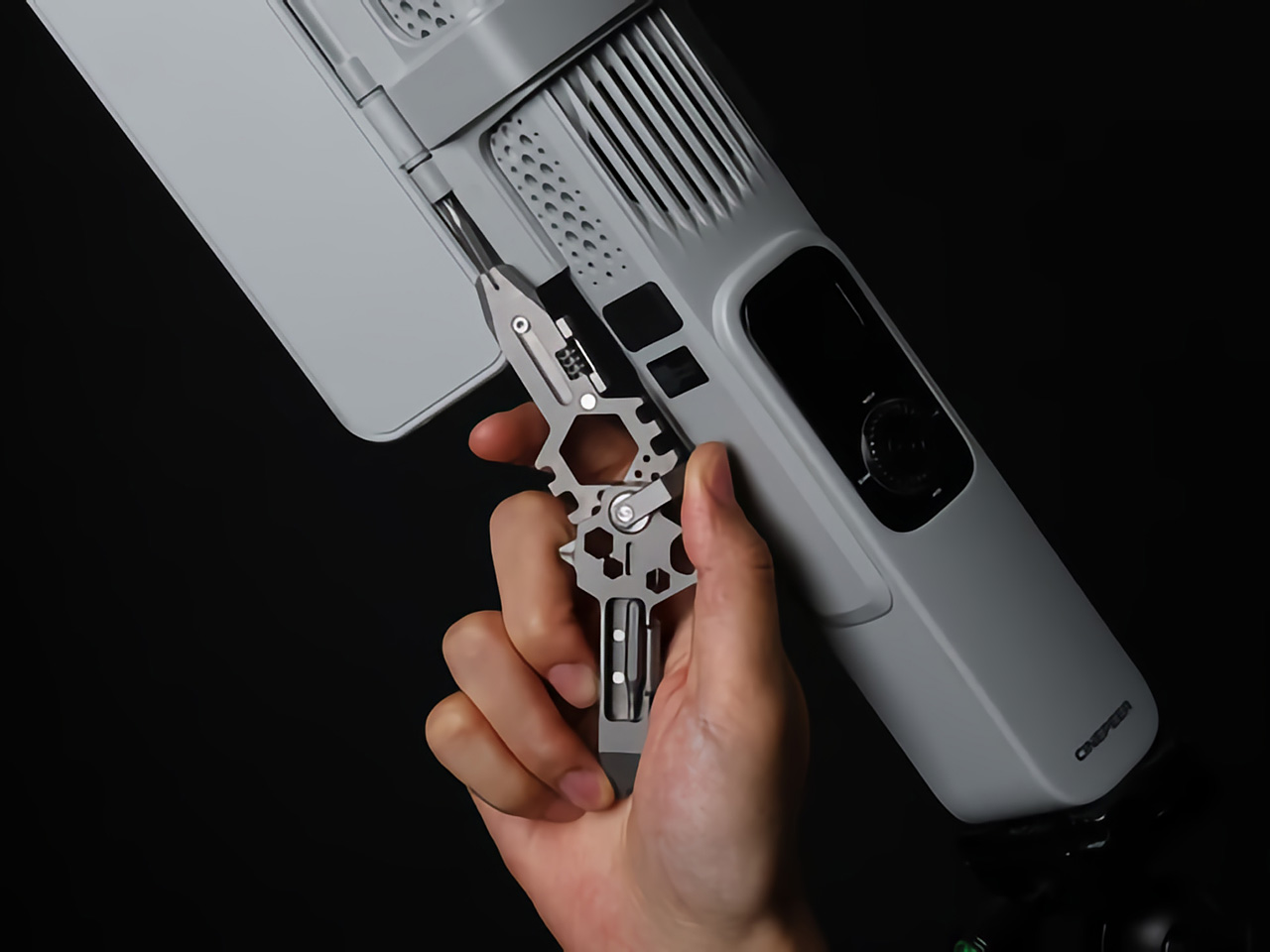
KeyMaster 3.0 takes the key-shaped multi-tool concept and rebuilds it around adaptability. The body is Grade 5 titanium, precision-machined and sandblasted to a matte finish that feels refined in hand. At 74.5mm long and 53.7 grams, it sits flat on a keychain next to your car fob and house key. The tool count hits 20-plus, but the real upgrade lives in three systems: an adjustable spanner with a 0-16mm range that replaces six fixed wrenches, a magnetic bit driver that locks bits in place without slippage, and a blade holder that accepts standard #11 replaceable blades. EDC Monster designed it to solve the problems the first two generations couldn’t.
Every multi-tool with a fixed wrench eventually meets the bolt it can’t turn. Previous KeyMaster generations shipped with fixed hex wrenches sized for common fasteners, which worked cleanly in controlled situations and failed quietly in the field. The 3.0’s adjustable spanner covers 0 to 16mm, handling everything from M5 bolts to M12 hardware without swapping tools or approximating the fit. EDC Monster also designed the second plate of the tool’s two-body construction to double as a grip handle when the spanner is deployed, adding real purchase for tighter fasteners. That range maps directly to the kind of real-world repairs where keychain tools actually get deployed: furniture assembly, bike adjustments, appliance tinkering, and the inevitable IKEA emergency at a friend’s new apartment.
The same logic applies to the screwdriver system, where friction-fit bits have plagued compact tools for years. Under even moderate torque, a bit that isn’t mechanically retained will wobble, slip, and strip the fastener before the job is done. EDC Monster’s magnetic retention snaps bits into the driver head with zero play, and the redesigned top-mounted driver position delivers a more natural wrist angle and better torque transfer than the side-mounted configurations common in smaller tools. Two bits live in onboard magnetic storage slots inside the body, and the 4mm standard keeps the system open to any aftermarket supplier rather than tying you to EDC Monster’s own replacements.
The everyday toolkit built into the body covers the situations that repeat. The pry bar handles box seams, stubborn lids, and light leverage without needing a dedicated tool for each variation. The Phillips and flathead drivers handle cabinet hardware, furniture bolts, and the loose screws that accumulate in any lived-in space. The bottle opener is self-explanatory. The nail file, nail puller, and mini ruler sound mundane until the moment they’re useful, which is the entire argument for carrying a tool this small. You don’t pack a ruler because you expect to need one. You pack it because when you do need one and don’t have it, you feel the absence more sharply than the weight would have ever justified.
Where KeyMaster 3.0 separates itself from the category is in its willingness to go further. The mini saw handles cuts on wood, plastic, and cord in situations where a blade would bind or skip. The wire bender manipulates cable for improvised fixes that tape simply won’t hold. The spoke wrench addresses bicycle wheel truing with a specificity that no Swiss Army knife has ever bothered with, and the firestarter edge covers the gap between urban carry and trail use without requiring a second tool on the keychain. These aren’t tools for every day. They’re tools for the day when something goes wrong and the nearest hardware store is twenty minutes away, or the nearest anything is considerably further.
The Grade 5 titanium construction keeps the weight at 53.7 grams while delivering the strength to handle real torque loads without flexing or failing. EDC Monster chose a matte sandblasted finish that hides scratches and wear far better than polished titanium, so the tool maintains its aesthetic even after months on a keyring alongside jangling metal keys and carabiners. The 74.5mm length matches the profile of a standard house key, which means KeyMaster 3.0 doesn’t create an awkward bulge or unbalanced weight distribution in your pocket. The 35mm width keeps it slim enough to layer flat with other keys, and the 4mm thickness at its thickest point tapers down to 2mm at the edges. EDC Monster drilled a 6mm keyring hole at the base, large enough to accommodate split rings, carabiners, or paracord lanyards. The entire tool feels substantial without feeling heavy, a balance that titanium achieves better than steel or aluminum in this weight class.
The person KeyMaster 3.0 is built for tends to sit between two extremes. They’re not the enthusiast who carries a full Leatherman and considers it light. They’re also not the person who treats their keychain as a keychain and nothing more. They’re the cyclist who needs spoke access and hex drivers on the road and won’t check a bag for a wrench. They’re the urban renter who tackles household repairs without owning a proper toolkit and has resorted to using a shoe as a hammer more than once. They’re the frequent traveler who wants something genuinely capable that clears security without a second glance. What EDC Monster grasped three generations ago, and has refined ever since, is that this person doesn’t want to think about their tools. They want to reach into their pocket, find what they need, and get on with things.
KeyMaster 3.0 is currently available for pre-order at $69 for early backers, a 30% discount off the planned retail price of $99. EDC Monster estimates shipping in August 2026 for Kickstarter backers, with general retail availability following later in the fall. The campaign includes free worldwide shipping, and backers can add extra #11 blade packs (10 blades for $5) and additional bit sets (6 bits for $12) during checkout.
The RIMOWA Design Prize doesn’t always produce furniture, and that’s precisely why I pay attention to it every year. The luggage brand’s annual student design competition has a way of surfacing ideas that sit at the uncomfortable, exciting edge of what design can actually do for people, and the 2026 winner is probably the best example of that yet.
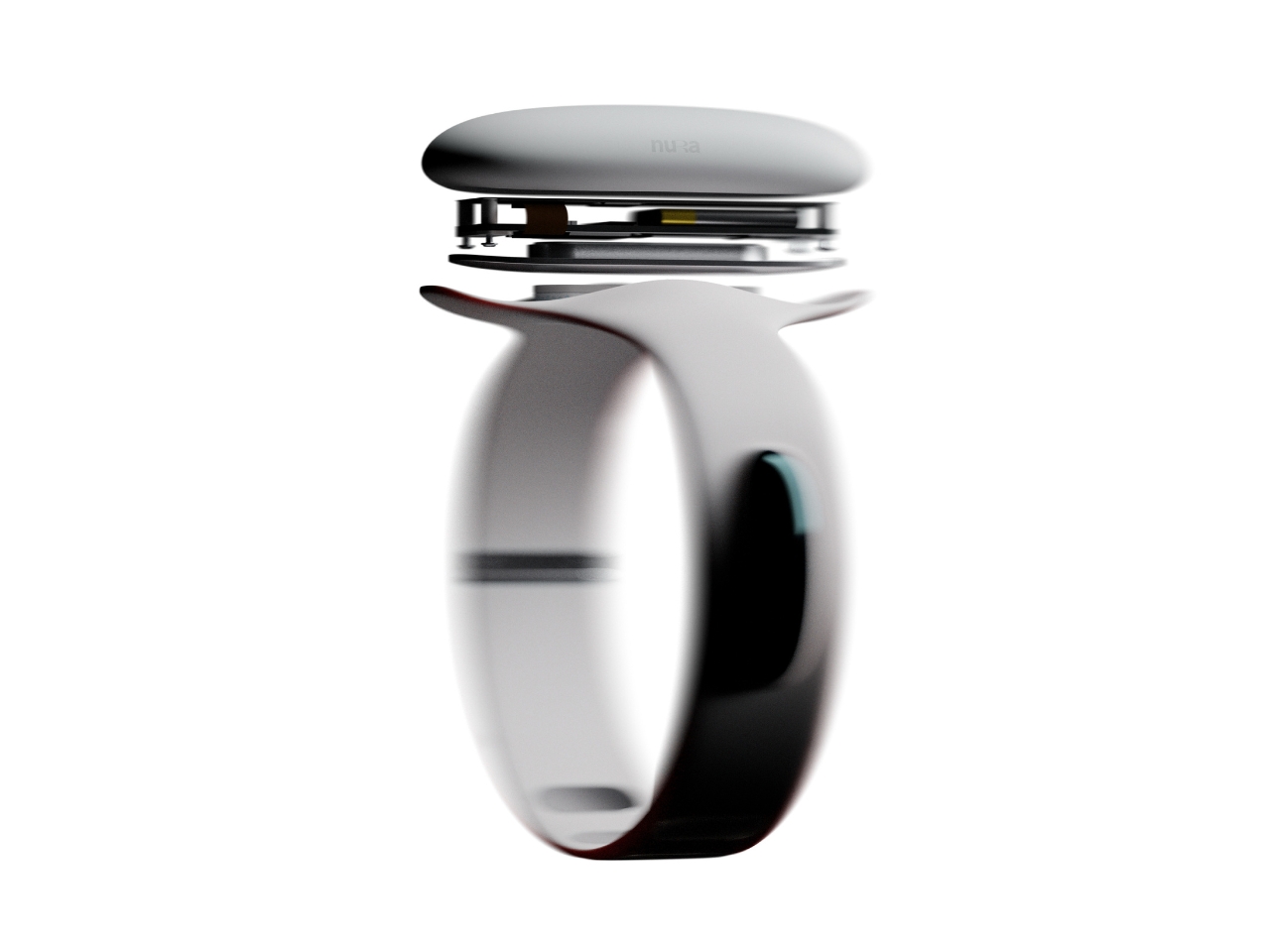
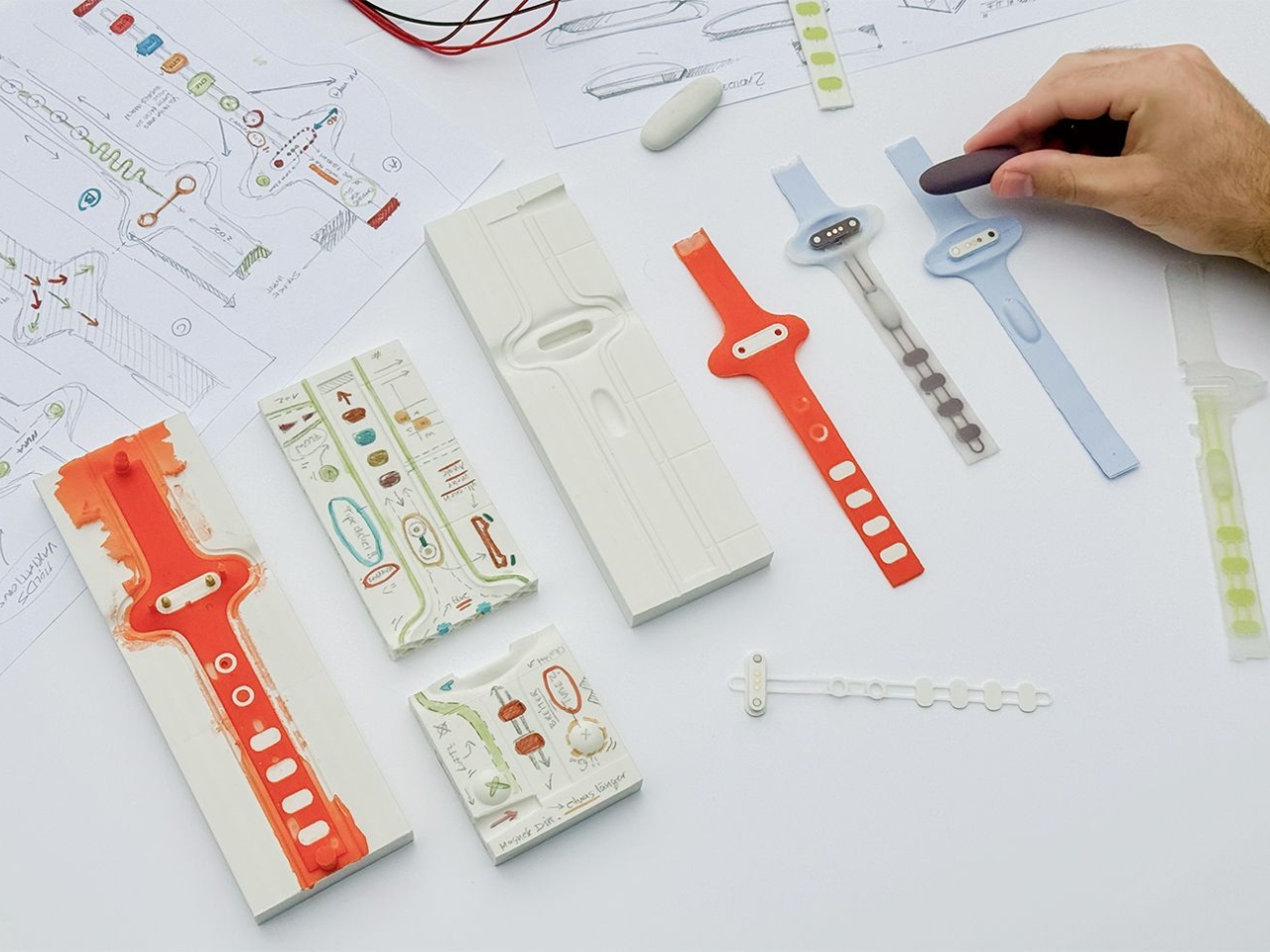
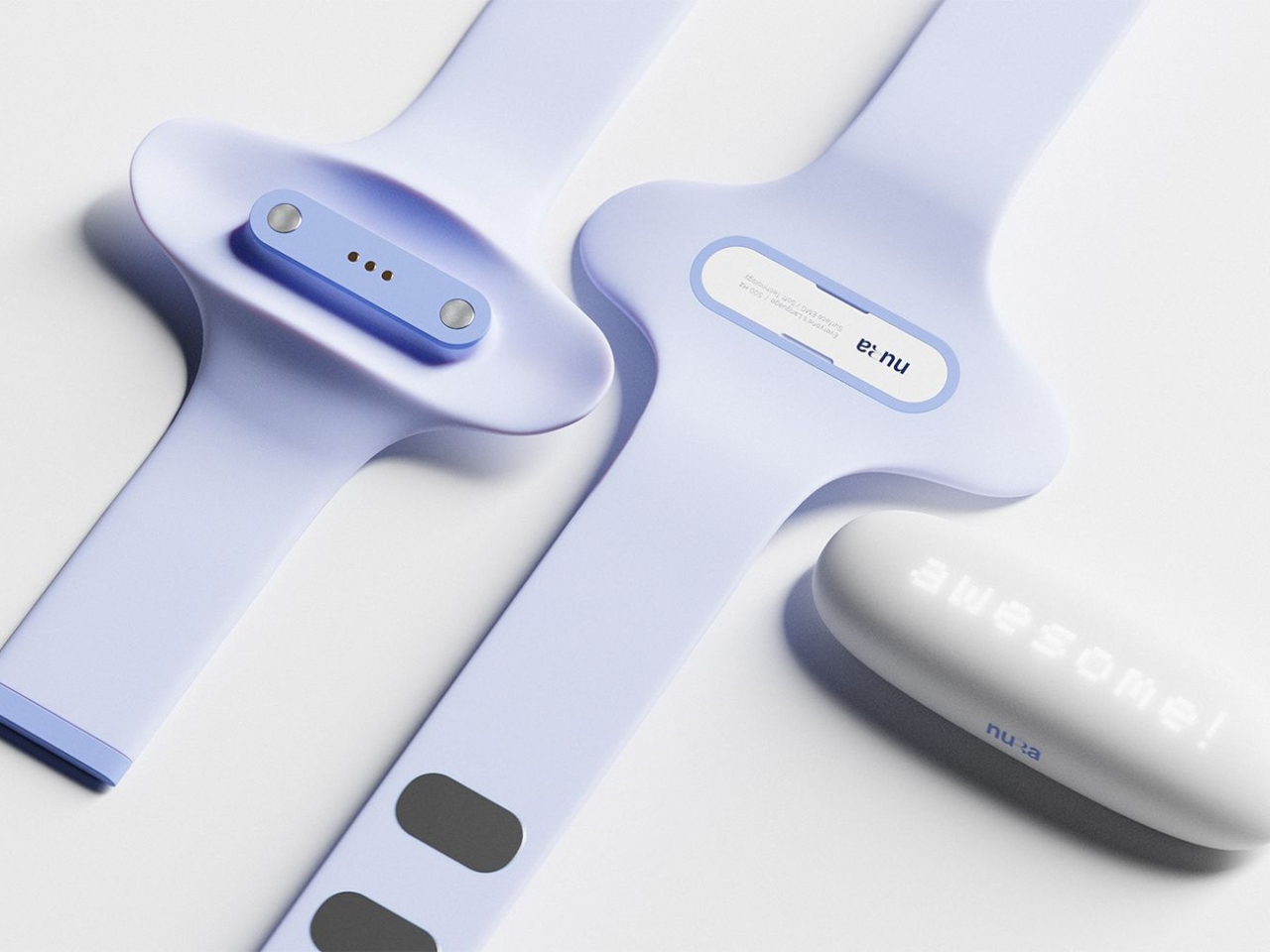
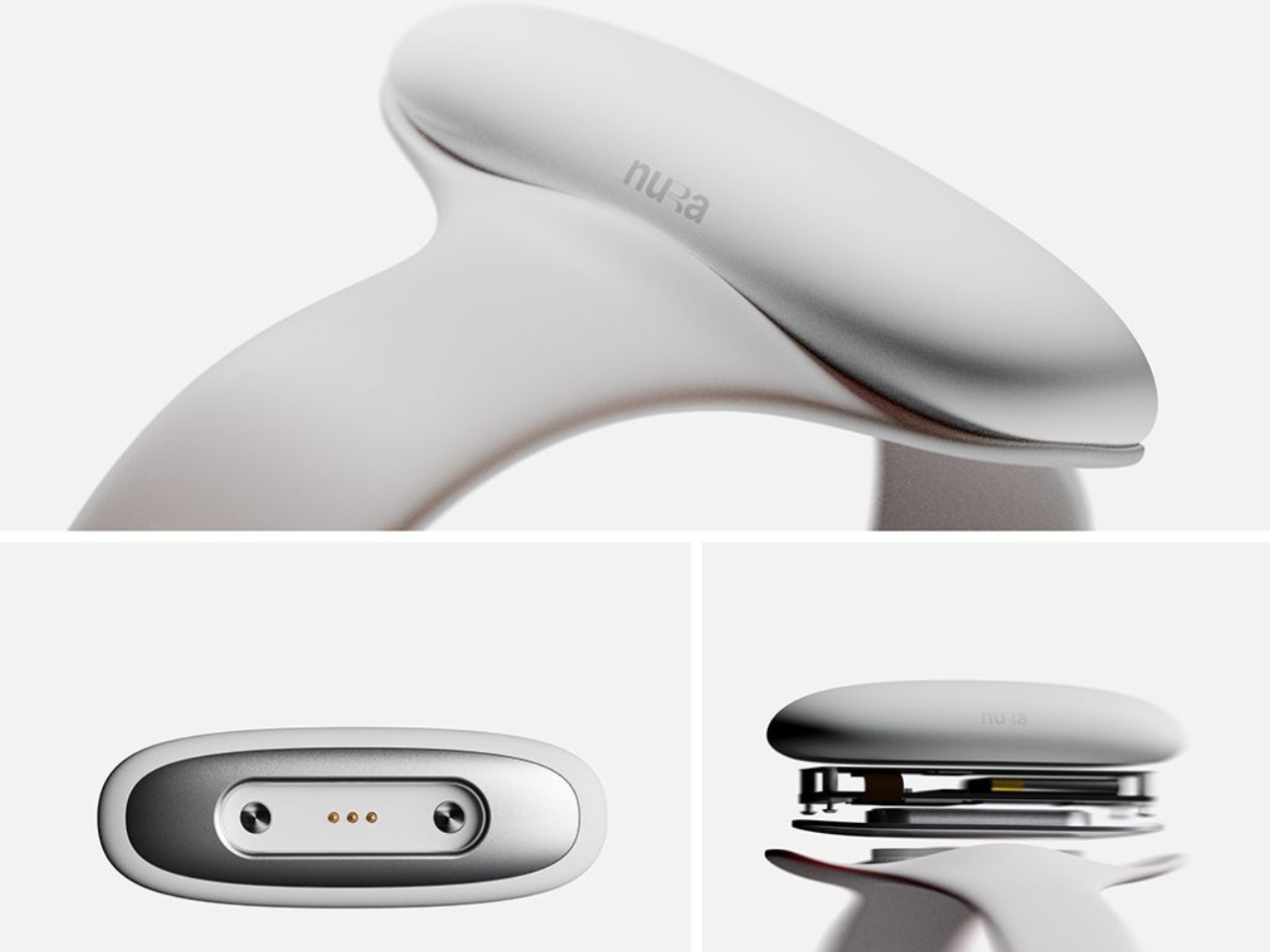
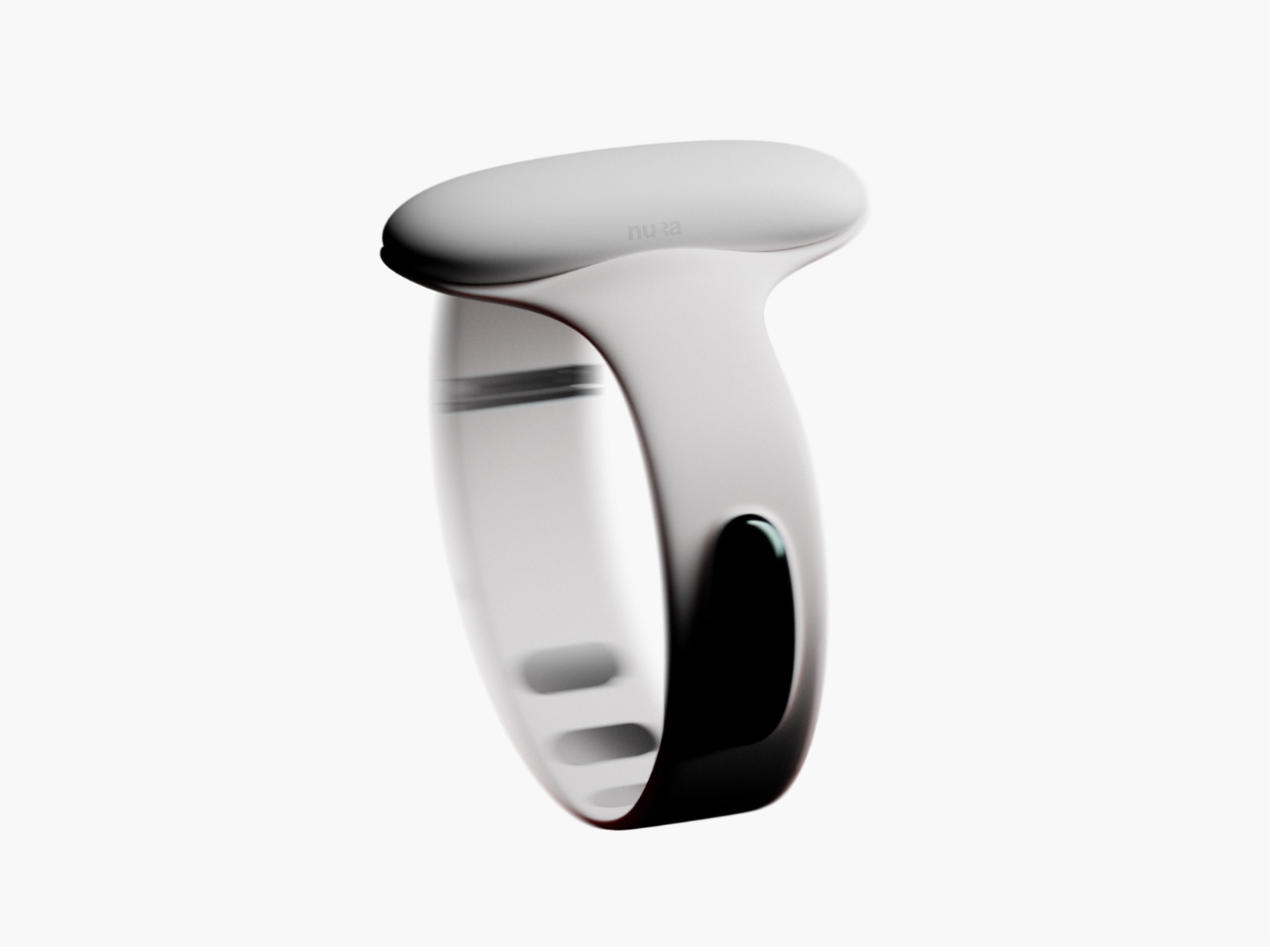
Samuel Nagel and Paul Feiler, two students from Hochschule für Gestaltung Schwäbisch Gmünd, took home the fourth edition of the prize with NURA: a bracelet that uses EMG (electromyography) sensors to capture muscle signals in the forearm and translate sign language into audible speech in real time. It works the other way around too, converting spoken language into visible text for deaf users. The whole thing sits on your wrist, shaped by the silhouette of a manta ray, and it looks less like a medical device and more like the kind of accessory you’d spot on someone at a gallery opening.
That last detail is actually the point, and I think it’s worth dwelling on. Assistive technology has a long and unfortunate history of making the people who need it feel conspicuous. Hearing aids, for decades, were designed to be invisible precisely because visibility carried stigma. The unspoken message was that needing help was something to hide. NURA takes a completely different position. It’s designed to be seen, worn with pride, styled rather than concealed. The gesture feels radical even though, rationally, it shouldn’t have to be.
The technology behind it is genuinely clever. EMG sensors are nothing new as a concept, but applying them to sign language translation in a form this compact and wearable is a meaningful design leap. The bracelet reads the electrical signals produced by muscle contractions in the forearm as the wearer signs, processes them, and produces speech output. The reverse channel picks up spoken language and renders it as text. Two-way, seamless, real-time. For anyone who has ever watched a deaf person navigate a conversation without an interpreter present, or felt the awkward pause that comes from communication breaking down mid-exchange, the implications of that are enormous.
I keep thinking about how many interactions become effortless with something like this on your wrist. Ordering at a counter. Talking to a doctor. A spontaneous conversation with a stranger on the street. These are moments that require logistics for deaf users in a way most hearing people never have to consider, and NURA collapses that distance without asking anyone to compromise.
The manta ray inspiration is a quiet masterstroke, too. It gives the object a reference point that feels alive and organic rather than mechanical or clinical. The form has been rendered in clean, sculptural white, with the kind of restraint you’d expect from a German design school sensibility. It doesn’t scream technology. It just sits there looking elegant, doing something extraordinary underneath.
Will NURA make it into production? That’s the question that always hovers over student prize winners, and it’s an honest one. The gap between a beautifully executed concept and a market-ready product is wide, and the challenges of real-world EMG accuracy across different body types and signing styles are not trivial. But I don’t think that’s entirely the point. The RIMOWA Prize exists, among other things, to expand the imagination of what design is for, to signal to the industry what problems are worth solving and what solving them beautifully might look like.
On that count, Nagel and Feiler have done something genuinely important. They’ve argued, through the language of form, that accessibility and desirability don’t have to be in opposition. That a wearable designed for a deaf person can be something a hearing person might be jealous of. That the most human design isn’t the kind that fixes a flaw and hides it, but the kind that celebrates capability and brings people closer together. The bracelet is beautiful. The idea behind it is even more so.
Gaming controllers have long leaned into one of two visual languages: aggressive, angular designs aimed at the competitive crowd, or the familiar, conservative look of first-party hardware that blends quietly into any living room setup. The color palette rarely strays far from matte black, carbon gray, or safe-for-everyone white, as if bold design choices were somehow at odds with serious performance.
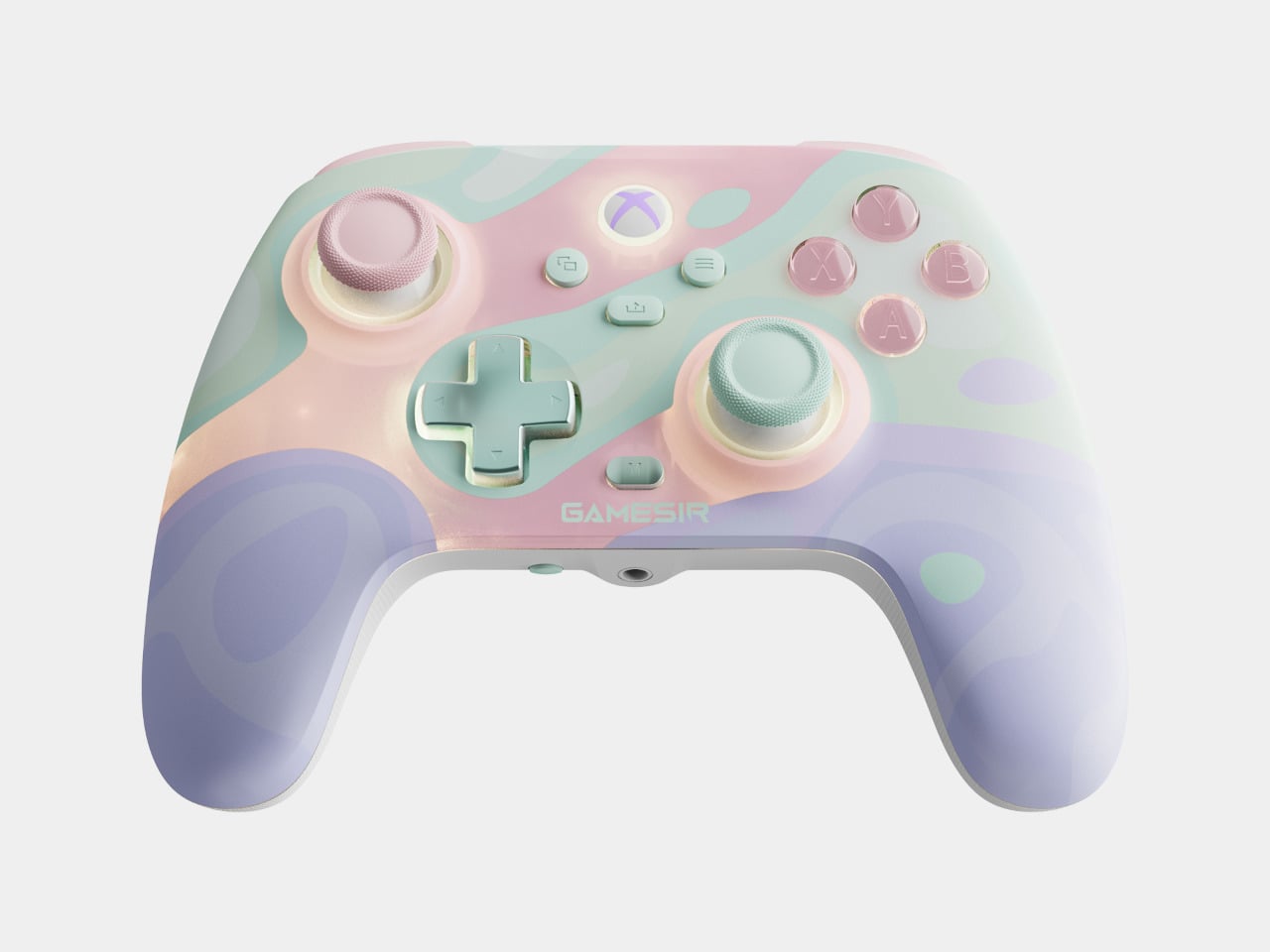
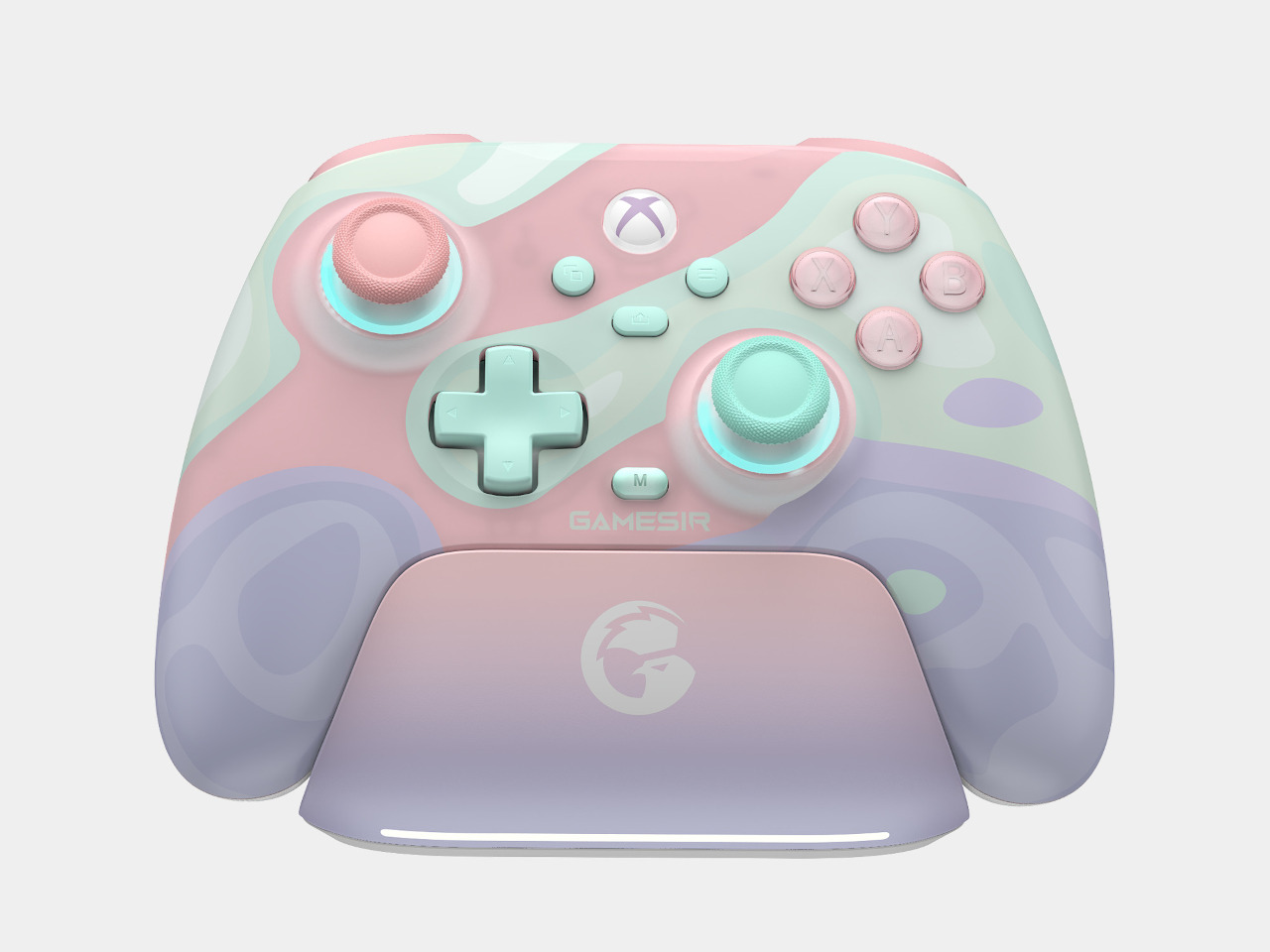
GameSir’s T7 Pro Sugar Whirl challenges that assumption with a translucent shell that blends soft pinks, blues, and lavenders, described by GameSir as a swirl of cotton candy and morning skies. It’s part of the brand’s Pastel Collection, and it’s officially licensed by Xbox, which means wireless connectivity to Xbox Series X|S and Xbox One isn’t an afterthought. The looks are deliberate, but so is the hardware underneath.
At the core of the control experience are GameSir’s Mag-Res TMR (Tunneling Magnetoresistance) sticks, a non-contact magnetic technology that eliminates the stick drift that tends to plague conventional analog sticks over time. The Hall Effect analog triggers come with two-stage trigger stops, giving you a shorter pull when faster, more precise inputs matter most. For competitive play, both features represent a meaningful step up from standard controllers.
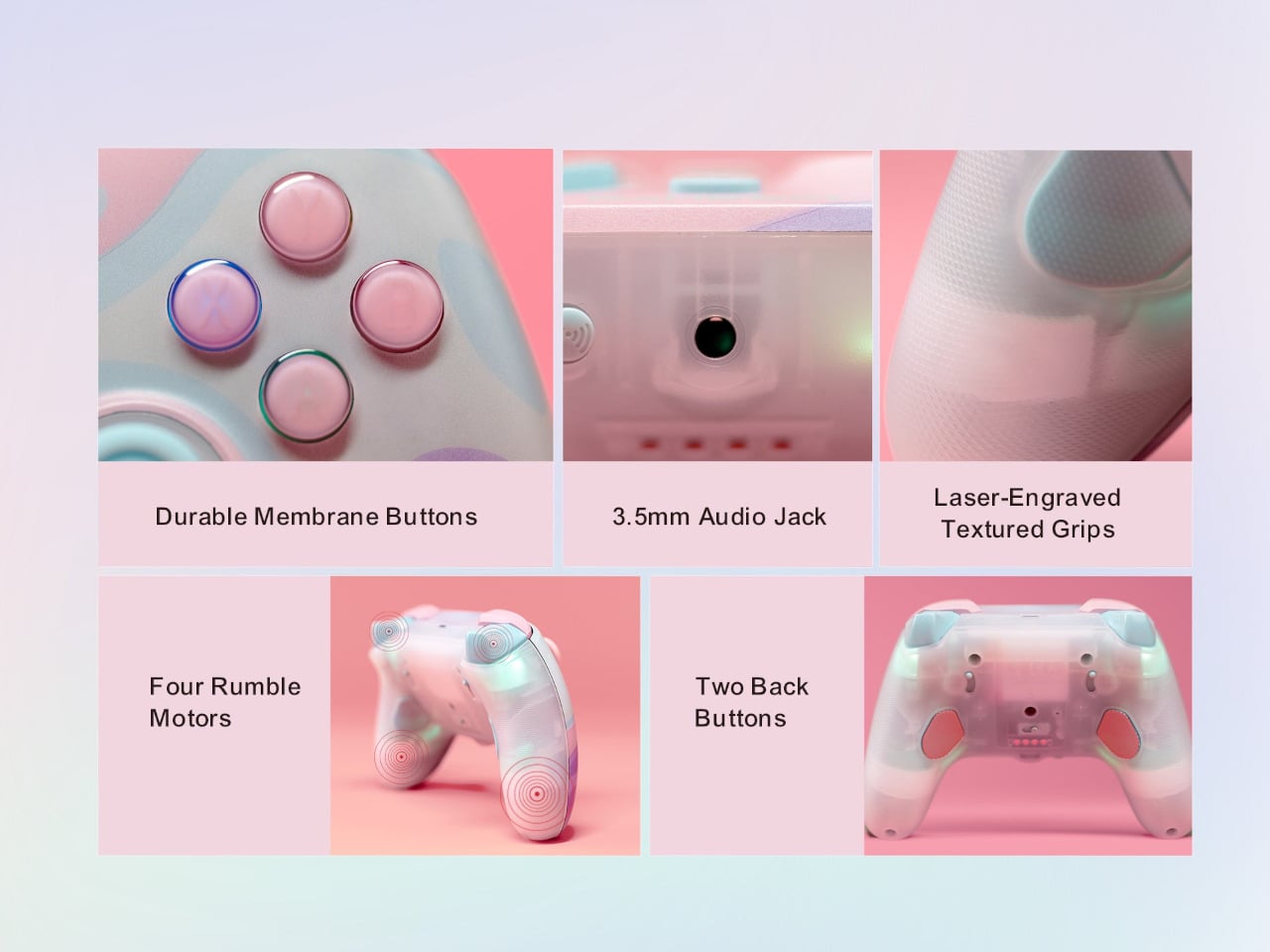
The controller also has two remappable back buttons, which can take on any function you assign through the GameSir Nexus software. Four rumble motors handle feedback, with a level of fine-tuning that most first-party controllers don’t offer. On PC, there’s also a six-axis gyroscope for motion control, making the T7 Pro Sugar Whirl versatile enough to keep up with platform-specific demands.
Connectivity follows a tri-mode approach. The controller pairs wirelessly to Xbox Series X|S and Xbox One via 2.4GHz, switches to Bluetooth for Android, and also works wired through USB-C. The polling rate reaches up to 1,000 Hz on PC and 250 Hz on Xbox, numbers that matter more when you’re playing anything that rewards split-second timing. A 3.5mm audio jack is included for headset use.
The 1,050 mAh battery charges via the included charging dock or through the USB-C port at the top of the controller. GameSir Nexus software handles all the customization, from button remapping and stick sensitivity to vibration intensity and RGB lighting effects. Multiple profiles can be saved and swapped between games, which saves the hassle of reconfiguring everything when switching between titles with very different control demands.
The RGB lighting adds another layer of visual personality, though it’s the translucent shell that does most of the aesthetic work. The pastel color blend is something the controller market doesn’t often attempt at this tier, and it comes off as genuinely considered rather than gimmicky. It’s the kind of design that sits on a desk and invites a second look from anyone who happens to walk into the room.
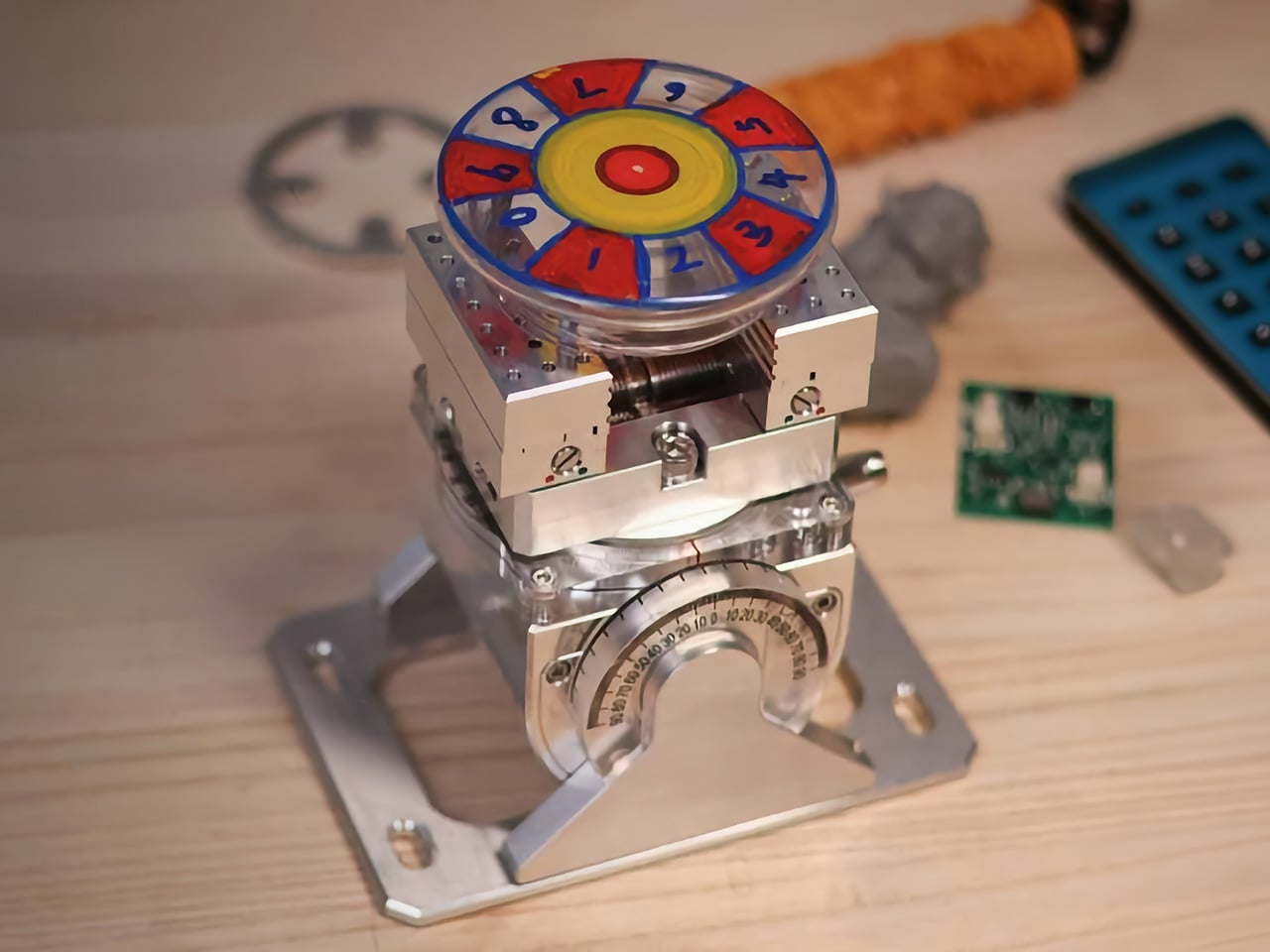
Bench vises have long been built around one assumption: the work stays put, and the maker adapts. AxiGlide inverts that. With full 360-degree rotation paired with a tilt base that moves from horizontal toward vertical, it creates a workspace where the object turns, angles, and aligns with far less interruption. The rhythm of making changes the moment you stop compensating for the tool.
AxiGlide offers free-spin motion for fluid handling, a 60-position indexed system for repeatable 6-degree steps, and a full-lock mode for rigid support during demanding tasks. The modular jaw system adds another layer of versatility, with options for flat, irregular, hard, and delicate surfaces. Starting at $398 for the Standard version and $449 for the Precision model, it positions itself as a serious upgrade for detail-heavy bench work where angle, access, and control define the outcome.
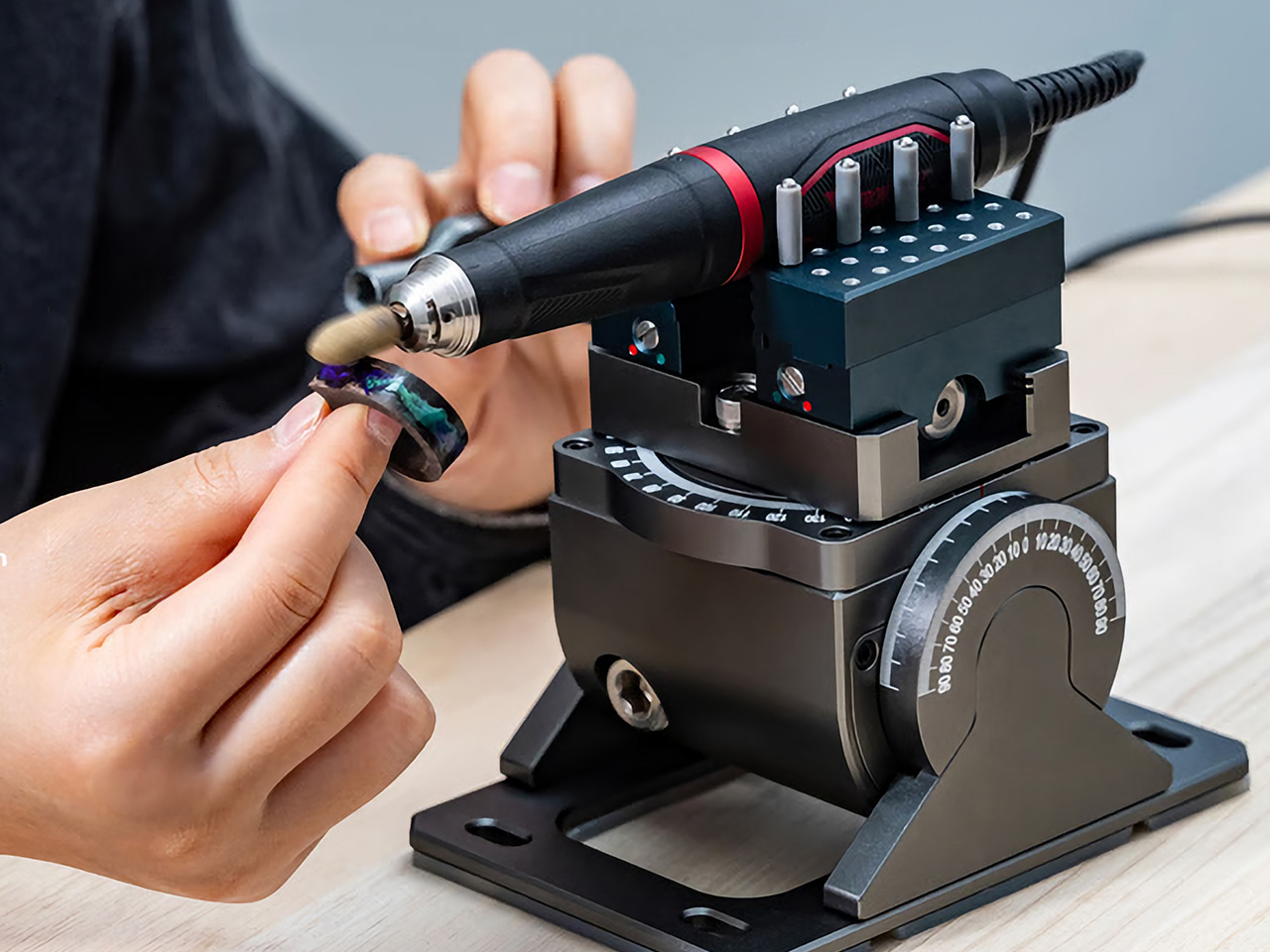
Mode selection is controlled by a three-position switch with spring-loaded detents, and a light flick is all it takes to move between behaviors. Free-spin mode lets the vise flow with your touch, the tilt base housing a precision-machined spindle that allows rotation without directional limits or angular constraints. This makes the AxiGlide a responsive rotary platform, ideal for drawing smooth curves, wrapping, winding, or any continuous motion that benefits from fluid rotation. Set it to a comfortable working incline, secure your workpiece, then rotate it freely back and forth to explore any angle. Whether you’re painting, carving, assembling, or simply inspecting details from different perspectives, the free mode gives uninterrupted access to every orientation.
When fully locked, AxiGlide transforms into a fixed vise system, creating a solid, single-position hold that delivers rock-solid stability for demanding tasks. The system can be oriented freely before locking, so you get a way to freeze any chosen angle. Whether it’s angled drilling, off-axis assembly, or precise carving, AxiGlide enables you to secure the workpiece at the position that best matches the task at hand, with uncompromising strength and confidence. VogueMech positions this as the mode for maximum rigidity when force or precision drilling comes into play. Lock the angle you need, apply force, and the vise holds without creep or shift.
Beneath the turntable sits a 60-position indexed disc, dividing the full rotation into precise 6-degree increments and engaging with a spring-loaded column. When the switch is set to the half-locked state, AxiGlide creates consistent tactile detents as you turn it. Each click corresponds to an exact angular step, delivering mechanical precision through touch rather than visual alignment. Precision becomes something you feel, especially in tasks that require repeating orientations, segmentation, symmetry, or mirrored alignment. The half-lock can also serve as a damping support for the turntable, making every adjustment feel controlled with no sudden drops, no jerky motion, and no repeating need to loosen or tighten locks the way ball joints demand.
The tilt axis is equipped with a preloaded brake that applies consistent pressure to the tilt shaft, providing smooth, controlled resistance throughout the tilt motion range. Together, the damping support on both axes makes AxiGlide a reliable third hand to hold something top-heavy while maintaining flexibility, positioned exactly where you need it so it stays there when your hand is off. No loosening, adjusting, and relocking; no interruptions in workflow. Just focus on the minutest details of your workpiece at any critical angle, especially when your hands are occupied with other tools. The tool becomes an extension of your movement rather than a step in the process.
The jaw system is modular and designed to expand the vise’s range across materials and project types. Standard equipment includes pin jaws that can be adjusted and reconfigured to better match the shape and needs of your workpiece. Pins come in three heights (10mm, 15mm, 20mm), each available in sets of eight, and you can place them where you need them for irregular or custom profiles. Add-on jaws are available separately and adapt to different materials and shapes: parallel jaws for flat surfaces, fractal jaws for irregular objects (a nod to MetMo’s influence in the space), aluminum material for hard metal parts, and PEEK panels for delicate parts. With a modular jaw system and possible future expandability, AxiGlide evolves with your projects, giving you one system that can serve jewelry work, hand engraving, circuit assembly, cloisonné painting, filing, model photography, and fine-detail finishing tasks.
The AxiGlide body is made from 6061 aluminum alloy, while key load-bearing and motion-critical components are made from 410 stainless steel. This combination balances structural strength, functional performance, weight, and manufacturing cost, ensuring the design is practical to manufacture and faithfully deliver in its intended form. The unit weighs 2,200g (4.9 lbs) and measures 150mm wide by 100mm deep at its base, rising to 135mm in height. AxiGlide is available in two versions: Standard and Precision. Both versions share the same material types, use scenarios, jaw options, core machining processes, and overall build quality. The differences come down to several specific upgrades according to VogueMech. The Standard comes in five color options: Gray, Blue, Red, Green, and Metal. The Precision edition is offered in DLC black and matte olive-gray, with additional mechanical refinements that enhance smoothness and tolerances.
The Standard edition starts at a discounted $239 for earlybird backers and includes the vise body, tilt turntable base, pin jaws with sets of 10mm, 15mm, and 20mm pins (eight of each). The Precision edition is priced at a discounted $279 and includes the same package plus a screw rod driver and upgraded internal components. Add-on accessories are available separately, including a screw rod driver for $12, parallel jaws in PEEK material for $24, parallel jaws in aluminum for $24, fractal jaws for $58, and PEEK teeth for fractal jaws at $36. Shipping costs vary by region: $28 for Japan, United States, European Union, United Kingdom, China, South Korea, Canada, and Australia; $45 for other countries and regions. Buyers only pay shipping when the AxiGlide vise is ready, allowing VogueMech to provide accurate rates based on location and selected package. Production begins in July 2026, with all orders expected to ship by September 2026.
The dongle DAC has become a familiar but awkward sight plugged into the bottom of a smartphone, a small reminder that the headphone jack didn’t disappear quietly. Portable audio has come a long way in sound quality, but the form factor hasn’t kept pace. Most of these tiny dongles hang loose from the charging port, tugging at cables and generally getting in the way of an otherwise pleasant listening session.
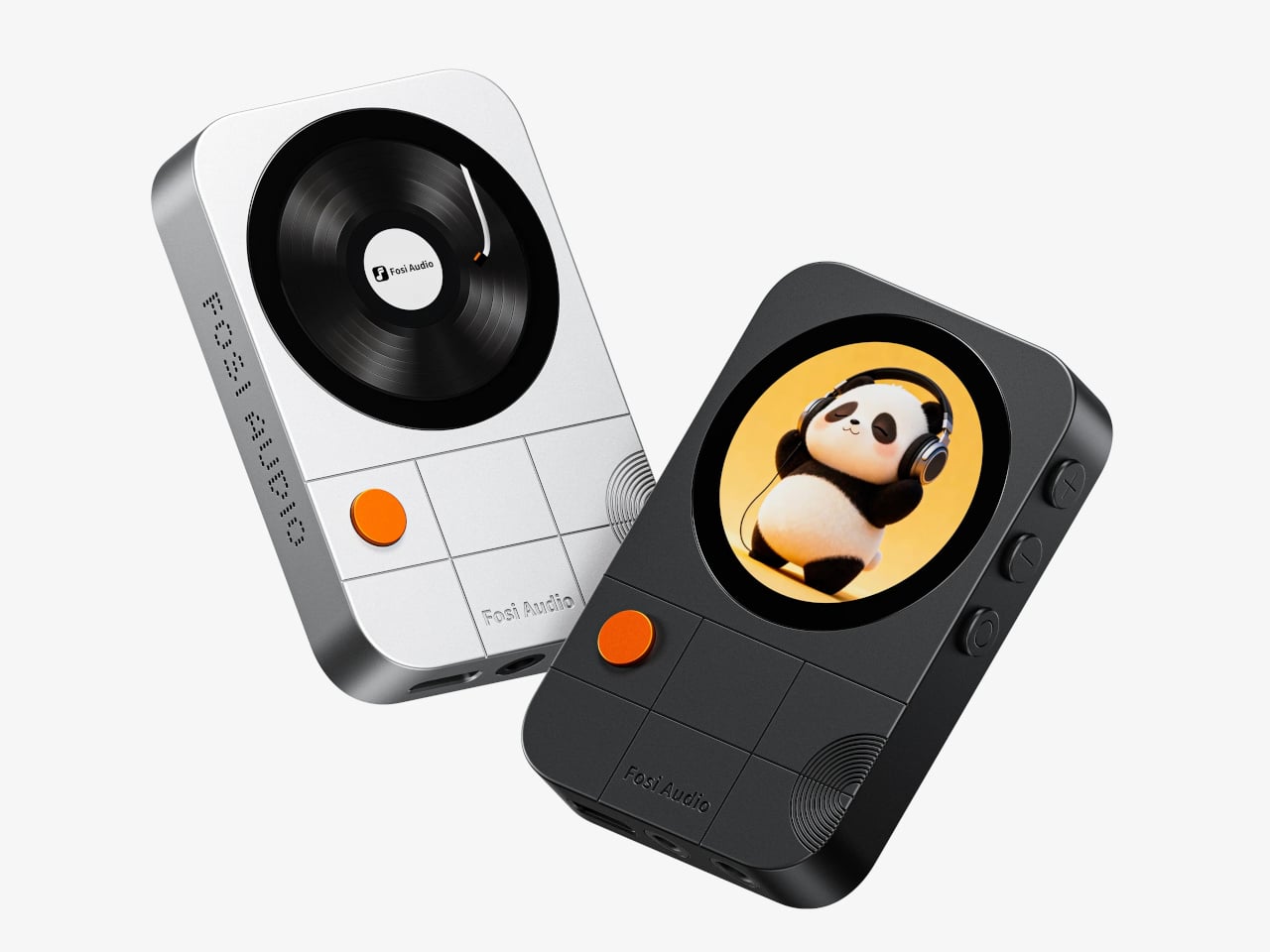
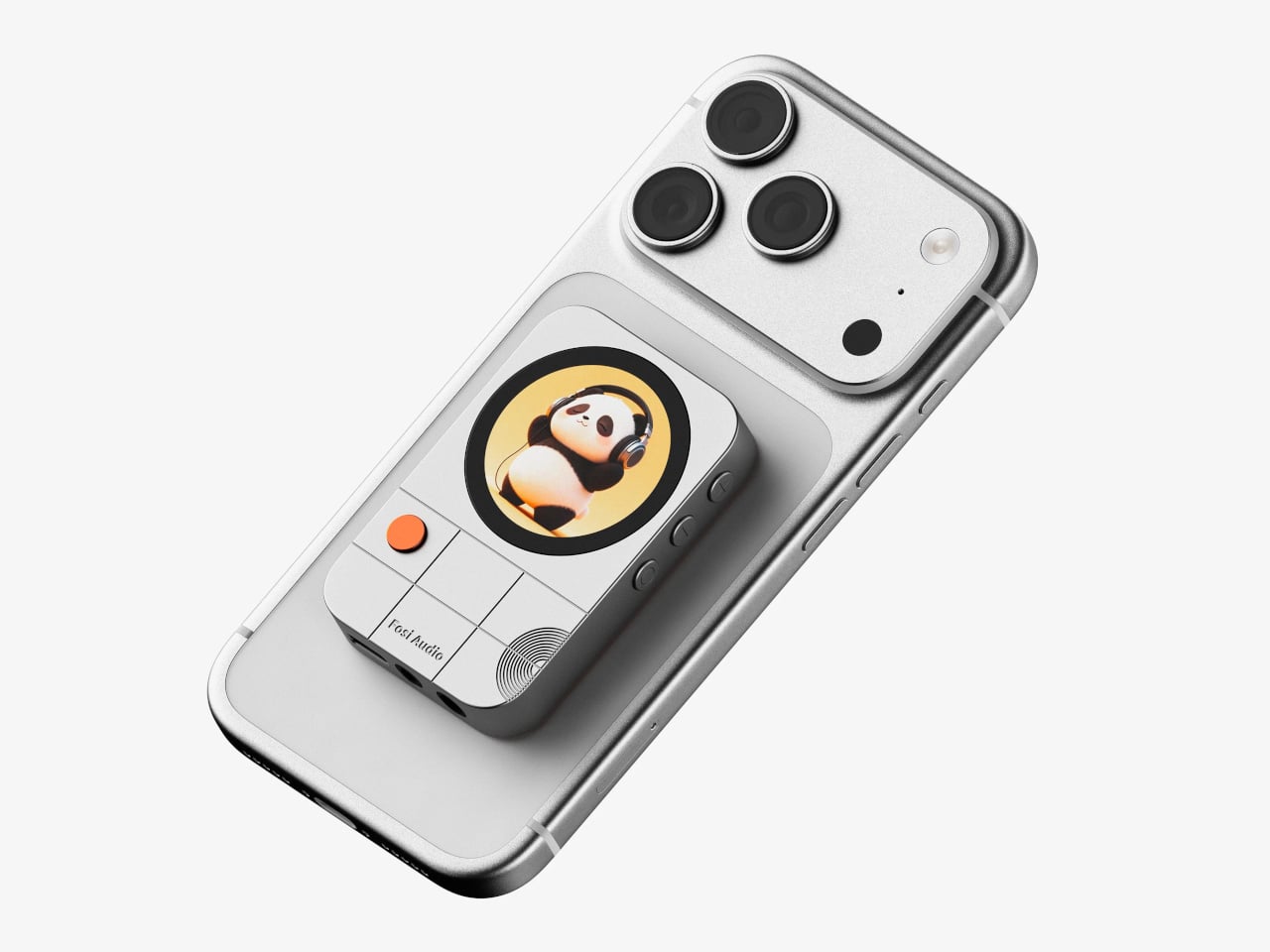
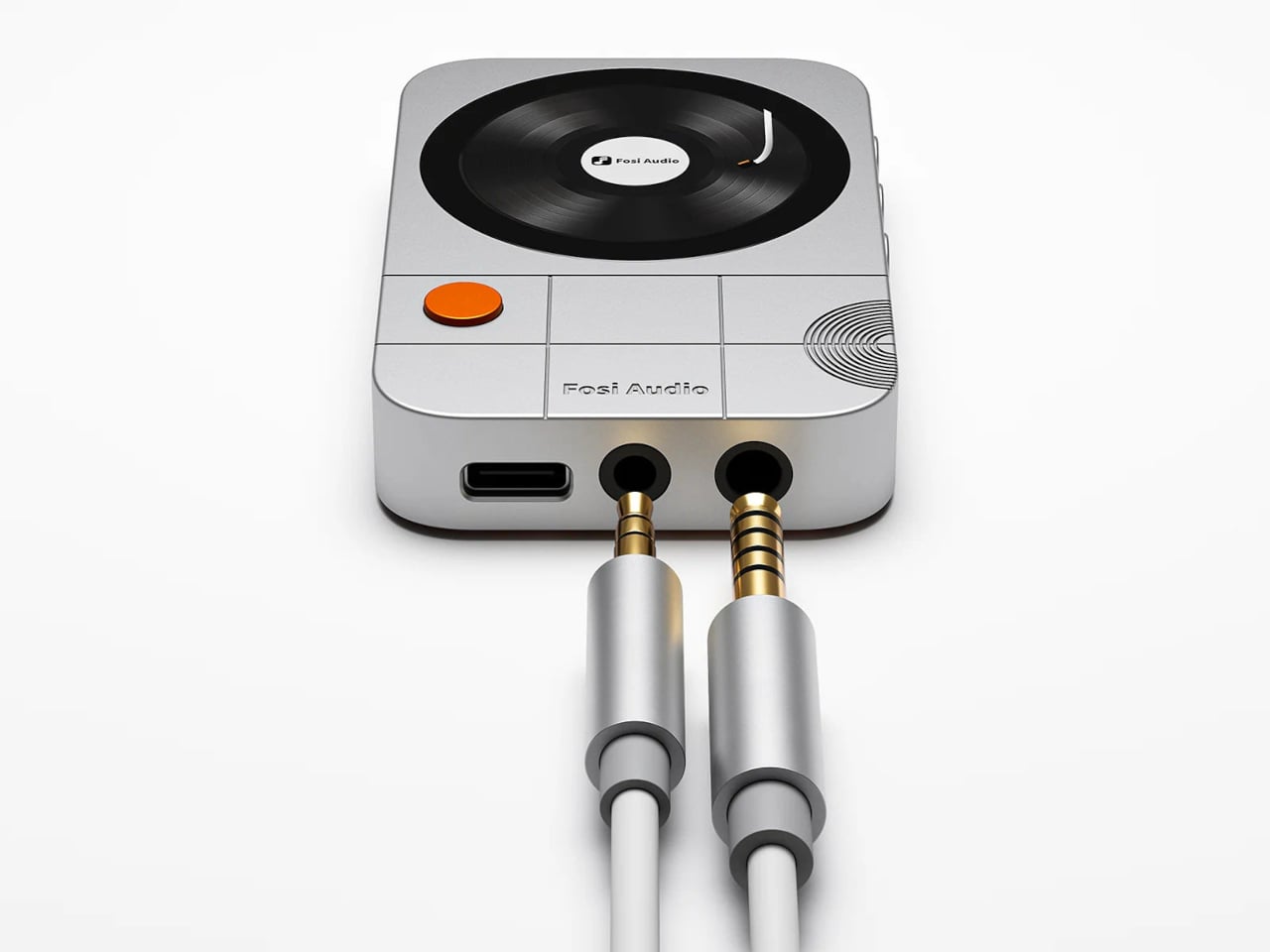
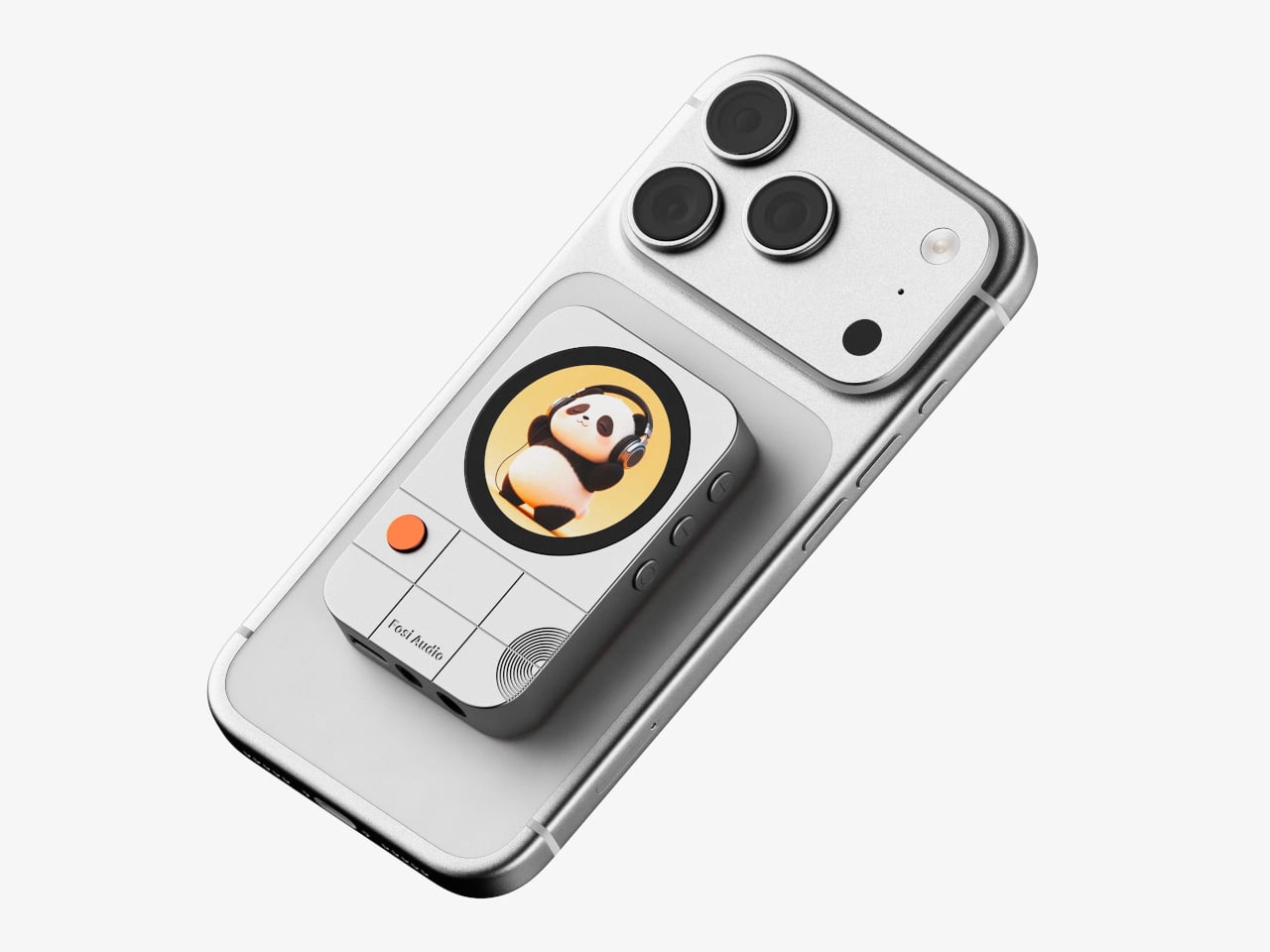
Fosi Audio’s MD3 MagDac tries to solve this with a fundamentally different approach to portability. Instead of hanging from a charging port, it snaps magnetically to the back of a MagSafe-compatible smartphone using 16 N52 magnets, sitting flush against the device like a compact audio module. The result is a pocket-sized DAC and headphone amplifier that actually looks like it belongs there, not like an afterthought.
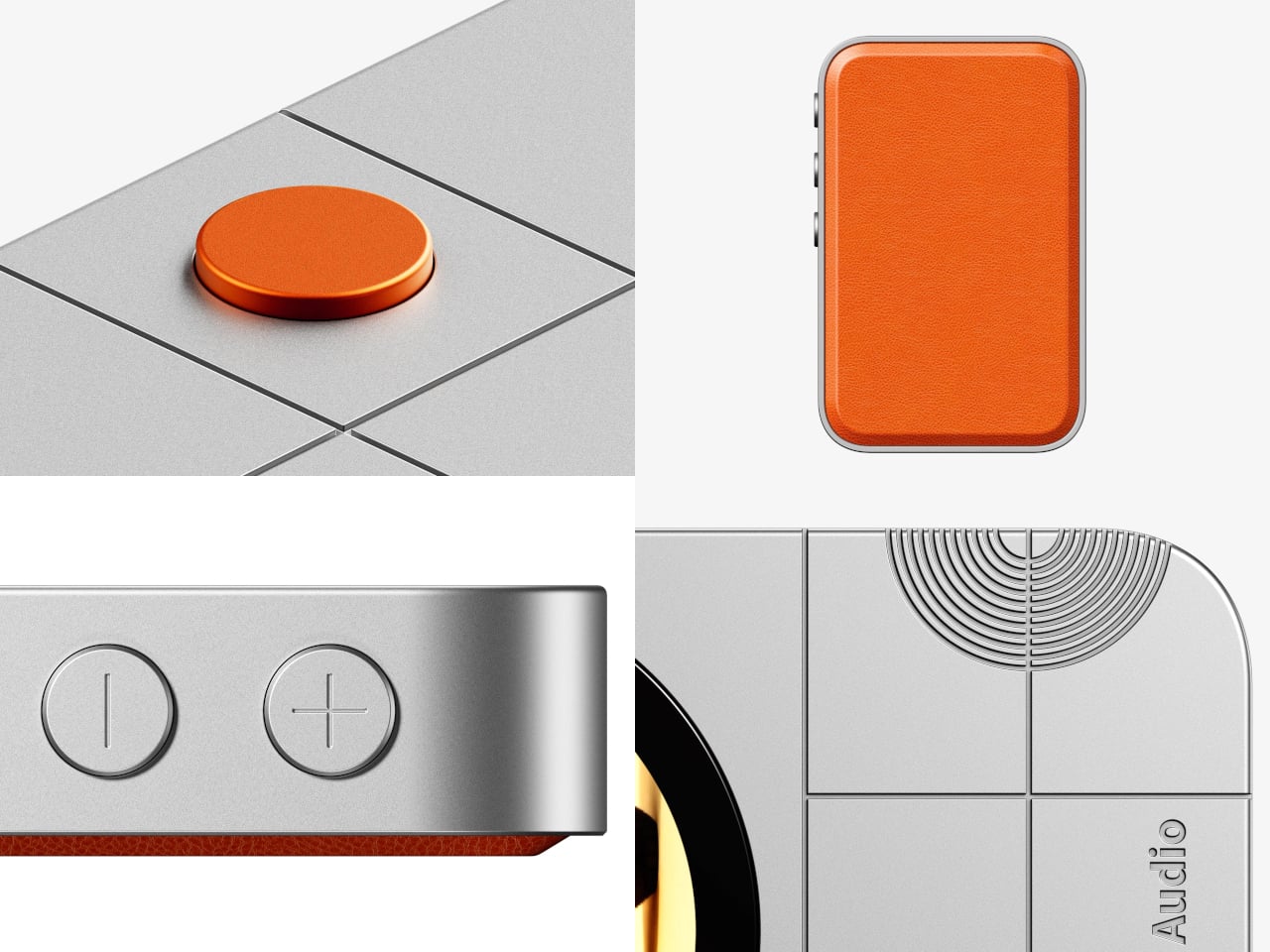
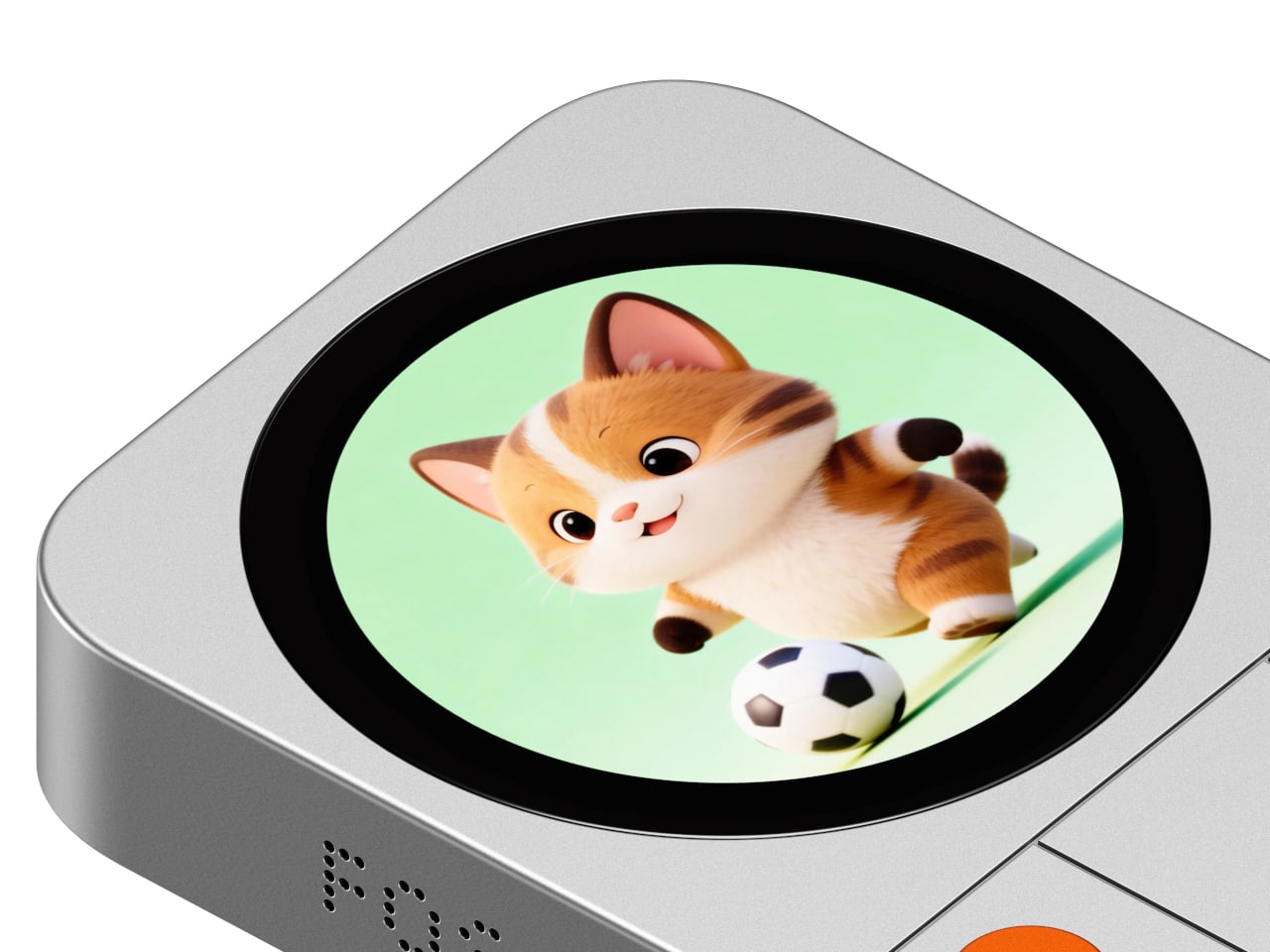
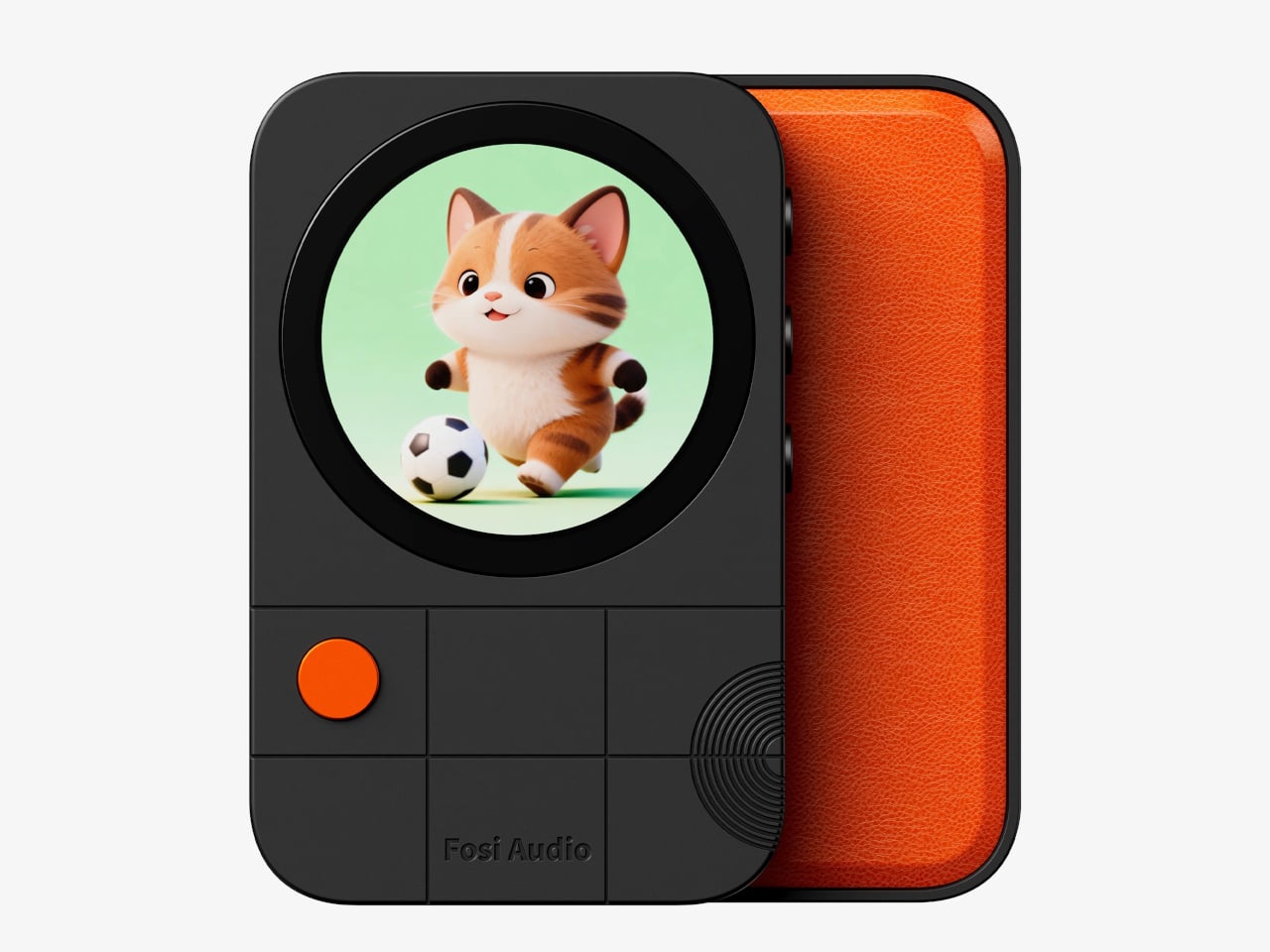
The design doesn’t stop at clever attachment. The MD3 is precision-machined from 6063 aluminum alloy with a sandblasted anodized finish, available in silver or black, both with orange leather on the magnetic back. At just 50g and 12m thick, it slides in and out of a pocket without protest. What you’ll notice first, though, is the 1.28-inch circular LCD display on the back.
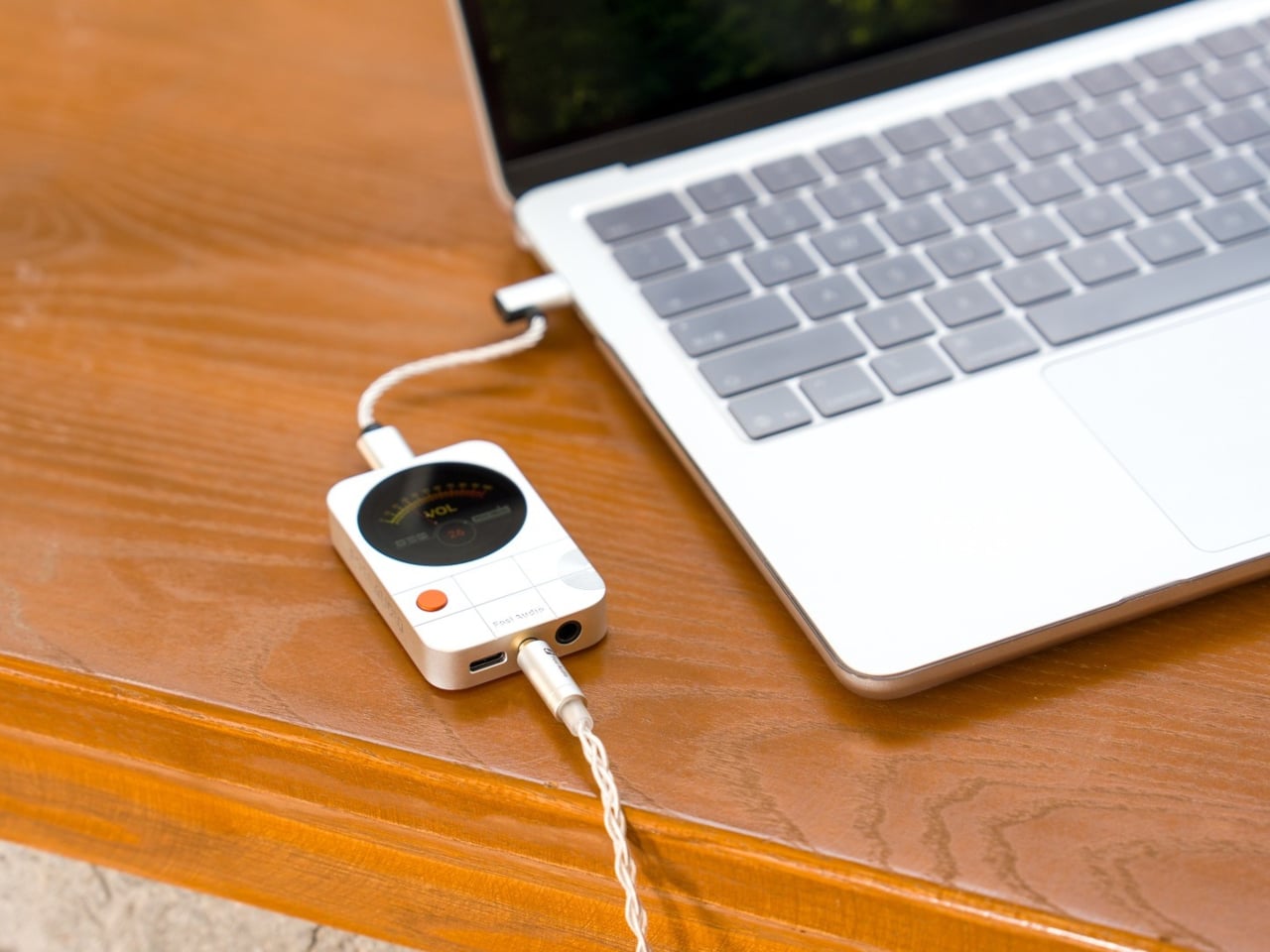
That screen handles volume in 100 steps, shows audio information, and rotates its orientation depending on how you’re holding the device. There’s also a Vista Button that opens a personal photo album, a small but unexpectedly human touch for a piece of audio hardware. A dedicated Ease Button and physical navigation controls keep everything accessible without ever needing to tap your phone’s screen.
For the audio itself, Fosi didn’t compromise on components. The MD3 uses the ESS Sabre ES9039Q2M DAC chip paired with four ES9603Q amplifier chips in a true balanced circuit, supporting PCM up to 32-bit/384kHz and native DSD256. Total harmonic distortion and noise sit at just 0.00075%, and the noise floor drops to 1.7 μV. For most IEMs and portable headphones, those figures translate to noticeably cleaner, more resolving sound.
The MD3 offers both a 3.5mm single-ended output and a 4.4mm balanced output, delivering up to 180 mW through the latter, enough for headphones ranging from 16 to 300 ohms. An aluminum alloy shielding plate sits between the magnets and the audio circuitry to prevent interference from coloring the signal, a careful engineering detail that keeps the magnetic attachment trick from undermining the whole point of the device.
Dual USB-C ports handle both audio and charging simultaneously, so you’re not forced to choose between listening and keeping your phone powered. The top port handles audio decoding and charging, while the bottom manages audio decoding and firmware updates. There’s also a volume memory feature, so the MD3 picks up at the same level every time you connect it, without having to reset anything.
The wired audio revival has been building for a while, drawing listeners who want something more intentional than Bluetooth. A magnetic DAC that attaches to the back of your phone without cables or cases seems like a sensible next step in making that experience practical. Fosi has been laying the groundwork quietly, and at $149.99, the MD3 might just be the portable amp that finally stays out of the drawer.
Transforming Jeff Koons’ Balloon Dog into a fully functional lamp required more than good intentions and a licensing agreement. For French design/tech atelier Lexon, more than 50,000 hours of development went into the project, working through the specific challenge of preserving the sculpture’s iconic silhouette while engineering a translucent polycarbonate body capable of housing 400 LEDs and diffusing light cleanly. The result respects the form with a fidelity that goes well beyond cosmetic homage. Lexon, a French brand with 35 years of design experience and more than 250 awards behind it, brought its full technical vocabulary to bear on a project that demanded something genuinely new. The Balloon Dog Lamp Chromatic is the 2026 edition of that effort.
Four colorways define the Chromatic lamp: Platinum, Gold, Blue, and Red, each built from optical-grade polycarbonate chosen for its crystal-clear transparency and the way light moves through it, and anodized metal components that add a pop of color. The colorway identity comes through tinted zones within that transparent body, giving each piece a distinct chromatic character that works even when the lamp’s off. Inside that shell, LEDs operate entirely independently of the body’s tint, cycling through 9 color modes and 9 lighting animations regardless of which colorway body they sit inside. The 2026 edition introduced an additional layer of technical complexity, requiring Lexon to match finishes, tones, and material specifications across both the lamp and speaker product lines while maintaining consistent visual identity throughout. Each piece features Jeff Koons’ engraved signature on the front feet of the sculpture, maintaining a direct physical connection to the artist across all four versions.
Designer: Lexon x Jeff Koons
Click Here to Buy Now: $800. Hurry, limited edition! Pre-orders capped at two pieces per color, per product, per collector.
Jeff Koons has received France’s Légion d’Honneur and the U.S. Department of State’s Medal of the Arts, and his work has been presented at MoMA, the Guggenheim, and the Tate. The Balloon Dog specifically has spent decades accumulating cultural meaning at a pace few contemporary artworks can match. Its form borrows from a children’s party toy, scaled to monumental proportions in mirror-polished stainless steel, yet the conceptual charge it carries never tips into pretension. Koons has always worked around the democratization of beauty and the conviction that joy deserves serious artistic attention. Lexon, whose design philosophy centers on making beautiful objects genuinely accessible, found a natural creative partner in that worldview, and the Balloon Dog Lamp is the physical record of that alignment.
The lighting system offers a wide range of atmospheres offer a behavioral range that goes considerably deeper than a standard color-cycling product. Nine animations, each with their own sub-animations, move from soft warm whites and cool daylight tones through vivid RGB cycles, rainbow sequences, flashing, and strobe, giving the piece a genuinely different character depending on the occasion and the room. Brightness is fully adjustable, and all controls live on the nose of the sculpture, handling color, intensity, and effect from a single tactile point of contact. That decision keeps the lamp’s silhouette completely uninterrupted while making the interaction feel native to the object rather than bolted on. Battery life sits at five hours at 75% brightness, recharging via USB-C, and the lamp’s 29 × 11 × 28 cm footprint and 1 kg weight give it enough physical presence to anchor a space without overwhelming it.
Lexon’s proprietary Easy Sync Bluetooth technology allows an unlimited number of Balloon Dog Lamps to connect and synchronize simultaneously across color, effect, and brightness. That feature transforms what is already a compelling standalone object into the foundation of something considerably more ambitious, particularly for collectors building across multiple colorways. Whether displayed across a room or grouped together, lamps running Easy Sync work in perfect unison, allowing collectors to create immersive multi-piece lighting compositions.
The first Lexon x Jeff Koons edition reached collectors and design enthusiasts across more than 90 countries, a number that speaks to Koons’ global cultural reach and Lexon’s ability to execute a collectible that resonates well beyond the design industry. The Chromatic Collection builds on that foundation with a firm no-reissue commitment across all four colorways and a purchase cap of two units per color per collector, keeping the experience personal and the supply genuinely controlled. Orders are fulfilled on a first-come, first-served basis through monthly shipping slots, with worldwide shipping beginning June 2026. Pre-orders are live now at lexon-design.com. At $800 per piece, the Balloon Dog Lamp Chromatic brings four decades of Koons’ cultural legacy off the gallery wall and onto your side table, where it lights your room, holds its own as a sculptural object, and reminds you every evening that great art and everyday life were never meant to be kept apart.
Click Here to Buy Now: $800. Hurry, limited edition! Pre-orders capped at two pieces per color, per product, per collector.
There are designers who make beautiful things, and then there are designers who make things that make you think. Ronen Kadushin belongs firmly in the second camp, and his latest collection, Pieces, is proof that a home accessory can be both genuinely useful and quietly subversive.
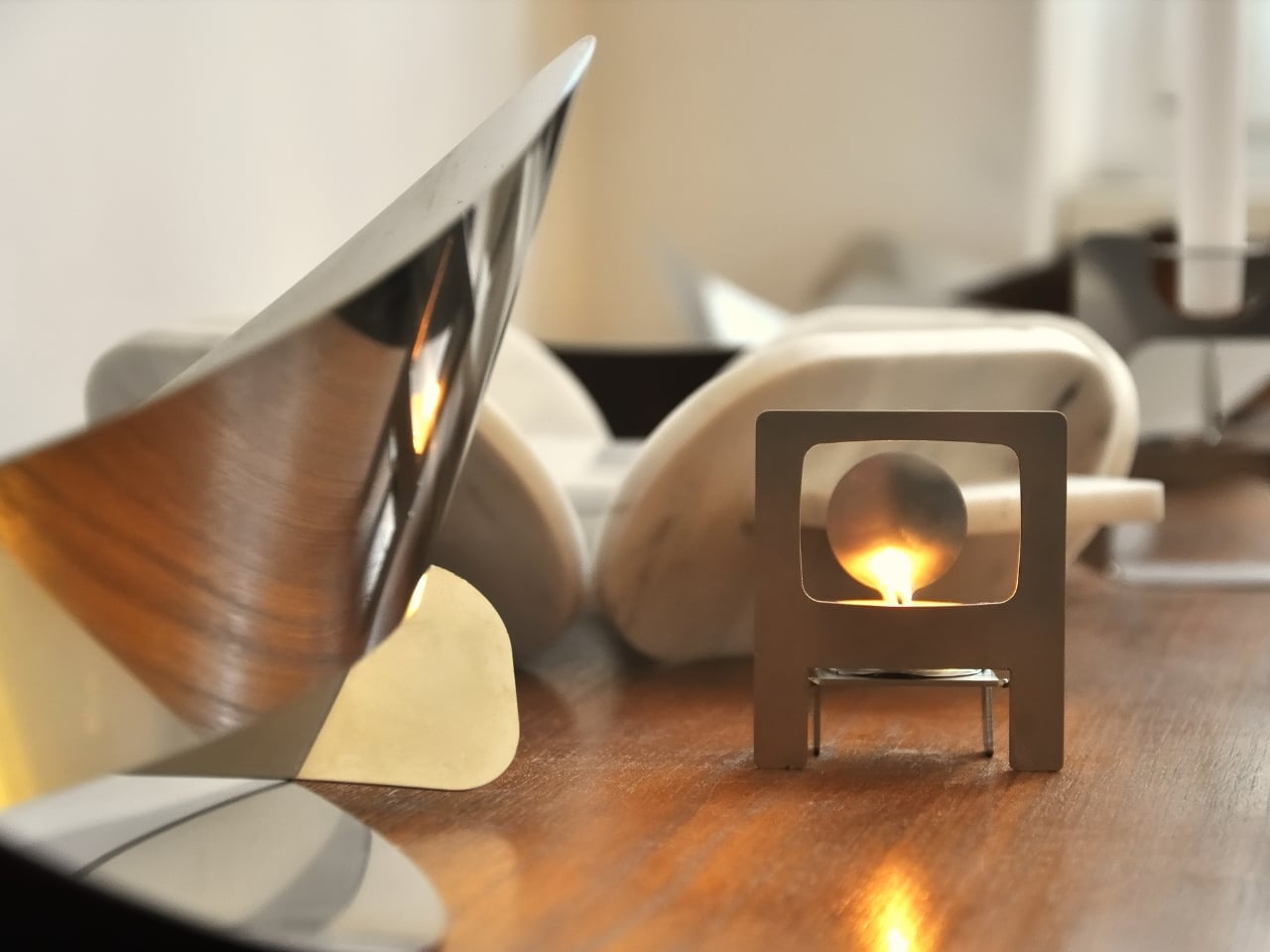
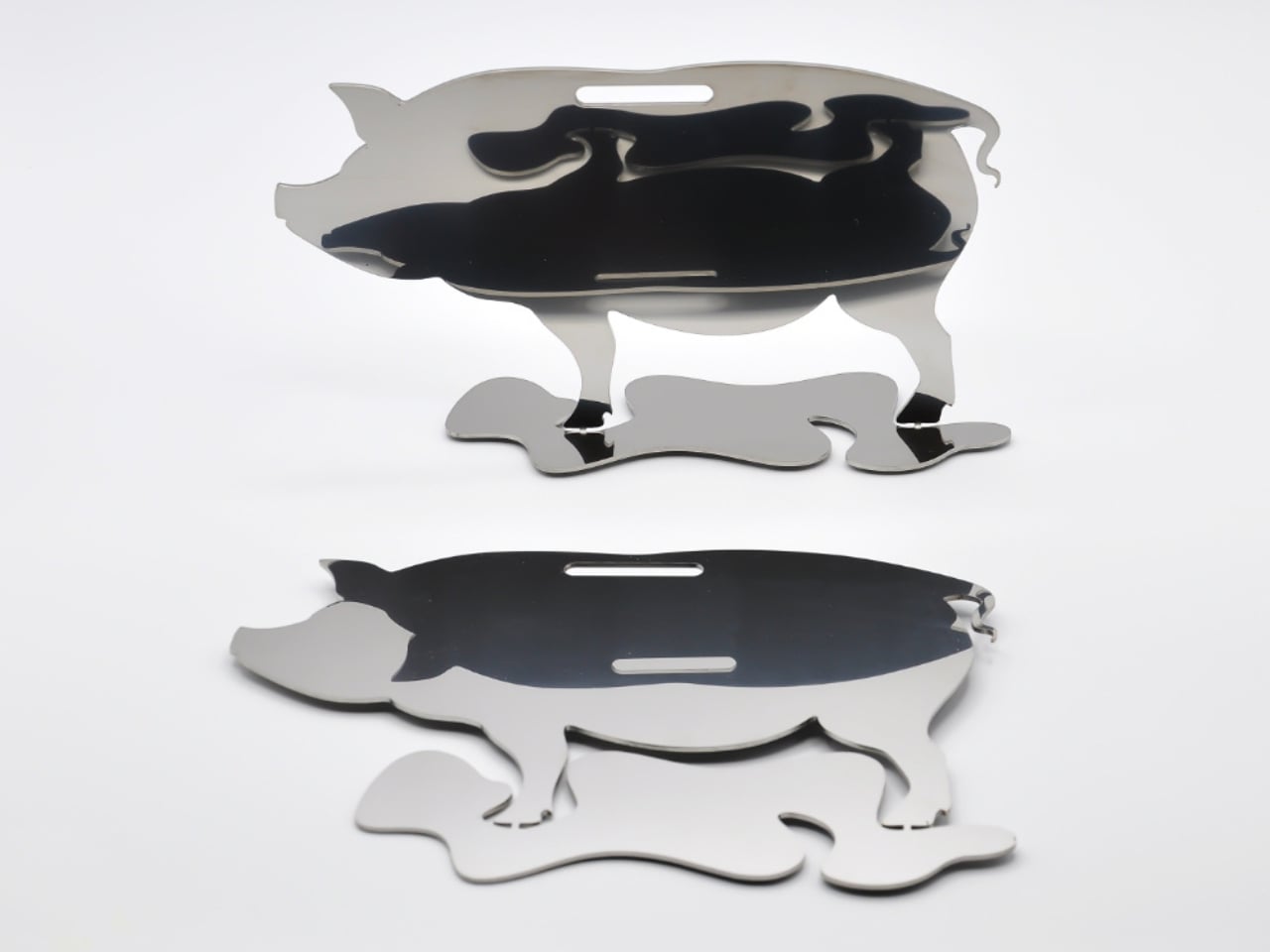
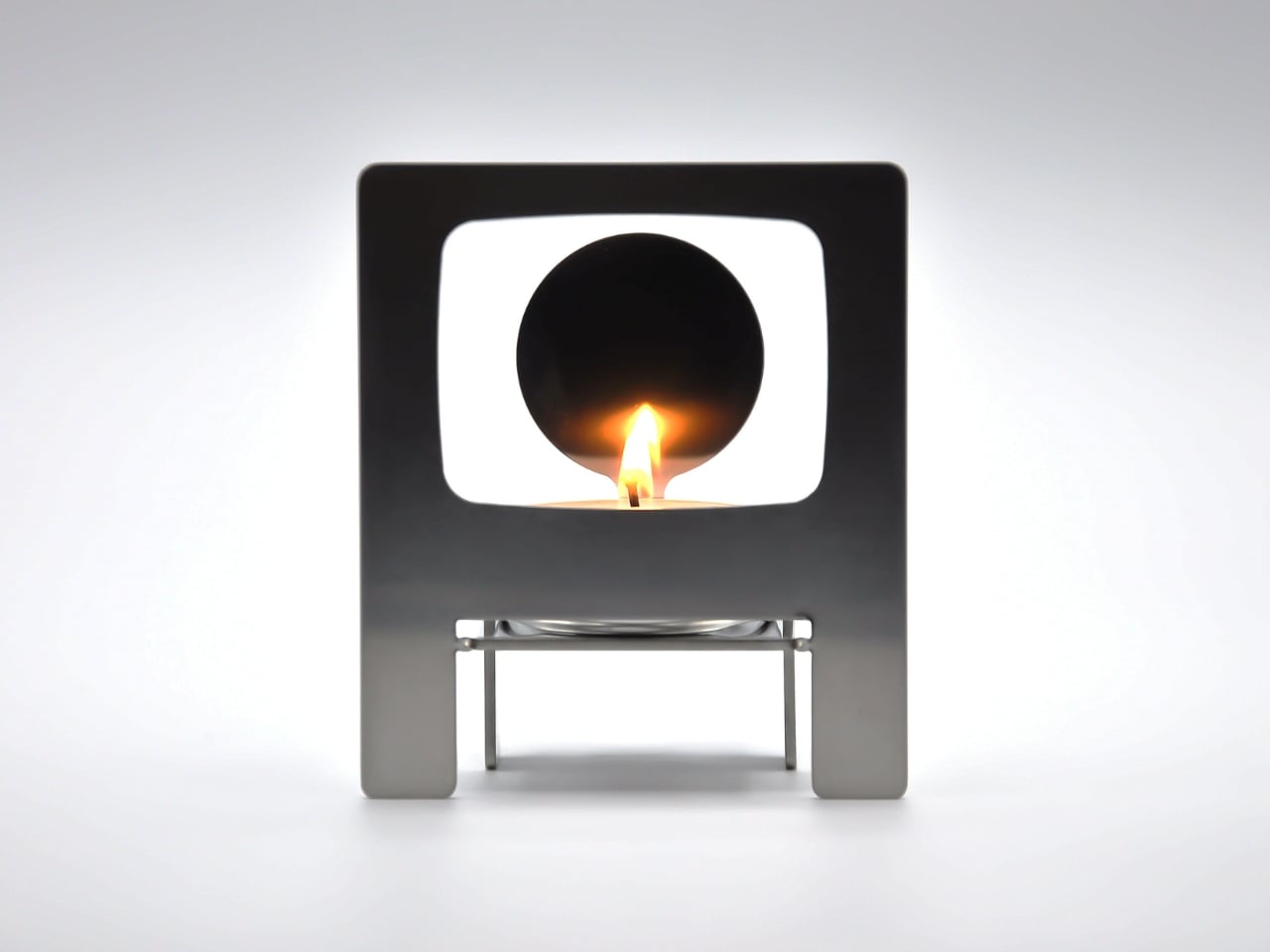
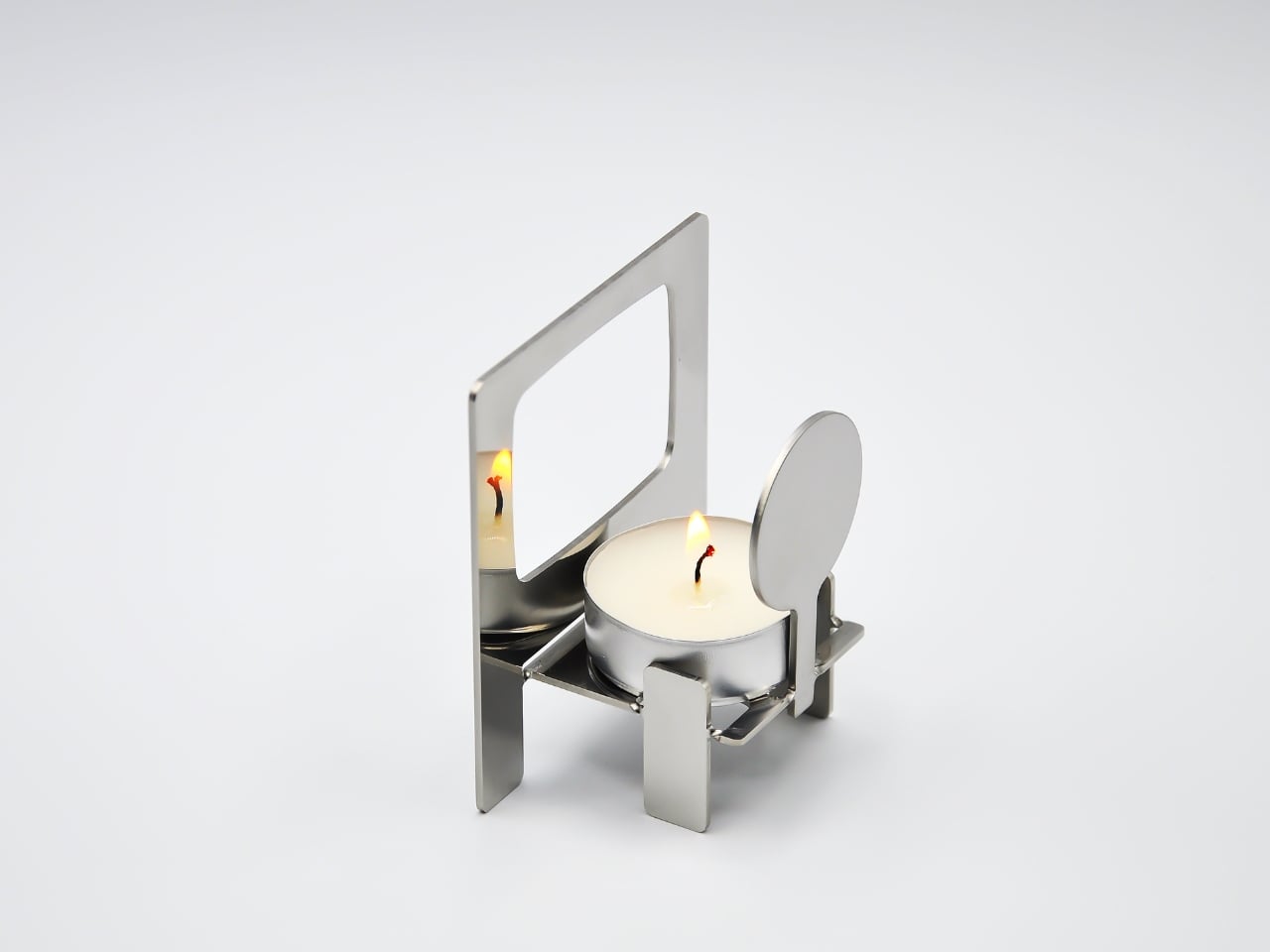
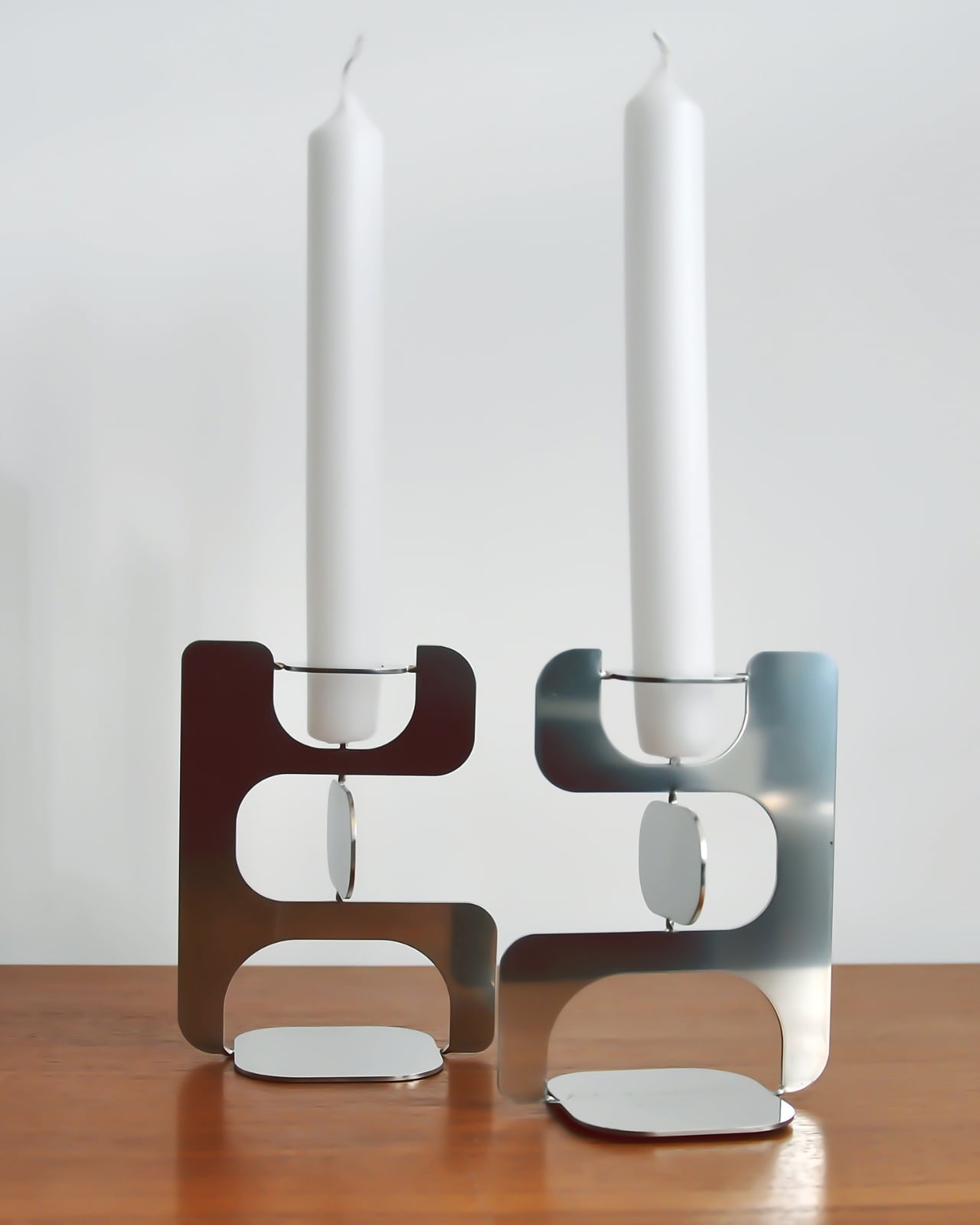
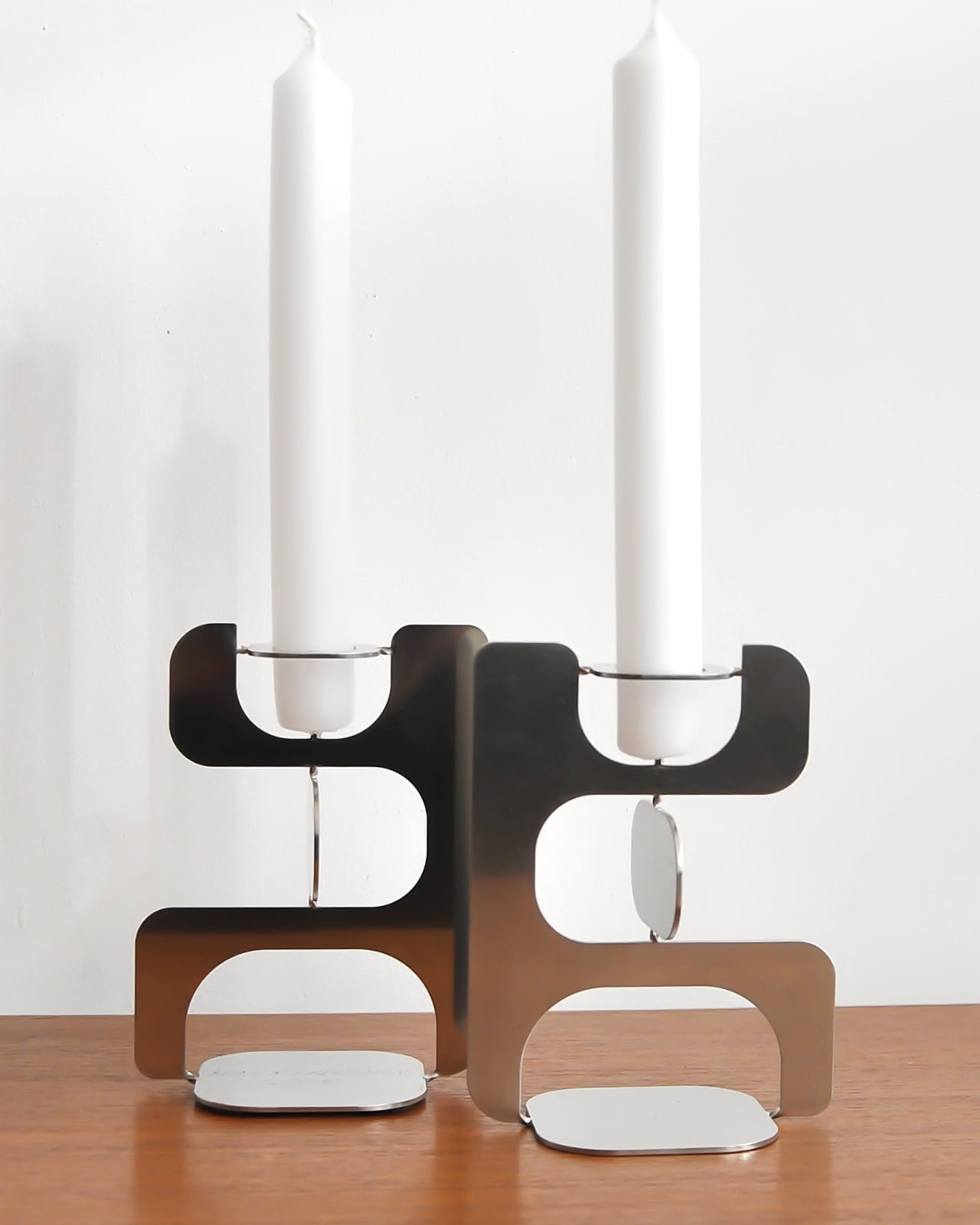
The collection consists of three objects: a candle holder called Echoes, a tealight holder called Reality TV, and a Piggybank. On paper, that sounds like a fairly ordinary lineup for a home accessories range. In practice, it’s anything but. The Pieces collection is an elegantly formed, humorously thought-provoking group of home accessories that highlight the tension between function and cultural narrative.
Designer: Ronen Kadushin
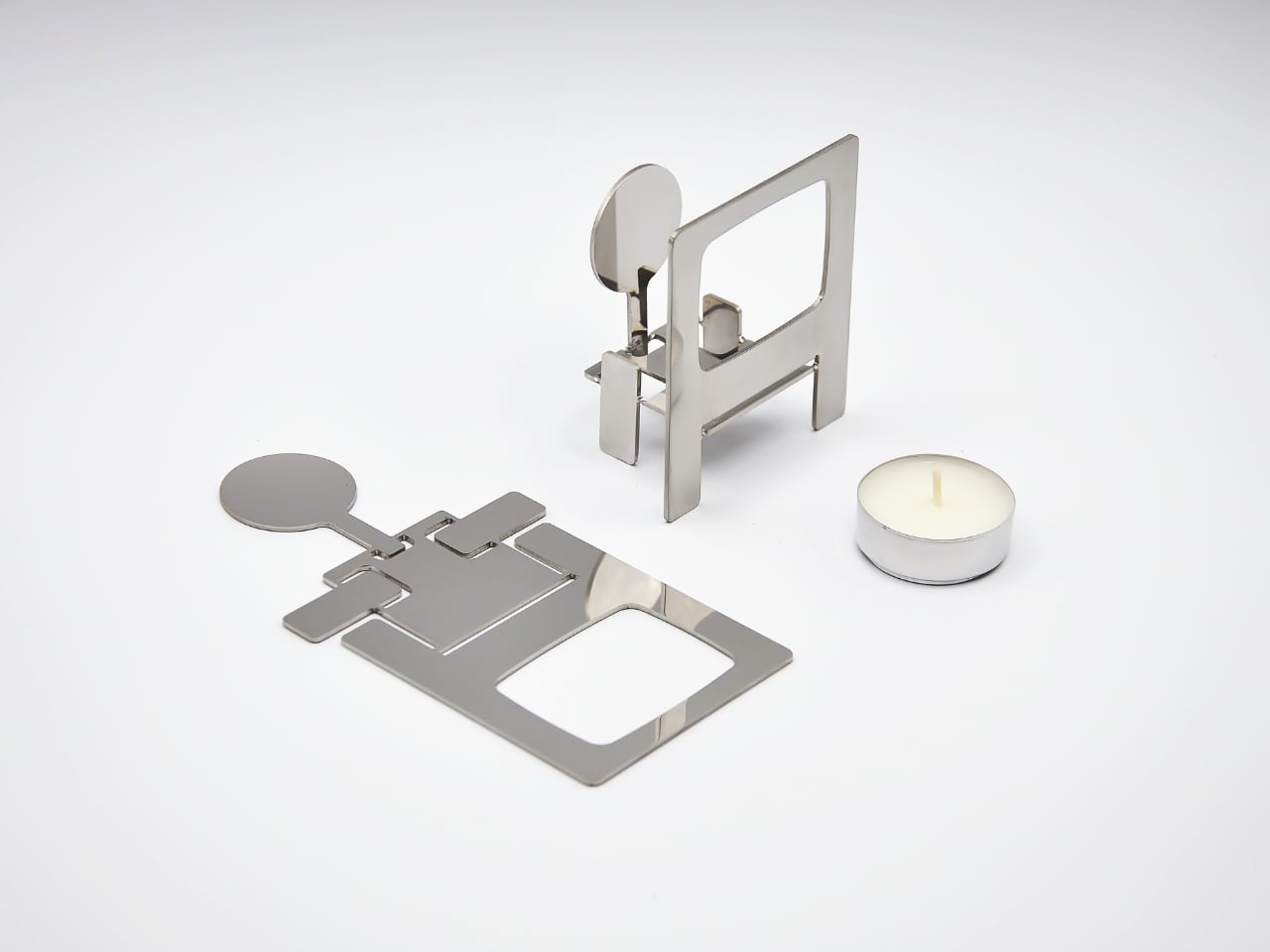
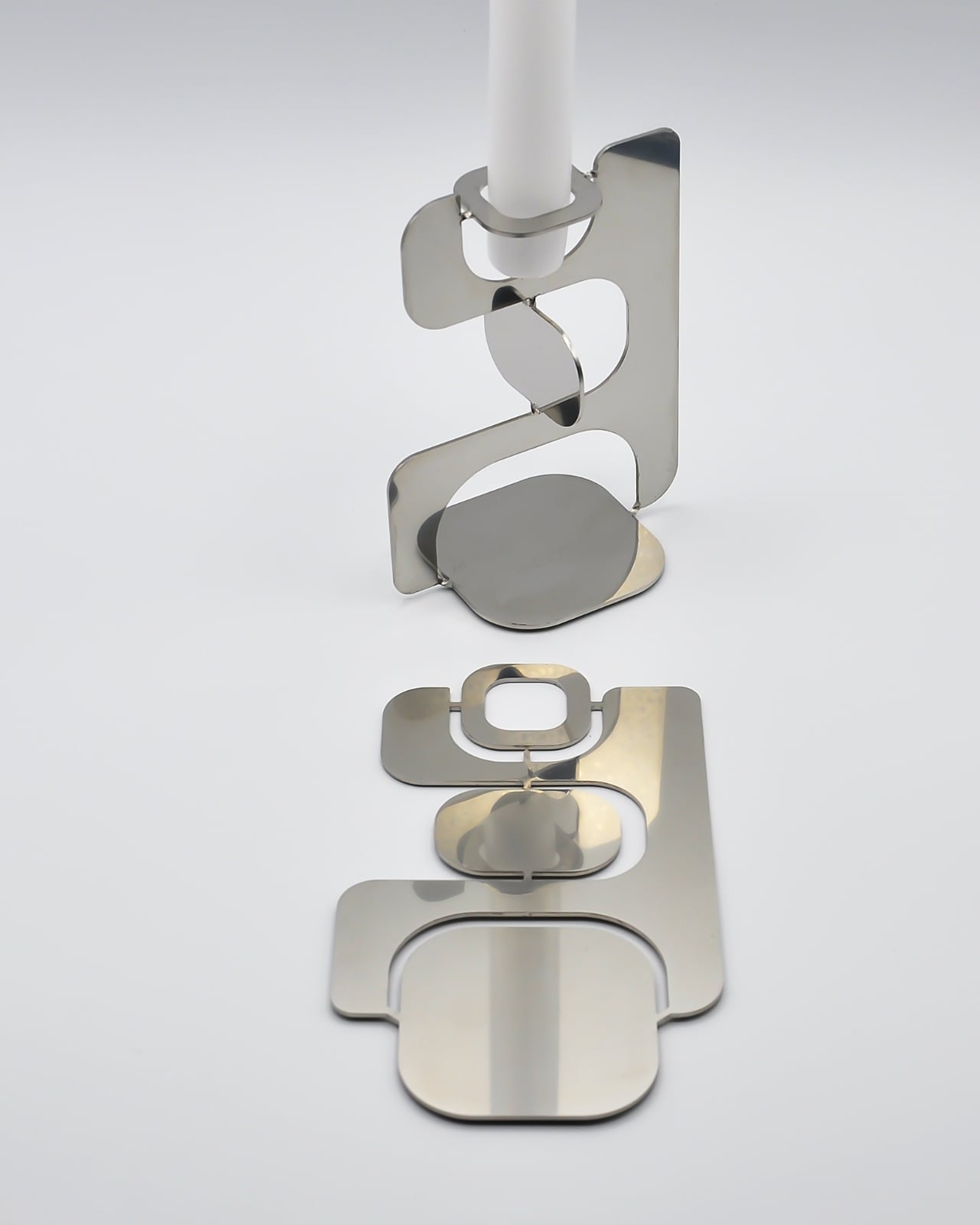
Each piece starts life as a flat sheet of laser-cut stainless steel, executed with Kadushin’s signature Twist-Hinge detail, making them easy and intuitive to bend by hand. They invite you to engage with the designs and co-create pieces that are an aesthetic statement with an edgy commentary. It’s a deliberate choice, not a shortcut. By asking you to participate in the assembly, Kadushin is making a point about who gets to be part of the creative process. You’re not just buying a finished object; you’re completing it.
That philosophy runs through everything he does. Kadushin is a pioneer of Open Design, freely sharing his designs to promote creativity, personal expression, and a positive social and economic impact. He embraces a “from the machine to the customer” approach, where extra manual processes and finishes are minimal, with pieces self-produced in Berlin in small-batch runs from high-grade stainless steel. There’s no bloated supply chain, no mass-market compromise. Just precision fabrication and a designer who has thought very carefully about what he wants his objects to communicate.
And communicate they do. The Piggybank is perhaps the most pointed piece in the collection. A traditional object redesigned to reflect a reality where saving is an illusion, it wears its cynicism openly. The pig is rendered as a flat stainless steel silhouette with a coin slot at the top, but there’s no belly to hold anything. Your coins rest on the surface. It’s funny, and it’s bleak, and it manages to be both of those things at once in the way that only good design pulls off. At a time when most people are watching their savings get swallowed by inflation, putting this on your shelf feels less like irony and more like cathartic honesty.
The Reality TV tealight holder takes a different angle. Shaped like a boxy, retro television set, it frames a tealight where the screen should be. When the flame is lit, you’ve got a broadcast. “Reflecting reality live, 24/7.” The concept is sharp without being heavy-handed. It makes you smirk, and then, a moment later, makes you think about the fact that we genuinely do stare at glowing rectangles all day as a form of comfort. Having a warm, flickering version of that sitting on your dinner table feels like Kadushin winking at us all.
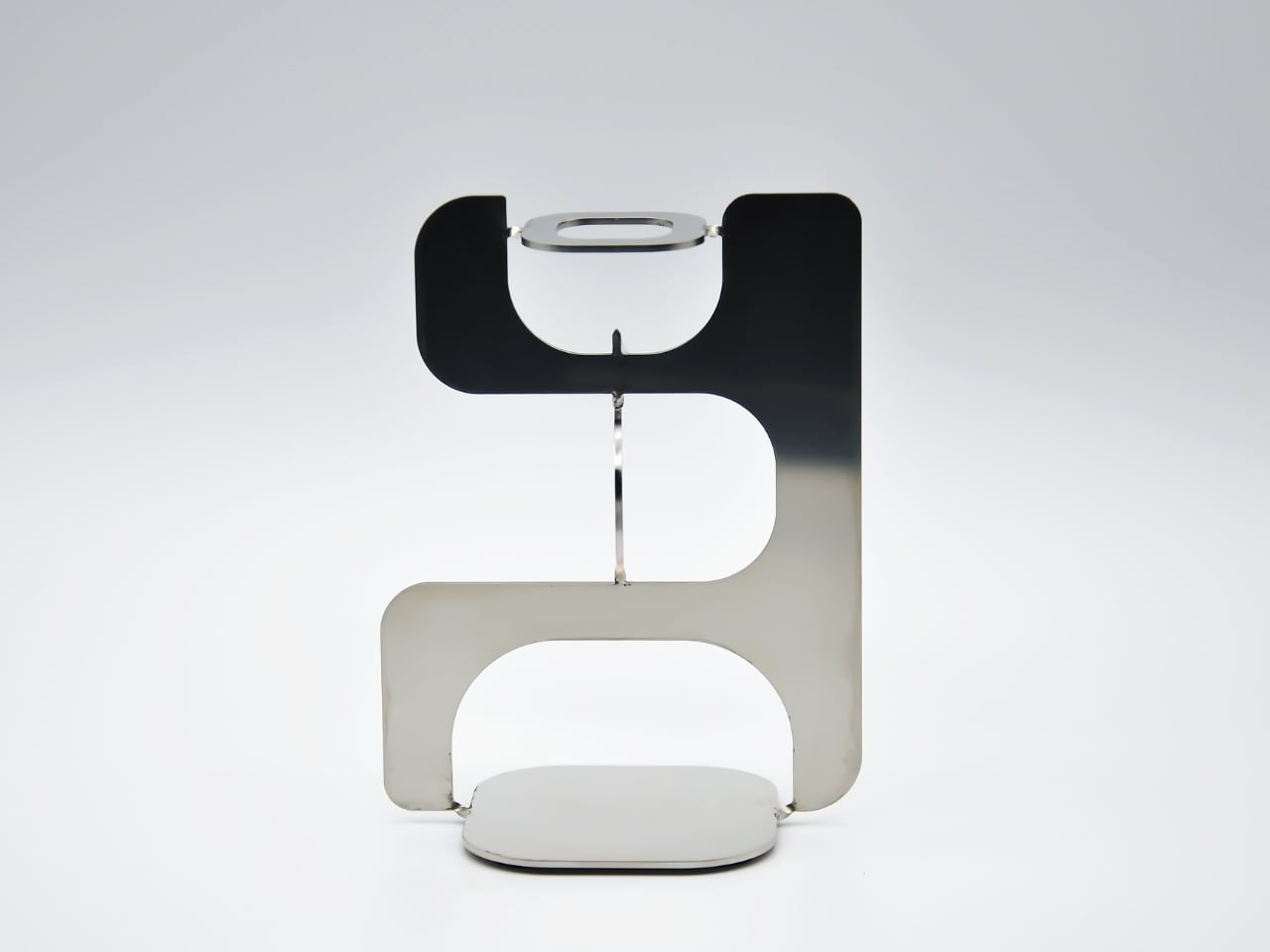
Echoes, the candle holder, is the most sculptural of the three. A nuanced sculptural object echoing iconic 60s and 70s aesthetics with a contemporary edge, it’s the kind of object that earns a second and third look. The stacked, interlocking forms feel almost architectural, like a detail pulled from a midcentury design catalogue and rebuilt in stainless steel. Placed on a shelf without a candle, it still looks like it belongs in a gallery. With one lit, it earns its keep.
What ties Pieces together is the refusal to be decorative for decoration’s sake. Kadushin’s work is sculptural and communicates clever wit and free expression, and he designs user-assembled pieces that are an invitation to enjoy and participate in the creative process. The objects are funny, but they’re not novelty items. They’re precise, considered, and built from high-grade stainless steel that will still look good long after the trend cycle has moved on.
If you’re the kind of person who thinks about what your home objects say about you, and more and more people are, then Pieces is a collection worth paying attention to. Good design doesn’t just fill space. At its best, it holds an opinion. Kadushin’s does both.