This Neck-worn Power Bank for the Vision Pro may be better than Apple’s own battery pack

Virtually everyone who’s tried the Vision Pro has mentioned one pain-point, its external battery pack. Designed to strap to your Vision Pro like an IV drip for your headset, this battery pack isn’t particularly elegantly designed. It’s a rather heavy metal cuboid that’s tethered to your headset, and the only way to elegantly store it while in use is to slide it into your pocket – leaving a sole wire that dangles from your head to your waist, coming in the way of your hand while you move around.

It’s almost like Apple WANTS you to know that they’re great at primary products but terrible at accessories, after various debacles surrounding the questionable designs of the Magic Mouse, the Air Power Mat, the Gen 1 Apple Pencil’s charging solution, and the carrying case for the AirPods Max. The Vision Pro’s battery pack is yet another example of Apple’s questionable approach to product functionality, but it seems like ZyberVR has a better fix. The Neck Power Bank, as its name suggests, straps two lithium-ion battery packs around your neck. Perfect for spatial computing, this power bank rests naturally along the curve of your neck, and connects to your AR/VR headset via a rather short cable. It’s an elegant solution to a rather simple problem, and even allows you to move around unencumbered.

Designer: Kylin Wu

Click Here to Buy Now

The Neck Power Bank assumes the familiar horseshoe shape of a neck pillow, a pair of sporty earphones, or one of those neck-worn air conditioners. The power bank boasts a fresh and ergonomic design that sets it apart from the rest. Featuring a flexible center frame, it simplifies the process of unfolding and wearing it comfortably around your neck. Prioritizing ergonomic principles, it skillfully redistributes weight onto your shoulders, effectively relieving neck strain. The product seamlessly conforms to your shoulder’s natural curve, ensuring a secure fit during physical activities and minimizing unwanted shaking. This cutting-edge design departs from convention, effectively eliminating the discomfort often associated with prolonged use and offering users a more convenient, stable, and enjoyable charging experience.

With a robust overall capacity of 10,000mAh, the neck-worn device ensures a seamless 2-3 hours of XR device use, freeing users from battery anxiety. Additionally, the Neck Power Bank packs a removable 5000mAh backup battery that can be hot-swapped during use. Thanks to the quick-release switch, users can effortlessly swap out a depleted battery in a matter of seconds. The removed battery can be charged independently, guaranteeing uninterrupted power and catering to the demands of power users.

A USB-C port allows you to connect the power bank to a host of AR/VR headsets like Meta’s Quest series, Sony’s PlayStation VR, or even other devices like headphones or even your smartphone. ZyberVR even boasts compatibility with Apple’s upcoming Vision Pro headset, although you’d need a proprietary connector cable that can attach to the Vision Pro (which launches February 2nd). That shouldn’t take time, as Apple would probably want third-party manufacturers to build out accessories to make the headset more lucrative. After all, if they want developers to start building a software ecosystem around the product… a hardware ecosystem would surely help contribute to the Vision Pro’s eventual success!

Click Here to Buy Now

The post This Neck-worn Power Bank for the Vision Pro may be better than Apple’s own battery pack first appeared on Yanko Design.
Google’s Wing drone delivery to have double the payload with new drone

Since I live in a country where package delivery by drone is still something straight out of a futuristic movie, it’s fascinating to see how there are places where they are trying to make this the norm. Google’s parent company Alphabet is one of the early adapters with their drone delivery arm Wing, spanning three continents and more than 350,000 deliveries in those places where it’s available. Now they want to expand, literally, with a larger drone that can make deliveries even more convenient.

Designer: Wing

This new drone is still so new that it doesn’t have a name yet. But what is sure is that it will be able to double the payload of the original drone so there will be no need to use two drones to deliver larger orders. According to their data, 30% of their U.S orders require more than one drone and so there is a need for something that will be able to deliver twice what it usually can, saving on the customer’s money and the company’s logistics.

The new drone will be able to carry up to 5 pounds on 12 sm flights while cruising at 65 mph. While it has the same range and speed as the original Wing drone, this new one can carry double as the former is only able to carry up to 2.5 lbs. It will still use the combination of vertical takeoff and landing and precision hovering with fixed wings as it cruises to the delivery address.

The Wing Delivery Network will continue to expand and get more people and companies to use their service. They are now able to do computer tracking as compared to the human intervention previously so the drones can actually do longer routes. And with the still unnamed new drone, they can do heavier loads for those who may need more stuff delivered.

The post Google’s Wing drone delivery to have double the payload with new drone first appeared on Yanko Design.
Atari is entering the handheld gaming space with this gorgeous console that packs 200 iconic games

If as a kid you ever relished the thought of carrying all your change to the nearest arcade to bust out a few games, this one should be the perfect feels trip down nostalgia lane. The MyArcade Atari Gamestation Portable, unveiled at CES 2024, is a vibrant time capsule that transports you straight back to the golden era of gaming. This device promises to deliver a nostalgic yet innovative gaming experience, and here’s what makes it stand out.

Designer: MyArcade

Design and Controllers: A Nostalgic Twist

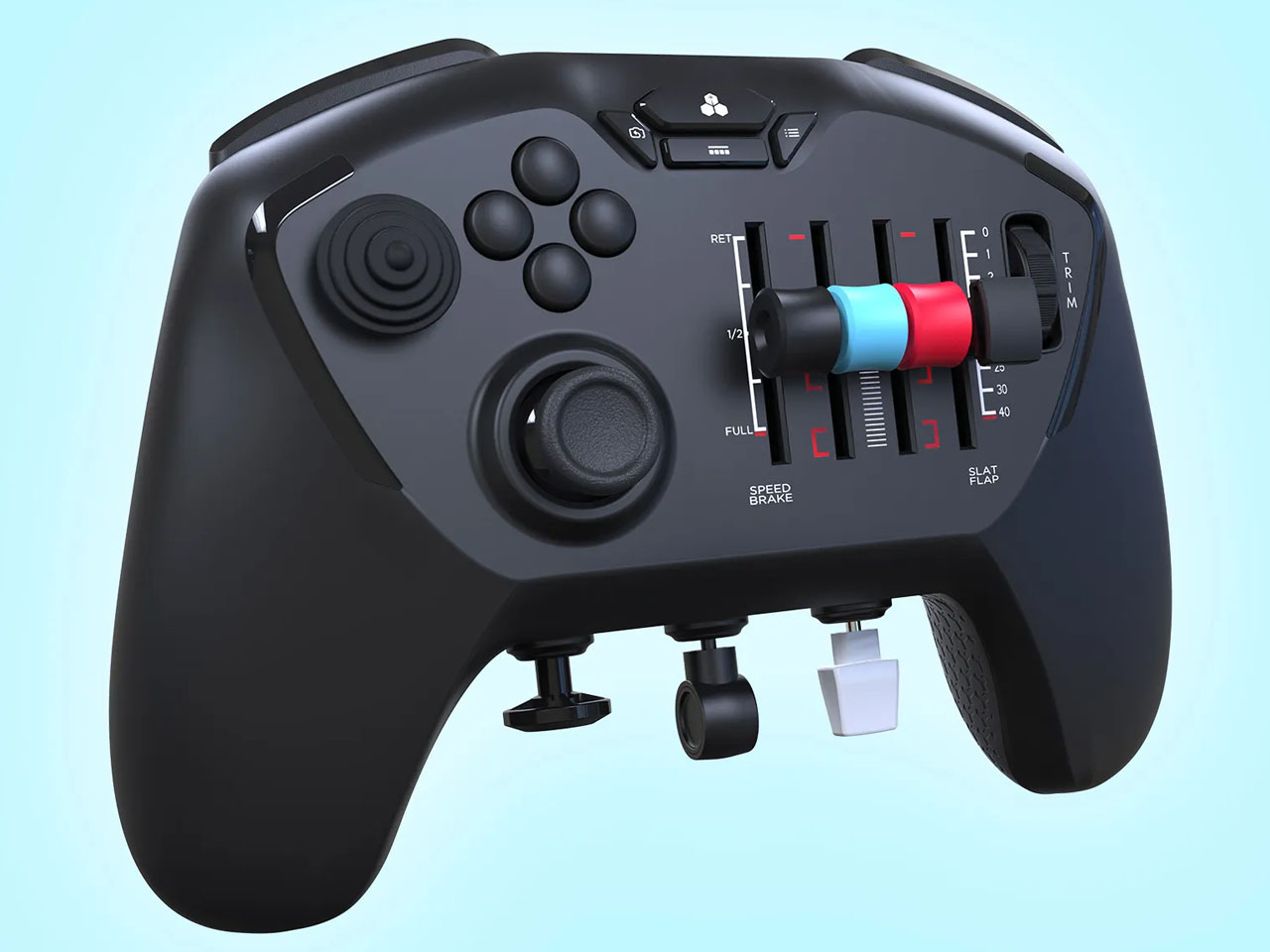
The Atari Gamestation Portable distinguishes itself with a design that’s a respectful nod to the classic Atari era. Licensed by Atari, MyArcade has done more than just slap on a retro label; they’ve integrated elements of the beloved Atari 2600 into a portable format. This isn’t just about playing old games; it’s about reliving the unique experience of them. The inclusion of an Atari Trak ball, paddle, and a keypad, alongside a d-pad and ABXY buttons, ensures that both classic and modern gamers feel at home.

Display and Games: A Feast for Retro Eyes

The Gamestation Portable boasts a 7-inch high-resolution display, significantly larger than MyArcade’s previous handhelds. This size increase enhances the visual experience of the over 200 classic Atari games preloaded onto the device. While the full games list hasn’t been published, the promise of such a vast library is exciting for fans of Atari’s extensive catalog.

Operating System and Connectivity: Tailored for Atari Classics

The device runs on a proprietary operating system, specifically designed to play Atari classic games, eschewing more common systems like SteamOS or Windows. This specialized OS ensures a seamless gaming experience, tailored to the unique requirements of retro games. Additionally, MyArcade has included two rear-mounted USB Type-C ports and a kickstand, adding modern convenience to the retro experience. The system’s LEDs illuminate to indicate which buttons are supported by the game currently being played, adding a helpful, modern touch to the gameplay experience​.

Pricing and Availability: A Trip Down Memory Lane

The Atari Gamestation Portable is expected to hit the market in September or October 2024, with a price tag of $149. This pricing positions it as an affordable entry into the world of retro gaming, making it accessible to a broad audience of gamers and nostalgia enthusiasts alike​.

The post Atari is entering the handheld gaming space with this gorgeous console that packs 200 iconic games first appeared on Yanko Design.
Ambitious handheld gaming PC fuses Nintendo Switch and Microsoft Surface

PC gaming is taking on a rather interesting turn in terms of design, with the rise of handheld gaming devices. Valve’s Steam Deck fired the opening salvo, and soon the likes of ASUS, Lenovo, and now MSI have followed suit. While the big brands took their sweet time joining the bandwagon, other manufacturers have already been playing this game for quite some time and have even iterated over a few unusual designs. One of those happens to be arriving soon, with what could only be called the love child of the Nintendo Switch and the Microsoft Surface tablet, offering a single device for both work and play that stretches the definition of what “handheld” really means.

Designer: ONE-NETBOOK

To be even considered gaming-worthy, these handheld computers need to pack enough power to satisfy the greed of AAA titles. Of course, that power can also be used for other activities, but the design of a relatively small handset device isn’t exactly conducive to anything but gaming. You can, of course, connect the handheld PC to a dock and other peripherals, but you can only do that at home or in the office.

In order to satisfy the needs of both entertainment and productivity, the OneXPlayer X1 shatters a few conventions, especially when it comes to screen size. If you think the Lenovo Legion GO’s 8.8-inch screen is already massive, then you’re jaw will probably drop at this 10.95-inch 2.5K screen. That’s pretty much “netbook” size, which means it’s a little bit more comfortable to view documents and spreadsheets, especially when you have to type them out. Of course, that does also mean you have a larger view of your games, but it comes at the price of portability, though ONE-NETBOOK advertises the device will only be 789 grams thanks to the use of 6000 series aviation aluminum.

The OneXPlayer X1’s inspiration can clearly be seen from the detachable controls. Flanking the sides of the large tablet are removable controllers clearly inspired by the Switch Joy-cons. When it’s time to start typing, however, the keyboard cover, ala the Surface Pro, comes into play. While the laptop use case is a proven design, it remains to be seen whether the promise of lightweight handheld gaming will actually be delivered.

It’s interesting to see how the OneXPlayer X1 combines multiple designs gathered from computing history, from the canceled Razer Edge Pro to the unexpected Microsoft Surface Pro to the successful Nintendo Switch. Of course, simply combining successful designs doesn’t guarantee the same successful outcome, especially when that combination itself is still unproven and almost questionable. With an Intel Core Ultra processor and Intel’s ARC GPU, there might be some doubt as to its actual gaming chops. And with a price tag that starts at around $950 for the baseline specs, that’s too expensive a risk to take as well.

The post Ambitious handheld gaming PC fuses Nintendo Switch and Microsoft Surface first appeared on Yanko Design.
The NocFree Lite split wireless mechanical keyboard is an audaciously customizable piece of tech gear

I’m sure of one thing; you need to have great typing skills if you are to use a split keyboard. For example, if you are like me, who has to extend their right hand over the left to find an odd key: we are not designed for this gadget! That said, split keyboards are hailed for their typing comfort, and there are many ergonomists to back it up. The split keyboard: wired and wireless, are functional and comfortable alternative to traditional keyboards because these provide more flexibility.

As opposed to a traditional keyboard that forces you into a fixed, rather unnatural, typing position for an extended period of time, the split keyboard rips that apart in the middle so every user can find their most comfortable position. We have seen a handful, or rather more, iterations of a split keyboard in our time. If I recollect correctly, Naya Create keyboard that added a trackpad to the split design won a lot of accolades back in the day. Now NocFree wants to rival the Create and other similar options with unmatched adjustability offered by its accommodating form factor.

Designer: Solar (NocFree Team)

Click Here to Buy Now: $166 $210 (20% off). Hurry, deal ends in 48 hours!

Before we get into the details of the NocFree Lite, the first prototype of the spilt keyboard, be reminded that the changes in desk setup to address your posture issues and pains, may not be limited to the position of the desk. If you have swapped between sitting and standing desks and been through a range of lumber support chairs, without a respite; consider giving your keyboard a swap. Whether you prefer linear, tactile or clicky switches, the NocFree Lite has the options to be truly effective.

The idea of NocFree keyboard is not accidental. It was conceived after the designer Solar from Kowloon, Hong Kong, battling wrist pain and lower back discomfort, headed out to search for a solution. With the absence of a split keyboard of his choosing, the idea of NocFree was born. It is a keyboard that we would want to use daily, hours at the computer desk or a gaming rig, without feeling the strain on the wrist or the shoulders.

To ensure this, the NocFree Lite Split Wireless Mechanical Keyboard functions in two independent parts for user comfort. And when you want otherwise, the left and right sides of the keyboard can be effortlessly merged. So, with the NocFree, you can start with the fully merged keyboard and gradually separate it as the shoulder begin to feel the strain. The benefit in the latter position is beyond the comfort. The void between the two halves of the keyboard can offer prime desk real estate to place your documents, mouse or maybe a tablet to take notes.

The sleek, adjustable layout of the NocFree Lite comprises 65 keys for utmost productivity. With the necessary keys for all the functionality you need, the keyboard is not a sitting duck. It offers a dazzling array of 31 lighting effects that you can customize for your choice of color, brightness, and transition speed. For further customization, NocFree Lite comes with a few keycap options that may cater to your unique style and preference.

The NocFree Lite comes with a palm rest made from a single piece of walnut. This is also made to split with the keyboard and alleviates palm pressure in either use setting. According to the our information, 20 prototypes of the NocFree Lite have been made and tested, and the keyboard is ready for manufacturing. The idea behind the design is to move split keyboards from a niche to a mainstream choice, for which the makers are currently running an Indiegogo crowdfunding campaign, where prospective buyers can preorder a unit for $166.

Click Here to Buy Now: $166 $210 (20% off). Hurry, deal ends in 48 hours!

The post The NocFree Lite split wireless mechanical keyboard is an audaciously customizable piece of tech gear first appeared on Yanko Design.
These Minions Wi-Fi Routers were probably the most brilliant devices we saw at CES 2024

Flying cars and AI assistants are a dime a dozen – but have you ever seen a router so adorable it would be the highlight of your interior decor??

The SmartAir Minions Routers were so oddly located in a corner of the Westgate area of the CES 2024 exhibition that it was easy to miss. As chance would have it, I headed to the Westgate area to look for another company, only to suddenly notice these minions through the corner of my eye sitting on a counter. Given the fact that CES is predominantly a tech show, I obviously wondered why these plush-looking toys were on display. A few seconds in it dawned on me – these lifelike characters from the Despicable Me franchise were, in fact, dual and triple-band WiFi 6E routers capable of multi-gigabit internet. The added bonus? They look more adorable and presentable than your existing WiFi router ever could.

Designer: Davolink

Click Here to Buy Now

The routers come in two models, designed to resemble the two key characters in the Minion-verse, the short and adorable Bob, and the tall and klutzy Kevin. The choice of these two characters play well into the routers’ features too – Bob, being smaller, offers dual-band WiFi connectivity, while the taller Kevin (and that tiny antenna-esque toupee of his) offer triple-band internet, giving you 2.4Ghz, 5Ghz, and even 6Ghz.

Together, both the routers provide a brilliant blend between wide coverage and high speeds, enabling everything from 8K streaming to even gaming. The routers eliminate dead zones too, ensuring every corner of your home has WiFi connectivity with a mesh feature to help maximize coverage.

The highlight, however, is the fact that they are a stunning replica of easily some of the most memorable and iconic characters of animated cinema in the past decade. I’ve always advocated for functional products ditching their industrial aesthetic (air purifiers and smart speakers don’t need to look horrendously industrial in today’s day and age), and it seems like it’s time that WiFi routers took that same approach. Bob and Kevin are designed to be the kind of routers that hide in plain sight. They’re adorable enough to be kept on your shelf or tabletop without feeling the need to conceal them behind curtains or other objects, and that’s really what makes them such a standout product. After all, wouldn’t you rather have a router that looks as cute as these little nitwits than something like the boring box you’re currently connected to as you read this article? My only worry is kids trying to play with these and accidentally bringing your entire home network down… but that’s a problem for another day!

Click Here to Buy Now

The post These Minions Wi-Fi Routers were probably the most brilliant devices we saw at CES 2024 first appeared on Yanko Design.
This Rabbit R1 AI Smartwatch would have been a smash success at CES 2024…

Smartphone technology has come a long way and most of us would consider there is no going back from the endless convenience of next-gen phones that keep dropping every other week. This notion may be on the verge of change, with a pocket-friendly Rabbit that paced through the hearts of CES attendees this year. Dubbed the R1, a walkie-talkie-like device created by a startup called Rabbit in collaboration with Teenage Engineering and it is an AI-assisted smartphone alternative.

This retro-styled personal assistant with a screen, camera, and a scroll wheel is half the size of an iPhone 15 and presents a simpler and less distractive way to interact with technology. How the R1 really functions is a story untold, but its nostalgic simplicity has had over 10,000 customers and a designer floored. The designer has added wearable convenience to the Rabbit making it a compact AI watch.

Designer: Alisher Ashimov

The first visible motive for turning the palm-sized personal voice assistant into a wearable is to eliminate the need for an extra device to carry in the pocket, whatever the size might be. Aptly named Rabbit R1 AI Watch, it will enhance portability without compromising the uniqueness of the original design.

To that accord, the designer has retained the vibrant orange color theme to keep with the retro vibe. The wrist-worn voice assistant has the same square dial with features like a camera, a control wheel, speakers, microphones and the pioneering push-to-speak button included.

The redesigned wearable preserves a sim card slot to allow the watch to function independent of a smartphone, which is essentially the stand-out feature of the Rabbit R1 itself. The app-less handheld AI assistant takes us back to a time when using a phone was simple, and the idea of the watch keeps with that ideology.

It runs the Rabbit OS which allows it to conduct regular tasks like ordering Uber or checking out your grocery directly using the Rabbit’s proprietary Large Action Model (LAM) AI model. LAM is adaptable, which means it can learn and interact with new applications and actions you want it to learn. There is no word on the specifications of the AI Watch, but we presume when it is ready, it will be close to the 4 gigs of memory, 128GB storage, and 2.3GHz MediaTek processor that its inspiration Rabbit R1 features.

The post This Rabbit R1 AI Smartwatch would have been a smash success at CES 2024… first appeared on Yanko Design.
U-shaped power strip concept has an interesting cable management trick

As ubiquitous as power banks might be, there will always come a time when you need the full power of a socket. Those are the times when you’ll discover to your dismay that most wall outlets are woefully ill-equipped to meet the demands of many people with multiple devices. Power strips with their multiple sockets exist for that very purpose, but they’re more like band-aid solutions, inelegant and often ineffective. Thankfully, there are quite a few bold new designs trying to rethink this mostly utilitarian tool, like this curious take on the power strip that literally bends convention into something a little more interesting and more convenient to use.

Designer: Michael Kritzer

“U” is for “unusual,” and that definitely describes the design of the ME-1 power strip concept. While most of its kind adopt a linear shape to reach more people across a table, this one is curved into a shape similar to that of a U-magnet. That association isn’t accidental either, because this power strip can actually stick to metallic surfaces as well, either hanging under tables or sticking off walls.

The change in form isn’t simply for novelty’s sake, though. For one, it saves up space compared to a typical rectangular or linear power strip, it is also visually more pleasant to look at, even with all cables coming out of it. There is also enough spacing between the alternating three-prong plugs and USB ports so there won’t be a problem with bulky plugs and chargers.

As for those cables, the U shape also gives owners a way to keep them in check by wrapping them around either of the “legs.” In fact, the strip’s own cable, which sticks out from the inner curve of the shape’s arc, can be looped around it to avoid ensnaring people’s feet or other objects around it.

While the ME-1 power strip concept does present a more captivating design compared to typical power strips, there are also some questions regarding its practicality. It saves up on horizontal space but it does stick out too much. This iteration also seems to cover only one side of the U shape, leaving the other half underutilized and wasted. Still, it’s an admittedly daring approach to re-imagining something we’ve mostly taken for granted to have a fixed design, and hopefully, the market will soon be filled with more interesting power strips, at least ones that don’t sacrifice utility for appearance’s sake.

The post U-shaped power strip concept has an interesting cable management trick first appeared on Yanko Design.
Revopoint RANGE 2 3D scanner makes short work of scanning large objects

3D scanning has traditionally been the domain of big production studios and companies because of the size of the equipment and their prohibitive costs. With the arrival of handheld scanners, however, the doors were thrown wide open for anyone in any field to make their own 3D models from real-world objects, whether it’s for fun, art, health, or profit.

Typical handheld 3D scanners work great when working with small objects that are no larger than the device itself. Of course, real-world objects like car parts, whole vehicles, and even human bodies are quite big and push these smaller scanners to the limit. Enter the new Revopont RANGE 2, the latest in a line of lightweight but powerful 3D scanners designed to handle large objects without breaking a sweat, making sure that your creativity and productivity aren’t limited by the size of your model.

Designer: Revopoint Team

Click Here to Buy Now: $656.10 $729 (10% off, use coupon code “YKD10”). Hurry, deal ends in 48 hours!

Revopoint RANGE 2 is a portable handheld dual depth camera structured infrared light 3D scanner designed for capturing large objects like furniture, people, and vehicles.

Because handheld 3D scanners work by guiding the depth cameras across and around the target, the devices need to be able to capture a great amount of detail with great depth quickly and steadily with accuracy and precision. That’s a rather tall order for a small device, especially one that is made to be accessible to both amateurs and pros alike, but Revopoint’s expertise really shines through with the upgrades that its RANGE 2 3D scanner packs in a compact and portable form. For example, thanks to new depth cameras that have double the sensor size, the Revopoint RANGE 2 can work on a distance ranging from 400 mm to 1,300 mm, a 60% increase that makes it even faster to capture large objects compared to the previous generation, and can scan an area up to 860 x 1380 mm in size.

Scan of the body by Revopoint RANGE 2. Image credit: PUTV

Range isn’t the only thing that’s bigger and better on the RANGE 2, of course. Four flash LEDs banish shadows for a more uniform color capture, while an improved RGB camera with a bigger aperture is able to capture more color information, ensuring clear color capture with higher levels of detail for more accurate textures and realistic-looking 3D models. An upgraded tracking system utilizes the device’s built-in 9-axis IMU (Inertial Measuring Unit) to keep the scan steady even if your hands aren’t. Four Infrared LED fill lights also make it easier to recognize markers, resulting in more accurate frame stitching in marker mode.

Angel Candelabra scanned with Revopoint RANGE 2. Image credit: dfodaro

Thanks to these powerful features, the Revopoint RANGE 2 is even more versatile and as flexible as before. With Wi-Fi 6 and USB-C connections, you can be assured that transmitting critical data will be fast and stable. As before, the scanner is compatible with Windows, macOS, Android, and iOS devices, functioning in handheld mode or set on a stand in front of a turntable. And with the Revo Scan 5 software, the scanning process couldn’t be easier, especially with post-processing features, such as frame editing, hole filling, overlap detection, etc, to enhance your workflow.

With the Revopoint RANGE 2 3D scanner, you have a whole new world of large objects you will be able to scan. You can easily scan car or mechanical parts, offering a cost-effective and high-performance way to study them through reverse engineering or produce replacements. Archaeologists, scientists, and museum creators can now also digitize artifacts to preserve them for posterity or turn them into XR experiences. And, of course, artists and creators now have a portable yet powerful tool to bring their ideas to life. Scanning big objects for your big projects will no longer be a problem with the new and improved Revopoint RANGE 2!

Click Here to Buy Now: $656.10 $729 (10% off, use coupon code “YKD10”). Hurry, deal ends in 48 hours!

The post Revopoint RANGE 2 3D scanner makes short work of scanning large objects first appeared on Yanko Design.
SHARGE Icemag Hands-On at CES 2024: A Cool-looking MagSafe Power Bank that Cools your Phone

Touted as the world’s first power-bank with its own turbo-cooling feature, the Icemag power bank keeps itself (and your phone) breezy while charging. An ultra-silent fan moves at speeds of 8000 RPM, actively cooling the battery pack inside while the Icemag wirelessly charges your phone, preventing anything from heating up during the charging process.
Sharge has pretty much solidified its reputation for building some of the most incredible-looking charging equipment of our time. Whether it’s the transparent 170W power bank with its own LED display, or the tiny yet indomitable Flow Mini power bank that’s small enough to blend right into your phone’s design, becoming its dedicated second battery, Sharge’s built a rather wonderful ecosystem of charging gear that’s both powerful and unmistakably eye-catching. The Icemag joins that ecosystem as a first for both Sharge and the world – the 10,000mAh MagSafe battery pack comes with its own active cooling system that pushes hot air out from around the lithium-ion battery, increasing its life and overall efficiency as it charges your phone. It also comes as a rather opportune time, as Apple silently killed its own MagSafe power bank, leaving a void in the marketplace.

Designer: SHARGE

Click Here to Buy Now

The Icemag has the same proportions as Apple’s MagSafe power bank, albeit with that aforementioned cooling system and a whopping 10,000mAh battery that charges your entire phone twice over with enough extra juice left to spare for a third charge. It sports Sharge’s unmistakable aesthetic, with a transparent panel on the front that lets you peer into the electronics inside – namely the lithium ion battery, the PCB, and that active cooling system.

The active cooling system kicks in the second the Icemag is connected to a device (whether through MagSafe or via USB-C cable). The tiny fan outputs an impressive 8000 RPM, helping circulate air within the Icemag to keep the battery actively cooled (rather than relying on a metal heat-sink like other charging apparatus). The fan operates at a deadly silent <25dB, and it was practically inaudible in the buzz and chatter of the CES floor. What was noticeable, however, was the RGB lighting around the fan that changed colors as the Icemag juiced your device. It served as a nice visual indicator of the Icemag’s activity, especially given Sharge’s tech-geek and gamer-centric audience.

The compact power bank snaps satisfyingly onto the back of your MagSafe phone, beginning the charging process instantly. An indicator on the side shows exactly how much power the Icemag’s battery still has, while a USB-C port on the base supports both power in as well as out. This means the USB-C port can be used to charge the Icemag itself or can be used to connect the Icemag to another phone to charge it conventionally (without using the MagSafe wireless charging feature). The Icemag supports pass-through charging too, letting you charge it while it wirelessly juices your smartphone, and as far as charging speeds go, the Icemag’s wireless charging coil outputs a maximum 7.5W. If you want to tap into higher speeds, connecting your phone/device via USB-C gives you an output of 20W, charging your gadgets significantly faster for when you’re in a bind.

The Icemag balances its responsibilities of being handy, eye-catching, and functional rather well. It’s compact for its capacity and weighs just 223 grams (7.9 ounces), allowing it to securely attach to the back of your phone without any problems. The 10,000mAh battery is absolutely perfect for people who blow through their phones during the day, giving you an extra battery that can support your phone multiple times. The transparent aesthetic and active cooling system, however, steal the limelight for the gorgeous nerdy-cool aesthetic they give the Icemag. The term nerdy-cool probably gets used literally in this sense because of the Icemag’s ability to keep itself at manageable temperatures as it charges your phone. I dare you to find a MagSafe power bank that’s as gorgeously functional as this one…

Click Here to Buy Now

The post SHARGE Icemag Hands-On at CES 2024: A Cool-looking MagSafe Power Bank that Cools your Phone first appeared on Yanko Design.