Evenings drift from kitchen to dining table to balcony and back, while the nicest lamp stays tethered to a single socket. The small but persistent annoyance of cords, extension leads, and the feeling that lighting never quite follows where people actually end up sitting becomes background noise. Beautiful lamps are static, and that friction quietly shapes how and where you use light, even when it should not.
Arieto Studio’s ILO Lamp is a response to that pattern. The designers started by watching their own routines, noticing how often they moved while the light did not. ILO is an attempt to let light move as naturally as people do, without turning into a tech gadget or a camping lantern, treating the portable lamp as a piece of furniture that happens to be untethered when you need it.
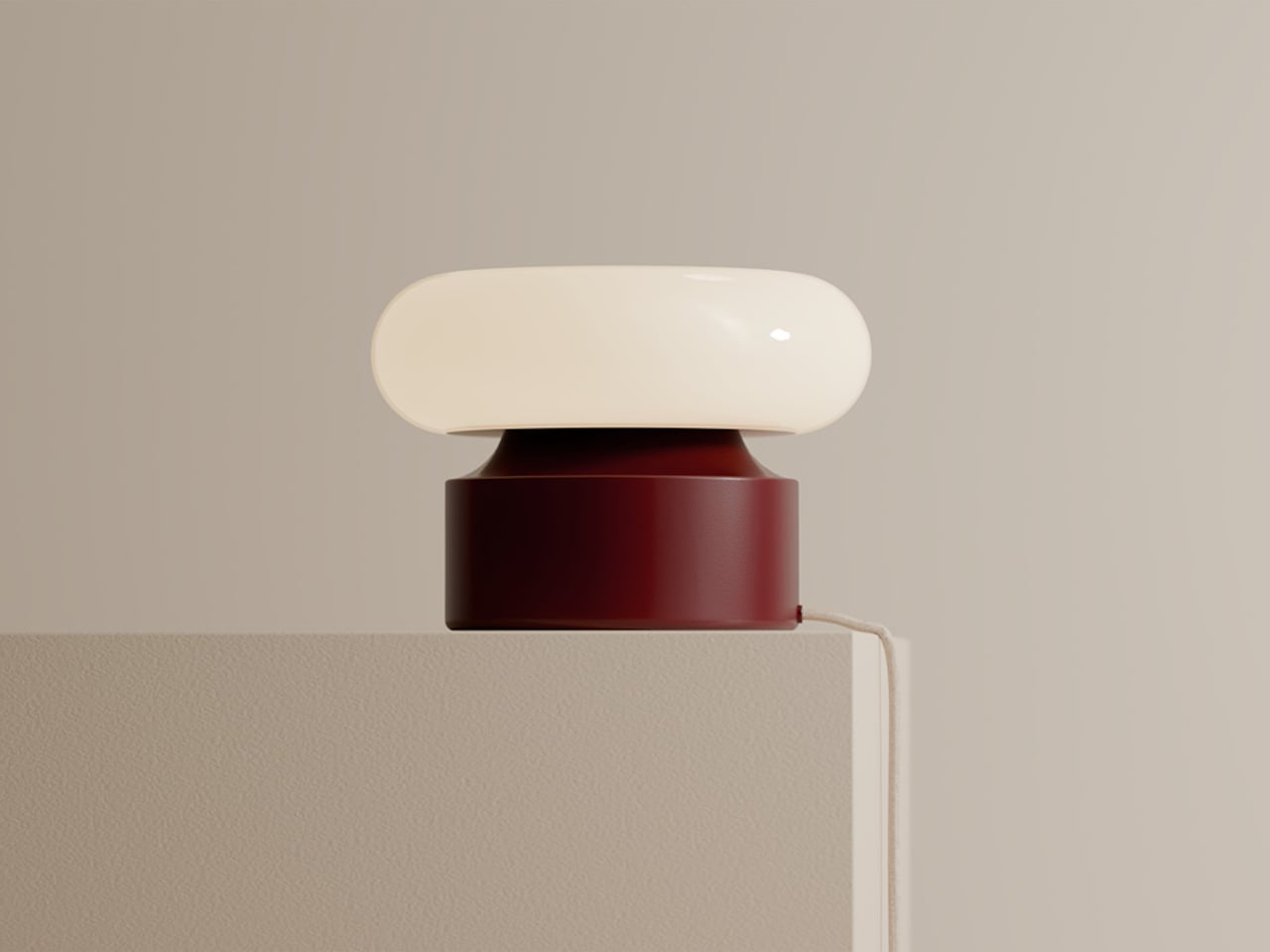
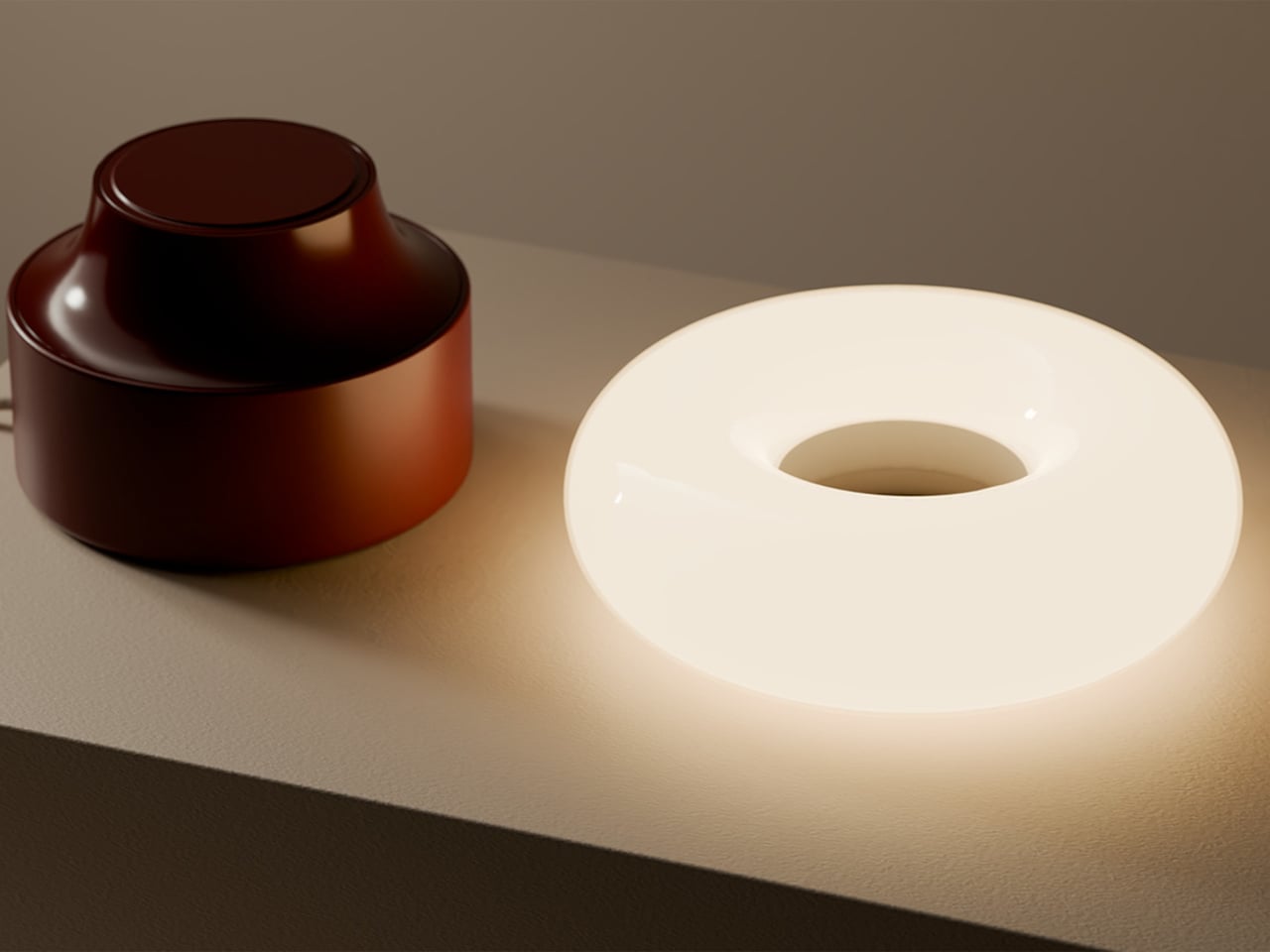
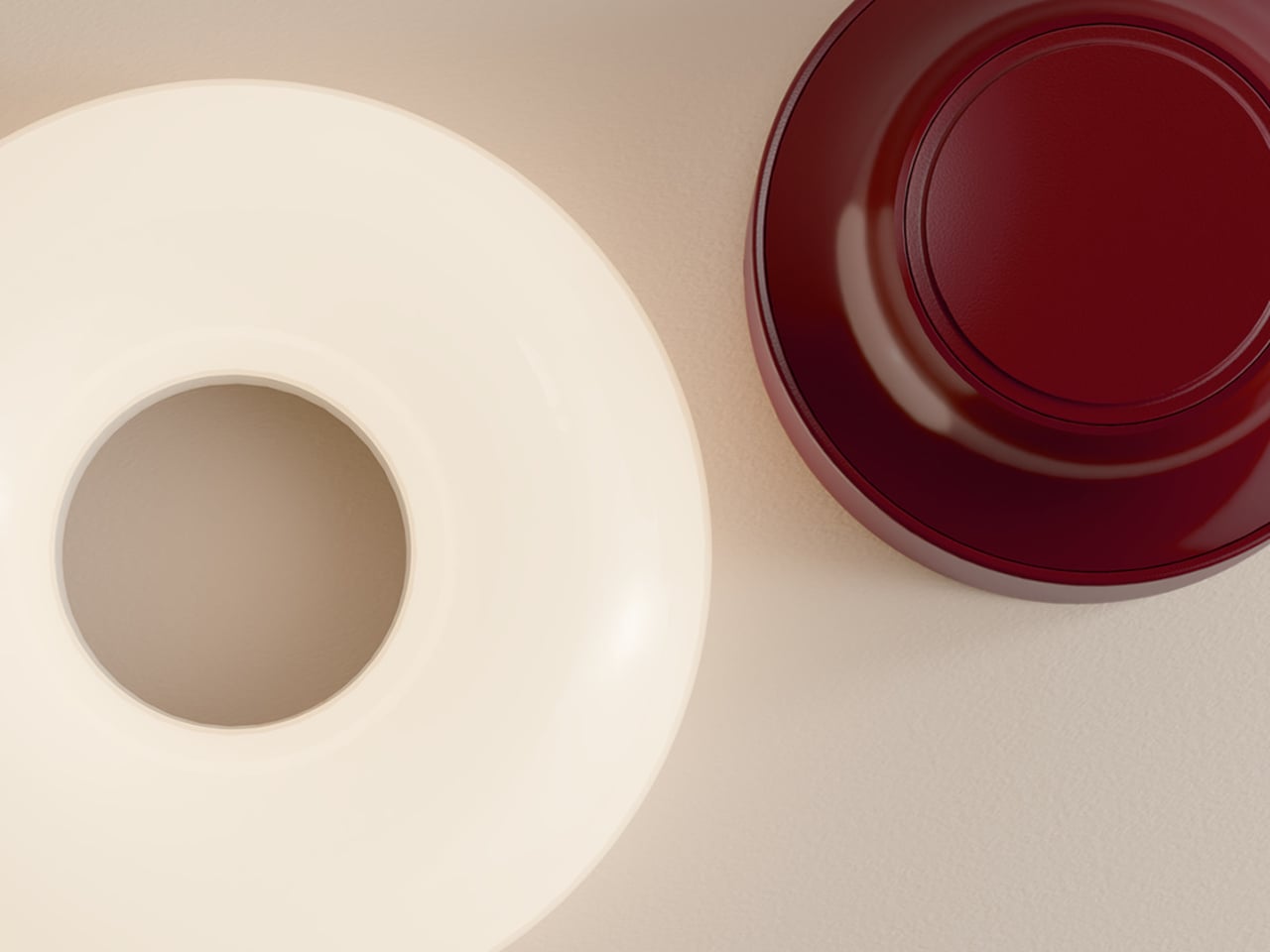
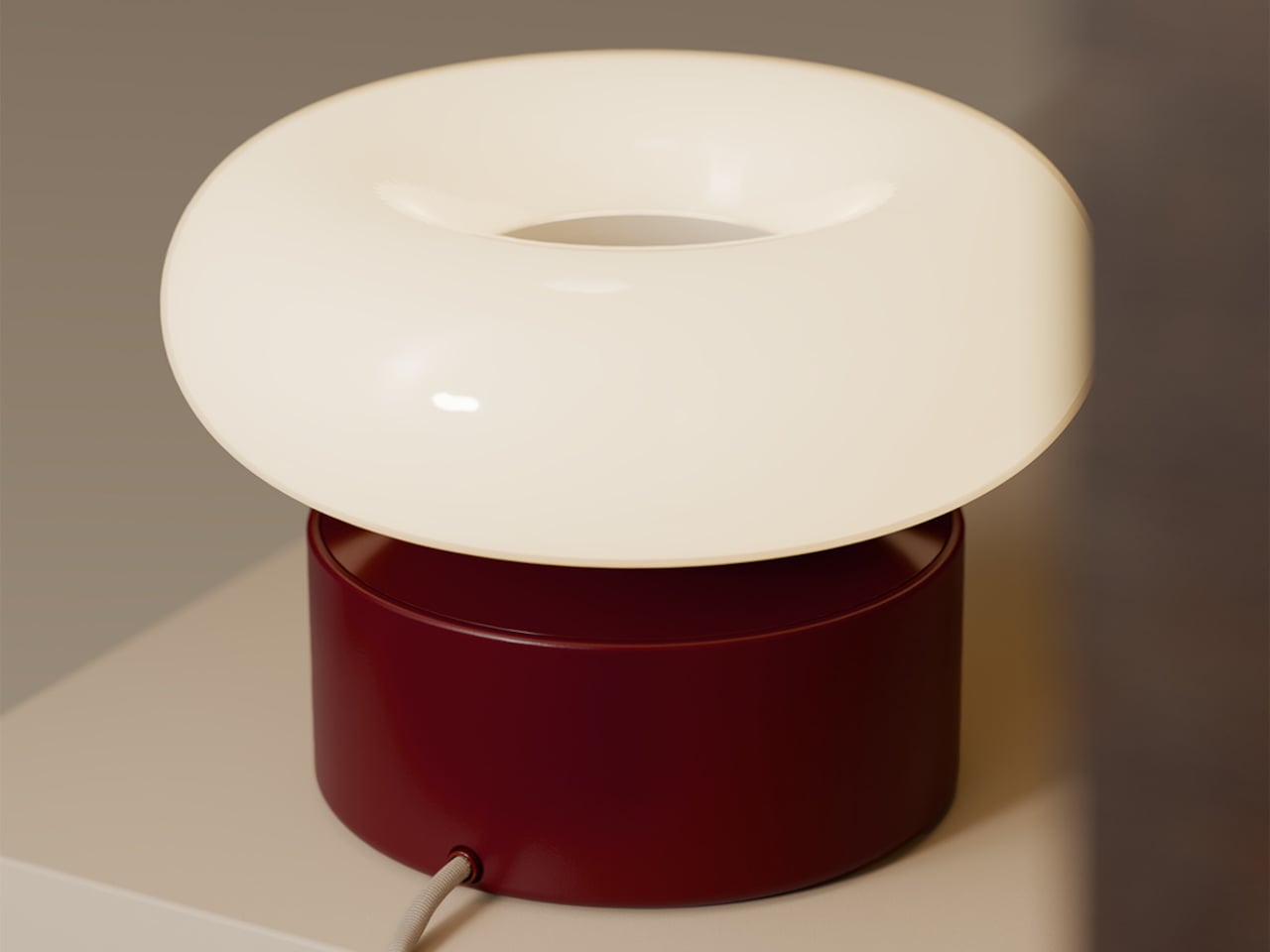
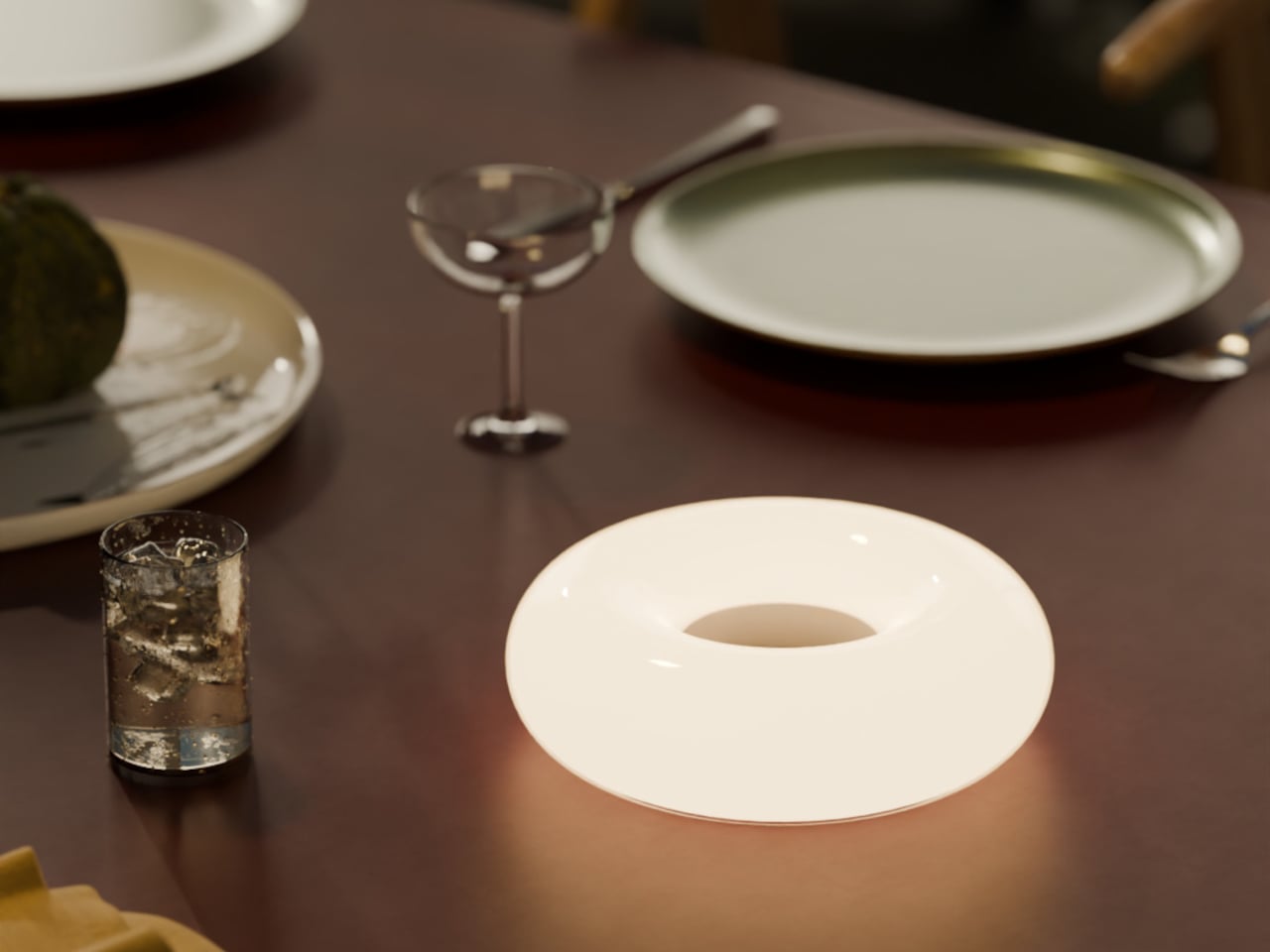
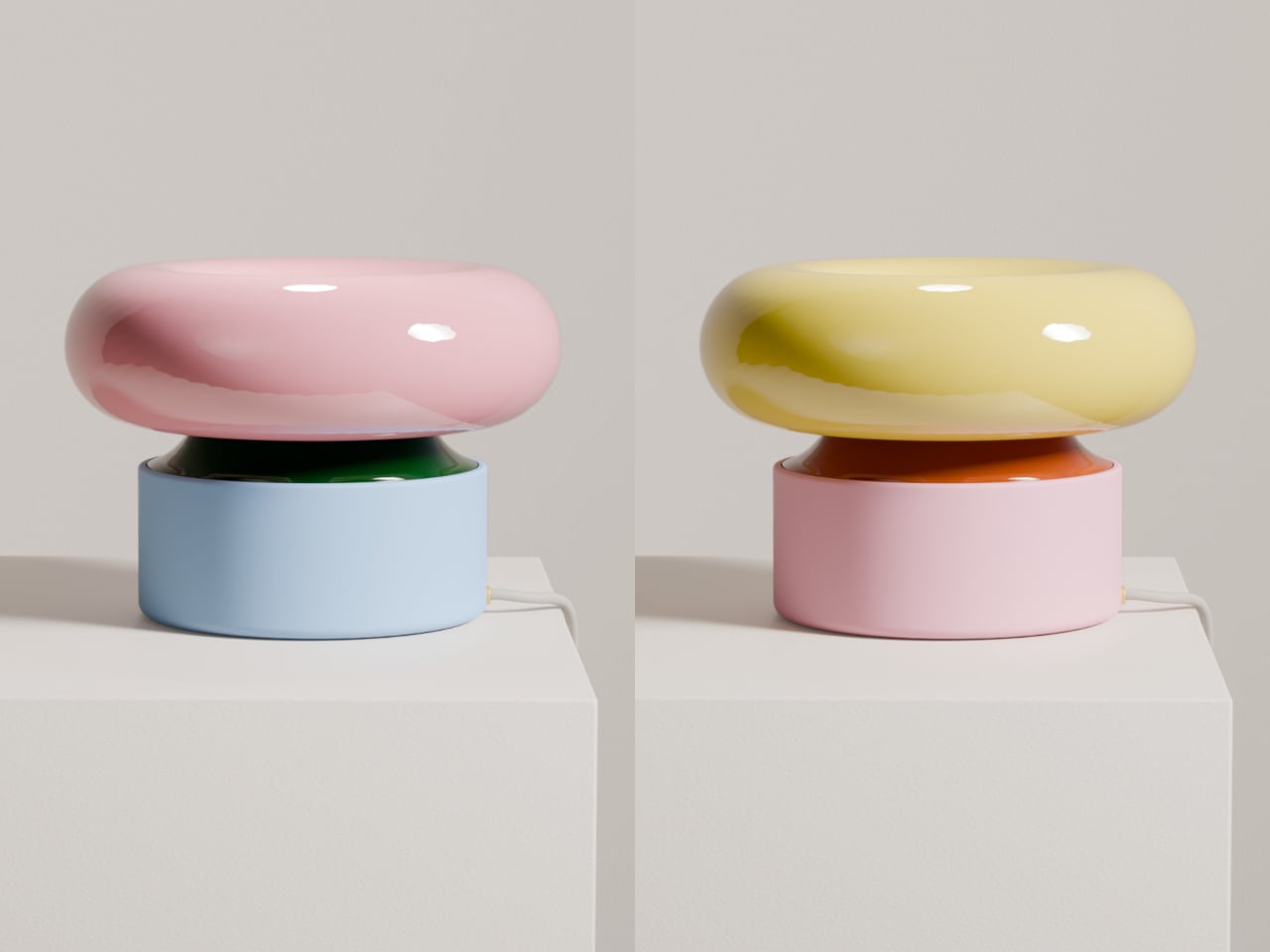
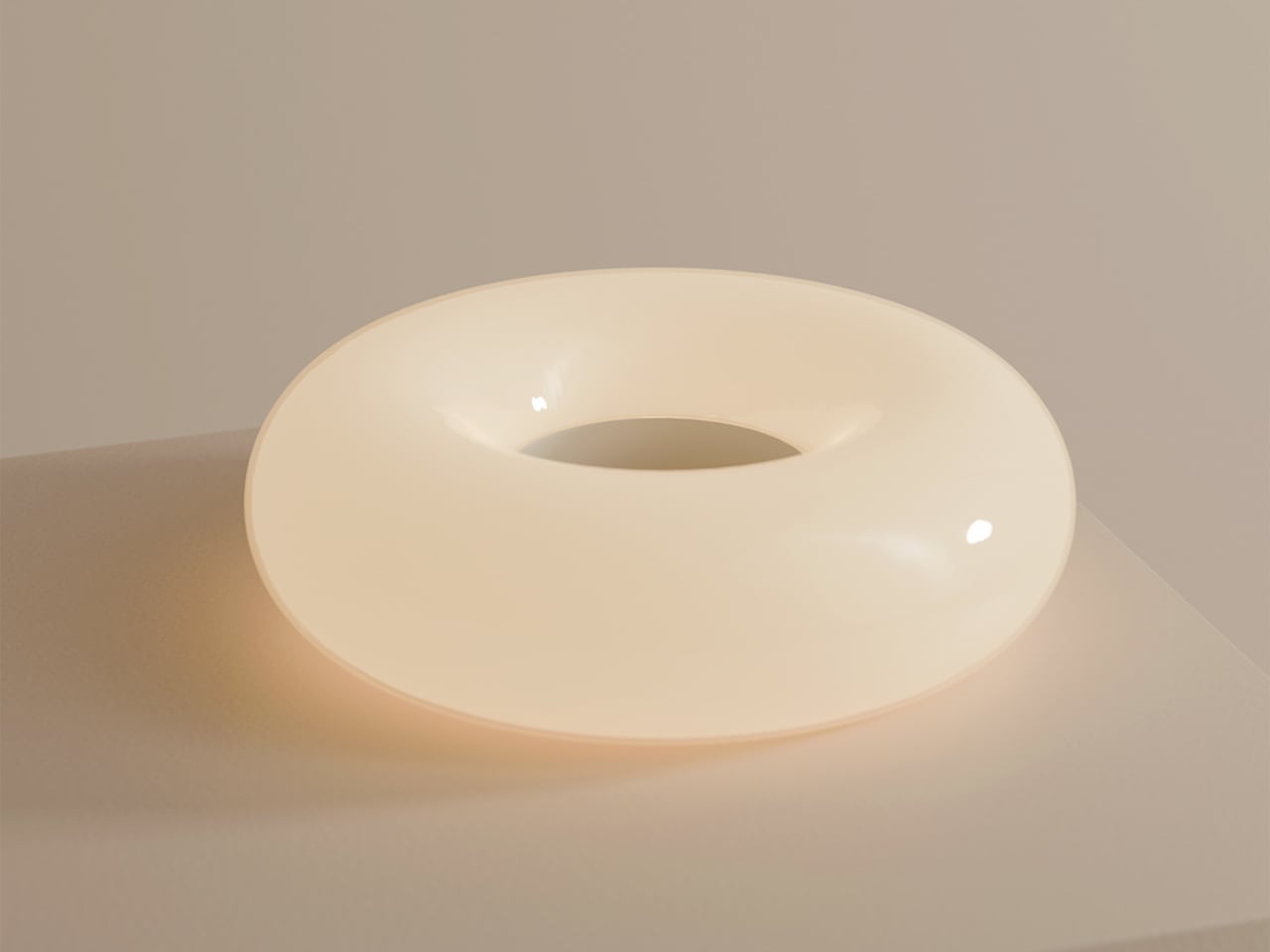
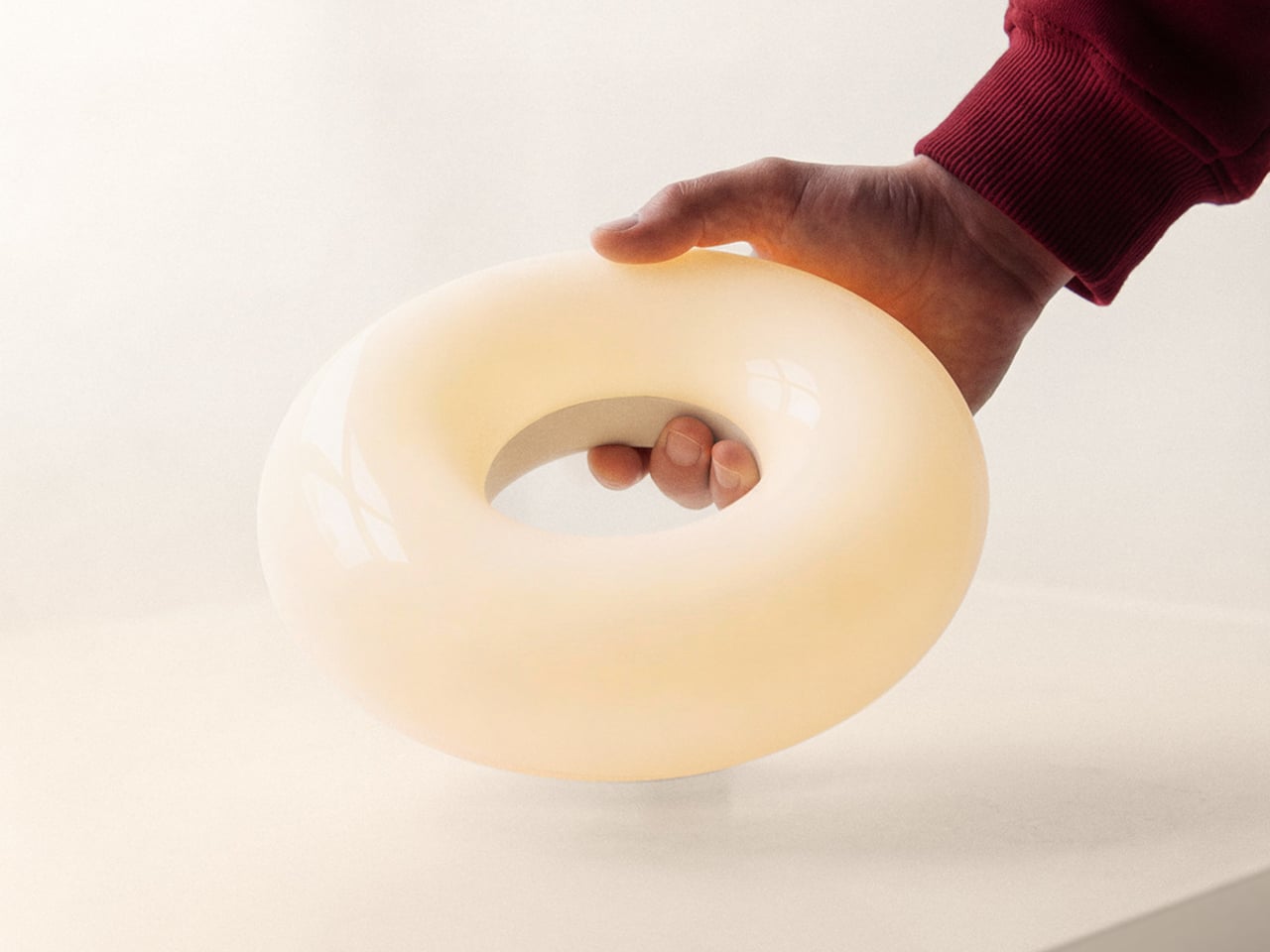
The lamp is two elements that live together, a luminous donut that holds the light and a weighted base that stays plugged in. When the donut rests on the base, it behaves like a sculptural table lamp. When lifted, it becomes a compact, cordless light that can travel to the terrace, coffee table, or hallway without trailing cables behind it or requiring a new outlet.
The base is both a stand and an induction charger. When the donut is dropped back onto it, charging starts automatically, no ports or cables to find in the dark. This turns recharging into a background ritual, the same motion you would make when tidying a table at the end of the night, and the lamp is ready again by morning without thinking about it.
The soft, diffused glow from the ring throws gentle light across a table rather than a harsh spotlight. It is meant for calm, ambient illumination, the kind that makes late conversations feel unhurried and lets food or books sit in a pool of warm light without glare. The donut radiates evenly in all directions, so it never casts hard shadows or creates bright spots.
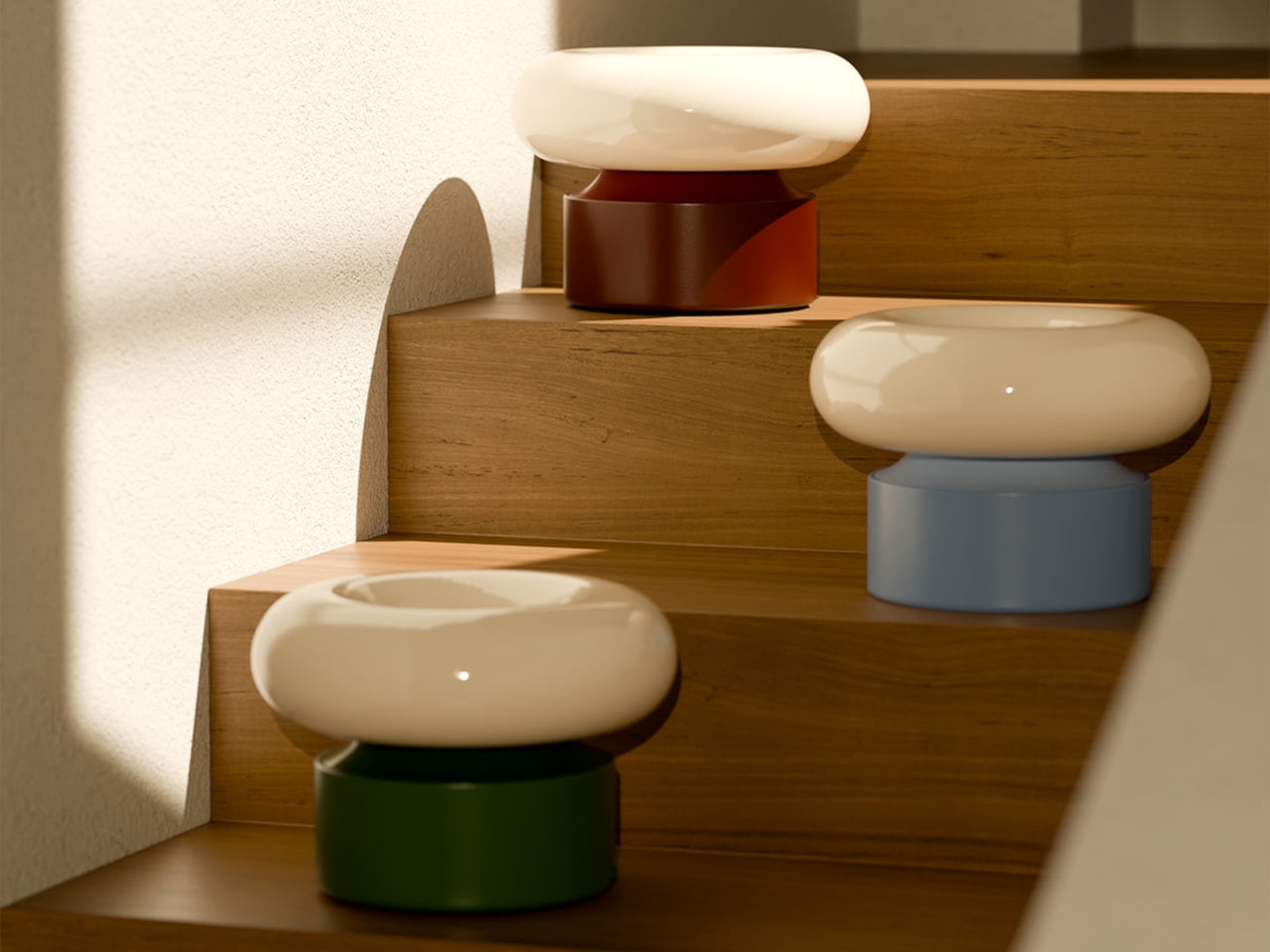
The donut on a balcony rail during a late drink, on a low shelf beside a sofa, or in a hallway where there is no convenient outlet shows how the same object moves between roles without looking like camping gear. It stays firmly in the language of interior objects, simple forms, rich colors, and a glow that feels like it belongs rather than borrowed from a utility drawer.
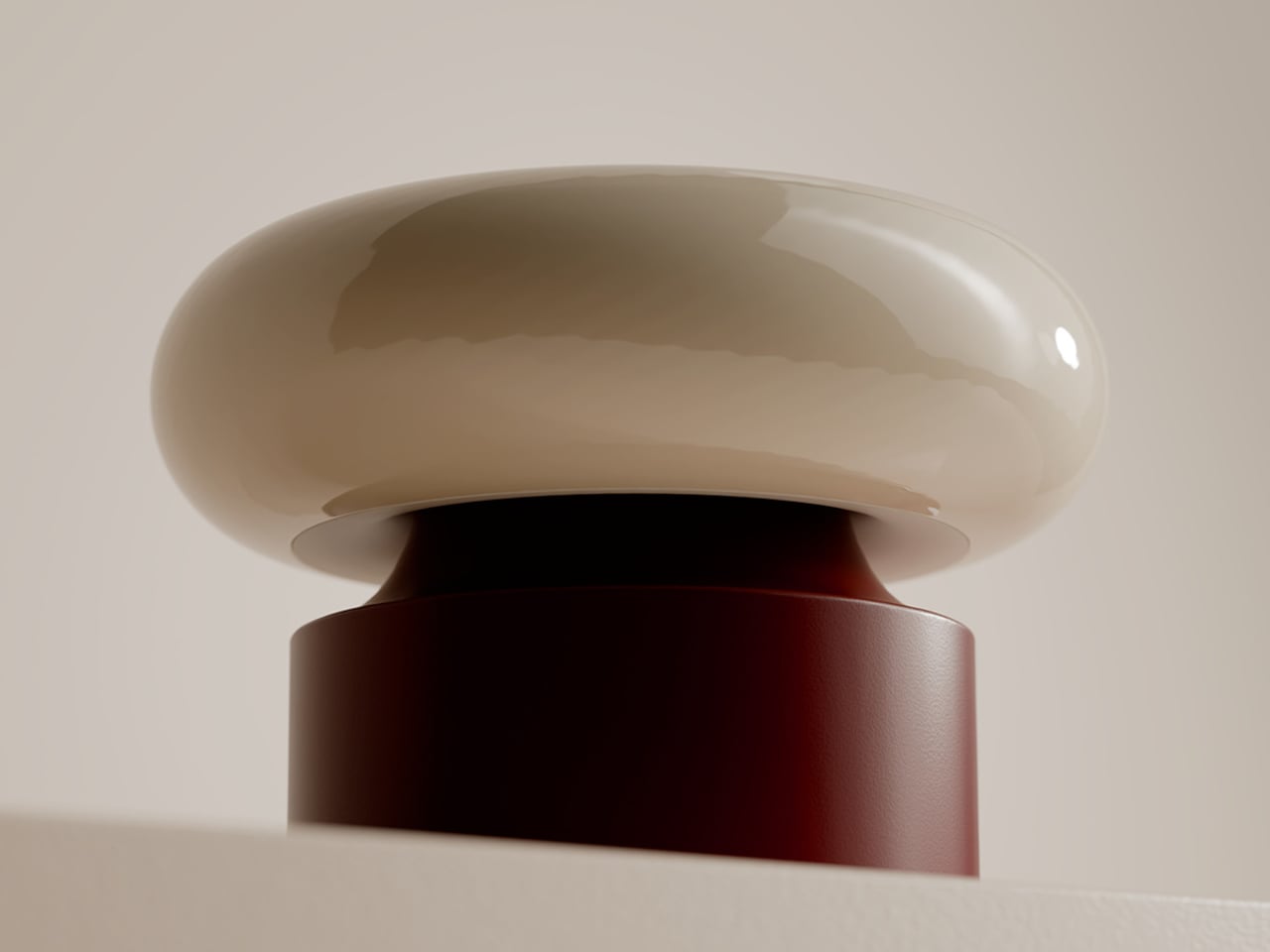
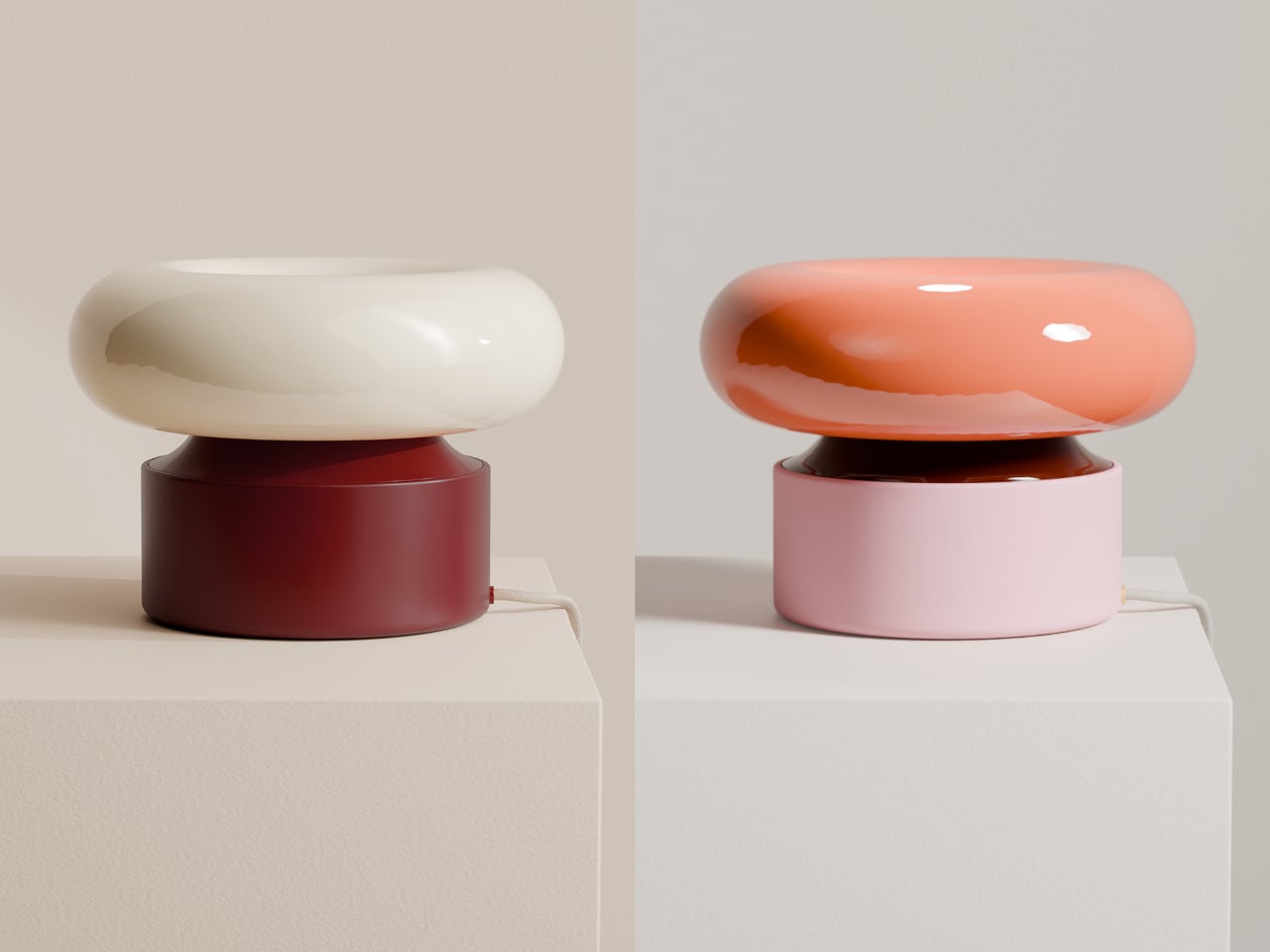
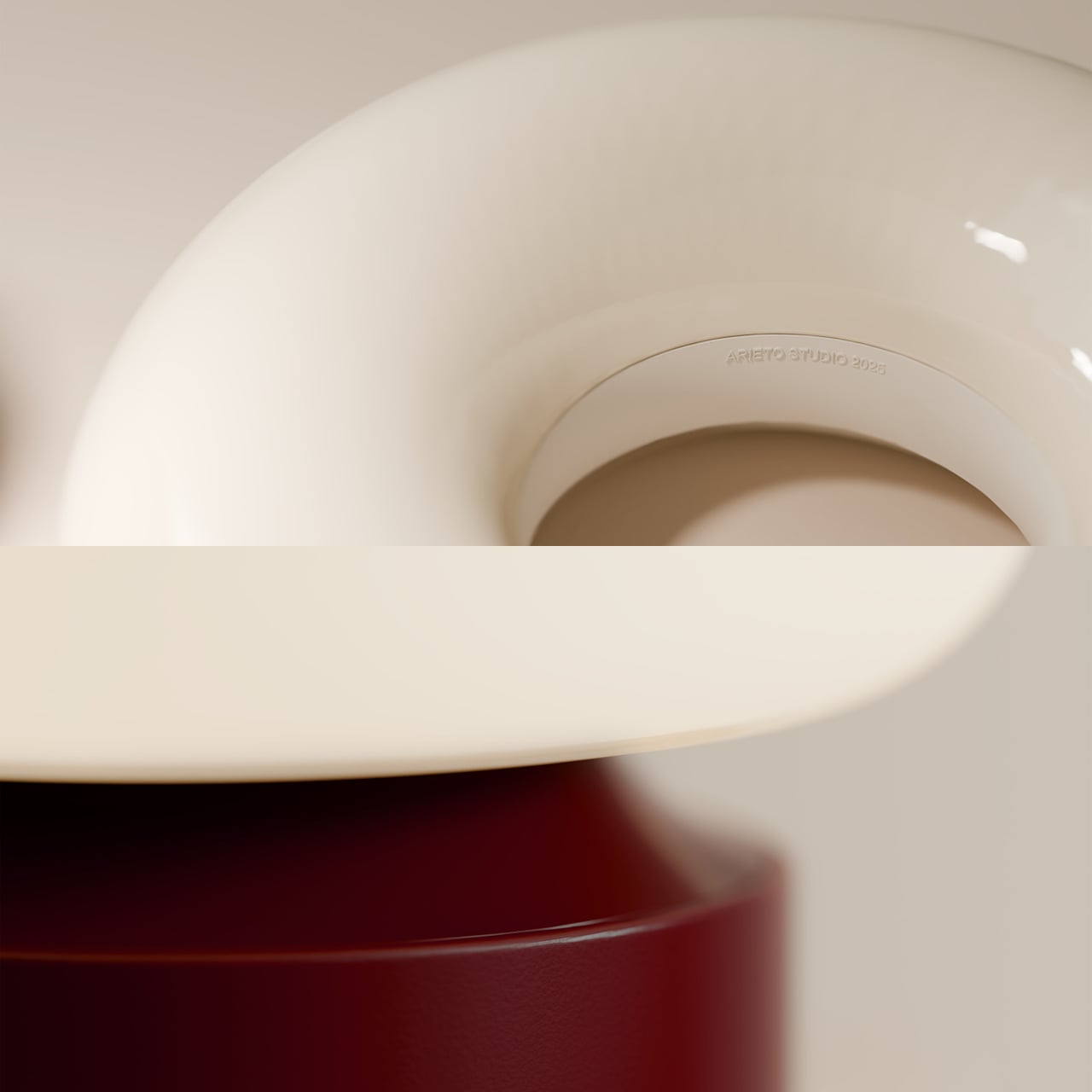
The contrast between the glossy, cream-colored ring and the solid, colored base makes the lamp read almost like a small sculpture when assembled. The base comes in several tones, burgundy, green, and blue, so it can either disappear into furniture or act as a quiet accent in a neutral room. The proportions are calm and grounded, not trying to impress with complexity.
ILO is less about showing off wireless charging and more about removing the tiny compromises that come with static lamps. It treats light as something that can follow dinners, conversations, and quiet moments, while still looking like a considered object when it comes home to its base. For people who move through their homes rather than settling in one spot all evening, a lamp that can keep up without cables or outlets starts to feel less like a luxury and more like how lighting should have worked all along.
The day often begins and ends with a smartphone, from checking notifications before getting out of bed to scrolling in the dark when you should be asleep. Even people who care about design and well-being end up with glowing rectangles on every surface, and that constant presence quietly shapes attention, sleep, and mood more than most of us like to admit. The usual fix is another app that promises to help you use your phone less, which is like asking the problem to solve itself.
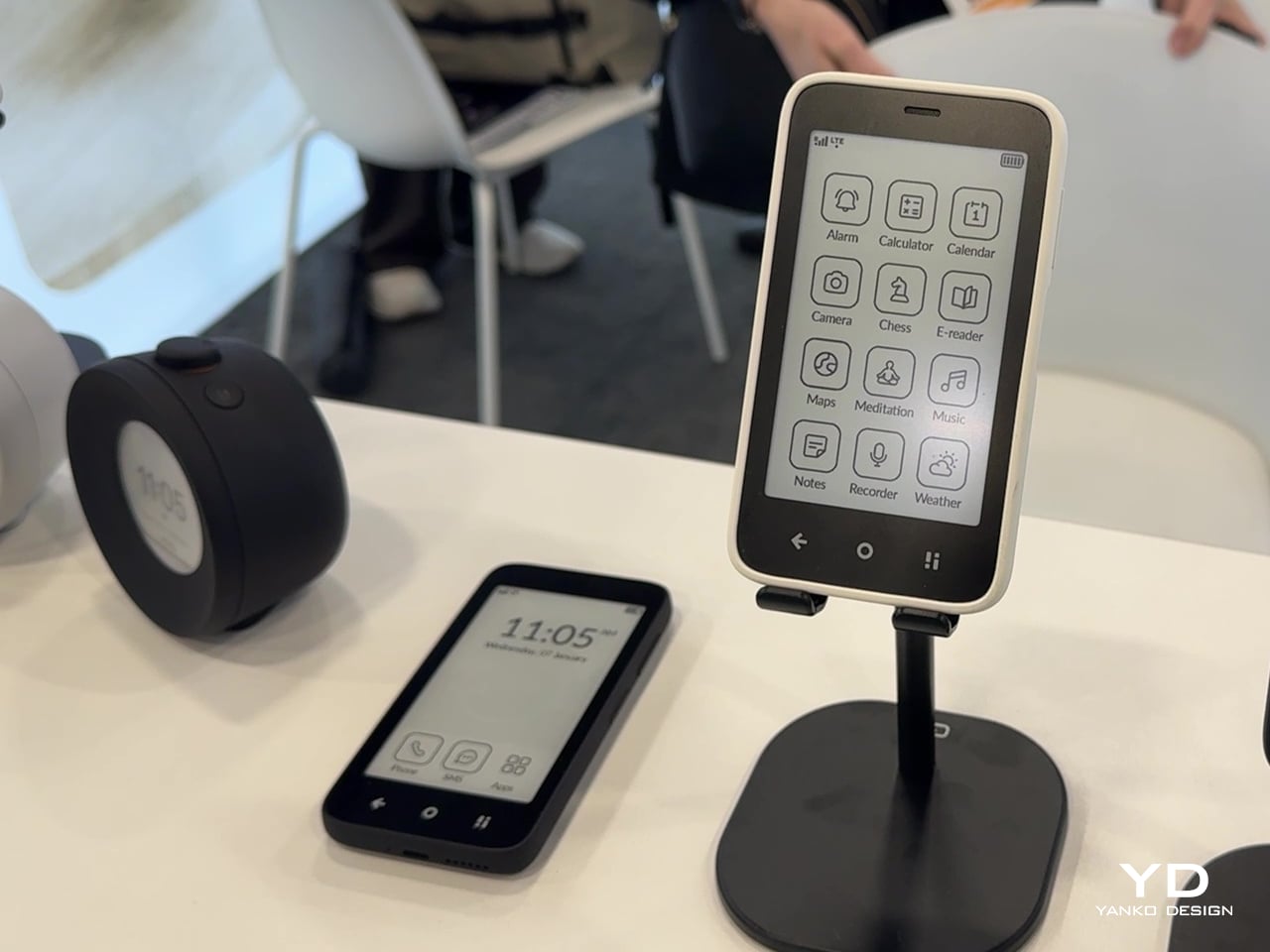
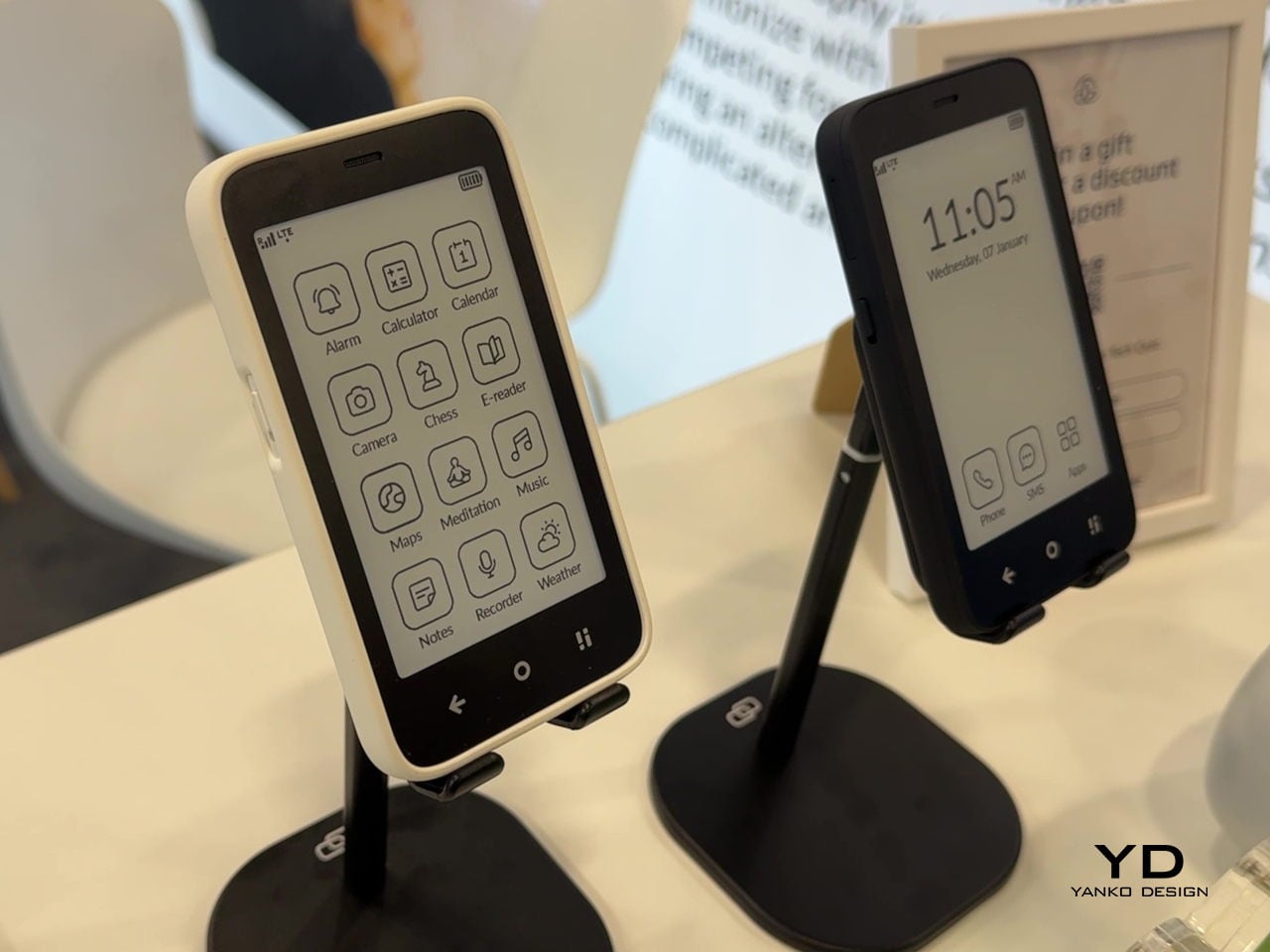
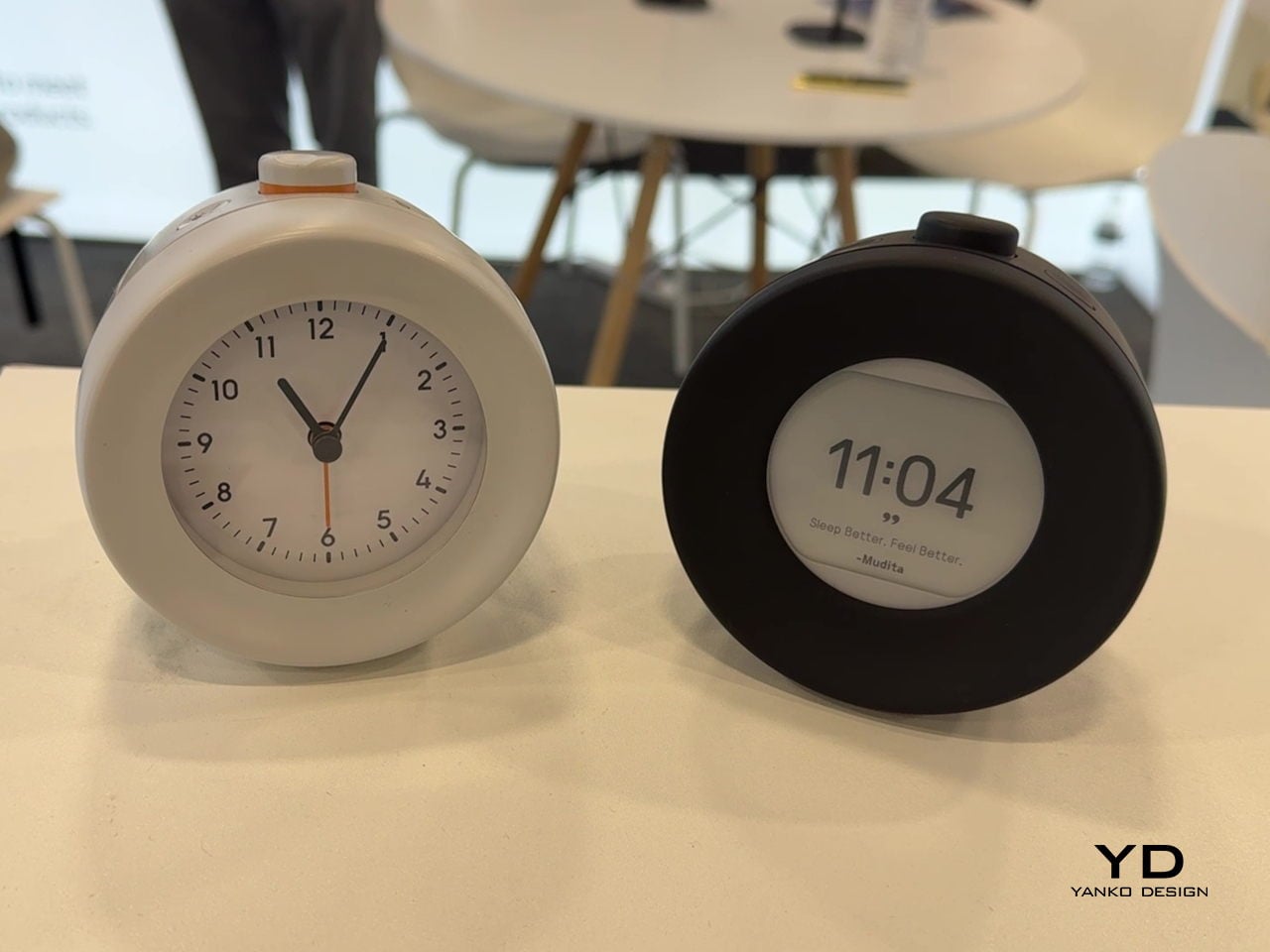
Mudita has been quietly building devices meant to step in where traditional smartphones can cause the most trouble. At CES 2026, that takes the form of three products: Mudita Kompakt, a minimalist E Ink phone, Mudita Harmony 2, a mindful alarm clock with an E Ink display, and Mudita Bell 2, an analog-style alarm clock with a few carefully chosen digital tricks. Together, they sketch out a different way to move through a day, keeping connections and routines intact while pushing screens out of the moments where you may choose to be “disconnected.”
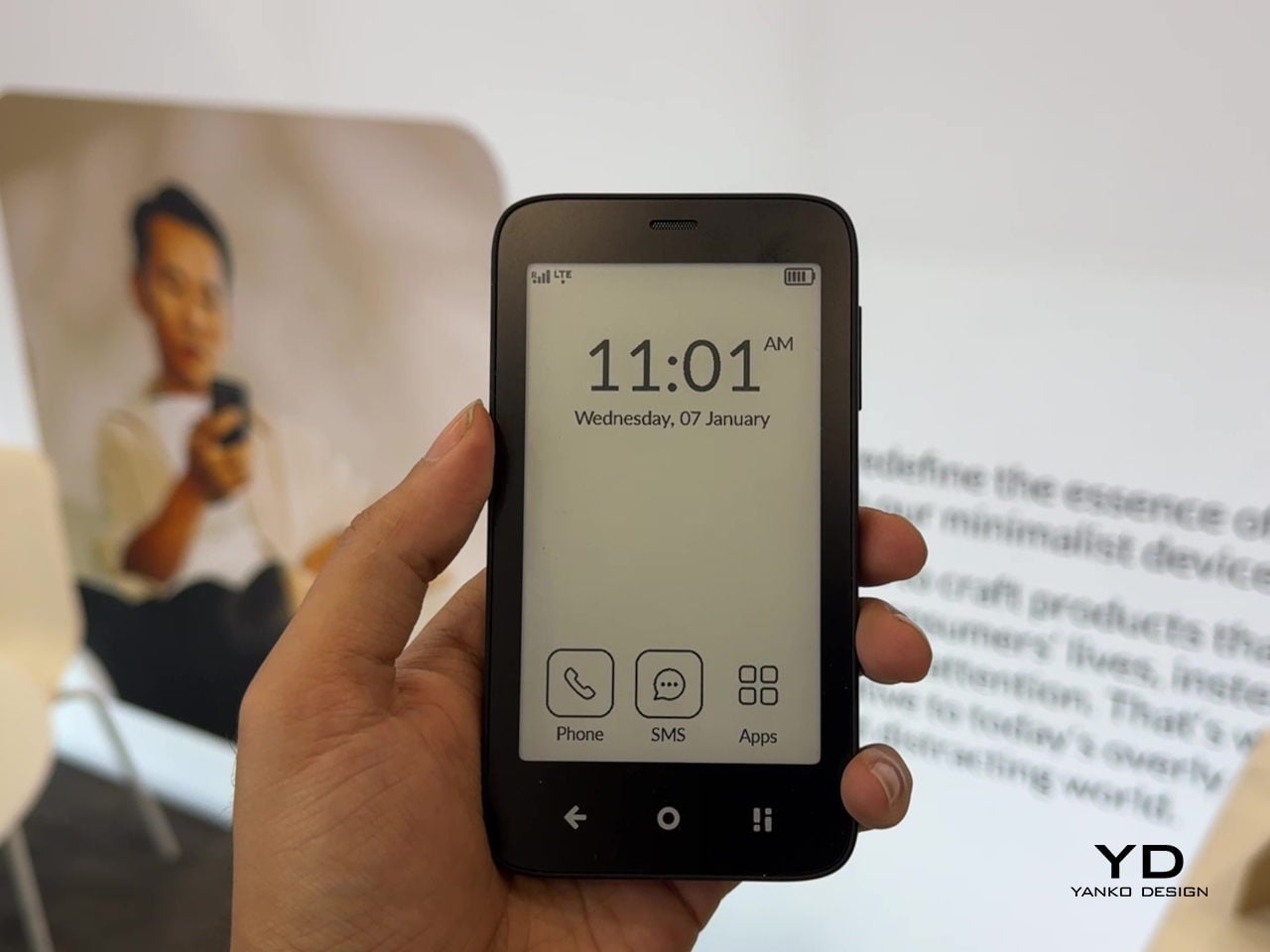
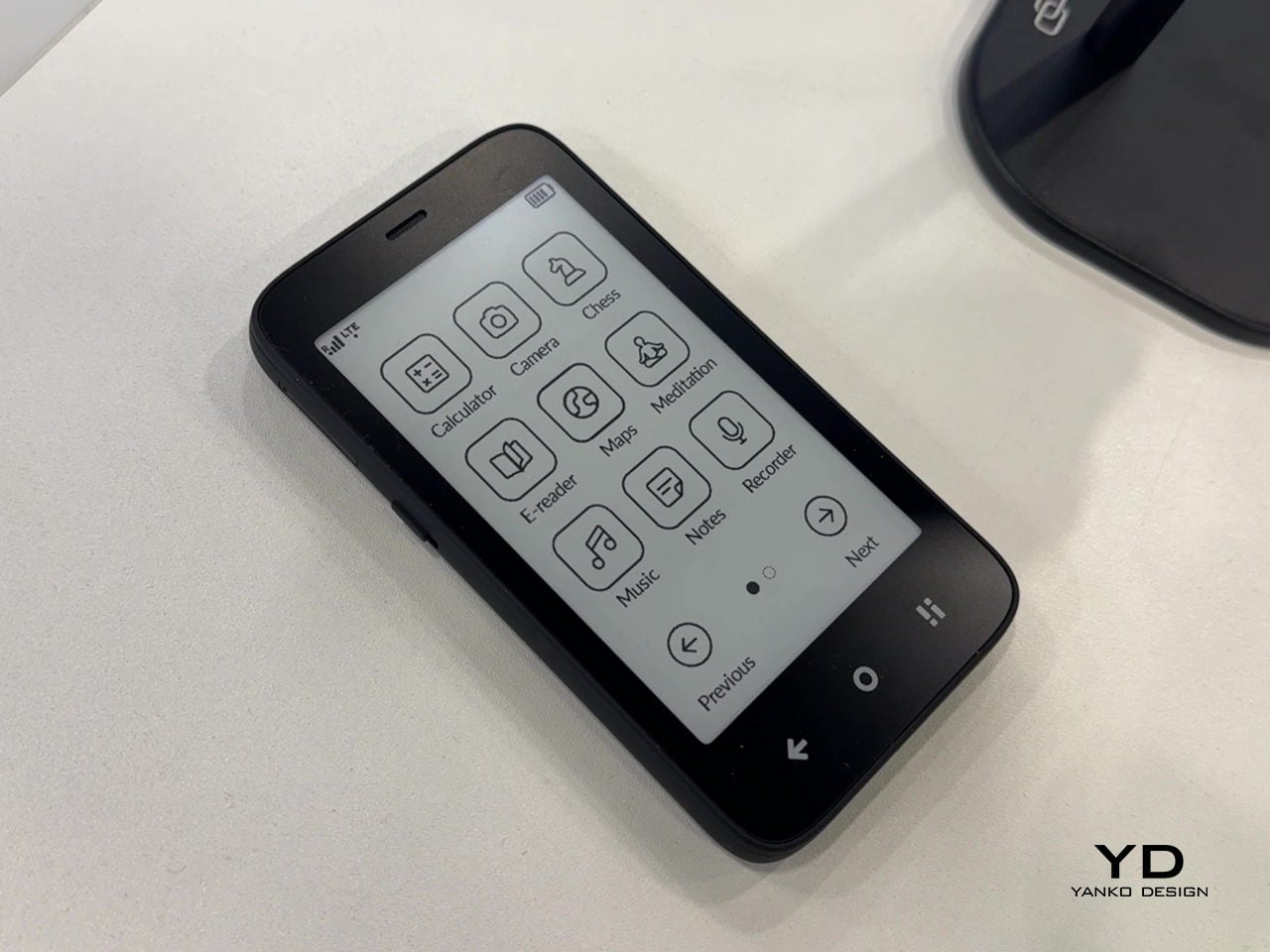
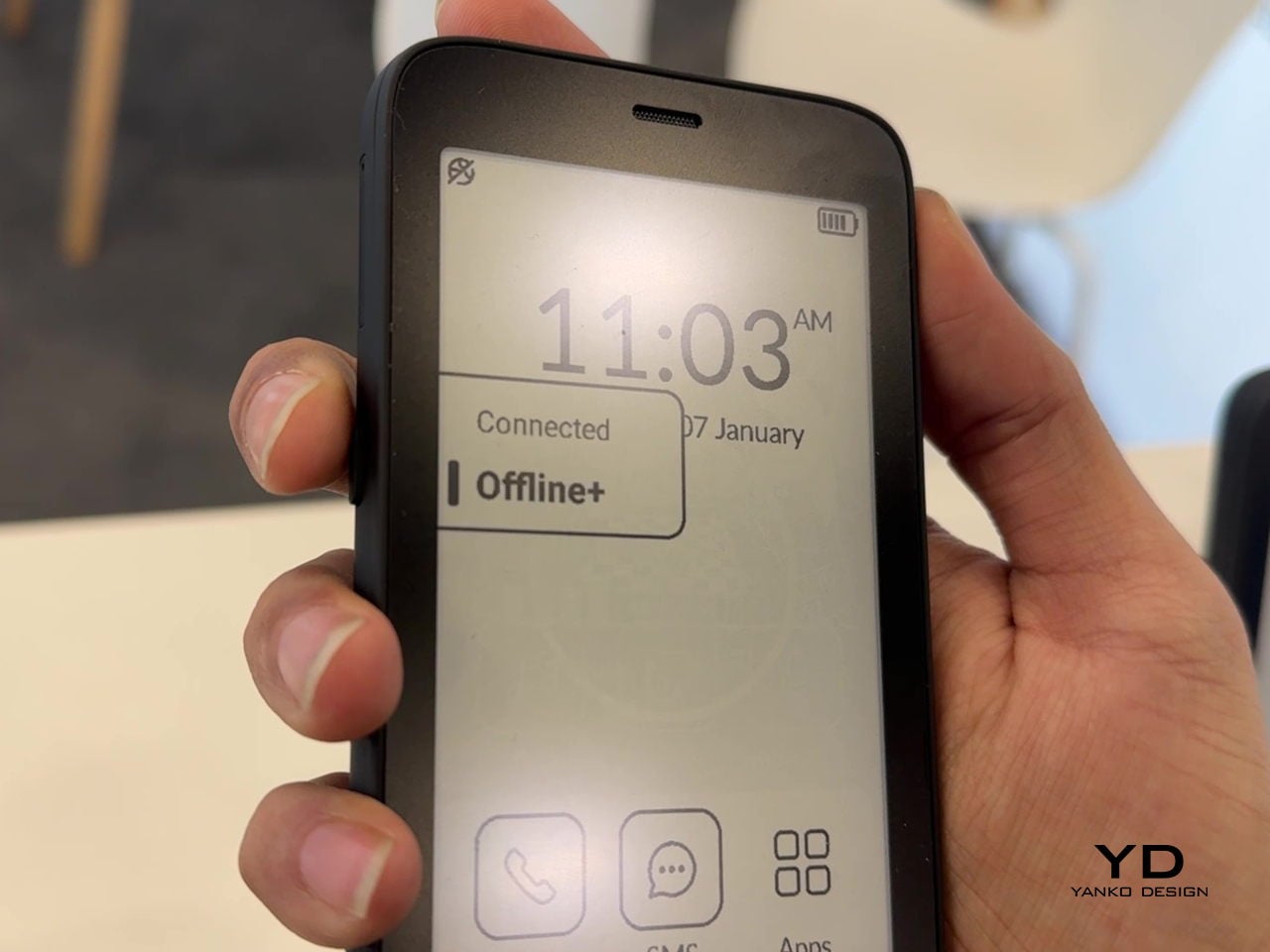
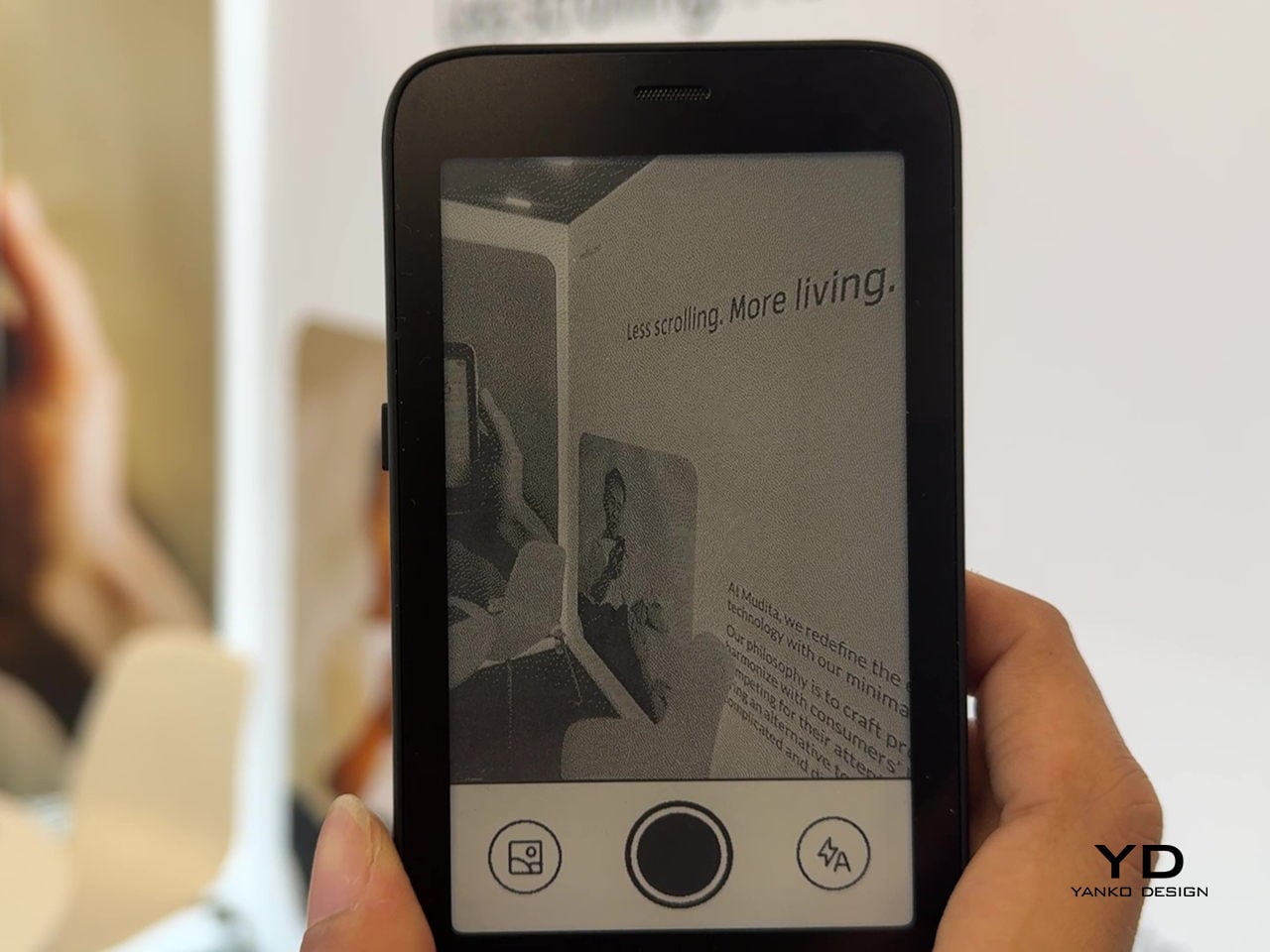
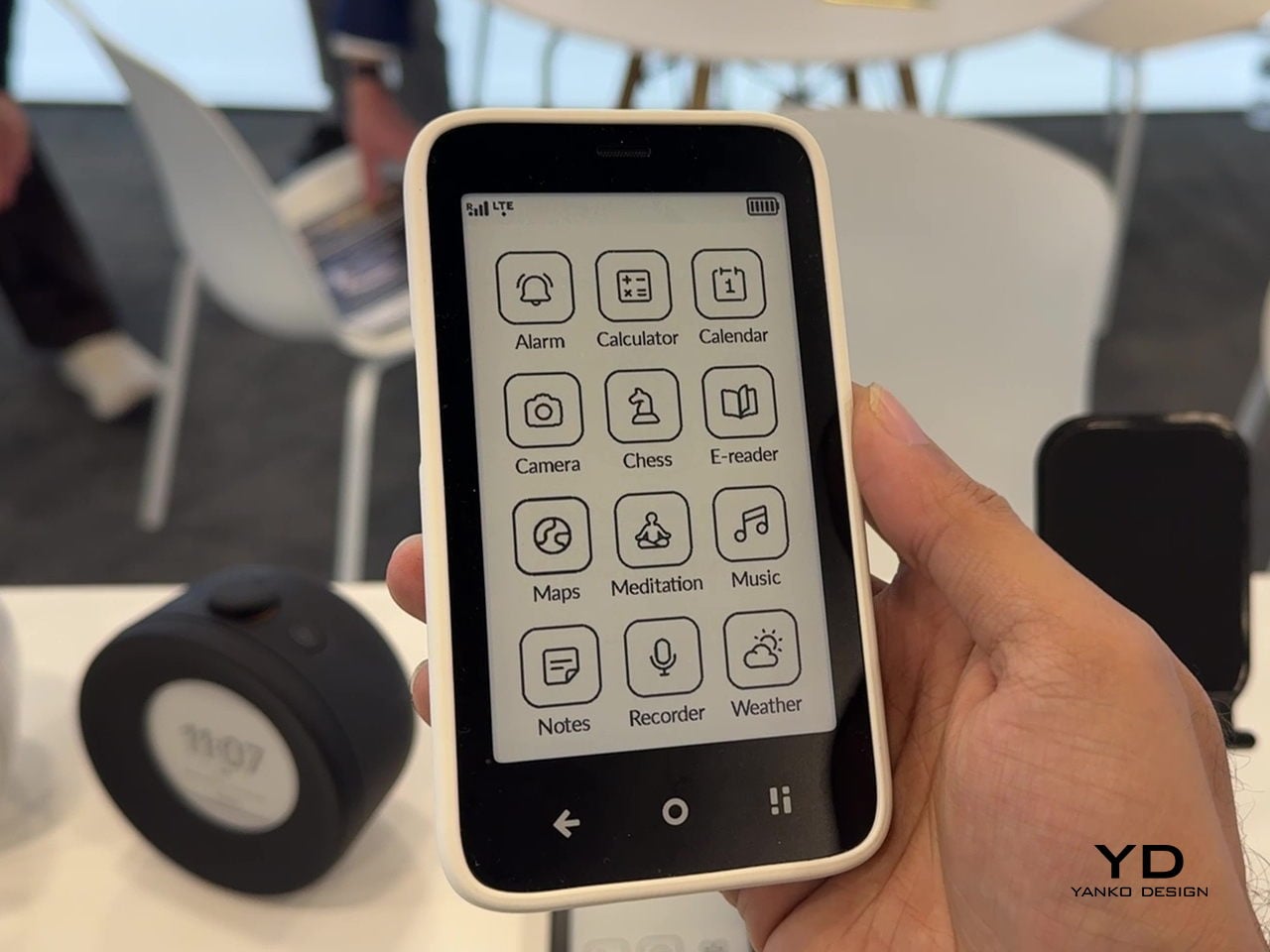
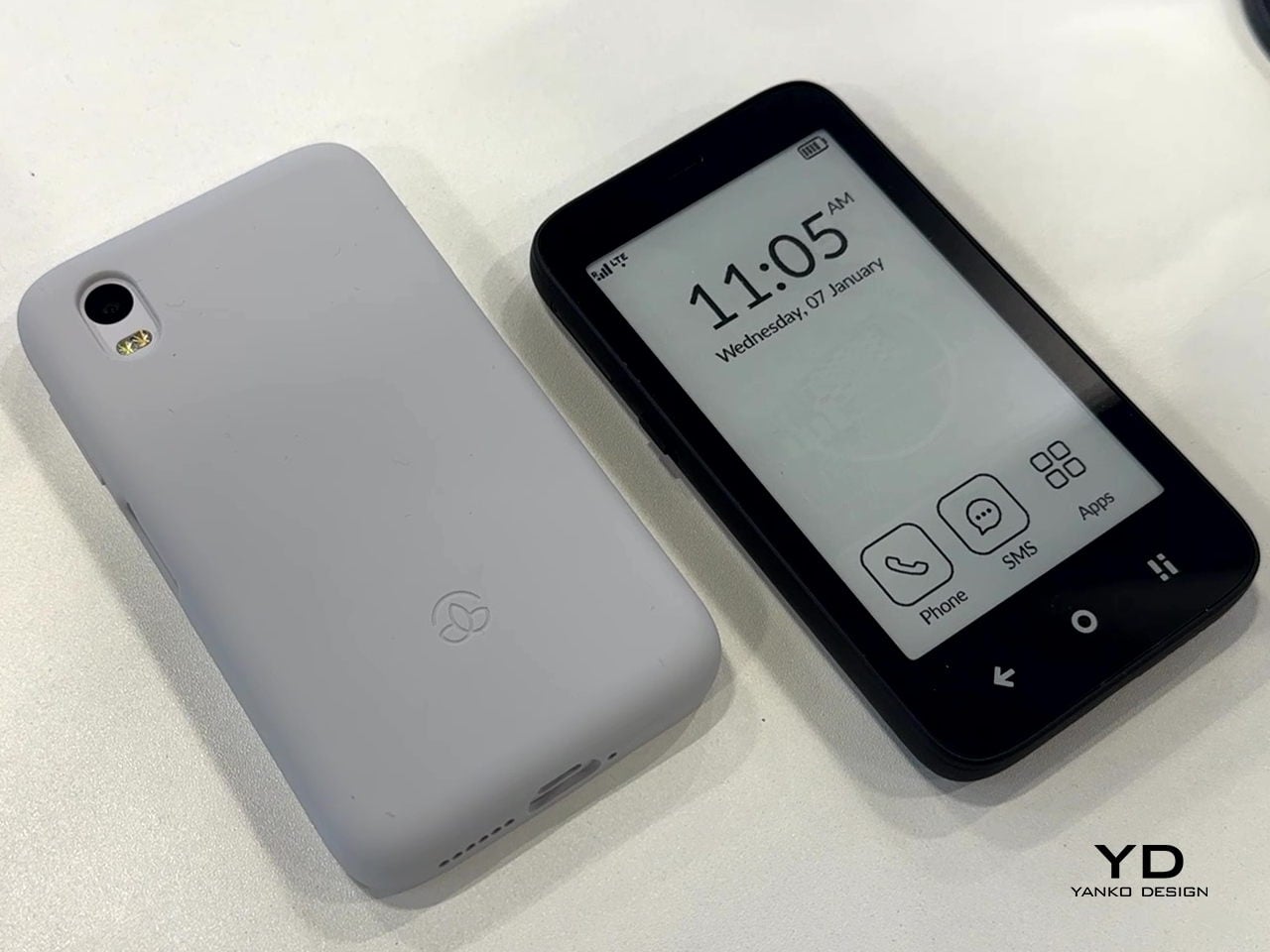
Kompakt looks more like a small e-reader than a slab of glass, built around a 4.3-inch E Ink screen that is paper-like, glare-free, and easy on the eyes. It runs MuditaOS K, a de-Googled operating system based on AOSP, with only essential tools on board: calls, SMS, offline maps, calendar, up-to-date weather forecasts, music, notes, a meditation timer, and an e-reader. There is no app store by design, keeping the interface focused on what you planned to do instead of what a feed wants to show you next. But if you do need some very specific functionality, your favorite apps are just a sideload away.
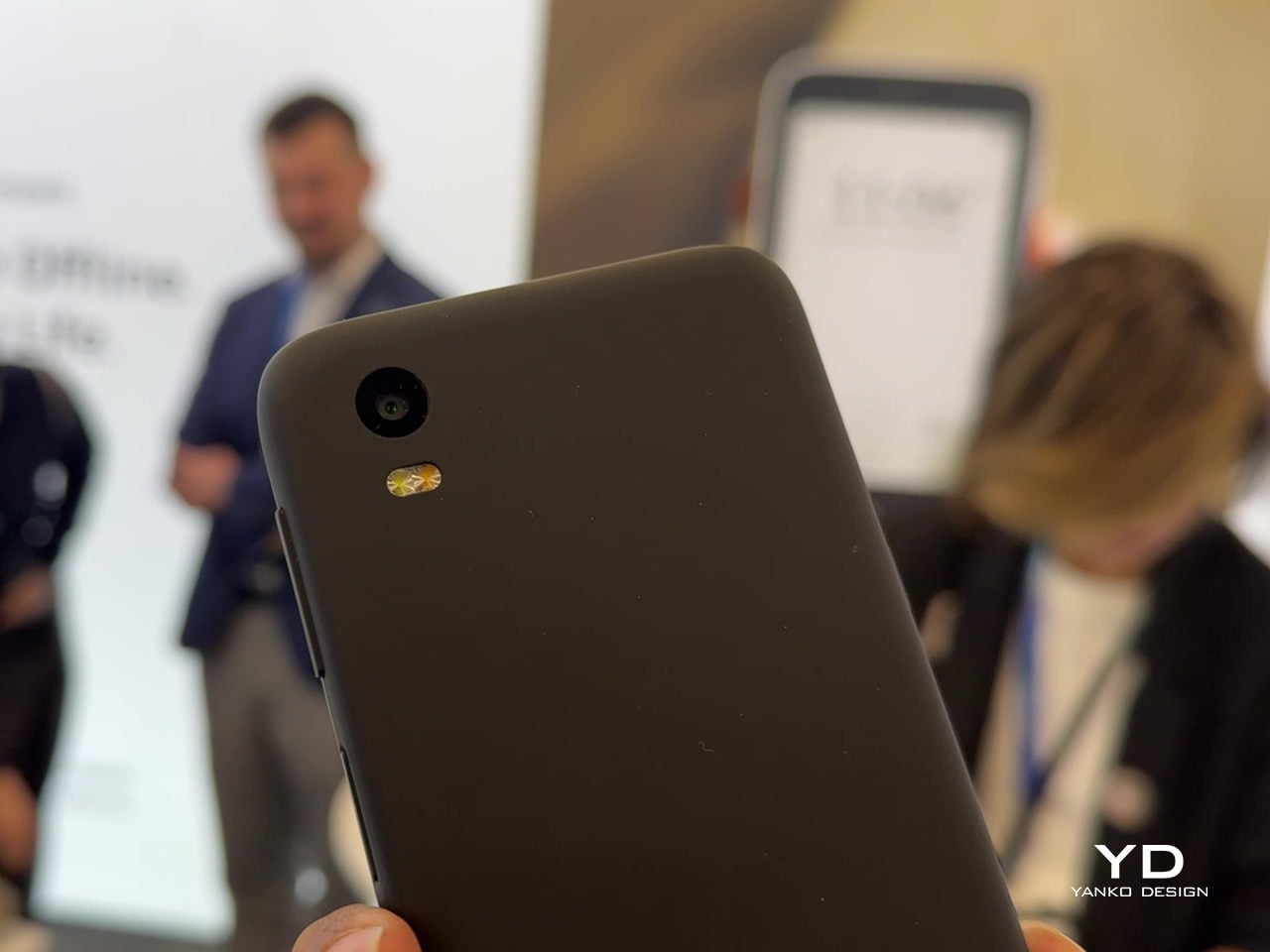
Offline+ Mode physically disconnects the GSM modem and microphones, while also disabling Wi-Fi, Bluetooth, and the camera, turning Kompakt into a sealed, offline device when needed. That hardware-level privacy goes beyond airplane mode, which matters when you want verifiable disconnection. Long battery life, up to six days on a charge, and both USB-C and wireless charging mean it can live on a desk or in a bag without constant topping up.
A dedicated Mudita Center desktop app handles contact syncing, music, and file transfers from a laptop, keeping the phone itself simple and uncluttered, its user experience reflecting its mission. As a primary phone for someone stepping away from feeds, it keeps communication and navigation intact while stripping away most reasons to pick it up mindlessly. As a secondary focus phone for anyone who wants to disconnect from the hustle of a smartphone, it can handle calls and texts without the usual app notifications to help nurture balance and peace of mind.
Mudita Harmony 2: A Bedroom Without a Smartphone Glow
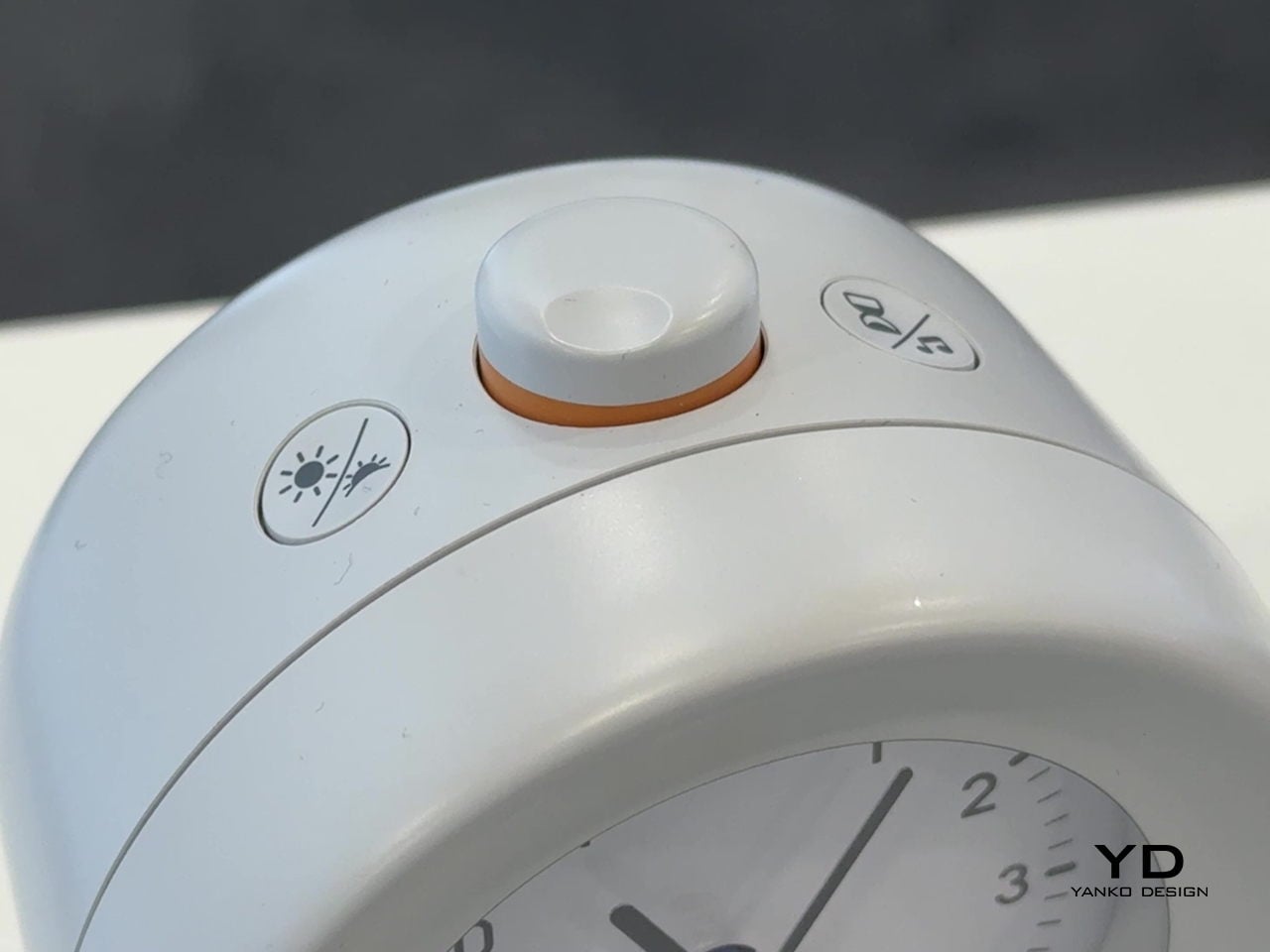
Harmony 2 is an E Ink alarm clock with three physical knobs on top for light, volume, and alarm settings, designed to live where a phone usually sits on a nightstand. The E Ink display is easy to read and uses an adjustable warm backlight that minimizes blue light, so you can check the time at night without a blast of white light or the temptation to swipe through notifications that make it harder to fall back asleep.
The wake-up experience is built around a gradual, ascending alarm that starts softly and increases in volume, paired with a pre-wake-up light that mimics a sunrise by slowly brightening five to fifteen minutes before the main alarm. Harmony 2 offers seventeen melodies, including real nature sounds, and lets you enhance alarms with light or upload custom audio via the Mudita Center app. The goal is to make waking feel less like an interruption and more like a natural transition.
Extra features support a phone-free bedtime, Relaxation mode with customizable sounds and white noise, a Bedtime Reminder to nudge you into a consistent routine, a Meditation Timer with gong sounds, and a Power Nap Mode. With over forty days of battery life and USB-C charging, Harmony 2 can stay on a nightstand without becoming another device you plug in every night, reinforcing the idea that the bedroom can be a low-tech space.
Mudita Bell 2: Analog Mornings with a Few Smart Tricks
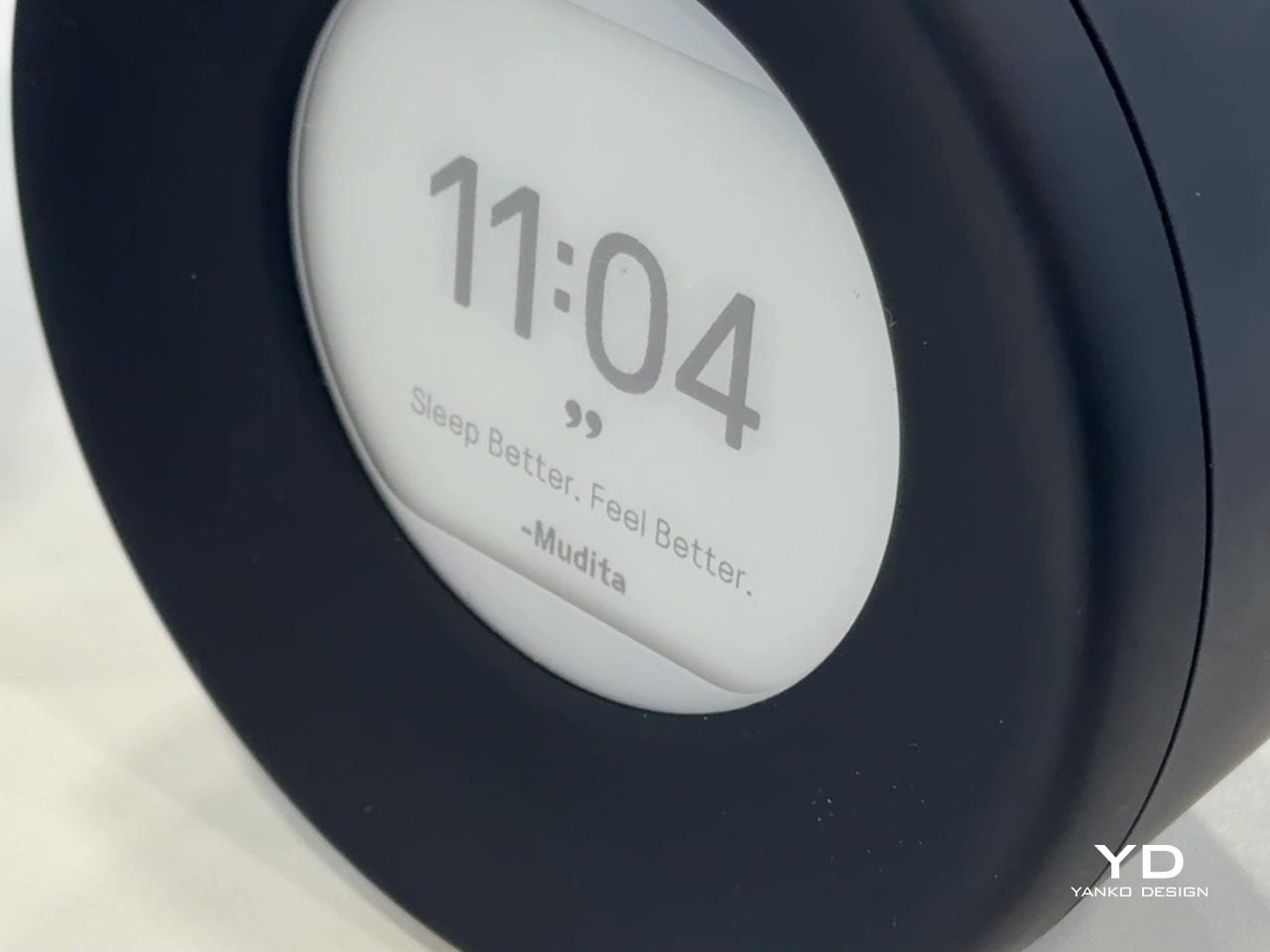
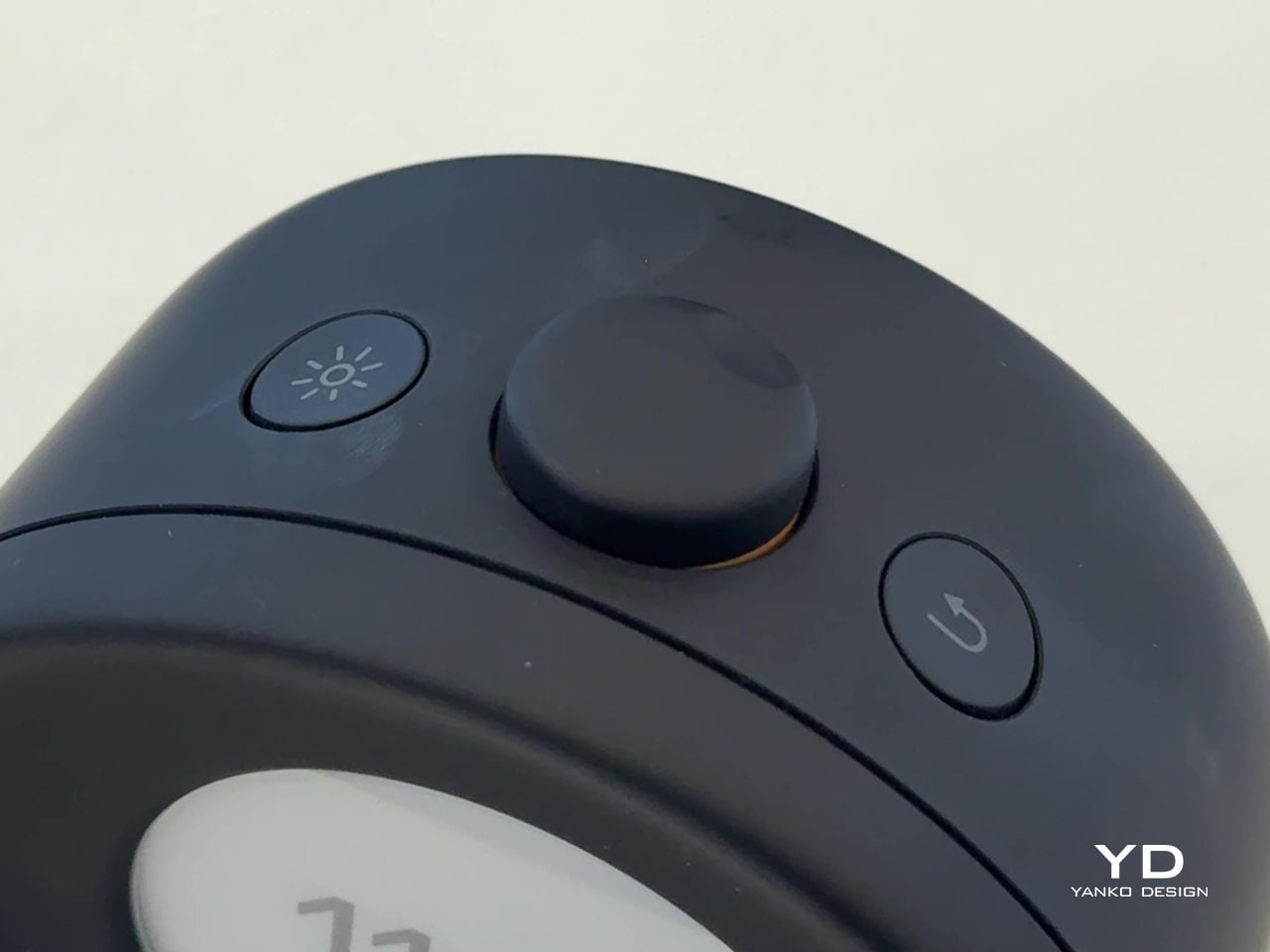
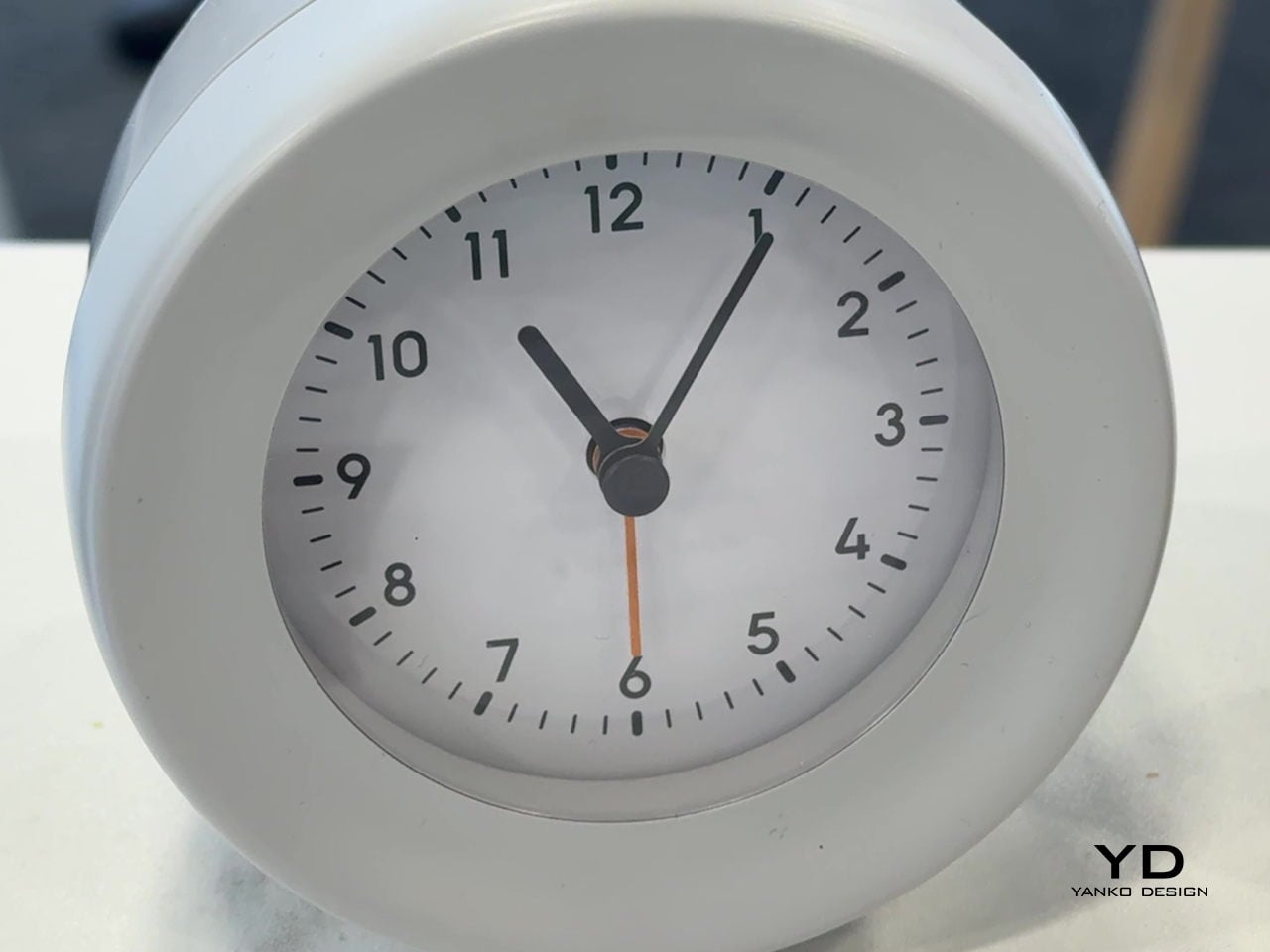
Bell 2 is the more analog-leaning sibling, an alarm clock with a clear, minimalist dial and an internal quartz mechanism, but also an E Ink display and a light-enhanced gradual alarm. It offers nine gentle melodies and a pure-tone alarm that starts quietly and grows to a set volume, plus a warm wake-up light that can be activated before the alarm to mimic sunrise, easing you out of sleep without a harsh jolt.
A built-in meditation timer starts and ends sessions with a gong, and the deliberate absence of Wi-Fi or Bluetooth means Bell 2 does not compete for attention or add to the ambient connectivity load in the room. It runs on a 2,600 mAh rechargeable battery that can last up to six months on a full charge, with USB-C for the rare times it needs topping up. It is designed to be set and then mostly forgotten.
Bell 2 has been awarded a Platinum Calm Technology Certification, recognizing products that respect attention and promote well-being. Available in charcoal black and pebble gray, it is meant to blend into different interiors while still feeling like a considered object. In a home shaped by Kompakt and Harmony 2, Bell 2 completes the picture: a simple, focused object that reflects Mudita’s belief that technology can be present without being intrusive.
Mudita at CES 2026: Technology for Mindful Living
Together, Kompakt, Harmony 2, and Bell 2 create intentional, screen-free moments throughout the day; focused time on the go with Kompakt, a calmer evening and wake-up routine with Harmony 2, and a simple, analog-leaning start to the morning with Bell 2. None of these is meant to replace a smartphone entirely. Instead, they offer a considered alternative for the moments when a screen adds little value. This is an approach that stands out at CES, where innovation is often defined by more features, rather than more thoughtful use.
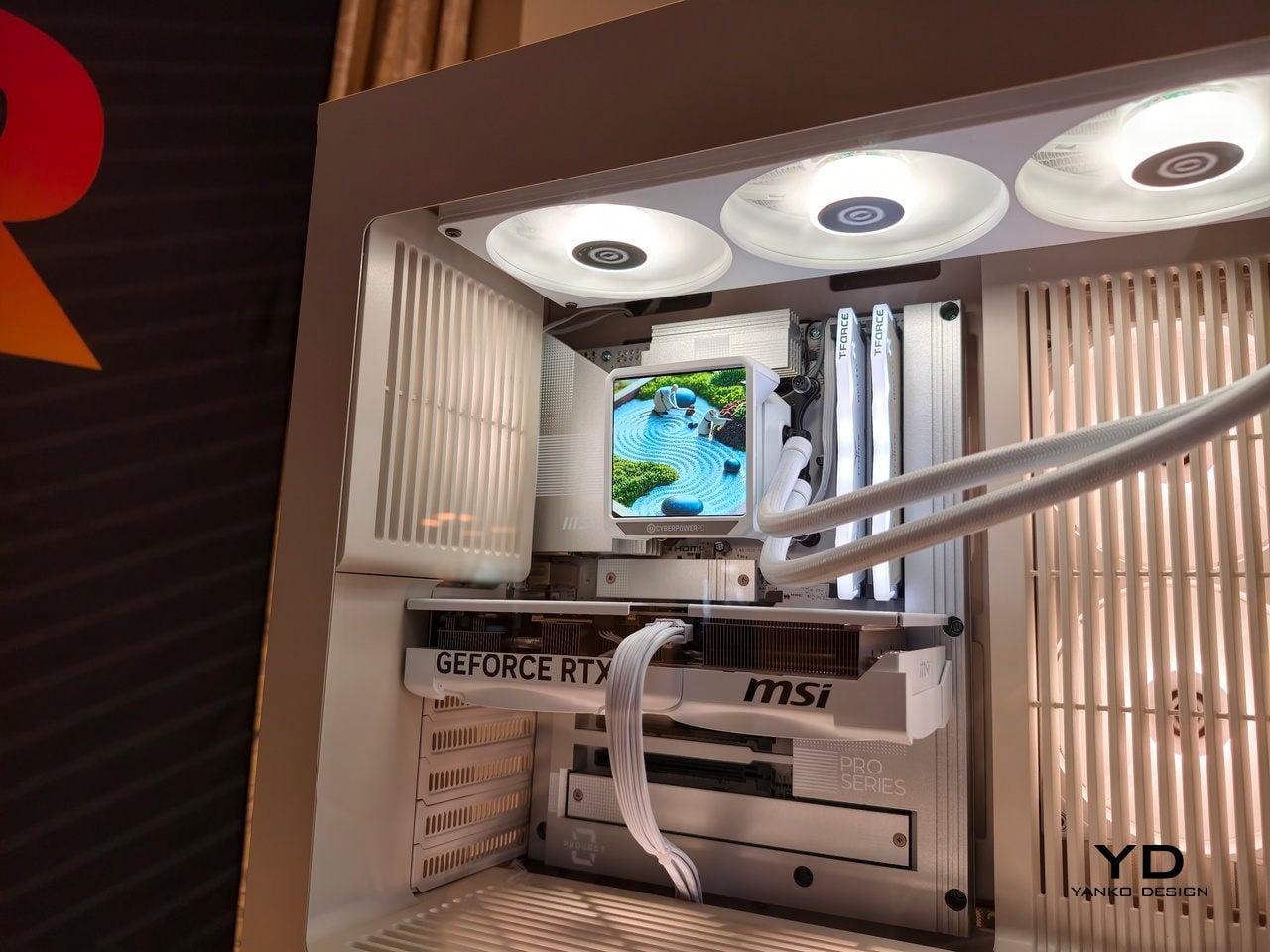
Most high-end PC towers still shout for attention with exposed fans, RGB strips, and visible screws. That clashes with calmer, more considered interiors, especially when a tower lives on a desk next to a monitor and chair that look like real furniture. The MA-01 comes from the idea that performance hardware can grow up without losing its edge, treating a gaming rig as something you want to see every day instead of something you tolerate.
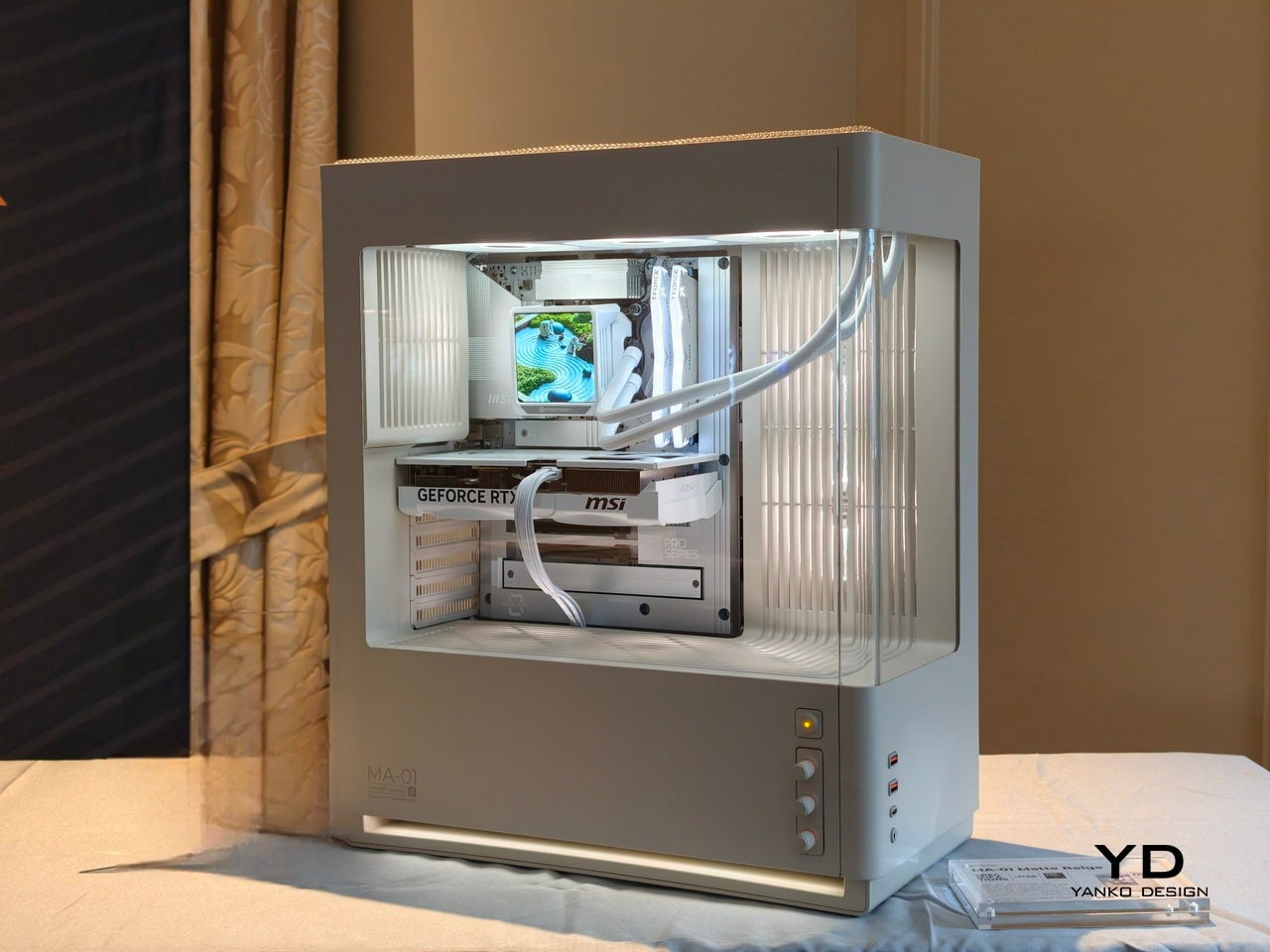
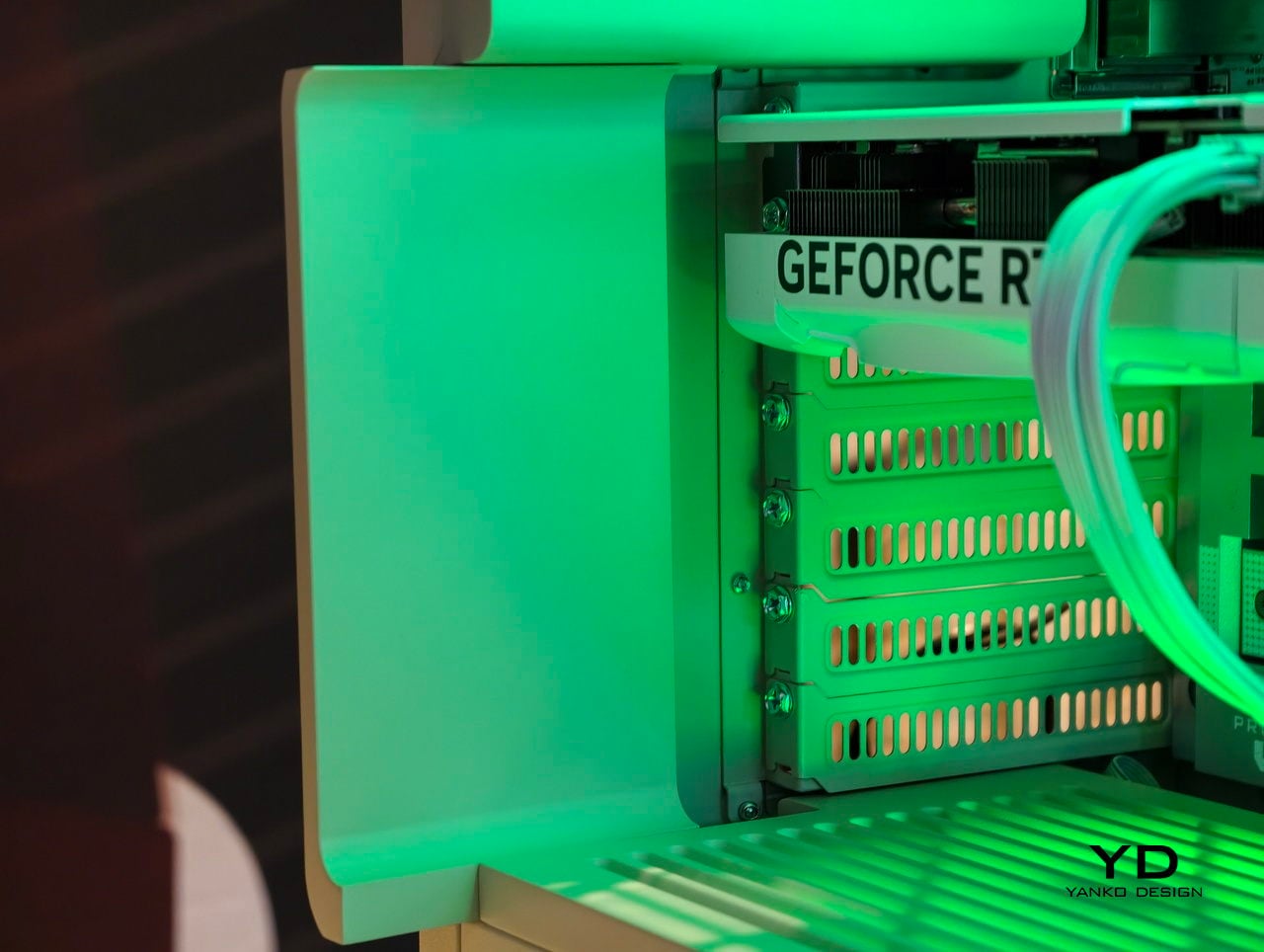
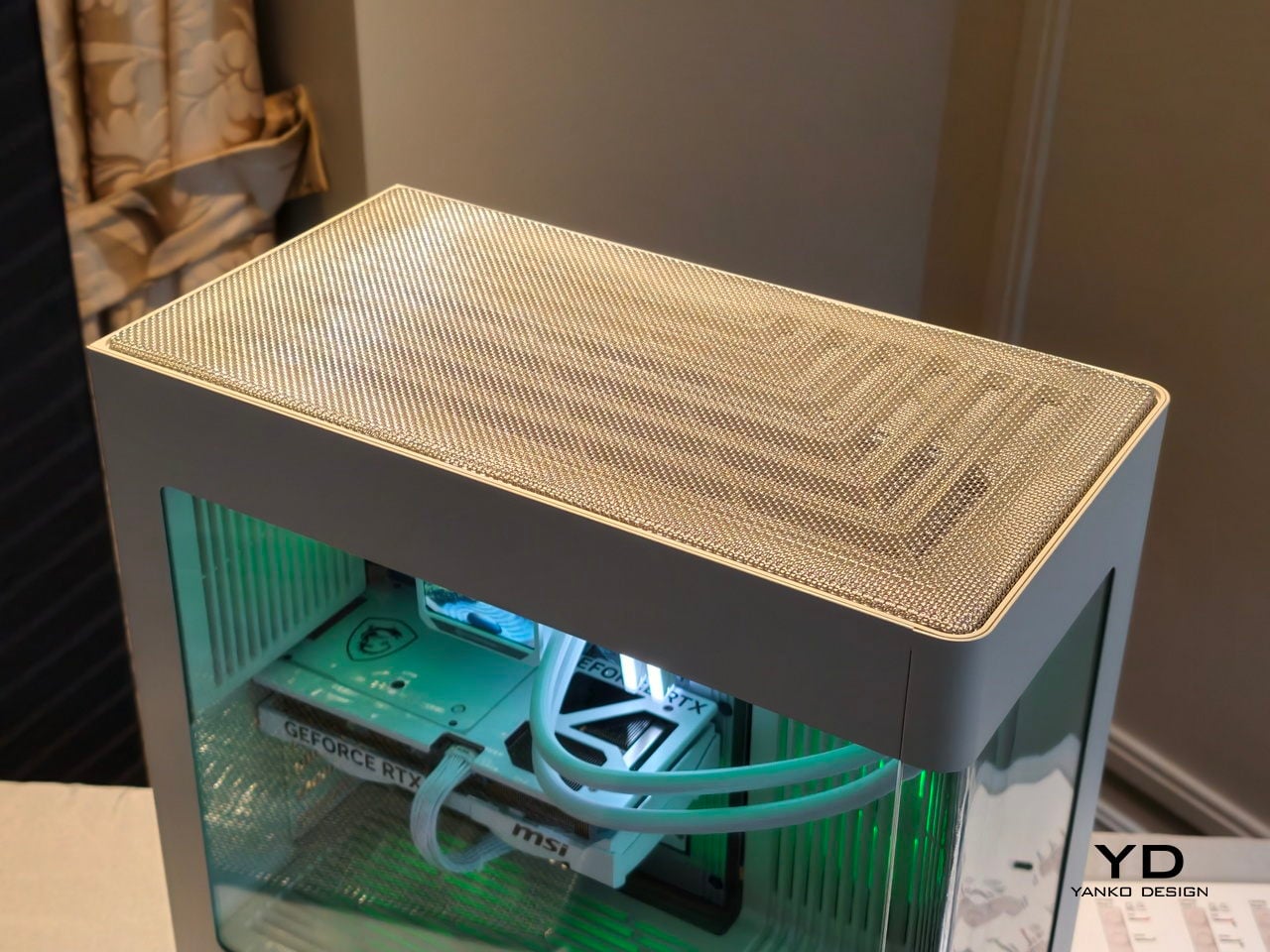
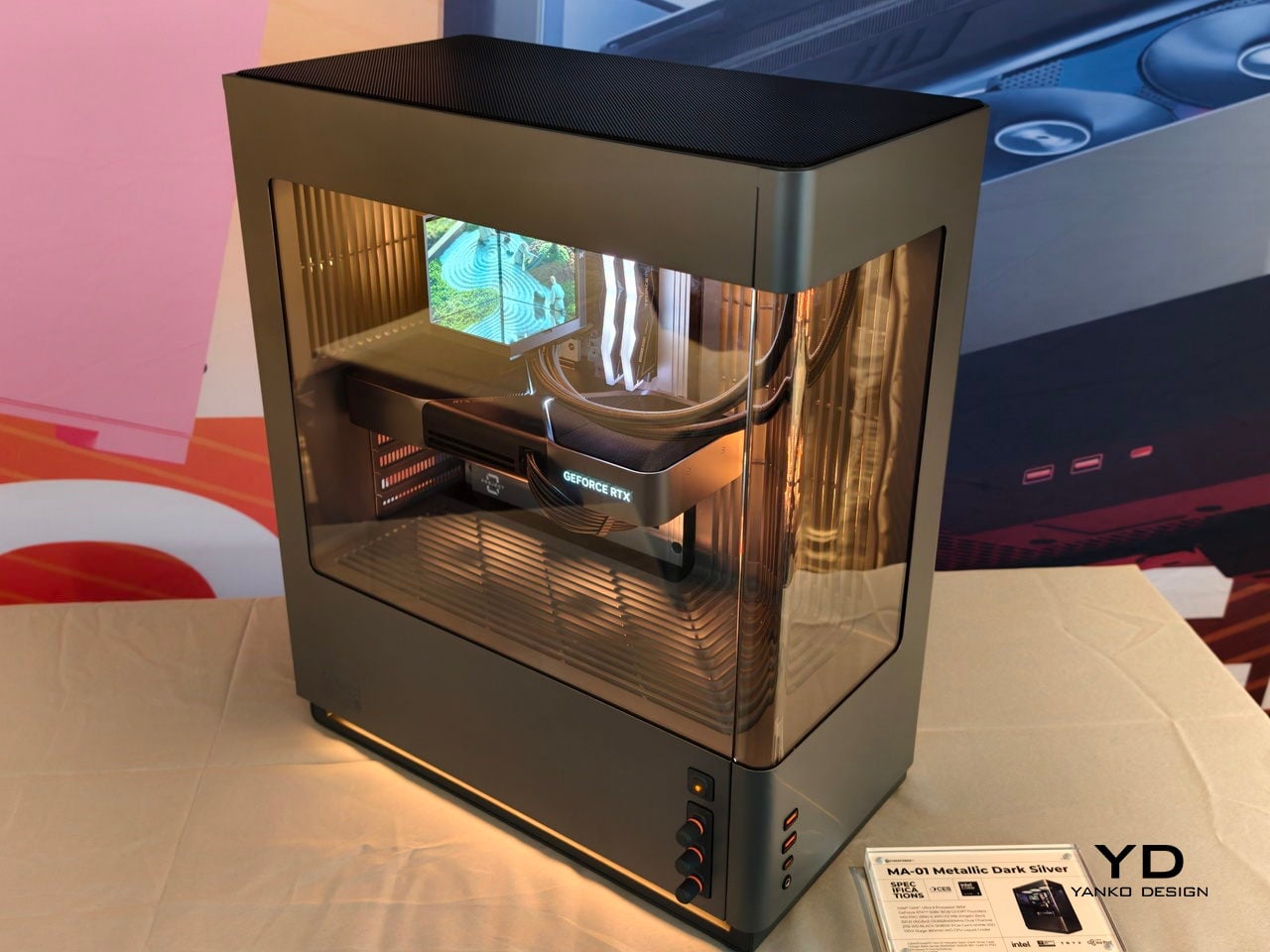
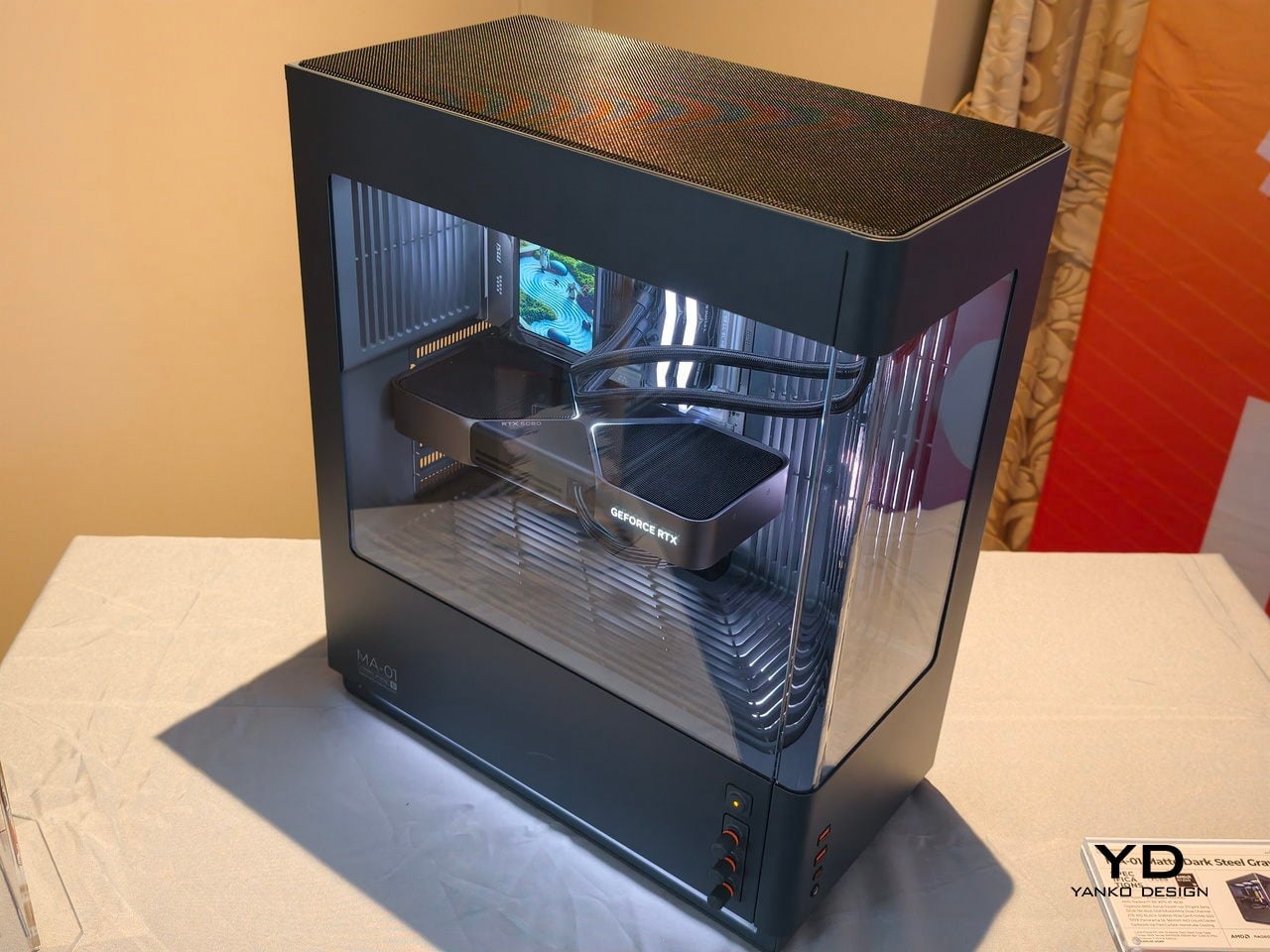
The MA-01 Modern Analog Series chassis is CyberPowerPC’s attempt to design a case around the beauty of what you do not see. It hides the usual clutter, guides air and light through sculpted vents and woven mesh, and frames only the GPU, CPU cooler, and memory. It is a mid-tower that wants to disappear into the room until you look closely, at which point the details start to reveal themselves, analog knobs, corner-less glass, and a top surface that looks more like furniture than electronics.
Designer: CyberPowerPC
Hiding Complexity, Framing Performance
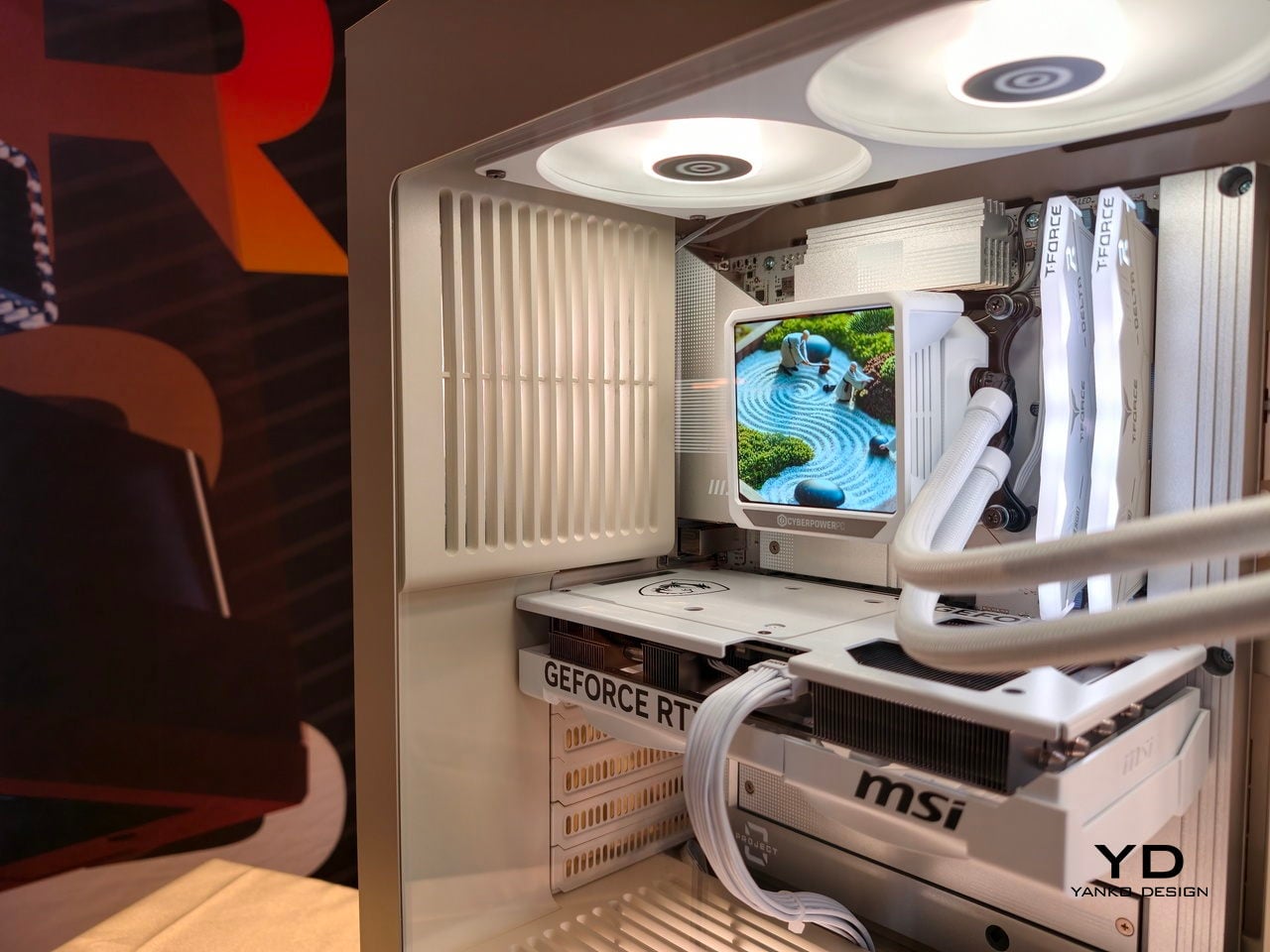
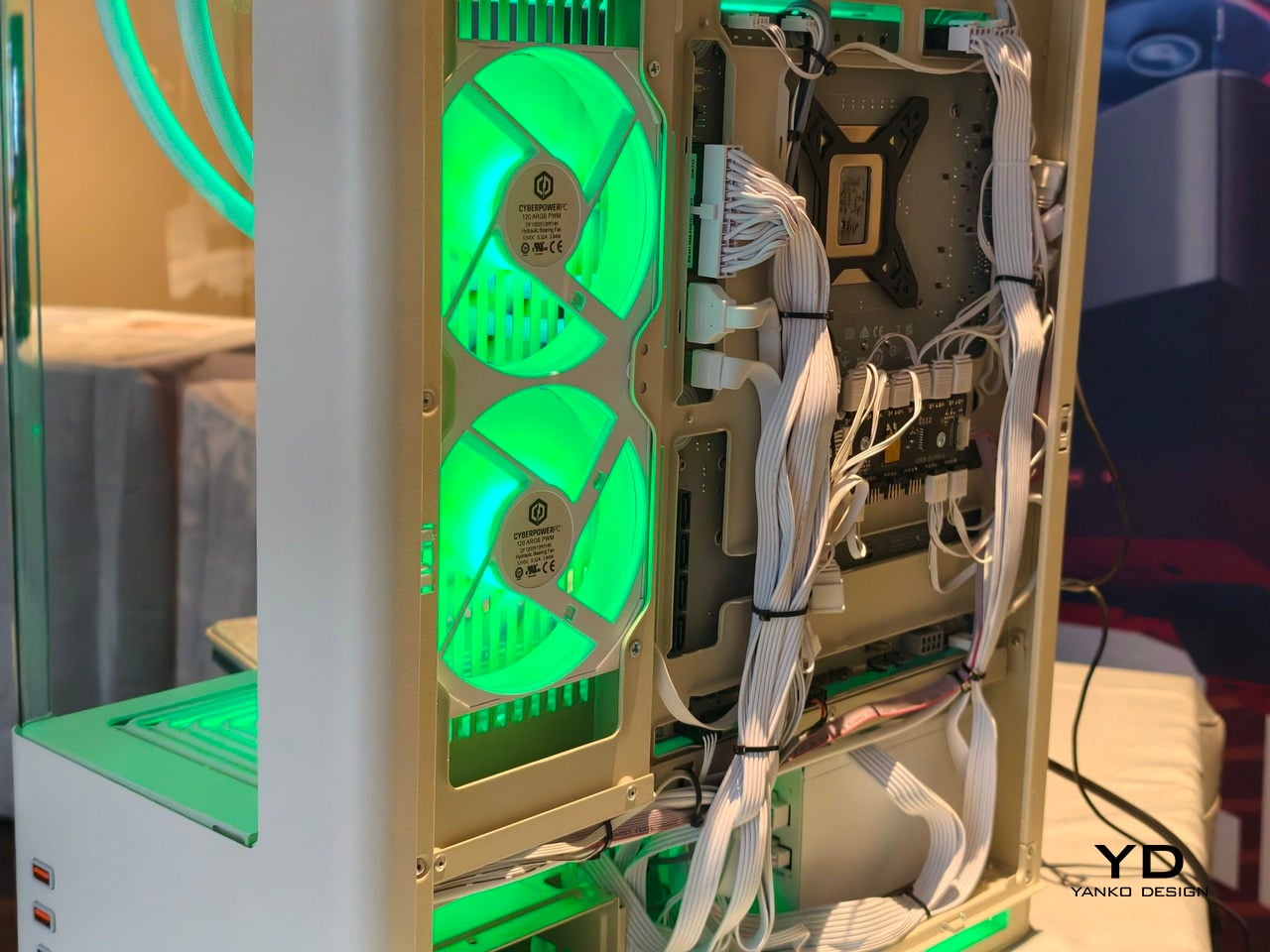
The internal architecture conceals fans, radiators, and cabling behind multi-piece intake covers and internal shrouds, so the interior reads as a clean composition rather than a tangle of parts. The focus shifts to the GPU, cooler, and RAM, which are treated almost like objects on a stage, with consistent geometry and minimal visible mounting points. The chassis does not feel like a kit waiting to be assembled. Rather, it feels like a display case for the hardware that actually matters.
The dual curved glass panels meet without a corner pillar, creating an open-corner view that lets you see the main components from multiple angles without a vertical bar cutting through the scene. Hidden PCI bracket covers and minimized screw heads support the same idea, making the case feel more like a finished appliance than a bin of screws and panels. When you turn the case, the components stay visible and framed, not obscured by structural elements or visual clutter.
Airflow and Acoustics as Design Tools
The woven steel mesh top is one of the defining features, a surface where varying porosity and depth help break up high-frequency resonance that traditional punched vents can amplify. CyberPowerPC claims a 20-30% reduction in exhaust noise, which matters when the tower sits at ear level on a desk. The goal is to make power quieter rather than louder, so fans can spin up during intense sessions without filling the room with the usual high-pitched whine.
A full-length internal vent cover runs from the right-side intake across the bottom and up to the rear exhaust, with angled vents that redirect intake air directly onto heat-critical components. That guided airflow reduces wasted intake air and helps radiators and GPU coolers work more efficiently, which in practice means lower fan speeds and a calmer acoustic profile. It is not just about moving air, it is about moving it deliberately so the case stays quieter while still keeping temperatures in check.
Analog Controls and Tactile I/O
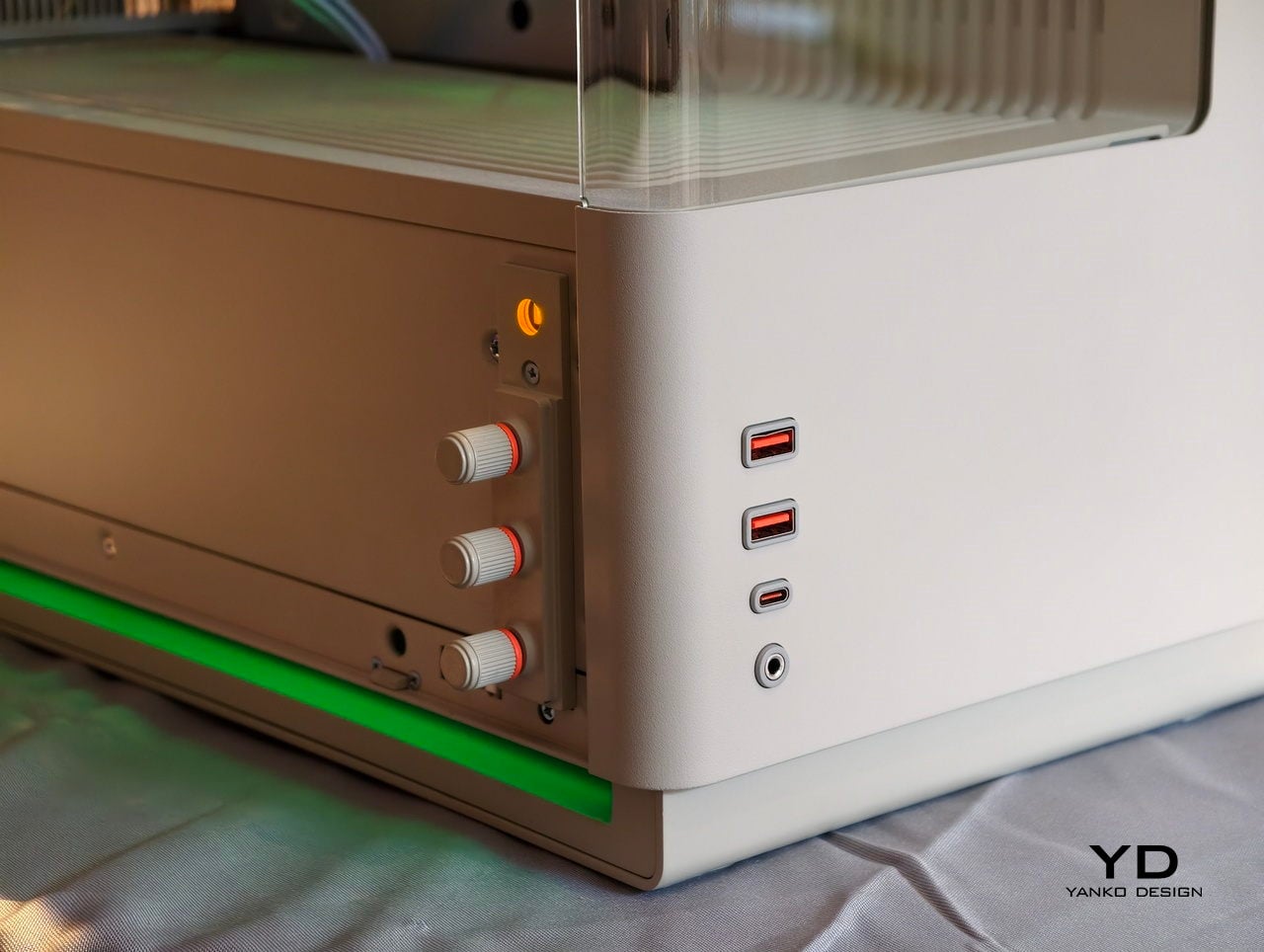
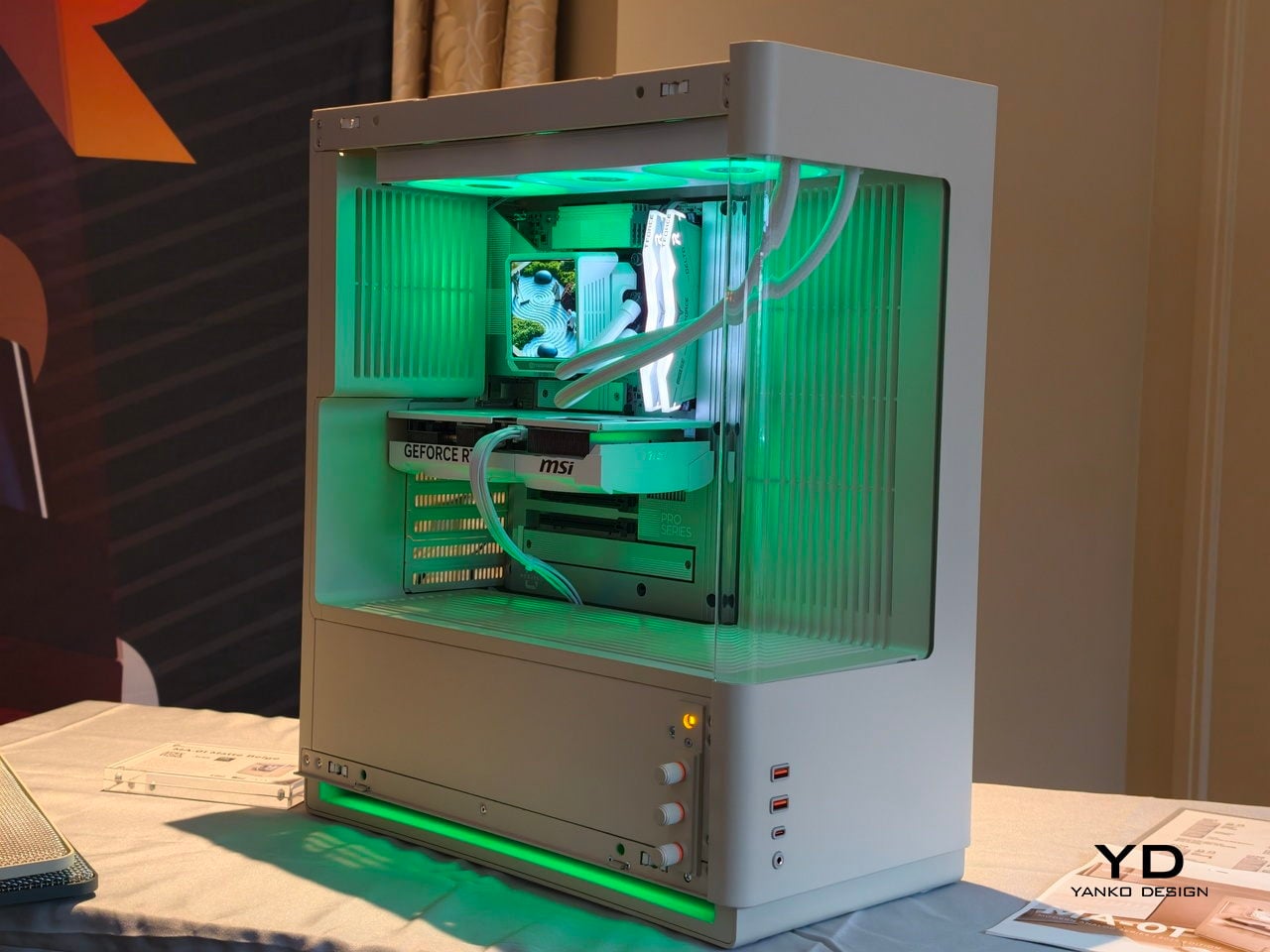
Three analog RGB knobs sit on the front panel, mapping to red, green, and blue in one mode and to color, brightness, and effect mode in another. You can sweep through the full 16.7-million-color spectrum and adjust effects without opening software, which appeals to builders who prefer hardware-level control and a more analog, tactile interaction. Pressing each knob activates secondary functions, so the same three controls handle color jumping, brightness, and lighting modes without menus or drivers.
The precision-molded I/O shrouds around the USB-A, USB-C, and audio ports are designed to self-center cables, absorb side impacts, and reduce insertion wear. That small detail makes daily use feel less fragile, especially when the case is on a desk where ports are used often. The framing of the ports contributes to the overall architectural, finished look, turning functional elements into part of the visual language rather than afterthoughts drilled into a panel.
Finishes, Compatibility, and Longevity
The three finishes each serve different desk environments. The warm matte off-white nods to classic beige machines while feeling contemporary, suitable for creative studios that lean toward lighter, Scandinavian palettes. The dark steel gray is a cooler alternative to black with a subtle hint of blue, fitting more traditional setups. The metallic dark silver is a more industrial counterpoint to familiar aluminum aesthetics, bridging productivity and gaming without leaning too hard into either category.
On the practical side, the MA-01 supports ATX and micro-ATX boards, including BTF-standard layouts for cleaner cable routing, and offers space for long GPUs, tall air coolers, and 360 mm radiators at the top and motherboard side. Hidden fasteners and seven expansion slots signal that the case is built for multiple hardware generations, not just a single build cycle. The compatibility range means it can handle everything from a mid-range productivity build to a high-end gaming rig with a large GPU and custom cooling loop.
CyberPowerPC at CES 2026: The Beauty of What You Don’t See
The MA-01 is a sign that gaming-class hardware can finally behave like a mature object in the room, not just a spectacle. It still moves a lot of air and lights up in any color you want, but it does so through woven mesh, sculpted vents, and analog controls that feel considered and deliberate. For people who want a powerful tower that can live on a desk without shouting, that shift in attitude is the real headline, and it suggests that the future of PC hardware might look less like a science experiment and more like something you would actually choose to keep visible in a living room or studio.
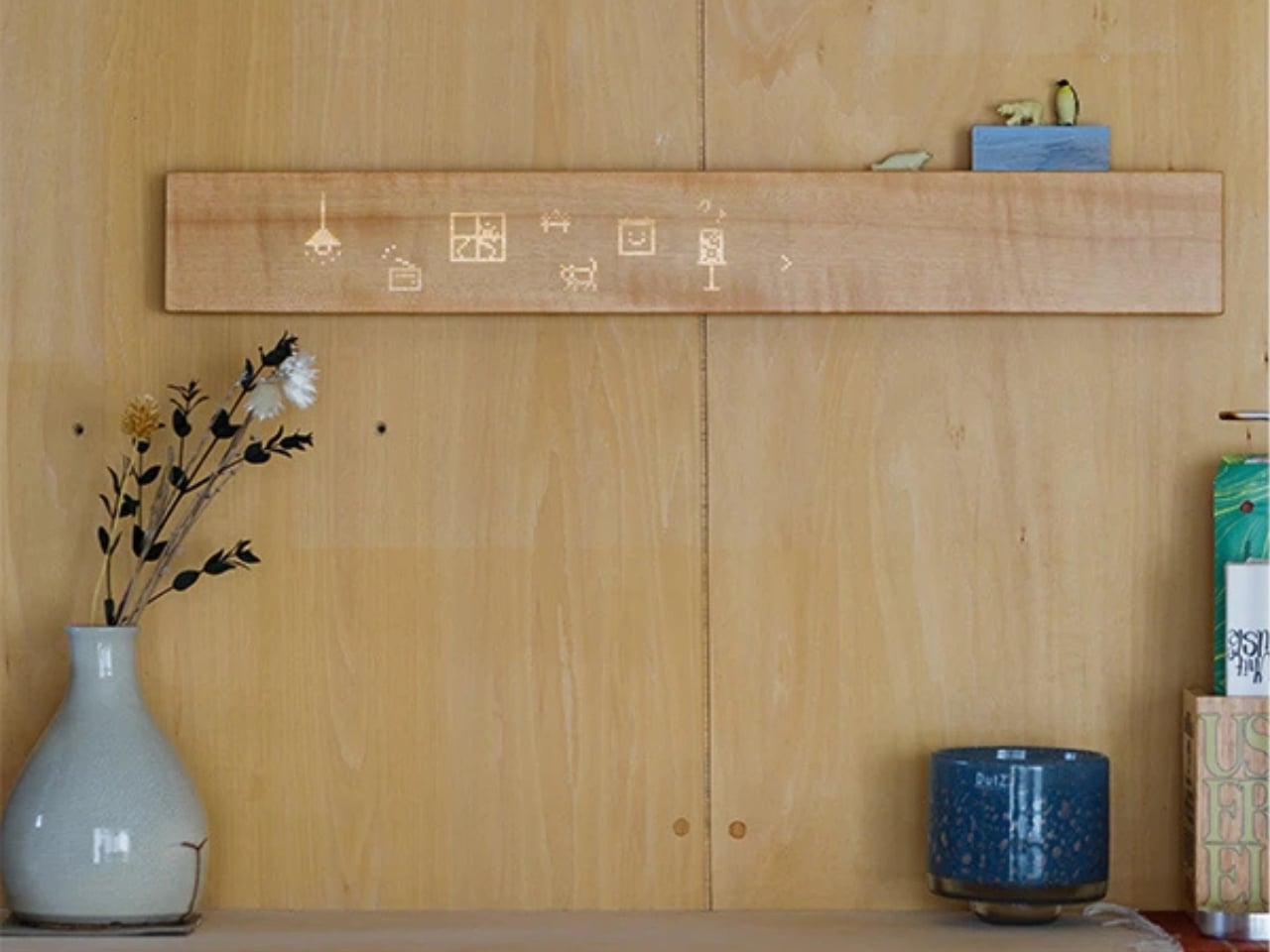
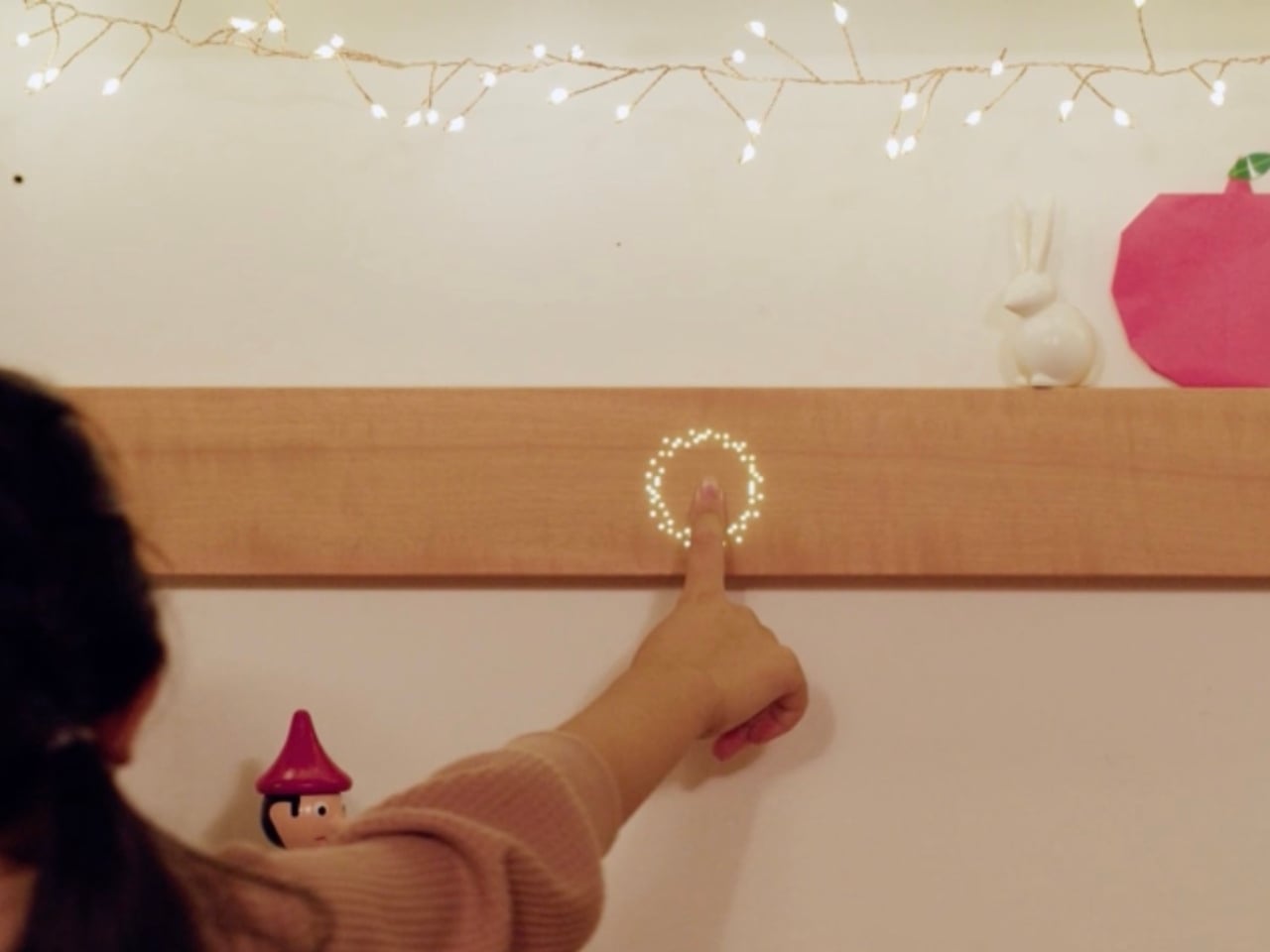
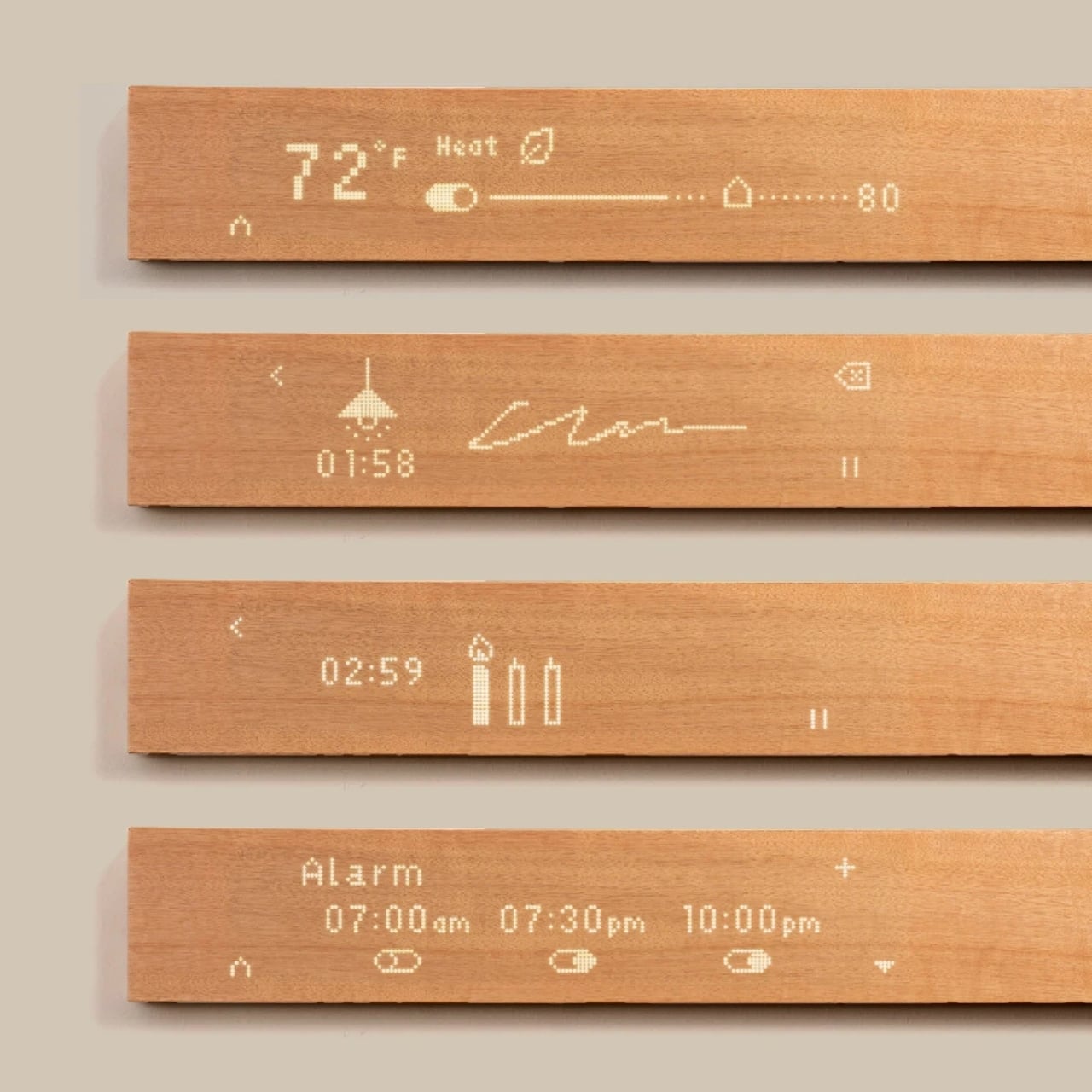
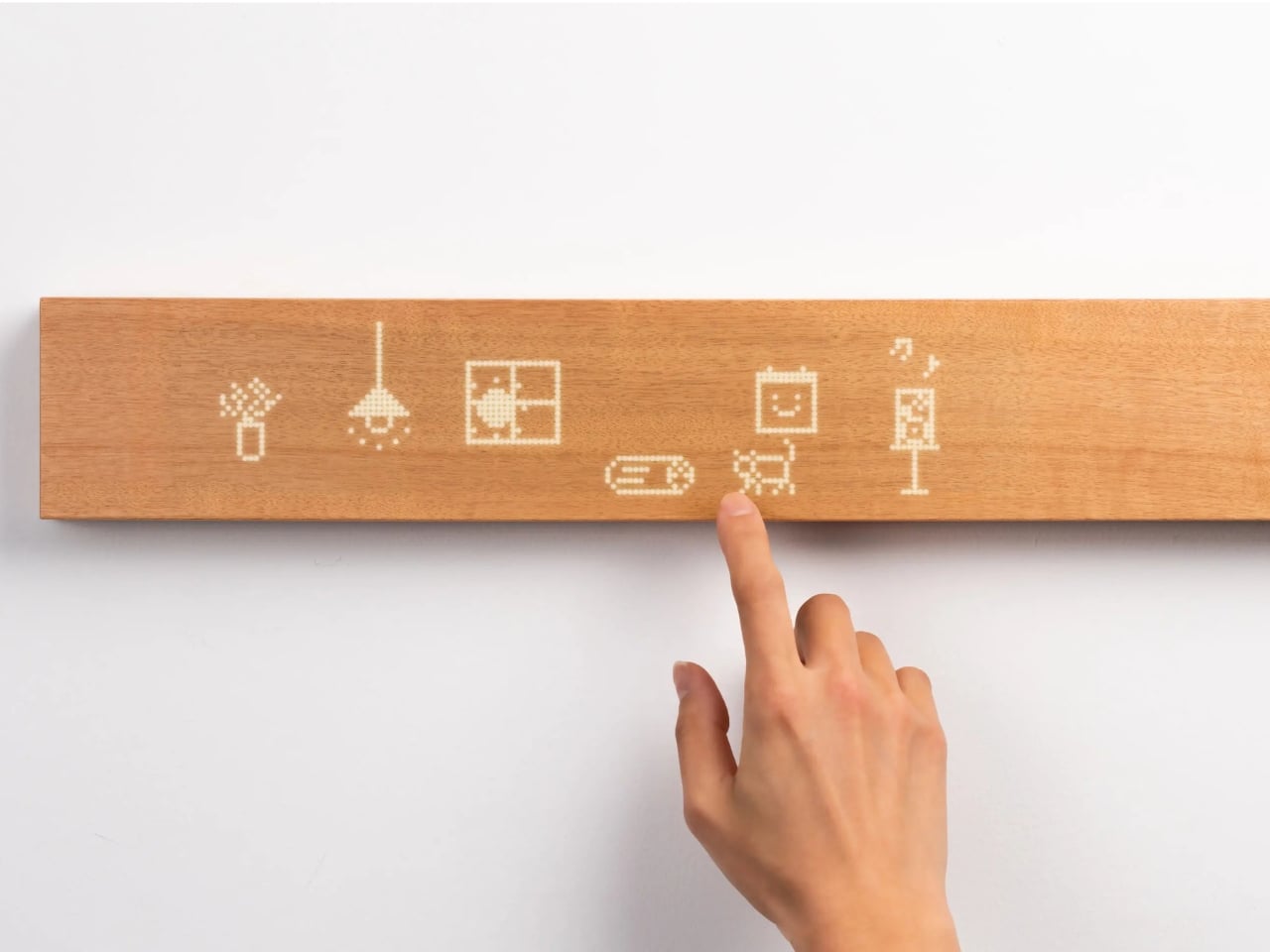
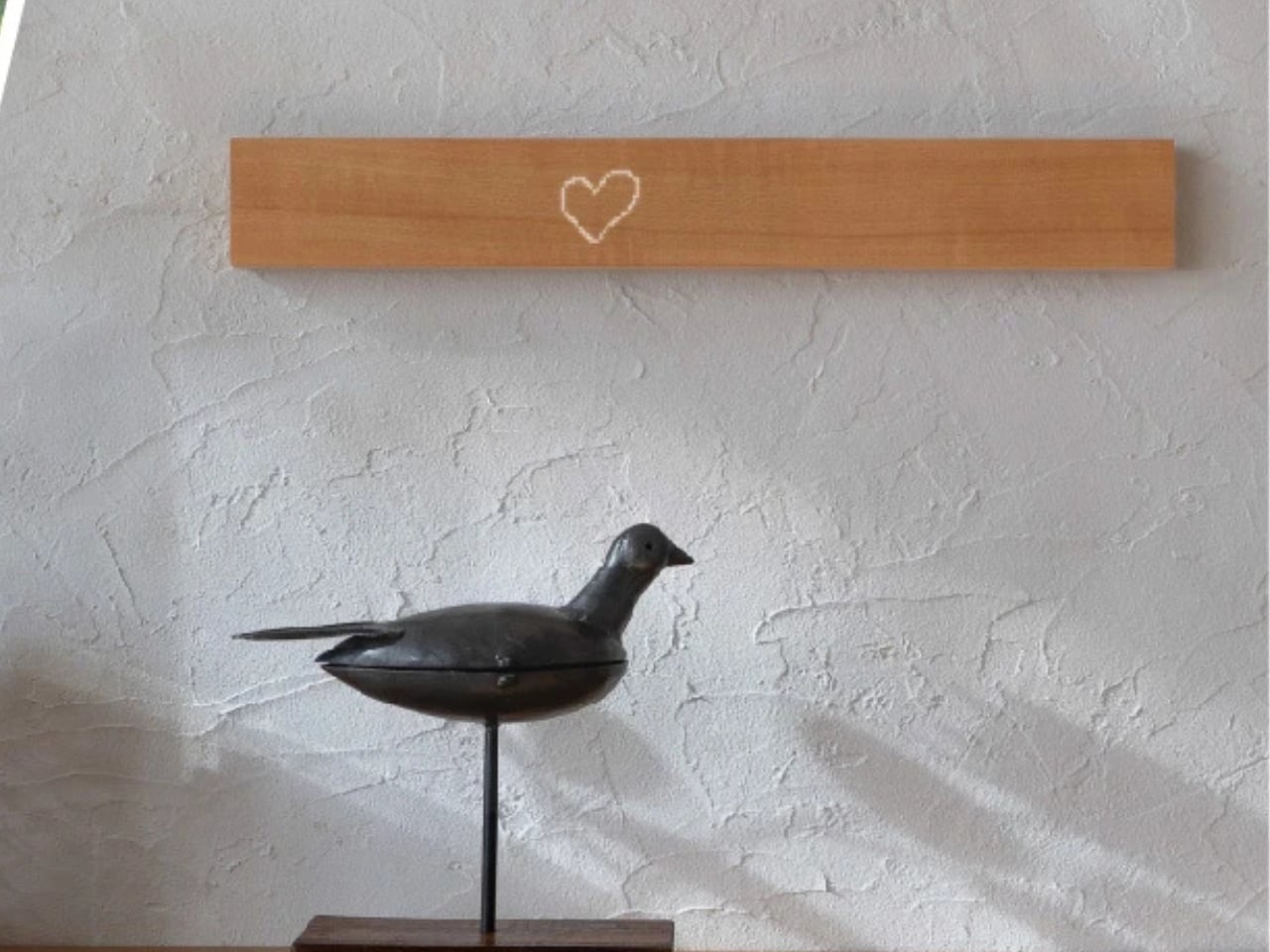
Picture this: you walk into someone’s house and notice what looks like a polished piece of wood mounted on the wall. You’d probably think it’s some minimalist decor choice, maybe a floating shelf that forgot its purpose. But then your host casually swipes their finger across it, and suddenly soft dots of light appear beneath the wood grain, displaying the current temperature and adjusting the room’s lighting. Welcome to the world of Mui Board Gen 2, where smart home technology disguises itself as furniture.
Designed by Mui Lab, a Japanese company based in Kyoto, the Mui Board Gen 2 is what happens when someone asks, “What if we made tech that actually knows when to shut up?” Lately, it seems that every surface wants to be a glowing rectangle screaming for attention but this device takes the opposite approach. It’s a smart home controller made from actual wood (not wood-textured plastic, but real maple or cherry) that only shows information when you need it. The rest of the time, it’s just there, blending into your home like a tasteful piece of trim.
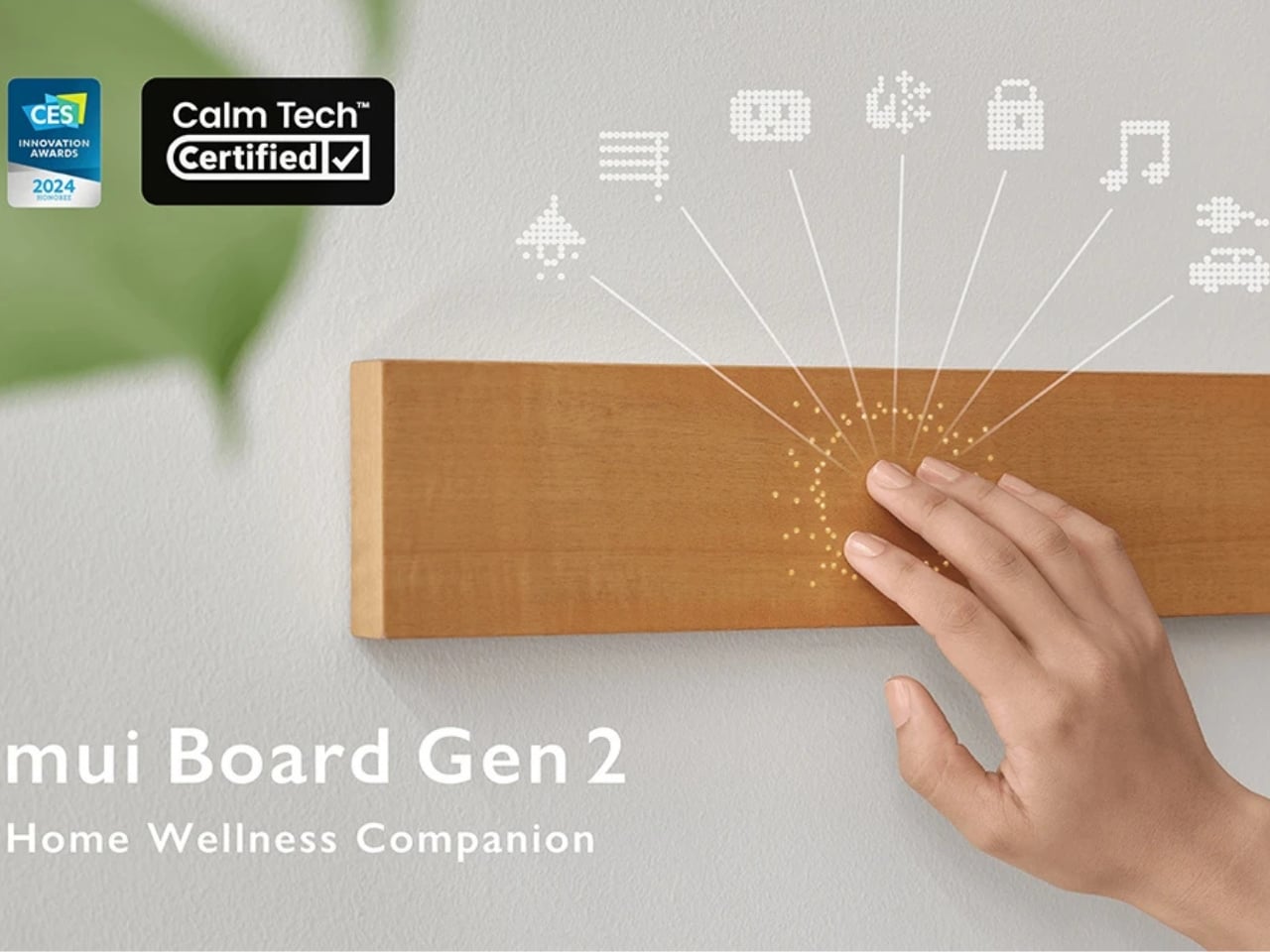
The concept behind Mui Board is rooted in something called “Calm Technology,” a philosophy that says the best tech is the kind that disappears. The device is even certified by the Calm Tech Institute, which is either very official or the most zen certification body you’ve ever heard of. The Japanese term “mui” itself means being in harmony with nature, and this controller takes that idea seriously by using natural materials and a low-key interface that won’t turn your living room into Mission Control.
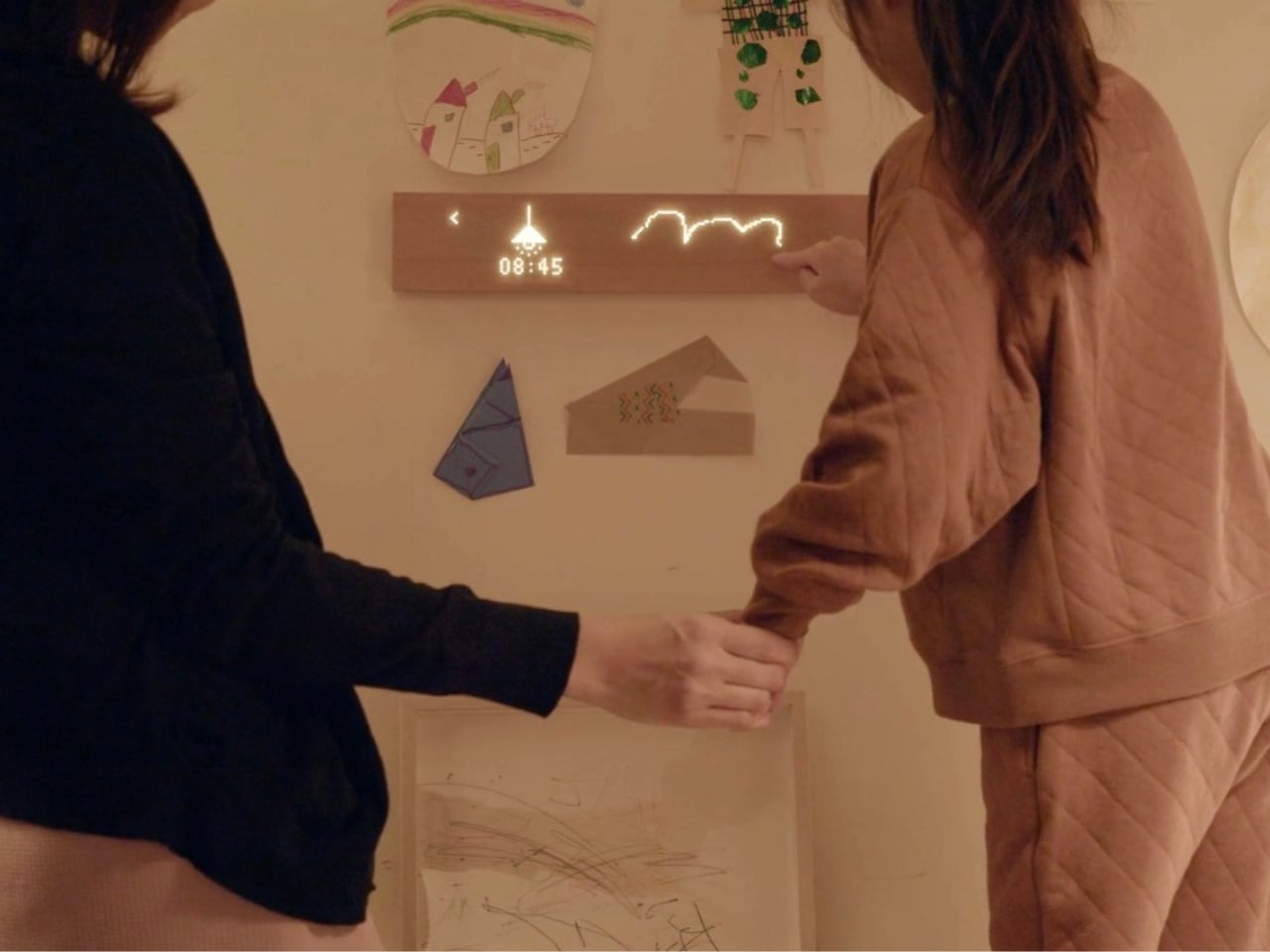
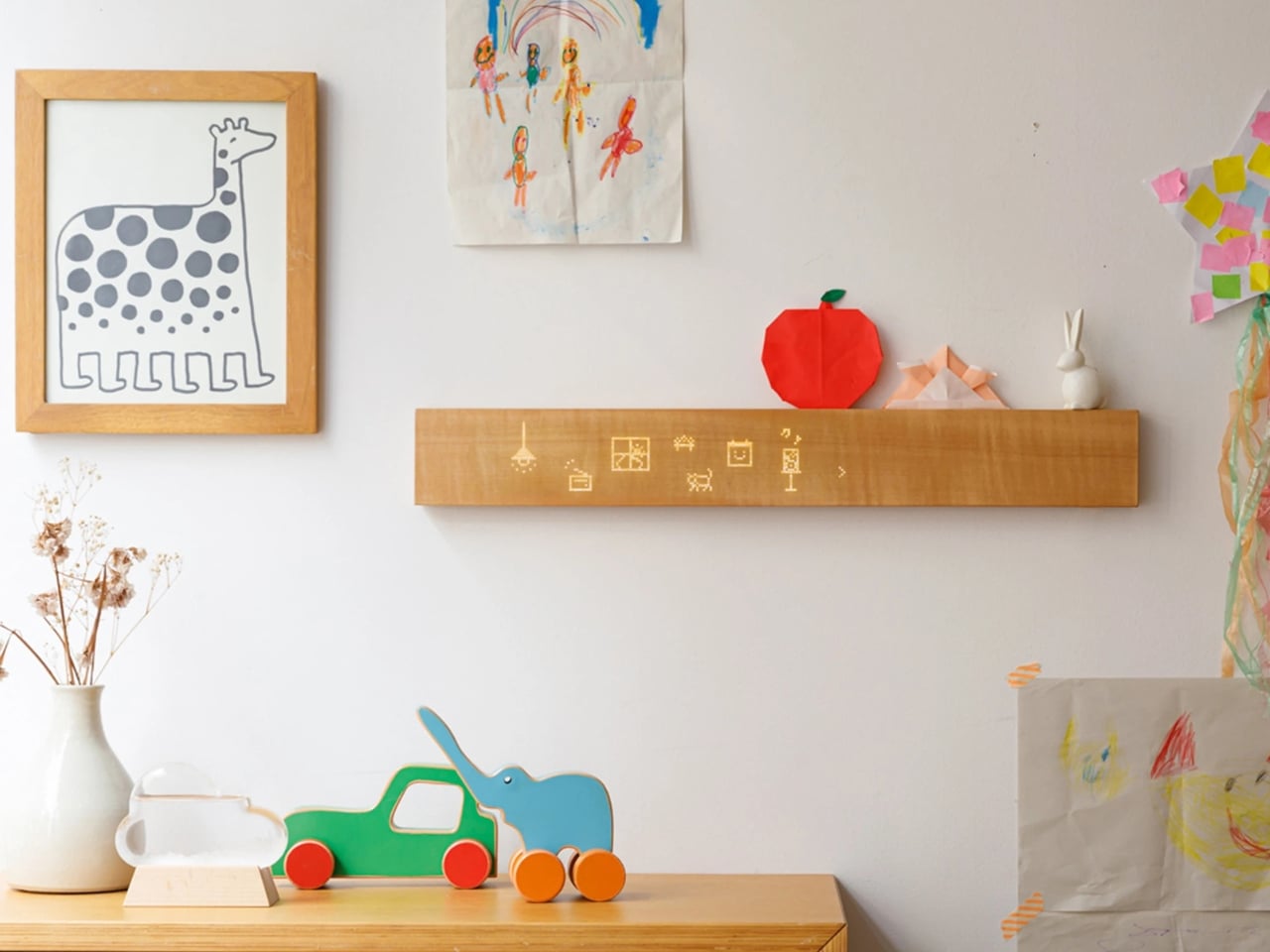
So what does this wooden wonder actually do? It’s a full-fledged smart home hub that supports Matter, the universal smart home standard backed by tech giants like Google, Apple, Amazon, and Samsung. This means it can talk to hundreds of different smart devices, from your Philips Hue lights and Sonos speakers to your Ecobee thermostat and SwitchBot gadgets. You can control lighting, adjust your AC, manage blinds, and even stream music, all through a touch interface that uses simple dots and icons instead of a full color screen.
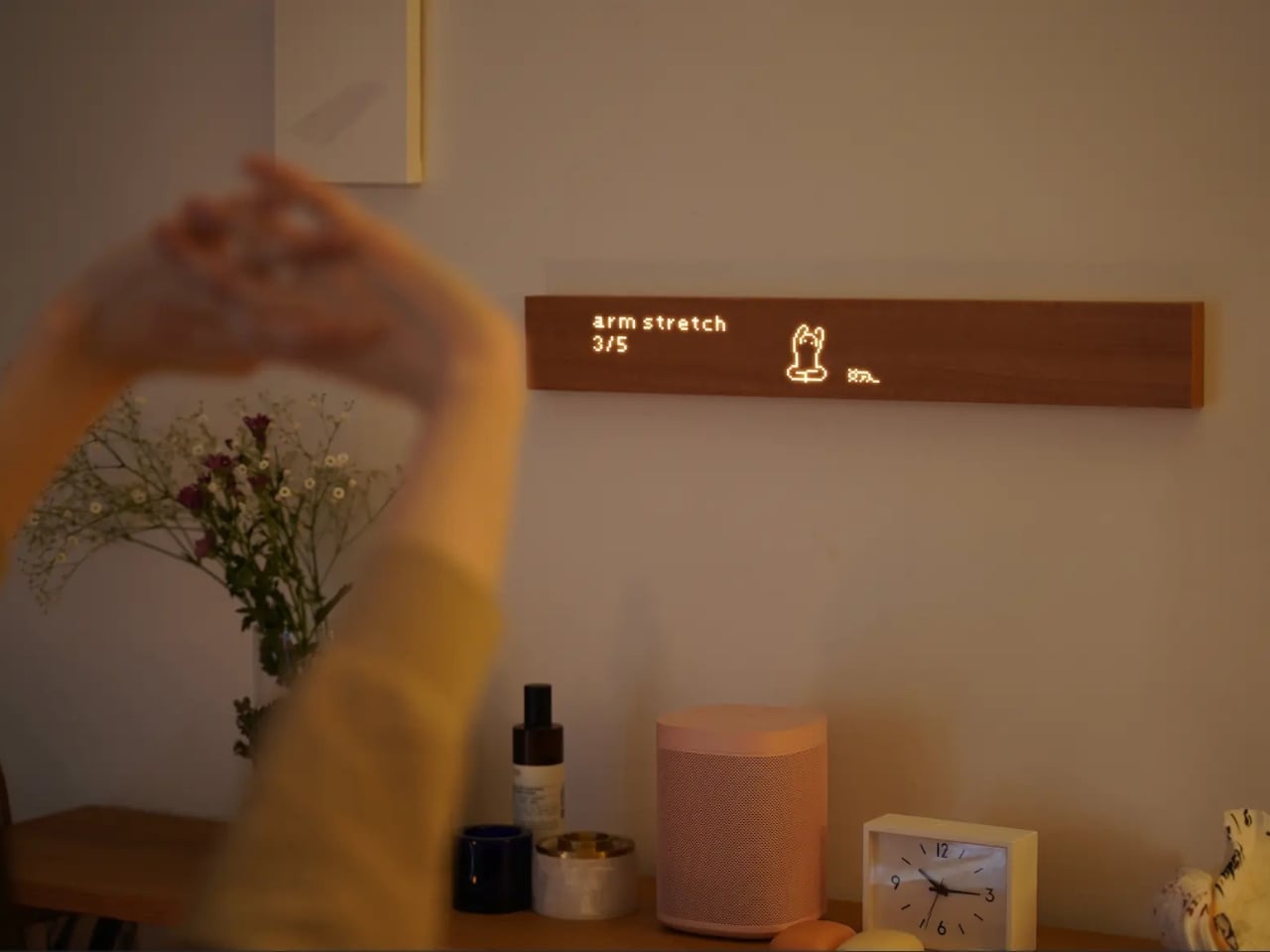
But here’s where things get really interesting. At CES 2026, Mui Lab unveiled something called the mui Calm Sleep Platform, which might be the most intriguing feature yet. The sleep-enabled version of the Mui Board Gen 2 now incorporates millimeter-wave radar technology to track your sleep without any wearables, apps, or cameras pointed at your bed. This is what Mui Lab calls “Spatial AI,” where the device uses natural human gestures as the interface, allowing your environment to sense and adjust itself without you lifting a finger.
The mmWave radar can monitor vital signs, measure sleep patterns, and even set alarms based on your sleep states, all while you’re completely undisturbed. Unlike fitness trackers that you have to remember to charge and wear, or smart displays with cameras that feel like Big Brother moved into your bedroom, the Mui Board just sits there on your wall, quietly doing its thing. All the data processing happens locally too, which means your sleep data isn’t getting shipped off to some cloud server.
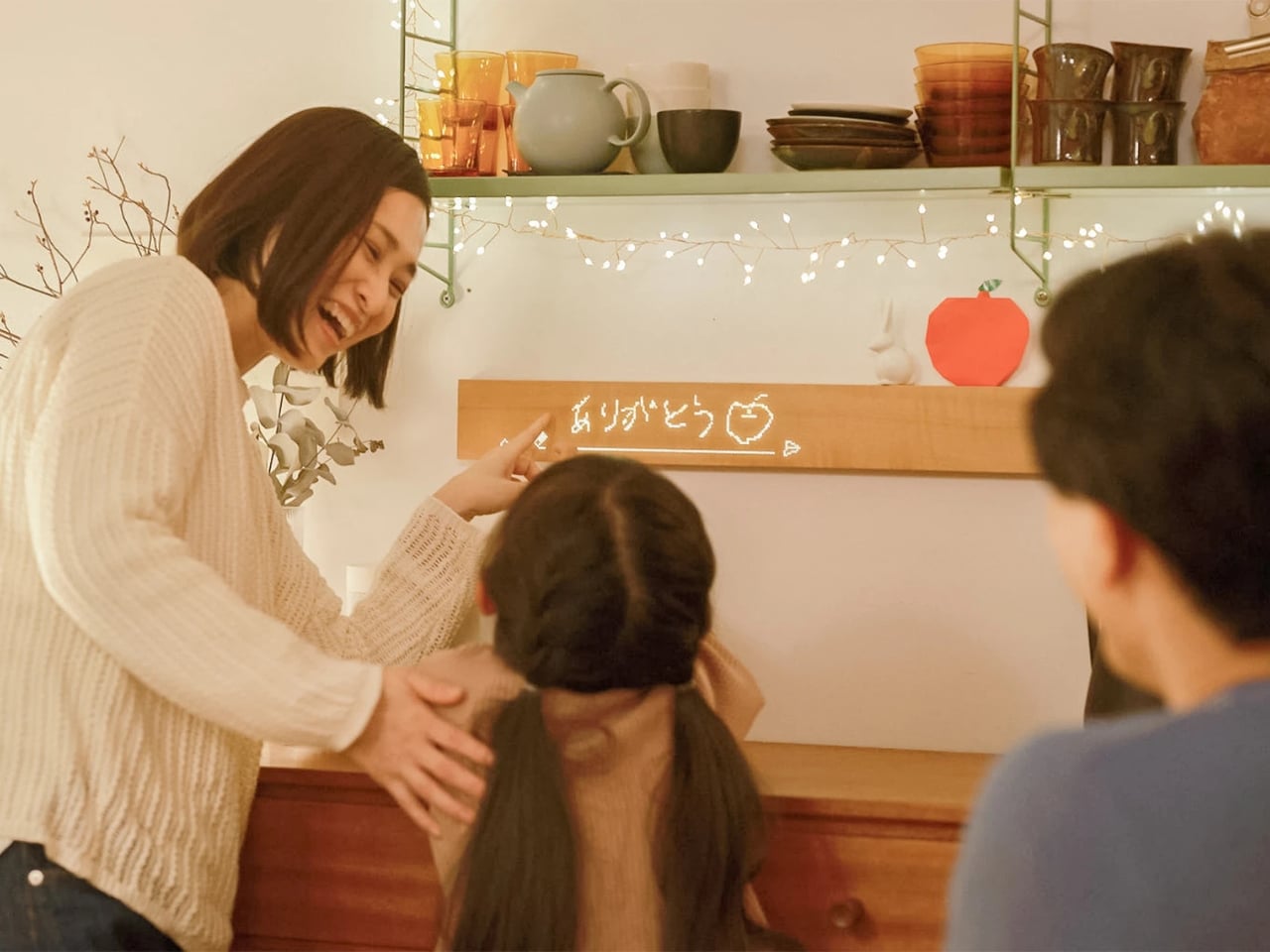
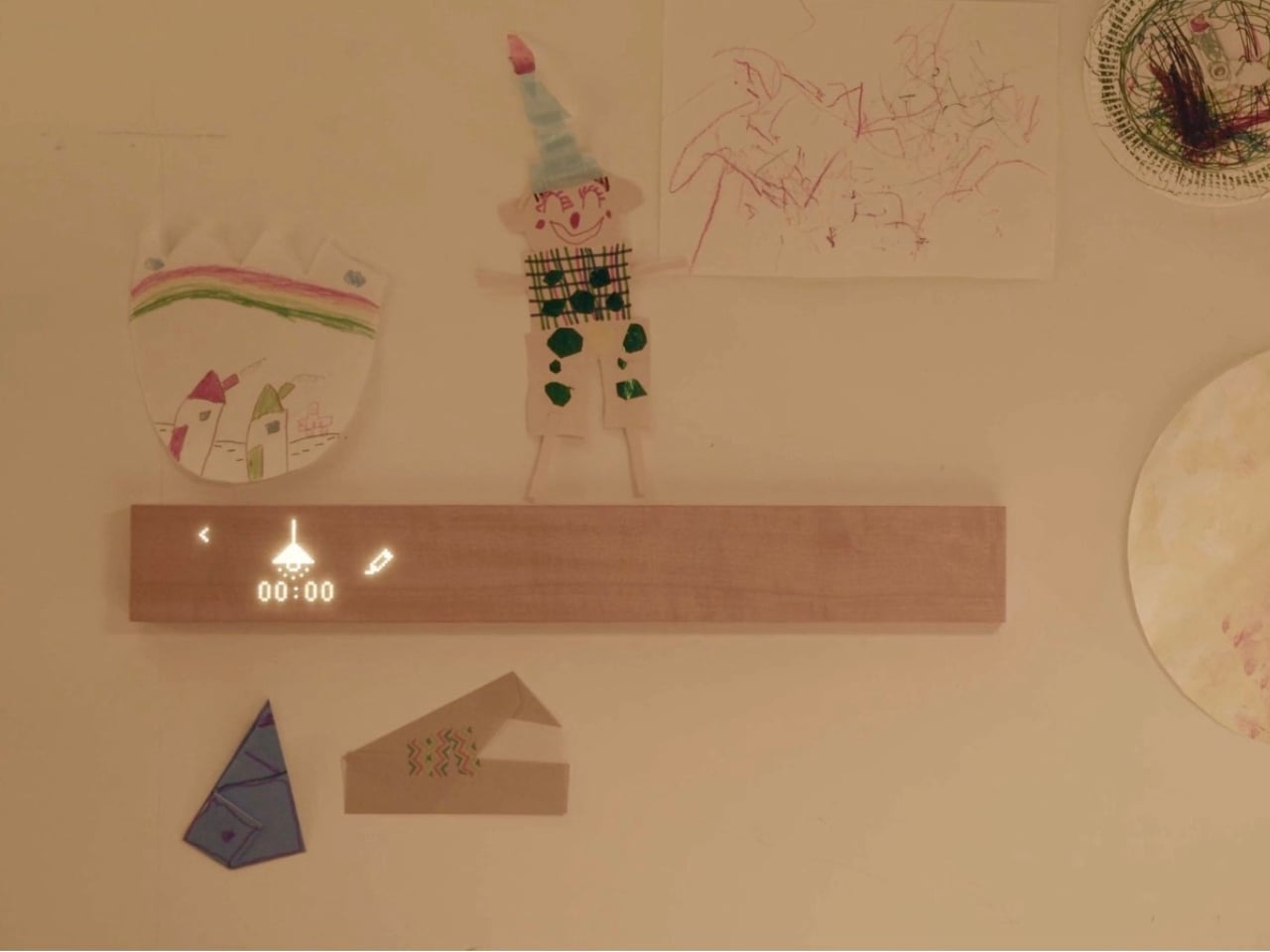
Beyond sleep tracking, the board still functions as a family communication hub. You can handwrite messages directly on the wood surface and send them to family members through the mobile app. There’s something oddly charming about leaving a digital note on a piece of wood for your partner or kids. You can also check weather updates, set various types of timers, and sync it with Google Calendar for family event reminders.
The second-generation model embraces what Mui Lab calls the “Piece of Wood” design concept. They’ve eliminated all visible holes from the front, sides, top, and bottom, moving the power button and speaker to the back. It’s an obsessive attention to detail that makes the device look even more like just a piece of wood. They’ve also kept the display intentionally low-resolution because they believe showing less information at once actually makes for a better user experience.
Now let’s talk about the price tag. At $999 (sometimes on sale for $799-849), the Mui Board Gen 2 is not what you’d call an impulse purchase. This is a device for people who are serious about minimalist design and willing to pay premium prices for it. Is the Mui Board Gen 2 practical? Your smartphone can do most of what this device does, probably faster. Is it cool? Absolutely. There’s something genuinely appealing about a smart home interface that doesn’t look like it belongs in a sci-fi movie. It’s tech for people who’ve had enough of screens but still want their home to be smart. In a world where technology keeps getting louder and more demanding of our attention, the Mui Board Gen 2 is refreshingly quiet.
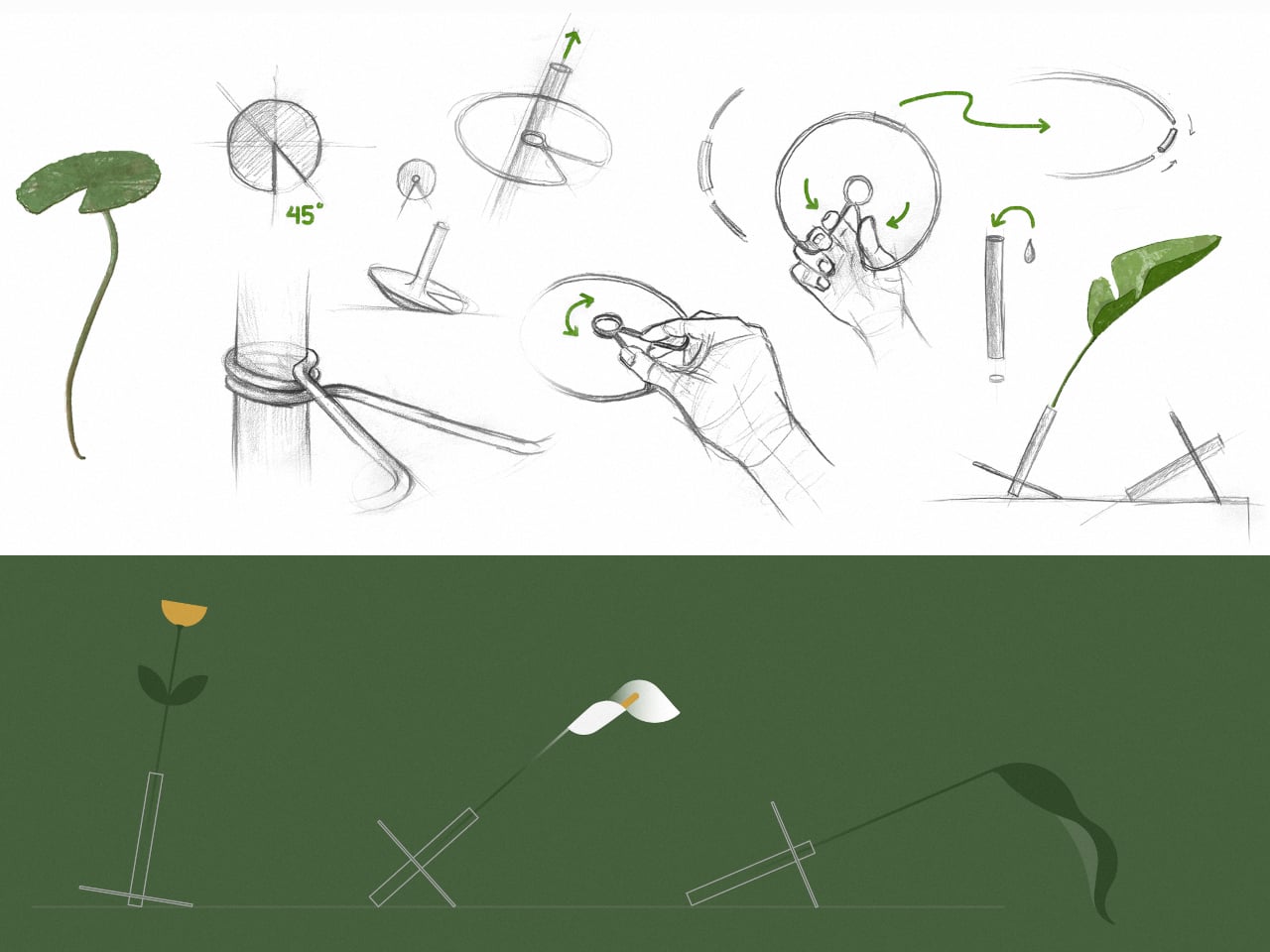
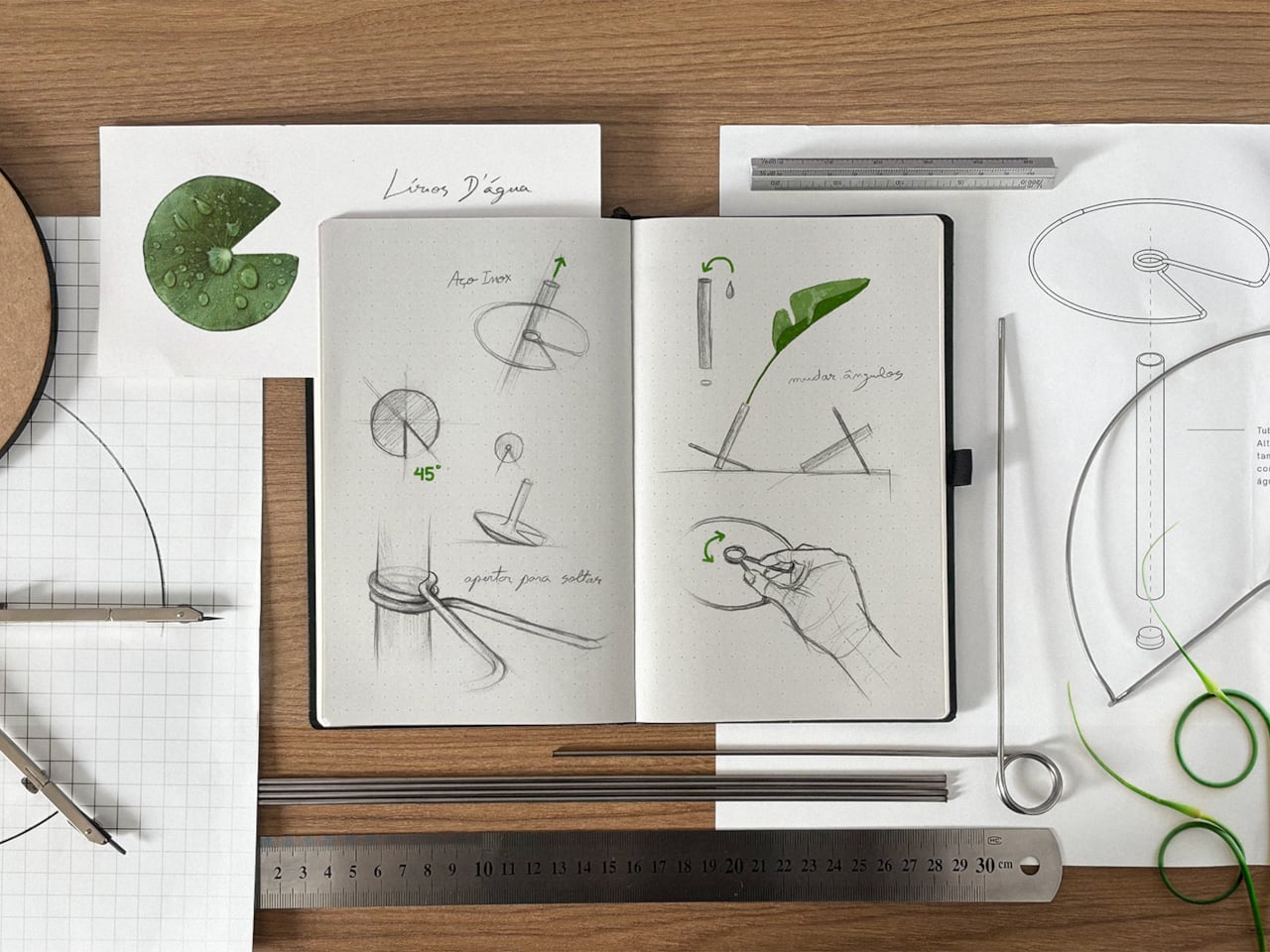
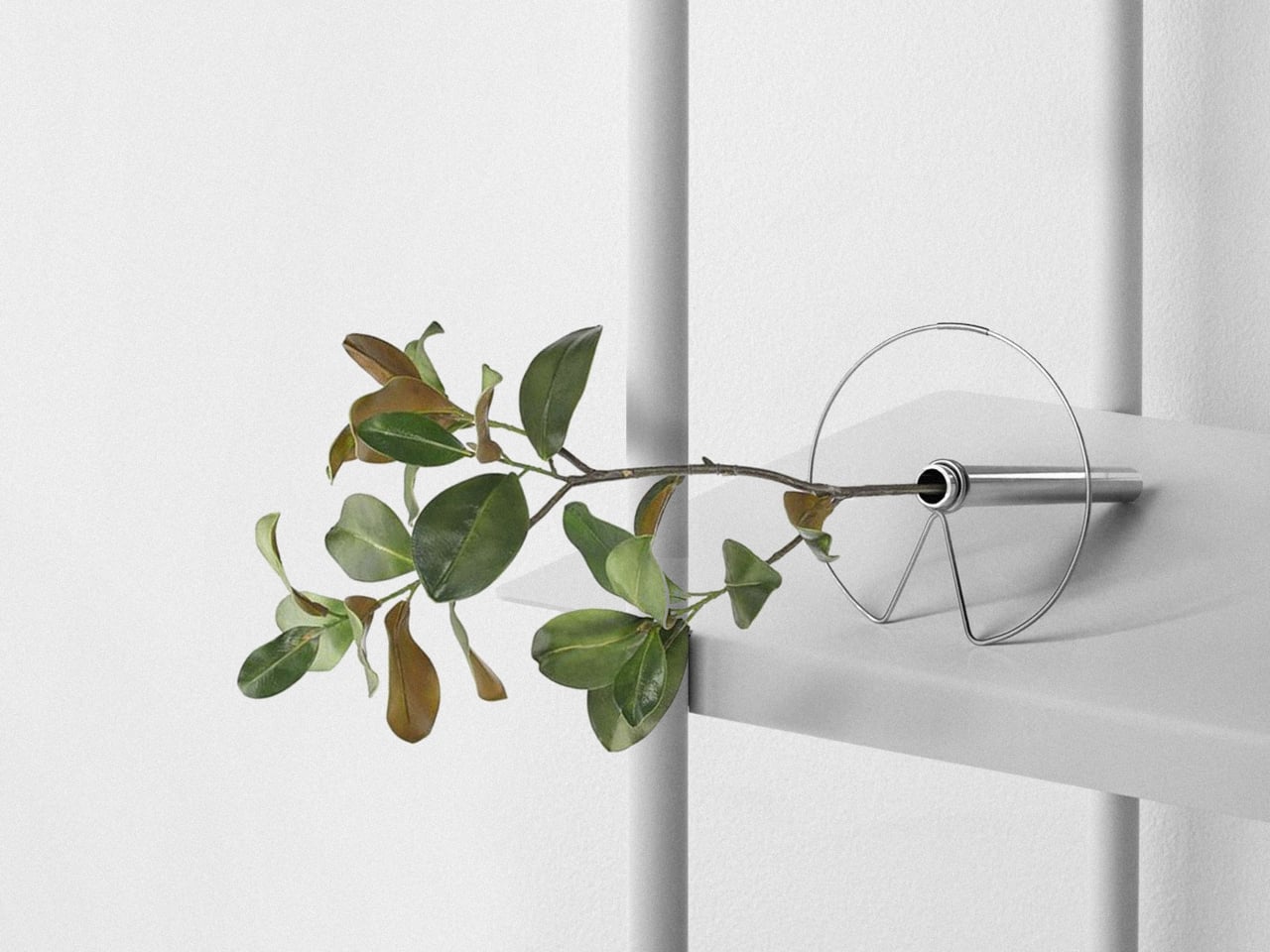
The lotus effect is a phenomenon where aquatic plant leaves shed water and dirt through microscopic surface structures, staying clean and efficient under heavy rain. The symbolism runs deeper, plants like Victoria regia and white lotus that emerge from murky depths to float serenely on the surface, occupying the boundary between water and air. That mix of resilience, lightness, and boundary dwelling becomes the starting point for a vase that treats support as spatial action rather than neutral containment.
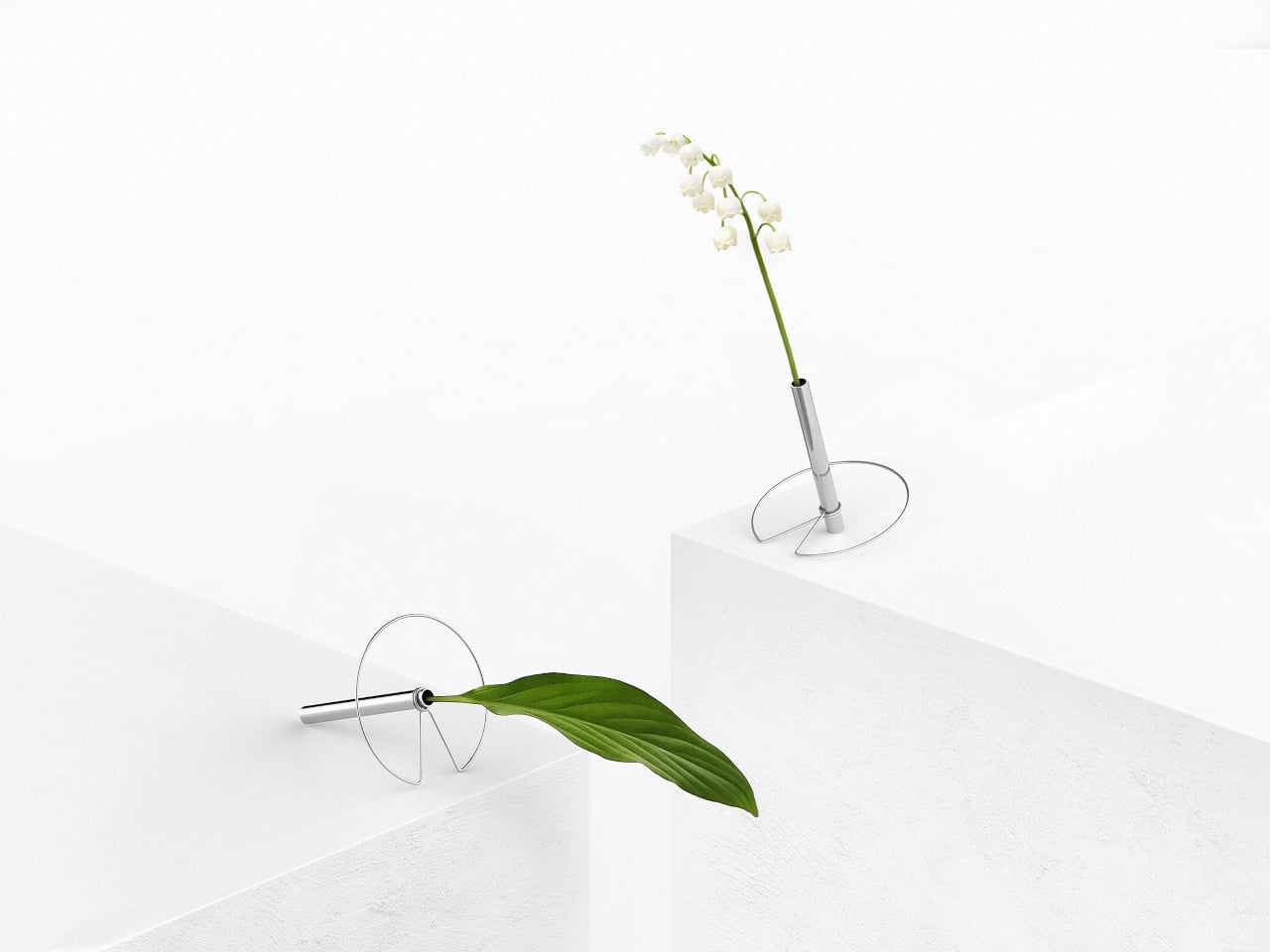
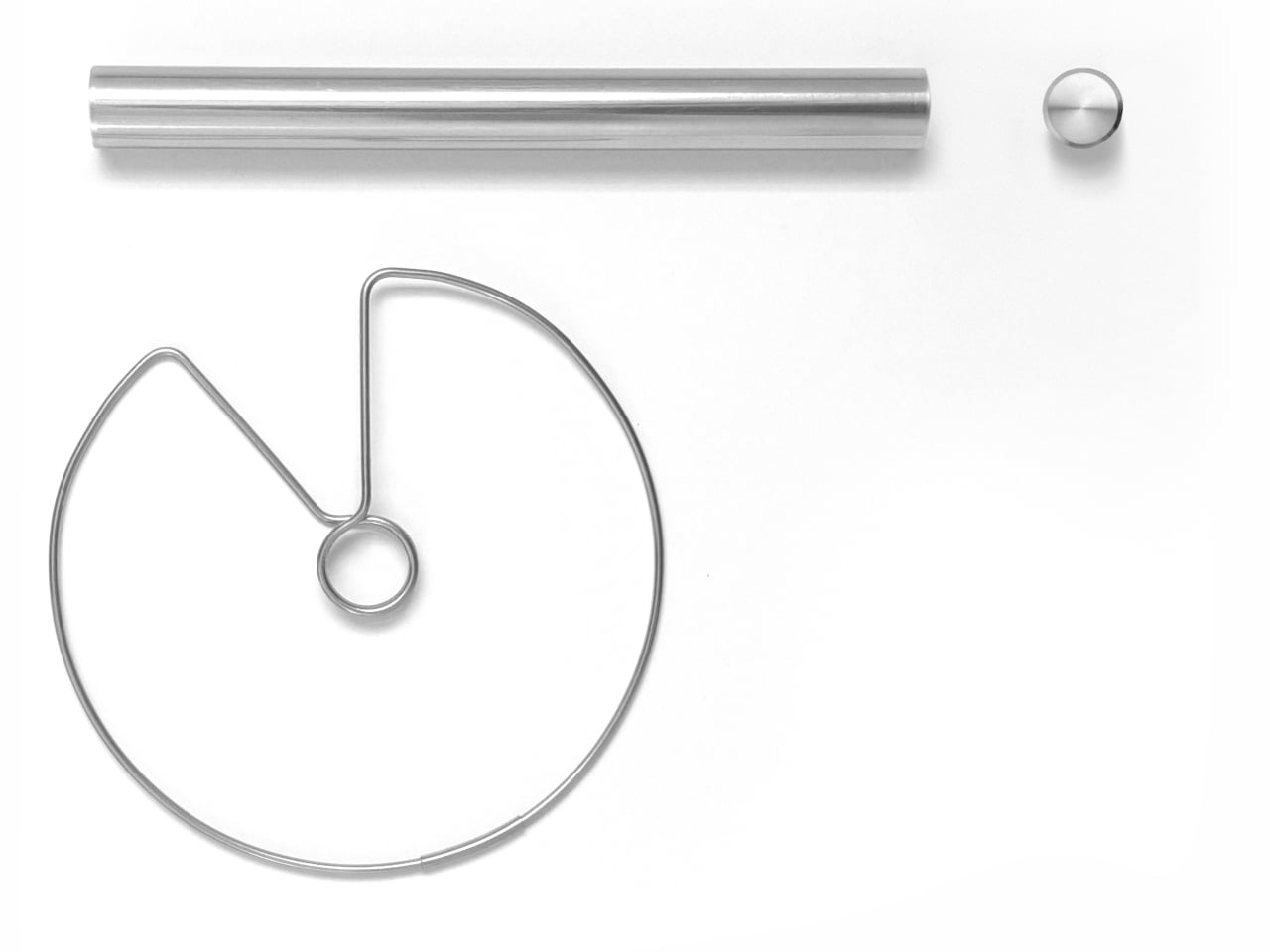
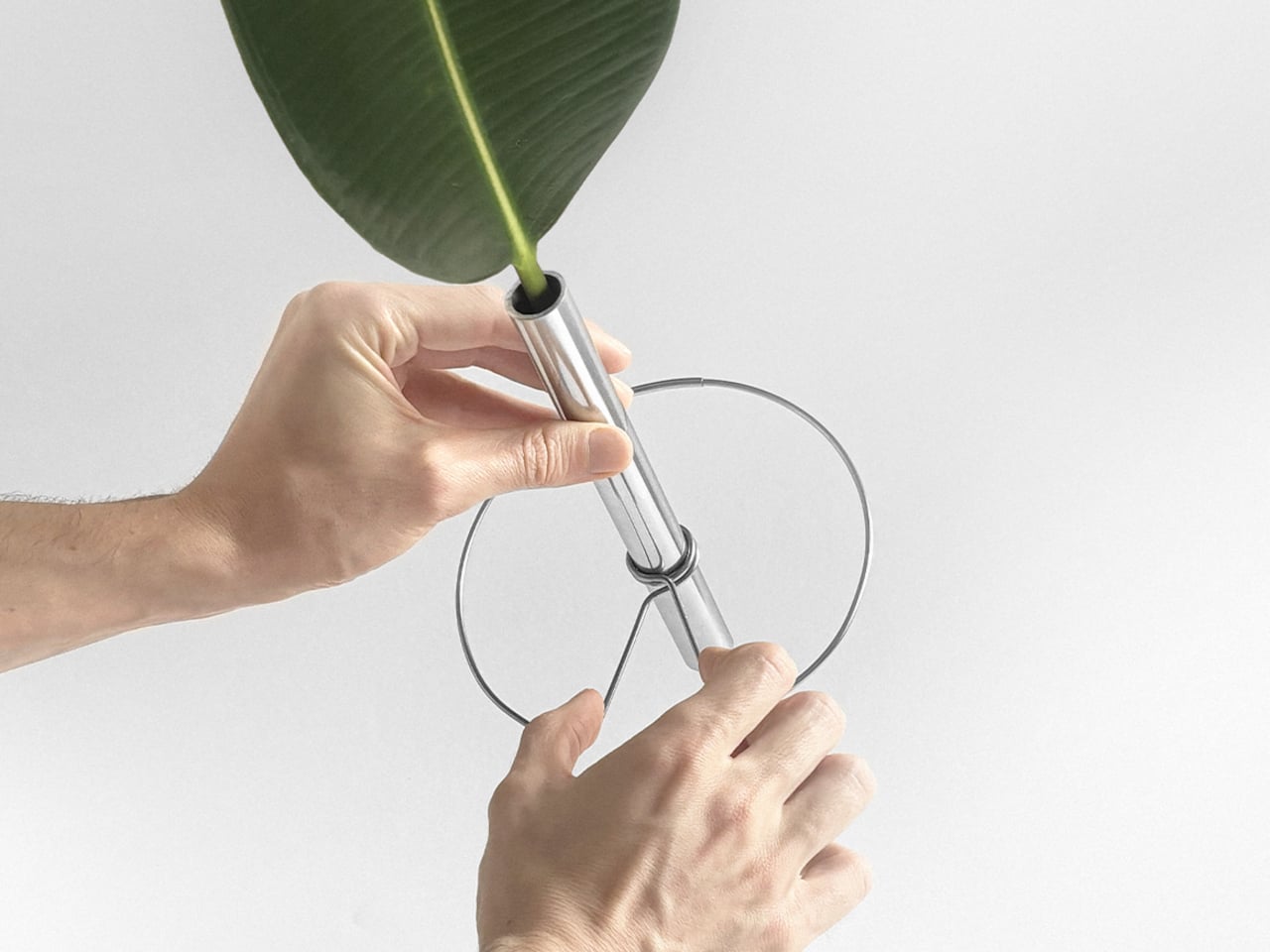
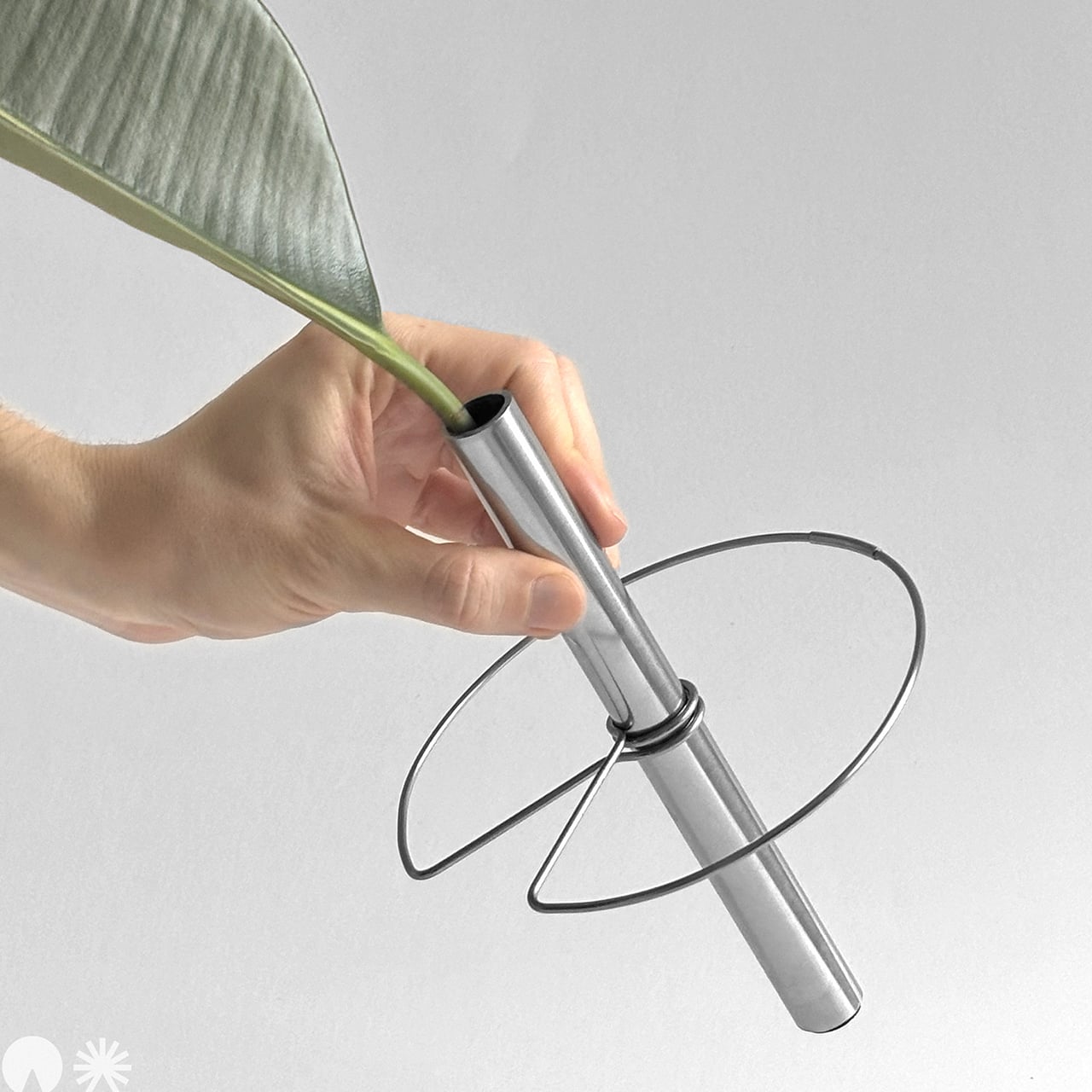
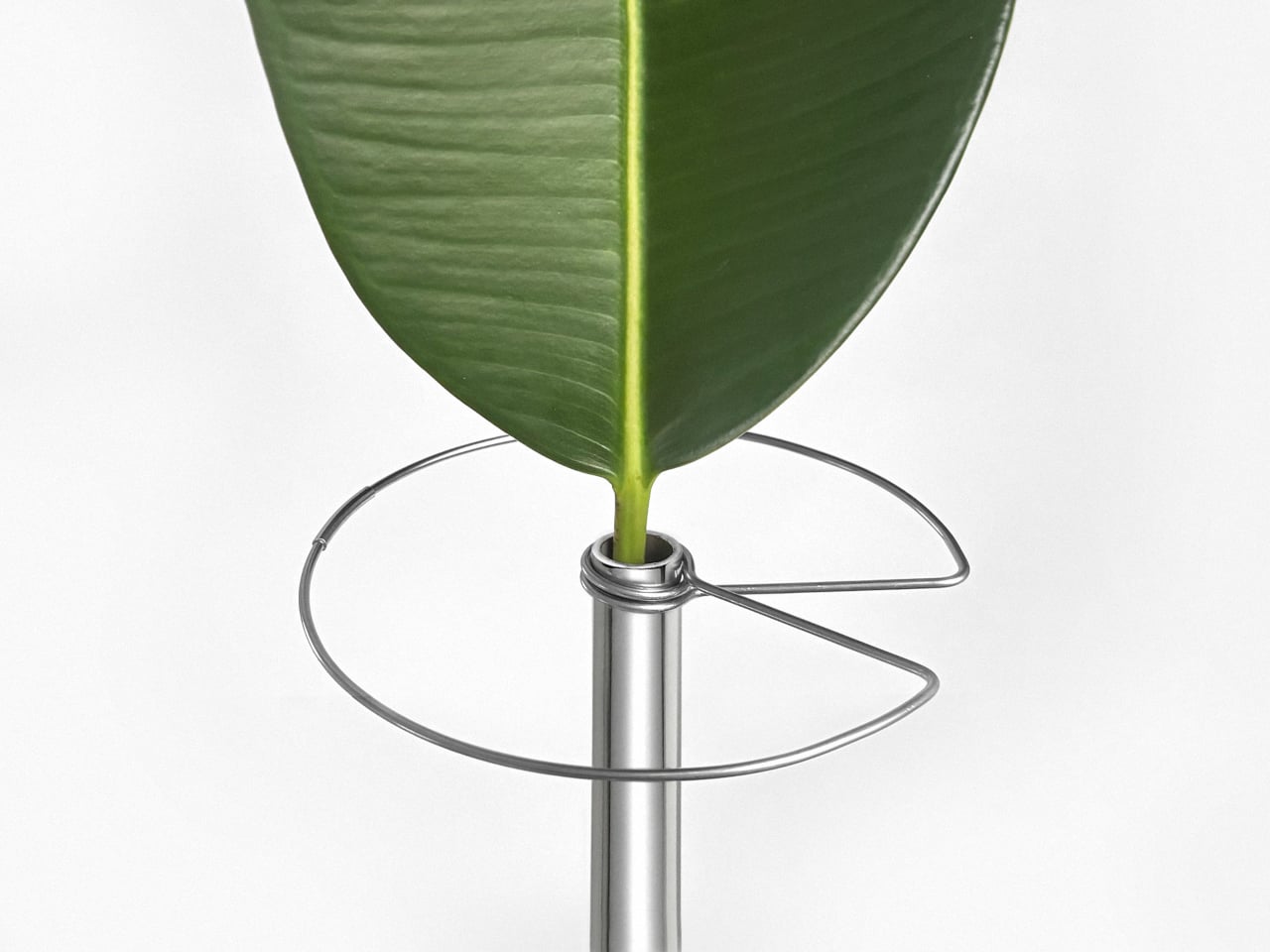
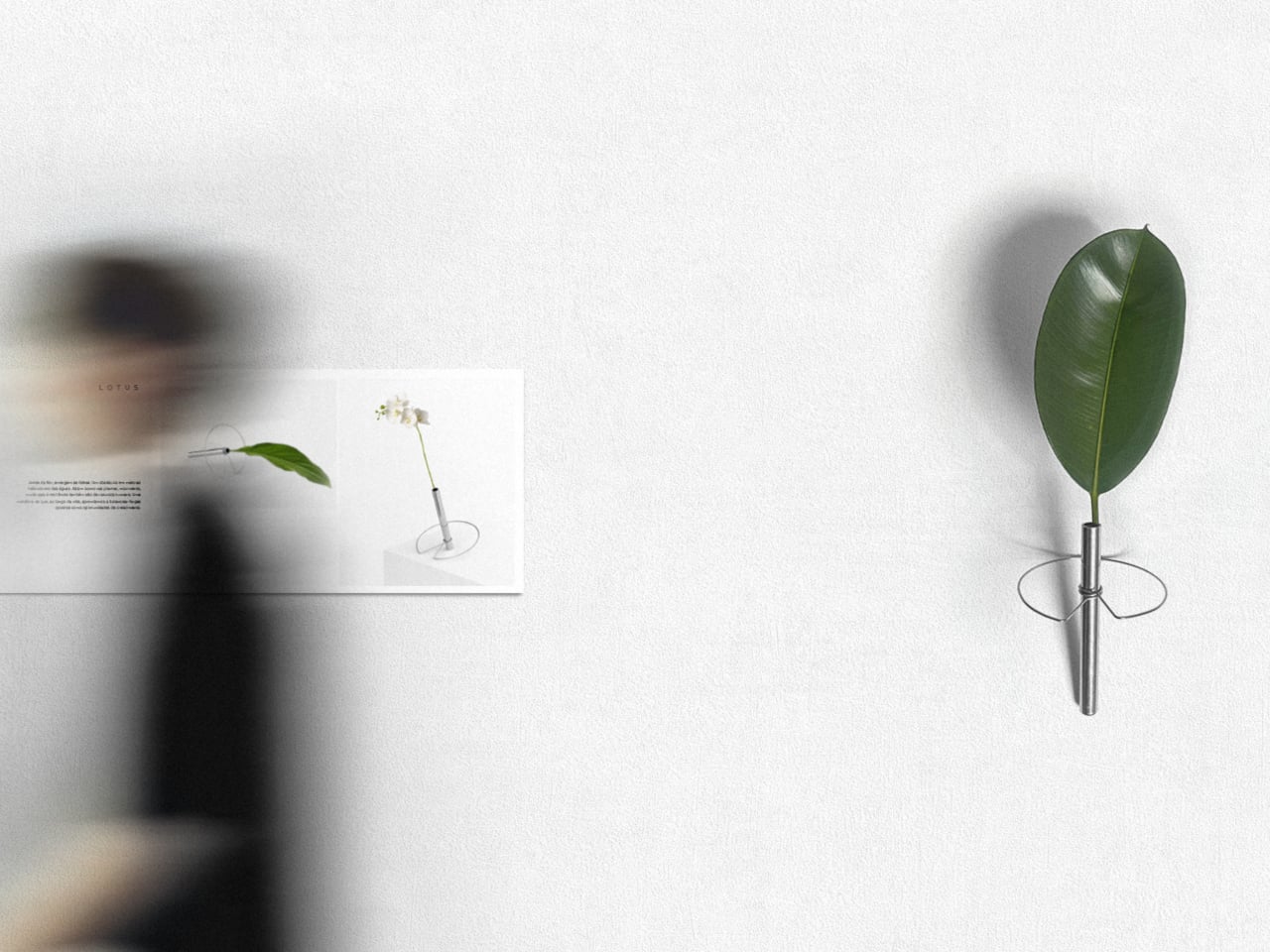
The Lotus Effect Vase is a minimal object that borrows the outline of aquatic leaves and turns it into structure. It combines a circular metallic element, echoing a floating leaf, with a slim cylindrical container, both in stainless steel. It is not trying to imitate the lotus leaf literally; it is translating its posture and presence into a support for cut stems, turning the ring into both a base and a way to guide where the plant can go.
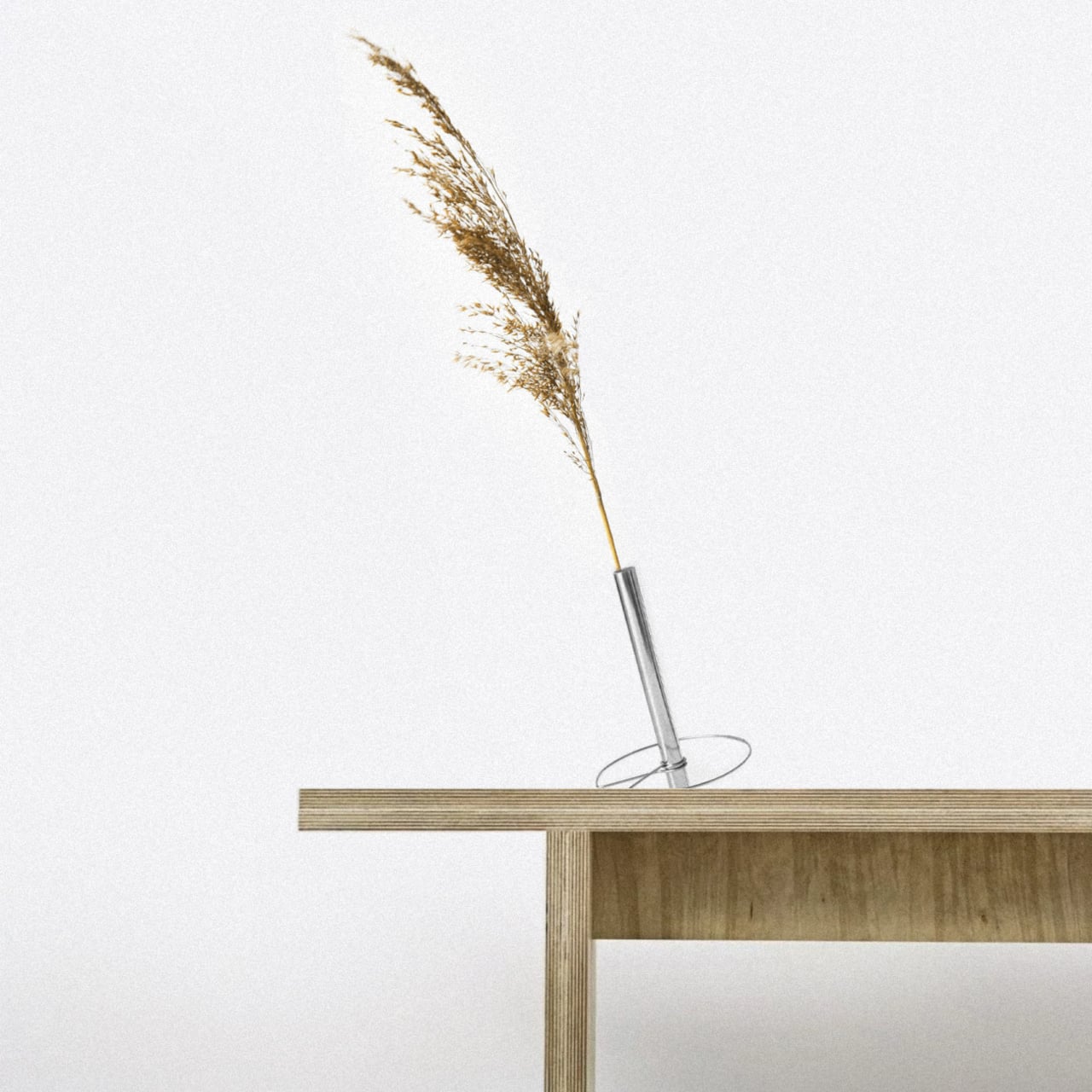
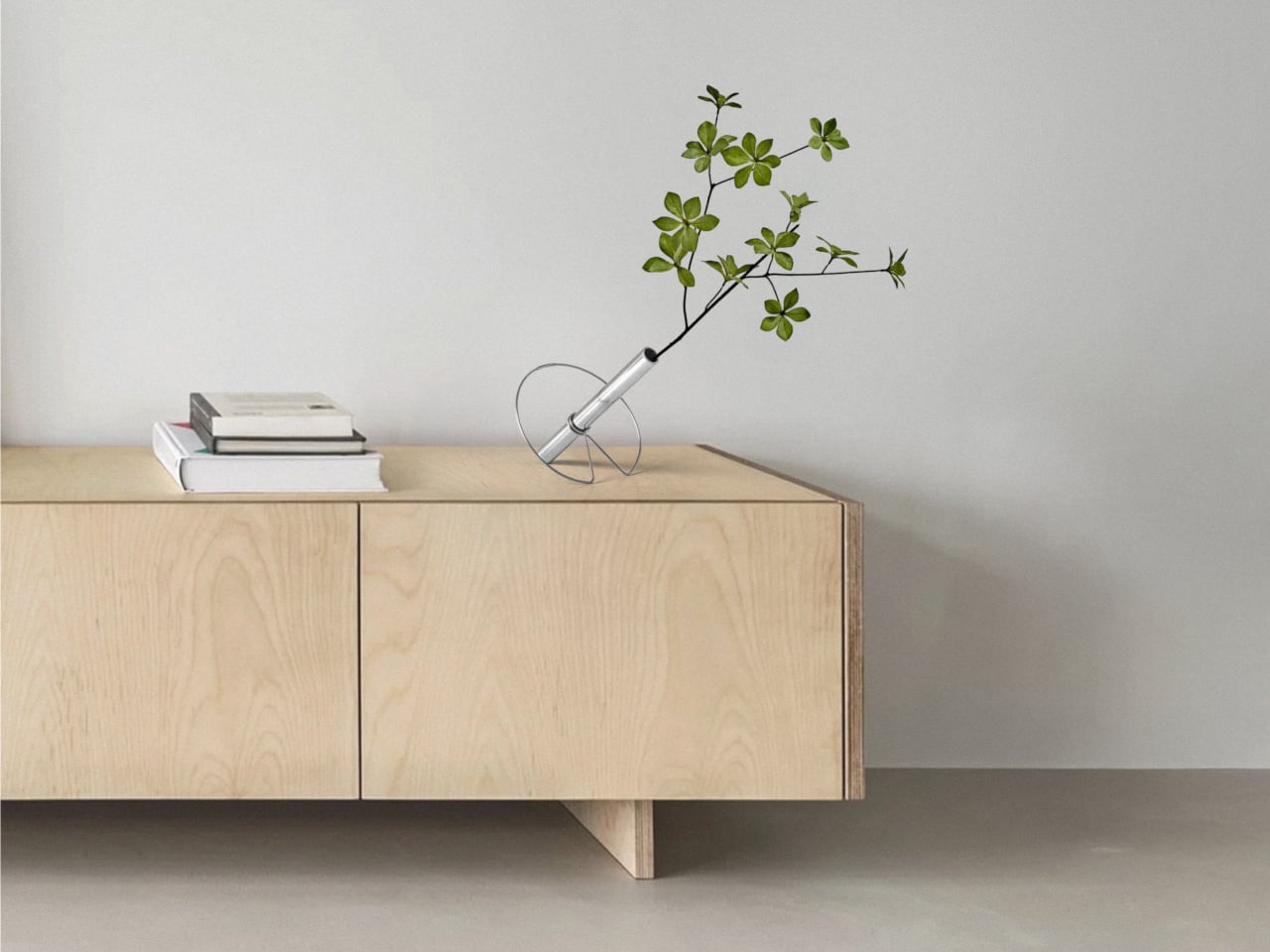
Most vases center the plant, holding stems upright in the middle of a table or shelf and making the container disappear behind the flowers. This design treats the support as an active part of the composition. The ring and cylinder let the plant lean, angle, and extend, so it stops being in the right place and starts inhabiting different positions relative to furniture and space, with the steel structure visible and intentional rather than hidden.
The circular structure invites the vase to live on edges and thresholds, resting across the corner of a bench, near the lip of a shelf, or slightly off-center on a sideboard. The plant can project into the room, skim along a surface, or cross from one plane to another. It feels closer to how a leaf floats at the boundary between water and air than to a bouquet locked in a vertical cylinder, turning what would normally be a centerpiece into something more provisional and spatial.
The choice of stainless steel, cold and permanent, confronts the organic and ephemeral character of the natural. The technical gesture tries to capture the movement of a leaf in a fixed line and ring, freezing a moment of tilt or drift. The living stem then reintroduces change, growing, wilting, and being replaced, so the object becomes a frame for ongoing variation rather than a static centerpiece that always looks the same.
The project extends beyond the object into a small visual system, with circular green forms, modular layouts, and the LOTUS wordmark echoing lily pads on a calm surface. This suggests that the designer is thinking about the vase not as a one-off sculpture, but as part of a family of gestures and surfaces that could populate a room, each one giving plants a slightly different way to occupy space and relate to the furniture around them.
The Lotus Effect Vase quietly questions how we bring nature into interiors. Instead of forcing stems into a single, upright pose, it lets them behave more like they do outside, leaning, reaching, and crossing boundaries. It turns the vase into a small negotiation between leaf and line, water and steel, reminding you that even uprooted and repositioned, a plant can still find new ways to express itself in built scenarios, given the right kind of support.
The final days before the holidays arrive with their own particular pressure. Gift lists grow longer while time grows shorter, and the temptation to settle for whatever’s left on the shelf becomes real. Yet the best stocking stuffers aren’t about expense or elaborate planning. They’re about finding objects that feel intentional, considered, and genuinely useful.
What separates a thoughtful gift from a forgettable one often comes down to design intelligence and material honesty. The items that follow share a common thread: each one transforms an everyday moment into something more refined. They’re compact enough to tuck into a stocking, substantial enough to use for years, and distinctive enough that they’ll never be mistaken for last-minute panic buying.
1. Olight Baton 4 Premium Edition
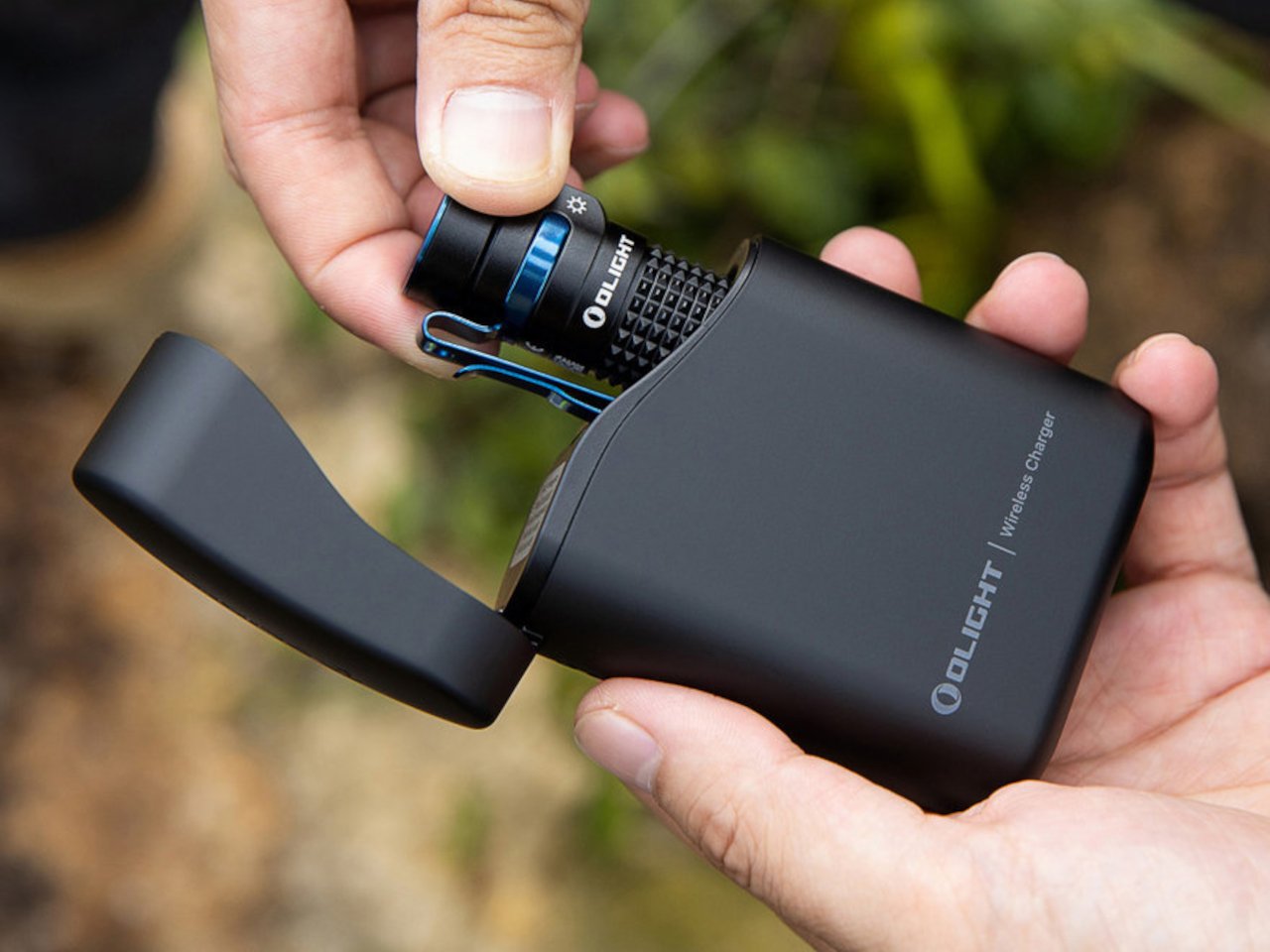
Finding yourself in the dark without a light source is never fun, which is why the Olight Baton 4 Premium Edition exists as more than just another flashlight. This compact EDC tool delivers an impressive 1,300 lumens from a body small enough to slip into your pocket without a second thought. The real genius lies in its ability to become instantly accessible when emergencies strike. Whether you’re navigating a power outage at home or searching for something under your car seat, this flashlight ensures you’re always prepared. The laser micro-perforated LED indicators let you monitor brightness levels and remaining battery at a glance, eliminating guesswork about whether your light will last through the task ahead.
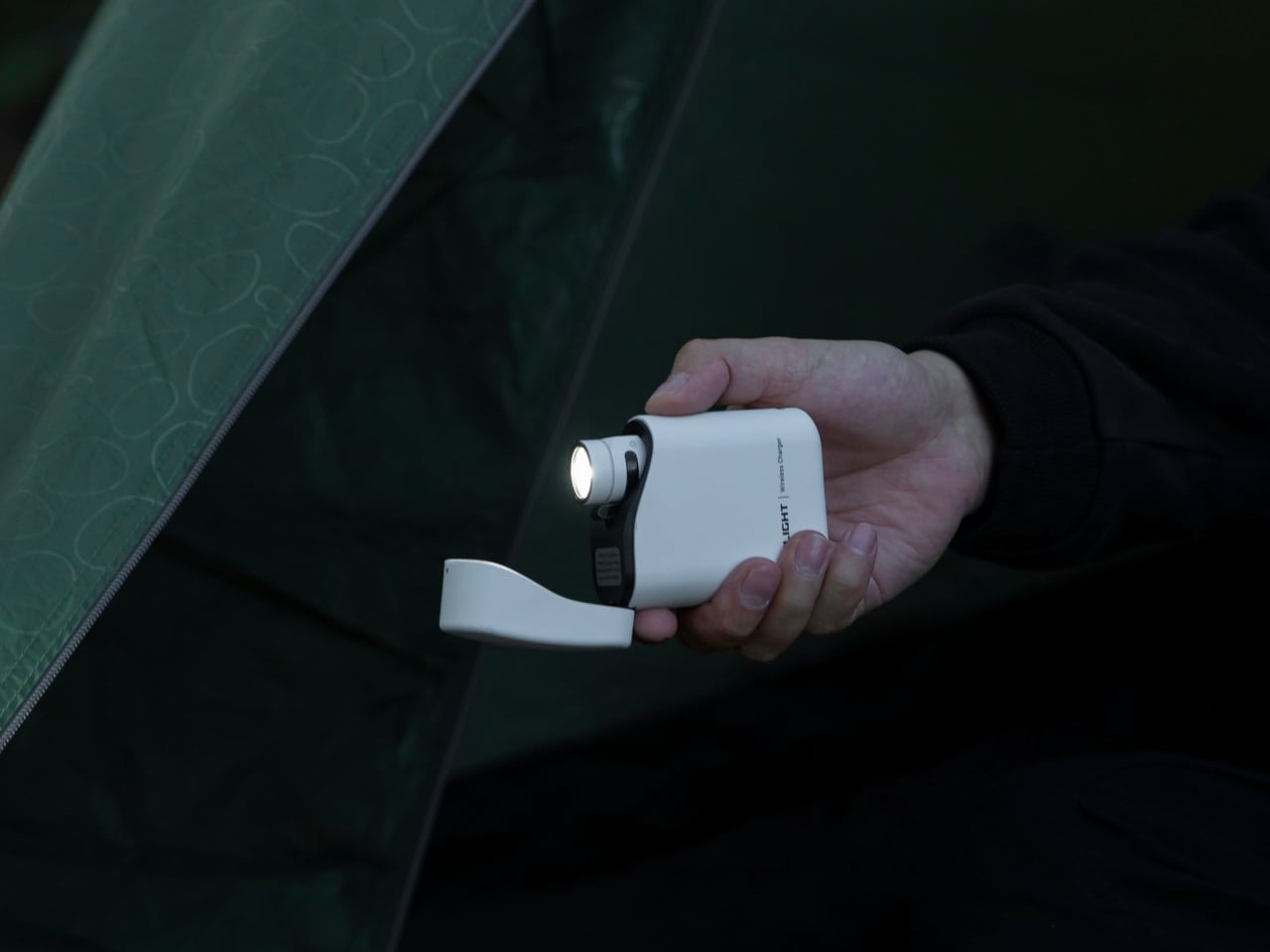
The 5,000 mAh charging case transforms this already practical tool into something genuinely exceptional for your daily routine. That flip-top design means you can open it single-handed, keeping your other hand free for whatever else demands attention. Most impressively, when used with the Baton 4, you simply flip open the cover and press the side button to activate the flashlight while it remains nestled in the case. This eliminates those fumbling seconds where you’re pulling out the light, using it, then trying to put it back. The charging case itself becomes a 5,000 mAh power bank, capable of recharging the flashlight up to five times or topping up your other devices when needed.
What we like
The one-handed operation while the flashlight stays in its charging case saves precious seconds in urgent situations.
The 5,000 mAh charging case doubles as a power bank for your other devices.
Laser micro-perforated LED indicators provide clear battery and brightness level information.
The compact size delivers 1,300 lumens with a 170-meter throw distance without overwhelming your pocket space.
What we dislike
The LED emitter has a slightly greenish tint that some users find less appealing than warmer light temperatures.
The premium edition comes at a higher price point compared to standard flashlight options.
2. StillFrame Headphones
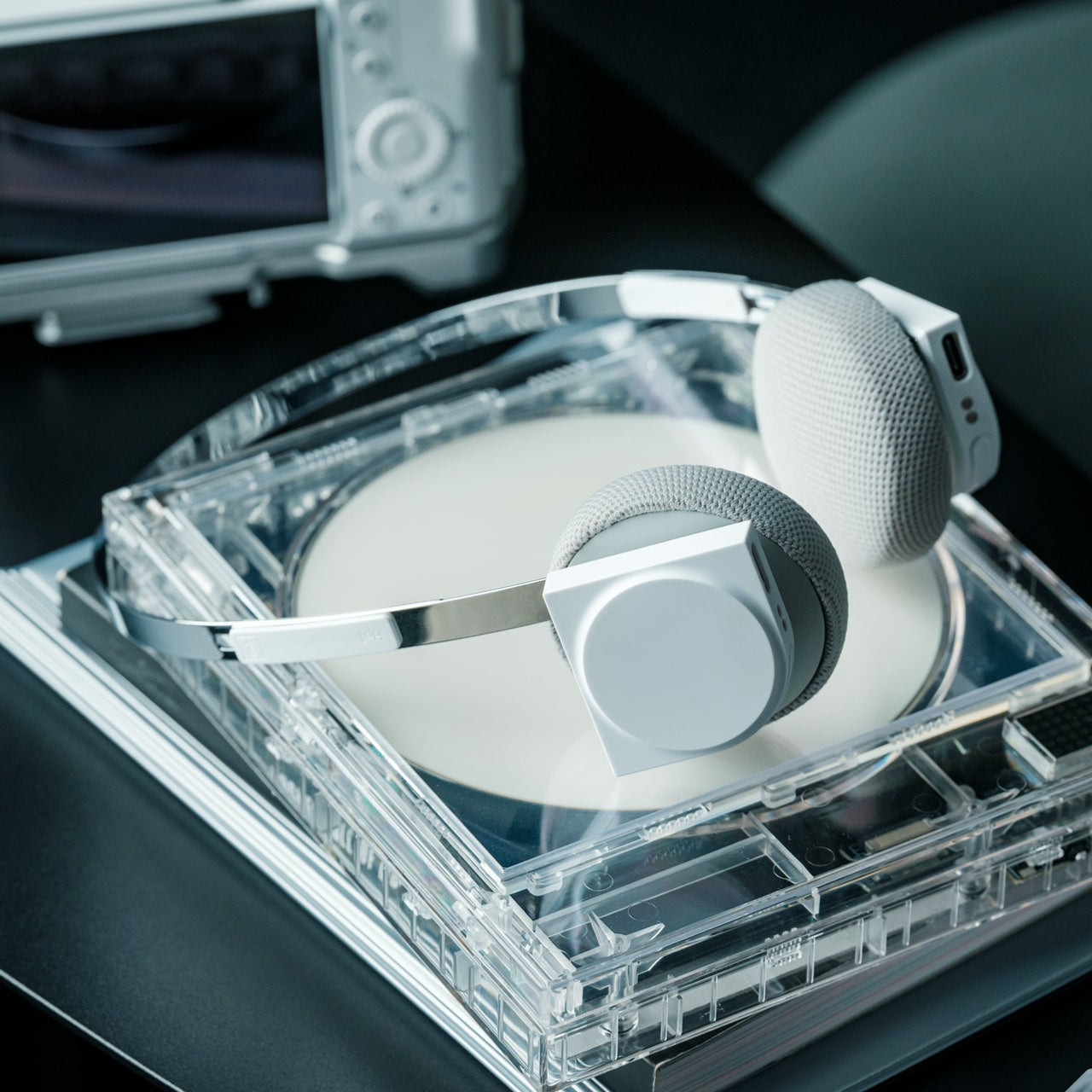
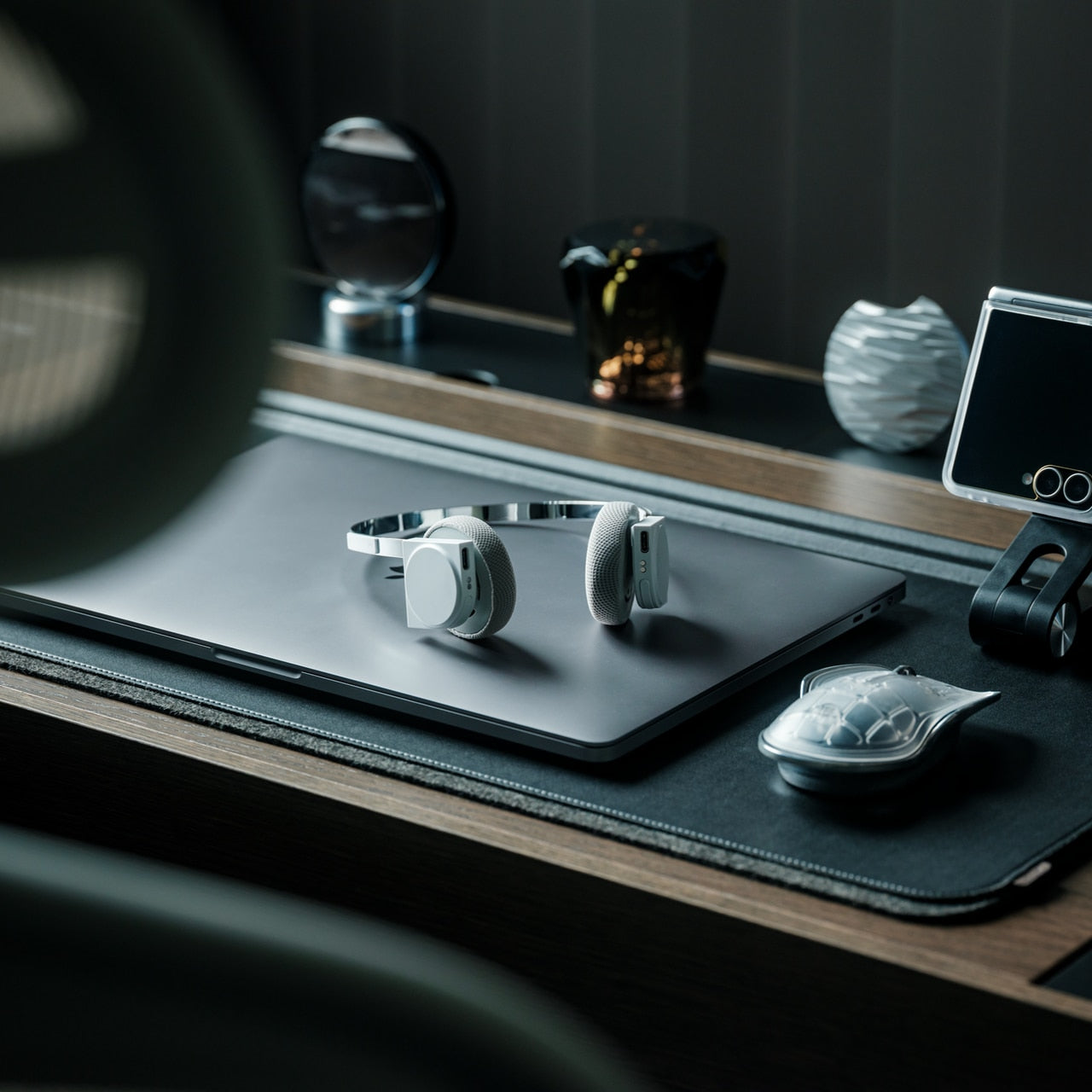
StillFrame brings a refreshing slowness to how we consume music. The design pulls directly from the physical era of CDs, when albums came with liner notes and artwork worth studying. At just 103 grams, these wireless headphones disappear on your head while the 40mm drivers create a soundstage that gives each instrument room to breathe. The fabric ear cushions attach magnetically, and each set includes both Light Gray and Turquoise options for easy swapping.
The dual-mode functionality adapts to whatever your day demands. Active noise cancellation carves out space for focus during commutes or deep work sessions, while transparency mode keeps you connected to your surroundings when awareness is crucial. With 24 hours of battery life and support for both Bluetooth 5.4 and wired USB-C connections, StillFrame offers equal capability for streaming convenience and high-resolution playback.
The magnetic ear cushion system makes personalization effortless and satisfying.
The 24-hour battery life eliminates mid-day charging anxiety during long workdays or travel.
What we dislike
The on-ear design may feel less isolating than over-ear models for some listeners.
The styling leans heavily nostalgic, which might not suit every aesthetic preference.
3. FoldLine Pen Roll
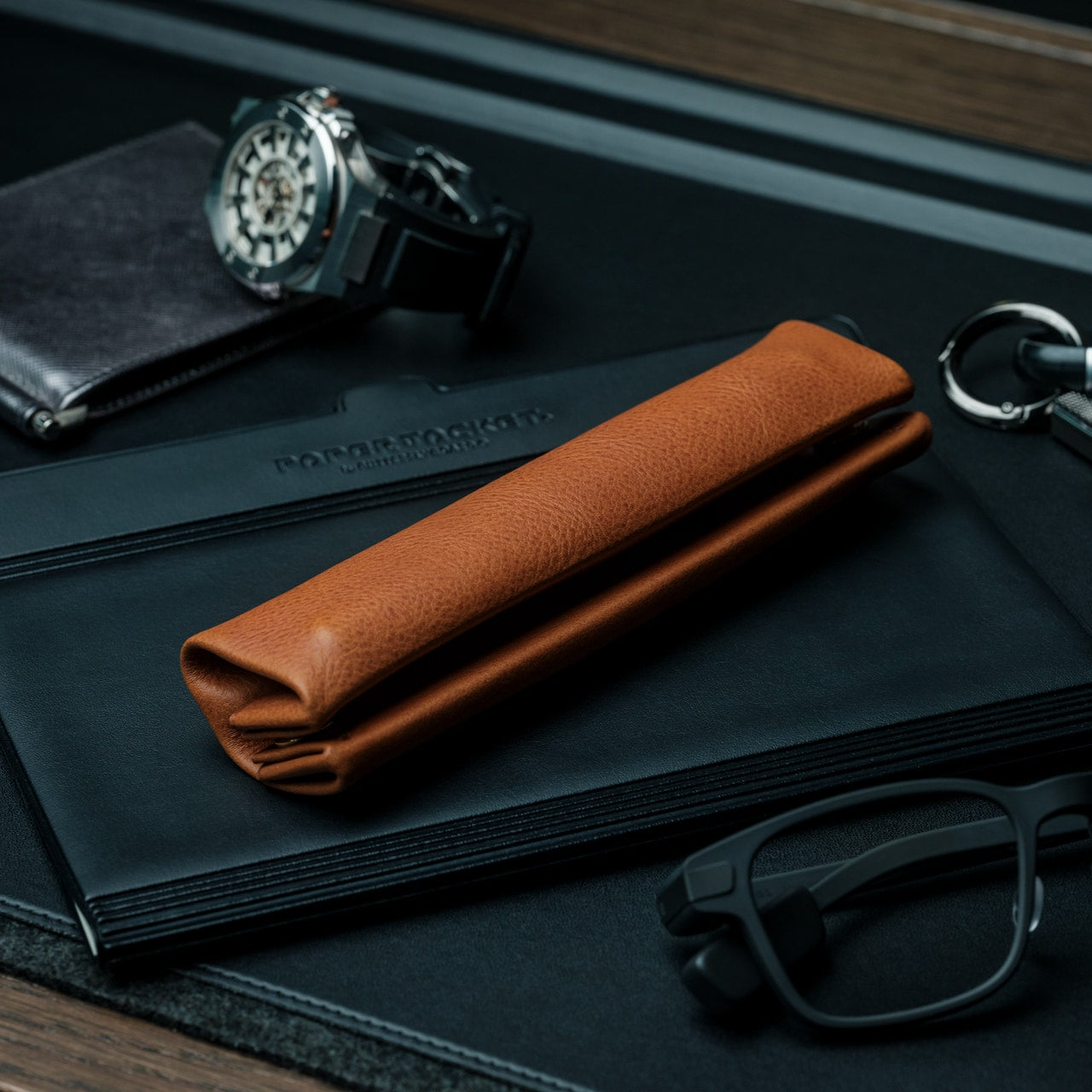
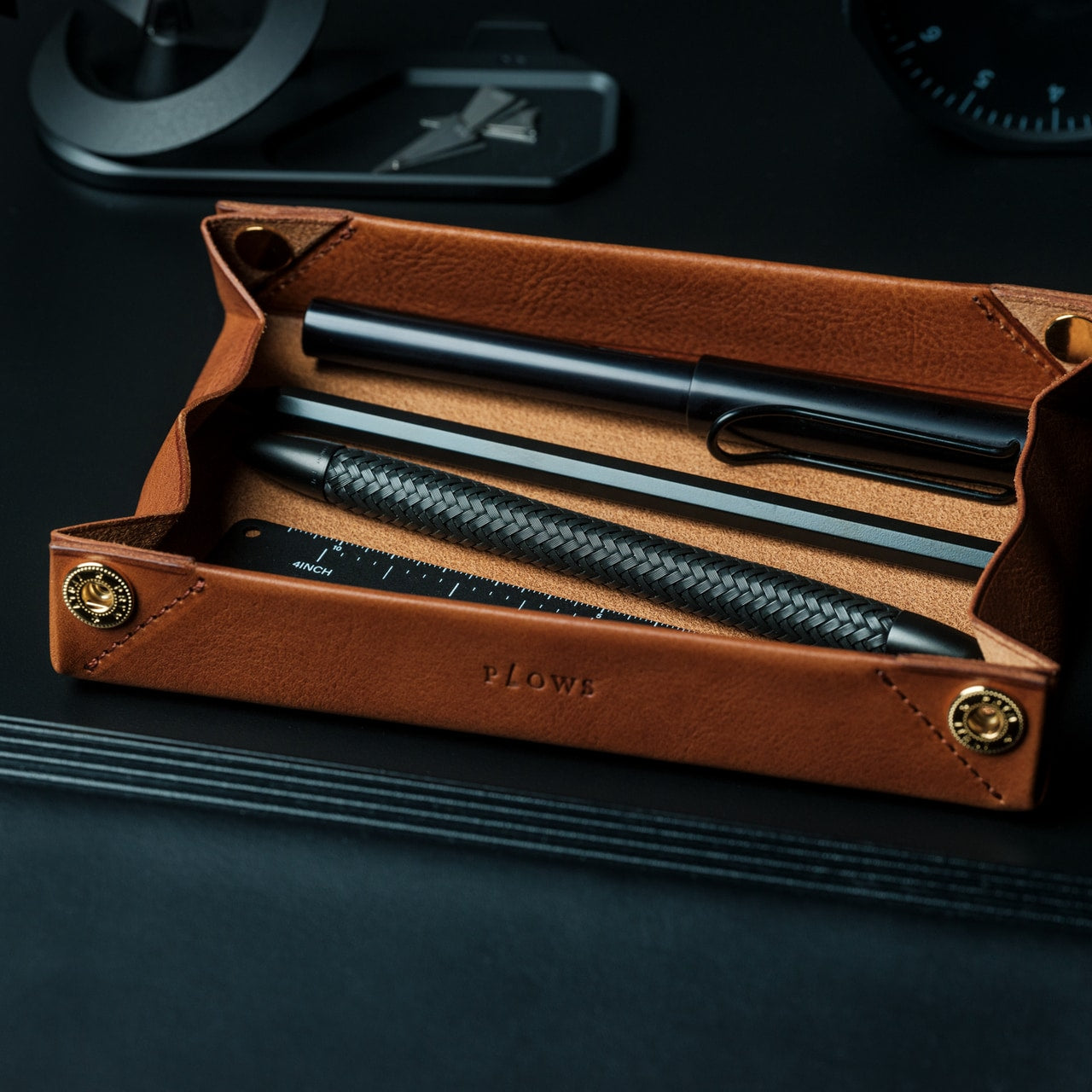
FoldLine turns the simple act of preparing to write into a moment of intention. Crafted from a single piece of Minerva Box leather sourced from Italy’s renowned Badalassi Carlo tannery, this pen case unfolds in under two seconds to become a defined workspace tray. The folded leather naturally separates each pen without stitched slots or rattling metal clips, keeping even precious instruments protected through pure structural design.
The vegetable-tanned leather develops a rich patina that reflects your personal use over time, aging gracefully rather than wearing out. Its mirrored, zipperless design opens cleanly from either side, making it genuinely ambidextrous for left and right-handed users. The hollow interior creates storage capacity without external bulk, so it slips into bags and briefcases without adding noticeable weight or thickness to your carry.
The Italian PRYM snap closure delivers a premium tactile experience with every use.
The symmetrical design accommodates both left and right-handed users without compromise.
What we dislike
The open storage system works best with a curated pen collection rather than large quantities.
Leather requires occasional conditioning to maintain its suppleness over the years of use.
4. Bellroy Card Sleeve
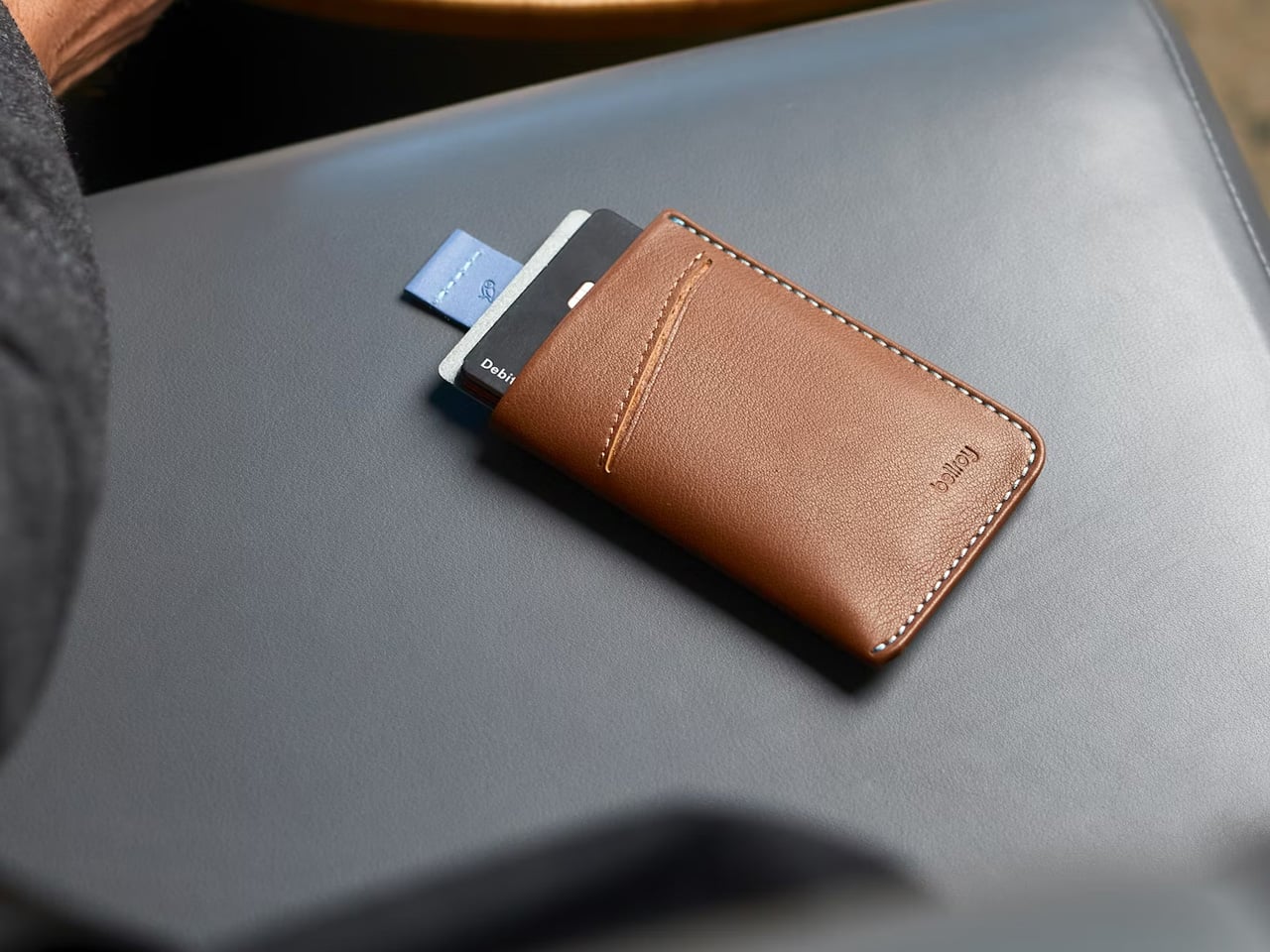
Carrying a bulky wallet stuffed with cards you rarely use makes little sense in today’s minimalist-minded world. The Bellroy Card Sleeve strips away everything unnecessary, leaving you with pure leather and stitching without any bulky layers or linings. This ultra-slim design slides into your front pocket without creating an awkward bulge or discomfort when sitting. Two quick-draw slots on the front and back keep your most-used cards immediately accessible, while the remaining cards stack in the center pocket with pull-tab access. That pull-tab system transforms what could be an awkward fumble into a smooth, confident motion when you need to retrieve something quickly.
The thoughtful construction extends beyond just slim storage, proving particularly valuable in professional settings where first impressions matter. Handing someone a business card becomes an elegant gesture rather than a clumsy search through multiple compartments. The wallet holds up to eight cards comfortably, striking the perfect balance between capacity and minimalism. Bellroy’s attention to craft shows in every stitch, combining traditional leatherworking respect with modern design innovations like that signature pull-tab storage system. The construction quality backs this up with a three-year warranty covering faults in materials and workmanship, giving you confidence that this wallet will age gracefully rather than fall apart.
What we like
The pure leather and stitching construction eliminates bulk while maintaining durability.
Quick-draw slots provide instant access to your two most frequently used cards.
The pull-tab system makes retrieving stacked cards smooth and professional-looking.
The slim profile disappears in your front pocket without creating uncomfortable bulk.
What we dislike
The eight-card capacity may feel limiting if you need to carry more cards regularly.
The minimalist design offers no dedicated cash storage slot for bills.
5. Auger PrecisionEdge Nail File
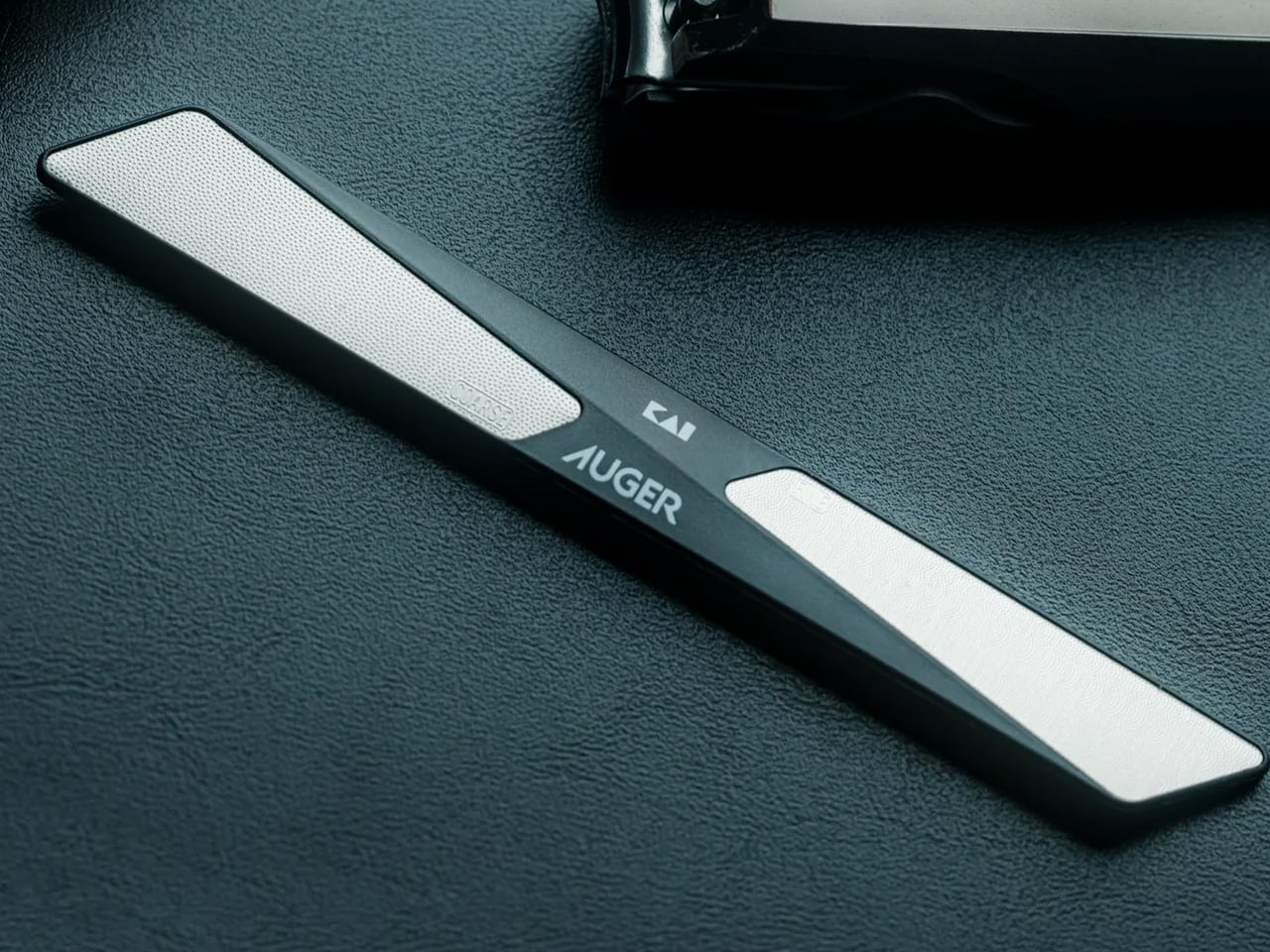
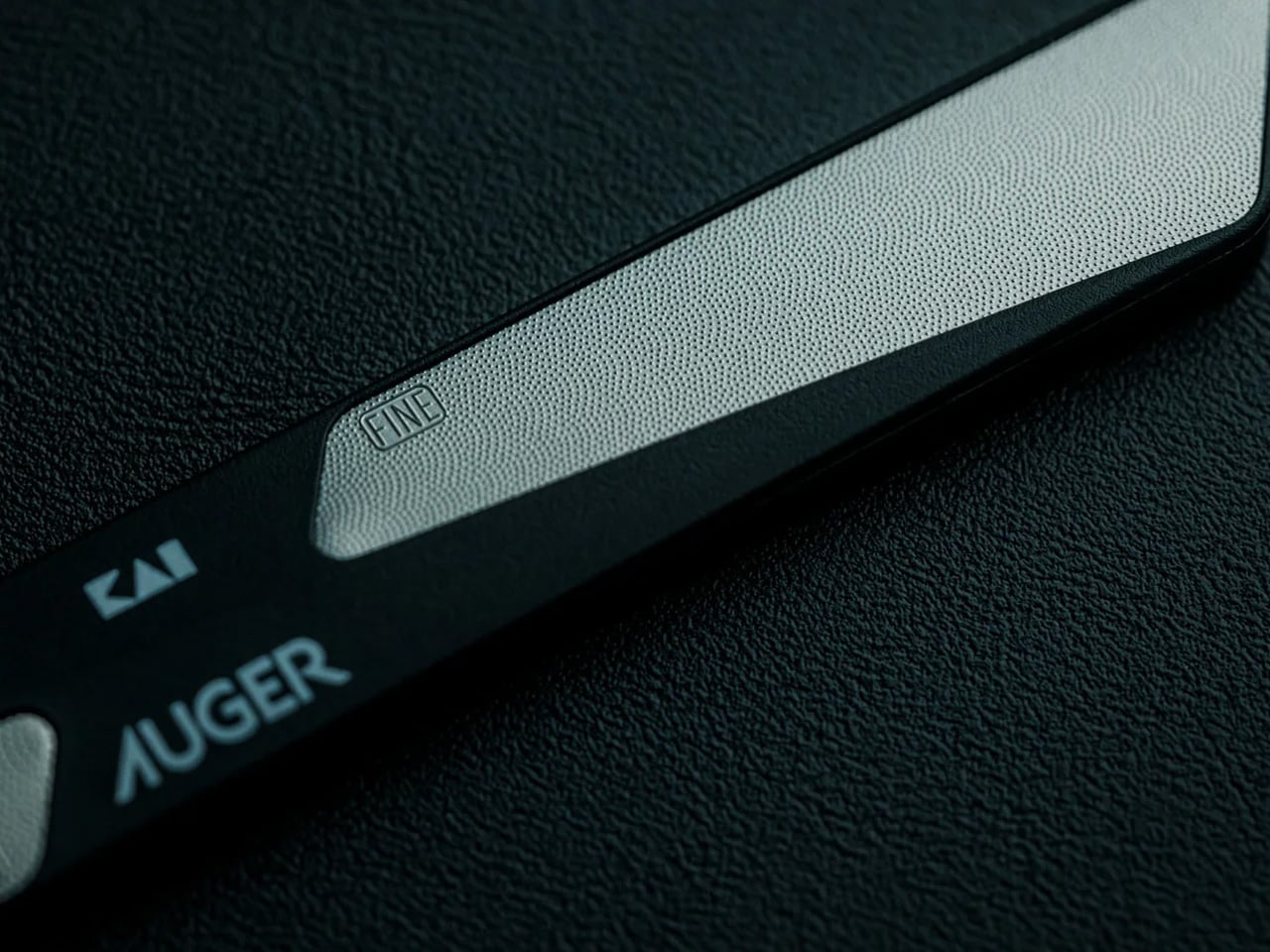
Kai Corporation brings over a century of Japanese blade-making expertise to this men’s grooming essential. The Auger PrecisionEdge features dual surfaces: a coarse side for shaping nail edges with control, and a fine side for finishing with smooth precision. The precision-etched stainless steel surface glides without snagging or scratching, while the three-dimensional handle structure provides a confident grip even for grooming beginners learning proper technique.
At 127mm long and just 9 grams, this nail file tucks into any Dopp kit or desk drawer without taking up space. The corrosion-resistant stainless steel construction maintains its performance through years of regular use. Auger’s philosophy centers on the belief that men’s grooming deserves the same precision and craftsmanship traditionally reserved for shaving tools, turning an often-overlooked detail into a deliberate act of self-care.
The dual-surface design handles both shaping and smoothing in one streamlined tool.
The 3D ergonomic handle makes precise nail care accessible for beginners.
What we dislike
The compact size may feel too small for users with larger hands.
The minimalist stainless steel design lacks the warmth of wooden or textured alternatives.
6. Fire Capsule Oil Lamp
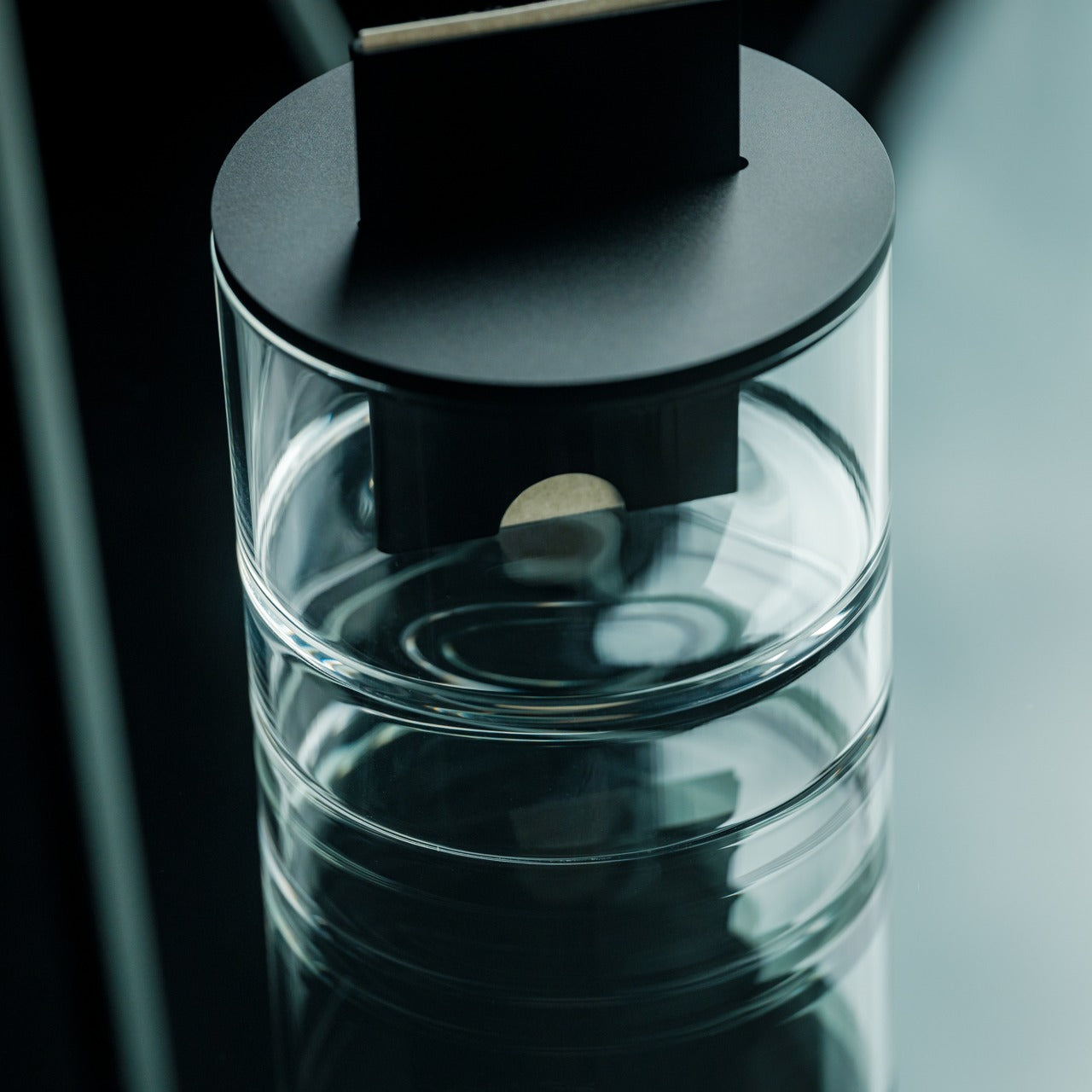
The Fire Capsule transforms any space into a calm sanctuary through its clean-burning paraffin oil flame. Designed by Eri Tsunoda of SERVAL, a Kyoto City University of Arts graduate, this lamp draws inspiration from traditional Japanese tea canisters while delivering thoroughly modern functionality. The 80ml capacity provides up to 16 hours of continuous light, making it reliable for extended gatherings or overnight ambiance without constant refilling.
The precision-engineered lid keeps the glass chimney dust-free between uses, maintaining crystal clarity for optimal light diffusion. An included aroma plate lets you infuse spaces with essential oils, layering scent with the visual warmth of flickering flame. The flat-topped cylindrical design stacks efficiently for storage, while the lightweight aluminum and glass construction weighs just 180 grams. Paraffin oil burns cleanly without odor, and when combined with insect-repelling varieties, it creates peaceful outdoor environments on patios or campsites.
The 16-hour burn time eliminates constant monitoring during long evenings.
The stackable design offers space-efficient storage for multiple units.
What we dislike
Open flames require more attention than battery-powered alternatives for safety.
Paraffin oil refills add an ongoing consumable cost compared to rechargeable lights.
7. Levitating Pen
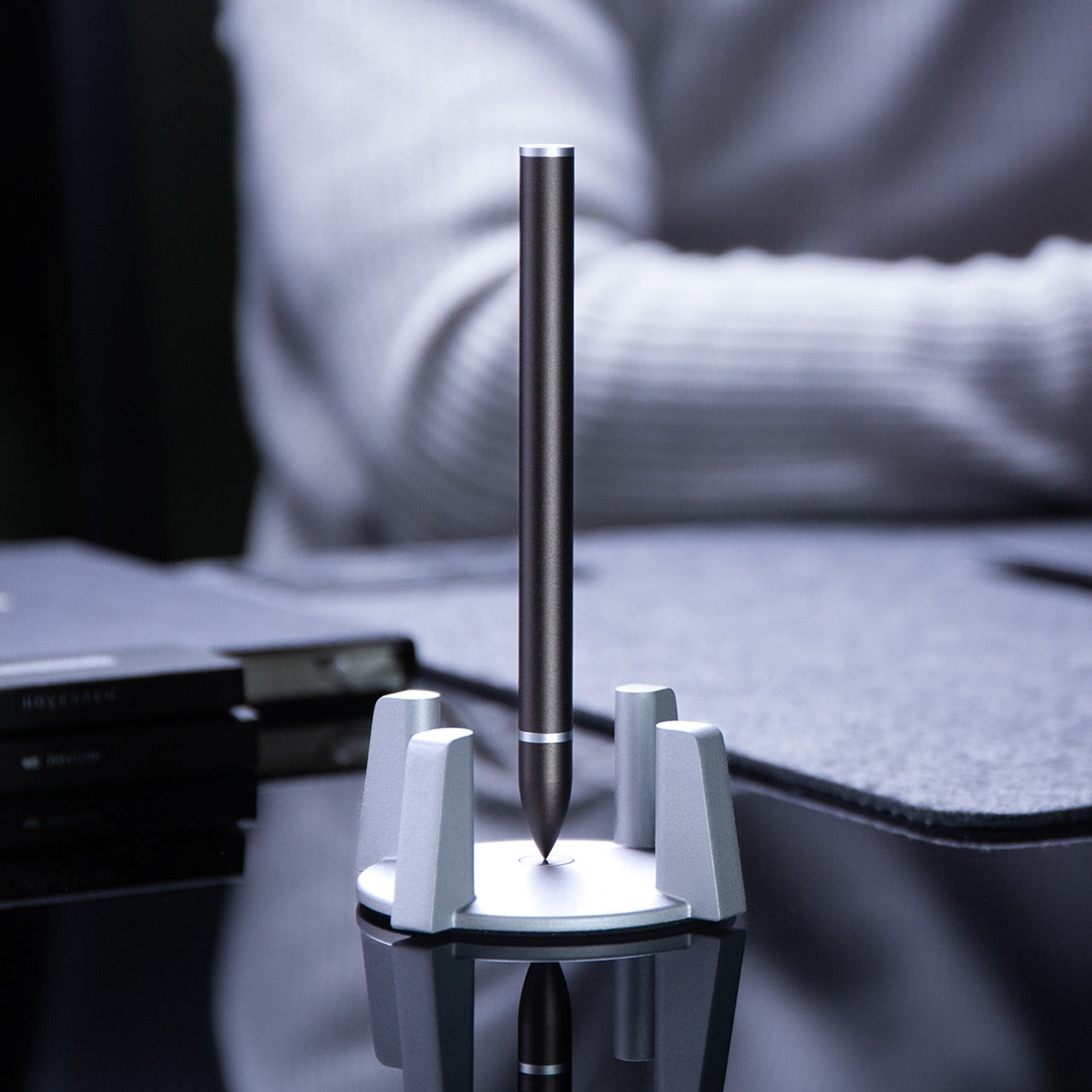
The Levitating Pen defies gravity through pure magnetic precision, standing vertically balanced without batteries or electronics. Manufactured at the same facility producing Apple products, it’s crafted using high-precision CNC machining with tolerances under 0.1mm. The magnetic pedestal creates an invisible field that keeps the pen elegantly floating, while a gentle twist sets it spinning with hypnotic fluidity that transforms desk breaks into moments of meditative calm.
The Swiss-made ballpoint cartridge ensures smooth, reliable writing performance for professionals, artists, and engineers who demand precision. Cross-brand refill cartridges make long-term use effortless, while the magnetic cap provides quick access when inspiration strikes. Beyond its stunning kinetic presence, this pen serves as functional art that sparks creativity simply through its motion. The soothing rhythm of its spin offers stress relief during demanding workdays, turning an everyday writing tool into an object worth contemplating.
The sub-0.1mm machining precision creates mesmerizing magnetic balance and spin.
The Swiss ballpoint cartridge delivers professional writing quality that matches the premium design.
What we dislike
The pedestal base requires dedicated desk space that portable pens don’t need.
The magnetic system may interfere with sensitive electronics if placed too close.
8. Leek – USA Flag
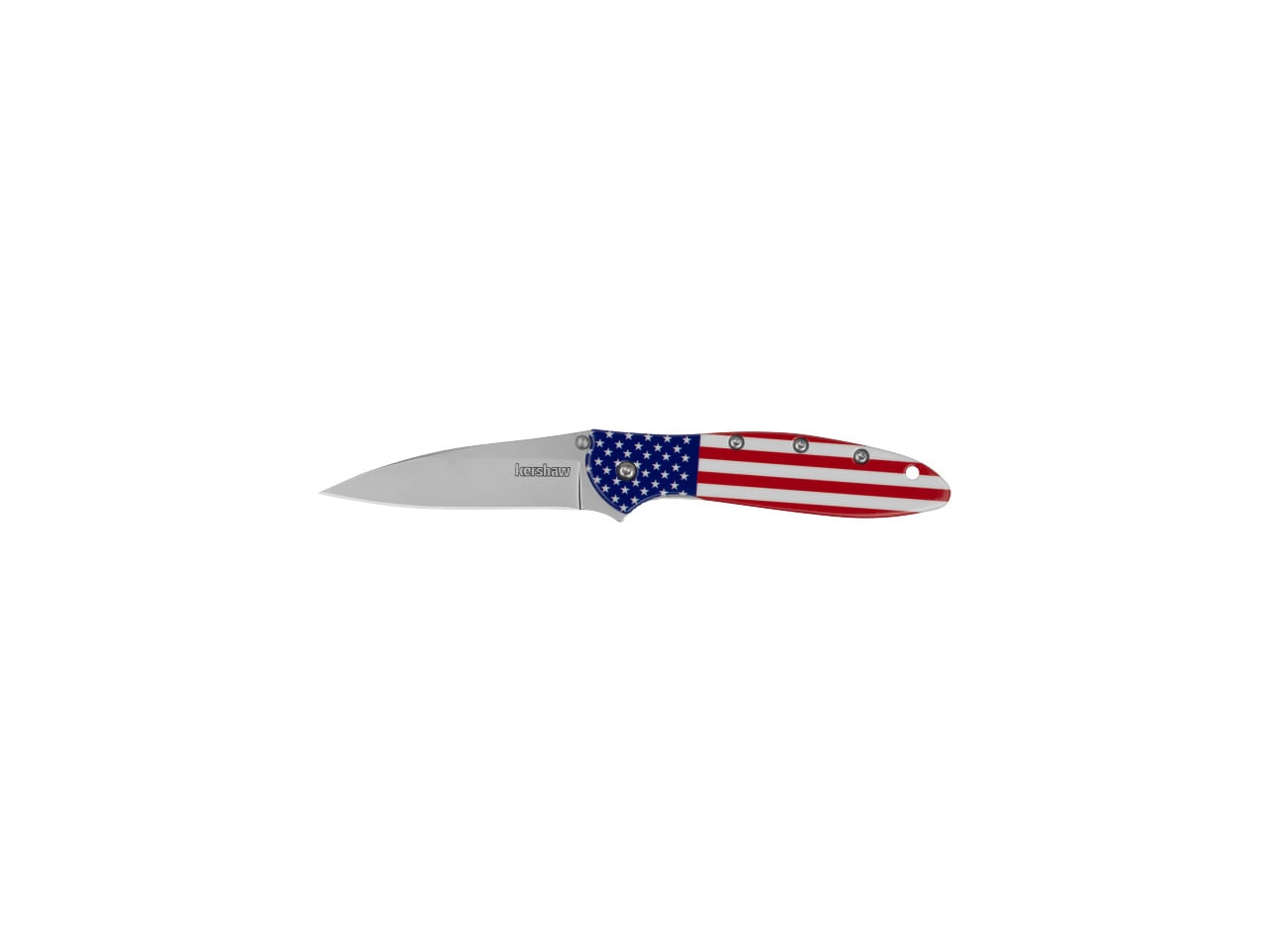
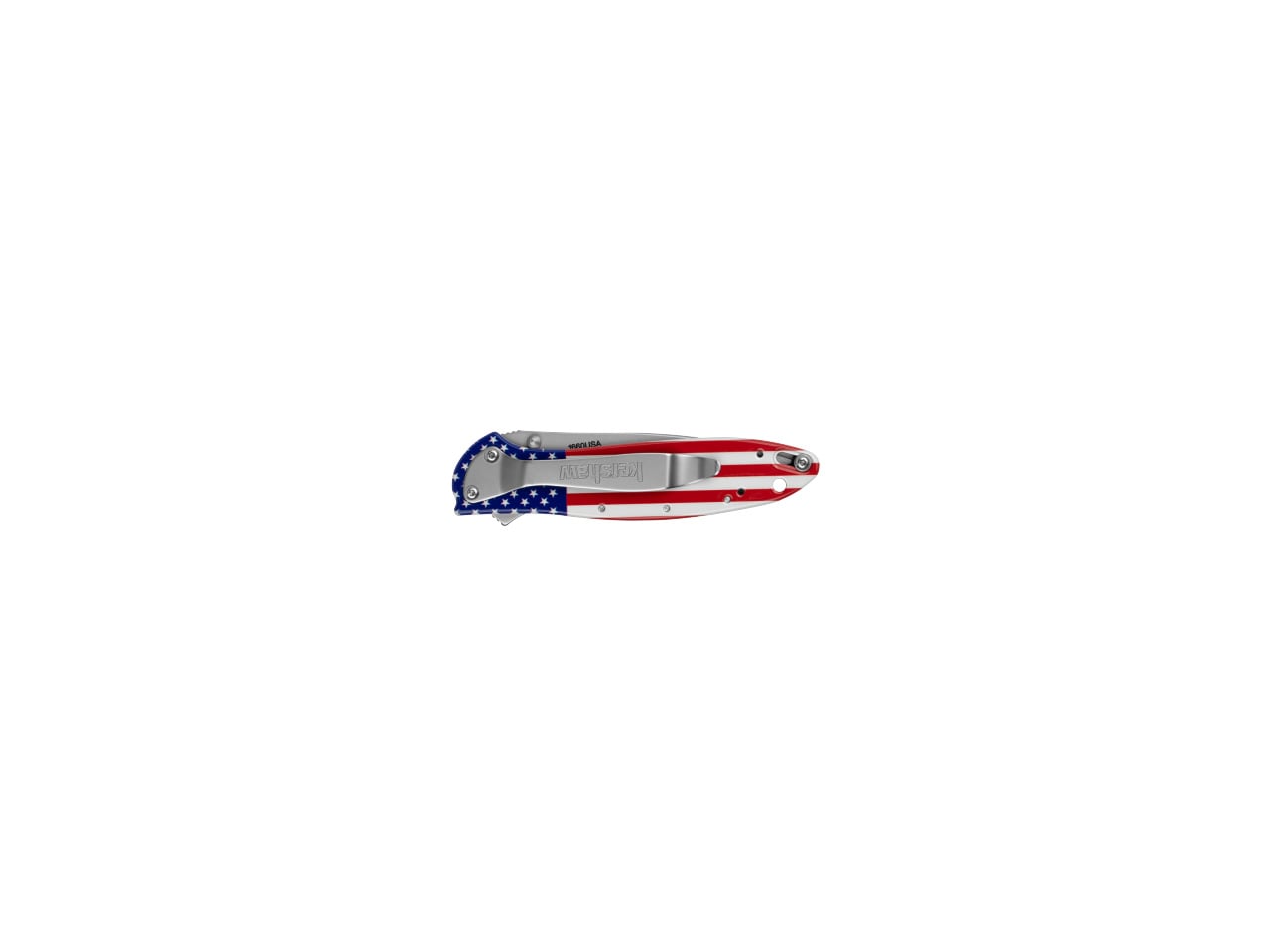
Everyday carry knives should balance functionality with personal expression, and the Kershaw Leek USA Flag Edition accomplishes both with American-made craftsmanship. That 3-inch blade, constructed from 14C28N high-performance stainless steel, holds its edge through repeated use while remaining easy to resharpen when needed. The slim profile measures just 4 inches when closed, making it genuinely pocketable without printing through your pants or weighing down your pocket. The assisted opening mechanism with flipper deployment means you can open this knife smoothly with one hand, keeping your other hand free for holding materials or maintaining your grip on whatever you’re working with.
The contoured aluminum handle provides a comfortable grip during extended use, while that custom USA flag finish adds patriotic flair without compromising functionality. Ken Onion’s design vision shines through in the modified wharncliffe blade shape, which excels at precision cutting tasks from opening packages to preparing food. When you’re finished using it, the tip-lock slider secures the blade safely in the closed position, preventing accidental openings in your pocket. The reversible pocket clip allows tip-up or tip-down carry based on your preference, adapting to your specific EDC setup. Being manufactured entirely in the USA means this knife meets higher quality control standards while supporting American manufacturing.
What we like
The 14C28N steel blade maintains sharp edges through heavy use and resharpens easily.
Assisted opening with flipper deployment enables smooth one-handed operation.
The slim 4-inch closed length makes genuine pocket carry comfortable.
Made entirely in the USA with American manufacturing quality standards.
What we dislike
The patriotic USA flag design may not appeal to those preferring understated EDC gear.
The assisted opening mechanism adds slightly more weight at 2.6 ounces compared to manual folders.
9. Serenity Pen Stand
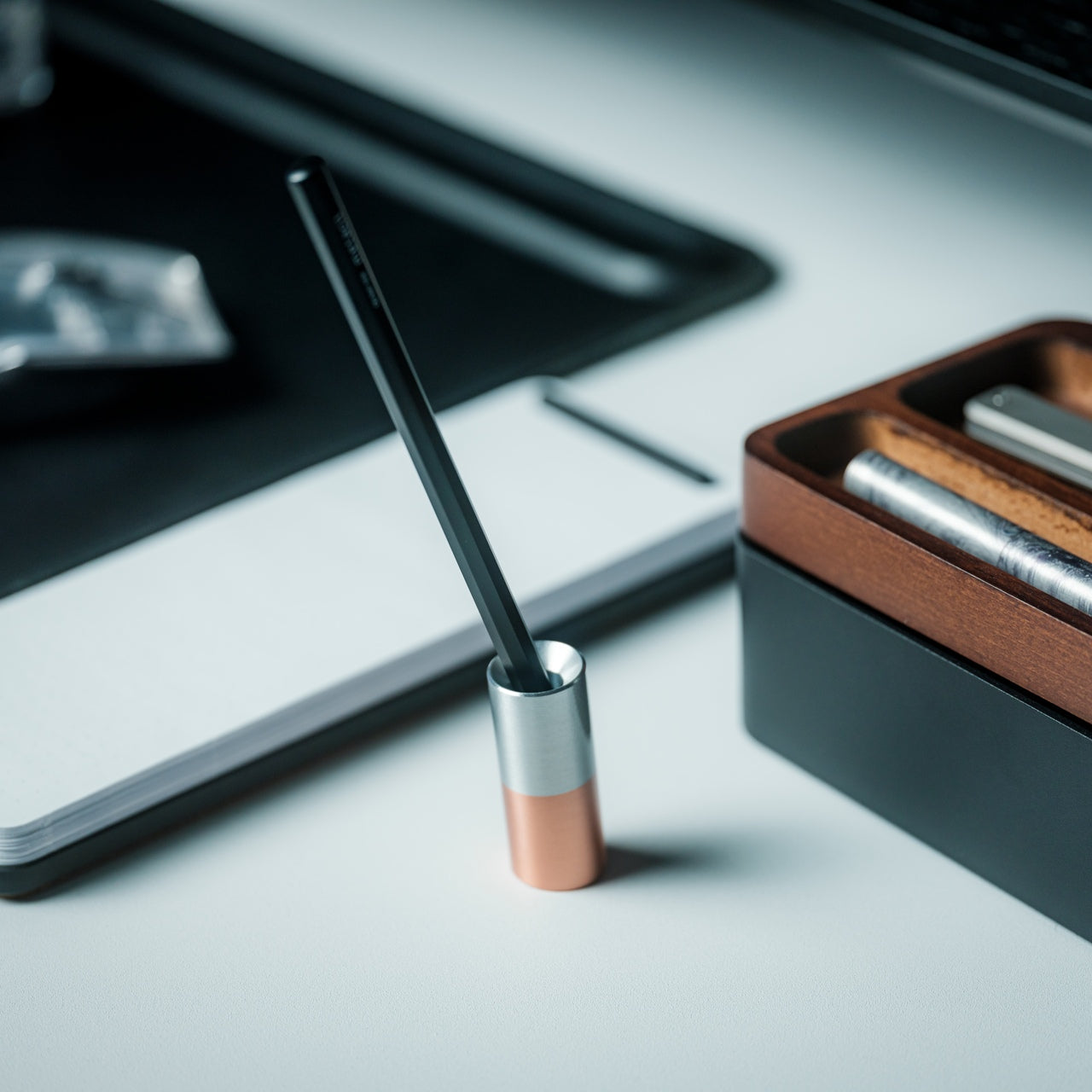
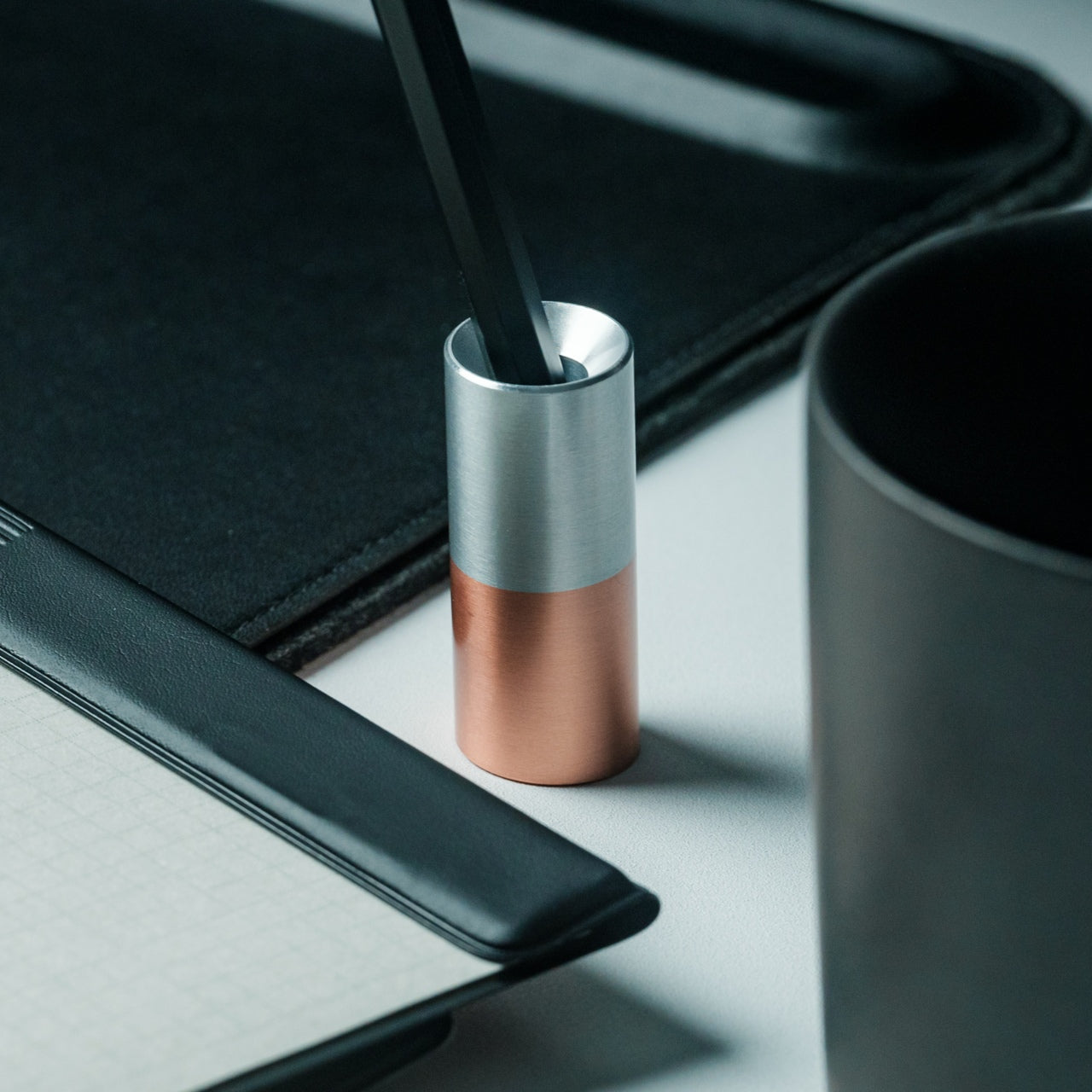
Serenity reduces the pen stand concept to its absolute essence: a minimalist cylinder with a cavity for your pen’s tip. The slight tilt angle provides easier access to your writing instrument while keeping it displayed rather than hidden in a drawer. The dual-tone aluminum and copper construction adds visual interest through contrasting metal finishes, while the heavy copper bottom lowers the center of gravity to prevent tipping despite the stand’s diminutive size.
This tiny desk accessory becomes decoration in its own right when unoccupied, its sculptural simplicity complementing minimalist workspaces without visual clutter. The unobstructed design puts complete focus on your pen rather than the stand itself, turning quality writing instruments into display pieces worth appreciating. Its compact footprint preserves precious desk real estate while giving your favorite pen or pencil the pedestal treatment it deserves.
The copper-weighted base provides surprising stability despite its minimal size.
The tilted angle offers easier pen access than vertical stands.
What we dislike
The single-pen capacity limits use for those who frequently switch between writing instruments.
The exposed tip position may increase dust accumulation on the pen nib.
10. Aroma Fragrance Pin
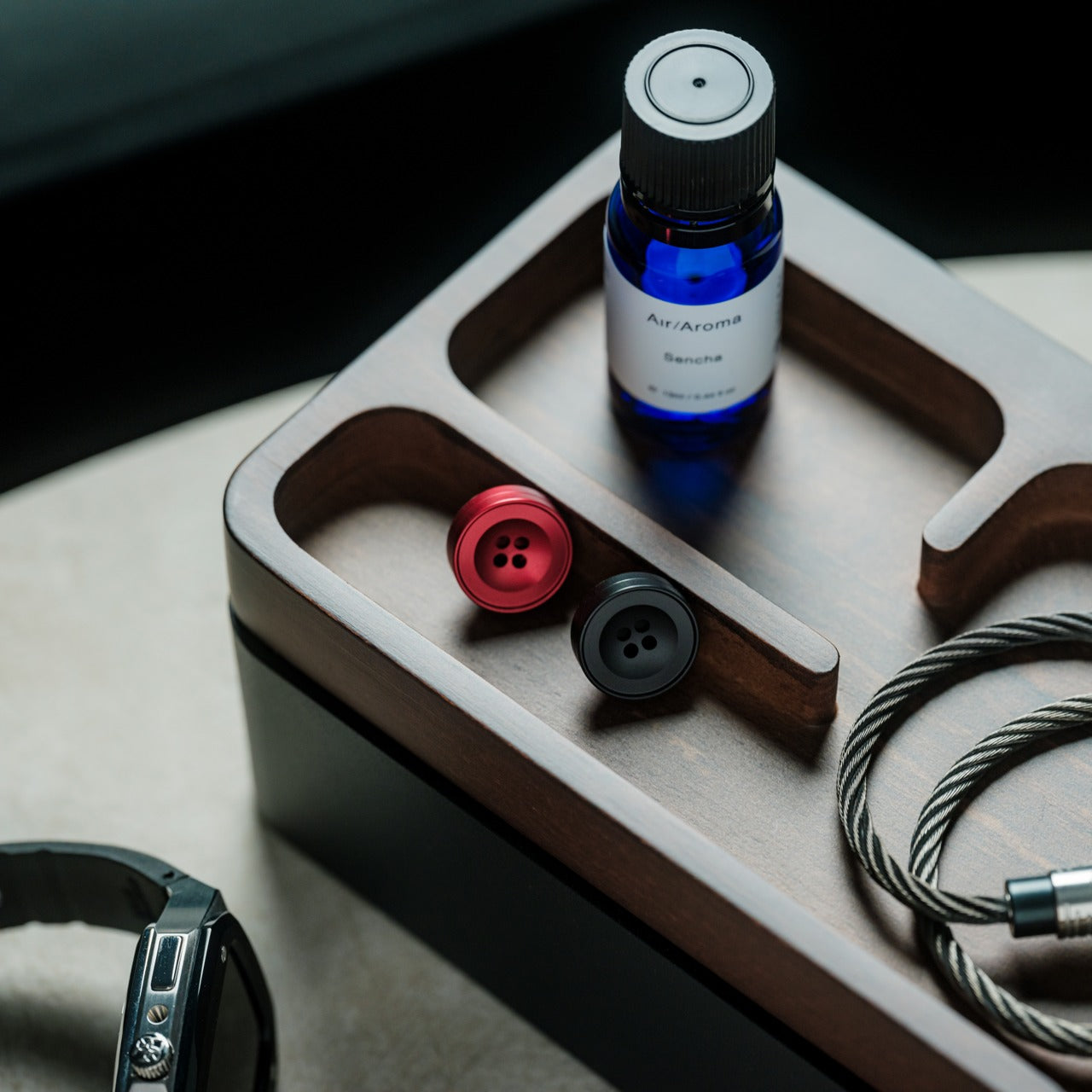
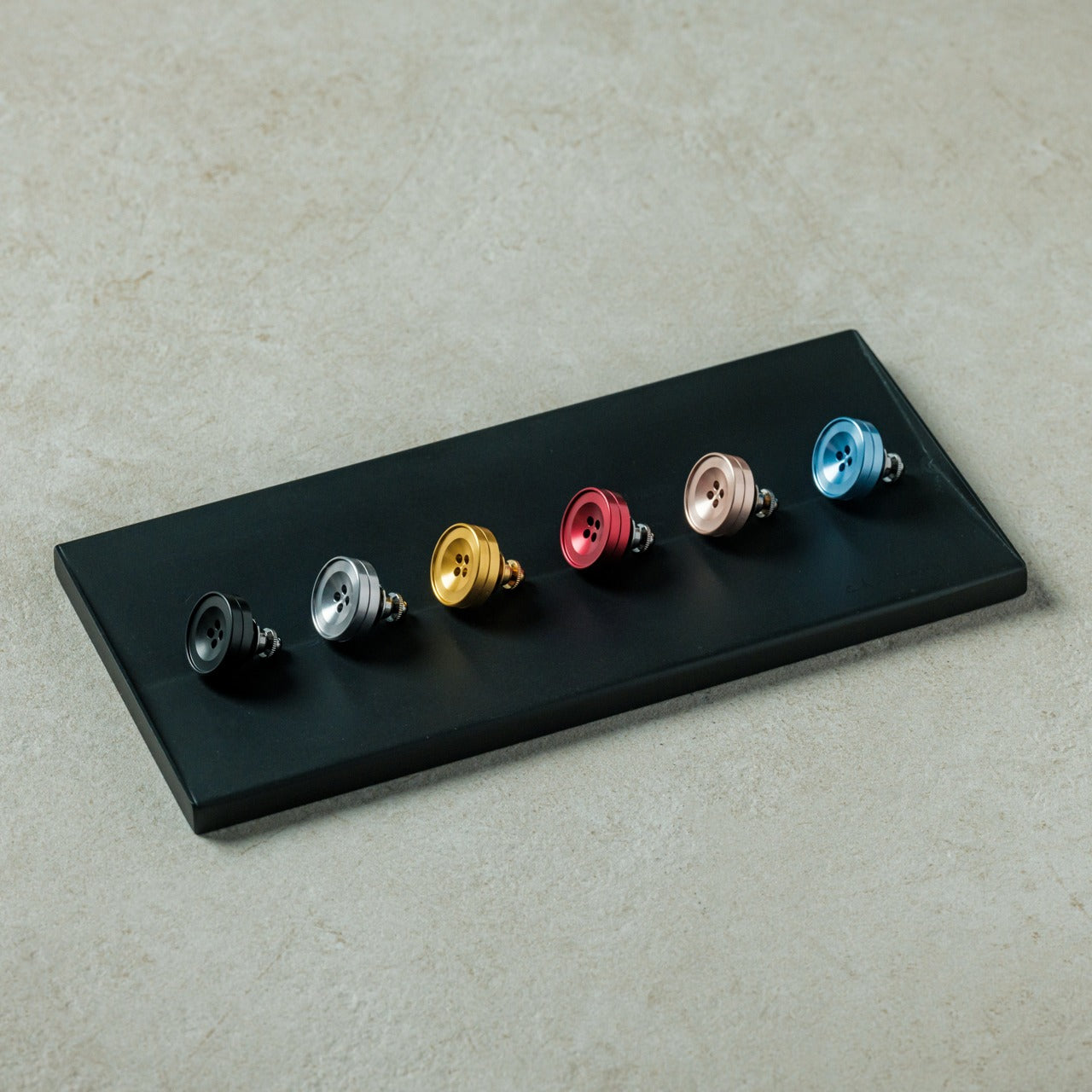
These fragrance pins disguise aromatic diffusion as elegant buttons that blend seamlessly with clothing and accessories. Each pin contains a small cotton insert that holds a few drops of your preferred essential oils, releasing a subtle scent throughout your day. The discreet design allows you to carry calming lavender, energizing citrus, or grounding sandalwood wherever you go without bulky diffusers or obvious aromatherapy accessories.
Meticulously carved from single blocks of aluminum by expert craftsmen, each pin receives an alumite dye finish that adds color while creating unique variations between batches. The solid aluminum construction prevents oil leakage while allowing gradual scent diffusion through carefully engineered ventilation. Pin them to shirt collars, jacket lapels, bags, or scarves for personal aromatherapy that stays close without overwhelming nearby people. The refillable cotton system makes scent changes simple, letting you match fragrances to your mood or needs.
The button styling integrates aromatherapy seamlessly into everyday clothing.
The refillable cotton system allows unlimited scent customization and easy changes.
What we dislike
The scent diffusion radius stays personal rather than filling entire rooms.
Oil-soaked cotton requires regular refreshing to maintain fragrance strength throughout long days.
Why These Gifts Work
Last-minute shopping doesn’t mean settling for compromise. The objects above prove that thoughtful design and quality materials create gifts that feel substantial, regardless of when you discovered them. Each piece solves a real need while elevating everyday moments, from how we listen to music to how we light a room or organize our tools.
The holiday season rewards presence over expense, intention over elaboration. These stocking stuffers deliver quiet luxury through honest materials, intelligent engineering, and designs that respect both maker and user. They’re compact enough to surprise, substantial enough to last, and distinctive enough that nobody will question your timing.
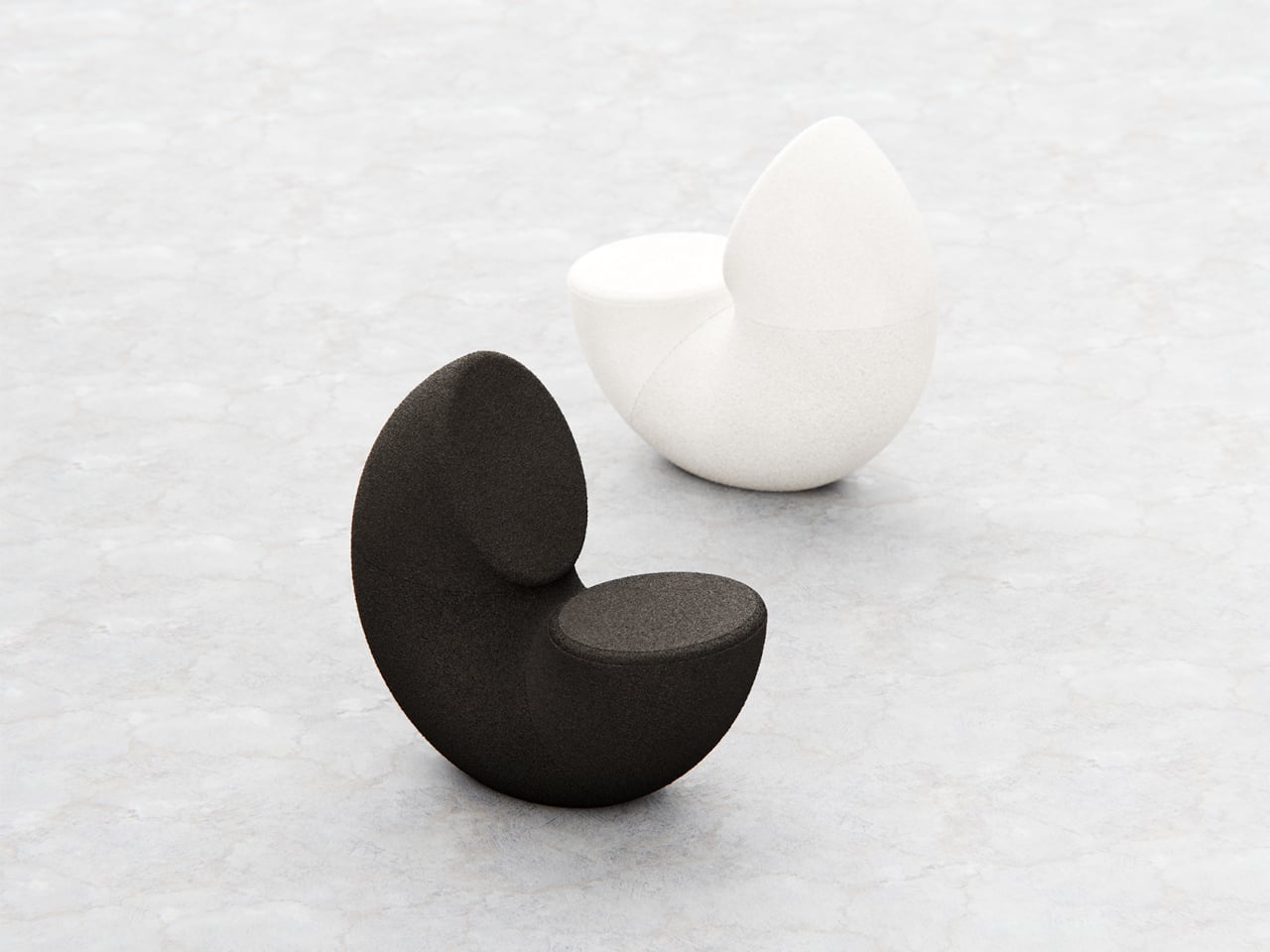
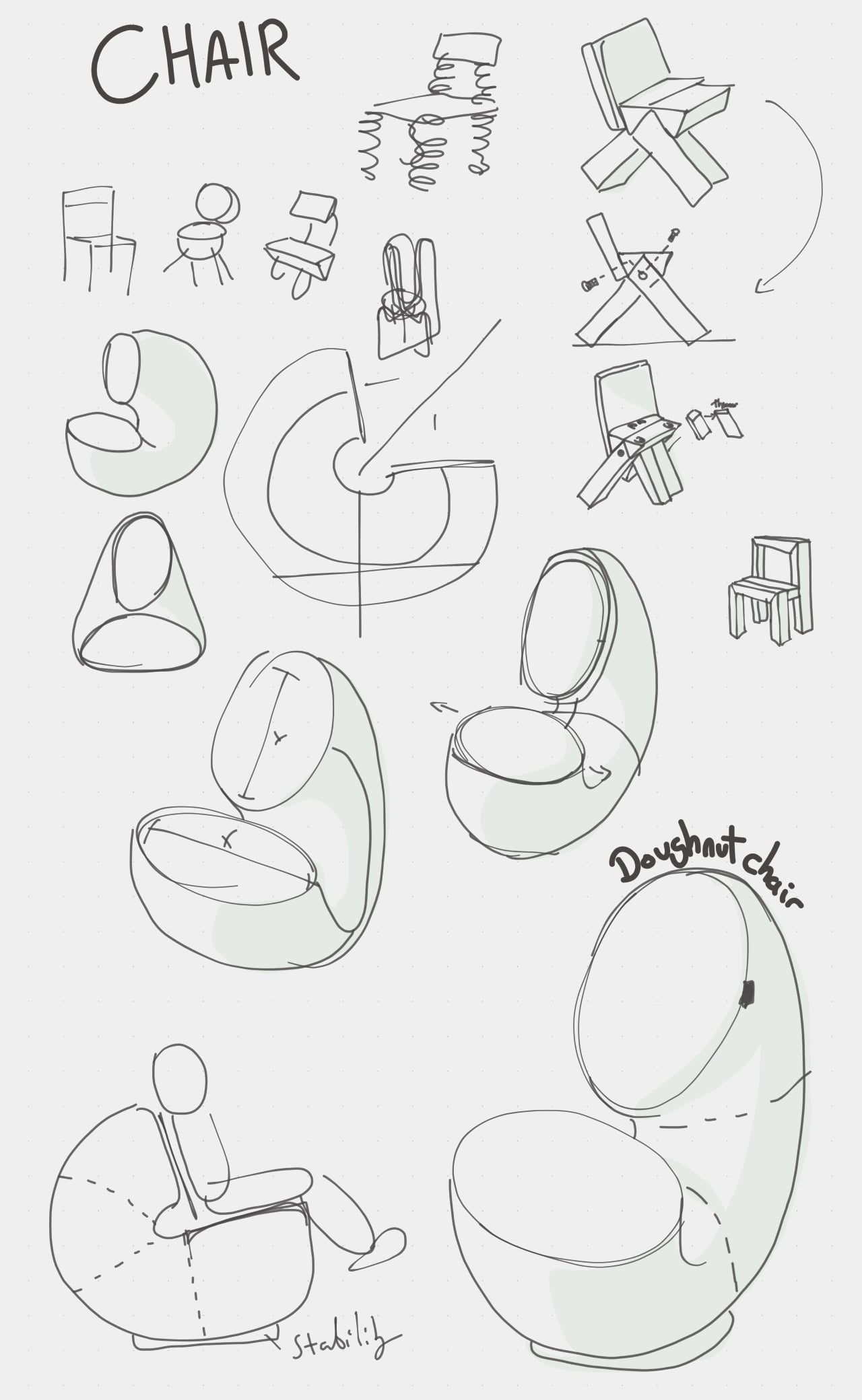
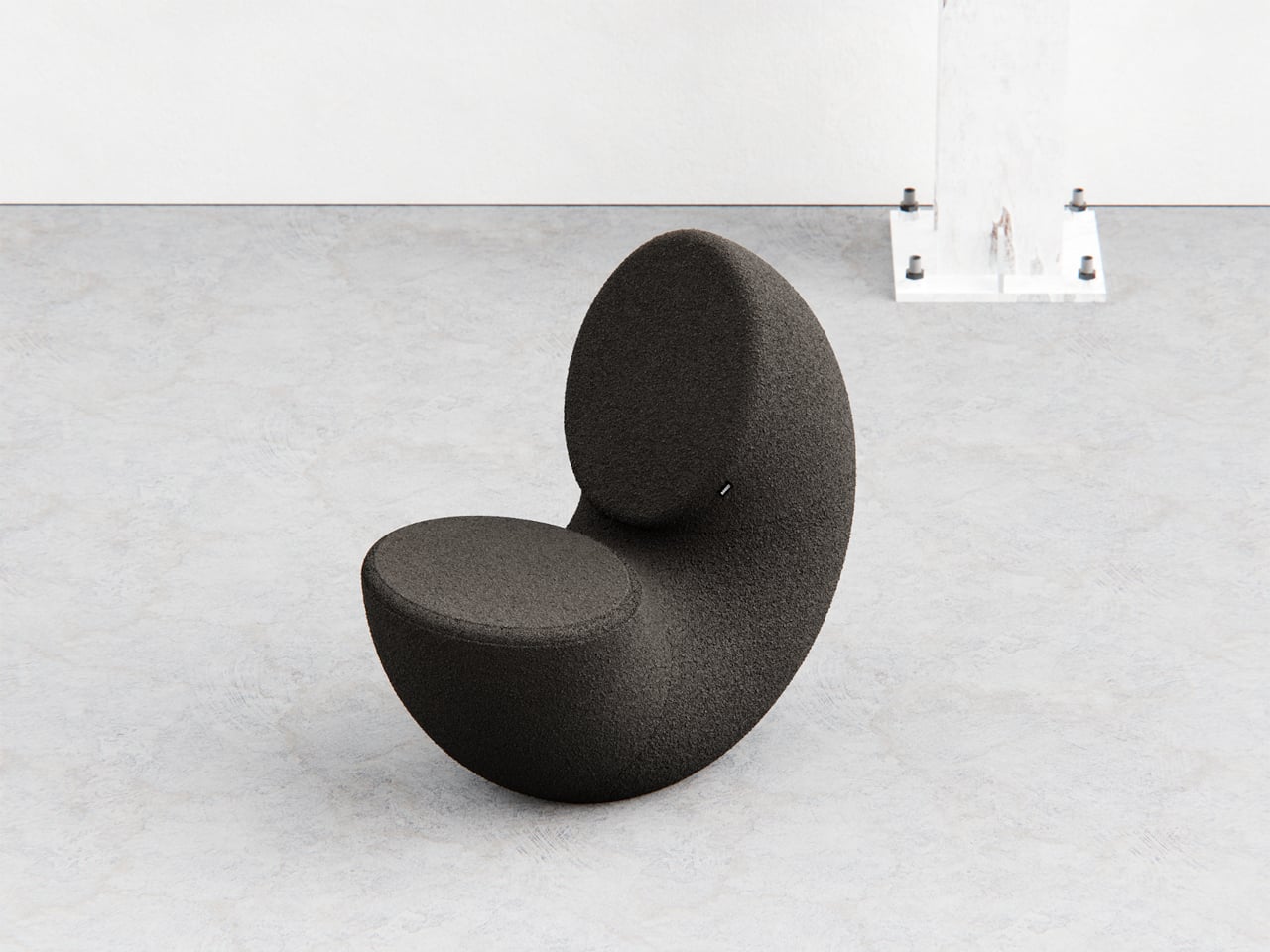
Most chairs are clearly assembled objects, with legs, a seat, and a backrest, all stacked and joined together. Sculptural lounge pieces sometimes flip that script and feel more like a single volume that has been carved or sliced. Chunk is a concept that leans into that second approach, imagining seating as a doughnut with a bite taken out rather than a frame with cushions bolted on, treating furniture as something you edit rather than assemble.
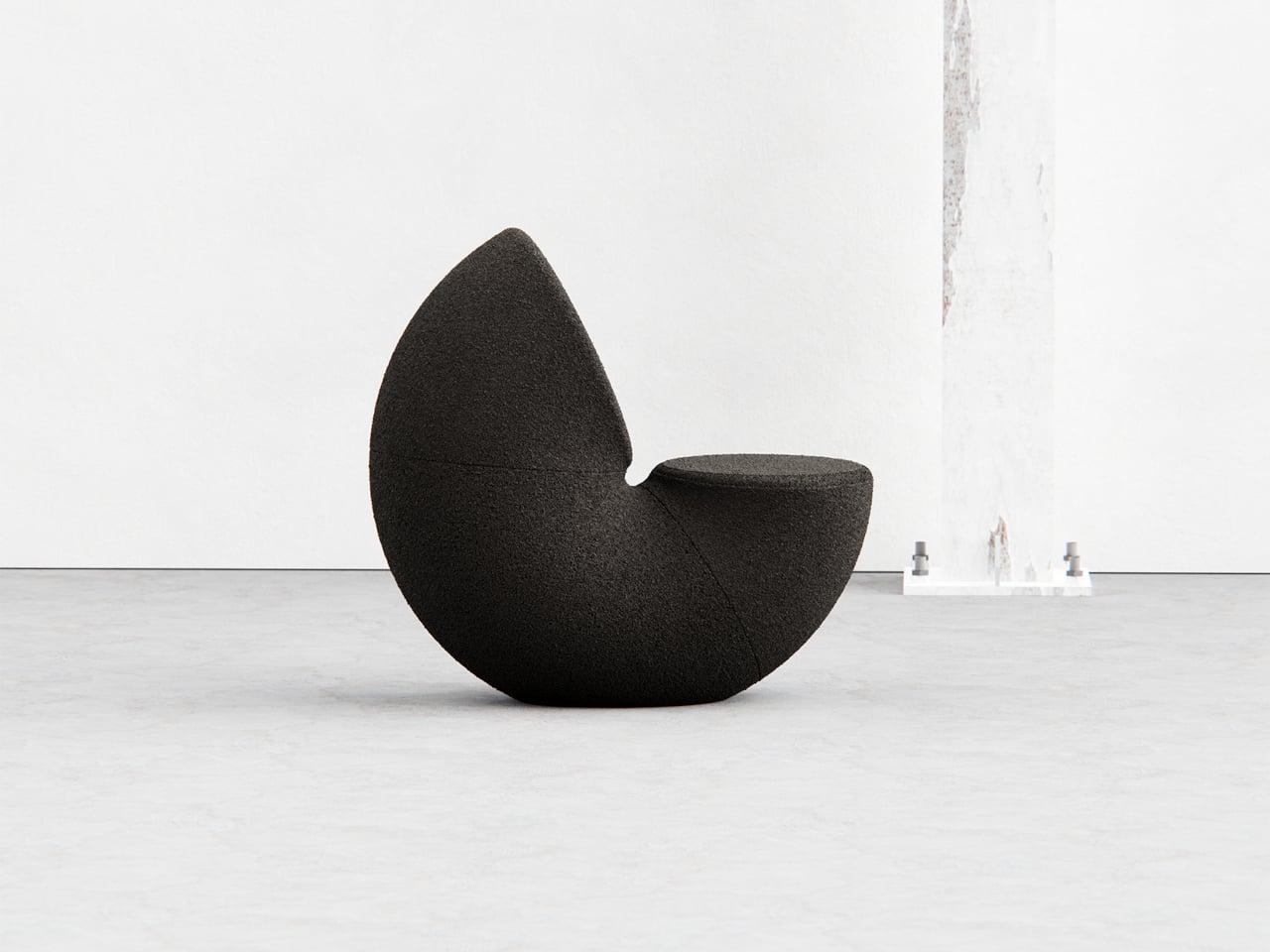
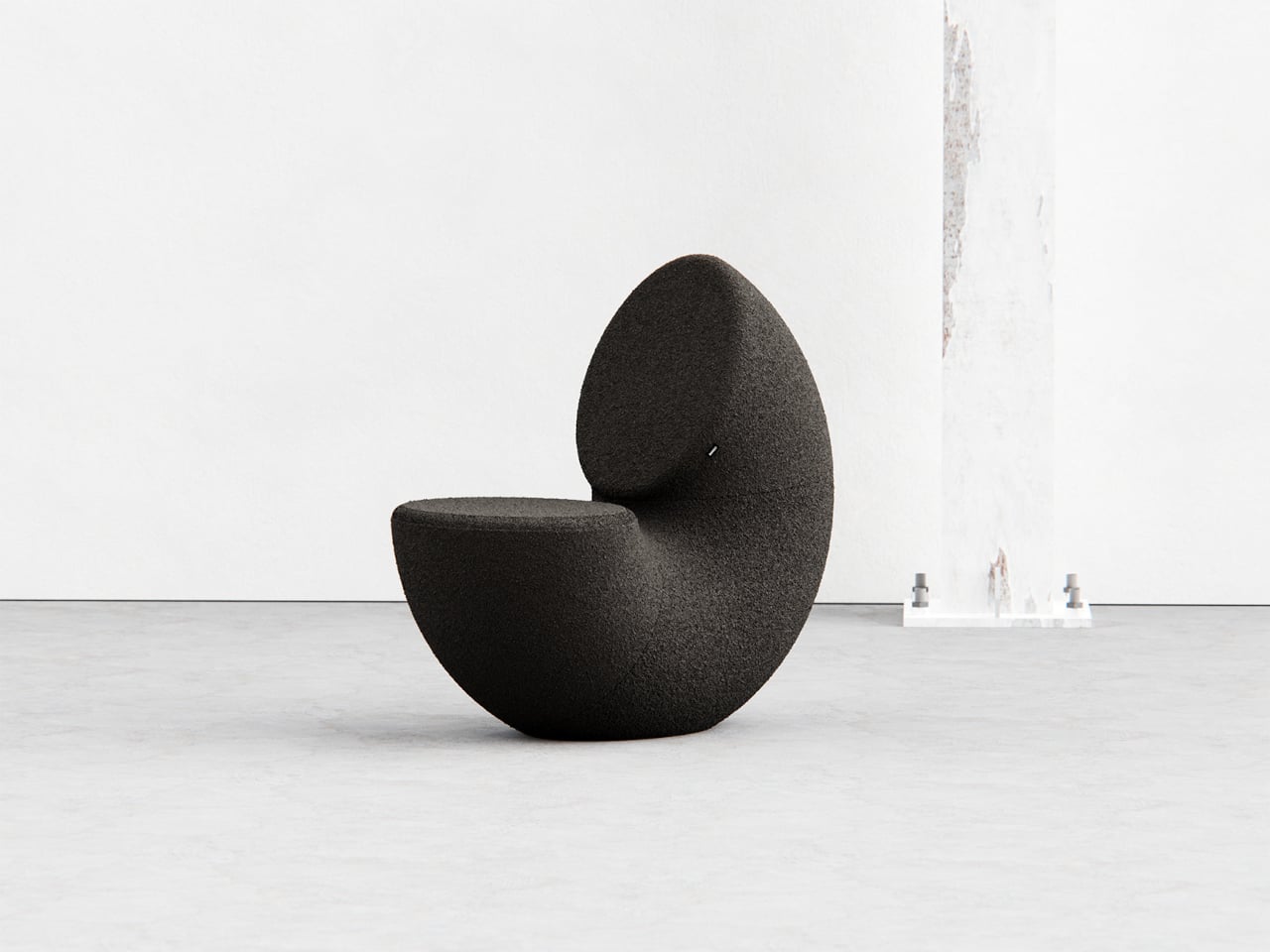
The designer imagined a chair that looks like a doughnut with a chunk removed. The missing piece becomes the seat and the opening for the backrest, while the rest of the ring wraps around in a continuous loop. The concept is less about novelty and more about seeing how far a single looping form can be pushed into something you can actually sit in, where the absence of material defines the place for the body.
Both the seat and backrest share the same oval cross-section, but as the base curves up to become the backrest, that oval quietly swaps its length and width. It is wide and low where you sit, then gradually becomes tall and narrow as it rises behind you. The section never breaks; it just morphs along the path, which gives the chair a sense of motion even when it is still and empty.
The “bite” creates a bowl-like seat that cradles the hips and thighs, while the rising loop offers a relaxed backrest rather than a rigid upright. The proportions suggest a low, lounge-style posture, closer to a reading chair or a corner piece in a living room than a dining chair. The continuous curve encourages you to lean back and sink in, not perch on the edge ready to stand again.
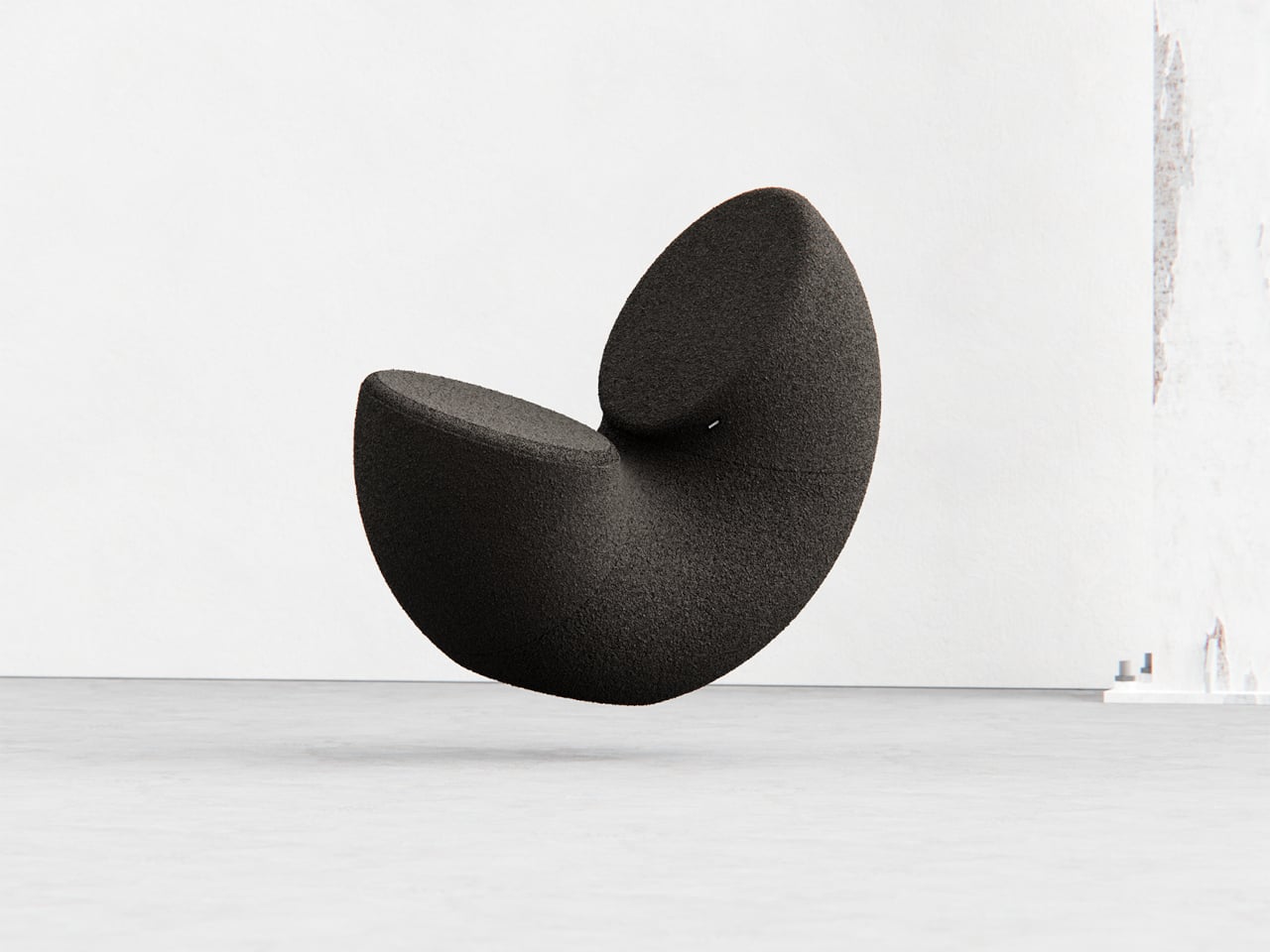
A near-cylindrical form can look like it might roll away, but the geometry and internal structure are tuned to keep the center of gravity low and slightly behind the seat. The base is subtly flattened, and a denser core at the bottom would keep it from tipping forward when someone leans back. The result is a chair that looks precarious from some angles but behaves like a grounded lounge piece once you sit.
The monolithic upholstery, a textured fabric that wraps the entire volume without obvious breaks, reinforces the idea of a single chunk of material. The form reads differently as you move around it, sometimes like a shell, sometimes like a curled leaf, sometimes like a coiled creature. It is the kind of chair that anchors a corner or gallery-like space, inviting you to walk around it before you decide to sit down and settle in.
Chunk uses subtraction as its main design move, starting from a complete ring and then removing just enough to create a place for the body. For a category that often defaults to adding parts, there is something satisfying about a chair that feels like it has been edited down to a single, looping gesture, with one decisive bite turning an abstract volume into a place to rest, read, or just sink into for a while.
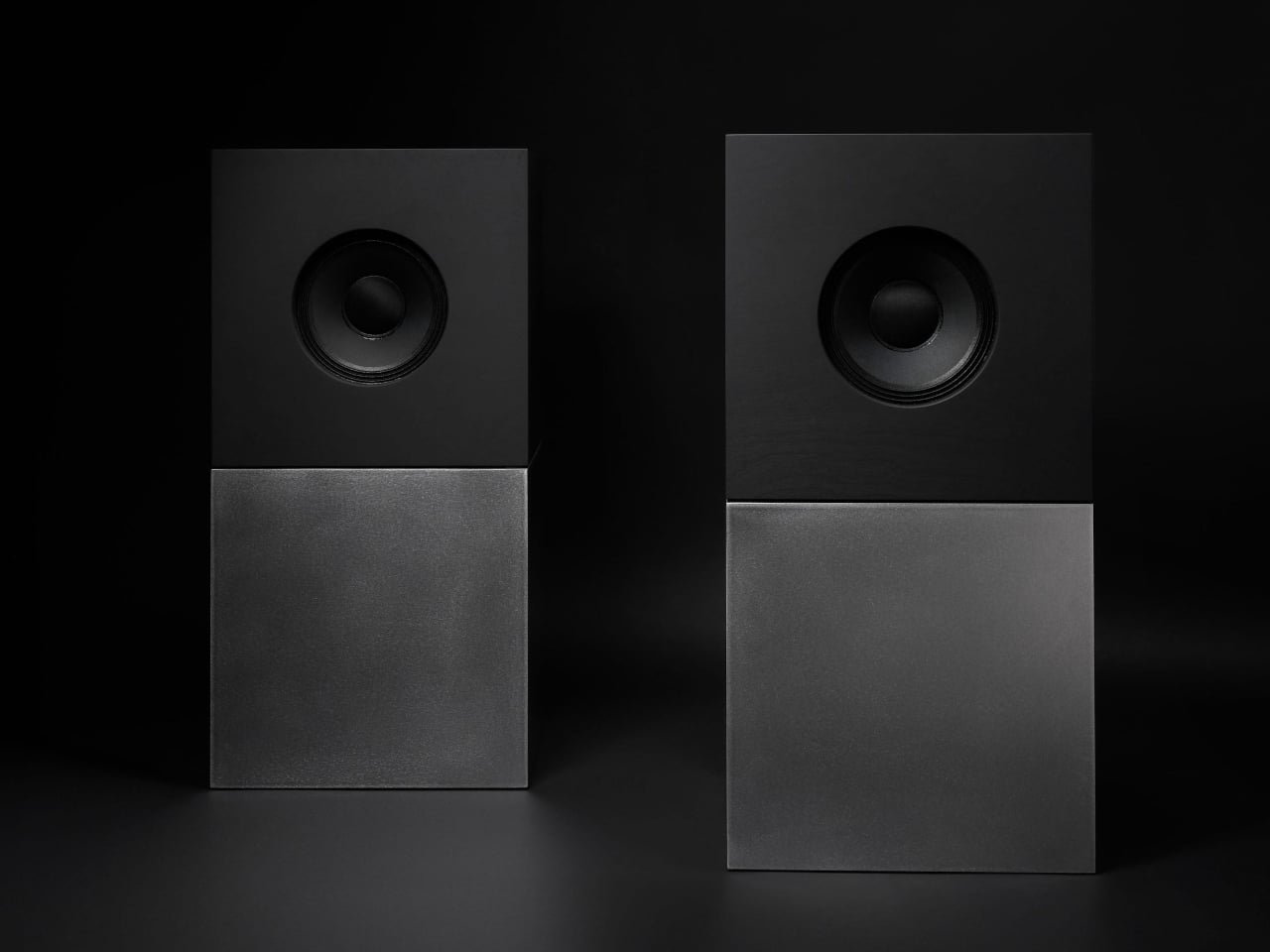
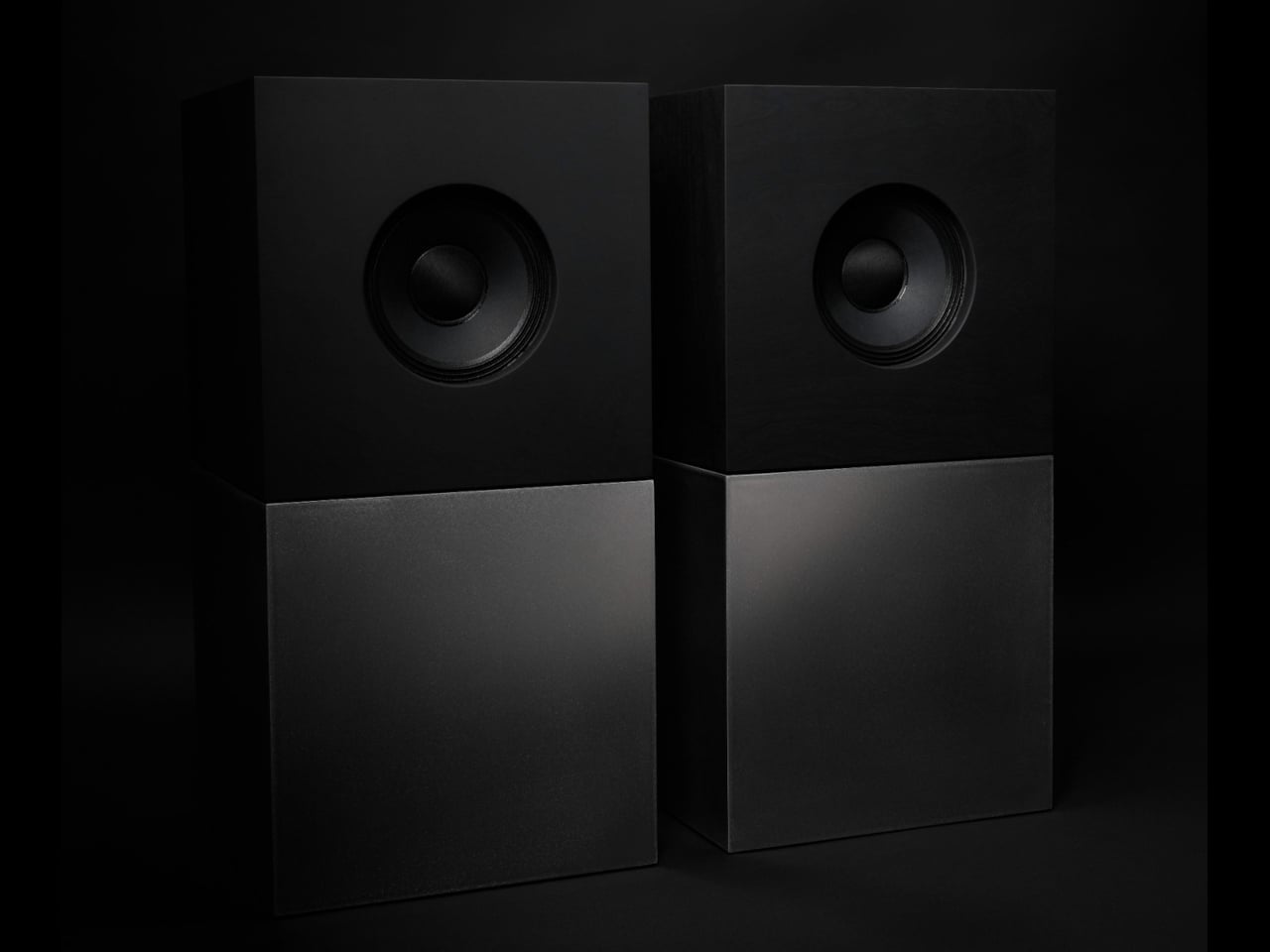
Most hi-fi speakers still look like anonymous black rectangles, even when they sound great. A few brands treat speakers as furniture or sculpture, but often at the expense of engineering. Braque by Nocs tries to sit in the middle, a pair of cubes that are as considered visually as they are technically, treating stereo as both sound and composition rather than one serving the other as an afterthought.
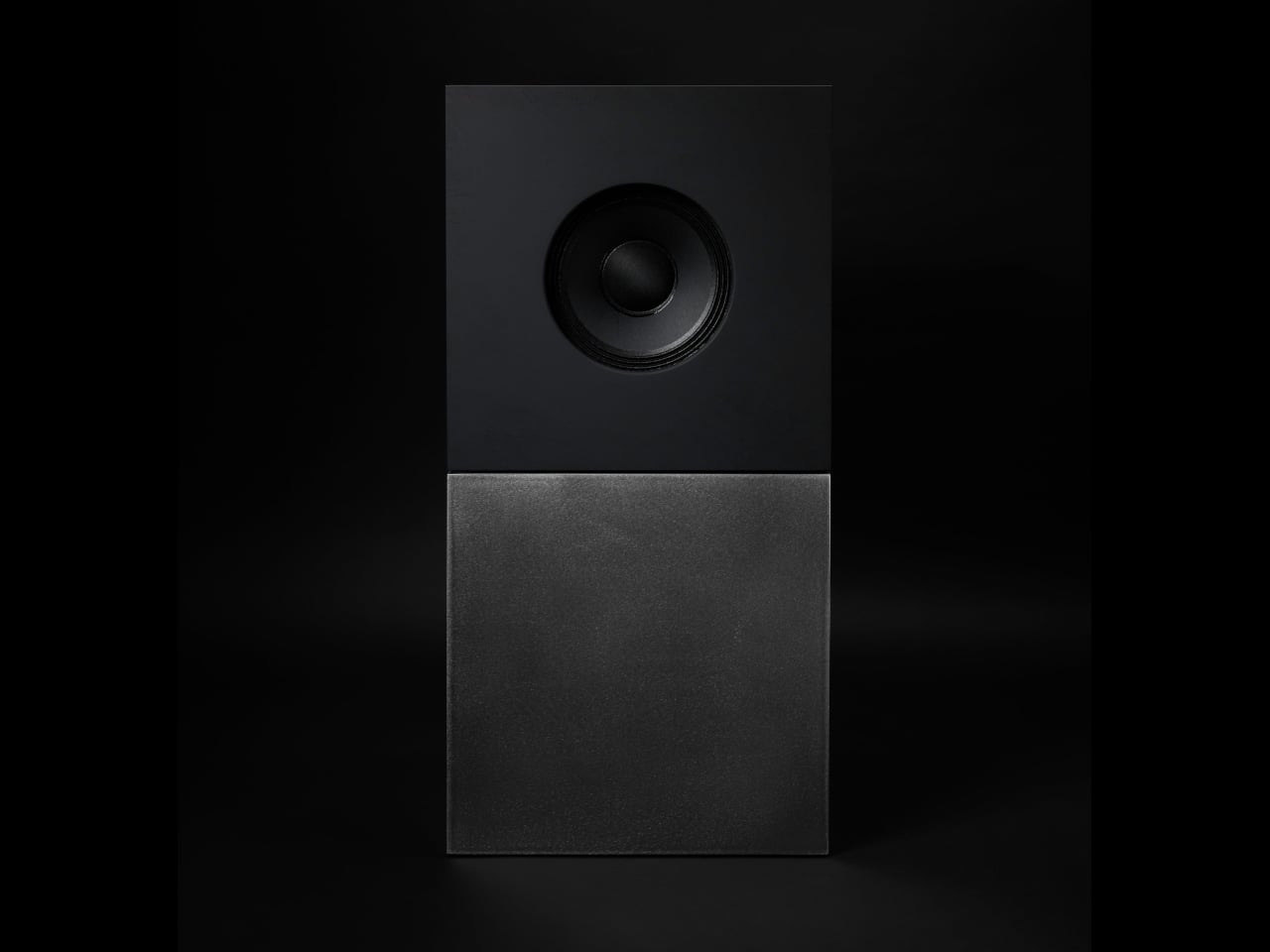
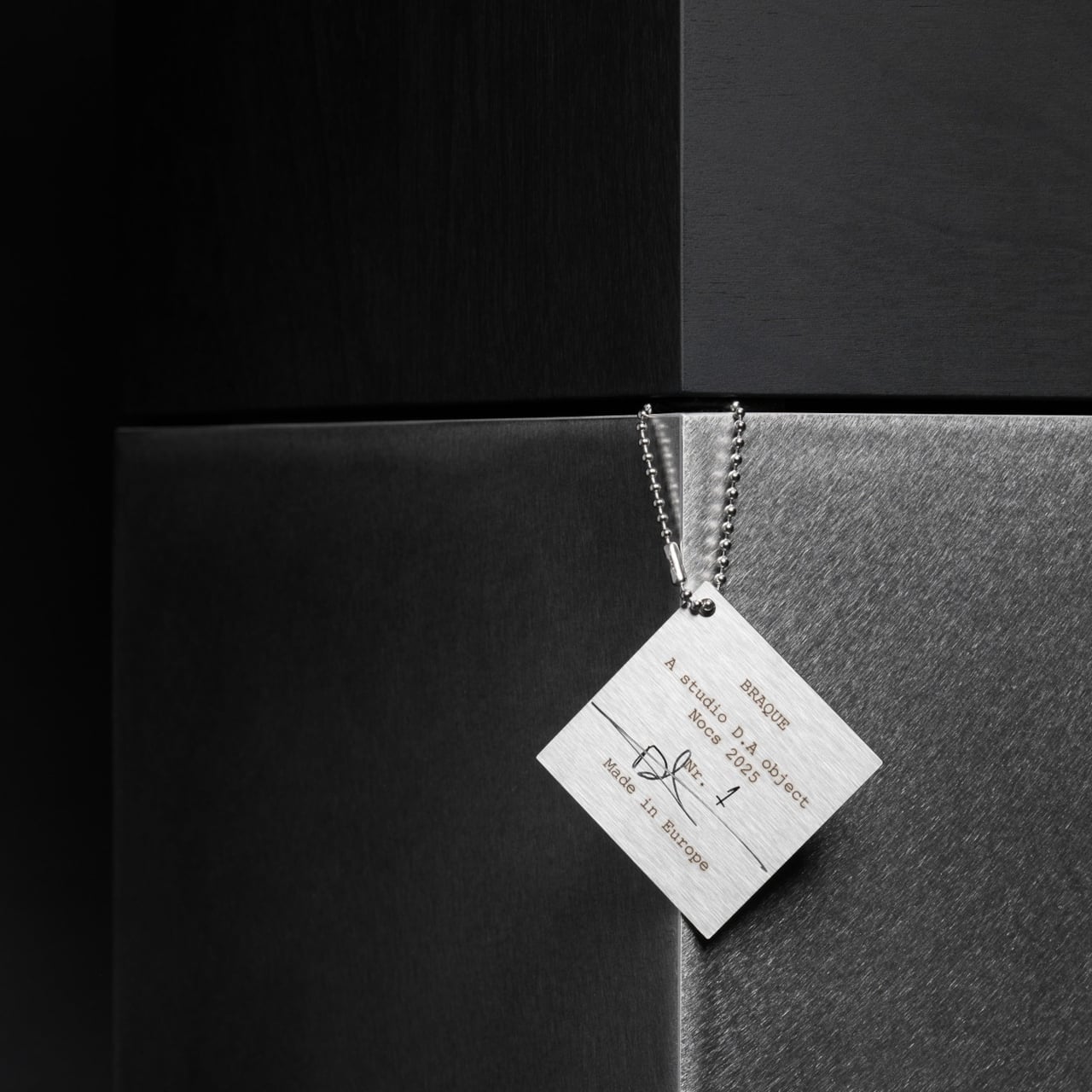
Nocs calls Braque “two cubes, one sculptural stereo system,” and each speaker is a stacked pair, a CNC-machined plywood enclosure on top of a 25 kg solid-steel base. Built in numbered editions, assembled in Estonia with the steel cube handcrafted in Sweden, and tuned back at Nocs Lab, Braque signals that this is not a mass-market soundbar or a safe play for casual listeners who just want something wireless.
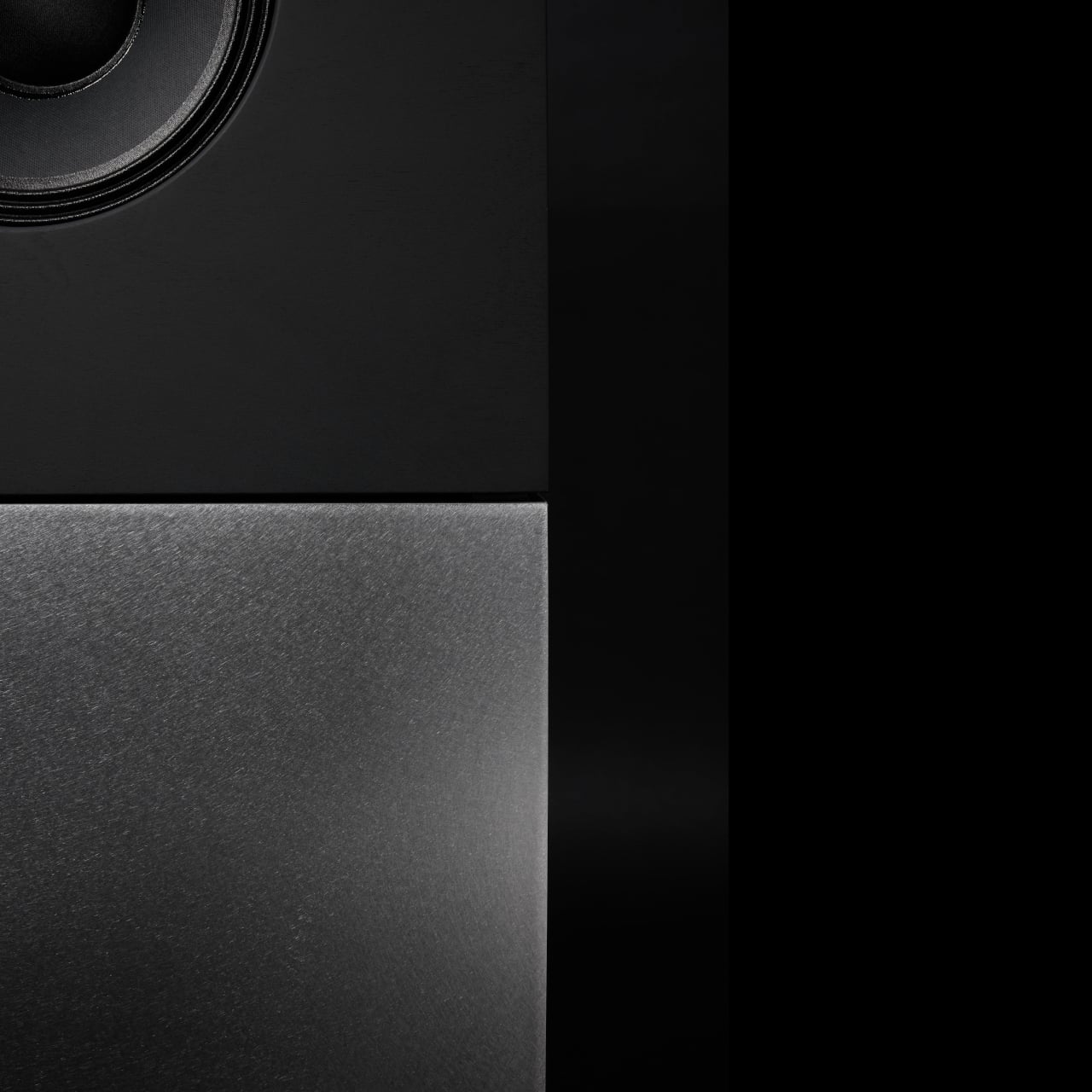
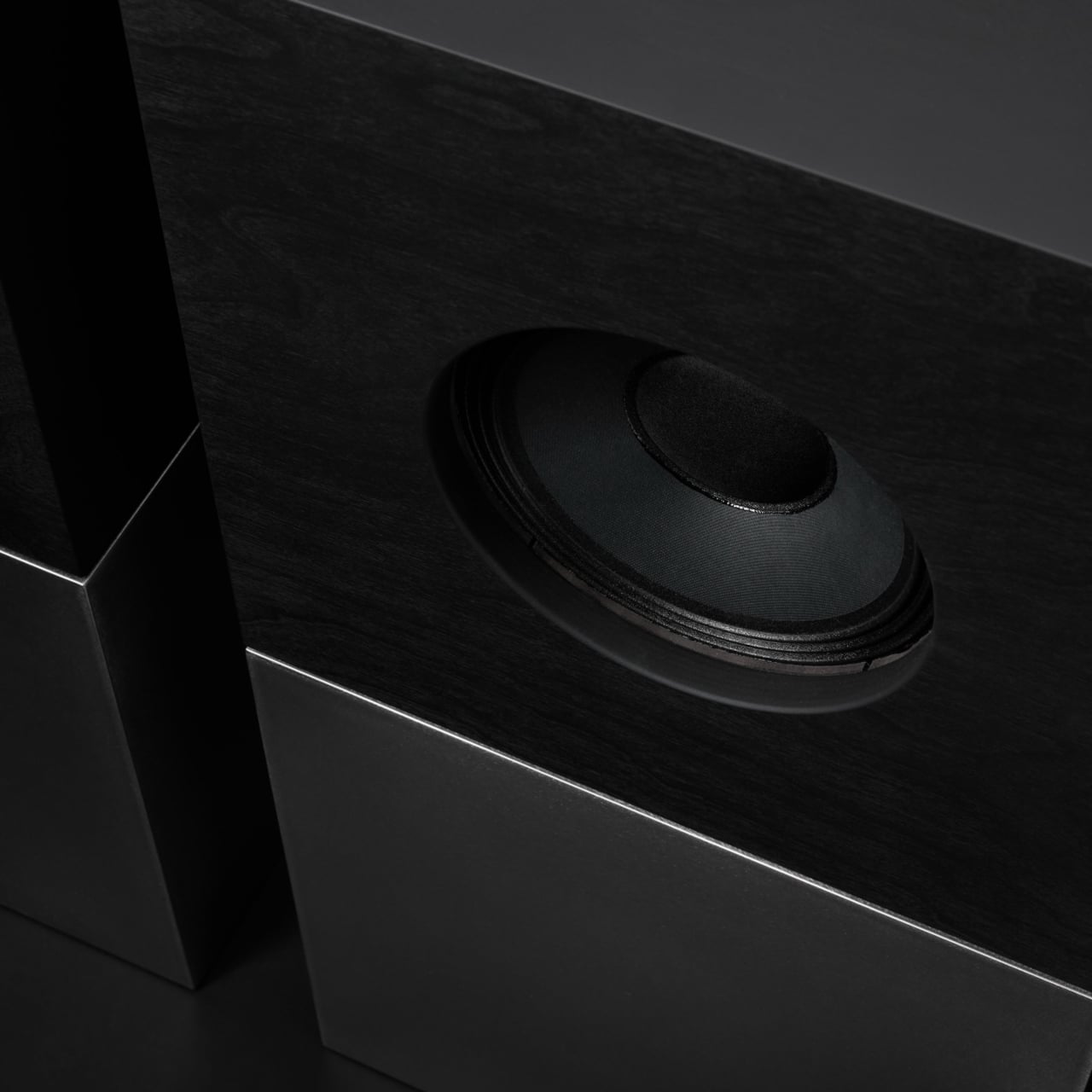
The upper cube is rigid plywood finished in deep matte-black oil, chosen for tonal warmth and acoustic integrity, and the lower cube is a hand-welded, brushed steel block that anchors the system physically and visually. Sorbothane isolation pads sit between them, decoupling the enclosure from the base so the driver can move without shaking the furniture or smearing the soundstage. Together, the two volumes form a study in symmetry, a minimal yet expressive composition.
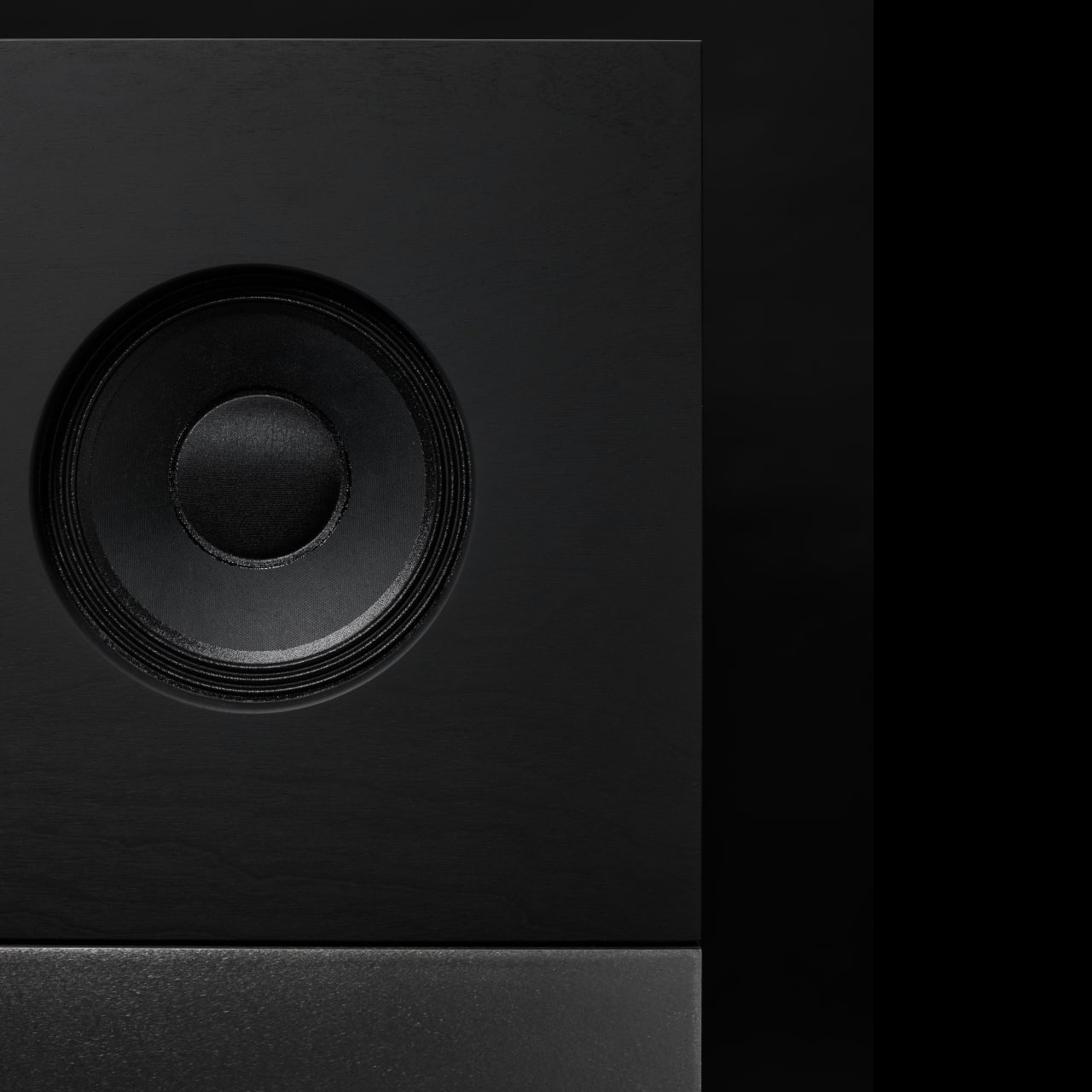
The acoustic core is an 8-inch Celestion FTX0820 coaxial driver with a 1-inch compression tweeter at its center, powered by dual Hypex FA122 modules delivering 125 W per side with integrated DSP. The coaxial layout gives a point-source image, and the active 2-way design lets Nocs control crossover and EQ precisely, resulting in a 42 Hz–20 kHz response that is tuned rather than guessed at from a passive circuit.
Nocs describes their studio-sound approach as tuning like sculpture, not adding but uncovering, working with artists and engineers to balance emotion, texture, and detail. The dual-cube design is part of that, lifting the driver to ear height when seated and using mass and isolation to keep the presentation clean and stable at real-world volumes. The idea is that a speaker should reveal music rather than shape it into a brand’s house curve.
Braque offers both analog and digital inputs, RCA and XLR for analog, plus S/PDIF, AES/EBU, and coaxial for digital, and it is meant to connect directly to turntables with a phono stage, streamers, or studio interfaces. There is no built-in streaming or app layer, which feels intentional; you bring your own source and let the speakers handle amplification and conversion from there without trying to be a whole ecosystem.
Braque behaves in a living room or studio as two strict cubes that read like small pieces of Cubist architecture until you press play. For people who want their speakers to be part of the composition of a space, not just equipment pushed into corners, the combination of Celestion drivers, Hypex power, and that heavy steel base makes Braque feel like a very deliberate answer to how a stereo should look and sound in 2025, where form and performance finally coexist without one apologizing for the other.
Designers accumulate screens, tablets, and peripherals until their desks resemble mission control. Yet the most meaningful moments in creative work often happen away from pixels and processors. A perfectly weighted pen moving across paper creates a connection that no stylus can replicate. These analog tools offer something technology can’t: the tactile satisfaction of manipulating physical materials, the quiet pleasure of objects that don’t require charging or updates.
This collection celebrates the opposite of smart devices. Each piece proves that thoughtful design doesn’t need Bluetooth connectivity or app integration to elevate daily rituals. From writing implements engineered with surgical precision to candles that transform ambient lighting into meditation, these gifts remind us that the best tools sometimes do exactly one thing extraordinarily well. They’re for designers whose homes already hum with gadgets but whose souls crave something more deliberate and human.
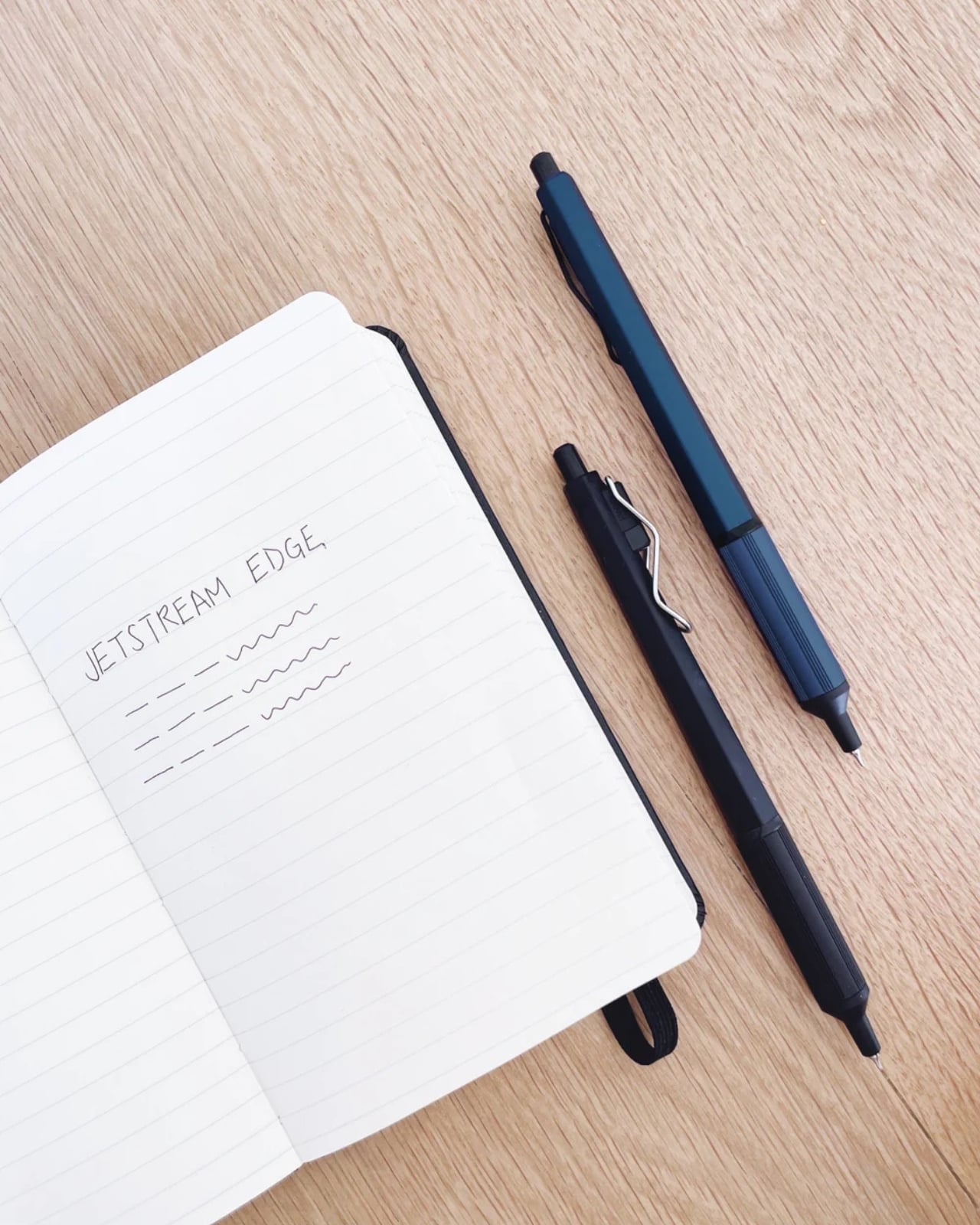
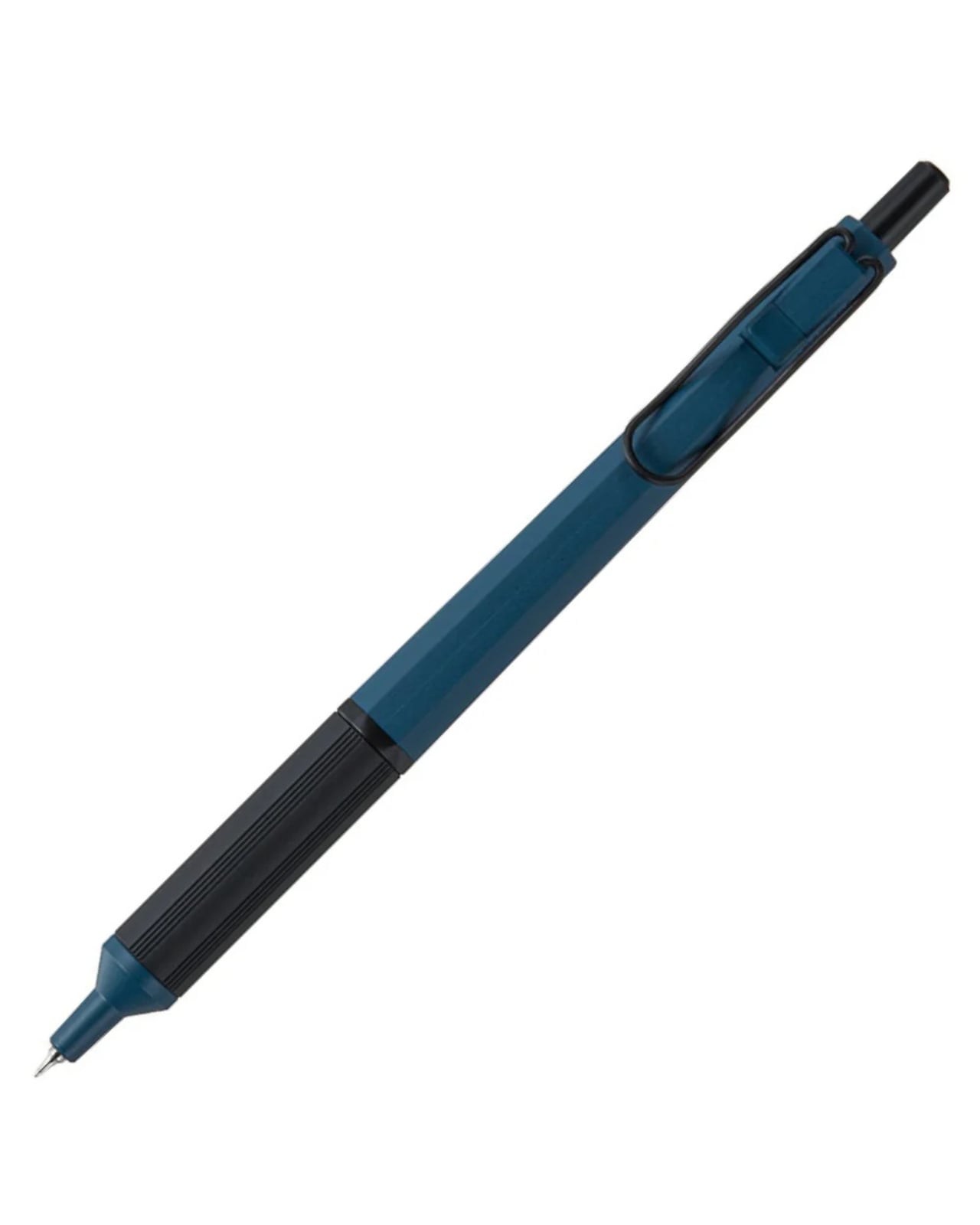
1. Jetstream Edge
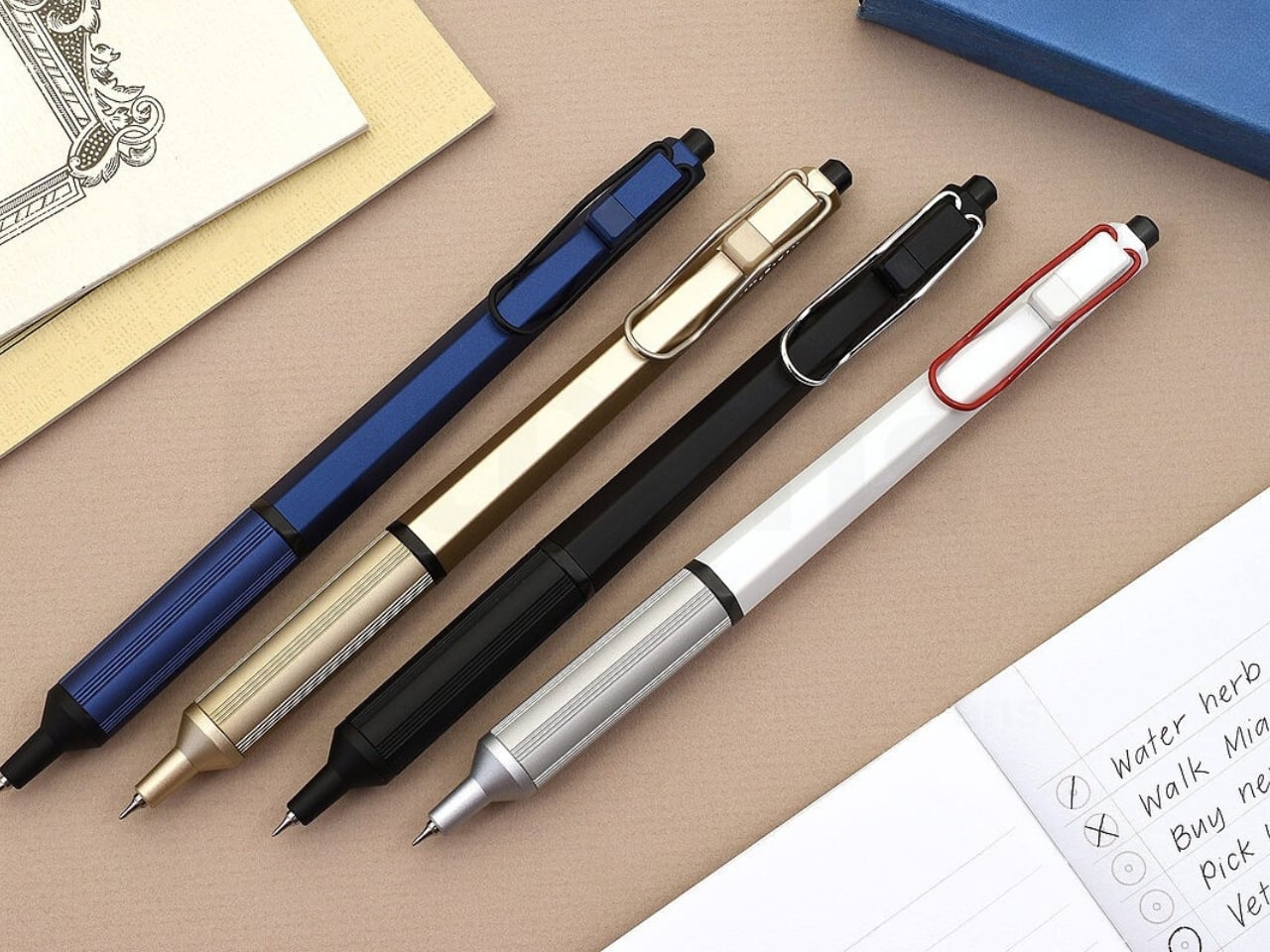
The world’s thinnest ballpoint pen sounds like marketing hyperbole until you drag the 0.28mm tip across paper and watch lines appear that rival technical drafting pens. This Uniball creation doesn’t just write thin; it writes with the kind of precision that makes handwritten notes feel like an intentional design exercise. The hexagonal black barrel catches light along its edges while the knurled metal grip provides just enough texture to keep your fingers anchored during extended writing sessions without causing fatigue or slippage.
What makes this pen exceptional lies in its hybrid ink formulation. The archival-quality black ink combines gel pen smoothness with ballpoint quick-drying properties, eliminating the smeared margins that plague lefties and rushed note-takers. The low center of gravity keeps the ultra-fine tip stable against paper, preventing the wobble that turns delicate linework into jagged scratches. The wire clip adds visual interest while securing the pen to notebook covers or shirt pockets. For designers who sketch concepts before digitizing them, this pen transforms rough ideation into refined mark-making.
What we like
The 0.28mm tip delivers drafting-pen precision in a portable ballpoint format.
Hybrid ink technology dries instantly to prevent smudging on fresh pages.
The hexagonal barrel and knurled grip provide ergonomic control during long sessions.
Archival-quality black ink ensures notes and sketches remain legible for years.
What we dislike
The ultra-fine tip requires quality paper to prevent catching or tearing.
Replacement refills may prove difficult to source compared to standard ballpoints.
2. Heritage Craft Unboxing Knife
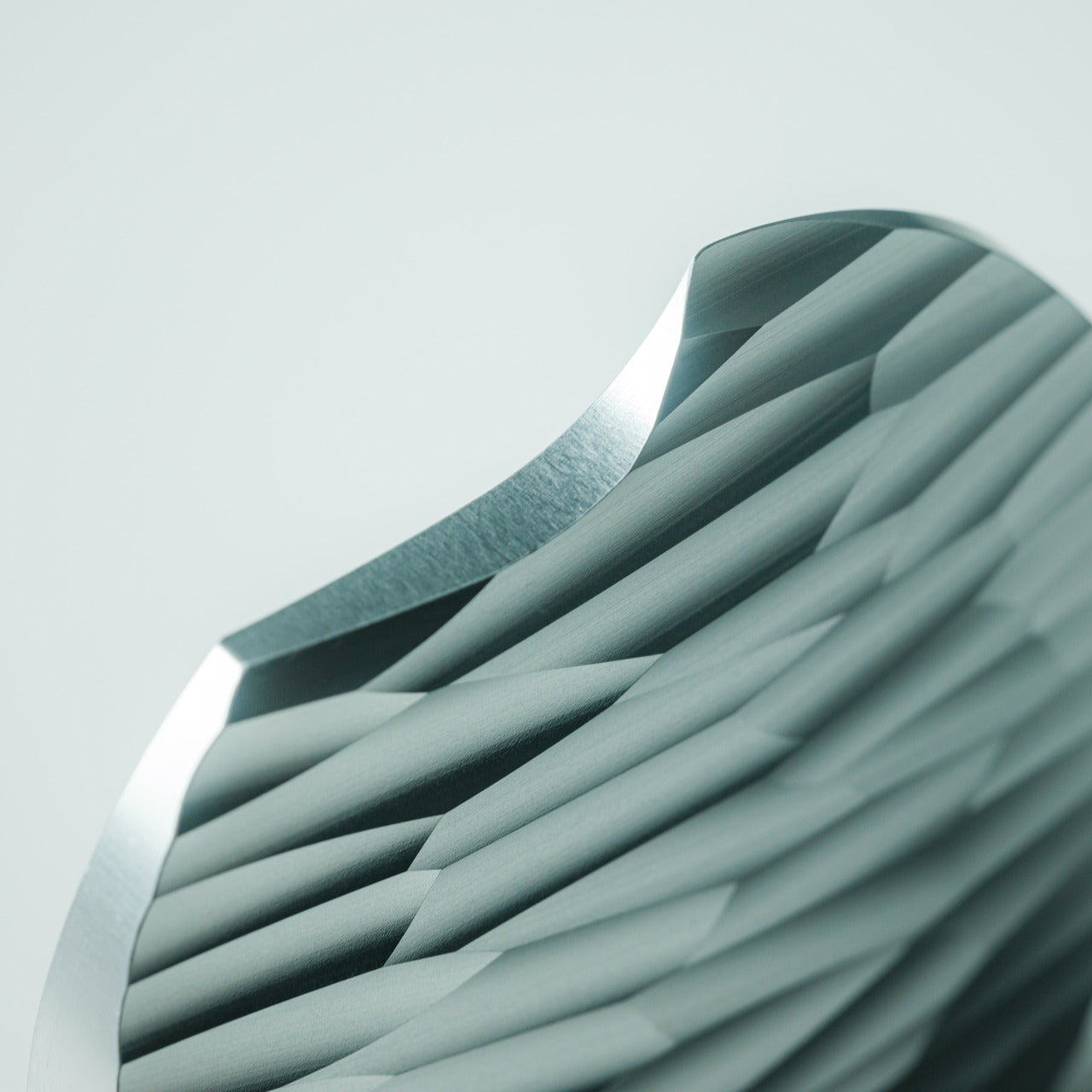
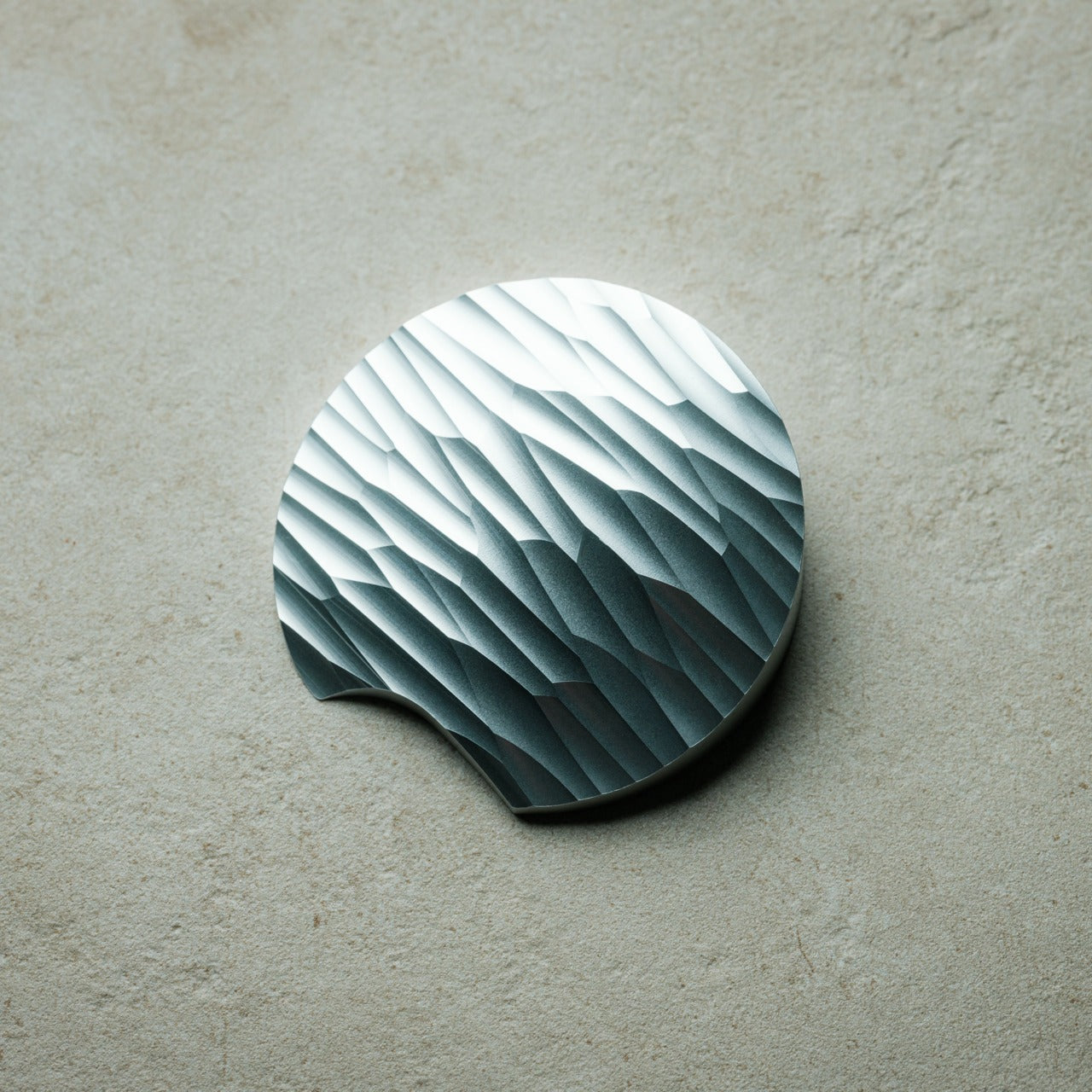
Most box cutters hide in junk drawers because they’re aggressively utilitarian and vaguely dangerous-looking. This aluminum sculpture reimagines the ancient hand axe through precision machining, creating something you’ll want displayed on your desk rather than buried in a drawer. Carved from a solid aluminum block, its circular form echoes Paleolithic tools while the wave-like patterns from the cutting process provide grip and visual intrigue. The tapered shape fits naturally in the hand, making package opening feel less like a chore and more like wielding a carefully considered instrument.
The intentional blade angle prevents over-penetration that damages package contents while maintaining enough sharpness for clean tape slicing. Aluminum’s inherent luster gives the knife a refined presence that elevates the mundane ritual of receiving deliveries. Designers who appreciate when everyday objects receive serious design consideration will find themselves reaching for this piece even when scissors would suffice. It sits at the intersection of functional tool and desktop sculpture, proving that utilitarian objects don’t need to sacrifice beauty for practicality or effectiveness.
Paleolithic-inspired form transforms mundane unboxing into a satisfying ritual.
Precision-milled aluminum construction provides luxury weight and lasting durability.
Wave-pattern machining creates a natural grip while adding sculptural visual interest.
Angled blade design ensures safe cutting without damaging package contents.
What we dislike
The exposed blade requires careful handling despite thoughtful safety considerations.
Premium aluminum construction places it at a higher price point than standard cutters.
3. Japanese Lantern Candle
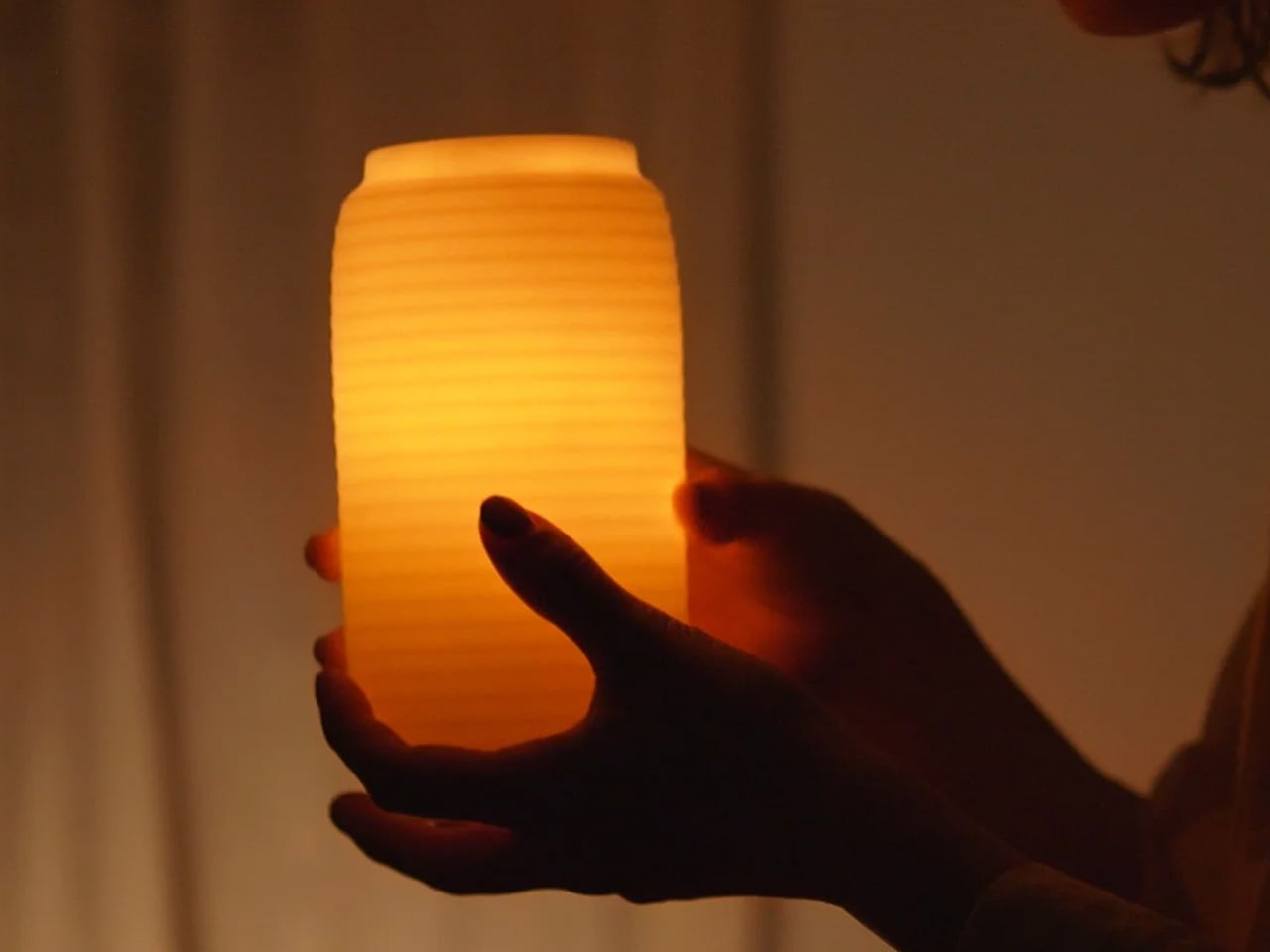
Chouchin lanterns once lit Japanese festival nights with a gentle glow that modern LEDs struggle to replicate. This contemporary interpretation captures that soft illumination through handmade candles crafted in Kurashiki by artisans who understand how light transforms space. The minimalist holder design lets the candle become the focal point while patented technology prevents the outer wax from melting, maintaining the lantern shape throughout its burn life. As the interior wax liquefies, light dances through the undulating surface, creating shifting patterns that turn any room into a contemplative sanctuary.
The ritual of lighting a candle creates a deliberate pause that screens and notifications constantly interrupt. For designers accustomed to blue light and digital stimulation, this analog light source offers a different quality of illumination—one that encourages winding down rather than ramping up. The traditional chouchin form brings Japanese design philosophy into Western interiors without feeling forced or appropriative. Each candle burns with the kind of warm ambiance that makes reading physical books or sketching in analog notebooks feel natural again, reclaiming evening hours from device dependency.
Handcrafted by Japanese artisans in Kurashiki using traditional candle-making methods.
Patented technology maintains the lantern shape as interior wax melts and liquefies.
Minimalist design integrates seamlessly into contemporary or traditional interior styles.
The undulating surface creates mesmerizing light patterns as the candle burns down.
What we dislike
Replacement candles require sourcing from specific suppliers rather than local stores.
The contemplative burn time means less instant gratification than switching on a lamp.
4. Penguin x MOEBE Book Stand
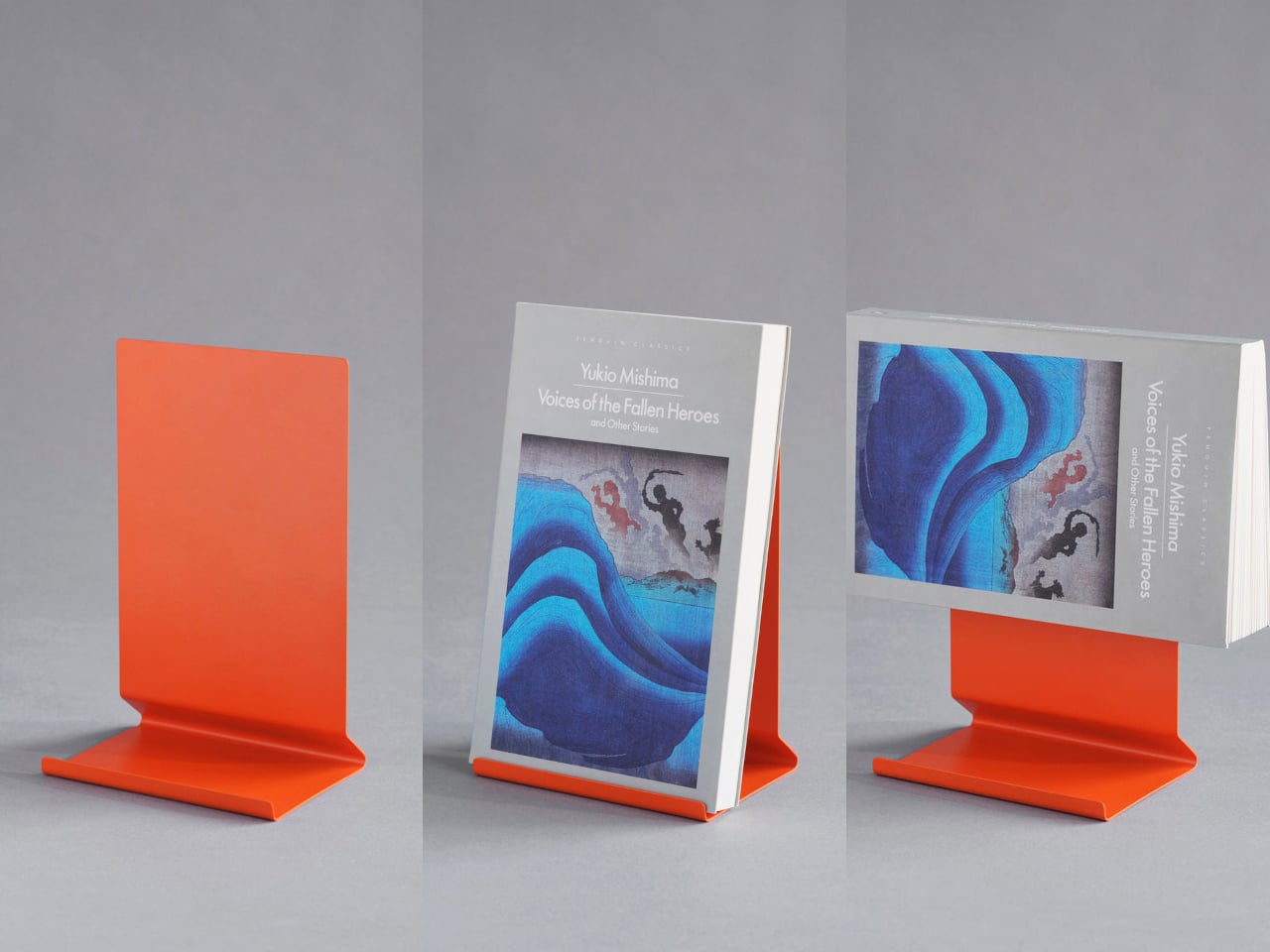
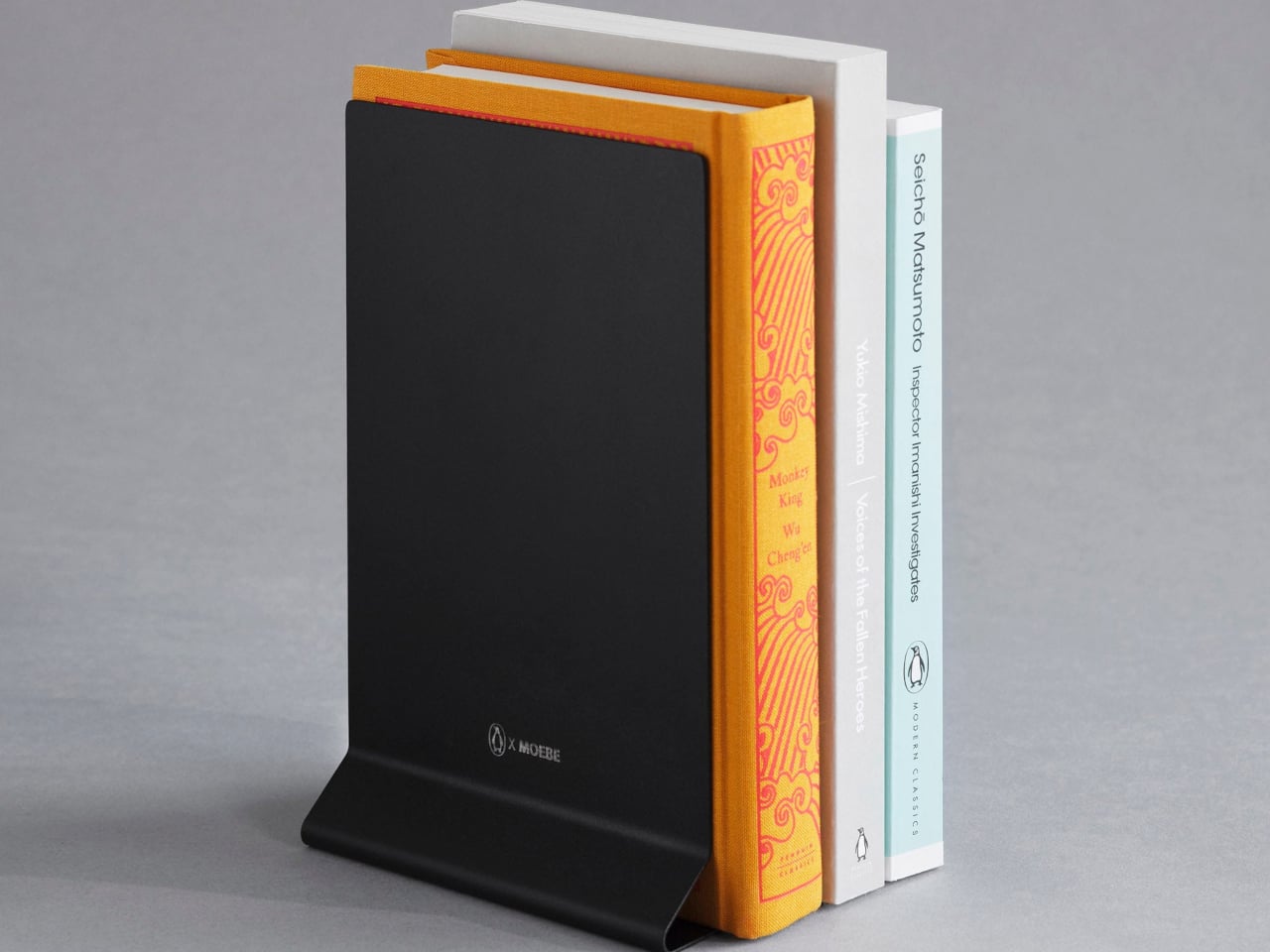
Books deserve better than lying face down with spines cracked or getting buried under device chargers. This collaboration between Penguin and MOEBE treats reading material as objects worth displaying, using bent steel to create a versatile stand that functions as a bookmark, display easel, or bookend depending on configuration. The single-sheet construction eliminates visible fasteners that would interrupt the clean lines, while the matte finish in stainless steel, cream, black, or Penguin orange lets you match existing desk aesthetics or add a pop of color.
The angled base supports everything from slim poetry collections to chunky design monographs without wobbling or tipping forward. Designers who collect physical books for reference and inspiration will appreciate how the stand keeps current reading visible rather than lost in stacks. Pair two stands to create bookends that frame a curated shelf section, or use a single piece to hold cookbooks open during kitchen experiments. Subtle Penguin and MOEBE branding sit on the base, where it remains visible without dominating the overall form. The stand quietly insists that books matter.
What we like
Single bent-steel construction creates seamless form without visible fasteners or joints.
Angled base supports books of varying thickness without wobbling or tipping.
Multiple colorways, including Penguin’s signature orange, integrate with existing decor.
Functions as a bookmark, display stand, or bookend depending on current needs.
What we dislike
The minimalist aesthetic may not provide enough visual presence for some interiors.
Steel construction adds weight that makes it less portable than plastic alternatives.
5. Personal Whiteboard
Digital note-taking apps promise searchability and cloud sync, yet many designers still think best with markers in hand. This portable whiteboard reduces the friction between thought and capture by fitting the essential ritual into a notebook form factor. The multi-functional cover wipes the surface clean, props the board at a comfortable viewing angle, and creates a pocket for loose papers. The Mag Force system turns the cover into both a handle for carrying and a magnetic pen holder that keeps your marker attached and accessible.
The genius lies in accepting that some notes are ephemeral. Sketch a quick concept, photograph it for the cloud, then wipe it clean for the next idea. The single reusable page eliminates the wasteful stack of marker-stained papers while maintaining the kinetic satisfaction of writing on a physical surface. Any standard whiteboard marker works, removing the premium-refill anxiety that plagues some reusable notebooks. For designers who facilitate workshops, lead brainstorming sessions, or simply think better while standing at a wall, this personal version brings that same energy to individual work.
Multi-functional cover serves as an eraser, an adjustable stand, and a document pocket.
The magnetic Mag Force system secures any whiteboard marker for transport and storage.
Photograph-then-erase workflow combines analog thinking with digital archiving.
Compatible with all standard whiteboard markers rather than proprietary refills.
What we dislike
The single-page format limits capturing multiple simultaneous thoughts or comparisons.
The whiteboard surface can develop ghosting over time with frequent use and inadequate cleaning.
Beyond the Charging Cable
The best gifts don’t always light up or connect to Wi-Fi. These five pieces prove that analog tools still have vital roles in creative work, offering textures and interactions that screens can’t replicate. From the meditative ritual of lighting a candle to the precise satisfaction of an engineered pen, each object does one thing superbly well without requiring updates or subscriptions. They’re investments in slowing down, in making everyday interactions feel intentional rather than automatic.
For designers drowning in devices, these non-tech gifts offer something increasingly rare: objects that work the same way in five years as they do today. No planned obsolescence, no compatibility issues, no battery anxiety. Just beautifully considered tools that make analog rituals feel luxurious again. They remind us that the most sophisticated technology sometimes means no technology at all, just materials and craftsmanship in service of human needs that haven’t changed in centuries.
The best stocking stuffers aren’t the ones that fill space—they’re the ones that get plucked out first, pocketed before breakfast, and quietly claimed before anyone else notices. These are the gifts that punch above their price tag, blending clever design with genuine utility in a package small enough to tuck into a sock but compelling enough to become someone’s new everyday carry. They’re the kinds of objects that spark conversations, solve real problems, and feel impossibly thoughtful for something that costs less than dinner.
This year’s lineup leans into tactile pleasure, unexpected innovation, and quiet luxury that doesn’t scream its price point. From gravity-defying desk sculptures to grooming tools engineered like precision instruments, these ten designs prove that small gifts can carry a serious impact. Each one clocks in under a hundred dollars, fits in the palm of your hand, and delivers the kind of daily delight that makes people wonder why they didn’t have one sooner.
1. Side A Cassette Speaker
Remember making mixtapes? This pocket-sized throwback reimagines that ritual for the Bluetooth era, disguising modern wireless tech inside an eerily accurate cassette shell. The transparent casing reveals inner mechanics that mirror the real thing, complete with side A labeling and that distinctive tape aesthetic that defined an entire generation’s music culture. Pop it into its crystal-clear protective case, and it transforms into a desk-worthy display piece that actually delivers sound.
The engineering surprises lie beneath the nostalgia. Bluetooth 5.3 ensures stable connections across devices, while microSD support allows for offline playback when streaming isn’t an option. The audio profile skews warm rather than tinny, deliberately echoing the softness of analog tape rather than chasing clinical clarity. At 80 grams with its case, it disappears into jacket pockets and backpacks, making it the kind of speaker people actually carry instead of leaving on a shelf collecting dust.
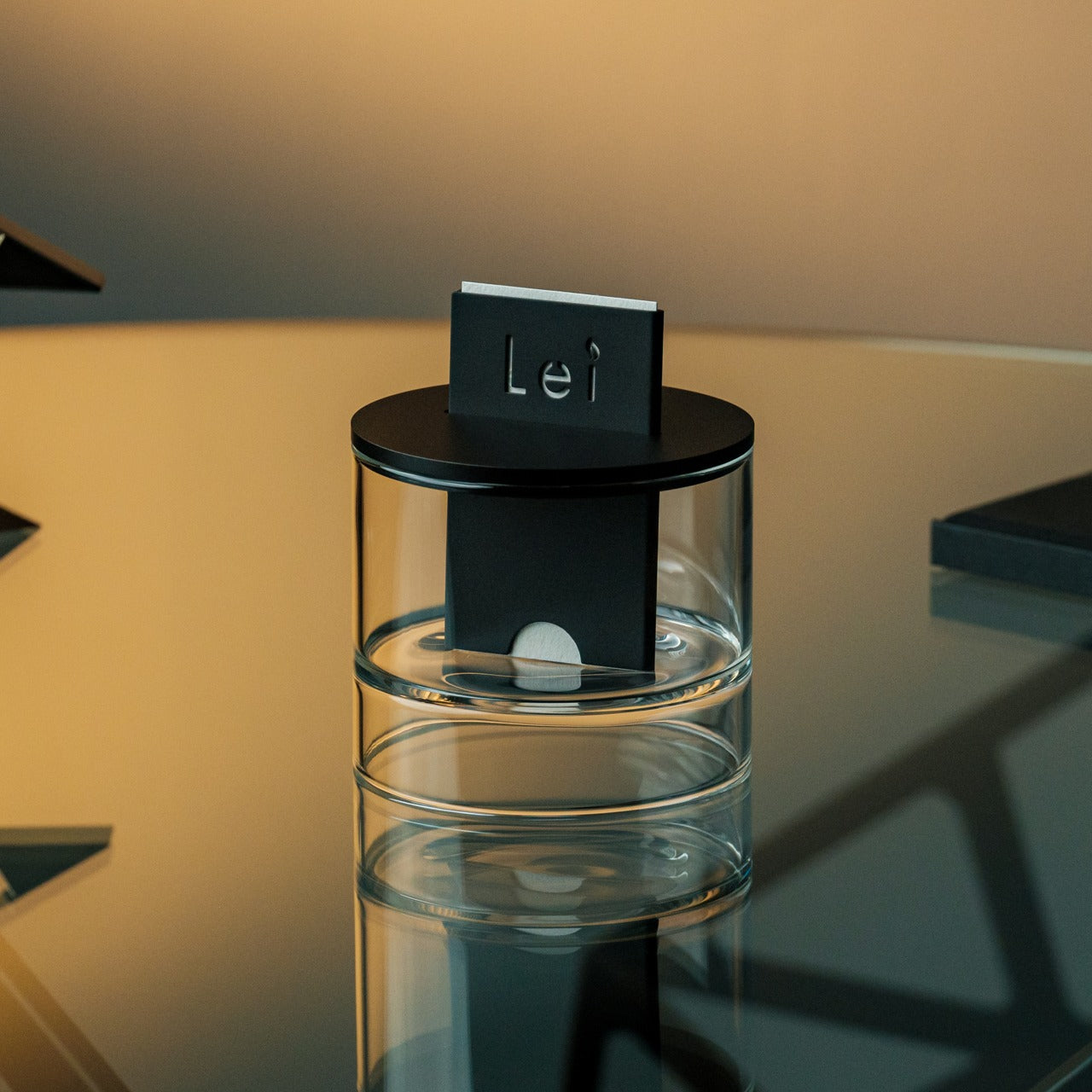
Scent diffusion gets stripped to its essence here—no mist clouds, no reed forests, just a simple card insertion that marks the beginning of a fragrance ritual. The mechanism borrows from Japanese train ticketing, where sliding a washi paper card into an anodized aluminum body initiates a slow, controlled release of alcohol-based fragrance oils. It’s diffusion as deliberate practice rather than background ambiance.
The design language stays minimal to the point of zen. Hand-poured oil bases pair with handcrafted Japanese washi paper that absorbs and disperses scent through capillary action alone. Layered glass creates visual lift while the aluminum housing grounds everything with industrial elegance. Fire-free and power-free operation means placement flexibility—nightstands, desks, shelves—anywhere stillness exists. When the oil runs low, refilling takes seconds without disassembly or mess.
Lost keys cause daily chaos. This magnetic key holder solves that problem by making the act of placing keys genuinely satisfying—so satisfying you’ll actively want to do it. The system combines a wooden base with a metal keyring, held together by a powerful neodymium magnet that releases with a crisp, surprisingly soothing tap when pulled apart. That sonic feedback creates instant habit reinforcement every single time.
Material choices elevate this beyond typical key storage. Choose between maple or walnut bases, each paired with a stainless steel, brass, and iron keyring that carries proper weight. The magnetic hold stays strong enough to prevent accidental drops yet releases smoothly with intentional pulling. Placed near an entryway, it becomes a calming transition point between outside chaos and home sanctuary—a small ritual that anchors your arrival routine with sensory pleasure instead of mindless muscle memory.
Multi-metal keyring construction adds premium tactile weight
Elegant desk or entryway presence doubles as decor
What we dislike
Limited to a single keyring capacity per base unit
The wood base requires occasional maintenance to preserve the finish
The magnetic field may interfere with certain proximity cards
4. CasaBeam Everyday Flashlight
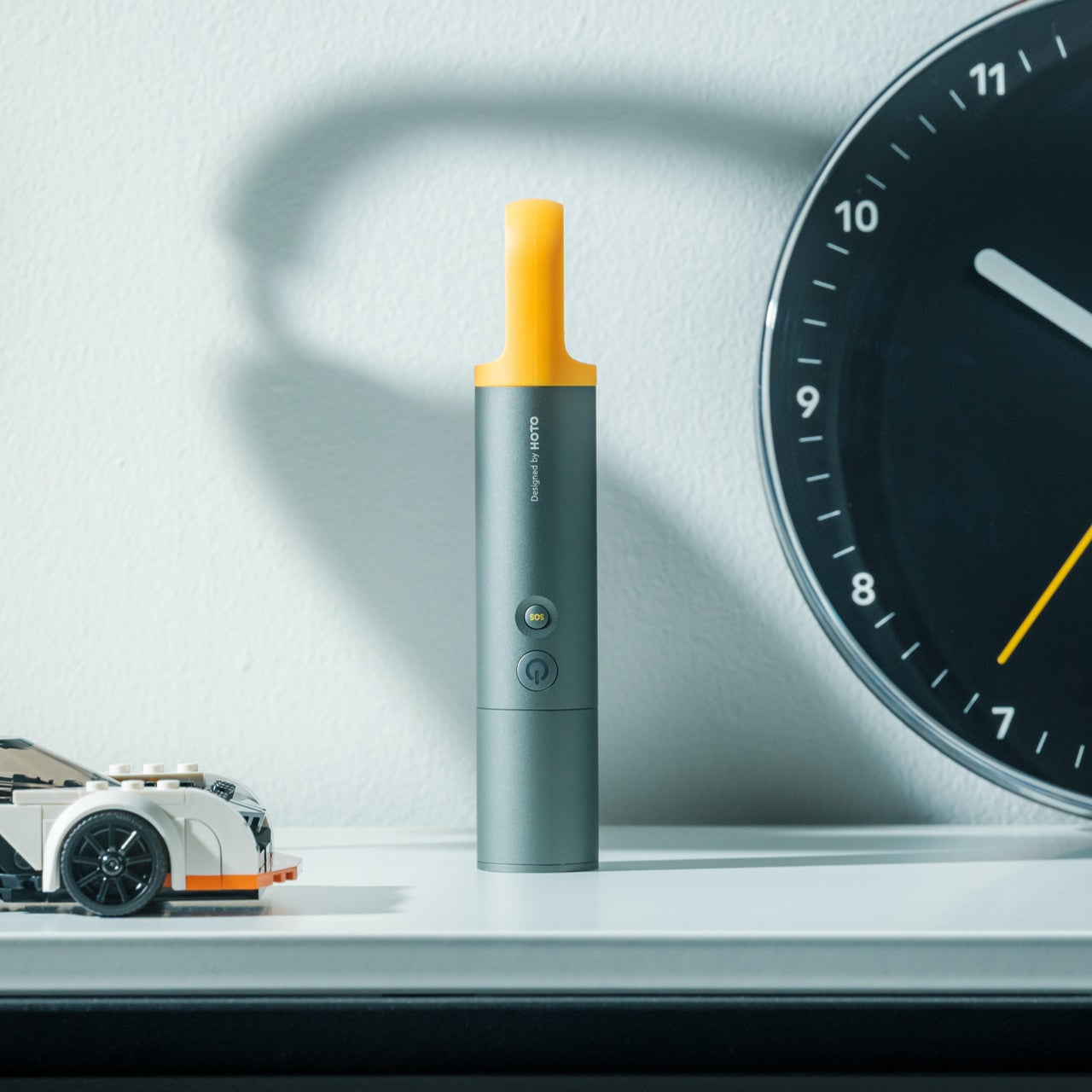
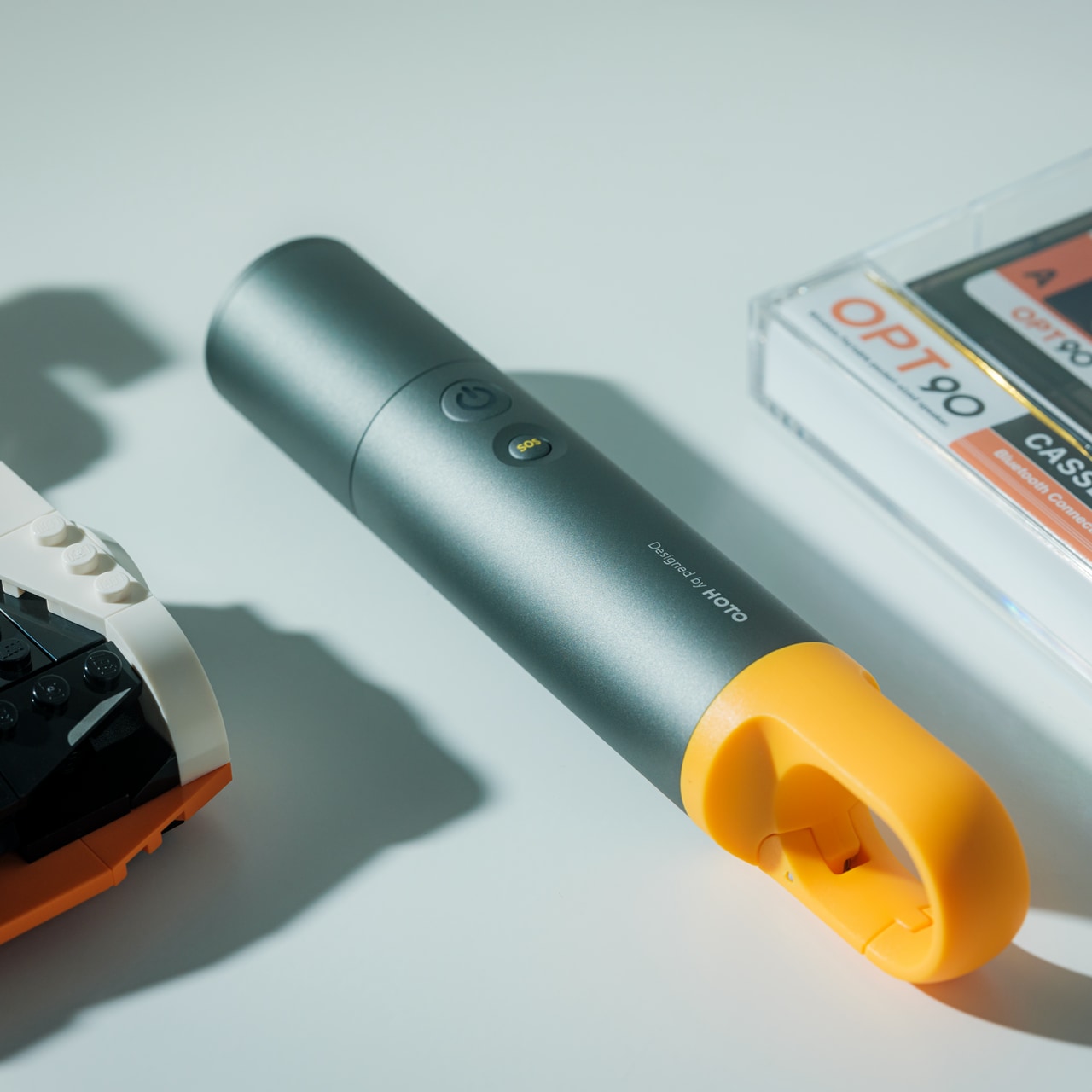
Most flashlights get buried in junk drawers until emergencies strike. This one stays visible because it actually deserves counter space, blending minimalist form with dual-mode versatility that works as both a handheld beam and a freestanding lantern. The 1000-lumen output reaches 200 meters in spotlight mode, while the adjustable zoom head twists to flood light across entire rooms when needed.
Stand it upright and watch it transform into ambient lighting for reading, dining, or a power outage calm. Five modes span three brightness levels plus two SOS settings, all controlled through an intuitive two-button operation that stays simple even when fumbling in darkness. The 2,600mAh battery delivers up to 24 hours on low settings, recharging via USB-C hidden beneath the zoom head to maintain clean visual lines. A bright yellow hanging loop adds practical mounting options while serving as the design’s only color accent.
Built-in battery means no field-swappable power options
The yellow loop may not suit all aesthetic preferences
The zoom mechanism requires periodic cleaning to maintain smooth operation
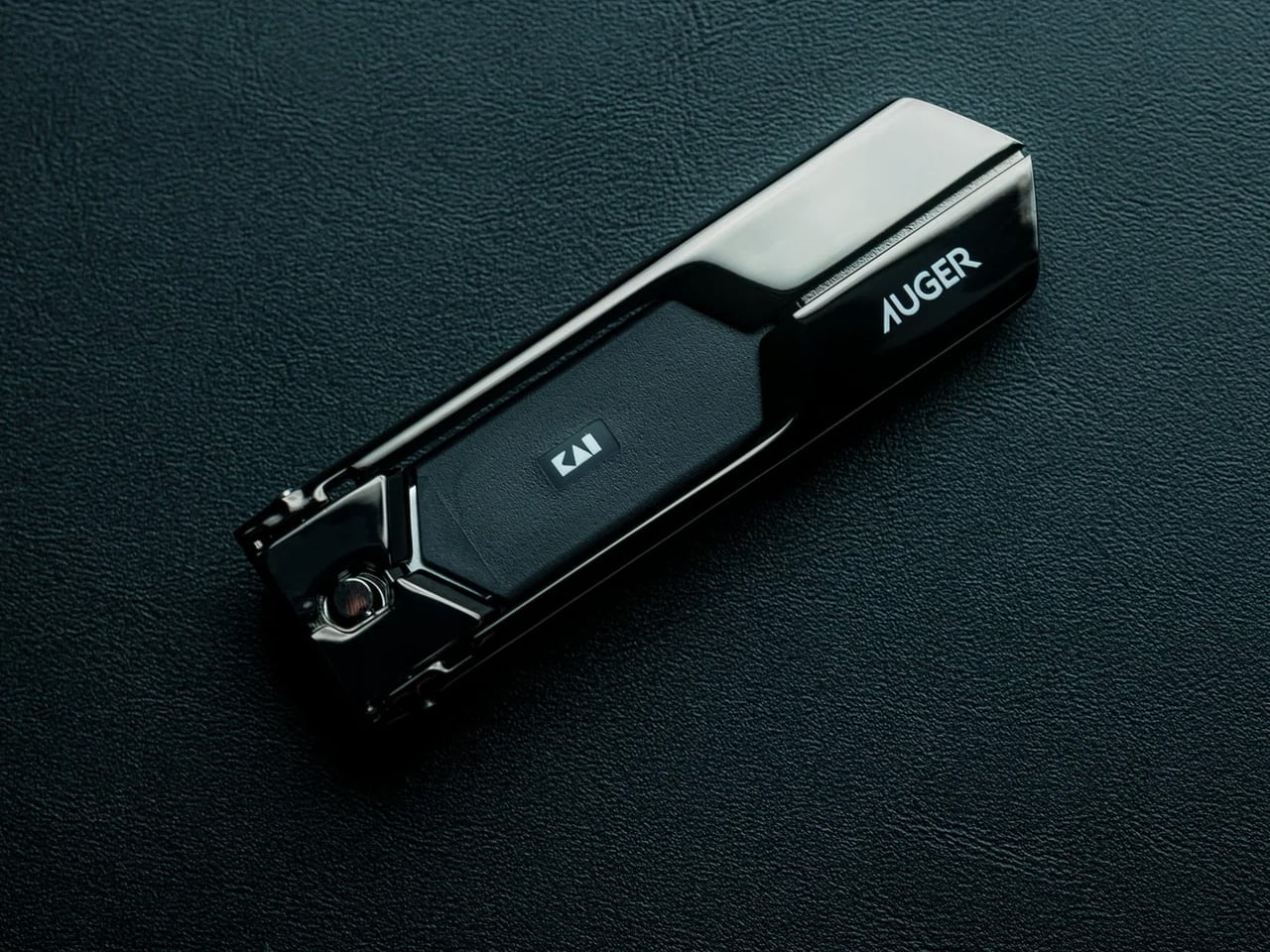
5. Auger PrecisionLever Nail Clipper
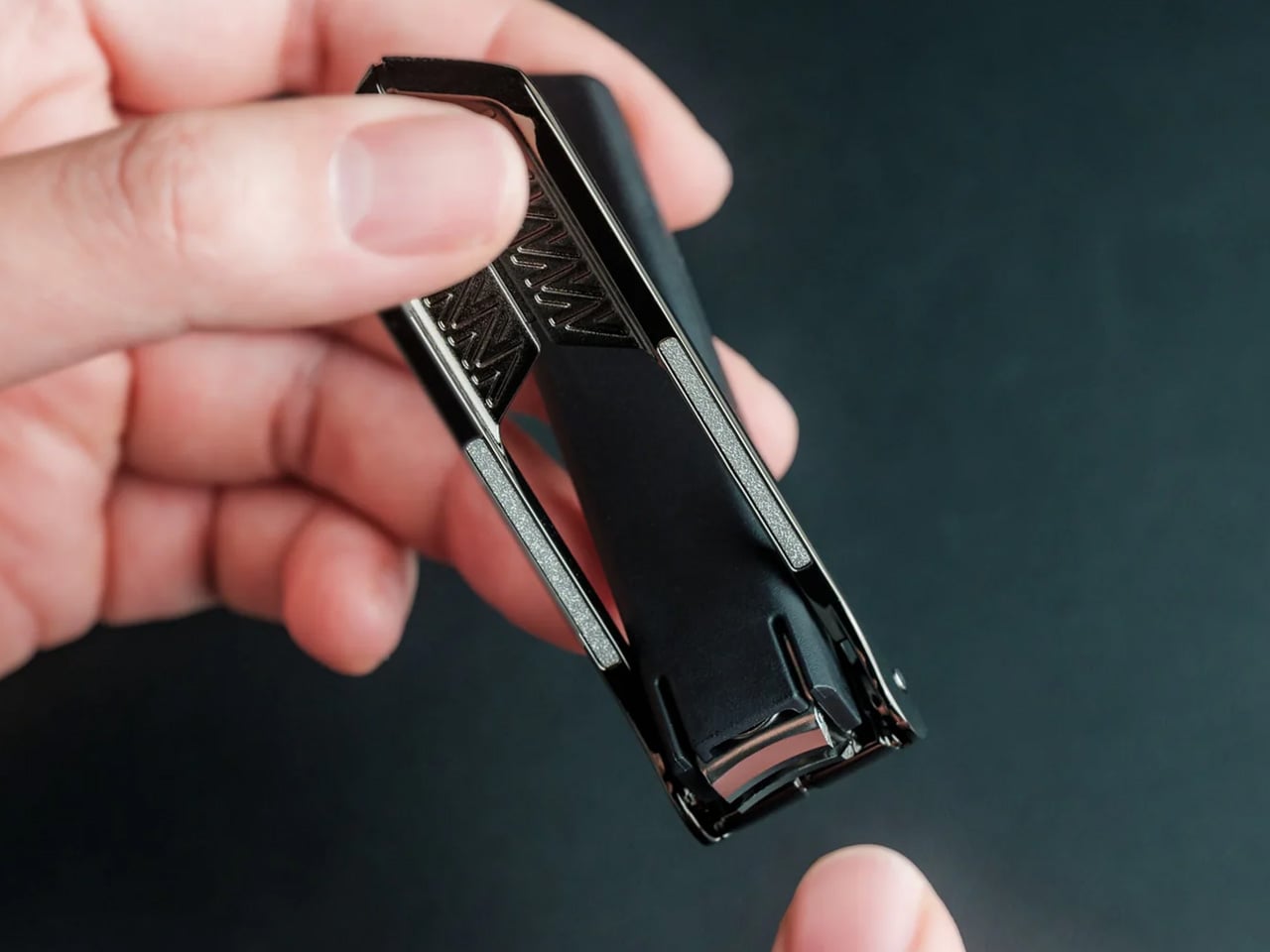
Grooming tools rarely warrant much attention until you encounter one engineered like actual equipment. Kai Corporation—Japan’s blade authority since 1908—designed this clipper around a patented rotating lever mechanism that shifts the pivot point closer to the cutting edge. The result delivers cleaner cuts through thicker nails using less hand pressure while maintaining surgical control throughout each clip.
At 67 grams, the clipper carries satisfying heft that signals quality without bulk. The 86mm compact form slips into dopp kits and desk drawers with equal ease. Stainless cutlery steel blades slice cleanly without tearing or splitting, producing smooth edges that rarely snag fabric afterward. Zinc die-cast lever components wear a sleek plated finish while the thermoplastic stopper and integrated filing surface round out the material story. The press-and-release action stays whisper-quiet and consistently smooth—precision you can feel with every trim.
Patented rotating lever optimizes cutting pressure distribution
Stainless cutlery steel blades deliver clean cuts without nail splitting
Weighted 67-gram feel provides stable control during use
Compact 86mm length fits grooming kits and drawers easily
Quiet operation maintains subtlety during use
Refined material selection ensures long-term performance consistency
What we dislike
Premium price point exceeds basic clipper budgets
The rotating mechanism requires occasional cleaning for optimal performance
Compact size may challenge users with larger hands
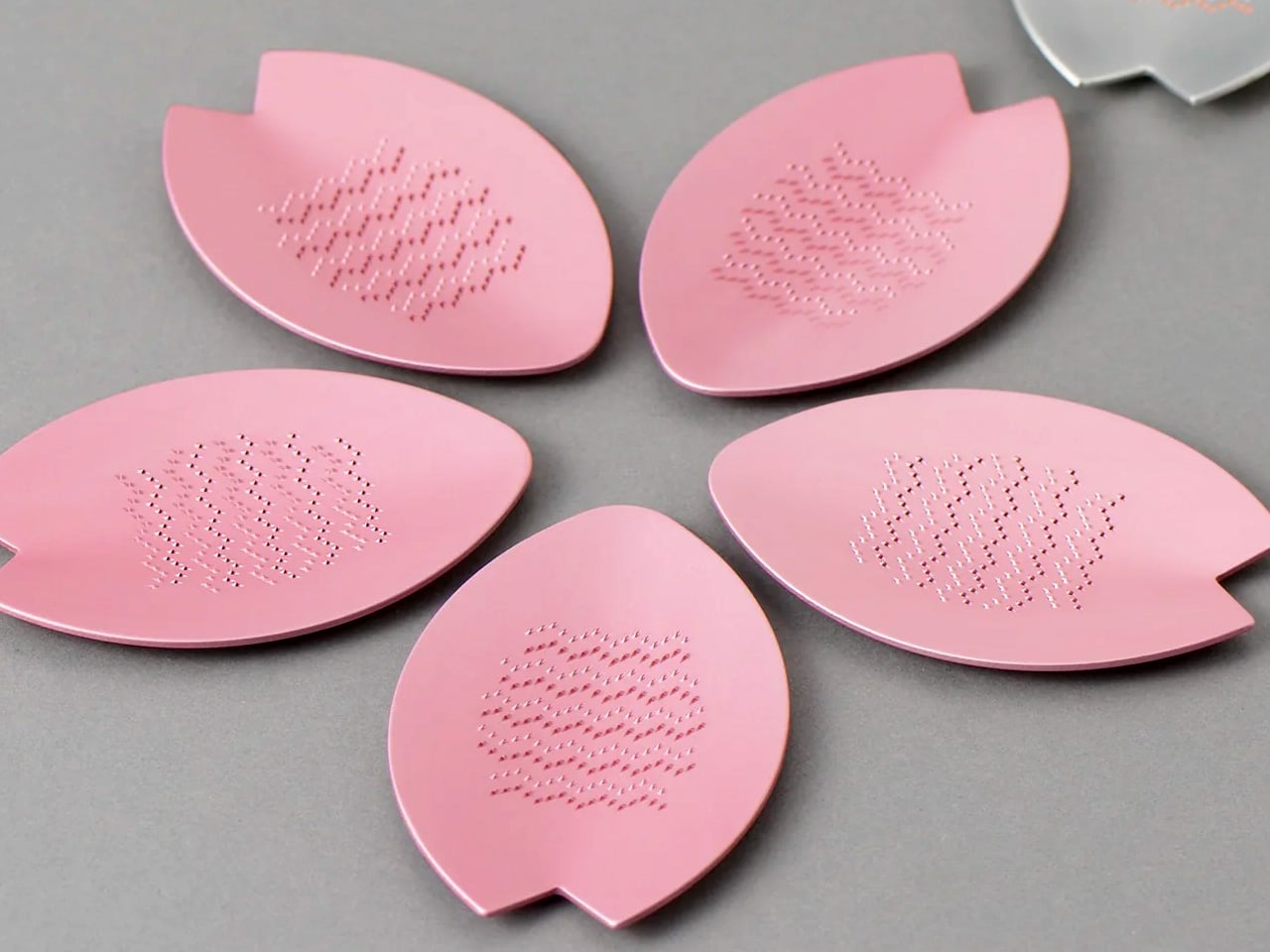
6. Sakura Petal Grater
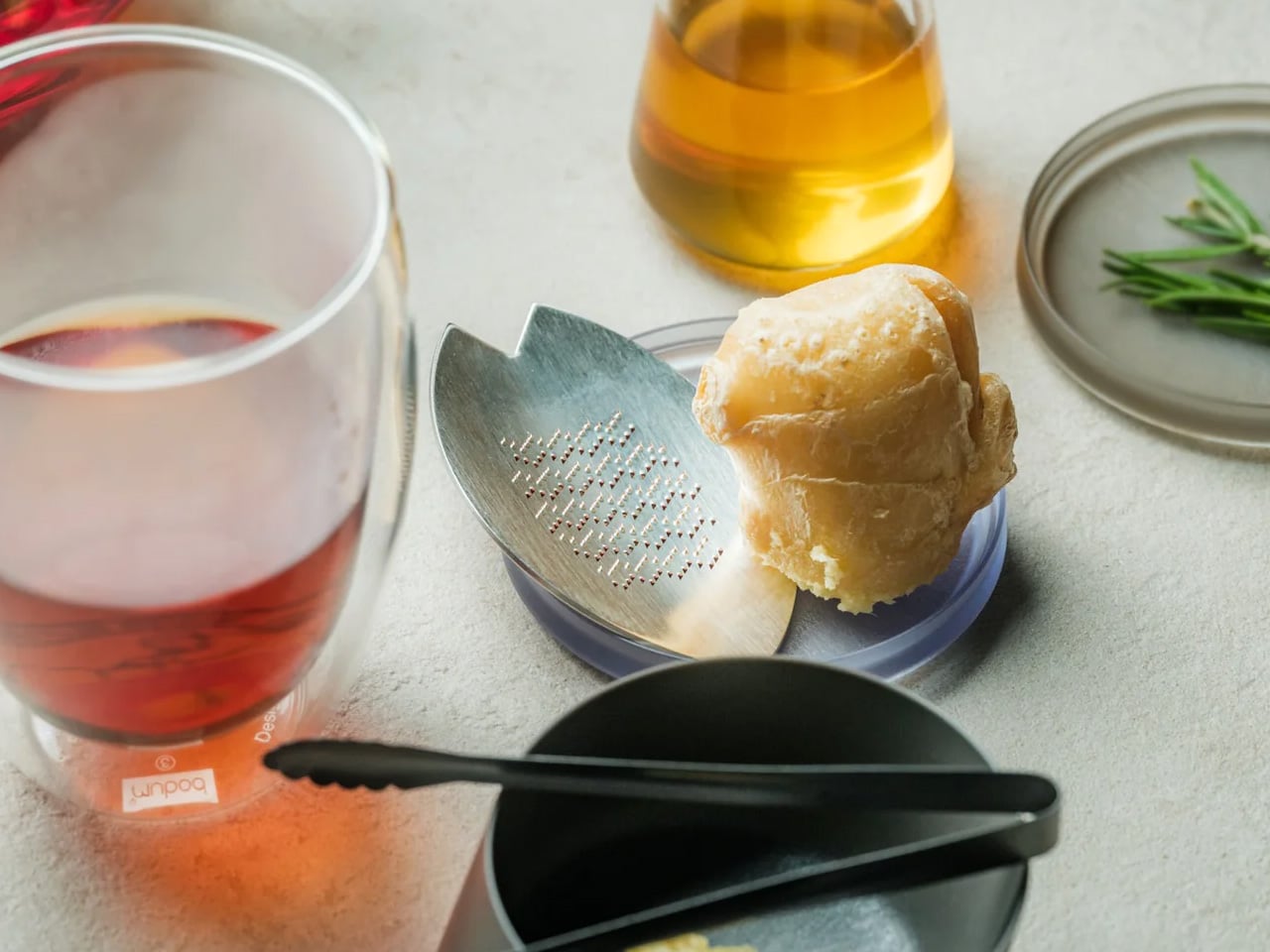
Culinary tools become art objects when Japanese heritage meets functional design. Tsuboe created this sakura blossom-shaped grater to commemorate the Ōkōzu Diversion—a historic flood control project that transformed the Shinano River region—while delivering razor-sharp grating performance for ginger, wasabi, garlic, and citrus zest. The petal silhouette fits comfortably in your palm while adding genuine beauty to any kitchen environment.
Two material options define the aesthetic. The pink edition features lightweight aluminum alloy with a vibrant anodized finish inspired by cherry blossoms lining river levees. The silver edition showcases pure copper with tin plating that creates a luminous interplay between metals while adding substantial heft. Precision-raised blades crafted via custom NC machines maintain sharpness through countless uses. Commemorative packaging includes sakura motifs and story cards celebrating the cultural heritage behind each grater’s creation—transforming kitchen prep into a connection with Japanese craftsmanship traditions.
Heritage storytelling connects users to Japanese cultural history
What we dislike
Premium materials command a higher price versus standard graters
Small size limits large-volume grating tasks
The copper edition requires occasional polishing to maintain luster
7. DraftPro Top Can Opener
Cracking a cold can usually mean sipping through a narrow opening that traps aroma and limits taste. Award-winning designer Shu Kanno reimagined that moment, creating a precision opener that removes the entire top to deliver glass-like drinking experiences straight from the aluminum. The smooth-edged cut transforms canned beer, sparkling water, and premixed cocktails into proper vessels where you catch every aromatic note.
Beyond elevated sipping, practical advantages multiply quickly. Drop ice cubes directly into opened cans for instant chilling on hot days. Mix cocktails inside the can itself—no shaker, no cleanup, no glassware. Universal sizing works across domestic and international CAN standards, so you’re never caught without compatibility. The lightweight, portable build makes it easy to pack for camping, tailgates, or beach days. Used cans become mini planters or desk organizers thanks to the clean, safe edge. Japanese design discipline shows through every detail—smooth opening motion, comfortable grip, zero visual excess.
Universal fit works with domestic and international can sizes
Lightweight portability suits outdoor and travel use
Clean cut facilitates creative can reuse and recycling
What we dislike
Single-purpose tool adds to kitchen gadget collection
Opening motion requires a brief learning curve for the technique
Sharp cutting mechanism demands careful handling and storage
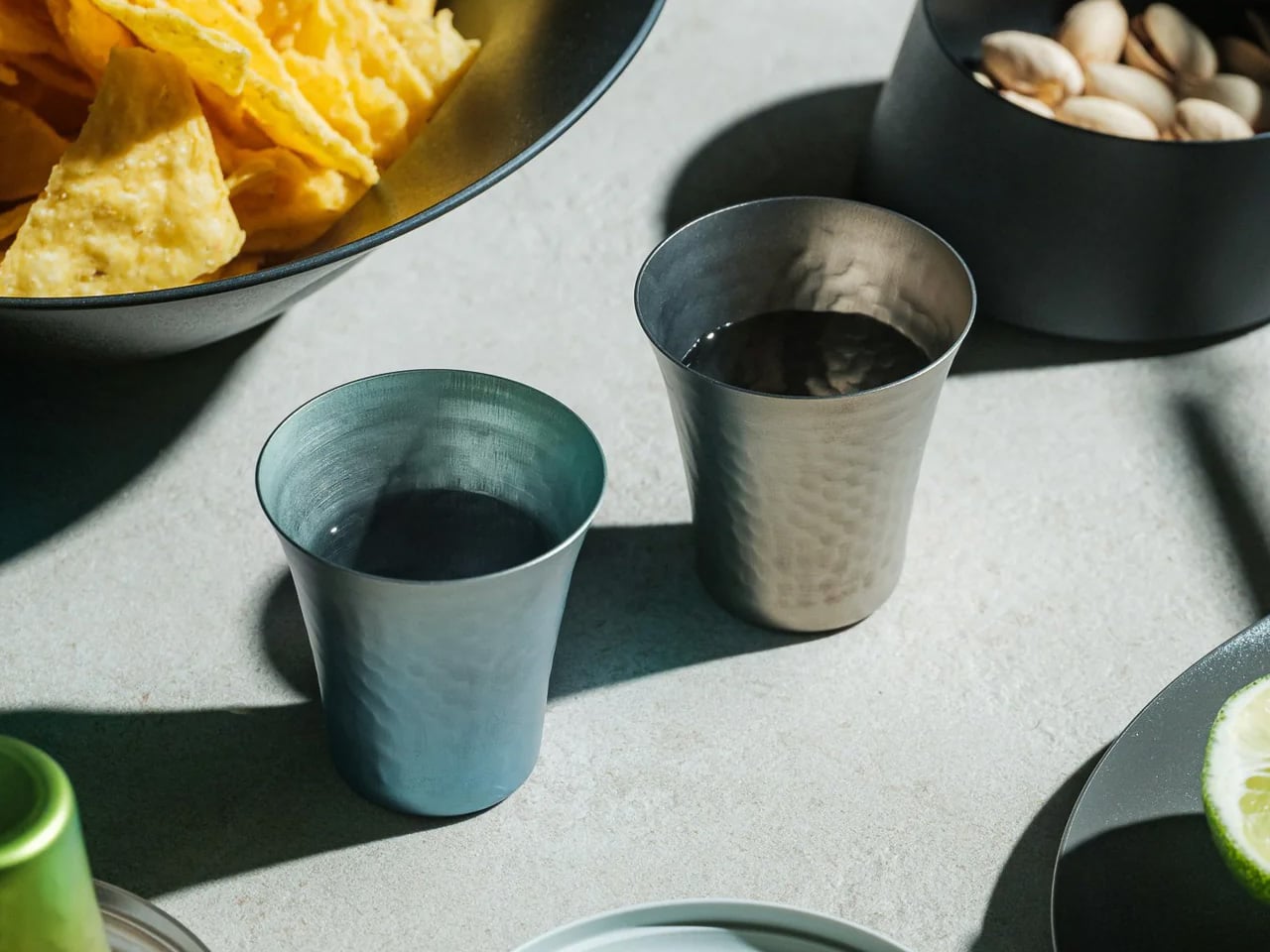
8. Titanium Artisan Spirits Cup
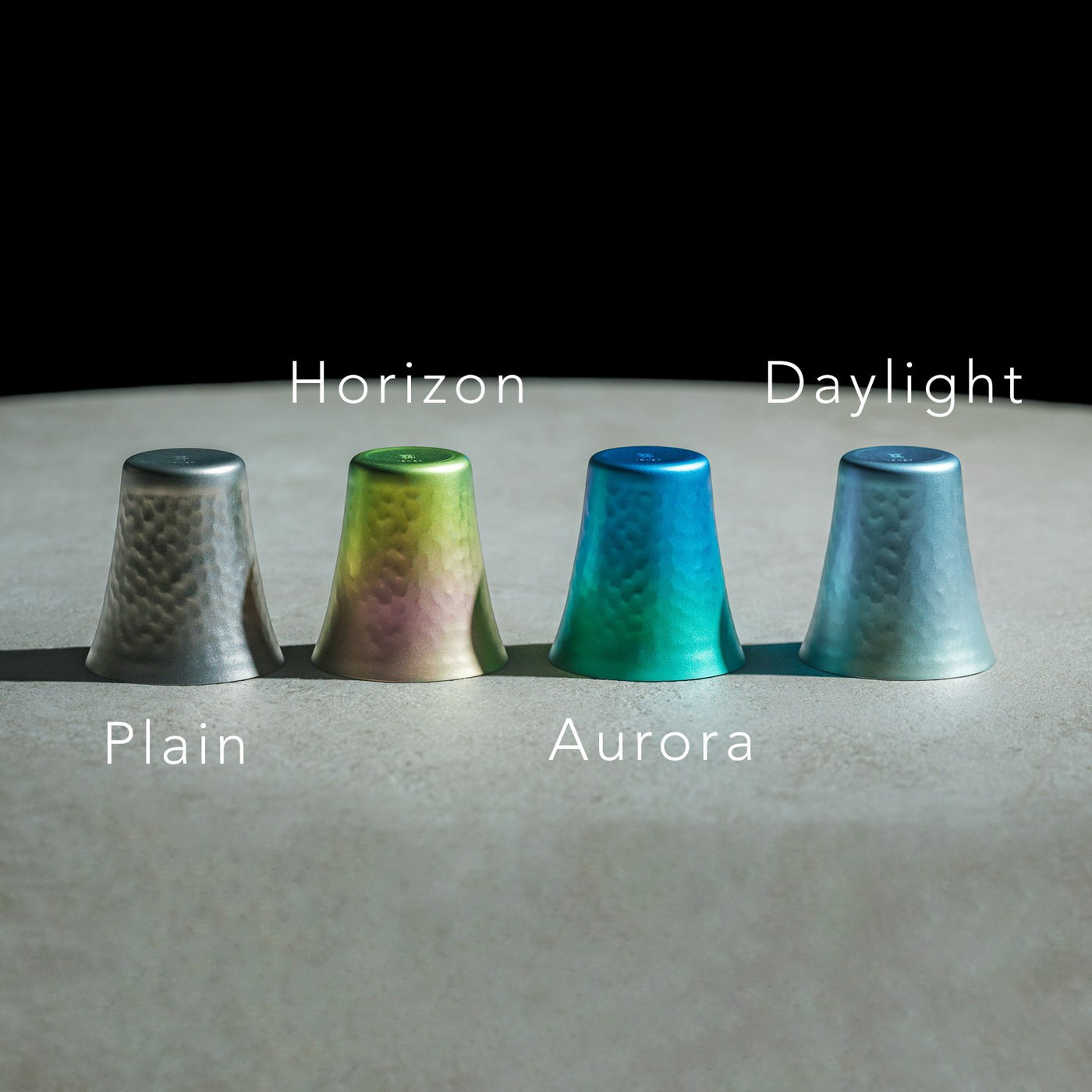
Spirits deserve glassware that enhances rather than distracts from their complexity. This titanium vessel weighs just 22 grams yet delivers sensory amplification through hammered texture that lifts aromatic compounds, while the ultra-thin rim ensures clean flavor contact. At 2.05 inches in diameter by 2.17 inches in height, it fits sake, tequila, and whiskey servings with equal grace.
Titanium construction brings unexpected benefits beyond durability. The metal maintains temperature without rapid heat transfer from your hand, keeping chilled spirits cold longer. Vibrant anodized finishes create unique color variations across each cup—no two look identical, adding bespoke character to any collection. The hammered surface provides subtle grip texture while refracting light beautifully. Compact dimensions suit modern interiors and outdoor settings alike, transitioning seamlessly from home bars to campfire toasts. Minimalist elegance meets practical performance in a cup engineered for connoisseurs who value both flavor clarity and design integrity.
Ultra-light 22-gram weight enhances portability and comfort
Hammered texture amplifies aromatic profiles during sipping
Thin rim ensures clean flavor contact without interference
Unique anodized finishes create individualized color variations
Titanium construction offers exceptional durability
Compact size suits diverse spirit types and settings
What we dislike
Hand-wash requirement adds care steps versus dishwasher convenience
Premium titanium pricing exceeds standard glassware budgets
Small capacity limits the use to spirits rather than mixed drinks
9. Levitating Pen
Most desk accessories serve function or form—rarely both with equal commitment. This gravity-defying pen floats vertically above its magnetic pedestal without batteries or electronics, transforming writing tools into kinetic sculpture. The invisible magnetic field holds the pen suspended and spinning with the gentlest touch, creating mesmerizing motion that offers mental breaks during intense work sessions.
Engineering precision makes the magic possible. High-precision CNC machining maintains tolerances under 0.1mm—the same manufacturing standards used for Apple products—enabling perfect hover balance and fluid rotation. Swiss-made ballpoint cartridges deliver smooth, reliable writing performance while Cross-brand refills ensure long-term usability. The magnetic cap provides instant access without fumbling. Whether spinning hypnotically during calls or standing elegantly between uses, the pen becomes a source of inspiration and relaxation. Sleek aesthetics meet practical function in a design that professionals, artists, and engineers appreciate equally for performance and presence.
Box cutters typically hide in drawers because they look utilitarian at best. This one deserves prominent desk placement, carved from solid aluminum into a form inspired by Paleolithic hand axes—ancient tools reimagined through modern precision machining. Wave-like cutting patterns create visual intrigue while providing secure grip texture. The circular shape and tapered profile feel substantial in hand, while the raw metal aesthetic radiates both mystery and intentional design.
Aluminum once commanded prices higher than gold, and this knife showcases the material’s inherent luster and satisfying weight. Milling from a solid block rather than casting ensures structural integrity and refined surface quality. The blade slices through packing tape and cardboard with surgical ease, while the distinctive form starts conversations whenever someone spots it. Placing this on your desk signals appreciation for objects that blend utility with artistry—tools that inspire rather than just serve. Unboxing packages becomes a moment of tactile pleasure rather than a mindless routine.
Paleolithic hand axe inspiration creates a distinctive sculptural form
Solid aluminum construction showcases material luster and a premium feel
Precision machining produces wave patterns that enhance grip security
Tapered shape balances visual weight with handling comfort
Desk-worthy aesthetics encourage display rather than drawer storage
Sharp blade handles tape and cardboard efficiently
What we dislike
Exposed blade design requires careful handling and storage
Aluminum softness may show wear marks over extended use
Unconventional shape requires adjustment for traditional box cutter users
The Gift That Keeps Getting Stolen
Stocking stuffers reveal their true value in the days after unwrapping, when practical magic beats flashy excess every time. These ten designs prove that thoughtful gifts don’t require three-digit budgets or oversized boxes—just genuine utility wrapped in forms people actually want to touch, use, and keep within arm’s reach. They’re the presents that migrate from stockings to pockets to daily rotation faster than anyone expects.
Smart gifting means choosing objects that respect both giver and recipient through lasting quality and daily relevance. Each of these pieces delivers experiences beyond their physical size, turning mundane moments into small rituals worth savoring. Whether someone’s grating ginger, opening mail, or taking mental breaks with a spinning pen, these are the gifts that prove you paid attention to how people actually live rather than what they might politely accept.