10 Best Gadgets & Tools That Make Going Off-Grid Feel Like an Upgrade

There’s a version of going off-grid that means giving things up — signal, comfort, hot coffee, reliable light. Then there’s the version a new wave of purposeful gear is quietly making possible, where disconnecting from the grid doesn’t mean downgrading your experience at all. These ten tools are built for that second scenario. Each one solves a real problem the outdoors creates, with enough design intelligence that you’d carry them anywhere.

What’s changed isn’t just the technology; it’s the design thinking behind it. Gear for the outdoors used to mean sacrificing aesthetics for function. Now the best of it does both, blending rugged performance with a considered design that makes you want to own it before you need it. The ten picks ahead span communication, power, navigation, hygiene, and comfort — a full stack of upgrades for life beyond the last cell tower.

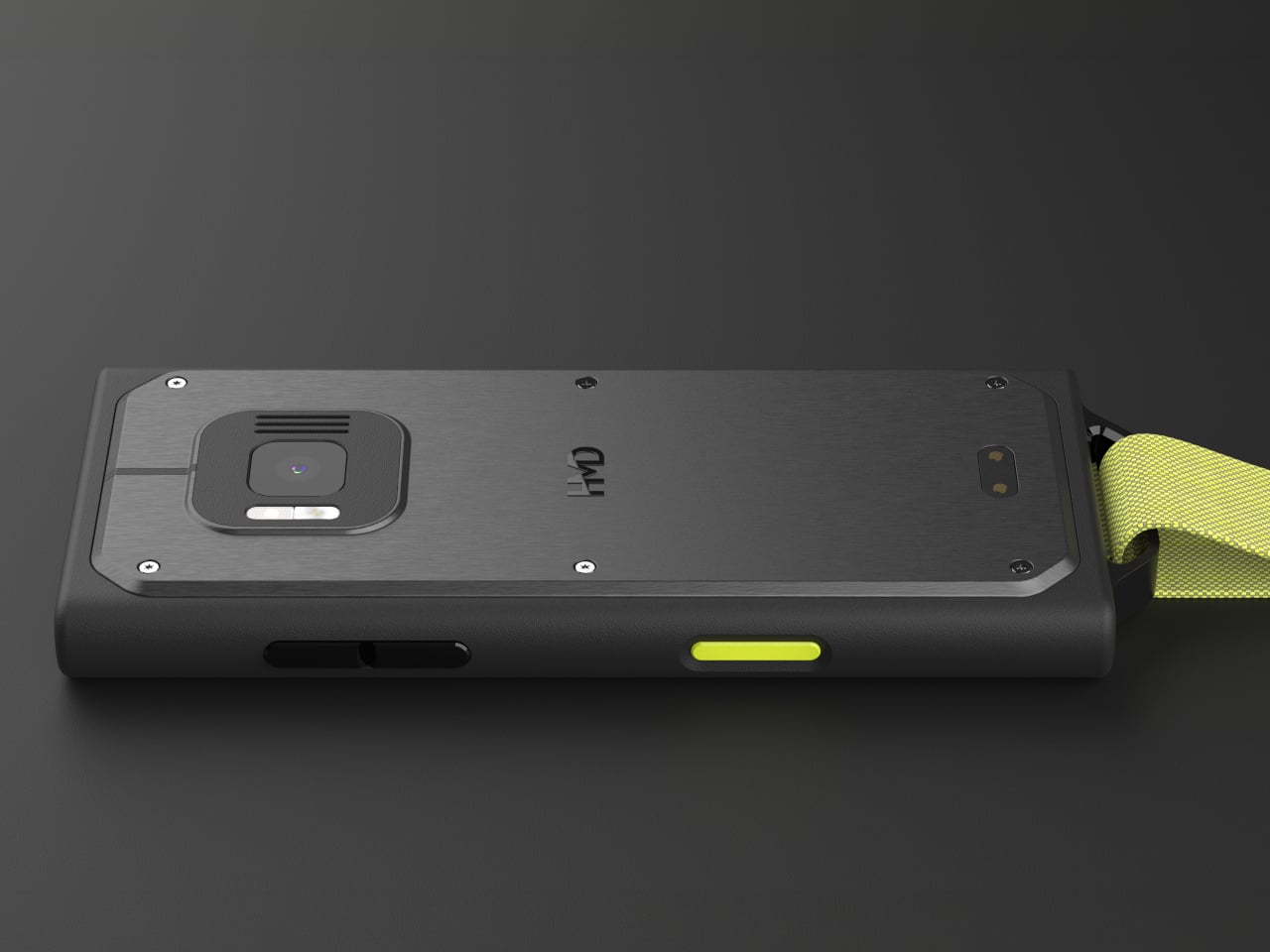
1. HMD Terra M
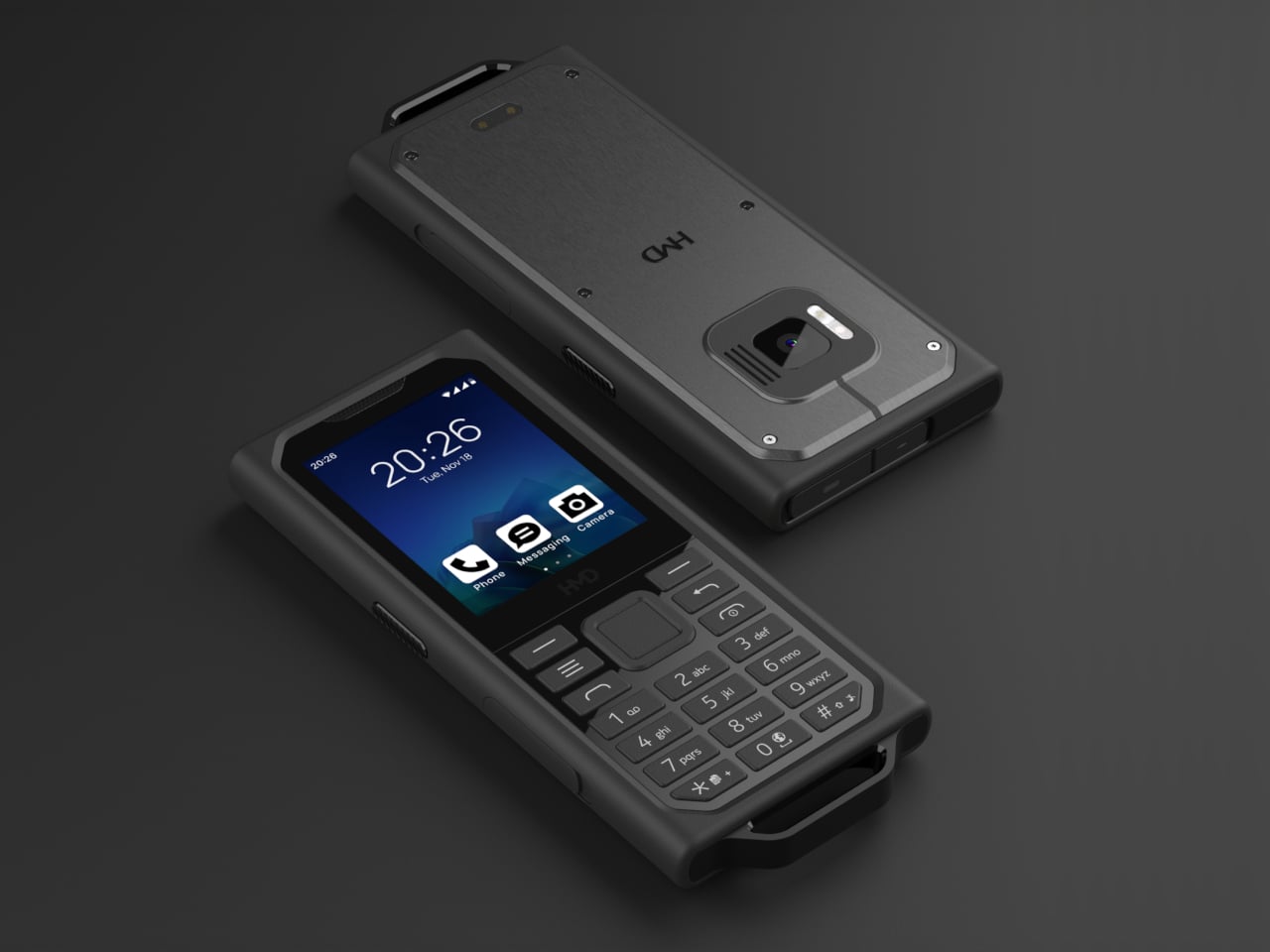
Most rugged phones solve the wrong problem. They add armor, lose usability, and end up too bulky to carry comfortably. The HMD Terra M takes a different approach. It’s compact and purpose-built for field conditions, carrying both IP68 and IP69K ratings, MIL-STD-810H military certification, and resistance to drops from 1.8 meters. It handles submersion, high-pressure water jets at 100 bar and 80°C, and exposure to gasoline, industrial solvents, and medical-grade sanitizers. That’s a resume most flagship phones would quietly fail.

What makes the Terra M genuinely useful outdoors is how it handles the small things. Large physical keys respond to gloved hands, a non-slip textured grip reduces fumbling, and a 2.8-inch display hits 550 nits behind Corning Gorilla Glass 3. These are the details that matter when you’re mid-job and can’t afford to stop and baby your device. The Terra M keeps you reachable and functional in places where most phones simply quit.

What We Like:

  • IP68, IP69K, and MIL-STD-810H rated for serious field conditions
  • Glove-compatible keys and a high-brightness display designed for outdoor use

What We Dislike:

  • The 2.8-inch screen limits any media or app-heavy use
  • The feature phone format won’t suit users dependent on smartphone functionality

2. RetroWave 7-in-1 Radio
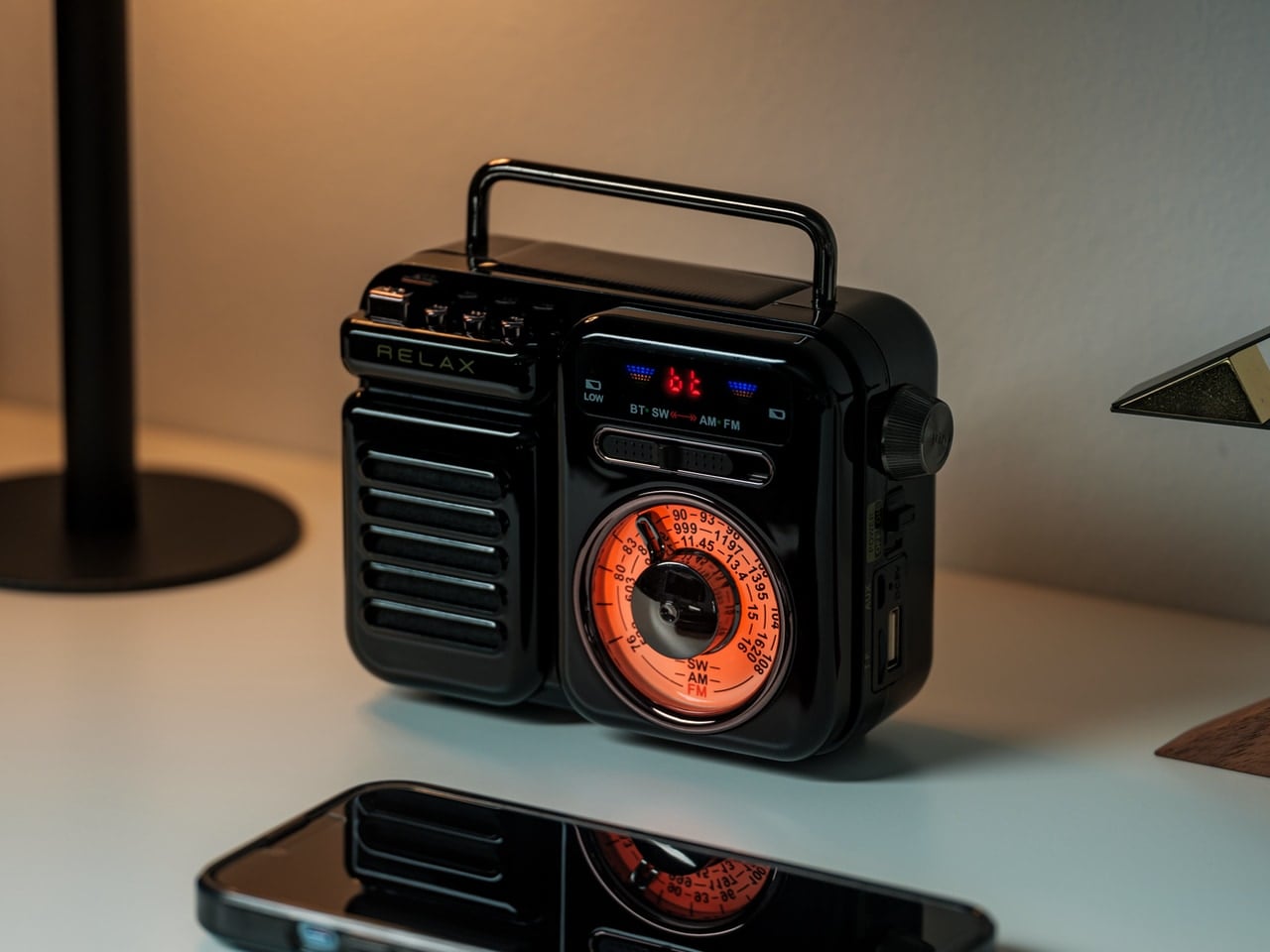
A single device covering seven roles sounds like marketing language until you’re three days into a camping trip with a dead phone and no signal. The RetroWave handles AM, FM, and shortwave reception, Bluetooth streaming, MP3 playback via USB or microSD, a built-in flashlight, an SOS alarm, hand-crank charging, a solar panel, and a power bank function. Its retro Japanese design and tactile tuning dial make it something you’d want on a shelf, not buried in a go-bag.

Off-grid, it earns its place immediately. You stop carrying a flashlight, a radio, a speaker, and a backup charger as separate items. The RetroWave collapses all of that into one object you can grab and go. Whether riding out a storm at home or deep in a campsite with no hookups in sight, the hand-crank and solar panel mean you’re never entirely powerless. That reliability, in the right situation, is the difference between anxious and settled.

Click Here to Buy Now: $89.00

What We Like:

  • Seven functions in one device significantly reduce what you need to pack
  • Hand-crank and solar charging operate without any external power source

What We Dislike:

  • Multi-function design means no single feature is best-in-class
  • Retro aesthetic won’t suit every minimalist gear setup

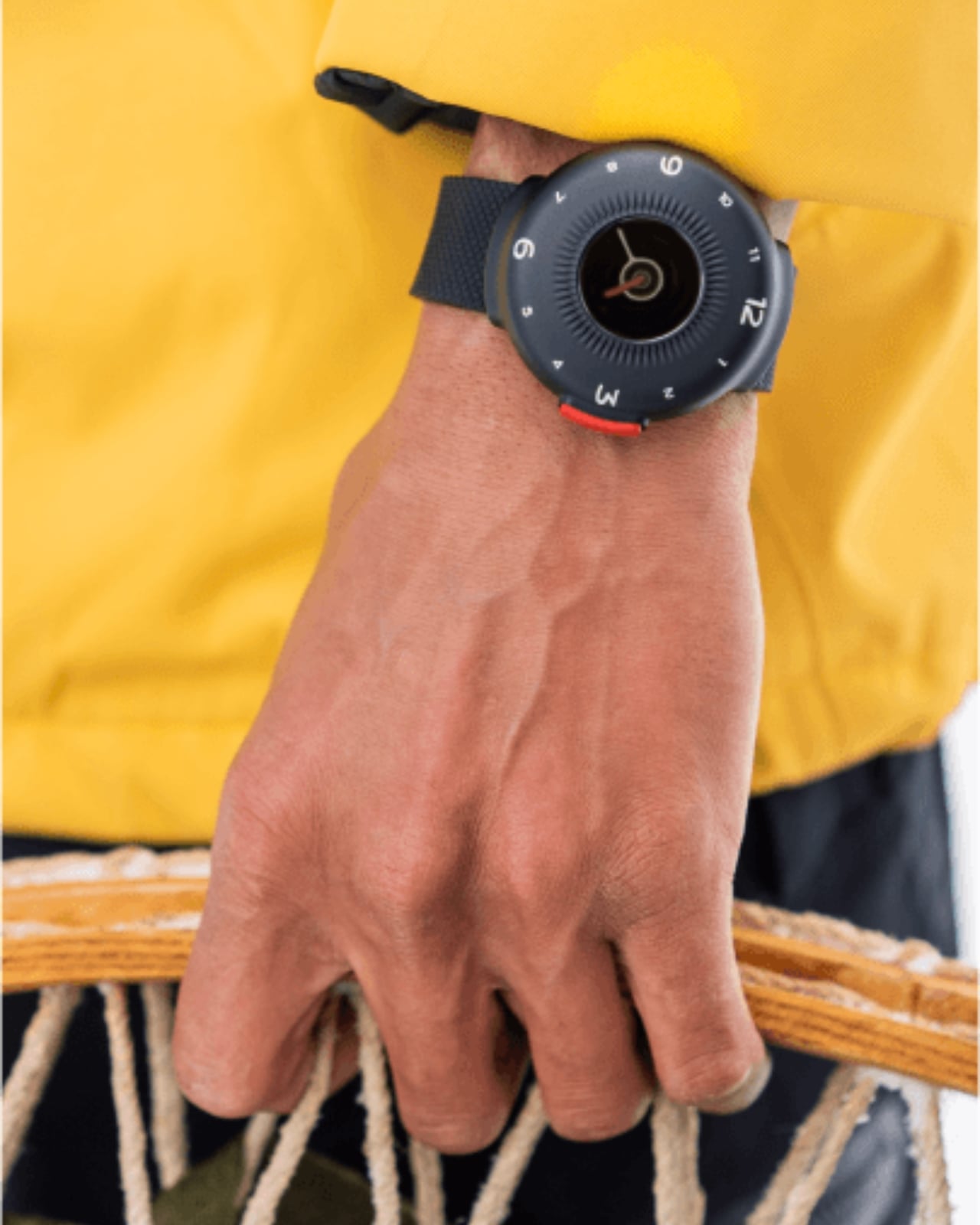
3. O-Boy Satellite Smartwatch
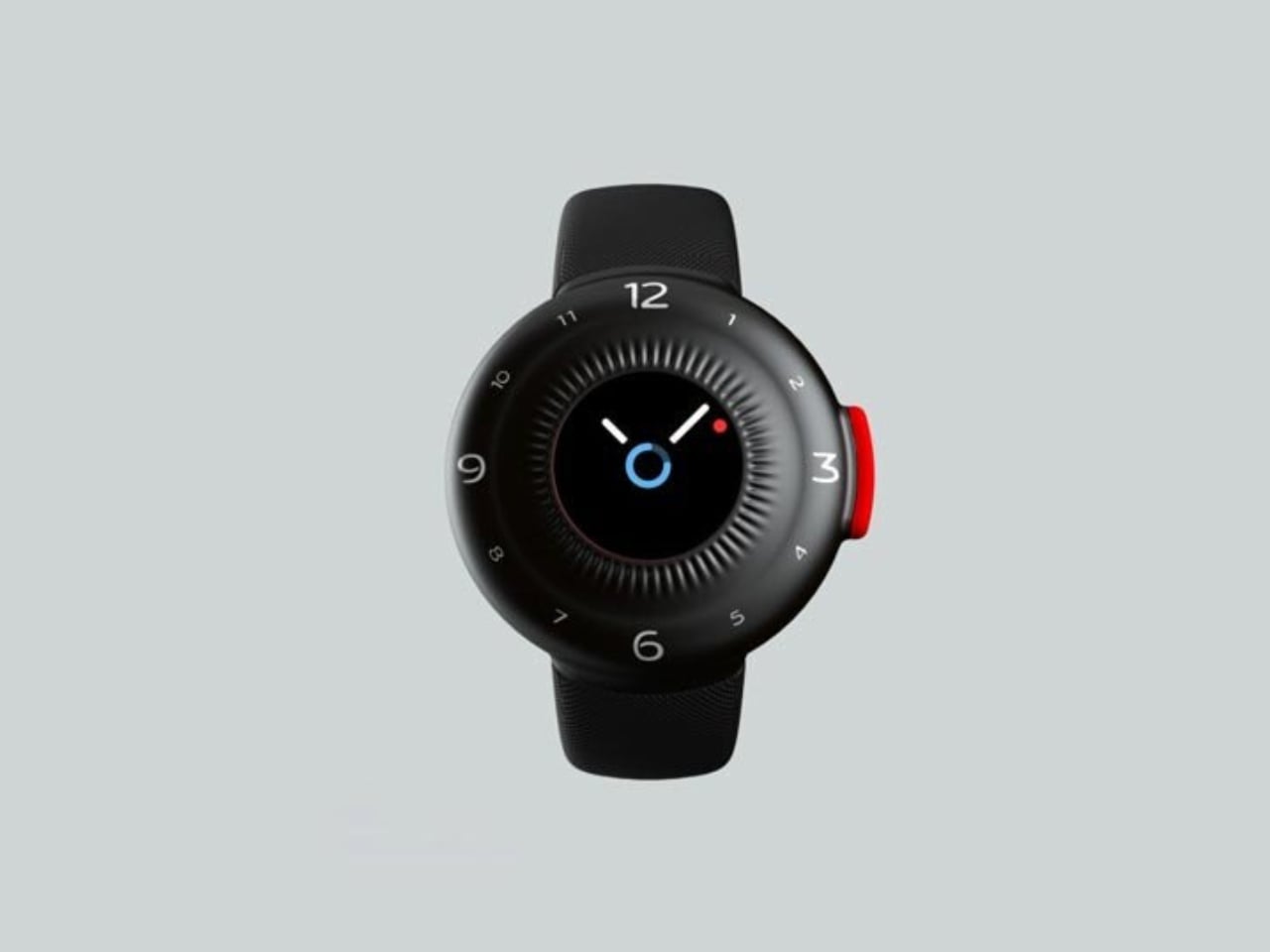
There’s a version of emergency preparedness that stops at downloading an offline map. Then there’s O-Boy. Developed by Brussels-based studio Futurewave, it’s a satellite-connected smartwatch built for environments where mobile networks simply don’t reach — mountains, open ocean, remote job sites. In those places, it functions as a direct satellite communication link, letting you transmit an emergency alert regardless of what infrastructure exists beneath your feet.

What Futurewave got right, beyond the technology, is the design brief. O-Boy doesn’t read as overtly tactical or survival-coded. It looks like something a person who spends time in remote environments would actually wear — utilitarian without being aggressive. That broader visual appeal matters because people who need a backup safety layer the most aren’t always those who identify as outdoor athletes. O-Boy is designed for anyone who ventures where their phone simply cannot save them.

What We Like:

  • Satellite connectivity works in locations with zero mobile network coverage
  • Design is wearable beyond strictly tactical or adventure-specific contexts

What We Dislike:

  • Satellite communication typically requires an ongoing subscription service
  • Smartwatch form factor means battery management becomes a daily consideration

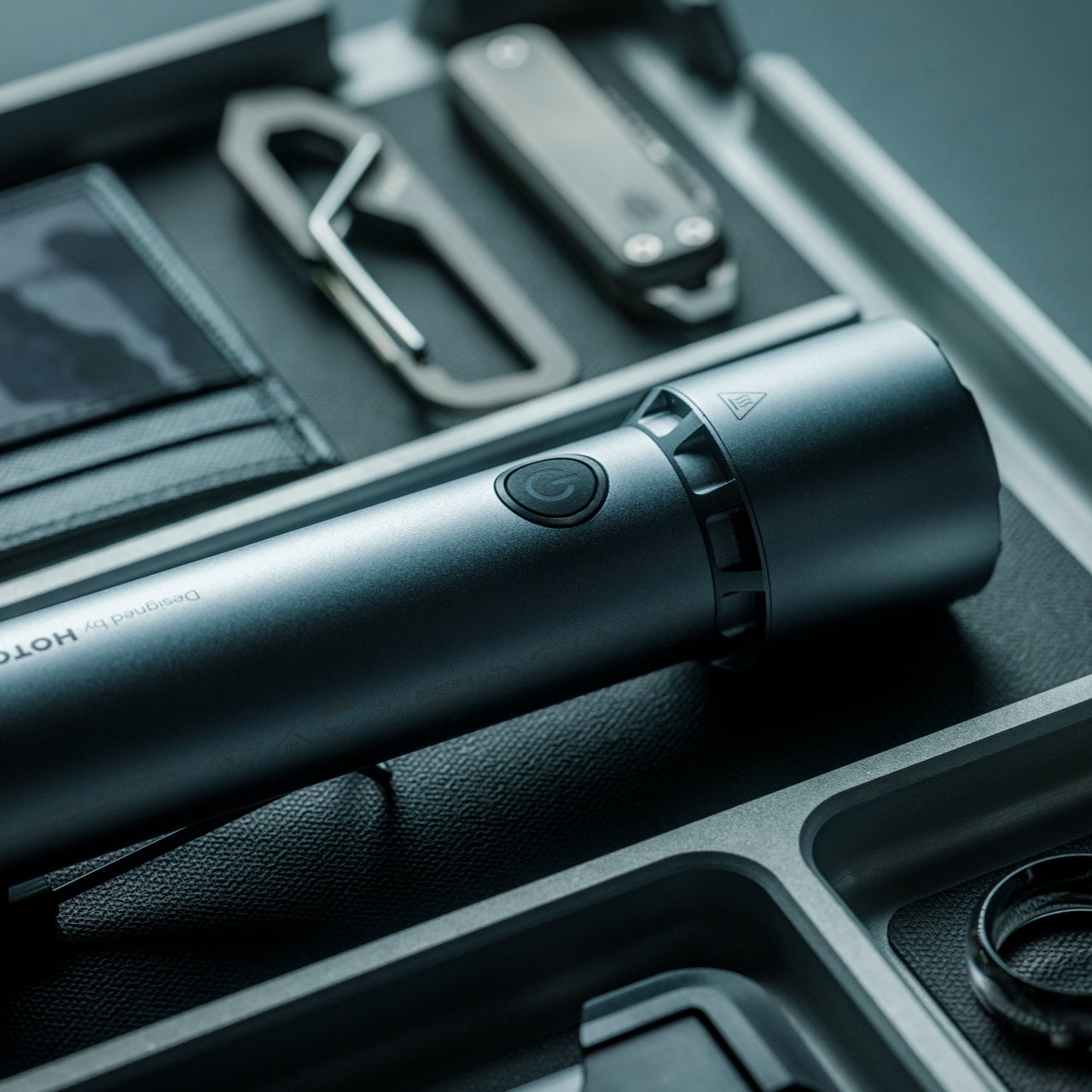
4. BlackoutBeam Tactical Flashlight
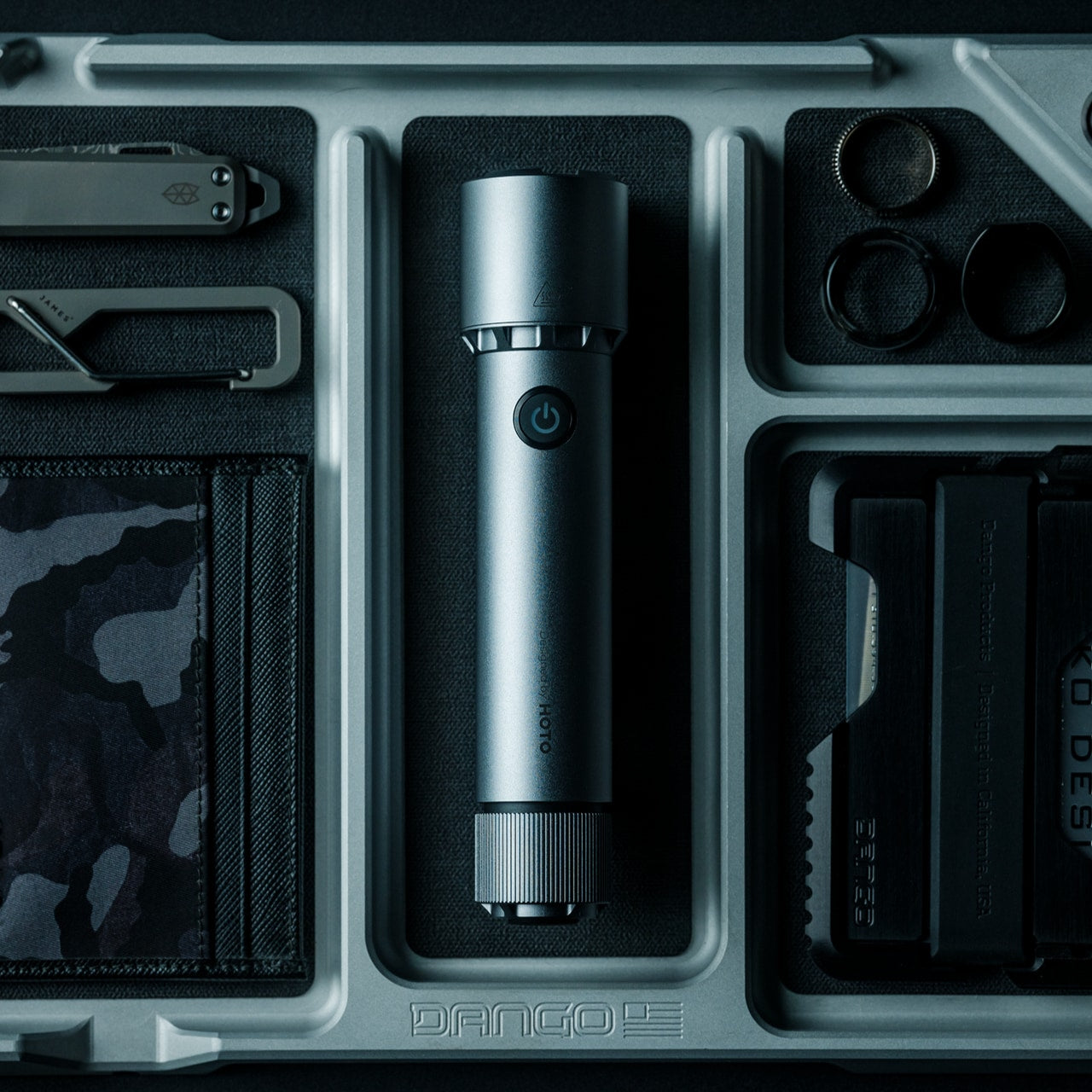
Most flashlights ask you to choose between power and portability. The BlackoutBeam doesn’t treat that as a meaningful trade-off. With 2,300 lumens of output, a 300-meter beam throw, and a 0.2-second response time, it delivers instant illumination exactly when you need it. The aluminum body carries an IP68 rating for water and dust resistance, built to handle rain, impact, and submersion without missing a beat.

What separates it from the drawer flashlight you forgot to charge is the combination of instant-on response and structural durability. In a blackout, a wildlife encounter, or a roadside situation at night, the difference between light and no light is rarely about brightness — it’s about how fast you get there. The BlackoutBeam gets there before you’ve finished reaching for it. Its industrial design keeps it from looking out of place in any context, which means it actually gets carried.

Click Here to Buy Now: $90.00

What We Like:

  • 2,300-lumen output with 300-meter beam reach handles serious low-light scenarios
  • IP68 waterproof rating and 0.2-second response built for real-world emergencies

What We Dislike:

  • Maximum lumen output draws battery faster during extended use
  • Tactical aesthetic doesn’t integrate seamlessly into every EDC setup

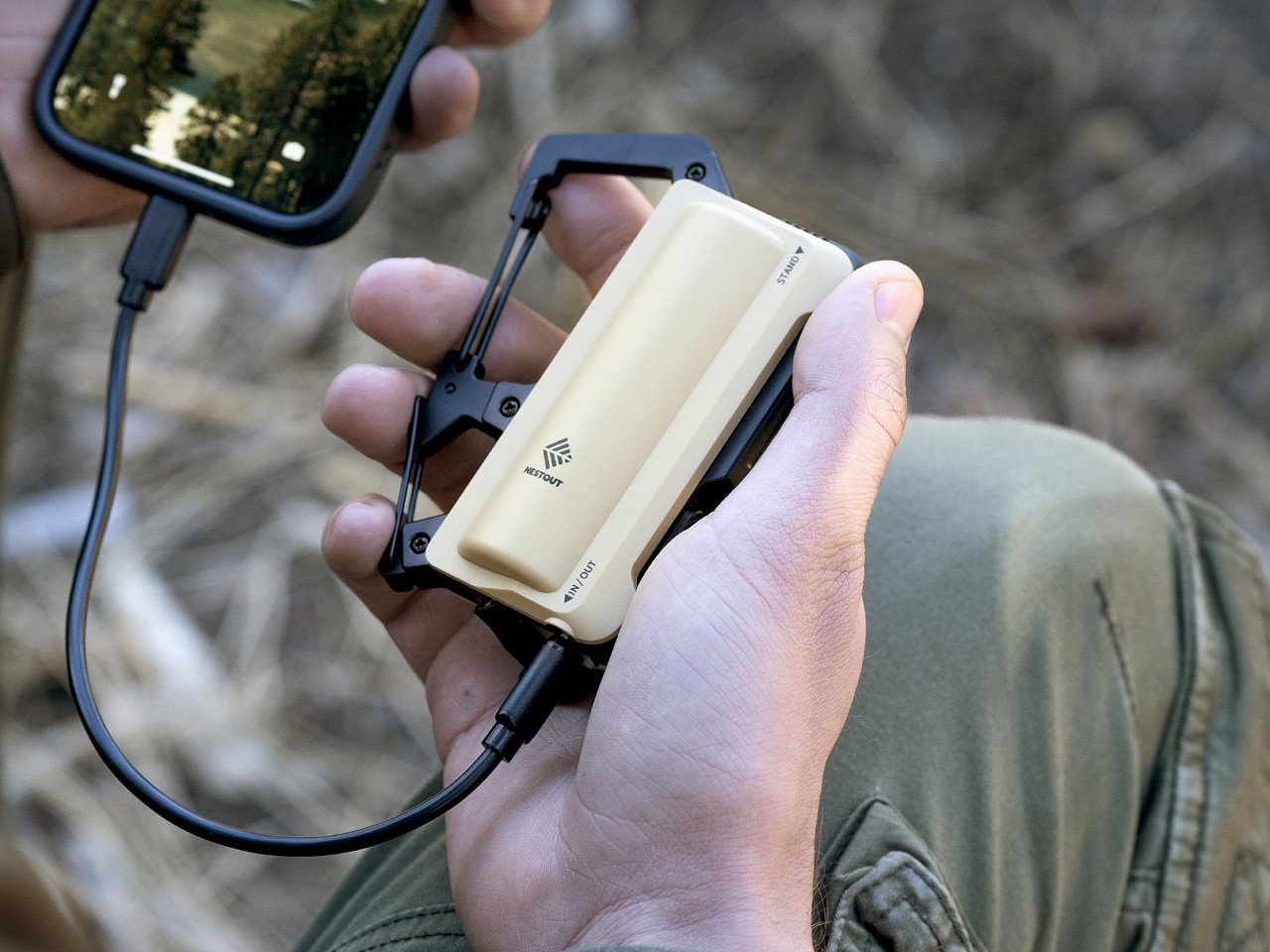
5. Carabiner Power Bank
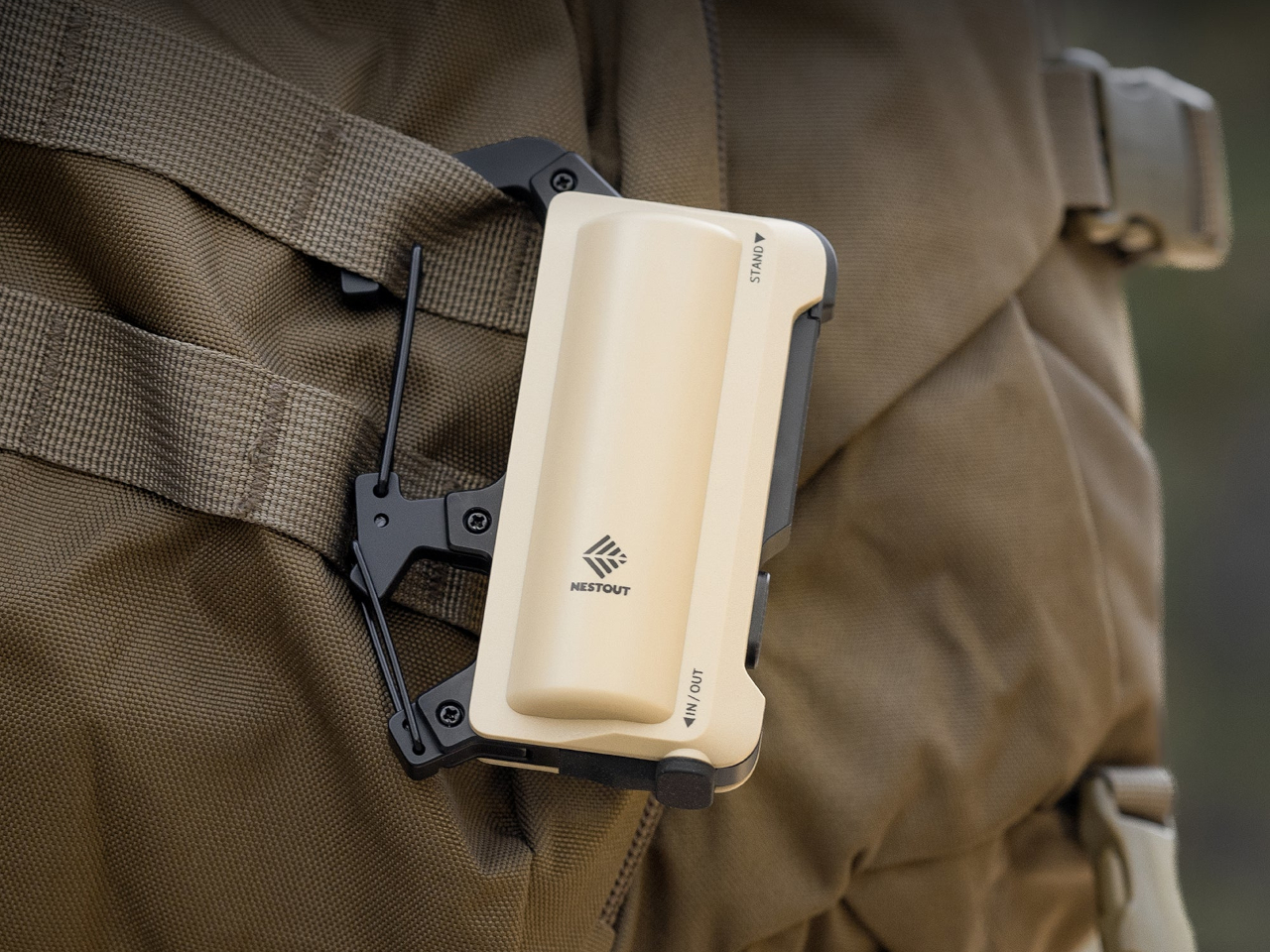
Most power banks are an afterthought in terms of how you carry them. They go loose in a pocket or rattle around at the bottom of a bag until the cable is buried somewhere unhelpful. This carabiner-shaped power bank removes that friction by making attachment the actual design concept. Clip it onto a bag strap, a jacket loop, or a belt, and your backup charge goes wherever you go without adding any mental overhead.

The real value is how it removes a common hesitation: people don’t carry a power bank until they’ve already needed one. A carabiner you clip on once and forget solves the carry problem entirely. Off-grid, that passive availability becomes genuinely important. It’s the kind of accessory that works not because it’s technically impressive, but because it respects how people actually behave and quietly builds itself into the routine.

What We Like:

  • Carabiner form clips directly to gear without consuming bag space
  • Rugged, compact design is suited to outdoor and trail use

What We Dislike:

  • Capacity is limited compared to a dedicated, full-size power bank
  • Not sufficient as a sole charging source for multi-day trips

6. X1 Portable Toilet
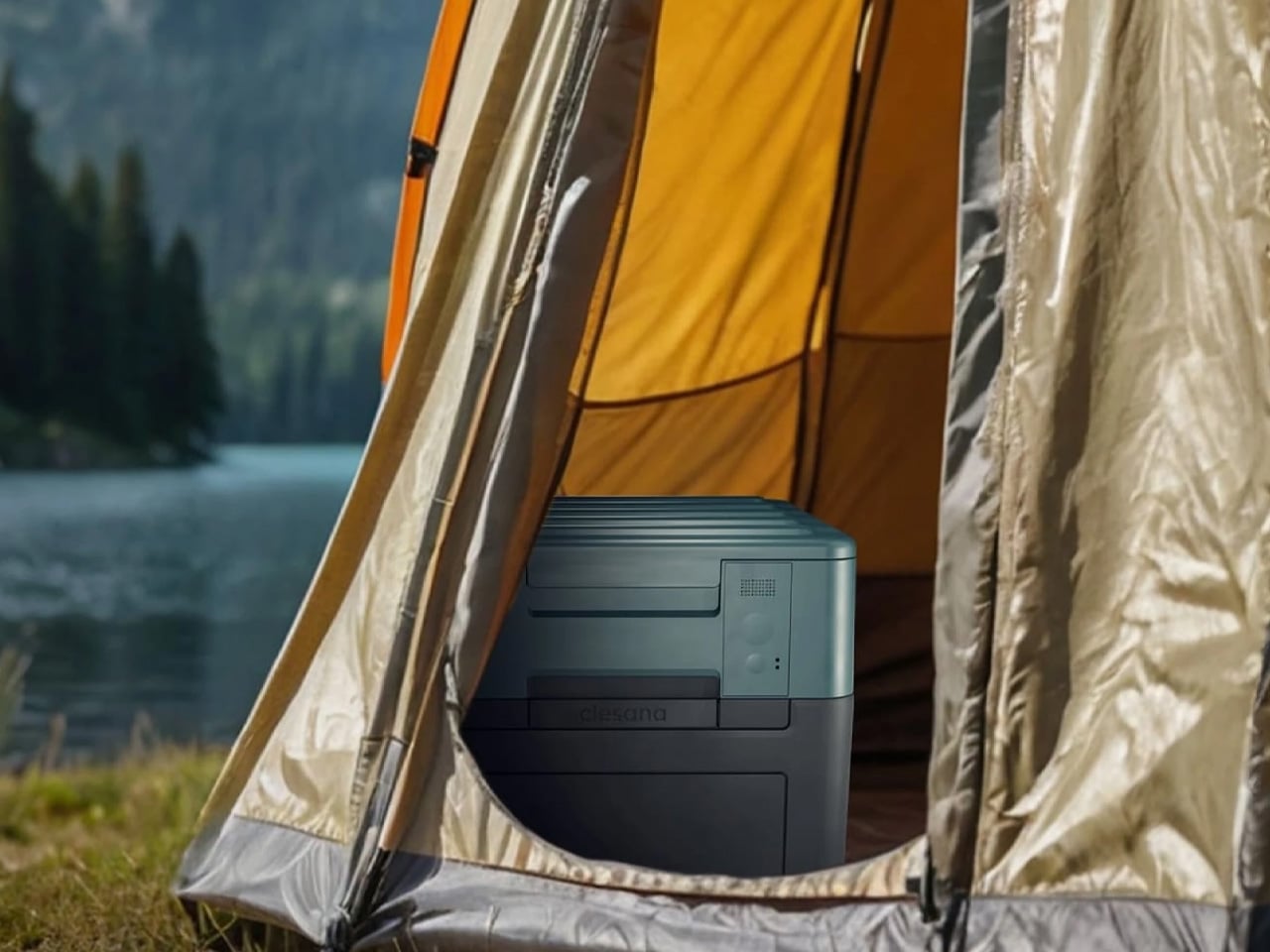
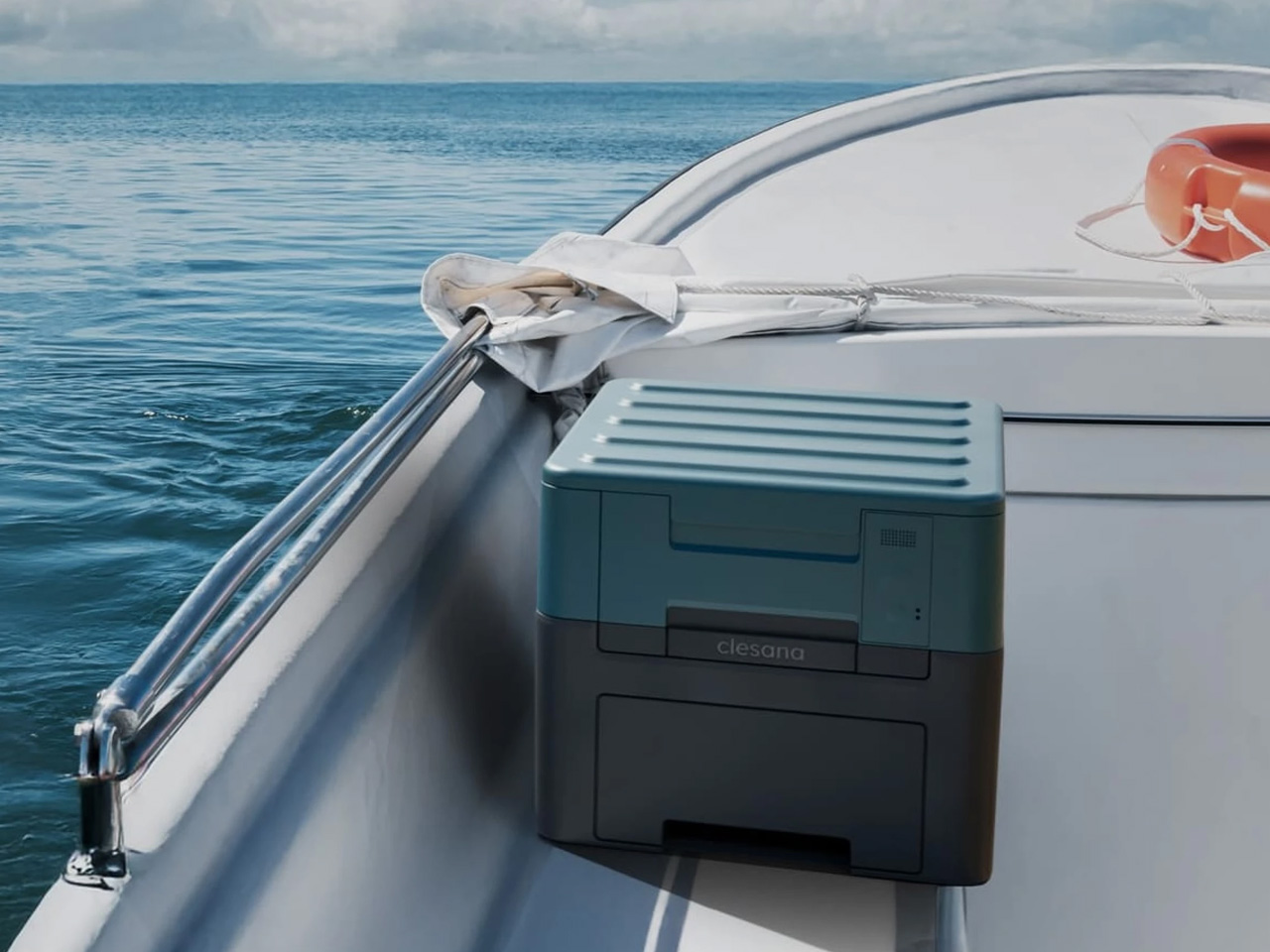
The outdoor bathroom situation is the least discussed but most universally felt problem with going off-grid. Clesana’s X1 addresses it without compromise. The battery-powered portable toilet looks like a compact cube at rest, then telescopes to full, home-equivalent height when needed. At 24 pounds with an integrated handle, one person can move it easily, and the ergonomics when deployed match what you’d expect at home, not in a festival field.

The real design achievement is what happens after use. Clesana’s patented thermoelectric sealing system wraps waste in individual sealed packages with no odor, no chemicals, and no water hookup required. Sealed waste collects in a lower chamber for clean, convenient disposal when the time comes. For van lifers, remote workers, and long-haul campers, the X1 elevates one of the most basic human needs to something approaching actual dignity. It’s a quiet but significant piece of off-grid infrastructure.

What We Like:

  • Telescopic design delivers home-height comfort in a fully portable format
  • Patented sealing system eliminates odor without chemicals or water connections

What We Dislike:

  • Battery dependency adds another device that needs to be monitored and charged
  • Sealed waste packages create an ongoing consumable cost over time

7. Loki-Nav 3-in-1 Compass
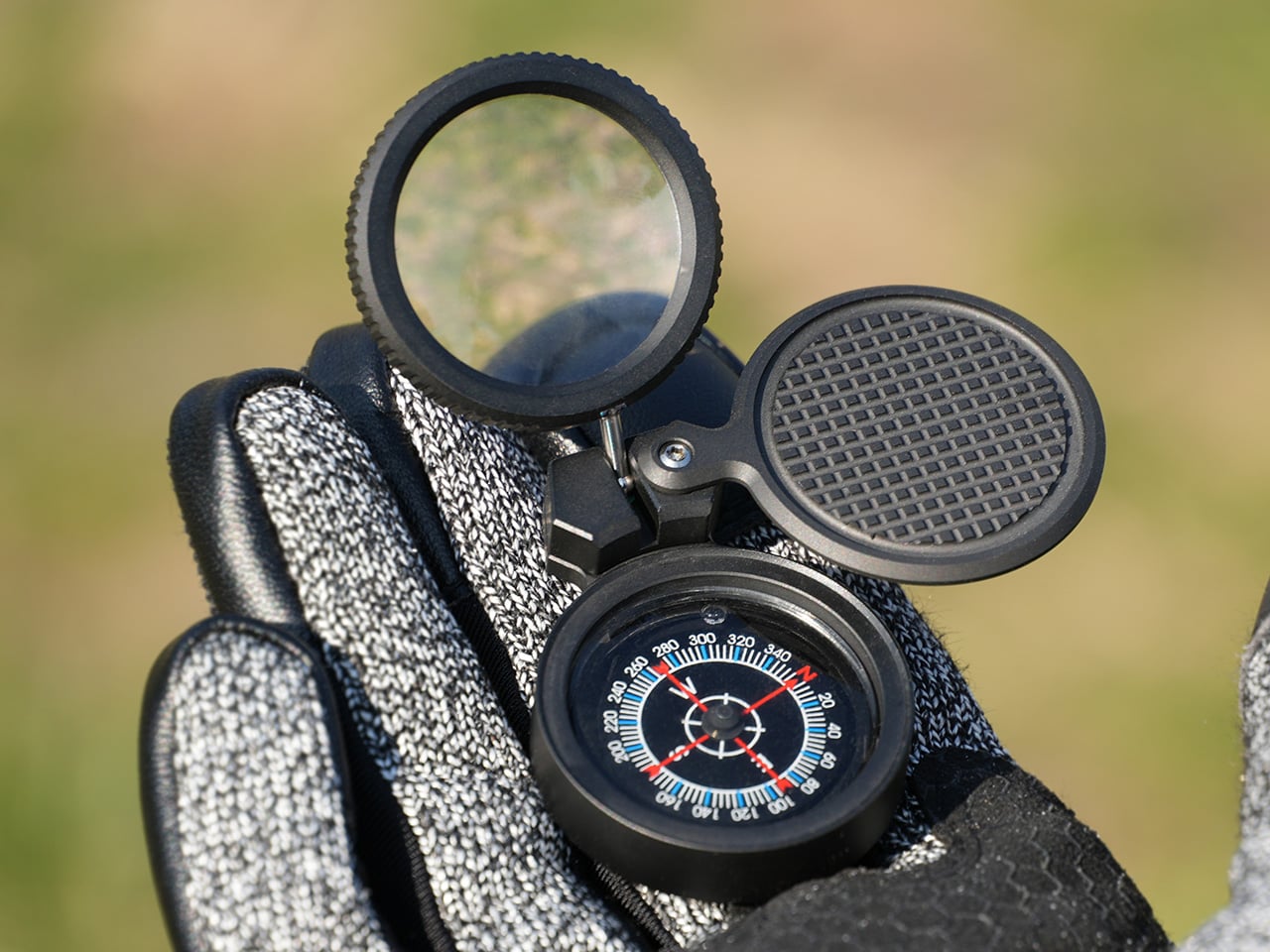
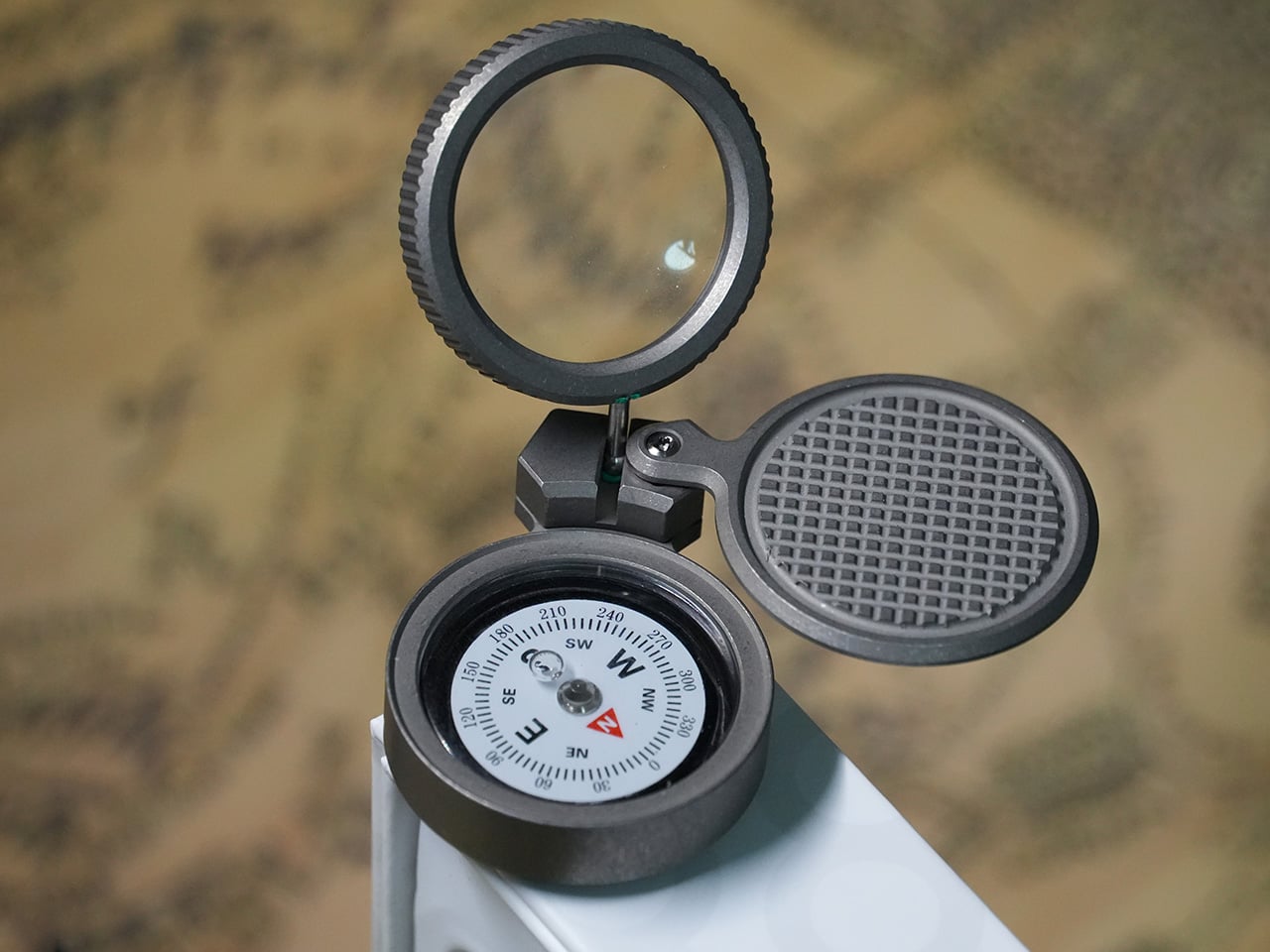
The Loki-Nav makes the case that the best survival tool is the one that actually gets packed. A standalone compass rarely does. But a compass that also works as a magnifying glass for map reading, an emergency signal mirror, and a fire-starting wood chip maker earns a permanent spot on any kit. Four tools in one object change the calculus on what’s worth carrying.

Its IPX8-rated compass is filled with premium white oil and delivers precise navigation in conditions that render most electronics useless — extreme cold, downpours, and complete darkness with the optional Luminous Compass Core upgrade. Smartphones are useful navigation tools right up until they aren’t, and coverage drop-outs and battery deaths are common enough that analog backup should be standard practice. The Loki-Nav doesn’t ask you to compromise on aesthetics to carry it, with three design options available. It’s a tool that respects the intelligence of the person using it.

What We Like:

  • Four survival functions in one design reduces what needs to be packed separately
  • IPX8-rated, oil-filled compass operates reliably in extreme temperatures

What We Dislike:

  • Wood chip fire-starting function is supplementary, not a primary fire tool
  • Each capability requires practice before relying on it in a real situation

8. Airflow 8-Panel Fire Pit
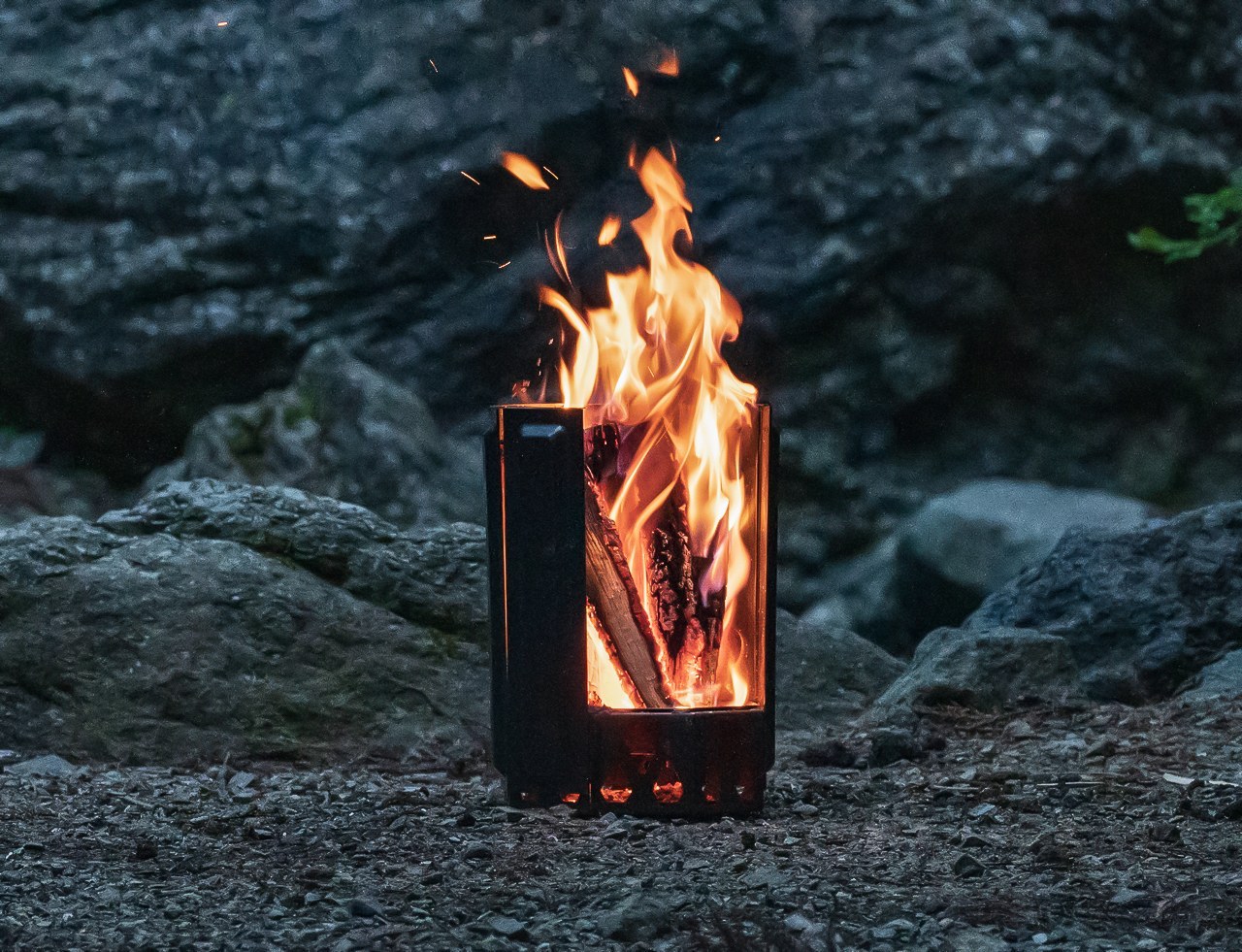
A campfire that tends itself is the dream. The Airflow 8-Panel fire pit doesn’t go that far, but its 8-panel removable design gets closer than most. Built around secondary combustion science, holes at the base of each panel channel primary airflow upward through double-walled cavities, producing a secondary burn that makes the fire significantly cleaner and more efficient. The result is minimal smoke and a fire that does more with less wood.

The adjustable panel system lets you control how open or enclosed the combustion chamber is, dialing the fire’s intensity up or down without constant prodding. Off-grid evenings deserve a real focal point, and a fire that performs well without drama is a quality-of-life upgrade that’s easy to underestimate until you’ve experienced it. Sanyo Works brings deep metal processing expertise to this design, and that background shows in how precisely the airflow mechanics are considered. Less compromise, more outdoor living.

Click Here to Buy Now: $325

What We Like:

  • The secondary combustion system produces minimal smoke for a noticeably cleaner burn
  • Adjustable 8-panel design allows real control over fire intensity

What We Dislike:

  • Eight individual panels mean more parts to pack and more potential for loss
  • Wood-only fuel system with no gas compatibility

9. COFFEEJACK V2
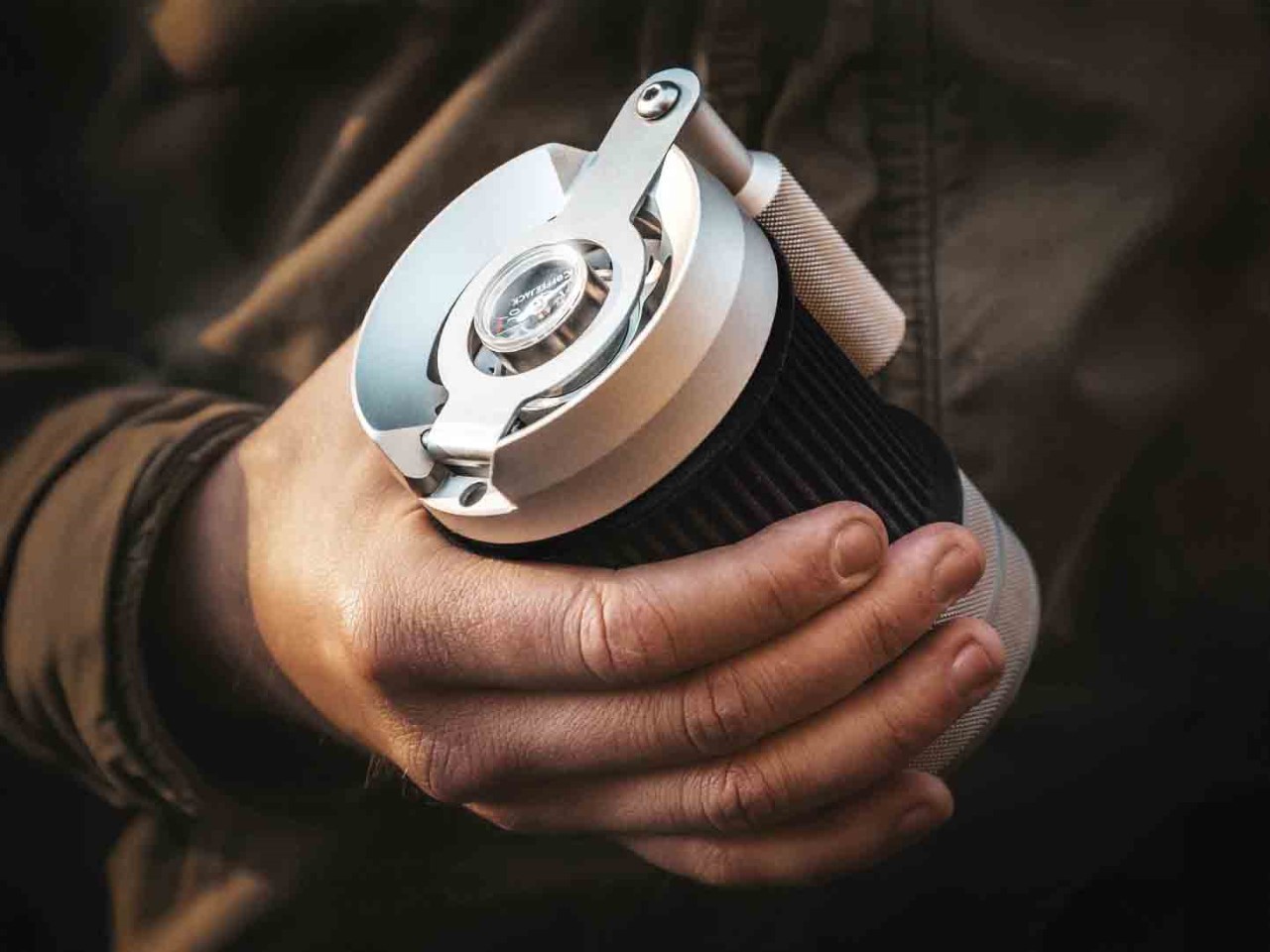
There’s something worth preserving in the process of making coffee, and the COFFEEJACK V2 understands that completely. It’s a fully manual, hand-crank espresso maker that builds up to 10 bars of pressure through rotation alone. No electricity, no battery, no automation. The crank forces hot water through a portafilter packed with a coffee puck, producing a proper espresso shot complete with crema, wherever you happen to be sitting.

The design is compact enough to pack without rethinking your kit, and the purely analog mechanism means nothing to charge and nothing to break electronically. For off-grid mornings, a proper hand-brewed espresso is a ritual worth keeping. It’s also arguably the clearest signal that going off-grid doesn’t require giving anything meaningful up. The COFFEEJACK V2 is the kind of object that makes a campsite feel intentional rather than improvised, which is the whole point.

What We Like:

  • Fully manual design requires zero power source or battery
  • Builds up to 10 bars of pressure for genuine espresso with full crema

What We Dislike:

  • A consistent technique is required to get the best extraction results
  • Hot water still needs to be sourced and heated separately before brewing

10. Giga Pump 4.0
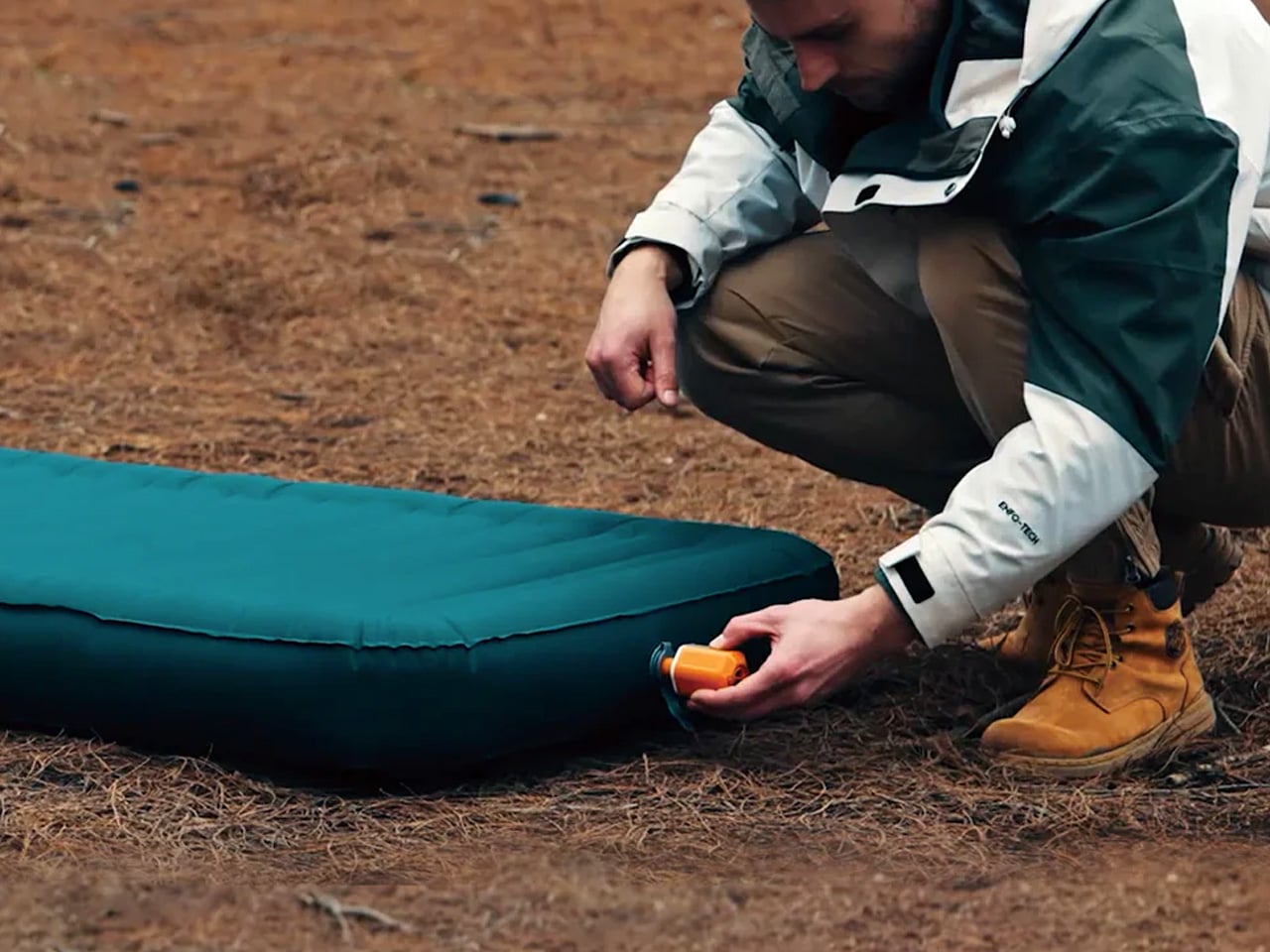
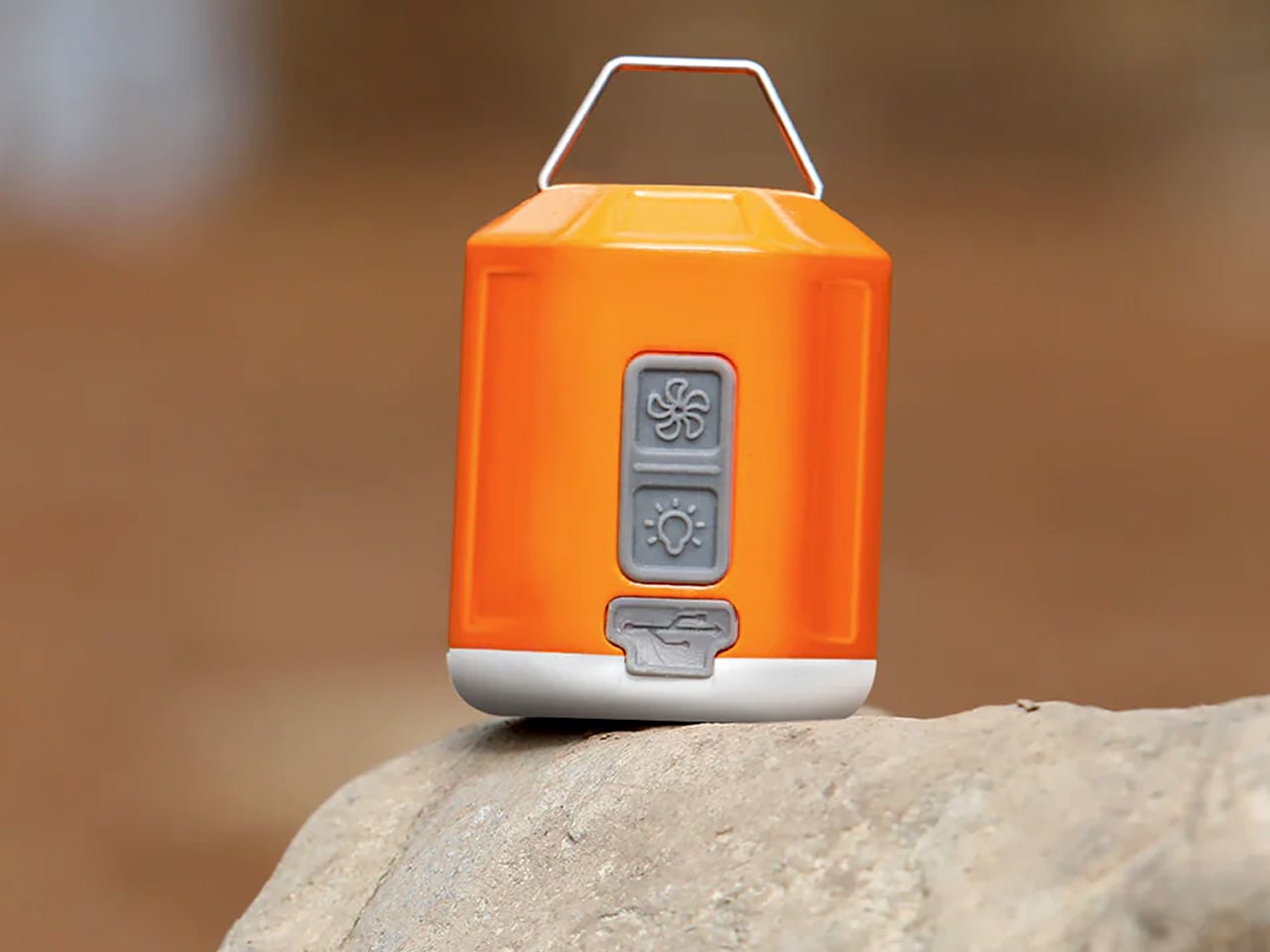
Inflating gear by mouth or with a bulky hand pump has always been the slowest, most tedious part of setting up camp. The Giga Pump 4.0 eliminates that problem. Despite its compact size, it achieves 4.2 kPa pressure and a 220L per minute flow rate, representing a 90% efficiency improvement over its predecessor. A simple toggle switches between 4 kPa for firm inflation and 2 kPa for softer fill, handling mattresses, paddle boards, and tents with equal ease.

Deflation is handled just as efficiently. The reverse suction mode pulls air out as quickly as it pushes it in, compressing gear down for storage in a fraction of the usual time. Off-grid setups live and die by how much friction each task creates. A pump that does its job quickly and quietly, without requiring you to think about it, means more time spent doing the things you actually came out there for. That’s the right kind of upgrade.

What We Like:

  • 90% efficiency improvement delivers 220L per minute from a compact body
  • Forward inflation and reverse deflation are handled by one device

What We Dislike:

  • Battery-powered design requires charging before each outing
  • Compact size means slightly less sustained pressure than full-size pump alternatives

The Grid Was Always Optional

Going off-grid used to require an acceptance of compromise. You’d lose convenience, comfort, and connectivity in exchange for space and silence. These ten tools quietly dismantle that trade-off. From satellite communication on your wrist to espresso brewed by hand at a campsite, the gap between outdoor living and the standards you hold at home has never been narrower. The gear has caught up. The question now is whether you have.

None of these products asks you to rough it. That’s the point. The best off-grid gear doesn’t celebrate deprivation — it removes the friction that made leaving the grid feel like a real sacrifice to begin with. Whether you’re building a go-bag, outfitting a van, or just spending more time outdoors, this kind of kit makes the case that beyond the last signal bar is exactly where you want to be.


The post 10 Best Gadgets & Tools That Make Going Off-Grid Feel Like an Upgrade first appeared on Yanko Design.


NASA targets a September launch for its next big space telescope

NASA's next eye into the cosmos is due to leave our planet later this year. The agency says it's targeting an early September launch for the Nancy Grace Roman Space Telescope. Roman (for short) has a field of view 100 times larger than Hubble's.

The September date is the earliest possible launch for Roman. NASA says it will go up (aboard a SpaceX Falcon Heavy rocket) no later than May 2027.

The Nancy Grace Roman Space Telescope, named after NASA's first chief astronomer and "mother" of Hubble, was introduced in 2016. (Back then, it was known as the Wide Field Infrared Survey Telescope, or WFIRST.) The telescope's mirror is roughly the same size as Hubble's, but it can capture sections of the sky at least 100 times larger than its predecessor.

The Roman telescope, sitting inside a white NASA hangar
NASA

"Roman will work in tandem with NASA observatories such as the James Webb Space Telescope and Chandra X-ray Observatory, which are designed to zoom in on rare transient objects once they've been identified, but seldom if ever discover them," Julie McEnery, Roman's senior project scientist, said in 2023. "Roman's much larger field of view will reveal many such objects that were previously unknown. And since we've never had an observatory like this scanning the cosmos before, we could even find entirely new classes of objects and events."

After leaving our atmosphere, Roman will set course for a vantage point nearly 1 million miles from Earth. There, it will rely on a pair of instruments to study space. The first is a 300.8-megapixel camera that captures light from visible to near-infrared. There's also a high-contrast coronagraph that will allow it to capture exoplanets that would otherwise be blocked by starlight.

Roman’s mission: "to settle essential questions in the areas of dark energy, exoplanets and astrophysics." Despite decades of study, astronomers know surprisingly little about dark energy, which makes up about 68 percent of the universe’s contents. And while scientific discoveries are cool and all, you’ll be pleased to know that Roman is also sure to beam back more dazzling pictures of our cosmos.

This article originally appeared on Engadget at https://www.engadget.com/science/space/nasa-targets-a-september-launch-for-its-next-big-space-telescope-204140176.html?src=rss

France’s national agency for managing IDs and passports suffered a data breach last week

The French government confirmed that France Titres, also known as Agence nationale des titres sécurisés (ANTS), experienced a security breach last week. France Titres disclosed that it detected a data breach on April 15. The next day, a hacker claimed responsibility for the breach and claimed to have up to 19 million records that they are attempting to sell. According to Bleeping Computer, the data does not appear to have been widely leaked yet. 

France Titres is responsible for the country's identification and registration materials, including driver’s licenses, national ID cards, passports and immigration documents. The compromised data includes full names, email addresses, dates of birth, account identifiers, login IDs, phone numbers and mailing addresses. The department said that while the breach did not permit access to its portals, the exposed information could be used for phishing attacks or other illicit actions. The announcement advised caution regarding any suspicious communications claiming to be from the agency.

This article originally appeared on Engadget at https://www.engadget.com/cybersecurity/frances-national-agency-for-managing-ids-and-passports-suffered-a-data-breach-last-week-201432189.html?src=rss

Apple rolls out iOS 26.4.2 to fix a flaw that allowed the FBI to access push notifications

Apple's latest iOS update fixes a flaw in its notification database that made it possible for law enforcement to view deleted push notifications on a person's iPhone or iPad. The security flaw was one way law enforcement agencies like the FBI could circumvent Apple's strict stance towards user privacy, the Electronic Frontier Foundation writes, particularly since the company has required a court order to share notification data since 2023.

According to Apple's update notes, iOS 26.4.2 introduces "improved data redaction" to address an issue where "notifications marked for deletion could be unexpectedly retained on the device." The update is available now on "iPhone 11 and later, iPad Pro 12.9-inch 3rd generation and later, iPad Pro 11-inch 1st generation and later, iPad Air 3rd generation and later, iPad 8th generation and later and iPad mini 5th generation and later," Apple says.

The FBI's use of this particular iOS notification flaw was first reported on by 404 Media, who learned the agency used a tool to access Signal notification data stored locally on an iPhone even after it was deleted. Signal CEO Meredith Whitaker later acknowledged the issue on Bluesky, writing that "notifications for deleted [messages] shouldn't remain in any OS notification database, and we've asked Apple to address this." At the time, Whitaker directed Signal users to adjust their settings so that push notifications from the app didn’t include the name of the messenger or message content. In reaction to today’s news, Signal said on Bluesky that it is “very happy that today Apple issued a patch and a security advisory.”

The privacy of your notifications is vulnerable in at least two places, according to the EFF. In the cloud, where they get routed through a company's servers and likely partially logged in metadata, and on the local storage of the phone where they're received. Apple's update should ideally make deleted notifications appropriately inaccessible, but limiting what's actually visible in notifications in the first place is also worth considering.

Update, April 22, 6:40PM ET: This story was updated after publish to include comment from Signal.

This article originally appeared on Engadget at https://www.engadget.com/cybersecurity/apple-rolls-out-ios-2642-to-fix-a-flaw-that-allowed-the-fbi-to-access-push-notifications-201153603.html?src=rss

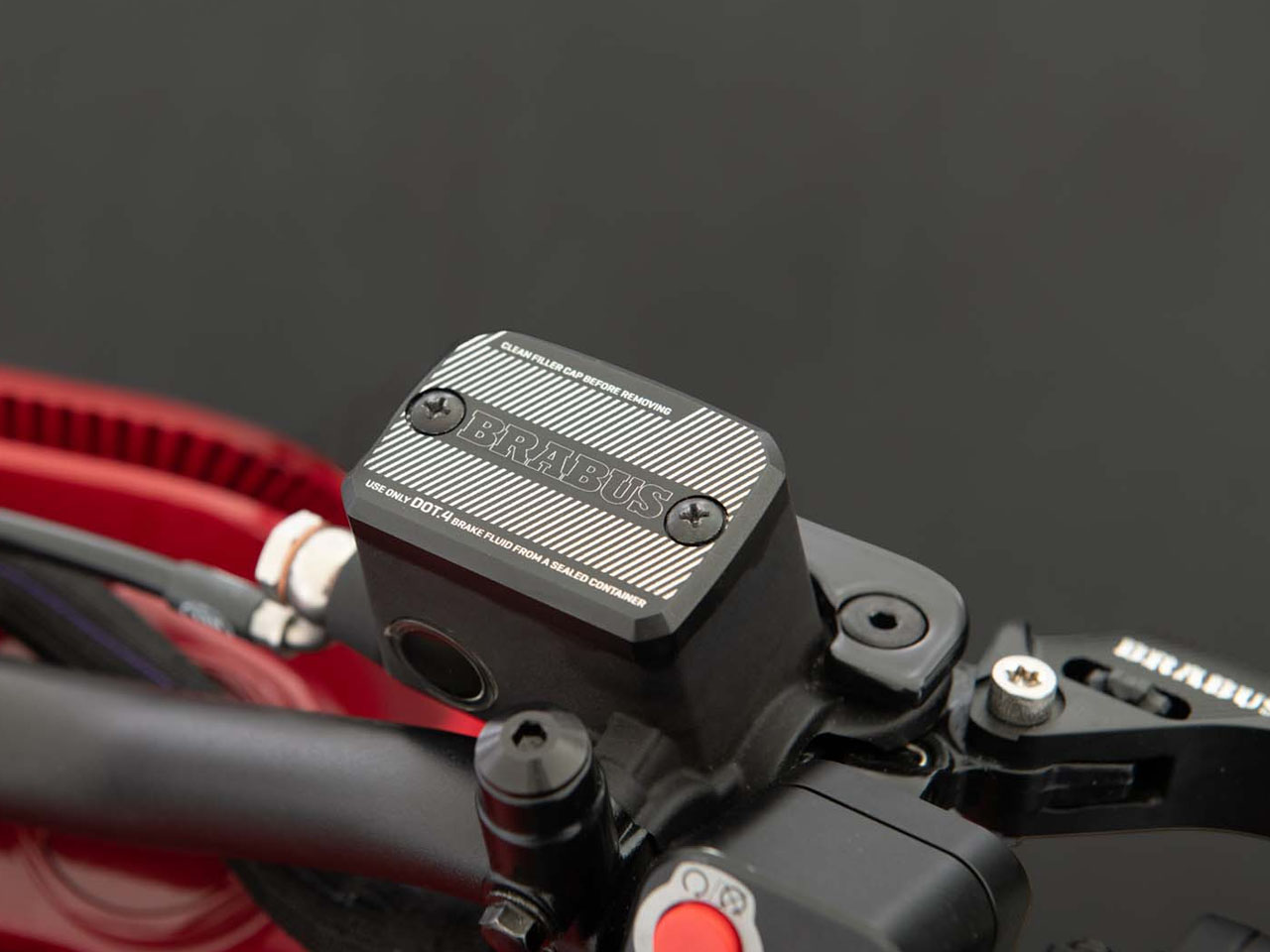
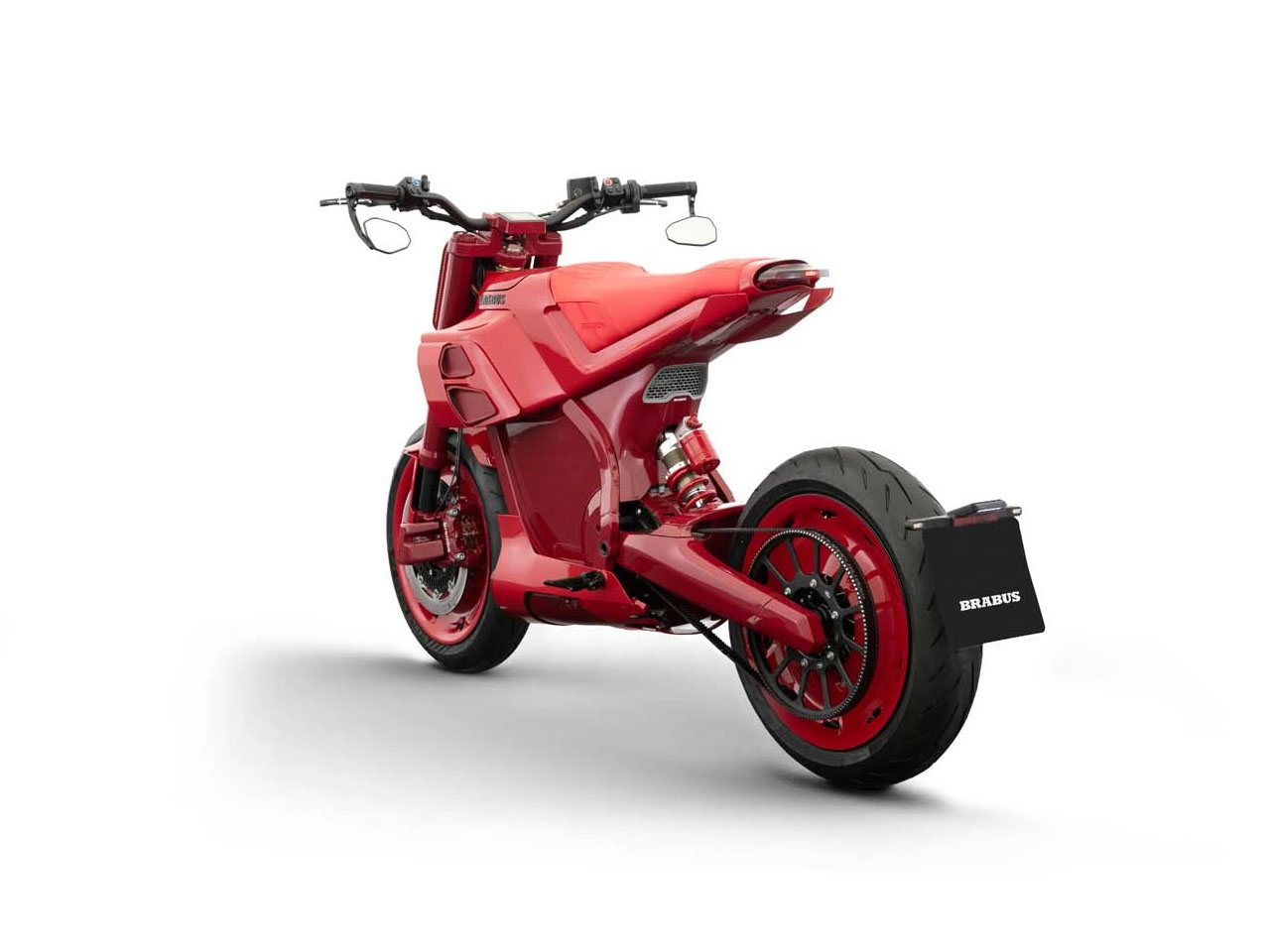
BRABUS Urban E First Edition bring cyberpunk flair to premium electric motorcycles

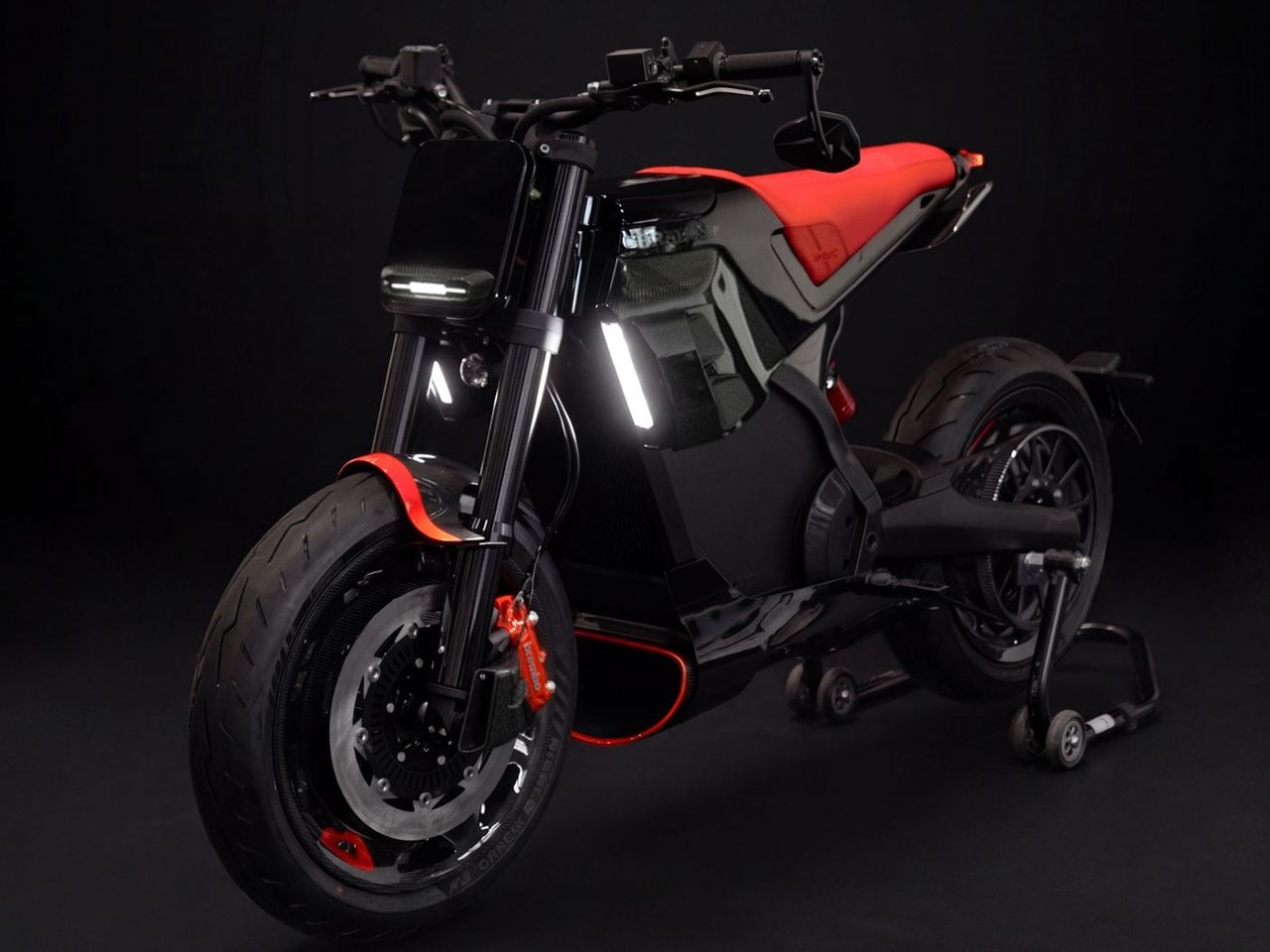
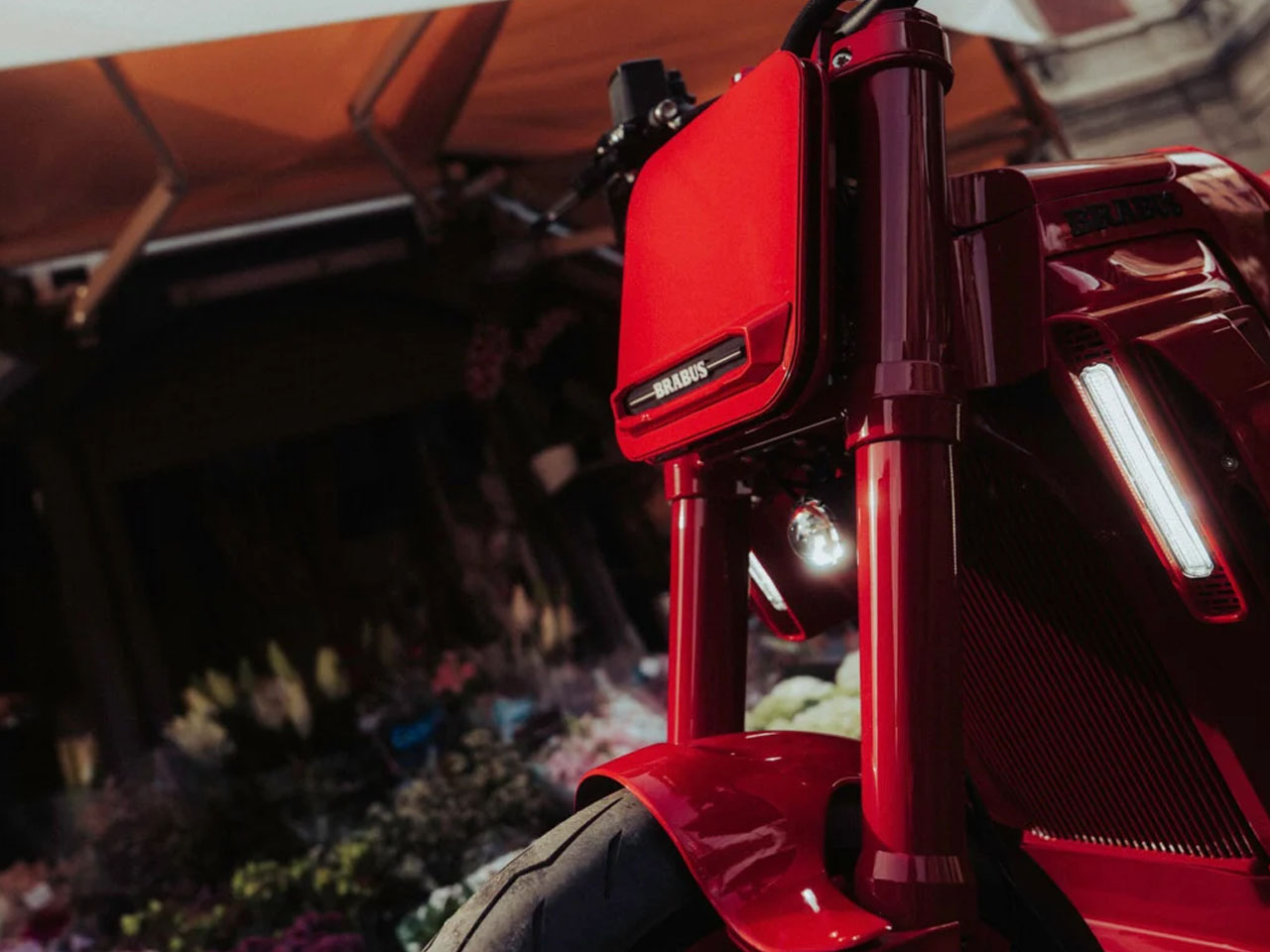
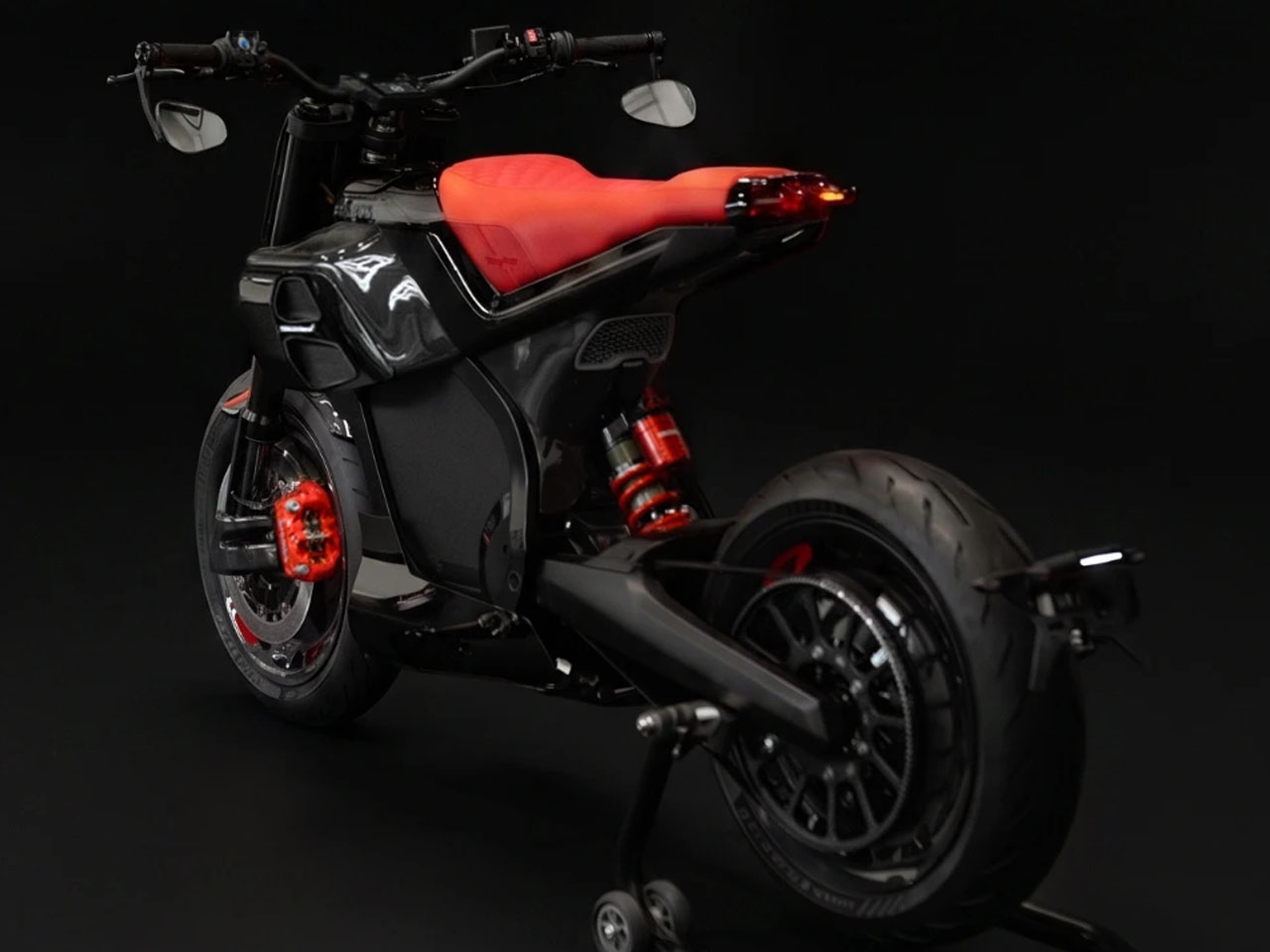
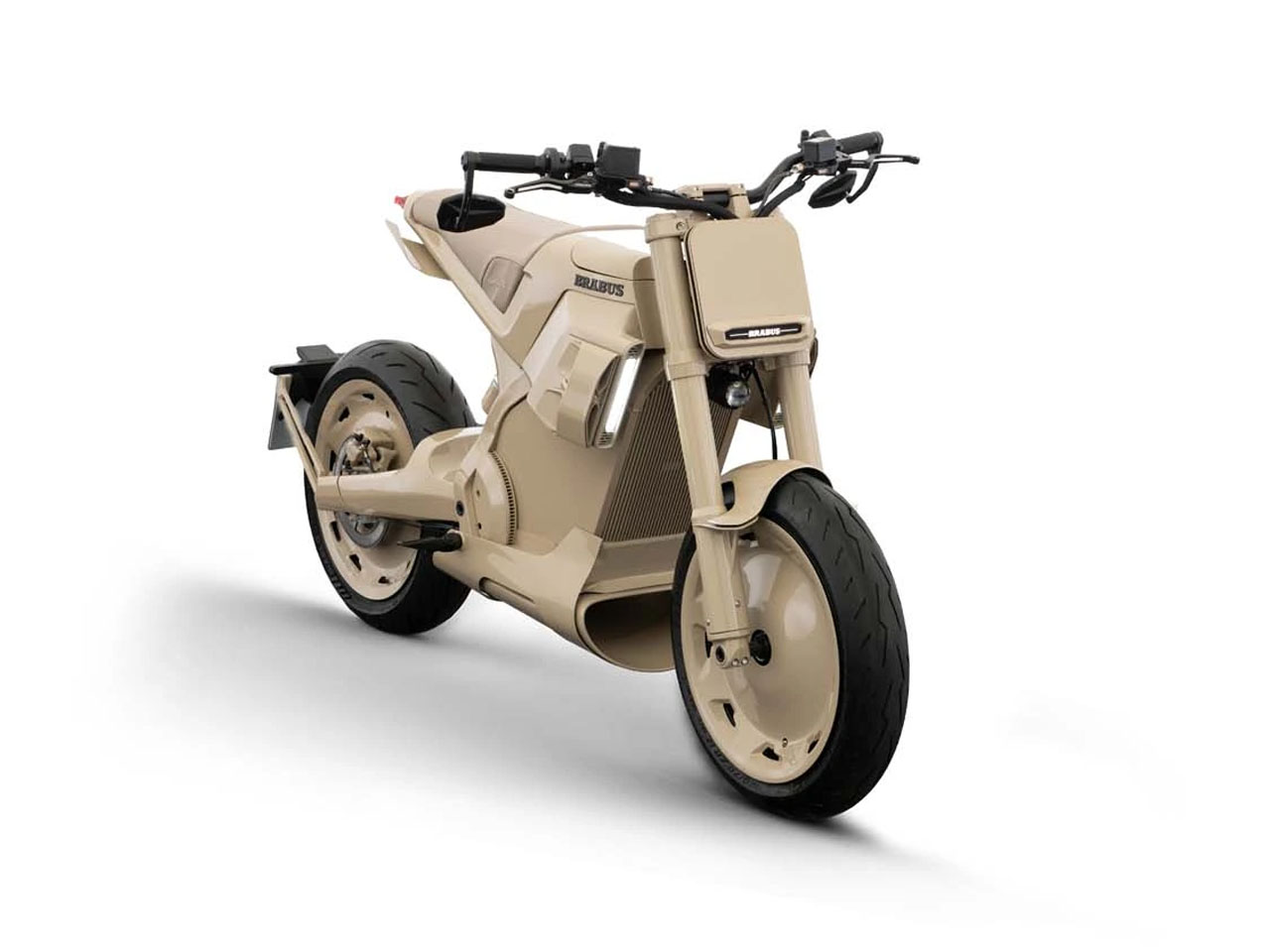
German tuning specialist, BRABUS, has shown to what extremes four-wheeler modding can go when you’ve already got a powerful machine at hand. They’ve now partnered with DAB Motors to bring those surreal tuning exploits to the two-wheeler world with electric bikes revealed at Milan Design Week 2026. Built on the trusted DAB 1α electric platform, the trio of bikes is designed for urban riders, combining minimalist design with performance-driven engineering.

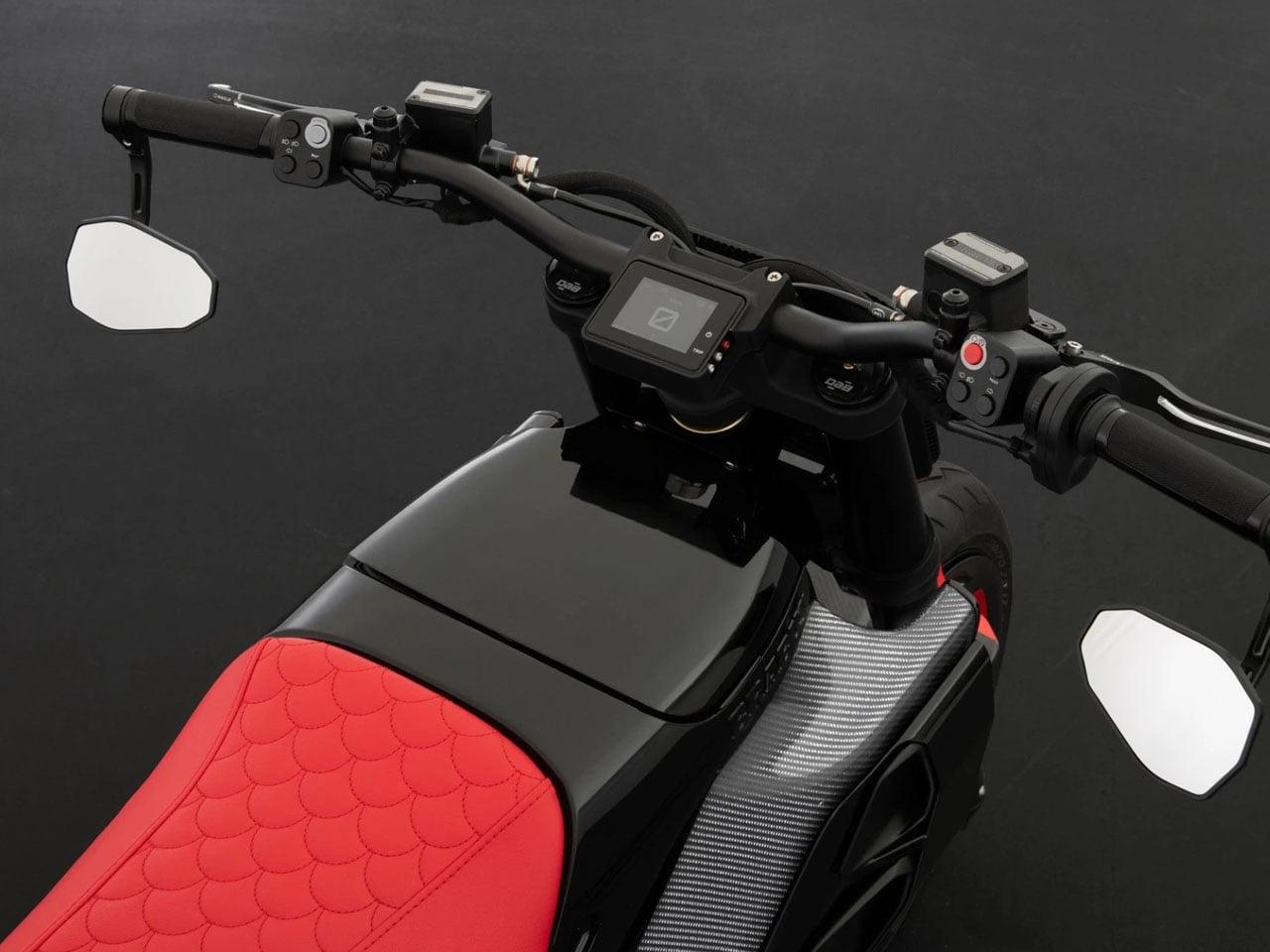
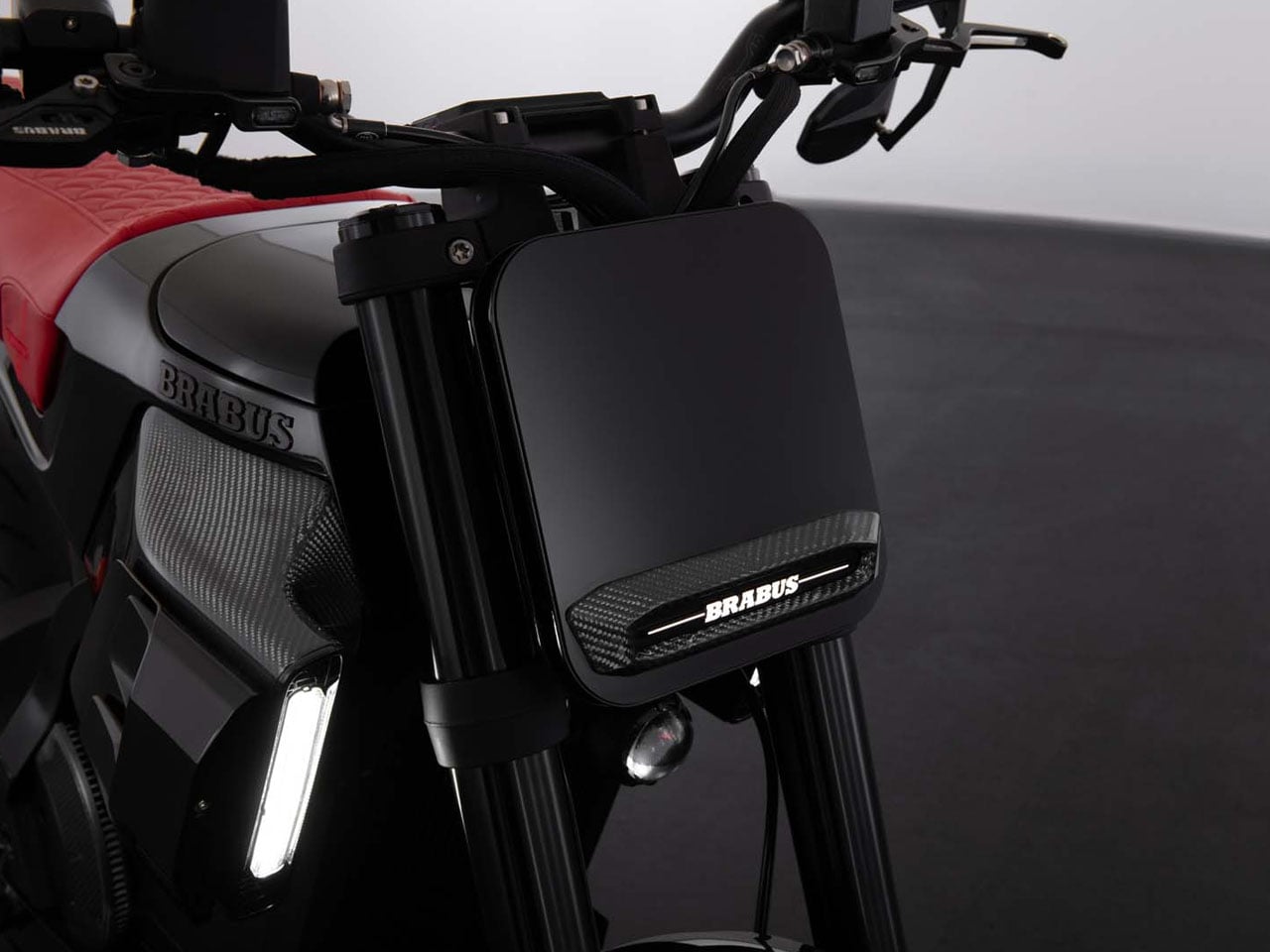
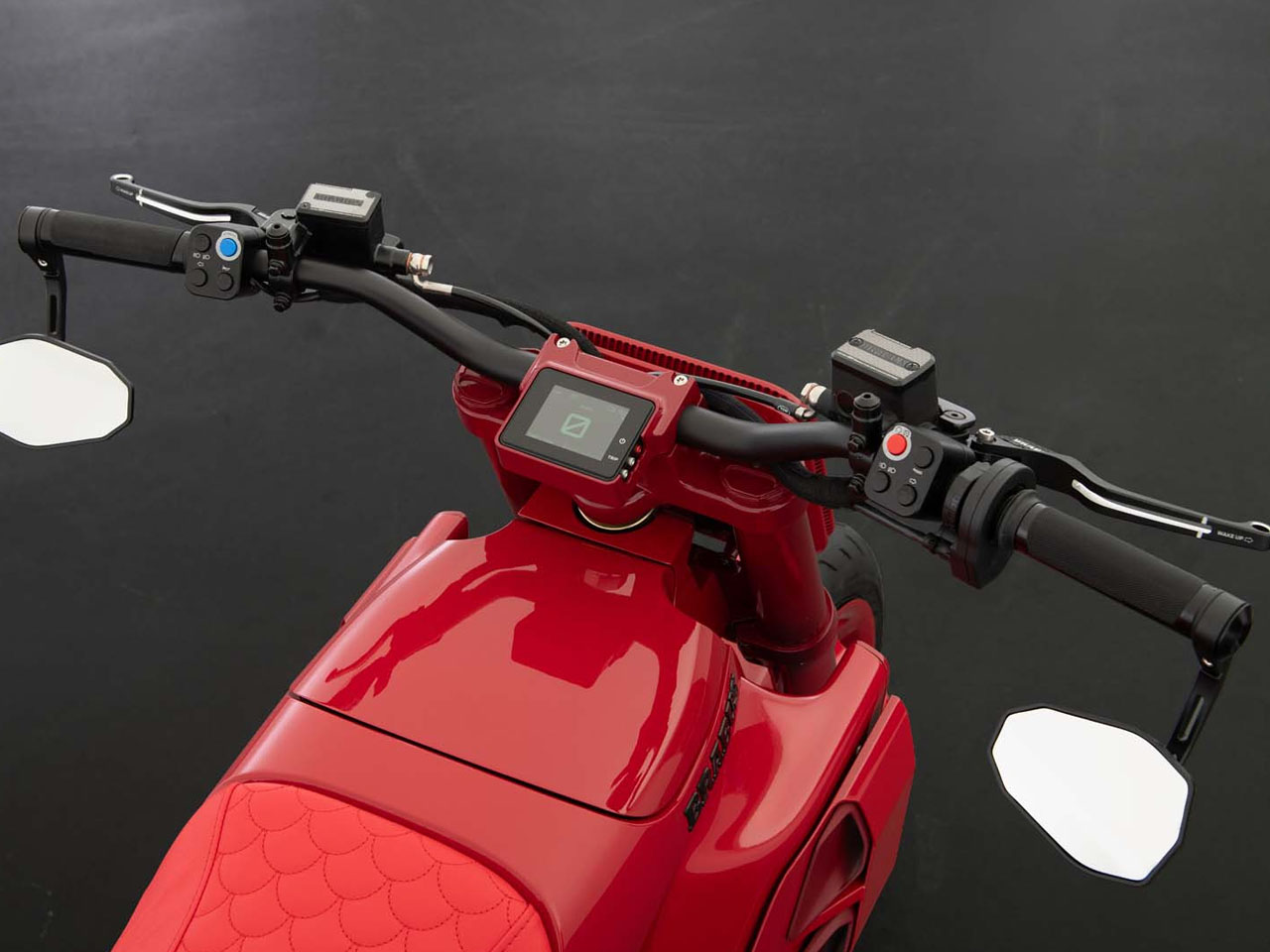
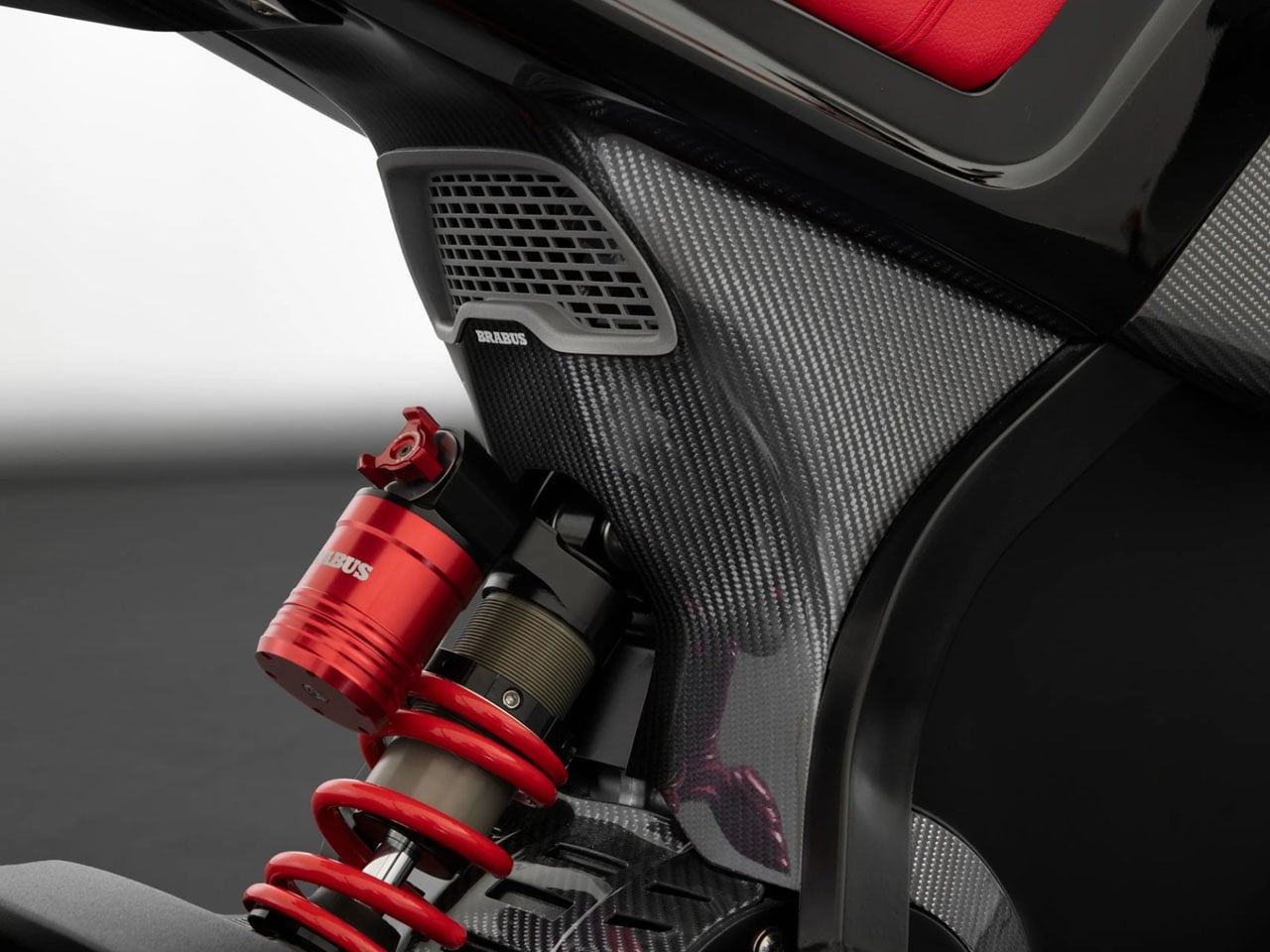
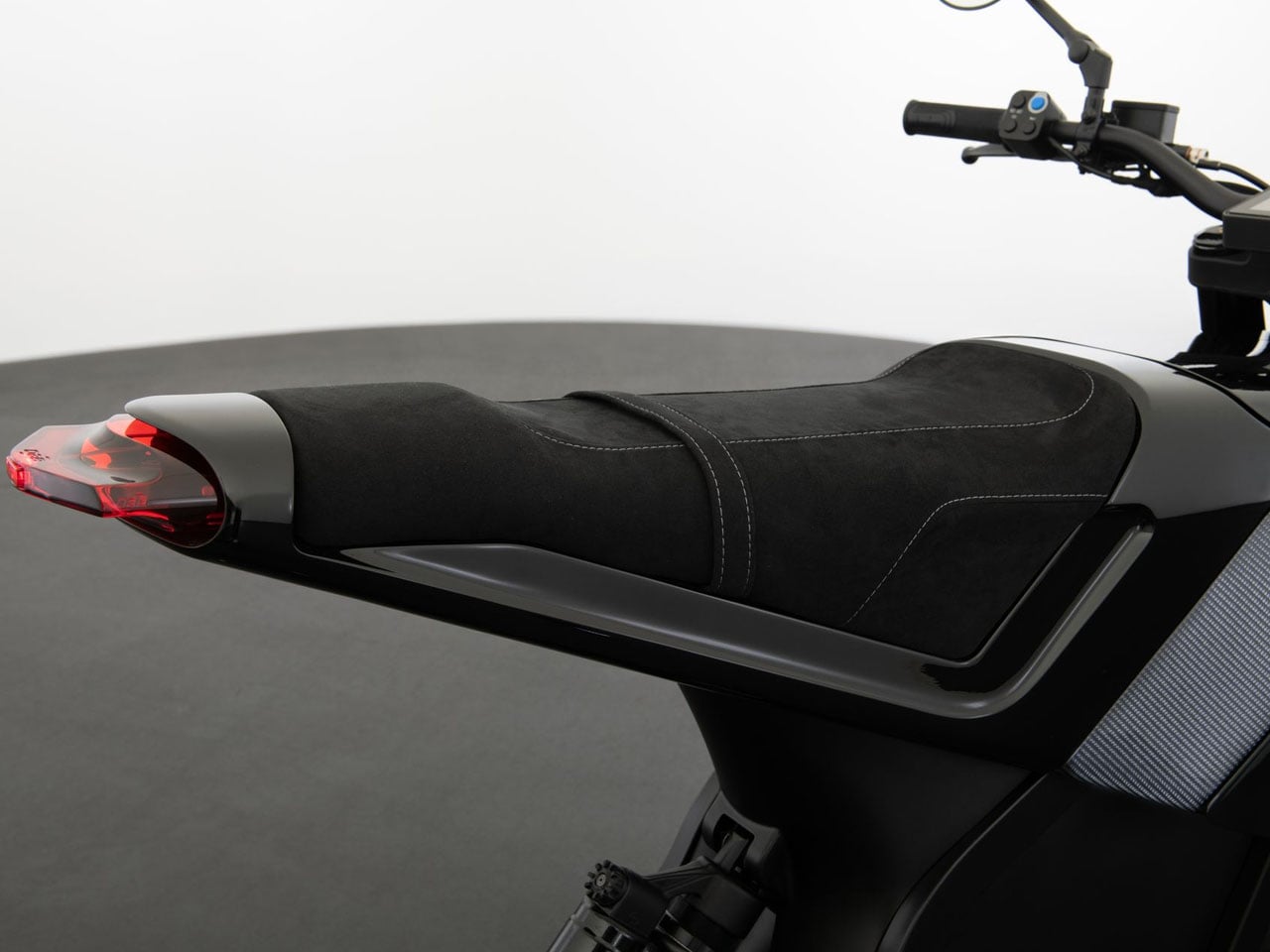
The standard DAB 1α BRABUS sets the tone with its stripped-back aesthetic, lightweight construction, and premium finishes that elevate it beyond a conventional electric motorcycle. Crafted with high-end materials like CNC-machined aluminum and carbon fiber, the bike reflects BRABUS’ signature approach, which prides itself on precision, exclusivity, and bold styling.

Designer: BRABUS x DAB Motors

The electric powertrain 1α BRABUS is tuned for city agility, offering brisk acceleration and a smooth, near-silent ride. This makes it ideal for navigating dense urban environments. The collaboration emphasizes craftsmanship as much as performance, with each component carefully designed to deliver both visual impact and functional efficiency. The bike has a starting price tag of €16,590 (approximately $19,500) and is currently up for pre-order with deliveries slated for the end of Q3 2026.

BRABUS Urban E

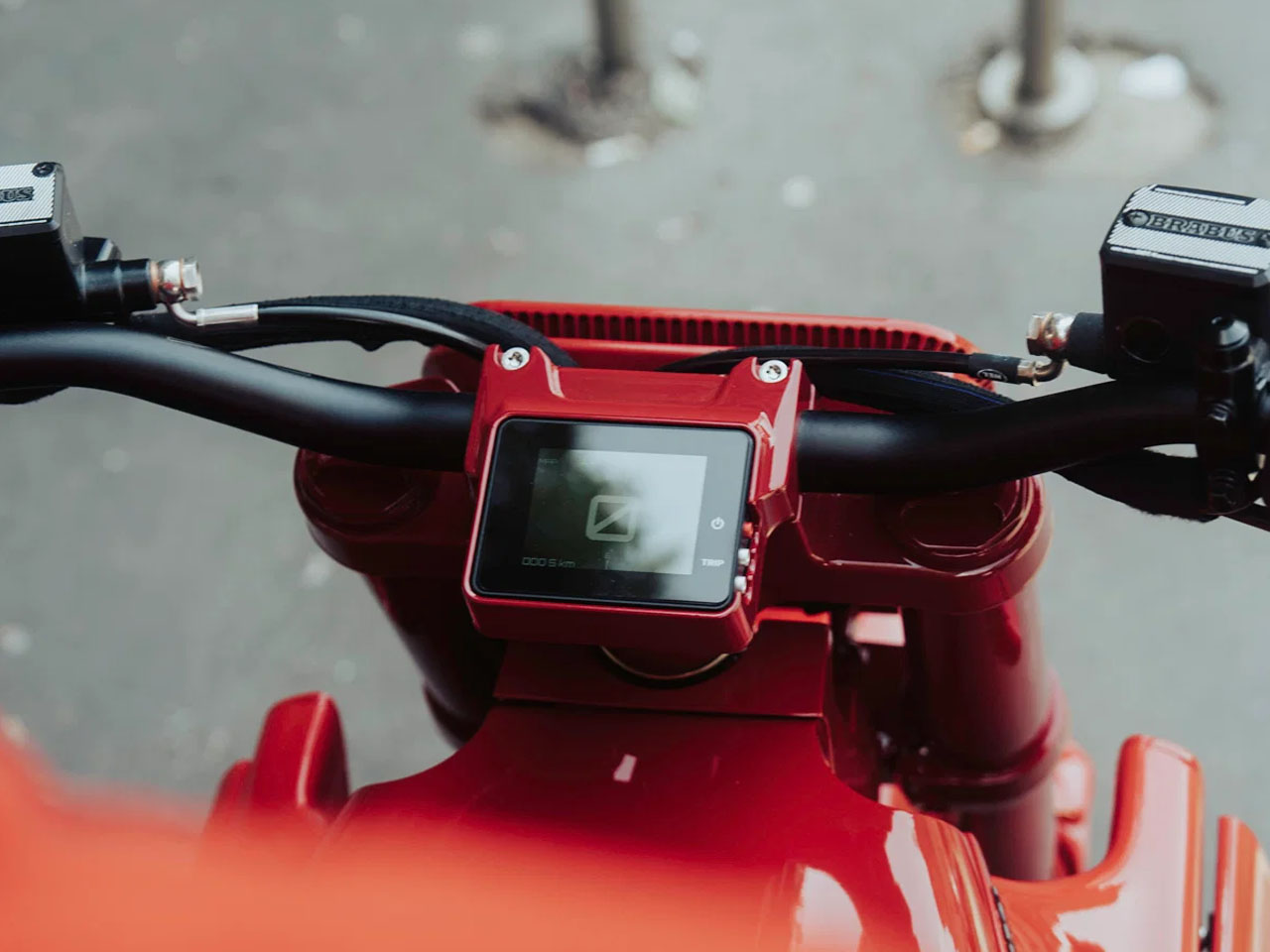
The BRABUS Urban E builds upon this foundation with a sharper focus on accessibility and everyday usability without compromising on the brand’s premium DNA. Designed as a more approachable model in the lineup, it retains the core elements of the DAB platform while introducing a refined aesthetic tailored for modern city commuters. The Urban E features a clean, understated design with subtle BRABUS detailing, blending seamlessly into urban landscapes while still standing out through its craftsmanship.

Its lightweight frame and compact proportions make it highly maneuverable, while the electric drivetrain ensures responsive performance suited for short-distance commuting. With an output of around 27 kW and torque figures pushing into high-performance territory for its size, the bike delivers quick acceleration and a lively riding character tailored for city use.

Positioned as a premium urban machine, the Urban E is priced at around €22,900 (approximately $27,000), reinforcing its place as a design-forward electric motorcycle rather than a mass-market commuter. Orders are open, with deliveries expected to begin in late 2026 across Europe and select global markets.

BRABUS Urban E First Edition

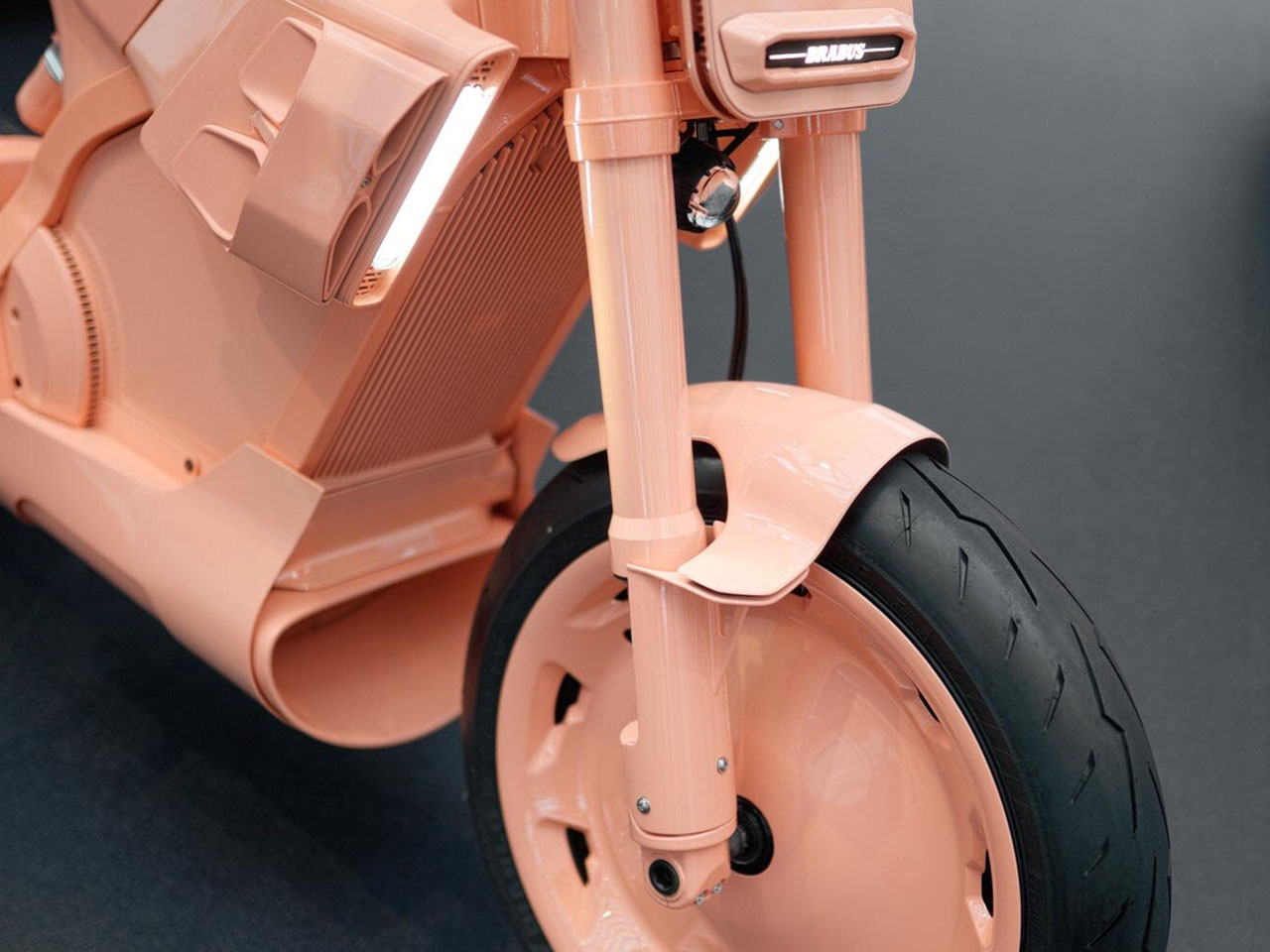
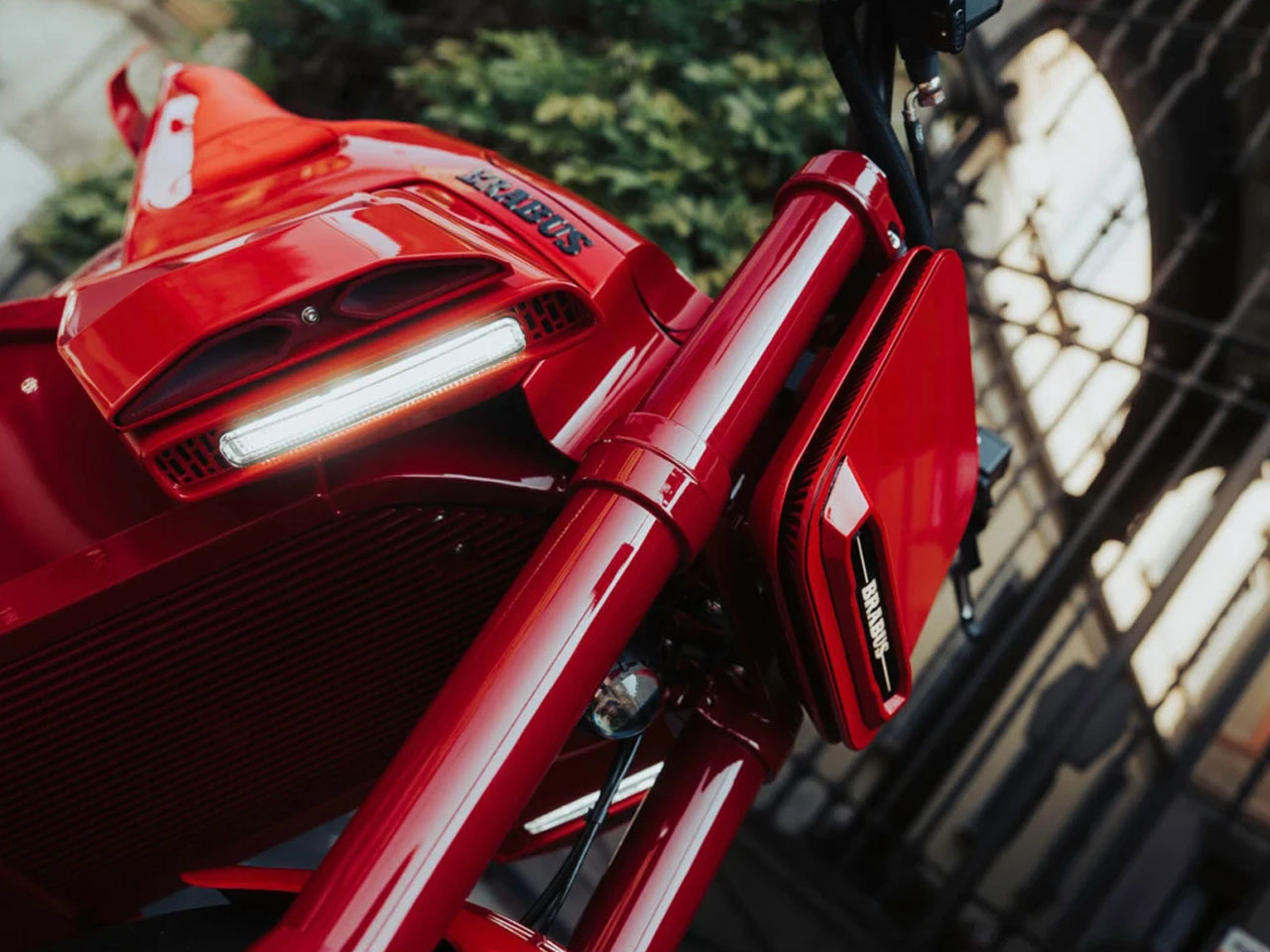
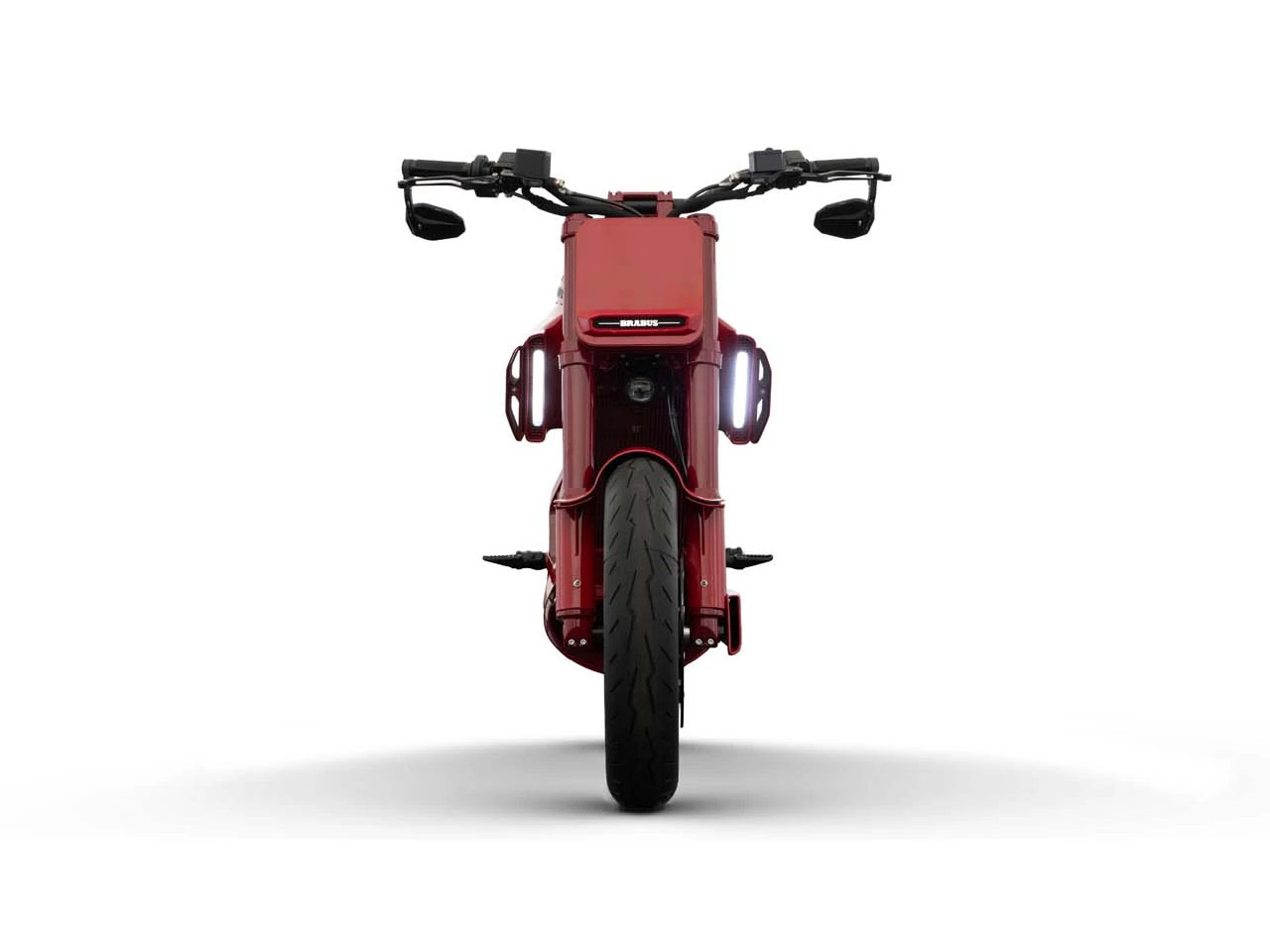
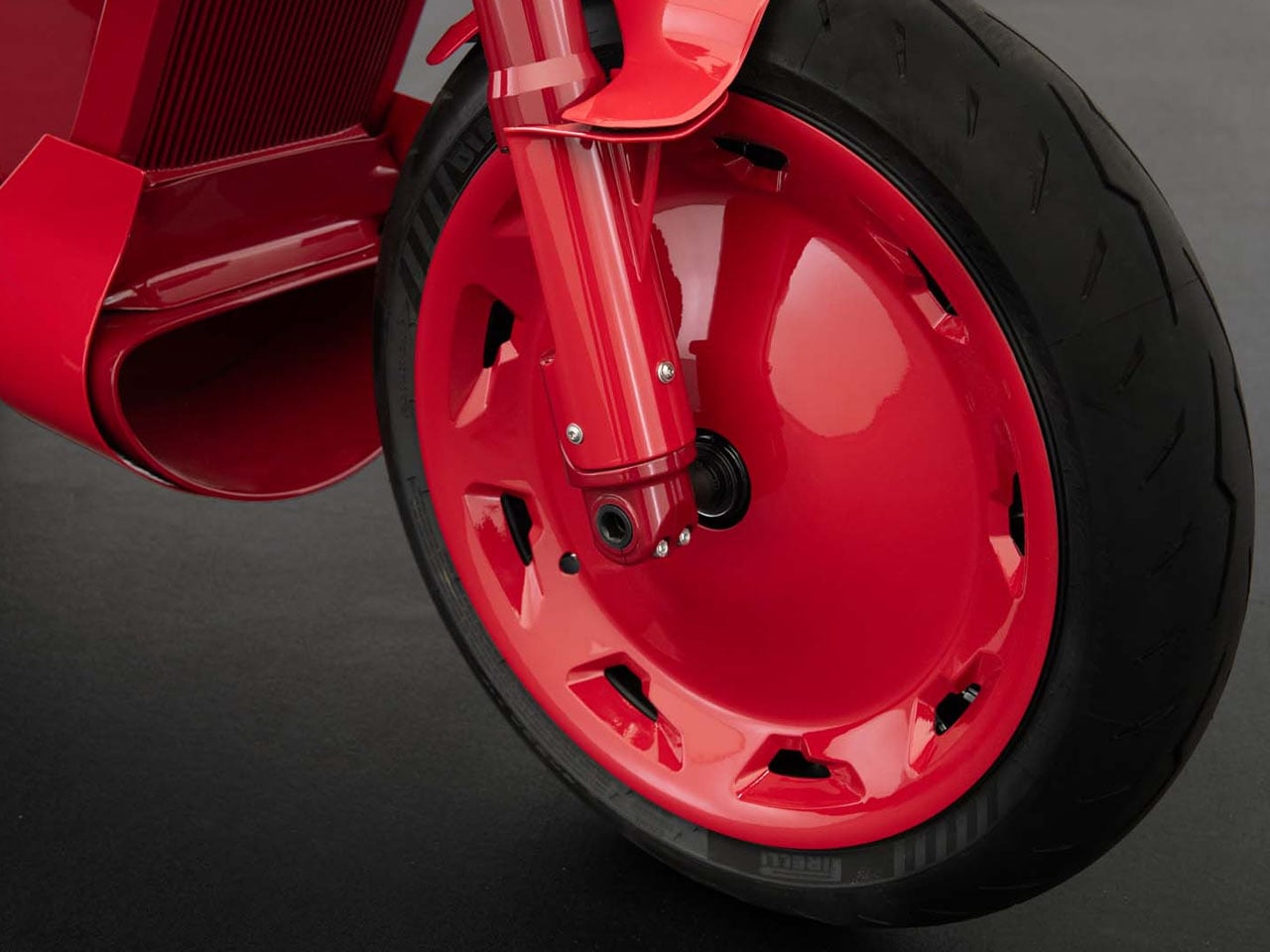
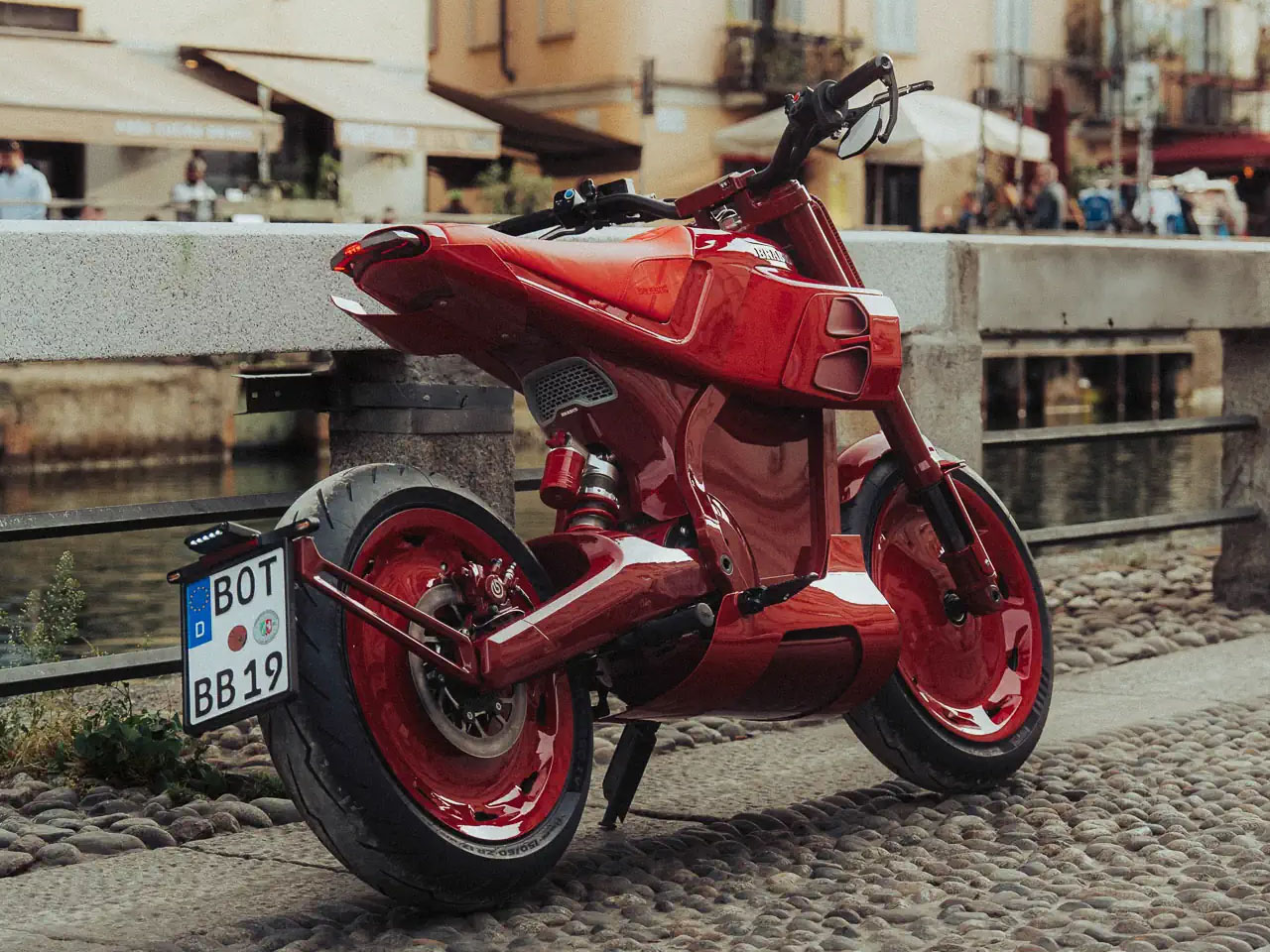
At the top of the range, the BRABUS Urban E First Edition takes exclusivity and design expression to another level. Limited to just 40 units globally and offered in distinct colorways, it is conceived as a collector’s piece rather than a conventional production bike. Each version carries a fully coordinated finish across body panels and structural elements, elevating it into a cohesive design object.

Visually, the bike carries a strong futuristic presence, with its sharp lines, minimal bodywork, and sculpted stance drawing comparisons to the iconic red motorcycle ridden by Shotaro Kaneda in Akira. While not a direct homage, the resemblance lies in its bold proportions and cyberpunk-inspired silhouette, giving the First Edition a cinematic quality that sets it apart in the electric mobility space.

This exclusivity is reflected in its pricing. The Urban E First Edition starts at around €32,500 (approximately $38,000) and can climb beyond €38,000 (approximately $44,000) depending on market and taxes, placing it firmly in the realm of collectible design rather than everyday transport. Availability is limited to select regions, including Europe and the UK, with deliveries also scheduled for late 2026.

With this surprise collaboration, BRABUS and DAB Motors are translating high-performance tuning philosophy into a new category, one where electric mobility meets bespoke craftsmanship, shaped for a future where even the daily ride carries a sense of occasion.

The post BRABUS Urban E First Edition bring cyberpunk flair to premium electric motorcycles first appeared on Yanko Design.
LG’s first RGB TV starts at $5,000 and is available to pre-order today

LG has announced the pricing and availability of its Micro RGB evo, the company's first take on a TV display trend that kicked off in earnest at CES 2026. The LG Micro RGB evo is available to pre-order today starting at $5,000, and follows the recent release of the ultra-thin LG Wallpaper.

The Micro RGB evo represents the top of the line of a new class of display at LG that directly builds on the company's work with Mini LED technology. The new TV features LG's Micro RGB panel and its Alpha A11 AI processor, which runs the TV's webOS software, and perhaps more importantly, powers the "Micro RGB Engine" that controls the TVs individual LEDs. LG says the Micro RGB evo offers full gamut coverage across DCI-P3, BT.2020 and Adobe RGB, along with "enhanced contrast and refined detail" from the TV's over a thousand dimming zones.

While Micro RGB should offer better color representation than OLED, LG's OLED TVs still have their share of benefits, especially in things like contrast and dimming. Micro RGB panels are similar to the company's Mini LED ones, but rather than using all blue or white LEDs, the Micro RGB evo has individually controlled red, green and blue LEDs. The new style of display is also being explored by companies like TCL and Samsung, and at least for now, it's not as affordable as some QD-OLED or OLED TVs can be. 

The LG Micro RGB evo is available to pre-order today from LG's website in 75, 86 and 100-inch screen sizes. The TV starts at $5,000 for the smallest 75-inch model and goes up from there.

This article originally appeared on Engadget at https://www.engadget.com/home/home-theater/lgs-first-rgb-tv-starts-at-5000-and-is-available-to-pre-order-today-185159193.html?src=rss

Vampire Survivors developer Poncle is opening more studios and has over 15 projects in the works

Vampire Survivors developer Poncle has big plans for the future, according to an interview The Game Business conducted with the company's chief strategy officer Matteo Sapio. It's opening two new studios in Japan and Italy and has over 15 projects in active development. That's a lot of action for a company primarily known for one franchise.

Sapio says the company is developing three basic types of games. There are spinoffs to Vampire Survivors, like this week's deckbuilder Vampire Crawlers. Poncle is also making original IPs and says there are two games set in new universes coming down the pike.

Finally, it's working on some roguelites with similar mechanics to Vampire Survivors, but using other IPs. We already know about one of these, a roguelite set in the Warhammer 40K universe called Warhammer Survivors. It's set to land on Steam sometime this year. To assist with these plans, Poncle has developed an engine that can turn pre-existing IPs into games that play like Vampire Survivors.

If you're wondering if there are enough fans for multiple top-down roguelites with simple controls and bullet hell mechanics, let me point you to Halls of Torment, Deep Rock Galactic: Survivor and Soulstone Survivors, among many others. This has become a popular genre in recent years, likely due to the continued success of Vampire Survivors. To that end, the original game has surpassed 27 million players.

Poncle has, however, paused all of its third-party publishing plans after releasing a couple of games last year. "It was a learning experience," Sapio said. "But we found that we weren’t able to give the right support." The company could revisit third-party publishing in the future.

This is great news for Poncle and fans of the Vampire Survivors franchise, but there's always risk when a company tries to grow like this. Remember Embracer Group? It went on a massive buying spree beginning in 2019, before having to sell off and close a number of studios.

However, this isn't a AAA game development studio. Poncle makes indie titles and the new studios will be lean operations, with "little teams of people." Sapio said this organizational structure will help keep the company "agile and flexible."

I personally have high hopes for this endeavor. This is because the just-released spinoff Vampire Crawlers is so very good, which proves to me that Poncle isn't a one-trick pony. It plays like a mix of Slay the Spire with a first-person dungeon crawler like Etrian Odyssey, all while successfully capturing the vibe of Vampire Survivors. If Poncle can keep up this level of quality, gamers could be in for a long-term treat.

This article originally appeared on Engadget at https://www.engadget.com/gaming/vampire-survivors-developer-poncle-is-opening-more-studios-and-has-over-15-games-in-the-works-174022348.html?src=rss

A Copper-Wax Lamp Revives a Slovak Forge and Glows Like Stained Glass

Industrial heritage sites have a way of disappearing quietly. The machinery goes silent, the workers move on, and the buildings either get repurposed or left to rust. What rarely survives is the craft knowledge, the particular way a community understood and worked a material. Slovakia’s copper-processing history is one of those stories, rooted in a small central region that once hummed with the sounds of metalwork and fire.

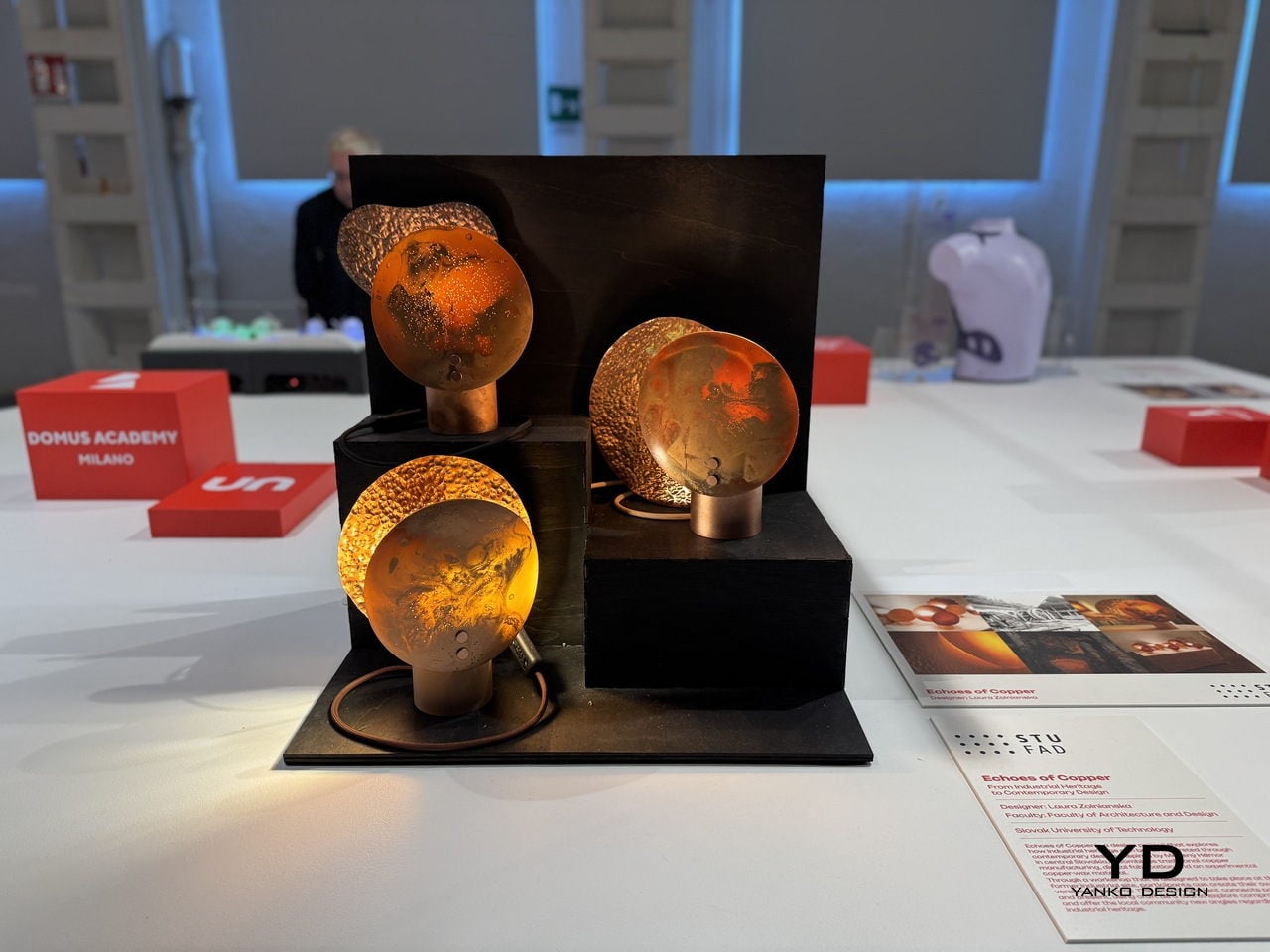
That’s the history Laura Zolnianska, a student at the Slovak University of Technology’s Faculty of Architecture and Design, decided to pull back into the present. Exhibited at BASE Milano as part of the 2026 Fuorisalone UNFOLD showcase, Echoes of Copper is a lamp collection drawing from the copper-processing traditions of Medený Hamor in central Slovakia, combining them with digital fabrication and an entirely experimental material of her own development.

Designer: Laura Zolnianska (Slovak University of Technology, Faculty of Architecture and Design)

The material is the most interesting part. Zolnianska created a copper-wax composite that forms the shades, a substance that behaves differently every time it’s worked. Some shades come out smooth and disc-like, with swirling oxidation patterns that look almost planetary when lit. Others emerge heavily textured and volcanic, their deeply pitted surfaces catching and scattering light in ways that can’t be planned or predicted. No two pieces are the same.

Each lamp sits on a polished copper cylinder base with a matching copper-toned cord. When lit, the shades glow a deep amber orange, with translucent sections illuminating like stained glass while the denser, hammered areas cast dramatic, irregular shadows. The warmth of the light feels almost geological, as if it’s being filtered through something that took centuries to form rather than a material coaxed into shape in a studio.

The project isn’t purely a lighting exercise, though. Zolnianska designed Echoes of Copper around a workshop model where participants can create their own version of the lamp at the former Medený Hamor site itself. The idea is to bring people back to a place of faded industrial significance and give them a hands-on connection to the craft traditions that once defined their community.

Medený Hamor, which translates roughly to “Copper Hammer,” was a copper-processing site in central Slovakia’s Banská Štiavnica region, an area with a centuries-old metallurgical history. Using that heritage as a creative prompt rather than a museum exhibit is itself a meaningful design decision. Of course, craft doesn’t have to end up behind glass to be preserved; sometimes it ends up glowing amber on someone’s bedside table.

Echoes of Copper was exhibited at BASE Milano during Milan Design Week 2026 as part of UNFOLD, a student showcase bringing together emerging designers from institutions across Europe. It’s the kind of project that deserves more attention than student exhibitions typically get. Zolnianska didn’t just make a lamp; she made an argument that industrial communities don’t have to lose their identity to time.

The post A Copper-Wax Lamp Revives a Slovak Forge and Glows Like Stained Glass first appeared on Yanko Design.
Threads introduces ‘live chats’ for following live events

Meta has introduced a new "live chats" feature to Threads, enabling people on the platform to participate in real-time conversations about live events they’re interested in. Live chats can be hosted within Threads communities, the topic-specific social spaces that Meta introduced last year.

The new feature sounds a bit like Threads’ take on Instagram’s broadcast channels, but the latter only allows for one-way messaging. Live chats can be hosted by select creators, including Community Champions — users highly engaged within specific communities — and media personalities. Once a chat is launched or scheduled, the host chooses who is invited to contribute and can then share the link publicly.

You can post photos, videos, links and emoji reactions as well as text-based messages. If you’re unable to send messages in a live chat that is at capacity, you can still watch it, react to others messages and vote in polls. Live chats remain open to view after they’ve ended, and you don’t need to be part of a community to join.

Meta is debuting its new social feature in the NBAThreads Community during the Playoffs, with Malika Andrews, Rachel Nichols, Trysta Krick, David Rushing and Lexis Mickens named as hosts. Live chats will appear at the top of the NBAThreads Community feed, and can also be shared in a post that might appear on your main feed in Threads. You’ll also see a red ring around a host’s profile photo when they’re live.

Meta says live chats will gradually be rolled out to more communities on Threads, with features like co-hosting, lock screen widgets and the ability to quote and share messages from a chat on your feed coming soon.

Meta has been steadily expanding its X rival’s features since it launched in 2023. It started small with searchable topics (note: not hashtags) and custom feeds, before rolling out communities last year. It also started testing long-form text posts and just this week gave Threads a long-overdue facelift on web. Back in October, the company announced that its text-based social media platform now has 150 million daily users.

This article originally appeared on Engadget at https://www.engadget.com/social-media/threads-introduces-live-chats-for-following-live-events-170007658.html?src=rss

This Chair Looks Normal Until It Needs to Keep You Afloat in a Flood

Flooding has gone from a rare calamity to a recurring reality for millions of households. As climate patterns grow more unpredictable, the spaces people call home have become increasingly vulnerable to forces they were never designed to withstand. Most domestic objects offer no answer to this shift, and furniture has remained stubbornly indifferent to the idea that the room it sits in might one day be underwater.

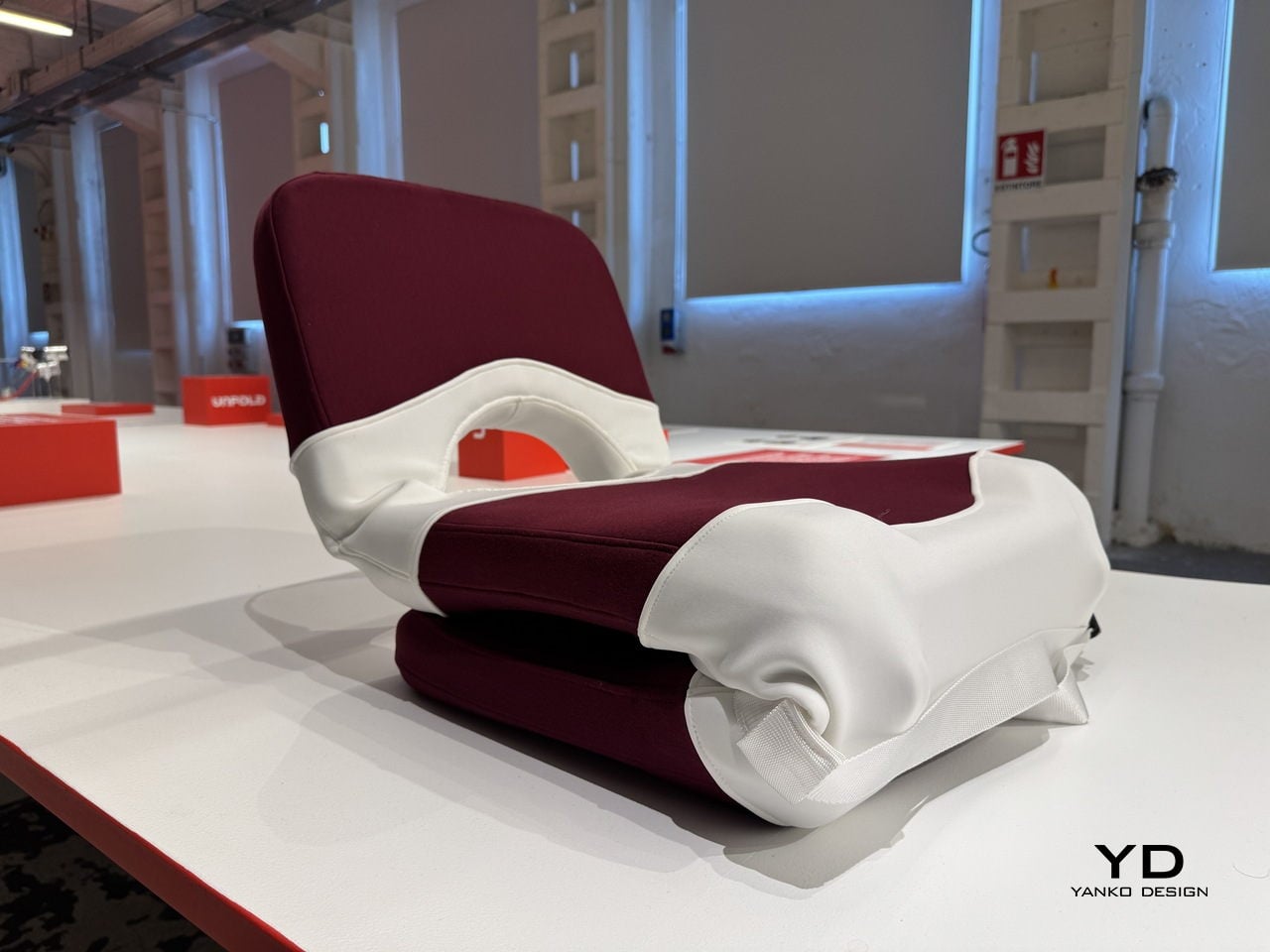
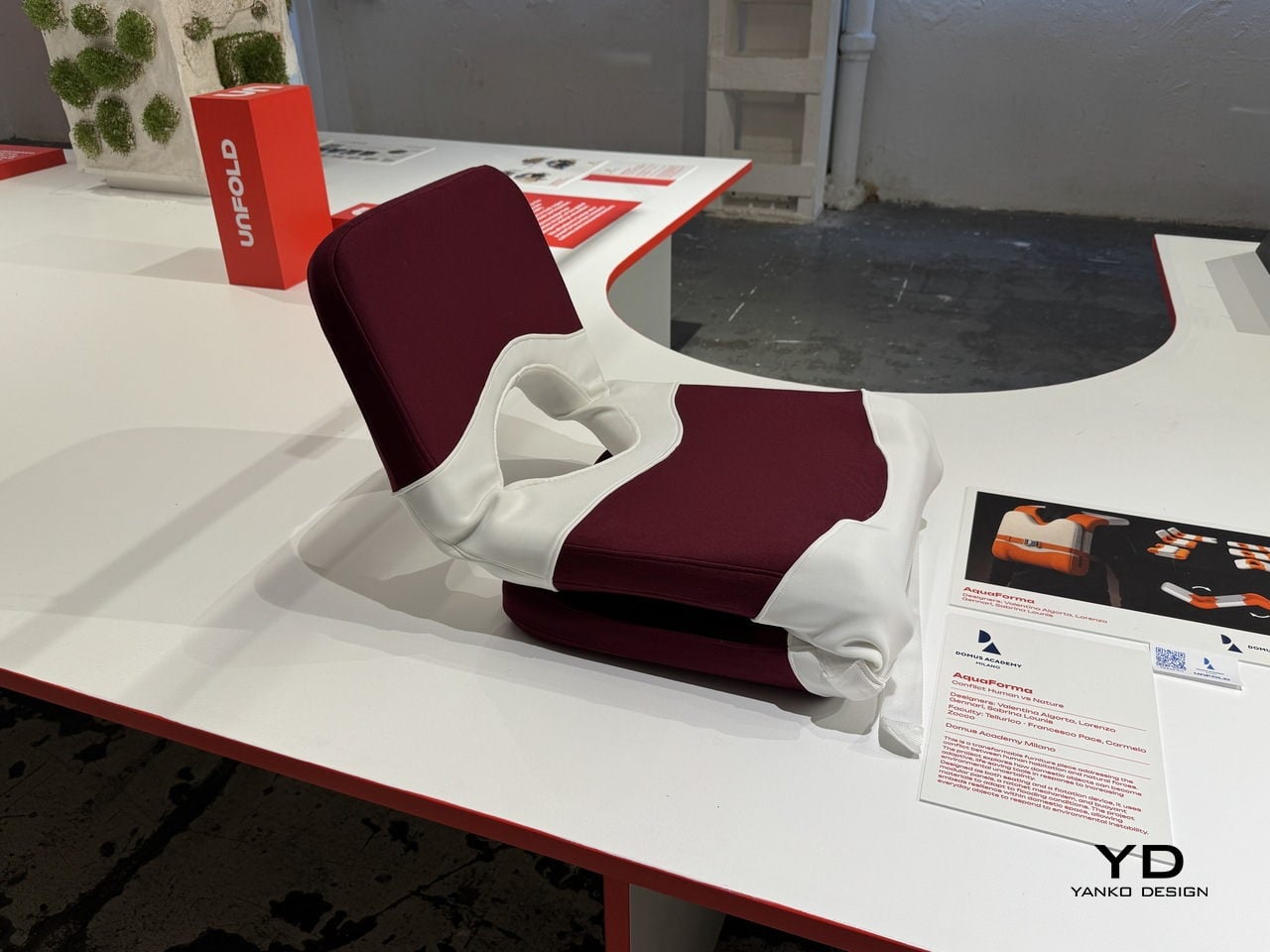
That’s the gap a team of Domus Academy Milano students decided to close. Exhibited at BASE Milano as part of the 2026 Milan Design Week, AquaForma is a transformable furniture piece designed under the theme “Conflict: Human vs Nature.” Created by Valentina Algorta, Lorenzo Gennari, and Sabrina Lounis under faculty guidance, it explores how an everyday domestic object can quietly hold the capacity to save a life.

Designers: Valentina Algorta, Lorenzo Gennari, Sabrina Lounis (Domus Academy Milano)

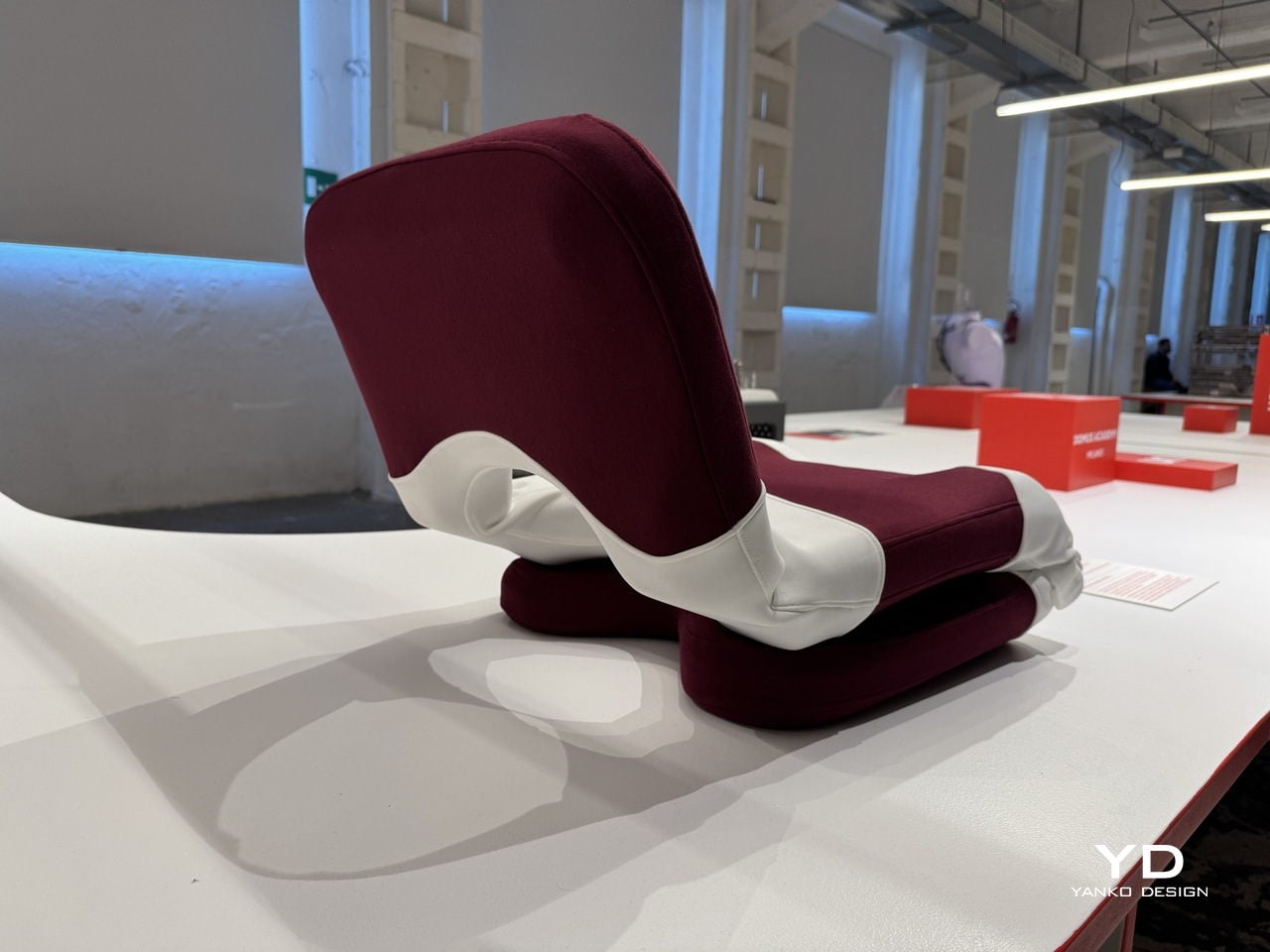
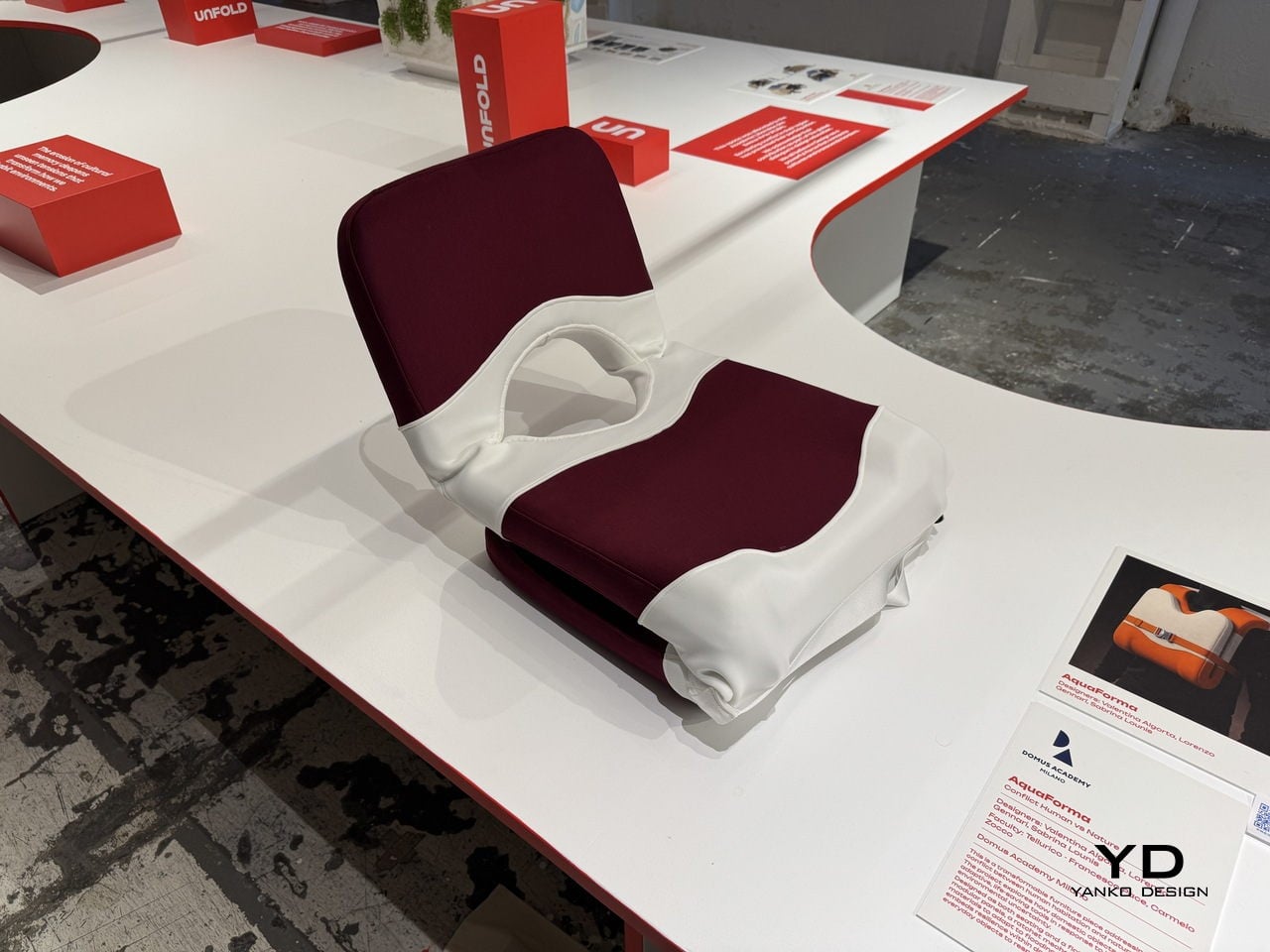
The starting point is a familiar one: a chair. In its default configuration, AquaForma functions as low-profile floor seating with a cushioned backrest and seat upholstered in deep burgundy fabric. A white structural shell wraps around the cushioned elements in flowing, organic curves, giving the piece a sculptural quality that sits comfortably within contemporary furniture design. Nothing about it announces its other purpose.

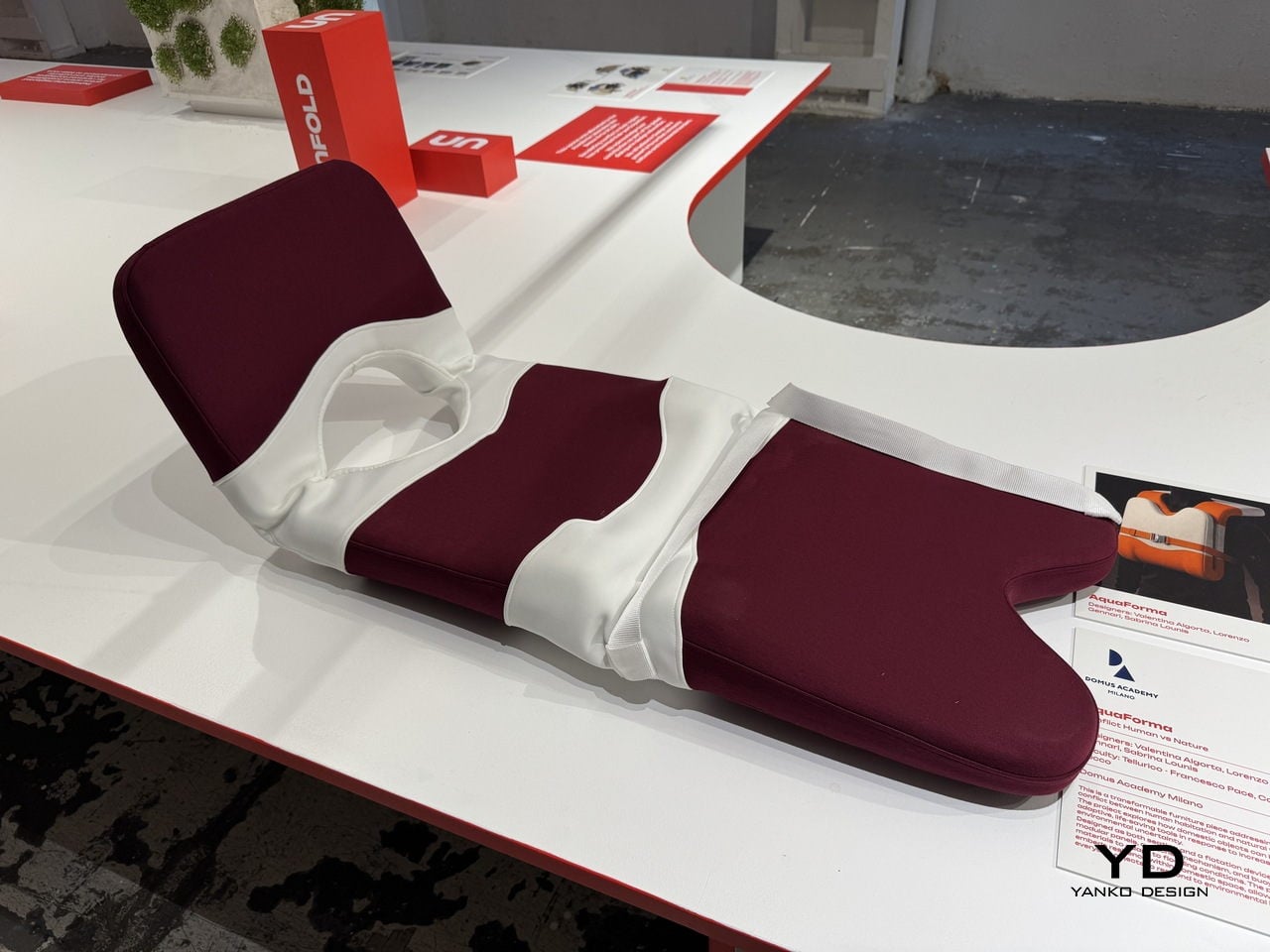
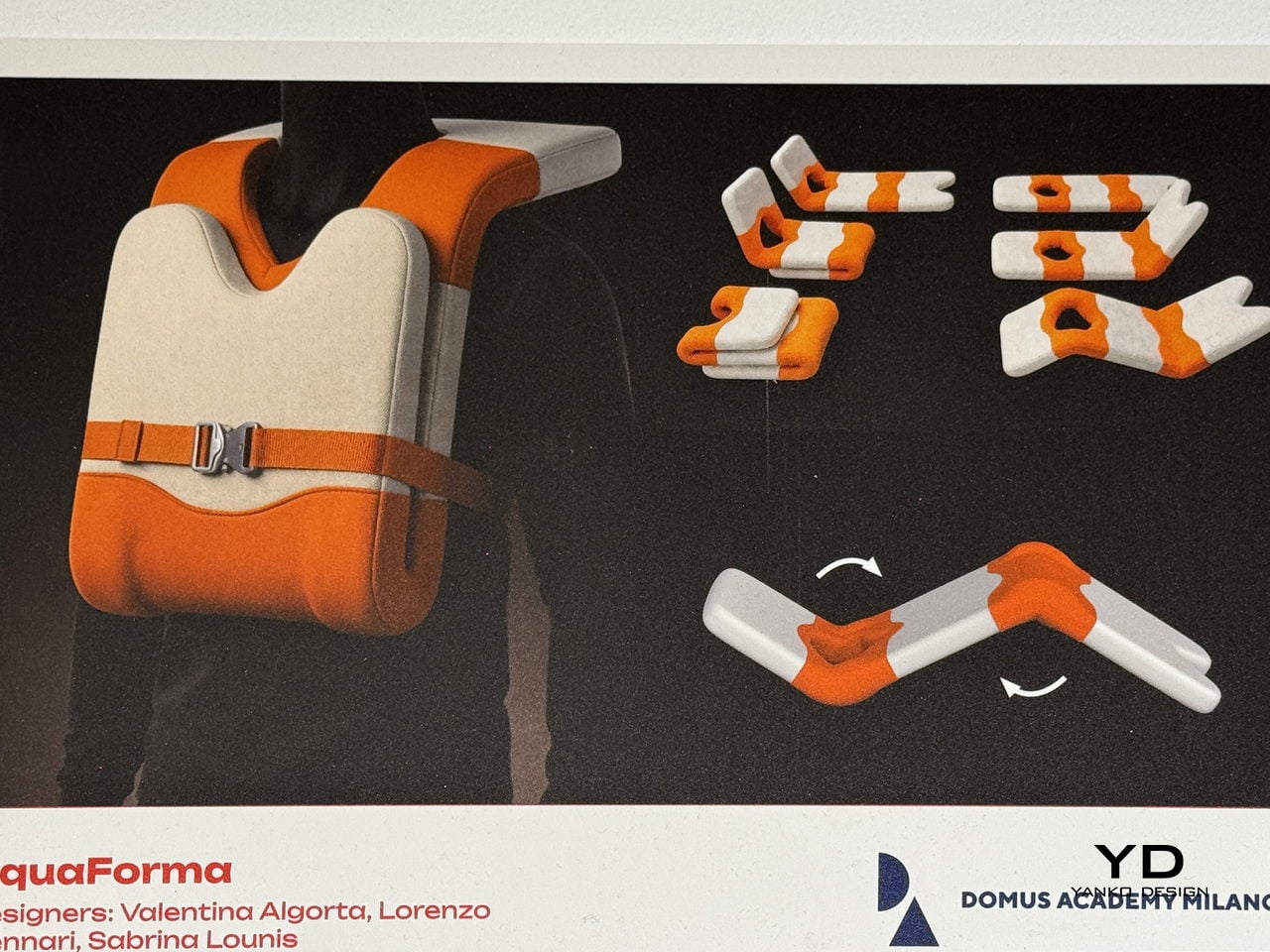
That other purpose becomes clear when flooding hits. The piece uses modular panels, a ratchet buckle mechanism, and buoyant materials that allow it to be reconfigured into a flotation device. The modules interlock and can be reoriented, with individual components separating and reassembling into a completely different arrangement. What sits quietly in a living room can, in theory, keep someone afloat.

The ratchet strap across the midsection does more than hold the piece together; it’s the key mechanism that allows components to be tightened, secured, and adjusted depending on the configuration the piece needs to take. This kind of dual-purpose hardware thinking keeps the design grounded in practicality. There’s no single feature here that’s gratuitous, with everything pulling double duty between the domestic and the emergency.

What makes AquaForma particularly compelling is how invisible its emergency function is in everyday life. You wouldn’t sit on it and think about rising water, and that’s precisely the point. Resilience embedded in ordinary objects doesn’t announce itself until it needs to, and that restraint is what separates a clever concept from a genuinely useful one. The designers didn’t design for a crisis; they designed around it.

AquaForma was shown as part of the UNFOLD exhibition at BASE Milano during Milan Design Week 2026, a student showcase that puts emerging design ideas at the center of one of the world’s most design-saturated weeks. It’s the kind of project that’s easy to underestimate at first glance. A chair that becomes a flotation device sounds like a design school exercise until you remember how often people need exactly that.

The post This Chair Looks Normal Until It Needs to Keep You Afloat in a Flood first appeared on Yanko Design.