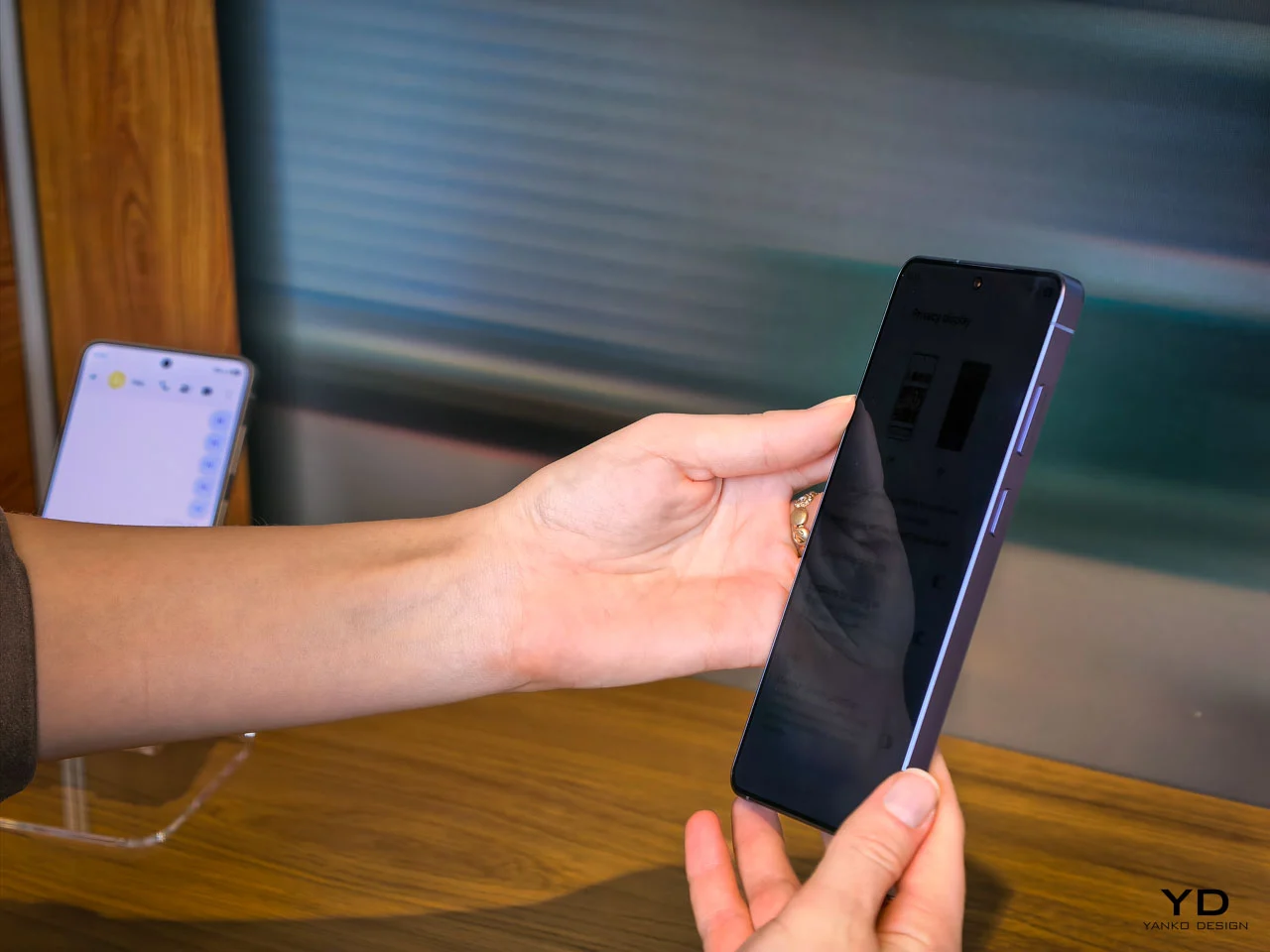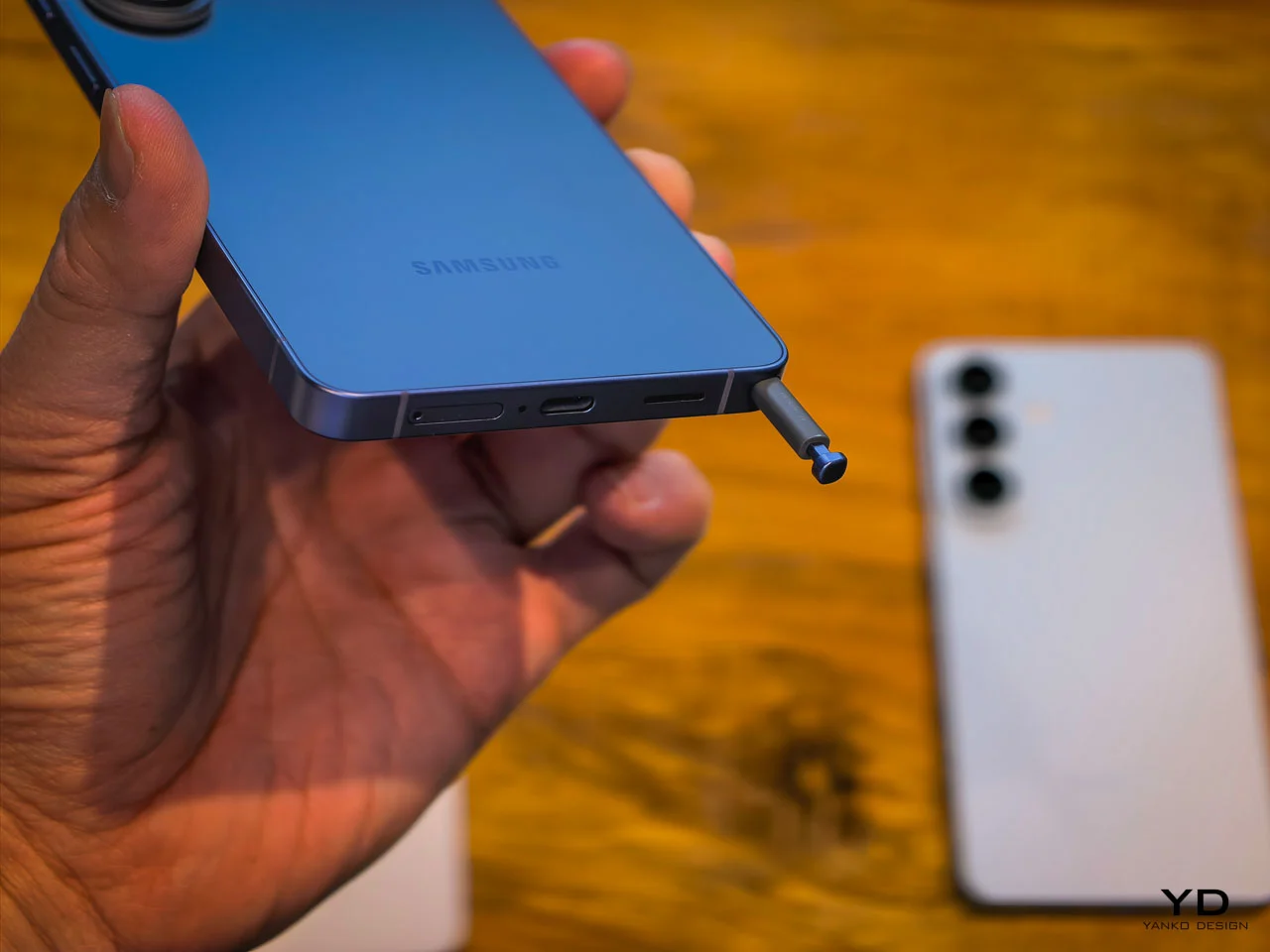
Moto G Stylus 5G 2024 lets you play with a pen without breaking the bank

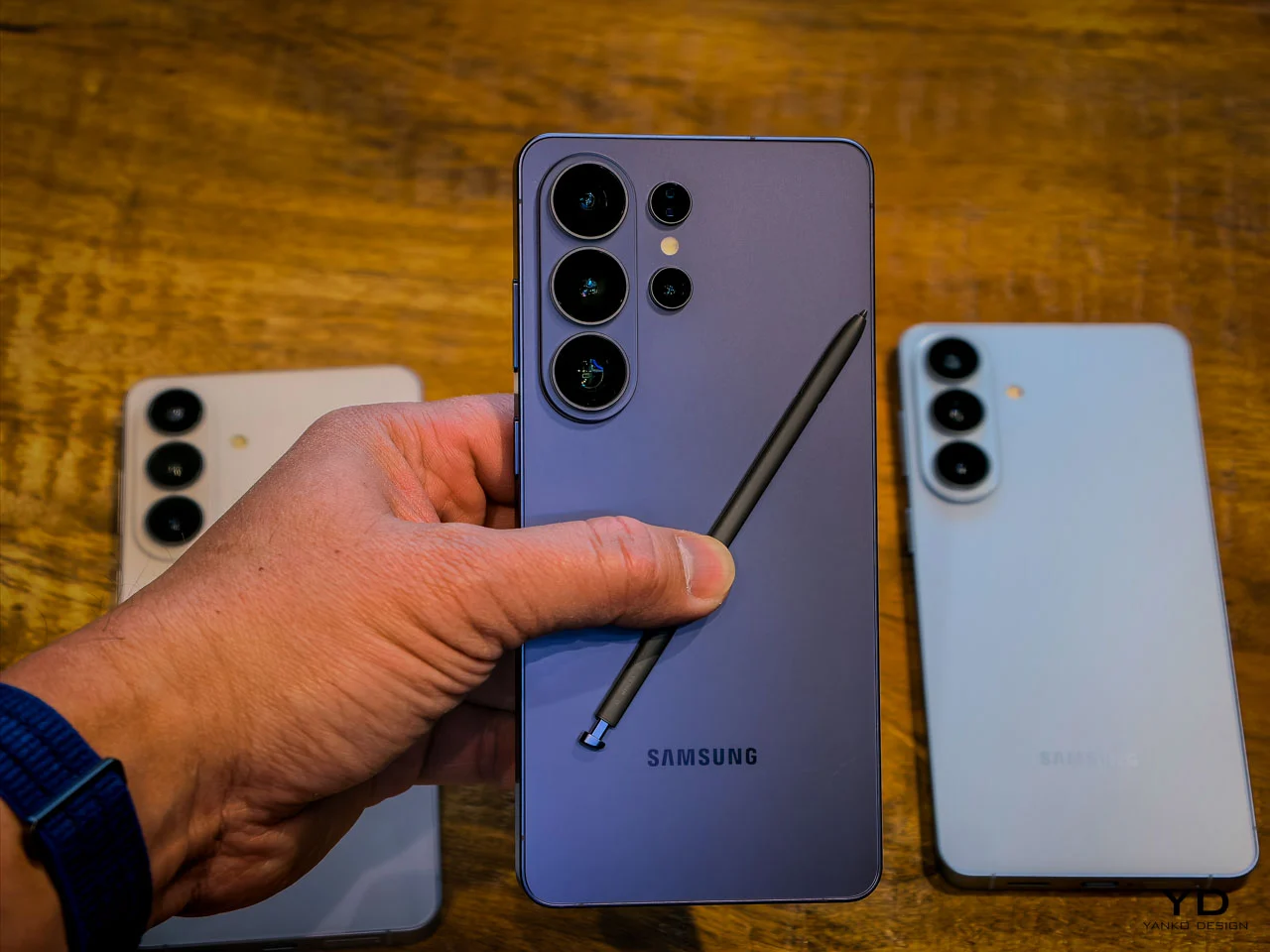
The announcement of the new Apple Pencil Pro has put the stylus in the spotlight again. This input tool isn’t just limited to tablets and large screens, though that’s where they have the most use because of the bigger digital canvas. Thanks to the Samsung Galaxy Note, now the Galaxy S Ultra series, it has been demonstrated that there is also some benefit to having a stylus on smartphones. Unfortunately, Samsung does seem to have a monopoly on that design or is at least the best-known example, but it isn’t the only game in town, and Motorola just revealed its latest contender that makes an admittedly attractive offer, at least if you’re not too intent on making pro-level artwork on it.

Designer: Motorola

The stick inside the Moto G Stylus 5G (2024) is exactly that: a stick that works in place of your stubby finger. Unlike the Wacom-powered S Pen of the Galaxy S Ultra phones, it doesn’t have pressure sensitivity, rotation and tilt detection, or Bluetooth-enabled button functions. That’s actually not a big deal-breaker if all you really want to do is scribble notes, annotate pictures and documents, or even start a rough sketch that you’ll continue on a computer or laptop. For these purposes, the Moto G Stylus is more than sufficient, especially with upgraded sensitivity and new software arriving in this model.

The rest of the smartphone is a bit of a mixed bag, though thankfully leaning more on the positive side. It runs on a Snapdragon 6 Gen 1, which is the same processor it used for last year’s model. It does have more memory this time around, with 8GB offering a bit more wiggle room for apps. Another thing that is the same is that it still has a headphone jack, though no one will probably complain about that.

The fourth-gen Moto G Stylus 5G does bring some considerable upgrades to the table, starting with a larger 6.7-inch 120Hz screen, though it’s still stuck with a 1080p resolution. The 5,000 mAh battery might still be the same, but it now supports 15W wireless charging on top of fast 30W wired charging. The main camera still has 50 megapixels but has upgraded specs. It is joined by a new 13MP ultra-wide camera, while a new 32MP selfie shooter is on the front.

The Moto G Stylus 5G 2024 isn’t going to win awards when it comes to specs, but its $399 price tag is easily a fourth of the launch price of the Galaxy S23 Ultra. Motorola’s stylus-toting smartphone, however, does score points when it comes to looks, with a vegan leather material, a clean, minimalist rear design, and two colorful options that aim to inspire your creativity just by looking at it and touching it. The Moto G Stylus 5G (2024) goes on sale on the 30th of May.

The post Moto G Stylus 5G 2024 lets you play with a pen without breaking the bank first appeared on Yanko Design.

Minimalist table is a charging hub that doesn’t need to plug itself in

Given how almost everyone has a smartphone these days, it’s not really surprising to see establishments and furniture adapting to the situation. Desks, tables, and even shelves have started to integrate charging solutions that make it convenient to top up a mobile device quickly without having to scramble for and fight over a power strip or wall socket. Unfortunately, many of these designs, particularly for tables, add some rather unsightly cables that can also be a safety hazard if not installed properly. This table, in contrast, lets you charge phones and tablets with ease while magically making those cables disappear to preserve the table’s minimalist beauty and avoid tripping people up when they have to move about.

Designer: Carl Magnusson

Tables with integrated charging solutions seem to fall into two extremes. On the one hand, you have regular tablets that have just been retrofitted with power strips and are often seen in public places like coffee shops or even libraries. On the opposite end of the spectrum, there is classier furniture that utilizes wireless charging technologies in order to make power sockets invisible, like the newer desks and shelves from the likes of IKEA. Both designs, however, require the table itself to still be plugged in regardless since it has to take all that power from somewhere.

In that regard, the MagPower Table is almost futuristic with its wireless functionality while still being completely rooted in present design trends with its extremely minimalist design. At first glance, it simply looks like a wooden table with a large circular top and wooden or aluminum legs, but closer inspection will reveal two USB-C slots and one full-sized USB-A slot for charging mobile devices. What makes this design almost mind-blowing is that there isn’t any cable snaking out from one of the table’s legs to connect to a nearby power outlet, making it seem like it’s using wireless charging technologies, at least for itself.

The secret behind this is the design of the table’s leg which can house a rechargeable battery that then powers connected devices. The battery can be removed at the end of the day and recharged separately before being reinstalled the next day. That said, the design also allows for a power brick to be plugged in directly, which has its own convenience, presuming you can live with the sight of that cable.

The MagPower Table’s minimalist aesthetic matches the goal of its design to offer a clutter-free space and enhance your productivity. Granted, it also raises questions about where a single battery is enough to charge several devices at the same time, but it’s certainly possible to expand the design and have all legs house a battery. This would help avoid competing for only three sockets, which will be the most likely scenario if these tables are used in office environments.

The post Minimalist table is a charging hub that doesn’t need to plug itself in first appeared on Yanko Design.

Mobvoi TicWatch Pro 5 Enduro smartwatch launches to a shrinking Wear OS market

The Apple Watch finally gave smartwatches their long overdue recognition, but for some brands, that came a little too late. Google’s wearable platform has undergone several changes over the years, but it hasn’t been able to enjoy the same degree of ubiquity as Android has on smartphones. Wear OS still powers many smartwatches in the market today, but that number is dwindling with the exit of many luxury and fashion brands. As if to prove that the platform is still as healthy as ever, Mobvoi launched an “Enduro” version of its 2023 TicWatch Pro 5 flagship, but its focus on sports and activities makes it less appealing to the general population.

Designer: Mobvoi

As far as smartwatches go, the mouthful that is the Mobvoi TicWatch Pro 5 Enduro is actually quite attractive, at least for those who want a sports watch that can keep up with their lifestyles. Its claim to fame is, like many Mobvoi smartwatches, its dual display technology has a regular AMOLED screen underneath a low-power display. The idea is that you switch to the duller screen on top if you want to preserve battery life without sacrificing tracking features.

With the Enduro, Mobvoi is playing up the ability of that low-power screen to show different backlight colors, making the information pop out better. This same color-changing ability is utilized to represent your heart rate, giving you a visual clue at a glance when you might need to take a breather. Of course, the smartwatch has all the makings of a typical Wear OS device, from tracking your health, including sleep quality and heart rhythm detection, to customizing watch faces to access a number of apps that support the wearable operating system.

As its name suggests, the TicWatch Pro 5 Enduro is made to last, and it does so in more ways than one. The sapphire crystal glass display gives the screen the durability it needs to survive accidents along your adventures, while the 90-hour battery life ensures you have very little downtime to charge the smartwatch. That said, it runs on Qualcomm’s aging Snapdragon W5+ Gen 1 processor from 2022, so performance and power efficiency might not be up to snuff.

At $350, the Mobvoi TicWatch Pro 5 Enduro is hardly an accessible smartwatch, and it’s clearly aimed at people who take their health and fitness very seriously. It looks like a handsome sports watch, yes, but a lot of Wear OS products will be bearing this aesthetic with fashion brands like Fossil calling it quits on smartwatches. This gives competitors that don’t use Wear OS plenty of opportunities to nibble away at Google’s share of the market pie, further weakening the platform’s reach.

The post Mobvoi TicWatch Pro 5 Enduro smartwatch launches to a shrinking Wear OS market first appeared on Yanko Design.

Windows on ARM success can drive PC design innovation

Despite the power that smartphones and tablets have these days, PCs and their Mac equivalents remain the workhorses of the modern world. Not only do they have more power, they also offer more flexibility thanks to decades of research, development, and innovation. Market analysts, however, have long been pointing to the demise of the PC market, especially desktops, and there has indeed been a great deal of stagnation not only in hardware but even in product designs. It’s not that there haven’t been any improvements, just that designs have become predictable and even sometimes forgettable. You can’t, after all, change the design formula too much unless you also drastically change the internals as well. That’s the kind of burst in innovation that awaits the PC market, both laptops and even desktops, if running Windows on the same hardware as smartphones and tablets finally becomes reliable and productive.

Designer: Qualcomm

Rough Start: Microsoft Surface

It’s not like the combination of Windows and ARM-based processors, the same silicon that powers mobile devices, hasn’t been done before, but almost all past attempts have come up short of expectations. Disregarding the antiquated Windows CE and Windows Phone variants, Microsoft has time and again tried to bring the benefits of phones and tablets to PCs without much success. One of the first ones in recent memory is the smaller Microsoft Surface. Although the Surface Pro has become something of an icon today, its base model didn’t enjoy the same level of fame, attention, and sales.

Microsoft Surface RT

Designer: Microsoft

The Surface RT and Surface 2 both ran on ARM-based NVIDIA Tegra processors that were normally quite capable on Android tablets. Even those, however, couldn’t bear the weight of Windows, even the watered-down Windows RT version. To add insult to injury, the apps available for that platform were a dismal number which didn’t include the software that people needed to use on Windows. Thus, these first attempts at Windows on ARM were considered to be abject failures, but surprisingly, Microsoft didn’t give up completely.

Microsoft Surface Pro 9

Fast-forward to today, there have been numerous attempts to improve the situation, both from the hardware and the software side. The Microsoft Surface Pro 9 now has a version that runs an even more powerful ARM Qualcomm processor, and the Microsoft Store has quite a selection of popular apps. There are also some emulation solutions for running “normal” Windows software on ARM laptops and tablets, but that’s not exactly a panacea. All these sound like too much effort for what seems like a niche design, but it’s an effort that could yield a bountiful harvest if it succeeds.

Faster, Slimmer, Cooler

Qualcomm announced last month its new Snapdragon X Plus and Elite processors, and while the “Snapdragon” name is popular for smartphones and tablets, the “X” chips are earmarked for use in Windows computers instead, particularly laptops. Qualcomm boasts numbers that would make the likes of Intel and AMD worry, though it’s also aiming squarely for Apple’s M series processors. That’s definitely a tall order, especially with the launch of the new Apple M4 chip, but if theory proves to be even remotely near the mark, it will be a huge win for the Windows market and PCs in general.

Designer: Qualcomm

The new Snapdragon X Plus and Elite unsurprisingly boast about being able to do heavy-duty generative AI work, something that would require a lot of processing power that is traditionally only available on “regular” laptops and desktops. What would set it apart, however, is how it delivers that performance with lower battery consumption, heat, and space compared to equivalent Intel and AMD processors. It’s too early to say if Qualcomm will be able to deliver those promises, but it’s definitely a big leap compared to previous generations.

ARM-based processors like those from Qualcomm and MediaTek have been used in mobile devices precisely because of these traits. They can keep the product compact without impacting performance, something that laptop makers aim for every year. More importantly, however, these small form factors open the doors to less conventional designs, paving the way for dual-screen, foldable, or rollable PCs that don’t sacrifice their power for the sake of their novel appearance and features.

Thinking Outside the Box

The very first benefit of Windows successfully and smoothly running on ARM devices would be thinner laptops with longer battery lives. It can’t be understated how significant that will be for creatives, especially those who will rely a lot on that generative AI that everyone’s talking about these days. But even if you do much of your designs manually, the idea that you can bring your work anywhere without breaking your back and stay unplugged for more than half a day is going to appeal to a lot of people

Lenovo Yoga Book 9i

Designer: Lenovo

Once that has become the norm, however, it will be time to explore the possibilities that thinner, more compact, or smaller devices can bring. Imagine those handheld gaming PCs becoming thinner and smaller, almost down to tablet or even phone sizes. Admittedly, being able to play just about any PC game is going to be tricky today, but that’s not going to be the case in the future.

And then there are the current novelties like laptops with two screens or foldable displays, designs that have to sacrifice performance for the sake of super thin bodies. It hasn’t arrived yet, but a rollable screen might even become a thing for computers. In other words, Windows on ARM would enable all these forms beyond desktop towers and laptops to become possible without sacrificing too much performance. We seem to be heading in that direction already, but hardware is only half the battle.

Uphill Battle

No matter how powerful ARM chips are, enough to smoothly run Windows, all of that will fall on deaf ears if Windows on ARM isn’t able to support as much as 80% of regular Windows software, including games and especially content creation tools. That was what killed the Surface RT and Surface 2, after all, and things have improved considerably but not yet to most PC users’ satisfaction. One of the available solutions right now is emulation, like making the software or game think it’s running on an Intel/AMD computer, but that incurs penalties in performance.

AYANEO Flip DS

AYANEO Slide

Designer: AYANEO

There are also obstacles to be overcome on the hardware side. As strange as it might sound, PCs are a somewhat open ecosystem when it comes to the variety of things you can plug into a computer and have them working automatically. You lose some of that with Windows on ARM because of compatibility issues, and that might prevent less popular but heavily used peripherals from working, at least not at first. Unfortunately, that might be a huge deal breaker, especially for those who have already invested in devices for their workflow.

Designer: Qualcomm

Final Thoughts

Qualcomm’s announcement of the Snapdragon X Plus and Elite tried to preempt Apple’s new M4 chip and iPad Pros. Apple’s venture into the ARM world is both a boon and a bane for the likes of Qualcomm as it demonstrates what’s possible. But even Apple has remained within the boundaries of traditional devices like a tablet and a laptop. Not surprising for a company that is very meticulous and careful about the design of its products.

Designer: Apple

The Windows world, however, is a bit more daring thanks to the diversity of people involved. Unconventional and sometimes impractical designs pop up once in a while, but they’re all hampered by the limitations of hardware that’s commonly available for PCs. Windows on ARM isn’t new and it still has a long way to go to confidently match what Intel, AMD, and now Apple are selling, but stakeholders in the PC industry should probably consider rallying behind this if they want to breathe new life into the stagnating PC market.

Designer: Samsung

The post Windows on ARM success can drive PC design innovation first appeared on Yanko Design.

VR controller concept for artists and designers offer a more intuitive design

The Apple Vision Pro’s take on spatial computing would have us imagine a seamless integration of the physical and digital worlds. That dream of the future is shared by virtual, augmented, and mixed reality technologies, and they almost deliver that promise when it comes to the visual aspect. The illusion, however, breaks when you start interacting with and manipulating those virtual entities, an experience that quickly becomes less natural compared to how we do it with physical objects. The problem lies in the tools we use for this, which are often a game controller or two sticks that function in the same way. This concept for a virtual reality controller tries to reshape that standard design into something that, while still technically the same, offers a more familiar form for artists and designers.

Designer: Jiwoong Yan

When you think about it, it’s almost amazing how digital creatives are able to make do with the input tools available to use in the present. At the very least, a stylus approximates the experience of drawing with a pen on paper, though some people are even able to create mind-blowing art using a keyboard and a mouse. On the one hand, it’s pretty convenient that we don’t have to deal with a dozen different pens, brushes, and other tools when creating digital art, but, at the same time, the disconnect between the tool and the desired outcome is often jarring.

This is especially true in a world that tries to have some fidelity with reality like VR. It’s even worse because it makes us believe we’re seeing virtual objects we can touch, but we can never really touch them and have to be satisfied with pointing and clicking with both hands. Medium is a concept design that offers a compelling compromise for artists and designers. It still has that same two-piece approach that puts a controller in each hand, but ones that are designed to actually mimic the tools that artists would be familiar with.

The right hand, for example, can be held either like a paintbrush or a can of spray paint, and the handle can be rotated to accommodate different ways people hold these tools. The left-hand controller, on the other hand (no pun intended), is like a painter’s palette, though it will probably show more than just colors in the virtual representation that you’ll see through VR glasses. Using these two pieces might feel intuitive for some artists familiar with painting, with the “palette” providing tools and options for the “brush” that you draw with.

Such a design is theoretically already possible with today’s technologies, but it requires a manufacturer to take the risk of actually producing a device that might appeal only to a small segment of VR users. But with these companies trying to push mixed reality and spatial computing harder, it might only be a matter of time before more specialized variants of controllers become available, at least as a stopgap measure until we can directly manipulate those virtual worlds with nothing but our hands.

The post VR controller concept for artists and designers offer a more intuitive design first appeared on Yanko Design.

Ring light lamp concept has an interesting way of spreading its light

The young live-streaming industry has introduced a standard lighting technique to the masses, giving birth to the now popular “ring light” that’s even making its way to smartphone cameras. The literal ring of light is meant to provide more natural-looking illumination while minimizing the casting of shadows due to both its shape and its position in relation to the camera. It’s a visually interesting piece of lighting equipment, but its design is extremely focused and limited to that use case. This lamp, however, tries to take that same idea but gives it an even more interesting interpretation, generating light that doesn’t shine in just one direction but goes almost everywhere except where the lamp is facing.

Designer: João Teixeira

Although circular lamps have been around for decades, ring lights are still a bit of a novelty to those outside the professional photography world. After all, circular lamps are often mounted on ceilings and walls, but this “halo on a stick” can be placed almost anywhere it’s needed to have a well-lit shoot or stream. It also uses LEDs versus the traditional fluorescent, though it technically can be any light source as long as it can take a circular form.

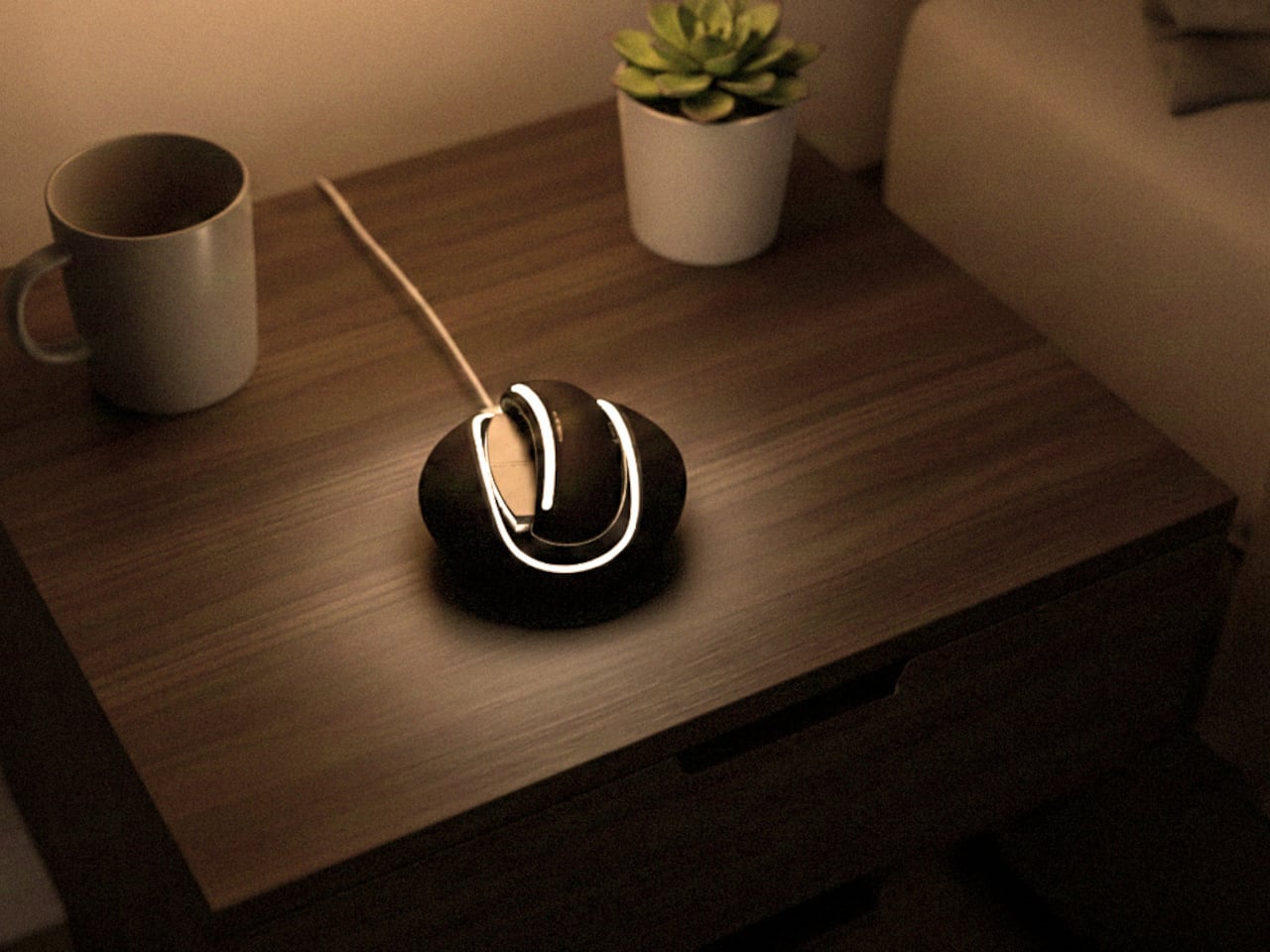
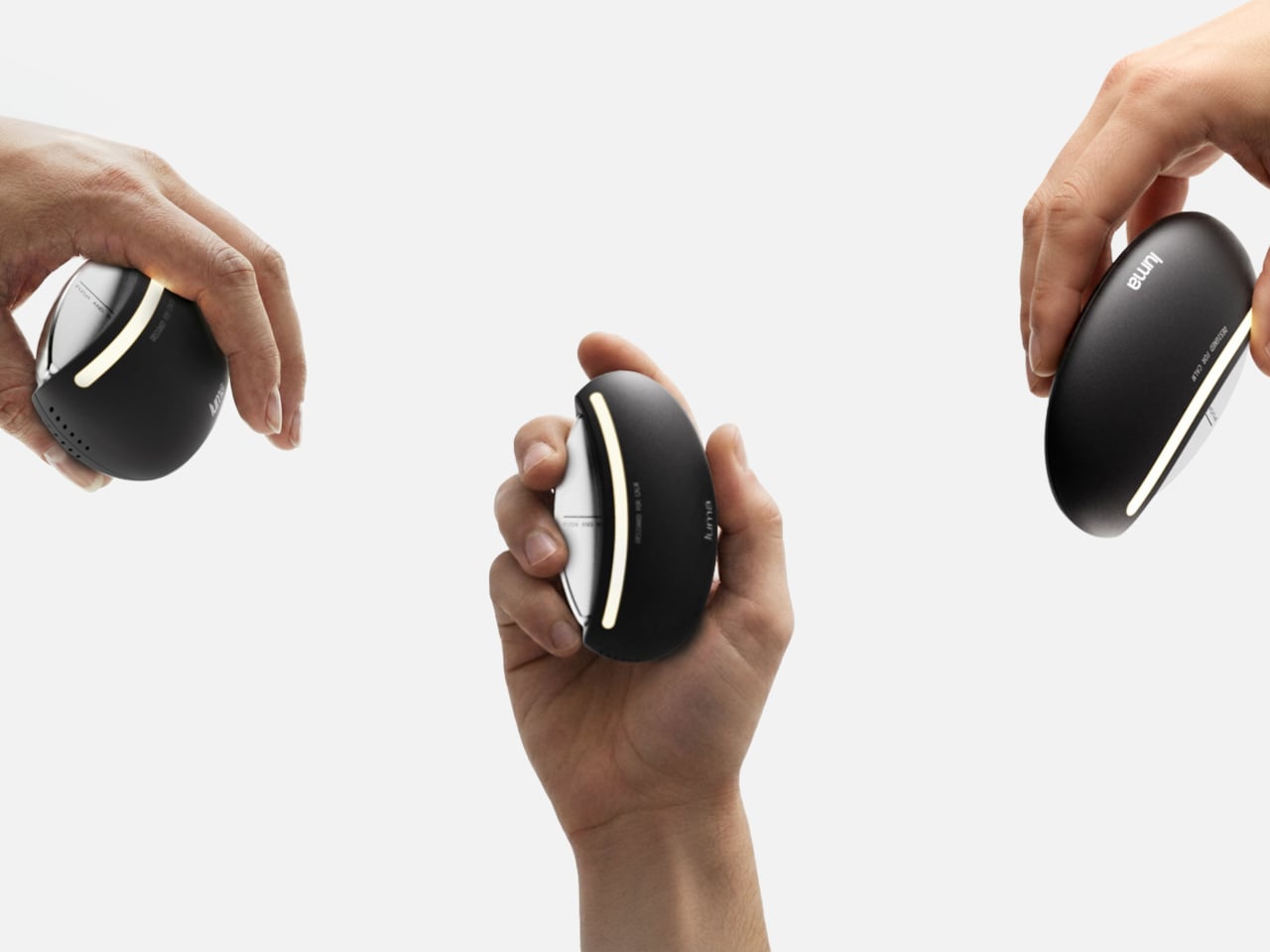
“Spot” is a concept for a lamp that is inspired by the shape of these ring lights but almost does in the opposite direction. Despite a ring light’s circular shape, it still shines its light mostly forward, with some illumination scattered around it only as a side effect. In contrast, Spot’s light comes from the structure’s side, and there is actually no light from its front or even its back.

The design shares the same basic combination of a ring on a stand, but the key difference is that an LED strip runs outside along the edges of the shape. This strip is supported by an internal structure that is sandwiched between two opaque covers, making sure the light is really projected only from the sides of the lamp. Another key design element is that Spot makes it easy to take the product apart in order to replace the LED strip, making maintenance and repair trivial.

Because of the way it illuminates from the sides rather than in a single direction, Spot functions more as a decorative lighting fixture or a night lamp at best. The contrast of the dark body and the lighting shining around it creates an almost eerie appearance, one that will easily grab attention and serve as a conversation starter, despite its seemingly simple design.

The post Ring light lamp concept has an interesting way of spreading its light first appeared on Yanko Design.

Zen garden pen brings a visual and tactile way to inspire mindfulness

Pens, regardless of design, are almost always associated with productivity and creativity, in other words, activity. While you can use the writing instrument to clear your head and achieve a state of calm, that’s only after you’ve actively used it. Rarely does a pen by its mere appearance actually take you to that state, but that is exactly what this unique-looking pen tries to accomplish. Using not only visuals but also texture, this Japanese-made pen aims to help you become mindful of the present, even if only for a moment, taking inspiration from the easily distinguishable composition of a Zen garden, sand and stone and all.

Designer: Jacopo Drago (Zenical)

It’s almost miraculous how a dry landscape and a meticulous arrangement of stone in gravel or sand can nudge the mind into a meditative state. That, however, is the magic and science that Zen Buddhist monks have discovered and developed over centuries, combining contrasting elements, minimalist arrangements, and natural elements to design a space meant to inspire calm and maybe clear a few cobwebs inside the brain. The stillness of the rock standing amid the thin lines of movement drawn on gravel around it, the smoothness of the pebbles contrasting with the coarseness of the sand, and the presence of living trees or shrubs standing defiant on lifeless ground, all these elements work in harmony to take the mind for a peaceful journey.

These rock gardens have become so popular that a few people have miniature Zen gardens on shelves or even their desks, but they can neither take these with them wherever they go nor always have them available when they need to. The Zen Pen tries to bring that same experience to an even smaller scale by recreating the key elements of a Zen garden in a way that you can see and feel in your hand. A part of that is clearly seen in the 3D-printed grooves that snake around the barrel and the cap, easily reminiscent of the thin lines and circles drawn on a rock garden.

It doesn’t stop there, however. The clip, which is often regarded as a utilitarian element, also contributes to the composition. Its smooth, oval shape is like one of those rocks or pebbles lying on the gravel, and you can see the typical circles radiating from its position. That position is actually off-center, doubling down on the contrasting themes of balance and asymmetry associated with Zen gardens.

The Zen Pen isn’t just a visual treat but also a tactile one, thanks to the handiwork of skilled Japanese craftsmen utilizing modern technologies like 3D printing and milling. While the grip near the nib is smooth and plain in order to be comfortable to hold, the rest of the barrel and the cap feature this textured surface that delights the fingertips. And as many variations of fidget toys have proven, mindlessly stimulating those fingers, even just by gliding over those grooves, can also help stimulate the mind.

The post Zen garden pen brings a visual and tactile way to inspire mindfulness first appeared on Yanko Design.
Wobbling rocking chair adds a playful twist to an everyday piece of furniture

We expect chairs to be stable, otherwise, we will never have the confidence or even the courage to take a seat on them. There are seats that are designed to move, though, from the wheels on office chairs to the rocking motion of a rocking chair, swing, or hammock. But what if the instability is actually an intentional part of the design, generating not fear but a sense of thrill and even playfulness? That’s the kind of experience that this odd-looking chair concept tries to offer, with a design that makes it look like a cross between a spacecraft seat and a child’s toy top. It turns out, it even moves like one as well!

Designer: Ellie Kim

A wobbling chair is probably the last thing you’d want to rest your body on, but if you’re actually looking for a more engaging and dynamic experience, this almost spherical seat is probably something you’d want to try out. After all, no one sits on a swing to relax but to actually be pumped up, enjoy, and maybe even trigger one’s creativity and imagination. At the same time, however, it has to be not only comfortable but also reassuring, as you don’t want your wobbling experience to be your last.

Designing a chair that rocks in all directions isn’t easy, even after you get the idea to use a concave base. You have to make sure you don’t completely tip over to any side, which is what a lip or ridge around the base is for. You’ll also have to come up with a design for the rest of the chair that not only provides support but also properly conveys the design’s more dynamic nature.

1

1

Thus, a circular chair is born with fins extruding from the middle like spokes on a wheel. The chair looks more like a turbine than a piece of furniture, but the design of each part is by no means based on whimsy. The top fins better cradle the seat and integrate it with the circular bottom half, while the bottom fins actually support the forces that the ridge will encounter with its rocking motion. Plus, it looks a lot more interesting, and its radial design immediately conveys the idea that it can move in almost any direction. As a bonus, the structure of the base and the ridge make it look like the chair is floating, adding to its sci-fi identity.

The end result is a chair that wobbles with pride and confidence, allowing the person on top to experience childlike play in every movement. It’s not going to replace any office or home chair, and it’s hardly an ergonomic design. But no one’s going to blame you for having a bit of fun rocking and spinning around on a chair that’s clearly designed to help you enjoy the lighter moments in life.

The post Wobbling rocking chair adds a playful twist to an everyday piece of furniture first appeared on Yanko Design.
Anbernic Game Boy Advance SP clone does more than just copy an old design

Retro gaming consoles and computers are still going strong, with many designs still left to be revived, resized, and retrofitted for modern times. Most of these products try to recreate the experience of those original machines, at least with the games they used to run on very limited hardware. That said, you can only go so far trying to recreate the past. Sooner or later, you will hit a wall, as demonstrated by the limited number of titles supported by many of these retro consoles. This reinterpretation of a Game Boy classic design, however, isn’t exactly a simple copy of the clamshell handheld. Instead, it takes the same spirit of portable adventure that the Game Boy Advance SP embodied and wraps it in a body that’s well-suited for modern gaming styles.

Designer: Anbernic

It’s honestly a bit of a gray legal area whenever third-party brands try to embrace a design so close to something from the annals of video gaming history. That hasn’t stopped the likes of Anbernic from taking obvious inspiration from those bygone designs but with enough modifications to skirt infringement accusations. Of course, Anbernic has its own original designs, but the ones that really grab your attention are those that pay homage to icons like the Nintendo Game Boy.

With the uninspiring name of Anbernic RG35XXSP, the prolific gaming handheld manufacturer is bringing the Game Boy Advance SP back to life, or at least the pocket-sized clamshell design that made it quite a hit. It’s just as blocky and thick as the original, but that’s also part of the device’s charm. For better or worse, however, that’s where the similarities end to the point that you can even say that the RG35XXSP was simply “inspired” by Nintendo’s handheld.

Deep inside, it uses the same guts as all the other iterations of the RG35XX, which means that it’s practically a mini computer that runs the Linux operating system. Specifically, it uses an emulation platform that can support a whole plethora of games from the likes of the Nintendo 64, PlayStation 1, PlayStation Portable, or even MS-DOS. And, yes, it can probably run Game Boy games as well, though you’re left to your own devices on how to make all these work.

What’s more important, however, is that the RG35XXSP doesn’t use the limited controls of the Game Boy Advance SP. Instead, it has enough buttons to support all those gaming platforms, though don’t expect any analog joystick here. The pocketable gaming handheld is also described to be equipped with modern technologies, like Wi-Fi and 5G for local multiplayer gaming, HDMI for TV output, and support for Bluetooth peripherals like controllers, keyboards, and mice. Shown off in four designs that give tribute to those consoles and handhelds of the past, launch details for the Anbernic RG35XXSP are unfortunately still unavailable at this moment.

The post Anbernic Game Boy Advance SP clone does more than just copy an old design first appeared on Yanko Design.
Sharp still makes smartphones and its latest design is beautiful but a little off

The mobile phone market is a very aggressive one, so it’s no surprise that even big companies bow out eventually. Nokia raised the white flag after numerous failed attempts with both Windows Phone and Android. BlackBerry also closed shop after failing to find a profitable market for its QWERTY phones, while LG opted to focus on its other businesses other than mobile. Some brands, on the other hand, simply downsize their operations, like HTC mostly in China, and Sony only through online shops. Sharp, is part of this latter group, though its presence has been so small you’d hardly notice it still existed. In fact, it just announced its latest handset, and while the Sharp AQUOS R9 looks rather elegant in its simplicity, a single design element, unfortunately, mars its otherwise clean appearance.

Designer: Sharp

When it comes to minimalism, the two cultures that are considered to be the epitome of this style and lifestyle are Scandinavian and Japanese. In that regard, it shouldn’t be a surprise that Sharp’s new smartphone embodies minimalism almost to the extreme. It barely has any branding on the back of the phone aside from the small “AQUOS” and “LEICA” texts in the camera circle. With flat surfaces and edges, plain colors, and the lack of almost any embellishments, the Sharp AQUOS R9 is like a breath of fresh air in the smartphone market.

Unfortunately, it’s because of that very simplicity that your eyes are immediately drawn to the one conspicuous element on the phone’s back: its cameras. The design, while simple, looks a bit skewed, lopsided, and uncertain as if it can’t decide if it wants to be a square or a circle, the two predominant camera designs in the market today. Even more unbalanced, despite being an even number, are the camera lenses, positioned diagonally and off-center and with slightly different sizes. We’ll just have to take Leica’s unspoken word that this is the optimal placement for these cameras.

In terms of hardware, the Sharp AQUOS R9 looks quite competitive, at least on paper. It’s powered by a mid-range Qualcomm Snapdragon 7+ Gen 3 processor with 12GB of RAM, with a large 5,000mAh battery to keep it running. The 6.5-inch Full HD screen boasts TV maker Sharp’s Pro IGZO OLED technology and is capable of 240Hz refresh rates. Those two odd cameras on its back both have 50MP sensors, and the front-facing camera for selfies and video calls has a similar 50MP hardware. As mentioned, Sharp is proudly flaunting LEICA’s brand, indicating how its imaging system has been approved by one of the biggest names in the optics industry.

There’s no word yet on how much the Sharp AQUOS R9 will cost or if it will even be available outside of Japan. It’s definitely an odd design choice, one whose elegant minimalism is juxtaposed with an asymmetrical camera bump. It’s not ugly, for sure, but it’s an appearance that looks a little confusing and disconcerting, creating a bit of a visual discomfort whenever you try to appreciate its clean looks.

The post Sharp still makes smartphones and its latest design is beautiful but a little off first appeared on Yanko Design.