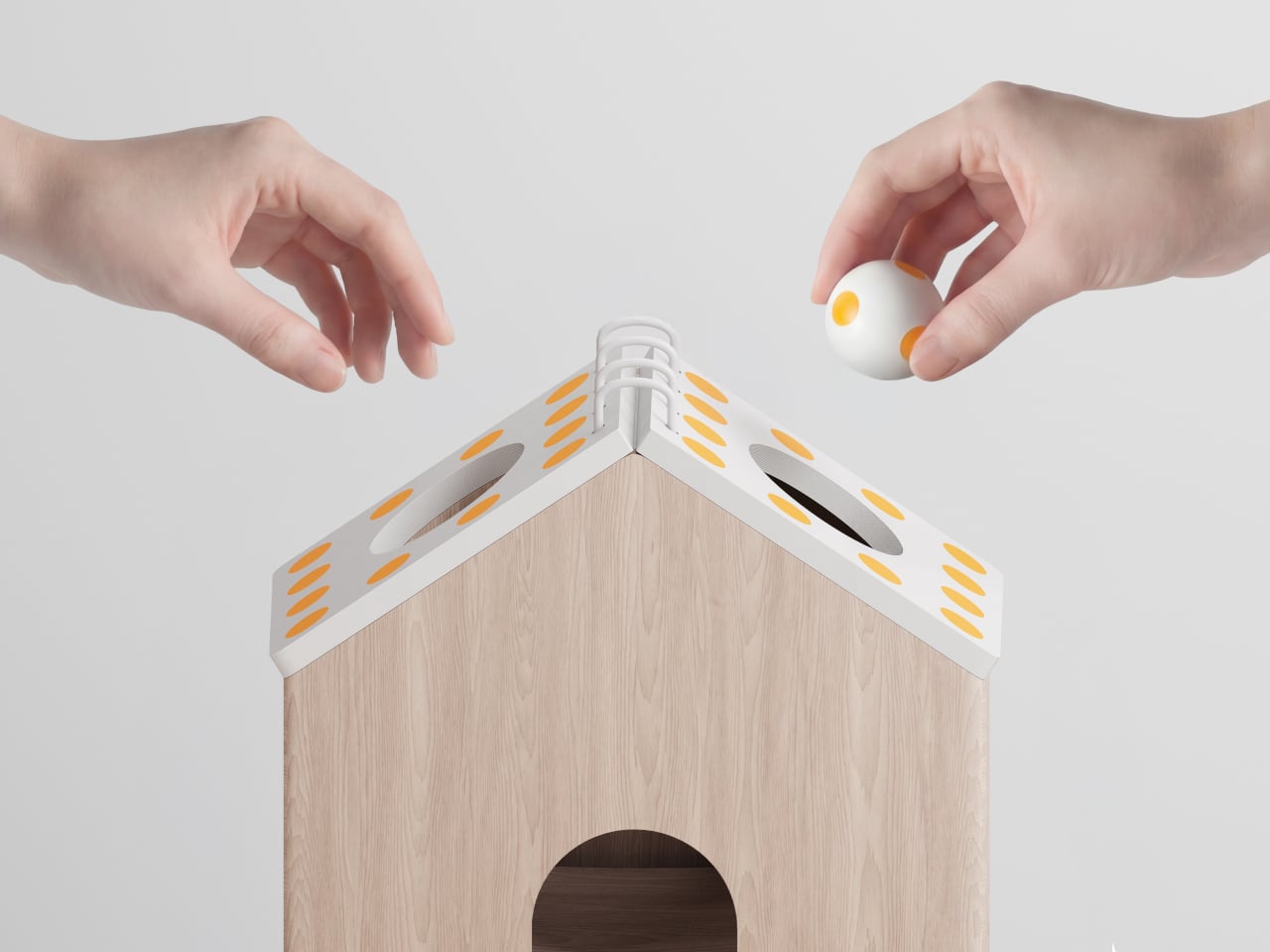
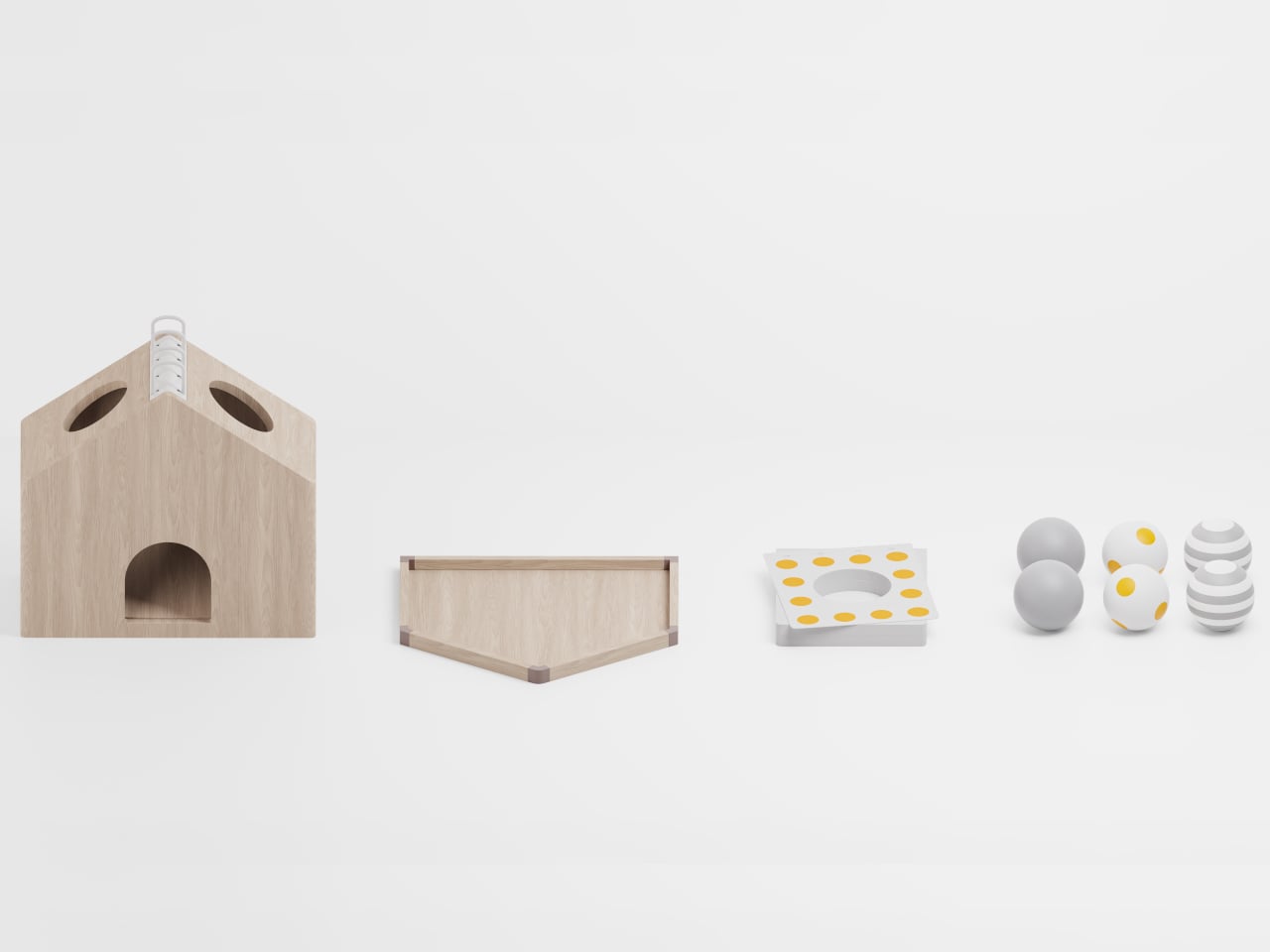
Sustainable and minimalist desk tray collection lets you mix and match to your needs

Desk trays are an indispensable part of any organization system, and their designs vary wildly to meet different needs and aesthetic tastes. While wooden desk accessories are not uncommon, the most standard materials used for these products are often virgin plastics that, given the volume of their use, spell trouble for the planet. Fortunately, a few designs nowadays do try to utilize recycled or even upcycled materials to ease the burden on the environment, but good design doesn’t have to stop there. This concept, for example, seems to check all the right boxes by offering not only a sustainable solution with a beautiful minimalist design but also one that lets you combine pieces as you see fit or use them solo in different places as needed.

Designers: Hoyeon Shin, Seokhyoun Han, Joae Kim, Yeongha Kim, Zoae Kim for Haus Bari

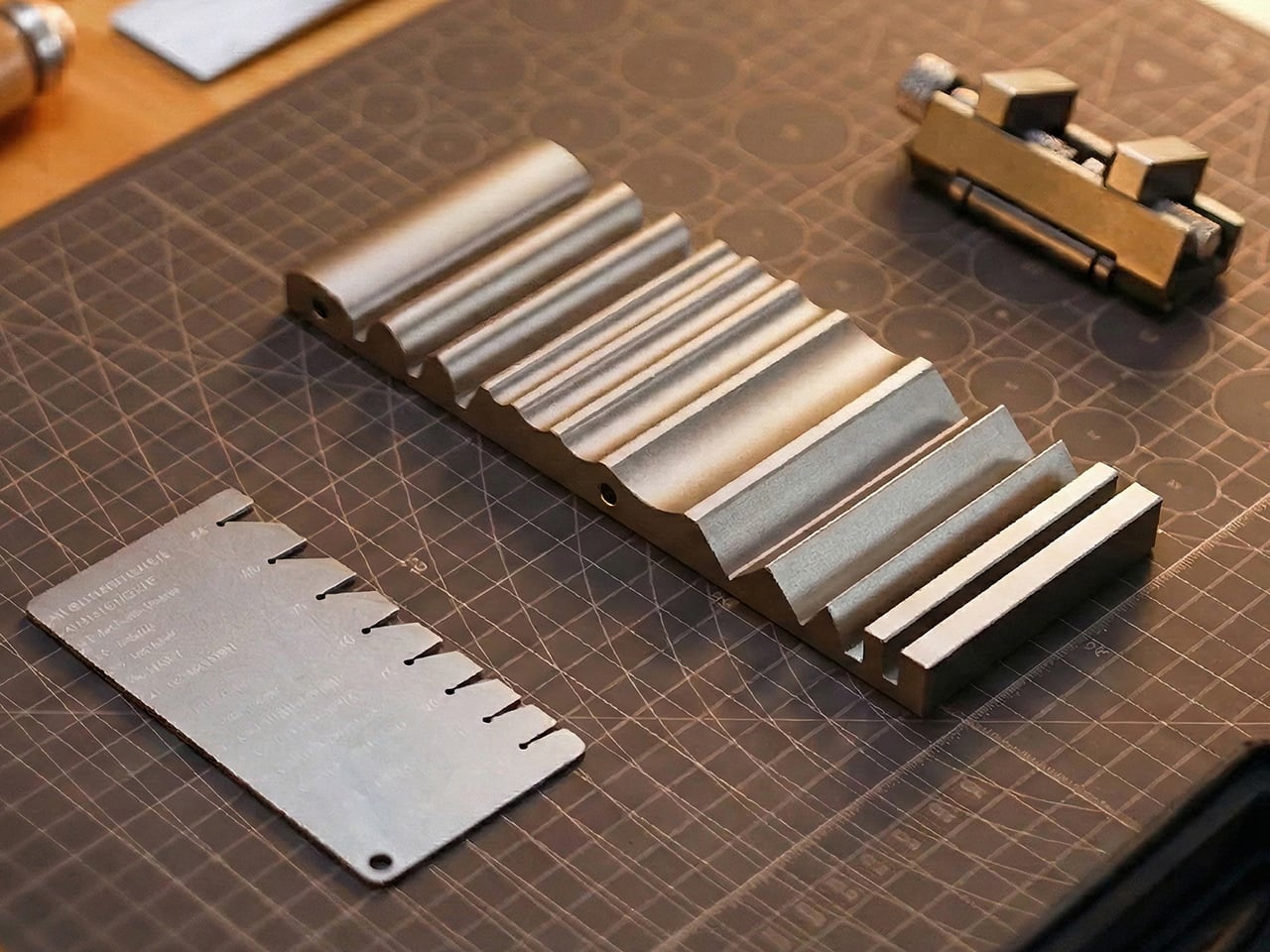
Truth be told, this design is actually four separate products sharing a similar DNA. One design, however, can’t meet all the needs of all users, so rather than make a monolithic product that wastes space and materials, this series of trays simply offers four unique designs that can be used for a variety of purposes, including in places that don’t involve work tables and stationery.

All four pieces share the same thin square platform, but that’s pretty much where the similarities end. One “block”, for example, has a fixed cylinder that can be used for holding writing instruments, tools, or maybe even flowers. Another has a circular indentation that invites you to place a mug or glass on it, though it can also fit small items such as an AirPods charging case. The tray with a wavy surface can be a bed for pens and pencils without having them jumbled up together. The fourth member has a simple flat surface, but flip it over and you will behold the Bari branding underneath. It can also function as another coaster thanks to that circular groove again.

The trays use diatomaceous earth, a sustainable material that is gaining popularity among product designers. It also gives the tray a textured appearance that resembles rough, unpolished stone, making the minimalist products look a little more visually interesting. It also makes it possible to place wet or damp objects on top of the tray, such as sponges or even soap, thanks to the material’s moisture resistance and self-drying properties.

1

Although each of these trays functions as an independent unit, you can also combine them as a single organization system where you have free reign over how they are arranged. You can have them for a line, put them in a grid, or spread them out all over the desk. Of course, you’re not limited to just one of each piece, either, and can form an army of trays and containers ready to keep your mess at bay. It’s an admittedly simple solution to desk and life organization, but one that offers beauty and flexibility in a package that tries to reduce its negative impact on the environment.

The post Sustainable and minimalist desk tray collection lets you mix and match to your needs first appeared on Yanko Design.

Origami-inspired table concept folds into a lamp to save space

Tables are important pieces of furniture in any human space, whether it’s the dining table at home or a meeting table at the office. That said, we don’t always use these flat horizontal surfaces all the time, and there will be times when they’re just taking up precious space. Yes, more aesthetic tables do provide some visual value, but it doesn’t outweigh the cost of their presence. Foldable tables are practical, but few actually look good even when unfolded and the hassle of moving the folded table out of the way makes them less compelling. But what if you didn’t need to put the table away because it not only becomes more compact but also serves a different purpose? That’s the kind of multi-functional design that this concept proposes, turning a table into a lamp.

Designer: Sonakshi Gupta

The Japanese art of folding paper has inspired many designs because of its beauty, simplicity, and space efficiency. A large and flat sheet of paper can suddenly become a geometric flower or swan with a few folds, significantly reducing the area that the piece of paper once occupied. This art doesn’t involve removing or adding parts, which makes each piece an independent and standalone unit.

LightUP is a concept that takes inspiration from origami and kirigami (which does involve cutting away and gluing pieces together) to design a table that not only saves space but also provides a completely different functionality or two. The squarish wooden tabletop folds up into a shape that’s like a flower bud, freeing up the space around the table for use. Thanks to ingenious invisible hinges, not only do you have a clean and flat table surface but moving only one or two corners is enough to fold and unfold the table. The easier you can perform this action, the more frequently you’re willing to do it.

Of course, that’s not where it all ends. The design’s name comes from the fact that wide LED light strips from the pyramidal base of the table to each of the four corners. Thus, the table becomes a room-wide lamp at night but can also remain as a space-saving art object when the lights are off.

Admittedly, the design’s implementation is actually more complicated than it looks thanks to the moving parts and hinges involved. Those may become points of failure over time due to wear and tear. The idea, however, could give birth to a simpler design, one that takes into account aesthetics, functionality, and sustainability altogether for a truly space-saving piece of furniture.

The post Origami-inspired table concept folds into a lamp to save space first appeared on Yanko Design.

Hand-worn smart display concept safely shows information for bikers, mountaineers

Smartphones can provide all sorts of useful information and features, but there will always be occasions when you can’t just whip out the phone from your pocket to use it. Smartwatches are supposed to solve that problem by offering more condensed information on your wrists, but that can still be problematic for some class users, especially those who engage in outdoor activities. Although smartwatches are often marketed for athletes and people with active lifestyles because of their health-tracking features, actually using the wearable once the gloves come on can actually be difficult, if not impossible. Fortunately, your wrist isn’t the only body part you can use for a wearable, and this design concept tries to place a bigger display on the back of your hand instead.

Designer: Anuj Pate

Smartwatches are the most popular kind of wearable design simply because they are the most convenient and the most familiar. That doesn’t exactly mean they’re the best or only design possible, definitely not for all kinds of people. The rising interest in smart rings does indicate a sort of “smartwatch fatigue” that’s making people think outside the box on how to deliver some of those features through other means. A smartwatch’s display, for example, is only useful if can see it, which often means having to twist your wrist at the very least to have the screen at a proper angle.

Unfortunately, that’s not easy or even safe for some people whose hands have to be in a fixed position or can’t easily touch the smartwatch screen once they’ve started wearing gloves. That’s the case for cyclists, bikers, and mountain climbers who still need access to some critical information but can’t see their smartwatch for one reason or another. Rather than rely on complicated and distracting solutions like audio notifications or augmented reality goggles, zIng simply moves the display to a position where it can be easily seen even without twisting your wrist or squinting your eyes.

The wearable design concept practically puts a decently sized trapezoid-shaped display on the back of your hand. If you have your hand forward like when you’re holding bike handles or gripping a mountain wall, this immediately puts that screen within your vision. The display is also large enough to tap with a finger even when you’re wearing very thick gloves, which is often the case for biking and mountaineering gear.

zIng is just one of a new generation of wearable designs that are challenging the status quo of smartwatches. An ergonomic Apple Watch band moves the smartwatch away from the wrist and onto the back of the hand as well, this time a little below the thumb, though that doesn’t solve the cramped screen space. Admittedly, the zIng concept targets a very niche market, but it also clearly shows that there’s no one-size-fits-all wearable design that will be perfect for all use cases.

The post Hand-worn smart display concept safely shows information for bikers, mountaineers first appeared on Yanko Design.
Sculptural chair design pays homage to a century-old wooden classic

Designs come and go, but some manage to become icons in their field. There are quite a few such designs in the larger furniture market, especially in the categories of tables and chairs. More than a century ago, a particular wooden design shattered expectations and became the precursor of mass-produced chairs for years, even decades, to come. It has since then inspired many product designers not only to follow in this chair’s footsteps but also to improve on it or even reimagine it with modern techniques and sensibilities. One such ode turns what was primarily a utilitarian design into an art object, exaggerating the structure and form that gave the No. 14 Chair its identity.

Designer: Jiri Krejcirik

Wooden chairs have, of course, been around for centuries, but most of them were often made with elaborate hand-carved designs that didn’t scale well for mass production. In 1859, the Thonet company revolutionized the furniture industry with the No. 14 Chair, or simply the Chair 14, which could indeed be put through a pipeline but still looked elegant in its simplicity. Its most characteristic design was the steam-bent wooden rods that formed the chair’s back, legs, and support.

More than 160 years after its birth, a new design breathes new life into that classic chair and dials it up to eleven. But rather than modernizing the original design, “Ode to Chair 14” reinterprets it from a different angle, one that puts form and aesthetics on a pedestal. While the original No. 14 adopted bent wood to give a mass-produced design more style and elegance, this particular rendition turns that design element into an art form, transforming the chair from a piece of furniture into an art object.

The Ode to Chair 14’s base is similar to the original, with a circular seat supported by four curved legs joined by a ring midway down their length. Where it differs, however, is the backrest, where what would have been a simple arching curve almost spirals out of control and loops repeatedly until it forms a row of intersecting rings. It gives the chair a character that is both eccentric and regal at the same time.

Despite its glossy blue hue, the chair is still made from bentwood beech wood just like the original design. In a way, it demonstrates how production processes have advanced to the point of making even such complex shapes possible. At the same time, however, it retains the same structural simplicity as the first Chair 14, a vision that paved the way for a new breed of chairs for decades to come.

The post Sculptural chair design pays homage to a century-old wooden classic first appeared on Yanko Design.

Rare 2001 PS1 controller modded into a quirky PlayStation handheld emulator

Game controllers today follow a standard design and format, and most of them gravitate between two or three conventions, depending on the major console brand they’re supporting. Once upon a time, however, there was a bit more variety and exploration in what controllers could look like, at least as long as they still supported all the basic controls that the machine and the games required. This gave birth to a few oddities, some of which gained widespread notoriety despite their limited availability. One of those was perhaps one of the weirdest but also rarest controllers ever made for the original PlayStation, and one such design was reshaped to become one is probably one of the most distinctive PlayStation handhelds ever crafted.

Designer: Takara Tomy (modded by Hairoh Satoh)

In 2001, PlayStation owners in Japan got a glimpse of an officially licensed controller specifically designed for the popular Game of Life video game. Unlike rectangular controllers even during that period, this custom gamepad was practically square with a circle at the top edge extending a bit beyond the border. This circle was home to a roulette wheel used in conjunction with that game, earning this Japanese-exclusive design the name “Takara Roulette Controller.”

Images courtesy of miepro_02

More than two decades later, a modder best known for his Game Boy mods has given this rarely-seen controller a new lease on life as a standalone gaming device. The spinner wheel, which has no use in any other game, was replaced by a small LCD screen that allowed the user to play games directly on it. Of course, that also means that the internals of the controller have been gutted out to make room for a small computer, probably a Raspberry Pi or one of its kind.

That alone would have been impressive enough, but the mod goes above and beyond to bring a few modern gaming conveniences. While the original controller is more or less complete when it comes to buttons, the mod adds L and R back triggers as well. The small space also has a memory card slot, USB-C charging, and speakers that truly make the gaming handheld independent and portable. Whether it’s comfortable to actually play on for long periods of time is a different question entirely.

Unfortunately, the controller clearly shows its age with the absence of analog joysticks that are now standard on modern controllers. Then again, since it’s mostly emulating PS1-era games, that’s not exactly a problem either since those titles didn’t make use of such controls. But since it’s technically using a computer that can run emulation software, it’s theoretically possible to also run games from other consoles, particularly classic titles that have simpler controls, less demanding graphics, and gameplay that’s well suited for this retro controller design.

The post Rare 2001 PS1 controller modded into a quirky PlayStation handheld emulator first appeared on Yanko Design.
Stone-shaped digital compass concept promises an adventure with each walk

Compasses are designed to give you your bearing, but they don’t exactly tell you where you’re headed. With today’s digital maps and navigation apps, that’s pretty much easy peasy, removing any stress from trying to find your way to your destination. At the same time, however, these modern conveniences also remove some of the adventurous feelings and the joy of discovery when wandering about before you reach your actual stop. That kind of whimsical and often serendipitous experiences are almost all but lost, especially with smartphones serving all information on a silver platter or always calling our attention with its incessant notifications. This modern and unconventional compass design wants to remedy that and bring back the joy of an aimless exploration by removing all unnecessary distractions so that you can be more present in your surroundings.

Designer: Modem Works x Panter & Tourron

They say that if you don’t have a destination in mind, any road will take you there, and while that adage is often used as a warning, it neglects to mention the wondrous discoveries you might encounter off the beaten path. After all, not all who wander are lost, as the popular quote goes, but also losing your bearings and your way can be a frightening thought. You could use your phone, but you could also be tempted to just go directly to your destination or, worse, never get there because of all the pings from social media that are begging for your attention.

Terra is a device that modernizes the age-old compass without turning it into a complicated device like a smartphone. There is no screen, at least not an obvious one, just a hidden monochrome display that lights up with symbols and sigils that will mark your adventure. Yes, it will show you your direction, but it won’t mark your destination. Instead, it encourages you to actually get your destination off your mind and take a different path instead.

The idea is that you will input your location and how much time you have available and the device’s AI will guide you along a set of GPS coordinates to accompany you on your adventure. But instead of screens and beeps, it uses gentle haptic feedback and artistic iconography to nudge our attention to little discoveries along the way, be it a kind mushroom or a flower you might have never seen before. And yes, it actually functions as a compass so you won’t get lost by accident.

Terra’s cross-like form seems to be a reference to the four cardinal directions, but its rough, organic shape is more reminiscent of a stone or pebble you’re likely to pick up along your walks. The design, however, is open to various other shapes that will hopefully remind you of the treasury of wildlife waiting to be discovered along your more adventurous excursions.

The post Stone-shaped digital compass concept promises an adventure with each walk first appeared on Yanko Design.

Odd sustainable stool concept prioritizes minimizing materials over recycling

The majority of sustainable designs today focus on using responsibly sourced or biodegradable materials as well as the ability to recycle components at the end of the product’s life. While these are indeed a big leap compared to common production practices, it’s still from the ideal. Even sustainable materials like wood, metal, or bioplastics produce material waste that still gets discarded at the end of the production process. And depending on the materials involved, recycling can actually consume more energy and even result in more pollution, offsetting whatever benefits it should have brought. Another approach to sustainability is to actually reduce the materials used and, therefore, the materials that need to be recycled, as what this rather unconventional “two-piece” stool design tries to propose.

Designer: Kitae Pak

The less materials you use for a product, the more products you can make out of that material. If a single 1,220mm x 2,440mm sheet of plywood would normally yield 24 circular plates with a diameter of 310mm, you could potentially squeeze 219 plates with a diameter of 120mm. That’s the kind of increase in yield that the Dots stool concept is claiming, making more efficient use of a material without compromising on quality, at least in theory.

The concept accomplishes this by completely redesigning what a stool is expected to be. Yes, it’s still a piece of furniture for seating, but there’s no hard rule that the seat has to be one large and whole piece. Instead of a single big circle, the Dots stool utilizes two smaller discs to support the body at rest, hence the name. It delivers the same function but at a significantly lower material consumption right from the start.

With this minimalist design, which consists of two wooden rods for legs and recycled plastics to connect the pieces into a stable whole, you can make 4 times more Dots stools than a regular stool using the same materials. This kind of conservation means that the production process itself would use less materials and energy to produce the same number of stools, while recycling would also use less energy and water as well. And since it’s mostly made of wood, the stool can also be repurposed for other designs or returned to the Earth one way or another.

While the design does check all the right sustainability boxes, it does raise questions on conform and stability. It’s arguable that it does serve its function well, but neither its appearance nor its ergonomics inspire complete confidence. It’s not a complete loss, however, as the experiment proved that there’s still a lot of room for improvement even for already sustainable designs.

The post Odd sustainable stool concept prioritizes minimizing materials over recycling first appeared on Yanko Design.

eBook readers are about to become a little bit more sustainable

eBook readers, often just called eReaders, have come a long way since the earliest days of the likes of the Amazon Kindle. Not only do some of them now support pen input for jotting down notes, some even have color E Ink screens that add a bit of life to There are also some that are practically Android tablets with e-paper displays instead of LCDs or OLEDs, offering a more eye-friendly digital lifestyle. Unfortunately, those new features do add up, making the newer generation of these devices more expensive than their forebears. That means that these color eBook readers are even more of an investment than before, and their longevity is now more important compared to the past. Thankfully, manufacturers are taking notice and may have started the journey toward a greener future for this market with Kobo blazing the trail.

Designer: Kobo

Amazon’s Kindle might be the household name when it comes to eBook readers, but it is hardly the only game in town, not by a long shot. In fact, when it comes to innovation, you could even say that it lags terribly behind, banking only on its industry clout and expansive library to maintain its lead. As far as major brands are concerned, Kobo can be considered second place, but its latest moves have definitely put it ahead of the game in some aspects.

It has recently launched three new eReaders, two of which have color E Ink screens. While the technology is hardly new, it is the first time a major brand adopted it. In contrast, Amazon has only been rumored to be working on a similar device, but given how long it took to come out with a pen-enabled Kindle, it might still take a while. Then again, now that Kobo has stolen its thunder, it might be a bit motivated to expedite its schedule.

What’s more interesting, however, and one that almost flew under the radar, is that Kobo’s three new readers will also be its most repairable devices. It has apparently partnered with self-repair experts iFixit in making the new Kobo Libra Colour, Kobo Clara Colour, and Kobo Clara BW more repair-friendly, which means that repair kits and instructions will be made available. As of this writing, details are still non-existent, but it’s still a huge step forward and a first for the eBook industry.

What this practically means is that these three devices could very well become the longest-lasting of their kind, allowing owners to replace certain parts for as long as those parts are available. As eReaders graduate from cheap and almost disposable plastic devices into powerful and sophisticated machines, the need to make them more durable and resilient also grows. To its credit, Kobo has been making major strides toward sustainability, including the use of more than 85% recycled plastic in its devices. This pleasant surprise goes above and beyond what any eReader manufacturer has so far done, putting Kobo on the same track as the likes of Apple, Samsung, and Google in the smartphone market.

The post eBook readers are about to become a little bit more sustainable first appeared on Yanko Design.

Sustainable office chair uses paper-like material made from wood by-products

Sustainable furniture and designs are thankfully becoming more common, but the “sustainable” label can actually be applied to different things. They can be made from recycled materials like metal or PCR plastics, or they can be made from new but biodegradable materials like wood, cork, and paper. While both kinds are good, they don’t always address the accumulating material waste that comes from the production of these objects, even the bits and pieces of wood that get left on the cutting room floor and then thrown out. Giving a new purpose to these by-products is another sustainable practice, one that is being applied to a beautifully minimalist office chair that’s made from dozens of sheets of paper.

Designer: Arper

Of course, it’s not literally made from paper, which would be too soft for a chair no matter how many sheets you stack, especially for a sleek and slender seat based on Arper’s iconic Catifa 53. Instead, it uses PaperShell from a Swedish startup of the same name, a material that almost poetically transforms paper, which comes from wood, back to a wood-like material that offers rigidity, stability, and, more importantly, beauty. In a nutshell, it uses both wood by-products like sawdust and chips as well as waste wood like fallen branches in forests to create a new paper-like material that can be used in place of wood, plastic, or fiber composites.

That’s the case with the Catifa Carta, which compresses dozens of these sheets into a composite that’s then bent and formed into an elegant chair with a gentle slope sitting on top of thin yet sturdy metal legs. Unlike its older sibling, this more sustainable version of the chair leaves the seat in its original, unpainted glory. That means you can see the natural imperfections of the PaperShell material, giving each chair a unique character. It’s pretty much the same as the highly prized grains in wood that give designs their natural charm.

What’s even more special about the chair is that even the end of its life has a story to tell. PaperShell can be recycled to produce new and different products, but it can also be turned into biochar to nourish the Earth. The material itself sequesters carbon dioxide which can be used to enrich soil. It’s a truly circular life cycle that starts and ends with the Earth. Appropriately, Arper has made the Catifa Carta easy to disassemble to make this process even easier.

Of course, the chair isn’t just a thing of beauty inside and out, it’s also a functional piece of furniture. Though some might have concerns about the ergonomics of using such a chair for long periods at work, it’s still a well-designed seat that makes you feel good not only about sitting on it but also about the exciting journey that this wood-like material has made since its birth from a seed.

The post Sustainable office chair uses paper-like material made from wood by-products first appeared on Yanko Design.
Smart door lock offers key-free security without replacing your deadbolt

You’ve probably seen sci-fi flicks that show how convenient it would be to just approach a house and have the door automatically open for you. While that might sound like the ultimate convenience, our current reality is far from reaching that idyllic future scenario. Never mind security concerns against hackers or, worse, software bugs, the requirements for installing smart door locks alone are enough to frighten off all but the most tech-savvy and capable of homeowners. Having to replace existing knobs and locks is a daunting and expensive task, which is why this “retrofit” smart door lock is so noteworthy as it allows almost anyone, especially those without much DIY experience, to install the lock in just minutes and still keep the same deadbolt they’ve been using for years.
Designer: Yale

On the one hand, it’s understandable why installing a smart door lock would require removing the old, not-so-smart one. Not only does it require electronic parts, it would also be advisable that all the parts actually work well together. On the other hand, it might not always be economical or practical to replace existing deadbolts, especially if you have quite an expensive design or are renting out rooms or houses. Retrofit locks try to bridge these two extremes and Yale just launched its first attempt at making life easier and less stressful for such people.

The new Yale Approach with Wi-Fi is a deceptively simple kit that promises you’ll only need around 10 minutes and a single screwdriver to install it over your existing deadbolt, depending on how familiar you are with some handiwork. It’s an indoor-only design so you only need to change that part of the lock and that’s all there is to it. Of course, you still need to plug in the wireless Yale Wi-Fi bridge somewhere near the Yale Approach and connect it to your network, but that’s pretty much on par with any other smart lock.

Once that straightforward installation is done, you can enjoy the key-free and sometimes hands-free experience of having a futuristic lock for your home. You can have it lock the door automatically once you’re out or even unlock it when you’re near, all without having to even pull out your phone. You can also give other people access, permanently or temporarily, to the lock, which is important for renters. Best of all, you can still use your old keys as a backup in case things go awry.

The Yale Approach with Wi-Fi arrives along with a new Yale Keypad that adds an extra layer of security to your new smart home system. This wireless backlit keypad can simply be stuck to a wall near the lock, allowing authorized users to simply enter a code to unlock the door. A future model will even come with a fingerprint sensor so you can stop worrying about memorizing all those numbers (or using an insecure sequence like “1234”). Depending on the situation, this new Yale combo might still be inadequate as far as smart security systems are concerned, but it’s still better than the alternative of going through all the work and costs of installing a new lock that you might end up not liking anyway.

The post Smart door lock offers key-free security without replacing your deadbolt first appeared on Yanko Design.