3D printed earhole covers helps football players drown out the crowd

I don’t watch any American football but I’ve seen some actual footage (and movie scenes as well). I can only imagine how noisy it gets within the stadium, whether it’s college football or professional football. It will probably be hard to listen to anything else except the crowd’s cheers (and jeers). So what if you needed to hear what your teammates or coaches are saying?

Designer: Tamara Reid Bush and Rylie DuBois

A mechanical engineering professor and a biosystems engineering major at Michigan State have been able to produce something that can help athletes with that problem. Some teams previously just put duct tape inside the earhole of their helmets but they were able to make something better with the power of design thinking and 3D printing” earhole inserts.

These inserts were made from a bio-based plastic called polylactic acid and produced through a 3D printer. They were put into the helmet earholes and the challenge was actually to produce different sizes since different helmets of course had varying sizes. The main purpose is of course to drown out the crowd noise so they can hear play calls and the recently approved coach-to-player helmet communications in the NCAA.

While the around 180 sets they have produced are used by the Spartans, some of the Bowl Subdivision programs are also creating similar tools. For example, the Houston Texans have approached XO Armor Technologies, which can 3D print athletic wearables. After that, around 60 teams have already contacted them to produce sound-deadening earhole covers for their respective teams.

The post 3D printed earhole covers helps football players drown out the crowd first appeared on Yanko Design.
Noise-canceling headphone concept creates sound bubble for clearer conversations

When you need to have a serious conversation with someone or a small group, you probably need to find a place that has a private room or where there will only be a few people. But for times when you have no choice but to have it in a not so quiet place, then you probably wish you had a cone of silence so you can drown out other people’s voices while still being able to hear what your companions are saying.

Designers: Tuochao Chen, Malek Itani, Sefik Emre Eskimez

Well that might soon come true if this concept by the engineers at the University of Washington becomes a reality. The headphones is powered by AI and has the power to filter out the noise from as far as a few feet away so you’ll still be able to hear the conversation around you. It creates an imaginary “sound bubble” so you can focus on what you need to hear.

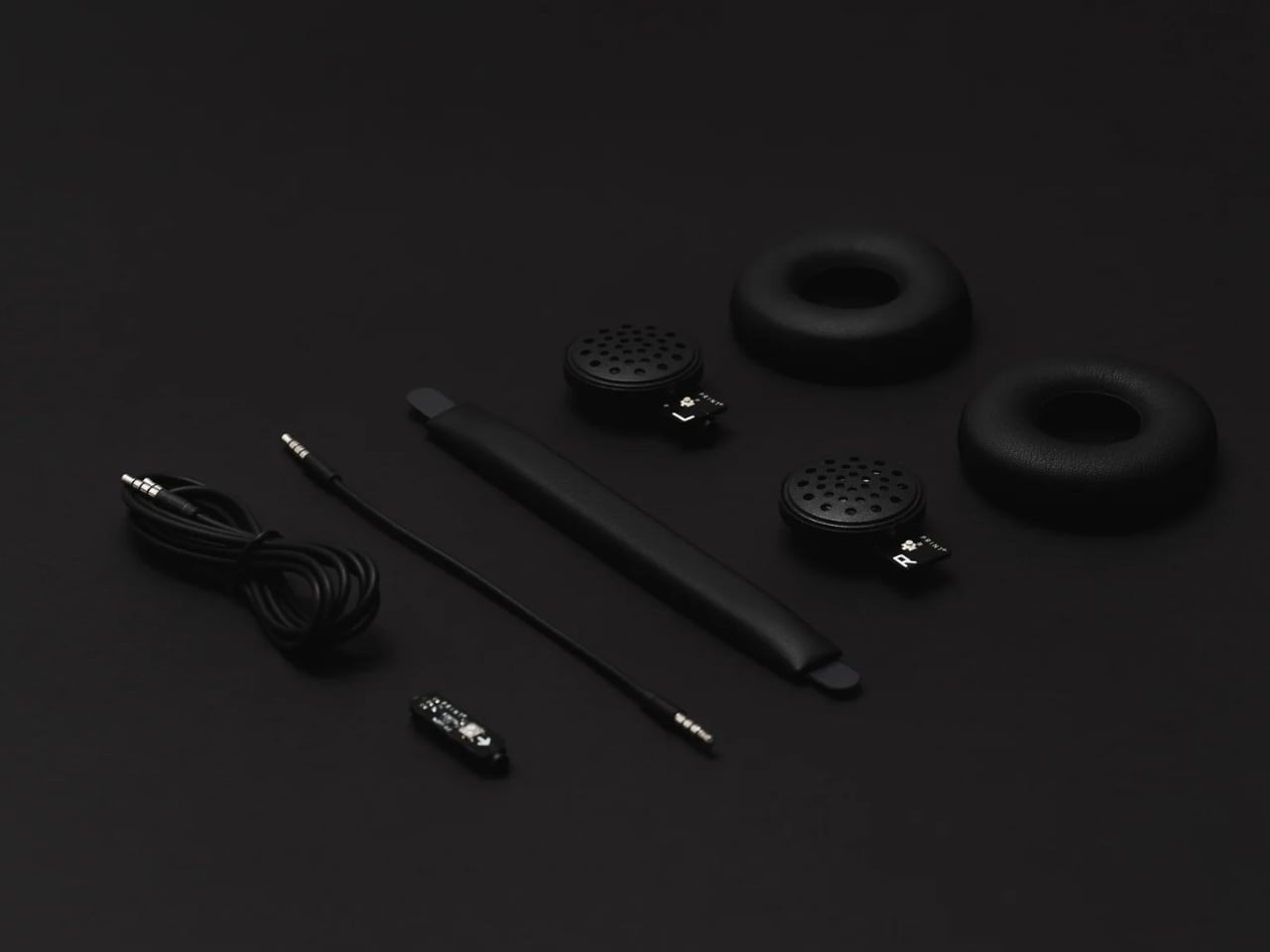
The noise-canceling headphones has six microphones on its headband, with a small onboard computer running a neural network. It will be able to analyze the distance from various sound sources around you. The ones that are farther away will be filtered out while the sounds closer to you will be amplified. If they come in within your imaginary bubble, you’ll be able to hear them clearly too.

It’s an interesting device to have especially if you have a lot of meetings or conversations outside. It would look strange though to have a group of people talking and all wearing headphones. They are working on smaller versions like earbuds or even hearing aids so that should work better.

The post Noise-canceling headphone concept creates sound bubble for clearer conversations first appeared on Yanko Design.

Vintage-looking ebike sidecar lets you ride around in style

I am one of the estimated 50% of the world population that don’t know how to ride a bike and have no desire to actually learn how. But there’s one kind that I do know how to ride and given the chance, I’d probably willingly get on one: the sidecar. I can’t balance on two wheels but add a sidecar and another wheel to the equation, then yes, I can actually “drive” it. And if it’s an electric bike, then it also adds to the appeal.

Designer: Mod Bikes

The Mod Easy SideCar Sahara electric bike is something that may appeal to people like me or regular bike riders who want to get on this retro-looking thing that looks like a prop bike from Mad Max Fury Road. The design inspiration for the limited edition ebike is actually the BMW R75 Sahara motorcycle from the World War II era or the 1940s. But of course it has more bells and whistles given that it’s an electric bicycle.

The front wheel has a moto-style dual-crown suspension while the custom-made sidecar has dual headlights, an extended frame, and a cargo rack at the rear. And if your companion on the sidecar is a pet, it even has a built-in doggie door, which should work for pets and humans alike. There’s also a padded seat and a seatbelt for safety. As an ebike, it is equipped with a 750-W rear-hub motor plus give levels of programmable pedal-assist. It also has a responsive torque sensor and a thumb throttle.

The bike also has wide-beam LED headlight so you can be visible while driving around even when it’s dark already. There’s also a braking tail-light to add to the safety features. And if you want more control over the synched turn signaling and brake lighting, you can pair it with a Lumos smart helmet.

The post Vintage-looking ebike sidecar lets you ride around in style first appeared on Yanko Design.
ND filters adjust the tint on your sunglasses with a retro futuristic look

I’ve been wearing transition eyeglasses for several years now. It’s become handy as I don’t need to bring sunglasses or have graded ones made to replace my eyeglasses when the sun is too high. However there are also some inconveniences to it as it sometimes takes long for it to turn back to “light” once I get out of the sun. I sometimes wish there was a way to control how much light gets in or out.

Designer: Lombell

Lombell has created sunglasses that utilize what photographers have been using for some time now: neutral density (ND) filters. Professional cameras are able to adjust the opacity of their lenses through these filters. So why not apply this technology to sunglasses? The titanium-frame sunglasses use ND filters to increase or decrease the amount of light that can pass through your eyewear, giving you more control over it.

The ND filter that they used has 9-stop variables and lets users adjust accordingly through the graded markings on the lens, making your sunglasses darker or brighter. It is also able to block more than 99% of UVA and UVB light no matter what level you’ve put the filters on. If you’re also like me that always need prescription lenses, you can replace the back piece of glass with one.

The ND filter sunglasses can also be a fashion statement as you exude a retro feel with them, especially for those who actually don’t know what camera filters are. It can actually even be cool when you’re adjusting the filter, like you’re a robot or android. And it’s also pretty cheap at just $89.99 for the regular lenses or $99.99 for prescription lenses.

The post ND filters adjust the tint on your sunglasses with a retro futuristic look first appeared on Yanko Design.
Attach this wiper to your motorcycle viper to have a safer ride in the rain

I live in a city that has a steadily growing motorcycle population. We also get a lot of rainy seasons and storms visit our country on a regular basis. The combination of rain and driving a motorcycle is a pretty dangerous one. While there are water repellent sprays available but it won’t work when you’re driving at slower and regular speeds.

Designer: Boscard group

Bikerguard was invented by two Slovenian engineers and is something you can attack to motorcycle helmet visors to make sure you still have visibility even if it’s raining hard. It’s basically a detachable and remote-controlled wiper blade that will wipe off the rain water that can obstruct the view of the riders. It has a brushless motor that will reduce the need for manual wiping of your visor.

The bikerguard unit has a rugged and IPX-6 waterproof design and when fully charged, you get 5 to 15 hours of continuous use. You screw the mounting base through the top of your visor on first use but after that you can just attach and re-attach the wiper when you need it. The remote wireless controller can be attached to any motorcycle handlebar so you can easily turn the wiper on and off.

While of course you can just use the normal sprays and coatings that is readily available for most motorcycle riders, using “good old physics” or wipers are still the best way to go about riding in the rain. It costs around $330 and is available on the Bikerguard website.

The post Attach this wiper to your motorcycle viper to have a safer ride in the rain first appeared on Yanko Design.

3D-printed chairs are made from 100% recycled plastic from donation program

3D-printed furniture is still not as common as regular furniture but we’re seeing a lot of movement when it comes to designs and concepts. Aside from the fact that it’s easy to adapt this in actual production, it can also be sustainable and eventually impactful. Most of these 3D-printing concepts try to create something that’s recyclable or made from recycled materials therefore making it more sustainable than regular furniture.

Designer: Ethan Solodukhin

The Revo Chair Concept, with Revo meaning “revolutionary”, is a collection of 3D-printed furniture and is powered by the PlastiVista Atelier program. The program actually encourages homes, schools, and communities to donate their plastic waste and those that can be used for 3D printing converted into filament. The collection includes the Revo Chair and the Stoool (yes that’s not a typo). They are made from 100% recycled plastic.

The Revo Chair uses a single-piece design and it can serve as both an actual chair but when used with a different orientation, it can also serve as storage. The photos show it’s a box-like storage although it’s not really shown how it can be turned into that although the surfaces can be something you can place objects on. The Stoool meanwhile just serves as a seat with its compact surface, although you can probably also use it as a side table if you want to.

The renders of these chairs reminds me of those small, plastic phone holders that you can get for cheap. The question of course for these 3D-printed chairs would be if they are durable enough and comfortable enough for people to sit in for a long period of time.

The post 3D-printed chairs are made from 100% recycled plastic from donation program first appeared on Yanko Design.

LEGO® Botanicals to release four new collections for your inner florist

While it would be nice to always have fresh flowers adorn your homes, there are several reasons why not all of us can have that. It can either be too expensive to constantly have to replace them or if you’re like me, you have a black thumb and they may not last that long. An alternative to this would be to have artificial or plastic ones but wouldn’t it be more fun if you could “build” your own?

Designer: LEGO®

This is what LEGO® has discovered with the success of their hugely popular Botanicals collection. It’s not kids and geeks who have fun with all these builds but even those who believe plants and flowers are relaxing. It’s so popular that it now has its own logo and specific theme. For next year’s collection, they are adding four new sets: the LEGO® Botanicals Pretty Pink Flower Bouquet, the LEGO® Botanicals Mini Orchid, the LEGO® Botanicals Lucky Bamboo and LEGO® Botanicals Flower Arrangement. They will be available for pre-orders at the very start of 2025.

The LEGO® Botanicals Pretty Pink Flower Bouquet includes 15 flower stems and foliage including some of the most popular pink flowers like daisies, roses, cymbidium orchids, waterlily dahlia, etc. The stems are adjustable and this set can be combined with other bouquets. The LEGO® Botanicals Mini Orchid meanwhile features five orchid flowers that are in bloom and some that are still buds. it also has a terracotta flowerpot on a wood-effect plinth so you can display it beautifully.

The LEGO® Botanicals Lucky Bamboo is for those that find it relaxing to have a bamboo plant in the room but can’t keep an actual one. This includes three green bamboo stems, pebbles, a plant pot, and a wood-effect plinth. Lastly, the LEGO® Botanicals Flower Arrangement has several flowers in the set including camellia, peonies, hydrangeas, baby’s breath, ranunculus, bouvardia and lilies. This is the ultimate collection for those who want to explore their inner florist without wasting actual flowers.

The post LEGO® Botanicals to release four new collections for your inner florist first appeared on Yanko Design.

Handmade Samurai-inspired randoseru backpack looks pretty but heavy

There is a certain fascination that people have with the Japanese art of the samurai, whether it’s through movies, books, anime, and even just the accessories in general. Combining it with other Japanese cultural things will appeal to a certain market, even if those things may just be decorative and not totally functional.

Designer: Noriki Okada

Randoseru are leather backpacks used by Japanese school children that are made to last for years. But this particular version of the backpack is probably not something you’d let your kid use or even you yourself would use. It is hand-crafted and intricately designed, inspired by the samurai tradition. The yellow, black, and red backpack would have looked right at home in the 11th century, if there were expensive, leather bags back then.

Leather craftsman Noriki Okada created this bag from scrap pieces from other bags and have some accents like small leather plates and brass rivets. There are even faces of oni demons on the sides to add to the samurai theme. The manufacturer, Murase Kabanko, says that they are recommending that you just use this for “decorative purposes” although you can of course use it if you don’t mind carrying something that looks heavy and ornate.

Each bag that they are selling is handmade so you would have to wait around 6 months for it to get to you. And of course it’s expensive given all that. If you have around $3,300 and are a collector of samurai inspired things, go for it.

The post Handmade Samurai-inspired randoseru backpack looks pretty but heavy first appeared on Yanko Design.

Food preservation unit concept should keep food fresh and lower energy consumption

Most households cannot live without a refrigerator as most of their food is stored there. The problem of course is that it consumes a lot of electricity and even contributes to 30% of annual food waste since you sometimes forget you have this particular food stored there. There are product designers looking into creating food preservation units that will have less energy consumption and also reduce food waste.

Designer Name: Matéo Robin

Totem is one such food preservation unit that is able to integrate both modern and ancestral technologies. The inspiration actually comes from the Zeer pot which is what they used back in the day to keep food fresh by using evaporative cooling. This piece of furniture also uses that old school technology in certain parts due to its double clay walls. It is able to cut energy consumption in half, which is important for those who want lower electricity bills.

What’s also great about the Totem is that there are different compartments and segments to place different food. There’s a compartment for fruits and vegetables, for tubers, and for food that need ethylene like apples, bananas, and tomatoes. There’s the freezer compartment as well that has a vacuum between two walls to reduce heat loss. It also uses various materials and textures for those different storage zones.

The prototype of this food preservation unit looks like a typical kitchen cabinet that has different kinds of storage materials. The fact that this will potentially lower electricity bills is of course very attractive. Now as to whether food will actually still stay fresh and delicious, that is the question.

The post Food preservation unit concept should keep food fresh and lower energy consumption first appeared on Yanko Design.

AI-powered machine concept helps you sort and dispose of waste properly

According to studies, almost 83% of our every day garbage is not sorted and recycled. That means a lot of it is just thrown into landfills and most of them just stay there rotting for years, maybe even decades. If we are able to properly sort them properly, even just a small percentage, and dispose of them in a more circular manner, including recycling and upcycling, then it will be better for our planet. The problem sometimes though is that people and even machines still don’t know how to sort and recycle properly.

Designer Name: Romain Pellat

With the advent of robotics and A.I, our garbage disposal should be better. This is what Binko aims to do. It is an AI-powered recycling robot that should help homes and offices to improve the way they do their waste disposal. It is able to auto-recognize the different kinds of garbage, sort them properly, and then crush them accordingly.

The concept device looks like a vendo machine but instead of it giving you your drink or snack of choice, you feed it your garbage. The machine and the accompanying app should be able to recognize more than 2.6 million waste items. Then it will compress or crush the garbage into small pieces and is able to hold an average of 8 times more resources. The system is able to sort it into one of the 7 transparent compartments that can be adapted according to location.
The app will be the first to launch and it can immediately help people into recognizing how to sort their garbage using the AI-powered photo recognition process. It also gives you a map of nearby recycling bins and even reminds you to take out your trash. That in itself is useful even as Binko will probably take more time to be created.
The post AI-powered machine concept helps you sort and dispose of waste properly first appeared on Yanko Design.