The EDC Pen Reinvented: Lumink’s Titanium Fountain Pen Folds, Writes, and Lasts a Lifetime

Pocket pens usually ask for compromise. Full size fountain pens usually ask for commitment. Lumink tries to bridge that divide with a titanium body that collapses to pocket size and unfolds into a full-length pen in seconds. The silhouette is crisp and faceted, with a restrained metallic finish that reads as precision tool before it reads as stationery. It is a concept that feels immediately relevant in a world where everyday tools are expected to be portable, tactile, and visually disciplined.

Much of its appeal comes from how clearly the design serves the use case. The faceted barrel prevents rolling and sharpens the pen’s visual identity, the milled titanium clip reinforces its EDC credentials, and the airtight chamber speaks directly to the realities of carrying a fountain pen on the move. Grade 5 titanium gives the body a durability-to-weight ratio that very few materials can match at this scale. Paired with a German Schmidt nib, the whole package feels engineered around readiness and repeat use. Those choices position Lumink at the intersection of EDC gear and serious writing instruments, which is a tighter niche than it sounds.

Designer: EyeQ

Click Here to Buy Now: $69 $99 (30% off). Hurry, only 16/120 left! Raised over $108,000.
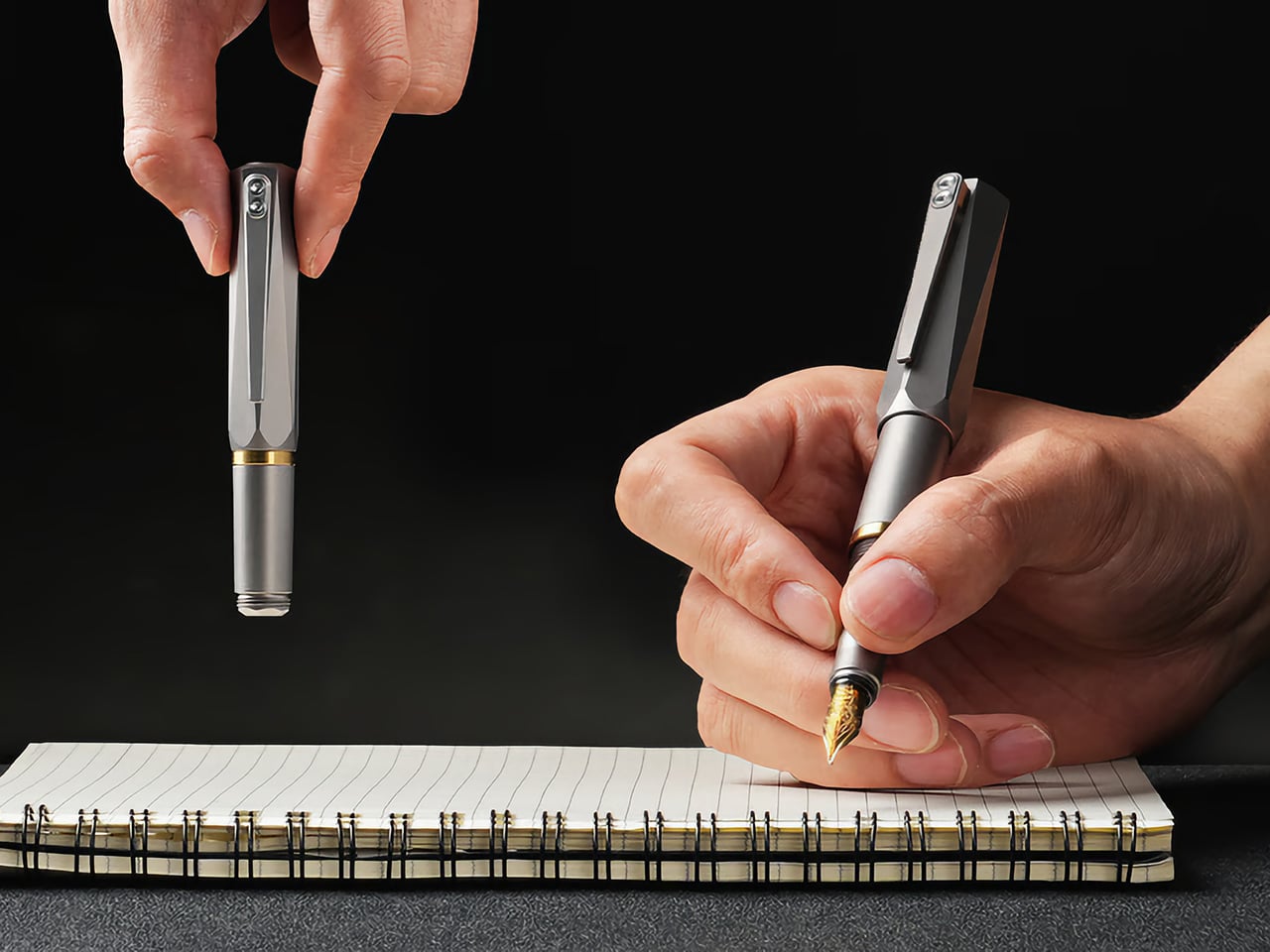
The folding mechanism itself is the main event. It’s not a simple cap that posts on the back; the rear section threads onto the pen, extending the body from a stubby 3.8 inches (96mm) to a very comfortable 5.51 inches (140mm). That pivot point, accented with a brass ring, creates a satisfying mechanical action that feels both precise and robust. This kind of transformability is what draws people to well-made gear. It turns the simple act of preparing to write into a small, tactile ritual, giving the object a character that a static pen, however beautiful, just can’t replicate.

Grade 5 titanium, formally Ti-6Al-4V, produces tensile strength around 950 MPa at a density of 4.43 g/cm3. For non-nerds, it means that it’s harder than steel, while being roughly 40-45% lighter. Aerospace and orthopedic implant manufacturers rely on the same alloy, which tells you the performance tier. Applied to a pen, that combination should produce a carry object that feels substantive in hand without adding real burden to a pocket. Besides, Aluminum dents easily, Titanium resists any form of damage. EyeQ says the Lumink should last you a 100 years. The material, the mechanism, the craftsmanship, it’s all designed to withstand a century of sustained use.

Carrying a fountain pen daily has historically meant accepting certain risks: leaked ink, dried-out nibs, and the grim experience of a pressure-driven blowout mid-flight. Lumink’s threaded isolation system addresses those by sealing the nib section from the reservoir during transport, creating an airtight chamber. The logic is sound: threaded seals operate in environments far more demanding than a shirt pocket. The entire pen is made from metal – not a single plastic part, no glue, nothing that even hints at cost-cutting.

Even the clip uses metal, and features a construction that’s about as carefully considered as the design itself. The clip sits perfectly straight, aligning vertically with the pen to the point of obsessiveness. The reason? Absolute balance. The pen shouldn’t look or feel un-balanced – it should project the confidence that it expects from you, as you use it to write or sign documents. A ball-shaped ceramic insert in the pen clip holds onto book covers, pads, or shirt pockets confidently too, without damaging anything. Slide it into your pocket and the ceramic insert glides smoothly along the fabric, without creasing or damaging it. Meanwhile the clip itself is made from the same titanium as the pen, which means it’ll never bend, warp, or break.
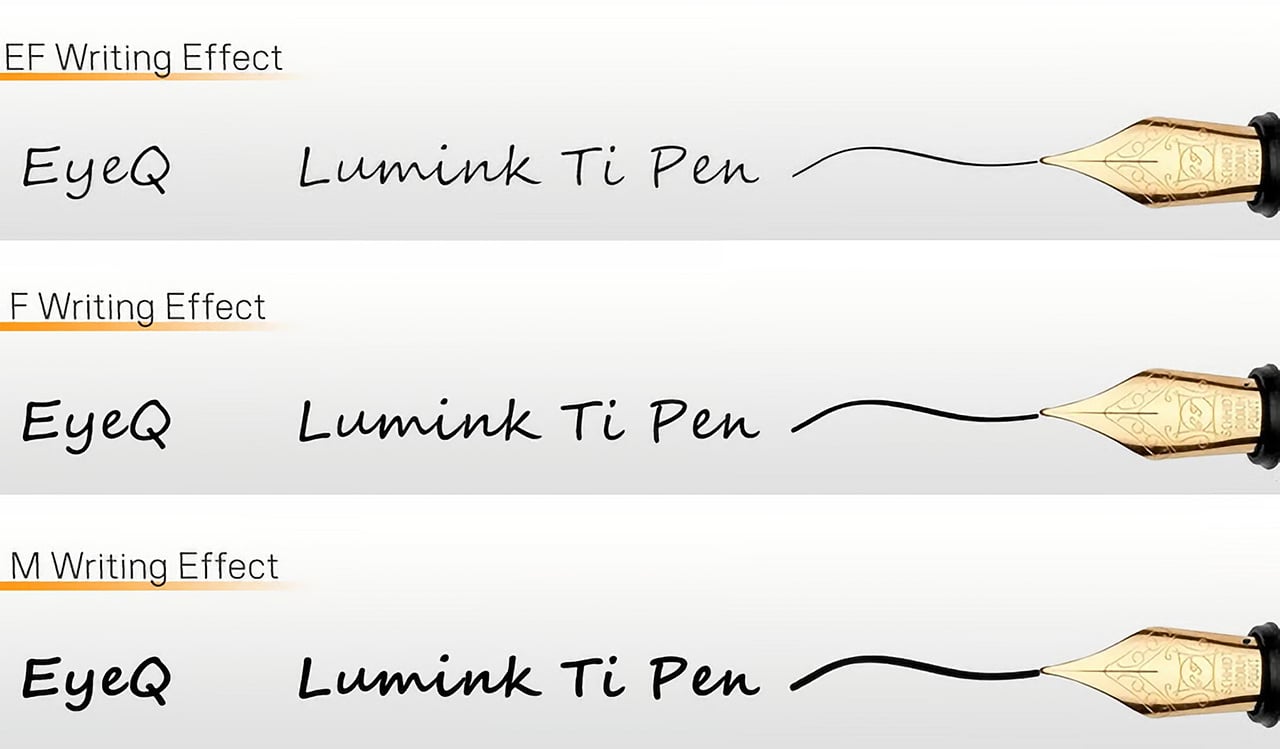
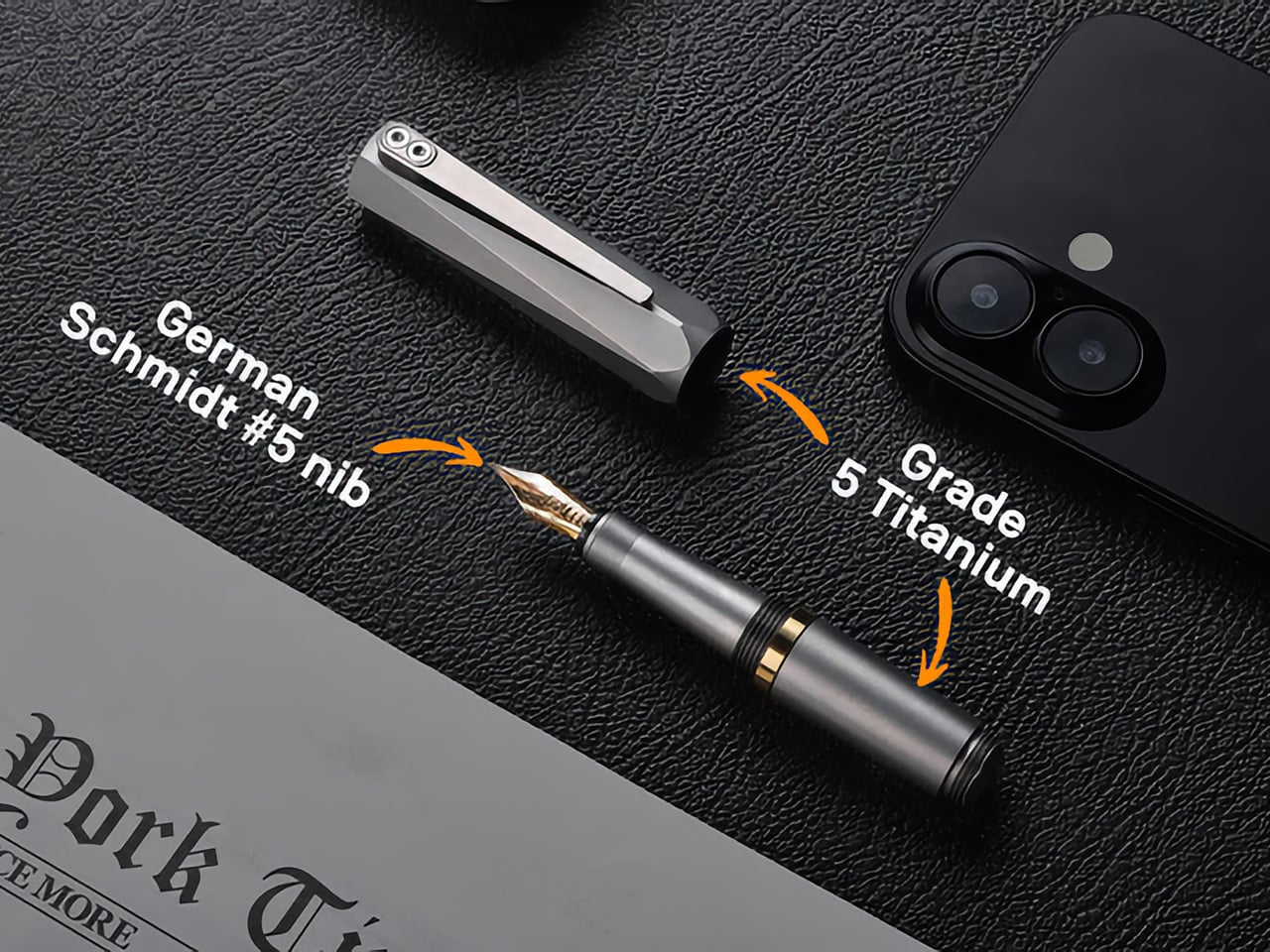
A fancy body is nothing if the writing experience falls flat, so anchoring the pen with a German Schmidt nib was a solid decision. Schmidt is a known quantity in the pen world, a reliable manufacturer whose nibs are used in countless pens far more expensive than this one. It’s the equivalent of a boutique car builder using a proven, well-regarded engine. The nibs are standard, replaceable, and available independently… which means even after a 100 years, you should find yourself with access to more nibs that you can swap in or out whenever you need. The pen’s designed to resist aging.

The three available finishes each cater to a different aesthetic: a raw Sandblasted Titanium for purists, a warm Anodized Gold, and a stealthy PVD Matte Black. The Physical Vapor Deposition coating on the black variant is notably harder than the titanium itself, offering serious scratch resistance, while the sandblasted finish is designed to develop a natural patina with use over time. Early bird pledge tiers started around the $65 mark. You are, after all, paying for Grade 5 Titanium along with Schmidt refills, beyond just the fact that this pen is designed and engineered to perfection. The $65 package includes the pen itself, the Schmidt nib, and a Schneider ink cartridge. You could spring extra for custom engraving, or opt for EyeQ’s leather sleeve for the pen. Personally, a pen that gorgeous shouldn’t be sheathed. It should be flaunted, fidgeted with, and frankly, turned into a heirloom for the next few generations.

Click Here to Buy Now: $69 $99 (30% off). Hurry, only 16/120 left! Raised over $108,000.

The post The EDC Pen Reinvented: Lumink’s Titanium Fountain Pen Folds, Writes, and Lasts a Lifetime first appeared on Yanko Design.
The EDC Pen Reinvented: Lumink’s Titanium Fountain Pen Folds, Writes, and Lasts a Lifetime

Pocket pens usually ask for compromise. Full size fountain pens usually ask for commitment. Lumink tries to bridge that divide with a titanium body that collapses to pocket size and unfolds into a full-length pen in seconds. The silhouette is crisp and faceted, with a restrained metallic finish that reads as precision tool before it reads as stationery. It is a concept that feels immediately relevant in a world where everyday tools are expected to be portable, tactile, and visually disciplined.

Much of its appeal comes from how clearly the design serves the use case. The faceted barrel prevents rolling and sharpens the pen’s visual identity, the milled titanium clip reinforces its EDC credentials, and the airtight chamber speaks directly to the realities of carrying a fountain pen on the move. Grade 5 titanium gives the body a durability-to-weight ratio that very few materials can match at this scale. Paired with a German Schmidt nib, the whole package feels engineered around readiness and repeat use. Those choices position Lumink at the intersection of EDC gear and serious writing instruments, which is a tighter niche than it sounds.

Designer: EyeQ

Click Here to Buy Now: $69 $99 (30% off). Hurry, only 16/120 left! Raised over $108,000.

The folding mechanism itself is the main event. It’s not a simple cap that posts on the back; the rear section threads onto the pen, extending the body from a stubby 3.8 inches (96mm) to a very comfortable 5.51 inches (140mm). That pivot point, accented with a brass ring, creates a satisfying mechanical action that feels both precise and robust. This kind of transformability is what draws people to well-made gear. It turns the simple act of preparing to write into a small, tactile ritual, giving the object a character that a static pen, however beautiful, just can’t replicate.

Grade 5 titanium, formally Ti-6Al-4V, produces tensile strength around 950 MPa at a density of 4.43 g/cm3. For non-nerds, it means that it’s harder than steel, while being roughly 40-45% lighter. Aerospace and orthopedic implant manufacturers rely on the same alloy, which tells you the performance tier. Applied to a pen, that combination should produce a carry object that feels substantive in hand without adding real burden to a pocket. Besides, Aluminum dents easily, Titanium resists any form of damage. EyeQ says the Lumink should last you a 100 years. The material, the mechanism, the craftsmanship, it’s all designed to withstand a century of sustained use.

Carrying a fountain pen daily has historically meant accepting certain risks: leaked ink, dried-out nibs, and the grim experience of a pressure-driven blowout mid-flight. Lumink’s threaded isolation system addresses those by sealing the nib section from the reservoir during transport, creating an airtight chamber. The logic is sound: threaded seals operate in environments far more demanding than a shirt pocket. The entire pen is made from metal – not a single plastic part, no glue, nothing that even hints at cost-cutting.

Even the clip uses metal, and features a construction that’s about as carefully considered as the design itself. The clip sits perfectly straight, aligning vertically with the pen to the point of obsessiveness. The reason? Absolute balance. The pen shouldn’t look or feel un-balanced – it should project the confidence that it expects from you, as you use it to write or sign documents. A ball-shaped ceramic insert in the pen clip holds onto book covers, pads, or shirt pockets confidently too, without damaging anything. Slide it into your pocket and the ceramic insert glides smoothly along the fabric, without creasing or damaging it. Meanwhile the clip itself is made from the same titanium as the pen, which means it’ll never bend, warp, or break.

A fancy body is nothing if the writing experience falls flat, so anchoring the pen with a German Schmidt nib was a solid decision. Schmidt is a known quantity in the pen world, a reliable manufacturer whose nibs are used in countless pens far more expensive than this one. It’s the equivalent of a boutique car builder using a proven, well-regarded engine. The nibs are standard, replaceable, and available independently… which means even after a 100 years, you should find yourself with access to more nibs that you can swap in or out whenever you need. The pen’s designed to resist aging.

The three available finishes each cater to a different aesthetic: a raw Sandblasted Titanium for purists, a warm Anodized Gold, and a stealthy PVD Matte Black. The Physical Vapor Deposition coating on the black variant is notably harder than the titanium itself, offering serious scratch resistance, while the sandblasted finish is designed to develop a natural patina with use over time. Early bird pledge tiers started around the $65 mark. You are, after all, paying for Grade 5 Titanium along with Schmidt refills, beyond just the fact that this pen is designed and engineered to perfection. The $65 package includes the pen itself, the Schmidt nib, and a Schneider ink cartridge. You could spring extra for custom engraving, or opt for EyeQ’s leather sleeve for the pen. Personally, a pen that gorgeous shouldn’t be sheathed. It should be flaunted, fidgeted with, and frankly, turned into a heirloom for the next few generations.

Click Here to Buy Now: $69 $99 (30% off). Hurry, only 16/120 left! Raised over $108,000.

The post The EDC Pen Reinvented: Lumink’s Titanium Fountain Pen Folds, Writes, and Lasts a Lifetime first appeared on Yanko Design.
The EDC Pen Reinvented: Lumink’s Titanium Fountain Pen Folds, Writes, and Lasts a Lifetime

Pocket pens usually ask for compromise. Full size fountain pens usually ask for commitment. Lumink tries to bridge that divide with a titanium body that collapses to pocket size and unfolds into a full-length pen in seconds. The silhouette is crisp and faceted, with a restrained metallic finish that reads as precision tool before it reads as stationery. It is a concept that feels immediately relevant in a world where everyday tools are expected to be portable, tactile, and visually disciplined.

Much of its appeal comes from how clearly the design serves the use case. The faceted barrel prevents rolling and sharpens the pen’s visual identity, the milled titanium clip reinforces its EDC credentials, and the airtight chamber speaks directly to the realities of carrying a fountain pen on the move. Grade 5 titanium gives the body a durability-to-weight ratio that very few materials can match at this scale. Paired with a German Schmidt nib, the whole package feels engineered around readiness and repeat use. Those choices position Lumink at the intersection of EDC gear and serious writing instruments, which is a tighter niche than it sounds.

Designer: EyeQ

Click Here to Buy Now: $69 $99 (30% off). Hurry, only 16/120 left! Raised over $108,000.

The folding mechanism itself is the main event. It’s not a simple cap that posts on the back; the rear section threads onto the pen, extending the body from a stubby 3.8 inches (96mm) to a very comfortable 5.51 inches (140mm). That pivot point, accented with a brass ring, creates a satisfying mechanical action that feels both precise and robust. This kind of transformability is what draws people to well-made gear. It turns the simple act of preparing to write into a small, tactile ritual, giving the object a character that a static pen, however beautiful, just can’t replicate.

Grade 5 titanium, formally Ti-6Al-4V, produces tensile strength around 950 MPa at a density of 4.43 g/cm3. For non-nerds, it means that it’s harder than steel, while being roughly 40-45% lighter. Aerospace and orthopedic implant manufacturers rely on the same alloy, which tells you the performance tier. Applied to a pen, that combination should produce a carry object that feels substantive in hand without adding real burden to a pocket. Besides, Aluminum dents easily, Titanium resists any form of damage. EyeQ says the Lumink should last you a 100 years. The material, the mechanism, the craftsmanship, it’s all designed to withstand a century of sustained use.

Carrying a fountain pen daily has historically meant accepting certain risks: leaked ink, dried-out nibs, and the grim experience of a pressure-driven blowout mid-flight. Lumink’s threaded isolation system addresses those by sealing the nib section from the reservoir during transport, creating an airtight chamber. The logic is sound: threaded seals operate in environments far more demanding than a shirt pocket. The entire pen is made from metal – not a single plastic part, no glue, nothing that even hints at cost-cutting.

Even the clip uses metal, and features a construction that’s about as carefully considered as the design itself. The clip sits perfectly straight, aligning vertically with the pen to the point of obsessiveness. The reason? Absolute balance. The pen shouldn’t look or feel un-balanced – it should project the confidence that it expects from you, as you use it to write or sign documents. A ball-shaped ceramic insert in the pen clip holds onto book covers, pads, or shirt pockets confidently too, without damaging anything. Slide it into your pocket and the ceramic insert glides smoothly along the fabric, without creasing or damaging it. Meanwhile the clip itself is made from the same titanium as the pen, which means it’ll never bend, warp, or break.

A fancy body is nothing if the writing experience falls flat, so anchoring the pen with a German Schmidt nib was a solid decision. Schmidt is a known quantity in the pen world, a reliable manufacturer whose nibs are used in countless pens far more expensive than this one. It’s the equivalent of a boutique car builder using a proven, well-regarded engine. The nibs are standard, replaceable, and available independently… which means even after a 100 years, you should find yourself with access to more nibs that you can swap in or out whenever you need. The pen’s designed to resist aging.

The three available finishes each cater to a different aesthetic: a raw Sandblasted Titanium for purists, a warm Anodized Gold, and a stealthy PVD Matte Black. The Physical Vapor Deposition coating on the black variant is notably harder than the titanium itself, offering serious scratch resistance, while the sandblasted finish is designed to develop a natural patina with use over time. Early bird pledge tiers started around the $65 mark. You are, after all, paying for Grade 5 Titanium along with Schmidt refills, beyond just the fact that this pen is designed and engineered to perfection. The $65 package includes the pen itself, the Schmidt nib, and a Schneider ink cartridge. You could spring extra for custom engraving, or opt for EyeQ’s leather sleeve for the pen. Personally, a pen that gorgeous shouldn’t be sheathed. It should be flaunted, fidgeted with, and frankly, turned into a heirloom for the next few generations.

Click Here to Buy Now: $69 $99 (30% off). Hurry, only 16/120 left! Raised over $108,000.

The post The EDC Pen Reinvented: Lumink’s Titanium Fountain Pen Folds, Writes, and Lasts a Lifetime first appeared on Yanko Design.
The EDC Pen Reinvented: Lumink’s Titanium Fountain Pen Folds, Writes, and Lasts a Lifetime

Pocket pens usually ask for compromise. Full size fountain pens usually ask for commitment. Lumink tries to bridge that divide with a titanium body that collapses to pocket size and unfolds into a full-length pen in seconds. The silhouette is crisp and faceted, with a restrained metallic finish that reads as precision tool before it reads as stationery. It is a concept that feels immediately relevant in a world where everyday tools are expected to be portable, tactile, and visually disciplined.

Much of its appeal comes from how clearly the design serves the use case. The faceted barrel prevents rolling and sharpens the pen’s visual identity, the milled titanium clip reinforces its EDC credentials, and the airtight chamber speaks directly to the realities of carrying a fountain pen on the move. Grade 5 titanium gives the body a durability-to-weight ratio that very few materials can match at this scale. Paired with a German Schmidt nib, the whole package feels engineered around readiness and repeat use. Those choices position Lumink at the intersection of EDC gear and serious writing instruments, which is a tighter niche than it sounds.

Designer: EyeQ

Click Here to Buy Now: $69 $99 (30% off). Hurry, only 16/120 left! Raised over $108,000.

The folding mechanism itself is the main event. It’s not a simple cap that posts on the back; the rear section threads onto the pen, extending the body from a stubby 3.8 inches (96mm) to a very comfortable 5.51 inches (140mm). That pivot point, accented with a brass ring, creates a satisfying mechanical action that feels both precise and robust. This kind of transformability is what draws people to well-made gear. It turns the simple act of preparing to write into a small, tactile ritual, giving the object a character that a static pen, however beautiful, just can’t replicate.

Grade 5 titanium, formally Ti-6Al-4V, produces tensile strength around 950 MPa at a density of 4.43 g/cm3. For non-nerds, it means that it’s harder than steel, while being roughly 40-45% lighter. Aerospace and orthopedic implant manufacturers rely on the same alloy, which tells you the performance tier. Applied to a pen, that combination should produce a carry object that feels substantive in hand without adding real burden to a pocket. Besides, Aluminum dents easily, Titanium resists any form of damage. EyeQ says the Lumink should last you a 100 years. The material, the mechanism, the craftsmanship, it’s all designed to withstand a century of sustained use.

Carrying a fountain pen daily has historically meant accepting certain risks: leaked ink, dried-out nibs, and the grim experience of a pressure-driven blowout mid-flight. Lumink’s threaded isolation system addresses those by sealing the nib section from the reservoir during transport, creating an airtight chamber. The logic is sound: threaded seals operate in environments far more demanding than a shirt pocket. The entire pen is made from metal – not a single plastic part, no glue, nothing that even hints at cost-cutting.

Even the clip uses metal, and features a construction that’s about as carefully considered as the design itself. The clip sits perfectly straight, aligning vertically with the pen to the point of obsessiveness. The reason? Absolute balance. The pen shouldn’t look or feel un-balanced – it should project the confidence that it expects from you, as you use it to write or sign documents. A ball-shaped ceramic insert in the pen clip holds onto book covers, pads, or shirt pockets confidently too, without damaging anything. Slide it into your pocket and the ceramic insert glides smoothly along the fabric, without creasing or damaging it. Meanwhile the clip itself is made from the same titanium as the pen, which means it’ll never bend, warp, or break.

A fancy body is nothing if the writing experience falls flat, so anchoring the pen with a German Schmidt nib was a solid decision. Schmidt is a known quantity in the pen world, a reliable manufacturer whose nibs are used in countless pens far more expensive than this one. It’s the equivalent of a boutique car builder using a proven, well-regarded engine. The nibs are standard, replaceable, and available independently… which means even after a 100 years, you should find yourself with access to more nibs that you can swap in or out whenever you need. The pen’s designed to resist aging.

The three available finishes each cater to a different aesthetic: a raw Sandblasted Titanium for purists, a warm Anodized Gold, and a stealthy PVD Matte Black. The Physical Vapor Deposition coating on the black variant is notably harder than the titanium itself, offering serious scratch resistance, while the sandblasted finish is designed to develop a natural patina with use over time. Early bird pledge tiers started around the $65 mark. You are, after all, paying for Grade 5 Titanium along with Schmidt refills, beyond just the fact that this pen is designed and engineered to perfection. The $65 package includes the pen itself, the Schmidt nib, and a Schneider ink cartridge. You could spring extra for custom engraving, or opt for EyeQ’s leather sleeve for the pen. Personally, a pen that gorgeous shouldn’t be sheathed. It should be flaunted, fidgeted with, and frankly, turned into a heirloom for the next few generations.

Click Here to Buy Now: $69 $99 (30% off). Hurry, only 16/120 left! Raised over $108,000.

The post The EDC Pen Reinvented: Lumink’s Titanium Fountain Pen Folds, Writes, and Lasts a Lifetime first appeared on Yanko Design.
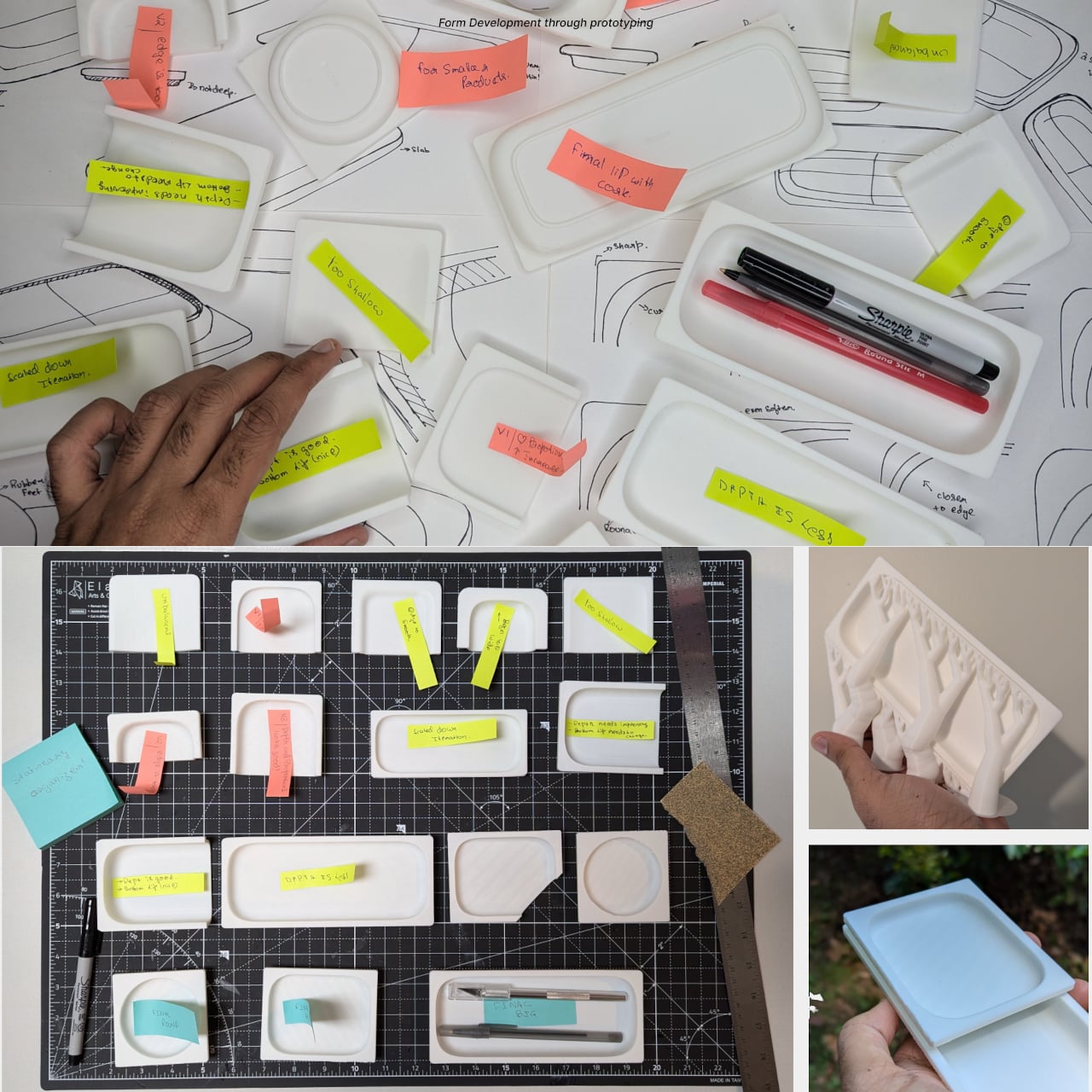
The EDC Pen Reinvented: Lumink’s Titanium Fountain Pen Folds, Writes, and Lasts a Lifetime

Pocket pens usually ask for compromise. Full size fountain pens usually ask for commitment. Lumink tries to bridge that divide with a titanium body that collapses to pocket size and unfolds into a full-length pen in seconds. The silhouette is crisp and faceted, with a restrained metallic finish that reads as precision tool before it reads as stationery. It is a concept that feels immediately relevant in a world where everyday tools are expected to be portable, tactile, and visually disciplined.

Much of its appeal comes from how clearly the design serves the use case. The faceted barrel prevents rolling and sharpens the pen’s visual identity, the milled titanium clip reinforces its EDC credentials, and the airtight chamber speaks directly to the realities of carrying a fountain pen on the move. Grade 5 titanium gives the body a durability-to-weight ratio that very few materials can match at this scale. Paired with a German Schmidt nib, the whole package feels engineered around readiness and repeat use. Those choices position Lumink at the intersection of EDC gear and serious writing instruments, which is a tighter niche than it sounds.

Designer: EyeQ

Click Here to Buy Now: $69 $99 (30% off). Hurry, only 16/120 left! Raised over $108,000.

The folding mechanism itself is the main event. It’s not a simple cap that posts on the back; the rear section threads onto the pen, extending the body from a stubby 3.8 inches (96mm) to a very comfortable 5.51 inches (140mm). That pivot point, accented with a brass ring, creates a satisfying mechanical action that feels both precise and robust. This kind of transformability is what draws people to well-made gear. It turns the simple act of preparing to write into a small, tactile ritual, giving the object a character that a static pen, however beautiful, just can’t replicate.

Grade 5 titanium, formally Ti-6Al-4V, produces tensile strength around 950 MPa at a density of 4.43 g/cm3. For non-nerds, it means that it’s harder than steel, while being roughly 40-45% lighter. Aerospace and orthopedic implant manufacturers rely on the same alloy, which tells you the performance tier. Applied to a pen, that combination should produce a carry object that feels substantive in hand without adding real burden to a pocket. Besides, Aluminum dents easily, Titanium resists any form of damage. EyeQ says the Lumink should last you a 100 years. The material, the mechanism, the craftsmanship, it’s all designed to withstand a century of sustained use.

Carrying a fountain pen daily has historically meant accepting certain risks: leaked ink, dried-out nibs, and the grim experience of a pressure-driven blowout mid-flight. Lumink’s threaded isolation system addresses those by sealing the nib section from the reservoir during transport, creating an airtight chamber. The logic is sound: threaded seals operate in environments far more demanding than a shirt pocket. The entire pen is made from metal – not a single plastic part, no glue, nothing that even hints at cost-cutting.

Even the clip uses metal, and features a construction that’s about as carefully considered as the design itself. The clip sits perfectly straight, aligning vertically with the pen to the point of obsessiveness. The reason? Absolute balance. The pen shouldn’t look or feel un-balanced – it should project the confidence that it expects from you, as you use it to write or sign documents. A ball-shaped ceramic insert in the pen clip holds onto book covers, pads, or shirt pockets confidently too, without damaging anything. Slide it into your pocket and the ceramic insert glides smoothly along the fabric, without creasing or damaging it. Meanwhile the clip itself is made from the same titanium as the pen, which means it’ll never bend, warp, or break.

A fancy body is nothing if the writing experience falls flat, so anchoring the pen with a German Schmidt nib was a solid decision. Schmidt is a known quantity in the pen world, a reliable manufacturer whose nibs are used in countless pens far more expensive than this one. It’s the equivalent of a boutique car builder using a proven, well-regarded engine. The nibs are standard, replaceable, and available independently… which means even after a 100 years, you should find yourself with access to more nibs that you can swap in or out whenever you need. The pen’s designed to resist aging.

The three available finishes each cater to a different aesthetic: a raw Sandblasted Titanium for purists, a warm Anodized Gold, and a stealthy PVD Matte Black. The Physical Vapor Deposition coating on the black variant is notably harder than the titanium itself, offering serious scratch resistance, while the sandblasted finish is designed to develop a natural patina with use over time. Early bird pledge tiers started around the $65 mark. You are, after all, paying for Grade 5 Titanium along with Schmidt refills, beyond just the fact that this pen is designed and engineered to perfection. The $65 package includes the pen itself, the Schmidt nib, and a Schneider ink cartridge. You could spring extra for custom engraving, or opt for EyeQ’s leather sleeve for the pen. Personally, a pen that gorgeous shouldn’t be sheathed. It should be flaunted, fidgeted with, and frankly, turned into a heirloom for the next few generations.

Click Here to Buy Now: $69 $99 (30% off). Hurry, only 16/120 left! Raised over $108,000.

The post The EDC Pen Reinvented: Lumink’s Titanium Fountain Pen Folds, Writes, and Lasts a Lifetime first appeared on Yanko Design.
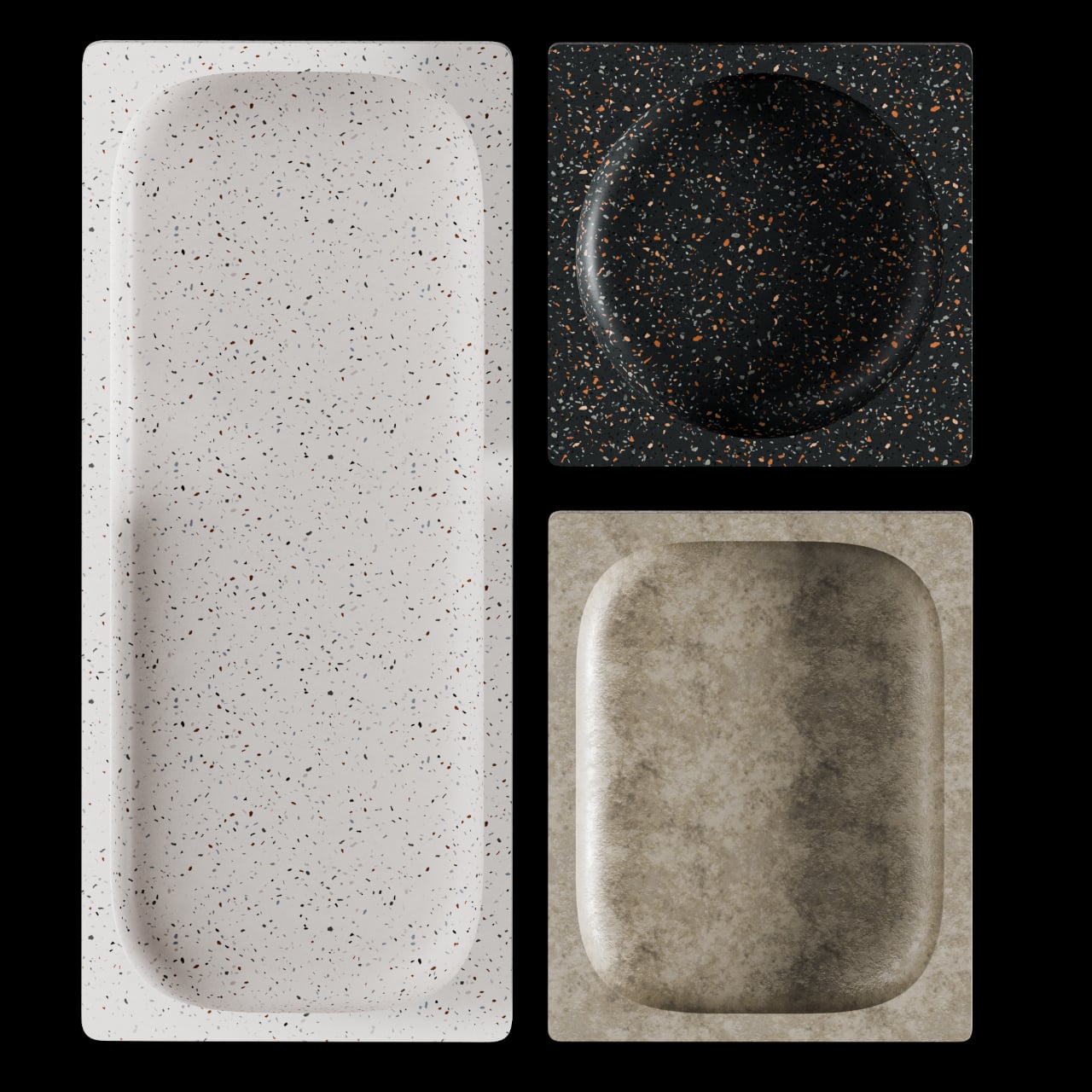
The EDC Pen Reinvented: Lumink’s Titanium Fountain Pen Folds, Writes, and Lasts a Lifetime

Pocket pens usually ask for compromise. Full size fountain pens usually ask for commitment. Lumink tries to bridge that divide with a titanium body that collapses to pocket size and unfolds into a full-length pen in seconds. The silhouette is crisp and faceted, with a restrained metallic finish that reads as precision tool before it reads as stationery. It is a concept that feels immediately relevant in a world where everyday tools are expected to be portable, tactile, and visually disciplined.

Much of its appeal comes from how clearly the design serves the use case. The faceted barrel prevents rolling and sharpens the pen’s visual identity, the milled titanium clip reinforces its EDC credentials, and the airtight chamber speaks directly to the realities of carrying a fountain pen on the move. Grade 5 titanium gives the body a durability-to-weight ratio that very few materials can match at this scale. Paired with a German Schmidt nib, the whole package feels engineered around readiness and repeat use. Those choices position Lumink at the intersection of EDC gear and serious writing instruments, which is a tighter niche than it sounds.

Designer: EyeQ

Click Here to Buy Now: $69 $99 (30% off). Hurry, only 16/120 left! Raised over $108,000.

The folding mechanism itself is the main event. It’s not a simple cap that posts on the back; the rear section threads onto the pen, extending the body from a stubby 3.8 inches (96mm) to a very comfortable 5.51 inches (140mm). That pivot point, accented with a brass ring, creates a satisfying mechanical action that feels both precise and robust. This kind of transformability is what draws people to well-made gear. It turns the simple act of preparing to write into a small, tactile ritual, giving the object a character that a static pen, however beautiful, just can’t replicate.

Grade 5 titanium, formally Ti-6Al-4V, produces tensile strength around 950 MPa at a density of 4.43 g/cm3. For non-nerds, it means that it’s harder than steel, while being roughly 40-45% lighter. Aerospace and orthopedic implant manufacturers rely on the same alloy, which tells you the performance tier. Applied to a pen, that combination should produce a carry object that feels substantive in hand without adding real burden to a pocket. Besides, Aluminum dents easily, Titanium resists any form of damage. EyeQ says the Lumink should last you a 100 years. The material, the mechanism, the craftsmanship, it’s all designed to withstand a century of sustained use.

Carrying a fountain pen daily has historically meant accepting certain risks: leaked ink, dried-out nibs, and the grim experience of a pressure-driven blowout mid-flight. Lumink’s threaded isolation system addresses those by sealing the nib section from the reservoir during transport, creating an airtight chamber. The logic is sound: threaded seals operate in environments far more demanding than a shirt pocket. The entire pen is made from metal – not a single plastic part, no glue, nothing that even hints at cost-cutting.

Even the clip uses metal, and features a construction that’s about as carefully considered as the design itself. The clip sits perfectly straight, aligning vertically with the pen to the point of obsessiveness. The reason? Absolute balance. The pen shouldn’t look or feel un-balanced – it should project the confidence that it expects from you, as you use it to write or sign documents. A ball-shaped ceramic insert in the pen clip holds onto book covers, pads, or shirt pockets confidently too, without damaging anything. Slide it into your pocket and the ceramic insert glides smoothly along the fabric, without creasing or damaging it. Meanwhile the clip itself is made from the same titanium as the pen, which means it’ll never bend, warp, or break.

A fancy body is nothing if the writing experience falls flat, so anchoring the pen with a German Schmidt nib was a solid decision. Schmidt is a known quantity in the pen world, a reliable manufacturer whose nibs are used in countless pens far more expensive than this one. It’s the equivalent of a boutique car builder using a proven, well-regarded engine. The nibs are standard, replaceable, and available independently… which means even after a 100 years, you should find yourself with access to more nibs that you can swap in or out whenever you need. The pen’s designed to resist aging.

The three available finishes each cater to a different aesthetic: a raw Sandblasted Titanium for purists, a warm Anodized Gold, and a stealthy PVD Matte Black. The Physical Vapor Deposition coating on the black variant is notably harder than the titanium itself, offering serious scratch resistance, while the sandblasted finish is designed to develop a natural patina with use over time. Early bird pledge tiers started around the $65 mark. You are, after all, paying for Grade 5 Titanium along with Schmidt refills, beyond just the fact that this pen is designed and engineered to perfection. The $65 package includes the pen itself, the Schmidt nib, and a Schneider ink cartridge. You could spring extra for custom engraving, or opt for EyeQ’s leather sleeve for the pen. Personally, a pen that gorgeous shouldn’t be sheathed. It should be flaunted, fidgeted with, and frankly, turned into a heirloom for the next few generations.

Click Here to Buy Now: $69 $99 (30% off). Hurry, only 16/120 left! Raised over $108,000.

The post The EDC Pen Reinvented: Lumink’s Titanium Fountain Pen Folds, Writes, and Lasts a Lifetime first appeared on Yanko Design.
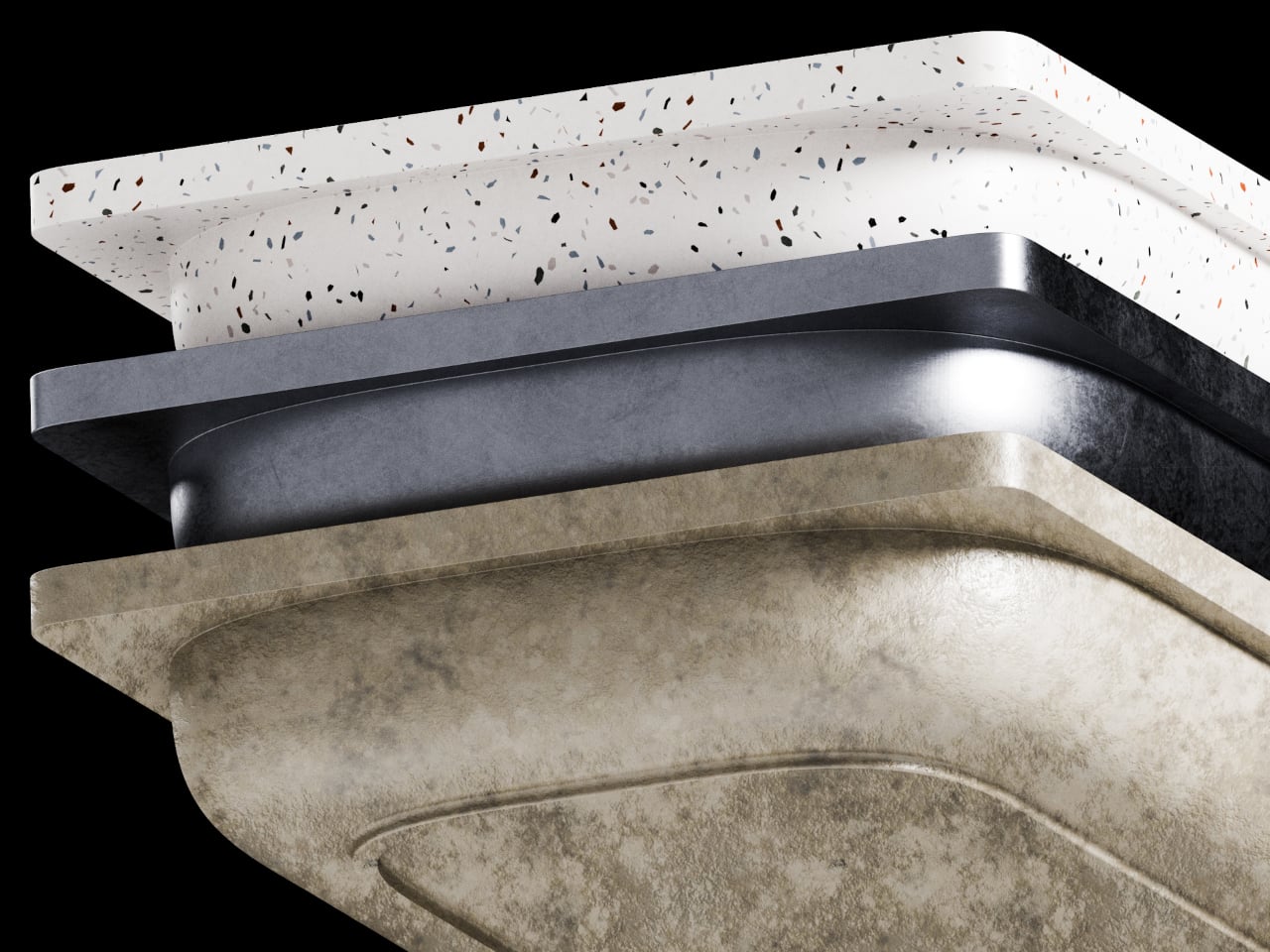
The EDC Pen Reinvented: Lumink’s Titanium Fountain Pen Folds, Writes, and Lasts a Lifetime

Pocket pens usually ask for compromise. Full size fountain pens usually ask for commitment. Lumink tries to bridge that divide with a titanium body that collapses to pocket size and unfolds into a full-length pen in seconds. The silhouette is crisp and faceted, with a restrained metallic finish that reads as precision tool before it reads as stationery. It is a concept that feels immediately relevant in a world where everyday tools are expected to be portable, tactile, and visually disciplined.

Much of its appeal comes from how clearly the design serves the use case. The faceted barrel prevents rolling and sharpens the pen’s visual identity, the milled titanium clip reinforces its EDC credentials, and the airtight chamber speaks directly to the realities of carrying a fountain pen on the move. Grade 5 titanium gives the body a durability-to-weight ratio that very few materials can match at this scale. Paired with a German Schmidt nib, the whole package feels engineered around readiness and repeat use. Those choices position Lumink at the intersection of EDC gear and serious writing instruments, which is a tighter niche than it sounds.

Designer: EyeQ

Click Here to Buy Now: $69 $99 (30% off). Hurry, only 16/120 left! Raised over $108,000.

The folding mechanism itself is the main event. It’s not a simple cap that posts on the back; the rear section threads onto the pen, extending the body from a stubby 3.8 inches (96mm) to a very comfortable 5.51 inches (140mm). That pivot point, accented with a brass ring, creates a satisfying mechanical action that feels both precise and robust. This kind of transformability is what draws people to well-made gear. It turns the simple act of preparing to write into a small, tactile ritual, giving the object a character that a static pen, however beautiful, just can’t replicate.

Grade 5 titanium, formally Ti-6Al-4V, produces tensile strength around 950 MPa at a density of 4.43 g/cm3. For non-nerds, it means that it’s harder than steel, while being roughly 40-45% lighter. Aerospace and orthopedic implant manufacturers rely on the same alloy, which tells you the performance tier. Applied to a pen, that combination should produce a carry object that feels substantive in hand without adding real burden to a pocket. Besides, Aluminum dents easily, Titanium resists any form of damage. EyeQ says the Lumink should last you a 100 years. The material, the mechanism, the craftsmanship, it’s all designed to withstand a century of sustained use.

Carrying a fountain pen daily has historically meant accepting certain risks: leaked ink, dried-out nibs, and the grim experience of a pressure-driven blowout mid-flight. Lumink’s threaded isolation system addresses those by sealing the nib section from the reservoir during transport, creating an airtight chamber. The logic is sound: threaded seals operate in environments far more demanding than a shirt pocket. The entire pen is made from metal – not a single plastic part, no glue, nothing that even hints at cost-cutting.

Even the clip uses metal, and features a construction that’s about as carefully considered as the design itself. The clip sits perfectly straight, aligning vertically with the pen to the point of obsessiveness. The reason? Absolute balance. The pen shouldn’t look or feel un-balanced – it should project the confidence that it expects from you, as you use it to write or sign documents. A ball-shaped ceramic insert in the pen clip holds onto book covers, pads, or shirt pockets confidently too, without damaging anything. Slide it into your pocket and the ceramic insert glides smoothly along the fabric, without creasing or damaging it. Meanwhile the clip itself is made from the same titanium as the pen, which means it’ll never bend, warp, or break.

A fancy body is nothing if the writing experience falls flat, so anchoring the pen with a German Schmidt nib was a solid decision. Schmidt is a known quantity in the pen world, a reliable manufacturer whose nibs are used in countless pens far more expensive than this one. It’s the equivalent of a boutique car builder using a proven, well-regarded engine. The nibs are standard, replaceable, and available independently… which means even after a 100 years, you should find yourself with access to more nibs that you can swap in or out whenever you need. The pen’s designed to resist aging.

The three available finishes each cater to a different aesthetic: a raw Sandblasted Titanium for purists, a warm Anodized Gold, and a stealthy PVD Matte Black. The Physical Vapor Deposition coating on the black variant is notably harder than the titanium itself, offering serious scratch resistance, while the sandblasted finish is designed to develop a natural patina with use over time. Early bird pledge tiers started around the $65 mark. You are, after all, paying for Grade 5 Titanium along with Schmidt refills, beyond just the fact that this pen is designed and engineered to perfection. The $65 package includes the pen itself, the Schmidt nib, and a Schneider ink cartridge. You could spring extra for custom engraving, or opt for EyeQ’s leather sleeve for the pen. Personally, a pen that gorgeous shouldn’t be sheathed. It should be flaunted, fidgeted with, and frankly, turned into a heirloom for the next few generations.

Click Here to Buy Now: $69 $99 (30% off). Hurry, only 16/120 left! Raised over $108,000.

The post The EDC Pen Reinvented: Lumink’s Titanium Fountain Pen Folds, Writes, and Lasts a Lifetime first appeared on Yanko Design.
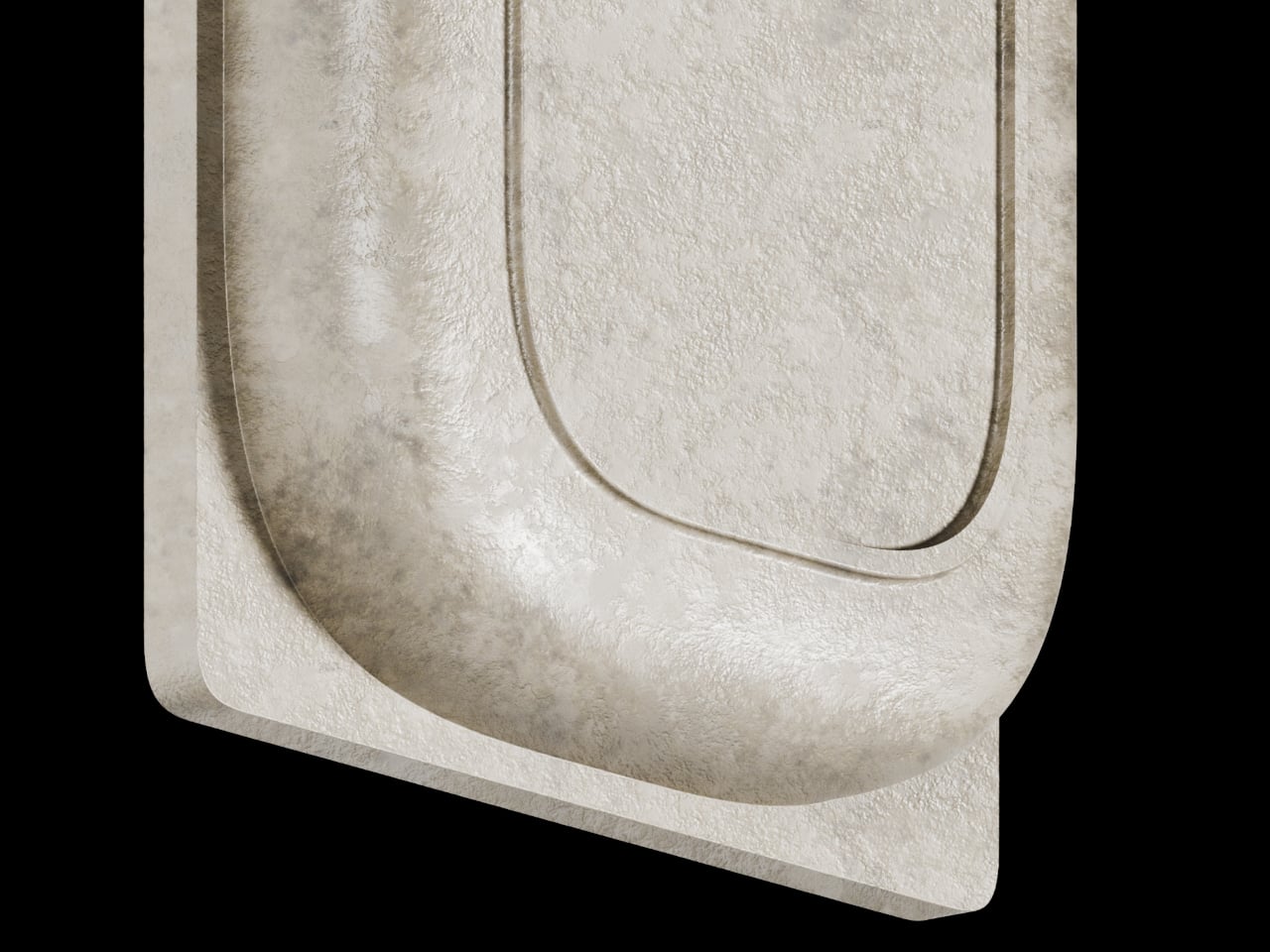
This Concrete Desk Organizer Snaps Together as Your Workspace Grows

A messy desk is one of those problems that feels minor right up until it isn’t. You reach for a pen, knock over a cup, lose a paperclip into some void between your keyboard and monitor, and suddenly, five minutes are gone. Most organizers solve this with dividers and compartments, which is fine, but they tend to sit on your desk like afterthoughts, plastic trays that slide around and rarely match anything else in the room.

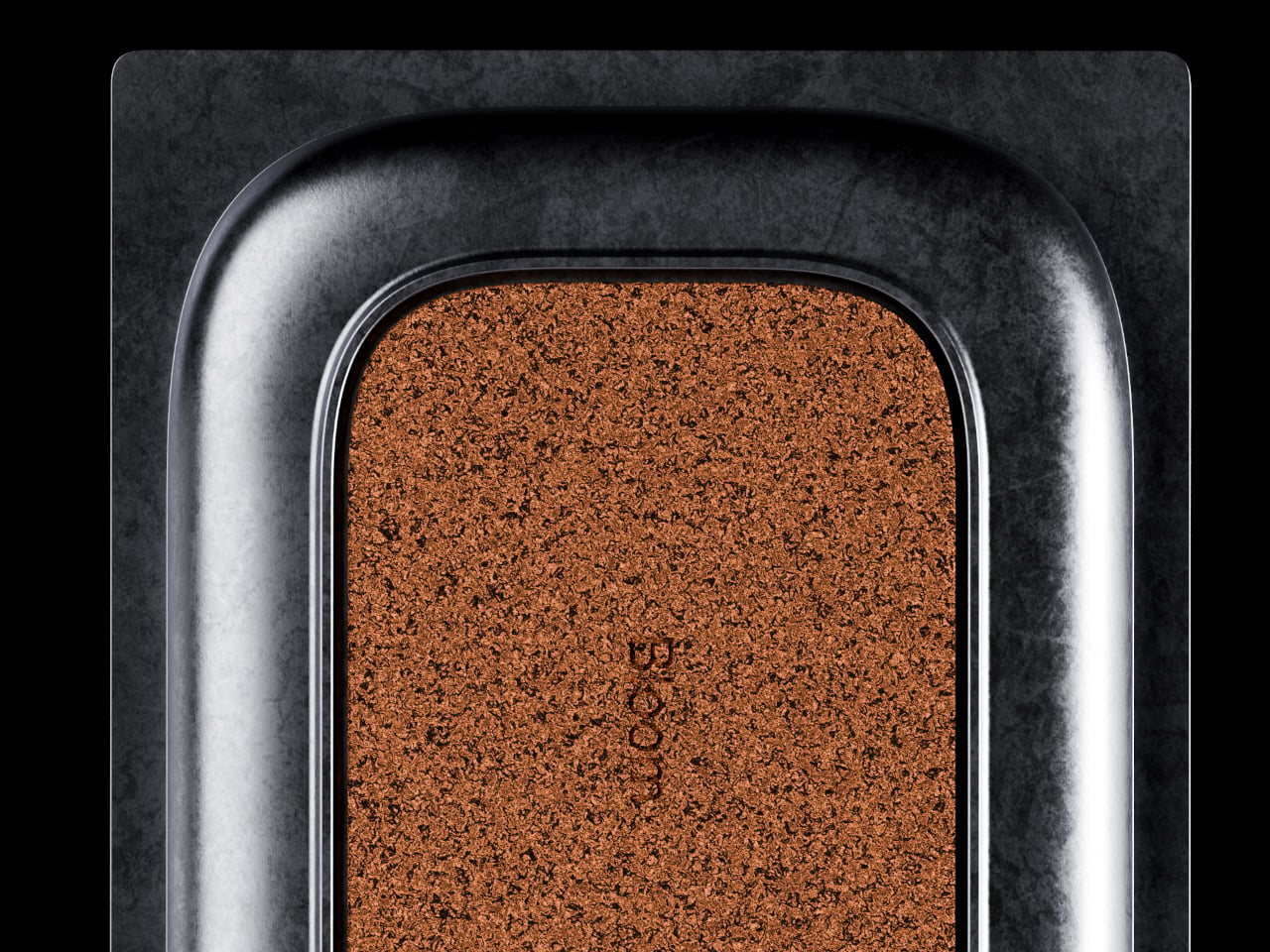
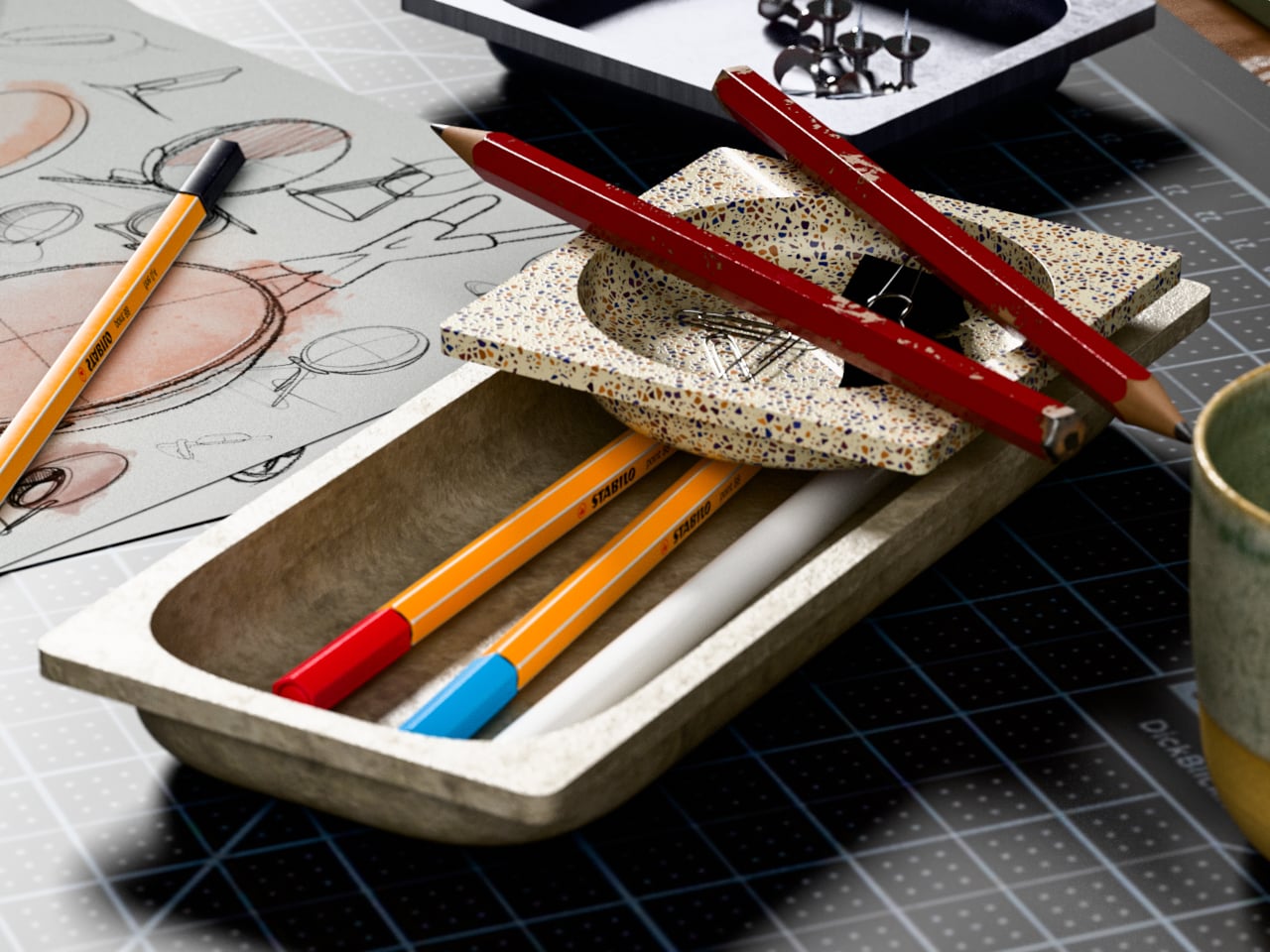
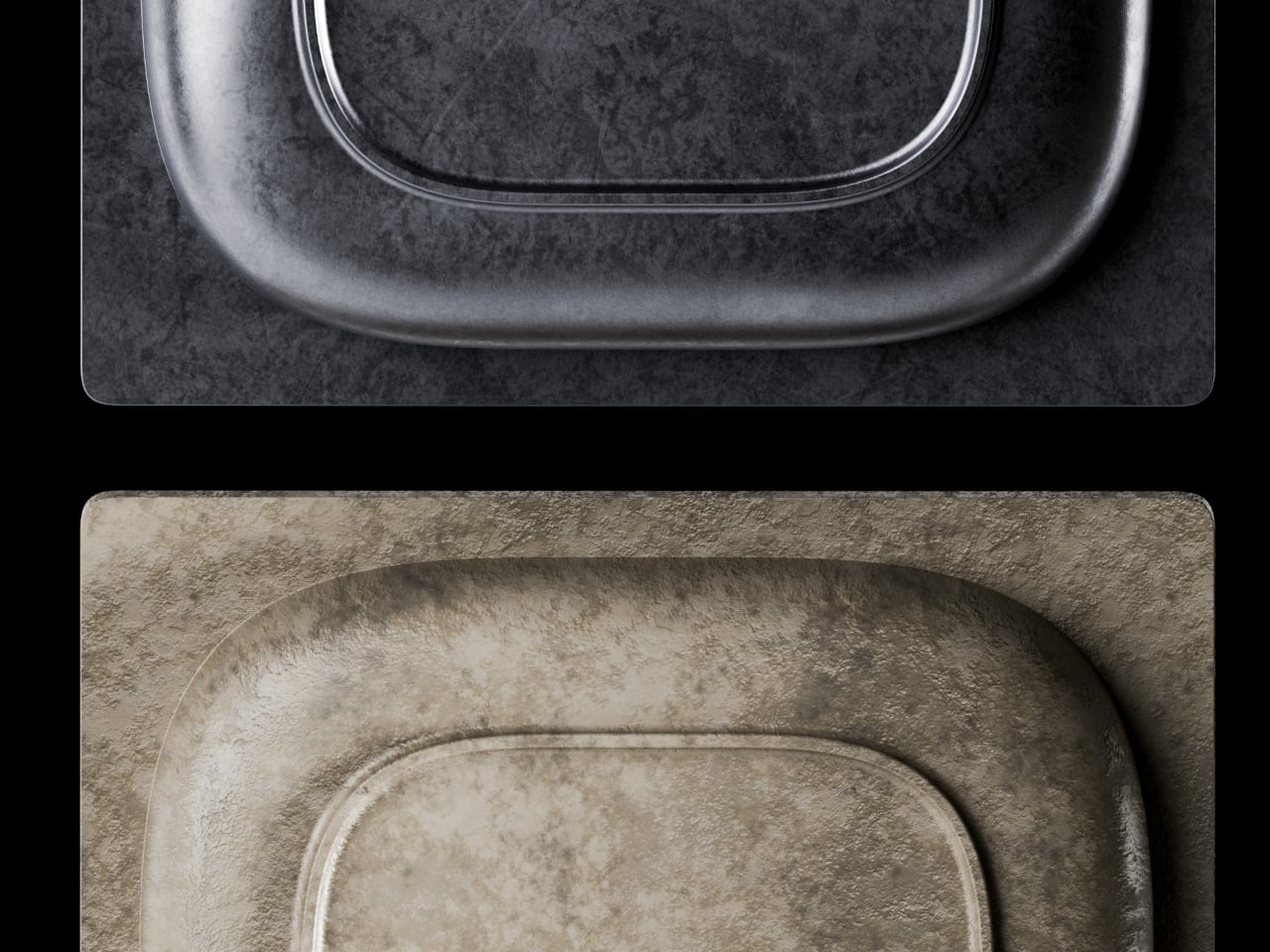
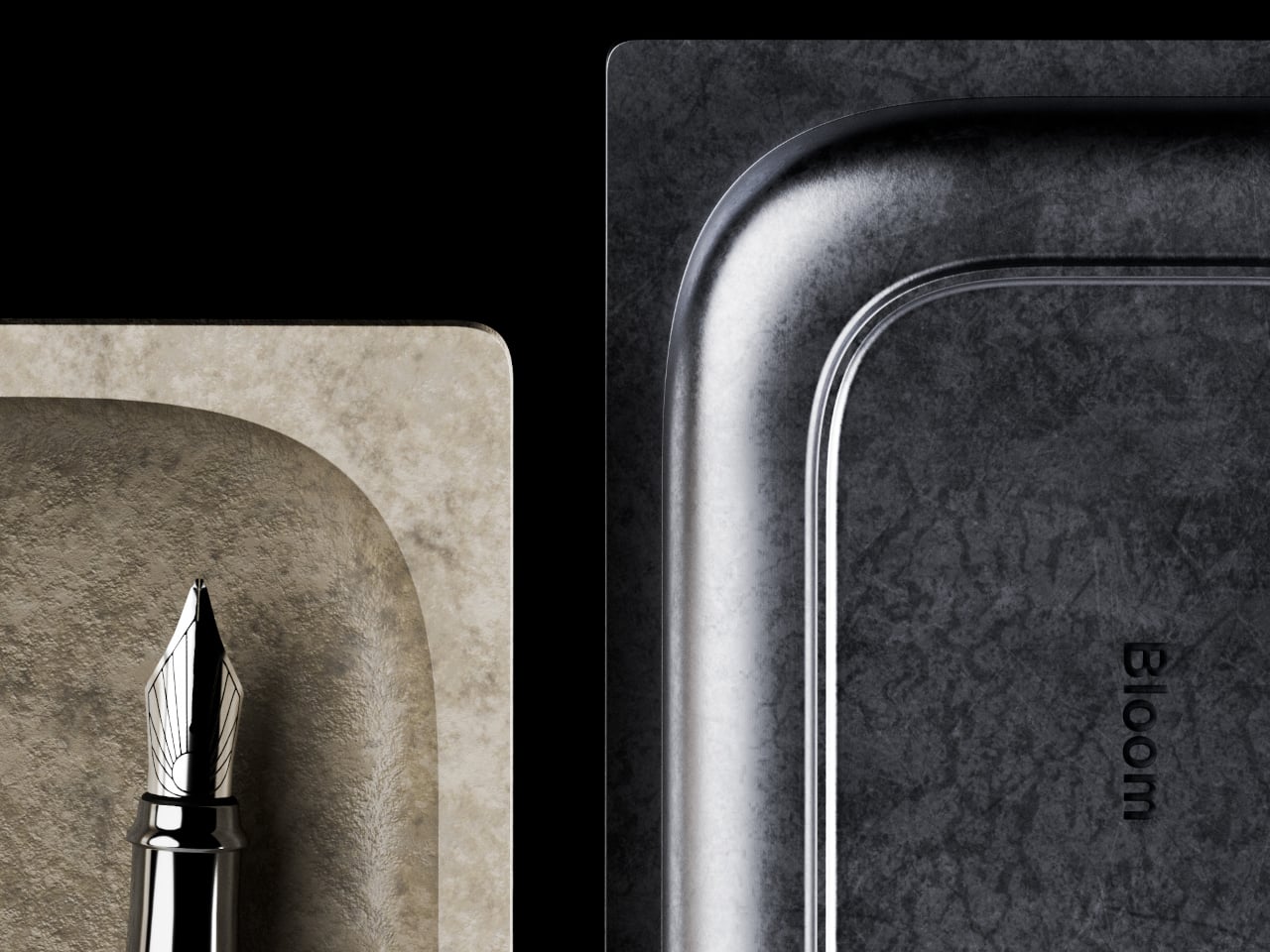
BloomCase approaches the problem from a different angle. Made from concrete, metal, and stone, it is heavy enough to stay put without any grip pads or rubber feet, and that weight is load-bearing in a more literal sense, too. The concrete body gives it a raw, architectural presence that feels deliberate rather than decorative, the kind of object that reads as intentional rather than incidental on a desk that already has some thought behind it.

Designer: Somya Chowdhary

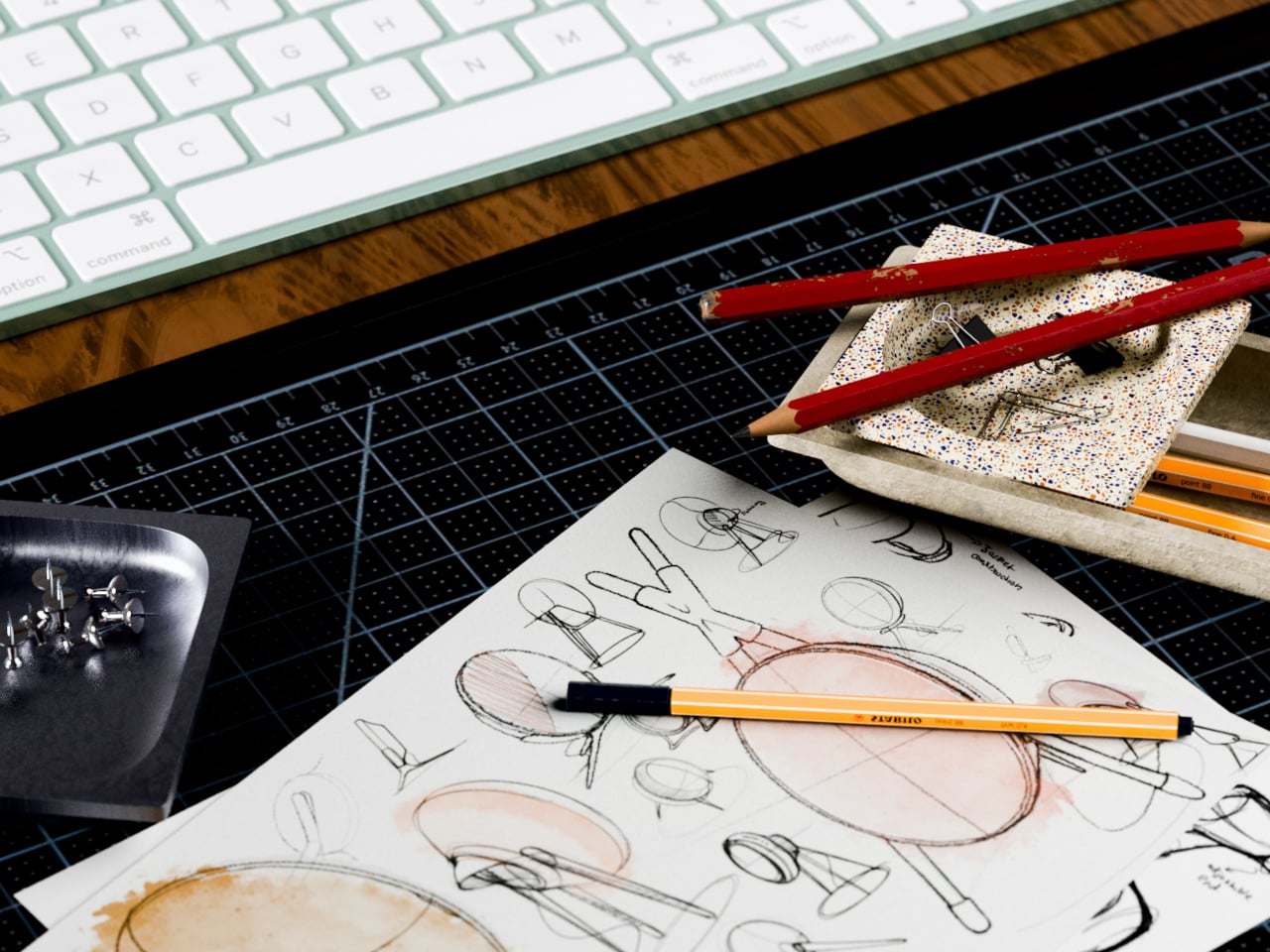
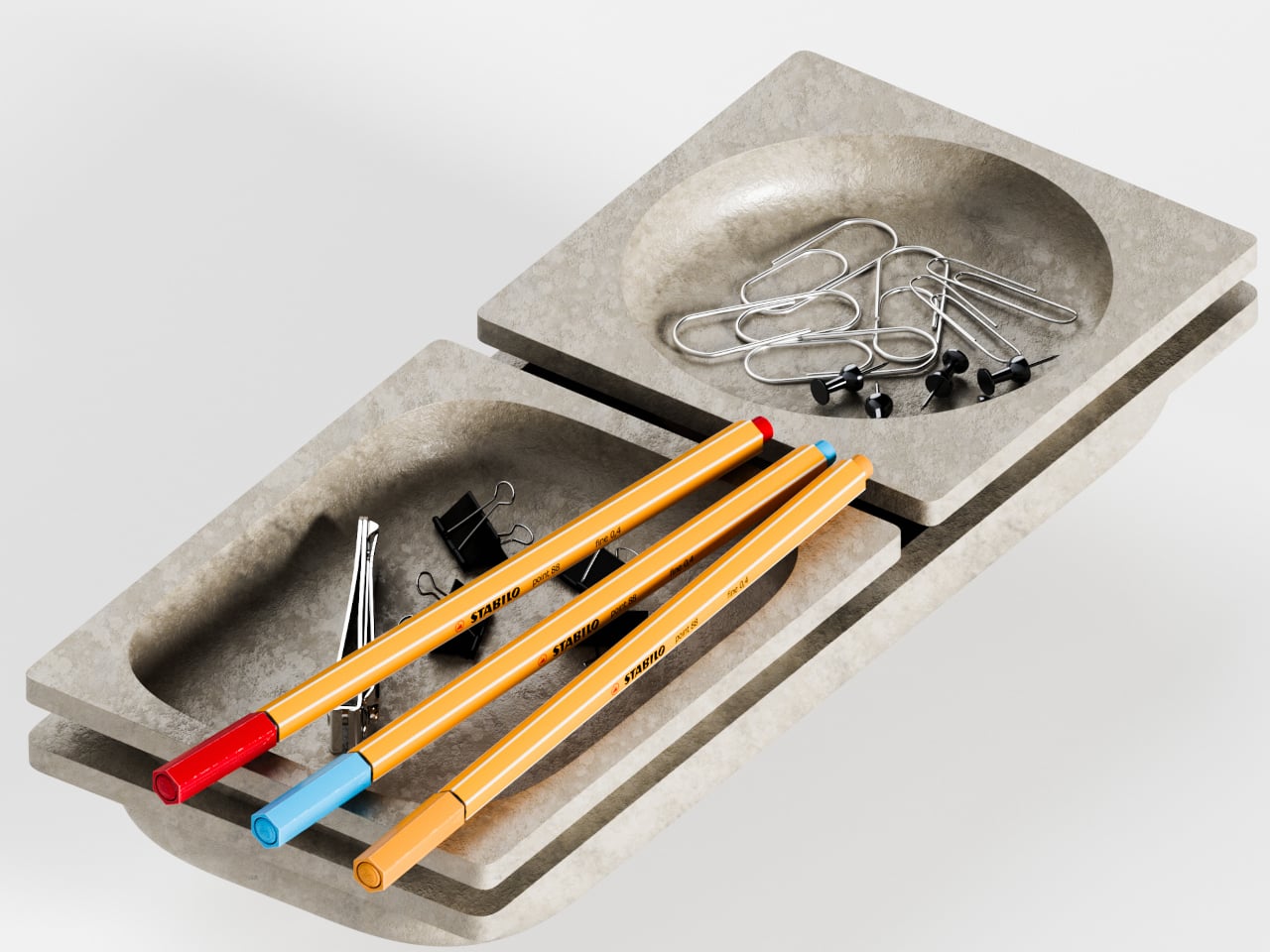
The form itself is where things get interesting. Circular basins sit alongside parallel rectangular bays, each with a specific job. The basins are contoured to cradle small loose items, thumbtacks, paperclips, and the miscellaneous hardware that scatters across every flat surface it touches. The bays run parallel and are angled to hold pens and pencils upright and accessible, so what you reach for most is what you find fastest. There is a satisfying logic to that division, one that needs no instructions to grasp.

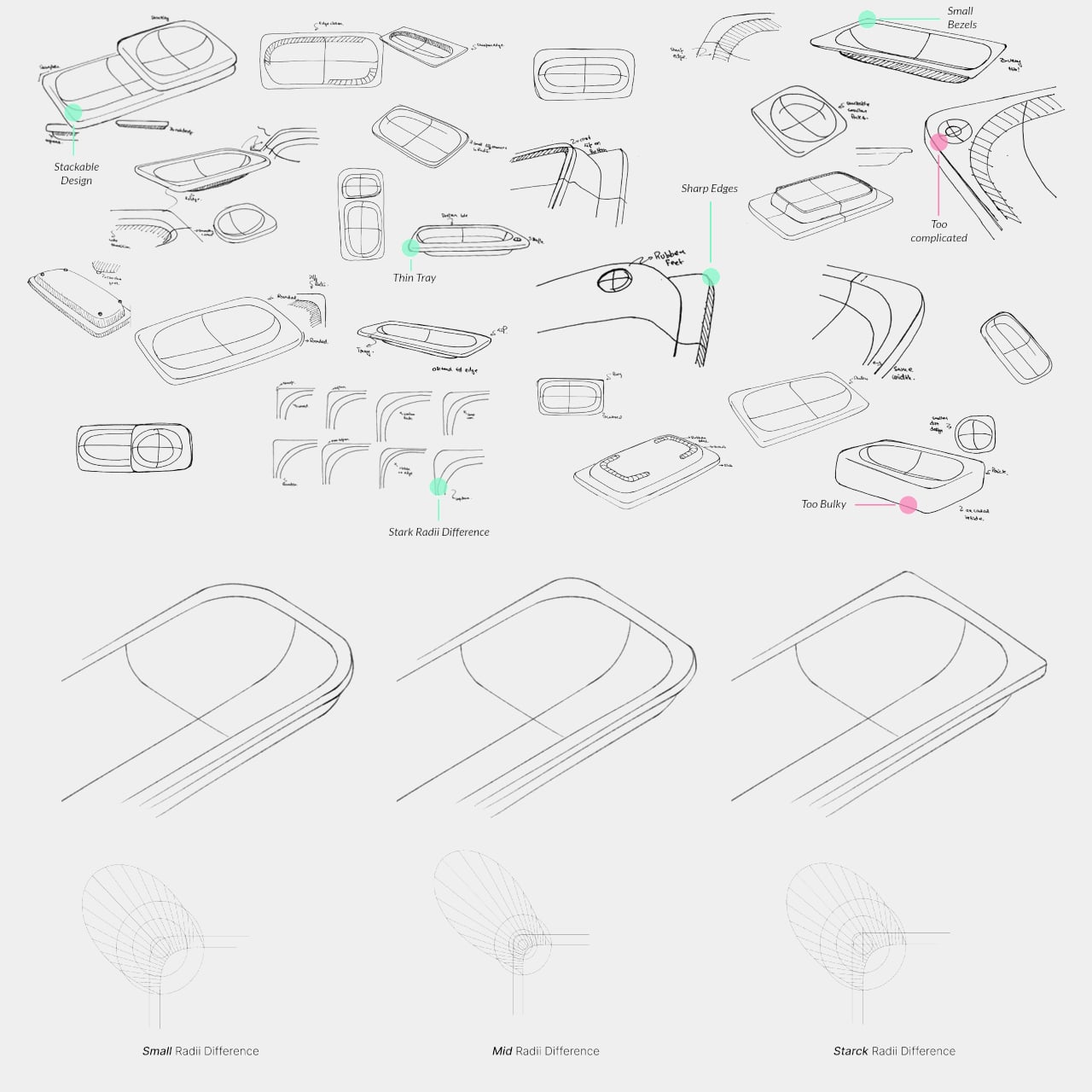
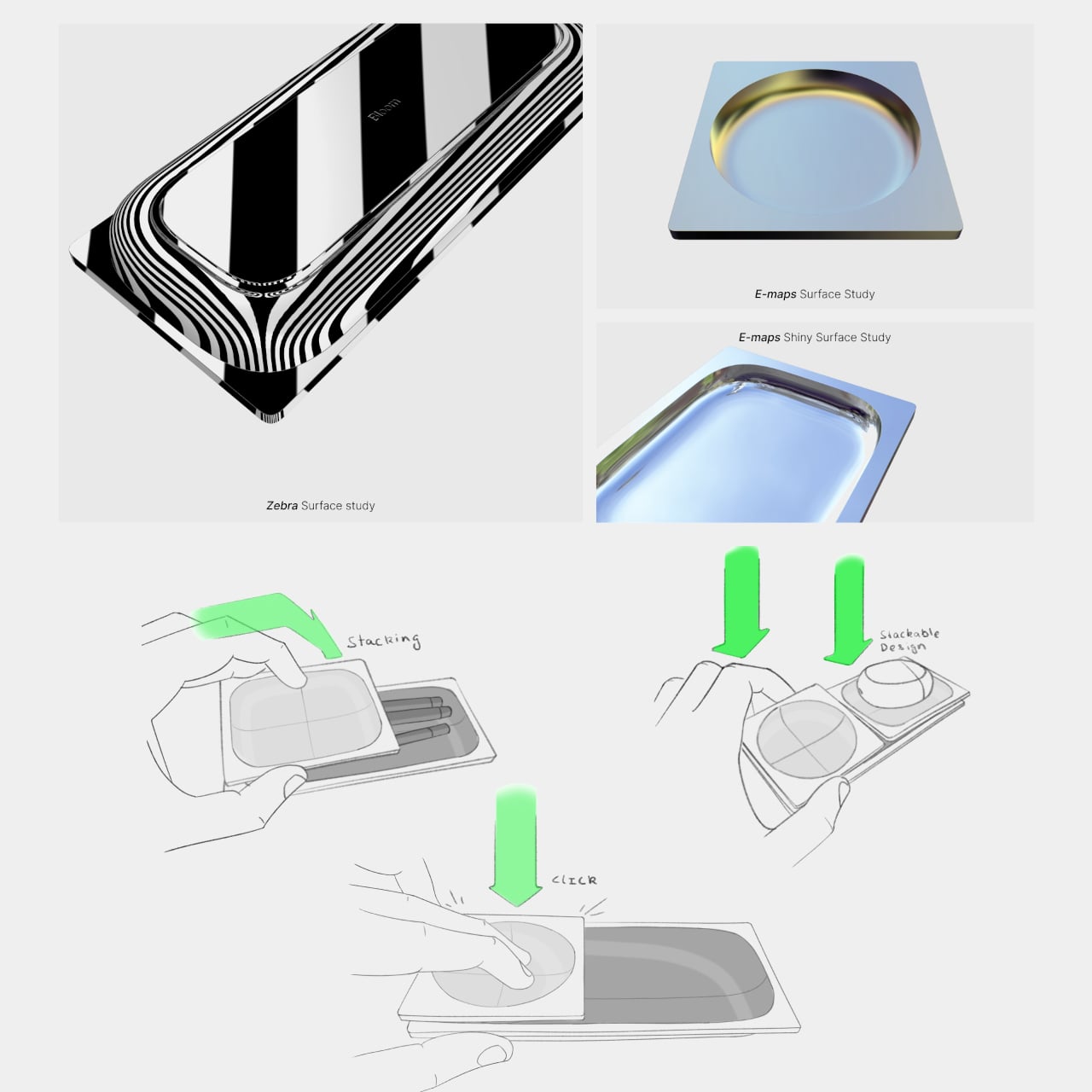
What separates BloomCase from a standard tray is the interlocking system. Two or more units snap together so that separate pieces merge into a single continuous footprint. The connection is designed to feel secure and repositionable, which matters when your desk layout shifts with a project, or when you realize three months in that you needed more pen space all along. The name comes from this behavior, units blooming outward across the workspace as organizational needs grow.

The aesthetic sits at an interesting intersection. Concrete and geometric curves do not usually share a design brief, but the combination here avoids the coldness that brutalist objects can carry in domestic or office settings. The raw material quality of the concrete against the softer basin profiles creates enough contrast to hold visual interest without tipping into decorative territory. It looks like a tool that was designed carefully, which is a harder thing to pull off than it sounds.

The modular logic is a genuinely smart idea, but it only makes practical sense if you actually need more than one unit. A desk covered in connected concrete trays starts to raise honest questions about how much surface you are willing to trade for organization. There is also the matter of audience: heavy raw materials appeal most to designers and architects who already have a taste for that kind of object on their desks, which is a narrower group than the broader market for desk tidiness.

The post This Concrete Desk Organizer Snaps Together as Your Workspace Grows first appeared on Yanko Design.
IKEA’s $7.99 Chair-Shaped Hooks Are Going Viral for the Second Time

Wall hooks are one of those home essentials that nobody really thinks about until they need them. Most are utilitarian at best and forgettable at worst, designed to hold things rather than be noticed. The category hasn’t changed much in decades, and the average hook aisle still feels like it’s catering to a warehouse. Most people end up choosing between something functional and something they’d actually want to look at.

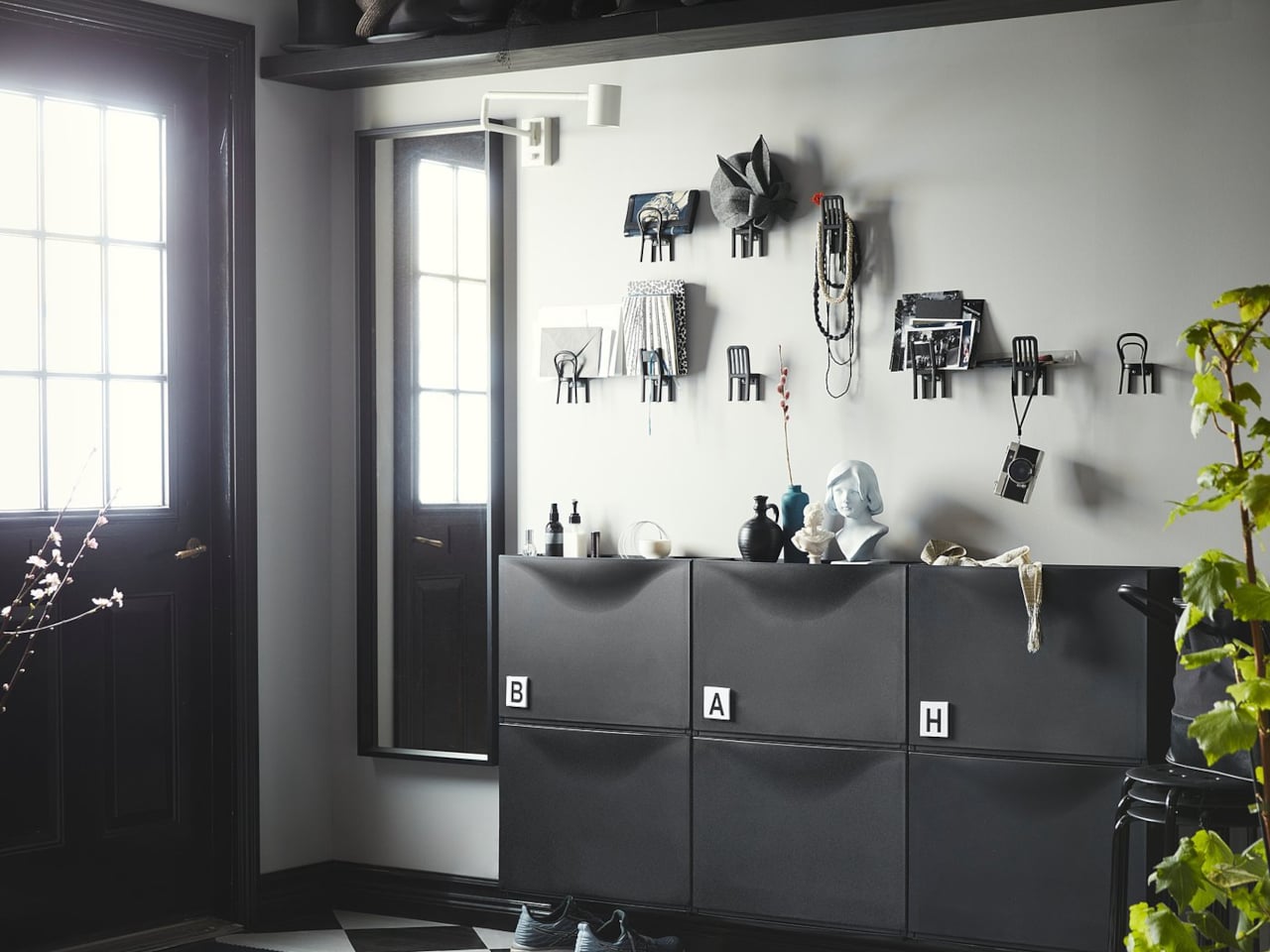
IKEA has always been good at finding solutions for these small, overlooked problems, and the FJANTIG hooks are a pretty solid example of that. Designed by M. Mulder and M. Vinka, they’re miniature chair-shaped wall hooks that come in a pack of three and retail for just $7.99. They’ve been around for a while, but they’ve been quietly gaining momentum on social media, and it’s easy to see why.

Designers: M. Mulder, M. Vinka (IKEA)

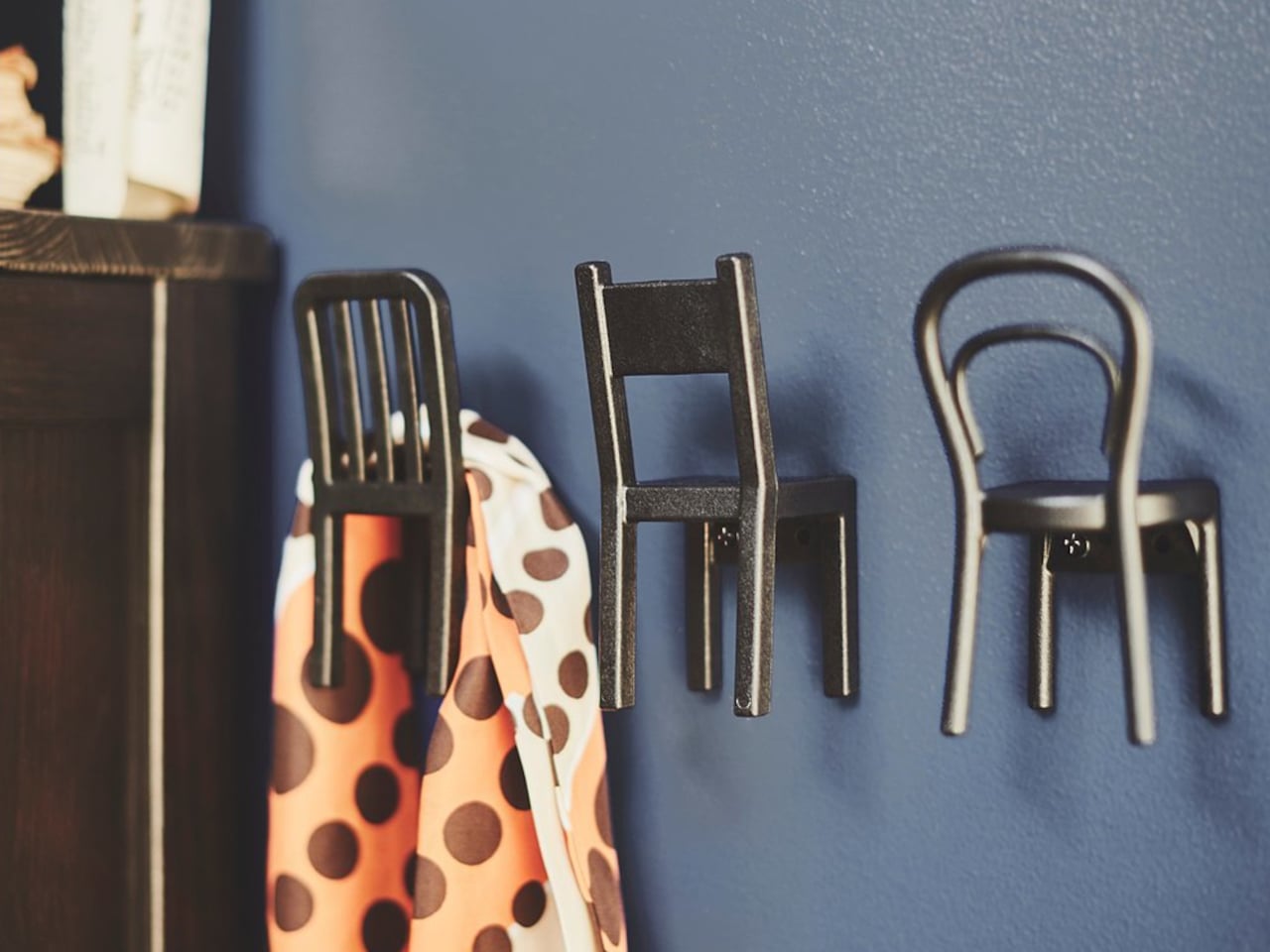
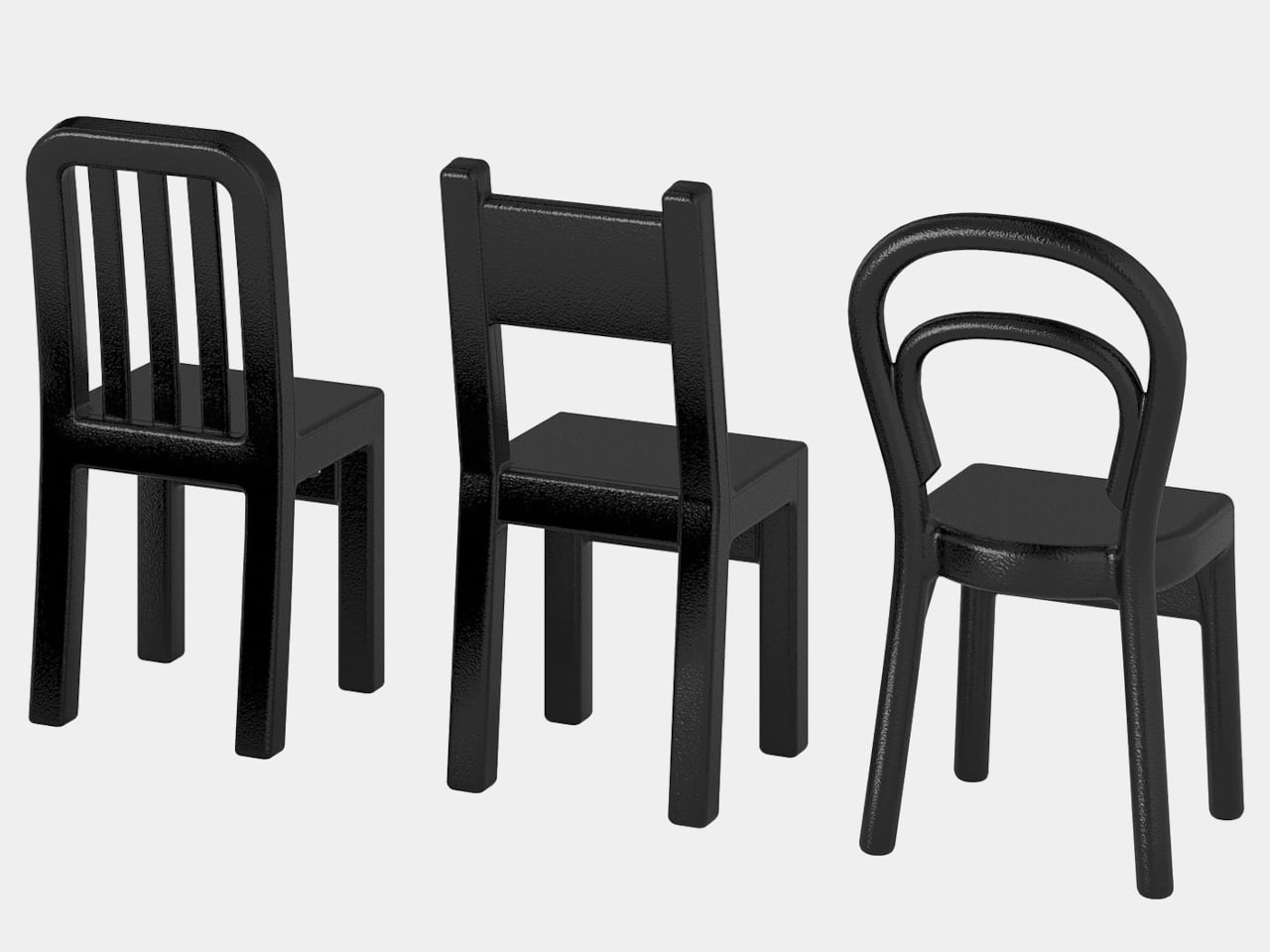
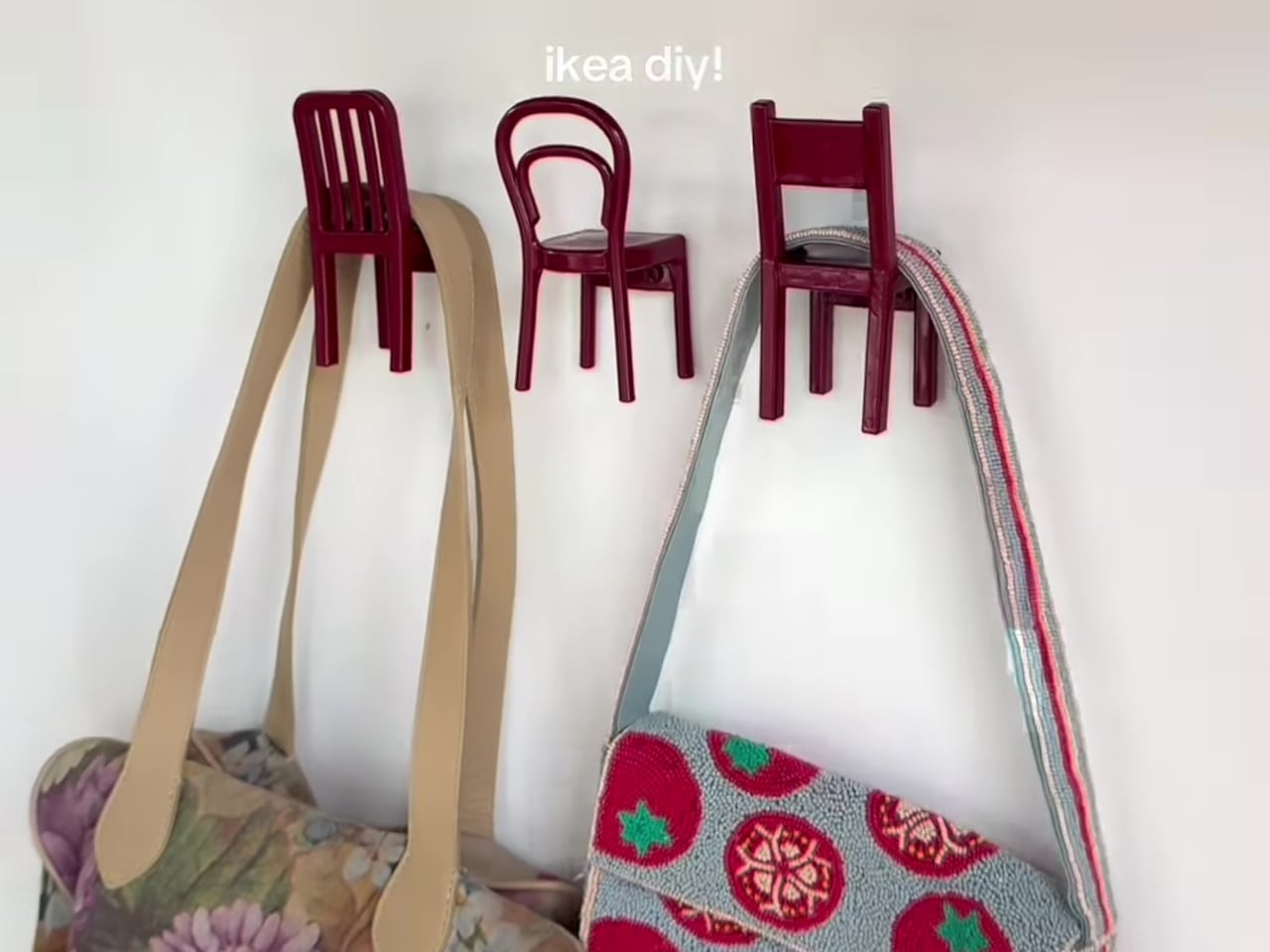
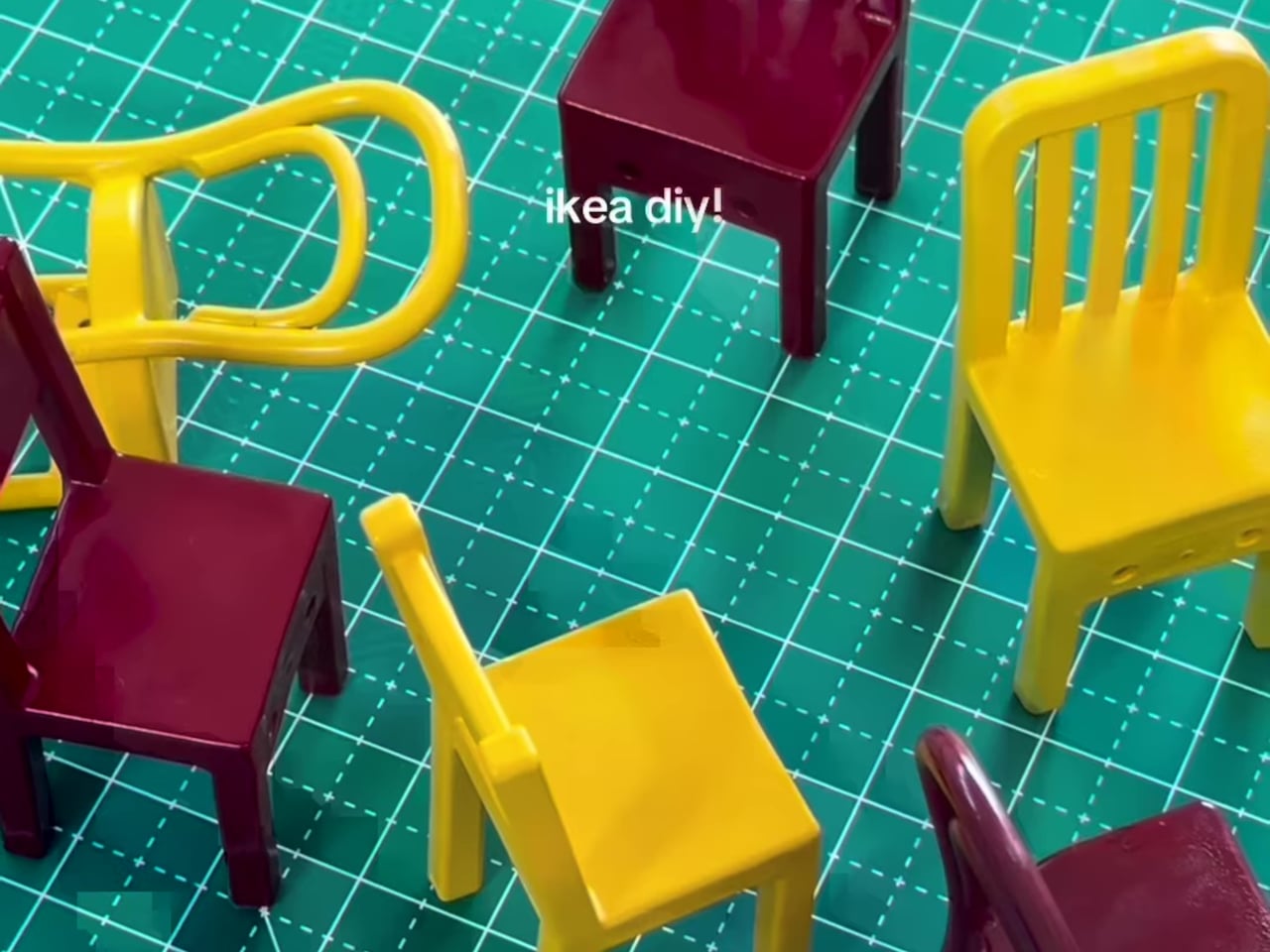
Each of the three hooks takes the shape of a different miniature chair, with distinct backrest designs: one has vertical slats, another a solid panel, and the last a loop. They’re made from reinforced polypropylene in a matte black finish and sized just right to sit unobtrusively on any wall. The hook itself is the chair’s back, so you drape things over it just like a real chair.

They earn their keep quickly once you find the right spot. Hang a row in an entryway, and you’ve got an instant home for keys, dog leashes, and lightweight bags. Put them in a kid’s room for tiny backpacks and jackets. These hooks aren’t new and have been at IKEA for years, but social media attention is giving them an entirely unexpected second life online.

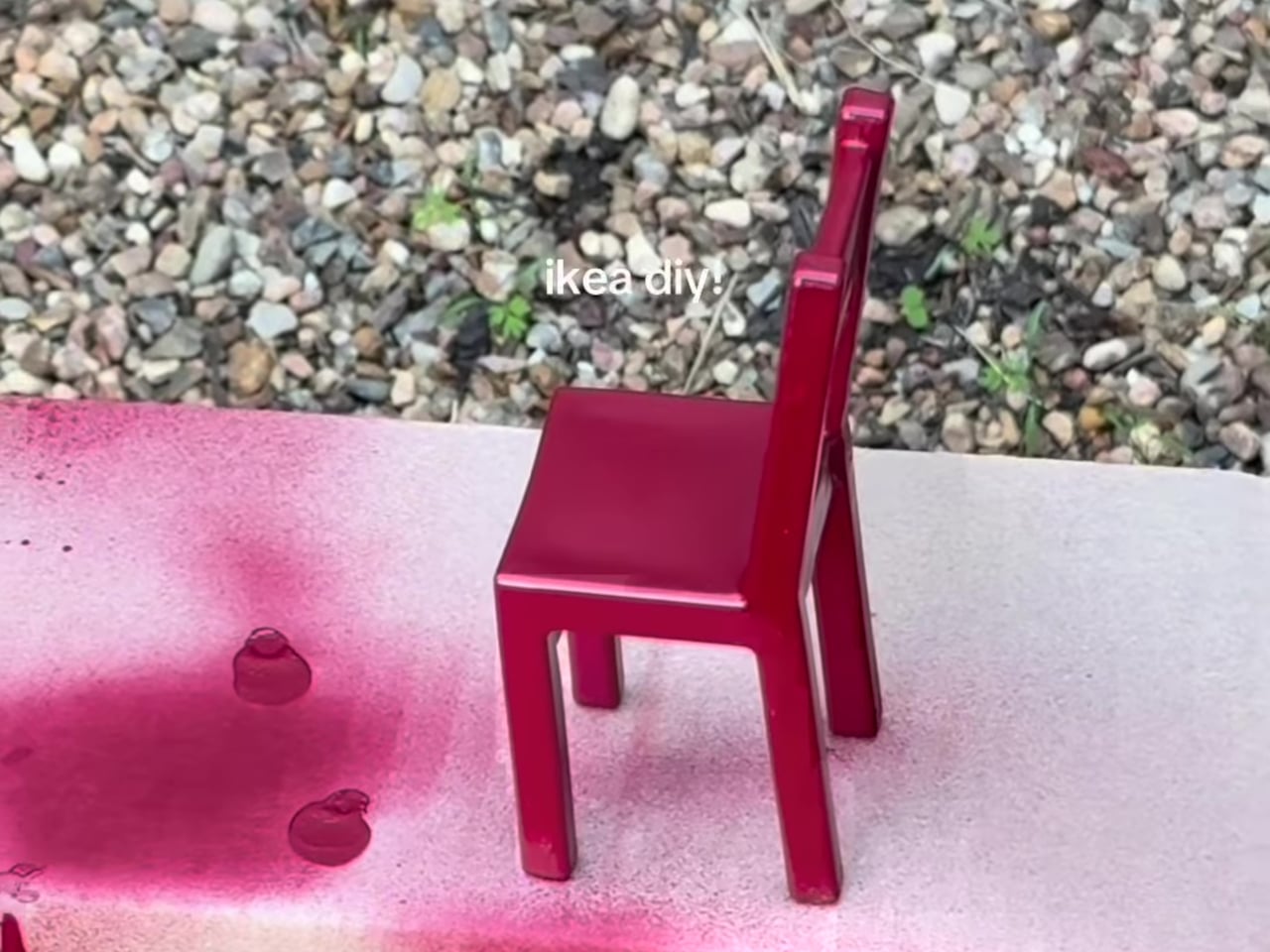
The spray-painting trick is probably the most useful thing to know about these hooks. Because they only come in black, a coat of primer followed by whatever color fits your wall can make them feel genuinely custom. You can brush-paint them for more detailed finishes, or try a wood-grain effect for a warmer, natural look. The polypropylene surface takes paint well, which opens up a surprising amount of creative options.

Designer: Victoria

At $7.99 for a set of three, they’re about as low-risk as home décor gets. Each hook measures roughly 4¾ inches tall, which means they’re genuinely miniature and won’t dominate a wall even when grouped together. Mounting hardware isn’t included, so you’ll need to pick up screws separately, and IKEA does note that the right fastener depends on your wall type. It’s worth using appropriate anchors to keep them secure.

What makes these hooks work beyond the novelty is that they stay interesting even when there’s nothing on them. That’s a rare quality for a functional object. Most hooks disappear into the wall when empty. These just sit there looking like a tiny curated display of chairs, which is probably why people keep buying multiple sets and spreading them across rooms, rather than keeping to just the one pack.

The post IKEA’s $7.99 Chair-Shaped Hooks Are Going Viral for the Second Time first appeared on Yanko Design.
Rimowa Classic Aluminium Grid Revives a Forgotten 1969 Design

Most luggage brands don’t have a 127-year-old story to draw from. Rimowa does, and it seems to know exactly when it’s worth pulling from that history and when to let the present speak for itself. With the Classic Aluminium Grid, they’ve clearly decided the archive deserves a second act.

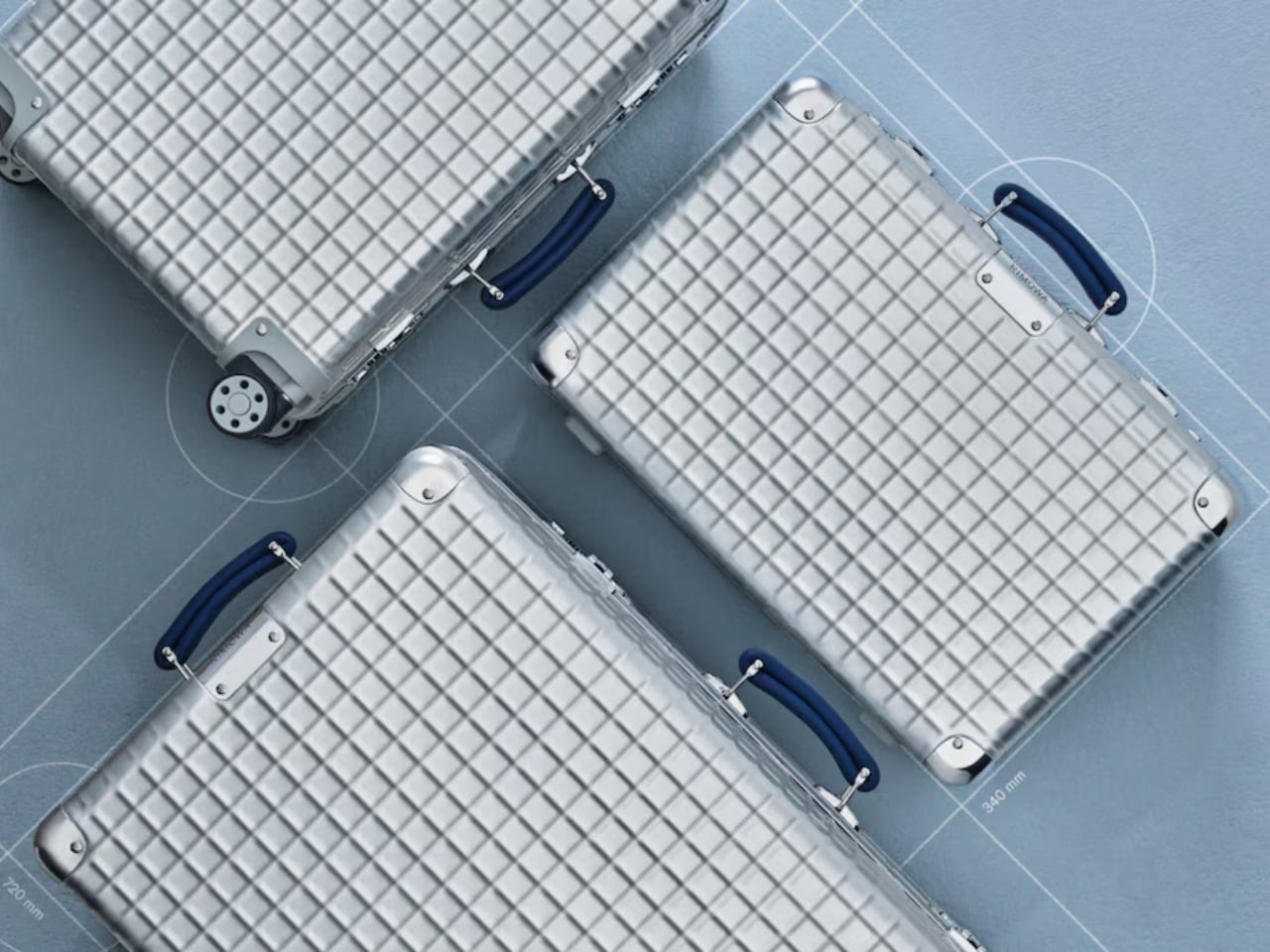
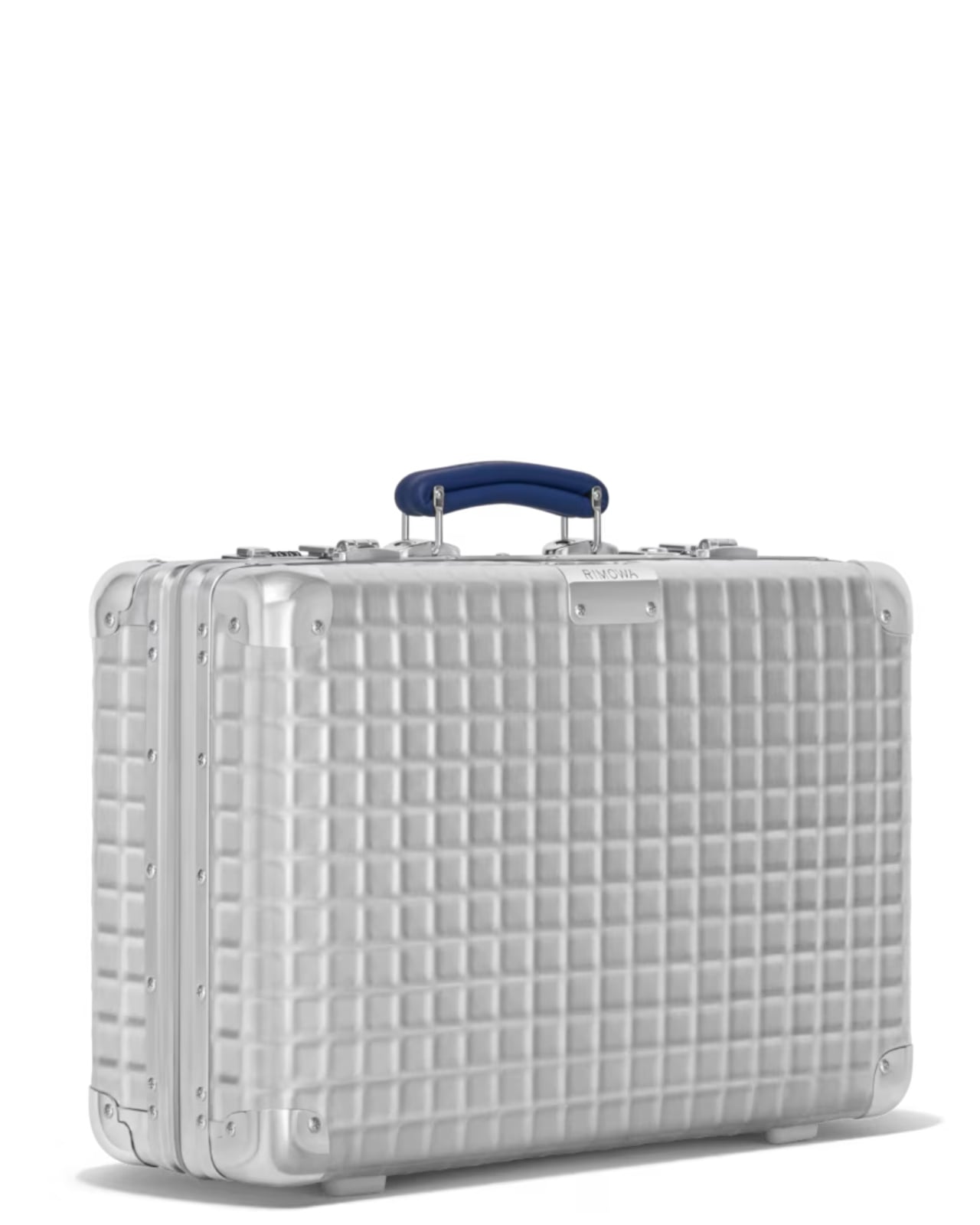
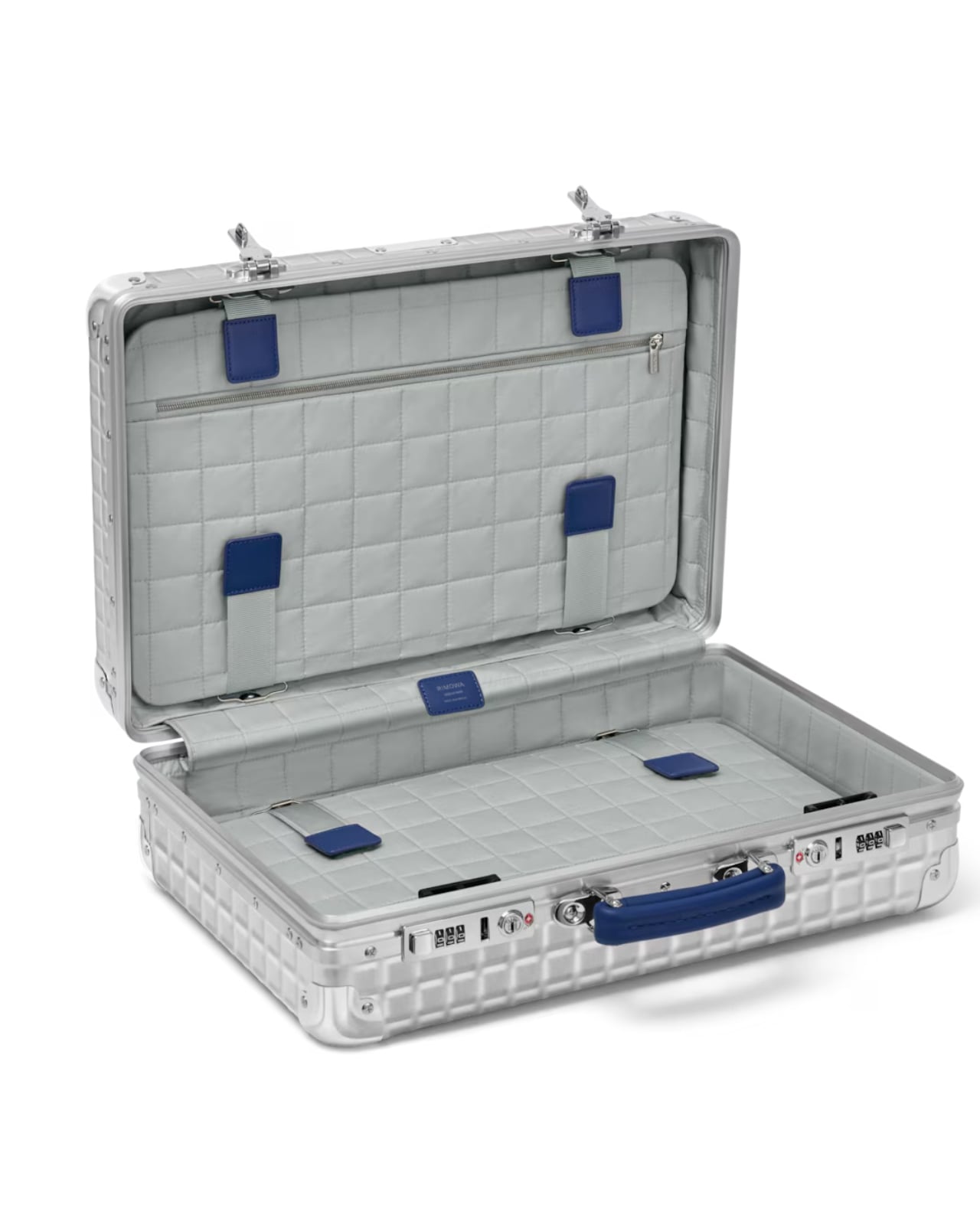
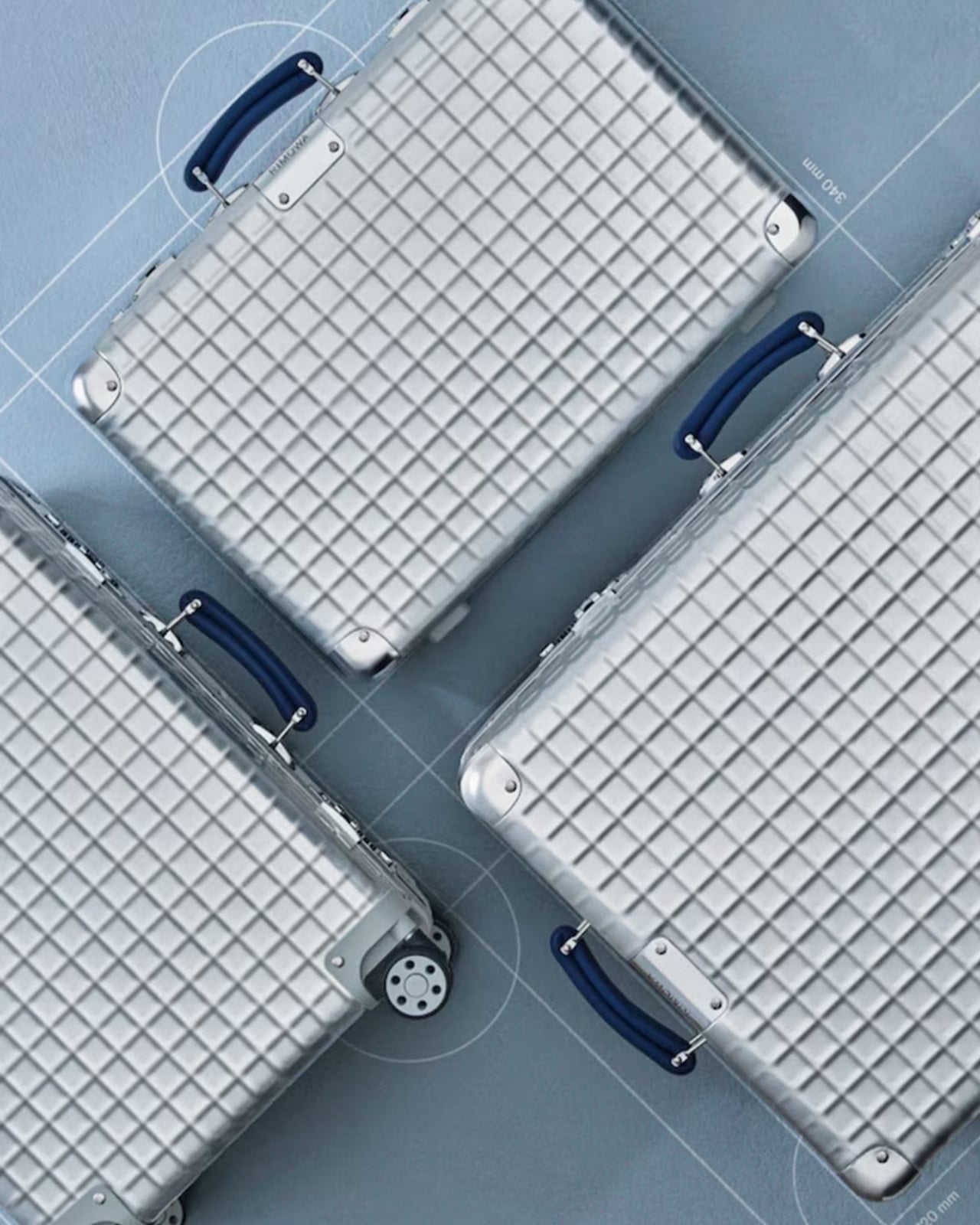
The Classic Aluminium Grid is the German brand’s latest limited-edition release, and it’s generating the kind of quiet excitement that reserved design circles usually save for restored mid-century furniture or a first-edition book that resurfaces at auction. The reason is simple: Rimowa didn’t just design something new. They reached back to 1969, pulled out a hand-carry case design that had been sitting in their archives, and asked what it would look like today if it were treated with the same reverence they give to the grooves.

Designer: Rimowa

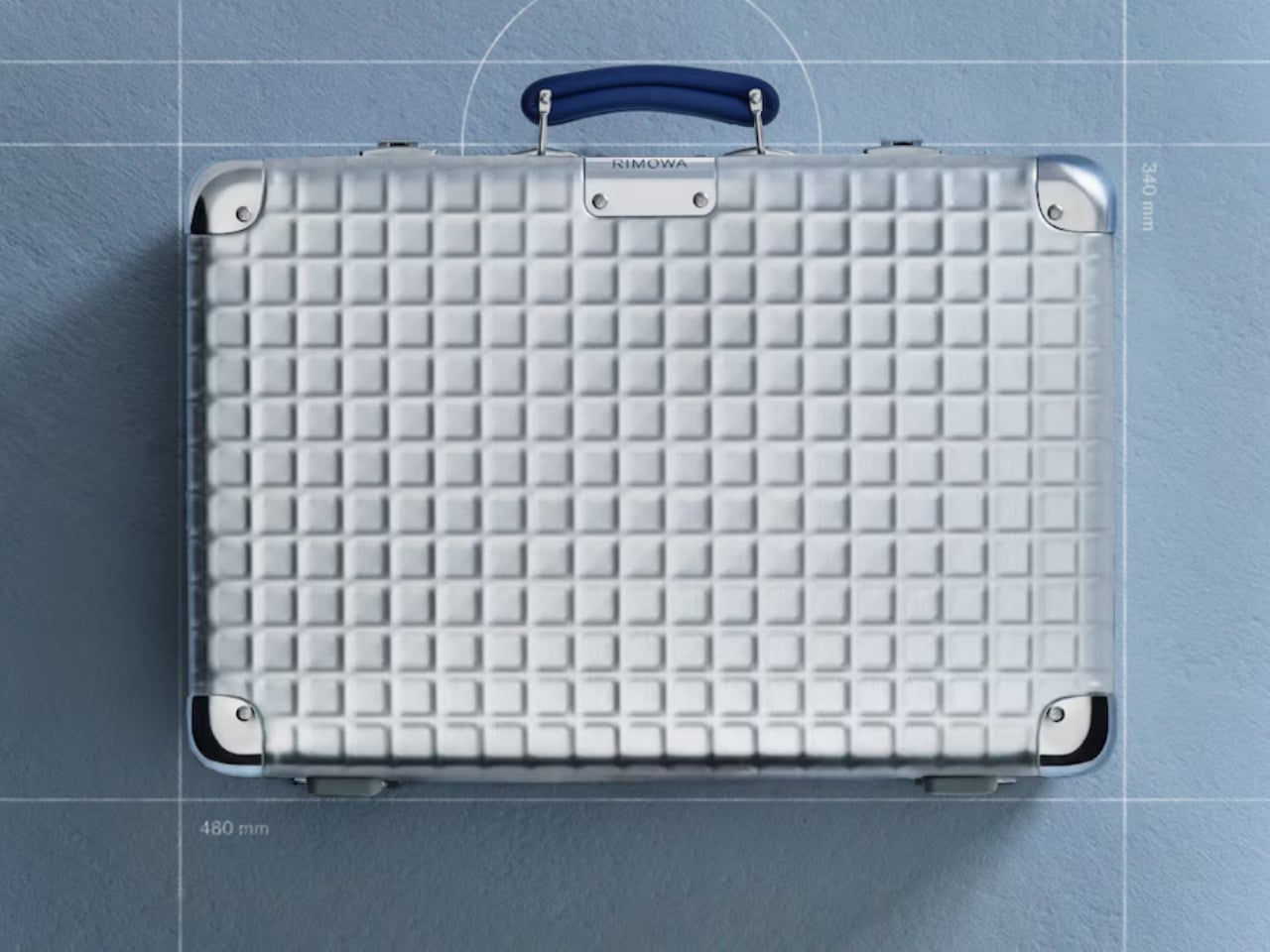
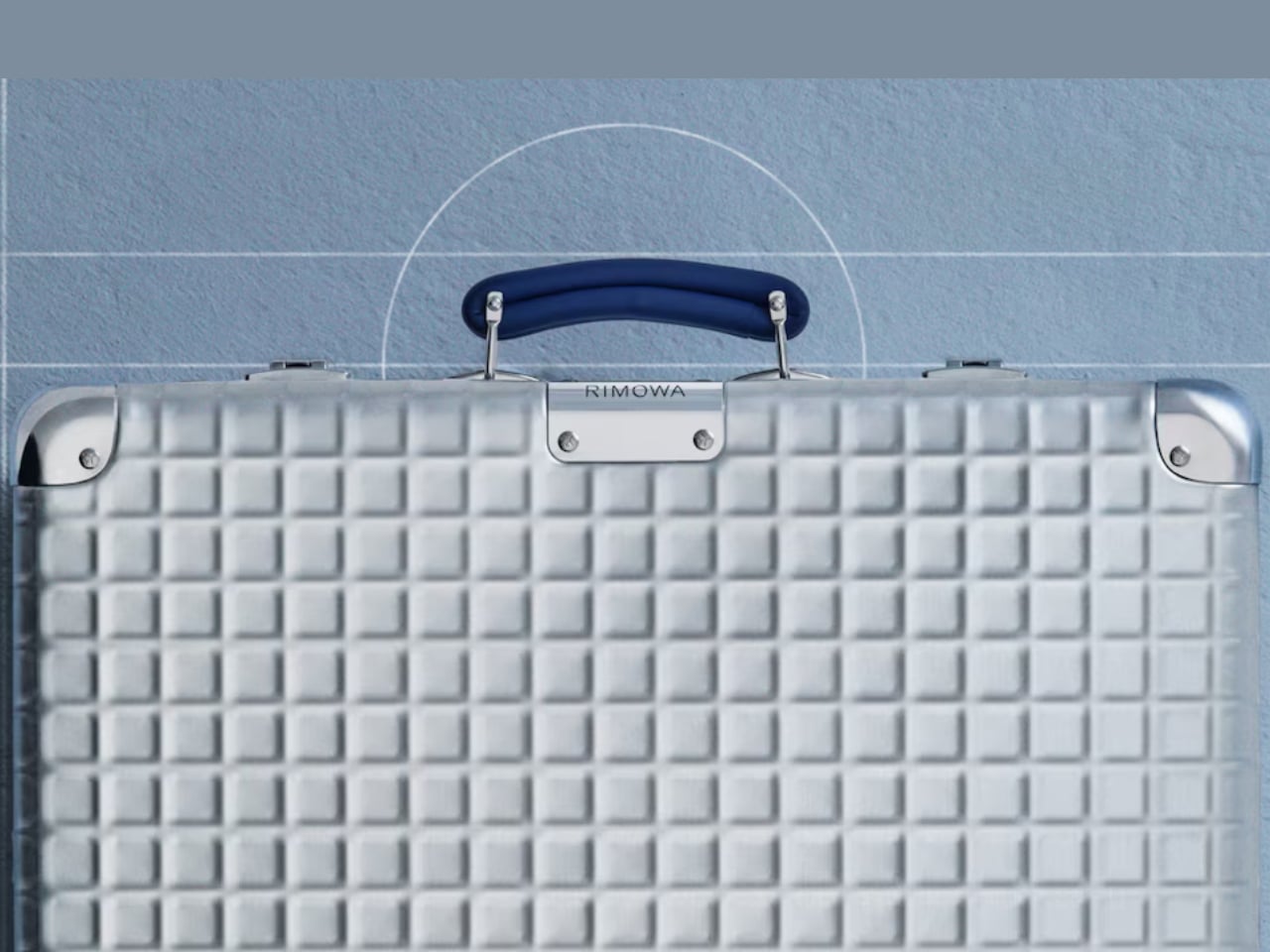
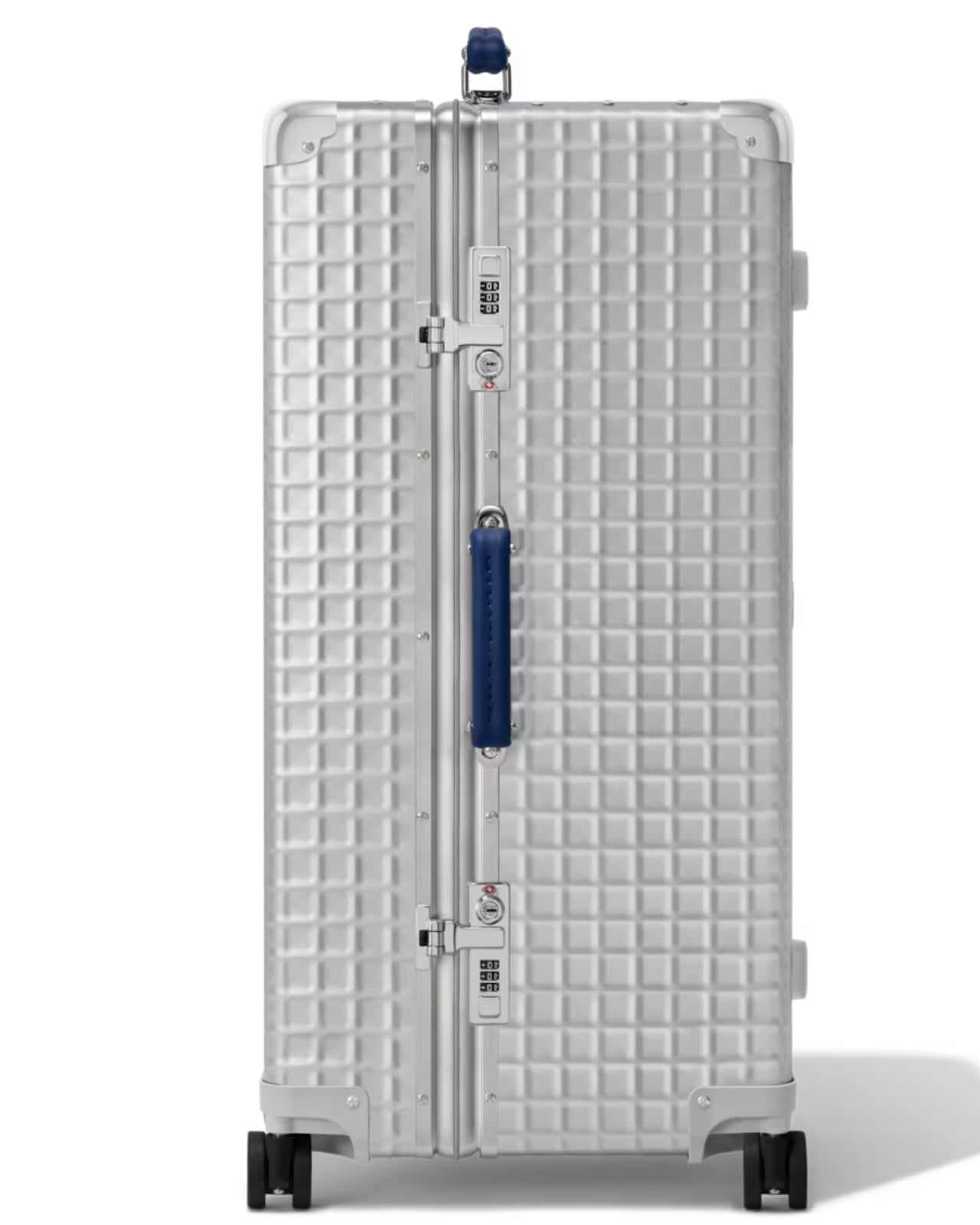
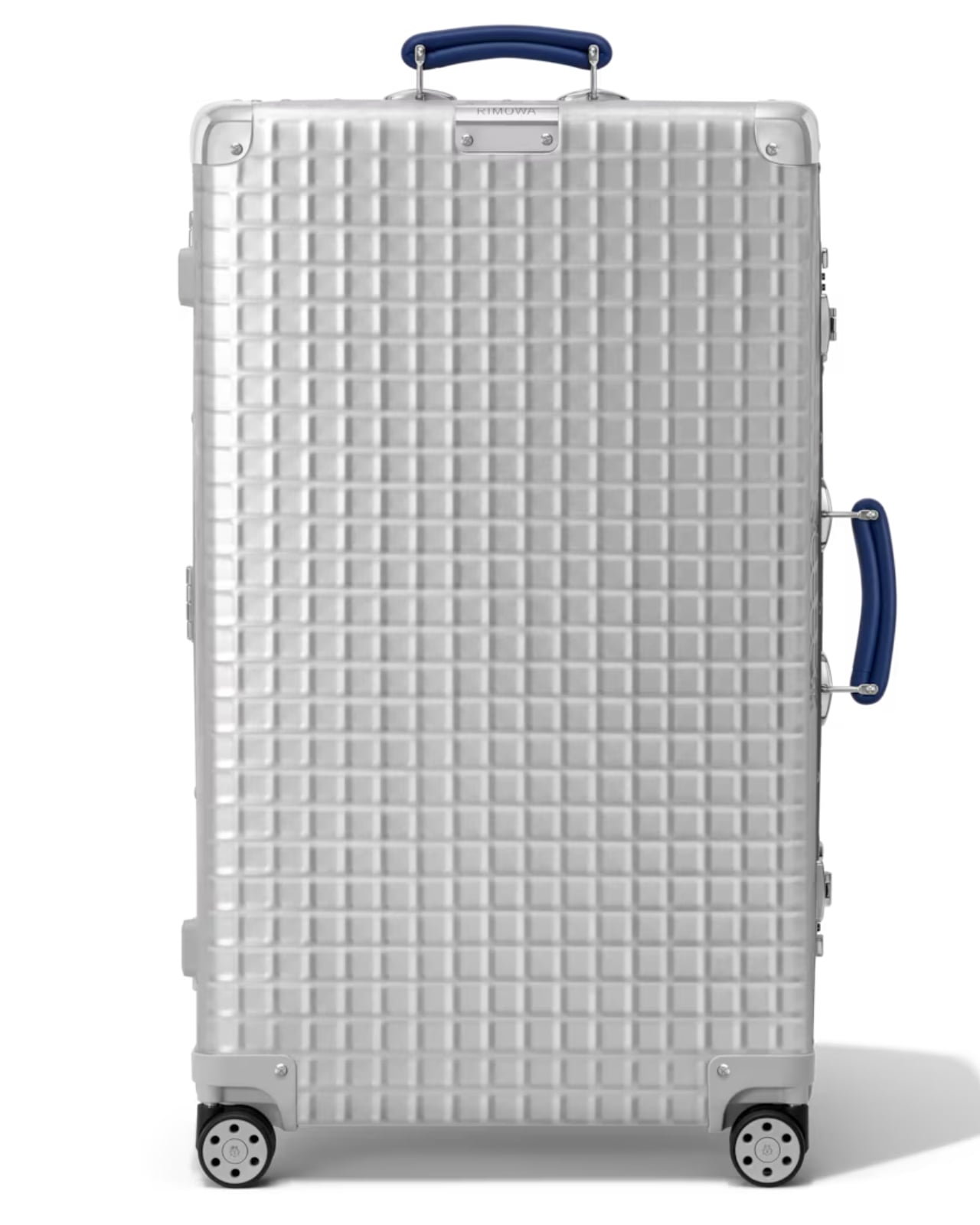
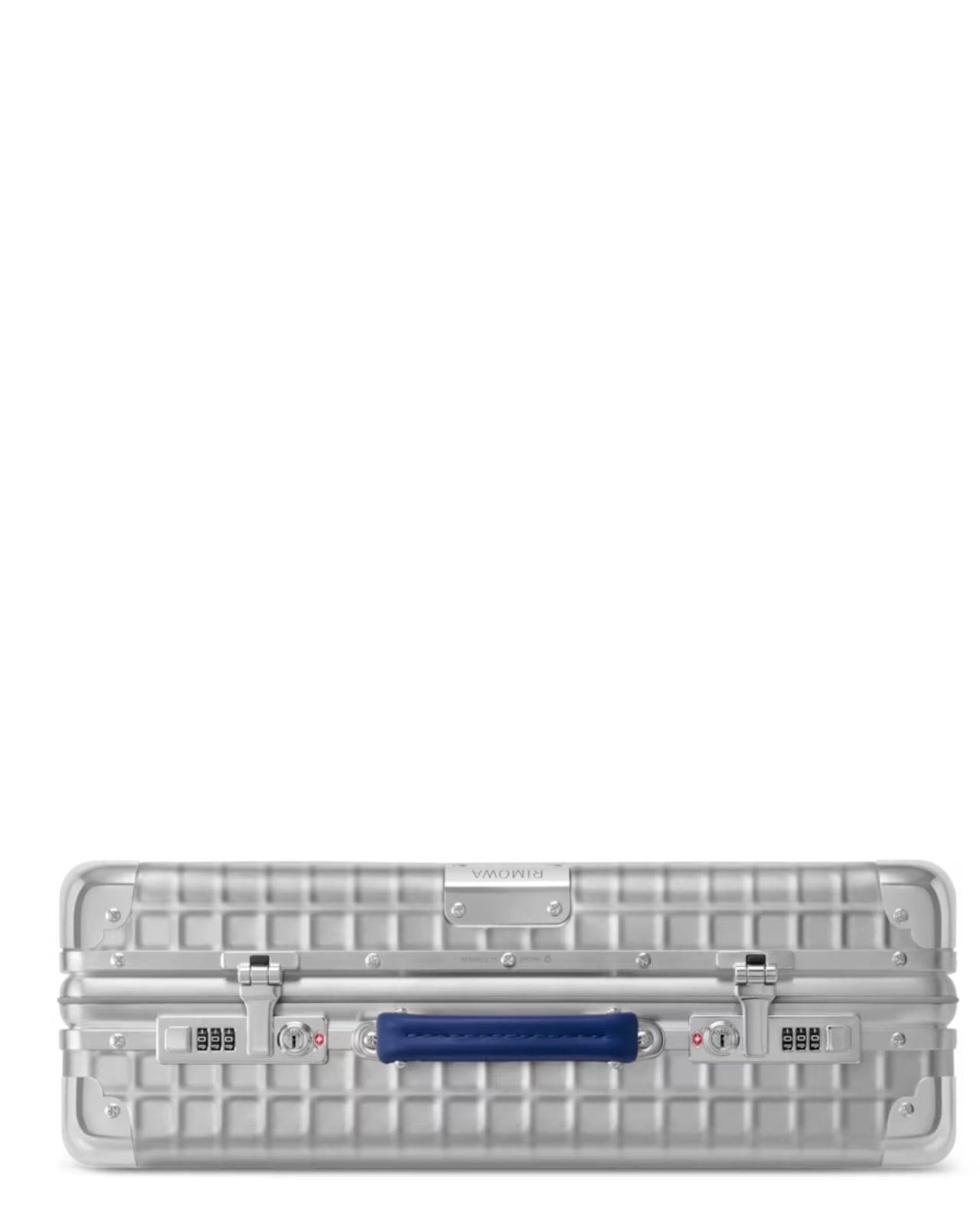
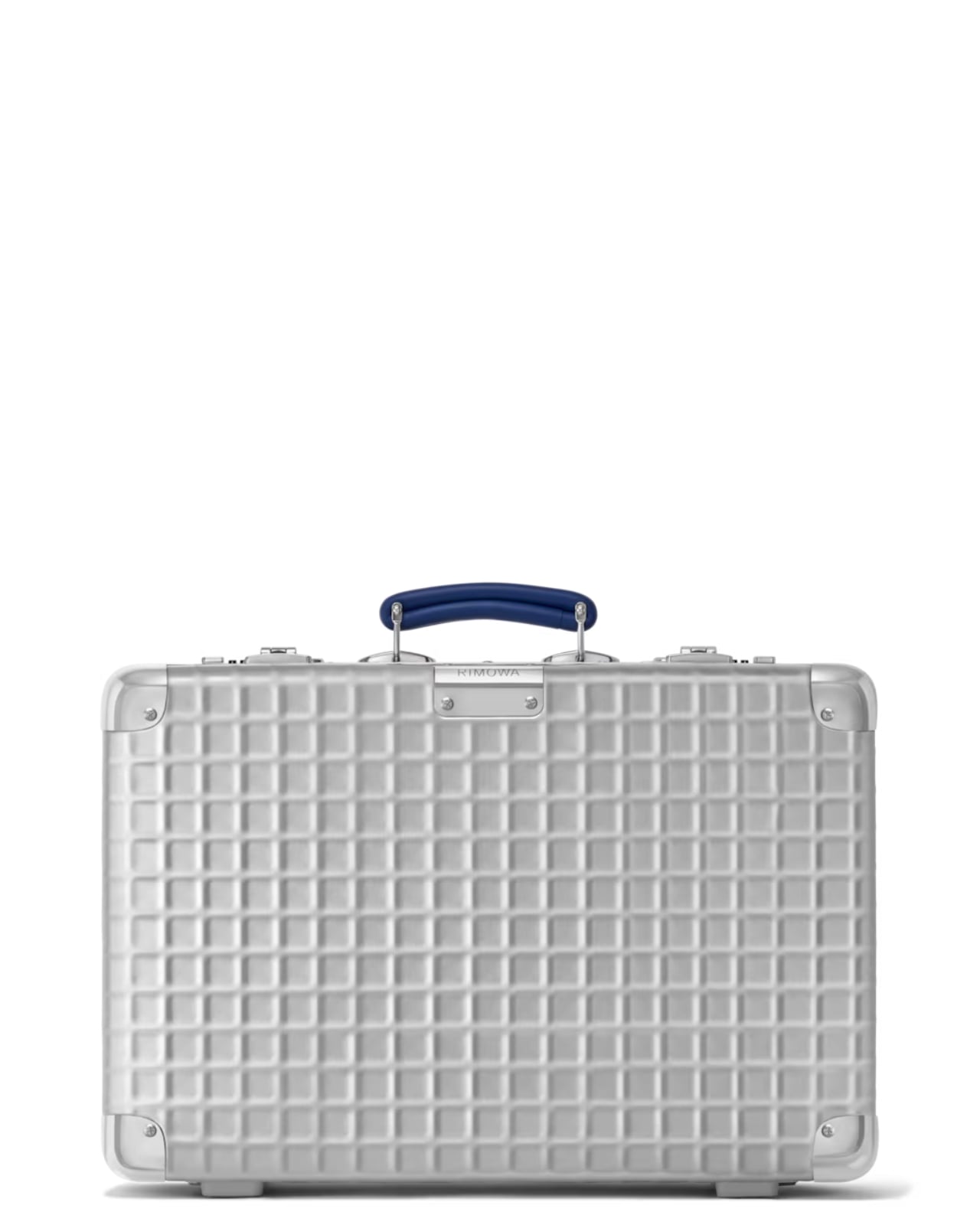
That grooved shell, by the way, is practically synonymous with the brand itself. You know a Rimowa from across an airport terminal. Those parallel ridges running down the aluminium surface are one of the most recognizable design signatures in travel goods, and they’ve been that way for decades. So when the brand quietly steps away from them and replaces the lines with a grid, a structured, geometric, embossed pattern pressed right into the aluminium shell, it feels like a real statement. It’s not a gimmick. It’s a choice that speaks to a different kind of confidence.

The grid comes from a real place. In 1969, Rimowa was producing hand-carry cases featuring this geometric pattern: practical, modular, and rooted in the kind of technical precision that defined that era’s design thinking. There’s a reason so much design from that decade still holds up. It wasn’t chasing aesthetics for their own sake. Form followed function, and it did so elegantly. Reviving that spirit in 2026 doesn’t read as nostalgia pandering. It reads as a brand that knows exactly where its DNA lives and isn’t afraid to dig for it.

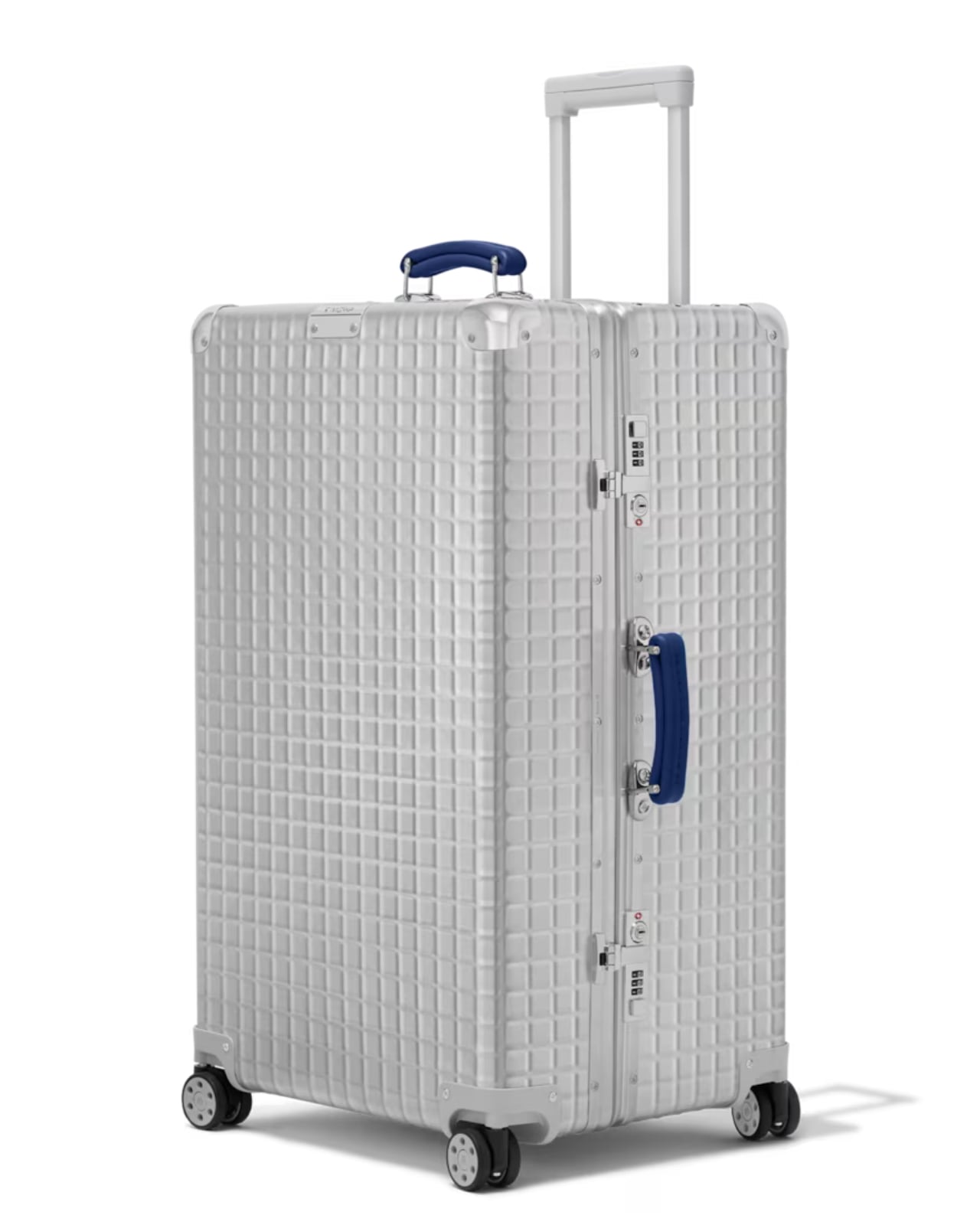
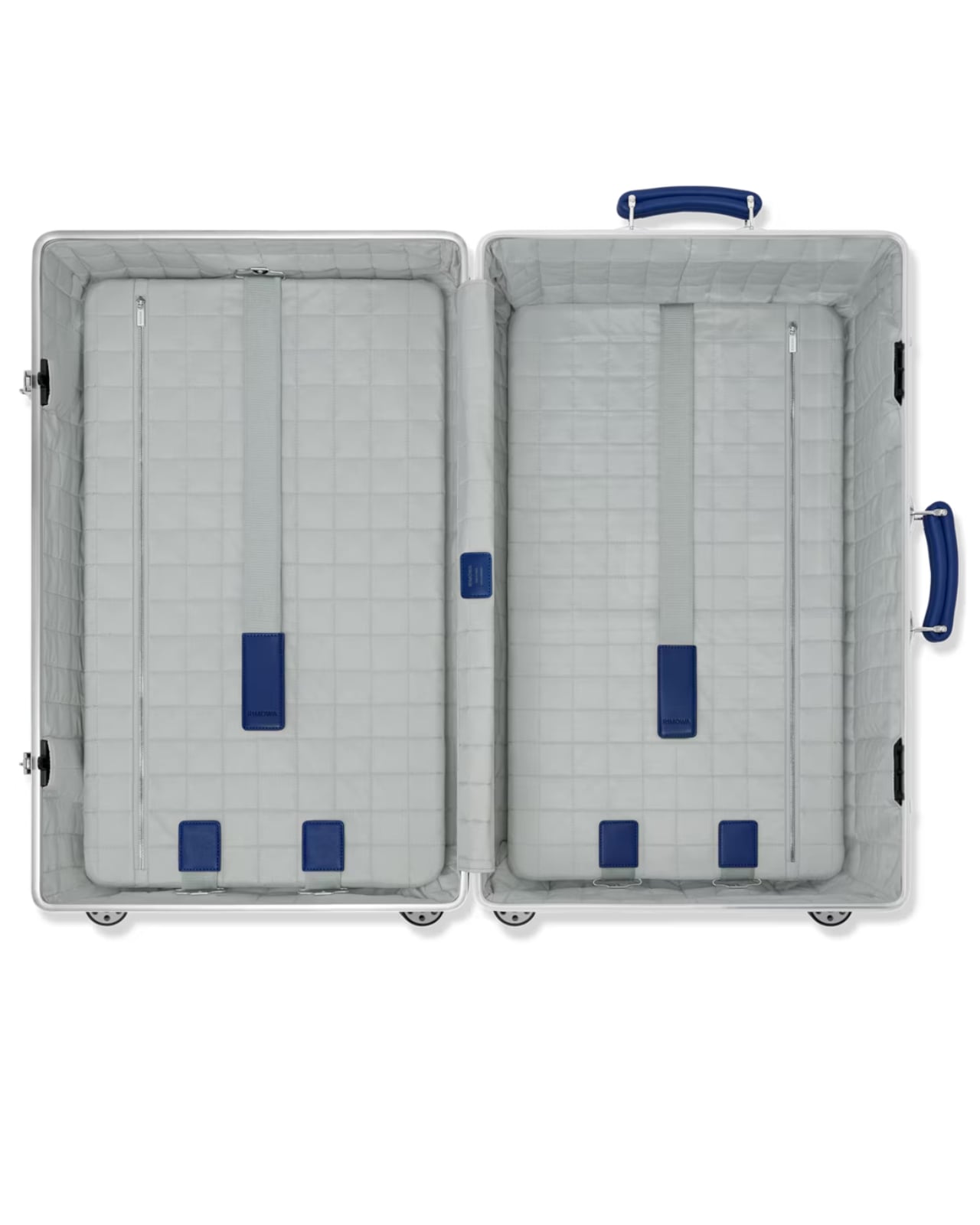
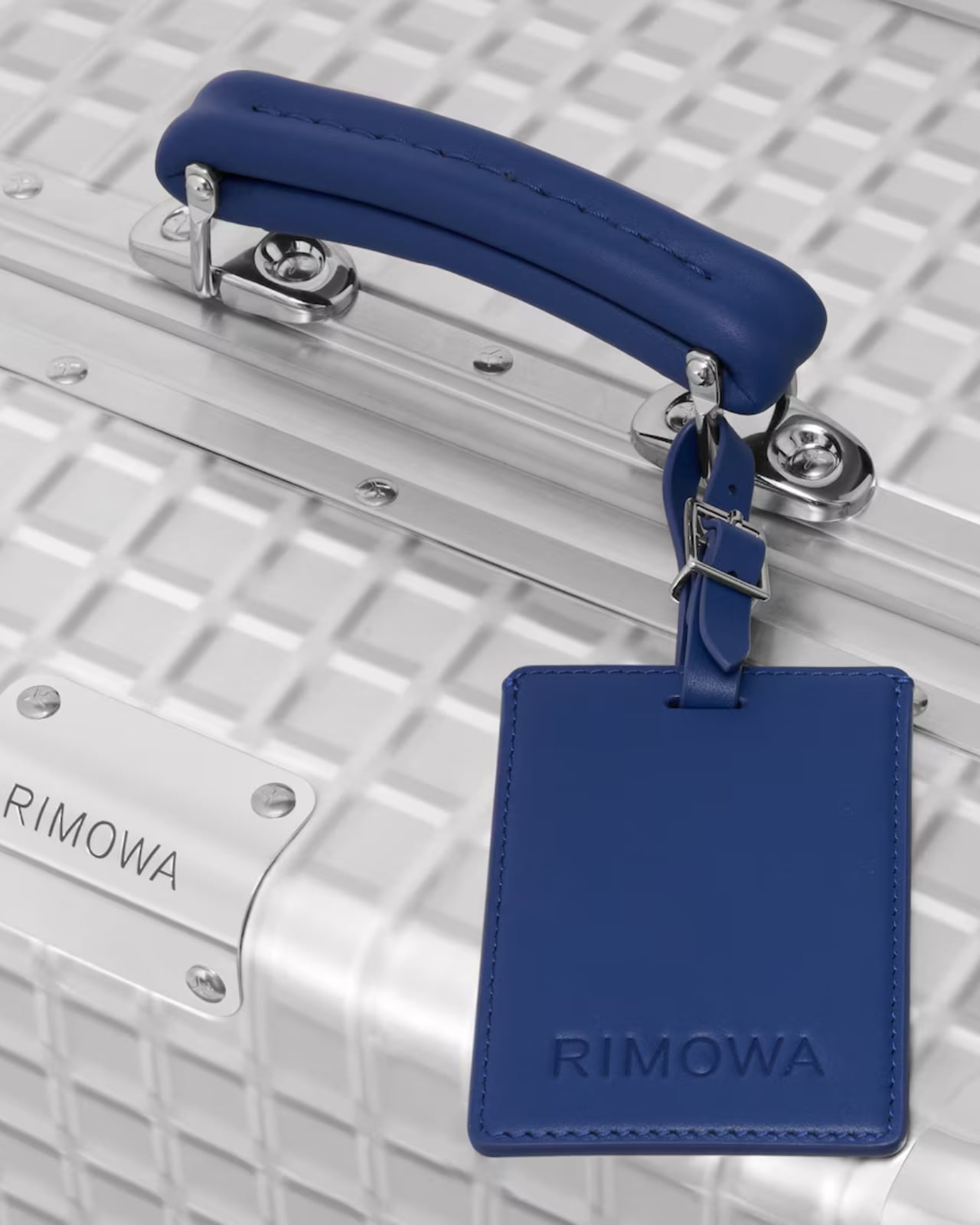
The collection comes in three sizes: the Classic Hand-Carry Case, the Classic Cabin, and the Classic Trunk. All three are made in Cologne, Germany, which matters more than it might seem. Manufacturing location is one of those details that’s easy to gloss over until you’re actually holding the product, and with Rimowa, the German-made quality is part of the whole point. The embossed grid pattern, the blue leather handles, the individually numbered serial number patch on each case: these aren’t details you’d notice in a thumbnail. They’re details you notice after living with the piece and realising it only gets better over time.

And yes, price matters here. The Classic Aluminium Grid sits in the $2,725 to $3,225 range, which puts it firmly in the territory of deliberate, considered purchasing. That’s not casual spending, and it shouldn’t be. This is the kind of purchase that functions as an heirloom more than a travel accessory, something you keep, care for, and eventually pass along. The lifetime guarantee Rimowa extends to all its suitcases reinforces that framing. They’re not selling you a bag built for a few trips. They’re selling you something built to outlast most things currently in your home.

What makes this collection feel genuinely compelling rather than just another limited drop is the restraint behind it. Rimowa didn’t add bright colour for the sake of attention. They didn’t partner with a streetwear brand or commission someone’s artwork across the shell. They went to their own archive, found something worth preserving, and let the design carry the weight. The grid is subtle enough that it won’t read as flashy at baggage claim, but anyone paying close attention will recognise it as something different. Something that doesn’t quite look like everything else on the carousel.

That’s a hard balance to strike in design. Loud enough to be interesting, quiet enough to be enduring. The Classic Aluminium Grid lands squarely in that space, and for a brand with over a century of aluminium behind it, that feels less like luck and more like a brand that knows exactly what it’s doing.

The post Rimowa Classic Aluminium Grid Revives a Forgotten 1969 Design first appeared on Yanko Design.