For most musicians and artists, the album artwork of their albums or EPs is serious business. In the days of cassette tapes, CDs, LPs, and other physical forms of media, they also served as part of your space’s display, especially if you’re a collector. But when streaming came along, you could only display these works of musical art on your smartphone or music player. But what if you really love your favorite albums’ cover art and wanted to show them off while listening to them?
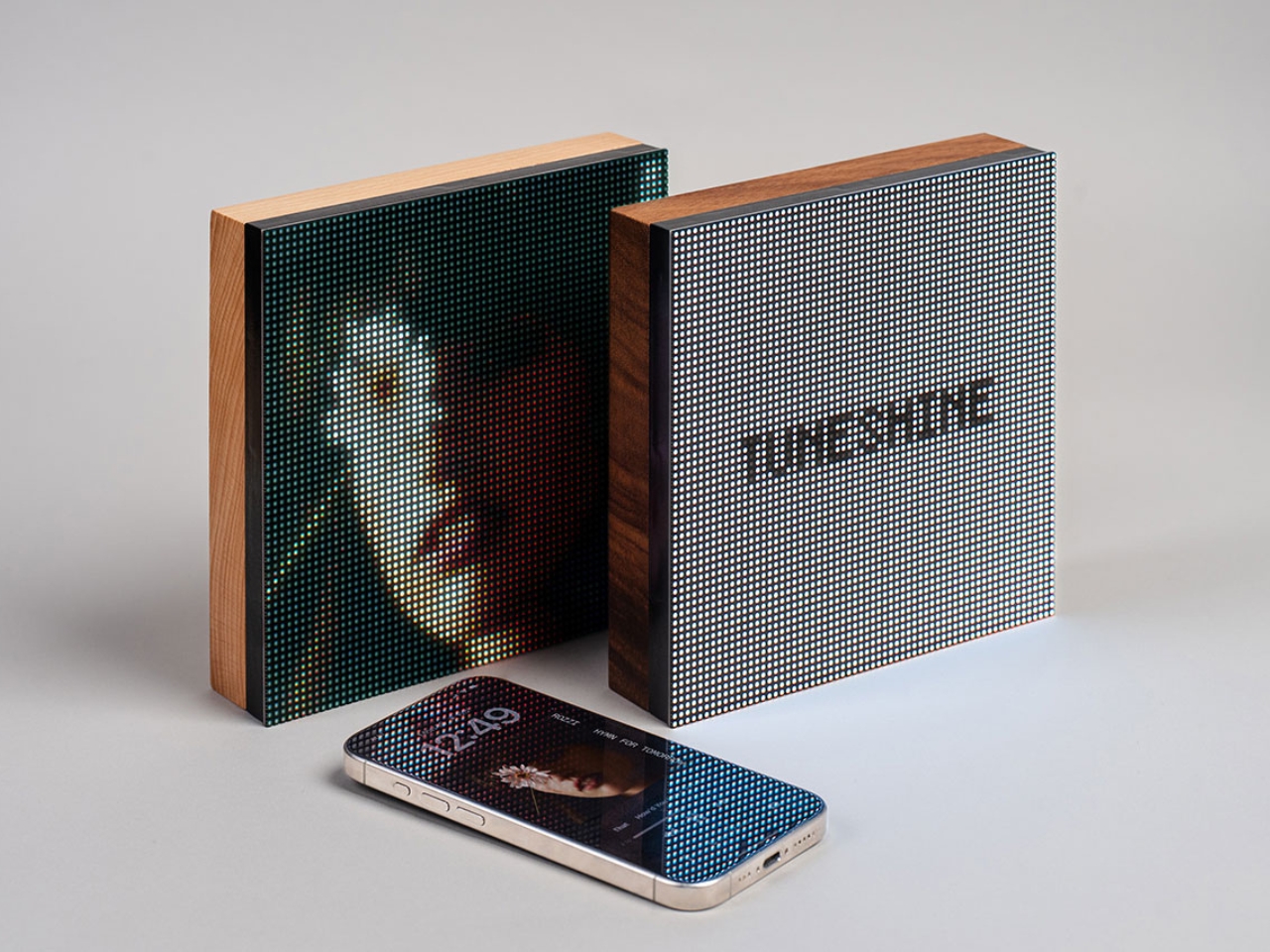
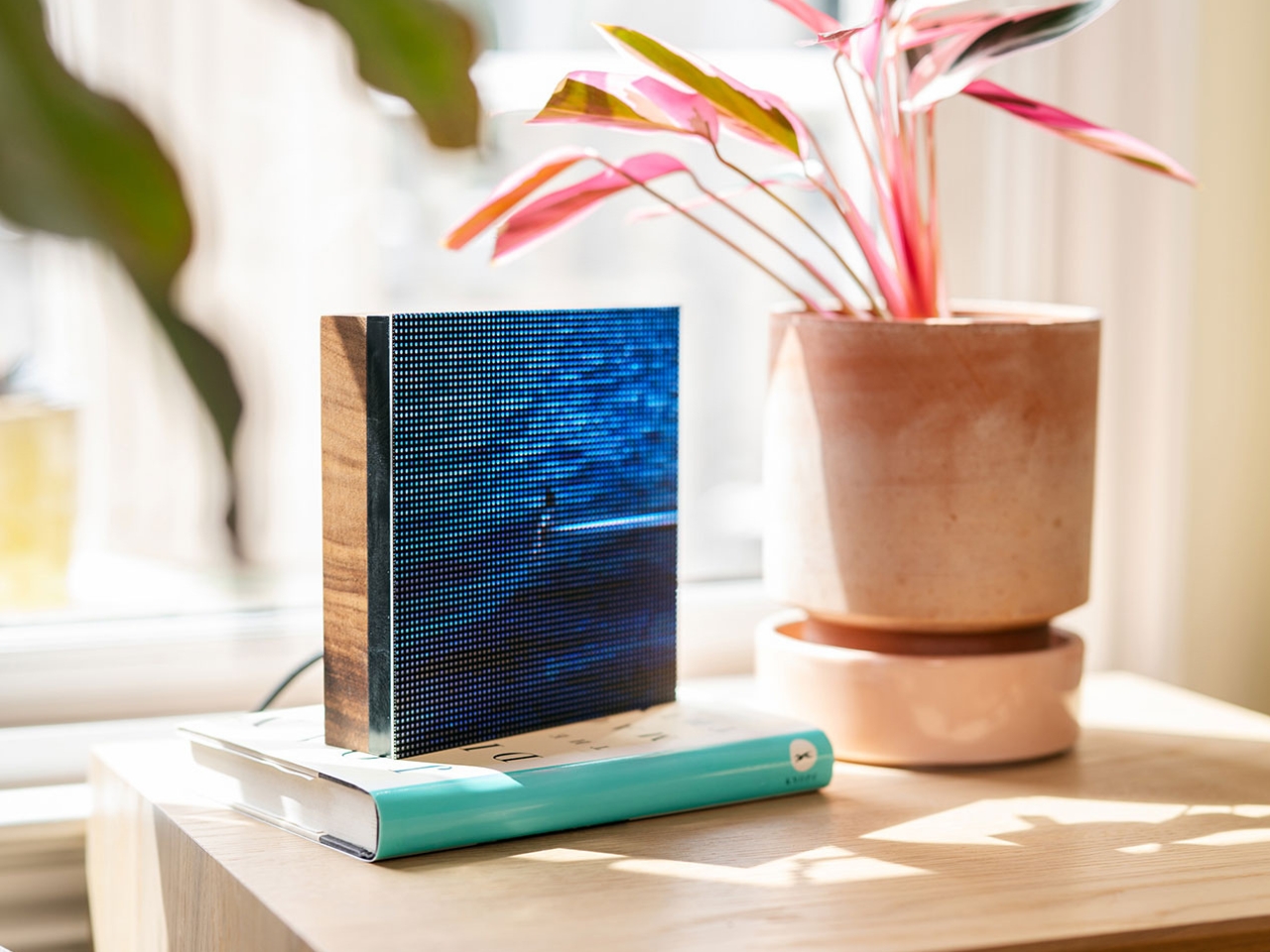
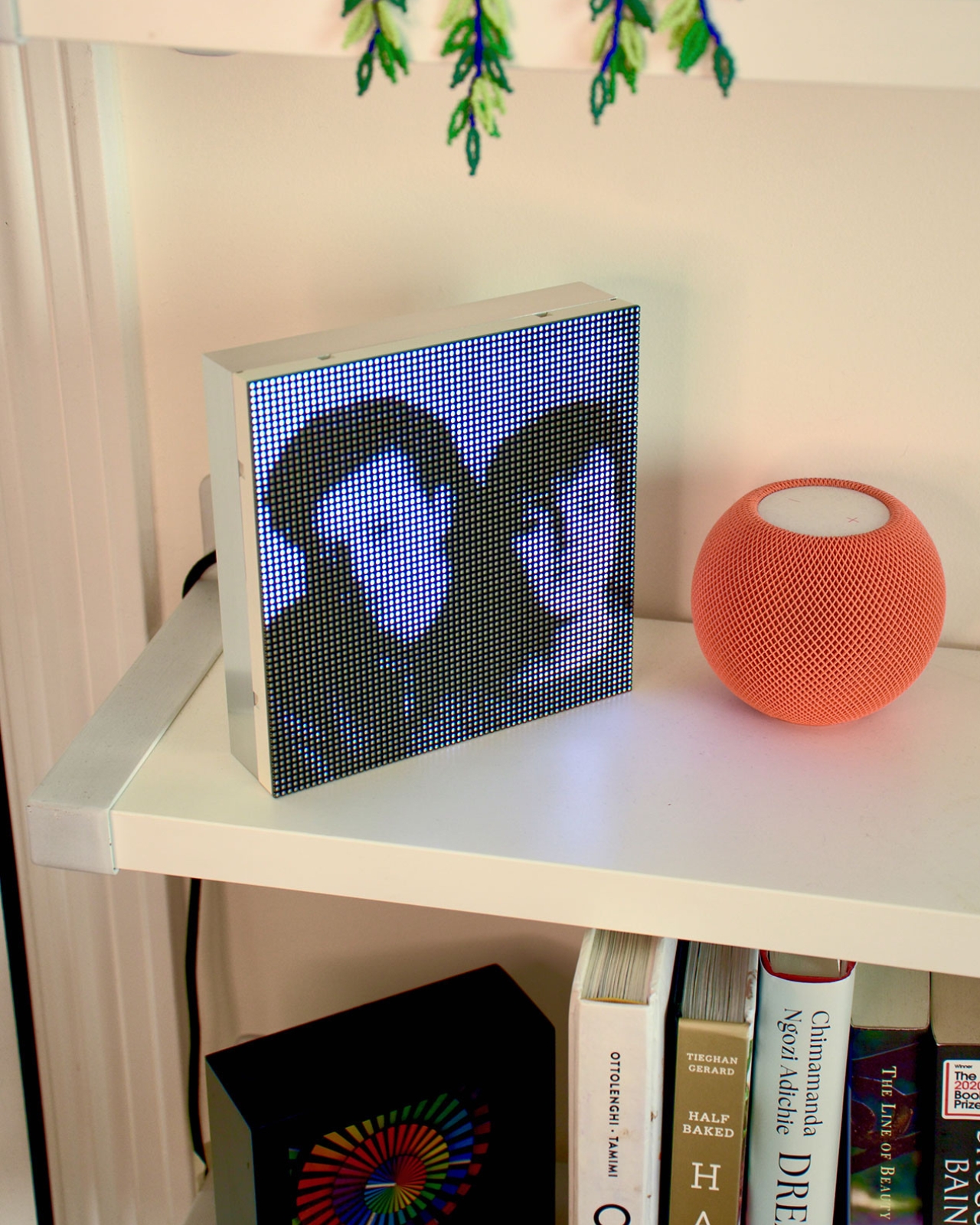
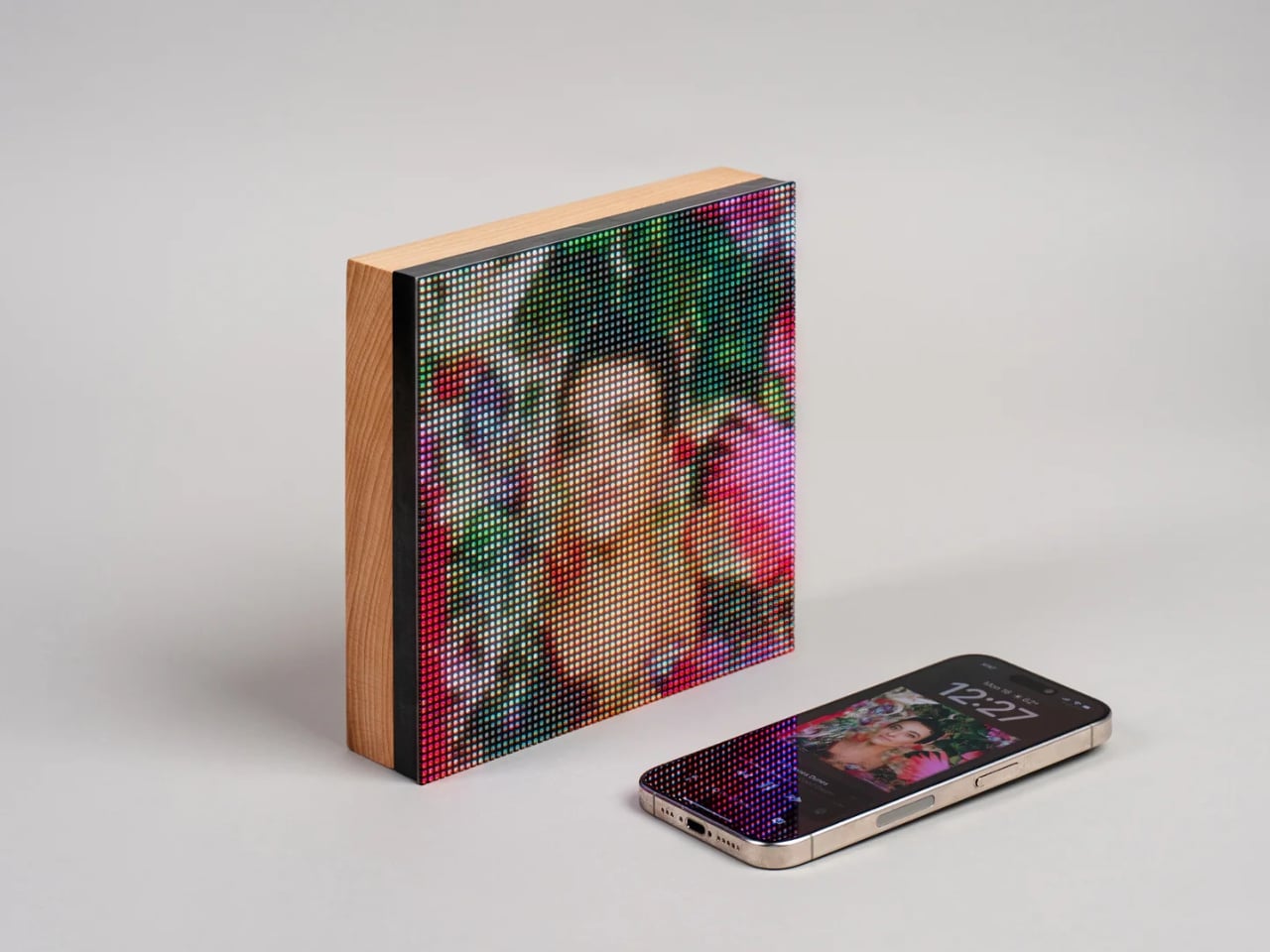
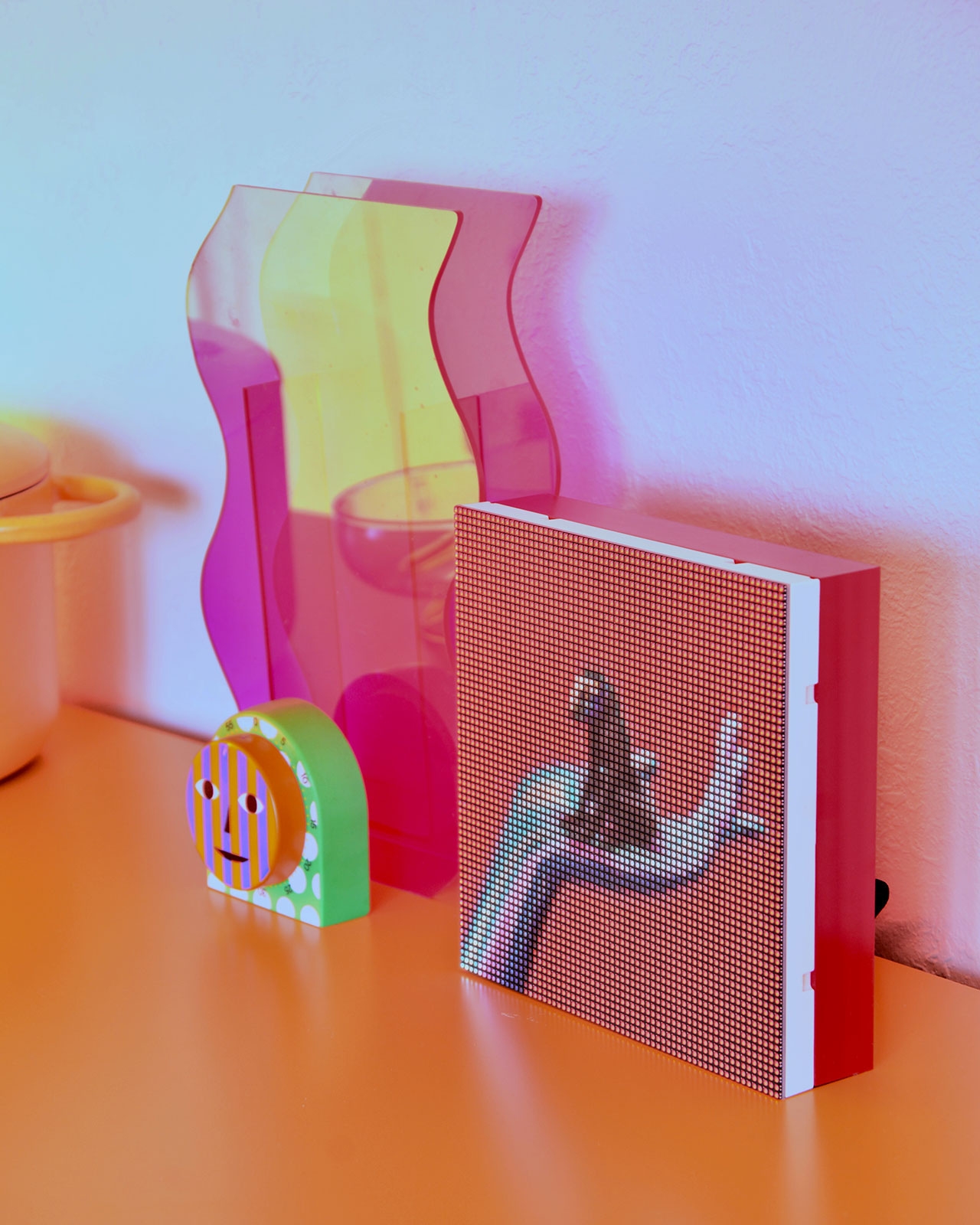
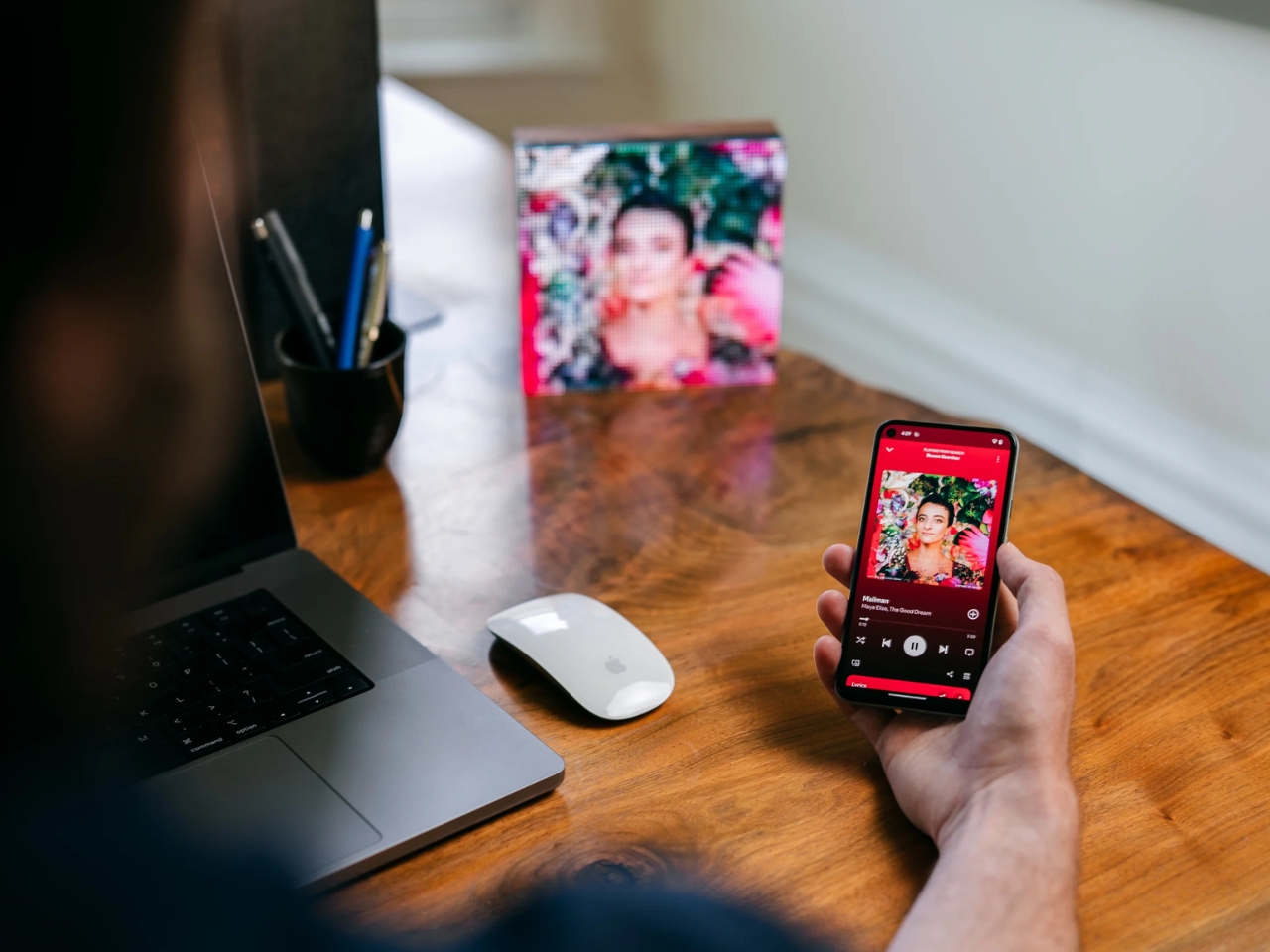
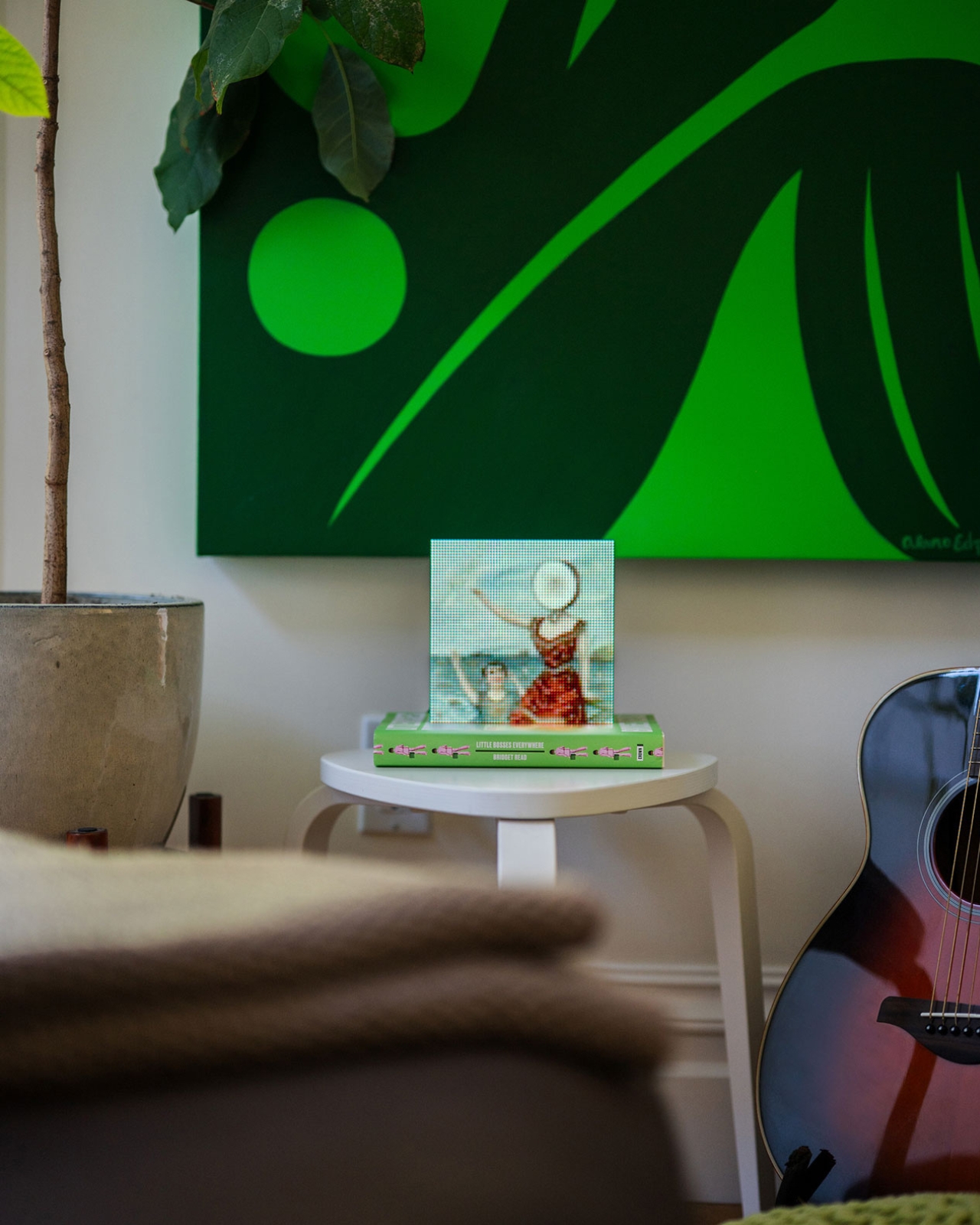
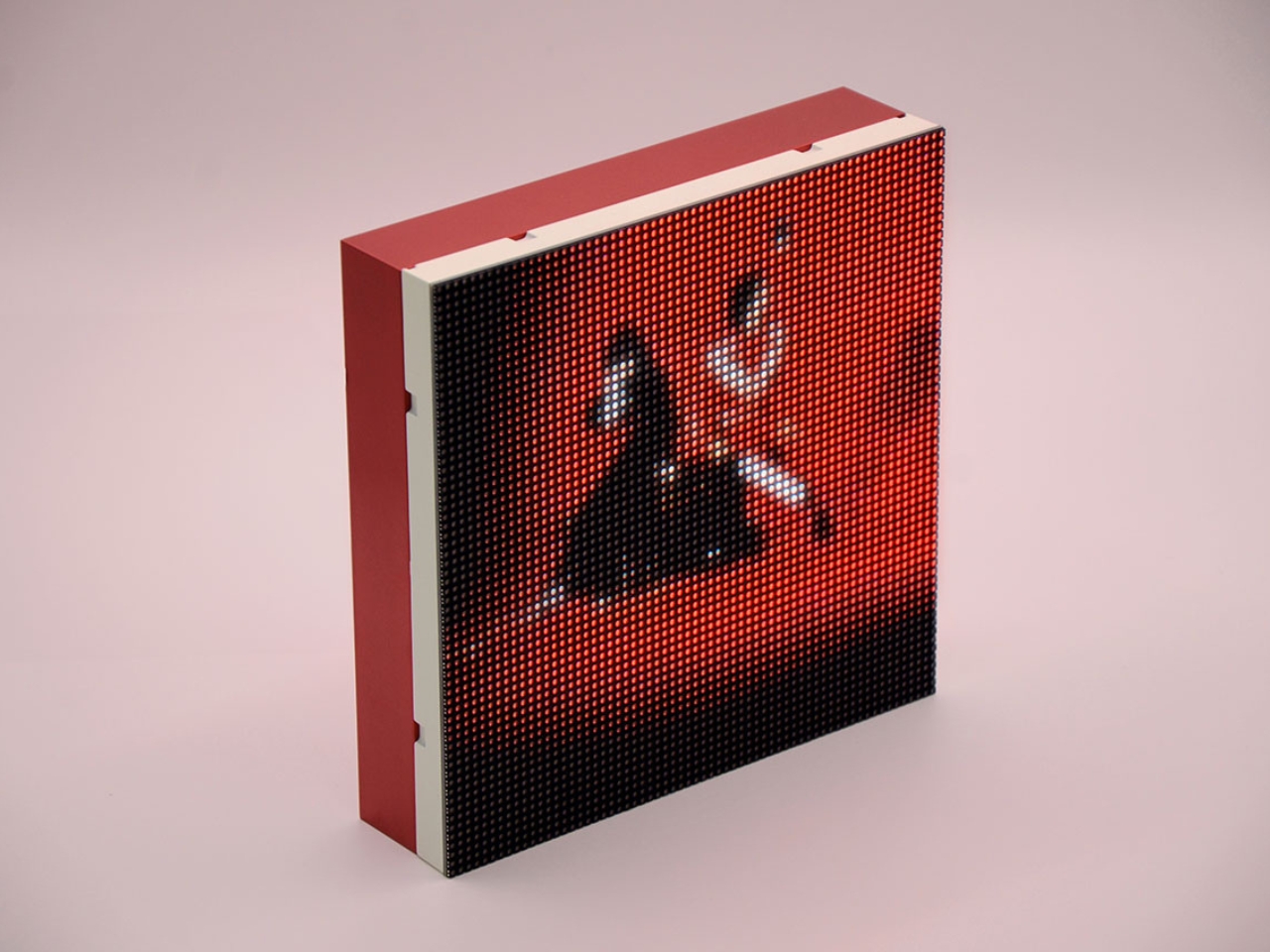
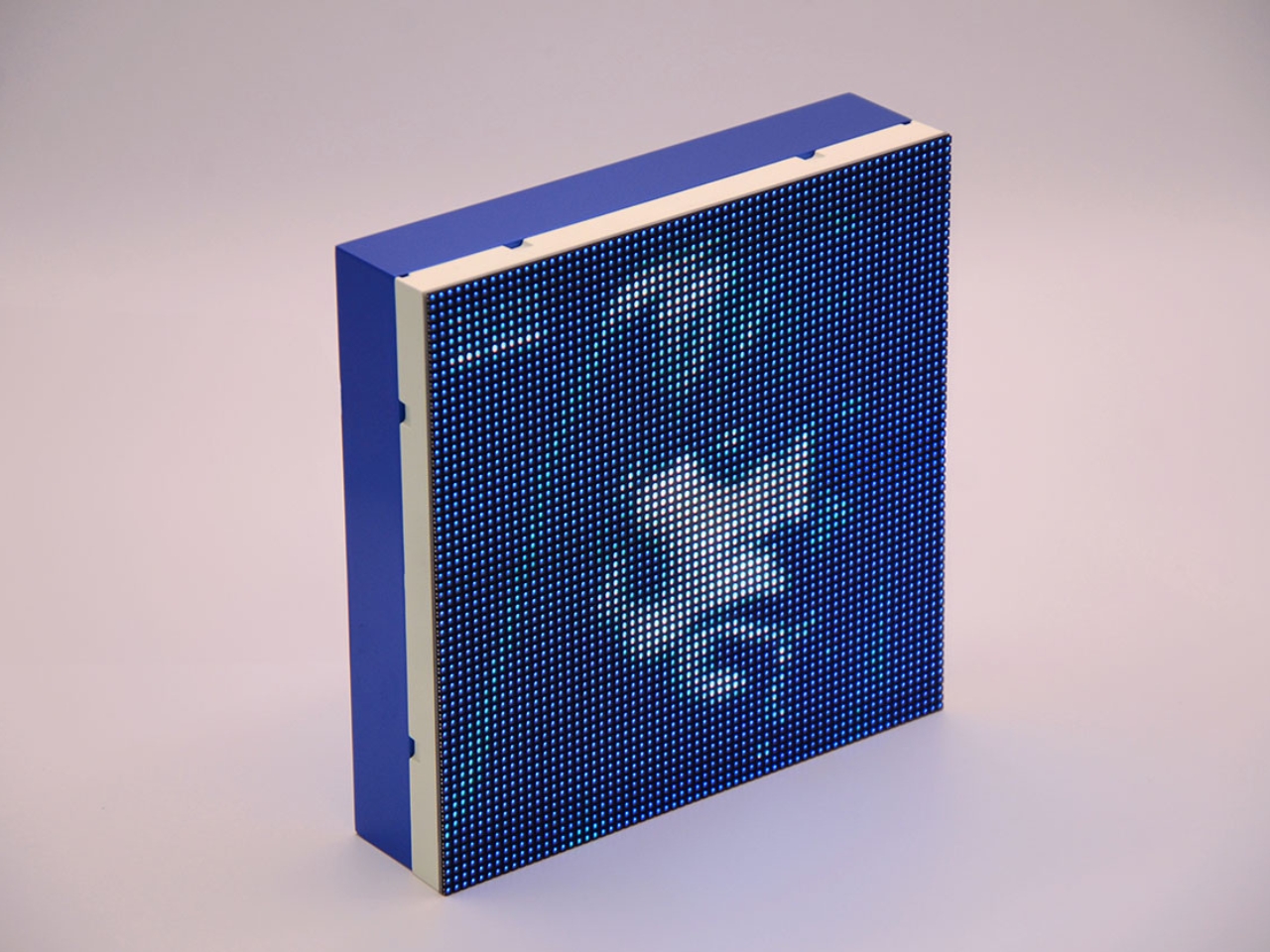
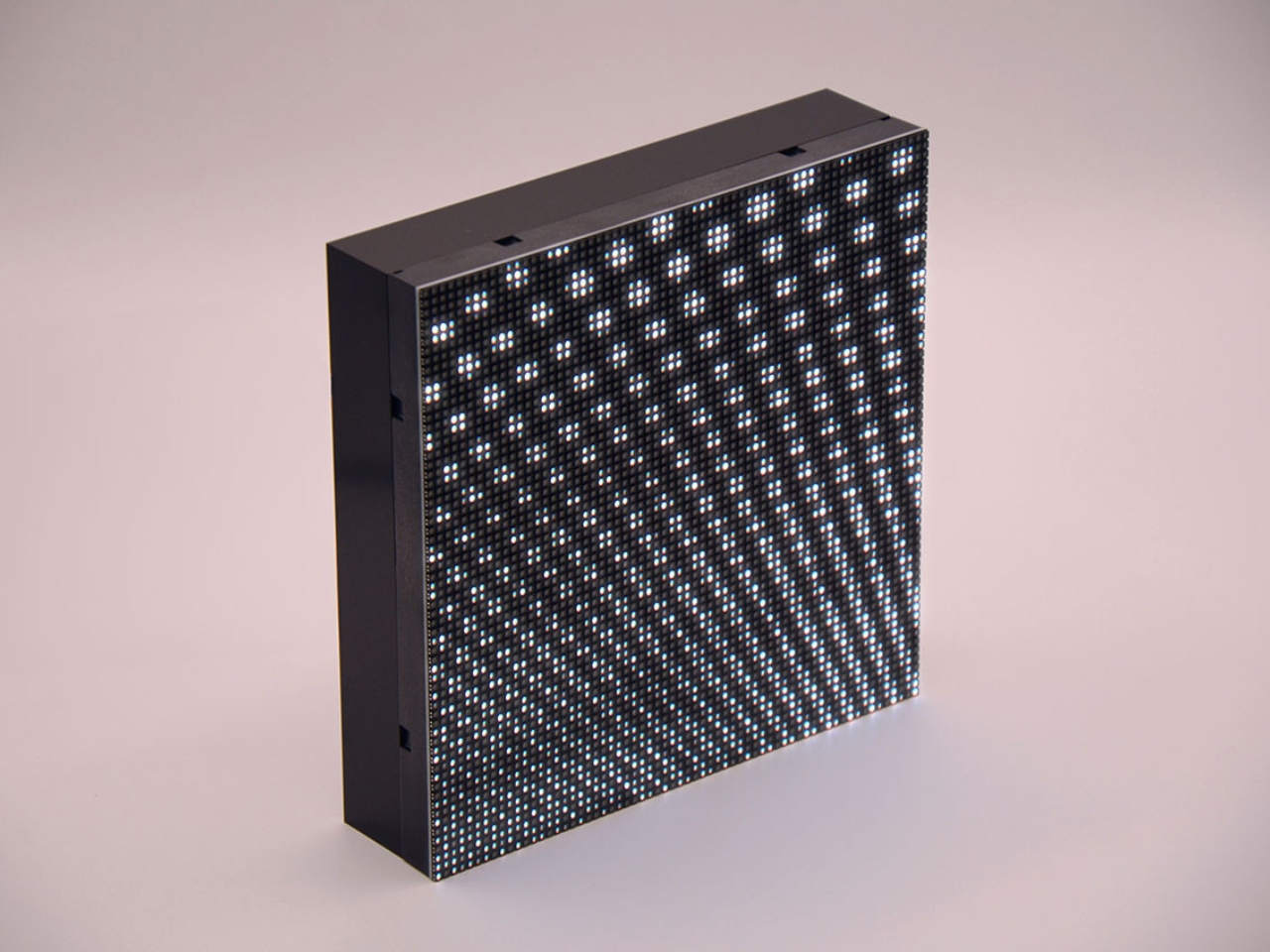
That’s the idea behind the Tuneshine Album Art Display, which may become your newest favorite piece of technology. Created by Tobias Butler and lovingly assembled by hand in the USA, this charming little display brings a touch of vintage record store vibes into the streaming age. It basically shows off the album artwork of the song or album that’s currently playing. But if you’re not using it, it can also serve as an image display device.
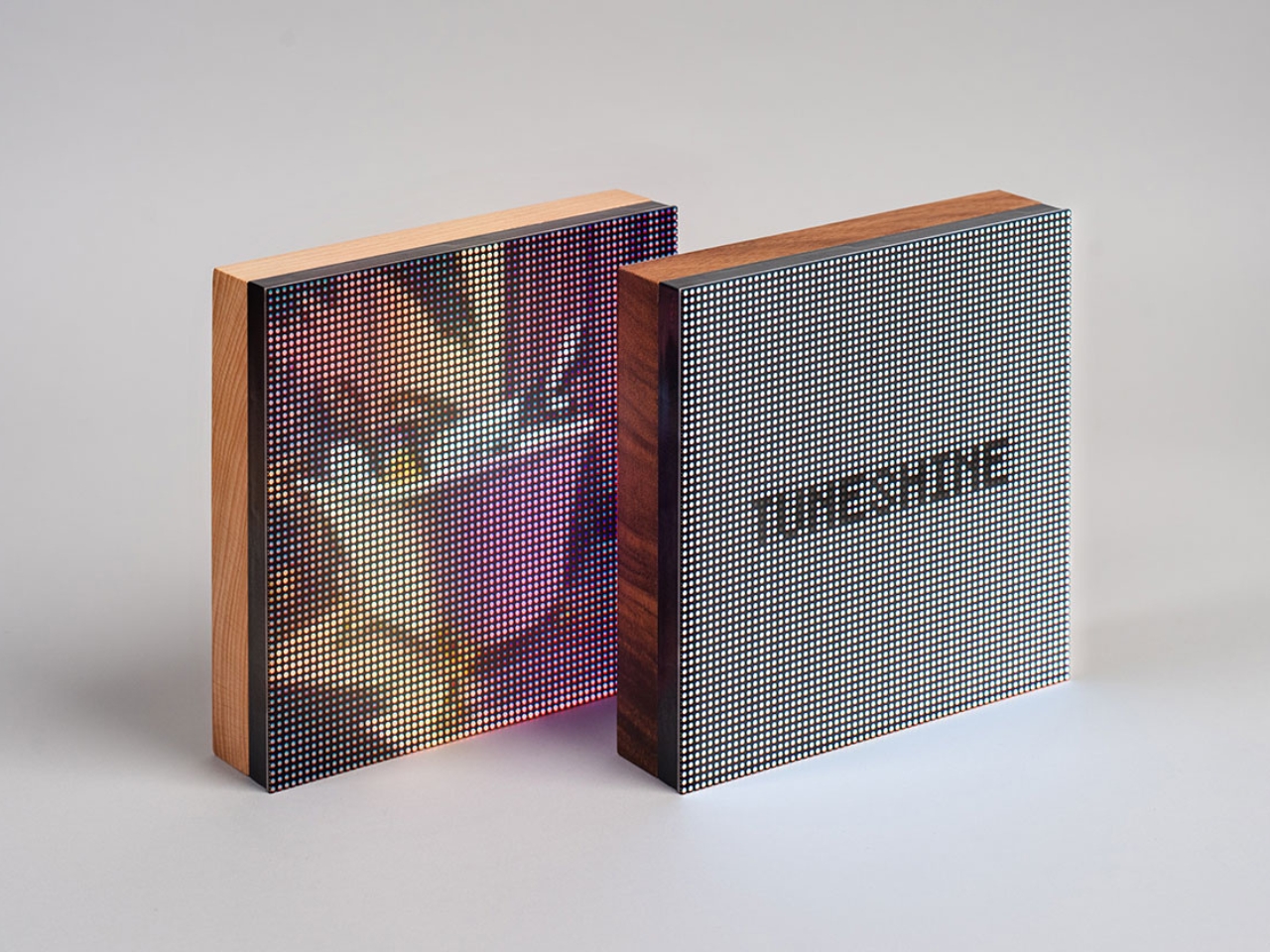
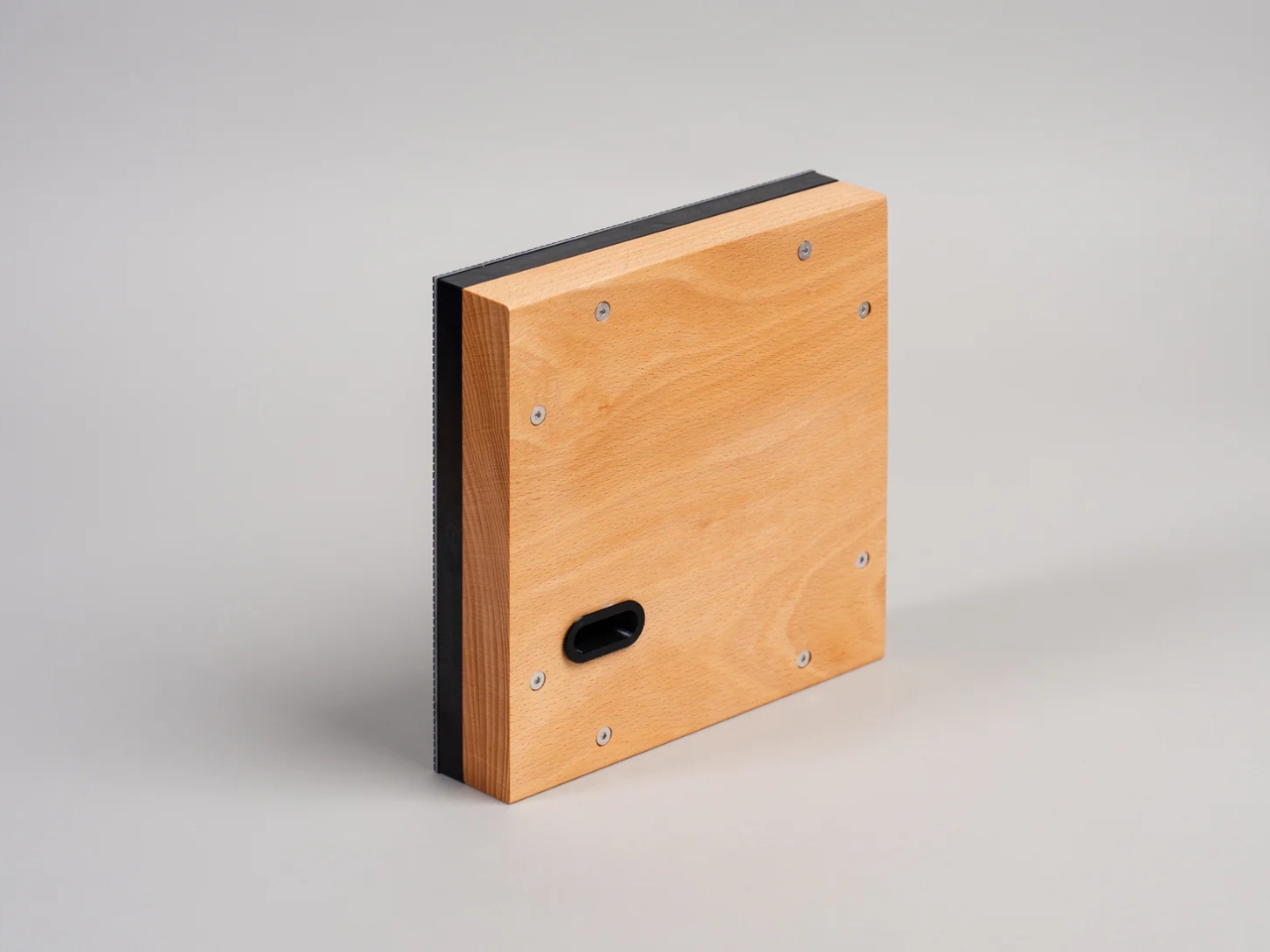
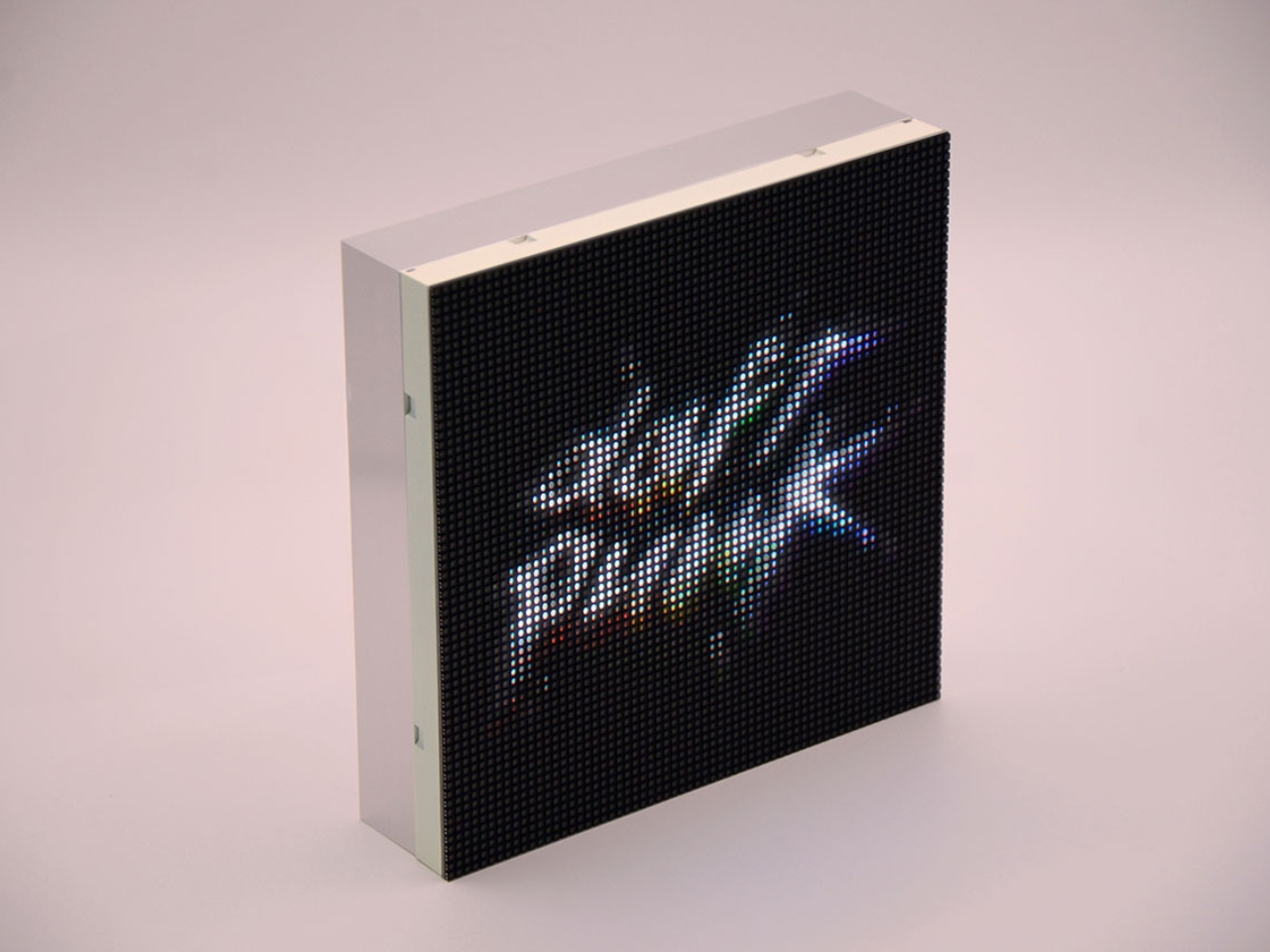
At its heart, Tuneshine is a 6.3″ x 6.3″ square LED display that’s about 1.57″ thick (or 16cm x 16cm x 4cm if you prefer metric). Don’t let the compact size fool you, as this beauty packs 64 x 64 extra-bright pixels that make your album artwork pop with vibrant colors and impressive clarity. Plus, you have brightness control, so whether you’re setting the mood for a dinner party or jamming out in broad daylight, you can adjust it to perfection.
You can connect it to your music service of choice, including Spotify, Apple Music, Sonos, and last.fm. As long as your albums or playlists live in these services (no idea if YouTube Music will eventually be added), their album covers will be displayed in Tuneshine. You can also use Shazam to display artwork from other sources like vinyl records, CDs, radios, etc., and capture the magic of the art that the artists put effort into. You just need an iOS or Android device and a Wi-Fi connection to do the initial setup.
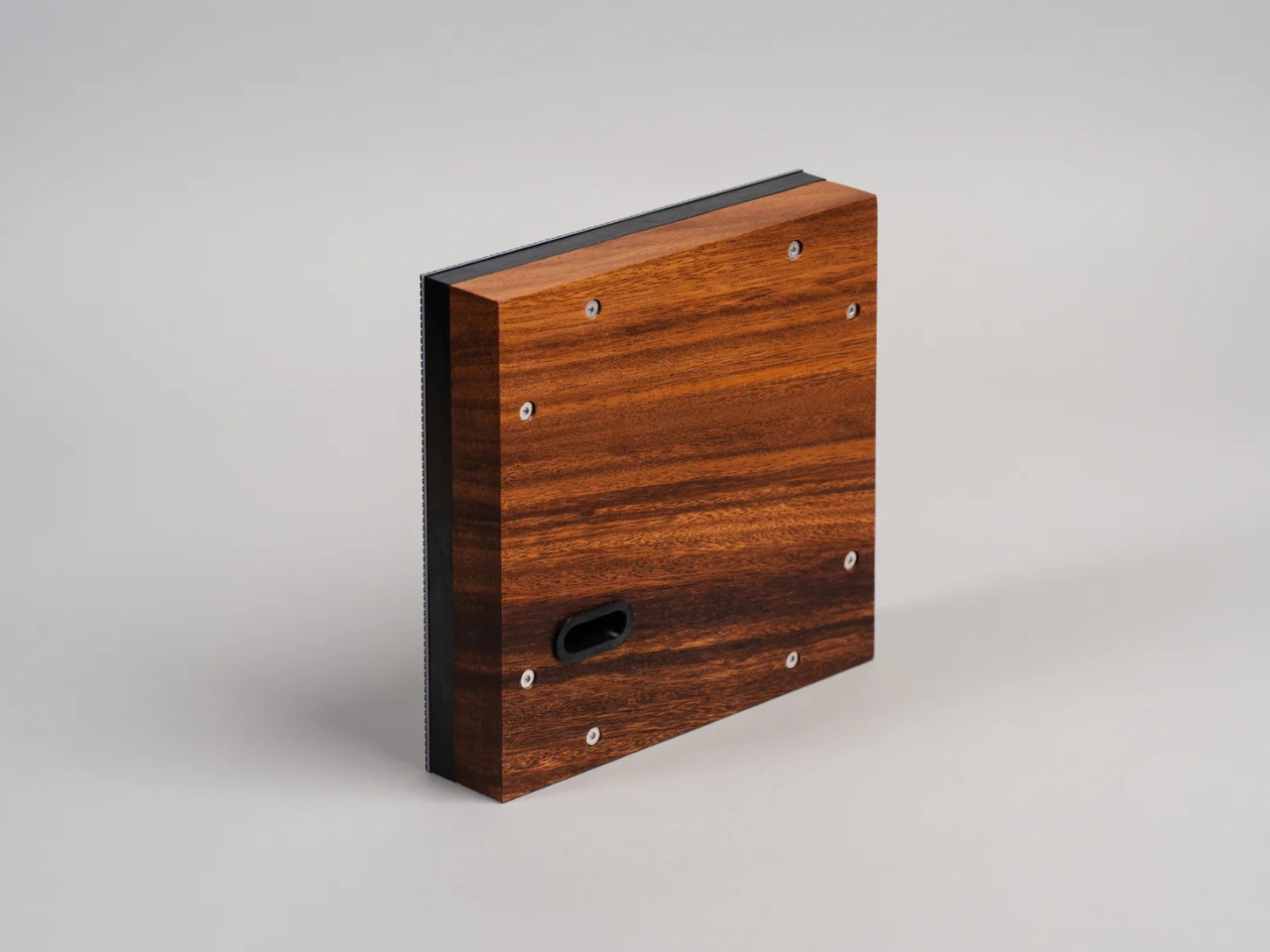
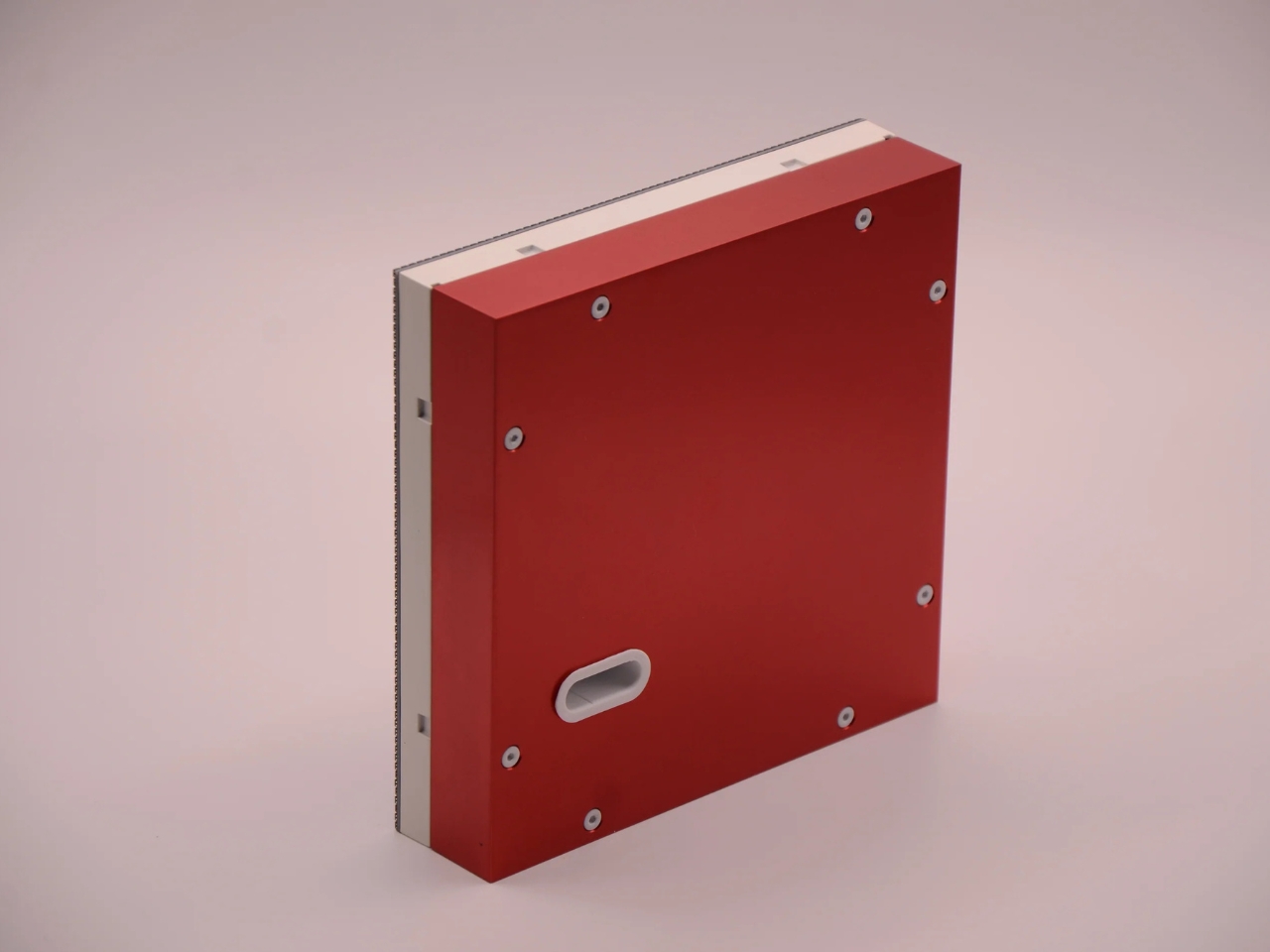
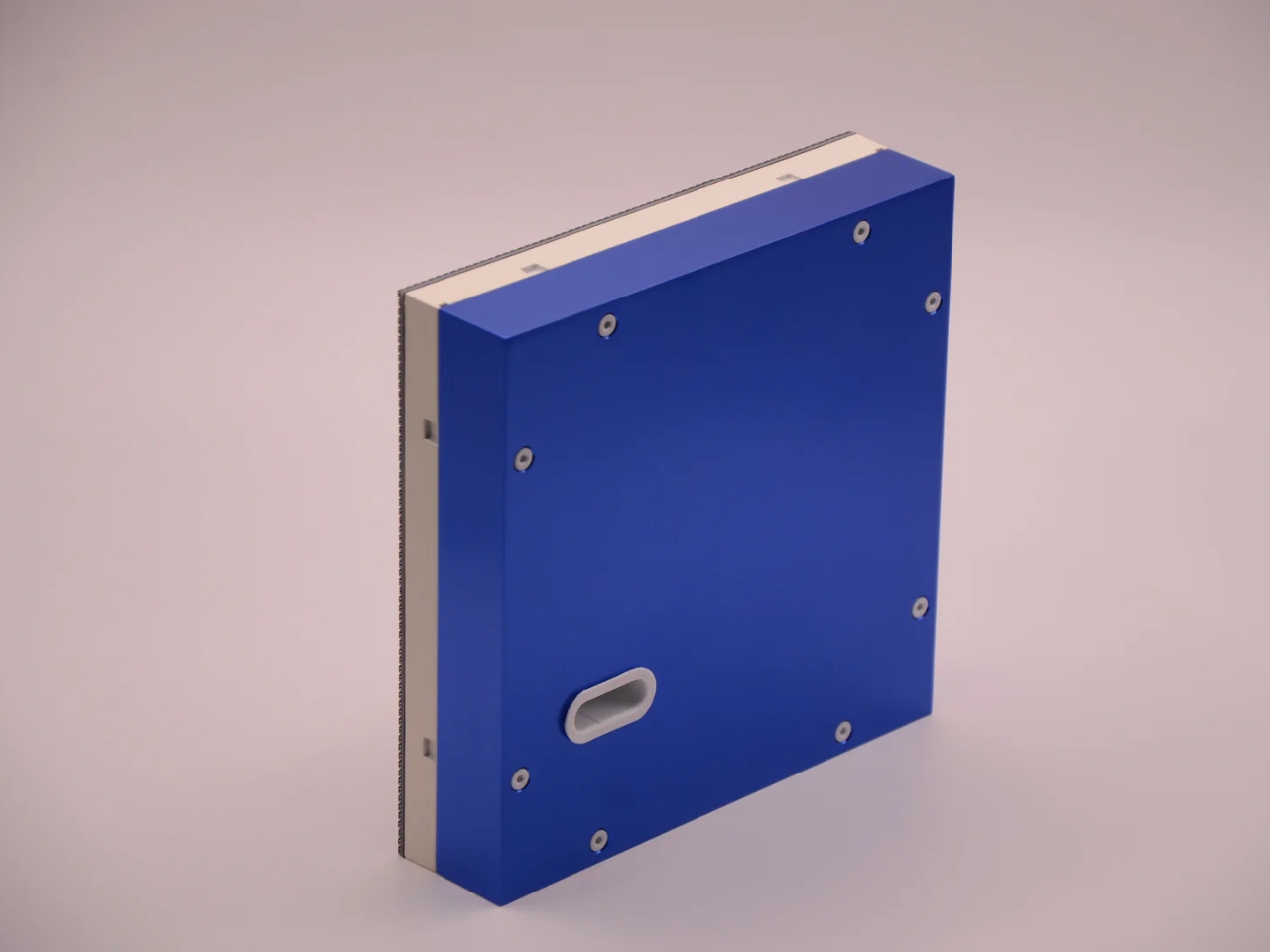
For those times when you’re not using the device to play music, you can actually customize it to display the image of your choice, whether it’s a favorite photo, a work of art, or a motivational quote. When it comes to the design, the Tuneshine comes in light and dark wood options like Beechwood + Walnut in a solid wood case. You can also get it in a solid anodized aluminum case with five options: Sapphire (a rich blue), Onyx (deep black), Obsidian (dramatic dark tones), Pearl (elegant and light), and Ruby (bold red).
You have to note that Tuneshine doesn’t include an internal or external speaker, so you have to use it alongside an existing speaker or sound system. For collectors, there’s an extra special touch: each Tuneshine unit is assembled, signed, and numbered inside the case by creator Tobias Butler himself, making it a genuine piece of functional art. The wooden versions are fulfilled quickly in 1-2 business days, while the Gems collection takes 1-2 weeks, but the wait is worth it for something this unique.
In our streaming age, we’ve gained incredible convenience but lost some of the tangible magic that came with physical music collections. Remember the ritual of carefully placing a record on the turntable, admiring the cover art before the first note played? Or displaying your favorite albums on your shelf like the treasures they were? Tuneshine bridges that gap beautifully, letting us reclaim that visual connection to our music without sacrificing modern convenience.
Whether you’re a longtime collector missing the days of physical media or simply someone who appreciates beautiful design and wants to celebrate the artistry behind your favorite music, the Tuneshine Album Art Display transforms any space into a personal gallery. It’s not just a gadget; it’s a love letter to album art, a conversation starter, and a daily reminder that music is meant to be experienced with all our senses.
We spend a lot of time staring at our screens, so it’s worth finding one that actually feels good to use. The right monitor can make your desk setup feel faster, brighter and easier on the eyes, whether you’re deep into spreadsheets, watching a show or chasing higher frame rates in your favorite game.
What the best monitor means, though, depends on what you do. Gamers might want smooth, fast refresh rates. Creators usually prioritize color accuracy. Office workers and students just need something clear, comfortable and reliable. Thankfully, monitors in 2025 cover all of those needs, with options that range from compact 24-inch displays to massive ultrawides built for serious multitasking.
We’ve tested a variety of monitors across price ranges and use cases to find the ones that stand out for everyday use. No matter your budget, setup or screen-size preference, these are the monitors that make your PC, and your time in front of it, a little better.
The cheapest monitors are still TN (twisted nematic), which are strictly for gamers or office use. VA (vertical alignment) monitors are also relatively cheap, while offering good brightness and a high contrast ratio. However, content creators will find that LCD, IPS displays (in-plane switching) deliver better color accuracy, pixel density, picture quality and wide viewing angles — making them a strong option for general computer monitor use.
If maximum brightness is important, a quantum dot LCD display is the way to go — those are typically found in larger displays. OLED panels are now available and offer the best blacks and color reproduction, but they lack the brightness of LED or quantum dot displays. Plus, they’re expensive. The latest type of OLED monitor, called QD-OLED from Samsung, is now common among gaming monitors. The most notable advantage is that it can get a lot brighter, with recent models hitting up to 1,000 nits+ of peak brightness.
MiniLEDs are now widely used in high-end displays. They’re similar to quantum dot tech, but as the name suggests, it uses smaller LED diodes that are just 0.2mm in diameter. As such, manufacturers can pack in up to three times more LEDs with more local dimming zones, delivering deeper blacks and better contrast. MiniLED displays also tend to offer excellent backlight control, making them a great choice for HDR content and video editing.
Screen size, resolution and display format
Where 24-inch displays used to be more or less standard (and can still be useful for basic computing), 27-, 32-, 34- and even 42-inch displays have become popular for entertainment, content creation and even gaming these days.
Nearly every monitor used to be 16:9, but it’s now possible to find 16:10 and other more exotic display shapes. On the gaming and entertainment side, we’re also seeing curved monitors and widescreen ultrawide monitors with aspect ratios like 21:9. If you do decide to buy an ultrawide display, however, keep in mind that a 30-inch 21:9 model is the same height as a 24-inch monitor, so you might end up with a smaller display than you expected.
A 4K monitor is nearly a must for content creators, and some folks are even going for 5K or all the way up to 8K. Keep in mind, though, that you’ll need a pretty powerful computer with a decent graphics card to drive all those sharp pixels. And 4K higher resolution should be paired with a screen size of 27 inches and up, or you won’t notice much difference between 1440p. At the same time, I wouldn’t get a model larger than 27 inches unless it’s 4K, as you’ll start to see pixelation if you’re working up close to the display. That’s when a lower resolution monitor shows its limits.
One new monitor category to consider is portable monitors designed to be carried and used with laptops. Those typically come in 1080p resolutions and sizes from 13-15 inches. They usually have a lightweight kickstand-type support that folds up to keep things compact and maximize portability and functionality.
HDR
HDR adds vibrancy to entertainment and gaming – but be careful before jumping in. Some monitors that claim HDR on their marketing materials don’t even conform to a base standard. To be sure that a display at least meets minimum HDR specs, you’ll want to choose one with a DisplayHDR rating with each tier representing maximum brightness in nits.
However, the lowest DisplayHDR 400 and 500 tiers may disappoint you with a lack of brightness, washed out blacks and mediocre color reproduction. If you can afford it, the best monitor to choose is a model with DisplayHDR 600, 1000 or True Black 400, True Black 500 and True Black 600.
Where televisions typically offer HDR10 and Dolby Vision or HDR10+, most PC monitors only support the HDR10 standard, other than a few (very expensive) models. That doesn’t matter much for content creation or gaming, but HDR streaming on Netflix, Amazon Prime Video and other services won’t look quite as punchy. In addition, the best gaming monitors are usually the ones supporting HDR600 (and up), rather than content creation monitors – with a few exceptions.
Refresh rate
High refresh rate is a key feature, particularly on gaming monitors. A bare minimum nowadays is 60Hz, and 80Hz and higher refresh rates are much easier on the eyes. However, most 4K displays top out at 60Hz with some rare exceptions and the HDMI 2.0 spec only supports 4K at 60Hz, so you’d need at least DisplayPort 1.4 (4K at 120Hz) or HDMI 2.1. The latter is now available on a number of monitors, particularly gaming displays. However, it’s only supported by the latest NVIDIA RTX 3000- and 4000-series, AMD RX 6000-series GPUs. Support for G-Sync and AMD FreeSync is also something to look for if you want to eliminate screen tearing and stuttering during fast-paced gameplay — especially when paired with a high refresh rate.
Inputs
There are essentially three types of modern display inputs: Thunderbolt, DisplayPort and HDMI. Most monitors built for PCs come with the latter two, while a select few (typically built for Macs) will use Thunderbolt. To add to the confusion, USB-C ports may be Thunderbolt 3, and by extension, DisplayPort compatible, so you may need a USB-C to Thunderbolt or DisplayPort cable adapter depending on your display.
Color bit depth
Serious content creators should consider a more costly 10-bit monitor that can display billions of colors. If budget is an issue, you can go for an 8-bit panel that can fake billions of colors via dithering (often spec’d as “8-bit + FRC”). For entertainment or business purposes, a regular 8-bit monitor that can display millions of colors will be fine.
Color gamut
The other aspect of color is the gamut. That expresses the range of colors that can be reproduced and not just the number of colors. Most good monitors these days can cover the sRGB and Rec.709 gamuts (designed for photos and video respectively). For more demanding work, though, you’ll want one that can reproduce more demanding modern gamuts like AdobeRGB, DCI-P3 and Rec.2020 gamuts, which encompass a wider range of colors. The latter two are often used for film projection and HDR, respectively.
Monitor FAQs
Is OLED better than mini-LED for monitors?
OLED is better than mini-LED in many areas but not all. Here are the advantages of OLED panels:
OLED monitors don't have any "blooming" or halos around bright parts of the image.
OLEDs have blacks with zero brightness, which is not achievable on mini-LED. That means they also have higher contrast ratios.
OLEDs consume less energy.
OLEDs have faster response times for gaming.
And here are the advantages of mini-LED monitors:
They are brighter (often much brighter), so it can be better for HDR content.
They don't suffer from burn-in like OLED can.
What size monitor is best for a home office?
This depends on the individual. For normal use, 27-32 inches is the sweet spot. If you're one who likes many windows open at a time (like a stock broker), then you might want to go up to 37 or even 42 inches.
Are curved monitors worth it for gaming?
If you need as much speed as possible, a curved monitor lets you rapidly look around the screen without changing focus or moving your head as much compared to a flat screen. It also provides more immersion. The drawback is that curved displays tend to be wider so they take up more desk space. They're also generally more expensive.
This article originally appeared on Engadget at https://www.engadget.com/computing/accessories/best-monitor-130006843.html?src=rss
Samsung is a tech giant with its hands in many industries, but one of its biggest businesses is in making displays. These cover anything from TVs to laptops to smartphones to signage, supporting a variety of display technologies like LCD, LED, and everything in between. One kind of technology it has barely touched, however, is Electronic Paper Displays or EPDs, the same kind of eye-friendly, battery-efficient screens found on eBook readers. That is changing now, however, with Samsung dipping its toes into this market with a new Color E-Paper display that’s currently aimed at indoor signage and posters but could also be extended to new types of devices in the very new future.
E Ink signage is becoming more common these days, especially as these electronic paper displays start to show improvements in color rendering. It’s not hard to see the benefits of the technology for this particular use case, since EPDs don’t use power to retain their image and use very little power when changing what’s on display. Although it is hardly the first of its kind, even for the tech giant, Samsung’s presence in this growing market is pretty much a stamp of approval from a brand that sells large TVs and screens for the same purpose of advertising in indoor signage.
The new Samsung Color E-Paper display seems to be really pushing the boundaries of the technology. The 32-inch has a QHD resolution of 2560×1440, though its real boasting feature is the 60,000-color gamut (six per pixel) which is quite high for a color electronic paper. This is thanks to the new E Ink Spectra 6 panel, the very same that flaunted artistic designs and images on the ASUS ROG Project DALI at Computex 2024 last week. This laptop concept utilizes a smaller panel that acts as a canvas for owners to customize the design of the laptop cover as they desire.
ASUS ROG Project DALI laptop concept @ Computex 2024
While the gigantic size of the Samsung Color E-Paper limits it to applications like signs and posters, it does make one wonder if Samsung will stop there. Its collaboration with E Ink could, in fact, lead to more devices with smaller screens, particularly in the eReader market that Samsung has never ventured into before. And with its close ties with Wacom, it could even add stylus support for these devices, potentially putting the likes of the Amazon Kindle and Kobo on notice.
Samsung is a tech giant with its hands in many industries, but one of its biggest businesses is in making displays. These cover anything from TVs to laptops to smartphones to signage, supporting a variety of display technologies like LCD, LED, and everything in between. One kind of technology it has barely touched, however, is Electronic Paper Displays or EPDs, the same kind of eye-friendly, battery-efficient screens found on eBook readers. That is changing now, however, with Samsung dipping its toes into this market with a new Color E-Paper display that’s currently aimed at indoor signage and posters but could also be extended to new types of devices in the very new future.
E Ink signage is becoming more common these days, especially as these electronic paper displays start to show improvements in color rendering. It’s not hard to see the benefits of the technology for this particular use case, since EPDs don’t use power to retain their image and use very little power when changing what’s on display. Although it is hardly the first of its kind, even for the tech giant, Samsung’s presence in this growing market is pretty much a stamp of approval from a brand that sells large TVs and screens for the same purpose of advertising in indoor signage.
The new Samsung Color E-Paper display seems to be really pushing the boundaries of the technology. The 32-inch has a QHD resolution of 2560×1440, though its real boasting feature is the 60,000-color gamut (six per pixel) which is quite high for a color electronic paper. This is thanks to the new E Ink Spectra 6 panel, the very same that flaunted artistic designs and images on the ASUS ROG Project DALI at Computex 2024 last week. This laptop concept utilizes a smaller panel that acts as a canvas for owners to customize the design of the laptop cover as they desire.
ASUS ROG Project DALI laptop concept @ Computex 2024
While the gigantic size of the Samsung Color E-Paper limits it to applications like signs and posters, it does make one wonder if Samsung will stop there. Its collaboration with E Ink could, in fact, lead to more devices with smaller screens, particularly in the eReader market that Samsung has never ventured into before. And with its close ties with Wacom, it could even add stylus support for these devices, potentially putting the likes of the Amazon Kindle and Kobo on notice.
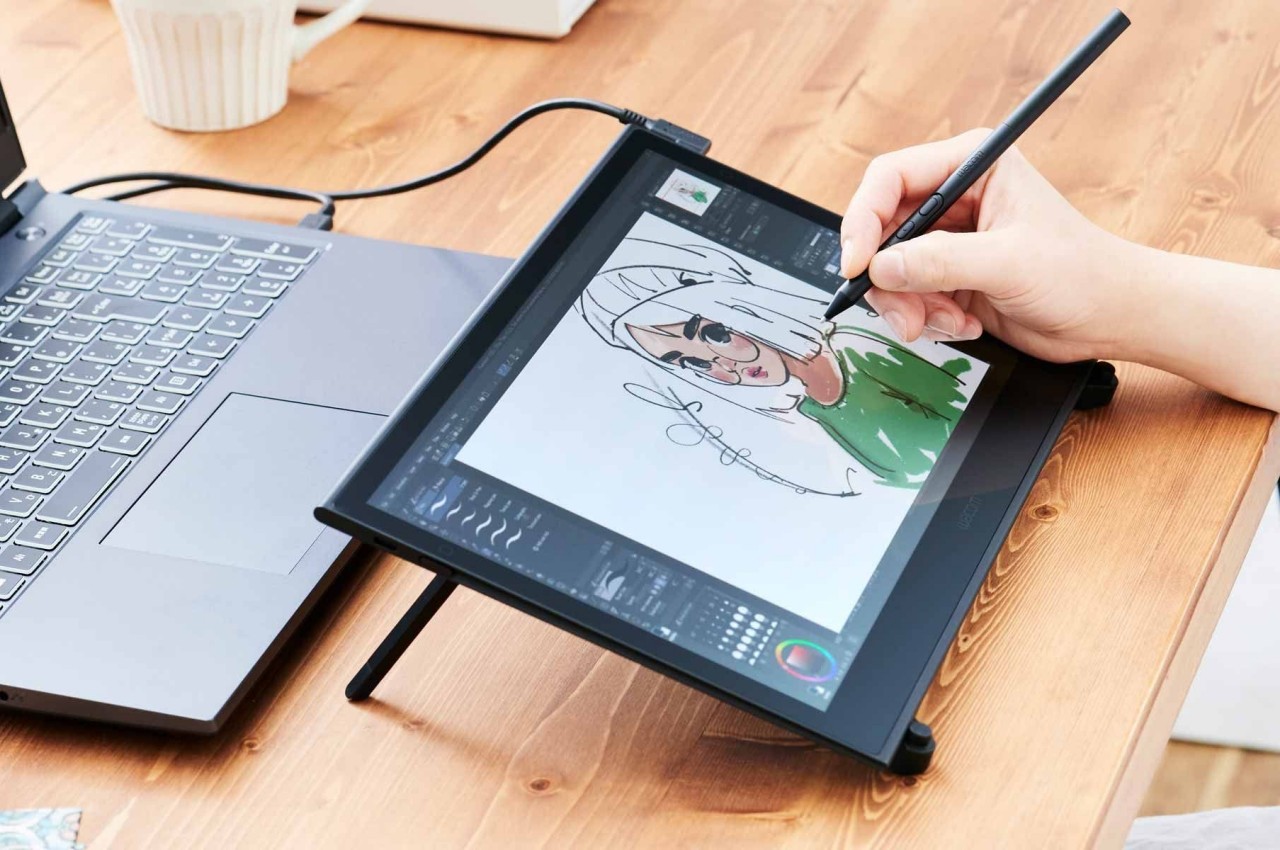
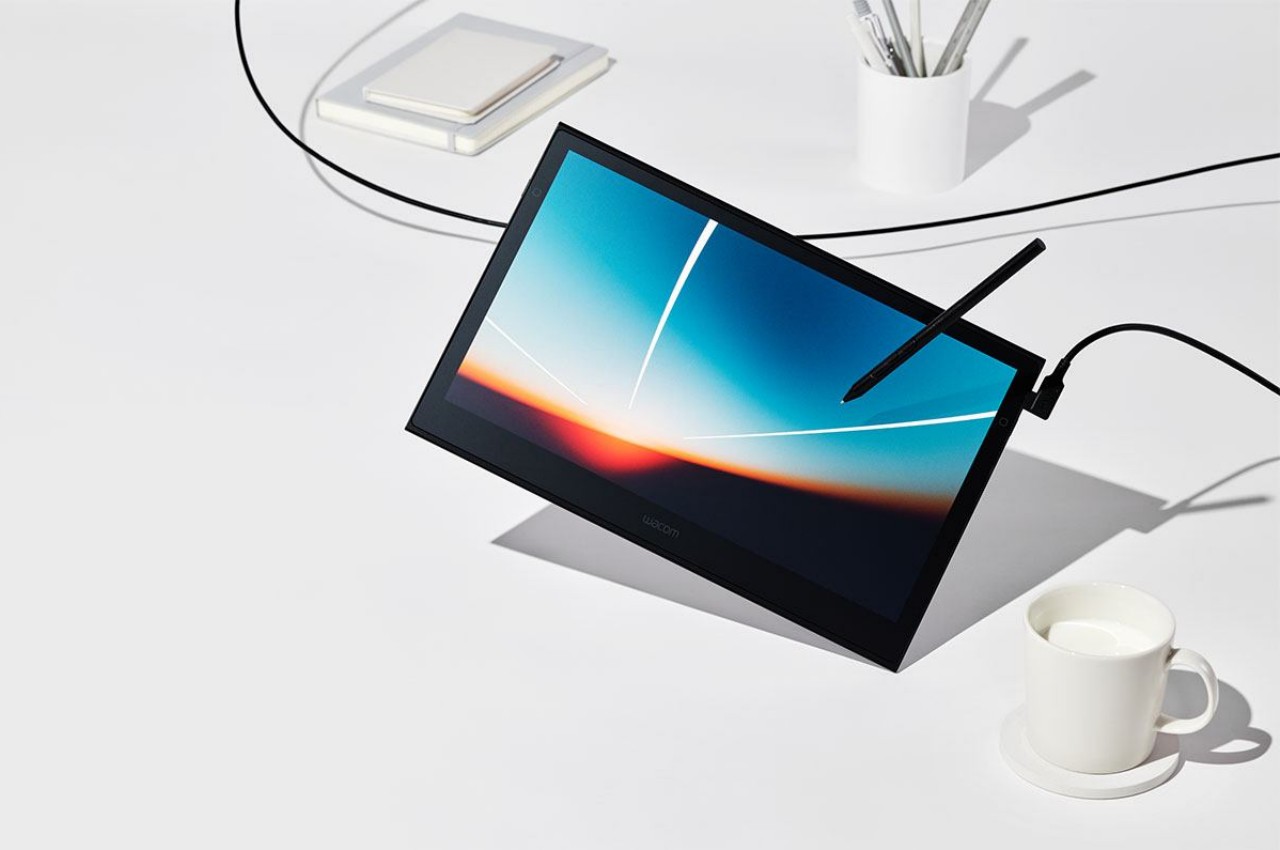
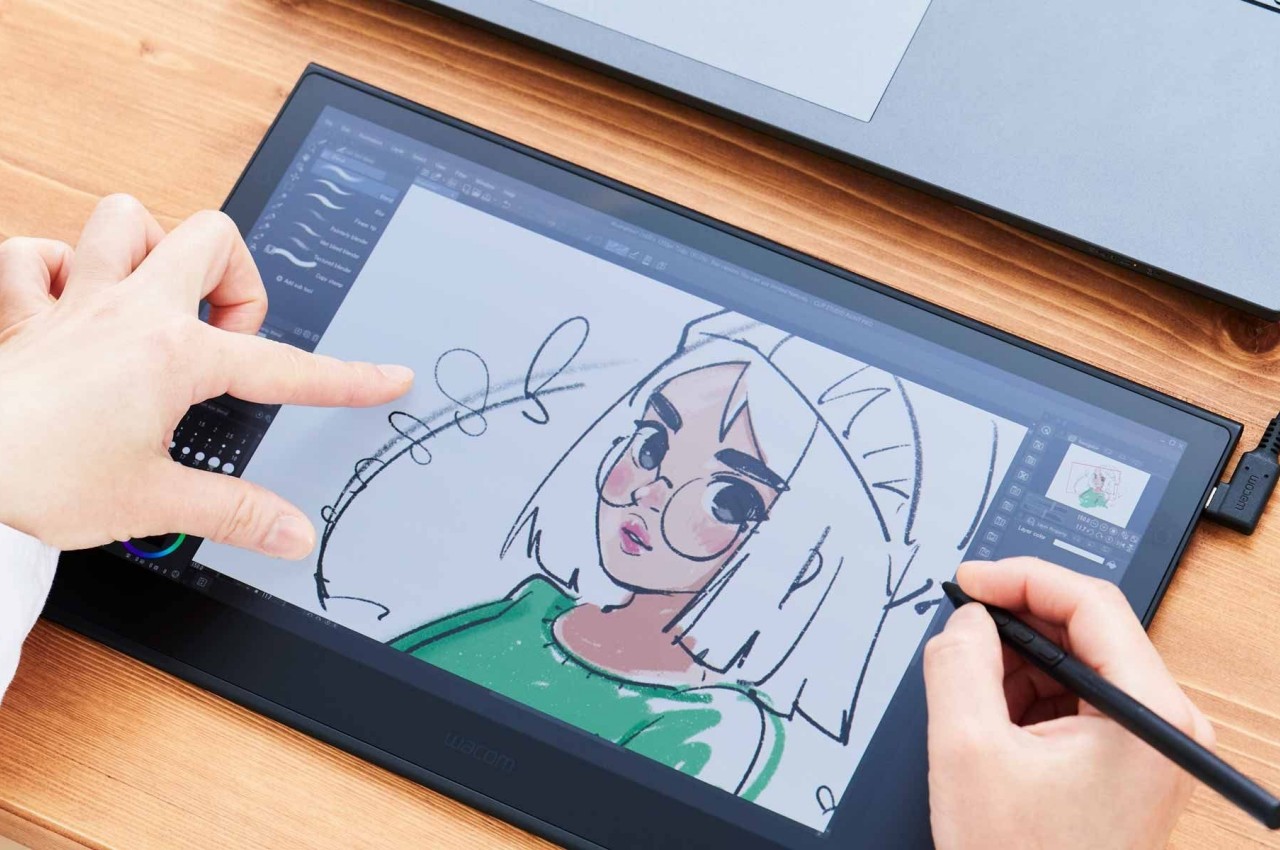
Inspiration can strike when you least expect it, but there are often places and events that can help get the creative juices flowing. The chatter of a lightly crowded cafe, the pause after attending a convention, or even simply moving from your desk to the couch can sometimes make you want to reach out for a sketchbook or even a digital canvas. The latter is fine if you have a tablet like an iPad, but if you prefer doing your designs on a computer, you’re a bit out of luck. Designers and artists these days need a certain degree of freedom and mobility, and Wacom is attempting to fill that need with a new product that isn’t just a screen you can draw on but also a beautiful computer monitor you can take anywhere you go.
Wacom is like the Apple of the digital creative world, making products that let artists, designers, and engineers bring their ideas to life. Its Cintiq brand, in particular, has been the household name for years when it came to “pen displays” or screens you can draw on with a stylus. These have traditionally been as large as computer monitors, though there are now smaller options within the 13 to 16-inch range. While you can definitely shove the smallest Wacom Cintiq or One 12 inside a bag, their designs clearly shout that they’re really meant to be drawing tools more than anything else.
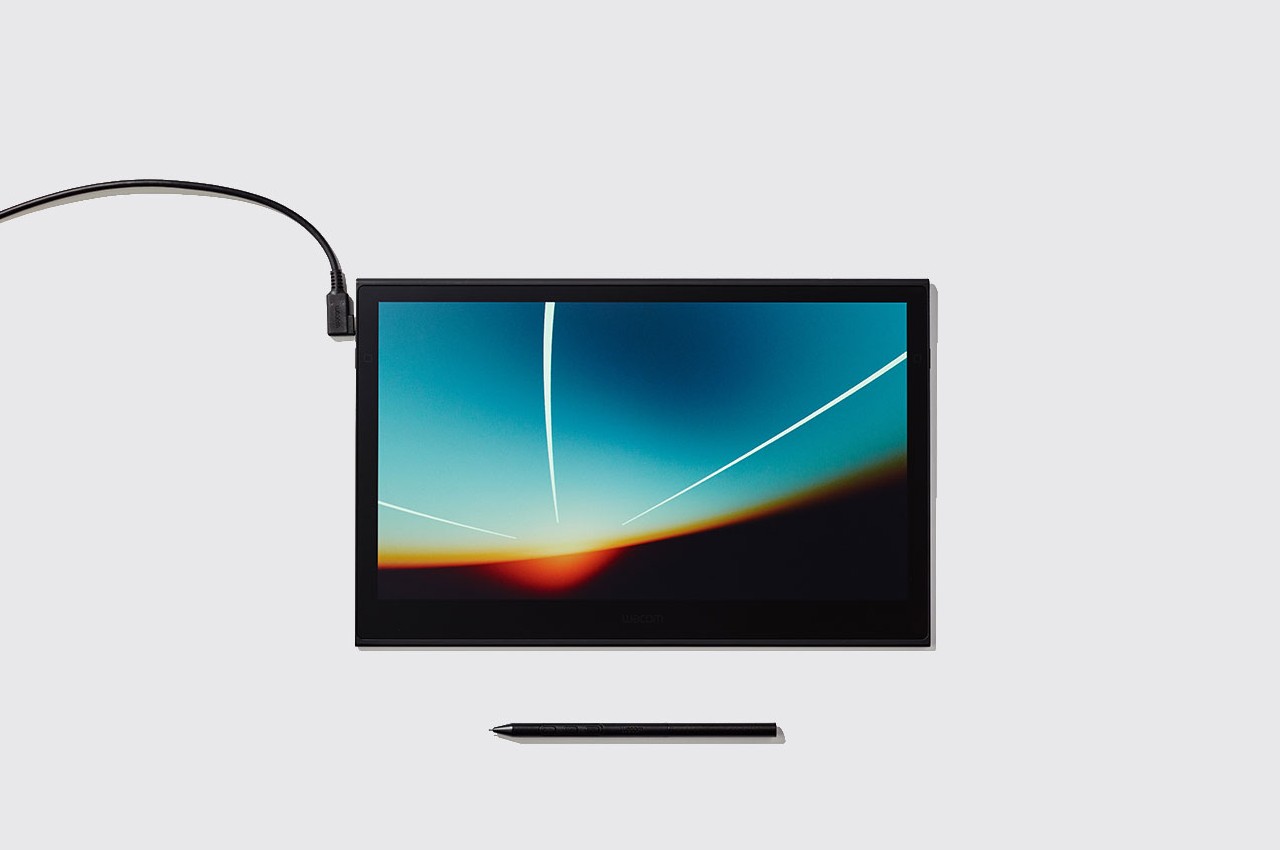
Wacom Movink’s biggest change might be technical, but it’s a technology that is allowing the brand to move in a slightly different direction from the rest of its pen displays. In a nutshell, it is Wacom’s first-ever OLED pen display, immediately setting itself apart from the LCDs of the rest of its portfolio. This gives it the advantage of being able to display richer and deeper blacks as well as a wider range of colors, which will help designs pop out better and be more color-accurate.
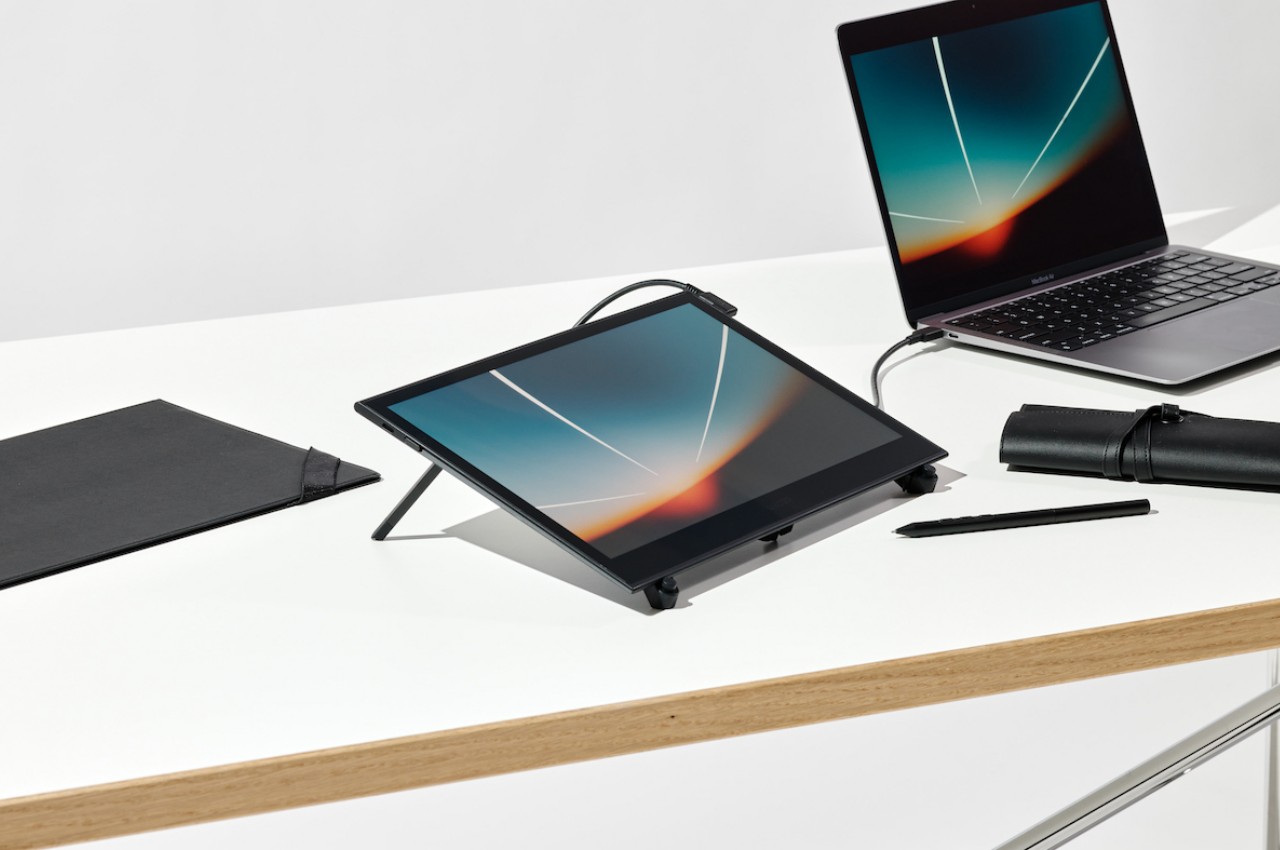
This OLED technology, however, also brings the advantage of making the Movink the thinnest and lightest of Wacom’s pen displays. It also has a sleeker design that looks more in line with portable monitors in the market today. Given that it does perform exactly like a portable OLED touch display, that’s not an inaccurate assessment. It still has thick bezels, but not as wide and egregious as on the Cintiq line. There’s also no rubber “bumper” around the edges, resulting in a simpler and more minimalist appearance.
Aside from the display upgrade, the Wacom Movink is functionally on par with the company’s other products. Where it really shines, however, is the newer and more modern design that makes it not only more portable but also more presentable. It’s not only a design tool made for designers but also one that designers will be proud to pull out of their bag and show off in public, empowering them to work on the go, whenever and wherever their muse calls.
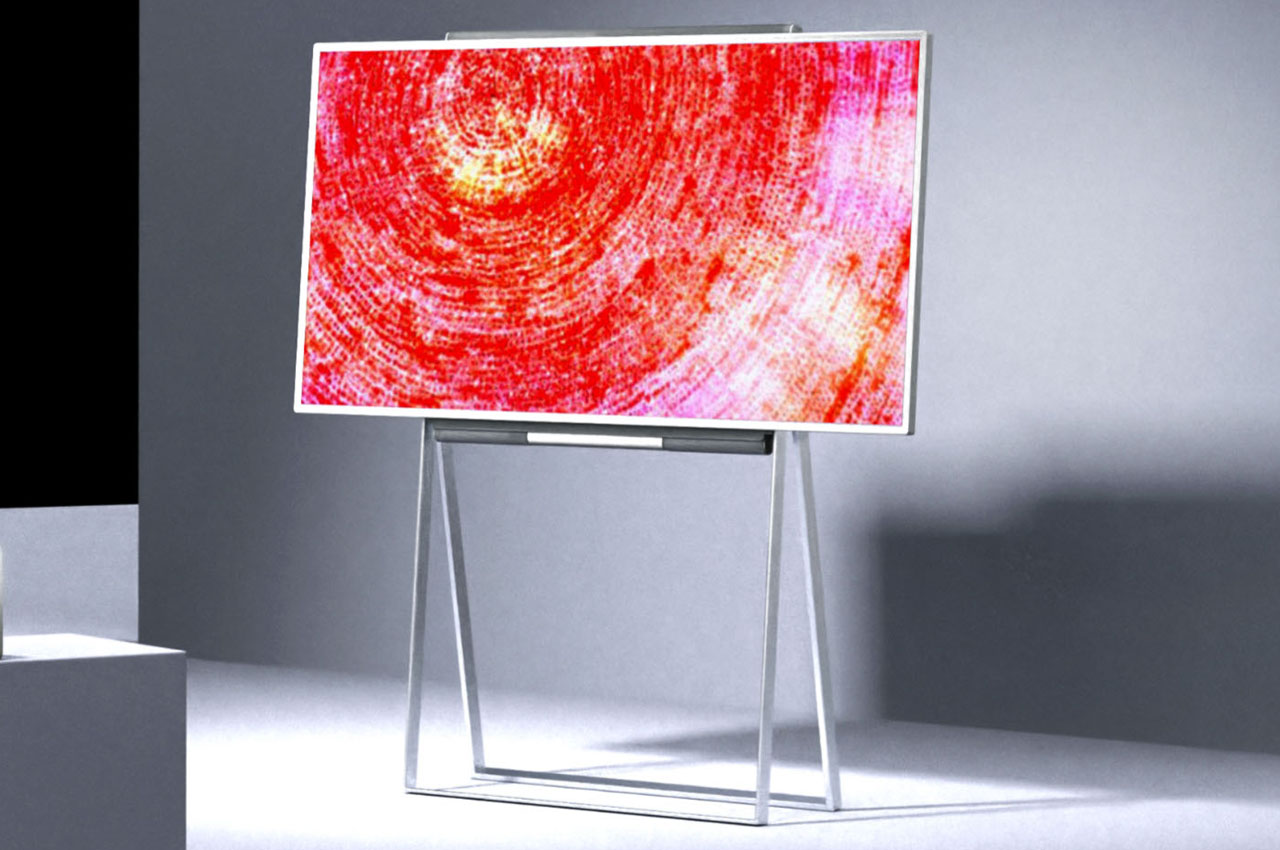
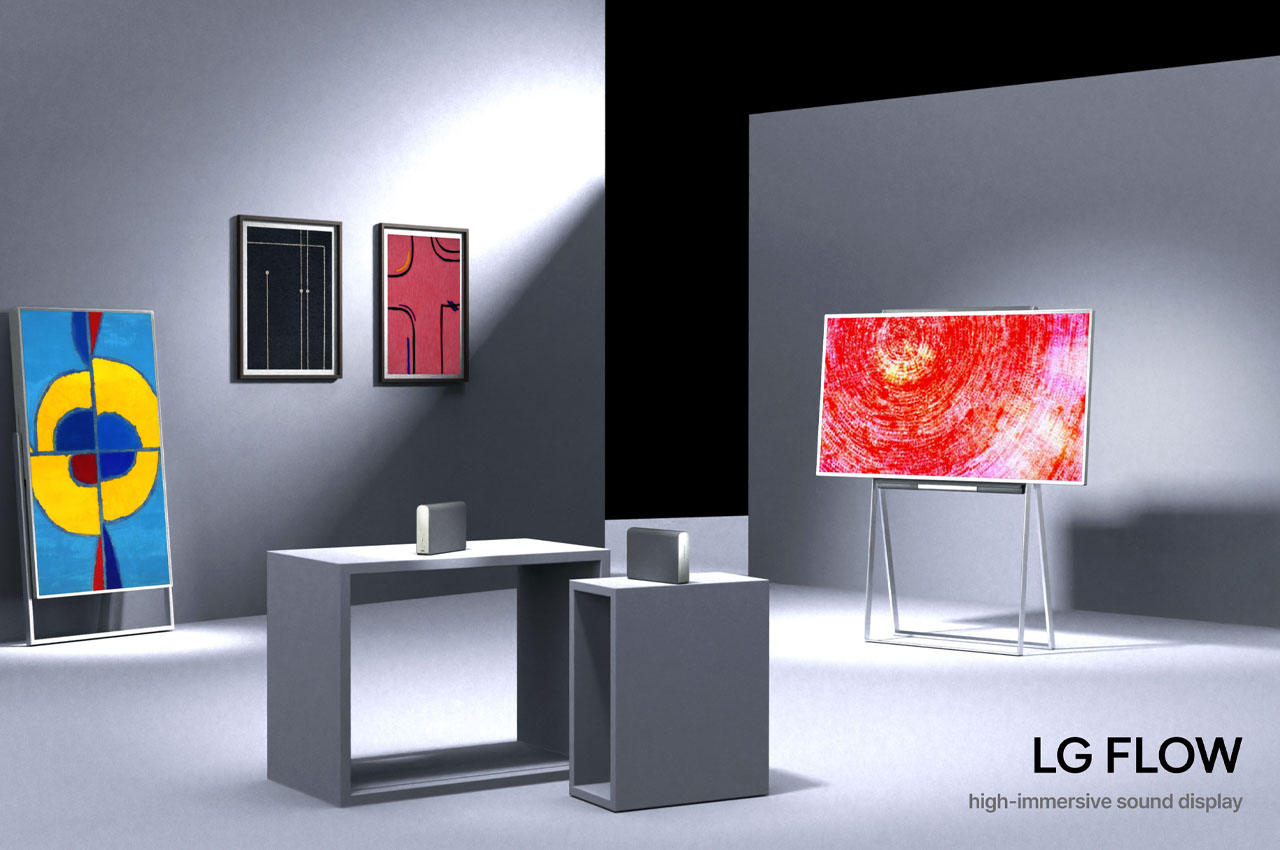
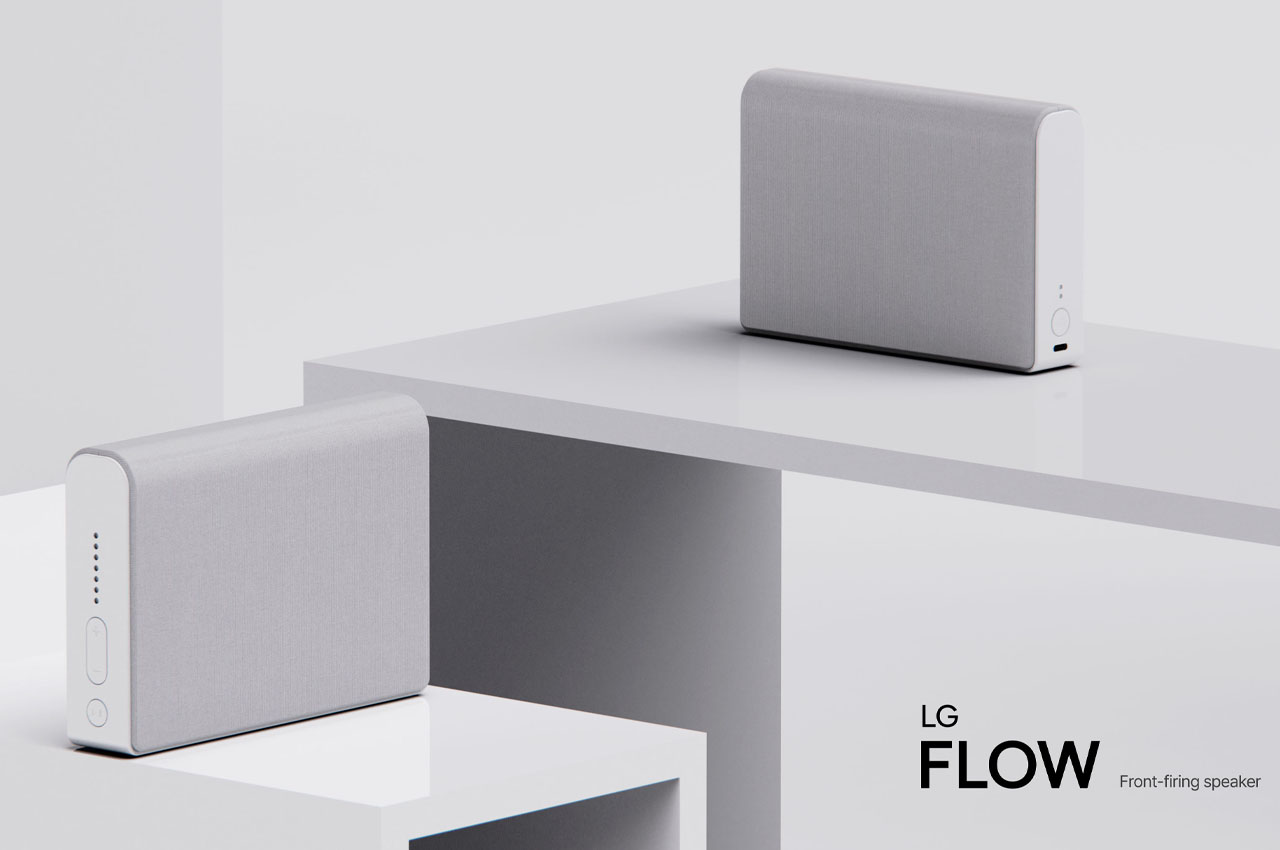
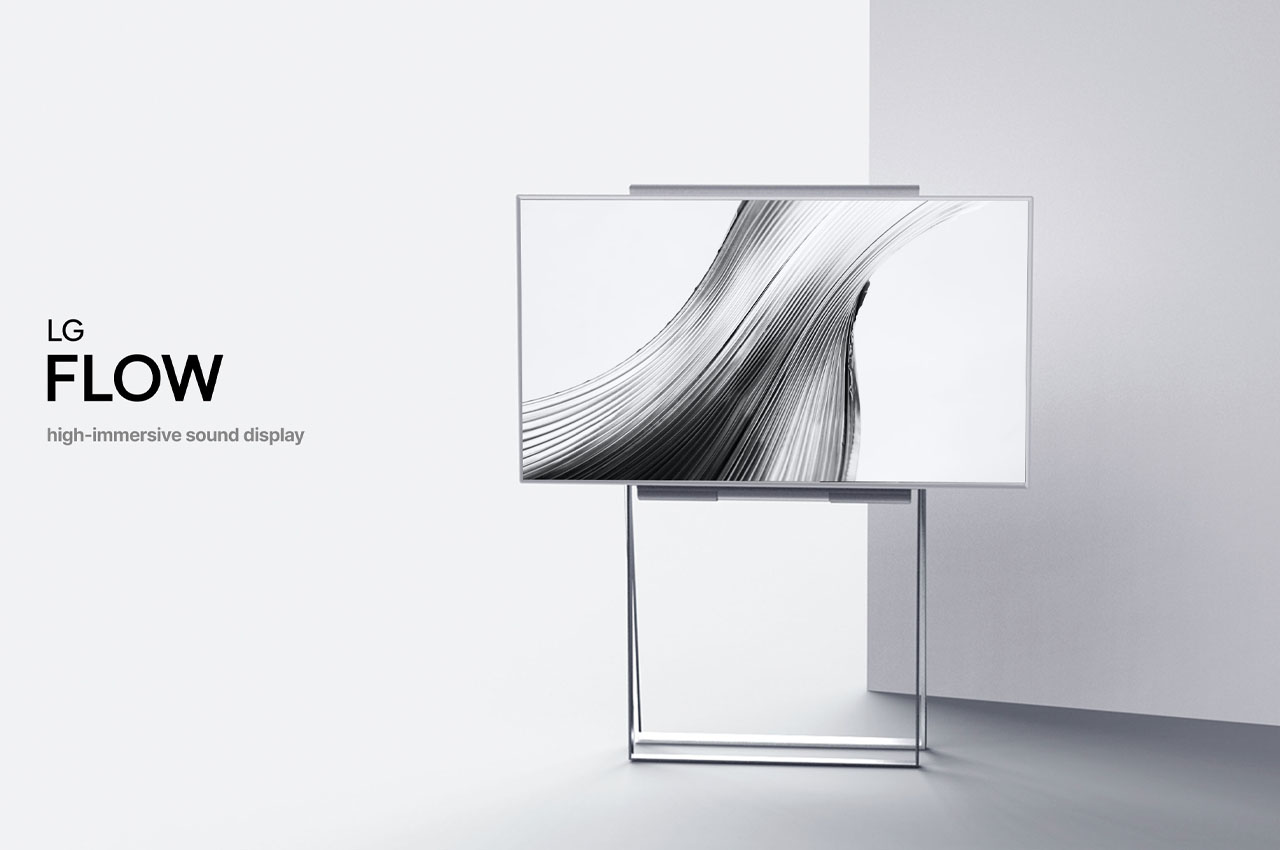
The trend for single-person households is catching up in the urban landscape, and so is the need for modern electronics that come with the freedom of a movable platform. The reason is, that Gen-Z and single-person households don’t want the hassle of wall-mounted TVs when frequently changing bases. Solution, the LG Flow concept that comes with detachable speakers.
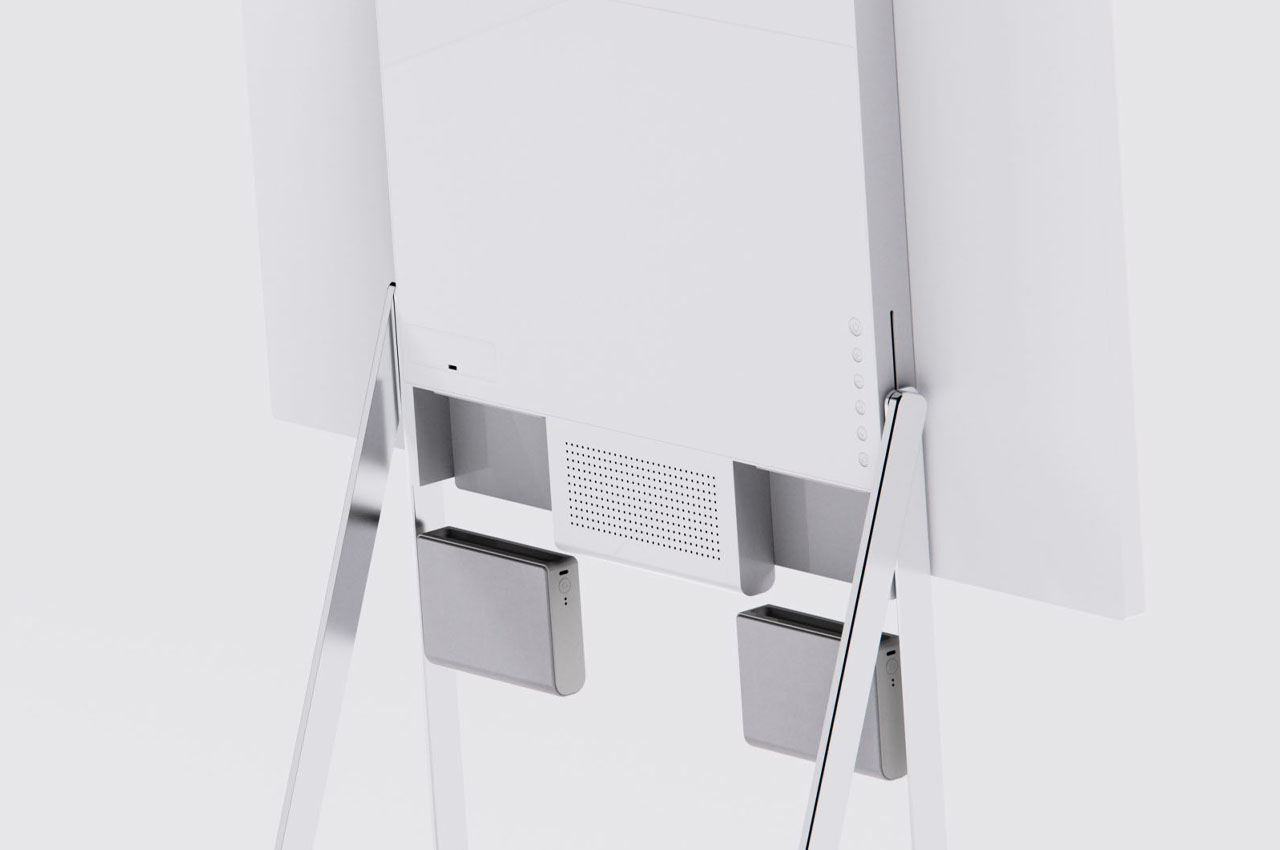
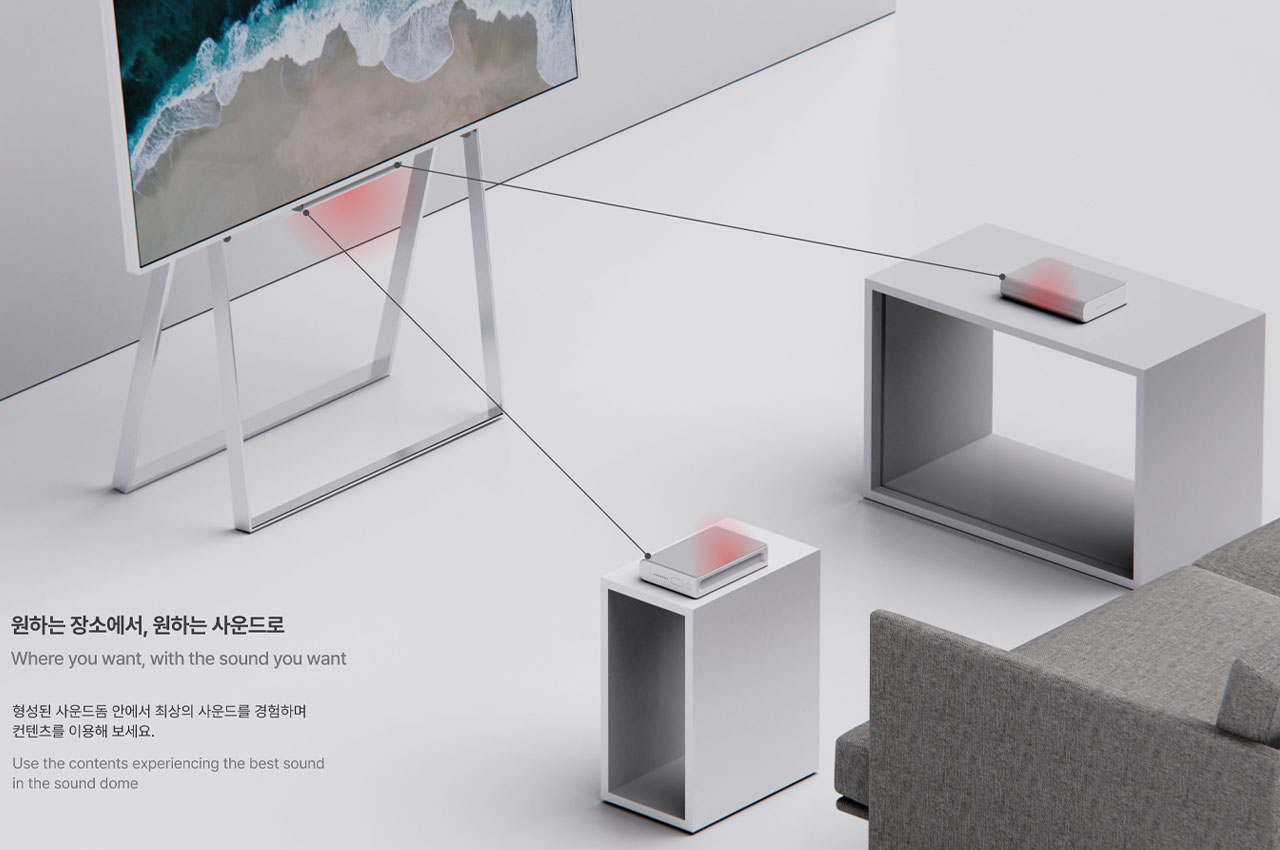
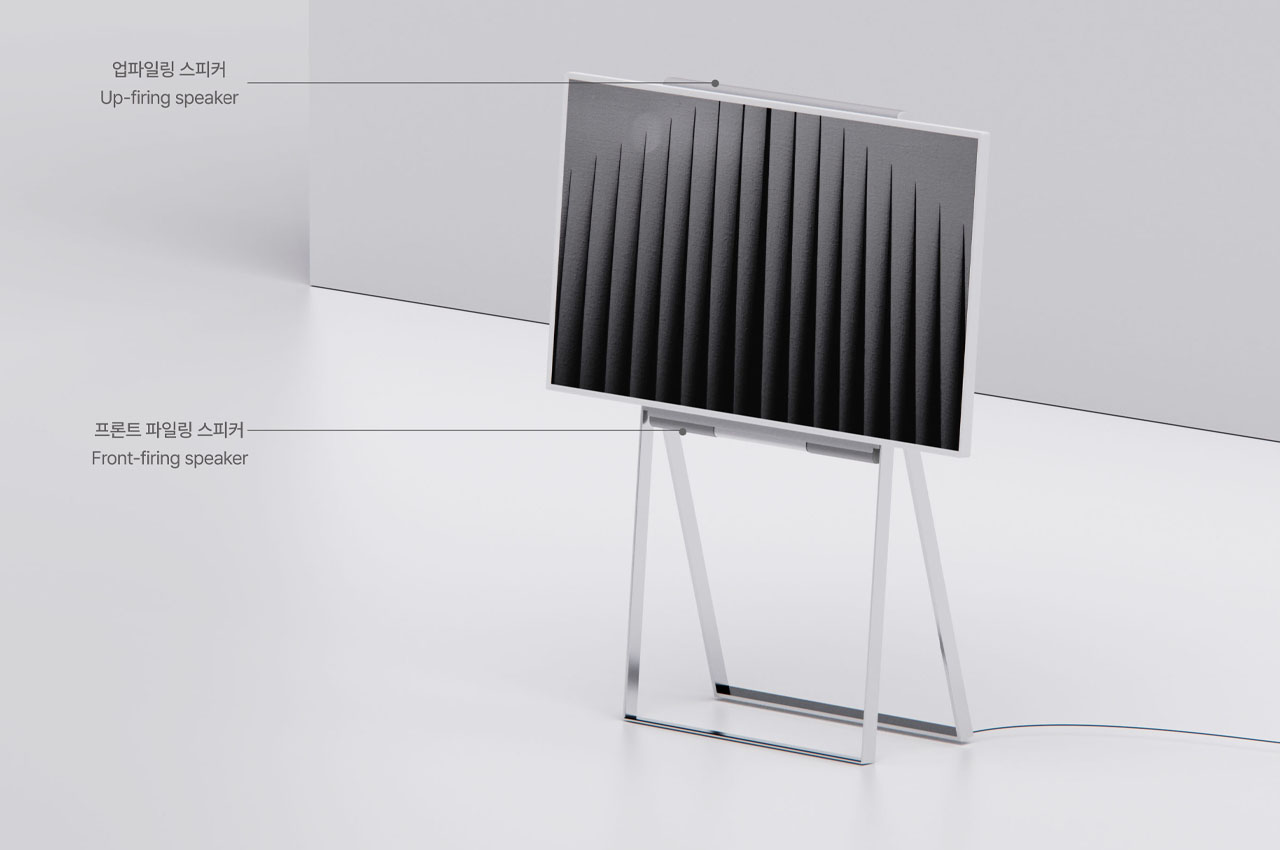
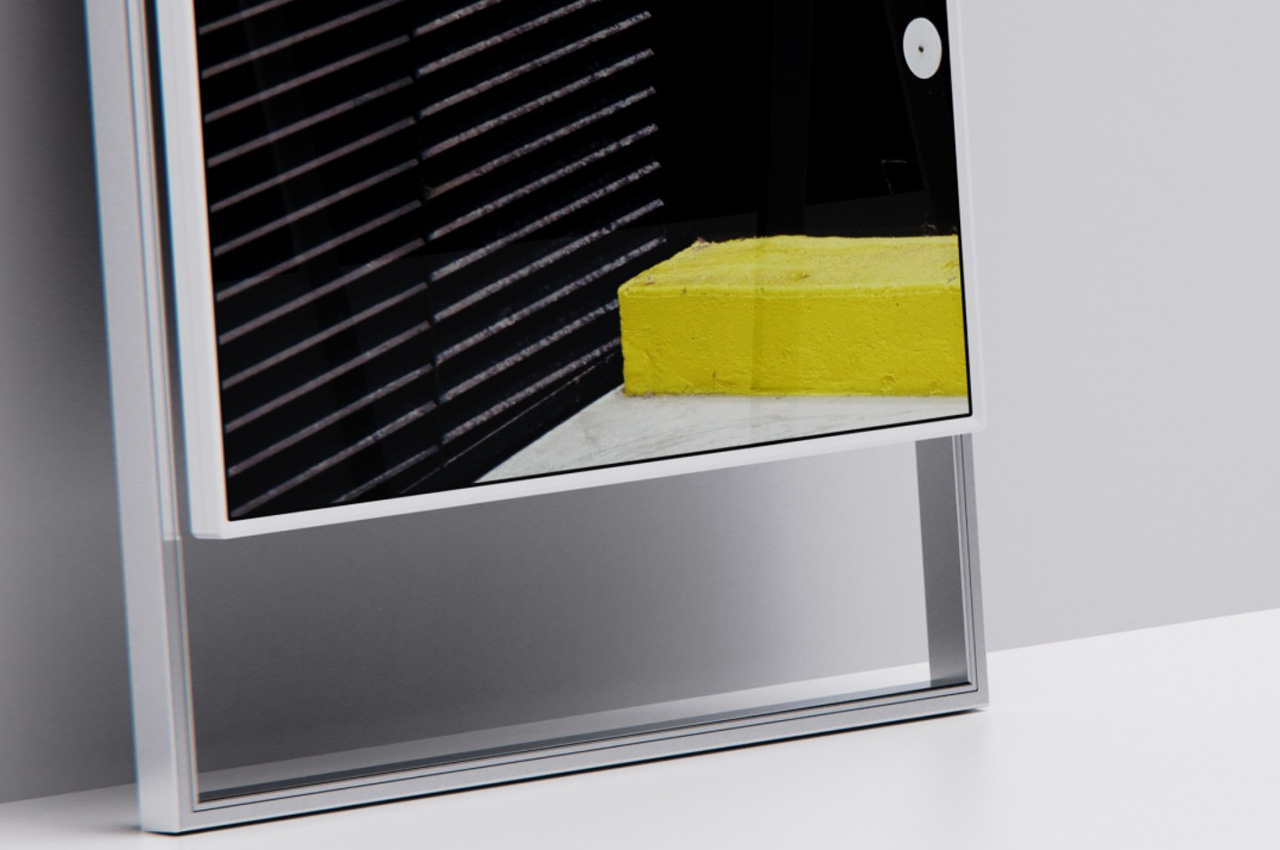
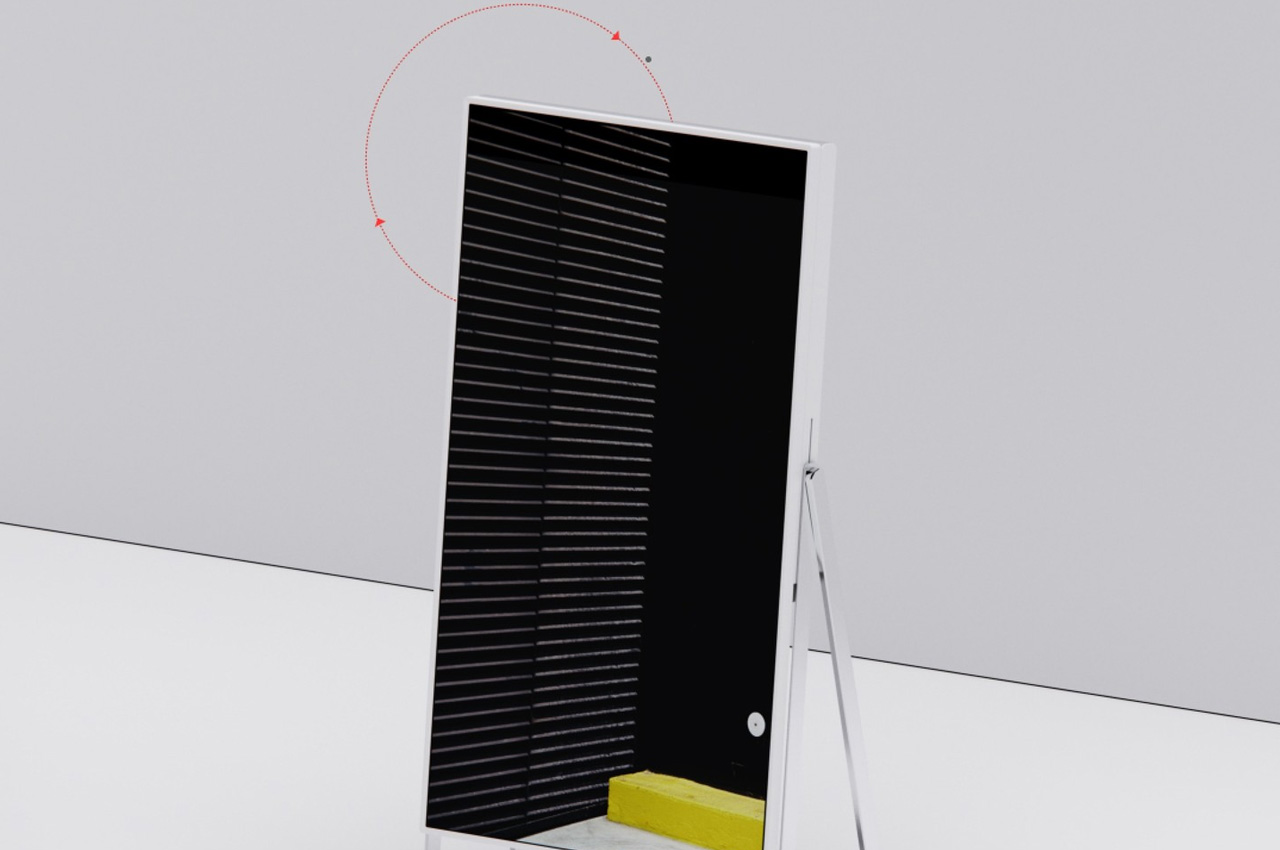
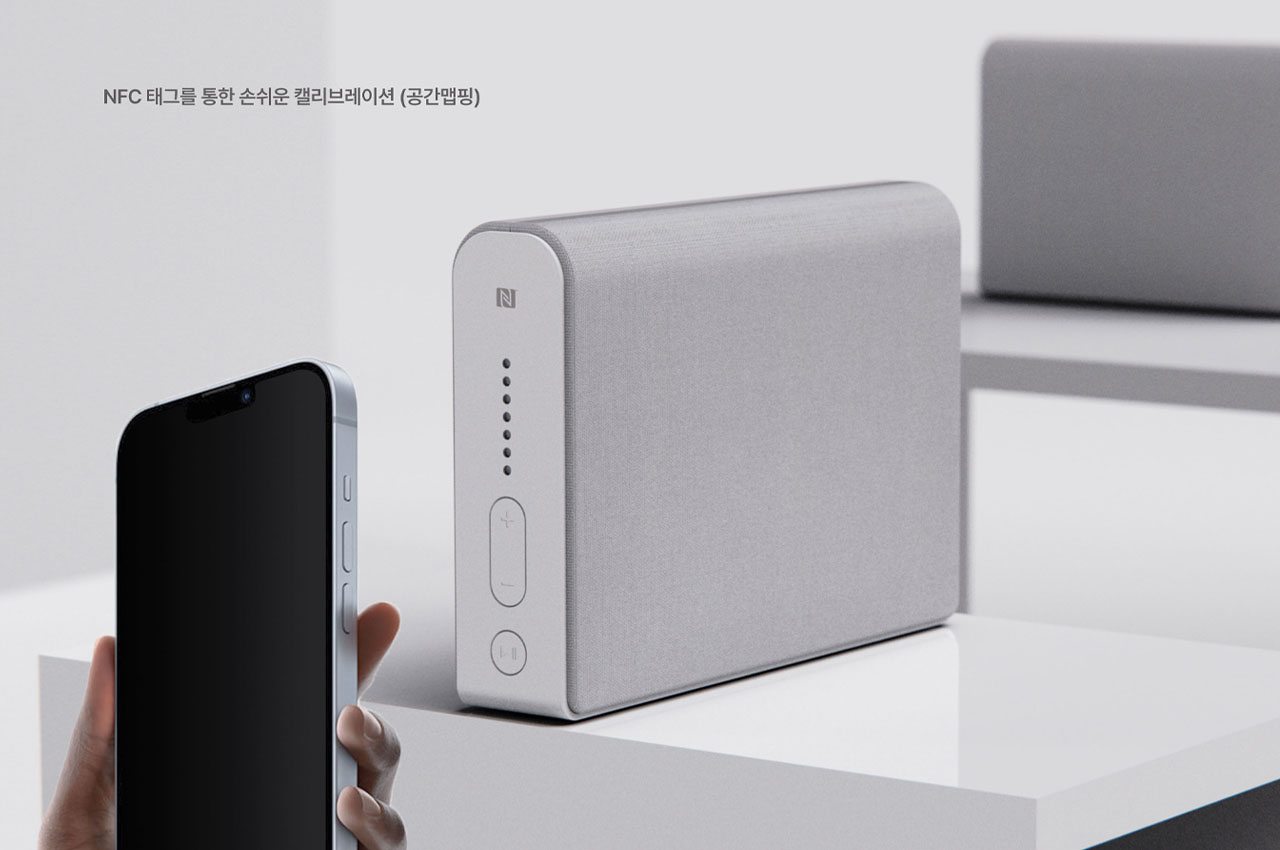
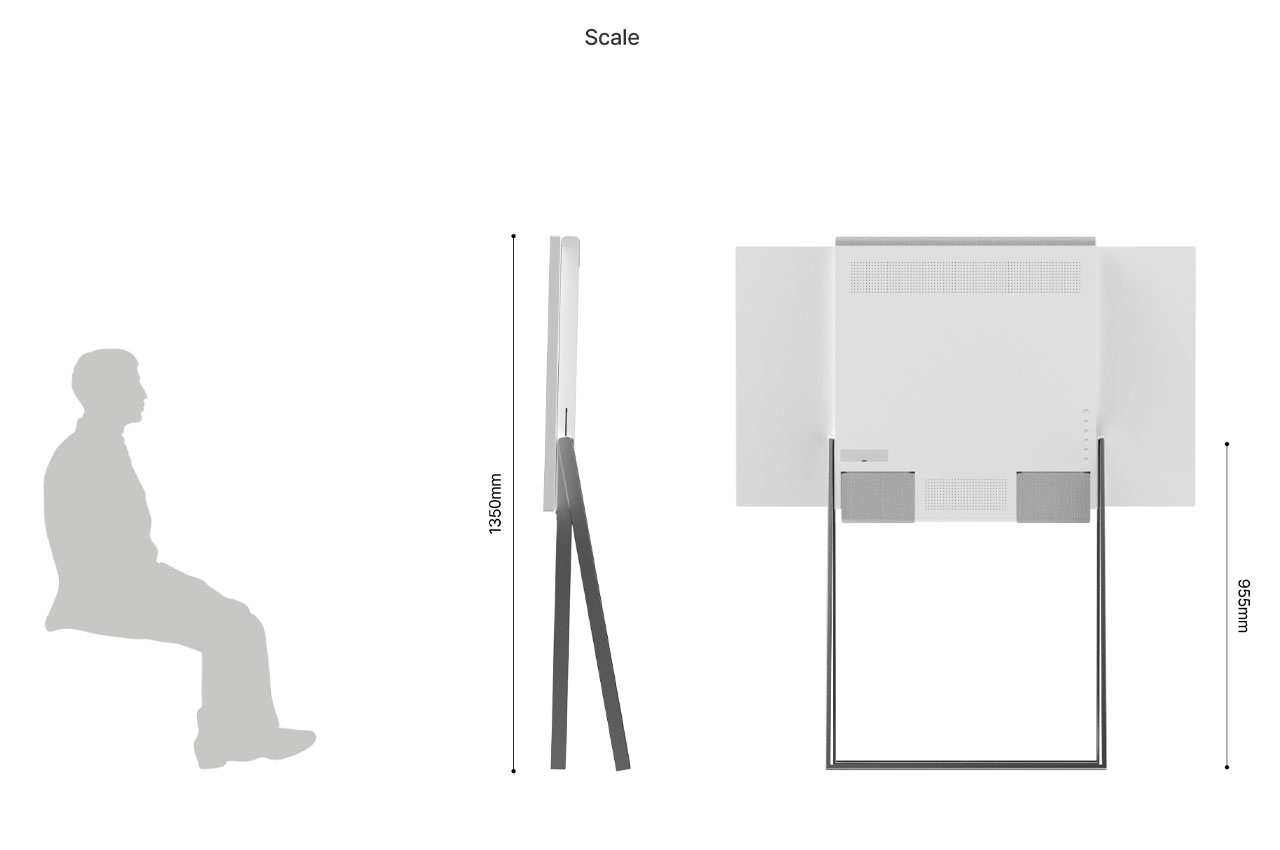
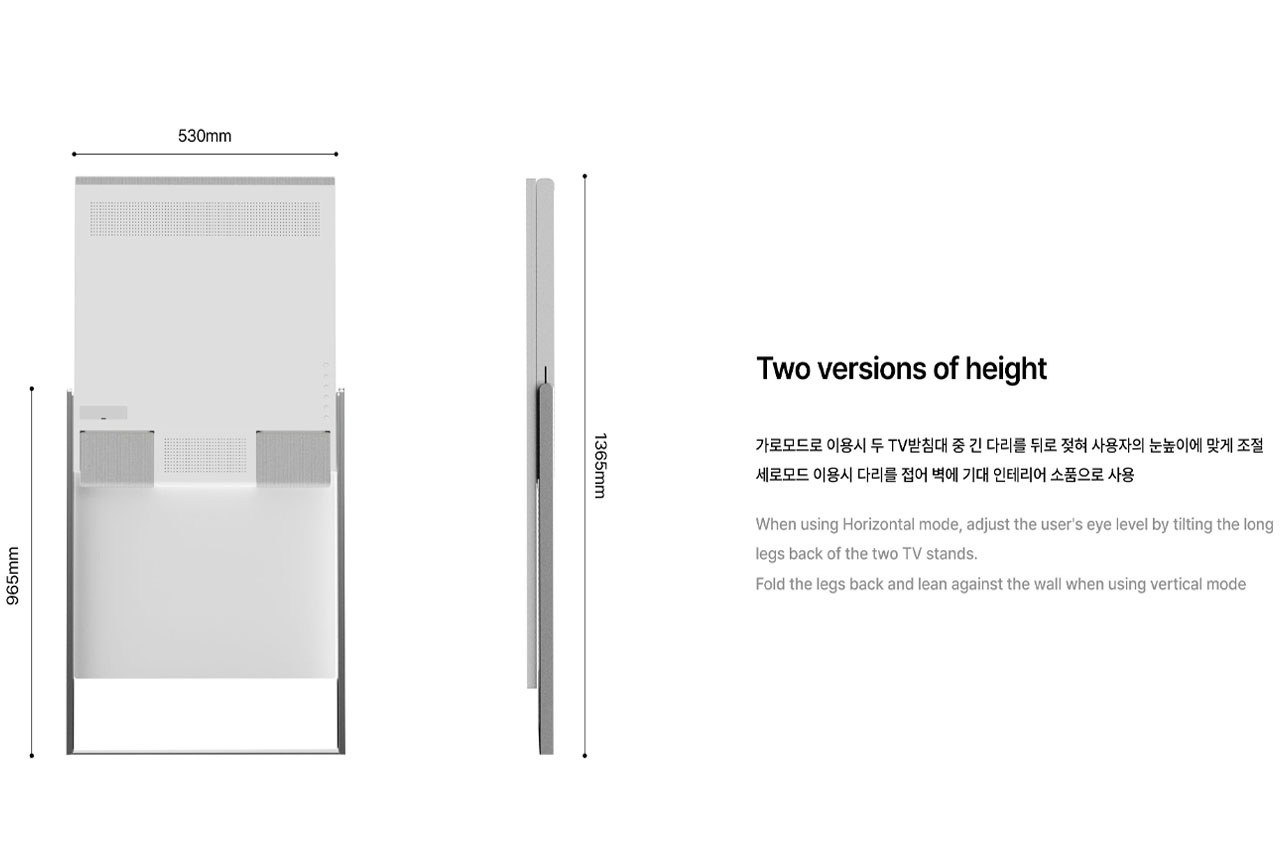
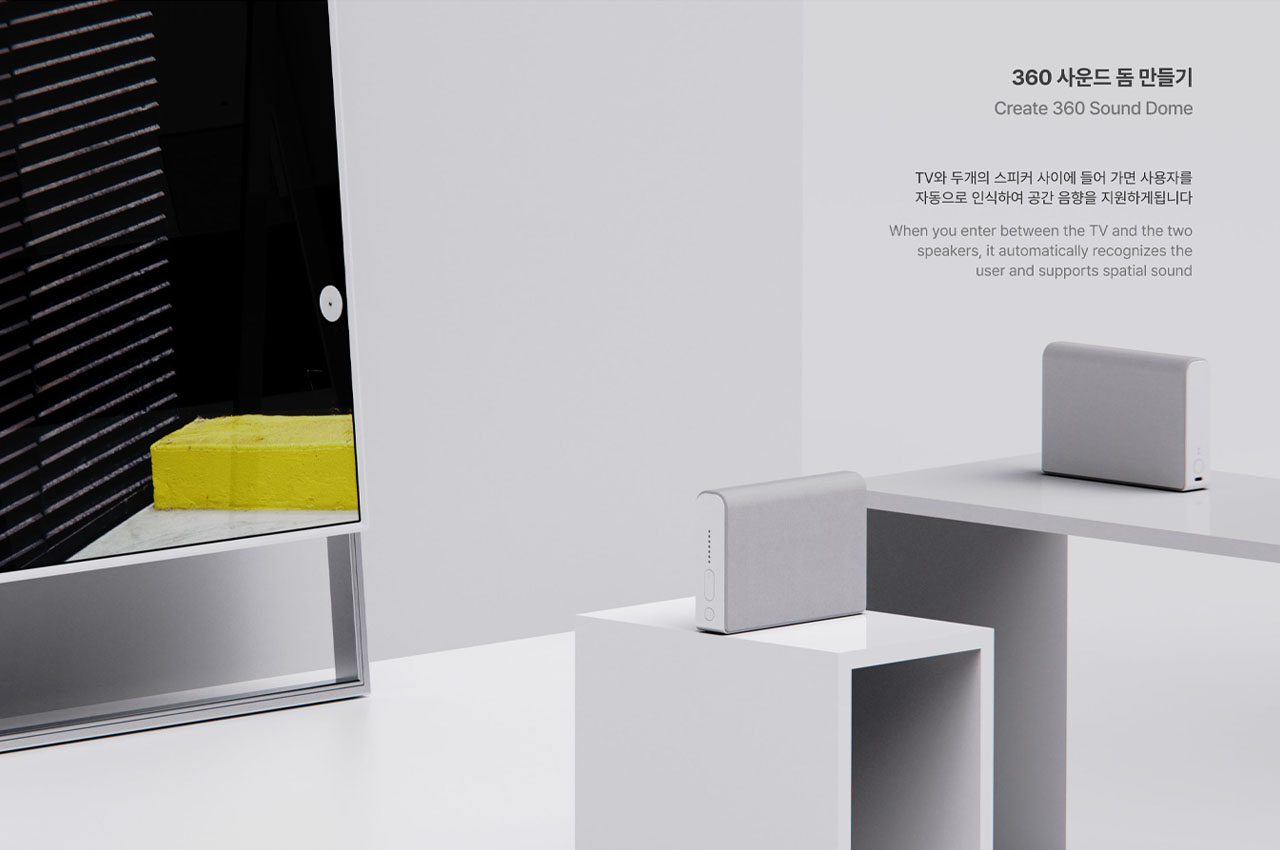
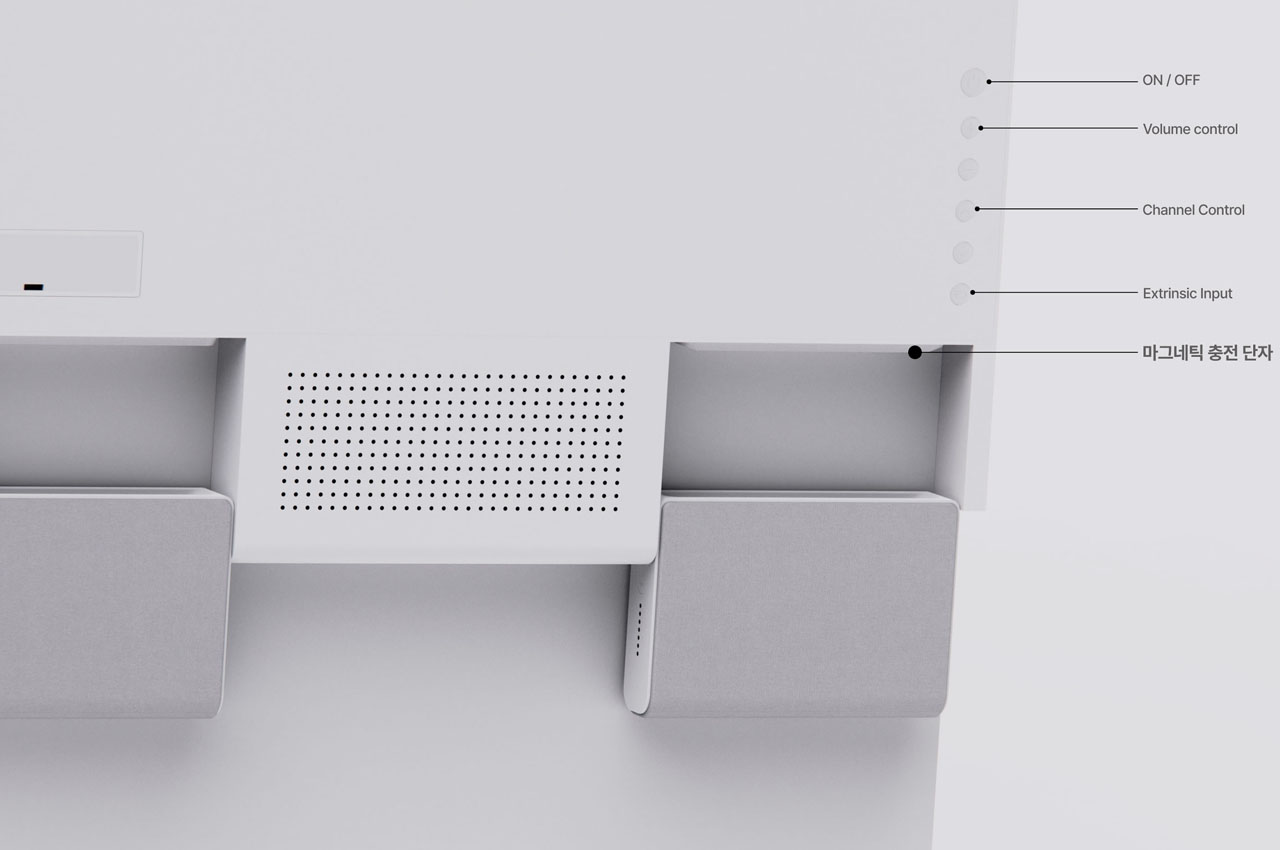
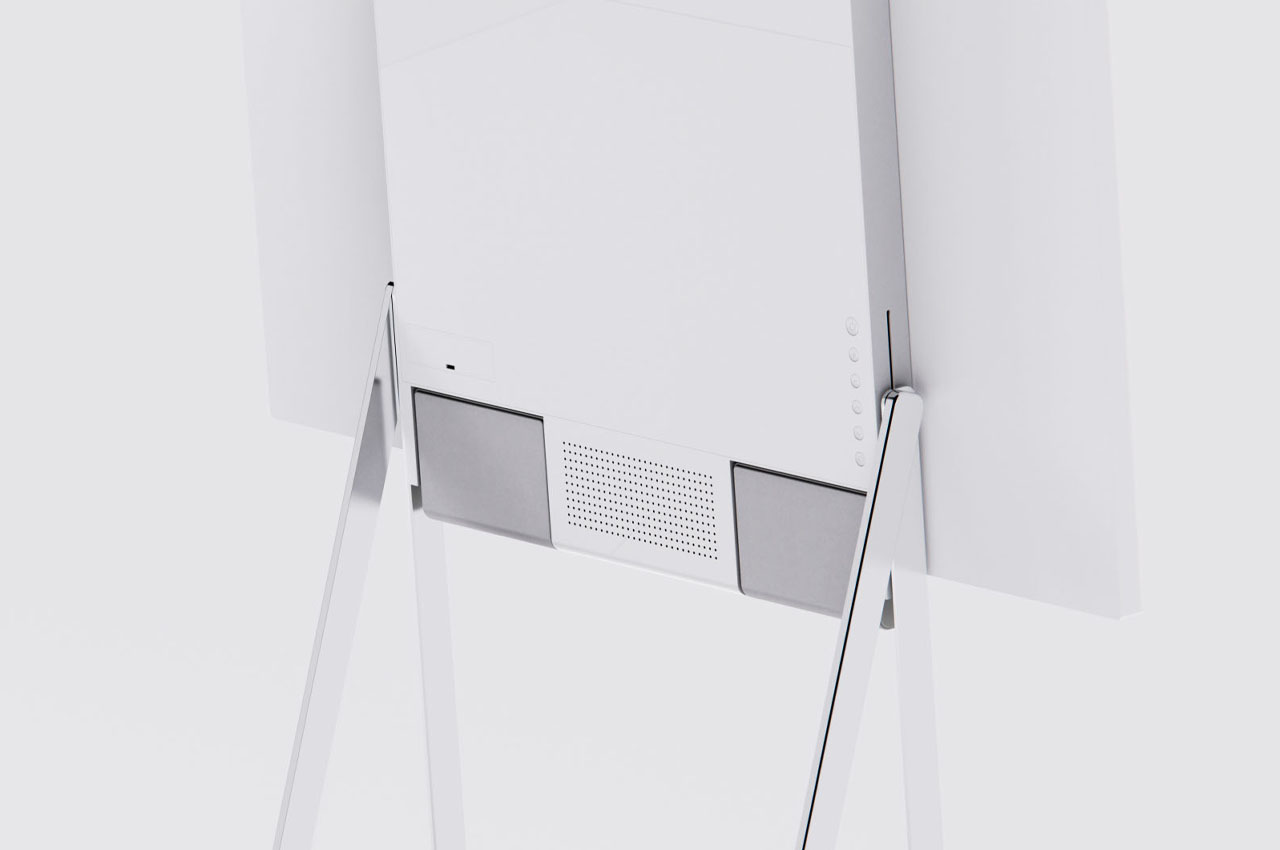
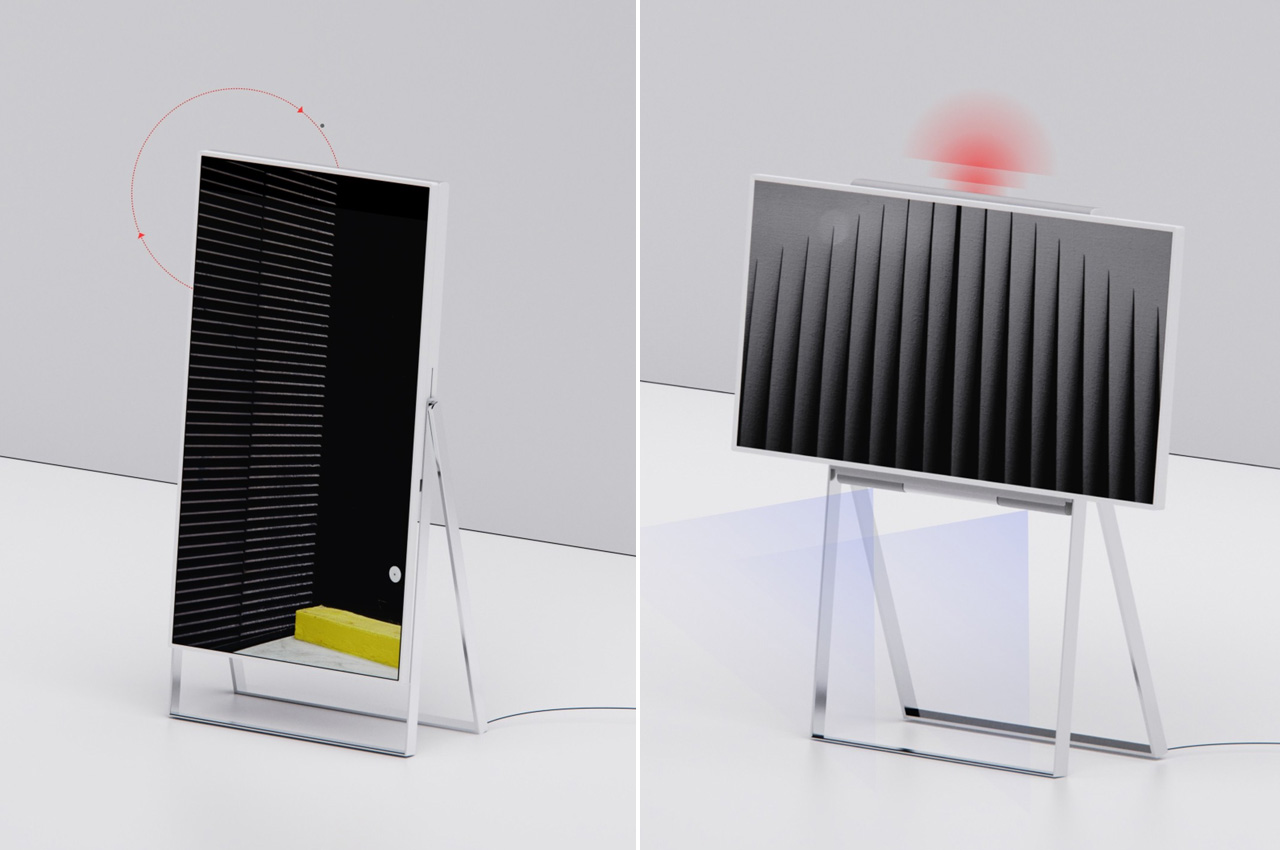
The proposed concept by GDM+ designers allows the user to enjoy 360-degree spatial audio anywhere. The whole TV frame can be rotated in any direction and the detachable wireless speaker module at the bottom of the display gives modern users more freedom when shifting bases or even rearranging their apartment. Big displays with permanent brackets on the wall or even in the stand format isn’t appealing enough for such users.
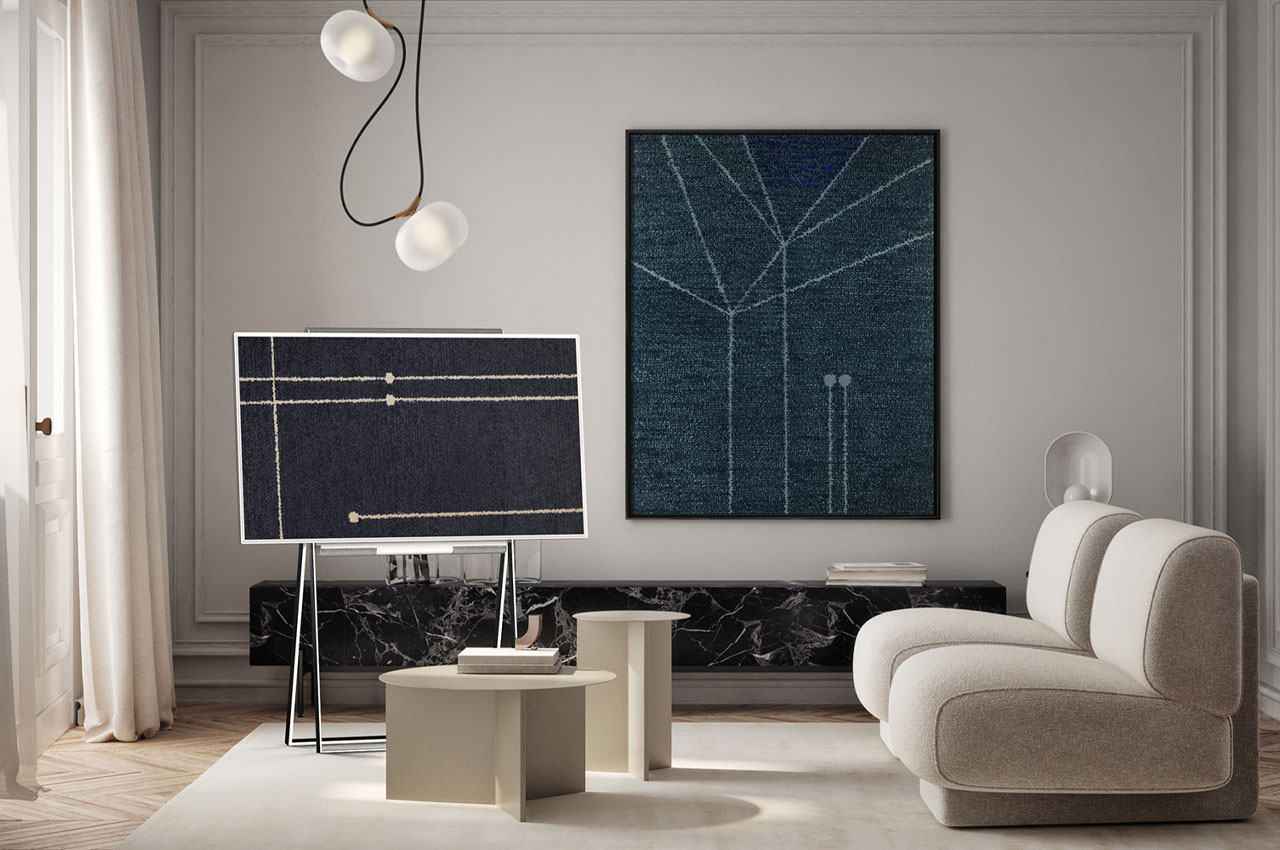
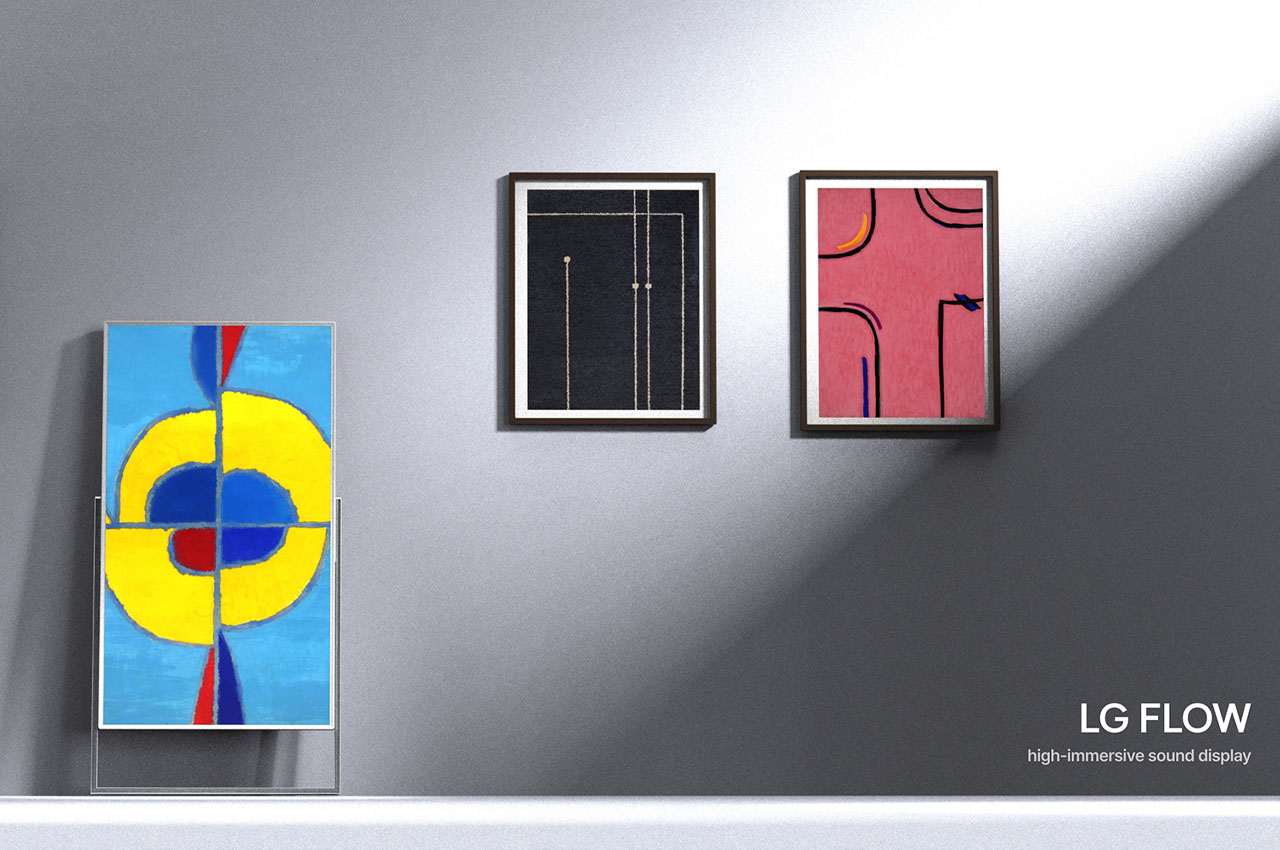
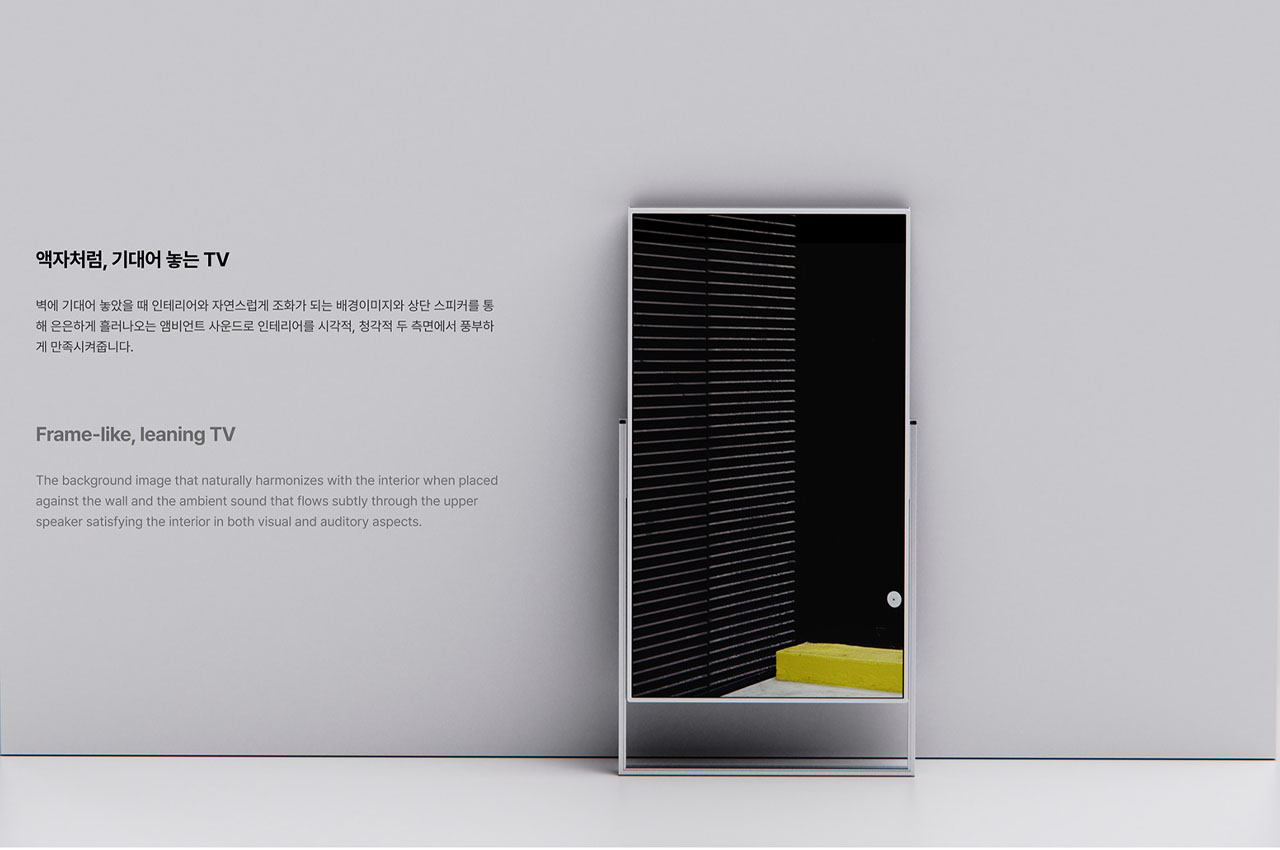
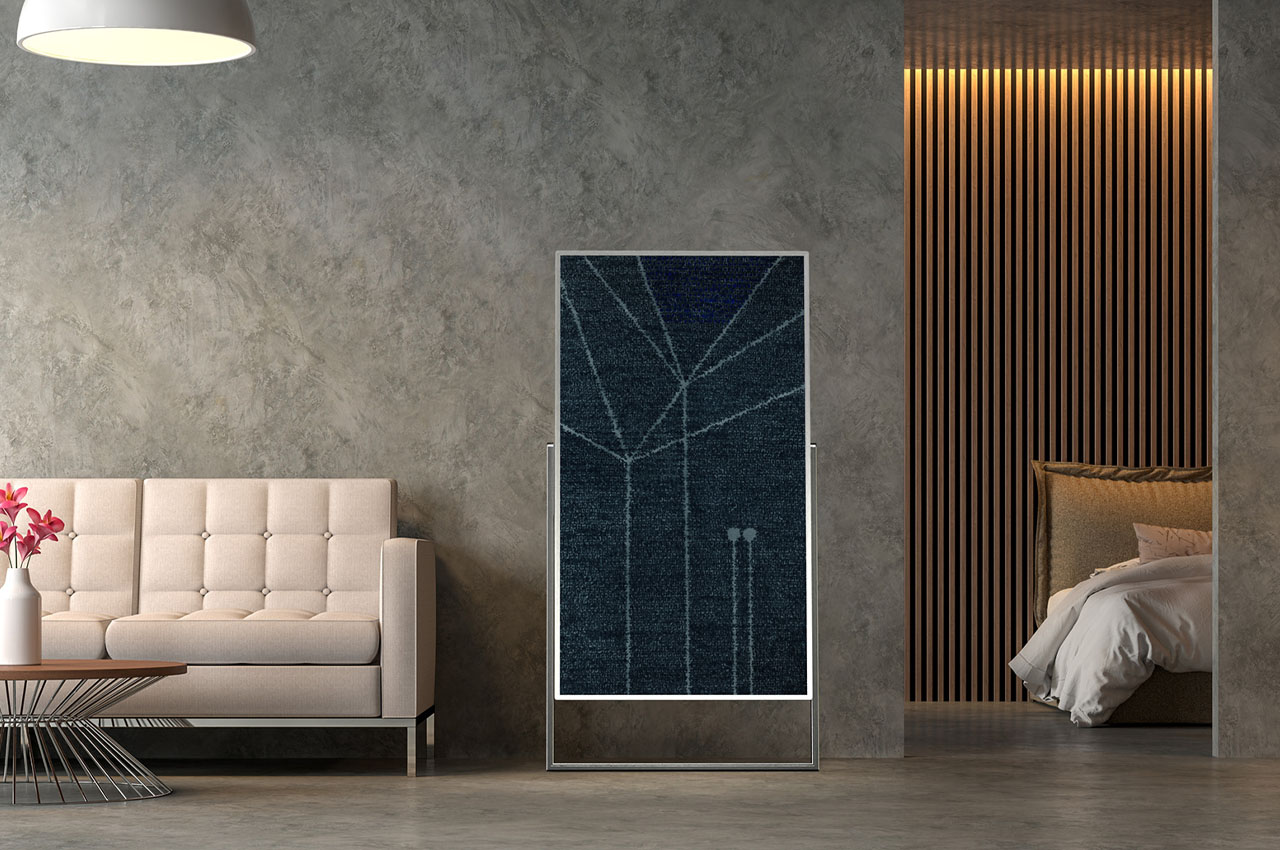
This frame-like display is designed keeping in mind the harmony of the interior space like your living room or bedroom. The outer frame houses the display that can be rotated in a horizontal or vertical orientation with the push of the button on the provided remote control. In the vertical mode, the back legs are lean against the wall while in the horizontal mode, the long legs are tilted back to adjust to adjust the user’s eye level. The detachable speakers automatically adjust to the placement position to beam 360 degrees of omnidirectional sound for multimedia viewing. When you detach them, the position of the individual speakers is automatically gauged and ambient sound is adjusted according to the sitting position of listeners.
When you’re not watching any content on the TV, it doubles as a beautiful artwork piece to enhance the interior space. You can set it to display famous paintings, your memorable pictures, or anything random that makes you feel good.
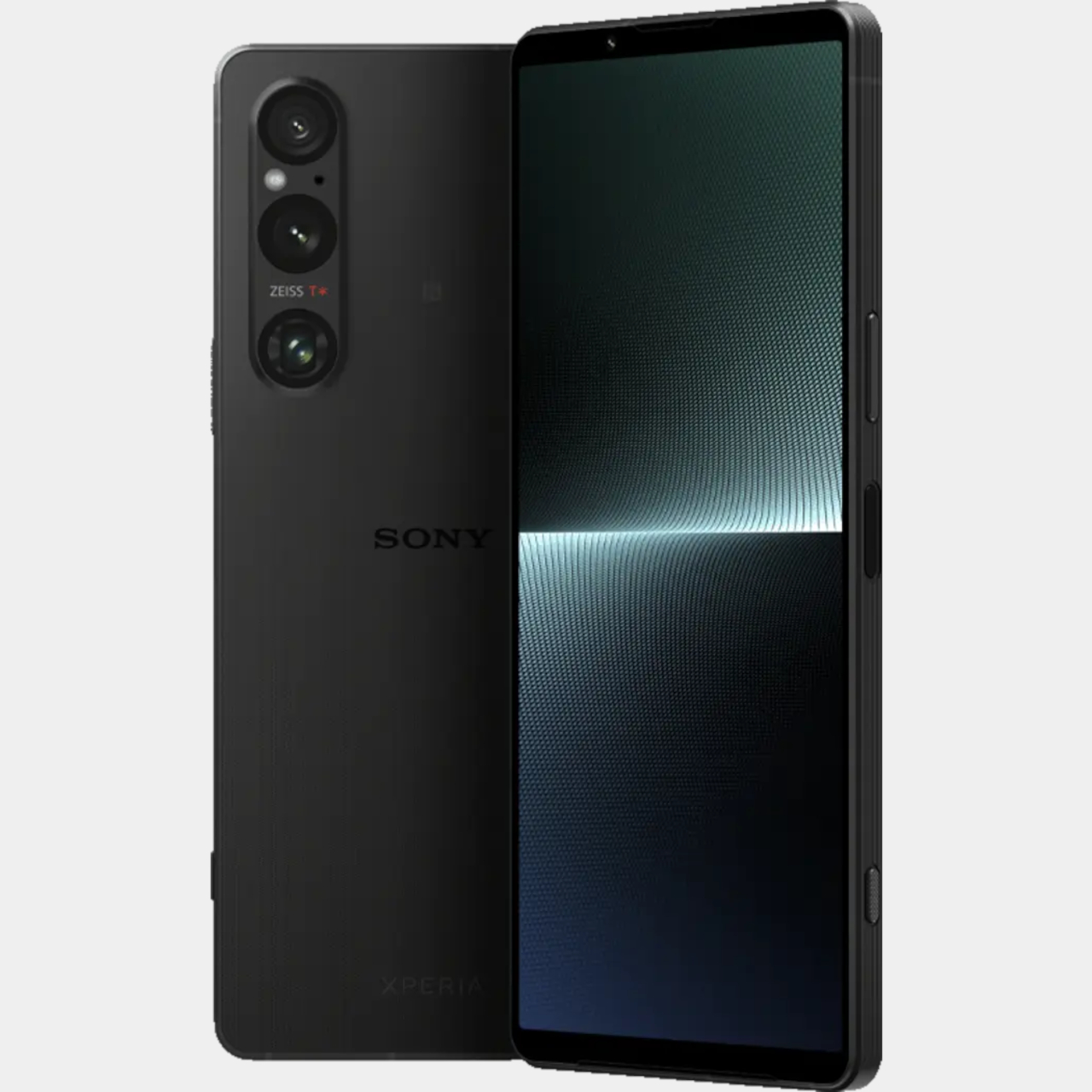
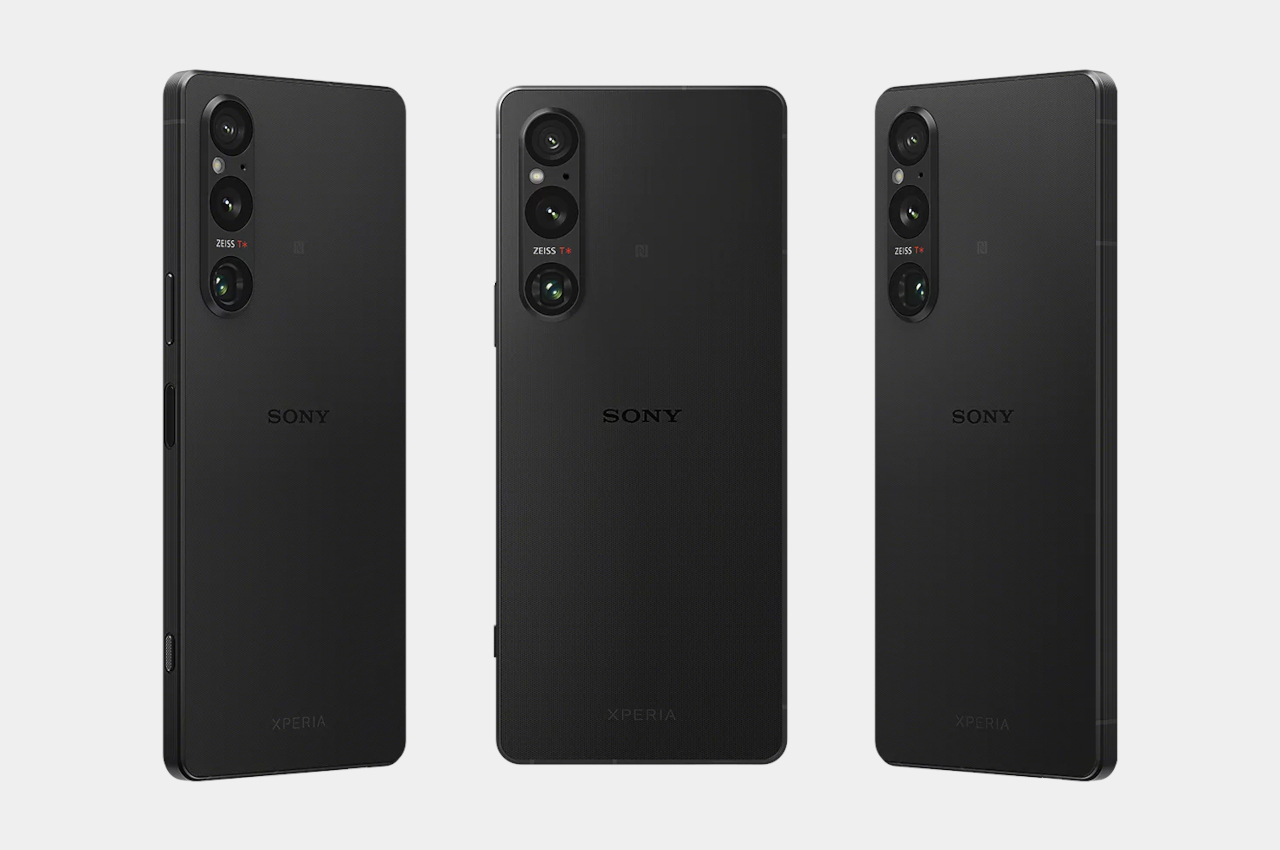
It might come as a surprise to some that Sony actually makes smartphones. Actually, it might even come as a bigger surprise that it still makes smartphones at this point in time. Its mobile business has definitely fallen on hard times, forcing the brand to exit some global markets and sell only through online channels in others. Despite all that, Sony still believes that a smartphone has a place in its portfolio, especially as a means to access its treasury of entertainment-related content. That has been the guiding principle behind the design of its premium Xperia 1 smartphone series, but it seems that the product line’s sixth iteration will make some small but significant changes that almost undermine all of that in one fell swoop.
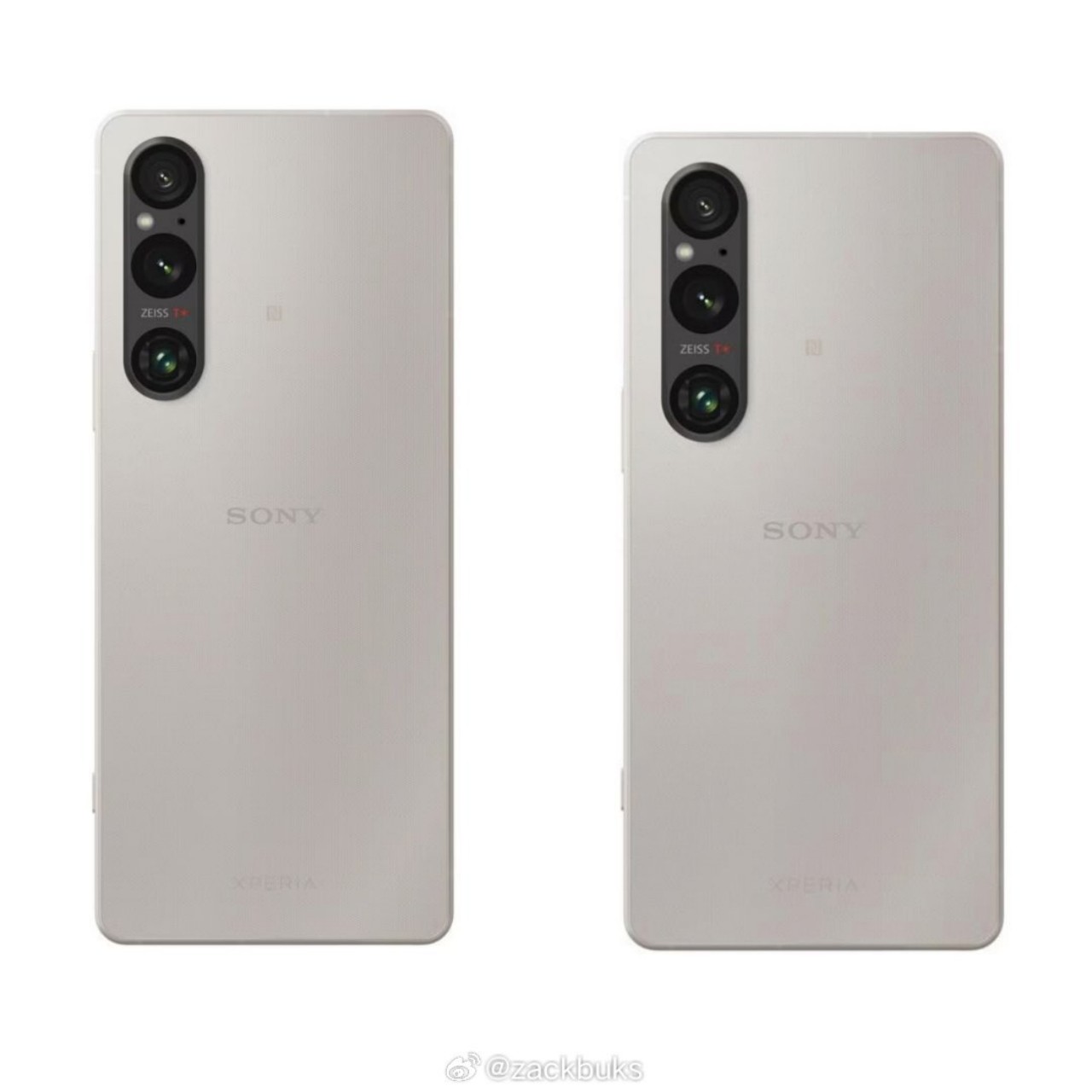
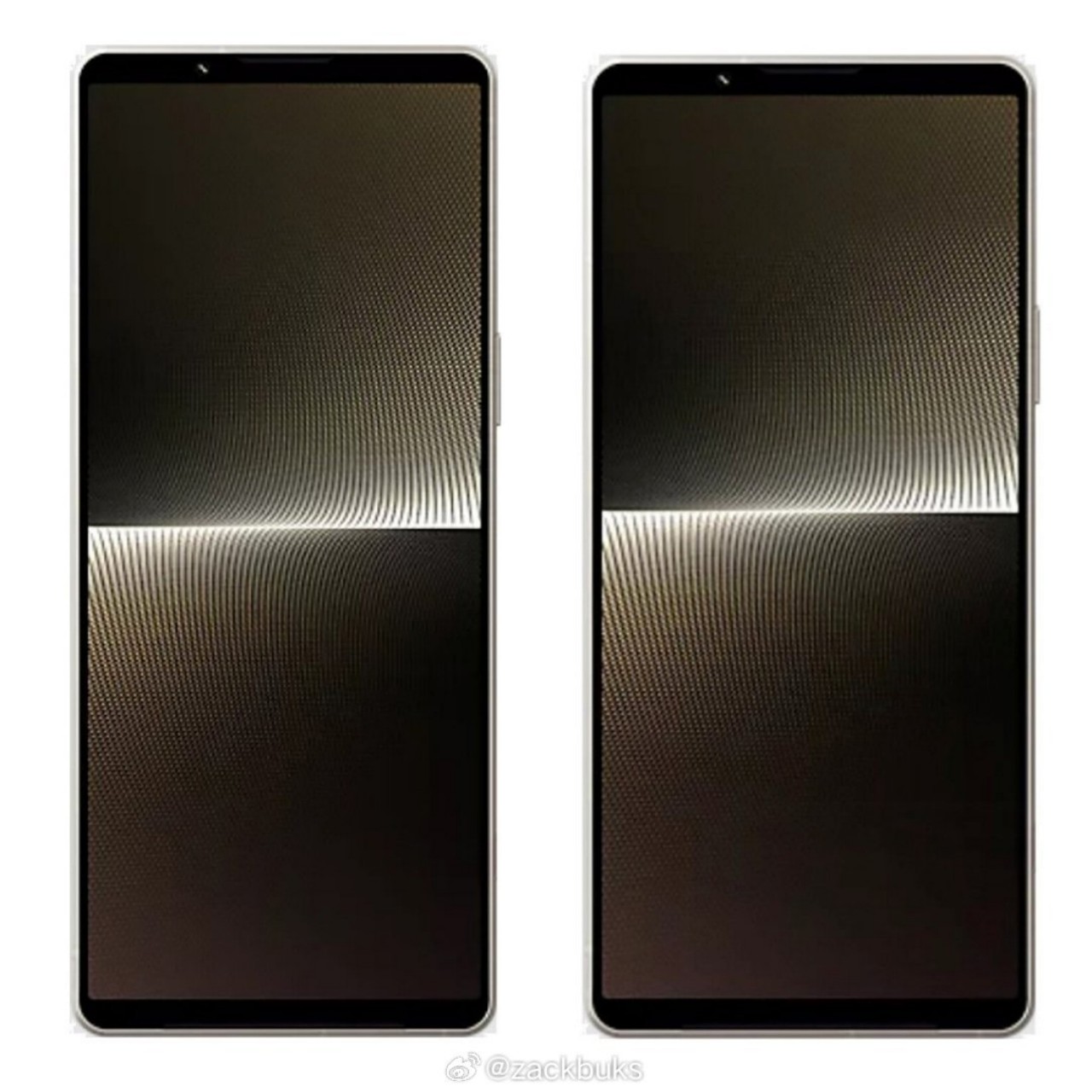
Designer: Sony (via zackbuks on Weibo)
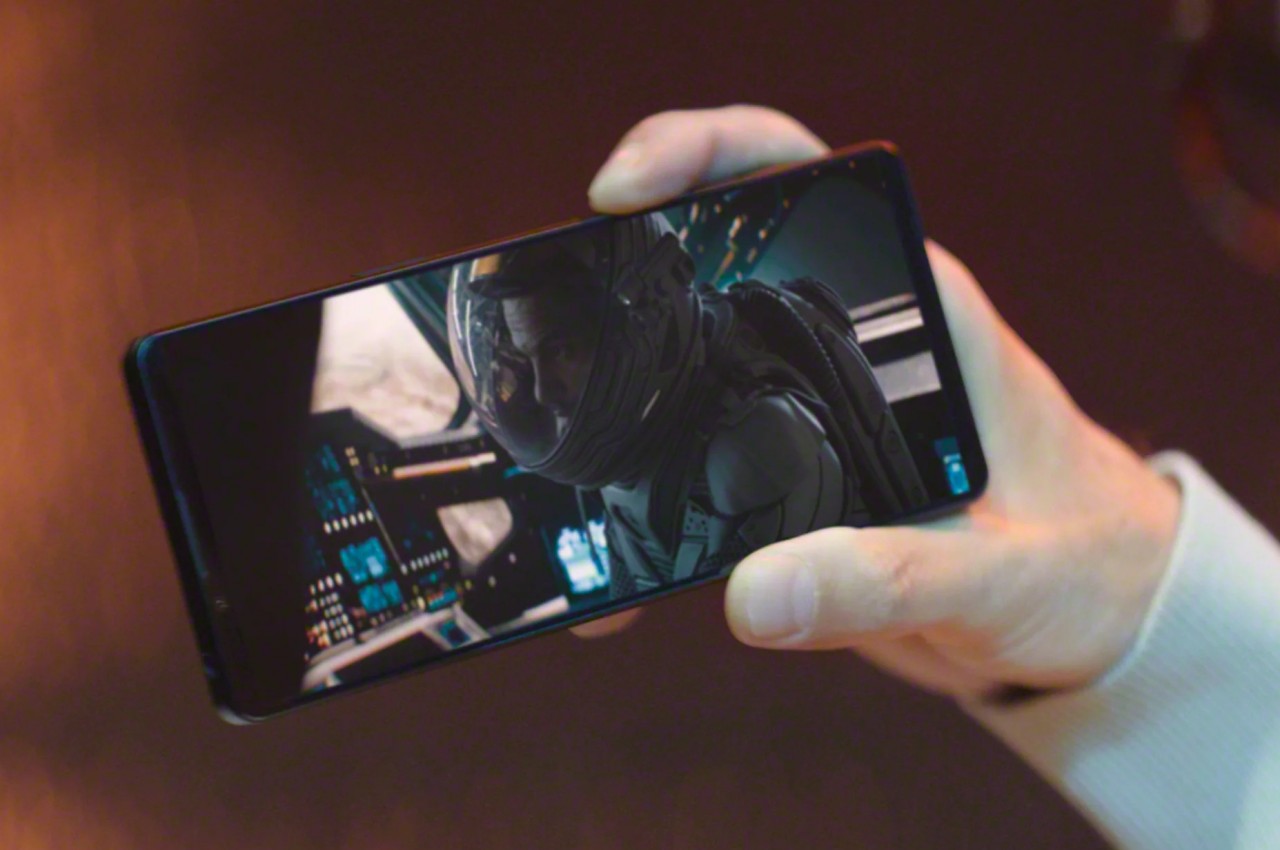
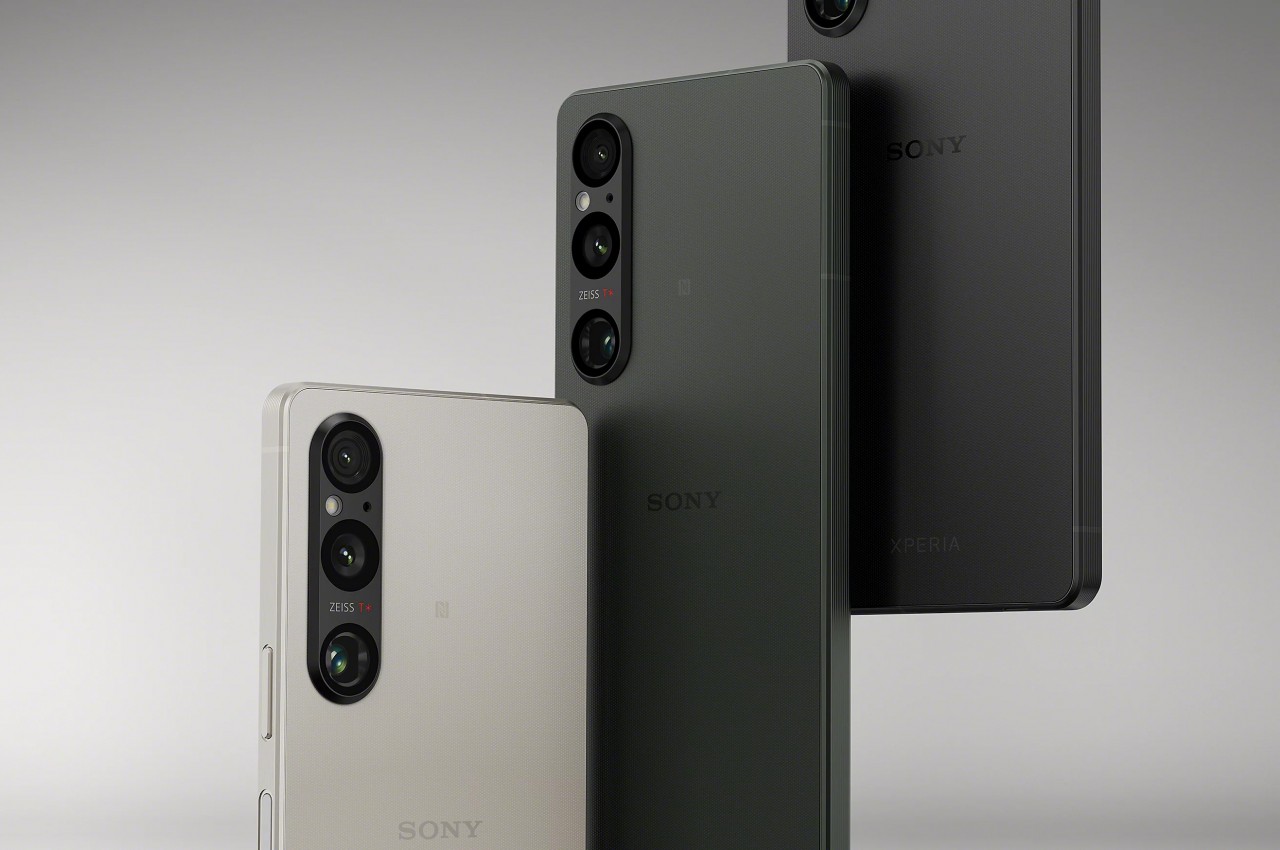
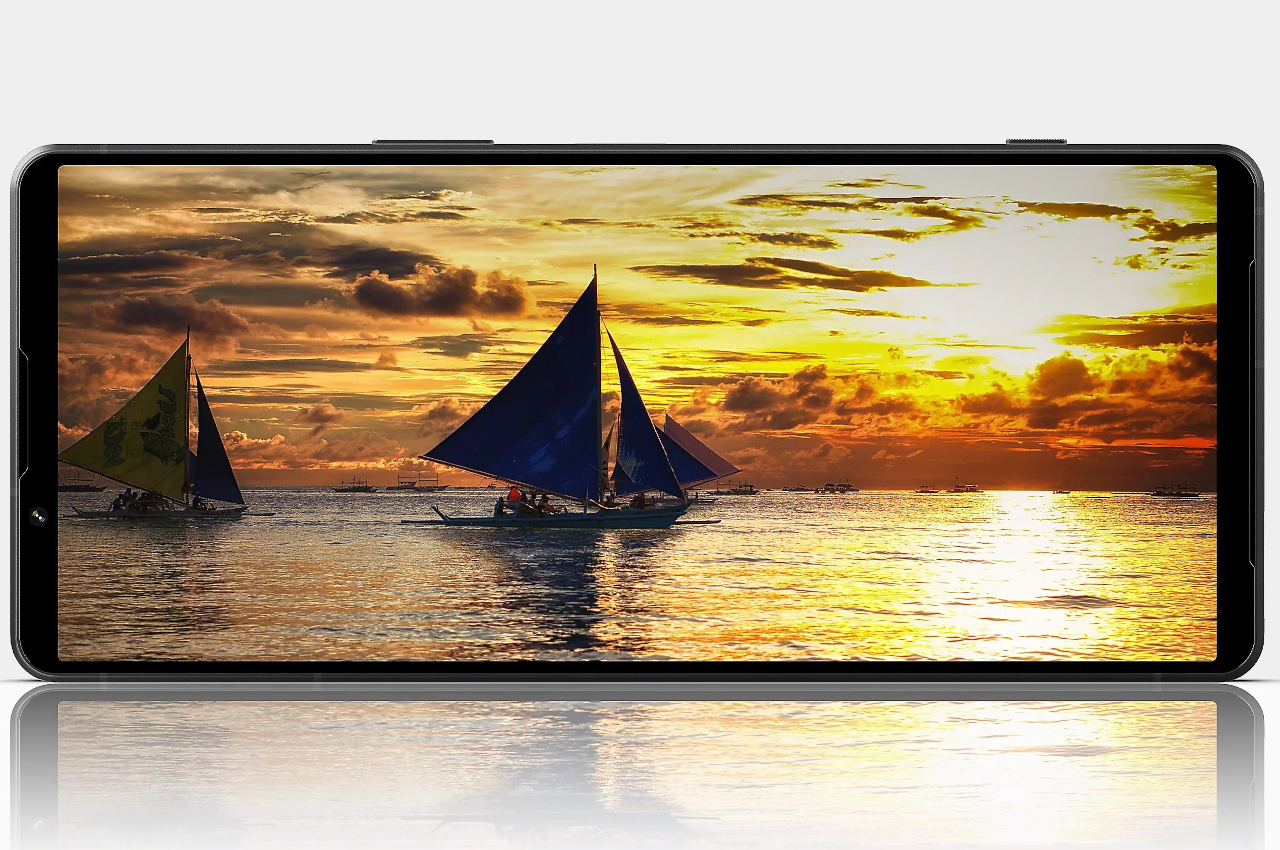
Truth be told, the Sony Xperia 1 design has always been an oddity among its peers even today. It easily stands out from the crowd almost literally because of its extra tall and narrow body, designed to support a 21:9 screen aspect ratio that Sony has been advertising as the perfect format for ultra-wide content. It also distinguished itself with its 4K display resolution when all its competitors continue to play in 2K or even 2.5K figures only.
The latest rumor, however, changes the narrative a bit. According to the source, Sony will be downgrading that 4K resolution to something like 2K+ or QHD+, more in line with other high-end smartphones in recent years. More importantly, it is also making the screen a bit wider and shorter to achieve a more “normal” 19.5:9 aspect ratio, again similar to flagship devices from the likes of Samsung and Apple. It’s by no means going to be significantly smaller, as these leaked images show, but it definitely changes the shape of the phone to be less distinctive.
It sounds perplexing that Sony, which has never really minded smartphone trends and fads, would make such drastic changes, but it might all boil down to price. Sony Xperia phones have been notorious for their higher price tags compared to their peers, so downgrading one of the most expensive and uncommon components could actually do a lot to drive the cost down. Unless, of course, Sony decides to offset those savings by including features and hardware that incur just as much expenses.
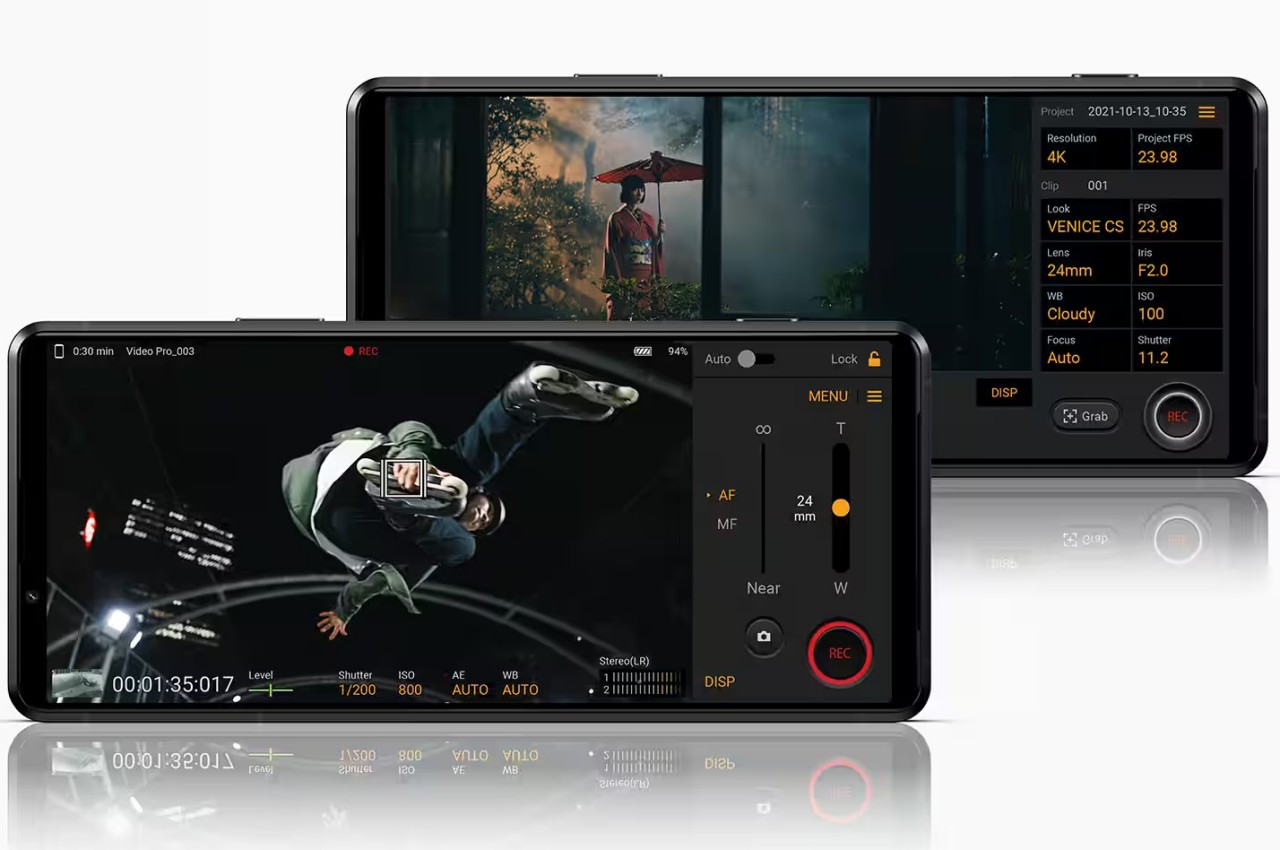
That’s not to say that the Xperia 1 VI will be bereft of any notable features. Another selling point of the phone is its use of camera hardware close to Sony’s own Alpha line of mirrorless cameras. That said, its photography prowess has rarely been praised mostly because the phone barely reaches people’s hands, so making the next Xperia flagship more affordable could actually help remedy that situation.
Hisense recently unveiled its latest products at CES 2024. The company’s array of state-of-the-art technologies, including automobile laser displays and rollable laser TVs, sets new industry standards, offering consumers unparalleled visual experiences.
Designer: Hisense
Automobile Laser Display: A New Era in Vehicle Technology
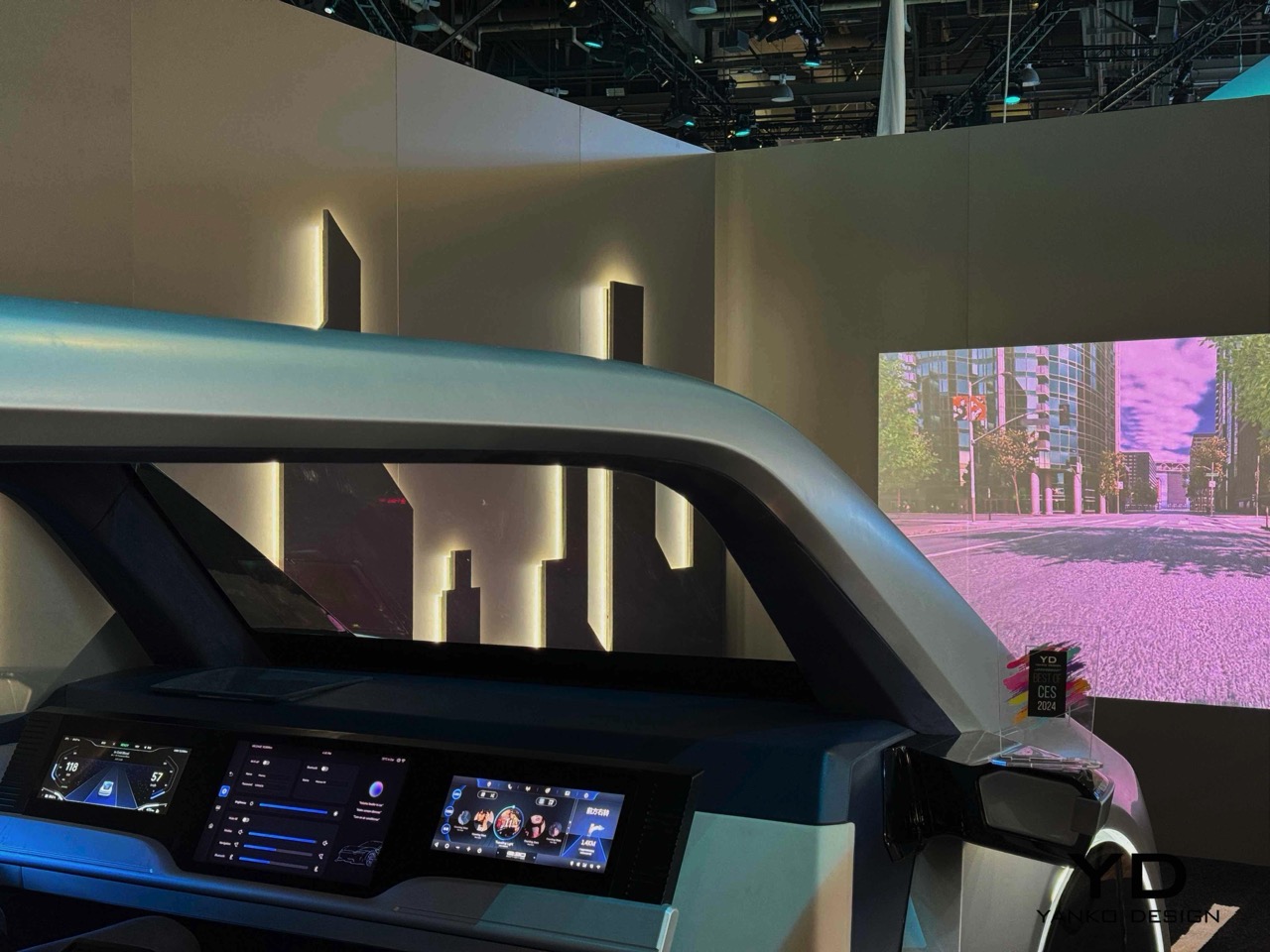
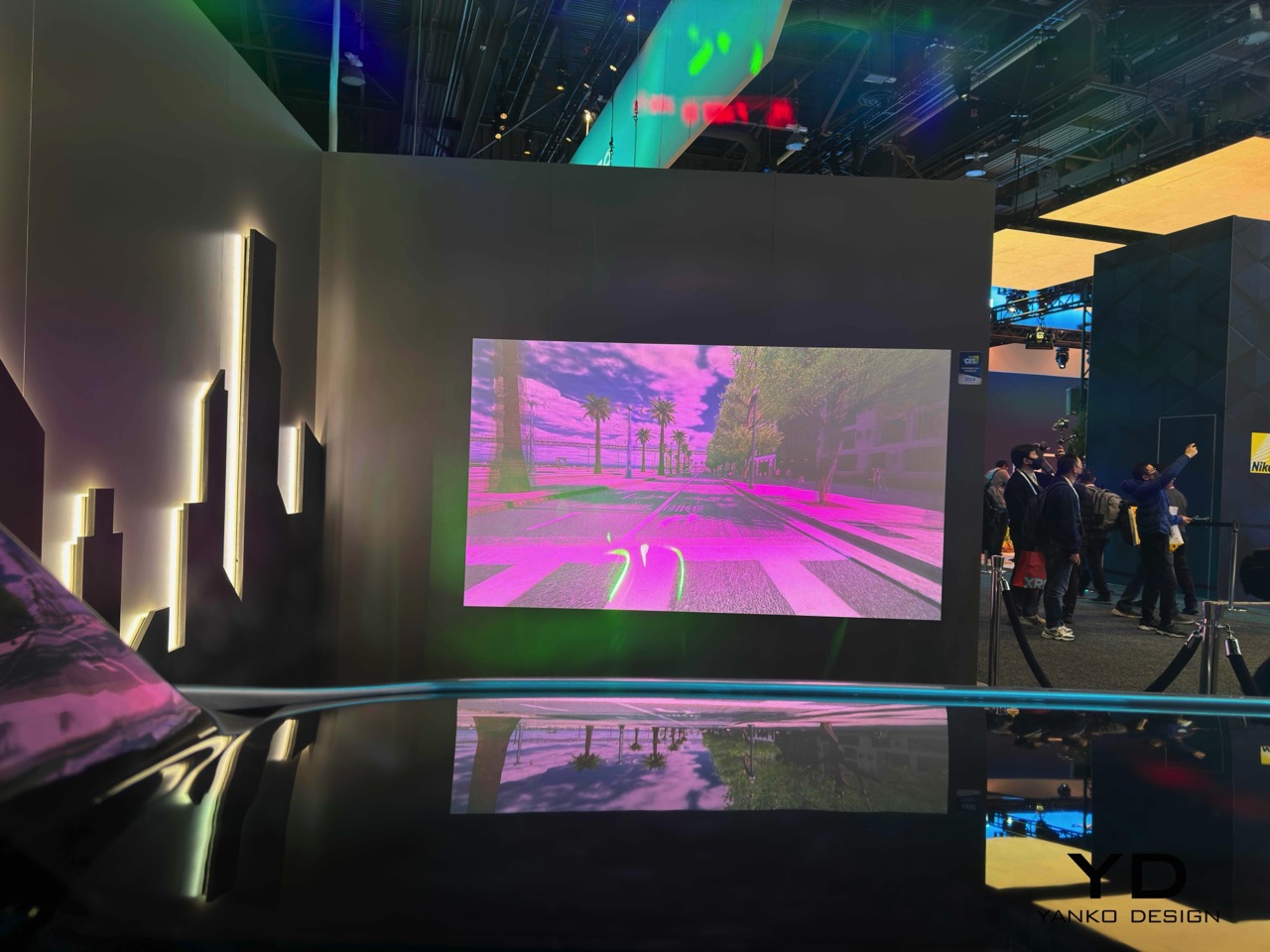
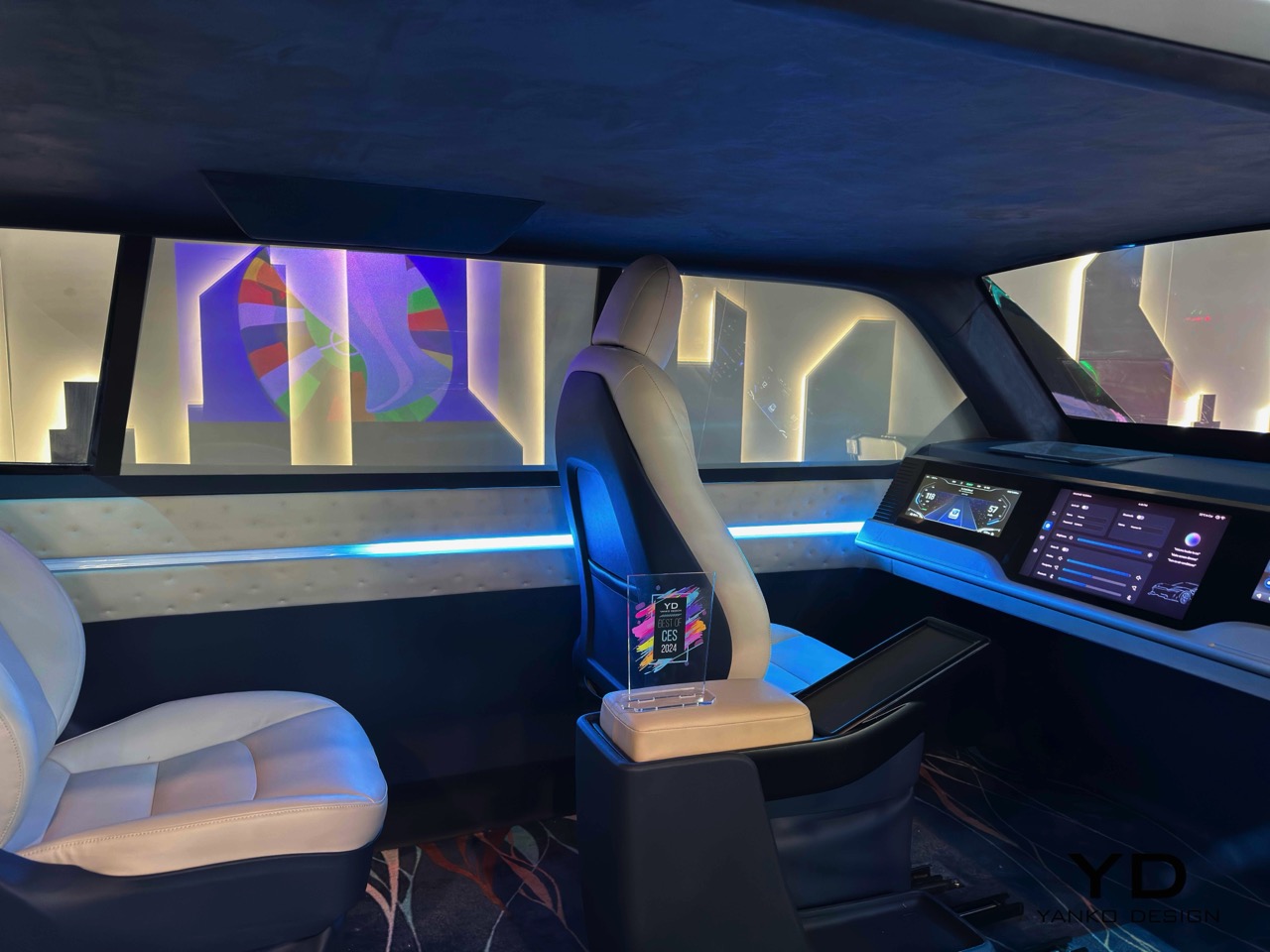
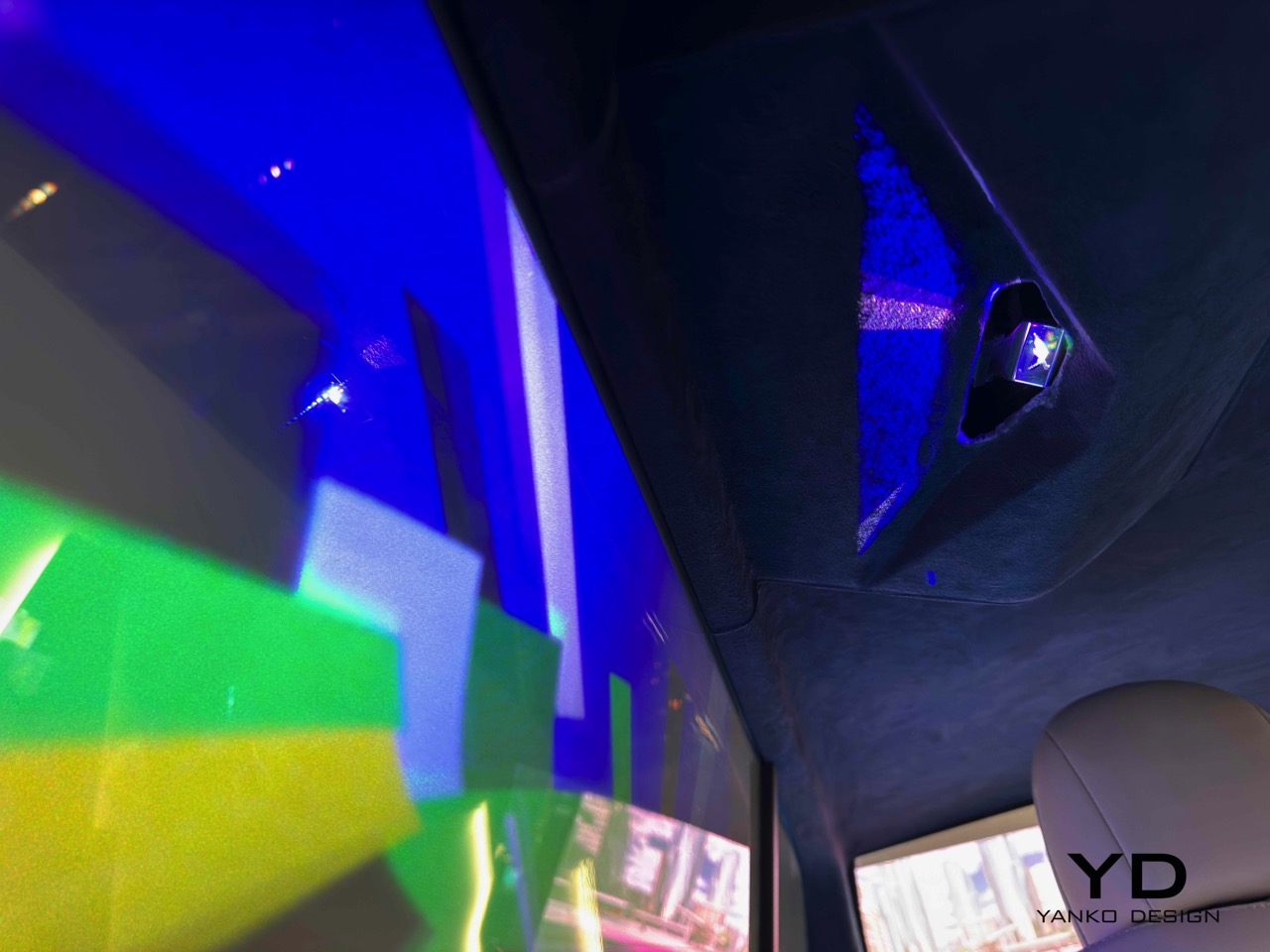
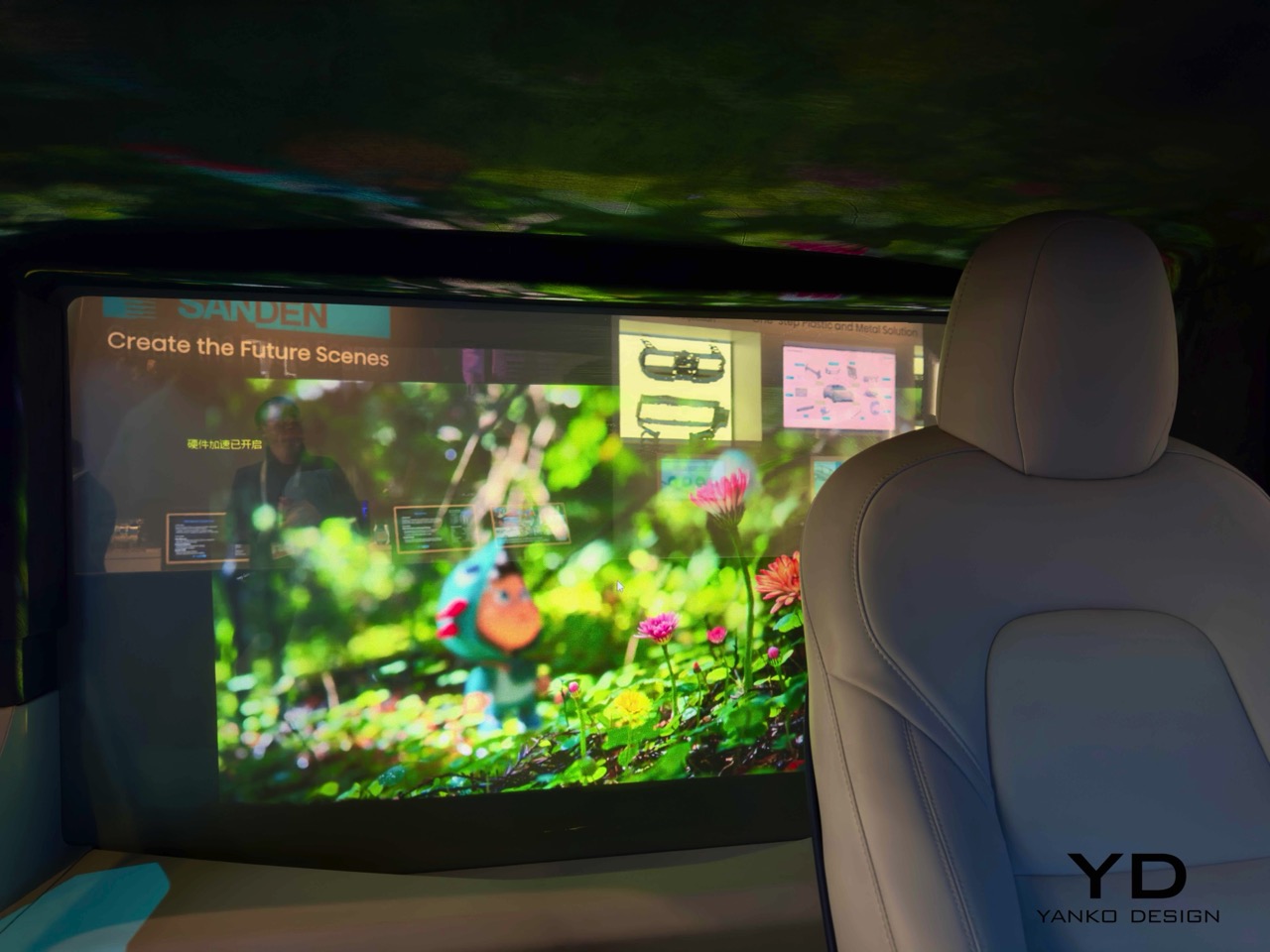
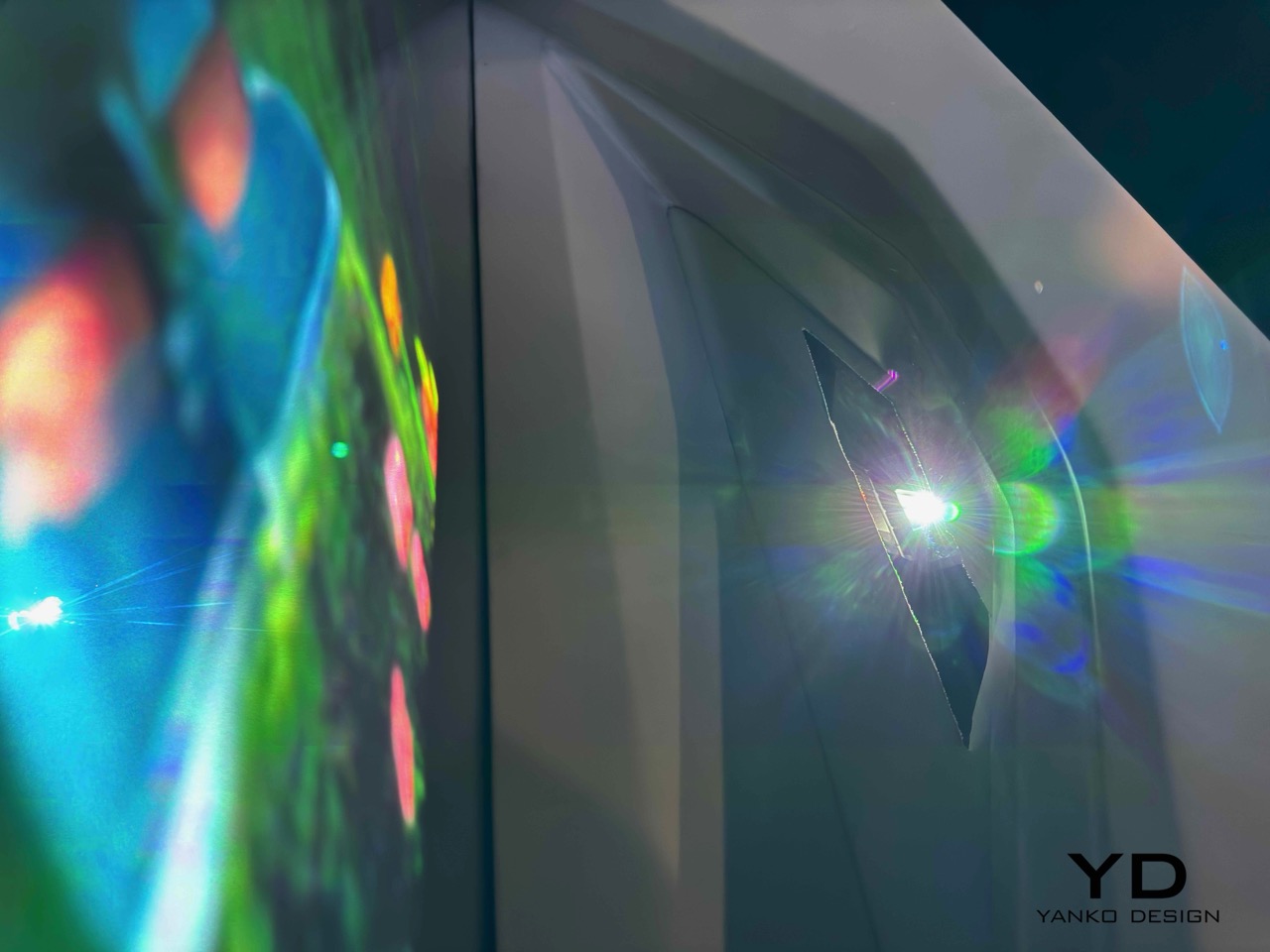
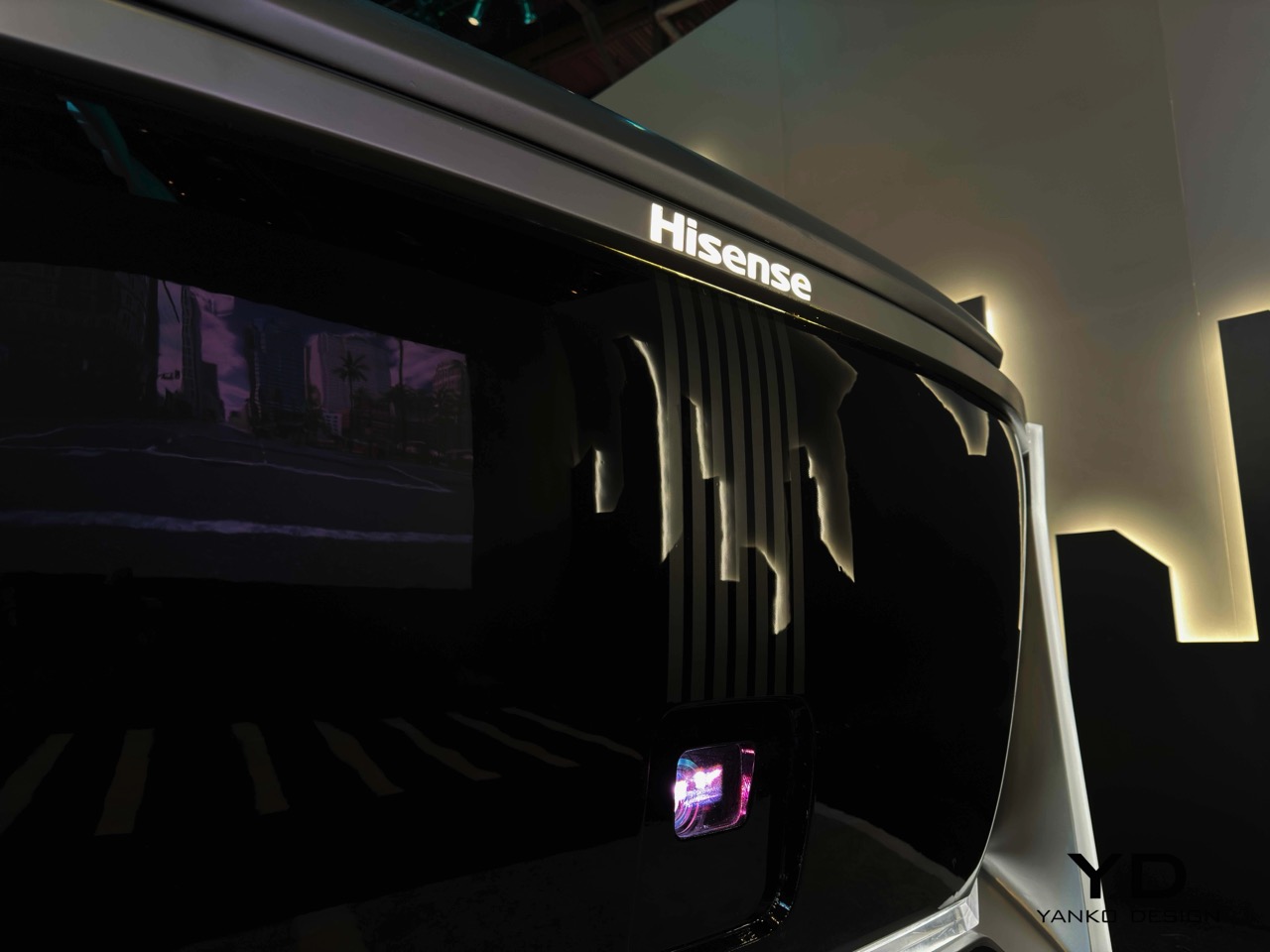
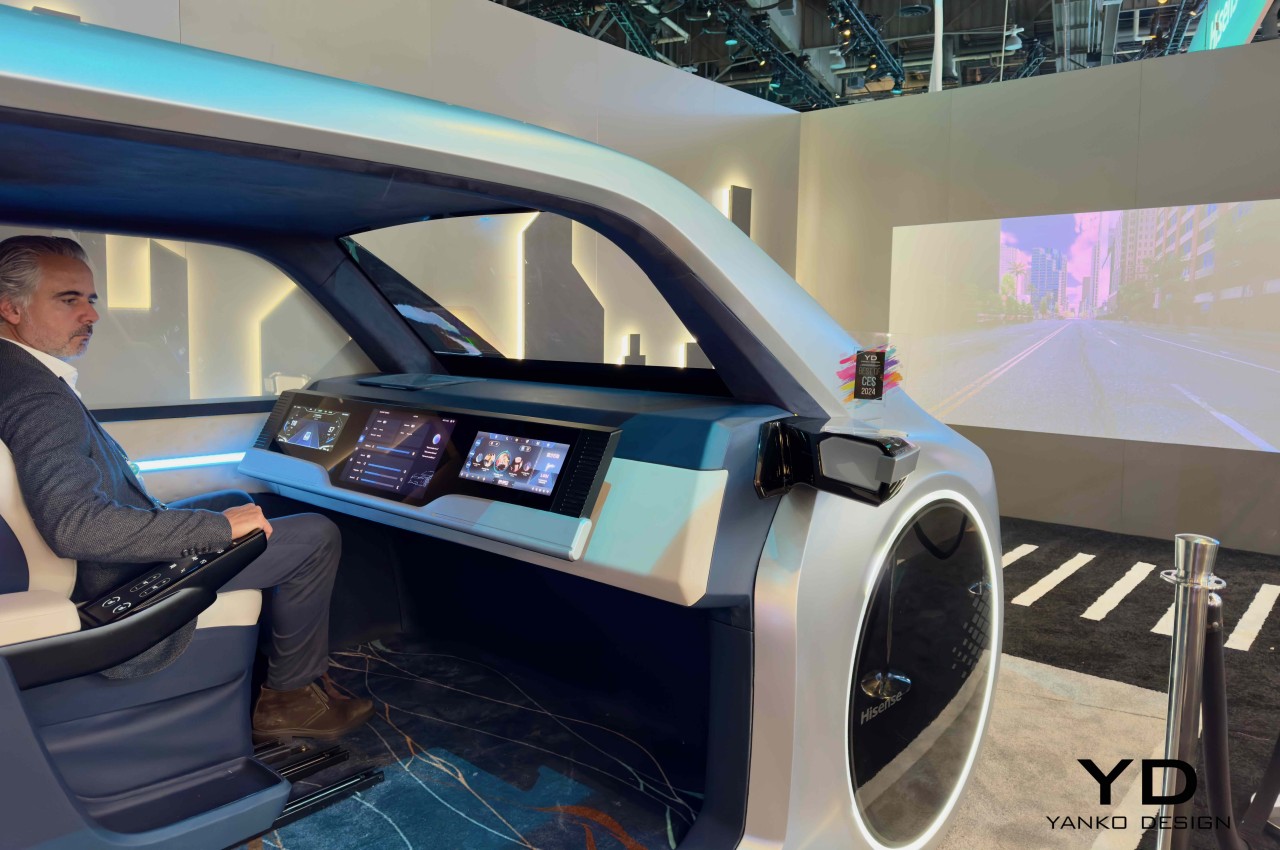
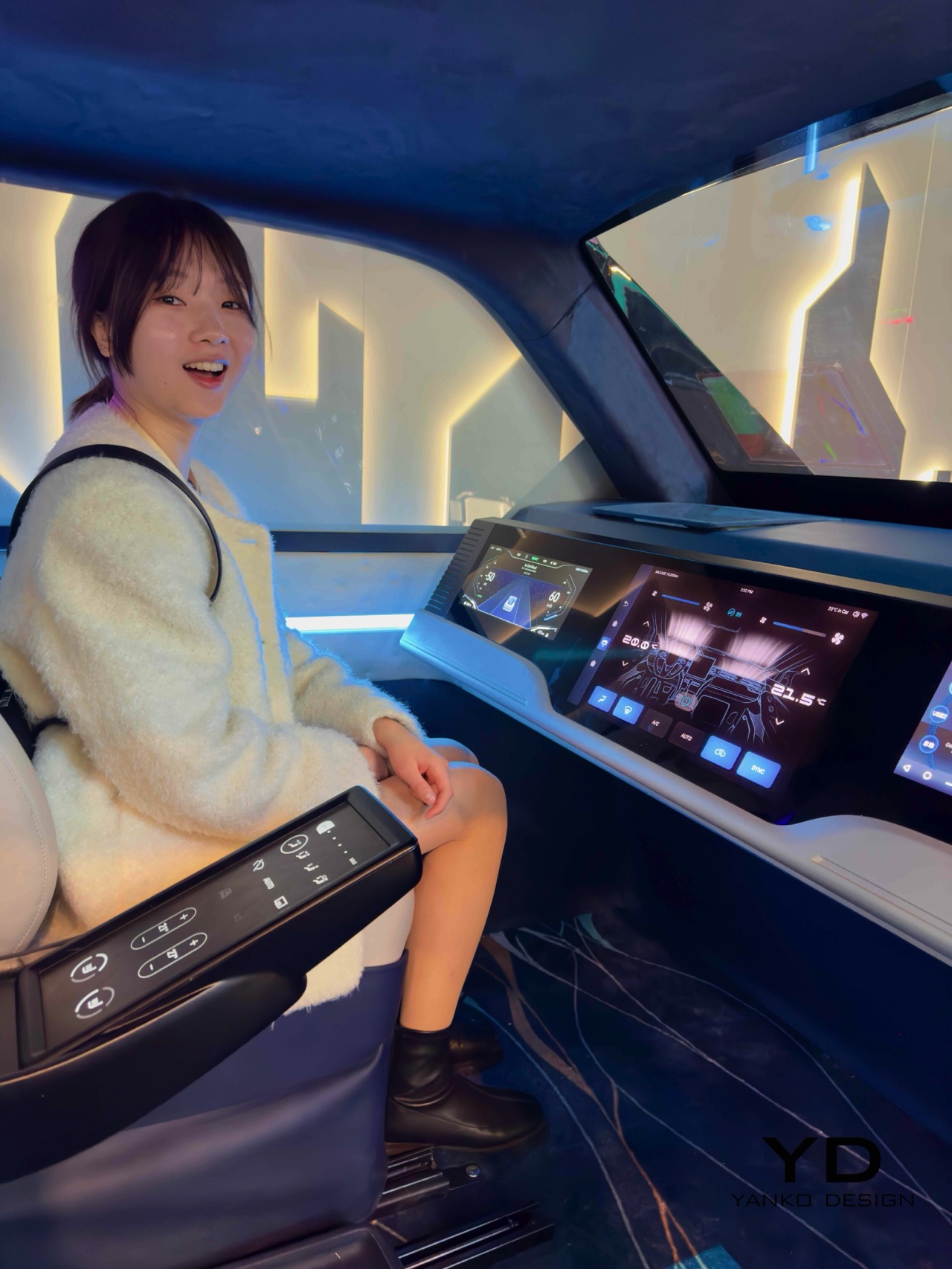
The Automobile Laser Display, honored with the CES 2024 Innovation Award, is revolutionizing the in-vehicle experience. It features the TriChroma triple-laser projection system, delivering a color performance 48% superior to traditional LEDs while maintaining a compact form, 80% smaller than conventional optical solutions. Its 200% luminous efficiency makes it the premier choice for automotive displays. The Laser Holographic AR-HUD transforms the windshield into an expansive holographic screen, merging virtual and real-world elements for safer driving. Advanced optical technology further converts side and rear windows into immersive displays, enhancing navigation and entertainment while focusing on safety and compact design.
Hisense Automotive Laser Display: Eyes on
The display of Hisense’s Automotive Laser at CES 2024 made a lasting impression on spectators. With its remarkable features, this cutting-edge technology is poised to revolutionize the automotive industry. Let’s delve into the details.
Starting from the driver’s cockpit, the heads-up display (HUD) offers an immersive experience by providing turn-by-turn directions, speed, and other essential vehicle information. While the exact resolution and size dimensions are yet to be finalized, the preliminary concept promises a screen size ranging from 13 to 15 inches, ensuring optimal visibility for drivers.
But it doesn’t end there. Rear passengers are also in for a treat with two additional laser projectors, one on each side, and another centrally located in the rear where the traditional glass would typically be. The idea is that when cars are capable of autonomous driving, the rear passenger seats will swivel around. These laser displays, measuring approximately 30 to 40 inches, create a captivating visual experience for passengers, whether they’re embarking on a road trip or enjoying a romantic date night.
One of the most impressive aspects of Hisense’s Automotive Laser Display is its adaptability to the surrounding environment. According to a representative from Hisense, this technology boasts a 200-percent luminous display, surpassing the brightness of conventional LEDs. This feature ensures exceptional picture quality regardless of external conditions, providing an enhanced viewing experience for all passengers.
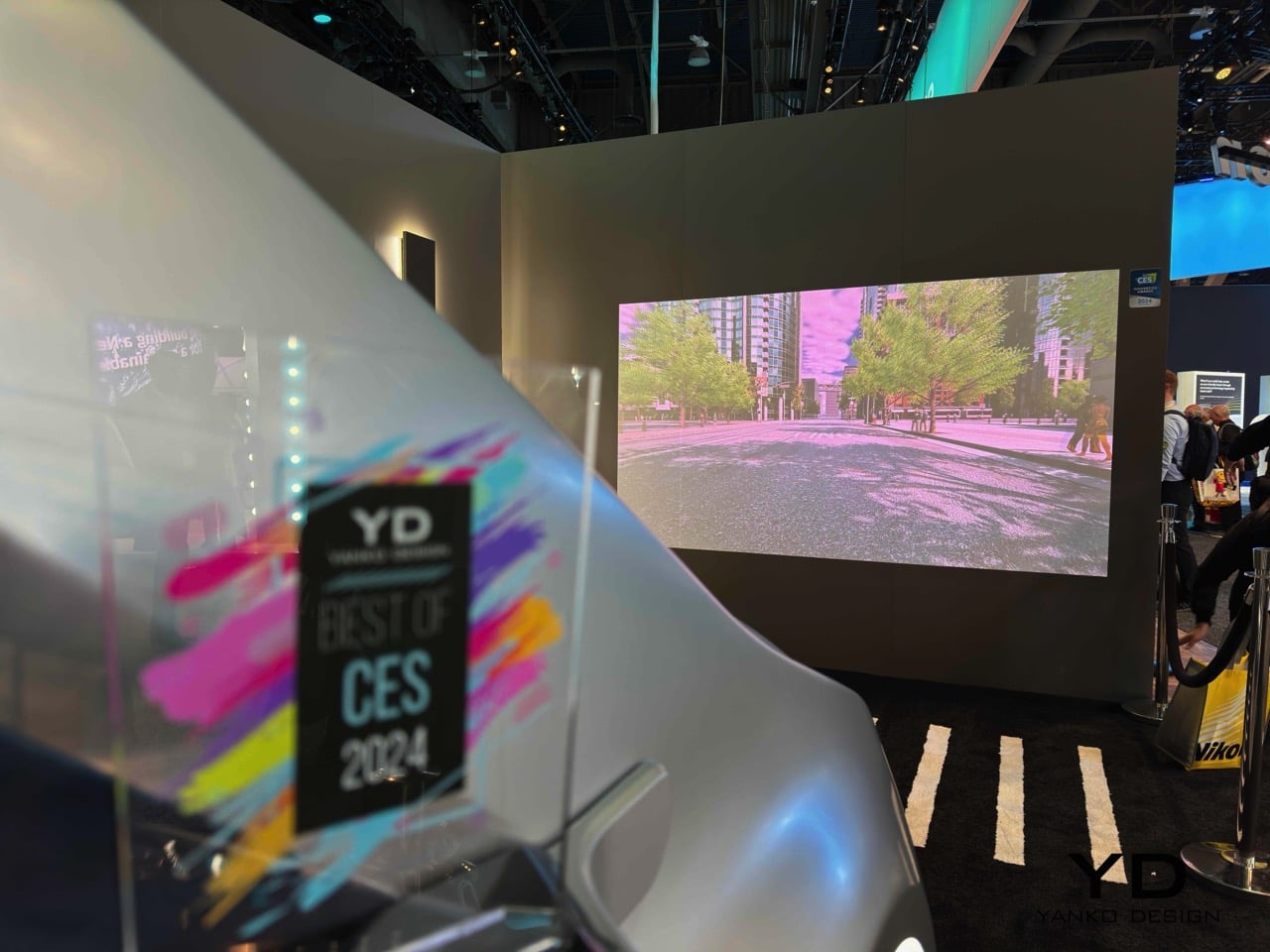
Moreover, the possibilities of this innovative technology extend beyond the confines of the car. Imagine transforming any flat surface into a drive-in theater with a built-in movie projector in the front bumper of your vehicle. While this incredible feature is only functional when the car is parked, it opens up a world of entertainment possibilities. Tailgate parties, camping trips, or even impromptu movie nights become even more exciting with this cinema-quality experience. Of course, you may need to find suitable surfaces, such as a garage door, for an optimal projection experience.
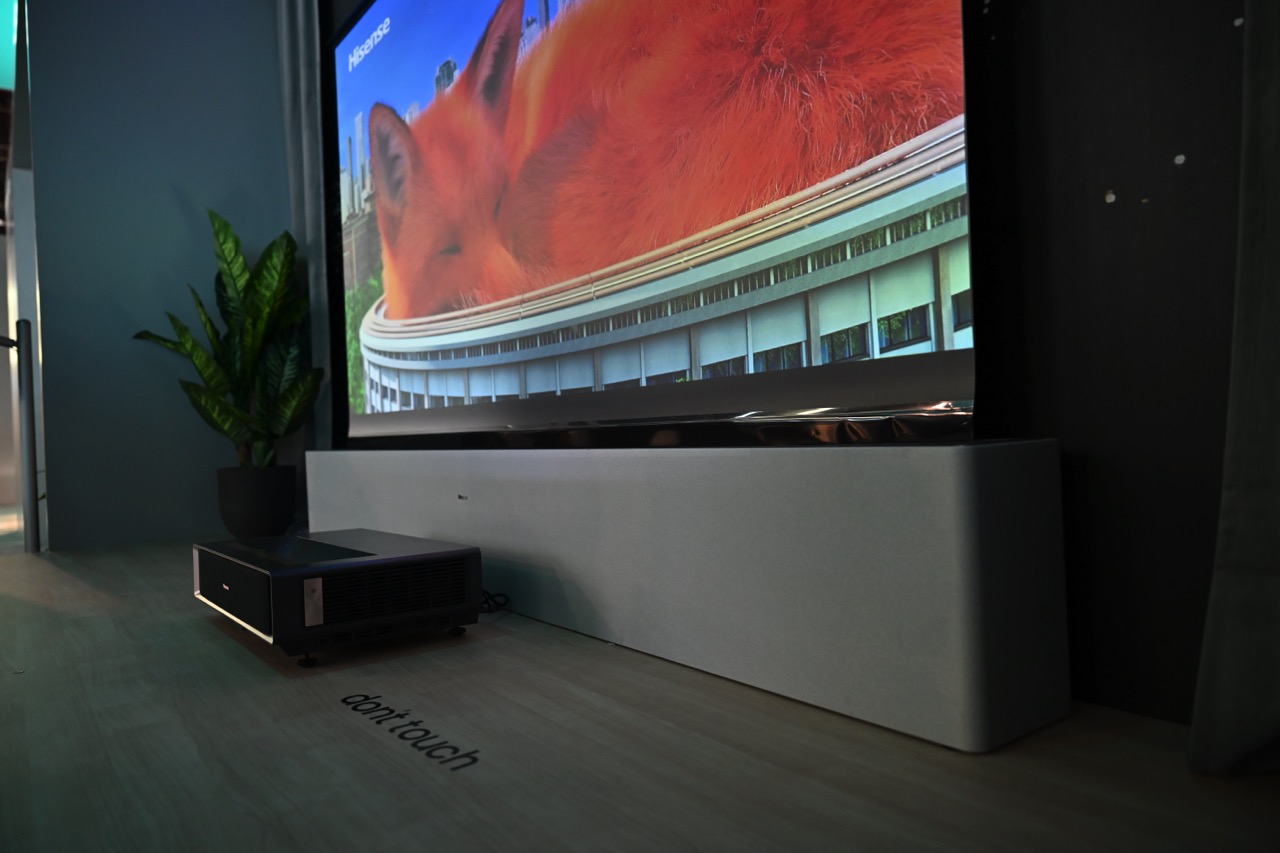
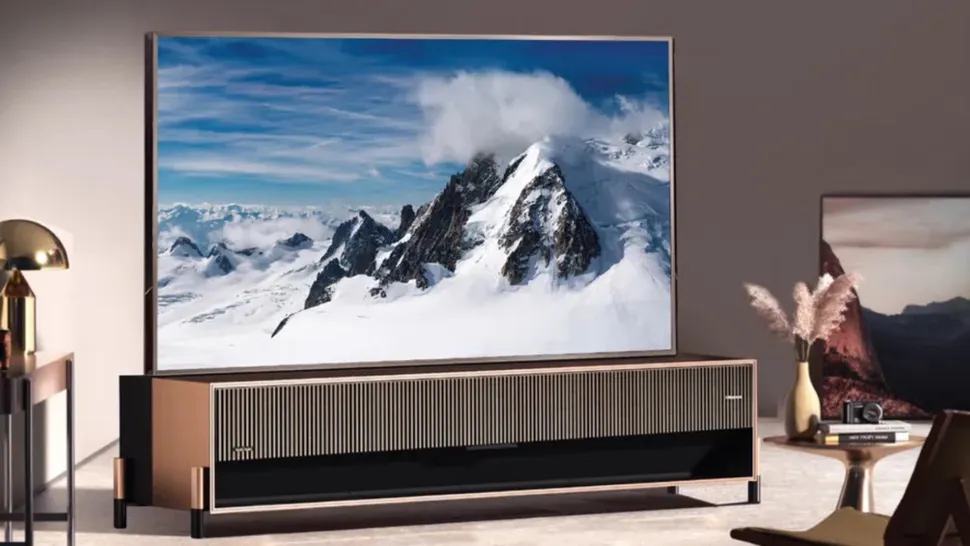
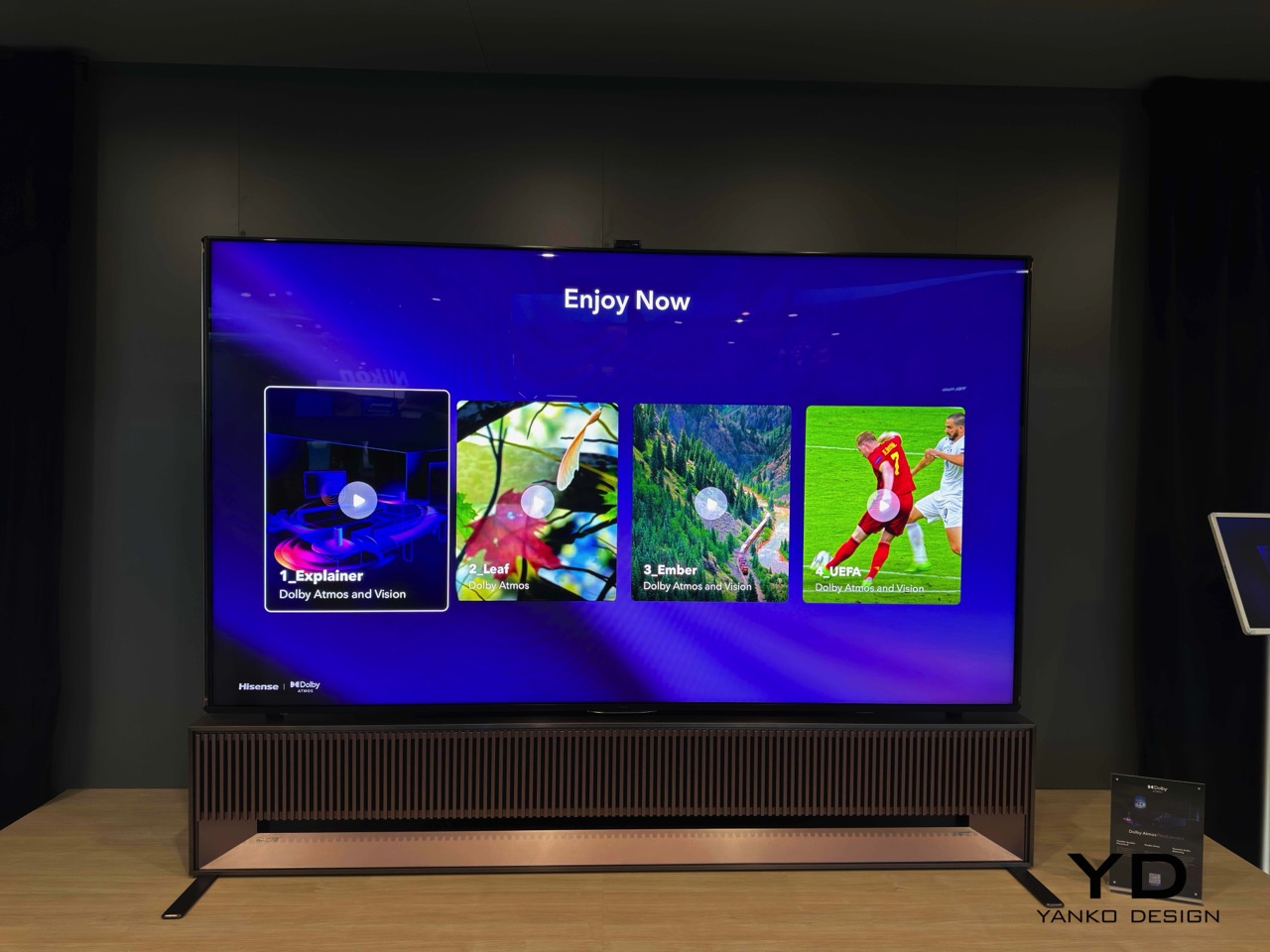
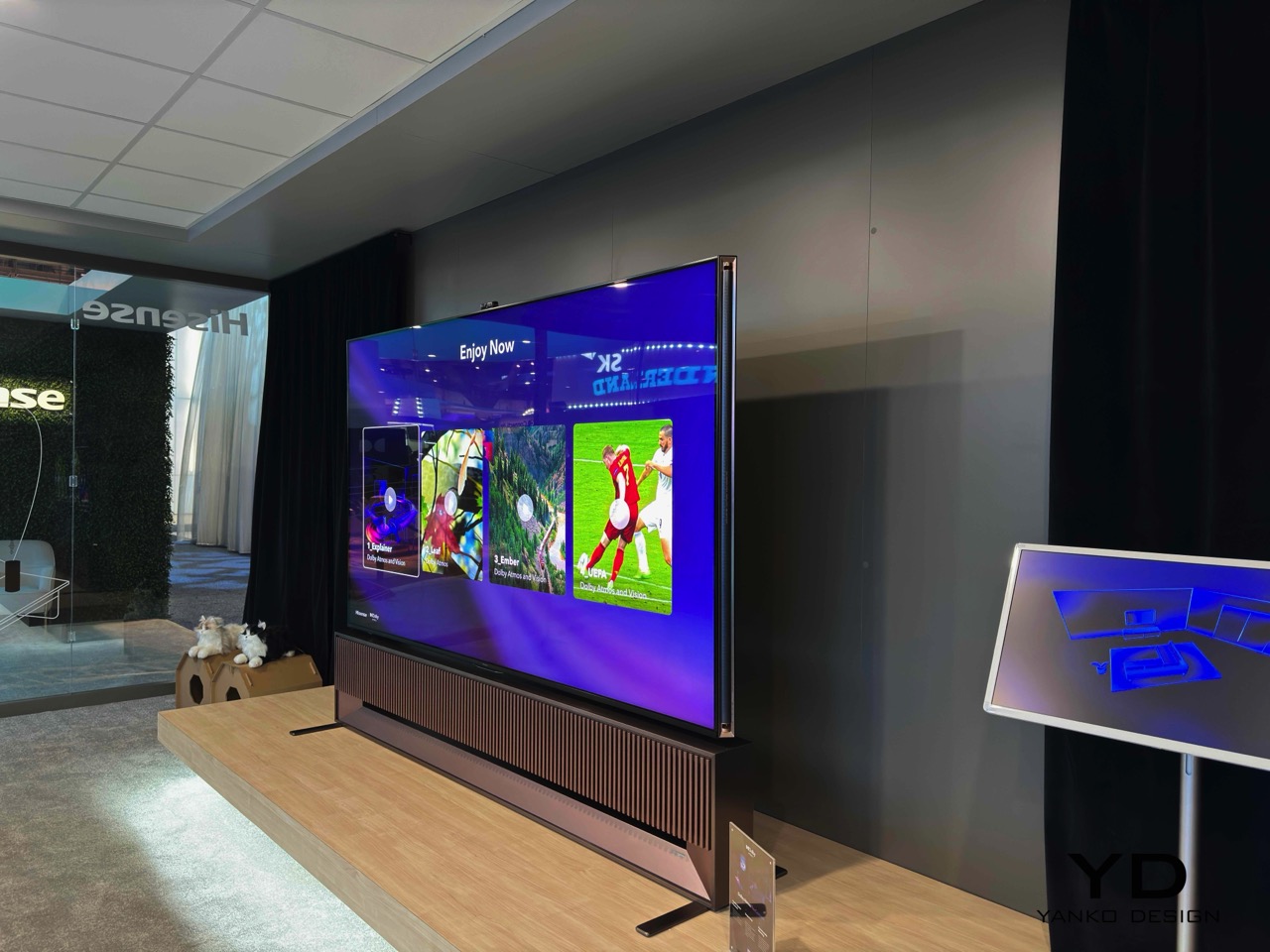
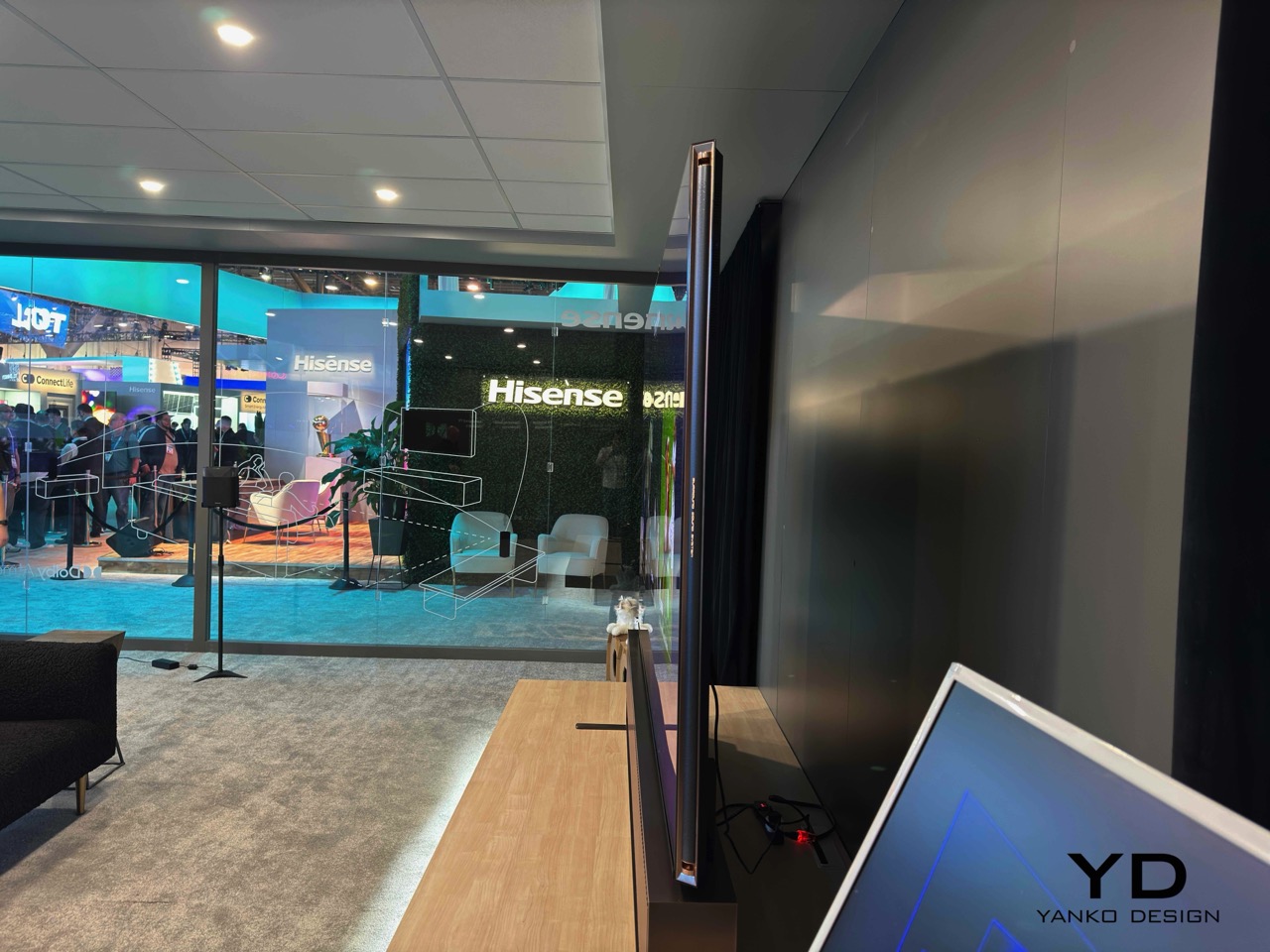
And that’s not all! Hisense also showcased a rollable laser display TV, further expanding its range of state-of-the-art products. The colors, clarity, and brightness of this TV are truly mesmerizing, captivating viewers and immersing them in a stunning visual display.
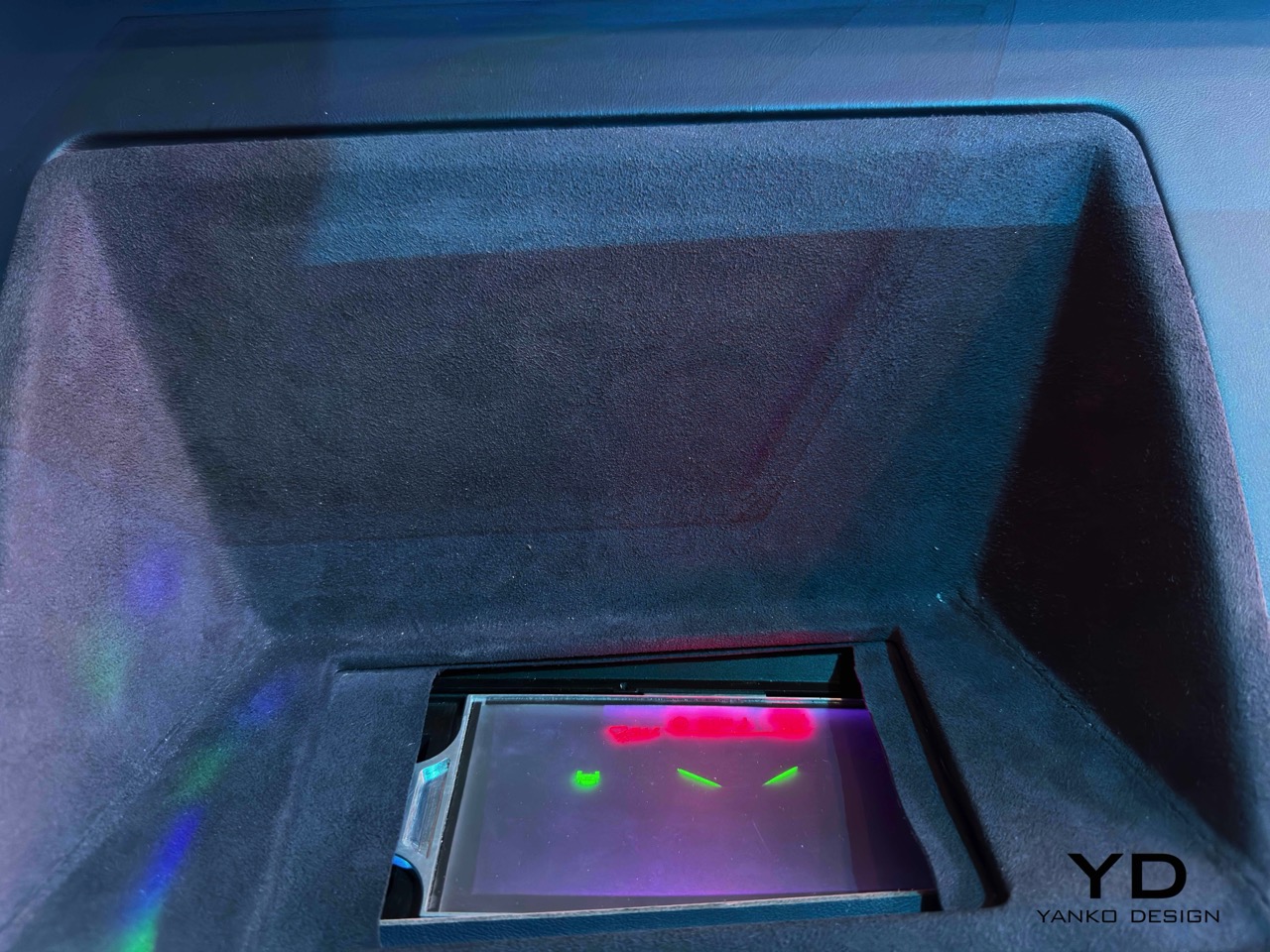
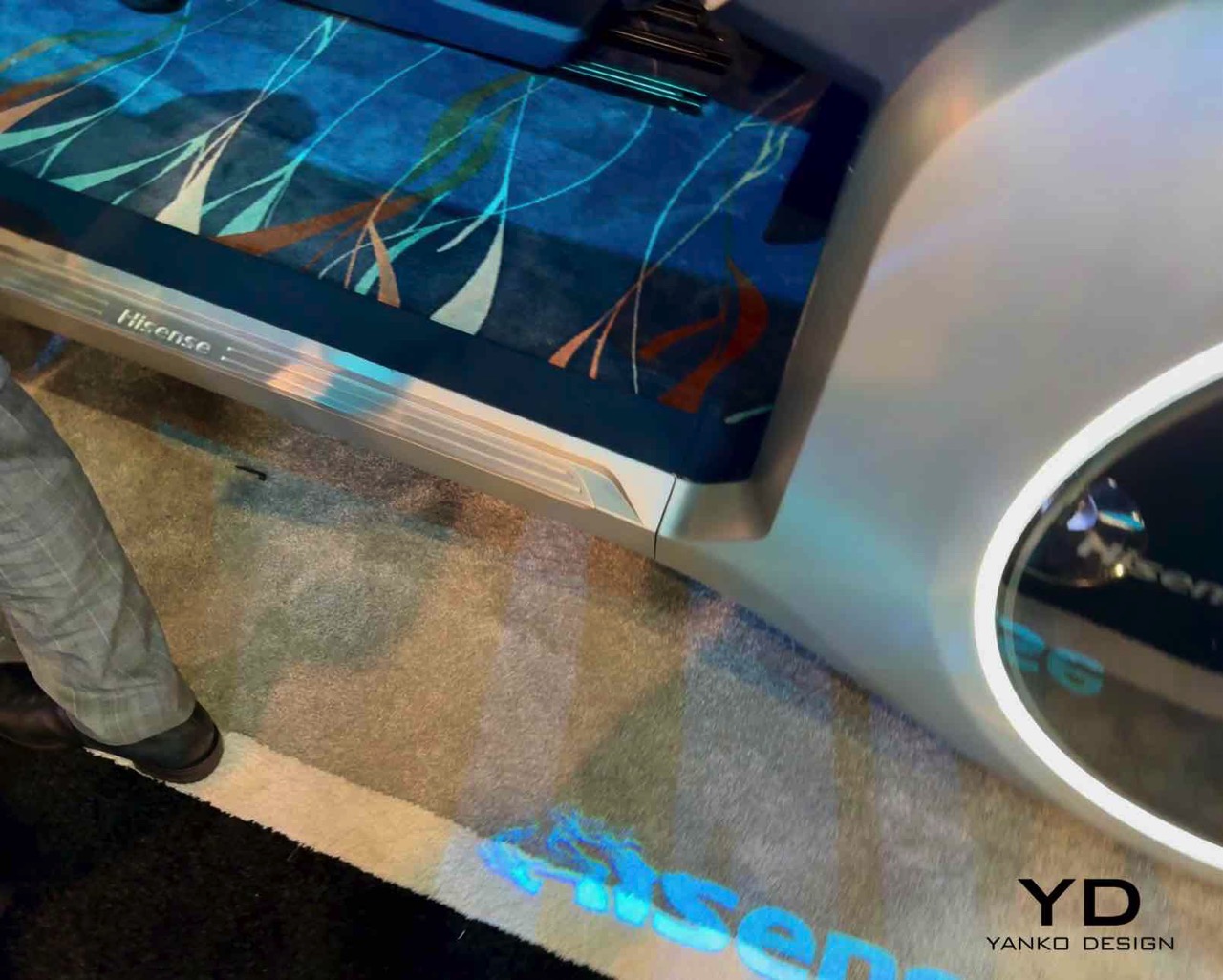
Lastly, a mini-laser projector is located directly under the rearview mirror, providing a luminous projection of the name of the car you are driving.
While Hisense’s Automotive Laser Display is currently in the concept stage, reliable sources have disclosed that leading automakers are actively considering adopting this groundbreaking technology. With its potential to redefine the future of automotive displays, it’s no wonder that industry insiders are closely monitoring the progress of Hisense’s Automotive Laser Display.
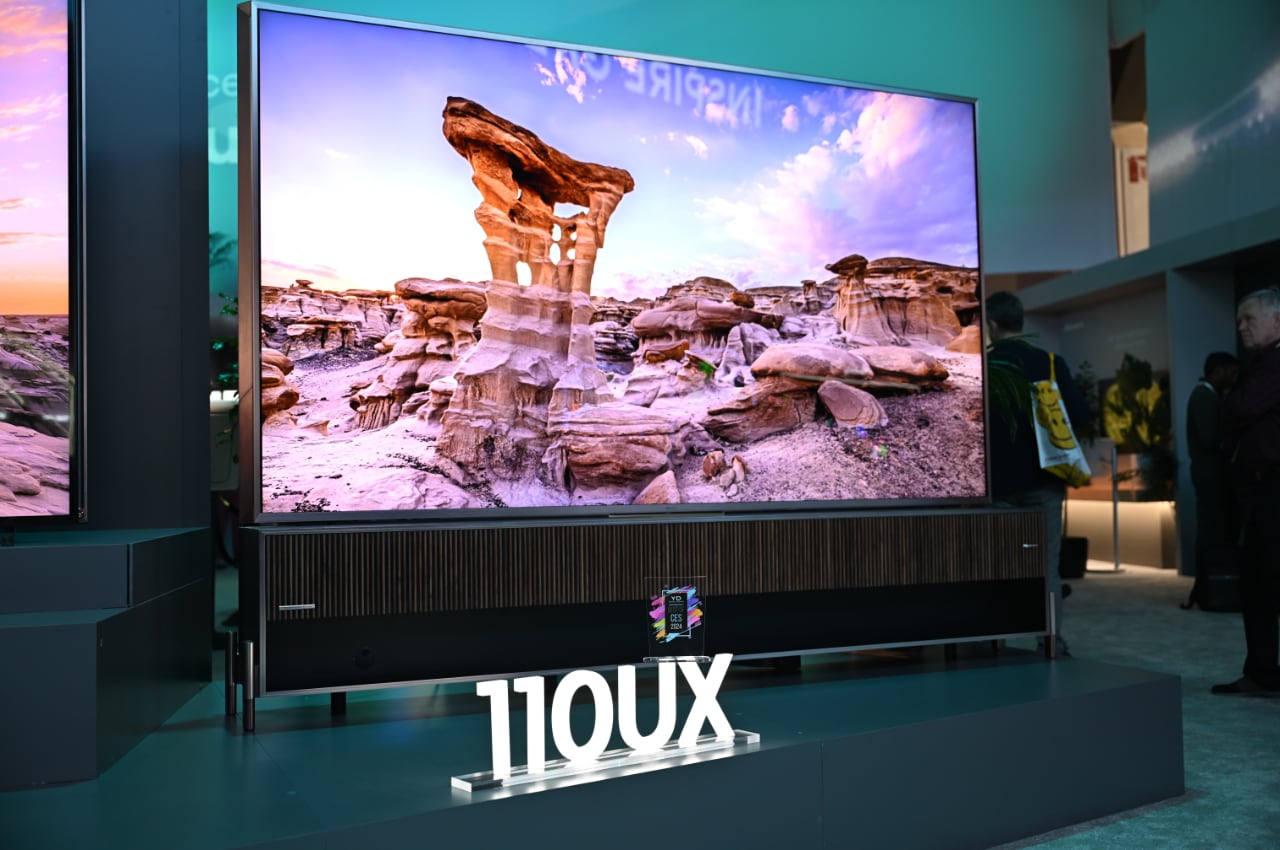
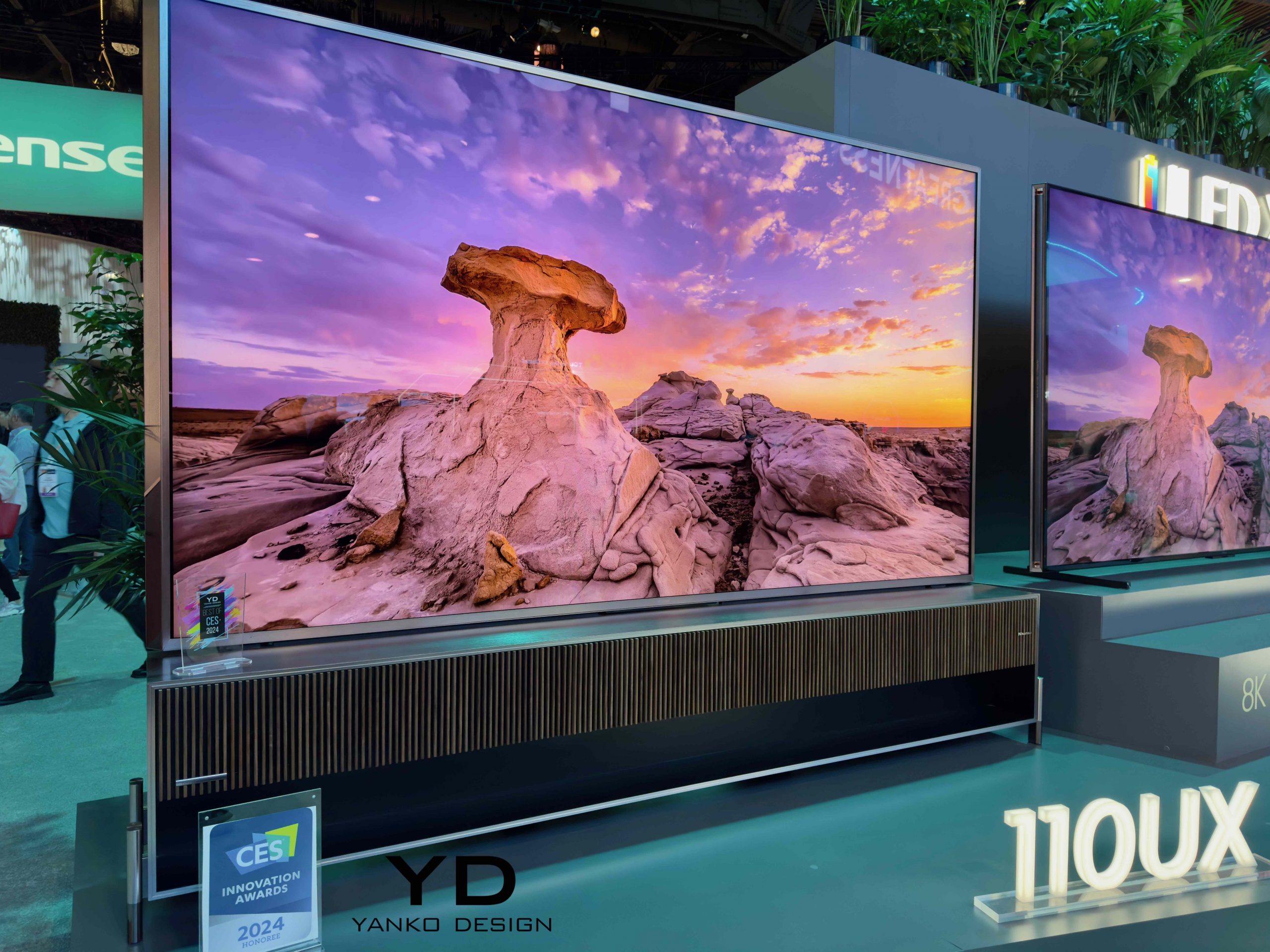
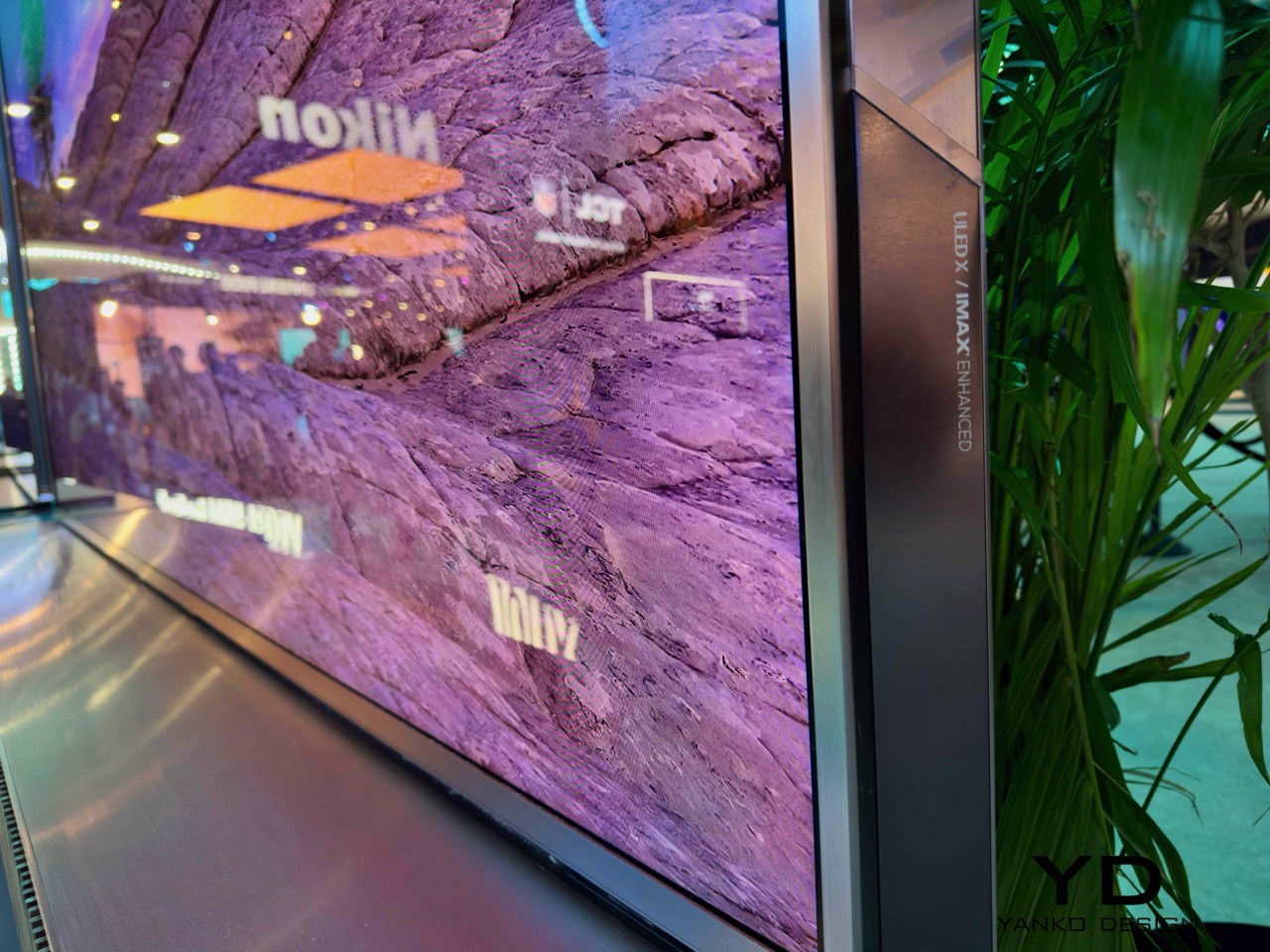
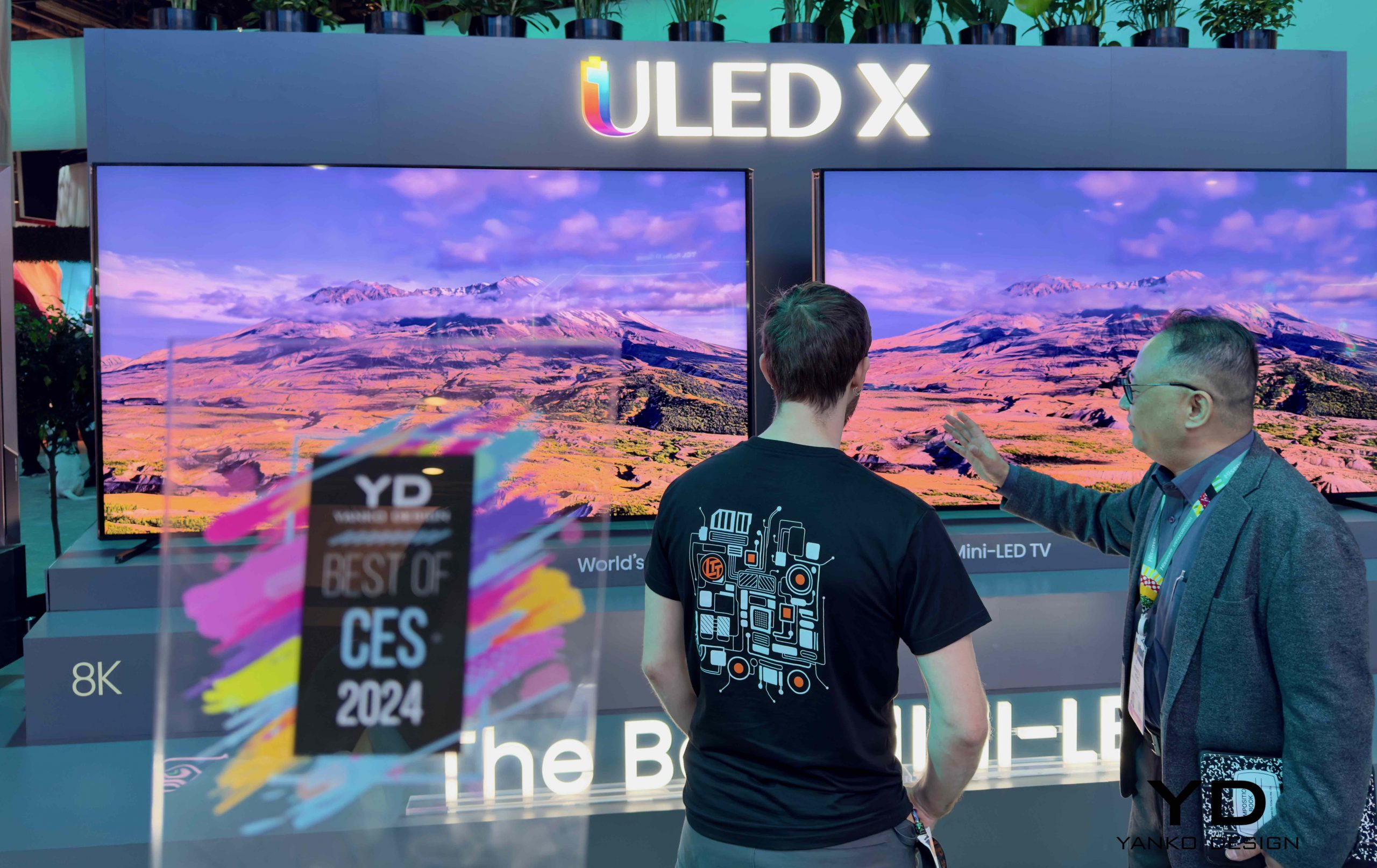
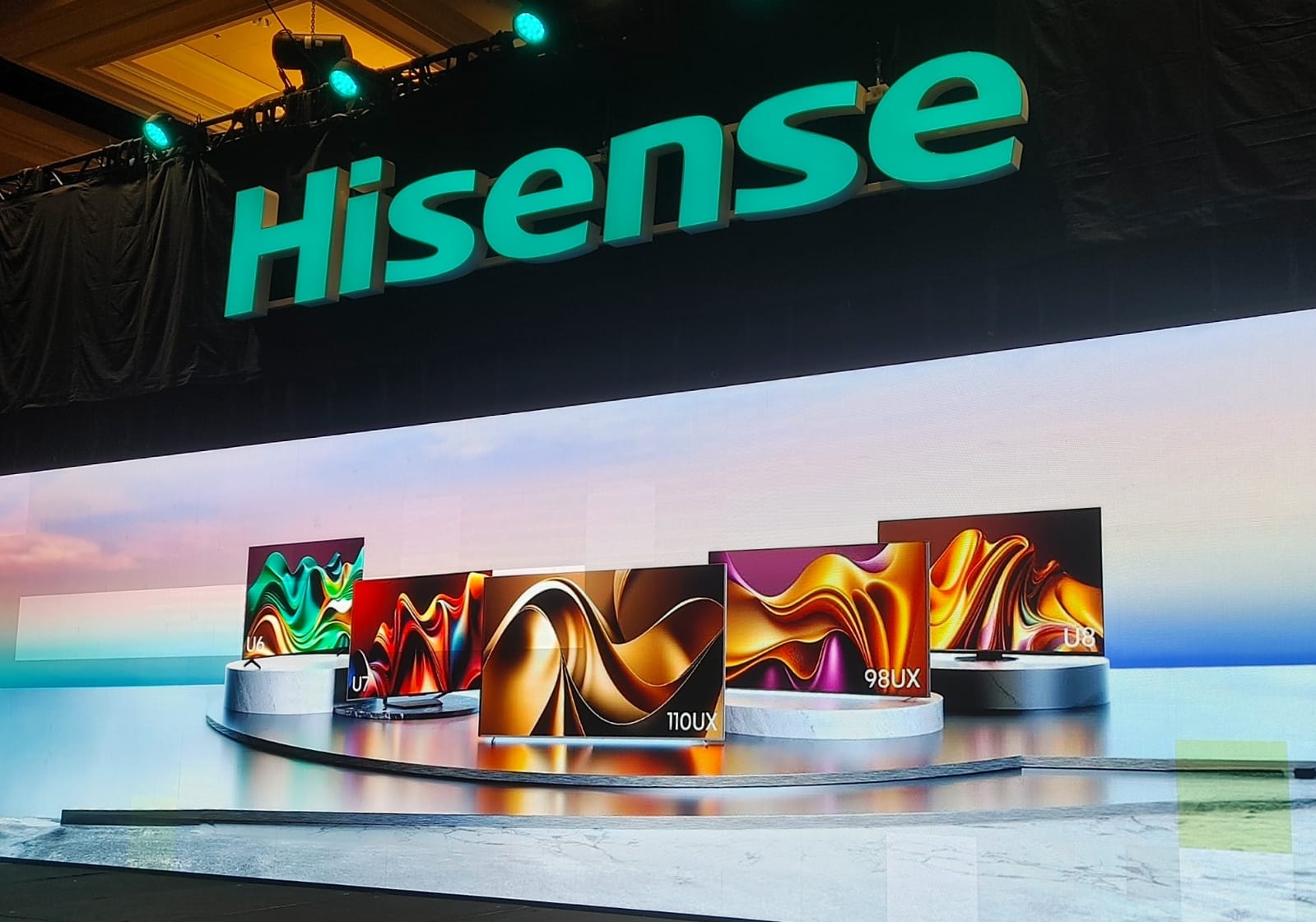
The 110UX, a flagship model in Hisense’s ULED X lineup, showcases the company’s advanced engineering capabilities. This 110-inch giant transforms the living room into a cinematic experience, transcending the traditional role of a TV. The 110UX features an impressive 40,000+ backlight zone, significantly reducing blooming and enhancing contrast to levels not seen before in the LED TV market. With its high-output Mini LED technology, the 110UX achieves an extraordinary brightness of up to 10,000 nits.
However, the 110UX’s appeal extends beyond brightness; its color accuracy is equally impressive. Covering 95% of the BT.2020 color palette, the 110UX surpasses competitors who only reach 80%. This superior color coverage ensures viewers experience the most realistic and vibrant visuals.
The Genius Behind the Screen: AI-Enhanced Viewing
Hisense goes beyond mere hardware prowess. The 110UX includes advanced AI-driven features such as AI contrast and AI depth. These intelligent systems dynamically adjust picture quality, clarity, and immersion based on the content, elevating the viewing experience to new heights. Furthermore, integrating cutting-edge, color-resistant panel materials and QLED-Quantum Dot technology, powered by the Hi-View Engine X chipset, takes color reproduction and image clarity to the next level.
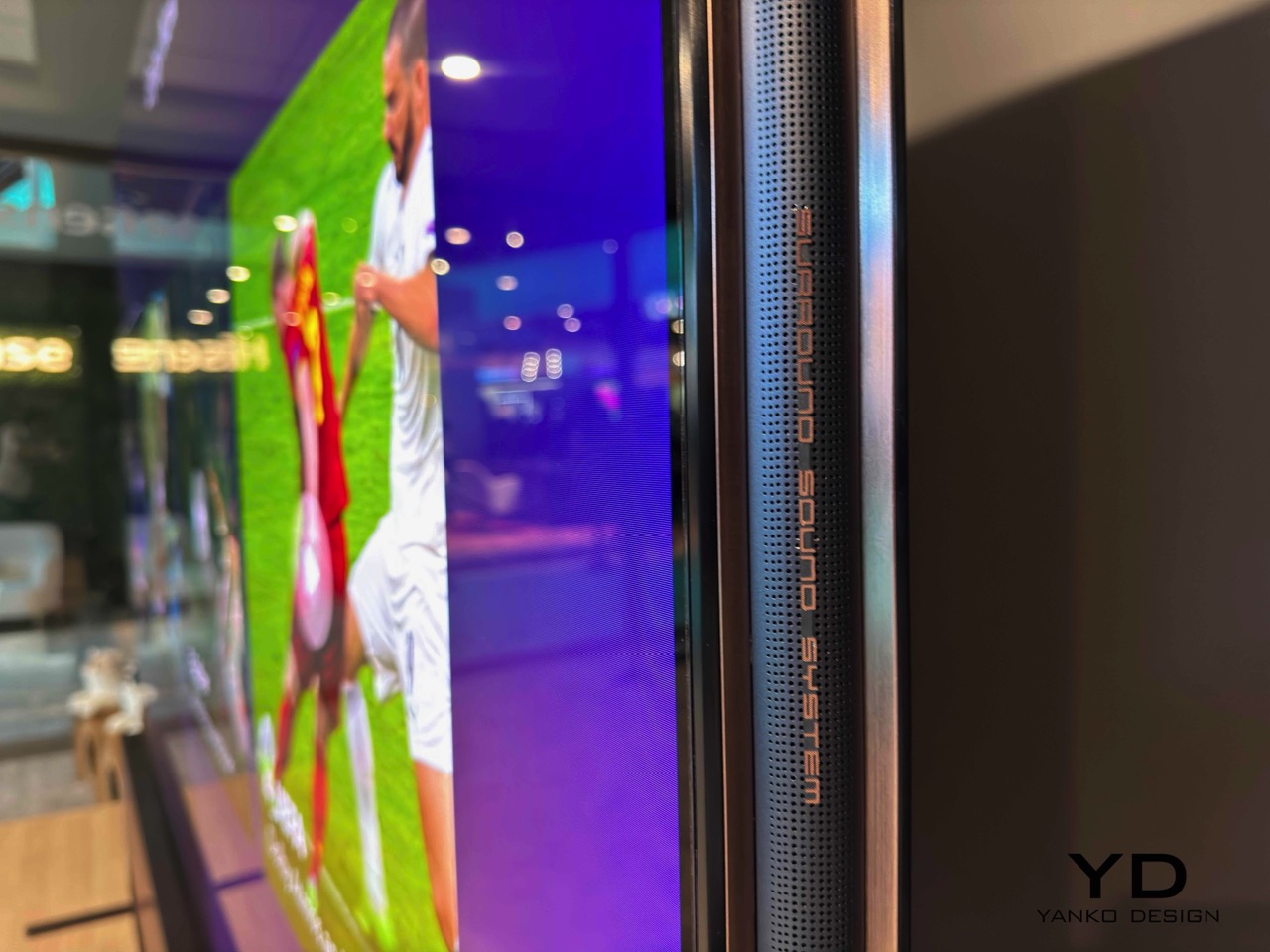
Audio quality is also a major focus. Equipped with 4.2.2 channel audio and Dolby Atmos FlexConnect, the 110UX offers an auditory experience as immersive as its visual counterpart. This harmonious blend of sight and sound creates a captivating entertainment experience.
As a CES Innovation Award Honoree, the 110UX exemplifies Hisense’s dedication to excellence and innovation in display technology.
Comparing the 110UX to Previous Models and Competitors
When compared to previous ULED models, the 110UX represents a significant advancement. Its high-output Mini LED technology generates an extraordinary brightness level, greatly enhancing contrast and dynamic range. Coupled with its impressive 95% BT.2020 color palette coverage, the 110UX stands apart from both its predecessors and competitors, offering a viewing experience that is vibrant, lifelike, and deeply immersive.
What Sets the 110UX Apart in the Mini LED TV Market?
In the Mini LED TV market, the 110UX distinguishes itself through a combination of ultra-high brightness and extensive color palette coverage. These features work in tandem to produce images that are not only bright and clear but also rich and lifelike. This makes the 110UX an ideal choice for movie enthusiasts, gamers, and anyone seeking a premium TV viewing experience.
98UX: Bigger, Brighter, Faster
The 98UX and 110UX represent an evolution in Hisense’s innovative lineup. This 98-inch Mini LED TV matches its predecessors in quality and significantly enhances brightness, contrast, and motion handling.
The 98UX stands out with its extraordinary peak brightness of up to 5,000 nits, almost double that of last year’s models. This remarkable brightness level, combined with over 10,000 local dimming zones, brings unparalleled depth, detail, and contrast to the screen. The result is a picture quality that delivers realism and clarity on a grand scale, especially on its massive 98-inch display.
This TV offers more than just stunning visuals; it delivers a comprehensive sensory experience. The enhanced native refresh rate of 144Hz positions the 98UX as an ideal choice for movie buffs who value smooth motion and avid gamers who require high-performance displays. The increased refresh rate ensures that every frame is rendered with precision, making fast-paced scenes and gaming environments appear exceptionally fluid and lifelike.
A Sound Experience to Match
Complementing its visual clarity, the 98UX also features 4.2.2 channel audio, creating an immersive soundscape. This audio technology ensures that the sound quality matches the exceptional visuals, providing a complete and enveloping entertainment experience.
With these advancements, Hisense’s 98UX is set to be a standout product in the ULED X lineup. It displays Hisense’s commitment to innovation and its ability to deliver cutting-edge technology in its products. The 98UX is not just a television; it’s a gateway to an unprecedented viewing experience, setting new benchmarks in the industry and offering consumers a glimpse into the future of home entertainment.
Conclusion: Hisense’s Vision for the Future of Home Entertainment
Hisense’s 2024 ULED and ULED X lineups, particularly the 110UX, herald a transformative era in home entertainment. With these offerings, Hisense isn’t merely selling TVs; it provides a gateway to an unparalleled entertainment experience. The brand’s commitment to innovation, value, and understanding consumer needs is evident in these products, ensuring Hisense’s continued prominence in the global market.
The home entertainment landscape is constantly evolving, and Hisense’s latest offerings exemplify this progression, showcasing what is possible when technology and creativity converge. With its commitment to innovation, quality, and an unmatched viewing experience, Hisense is leading the way in shaping a bright future for home entertainment.
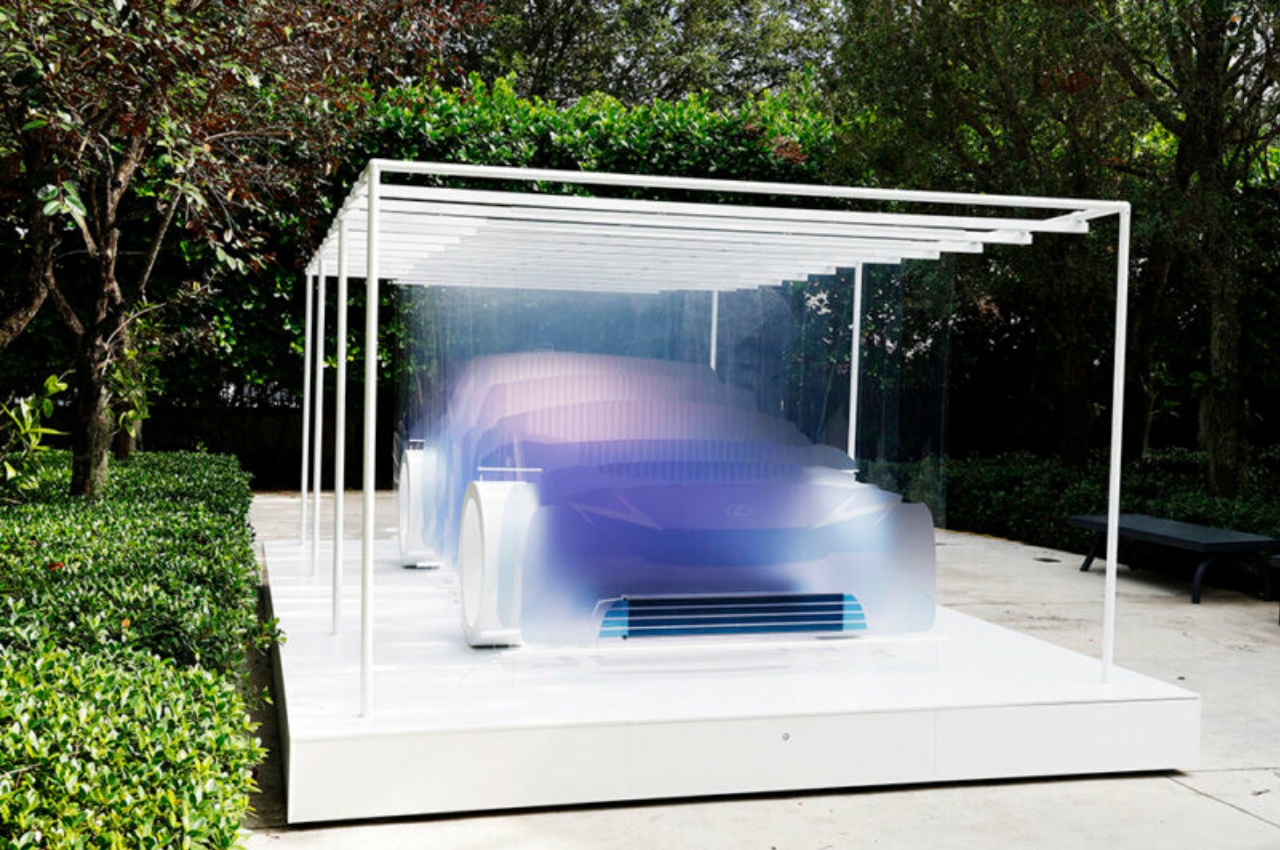
When you’re visiting car exhibit shows, you expect to see nothing but cars on display. The brands have to figure out how to make it a bit more exciting and innovative since looking at cars can become repetitive and if you’re not really a car enthusiast, it can get boring. But when you’re displaying a car at an art and design exhibition, then you can expect a more non-traditional way to look at the vehicle.
Designer: Marjan van Aubel
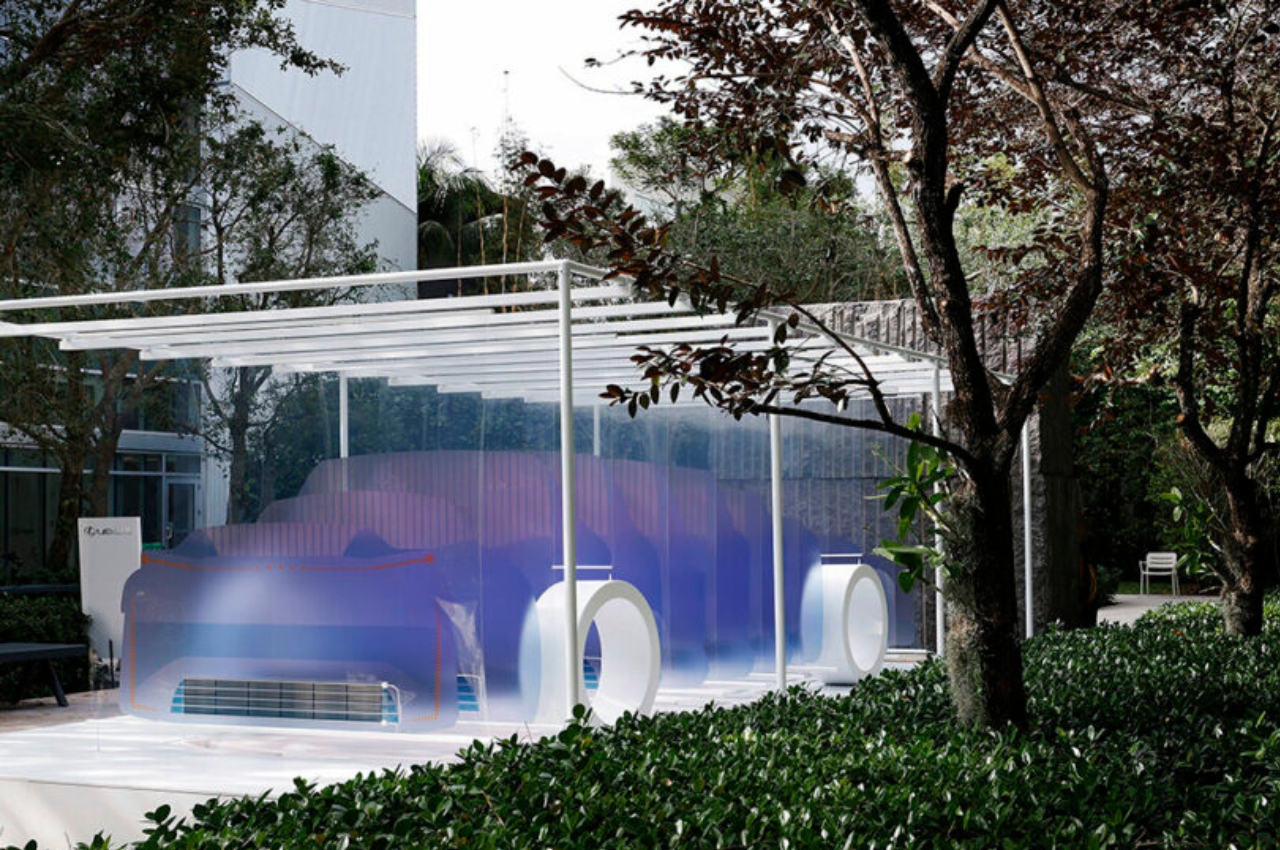
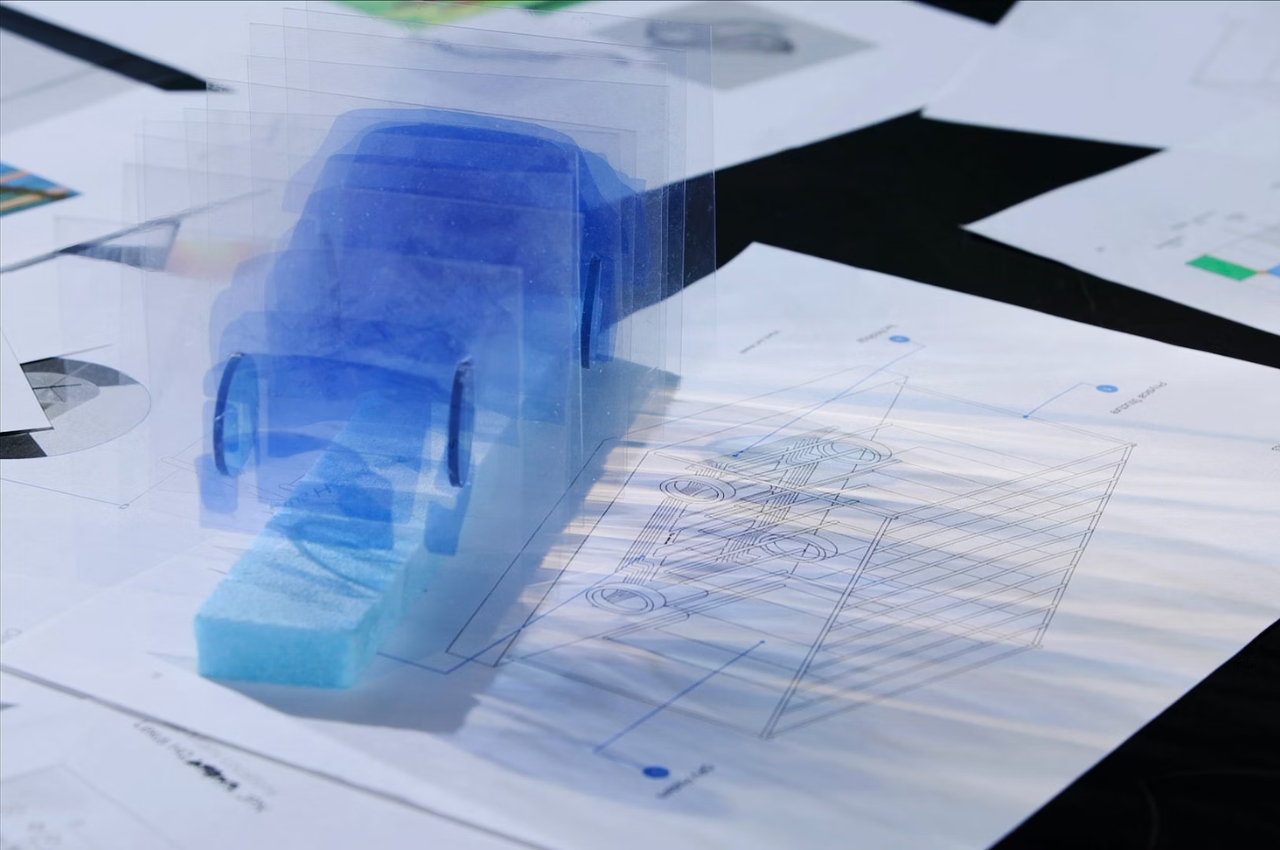
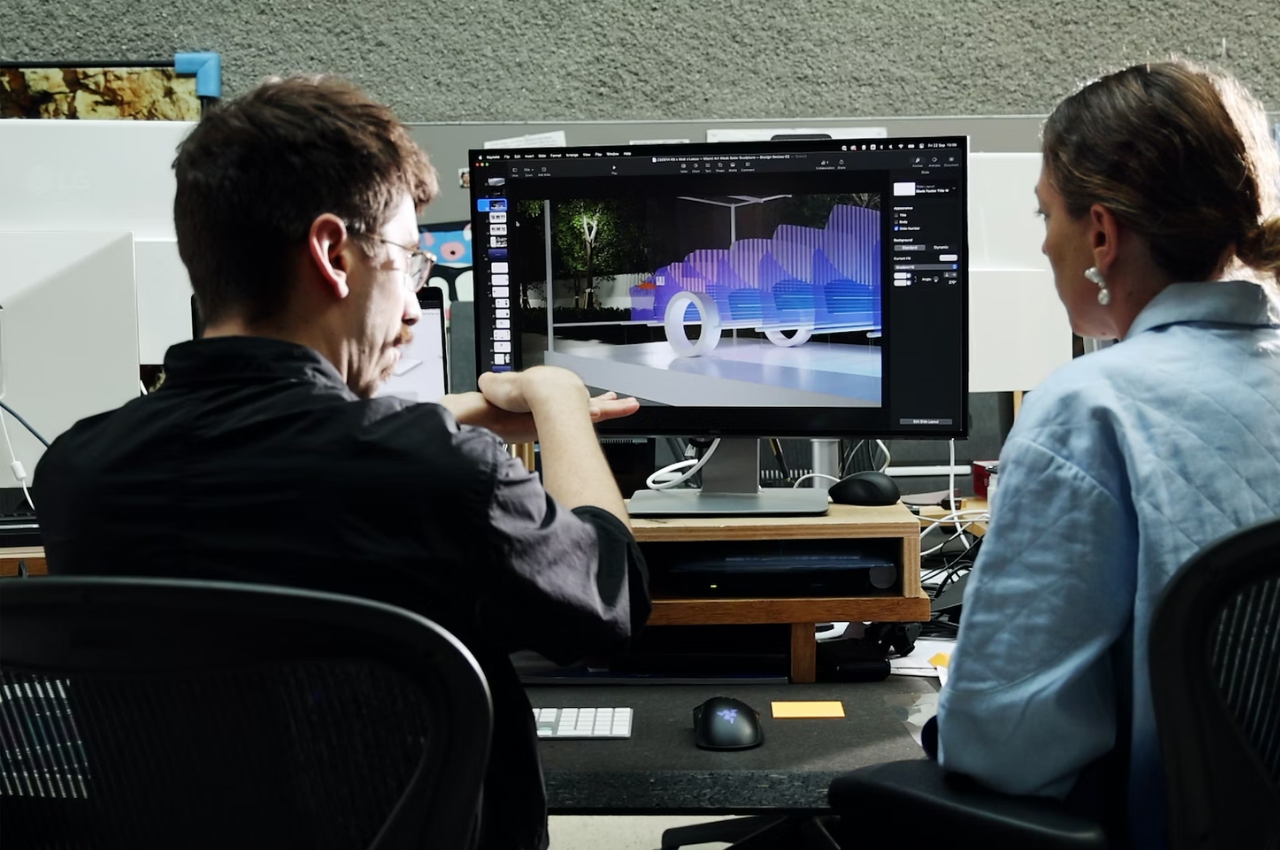
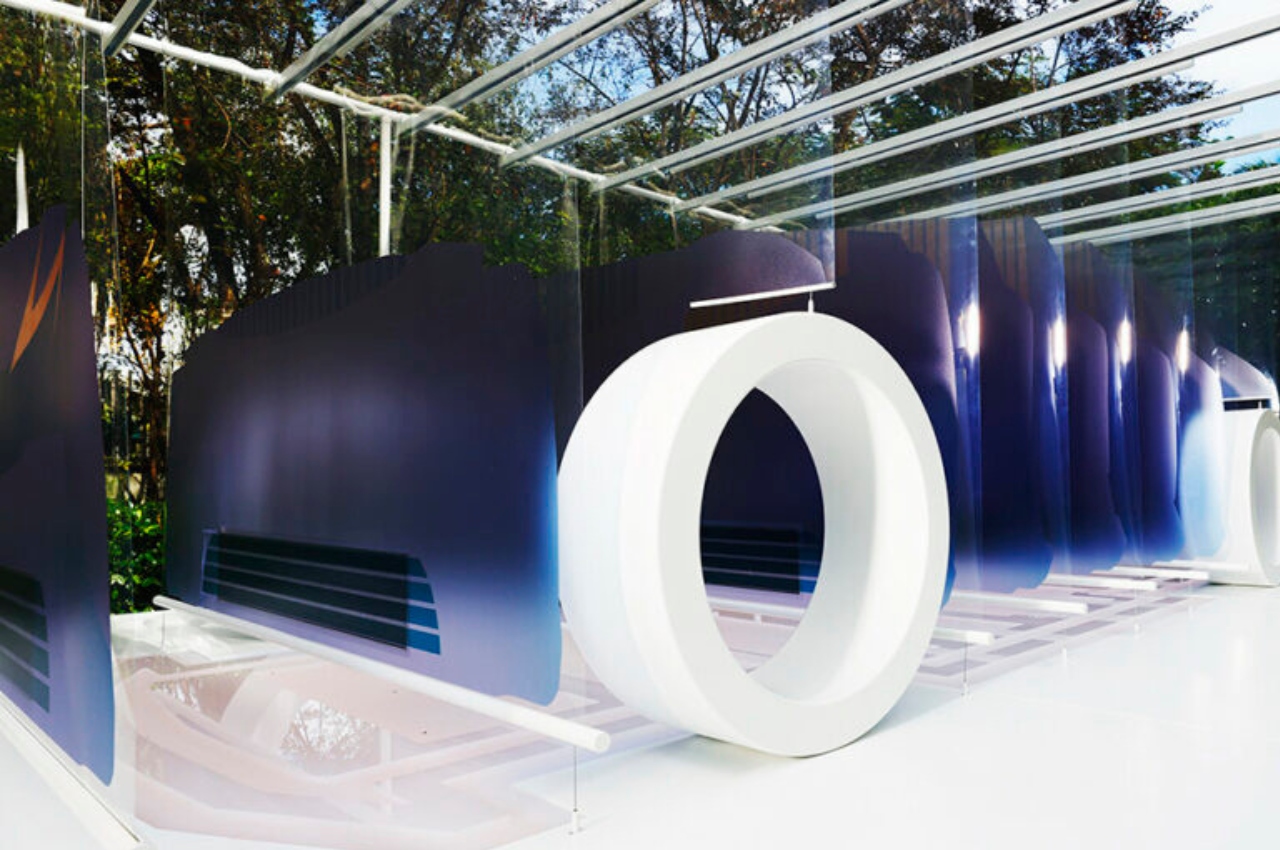
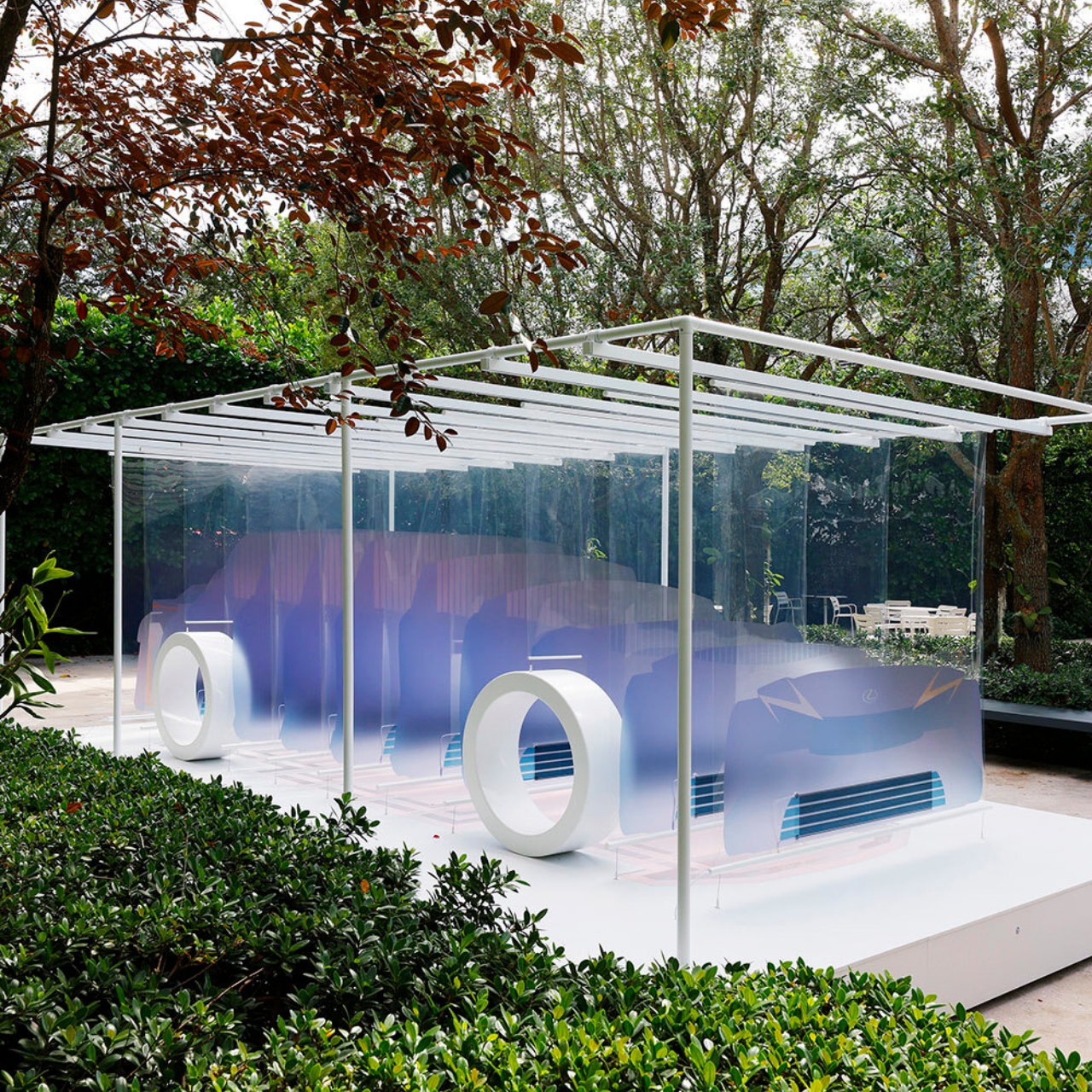
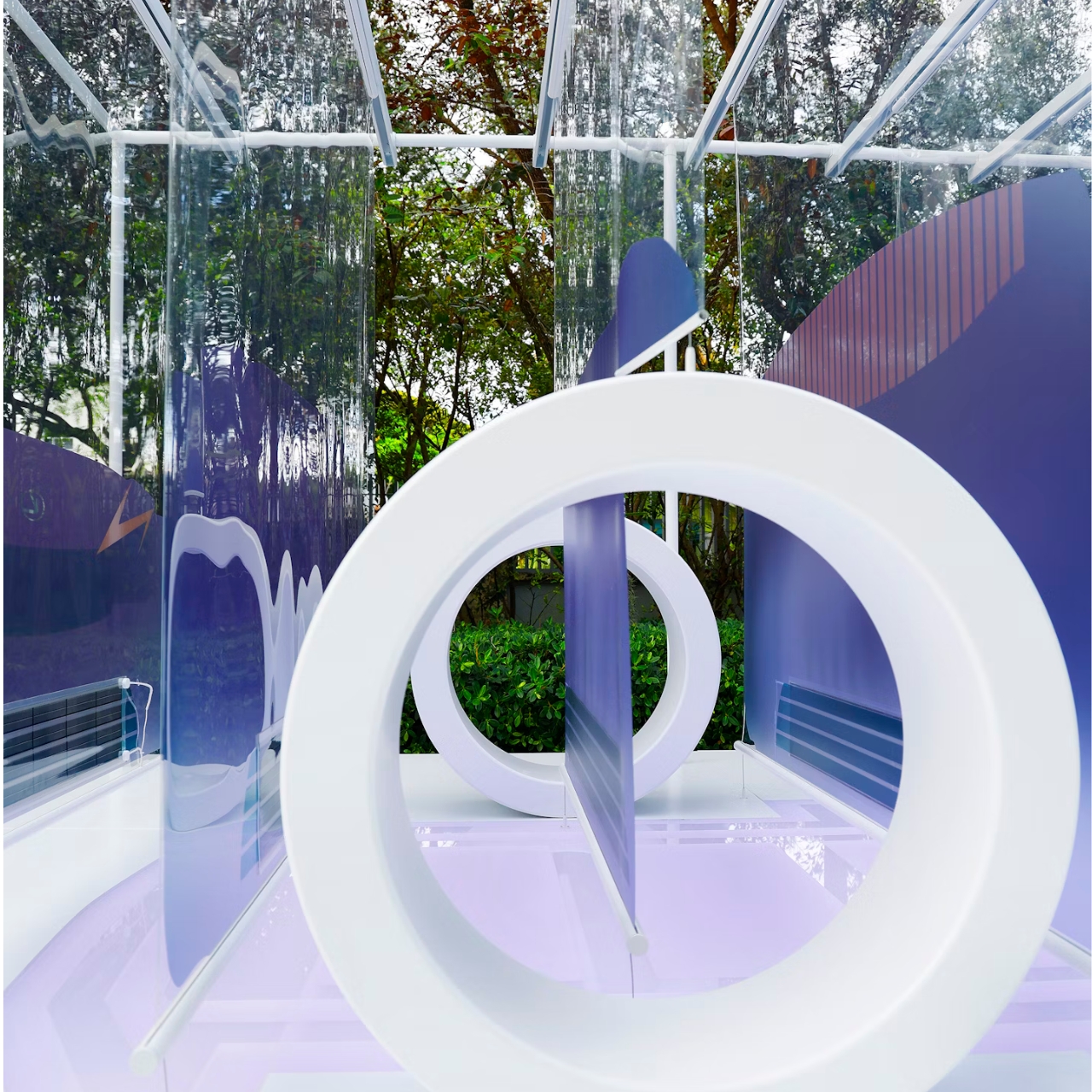
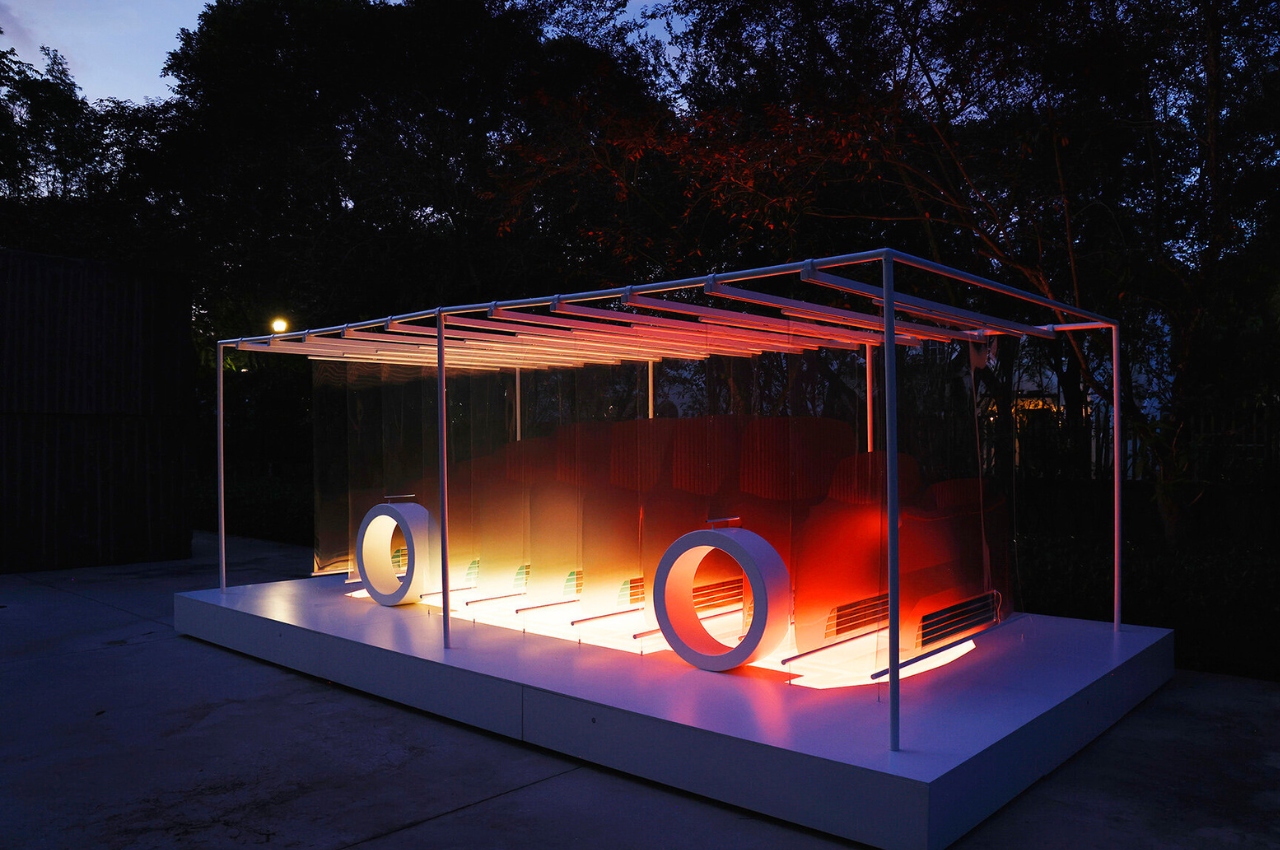
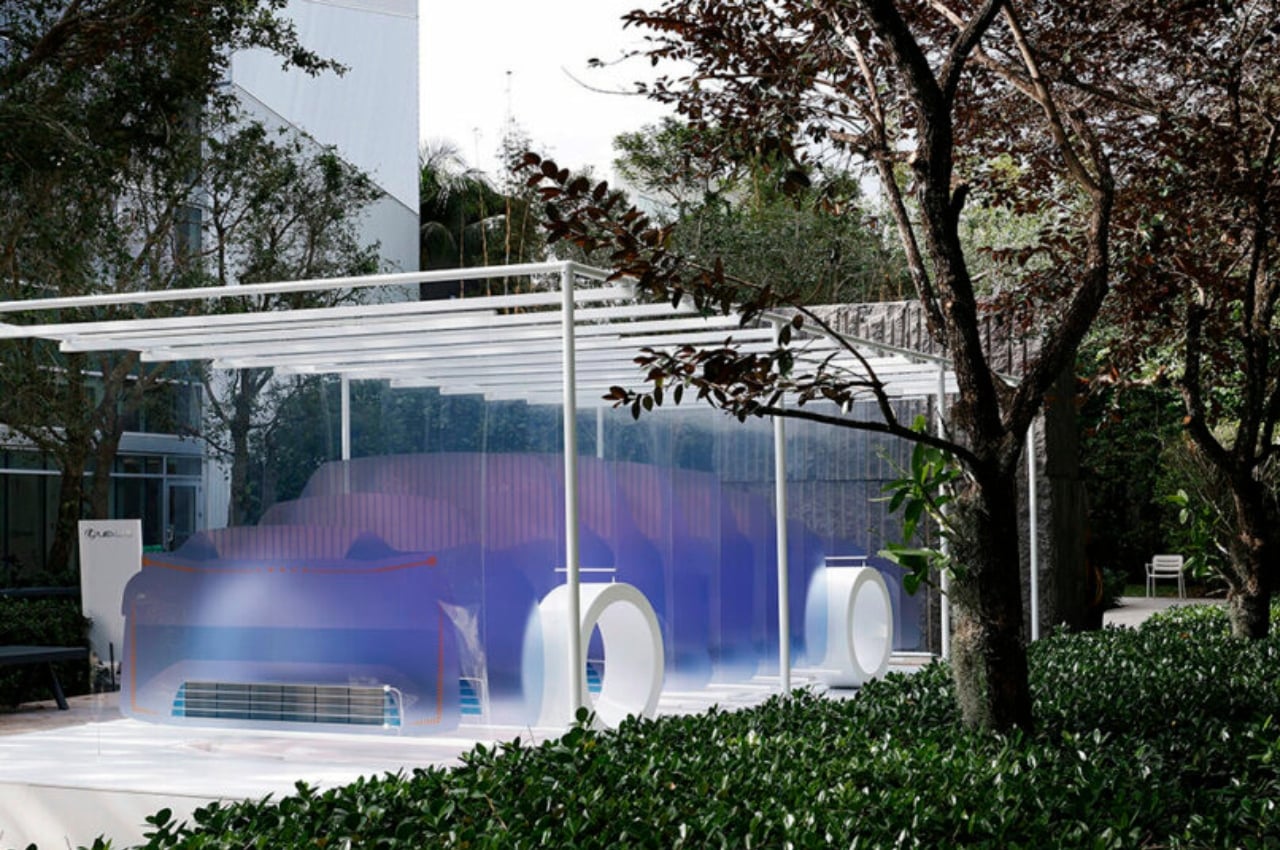
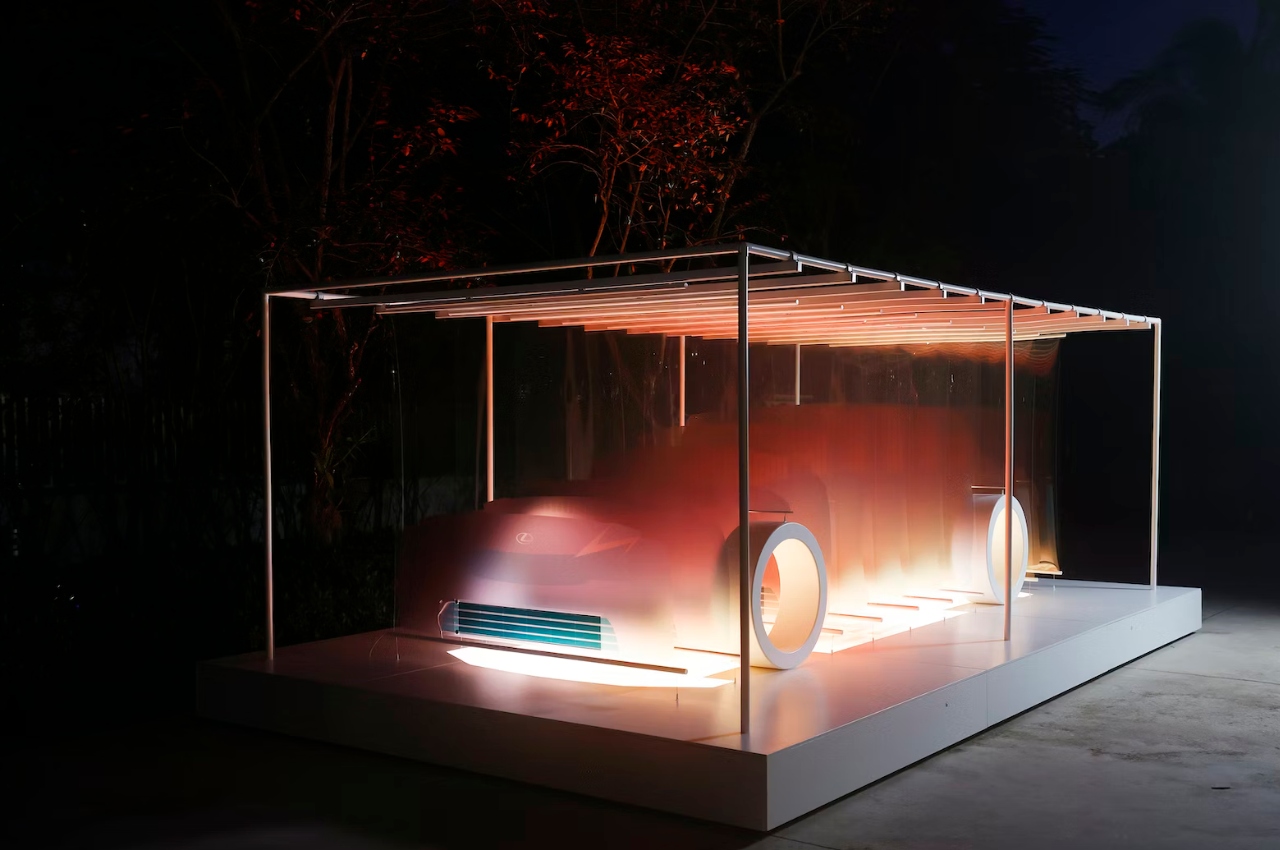
An installation to celebrate the Lexus LF-ZC Battery Electric Vehicle Concept Car is now on display at the Miami Art & Design Week. The “sculpture” is called “8 Minutes and 20 Seconds” which is the time it takes for light to reach earth. So instead of the usual car display, what you get is a self-illuminating 3D skeleton of the concept car itself. It’s made from organic transparent photovoltaic (POV) sheets and is powered by solar energy. Each cell gives off a spectrum of color and movement and they are transparent to give off the maximum effect of light and patterns.
The EV Skateboard, which is where the engine will be located, is highlighted with an LED panel. It is the main feature of the car so this is where eyes will be drawn. Depending on where you’re standing, you’ll get a different perspective of the sculpture. There are also motion sensors which will let the car respond to those walking around, triggering a ripple through the LED light panels. You will also hear bamboo chimes since the concept car uses bamboo materials as well.
Every 10 minutes, you’ll get a crescendo of sound and light patterns. Since the sculpture is located in a garden setting, the color temperature also shifts along with the natural circadian rhythms of its surroundings. It’s a pretty interesting thing to see this in person and to experience a different kind of display for cars, even if it’s still just a concept car.






 triple-laser projection system, delivering a color performance 48% superior to traditional LEDs while maintaining a compact form, 80% smaller than conventional optical solutions. Its 200% luminous efficiency makes it the premier choice for automotive displays. The Laser Holographic AR-HUD transforms the windshield into an expansive holographic screen, merging virtual and real-world elements for safer driving. Advanced optical technology further converts side and rear windows into immersive displays, enhancing navigation and entertainment while focusing on safety and compact design.