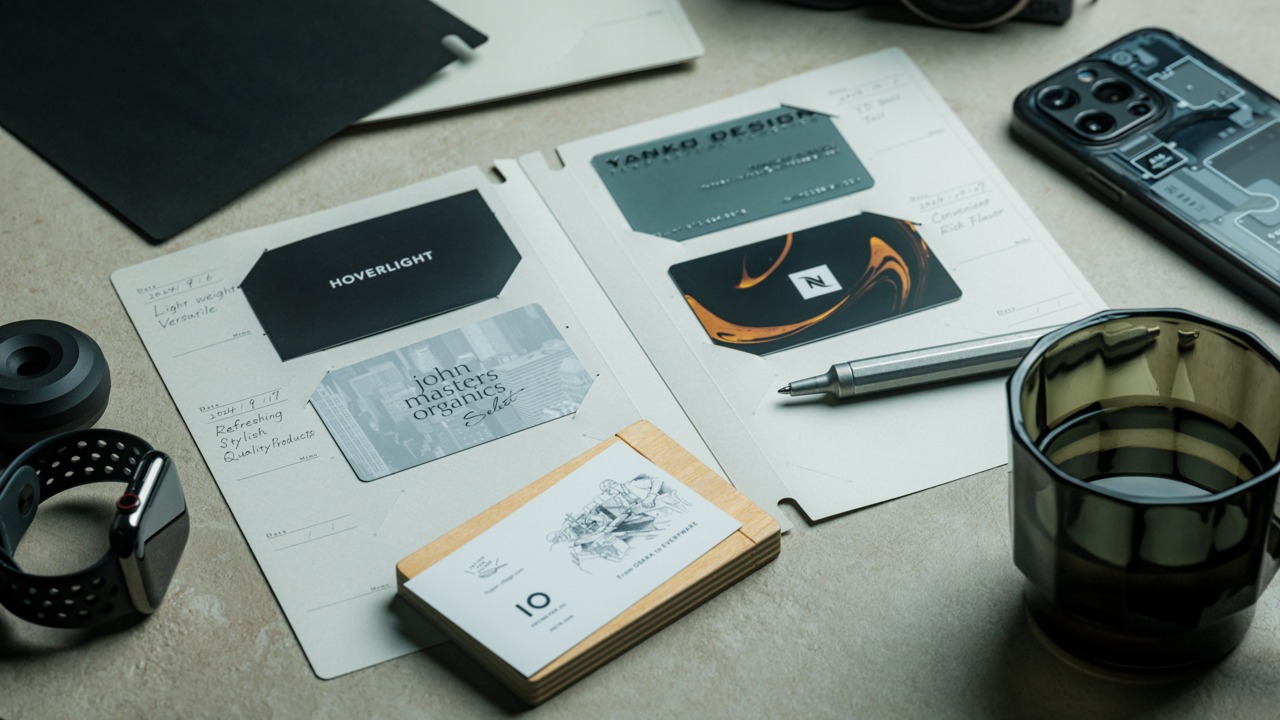
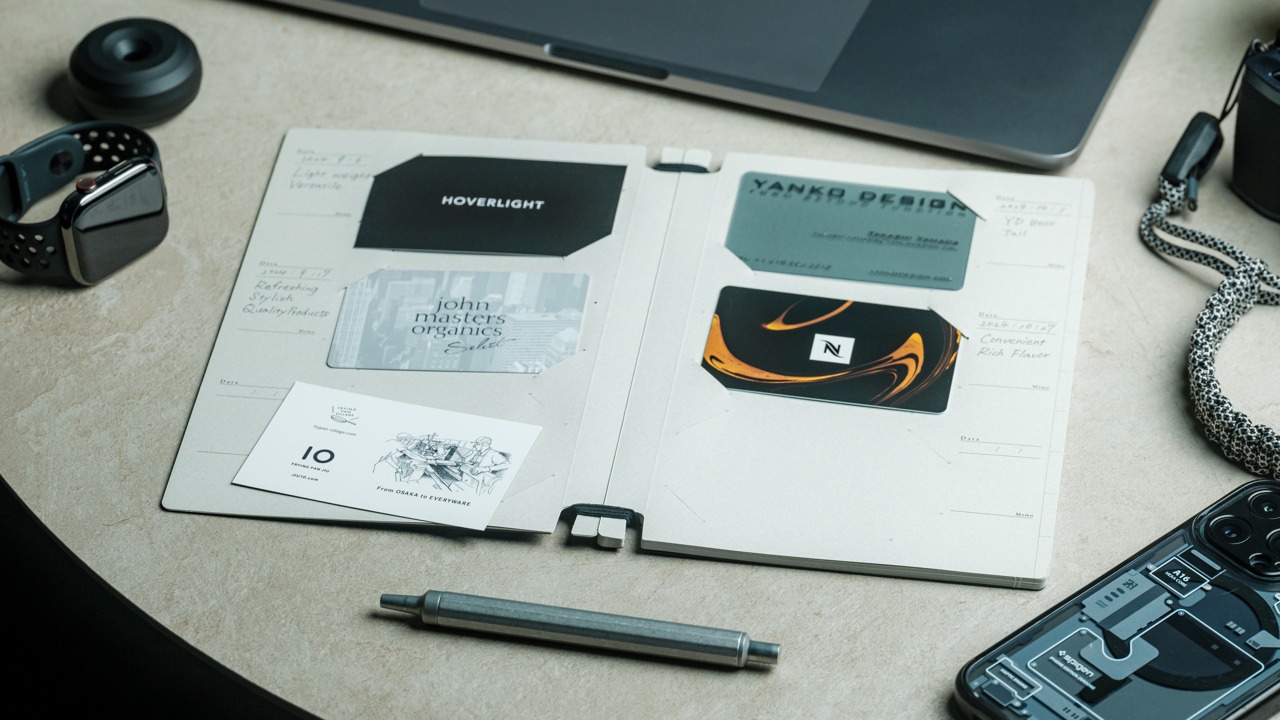
Imagine being able to converse fluently in a foreign language, effortlessly switching between English, Spanish, French, or even Korean. With Promova, this dream can become a reality. This comprehensive language learning platform offers a variety of tools to help you master a new language, including bite-sized lessons, a supportive community of learners, and even conversation […]
Imagine a world where you can carry all your important files, photos, videos, and more in your pocket, with the ability to access them at lightning-fast speeds. That’s the world the Polar Wolf Aluminum Ultra Portable drive offers. This sleek, user-friendly drive requires no driver for use, making it as simple as plug and play. […]
A portable body composition tracker offers detailed health insights anywhere and anytime. The third-generation Fitrus Plus 3.0 retains its portability while introducing numerous upgrades, making it a versatile health companion accessible whenever and wherever needed. It measures body fat, skeletal muscle mass, body mass index (BMI), basal metabolic rate (BMR), heart rate, and body water all at once. This tracker aids in setting attainable fitness goals and tracking progress, which helps maintain motivation and improve health outcomes. Tracking your body’s reactions is crucial for individuals following specific fitness or diet plans. With its portability, the Fitrus Plus 3.0 easily incorporates health monitoring into daily routines, thanks to the additional features of the third generation.
These data are obtained from a physical tracker combined with intelligent software. The new Fitrus Plus 3.0 features a significant improvement in battery life, extending from 4-5 days on the Fitrus Plus 2.0 to 20 days. The charging port has been upgraded from Micro 5-pin to USB Type-C. A full charge takes 3 hours. The device features a 1.3” OLED display with a resolution of 128 x 64 pixels. This makes it easy to read data such as body composition, skin temperature, object temperature, heart rate, stress index, and battery life.
Hold the four electrodes with your thumbs and index fingers, stretch your arms forward. Keeping your elbows straight, and avoid touching your hands together. Wait until the results appears!
The new design is as smooth and user-friendly as the software that powers it. The updated health tracking functions, including protein, mineral, and swelling indexes, make the upgrade from the previous generation worthwhile. These additions allow for a more comprehensive health analysis. Gaining insights into your body’s changes is valuable. However, further benefits can be derived, such as receiving personalized health recommendations for meal plans and workout routines. These are based on the collected and analyzed data. As our bodies change over time, whether we notice it or not, these personalized recommendations continue to adapt, enabling you to achieve your best self.
Like the temperature sensor in the Google Pixel 8, an IR sensor can be used to measure skin temperature without contact. It instantly displays the temperature on the OLED screen, eliminating the need for a smartphone. This device is especially useful for parents with young children, as it can also measure the temperature of soup or milk to prevent burns. Measuring 4.96 inches long, 0.54 inches thick, and 1.34 inches wide, and weighing just 1.41 ounces, the Fitrus Plus 3.0 champions portability. Using the Fitrus is straightforward – hold the four electrodes with your thumbs and index fingers, then extend your arms forward. Ensure your elbows are straight and your hands are not touching. Maintain a straight posture and the results will display. The device automatically turns off after taking the measurement, which adds convenience as you don’t need to turn it off manually.
The Fitrus Plus 3.0 revolutionizes personal health tracking by combining portability with a rich array of health metrics, making it an essential tool for anyone committed to maintaining an active and healthy lifestyle. Its extended 20-day battery life, user-friendly USB Type-C charging, and clear OLED display ensure that users can access detailed insights into their body composition, heart rate, and more anytime and anywhere. With its enhanced features and the ability to provide personalized health recommendations, the Fitrus Plus 3.0 not only tracks health data but also helps users achieve their fitness goals with greater precision and motivation.
The Fitrus Plus 3.0 requires no subscriptions or additional payments. The application for iOS and Android is free, and the company has stated that they have no plans to implement a subscription fee in the future.
I don’t publicly endorse snacking in bed, but having a robot vacuum clean up those crumbs before you sleep is an absolute game-changer…
We spend so much time cleaning our floors and tables with robots and handheld vacuums, it’s funny that we don’t give our beds and sofas the same treatment. Dust gathers on your floor, sure, but practically, it would collect on your mattress too, right? Besides, brushing away those Doritos crumbs off your bed isn’t really the most effective way of cleaning… so here’s my question. We clean our floors with some of the most cutting-edge gadgets on the market. What about our beds and sofas – places we actually spend hours laying/resting on?
Especially for people with allergies, dust mites and other particles can trigger larger problems like asthma, skin reactions, or rhinitis. So, it becomes a prerogative to keep your bed or even your fabric sofa clean and sanitized at all times. And sure, you could just bust out your vacuum cleaner every time… but let’s face it, using a robot cleaner is so much more effective and easy. Besides, your vacuum cleaner won’t sanitize those crevasses or corners, and gaps in the fabric. The X1 Robot Bed Vacuum, on the other hand, will…
Much like a robot floor cleaner, the X1 smartly plans its path, ensuring every corner of your bed gets vacuumed and sanitized. All it takes is the push of a button.
According to research, an average human sheds approximately 28 grams of skin every week. Combine this with the body head released when deep in slumber, and the dust mites have the ideal conditions to thrive and grow their population to around 2 million in a single mattress. Isn’t that fact startling and scary at the same time? As a fun experiment, just go to your sofa in the afternoon sun and whack it with your hands. As expected, you’ll probably see a dust cloud emerge from them. Sure, you probably use Roombas and disinfectants to take care of the floor you walk on, but nobody gives much of a damn about the bedsheet and pillow covers you sleep on, or the sofa they sit on beyond just the occasional weekly wash. The X1 tackles those microparticles on a much deeper level, ensuring that none of the fabric surfaces you rest on become breeding grounds for bacteria, or collection zones for dust.
This advanced robot bed vacuum cleaner loaded with intelligent self-navigation technology takes up the task of cleaning without much hassle. All you’ve got to do is sit back and binge-watch as X1 banishes dust mites and allergens with the touch of a button It vibrates and vacuums simultaneously, dislodging particles that then get sucked into the cylindrical dust chamber located on top of the X1, along with a UVC lamp that sanitizes your surfaces, killing bacteria, bedbugs, and mites that may cause rashes/infections. The appliance can also be used to clean rugs/mats, couches, pillows, baby play mats, or any fabric surfaces that could trap dust/dirt/particulate matter.
What sets apart X1 from other handheld vacuum cleaners is the in-built technology. It comes with 9 proximity sensors and a smart obstacle avoidance algorithm that identifies objects measuring 5cm or more and also detects edges of the bed to avoid falling off while cleaning. The intelligent Path Planning system navigates the designated bed to create a map from precise cleaning in blind spots without scouting the same section more than once. The cleaner comes with three modes – soft, powerful, and precision for daily, weekly, or damp weather cleaning needs respectively. To get more control over uneven surfaces like pillows or bed contours you can use it in the manual mode too.
The compact device is completely hands-free as it can be controlled with voice commands. Another set of features making it a winning proposition is the triple-headed cleaning power of vibration (15,000 oscillations/minute for lifting dust particles), vacuum (15Air Watt suction power) and UV-C sanitization courtesy of the 270nm LED UV-C light that obliterates bacteria and can even kill bedbugs with a stunning 95% efficacy rate. As a failsafe, to prevent any chances of unintended human exposure to UV-C light, the robot vacuum cleaner comes with an advanced auto-sensor that turns off the X1 as soon as it is picked off the cleaning surface.
The buck doesn’t stop there, as the vacuum cleaner boasts an impressive 1-hour battery life on a single charge. Makers are also mindful of secondary pollution woes, hence they’ve fitted the device with a HEPA filtration system that separates dust and hair. The dust mites are separated from the larger particles for easy cleaning. To that end, it has an easy-twist open mechanism with a magnetic design. With these countless features and modern lifestyle-focused design, the XI robot vacuum cleaner is a winning household gadget that is worth every penny spent!
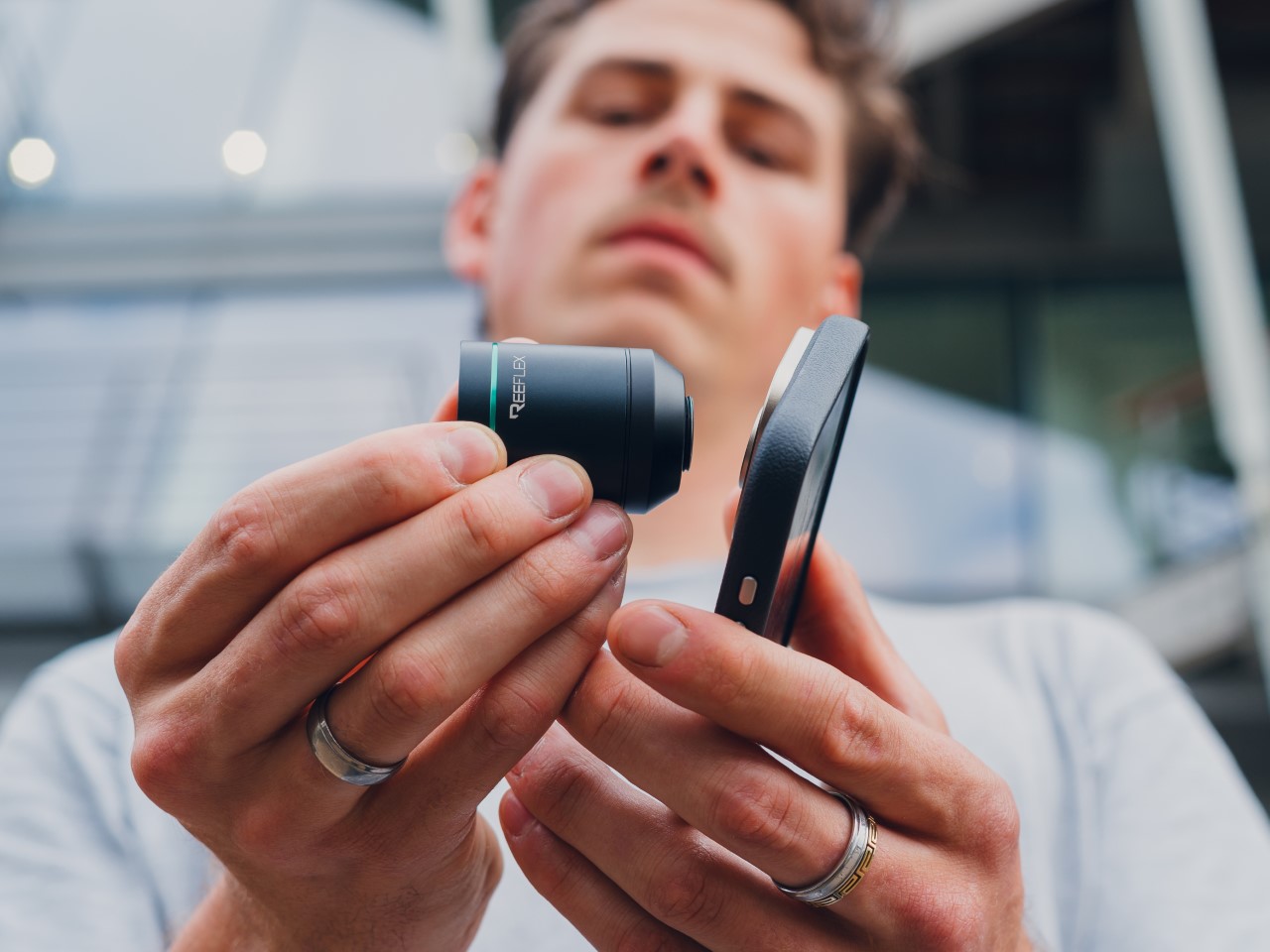
The dust chamber on top lets you see how effective the X1 is at cleaning your bed and sofa. You can then pop it out and empty the dust after a cleaning cycle.
The X1 Robot Bed Vacuum starts at an exceedingly affordable $149 and comes with a Type-C charging cable, a cleaning brush, a user manual, and global shipping. Additional HEPA filters and brush rollers can be bought as an add-on package for just $15.
If we’re going to give in to our eventual robot overlords, my only hope is that they’re as adorable-looking as Doly.
With its googly eyes and treadmill-operated motion system, Doly instantly reminds me of Pixar’s WALL-E. Designed as a robot companion with high emotional intelligence, and the ability to respond to requests, evoke joy, and even serve as a learning tool, Doly combines an open-source build with AI capabilities. The result is remarkably better than the tabletop toys you’re used to expecting. Doly is smart, sensitive, and self-sufficient, as it moves around from A to B, enriches you with interactions and those adorable eyes, and then makes its way back to its charging station when it’s low on batteries.
On the design front, the Doly adopts a familiar form factor, mimicking the success of WALL-E and even the Vector robot by Anki. It stands at just 68mm (2.67 inches) tall, but has a personality that’s larger than life. Nearly half that height can be attributed to Doly’s massive eyes that give it its distinct cartoonish character that instantly makes you fall in love with the robot. The eyes can look in different directions, respond to stimuli, express emotions, and can even be replaced by imagery like weather status, a clock, or a timer. Depending on Doly’s mood, or how it reacts to your commands, the eyes do most of the speaking… while voice models allow Doly to speak in any tone of your choice too.
Doly accepts touch and voice inputs, through strategically located microphones and capacitive touch surfaces located on its body. You can tap its head, pet it, tickle it, and Doly emotes exactly how you’d expect a pet to. Talk to it too, and its built-in AI responds intelligently to your queries and commands, letting you set timers, know the weather, take a photo, etc. The robot has natural language understanding, and packs an 8MP camera that lets it see the world around it, identify humans, and even recognize familiar faces. Treads on both sides allow Doly to move around too, shifting forward, backward, and even making turns, while ToF sensors on the front allow it to sense depth, and four strategically placed edge-detection sensors prevent your robot from accidentally driving off surfaces like the stairs or a tabletop (Amazon’s Astro could pick up a few lessons from Doly)
On the inside, Doly runs on a Raspberry Pi board that drives its systems and even powers the AI functions. The robot is built on open-source approach with open-hardware and open-design, allowing you to mod or customize your robot in a variety of ways through I/O ports or even by adding quirky attachments to the robot’s magnetic hands. The hands themselves are an interactive dream to begin with, allowing you fistbump your Doly , or even have it grab things, with lights inside the arms adding a rich layer of interact-ability. I/O ports on the top let you build attachments for your Doly, transforming it in a variety of ways and helping you learn robotics too.
8 MP camera allows Doly to memorize and recognize people with their names, take high quality snapshots and many more.
Doly communicates and responds you back with his own voice when you ask about the weather forecast, time, your name and many more.
To that end, Doly’s much more advanced than most other STEM toys out there. It grows with you, learning and evolving to understand you, your mannerisms, needs, etc. so that no two Doly robots are alike after multiple months/years of usage. Moreover, the robot itself encourages people of all ages to learn coding, with support for languages like C, C++, and Python that let you program your robot, and even much more intuitive block-based coding apps like Google’s own Blockly that help children grasp the basics of programming through the robot toy.
Doly relies on cameras to analyze its surroundings and recognize faces, and built-in microphones to pick up on voice commands – that’s a fair amount of data that your toy robot gathers on a daily basis (sort of like your smart camera and smart speaker combined). Coupled with the fact that Doly has a built-in AI that learns from you (which means it does gather data for machine learning purposes), data privacy can be a pretty large concern. To ensure that your data stays safe and away from hackers, governments, and data-brokers who sell data to third parties, Doly stores and processes all its information locally, oftentimes even working offline. Embedded processing power and local storage ensure that your data never reaches any remote server where it can be compromised by targeted hacks.
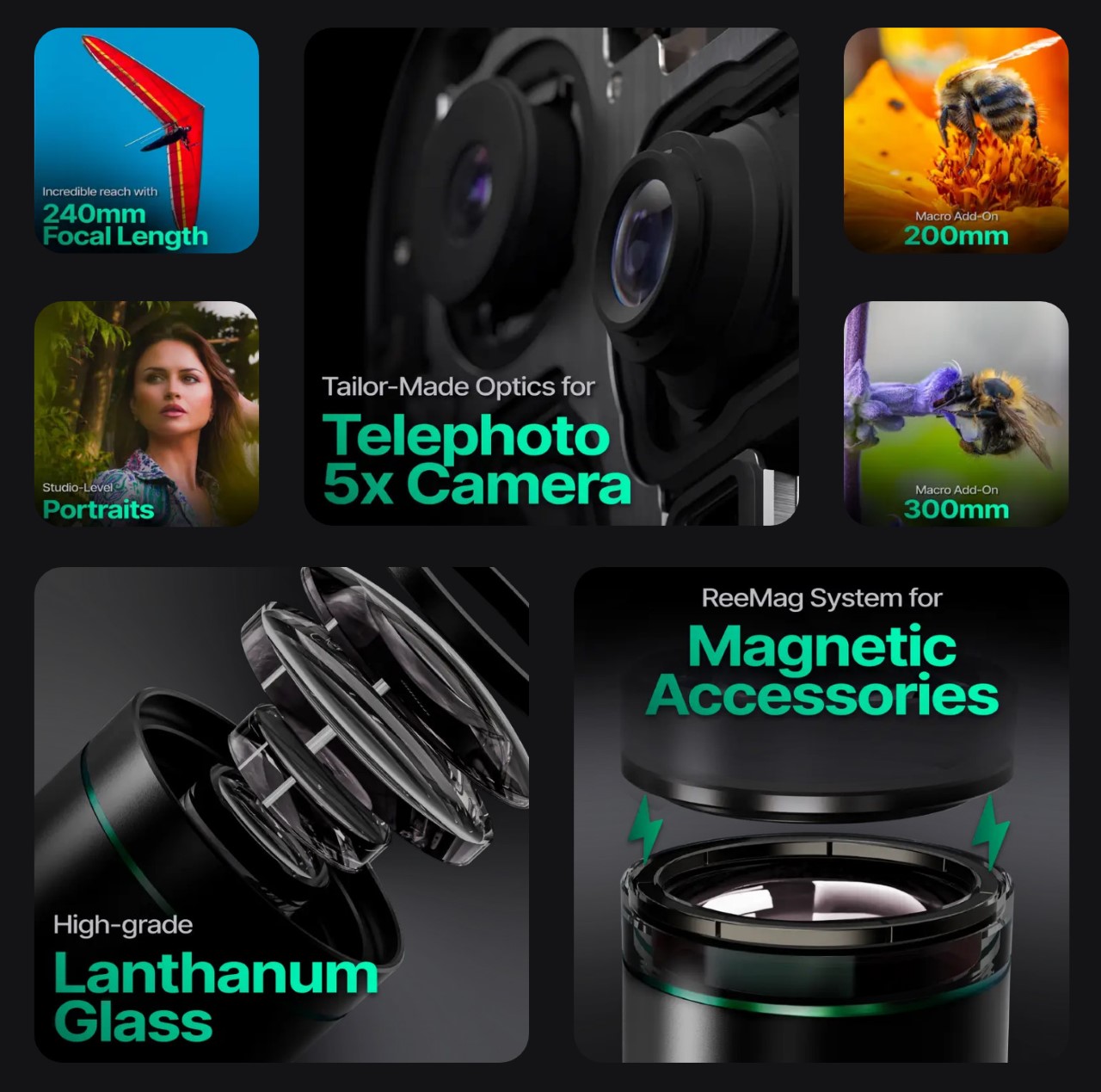

Other than that, each Doly comes with an app that lets you access specific features like managing settings or performing graphical programming (Doly’s creators emphasize that you don’t NEED an app to use your robot). The creators do, however, mention that the robot can be customized to wild degrees, with even the ability to swap out the Raspberry Pi module on the inside with better CM4 boards that have better RAM and storage. The Doly robot starts at $269 for a DIY kit that lets you build your own robot from scratch, or $299 for a fully assembled bionic buddy. Limitbit, the creators behind Doly, promise free lifetime over-the-air (OTA) software updates to ensure the robot is always up to date with the latest features, and are apparently even working on ChatGPT integration to make your tiny robotic friend even smarter! Just promise that you won’t turn it against humanity!
If we’re going to give in to our eventual robot overlords, my only hope is that they’re as adorable-looking as Doly.
With its googly eyes and treadmill-operated motion system, Doly instantly reminds me of Pixar’s WALL-E. Designed as a robot companion with high emotional intelligence, and the ability to respond to requests, evoke joy, and even serve as a learning tool, Doly combines an open-source build with AI capabilities. The result is remarkably better than the tabletop toys you’re used to expecting. Doly is smart, sensitive, and self-sufficient, as it moves around from A to B, enriches you with interactions and those adorable eyes, and then makes its way back to its charging station when it’s low on batteries.
On the design front, the Doly adopts a familiar form factor, mimicking the success of WALL-E and even the Vector robot by Anki. It stands at just 68mm (2.67 inches) tall, but has a personality that’s larger than life. Nearly half that height can be attributed to Doly’s massive eyes that give it its distinct cartoonish character that instantly makes you fall in love with the robot. The eyes can look in different directions, respond to stimuli, express emotions, and can even be replaced by imagery like weather status, a clock, or a timer. Depending on Doly’s mood, or how it reacts to your commands, the eyes do most of the speaking… while voice models allow Doly to speak in any tone of your choice too.
Doly accepts touch and voice inputs, through strategically located microphones and capacitive touch surfaces located on its body. You can tap its head, pet it, tickle it, and Doly emotes exactly how you’d expect a pet to. Talk to it too, and its built-in AI responds intelligently to your queries and commands, letting you set timers, know the weather, take a photo, etc. The robot has natural language understanding, and packs an 8MP camera that lets it see the world around it, identify humans, and even recognize familiar faces. Treads on both sides allow Doly to move around too, shifting forward, backward, and even making turns, while ToF sensors on the front allow it to sense depth, and four strategically placed edge-detection sensors prevent your robot from accidentally driving off surfaces like the stairs or a tabletop (Amazon’s Astro could pick up a few lessons from Doly)
On the inside, Doly runs on a Raspberry Pi board that drives its systems and even powers the AI functions. The robot is built on open-source approach with open-hardware and open-design, allowing you to mod or customize your robot in a variety of ways through I/O ports or even by adding quirky attachments to the robot’s magnetic hands. The hands themselves are an interactive dream to begin with, allowing you fistbump your Doly , or even have it grab things, with lights inside the arms adding a rich layer of interact-ability. I/O ports on the top let you build attachments for your Doly, transforming it in a variety of ways and helping you learn robotics too.
8 MP camera allows Doly to memorize and recognize people with their names, take high quality snapshots and many more.
Doly communicates and responds you back with his own voice when you ask about the weather forecast, time, your name and many more.
To that end, Doly’s much more advanced than most other STEM toys out there. It grows with you, learning and evolving to understand you, your mannerisms, needs, etc. so that no two Doly robots are alike after multiple months/years of usage. Moreover, the robot itself encourages people of all ages to learn coding, with support for languages like C, C++, and Python that let you program your robot, and even much more intuitive block-based coding apps like Google’s own Blockly that help children grasp the basics of programming through the robot toy.
Doly relies on cameras to analyze its surroundings and recognize faces, and built-in microphones to pick up on voice commands – that’s a fair amount of data that your toy robot gathers on a daily basis (sort of like your smart camera and smart speaker combined). Coupled with the fact that Doly has a built-in AI that learns from you (which means it does gather data for machine learning purposes), data privacy can be a pretty large concern. To ensure that your data stays safe and away from hackers, governments, and data-brokers who sell data to third parties, Doly stores and processes all its information locally, oftentimes even working offline. Embedded processing power and local storage ensure that your data never reaches any remote server where it can be compromised by targeted hacks.
Other than that, each Doly comes with an app that lets you access specific features like managing settings or performing graphical programming (Doly’s creators emphasize that you don’t NEED an app to use your robot). The creators do, however, mention that the robot can be customized to wild degrees, with even the ability to swap out the Raspberry Pi module on the inside with better CM4 boards that have better RAM and storage. The Doly robot starts at $269 for a DIY kit that lets you build your own robot from scratch, or $299 for a fully assembled bionic buddy. Limitbit, the creators behind Doly, promise free lifetime over-the-air (OTA) software updates to ensure the robot is always up to date with the latest features, and are apparently even working on ChatGPT integration to make your tiny robotic friend even smarter! Just promise that you won’t turn it against humanity!
How much do you pay for your iCloud+ or Google Drive storage to make sure your photos get backed up on the cloud? Imagine paying zero.
Remember a time when flagship phones came with memory card slots that let you expand storage and potentially even swap out old cards for new ones to get more storage? Sure, some phones still go as far as offering expandable storage, but for the most part, all companies have defaulted to the ‘cloud storage’ model where you pay a monthly subscription and your phone automatically backs data up without you needing to remember. It’s convenient, but it’s also costly, as you’re suddenly required to pay monthly cloud storage fees. It isn’t easy to ask phone makers to revert back to those good old MicroSD card days… but that’s where something as deviously simple as the PhotoCube PD+ comes in. Designed as a simple plug-and-play USB-C device, the PhotoCube automatically backs up your photos to an SD card for you, saving effort and money. A companion app makes the entire process as simple as clicking a button (instead of manually selecting all your images and copy-pasting them) and the PhotoCube does the rest, updating your old storage files with new ones so your photo backups are always up to date. It’ll also create separate file structures for multiple devices, letting you separately back up photos across different phones and even tablets. Your photos remain offline, so you don’t need the internet to access them – and as a result, they’re also hacker-resistant. Quite impressive for a device that just costs $55.
The reason most people prefer cloud storage is because it’s designed to be the easiest option ever. The phone backs itself up without you needing to remember, the files get stored in a safe server somewhere else, and if you ever lose your device, you can easily restore your photos if you log into your cloud storage account. What users then ignore is the fact that they end up paying hundreds (if not thousands) of dollars each year to store their photos. The PhotoCube PD+ aims at breaking that dependency with a hardware solution that’s just as easy. Plug the PhotoCube in and it literally begins backing up your photos in an instant. Photos get stored on a MicroSD card, so you can choose how much storage you want (you get 2 terabyte MicroSD cards nowadays), and it all happens offline without eating data transfer fees.
The PhotoCube device can easily be configured using an app
The fact that your data gets stored on a MicroSD card allows the PhotoCube to be such a ridiculously compact device. It’s no bigger than an AirTag, albeit square in shape (hence its name). A card slot on one end lets you add a MicroSD card in, while a male USB-C pin on the other end lets you plug your PhotoCube into any Android phone/tablet, any iPad with USB-C, and the latest iPhone 15 series. There’s also a female USB-C port on the opposite end (right under the card slot) that allows you to charge your phone THROUGH the PhotoCube, so you can run long backups while juicing your battery – a feature so wildly convenient it deserves a special mention.
Measuring just 30mm wide and 38mm long, the PhotoCube is smaller than even an AirPods case, but it can store up to 2TB
The PhotoCube’s brilliance lies in the fact that it isn’t a one-trick pony. When it isn’t backing up photos from your phone, it works as a card reader with all your devices (especially with your laptop), allowing you to read photos from your phone, drone, or DSLR on any machine. With USB 3.2 Gen 1, the PhotoCube PD+ can transfer files as rapidly as 5Gb/s, letting you swiftly back up or even access media without waiting for stuff to load.
Speaking of swift, the tiny gadget does a remarkable job of power delivery too, allowing you to charge your phone at an impressive 60W for fast-charging. The PowerCube PD+ supports pass-through fast-charging which means your backups and your charging can happen simultaneously… and rapidly.
Photo transfers happen in tandem with the PhotoFast app, which has a few impressive features. You can do more than just backing up photos and videos – the app lets you back up contacts, calendars, documents, even music (if you still believe in listening to MP3 files)… and if you’ve already paid for cloud storage, the PhotoFast app lets you download your backups from the cloud server onto the PhotoCube so you can cancel that pesky subscription and keep your files safe locally, and access them without needing to connect to the internet. The app intelligently also allows the PhotoCube to create and maintain separate backups for separate devices, so one PhotoCube could potentially store your entire family’s data, getting you off that expensive family cloud storage plan.
This isn’t maker PhotoFast’s first rodeo. Last year’s PhotoCube PD had a similar design, but didn’t support OTG plug-and-play storage (it needed a separate power source), and it wasn’t configured to work with iPhones (because iPhones didn’t have USB-C ports until September last year). The new PD+ comes with all those improvements under the hood, and now with two color options too – a simple white and grey, and a slightly jazzed up white and sky blue. The PhotoCube PD+ starts at $55 for Kickstarter backers (the original price after the crowdfunding campaign goes up to $99) and ships starting June 2024. It doesn’t come with a MicroSD card, so you have the liberty of choosing what brand/capacity of storage card you want to pair with your gadget. That’s quite a lot of flexibility for a device that fits in your pocket and also saves you money every month!
The term “revolutionary” is often overused whenever a new product is announced. However, it’s rare for a product to live up to such a label truly. One that does is the iPhone, and the reasons for this are well-known. The coffee brewing machine industry is a significant global market. In 2020, it was valued at approximately $6.36 billion and is projected to grow annually by 7% from 2021 to 2028. The Keurig coffee maker is the most popular machine so far, and it is known for its convenience and wide variety of flavors. But if you desire more than a quick cup of coffee or yearn for a variety of flavors that extend beyond a pod, the KUKU Maker is for you. It’s a revolutionary machine that combines high-tech brewing and extraction features with the satisfying experience of old-school hand-poured coffee. Let’s delve into the details, making it the most innovative coffee maker ever.
The KUKU Maker allows for customized extraction parameters, giving you complete control of the extraction pressure, temperature, grind fineness, and extraction time. The outcome for traditionalists ensures their needs are met if not exceeded. Still, modern coffee brewers can’t even come close to achieving this for the adventurist looking to boldly brew into new territories.
KUKU Maker uses centrifugal force to generate pressure, which makes it possible to maintain a stable extraction pressure throughout the extraction process, regardless of the state of other parameters.
Streamlining the coffee-making process and brewing great tasting coffee is what the KUKU Maker does best. You no longer have to manually prepare the coffee puck or invest in extra resources for even water flow through the coffee grounds. This is due to the machine’s use of centrifugal force to distribute the coffee powder along the funnel’s wall. There’s an open water chamber and a funnel for coffee powder, which can be removed. The funnel rotates at high speed, pulling water from the chamber into the funnel. This creates pressure through centrifugal force. During brewing, the water rises into the funnel from the high-speed rotation, passing through the coffee powder evenly due to centrifugal force. This automation removes the need for manual tasks like tamping down the coffee grounds, preventing issues such as channeling, and ensuring a more consistent coffee extraction process.
You have the flexibility to use ice water or room temperature water directly for extraction, or you can employ KUKU Maker to swiftly heat room temperature water to your desired temperature before initiating the extraction process.
The size of the coffee grinds plays a vital role in the coffee-making process as it affects the amount of time the water interacts with the coffee grounds, ultimately impacting the brew’s flavor. For instance, coarser grinds are best suited for methods requiring longer extraction time, such as the French press or cold brew. The larger particle size allows the water to extract the coffee slowly over several minutes, resulting in a well-balanced and flavorful brew. On the other hand, a finer grind is ideal for an espresso or a Moka pot, where the water passes through the coffee quickly under high pressure. This rapid extraction process requires smaller coffee particles to ensure that the water can extract the coffee’s flavors efficiently. With the KUKU Maker, you can effortlessly adjust the grind size to match your preferred brewing method and taste preference.
Another way to assert your control over how your coffee tastes is to customize the size of the coffee grinds from very fine to very coarse. You can adjust each setting separately, so changing one won’t affect the others. Varying the temperature and pressure settings allows you to experiment with the grind size to bring out different flavors in your coffee. So, even if you don’t get the grind size right, you still have a tasty cup of coffee and experience new flavors.
Room Temperature Espresso
Between the tangy and sweet extremes, there’s a world of flavors to explore, such as floral, nutty, or earthy notes. The ability to adjust multiple parameters with the KUKU Maker opens up a world of possibilities, letting you craft a coffee experience that is uniquely yours. These flavors are improved by a brushless motor and intelligent software that control the extraction pressure. The pressure can be altered simply by adjusting the motor speed. Furthermore, you can select the desired rotations per minute (RPM) during extraction, ranging from 3000 to 7000 RPM. The motor will immediately adjust its speed to match your selection.
The KUKU Maker is a multifunctional coffee device that can quickly make not only cold-brew coffee but also cold-brew espresso.
The temperature of coffee extraction affects its flavor and aroma. Cold brew coffee is made using lower temperatures and longer extraction times. It is prepared by immersing ground coffee in cold water for 12 to 24 hours. KUKU Maker can make a cold brew in just two minutes using ice water. Alternatively, you can use room-temperature water for extraction or heat the water to your preferred temperature using electromagnetic induction heating technology. This advanced method allows you to brew the perfect espresso in under 50 seconds with 60 ml of water. If you prefer an Americano, heating 300 ml of water takes about 4 minutes.
The KUKU Maker offers a unique way to control the strength of your coffee. Using cyclic extraction, you can adjust the water flow through the coffee powder to personalize your coffee experience. This machine provides flexibility for adjusting the concentration of your coffee grounds, allowing you to brew a perfect cup to suit your taste. Cleaning the KUKU Maker is a straightforward process. Start by pouring about 100ml of water into the water chamber. Set a cup on the drip tray to collect the rinse water. Activate the machine’s toggle or select the clean button on the KUKU Maker APP to start the auto-cleaning mode. Within 20 seconds, any lingering stains will be rinsed out through the spout. Your KUKU Maker is now clean and ready for your next coffee brewing session.
Unlike traditional espresso machines, the KUKU Maker is easy to maintain. Conventional machines often require frequent cleaning and part replacements, particularly the brewing head, which is crucial for coffee extraction. Over time, you might need to replace small parts like the rubber ring to avoid clogging and potential taste issues. Cleaning out the Coffee grounds is relatively quick and simple since they’re only contained in the removable powder funnel, not the water chamber. Its minimalistic design, featuring only a coffee dispensing spout, reduces the chances of breakdowns. Therefore, it requires less upkeep than traditional coffee makers. Its body is made from corrosion-resistant, food-grade stainless steel and aluminum alloy, and it is IP65-rated to protect its electronic components from damage in humid environments. The machine also features a multiple Hall sensor solution with sealed Hall switches for durability. Additionally, it has a hidden display to reveal information during operation, designed to prevent damage from humidity or impact.
Anyone who even vaguely remembers the late 2000s remembers Aerogel, the ‘wonder material’ that was 99% air, and had the incredible ability to insulate against high heat or cold because of its thermal absorption properties. Aerogel got all the press back in the day, but didn’t really see much consumer application because of how difficult it was to produce. Cut to the year 2024 and a Tokyo-based company has managed to find a fitting application for Aerogel. Meet SpacePeak, an outdoor jacket that sits on the bleeding edge of technology with its own aerogel insulation layer that can protect you in temperatures as extreme as -40°C (-40°F). What’s more, it has a 3-in-1 design with removable inner layers, allowing you to wear it in regular weather too, and it has over 20 pockets for all your EDC and essentials.
SpacePeak has perfected aerogel technology to retain the most heat from your body. From there, heat circulates throughout your whole jacket keeping you warm and dry even in the harshest conditions.
The SpacePeak comes with a two-part design that gives you 3 jackets in one. On the inside, it features a functional puffer jacket, insulated with Aerogel and a thermal layer that helps keep you warm and snug in pretty much any weather. The outer jacket is a waterproof wind-breaker with a hood that helps ensure you stay dry in the rain or during a blizzard. Wear them individually based on what the weather is, or combine them together to give you a jacket powerful enough to brave all the elements. The outer layer is rated 20,000mm waterproof and keeps you from succumbing to rain, storm, sleet, and snow, while the inner aerogel jacket helps build an impermeable barrier between your body temperature and outer temperature.
You can finally ditch your puffy jacket and start wearing something that keeps you warmer with less weight and fluff.
The jacket is rated to protect you in temperatures as low as -40°C (also -40°F), although lab tests show the SpacePeak can easily endure temperatures as low as -196°C (-320°F). While there’s really no place on Earth where humans would endure those temperatures, it’s good knowing that the jacket can handle pretty much the coldest weather possible without giving up. That being said, it’s worth noting that the aerogel doesn’t physically warm you – it creates a thermal barrier between the cold environment and your warm body, so you don’t lose any body heat to the cold outdoors.
Store your laptop or tablet in the back pocket to carry your valuables safely and efficiently.
Chances are that places that hit -40°C aren’t the kinds of places you want to be carrying massive backpacks to either, which is why the SpacePeak packs more than 20 pockets for pretty much all your gear. Strategically placed all across the jacket’s inner and outer surfaces, the SpacePeak has every slot imaginable, with large pockets big enough for iPads, protected pockets for gadgets like cameras and phones, waterproof pockets for bottles and food, and quick-access pockets for keys and money. The 20+ tactical pockets turn your jacket into a backpack of sorts, without all the bulkiness associated with backpacks. Your belongings are strategically placed across the jacket, making them A. accessible, but more importantly B. less likely to weigh your shoulders down because of the distributed weight. Besides, who wants to rummage through a backpack in sub-zero temperatures, right?!
The enhanced 20,000 mm waterproofing doesn’t just stop the rain from getting to you, Its waterproofing makes it wind resistant, and it easier to brush dirt, snow, mud and other muck off your jacket.
That being said, you’d expect a jacket with this laundry-list of features to be extremely bulky, but the implementation of aerogel allows the SpacePeak to be thinner and lighter than your average down jacket. Down (or feathers) works exactly like aerogel, using trapped air to create a thermal barrier – however, what down does with an inch of thickness, the Aerogel does with 1/10th the amount, giving you an extreme-weather jacket that doesn’t turn you into the Michelin man or a human marshmallow because of all that padding.
The aerogel used within the SpacePeak was developed by S. Kistler, a company founded after the American scientist and chemical engineer credited with inventing the material in the first place. The aerogel, despite being highly insulating, is breathable, durable, and will retain its thermal properties even after a 100 washes (even with regular use the jacket can probably use a wash once a year). The SpacePeak comes in 4 sizes, ranging from M to 4XL, with a starting price of $299 and global shipping – just in case you want your jacket dispatched to the Arctic Circle!