For decades, every television has made color the same way, filtering a single blue light down into red, green, and blue until something resembles a picture. The Hisense UR8 ditches that habit. Instead, it creates red, green, and blue light individually, right at the source, through what Hisense calls Chromagic display technology built on its RGB MiniLED architecture. UR8’s RGB MiniLED, powered by Chromagic display technology, builds color differently, using red, green, and blue light individually to deliver natural and real color that looks closer to life. It’s a real design shift, overdue by a few decades.
Conventional MiniLED TVs work by shining a single blue light and filtering it into color, a process that removes light rather than creating it. The brighter and richer the scene, the more that filtering process quietly throws away. It’s not exactly a flaw, just a limitation baked into how these screens have always been built. Hisense decided to rebuild that process instead of tweaking around it.
The UR8 swaps that single-source filtering for up to nearly 15,000 individual RGB LEDs working independently across the panel. Instead of dimming zones guessing at brightness, each LED produces its own hue and intensity without needing a filter to correct it later. It’s a quiet redesign most viewers won’t think about, even while doing most of the work behind a different picture.
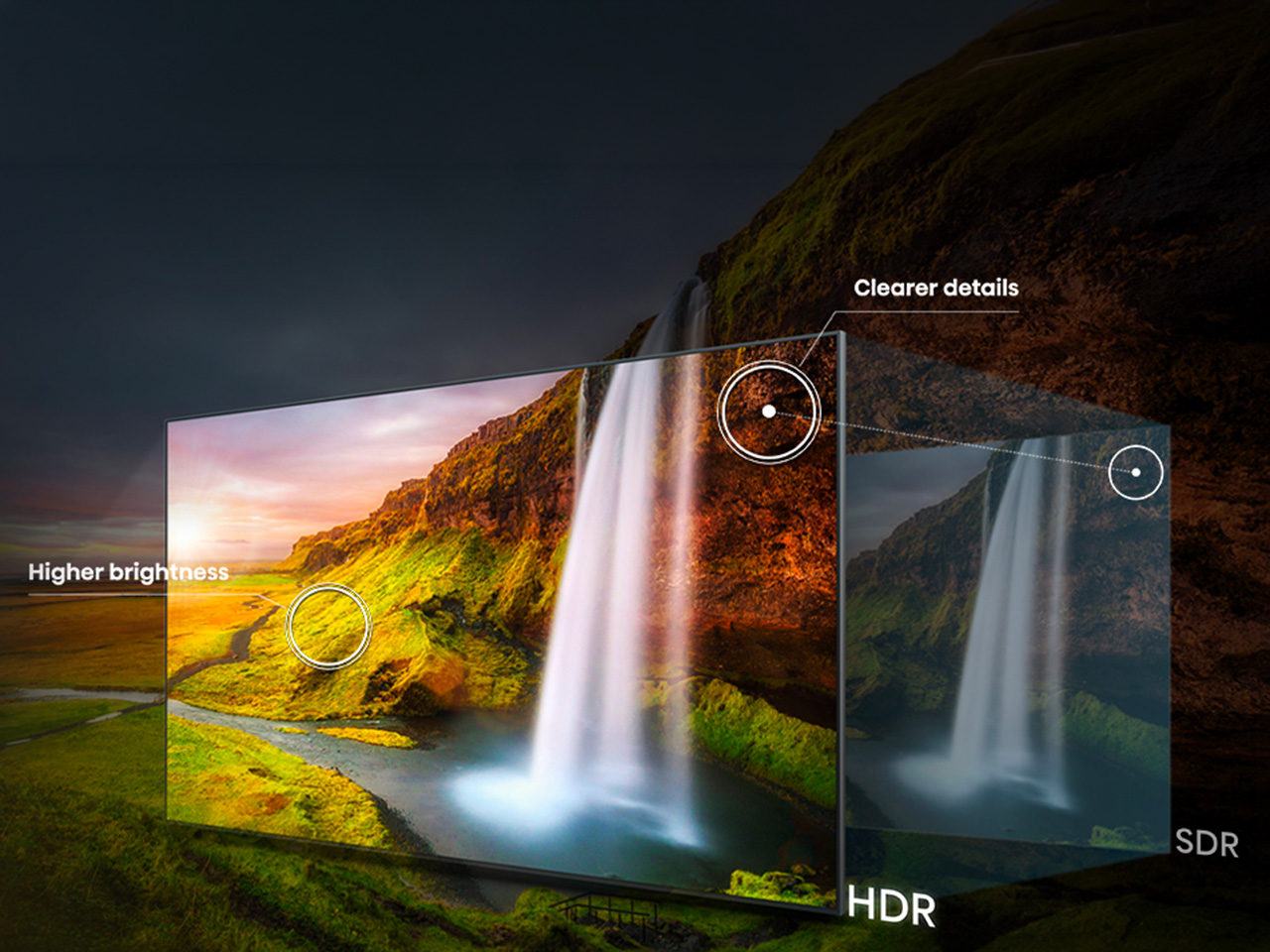
What that translates to on screen is surprisingly specific. Sunsets look warm, skin tones look natural rather than processed, and viewing feels easier on your eyes. Hisense backs this up with a claimed 100% BT.2020 color coverage and Pantone-validated accuracy, though you don’t really need the certifications to notice it.
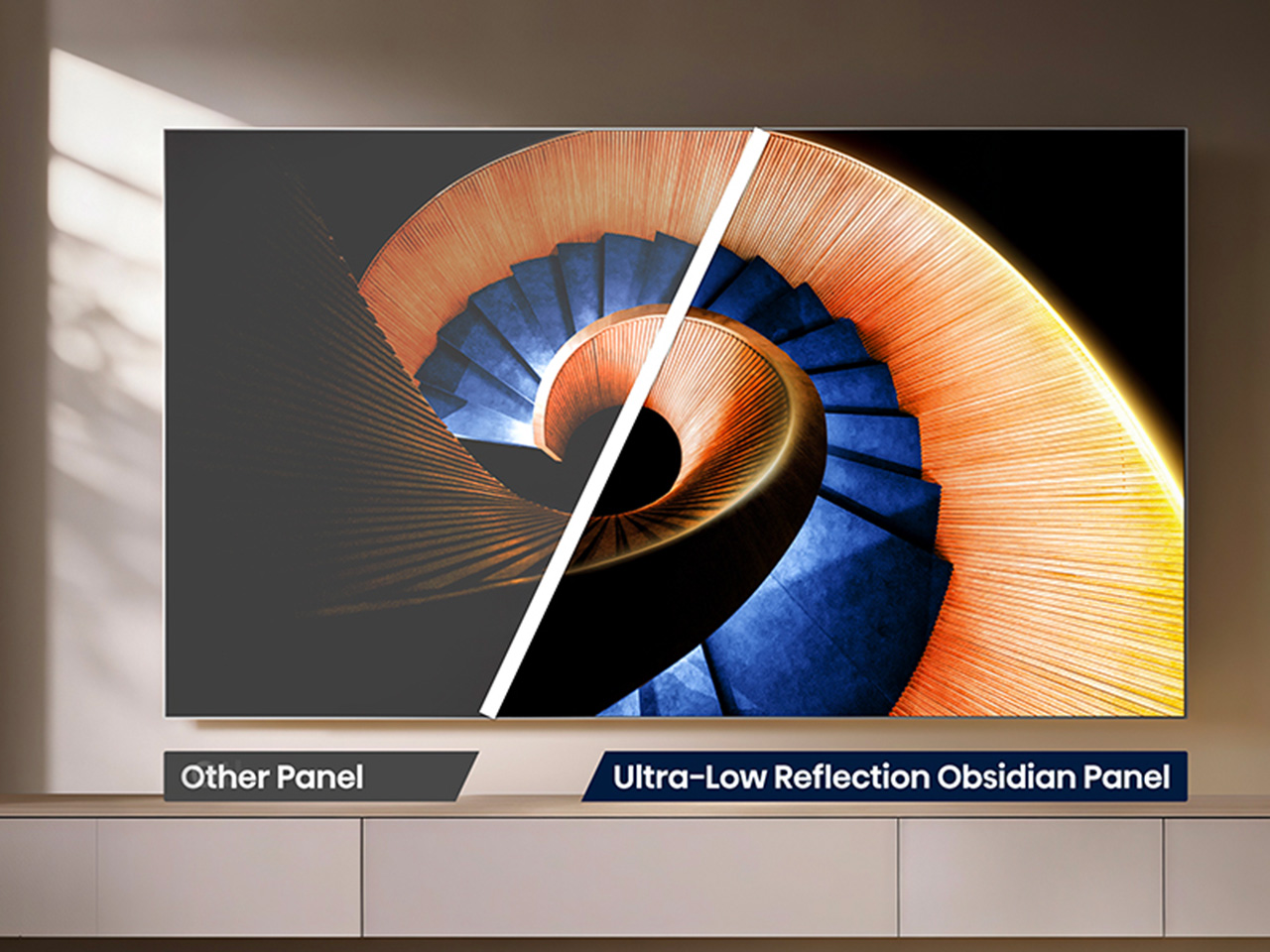
All of that is pointless if the screen turns into a mirror the second you flip on a lamp, which is where the UR8’s Obsidian panel comes in. The Ultra-Low Reflection Obsidian Panel dramatically reduces reflection so the picture stays clear in any room. Dark scenes are up to 3x darker for rich and deep blacks, never gray, never washed out. That’s a practical call for people who watch TV in living rooms, not theaters.
Gaming is where the UR8’s engineering choices show off. Native 180Hz motion processing reduces blur in fast-moving content so you can follow the action clearly, whether it’s a live game or a quick-cut sequence. Game Booster 330 with the Enhanced Game Bar supports VRR up to 330 and AMD FreeSync Premium Pro certification for smooth, tear-free gameplay. Four HDMI 2.1 ports mean a console or gaming PC doesn’t fight for bandwidth.
That same motion handling pays off during live sports, when a fast break or a corner kick doesn’t turn into a blur of jerseys. Pair that with color that looks closer to what you’d see in person, and the UR8 becomes the kind of screen that naturally holds a room’s attention. A television already sits at the center of most living spaces, planned or not.
There’s a quieter benefit in this RGB engineering. Because RGB MiniLED creates natural and real color directly rather than filtering light, it wastes less energy and uses 40% less overall. Hisense says the UR8 also delivers nearly 50% less harmful blue light than standard MiniLED displays, independently certified by TÜV Rheinland. It’s a rare case where a design choice made for better color also means an easier bill and easier eyes.
The software side keeps pace with the hardware. Google TV with Gemini lets you chat with a conversational AI assistant, discover what to watch with personalized recommendations across 10,000-plus apps, or find content by simply describing what you want. Sound comes from a built-in 2.1.2 multi-channel speaker system tuned by Devialet, with Dolby Atmos support, so the audio doesn’t feel bolted onto an otherwise impressive screen.
The UR8 lineup spans 55, 65, 75, 85, and 100 inches, with pricing starting at $1,299 and available at Best Buy, backed by a two-year warranty. That range matters because it puts a genuinely different approach to color inside apartments and larger family rooms, not just showroom displays. Good engineering ideas usually take years to trickle down to accessible prices. This one arrived a little faster than expected, and it shows.
Fall is when the appeal of an open flame reasserts itself. The air turns crisp, and everyone wants that fireplace glow back in their evenings. The trouble is that most homes, especially rentals and apartments, were never built to give it to them. Adding a real fireplace means a gas line, a flue, a permit, and a contractor’s schedule that eats up far more than the one free weekend anybody actually has for it.
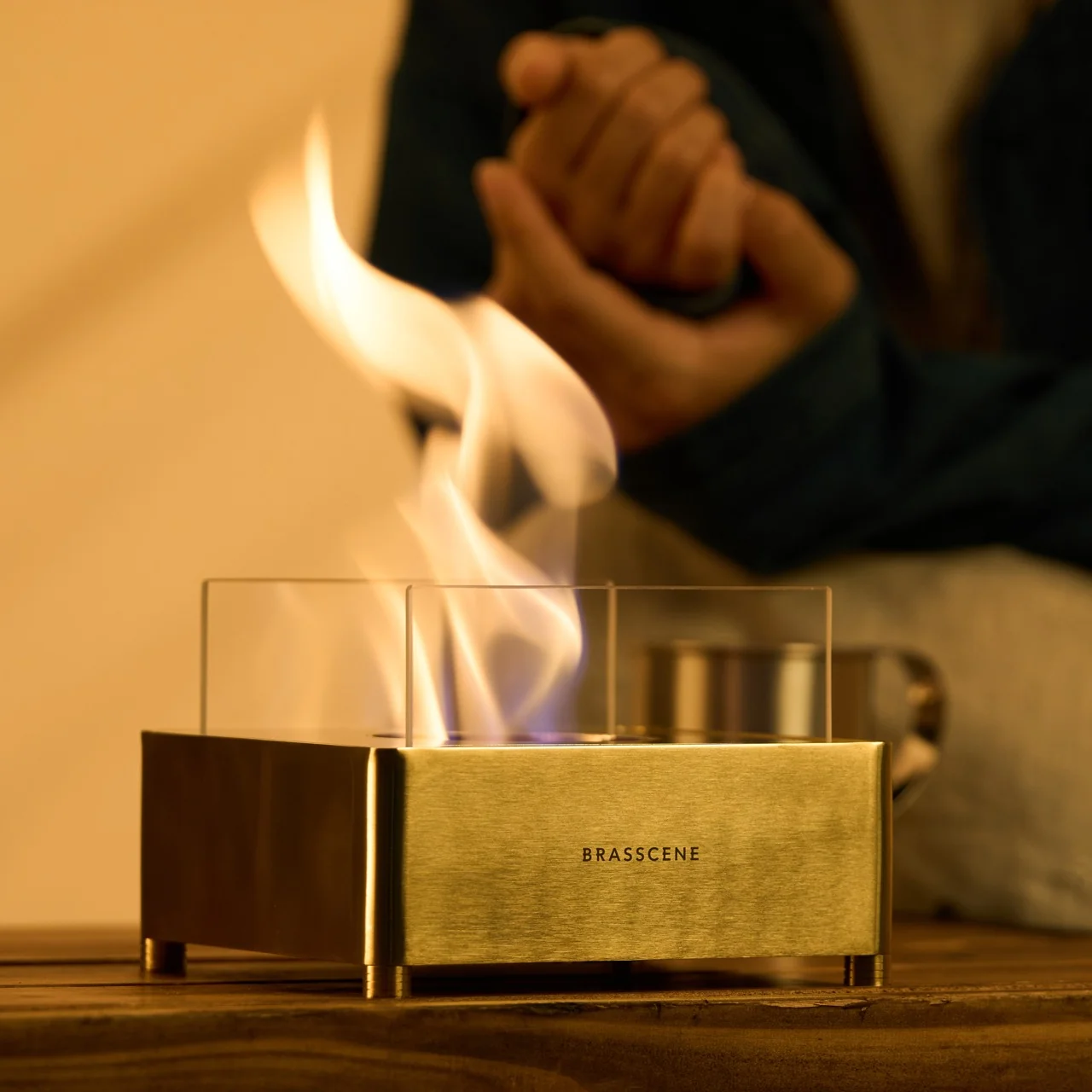
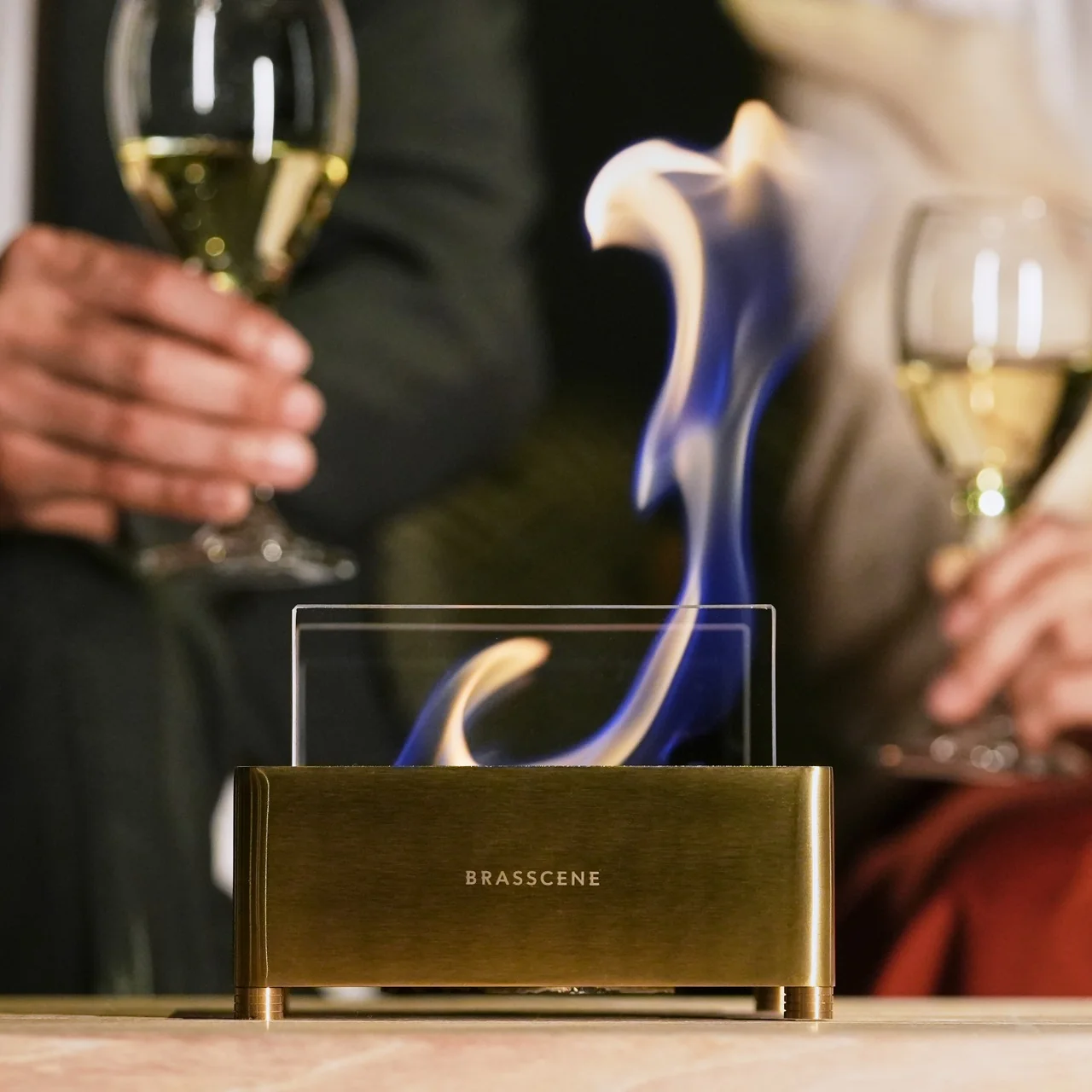
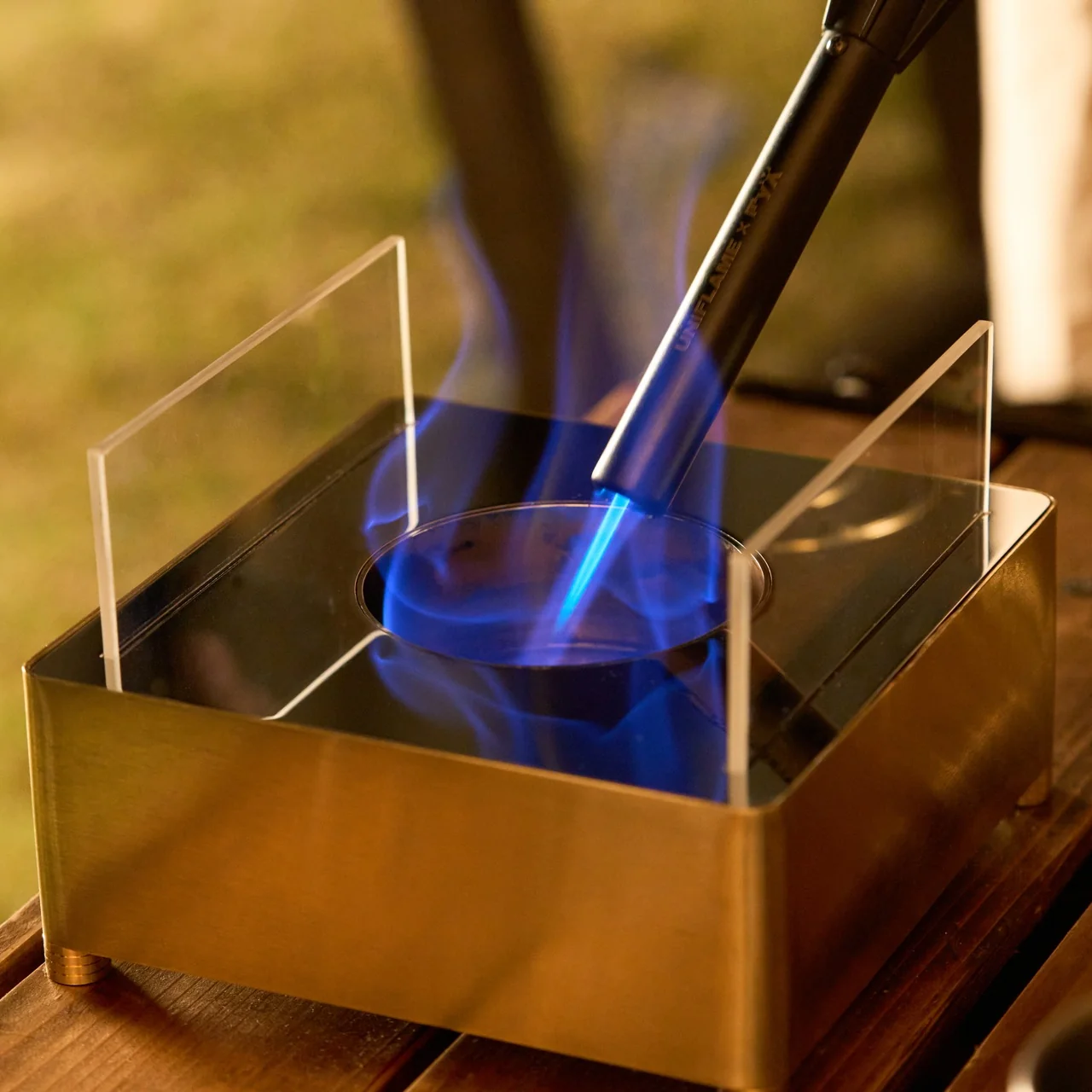
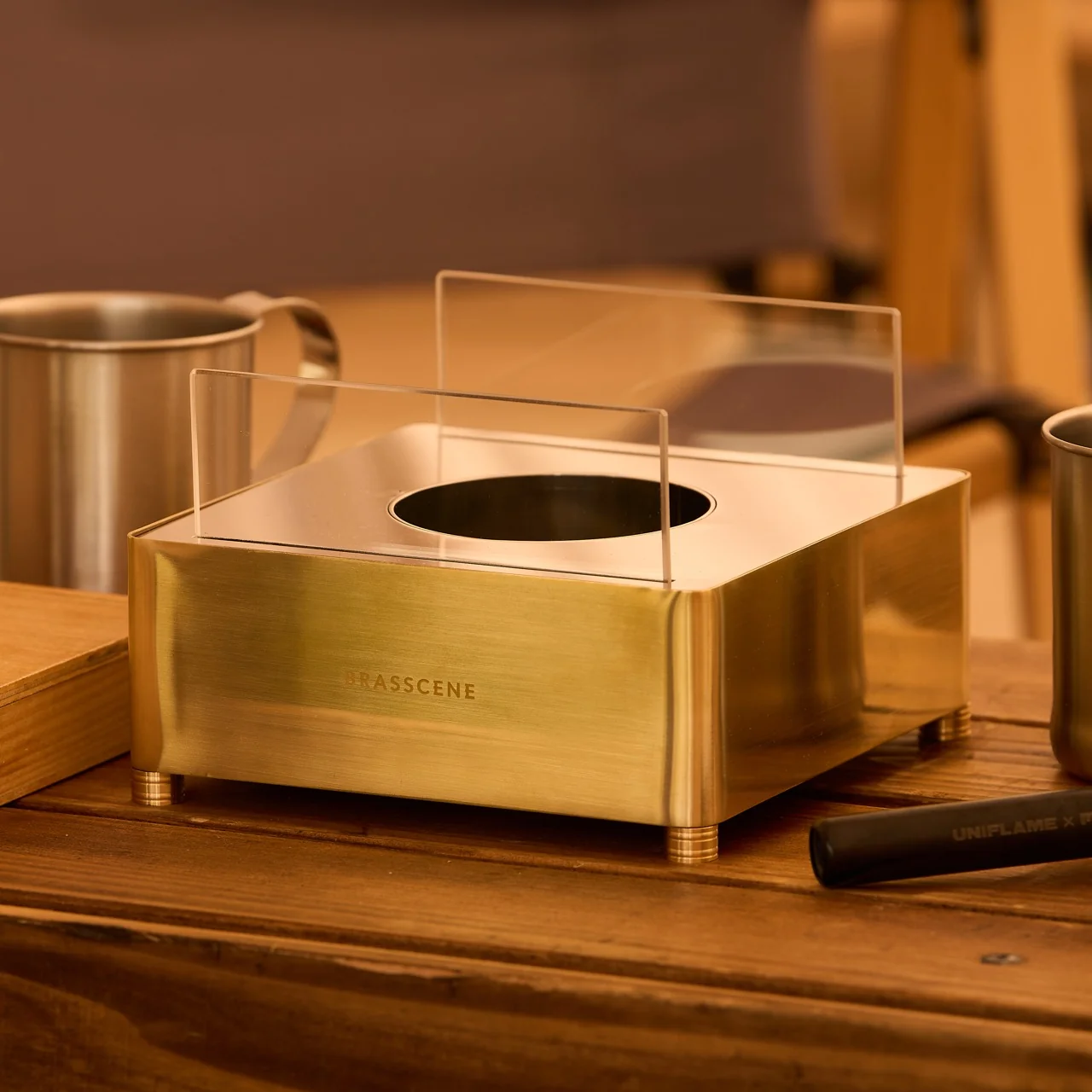
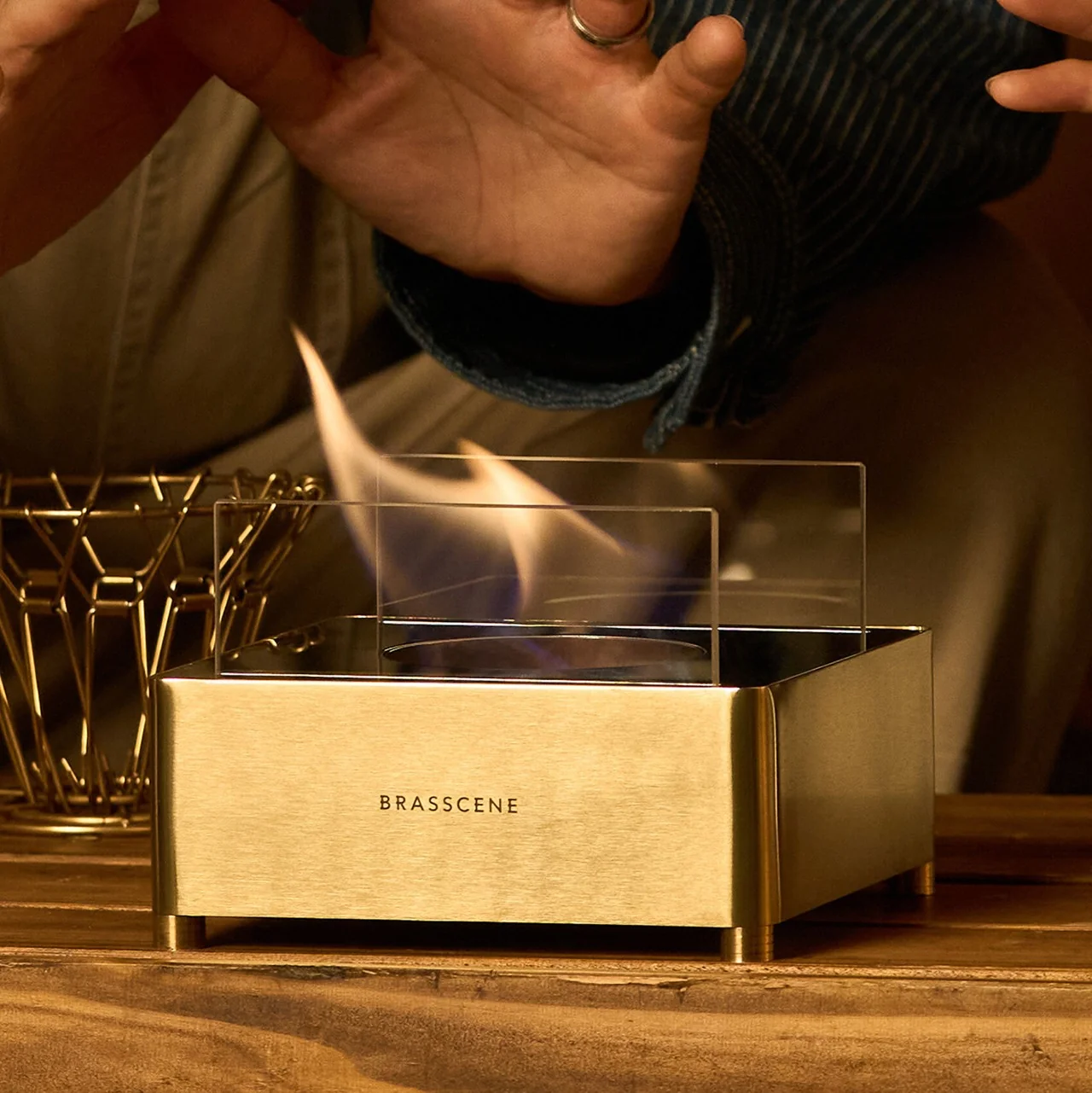
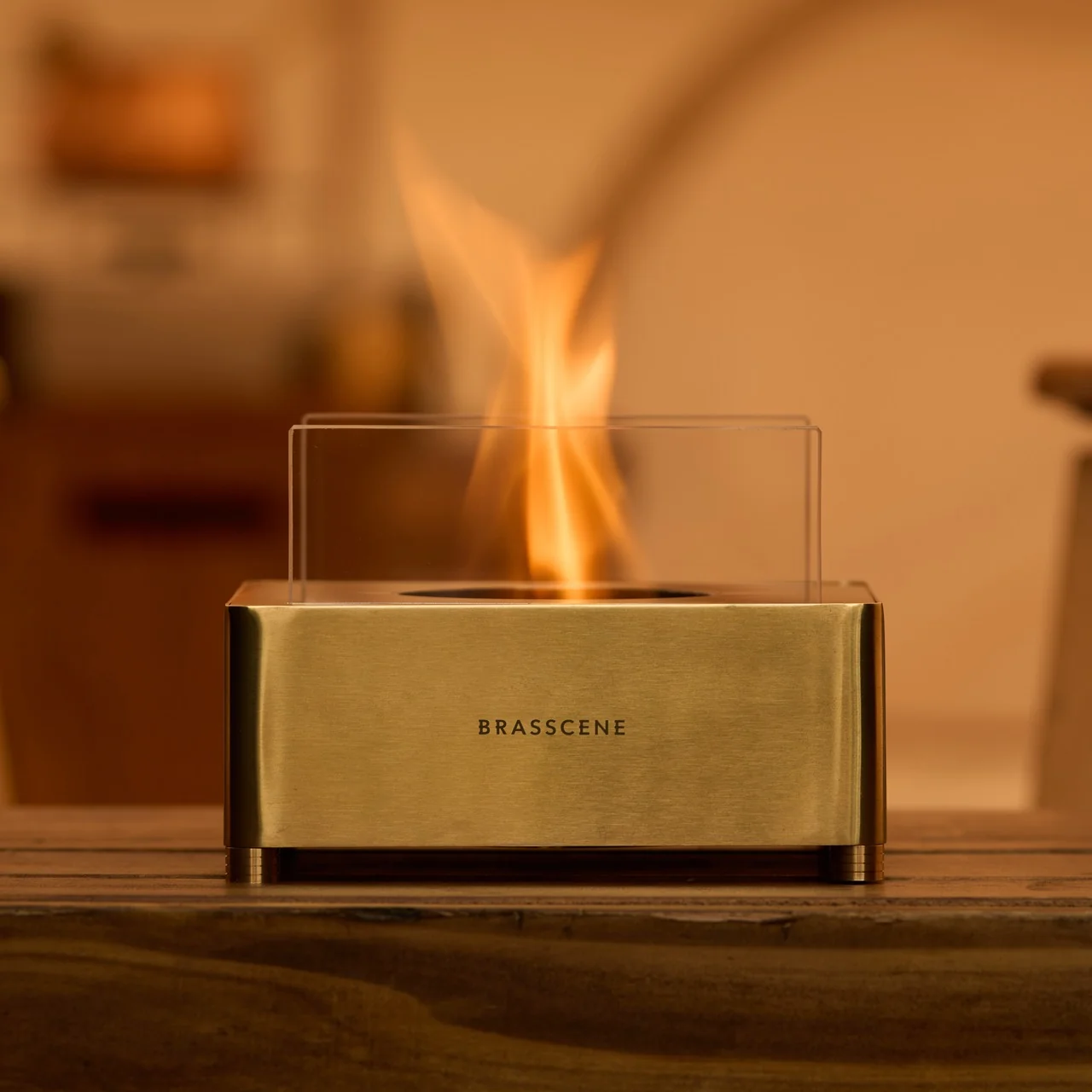
That gap between wanting fire and being able to install it is exactly what the Harmony Flame Lamp solves. It is a brass tabletop fireplace that runs on bioethanol, sits on any flat surface you own, and produces a genuine flame with no ventilation, no gas hookup, and nothing built into a wall. You light it the way you’d light a candle, except what comes back is heat and light with real presence.
What sets it apart from most decorative objects claiming craftsmanship is who actually makes it. The Harmony Flame is built by hand by artisans who normally work on brass instruments, the kind of metalworkers who shape tubas and French horns for a living. That background is not a marketing footnote. Instrument-grade brass has to hold precise acoustic properties and structural integrity, and those same qualities happen to make it excellent at containing and reflecting a flame. The polished surface catches the fire and throws it back in shifting patterns of light and shadow, which is a much harder effect to fake than most LED “flame” gadgets ever manage.
Practically, the lamp behaves the way fall entertaining actually works. It moves from the dining table to the patio to a reading corner without any setup beyond a refill of fuel. Bioethanol burns clean, without smoke or odor, so there’s no lingering campfire smell on your jacket the next morning and no soot to wipe off afterward. The brass itself develops a patina with use, which means the lamp you buy in October will look different, and honestly better, by the time next fall rolls around.
It’s worth putting this next to the fire pit most Americans already know, which is Solo Stove. Solo Stove built an entire category around smokeless backyard fires, and it deserves credit for that. But it’s a wood or pellet-burning outdoor unit, sized for a patio and not meant to come inside. The Harmony Flame is working a different scale entirely. It’s small enough for a dinner table, quiet enough for a bedroom, and refined enough that it reads as a design object first and a heat source second. One is built for a backyard gathering. The other is built for the room you’re actually sitting in on a Tuesday night in November.
At $240, it isn’t an impulse buy, and I don’t think it’s trying to be one. You’re paying for hand-finished brass and a fuel system that skips every complication a real fireplace usually demands, and that combination is genuinely rare at this price. Compare it to a high-end bioethanol fireplace from a home goods brand and you’ll often pay two or three times as much for something with none of the instrument-making pedigree behind it.
The part that sold me is how ordinary the ritual feels once you own it. You strike a match, the brass catches the light, and the room changes temperature and mood at the same time. The Harmony Flame Fireplace is the kind of object that quietly becomes the centerpiece of a dinner party without anyone having to point it out. Fall has a way of making people want warmth and atmosphere they can control themselves, and this lamp answers that without asking for a renovation in return. If you’ve spent the last few autumns wishing your apartment had a fireplace, this is about as close as you’ll get without knocking down a wall.
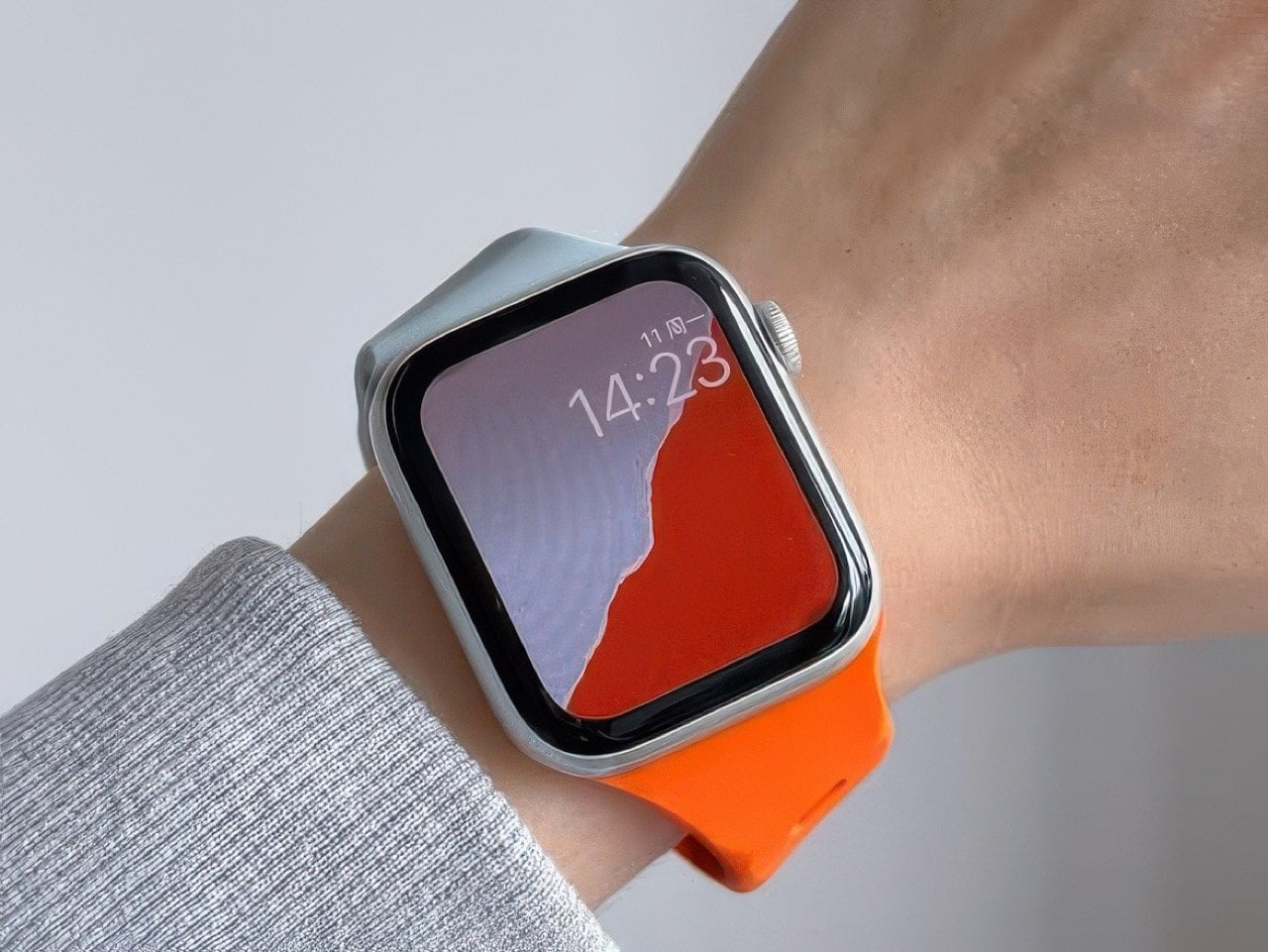
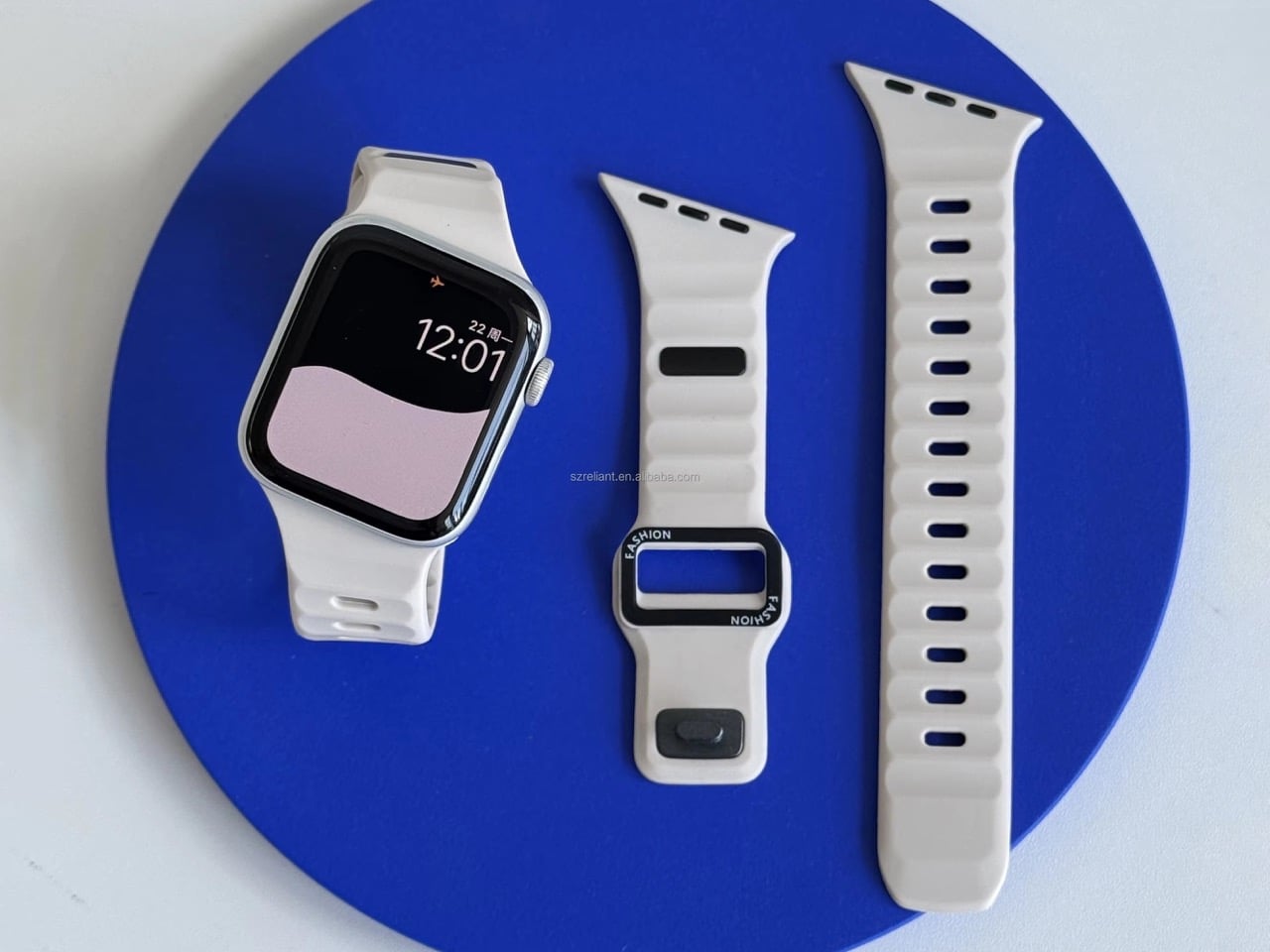
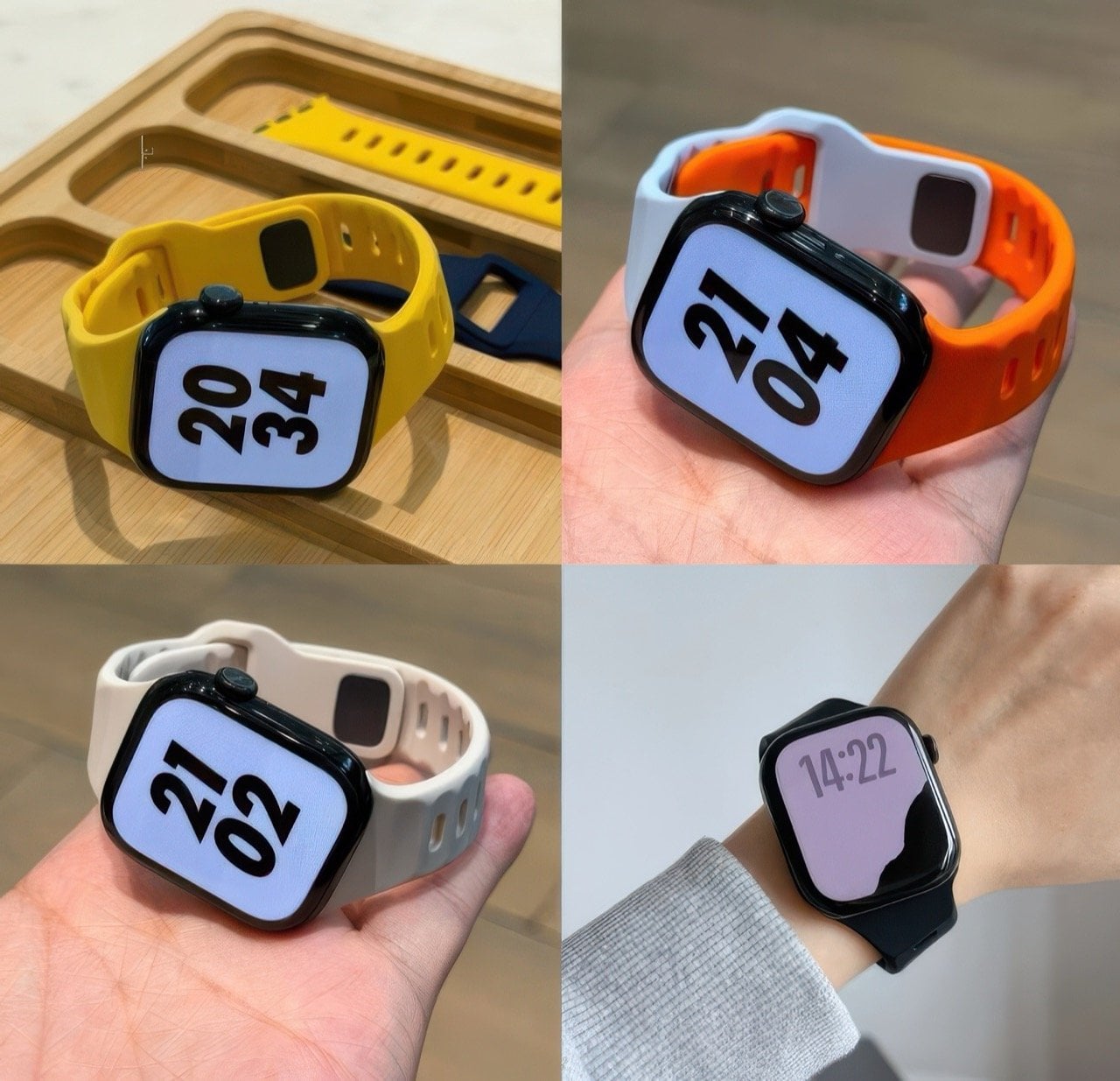
Have you noticed tilting always makes things ‘ergonomic’? A laptop stand tilts the keyboard towards you – ergonomic. A vertical mouse tilts your hands into a more natural position – ergonomic. A split keyboard often breaks and tilts the layout in two different directions for your hands – very ergonomic. It’s almost stupidly simple that the human body isn’t designed around perfect right angles. We’re filled with curves, joints, and limitations to how we move – so a simple tilt can often make life a lot easier. The Apple Watch apparently just got the memo.
Designed around a very clever 30° tilt, this Tilted Watch Band puts the Apple Watch at a slight slant, so it’s facing you even when your wrist isn’t. Normal protocol is to lift your wrist up perfectly horizontal, so the screen faces you in the right orientation. Tilt the band and you don’t have to make your wrist horizontal anymore – just hold it at a comfortable angle and the Watch screen faces you a lot more naturally, letting you read the time without flexing your hand or your neck too much… perfect for joggers or bikers who don’t have the luxury to orient their hands while mid-activity.
As ergonomically obsessed as Apple is, I’m surprised nobody from Cupertino thought of building a band like this. Does it mess with the symmetry? Absolutely. Could Apple still elegantly work around it? I have no doubt they could. They did such a brilliant job with the iPhone Duo’s folding animation, a tilted screen feels like child’s play.
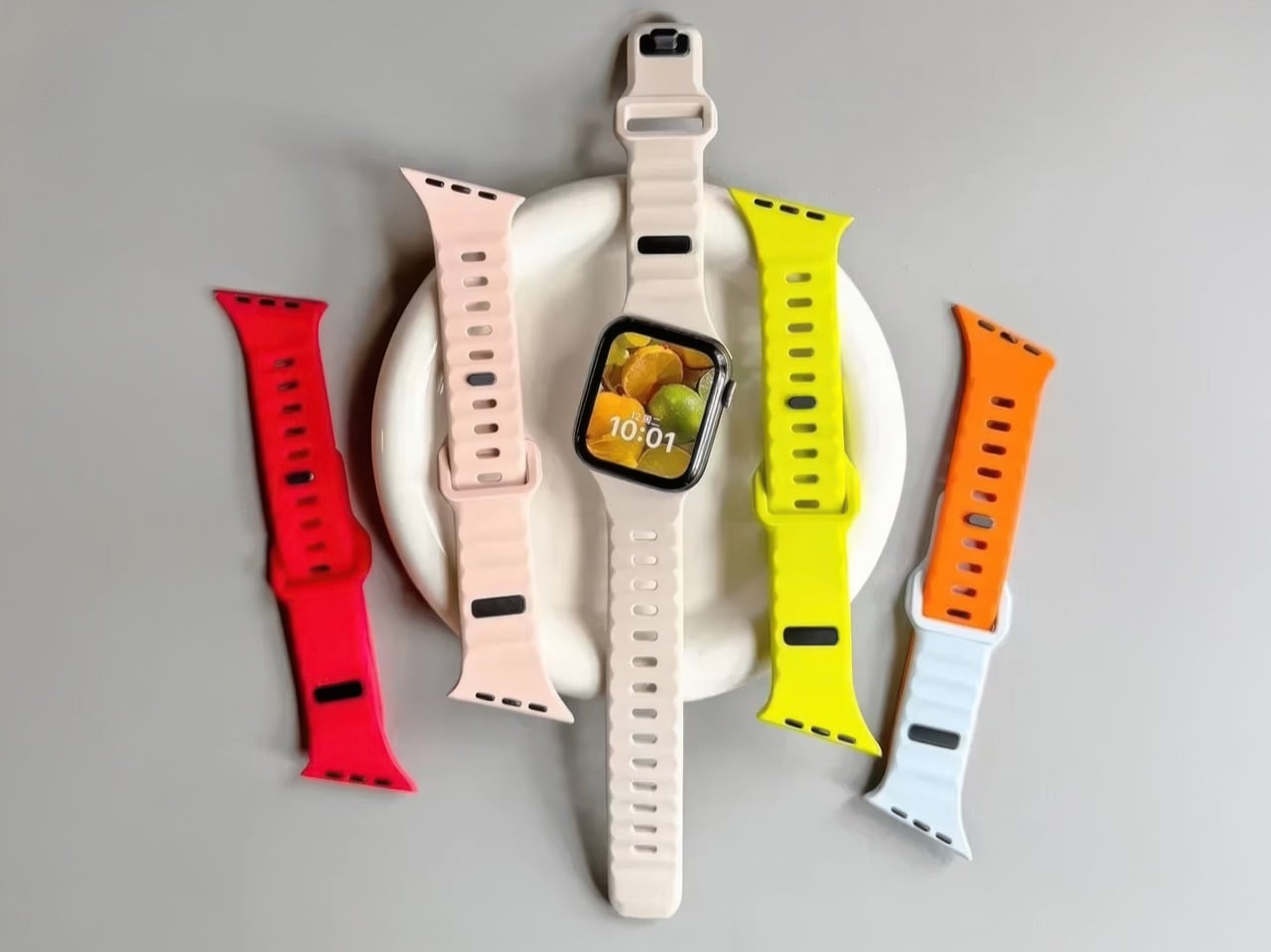
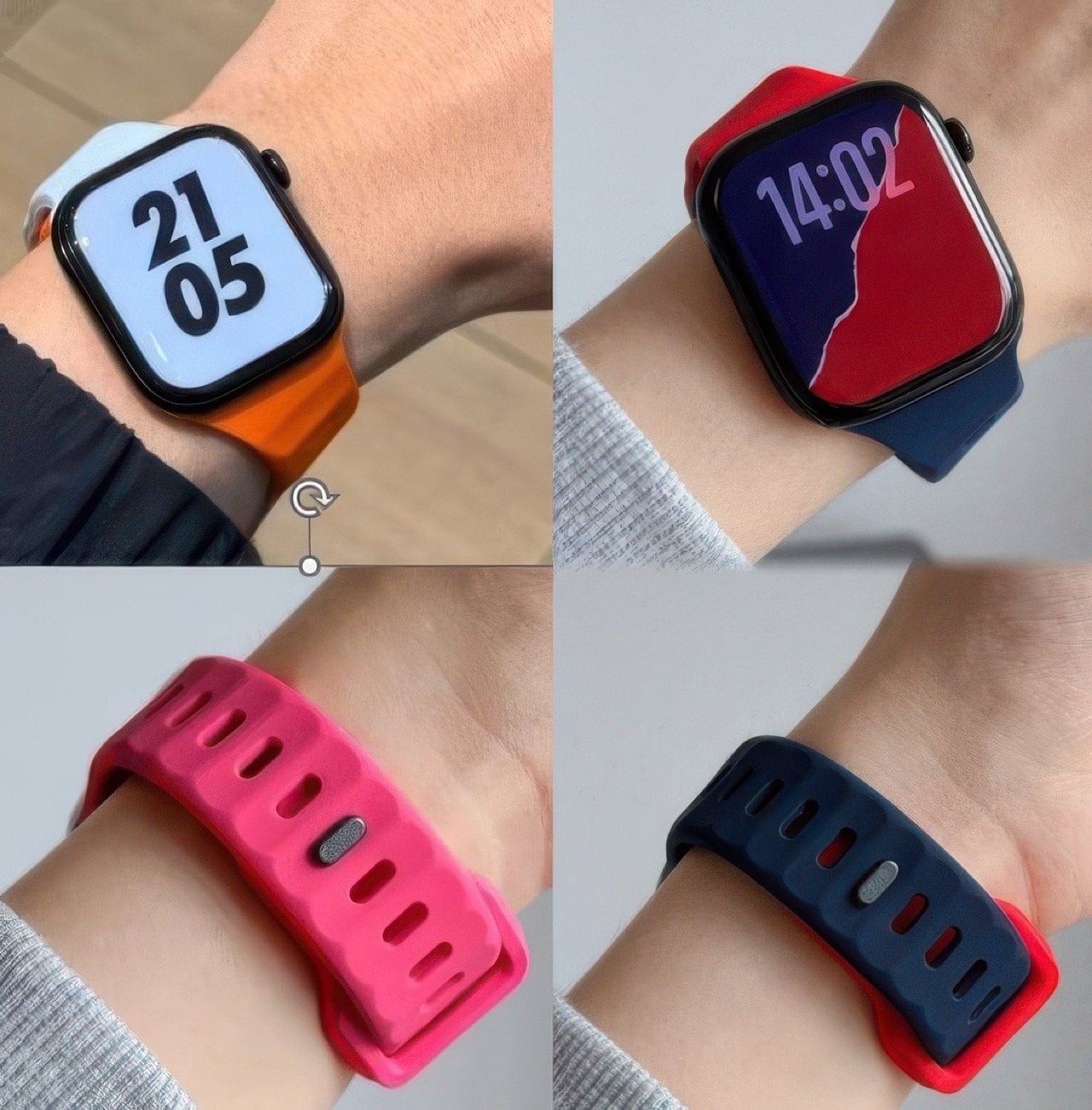
The band comes in a variety of colors, although the best thing you could do is buy a bunch of them and mix and match pairs to create a dual-tone design. The silicone construction makes the band perfect for any kinds of sports, or for people with hypoallergenic requirements. One caveat, however, is that this watch’s tilt makes it so that it only works on the left hand. The clockwise tilt means if you wore the watch on the right hand, the tilt would work against you, requiring you to crane your neck even further than you originally would. Also, the crown would press into your forearm a lot more, which isn’t particularly fun considering you’d have to deal with constantly awakening Siri every few minutes.
The solution, however, is elegantly simple, and works better for smartwatches than it does for watches. You see, reading an analog watch at any tilt or angle is fairly easy – reading a notification on a screen while it’s tilted can be a chore. That specific detail makes the Tilted Watch Band pretty useful, as it reduces the strain on your wrist and neck while you glance down at your wearable.
The Tilted Watch Band is available online through retailers like Amazon, and works with all Watch series and sizes, even with the Ultra. So you can buy and keep the band even through all your watch upgrades over the years!
A parking lot does not care how good your speaker sounded in the store. Too quiet for an open sky, too fragile for a cooler lid, too generic to earn a second look from anyone walking by. These five are built differently. Each earns its place in the setup before you even hit play, and holds it comfortably long after the sun disappears behind the stadium.
The best tailgate speaker is not the loudest one or the most expensive one. It is the one that handles the full arc of a Saturday outdoors without asking you to manage it. Good battery life, real weather resistance, and a design identity strong enough to start a conversation are the only criteria that matter when the truck is parked, and the grill is on. These five clear all three.
1. RetroWave 7-in-1 Radio
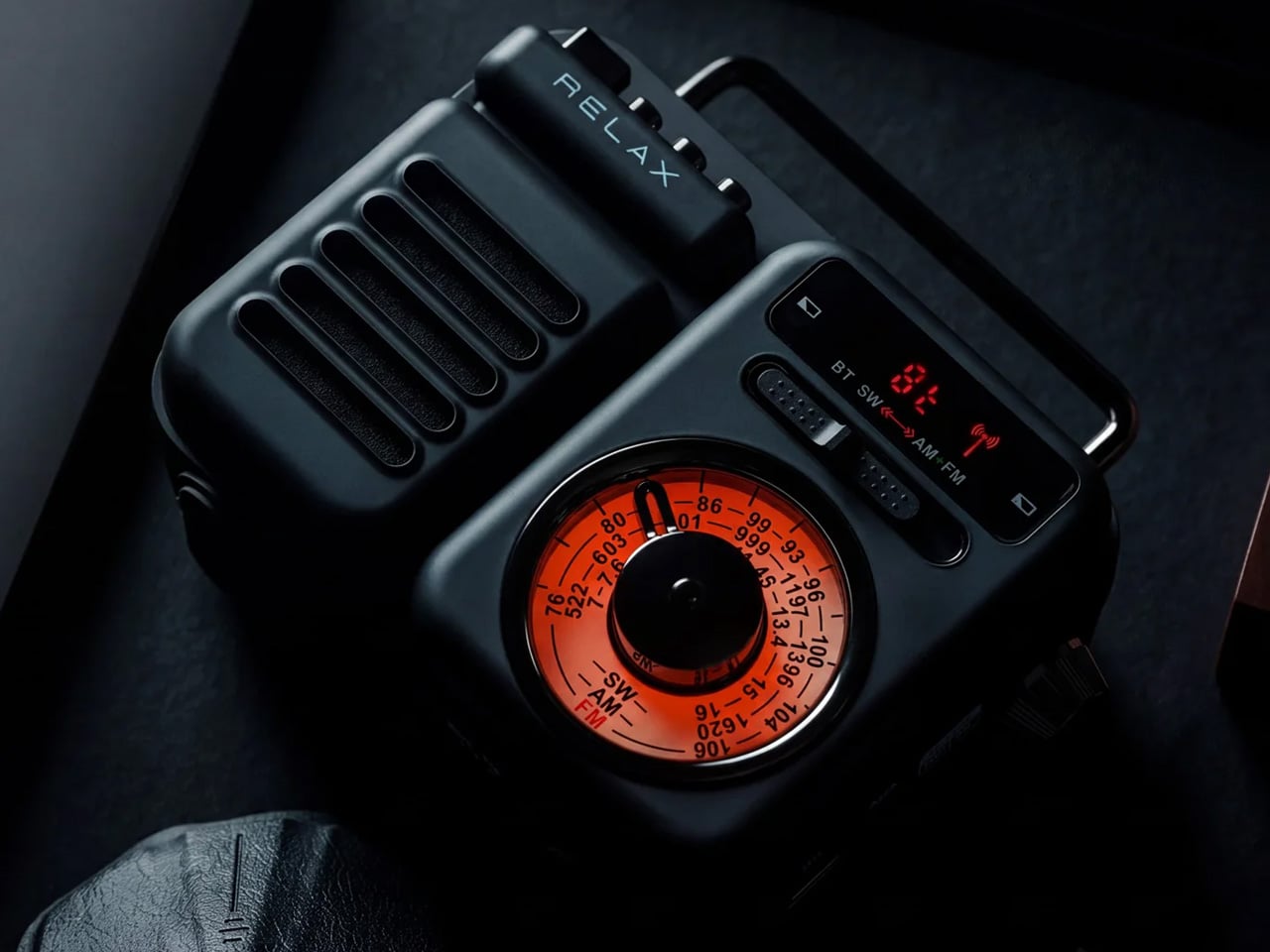
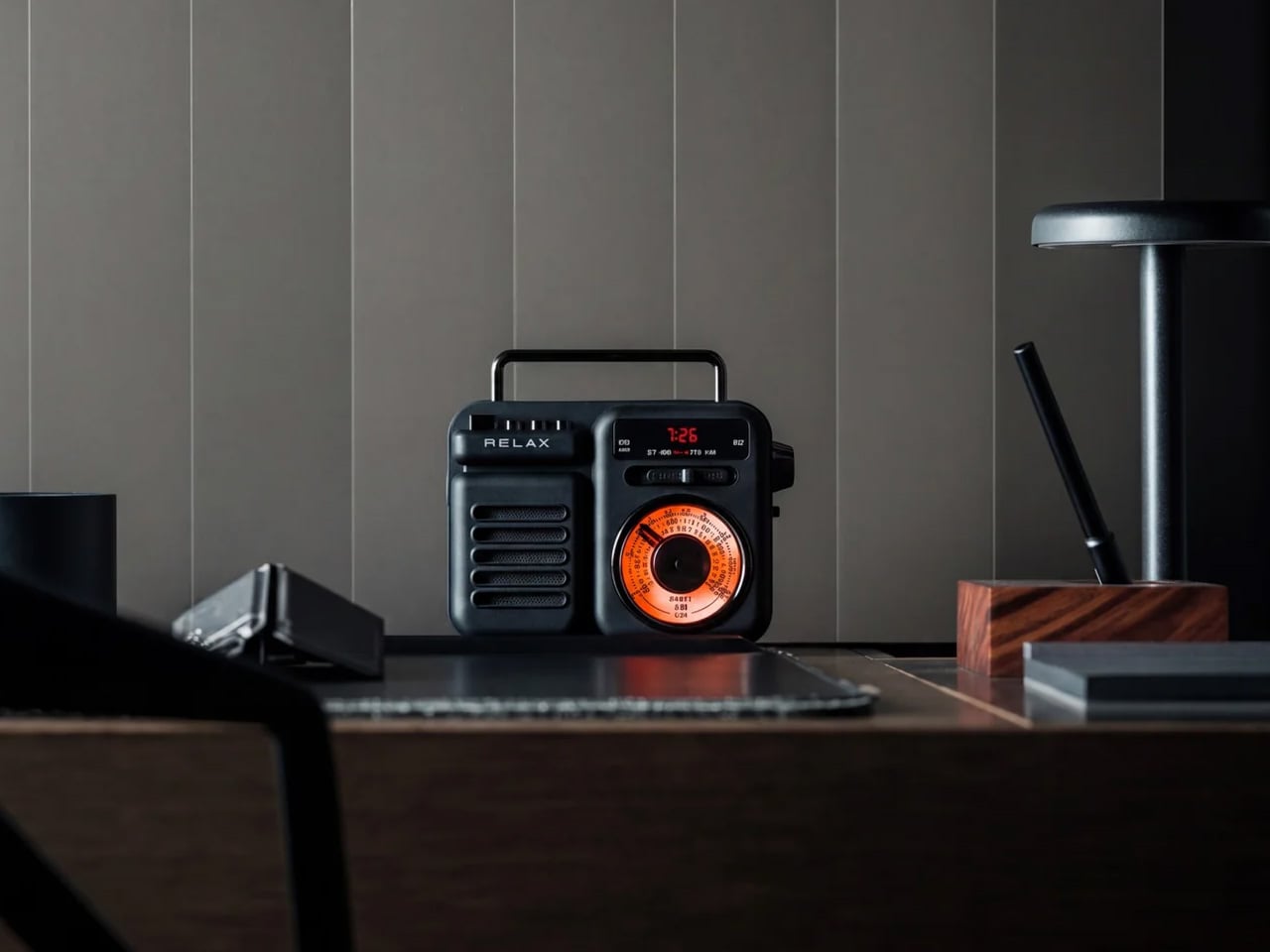
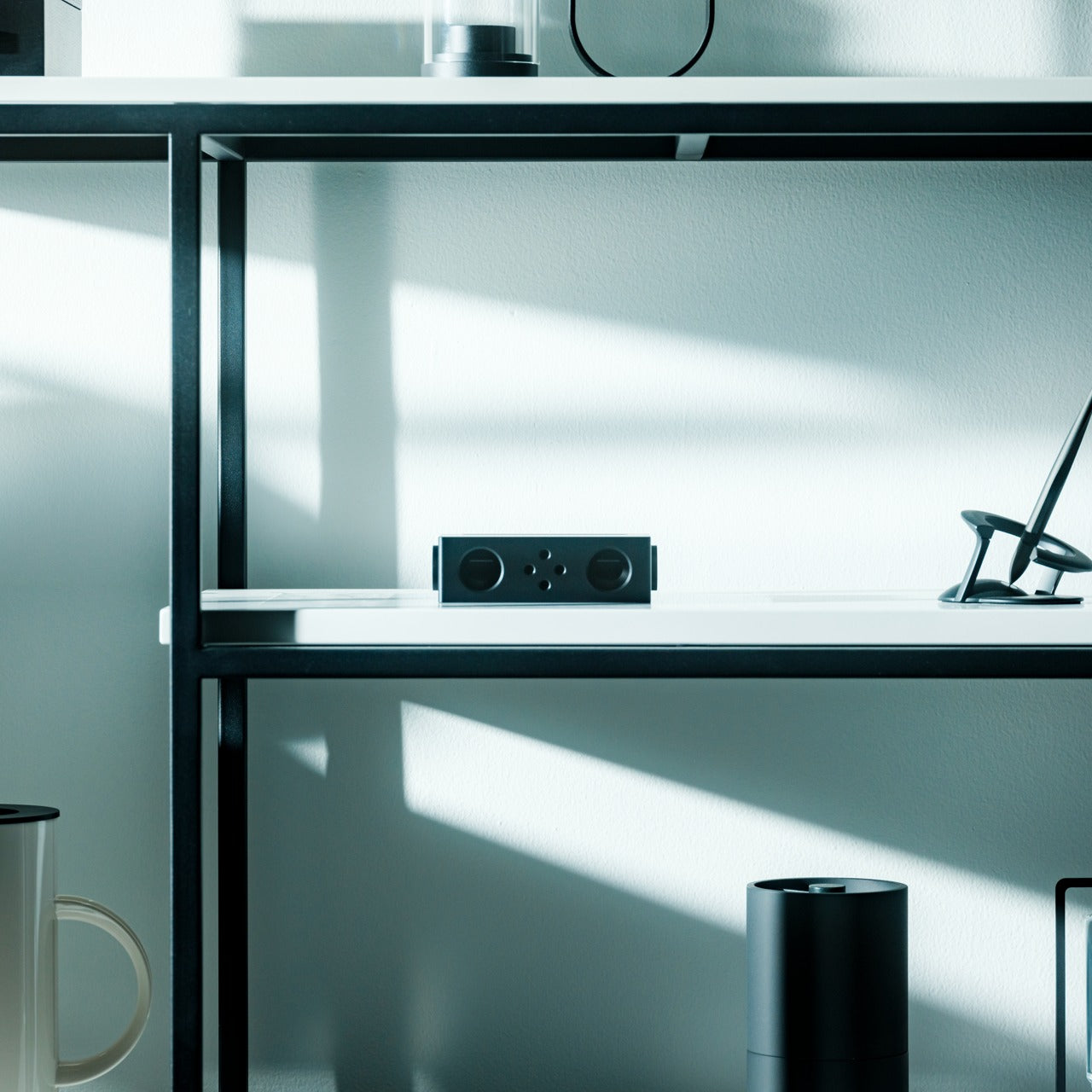
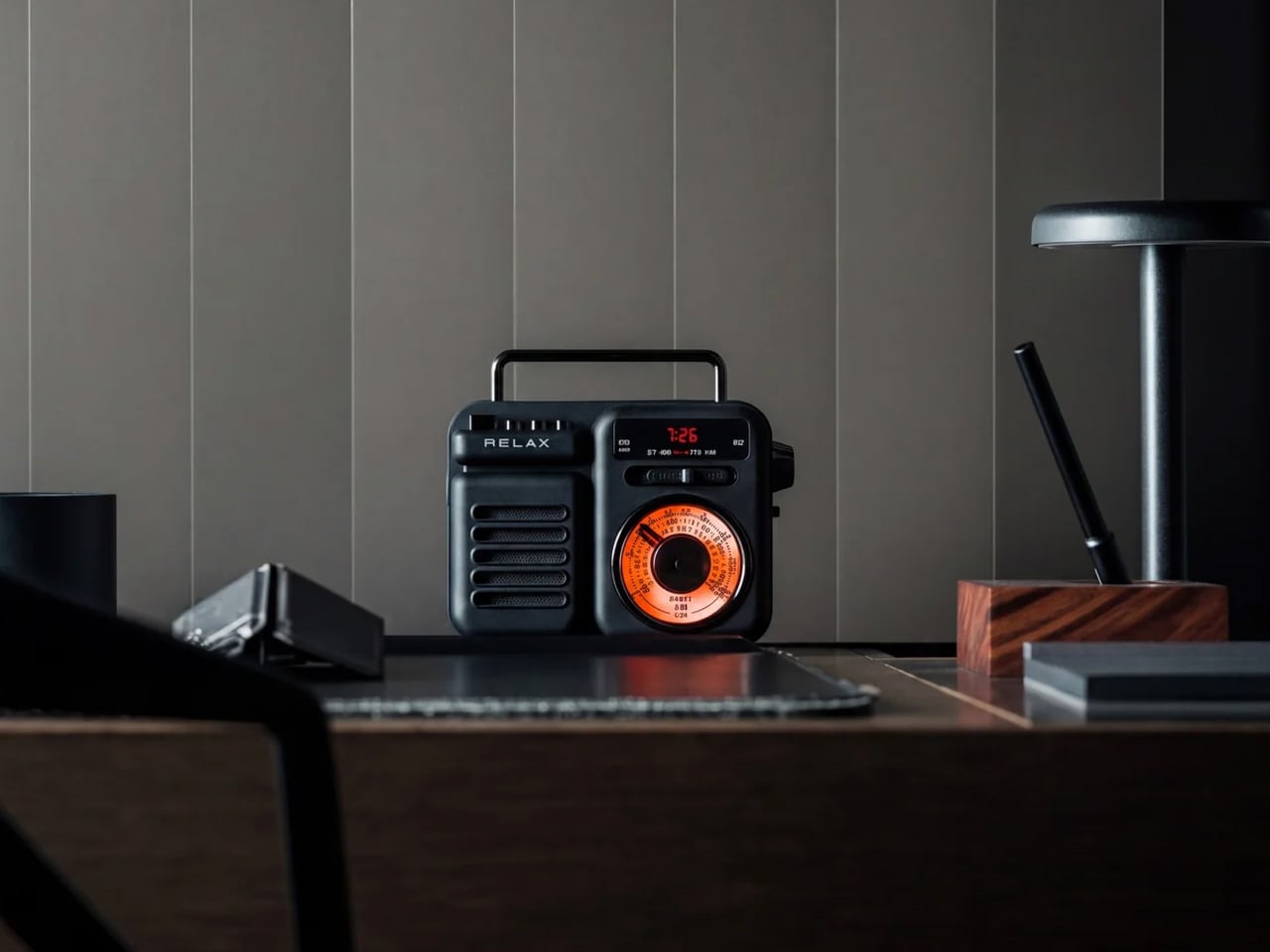
The RetroWave is not trying to look vintage. It simply does, because the people who designed it understood that warm tones and a tactile tuning dial carry a feeling that modern hardware cannot replicate on its own. For you, that distinction matters at a tailgate, where every object on the truck bed shapes the atmosphere of the whole setup whether you intended it to or not. The RetroWave earns its spot before a single note plays.
Seven functions live inside a body that reads as a single cohesive object, not a spec sheet assembled into hardware. AM/FM and shortwave radio, Bluetooth streaming, a USB charging port, and a built-in flashlight all coexist without crowding the design or complicating the interface. For you, that means one piece of gear that moves cleanly from pre-game energy to late-night wind-down without ever needing to swap anything out. It carries the whole day without announcing it.
Analog character translates immediately in outdoor settings
Seven functions in one body removes the need to bring anything else
What we dislike:
The retro aesthetic will not appeal to everyone
Battery life under sustained outdoor use has not been independently verified at publication
2. Brane X
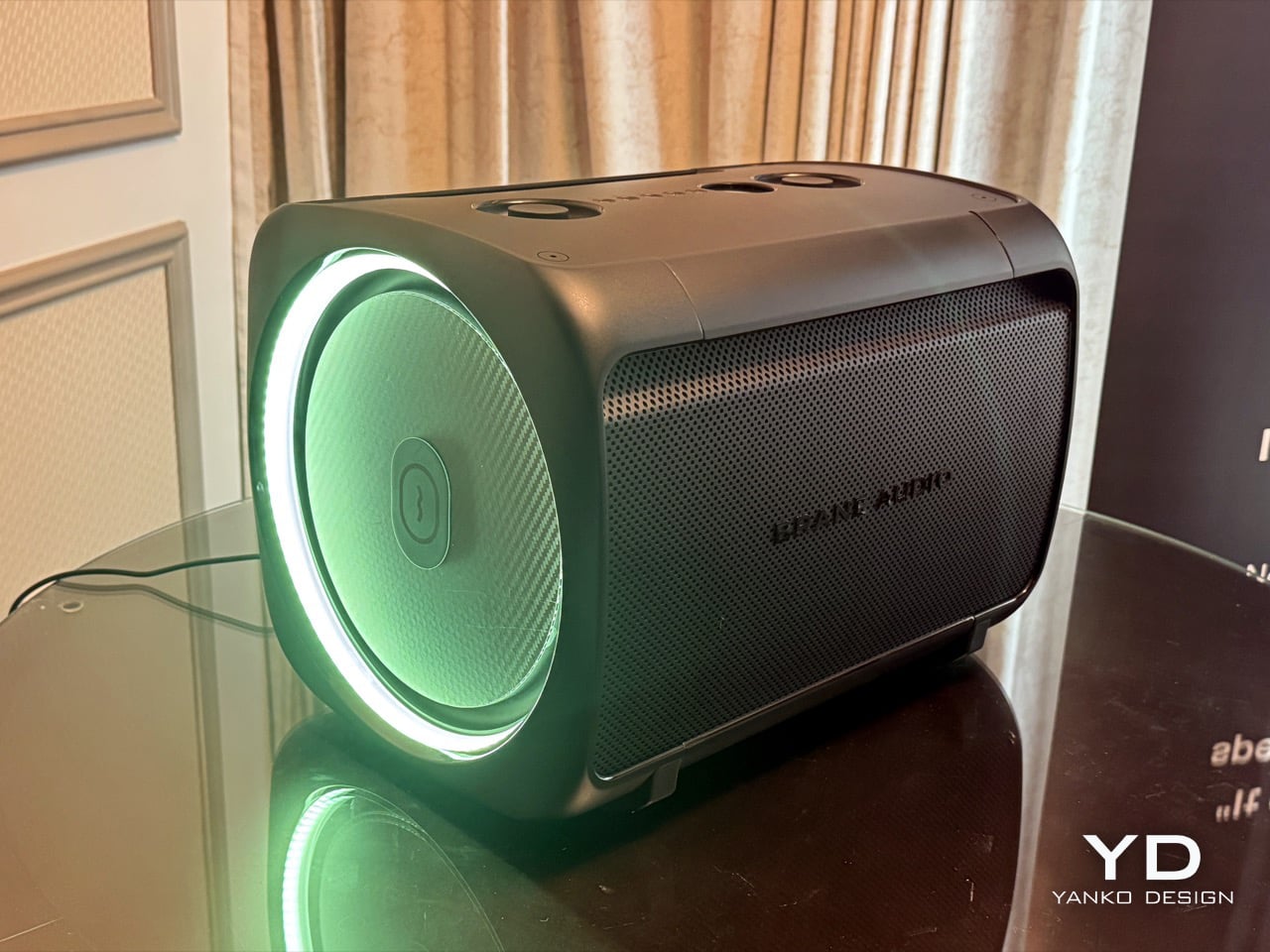
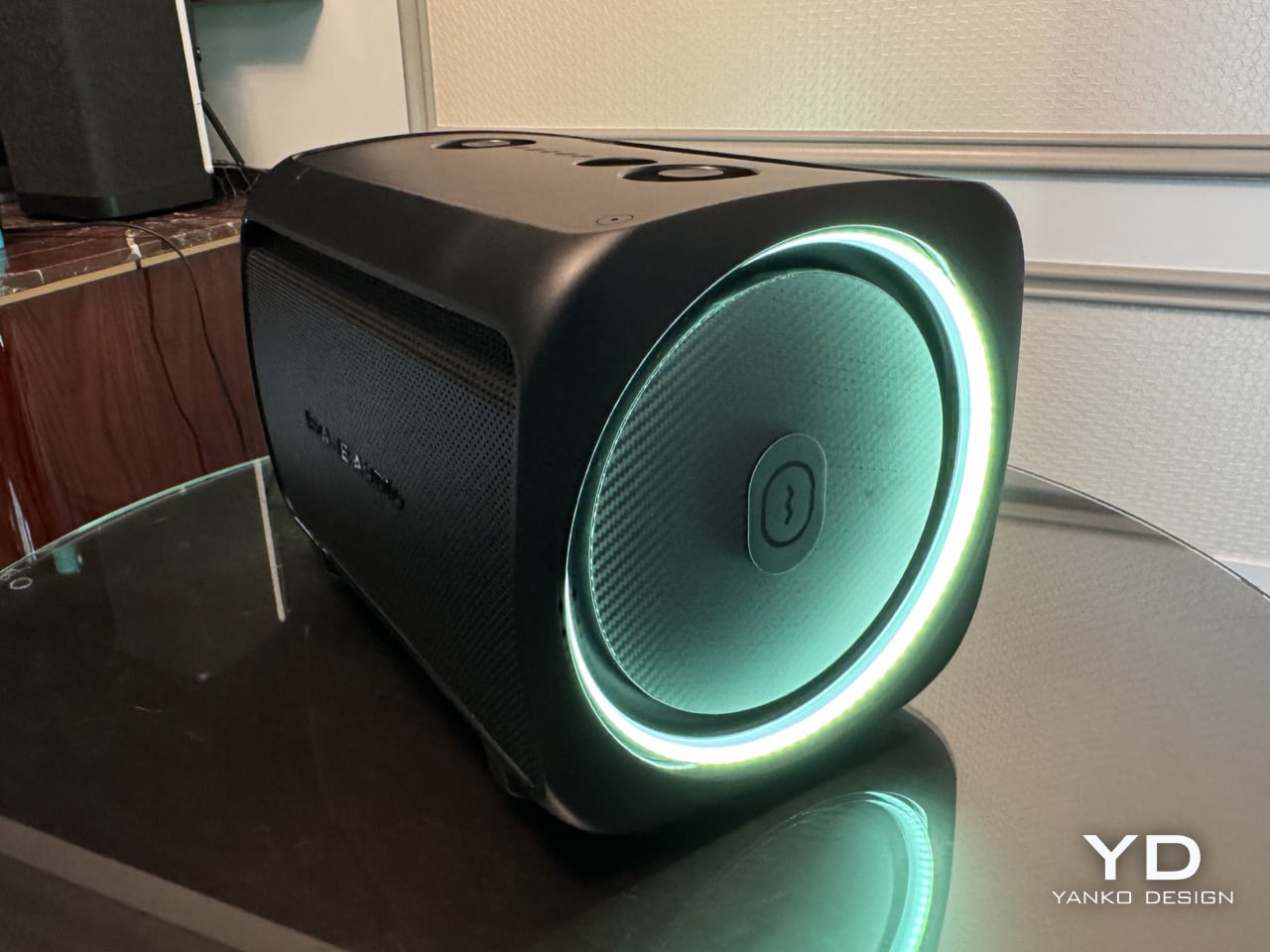
Most portable speakers fake their bass. They boost the low end digitally and call it sub-bass, and it fools you indoors but gets swallowed by open air the moment you step outside. The Brane X does not fake anything. Its proprietary Repel-Attract Driver cancels internal air pressure to deliver genuine sub-bass from a body barely nine inches wide. For you, that means a speaker that actually fills a parking lot instead of politely suggesting it could.
Five drivers and four class-D amplifiers push past 200 watts combined, backed by a 72-watt-hour battery rated for twelve hours of runtime. IP57 waterproofing handles rain and the inevitable cooler spill without breaking stride. Wi-Fi streaming and Bluetooth 5.3 cover both strong and spotty signal scenarios across a large lot. For you, the ability to group up to eight units means the sound scales with the size of your crowd rather than capping out at the wrong moment.
What we like:
Genuine sub-bass output from a compact enclosure
Twelve-hour battery life clears even the longest tailgate
What we dislike:
Two hundred-plus watts at full volume will cut into runtime considerably
Wi-Fi streaming depends on stable network access in the parking lot
3. Beosound Explore
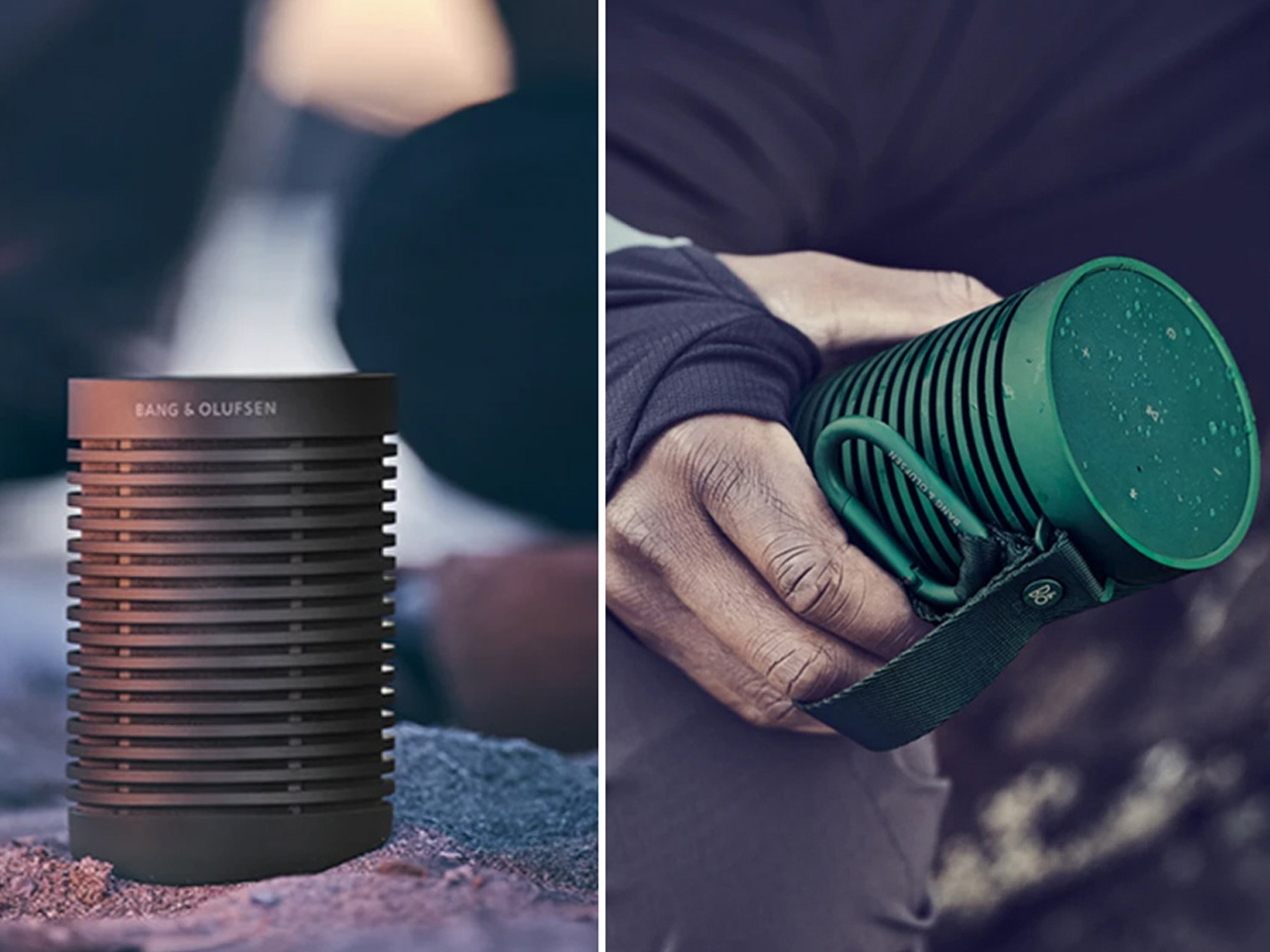
Bang & Olufsen built the Beosound Explore from hard-anodized aluminum instead of the polycarbonate most competitors default to, and that single decision changes how the speaker ages. Polycarbonate scratches and scuffs into a reading of neglect. Aluminum picks up honest wear and keeps looking considered. For you, that means a speaker that still belongs in your setup on its twentieth outing, rather than one that starts looking disposable before the season is halfway through.
Twenty-seven hours of battery life removes the anxiety that follows every other portable speaker through a long weekend outdoors. Dual full-range drivers produce True360 sound with no preferred listening axis, so there is no bad seat at your tailgate. IP67 water resistance covers submersion up to one meter for thirty minutes, handling every realistic outdoor scenario without fuss. For you, the carabiner strap means it travels without ceremony and arrives looking like it belongs wherever you set it down.
What we like:
Twenty-seven hours of runtime covers a full day and night without a second thought
Hard-anodized aluminum ages honestly with outdoor use
What we dislike:
The Bang & Olufsen premium is real and unavoidable
360-degree output reduces directional volume control in loud open environments
4. Battery-Free Amplifying iSpeakers
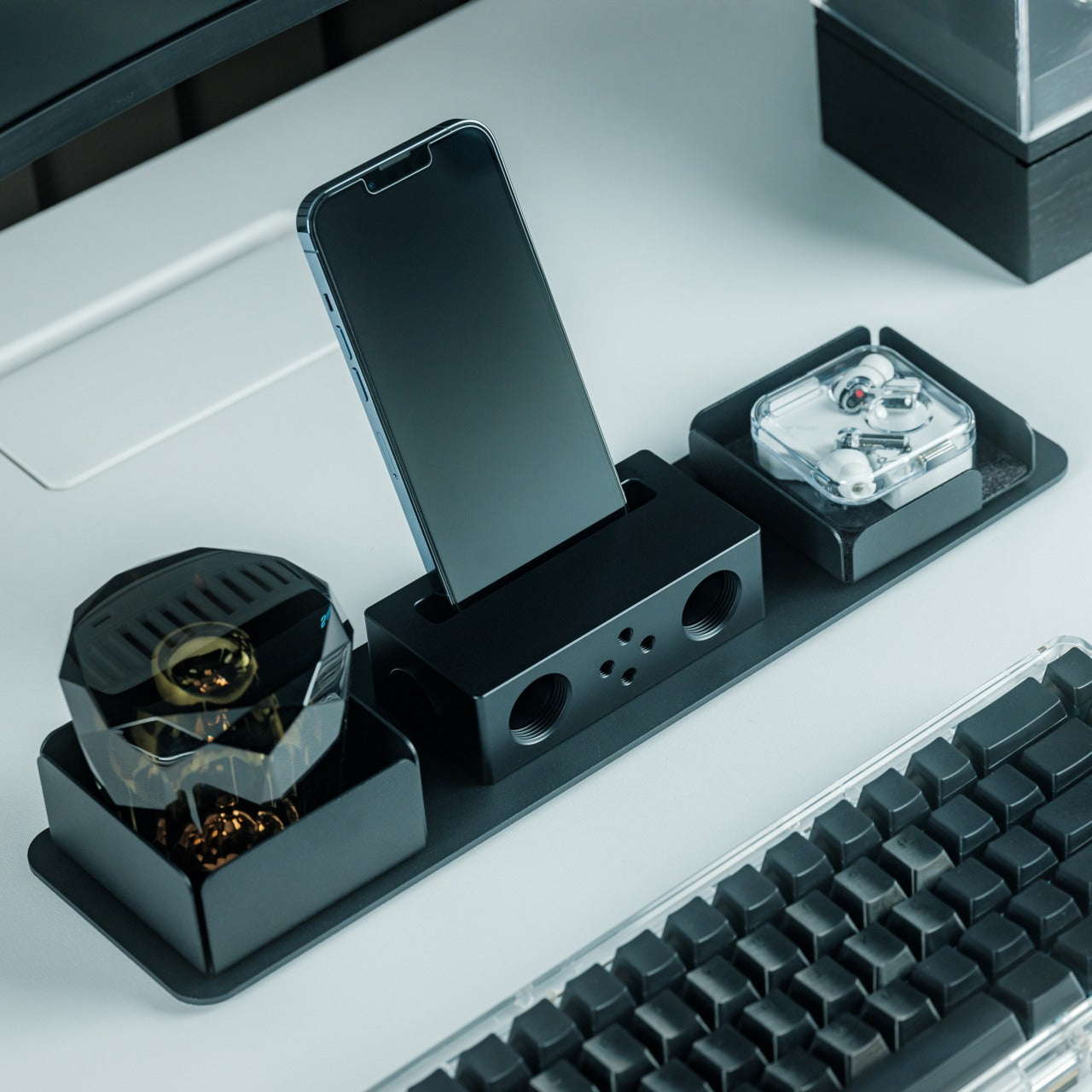
The premise sounds like a trick: a speaker that amplifies sound without drawing a single watt of power. The iSpeaker uses passive acoustic geometry instead of electronics, channeling audio through a precisely shaped horn that physically increases volume without a battery or Bluetooth chipset. For you, that means zero charging anxiety at a tailgate where outlets are not a given. It works the moment you set your phone inside it and keeps working until you leave.
The design reads as furniture as much as audio hardware, which earns it a different kind of presence at a tailgate than a traditional plastic cylinder would. It sits on the table as a deliberate object, not a forgettable gadget. For you, that matters because it communicates something about the setup before a single note plays. No cords, no app, no pairing ritual. You place it, drop your phone in, and the afternoon takes care of itself from there.
Zero battery dependency removes the most common outdoor-speaker anxiety
Passive horn amplification produces real volume with no electronics involved
What we dislike:
Output ceiling is physically limited by the horn geometry
Works only with phones that fit the cradle dimensions
5. Muzen Wild Mini
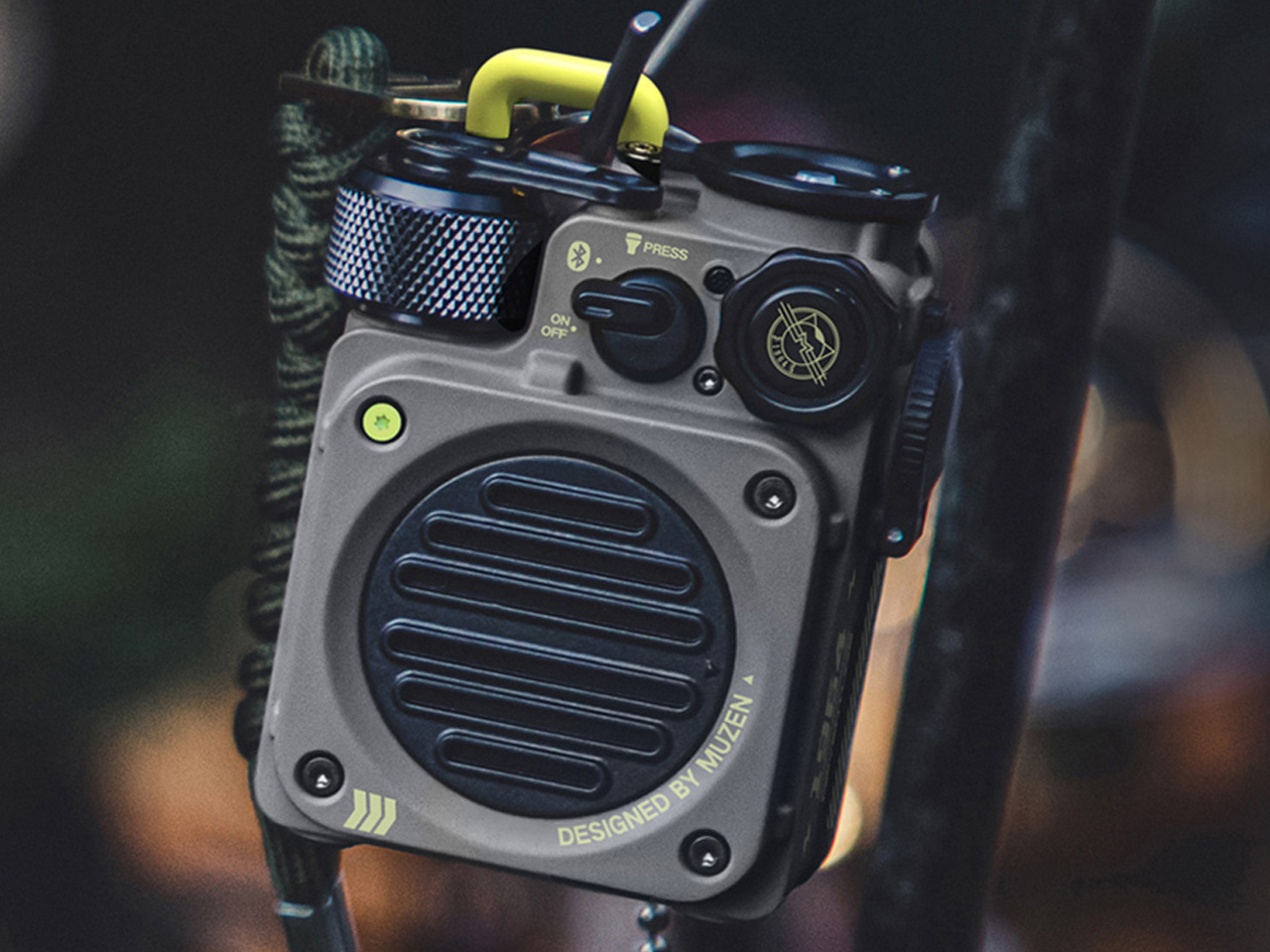
The Muzen Wild Mini looks like it was pulled from a gear locker rather than designed for a product page, and that is exactly the point. The all-metal body carries a military character that communicates durability before you ever pick it up. For you, that matters in a setting where gear gets moved, stacked, and occasionally dropped between the cooler and the truck bed. The Wild Mini does not ask to be handled carefully, which means you never have to think about it.
Bluetooth 5.0 handles the streaming, and a built-in flashlight with three lighting modes earns its place once daylight fades on the lot. A single charge delivers six hours of runtime at full volume, covering the core of a game-day schedule without needing a top-up. For you, the clip system means it attaches to a bag, a belt loop, or a tent frame with equal ease, keeping the speaker accessible without requiring a dedicated surface to set it on.
What we like:
All-metal build shrugs off drops and rough handling
The built-in flashlight adds genuine utility once the sun goes down
What we dislike:
Six hours is the shortest runtime in this group
The compact body limits total output volume compared to the larger enclosures here
The Right Speaker Makes the Saturday
None of these five ask you to compromise. The RetroWave brings analog warmth to a setting that usually defaults to generic plastic. The iSpeaker removes the charging question entirely. The Brane X delivers the bass a parking lot actually requires. The Beosound Explore brings luxury-grade materials to outdoor conditions they were genuinely built for. The Wild Mini goes anywhere without asking permission. Each pulls its weight differently, and that range is exactly the point.
A good tailgate speaker is the one you stop noticing because it never gives you a reason to worry about it. The battery holds, weather is not a factor, the sound fills the space, and the object earns a second look from whoever walks by. All five of these clear that bar. Pick the one that fits how your Saturdays actually run, and it will handle the rest without asking for much in return.
If the name MetMo rings a bell, that’s because this small Leeds outfit has built its reputation out of taking old mechanical ideas nobody else bothered reviving and turning them into objects people genuinely want to own. We’ve covered the MetMo Driver reworking the mid-century ratchet screwdriver, the Fractal Vise shrinking industrial clamping logic down to desktop scale, and the Pocket Grip channeling a century-old patent into nearly half a million dollars of Kickstarter support. The catalog reads like a museum of mechanisms reimagined with modern metallurgy and CNC precision. Now they’re circling back to something smaller, more delicate, and more universally frustrating than anything they’ve tackled before. Their next target is the humble tweezer.
The Precision Grip is calibrated for a different job than MetMo’s earlier clamping tools, the kind of featherlight, controlled pressure needed to hold a model part without crushing it. Where the Pocket Grip chased 21kg of clamping force for daily carry tasks, this one maxes out at 5kg, by design. It runs on a miniaturized drive screw borrowed from precision machining equipment, so you set your grip force once and the jaws hold that position without assistance. That’s the core limitation tweezers can never escape: they hold via sustained finger pressure, and the moment that wavers, the part is gone. For anyone who has ever sacrificed a miniature to the carpet gods, that last sentence is the whole pitch.
For decades, precision hobbyists have been improvising with tools from completely different disciplines. Jewelers raid surgical supply catalogs. Electronics hobbyists use soldering tongs that launch parts across the room the moment grip pressure drops. Model painters hold tiny figures between their fingers and simply hope for the best. MetMo’s position is that these people deserve something built specifically for the job, and the Precision Grip’s lightly textured jaw tips are designed to grip without marking or damaging delicate surfaces, a distinction that no repurposed dental or electrical tool reliably delivers.
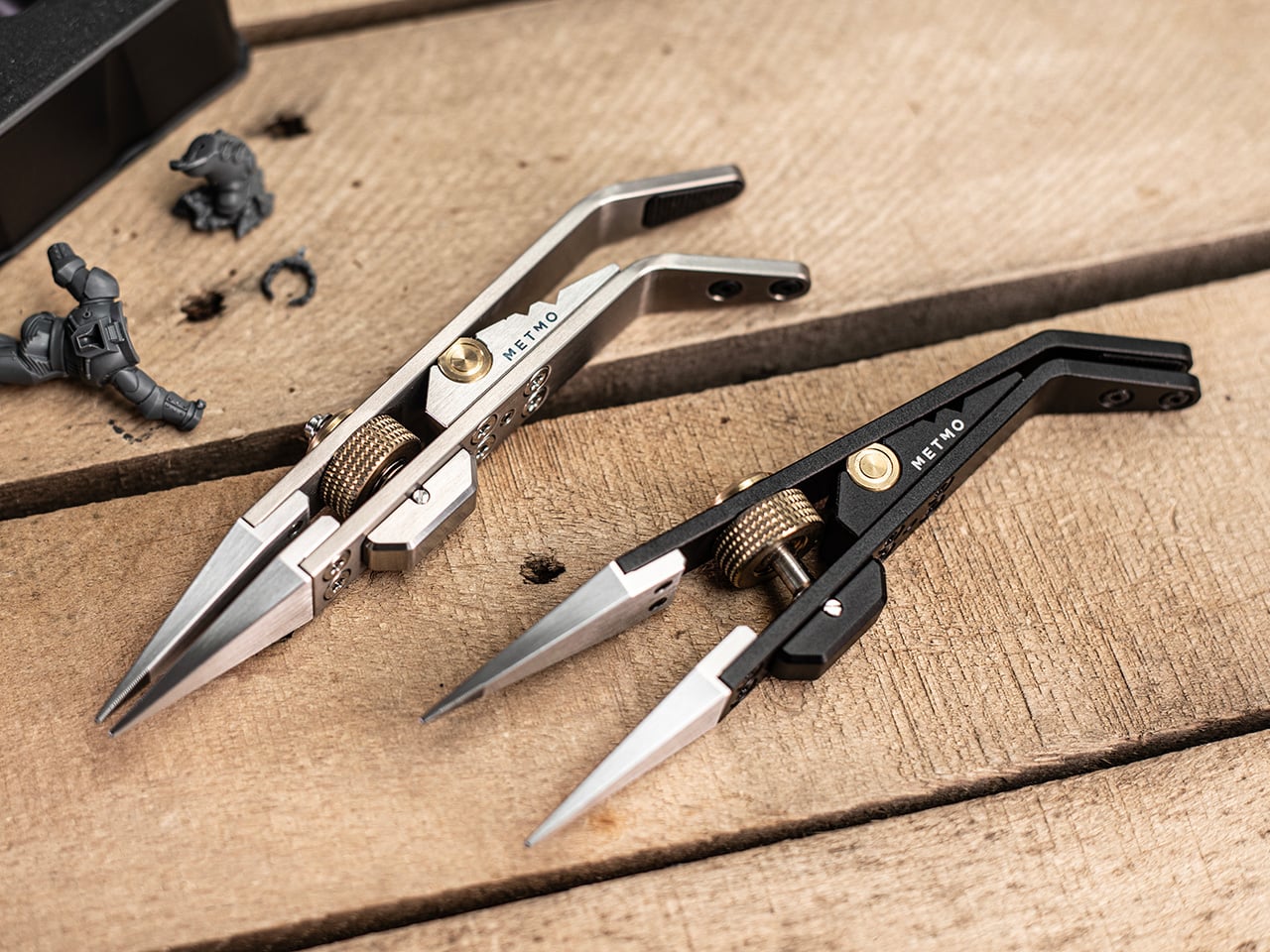
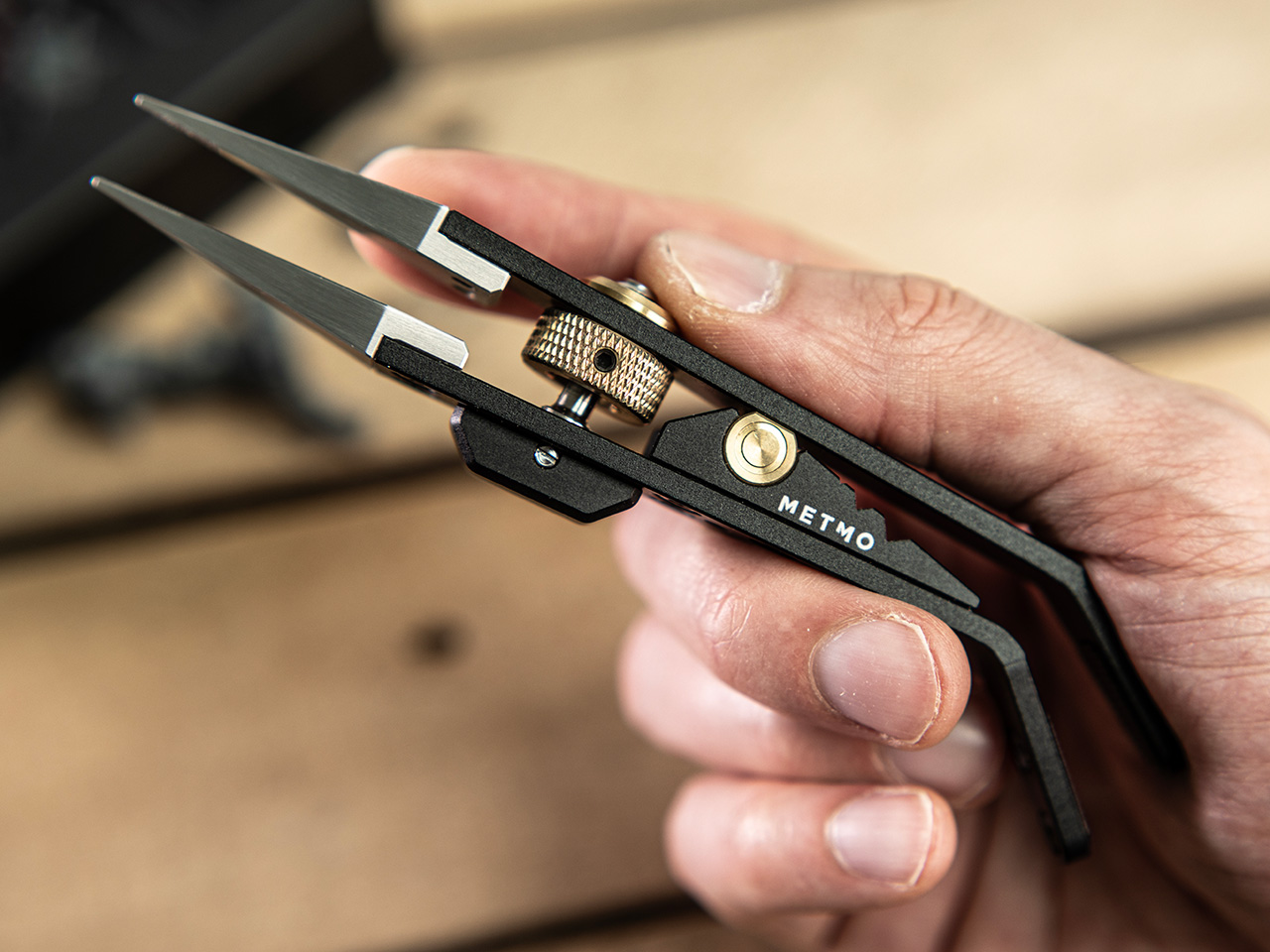
The mechanism at the center of all this is a miniaturized version of the drive screw used in high-precision machining equipment, a category of hardware that lives and dies by tolerance accuracy. A solid barrel hinge keeps both jaws in perfect alignment during clamping, preventing the sideways drift and tip-twist you’d get from a conventional pivot, and that dimensional stability is what makes the needle-nose tips usable for genuinely pinpoint work rather than approximations of it. Turn the knurled screw, the jaws close to exactly where you set them, and they hold there with up to 5kg of clamping force. The underlying mechanism traces back to 1912, which MetMo has made into a design tagline for a reason. It’s a genuinely good mechanism.
The jaw tips carry a patent-pending micro-grip texture that MetMo calls “The Gecko’s Finger,” a name that is slightly ridiculous and also completely on point. Small smooth parts get just enough extra friction at the contact surface to stay put without the jaws needing to clamp any harder, which is the right problem to solve when you’re working on something fragile. Beyond the standard needle-nose stainless steel nibs, the system accepts silicone soft inserts for delicate surfaces, round clamp heads for gripping a part’s inner cavity rather than its outer face, and even custom 3D-printed nippers for shapes no off-the-shelf tip could reach. Individual nibs swap out independently when damaged, without touching the body.
Set the jaws slightly open and a spring-loaded mechanism activates, giving you conventional tweezer behavior for quick sorting tasks without engaging the screw-drive lock every time. When you need both hands free, the Precision Grip clamps into a quick-release mount and becomes a miniature desk vice, holding your part steady while you solder, file, or paint. Three V-grooves machined into the body let you form wire or prop the tool as a makeshift stand, keeping parts right where you left them when you step away. The whole setup is fully ambidextrous, which sounds minor until you’re a lefty who has spent years buying tools that don’t think about you. All of that function lives in a body that measures 134mm (5.3 inches) long, 29mm wide, and 16mm deep.
Aerospace-grade hard-anodized aluminum (70.3g), Grade 5 titanium (83.3g), and surgical stainless steel (114.5g) are the three material variants, and each one maps to a different kind of user. The aluminum is the nimble everyday choice, the titanium balances weight savings and durability for more demanding environments, and the surgical stainless is autoclave-rated and built from high-chromium steel throughout, making it viable for medical and laboratory settings. All three are fully user-serviceable, strippable to individual components for maintenance or repair, with high-tensile screws throughout rather than whatever was cheapest to source. MetMo talks about a 200-year product goal, and the fully serviceable construction is what gives that ambition actual credibility.
Pricing for the Precision Grip runs at £89 ($118 USD) for the Aluminum version, while the Stainless Steel variant is priced at £119 or $157 USD. For serious hobbyists and EDC collectors, the Titanium Precision Grip is priced at £179 or $237 USD. The Precision Grip ships worldwide from the UK and comes with the 200-year repairability guarantee that you could possibly only expect from a company as obsessed with detail and quality as MetMo. MetMo balanced the weight distribution around fine writing instrument ergonomics, giving the body a contour that doesn’t tire your hand across long sessions. It also looks genuinely purposeful doing nothing, like an intricate ornament that earns questions from people passing your desk, which MetMo treats as part of the design brief rather than a happy byproduct.
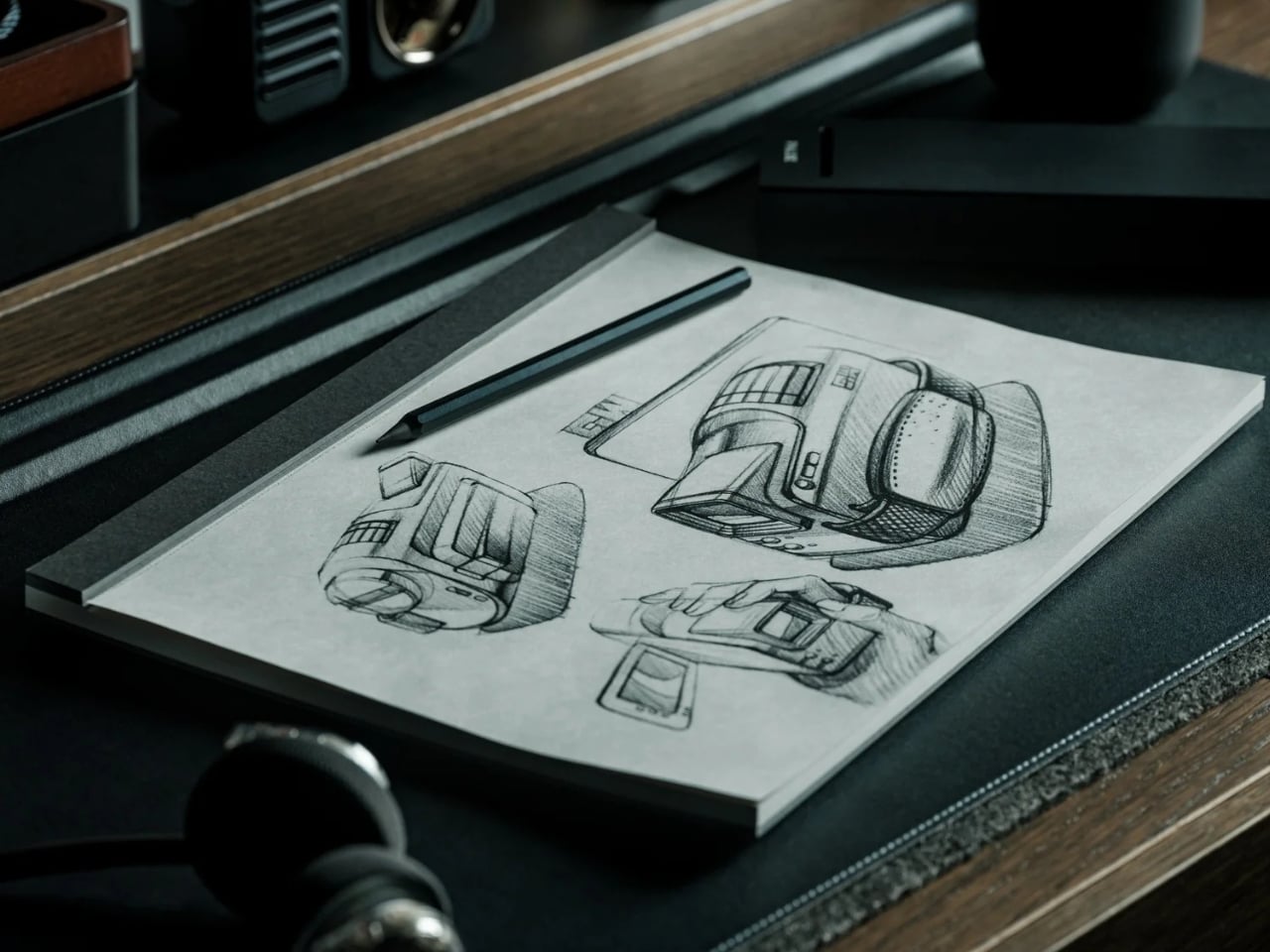
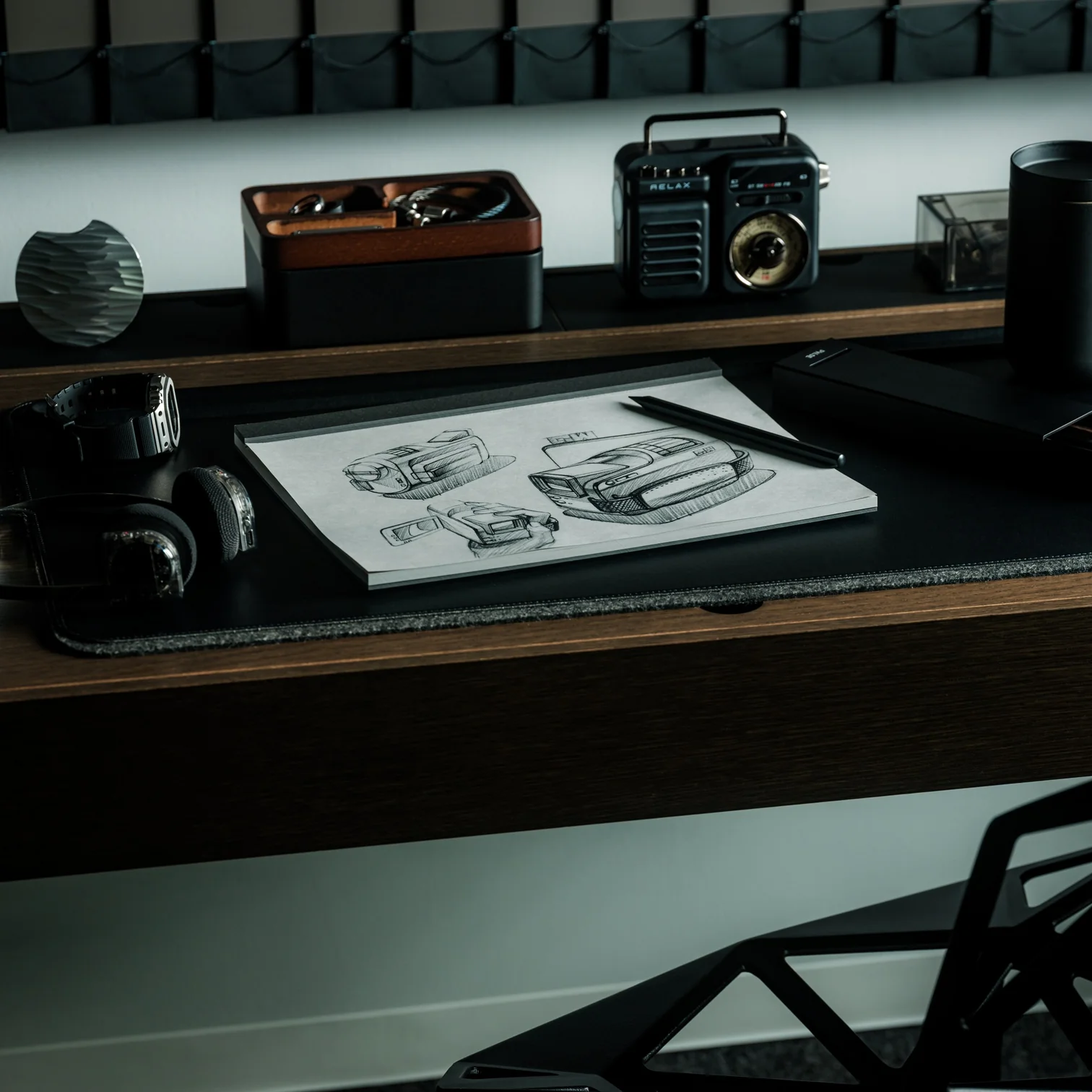
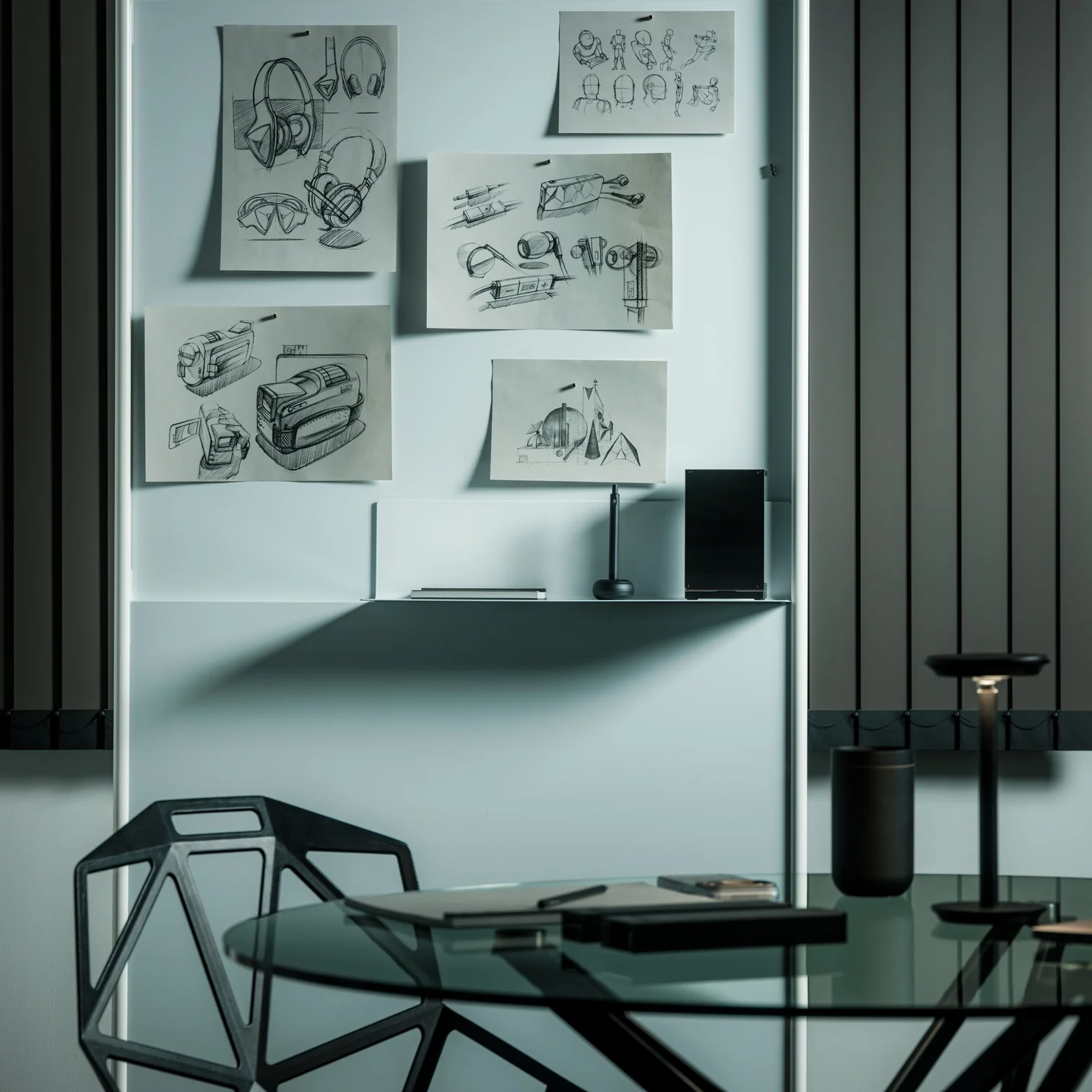
I’ve established in my previous articles that I’m not an artist and can only draw stick figures, or maybe follow paint-by-numbers-style sketches. That hasn’t stopped me from buying and collecting drawing pads and notebooks of all kinds, though. Of course, I’m not hoping I’ll eventually learn to draw or become the next Andy Warhol or anything like that. I like having these writing surfaces because I have a lot of things to write down, whether it’s for productivity, as part of my numerous journaling tools, or just somewhere to randomly write or sketch things out.
The Japanese Drawing Pad, despite having “drawing” in its name, isn’t just an art tool for artists, architects, and other visual creatives. It’s a blank, tactile surface that can be useful for anyone who likes to write, think, plan, or organize. And in a world that’s becoming an increasingly digital-analog hybrid, having a tool like this by your side whenever you need it is always a plus. It’s not just a regular drawing pad, though. It’s simply designed, but expertly crafted by masters in the bookbinding and papermaking industries, giving you paper that helps you create your own masterpiece, whether visual or written.
So if you’re like me and don’t need it for actual drawing, here are a few ways to get your money’s worth out of the Japanese Drawing Pad. No drawing skills needed.
BRAIN-DUMP YOUR TO-DO LIST
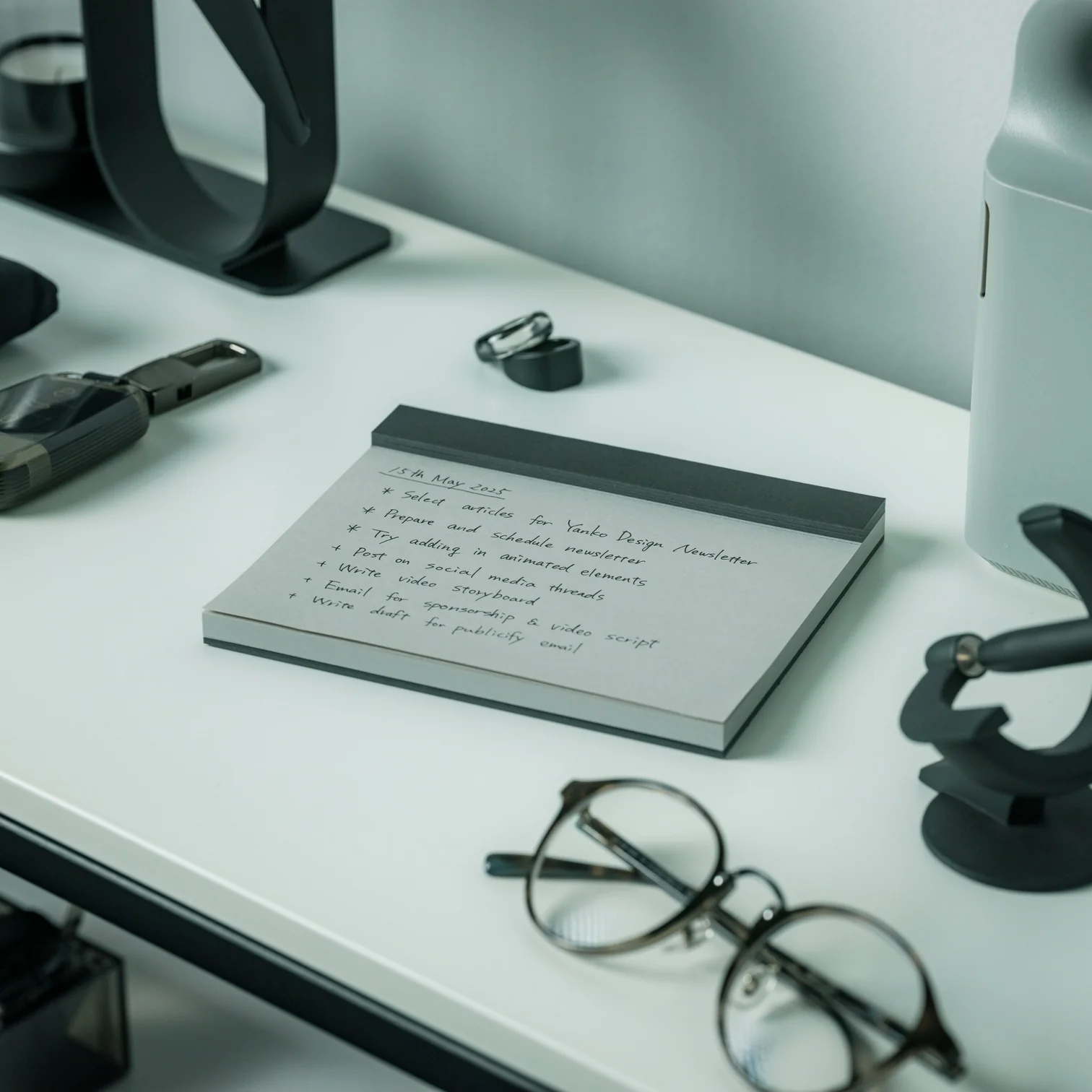
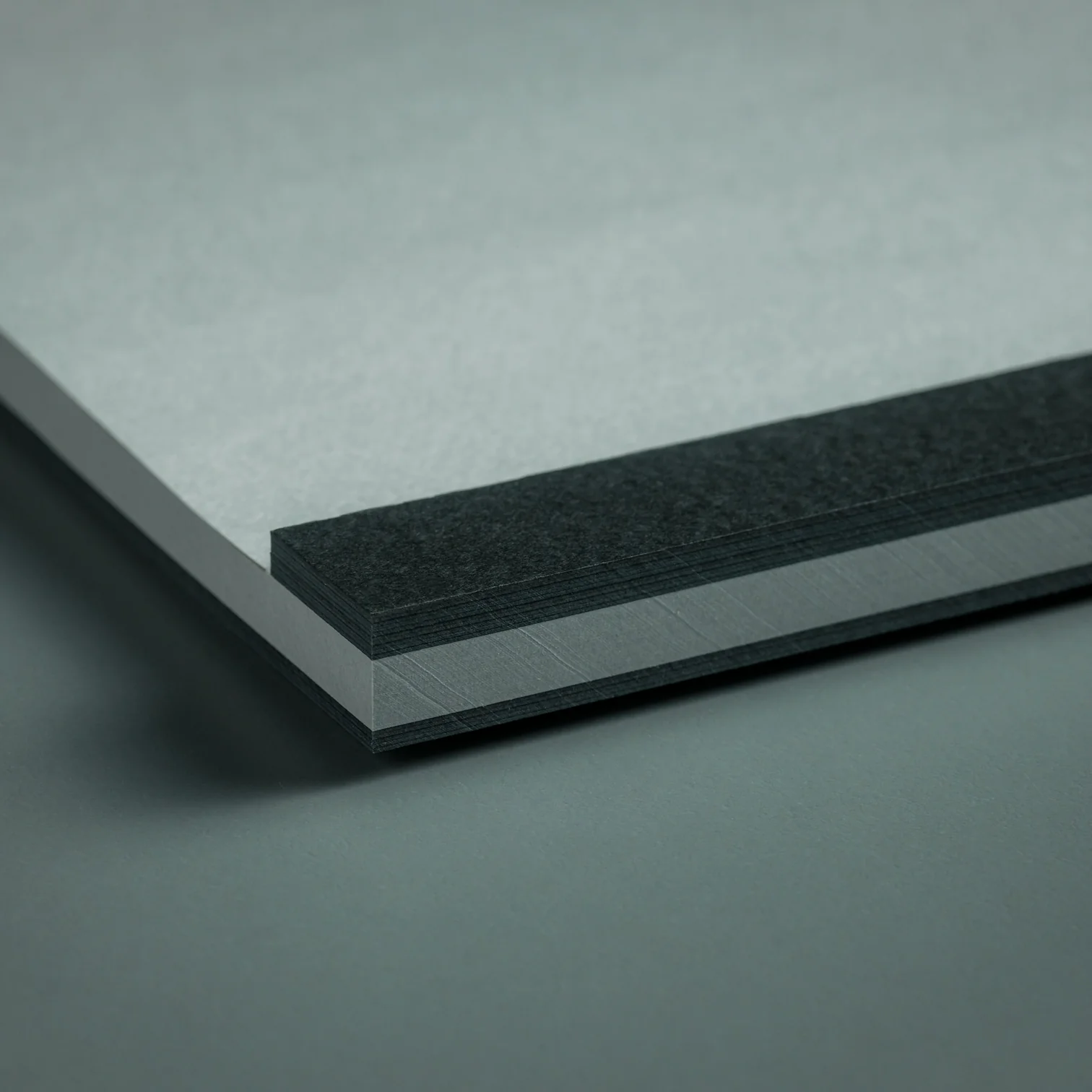
For those times when you just need to mindlessly dump out all your tasks, lists, and thoughts, this is the perfect place to do it. It doesn’t have a cover, so you get straight to the blank page you need. The tear-away pages make it easy to toss the list once you’re done, or stick it somewhere you’ll actually see it.
CREATE A MOOD BOARD
The drawing pad can also serve as your analog Pinterest board. Use it to brainstorm a trip itinerary, visualize an outfit for an upcoming event, or build a vision board for your next few months. The microperforated pages tear easily and cleanly, so you can arrange them side by side on a wall or corkboard.
TAKE NOTES IN A MEETING (WITHOUT A BORING NOTEBOOK)
Meetings can drag on forever, but having a unique tool to take notes with can make them feel a little less like a slog. The Drawing Pad’s gray paper and black base give it a sleeker, more distinctive look than your average notepad, so pulling it out mid-meeting feels less like a chore and more like an upgrade.
MIND-MAPPING AND BRAINSTORMING
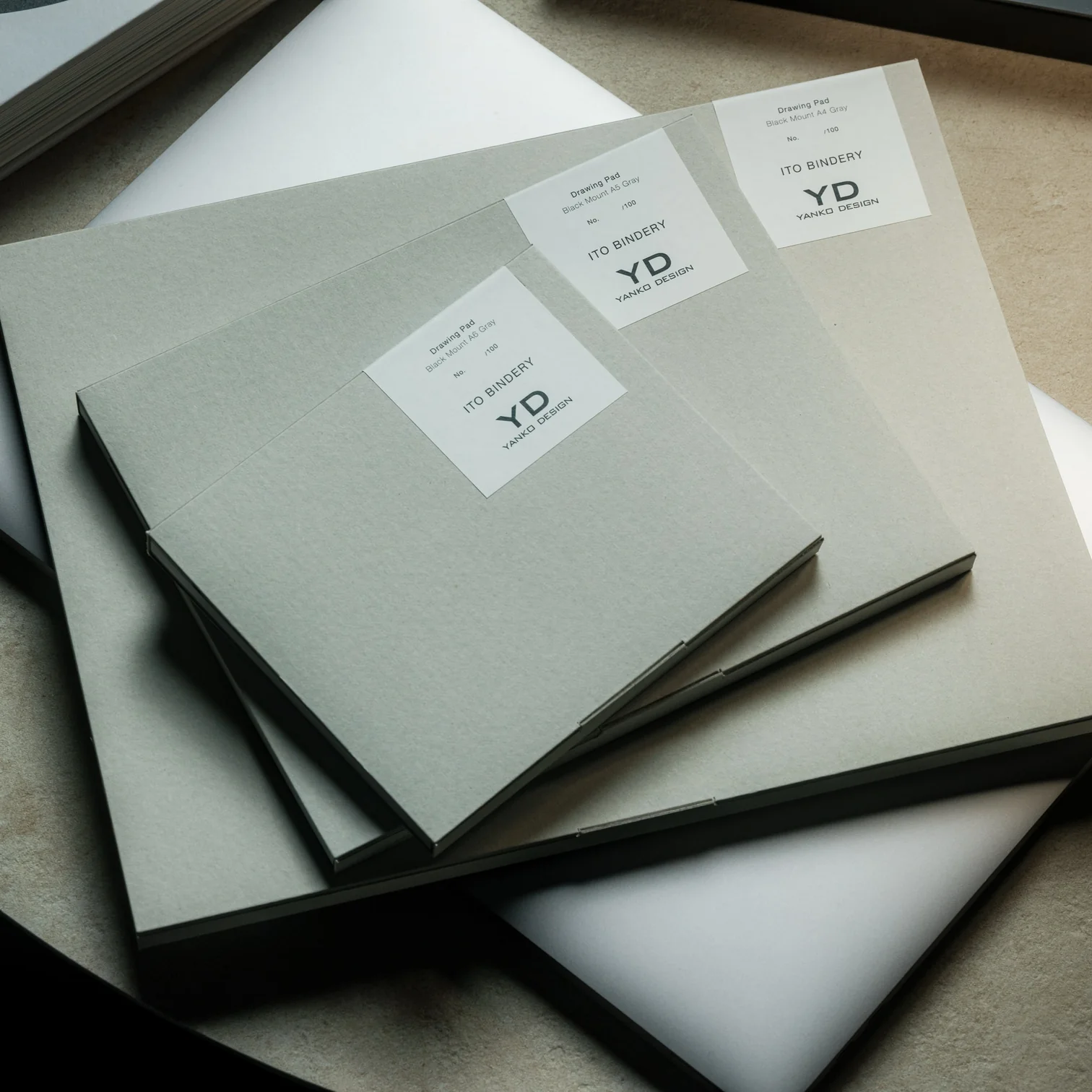
Having a freeform space without any lines is ideal for when you need to jot down branching ideas, bubbles, and connections. It also comes in different sizes (A6, A5, and A4), so you can choose how much space you need for these brainstorming sessions, even if the meeting is just with yourself.
JOURNALING
Whether you need a space for habit tracking, junk journaling, or creative writing prompts, the premium feel of the paper will make your journaling ritual more satisfying. If you tear off the pages, you can attach them to your other journals or use the loose-leaf sheets to build a journal of your own.
The pad can also double as a lesson space for kids who are still learning to write their letters, numbers, or shapes, offering a low-pressure surface with no stakes attached. And if you’re learning a new language that uses characters different from what you’re used to, it can be your practice space, too.
DOODLING TO DE-STRESS
Even if you’re not an artist who can draw well, there may be times when you just want to doodle your stress away. Whether you’re sketching the meal you just ate, dreaming up an imaginary creature to fight off boredom, or scribbling whatever abstract shapes come to mind, the pad puts no pressure on you to be “good.” It’s simply a tactile stress outlet.
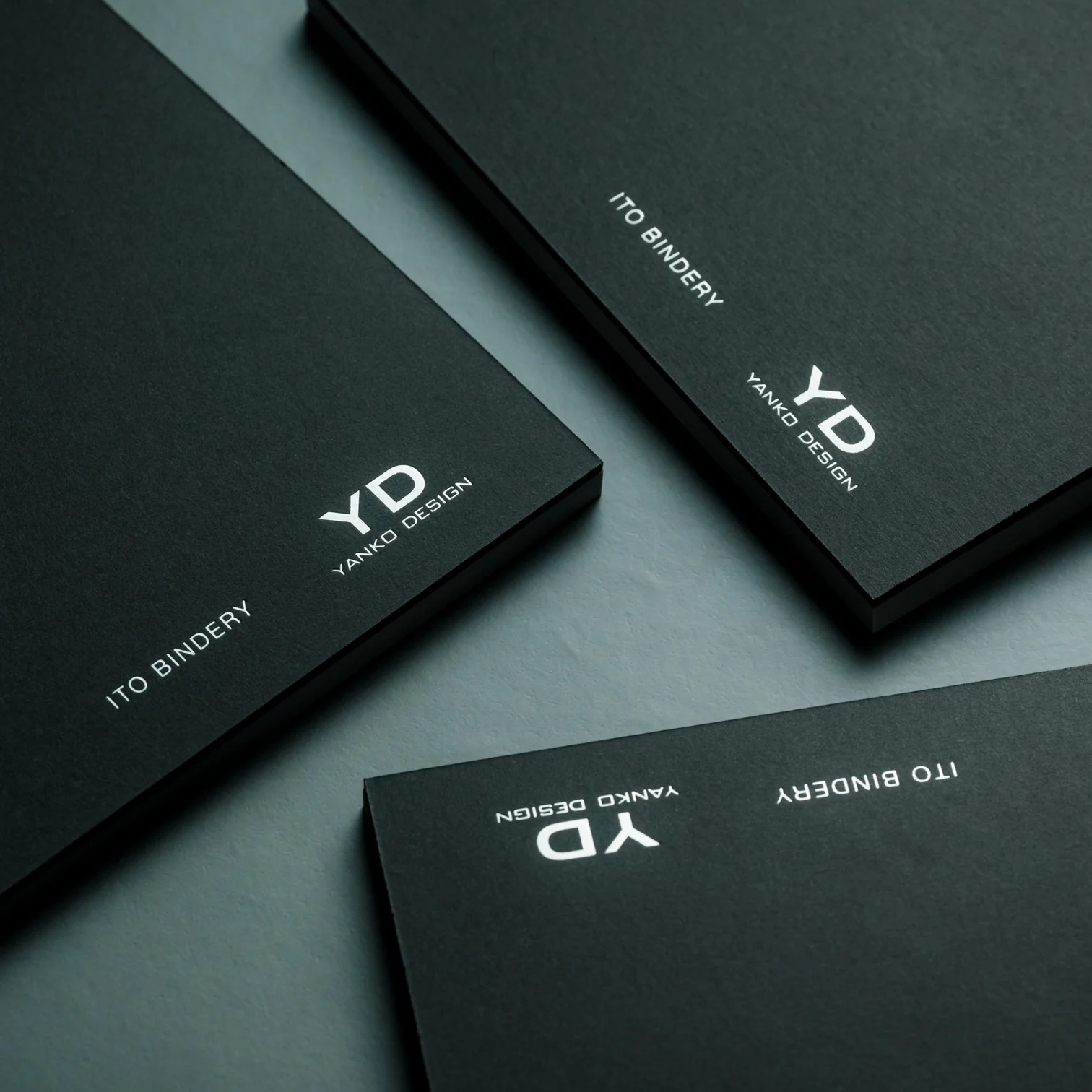
Beyond what’s already been covered, the Japanese Drawing Pad has a few more details worth knowing. Every pad is handmade by ITO Bindery, a Japanese bookbindery that’s been at it since 1938. The binding glue is still brushed on by hand, and each microperforation is checked for consistency by trained craftspeople rather than left entirely to machines. The pages themselves are premium paper (81.4 g/m²) mounted on a sturdy, recycled cardboard base, and each sheet tears away cleanly without leaving any strays behind on the page. This particular edition is also limited to just 100 individually numbered pads per size, which makes the pad feel less like a disposable notepad and more like a small, functional collectible.
At the end of the day, you don’t need to be able to draw to justify owning something this well made. A design like the ITO BINDERY × YANKO DESIGN Drawing Pad earns its keep simply by being there, ready on your desk for the next to-do list, doodle, or half-formed idea you don’t want to lose. And that’s really the beauty of building an analog habit into an otherwise digital life: it doesn’t ask much of you, just a pen, a blank page, and a few free minutes. Whether it ends up full of to-do lists, mind maps, or terrible stick-figure doodles, this drawing pad might just become one of those small, everyday objects you didn’t know you needed until it’s part of your routine.
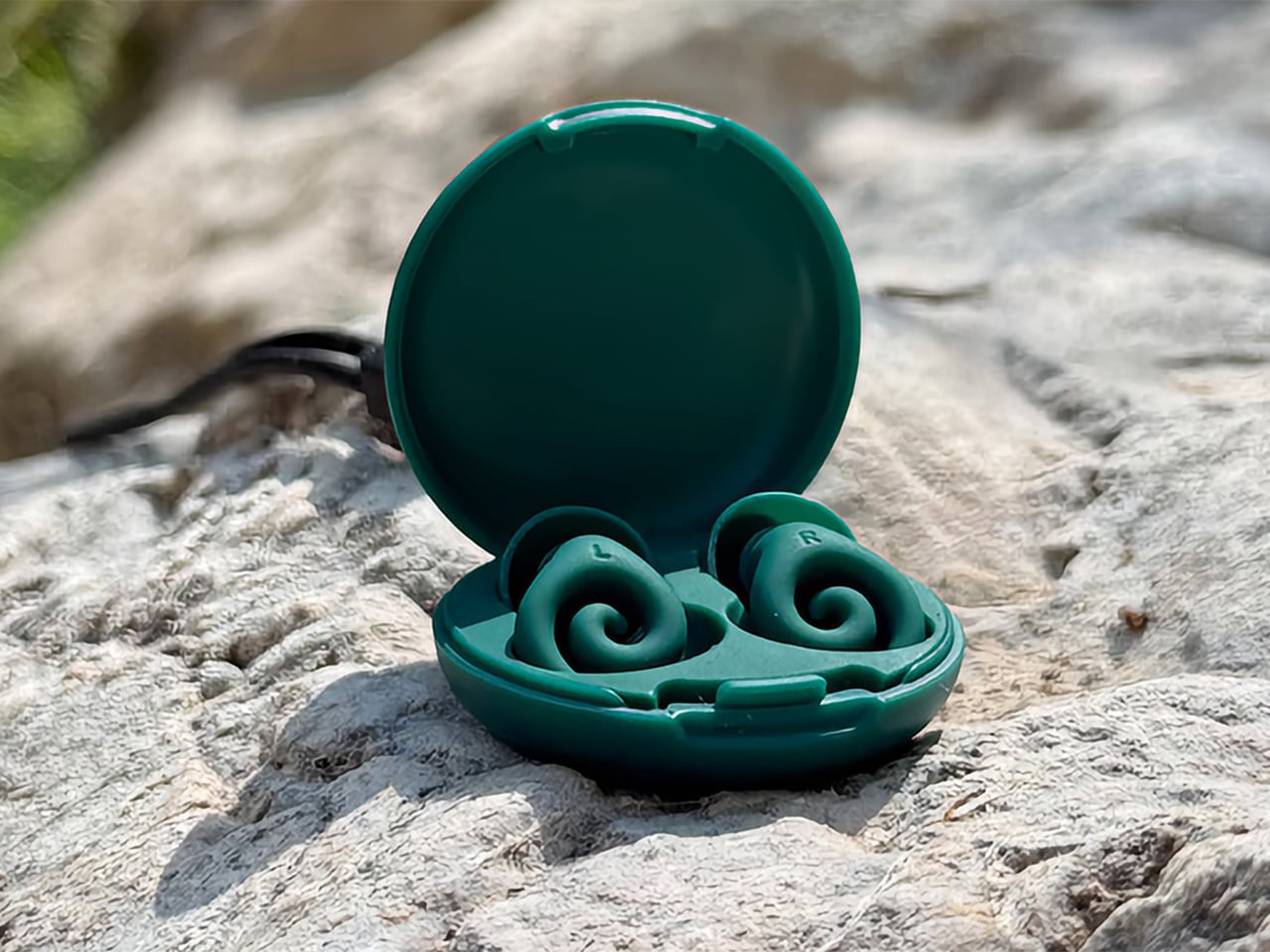
Most earplugs are built for your ear canal. Ears 360 Silence was built for your pillow as well. The French-designed earplug swaps the usual foam cylinder or silicone bud for a soft, retractable spiral that curls against the outer ear instead of wedging deep inside. The promise is simple: stay put through a full night’s sleep, filter out unwanted noise, and disappear until you forget it’s there.
The mechanism behind that promise is simple engineering. Twist the spiral open, tuck it against the ridges of your outer ear, then let it retract back into shape. It locks in place through geometry, not pressure, so there’s no tip wedged deep into your ear canal, nothing to ache by 2 a.m. The whole body sits nearly flat, flat enough to sleep on your side.
That geometry matters most at night. Side sleepers know the drill: a plug that protrudes gets crushed against the pillow, and foam that expands too much starts to throb before sunrise. With the Ears 360 Silence tucked into the curve of your ear, nothing stands proud enough to notice. You roll over, the plug stays where you left it, and the room stays quiet until your alarm decides otherwise.
Sleep isn’t the only place this earplug earns its keep. Slip it in at a coffee shop or an open-plan office, and it softens the clatter around you without shutting out the person talking across the table. That’s the filtering trick at work, dialing down ambient chaos while keeping voices intelligible. And because the spiral sits low against the ear, nobody nearby even notices you’re wearing it.
Of course, comfort isn’t the whole story. Ears 360 Silence carries a certified 24 dB noise reduction rating under the EN 352-2:2020 standard, independently lab-tested rather than self-reported. Its attenuation peaks right around the frequency range where snoring and conversation both live, exactly where extra help matters most. It’s also rated IPX7 for water resistance and ships standard with four pairs of tips: S, M, L and a double-flange pair
Swap the standard tip for the clip-on triple-flange tip from the Swim & Work Kit, sold as a separate add-on, and attenuation climbs toward 29 dB. That’s enough for a construction site or a pool deck without having to switch out a different pair of buds. The tips swap in seconds, so the same pair that quiets a bedroom at night can handle a job site or open water the next afternoon.
Build quality is, of course, top-notch as well. The body is soft silicone, meant to be reused for years rather than tossed after one restless night, and it wipes clean easily. Four pairs of tips come in every box, so the fit adjusts to your ear rather than the other way around. Plus, the whole kit tucks into a case small enough to close in one hand, so there’s absolutely no reason you can’t take it anywhere with you, even if you’re not going to bed just yet.
Design touches carry through to the small stuff, too. The Ears 360 Silence comes in black, pink, and green, each paired with a case in the same shade, small enough to vanish into a pocket. And with the latest stretch goal reached, every backer gets a soft silicone neck cord, one per pair, to keep your Ears 360 Silence around your neck between uses. The whole object reads more like a considered accessory than a medical necessity you’d hide in a drawer, something you’d actually want sitting on your nightstand in plain sight.
Wake up after a full night wearing one, and you’ll notice what’s missing rather than what’s there. No hunting around the sheets for a stray foam cylinder, no ache in your ear canal from a tip jammed in too far. Just a quiet room and a plug that did its one job so well you forgot you were wearing it, which was the entire point.
The best camping gear doesn’t announce itself. It disappears into your pack, shows up when things go sideways, and handles the job without drama. Most outdoor gear fails this test in predictable ways: battery doors that ice shut, handles that bend under load, plastic panels that feel like props the moment you’re actually outside. What survives the cut tends to be smaller, smarter, and more carefully considered in its construction.
Fall raises the stakes in ways summer doesn’t. Daylight disappears faster than expected, temperatures drop sharply once the sun clears the treeline, and the gap between a manageable evening and a rough one closes quickly. These nine picks earned their spot because they perform in that specific context without adding unnecessary weight or complexity. Each one solves a real problem in a considered way, which turns out to be a narrower category than it sounds.
1. Lumitwin DL700
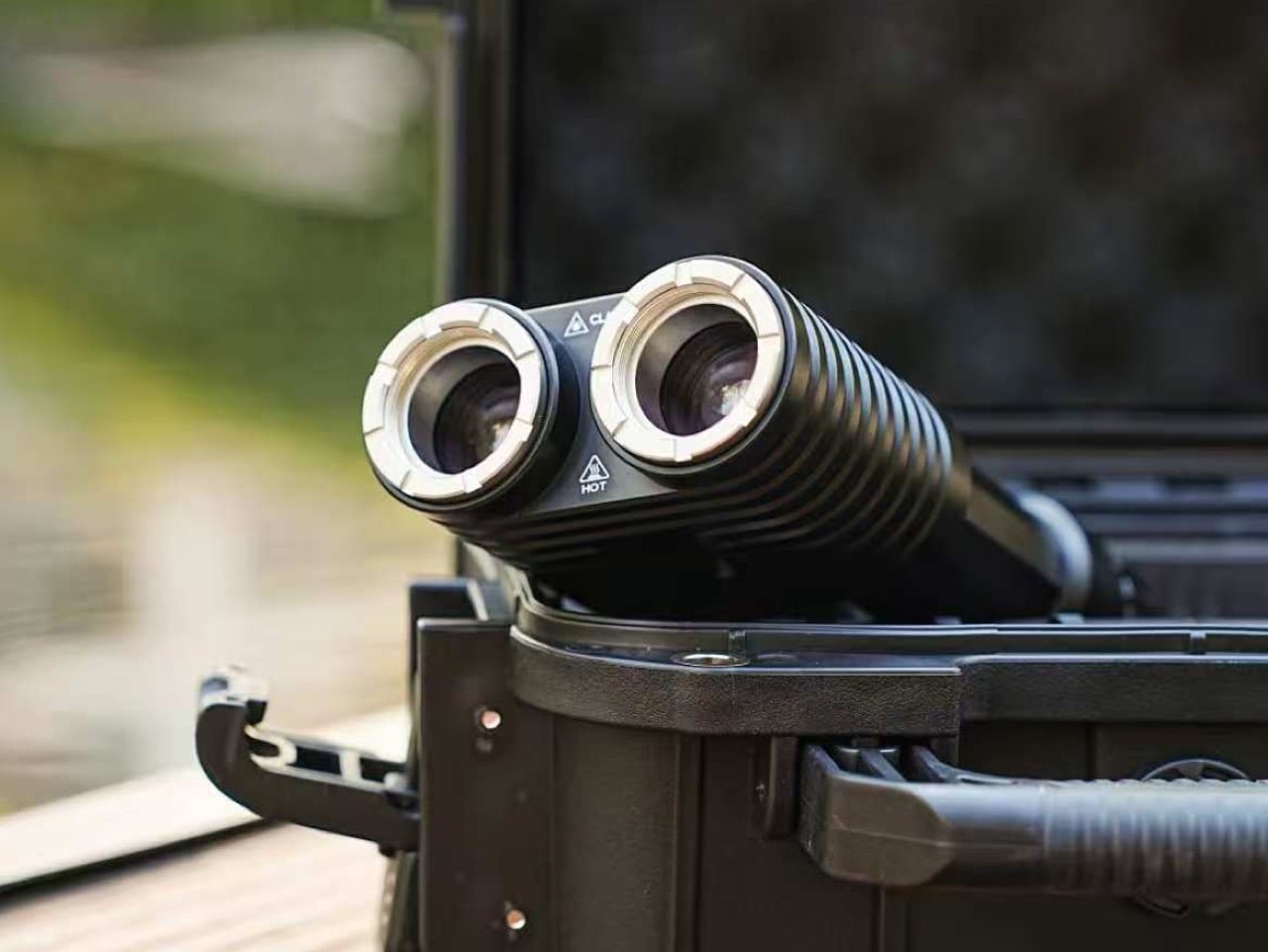
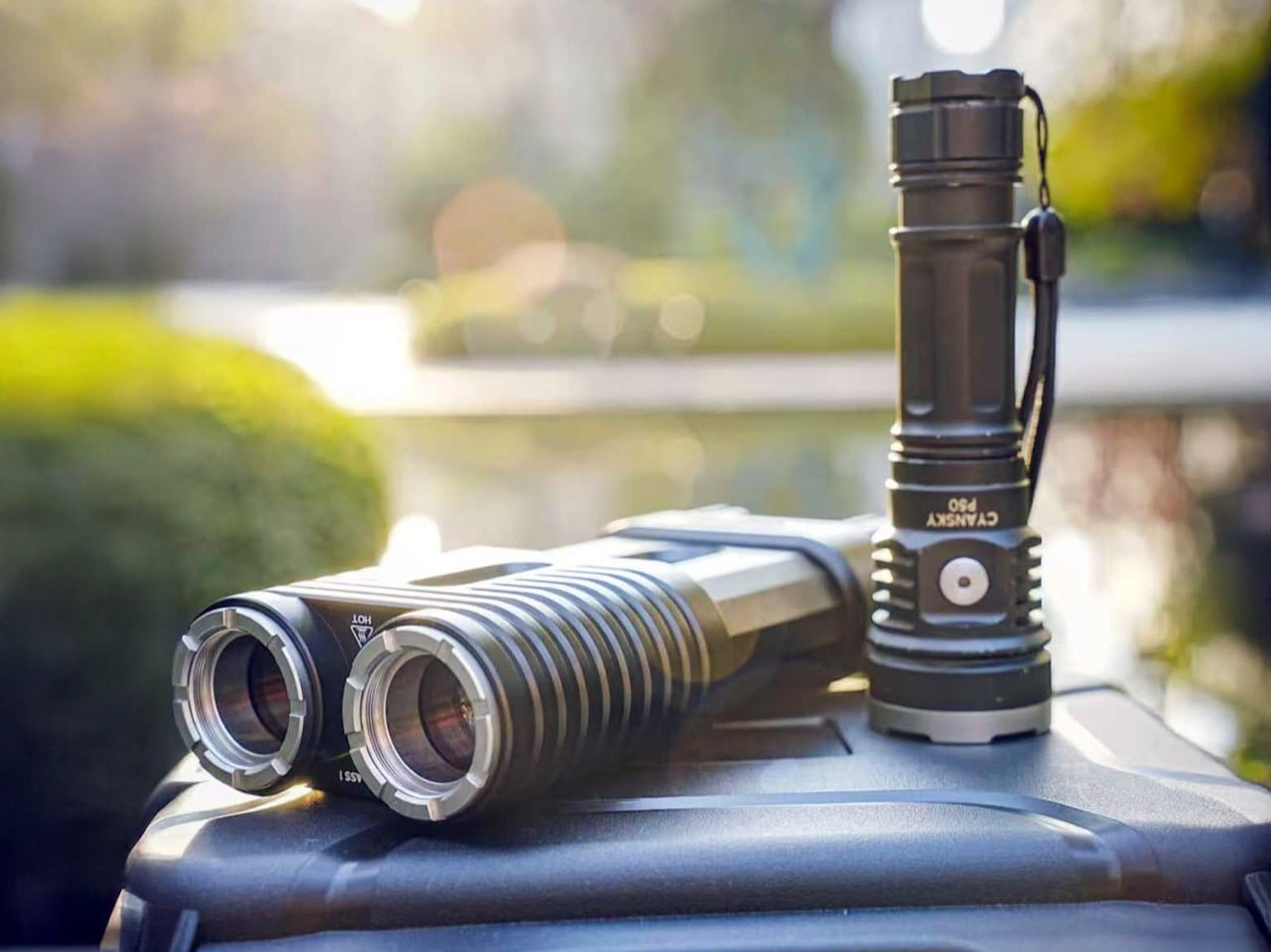
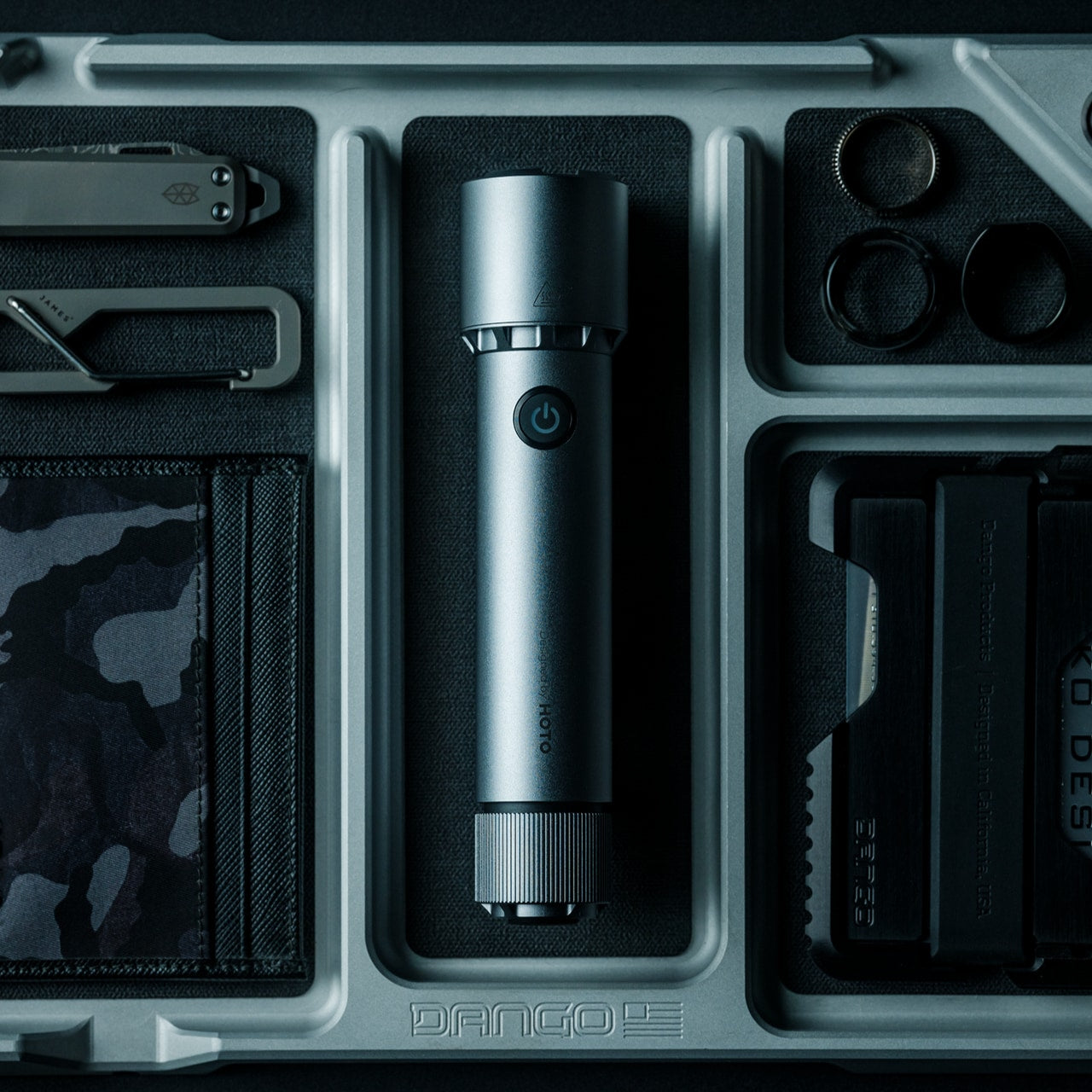
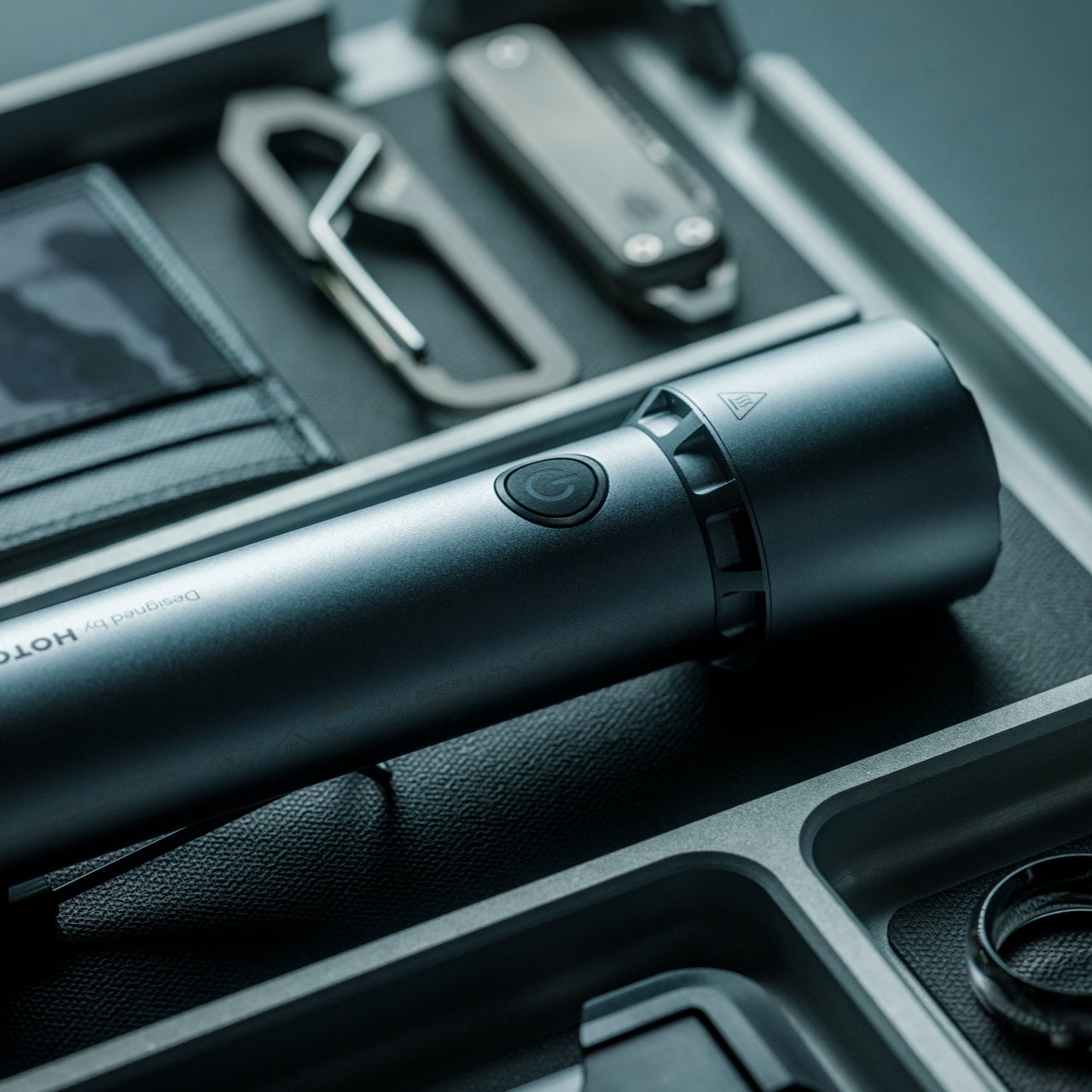
Most EDC flashlights make a trade: compact body, compromised throw. The Lumitwin DL700 refuses that deal. Using laser-excited phosphor technology, the same light source found in high-end automotive laser headlights, it produces 1,100 lumens and a combined 958,000 candela when both barrels fire together, pushing a coherent beam two kilometers into the dark. That is 1.24 miles of reach from a body machined from 6061 aerospace aluminum, IP68-rated to 1.5 meters, and built to survive a ten-foot drop.
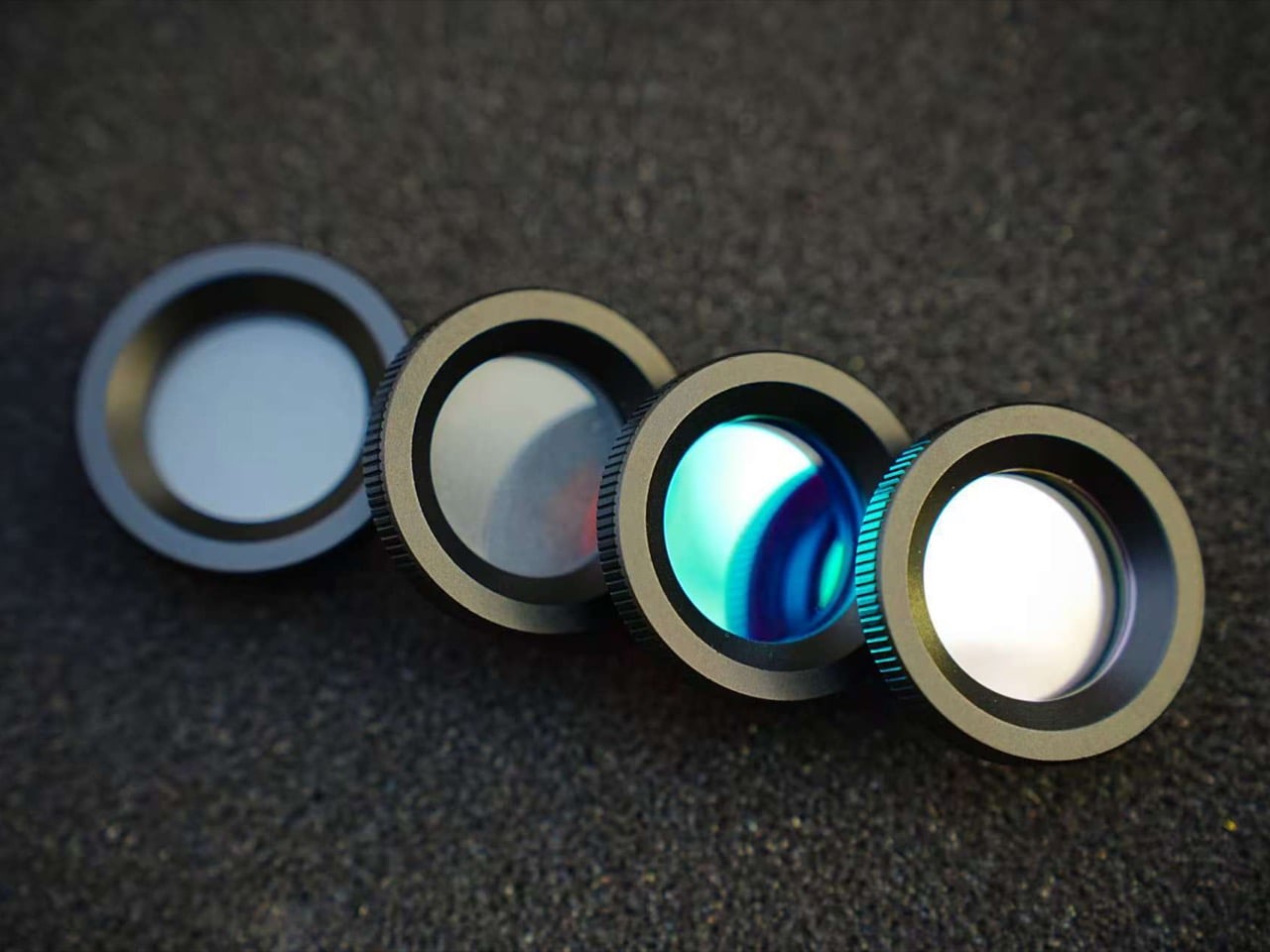
Each barrel operates independently with its own switch and brightness control, letting you run different configurations at once: red filter on one barrel for night-vision preservation while the other throws white for distance spotting, or flood mode for close-range work around camp. At 1,032 grams and $329, it asks for commitment on both fronts. What you get in return is a flashlight that sits in a different performance category than anything else currently clipped to your pack.
What we like:
958,000 cd combined output and 2km throw from a carabiner-clippable body
Swappable red, green, and flood filters give you six functional configurations in a single unit
What we dislike:
1,032 grams is real weight that belongs on a belt clip rather than a jacket pocket
$329 is a deliberate purchase, not an impulse one
2. RetroWave Radio
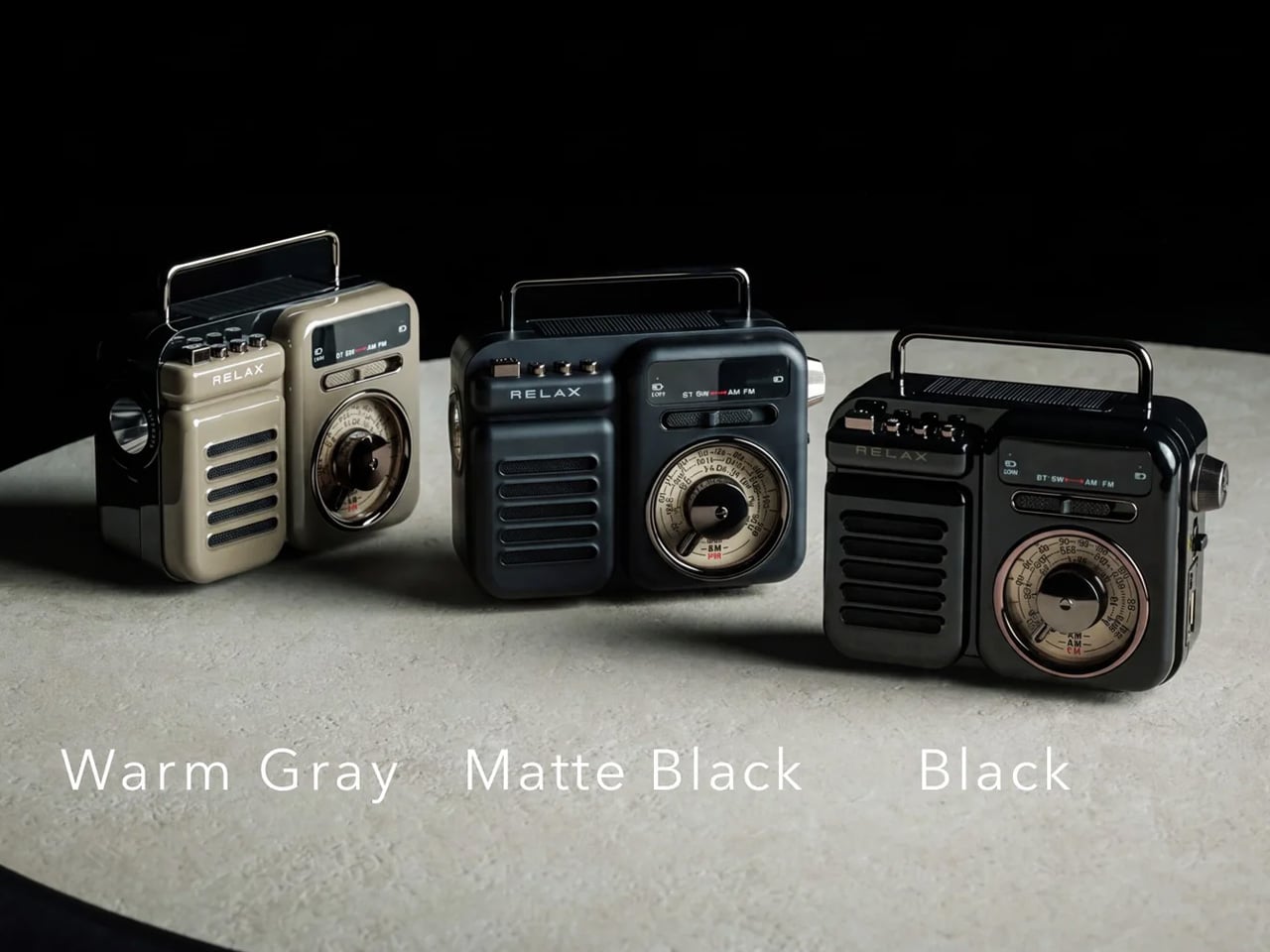
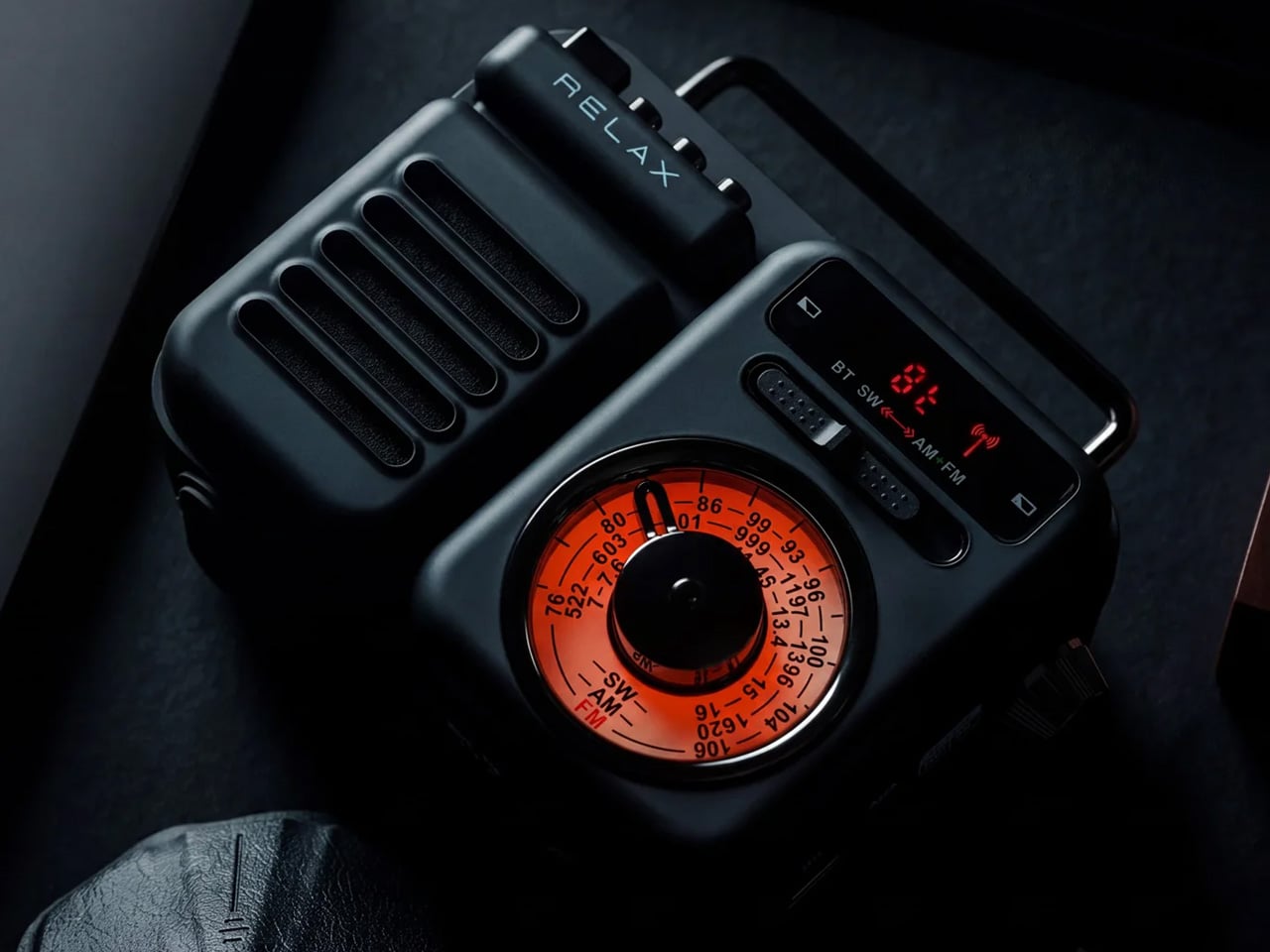
Weather shifts fast in fall, and a radio that receives NOAA weather alerts reads less like a retro novelty and more like actual preparation. The RetroWave pulls in AM, FM, and shortwave bands alongside dedicated NOAA weather channels, with Bluetooth for streaming when you have signal. It charges via a built-in solar panel or a hand crank, meaning you won’t find yourself rationing its runtime against your phone. That range of power inputs separates genuinely useful camp electronics from decorative ones that fail first.
The design language leans toward mid-century Japanese radio, warm and industrially restrained in a way that holds up as well on a desk at home as it does on a picnic table. For fall camping specifically, having a dedicated weather channel available without burning through your power bank is a genuine advantage. Dual charging paths mean it survives multi-day trips where sunny hours aren’t guaranteed. It earns its place before you’ve left the driveway and keeps justifying that decision every night after dark.
NOAA weather band combined with solar and hand-crank charging covers every outdoor power scenario
Design language that works equally well off-trail and at home
What we dislike:
Shortwave reception varies significantly with terrain and atmospheric conditions
Bluetooth adds weight for a function most campers skip on a real multi-day trip
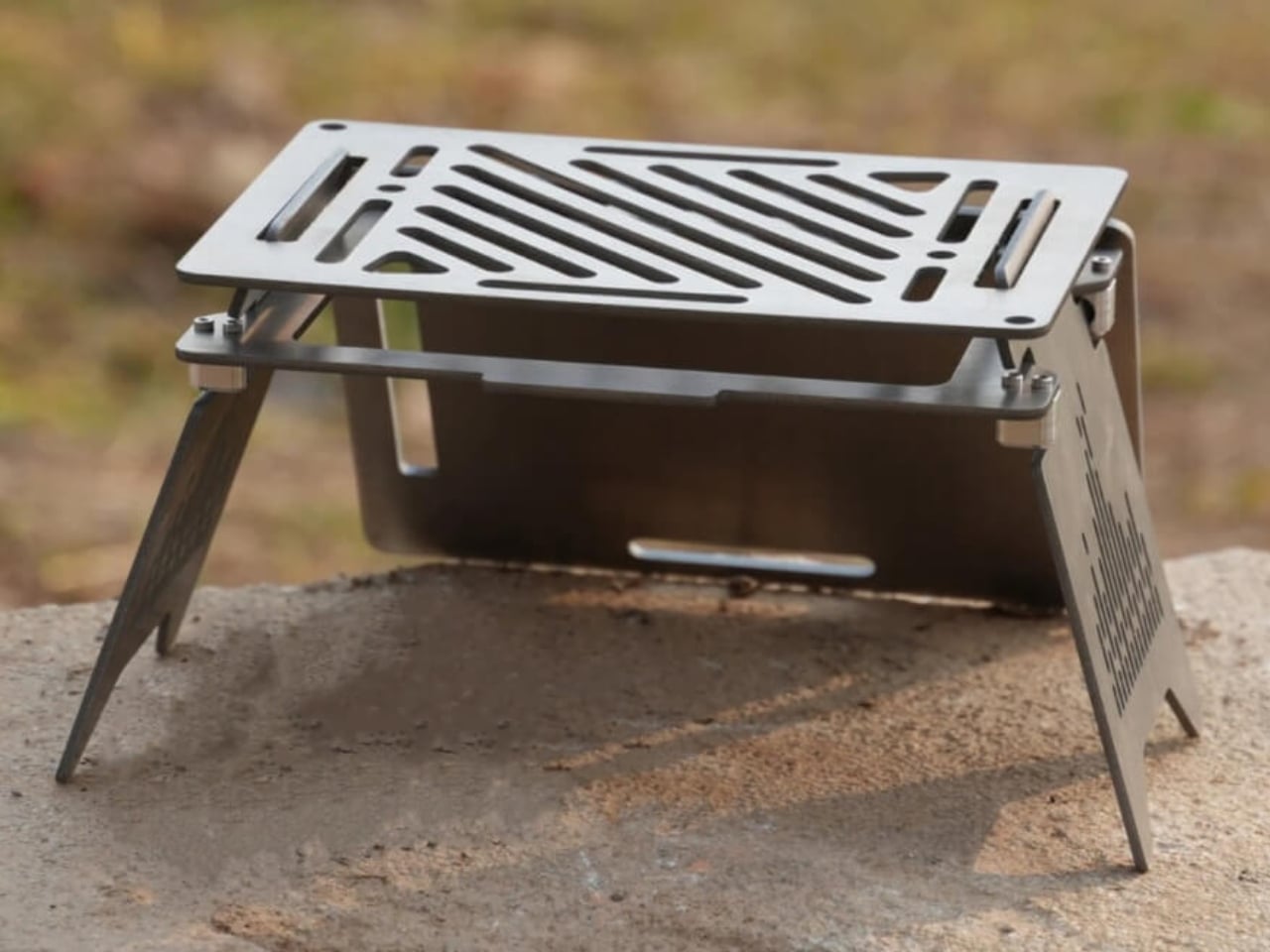
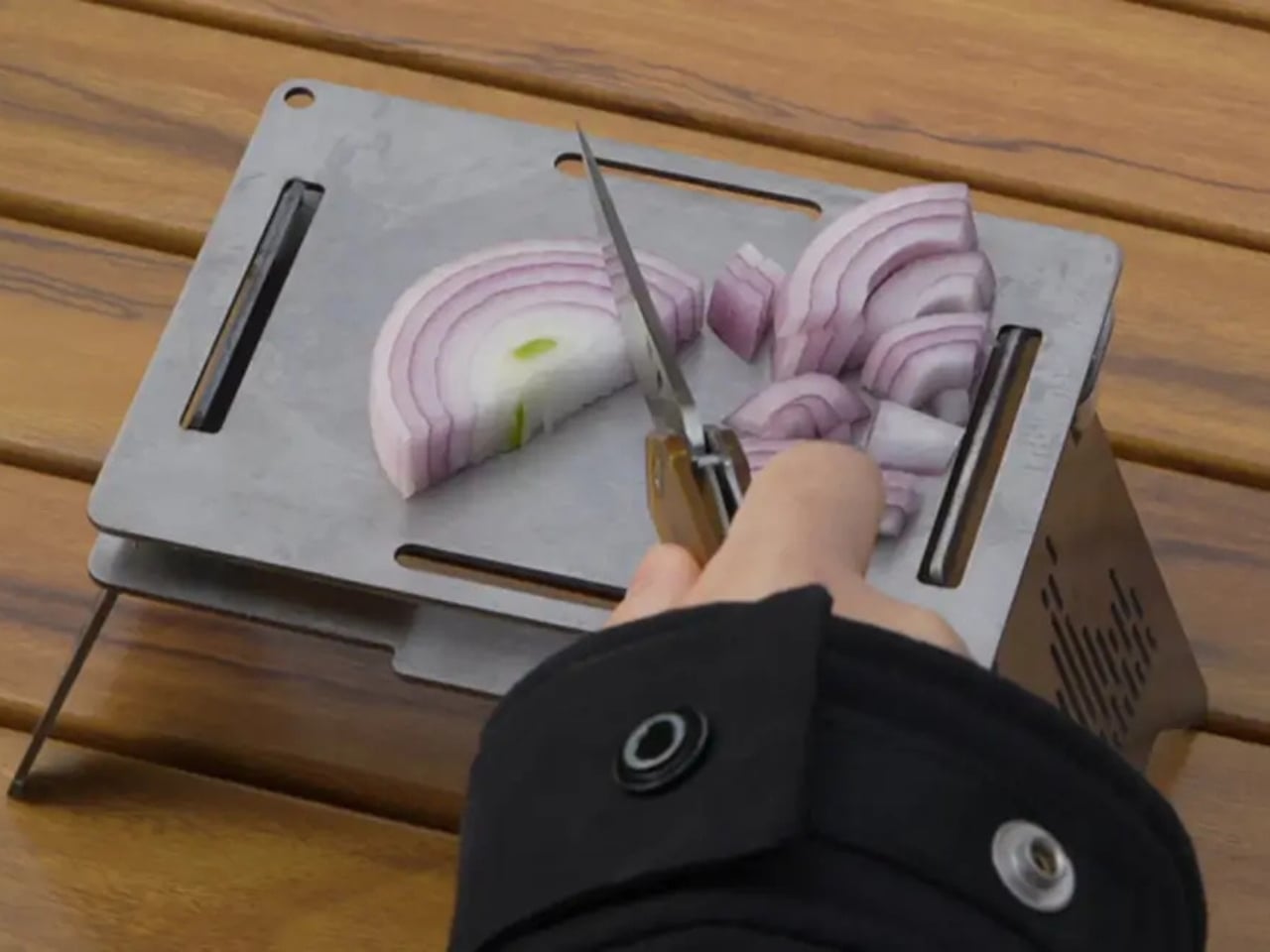
3. Camprit TiStove
Titanium camp stoves have been around long enough to feel familiar, but the Camprit earns its place by solving the thing most of them get wrong: modularity. The body reconfigures for boiling, grilling, or searing across different heat sources without a dedicated ignition system to fail. That detail matters more than it sounds on a cold fall morning when a butane lighter won’t click. No moving ignition parts means fewer opportunities for your gear to let you down at exactly the wrong moment.
The titanium construction delivers a weight-to-durability ratio that camp cooking has been chasing since aluminum reached its ceiling. You get a stove that handles open flame, direct contact, and rough packing without deforming or trapping residue in ways that become a hygiene problem by day three. For fall trips where you’re cooking real food rather than just boiling water, the Camprit makes that effort feel like a deliberate design choice rather than a compromise you’re tolerating until you get back to a real kitchen.
What we like:
Fuel-agnostic design with no ignition system to fail in cold weather
Titanium build that handles rough packing without warping or trapping residue
What we dislike:
Modular configuration takes a few trips to feel intuitive and fast
No integrated windscreen is a real limitation on exposed ridge or clifftop sites
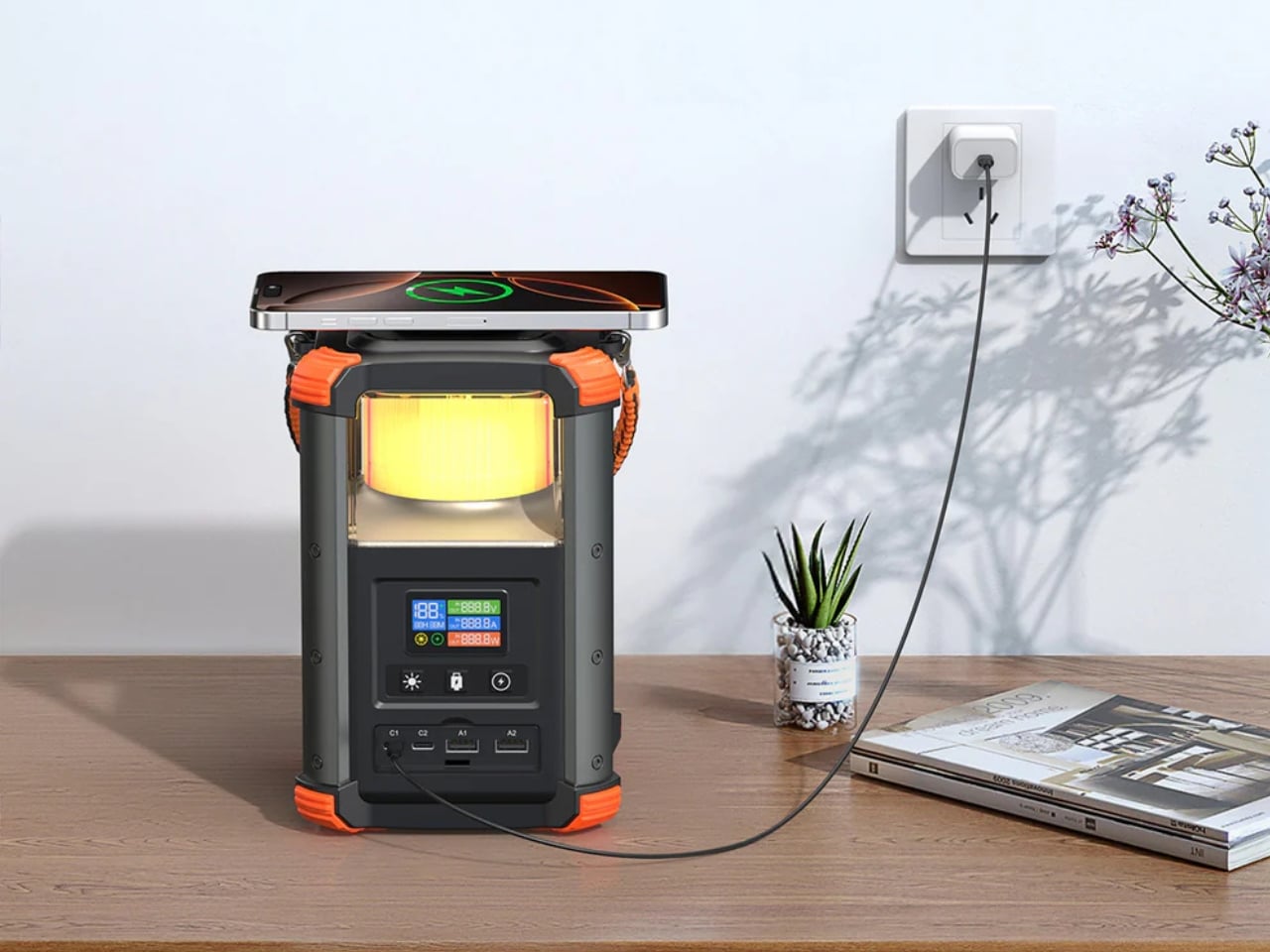
4. Blavor PN-W43 Solar Power Station
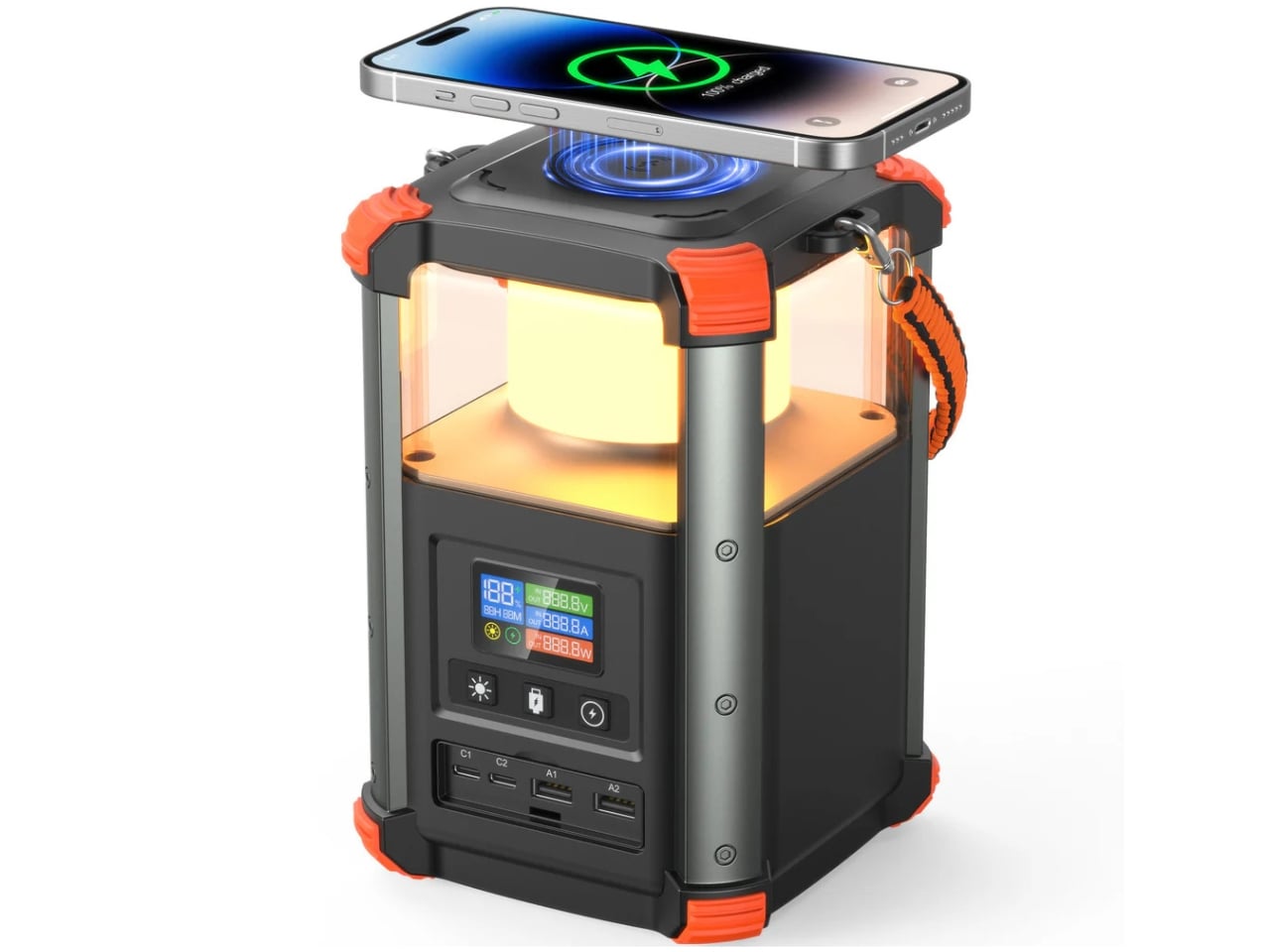
A power bank that also functions as a camp lantern isn’t a new concept, but the Blavor PN-W43 executes it better than most. The built-in LED panel delivers diffuse light across a tent interior without the directionality problem you get from propping up a flashlight. Five charging inputs, solar and AC among them, cover nearly every scenario between a home base and a remote campsite. For fall trips where dusk arrives earlier each week, having light and power in a single unit removes one item from the checklist entirely.
The high-capacity cell gives you meaningful device runtime across a multi-day trip without making compromises about which things get priority. Five charging inputs mean you’re not locked into a single power source, which matters when plans change, and the solar window turns out shorter than forecast. The lantern mode alone justifies the carry weight. Everything else the PN-W43 does reads as a bonus that makes it increasingly difficult to leave behind the longer and colder the trip gets.
What we like:
Five charging inputs, including solar, cover variable outdoor power conditions
Integrated lantern mode eliminates a separate light source from the kit entirely
What we dislike:
High capacity means more weight than a dedicated power bank or standalone lantern
Casing is larger than ultralight alternatives in either category
5. NoxTi Tritium Keychain
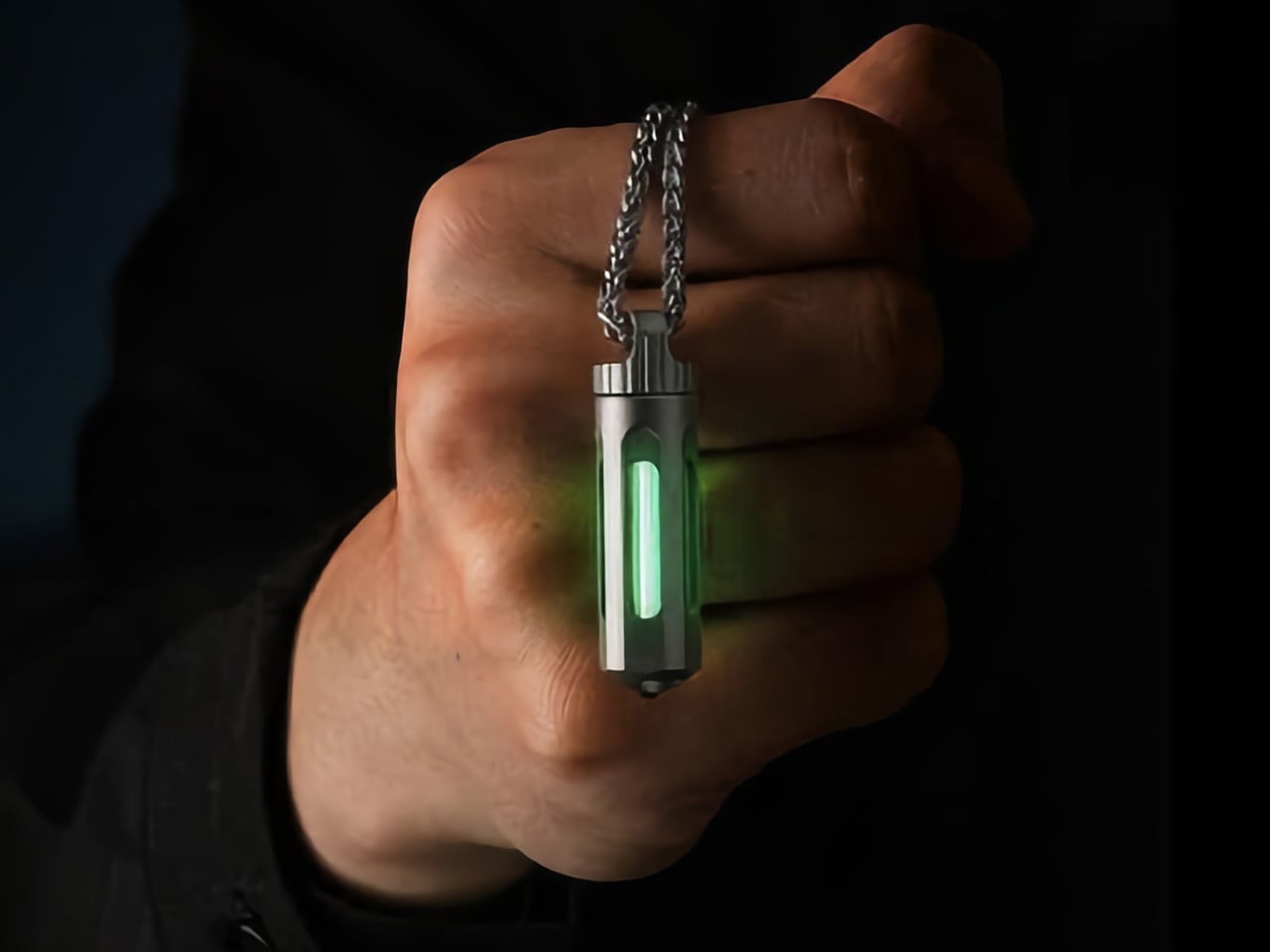
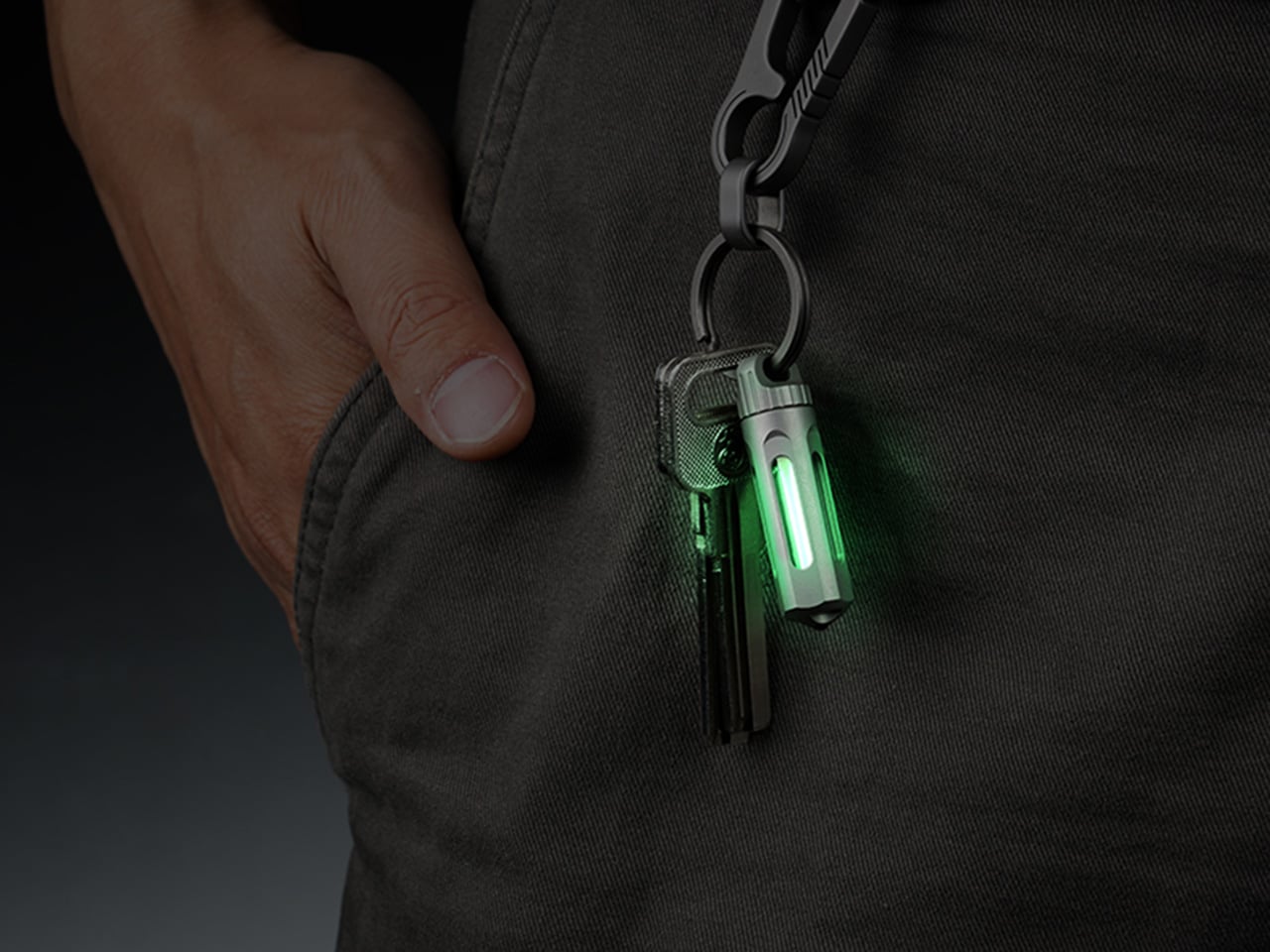
A tritium vial needs no battery, no button, no charging cable. It produces light through a sealed self-luminous reaction that continues for roughly twenty-five years at consistent brightness with zero input from you. The NoxTi packages that chemistry inside a CNC-machined Grade 5 titanium shell compact enough to ride alongside your house keys without adding meaningful weight. For fall camping, it gives you a minimum-weight emergency reference light that is always on and findable by feel in a pitch-black tent.
The design strips away everything that isn’t structural. Titanium resists corrosion without adding weight, and the sealed tritium element requires zero maintenance across its full service life. It won’t flood a campsite with task-level light, and it isn’t designed to. What it gives you is orientation in the dark at zero battery cost: the thing you reach for when the main light is dead, and the spare has sunk to the bottom of a bag you simply can’t see into.
What we like:
Twenty-five-year self-luminous service life with zero battery dependency
Grade 5 titanium construction that handles weather and impact without corroding
What we dislike:
Ambient glow only, not functional as a task or reading light
Visibility is subtle in anything less than near-complete darkness
6. VSSL Camp Supplies
The VSSL Camp Supplies cylinder reads as a storage object until you open it, at which point it reads as a complete kit in miniature. The machined aluminum shell packs tight and absorbs impact without compromising the contents. The canister format keeps small essentials organized: the kind of gear that typically scatters across the bottom of a bag and turns a simple task into a ten-minute search at exactly the wrong moment. On a fall trip with shorter days and less margin for fumbling, knowing where everything is has real value.
VSSL built this one with practical priorities in mind, and that focus shows in the execution. No features are included for novelty value. Every element in the kit is there because someone eventually needed it at a campsite and didn’t have it. The cylinder integrates with any pack layout without creating pressure points or awkward bulk. It disappears into your system until the moment it’s relevant, which is the highest compliment you can give a piece of camp gear.
What we like:
Canister format keeps small essentials organized and protected without scattering across the pack
Machined aluminum shell handles rough packing without compromising the contents
What we dislike:
Fixed form factor means the contents aren’t easily customizable to your specific kit
The cylinder shape rolls in open pack pockets without a tether
7. Blackout Beam Tactical Flashlight
Not every camp scenario calls for maximum throw distance. The Blackout Beam approaches flashlight design from the tactical side of the category, prioritizing controlled high-output illumination and a grip profile engineered for extended handheld use. The body handles the conditions you would expect from a product built for demanding environments: weather resistance, impact tolerance, and a switching mechanism that works reliably with cold hands or gloves on. For fall trips where temperatures drop sharply after sundown, operational reliability matters as much as any output specification.
What separates a tactical light from a conventional camp flashlight is the intentionality of its beam control. The Blackout Beam gives you deliberate, high-output illumination in a format that doesn’t compromise build quality to hit a price point. It covers the scenarios where you want a serious grip-ready handheld source rather than a mounted lantern or a clipped EDC piece. Its presence in the kit means you’re covered across every kind of darkness fall camping tends to produce, from a tent perimeter check to an unexpected late-night navigation call.
Tactical grip profile designed for extended handheld use and reliable cold-weather operation
Controlled output that fills a distinct role from the other lights in this lineup
What we dislike:
Bulkier than EDC flashlight alternatives at comparable output levels
8. GoSun Flow Solar Water Purifier
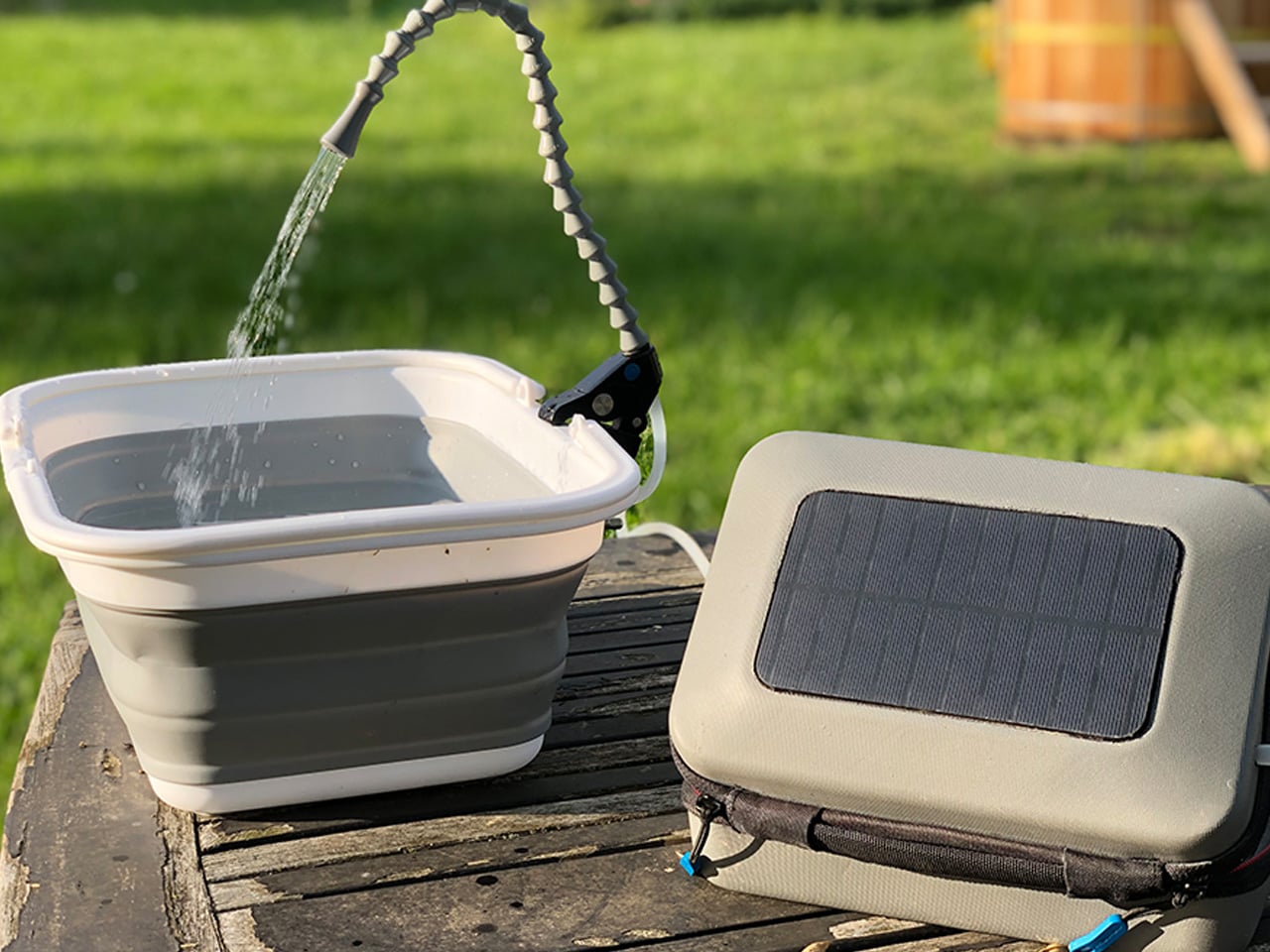
Water is the one thing you can’t improvise on a backcountry trip, and most solutions to that problem add significant bulk or require chemical inputs that change the taste of everything you drink. The GoSun Flow approaches purification differently, using solar power to drive the filtration process rather than hand pressure or chemical treatment. For fall camping, where natural water sources are abundant but treatment capacity matters, having a system that runs on available sunlight removes a critical dependency from your daily camp routine.
The design keeps the process simple enough to become automatic after a single use. Solar input drives the pump, filtered water comes out, and the system resets without cartridge replacement on the trail. That frictionless operation is what makes it genuinely valuable on a multi-day trip rather than just functional on a weekend one. Paired with the power station and stove elsewhere in this lineup, it closes the last real gap in a fall camp setup built around reducing single-use dependencies.
What we like:
Solar-powered filtration removes both the physical effort of hand-pump systems and the taste compromise of chemical treatment
Intuitive operation that becomes automatic after a single use, with no mid-trail cartridge management
What we dislike:
Solar input means filtration rate slows on overcast fall days when you may need it most
Higher upfront cost than conventional filter or chemical treatment alternatives
9. Analog Capsule Camera
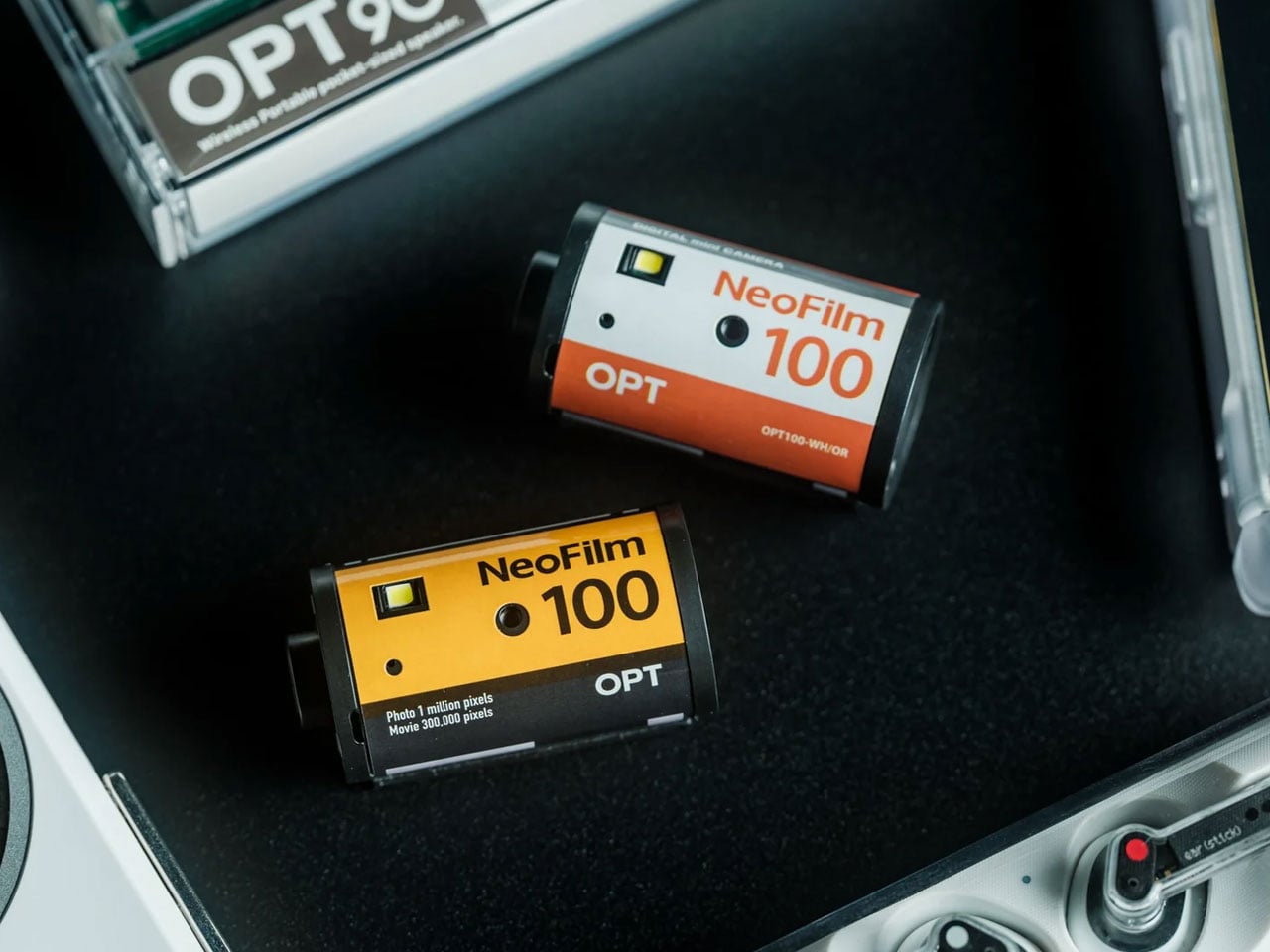
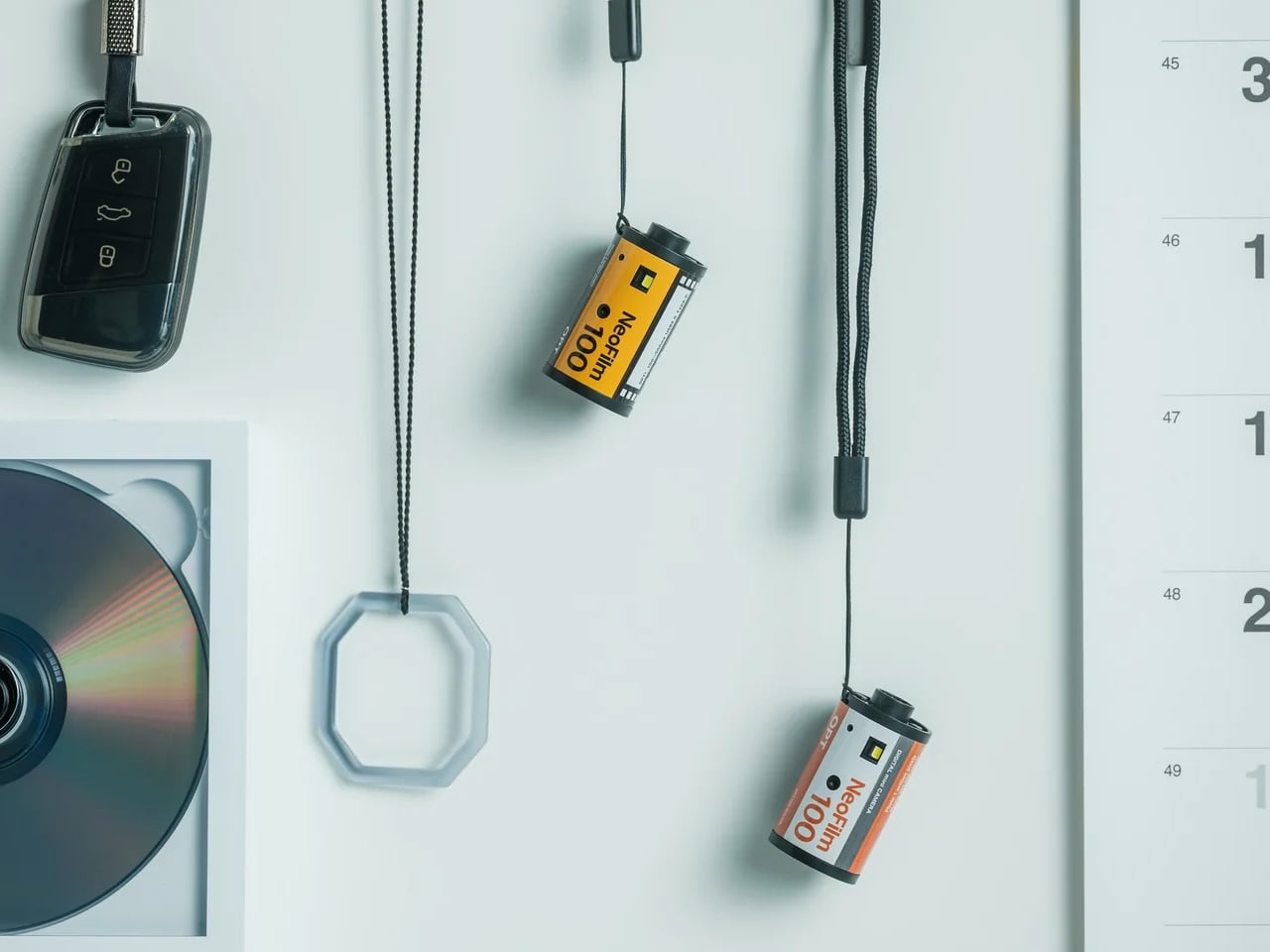
The case for bringing an analog camera on a fall camping trip isn’t nostalgia. It’s constraint. Shooting on film removes the infinite-scroll mentality from the act of taking photographs, leaving you with a fixed frame count and the awareness that each exposure carries a real cost. The Analog Capsule Camera distills that discipline into a form compact enough to justify the carry weight without feeling like a gear compromise. For a trip where the goal is presence rather than documentation, it reframes what taking a photograph actually means.
The capsule format is the right choice for camping specifically. It packs without bulk, survives the light impacts that would concern you with a more complex camera body, and requires no battery management across the full length of the trip. Shooting on film produces a different quality of attention to light and framing than digital capture allows. The images from a fall trip tend to feel like artifacts of the experience rather than a record of it, and that difference is worth more than any specification printed on the box.
Film constraint encourages intentional, presence-first shooting that changes how you experience the trip
No battery dependency across the full trip length
What we dislike:
Film stock and development add an ongoing cost beyond the initial purchase price
No image review between exposures
Pack Smart, Go Further
Fall camping asks different things from your gear than summer does. The days are shorter, temperatures drop faster, and the margin for equipment failure narrows when conditions turn. Each pick on this list was chosen because it performs in that specific context without adding unnecessary complexity. Solving one real problem in a considered way turns out to be a narrower category than it sounds when you’re standing in front of a gear wall deciding what actually deserves a slot in the bag.
Most of them also look good enough to live on a shelf between trips. That’s a small thing until you’re deciding what to pack, and then it becomes a useful filter: gear that integrates into daily life tends to be gear you actually carry. Pick two or three that address the specific gaps in your current kit and build from there. Fall is short. The right gear makes it feel considerably longer than it is.
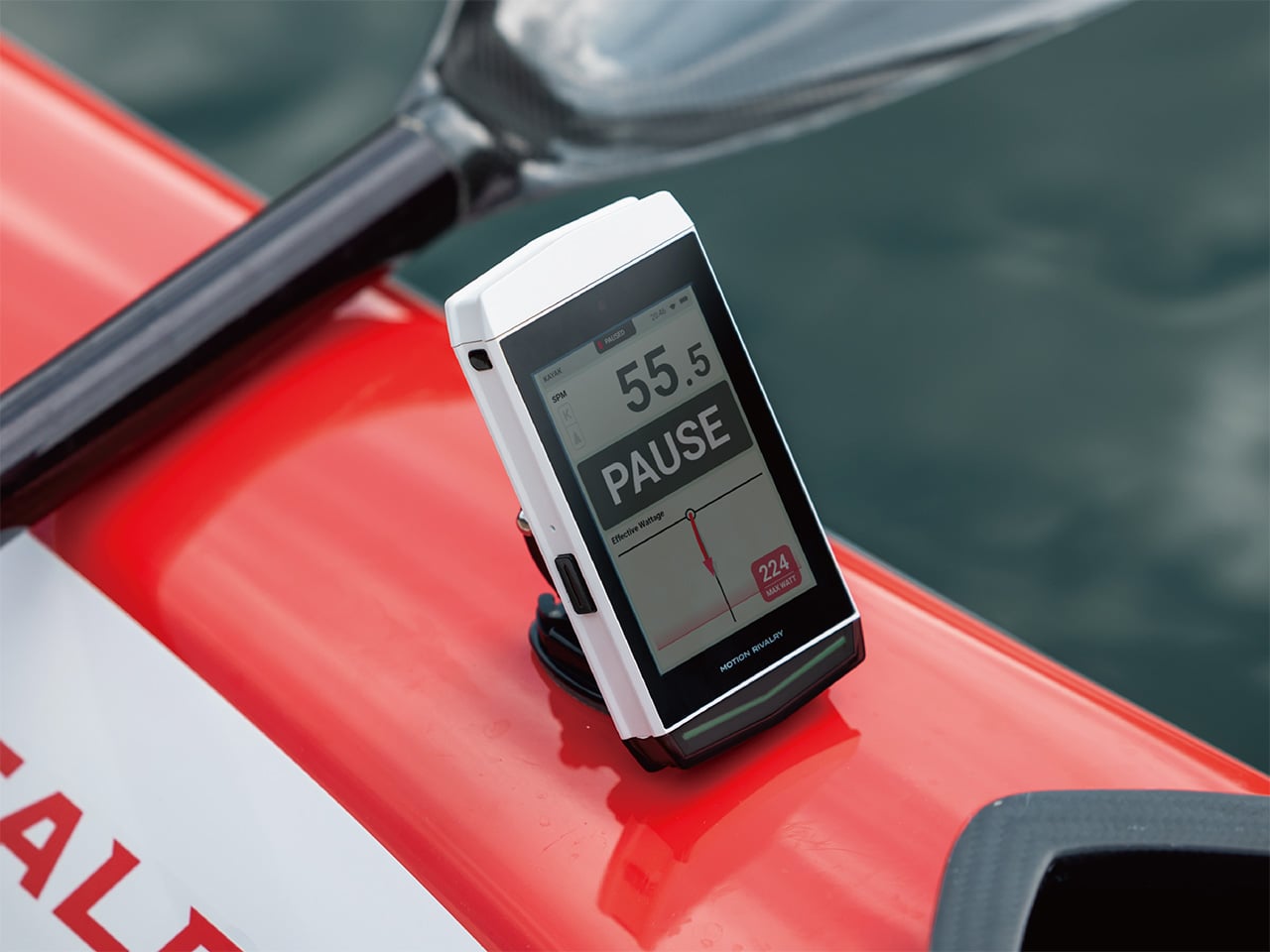
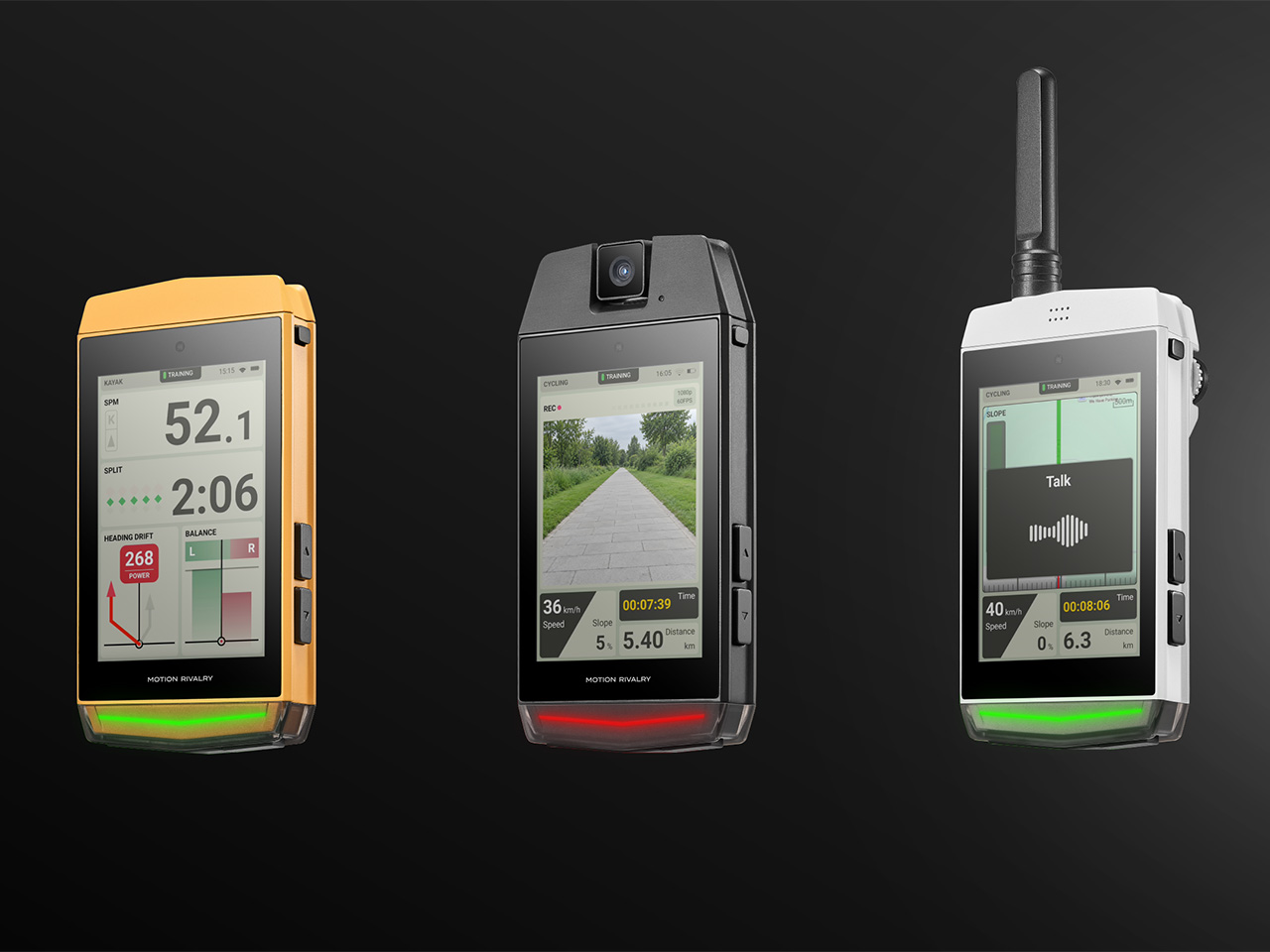
Athletes who used to buy a separate walkie-talkie, action camera, and wind meter for different pursuits are looking at a much lighter hardware bill these days. Motion Rivalry’s REACH folds all three into one modular sports GPS computer, snapping on whichever accessory a session calls for instead of stocking a shelf of standalone gadgets. The same unit adapts across cycling, rowing, kayaking, canoeing, and paragliding, with hardware you reconfigure instead of replace as training shifts from one discipline to the next.
The mechanism behind that swap is a single open-source connector at the top of the unit, accepting hardware modules in seconds rather than minutes of fumbling with tools. Instead of buying a new device for each need or sport, REACH treats its body as a base you keep building on, sport after sport. It’s less a finished gadget, more a foundation designed to grow alongside whatever discipline has your attention this season.
Two of the four available modules handle situational awareness. The Walkie-Talkie module lets a coach on the riverbank stay in contact mid-session, working across 0.6 to 1.2 miles (1 to 2 kilometers) of line-of-sight range with multiple channels. The Radar module covers what’s coming around you, using 24GHz mmWave sensing to detect objects between 16 and 98 feet away across a 100-degree field of view.
The other two lean into documentation and conditions. A Camera module records 1080p video at 60 frames per second from a rotatable, splash-resistant housing mounted where the head unit already sits, skipping a separate action-camera bracket. A Wind Meter module adds live wind speed readings down to 0.1 meters per second, along with humidity and temperature, numbers that matter more than they sound once you’re airborne.
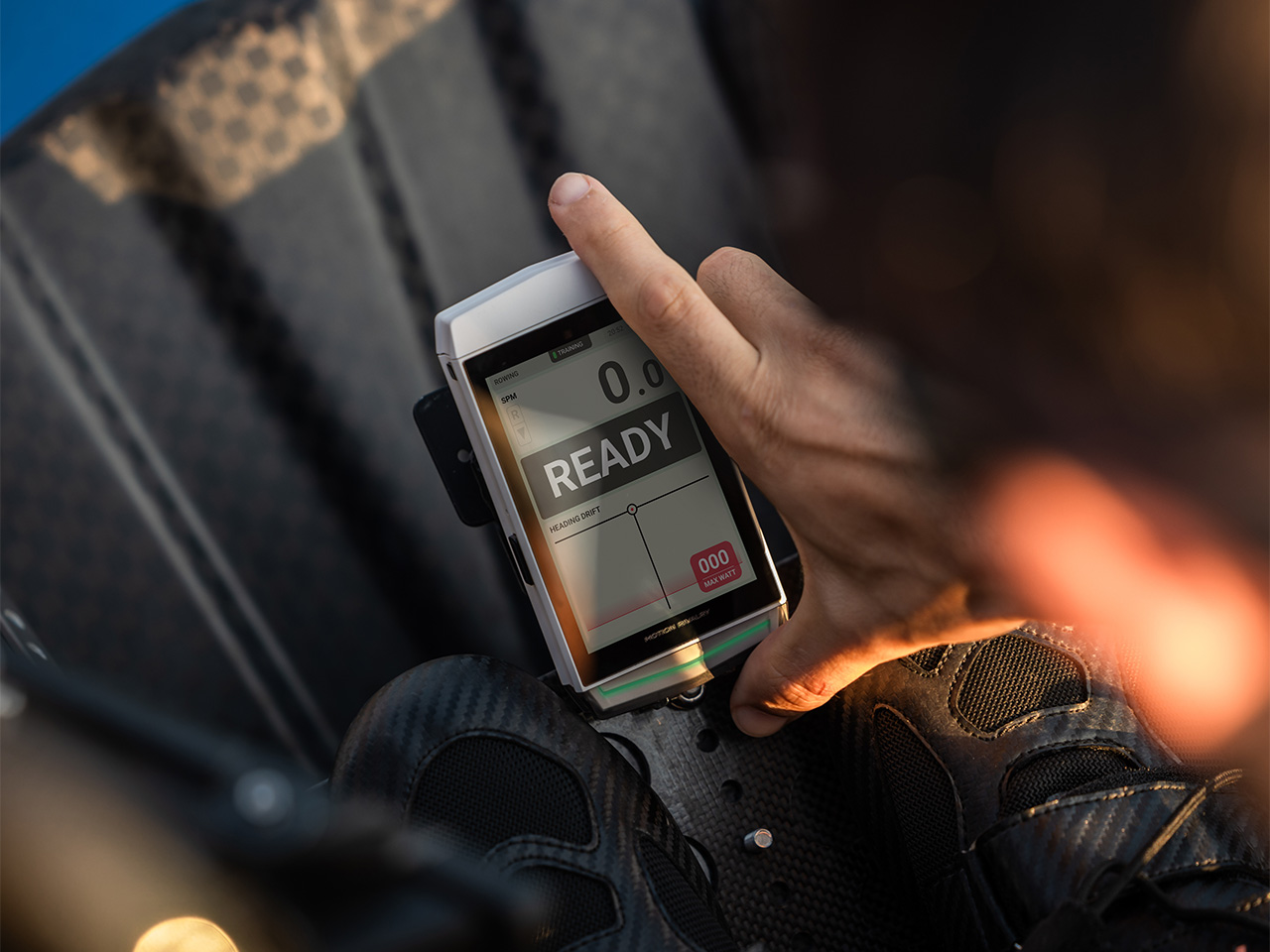
Rowing, kayaking, and canoeing put REACH’s fastest sensors to work. A 10Hz multi-constellation GNSS (most sports GPS units run 1 to 5Hz) locks position ten times a second, catching velocity changes within a single stroke rather than average splits over a lap. A 200Hz 9-axis IMU tracks heading drift, turning a wandering line into a number a coach can correct. REACH folds both into a Stroke Quality score, and Legacy Mode keeps it comparable to existing benchmarks.
On a bike, REACH estimates cadence and power without external sensors. It tracks linear and angular acceleration from the pedaling motion, then fuses and normalizes those readings to amplify the unique signal of your stroke while filtering out road noise. The result is a stable cadence reading without the need for extra hardware, precise to about 4 inches (10 centimeters) of elevation change.
The 3.5-inch display lays out speed, gradient, distance, and training stress score in a format built for glancing down mid-ride. Power estimates follow that same sensor-fusion approach, translating the normalized motion signals into a wattage figure without ever needing a crank sensor or power pedal bolted to the frame, one less accessory to charge, pair, or lose track of before a ride.
The same unit that tracked stroke rate on a river can be strapped to a flight harness by afternoon. In paragliding mode, REACH runs a dedicated vario for climb and sink rates, layers terrain maps adjusted for wind, and predicts landing zones from live wind direction and speed. Every reading here works toward one goal, keeping a pilot ahead of conditions that shift by the minute.
Catching a thermal updraft mid-flight is one thing; marking it for next time is another. A single press on REACH saves that exact location to the map, ready for your next pass, future flights, or anyone else in the flying community using the same site. Fly the same ridge enough times, and what used to be guesswork turns into a precision heat map built entirely by pilots who’ve actually flown it.
That Legacy Mode feature earns its own mention outside of rowing, too. Coaches who’ve spent seasons building benchmarks around specific equipment don’t want new hardware that outputs numbers in an unfamiliar format, no matter how good those numbers are. By matching its readings to formats already in use, REACH slots into existing programs instead of asking a team to relearn how it measures progress.
That data doesn’t stay trapped on the screen. The dedicated companion app on iOS and Android pairs over Bluetooth LE for route planning, reviewing a session, and Over-the-Air firmware updates once you’re back on solid ground. Sessions export as .FIT, .GPX, or .CSV and sync directly to Strava, so switching to REACH doesn’t mean abandoning platforms already in use. With 24GB of onboard storage, five sports’ worth of sessions won’t fill it.
Every one of those features lives inside a 5.5-ounce (156-gram) shell wrapped around a 3.5-inch display that stays legible in direct sunlight. An IPX7 rating handles rain, spray, and cold, while a 2,900mAh battery delivers up to 26 hours per charge. A programmable RGB strip along the base, assignable to stroke rate, split, or heart rate, glows green when you’re in the zone and a different color when you drift out, proof that REACH treats hardware as just another surface for good design.
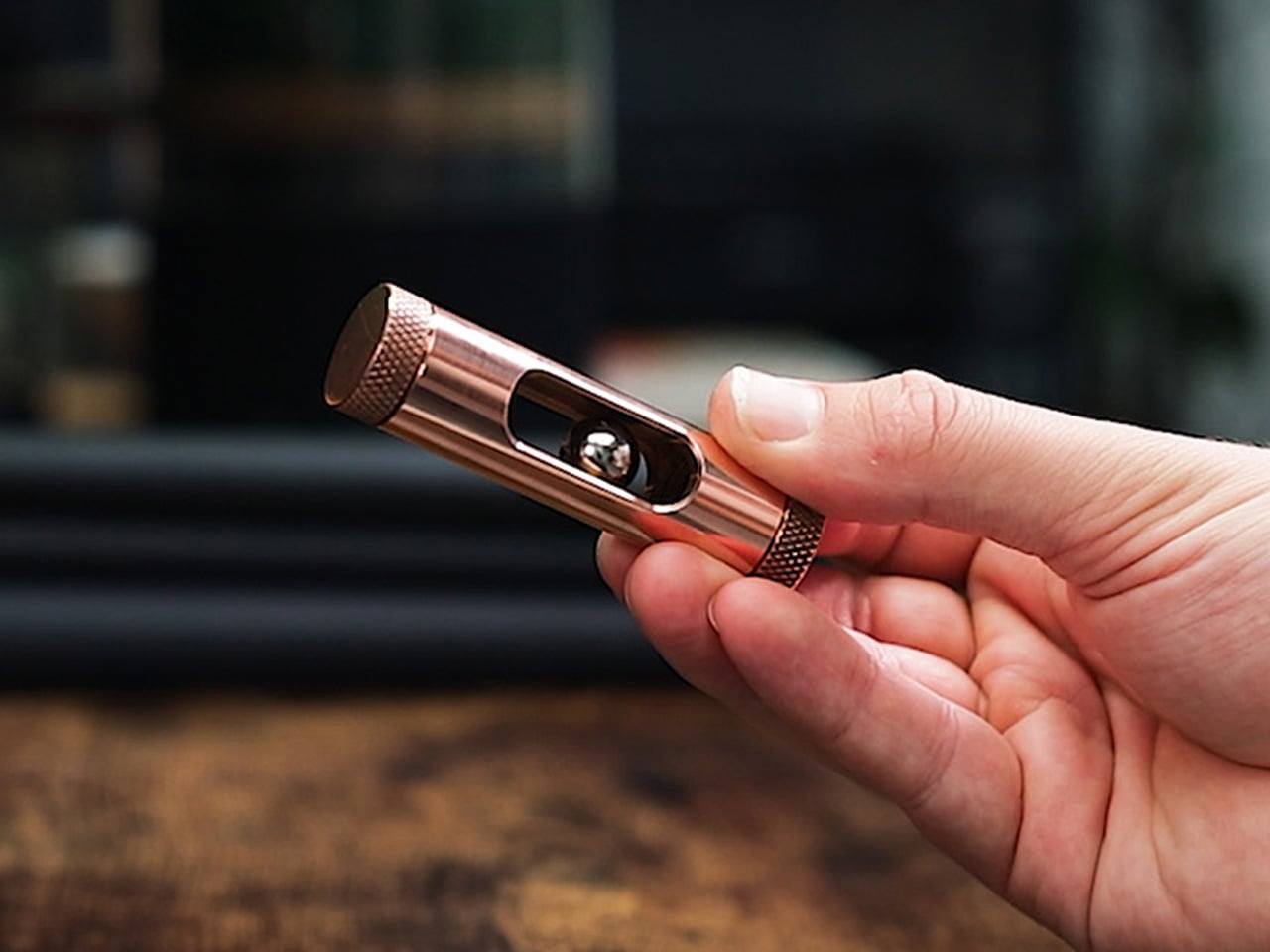
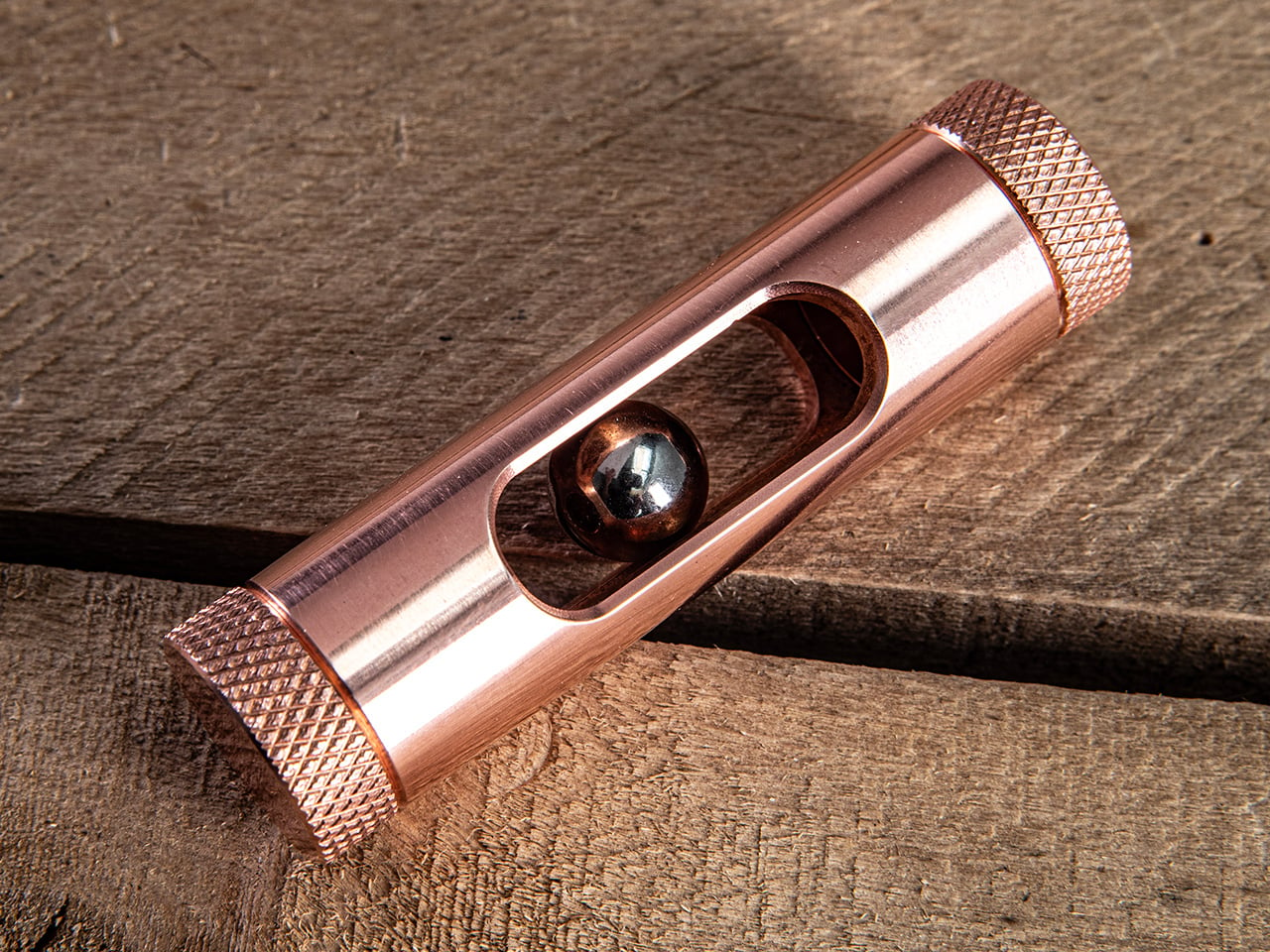
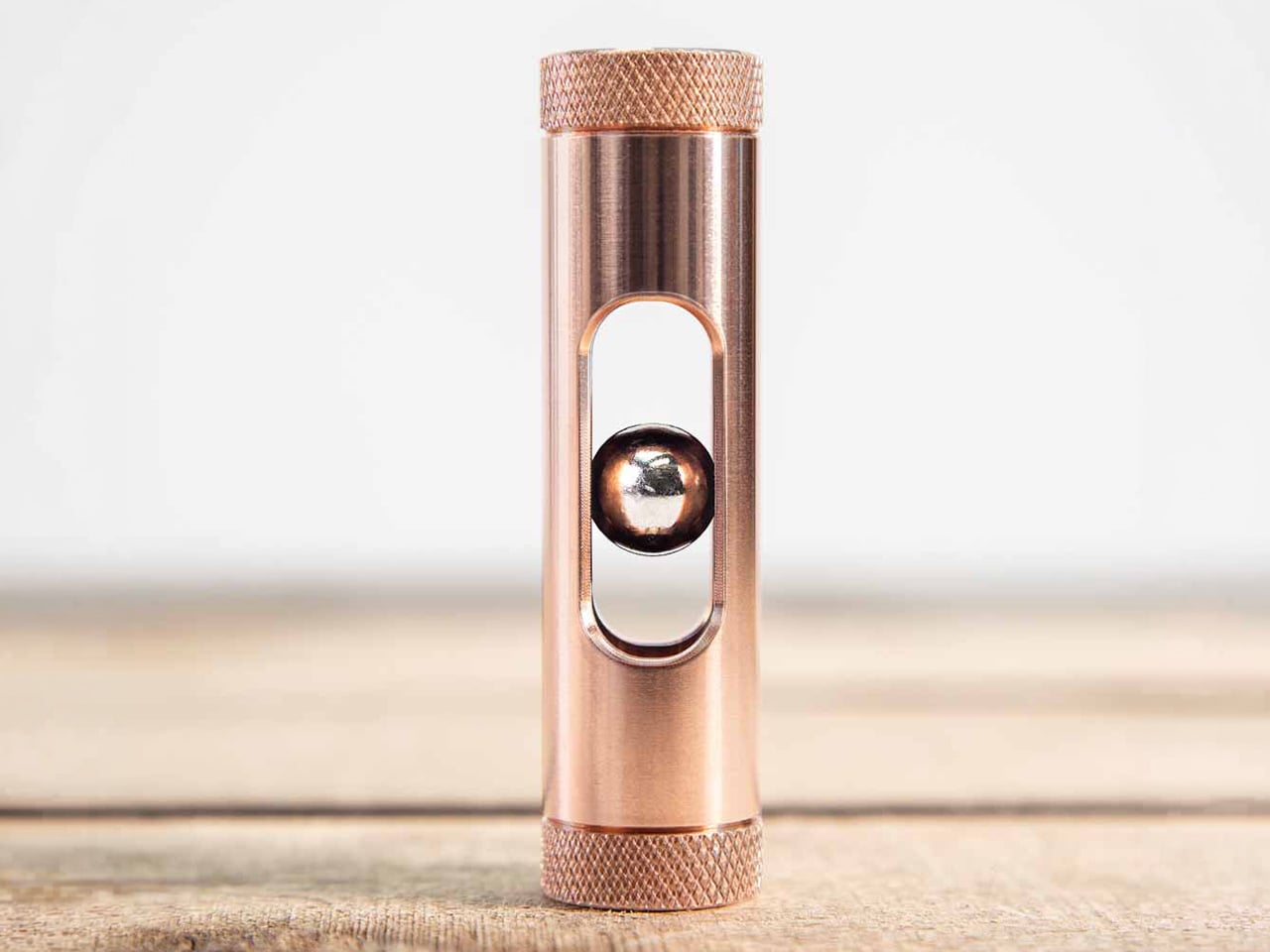
Watch a small metal ball drop through a tube, and normally that’s it; blink, and it’s over. But drop it through MetMo Eddy, and something strange happens: the fall stretches out, like gravity took a breath. This palm-sized copper cylinder is a precision-machined desk toy that turns a real electromagnetic effect into something you can hold, flip, and watch happen right in front of your eyes, no batteries required.
That slow-motion trick isn’t new; it’s just never looked this good on a desk. Back in 1855, physicist Léon Foucault noticed that moving a magnet near a conductive disc created currents that pushed back against the motion. He called them eddy currents, and engineers have used the same principle in brakes and sensors ever since. MetMo just gave it a much better home.
Here’s the simple version: as the magnet drops through the copper tube, it stirs up little loops of electrical current in the metal around it. Those currents create their own magnetic field, one that opposes the fall. Gravity is still very much in charge; it’s just arguing with physics on the way down. No motors, no gears, no hidden switches, just two materials doing what they’ve always done.
Copper does more than look good here, though it certainly does that too. It happens to be one of the most conductive non-magnetic metals around, which means it generates a stronger eddy current response than most alternatives could manage. That translates to a more pronounced, more watchable slowdown. It also happens to give Eddy that warm, rose-toned glow that looks better on a desk than aluminum or steel could.
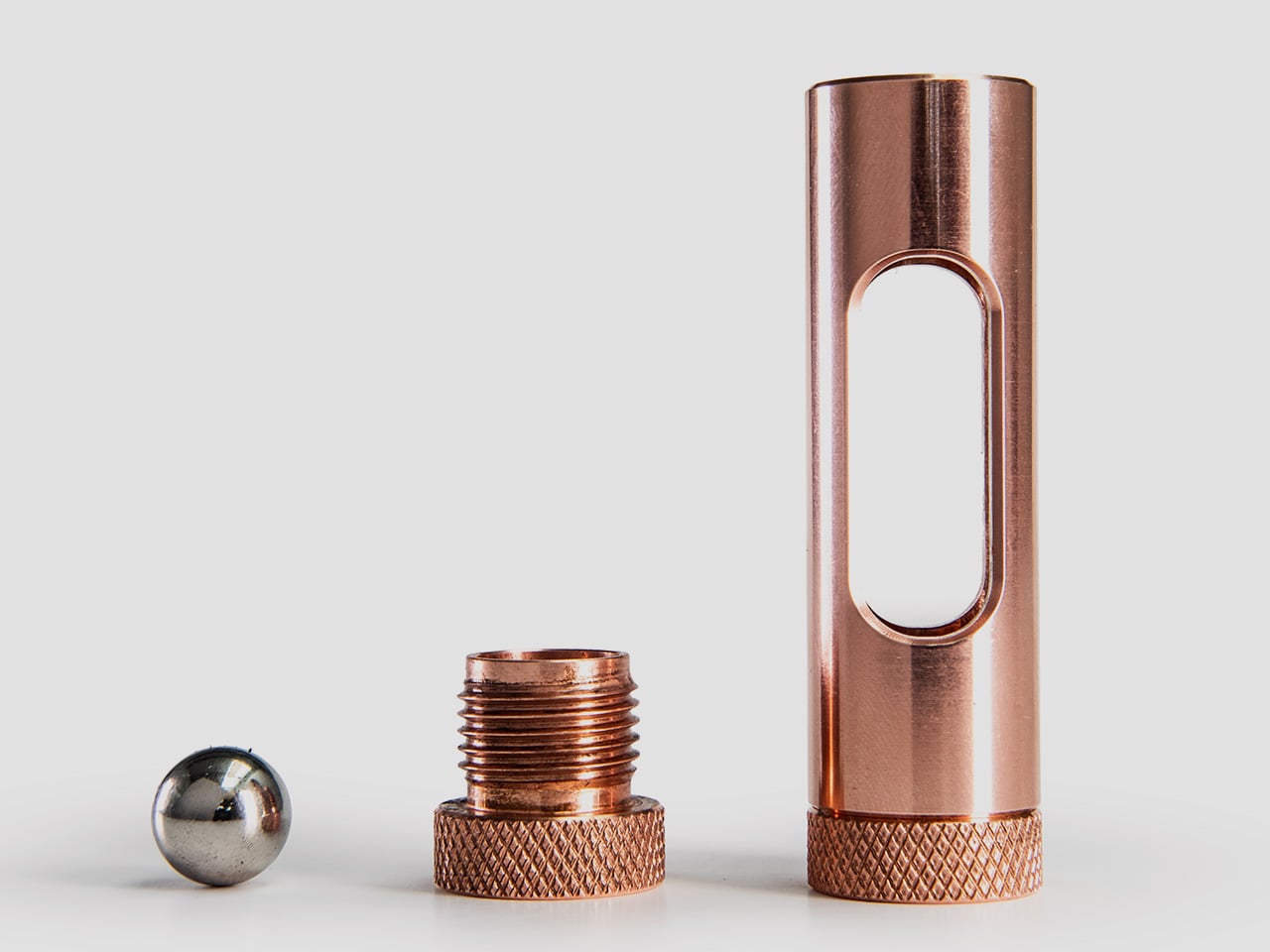
Every tube starts as a solid block of lead-free, ultra-high-purity copper before it’s CNC-machined to tolerances tight enough to bring the inner wall almost, but not quite, into contact with the magnetic sphere. That tiny gap matters: the closer the copper sits to the magnet, the stronger the eddy current effect, and the smoother the drop looks. Designed and finished by hand in the UK, the machining is the point.
Pick it up and the size makes sense immediately: just under 3 inches tall, less than an inch wide, and just 3 ounces, enough heft to feel substantial without weighing down a pocket. Knurled caps on both ends give your fingers something to grip, while the smooth, brushed middle section contrasts nicely against them. It’s the kind of detail that separates a toy from an object somebody actually designed.
A passivated surface finish keeps the copper looking freshly machined for longer, slowing down the natural oxidation that usually dulls exposed metal within weeks. Eddy will still age the way copper ages, gradually and with character, but it won’t need constant polishing to stay presentable on a desk. It’s a small, easy-to-miss detail, but it’s the sort of thing that tells you somebody thought this through past the prototype stage.
Maybe the most underrated part is that it makes zero noise. No click, no rattle, no thud when the magnet reaches the bottom, just silence. Flip it over, and the drop starts again, and before long that one-handed flip becomes a habit your fingers pick up between emails or during a call. It’s less a fidget toy and more a five-second reset button that happens to double as desk decor.
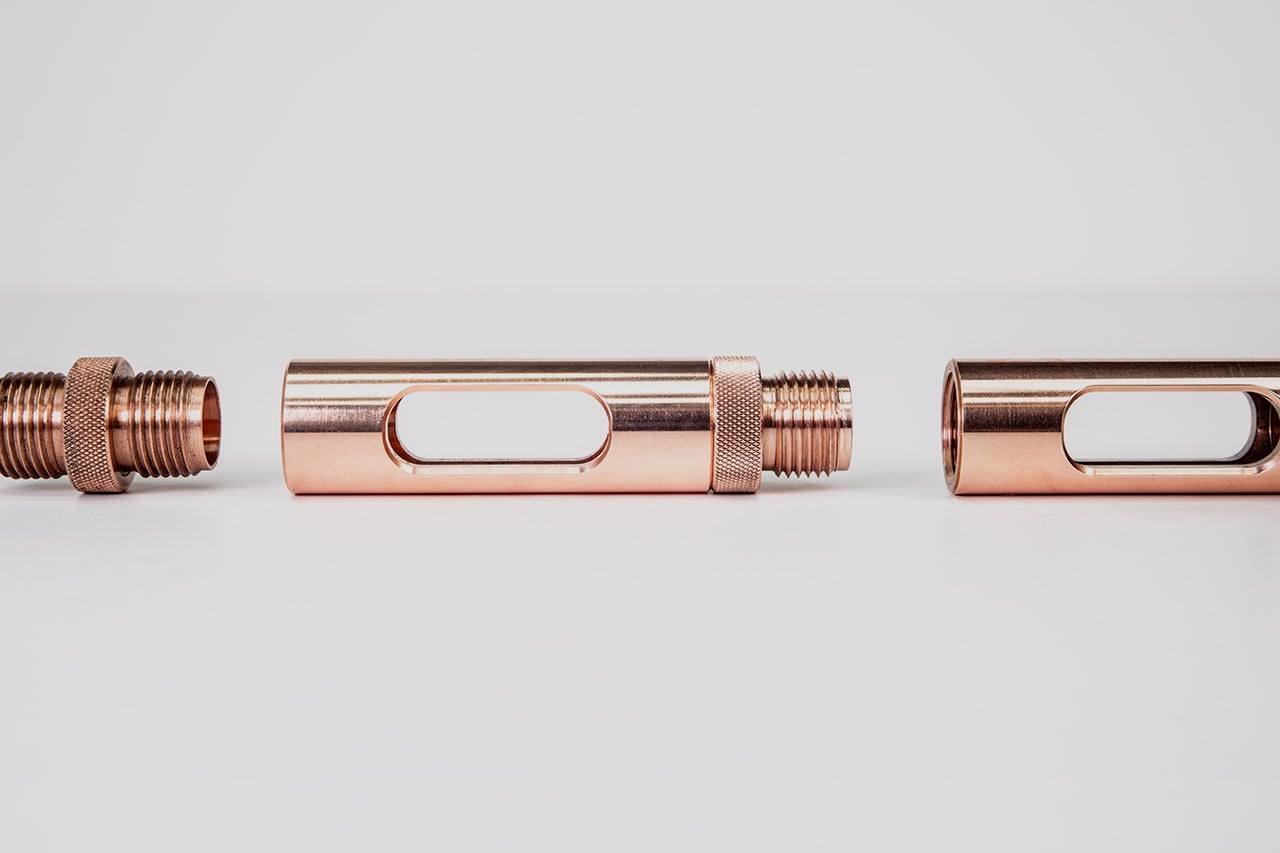
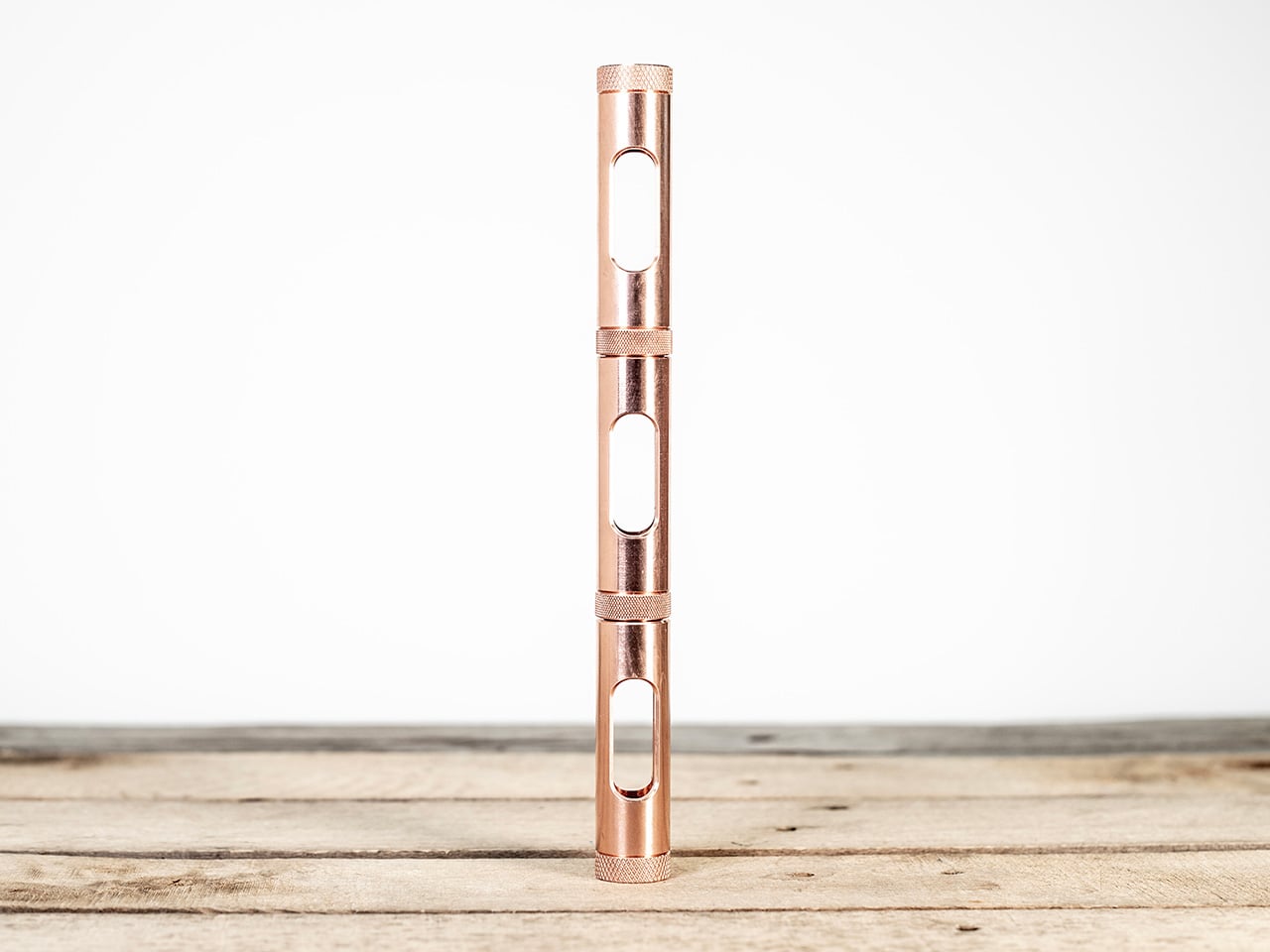
An elongated window cut into the tube lets you watch the magnet fall instead of guessing what’s happening inside, and that visibility is what makes the whole effect land. Unscrew either end cap, and there are a few different ways to drop and catch the ball. For a longer drop, a small coupling piece threads two tubes together end to end, without changing anything about how the effect works.
Some desk objects need explaining before anyone appreciates them. Eddy doesn’t. Hand it to someone, let them drop the magnet once, and watch their eyebrows go up when it takes way longer to fall than it should. That reaction doesn’t really wear off with repetition either, which says something about how good the underlying idea is, dressed up in copper and finished by hand.