MetMo turned a 1912 mechanism into the perfect hands-free tweezers for hobbyists and craftsmen

If the name MetMo rings a bell, that’s because this small Leeds outfit has built its reputation out of taking old mechanical ideas nobody else bothered reviving and turning them into objects people genuinely want to own. We’ve covered the MetMo Driver reworking the mid-century ratchet screwdriver, the Fractal Vise shrinking industrial clamping logic down to desktop scale, and the Pocket Grip channeling a century-old patent into nearly half a million dollars of Kickstarter support. The catalog reads like a museum of mechanisms reimagined with modern metallurgy and CNC precision. Now they’re circling back to something smaller, more delicate, and more universally frustrating than anything they’ve tackled before. Their next target is the humble tweezer.

The Precision Grip is calibrated for a different job than MetMo’s earlier clamping tools, the kind of featherlight, controlled pressure needed to hold a model part without crushing it. Where the Pocket Grip chased 21kg of clamping force for daily carry tasks, this one maxes out at 5kg, by design. It runs on a miniaturized drive screw borrowed from precision machining equipment, so you set your grip force once and the jaws hold that position without assistance. That’s the core limitation tweezers can never escape: they hold via sustained finger pressure, and the moment that wavers, the part is gone. For anyone who has ever sacrificed a miniature to the carpet gods, that last sentence is the whole pitch.

Designer: Sean Sykes & James Whitfield (MetMo)

Click Here to Buy Now: $129 $143.33 (10% off). Hurry, only 19/1050 left! Raised over $579,000.
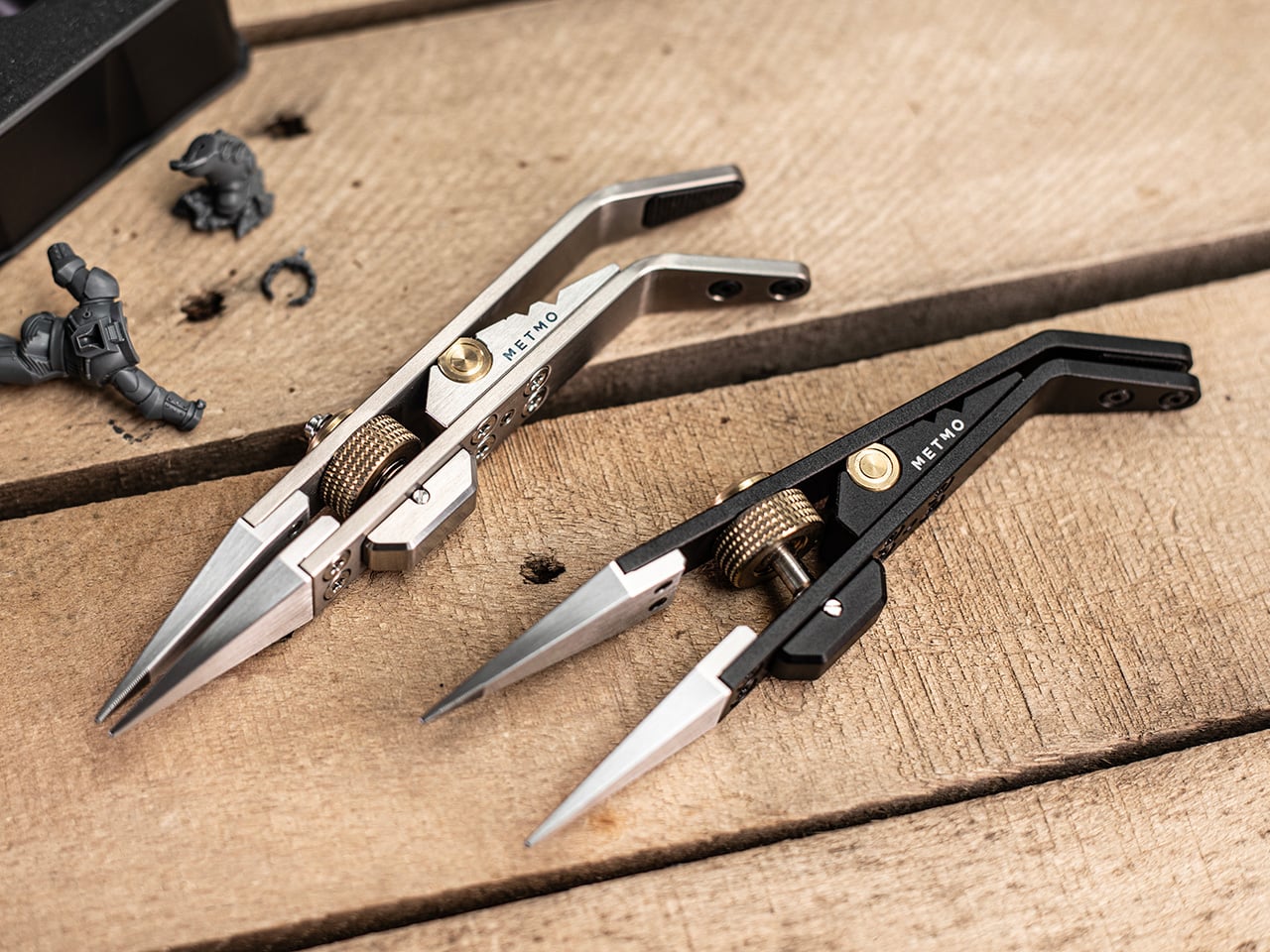
For decades, precision hobbyists have been improvising with tools from completely different disciplines. Jewelers raid surgical supply catalogs. Electronics hobbyists use soldering tongs that launch parts across the room the moment grip pressure drops. Model painters hold tiny figures between their fingers and simply hope for the best. MetMo’s position is that these people deserve something built specifically for the job, and the Precision Grip’s lightly textured jaw tips are designed to grip without marking or damaging delicate surfaces, a distinction that no repurposed dental or electrical tool reliably delivers.

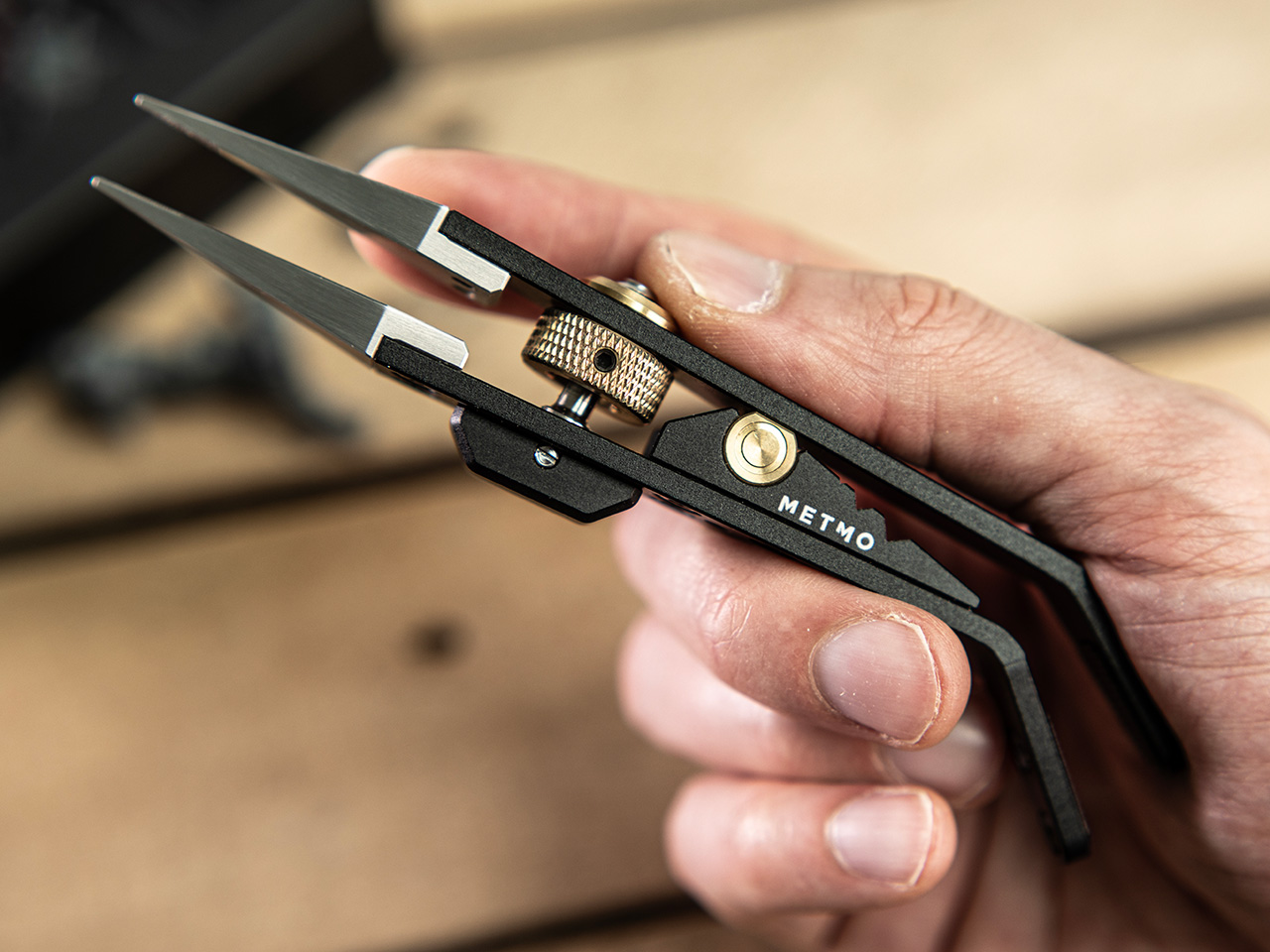
The mechanism at the center of all this is a miniaturized version of the drive screw used in high-precision machining equipment, a category of hardware that lives and dies by tolerance accuracy. A solid barrel hinge keeps both jaws in perfect alignment during clamping, preventing the sideways drift and tip-twist you’d get from a conventional pivot, and that dimensional stability is what makes the needle-nose tips usable for genuinely pinpoint work rather than approximations of it. Turn the knurled screw, the jaws close to exactly where you set them, and they hold there with up to 5kg of clamping force. The underlying mechanism traces back to 1912, which MetMo has made into a design tagline for a reason. It’s a genuinely good mechanism.

The jaw tips carry a patent-pending micro-grip texture that MetMo calls “The Gecko’s Finger,” a name that is slightly ridiculous and also completely on point. Small smooth parts get just enough extra friction at the contact surface to stay put without the jaws needing to clamp any harder, which is the right problem to solve when you’re working on something fragile. Beyond the standard needle-nose stainless steel nibs, the system accepts silicone soft inserts for delicate surfaces, round clamp heads for gripping a part’s inner cavity rather than its outer face, and even custom 3D-printed nippers for shapes no off-the-shelf tip could reach. Individual nibs swap out independently when damaged, without touching the body.

Set the jaws slightly open and a spring-loaded mechanism activates, giving you conventional tweezer behavior for quick sorting tasks without engaging the screw-drive lock every time. When you need both hands free, the Precision Grip clamps into a quick-release mount and becomes a miniature desk vice, holding your part steady while you solder, file, or paint. Three V-grooves machined into the body let you form wire or prop the tool as a makeshift stand, keeping parts right where you left them when you step away. The whole setup is fully ambidextrous, which sounds minor until you’re a lefty who has spent years buying tools that don’t think about you. All of that function lives in a body that measures 134mm (5.3 inches) long, 29mm wide, and 16mm deep.

Aerospace-grade hard-anodized aluminum (70.3g), Grade 5 titanium (83.3g), and surgical stainless steel (114.5g) are the three material variants, and each one maps to a different kind of user. The aluminum is the nimble everyday choice, the titanium balances weight savings and durability for more demanding environments, and the surgical stainless is autoclave-rated and built from high-chromium steel throughout, making it viable for medical and laboratory settings. All three are fully user-serviceable, strippable to individual components for maintenance or repair, with high-tensile screws throughout rather than whatever was cheapest to source. MetMo talks about a 200-year product goal, and the fully serviceable construction is what gives that ambition actual credibility.

Pricing for the Precision Grip runs at £89 ($118 USD) for the Aluminum version, while the Stainless Steel variant is priced at £119 or $157 USD. For serious hobbyists and EDC collectors, the Titanium Precision Grip is priced at £179 or $237 USD. The Precision Grip ships worldwide from the UK and comes with the 200-year repairability guarantee that you could possibly only expect from a company as obsessed with detail and quality as MetMo. MetMo balanced the weight distribution around fine writing instrument ergonomics, giving the body a contour that doesn’t tire your hand across long sessions. It also looks genuinely purposeful doing nothing, like an intricate ornament that earns questions from people passing your desk, which MetMo treats as part of the design brief rather than a happy byproduct.

Click Here to Buy Now: $129 $143.33 (10% off). Hurry, only 19/1050 left! Raised over $579,000.

The post MetMo turned a 1912 mechanism into the perfect hands-free tweezers for hobbyists and craftsmen first appeared on Yanko Design.
MetMo Eddy Makes Gravity Look Like It Changed Its Mind

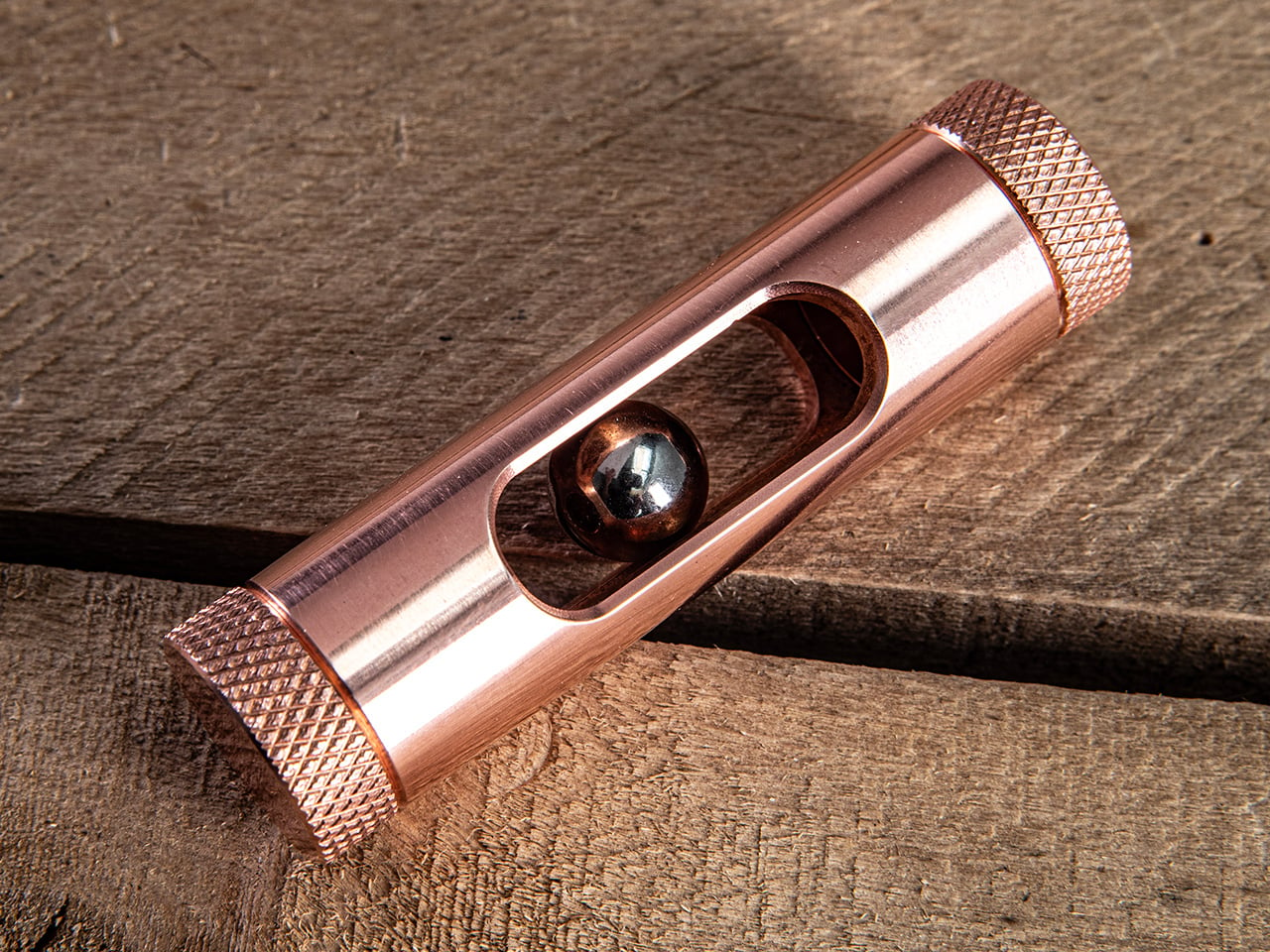
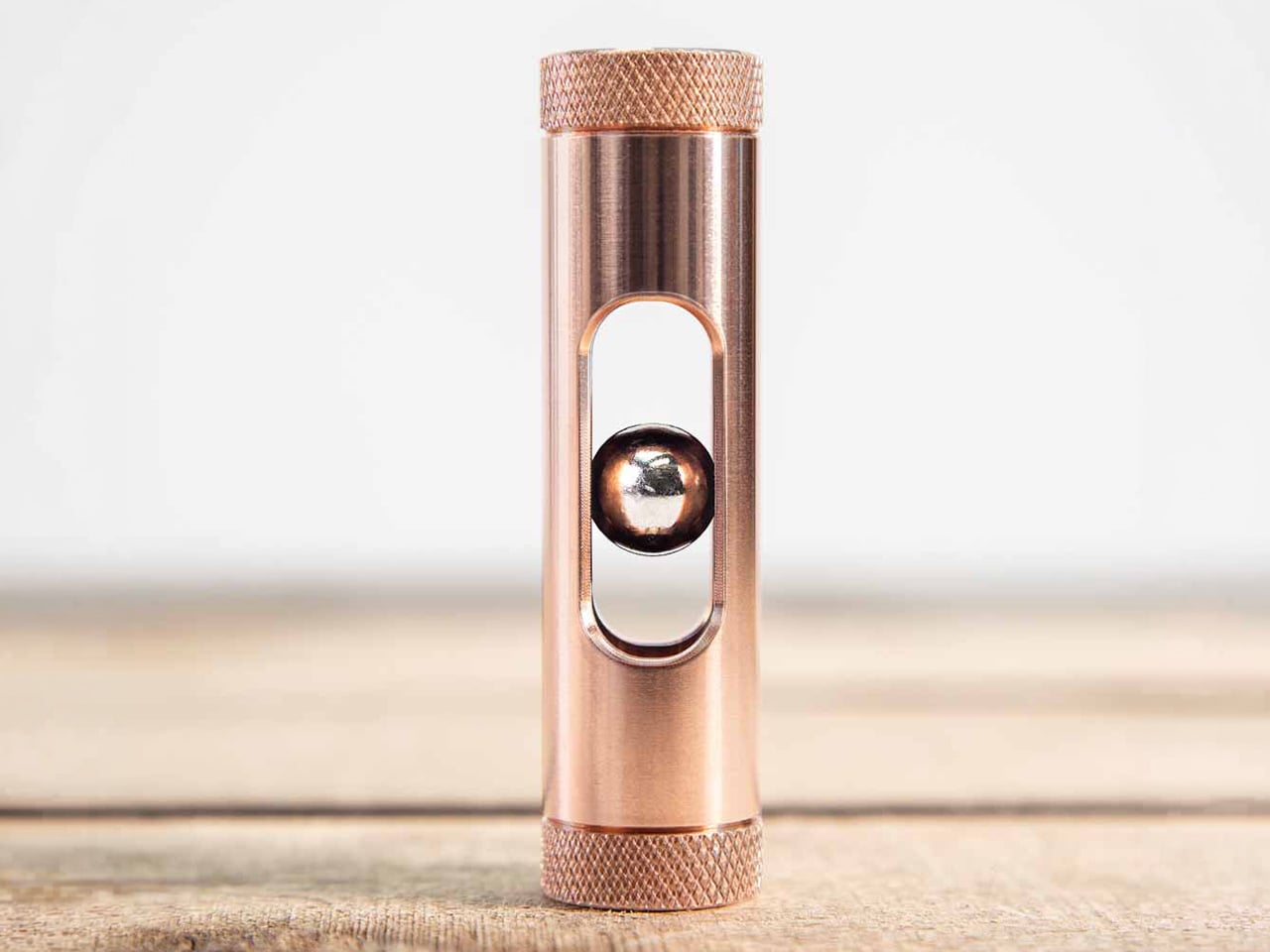
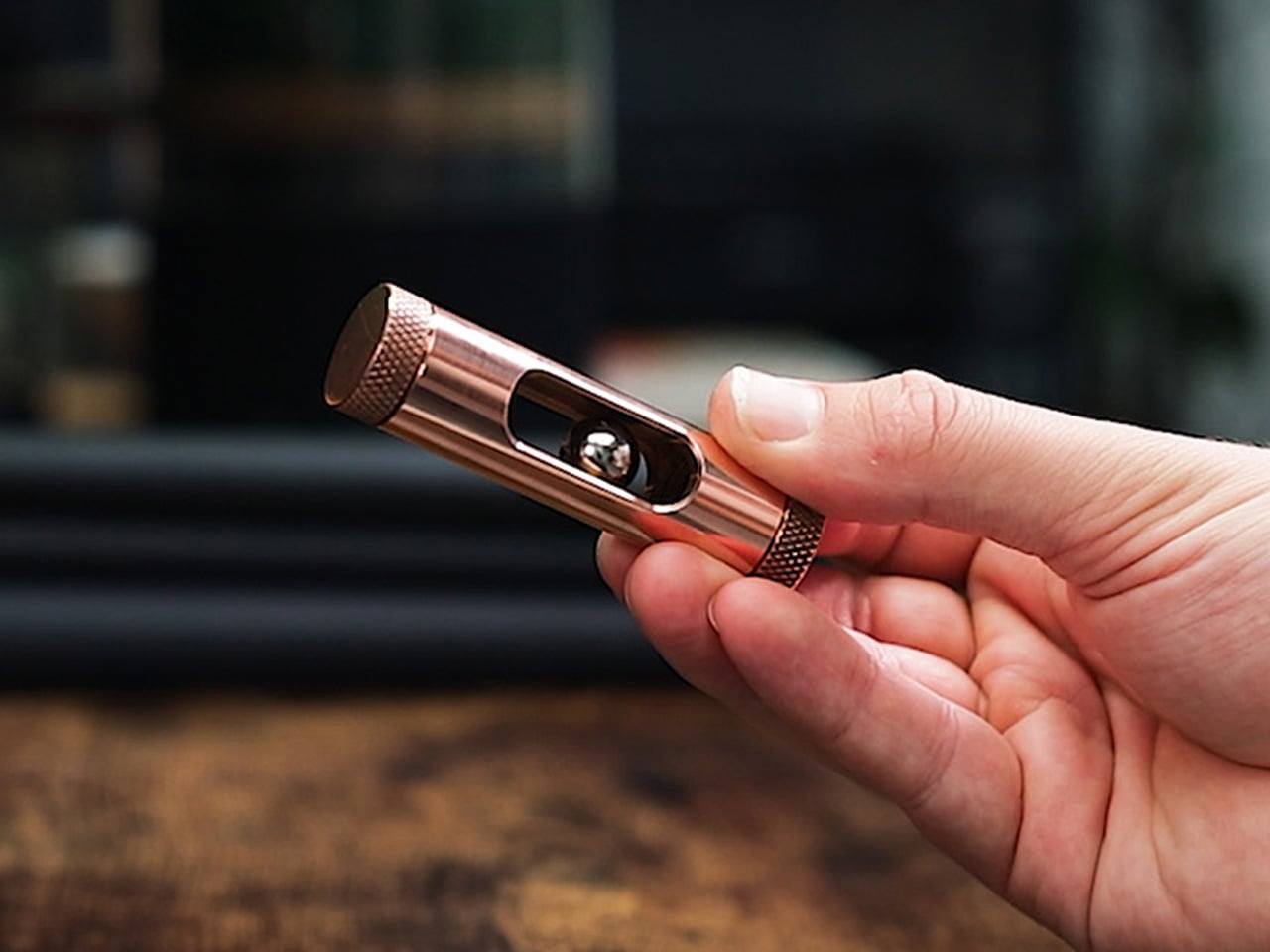
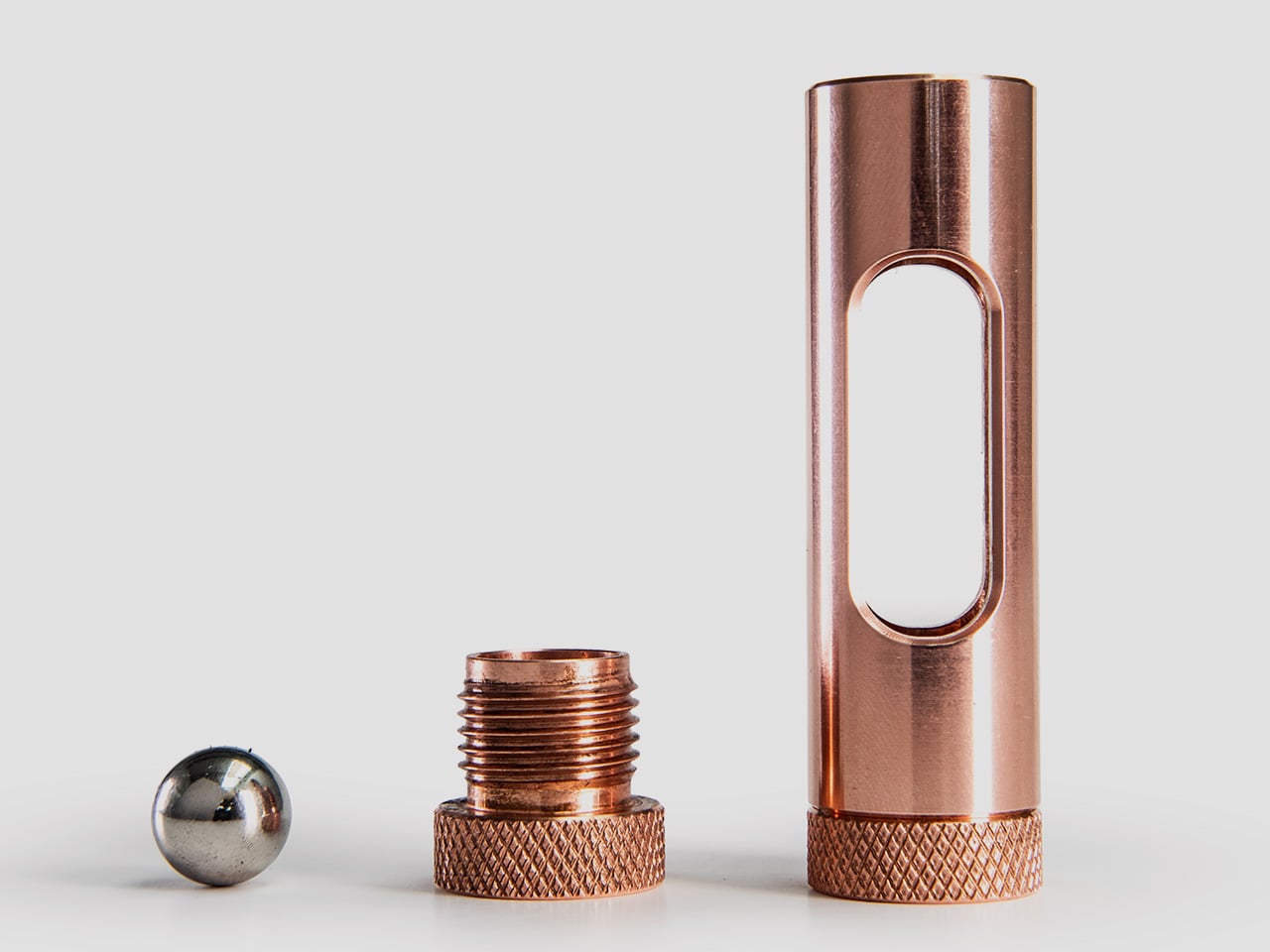
Watch a small metal ball drop through a tube, and normally that’s it; blink, and it’s over. But drop it through MetMo Eddy, and something strange happens: the fall stretches out, like gravity took a breath. This palm-sized copper cylinder is a precision-machined desk toy that turns a real electromagnetic effect into something you can hold, flip, and watch happen right in front of your eyes, no batteries required.

That slow-motion trick isn’t new; it’s just never looked this good on a desk. Back in 1855, physicist Léon Foucault noticed that moving a magnet near a conductive disc created currents that pushed back against the motion. He called them eddy currents, and engineers have used the same principle in brakes and sensors ever since. MetMo just gave it a much better home.

Designers: Sean Sykes & James Whitfield

Click Here to Buy Now: $109.

Here’s the simple version: as the magnet drops through the copper tube, it stirs up little loops of electrical current in the metal around it. Those currents create their own magnetic field, one that opposes the fall. Gravity is still very much in charge; it’s just arguing with physics on the way down. No motors, no gears, no hidden switches, just two materials doing what they’ve always done.

Copper does more than look good here, though it certainly does that too. It happens to be one of the most conductive non-magnetic metals around, which means it generates a stronger eddy current response than most alternatives could manage. That translates to a more pronounced, more watchable slowdown. It also happens to give Eddy that warm, rose-toned glow that looks better on a desk than aluminum or steel could.

Every tube starts as a solid block of lead-free, ultra-high-purity copper before it’s CNC-machined to tolerances tight enough to bring the inner wall almost, but not quite, into contact with the magnetic sphere. That tiny gap matters: the closer the copper sits to the magnet, the stronger the eddy current effect, and the smoother the drop looks. Designed and finished by hand in the UK, the machining is the point.

Pick it up and the size makes sense immediately: just under 3 inches tall, less than an inch wide, and just 3 ounces, enough heft to feel substantial without weighing down a pocket. Knurled caps on both ends give your fingers something to grip, while the smooth, brushed middle section contrasts nicely against them. It’s the kind of detail that separates a toy from an object somebody actually designed.

A passivated surface finish keeps the copper looking freshly machined for longer, slowing down the natural oxidation that usually dulls exposed metal within weeks. Eddy will still age the way copper ages, gradually and with character, but it won’t need constant polishing to stay presentable on a desk. It’s a small, easy-to-miss detail, but it’s the sort of thing that tells you somebody thought this through past the prototype stage.

Maybe the most underrated part is that it makes zero noise. No click, no rattle, no thud when the magnet reaches the bottom, just silence. Flip it over, and the drop starts again, and before long that one-handed flip becomes a habit your fingers pick up between emails or during a call. It’s less a fidget toy and more a five-second reset button that happens to double as desk decor.

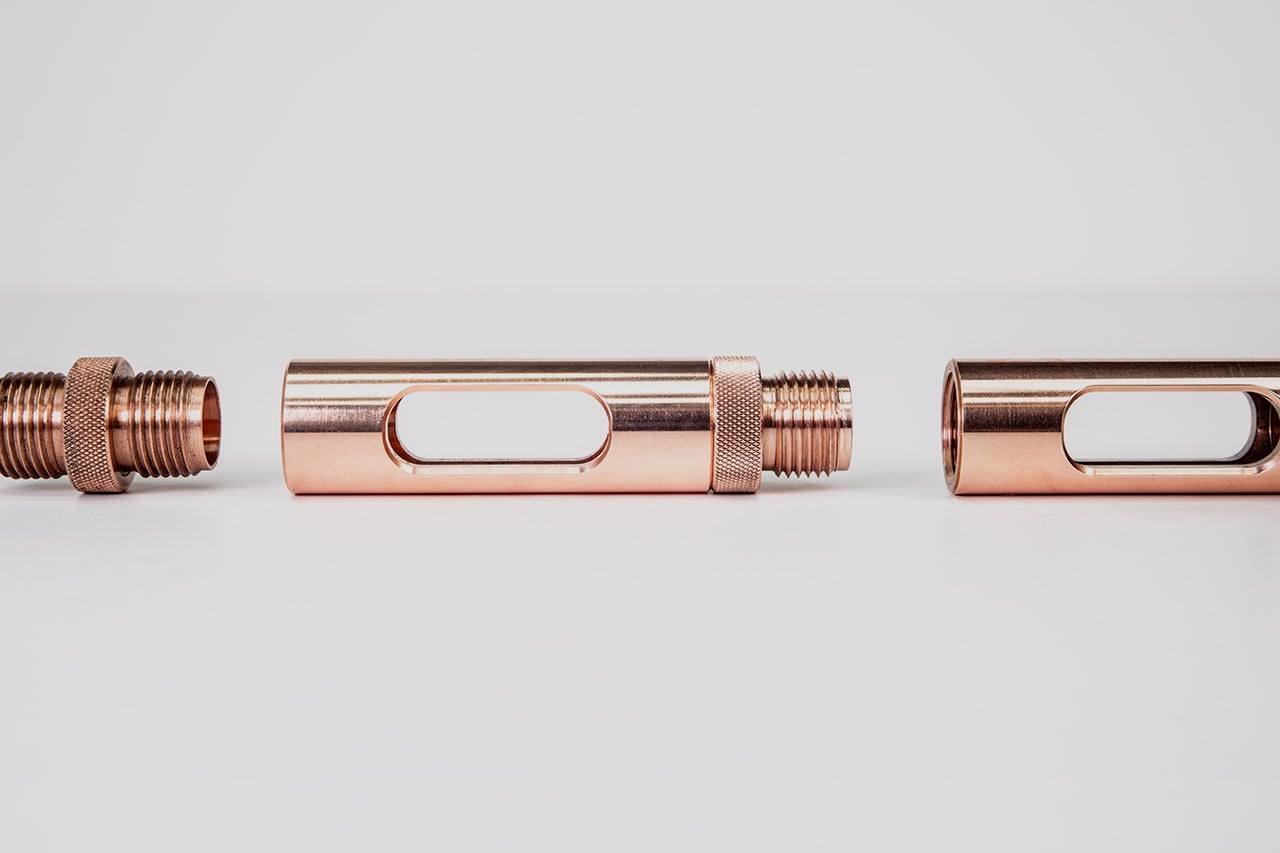
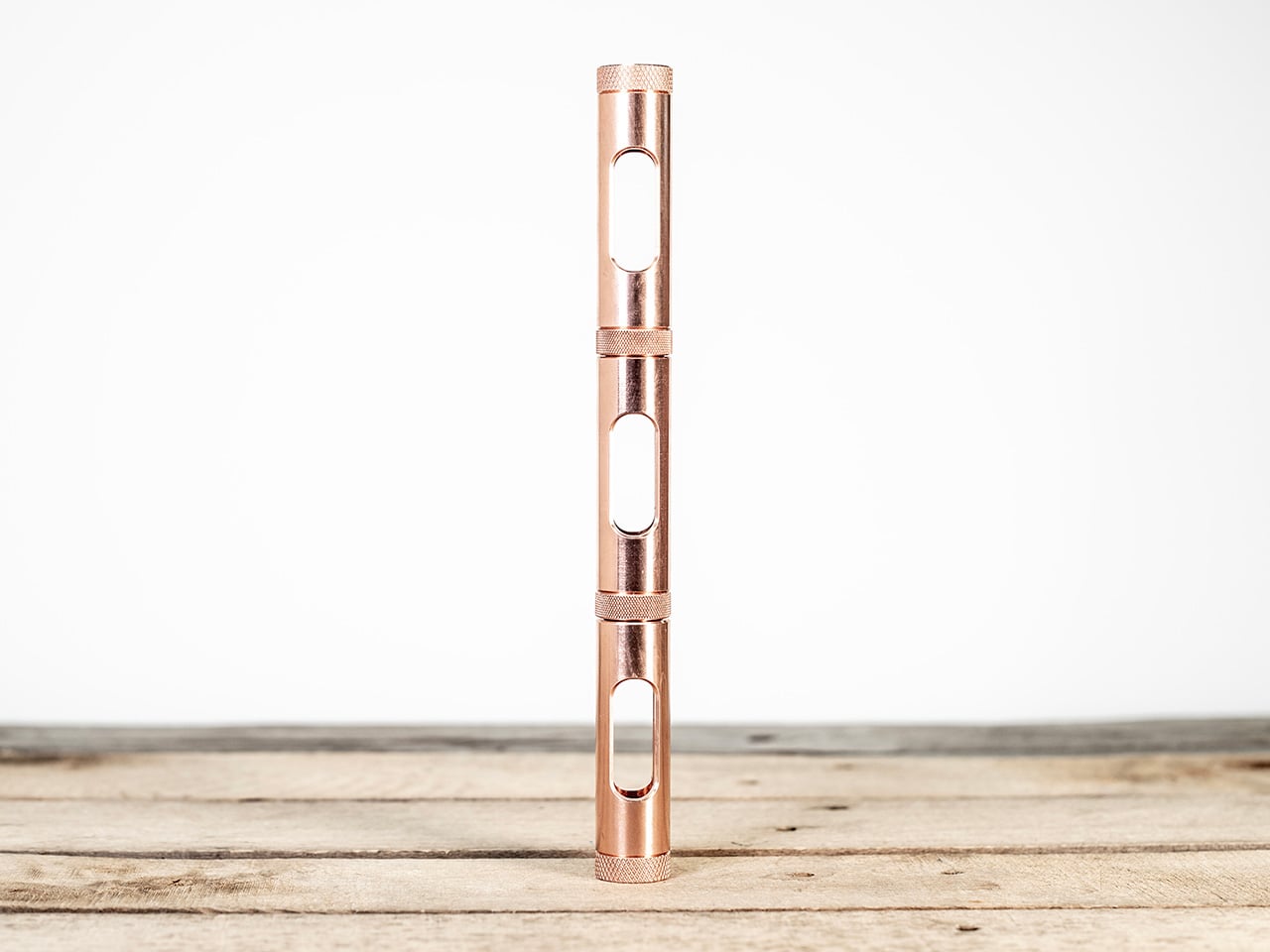
An elongated window cut into the tube lets you watch the magnet fall instead of guessing what’s happening inside, and that visibility is what makes the whole effect land. Unscrew either end cap, and there are a few different ways to drop and catch the ball. For a longer drop, a small coupling piece threads two tubes together end to end, without changing anything about how the effect works.

Some desk objects need explaining before anyone appreciates them. Eddy doesn’t. Hand it to someone, let them drop the magnet once, and watch their eyebrows go up when it takes way longer to fall than it should. That reaction doesn’t really wear off with repetition either, which says something about how good the underlying idea is, dressed up in copper and finished by hand.

Click Here to Buy Now: $109.

The post MetMo Eddy Makes Gravity Look Like It Changed Its Mind first appeared on Yanko Design.
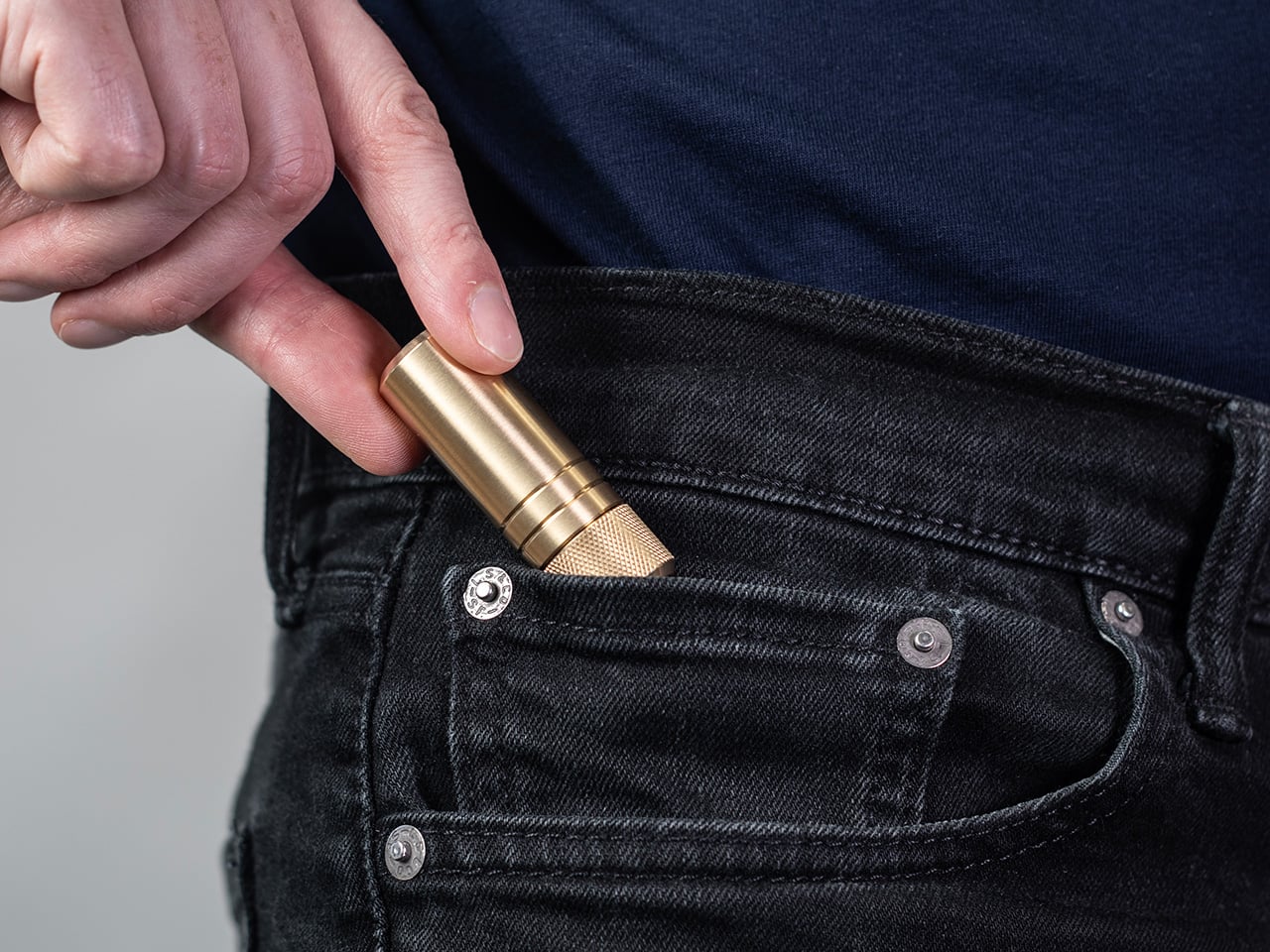
Ultra-silent brass fidget piston is built with such precise tolerances that air becomes the spring

Pneumatics is an industrial workhorse, a brute-force technology that uses compressed air to power everything from factory robots to freight train brakes. It is almost always loud, powerful, and hidden deep inside a machine’s guts. The idea of holding it in your hand, of feeling its power at a small, personal scale, has always been out of reach. It was a force to be used, not a phenomenon to be experienced. MetMo, however, specializes in turning these forgotten industrial principles into beautiful, handheld objects.

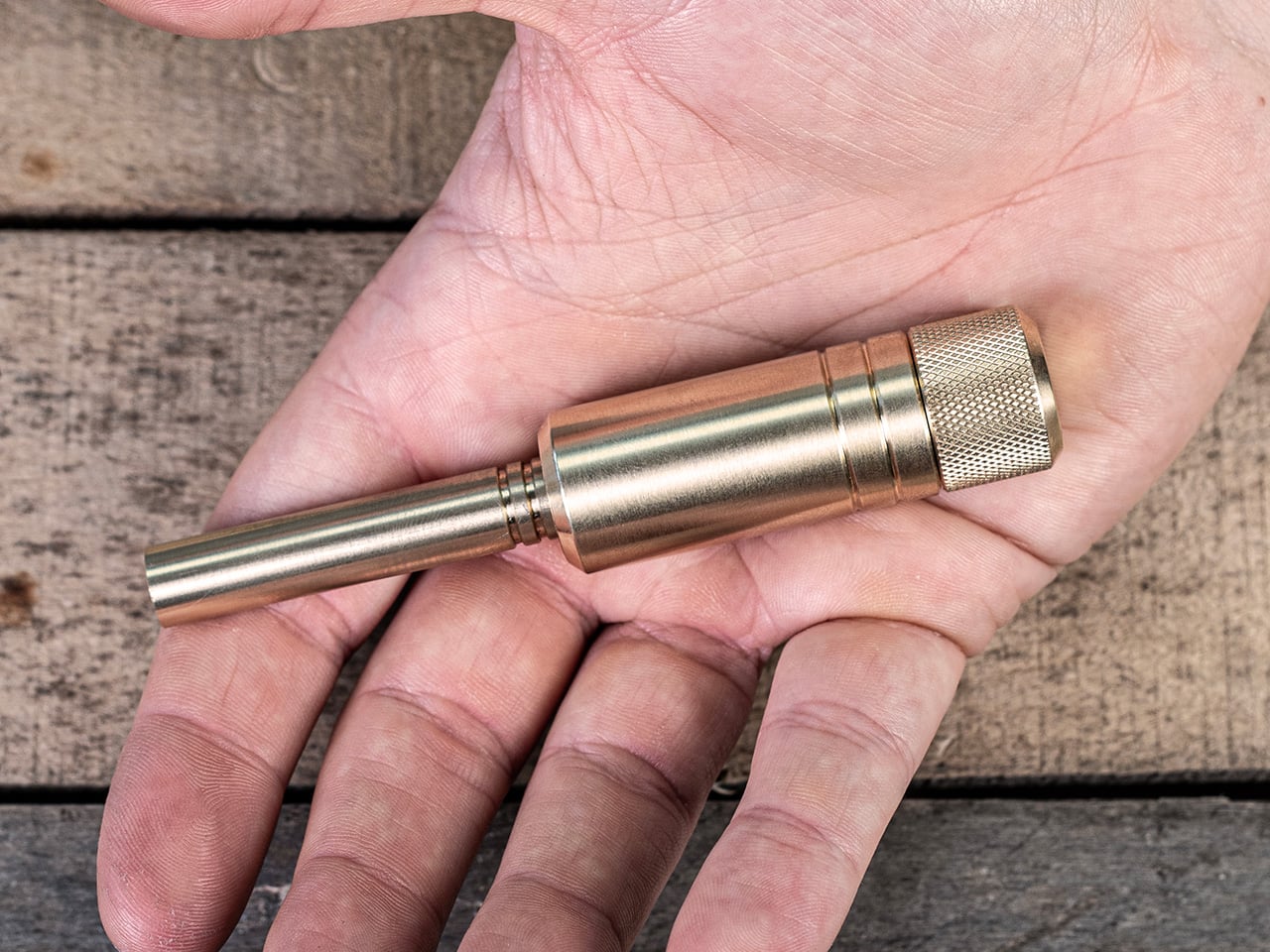
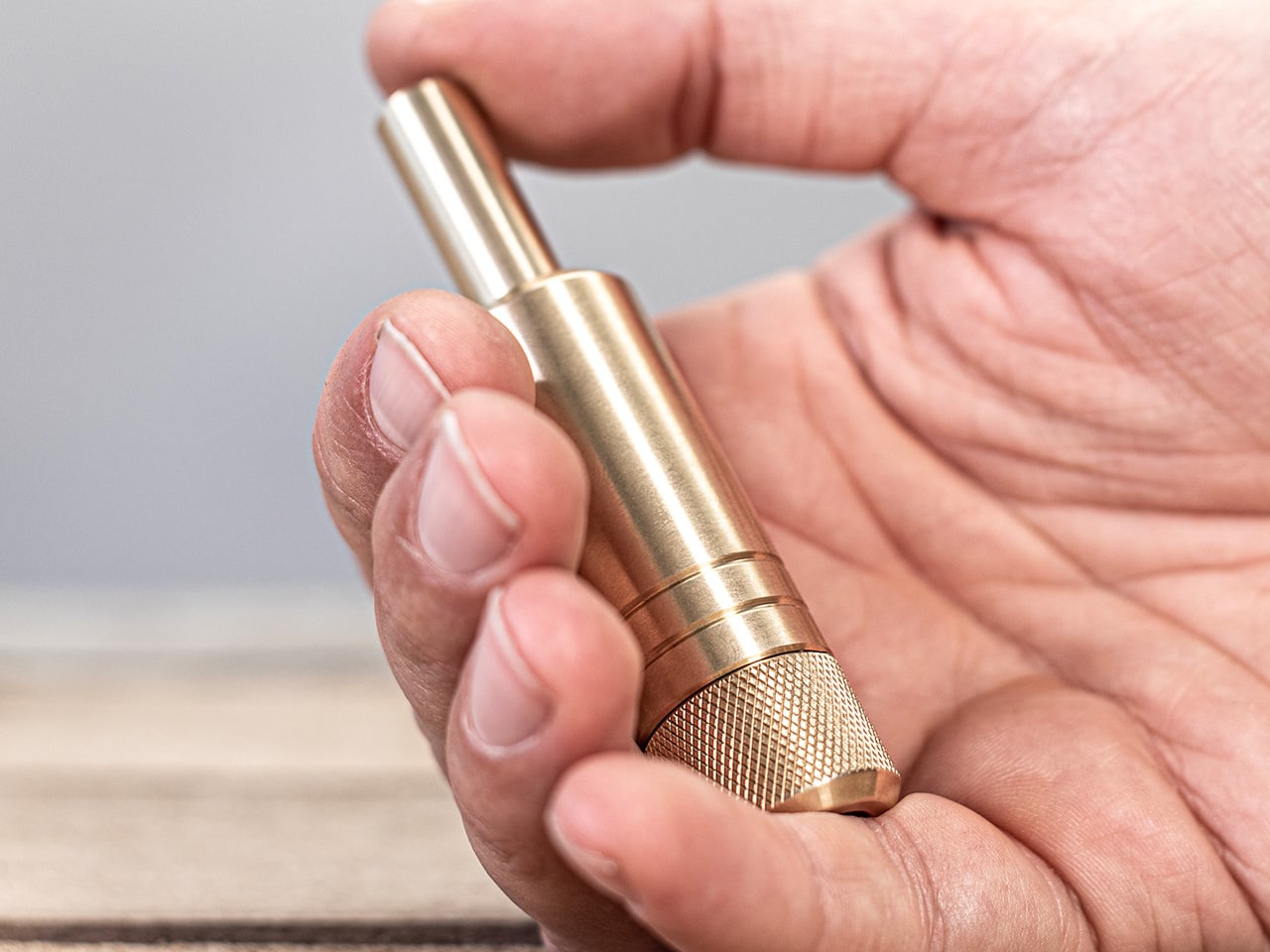
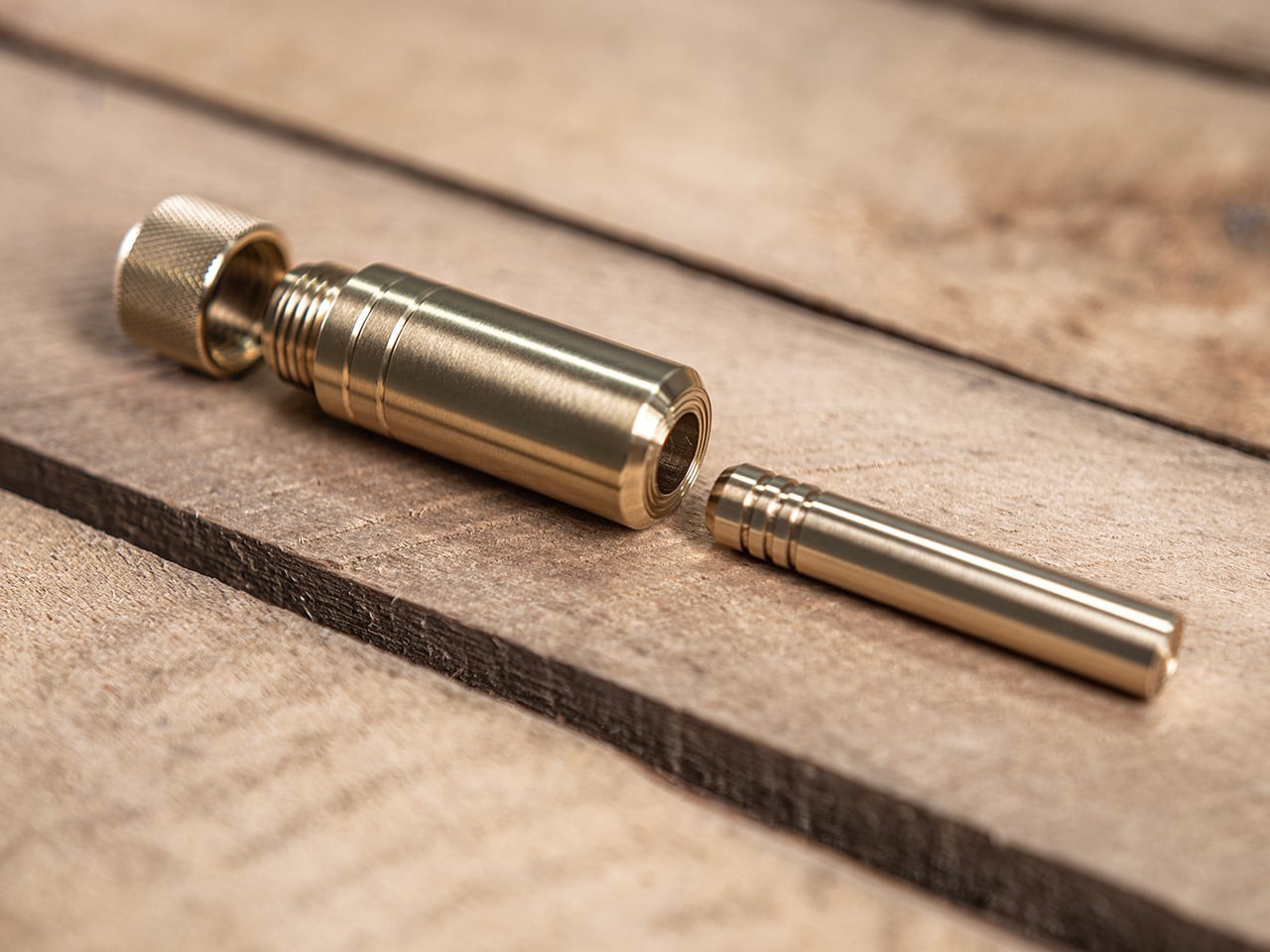
The MetMo Piston is what happens when you shrink a pneumatic system down to pocket size and machine it from solid brass. The slow, satisfying resistance you feel when you press down is the feeling of air compressing in a perfectly sealed chamber. The silent rebound is that same air expanding, pushing the piston back with a gentle, inevitable force. For anyone who appreciates engineering, it is a tiny, working demonstration of physics. For everyone else, it is just an incredibly satisfying object to hold and press.

Designers: Sean Sykes & James Whitfield (MetMo)

Click Here to Buy Now: $89.99

The mechanism itself is deceptively simple, which is why MetMo felt it important to reiterate – no springs, no magnets. A precision-machined piston pin slides into an equally precise cylinder block, and the tolerances between the two are so tight that air cannot escape, even under pressure. When you press the piston down, you are compressing the air trapped inside the chamber, and that compressed air is what pushes back against your thumb. No hidden parts, springs, neodymium magnets, mechanical detents. The feedback is purely pneumatic, the same principle that powers much larger systems like robot arms, hammer drills, and train brakes… scaled down to something you can operate with one hand.

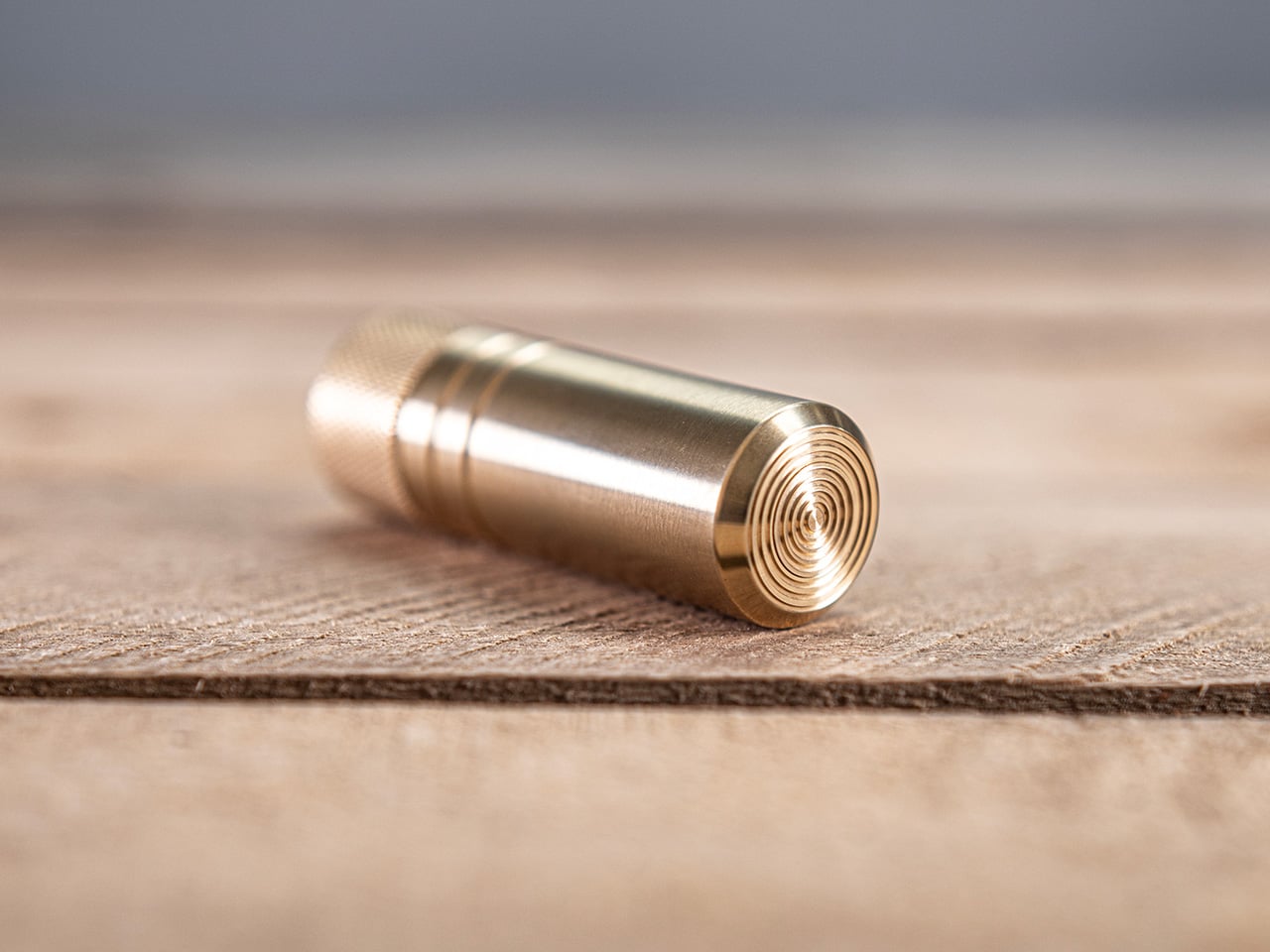
What separates this from every other fidget object on the market is the sheer precision required to make it work. No sourcing ball-bearings from AliBaba to make $2 fidget spinners. MetMo machines each component from solid HTB1 brass, a high tensile alloy chosen specifically for its wear resistance and smooth surface finish. The piston pin and cylinder block are both machined to tolerances typically reserved for aerospace engineering, because even a microscopic gap would let air escape and ruin the pneumatic seal. The fit is so precise that when you press down and feel that cushion of resistance, you are experiencing the literal limits of what air molecules can do when trapped in a perfectly sealed chamber. It’s engineering you can feel through your fingertips.

The Piston also features a secondary interaction that might be even more satisfying than the press itself. Spin the knurled housing, and the piston pin rotates on what MetMo calls an aerodynamic bearing, a thin cushion of air that forms between the pin and the cylinder block. The result is a nearly frictionless spin that feels almost supernatural, like the object is hovering inside its own housing. It is the same principle used in precision scientific instruments, and experiencing it in a handheld desk toy is quietly mesmerizing. You can spin it for minutes at a time, and the motion stays smooth, silent, and hypnotic.

One of the best practical benefits of the Piston is its complete silence. If you have ever been stuck in a meeting next to someone clicking a pen, you understand why this matters. The pneumatic mechanism operates without any noise at all, which means you can fidget freely without disrupting anyone around you. It is a desk toy that respects shared spaces, and that alone makes it more thoughtful than most of its category competitors. The tactile satisfaction is entirely private, which is exactly how it should be.

MetMo also included a pressure release valve that lets you adjust the drop speed and rebound behavior of the piston. Tighten it for a slow, controlled descent, or loosen it for a faster, bouncier response. It is a small detail, but it transforms the Piston from a fixed experience into something you can tune to your own preference. For people who appreciate control over their tools and objects, that adjustability is a quiet but meaningful touch.

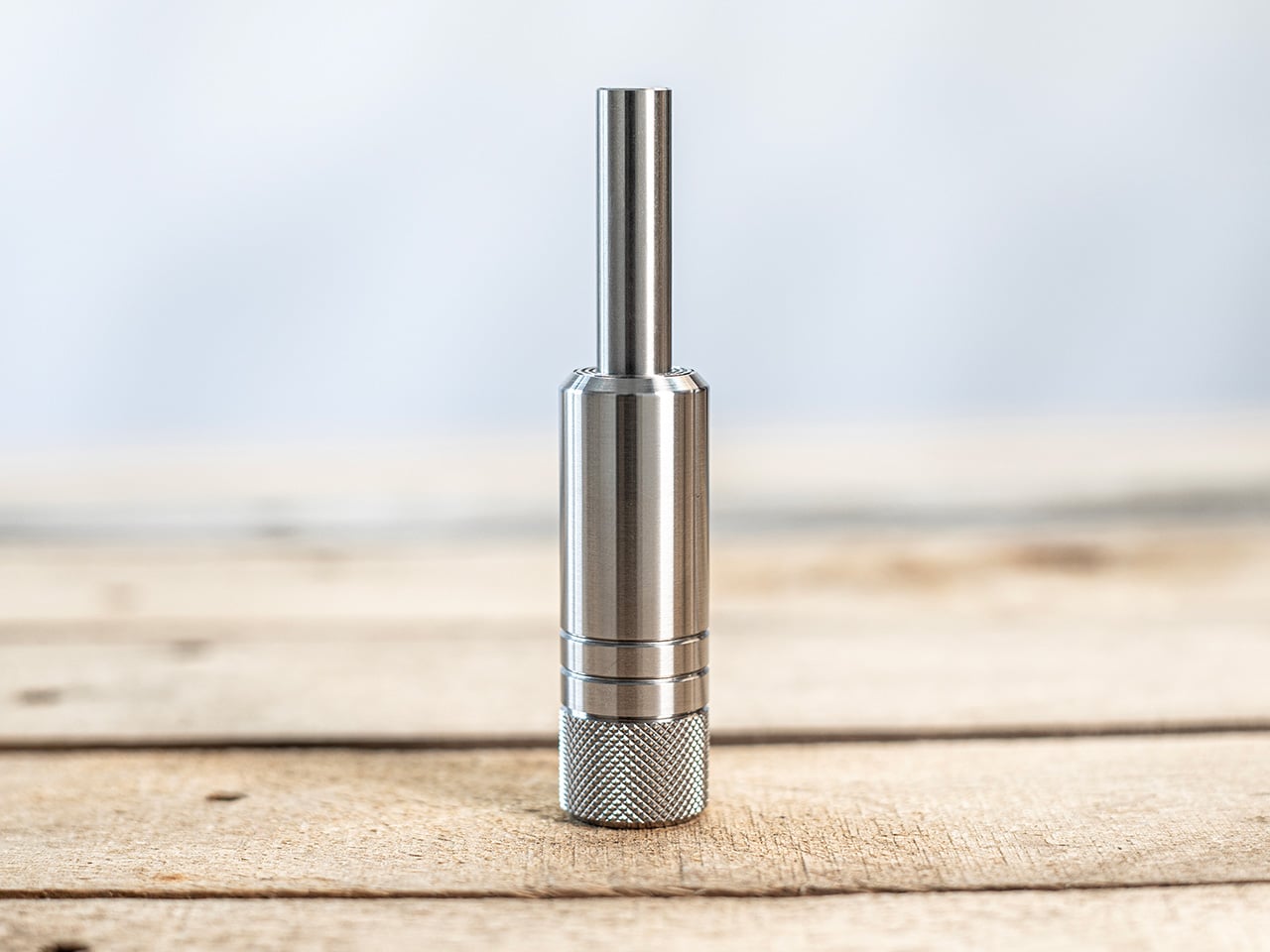
The MetMo Brass Piston is priced at £59.99 GBP ($81.23 USD) and is available directly from MetMo’s UK workshop. It is machined from solid brass, although there’s a stainless steel version priced at £94.99 ($126.4 USD) too, hand-assembled to order, and backed by MetMo’s 200-year guarantee. For anyone who thinks with their hands, who values mechanical honesty over gimmicks, or who simply wants a desk object that does one thing exceptionally well, this is one of the most compelling fidget toys I have come across in a while.

Click Here to Buy Now: $89.99

The post Ultra-silent brass fidget piston is built with such precise tolerances that air becomes the spring first appeared on Yanko Design.