
Nothing announces Ear (3a) sub-$100 ANC earbuds
Nothing's Ear (3a) are ANC-equipped earbuds that cost less than $100.

Vases occupy an awkward corner of product design. Most exist somewhere between functional and decorative without committing to either, and the result is a category that rarely surprises. Ceramic ones carry craft tradition, glass ones depend on color and transparency, and the novelty options try to be sculptural without much conviction behind them. It’s a crowded space that doesn’t often ask interesting questions.
The Offcut Aluminum Vase starts from a different premise. Its form didn’t come from sketching vessel shapes or looking for the next minimalist curve. It came from staring at the end of a rack of industrial aluminum profiles, tubes, and sections waiting to be put to use. That cross-sectional view of bundled profiles, the overhead pattern nobody usually notices, is where the whole design began.
Designer: Raphael Klug
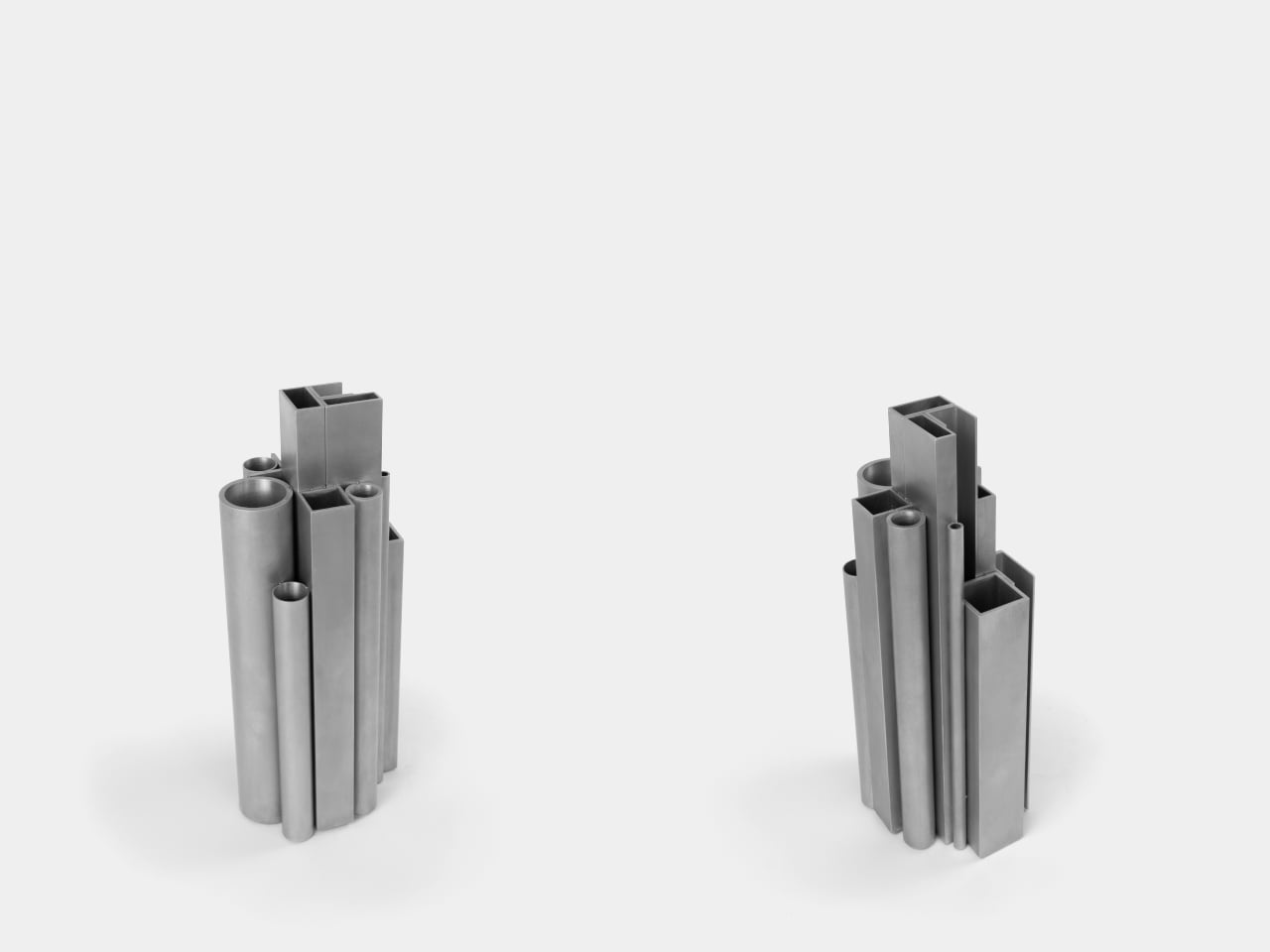
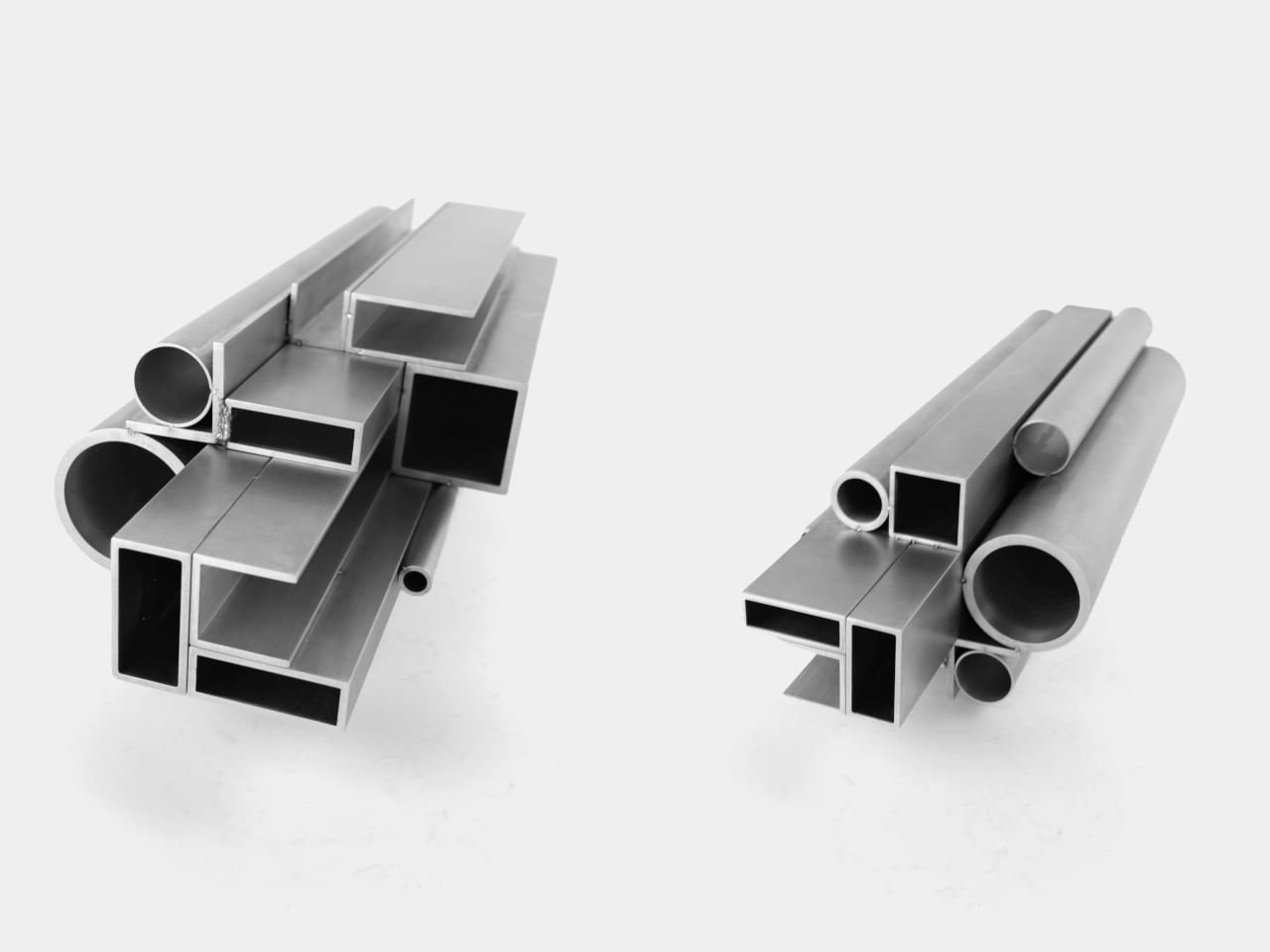
The construction is direct: actual aluminum offcuts bundled together, each piece a different cross-section. Circular tubes of varying diameters sit alongside square and rectangular hollow channels, all cut to different lengths that create a staggered, stepped silhouette when assembled. The look is instantly readable to anyone who has spent time near a metalworking shop or materials supplier, and distinctly strange to everyone else.

What’s surprising is how naturally it functions as a vase. Each opening, whether a round tube or a square channel, holds a single stem at a height set by that profile’s cut length. A tall flower finds one tube, a shorter bloom another, a delicate, small-stemmed flower a third. The structure of the object quietly distributes stems at different levels without any deliberate arrangement on your part.
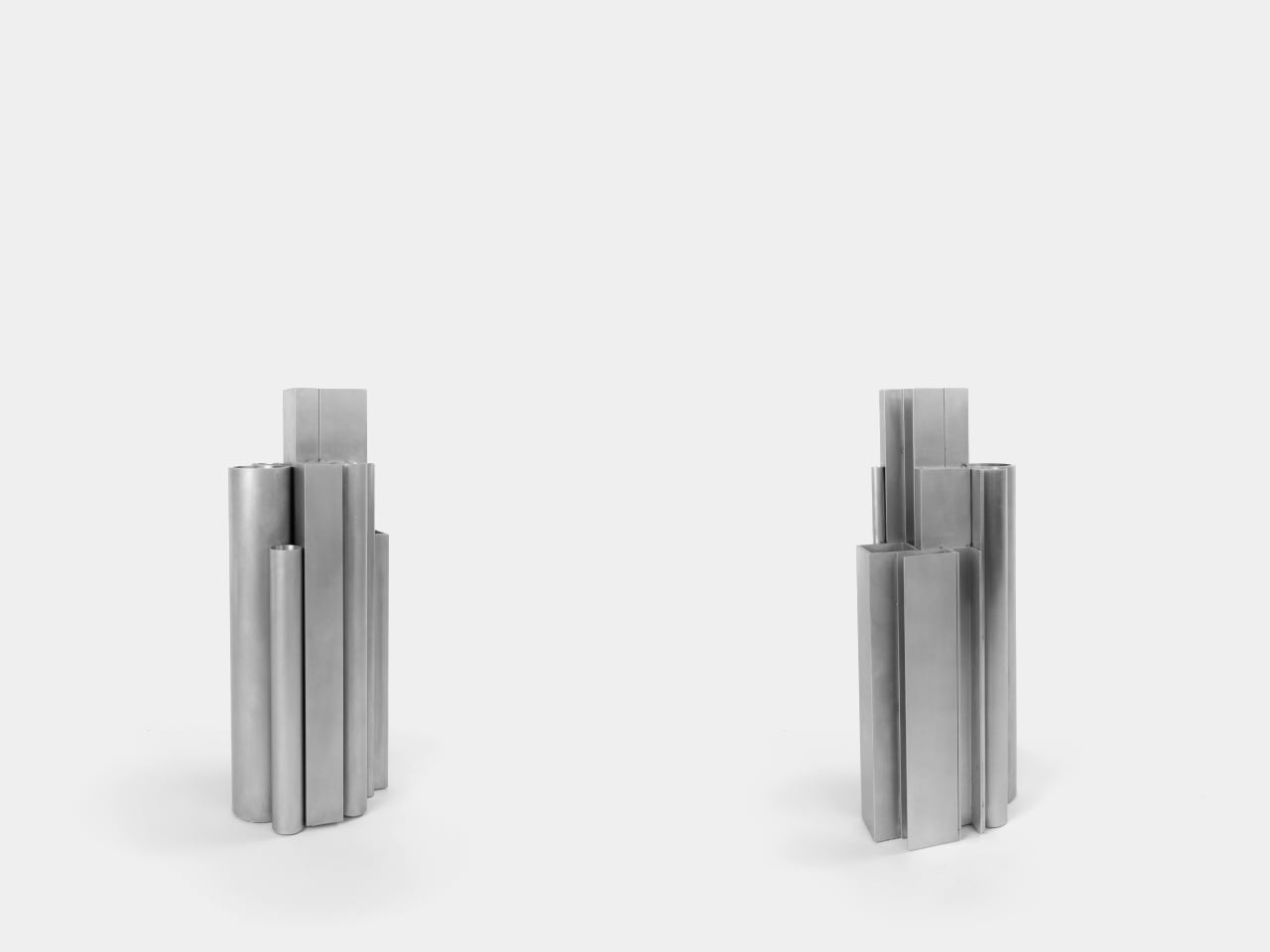
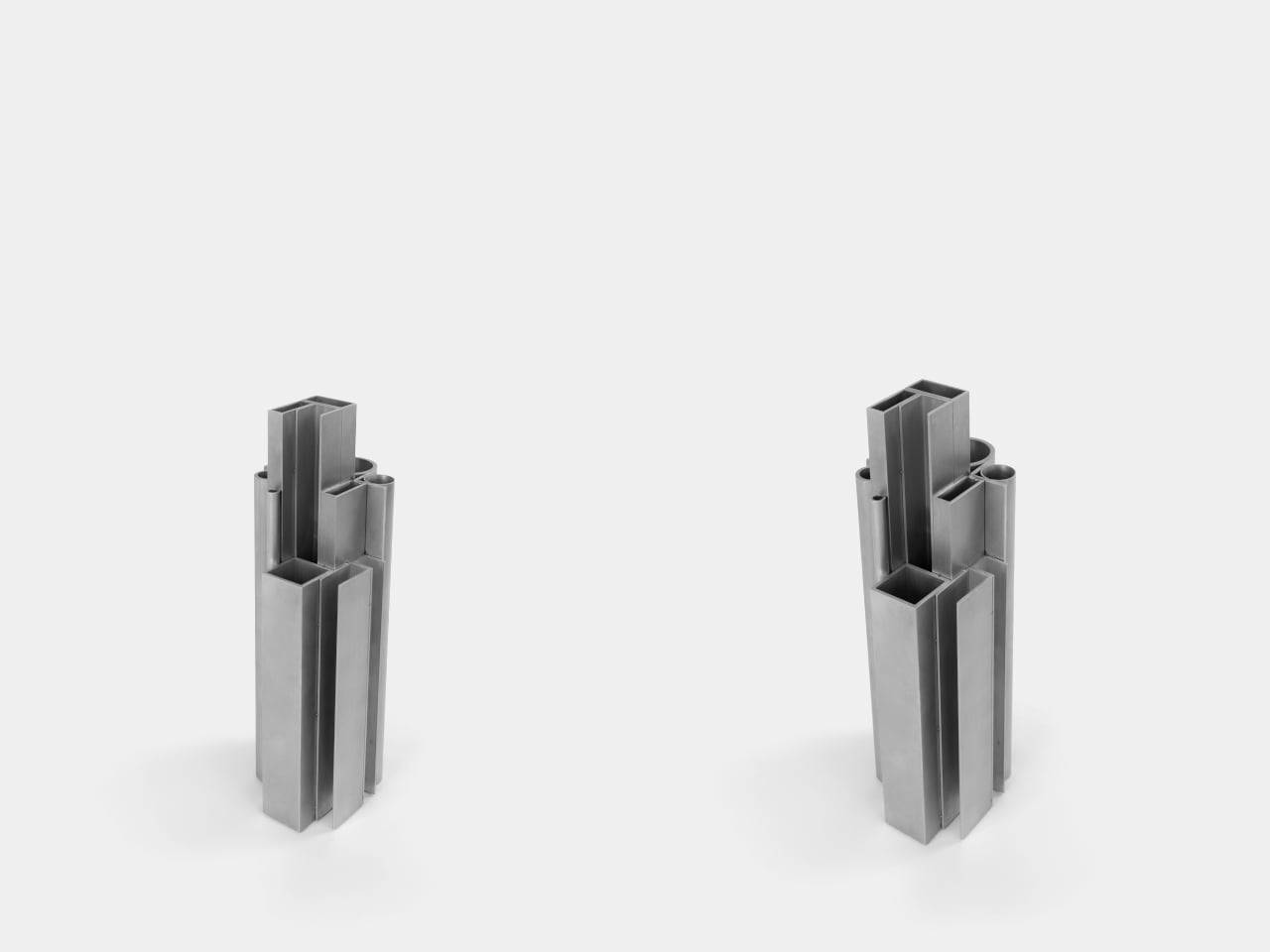
The visual tension between the material and its setting is part of the appeal. Aluminum profiles don’t belong on a shelf with fresh flowers, and that friction is doing real work. The matte silver surface reads as cold and precise until something organic is placed inside it, and the contrast becomes the whole point. The industrial origin doesn’t disappear; it becomes what makes the flowers harder to ignore.
The choice to use actual offcuts rather than new aluminum cut to look like offcuts also matters. Most of this material would otherwise end up as leftover stock or be discarded at the end of a production run. Using it this way doesn’t require additional processing; the profiles arrive already shaped, already finished, and carrying the full character of their industrial origin without modification.
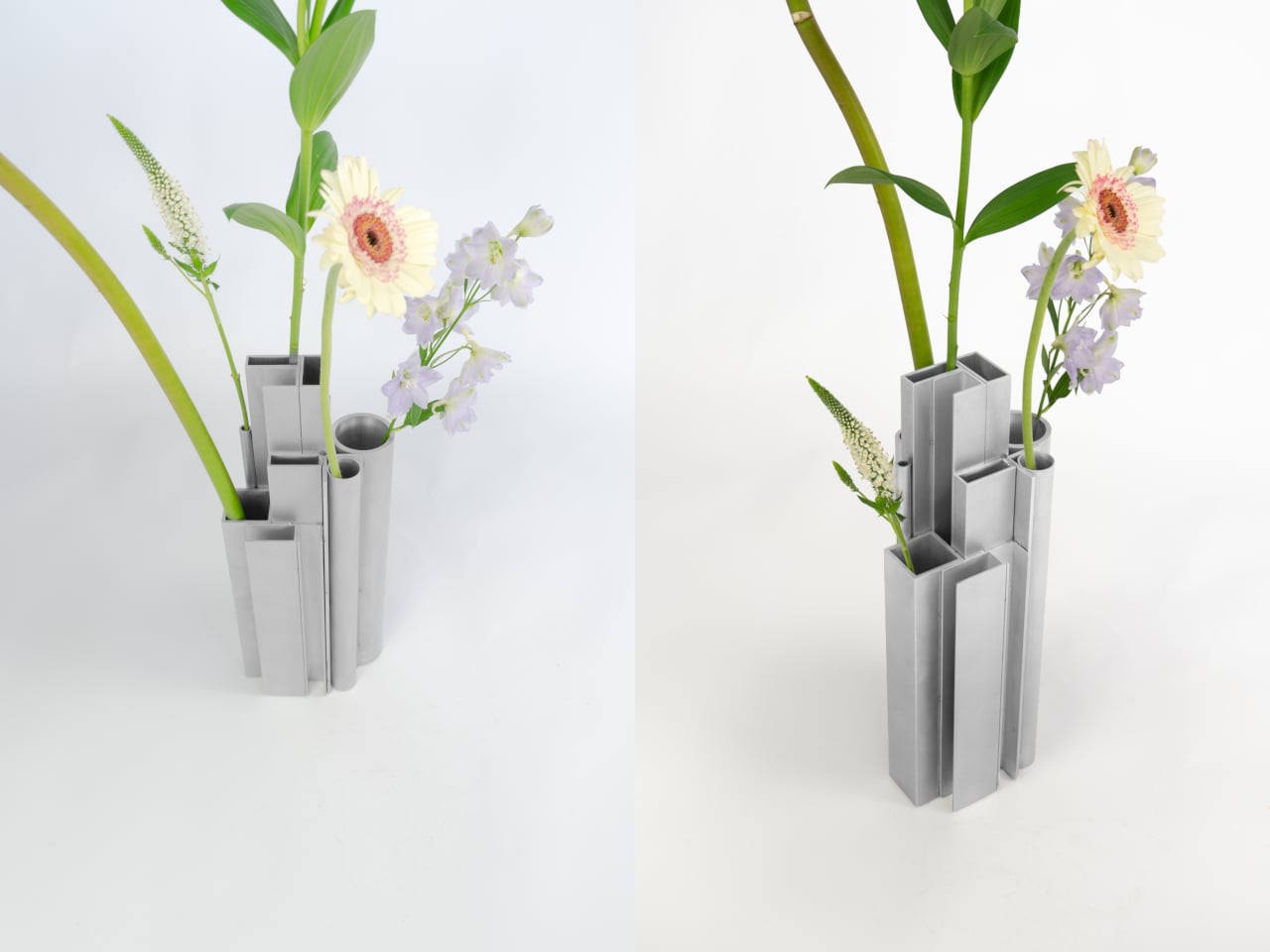
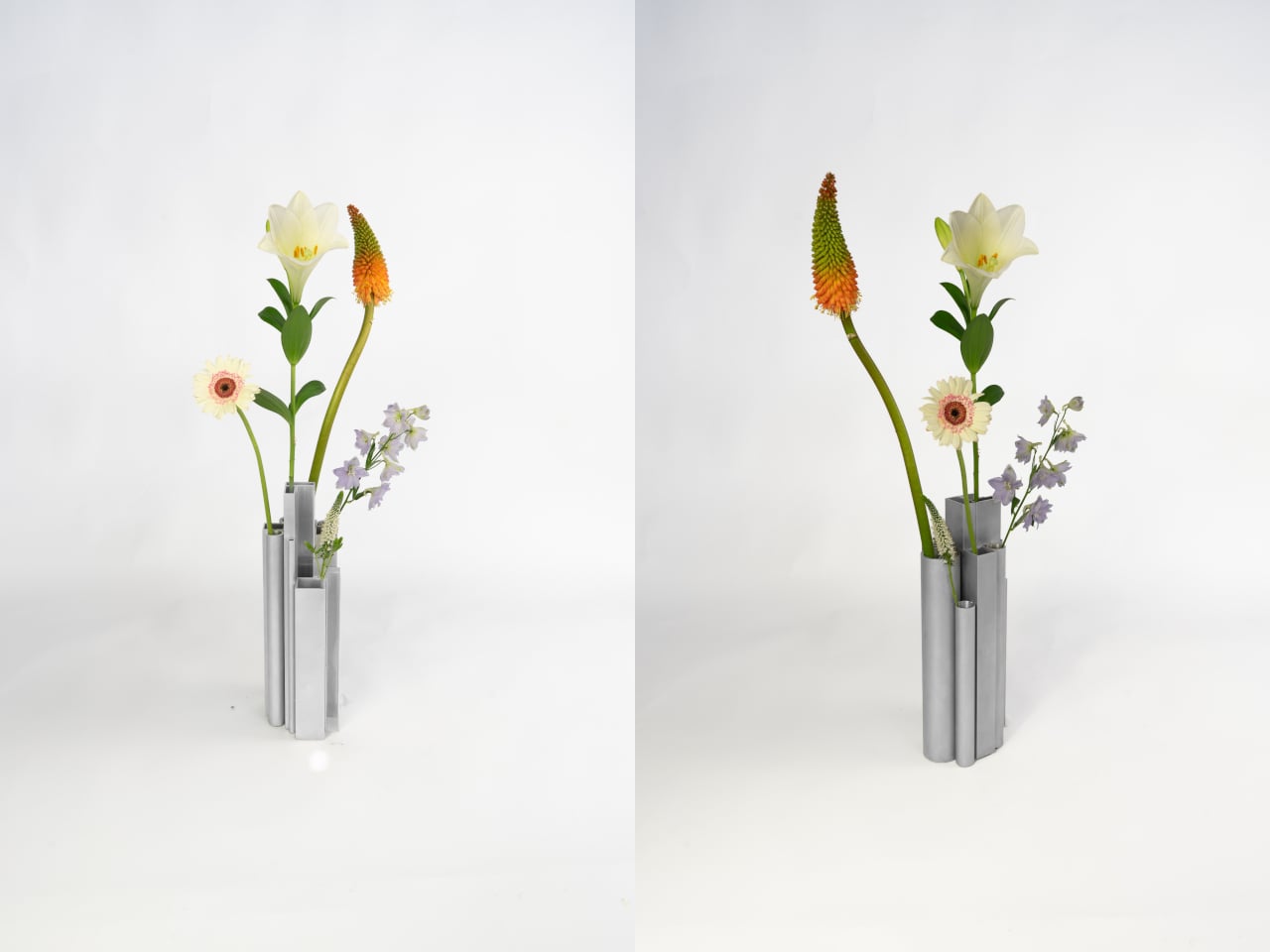
The vase holds its own even without flowers in it. The stepped arrangement of sections at different heights reads as a small sculptural object that could sit on a shelf as comfortably empty as it does full. The form doesn’t need flowers to complete it, which means that when you do add them, the combination feels considered rather than accidental.
It’s a rare thing when a design object’s material, form, and function all trace back to exactly the same source. Here they do. The offcuts are the structure, the structure is the form, and nothing about their industrial origin has been hidden or softened along the way. The workshop and the shelf turn out to have considerably more in common than most vases would ever admit.

The post This Vase Was Made From Aluminum Tubes That Would’ve Been Thrown Away first appeared on Yanko Design.

E Ink displays have earned a devoted following among people who spend long hours reading or writing. The technology produces virtually no flicker, doesn’t use the same harsh backlight as a typical LCD or OLED, and is considerably easier on the eyes over extended sessions. The catch has always been speed; these screens refresh slowly, making them suitable for e-readers but impractical for real-time interaction.
Color E Ink made things more complicated. Adding a color layer came at the cost of even slower refresh rates, keeping these monitors firmly in the reading-only category for most users. Bigme’s B251 Pro takes direct aim at that limitation, pushing a 25.3-inch color E Ink screen to reach up to 60 frames per second, a meaningful first for this panel type.
Designer: Bigme

The screen uses Kaleido 3 technology at a 3200×1800 resolution, and at 145 DPI, it’s modest by LCD standards but respectable for E Ink, where the color filter layer tends to soften detail. The panel supports 4,096 colors and 16 levels of grayscale, while an adjustable front light with warm and cool modes lets you set the tone for your workspace.

What 60 frames per second changes practically is the range of tasks the monitor can handle without resistance. Scrolling through a long document doesn’t leave a trail of ghost images. A video clip doesn’t dissolve into motion blur on every cut. It’s not yet the fluidity of an LCD, but it’s the first time a color E Ink monitor has felt fast enough for an ordinary workday.

The B251 Pro accepts input through HDMI and DisplayPort. The USB-C port is reserved for firmware updates only, not video signal, which is worth knowing before assuming you can use it with a laptop’s Thunderbolt port. A wireless mirroring option covers that gap for cable-free setups, and the monitor ships with a remote control for switching display modes from your desk.
Spend enough hours at a standard monitor and eye strain becomes a familiar background discomfort: dull headaches, dry eyes, and that particular kind of fatigue that sets in before the day is even over. The B251 Pro is built for people in that position, specifically those whose work keeps them at a screen for most of the day and who’ve started looking for a less punishing alternative.

Bigme lists the B251 Pro at $1,599, currently reduced to $1,279 at launch. That’s a significant sum for a monitor that tops out at 4,096 colors and 145 DPI, and it won’t appeal to anyone who needs accurate color for professional photo or video work. For people who simply need a large, easy-to-live-with display and have started counting the hours their eyes spend under artificial light, the math looks different.
The B251 Pro doesn’t ask you to trade speed for eye comfort, and that compromise has defined this category since its beginning. Writers, coders, and anyone whose work is mostly text and reference material will find the 60FPS upgrade more compelling than any spec sheet can convey. The original B251 already built a devoted following at lower speeds; this version gives that crowd considerably less to apologize for.

The post Get Ready for the Color E Ink Monitor That Finally Runs at 60fps first appeared on Yanko Design.
It has been nearly a decade since Apple stood on stage and showed the world a glimpse of a perfect, seamless charging future. They called it AirPower, a pristine white mat where your iPhone, Apple Watch, and AirPods could all charge together, no matter where you placed them. It was the ultimate expression of the company’s “it just works” philosophy. Then it vanished, becoming a ghost in the machine, a rare public failure that left a gaping hole in their otherwise pristine ecosystem. In the years since, Apple has released a parade of new devices all built for wireless power, yet it has never offered its own solution to charge them all at once, leaving users to fend for themselves in a tangled mess of cables.
This is the chaotic legacy of that broken promise; a nightstand cluttered with a magnetic puck for the phone, a separate dongle for the watch, and a dedicated spot for the AirPods. Into this void steps the ADAM elements Mag 3 Ultra, a device that feels like the pragmatic, real-world answer to the problem Apple created and then ignored. It is a single, intelligent object that consolidates the cornucopia of chargers into one clean, foldable station, while bringing the kind of premium technical muscle Apple never delivered itself, including Qi2 support and up to 25W magnetic fast charging. With a satisfying magnetic click, your entire daily tech trio finds its home, transforming the wire-filled mess into an organized, architectural display. It is the elegant solution the industry had to build for itself.
Designer: ADAM elements
Click Here to Buy Now: $81.75 $109 (25% off, use coupon code “25YDMAG3UL”). Hurry, deal ends in 48-hours!
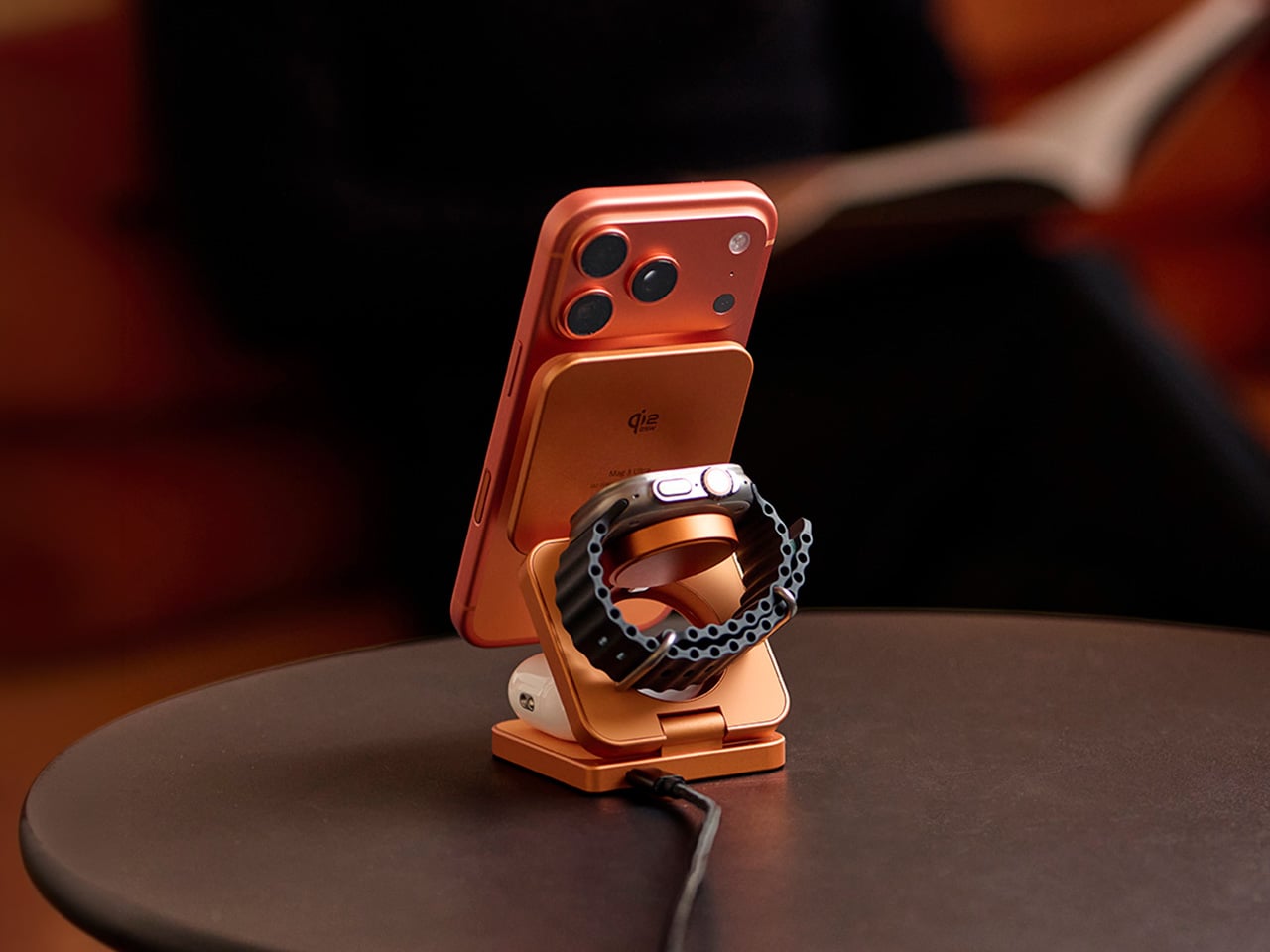
Built from an aluminum alloy body with a metallic finish, the Mag 3 Ultra arrives in a warm copper-orange colorway that immediately separates it from the sea of matte black and sterile white accessories dominating the category. The geometric form has a considered quality to it, with rounded corners softening the overall profile while the silhouette reads more like a designed desk object than a utility accessory. It looks genuinely at home on a nightstand or a workstation, which is precisely the point.
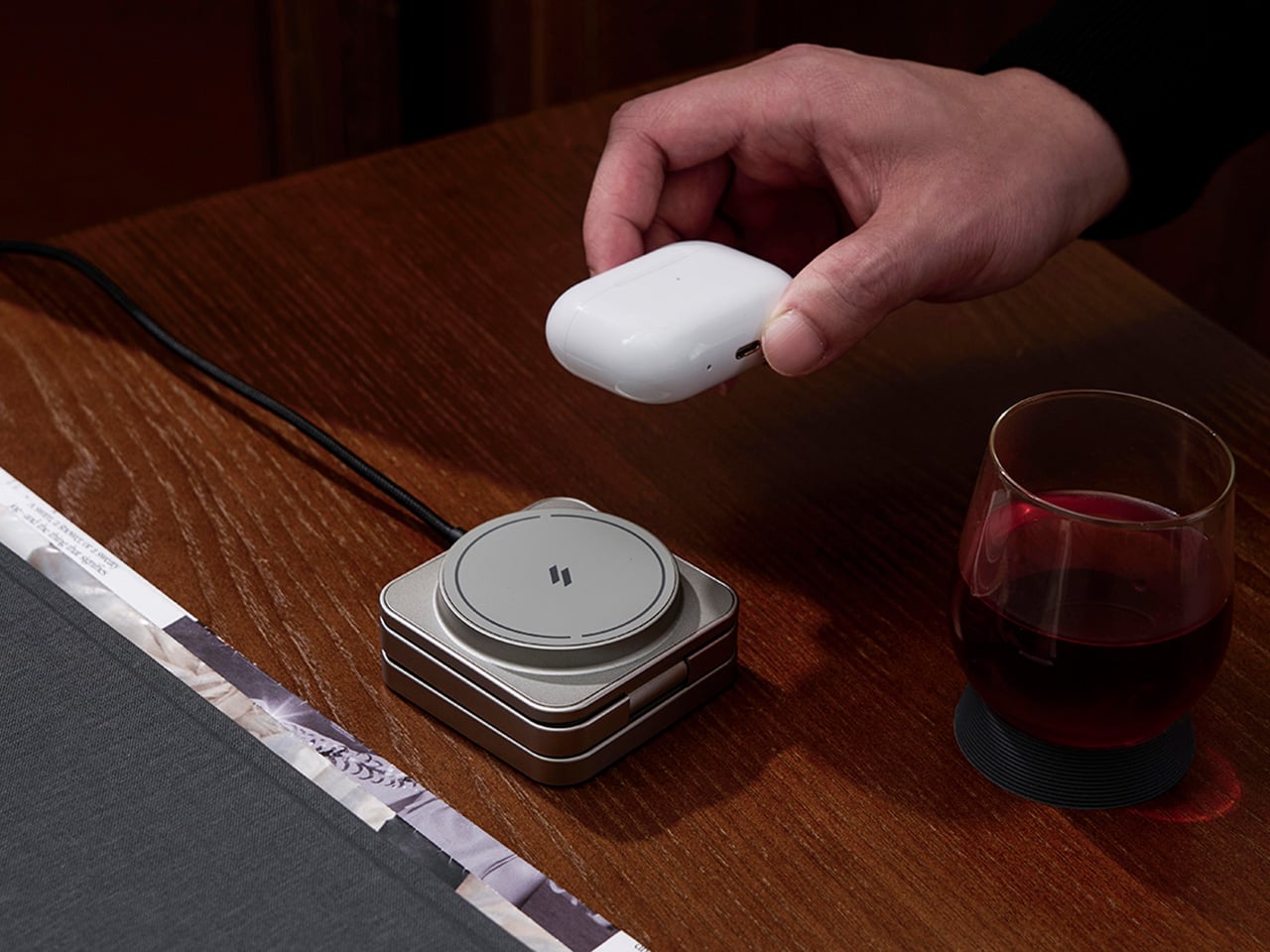
In its collapsed state, the Mag 3 Ultra folds flat into a compact square barely thicker than a deck of cards, slim enough and light enough to slip into the side pocket of a laptop bag without a second thought. Opening it triggers a proper transformation. The magnetic phone pad rises on an articulated arm, the watch charging ring locks into its position in the middle section, and the base reveals the dedicated AirPods charging zone. The whole structure settles into a stable, deliberate configuration with a hinge that holds its angle without wobble, giving it the kind of solid feel that justifies the premium finish.
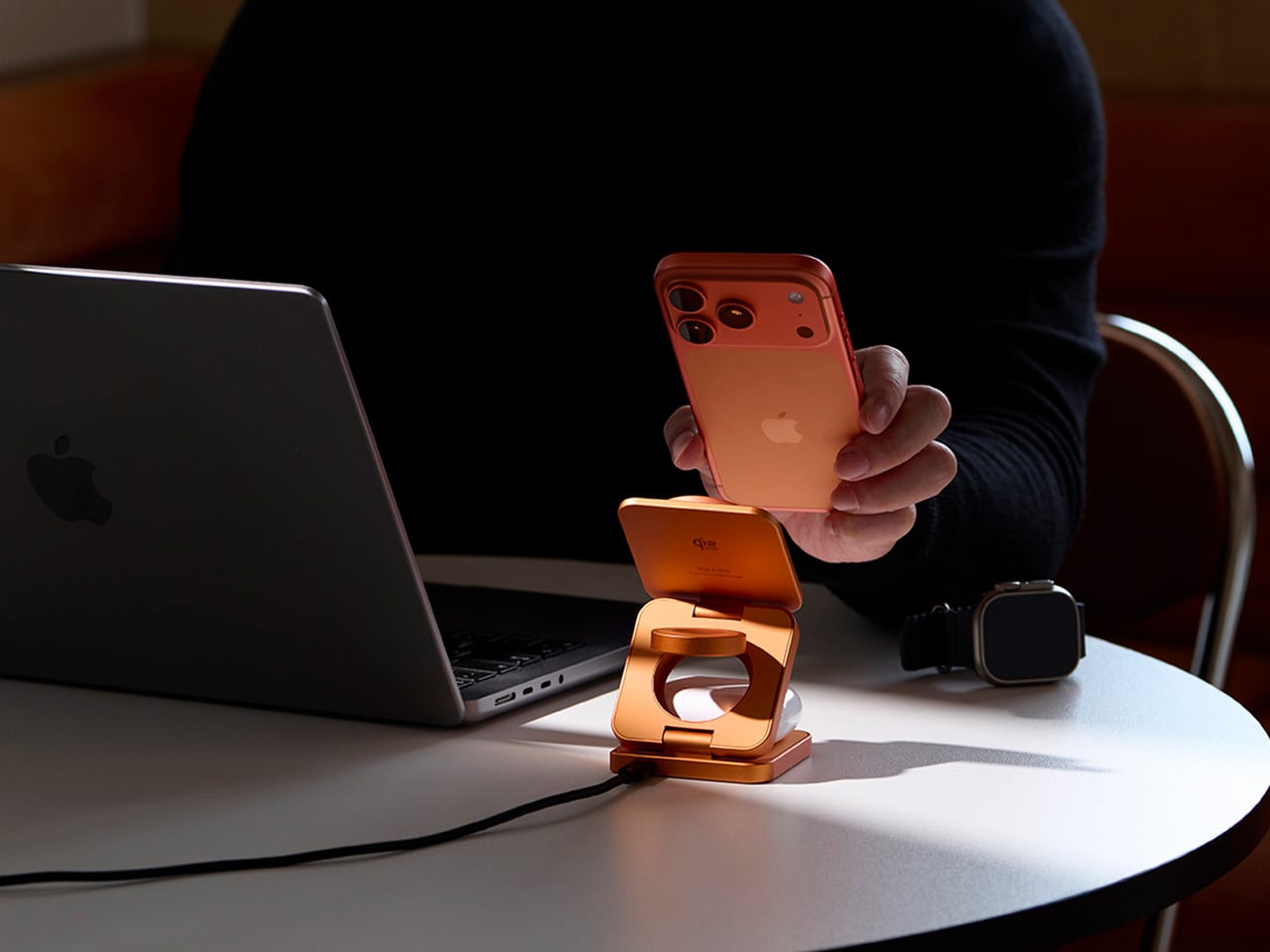
ADAM elements designed the phone charging position with a raised elevation that solves one of the quieter frustrations with most wireless stands. The camera module on modern iPhones is substantial, and a poorly designed dock will let it press against the body of the stand, creating an awkward tilt or contact point. The elevated pad here keeps the camera completely clear, allowing the phone to sit flush and properly upright. Magnetic alignment snaps the iPhone into place with MagSafe-level precision, and the stand accommodates both portrait and landscape orientations. That landscape mode makes it genuinely useful as a StandBy display, propped up and charged while serving as a live clock face, notification board, or ambient photo frame.
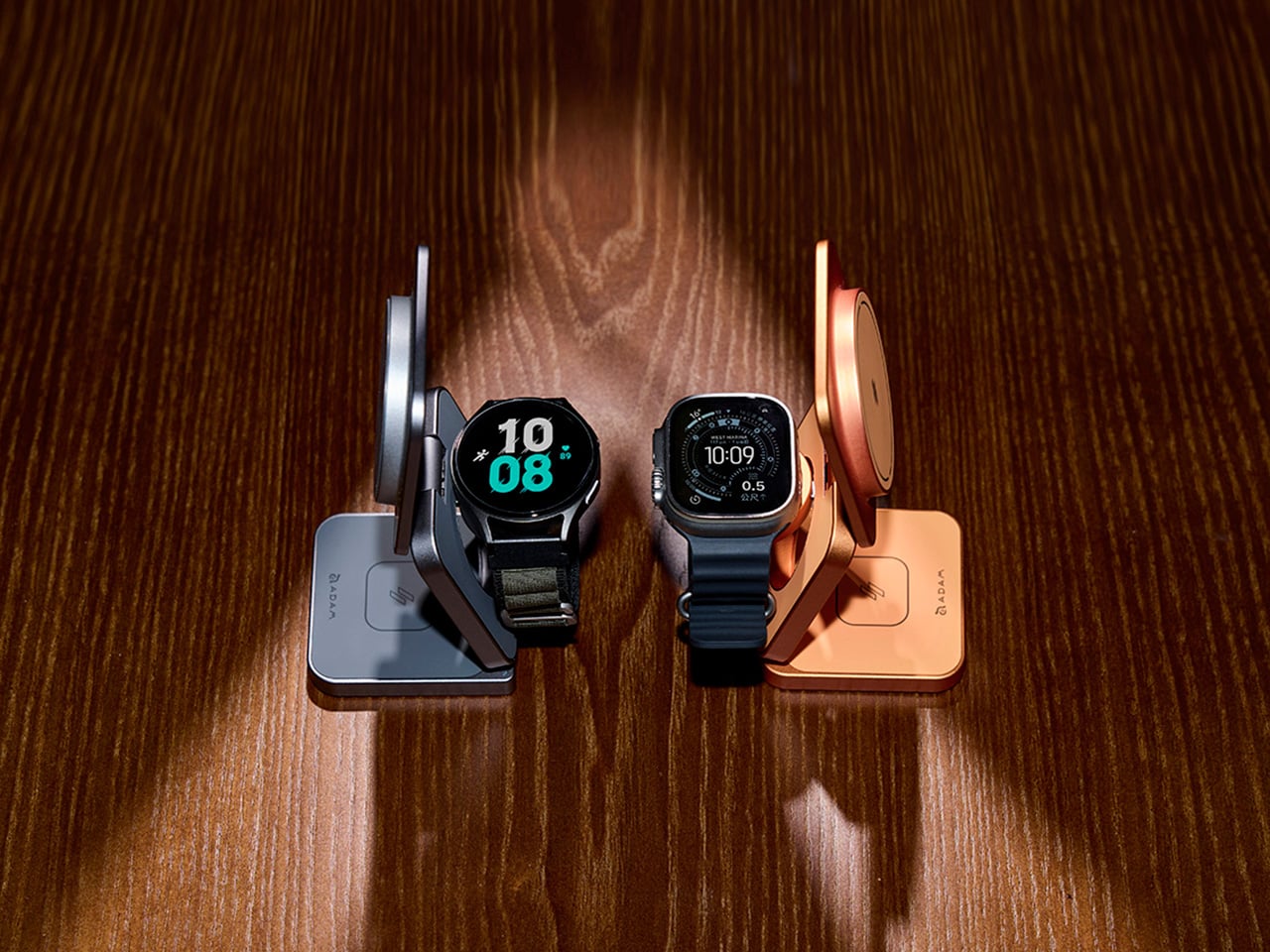
Beyond simply charging three devices at once, the Mag 3 Ultra brings stronger technical value with support for the latest Qi2 protocol and up to 25W magnetic fast charging, giving it a more serious performance edge than the average bedside dock. The Apple Watch connects to its dedicated charging ring with support for fast charging across newer Apple Watch models, while the base pad handles AirPods with standard Qi wireless that works with any wireless-capable case. All three devices charge simultaneously, without any of them competing for priority or slowing each other down. To maintain that full 25W wireless charging performance consistently, ADAM elements recommends pairing the Mag 3 Ultra with a USB-C power adapter rated at 45W or higher on a single port.
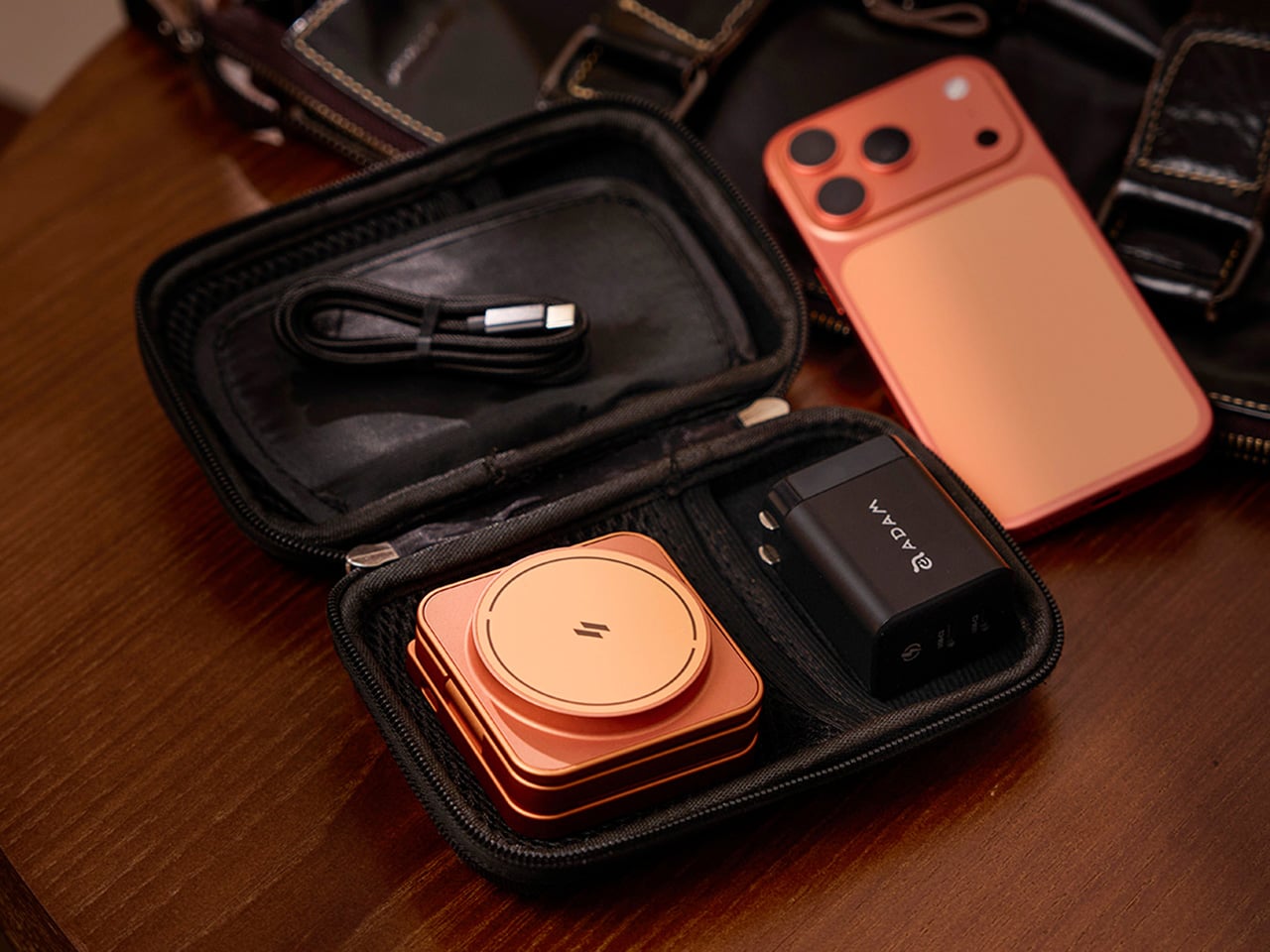
The engineering behind the safety features is also well considered. The Mag 3 Ultra includes FOD, Foreign Object Detection, which prevents the charger from pushing power through metal objects like coins or cards that might accidentally land on the pad, protecting both the station and whatever is sitting on it. Overcharge, overheat, and short-circuit protection round out the suite. A small LED indicator on the phone and earbuds charging area communicates status simply and without fuss; white light for active charging, no light during standby or watch charging, and a flashing blue signal when a foreign object or over-temperature event is detected.
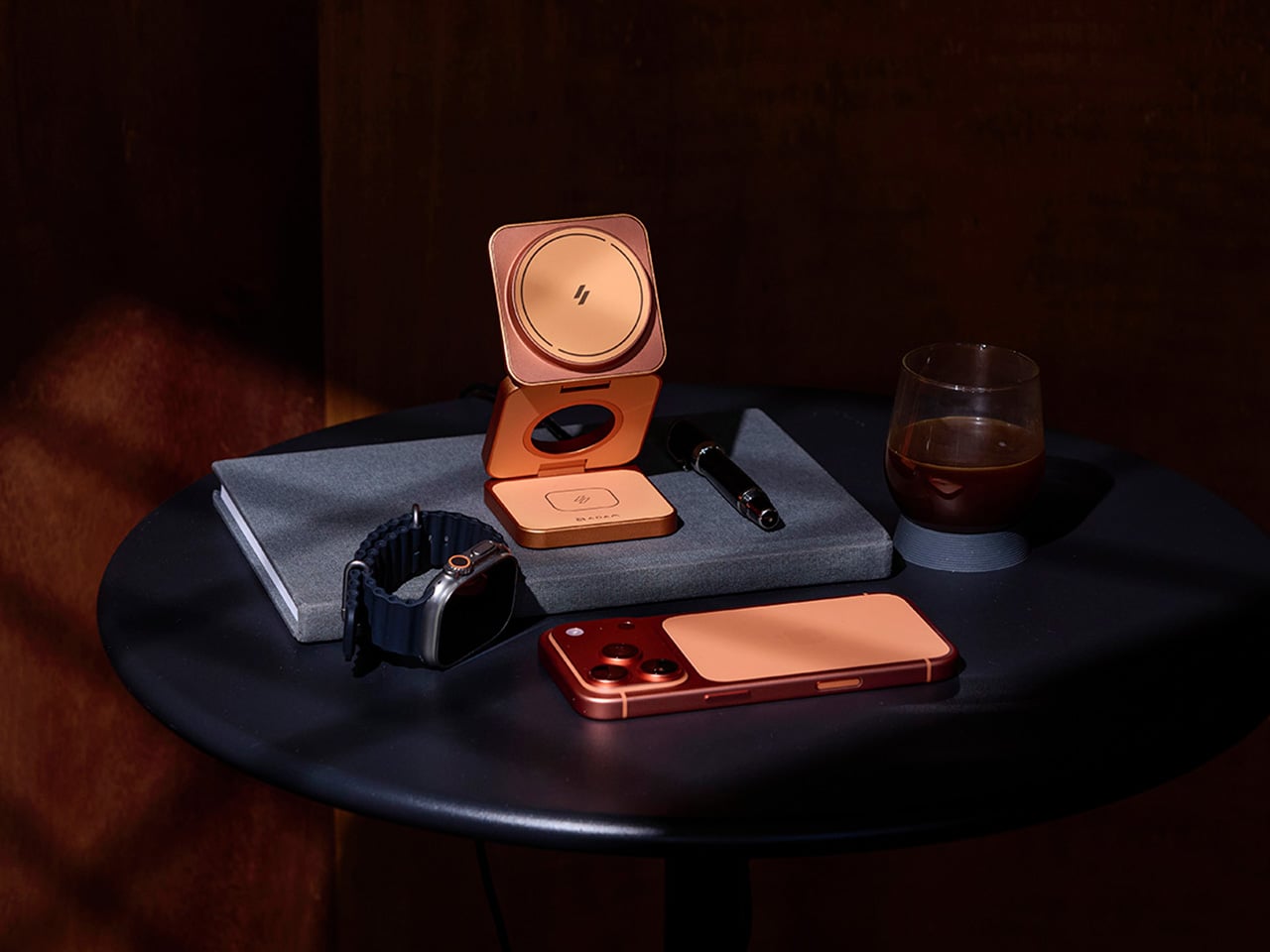
At $109, the Mag 3 Ultra sits in the premium tier of the 3-in-1 charging category, but ADAM elements gives it enough visual personality and technical reassurance to support that positioning. It comes in three finishes, Titanium, Orange, and Gray, each one lending the charger a different mood, from understated and technical to warm and expressive, while the inclusion of a 3-year warranty adds a welcome layer of peace of mind for something designed to live permanently on a desk or nightstand. That range really draws the difference between most regular chargers and the Mag 3 Ultra, because this is exactly the kind of product that stays out in the open every single day, where color, material, and long-term confidence can make the difference between something you tolerate and something that actually belongs in your space.
Click Here to Buy Now: $81.75 $109 (25% off, use coupon code “25YDMAG3UL”). Hurry, deal ends in 48-hours!
The post This 3-in-1 Qi2 + MagSafe Charging Dock Is the ‘Bedside Clutter Killer’ Apple Never Built first appeared on Yanko Design.


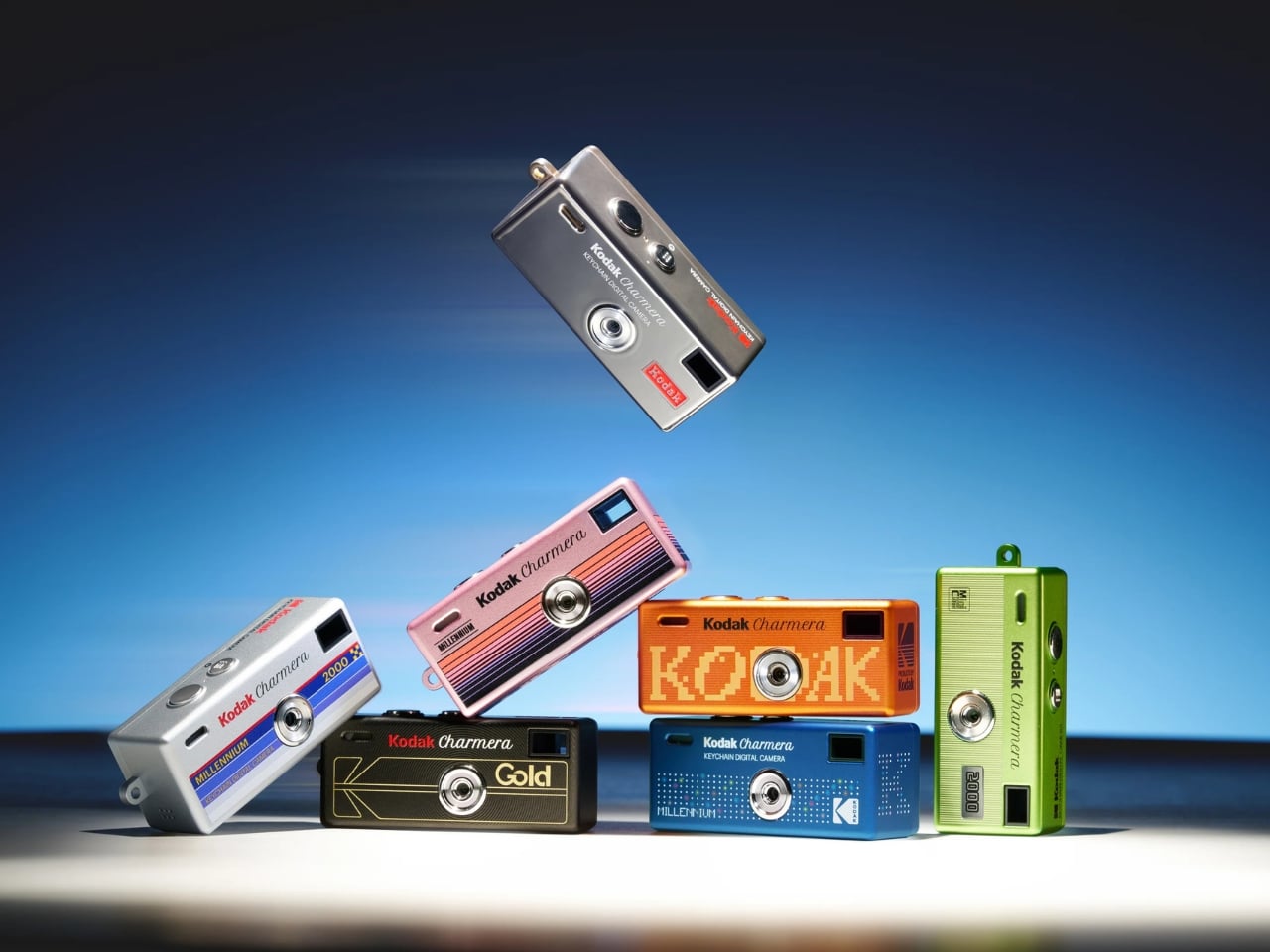
Cutesy analog-inspired cameras that also serve as keychains are probably all over your feed, if it’s anything like mine. And just when you thought you might be satisfied with the one you already have (if you actually have one), they go ahead and release new designs that make you want to replace what you have, or finally succumb and get one.
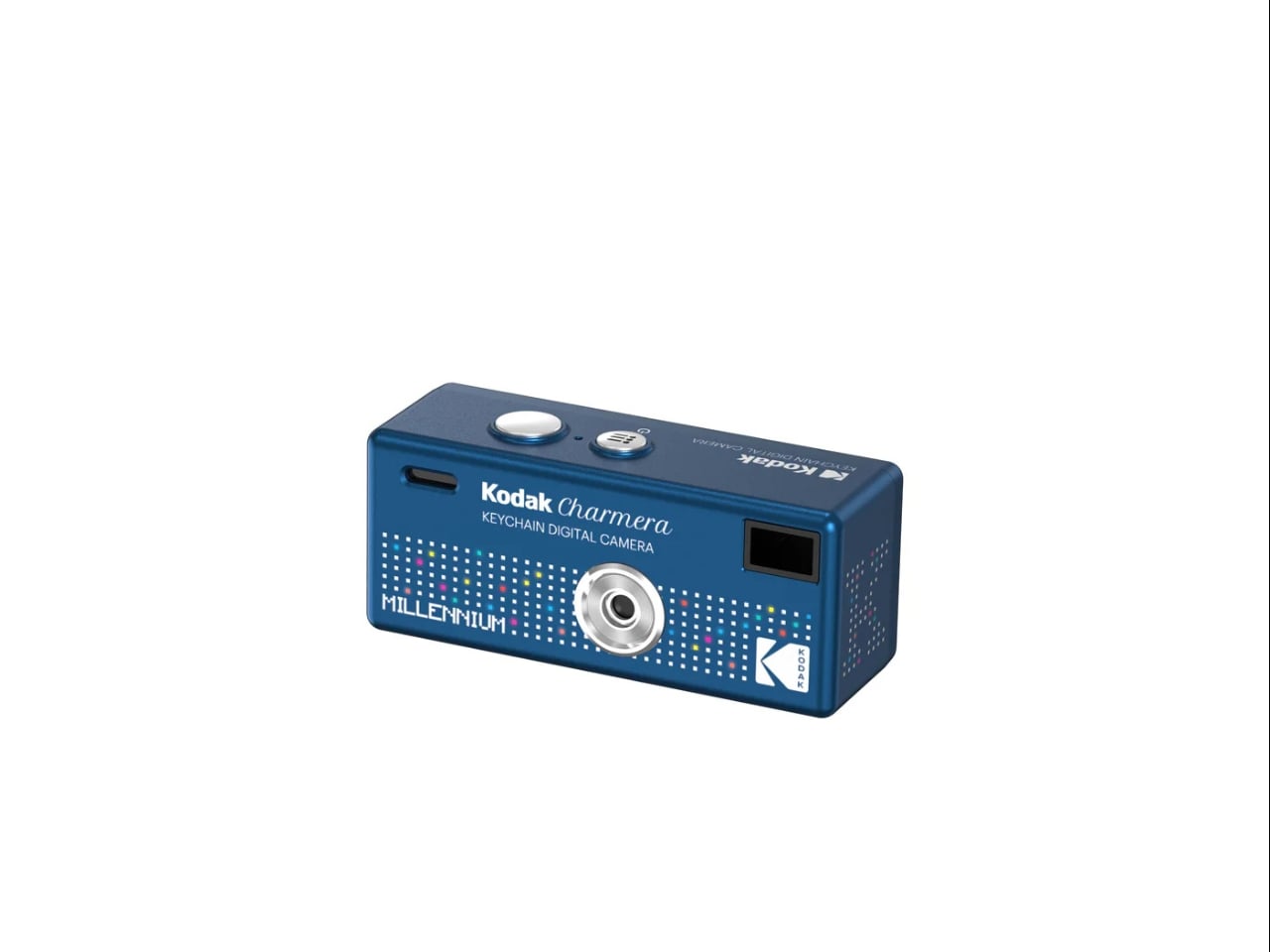
The Kodak Charmera line is one of the most popular devices in this segment, and now they have released a new series that will scratch the Y2K itch within you. The Kodak Charmera Keychain Digital Camera – Millennium Edition brings this line into the future-past, stepping away from the “portable retro” look of the original 1987 Kodak Fling-inspired Charmera. Riding on the current wave of Y2K nostalgia, Kodak is branding this new line as “the ultimate lo-fi futurist accessory.”
Designer: Kodak
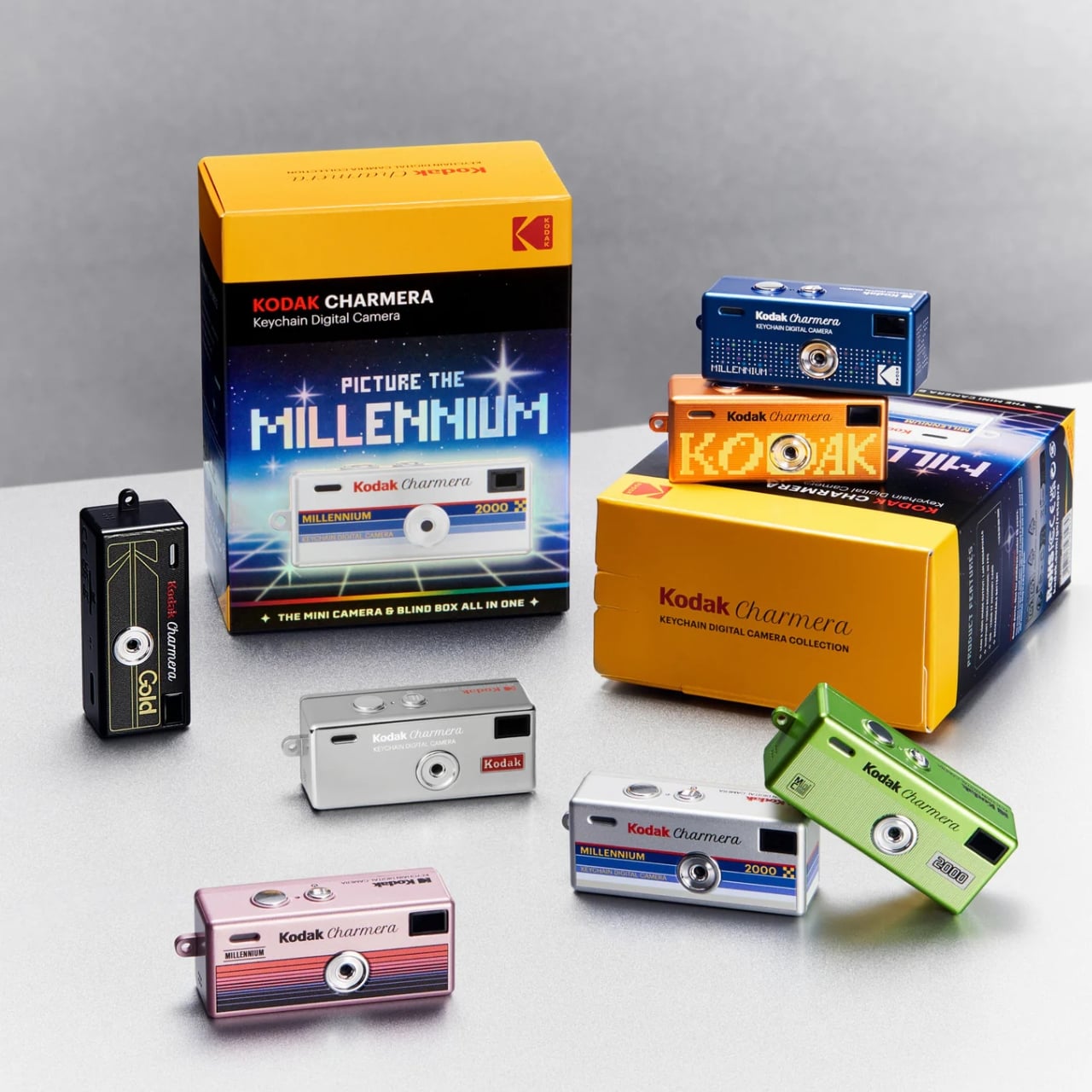

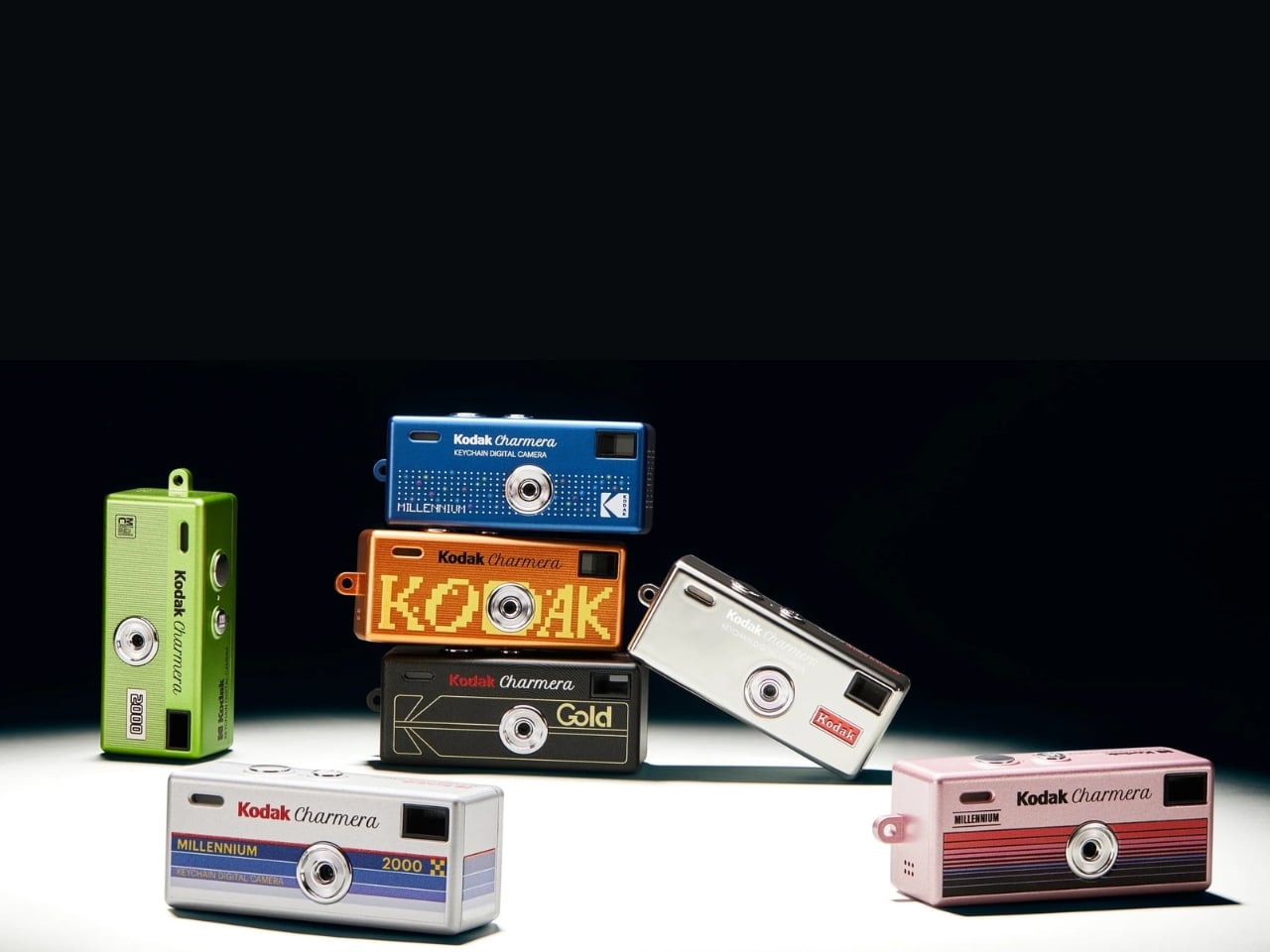
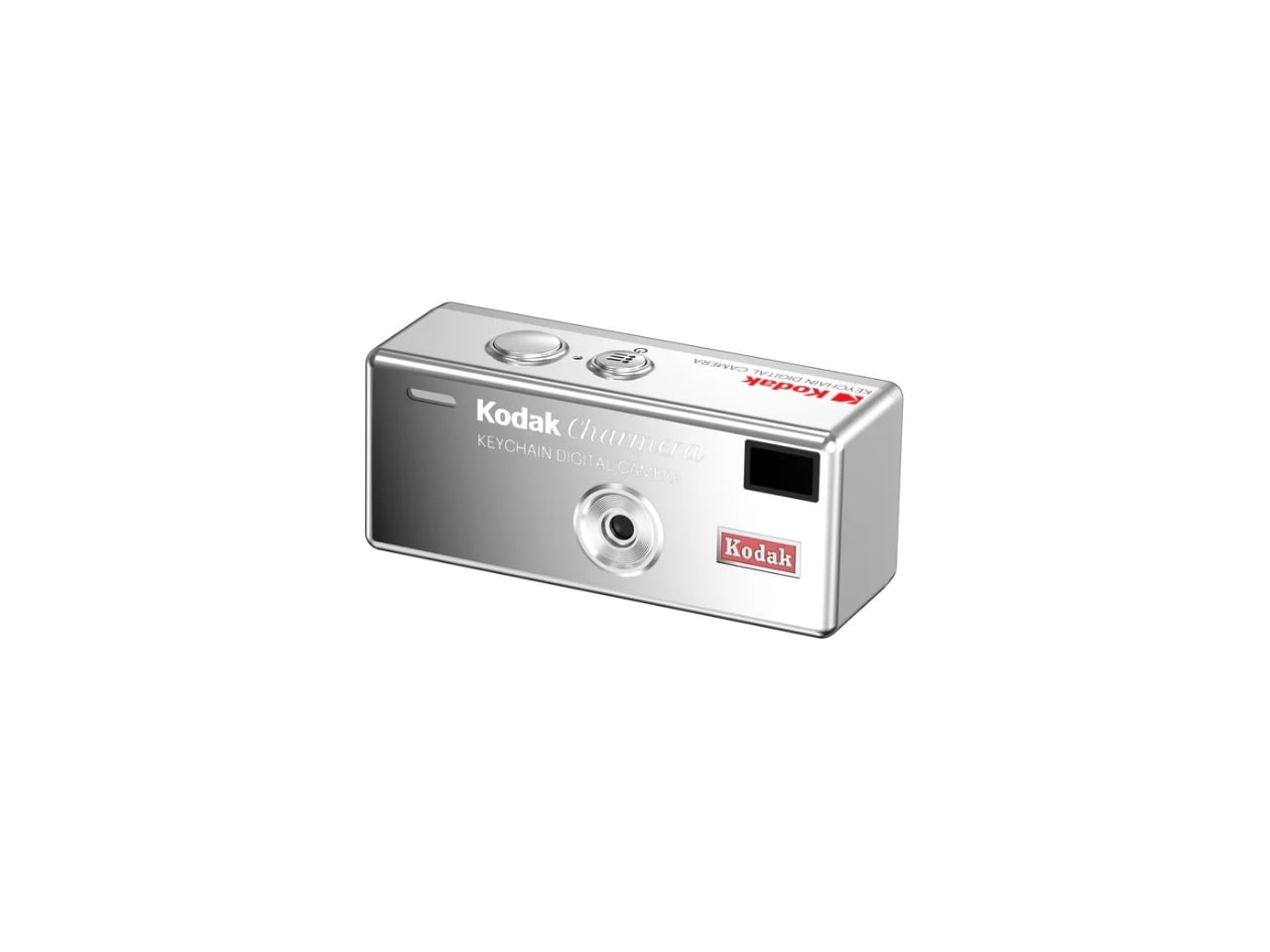
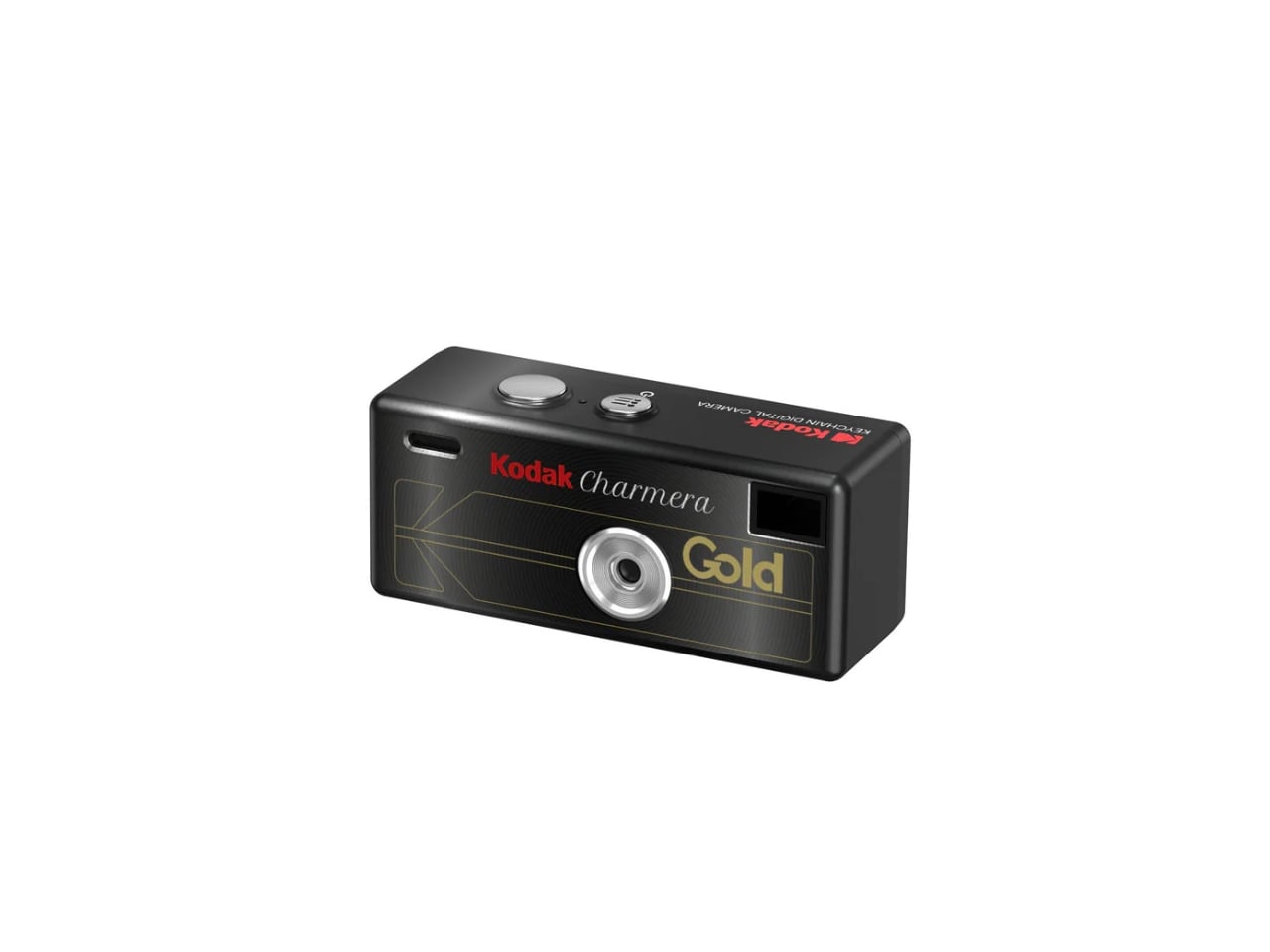
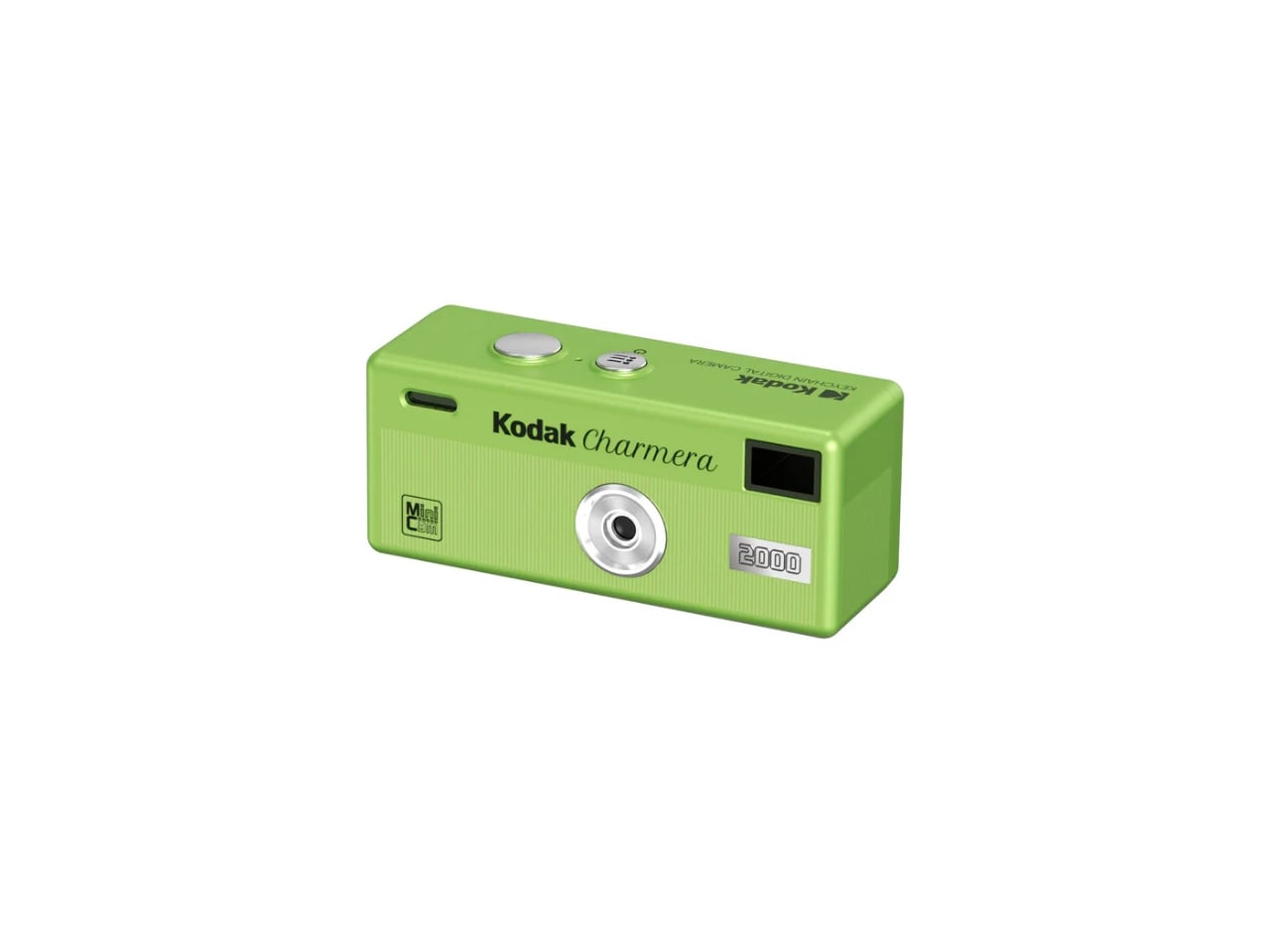
Just like the previous Kodak Charmera cameras, this one is a Blind Box edition, so you never know which of the seven designs you’re going to get. There are six standard colorways: silver, black, green, orange, pink, and metallic, plus a chrome-like secret mirror variant, which you have a one-in-48 chance of getting. The original Charmera features a classic retro look, while this edition gives you a new high-gloss metallic Y2K finish. Think bedazzled flip phones, candy-colored Discmans, and the iMac G3. That’s the exact energy the Millennium Edition is channeling.
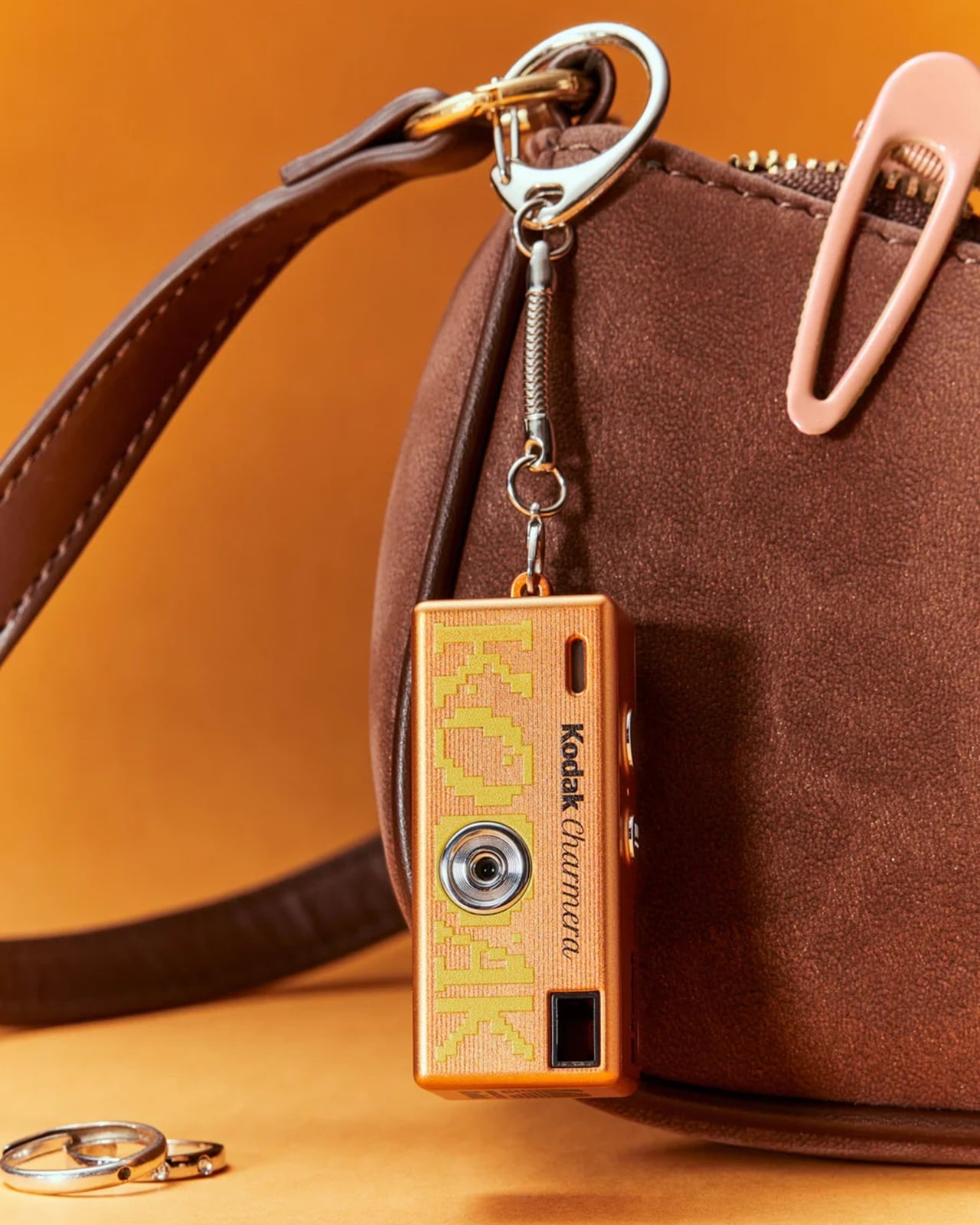
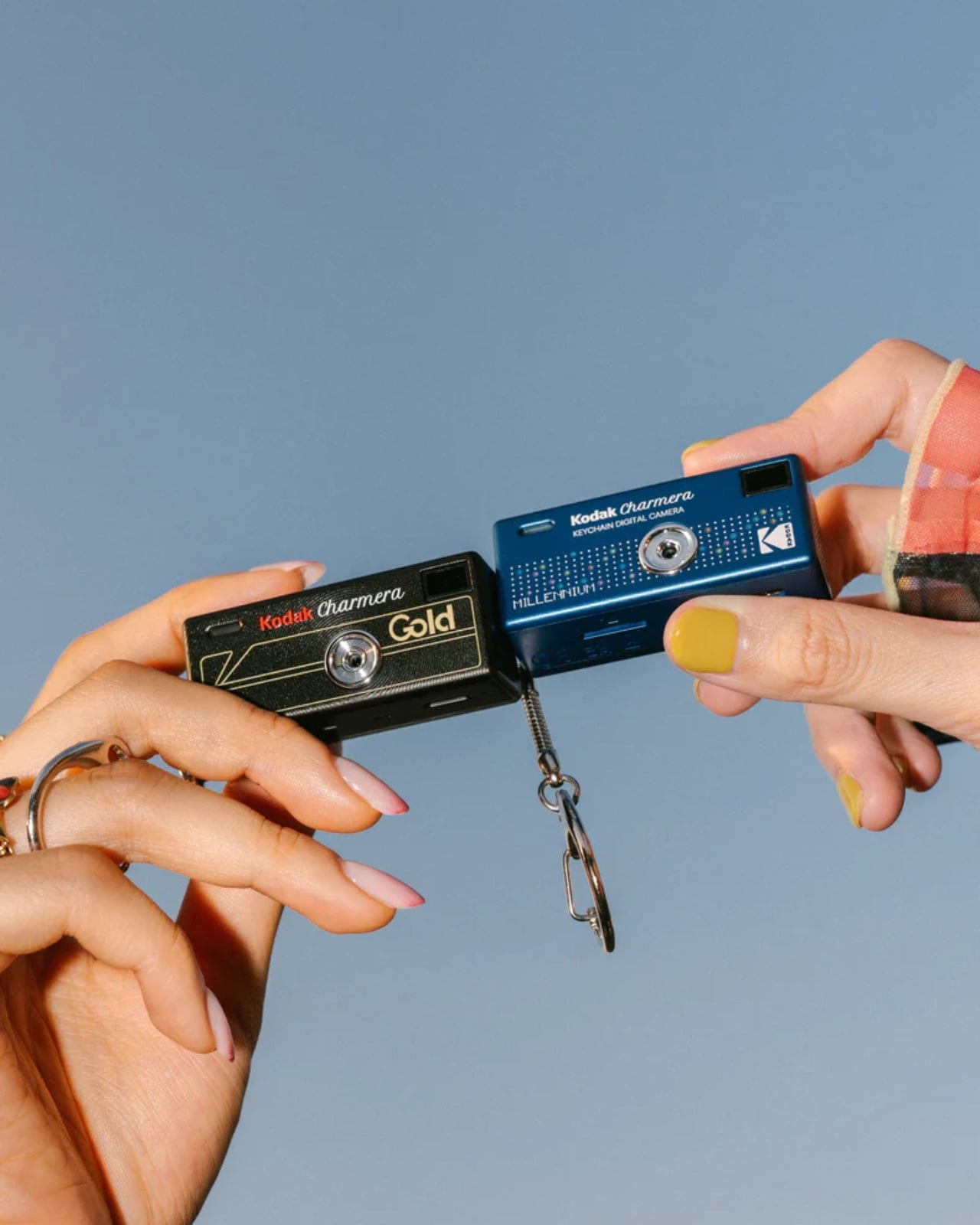
In terms of hardware, everything is more or less the same as the original. You have a 1.6MP 1/4-inch CMOS sensor, a 35mm F2.4 fixed lens, an image output of 1440 x 1080, and 30fps video recording. This is still in keeping with the lo-fi nature of what you’ll get from these keychain cameras, so don’t expect sharp or crisp images and videos. The intentionally grainy, pixelated results are all part of the charm. Lo-fi is a feature, not a flaw. After all, you’re not buying this camera to replace your phone. You’re buying it for the vibe.


What is new in this edition is the software and aesthetic overhaul. In photo mode, you get access to 4 retro-futurism frames, 7 color-rich pixelated filters, and a date stamp, all designed to give your shots that unmistakable early-2000s digital soul. The camera also comes with a dual zone focus system that distinguishes between subjects closer than eight feet and those farther away, giving you a little more control over your shots than you might expect from something this tiny.
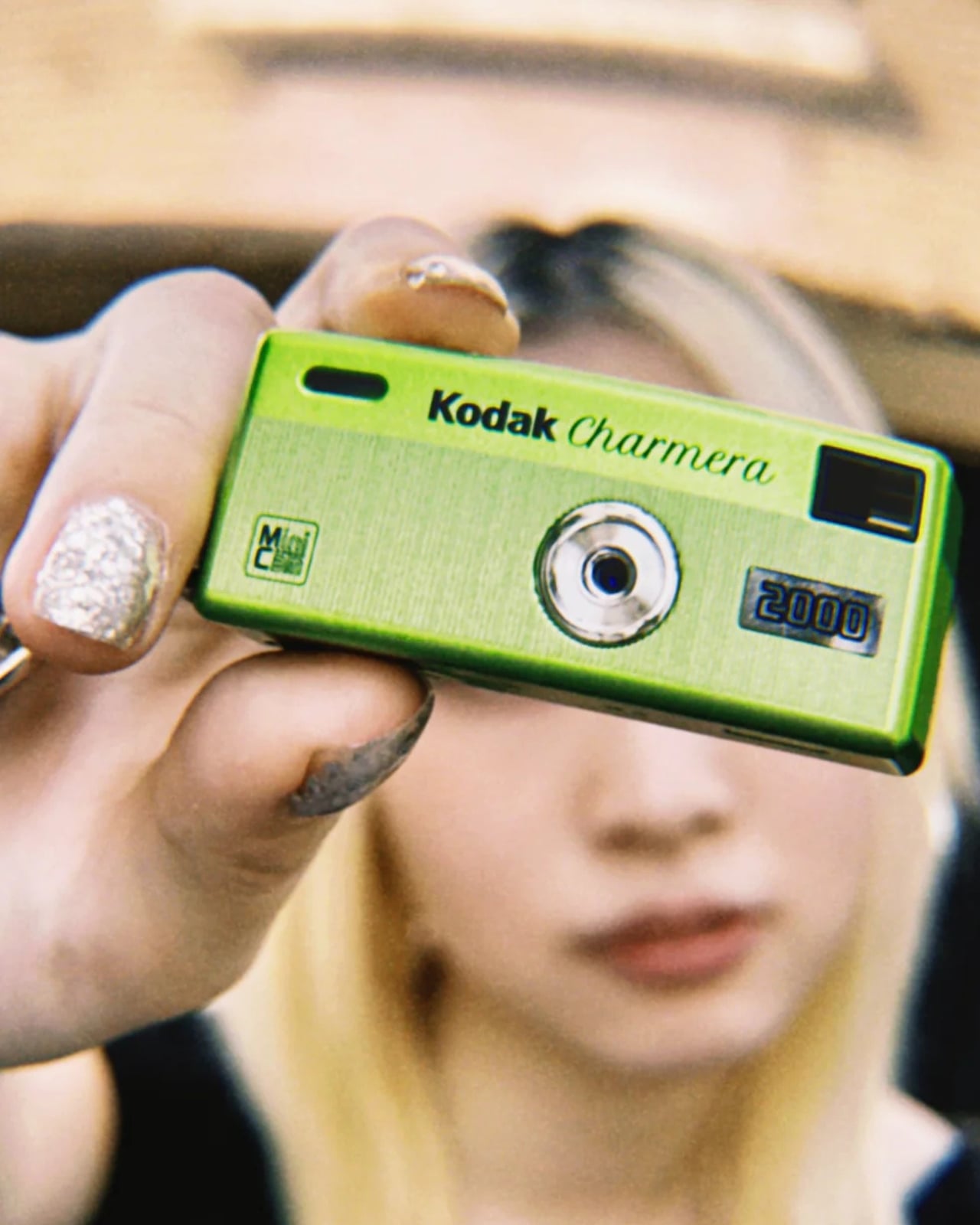

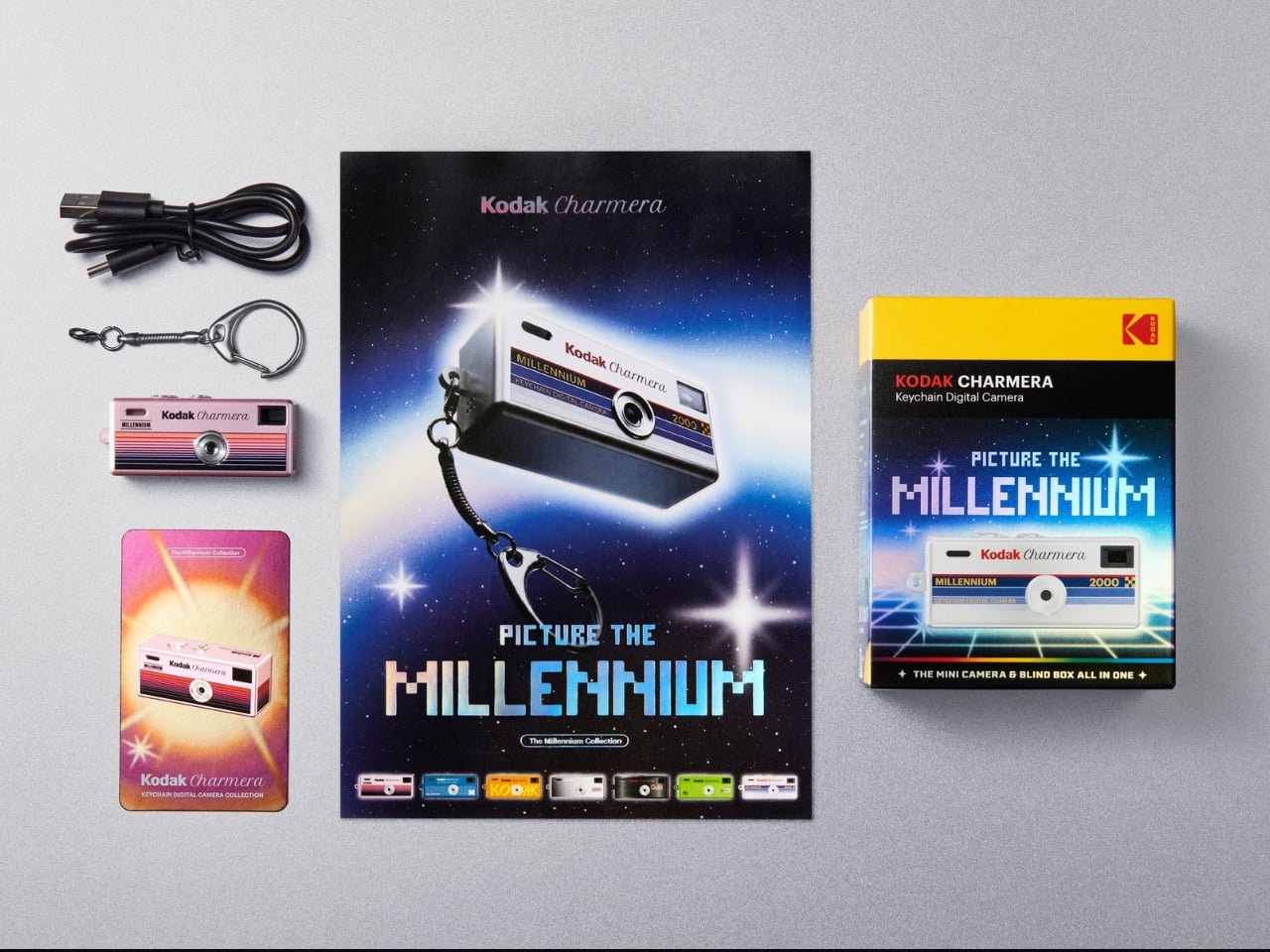
The Charmera Millennium Edition is pocket-sized, literally. It measures just 58 x 24.5 x 20mm and weighs only 30 grams, making it one of the most carry-friendly cameras around. It charges via USB-C, which is included in the box, and runs on a built-in 200mAh rechargeable battery. You will also need to bring your own microSD card (up to 128GB supported), as one is not included. Each blind box also comes with a keyring, a CHARMERA ID card, and an A5 leaflet.
Now, about that blind box format. It truly is half the fun. You pay $34.99 and get one random design out of seven. For collectors, this is both the thrill and the torment. You might land the silver on your first try, or you might end up with four oranges before you see the one you actually want. Kodak also offers the whole set for those who simply need them all, and yes, you know who you are.
The Kodak Charmera Millennium Edition is available for $34.99 per single blind box on the official RETO Pro website and on Amazon. Whether you are a longtime collector of the Charmera line, a devoted Y2K aesthetic enthusiast, or just looking for the most fun $35 you will spend this year, this tiny camera delivers exactly what it promises. No more, no less, and honestly? That is exactly the point.
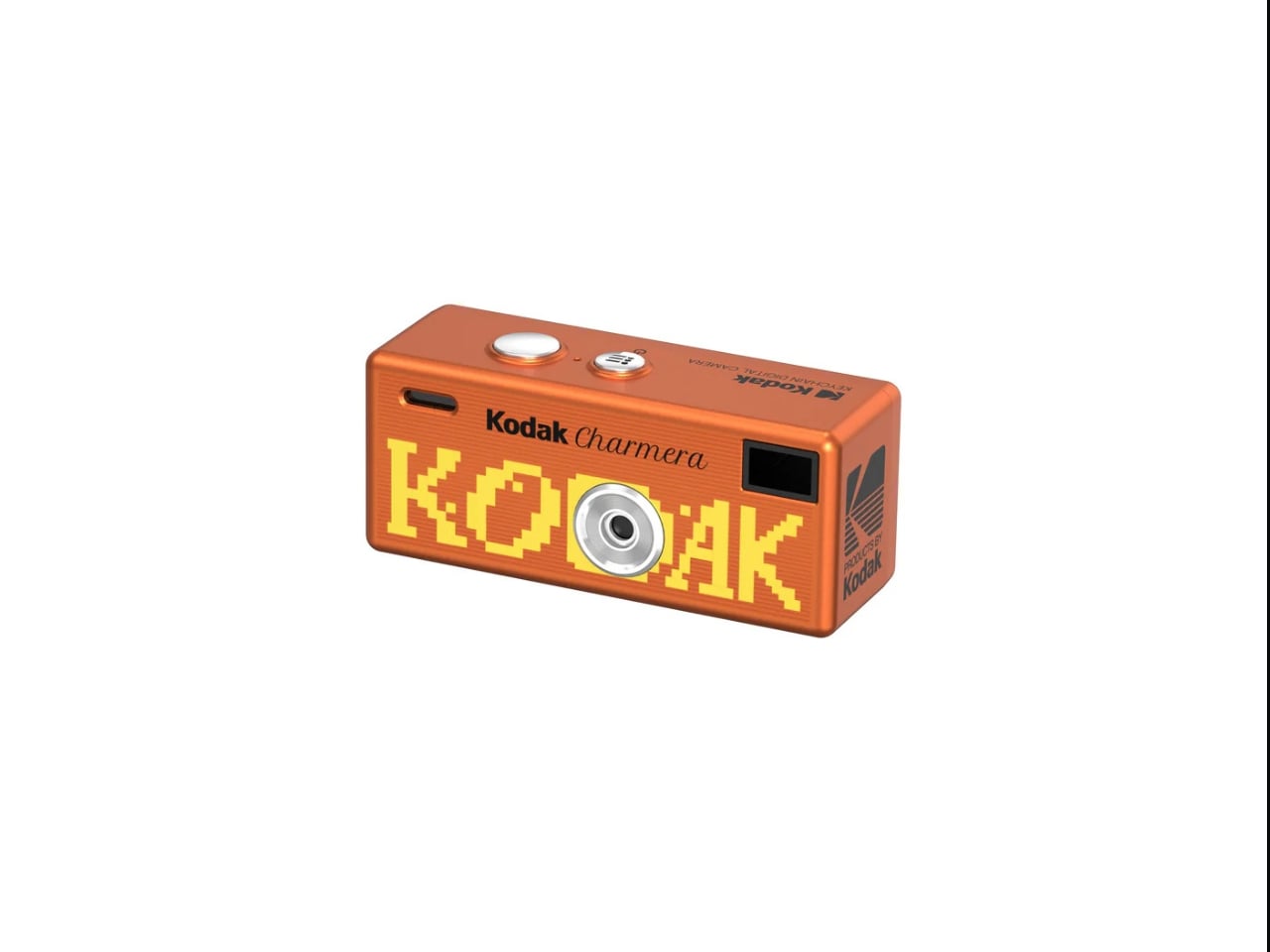
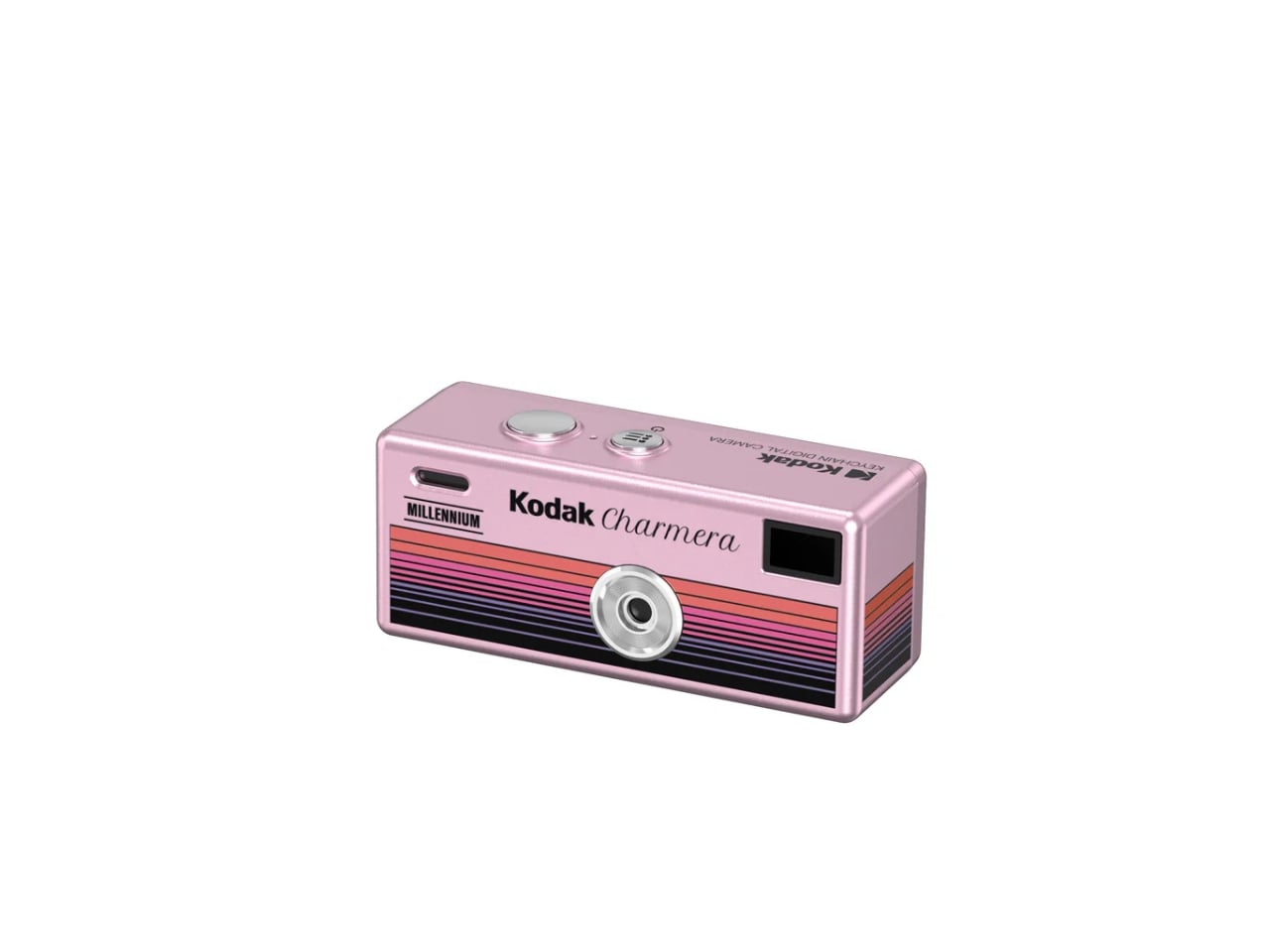
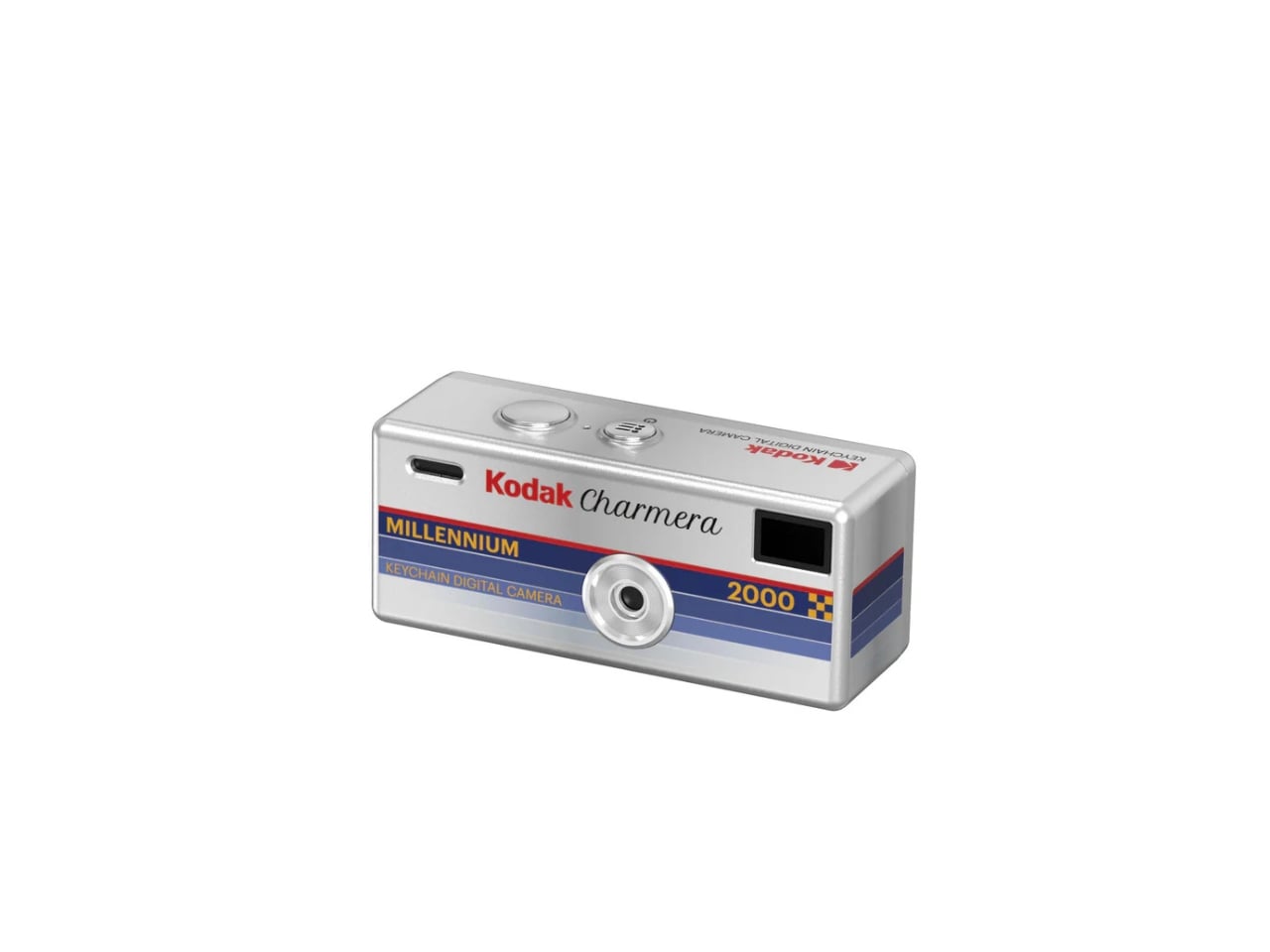
The post Kodak Just Dropped the $35 Y2K Camera Collectors Can’t Stop Chasing first appeared on Yanko Design.

The best desk objects don’t announce themselves. They sit there, do something precise, and let the result speak. This list is built around that standard. Each product here lives under $100 and does something that either shouldn’t be possible at the price, or solves a problem so cleanly you wonder why nobody designed it this way sooner. Some make things. Some reveal things. Some remove friction you stopped noticing years ago.
The $100 ceiling matters because it’s where expectations drop. It’s the bracket where most people accept products that are simply fine. The eight objects on this list are not fine. They’re quietly exceptional, each one capable of a moment that makes whoever sees it on your desk stop and ask where you found it. No trade show exclusives, no luxury markups. Just products that deliver something genuinely impressive and cost less than a dinner for two.
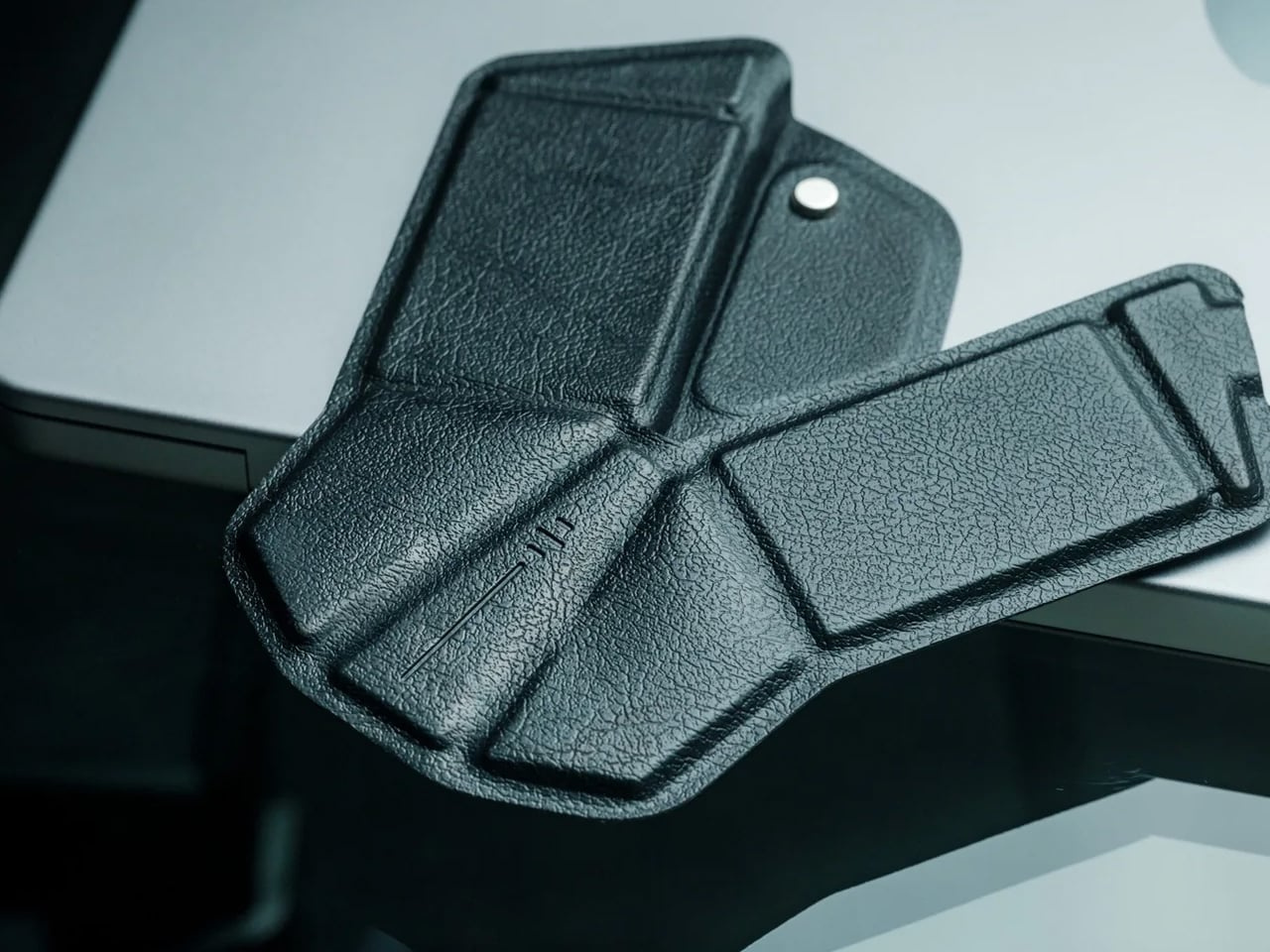
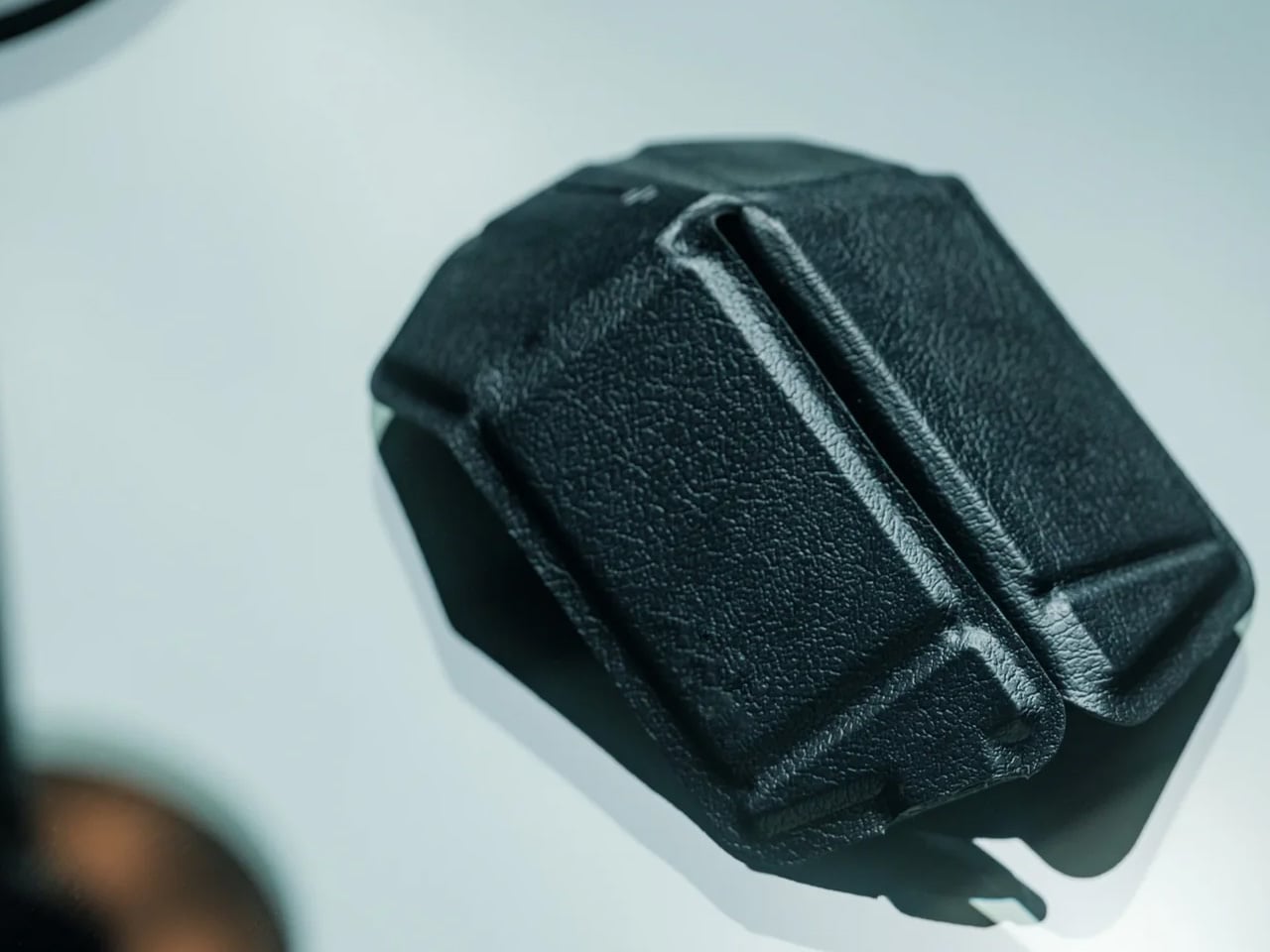
The OrigamiSwift folds completely flat at 4.5mm and weighs 40 grams. Unfold it, and the triangular origami-inspired structure opens into a full-sized ergonomic Bluetooth mouse in under half a second. Designed by Horace Lam, its geometry draws from the structural logic of origami, where the same fold that makes paper rigid under load makes this mouse precise and comfortable under a hand. It connects over Bluetooth without a dongle and performs with the accuracy you’d expect from a standard desktop mouse.
The impressive quality is the transition between states. The mechanism that takes it from 4.5mm of folded geometry to a full ergonomic mouse is a single gesture and works every single time. For anyone working from a bag, a café, or a hotel desk, a mouse that packs to the thickness of a few credit cards removes the last reason not to carry one. The design is precise enough to leave out on a desk as an object in its own right. At $85 from the YD Shop, it is one of the few mice that earns the word beautiful without trading function away to get there.
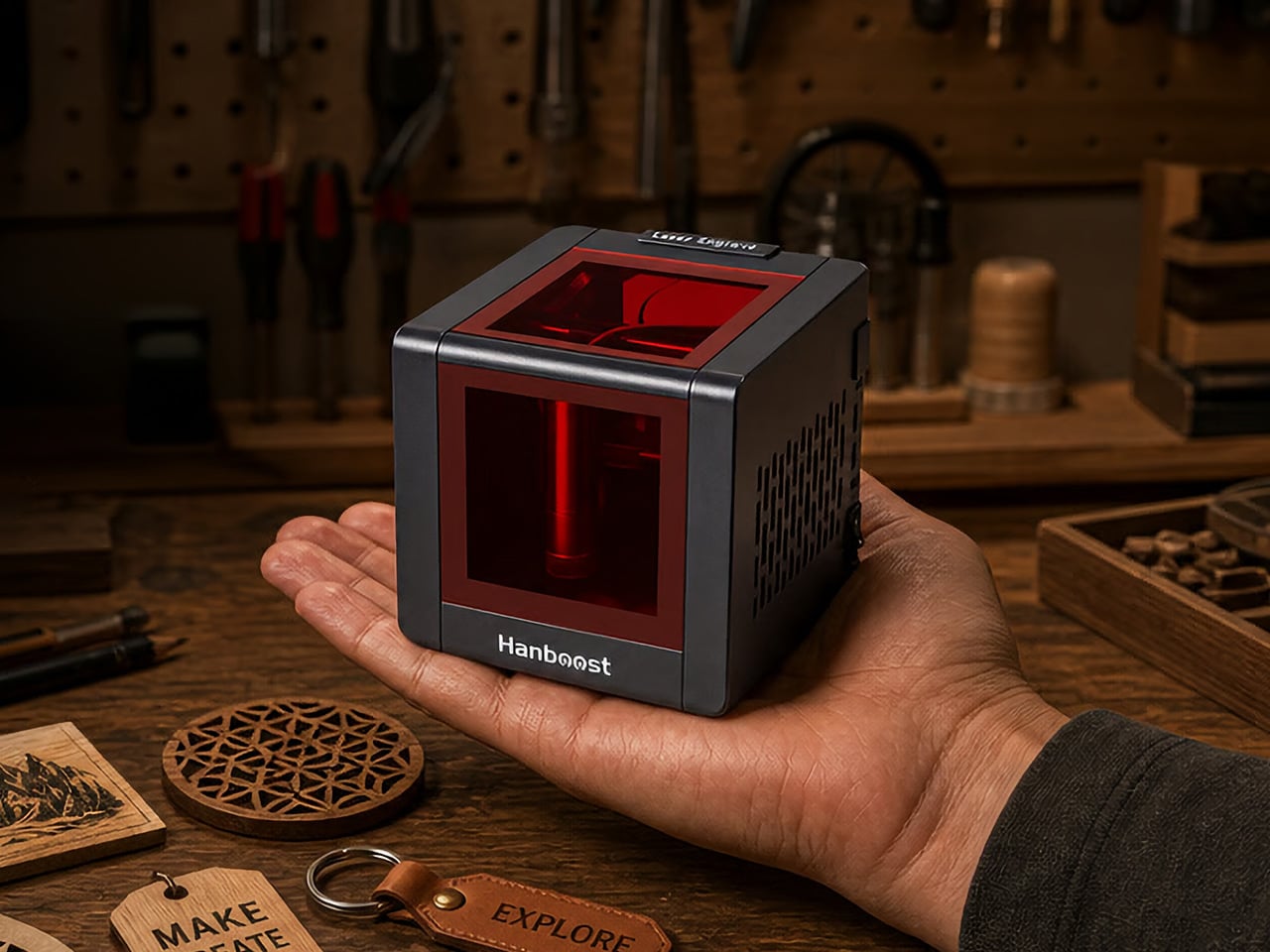
Most laser engravers come with requirements: a dedicated room, a wall outlet, protective eyewear, and a ventilation setup that rules out most apartments before you’ve even turned the machine on. The T1 removes all of it. It measures 115 by 115 by 115 millimeters, weighs 400 grams, runs off any standard USB-C connection including a power bank you already own, and comes fully enclosed with an OD4+ viewing window that lets you watch the engraving process without any eye protection required.
The engraving area covers 60 by 40 millimeters and handles wood, leather, fabric, cork, and cardstock on the standard 500mW module, with bamboo, painted metal, and dark acrylic opening up on the optional 1.6W Pro upgrade. Accuracy sits at 0.05mm, fine enough to render botanical line work or small portrait engravings you’d expect from equipment many times its size. It works with LightBurn and LaserGRBL for experienced makers, and with the MKSLaser mobile app for a clean three-step phone-based workflow.
Click Here to Buy Now: $99 $149 ($50 off). Hurry, only a few left! Raised over $527,000.
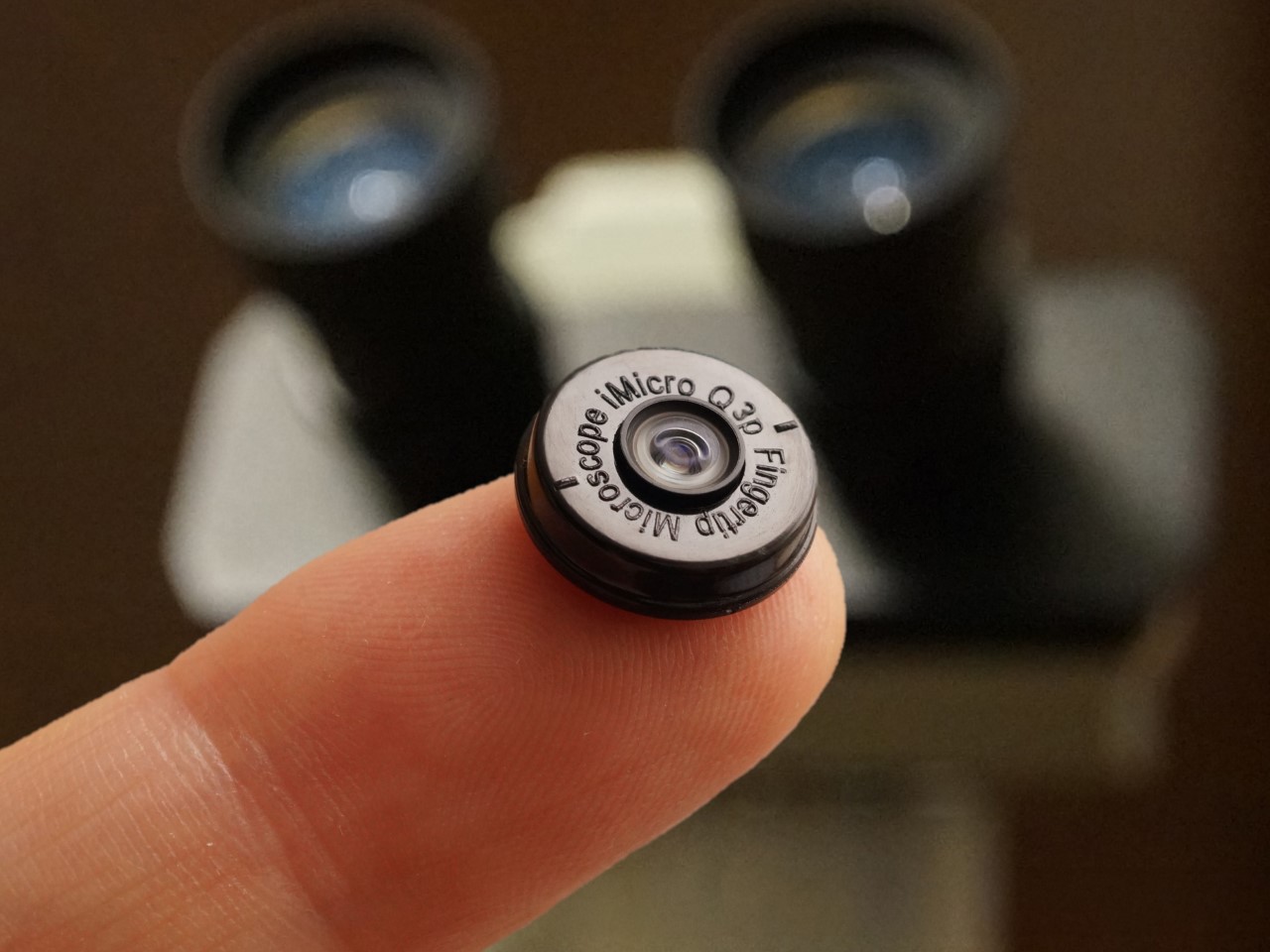
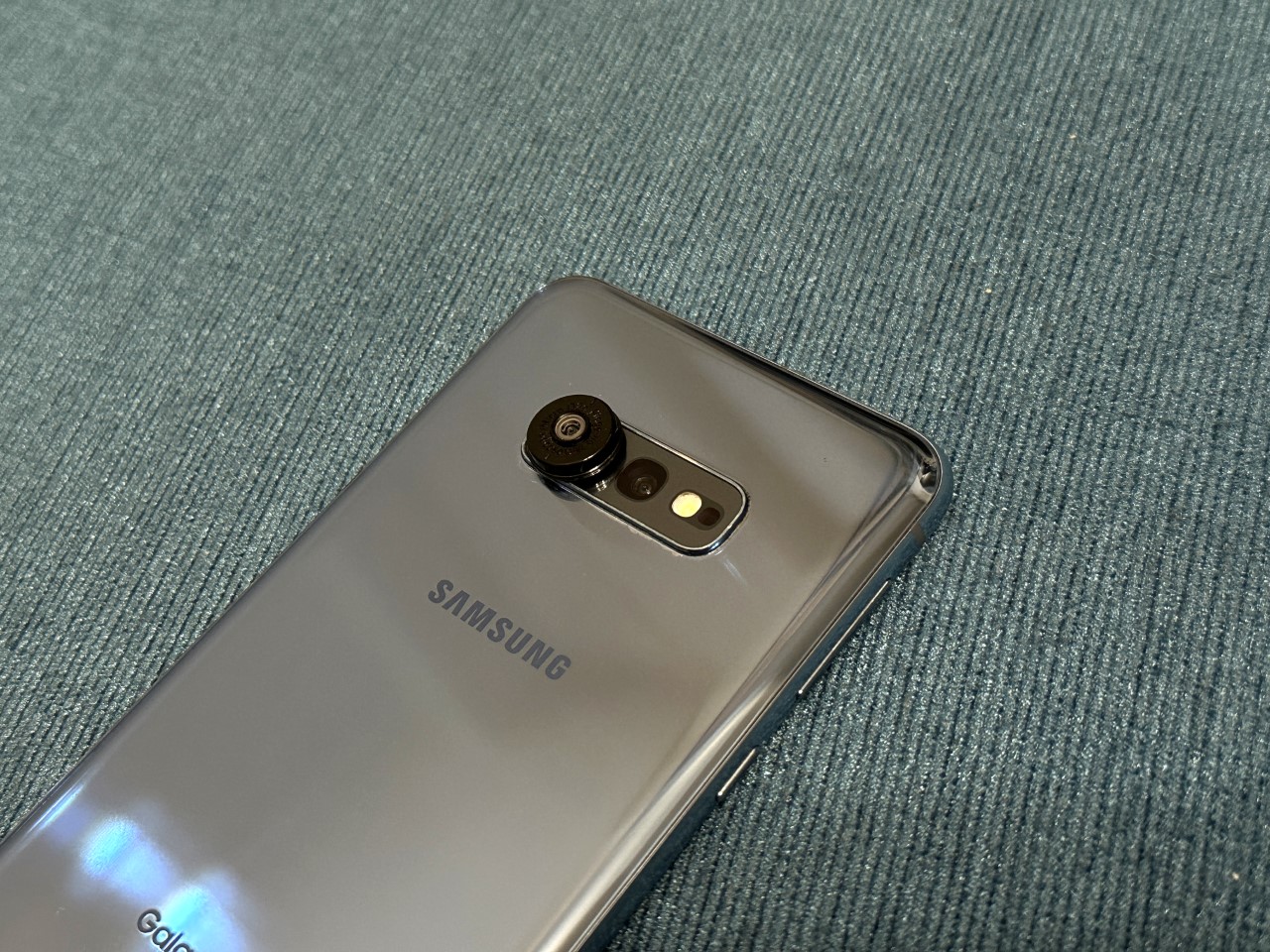
The iMicro Q3p is a fingertip-sized clip-on lens that gives your phone camera 1200x magnification. That number doesn’t mean much until you point it at something ordinary. The fiber weave of a cotton T-shirt looks like aerial rigging. A single grain of salt becomes a translucent cube the size of a building block. The printed surface of a business card reveals ink dots arranged in formations too fine for the naked eye to register. The whole attachment weighs almost nothing and fits in a pocket alongside the phone it transforms.
At $40, it sits at the most satisfying end of the price-to-capability ratio available in consumer products right now. No software installation, no charging, no compatibility friction — if your phone has a camera, this works with it immediately. For designers, the material and surface detail it reveals is genuinely useful reference. For anyone curious about the physical world at a scale they’ve never seen, it’s the kind of object you expect to use once for novelty and end up reaching for regularly. Point it at the output from the T1 laser engraver on this list and the 0.05mm linework looks like it came from a machine ten times the size.
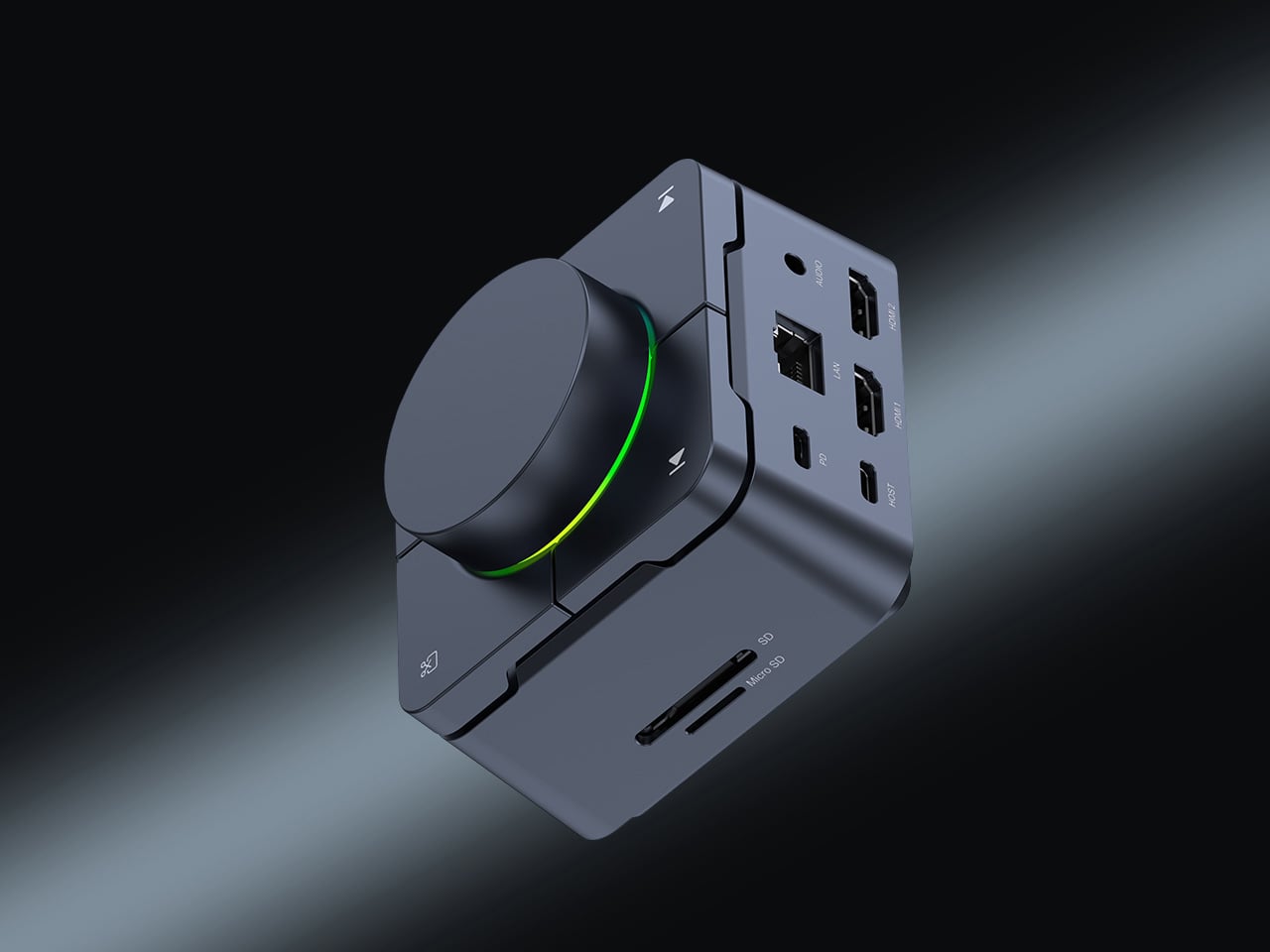

The HubKey Gen2 is a compact USB-C hub that consolidates an entire desk’s worth of connectivity into one object small enough to sit beside a laptop without demanding its own footprint. A single USB-C cable opens up ports for storage, display output, charging, and peripherals simultaneously. The design principle is one cable in, everything out — the kind of desk simplification that sounds obvious until you’ve actually lived without cable sprawl for the first time and noticed how much visual noise the old setup quietly carried.
What separates it from most hubs is where it lives. The majority of hubs are functional objects that hide behind monitors or dangle mid-cable. The HubKey is designed to sit on the desk surface in plain sight, which means its proportions and finish are considered the same way the rest of the objects on this list are. For remote workers and anyone who moves between spaces regularly, it removes the ritual of reconnecting everything from scratch every single time.
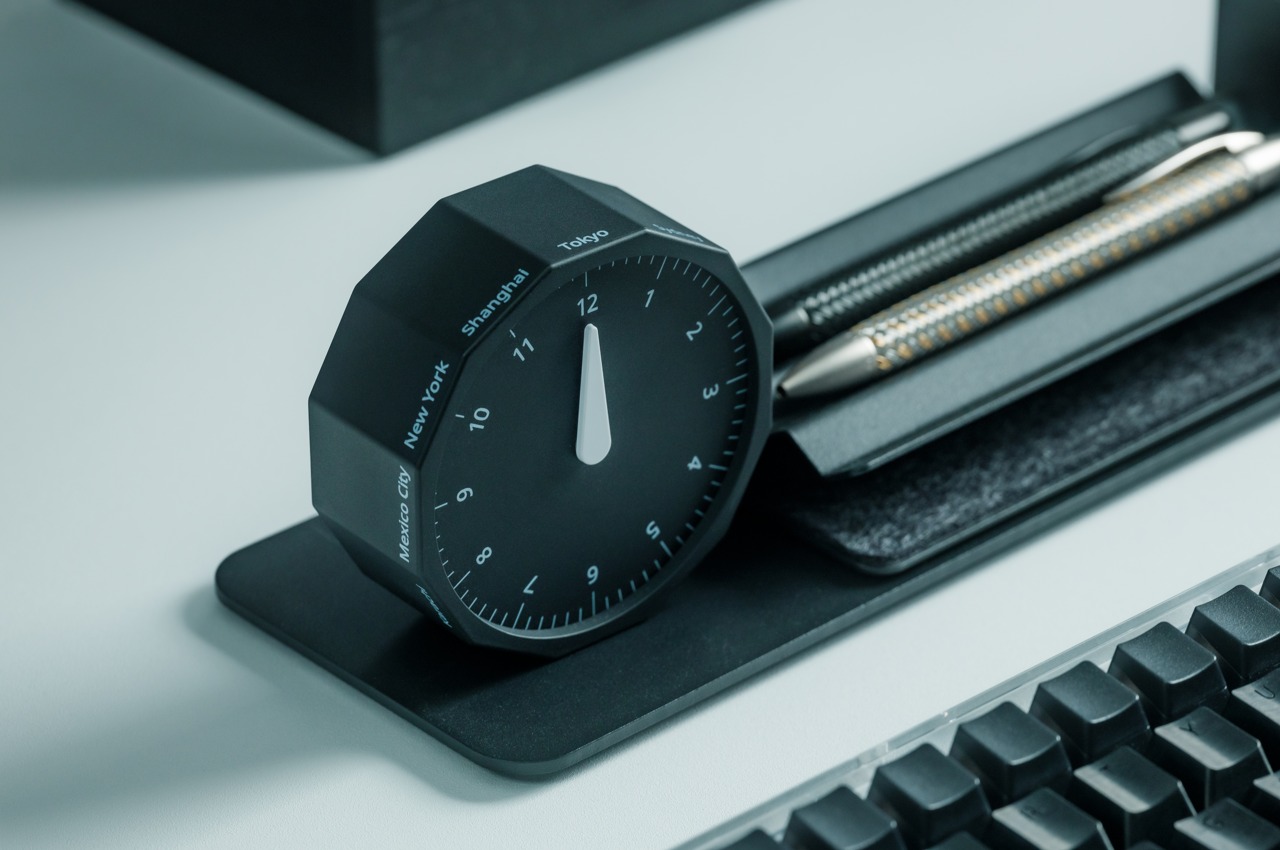
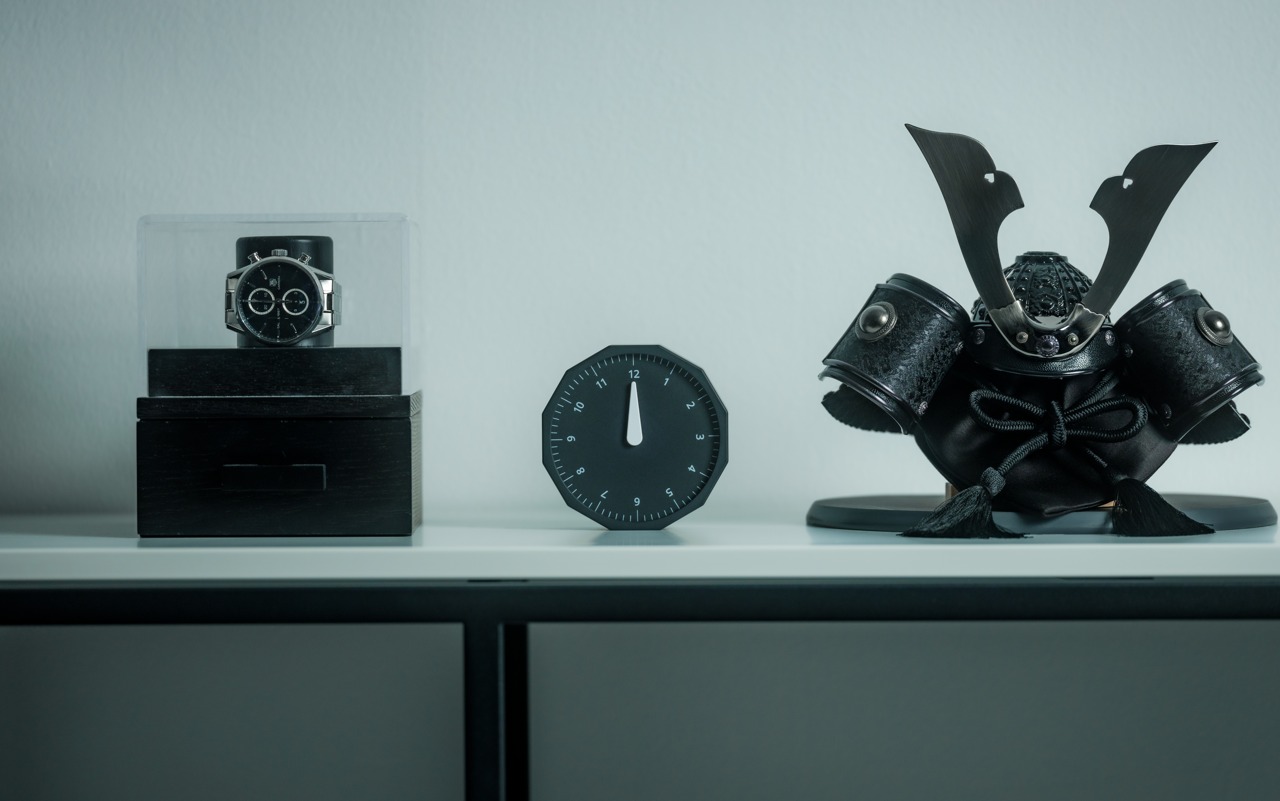
The Rolling World Clock is a 12-sided form with a major timezone city on each face and a single analog hand that tells the correct time in whichever city is pointing straight up. To check the time in Tokyo, you roll it until Tokyo reaches the top position. The mechanism is entirely physical — no battery swap, no digital display, no application required. At 3.2 inches, it sits on a desk without dominating it, and in black or white it reads as a precision object rather than a novelty one.
The quality that earns it a permanent place is conceptual. Every piece of software in the world solves world time zones with a dropdown menu or a settings panel buried three taps deep. The Rolling World Clock solves the same problem with your hand and a dodecahedron. The tactility of rolling it to the city you need and feeling it settle into position is a more satisfying interaction than most digital interfaces have managed. For anyone working across time zones, it earns its desk space on pure utility.
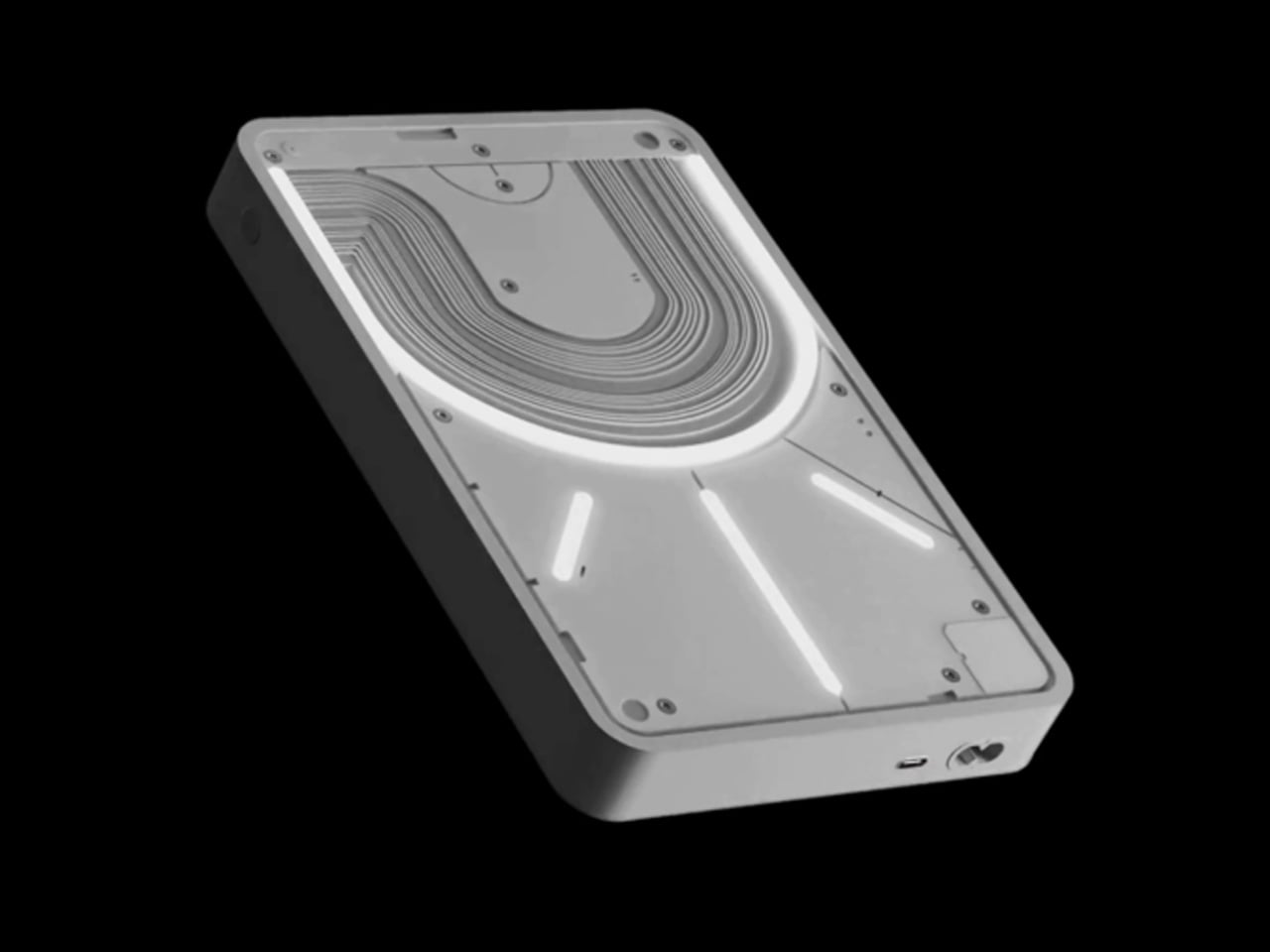
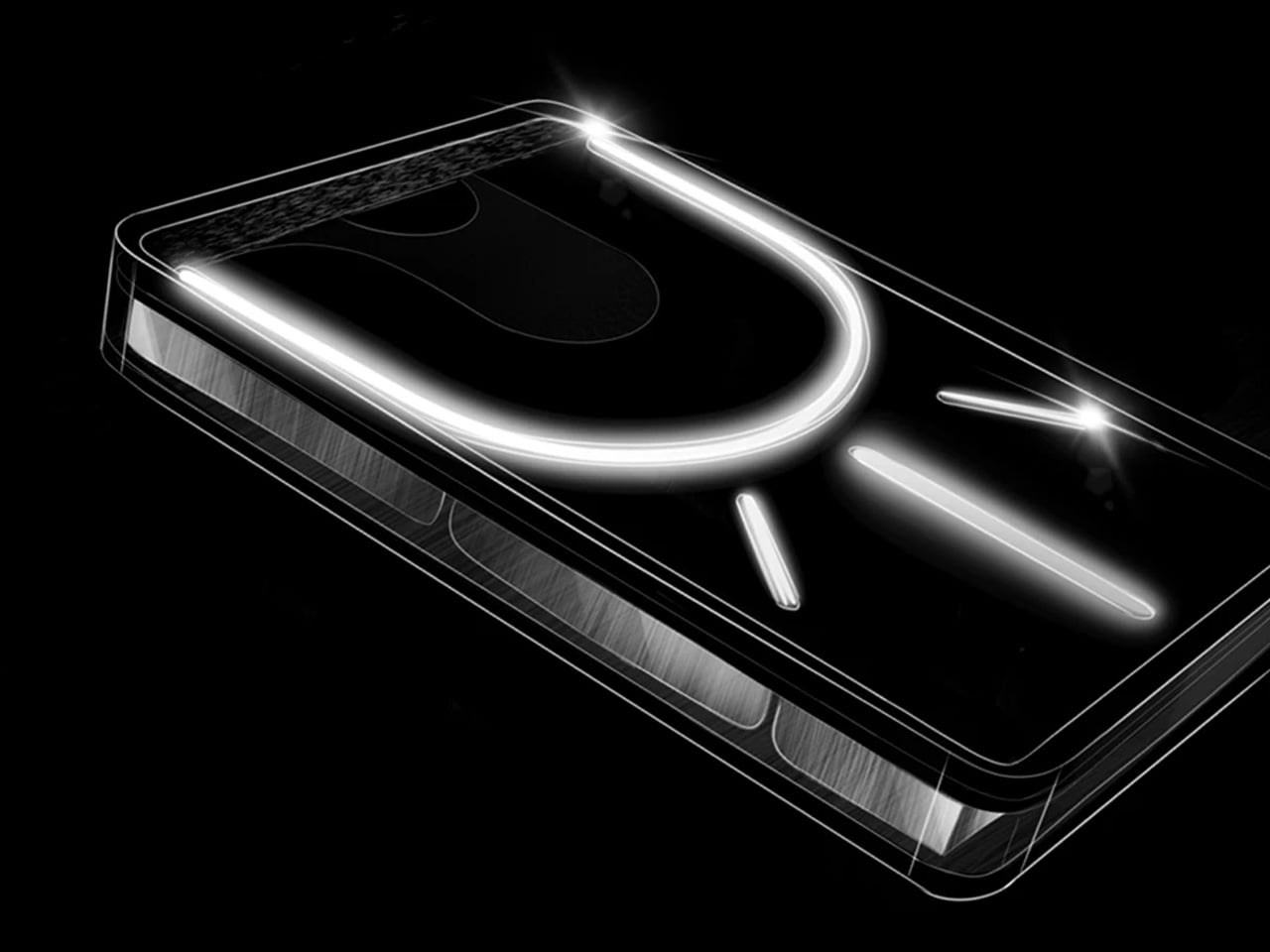
Nothing’s design philosophy is visibility. The Power (1) shows its internals through a transparent casing, turning the battery cells, circuit board, and internal wiring into the aesthetic rather than something to hide behind a matte plastic shell. Most power banks are identical black rectangles that exist purely as utilities. This one is an object you put on a desk because it looks good there, applying the same logic Nothing brought to its phones: the engineering is interesting enough to show, so show it.
The practical case is clean enough on its own — USB-C in and out, covering the everyday needs of a desk setup without the bulk most competing units carry at the same capacity. The design case is stronger. On a desk alongside other considered objects, a power bank that looks like it was designed deserves its place there. It pairs naturally with the T1 laser engraver on this list, which runs off any USB-C source and makes this the most aesthetically coherent way to power it. Nothing has built a following on the idea that objects used daily should be worth looking at. The Power (1) makes that case without needing to say it.
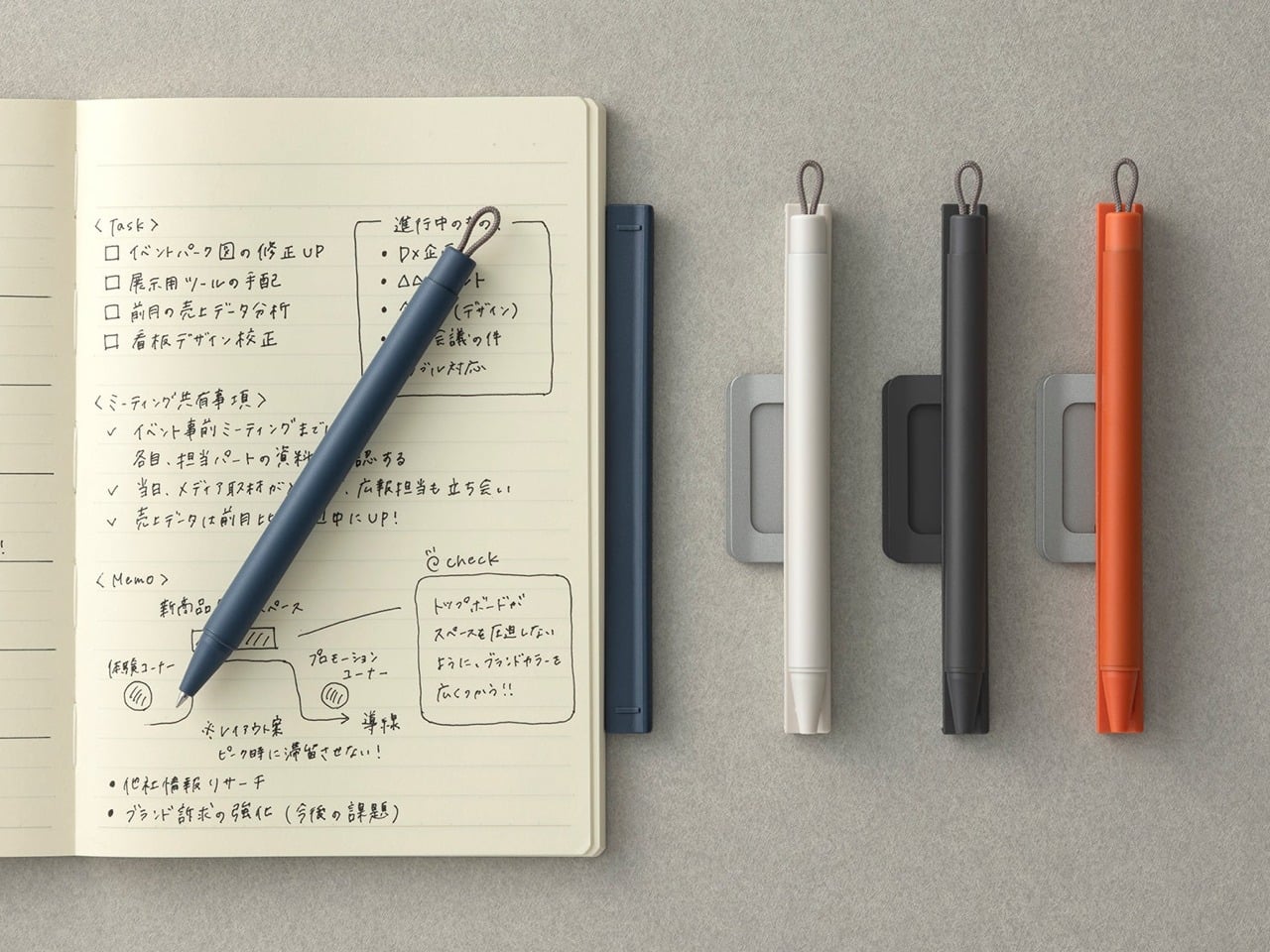

The premise of the Inseparable is exactly what the name describes. The pen and the notebook are one object. The pen lives within the notebook permanently, so reaching for one means having the other. That sounds like a minor convenience until you’ve spent time hunting for a pen that wandered three feet from the notebook you were actively using. The design removes that friction entirely by treating the two as a single tool rather than two separate objects that happen to belong near each other.
What earns it desk space rather than just bag space is how it looks when closed. The combined form is considered enough to sit out in the open without needing to be stored away. For anyone who still does meaningful thinking on paper — real notes, sketches, diagrams, lists that behave differently on a physical surface than on a screen — having that tool presented as one well-made object changes the relationship with the act itself. The desk stops being a surface with things scattered across it and starts being a workspace. That shift is worth considerably more than the price of the pen.
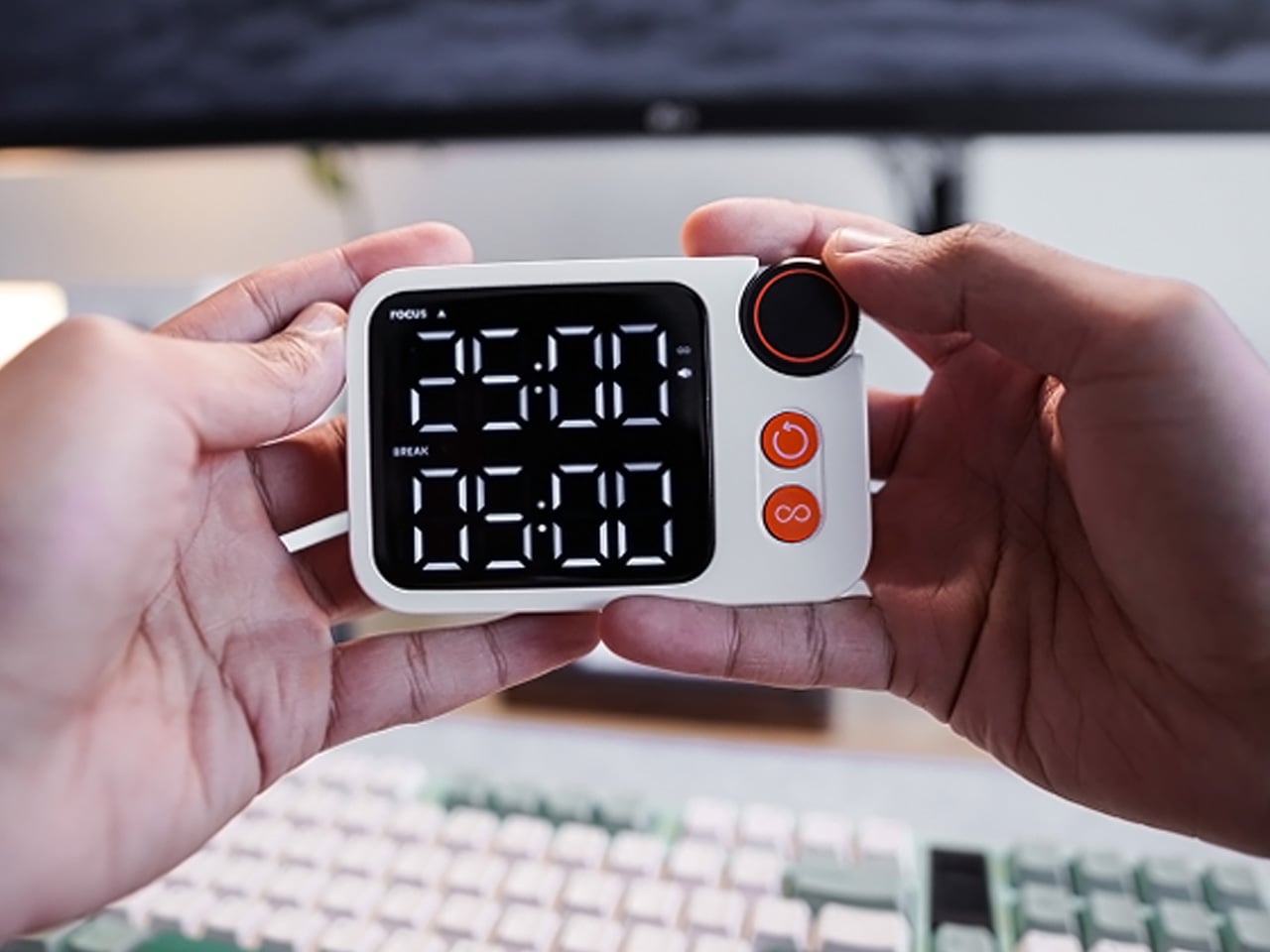

The Flow Timer is a physical desk timer built for focused work sessions. The discipline it creates comes from being a dedicated object — you set it, it counts, it ends the session. Unlike setting a timer on a phone, using this one doesn’t place you on the same surface as your notification feed. Every time you reach for a phone to time something, the phone wins the next several minutes. A timer that lives on the desk doesn’t make that trade and never will.
The design is minimal enough to sit alongside any of the other objects on this list without adding visual noise. Its presence on the desk is a signal: when it’s running, work is happening. When it isn’t, it isn’t. That binary is harder to achieve with software and easier than expected with a well-made physical object. For anyone who wants their desk to do more than hold a laptop, the Flow Timer is a low-cost way to build structure into the environment rather than rely entirely on willpower. It does one thing and asks for nothing back.
The $100 ceiling used to mean compromise. A cheaper version of something better. What this list suggests is that the ceiling has moved — not because manufacturers became more generous, but because design thinking at small scales got genuinely good. The T1 laser engraver, the iMicro lens, the Rolling World Clock: none of them feel like budget versions of something else. They feel like the right versions of themselves, built at exactly the right size and price.
What they share is a refusal to look or behave like their price tag. That’s the quality worth paying attention to — not the spec sheet, not the feature list, but the moment you first use one and realize the number on the label didn’t prepare you for what it actually does. Eight objects. One desk. All of them under $100. None of them feel like it.
The post 8 Brilliant Desk Gadgets Under $100 That Actually Do Something Impressive first appeared on Yanko Design.
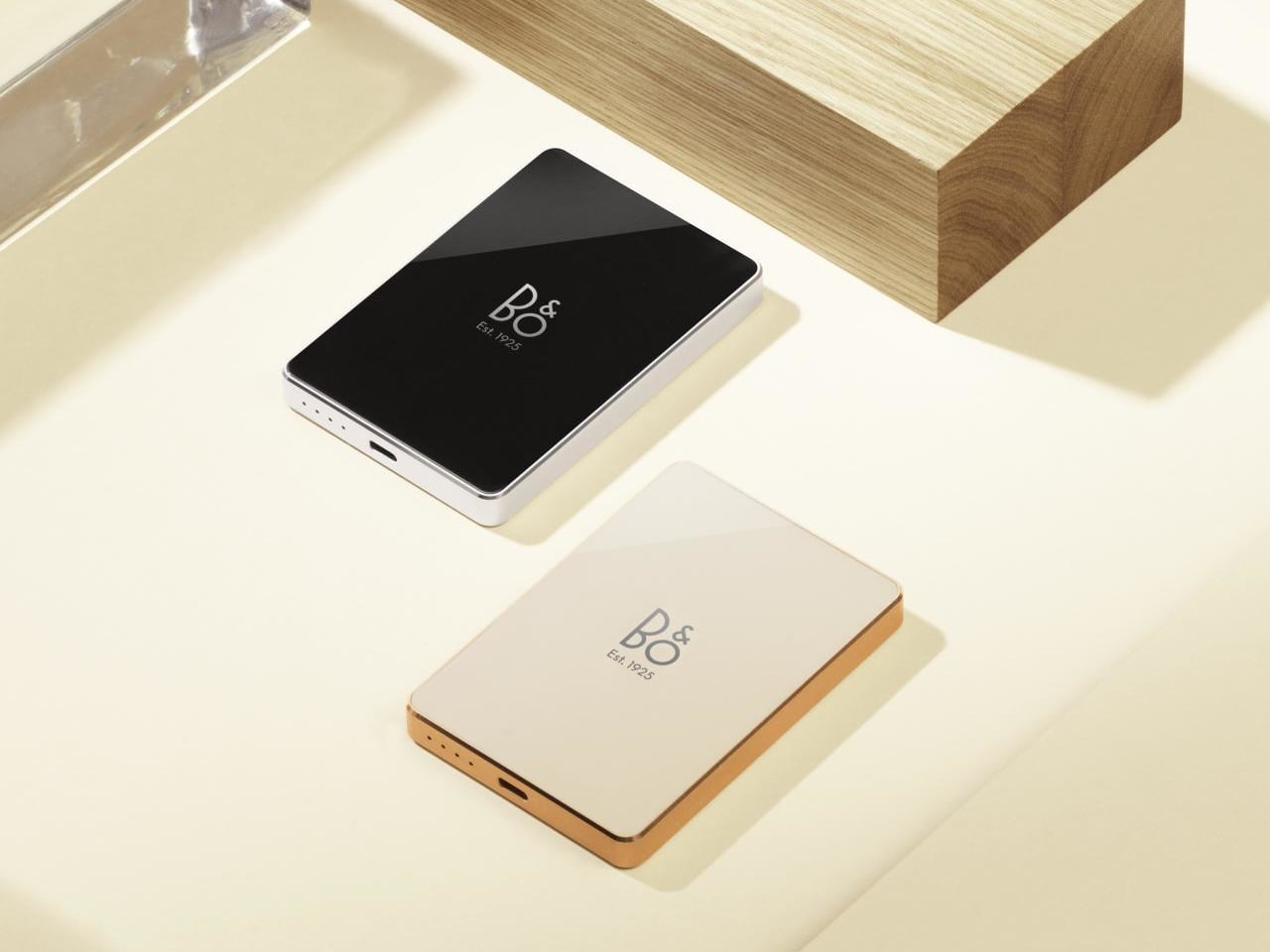
Power banks are among the most purchased tech accessories around, yet they’re rarely something anyone is proud to pull out in public. Most are plastic rectangles with LED indicators and brand names that read like Wi-Fi passwords. Even among the better-designed ones, the focus has always been on capacity and wattage, leaving the physical object as an afterthought. The result is a category full of capable but thoroughly forgettable hardware.
That’s an unusual entry point for Bang & Olufsen. The Danish brand isn’t known for accessories you’d stash in a drawer; it’s known for objects you’d set on a shelf and admire. So when it announced its first power bank, questions about specs felt almost secondary. What mattered was whether B&O could apply the same design conviction to something this ordinary. Going by what’s been revealed, the answer is yes.
Designer: Bang & Olufsen

The B&O Powerbank combines a glass surface with an aluminum frame, finished with diamond-cut edges and pearl-blasted textures. It’s the kind of hardware that feels deliberate in the hand, each surface treated with the same attention typically reserved for consumer electronics that cost a great deal more. It comes in two colorways, Infinite Black and Hourglass Sand, both chosen to match the Beoplay H100 headphones.
That pairing with the H100 isn’t incidental. The Powerbank was designed as a companion to B&O’s flagship headphones, a way to keep them running through long travel days without having to negotiate with airport power sockets. The colorway matching is no accident; the two pieces are meant to feel like a coordinated set rather than a spare part someone remembered to design at the last minute.
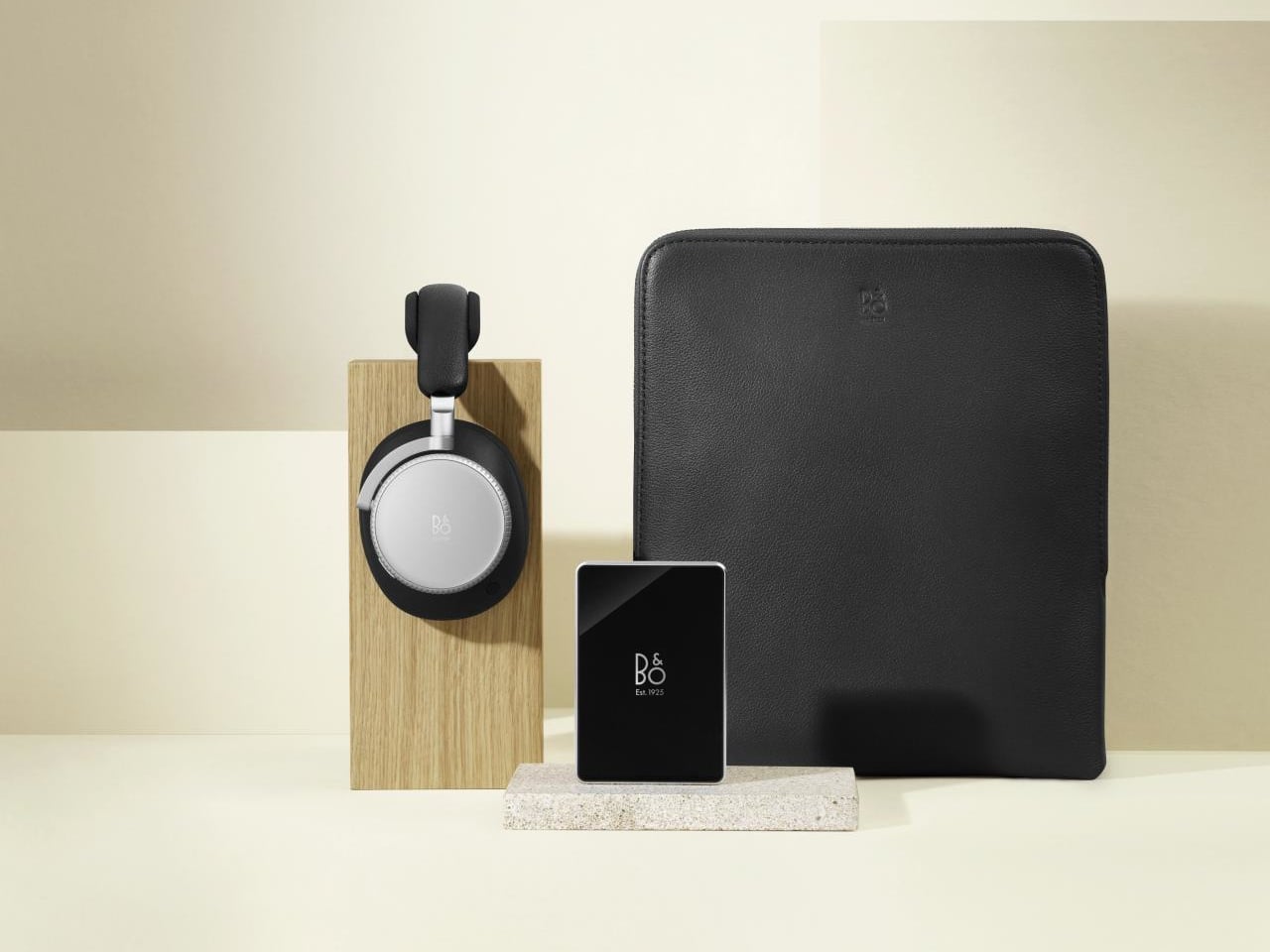
On the technical side, the Powerbank holds 5,000 mAh and supports Qi2 magnetic wireless charging at up to 15W, alongside a 20W USB-C output for wired devices. It accepts up to 18W via USB-C to recharge itself. Those aren’t record-breaking figures for the category, but it works cleanly with most Qi2-compatible devices, including the iPhone 17 series and the Google Pixel 10.
The more revealing figure is what B&O highlights for H100 owners specifically: five minutes of charging delivers up to 3.5 hours of additional playback. For someone wearing those headphones through a long-haul flight or an extended studio session, that’s a meaningful top-up that doesn’t require a hunt for an outlet. Snap the Powerbank on, keep listening, and put it away when you’re done.
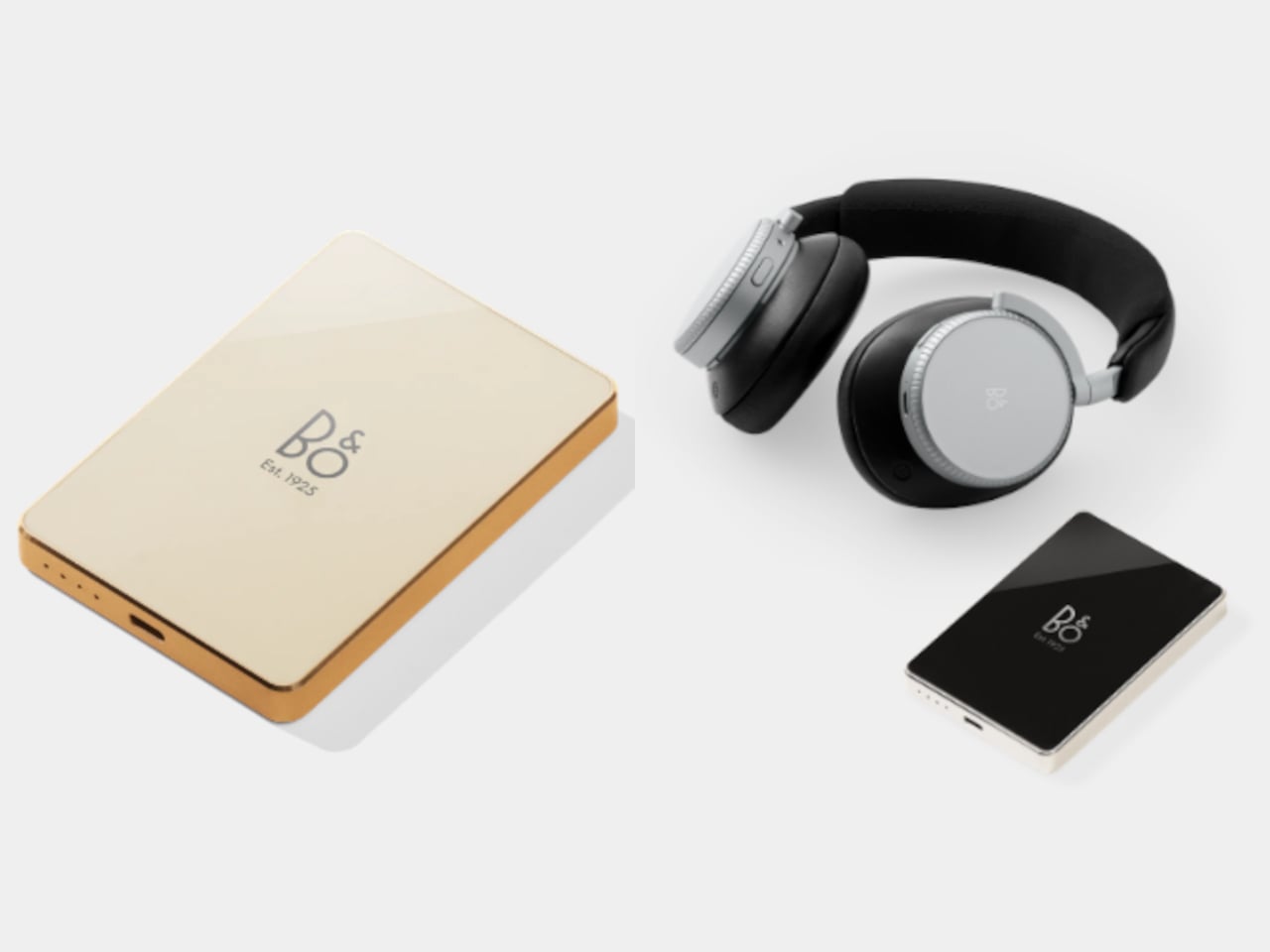
There is, however, the price. At €145 in Europe and £125 in the UK, the Powerbank sits well above most Qi2-certified alternatives in this capacity range. Comparable 5,000 mAh magnetic chargers from brands like Anker and Ugreen come in at around $50 to $60. B&O is clearly charging a premium tied to design and heritage rather than specs, and buyers who understand the brand won’t be surprised.
B&O has spent decades building a reputation around objects that earn their place in a room, not just on a spec sheet. The Powerbank extends that same sensibility to the pocket. Pull it out at an airport lounge, and it won’t look like something that came bundled in a blister pack, which, for a certain kind of buyer, is precisely the point.

The post Bang & Olufsen Finally Made a Power Bank Worth Showing Off first appeared on Yanko Design.