A Linoleum Birdhouse Game That Educates and Instils The Values Of Sustainability

In an interesting collaboration, design studio Mano de Santo has joined forces with French design atelier Tarkett to introduce ELVI. This innovative urban birdhouse game delves into the transformative potential of reusing materials. An eco-friendly and adaptable creation that not only highlights the versatility of linoleum but also aims to provide an interactive learning experience, fostering awareness and coexistence with urban wildlife.

Designers: Mano de Santo and Tarkett

In the world of birdhouse games, ELVI is not your everyday player. It stands out for its incredible ability to fit in just about anywhere – be it on streetlights, trees, balconies, or bars. It has a way of seamlessly blending into different spots, making it the go-to choice for those who appreciate a touch of beauty. What makes it even cooler is its modular design, making it super easy for anyone to put it together. You can be your own urban designer, customizing the birdhouse to match your style. The DIY aspect of ELVI adds a unique and personal dimension to the birdhouse-making process. By allowing individuals to assemble the birdhouse themselves, it creates a sense of connection to the project. This hands-on approach not only fosters a personal connection with the final product but also instills a deeper appreciation for the craftsmanship involved in its creation.

But this birdhouse is not just about looking good; it’s on a mission to teach us some important values. Imagine it as a wise friend, sharing knowledge about linoleum – a material often used for floors. It’s not just comfortable and durable; it’s also super versatile. You can find it in schools, hospitals, and many other places. The birdhouse takes this material and turns it into a piece of art that fits perfectly into our daily lives. The DIY nature encourages more people to actively engage in sustainable practices. As individuals take part in the creation of their birdhouses, they become more conscious of the materials used and the environmental impact of their choices.

Beyond its good looks, it takes on another important role as an educational tool. It’s like a guiding light, showing us how linoleum can be recycled and why it’s so good for the environment. It’s a product of the values of Tarkett, emphasizing how linoleum can be recovered and reused after we’re done using it. By pointing out the linoleum’s cleanliness and its ability to become new floors, the birdhouse wants us to feel responsible for taking care of our environment.

The hands-on experience serves as an educational tool, promoting a greater understanding of the importance of reusing materials like linoleum and contributing to a culture of sustainability.

By creating ELVI, a birdhouse game that goes beyond just being pretty, the project adds a special touch to urban spaces. Its design and focus on the eco-friendly qualities of linoleum make it more than just a decoration; it becomes a symbol of responsible choices and a reminder that we can live in harmony with nature even in our busy cities.

The post A Linoleum Birdhouse Game That Educates and Instils The Values Of Sustainability first appeared on Yanko Design.

Wall cladding made from corn cob waste brings sustainable construction materials

Construction is something that we probably cannot do without as we continue to build houses, buildings, and other structures. The quest for coming up with sustainable construction is ongoing as we look for materials that are eco-friendly and the process in creating them to be as sustainable as possible. There are a lot of waste in our world that can actually be used for other purposes instead of just becoming biomass as they are mostly used now. A breakthrough in terms of interior wall cladding is now available and it comes from the most unlikeliest of sources: corn cobs.

Designer: StoneCycling and Studio Nina van Bart

CornWall is an alternative to interior wall cladding that uses organic corn cobs, subjecting them to up to 150 degrees Celsius so as to activate and create “strong bonds”. Aside from using sustainable materials, the heating process is also eco-friendly as it uses sustainable energy. The electric heating process uses the solar panels on their factory’s roof. So from the materials to the process itself, we are seeing something that will lessen or leave no carbon footprints at all.

Mostly corn cobs are left on the fields or fermented or burned as biomass. But with this process, they are able to turn them into wall cladding. It is better than the usual ceramic wall cladding that is used or even composite materials like high pressure laminate (HPL). Another advantage to this is that it is able to store more carbon dioxide because of the absorbed CO2 already in it. It is also 100% reusable as it can be removed from interiors through the demountable anchoring system.

Based on the product photos, it doesn’t look much different from the usual wall cladding. It actually looks like those cork coasters that we’re seeing now. It comes in different colors loke DarkBlue, MustardYellow, TerracottaPink, etc. Hopefully we see even more construction materials that use sustainable materials and processes so we can have an industry that is more eco-friendly.

The post Wall cladding made from corn cob waste brings sustainable construction materials first appeared on Yanko Design.
The Beeline Velo 2 is a gorgeously minimal bicycle GPS with a carbon-negative design and Strava support

It’s difficult to believe that it’s been 7 years since the Beeline first launched back in 2017! A perfect accessory for any biker or two-wheeler rider, the Beeline instantly stood out as an incredibly simple, iconic accessory that helped you get from point A to B. Working in tandem with the navigation app on your phone, the Beeline was a simple, sophisticated, and sleek-looking accessory that basically pointed you in the direction that you needed to go. No fancy maps, no bloatware, no extra data. Just an arrow you could follow till you reached your destination. The Beeline’s simple design made it easy to keep your eyes on the road too, by offsetting the need to stare at your phone for directions and potentially get sidetracked by apps, notifications, and other distractions.

Seven years and multiple products later, Beeline just announced the Velo 2, a compact navigator for bike rides. Upgraded with an IPS LCD screen (as opposed to the original’s e-paper display), the Velo 2 retains the Beeline’s intuitive approach to wayfinding, while also giving riders access to basic metrics like distance covered, ride time, speed, ETA, and a compass, alongside the ability to plan routes, share them on apps like Strava, and even rate them in retrospect. Everything sits inside the Velo 2’s compact puck-shaped design that easily snaps on and off your bicycle, making every single step of your journey intuitive and comfortable.

Designer: Beeline

Click Here to Buy Now

The Velo 2 retains the beloved features of its predecessor, popularized on Kickstarter while introducing an updated user interface and additional navigation options. It’s housed in a compact, smartwatch-like round design with a 1.28-inch circular LCD IPS display, distinguishing itself visually from traditional GPS computers. The unique RockerTop interface replaces conventional buttons or touch screens, offering a distinct tactile feedback which is a notable advantage over touchscreen designs.

Unboxing reveals an eco-friendly package containing the GPS unit, a handlebar mount with two sets of O-rings, an instruction manual, and a USB-C charging cable. The Velo 2, Beeline mentions, is designed to be both carbon and plastic-negative, lining up well with the eco-friendly mode of travel that is bicycling. The device, aside from being healthy for the environment, is also designed to be entirely repairable via Beeline’s refurbishment scheme. The mounting system, though proprietary, is effective and secure, using o-rings to attach to various handlebar diameters.

The user interface emphasizes ease of use. It’s simple and intuitive, devoid of the multi-level menus and customization found in other GPS units. This simplicity extends to its functionality: the Velo 2 focuses on GPS navigation and basic ride data, foregoing connections to secondary sensors or display customizations. The main display shows an odometer, the time, battery status, and a playful bicycle graphic that moves with the computer’s orientation.

A key upgrade in the Velo 2 is its innovative approach to navigation. It leverages user feedback to refine routing, allowing cyclists to rate roads during their ride. This crowdsourced data helps Beeline incrementally improve cycling routes, avoiding poorly rated roads. The Velo 2 offers two navigation modes: a basic compass-style display pointing towards the destination and a more detailed turn-by-turn option. It also pairs directly with Strava, letting you upload rides easily, or even share them with friends and families via GPX.

While the Beeline Velo 2 might not cater to data-driven cyclists seeking extensive metrics and sensor integration, its minimalist design, intuitive interface, and innovative routing approach make it a compelling choice for those seeking a straightforward, enjoyable cycling experience.

Click Here to Buy Now

The post The Beeline Velo 2 is a gorgeously minimal bicycle GPS with a carbon-negative design and Strava support first appeared on Yanko Design.
Bio-composite Roof Tiles With Solar Panels Are An Ode To Traditions In The Modern World

In a world grappling with environmental challenges, Studio SKLIM’s Lo-Hi Tech project stands out as a beacon of innovation, marrying high and low technologies to create hybrid solutions that are not only efficient but also environmentally friendly. This project is a testament to the power of blending primitive materials with modern and ancient technology to address contemporary issues and enhance human living conditions.

Designer: Studio SKLIM

The Lo-Hi Tech project revolves around two main building material systems: the Ke-Sol System (KSS) and the Terra-Cooling System (TCS). The Ke-Sol System seamlessly combines the strength of Kenaf fibers in lightweight biocomposite roof tiles with custom solar panels, showcasing a perfect harmony between nature and technology. Through a meticulous process involving high thermal pressure, Kenaf fiber mats are transformed into robust yet lightweight roof panels. These panels are then integrated with monocrystalline solar panels, creating an innovative roof tile capable of generating clean energy through its modular and tiltable configurations.

The integration of the Ke-Sol System not only emphasizes sustainability but also illustrates the potential for future-proofing primitive materials with advanced technology. The combination of Kenaf fibers and solar panels provides a durable roofing solution and also transforms roofs into energy-generating surfaces. This not only reduces the environmental impact of traditional roofing materials but also contributes to a cleaner and more sustainable energy future.

On the other front, the Terra-Cooling System harnesses the natural properties of terracotta, drawing inspiration from ancient refrigeration and irrigation techniques. Comprising Hex and Tri components, the system converts hot air into cool air while serving as a water tank. By integrating terracotta with innovative technology, the TCS forms a wall system capable of reducing air temperatures by an impressive 6.5 degrees Celsius. This substantial temperature drop is achieved through the inherent cooling properties of terracotta, a well-designed form maximizing air and water flow, and the cooling effect driven by water evaporation.

Computer Fluid Dynamics (CFD) simulations play a crucial role in refining the TCS design for optimal evaporative cooling performance. The system envisions a future where material systems seamlessly transition between shelter and vehicular infrastructure, breaking conventional boundaries. One promising application involves creating sustainable shelter infrastructure for Electric Vehicle (EV) charging stations. These structures not only reduce ambient temperatures but also utilize solar energy for localized lighting during the night, showcasing the project’s commitment to integrated sustainability solutions.

The Lo-Hi Tech project represents more than just a technological achievement; it is a celebration of the convergence of traditional craftsmanship with cutting-edge techniques. The images of terracotta pieces being removed from the kiln, custom-built wood-fired kilns, and CNC-milled molds reveal the meticulous craftsmanship involved in creating these sustainable solutions. This blend of ancient materials and modern technology exemplifies a forward-thinking approach to addressing environmental challenges while honoring the rich heritage of craftsmanship. It is a commendable example of how innovative thinking can revolutionize the construction and energy sectors. By combining primitive materials with state-of-the-art technology, the project not only showcases the potential for sustainable solutions but also sets a precedent for future initiatives that seamlessly integrate the built environment with vehicles, paving the way for a more sustainable and interconnected future.

The post Bio-composite Roof Tiles With Solar Panels Are An Ode To Traditions In The Modern World first appeared on Yanko Design.
Ikea repurposes old uniforms into new lifestyle collection

Over the past years, we’ve “stanned” brands that not only uses sustainable materials but are also able to upcycle and recycle materials to create new products. We’ve become conscious about how we consume things (well, hopefully, we’ve actually become conscious of it) and how this consumption culture affects this planet we’re living in. Ikea is trying to capture our hearts by creating a new lifestyle line created from materials that they themselves had to discard.

Designer: Ikea

The Swedish brand will be launching their newest collection called VÄXELBRUK which is uniquely made from their recycled coworker uniforms that were discarded when they introduced new attire back in 2020. So instead of just throwing these old uniforms into the trash heaps, they came up with new products that were made from 300 tonnes of these “useless” IKEA uniforms. If you’re not a fan of yellow and blue though, you might want to look elsewhere, even though they managed to tone down the colors considerably without dyeing the textile, which can be more expensive and resource-intensive.

The collection features 16 textile-based items that use the aforementioned old uniforms. This includes things like throw pillows, bags, cushion covers, and even curtains. They are not entirely made from the uniform textile though as they are blended with other recycled materials like polyester from used PET bottles. They also even included some of the “faulty” new uniforms so they will also not go to waste. The inclusion of other materials also helped to alter the colors that are normally so bright.

If you didn’t know that they were made from discarded co-worker uniforms, you’ll just think they’re normal Ikea products that use the iconic colors of the brand. But knowing there they come from makes it even more interesting. The VÄXELBRUK (which means interchangeable use in the Swedish language) collection will be released in February 2024 across Europe stores.

The post Ikea repurposes old uniforms into new lifestyle collection first appeared on Yanko Design.
A Sustainable Lighting Solution That Redefines The Interaction Between Light And Sound

In the ever-evolving landscape of technology and design, the fusion of functionality and artistic expression continues to yield groundbreaking innovations. One such marvel is Oloïd, a sustainable acoustic luminaire born from the collaborative synergy of Impact Acoustic; a provider of sustainable acoustic solutions, and the esteemed design studio atelier oï. This unique lighting fixture not only delivers exceptional sound absorption but also redefines the way light and sound interact, creating a transformative experience that enhances the ambiance of any space.

Designer: Impact Acoustic Atelier oï

At the heart of Oloïd’s revolutionary design lies Archisonic Felt, a high-performance sustainable acoustic absorber crafted from upcycled PET bottles. This versatile material demonstrates outstanding sound absorption capabilities and embodies a commitment to sustainability and responsible material sourcing. The Cradle to Cradle certification and LEED accreditation of Archisonic Felt underscore its eco-friendly credentials, aligning with the growing demand for environmentally conscious design solutions.

Oloïd distinguishes itself by offering a transformative lighting experience that seamlessly integrates functionality with artistic expression. The collaboration between Impact Acoustic and Atelier oï is not merely about illuminating a space but about creating an immersive environment where light and sound harmonize effortlessly.

Aurel Aebi, a key figure at Atelier oï, highlights the creative process that brought Oloïd to life. “At atelier oï, we often begin our creative process with an encounter with the material,” Aebi explains. “Our goal was to find a way to make the sustainable material speak in a new way.” This innovative approach involved working with the material’s stiffness and flatness to create organic shapes that redefine conventional luminaire design.

Oloïd is available in a stunning array of 32 colors, presenting a curated selection from the Archisonic Felt range. This diversity empowers users to personalize their spaces, allowing for the creation of bespoke environments that reflect individual tastes and preferences. The luminaire’s design seamlessly integrates the organic shapes derived from the unique qualities of Archisonic Felt, transcending two-dimensional panels into captivating three-dimensional entities.

Sven Erni, co-founder of Impact Acoustic, expresses his fascination with the collaborative process that transformed their material. “The collaboration fascinated us as we witnessed the metamorphosis of our material,” Erni notes. “This was made possible using a distinctive cutting technique at specific angles and the skillful folding of the panels. This creative approach seamlessly transformed the two-dimensional panels into fascinating three-dimensional entities, transcending surfaces to tangible bodies.”

Oloïd not only sets a new standard for sound-absorbing luminaires but also stands as a testament to the potential of sustainable design in reshaping our surroundings. With its commitment to responsible material usage, innovative design, and the seamless integration of light and sound, Oloïd emerges as a beacon of eco-conscious creativity, inviting us to reimagine the possibilities of our illuminated spaces.

The post A Sustainable Lighting Solution That Redefines The Interaction Between Light And Sound first appeared on Yanko Design.
Your Next Package Might Be Cushioned by Upcycled Grain Husk Instead of Plastic Styrofoam

While there’s a conscious effort to remove plastic from our regular consumption, it still manages to play a pretty large (and unavoidable) role in packaging. Whether it’s shrink wrap, bubble wrap, sellotape, or even styrofoam… it seems like getting plastic out of packaging may just be an impossible task. However, a German company is working on an alternative to replace styrofoam in packaging. Their solution? A cushioning material made out of grain husks.

Designer: Proservation

The intended purpose of a product’s packaging is simply to help it cover the journey from factory to consumer. After it’s made this journey, a product’s packaging ends up becoming waste. Scale that up to account for the population of the world and just how many products we buy in a single given day or week, and you’ll realize what a massive problem we have on hand. Sure, it’s easier to recycle cardboard boxes and I can even stretch that argument to bubblewrap or foam peanuts… but it’s nearly impossible to recycle molded styrofoam pieces because they’re specifically designed to hold a certain product and can’t be used anywhere else. Conventional styrofoam is made by passing a foaming agent through plastic, causing it to bubble up into the lightweight styrofoam you use today. Given that it’s essentially made by combining plastic and air, recycling styrofoam as a material is borderline impossible… but replacing it isn’t.

Proservation’s solution is a product called Recou – a ‘molded’ packaging material that’s made from grain husk (which is also what nature uses to package grains!) When grains are harvested, the husk or chaff is removed and either discarded, burned, or used as animal bedding. Proservation has a clever alternative solution – upcycle this husk into a soft, impact-resistant material that does the job of styrofoam, while essentially being biodegradable. The husk is collected and bound together using a proprietary bio-based binder. The overall product has the same properties as styrofoam, but can be easily discarded or even composted.

“Thanks to our specially developed ecological binder, RECOU can be shaped as desired, and due to comparable material properties, it has the potential to substitute petrochemical packaging solutions such as EPS (Styrofoam) and represent an ecologically sound alternative for many applications,” says Proservation.

Proservation is hoping that Recou can replace a major bulk of styrofoam in the current packaging ecosystem. The material has the ability to be molded just like styrofoam, albeit with a few limitations given the size of an individual husk. It takes anywhere from 6-8 hours to make each piece, and the overall product has a density of 120 to 150 kg/m³, which seems to be the one significant limiting factor, given that styrofoam weighs nearly 70% less. Recou is also designed to resist moisture and humidity, showing no signs of mold when stored at 70% humidity for up to a week… “However, if the material is permanently exposed to high humidity or moisture, the decomposition processes start and mold may occur,” the company says.

For industries/companies interested in transitioning to Recou, Proservation does sell a few standard products like corner-cushions for palettes, and is also open to molding specific products based on requirements. The company plans to have an industrial plant operational by some time in 2024, scaling up production for this unique no-waste bio-based alternative to styrofoam.

The post Your Next Package Might Be Cushioned by Upcycled Grain Husk Instead of Plastic Styrofoam first appeared on Yanko Design.
Top 10 Sustainable + Elegant Tableware That Deserve A Spot On Your Dining Table

One of the most intimate and bonding experiences you can have is sharing a meal with someone. And, when it’s at your dinner table, the pressure to create an enjoyable and comfortable environment is higher than ever. A component that you can never truly ignore in a dining setup is tableware (the little things truly do count). Having excellent tableware is important. It has the potential to completely transform your dining experience, taking away attention even from the food! And if they happen to be sustainable then they’re a perfect match made in heaven. We’ve curated a collection of innovative and exciting tableware designs that are sure to be the highlight of your next dinner party!

1. Hida-Cedar Bowls

Designed by Higashi Shunkei, these stunning wood bowls were created using cedarwood sourced from the forest in Takayama. They’re sustainable, eco-friendly, and renewable, and not to mention drop-dead gorgeous! They would make a wonderful addition to your dinner table.

Why is it noteworthy?

Called, the Hida-Cedar bowls they are spun, finished, and lacquered within Higashi Shunkei’s workshop, and showcase a beautiful dark finish with light-colored bands, bringing to mind the image of a tiger’s striped skin.

What we like

  • Perfectly incorporates aesthetics and sustainability
  • Each bowl has a unique distorted pattern

What we dislike

  • There don’t seem to be a lot of options in color and size

2. Earth-Friendly Tumbler

PAPLUS is a new kind of thermoplastic resin that mixes biodegradable paper to add durability, heat resistance, and moldability which normal PLA lacks. This unique earth-friendly tumbler is made using this material

Click Here to Buy Now: $25

Why is it noteworthy?

This earth-friendly tumbler uses an environment-friendly material to create a unique texture that is much like the surface of ceramic or wooden cups. Each sip from this tumbler brings forth a wonderful flavor to your tongue, while also creating an engaging sensation to your lips.

What we like

  • Uplifts the simple act of drinking water to a whole new sensory experience for your lips and tongue
  • Equipped with a heat resistance of 120°, allowing you to enjoy piping hot as well as ice-cold drinks

What we dislike

  • The natural color does become uneven and fade from use, which everyone may not like or prefer

3. Walnut Shell Tableware

If you mix walnut shells, pine resin, and Canauva Power you get NOS, which provides new CMFs with a wide range of colors, patterns, and light transmissions, since it involves grinding large volumes of walnut shells into different sizes.

Why is it noteworthy?

Pine resin is used to bind the NOS. Once the shell of the walnut is separated from the kernel, it is discarded as waste. This waste is being transformed into entire plates by designer SooA Choi! The plates are sustainable and eco-friendly!

What we like

  • A sustainable and excellent alternative to ceramics

What we dislike

  • Not the most aesthetically pleasing tableware, so won’t make a visually appealing addition to your dining table

4. Kreis Cup

Dubbed the Kreis Cup – this sustainable, durable, and eco-friendly coffee cup is designed to elevate and enhance your coffee-drinking experience. It is available in a cup and travel-mug style!

Why is it noteworthy?

The cup is heat-resistant and designed to keep your coffee hot for a longer time. It is a much better alternative to plastic mugs and breakable ceramic mugs, it is an excellent biodegradable option!

What we like

  • Made from spent coffee grounds
  • You can smell the faint unmistakable scent of coffee from it, making it a sensory experience for coffee lovers

What we dislike

  • There is currently no scope for personalization, which can be inconvenient for users who want their personal needs to be catered to

5. Wasteware Collection

Viennese designer Barbara Gollackner collaborated with Australian chef and restaurant owner Martin Kilga to create the ‘Wasteware’ collection, a range of tableware made using leftover food! The duo created a collection of bowls, plates, and cutlery using industrial and personal food waste.

Why is it noteworthy?

The tableware items were made using food waste such as pork skin and old bread, both acquired from personal and industrial waste. The waste was dried out and then blended into a smooth paste held together by mycelium.

What we like

  • Provides an effective solution to the issue of food wastage
  • Colorful and vibrant aesthetics, that will add a boost of color and life to your dining table

What we dislike

  • We’re unsure how durable the products are, and what is their lifespan

6. McDonald’s Reusable Tableware

French global design studio Elium Studio teamed up with McDonald’s France to build reusable tableware that can be used in the fast-food chain’s restaurants. The tableware collection is colorful and cute and made using Tritan – a plastic resin that is similar to glass and ceramic.

Why is it noteworthy?

The tableware was integrated with vents, graining, and striations to impart improved functionality and elevate the customer’s dining experience. The project has been in the works for almost two years, and it is truly commendable.

What we like

  • Retains McDonald’s original essence and design philosophy while being more eco-friendly

What we dislike

  • Plastic resin isn’t the most eco-friendly material out there, they could have picked a more sustainable alternative

7. Earth-Friendly Stacking Cup

You can now enjoy your favorite beverage in a stylish and minimal stacking cup that you know is saving the environment! It is made from eco-friendly synthetic materials and has a unique texture.

Click Here to Buy Now: $25

Why is it noteworthy?

The unique texture of the cup is much like ceramic or wood, and it offers a sensory experience to your lips and mouth. It embodies minimal aesthetics and sustainable practice and produces a soul-enriching drinking experience that you’ll never forget.

What we like

  • Made from plant-derived biodegradable resin
  • The material biodegrades into water and carbon dioxide through natural microbial action

What we dislike

  • Aesthetically quite common to other cups on the market, nothing to set it apart

8. Smogware

The Smogware is an elegant minimal porcelain tableware collection that is really quite unique and innovative, and unlike any other tableware designs you may have seen.

Why is it noteworthy?

The designers harvested dust, notably air pollution from Rotterdam, Netherlands, and integrated it into utensils such as plates, cereal bowls, and coffee tables by harmoniously glazing the particles onto the items.

What we like

  • They harvest dust and incorporate it into the tableware, without it looking like dust

What we dislike

  • The backstory of the tableware may make one lose their appetite

9. Calzone

Calzone is a reusable folding plate, inspired by the Italian crescent-shaped turnovers that are a crowd favorite. The colorful and quirky product is perfect for picnics and hikes, because not only can it store food, but it also functions as a plate, making it a versatile multifunctional product.

Why is it noteworthy?

When folded, and closed in half, Calzone functions as a nifty little container, but when opened, it takes on a flat form and can be used as tableware to serve food. It’s the perfect replacement for one-time-use zipper bags and plates! Created from medical-grade silicone, Calzone is safe enough to be placed in the refrigerator, freezer, microwave, and oven.

What we like

  • Multifunctional product that serves as a plate and food container

What we dislike

10. Grass-Fed Bone China

Ceramist Gregg F Moore collaborated with Dan Barber, the chef and co-owner of Blue Hill restaurant to create a line of tableware that is essentially grass-fed bone china. This is china or ceramic created from the bones of grass-fed cows and the cows that Barber raises on his farms.

Why is it noteworthy?

The Blue Hill cows consume grass, instead of following the typical grain-based farm diet. Since they devour grass, they move and roam freely in search of greener pastures. This ensures that their bones are much stronger as compared to the cows found on other conventional farms, leading to stronger, creamier, and more durable ceramics.

What we like

  • The ceramics are stronger and more durable compared to the regular ones

What we dislike

  • Highly priced as compared to other chinas
  • Won’t be appealing to vegans and vegetarians

The post Top 10 Sustainable + Elegant Tableware That Deserve A Spot On Your Dining Table first appeared on Yanko Design.
This Biochemical Food Lid changes color to tell you when your refrigerated food is about to go bad

Ever found yourself tossing out perfectly good food just because the expiration date on the package said so? Well, Kimia Amir-Moazami, a UDK Berlin graduate, has an awesome solution for that – the Vorkoster Lid. This cool 3D-printed lid is here to put an end to unnecessary food waste by giving you a heads-up on whether your food is still good, without relying solely on those conventional expiry dates.

Designer: Kimia Amir Moazami

So, the Vorkoster Lid is not your average lid – it’s got a pH-sensitive foil in the middle that can sniff out if your meat or fish is starting to turn bad. When these foods get spoiled, they release ammonia gas, and this clever foil, made from algae and coated in a special dye, changes color from light green to bright purple. It’s like a neon sign for your food – “Eat me now!” or “Better find something else.”

Kimia makes a valid point about the confusion surrounding expiration dates contributing significantly to food wastage. The Vorkoster Lid aims to revolutionize this by tapping into our natural senses, similar to recognizing the browning of a banana peel or the smell of sour milk, guiding us to make informed decisions. It acts as the superhero of your fridge, ensuring nothing unnecessarily goes to waste. Kimia’s dislike for standardized expiry dates is well-founded, acknowledging that factors like cooling interruptions during food transport and production can hamper the shelf life. The Vorkoster Lid, armed with pH functionality, responds directly to a food item’s freshness regardless of its origin or packaging, challenging the dominance of one-size-fits-all expiration dates. It’s a rebellious solution to a common problem.

The Vorkoster Lid is a chameleon, if I may say. It is designed to cover any type of tub or bowl, ensuring flexibility and compatibility with various containers. Its versatility allows consumers to use it across different types of packaging, serving as a reminder to consume that deliciousness before it turns into science experiment leftovers.

Amir-Moazami drew inspiration from the common practice of using a plate to cover food in the fridge, creating a design that fits any bowl or container. The star of the show is the pH-reactive film that takes the guesswork out of checking your food’s freshness. First shown off in 2021, the Vorkoster Lid made its mark at Dutch Design Week. Amir-Moazami anticipates that the Vorkoster Lid could hit shelves within the next two years, following thorough testing to ensure flawless functionality.

With food waste being such a burgeoning problem (and a leading cause of carbon emissions), the Vorkoster Lid is like a breath of fresh air – or should we say, a bite of fresh food. It’s not just a lid; it’s a game-changer. By offering a visual and analog reminder of a food item’s freshness, this 3D-printed wonder might just be the hero we need to kick food waste to the curb and savor every last bite.

The post This Biochemical Food Lid changes color to tell you when your refrigerated food is about to go bad first appeared on Yanko Design.
The Ultimate Example Of Upcycling: Repurposing Discarded Movie Screens Into Interior Products

In a groundbreaking collaboration with CGV, South Korea’s leading movie brand, designer Haneul Kim has unveiled a remarkable initiative to address the environmental challenge of waste generated by discarded movie screens. These screens, often several meters long, are typically cast aside due to damage, contamination, or the dismantling of theaters. Haneul Kim’s innovative approach transforms these seemingly obsolete materials into stunning and functional lighting designs, marking a significant step towards sustainability in the design industry.

Designer: Haneul Kim

Kim’s inspiration struck when he noticed the perforations on the discarded screens, recognizing a visual similarity to aluminum perforated plates commonly found in industrial applications. This revelation led to the ingenious idea of repurposing the screens’ sound-transmitting function into a source of light emission. The result is a series of portable lamps that ingeniously utilize the small holes in the screens to emit light, turning waste into a source of illumination.

The Waste Screen Recycle project also pays homage to the legendary designer Mario Botta’s iconic shogun lamp. Known for its clean lines and geometric precision, Botta’s lamp incorporates perforations or cutouts, allowing light to diffuse elegantly. Haneul Kim’s homage work demonstrates the potential of waste screens to replace traditional lampshades, showcasing a fusion of sustainability and design aesthetics. The project not only repurposes discarded materials but also reimagines them in the context of established design classics.

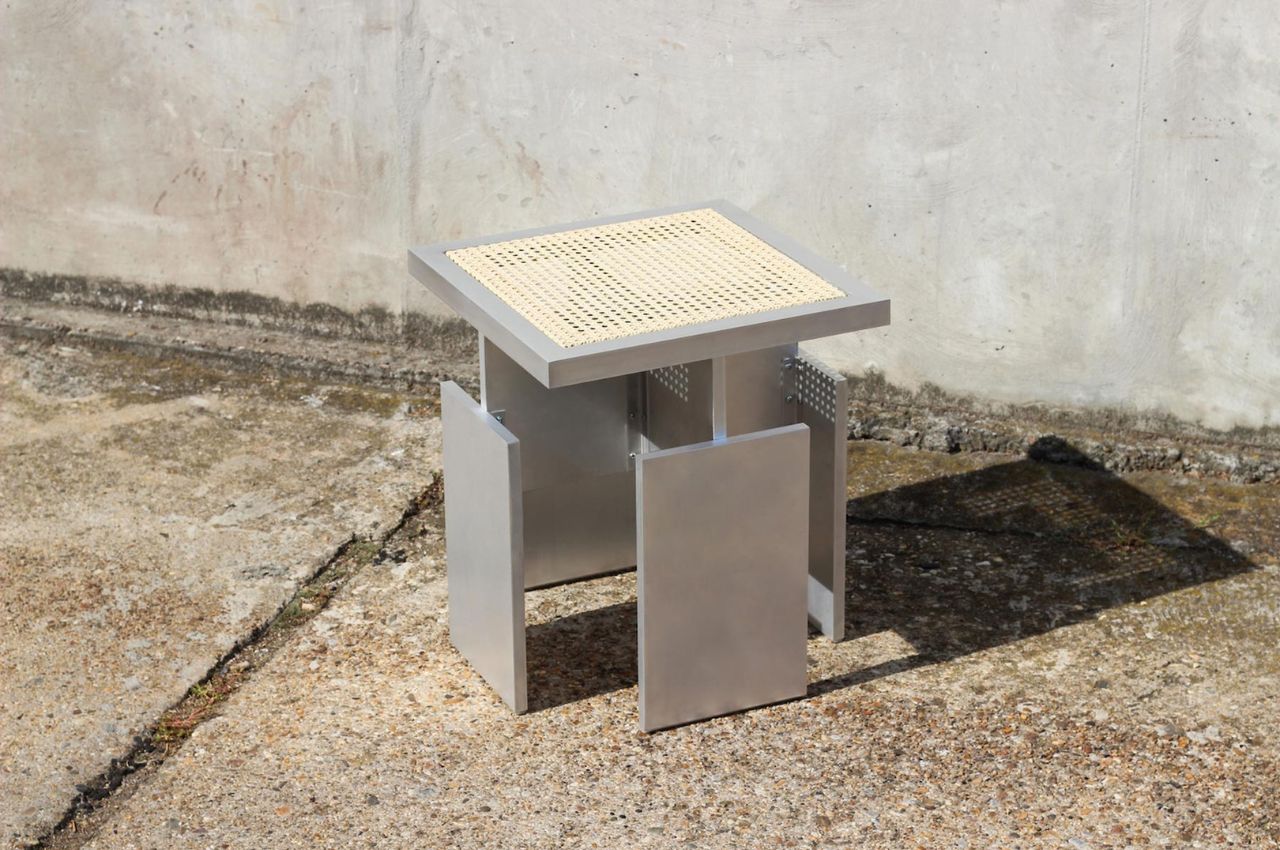
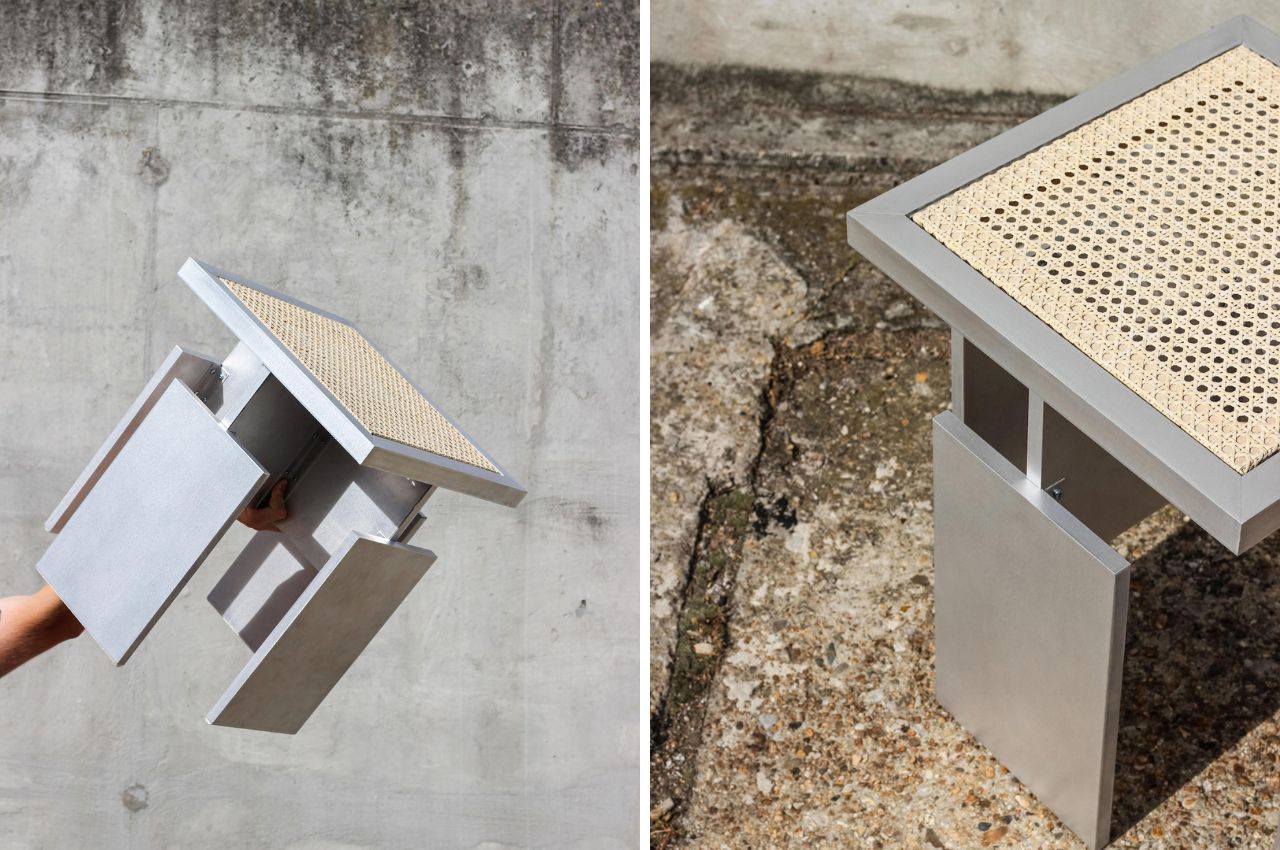
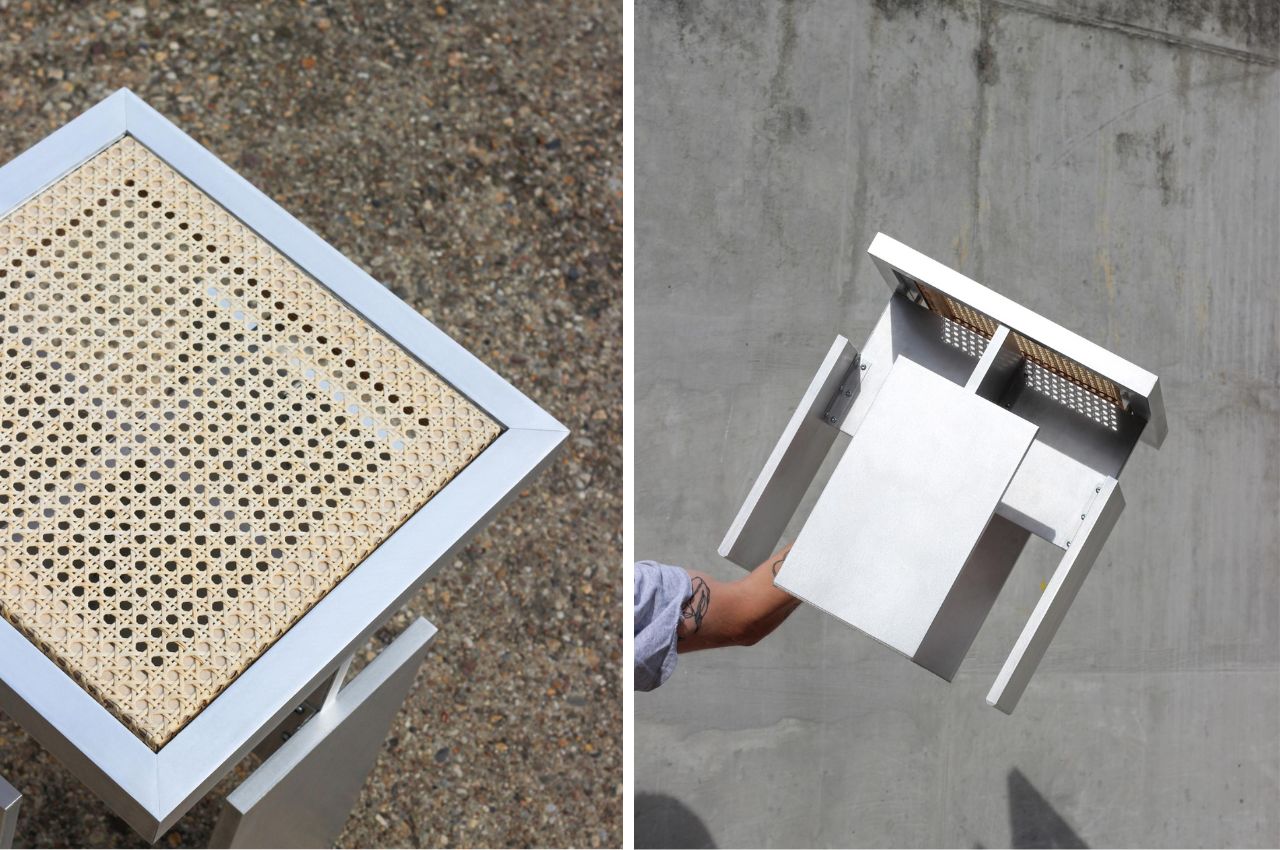
The versatility of waste movie screens is further highlighted as Kim extends the project to include furniture pieces such as tables and chairs. These pieces showcase the original patterns found in waste movie screens, adding a touch of uniqueness and character to each creation. By exploring the potential use of these screens as interior materials for the future, Kim is pushing the boundaries of sustainable design and encouraging a shift towards more environmentally conscious practices.

The repurposing of waste movie screens into lighting designs and furniture pieces not only addresses the issue of waste in the entertainment industry but also demonstrates the potential for meaningful utilization across various domains. Kim’s project underscores the exceptional functional and aesthetic qualities of waste movie screens, positioning them as valuable resources for the creation of sustainable and visually striking designs. As the design world continues to grapple with environmental concerns, Haneul Kim’s innovative approach serves as a beacon, pointing towards a future where discarded materials are transformed into objects of beauty and purpose.

The post The Ultimate Example Of Upcycling: Repurposing Discarded Movie Screens Into Interior Products first appeared on Yanko Design.