Fashion has a way of sneaking up on you. One minute you’re scrolling through your feed, minding your own business, and the next you’re staring at a handbag that makes you want dim sum at 10 in the morning. That’s exactly what happened when Brooklyn-based label Esenes Worldwide dropped their latest piece: a dumpling bag made from real translucent leather.
Yes, you read that right. A dumpling. A bag. One object. And somehow, it completely works. While there are a lot of dumpling-like bags already in the market (think Uniqlo, Beyond the Vines, etc), they just imitated the shape of one of our favorite snacks. This one actually took almost literally. But of course you cannot really it. You just get some dumpling cravings while carrying it.
Esenes Worldwide, pronounced “SNS,” short for “sorry not sorry,” was founded in 2021 by Justin Son. The brand has spent the past few years building a reputation on turning everyday objects, pop culture references, and an unapologetic sense of humor into wearable, conversation-starting designs. They’ve had viral hits before, including the Cufant clogs and the “Loose Screw” hats, but this dumpling bag feels like a new level of commitment to the bit. A very good, very delicious-looking bit.
The bag is crafted from genuine translucent leather in a pale, almost golden yellow that does a convincing job of mimicking the cooked skin of a steamed dumpling. The leather is soft and smooth to the touch, and because it’s translucent, you can see straight through to the canvas lining inside. That lining is printed with images of chopped vegetables and filling, creating a visual illusion that’s almost unsettling in the best possible way. It genuinely looks like someone cooked a dumpling, hollowed it out, and decided to put a zipper on it.
What makes it more interesting is how the construction leans into the organic nature of the food it references. Each bag has its own soft, rounded form with creases and folds that closely mirror the pleating on a real dumpling. No two pieces are exactly alike, which gives every bag a sculptural, one-of-a-kind quality that lifts it beyond novelty territory and into something you’d actually want to collect. The short, string-like handles add to the overall aesthetic, though they’re better suited for carrying in your hand or looping around your wrist rather than throwing over your shoulder.
And before you write this off as a cute conversation piece with no practical value, consider this: the canvas lining means you can actually stash your everyday things inside. Keys, cards, a lip balm, the occasional receipt you swear you’ll throw away. And of course, actual snacks. The irony of carrying your snacks inside a bag that looks like a snack is not lost on anyone, but it’s a fully functional bag, and that matters.
The drop is also very much a collector’s situation. Only 150 units were ever made, and each one retails at $150. Given the brand’s track record and the amount of attention this bag has already generated online since its release on February 20, 2026, that limited run feels more like a countdown than a leisurely shopping window.
It’s worth zooming out here, because the food-inspired handbag moment is real and it’s picking up speed. Nik Bentel’s Lidl bag shaped like a miniature shopping cart made waves not long ago, and more brands are starting to lean into the idea that accessories don’t have to take themselves seriously to be desirable. If anything, the opposite is becoming true. The more unexpected and culturally loaded an object is, the more people want to carry it around town.
Esenes Worldwide understands this better than most. They aren’t chasing trends so much as setting the terms for what a “fun” brand can look like without sacrificing craft. The dumpling bag is made from real leather, constructed with genuine attention to form, and backed by a concept that actually holds up under scrutiny. It’s playful without being cheap. It’s strange without being alienating.
Fashion at its best has always had a sense of humor, and this bag is proof that the funniest ideas can also be the most technically thoughtful ones. Whether you’re carrying it to a gallery opening or a late-night noodle spot, it’s going to start a conversation. And that, really, is the whole point.
Spring break planning tends to collapse into two extremes—either a frantic last-minute scramble or an over-packed disaster where you lug everything you own to a beach town and use about a third of it. Neither version feels great. The smarter move is knowing which objects genuinely earn their spot in your bag: the things that handle multiple jobs, hold up across unfamiliar environments, and make the week feel intentional rather than improvised. That’s what this list is built around.
What’s equally useful is that none of these will put you in the red. Every pick comes in under $100—and several sit comfortably well beneath that ceiling. These aren’t compromise buys either. They’re products with real design thinking behind them, built for actual use on actual trips by people who don’t want to carry more than they need. Whether it’s your first time packing light or your fourth attempt at getting it right, these five earn their place in the bag.
1. Side A Cassette Speaker — The Soundtrack to Every Spring Break Moment
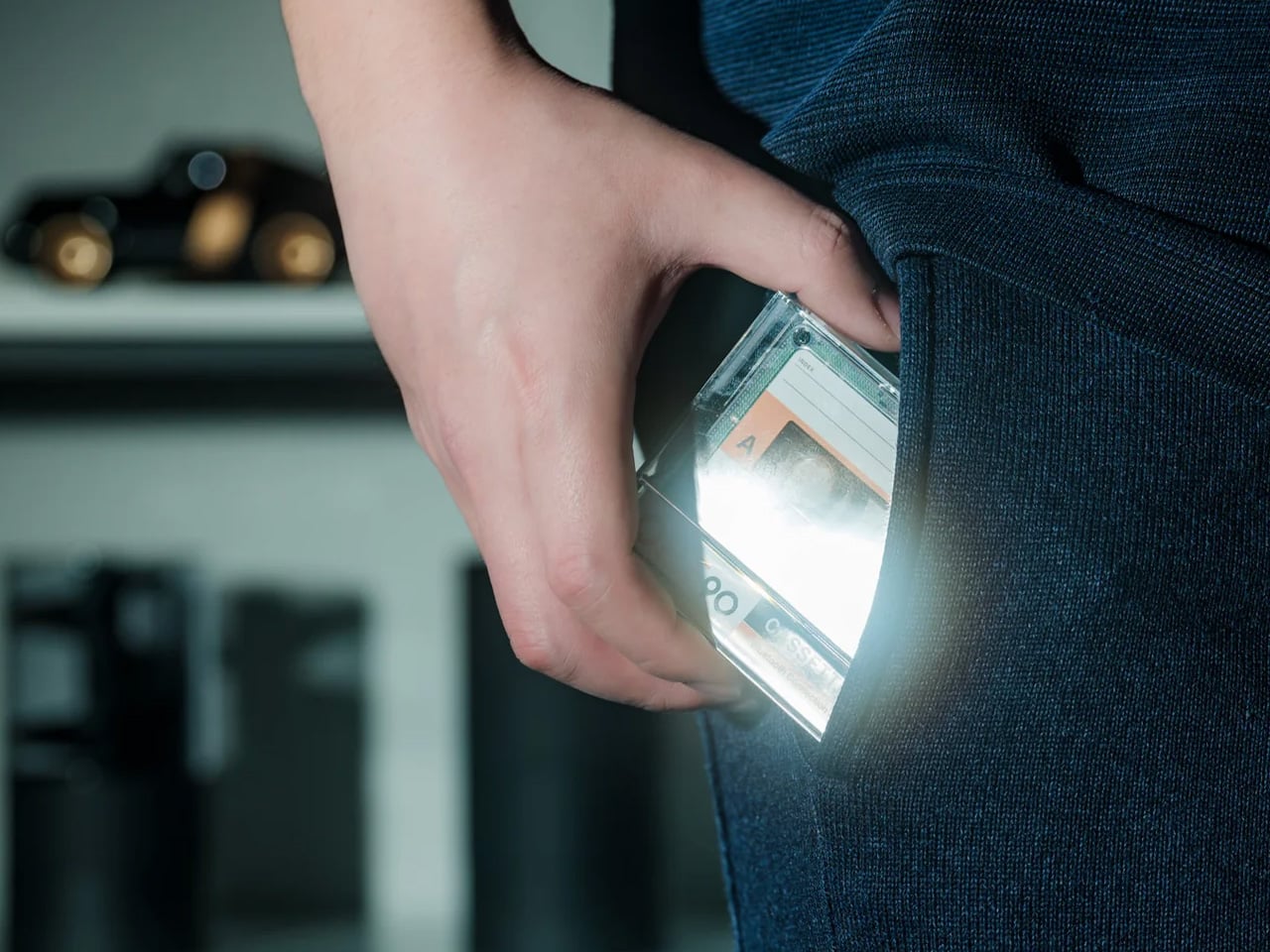
There’s something specific that a great travel speaker needs to be: compact without feeling cheap, audible without being obnoxious, and interesting enough to sit on a shelf without looking like clutter. The Side A Cassette Speaker from Yanko Design checks all three. Designed to look and feel like a real mixtape—transparent shell, authentic Side A label, the whole aesthetic fully committed—it’s a pocket-sized Bluetooth speaker with a personality that’s genuinely hard to ignore. Pull it out at a hostel, and someone will ask about it before you’ve even pressed play.
Underneath the retro exterior, the specs hold their own. Bluetooth 5.3 delivers a clean, drop-resistant connection across a hotel room or a beach setup without the frustration of constant dropouts. The microSD playback lets you load up a playlist and stream fully offline—no signal, no Wi-Fi, no problem. Sound is tuned to lean warm and cozy, channeling the soft roundness of actual tape playback rather than the harsh brightness that plagues most compact speakers. Six hours of battery at full volume covers a full afternoon, and a two-hour recharge means it’s back in action before the next session begins. At sub-$50, it’s also one of the most effortlessly giftable objects in recent memory.
The cassette form factor isn’t just a gimmick—it works as a design object and a conversation starter in any space it occupies, making it equally at home on a shelf as it is inside a bag.
Bluetooth 5.3, offline microSD playback, and six hours of battery together make this a genuinely capable travel speaker, not just a pretty one.
What We Dislike
The microSD slot supports MP3 files only, which means listeners with FLAC or AAC libraries will need to convert tracks or stay connected via Bluetooth for offline use.
Six hours of playback is solid for personal sessions, but starts to feel limited during an extended group hang where the speaker runs continuously throughout the day.
2. Hitch — Your Bottle and Your Coffee Cup, Finally Together
Most reusable cups live at home. Not because people don’t care about sustainability, but because carrying both a water bottle and a coffee cup is genuinely inconvenient—and convenience almost always wins. The Hitch was designed to solve exactly that friction. Its patent-pending mechanism nests a full 12oz barista-approved cup directly inside an 18oz insulated water bottle, and a single crossbar twist at the base releases the cup cleanly. The two pieces carry as one. It’s not a miniaturized compromise either; both the bottle and the cup are full-size and built for all-day use.
Every component—bottle, cup, and lid—is double-walled, vacuum-insulated, stainless steel, and certified leak-proof, which means you’re not trading practicality for the novelty of the concept. For a spring break week that bounces between airports, coffee shops, beaches, and restaurants, the Hitch becomes the single carry that handles morning hydration, midday coffee runs, and everything in between. It’s the product that makes zero-waste feel like a practical decision rather than an aspirational one, and that distinction matters when you’re moving fast and packing light.
What We Like
Nesting a full-size 12oz cup inside a full-size 18oz bottle is a genuinely smart design solution that addresses a real behavioral barrier to zero-waste carry without requiring a lifestyle overhaul.
Full vacuum insulation on both the bottle and the cup means cold water stays cold and hot coffee stays hot, without either sacrificing function for the sake of the shared form.
What We Dislike
The retail price sits toward the upper end of this list’s budget range, and some students may find it harder to justify compared to a standard insulated bottle at a lower price point.
The cup lid has drawn criticism in user reviews for its durability over time, and replacement parts have been historically difficult to source after the initial purchase.
3. HP Sprocket Portable Instant Photo Printer — Make the Memories Stick
The paradox of phone photography is that the better the camera gets, the fewer photos actually get printed. Spring break produces hundreds of shots that live in a camera roll for a few weeks before fading into algorithmic obscurity. The HP Sprocket is a direct counterargument to that cycle—a pocket-sized wireless photo printer that pairs via Bluetooth 5.2, works with iOS and Android, and prints 2×3 glossy photos in seconds. No ink cartridges, no ribbons, no subscriptions. ZINK Zero Ink technology embeds color directly into the paper, keeping the entire process clean, fast, and genuinely portable.
The free HP Sprocket app adds a layer of creative control that makes it feel like more than a glorified receipt machine. Stickers, borders, filters, and emoji overlays are all part of the package, which makes the printing process feel as social as the photography itself. One charge delivers up to 35 prints, and a personalized LED indicator signals which device is printing during multi-person sessions—so a group of four can print simultaneously without creating confusion or a queue. The sticky back on every photo means it goes straight onto a journal, a wall, a laptop, or a postcard without needing tape. These are the photos that actually get kept.
What We Like
ZINK Zero Ink technology eliminates cartridges and toner, making every print session as effortless as a Bluetooth connection and a single button press.
Multi-device simultaneous printing makes this a genuinely social accessory—it doesn’t create a line, it creates a shared moment that fits naturally into group travel.
What We Dislike
The 2×3-inch format is charming but small, and students hoping to print anything approaching a standard photo size will find the output limited for that specific purpose.
35 prints per charge sounds reasonable in isolation, but an active group setting burns through that ceiling quickly, making planned recharging a practical necessity during longer outings.
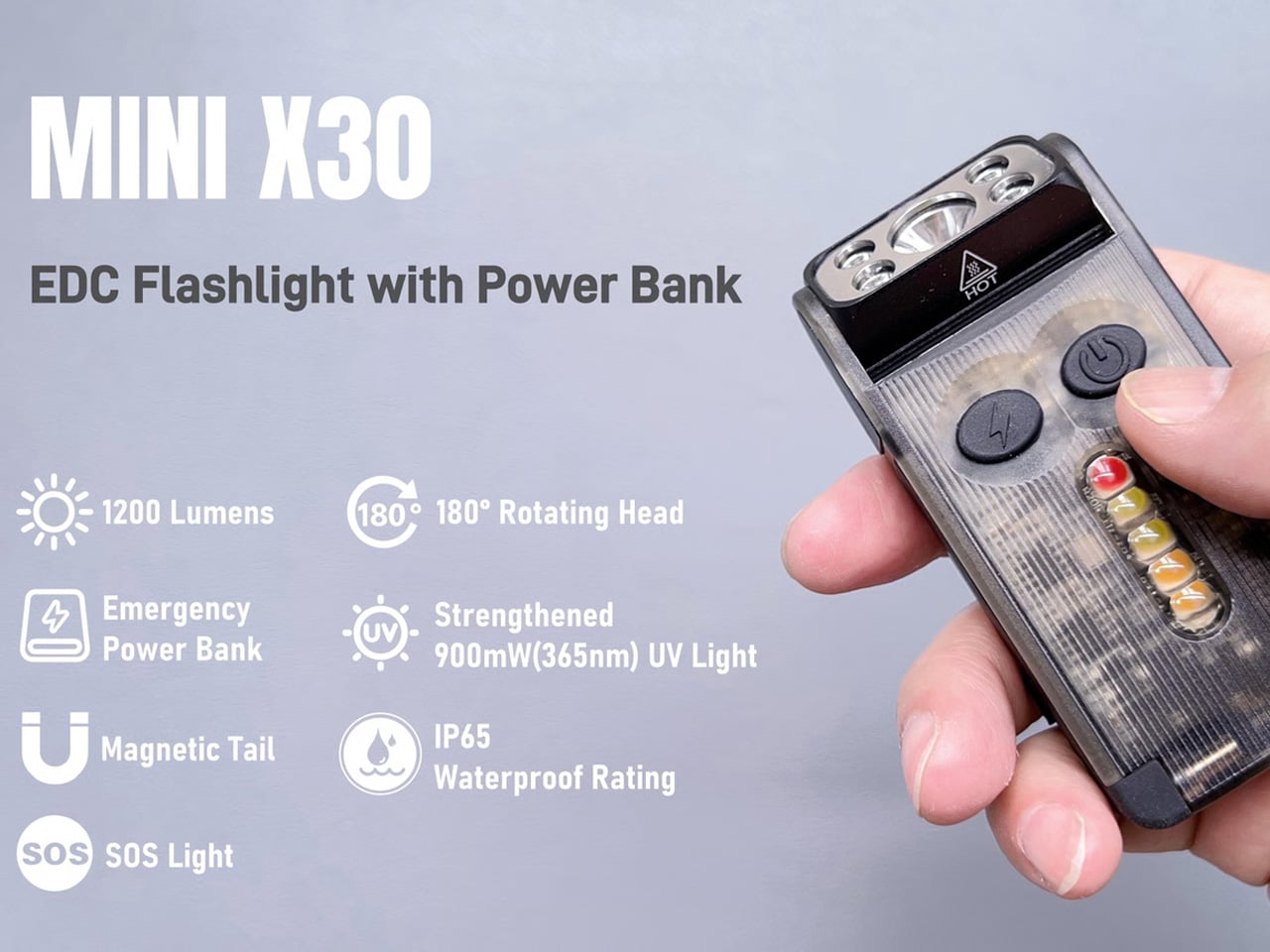
4. Mini X30 -The EDC Flashlight That Moonlights as a Power Bank
Most people don’t think about a flashlight until they desperately need one. The Mini X30 reframes that entirely by making it the kind of object you actually want to carry every day—not because emergencies demand it, but because it earns its spot before one ever arrives. Compact enough to clip onto a keychain, slide along a pocket edge, or attach to a backpack strap, it disappears into your carry until it’s needed. Then it delivers 1,200 lumens of turbo brightness with a single one-second press and hold—a level of output that handles everything from a pitch-dark campsite to a power outage in an unfamiliar city.
The built-in emergency charging function is what tips this from useful to genuinely essential for travel. When your phone battery drops at the wrong moment—mid-navigation, mid-emergency, mid-anything—the X30 steps in as a backup power source without requiring you to dig through your bag for a separate power bank you may or may not have remembered to pack. For a spring break trip that moves between outdoor adventures, late nights, and unfamiliar terrain, having light and emergency power consolidated into a single keychain-sized object is exactly the kind of redundancy that feels invisible until it saves the day.
What We Like
Consolidating a 1,200-lumen flashlight and an emergency phone charger into a keychain-sized EDC tool is a genuinely practical design decision that eliminates the need to carry and track two separate devices.
The turbo bright mode’s press-and-hold activation keeps max output immediately accessible without cycling through modes at the moment it matters most.
What We Dislike
As an emergency charger, the X30 is best understood as a backup rather than a primary power solution—students who rely heavily on their devices throughout the day will still want a full-capacity power bank alongside it.
The keychain and pocket-clip carry options are convenient for daily EDC, but attaching them to a bag strap in high-movement outdoor settings may require some deliberate adjustment to keep them secure.
5. Loop — The Only Neck Pillow That Actually Understands Your Neck
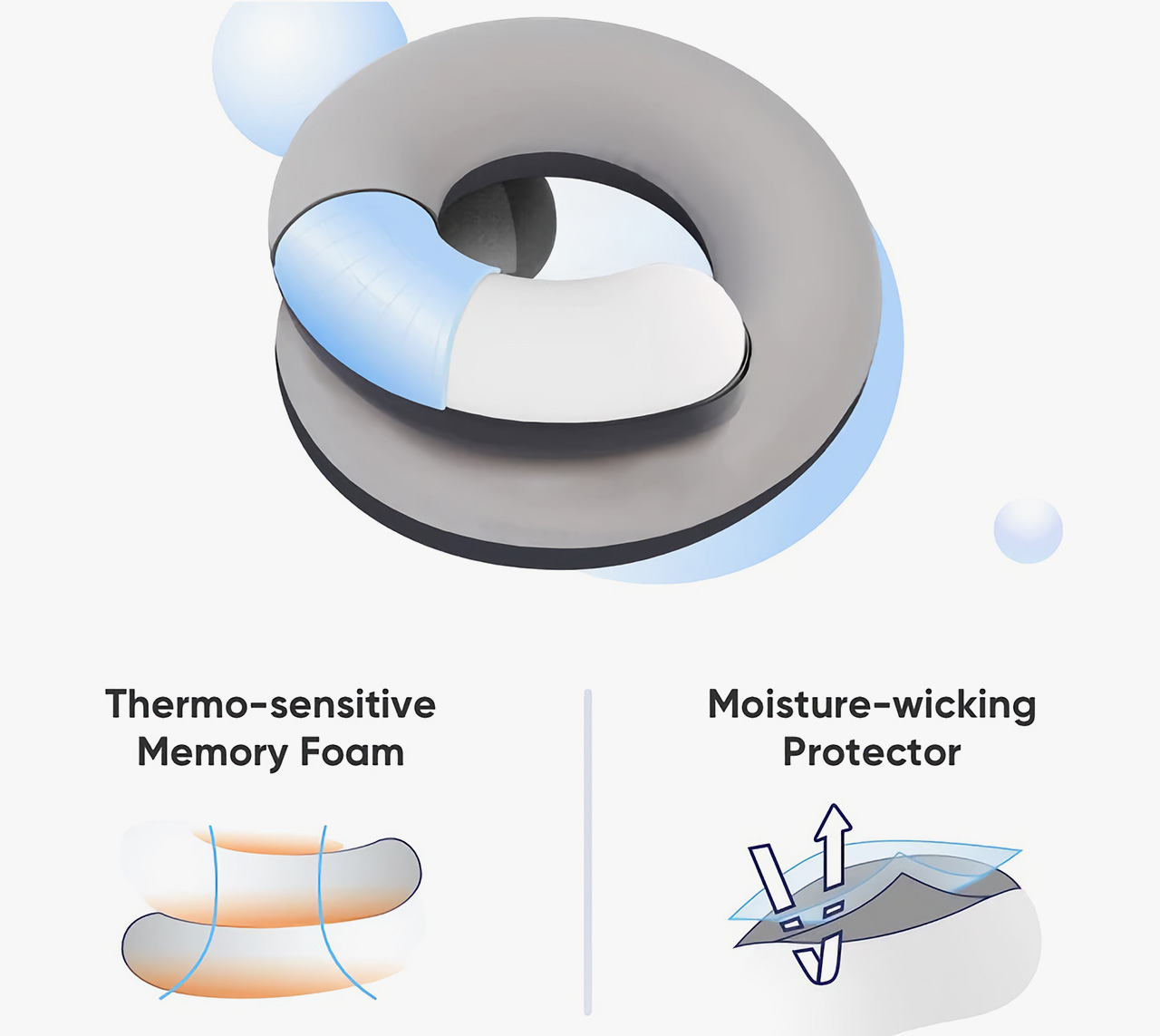
The standard U-shaped travel pillow is one of those products that’s been wrong for decades, and nobody fixed it. It props your head in a single position, falls off when you shift, and spends most of the journey doing very little. The Loop Pillow starts over entirely. Shaped more like a flexible neck noodle than a traditional pillow, it winds around your neck—loosely or tightly, depending on what you need—and provides lift exactly where your head wants to fall. It’s infinitely adjustable in a way that a fixed U-shape never could be, which means it works whether you sleep sitting upright, leaning left, tilting forward, or resting straight back.
The material behind this one is doing real work. Thermo-sensitive memory foam molds directly to the contours of your neck, which means it isn’t approximating support—it’s actually conforming to you specifically. The outer cover is moisture-wicking and breathable, keeping things dry across long hauls where temperature and comfort tend to degrade together. A clever dual-tone design distinguishes the warm side from the cool side, letting you choose your preferred surface depending on the environment. For a spring break trip that starts with a red-eye flight and ends with a bus ride back, this is the carry that makes the in-between feel significantly less punishing.
What We Like
The infinitely adjustable loop design accommodates every sleeping position naturally, which makes it genuinely more versatile than any fixed-form travel pillow on the market.
Thermo-sensitive memory foam combined with a moisture-wicking, breathable cover means both the structure and the surface of the pillow are actively working in your favor throughout the journey.
What We Dislike
The loop form factor is a meaningful departure from what most travelers are used to, and it may take a flight or two before the adjustment feels second nature.
Travelers who prefer a more structured, rigid support system may find the flexible noodle design requires more deliberate positioning than they want to manage mid-sleep.
The Right Gear Makes the Break
Spring break doesn’t require a perfect packing list, but it rewards a smart one. The difference between a trip that flows and one that frustrates almost always comes down to the things you brought—or the things you left behind, wishing you hadn’t. These five picks cover the core categories: sound, hydration, memory-making, power, and carry. Together, they handle most of what a student needs for a week away without demanding too much space, too much budget, or too much thinking. That’s the whole point of good design—it simplifies the decisions so you can get to the experience.
What’s worth noting is how naturally these work alongside each other. The Cuktech keeps your phone alive for the Sprocket prints, the Hitch keeps you from reaching for a paper cup, and the Cassette Speaker scores the whole week. The Allpa Mini holds everything else together without complaint. This isn’t a random product roundup—it’s a considered carry. Spend the money once, pack it once, and show up somewhere fully ready to be there. That’s a spring break actually worth planning for.
There’s a greasy phone screen somewhere in your immediate past. Maybe it was a dumpling, maybe it was a bowl of noodles, maybe it was something with a suspiciously orange sauce. Either way, you were eating and scrolling at the same time, and the evidence is still on the glass. Nobody’s proud of it, but according to a survey bibigo ran through Angus Reid, 96% of Americans have used their phone while eating, so at least you’re in excellent company.
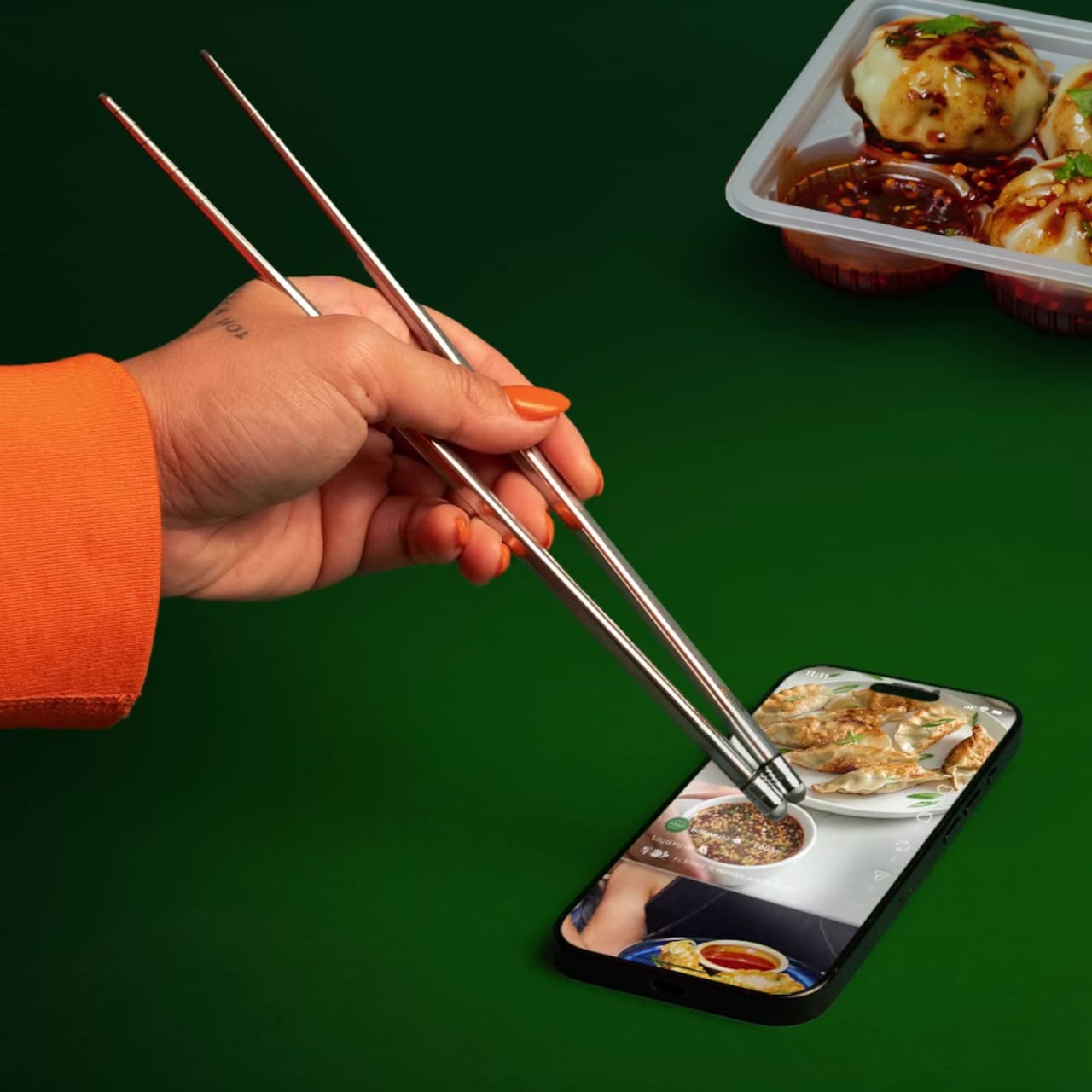
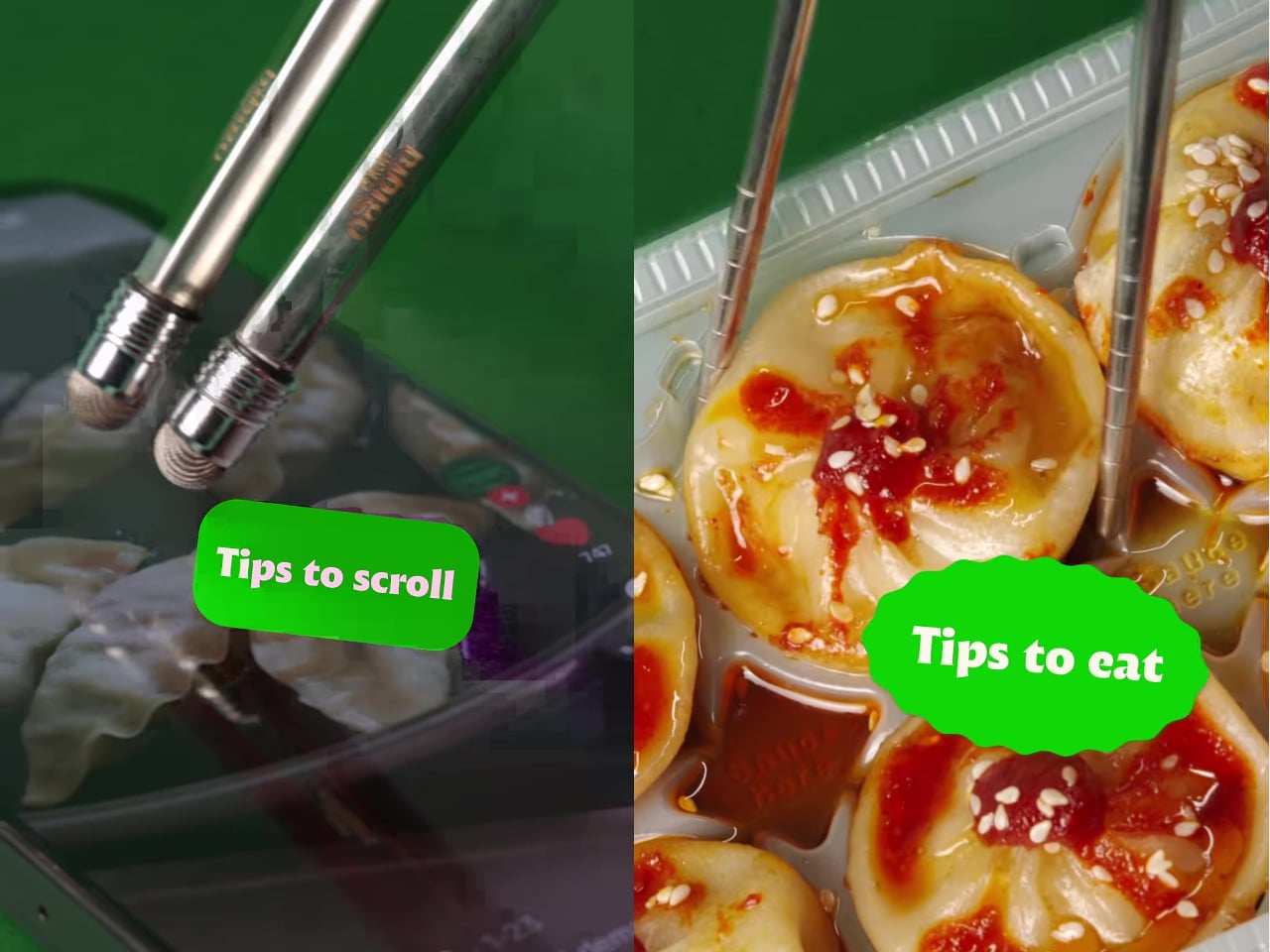
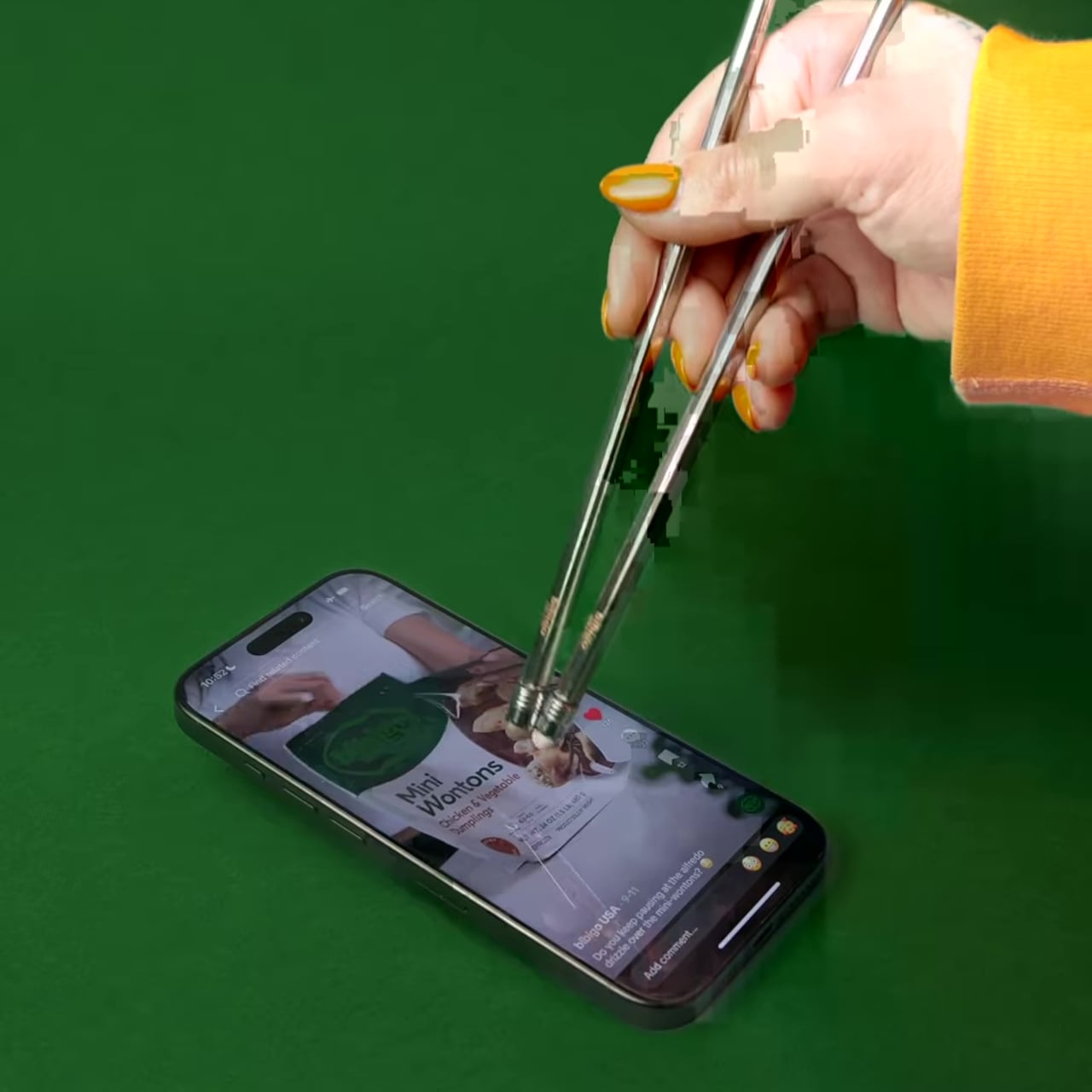
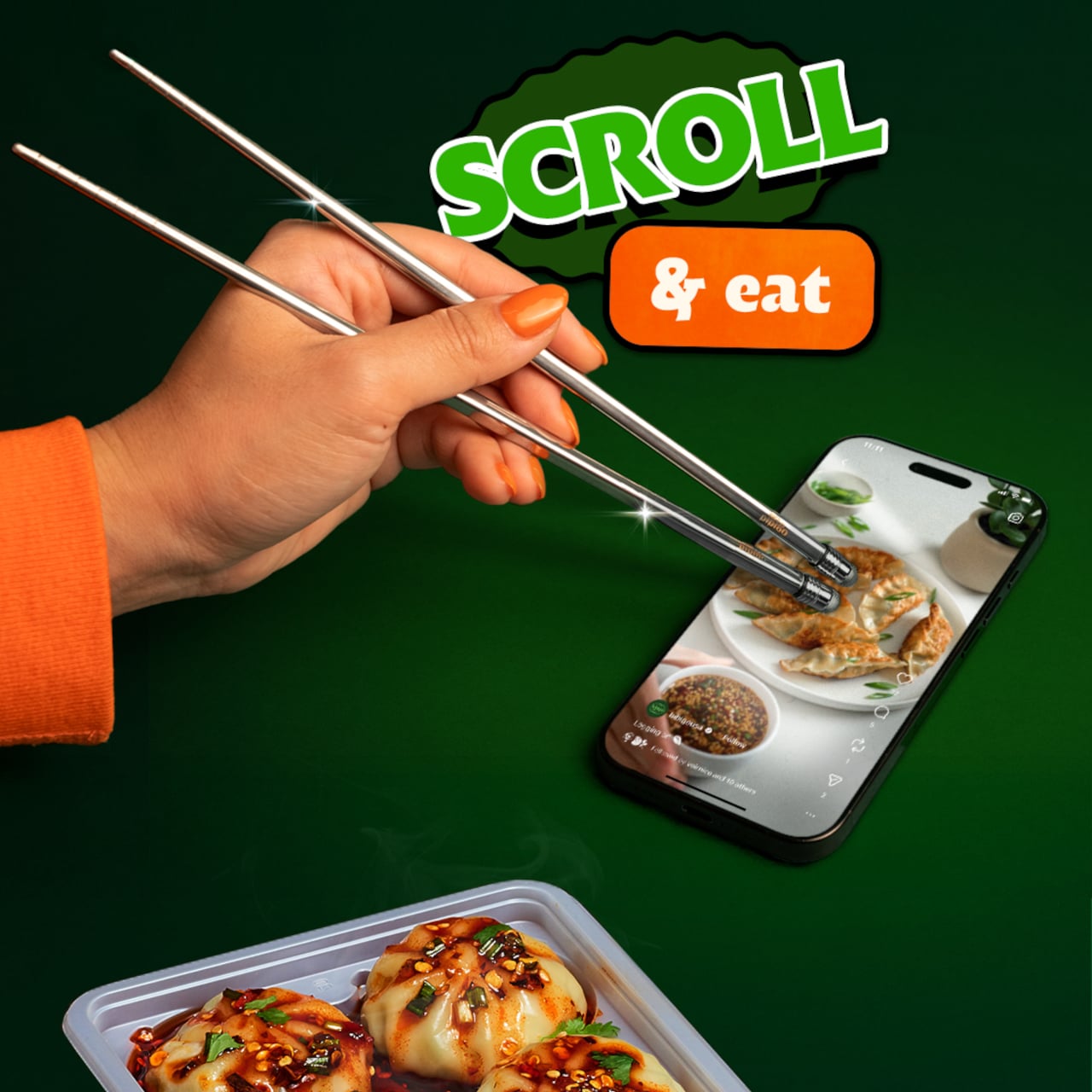
bibigo, the Korean food brand behind what the internet has collectively decided are its favorite dumplings, decided to design for the habit instead of lecturing about it. ScrollSticks are dual-ended chopsticks with touchscreen tips, one end for picking up food and the other for tapping, swiping, and scrolling on a phone. The premise is simple: two dedicated ends for two different jobs, keeping the oil and sauce where they belong.
The research behind the launch is basically a monument to relatable chaos. Beyond the 96% who’ve scrolled while eating, 66% do it often during at least one meal a day. Nearly three in four people report frustrations: 41% are frustrated by getting their hands or phones dirty, 30% struggle to hold a phone comfortably while eating, and 28% can’t keep their screen clean. ScrollSticks are bibigo’s answer to all of the above, which is either very clever or a sign of the times, possibly both.
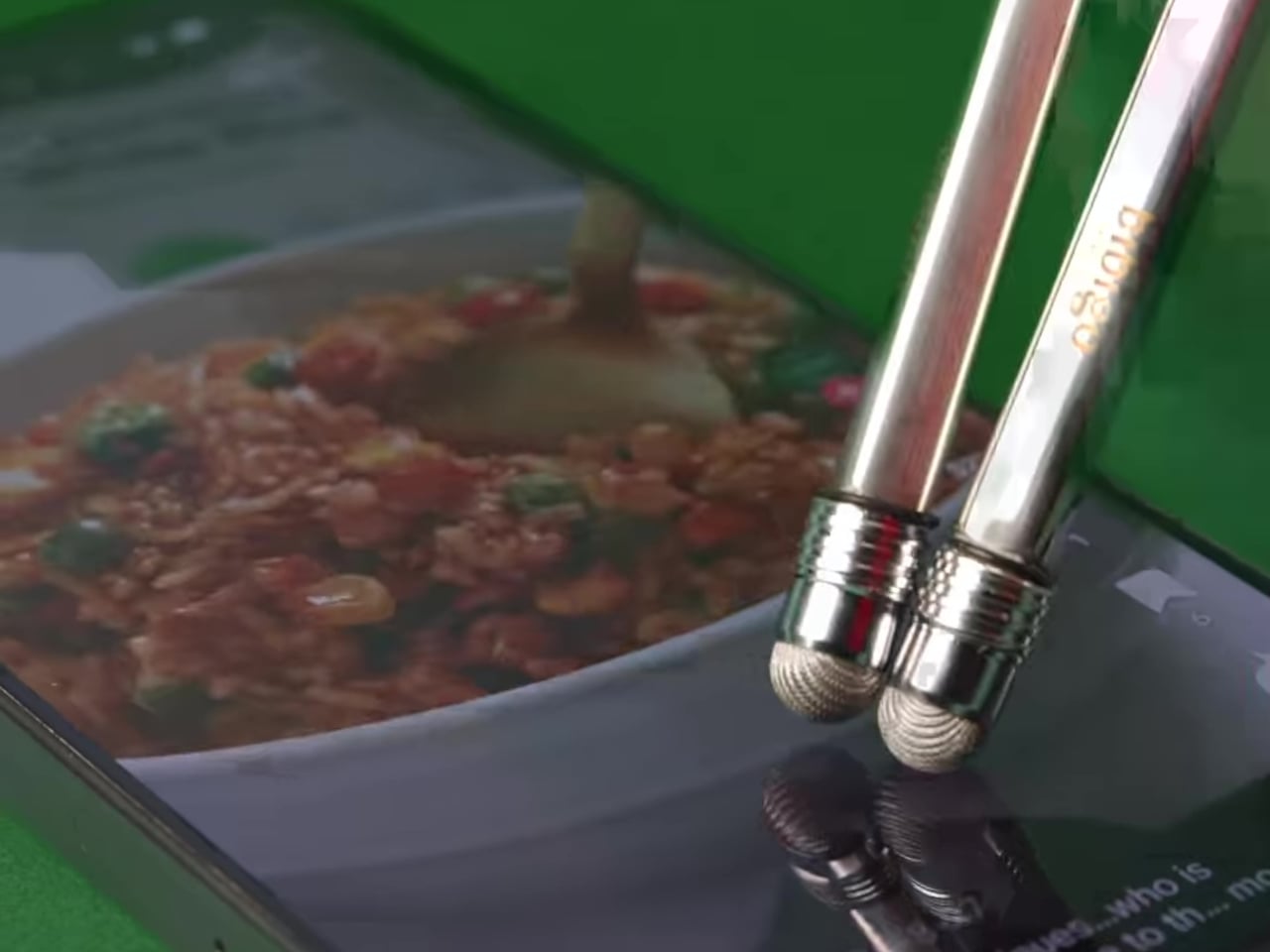
The design logic is straightforward. You eat with the food end, then flip the chopsticks and use the touchscreen-compatible tips to tap and scroll without transferring dumpling residue onto the glass. The tips work with capacitive touchscreens, so it’s not just poking the screen with metal but actually registers as a touch. One tool, two dedicated functions, and your screen stays marginally more dignified.
The cleaning situation is also handled better than you’d expect from what sounds like a novelty item. The touchscreen tips unscrew from the chopsticks, so you can dishwasher or sink-wash the metal body just like any other silverware. That modularity is doing serious practical work here. A touchscreen-tipped chopstick that you can’t properly clean would be a different, worse product.
bibigo frames ScrollSticks as part of its “food-tainment” innovations, which is a word that exists now and apparently describes branded objects that blur eating and entertainment culture. The previous entry in that line was the bibigo Dashboard Kitchen. ScrollSticks are sillier and more useful, which is a hard combination to pull off.
The chopsticks are a limited-edition drop, and the window is short. That’s fitting for something that is partly a product and partly a cultural artifact: a small, polished admission that dinner and doomscrolling are now the same meal, and if the phone is staying at the table, at least the screen deserves better than a dumpling-flavored fingerprint in the corner.
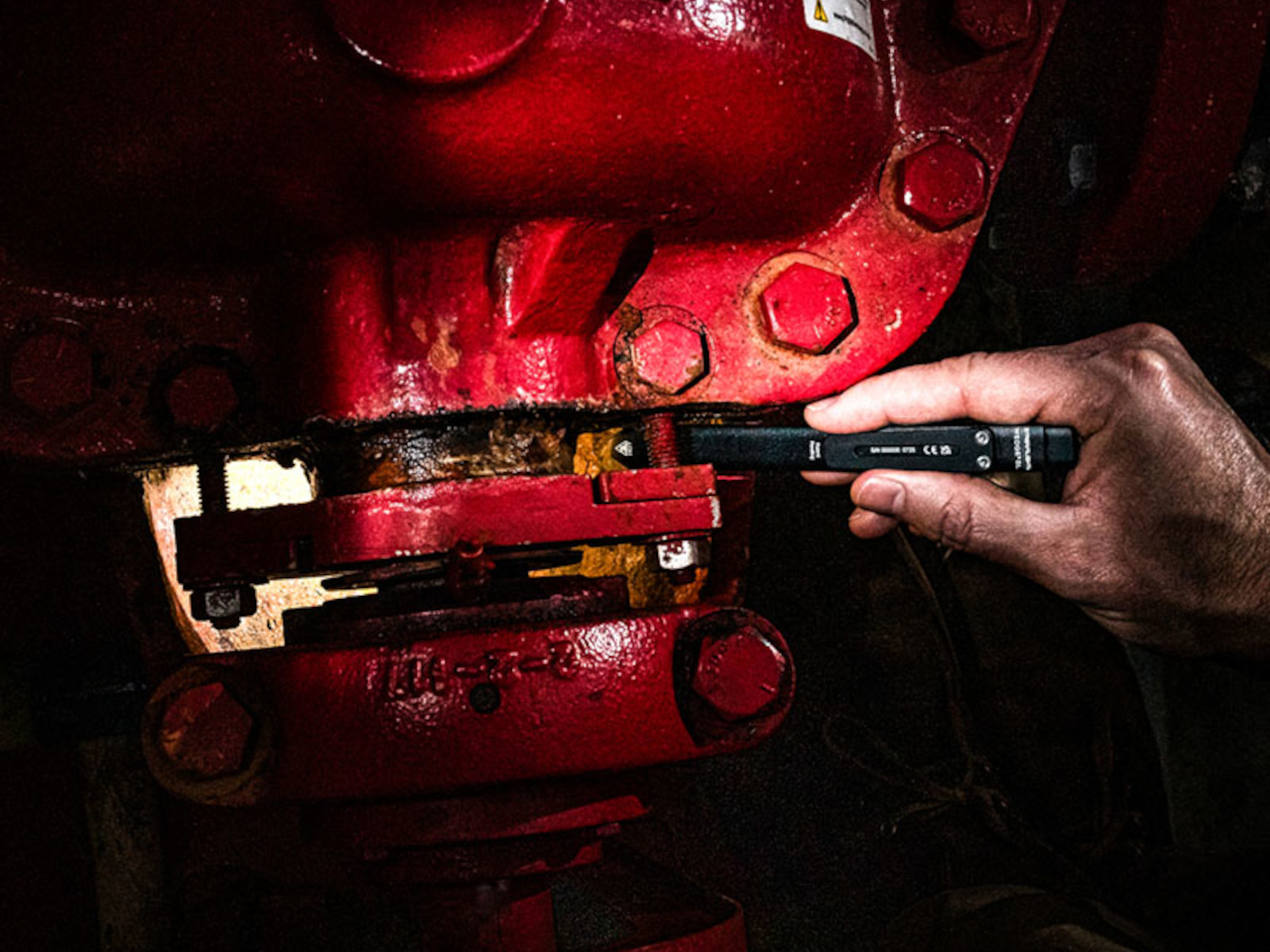
Most people don’t carry a flashlight, which is something they only realize when they’re already crammed under a sink, squinting at a fuse box, or trying to read a label in a poorly lit corner of a garage. Cylindrical lights are bulky, they roll off surfaces, and they feel overbuilt for the kind of everyday moments where you just need a quick, reliable beam. So they get left at home, and your phone flashlight ends up doing all the work.
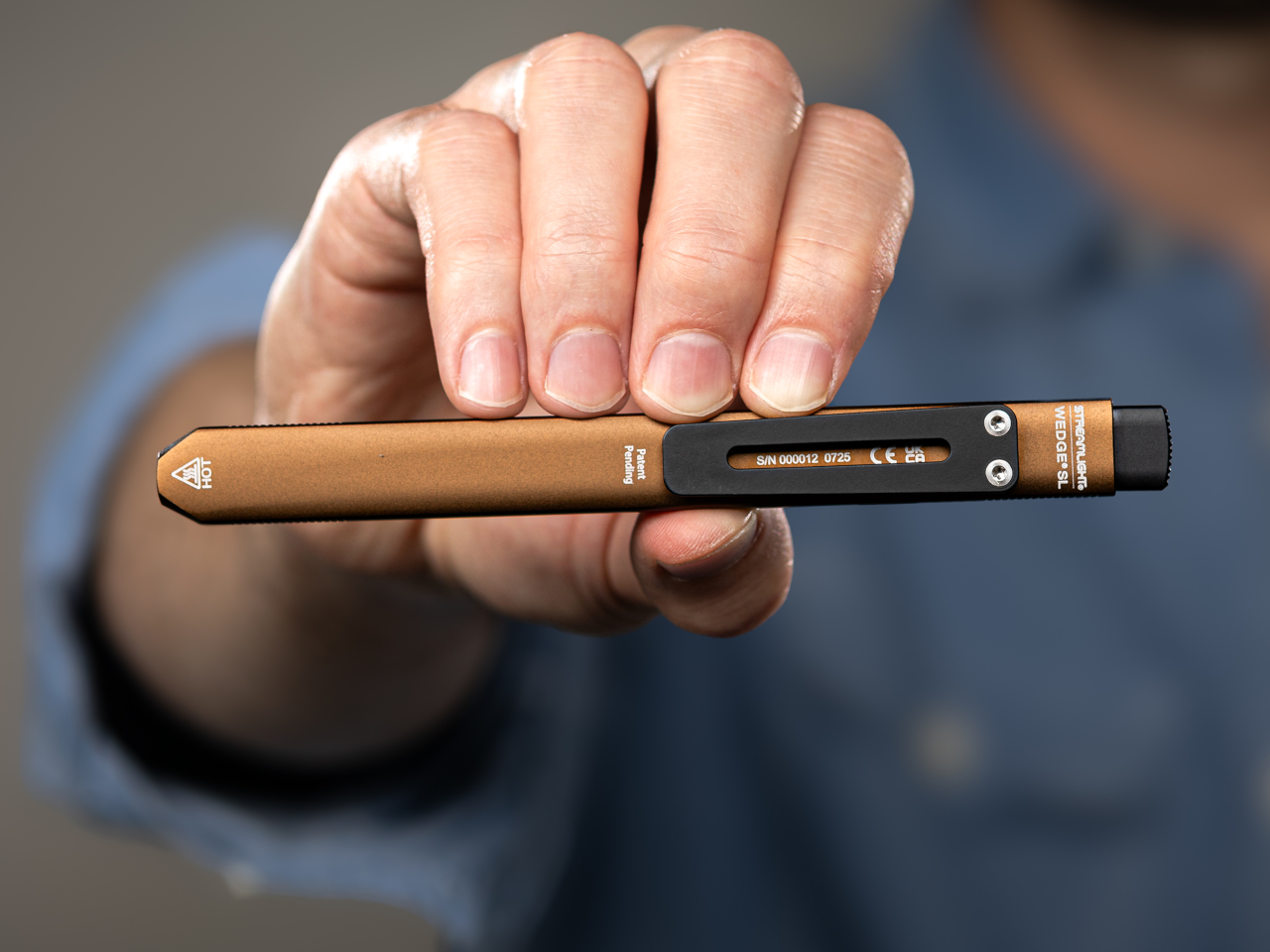
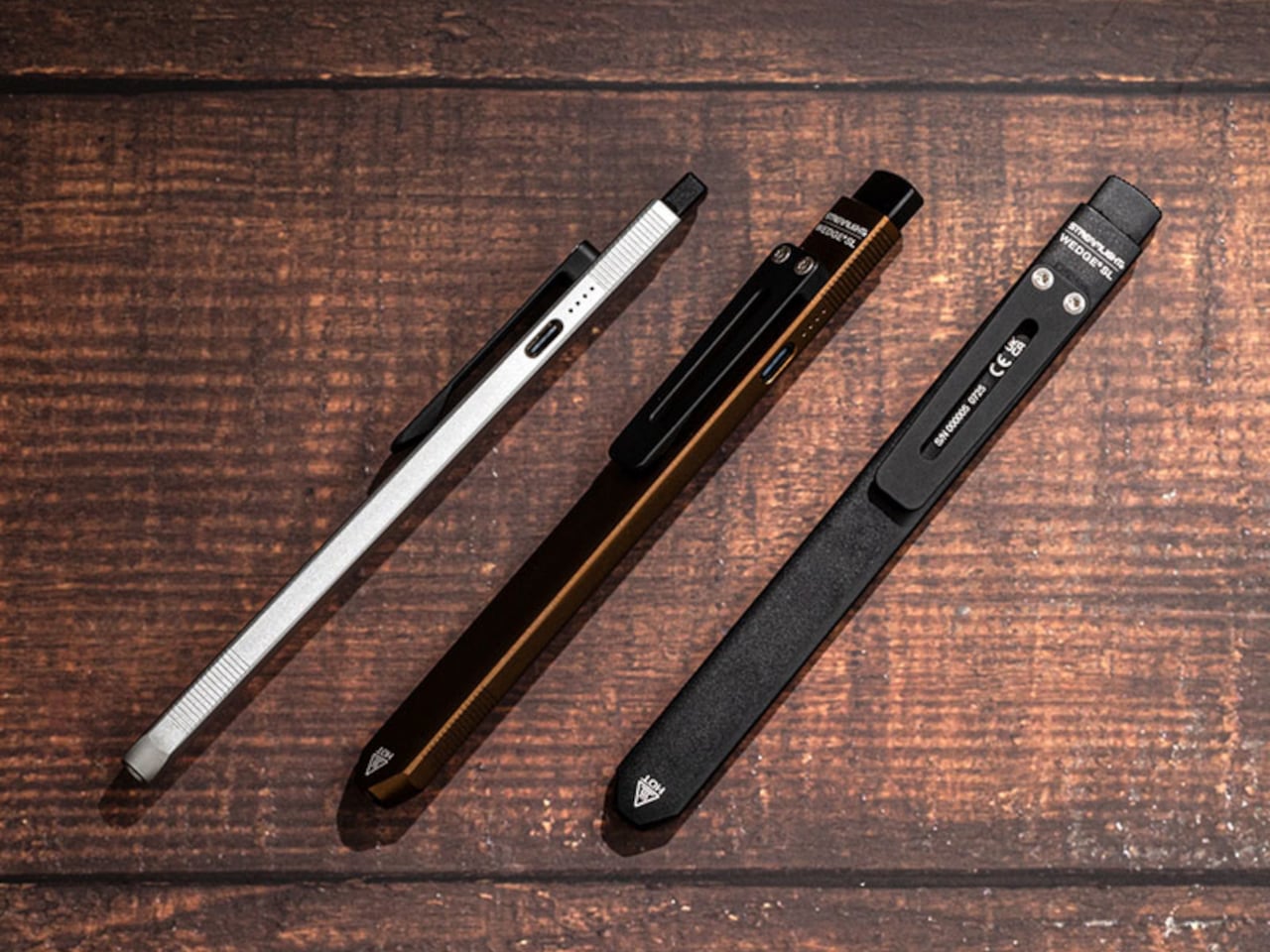
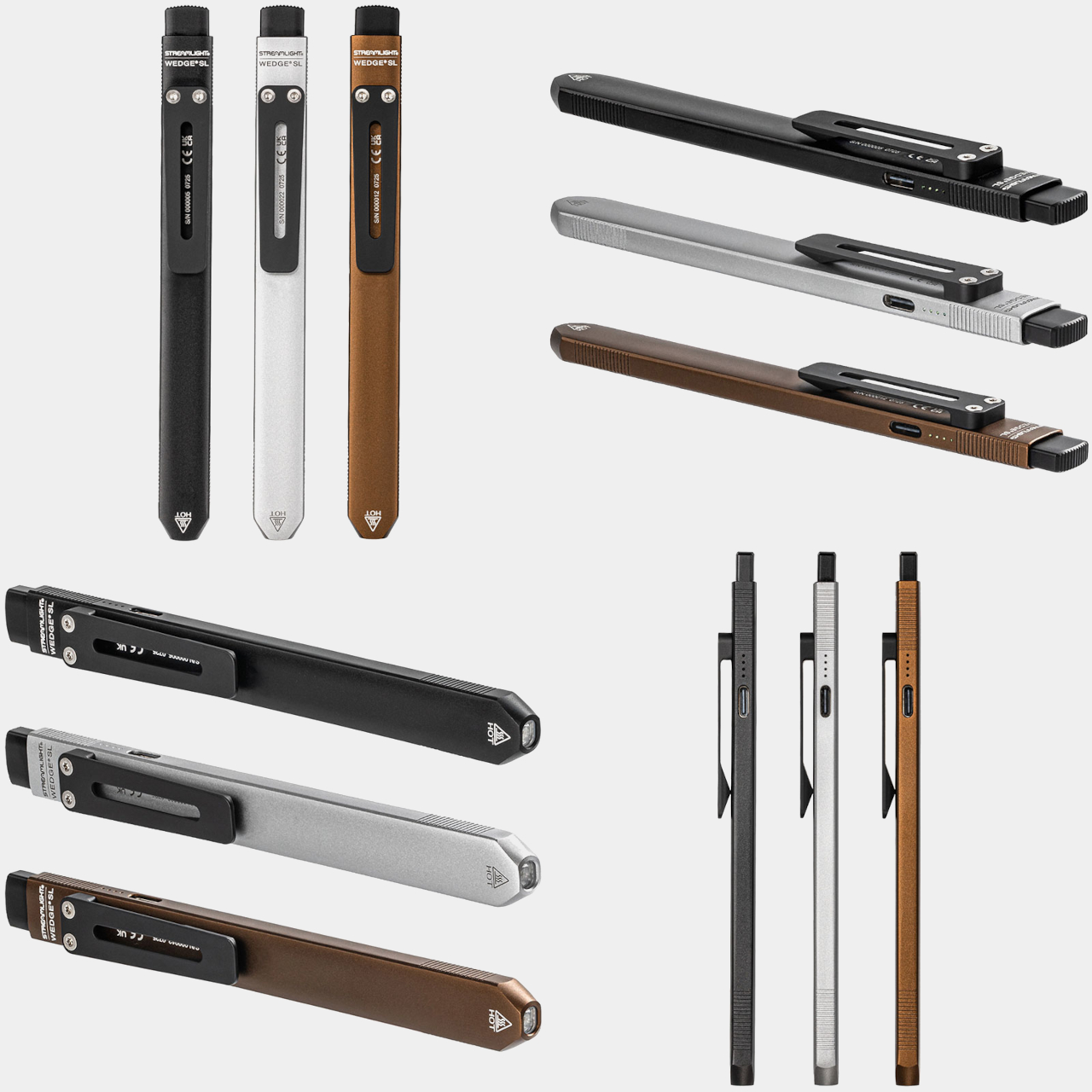
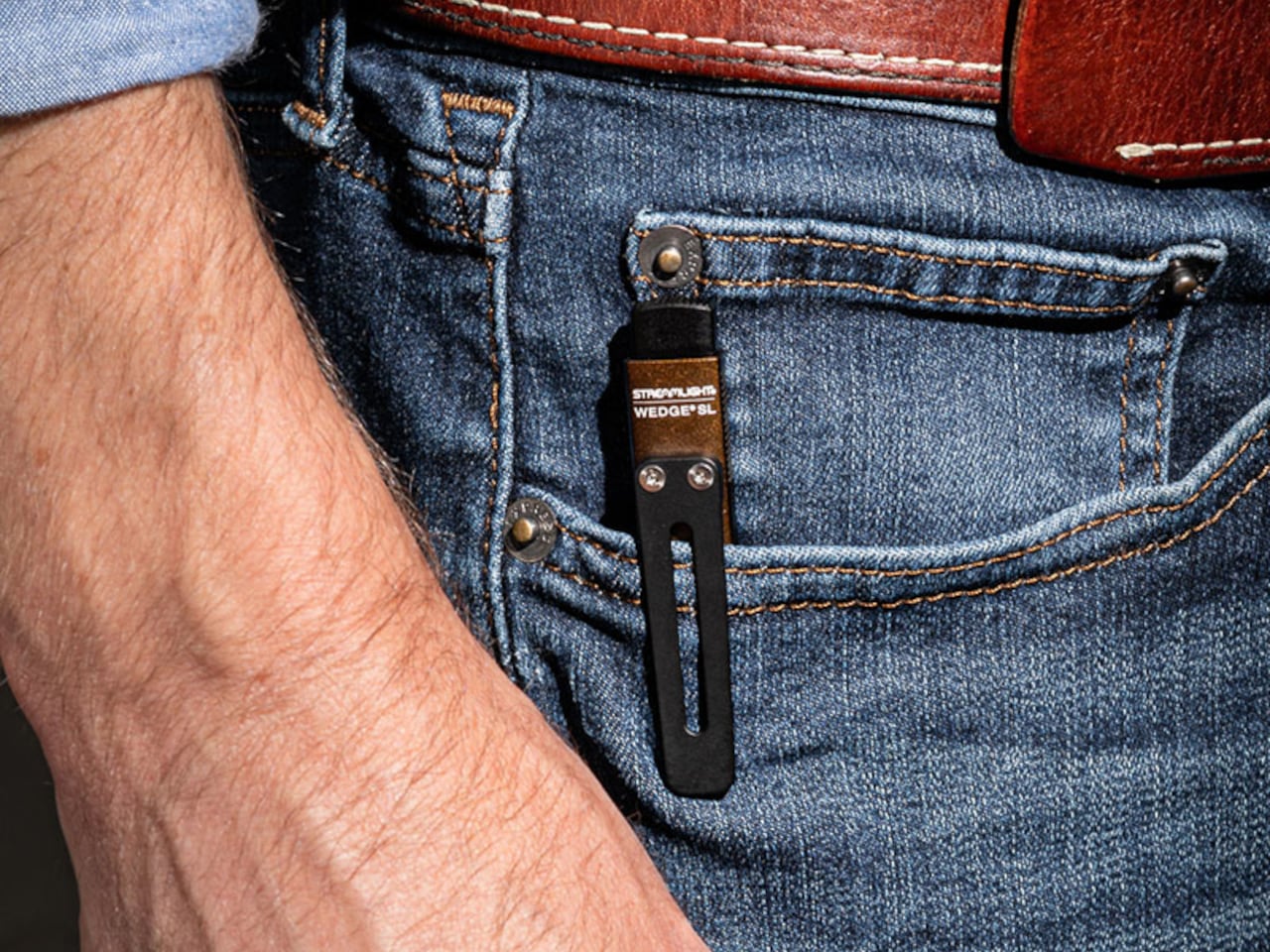
The Wedge SL is a USB-C rechargeable inspection light with a sleek, modern design built to actually stay in a pocket. The ultra-thin unibody construction puts the dimensions closer to a pen than a flashlight, 5.65 inches long, 0.28 inches thick, and about 1.14 oz light, which means it doesn’t fight for space with keys and a wallet. A stainless steel injection-molded pocket clip also lets it ride on a shirt pocket or tool pouch without bouncing around.
One-handed operation was clearly part of the brief. The tail switch handles momentary or constant-on use, so one hand can hold a panel, a wire bundle, or an awkward hatch while the other hand aims the light exactly where it needs to go. TEN-TAP programmable switch lets users choose whether constant-on defaults to High or Low intensity, which means the light can match your habits rather than forcing you to cycle through modes every time you switch on.
For an inspection light, the available modes are spot on, pardon the pun. Constant-on High runs at 100 lumens for 1.75 hours, Low drops to 50 lumens for 3.5 hours, and THRO (Temporarily Heightened Regulated Output) mode pushes 500 lumens with an 80m beam when you need maximum brightness fast. THRO is activated by a 3-second press, which keeps it from firing accidentally during sustained work while still making it quick to trigger when a tight space needs a real burst of light.
The battery side holds up well. USB-C charging and a four-level LED battery status indicator with charge alerts mean you always know roughly how much is left, without deciphering blink codes. A full charge takes about four hours. The field serviceable, user-replaceable lithium polymer battery is also worth calling out, since many rechargeable lights eventually become e-waste once the cell degrades inside a sealed body.
Durability gets the same careful treatment, as the extruded aluminum alloy case comes with a Type II MIL-Spec anodized finish. The lens is also unbreakable acrylic, and the light is IPX4-rated with 1m impact resistance testing. A bite boot is also included, which lets you grip it with your teeth during two-handed work without scratching the finish or the inside of your mouth.
The Streamlight Wedge SL earns pocket space by being thin, predictable, and quick to operate instead of trying to be a tactical statement piece. A flashlight that’s actually on you is always going to matter more than one that performs better on a spec sheet but gets left on the workbench because it’s too big to bother carrying every day.
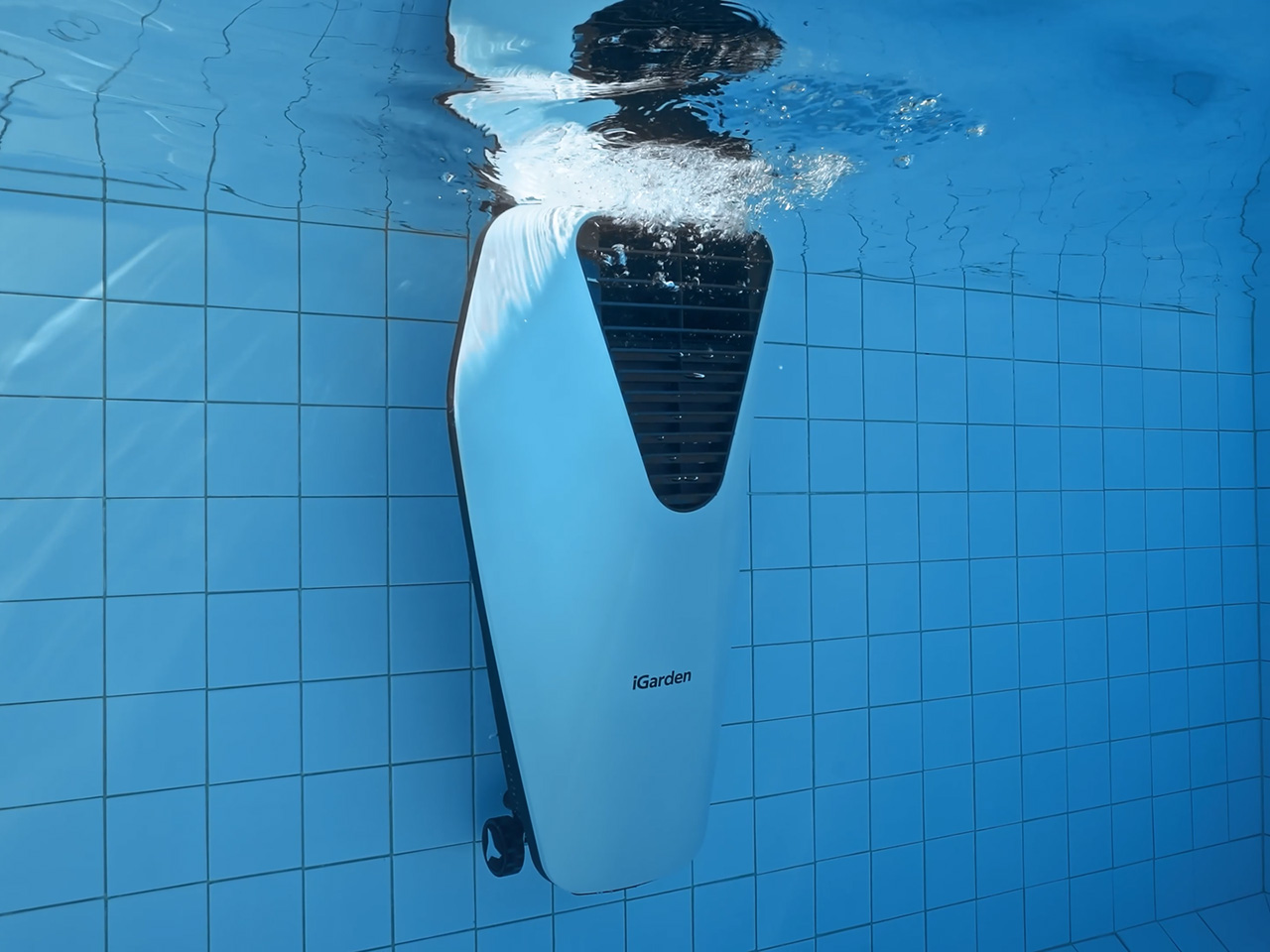
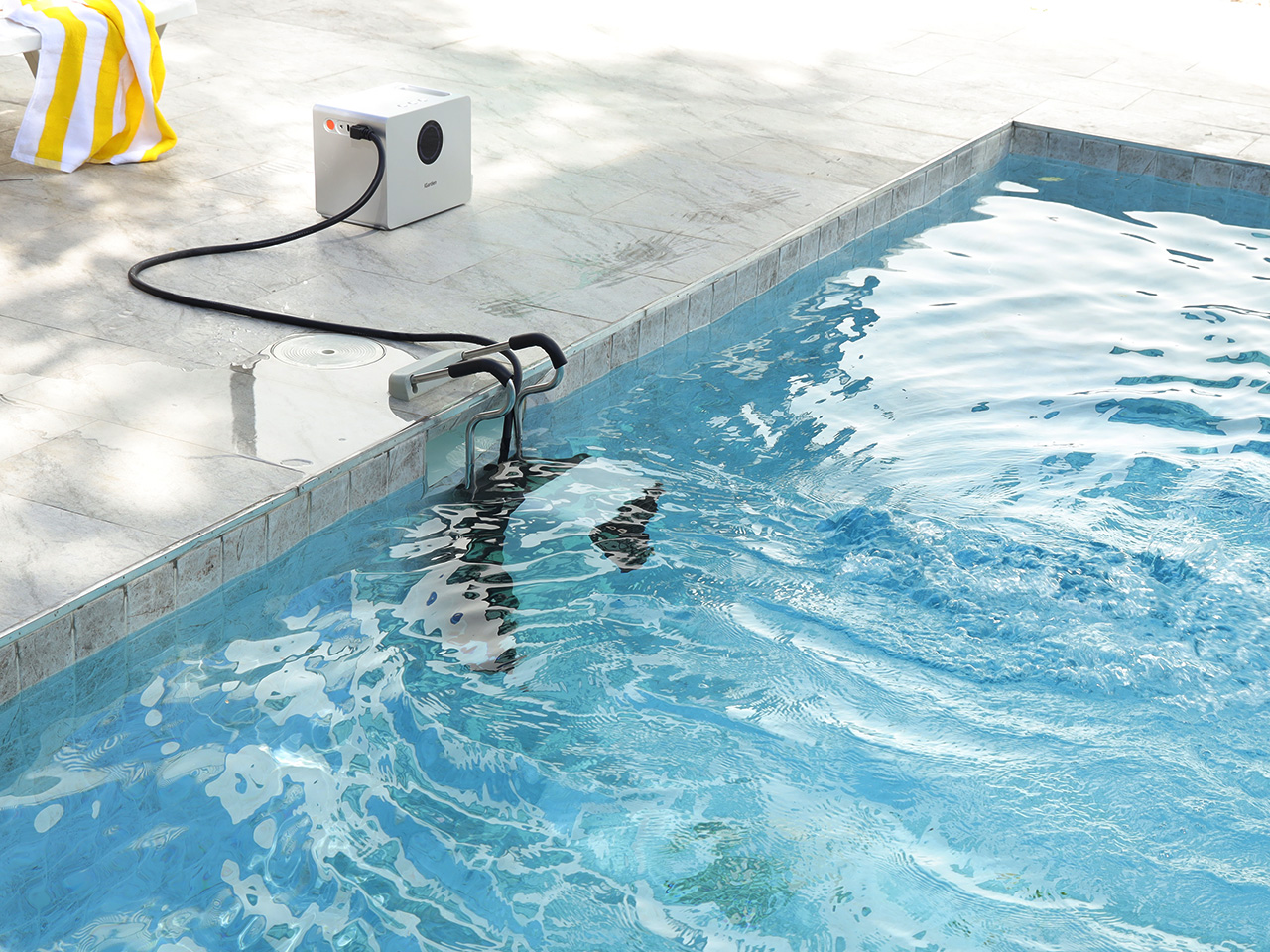
Here’s a question: what if your backyard pool could moonlight as a personal aquatic gym, wave pool, and lazy river – all without any permanent installation? That’s the pitch behind iGarden’s new Swim Jet X Series, a battery-powered contraption that clamps onto your pool edge and fires water at speeds that can actually challenge competitive swimmers.
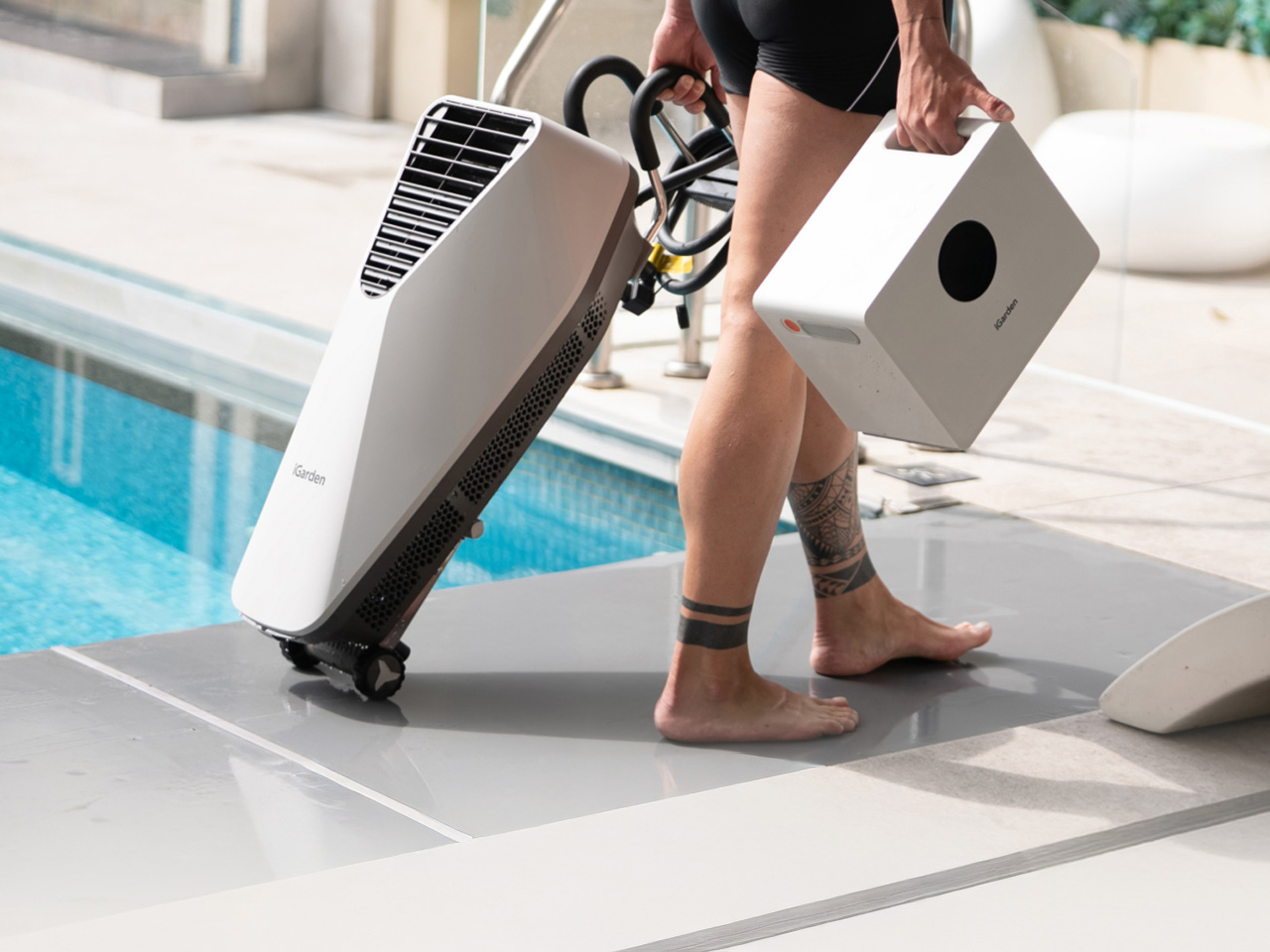
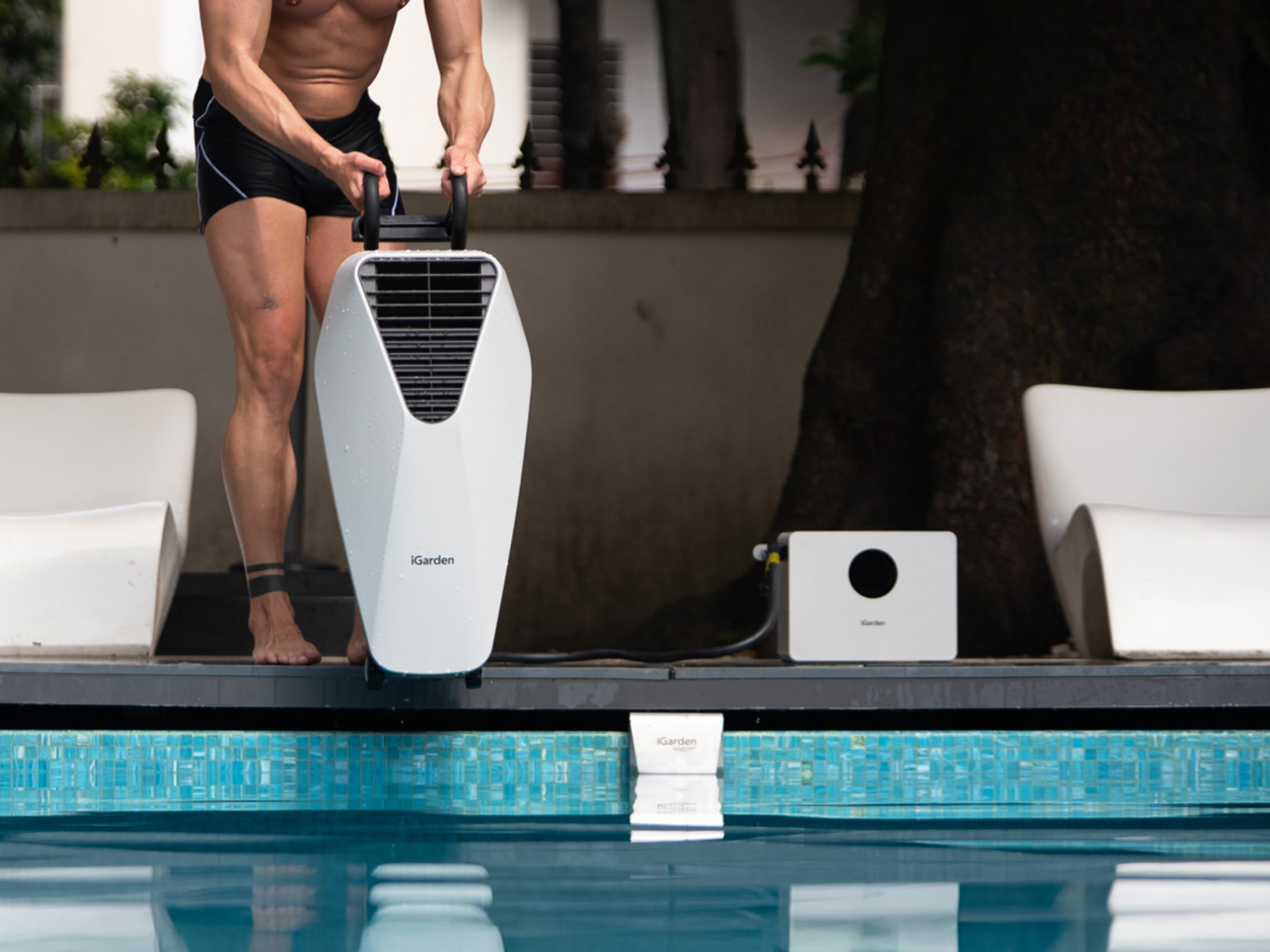
The whole setup is refreshingly simple. Mount the jet unit to your pool’s edge using the included clamps – no drilling, no plumbing, no construction crew required. The separate power box sits poolside, connected via a safety tether. Then you’re off, swimming against an artificial current that ranges from gentle lazy-river vibes to serious resistance training. It’s like having a treadmill, but for swimming.
The beauty lies in the fact that the Swim Jet X isn’t a permanent pool fixture. You place it when you need, take it off when you don’t. The power box comes with suitcase-style wheels and a handle, so you can wheel it around like luggage. iGarden claims you can set up or pack away the entire system in minutes, which addresses one of the main complaints about traditional swim jets – they’re permanent additions that require professional installation and cost upwards of $20,000. This? Starts at $699, comes with wheels, and can be carried to a nearby Airbnb with a pool too, just in case you want to swim while on a staycation.
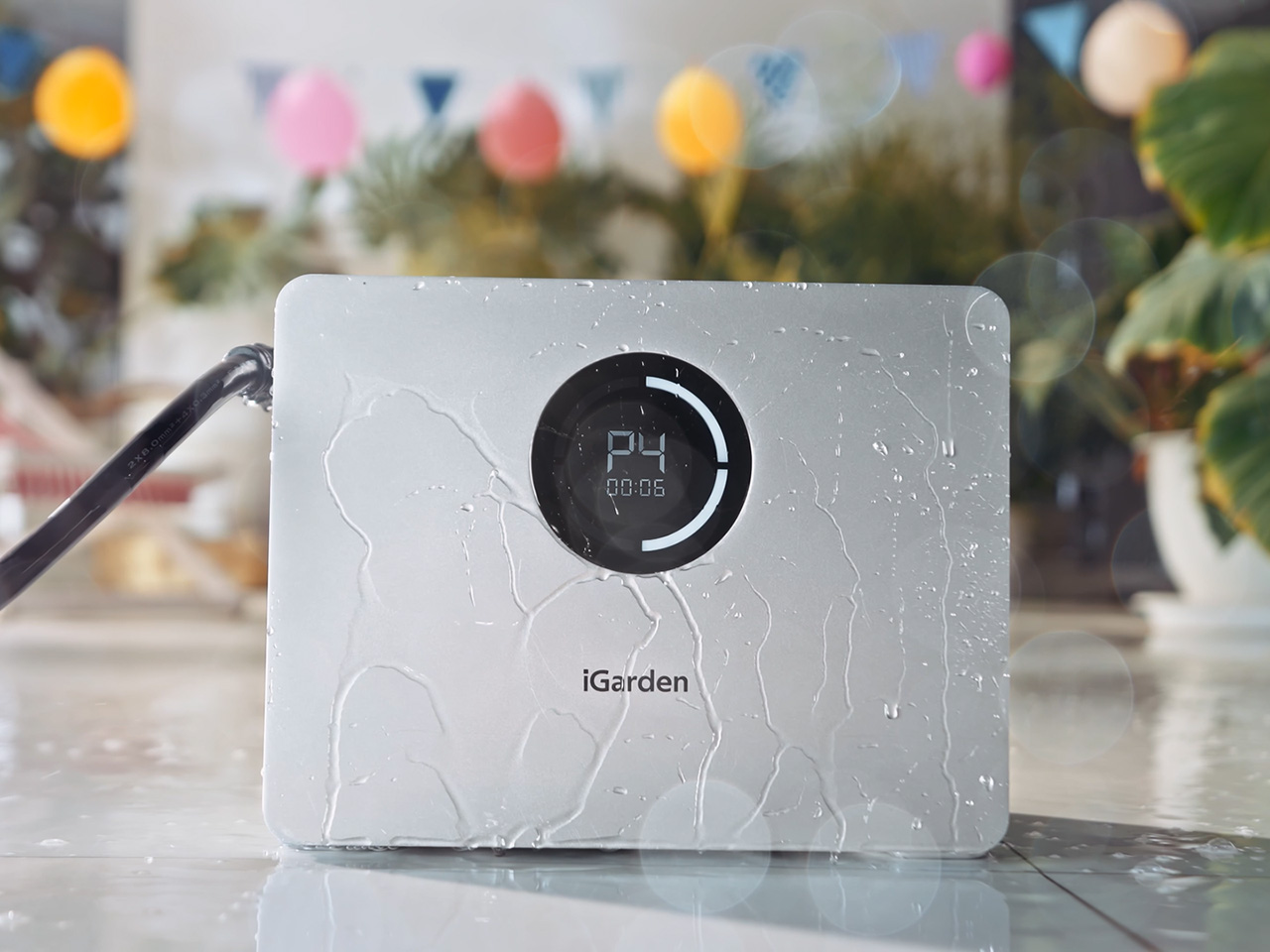
The AI branding feels a bit more grounded once you look at what iGarden is actually doing under the hood. The Swim Jet X Series uses an AI Inverter control system to dynamically optimize motor RPM, aiming to keep the current ultra-stable and laminar even when you crank resistance to the top end. Underneath that control layer is a next-gen PMSM (Permanent Magnet Synchronous Motor), chosen for higher power density and efficiency than traditional induction motors, with the flagship X35 model reaching a 1000W peak output. Pair that with iGarden’s hydrodynamic “Straight-line Runway Flow” structure, and the promise is less about flashy buzzwords and more about efficiently shaping water into a cleaner, steadier stream, pushing flow speeds up to 3.5 m/s. Training-wise, the system also leans into adaptive programming via a Flow Level Test Sequence (P1 to P4), scaling from “Easy Aerobic” to “Endurance Challenge” using real-time feedback, and syncing with heart rate and fat-burning metrics so the current can track the workout, not just the other way around.
iGarden is launching three models with escalating power levels. The entry-level X20-P10 runs on 300W, delivers flow speeds of 660 gallons per minute at 150 meters per hour (about 1.24 mph or 2 km/h), and provides roughly 0.8 to 1.5 hours of runtime depending on intensity. It’s designed for light training and casual family fun. The mid-tier X30-P30 bumps things up to 500W with 880 GPM flow at 200 meters per hour (approximately 1.55 mph or 2.5 km/h) and extends runtime to 1.5 to 5 hours. This is the Goldilocks option for most recreational swimmers and fitness enthusiasts.
Then there’s the flagship X35-P60, which is where things get serious. This model pushes 1000W of power, generates 1000 GPM flow, and hits speeds of 250 meters per hour (around 2.17 mph or 3.5 km/h). That might not sound dramatic until you realize it’s enough resistance to challenge advanced swimmers and triathletes. The X35-P60 also boasts up to 10 hours of continuous runtime, which means you could theoretically run full-day pool parties or extended training sessions without needing a recharge. That longevity pairs nicely with a new 2-in-1 versatility angle: the same unit can switch between Surface Mode and Underwater Mode, depending on what you’re trying to do. Surface Mode is geared toward casual family fun and splashing, while Underwater Mode is hydrodynamically optimized for more professional-grade stationary swim training.
All three models use high-density lithium-ion battery packs with IP65 waterproof ratings and are rated for over 600 charge cycles, which translates to roughly 3 to 5 years of regular use. Charging times range from 3.5 hours for the X20-P10 to 7 hours for the X35-P60. They’re compatible with pools larger than 2 meters by 4 meters, which covers most residential installations. The universal clamp system works with various pool edge styles, and the jet angle is adjustable so you can direct the flow exactly where you want it.
The safety features are thorough: instant power cut-off if the box tips over, leak-proof construction with no exposed outlets or loose cables, a kid-safe grille design that protects curious hands, and low-voltage operation that eliminates shock risks. There’s also an emergency cutoff button directly on the power box, because nobody wants to fumble with an app during a pool crisis.
Now, is this thing actually AI? Well, not really. The “Smart Flow Technology” they mention is essentially a brushless PRISM motor with an inverter controller that adjusts output based on your app settings. That’s automation, not artificial intelligence. But let’s not get hung up on marketing speak – what matters is whether it works, and the specs suggest it should deliver on the core promise of creating adjustable resistance in your existing pool.
The real question is durability. Battery-powered pool equipment lives a tough life: constant moisture exposure, temperature swings, UV bombardment, and the occasional collision with a pool noodle or overly enthusiastic golden retriever. iGarden offers a 2-year extended warranty for VIP backers, which suggests they’re at least somewhat confident in the build quality. The unit also comes with a storage bag free for early backers, which is a thoughtful touch for off-season storage or transport between pools.
Pricing starts at $699 for the X20-P10, with multiple discounts that can combine depending on how you buy in. VIP backers get an extra $200 off the Super Early Bird price, and iGarden says the total discount can reach up to $1,900 off MSRP depending on the model and tier. The VIP reservation requires a $50 deposit that’s fully refundable before launch and holds your spot for the lowest price window. During the campaign, iGarden lists the X30-P30 at $1,699 versus a $2,999 retail price, while the X35-P60 is $2,399 compared to its $4,299 future price. Shipping is a flat $50 in the US, with customs duties covered for backers in the US, EU, Australia, Canada, and the UK, and deliveries are scheduled to begin in May 2026.
Is this a revolution in backyard fitness? Probably not. But it’s a clever rethink of swim jets that removes the installation barrier and dramatically cuts the price point. For anyone who’s ever wished their pool could do more than just… be a pool, this is worth watching. The Kickstarter campaign launches in March 2026. Until then, you can reserve your spot with a $50 deposit at iGarden’s site.
Your desk says more about you than you think. It isn’t just a surface—it’s a quiet reflection of how you work, how you think, and how seriously you take the space where ideas are born. The minimalist studio aesthetic isn’t about stripping everything bare; it’s about choosing objects that genuinely earn their place. Every piece should serve a purpose and feel entirely deliberate. A considered desk doesn’t just organize—it inspires.
From gravity-defying pens to waterproof notebooks built to outlast everything you throw at them, the design world is quietly rethinking what it means to be at your desk. This list gathers five accessories that don’t just look good—they change how you work. Whether you’re a freelancer building a mobile studio, a creative professional craving calm, or someone who simply believes tools should match the quality of their thinking, these picks deliver.
1. Levitating Pen 2.0: Cosmic Meteorite Edition
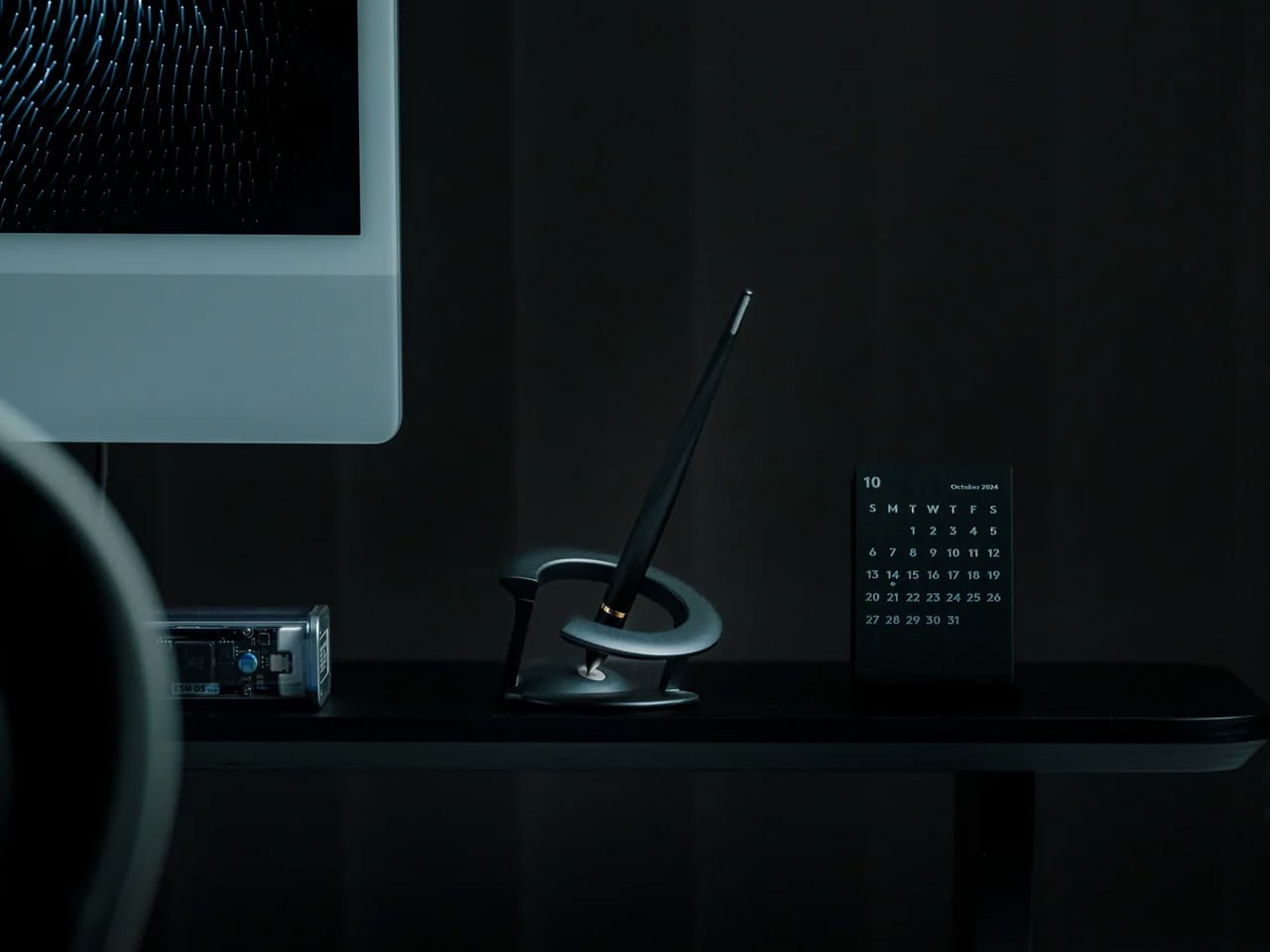
The Levitating Pen 2.0 Cosmic Meteorite Edition isn’t the kind of thing you tuck away in a drawer. Balanced at a precise 23.5-degree angle on a spacecraft-inspired pedestal, it hovers in place as it belongs behind glass—and arguably, it does. Crafted from aircraft-grade aluminum, shaped from a single block of material, it’s as tactile as it is visually appealing. A flick sends it spinning for up to 20 seconds, which sounds like a trick until you realize it genuinely helps you think and refocus between tasks.
What sets this edition apart from any other writing instrument is its tip—a genuine fragment of the Muonionalusta meteorite, one of the oldest ever discovered, predating Earth itself. Writing with it carries a strange, grounding quality that’s difficult to explain until you’ve held it. The premium Schmidt ink cartridge inside delivers a smooth, reliable experience, and the magnetic cap snaps shut with quiet, satisfying precision. The entire object settles into a minimalist desk layout with an authority that only truly considered design can project naturally.
The meteorite tip connects the act of writing to a material that predates the planet itself.
The spin function delivers genuine cognitive value, supporting creative focus between tasks.
What We Dislike
At $399, this is collector territory—a significant ask for everyday stationery.
The pedestal demands dedicated desk real estate, which works against ultra-minimal setups.
2. Dynamic Folio
If your iPad has become your primary creative tool, the MOFT Dynamic Folio is the stand it’s been waiting for. Built as a single-piece structure that folds into a workstation, lifting the iPad two full inches off the surface, it shifts posture meaningfully without requiring any complicated setup procedure. What separates it from comparable stands is how smoothly it transitions between modes—one flip moves you from active creation to relaxed viewing without the clunky two-handed repositioning that most alternatives demand of you.
For anyone logging serious hours at a creative desk, neck strain is a quiet but compounding tax on productivity that accumulates gradually across sessions. The Dynamic Folio addresses this directly, reducing neck strain by at least 50 percent in both creation and entertainment positions. The angle adjustment is icon-guided: two circles for a flatter, reclined position and two lines for a steeper working angle. When the session ends, it folds flat and disappears into any bag without resistance. For the mobile creative, this is a quietly essential kit.
What We Like
The single-piece structure sets up in one motion with no extra components to manage.
A 50 percent reduction in neck strain is an ergonomic improvement that compounds meaningfully over time.
What We Dislike
The icon-guided angle system has a short but real learning curve for first-time users.
Its value is closely tied to iPad-centric workflows and doesn’t adapt well to mixed-device setups.
3. M NOTE
Sticky notes have a quiet design problem nobody talks about: they curl. The moment a note starts peeling at its corner, the information it holds becomes harder to read and easier to lose, which defeats the entire point of having written it down. M NOTE from Bravestorming solves this with a dual-material approach that combines a magnetic backing with a reusable adhesive layer, keeping notes flat and secure against whiteboards, glass panels, and wooden desks alike. No unfolding, no repositioning—just consistently readable information exactly where you left it.
What makes M NOTE genuinely useful in a minimalist workspace is its adaptability across surface types. On metal, the magnetic backing does the adhesion work entirely. On non-metal surfaces, the reusable adhesive steps in—releasing cleanly, leaving no residue, and repositioning without damaging what it’s applied to. Notes can be written on, cleared, and reused, which cuts the paper waste that most desk setups generate almost invisibly. Bravestorming has taken one of the most throwaway items in any modern office and built something designed to stay indefinitely.
What We Like
The dual magnetic and adhesive backing works across metal, glass, and wood surfaces without accommodation.
Flat, curl-free notes keep information consistently visible throughout the working day.
What We Dislike
Reusable adhesive degrades gradually with heavy, repeated repositioning over time.
The magnetic backing only activates on metal surfaces, limiting one of its two core functions.
4. Orbitkey Desk Mat
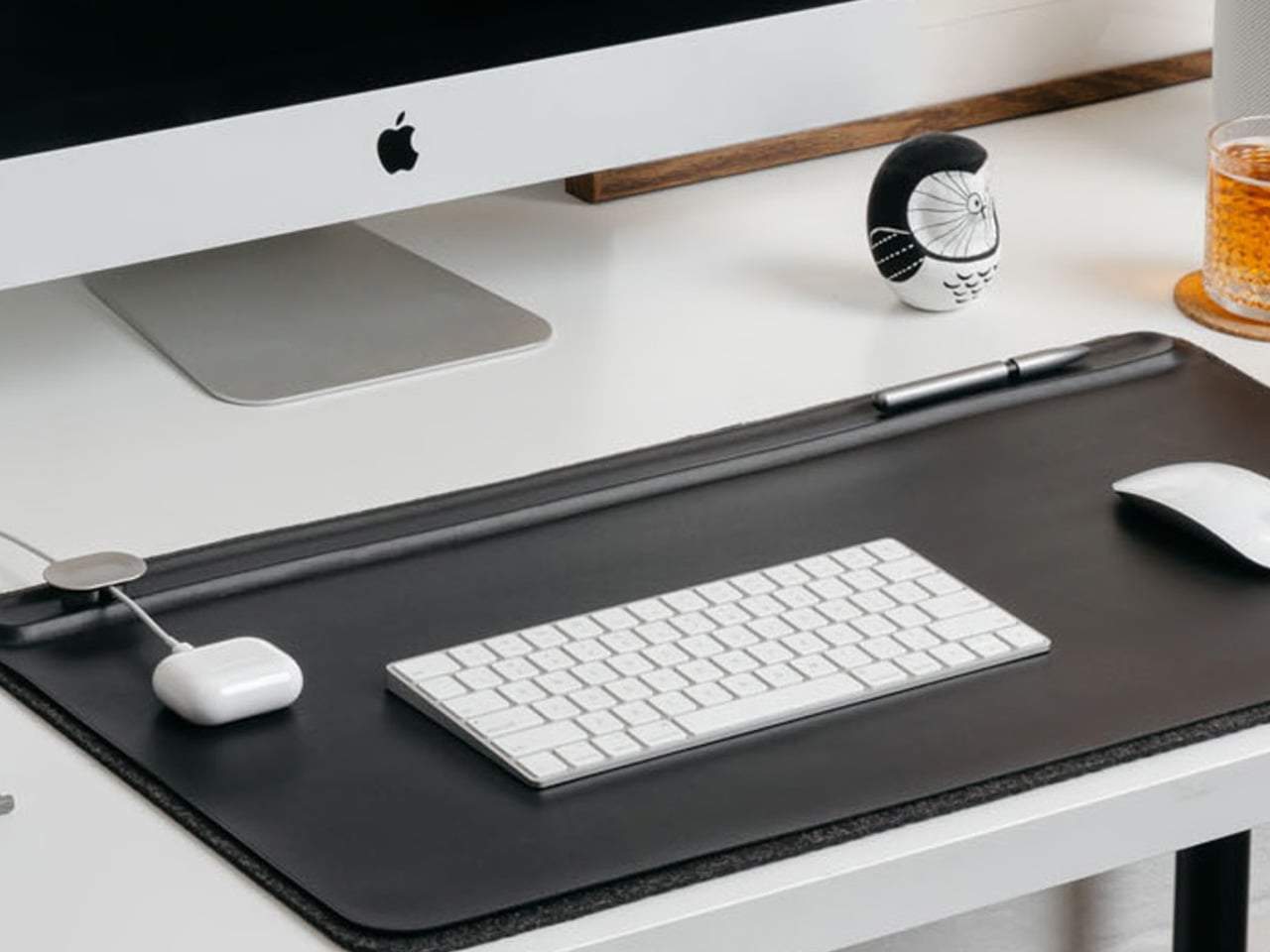
Most desks don’t have a clutter problem—they have a structure problem. The Orbitkey Desk Mat addresses this with quiet intelligence, creating a defined visual zone that makes the act of organizing feel natural rather than forced. Available in Black and Stone across two sizes, it suits both compact setups and expansive studio tables without demanding that you rethink the whole room around it. The toolbar keeps stationery and small accessories within immediate reach, while the overall layout keeps everything purposeful and within the logic of a genuinely considered workspace.
What makes the Desk Mat more than a surface upgrade is the document hideaway built beneath the top layer. Loose papers, reference notes, and half-finished ideas slide underneath and stay flat, accessible, and out of visual range until you actually need them. It’s an elegant solution to a problem every desk accumulates quietly over time—the slow migration of paper that eventually surrounds the work instead of supporting it. With two colors and two sizes to choose from, the Desk Mat earns its place not just as a design object but as the organizing logic your workspace has been missing.
What We Like
The document hideaway keeps loose papers accessible without letting them visually take over the desk.
Two sizes and two colorways make it adaptable to almost any workspace scale and aesthetic.
What We Dislike
The defined toolbar space may feel restrictive for users with a larger collection of daily-use desk tools.
Its impact is most pronounced on consistently active desks—minimal users may find less need for the full feature set.
5. Nuka Eternal Stationery
The Nuka Eternal Stationery set begins with a simple question: What if your notebook never had to end? The answer is a waterproof, tear-proof notebook paired with a metal alloy pencil tip that writes with the smooth consistency of a traditional pencil but requires no sharpening and never breaks. Pages clear completely with the Nuka Magic Eraser and accept fresh writing immediately. For a minimalist desk, this is precisely the kind of object that earns permanent residency without asking for maintenance, restocking, or replacement in return.
Beyond the environmental logic, the Eternal Stationery has a tactile appeal that’s hard to convey without handling it. The metal alloy tip writes consistently across the notebook’s waterproof surface, and the notebook itself handles spills, rough commutes, and outdoor sessions without registering them as damage worth acknowledging. It suits a specific type of person: someone who values fewer objects doing more, who finds calm in not constantly replacing what they depend on, and who wants tools that stay as capable on day one hundred as they were on day one.
What We Like
The write-erase-repeat system eliminates paper waste and removes the need to restock entirely.
Waterproof and tear-proof construction means this notebook works as hard as you do without extra care.
What We Dislike
Losing the Nuka Magic Eraser disables the reusable function with no common alternative to substitute.
Ink-dependent writers will need time to adjust to the feel of the metal alloy tip in practice.
Every Object Earns Its Place
A minimalist desk isn’t built by accident. It’s built through deliberate choices—objects selected as much for what they do as for how they sit in the space around them. The five accessories on this list share that quality. None of them asks for attention. They earn it through function, through material honesty, and through design that respects the surface it occupies. That’s the distinction between a cluttered desk and a curated one, and it sharpens every time you sit down to work.
Whether you start with the levitating pen’s quiet theatre or the Eternal Stationery’s unassuming permanence, each of these pieces shifts something in how your desk feels to work at. The best studio setups don’t come together when you add more—they come together when every object you keep is one you’d choose again without hesitation. These five make that case without announcing it. They simply belong there, and in a minimalist workspace, belonging without noise is exactly the point.
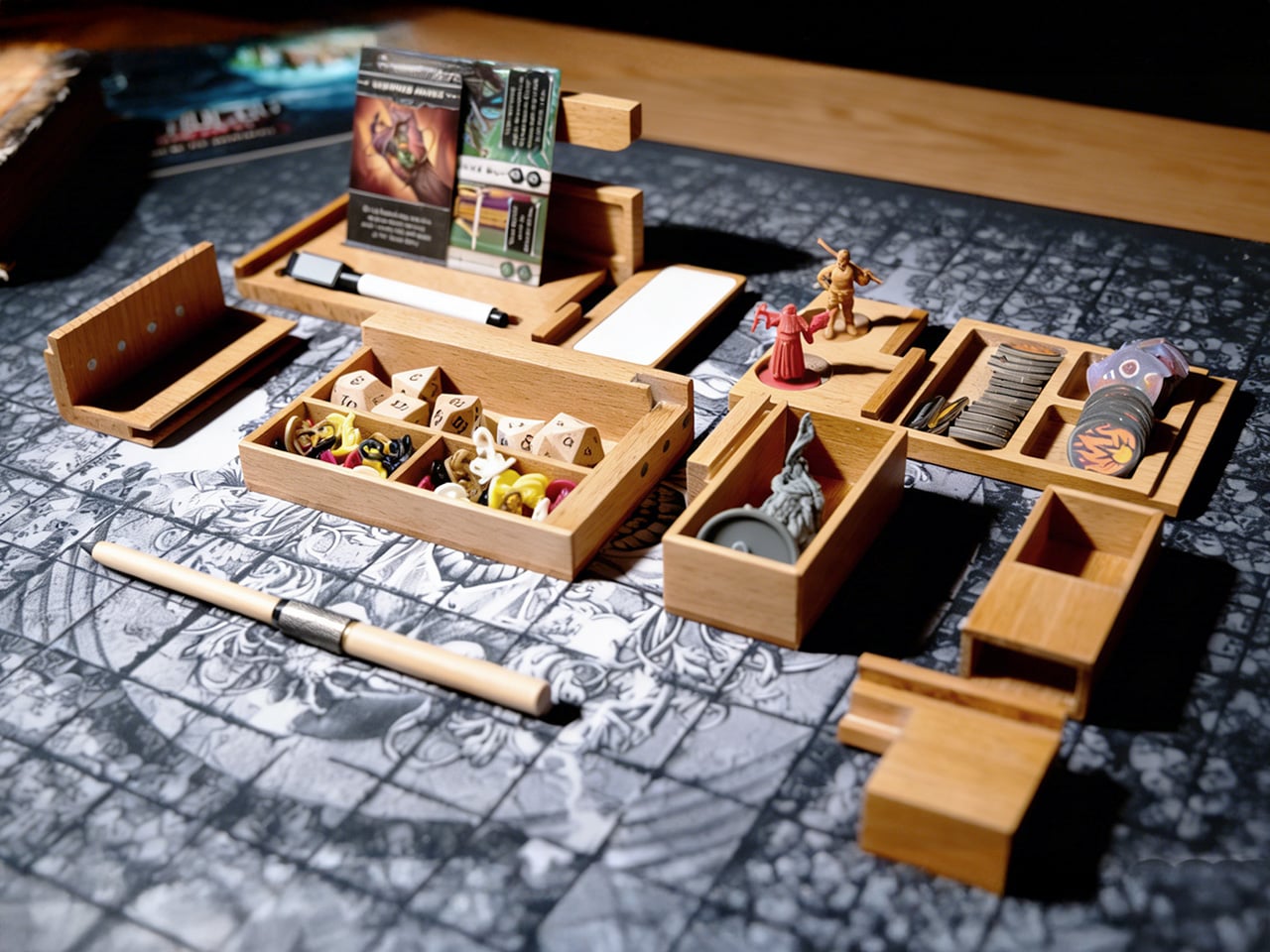
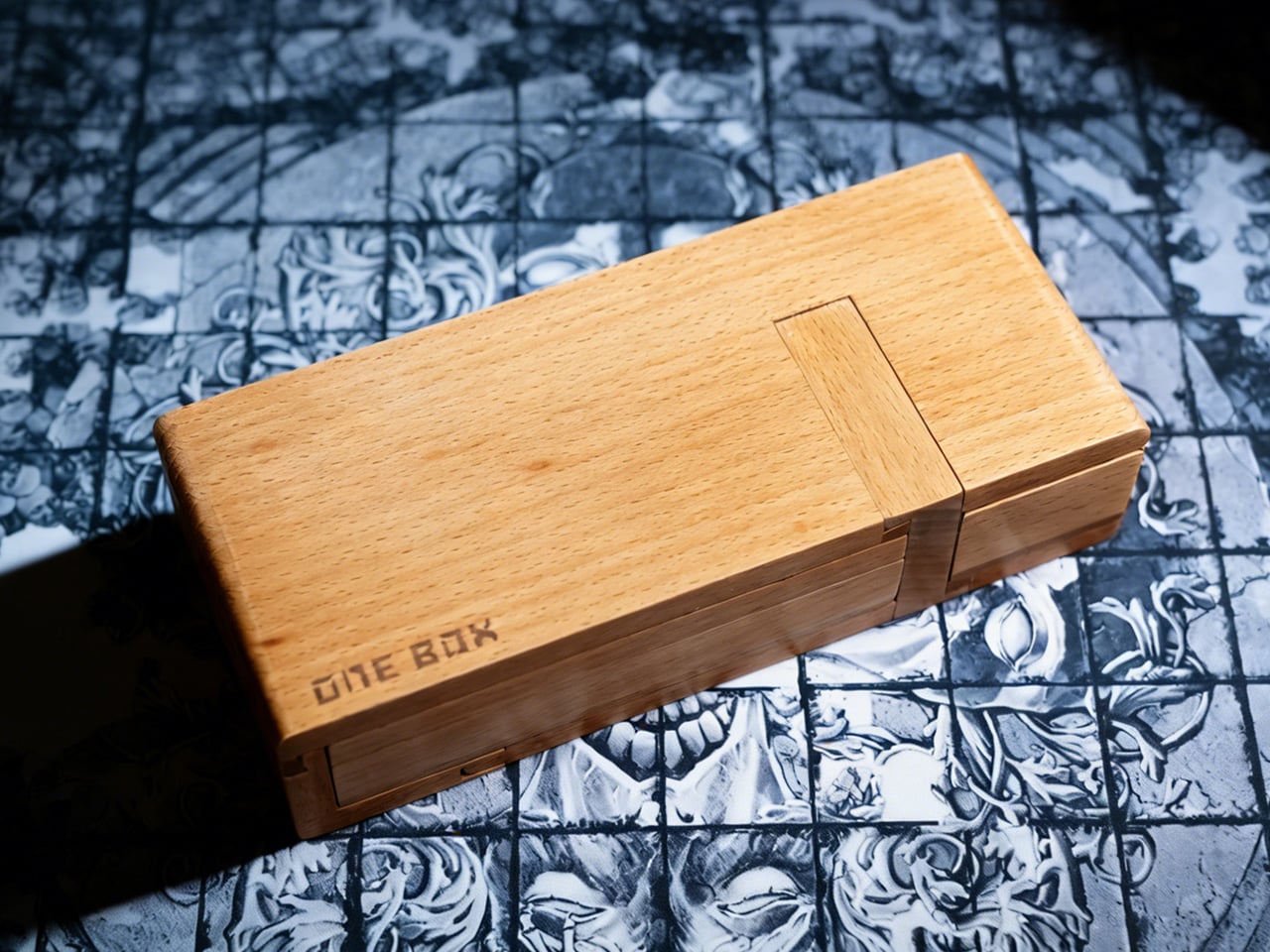
Board game nights typically end the same way: scattered tokens, bent cards sliding across the table, dice that have rolled onto the floor for the third time. The chaos becomes part of the experience, tolerated because storage solutions only address what happens after everyone goes home. ONE BOX 4.0 takes a different approach by treating organization as something that belongs inside the game itself, using modular wooden compartments that stay open and active throughout play. The whole thing behaves less like a box and more like a portable command deck that happens to collapse into something the size of a pencil case. You unfold it, and the table suddenly has lanes, stages, and zones instead of a single flat battlefield where everything fights for the same square inches.
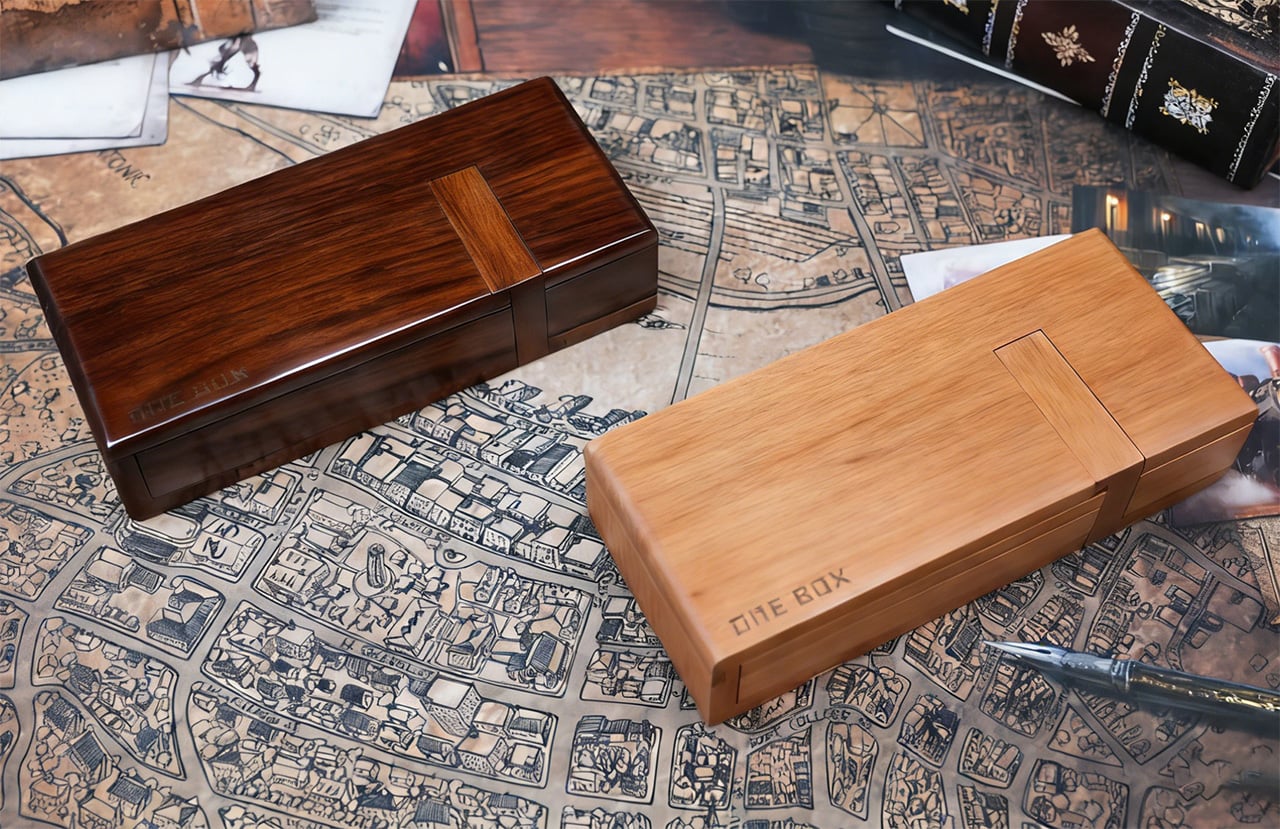
CHENGSHE.design built the system from mortise and tenon joinery, the kind of traditional woodworking that holds furniture together without screws or glue. Each unit comes in beech, teak, or black walnut, and the natural grain variations mean no two boxes look identical. The modules include card display stands, contained dice rolling areas, and phone holders that keep digital rulebooks accessible without crowding the play surface. The parts interlock into a single carryable brick, then fan out into a full tabletop system in a couple of moves. It feels like someone took the logic of a good travel tool roll, mixed it with a GM screen, and then asked an architect to make it beautiful without turning it into furniture cosplay.
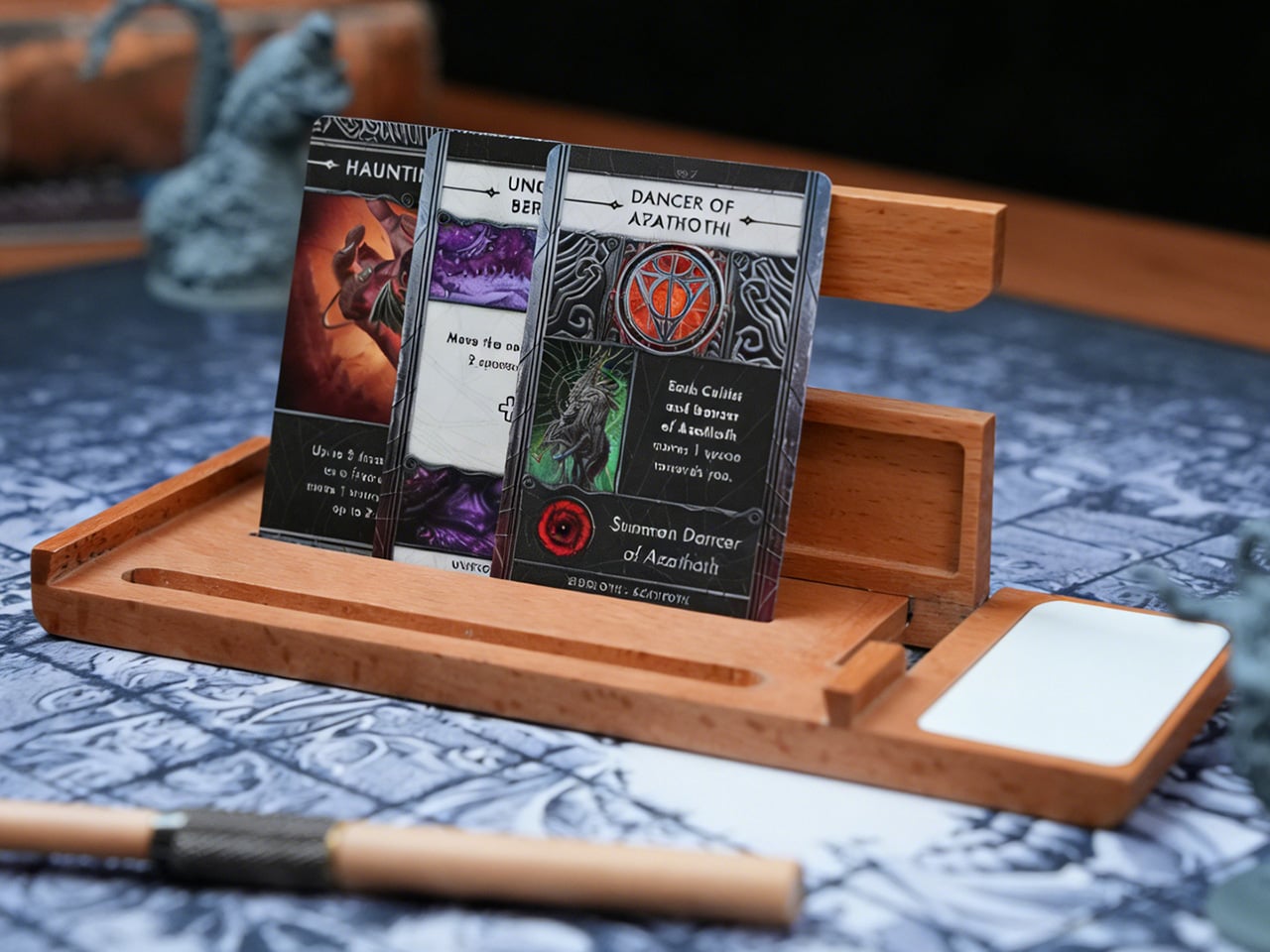
The design addresses three distinct phases of a session: setup, active play, and teardown. Before play, the modules unfold from a single case into multiple zones in a matter of seconds, with dividers and trays already proportioned for cards, dice, tokens, and reference materials. During play, cards sit upright in angled stands, which keeps information visible and reduces edge wear from constant handling. Dice move through a contained rolling lane that prevents table escapes and limits collisions with card stacks or miniatures. After the session, components return to defined compartments, which then recombine into a unified case for transport and shelf storage.
Underneath the pretty wood, the logic is very modular and very modern. One set of modules can handle a deck-heavy Euro game one night and a crunchy TRPG session the next, simply by rearranging dividers and stands. The dividers are adjustable, so you can create narrow lanes for standard 63.5 by 88 mm cards or open wider slots for tarot or oversized character sheets. A lot of “board game accessories” assume a single flagship game and then become useless when your group rotates titles. ONE BOX 4.0 behaves more like a system-level accessory, closer to a camera cage or modular tool chest that expects you to change the loadout constantly. The fact that this is the fourth generation shows in that ecosystem thinking.
The mortise and tenon construction is not a decorative flex either. That joint style is pretty resilient when you are opening and closing something hundreds of times, applying torsion in slightly different directions every session. Screws back out, cheap hinges loosen, glued butt joints fail at the worst moment. Properly cut mortise and tenon joints share load across surfaces and age with the wood rather than against it. Combined with hardwoods like teak and black walnut, you get a product that can take the mild abuse of transport and table slams without turning into a rattling box of regret.
The other design decision that lands beautifully is backward compatibility. If you bought ONE BOX 3.0, you do not have to retire it to adopt 4.0. The new modules plug into the old ecosystem, which is the kind of long horizon thinking you usually only see in camera mounts, bike standards, or pro audio racks. That matters because people build habits around their table setups. If you already have a certain arrangement for card lanes and dice trays, you can add a new TRPG-focused module or that OB Infinite Pen without rethinking everything. This is how you build a niche platform instead of a series of isolated products that age out every two years.
The OB Infinite Pen and erasable whiteboard module signal a clear orientation toward TRPG and scenario driven gameplay. By dedicating space to writing tools and a reusable surface, the system supports initiative tracking, hit points, quick maps, and ad hoc notes without adding disposable paper clutter. The pen shares the same wood material language as the box, which unifies the visual identity and reinforces the idea that note taking is an integrated part of the experience. For groups that run mixed digital and analog setups, the phone and tablet holder aligns with this approach, parking screens at the edge of the system instead of scattering them across the main play field.
Visually, this is the opposite of RGB acrylic chaos. Natural wood, clean chamfers, visible grain, and a restrained color palette of light beech, warm teak, and dark walnut. On a table, it reads more like a compact piece of joinery than a toy, which is exactly what you want if your “game table” is also your work desk or dining surface. There is a subtle psychological trick here: when the tools of play look like serious objects, people tend to treat the whole session with a bit more focus. You are less likely to fling dice across a carefully built wooden lane than across a bare laminate tabletop.
Folded shut, the core ONE BOX 4.0 package is roughly pencil box sized, which means it goes into a backpack alongside a laptop and a rulebook without much negotiation. Unfolded, it spreads to cover a player station or GM area without requiring a dedicated gaming table. That portability is what separates this from the beautiful but immovable wooden tables that dominate the aspirational side of tabletop culture. You can take this to a cafe, a friend’s apartment, or a convention hall, and your setup logic travels with you instead of being rebuilt from scratch every time.
The ONE BOX 4.0 comes in three primary wood options: beech for a pale, almost Scandinavian tone, teak for a warmer mid tone, and black walnut for a darker, more saturated look. Configurations range from a single core box setup to multi box “command station” style bundles that add dedicated dice rollers, erasable whiteboard modules, storage bags, and the OB Infinite Pen in matching wood. Up to 50 early backers can grab the beech variant for as low as $59, while the next tier for all wood versions sits at $79 (which includes the ‘recording kit’ featuring the OB Infinite Pen and erasable whiteboard modules). Throw in an extra twenty, and the $99 tier also gets you a dice roller. The ONE BOX 4.0 is open for preorder and ships globally starting May 2026.
Picture yourself arriving home on a rainy afternoon. You reach for your coat rack to hang up your wet jacket, but instead of leaving it behind, you grab one of its branches and head back out the door. That branch? It’s now your walking stick. Welcome to Cesare Miozzi’s brilliantly weird world, where furniture refuses to stay put.
The Walking Coat Rack recently won the Ideas for Business Call #4, a design competition that challenges creators to reimagine everyday objects. It’s exactly what it sounds like: a coat rack that moonlights as a walking stick. Or maybe it’s a walking stick that moonlights as a coat rack. Either way, it’s one of those designs that makes you wonder why nobody thought of it sooner.
Miozzi, a young Italian designer, started with a simple observation: coat racks are boring. They stand there in your entryway, silently judging you for that jacket you draped over the chair instead. They’re functional, sure, but they’re about as exciting as watching paint dry. Yet we can’t escape them because we’ve been hanging our clothes on hooks since Ancient Rome, when tunics and togas needed somewhere to rest.
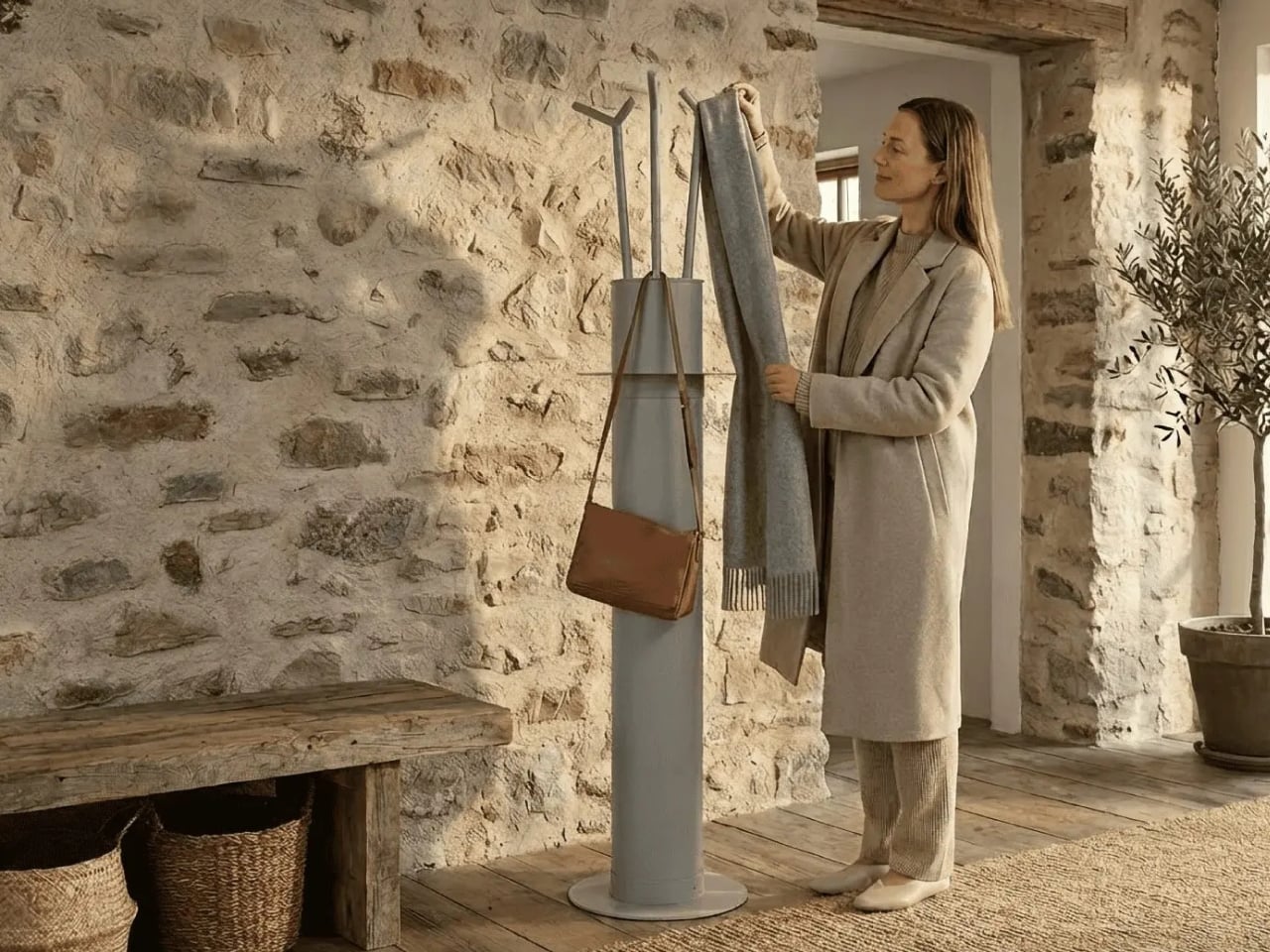
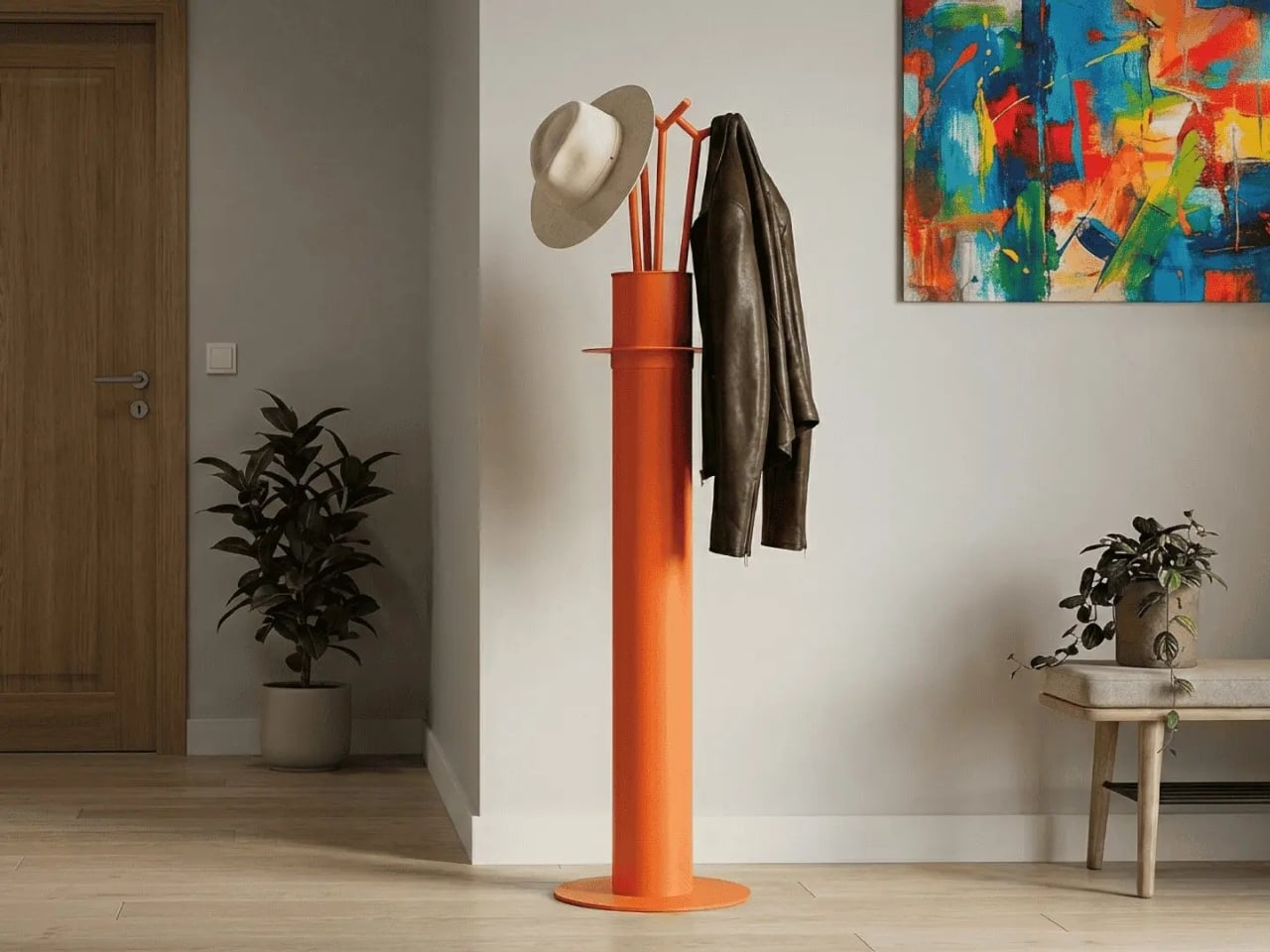
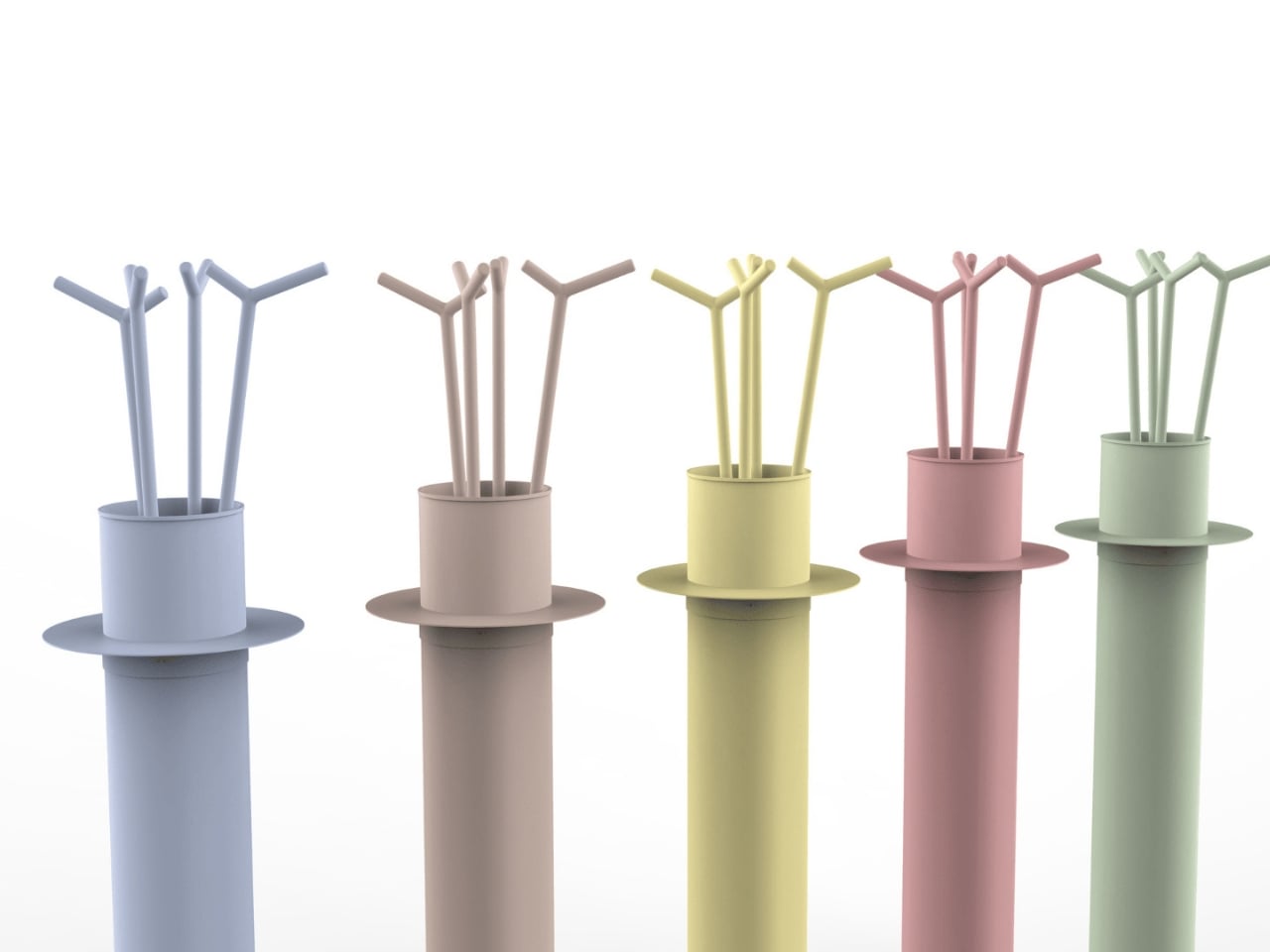
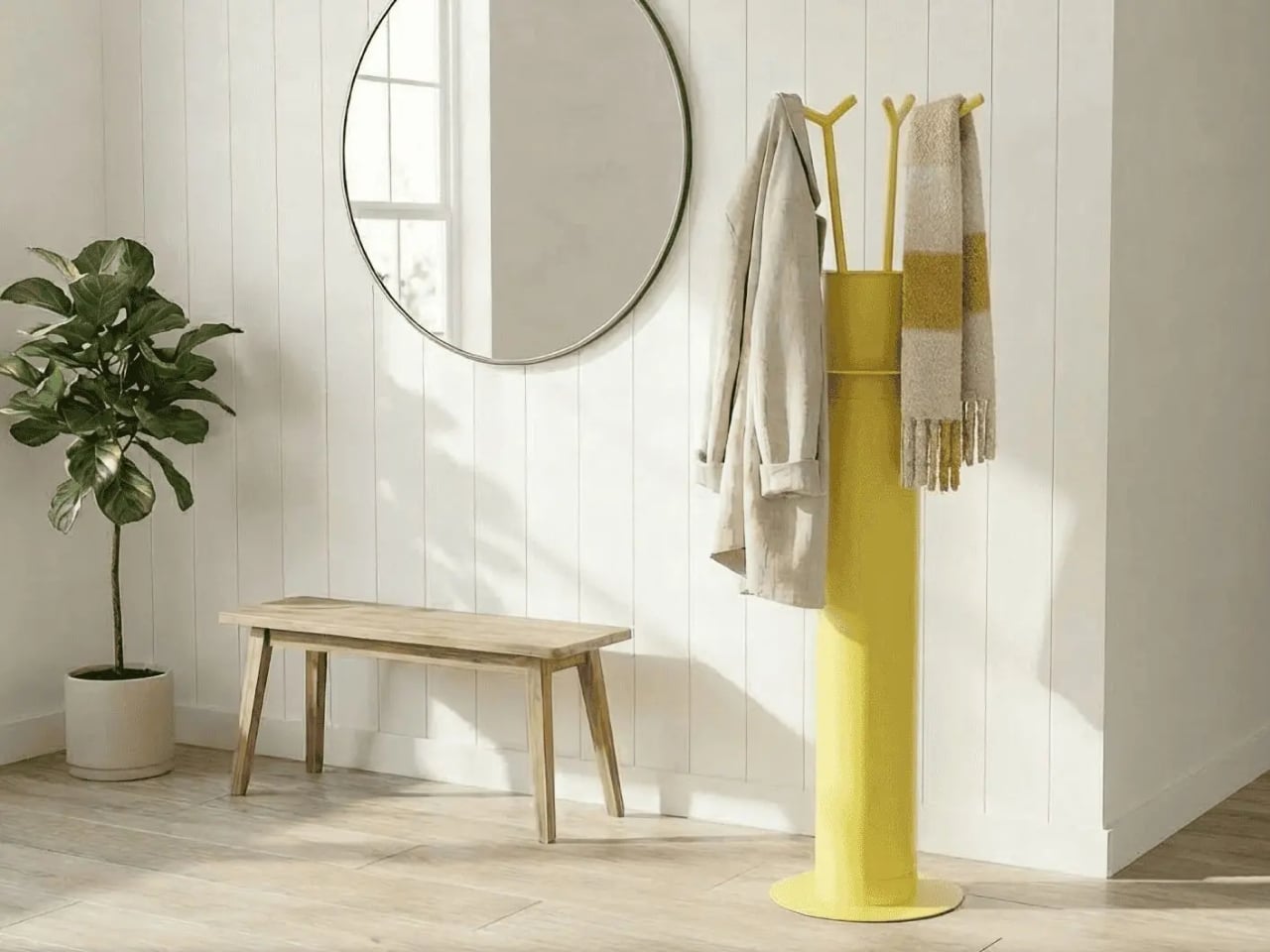
Rather than accept the coat rack’s fate as furniture wallflower, Miozzi decided to give it a personality and, more importantly, portability. His design draws inspiration from trees, which makes perfect sense when you think about it. Trees are nature’s original coat racks, after all. The Walking Coat Rack features a tubular structure that mimics a trunk, with three large branches emerging from a hollow top. These branches do double duty: they hold your coats when the rack is standing still and become walking sticks when you need to venture outside.
The details are what make this concept sing. A circular ring at the base represents roots, anchoring the design both literally and metaphorically. At the top, another ring serves as a pocket emptier, that perfect little spot for your keys, coins, and whatever mysterious receipts you’ve accumulated throughout the day. It’s the kind of thoughtful touch that shows Miozzi wasn’t just designing a coat rack with legs. He was designing an object that understands how we actually live.
What’s refreshing about this design is its playfulness. We’ve become so accustomed to our furniture staying in its designated corner that the idea of taking part of it with us feels almost rebellious. There’s something delightful about blurring the line between what stays home and what goes out into the world. It transforms a purely domestic object into something with agency, something that participates in your life beyond the front door.
The contemporary aesthetic keeps things clean and approachable. This isn’t precious design that makes you nervous about actually using it. The tubular construction suggests durability while maintaining visual lightness. You can imagine it fitting into different spaces, from minimalist apartments to eclectic homes that celebrate conversation pieces.
Of course, the real genius lies in how the design increases our interaction with the object throughout the day. Traditional coat racks sit quietly until you need them twice: once when you come home, once when you leave. The Walking Coat Rack inserts itself into more moments. Heading out for a stroll? Grab a branch. Need support on an icy sidewalk? Your coat rack has your back. It’s furniture that earns its keep.
This kind of multifunctional thinking feels particularly relevant right now, when smaller living spaces make every piece of furniture work harder. Why own separate items when one clever design can do both jobs? It’s efficiency wrapped in whimsy, practicality disguised as play. Miozzi’s creation also taps into our growing interest in objects that tell stories. Nobody asks about your regular coat rack at dinner parties. But a coat rack that transforms into a walking stick? That’s a conversation starter. It’s the kind of design that makes people stop and reconsider what furniture can be, what it can do, and how we relate to the things we live with.
Valentine’s Day has passed, the chocolates are gone, and the roses have wilted. Now comes the best part: treating yourself to something that actually lasts. EDC gear represents the perfect post-holiday indulgence, offering daily utility wrapped in exceptional design. These aren’t fleeting romantic gestures but permanent companions that earn their place in your pocket every single day.
The beauty of everyday carry items lies in their silent reliability. They don’t demand attention until the moment you need them, then deliver with satisfying precision. From titanium blades that disappear into your keychain to coffee grinders built like mountaineering equipment, these seven designs prove that the best gifts are the ones you use constantly. They blend form and function so seamlessly that reaching for them becomes second nature, elevating ordinary moments into small victories of preparedness.
1. ScytheBlade: Titanium Mini Knife with Maximum Impact
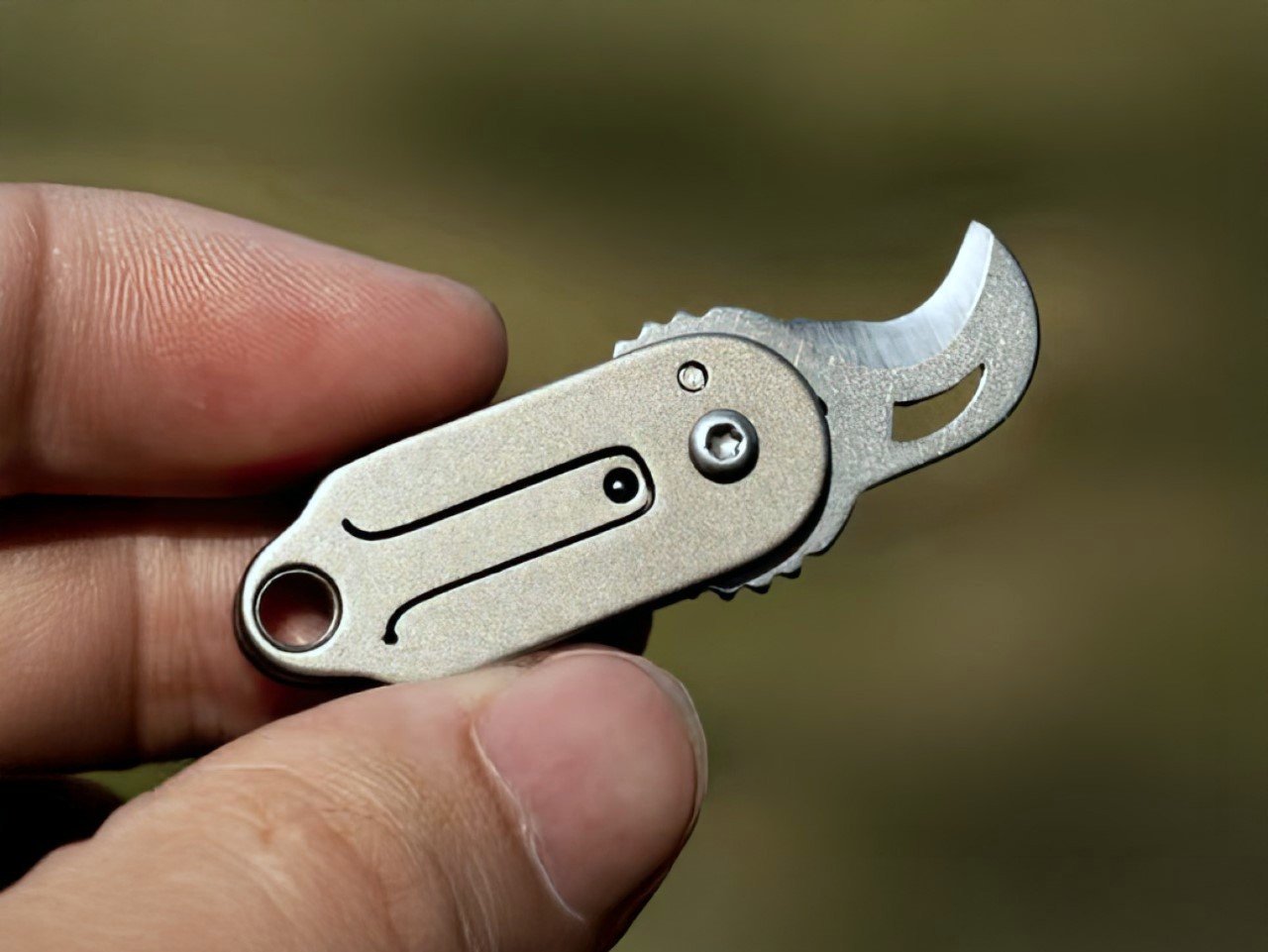
The ScytheBlade takes inspiration from the most iconic blade profile in mythology and shrinks it down to EDC proportions. That distinctive curved design mirrors the Grim Reaper’s scythe, creating a blade shape that resembles a tiger claw when scaled to pocket size. The comparison isn’t just aesthetic; curved blades generate cutting power that straight edges can’t match. Wrapped in a robust titanium body, this tiny folder delivers cutting performance that makes you forget its diminutive dimensions. The design speaks to anyone who appreciates tools that punch above their weight class.
At 46mm when deployed, the ScytheBlade ranks among the smallest folding knives available, yet durability remains uncompromised. The titanium construction provides exceptional strength while keeping weight at just 8 grams, making it virtually unnoticeable on your keychain until duty calls. Titanium brings natural corrosion resistance and that satisfying heft that cheaper metals can’t replicate. Forget constant maintenance; this blade survives daily carry without demanding your attention. The engineering focuses entirely on reliability, creating a tool that disappears into your routine while remaining ready for anything.
What We Like
The curved blade profile generates superior cutting leverage compared to straight designs.
Titanium construction eliminates corrosion worries while maintaining incredible strength.
At 8 grams, you’ll forget you’re carrying it until you actually need a blade.
The 46mm length strikes the perfect balance between capability and true pocket-friendly dimensions.
What We Dislike
The ultra-compact size may prove challenging for users with larger hands during extended cutting tasks.
Limited blade length restricts applications compared to full-sized folders.
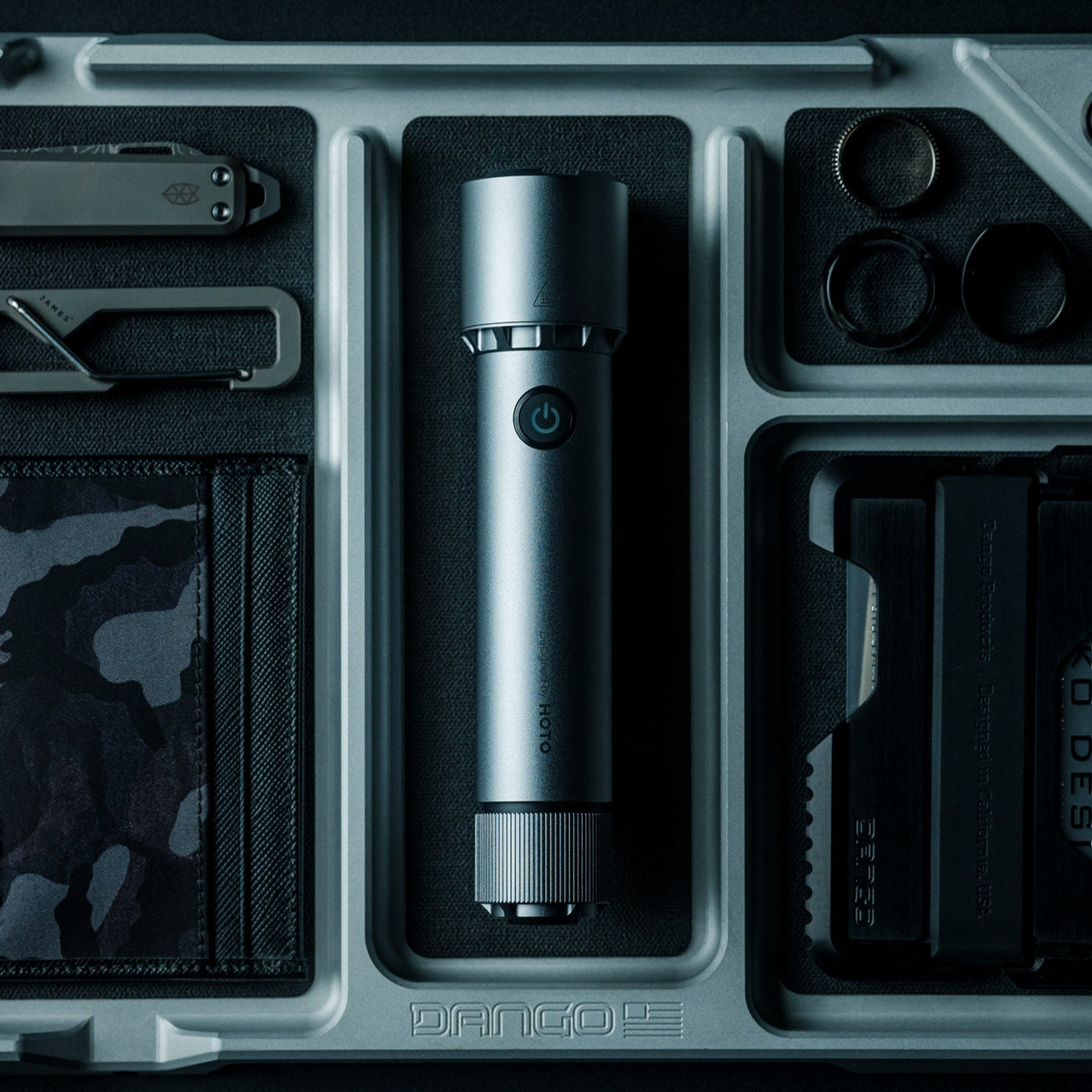
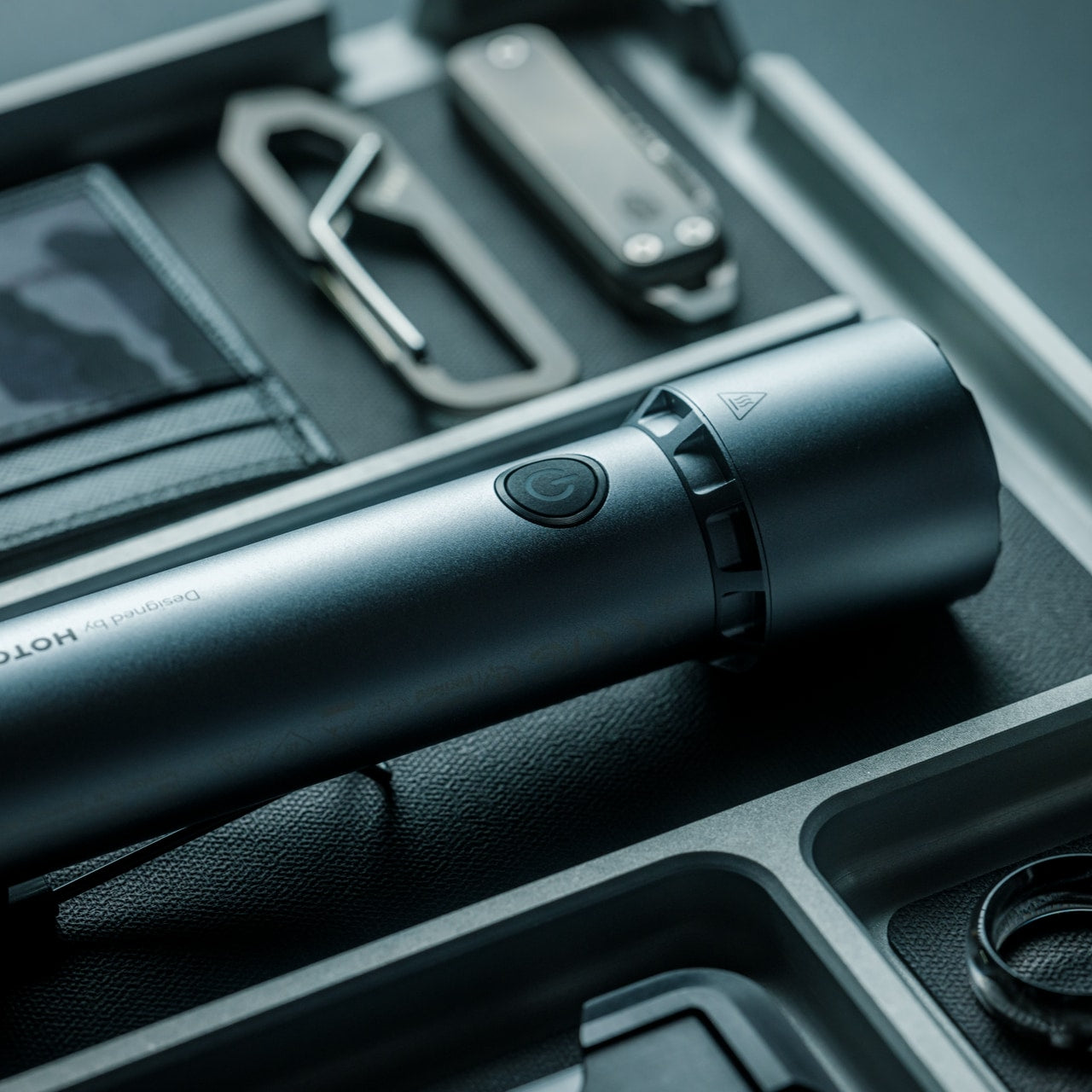
This tactical flashlight rejects mediocrity at first glance. BlackoutBeam pairs a devastating 2300-lumen output with industrial design language that looks equally appropriate clipped to tactical gear or resting on a minimalist desk. The 0.2-second response time eliminates the frustrating delay that plagues lesser lights, delivering illumination the instant your thumb finds the switch. Waterproof aluminum construction handles weather, impacts, and the chaotic reality of everyday carry without complaint. Whether you’re building an emergency kit or just want reliable light on demand, BlackoutBeam delivers without looking like you raided a military surplus store.
That 2300-lumen maximum throws light 300 meters, cutting through darkness with clinical efficiency. Need to illuminate a trail, light up a room during a power failure, or check suspicious sounds outside? The beam reaches exactly where you need it. Instant-on performance means no warm-up lag, making it ideal for situations where hesitation isn’t an option. The IP68 rating ensures water and dust stay outside where they belong, even during submersion. Durable aluminum construction shrugs off drops and rough handling while maintaining a profile that doesn’t add bulk to your bag. This represents serious capability without the weight penalty.
The 2300-lumen output with 300-meter throw provides professional-grade illumination when needed.
Instant 0.2-second response time eliminates delays during emergencies or urgent situations.
IP68 waterproof rating handles submersion and harsh weather without failure.
Industrial aluminum construction balances serious durability with reasonable weight and size.
What We Dislike
Maximum brightness drains batteries quickly during extended use.
The tactical aesthetic may feel too aggressive for users seeking more subtle EDC options.
3. Smith Blade: 21 Tools in Titanium Package
The Smith Blade represents the evolution of pocket multi-tools beyond the bulky designs that dominated previous generations. Twenty-one genuinely useful functions are packed into a frame weighing just 95 grams, making it lighter than the aging competitors it replaces. Modern materials drive this transformation: Ti-6Al-4V titanium alloys and M390 blade steel deliver professional performance in a slimmer profile. This tool speaks to makers, parents, and anyone expected to solve problems on the spot. Household repairs, camping trips, impromptu fixes when nobody else has the right tool—the Smith Blade handles them all.
The engineering focuses on real-world utility instead of feature bloat. You get tools that actually matter: drivers, pliers, blades, and openers rather than gadgets nobody uses. The design acknowledges that modern problems require modern solutions, whether you’re playing family IT support, swapping light switches, or handling trail repairs miles from civilization. At 95 grams, it carries easier than traditional multi-tools while delivering comparable capability. The titanium and M390 steel construction ensures it survives years of use without the corrosion or blade degradation that plagues cheaper options. This represents thoughtful engineering for people who actually use their tools daily.
What We Like
Twenty-one functional tools cover most situations without forcing compromises or dead weight.
Modern titanium and M390 steel construction outlasts traditional materials while weighing significantly less.
The 95-gram weight makes it genuinely pocketable for all-day carry.
Sleeker profile compared to legacy multi-tools fits modern EDC preferences better.
What We Dislike
The learning curve for accessing all 21 tools may frustrate users during the initial weeks.
Price point sits higher than basic multi-tools, though materials justify the investment.
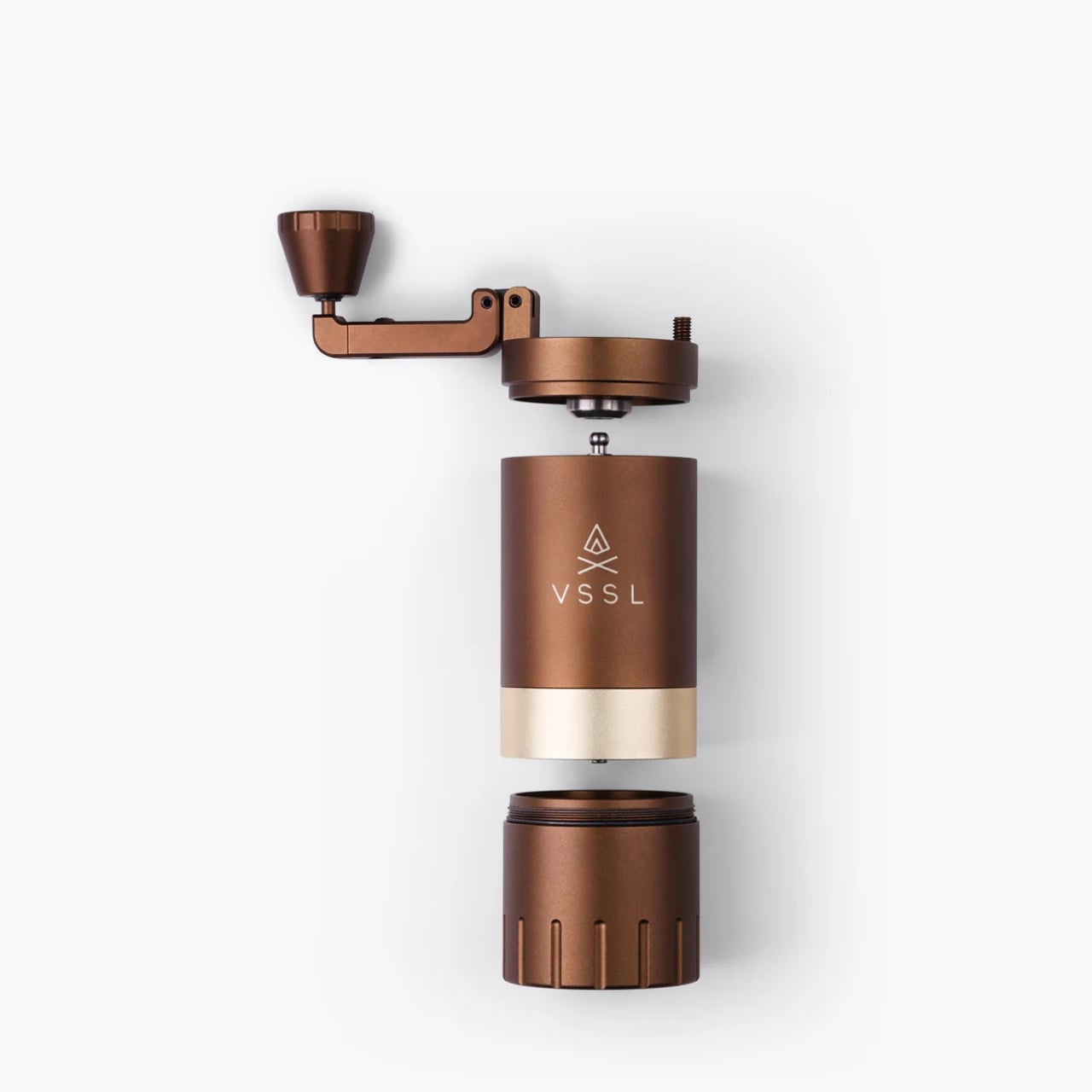
4. VSSL Java G25: The Coffee Grinder Built for Adventures
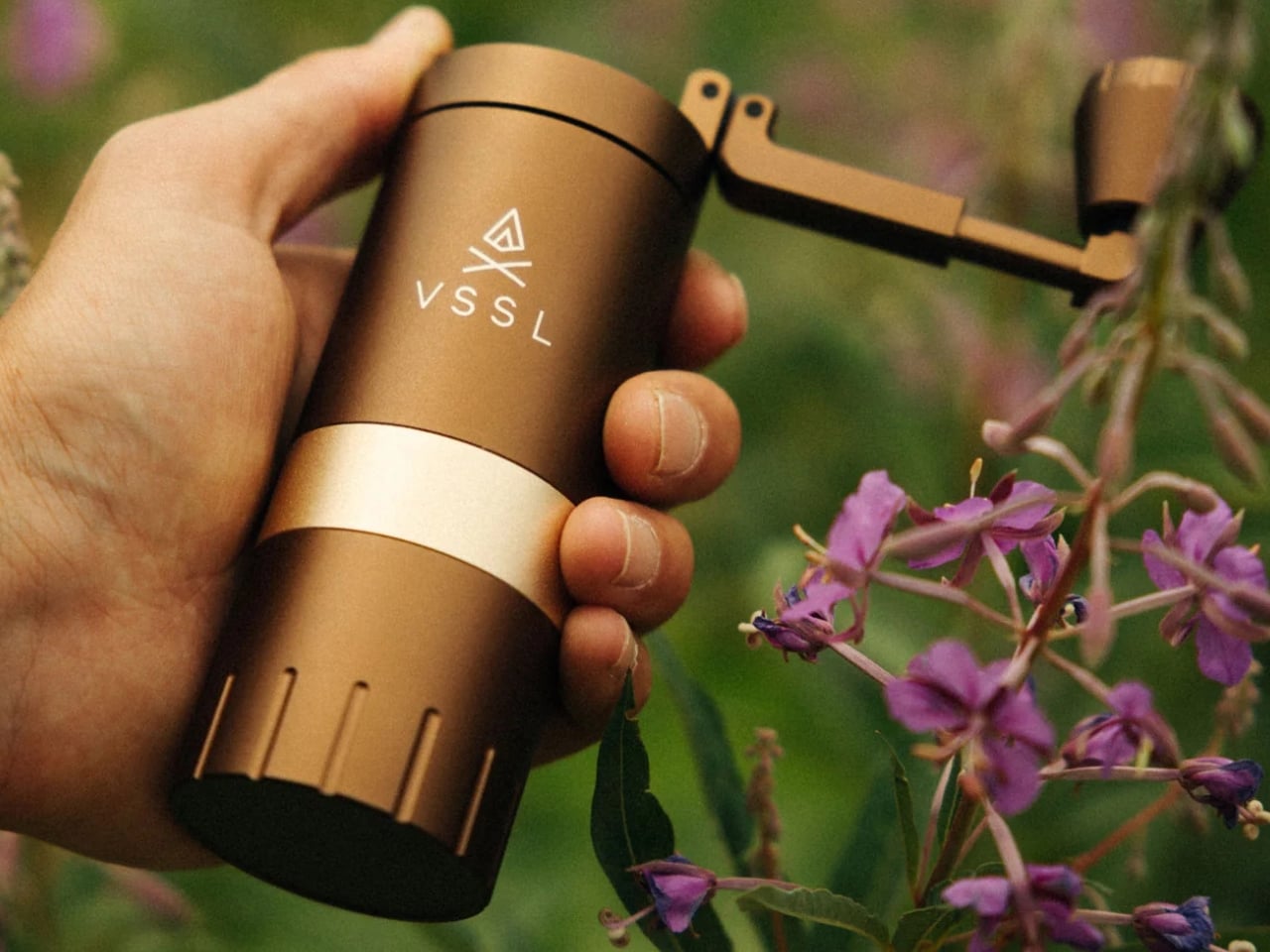
The VSSL Java G25 transforms coffee grinding from tedious necessity into a tactile ritual. This manual grinder brings VSSL’s survival equipment philosophy to your morning routine, applying the same obsessive engineering that makes their gear kits nearly indestructible. Utility never compromises aesthetics here; the G25 looks like high-end outdoor equipment because it essentially is. Constructed from 6061 machined aircraft-grade aluminum and 304 food-grade stainless steel, this grinder handles abuse, whether it’s sitting on granite countertops or actual granite mountainsides. The sleek black cylindrical form factor radiates a modern gear aesthetic while remaining compact and ergonomic.
The grinding experience elevates beyond basic function into something genuinely enjoyable. Many grinders overwhelm users with complicated dials and fifty different settings that require engineering degrees to understand. The G25 makes the learning curve feel like part of the adventure, a welcome challenge rather than a frustrating obstacle. The manual operation provides satisfying tactile feedback, connecting you directly to the process in ways electric grinders never achieve. Built to withstand serious use, the materials ensure it survives camping trips, road adventures, and daily kitchen duty without degradation. This represents gear you want to display, a piece that sparks conversations and makes you actually look forward to grinding beans.
What We Like
Aircraft-grade aluminum and stainless steel construction survives both outdoor adventures and kitchen use.
The manual operation creates an engaging, tactile ritual that improves the coffee experience.
Sleek cylindrical design looks equally at home on countertops or clipped to backpacks.
Simplified approach to grind settings makes the learning curve enjoyable rather than frustrating.
What We Dislike
Manual grinding requires more time and effort compared to electric alternatives.
The premium materials and construction command a higher price than basic grinders.
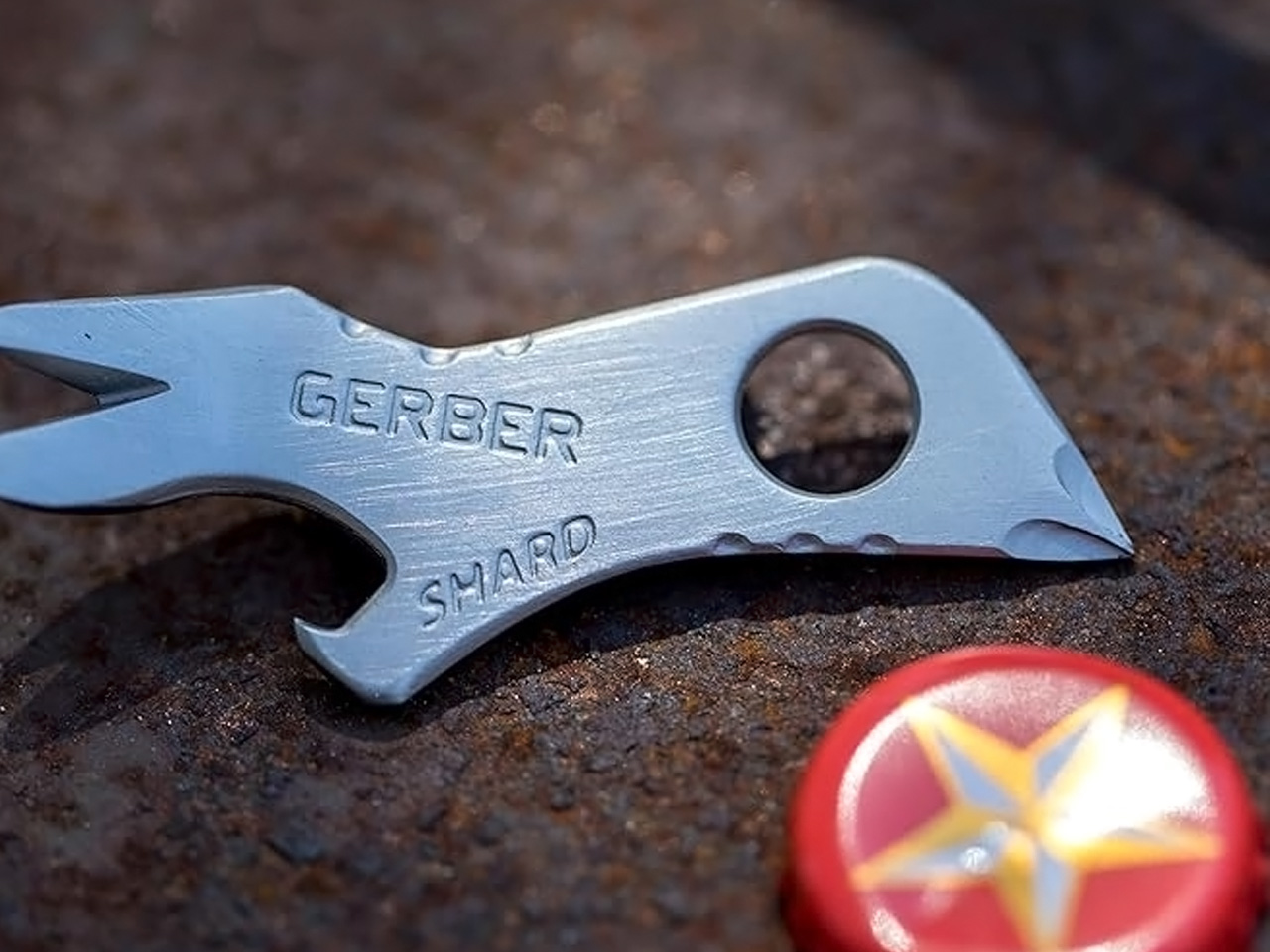
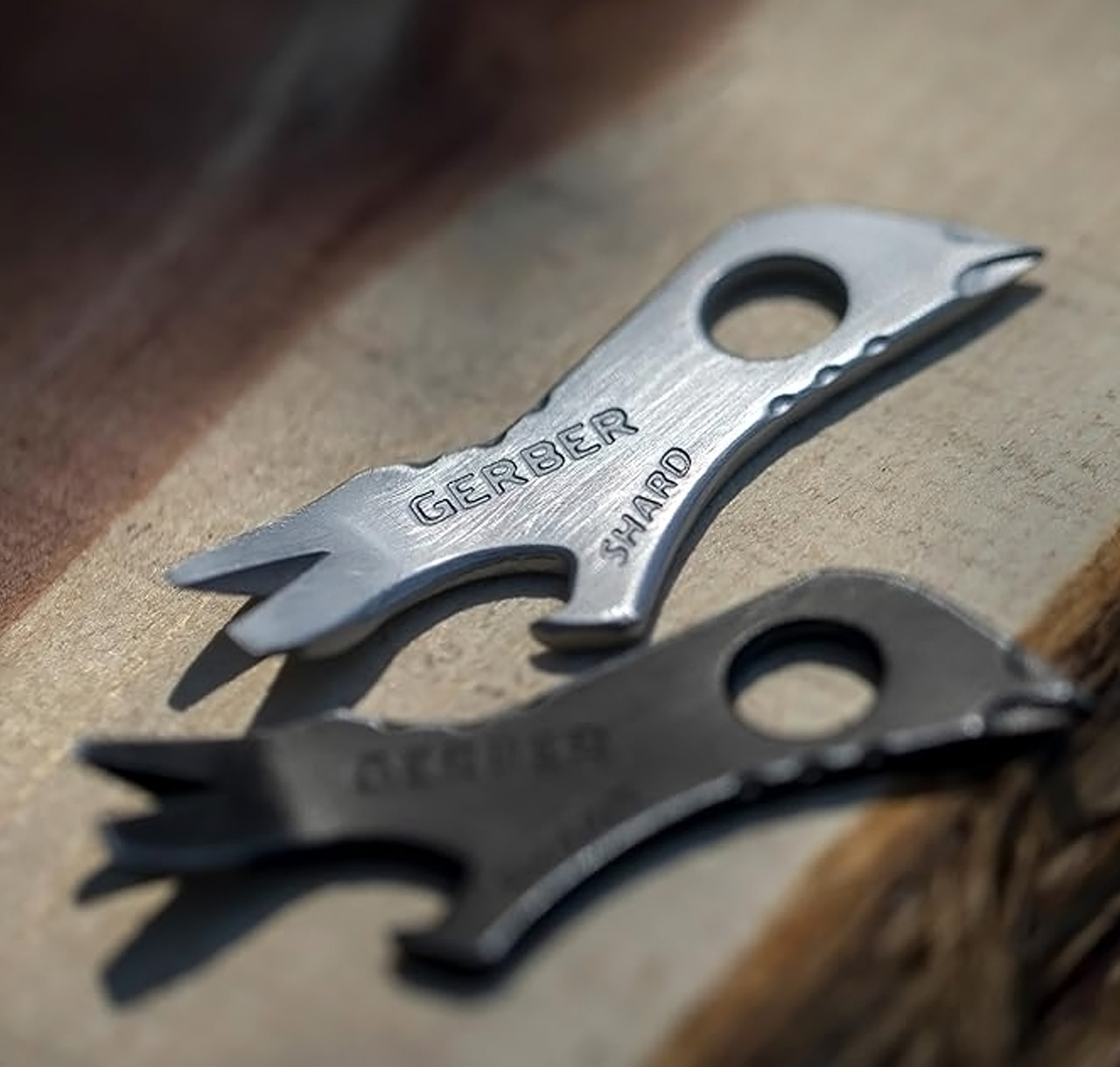
5. Gerber Shard: Elegant Restraint in Keychain Form
Sometimes the best design eliminates everything except what matters. The Gerber Shard proves this philosophy by integrating seven essential functions into a keychain-friendly package that prioritizes airline safety and everyday utility over feature bloat. Titanium nitride coating provides serious corrosion resistance while maintaining a professional appearance that works anywhere, from corporate offices to construction sites. This tool succeeds through disciplined focus on tasks you actually encounter daily rather than hypothetical situations that never materialize.
The Shard dedicates engineering attention to pry bars, flathead drivers, and bottle openers—the tools that prove useful constantly. Unnecessary features are eliminated, creating a tool that feels substantial despite compact dimensions. The design recognizes that most EDC challenges don’t require twenty functions; they require the right five or six executed flawlessly. Airline-safe construction ensures it travels with you anywhere without triggering security concerns. Gerber backs this fundamental engineering with a limited lifetime warranty, signaling genuine confidence in durability. The result is a keychain tool that disappears until needed, then delivers exactly what the situation demands without fumbling through features you don’t need.
Titanium nitride coating resists corrosion while maintaining a professional appearance across environments.
Airline-safe construction allows travel without security complications.
A limited lifetime warranty demonstrates the manufacturer’s confidence in engineering quality.
What We Dislike
A limited function count may leave users wanting more capability in certain situations.
The compact size, while keychain-friendly, reduces leverage for demanding pry or driver applications.
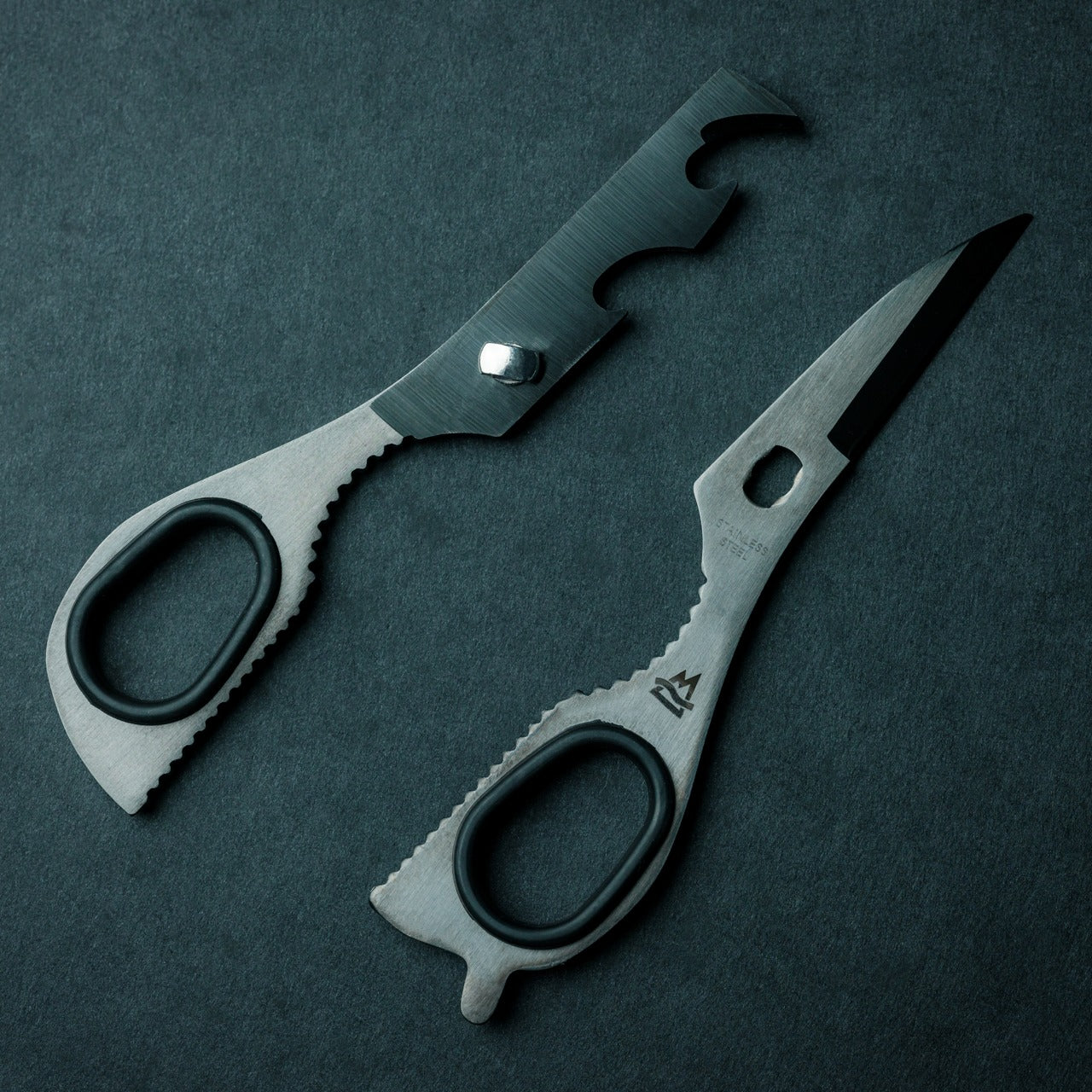
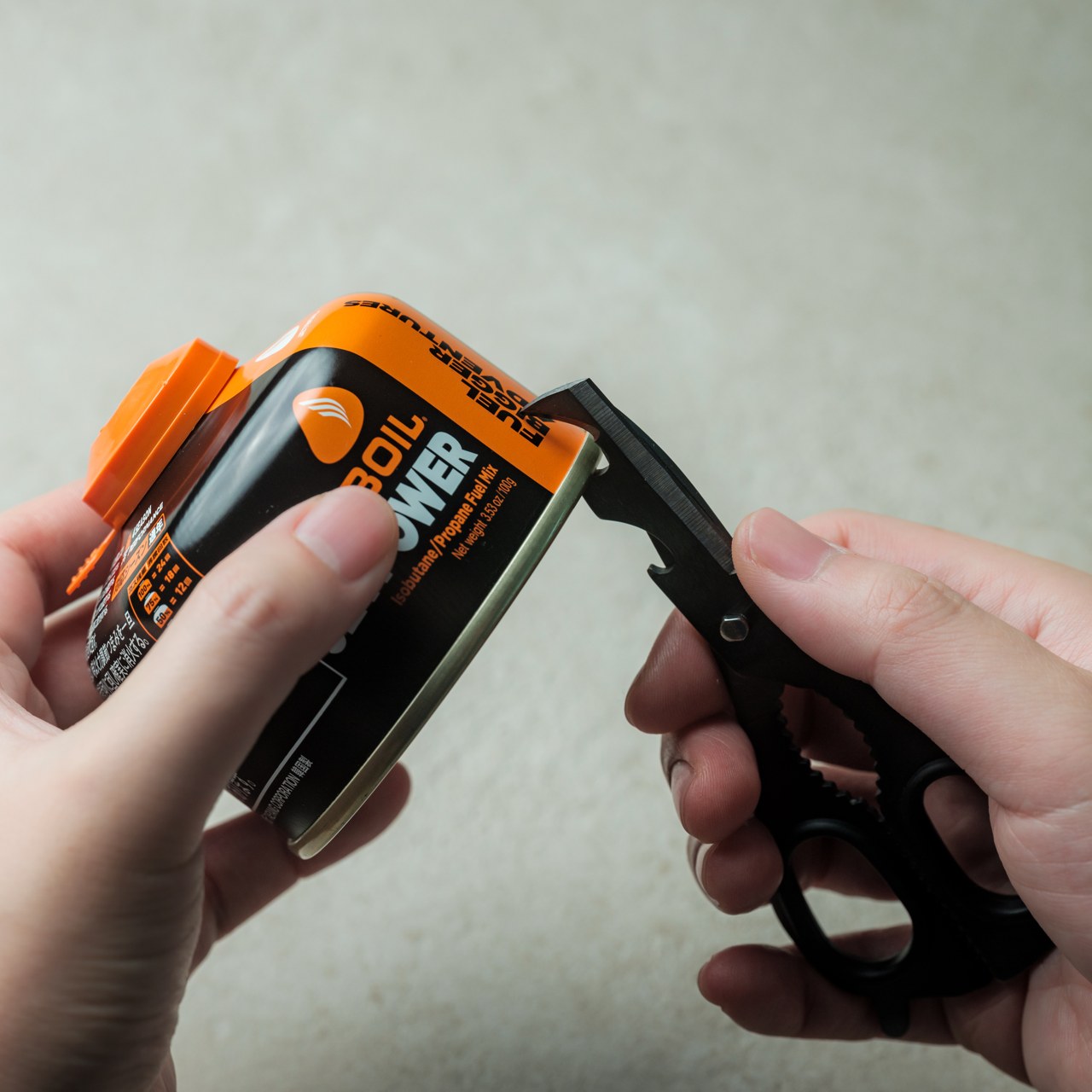
6. 8-in-1 EDC Scissors: Toolbox in Your Palm
Who decided multi-functional tools need bulk to deliver utility? These 8-in-1 scissors demolish that assumption by fitting an entire toolbox into something that rests comfortably in your palm. The simple yet handsome design integrates scissors, a knife, a lid opener, a can opener, a cap opener, a bottle opener, a shell splitter, and a degasser into a compact 13cm package. Innovation here comes through thoughtful integration rather than complicated mechanisms. The oxidation film treatment adds rust resistance while creating that distinctive black finish that elevates the aesthetic beyond basic utility gear.
The palm-sized dimensions mean you actually carry it rather than leaving it in a drawer because it’s too large. Traditional multi-tools fail when they’re inconvenient to transport; capability means nothing if the tool stays home. At roughly five inches, these scissors slip into pockets, bags, or glove compartments without creating bulk or weight penalties. The eight integrated functions cover most daily scenarios without forcing you to carry dedicated tools for each task. Opening packages, bottles, cans, or handling food prep becomes possible anywhere. The design acknowledges that modern life requires adaptability, delivering solutions that match our mobile, unpredictable routines rather than expecting us to plan every scenario.
Eight integrated functions eliminate the need for multiple dedicated tools in daily carry.
Compact 13cm design actually fits in pockets without creating uncomfortable bulk.
Oxidation film treatment prevents rust while adding an attractive black finish.
Palm-sized proportions ensure you’ll actually carry it instead of leaving it at home.
What We Dislike
Individual functions may not match the performance of dedicated single-purpose tools.
The scissors mechanism requires regular cleaning to maintain smooth operation.
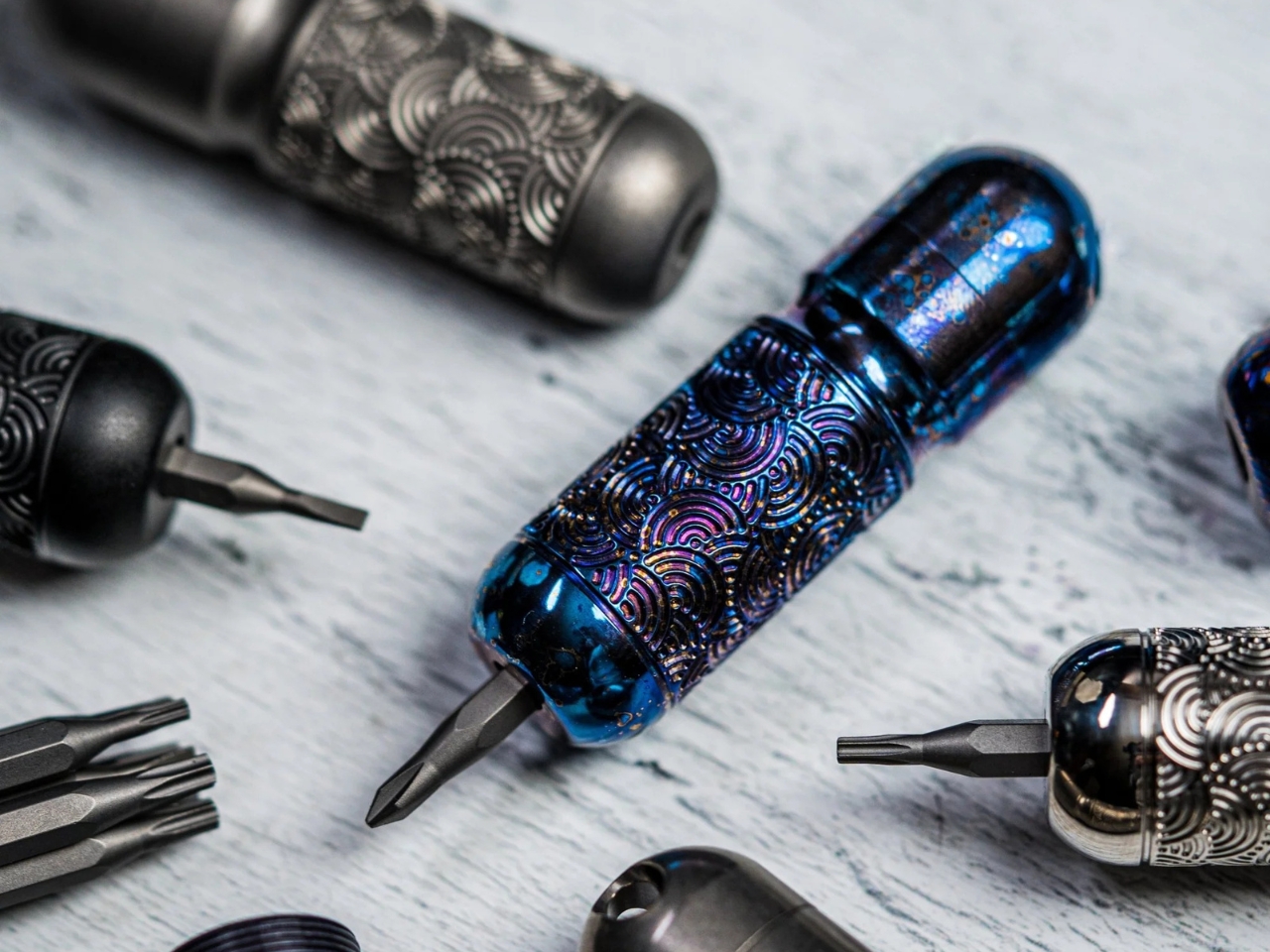
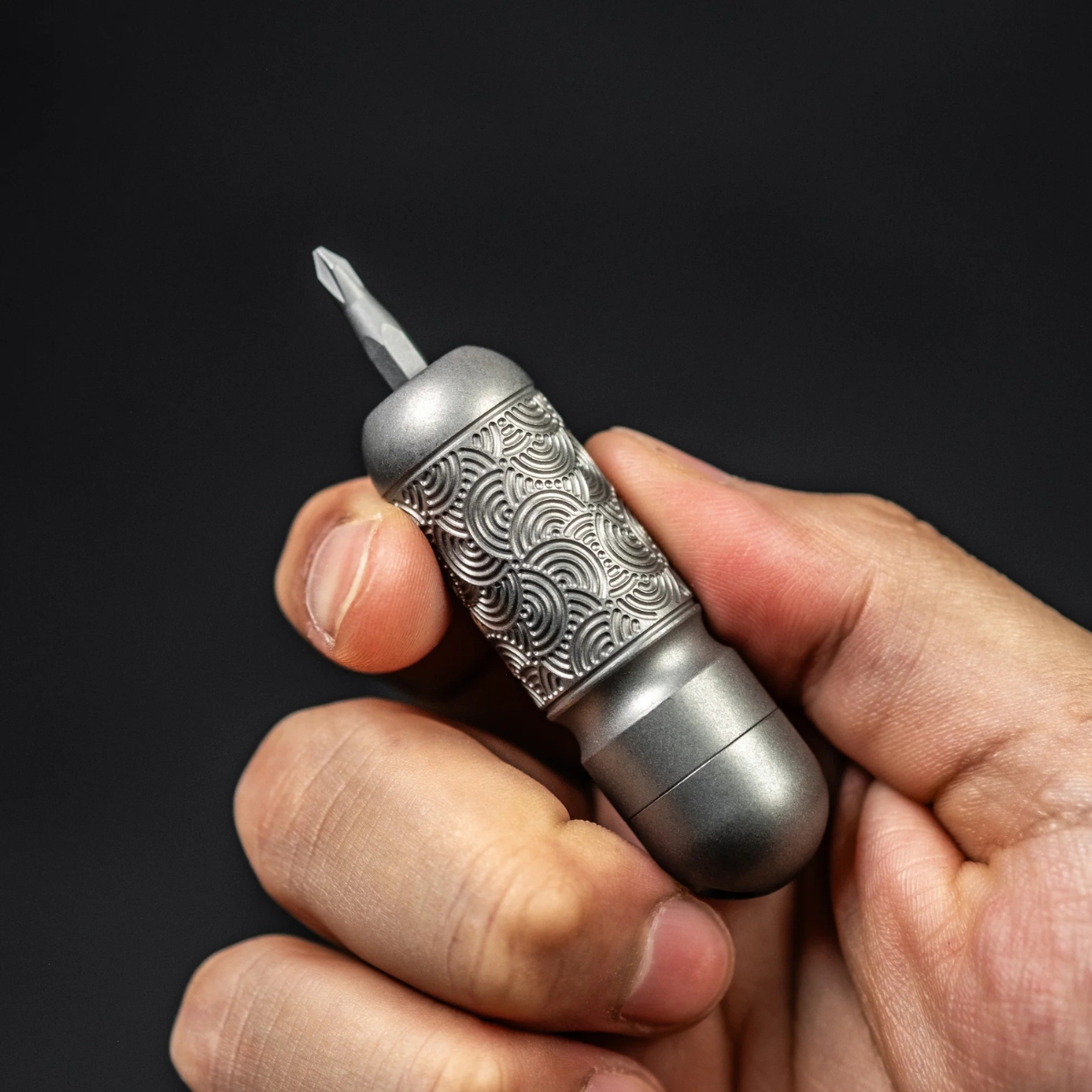
7. Audacious Concept x URBAN Tool XS: Art Meets Function
The Audacious Concept x URBAN Tool XS with Chaos Seigaiha pattern represents what happens when two companies obsessed with quality and innovation collaborate. This limited-edition pocket screwdriver doesn’t just look stunning; it works brilliantly for daily tasks that demand precision. The Chaos Seigaiha pattern adorning the titanium body draws inspiration from traditional Japanese wave motifs, creating visual interest that goes beyond surface decoration. Those intricate milled patterns add tactile grip, making the tool more comfortable and secure during use. Beauty and function merge seamlessly here.
Titanium construction ensures the XS Screwdriver remains lightweight yet extremely durable, capable of withstanding years of use without weighing down your pocket or keychain. The collaboration between Audacious Concept and URBAN EDC brings together complementary strengths: artistic vision meets technical precision. The result is a tool that feels equally at home displayed as a design object or deployed for actual work. The limited-edition status adds collectibility, though the real value lies in daily utility. Premium materials and thoughtful engineering create something you’ll reach for constantly, whether you’re adjusting glasses, tightening cabinet hardware, or handling the countless small tasks that require a quality screwdriver.
What We Like
The Chaos Seigaiha pattern provides both striking aesthetics and functional tactile grip.
Titanium construction balances impressive durability with genuinely lightweight pocket carry.
Limited-edition collaboration brings together artistic design and technical EDC expertise.
The compact size makes it perfect for keychain carry without sacrificing functionality.
What We Dislike
Limited-edition status and premium materials create a higher price point than basic screwdrivers.
The compact size limits torque application for stubborn or larger fasteners.
Treat Yourself Right
Valentine’s Day celebrates fleeting romance, but EDC gear celebrates something more lasting: daily preparedness wrapped in exceptional design. These seven tools represent investments in yourself, purchases justified by constant use rather than occasional sentiment. Each piece earns its place through reliable performance and thoughtful engineering that respects both your pocket space and your aesthetic standards. They transform everyday challenges into moments where you’re simply ready.
The best part about post-Valentine’s shopping? You know exactly what you want and need. No guessing, no disappointing compromises, just tools that genuinely improve your daily experience. Whether you choose titanium blades, tactical lighting, or coffee grinders built like survival gear, you’re investing in items that deliver satisfaction every single time you reach for them. These designs prove that treating yourself can be the most practical decision you make all year.
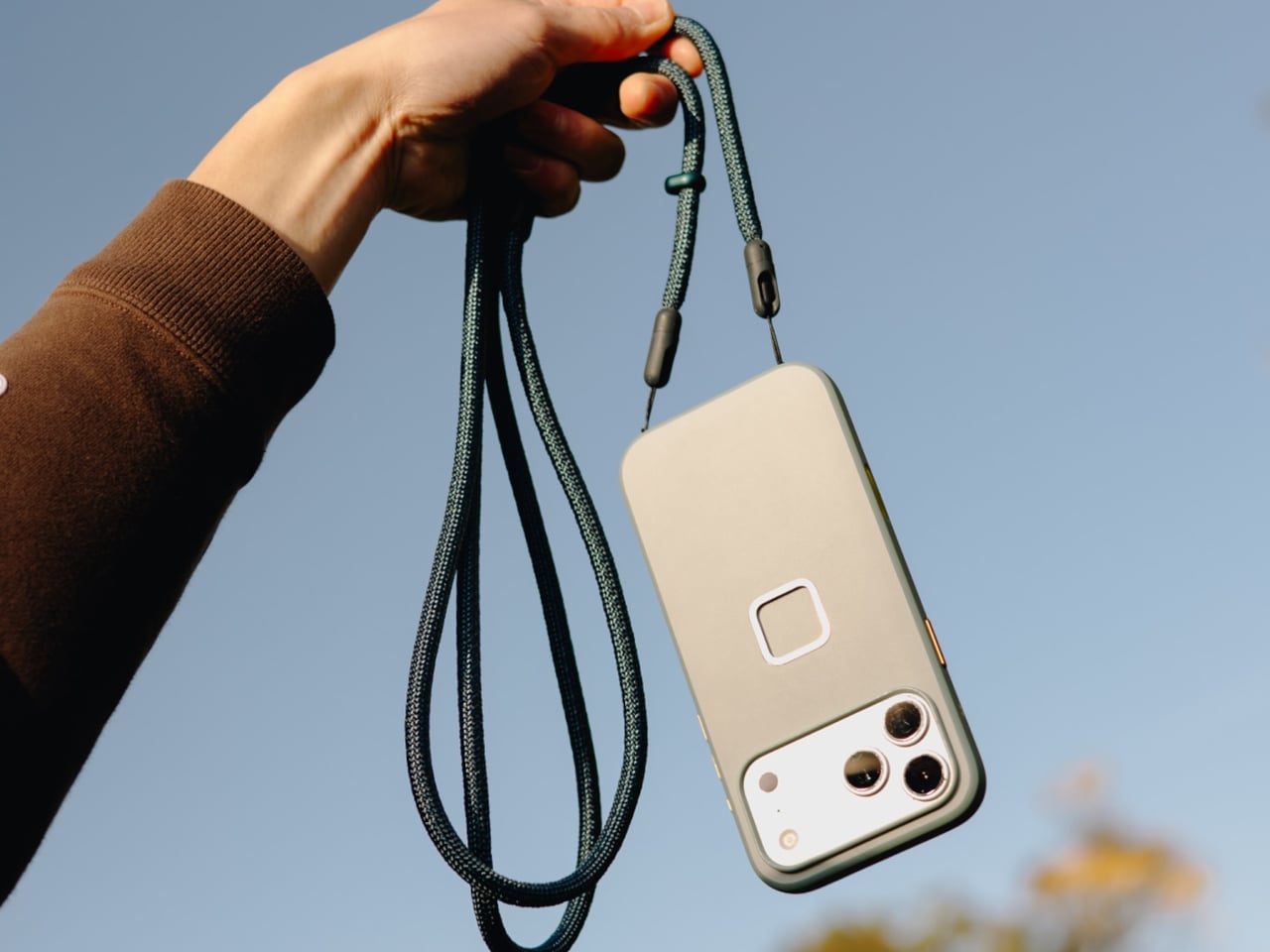
Most phone straps are fine until they twist, tangle, or feel like they’ll snap the first time you grab your phone in a hurry. The market has always split between fashion-first and function-first, rarely landing both at once. The phone has become the center of daily carry, but the strap category still feels like an afterthought that nobody took seriously enough to do properly.
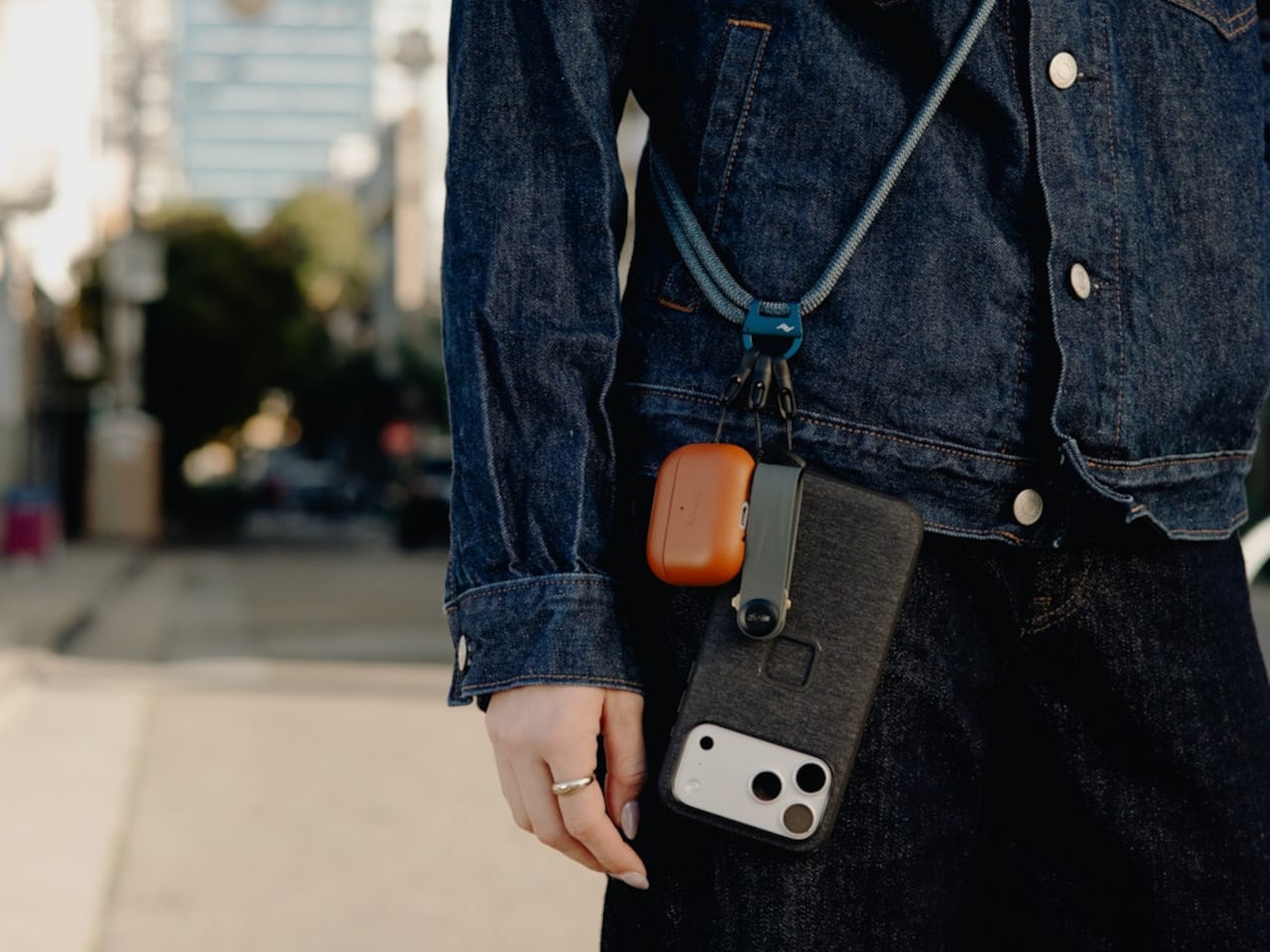
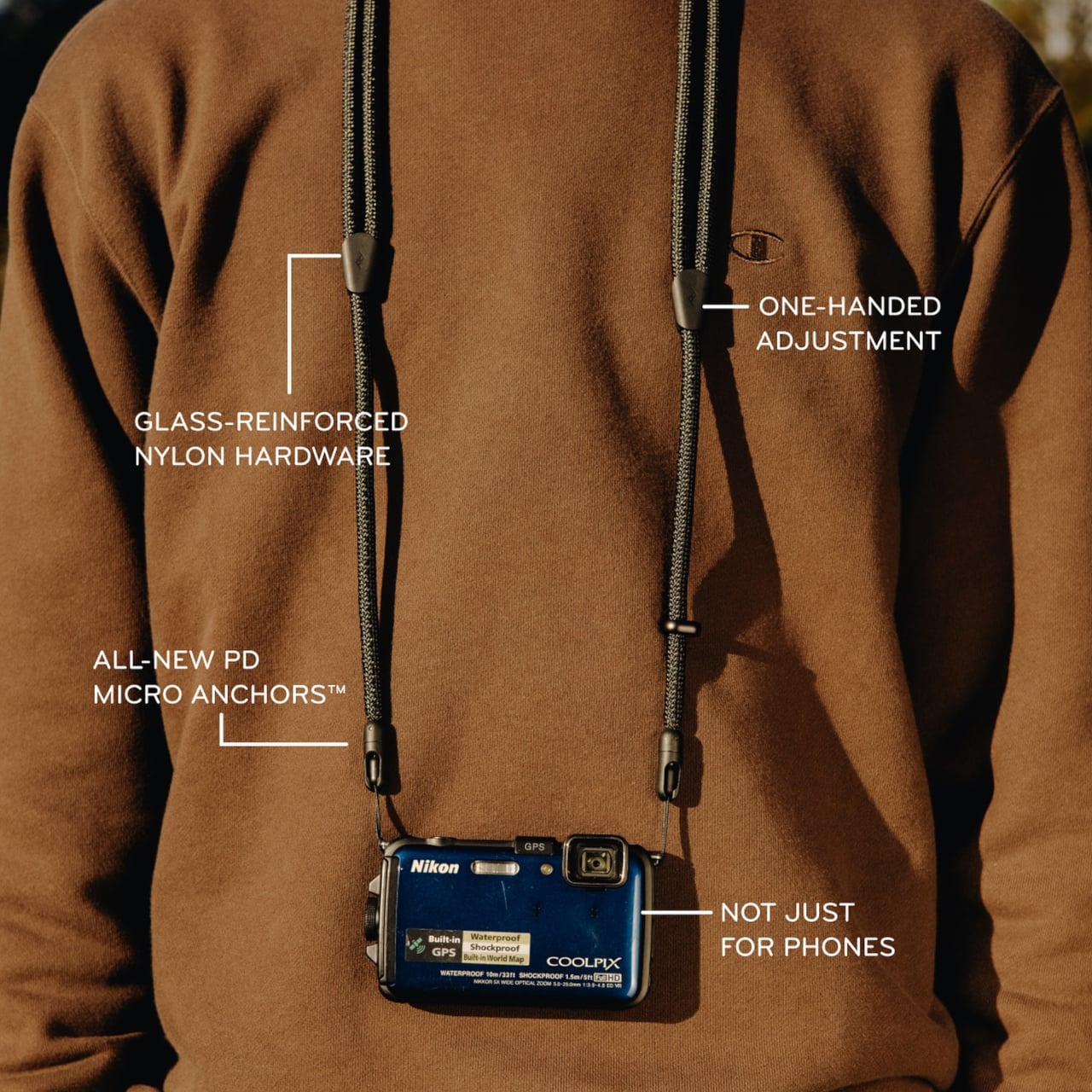
Peak Design’s Mobile Straps are quick-adjusting, low-profile, comfy, and durable, built around the new Micro Anchor connection system. The line treats the phone strap like camera gear rather than a decorative loop of fabric, designing for how straps actually behave when you’re moving and constantly reaching for your phone. Micro Anchor handles the attach-and-remove part intuitively, with a built-in swivel to prevent the twisting that makes most straps annoying within a week.
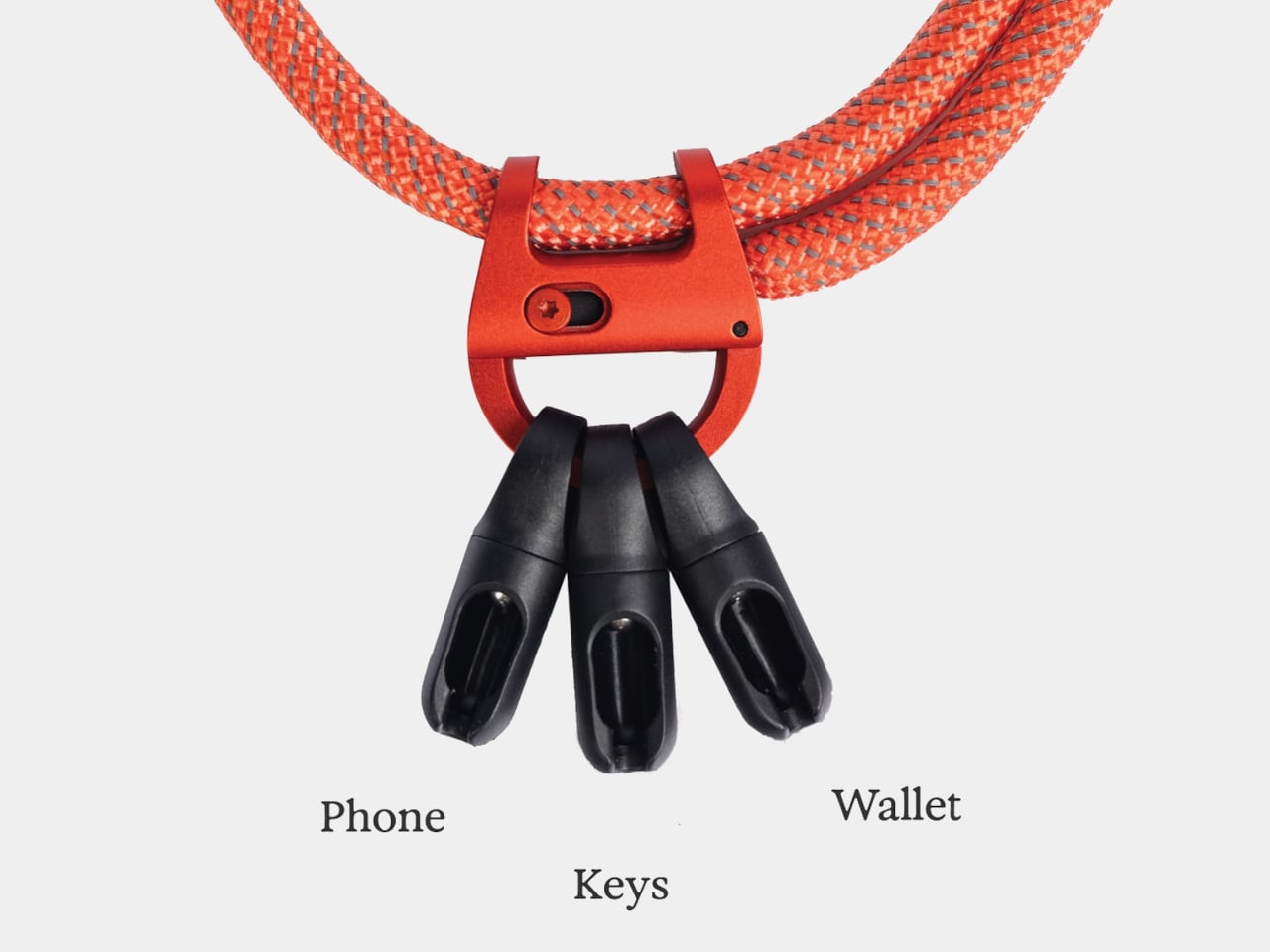
The Mobile Crossbody Multi-Strap is the carry hub option for days when pockets aren’t enough. A custom-machined, anodized aluminum carabiner locks shut and holds up to three Micro Anchors, so your phone can share the strap with keys, a wallet, or a small point-and-shoot camera. The basket-woven nylon and poly rope balances strength, padding, and stretch, so the whole setup sits comfortably across a shoulder without digging in.
The Mobile Crossbody Strap is the cleaner, lower-profile option for days when you just want your phone secure and accessible without extra hardware clinking around. Two connection points keep the phone stable and prevent it from spinning mid-stride, which is the main reason most lanyards feel unsatisfying in practice. It converts to single-point carry when you want a more minimal setup, making it flexible enough to shift between carrying preferences without swapping straps.
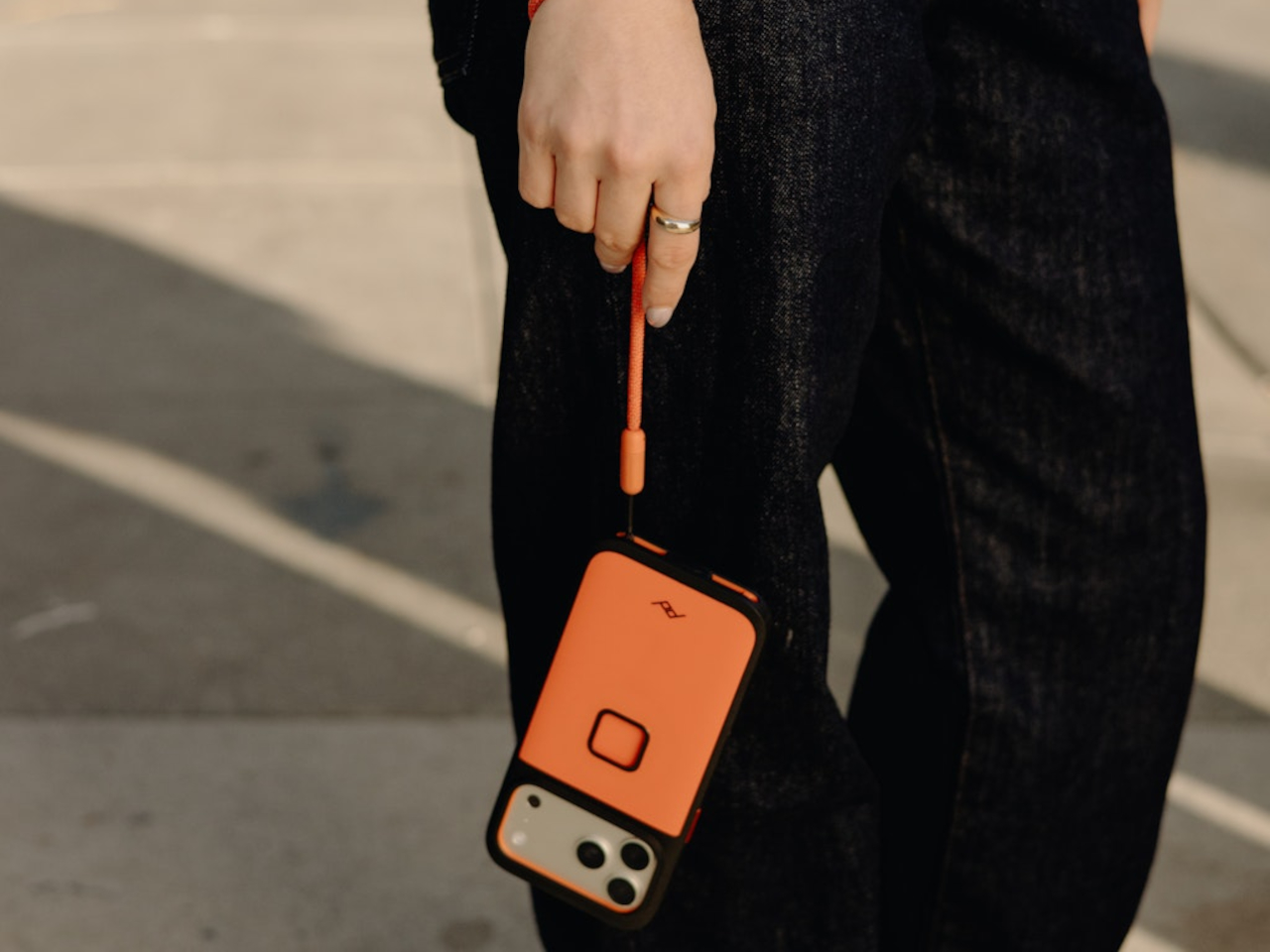
Mobile Cuff is the smallest piece in the family, and the one you’d barely notice until you actually need it. The rope cinches onto your wrist if the phone slips, and an aluminum stopper lets you set a minimum loop length so it doesn’t flop around. Shooting photos one-handed, walking with a coffee, or loading groceries are moments where a wrist loop quietly becomes the difference between relaxed and anxious.
The materials throughout feel like deliberate choices. Glass-reinforced nylon hardware handles quick length adjustments one-handed, the rope holds up to daily use, and the connectors are designed to be reconfigured without fuss. These are the details that separate straps you trust from straps you eventually stuff in a drawer.
Compatibility is handled via built-in strap connection points on Peak Design cases and Apple iPhone cases (17 and onwards), with a universal adapter included for third-party cases. That means you don’t have to commit to a new case to use any of them, which removes the usual barrier that comes with upgrading your phone carry setup.