The 5 Best Furniture Designs of March 2026

March brought the kind of furniture that doesn’t need to announce itself. A student chair that shifts between sitting and lounging through physics alone. A coffee table whose legs look like they’re caught mid-step toward the door. A stool that opens from flat with a single press and no tools required. An office system built to reconfigure whenever the day asks for something different. A footstool that handles posture quietly, without making it your problem to manage.

What connects these five pieces isn’t a shared material or a shared aesthetic. What connects them is the absence of excess. Each one solves something real, and each one does it without layering on complexity to get there. That kind of restraint is harder to land than it looks. Most furniture design in 2026 is reaching for the new, for the bold, for the statement piece. These five reach for the right answer instead, and find it.

1. Tilt Chair

Manuela Hirschfeld is an industrial design student at Germany’s Hochschule Pforzheim, and her Tilt chair does exactly what the name suggests. Built from bent plywood, it shifts between upright and reclined with a single forward tilt. No levers, no hardware, just physics and balance. The restraint here is rare for student work. Most student designs reach for the complex or the speculative. Tilt strips everything back until the idea stands entirely on its own.

What makes it genuinely useful is how naturally it handles the shift between focused work and winding down. Most chairs make you choose one mode and stay there. Tilt lets your body make that call instead. Lean it forward, and the geometry changes. The bent plywood keeps it light and easy to move, so it works as well in a small apartment as it does in a studio or home office.

What We Like

  • No mechanical parts means nothing to replace or service over time
  • Dual function in a single lightweight form, no extra hardware needed

What We Dislike

  • The minimal plywood aesthetic may feel too sparse for warmer, more layered interiors
  • May not offer enough firm back support for users who need a fixed, stable position

2. Barefoot Collection

The Barefoot Collection started with a single image: a coffee table that looks like it’s walking away. The legs are carved from solid wood to simulate the arc and flex of a bare foot mid-step, while the tabletop stays completely flat and rectilinear. Stillness above, motion below. That contrast is the whole point, and it works better than it has any right to. The piece reads as coherent long before it reads as clever.

What you actually get is a coffee table that functions without apology and sparks a real conversation without ever trying to. Set a cup on it and forget the concept entirely. Then a guest walks in, does a double-take, and suddenly the room is talking. Most concept-led furniture exhausts you after a few weeks. Barefoot earns its place by being genuinely useful first and genuinely interesting second. That’s always the right order.

What We Like

  • Solid wood construction gives it real longevity, well beyond its visual appeal
  • Works as a fully functional surface while quietly holding a strong point of view

What We Dislike

  • The sculpted legs make it difficult to pair with more conventional, straight-lined furniture
  • The level of craft involved likely puts it at a higher price point

3. Press Stool

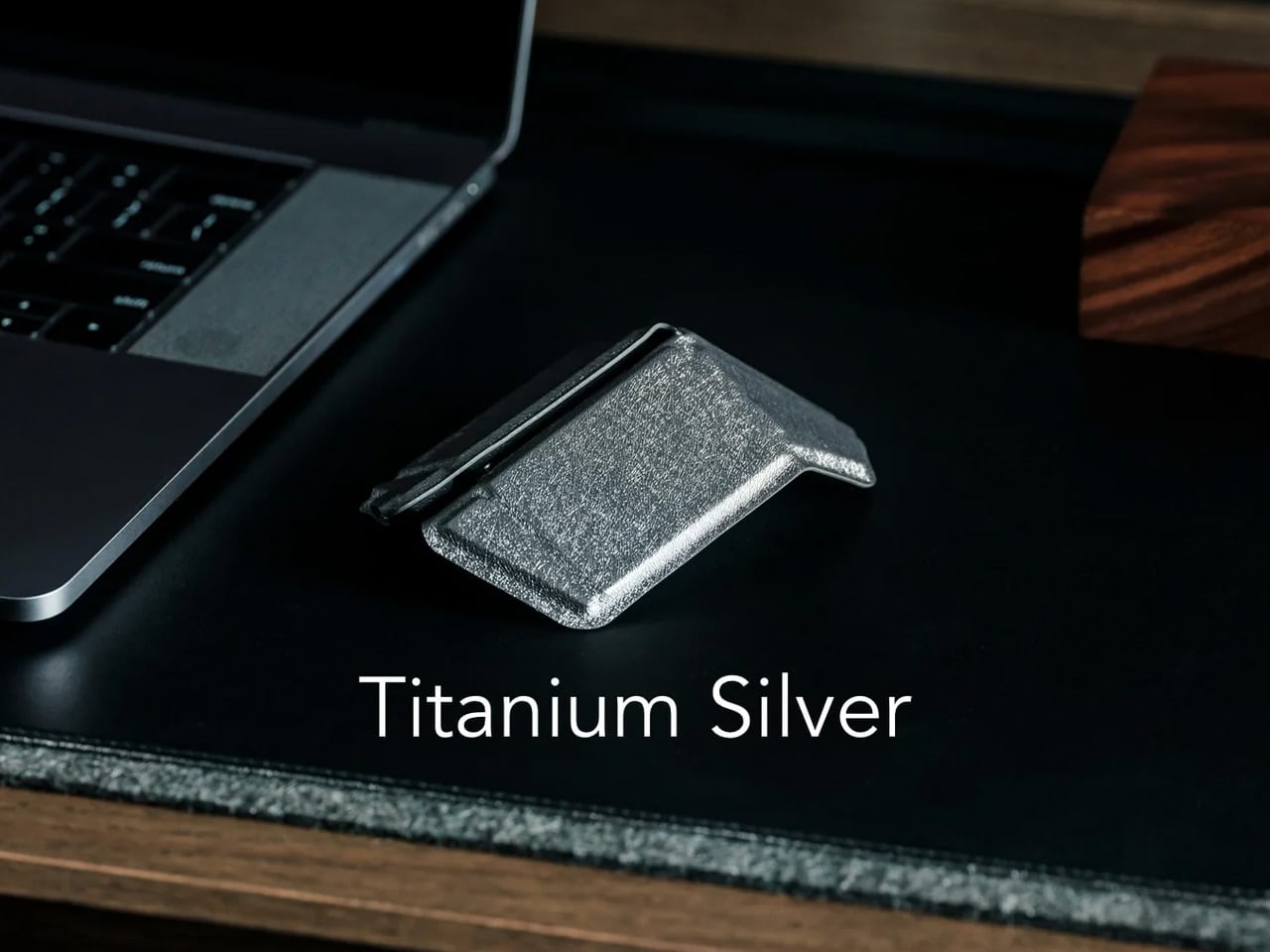
The Press Stool borrows its structural logic from folded paper. A flat sheet has no load-bearing strength, but fold it, and the forces redistribute across the geometry. Crease it further, and the form resists compression. That principle does all the work here. In its flat state, it collapses into a wide oval with a crinkled metallic silver surface that lands somewhere between industrial foil and fabric. One press and it opens. No legs, no bolts, no tools.

For anyone in a small apartment, it solves a storage problem while putting something worth looking at in the room. It ships flat, weighs little, and can slide under a bed or lean against a wall when it isn’t needed. Most fold-flat furniture looks like a compromise. The Press Stool looks intentional. The crinkled surface and gathered folded ends give it a presence that holds up even when it’s closed.

What We Like

  • Ships and stores completely flat, ideal for smaller homes and tight living spaces
  • No assembly required, the folded form does all the structural work

What We Dislike

  • The metallic silver finish is a strong statement that won’t suit every interior palette
  • Load capacity may be more limited compared to stools with conventional structural frames

4. Kylinc Modular Office System

Kylinc treats the workspace like something that should change whenever the day asks it to. Each piece rolls on oversized wheels, which makes reconfiguring your office feel genuinely effortless rather than theoretically possible. Push pieces apart for a collaboration zone, pull them together for focused work. Power management is built directly into the furniture, with smart cable organization that keeps surfaces clean without any additional accessories to track down or manage.

The benefit shows up most for people working from home across a day that never asks the same thing twice. A static configuration works well some of the time and poorly the rest. Kylinc changes that without requiring much effort, which is the real difference between a system that actually gets used and one that stays fixed out of habit. The built-in cables move with the furniture. Your layout becomes something you actually control.

What We Like

  • Oversized wheels make real reconfiguration effortless, not just possible on paper
  • Integrated power and cable management keep the workspace clean without extra accessories

What We Dislike

  • Rolling furniture may feel less stable than fixed pieces for users who prefer an anchored setup
  • A full modular system likely carries a significantly higher upfront cost than standard office furniture

5. OTTO Footstool

OTTO takes its name from the Korean roly-poly toy Ottogi, a round-bottomed figure that always rights itself because of its convex base. Designer Woonghee Ma applied that same logic to a footstool. The convex base means it rocks and shifts as your body moves throughout a long sitting session. No adjustment needed, no settings to configure. You shift weight, the stool moves with you, and that’s the whole mechanism.

For a home office that needs to support you without making a production of it, OTTO is exactly right. Most ergonomic products demand your attention to work. OTTO doesn’t. The passive rocking base handles posture support quietly while you stay focused on everything else. It also looks good, which matters more than it might seem for something you’ll look at every working day. Clean, compact, and entirely unpretentious about what it is.

What We Like

  • Passive rocking base provides ergonomic support through natural weight shifts, no settings required
  • Compact and well-proportioned, it works equally well in home and professional office settings

What We Dislike

  • The rocking motion may feel unfamiliar at first for users accustomed to fixed support
  • May not suit very low seating arrangements where foot elevation isn’t part of the setup

March Didn’t Make a Noise. It Made a Point.

What connects these five pieces isn’t an aesthetic or a material. It’s restraint. A chair that changes mode with one gesture. A table that earns its concept by being useful first. A stool that ships flat and opens in a second. A workspace that adapts without asking for your help. A footstool that supports you without ever drawing your attention to the fact that it’s doing so. That quiet confidence is what good design actually looks like in practice.

Most design coverage this month was busy chasing the big swing. The sculptural statement, the unexpected material, the idea that needs a paragraph of explanation before it lands. What these five pieces share is something quieter. They ask less of you. They make their case by fitting into your life rather than reshaping it around themselves. March didn’t produce the loudest furniture of the year. It produced some of the most considered. That’s always the better result.

The post The 5 Best Furniture Designs of March 2026 first appeared on Yanko Design.
LG’s World-First 1Hz Panel Gives the Dell XPS 48% More Battery

Battery life has been one of the laptop industry’s most persistent design headaches, especially among Windows notebooks. Despite significant gains in chip efficiency, the display consistently ranks among the biggest power consumers in any portable computer. Most laptop screens refresh at a fixed rate regardless of what’s actually on them, which means the panel keeps drawing full power even when you’re sitting completely still, reading a document with nothing on screen changing at all.

LG Display’s new Oxide 1Hz panel is the first mass-produced LCD laptop screen that doesn’t work that way. Rather than holding a fixed rate, it reads what’s on screen and drops to 1 Hz when the content is static, then scales back up to 120 Hz for video or gaming. LG began mass production on March 22, 2026, claiming the first-ever achievement of this at scale.

Designer: LG, Dell

The technology relies on custom circuit algorithms and a new oxide material applied to the panel’s thin-film transistor. That oxide holds an electric charge longer than conventional LCD materials, letting the screen maintain a still image without continuously refreshing it. LG claims the result is up to 48% more use on a single charge versus existing solutions, which is a significant number if it holds up in everyday use.

In practice, this matters most during the parts of a workday you spend the bulk of your time in. Checking emails, reading through documents, and sitting on a static slide during a meeting are all moments where a 60 Hz or 120 Hz screen burns power for no real benefit. The Oxide 1Hz panel handles those scenarios at a fraction of the usual draw without any visible difference.

When you do pull up a video or launch something that demands smooth motion, the panel doesn’t hesitate. It detects the change and jumps back up to 120 Hz automatically. There’s no mode to switch into, no setting to toggle, and no trade-off to manage. It just adjusts based on what’s happening on screen, which is how this kind of feature should work in the first place.

The first laptops to ship with this panel are the Dell XPS 14 and Dell XPS 16 for 2026, both unveiled at CES 2026 in January. The LCD option on both models runs at 1920 x 1200 pixels and 500 nits of brightness. Dell’s OLED option only drops as low as 20 Hz, which means the more affordable LCD configuration actually wins on low-power behavior.

Here’s where it gets interesting from a design standpoint. The display is one of the biggest power consumers in any laptop, so a screen drawing significantly less power during typical use creates real headroom for designers. They can use that headroom to maintain battery size and gain extra runtime, or to trim the battery slightly for a lighter, thinner chassis without giving up the battery life buyers already expect.

Of course, LG is already planning a 1 Hz OLED version of this technology for 2027, which is when things could get more interesting. OLED handles contrast and color in ways LCD can’t match, and pairing that quality with proper low-refresh-rate behavior could push portable laptop design further than it’s been able to go. For now, the Oxide 1Hz LCD is in something you can actually go out and buy.

The post LG’s World-First 1Hz Panel Gives the Dell XPS 48% More Battery first appeared on Yanko Design.

This Tungsten-tipped Nutcracker Works On Walnuts, Seafood, and even Car Windows in an Emergency

Think for a moment about three common tools: the nutcracker that sends shell fragments flying across the room, the bulky hammer you have to retrieve for the simple task of hanging a photo, and the emergency window breaker you bought for your car but have since forgotten about. Each serves a purpose, yet each comes with its own inconvenience, whether it’s mess, cumbersomeness, or the simple fact that it’s never around when you actually need it. These are the kinds of minor but persistent frustrations that we tend to accept as normal, the small design flaws in our daily routines.

The Hamtel was born from a refusal to accept those flaws. It was conceived as a direct answer to these distinct problems, elegantly combining their solutions into a single, compact device. Its core function is a spring-loaded impact mechanism that cracks nuts with precision, eliminating mess and preserving the kernel. With a simple adjustment, that same tool becomes a capable mini-hammer for light-duty tasks. Finally, its tungsten steel tip provides the reliable performance of a dedicated car safety hammer, creating a single tool that is practical enough for daily use and critical in an emergency.

Designer: Hamtel

Click Here to Buy Now: $66 $124 (47% off) Hurry! Only 9 days left.

The real draw for anyone with an appreciation for good gear is the sheer tactile satisfaction of its action. You pull back the plunger to arm the manganese alloy steel spring, a process that feels deliberate and mechanical, like chambering a round. Placing the tip on the target and pressing down unleashes an explosive force reportedly moving at over 530 meters per second. This impact-driven deployment is what separates it from every dull lever-action cracker on the market. It’s a clean, contained, and frankly, an incredibly cool way to apply force. This is the kind of thoughtful engineering that gets EDC enthusiasts talking, turning a mundane kitchen task into an opportunity to use a well-made instrument.

The body is stainless steel, providing a solid, weighted feel in the hand, while the business end features a high-hardness tungsten steel tip rated at HRC60+. This is the material specification you expect in high-end cutting tools or industrial equipment, not something designed to crack walnuts. This choice is critical for its dual-purpose role as a car window breaker, ensuring the tip remains sharp and effective even after repeated use. That effectively means your walnut or macadamia or brazil nut stands absolutely no chance. The tip works remarkably well against seafood too, letting you crack into crab and lobster claws/shells without breaking out industrial equipment.

This precision translates directly to its performance in the kitchen. It boasts a 95% kernel preservation rate, a number that seems ambitious until you consider the physics at play. Instead of crushing a shell with slow, brute force, the Hamtel delivers a sharp, localized impact that fractures the shell without pulverizing the contents. This makes it just as effective for delicate jobs, like cracking open crab legs or lobster claws without shredding the meat inside. It brings a surprising level of finesse to a category of tools typically defined by their crudeness, making it a genuinely useful upgrade for any kitchen.

Initial pricing puts the Hamtel at $66, which is a compelling entry point considering its planned retail is set at $124. Logistics are refreshingly simple, with a flat $9 shipping fee for delivery anywhere in the world. An optional nut pick can be added for just a few dollars, making it a complete package for dealing with stubborn shells. For the price of a single-purpose emergency tool, you’re getting a device that serves three distinct functions, some life-changing, others life-saving. But for most of the time, bon appetit!

Click Here to Buy Now: $66 $124 (47% off) Hurry! Only 9 days left.

The post This Tungsten-tipped Nutcracker Works On Walnuts, Seafood, and even Car Windows in an Emergency first appeared on Yanko Design.
This 3D-Printed Lamp Changes Its Pattern When You Tilt It

Many of us first encountered the magic of lenticular printing on a pocket-sized novelty card. Tilting it back and forth would make a cartoon character move or a flat image suddenly appear to have three-dimensional depth. The principle was simple and clever: a series of tiny, parallel lenses on a plastic sheet would direct different slivers of an underlying image to our eyes depending on the viewing angle. It was a fun, tactile illusion, a small piece of optical engineering designed to create a moment of surprise and delight from a static object.

Imagine taking that same principle and applying it to a gracefully curved, three-dimensional lamp. This is precisely what the Japanese brand QUQU has achieved with its Nishiki line. The entire body of the lamp functions as a lenticular lens, using the fine, horizontal ridges of the 3D printing process as the optical array. As you move around the lamp, patterns of colour suspended within its translucent walls shift and swim, revealing new dimensions and tones. It transforms a simple light source into a dynamic object that performs a quiet, constant dance with the viewer’s perspective.

Designer: QUQU

The entire trick hinges on QUQU’s decision to weaponize what most of the FDM printing world considers an imperfection. We spend countless hours and dollars on post-processing to eliminate layer lines, chasing that injection-molded smoothness to prove the technology is “ready.” QUQU went in the complete opposite direction and made those 0.2mm or 0.3mm ridges the star of the show. Each concentric line acts as a cylindrical lens, refracting light that passes through the lamp’s wall. Instead of a flaw, the texture becomes the engine of the visual effect. This is a genuinely sharp piece of design thinking that elevates the manufacturing process itself into an aesthetic feature, rather than something to be hidden.

This effect would fall completely flat with the wrong material. A standard PLA or PETG filament would be too opaque or have the wrong refractive index, turning the whole thing into a muddy mess. QUQU’s use of a semi-translucent, grain-derived biomass plastic is the critical second half of the equation. This specific material choice gives the 155mm tall shade a soft, fibrous quality that diffuses light beautifully, preventing harsh hotspots from the internal LED. It has just enough clarity to let you perceive depth but enough haze to blend the suspended colours into those soft, koi-like patterns. The material is doing as much optical work as the surface geometry is.

The printer deposits coloured filament at varying depths inside the thick wall of the shade, sandwiching it between inner and outer layers of the translucent base material. This is a level of algorithmic control that feels like a form of digital craft, placing colour with volumetric precision. When you see the lamp unlit, the colours appear soft and suspended. Turning the internal LED on then completely inverts the experience, as the pigmented patterns become dark, dramatic silhouettes against a warm, glowing background. This gives the object a compelling dual personality, making it an entirely different piece depending on whether it is active or at rest.

The Ruri colorway, with its deep lapis lazuli tones, is the one getting the most attention, but the line includes others worth a look. The Koubai offers a warm plum red, Moegi provides a fresh spring green, and Hakumu is a subtle “white mist” variant. They are available directly from QUQU’s Japanese webstore for ¥19,800, which works out to roughly $125 USD. Now imagine this technique being used on other 3D printed products. I’d kill for a phone case made this way!

The post This 3D-Printed Lamp Changes Its Pattern When You Tilt It first appeared on Yanko Design.
A Whale Lamp That Transforms Ocean Vastness into a Gentle Bedside Glow

There is something quietly radical about a whale that does not belong to the ocean. Not because it has been displaced, but because it has been reimagined. COSIN DESIGN’s whale lamp is not an imitation of nature. It is a reinterpretation of how we feel about it. We are used to whales as symbols of magnitude. Vast, powerful, unknowable. They belong to depths we cannot reach. Yet here, that same creature is reduced in scale, softened in form, and placed gently on a bedside table. It no longer overwhelms. It comforts, and that shift in perception feels intentional.

The lamp captures a whale mid-leap, its body curved in a suspended gesture that feels both dynamic and still. The lines are fluid and uninterrupted, almost meditative. There are no sharp edges, no visual noise, just a continuous surface that invites the eye to move along with it. It feels like a sculpture before it feels like a product, and that is what gives it presence even when it is not turned on.

Designer: COSIN DESIGN

The real transformation happens with light. It seeps through the semi-transparent abdomen, not as a beam but as a soft diffusion that spreads slowly and evenly. It does not try to dominate the room or claim attention. Instead, it settles into the space, creating a calm and ambient glow. There is something almost alive about it, as if the whale carries light within itself, like a quiet presence from the deep sea. In that moment, the object shifts from something you look at to something you feel, and that emotional transition is where the design becomes meaningful.

For a long time, lamps have been about control. Adjustable brightness, direction, and precision. But there has been a noticeable shift toward lighting that feels more atmospheric and emotionally aware. The whale lamp sits comfortably within this shift. It does not attempt to do everything. It focuses on creating a specific feeling, and it does so with clarity and restraint. The design does not rely on complexity or excess detail. Instead, it leans into softness, both in form and in function.

Nature plays an important role here, but not in a literal sense. The whale is recognizable, yet simplified just enough to feel universal. It is less about replicating an animal and more about capturing a sense of calm, depth, and quiet strength. That balance allows the lamp to exist across different environments without feeling out of place. It feels just as appropriate in a child’s room, where its gentle glow can provide comfort at night, as it does in a more mature, minimal interior where it reads as a sculptural object.

The availability of four color options adds to this flexibility. Each variation subtly changes the mood of the piece, allowing it to align with different interior styles and personal preferences. Whether placed in a playful setting or a more subdued one, the lamp adapts without losing its identity.

What lingers most, however, is the way the design translates something vast into something intimate. A whale, typically associated with scale and distance, becomes a small, glowing presence that quietly occupies a personal space. It turns awe into reassurance and transforms something distant into something familiar. In doing so, it reflects a broader shift in how we approach design today, where emotional resonance matters just as much as function.

Not everything needs to be louder or brighter to be effective. Sometimes, the most powerful design choice is to soften, to create objects that do not demand attention but instead become part of the atmosphere. The whale lamp does exactly that. It does not insist on being noticed, yet over time, it becomes something you grow attached to.

The post A Whale Lamp That Transforms Ocean Vastness into a Gentle Bedside Glow first appeared on Yanko Design.
This $900 TCL TV Has the Same Panel Tech Samsung Charges $2,000 For

Premium television specs used to live behind premium price tags, a sorting mechanism that kept the best picture quality safely out of reach for most buyers. TCL has spent the last few years dismantling that barrier, and the T7M Pro SQD-Mini LED feels like the wall finally came down. For 6,199 yuan (roughly $900), you get 1,152 local dimming zones, full BT.2020 color coverage, and 2,200 nits of peak brightness. Those numbers belong to televisions that typically cost two or three times as much, yet here they are in sizes from 65 inches for just $900 up to a whopping 98-inch variant priced at a fairly reasonable $2,178.

The T7M Pro uses TCL’s SQD-Mini LED technology, which pairs quantum dot color filters with precise Mini LED backlighting. The company engineered a new panel that filters light more accurately, outputting cleaner colors with less contamination. A 4K screen runs at 150Hz natively, upgradable to 300Hz for gaming. Lingkong UI 3.0 handles the software side with AI-powered picture optimization and content recommendations. TCL kept the chassis at 60mm thick for near-flush wall mounting. The lineup launches in China across four sizes, and the pricing suggests TCL has stopped chasing flagship competitors and started outspeccing them at half the cost.

Designer: TCL

BT.2020 is the actual color space HDR content gets mastered in, the standard filmmakers use when they finish a movie. Most televisions claim wide color support but only hit 70 to 85 percent of that range, then fake the rest by stretching values. TCL claims the T7M Pro covers the full 100 percent through its Super Butterfly Wing Star Display panel, which uses better materials to filter light more cleanly. Cheaper quantum dot screens mix wavelengths and produce muddy colors. This one supposedly keeps red, green, and blue separate and pure. If that holds up in actual use, you’re seeing colors the way the director intended them.

TCL packed 1,152 dimming zones into the T7M Pro, letting different parts of the screen brighten or dim independently. That matters when you’re watching HDR content where a bright explosion needs to pop against a dark sky without making the whole screen glow. The 2,200 nits of peak brightness means highlights stay detailed instead of blowing out into white blobs. Whether 1,152 zones eliminate all the halo effects around bright objects depends on how large each zone is and how smart the processing is. We won’t know until someone tests it properly, but the number alone puts it in serious territory.

The television runs at 150Hz natively, smooth enough for high frame rate gaming and sports. Push it to 300Hz through motion smoothing if you like that soap opera look, though most people turn that off immediately. Four HDMI 2.1 ports with full bandwidth mean your PlayStation 5 or Xbox Series X can output 4K at 120Hz without compromise. Variable refresh rate and auto low latency mode are both here, which have become expected features on any TV that calls itself gaming-ready. TCL clearly built this thing with console players in mind, not just movie watchers.

Lingkong UI 3.0 runs the software side with a card-based layout and zero boot ads, already a win over most smart TV platforms that force you through commercials just to turn the thing on. The AI component learns your viewing habits and adjusts picture settings automatically, plus it suggests content based on what you watch. How pushy those recommendations get will determine whether this feels helpful or annoying. A quad-core processor with 4GB of RAM keeps things moving, which matters when you’re jumping between streaming apps or adjusting settings mid-movie.

Samsung’s QN90D Mini LED TV with similar specs costs around $1,800 for the 65-inch model. Sony’s X95L Mini LED sits near $2,000. Both deliver great picture quality, but neither performs twice as well to justify twice the price. TCL is counting on buyers to do the math and realize they’re paying for a badge, not better technology. That argument gets even stronger with the 98-inch T7M Pro at $2,178, a size where Samsung and Sony regularly charge $4,000 or more. The performance gap between a $2,000 TV and a $900 TV used to be massive. Now it’s mostly marketing.

TCL launched the T7M Pro in China first with no confirmed international release date, though the company already sells Mini LED TVs globally so a wider rollout seems inevitable. For anyone willing to import or wait for official availability, this television makes flagship picture quality accessible without flagship pricing. The question it forces on established brands is simple and uncomfortable: what exactly are buyers paying extra for when the panel specs are identical?

The post This $900 TCL TV Has the Same Panel Tech Samsung Charges $2,000 For first appeared on Yanko Design.
The Anti-Distraction Smartphone That Still Lets You Use Uber and Strava

I pulled out my phone at the airport gate to check my boarding time, then spent the next fifteen minutes scrolling TikTok. I nearly missed my flight. The phone wasn’t lying when it said Gate 23, but somewhere between the lock screen and actually standing up, Instagram happened, then Twitter, then one more reel. We’ve all been that person. The issue is architectural: smartphones were built to be everything machines, and everything machines are terrible at being sometimes machines.

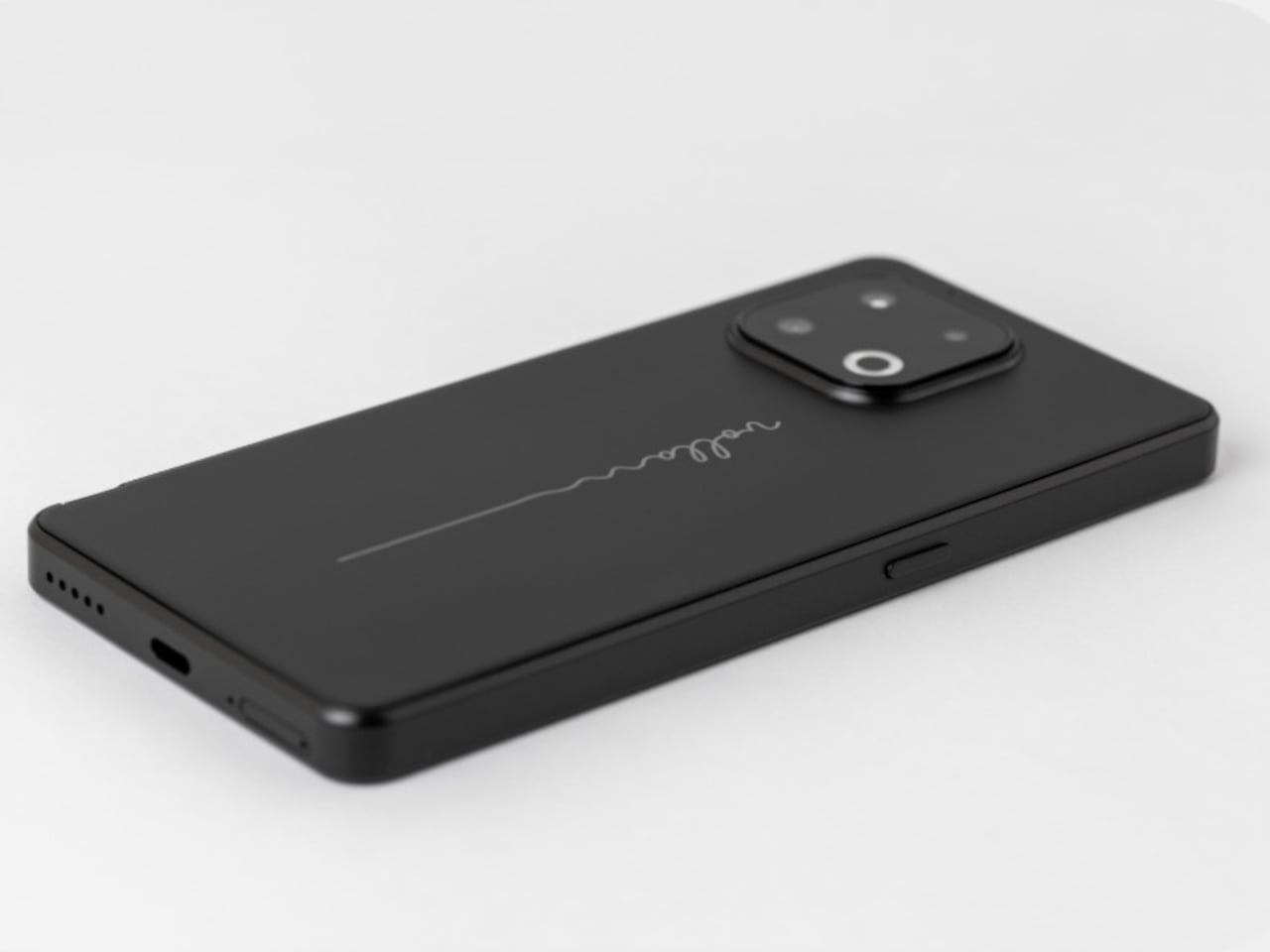
Meadow, a San Francisco startup, thinks the solution sits between the extremes. Their $399 phone launching June 2026 runs a curated set of actually useful apps (Spotify, Uber, Maps, a camera) while completely excluding the attention-draining ones (Instagram, TikTok, email, web browsers). You get a private phone number that only your contacts can reach, a 3-inch screen deliberately too small for binge-watching, and 4G connectivity without the infinite scroll tax. It’s a 4-ounce slab of recycled polycarbonate that wants to get you through your day, then get out of your way.

Designer: Meadow SF, Inc.

The 3-inch TFT LCD measures roughly 1.3 x 2 inches in total device footprint, making this closer to an iPod nano than a modern smartphone. The screen is big enough to read a map or control Spotify, but small enough that watching a YouTube video feels like punishment. The 13MP ultrawide camera captures memories without turning you into a content creator. The whole package weighs 4 ounces and fits in a coin pocket, which means you can actually forget you’re carrying it.

The minimalist phone market has been wrestling with this problem for years, and everyone keeps arriving at slightly different conclusions. The Unihertz Titan 2 resurrects the BlackBerry Passport form factor with a physical QWERTY keyboard and a 4.5-inch square screen, betting that tactile typing will make you more productive and less prone to mindless scrolling. It works for some people. The Clicks Communicator takes a similar approach but positions itself explicitly as a secondary device, the thing you carry when your real phone stays home. The iKKO Mind One shrinks everything down to credit card size with a rotating camera, targeting travelers who want maximum portability. Mudita’s Kompakt goes full ascetic with an E-ink screen, no app store, and a hardware kill switch that physically disconnects the microphones and camera.

Meadow splits the difference. You get real apps from real services, the ones that genuinely make modern life easier. Spotify and Apple Music mean you’re not stuck with MP3s loaded via iTunes like it’s 2008. Uber and Maps mean you can actually navigate an unfamiliar city without printing directions. Strava means your runs still sync. The camera means you can capture moments. Notes, weather, clock, fitness tracking, all present. What’s missing is the entire category of apps designed to consume your attention rather than assist your life. No browser means no falling into Wikipedia rabbit holes at 1 AM. No email client means work can’t chase you into the evening unless you’ve specifically decided to check it on another device. No social media means no feeds, no reels, no endless scroll.

When you activate Meadow, you get a number that functions like an allowlist. Only people you’ve added as contacts can call or text you. Everyone else hits a wall. No spam calls about your car’s extended warranty. No texts from political campaigns. No unknown numbers at dinner. Your main phone can be dead or turned off and you still won’t miss calls that matter, because Meadow routes them through your main number. Setup takes five minutes at home, no carrier calls required. The eSIM activation happens through the Meadow app, and you’re off to the races.

The device ships with 128GB of storage, 6GB of memory, and a battery rated for one to two days depending on usage. Fast charging helps. The included accessories (action case, beach pouch, charging cable) suggest Meadow knows exactly who this is for: people who want to go outside and do things without their phone becoming the main character of the experience. Pre-orders are open now at meadow.so for $399, with shipping starting June 2026 and a nine-month free subscription ($10 per month after that for unlimited calls, texts, and photo storage). The first units hit doorsteps in May according to the delivery schedule, which means summer 2026 could be the season a bunch of people finally stop doomscrolling at the beach.

The post The Anti-Distraction Smartphone That Still Lets You Use Uber and Strava first appeared on Yanko Design.

This E Ink Flip Case Shows the Time Without Ever Waking Your Phone

Smartphone cases have become one of the more predictable corners of the mobile accessory market. Most of them do exactly what you’d expect: wrap around the phone, absorb some impact, and stay out of the way. A few go further with card slots or battery packs, but the core idea hasn’t changed much in years. You’re still waking the screen every time you want a quick glance at the time.

Pixel Dynamics’s E Ink Flip Cover concept takes a simpler approach. It’s a flip-style case with an E Ink screen on the outer panel, so even when the cover is shut, and the phone is locked, you can still check the time, date, battery level, and signal without waking the main display. E Ink only draws power when the image changes, making it a natural fit for an always-on panel.

Designer: Pixel Dynamics

There’s more to the display than status data, though. Beyond the time, date, and connectivity readouts, you can set it to show ambient illustrations that make the cover feel more personal, less like a utility panel, and more like something worth looking at. An E Ink screen isn’t going to win awards for visual richness, but for something that stays visible all day without demanding attention, that’s a reasonable ask.

The case attaches to the phone through a MagSafe-style magnetic system, snapping into place without any physical ports. Power is handled through contact pins that draw directly from the phone’s battery, so there’s nothing to charge separately and no second battery bloating the profile. That’s a smart call; one of the quickest ways to kill an otherwise good accessory concept is to make the user manage another charging cable.

Data between the case and the phone travels through what the concept calls Laser-Link, pitched as a higher-efficiency alternative to Bluetooth or NFC. The idea is that replacing radio-based communication with a laser signal gets you faster data transfer with less power overhead and no interference issues. It’s still concept-level technology, of course, so there aren’t any real specs to evaluate, but the thinking behind it is sound.

Put it together, and the pitch is easy to follow. You keep the phone in your pocket or face-down on a desk, and the E Ink panel handles quick glances that don’t need the main screen, saving the battery drain of waking an OLED display dozens of times a day. When you do need the full phone, flipping the cover open gets you there just as fast as any other case.

That said, a few things here are easier to propose than to build. Laser-Link doesn’t have a clear path to production yet, and it raises obvious questions about reliability when the phone and case aren’t perfectly aligned. The E Ink display part is more grounded, since that technology already exists in other accessories.

The phone case hasn’t had a genuine design moment in quite a while, and a concept that starts asking what the outer panel can actively do for you is a reasonable place to start that conversation. It still has a long road before reaching any shelf, but for a category that’s mostly been stuck recycling the same rigid shells, that’s actually not a bad place to be.

The post This E Ink Flip Case Shows the Time Without Ever Waking Your Phone first appeared on Yanko Design.
These Wood and Leather Wall Holders Swap Hooks for Hidden Magnets

The entryway tends to be the most neglected spot in any home when it comes to design. Things pile up at the door, and most of the solutions people reach for, plastic key hooks, adhesive strips, wire baskets, tend to prioritize function so heavily that they end up looking like afterthoughts. It’s a corner of the home that rarely gets the same design attention as the living room or kitchen.

Ukrainian design brand dodomoom takes a different approach with its Magnetic Holders & Hooks collection. Designed by Andrii Burzi, the pieces combine natural wood and smooth leather to make something that looks far more like wall decor than a key holder. That impression, though, isn’t the whole story. Beneath the leather surface, a precision magnetic system does the actual work of holding keys and other small metal objects.

Designer: Andrii Burzi

That hidden mechanism is part of what makes the collection so satisfying to use. There’s no hook to loop your keys onto, no notch to fumble with when your hands are full. You just bring your keys close to the surface, and the magnets hold them flat against the leather face. Burzi described the reaction from people who try it: “It isn’t magic. It’s precision.”

The collection has six pieces in total, ranging from the compact Nordic Little Magnetic Holder to the larger Nordic Family Magnetic Holder, which can hold up to four sets of keys at once and measures roughly 8 inches square. You can mount any of them with 3M adhesive tape or standard screws, giving you the option to hang them without committing to permanent hardware on the wall.

Each piece is available in walnut, ash, or maple, with a Night Black option in painted ash for spaces with a darker palette. The leather inlay sits against the wood base, and the combination reads as considered rather than decorative for its own sake. These aren’t objects that need to be explained; you’d be happy having them on the wall even if they didn’t hold a single key.

The collection also includes the Nordic Little Coat Hook, which follows the same material language as the rest of the holders. That consistency matters if you’re planning to use more than one piece on the same wall, and dodomoom clearly anticipated that. The Nordic Line is designed with modularity in mind, so pairing a key holder with a coat hook feels more like a deliberate arrangement than an accidental one.

The Nordic Family Magnetic Holder is priced at $98, which puts it closer to a considered purchase than an impulse buy. That’s a fair trade-off for something that pulls double duty as a decorative object and doesn’t make you stare at an ugly key rack every time you come home. Most entryway solutions make you pick between looking good and working well, and dodomoom doesn’t put you in that spot.

The post These Wood and Leather Wall Holders Swap Hooks for Hidden Magnets first appeared on Yanko Design.
This Moon-Inspired Lamp Has No App, No Cord, 100% Recycled Aluminum

The lamp has gotten interesting again. What was once a fixture relegated to task lighting and matching living room sets has turned into something more intentional, especially among people who care about how their spaces feel at different times of day. Cordless, portable table lamps have become a genuine category of their own, offering the kind of flexibility that hard-wired fixtures simply can’t.

Designer Rahi Seyedi’s Monir, developed for Rey Studio, slots right into that world while carrying a concept that goes a bit further than most. The 29cm cordless lamp is inspired by the way moonlight sits between the sky and the earth, and that idea drives every decision in the design, from the shape of its dome to the materials holding it all together.

Designer: Rahi Seyedi

The form reads pretty clearly once you know what it’s referencing. A dark, grounded base anchors the lamp below, standing in for the weight of the earth, while the translucent dome above lets the LED ring scatter light in a way that mimics the gentle diffusion of moonlight. Nothing about the design is there for decoration alone. Every detail serves the concept, and you can tell.

Using it is about as frictionless as a lamp can get. A tap switches it on, and gently rotating the upper section moves through three brightness levels. That’s it. There’s no app, no remote, and nothing to configure before you can actually use it. You just pick it up, place it where you want it, and adjust the brightness until the light feels right.

On a desk, Monir keeps things steady without being intrusive. The diffused glow is warm enough to take the edge off the contrast between a bright screen and a dark room, which is exactly what you want during a long stretch of work or reading. It doesn’t replace proper task lighting, of course, but it makes the hours you spend at a desk noticeably more comfortable.

Move it to a side table when the day winds down, and the lamp takes on a different role entirely. At its lowest settings, the warmth it puts out is the kind that encourages you to put your phone down and actually be in the room. Overhead lights off, Monir on, and the space feels genuinely different in a way that’s hard to explain but pretty easy to appreciate.

Sustainability was factored into Monir well before the final form was settled, and it shows. The base and dome are both made from 100% recycled aluminum, while the diffuser uses bio-based polycarbonate, a plant-derived material that doesn’t end up in a landfill. For something that asks so little of you visually and physically, that’s not a small thing, and as lighting objects go, Monir keeps its intentions quiet and its results remarkably clear.

The post This Moon-Inspired Lamp Has No App, No Cord, 100% Recycled Aluminum first appeared on Yanko Design.