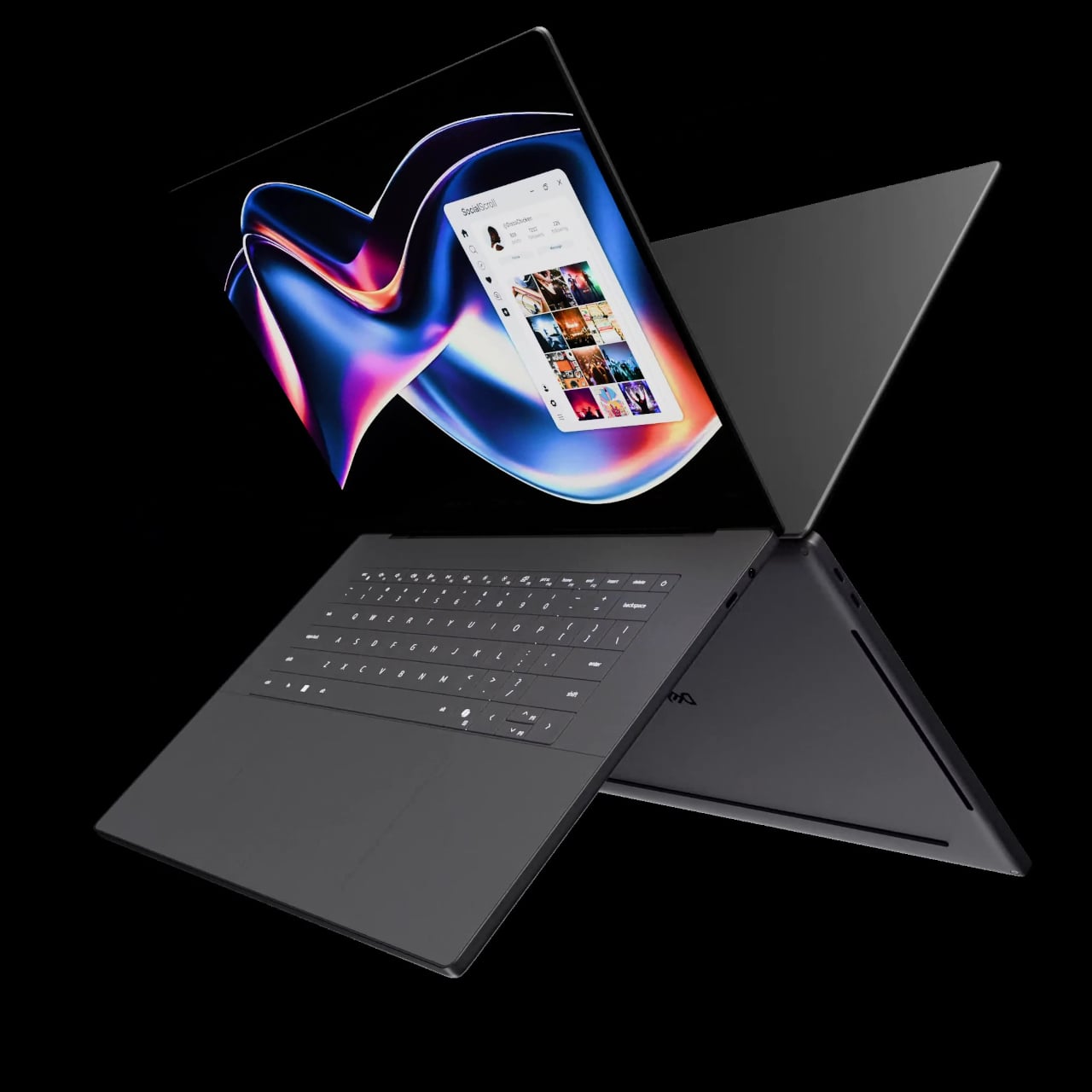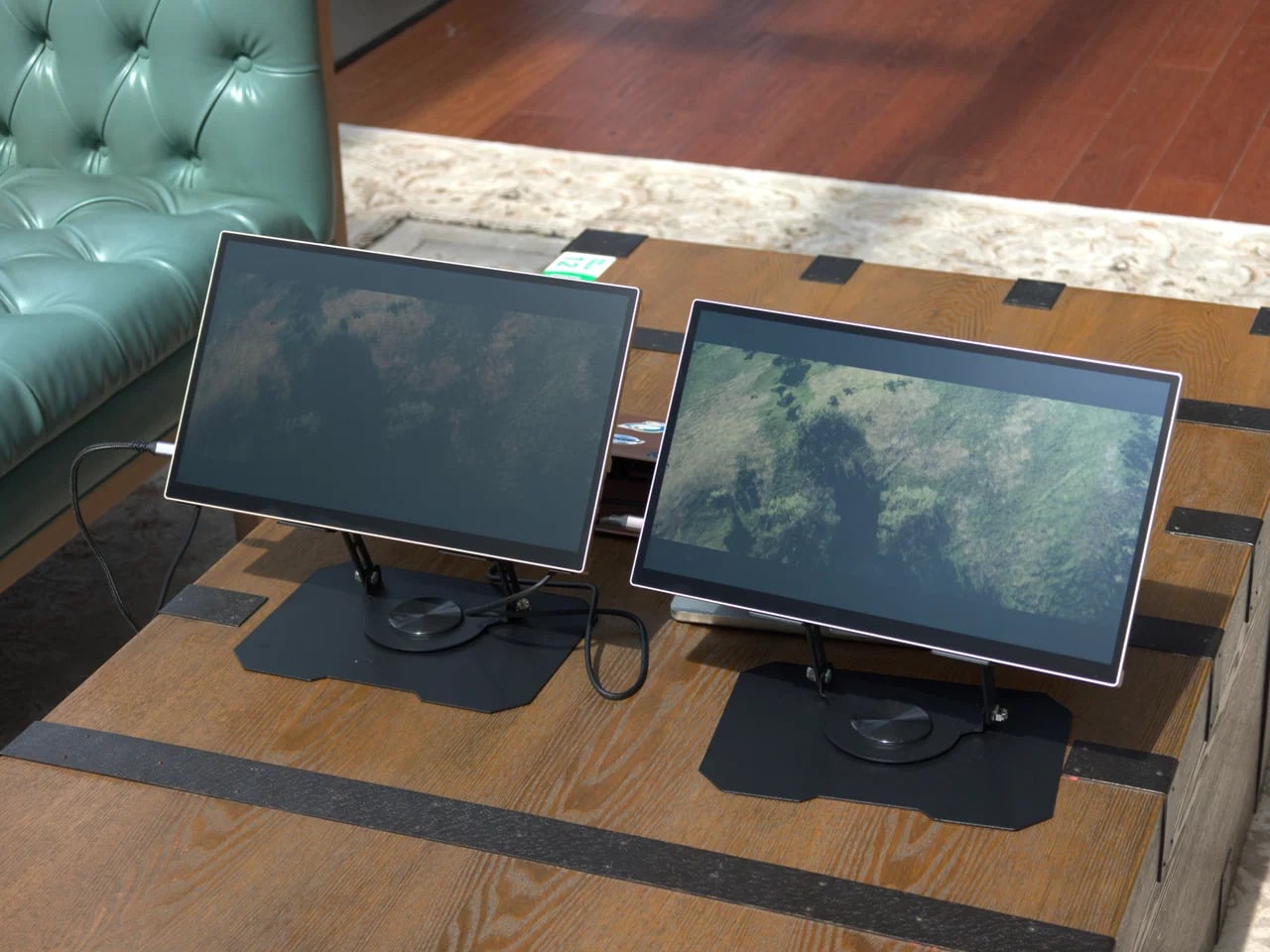
Portable monitors have become a practical extension of the laptop workflow, letting you carry a second screen to coffee shops, airports, and co-working spaces. The catch is that almost every portable monitor on the market uses a standard LCD or OLED panel, which means bright environments are its natural enemy. Step outside on a sunny afternoon or sit beside a sun-drenched window, and the glare turns your screen into a mirror.
The Radiant Monitor 2 takes a fundamentally different approach to that problem. Rather than packing in more backlight power to overpower sunlight, it uses a transflective LCD panel, a display technology that works with ambient light instead of against it. The brighter the environment, the better the image becomes, which flips the script on how portable monitors have traditionally handled outdoor conditions.
Designer: Eazeye
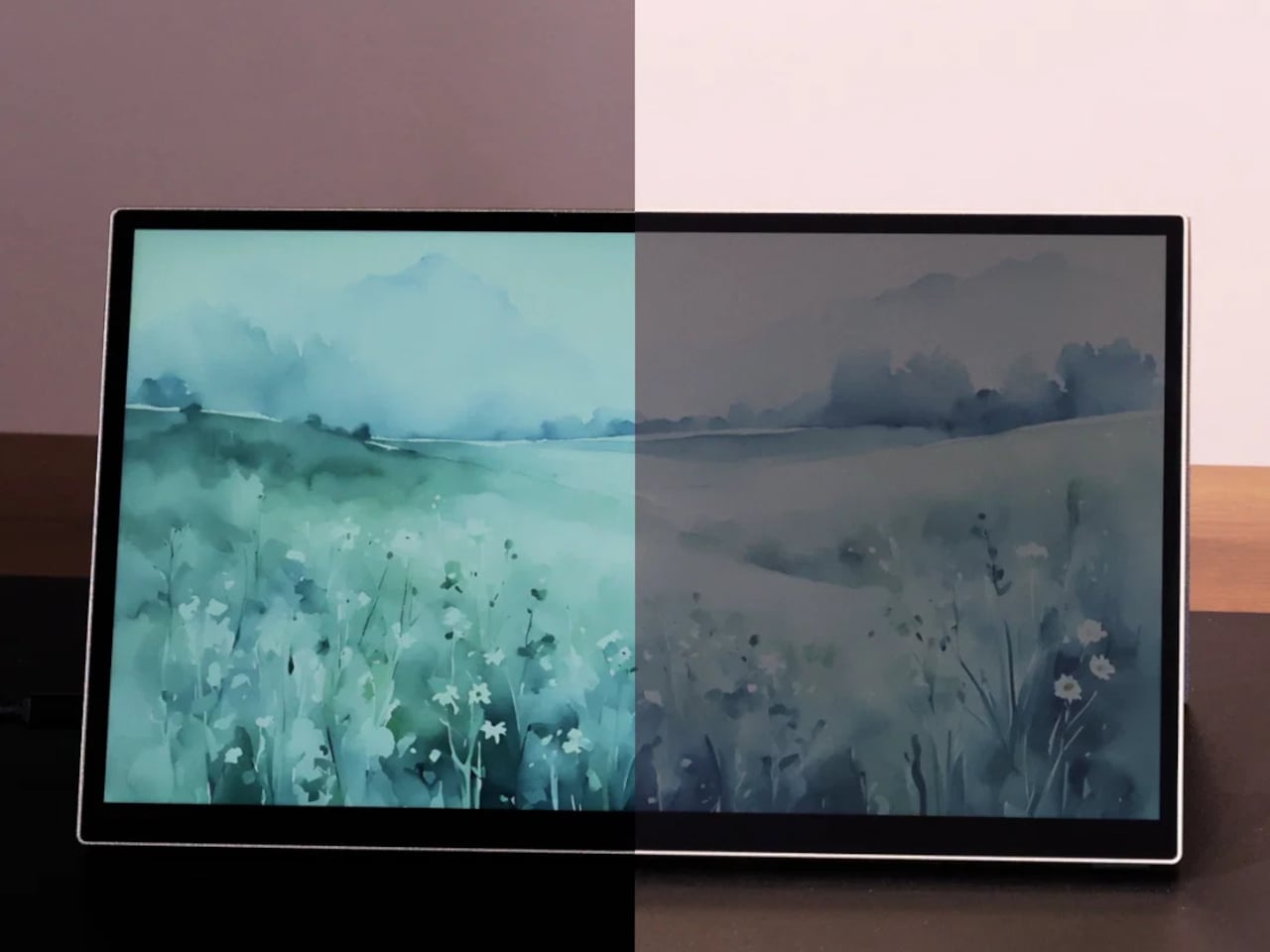
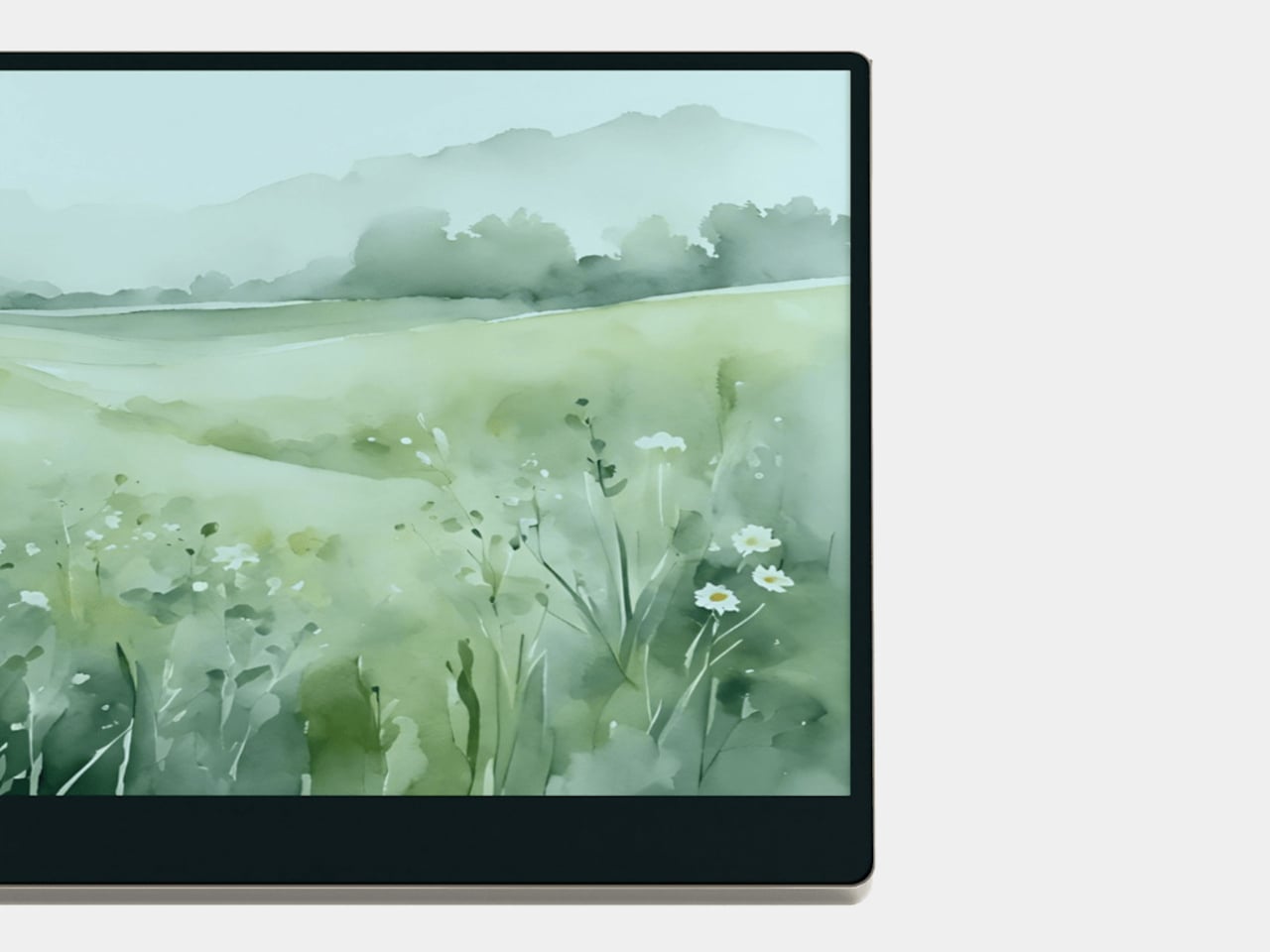
The panel pairs transflective LCD technology with Eazeye’s proprietary UHR coating, which helps the display channel ambient light into better visibility, reduce glare, and sharpen image clarity without leaning on its LED backlight. On particularly sunny days, you can switch the backlight off entirely, dropping power consumption down to around 3W, and the screen remains fully usable, bright, and legible.
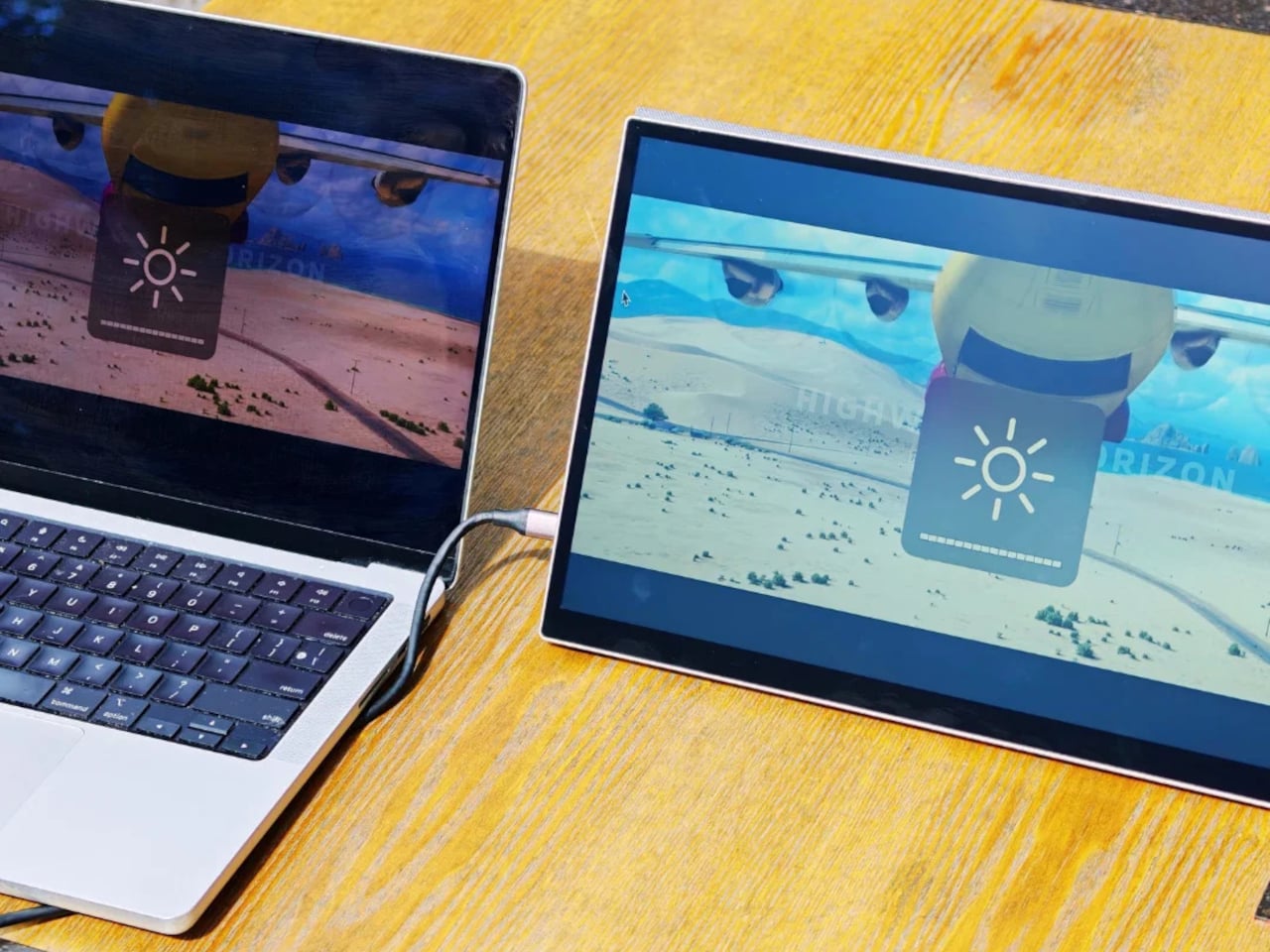
That backlight isn’t an afterthought, though. Eazeye fitted the Radiant Monitor 2 with a custom full-spectrum LED strip that uses a natural daylight spectrum and emits low blue light, making evening work sessions noticeably easier on the eyes. At full brightness, it draws around 8W, which is modest for a portable monitor, and it pairs with a 1000:1 contrast ratio and a 5ms response time.
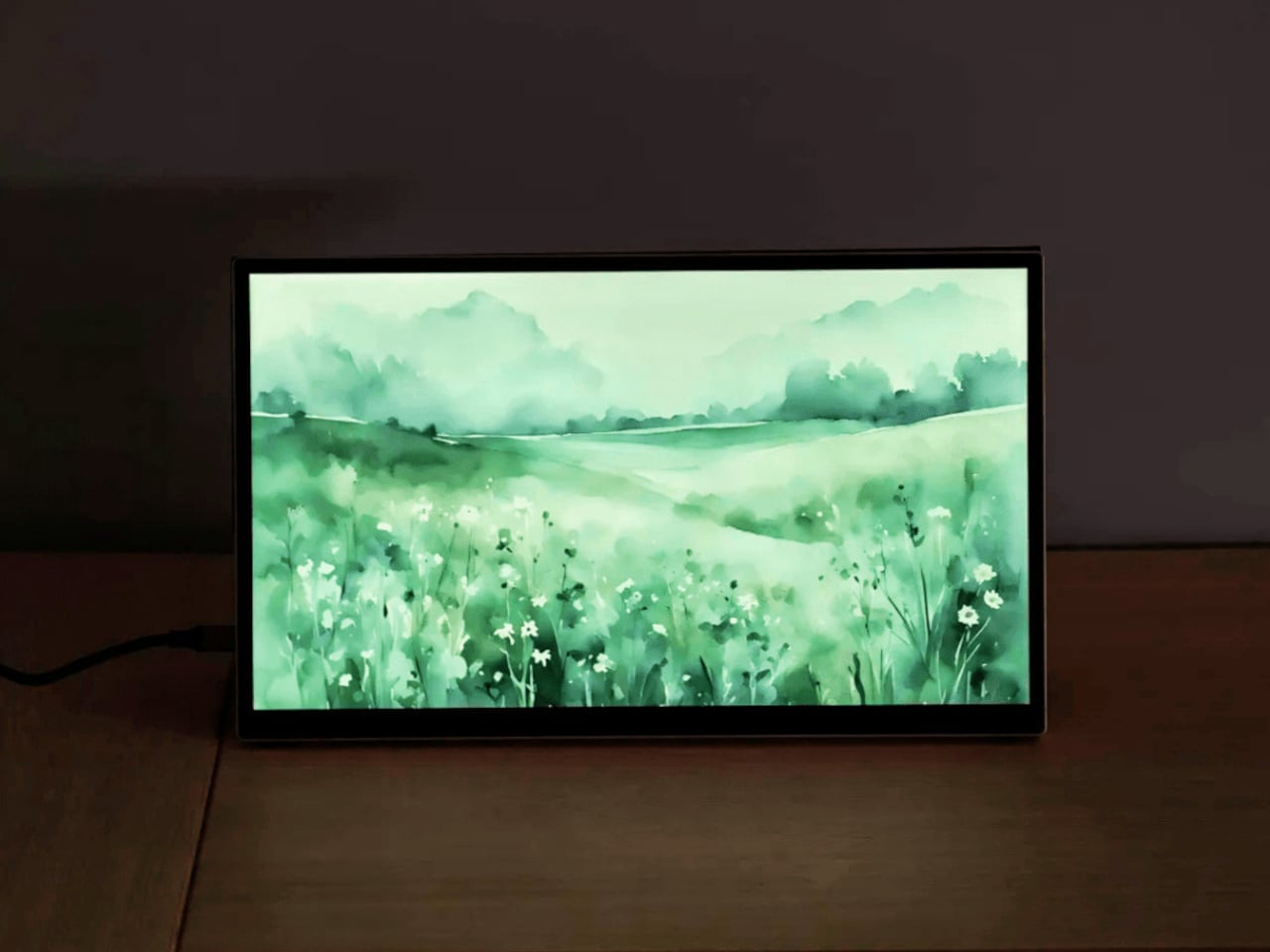
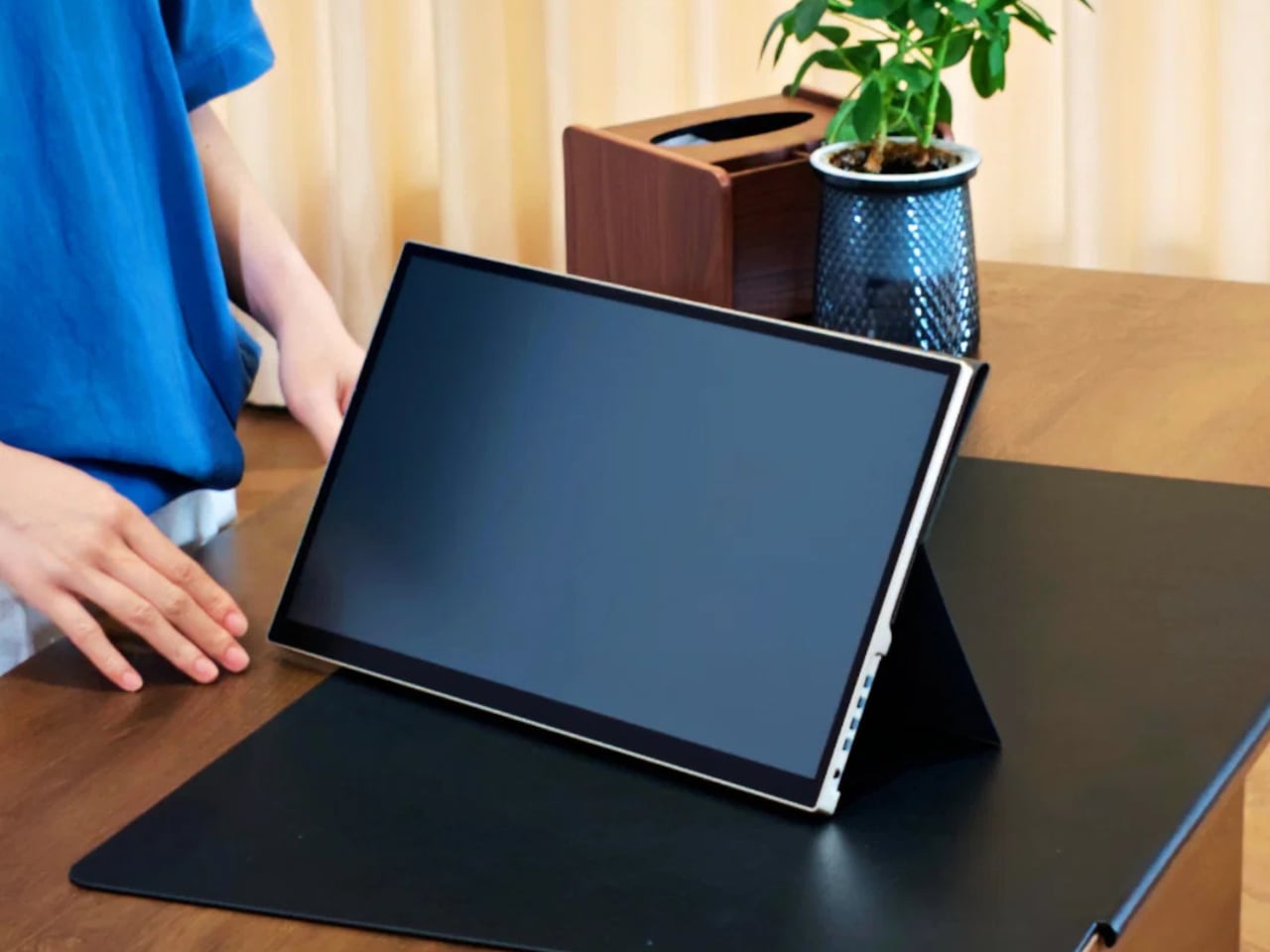
Imagine working from a café with floor-to-ceiling windows, the kind of place where a regular monitor becomes completely unworkable midday. The Radiant Monitor 2 handles this without any special positioning or shade hunting. Plug it in via USB-C or HDMI, prop it up with the redesigned magnetic folio stand, and it’s ready in seconds. The 10-point capacitive touchscreen adds another layer of interaction without needing a mouse.
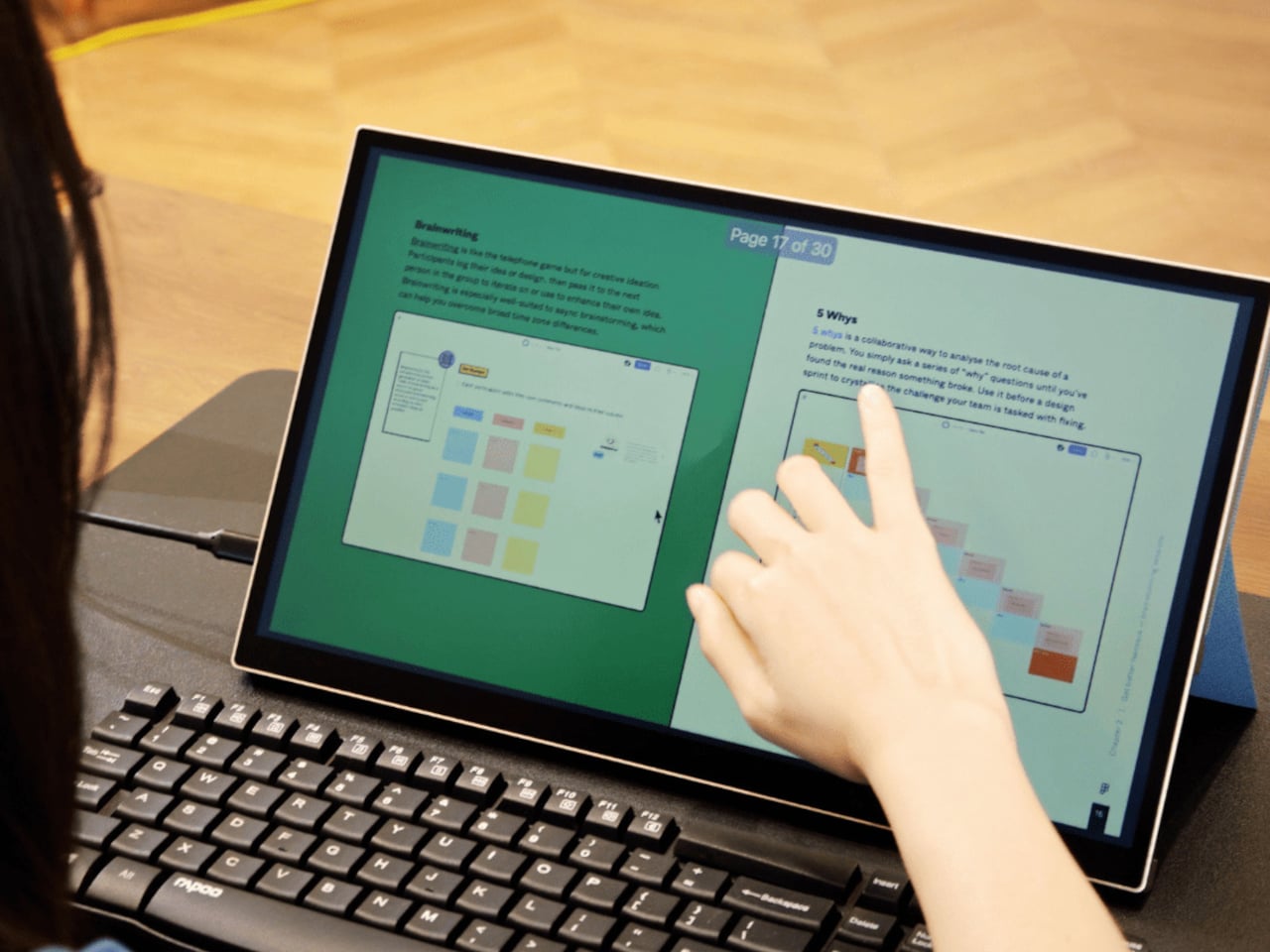
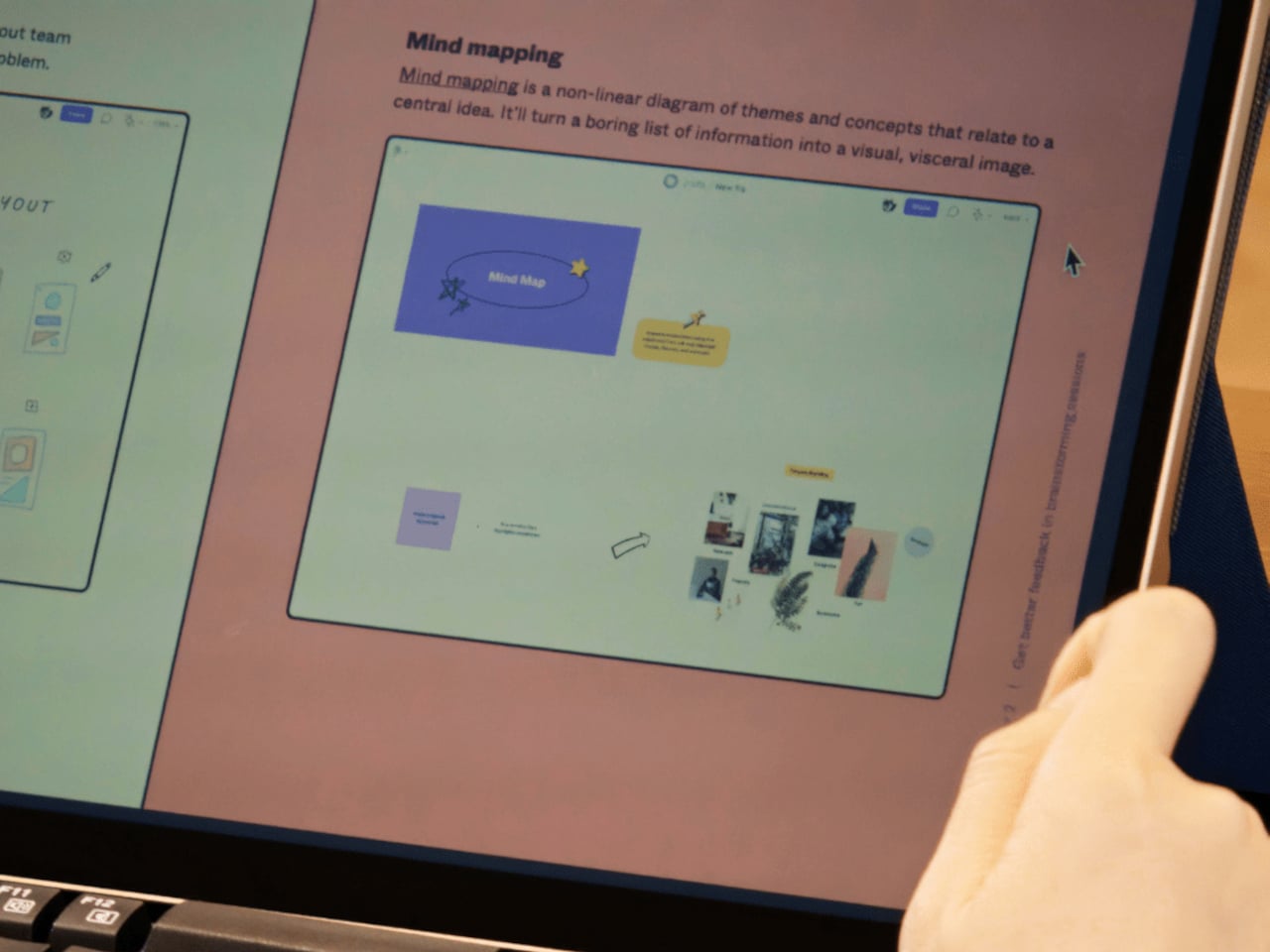
E Ink monitors are the other common choice for eye-friendly screens, but they top out at around 1 to 10 Hz, making them choppy and impractical for scrolling, video, or general multitasking. The Radiant Monitor 2 runs at 60 Hz with smooth, ghost-free performance that holds up through video calls, spreadsheets, and anything else that demands a responsive, full-color display without the visual noise of dithered E Ink output.
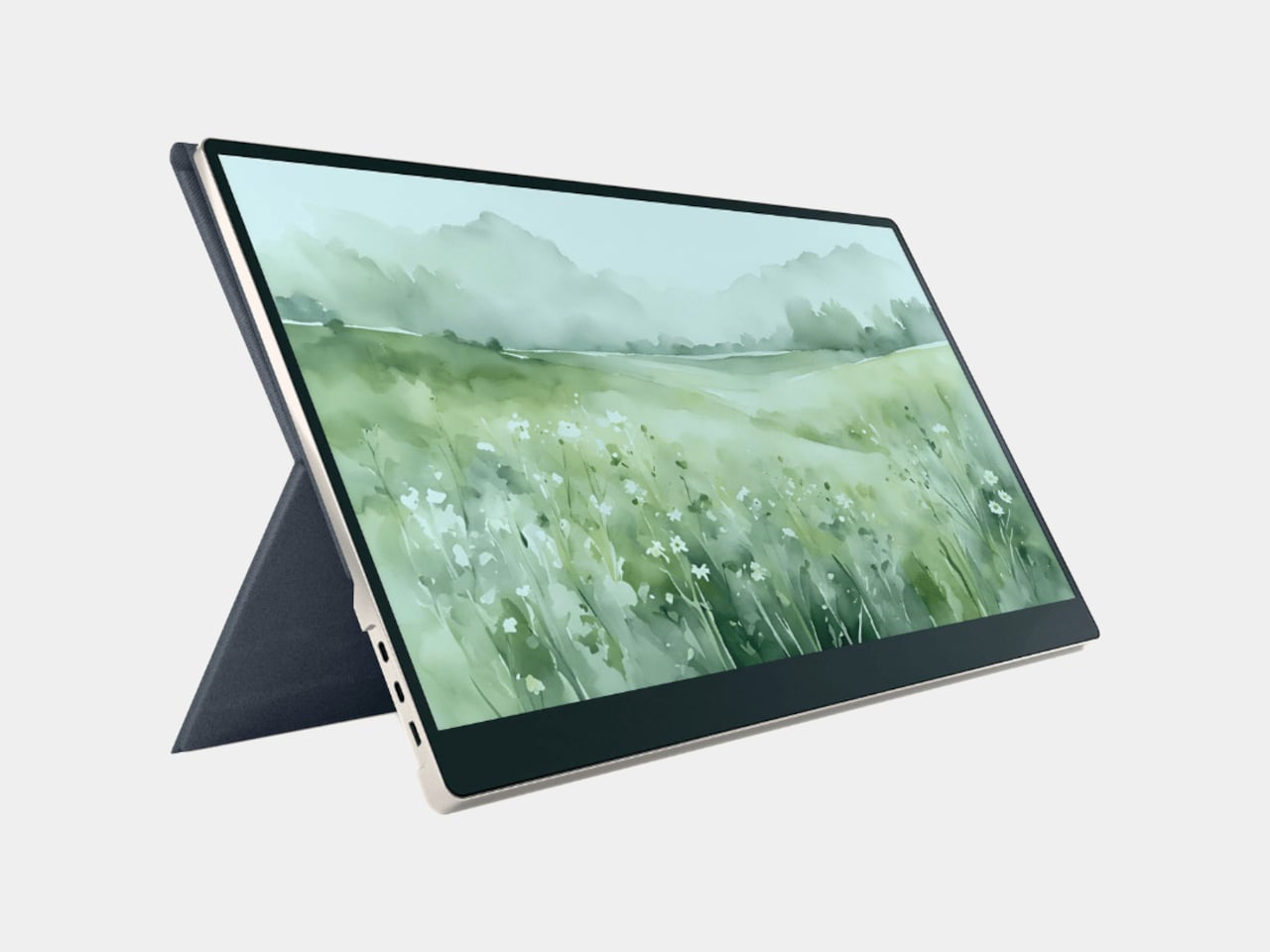
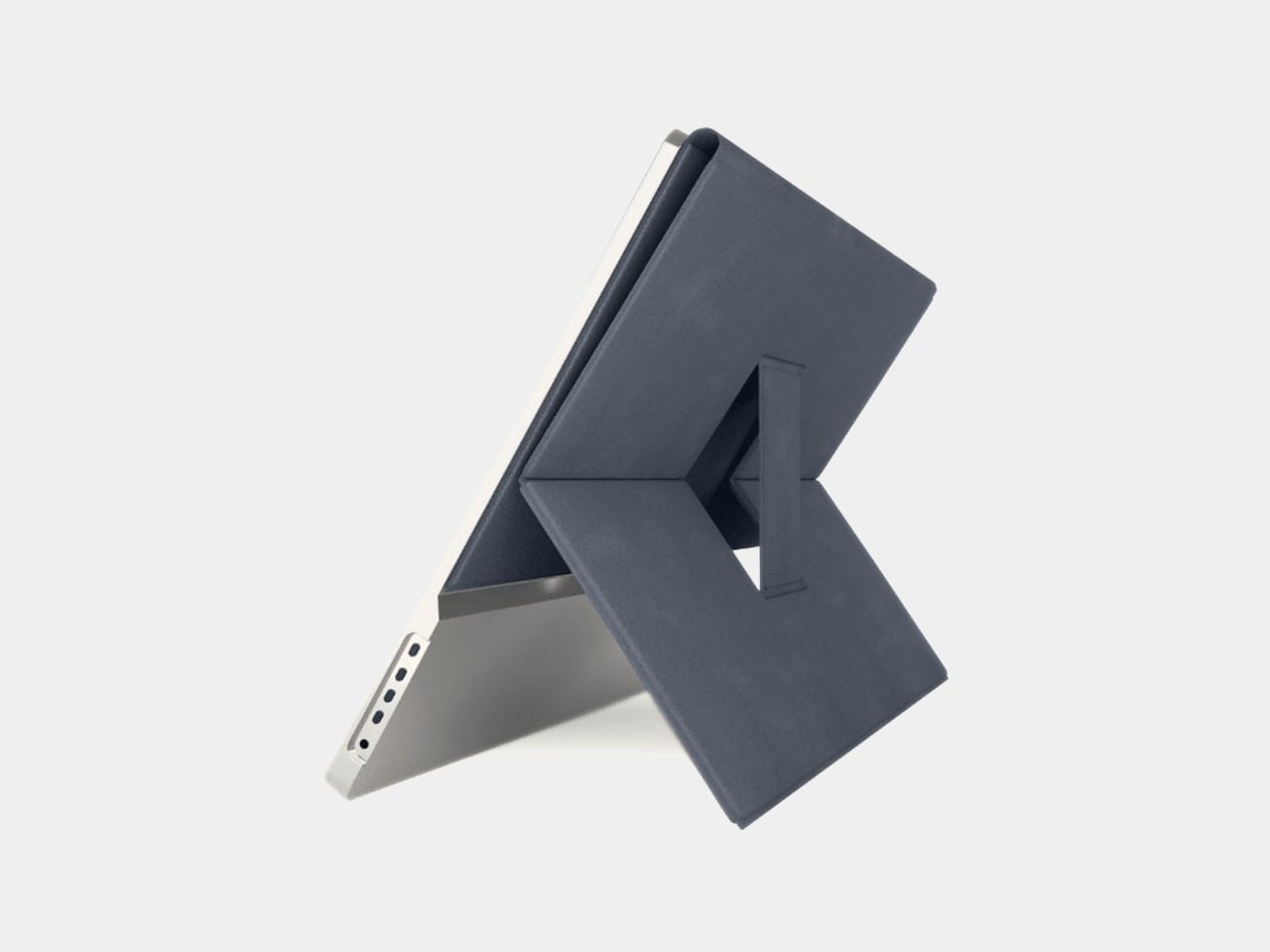
The monitor weighs 1.7kg and sits in a gray aluminum frame, durable enough for daily travel without feeling overbuilt. The magnetic folio doubles as a stand, redesigned to be more stable and easier to position than the original. Connectivity covers USB-C and HDMI inputs, with 75mm x 75mm VESA compatibility for desk setups, and an optional height-adjustable stand is sold separately for $99.
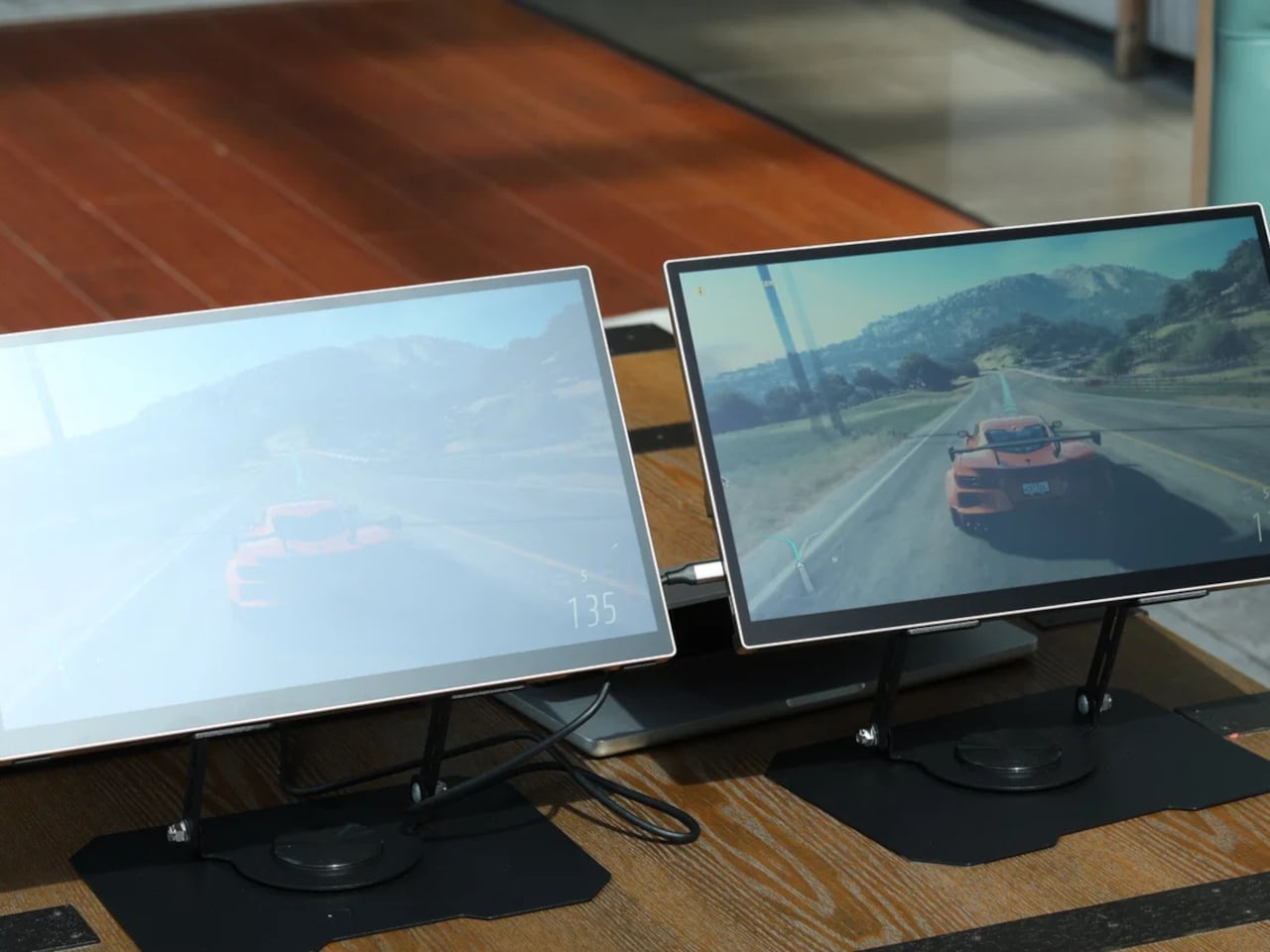
The Radiant Monitor 2 retails for $789, which puts it well above the typical portable monitor price range and reflects the specialized nature of its display technology. The 65-degree viewing angles are noticeably narrower than standard LCD panels, so it’s best experienced head-on. It’s one of the few portable monitors that doesn’t ask you to find a darker spot every time the sun gets too bright.
The post This $789 Portable Monitor Still Works Outdoors With Its Backlight Off first appeared on Yanko Design.