Soundcore at CES 2026 Turns Everyday Spaces into Portable Sound and Cinema

Personal entertainment has drifted out of fixed rooms and into commutes, bedrooms, trails, and backyards. People bounce between earbuds, smart speakers, and projectors, often juggling separate ecosystems that do not feel designed with each other in mind. The friction is no longer just sound quality, but how easily gear fits into those shifting contexts, from the desk where you need awareness, to the pillow where you need silence, to the field where you want a movie under the stars.

Soundcore’s CES 2026 lineup follows that drift. The AeroFit 2 Pro, Sleep A30 Special, Boom Go 3i, Nebula P1i, and Nebula X1 Pro aim to move with you rather than live in one place. The common thread is collapsing trade‑offs, open‑ear comfort and ANC in one pair of buds, tiny speakers with long battery life, and projectors that pack a theater into a handle‑equipped box, each tuned to a different moment when sound or vision matters.

Designer: Soundcore (Anker)

Soundcore AeroFit 2 Pro

AeroFit 2 Pro is built for people whose days swing between needing to hear the world and wanting to block it out. The five‑level ear‑hook can reposition the nozzle so the buds behave as open‑ear hooks during runs or desk work, then slide into a semi‑in‑ear ANC form when focus or isolation is needed, without swapping hardware or carrying two pairs.

The liquid‑silicone hooks and 56 degrees of articulation keep pressure off the canal for all‑day wear in open‑ear mode, while Adaptive ANC 3.0 checks noise up to 380,000 times per second and makes 180 adjustments per minute in ANC mode. The buds include 11.8 mm drivers, spatial audio with head tracking, LDAC support, IP55 rating, and differing battery lives, up to 7 hours and 34 with case in open‑ear, up to 5 hours and 24 with case in ANC.

Soundcore Sleep A30 Special

Sleep A30 Special takes over when the day ends and the noise does not. The triple noise reduction system combines active noise cancellation, passive blocking from the low‑profile fit, and adaptive snore masking that targets disruptive frequencies without making the room feel unnaturally silent. The ultra‑compact shape is tuned for side sleepers who usually cannot tolerate bulky earbuds pressing against a pillow overnight.

The earbuds tie into the Soundcore app to deliver Calm Sleep Stories directly, alongside AI brainwave tracks and white noise. The hardware is only half the story; the curated content and extended battery life let people build a consistent wind‑down routine, from reading in bed with subtle noise reduction to drifting off to a story without worrying about wires, over‑ear pressure, or keeping a phone nearby.

Soundcore Boom Go 3i

Boom Go 3i is the speaker that lives on a backpack strap rather than a shelf. The palm-sized form and 15 W output make a picnic or campsite feel less quiet without needing a huge cylinder. The 4,800 mAh battery offers up to 22 hours in Eco mode, so it can handle a weekend of light use without visiting a wall outlet, and it can lend some of its charge for emergency phone top‑ups.

The IP68 rating means it can handle dust, sand, and submersion, which is useful when it gets dropped in a stream or buried in a beach bag. The dual‑mode strap mounting system lets it hang or cinch tightly to a pack, bike, or tent pole, and the LED grille with diagonal light patterns makes it easy to spot in a dark campsite or stowed in the bottom of a gear pile.

Soundcore Nebula P1i

Nebula P1i is the projector for people who want movie‑night flexibility without a permanent ceiling mount. It offers 1080p resolution and 400 ANSI lumens, enough for dim‑room viewing, with a built‑in 0-12 degree tilt stand to aim at walls or screens without stacks of books. Official Netflix and Google TV support mean it behaves like a familiar streaming box, not a bare projector that needs extra hardware.

The flip‑open side speakers swing out for better stereo separation, turning a compact cube into a mini theater without extra cables. Intelligent Environment Adaptation 3.0 handles autofocus, keystone, and screen fit, so the projector can quickly lock onto whatever surface is available. It is the kind of device that can live in a closet until a rainy afternoon or impromptu game night makes a big picture suddenly appealing.

Soundcore Nebula X1 Pro

Nebula X1 Pro is the extreme end of the same idea, a mobile theater station on wheels. It uses a 3,500 ANSI‑lumen 4K triple‑laser engine with 110% Rec.2020 color, 5,000:1 native contrast, and 56,000:1 dynamic contrast, bright enough to throw a 200‑inch image outdoors at night. The integrated wireless 7.1.4 sound system, certified for Dolby Atmos, means the audio is as much a part of the experience as the picture.

The planned bundle adds a 200‑inch inflatable screen and a wireless pump that inflates in about five minutes and holds air without a constant blower, keeping the system quiet during viewing. Dual wireless microphones and AI spatial adaptation handle setup, tuning sound and image to the space. Together, the projector and screen turn any patch of ground into a temporary cinema without generators, scaffolding, or separate speakers cluttering the site.

Soundcore at CES 2026: Entertainment That Travels With You

These five products sketch a day‑long arc: AeroFit 2 Pro for the commute and office, Sleep A30 Special for the hours when noise is unwelcome, Boom Go 3i for the trails and parks in between, and Nebula P1i and X1 Pro for turning small rooms and big fields into makeshift theaters. The common thread is not just wattage or resolution, but designs that respect where people actually listen and watch now, moving with them rather than asking them to stay put.

The post Soundcore at CES 2026 Turns Everyday Spaces into Portable Sound and Cinema first appeared on Yanko Design.

eufy Wraps the Front Door in Smarter Vision and Power at CES 2026

The modern front door has a lot to juggle. Couriers drop parcels, friends arrive unannounced, kids race in and out, and somewhere in the background, there is a quiet worry about missing something important or not catching something suspicious. Many homes already have a patchwork of doorbells, lights, and locks that only half cooperate, or lean heavily on cloud subscriptions and frequent battery swaps that never quite stop being a chore.

eufy’s CES 2026 security lineup treats that threshold as a single design problem. The Video Doorbell S4, Solar Wall Light Cam S4, and Smart Lock E40 share a few big ideas: higher‑resolution cameras, AI and radar‑assisted detection, and power systems built to run for months or indefinitely, while keeping most of the intelligence and storage local instead of streaming everything to a server somewhere far away.

Designer: eufy (Anker)

eufy Video Doorbell S4

The Video Doorbell S4 is the greeter. It wraps a 3K sensor into a 180‑degree horizontal and vertical field of view, which means it can see from the ceiling down to the doormat and across the entire porch in one shot. That panoramic view captures faces, packages, and anyone standing off to the side, so you are not left guessing whether a delivery was left just out of frame.

eufy’s OmniTrack technology and built‑in radar focus on people rather than every passing car or branch. As someone approaches, radar detects motion and distance, then AI locks on and adjusts the zoom so the visitor stays centered, whether it is a courier bending to drop a parcel or a neighbor walking up the path. The 3K clarity holds up to around 26 feet, with 16 GB of local storage keeping recordings on the device.

eufy Solar Wall Light Cam S4

The Solar Wall Light Cam S4 is the guardian that wraps light and vision around the entryway or side yard. It combines a 4K camera with an f/1.6 lens and a vertically adjustable mount, up to 45 degrees, so it can look down into blind spots near the wall while still watching the approach. The 4K resolution and color night vision make faces and details legible even when the only illumination is the light itself.

Power is handled by a detachable 2 W solar panel feeding a 10,000 mAh battery, which gives freedom in where you mount it. The panel can sit where the sun actually hits, while the light and camera stay where they are most useful. Multiple lighting modes let the fixture shift roles, daily illumination for paths, brighter security lighting when motion is detected, and festive RGB scenes that turn the same hardware into holiday decor.

eufy Smart Lock E40

The Smart Lock E40 is the final layer at the door, replacing keys and fingerprints with 3D face recognition. A quick glance is enough to unlock for pre‑registered users, which matters most when your hands are full of groceries or luggage, and you would rather not dig for keys or touch a screen. A built‑in 2K camera with a head‑to‑toe view records who is at the door, aligning the lock with the rest of eufy’s camera‑centric security story.

The E40 runs on a PowerDuo system, a 15,000 mAh main battery backed by an 800 mAh reserve that keeps the lock alive during swaps or unexpected drain. It is rated IP65 for weather resistance and carries ANSI/BHMA Grade 2 certification for mechanical security. On the software side, it speaks Matter, Apple Home, Amazon Alexa, Google Home, and Samsung SmartThings, sitting comfortably inside a broader smart‑home setup while doing most recognition and storage locally.

eufy at CES 2026: A Front Door That Thinks for Itself

These three products sketch out eufy’s view of the front door in 2026, not as a collection of unrelated gadgets, but as a layered system where the doorbell tracks arrivals in 3K, the wall light extends 4K color vision and ambient lighting without new wiring, and the smart lock recognizes faces and controls access while adding its own 2K camera. The common threads, higher‑resolution optics, AI and radar, generous batteries and solar, and local‑first design, make the entryway feel less like a tangle of hardware and more like a single, thoughtful interface between home and street.

The post eufy Wraps the Front Door in Smarter Vision and Power at CES 2026 first appeared on Yanko Design.

Anker’s CES 2026 Charging Lineup Treats Power as a Coordinated System

Charging has become a daily background task with a mix of wall bricks, wireless pads, power strips, and docks that rarely feel coordinated. As devices become faster and more power-hungry, the friction shifts from “do I have enough power?” to “how many adapters do I need without cluttering the desk?” The answer usually involves a drawer full of chargers that don’t talk to each other and rarely work where needed.

Anker’s CES 2026 portfolio treats this as a system. The Anker Charging lineup introduces four products, the Nano Charger, Prime Wireless Charging Station, Nano Power Strip, and Nano Docking Station, sharing ideas like smarter device recognition, Qi2 25 W wireless, AnkerSense View, and ActiveShield 5.0, but slotting into different moments where power is needed, wanted, or quietly essential to keeping momentum going without searching for another cable.

Designer: Anker

Anker Nano Charger (45W, Smart Display, 180° Foldable)

The Nano Charger recognizes recent iPhone and iPad Pro models in seconds, then uses a three-stage power profile to deliver up to 45 W tailored to the device. That auto-matching unlocks faster charging when the battery is low while easing off as it fills, avoiding overstressing batteries for people who charge overnight or keep devices plugged in during long work sessions without thinking about optimal timing.

TÜV-certified Care Mode keeps the phone’s battery about 9 °F cooler than other 45 W chargers, a quiet win for long-term health. The small smart display shows real-time power and temperature with friendly icons, and the 180-degree foldable prongs let the charger sit in tight outlets while keeping the screen visible, fitting desk plugs, kitchen outlets, and behind-cabinets spaces where flat bricks fail.

Anker Prime Wireless Charging Station (3-in-1, MagGo, AirCool, Foldable)

The Prime Wireless Charging Station handles an iPhone, earbuds, and a watch without three separate cables. It uses Qi2 25 W wireless charging to bring iPhone speeds close to wired, quoting 80% in about 55 minutes for an iPhone 17. The stand folds into a palm-sized block lighter than an iPhone 17 Pro Max, so it can live in a bag full-time, turning one USB-C input into a small charging island.

The AirCool airflow system keeps the charger and devices at stable temperatures when everything is stacked overnight or during work sessions, important when running 25 W to a phone while also topping up a watch and earbuds. That thermal management keeps the 3-in-1 from becoming uncomfortably hot on a nightstand or desk, and the foldable form clears cable clutter from hotel rooms and home offices, making it the kind of charger that actually gets packed for every trip.

Anker Nano Power Strip (10-in-1, 70W, Clamp)

The Nano Power Strip is a dual-zone power bar that lives at the desk edge instead of under it. It combines six AC outlets with two USB-C and two USB-A ports, with a single USB-C delivering up to 70 W, enough to run a laptop or gaming handheld directly. The clamp-on design keeps the strip fixed in place while making ports easy to reach, so you stop crawling under desks to plug in temporary devices.

The built-in 1,500 J surge protection shields connected gear from spikes, which matters when monitors, desktop PCs, and audio equipment all share one outlet. Having the USB ports face forward and the AC outlets below the desk creates a cleaner visual line and makes it easier to manage cable runs, turning the strip into permanent desk infrastructure that handles both power and data charging without sprawling across the surface or tangling behind a monitor stand.

Anker Nano Docking Station (13-in-1, Triple Display, Built-In Removable Hub)

The Nano Docking Station is a 13-in-1 dock for people who treat a laptop as their main machine but want a desktop-class workspace. It supports triple-display output with up to 4K resolution on a single monitor, up to 100 W upstream charging, and USB-C, USB-A, HDMI, DisplayPort, Ethernet, and SD / TF 3.0 card slots, all running at up to 10 Gbps, where it counts for fast file transfers and external storage.

The built-in 6-in-1 removable hub slides out, letting someone leave the desktop cable tree intact while taking key ports and card readers on the road with a single, slim module. That bridging between permanent and mobile workflows makes the dock feel less like a fixed base station and more like a system that adapts to whether you are spending the day at a desk or heading to a meeting with just a laptop and the small hub in a bag.

Anker at CES 2026: Charging as a Coherent System

These four products sketch out Anker’s view of charging in 2026, not as isolated bricks and pads, but as coordinated tools that follow people from pocket to bedside to desk. Instead of chasing ever-higher wattage alone, the lineup leans into smarter interfaces, cooler operation, and forms that respect the spaces they live in, the kind of thinking Yanko Design readers expect from everyday hardware that earns its place by working better and quieter.

The post Anker’s CES 2026 Charging Lineup Treats Power as a Coordinated System first appeared on Yanko Design.

LG xBoom Stage 501 Uses AI to Turn Any Song Into Instant Karaoke

CES 2026 is full of portable speakers that blur together until you find a pair built around specific moments in your week. Most promise bass and battery, but few commit to a clear identity beyond a spec sheet. LG’s xBoom Stage 501 and xBoom Blast are different, less about covering every scenario and more about owning the moments they were designed for with enough confidence to make those scenarios better.

Stage 501 is tuned for late-night living-room chaos, karaoke marathons, and indoor parties that spill onto patios. Blast is built for long days outside, beach trips, camping weekends, and backyard gatherings that start in the afternoon and refuse to end until the sun comes back. Both run LG’s AI-driven xBoom platform with will.i.am’s signature sound, both pack 99 Wh batteries that outlast most playlists, and both treat lighting and sound as inseparable parts of the same vibe.

Designer: will.i.am x LG

xBoom Stage 501

A living room slowly turns into a karaoke bar as friends arrive, drinks appear, and someone inevitably reaches for a mic. Stage 501 is already in the corner, its wedge-shaped cabinet angled toward the room with LEDs pulsing in sync. It pushes up to 220 W when plugged in or 160 W on battery, with dual 2.5-inch woofers, full-range drivers, and Peerless tweeters handling everything from bass drops to high notes.

AI Karaoke Master turns any playlist into a karaoke queue, stripping or lowering vocals and even shifting pitch so people can sing solo or duet with the original artist without hunting for special tracks. It uses deep learning trained on over 10,000 songs, which means it works on virtually anything in your library. AI Sound and Space Calibration Pro analyze the room and the song, nudging EQ and output.

The top panel becomes a small control deck during the night, with a phone resting in the slot for lyrics, mics plugged in, and a big central dial handling volume and effects. The five-sided design can stand upright, lie horizontally, tilt, or even go on a tripod, so the same speaker that lives under a TV on weekdays can move to the patio or a rented hall when someone’s birthday rolls around.

xBoom Blast

A beach day or campsite is different, power outlets are far away, and the playlist needs to last longer than the sun. Blast shows up as the tall, cylindrical speaker that gets dropped next to the cooler, its 99 Wh battery promising up to 35 hours of music. It still delivers 220 W of output with three 3.25-inch drivers and three passive radiators, so it does not sound like a compromise.

IP67 water- and dust-proofing, edge bumpers, and military-standard testing mean nobody panics when sand, spilled drinks, or sudden rain show up. The side rope handle makes it easy to carry vertically through crowds, while the top handle covers quick moves between spots. AI Lighting and AI Sound keep the LEDs and EQ in sync with whatever is playing, turning grass or sand into a small stage.

At 12 kg, Blast is not exactly light, but that weight holds the passive radiators and battery that get you through a full weekend outdoors. The dual-handle system and rugged shell acknowledge that party speakers live rougher lives than most tech, bouncing around trunks, getting set on uneven ground, and soaking up whatever the weather decides to do. Blast feels like it was designed for those realities.

LG at CES 2026

xBoom by will.i.am is less about one do-everything box and more about matching sound to the way people actually move through their week. Stage 501 anchors indoor parties and karaoke nights, while Blast follows you outdoors. Seeing them at CES 2026 hints at a future where portable speakers are defined as much by the nights and trips they are built for as by their wattage.

The post LG xBoom Stage 501 Uses AI to Turn Any Song Into Instant Karaoke first appeared on Yanko Design.
Samsung Taps Bouroullec to Design Speakers That Blend Into Rooms

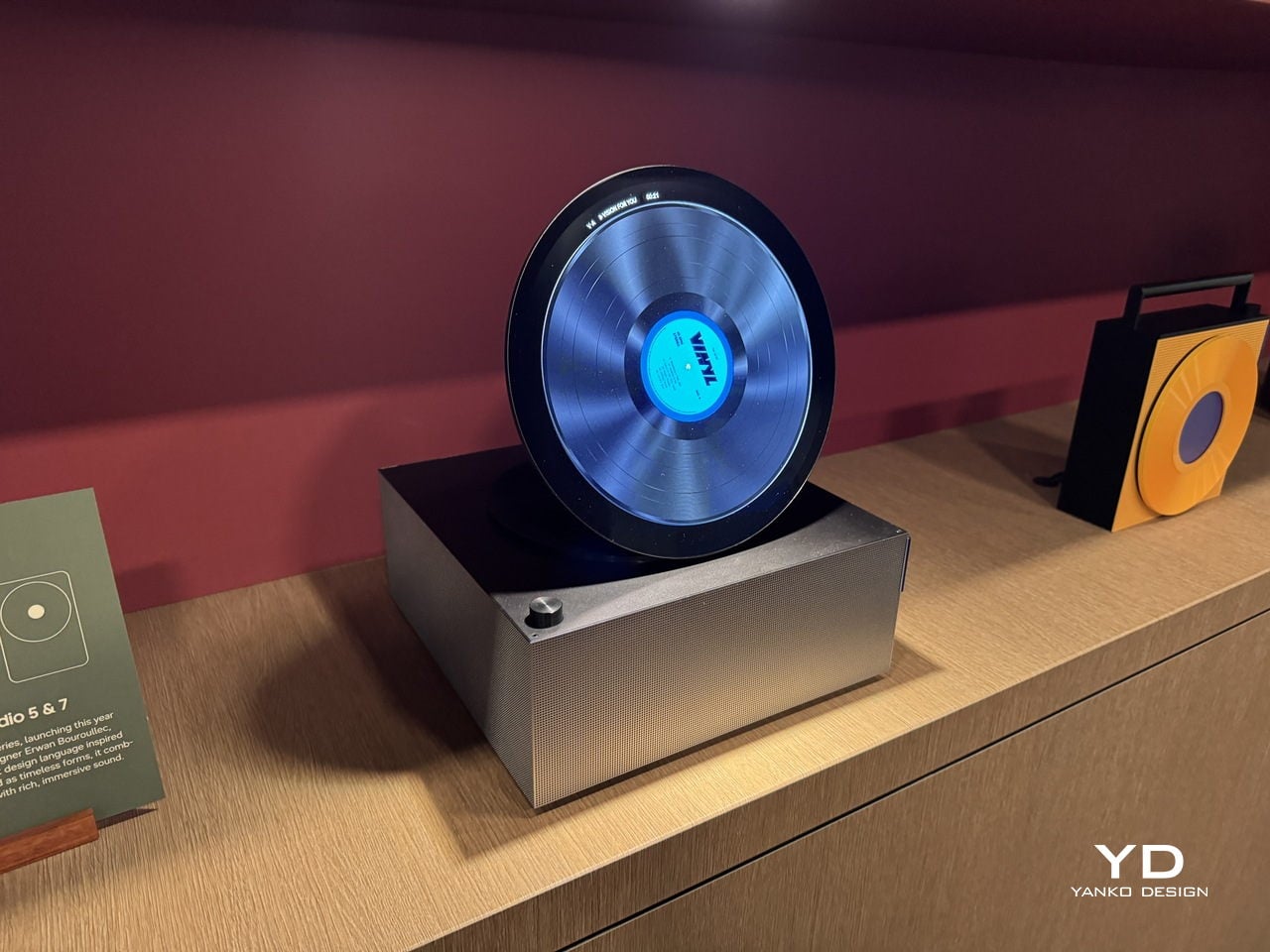
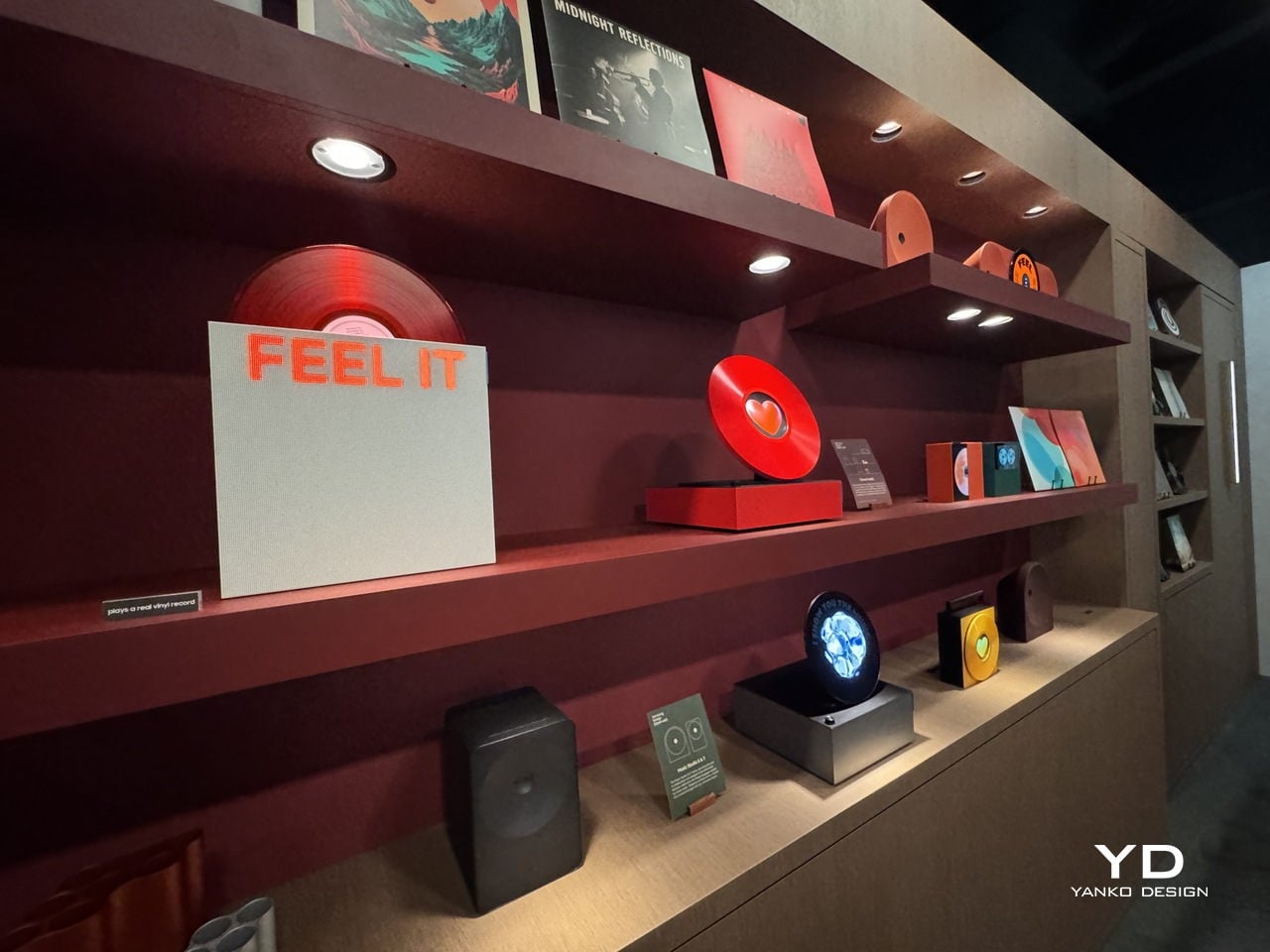
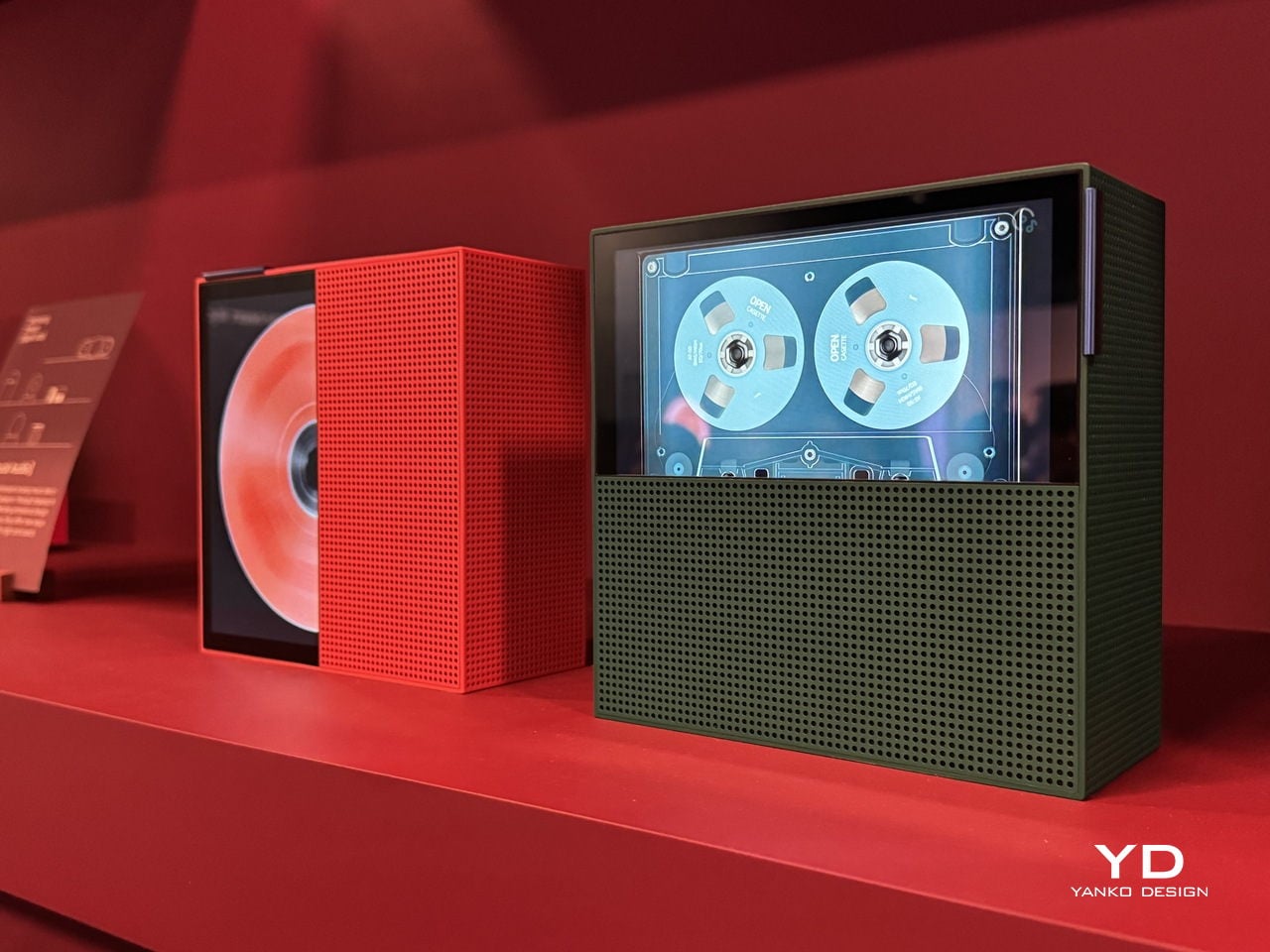
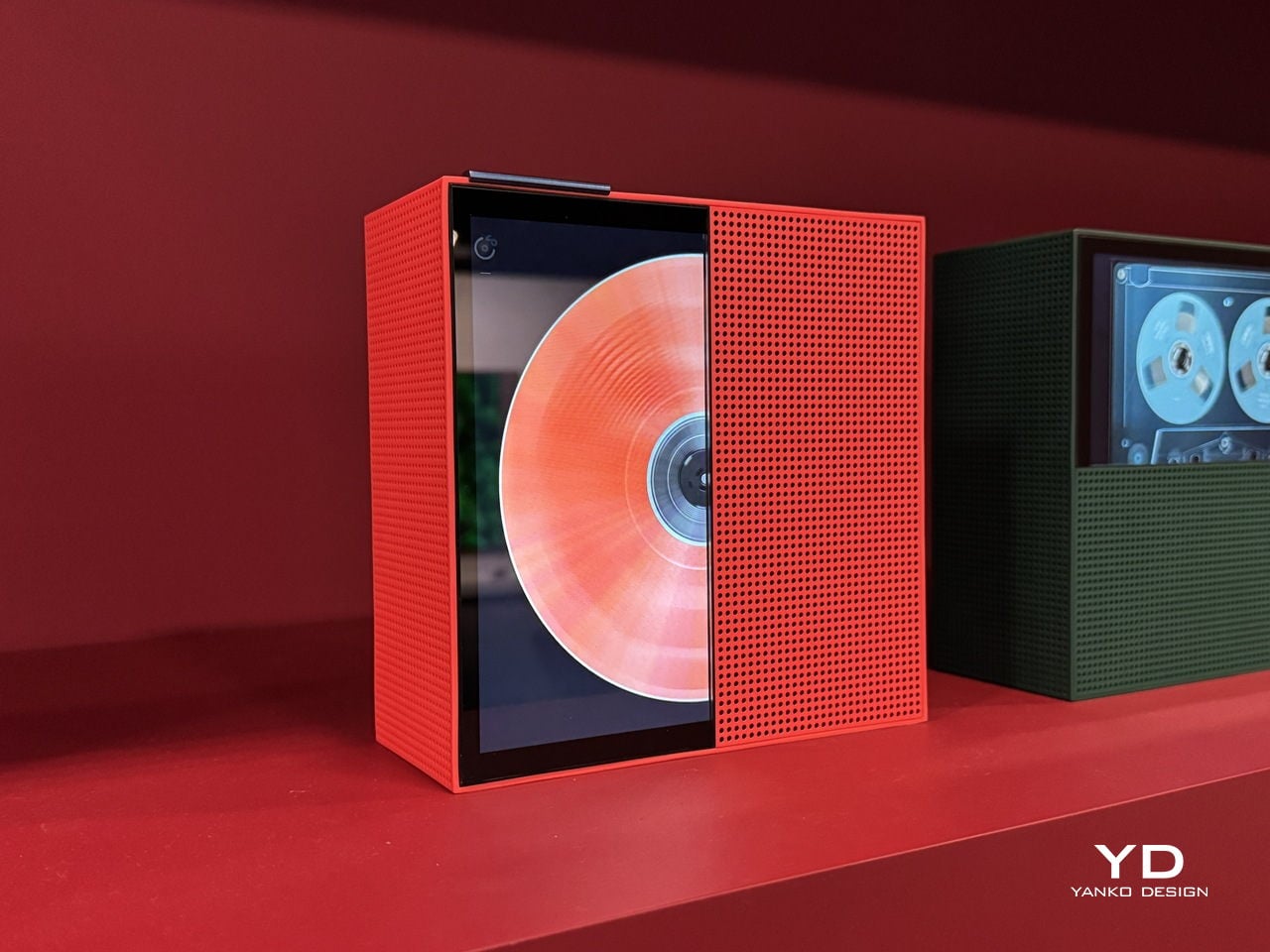
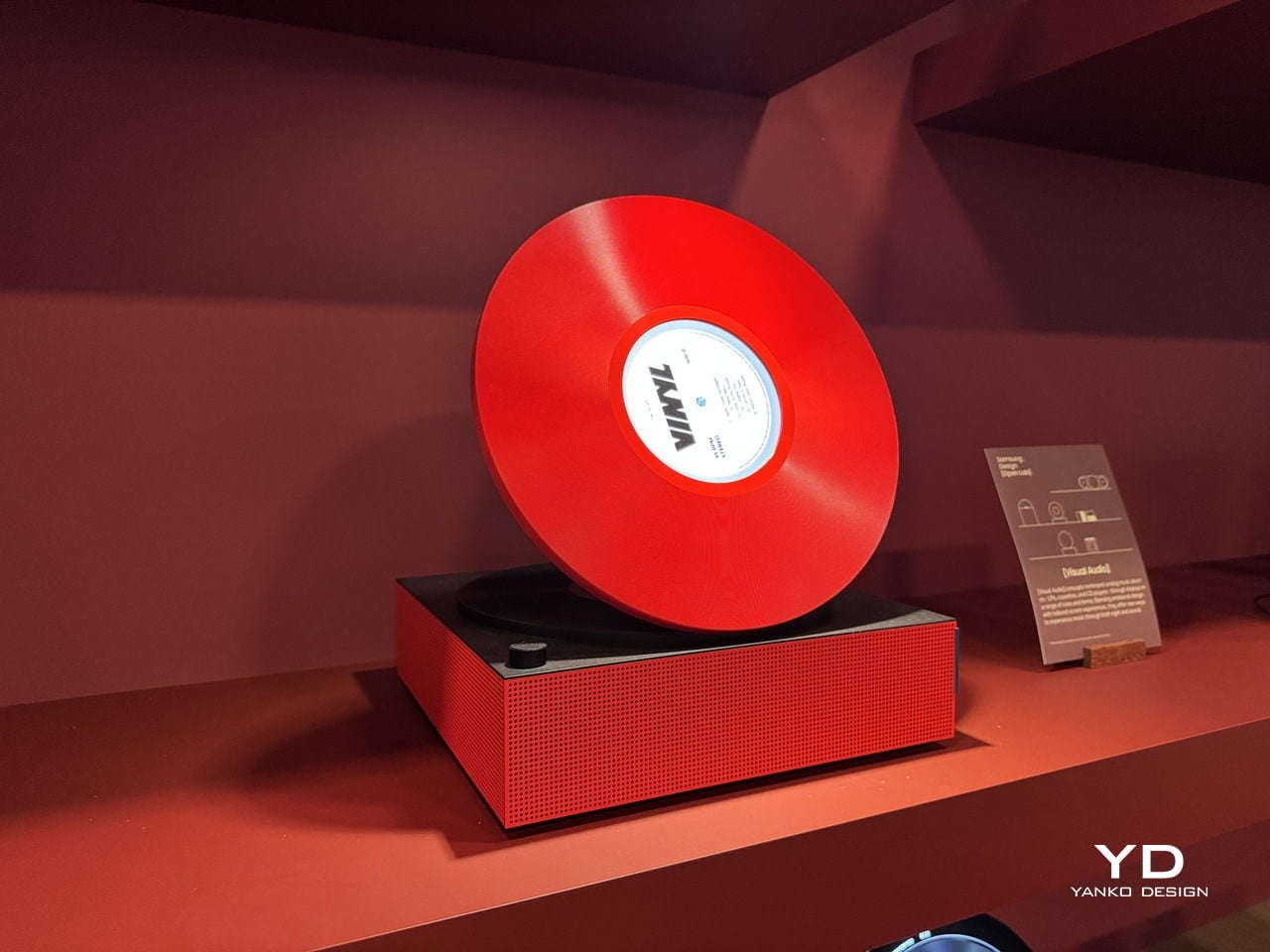
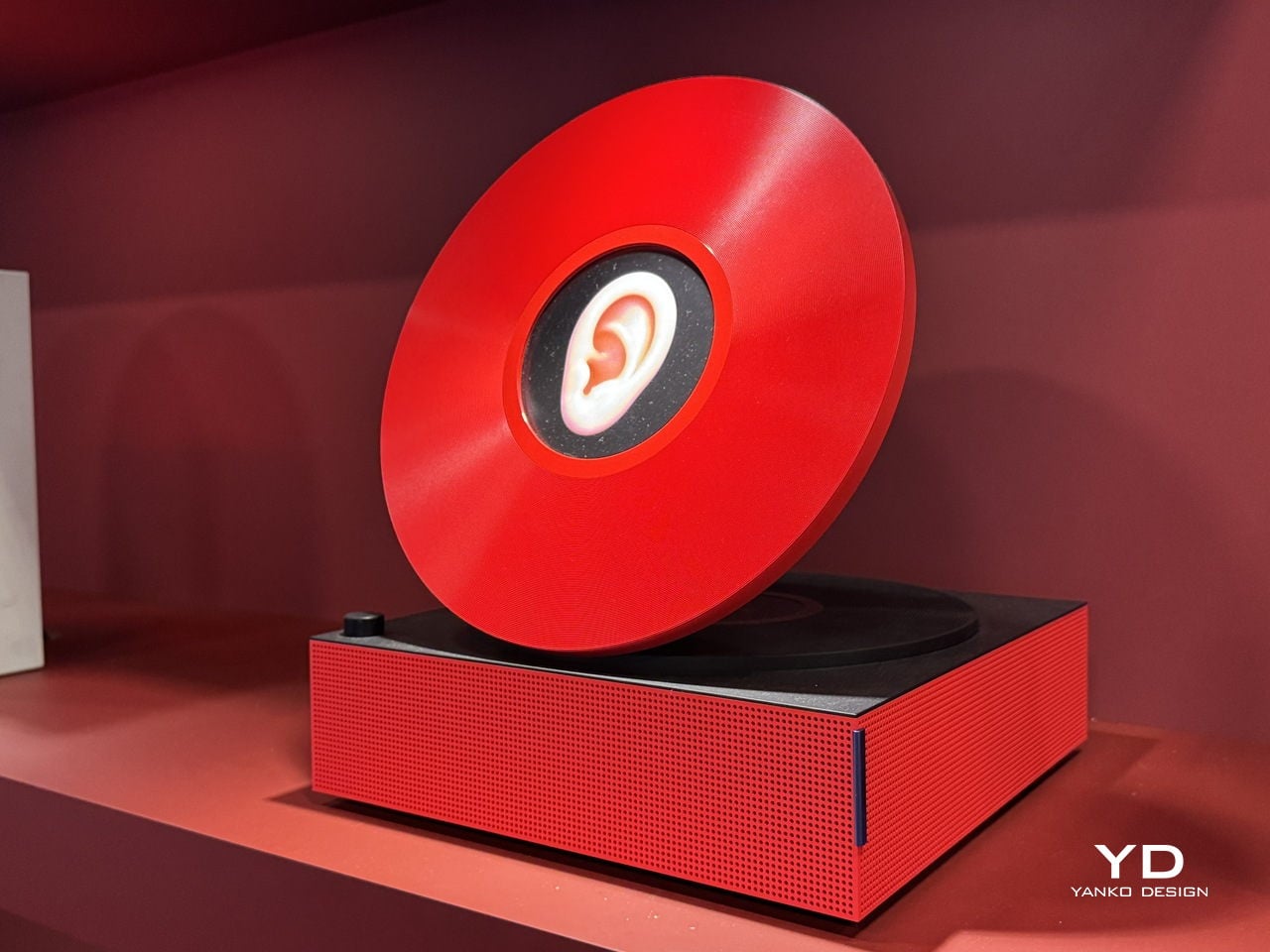
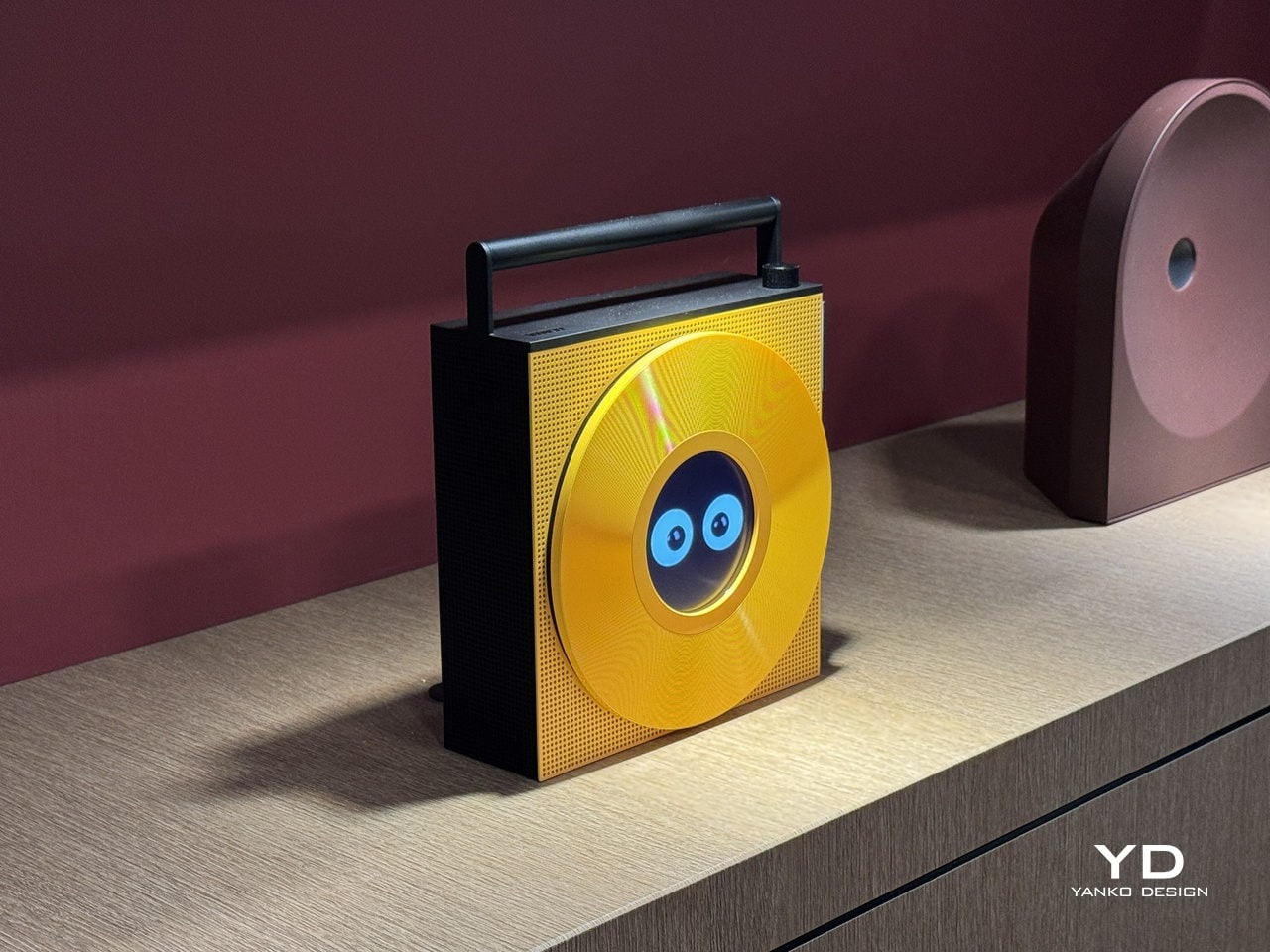
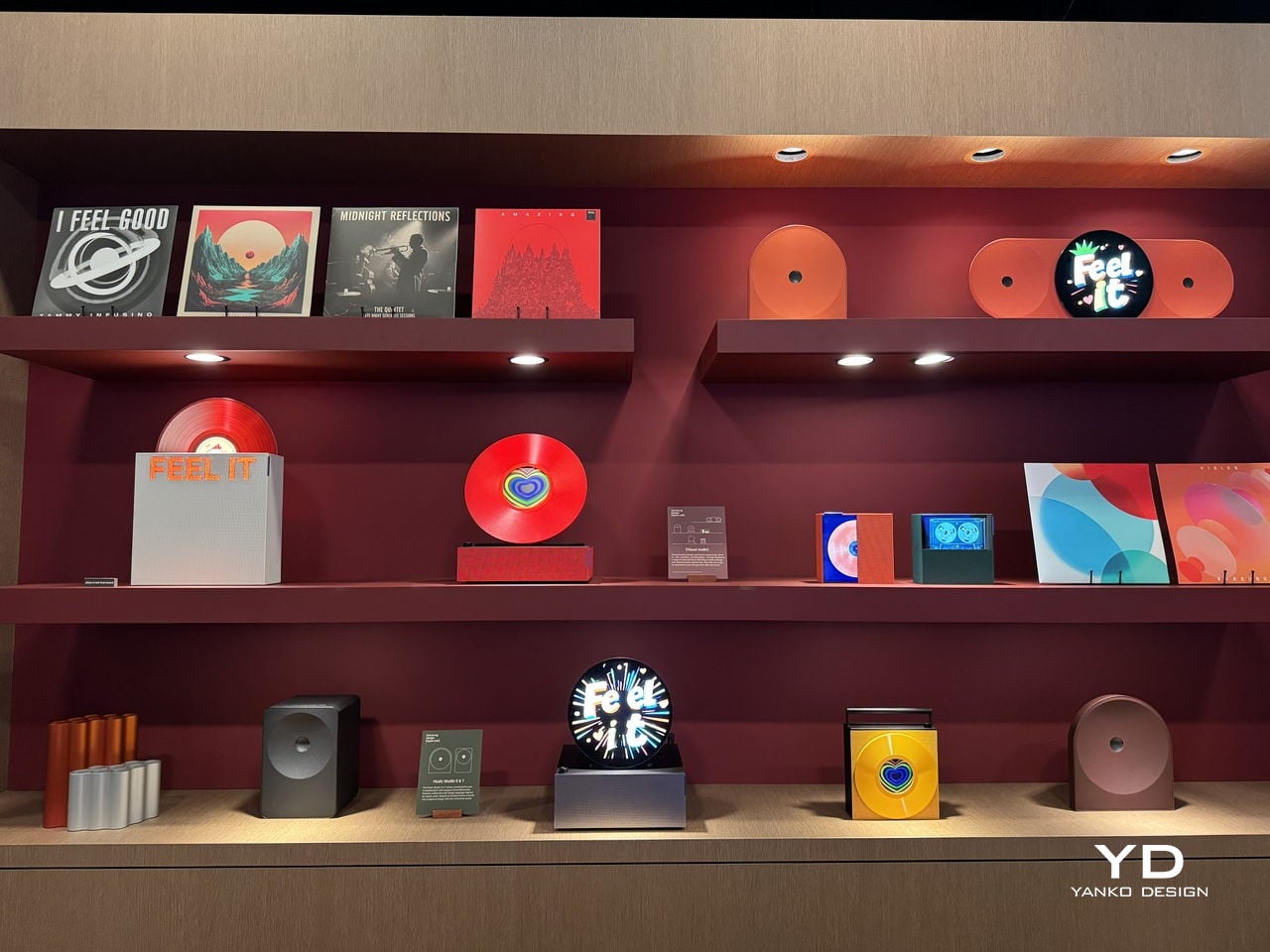
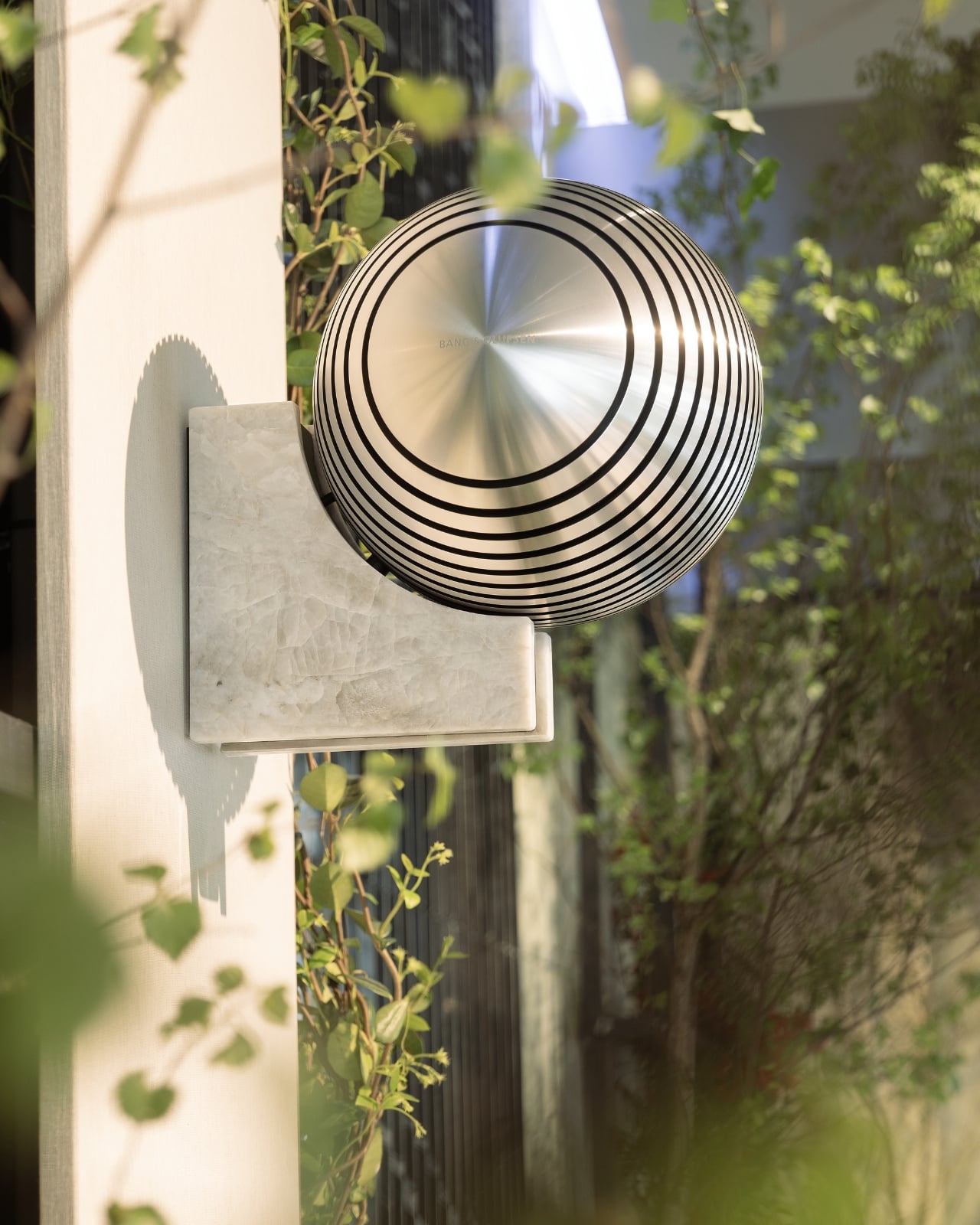
CES 2026 is full of screens and soundbars, but what stands out are speakers that look like they belong in a living room, even when they are silent. Samsung’s Music Studio 7 and Music Studio 5 are Wi-Fi speakers shaped around Erwan Bouroullec’s dot motif, designed to sit comfortably on shelves and consoles while quietly handling the serious audio work, from hi-resolution streaming to multi-device spatial sound.

Music Studio 7 (LS70H) is the tall, immersive one, and Music Studio 5 (LS50H) is the compact, gallery-friendly sibling. Both share the same circular eye on the front, a dot that hints at the origin of sound, but they play different roles at home. One anchors a room with 3.1.1-channel spatial audio, the other slips into smaller spaces without giving up clarity or presence.

Designer: Erwan Bouroullec

An evening where Music Studio 7 is handling everything, from a playlist to a late-night movie, makes the 3.1.1-channel architecture clear. Left, front, right, and top-firing drivers build a tall soundstage that wraps around the room, while Samsung’s pattern control and immersive waveguide keep effects and vocals precisely placed. AI Dynamic Bass Control keeps the low end deep but tidy, so the room feels full without the furniture rattling or neighbors complaining.

Quiet listening sessions bring hi-res playback into focus. The speaker processes up to 24-bit/96 kHz, so subtle details in acoustic tracks or film scores stay intact instead of getting smoothed over. Spotify lossless streaming and Spotify Tap over Wi-Fi let you move from phone to speaker with a tap, or start a recommendation directly on the device, which makes spontaneous listening feel less like managing gadgets and more like just pressing play.

Music Studio 5 lives in a different kind of space, on a shelf or sideboard where size matters. It uses a 4-inch woofer and dual tweeters with a built-in waveguide to keep sound balanced and crisp, even at lower volumes. AI Dynamic Bass Control deepens low frequencies without turning everything into a thump, so it works as well for background jazz while you cook as it does for focused listening at a desk.

A weekend movie where the speakers and a Samsung TV share the work shows how Q-Symphony handles multi-device sound. The TV and Music Studio units play together instead of one replacing the other, letting dialogue come from the screen while spatial effects spread to the speakers. Wi-Fi casting, streaming services, voice control, and Bluetooth via Samsung’s Seamless Codec sit in the background, making it easy to move sound between rooms or devices without thinking too hard about the path.

The dot-driven forms and soft colors make the speakers feel like part of the furniture, not gadgets that need to be hidden when guests arrive. Seeing them at CES 2026 hints at a direction where home audio is judged as much on how it shapes a room as on how it measures in a lab, and Music Studio 7 and 5 are built to live comfortably in both worlds, treating sound as something that belongs in a space rather than something you tolerate until you can afford to hide it.

The post Samsung Taps Bouroullec to Design Speakers That Blend Into Rooms first appeared on Yanko Design.
Gamesir Swift Drive controller has force feedback steering wheel for ultimate racing fun

GameSir doesn’t shy away from experimenting with new designs and functionality for its controllers to enhance the experience for mobile gamers. Tarantula Pro with swappable face button labels is a good example. For gamers like me who fancy the odd gaming session on my G8 Plus, playing the AAA racing titles like Grid Legends is stress-busting. I prefer a compact setup for my mobile gaming needs, and investing in a full-blown gaming simulator or desk-mounted setup is not feasible.

The next logical upgrade is a mobile controller that gives me more than just the joysticks and buttons. Set to reveal at CES 2026, the GameSir Swift Drive controller is exactly what racing fanatics like me wished for. The hybrid controller features a miniature direct-drive steering wheel positioned in the center, delivering force feedback and 1080-degree rotation for immersive racing game action.

Designer: Gamesir

For racing sim fans, the quandary has always been to either choose a portable setup, or go for more detailed but bulky setups. This gamepad hits the sweet spot for casual gamers like me who always wanted something that’s compact. GameSir has to be applauded for fitting the world’s smallest direct-drive motor on the gamepad for physical resistance and road texture when turning the wheel. A thumbstick that moves laterally simply cannot achieve this level of realism. The controller’s unique wheel can be adjusted for rotation ranging from 30 degrees to 1080 degrees, and has a high-precision Hall Effect encoder that has 65,000 levels of steering control resolution. Meaning, you can feel the fast-paced turning of a Formula-1 car, or experience the heavier input of driving a truck simulator.

If that’s not enough, GameSir has included haptic motors in the triggers for gamers to feel the nuances of ABS braking or the vibration when tires lose grip on a tight chicane. You can toggle between XInput and DInput modes so that you can either play on the controller as a standard gamepad or a dedicated steering wheel. The RGB lights on top simulate the current in-game RPMs, which should help advanced gamers trigger gear shifts perfectly. The controller will connect via a 2.5GHz low-latency wireless option and have an estimated battery life of 20 to 30 hours, depending on the force feedback options in use. Without these advanced inputs, the controller lasts for 50 hours.

Swift Drive controller is going to be priced at around $150, and if it delivers what is being promised, that amount is worth every penny. Carrying an extensive gaming setup in your backpack is not something that every gaming accessory maker can brag about. Along with the Swift Drive gamepad, GameSir will also reveal the Turbo Drive yoke-style steering wheel and pedals. The rig will have a built-in turbine fan to simulate the airflow for the sensation of speed in-game.

The post Gamesir Swift Drive controller has force feedback steering wheel for ultimate racing fun first appeared on Yanko Design.
Punkt. MC03 Is a Smartphone You Buy With Money, Not Your Data

Most phones make a familiar bargain: free services and slick apps in exchange for constant tracking, profiling, and data being treated as currency. The line about how if you do not pay for the product, you are the product, has gone from cliché to lived reality. Punkt. has been quietly pushing back against that logic for years, starting with minimalist feature phones and now moving into full touchscreen territory with the same philosophy intact.

The Punkt. MC03 is a premium secure smartphone designed in Switzerland and built in Germany, running AphyOS instead of mainstream Android skins. It is subscription-based by design; you pay for the OS and services, so you are not paying with your data. The pitch is simple: a modern, fully capable phone where privacy is the default, not a buried settings menu you hope you configured correctly.

Designer: Punkt.

AphyOS splits the phone into two spaces. Vault is the calm, minimalist home screen with Punkt. curated, privacy-friendly apps and Proton services, a hardened enclave for mail, calendar, messaging, and files. Wild Web is a swipe away, where you can install any app you want, but each one lives in its own privacy bubble, with clear controls over what data flows where and who gets to see it.

The interface is deliberately color-free and stripped back. Icons are simple, backgrounds are monochrome, and the whole thing is designed to reduce visual noise and cognitive load. The idea is to make the phone feel less like a slot machine and more like a tool, nudging you toward intentional use instead of endless scrolling, without taking away the apps you actually rely on for work or getting around.

Privacy tools include Digital Nomad, the built-in VPN that protects connectivity on the move, and Ledger, which lets you dial app-specific permissions from full access to full restriction, even showing the carbon impact of background activity. The MC03 can be de-Googled, reducing reliance on Google Mobile Services, and Proton Mail, Drive, VPN, and Pass live in Vault, reflecting a Swiss Tech ethos where you pay to retain your data.

The hardware is quietly competent, a 6.67-inch FHD+ OLED at 120 Hz, a 64 MP main camera with ultra-wide and macro companions, dual stereo speakers, and a removable 5,200 mAh battery with 30 W wired and 15 W wireless charging. It is IP68 rated and manufactured at Gigaset’s German facility, leaning into durability, repairability, and a European supply chain as part of the trust equation, not just marketing.

The MC03 is talking to people who are tired of feeling like their handset is a tracking device with a screen attached, but who do not want to retreat to a feature phone. It suggests a different path, a smartphone that still does all the smartphone things, but asks you to pay for the privilege of keeping your data yours, and makes that trade-off feel intentional instead of hidden. For anyone looking for an alternative to the usual iOS or Android bargain, Punkt. keeps building that alternative, one monochrome screen and one Swiss principle at a time.

The post Punkt. MC03 Is a Smartphone You Buy With Money, Not Your Data first appeared on Yanko Design.
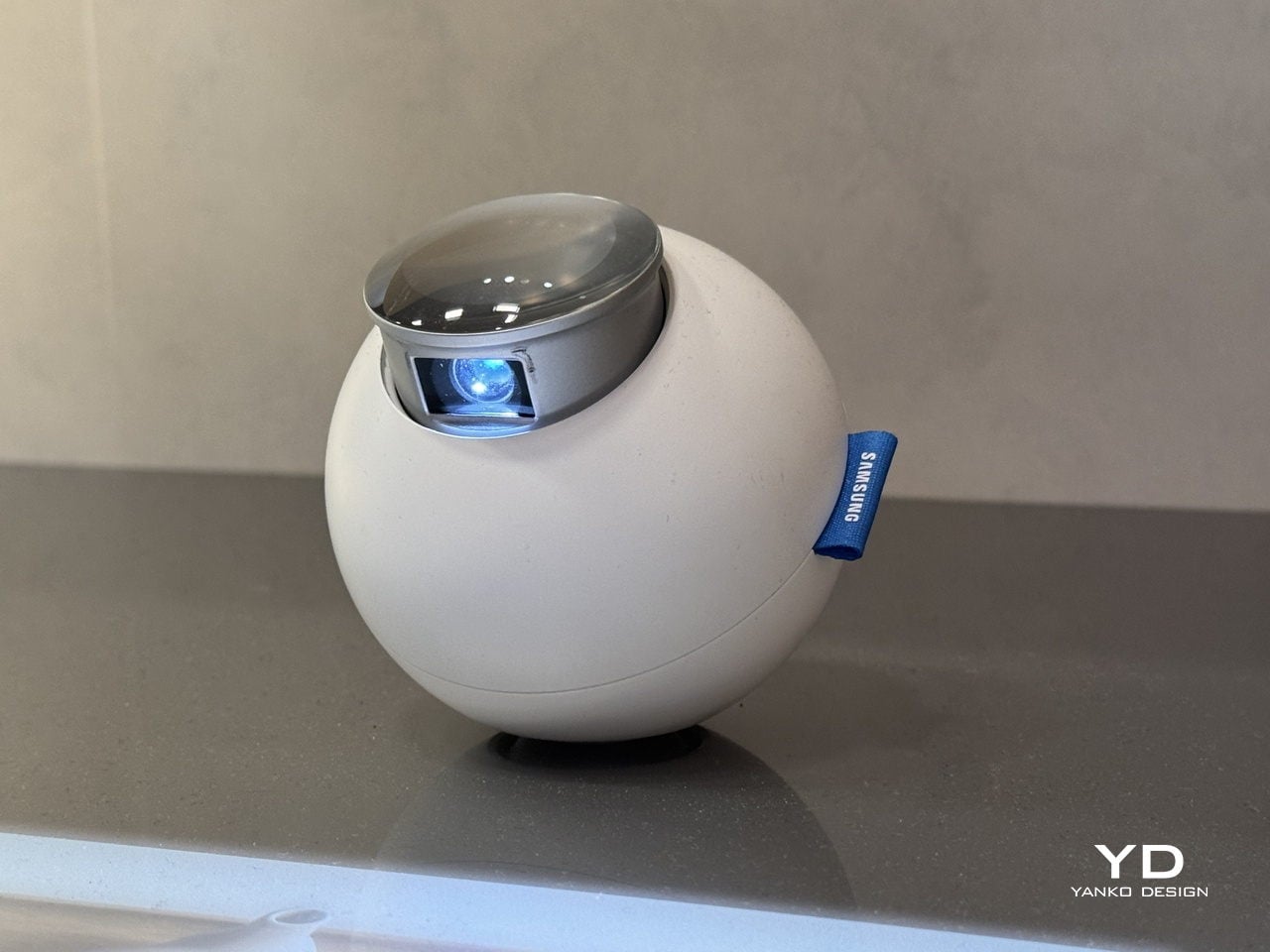
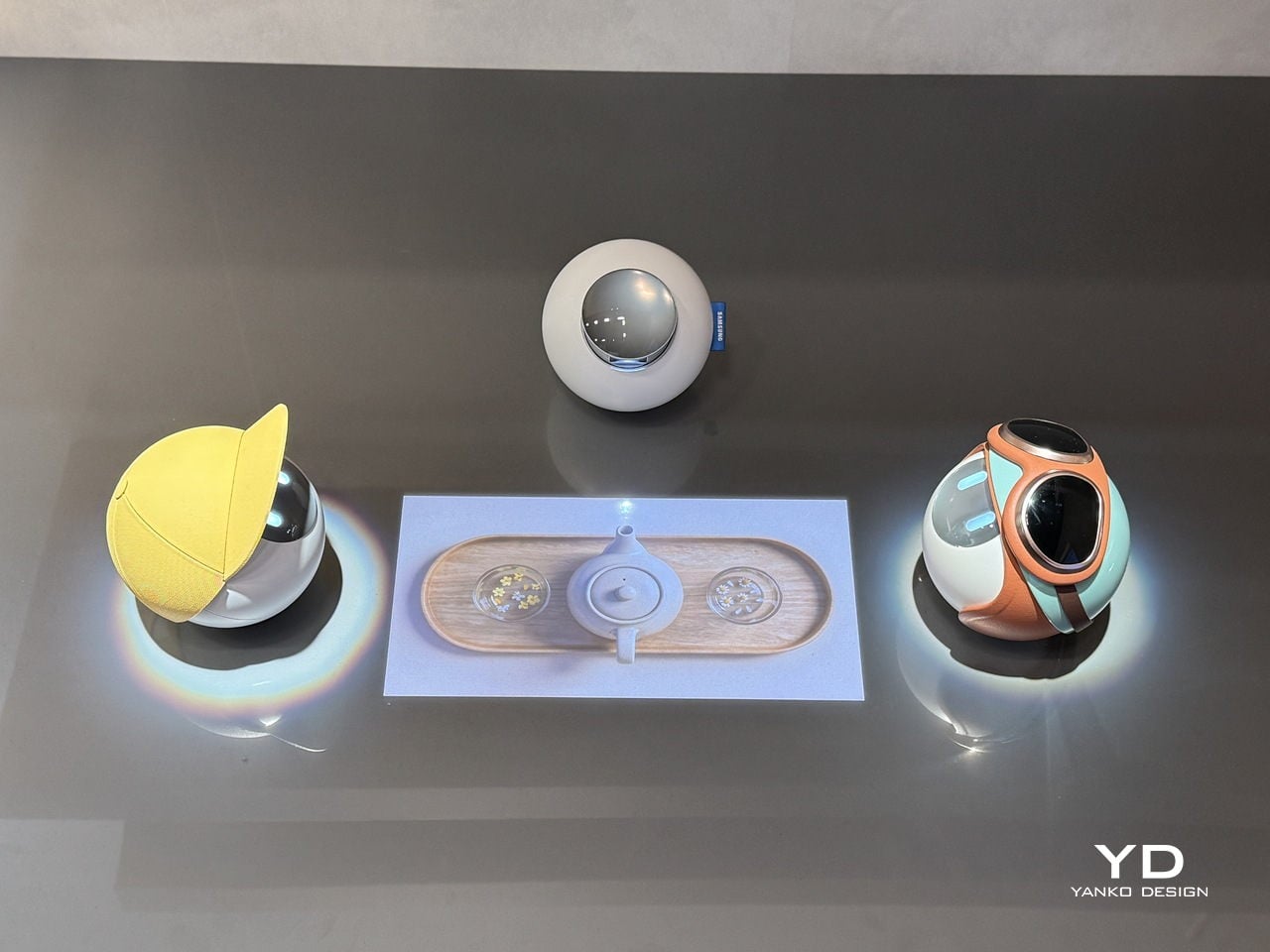
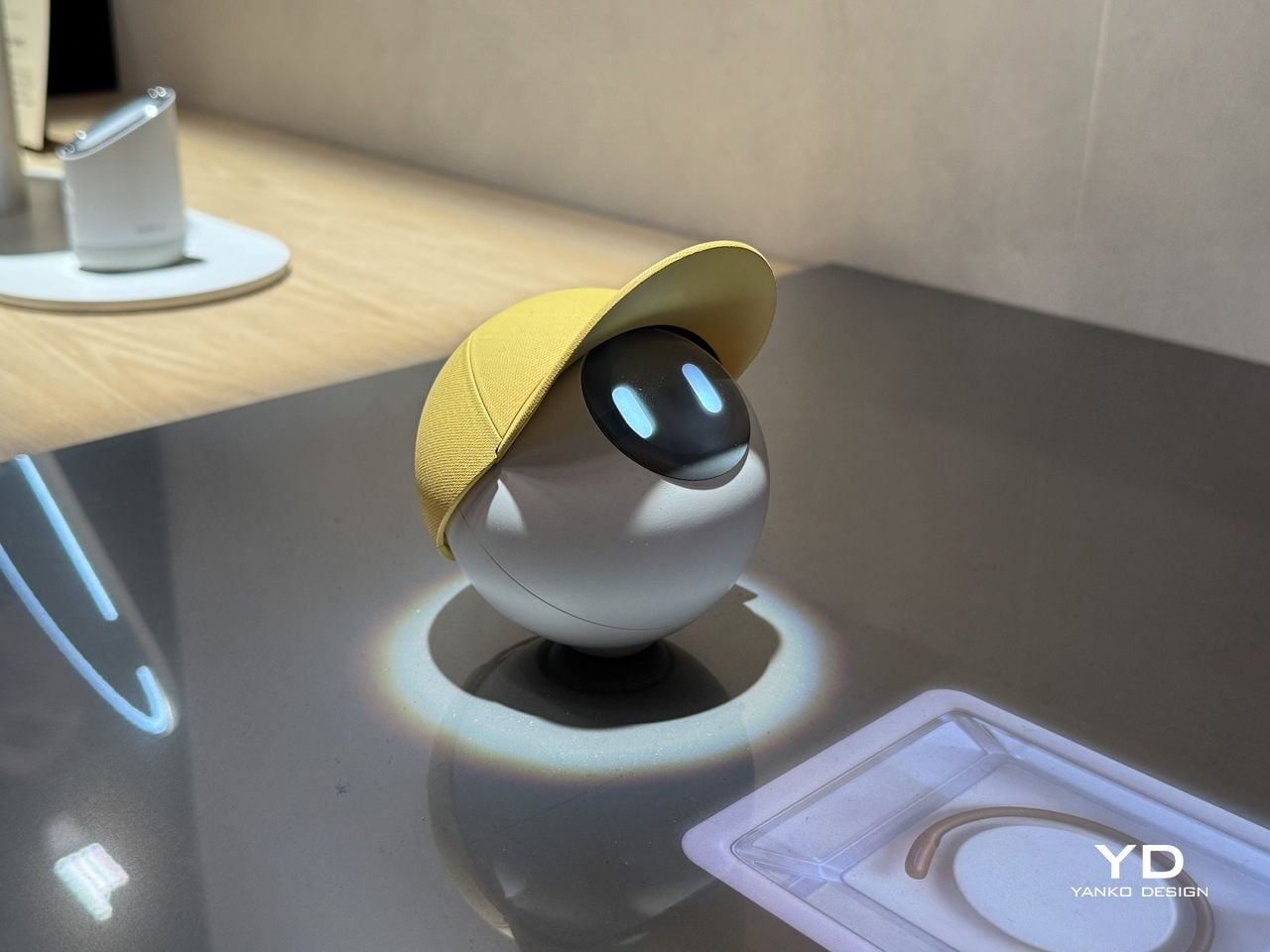
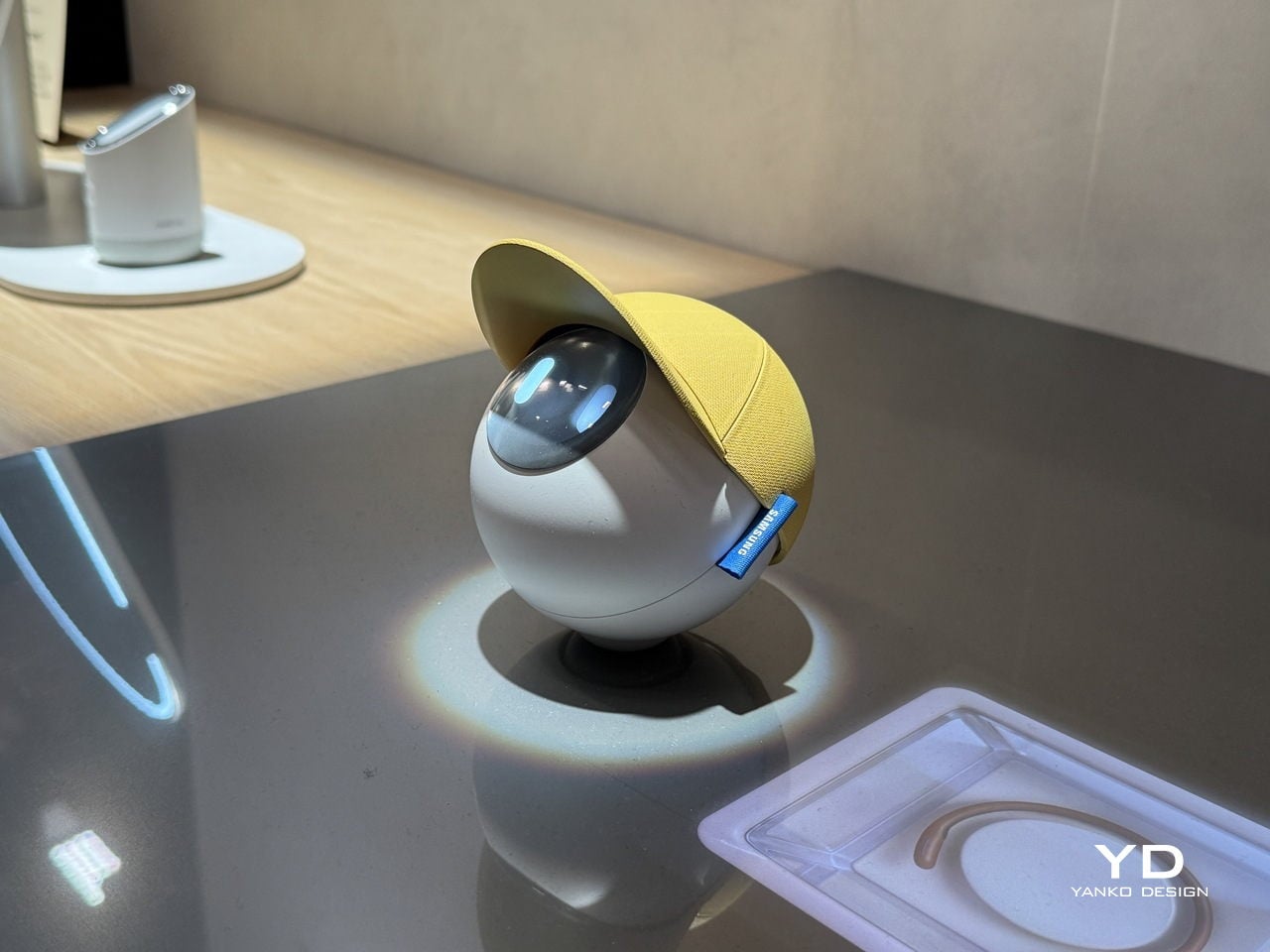
Samsung Freestyle+ Turns a Friendly Cylinder into an AI-Assisted Portable Screen

The first Freestyle tried to make projection feel as casual as dropping a speaker on a table, but still needed some fiddling with focus, keystone, and room darkness. Portable projectors are great in theory, but often fall apart on setup friction, tweaking corners, hunting for the right brightness mode, and dealing with off-color walls. Samsung’s Freestyle+ keeps the same friendly cylinder while letting AI quietly handle the annoying parts, betting that most people would rather point and watch than spend 10 minutes adjusting settings.

The Samsung Freestyle+ is an AI-powered portable projector that builds on the original’s cylindrical, 180-degree tilting design. The headline change is not a wild new form factor; it is a smarter brain. Freestyle+ is pitched as something you can point at a wall, ceiling, or floor, then trust to optimize the picture for whatever surface you happen to be aiming at, turning “point and play” from a slogan into something closer to reality.

Designer: Samsung

AI OptiScreen is the bundle of features that makes that possible. 3D Auto Keystone straightens the image even on angled or uneven surfaces like curtains or room corners. Real-time Focus keeps things sharp as you nudge or rotate the projector. Screen Fit sizes the picture to a compatible screen if you use one. Finally, Wall Calibration analyzes wall color or patterns to keep content legible instead of tinted or washed out.

Freestyle+ pushes out 430 ISO lumens, nearly twice the previous generation, which matters in real living rooms that are not pitch black. The 180-degree rotating stand still lets you throw an image onto a wall, ceiling, or floor without extra mounts. The idea is that you stop worrying about whether a space is right for projection and just drop the cylinder where it makes sense in the moment, whether that is a coffee table, a kitchen counter, or a nightstand.

Freestyle+ behaves like a mini Samsung TV, with Samsung TV Plus, major streaming apps, and Samsung Gaming Hub built in. You can stream shows, watch live channels, or fire up cloud games directly from the projector without plugging in a stick or console. For small apartments or casual setups, that means one object can handle movie night and a bit of gaming without a permanent media cabinet cluttering the wall.

Audio comes from a built-in 360-degree speaker tuned for room-filling sound in a compact body. For people already in the Samsung ecosystem, Q-Symphony support lets Freestyle+ sync with compatible Samsung soundbars, layering its own speaker with the bar instead of muting one or the other. That gives you a more cohesive soundstage when you want to treat the projector like a main screen rather than a sidekick.

Freestyle+ makes the most sense as a roaming screen that follows you from bedroom to living room to kitchen, rather than a projector that lives in a dedicated theater. By combining a familiar, speaker-like form with AI setup, brighter output, built-in streaming, and decent sound, it nudges projection closer to the casual, everyday screen Samsung keeps hinting at, instead of something you only use on special occasions when the room is dark enough and the mood feels right for a movie night.

The post Samsung Freestyle+ Turns a Friendly Cylinder into an AI-Assisted Portable Screen first appeared on Yanko Design.
5 Red Dot Award Winning Designed to Change the World: Submission Closes January 16, 2026

The world’s most prestigious design competition is back, and this year it’s bigger and more exciting than ever. Starting September 15, 2025, the Red Dot Award: Product Design 2026 has officially opens its doors to designers, manufacturers, and innovators worldwide who are ready to showcase their exceptional creations on the global stage.

For over 70 years, the Red Dot Award has been the ultimate benchmark for design excellence, celebrating products that push boundaries and redefine what’s possible. This year’s competition promises to be particularly thrilling, with exciting new developments that reflect our rapidly evolving design landscape.

What’s New for 2026: Gaming & Streaming Takes Center Stage

Perhaps the most exciting addition to this year’s competition is the brand-new Gaming & Streaming category. Recognizing the explosive growth of this industry that now reaches millions worldwide, Red Dot is giving these innovative products the dedicated recognition they deserve. From cutting-edge gaming peripherals to revolutionary streaming equipment, this category acknowledges that gaming and streaming have become key drivers of product innovation in our digital age.

Whether you’ve designed the next game-changing controller, a revolutionary streaming setup, or an immersive VR headset, this new category provides the perfect platform to showcase your work to an international audience of design professionals and enthusiasts.

Click Here to Submit your design to the prestigious Red Dot Award: Product Design 2026!

Drawing Inspiration from Excellence: Here’s our Top 5 picks of 2025

Participation in the Red Dot Award holds significant value for designers seeking to elevate their careers and expand their influence in the design community. Winning this internationally recognized award makes creative skills visible to a global audience, as award-winning products are presented across multiple prestigious platforms including the Red Dot Design Museum Essen, worldwide exhibitions, the Red Dot Design Yearbook, and extensive online and social media channels.

For emerging designers, the recognition can be transformative – supporting product launches, opening doors to new opportunities, and expanding professional networks within the international design industry. The comprehensive visibility and credibility that comes with a Red Dot Award provides designers with a powerful tool to distinguish their work in an increasingly competitive market, while affirming their commitment to excellence in design innovation and quality. To understand what makes a Red Dot winner, let’s look at the ingenious designs that captured hearts and minds in 2025.

Cayo by Koninklijke Gazelle

This Dutch e-bike combines minimalist aesthetics with advanced technical innovation, seamlessly integrating all components into a clean, timeless design characterized by clearly defined lines and the absence of superfluous elements. The Cayo bridges traditional cycling culture with the future of urban mobility, proving that everyday transportation on two wheels can embody both urban elegance and cutting-edge technology.

Paper Stick by YONWOO

This revolutionary sustainable packaging solution for stick-form cosmetics eliminates plastic entirely by using moisture-resistant mineral paper made from quarry stone waste that users simply peel off in a spiral motion. The innovative design achieves clean tear-off edges through precision die-cutting while offering manufacturers extensive branding opportunities through customizable printing, hot foil stamping, and various paper types for different tactile experiences.

nwm ONE by NTT sonority, 83Design Inc.

These groundbreaking open-ear headphones strip away traditional cushions and sealing, instead floating around the ears while using proprietary PSZ (Personalised Sound Zone) technology with inverse phase waves to prevent sound leakage. The minimal ring-shaped design features pivoting speaker units that deliver optimized audio directly into the ear canal without physical contact, creating an invisible bubble of sound that only the wearer can hear while staying fully aware of their surroundings.

iA Notebook by Information Architects Inc.

Originally designed as a gift for customers of their text and presentation software, this meticulously crafted notebook employs a lay-flat binding that allows writers to use entire double-page spreads without binding interference. Packaged in a wooden box with an embossed sleeve cover, every detail expresses appreciation for the written word through simple elegance and exceptional craftsmanship that required iterative prototyping to perfect.

VITILITY ID Walking Cane by MIXED.Industries BV

This mobility aid makes a conscious statement against the stigma of aging and physical limitations by combining clear, elegant design with functional excellence that proves good design can change social perceptions. The walking cane allows users who depend on mobility assistance to feel independent and style-conscious, transforming a traditionally stigmatized object into a character-defining accessory.

The Evaluation Process: Where Excellence Meets Expertise

Your submitted products will face scrutiny from approximately 40 international experts representing diverse fields and perspectives. This distinguished jury follows the evaluation philosophy established by Professor Dr. Peter Zec, Red Dot’s Founder and CEO, assessing each entry based on function, aesthetics, ease of use, and responsibility.

The jury awards two levels of distinction: the coveted “Red Dot” award and the prestigious “Red Dot: Best of the Best” for truly exceptional designs that set new standards in their categories.

Important Dates to Remember

Registration Period: September 15, 2025 to January 16, 2026

Jury Evaluation: Spring 2026

Award Ceremony: July 7, 2026

Your Path to Global Recognition

Winners don’t just receive an award. They gain access to a comprehensive platform for showcasing their achievements. Award-winning products are featured in the Red Dot Design Museum Essen, international exhibitions, the prestigious Red Dot Design Yearbook, and across digital platforms reaching design enthusiasts worldwide.

The celebration culminates at the glamorous Red Dot Gala on July 7, 2026, in Essen, where winners are honored before an international audience. For those unable to attend in person, the event will be livestreamed globally, ensuring maximum exposure for your innovative designs.

Ready to join the ranks of design excellence? Visit www.red-dot.org/pd to submit your groundbreaking products and compete for one of the most respected accolades in the design world. The Red Dot Award: Product Design 2026 isn’t just a competition. It’s your gateway to global recognition and design immortality.

The post 5 Red Dot Award Winning Designed to Change the World: Submission Closes January 16, 2026 first appeared on Yanko Design.
Design Mumbai 2024: Ready to Unleash Its Design Spirit at Jio World Garden

Mark your calendars: from November 6-9, the vibrant city of Mumbai will transform into a hub of international design creativity with the arrival of Design Mumbai 2024. Set against the lush backdrop of Jio World Garden, this event is India’s first international contemporary design show. If you’re into cutting-edge lighting concepts and meticulously crafted furniture or want to glimpse the future of design, this is where you’ll want to be. Designer to the above picture: Obeetee

Event Dates: 6-9 November 2024.

A Platform for Global and Local Talent

Presented by JSW Paints, the event gives local and international talent a platform to showcase the latest trends in design and craftsmanship. Expect a mix of the finest independent Indian designers alongside global icons, curated into a four-day showcase that brings a unique flavor of creativity to the heart of Mumbai. From installations by JSW Paints to a look at Royal Enfield’s latest take on the Classic 350, Design Mumbai is shaping up to be a must-visit for anyone passionate about creativity.

JSW Paints’ involvement as the Presenting Partner of Design Mumbai brings an added visual spectacle. AS Sundaresan, Joint MD & CEO of JSW Paints, shared, “At JSW Paints, innovation and ‘Think Beautiful’ is at the heart of everything we do. We’re delighted to present Design Mumbai 2024, which will transform Jio World Garden into a vibrant celebration of colour and creativity.” Their participation aims to create a visually inspiring event, encouraging everyone to reimagine their spaces boldly and beautifully.

Designer: andblack

Highlights and Exhibitors

Co-founder Ian Rudge describes the event as a milestone for India’s design community. “This event marks a significant milestone for India, offering an international platform unlike anything seen before. We’re bringing a whole host of innovative and pioneering designs to the show, along with specially commissioned installations from key partners such as JSW Paints and Royal Enfield, and exclusive appearances by some of the most recognised names in the industry. At the same time, we’re committed to celebrating India’s rich design and craft heritage.” Visitors can expect specially commissioned installations, exclusive product launches, and a celebration of India’s craft heritage—all curated to reflect the blend of tradition and innovation that defines modern Indian design.
Designer: Poltrona Frau

With names like Poltrona Frau, Richard Hutten, Studio Saar, Fern & Ade, Jaipur Rugs, VIATOV, VitrA, and de Sede participating, there is something for everyone—if you are interested in plush seating, thoughtful color palettes, or eco-conscious craftsmanship.

Designer: de Sede

Special Features and Installations

Design Mumbai promises an engaging array of special features, from award ceremonies to networking events, all aimed at celebrating the best in contemporary design. Exclusive collaborations, such as the concept hospitality space by THE Park Hotels, in partnership with Studio Saar, will provide attendees with a refreshing look at innovative hospitality design.


Designer: Royal Enfield

Royal Enfield will also feature prominently, showcasing its latest Royal Enfield Classic 350, highlighting its design expertise and the craftsmanship that goes into making these iconic motorcycles.

Live Talks and Keynotes

Design Mumbai is also packed with live industry talks and keynotes under the “Design Mumbai: Exchange” series. Confirmed speakers include key players from Dezeen, Dutch industrial designer Richard Hutten, and those involved in the $30 billion Mumbai infrastructure overhaul.

Richard Hutten

The discussions will cover the intersection of sustainability, design, and technology, providing insights into the future of the creative industry.

Ian Rudge added, “Our goal with Design Mumbai is to deliver top-tier quality and originality to the architecture and design community. We aim to provide a unique experience and diverse content if attendees are specifying for a private residential project or a commercial venture such as a hotel or restaurant.”

Culinary Experiences

Alongside the visual delights, visitors can indulge in culinary experiences from award-winning restaurants, including a pop-up from Soho House Mumbai.

Designer: Fern & Ade

Imagine exploring exhibits ranging from upcycled cotton tapestries by Morii Design to the latest Danish collections by Fern & Ade—all while enjoying a high-end dining experience.

Innovative and Sustainable Design

Innovation is a core theme of the event, which showcases creativity and sustainability, from VitrA’s recycled ceramic washbasins to VIATOV’s plexiglass mirrored art pieces.

Designer: Vitra

Visitors will also find inventive pieces from AKFD Studio, known for its unique lighting designs incorporating traditional Indian craftsmanship, and Studio Avni’s work, which experiments with materials like silicone and discarded silk saris.

Designer: Viatov Design

Craft Heritage and Modern Classics

Expect to see bold, modern pieces from the FAZO Project, which utilizes traditional carpet weaving techniques. Loco Design will present collections that blend Indian heritage with modern technology, while Shailesh Rajput Studio will exhibit art-inspired lighting pieces using aluminum, brass, and clay.

Designer: Loco Design

Loco Design’s efforts to blend heritage craftsmanship with modern aesthetics aim to redefine contemporary Indian design on a global scale. Under brands like Madheke, Pintark, and Taamaa, their new collections represent a convergence of Indian heritage and international practices, creating an engaging narrative for the audience.

Luxury Meets Modern Architecture

The hospitality space designed by THE Park Hotels in collaboration with Studio Saar offers a glimpse of luxury paired seamlessly with modern architecture.

Designer: Studio Saar

With exhibitors like Technogym, Timothy Oulton, Hästens, Michael Young, and Boss Design, Design Mumbai promises something to inspire all design enthusiasts.

Artful Forms and Everyday Simplicity

Other notable names include Seoul-based VIATOV, which presents mirrored objects, and Esvee Atelier, known for its functional art that enhances living spaces.

Studio Avni will also display its Hybrid series of stitched metal light pieces alongside projects like the Garland series, which are made from discarded silk saris.

Designer: Esvee Atelier

Esvee Atelier is set to introduce the VAV coffee table, inspired by Indian stepwells, and the Maya vanity dresser, which turns everyday routines into elegant rituals and embodies the spirit of thoughtful, functional design.
Design Mumbai is set to establish itself as a yearly pilgrimage for lovers of design—capturing the creative energy of India and ingenuity from around the world. Design Mumbai is also collaborating with the Association of Designers of India’s Mumbai Chapter, who is helping them curate speakers and building engagement with the design community. The creative pulse of Mumbai is about to get even stronger!

Event Dates: 6-9 November 2024.

The post Design Mumbai 2024: Ready to Unleash Its Design Spirit at Jio World Garden first appeared on Yanko Design.