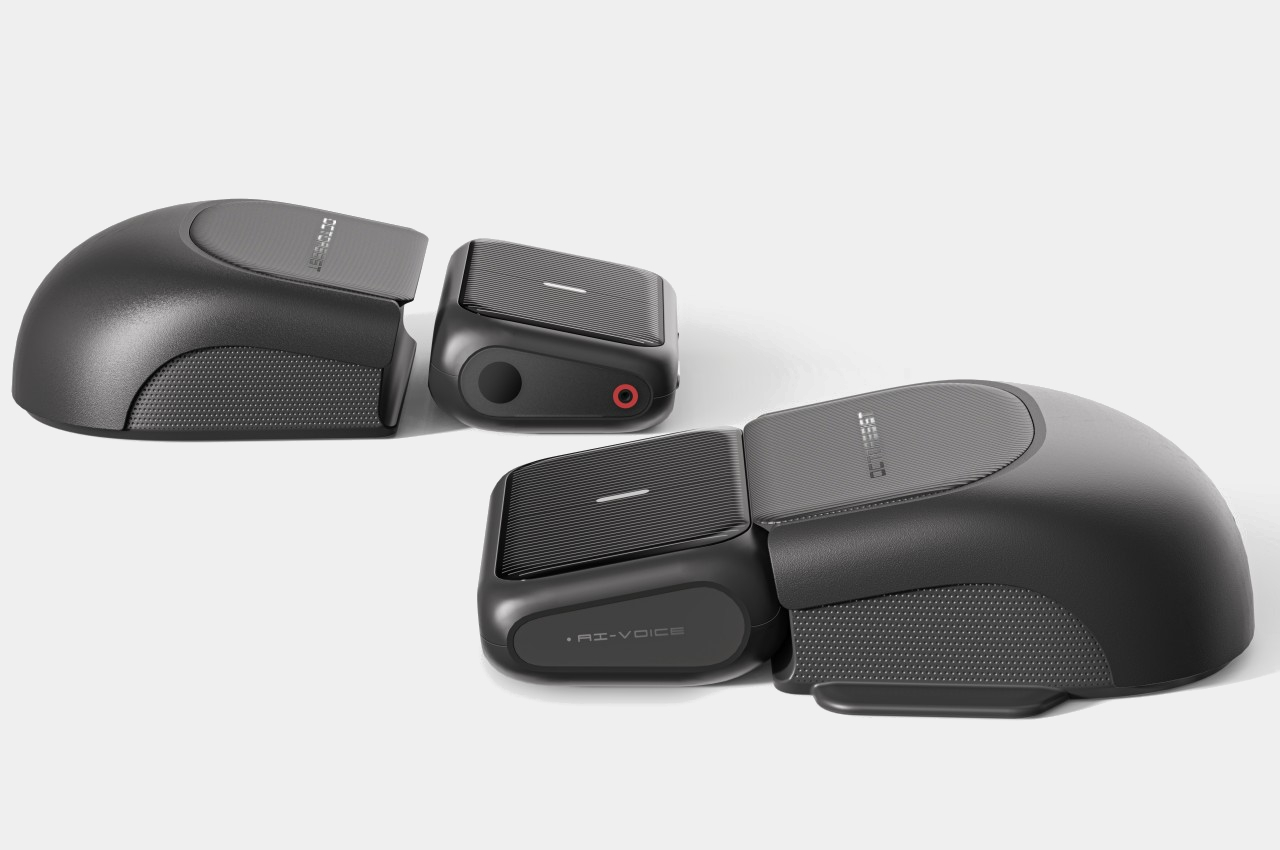
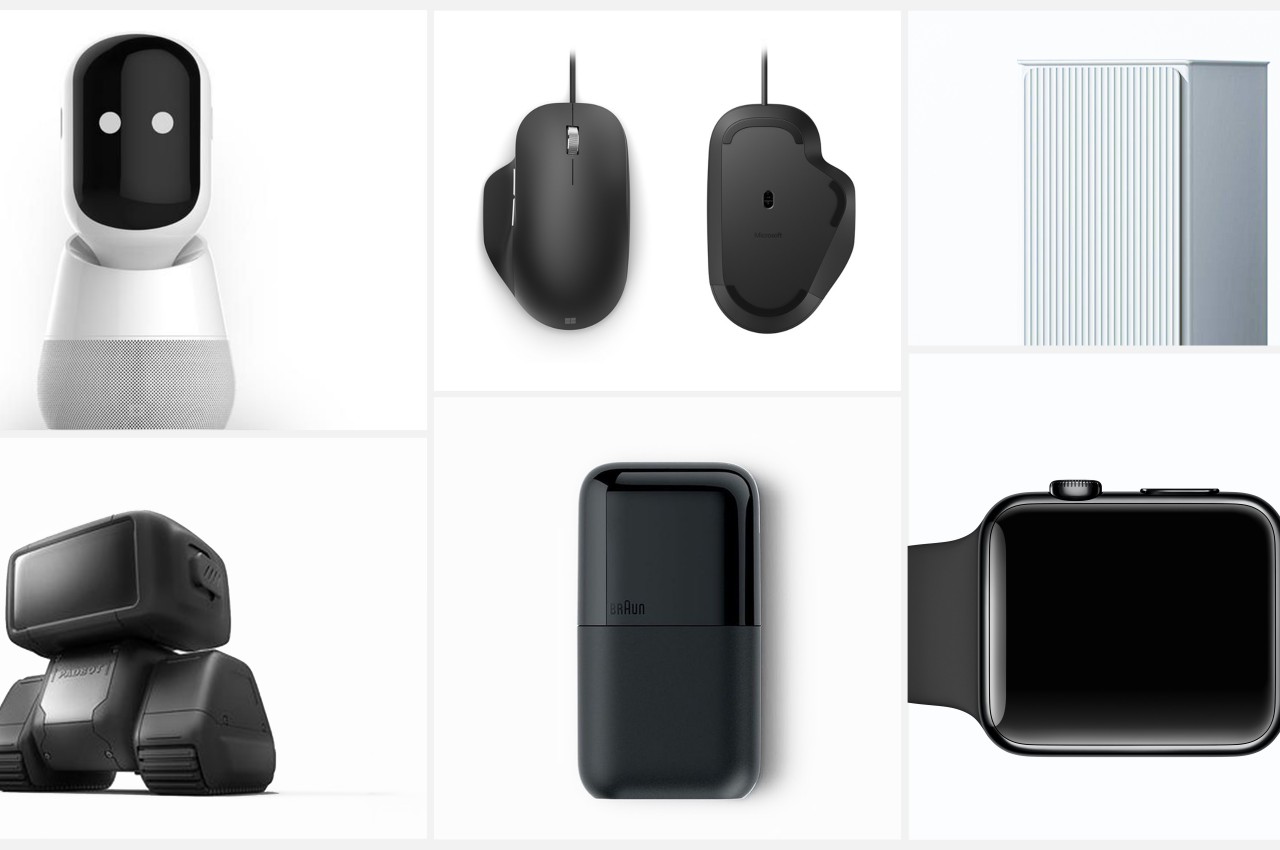
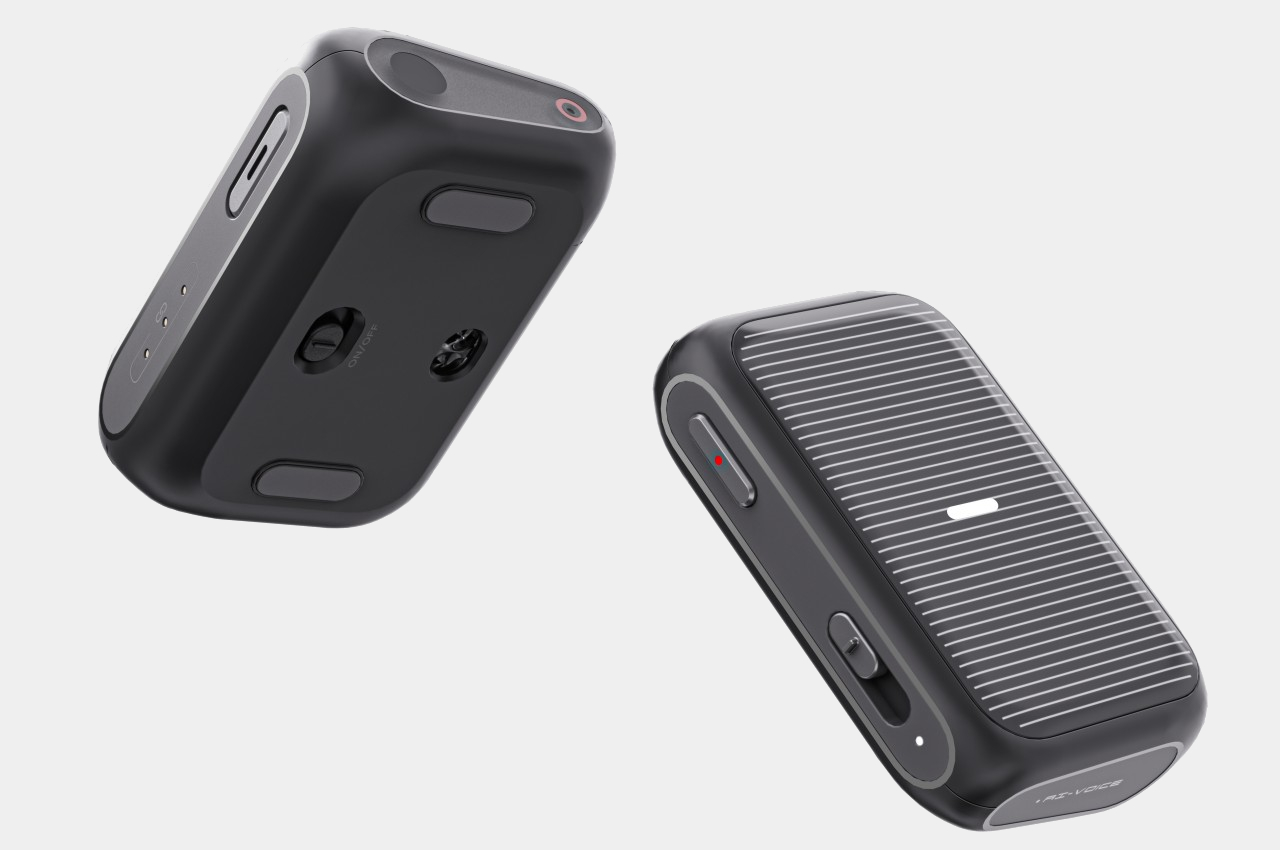
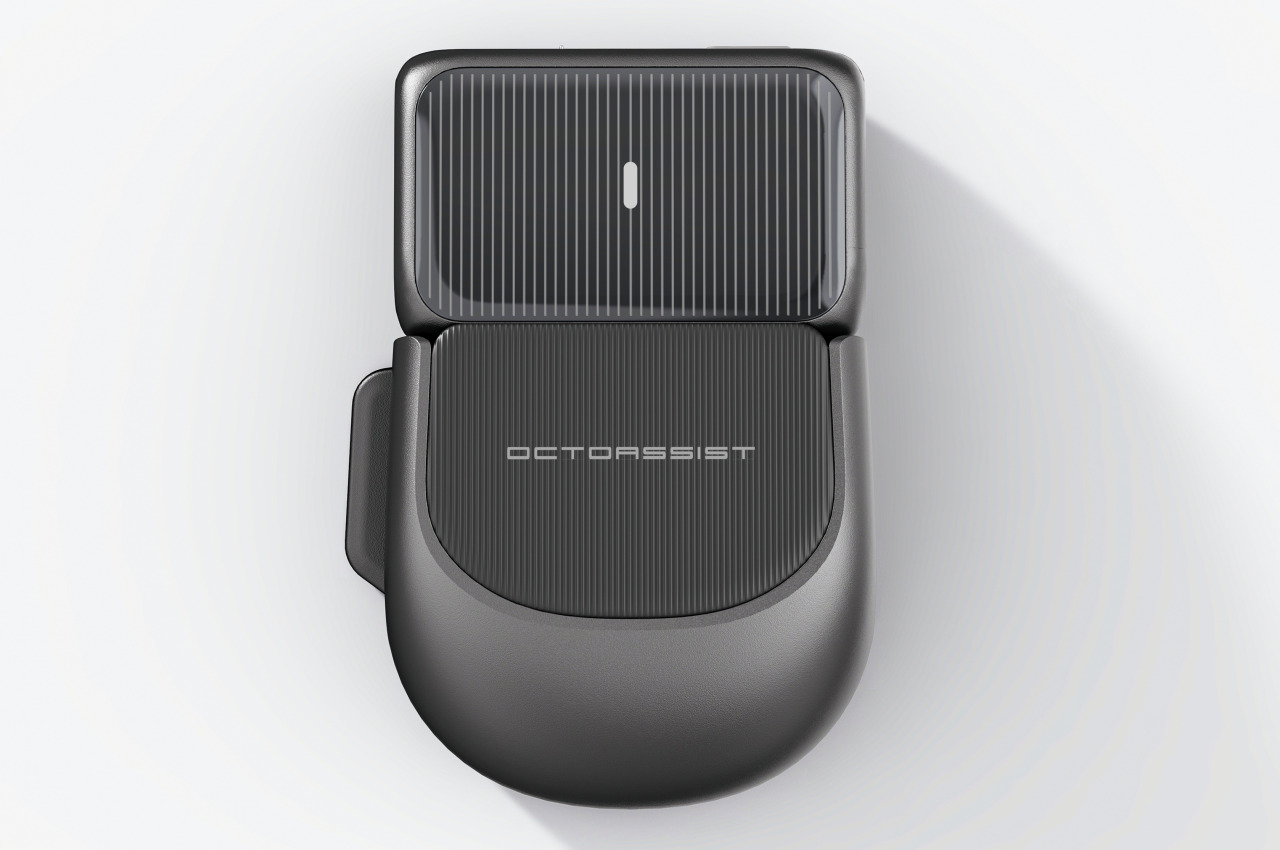
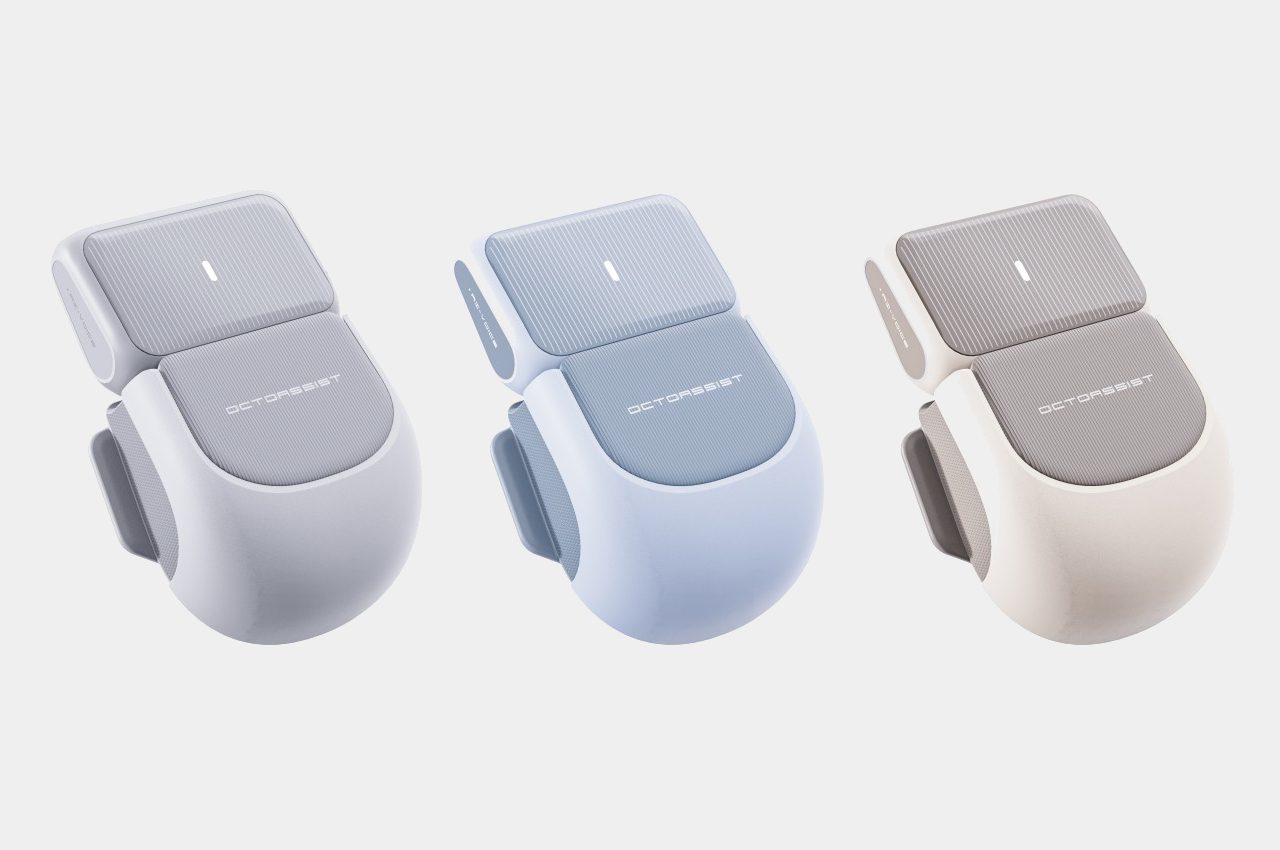
The nature and location of work today have changed considerably, especially after the introduction of work-from-home arrangements, but there is one thing that still remains the same. People still hold in-person meetings, which often involve making presentations, be it in front of colleagues or before clients. Despite how common this activity is, the tools used especially by presenters haven’t evolved that much except for teleconferencing equipment. Many of the devices needed for an effective presentation often come as separate products, so this concept tries to integrate not just two but four tools into a single design that, at first glance, looks like a normal mouse.
Designers: TianRun Chen, ZiLong Peng, Yanran Zhao, YueHao Liu
Many computer users use a mouse, even if they actually prefer using laptops. It’s almost an indispensable tool for on-the-go knowledge workers, including those who often find themselves speaking in front of other people in a room. Unfortunately, these people would also find themselves grabbing a presenter and a laser pointer during those presentations, making their work lives needlessly complex. There are some thin, portable mice that try to integrate a laser pointer, but these are still rare, not to mention not ergonomic in their designs.
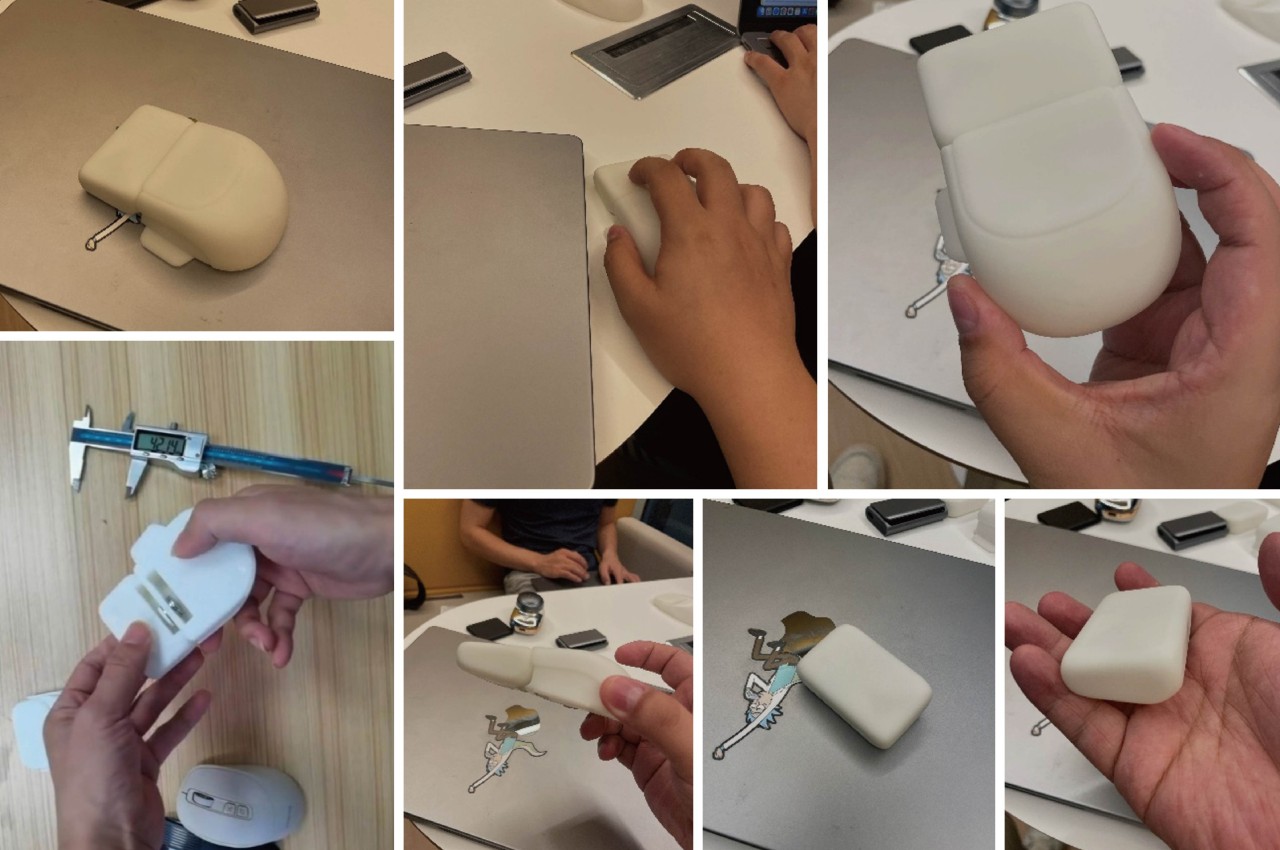
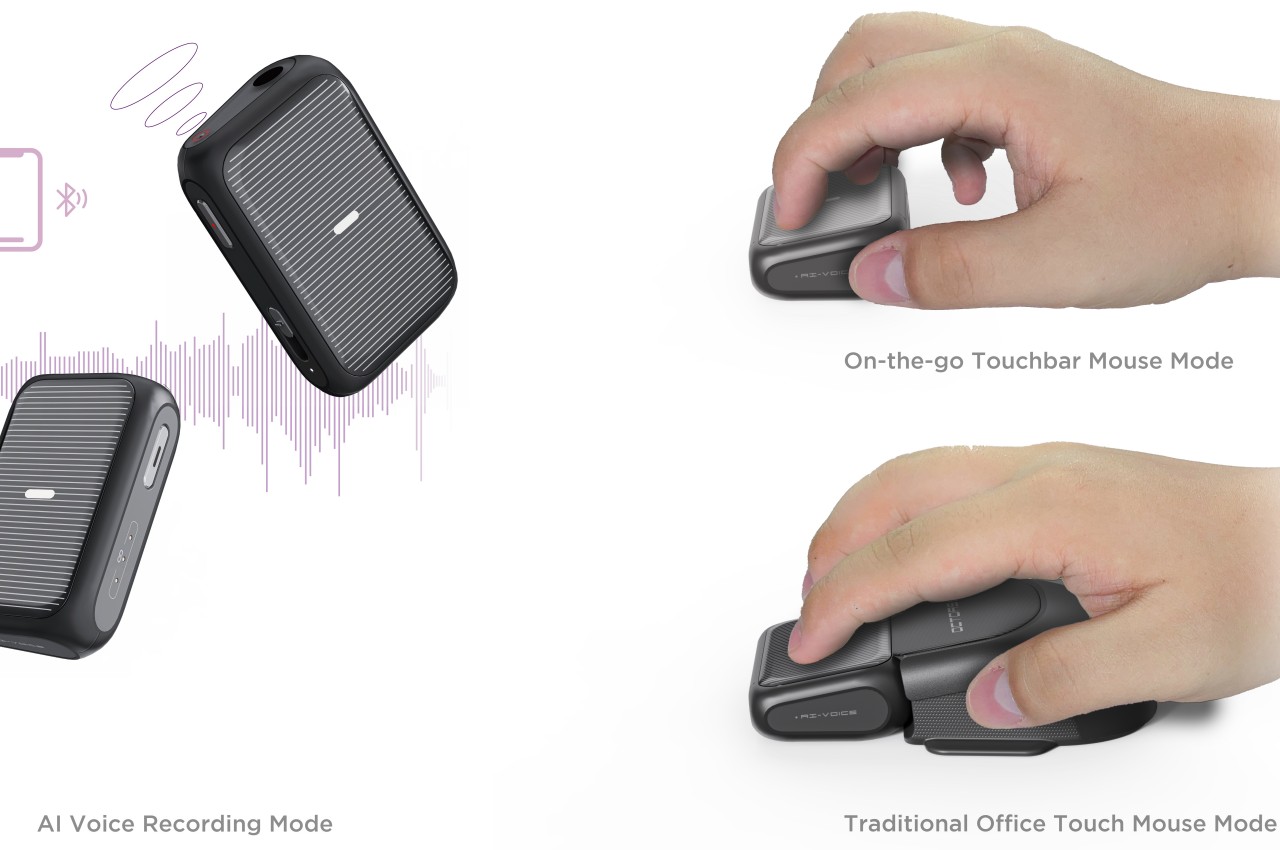
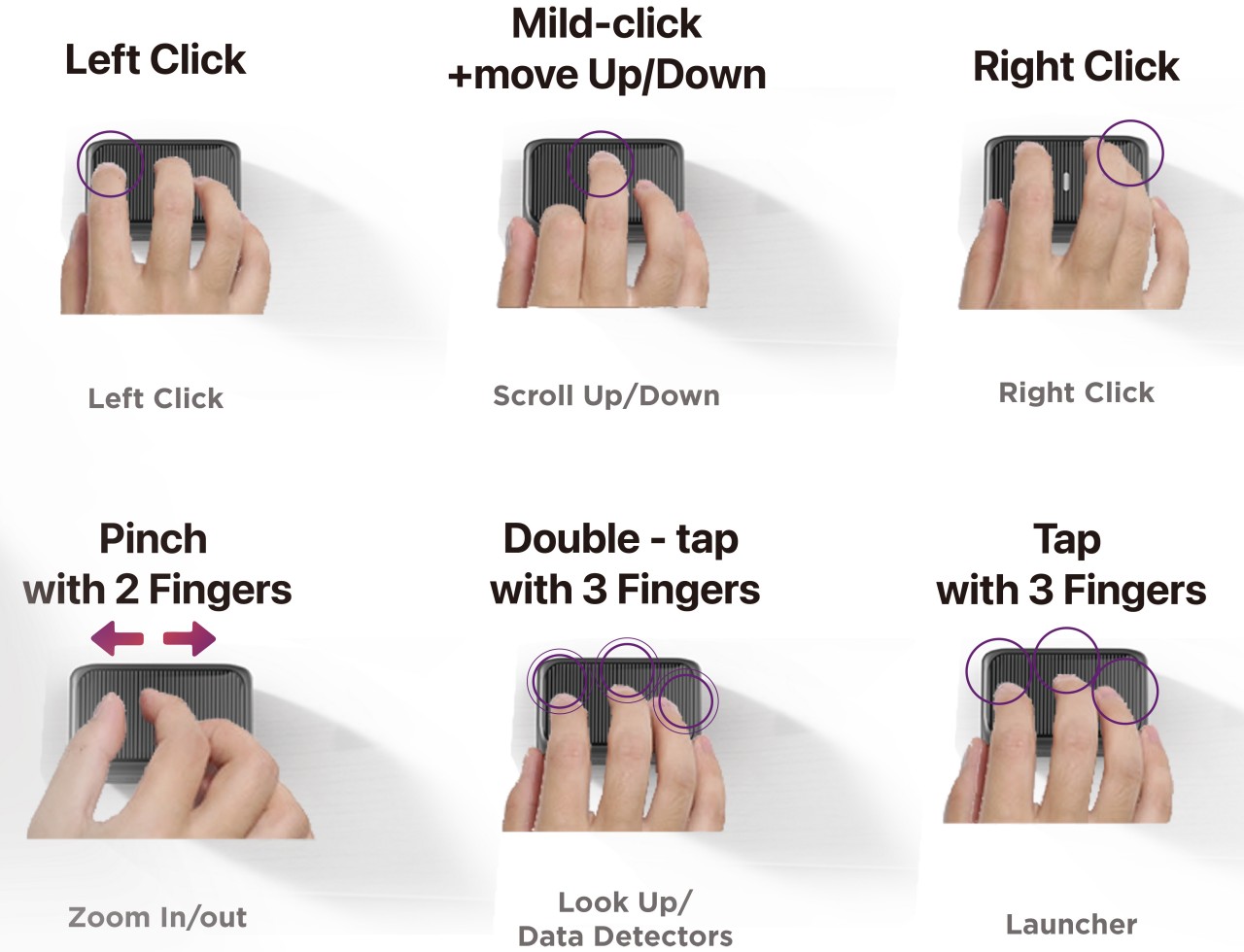
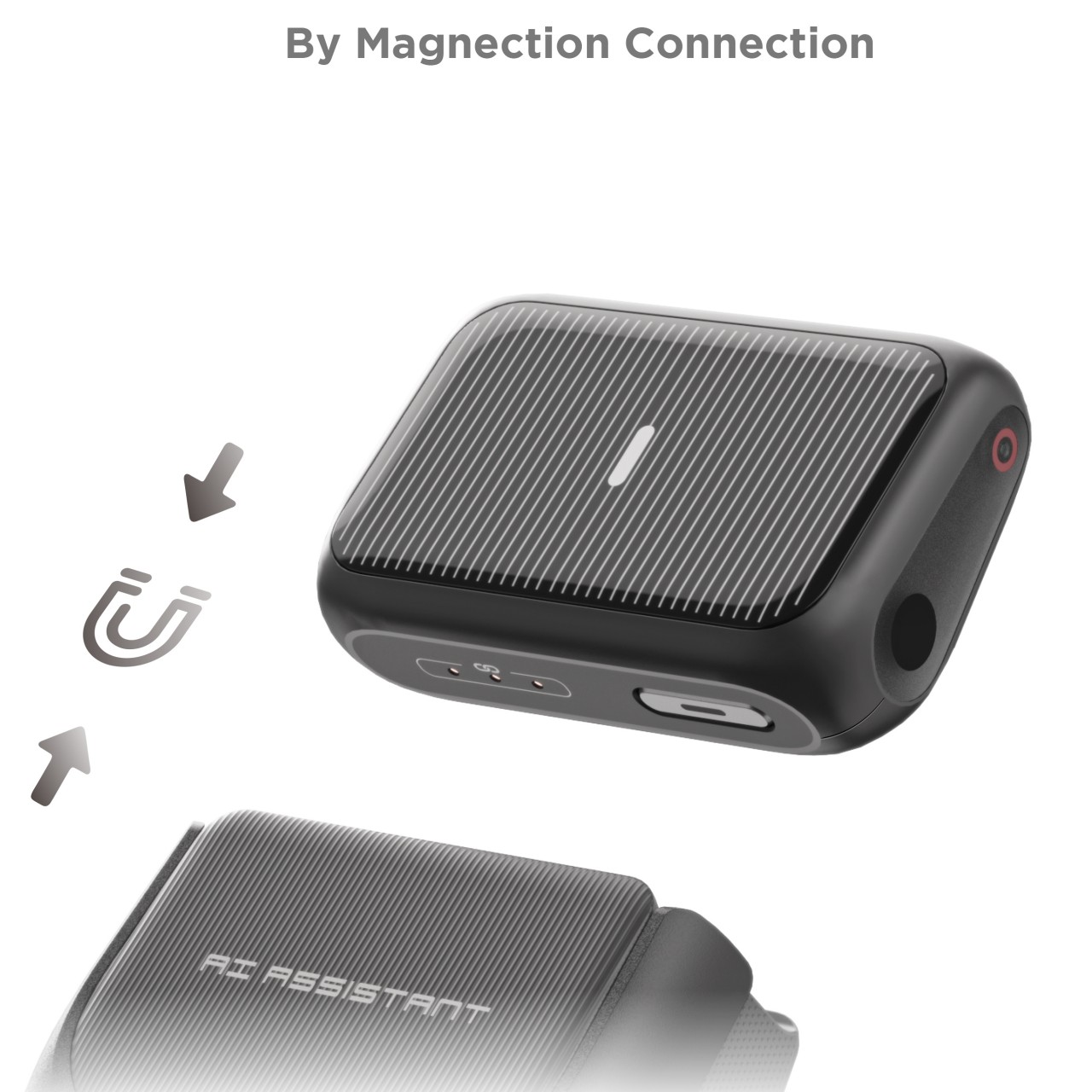
The OctoAssist concept design has a rather intriguing solution that deconstructs the design of the computer mouse in order to provide more functionality. At its core, it sports a modular design where the main “module” is actually the front third of a conventional mouse, where the buttons would normally be located. This module is actually a touch-sensitive device that you can use on its own as a mini touchpad that supports gestures like pinching and three-finger taps. It can magnetically connect to a “base” that provides the ergonomic shape of a mouse, while potentially also offering additional battery power in its rather large body.
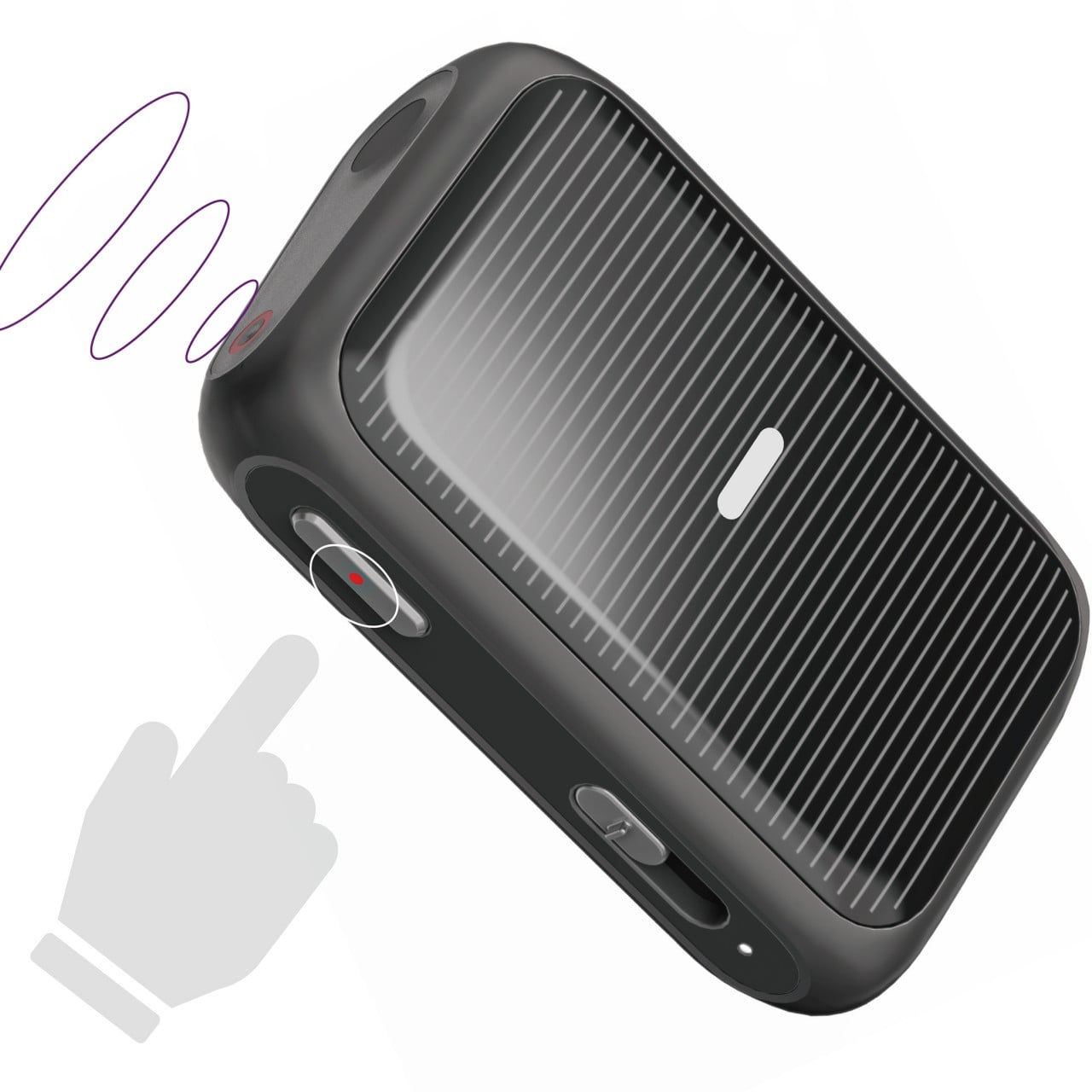
The core module also has a built-in laser pointer and, thanks to its touch-sensitive surface, can be used to easily control presentations with the same hand. It also has a voice recorder so you can have the entire presentation or meeting preserved for documentation purposes. But why stop there when you have today’s ubiquitous AI available to almost everyone? That AI, built into the device, can also summarize the meeting and generate notes in a flash, impressing everyone in the room with your technological wizardry and efficiency.
From a regular office mouse to a miniature touchpad to a presenter to an AI secretary, the OctoAssist offers plenty of features, though perhaps a bit too much as well. The AI-powered summary and notes are definitely convenient, but they could weigh the core module down not just with complexity but also with hardware and battery consumption. It does offload the AI processing to a connected smartphone, but that can sometimes cause lags and even data loss. Regardless, it’s definitely an interesting concept that might even be plausible, presuming a manufacturer sees profitable value in an all-in-one design instead of selling multiple devices that do those tasks separately.
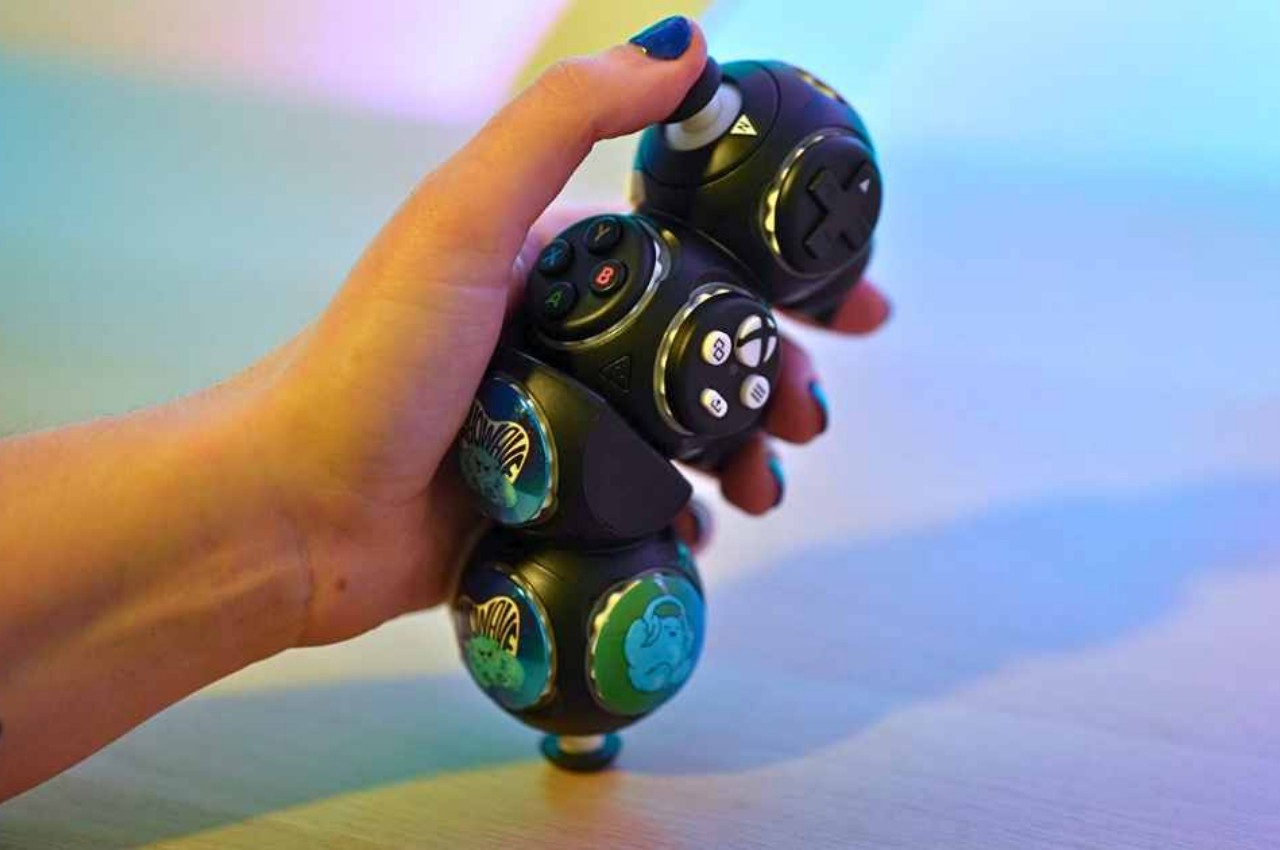
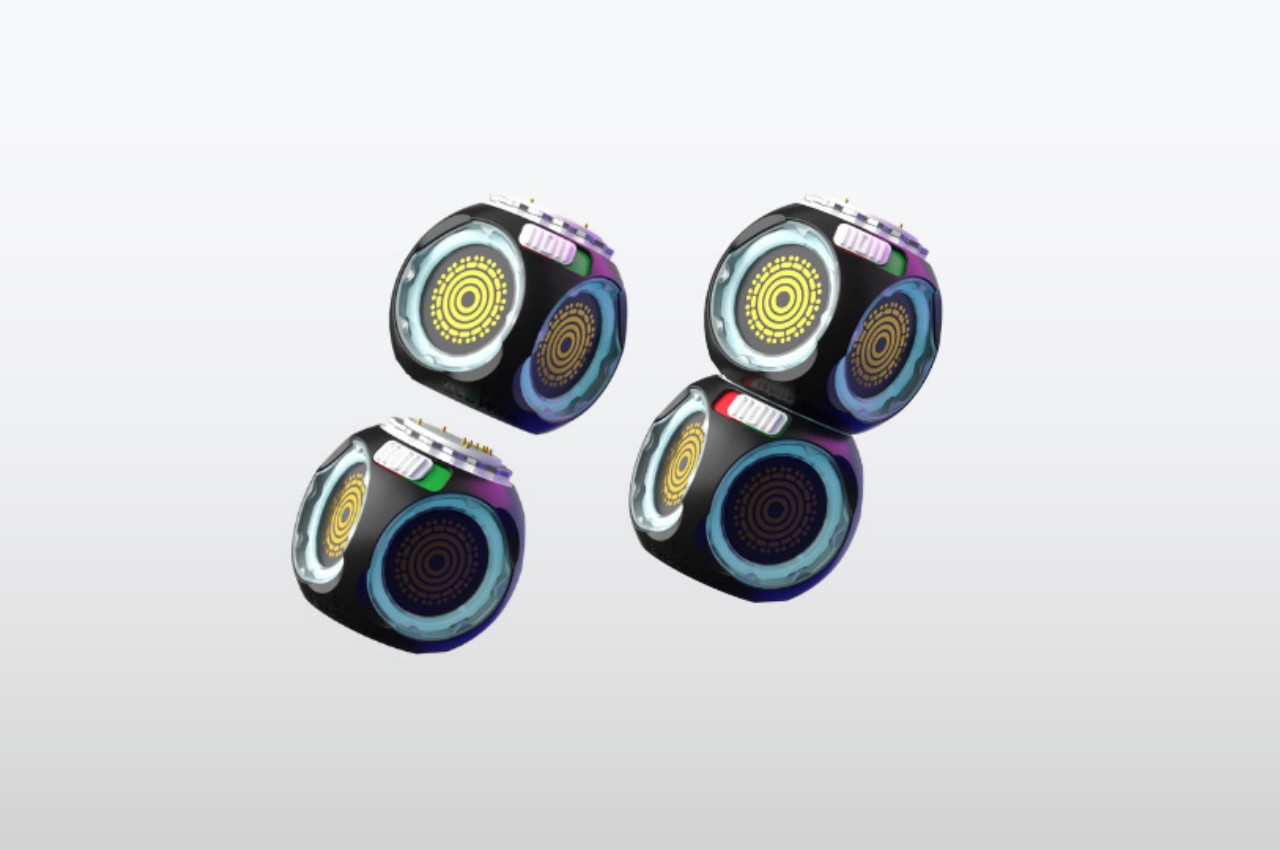
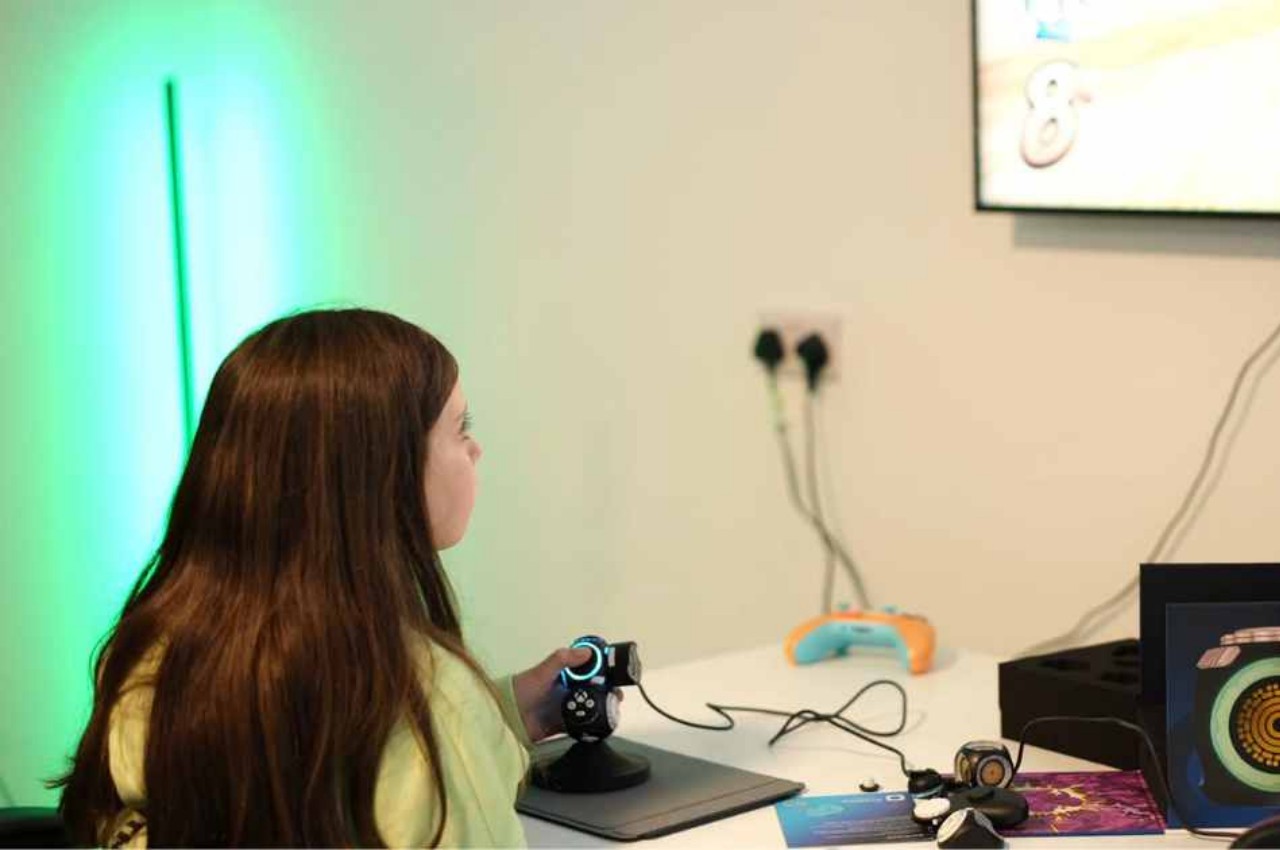
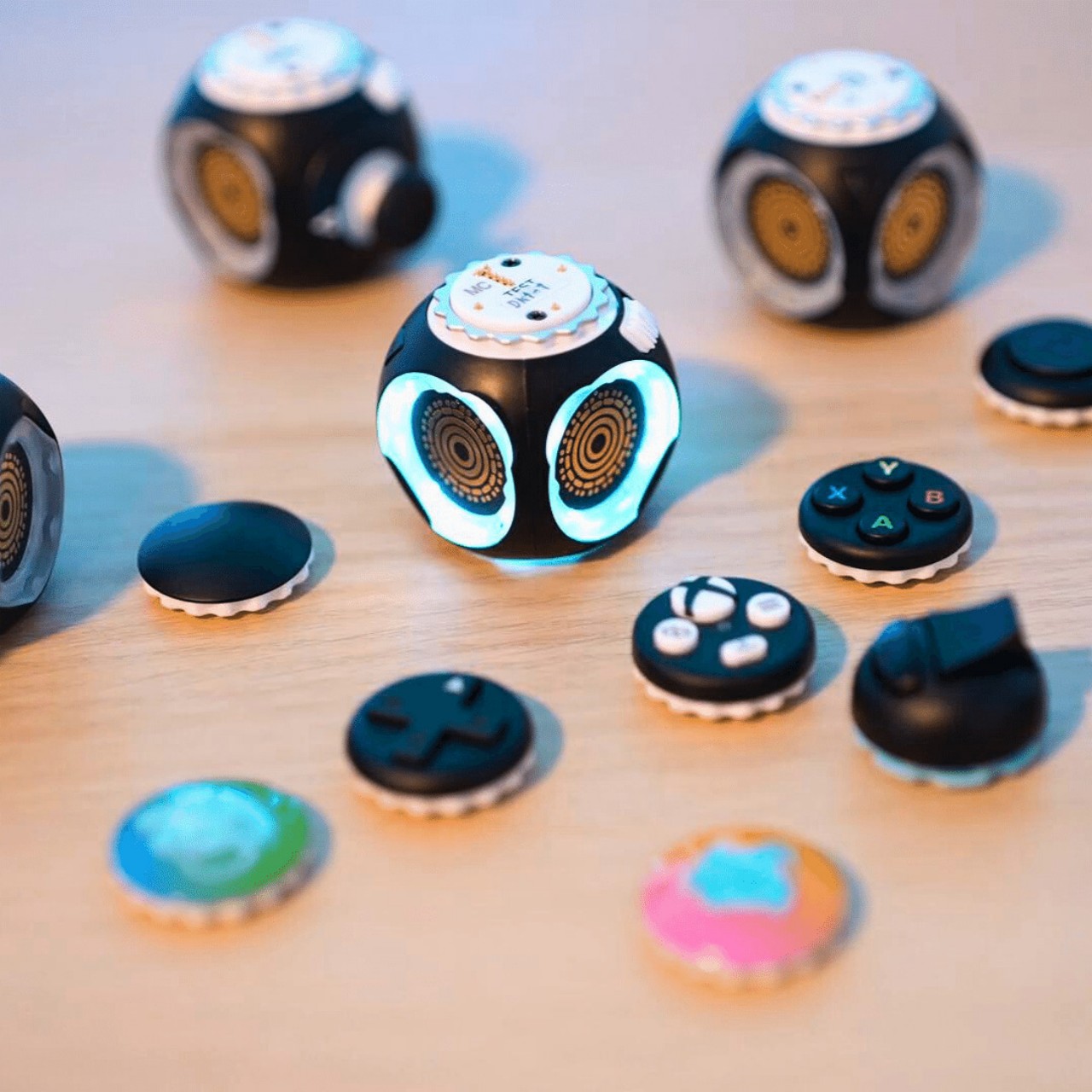
It’s about time that gaming companies and studios realize that there are people who would love to play their games and use their consoles but are hindered because of one physical disability or another. Accessibility has only recently been an advertised feature of games and gaming hardware, and it might take a while before it actually becomes a standard in the industry. Thankfully, major companies are leading the accessibility charge, giving birth to accessibility devices that may look weird but give all gamers, even those perfectly capable ones, incredible powers to enjoy games the way they want them. Take for example this newly announced Xbox-certified accessibility controller that almost looks like a small alien swarm thanks to its modular design.
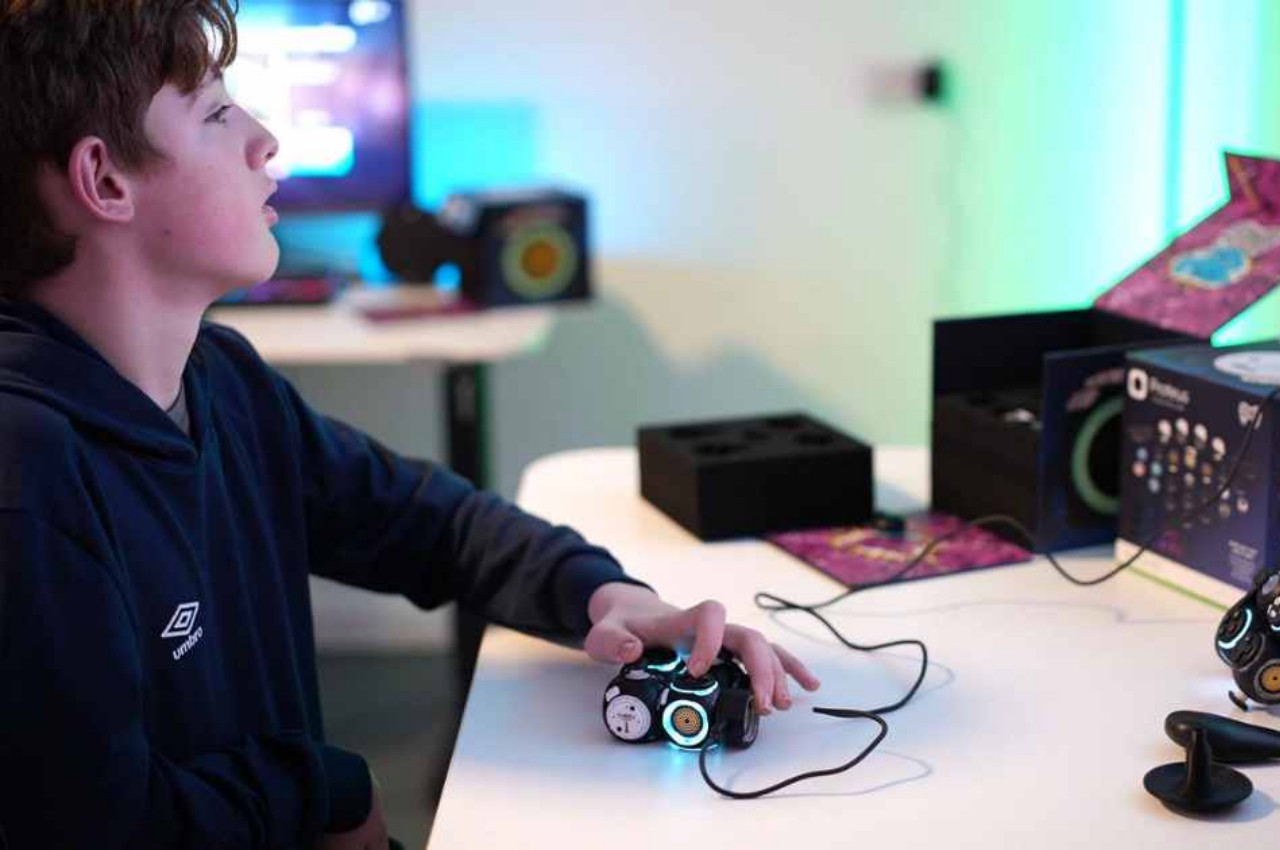
For gamers with physical disabilities that relate to their hands or fine motor control, the typical game controller or keyboard, despite their ergonomic designs, is sometimes impossible to use. Thankfully, there has been an increased interest in developing more accessible control devices, spearheaded by the Xbox Adaptive Controller in 2018 and followed by the Sony Access Controller, previously dubbed “Project Leonardo,” last year. Of course, there are more than just two ways to design for accessibility, and ByoWave’s Proteus Controller is just the latest to turn heads with its unconventional mechanism and innovative idea.
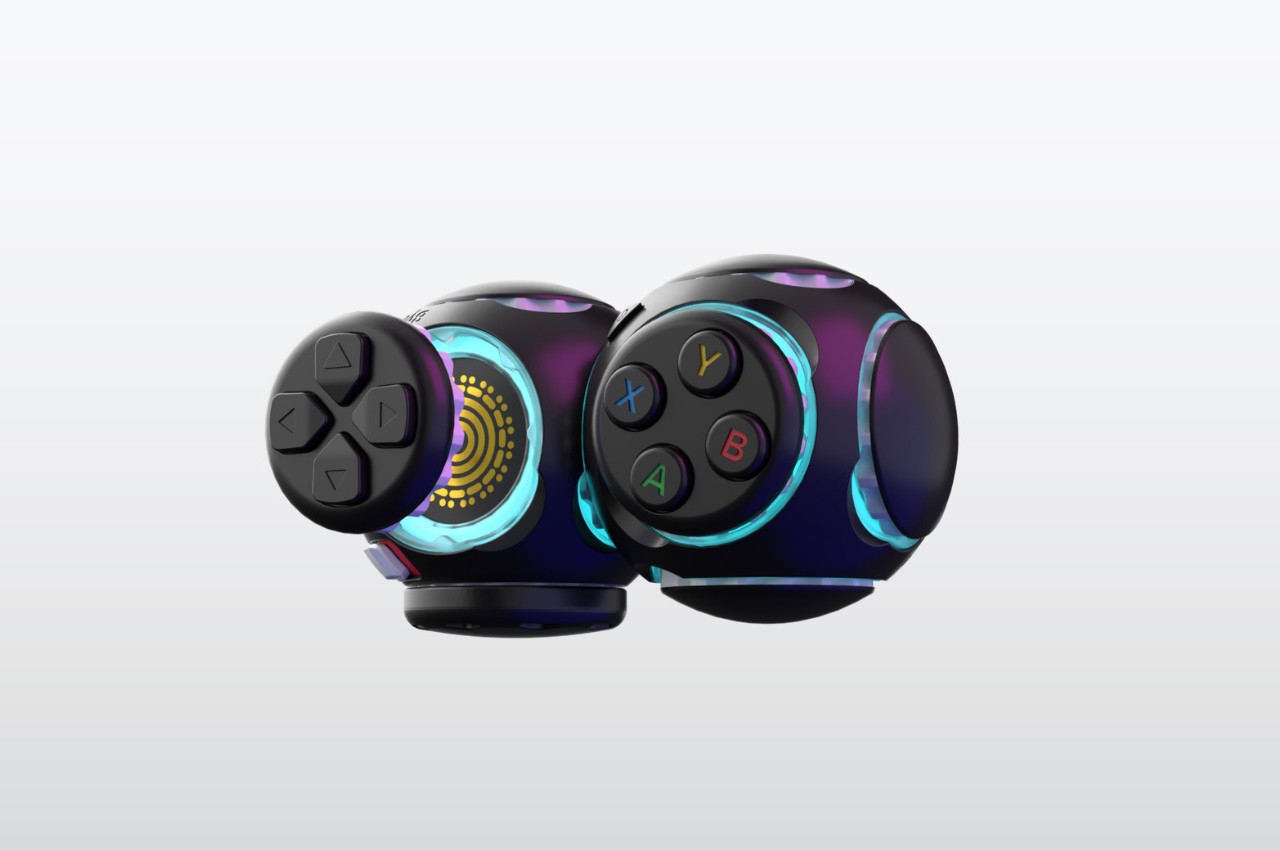
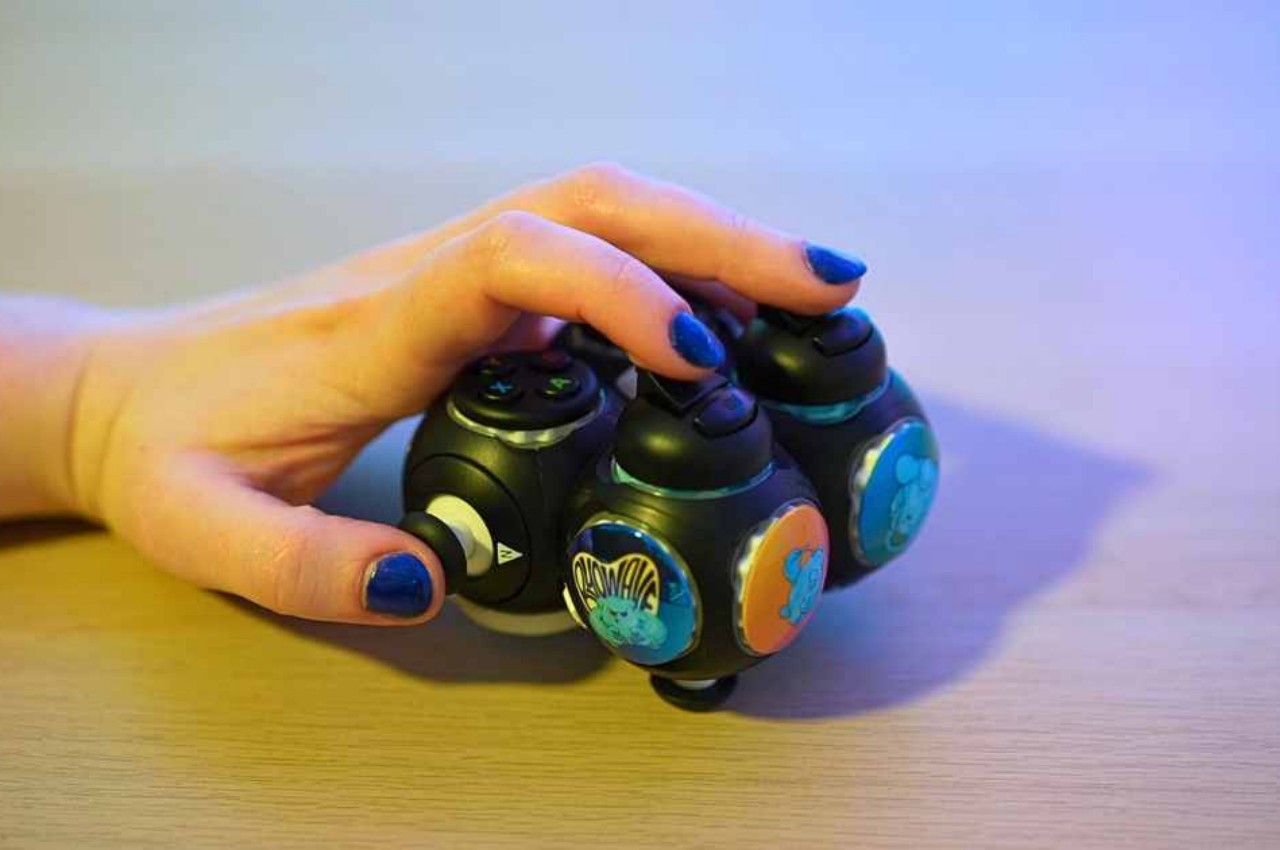
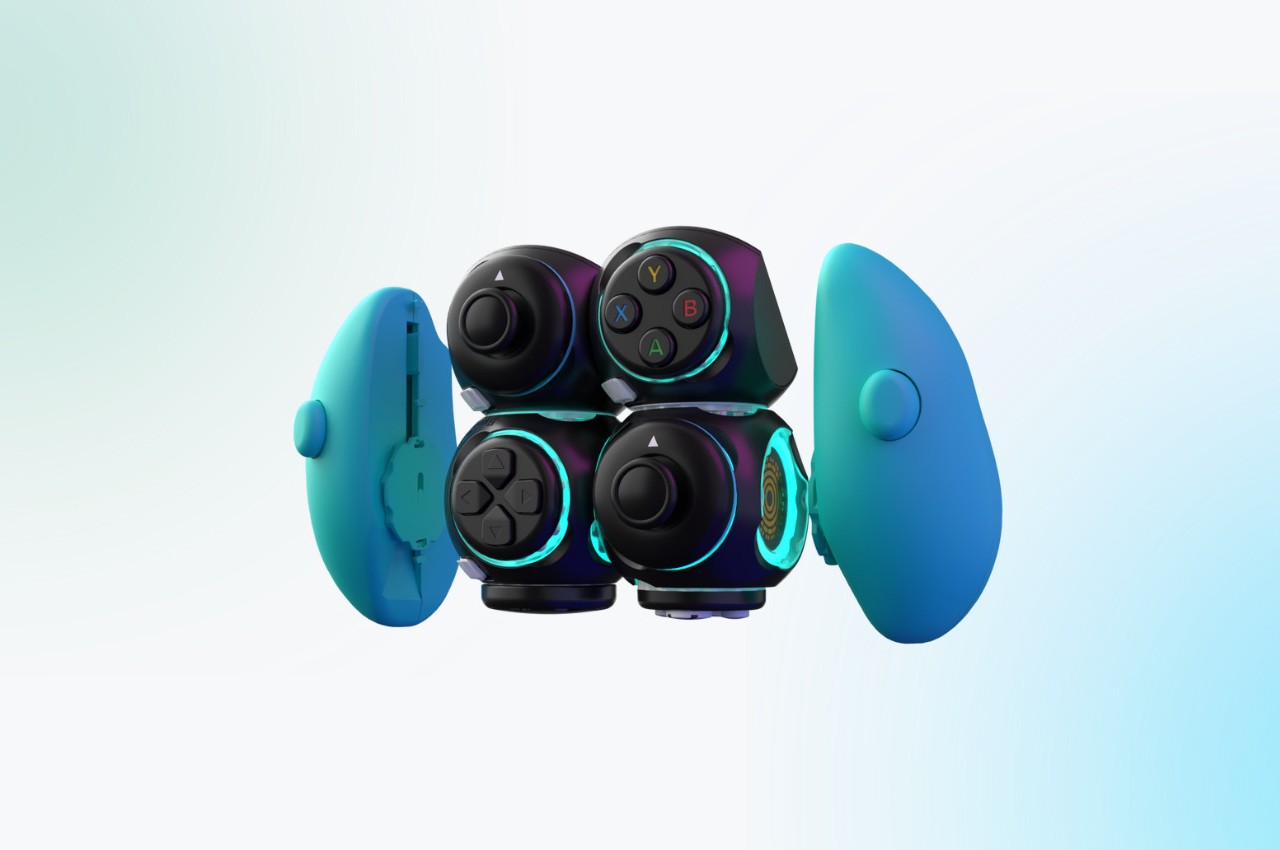
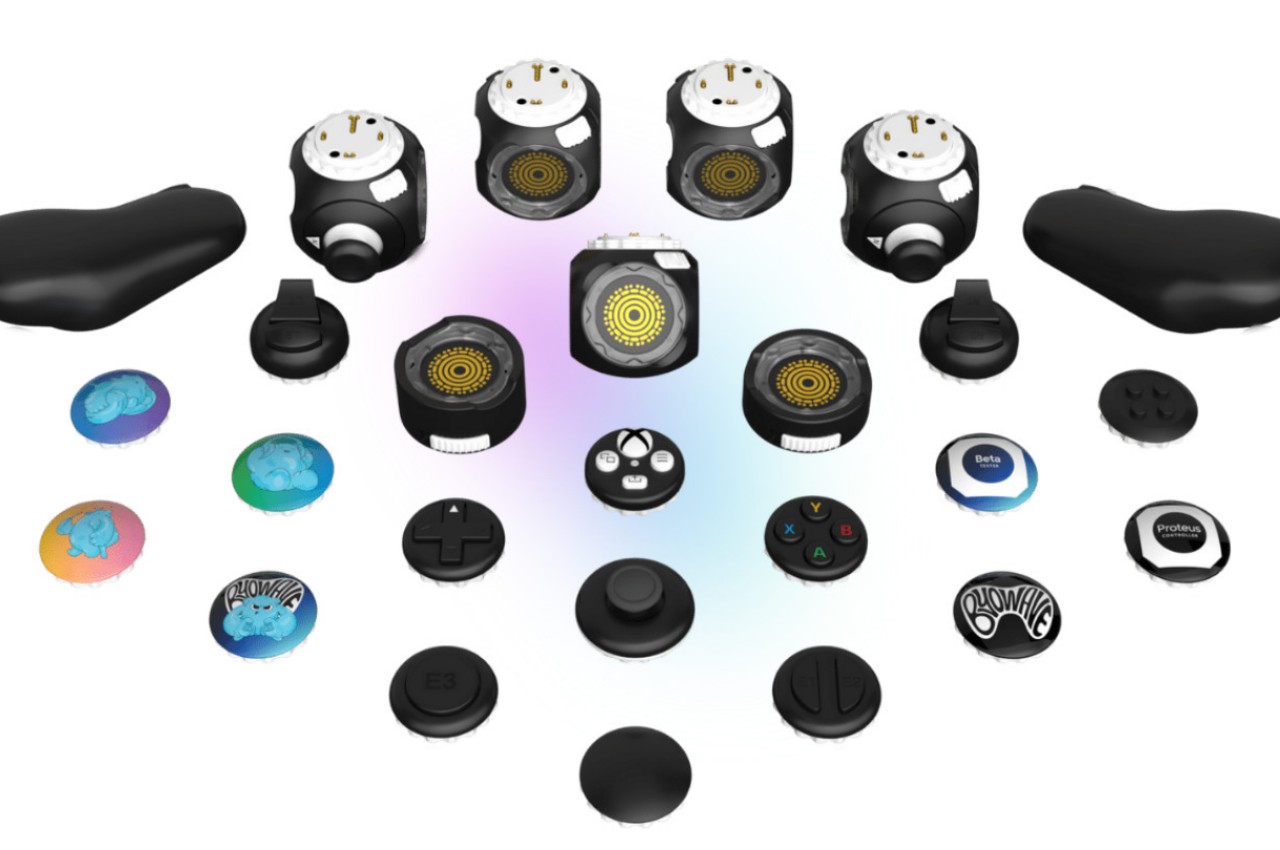
In a nutshell, the Proteus Controller is made up of small, rounded cubes with some faces that can be changed to be a button, a D-Pad, a joystick, and more. These cubes can then connect to each other to form different shapes that cater to the needs of the gamer. It can, for example, be a single, curving stack that you can hold like a joystick, a 2×2 grid that you can mash like arcade buttons on a table, or even a conventional gamepad layout with the right accessories and connectors. It can support over a hundred such configurations and LED lighting combinations, letting the user decide how they want to play depending on their circumstances.
Of course, the controller is primarily designed to address the needs of gamers with disabilities, but it’s not hard to see how this will be popular with almost any gamer, especially those on the Xbox platform. The sheer number of options and combinations is mind-blowing, and some might even just make new controller designs just for the fun of it. It’s a clear example of how accessible design actually benefits everyone, and gamers will probably be excited for the arrival of the Proteus accessibility controller in the fall, especially given its starting price of $299.
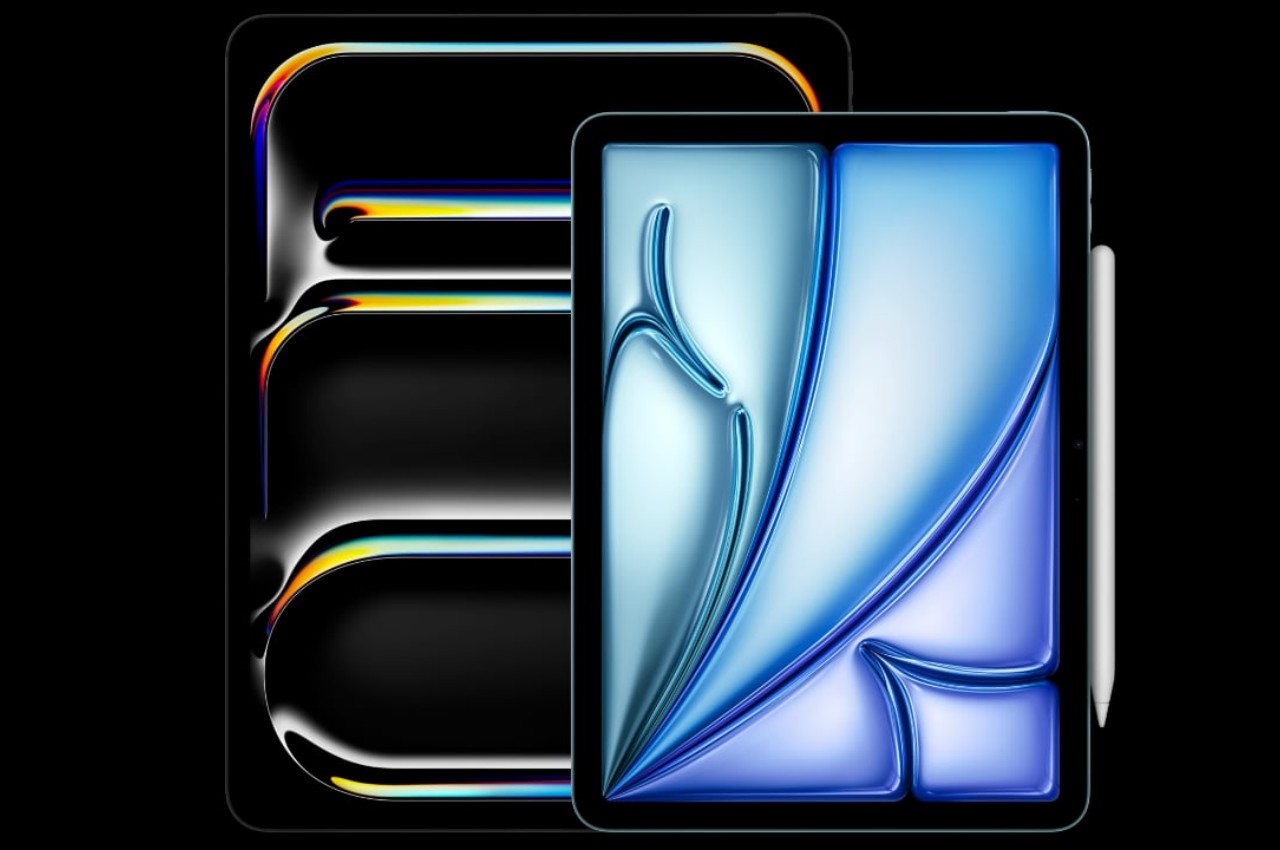
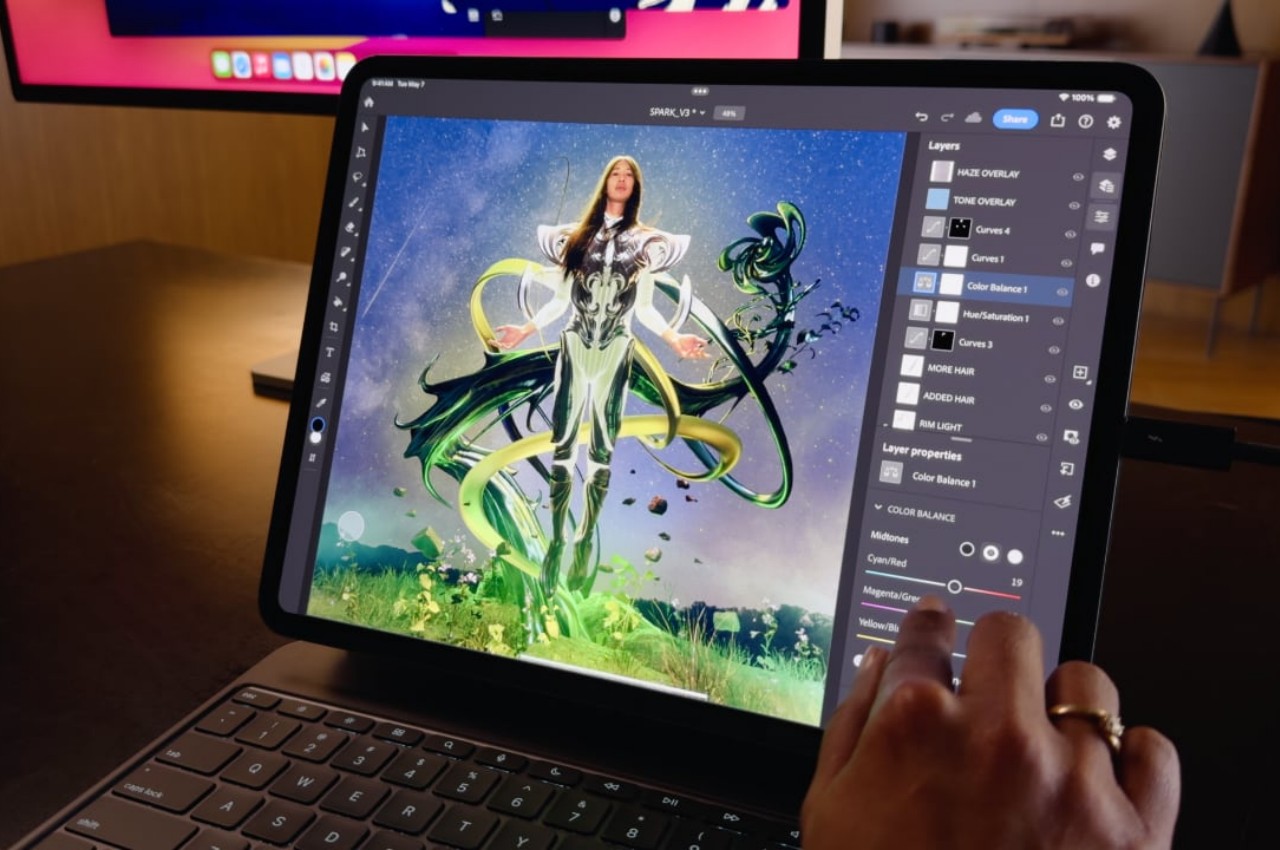
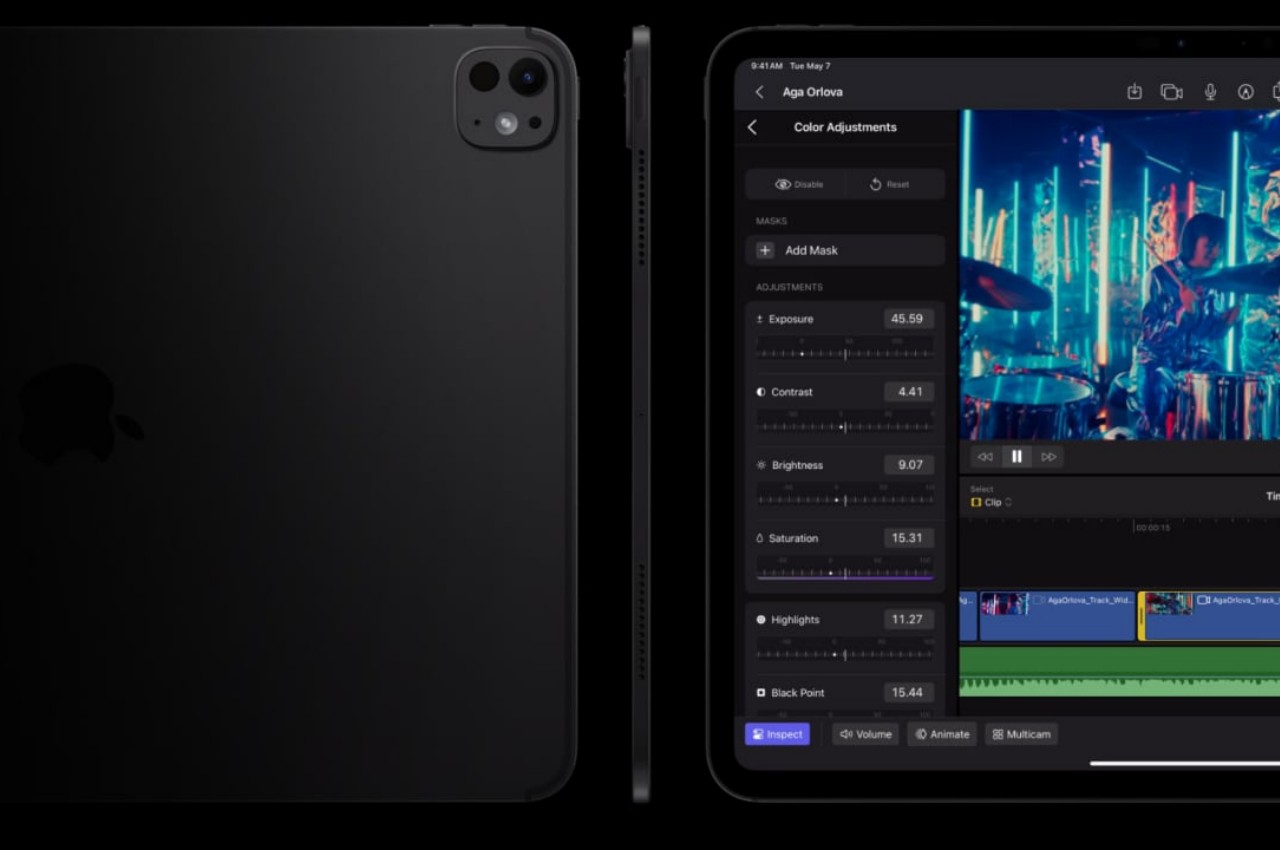
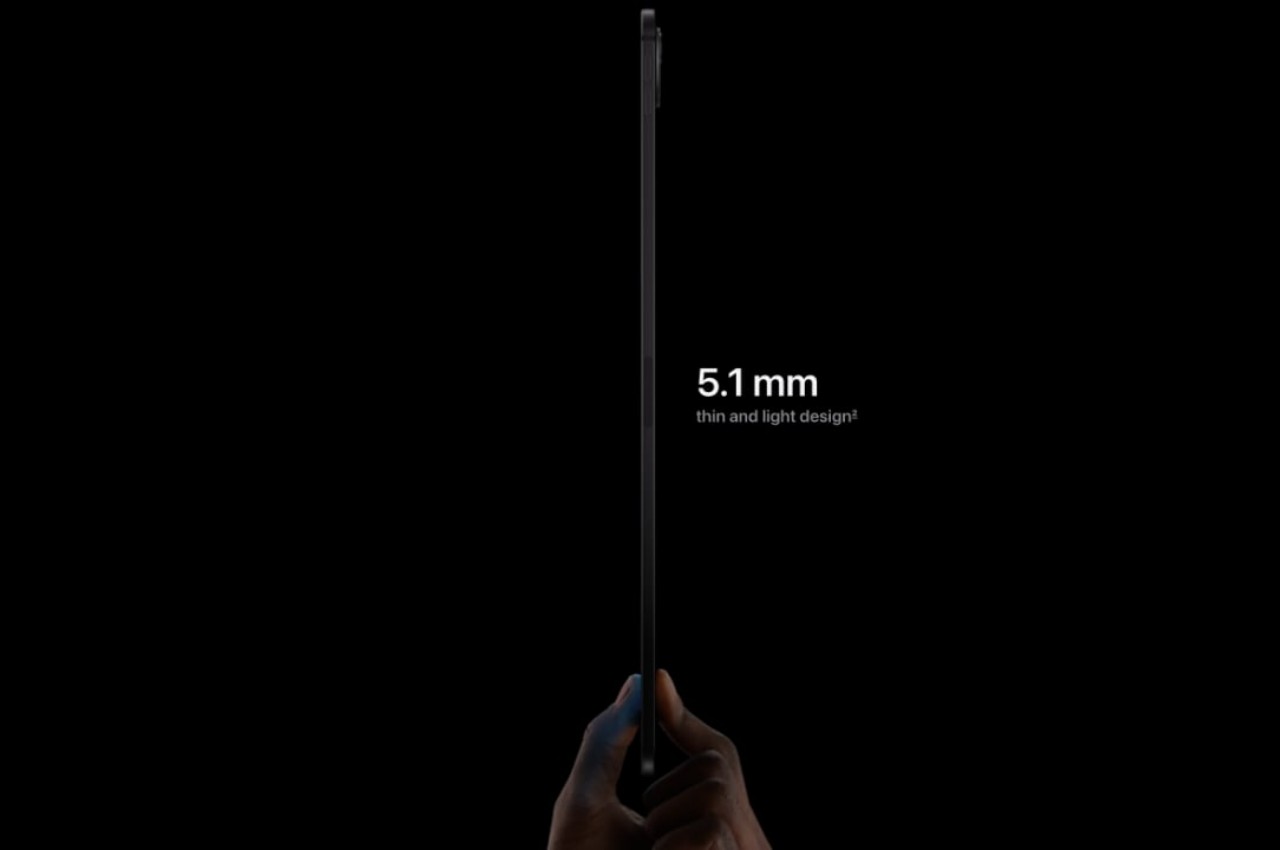
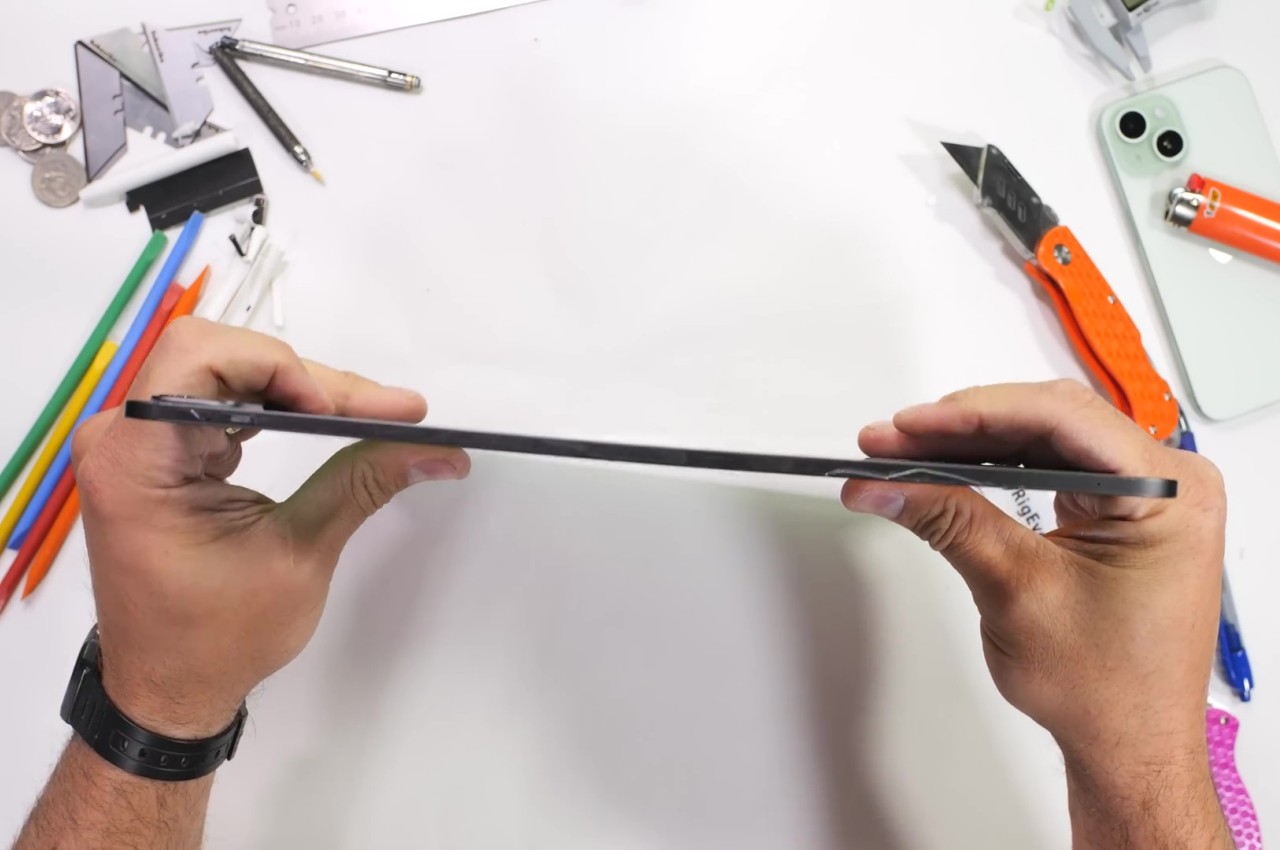
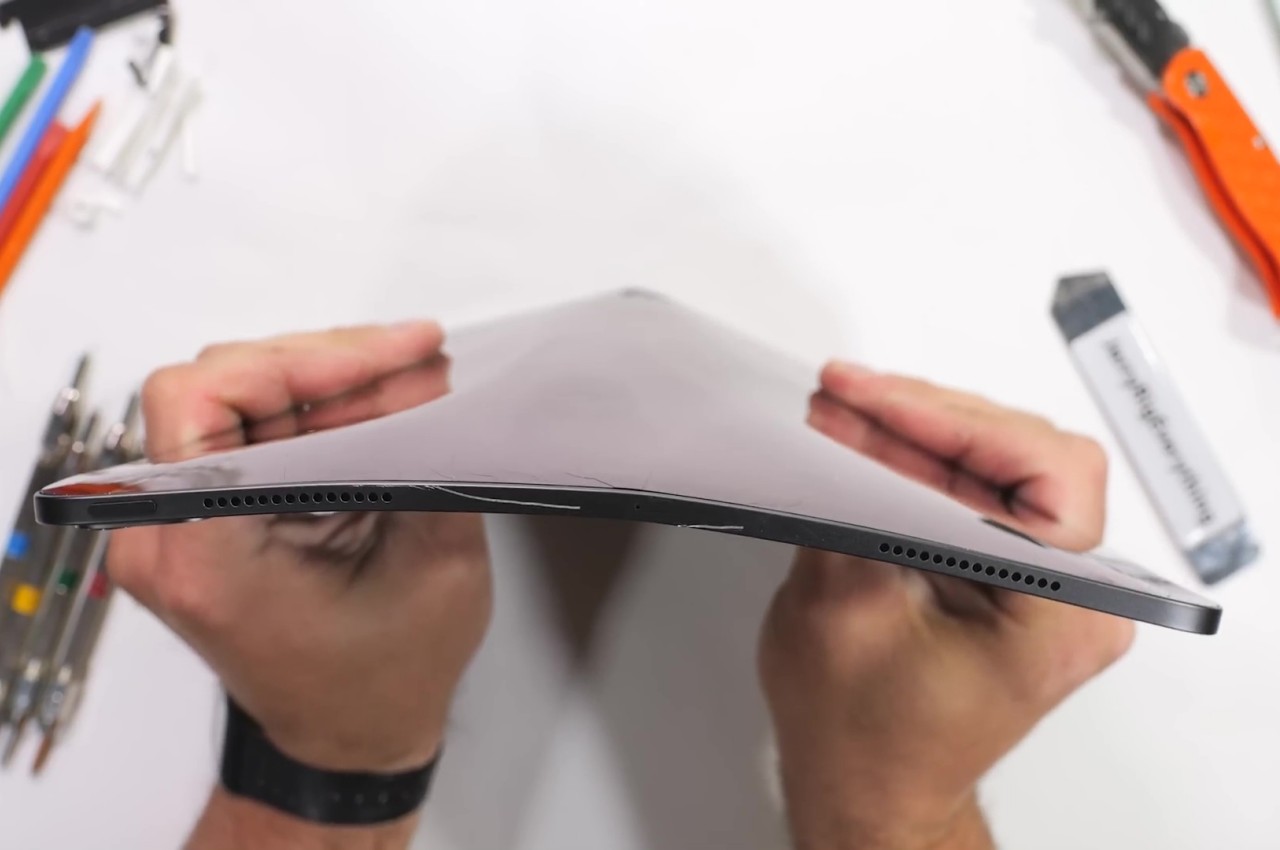
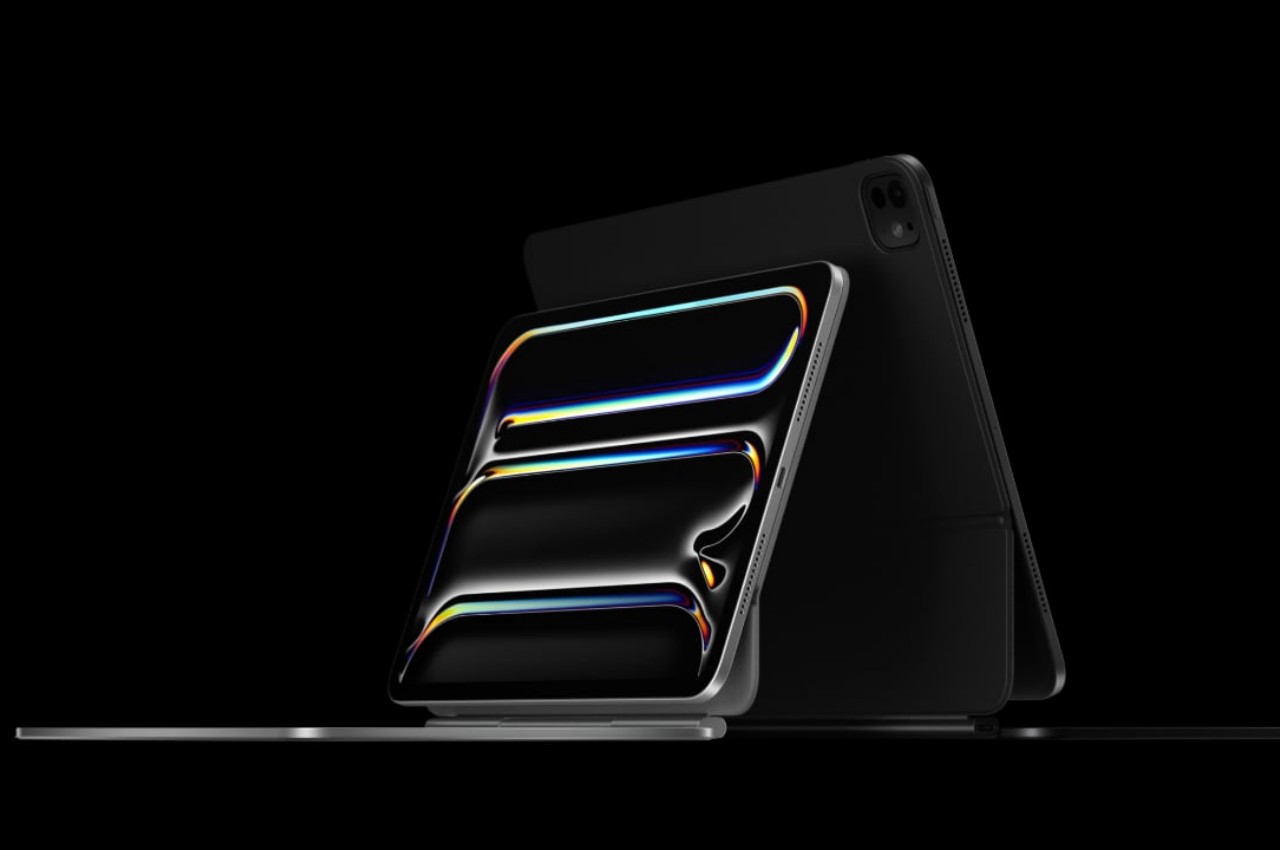
There is an almost irrational desire to have the lightest and the thinnest mobile devices. After all, we don’t want to carry the literal weight of just products if we can help it, and thin devices also look sleeker, take up less space in your bag, and, at least in theory, use less material during production. That thinness, however, doesn’t come without a price, at least in terms of durability. Thin sheets of wood break more easily (karate, anyone?) and it’s also easier to bend thin metal than thicker ones. That may be the concern some people will have about the new M4 iPad Pro, especially the larger 13-inch model, but a rather excruciating stress test fortunately proves that isn’t the case, with one important caveat.
You might no longer hear about it, but there were times when Apple’s quest for thin designs backfired catastrophically. Its first large iPhones, the iPhone 6 and iPhone 6 Plus, were notoriously susceptible to bending when placed in back pockets that the term “bendgate” was coined in 2014. The first iPad Pro, though less dramatic, was also proven to be less than reliable if put under extreme pressure. Fortunately, those seem to be well in the past and Apple has figured out a new design to help prevent that sort of structural failure in its thinnest iPad yet.
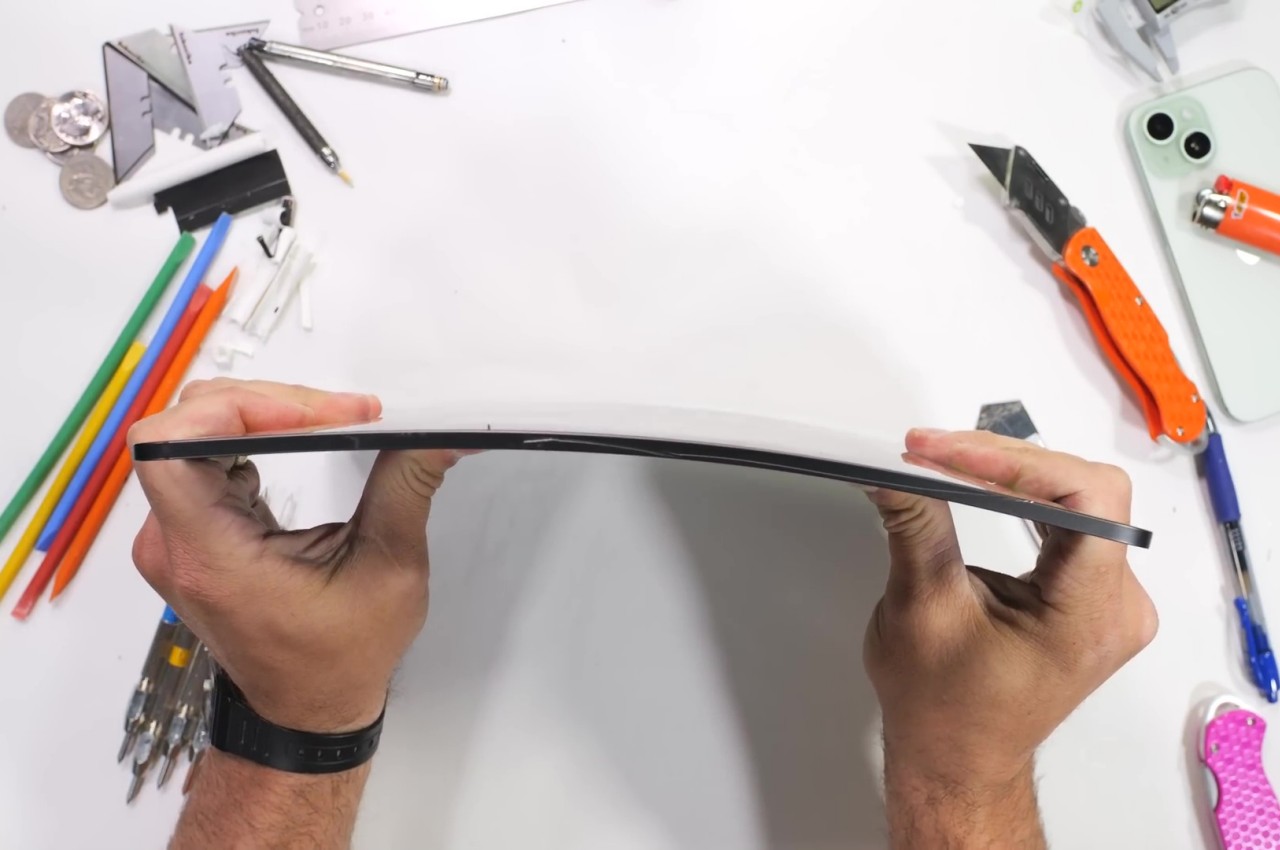
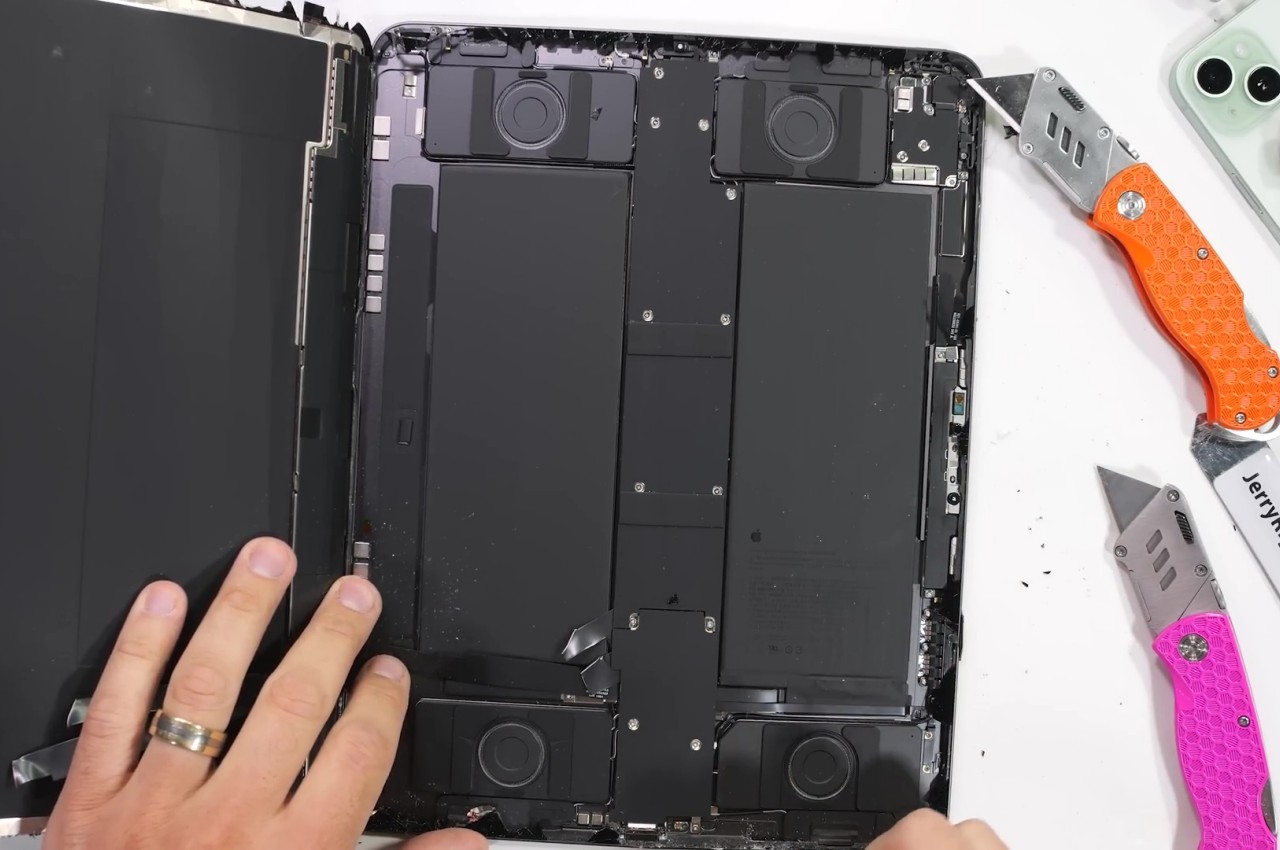
JerryRigEverything, the YouTuber whose claim to fame has been the unrelenting bend, scratch, and burn tests on phones and tablets proved that new solution to some extent. Apple apparently added a “cowling” or a spine inside the thin tablet that runs across its height, covering the new M4 chip in the center and splitting the two large battery packs. Thanks to this new structural support, bending the tablet across its long edge no longer breaks it in half. It does deform in a way that won’t return to its flat state but it at least remains usable.
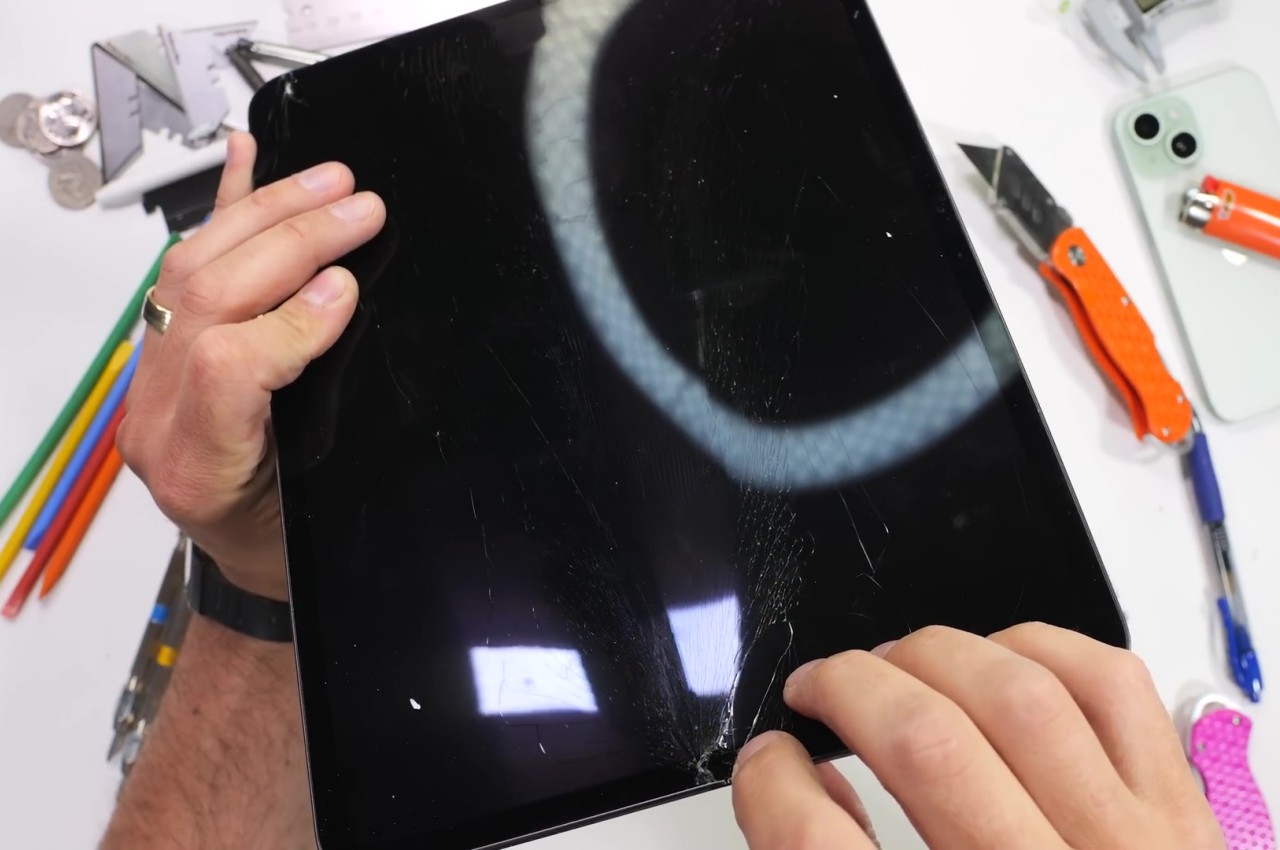
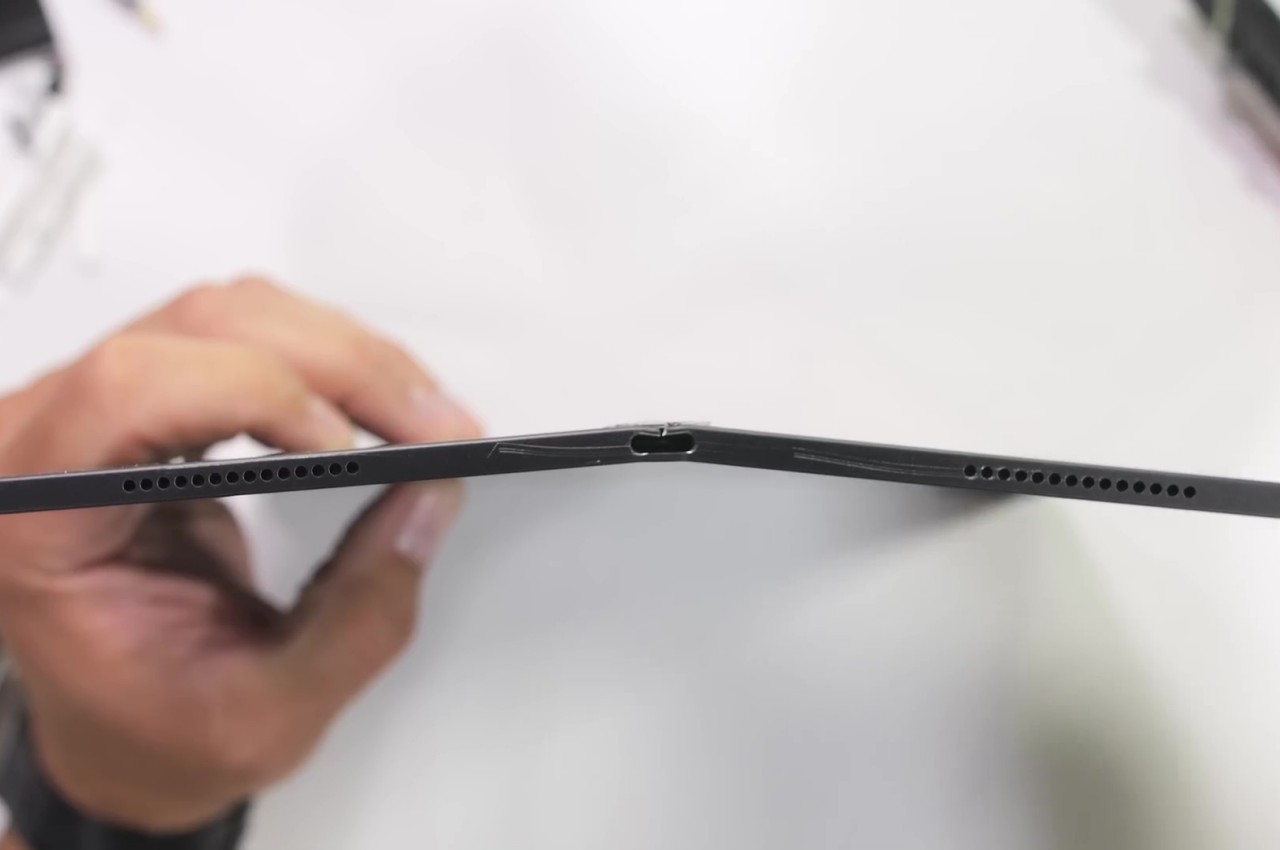
The catch, however, is that bending it in the opposite direction does actually destroy the iPad Pro. The flaw unsurprisingly lies in the thinnest part of the frame, the area around the USB-C port. With enough pressure, this bends sharply and pushes into the screen, cracking it and rendering it completely unusable. To be fair, the chances of that happening inside your backpack are extremely rare, but its existence should give owners caution. That said, most M4 iPad Pro owners will probably keep their ultra-thin tablets inside the new keyboard case when in transit anyway.
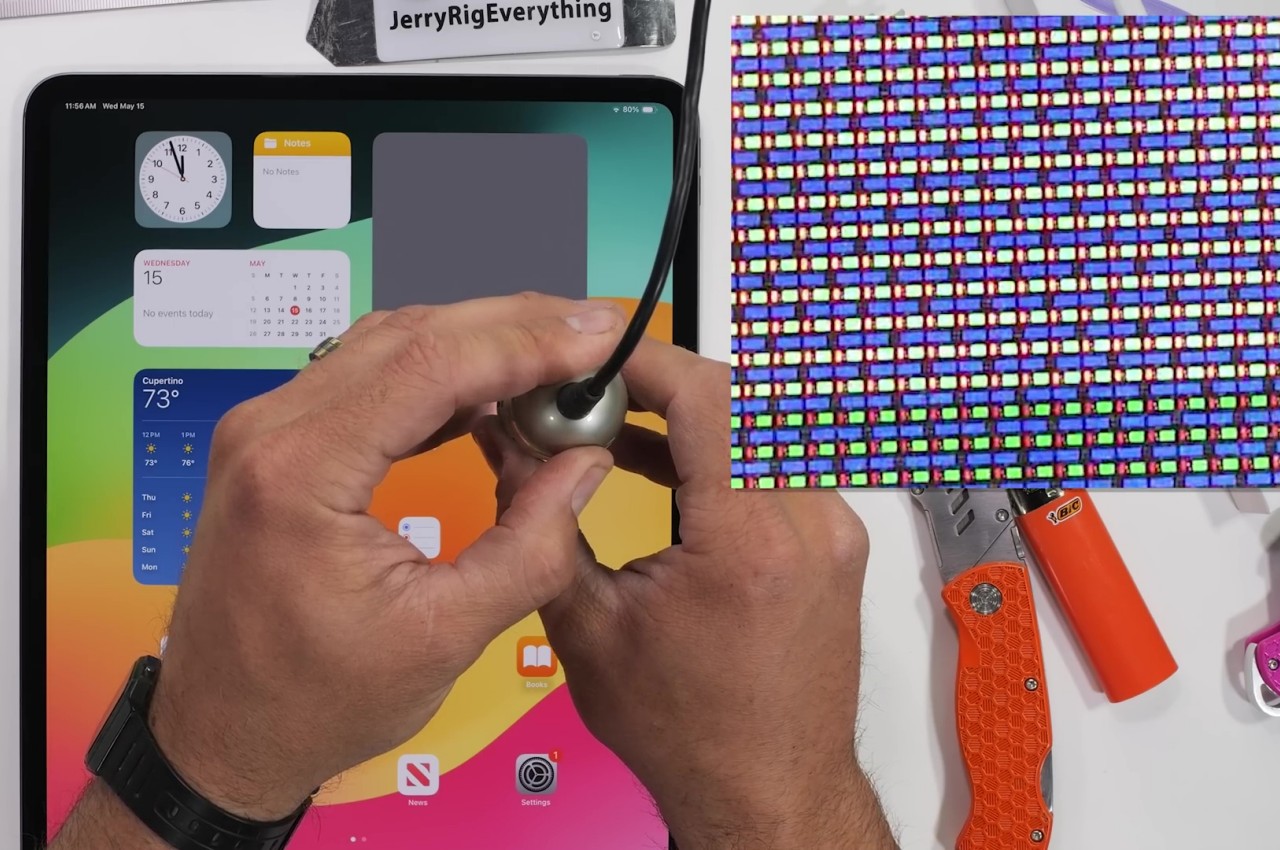
The stress test of the 2024 13-inch iPad Pro also shows some of the gems of this new design, like that aforementioned spine that was revealed after the shattered screen was peeled off. The YouTuber also provided a close-up of the Tandem OLED screen but, unfortunately, can’t show the second layer of OLED pixels underneath. All in all, the design of the M4 iPad Pro, both in terms of technology as well as product design, is quite impressive, but that isn’t an excuse not to take proper care of the device. Be sure to check out our hands-on of the new iPad Pro and keep a look out for our in-depth review coming soon!
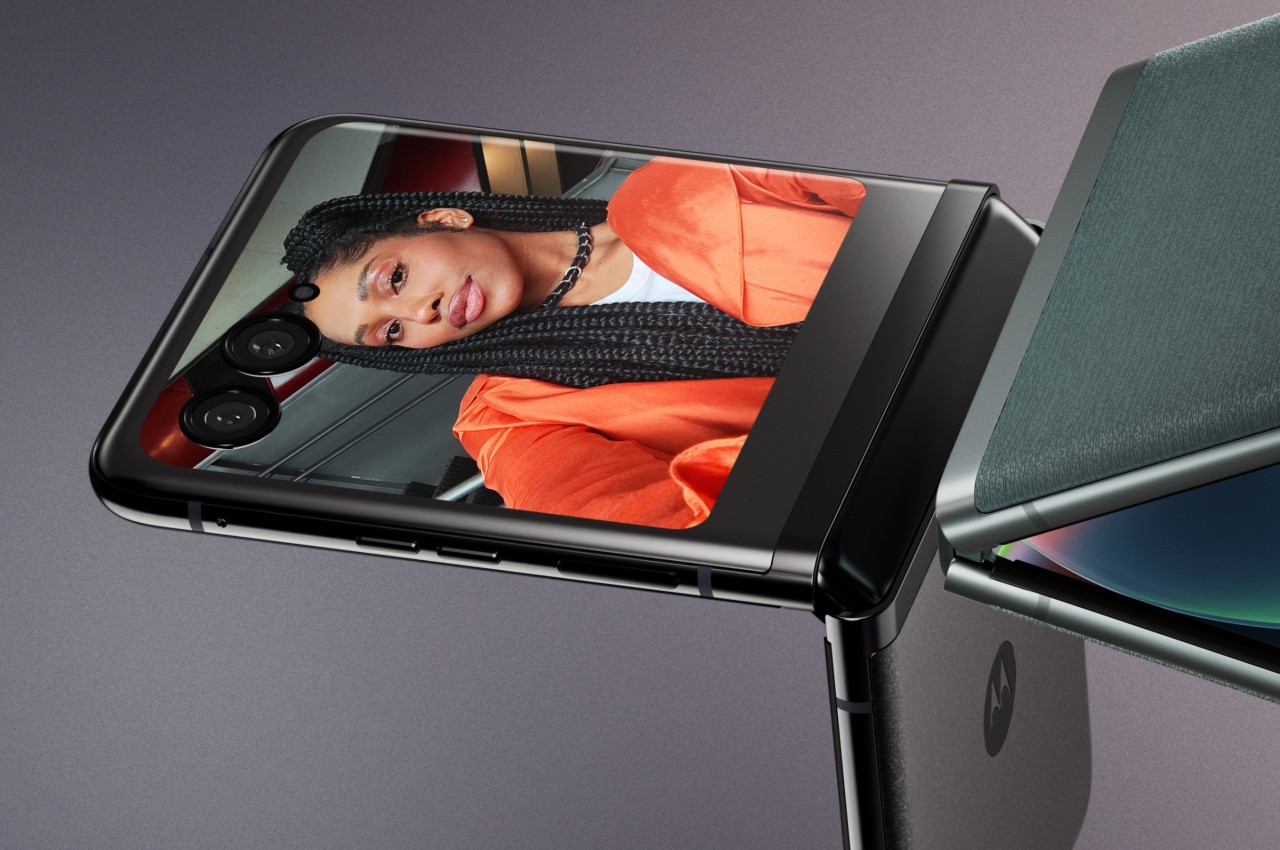
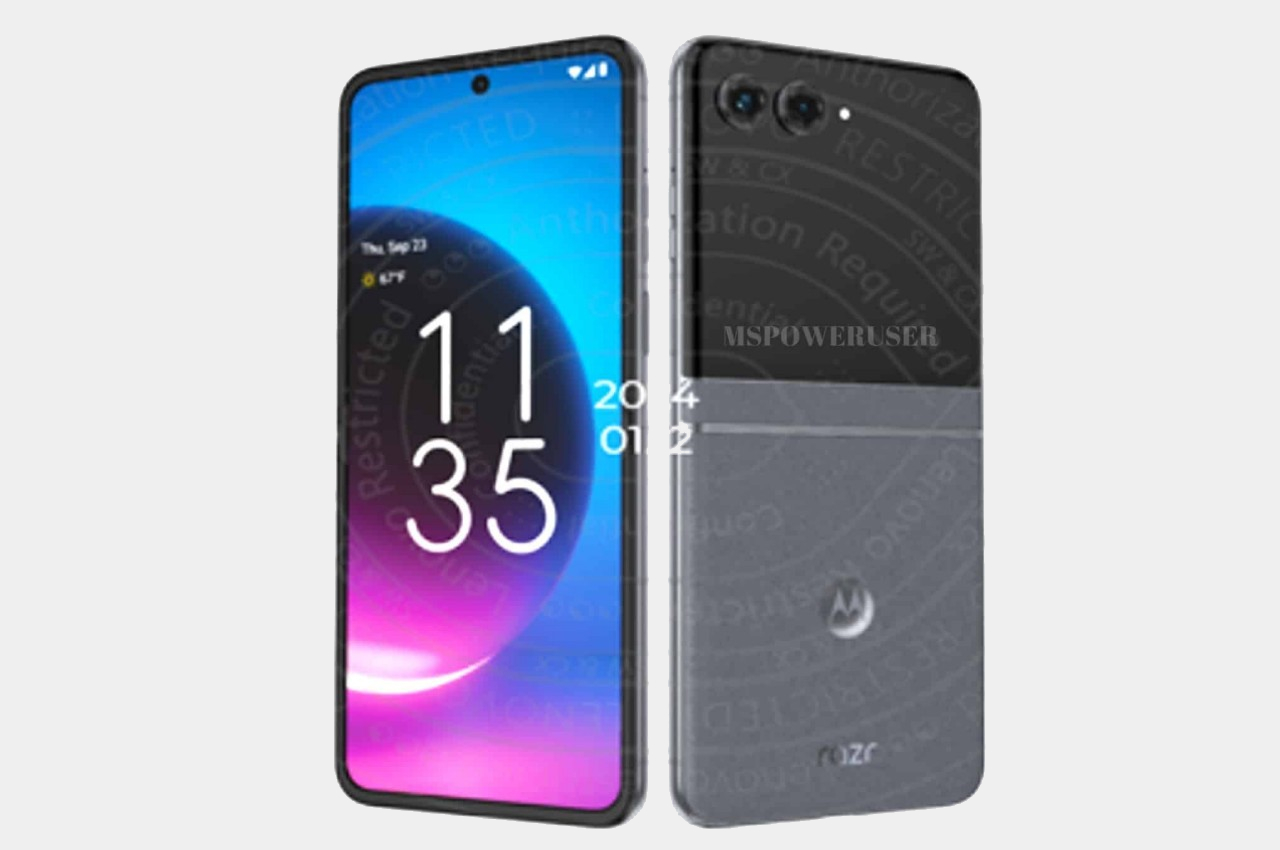
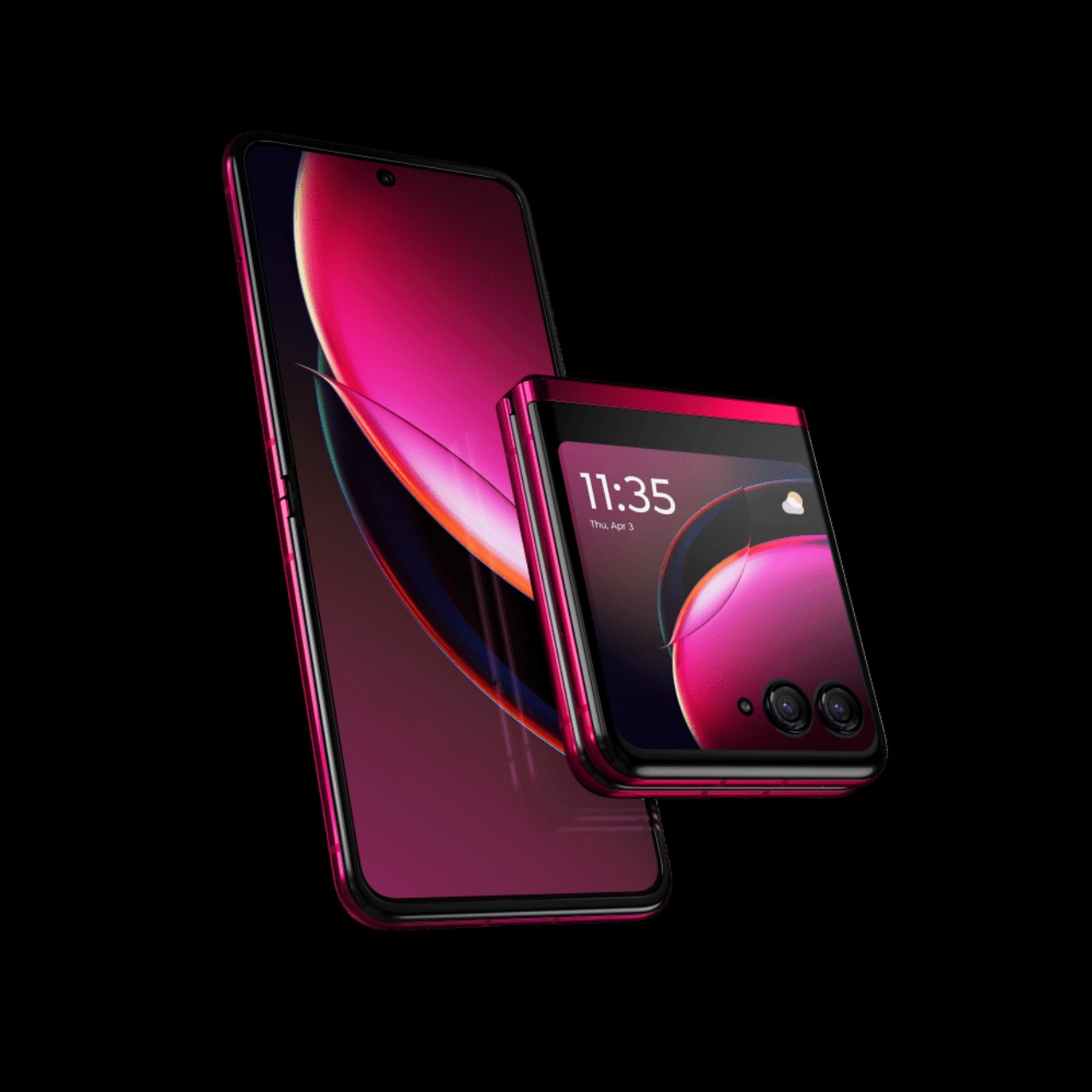
Google I/O 2024 has come and gone, and despite rumors and expectations, a new foldable phone was nowhere in sight. Of course, the Google Pixel Fold is hardly the only game in town, nor is it the only one that’s expected to debut really soon. Perhaps beating both Google and Samsung to the punch, Motorola’s next-gen foldable could be hitting shelves as early as June, though it will still be competing with the likes of the Samsung Galaxy Z Flip rather than the OnePlus Open and other larger foldables. Unofficial information about the device is quite thin, but the ones we’ve already heard are quite substantial and paint an interesting picture, one that could make the Motorola Razr+ 2024 or Motorola Razr 50 Ultra the clamshell foldable to beat this year.
Designer: Motorola
Motorola Razr+ 2024: Design
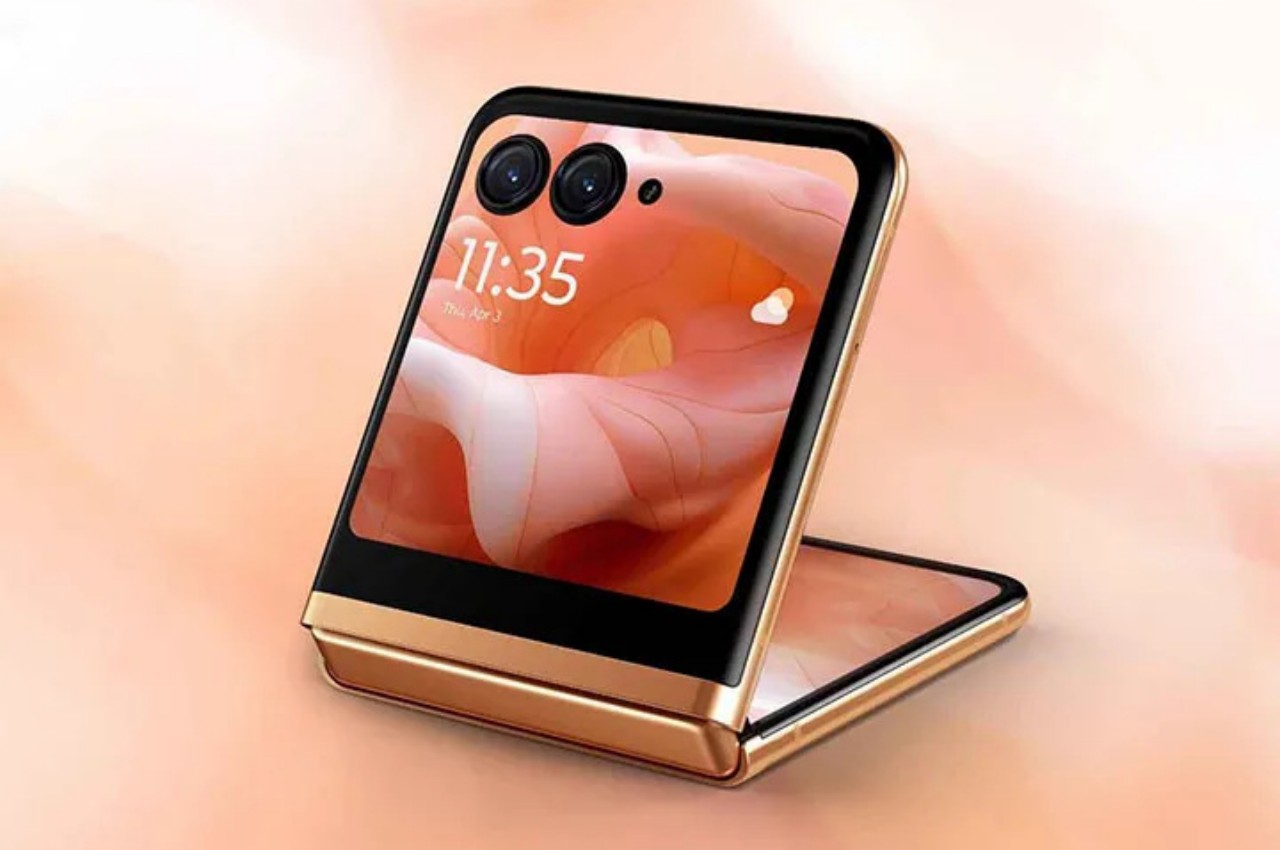
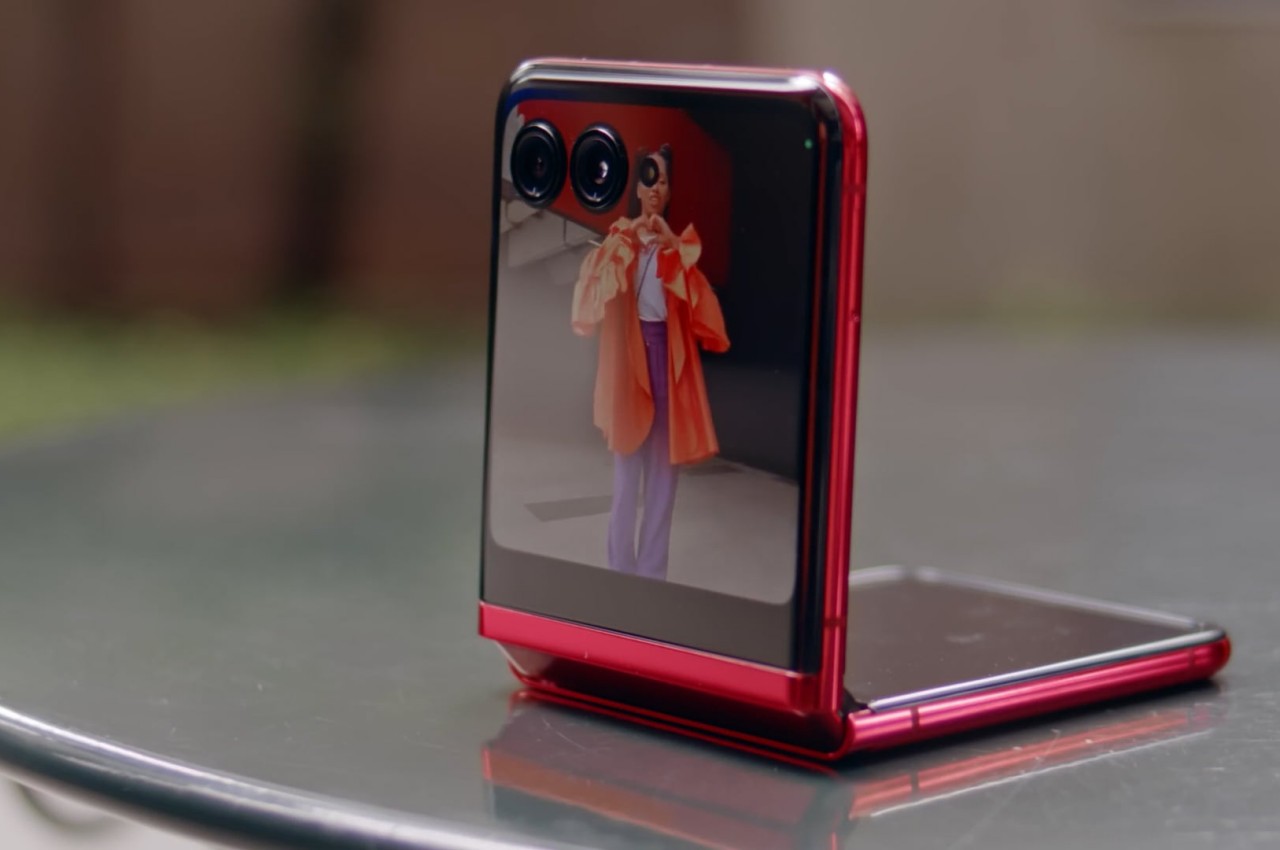
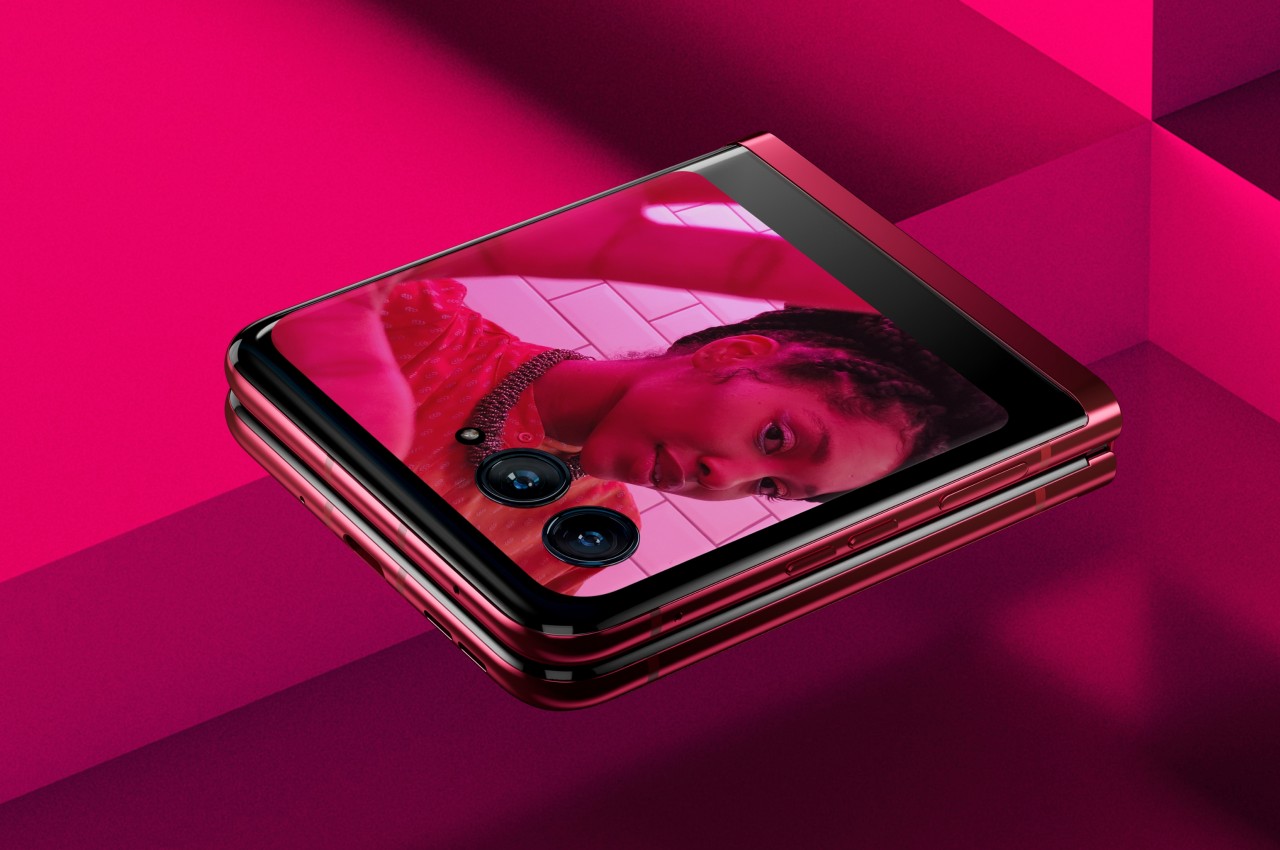
According to sources, this year’s Motorola foldable would look exactly like last year’s Motorola foldable, save for some changes in screen size. That means the Motorola Razr+ 2024’s external screen will still cover the entire surface of the upper half of the phone’s back, leaving only room for the camera lenses themselves. It might sound like a letdown and a sign of lack of innovation over at Motorola, but sticking to a design that works is also a sign of maturity, especially since the design is only a year old.
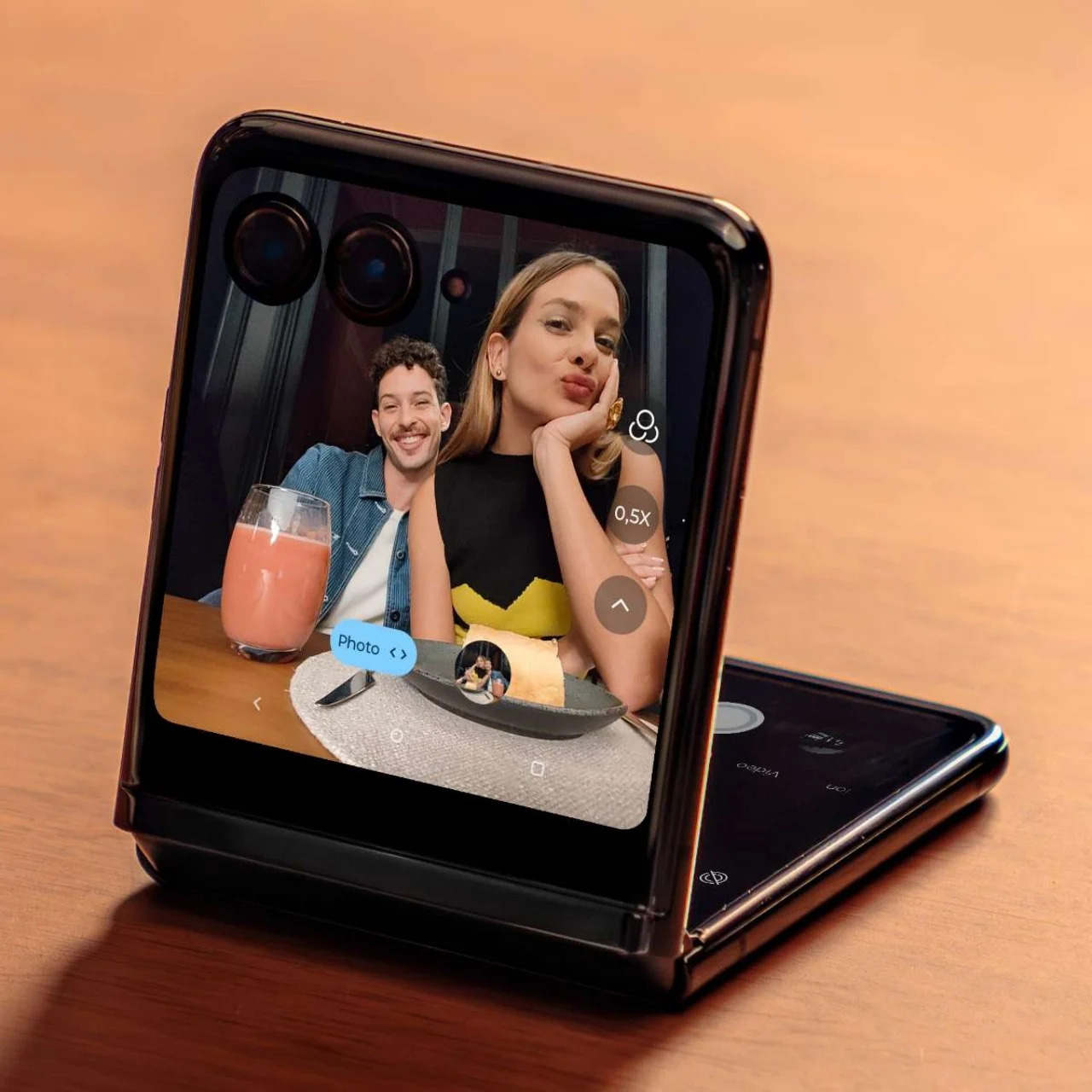
Motorola’s design for its Cover Screen is admittedly divisive. On the one hand, it’s the only foldable of its kind that utilizes the whole area, while others make do with tiny rectangles, even tinier circles, or a square with an uneven cutout to make way for cameras. On the other hand, this also makes for a weird arrangement that actually cuts out part of the display anyway, making the image or text in that area inaccessible.
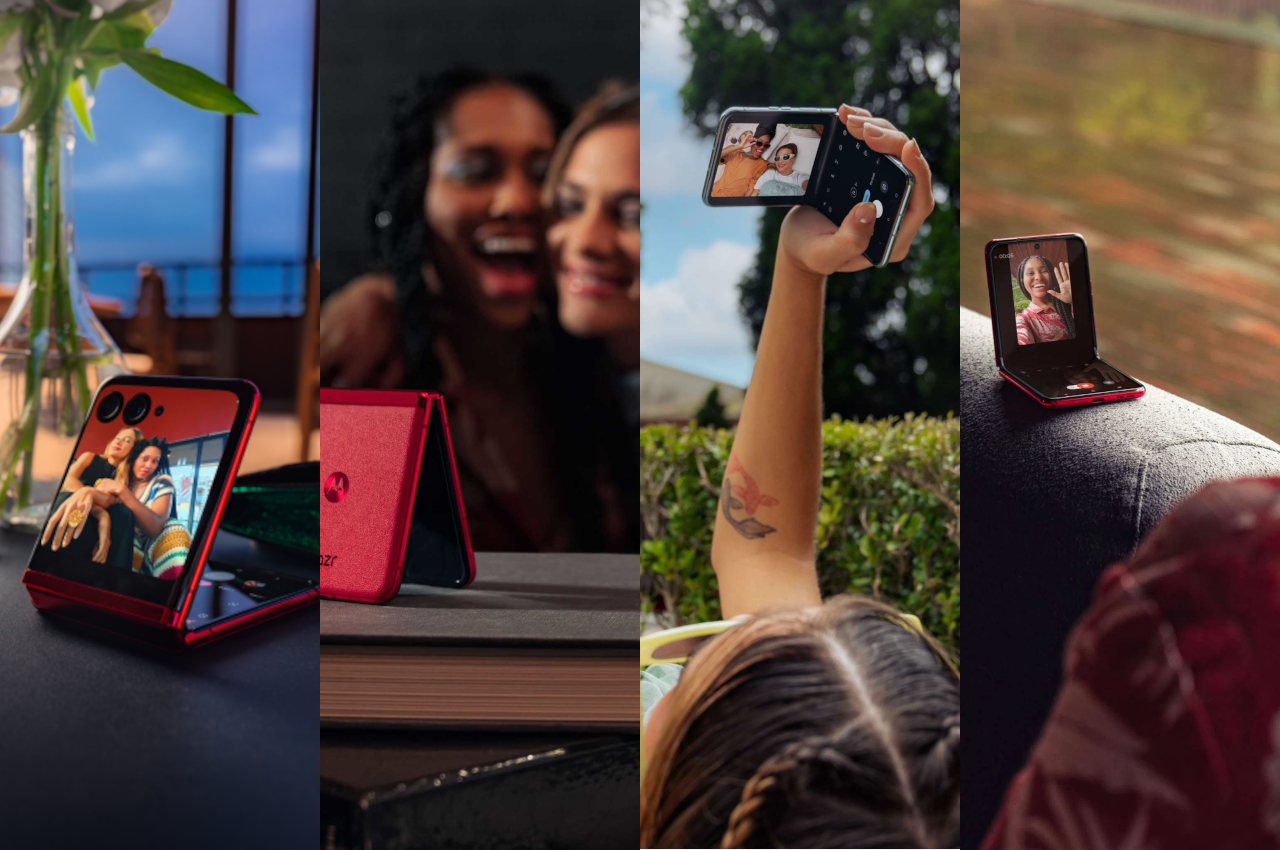
Motorola is also the only brand that allows normal apps to run on that external screen, which is both an advantage and a disadvantage. Regardless, it seems to be sticking to its guns for one more year, offering an experience that, while faithful to the design spirit of the original RAZR, isn’t afraid to go beyond to offer something new and useful.
Motorola Razr+ 2024: Specs and Software
While the Moto Razr+ 2024, or Moto Razr 50 Ultra, won’t look any different on the outside, it will be a very different beast on the inside. Of course, there’s the new Qualcomm Snapdragon 8s Gen 3 leading the changes, and there will supposedly be a larger external screen at 3.9 inches up from last year’s 3.6-inch Cover Screen. There will also be 12GB of RAM paired with 256GB of storage, while the battery has been expanded from 3,800mAh to 4,000mAh.
Given the expected launch windows, the 2024 Razr will be running Android 14 out of the box, and while it might sound like Motorola would upgrade it once Android 15 comes out, there’s not really any certainty. After all, the Motorola Razr+ 2023, which launched with Android 13, still received Android 14 half a year later. Despite being once owned by Google (now under Lenovo’s stewardship), Motorola’s track record for Android updates sadly isn’t that impressive.
Motorola Razr+ 2024: Cameras
Part of the big upgrades coming to the Motorola Razr+ 2024 according to those rumors is an upgrade to the camera system. It will now have not one but two 50MP cameras, one of which has a wide lens while the other is capable of 2x telephoto zoom. Given how Motorola advertises its foldable phone as a sort of mini camcorder, more capable cameras are definitely in order. The 32MP selfie camera, on the other, might remain the same as last year.
Motorola Razr+ 2024: Price and Release Date
There has been no word on the exact date when the Motorola Razr+ 2024 will be launched, which might go by the name of Motorola Razr 50 Ultra in other markets, but all signs point to yet another June release. In fact, the device was spotted making its way through a certification process, suggesting that its debut is close at hand. The leak also confirms what we’ve heard about the design, that it would be a dead knocker for last year’s model.
That leak also “revealed” the color options for the Razr+ 2024, which include Blue, Orange, and Green instead of last year’s Black, Magenta, and Peach. But the more interesting detail about the phone is its starting price of $999 for the base model with 12GB of RAM and 256GB of storage. That’s the same price for half the capacity last year, so it will definitely make the Motorola Razr+ 2024 the cheapest flagship foldable in the market.
Motorola Razr+ 2024: Final Thoughts
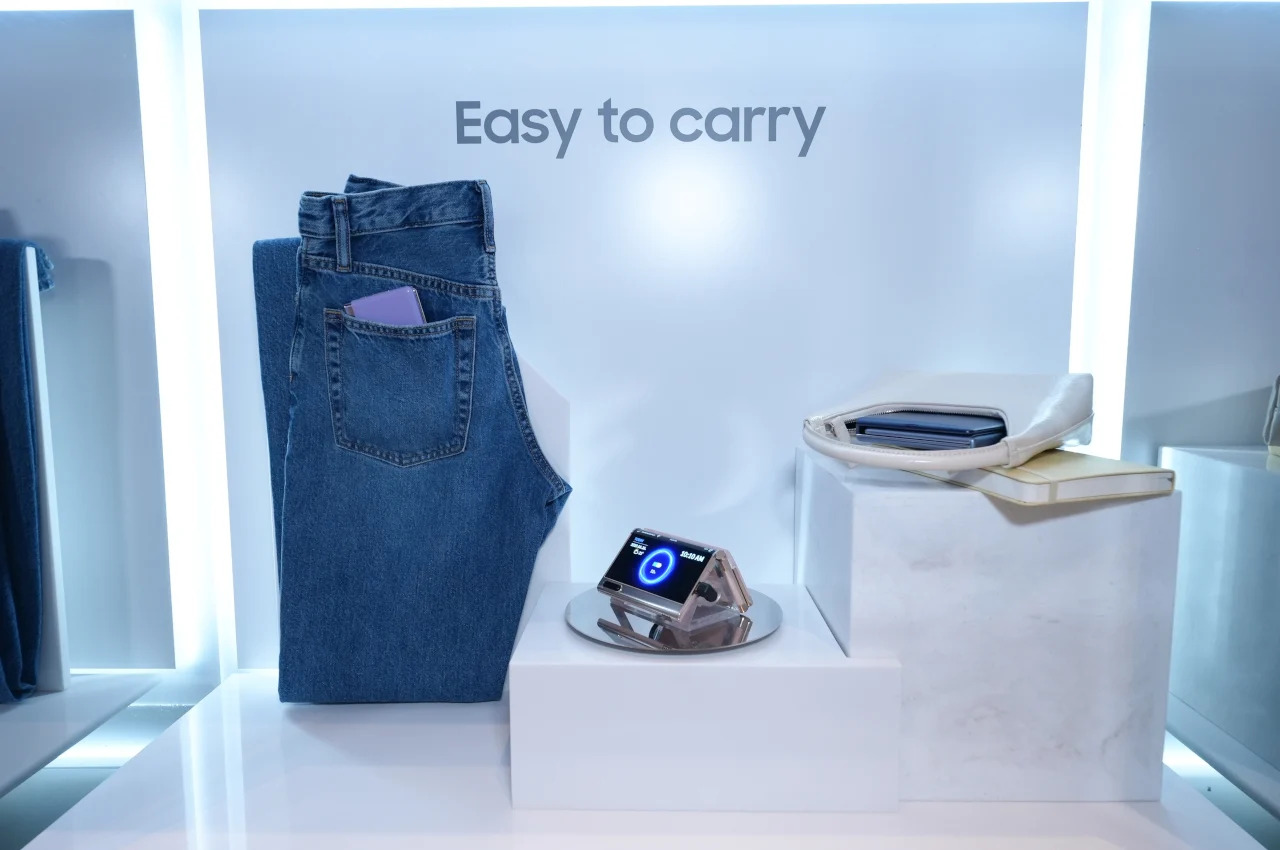
Although they are younger than the larger foldables like the Galaxy Z Fold, clamshell-style foldables have become better accepted and sought after. They’re usually more affordable and look more stylish, bringing to mind the flip phones of old. They’re pocketability makes a bit more sense to most people who don’t need a phone that turns into a tablet, and their accessible price tag makes them feel more like regular flagships rather than overpriced novelties.
Of the many foldable flip phones in the market right now, the Motorola Razr+ 2024 seems to offer a more reasonable balance of features and price, especially one from a reputable brand. It looks like this year will show a significant upgrade, at least internally, while still keeping the design that has won fans. That said, Motorola’s Android updates don’t inspire confidence, and we’ve yet to see it make any improvements in that regard.
Our smartphones have become so powerful that, in theory, they have hardware equivalent to entry-level laptops from a few years back. But despite all that silicon muscle, they can’t really replace our everyday PCs mostly because of the operating system that’s used on most of these computers: Windows. Small, portable, and inconspicuous computers have always been a dream for both users and business owners, whether it’s for working on the go or setting up kiosks, security systems, or space-efficient workstations. This small brick tries to deliver exactly that, giving you the flexibility you need for any kind of computing in almost any context in a size that’s no larger than high-capacity power banks.
With the popularity of the Apple Mac Mini and, now, the Mac Studio, mini PCs have become more visible in the market. These desktop alternatives, however, are still meant to sit on a table or even on a shelf despite their small sizes. But while these small computers do offer plenty of power to support even some content creation or light gaming, that hardware also closes the door on many possible use cases that would have required them to be less tied down to a table.
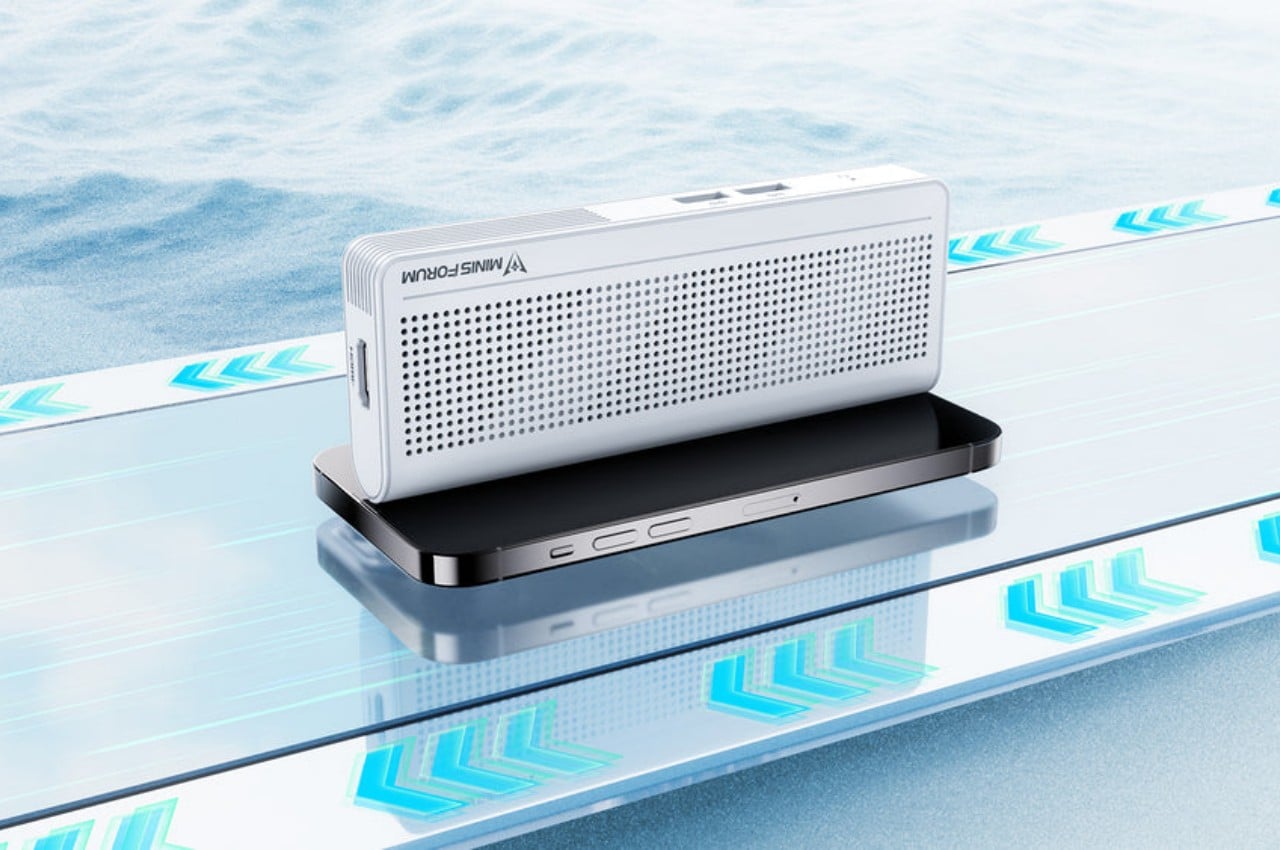
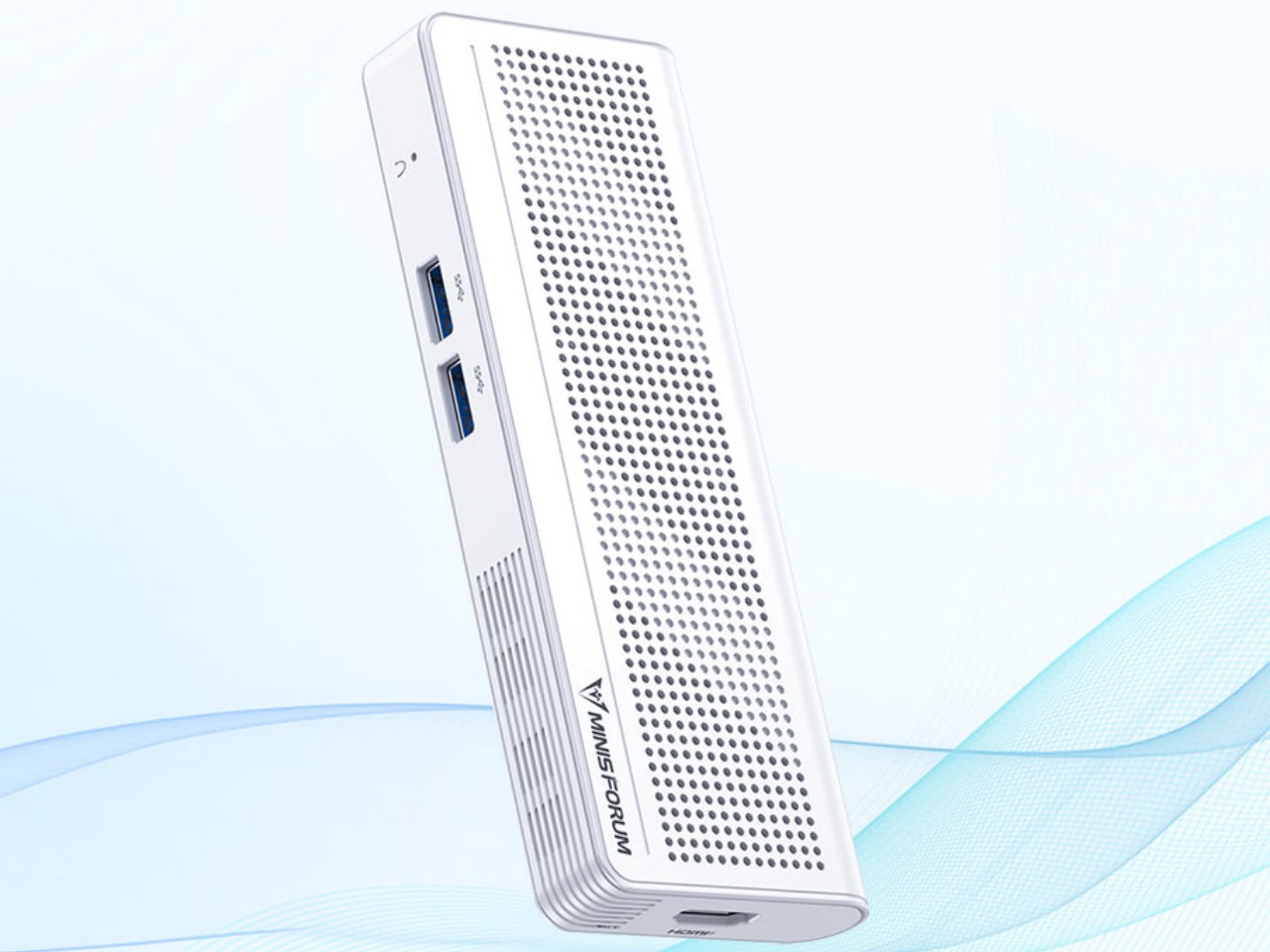
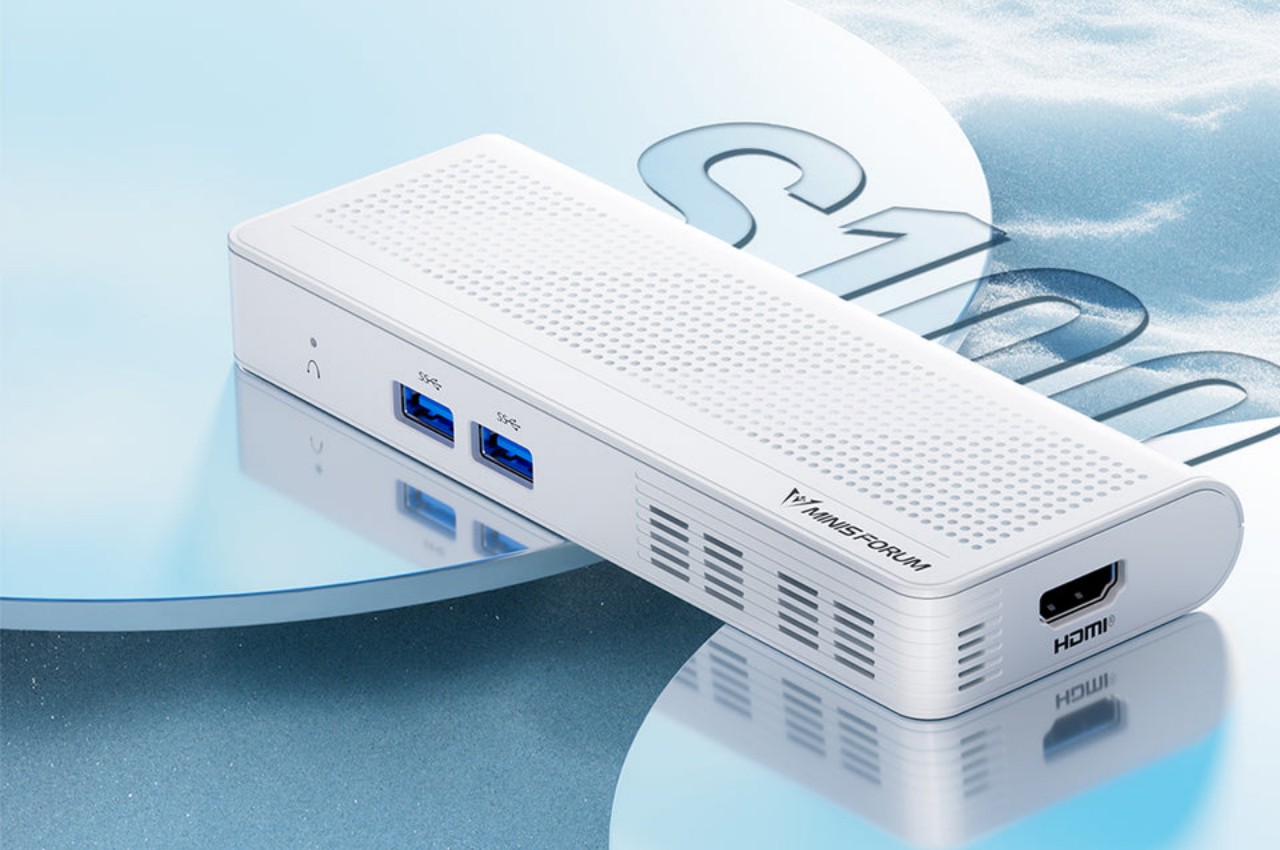
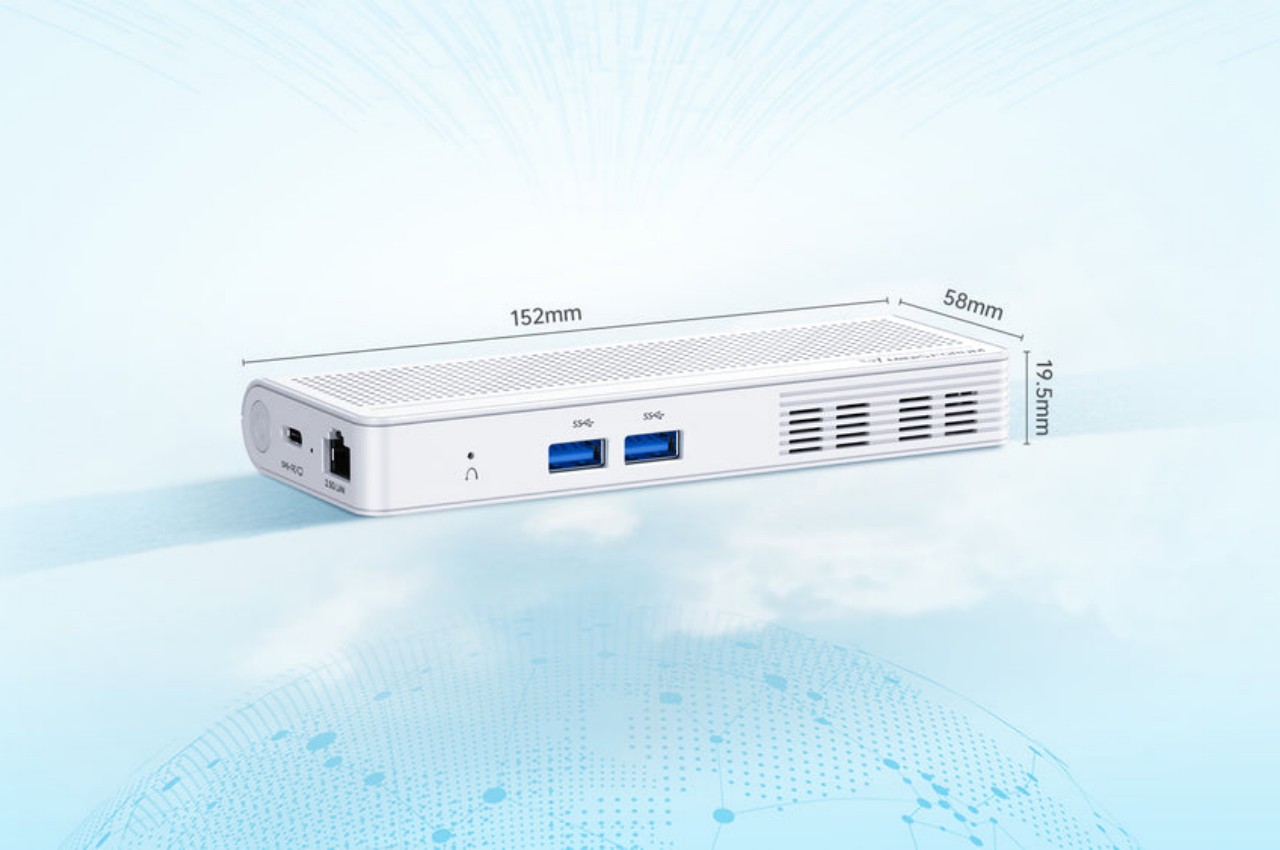
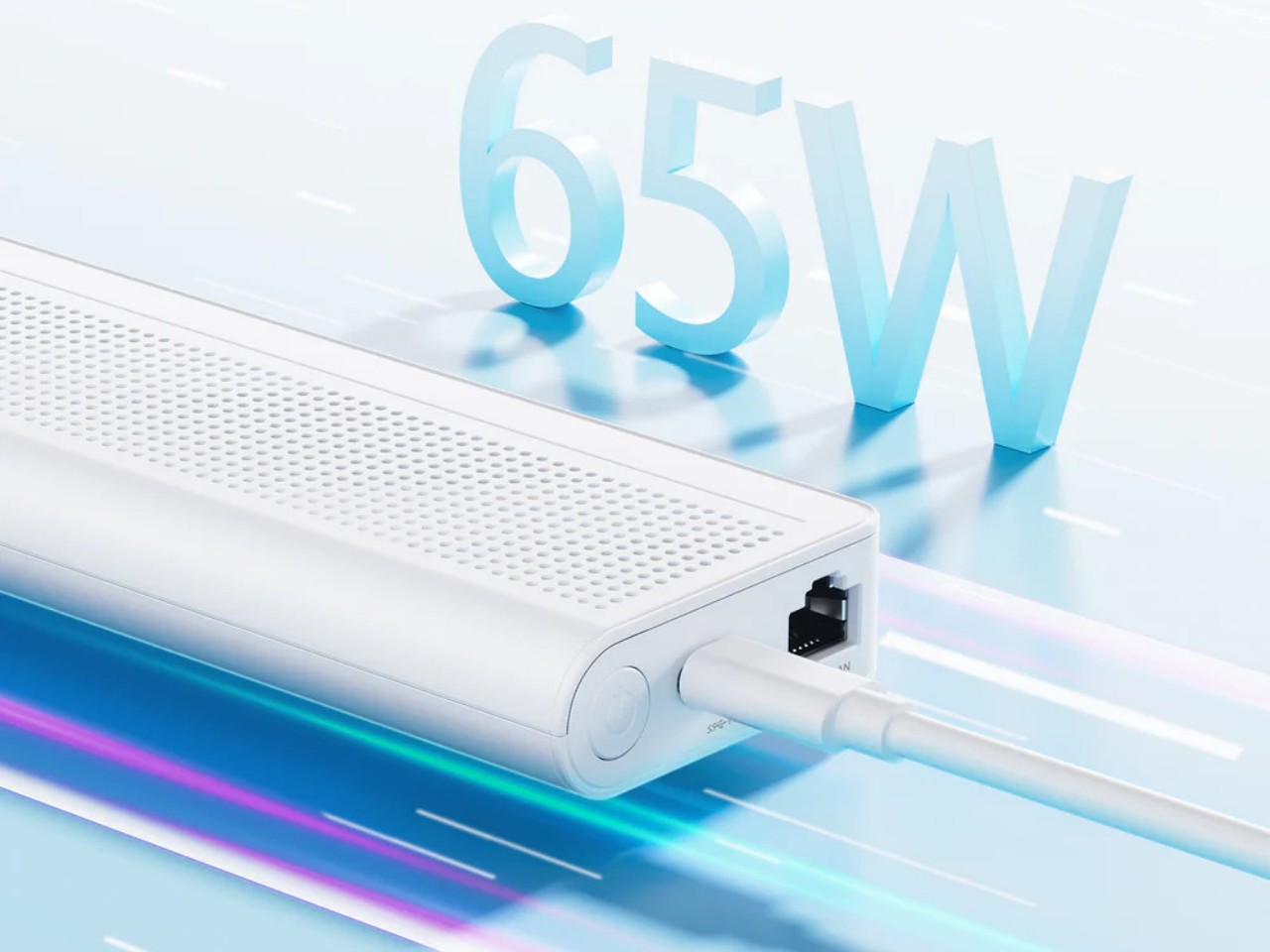
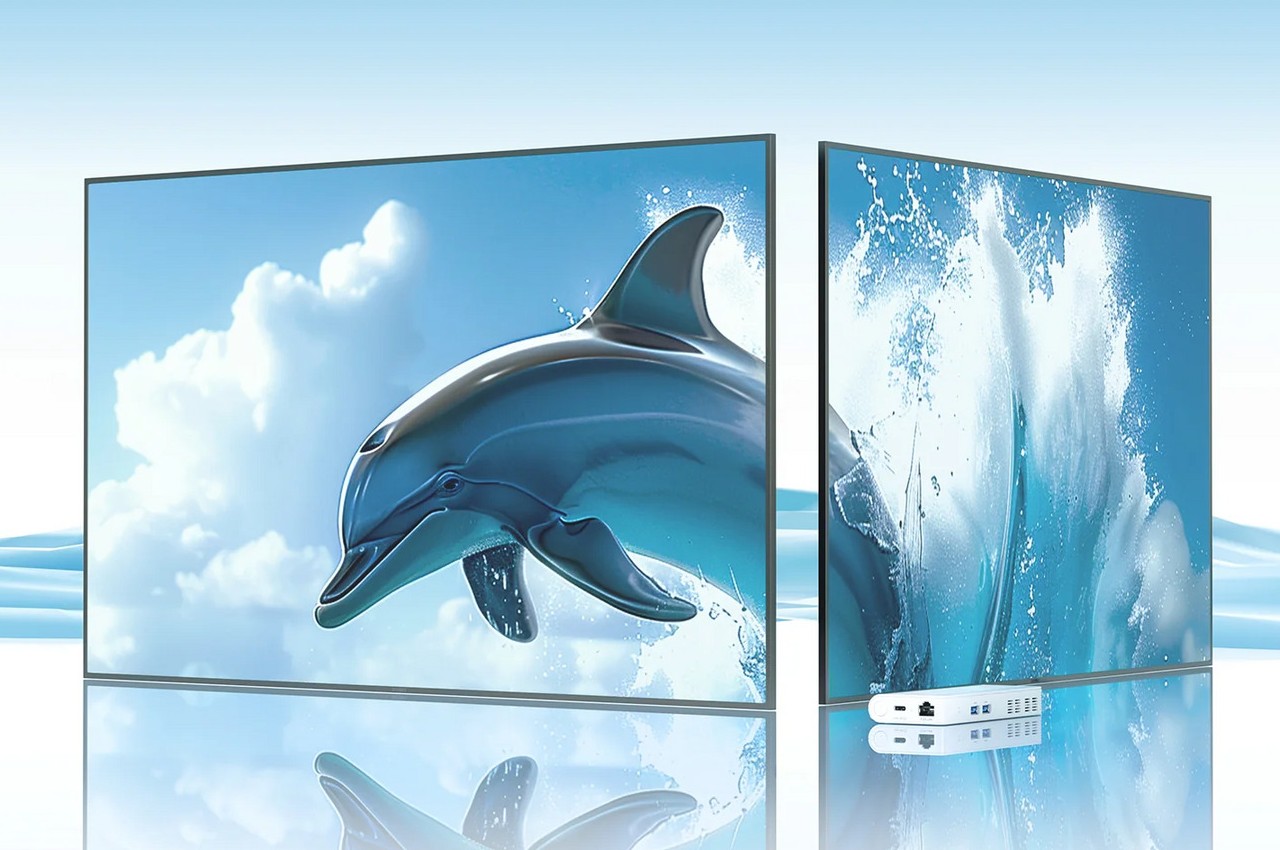
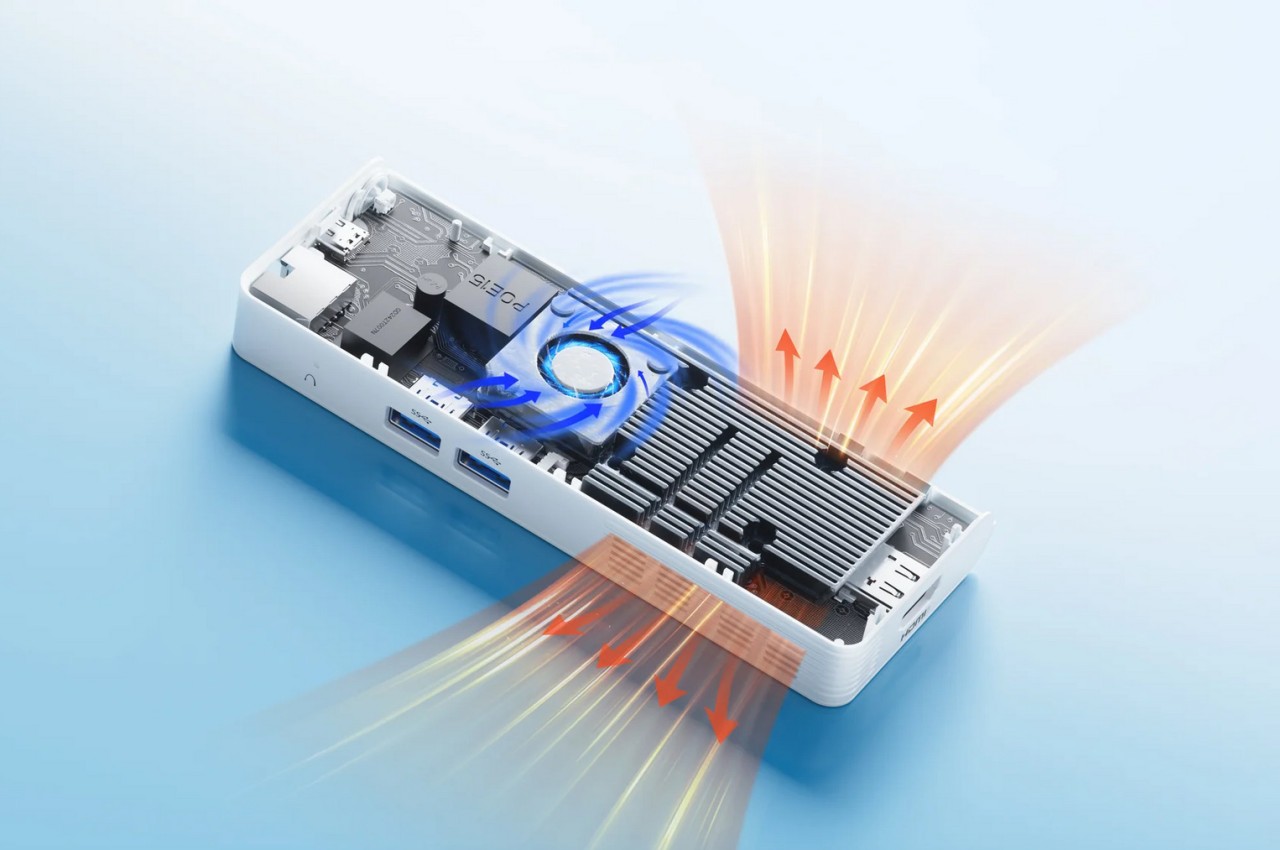
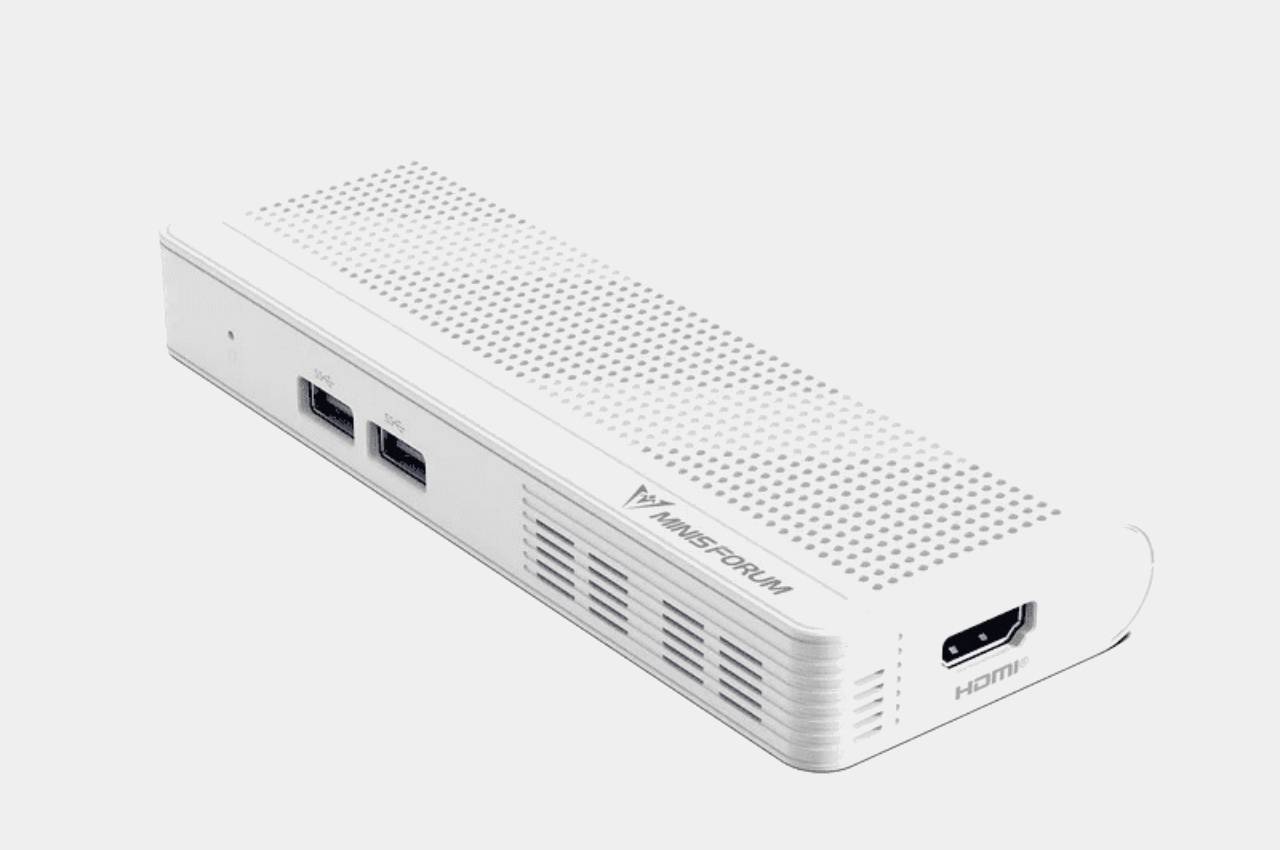
The Minisforum S100 is a small, sleek box that you might easily mistake for a power bank. Ironically, it doesn’t actually have its own battery but is a mini PC that you can bring along with you or install in the narrowest of spaces. Despite its small size, it actually boasts a complete set of standard connectivity options, including Wi-Fi 6, Bluetooth 6.2, 2.5 Gbps Ethernet, USB-A ports, HDMI, and 65W USB-C.
The latter two are what make this design so portable and flexible. On a typical desktop, you can connect it to a USB-C monitor that supports USB-C PowerDelivery so that you don’t even have to plug the S100 into an outlet. You can connect another monitor via HDMI to have a dual-screen setup for increased productivity. And when you’re done for the day, you can pick up the palm-sized mini PC and go, maybe even work or chill in a cafe by connecting an external display and a power bank. The Ethernet port also supports Power-over-Ethernet or PoE, so you can use the S100 as the brains behind a camera security system and not have it plugged in at all.
Despite the flexibility that the Minisforum S100 offers, its performance is hampered a bit by the quad-core Intel N100 processor that runs the show, definitely not the best among the chip maker’s “mobile” processors. Its lower-power operation, however, does allow the mini PC to sip rather than chug electricity and keep thermals equally low. You definitely won’t be running heavy applications, but for $189, a Windows 11 computer you can easily slip into your bag or even your pocket might actually be worth the price.
Smartphones today seem to look very similar, varying only in the shape of the camera bump and the color of their backs. Sometimes, the materials might be different, too, but the same large-sized “candy bar” form factor has become the standard for all the smartphones currently in the market. There was a time, however, when companies were a bit more daring, experimenting with phone designs and features in an attempt to stand out from the crowd. That did lead to some rather eccentric and sometimes even ridiculous designs that make us question the sanity of the minds behind them. But there are times when those odd designs of the past actually have important relevance today. Here are five such phone design oddities that we wished existed or still exist, and some alternatives in case you may have been smitten by their quirky appearance.
Designer: Google, Motorola
Undying Handset: Project Ara
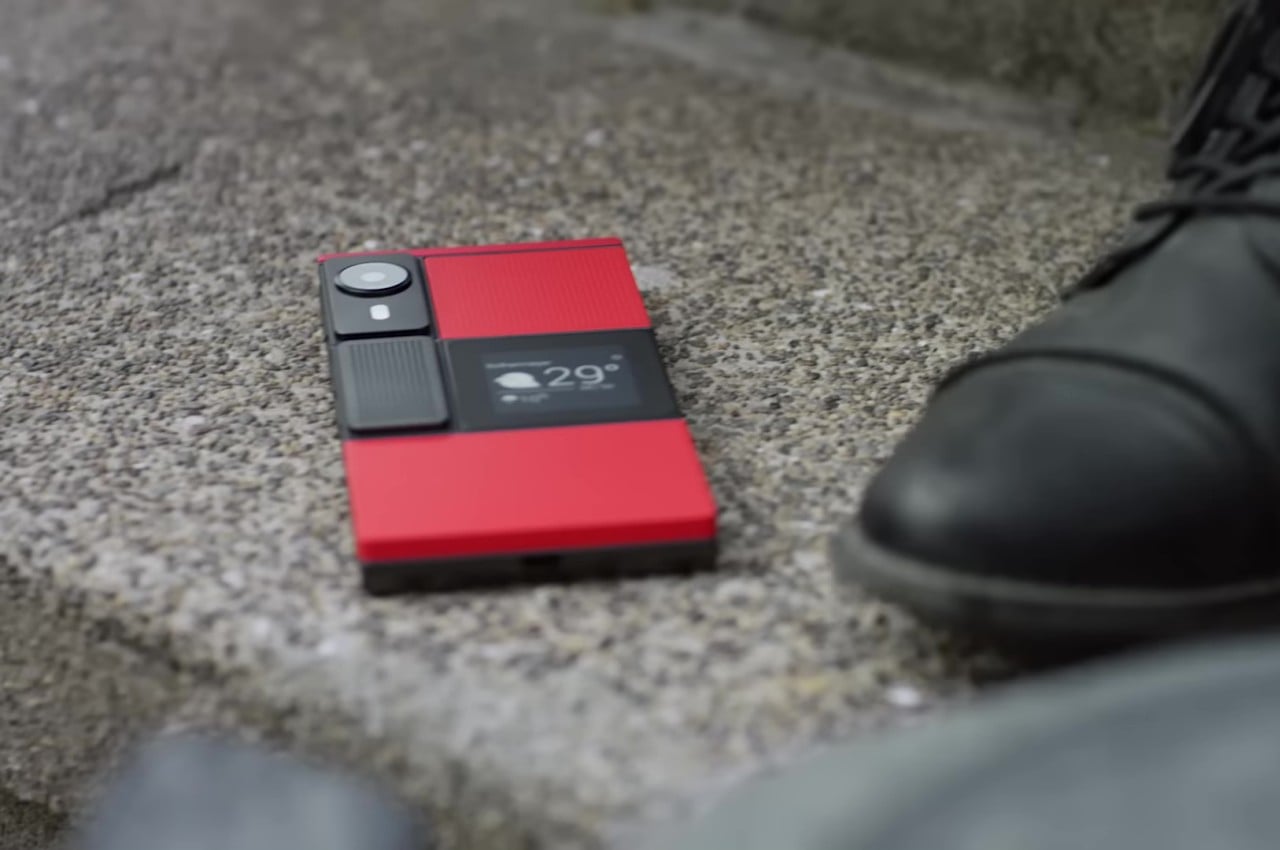
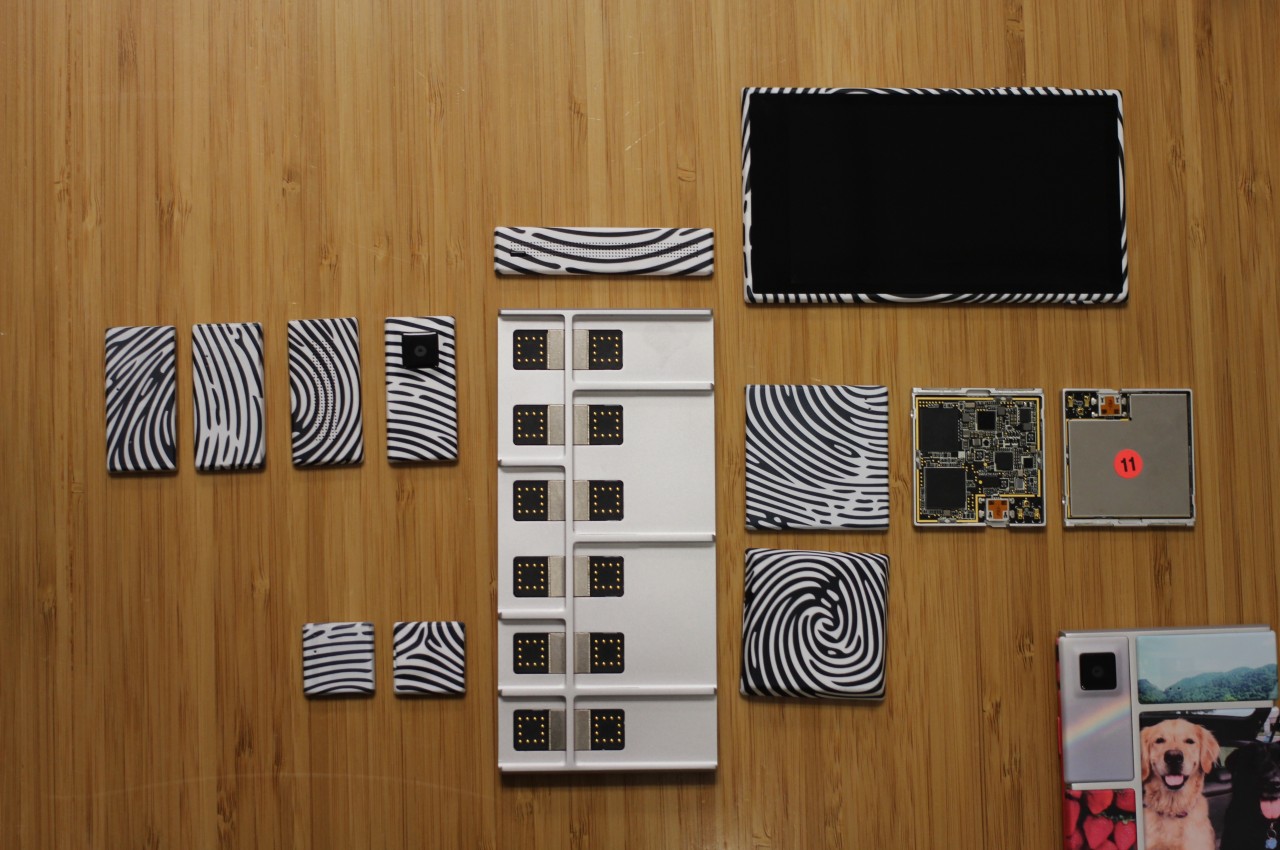
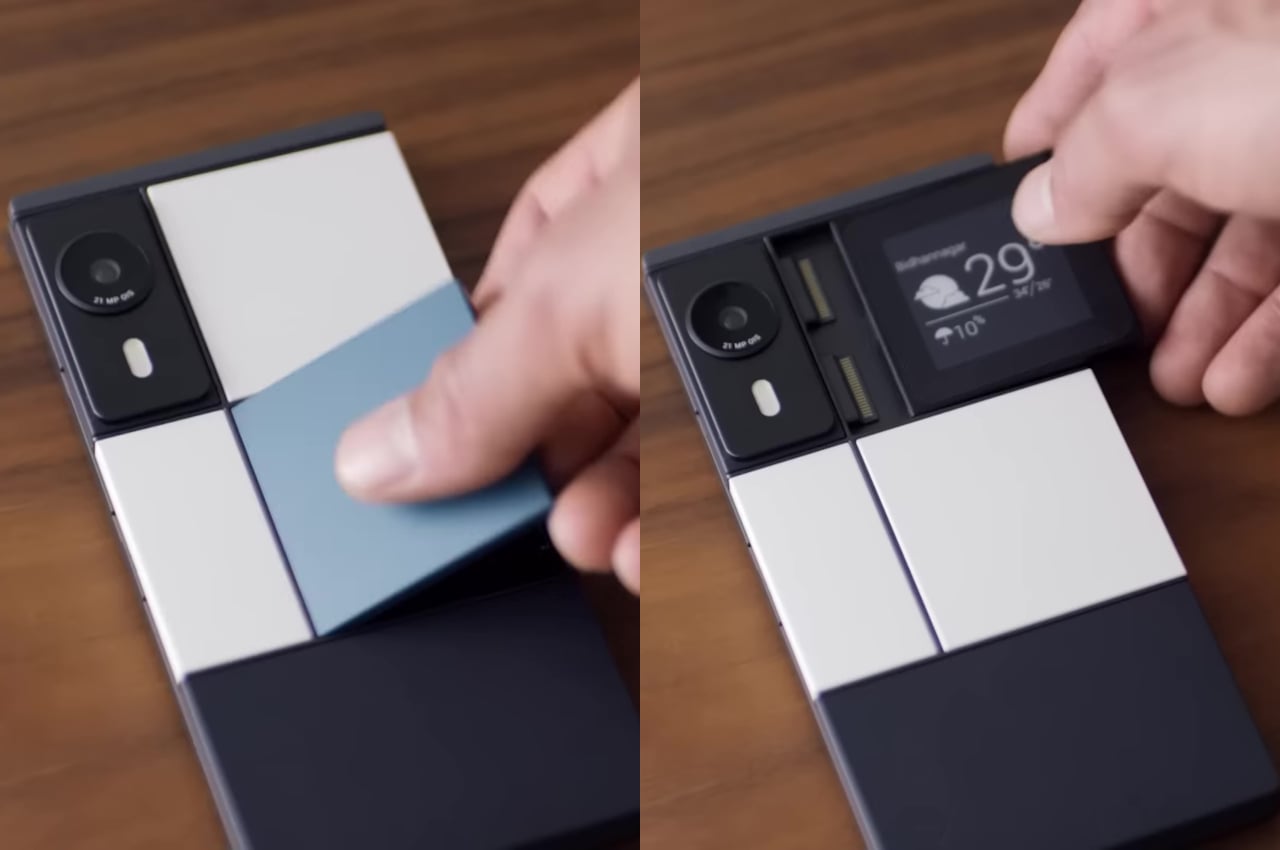
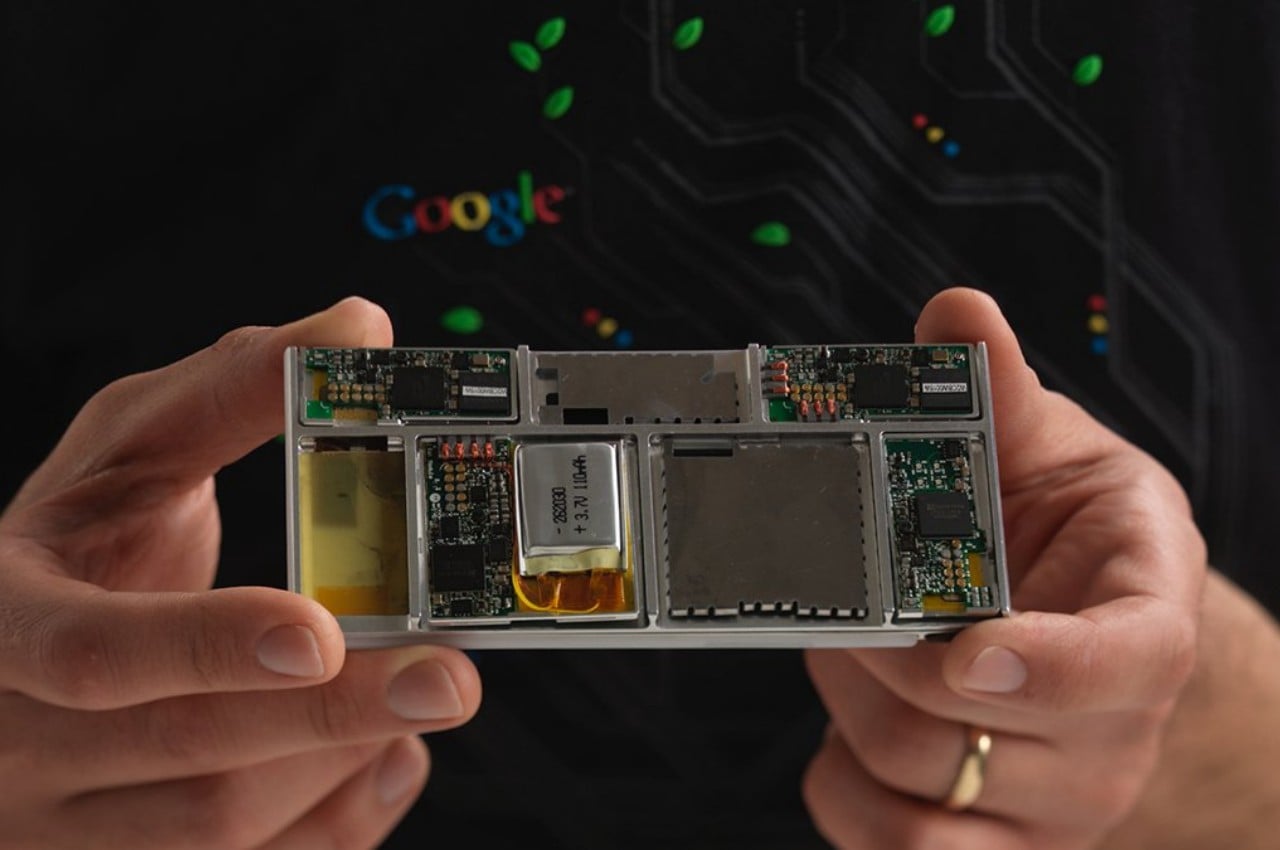
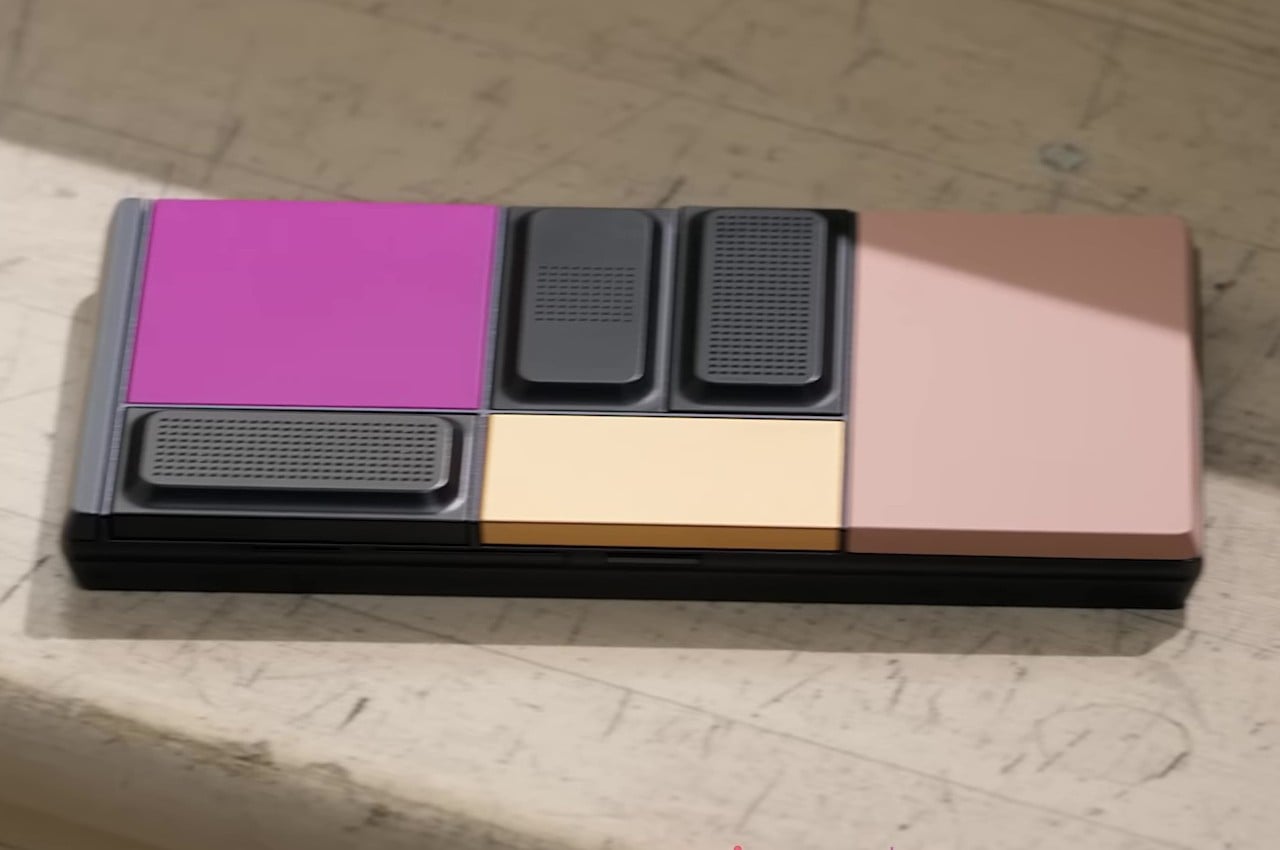
Google’s Project Ara inspired the idea of a modular smartphone whose components you can easily swap to upgrade or repair parts. In theory, this would make the phone last forever, or at least as long as the base is intact and parts continue to be manufactured for it. In practice, it was a very ambitious endeavor that could neither meet expectations nor present a viable business model that wouldn’t bankrupt manufacturers. In the end, that sustainable and immortal smartphone remained just a dream, at least in that idealistic and perfect form.
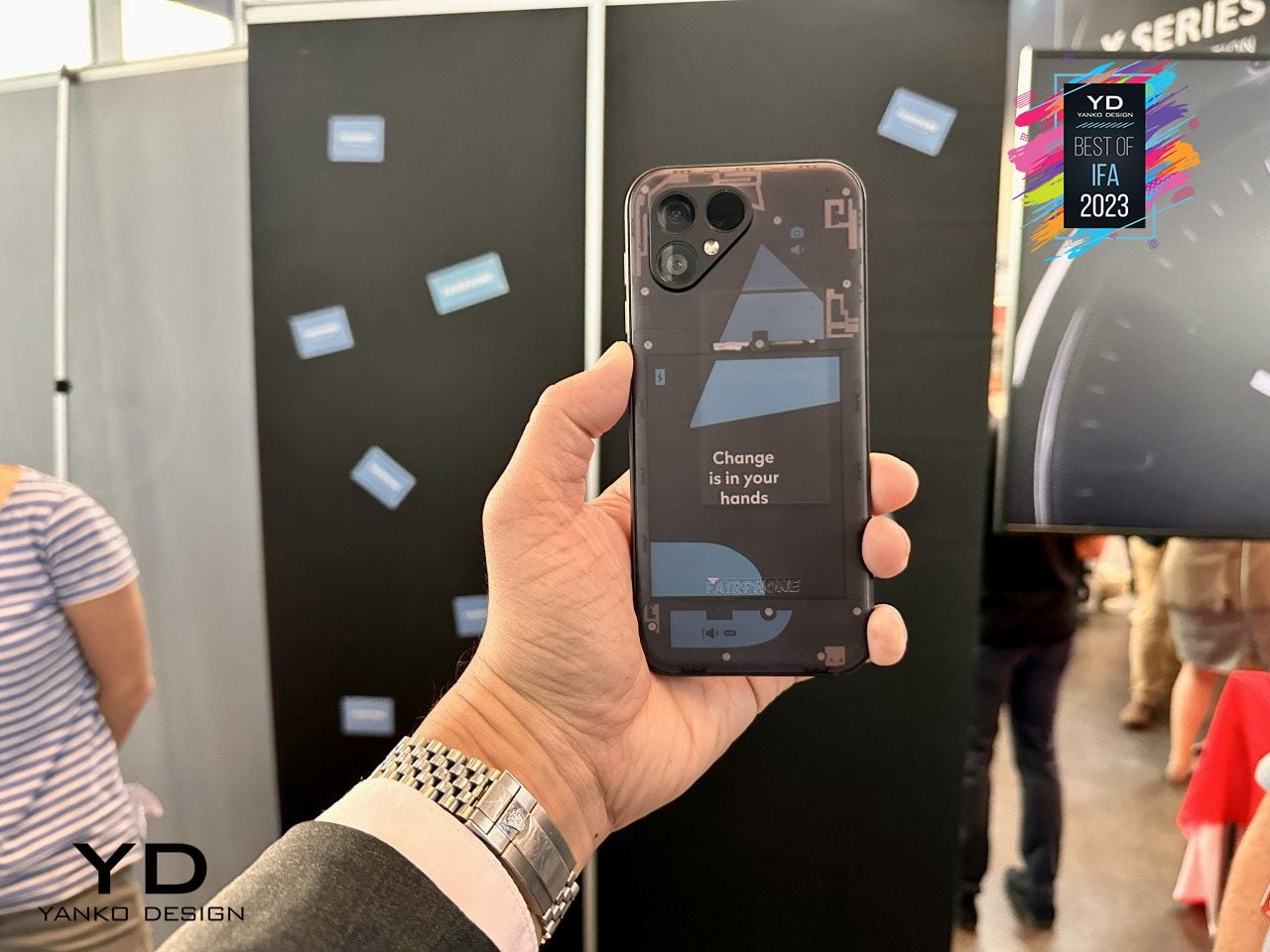
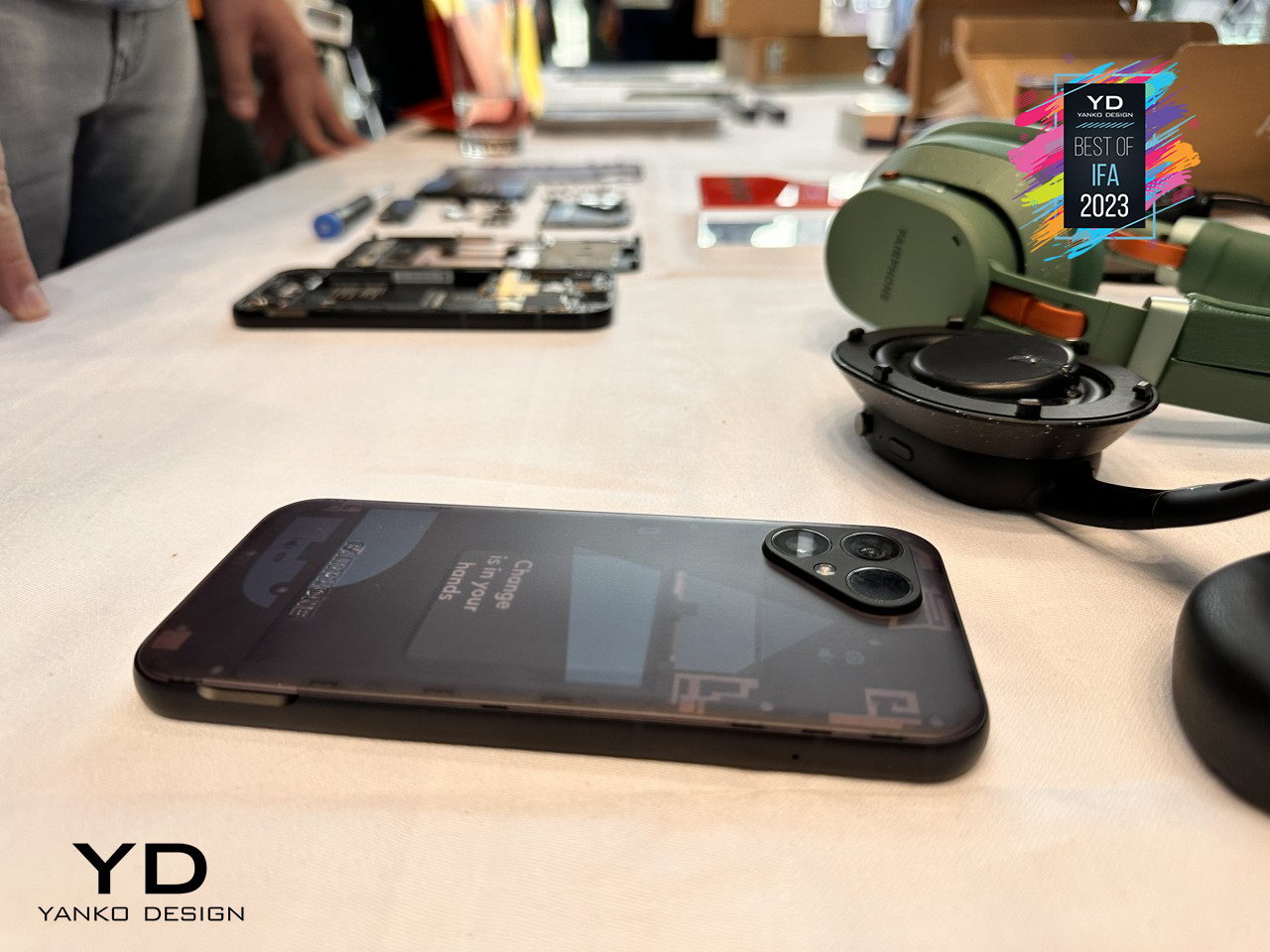
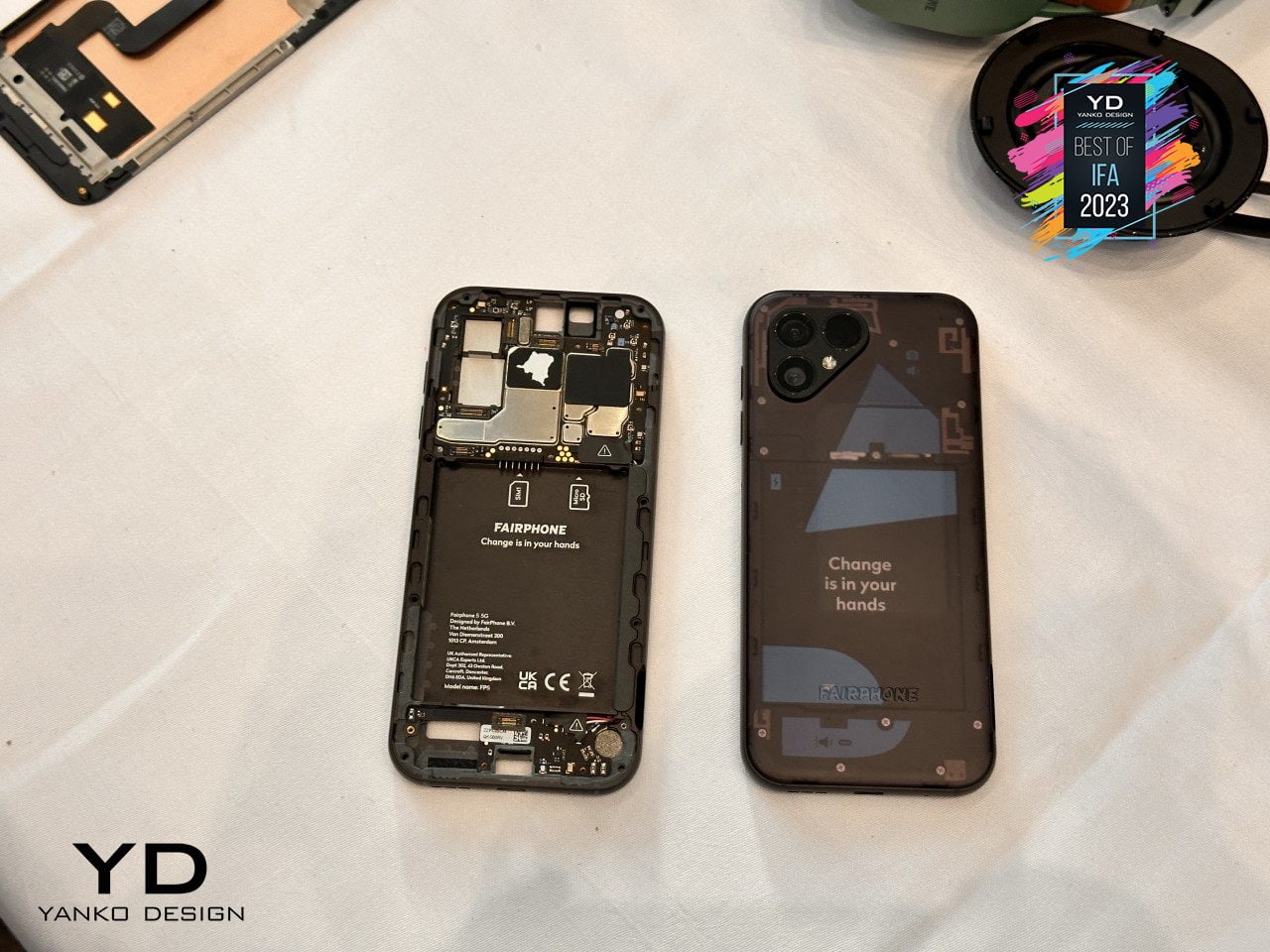
Fortunately, a part of that dream is actually possible and even sustainable in more ways than one. Although you can’t hot swap components on the fly, the Fairphone 5 at least offers a way for owners to change important parts of the phone, like batteries or even cameras, to keep them running almost forever. There are some limitations, of course, but if all you want is a phone that will last you for almost a decade instead of just two years, this self-repairable design pretty much has that in the bag.
Mobile Shutterbug: Nokia N90
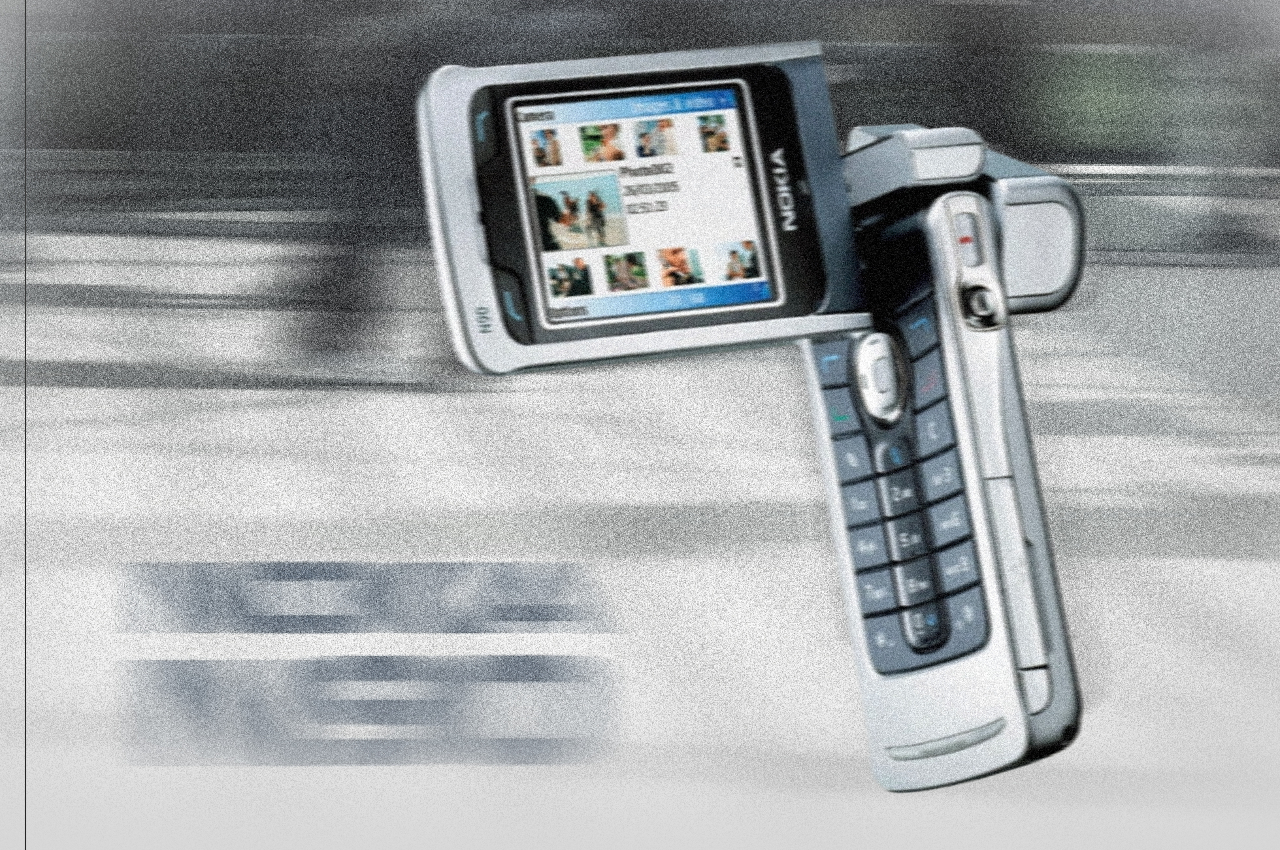
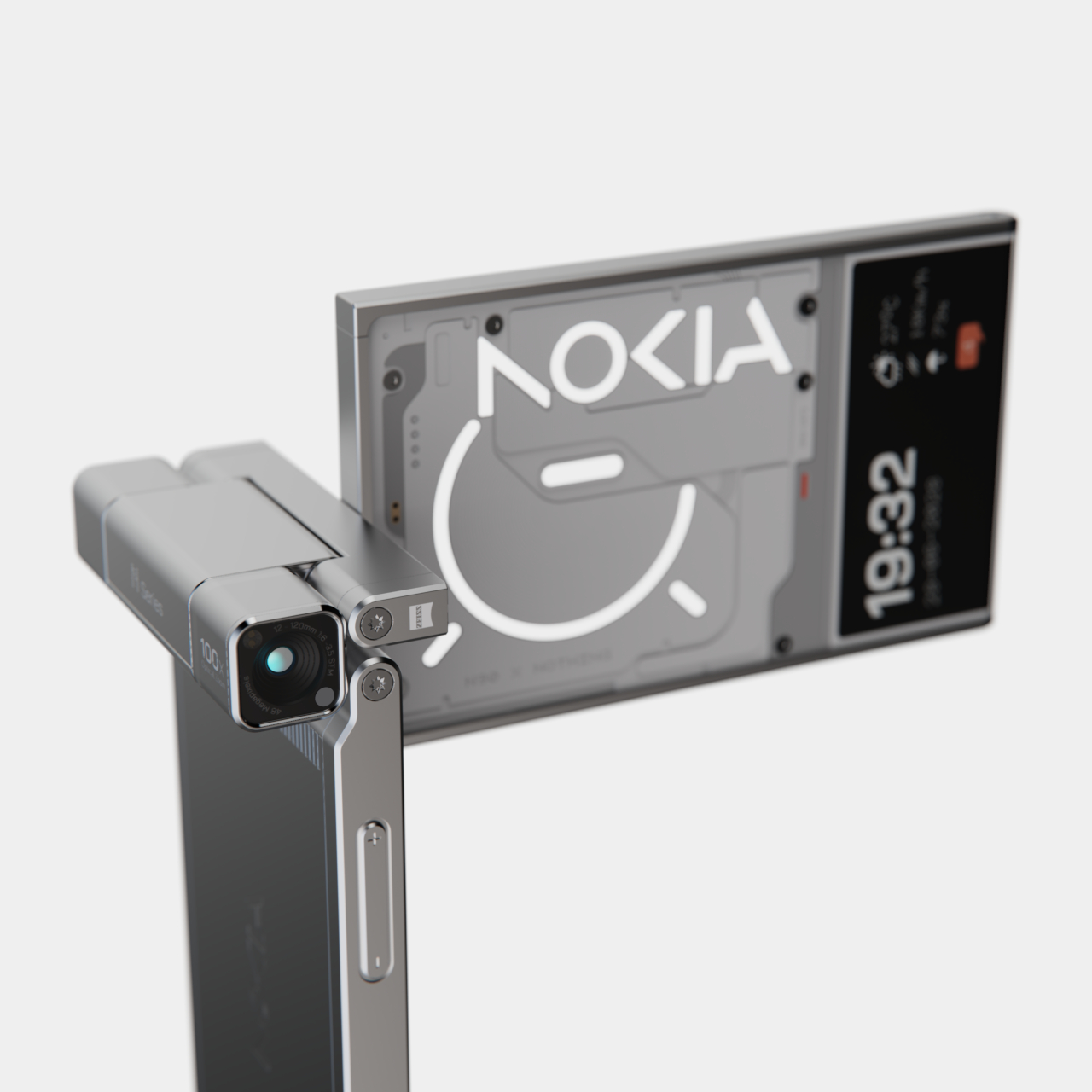
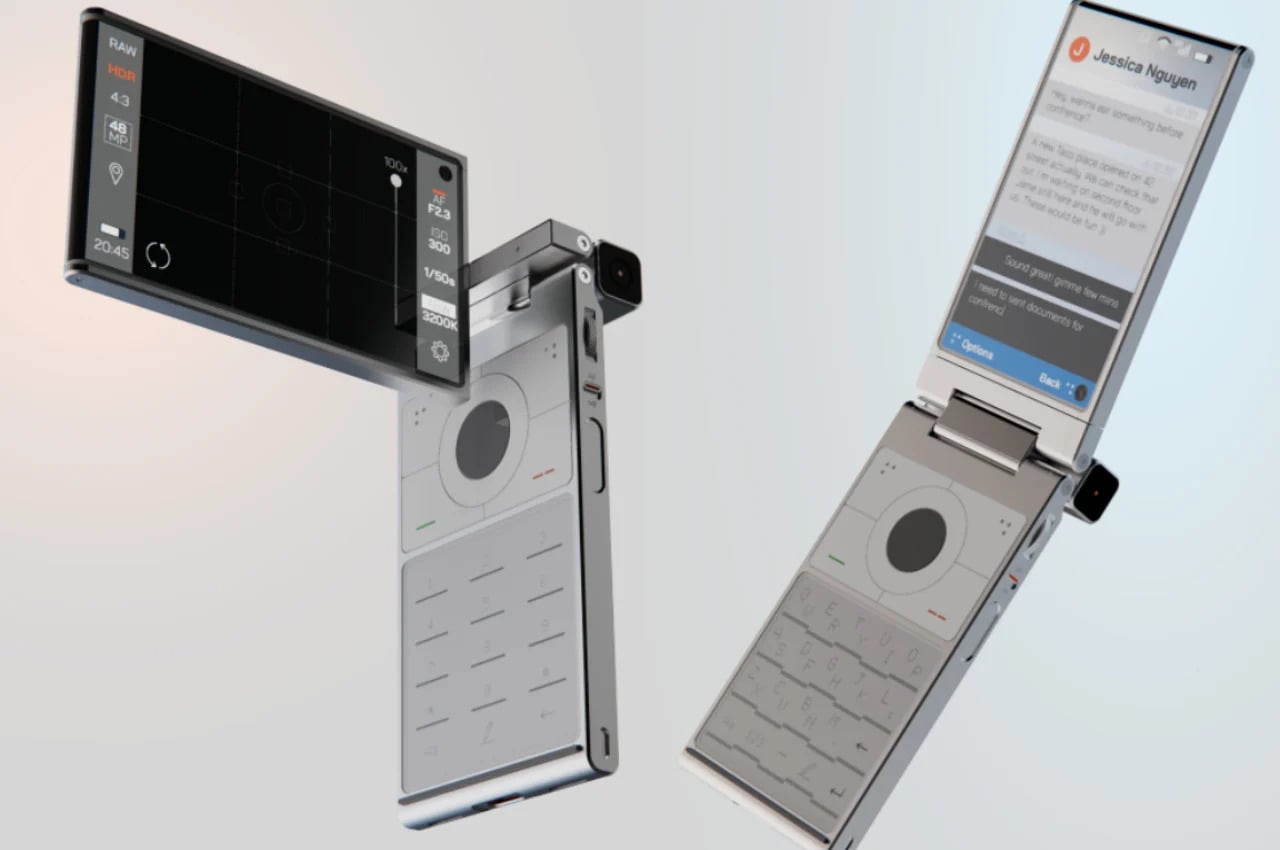
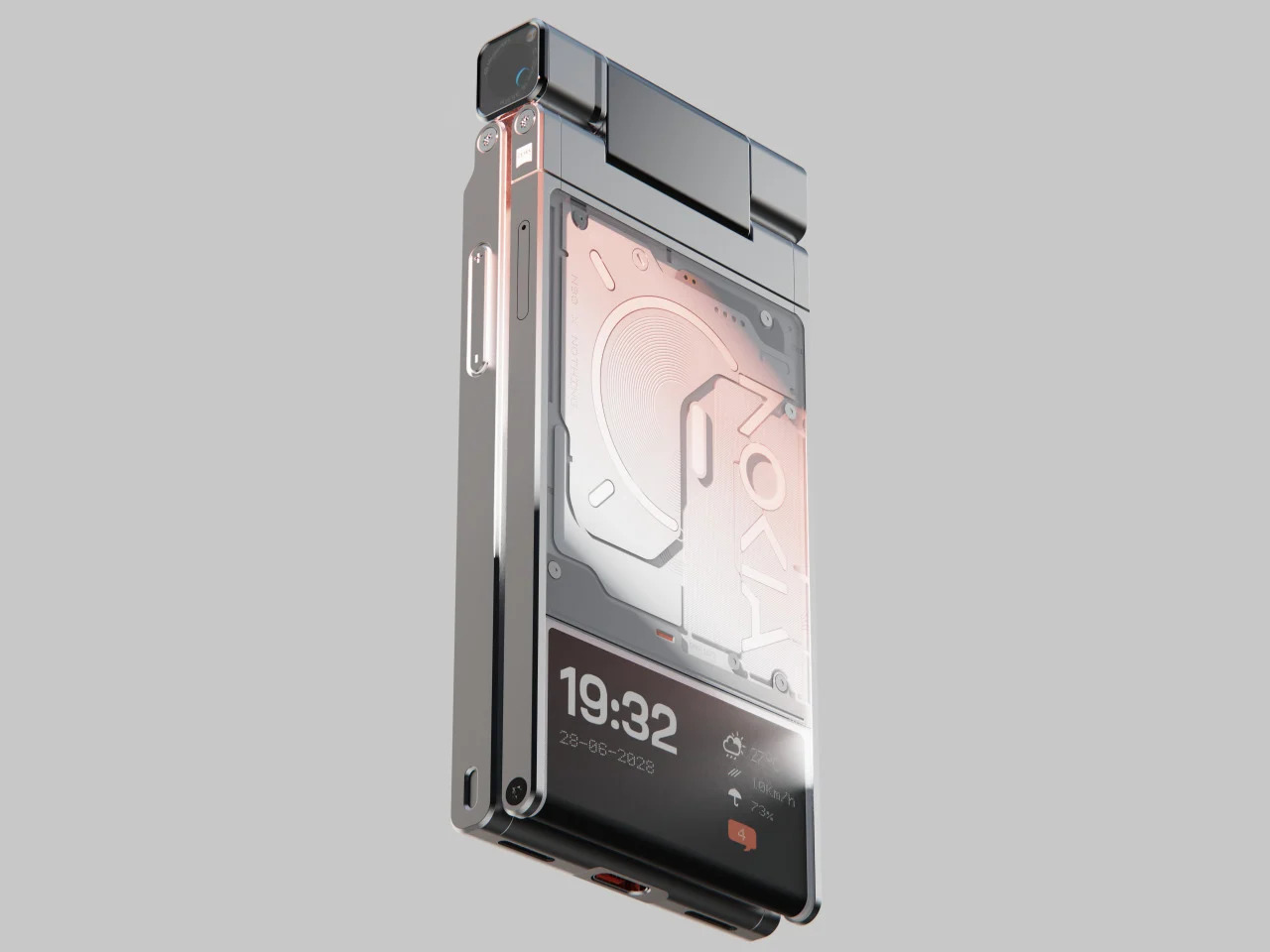
One of the biggest uses for smartphones today next to social media is taking photos and videos. In the days even before the term “smartphone” was coined, even the most advanced handsets from the likes of Nokia could barely hold a candle to point-and-click cameras. That’s why the quirky Nokia N90 was prophetic and way ahead of its time, envisioning a day when smartphones would be used like camcorders, though with a bit more awkwardness due to their inflexible designs.
While clamshell phones are back in season thanks to foldable screens, the folding and twisting design of the original Nokia N90 remains a distant memory. This concept tries to answer the question of “what if?” and mixes two famed brands’ design languages to craft what could be the perfect camera phone. It makes you feel like a pro photographer or cinematographer, holding up your phone not with shame but with pride, capturing not only the moment but also people’s attention in a good way.
Pocket Book: YotaPhone Dual-Screen Phone
Designer: YotaDevices
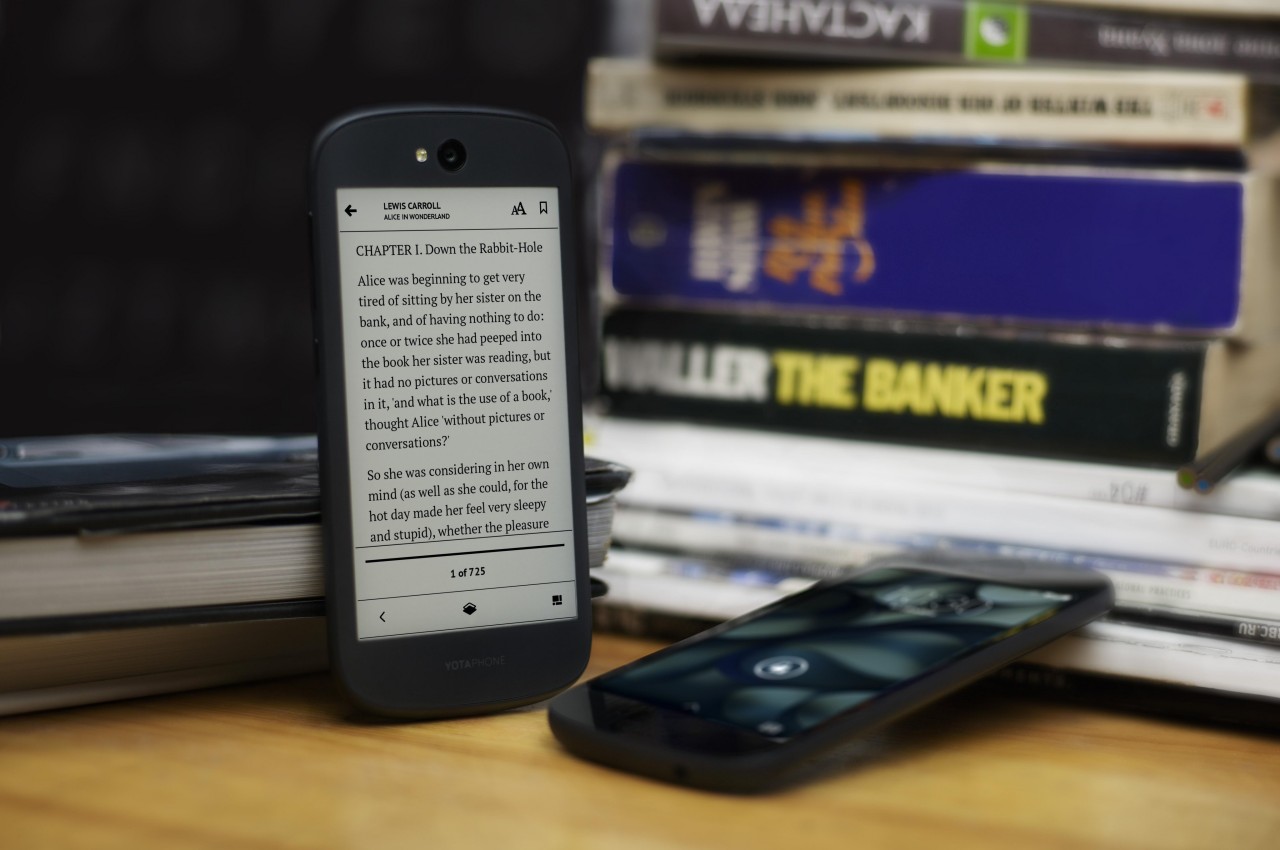
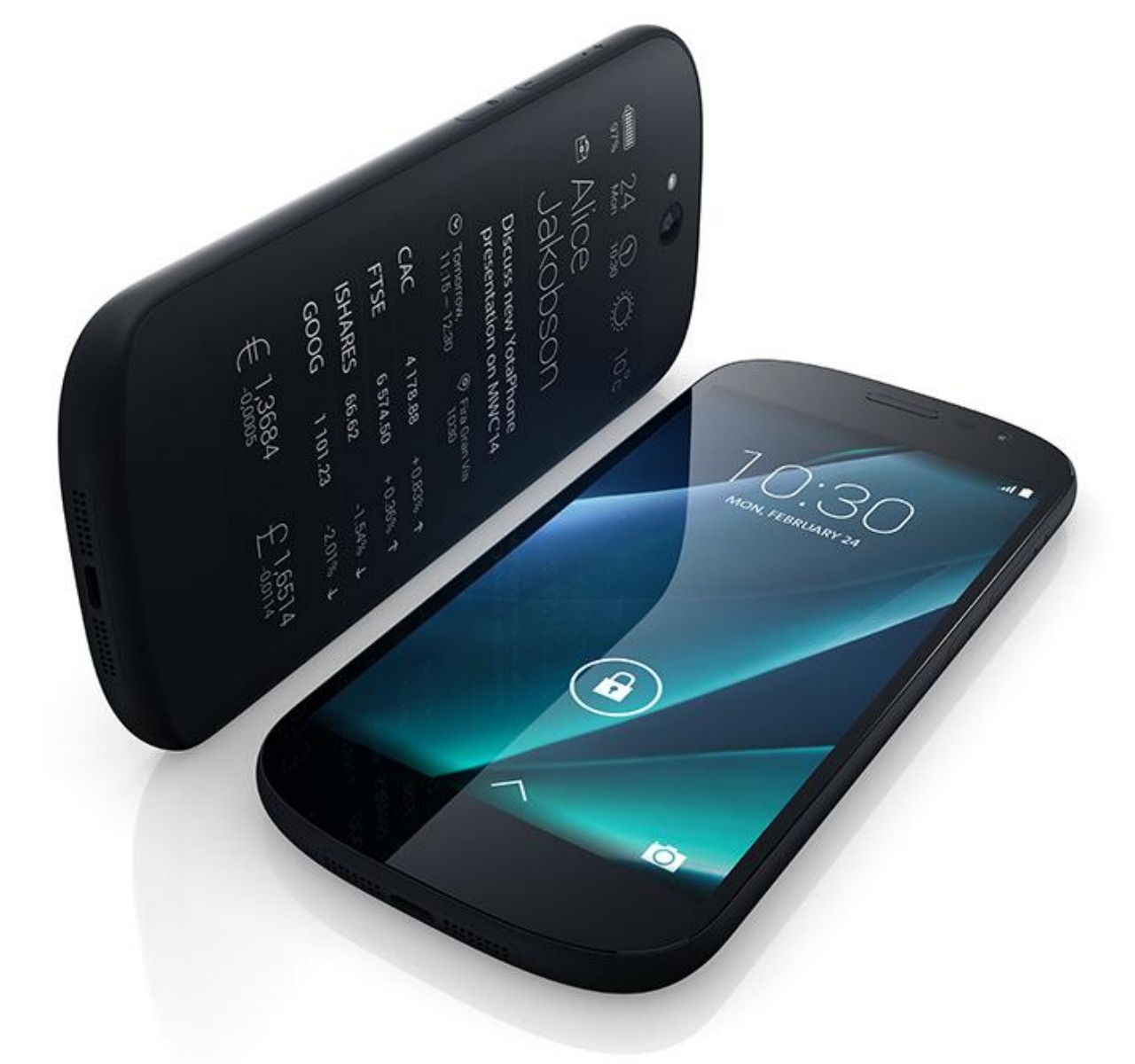
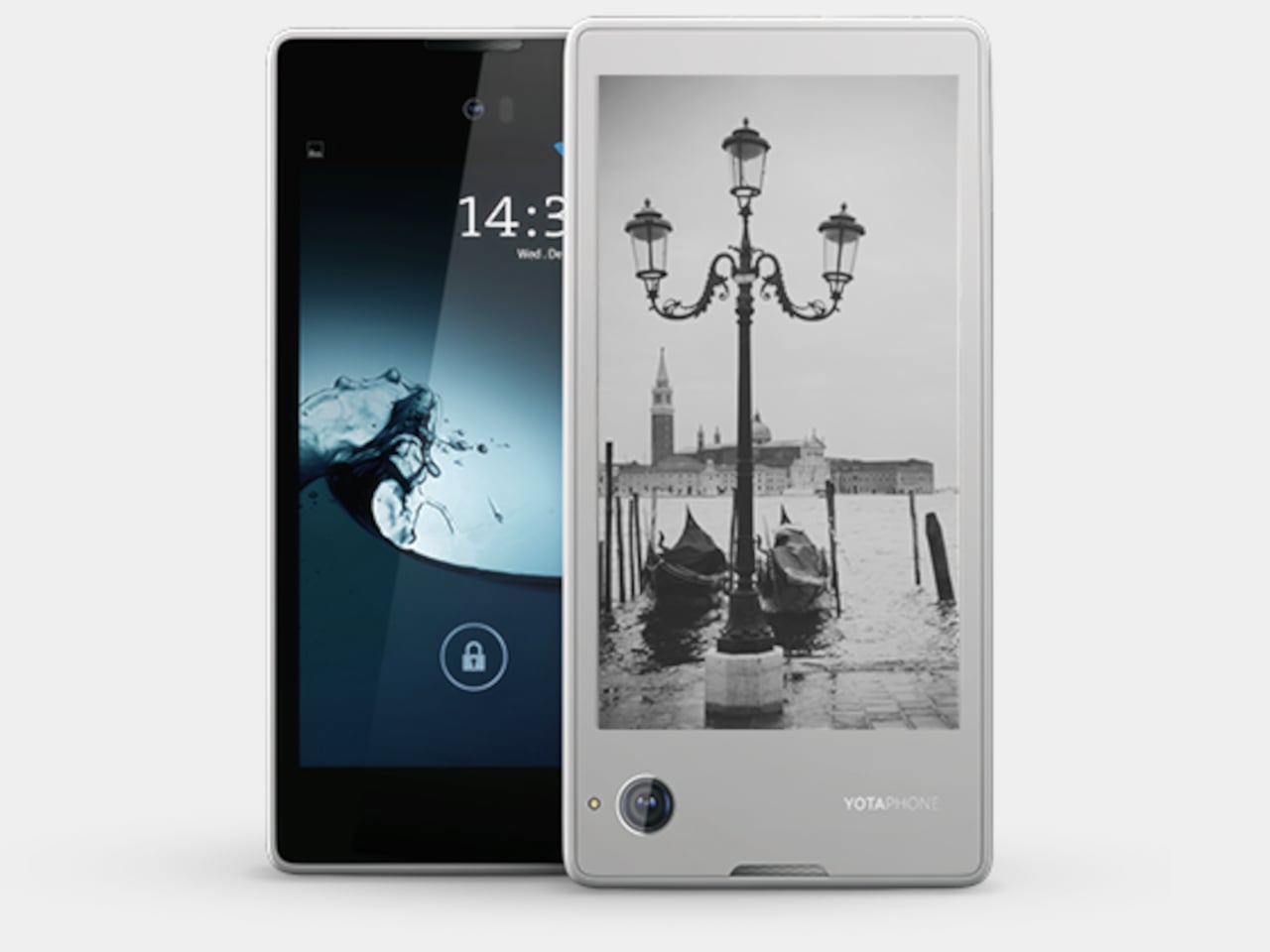
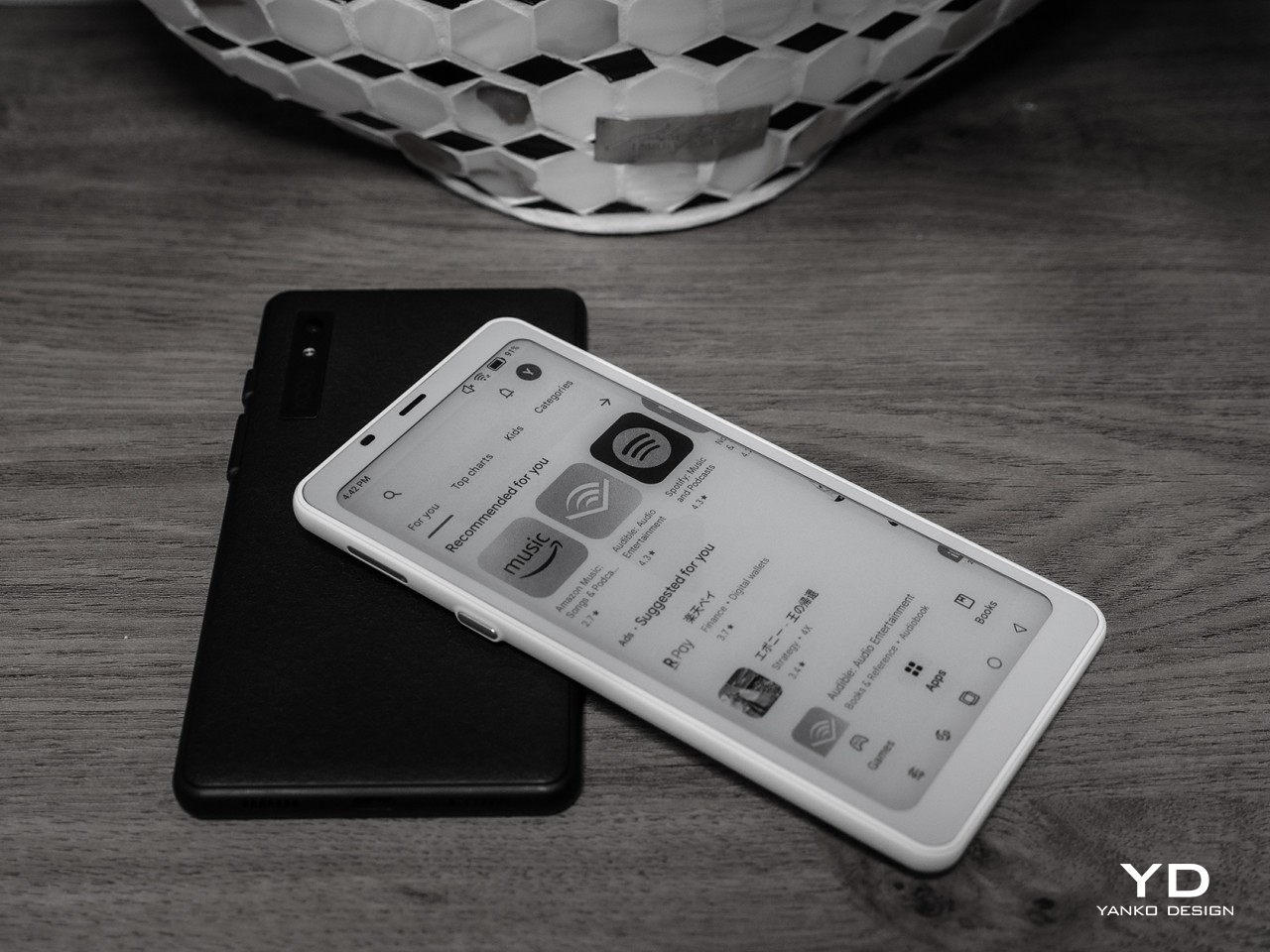
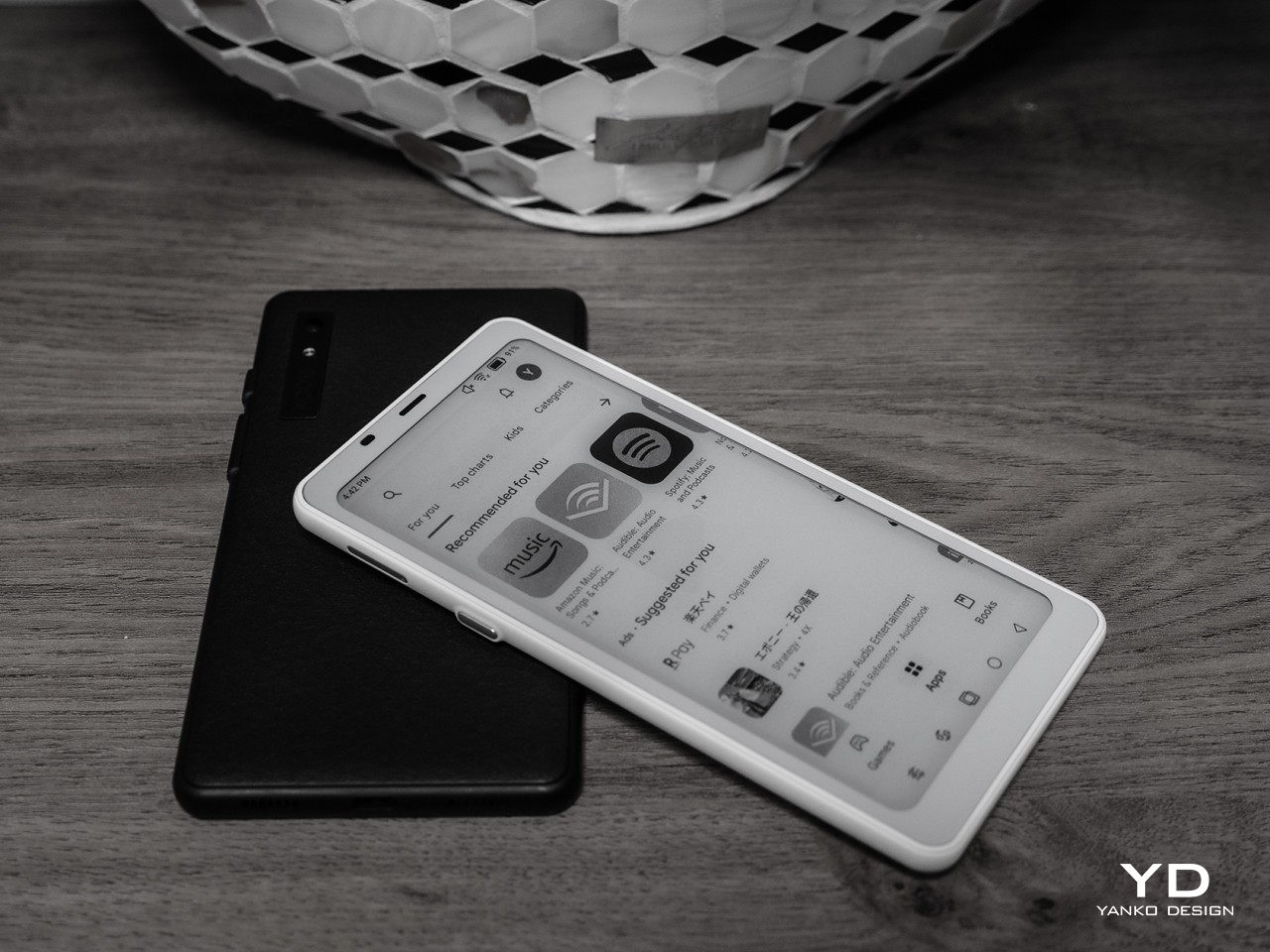
E Ink devices are becoming more popular these days, especially after the addition of features like stylus support and color. These displays are easy on the eyes and the battery, allowing the screen to show the same thing for days without requiring a recharge. A few years back, a small company tried to bring those benefits to the smartphone in the oddest way, by putting an E Ink screen on its back. Although it can be used for reading e-books on the go, its main purpose was to have a battery-saving always-on display that is a bit more dynamic and useful than typical AOD implementations.
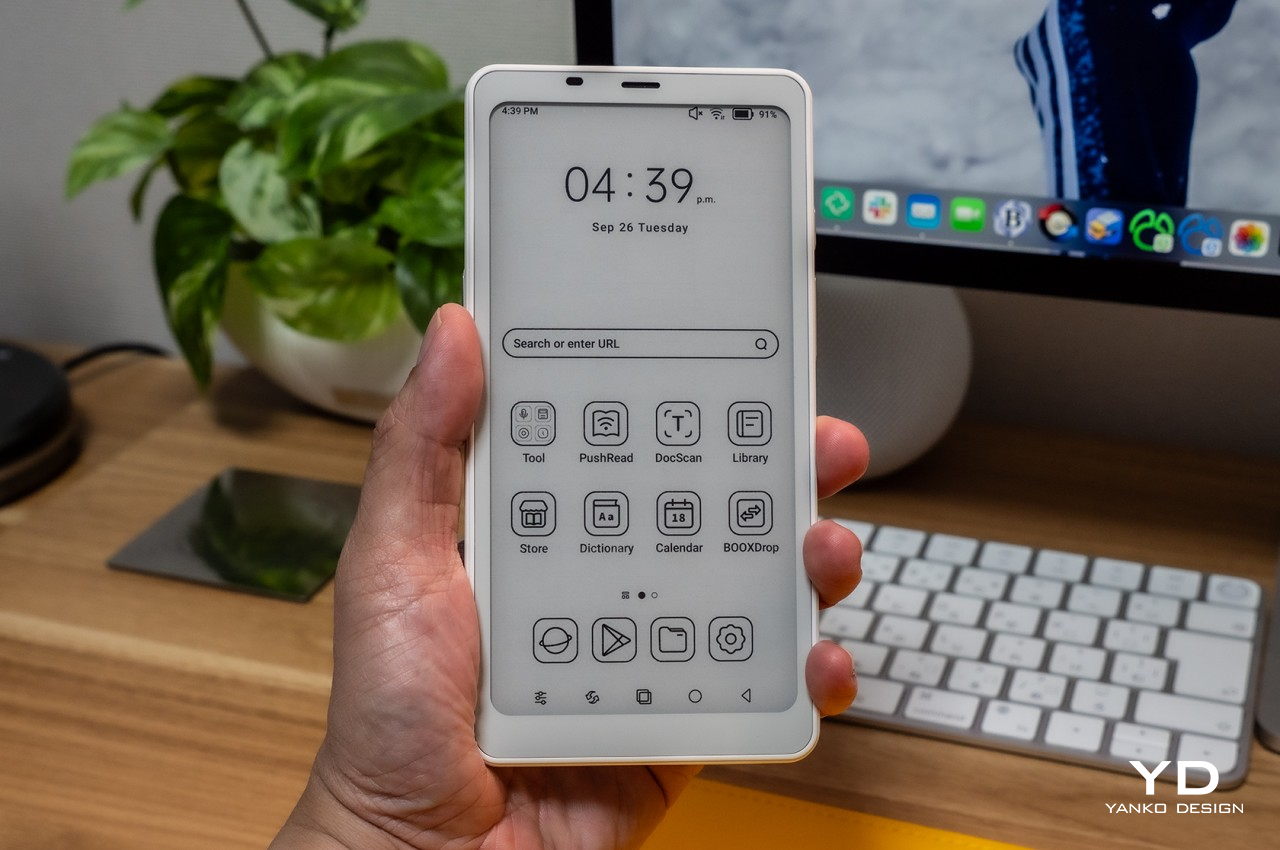
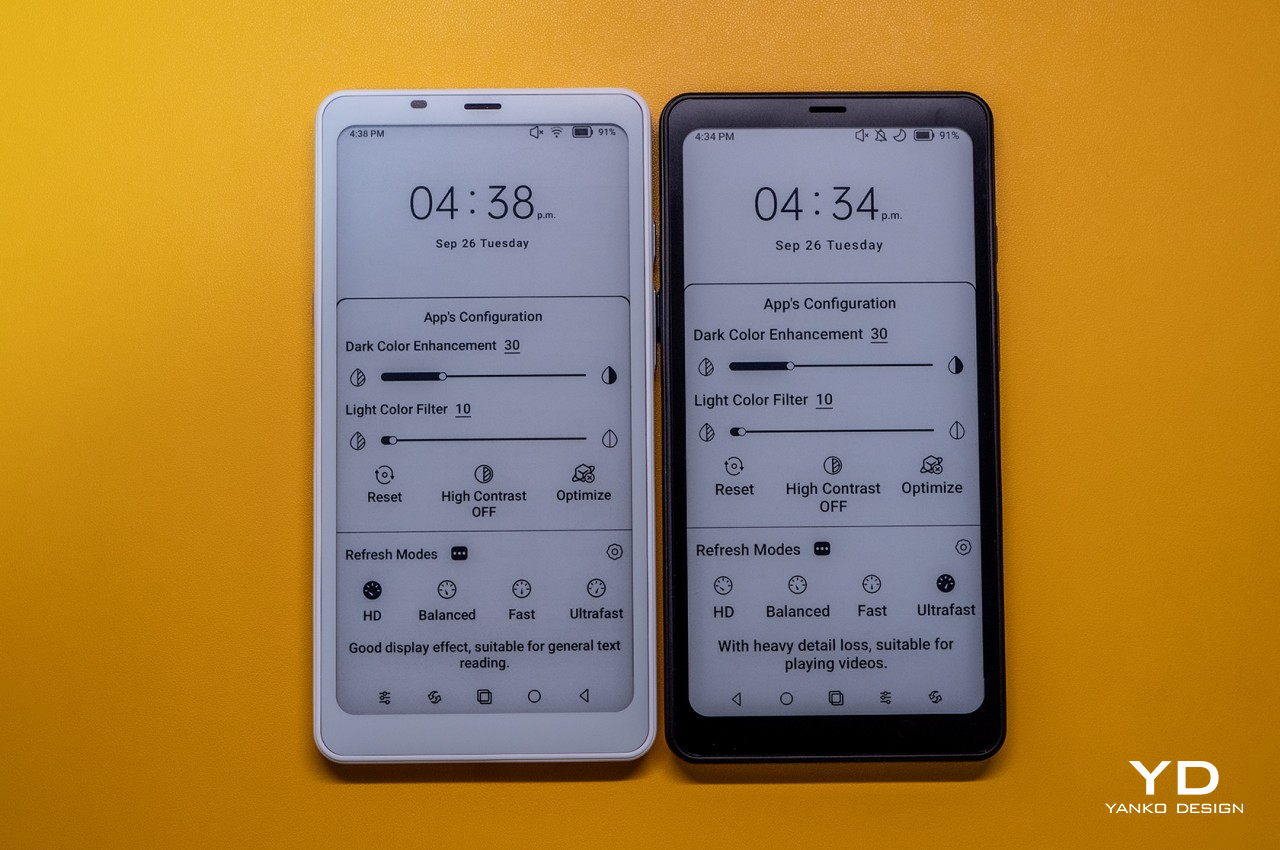
That said, a phone-sized Android device with an E Ink display might be an even more efficient design, which is what the Onyx BOOX Palma is offering. Technically, it’s an e-book reader that’s the size of a regular phone and actually runs Android, which is the standard for BOOX’s devices. This means it has access to the same apps you have on your regular phone, but without color. You also don’t have cellular connectivity via a SIM card, which might be a deal-breaker for a phone but a great deal for distraction-free reading and mobility.
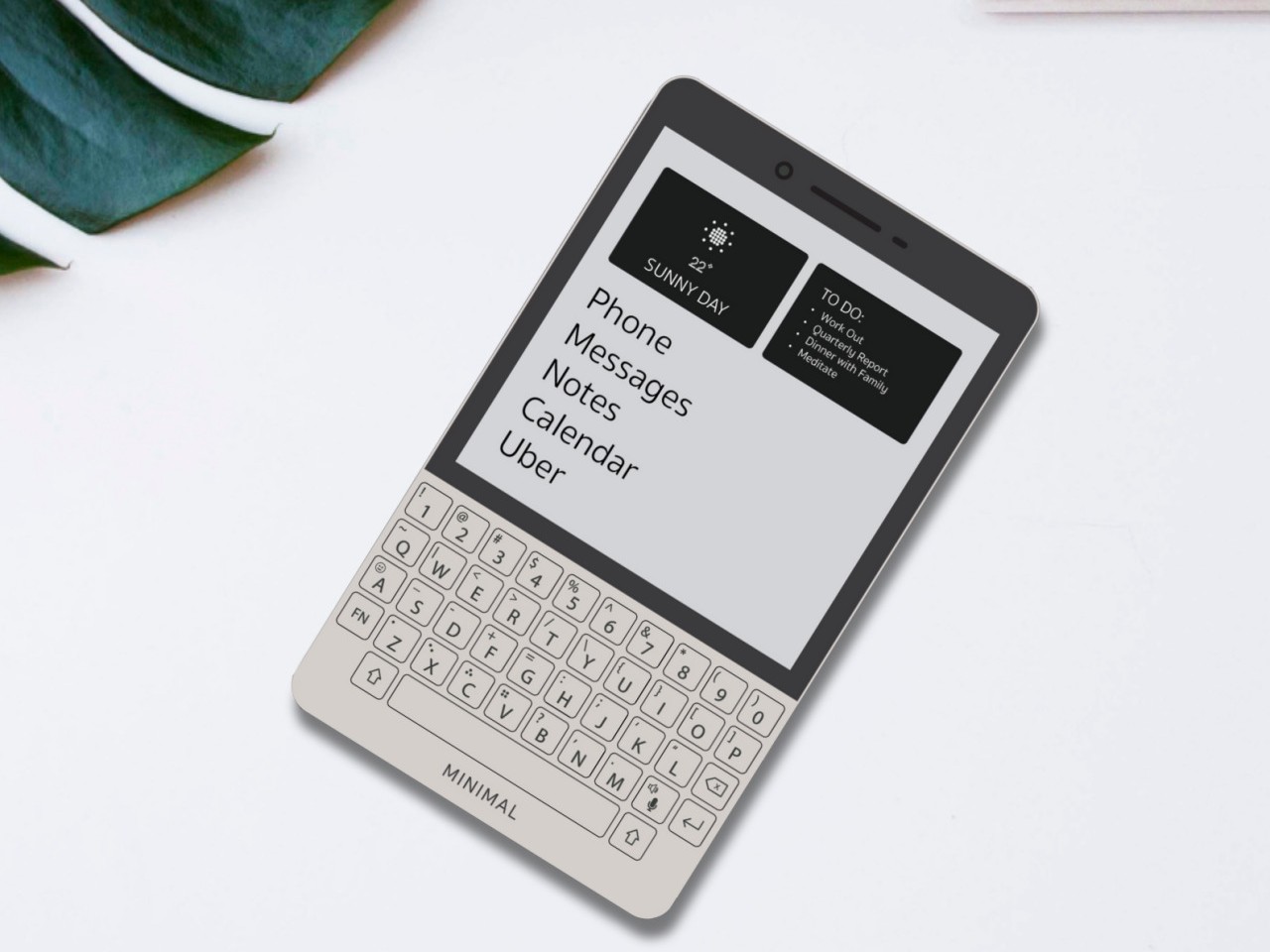
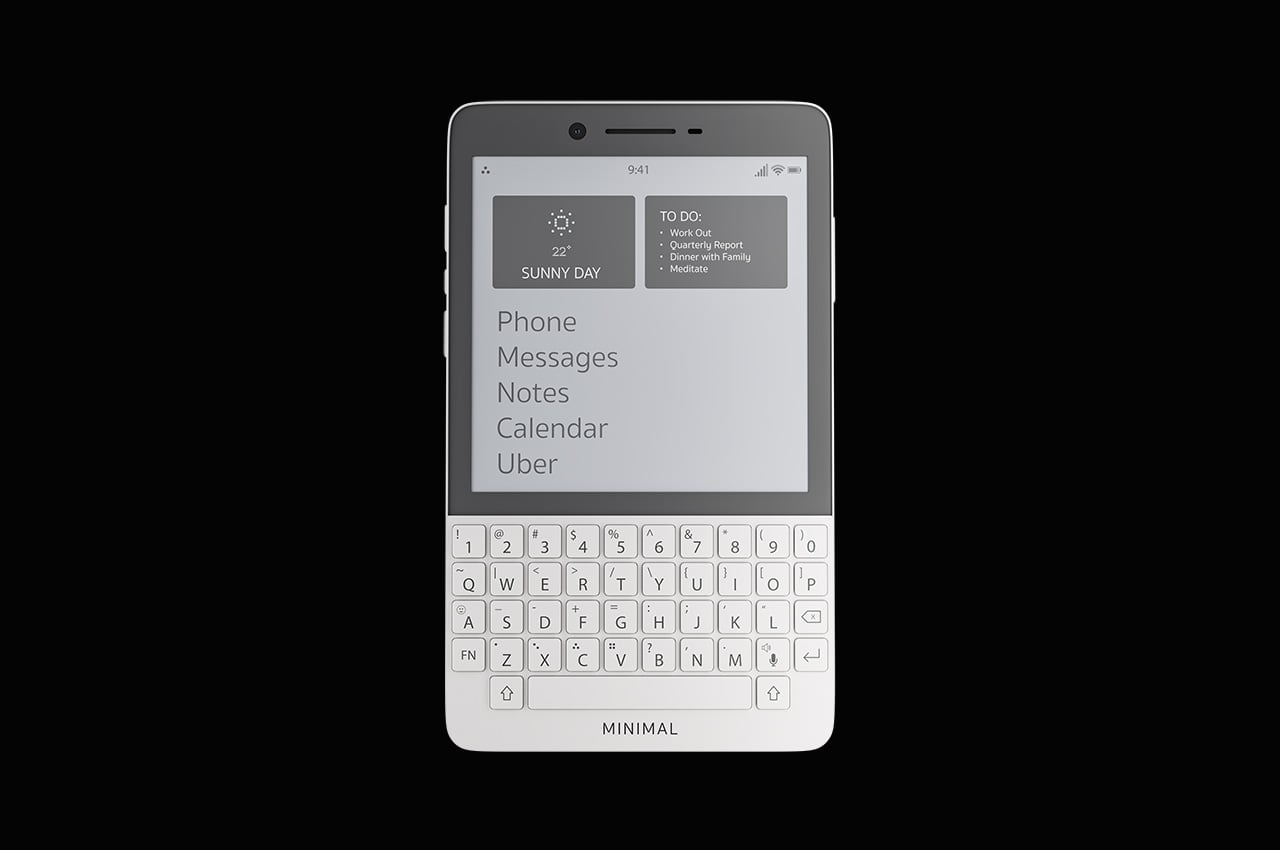
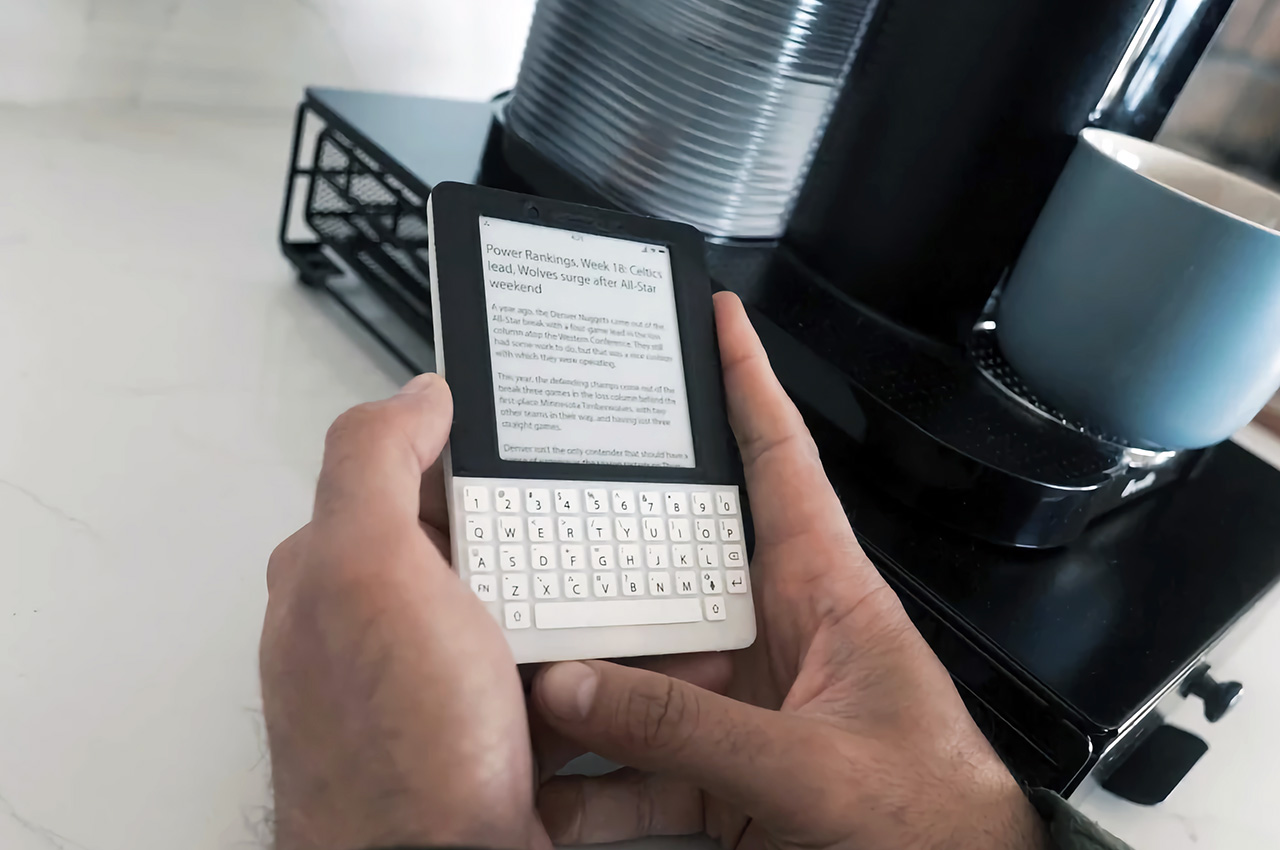
BlackBerry might have joined the likes of Nokia and LG as just parts of the annals of mobile history, but its squarish shape and QWERTY keyboard are forever etched in the consciousness of even the least tech-savvy person on the planet. Many have tried to recreate that magic, but this rather elegant yet odd phone puts a twist to it. It combines the iconic BlackBerry design with an E Ink screen and a minimalist aesthetic, promising distraction-free productivity by actually limiting what you can do on the device. It can even make it easier to actually reply to or post on social media, though the drab grayscale screen is probably going to make that a little less enjoyable anyway.
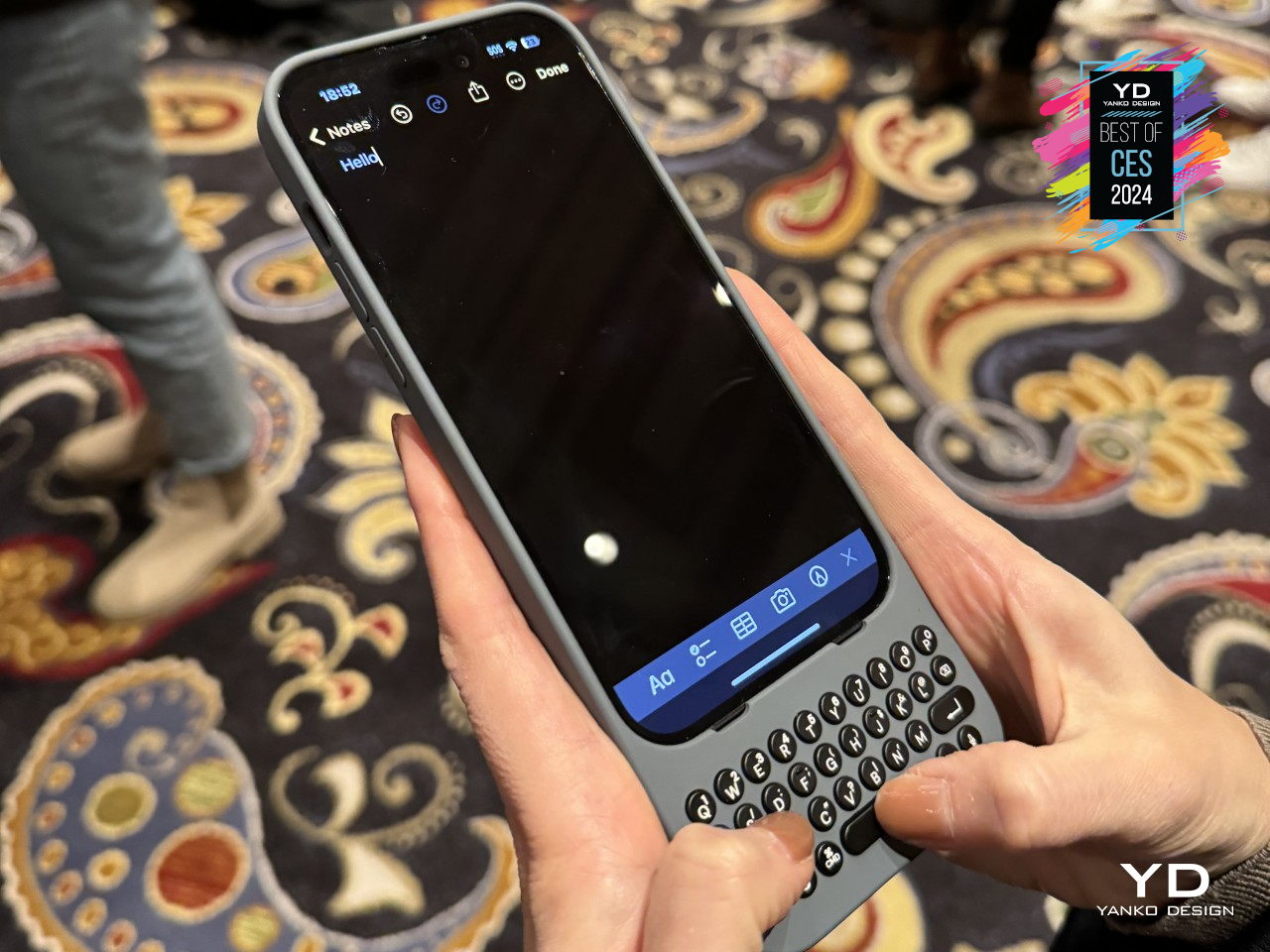
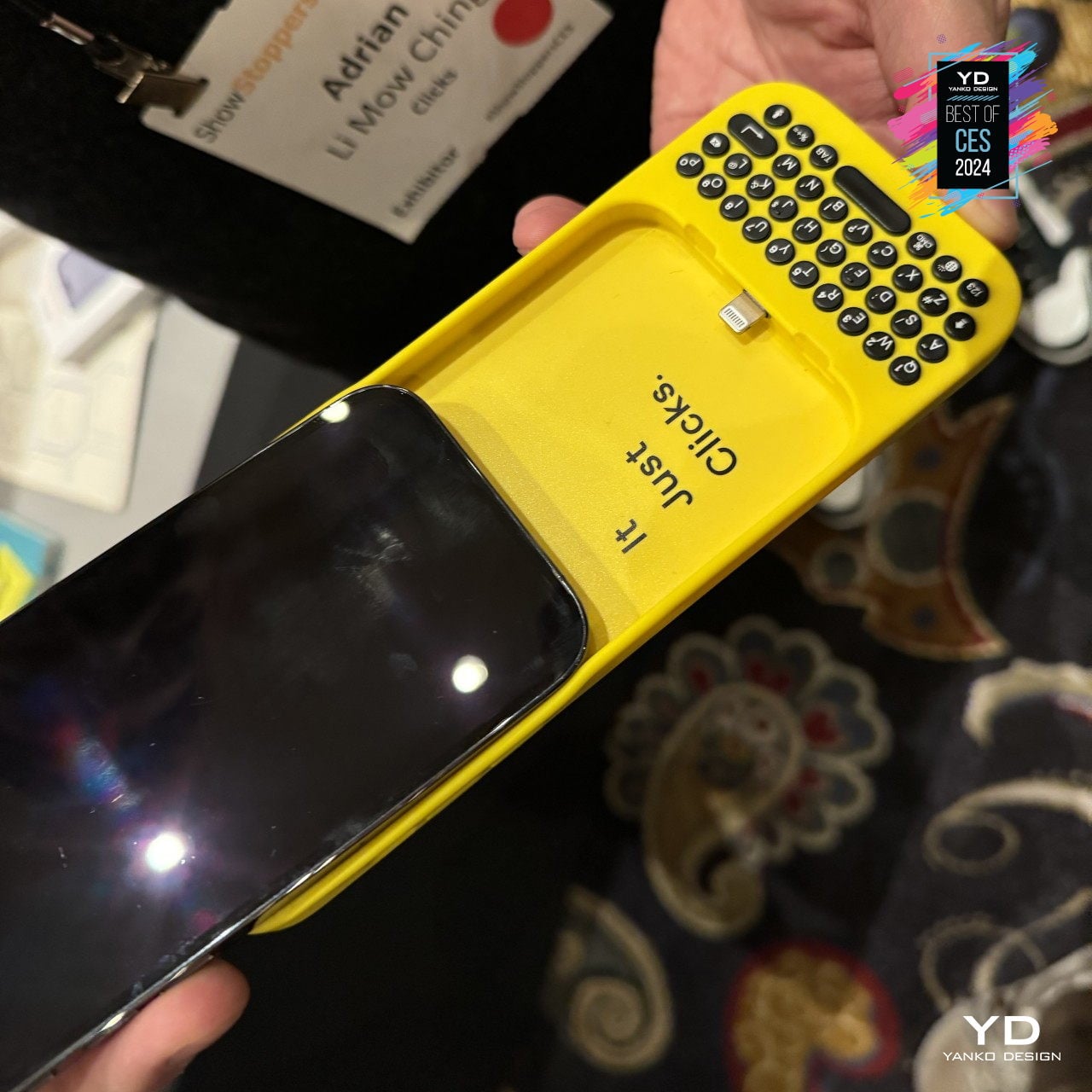
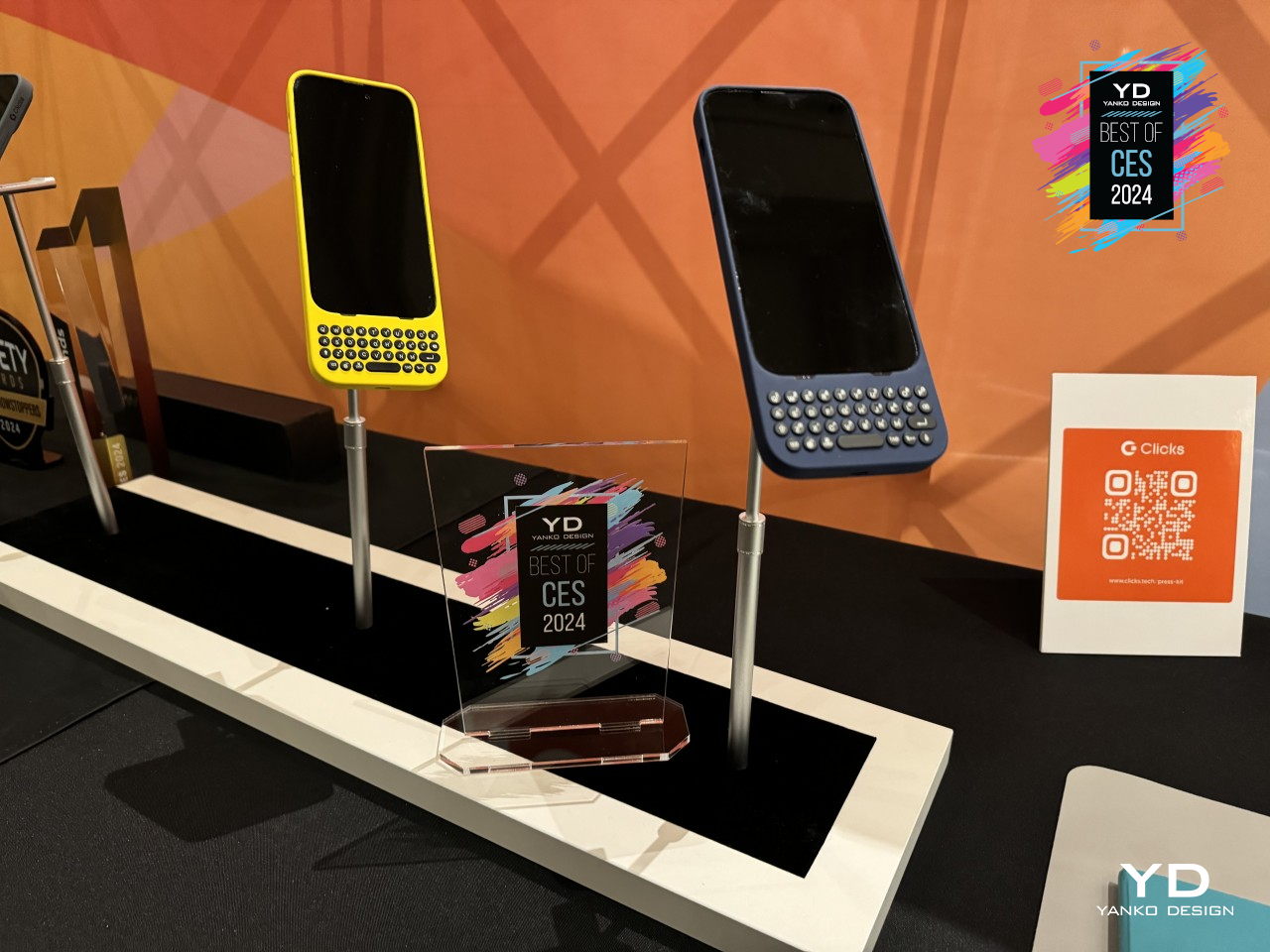
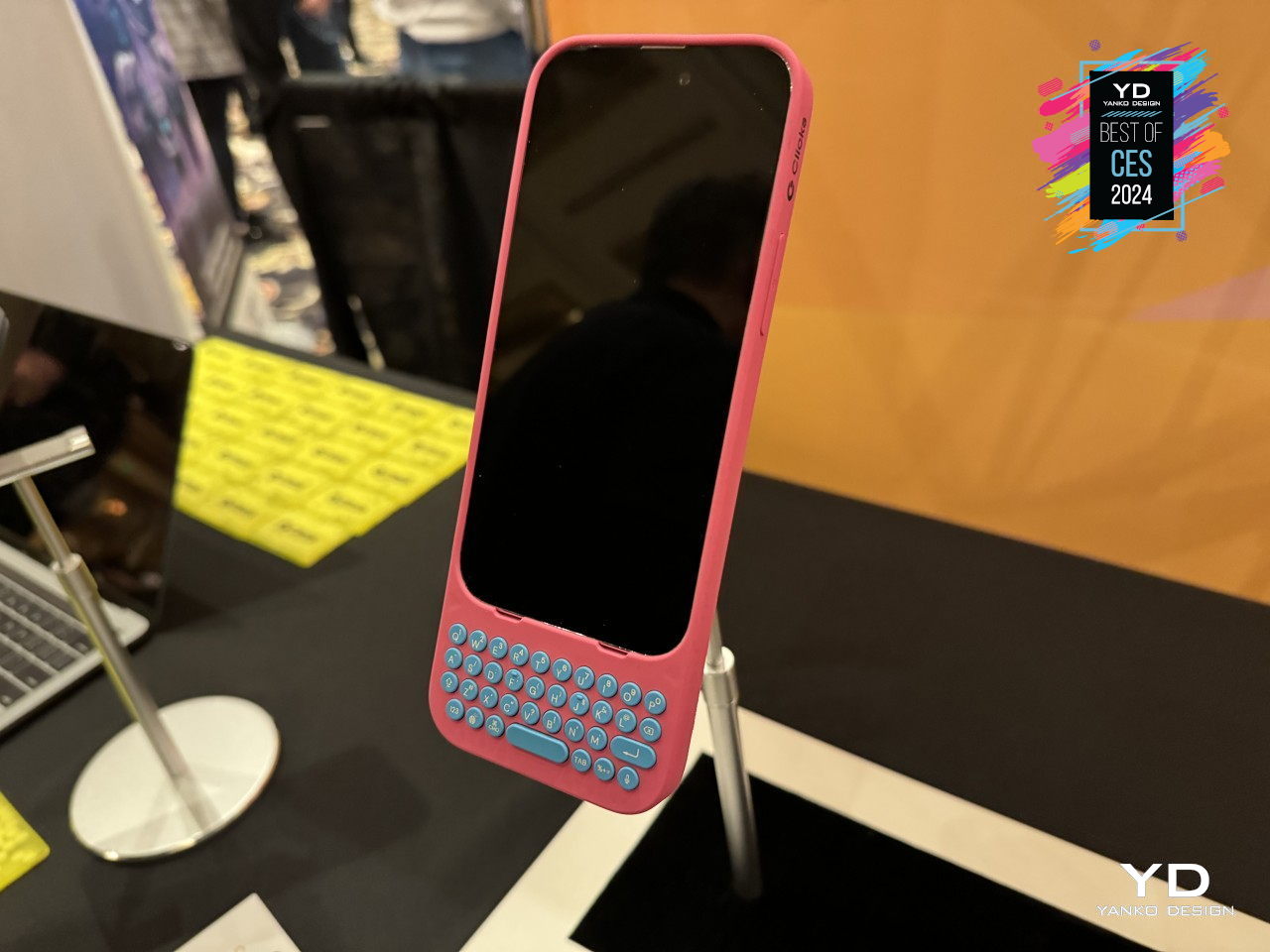
The idea of a BlackBerry-like experience might tickle the fancy of smartphone users, but none of them will be willing to ditch their powerful, colorful, and highly functional smartphones. Clicks is a case that tries to bring the best of both worlds, and it’s practically just a case that slides onto an iPhone to provide that tactile typing experience. You won’t have to give up your favorite apps, especially the ones you need to actually be productive, but the burden of being disciplined and ignoring distractions is now on you instead.
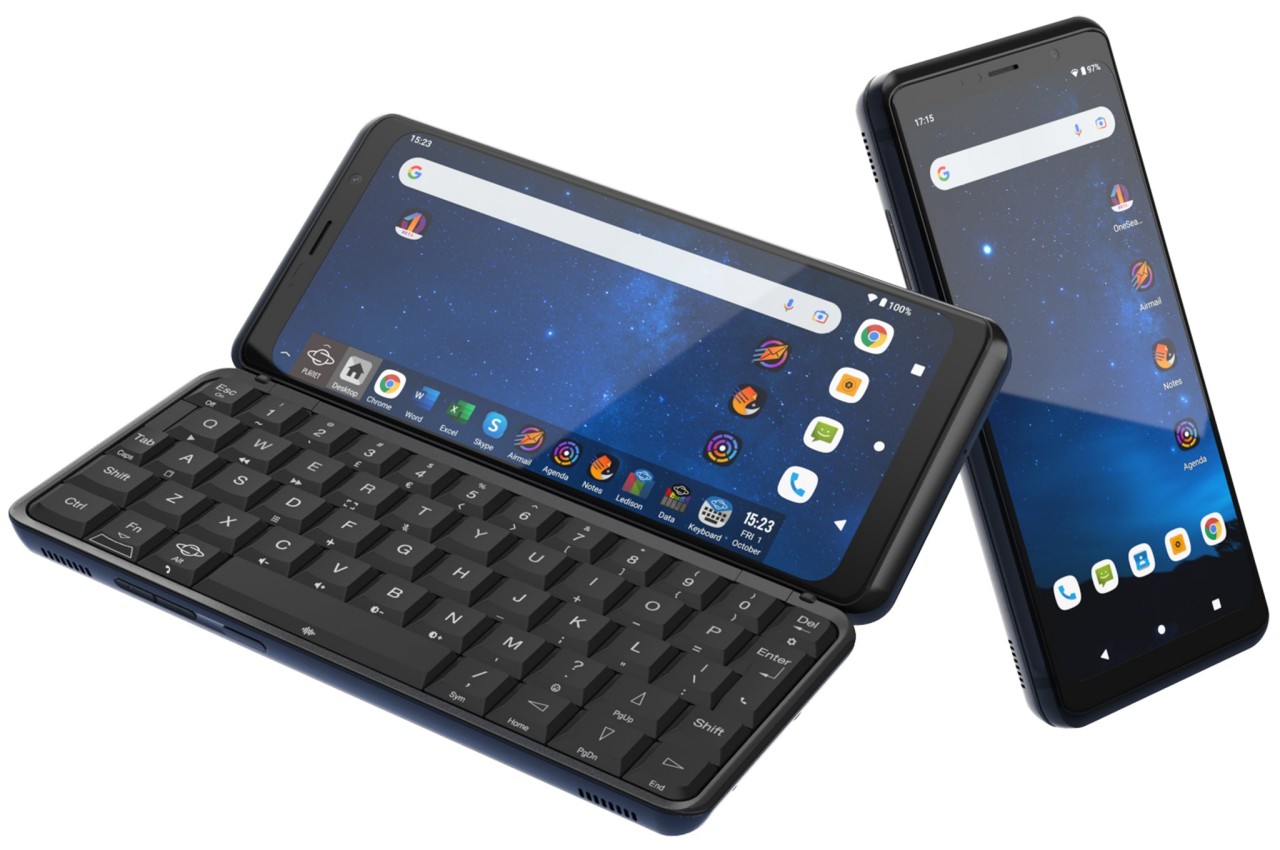
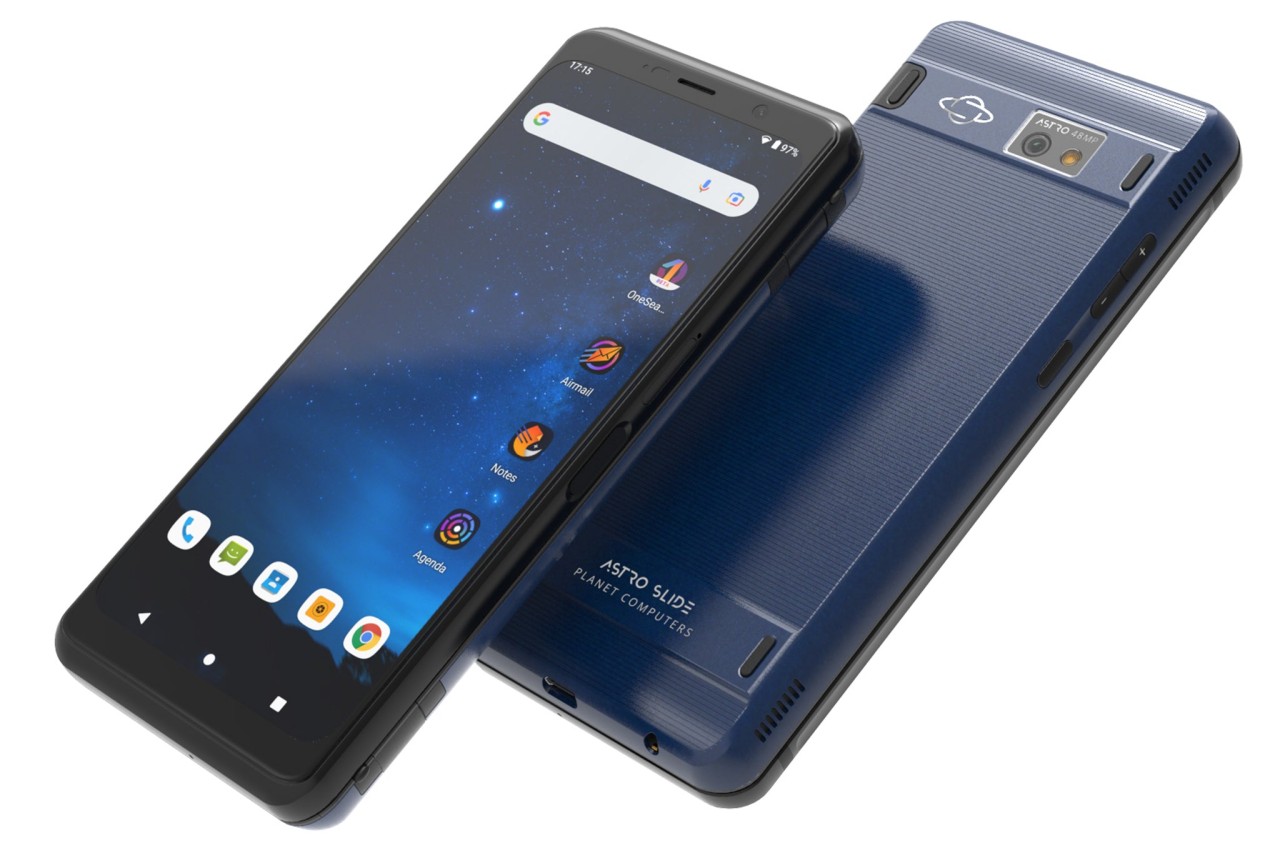
A phone that opens like a mini typewriter has actually been around since the days of the Nokia Communicator and its kin, but that design proved to be more complicated than they’re worth. After playing with that same design, PlanetComputing shifted to a slider that still provides that typing experience while retaining the exact same functions as a phone. Unfortunately, such a mechanism proved to be just as clunky and unreliable, and the software platform didn’t exactly lend itself well to a landscape screen.
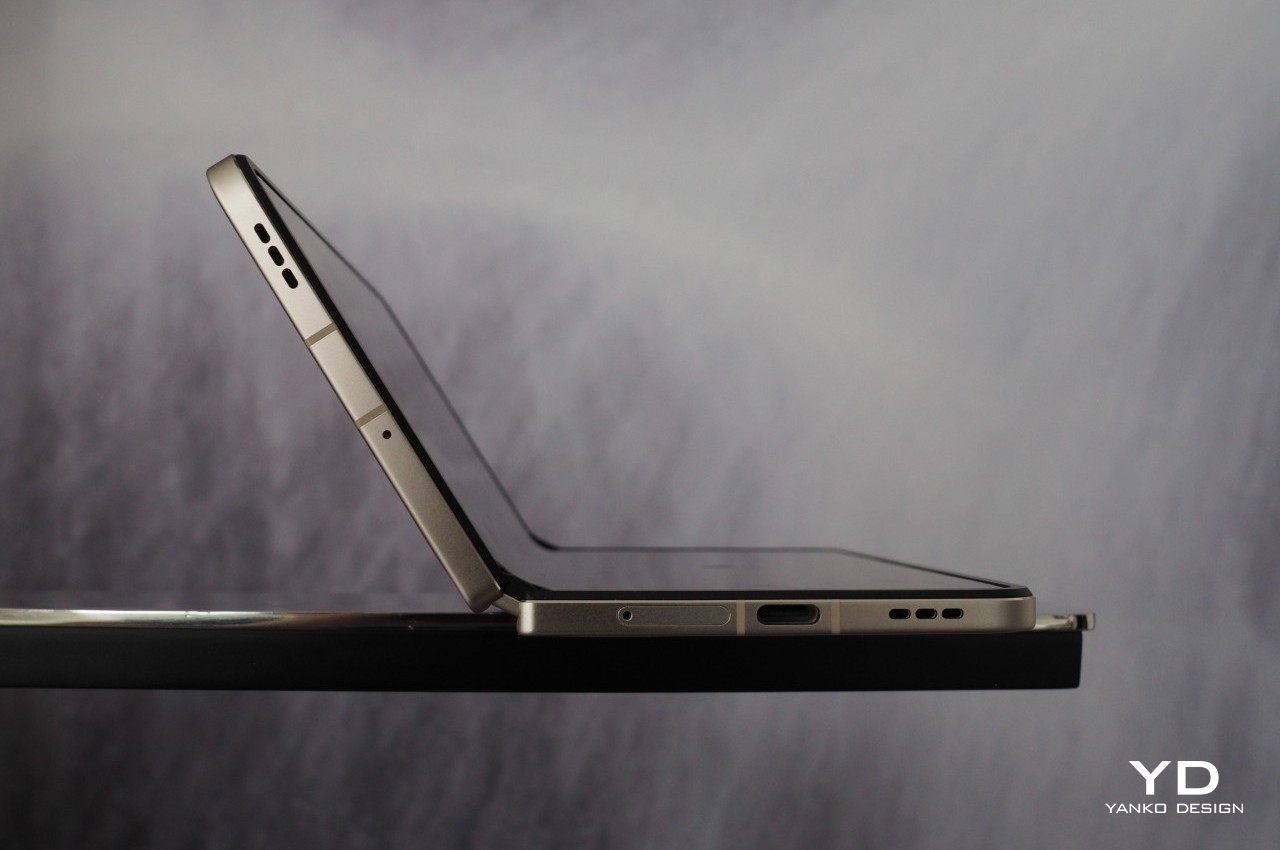
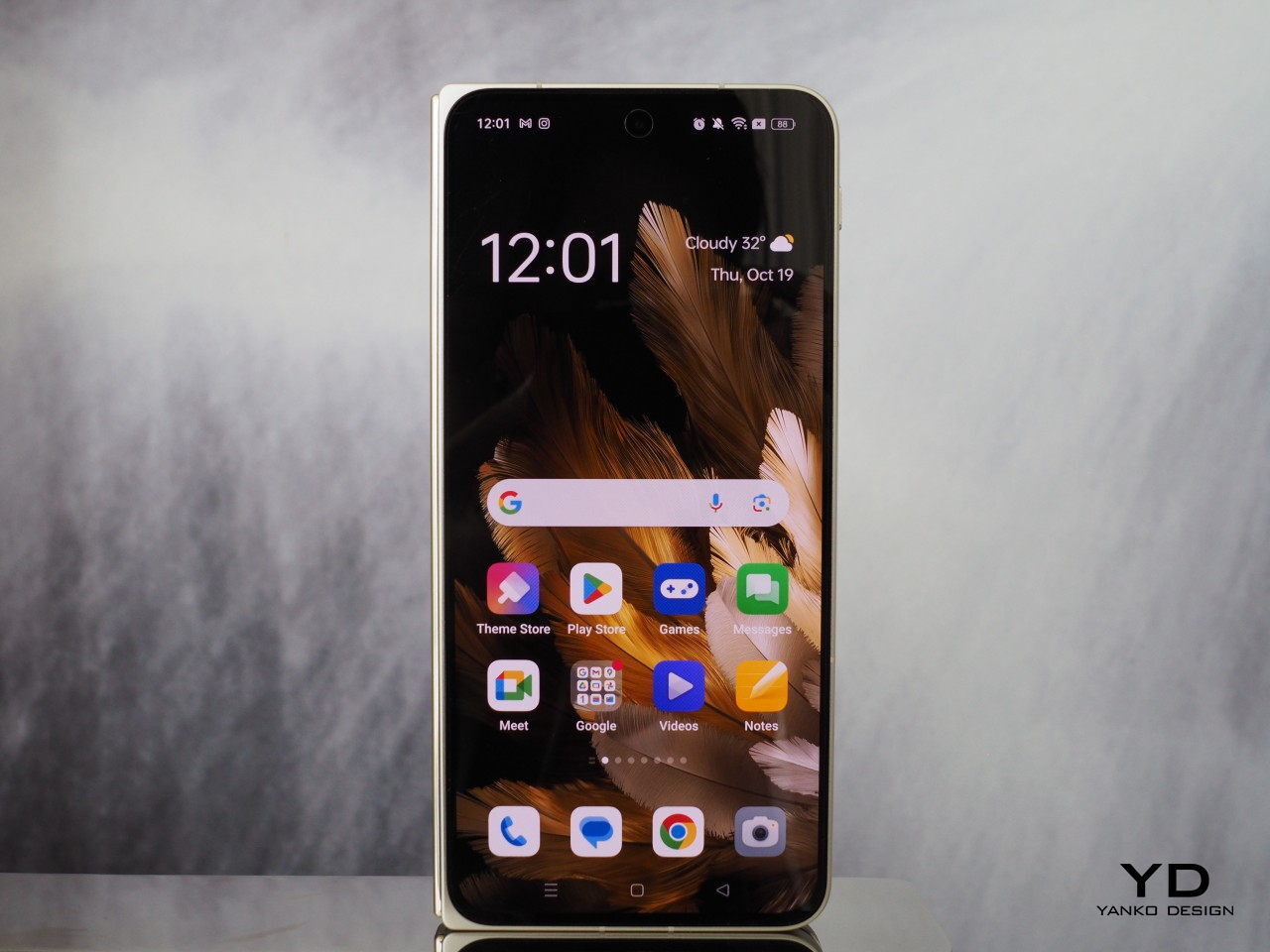
Alternative: Any Foldable Phone
Designer: OPPO
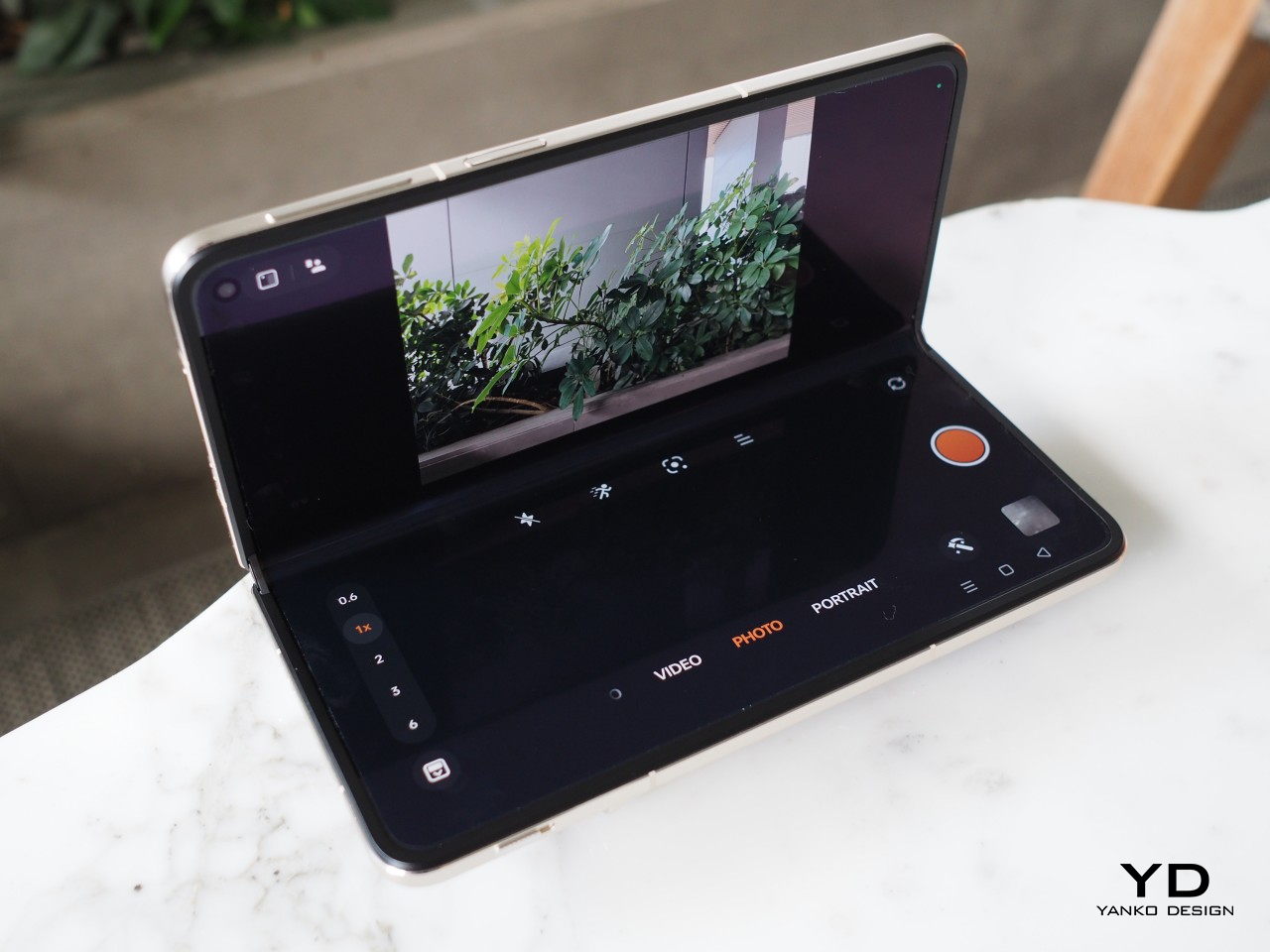
These days, you don’t have to rely on a physical qwerty keyboard to have that same mini laptop experience. With foldable phones now more common, you can tap away on a more flexible on-screen keyboard when the device is only half-folded. At the same time, however, you have both phone and tablet functionality in your hands. Admittedly, the design is far from perfect, and we’re still waiting for more affordable foldables coming in the very near future.
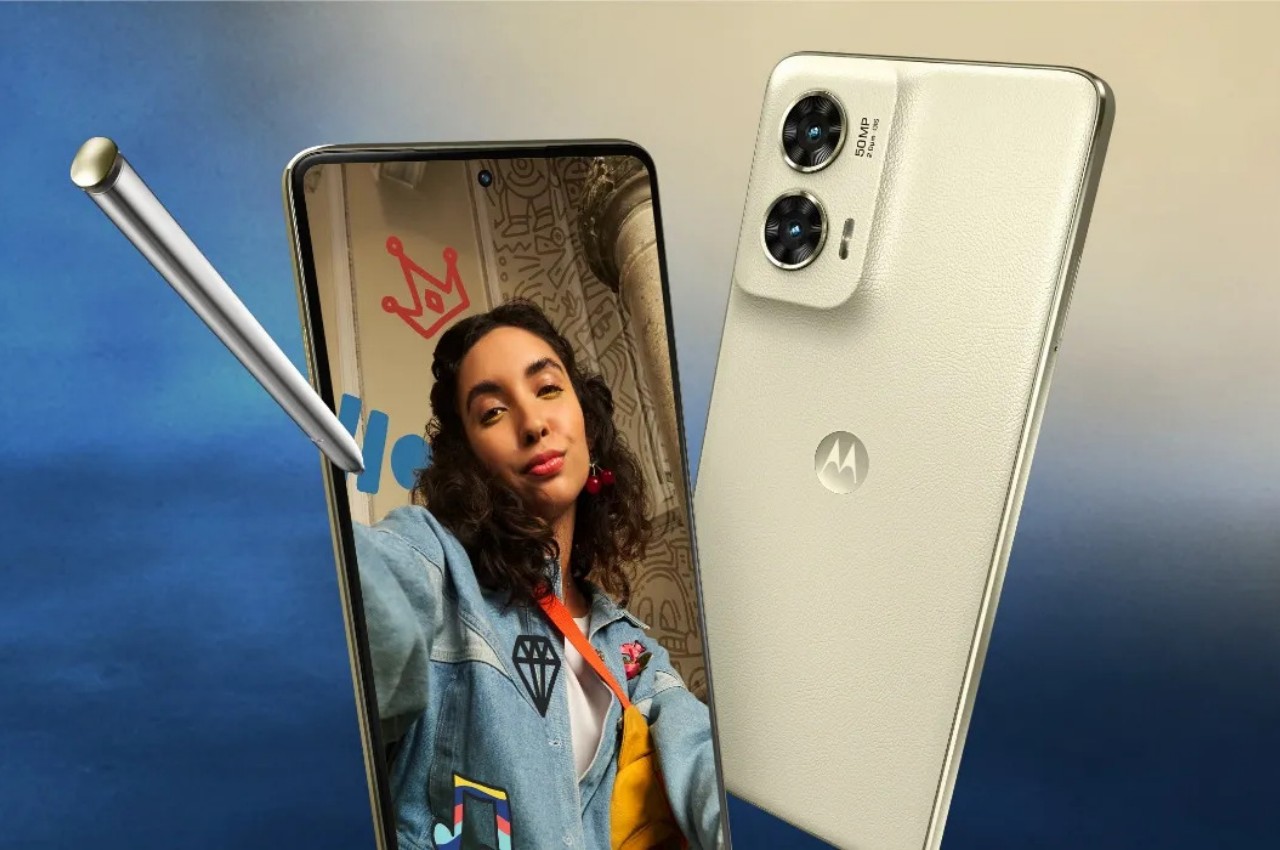
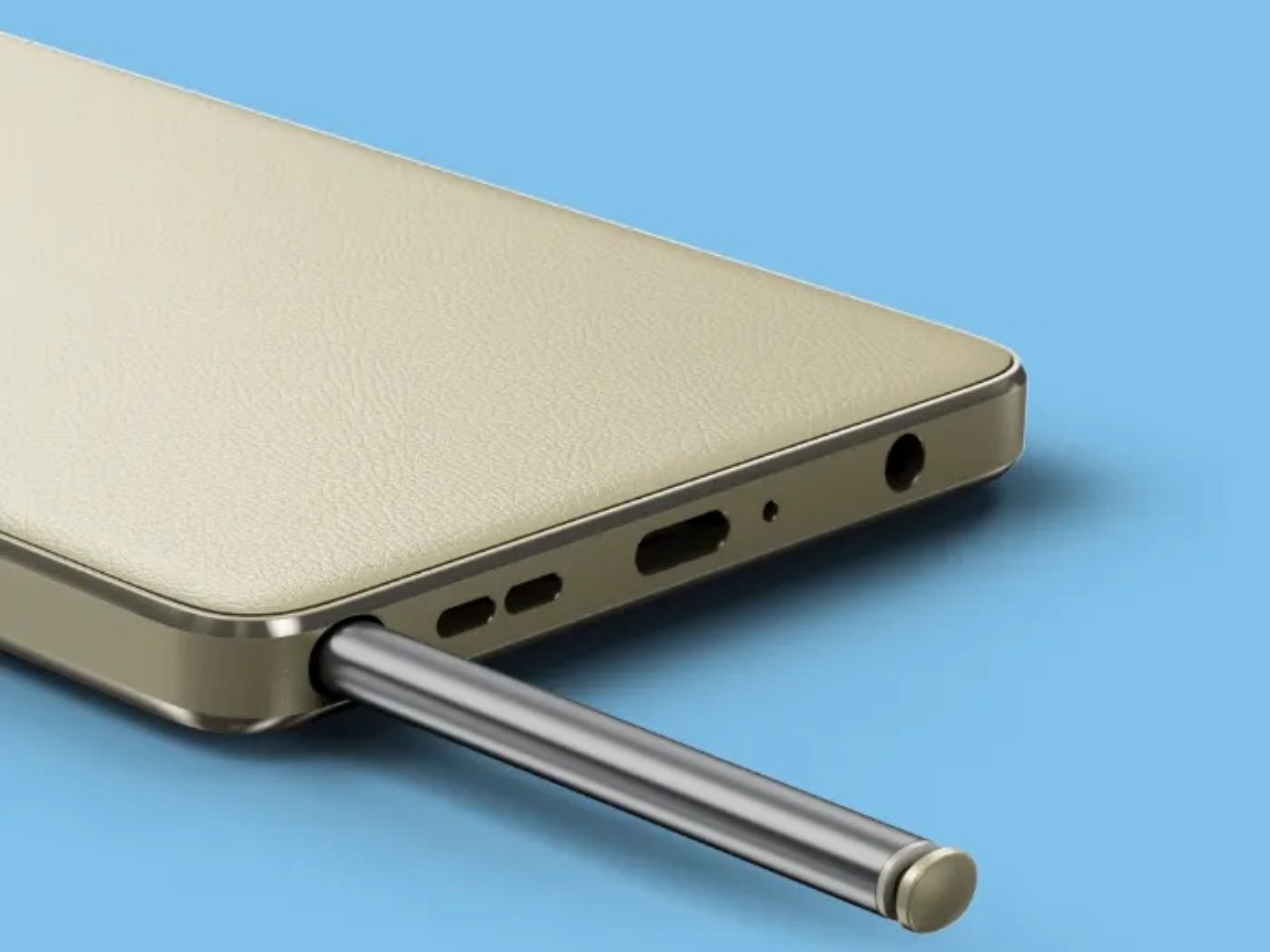
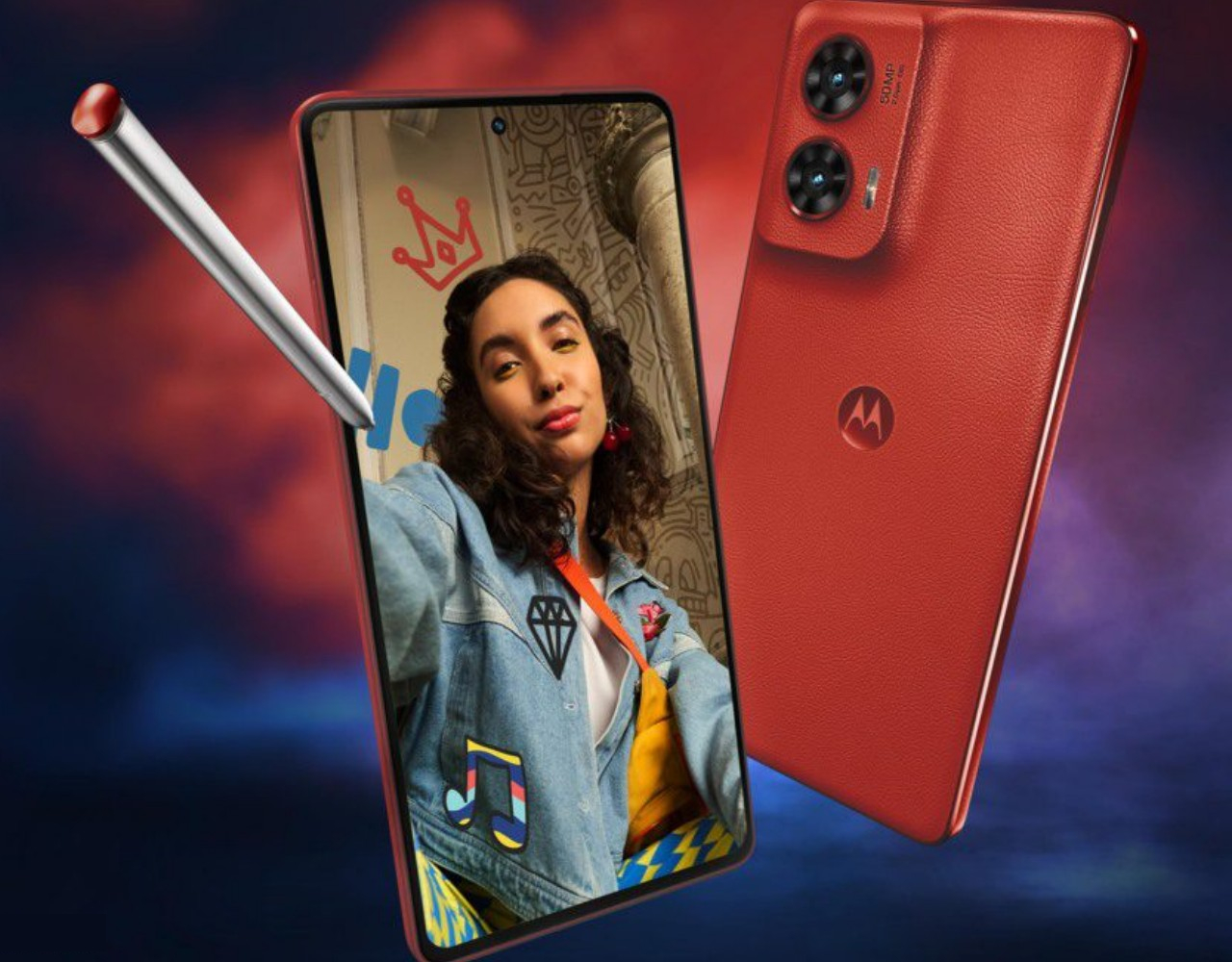
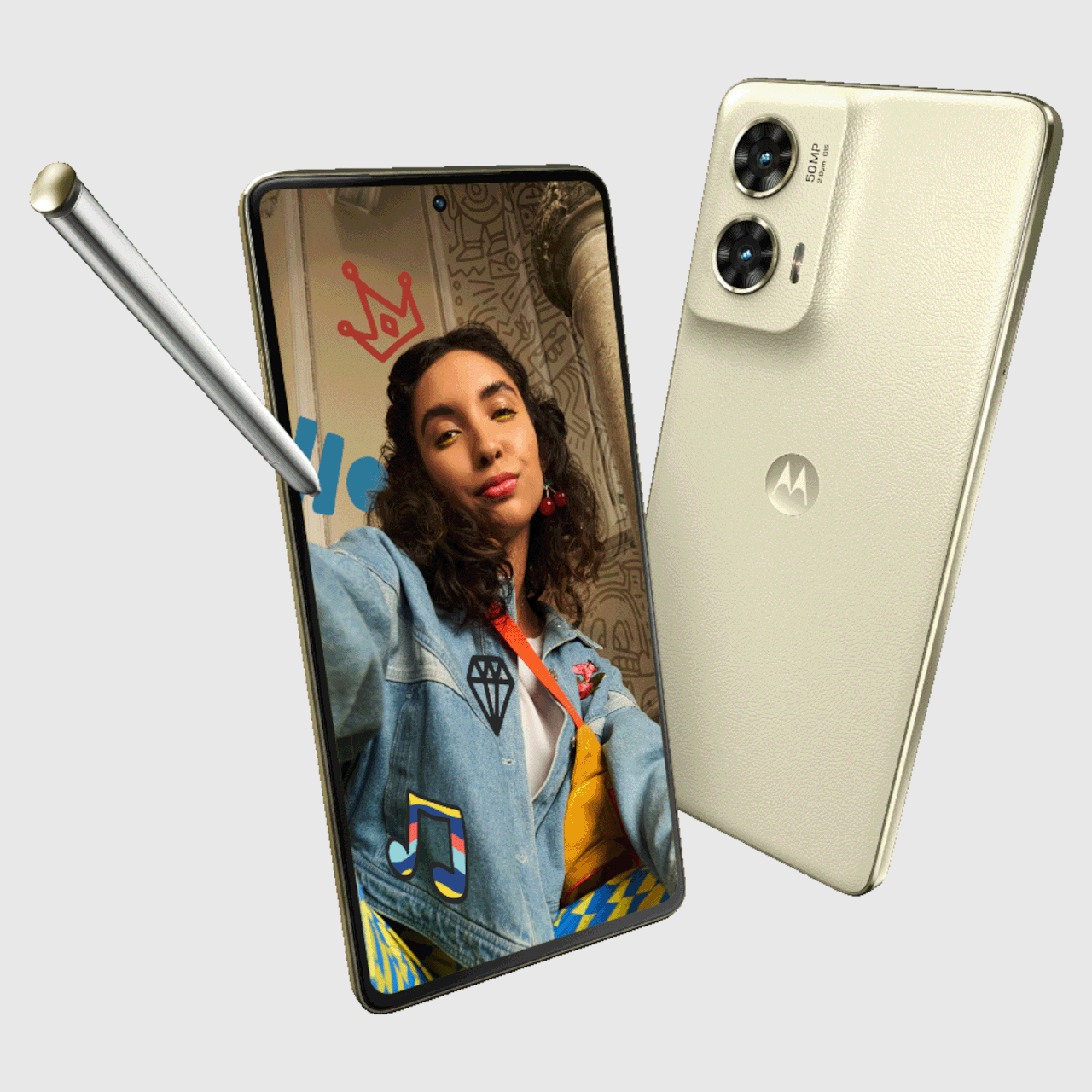
The announcement of the new Apple Pencil Pro has put the stylus in the spotlight again. This input tool isn’t just limited to tablets and large screens, though that’s where they have the most use because of the bigger digital canvas. Thanks to the Samsung Galaxy Note, now the Galaxy S Ultra series, it has been demonstrated that there is also some benefit to having a stylus on smartphones. Unfortunately, Samsung does seem to have a monopoly on that design or is at least the best-known example, but it isn’t the only game in town, and Motorola just revealed its latest contender that makes an admittedly attractive offer, at least if you’re not too intent on making pro-level artwork on it.
The stick inside the Moto G Stylus 5G (2024) is exactly that: a stick that works in place of your stubby finger. Unlike the Wacom-powered S Pen of the Galaxy S Ultra phones, it doesn’t have pressure sensitivity, rotation and tilt detection, or Bluetooth-enabled button functions. That’s actually not a big deal-breaker if all you really want to do is scribble notes, annotate pictures and documents, or even start a rough sketch that you’ll continue on a computer or laptop. For these purposes, the Moto G Stylus is more than sufficient, especially with upgraded sensitivity and new software arriving in this model.
The rest of the smartphone is a bit of a mixed bag, though thankfully leaning more on the positive side. It runs on a Snapdragon 6 Gen 1, which is the same processor it used for last year’s model. It does have more memory this time around, with 8GB offering a bit more wiggle room for apps. Another thing that is the same is that it still has a headphone jack, though no one will probably complain about that.
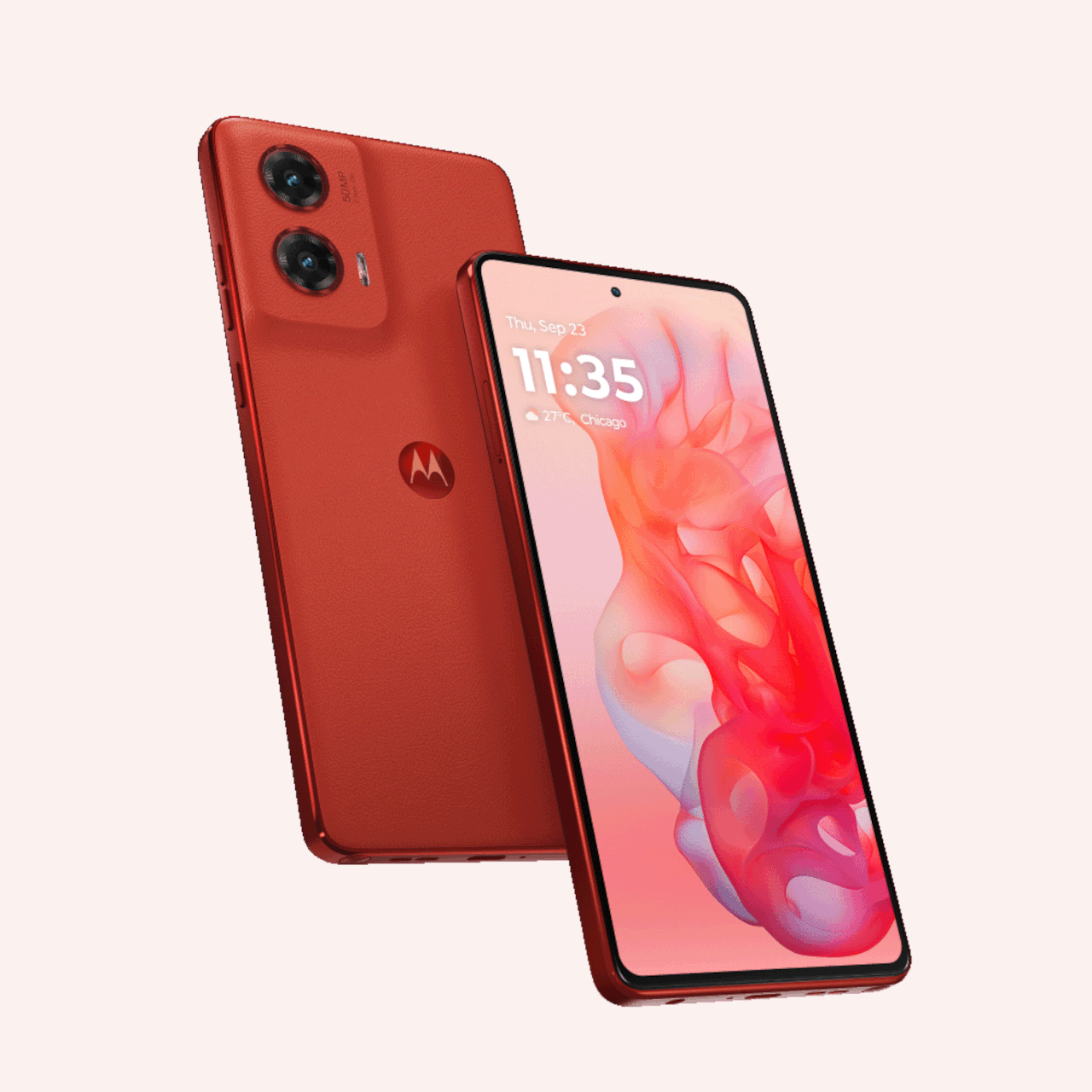
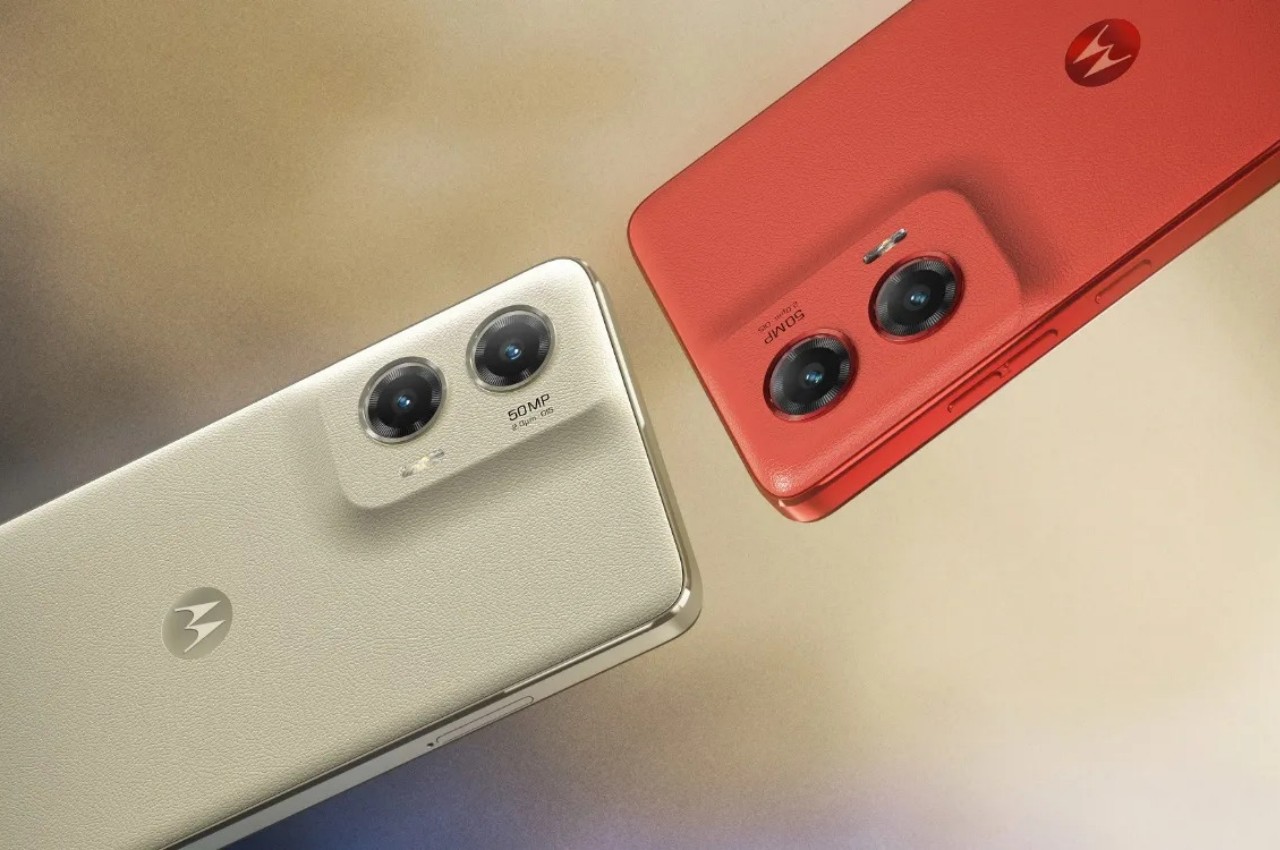
The fourth-gen Moto G Stylus 5G does bring some considerable upgrades to the table, starting with a larger 6.7-inch 120Hz screen, though it’s still stuck with a 1080p resolution. The 5,000 mAh battery might still be the same, but it now supports 15W wireless charging on top of fast 30W wired charging. The main camera still has 50 megapixels but has upgraded specs. It is joined by a new 13MP ultra-wide camera, while a new 32MP selfie shooter is on the front.
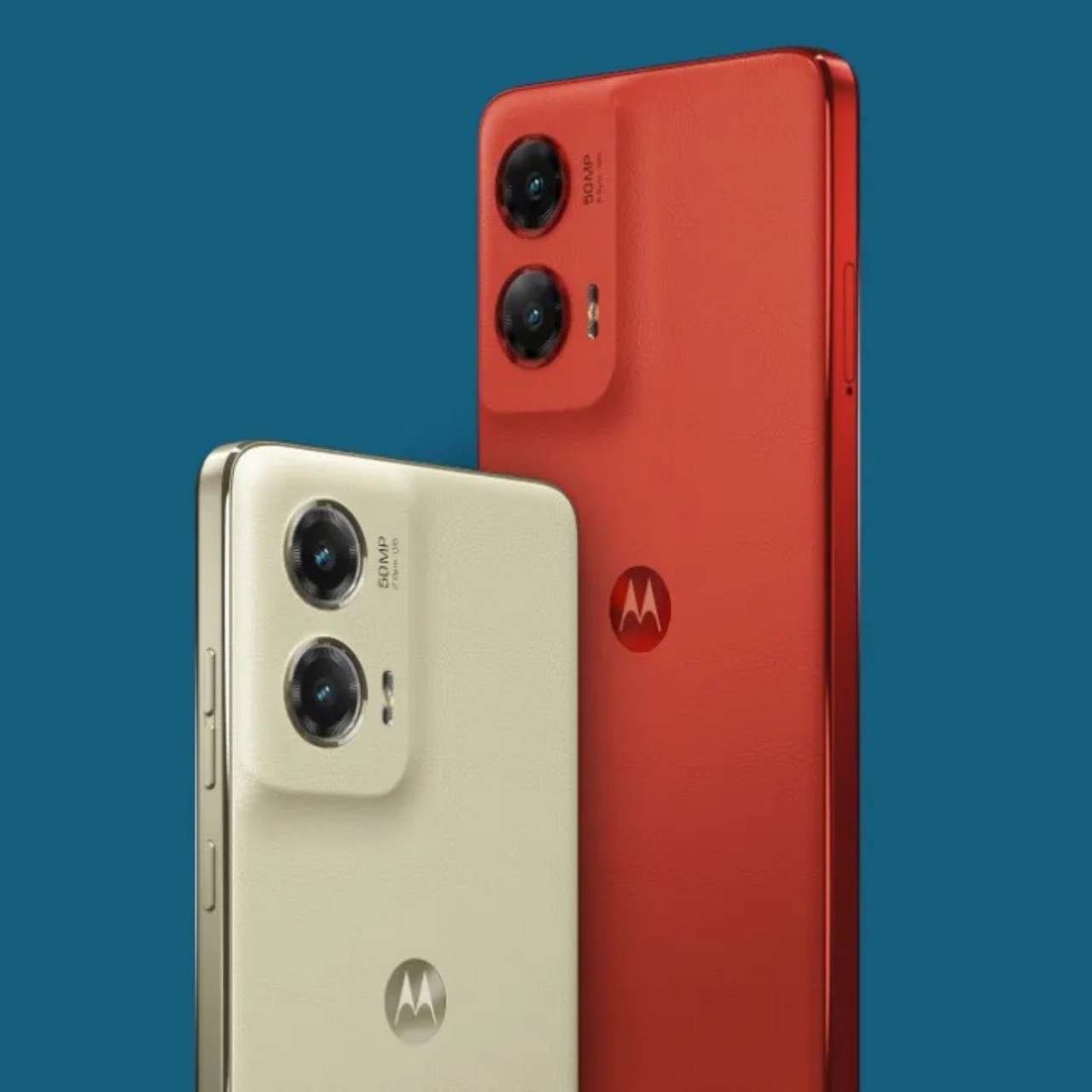
The Moto G Stylus 5G 2024 isn’t going to win awards when it comes to specs, but its $399 price tag is easily a fourth of the launch price of the Galaxy S23 Ultra. Motorola’s stylus-toting smartphone, however, does score points when it comes to looks, with a vegan leather material, a clean, minimalist rear design, and two colorful options that aim to inspire your creativity just by looking at it and touching it. The Moto G Stylus 5G (2024) goes on sale on the 30th of May.
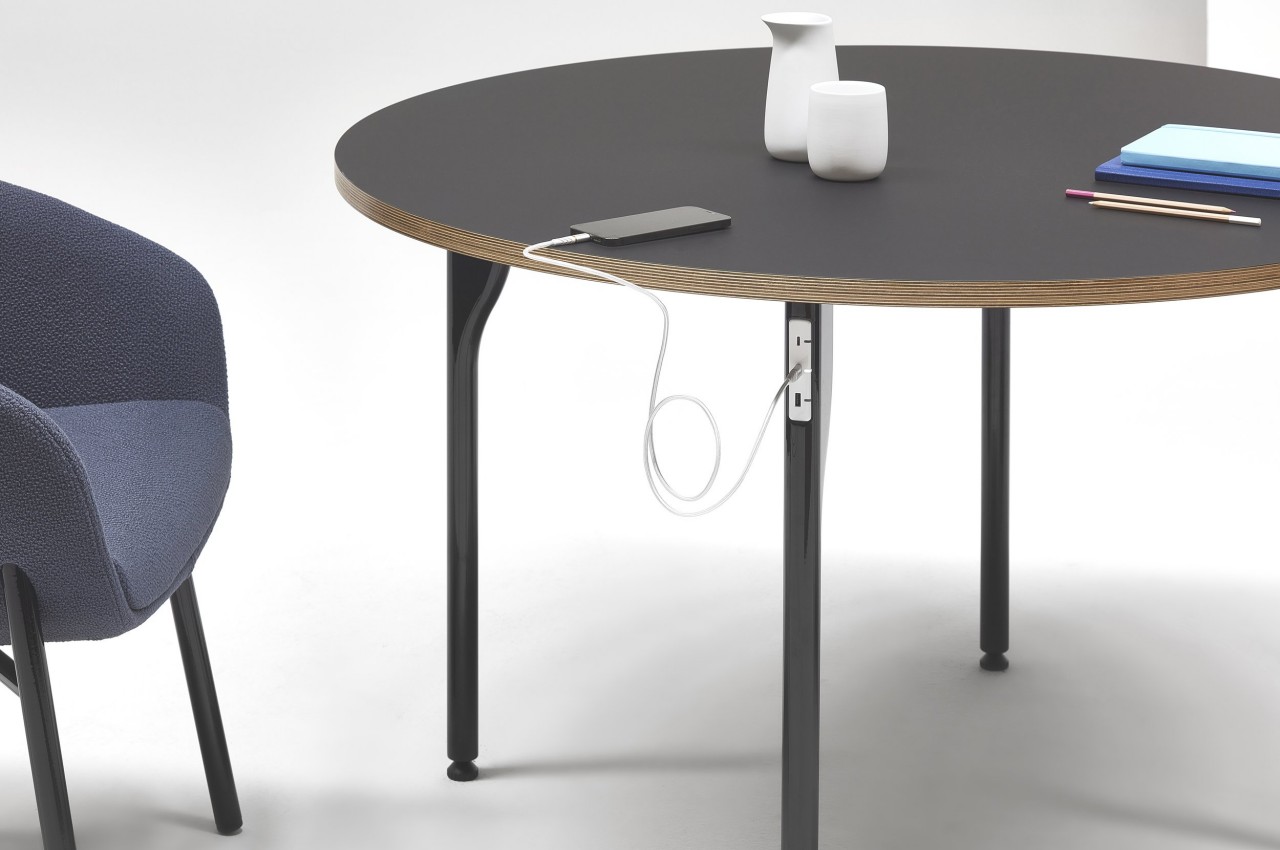
Given how almost everyone has a smartphone these days, it’s not really surprising to see establishments and furniture adapting to the situation. Desks, tables, and even shelves have started to integrate charging solutions that make it convenient to top up a mobile device quickly without having to scramble for and fight over a power strip or wall socket. Unfortunately, many of these designs, particularly for tables, add some rather unsightly cables that can also be a safety hazard if not installed properly. This table, in contrast, lets you charge phones and tablets with ease while magically making those cables disappear to preserve the table’s minimalist beauty and avoid tripping people up when they have to move about.
Tables with integrated charging solutions seem to fall into two extremes. On the one hand, you have regular tablets that have just been retrofitted with power strips and are often seen in public places like coffee shops or even libraries. On the opposite end of the spectrum, there is classier furniture that utilizes wireless charging technologies in order to make power sockets invisible, like the newer desks and shelves from the likes of IKEA. Both designs, however, require the table itself to still be plugged in regardless since it has to take all that power from somewhere.
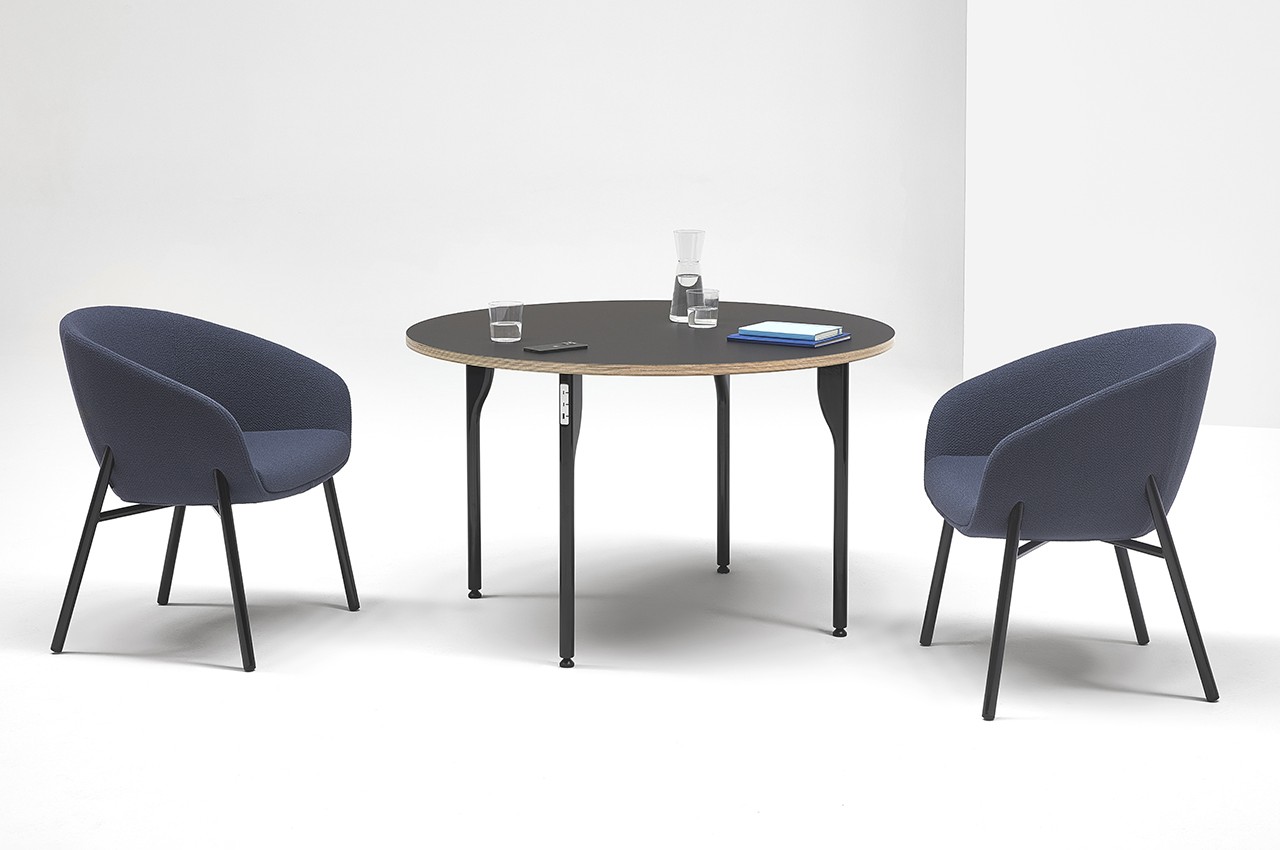
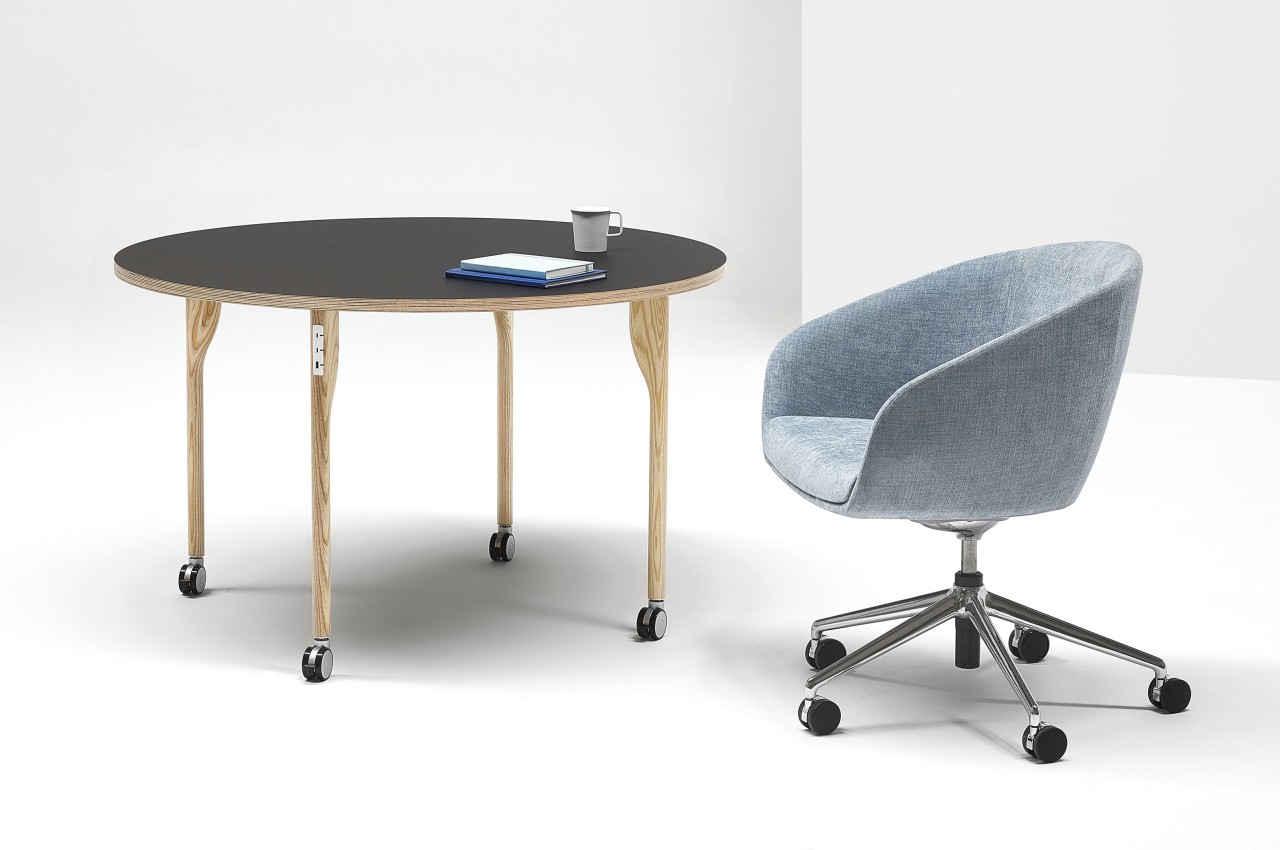
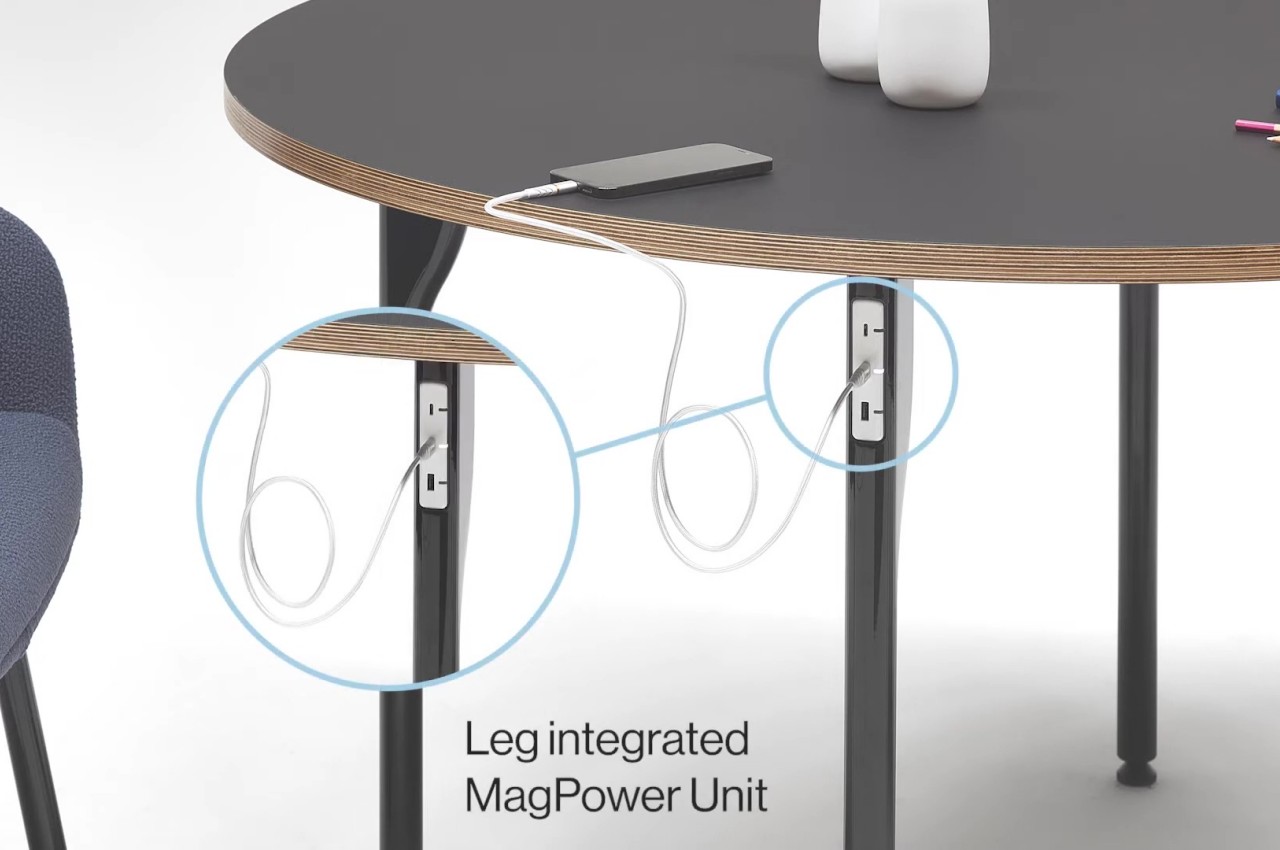
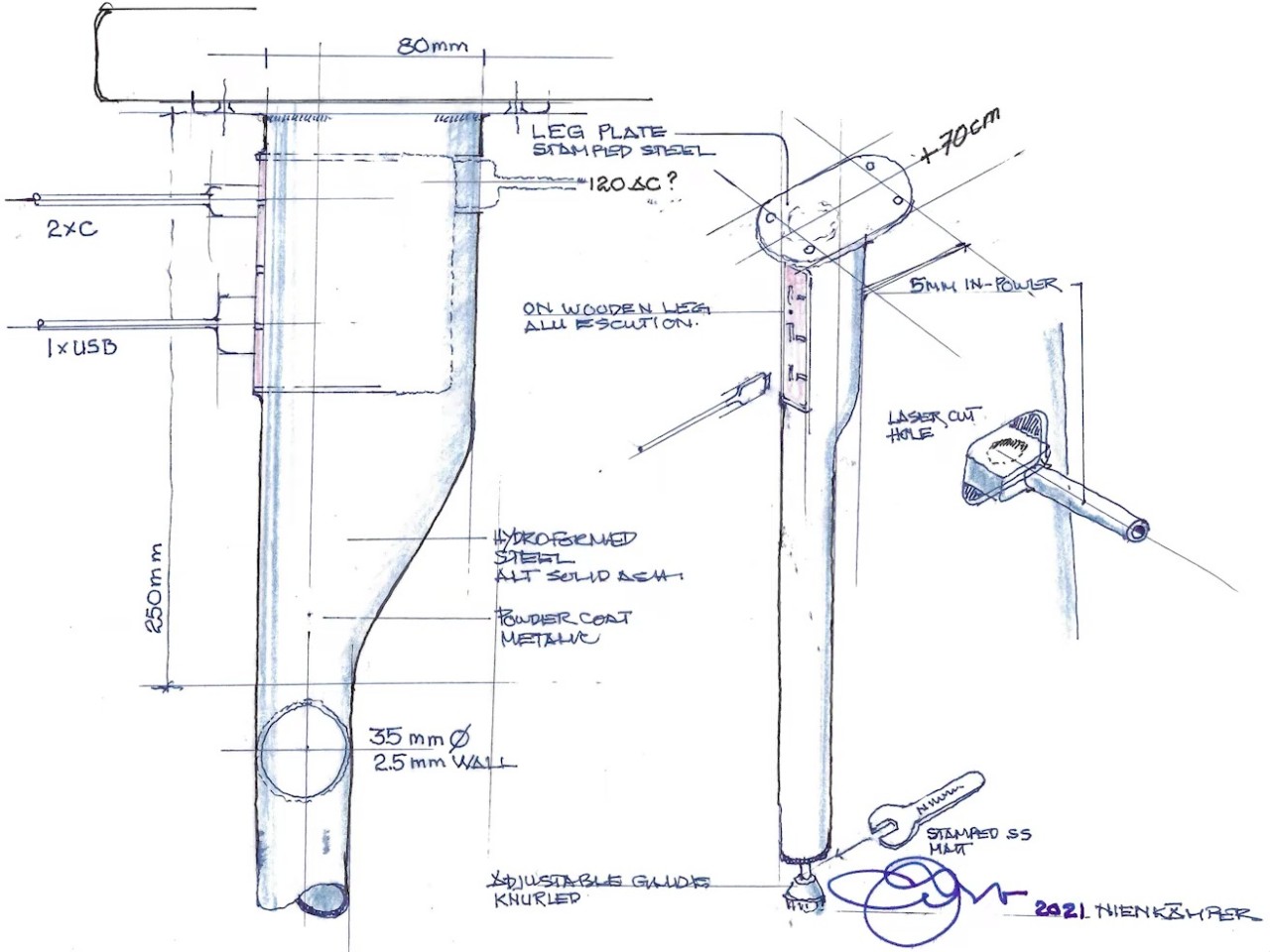
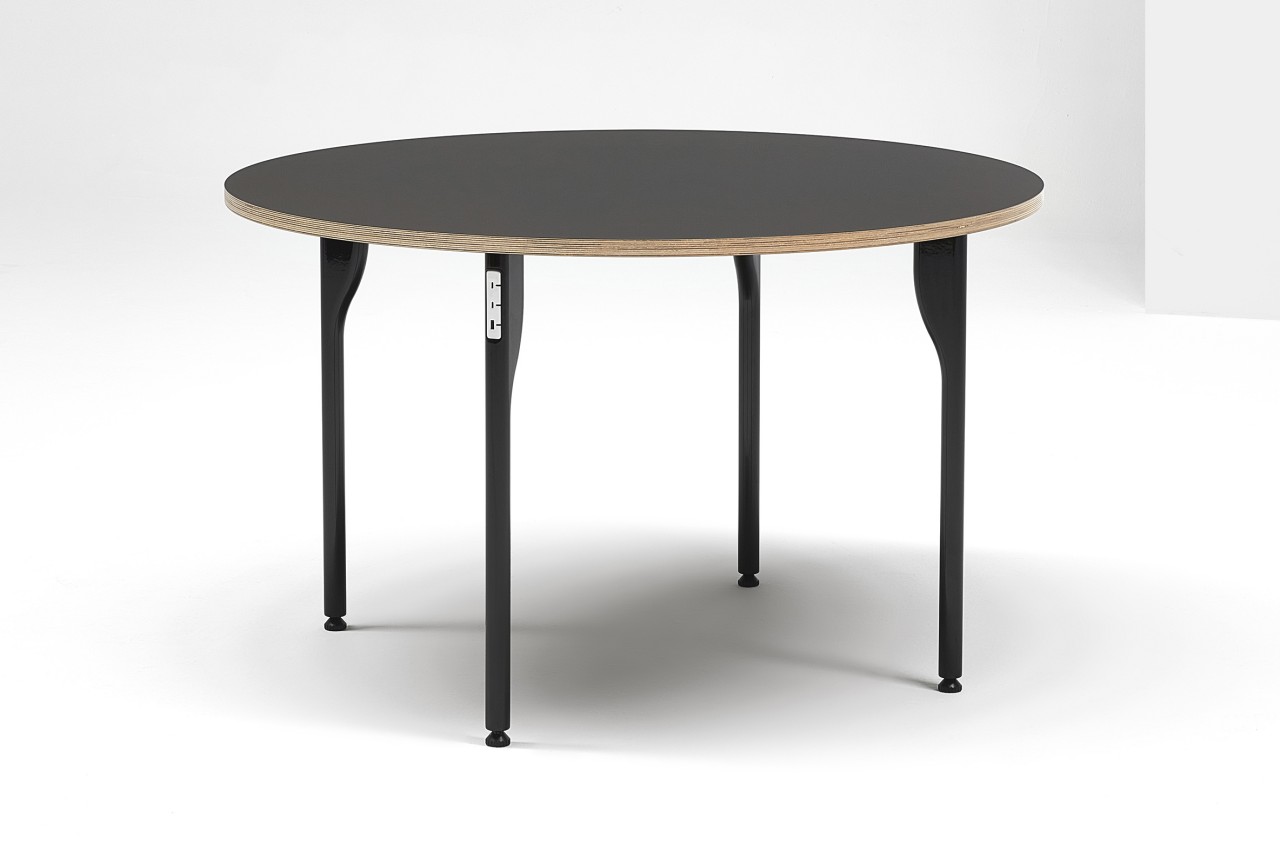
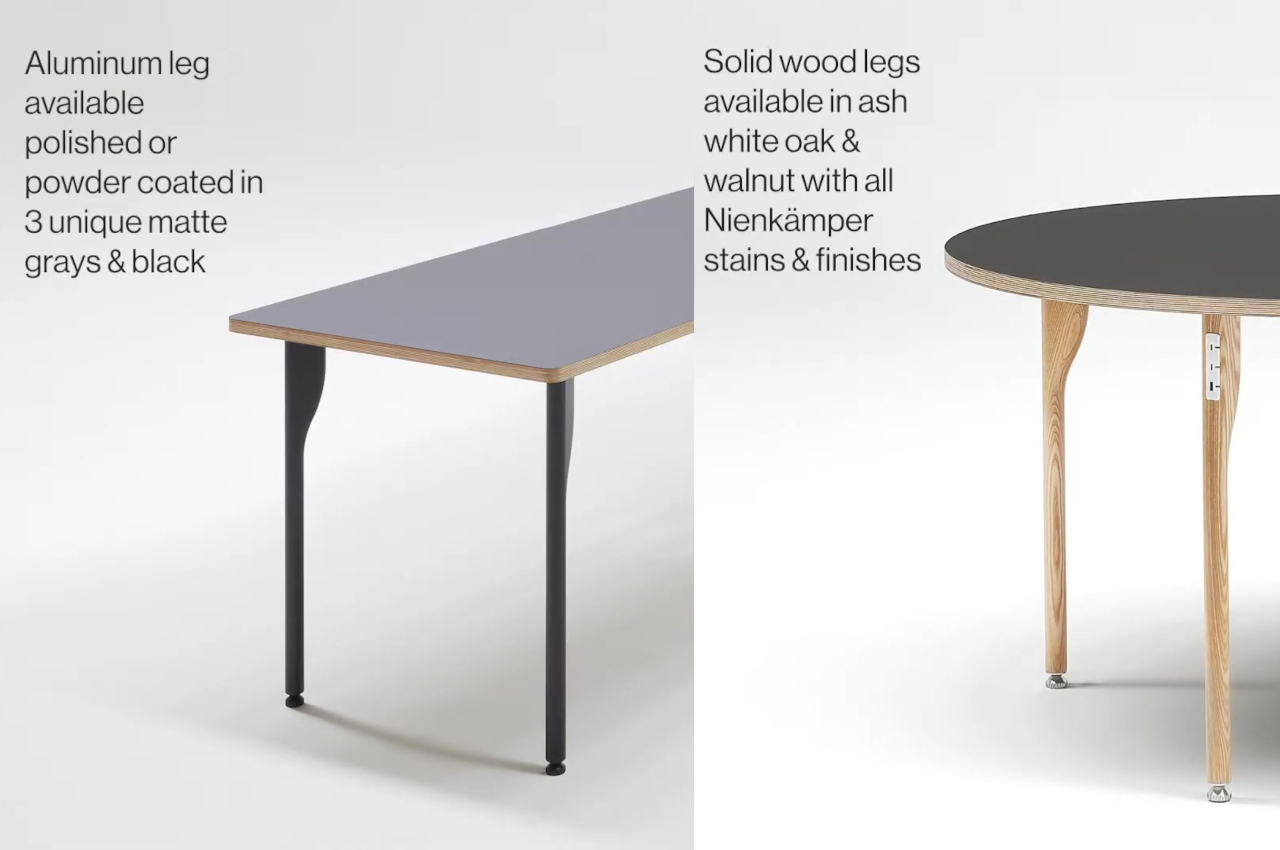
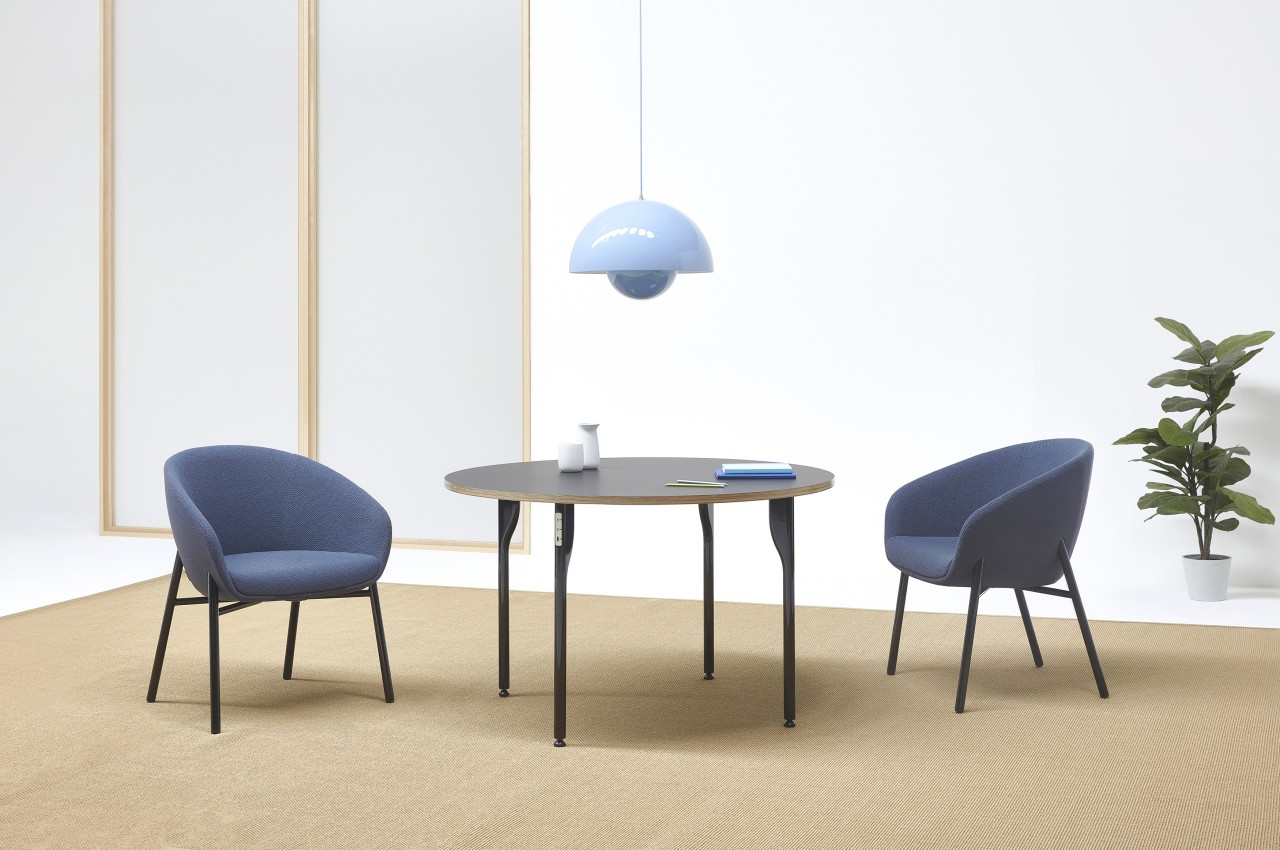
In that regard, the MagPower Table is almost futuristic with its wireless functionality while still being completely rooted in present design trends with its extremely minimalist design. At first glance, it simply looks like a wooden table with a large circular top and wooden or aluminum legs, but closer inspection will reveal two USB-C slots and one full-sized USB-A slot for charging mobile devices. What makes this design almost mind-blowing is that there isn’t any cable snaking out from one of the table’s legs to connect to a nearby power outlet, making it seem like it’s using wireless charging technologies, at least for itself.
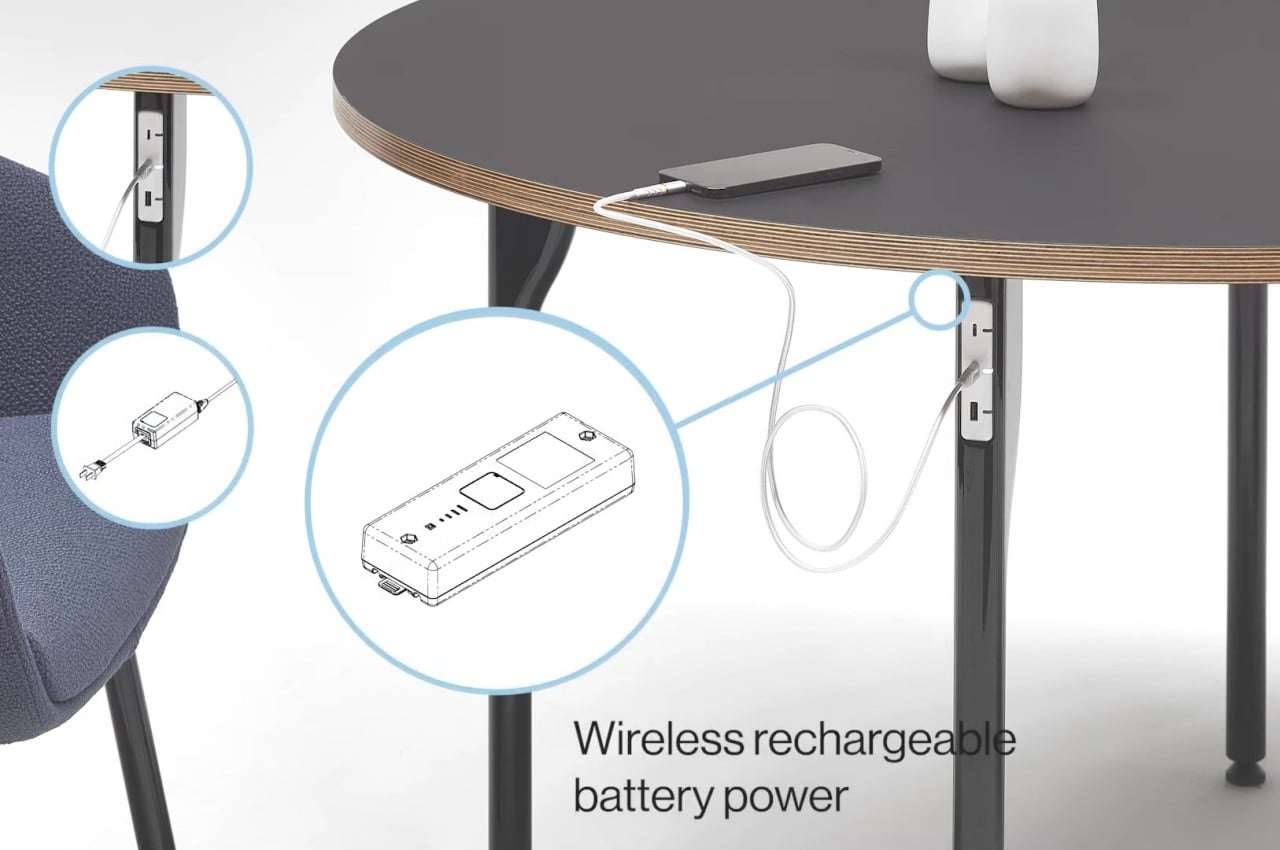
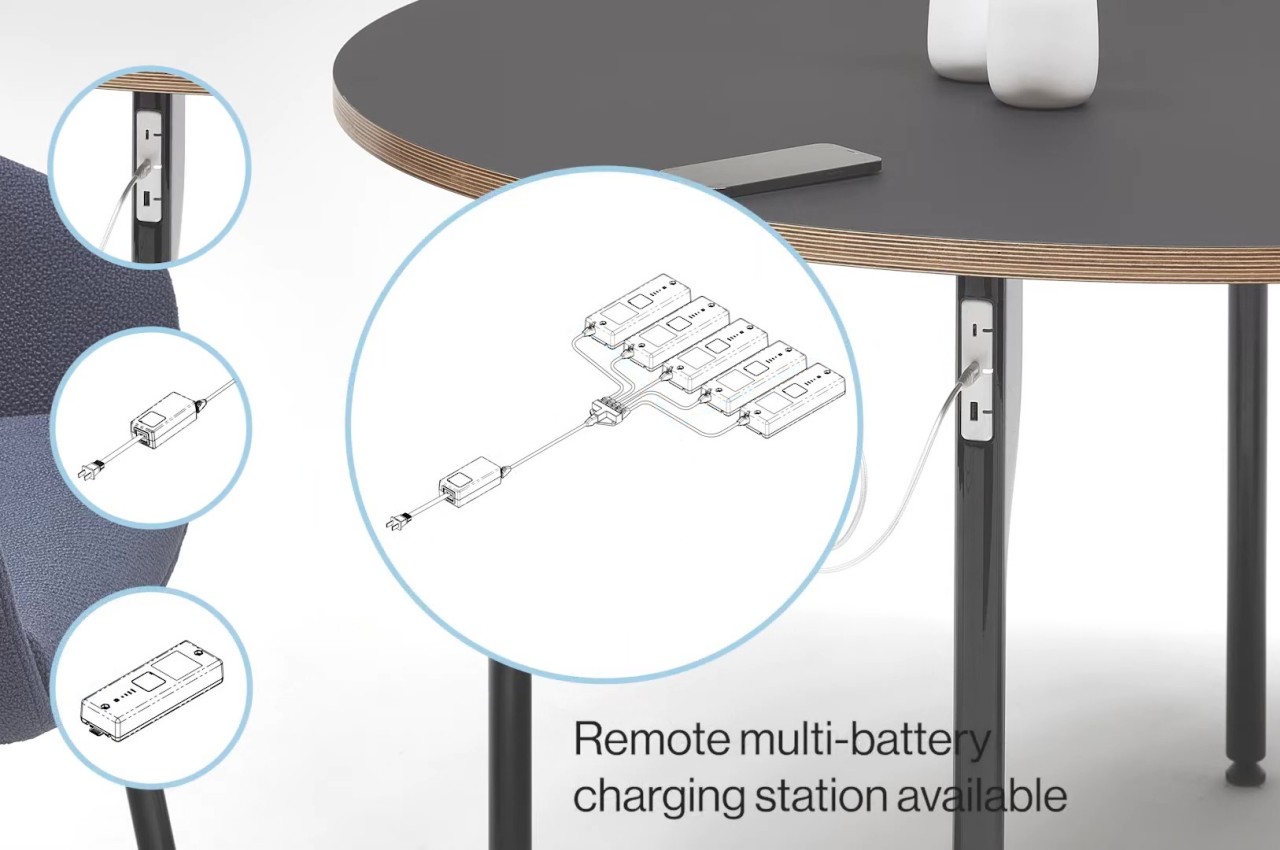
The secret behind this is the design of the table’s leg which can house a rechargeable battery that then powers connected devices. The battery can be removed at the end of the day and recharged separately before being reinstalled the next day. That said, the design also allows for a power brick to be plugged in directly, which has its own convenience, presuming you can live with the sight of that cable.
The MagPower Table’s minimalist aesthetic matches the goal of its design to offer a clutter-free space and enhance your productivity. Granted, it also raises questions about where a single battery is enough to charge several devices at the same time, but it’s certainly possible to expand the design and have all legs house a battery. This would help avoid competing for only three sockets, which will be the most likely scenario if these tables are used in office environments.
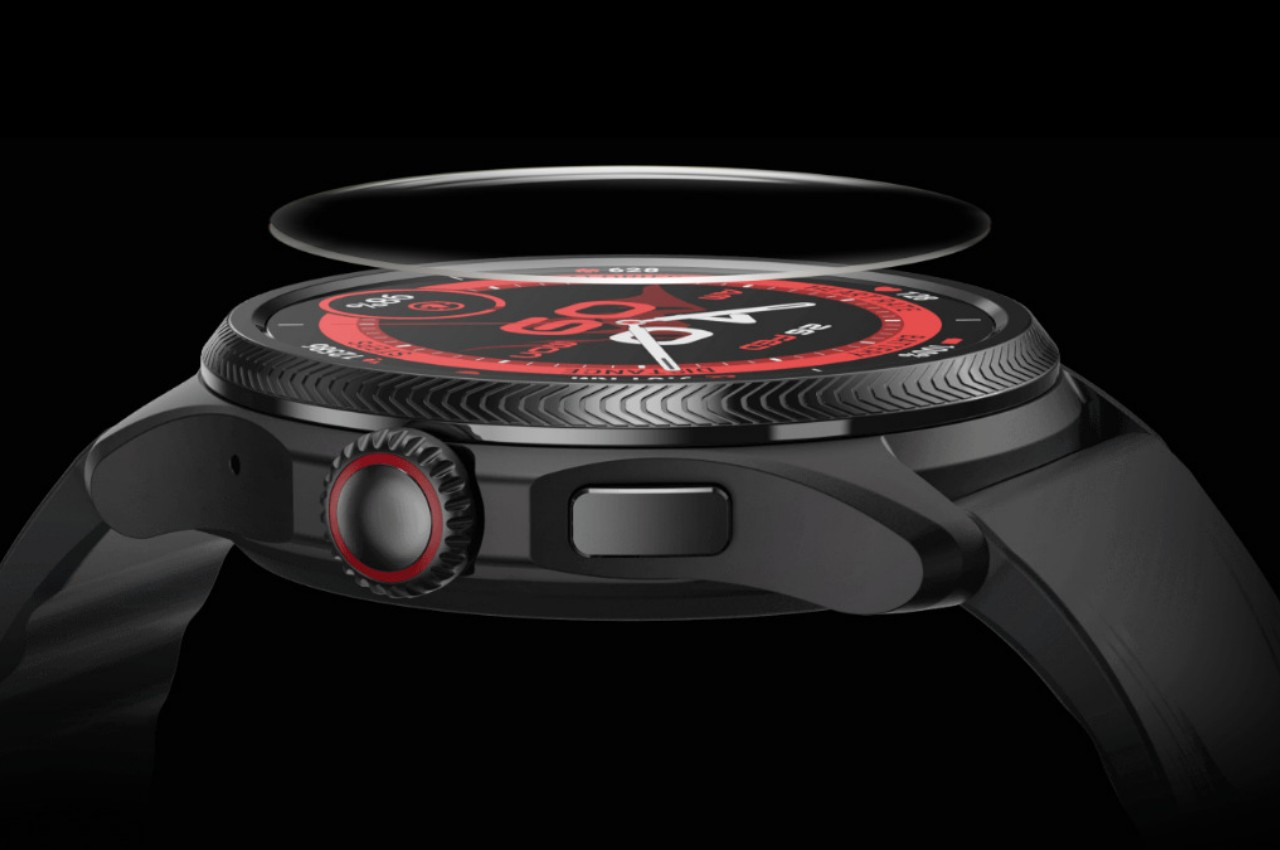
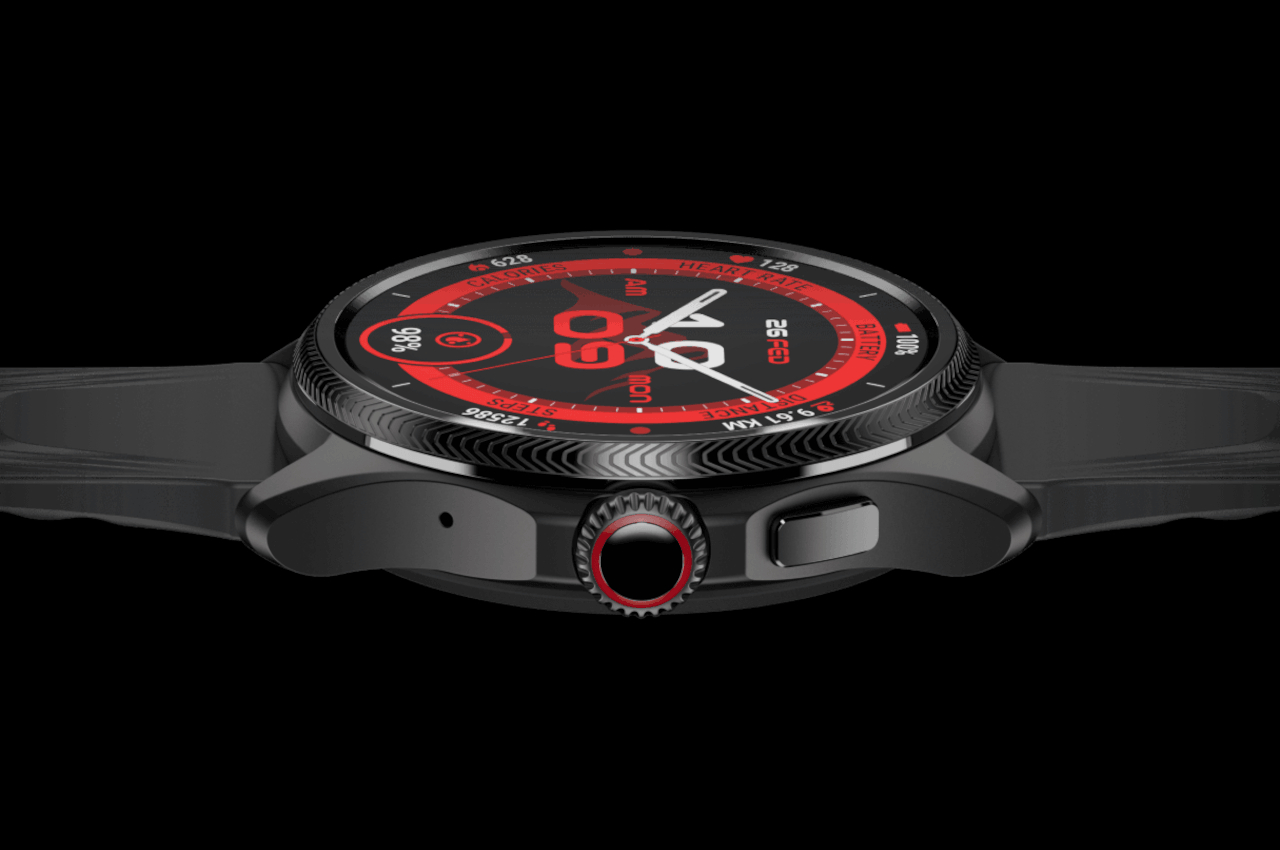
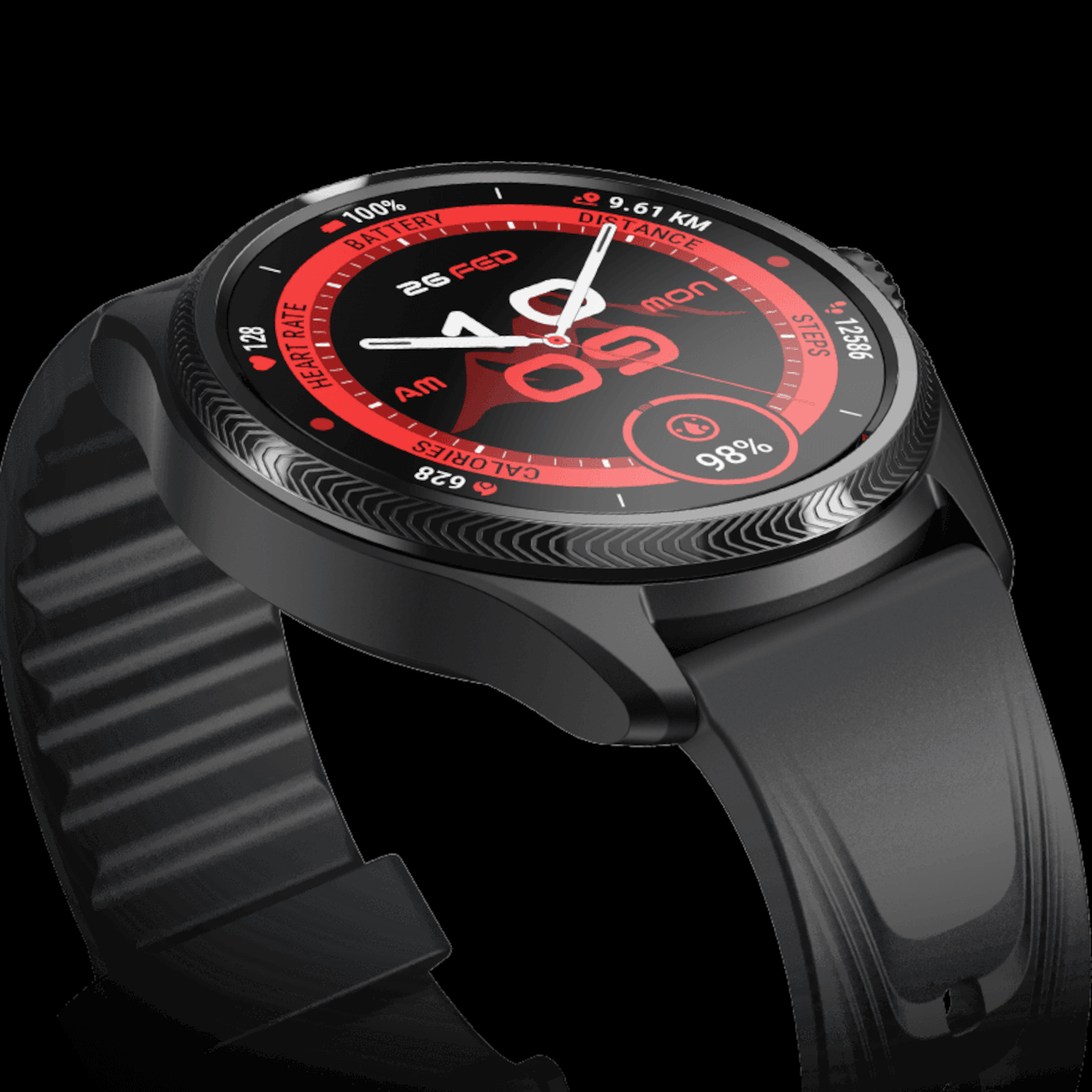
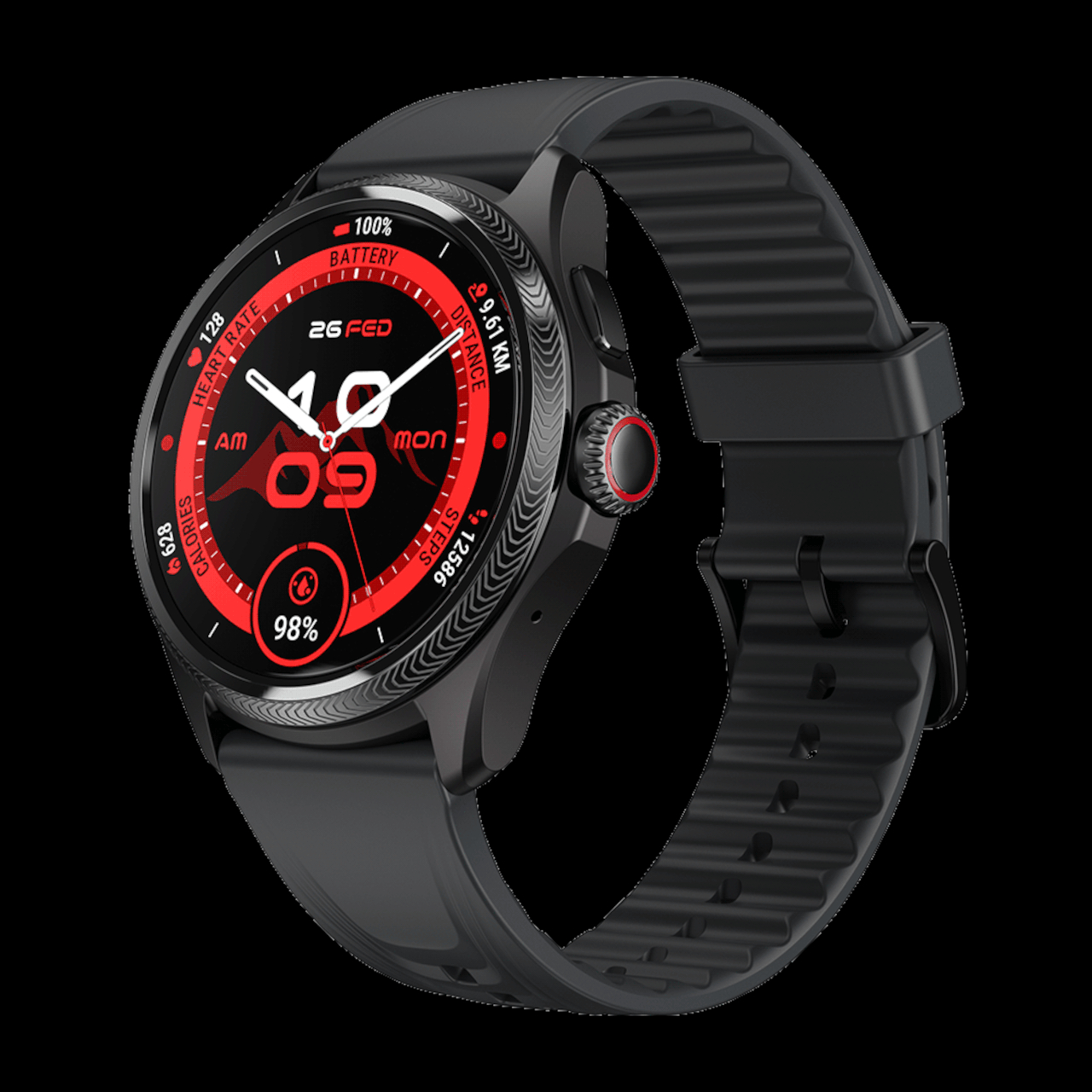
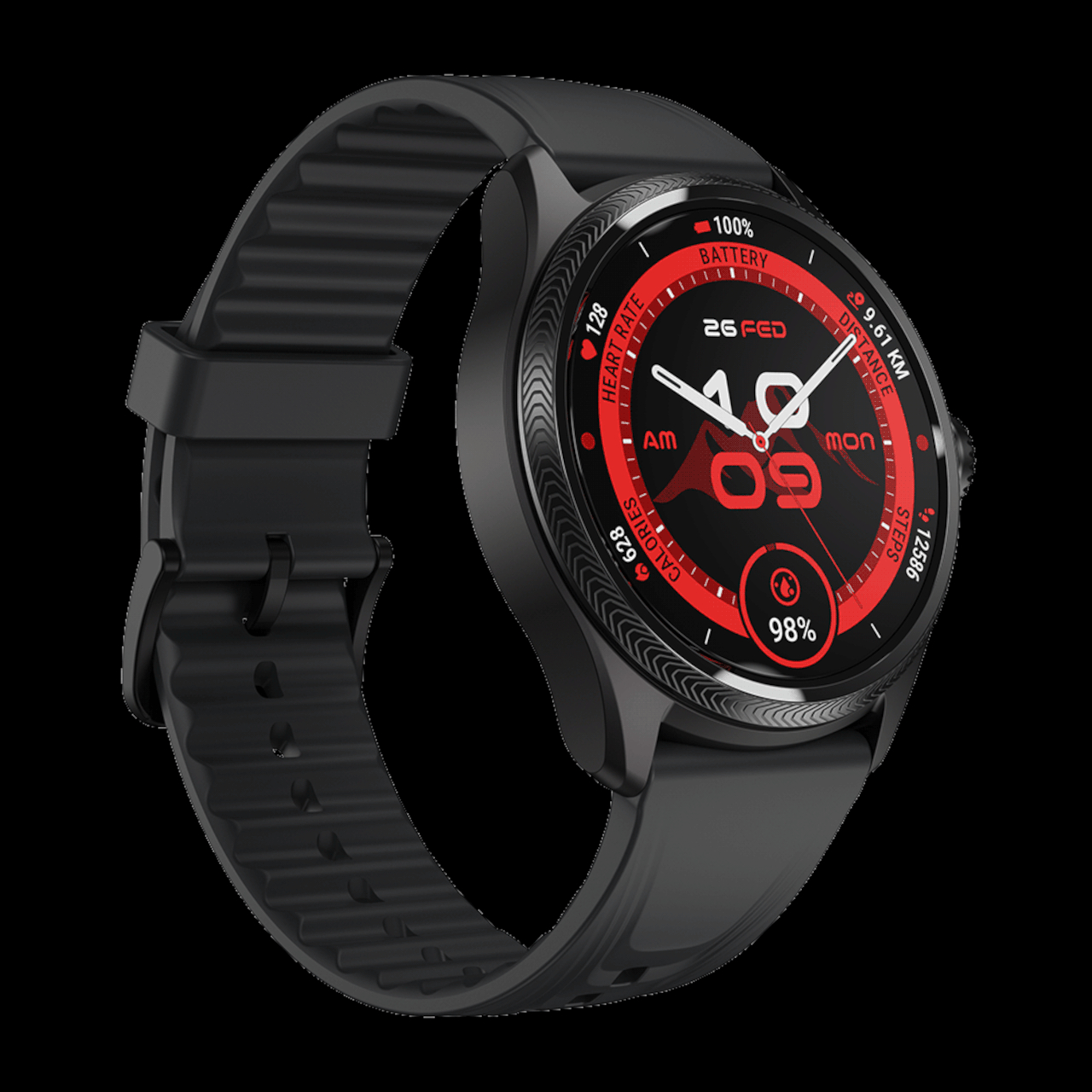
The Apple Watch finally gave smartwatches their long overdue recognition, but for some brands, that came a little too late. Google’s wearable platform has undergone several changes over the years, but it hasn’t been able to enjoy the same degree of ubiquity as Android has on smartphones. Wear OS still powers many smartwatches in the market today, but that number is dwindling with the exit of many luxury and fashion brands. As if to prove that the platform is still as healthy as ever, Mobvoi launched an “Enduro” version of its 2023 TicWatch Pro 5 flagship, but its focus on sports and activities makes it less appealing to the general population.
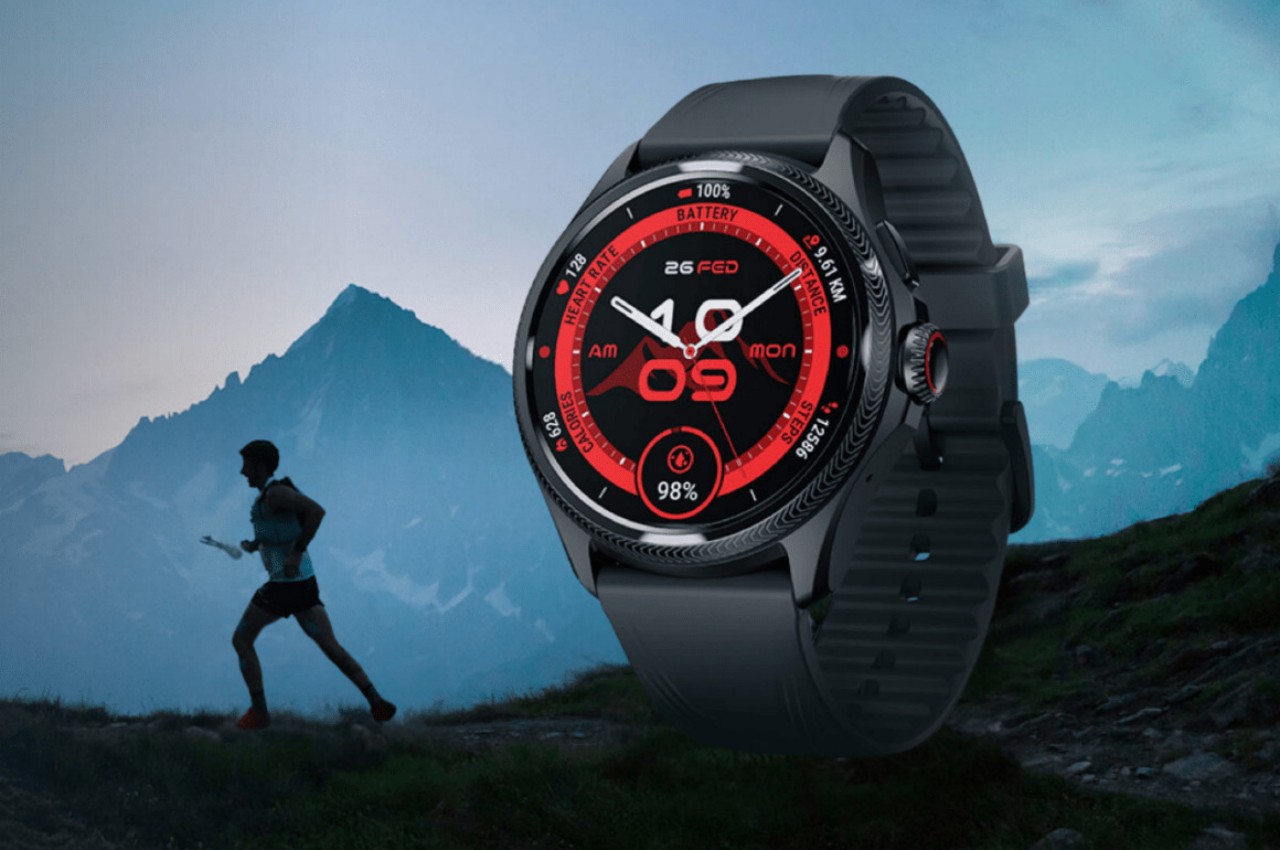
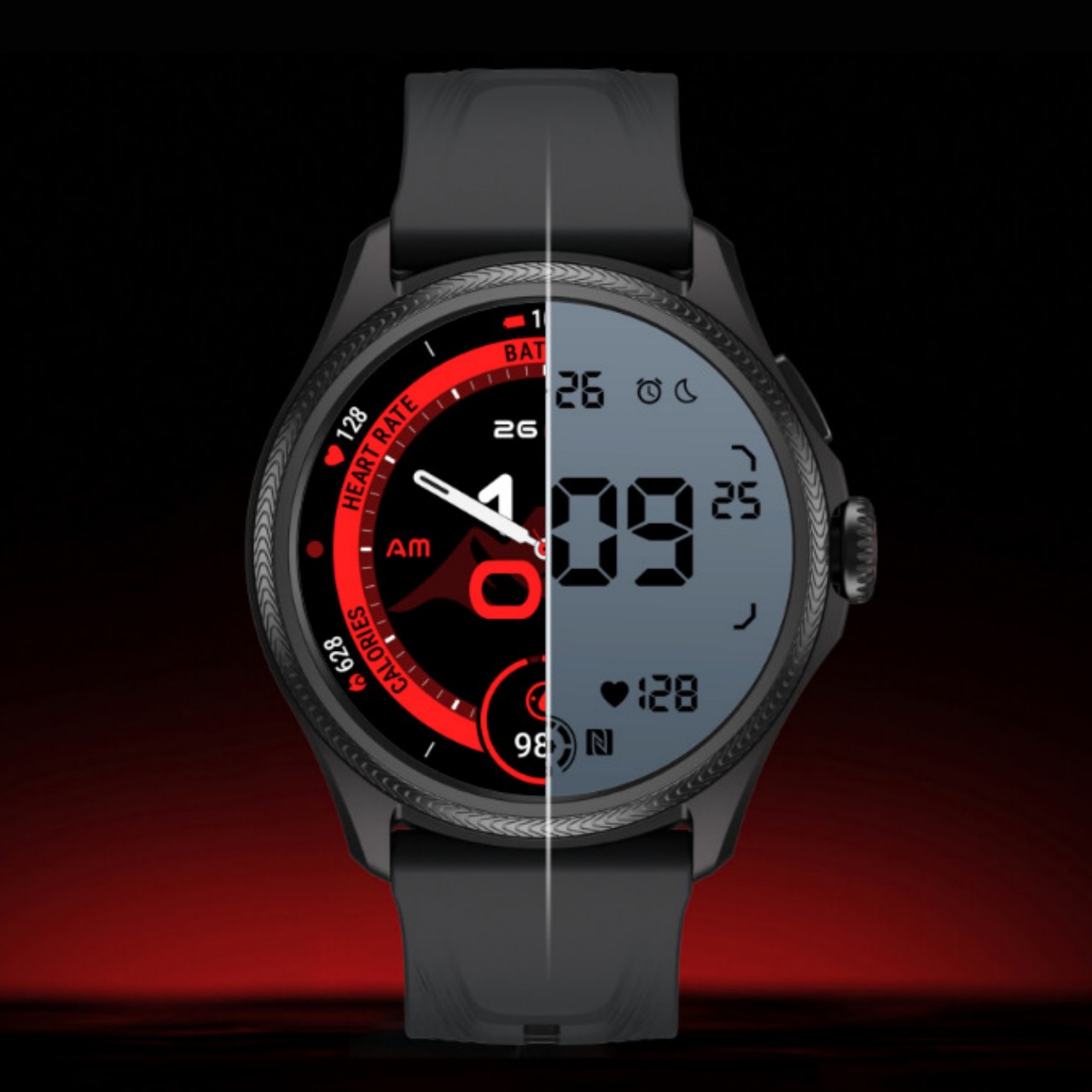
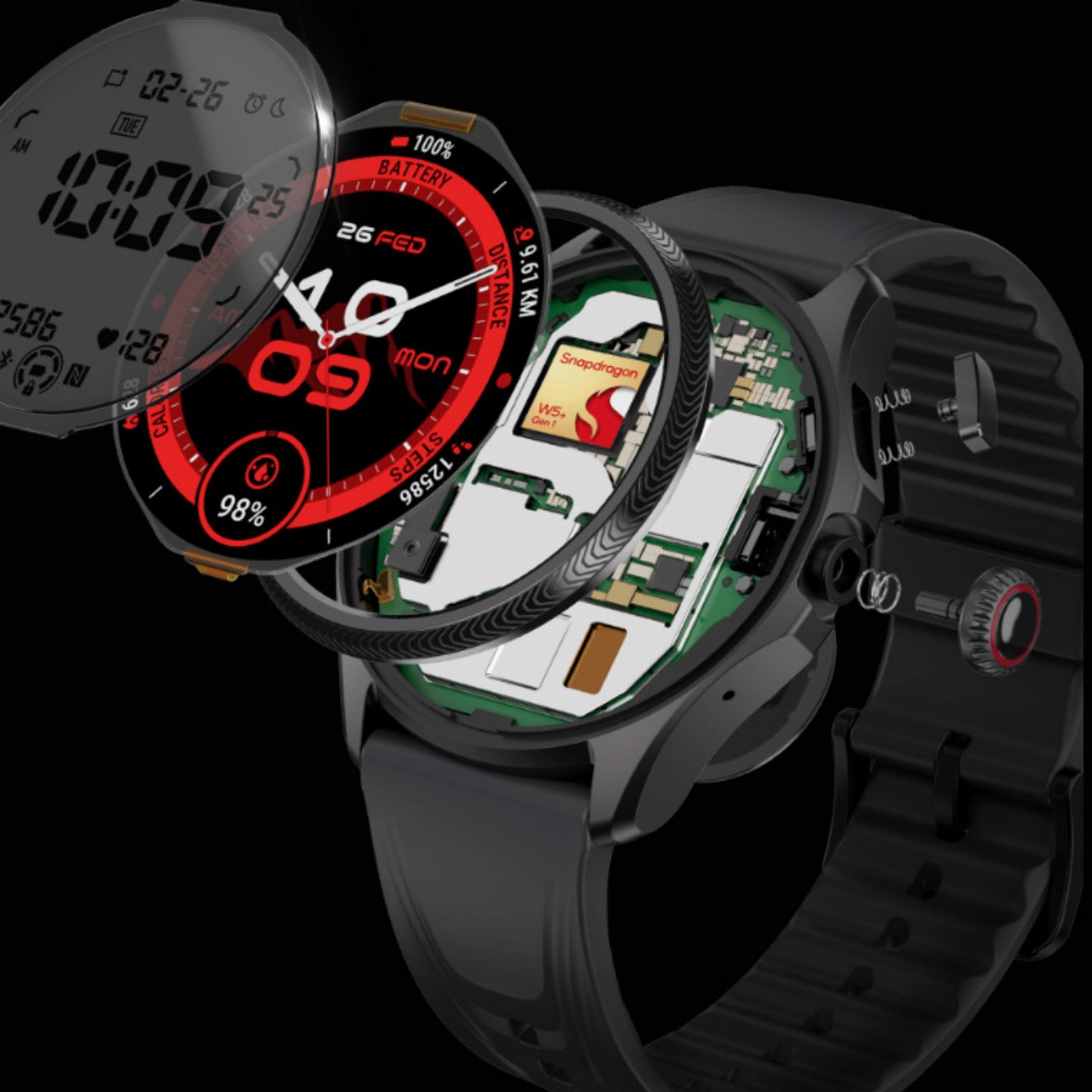
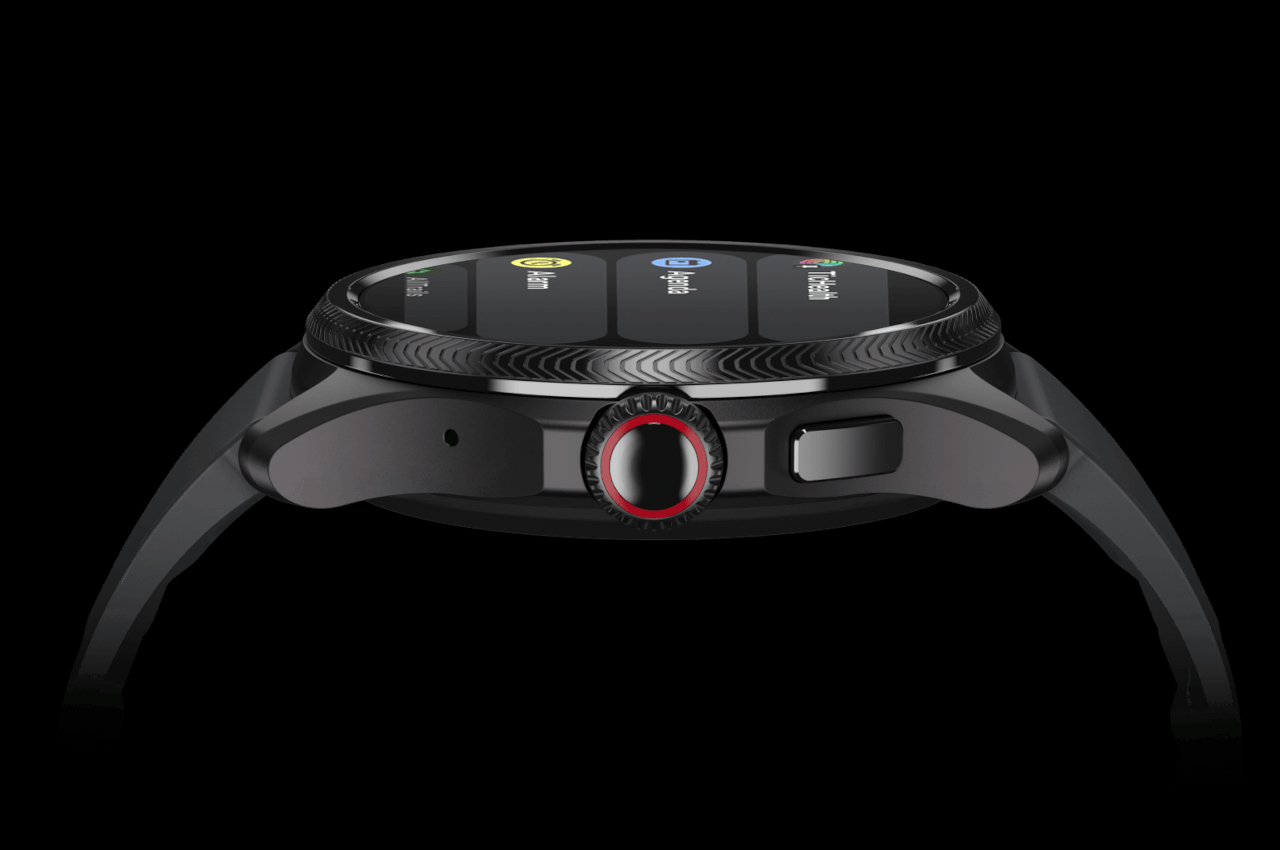
As far as smartwatches go, the mouthful that is the Mobvoi TicWatch Pro 5 Enduro is actually quite attractive, at least for those who want a sports watch that can keep up with their lifestyles. Its claim to fame is, like many Mobvoi smartwatches, its dual display technology has a regular AMOLED screen underneath a low-power display. The idea is that you switch to the duller screen on top if you want to preserve battery life without sacrificing tracking features.
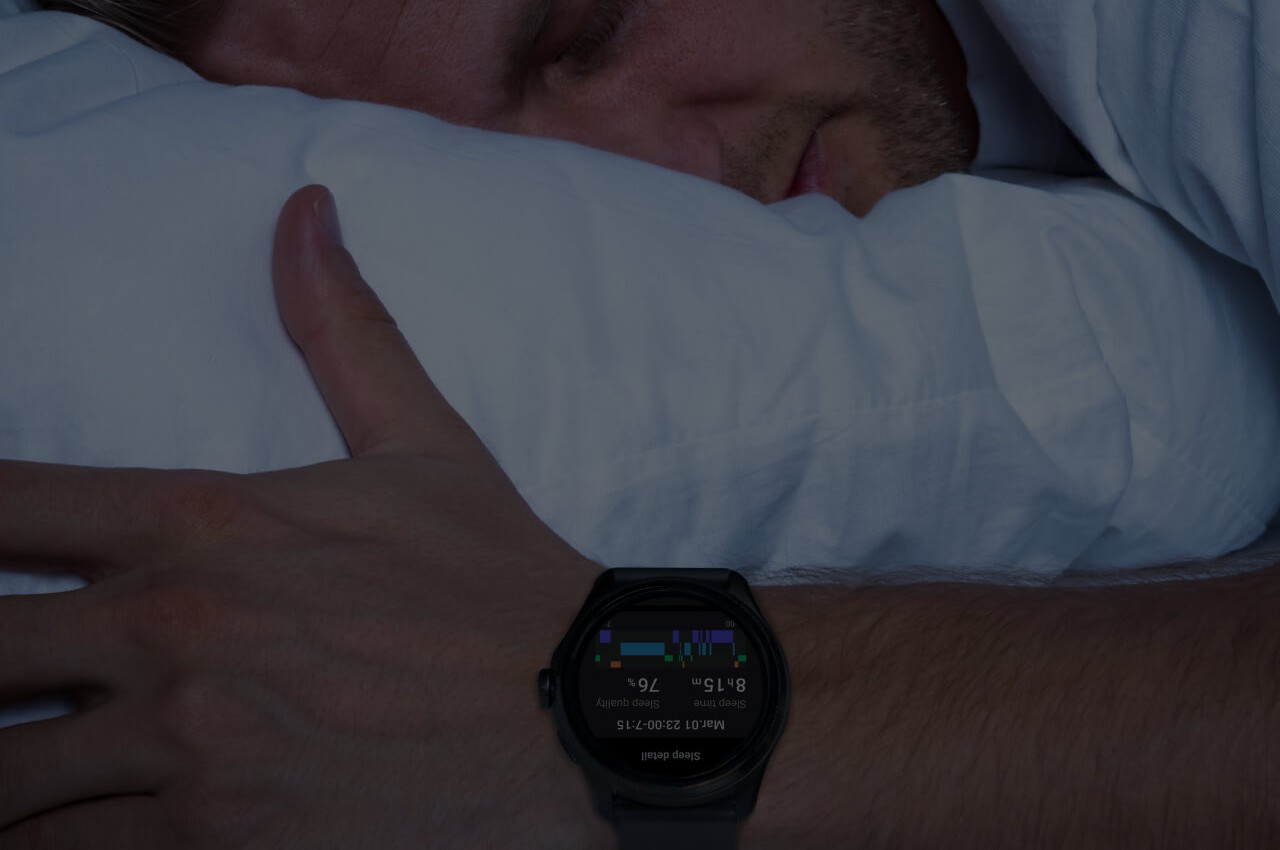
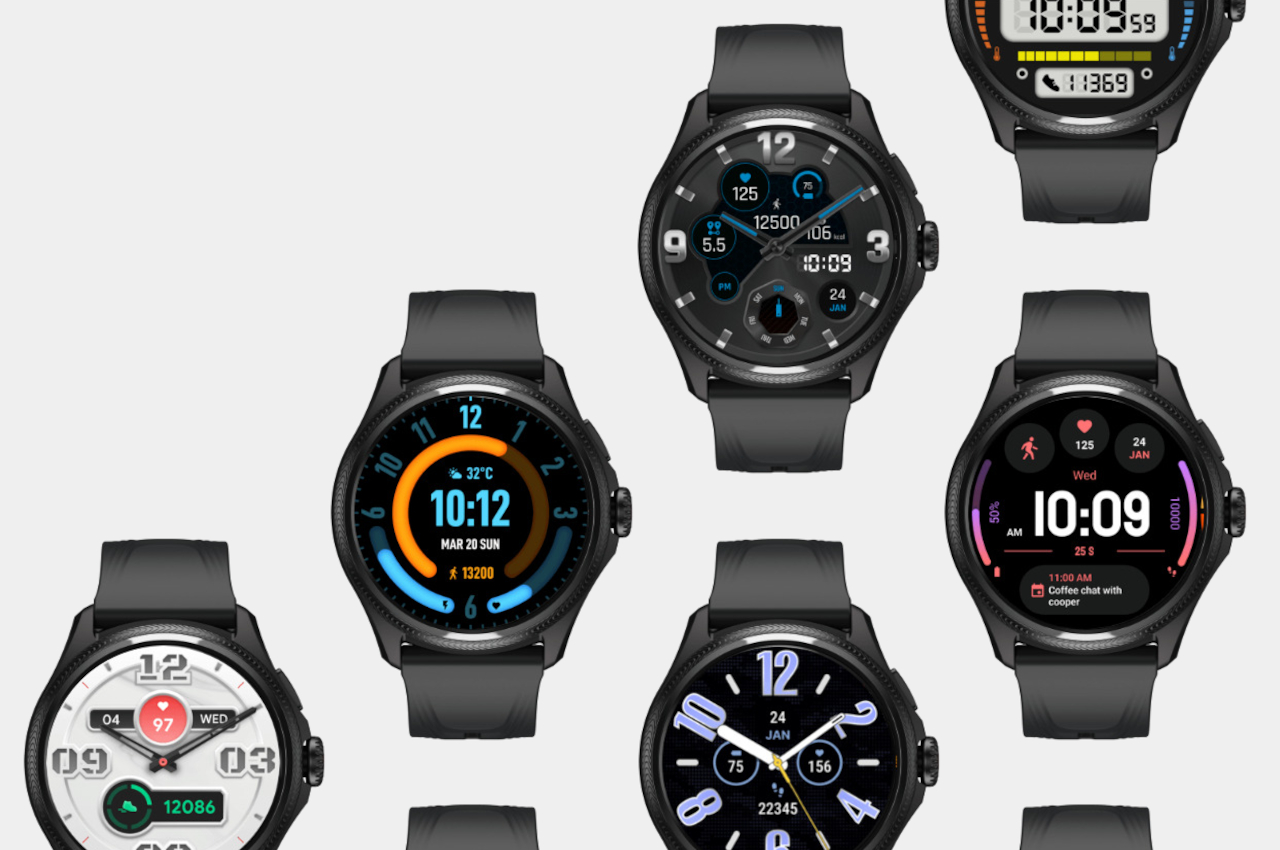
With the Enduro, Mobvoi is playing up the ability of that low-power screen to show different backlight colors, making the information pop out better. This same color-changing ability is utilized to represent your heart rate, giving you a visual clue at a glance when you might need to take a breather. Of course, the smartwatch has all the makings of a typical Wear OS device, from tracking your health, including sleep quality and heart rhythm detection, to customizing watch faces to access a number of apps that support the wearable operating system.
As its name suggests, the TicWatch Pro 5 Enduro is made to last, and it does so in more ways than one. The sapphire crystal glass display gives the screen the durability it needs to survive accidents along your adventures, while the 90-hour battery life ensures you have very little downtime to charge the smartwatch. That said, it runs on Qualcomm’s aging Snapdragon W5+ Gen 1 processor from 2022, so performance and power efficiency might not be up to snuff.
At $350, the Mobvoi TicWatch Pro 5 Enduro is hardly an accessible smartwatch, and it’s clearly aimed at people who take their health and fitness very seriously. It looks like a handsome sports watch, yes, but a lot of Wear OS products will be bearing this aesthetic with fashion brands like Fossil calling it quits on smartwatches. This gives competitors that don’t use Wear OS plenty of opportunities to nibble away at Google’s share of the market pie, further weakening the platform’s reach.
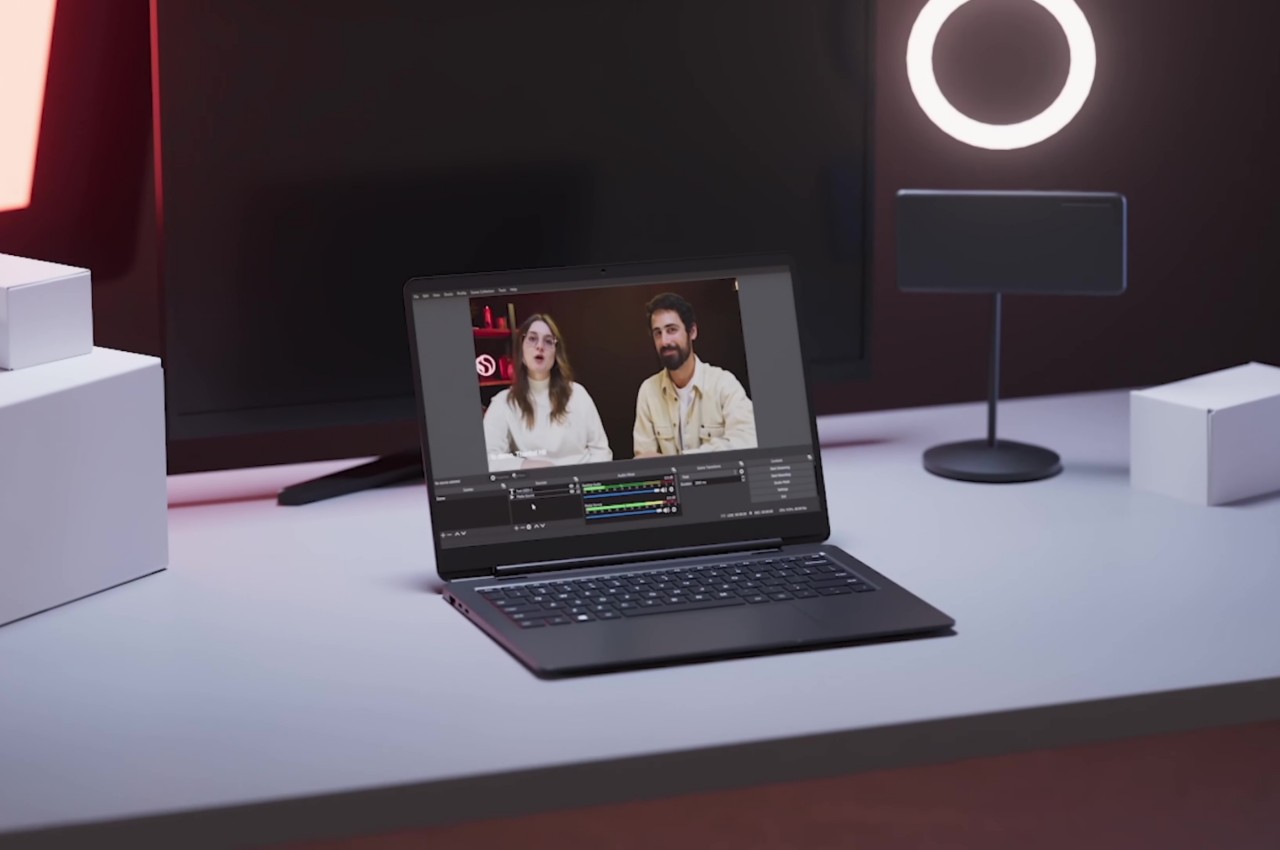
Despite the power that smartphones and tablets have these days, PCs and their Mac equivalents remain the workhorses of the modern world. Not only do they have more power, they also offer more flexibility thanks to decades of research, development, and innovation. Market analysts, however, have long been pointing to the demise of the PC market, especially desktops, and there has indeed been a great deal of stagnation not only in hardware but even in product designs. It’s not that there haven’t been any improvements, just that designs have become predictable and even sometimes forgettable. You can’t, after all, change the design formula too much unless you also drastically change the internals as well. That’s the kind of burst in innovation that awaits the PC market, both laptops and even desktops, if running Windows on the same hardware as smartphones and tablets finally becomes reliable and productive.
Designer: Qualcomm
Rough Start: Microsoft Surface
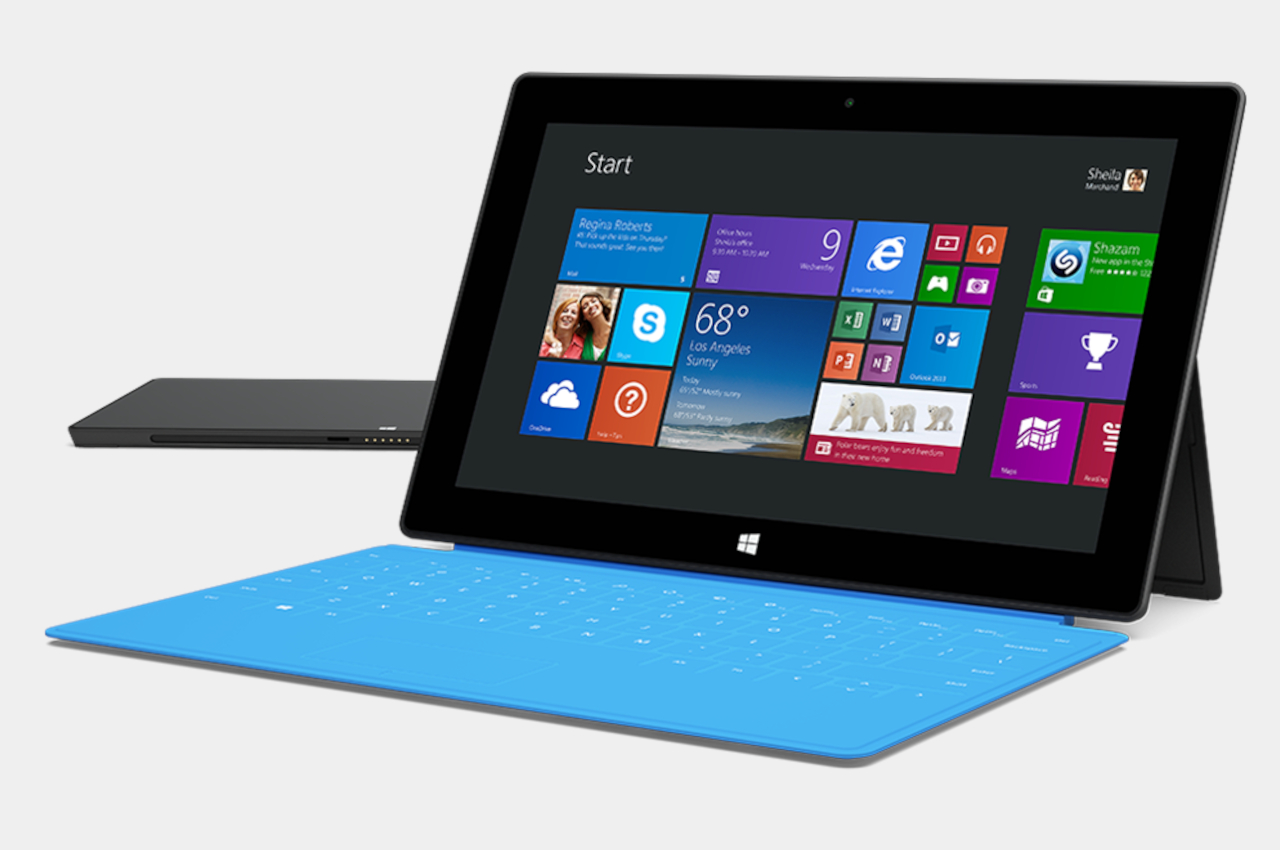
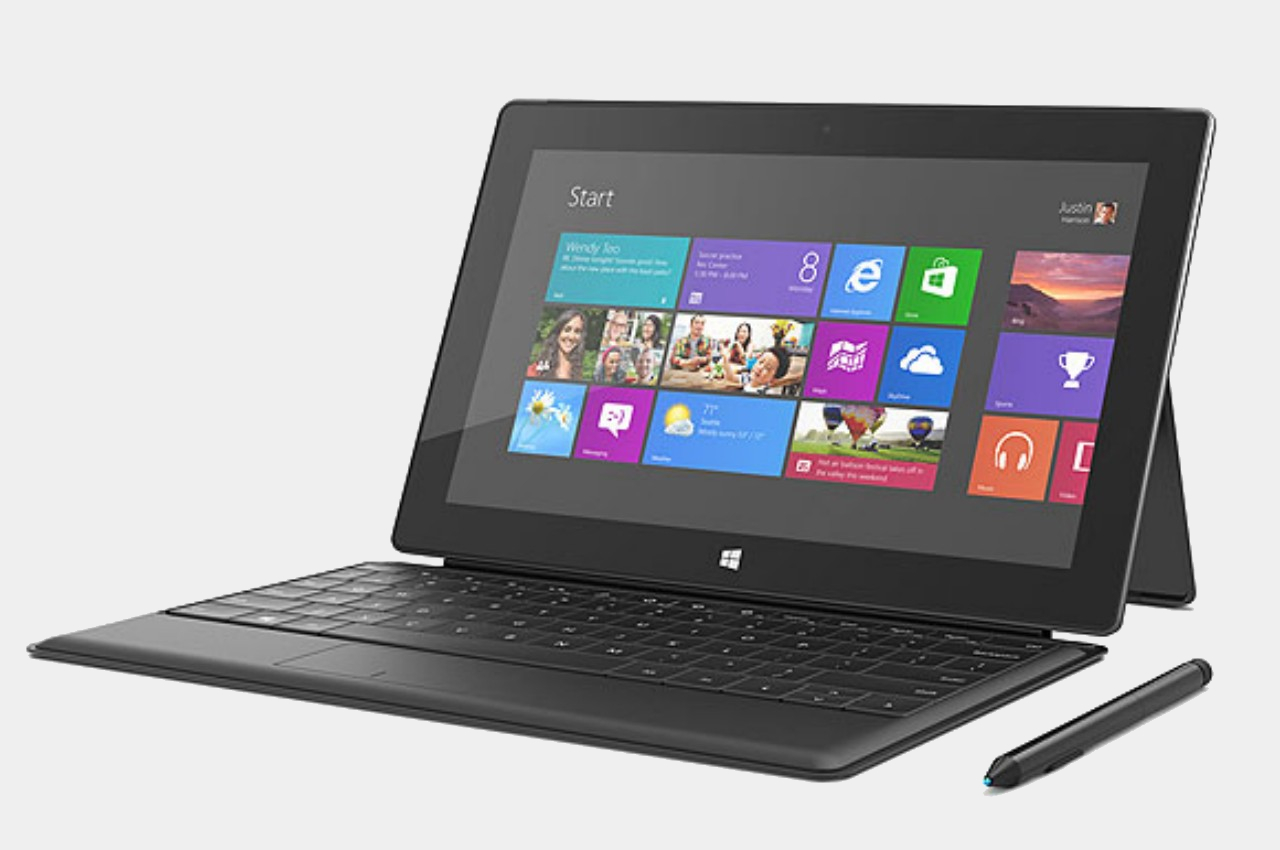
It’s not like the combination of Windows and ARM-based processors, the same silicon that powers mobile devices, hasn’t been done before, but almost all past attempts have come up short of expectations. Disregarding the antiquated Windows CE and Windows Phone variants, Microsoft has time and again tried to bring the benefits of phones and tablets to PCs without much success. One of the first ones in recent memory is the smaller Microsoft Surface. Although the Surface Pro has become something of an icon today, its base model didn’t enjoy the same level of fame, attention, and sales.
Microsoft Surface RT
Designer: Microsoft
The Surface RT and Surface 2 both ran on ARM-based NVIDIA Tegra processors that were normally quite capable on Android tablets. Even those, however, couldn’t bear the weight of Windows, even the watered-down Windows RT version. To add insult to injury, the apps available for that platform were a dismal number which didn’t include the software that people needed to use on Windows. Thus, these first attempts at Windows on ARM were considered to be abject failures, but surprisingly, Microsoft didn’t give up completely.
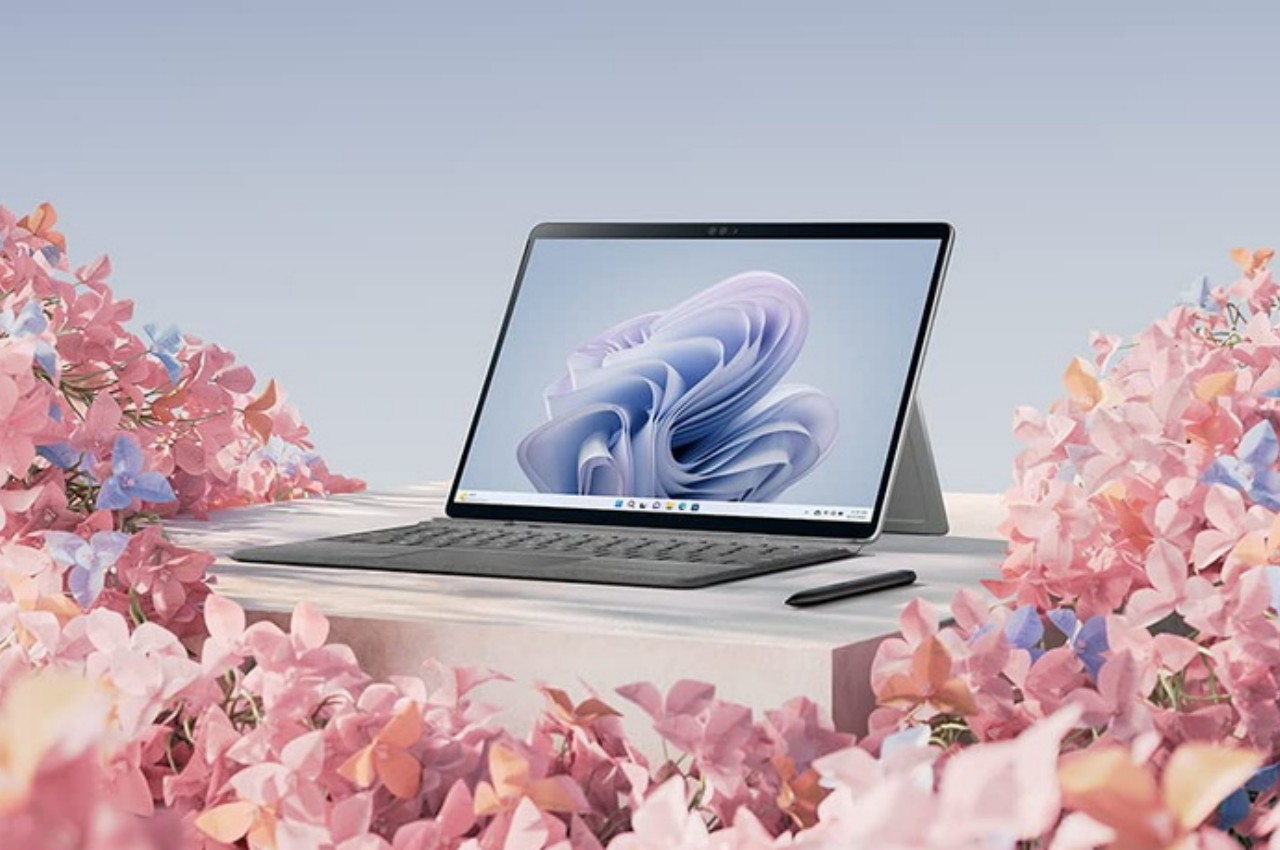
Microsoft Surface Pro 9
Fast-forward to today, there have been numerous attempts to improve the situation, both from the hardware and the software side. The Microsoft Surface Pro 9 now has a version that runs an even more powerful ARM Qualcomm processor, and the Microsoft Store has quite a selection of popular apps. There are also some emulation solutions for running “normal” Windows software on ARM laptops and tablets, but that’s not exactly a panacea. All these sound like too much effort for what seems like a niche design, but it’s an effort that could yield a bountiful harvest if it succeeds.
Faster, Slimmer, Cooler
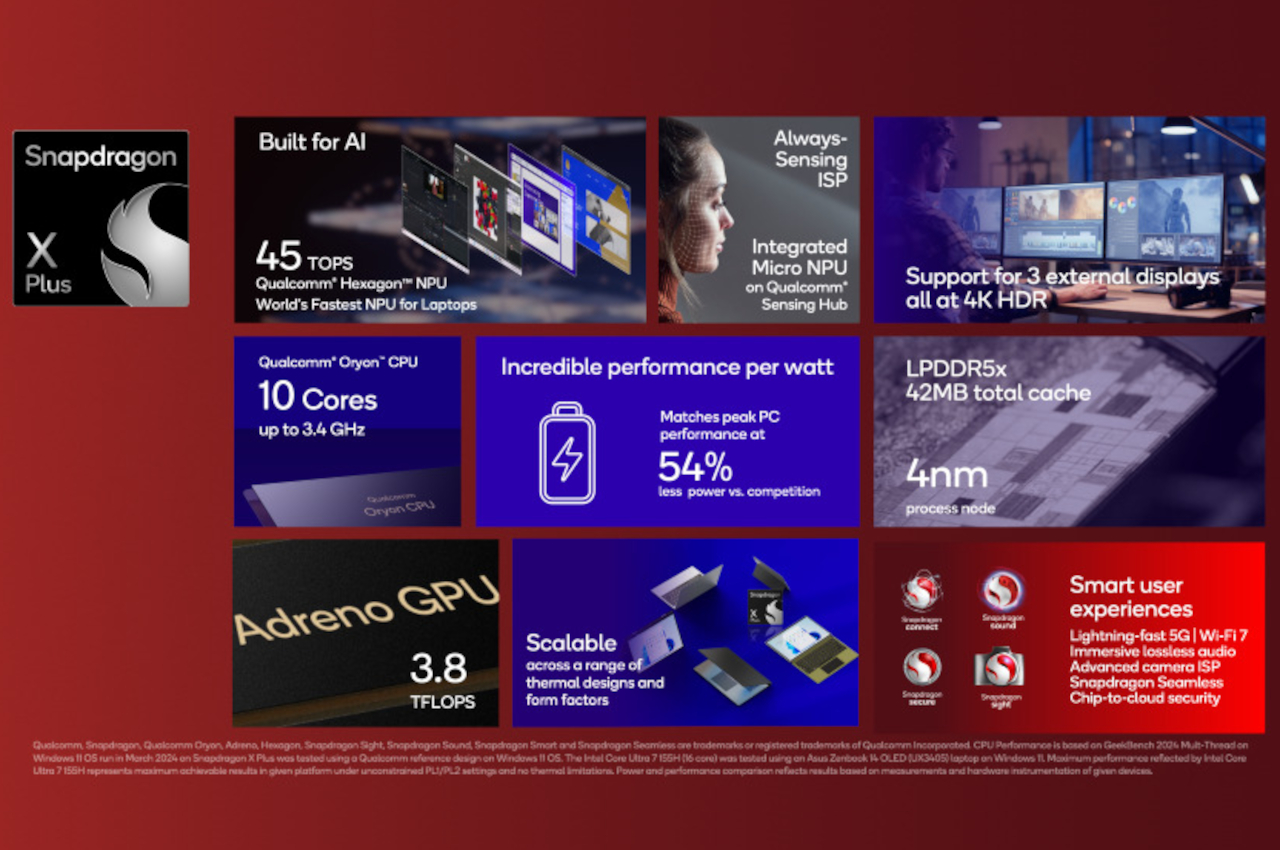
Qualcomm announced last month its new Snapdragon X Plus and Elite processors, and while the “Snapdragon” name is popular for smartphones and tablets, the “X” chips are earmarked for use in Windows computers instead, particularly laptops. Qualcomm boasts numbers that would make the likes of Intel and AMD worry, though it’s also aiming squarely for Apple’s M series processors. That’s definitely a tall order, especially with the launch of the new Apple M4 chip, but if theory proves to be even remotely near the mark, it will be a huge win for the Windows market and PCs in general.
Designer: Qualcomm
The new Snapdragon X Plus and Elite unsurprisingly boast about being able to do heavy-duty generative AI work, something that would require a lot of processing power that is traditionally only available on “regular” laptops and desktops. What would set it apart, however, is how it delivers that performance with lower battery consumption, heat, and space compared to equivalent Intel and AMD processors. It’s too early to say if Qualcomm will be able to deliver those promises, but it’s definitely a big leap compared to previous generations.
ARM-based processors like those from Qualcomm and MediaTek have been used in mobile devices precisely because of these traits. They can keep the product compact without impacting performance, something that laptop makers aim for every year. More importantly, however, these small form factors open the doors to less conventional designs, paving the way for dual-screen, foldable, or rollable PCs that don’t sacrifice their power for the sake of their novel appearance and features.
Thinking Outside the Box
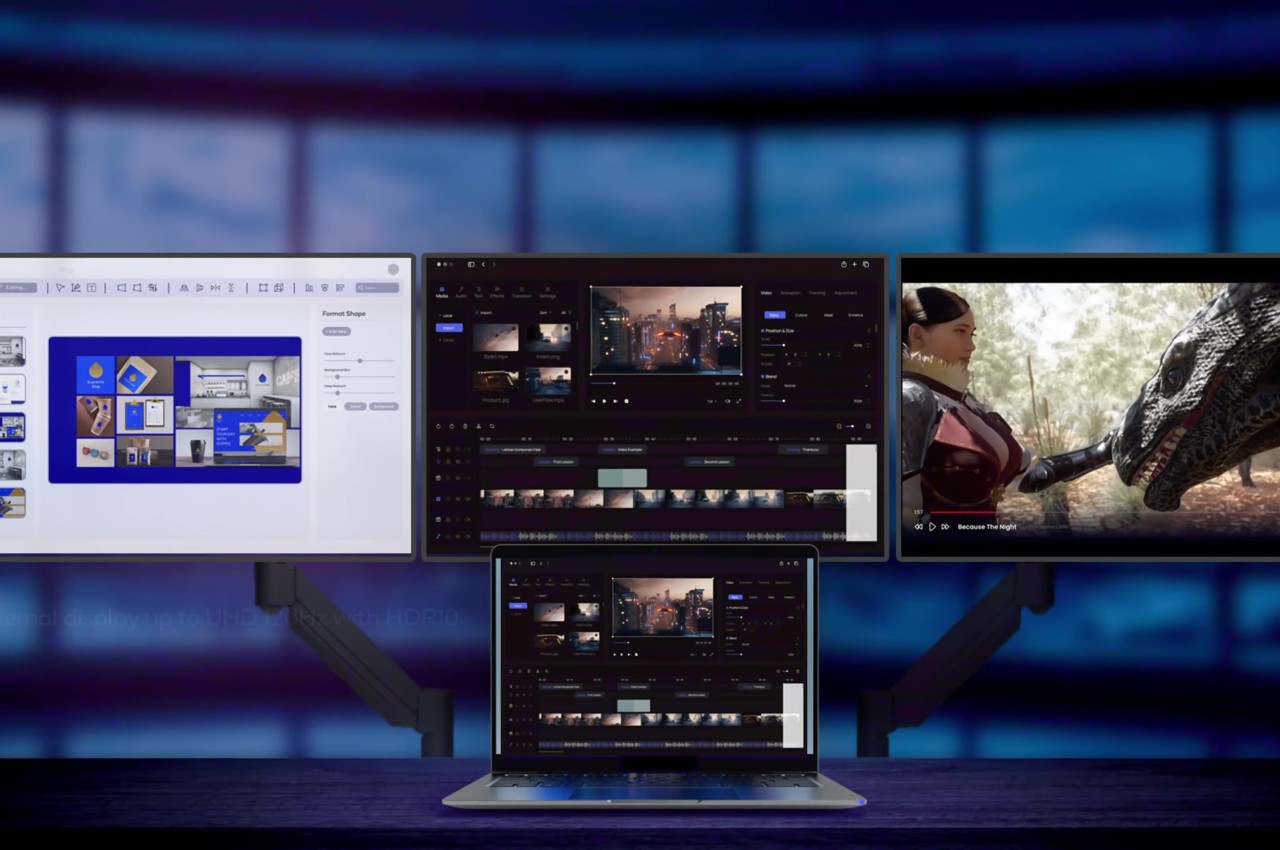
The very first benefit of Windows successfully and smoothly running on ARM devices would be thinner laptops with longer battery lives. It can’t be understated how significant that will be for creatives, especially those who will rely a lot on that generative AI that everyone’s talking about these days. But even if you do much of your designs manually, the idea that you can bring your work anywhere without breaking your back and stay unplugged for more than half a day is going to appeal to a lot of people
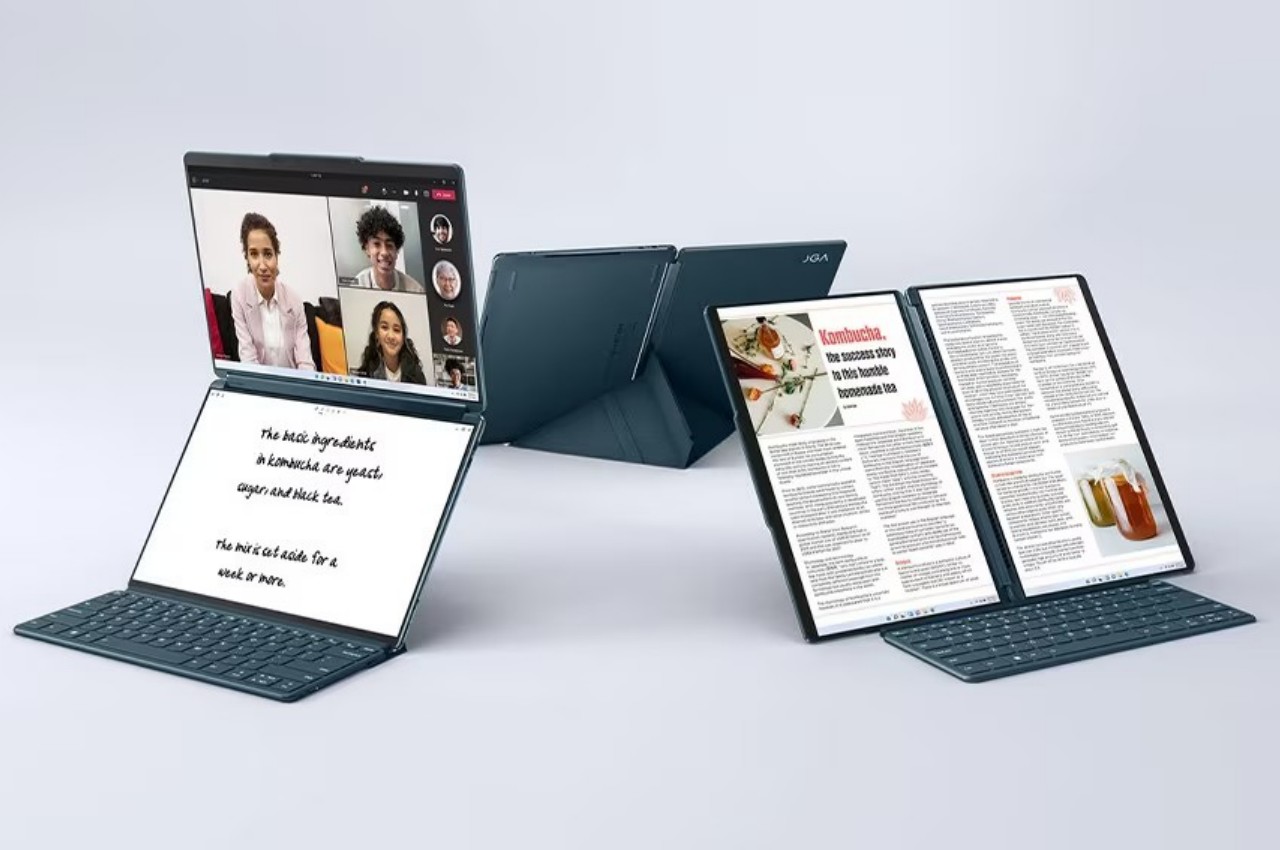
Lenovo Yoga Book 9i
Designer: Lenovo
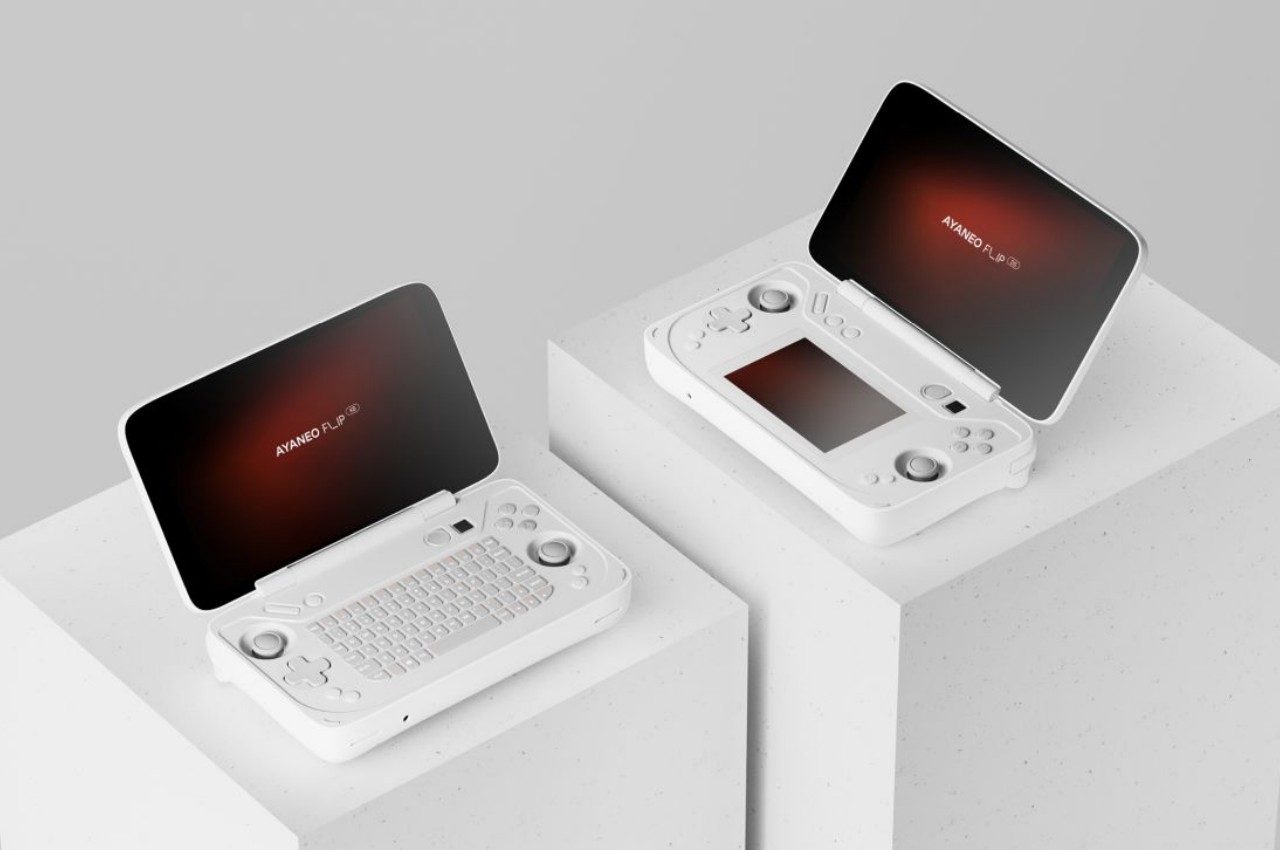
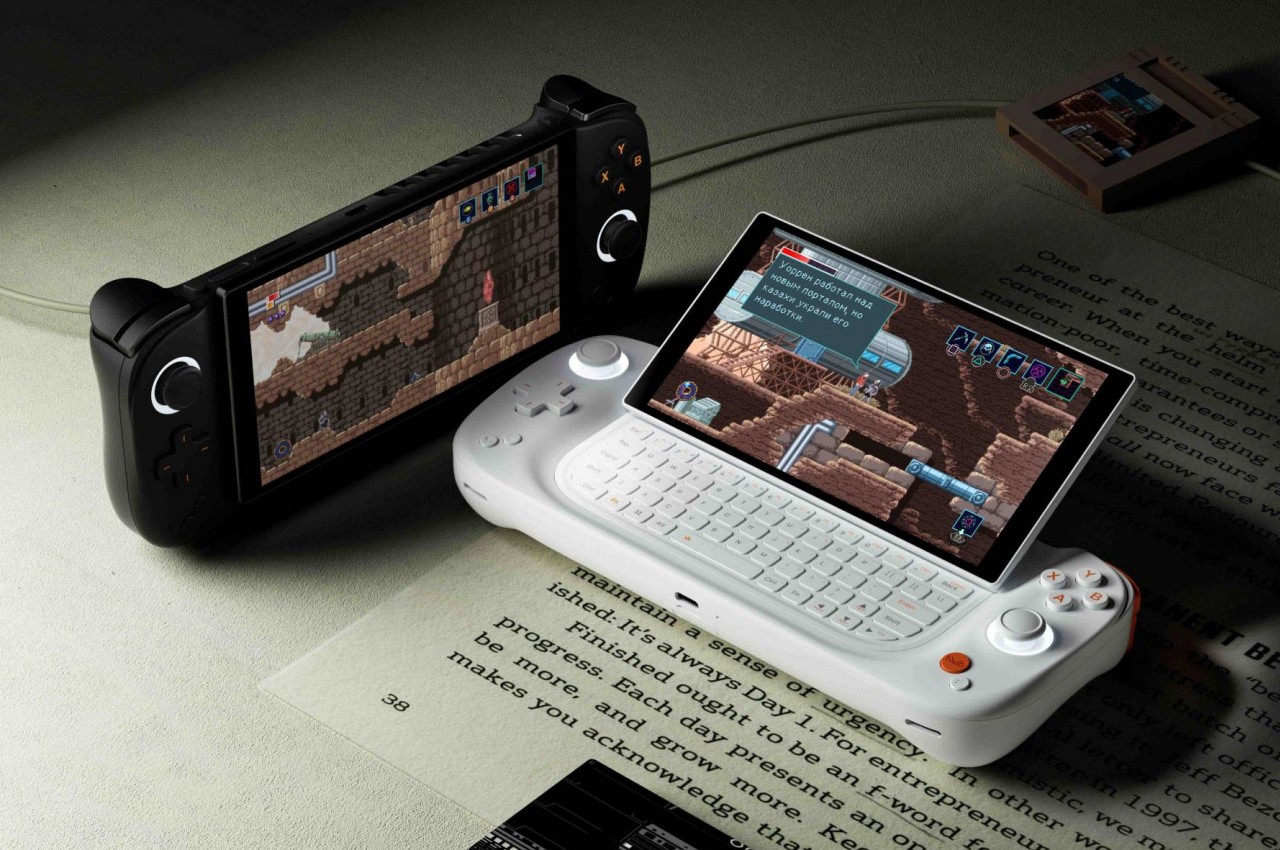
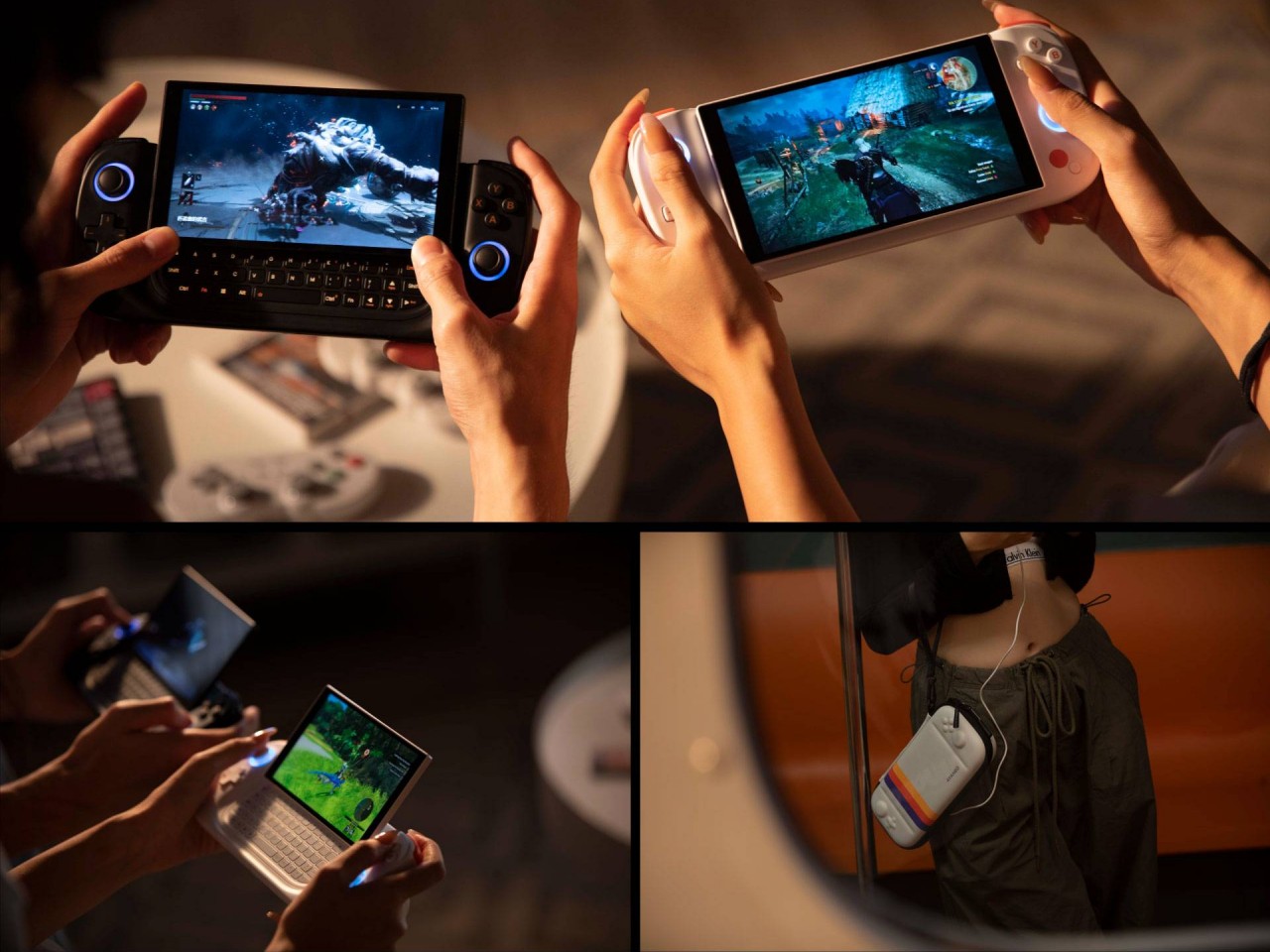
Once that has become the norm, however, it will be time to explore the possibilities that thinner, more compact, or smaller devices can bring. Imagine those handheld gaming PCs becoming thinner and smaller, almost down to tablet or even phone sizes. Admittedly, being able to play just about any PC game is going to be tricky today, but that’s not going to be the case in the future.
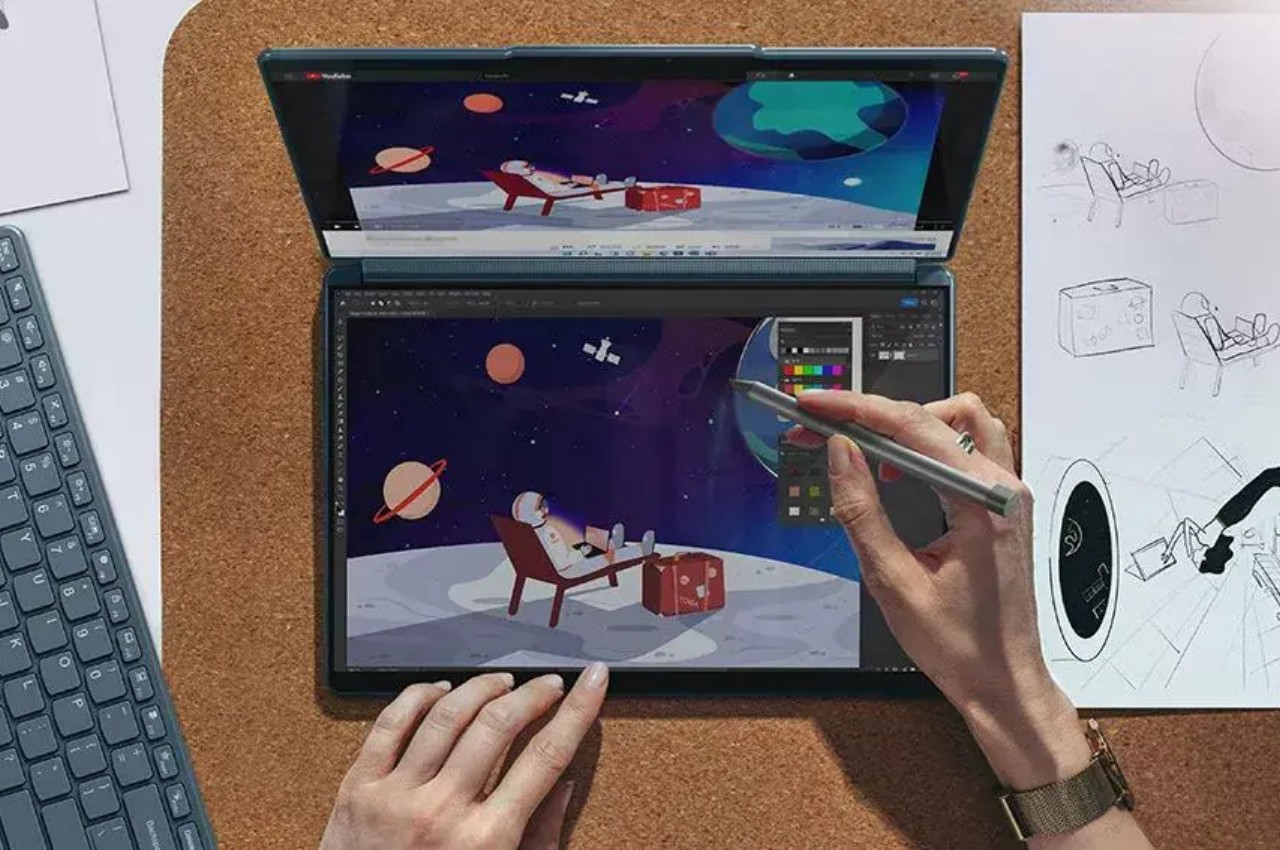
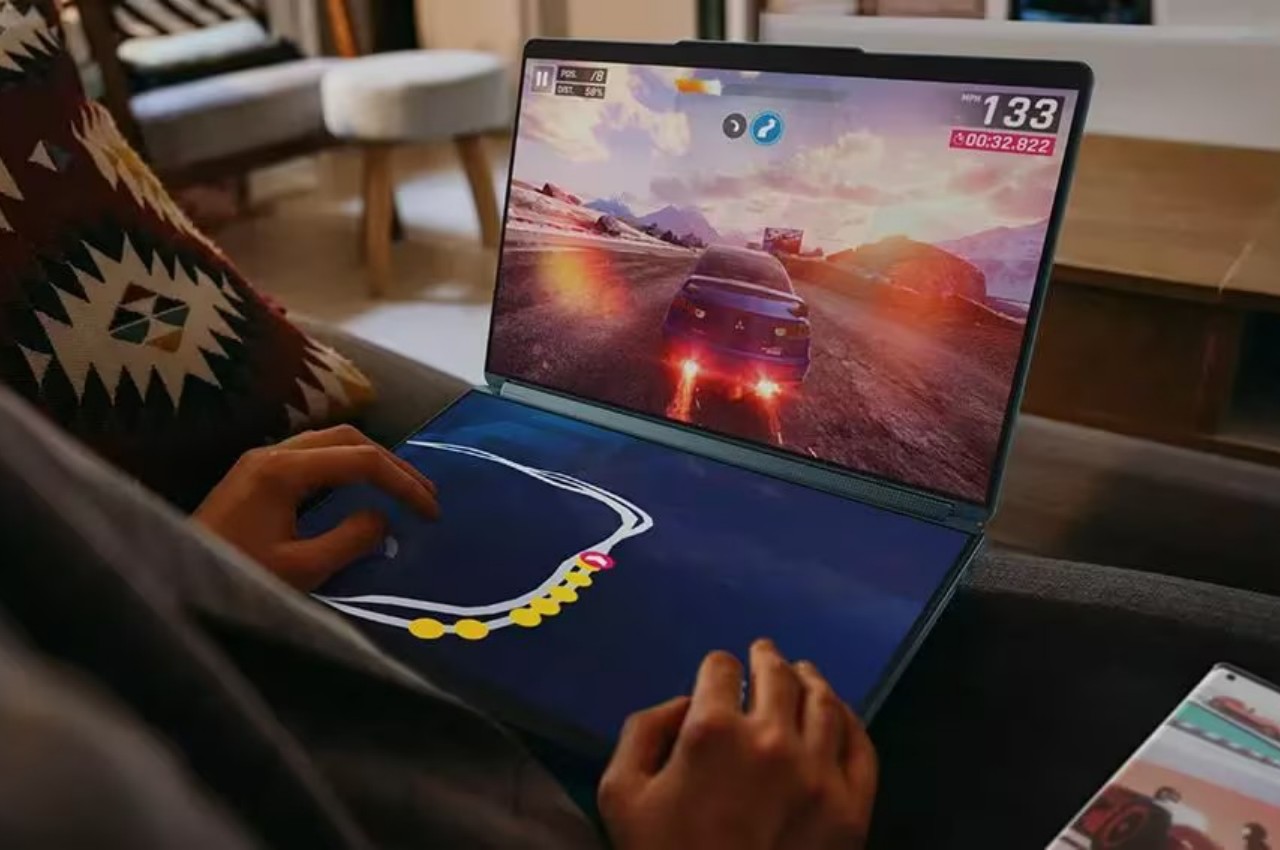
And then there are the current novelties like laptops with two screens or foldable displays, designs that have to sacrifice performance for the sake of super thin bodies. It hasn’t arrived yet, but a rollable screen might even become a thing for computers. In other words, Windows on ARM would enable all these forms beyond desktop towers and laptops to become possible without sacrificing too much performance. We seem to be heading in that direction already, but hardware is only half the battle.
Uphill Battle
No matter how powerful ARM chips are, enough to smoothly run Windows, all of that will fall on deaf ears if Windows on ARM isn’t able to support as much as 80% of regular Windows software, including games and especially content creation tools. That was what killed the Surface RT and Surface 2, after all, and things have improved considerably but not yet to most PC users’ satisfaction. One of the available solutions right now is emulation, like making the software or game think it’s running on an Intel/AMD computer, but that incurs penalties in performance.
AYANEO Flip DS
AYANEO Slide
Designer: AYANEO
There are also obstacles to be overcome on the hardware side. As strange as it might sound, PCs are a somewhat open ecosystem when it comes to the variety of things you can plug into a computer and have them working automatically. You lose some of that with Windows on ARM because of compatibility issues, and that might prevent less popular but heavily used peripherals from working, at least not at first. Unfortunately, that might be a huge deal breaker, especially for those who have already invested in devices for their workflow.
Designer: Qualcomm
Final Thoughts
Qualcomm’s announcement of the Snapdragon X Plus and Elite tried to preempt Apple’s new M4 chip and iPad Pros. Apple’s venture into the ARM world is both a boon and a bane for the likes of Qualcomm as it demonstrates what’s possible. But even Apple has remained within the boundaries of traditional devices like a tablet and a laptop. Not surprising for a company that is very meticulous and careful about the design of its products.
Designer: Apple
The Windows world, however, is a bit more daring thanks to the diversity of people involved. Unconventional and sometimes impractical designs pop up once in a while, but they’re all hampered by the limitations of hardware that’s commonly available for PCs. Windows on ARM isn’t new and it still has a long way to go to confidently match what Intel, AMD, and now Apple are selling, but stakeholders in the PC industry should probably consider rallying behind this if they want to breathe new life into the stagnating PC market.