Upcycled materials have become a familiar part of sustainable design, but most of them still try to hide where they came from. The aluminum gets purified, the recycled plastic molded smooth, and the result looks clean and neutral but loses the story of its origins. Pairing genuine sustainability with aesthetic character turns out to be a harder problem than it looks, and most attempts quietly sidestep it.
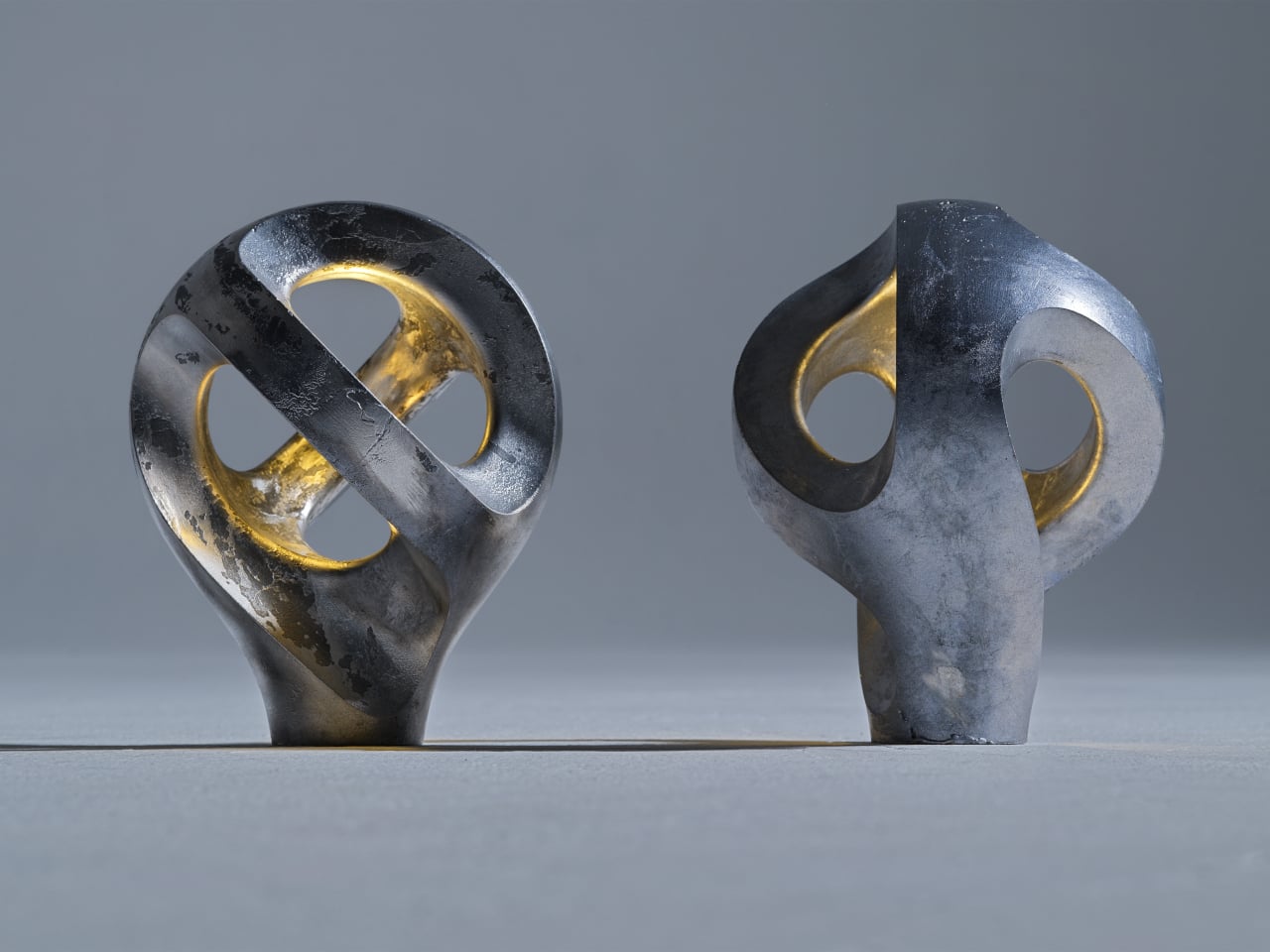
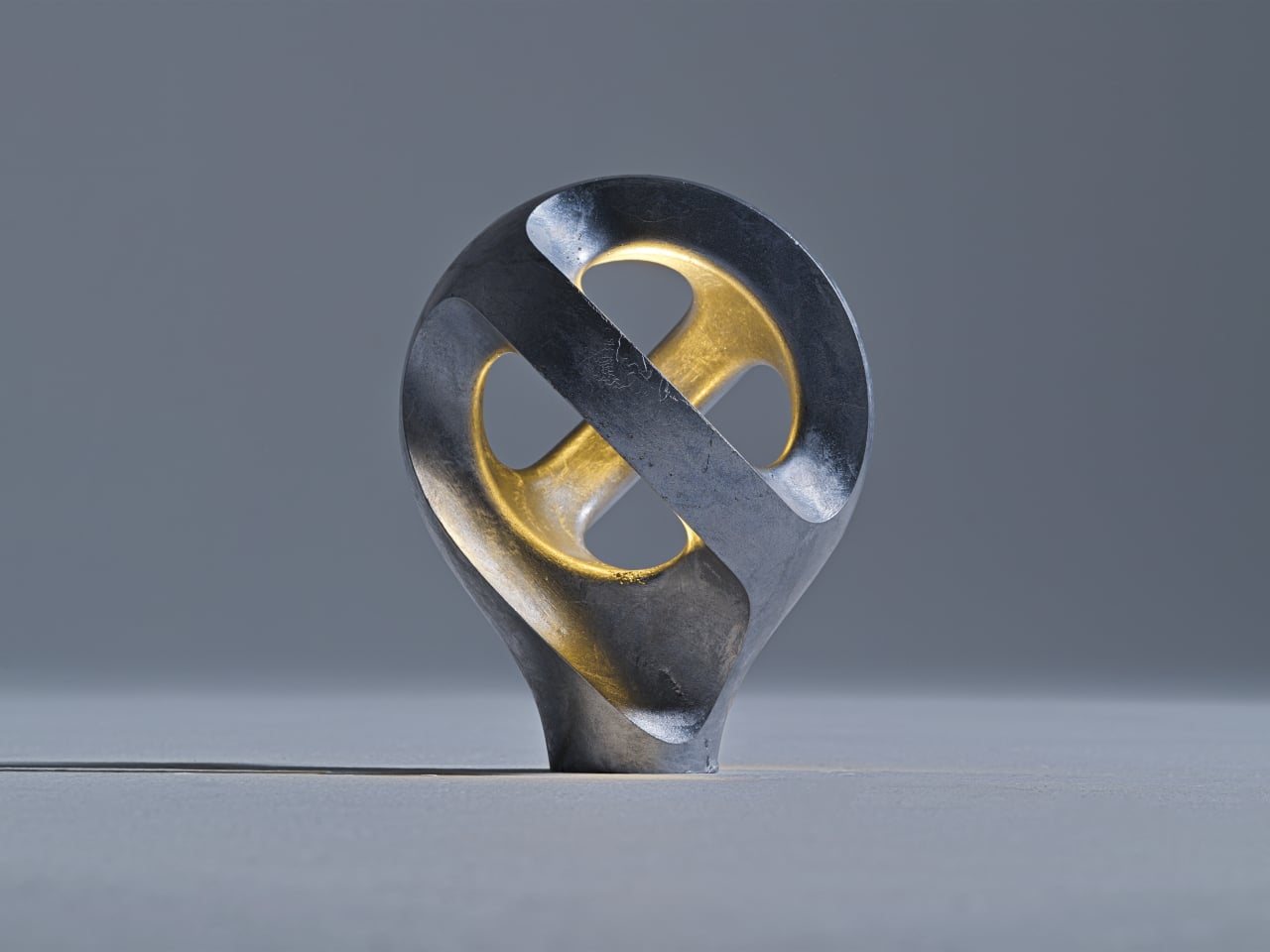
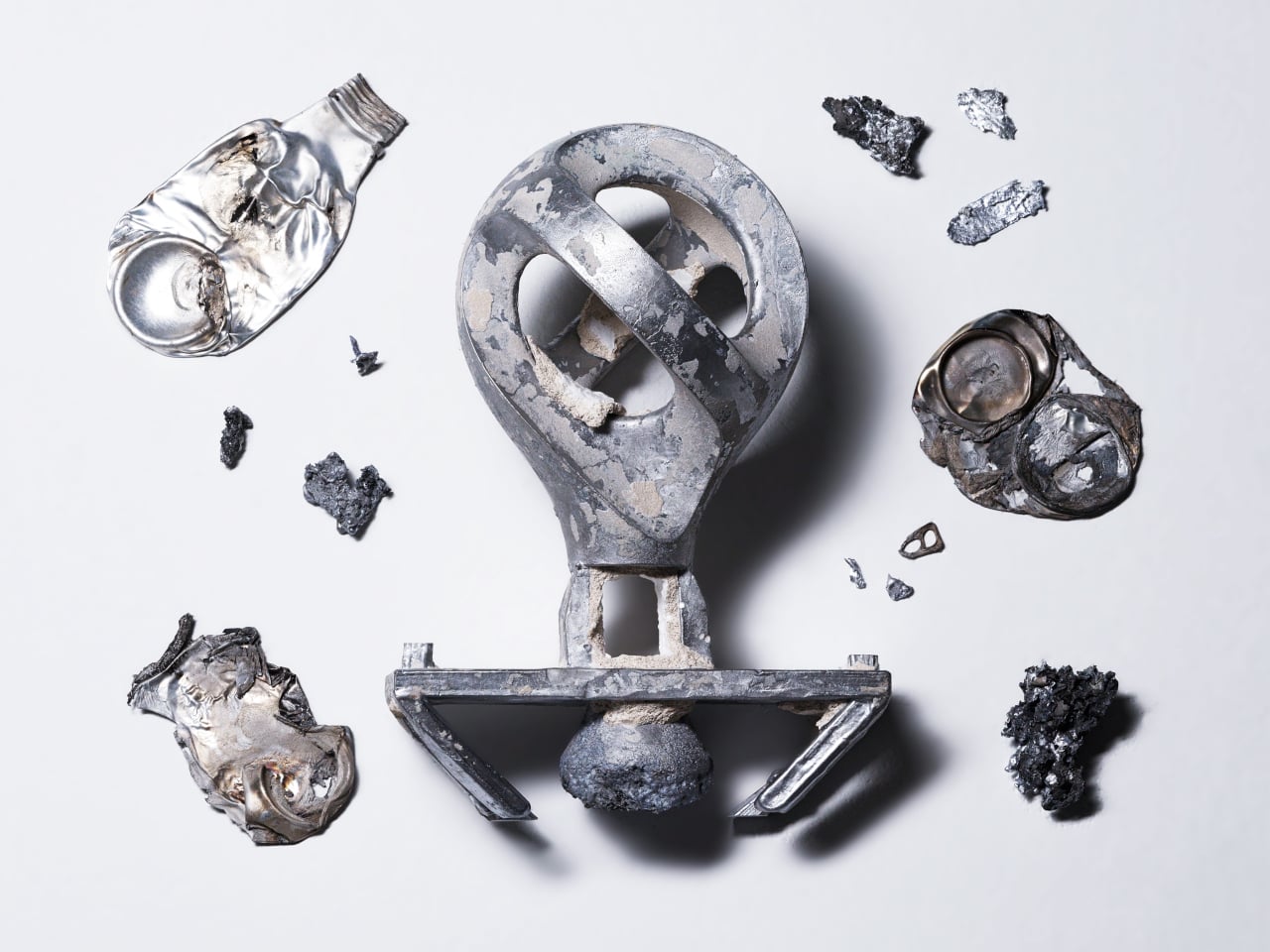
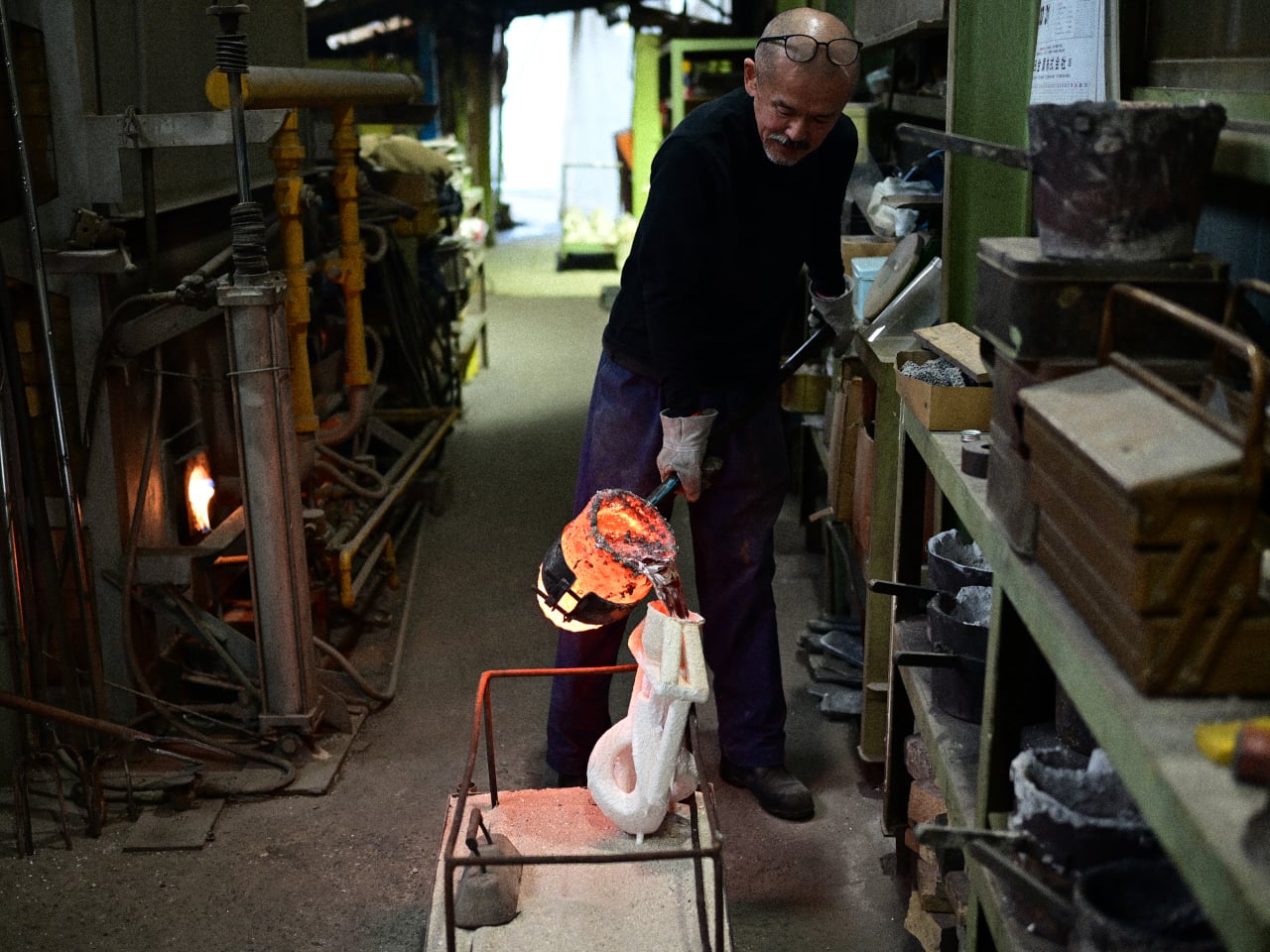
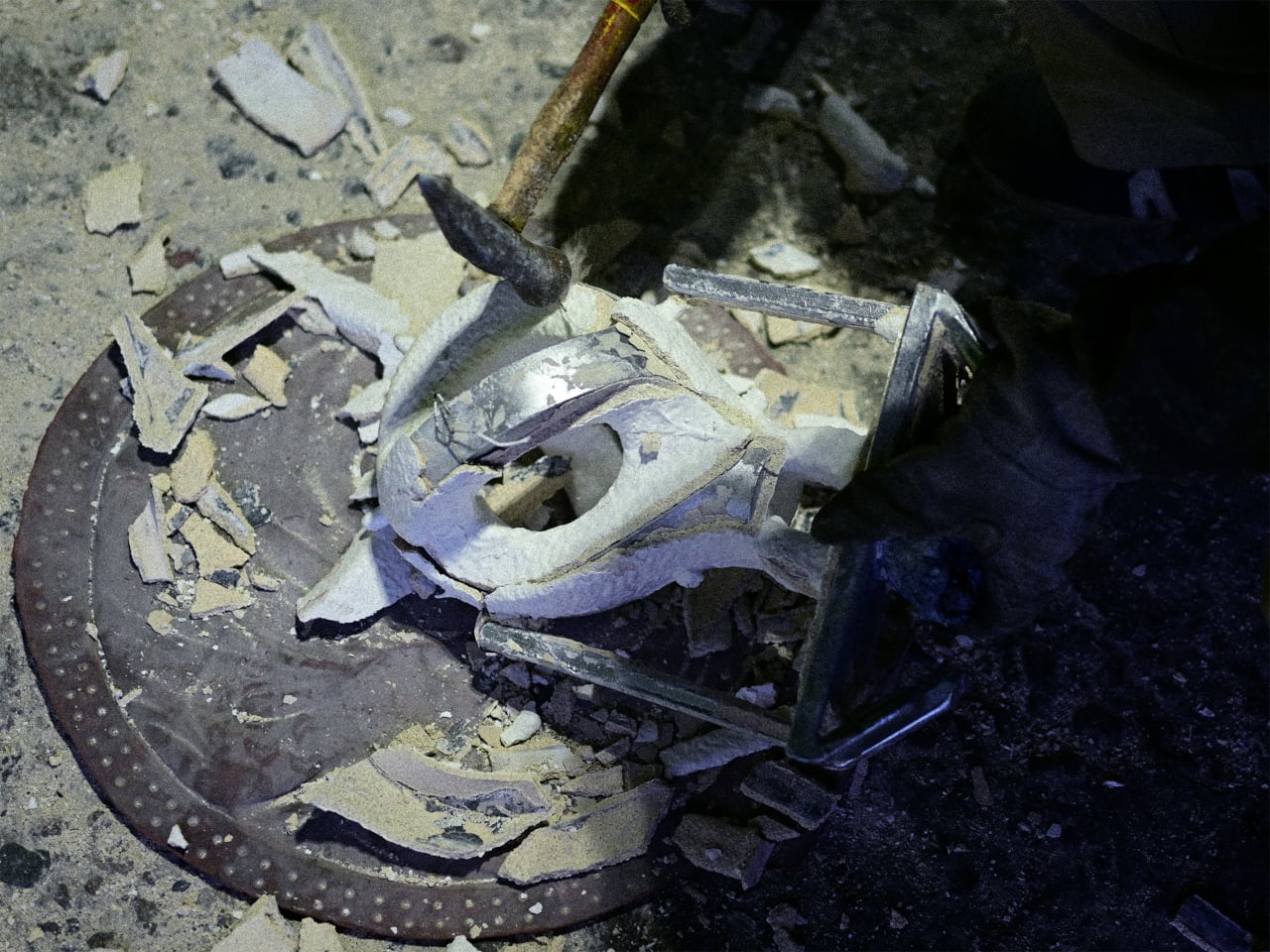
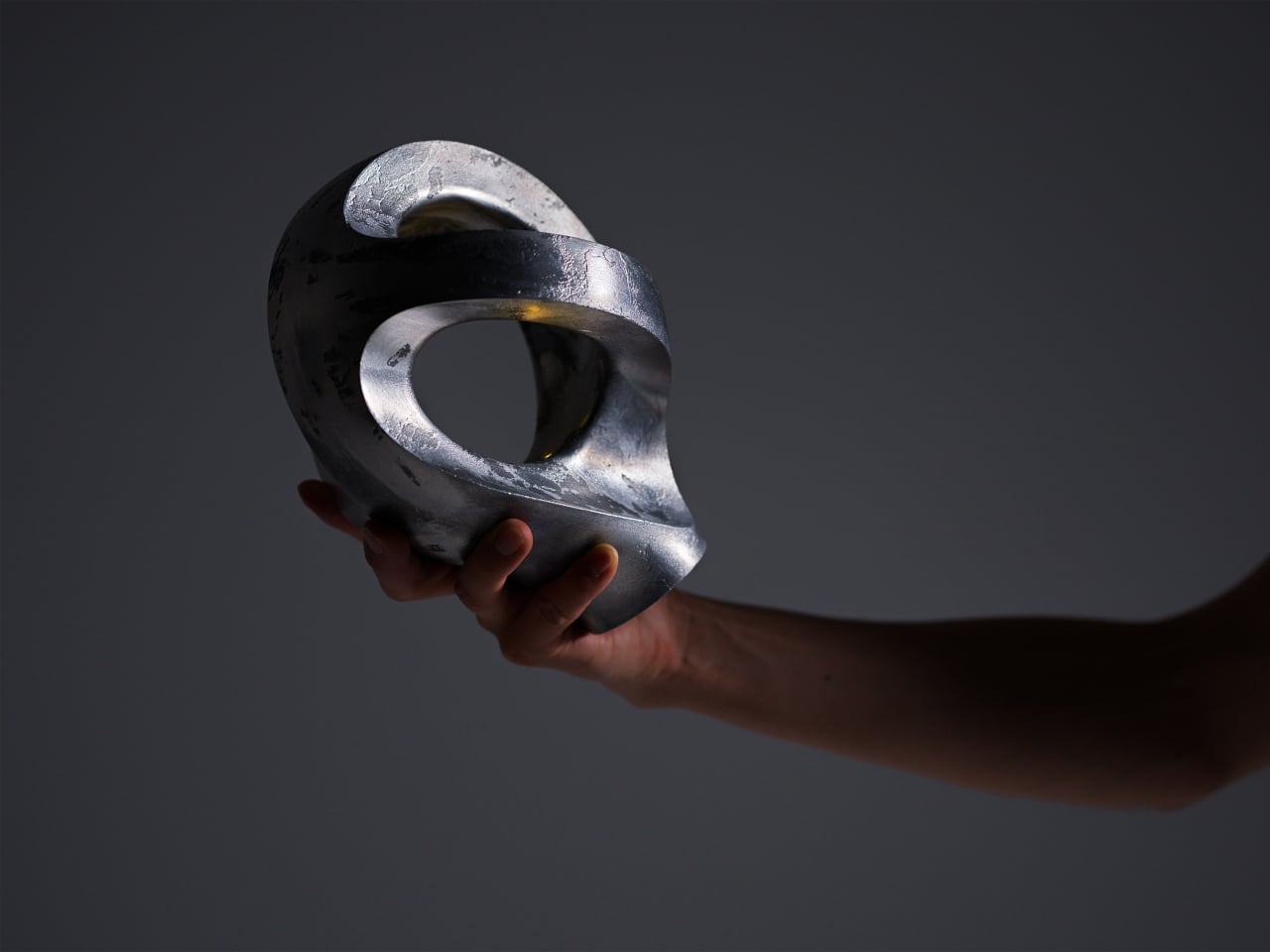
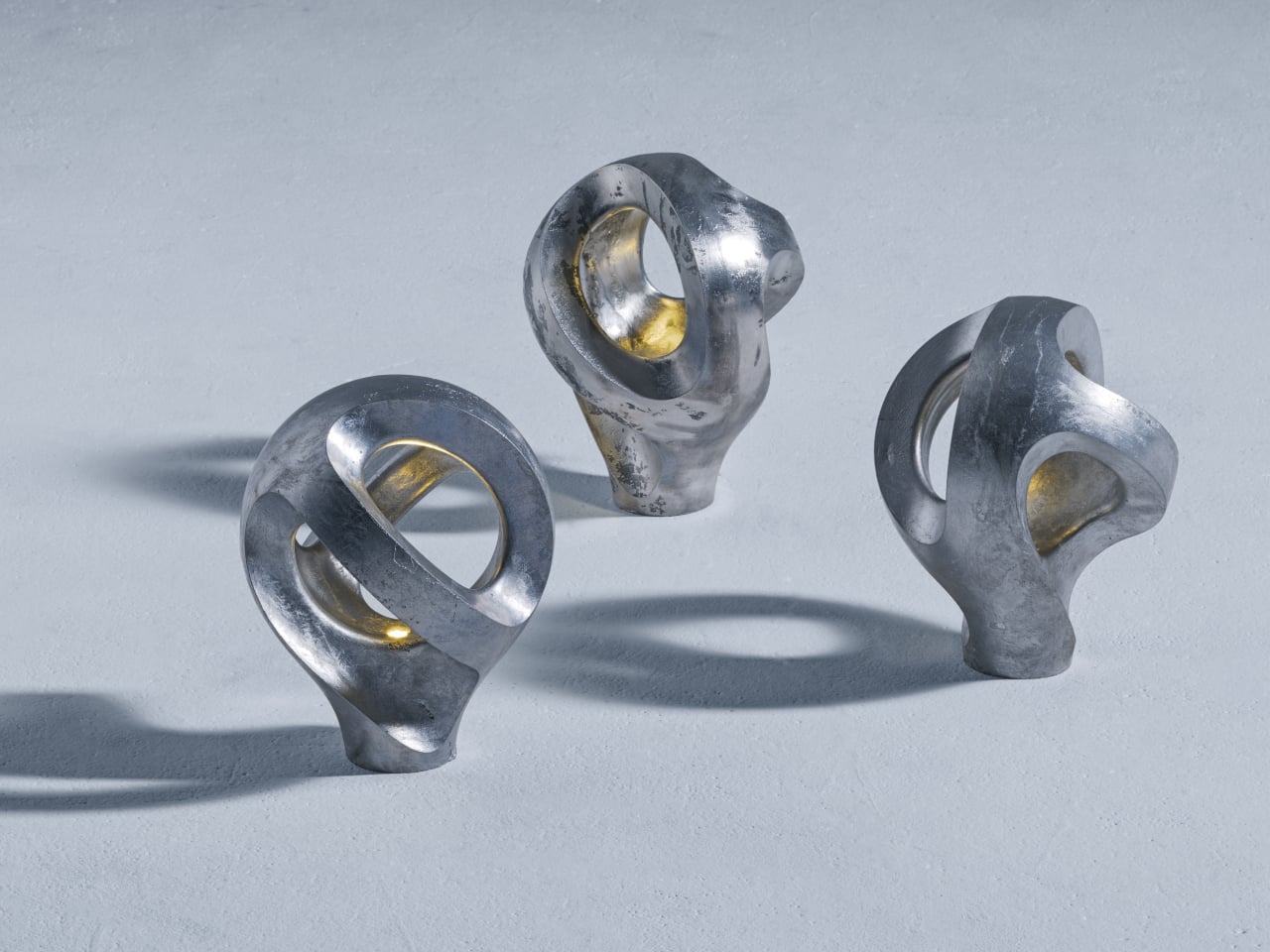
Tokyo-based product designer Kenji Abe took a different approach with Aperire, a lighting fixture cast entirely from discarded aluminum cans. Rather than refining the material beyond recognition, he deliberately left in the impurities. The wrinkles, air bubbles, and traces of ink from the original cans were preserved as surface texture, turning what most casting processes would filter out into the fixture’s defining character.
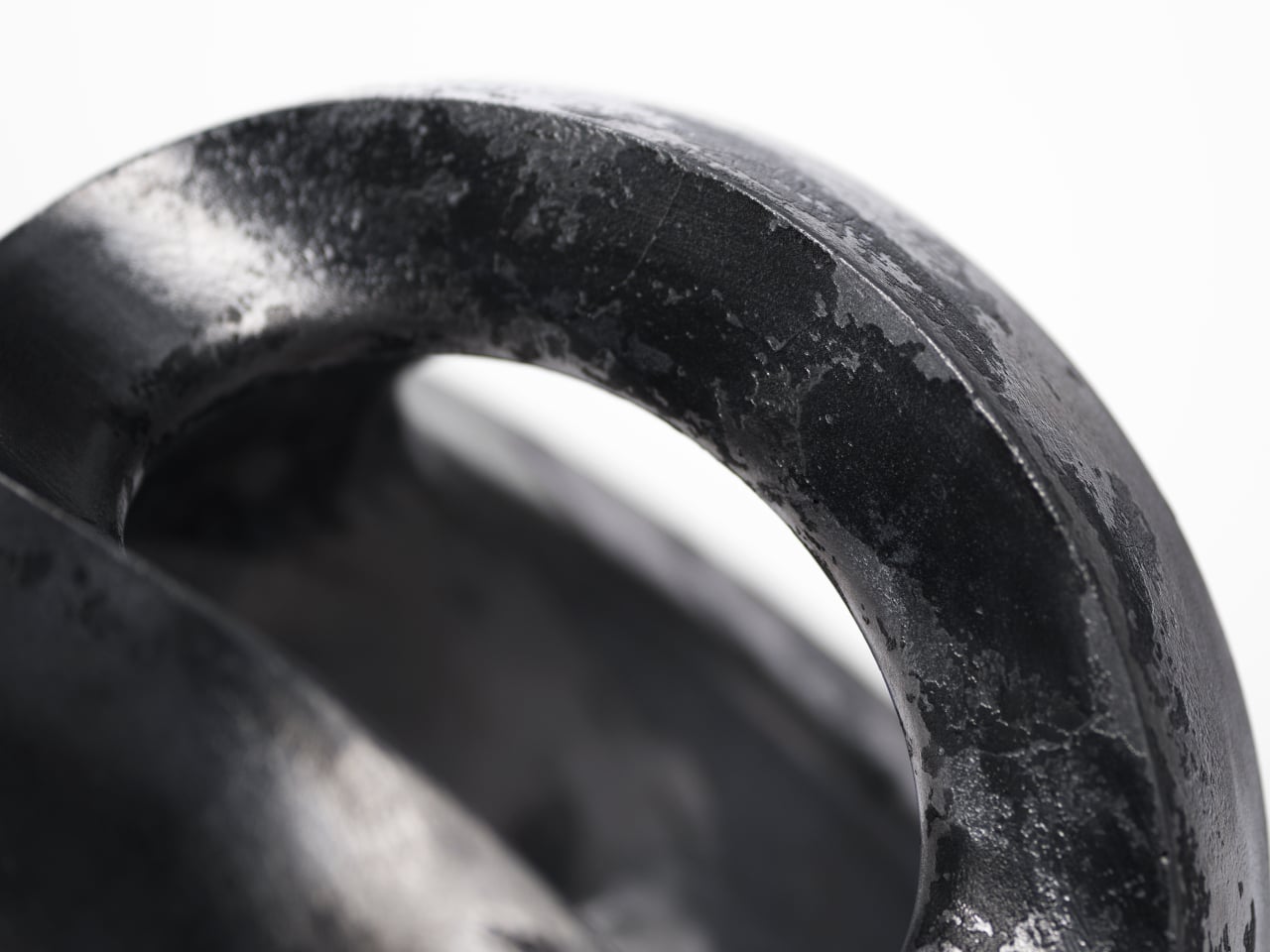
Melting the cans down without removing too many impurities is what produces that surface. Each piece ends up slightly different, carrying unpredictable marks that no two castings will ever replicate. Traces of ink from labels and other irregularities seep through the metal, and the result reads less like manufactured aluminum and more like weathered stone or bone. The artificial origin becomes genuinely difficult to place.
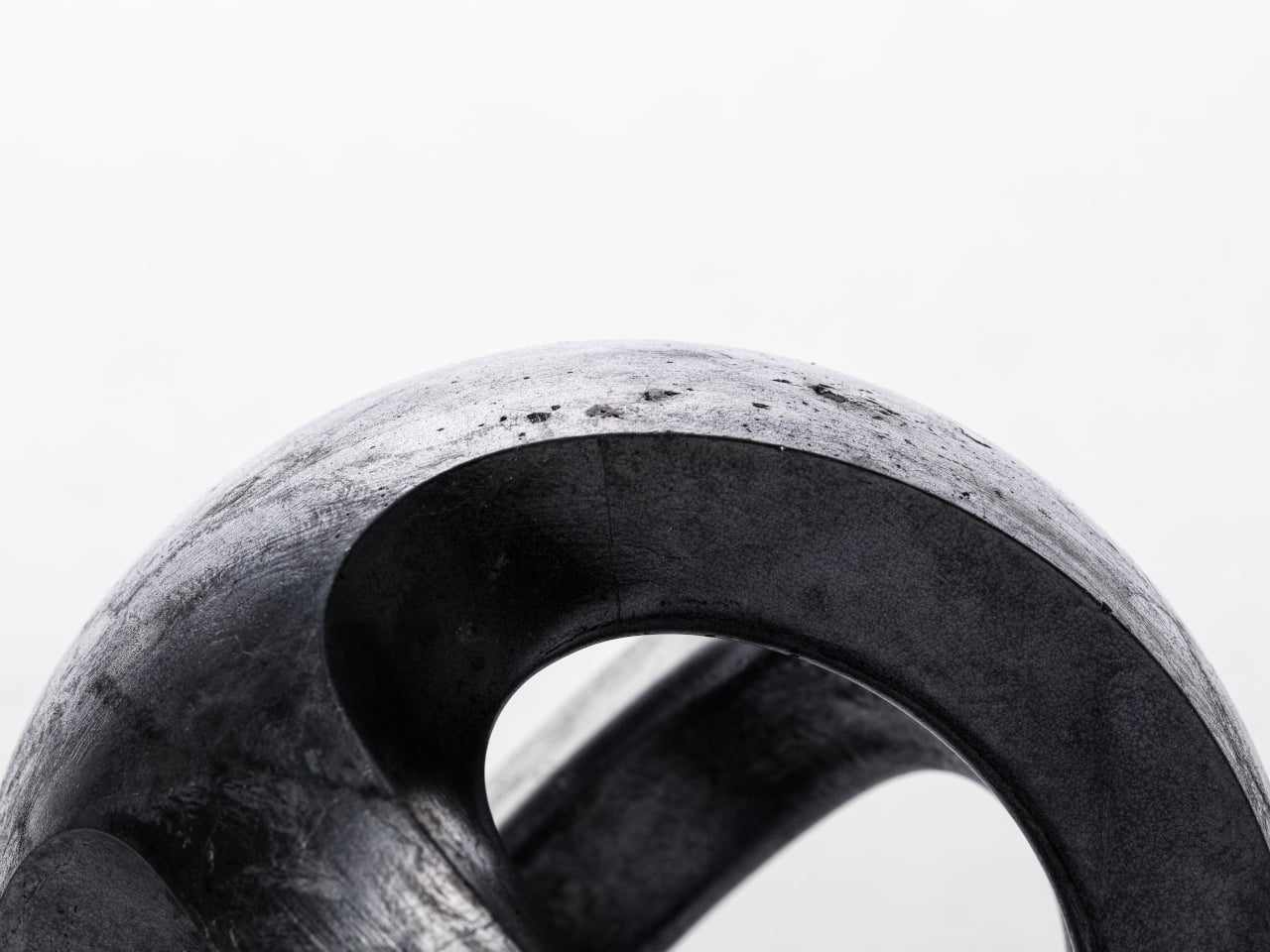
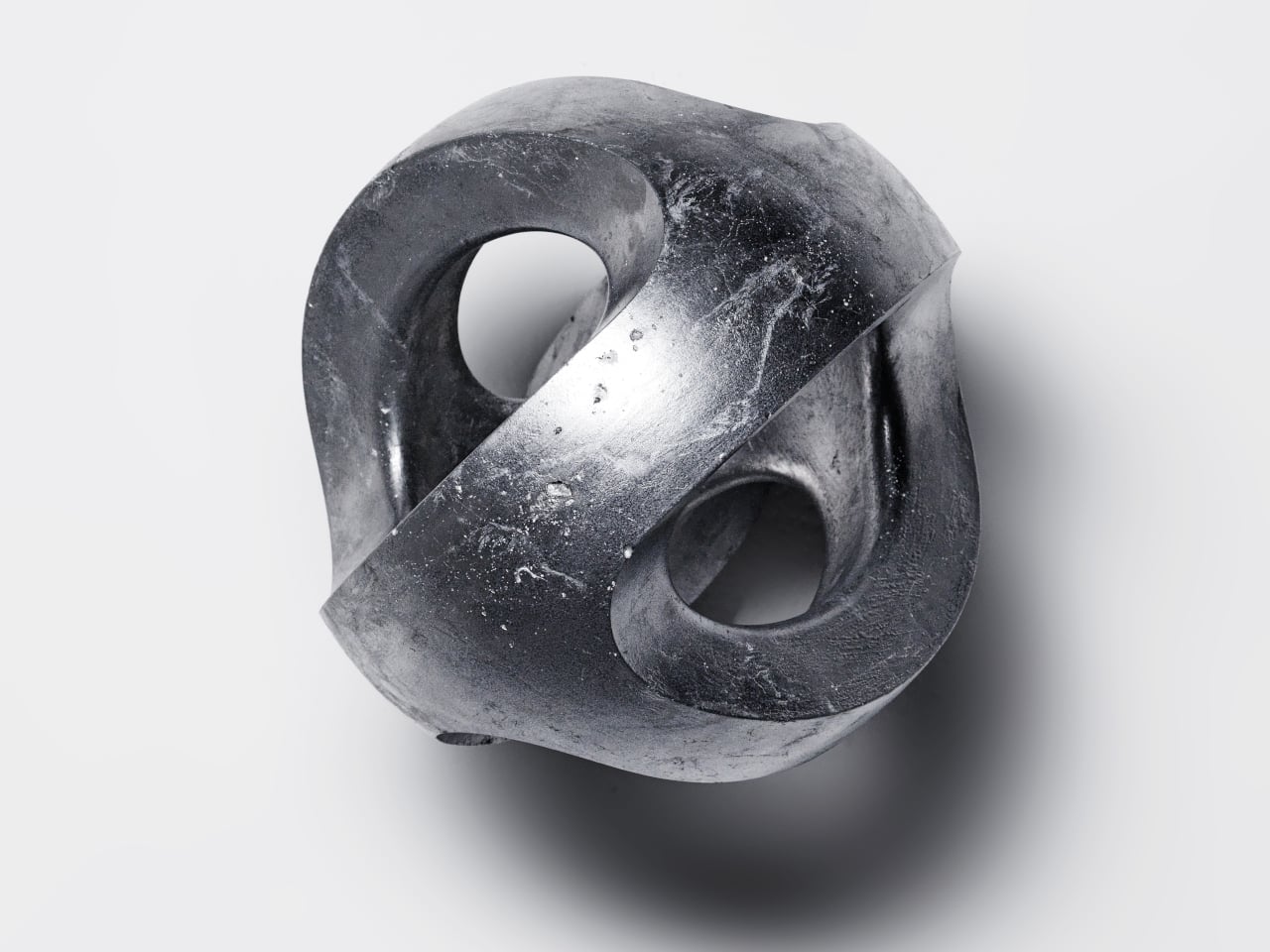
The finish that results reads almost like a natural material. The same surface might show shallow depressions, irregular ridges, or fine lines that look nothing like machined metal. Paired with the organic, chambered form, it makes Aperire genuinely hard to identify on first glance. The cans are unmistakably present in the material’s history, but they aren’t visible in what the object has become.
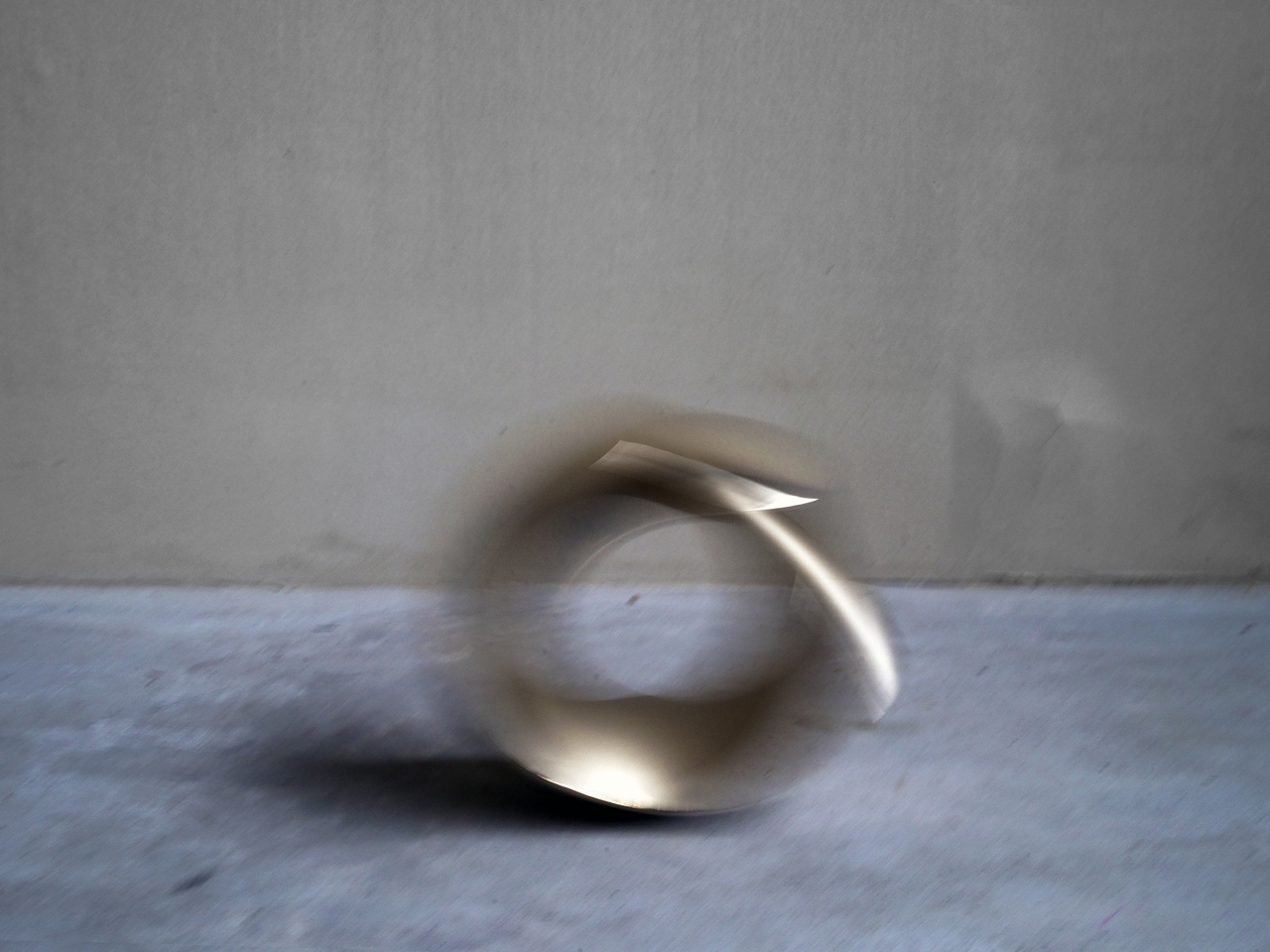
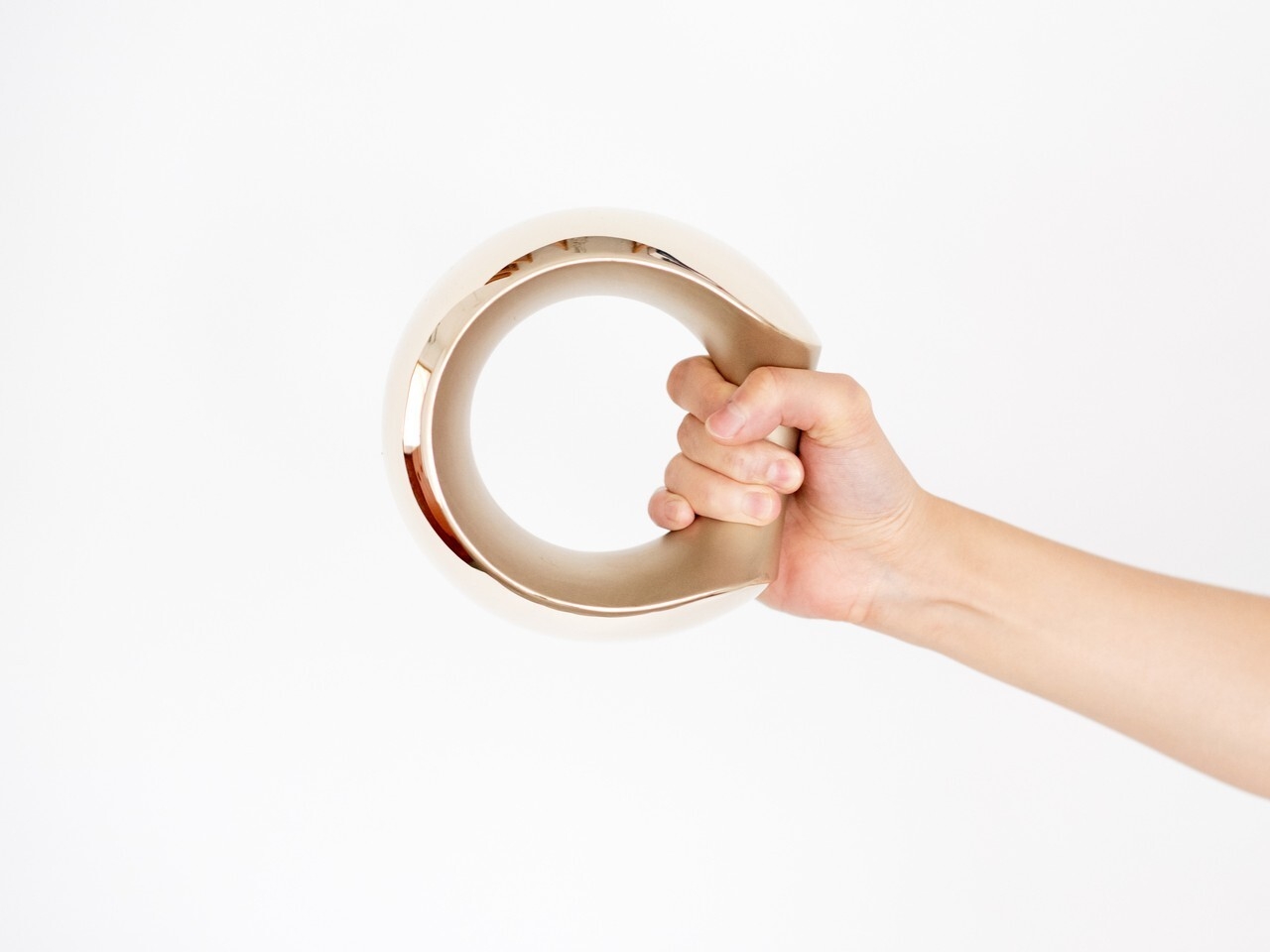
The shape itself draws from an equally unexpected source: foraminifera, the microscopic marine organisms whose skeletons are riddled with tiny holes and chambers. Combined with the rough appearance of eroded rock, the form was built through the deliberate addition and subtraction of geometric shapes. Light reflects inside the hollow interior and finds its way out through the openings, seeping gently outward rather than projecting.
The name carries a few threads that converge on the same idea. Aperire is Latin for “to open,” connecting to aperture, the camera mechanism that controls how much light passes through. It also traces back to April, the season when flowers open. For a fixture that lets light slowly leak outward rather than announce itself, the name seems less like branding than an accurate description of what the object does.
The fixture doesn’t make a loud case for sustainability as a concept; it just happens to be made from something that would otherwise be discarded, and it shows it. That quiet honesty gives it a credibility that purpose-built eco-aesthetic objects rarely manage. The cans stop being waste, stop being raw material, and become something that earns its place on a table or shelf without the sustainability narrative doing the heavy lifting. The object handles that part itself.
Smartwatches have had an impressive run, but the category is starting to feel a bit crowded and tired. Most recent releases have been iterative, adding a sensor here or a display tweak there, while the core form stays essentially the same: a small screen on your wrist buzzing at you constantly. Consumers are starting to wonder what the next genuinely interesting chapter of wearables looks like.
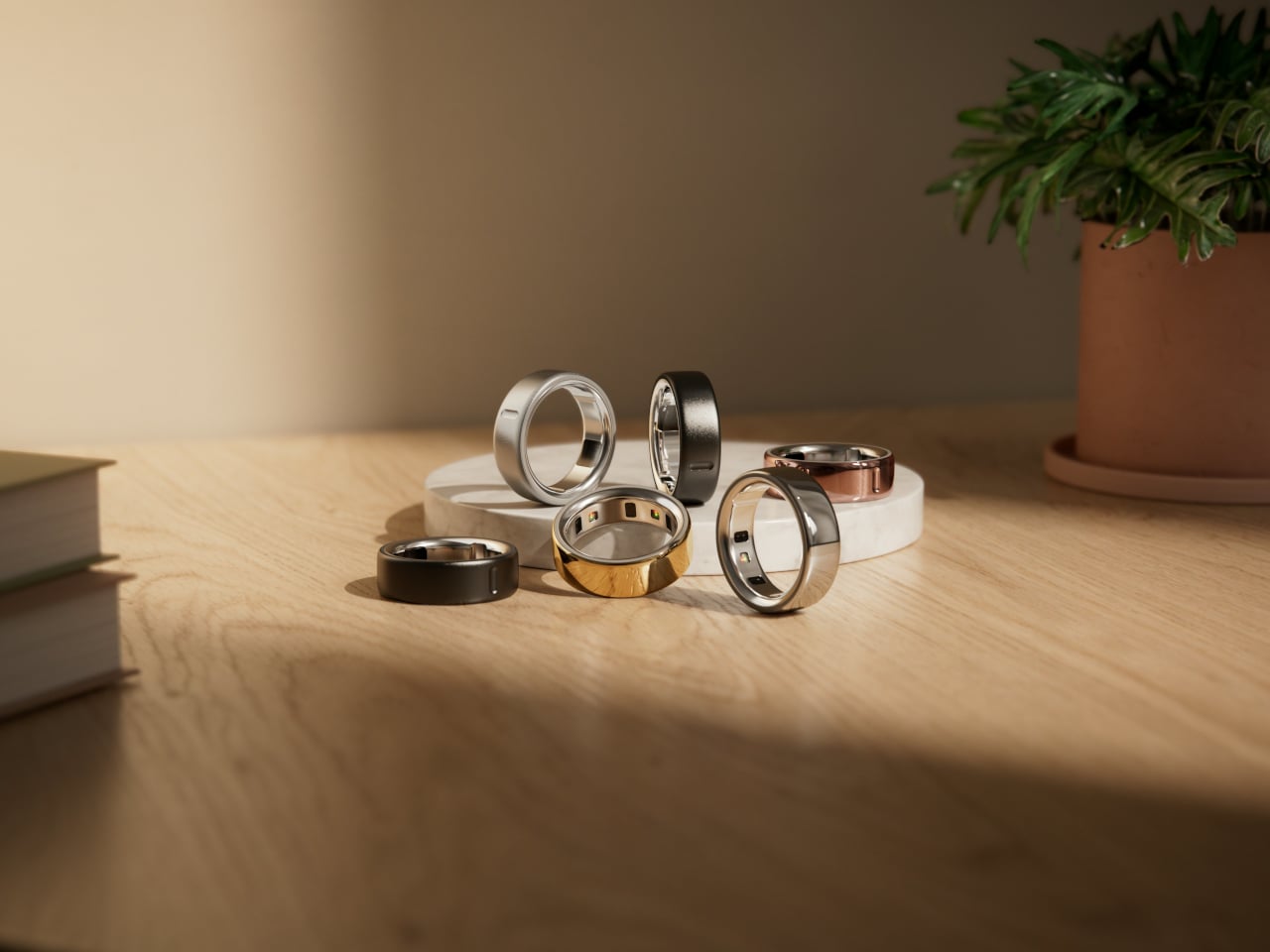
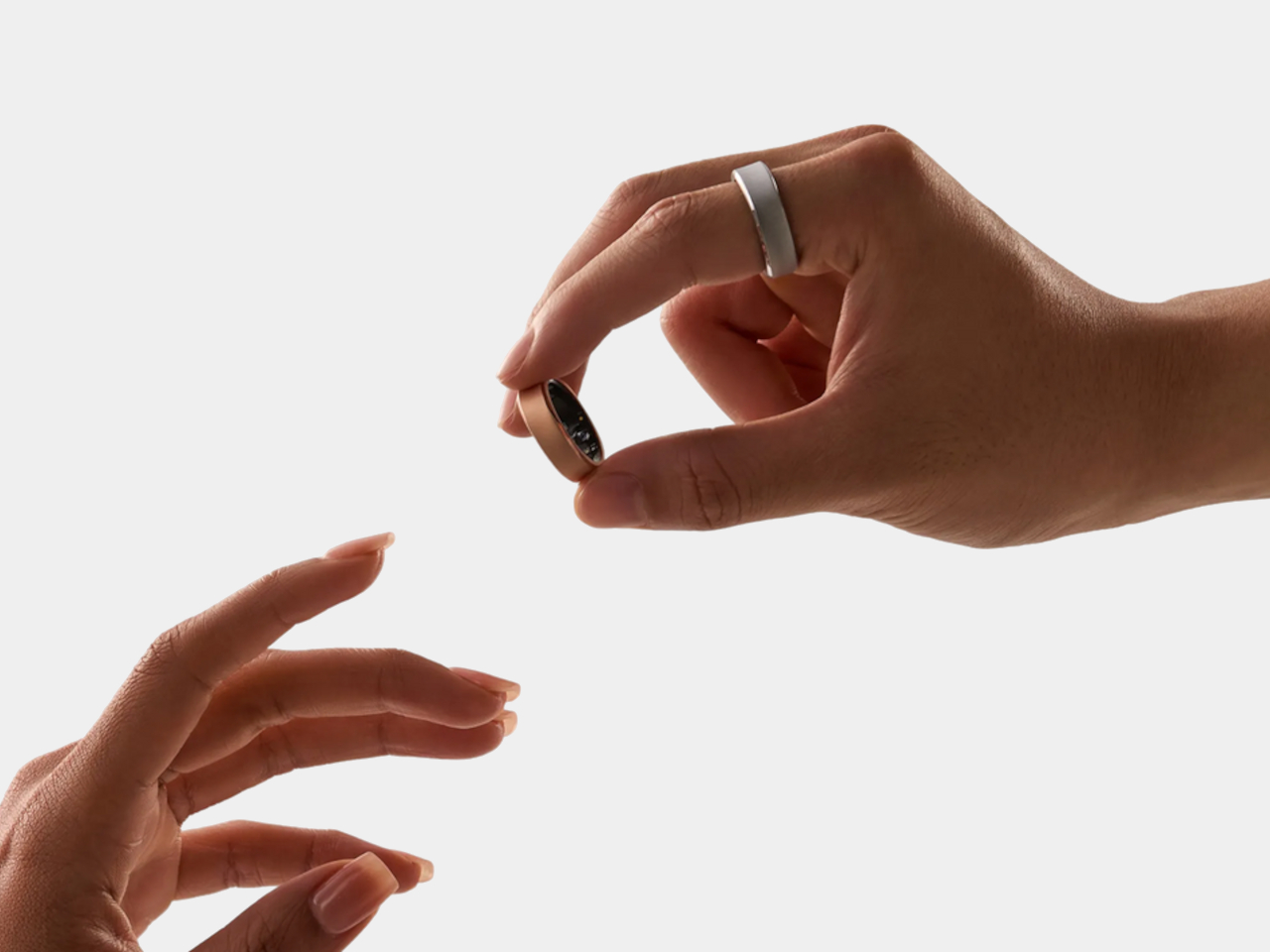
It turns out the answer might be right on your finger. In one week during May 2026, the smart ring went from niche wellness accessory to the category everyone in wearables should be watching. Oura confidentially filed an S-1 with the SEC, RingConn opened pre-orders for its Gen 3, and fresh leaks in iOS 26 code reignited the idea that Apple might be circling the space.
Part of what makes this moment feel significant is that it isn’t purely a business story. The smart ring’s appeal is rooted in something the smartwatch was never designed for: disappearing. A ring doesn’t have a screen demanding your attention, doesn’t buzz through dinner, and doesn’t get taken off at bedtime. For passive health tracking, especially overnight, the finger turns out to be a surprisingly elegant surface.
RingConn Gen 3
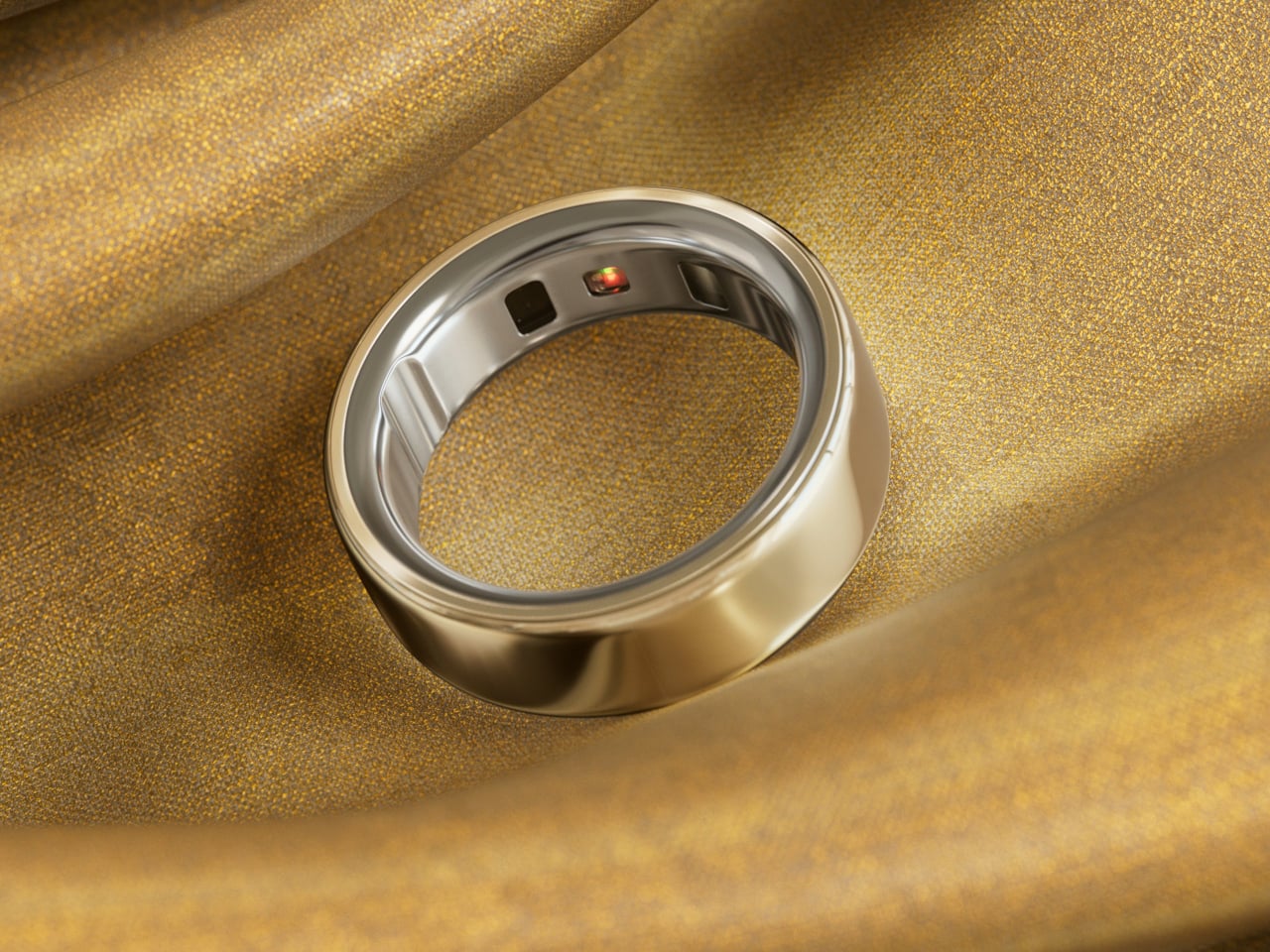
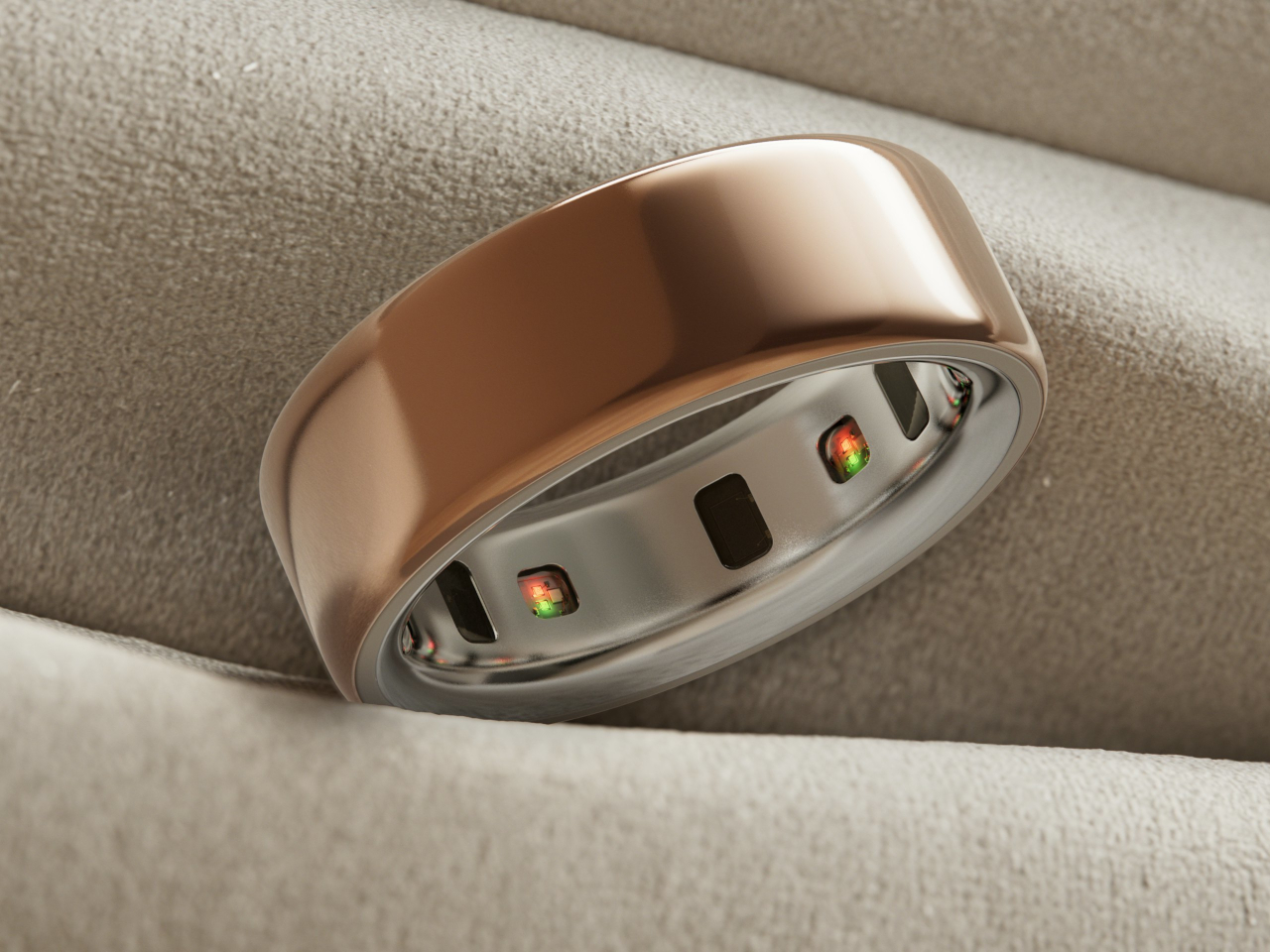
RingConn’s Gen 3 is the clearest hardware proof that the category is maturing. At $349, the titanium ring ships with a 14-day battery, vascular health tracking, and haptic alerts, all without a subscription fee. That battery figure alone is worth pausing on. A ring that only needs charging once a fortnight fits into daily life in a way that a device needing nightly top-ups simply doesn’t.
RingConn Gen 3
RingConn Gen 3
What RingConn’s launch really signals is a shift in the category brief. Buyers aren’t just asking whether a ring can track their sleep anymore. They want richer health data, meaningful feedback, and hardware that feels finished rather than experimental. Titanium construction, cardiovascular insights, and a no-subscription model together suggest that the smart ring has stopped apologizing for what it can’t do and started showing off what it can.
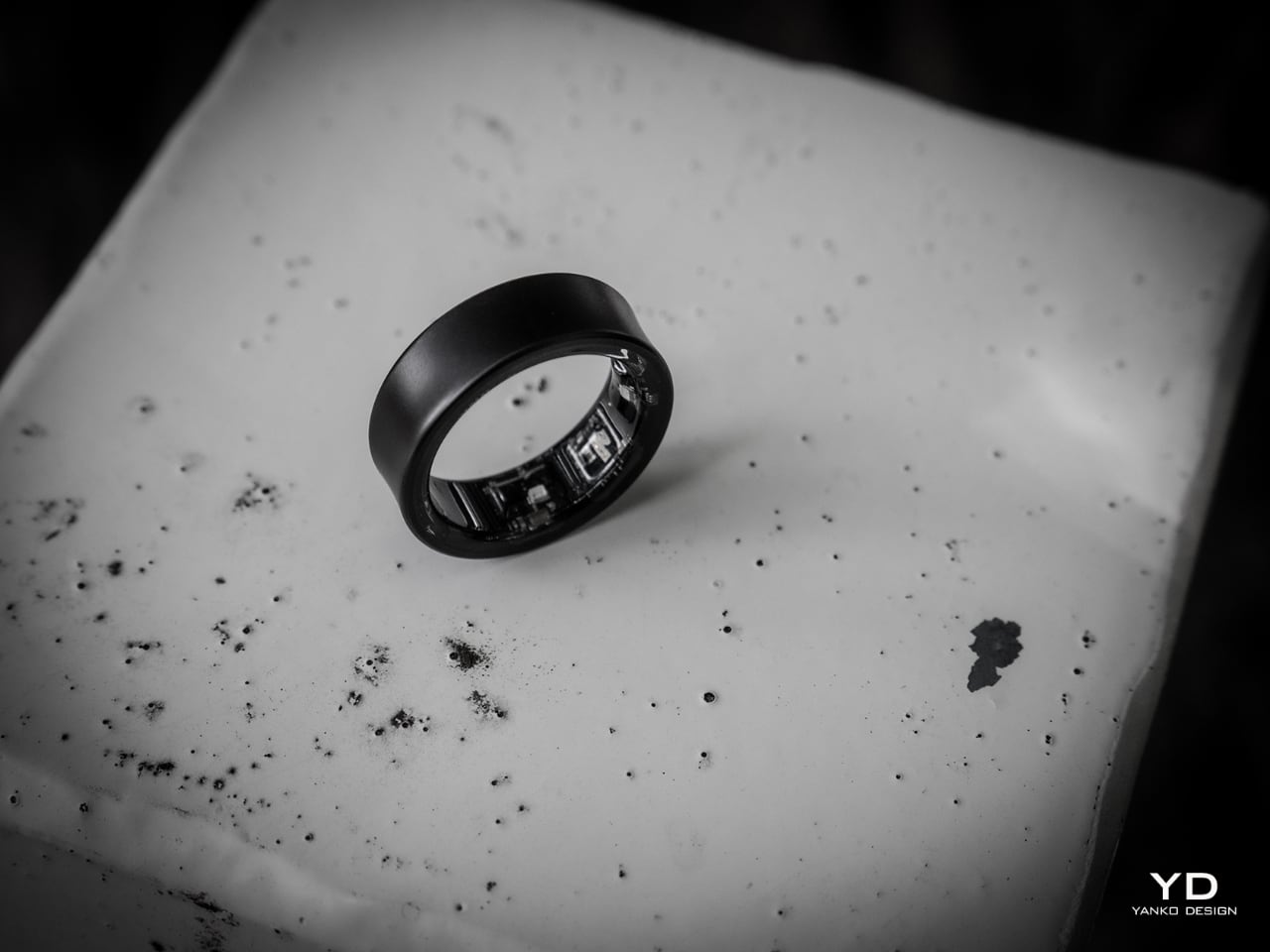
Oura’s confidential S-1 filing adds a different kind of weight to the week. Filing with the SEC isn’t something companies do casually. It means Oura believes the smart ring market is stable enough, scalable enough, and financially convincing enough to withstand public-market scrutiny. It’s also a signal that the subscription model, which charges users a monthly fee to access their own health data, has real staying power.
Oura Ring 4
That subscription debate cuts to something interesting about how these companies see what a smart ring is. Oura is essentially selling a sensor paired with an ongoing interpretation service. RingConn is selling a finished object you own outright. Neither is wrong, but the two approaches create very different relationships between wearer and device, and that relationship shapes every other decision the product team ends up making.
Then there’s Apple, which hasn’t confirmed anything but whose shadow is already affecting the conversation. References buried in iOS 26 code have fueled speculation that Cupertino is at least exploring a ring-shaped device, possibly one that ties into the broader Vision Pro ecosystem. Apple hasn’t shipped a ring yet, but its apparent interest alone changes how developers, investors, and competing hardware teams think about the category’s long-term potential.
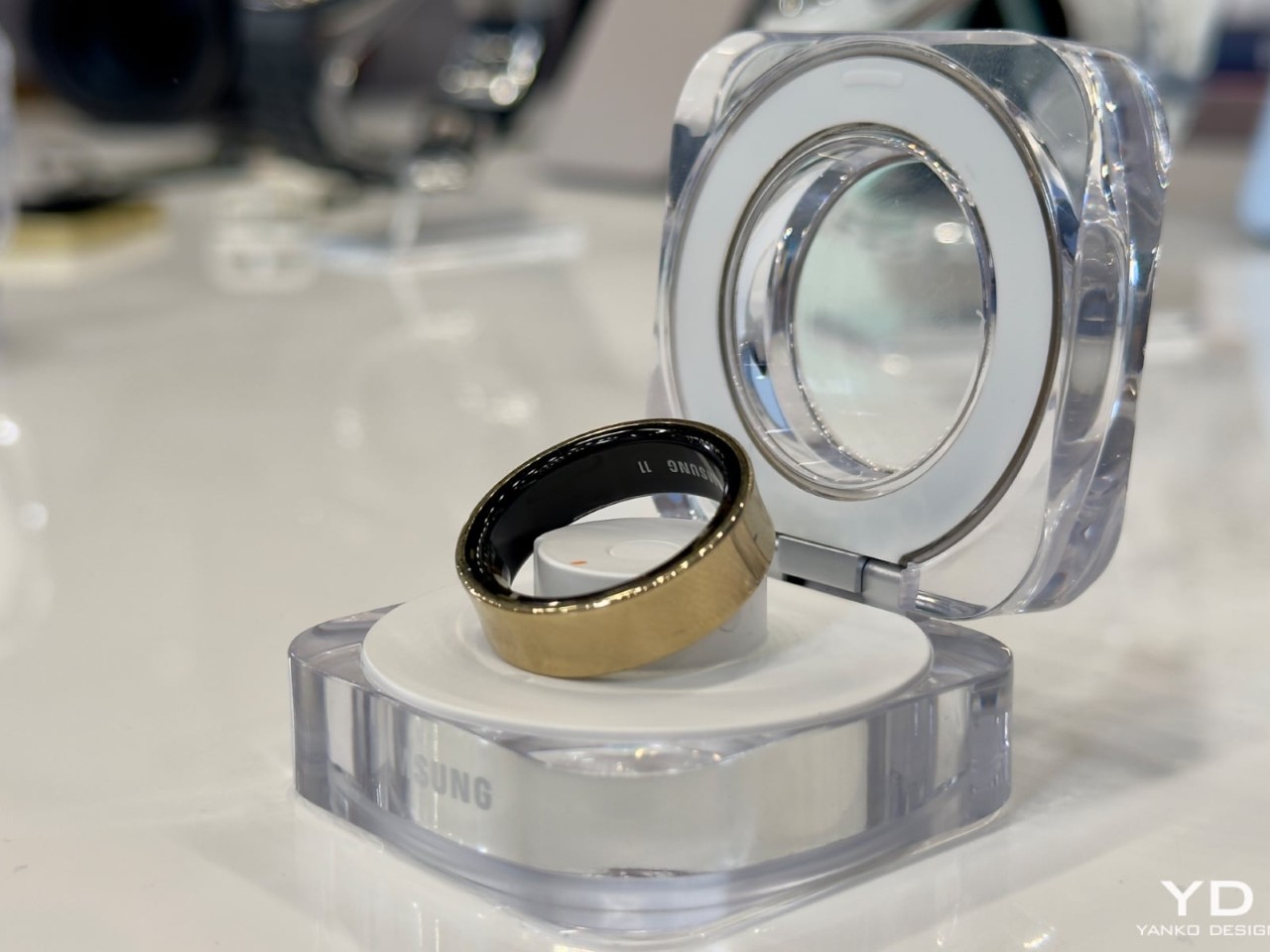
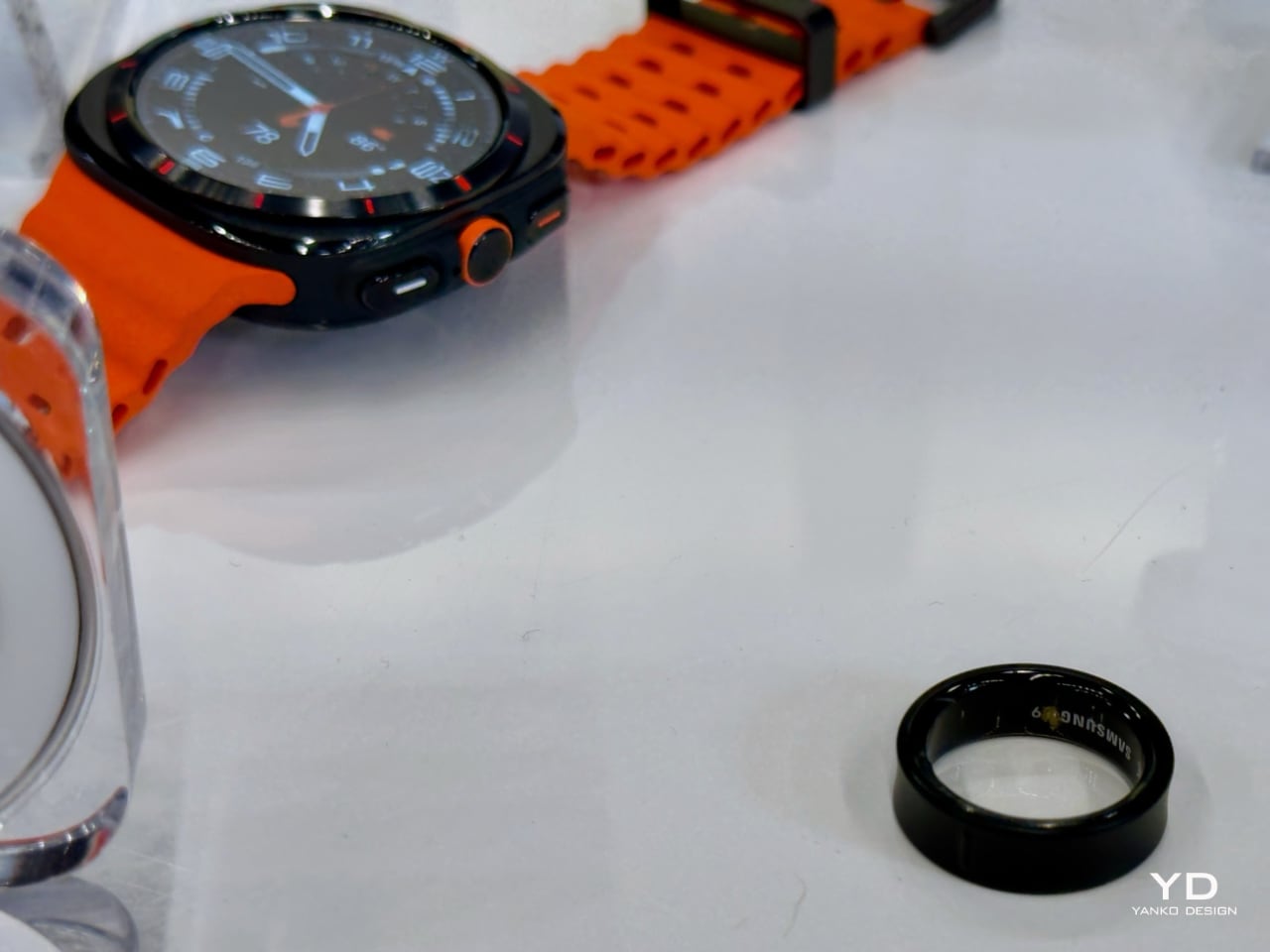
Samsung Galaxy Ring
The harder question, of course, is what comes next for a category that’s barely five grams and still trying to grow up. Blood pressure monitoring, non-invasive glucose tracking, and finer cardiovascular sensing are all on the roadmap, but they’ll demand even more from a form factor that’s already pushing the limits of miniaturization. Getting there without sacrificing comfort or wearability is the real design challenge ahead.
Shoehorns have been around for centuries, and their design has barely moved. Most are anonymous strips of plastic or metal that live behind closet doors and rarely see daylight unless someone’s wrestling with a stiff new pair of shoes. They do one job, they do it acceptably, and then they disappear. It’s a category where function was solved long ago, and form has been cheerfully overlooked ever since.
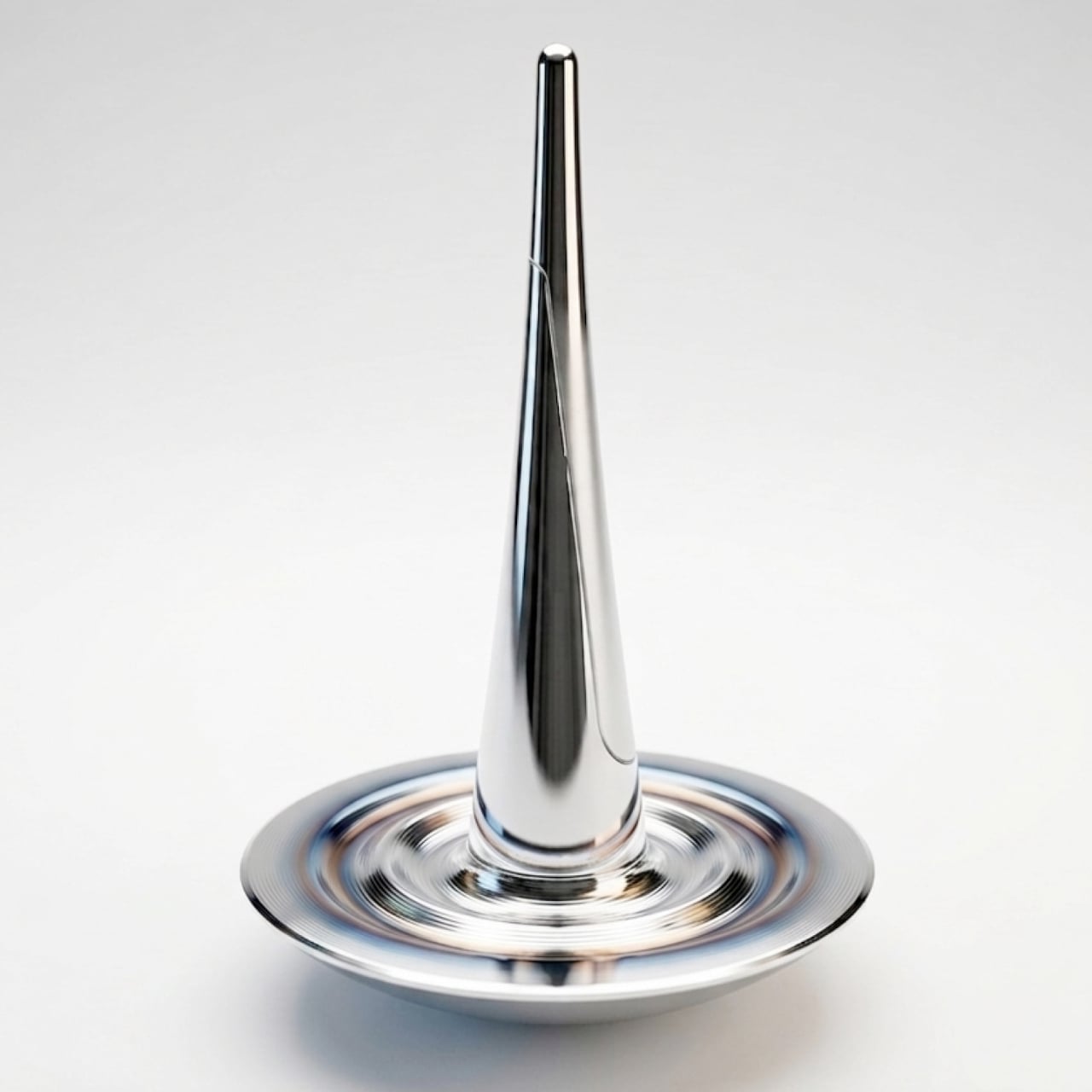
That neglect is the starting point for DROP, a concept prototype that treats the shoehorn as both a sculptural object and an emotional one. The goal isn’t to make it work better but to make it something you’d actually want to live with. That’s a harder problem, and it leads somewhere more interesting than a redesigned grip or a slightly longer handle.
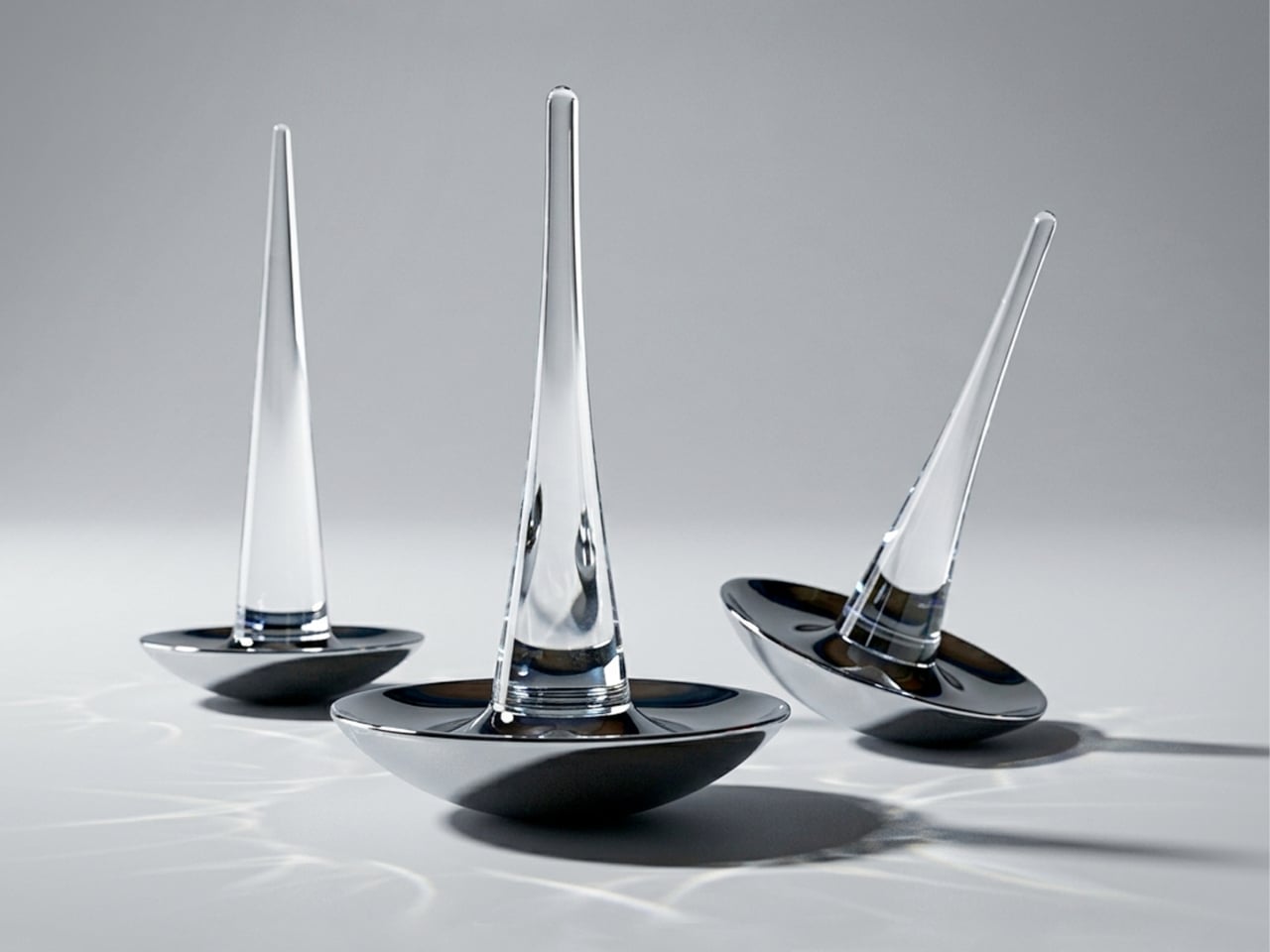
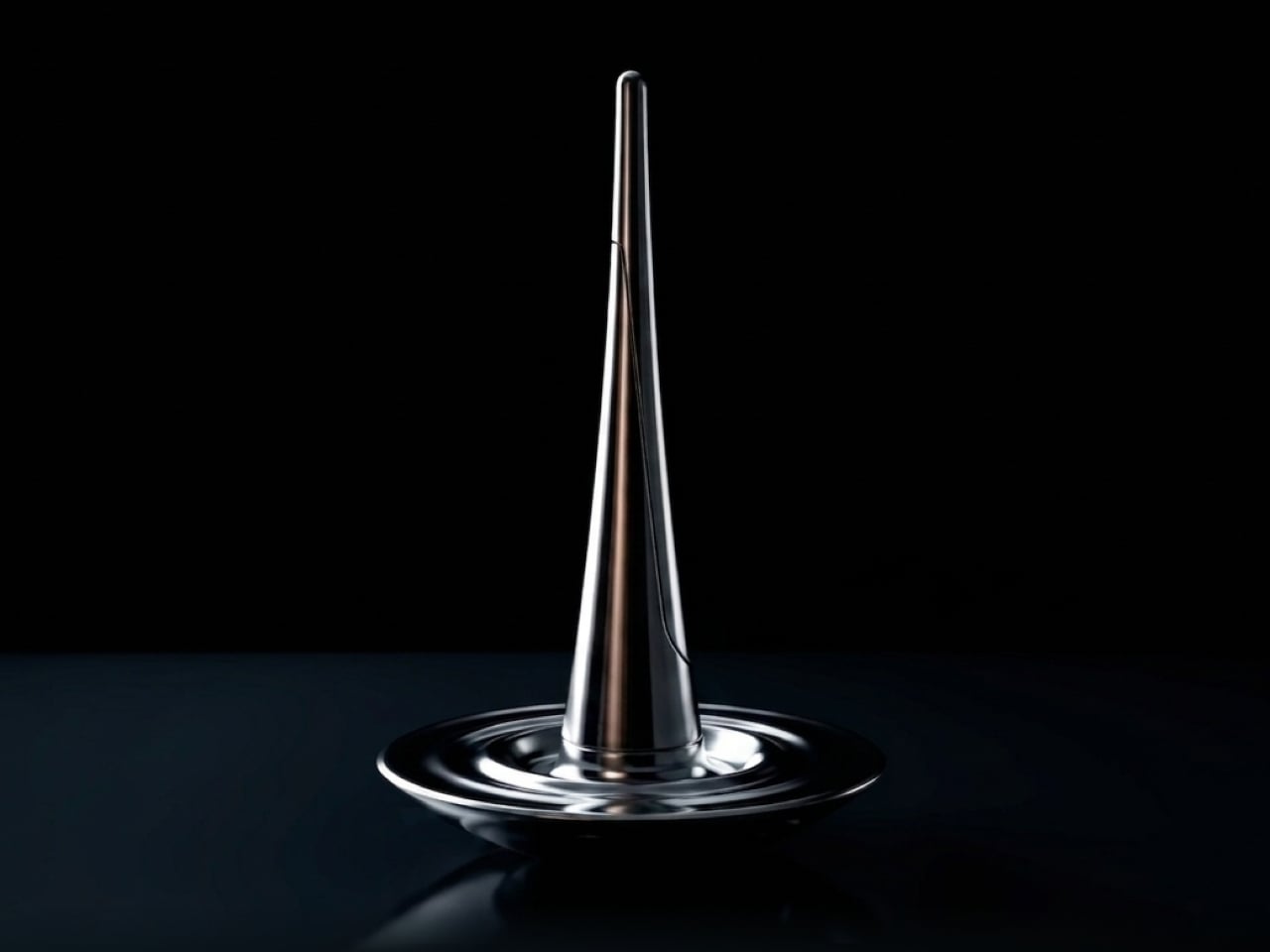
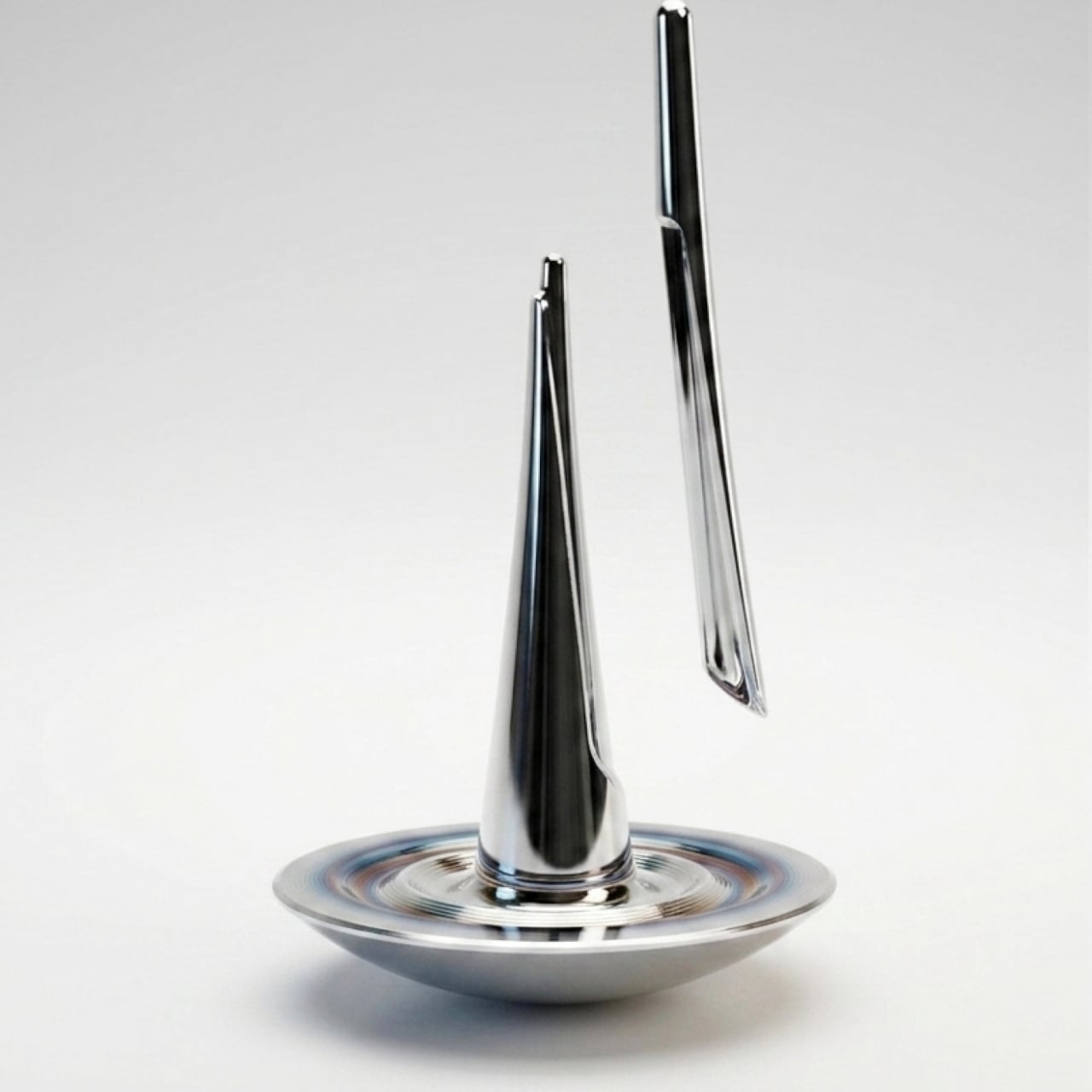
The concept draws from a very specific moment in nature: the instant a water droplet meets a surface. That brief, almost elusive state between motion and stillness became a static form. The tall conical body represents the droplet at the moment of impact, and the shallow curved base beneath traces the ripples spreading outward. It’s a frozen movement given a permanent material shape.
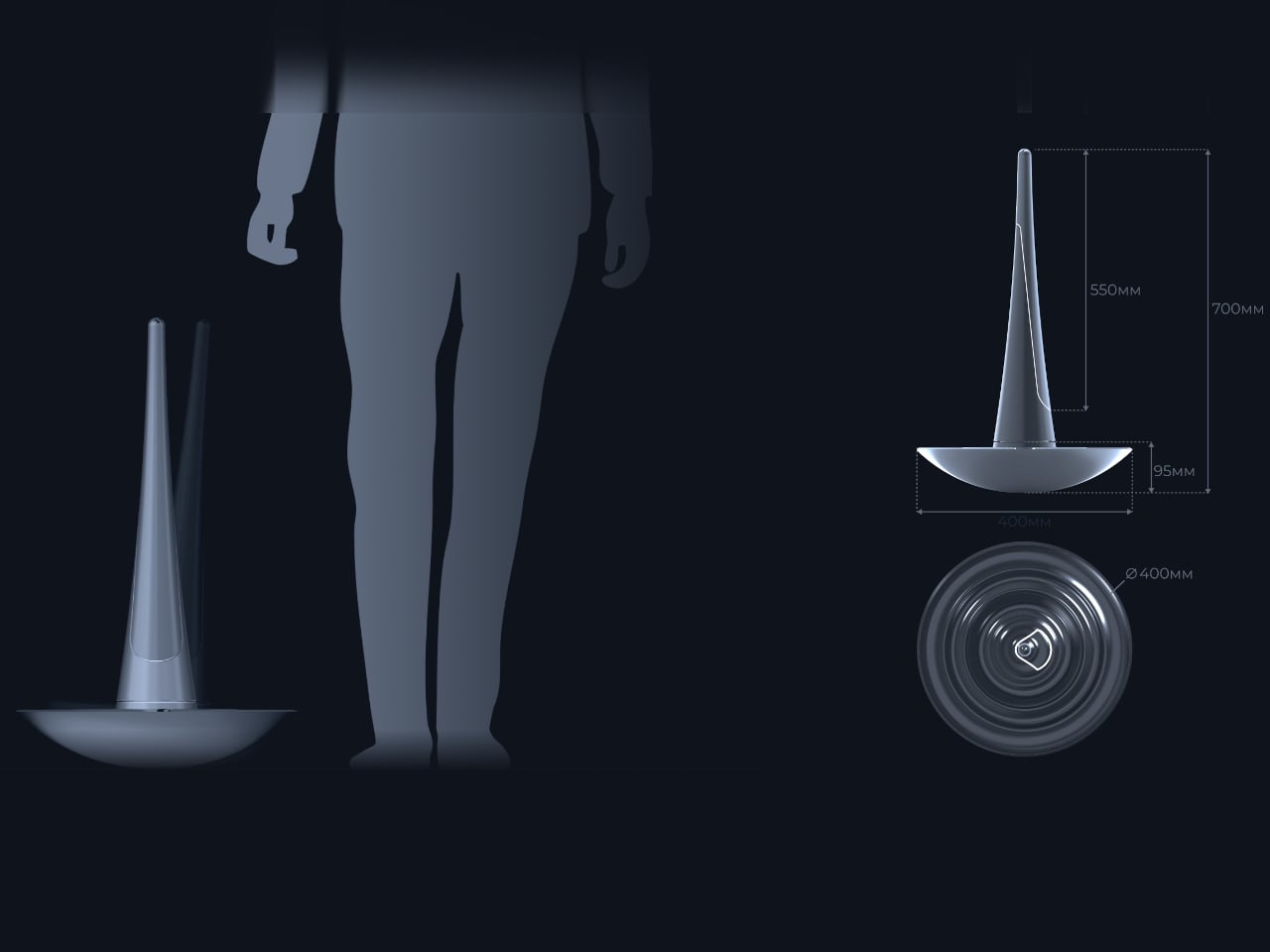
The lead-weighted internal base concentrates mass low enough that DROP behaves like a roly-poly toy: tilt it, push it, set it at an angle, and it returns upright on its own. That self-righting character turns each use into a quiet interaction. The shoehorn responds to each nudge, rocks gently, then steadies itself. For something usually treated as a passive object, that responsiveness is unexpectedly engaging.
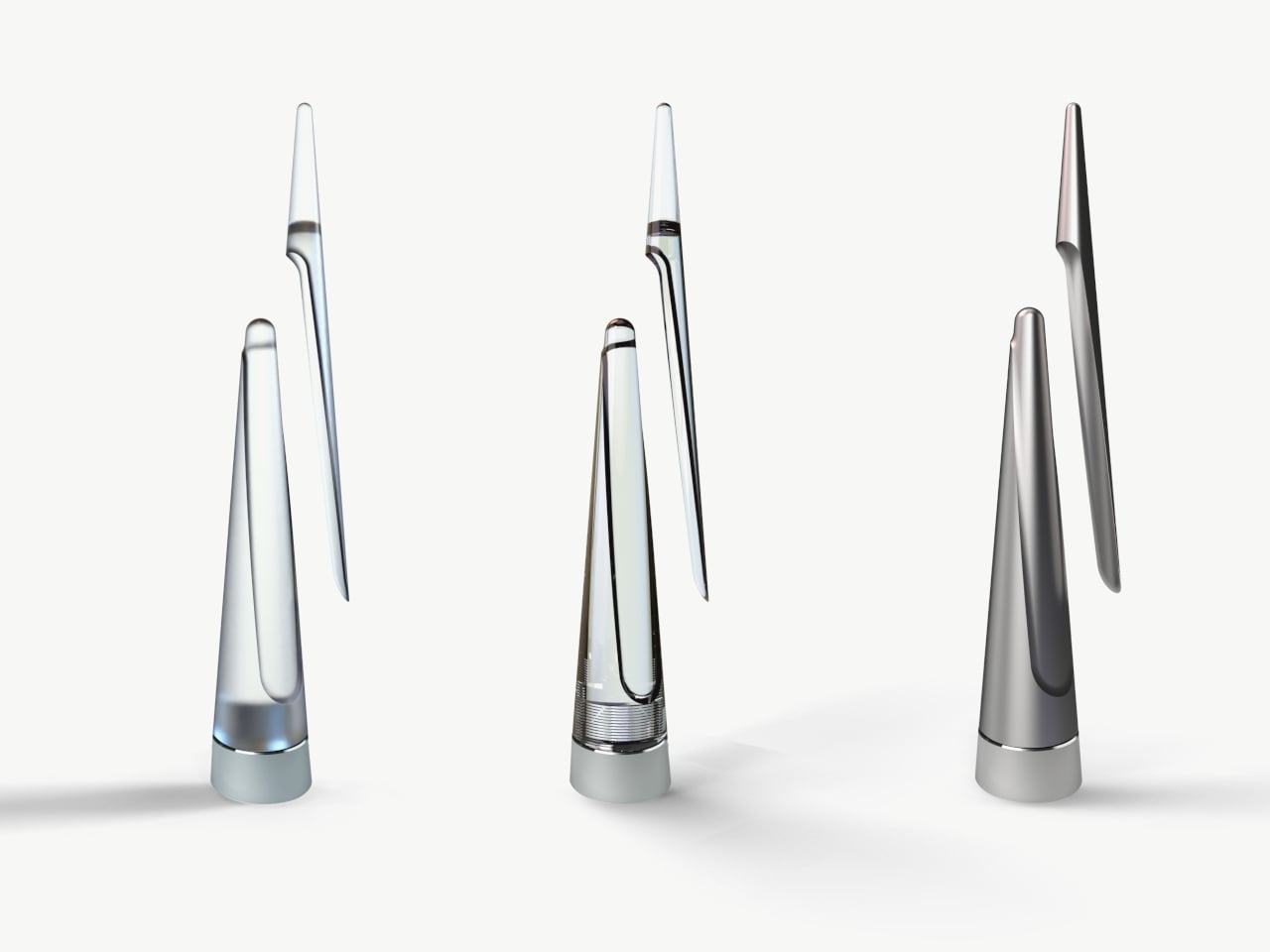
The curved shoehorn blade extends from the conical body, ready when needed. The design stands between 550mm and 700mm tall, firmly in long-handled territory. That height means you can ease your heel into a shoe without bending, which matters in a narrow entryway, for older users, or for anyone whose back has had enough by the time they’re heading out.
The designer envisions two production tiers. The premium version uses an aluminum alloy body with a lead-weighted internal base, produced through casting or milling. A mass-market version uses composites or polymers to bring the form to a lower price point. Three finish options appear in the concept: a clear glass-like version, a dark smoked variation, and a matte brushed metal option.
A shoehorn that stands on its own without a hook or bracket is already more practical than most. DROP’s broad curved base and low center of gravity mean it doesn’t need to be stored. It can stay out near the door, part of the entry space, rather than an object to stash and inevitably forget about. The ripple-shaped base takes care of that stability by itself.
DROP treats a forgotten tool as a worthy subject for genuine craft and material thinking. Most entryways could use an object that earns its spot on the floor rather than hiding behind a door. The roly-poly mechanism, the water-inspired form, and the weighted base all quietly serve that same goal.
Home fitness equipment has quietly moved into the living room, but most of it hasn’t earned its place there. Dumbbells in particular are purely functional objects, usually made with rubber-coated iron and sold on practical merits alone. They get used, then tucked away or left on the floor because nobody really wants them on display. For most people, what’s out of sight tends to be out of mind.
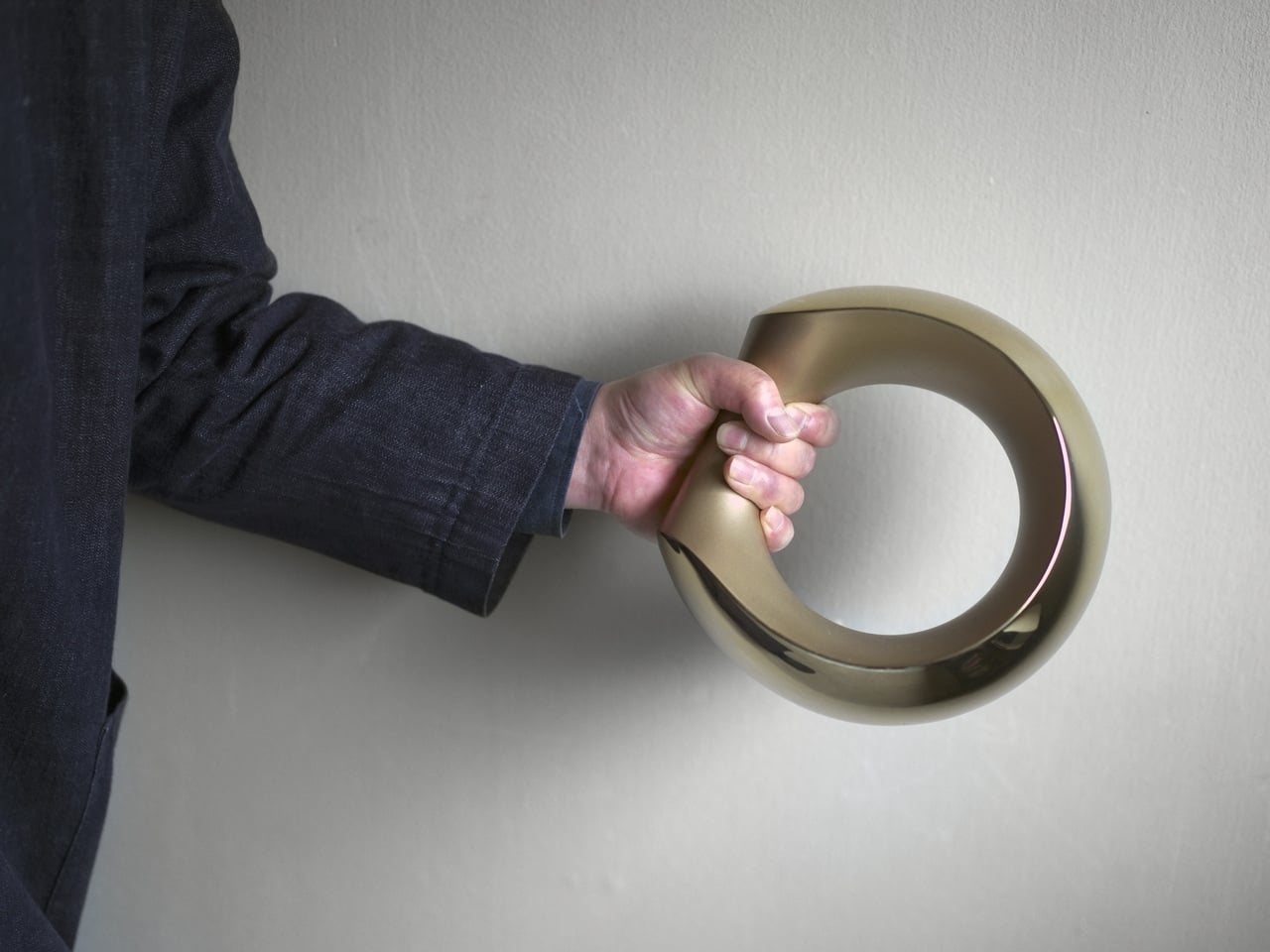
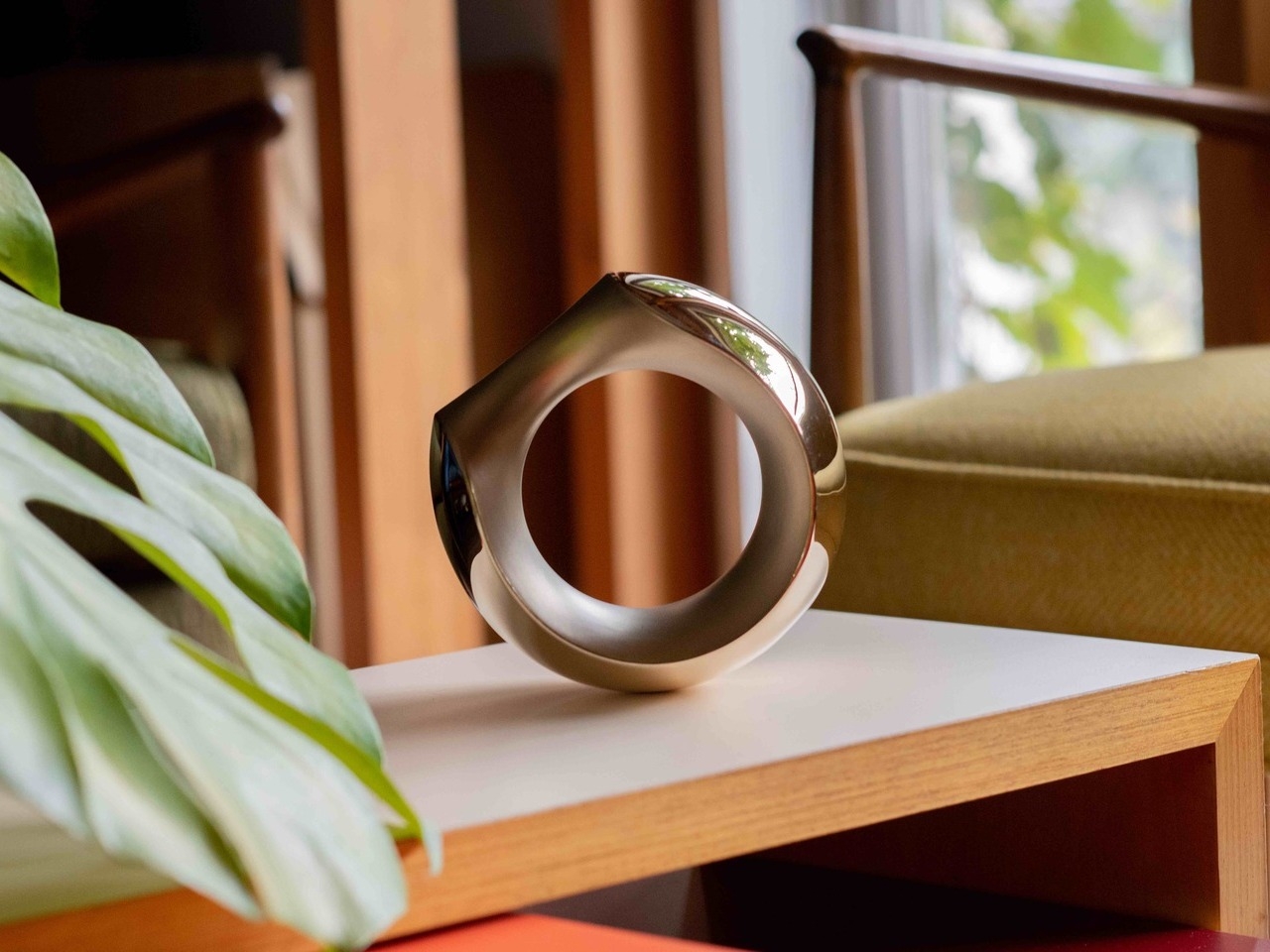
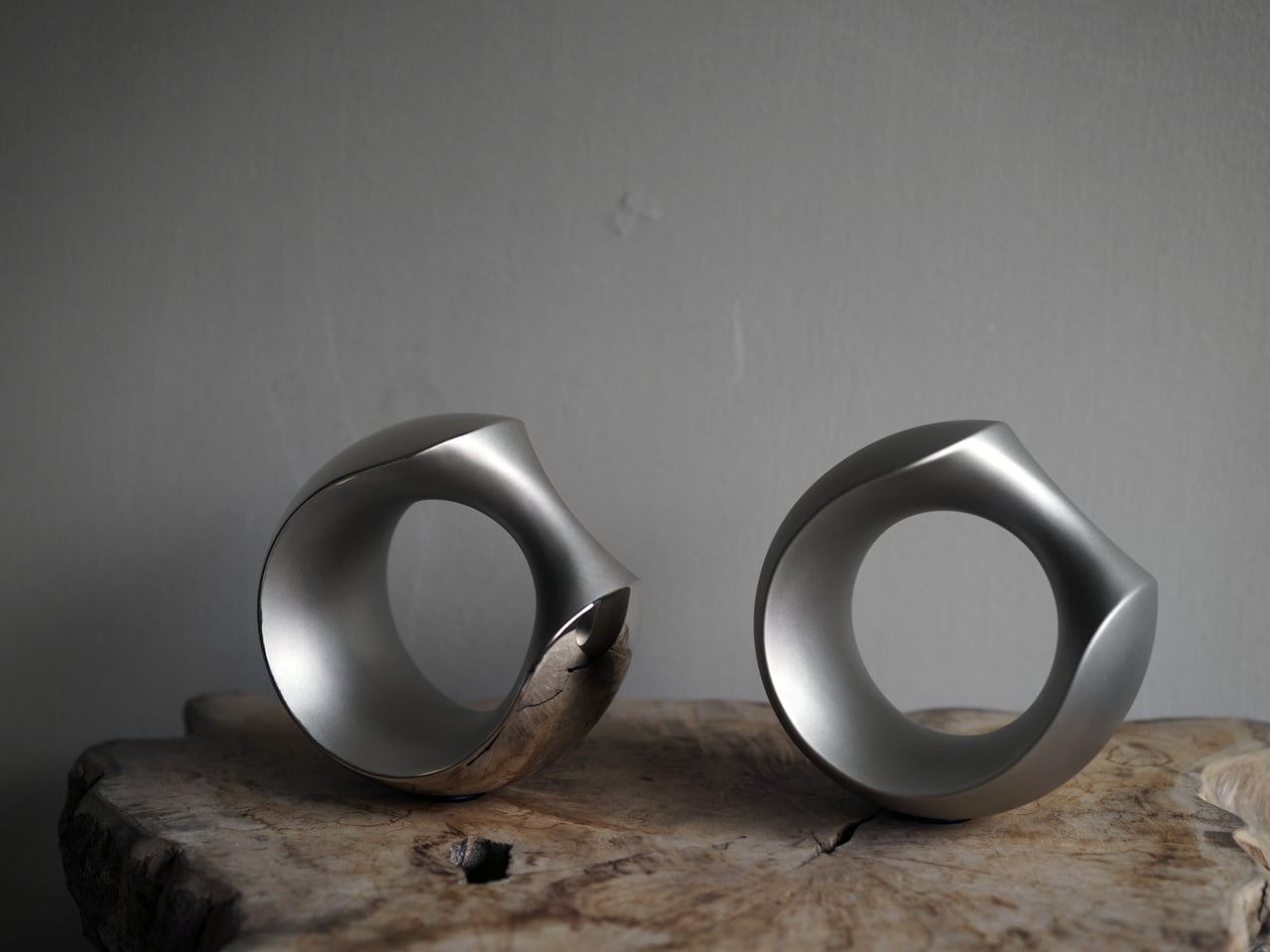
Tokyo-based designer Kenji Abe knows this from personal experience. He would put his own dumbbells in a drawer when friends came over, and then forget about them entirely. That specific frustration became the brief for MANTLE, a pair of bronze dumbbells produced under the ifuki brand in Takaoka City, Japan. The goal was a dumbbell you’d actually want to leave out, all day, even on a good shelf.
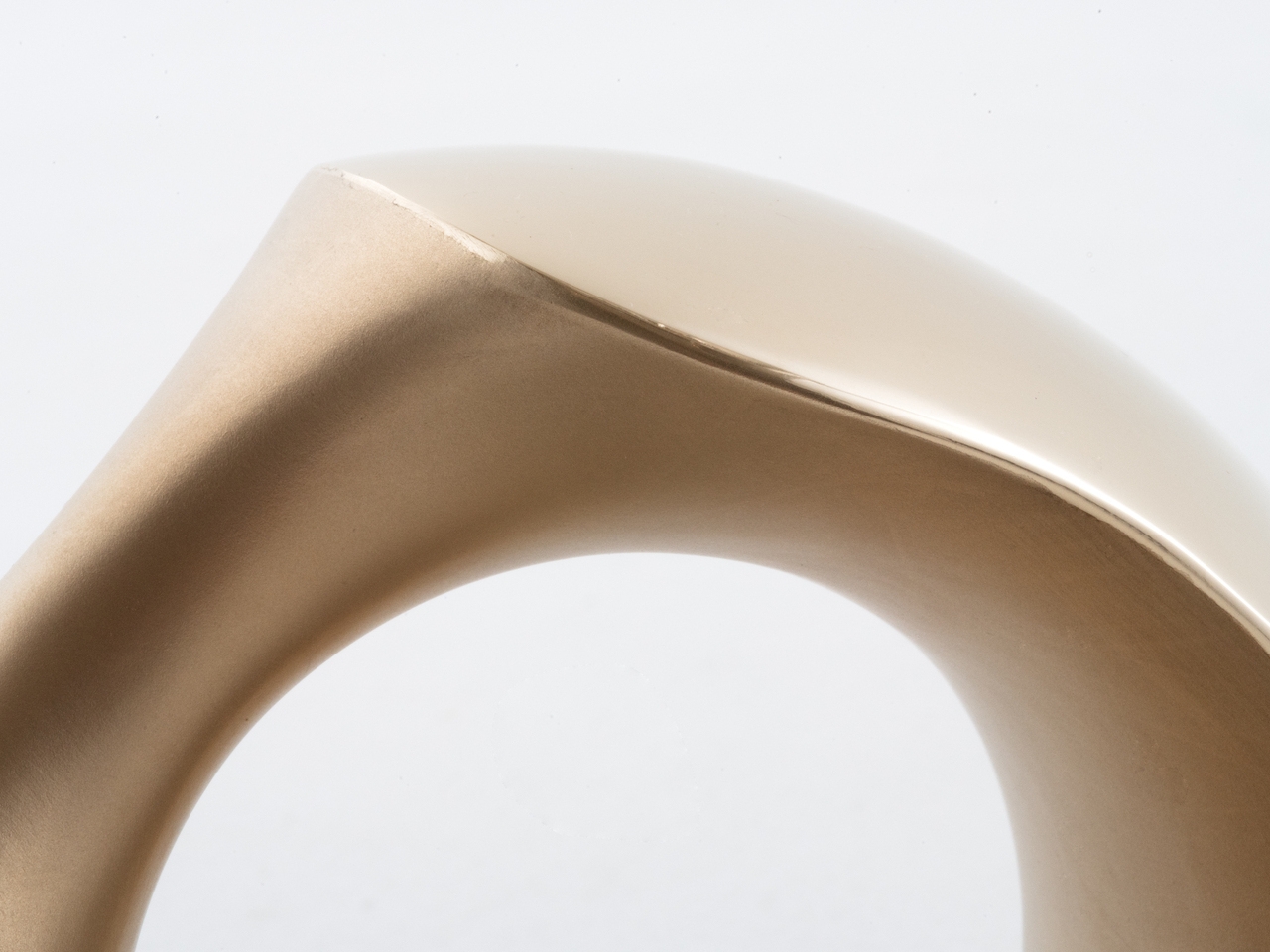
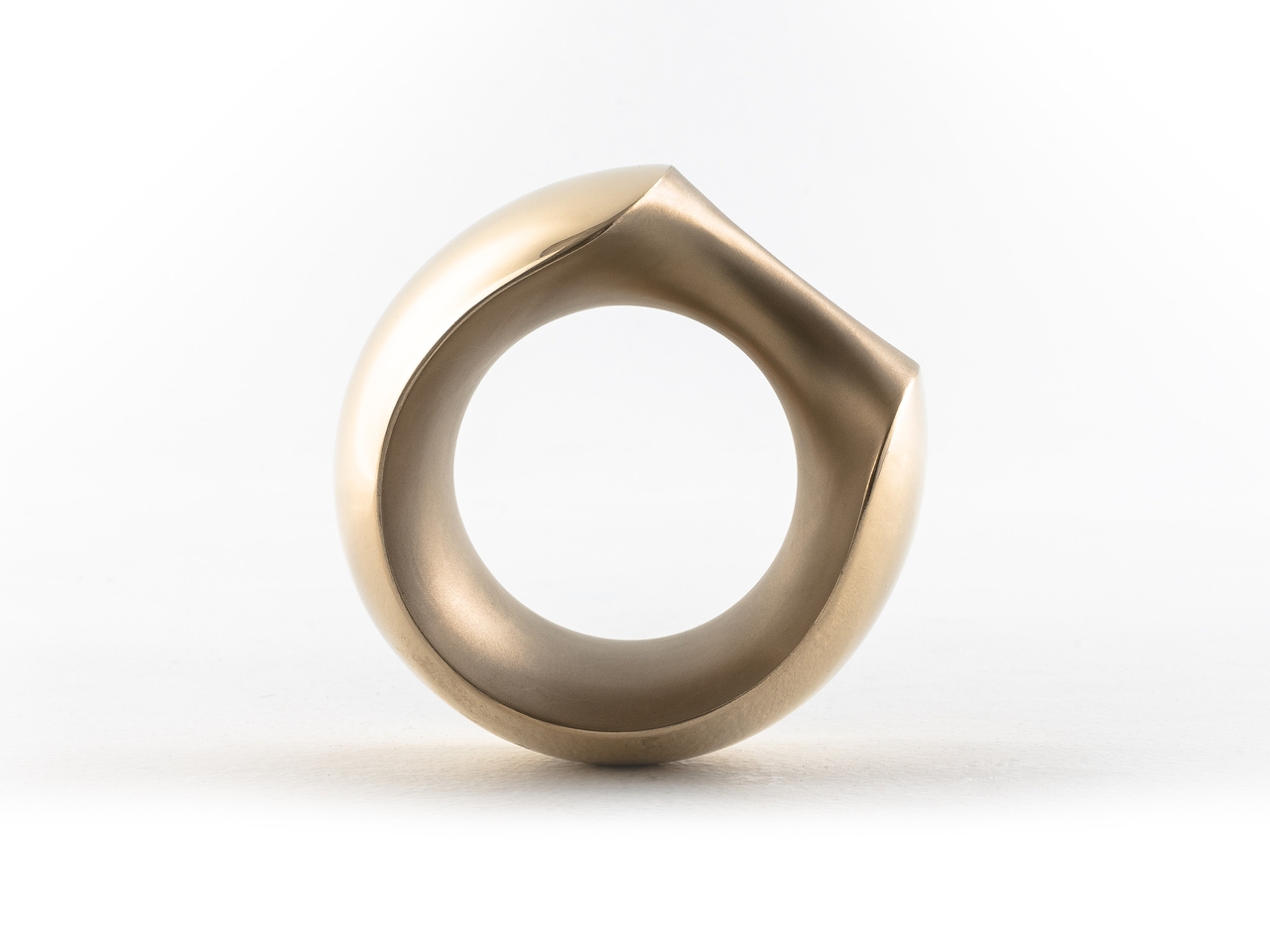
That required rethinking the object from the start. MANTLE combines several surface treatments on a single cast form, with sandblasted sections contrasting against mirror-polished areas. The result carries the visual weight of a sculpture or a piece of jewelry rather than exercise equipment. Set on a side table, it reads as an intentional object, not something that ended up there because there was nowhere else to put it.
The form is just as deliberate. Inspired loosely by the armadillo, the sculptural shape is perfectly balanced, which means the dumbbell stands upright on its own without tipping. A grip tilted at 45 degrees makes it easy to pick up from any angle, and the smooth bronze surface was selected specifically to feel comfortable against skin rather than abrasive during a workout.
The versatility goes further than the grip. You can hold it conventionally for curls or presses, slide it over a wrist to add resistance to arm movements, or hook it around a foot for leg raises. The same object adapts across different exercises without needing adjustments, and the balanced form means it doesn’t fight you regardless of how you’re holding it or what you’re doing.
MANTLE also ages gracefully. Bronze develops character over time, and the combination of matte sandblasting and mirror polishing makes that aging process something worth watching. The material catches light differently across its surfaces, and the contrast in textures gives it a depth that most gym equipment doesn’t have the ambition to pursue.
MANTLE won the Grand Prize at the Toyama Design Competition in 2018 before being developed into a commercial product through ifuki. Abe’s reasoning has always been straightforward: a well-designed dumbbell doesn’t get hidden away, and one that doesn’t get hidden away is one that actually gets used. The drawer stays empty, and the habit becomes a little harder to abandon.
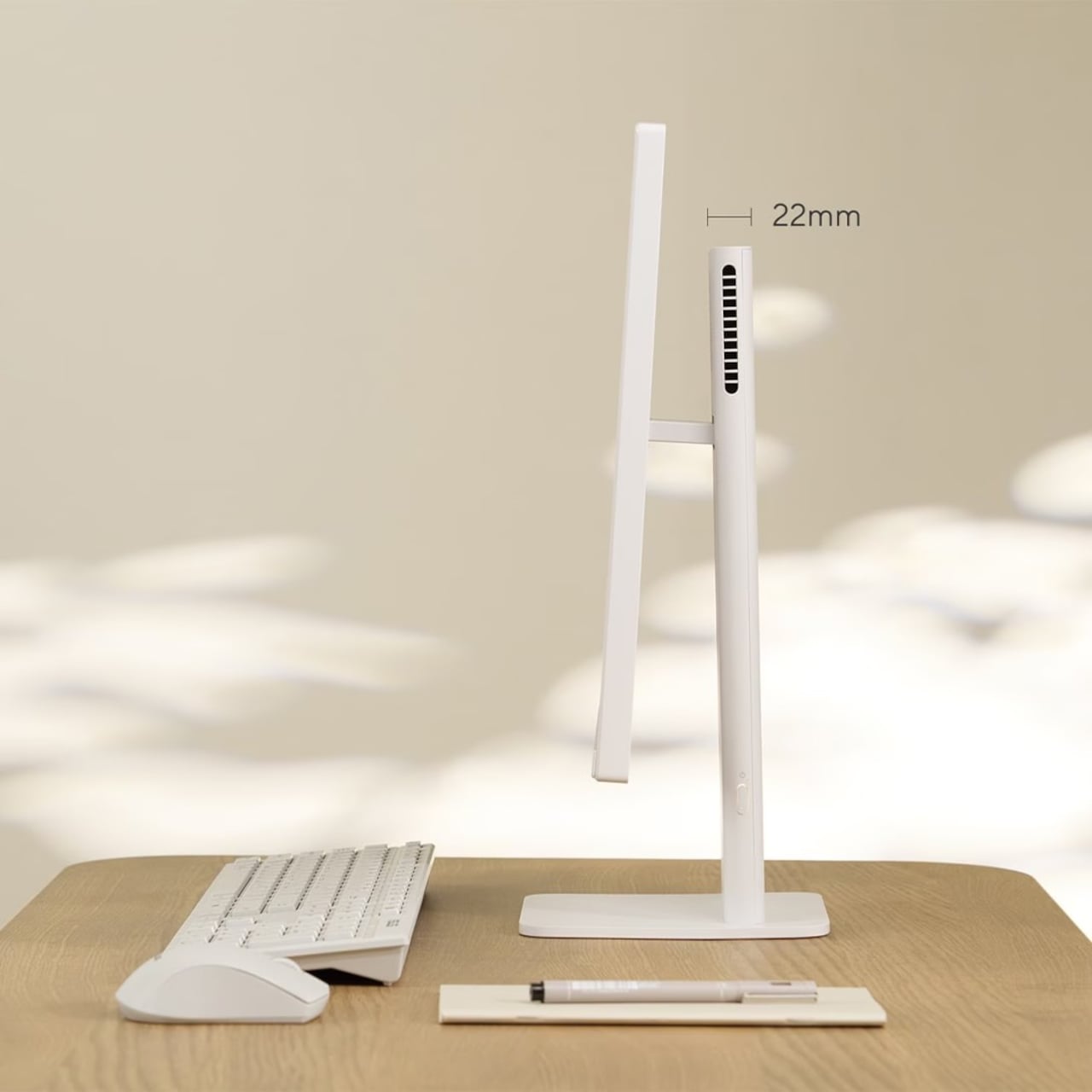
All-in-one computers have always promised clean desks, but they rarely deliver a truly minimal presence. Traditional AiOs hide their processors inside their displays, and those chips generate enough heat to demand substantial cooling, adding bulk to what should be a space-saving device. The result is often a thick, monitor-shaped box that makes you wish the cables were the only problem.
ASUS’s answer to that problem isn’t a slimmer chassis on paper, but a different processor choice entirely. The V400 AiO is the first all-in-one PC built on Qualcomm’s Snapdragon X platform, an ARM-based chip with mobile roots. Because it runs more efficiently than conventional desktop processors, it generates less heat, which means the cooling system can shrink significantly, and so can everything around it.
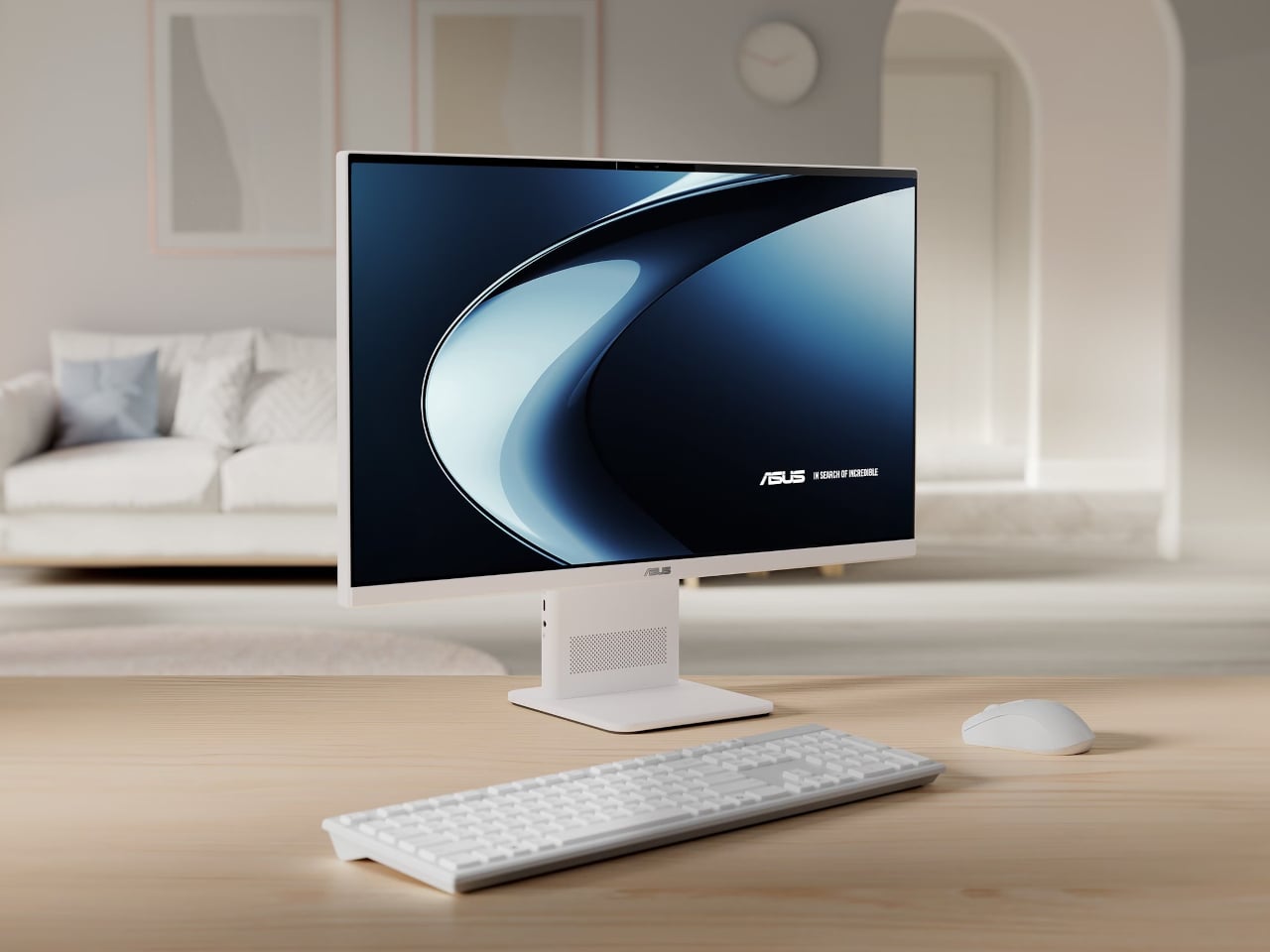
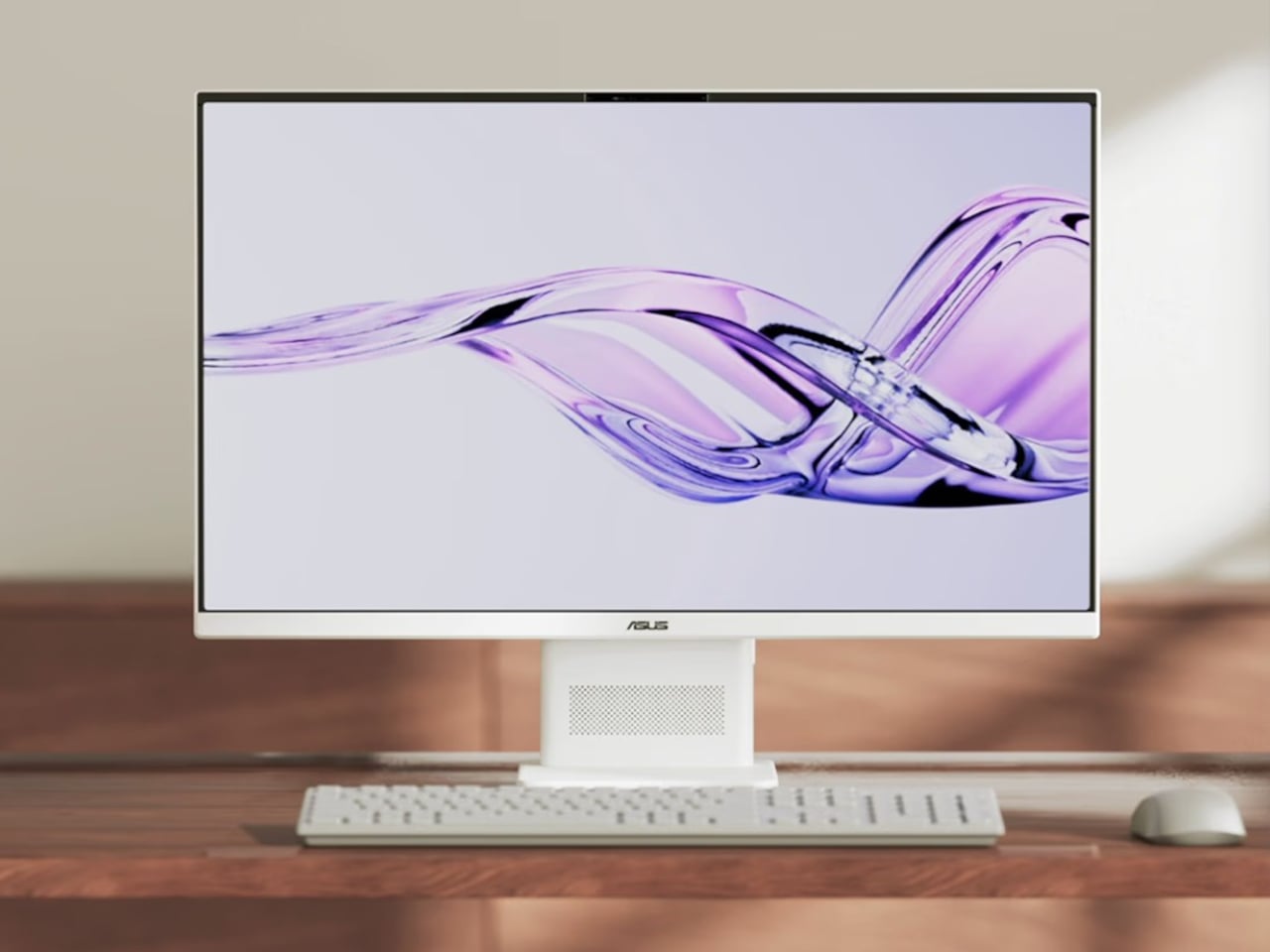
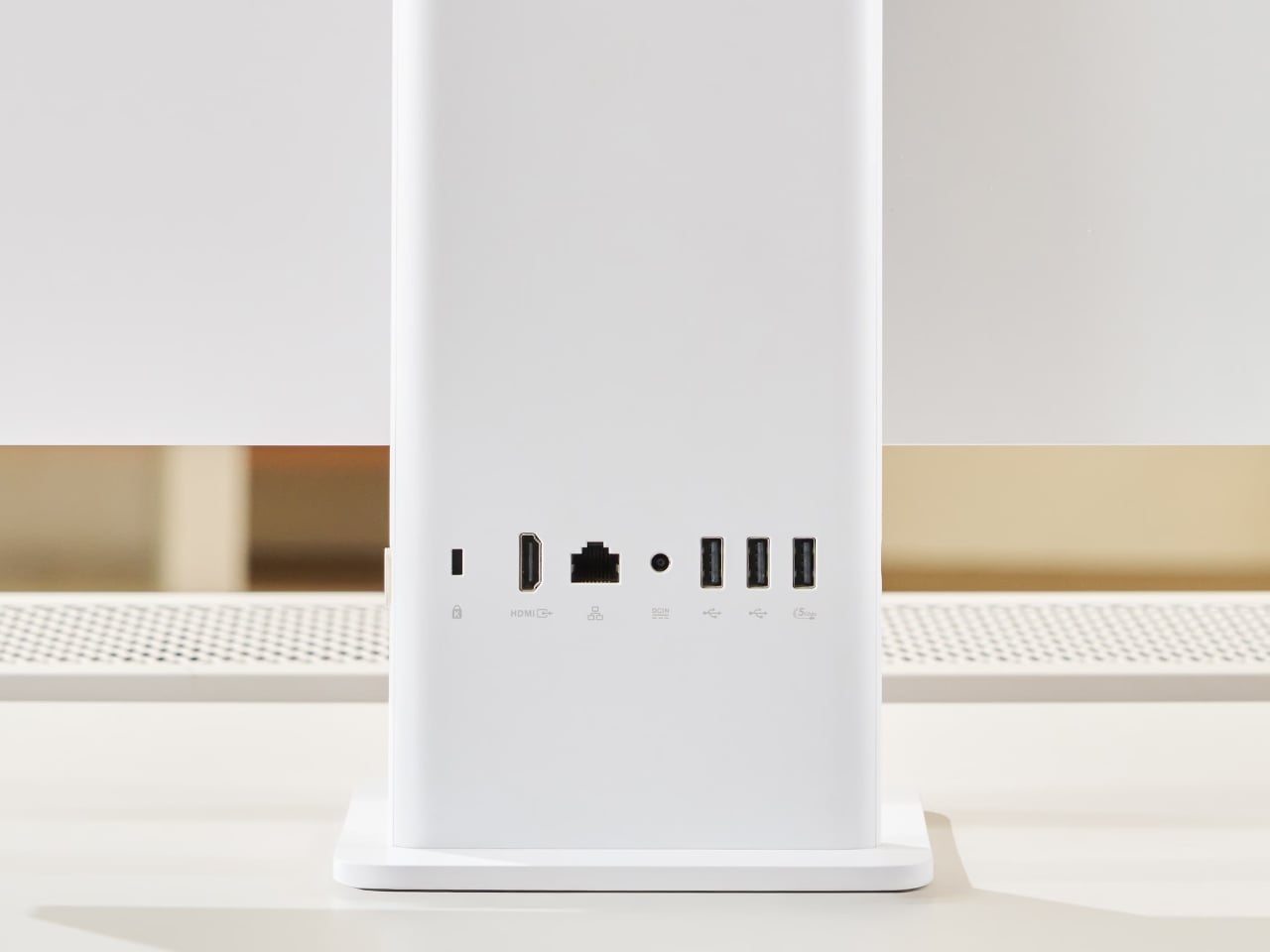
The lean stand and uncluttered rear panel make the V400 AiO look more like a monitor than a desktop. In a living room or study doubling as a homework station, it doesn’t demand attention the way a traditional AiO does. The quieter cooling helps too; no loud fans cycling up during video calls or while someone streams in the next room.
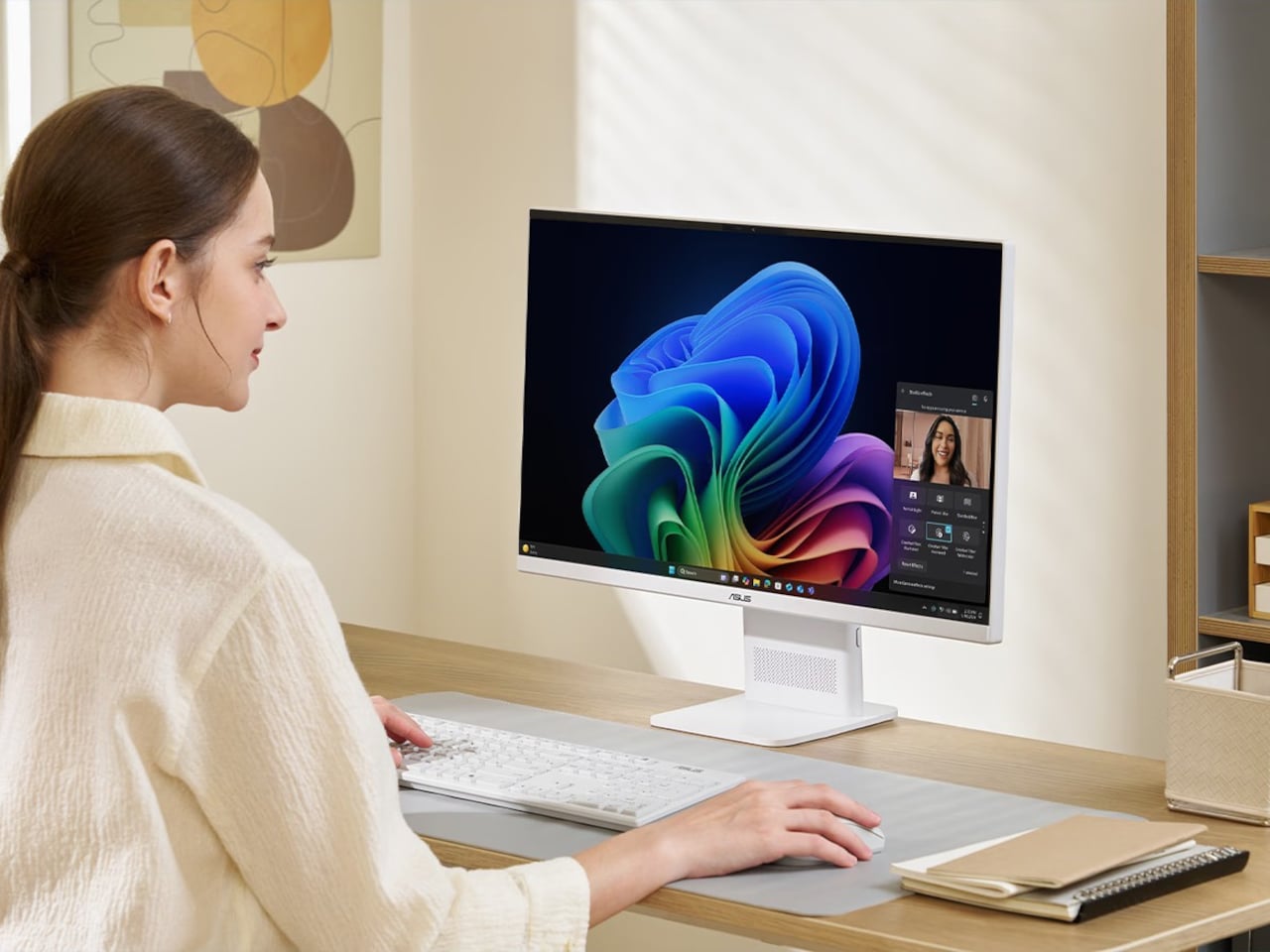
The 23.8-inch Full HD IPS display supports touch input and covers the full sRGB color gamut, making it comfortable for both casual browsing and creative work. With up to 32 GB of LPDDR5X memory and up to 1 TB of PCIe 4.0 SSD storage, it handles simultaneous tasks without hesitation. The 5-megapixel IR camera gives video calls a cleaner look than most built-in webcams manage.
The Snapdragon X’s 45 TOPS NPU qualifies the V400 AiO as a Copilot+ PC, meaning it runs Microsoft’s on-device AI features without routing anything through the cloud. Smart photo management, real-time voice processing, and intelligent assistance all happen locally, keeping personal data off third-party servers. For a machine that’ll likely sit in a shared family space, that kind of privacy has practical appeal.
Dolby Atmos handles the audio, which makes a difference when the V400 AiO doubles as an entertainment hub for the family. Connectivity includes HDMI output, USB 3.2 Gen 1 Type-A, and USB-C ports, covering most peripherals without adapters. A wireless keyboard and mouse ship in the box, so the whole setup can be up and running without hunting for extra accessories.
ASUS priced the entry-level V400 AiO at $649.99 in the US, with 16 GB of RAM and a 512 GB SSD. The Indian market gets a 512 GB model at ₹1,01,990 and a 1 TB version at ₹1,11,990. For an all-in-one that doubles credibly as a piece of furniture in a modern room, that starting point asks less than many Intel-powered competitors.
What the V400 AiO makes clear is that the Snapdragon X choice isn’t incidental. The chip’s lower heat output is why the chassis stays slim. Its efficient architecture is why the AI runs locally rather than through a server. Its quiet thermal profile is why it belongs in a living room as much as a home office. The processor determines the design, not the other way around.
The tape dispenser has been sitting on desks for decades without anyone seriously reconsidering it. It slips when you pull, it tips unless you hold it down, and it leaves tape edges ragged enough that finding the end again becomes a small recurring ritual. For something used constantly in homes, classrooms, and offices worldwide, it carries a surprisingly stubborn set of unresolved frustrations.
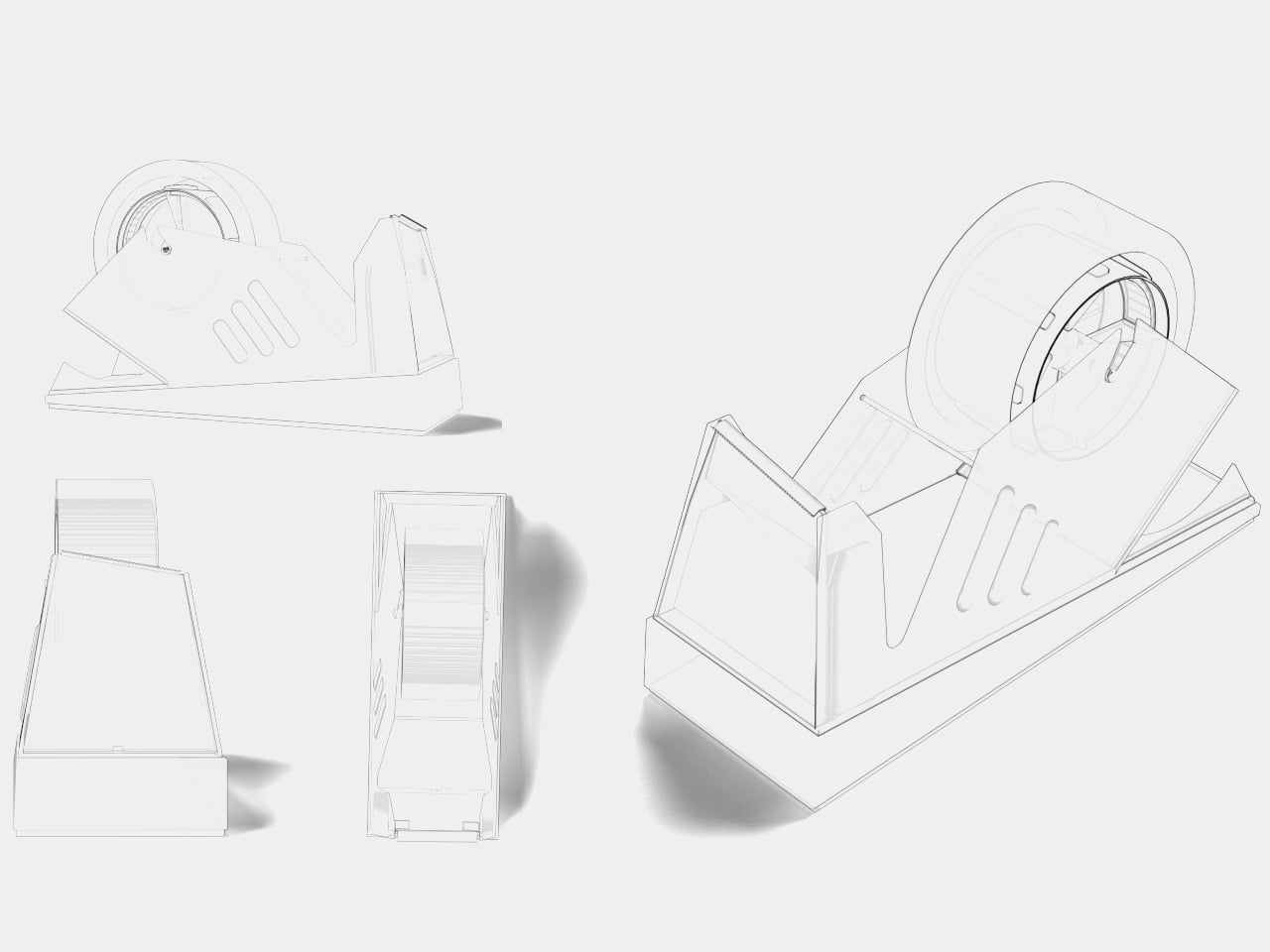
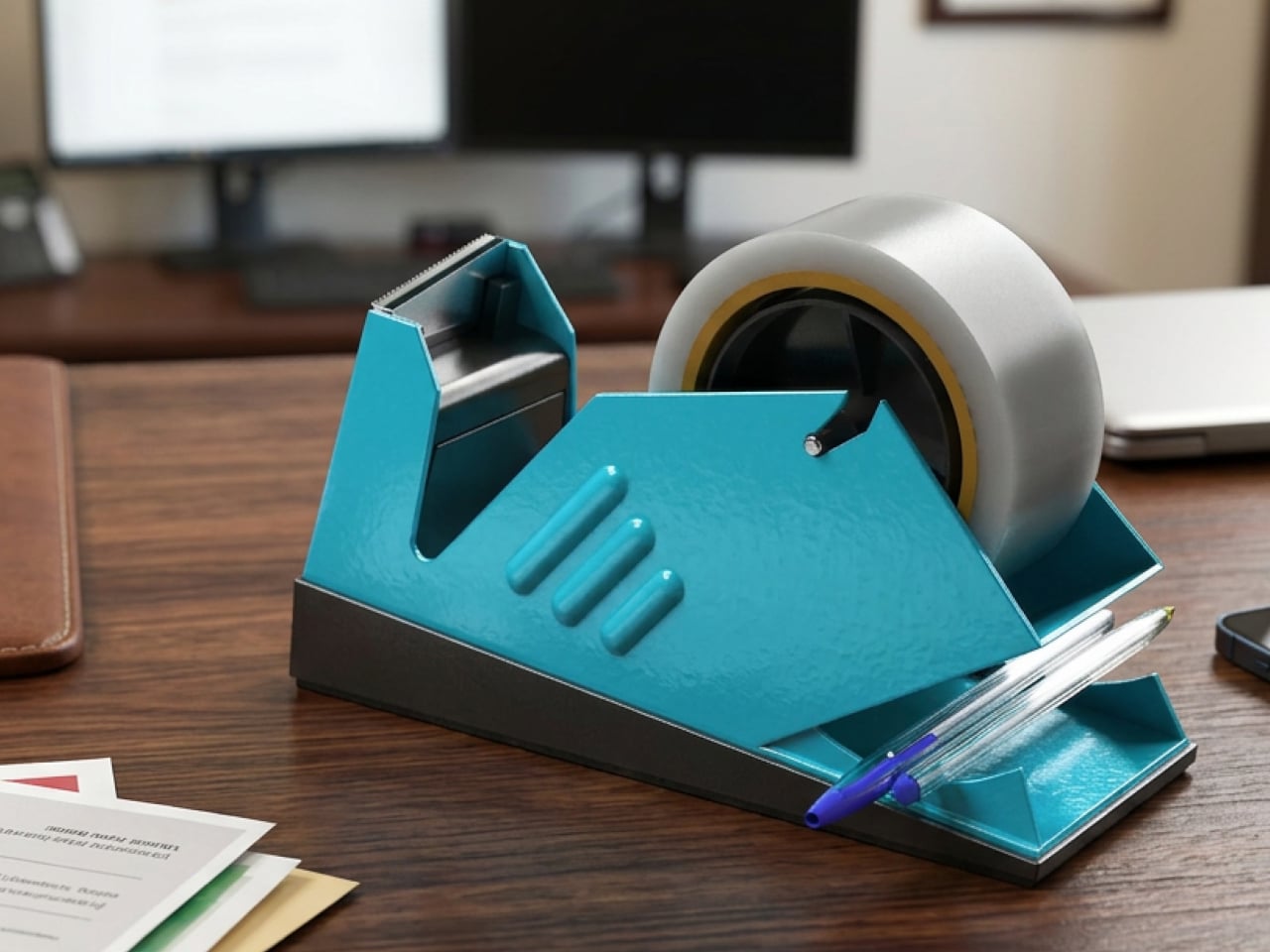
One designer decided to document those frustrations rather than assume them. He observed 49 people all performing the same simple task and cataloged five recurring problems with standard dispensers. The result is Fin, a concept built around solving each one through deliberate engineering. There’s nothing here for decoration. Every choice traces back to something that was genuinely broken and worth fixing properly.
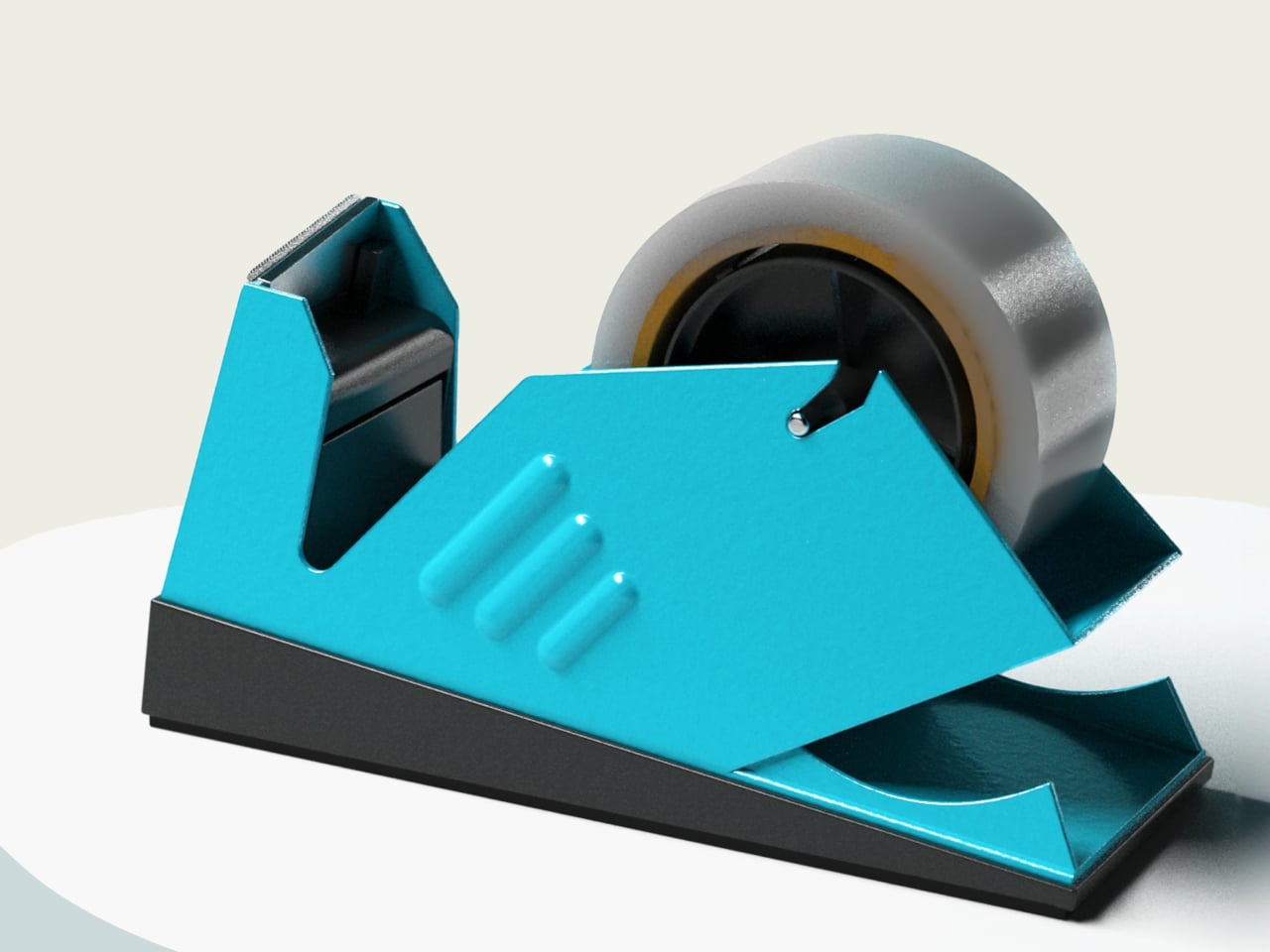
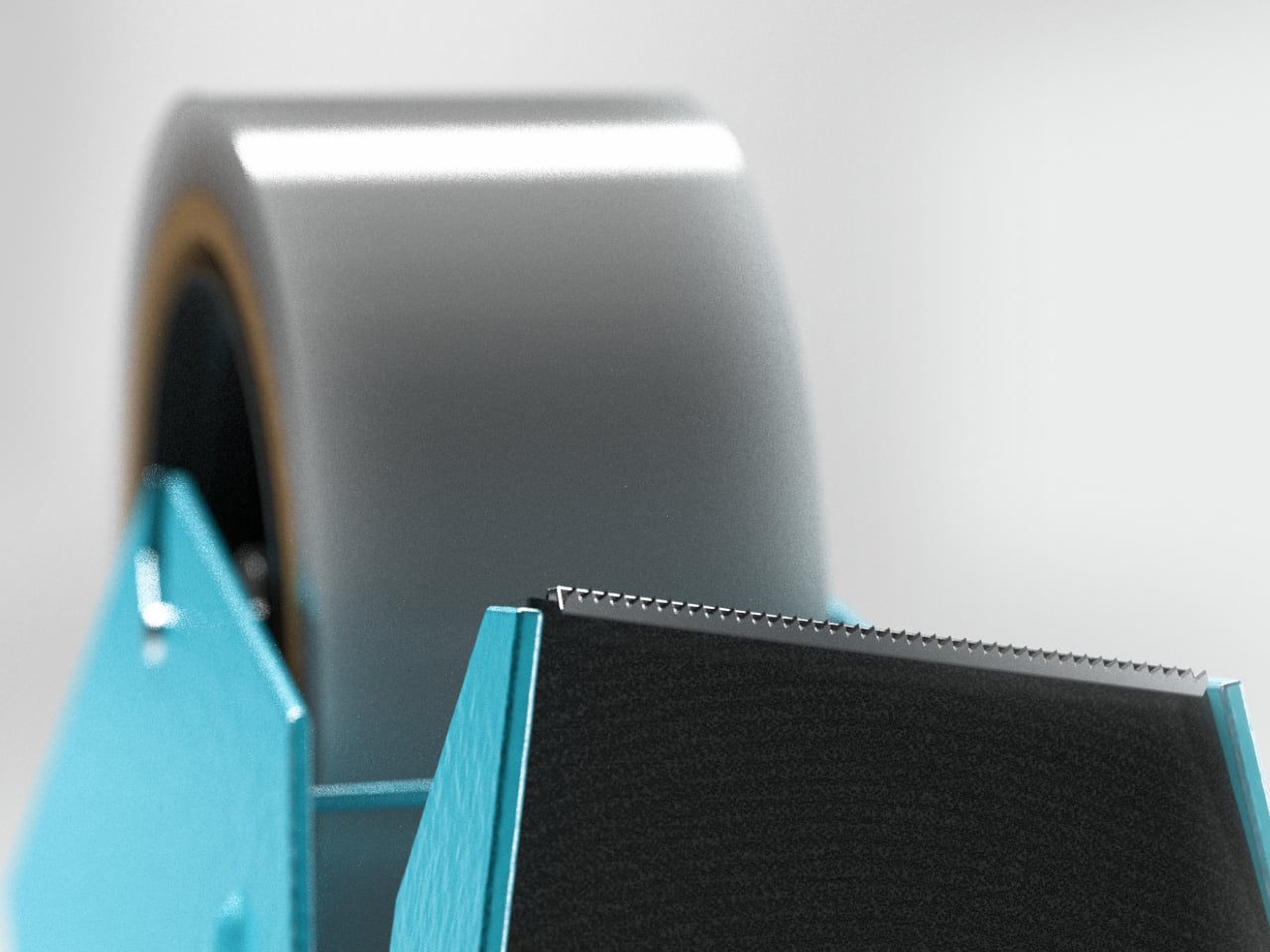
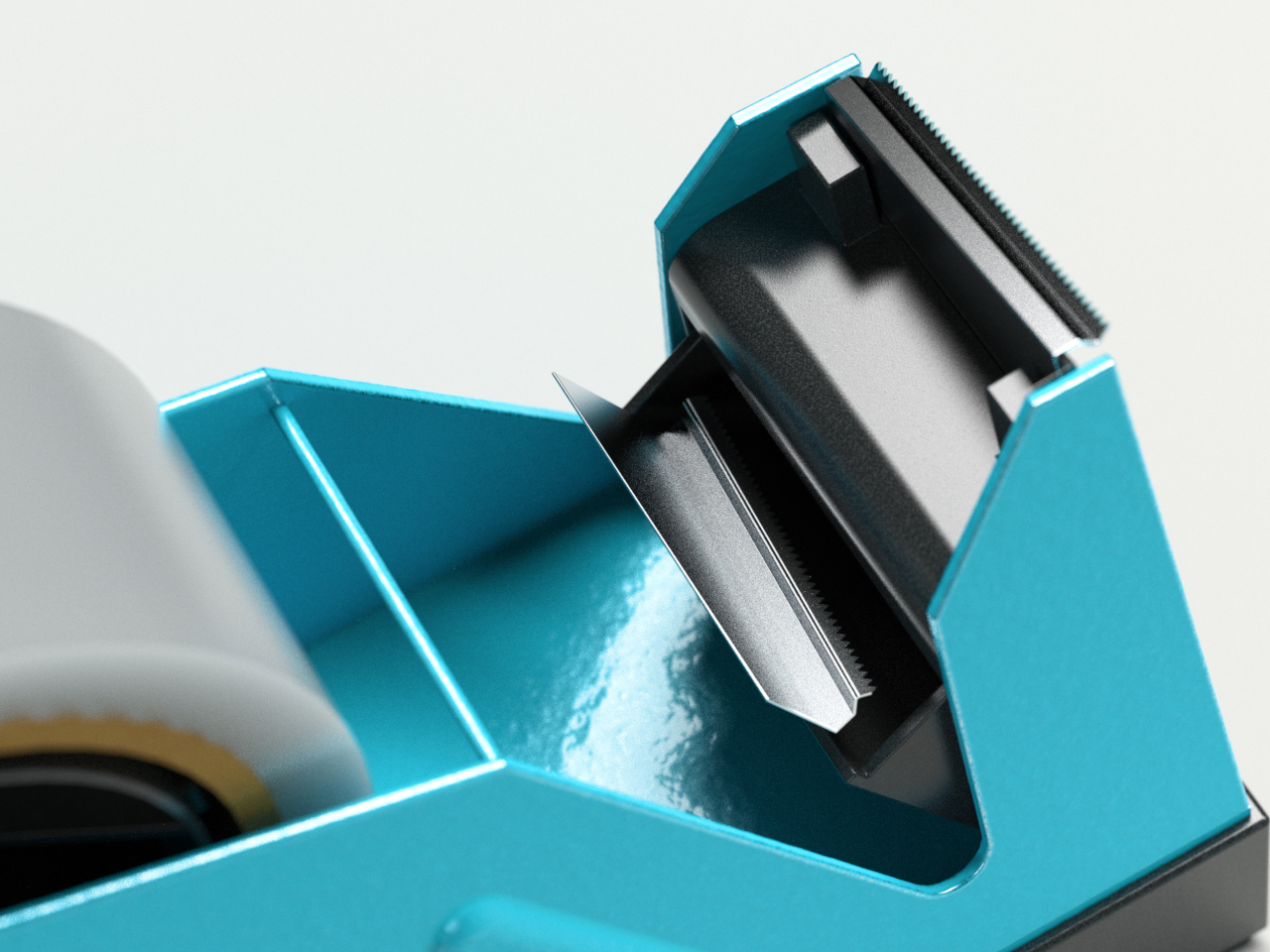
The most immediate change is at the cutting blade. Rather than lying flat, Fin’s blade tilts at 10 degrees. That angle concentrates pressure to a single point, so even when tape is pulled straight down, the cut starts cleanly, and the break travels through without resistance. The ragged edge that forces you to stop and peel back the tape before using it simply stops happening.
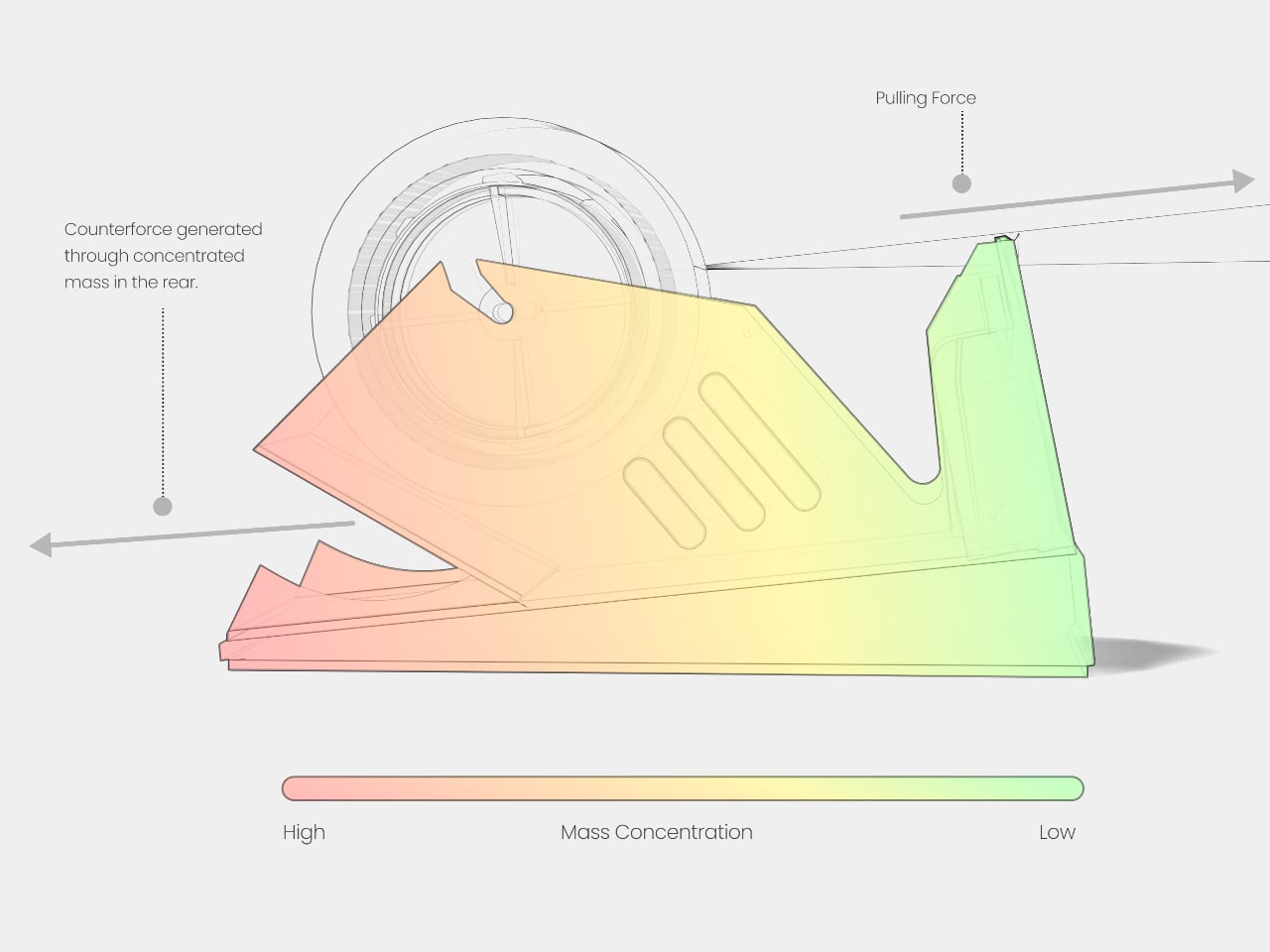
Slipping is addressed without adding bulk. Fin concentrates ballast at the rear through uneven weight distribution, creating a pivot point that resists horizontal movement when you pull tape. The front stays light, so repositioning is still easy when needed. Stability is selective, which turns out to be a more elegant answer than just making the whole dispenser heavier and harder to move.
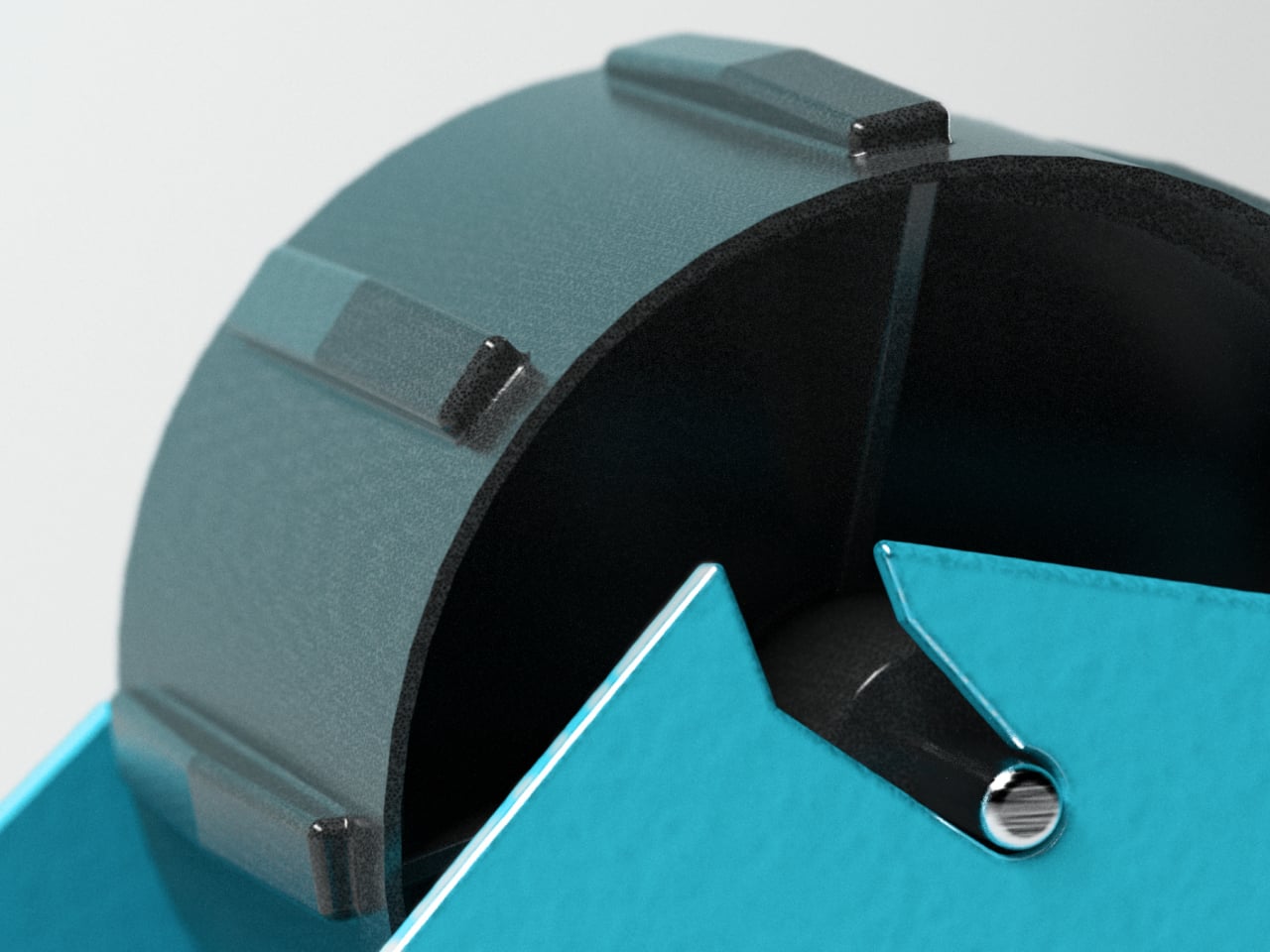
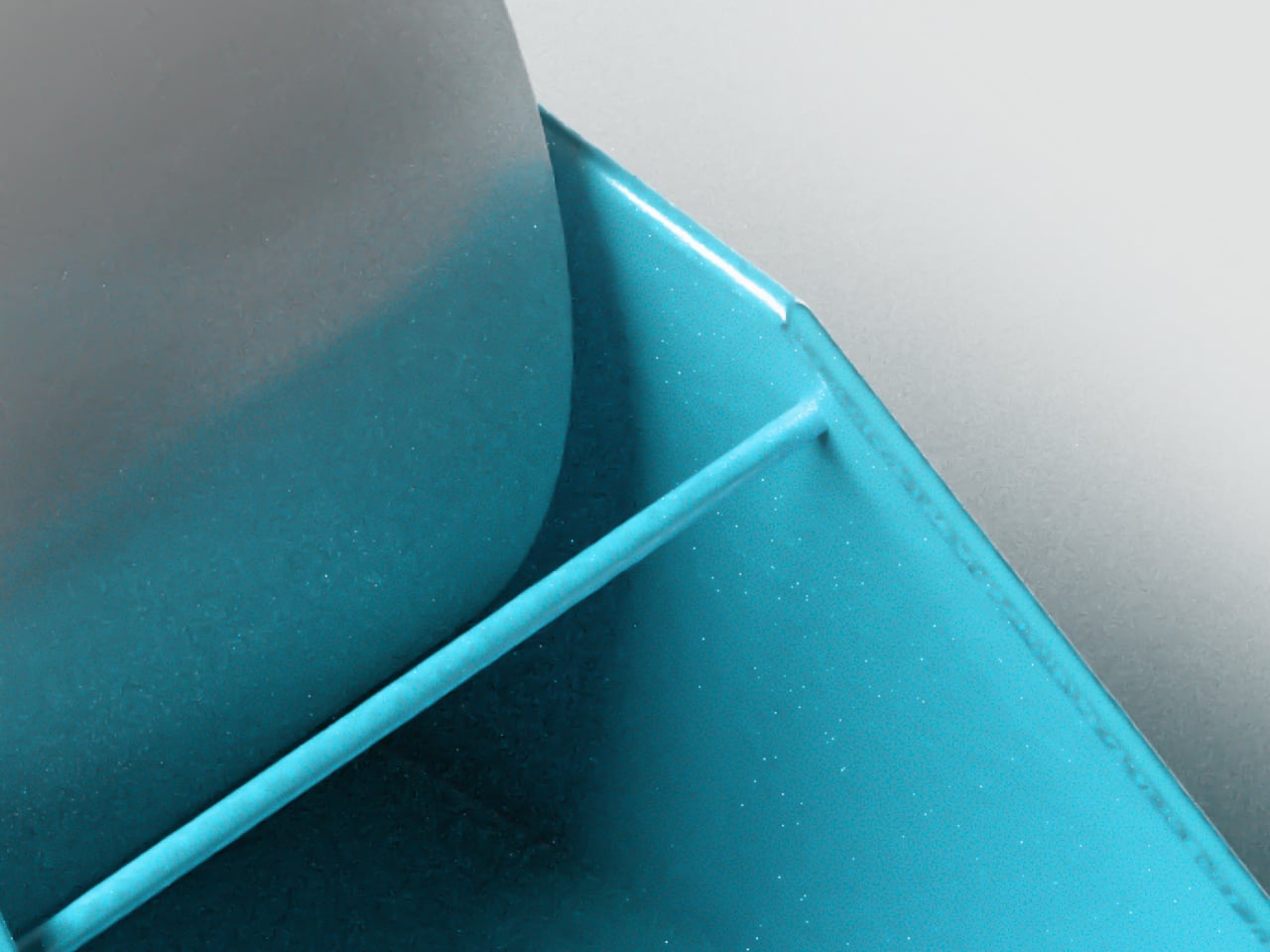
Two more irritants disappear just as quietly. Angled supports inside the tape cradle automatically stabilize narrow rolls so they don’t wobble regardless of tape width. A retention bar holds the tape edge after every cut, so the next time you reach for it, the end is right where you left it. That small predictability adds up across a day of repeated use.
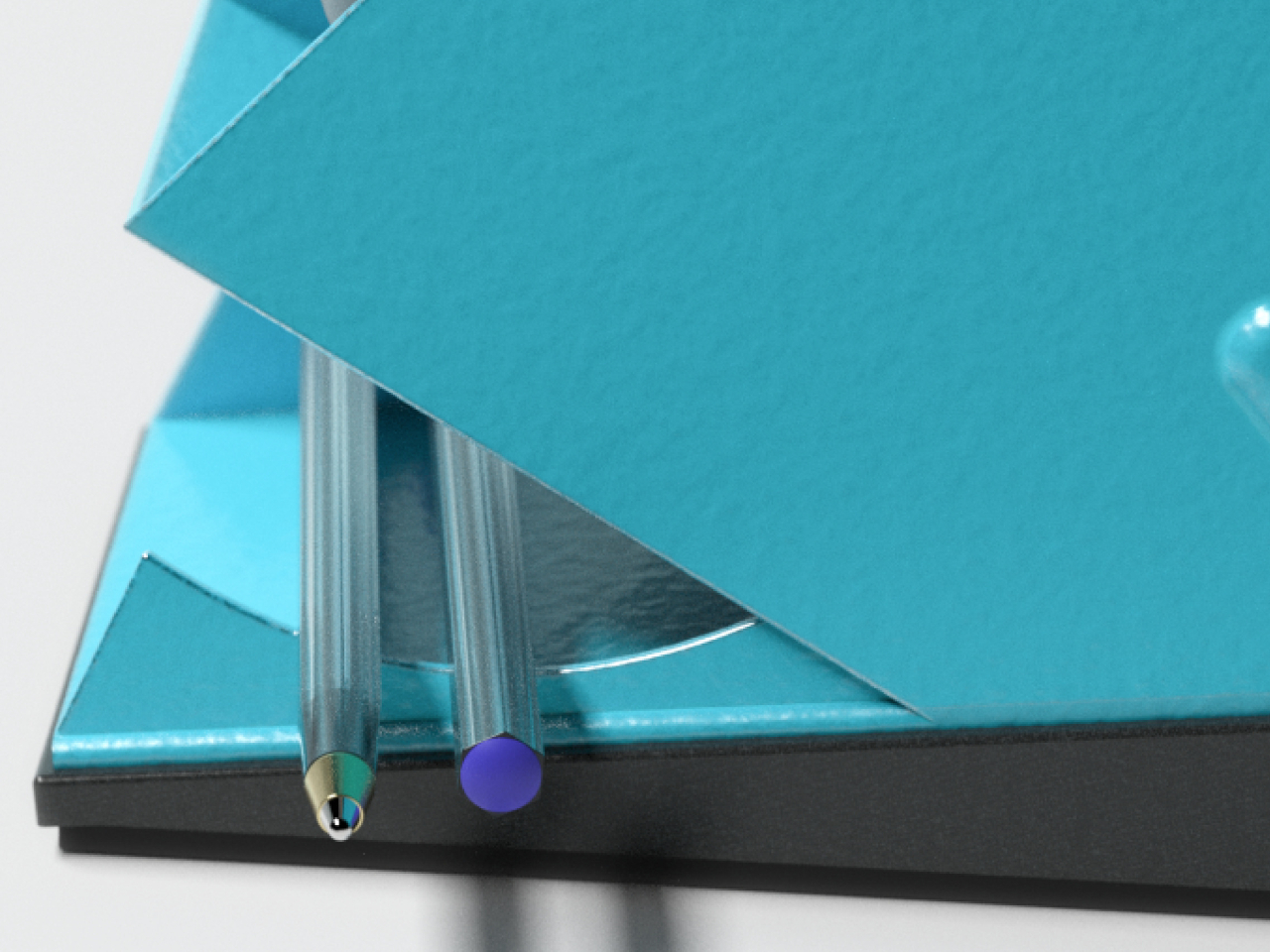
The research also revealed that tape is rarely used alone. Scissors come out, pens get grabbed, and clips end up nearby. Sharma designed a storage compartment into the base, turning the dispenser into a compact workspace hub rather than a standalone tool. Replacement blades sit inside the cutting mechanism itself, where they’ll be found when inevitably needed rather than lost somewhere in a desk drawer.
The tapered form that gives Fin its name isn’t incidental. Narrowing toward the front reduces grip surfaces and gently nudges users toward one-handed operation, discouraging the two-handed approach that keeps standard dispensers tipping. The shape wasn’t decided until every functional requirement had already settled it. What you’re left with is an object that looks like a design statement but is really just engineering made visible.
Fin is still a concept, not a product you can put on your desk yet. As a design exercise, it makes a solid argument for what happens when someone watches a problem carefully before trying to solve it. Tape dispensers have gone largely unexamined for a very long time, and this concept makes it genuinely difficult to use the one on your desk the same way.
Public art has long served as a cultural mirror, reflecting what a society chooses to honor. As climate change intensifies and cities face mounting pressure to decarbonize, questions about what our monuments should stand for are getting harder to ignore. Most renewable energy infrastructure stays invisible, buried in utility corridors or mounted on rooftops, rarely acknowledged as something worth celebrating in public spaces.
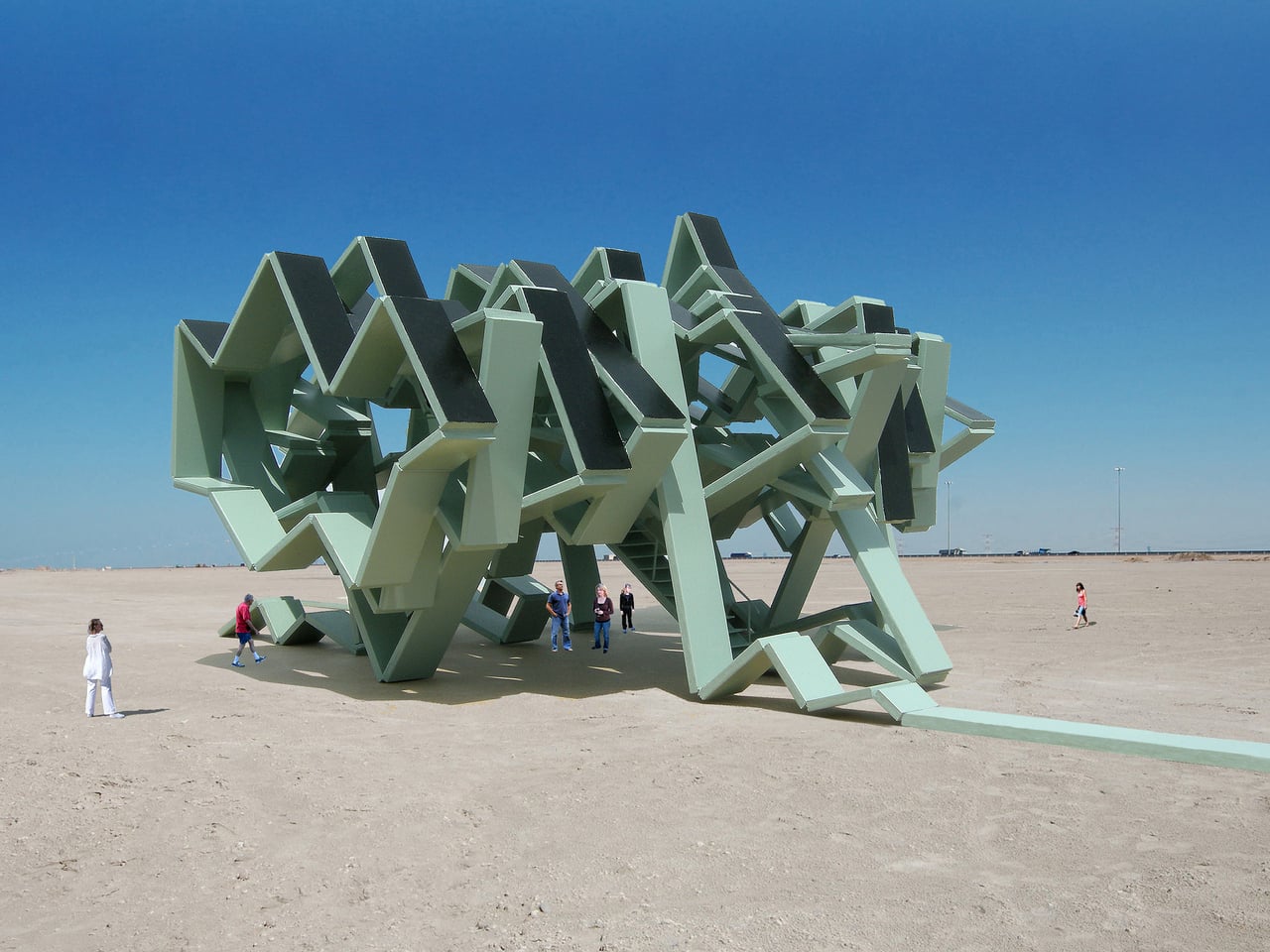
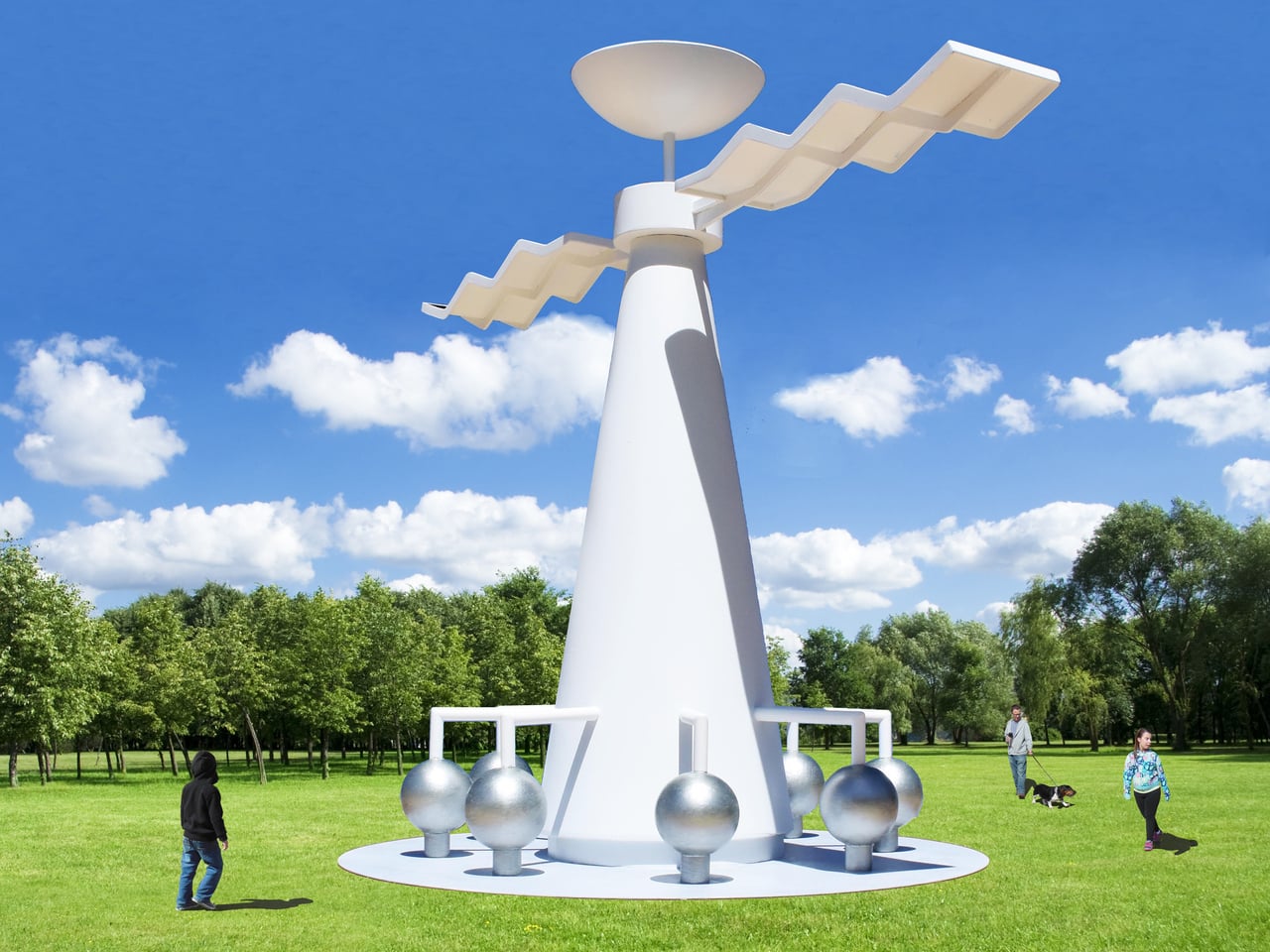
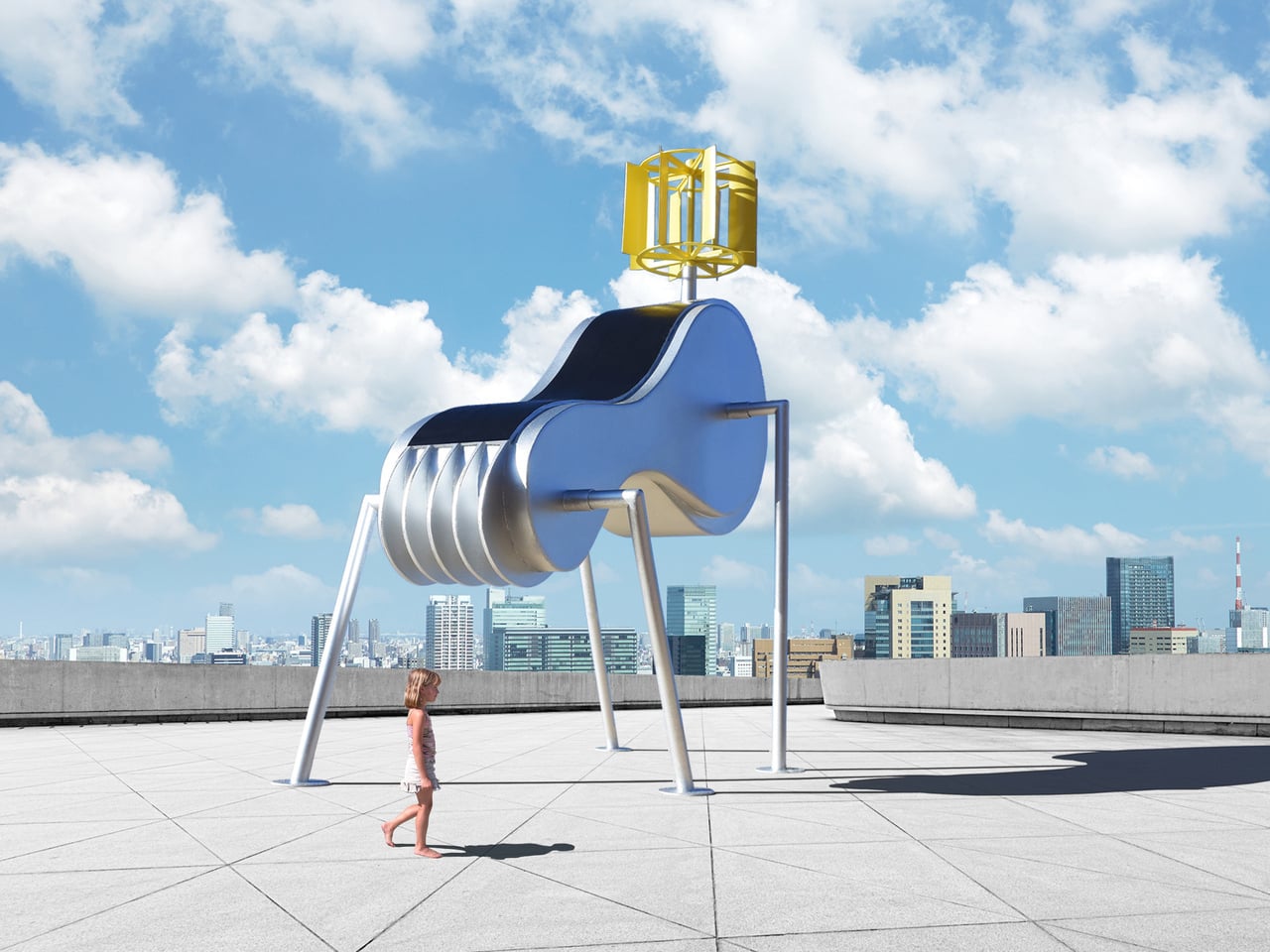
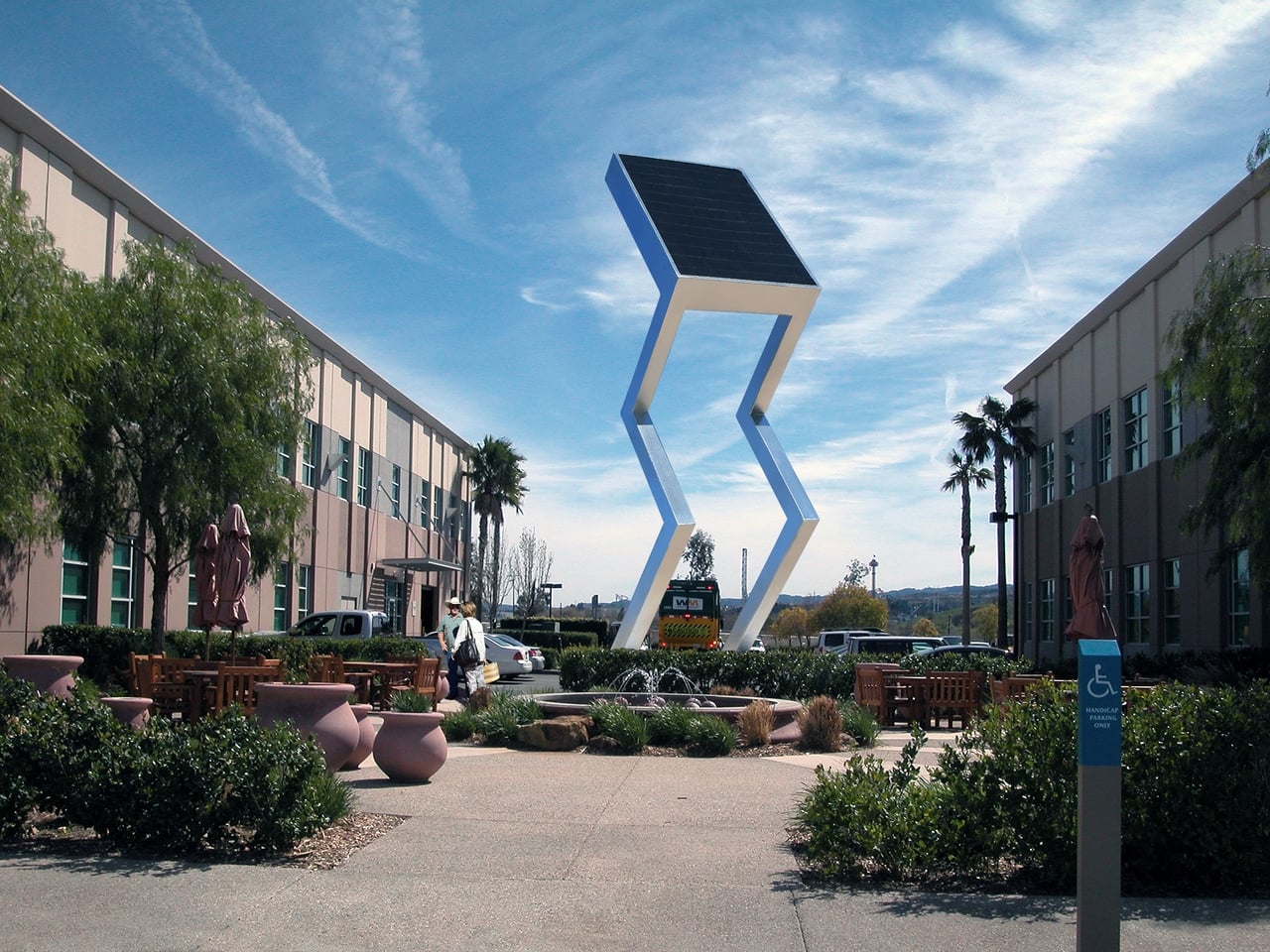
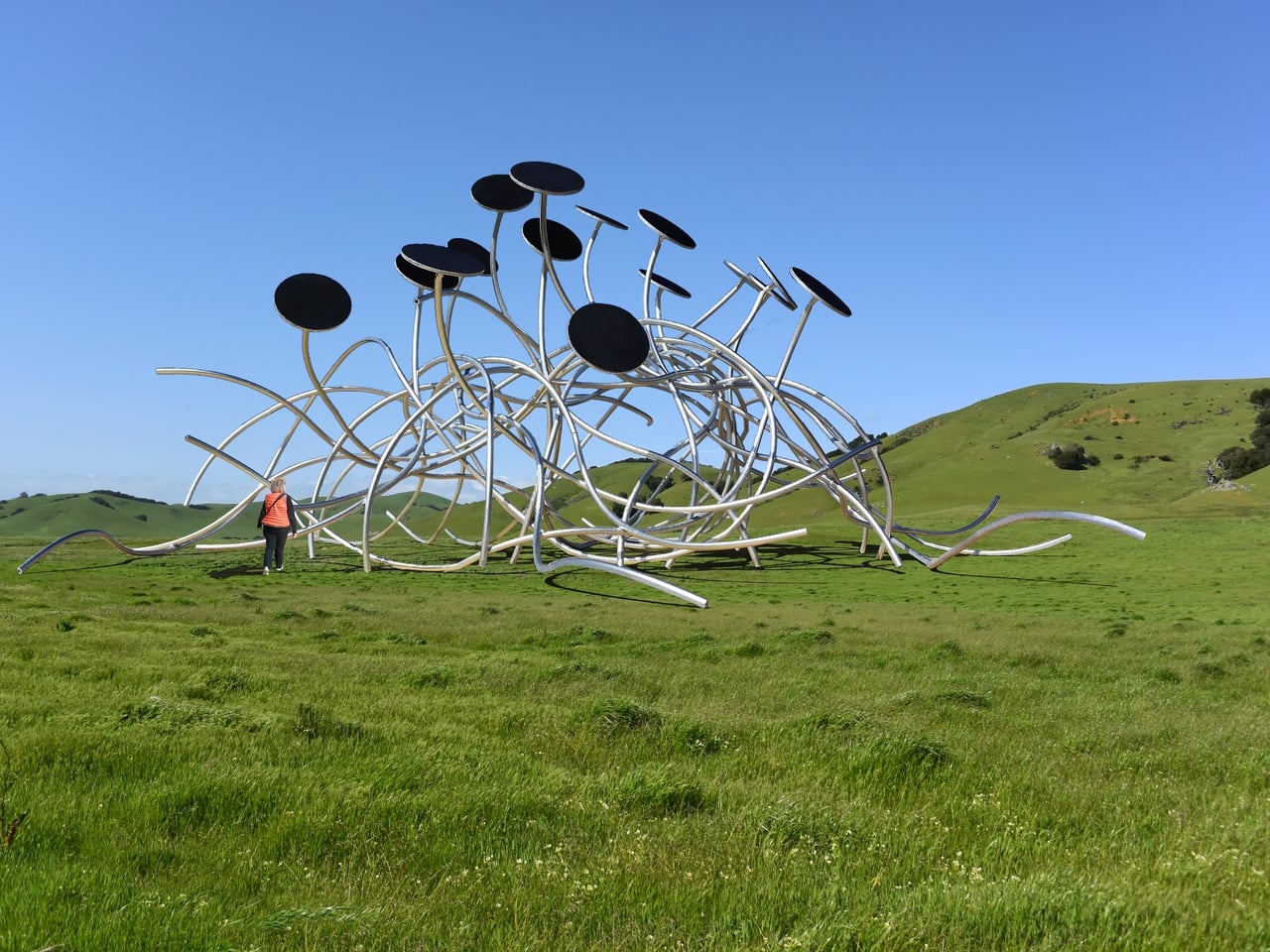
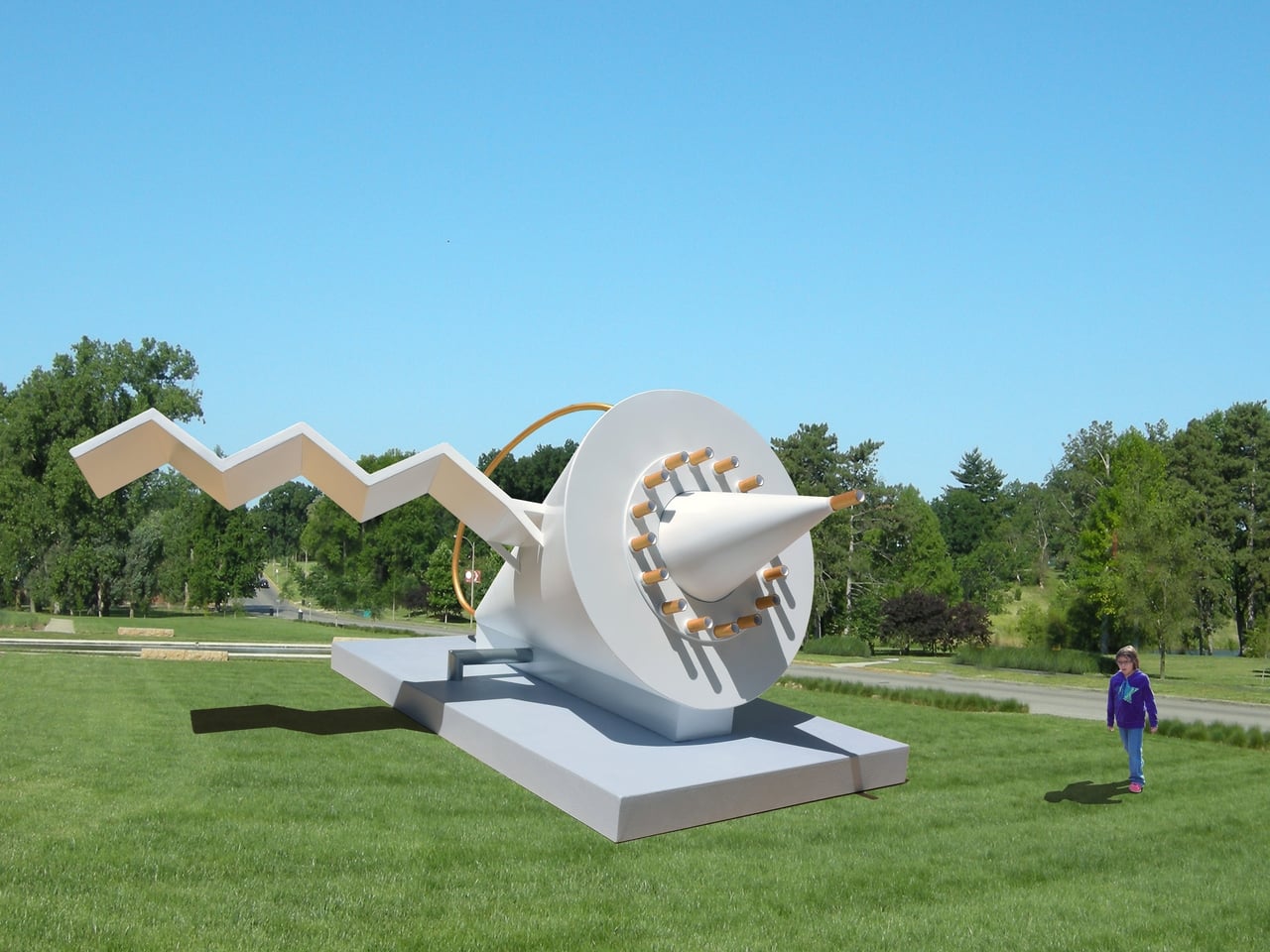
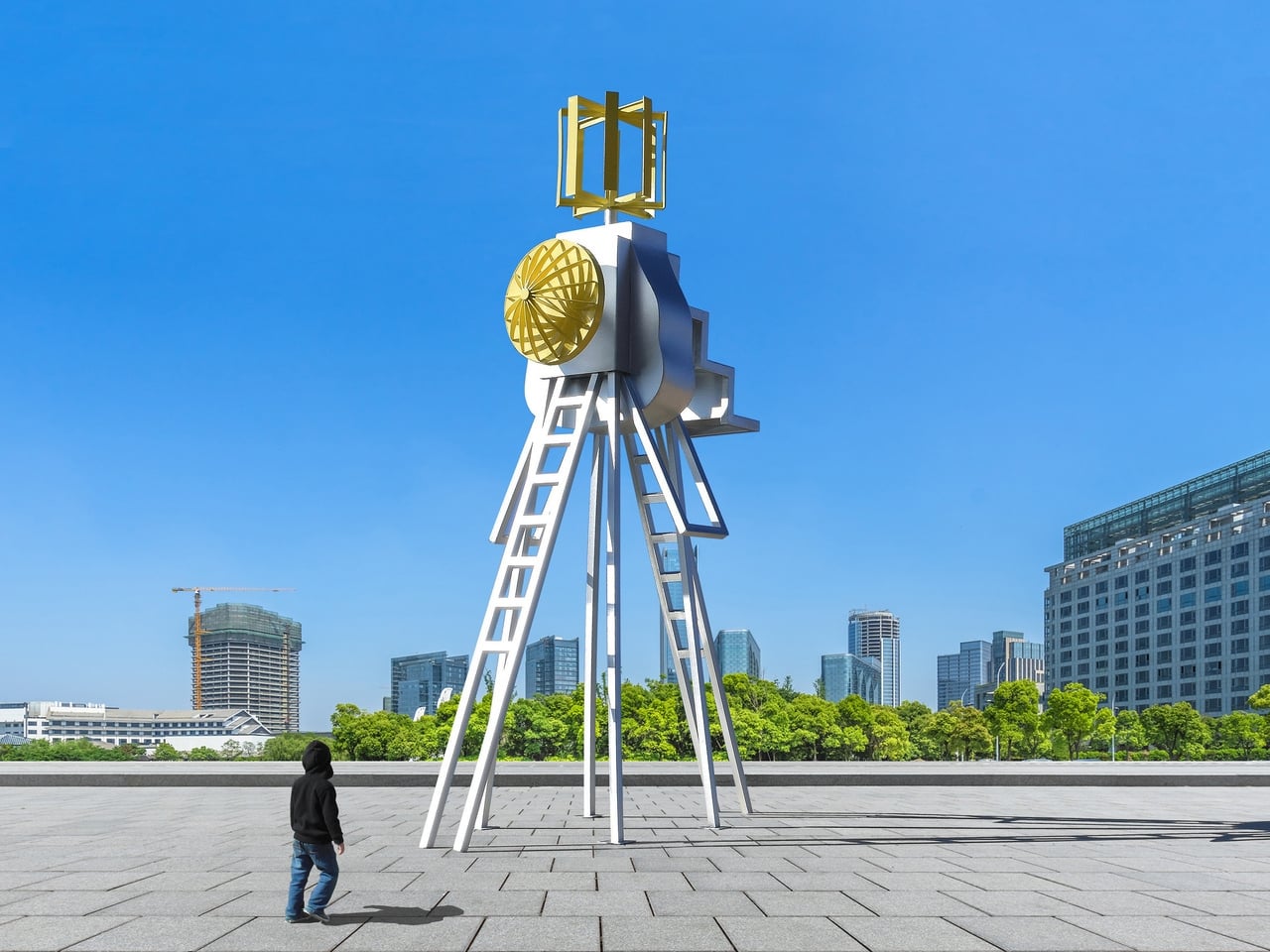
Santa Fe-based artist Michael Jantzen has spent years addressing exactly that through his Public Eco-Art Proposals. The series imagines a different kind of monument, one that doesn’t merely symbolize sustainability but actively practices it. Each proposal takes the form of a sculpture or pavilion that generates electricity from the sun or wind, collects rainwater, stores energy in batteries, and sometimes sends power into the local grid.
Jantzen gives his work an aesthetic freedom that most utility-driven designs don’t have. Rather than concealing the mechanics, he treats solar panels, wind turbines, and structural frameworks as sculptural elements in their own right. The visual language is deliberately technological and mechanical, blurring the line between a functional energy structure and art worth stopping for.
Walk through one of these proposed spaces, and you might find yourself beneath a pavilion whose curved solar canopy quietly feeds electricity back to the neighborhood. Or stop to look at a series of angular sculptures lined up across a park, their solar-panel tops tracking the light. What looks like a meditation on shape and form turns out to be a modest power station doing actual work.
The proposals span a wide range of environments. Some are designed for open fields or public parks, while others imagine coastal settings with floating platforms supporting wind and water energy structures. A chevron-shaped sculpture with a solar panel at its angular peak stands in what appears to be a university courtyard. Another piece holds solar panels above cylindrical battery storage pods, blending the practical business of energy collection with an unexpectedly considered form.
This approach also reframes the relationship between art and urban infrastructure. Municipalities already commission sculptures for parks and plazas; so why shouldn’t those commissions do more? A solar-powered gathering space generates electricity, makes clean technology approachable, and sparks conversations among the millions of people who walk through it, most of whom would otherwise never engage with energy infrastructure at all.
Jantzen’s vision extends beyond any single installation. He imagines these structures placed in cities and parks worldwide, shifting how communities relate to the energy they consume by making that relationship visible and beautiful. For him, celebrating sustainability means building things worth caring about, giving clean energy a presence that people can gather around, the way they’ve always done with the landmarks that define a place.
The minimalist desk setup has become one of the most documented trends in home office design, particularly as hybrid work continues pushing people to invest more seriously in the spaces where they spend their days. Most products marketed toward that crowd lean hard on the visual side, neutral finishes, restrained forms, nothing that draws attention to itself. What they’re less reliable at is spatial logic.
The ten accessories on this list were chosen with that in mind. Each one has to pass a practical test, not just look calm on a desk, but actually justify the space it occupies. That means hiding clutter, combining functions, freeing surface area, or removing a small friction before it turns into a habit.
KNOB. Pen Tray
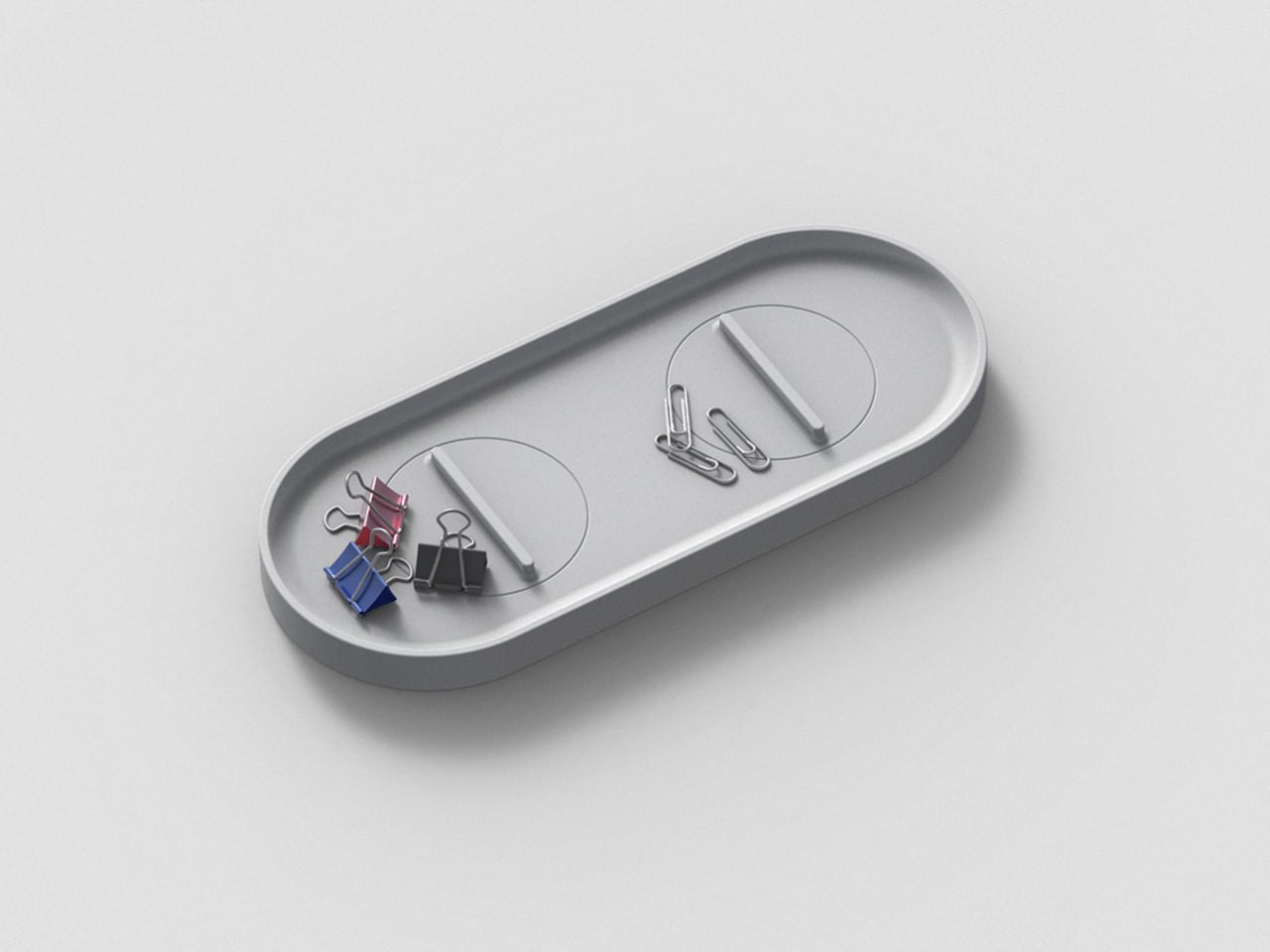
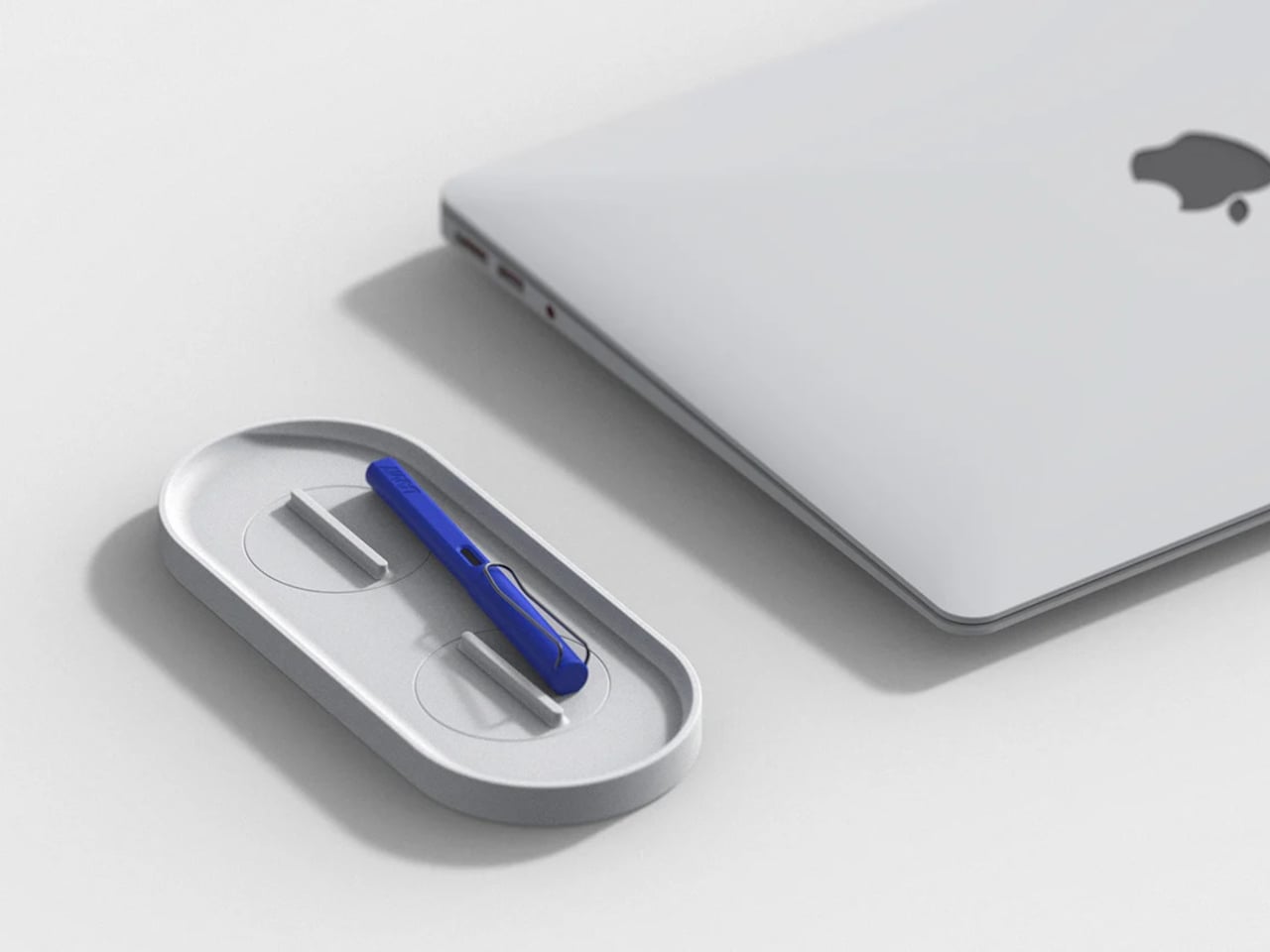
Most pen trays solve a narrow version of the problem. They give you a fixed layout, usually a rectangle divided into two or three compartments, and expect you to work around it forever. That’s fine until your tools change, and they always do. Changho Lee’s KNOB. Pen Tray takes a different approach by making the interior of the tray something you can actually reconfigure.
The dividers are controlled by knobs that take their cues from gas burner controls, a design reference that also gives the tray its name. Turn them and the internal layout shifts, letting you organize pens alongside rulers, adapters, or whatever else needs a place. One tray handles what might otherwise require three, which makes a convincing case for its footprint. The mechanism can feel fiddly if you reorganize often.
Inseparable Notebook Pen
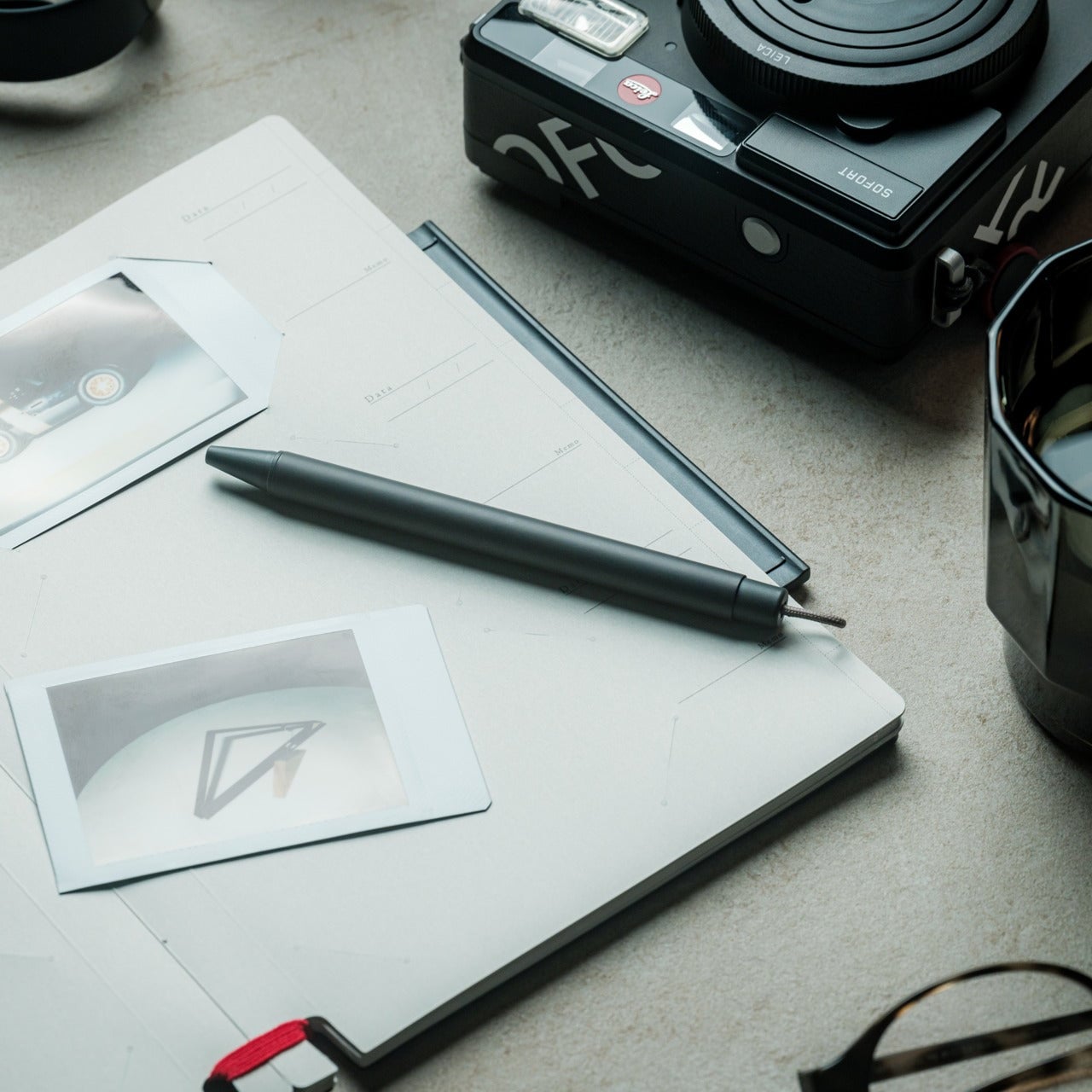
There’s a particular kind of frustration that comes with reaching for a pen and finding it’s no longer where you left it. It’s small enough to ignore once, but it happens often enough to become a genuine irritant. The Inseparable Notebook Pen doesn’t try to solve desk organization broadly. It solves this one specific problem by keeping the pen attached to the notebook it belongs with.
A magnetic clip secures the pen directly to the notebook cover, so the two travel as a unit and stay that way on the desk. There’s also a built-in silencer that softens the attach-and-release motion, which sounds like a small detail until you use it daily. The pen works best when paired with its intended notebook, so it’s less convincing as a standalone writing instrument.
Orbitkey Desk Mat
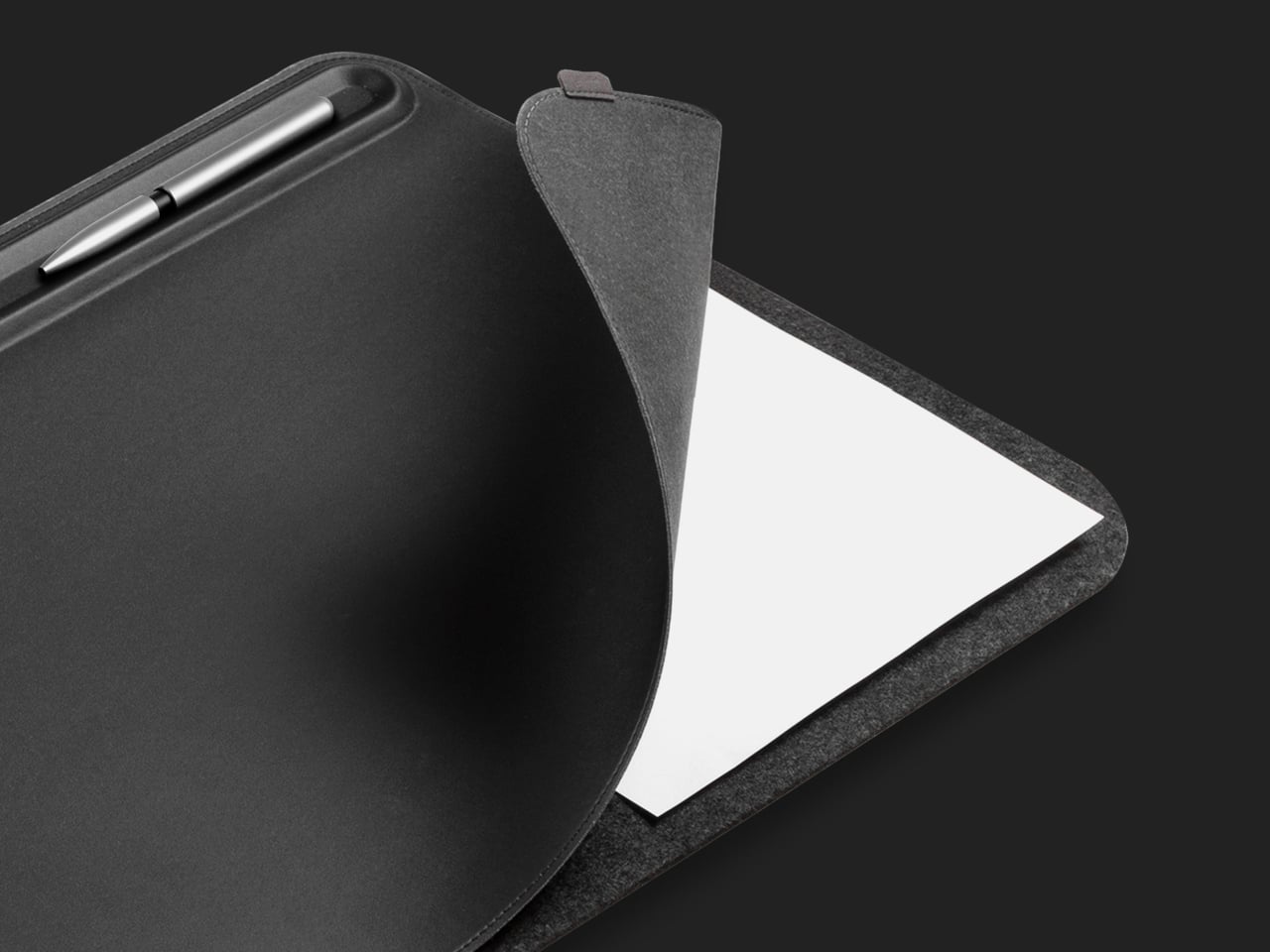
Desk mats often get treated as the last layer of a setup, something you add once everything else is in place to make the whole thing look polished. The Orbitkey Desk Mat earns more than that role. It addresses one of the quieter problems on any active desk, the gradual spread of loose papers, sticky notes, and reference sheets that slowly take over the surface.
A document hideaway built beneath the top layer lets you slip papers out of view without throwing anything away. They stay flat and within reach, invisible until you need them. A toolbar along one edge keeps stationery and smaller tools from drifting. Available in Black and Stone across two sizes, the mat works whether you’re running a compact home setup or a larger studio table.
ME-1 U-shaped Power Strip Concept
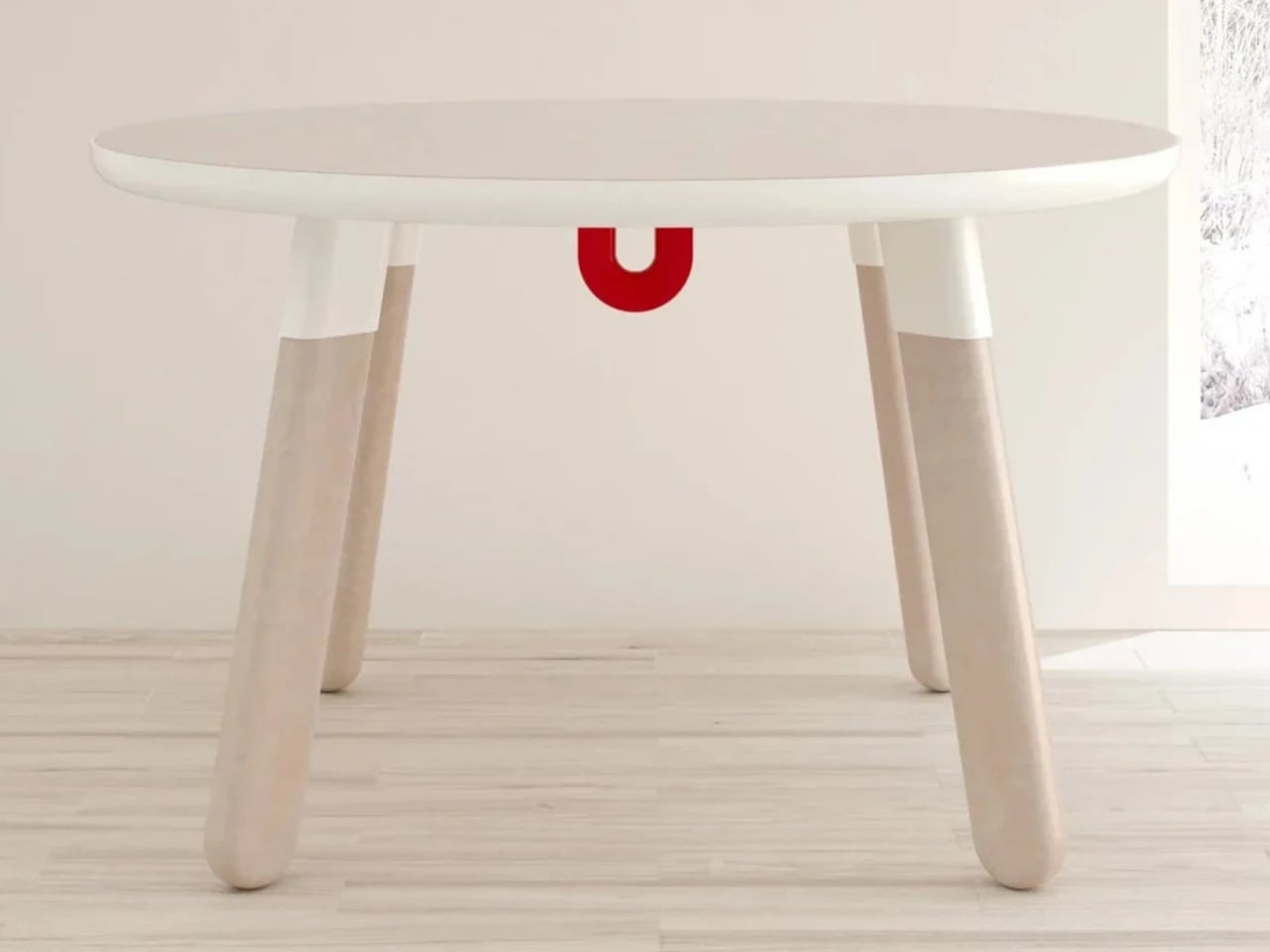
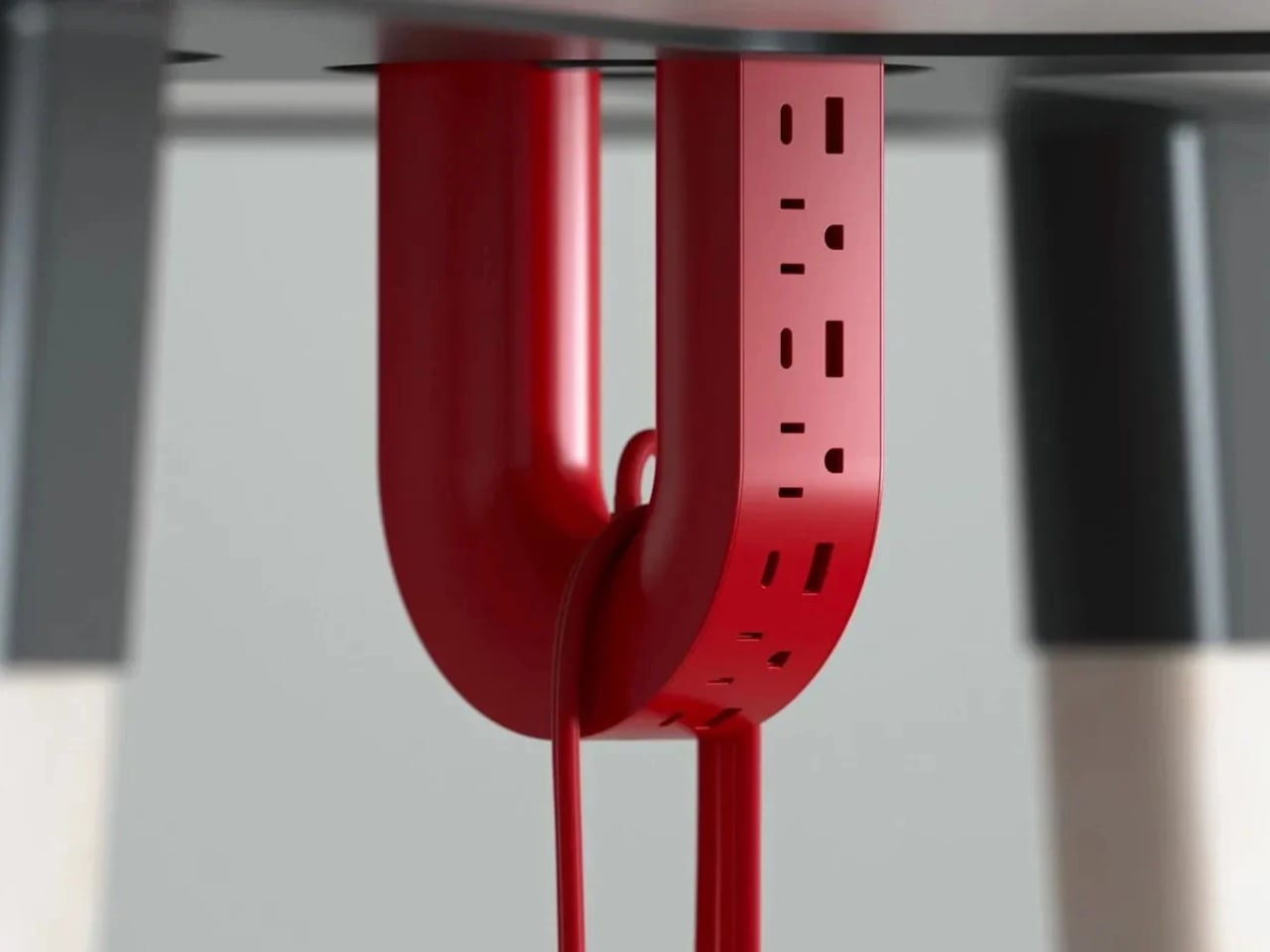
Cable management is one of those desk problems that most solutions only partially solve. You gather the cords, clip them together, maybe run them through a box, and the result is still visible, still part of the desk’s noise. Michael Kritzer’s ME-1 power strip concept takes a different position, arguing that the power strip itself should hang below the work surface rather than claim space on top of it.
Curved into a U-shape, it can hang under a table or stick to metallic surfaces, while its two legs give you somewhere to wrap cables so they don’t trail freely. There’s also enough spacing between the alternating three-prong sockets and USB ports to fit bulky chargers without blocking each other. It’s still a concept, and questions about how far it protrudes remain, but the logic behind it is sound.
Oakywood Desk Shelf Pro
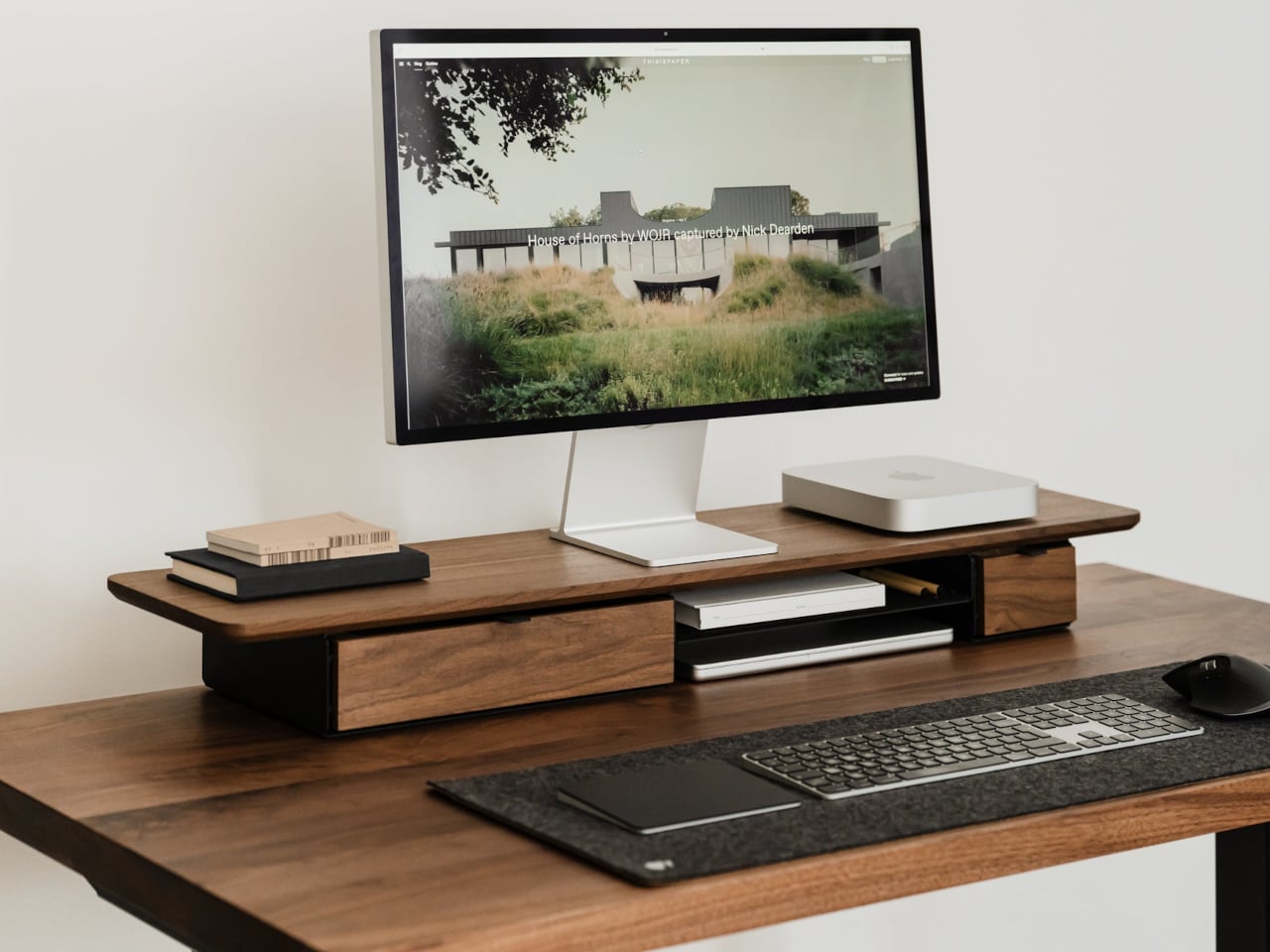
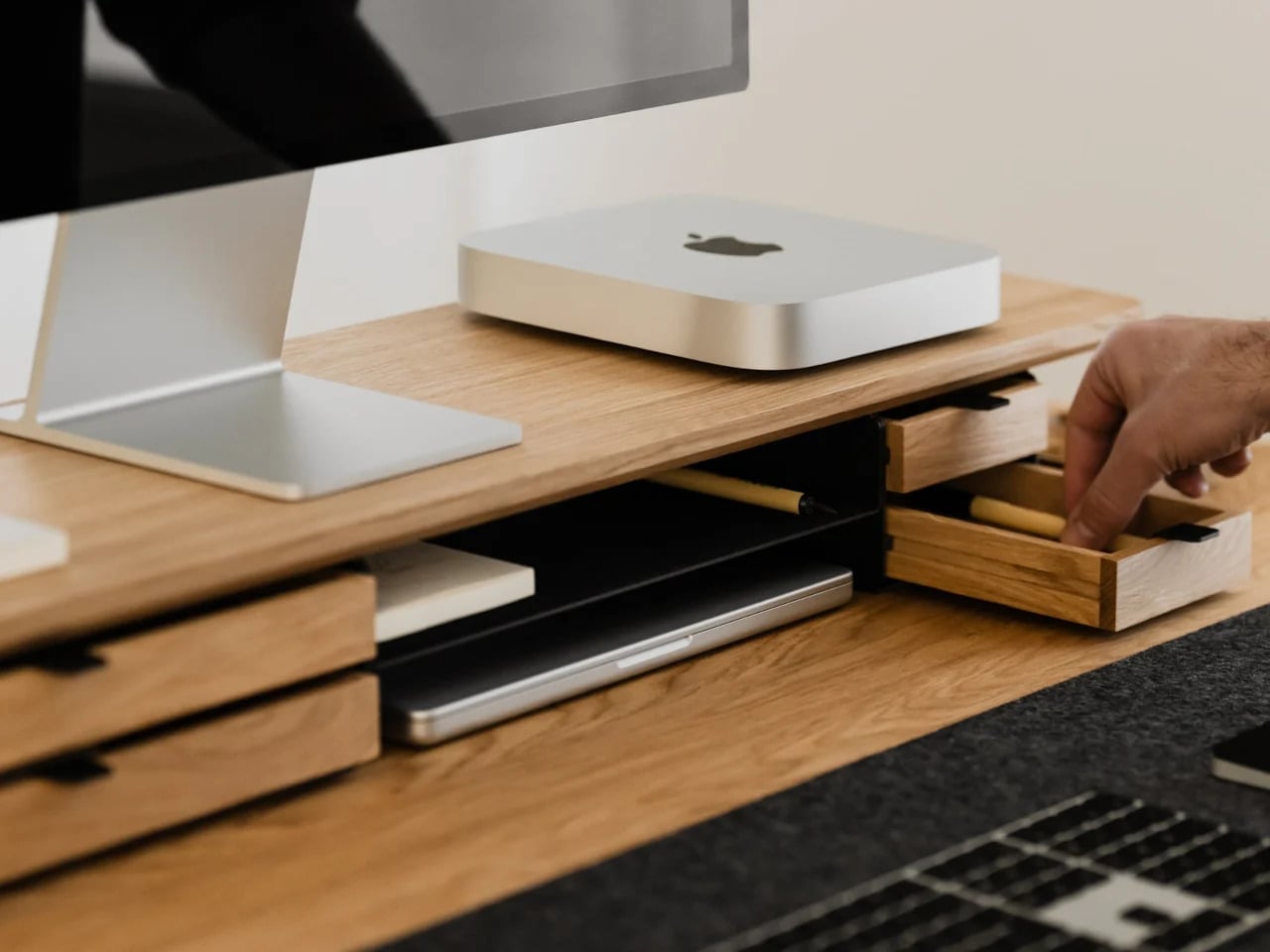
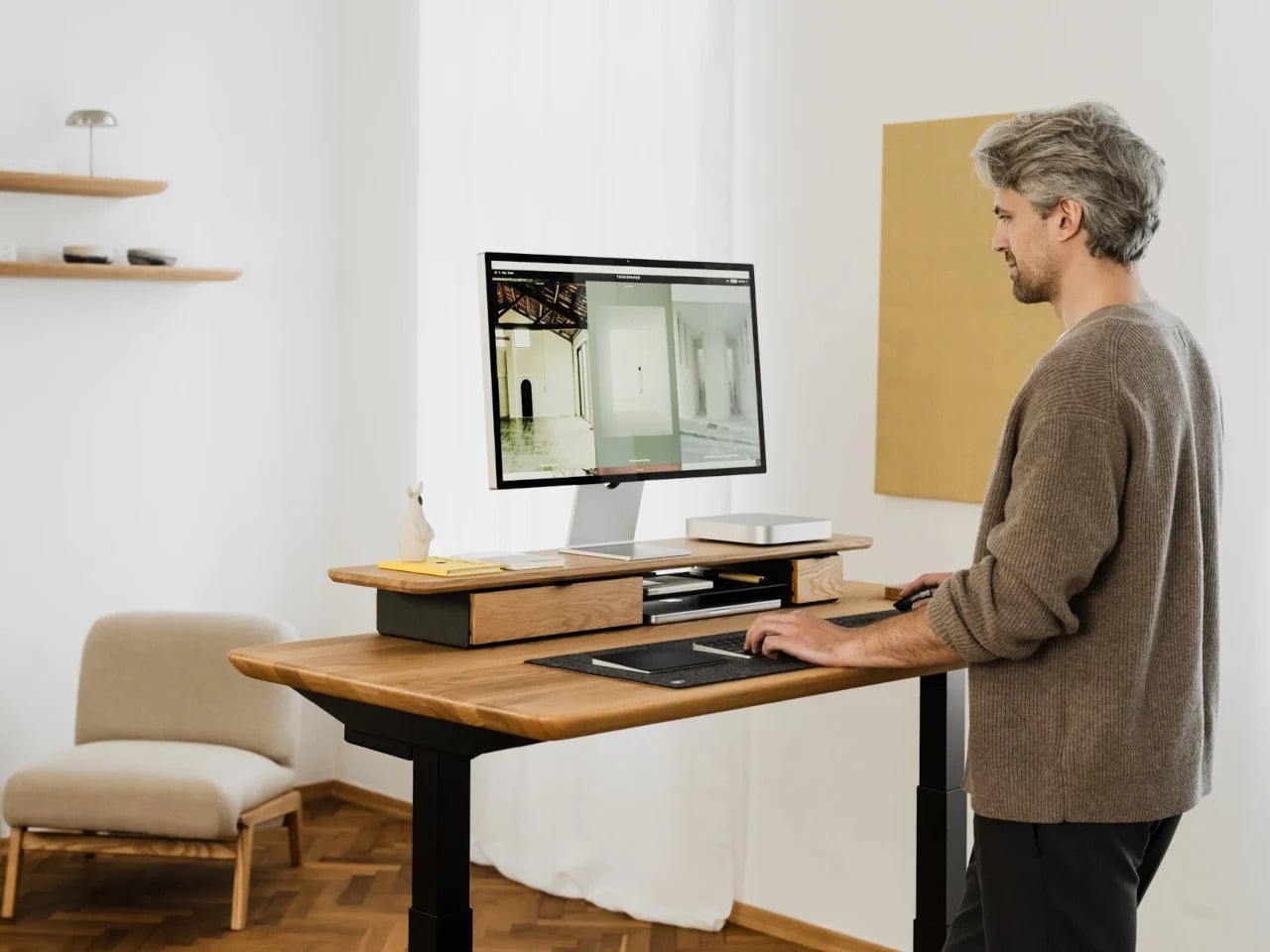
Monitor risers are supposed to help, and usually they do, but only as far as ergonomics go. The desk surface often ends up just as crowded as before, just with a platform sitting in the middle of it. The Oakywood Desk Shelf Pro approaches the problem differently, treating the riser not as an accessory but as furniture that earns its size by doing more than one job.
The shelf spans desk width, lifting the monitor to eye level while clearing space underneath for a keyboard or laptop, with steel legs at each end creating a floating effect. Built-in drawers tuck away stationery and small tech, and a felt-lined open shelf handles tablets or a closed laptop. It’s built from solid oak or walnut, not MDF with a plastic skin, and can hold up to 100 kg without flexing.
Practiko Otis Hanger 3.0
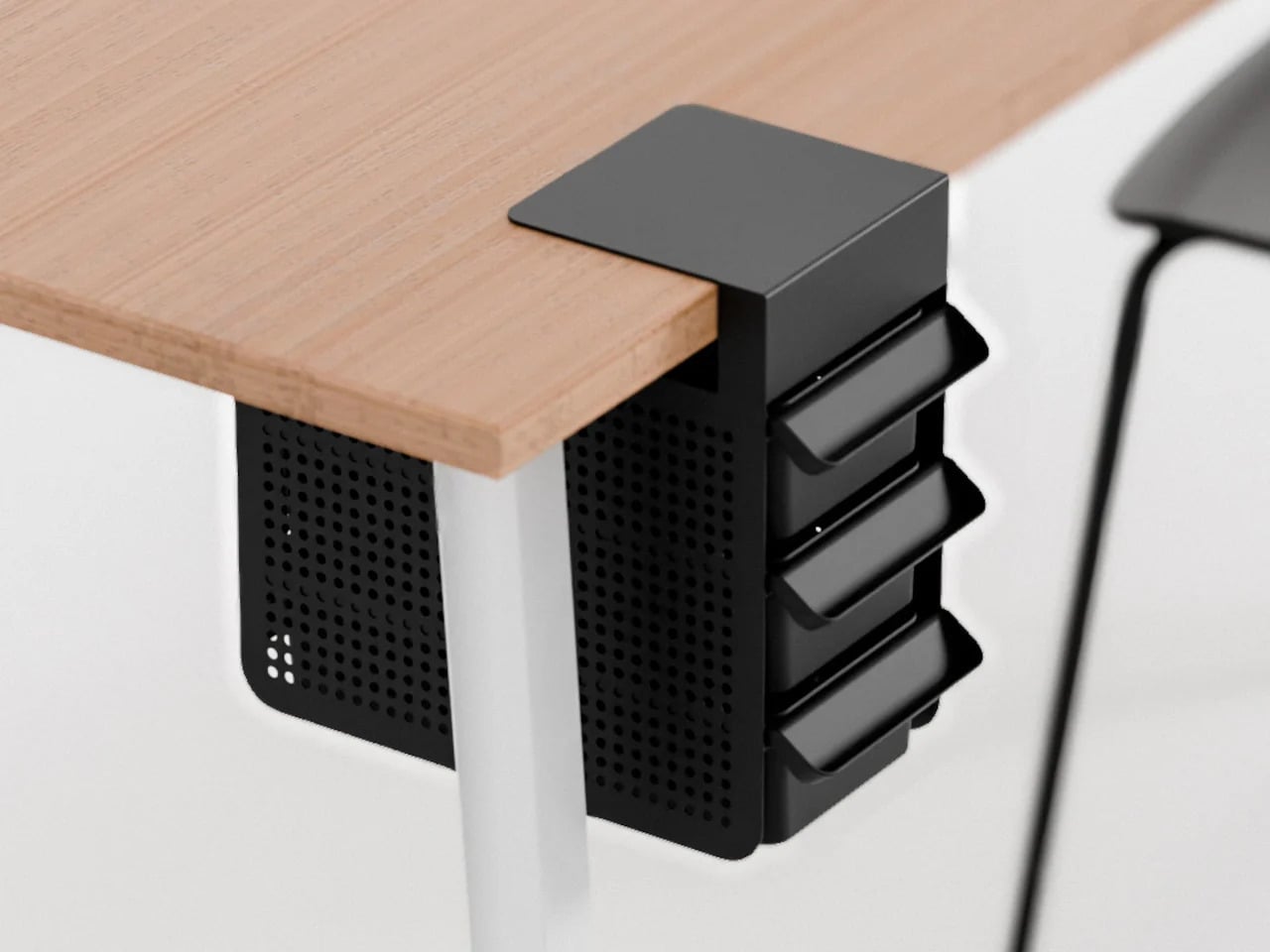
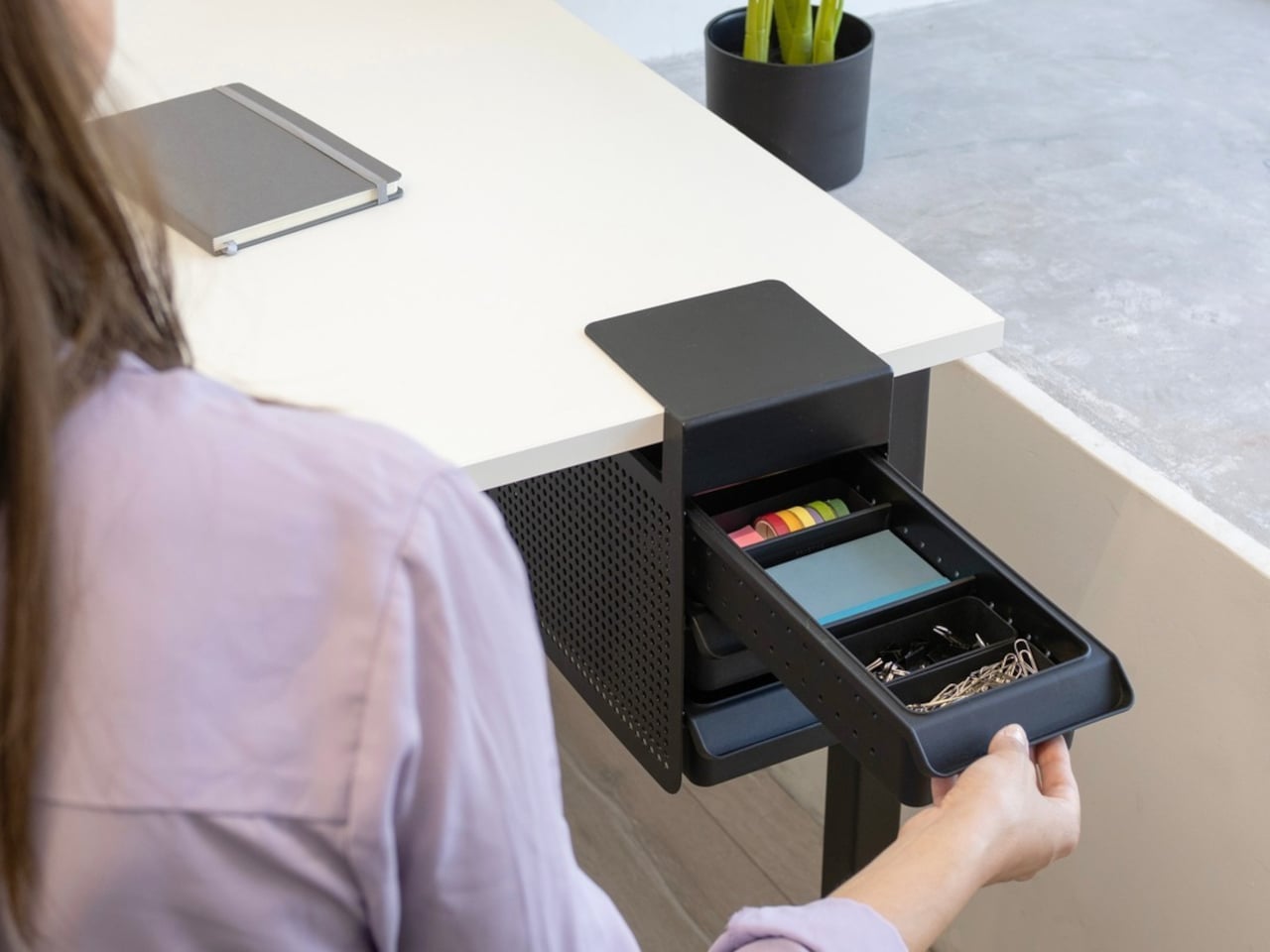
Minimalist desks look clean partly because many of them don’t come with built-in drawers. That’s a reasonable design choice until the pens, sticky notes, charging cables, and paper clips have nowhere to go and start accumulating on the surface instead. The Practiko Otis Hanger 3.0 adds that missing storage back without a single screw or permanent alteration.
The system clips onto the desk edge and hangs beneath the work surface, giving you three trays and the full top plane back. The 3.0 version features more perforation points for finer divider adjustments, and three nested mini trays handle smaller items like paper clips, thumbtacks, or earbuds. Larger handles on each tray let you pull them out smoothly without looking down, which makes more of a difference in daily use than it sounds.
Nuka Eternal Stationery
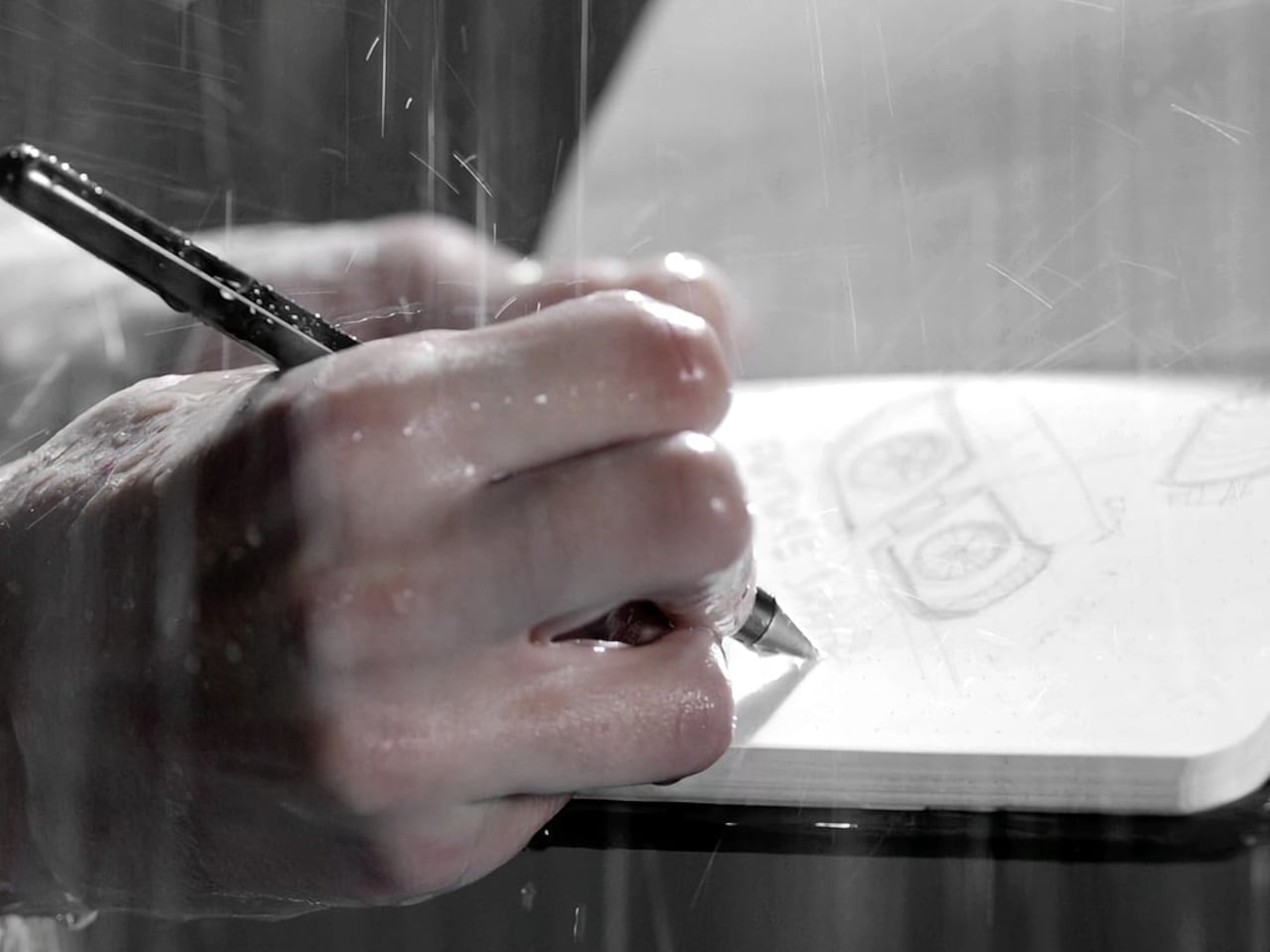
There’s a version of minimalism that’s about owning as little as possible. There’s also one that’s about how much the things you do own keep asking of you. Nuka’s Eternal Stationery belongs to the second kind. Built around permanence rather than disposability, it’s a notebook-and-writing-tool system designed to stop demanding replenishment, which is its own quiet argument for staying on a well-edited desk.
The notebook is waterproof and tear-proof, and pairs with a metal alloy tip that writes with the consistency of a traditional pencil but requires no sharpening and never breaks. Pages clear completely with the Nuka Magic Eraser, ready to be written on again. For anyone who writes regularly, the appeal is straightforward, though writers accustomed to ink on paper may need some adjustment time with the metal alloy tip.
Quiver Ruler
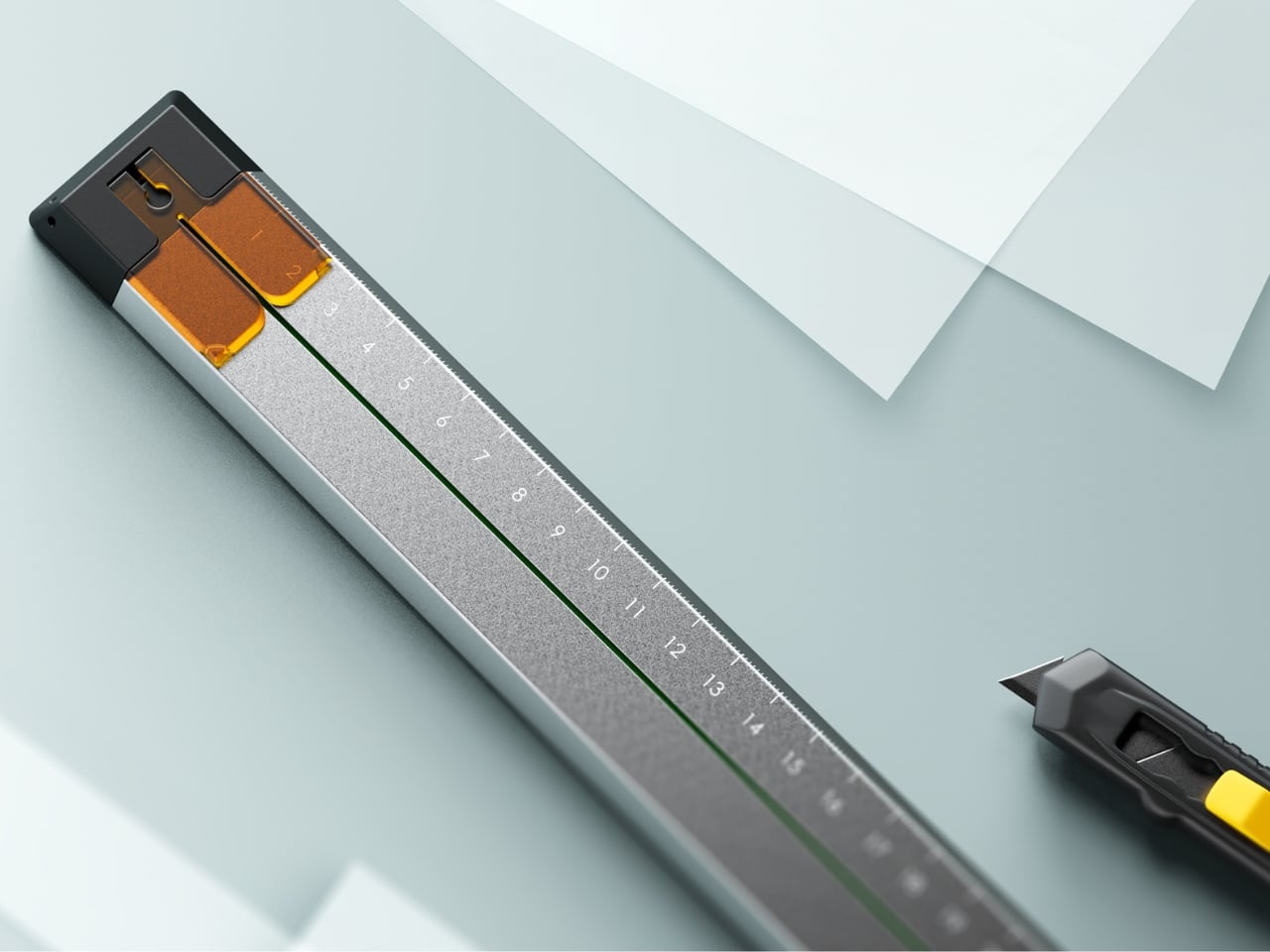
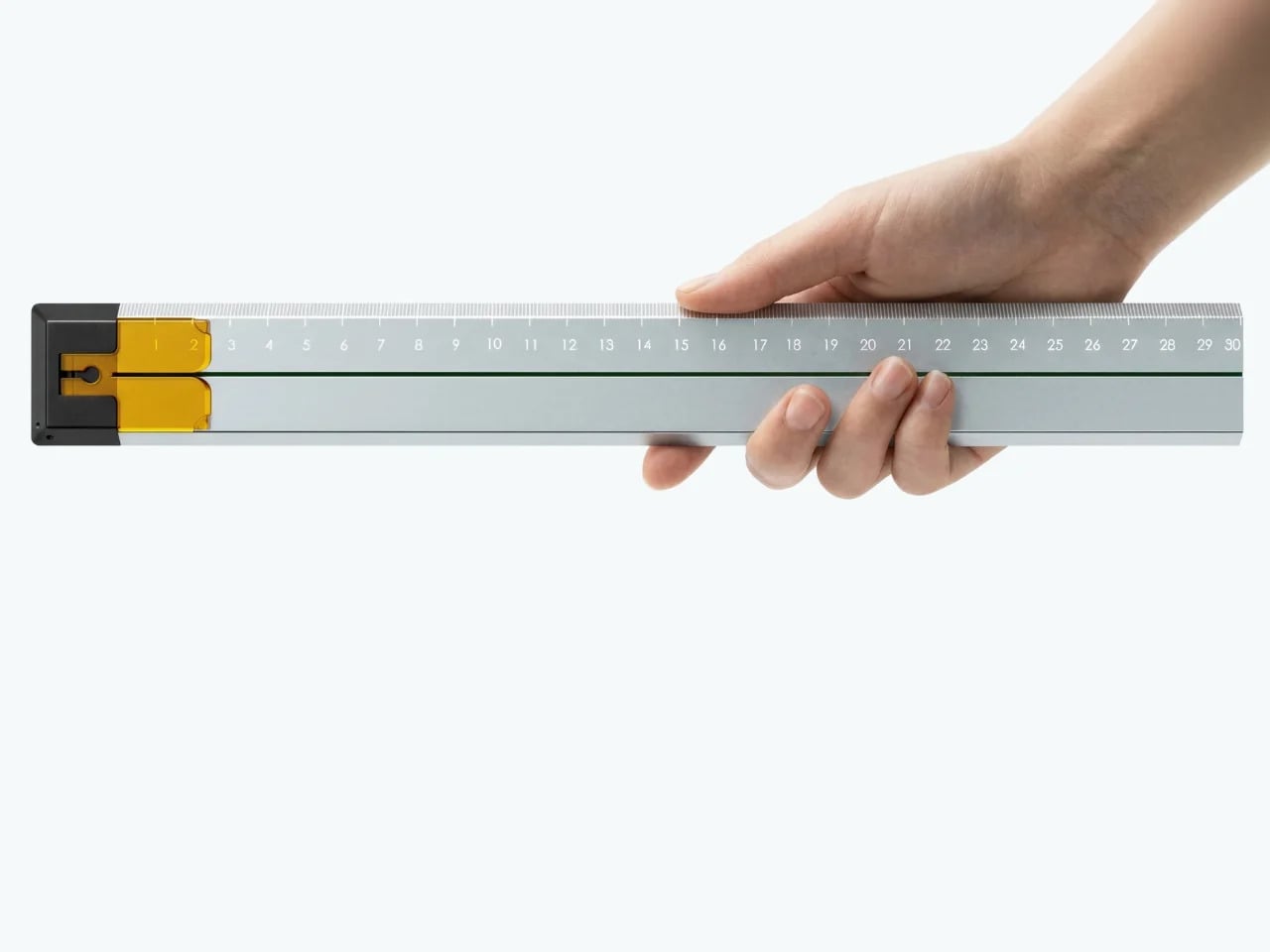
A ruler is one of the few tools that earns a place in a minimalist setup by compressing several small tasks into a single flat form. Tunir Maity’s Quiver does that more thoroughly than most. It’s an anodized aluminum ruler designed primarily for people who actually cut with one, not just measure. It treats shaky hands and imprecise cuts as design problems worth solving, not limitations the user is expected to compensate for.
A clip mechanism holds paper in place, a blade slit guides the cut in a straight line, and the weight distribution favors the cutting end, so you don’t have to press down as hard. It also includes a carabiner attachment for clipping to a bag. Quiver is currently a concept, so availability hasn’t been confirmed, and it’s more specialized than what a casual desk user would reach for day to day.
Ichi Portable Lamp
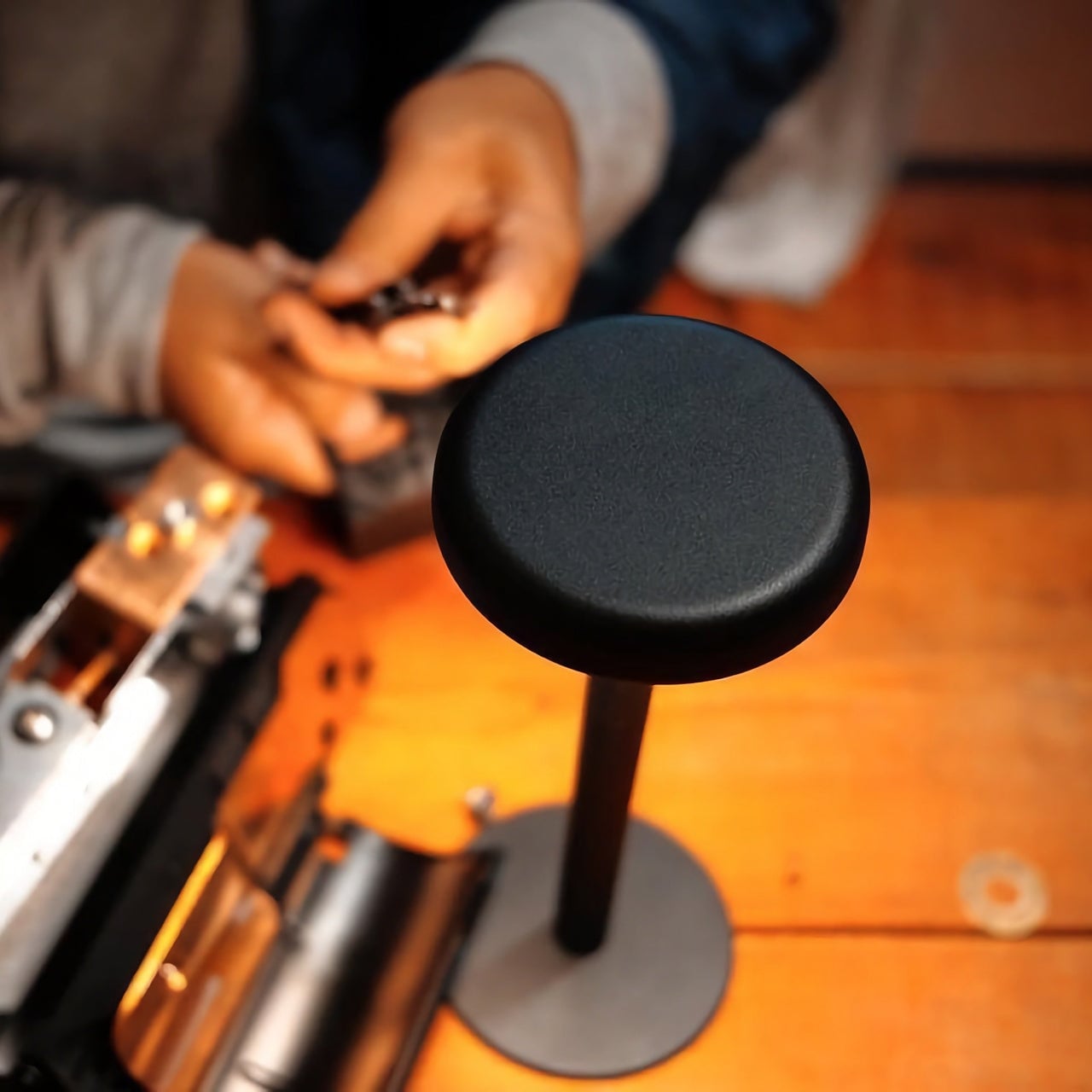
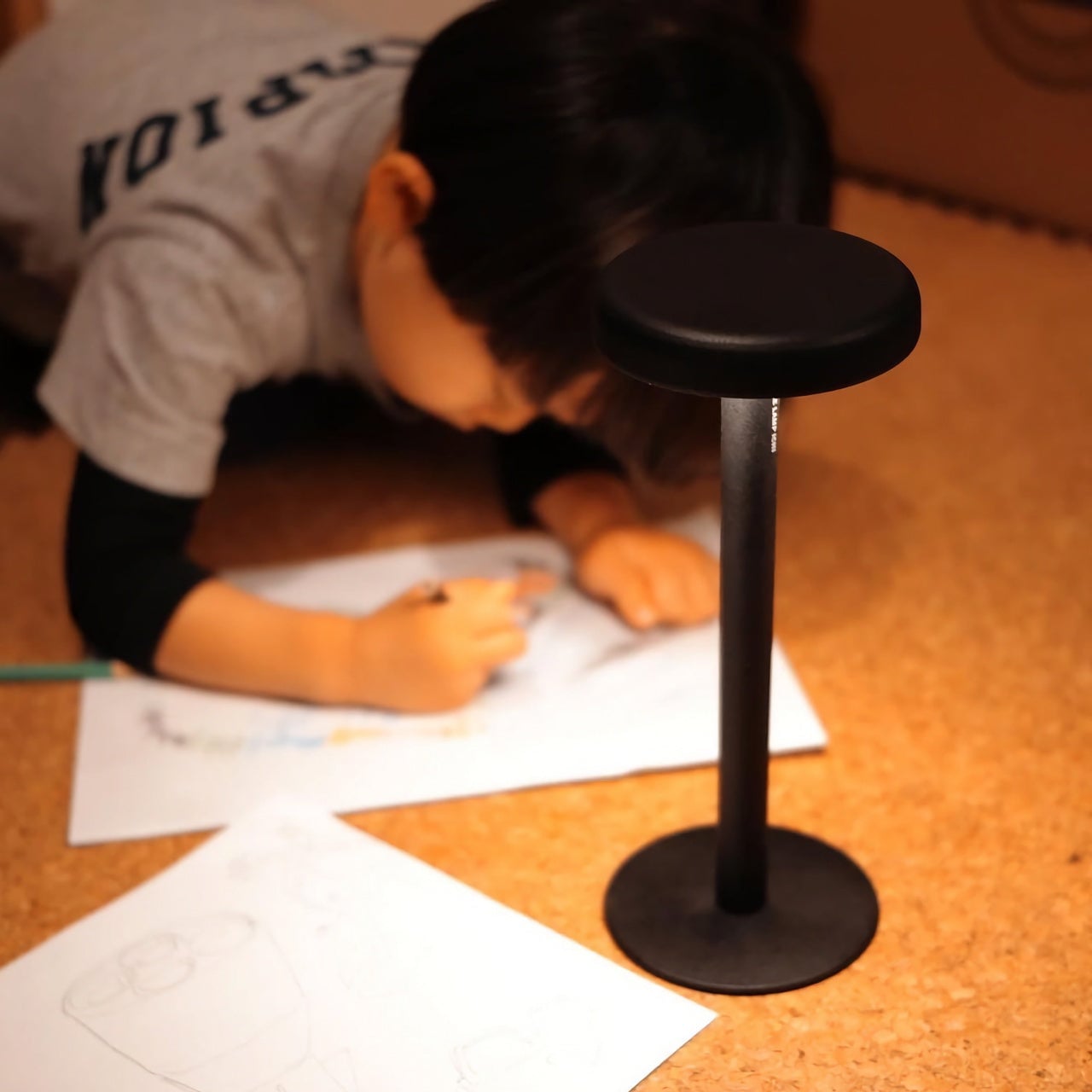
Desk lamps rarely fail in the obvious ways. Most give off enough light and last long enough. What they tend to get wrong is the base, which on wider models claims an entire desk corner, and the cord, which invariably ends up somewhere visible. The Ichi Portable Lamp, born from the collaboration between Fujita Kinzoku and TENT Design, keeps the form slim and goes cordless, addressing both without turning the lamp into a statement piece.
Powered by four standard AA batteries, it runs cordless without the limitations of proprietary chargers. Its warm, high-color-rendering CRI 95 LED creates a soft, radiant glow suitable for task work or winding down. The modular design disassembles into three parts and packs down to a slim 20mm thickness. It’s more portable than a permanent desk fixture, which is worth knowing if you need sustained, high-output lighting for long stretches.
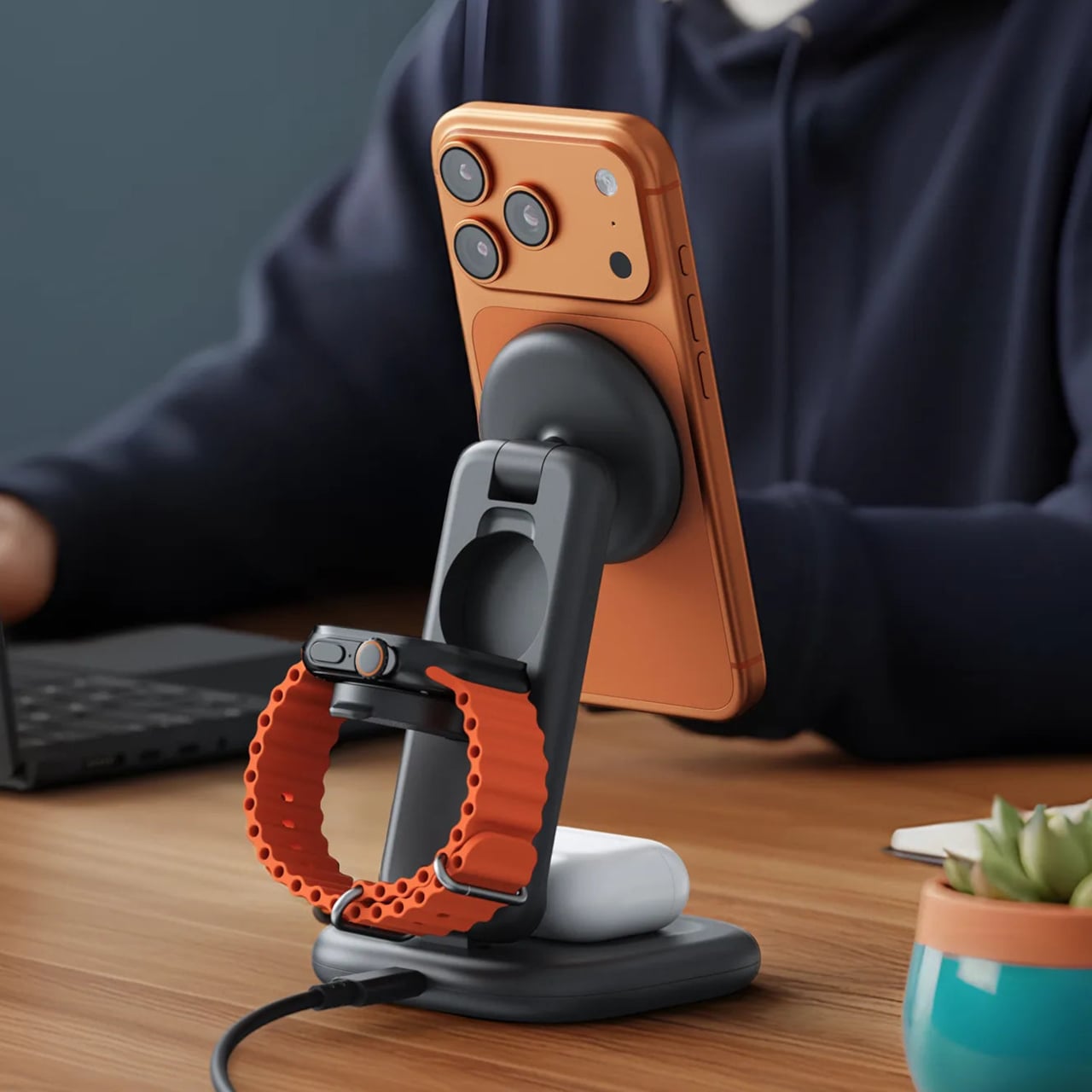
Satechi 3-in-1 Foldable Wireless Charging Stand
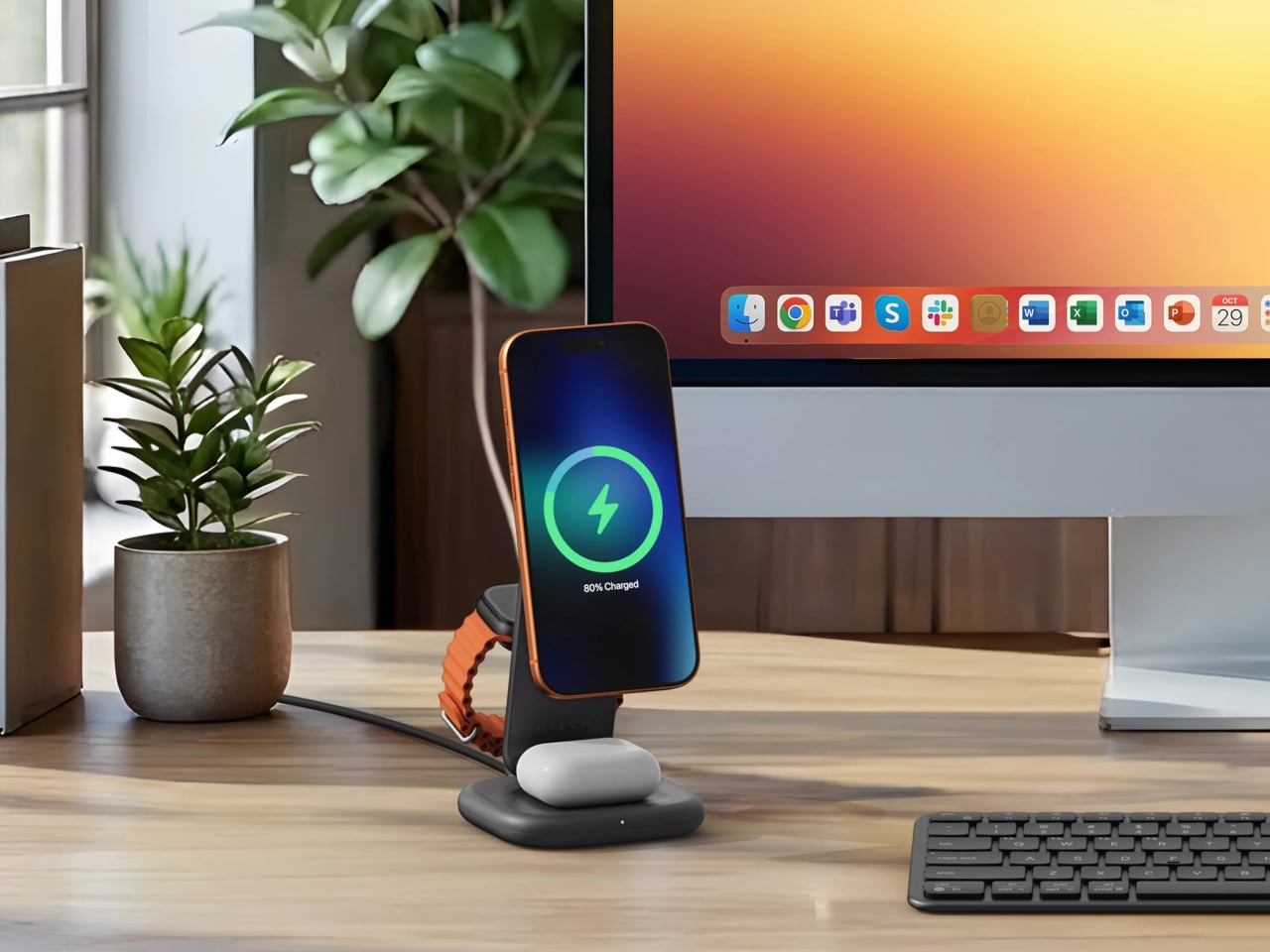
Getting a phone stand onto a minimalist desk requires a stronger argument than just holding the phone upright. The Satechi 3-in-1 Foldable Wireless Charging Stand with Qi2 25W makes that argument by doing three jobs at once, replacing the tangle of separate charging pads that Apple users typically accumulate. Wireless charging was supposed to simplify things, but most setups end up with a different kind of mess instead.
Set the iPhone down, and Qi2 snaps it into position, the Apple Watch gets its own fast-charge arm, and the AirPods rest on a pad below, all drawing from a single cable to the wall. The stand folds flat for travel and fits easily in a carry-on. A 45W USB-C adapter with US, EU, and UK plugs ships in the box. It’s most compelling for people already working within the Apple ecosystem.
Building a cleaner desk comes down to the same question applied to every object on it: what is it giving back for the space it takes? Color and material can make things look minimal, but they don’t make them earn their place. That’s a footprint budget, and it’s a much better framework for deciding what stays than any mood board, setup guide, or neutral palette.
Most people check the date by glancing at a phone, a laptop corner, or a watch. There’s no shortage of ways to know what day it is, yet somehow that information rarely feels anchored to anything. It arrives in a notification, floats on a lock screen, and disappears the moment you look away. The calendar has become the most forgettable object in modern life.
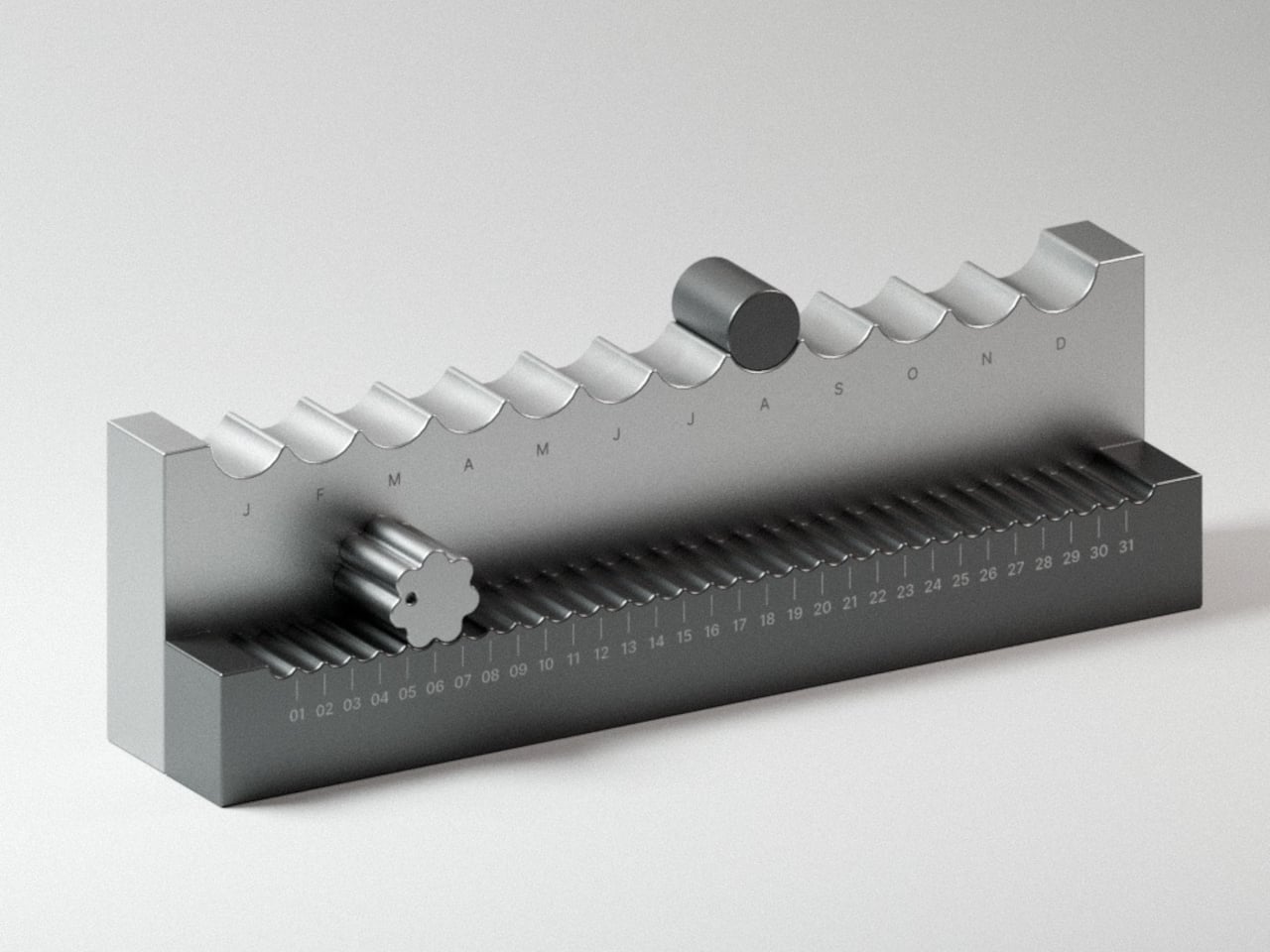
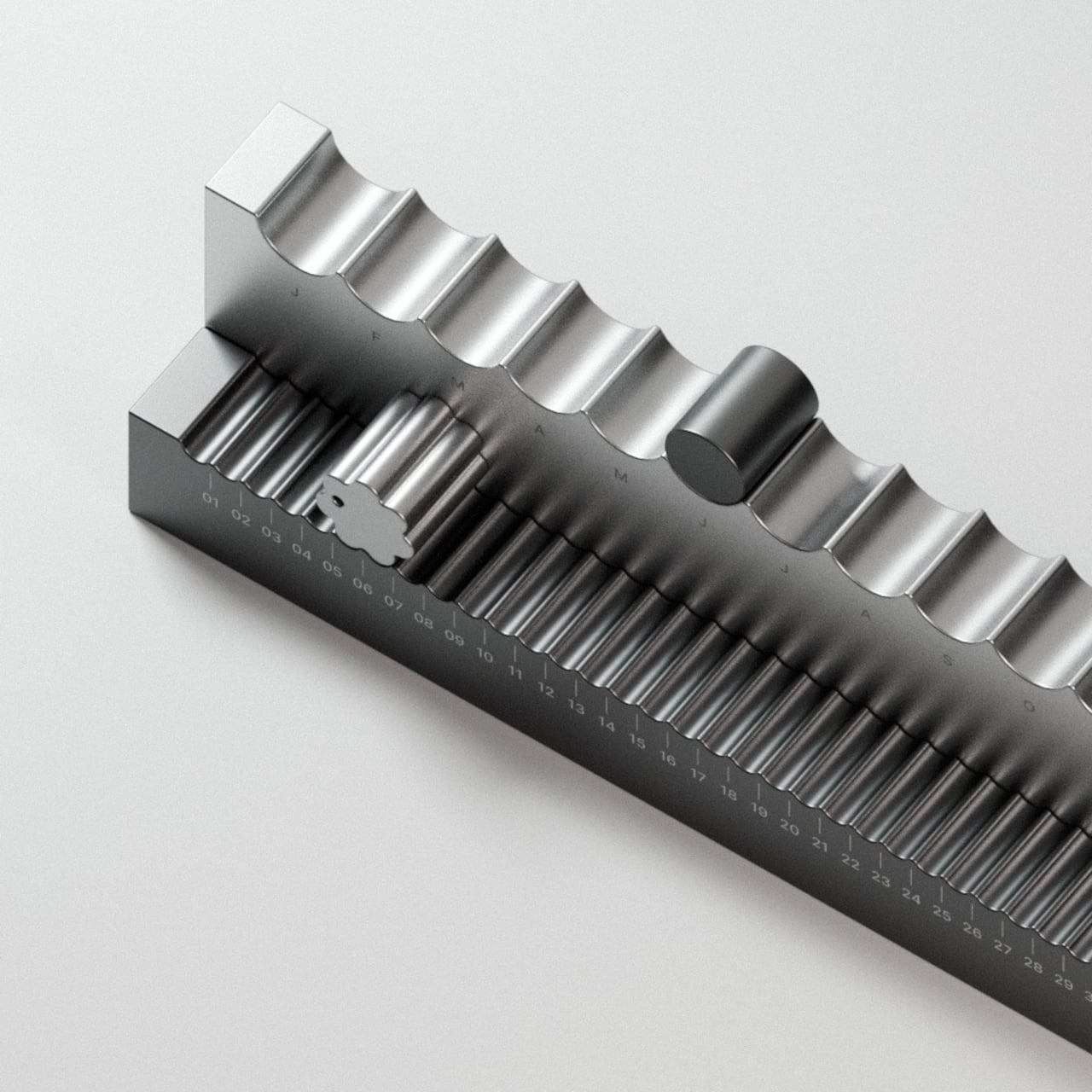
Momentum Studio, a German design firm, is treating that problem with a very physical antidote. The Momentum Calendar is the fifth object in the studio’s Object Collection, approaching timekeeping as a deliberate act rather than a passive glance. It’s a perpetual calendar machined from solid aerospace aluminum that requires you to move a marker by hand each morning, turning date-checking into something closer to a ritual.
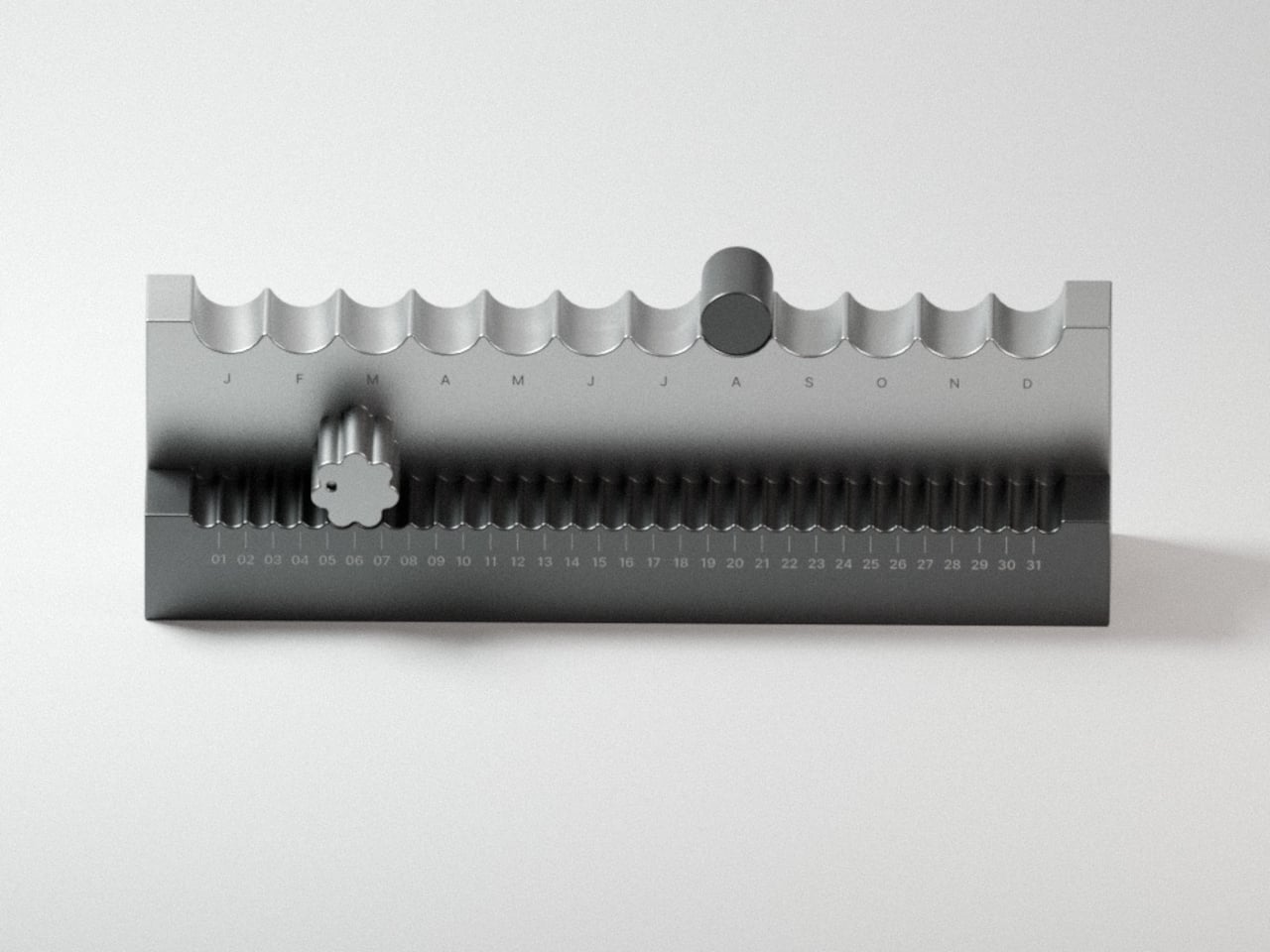
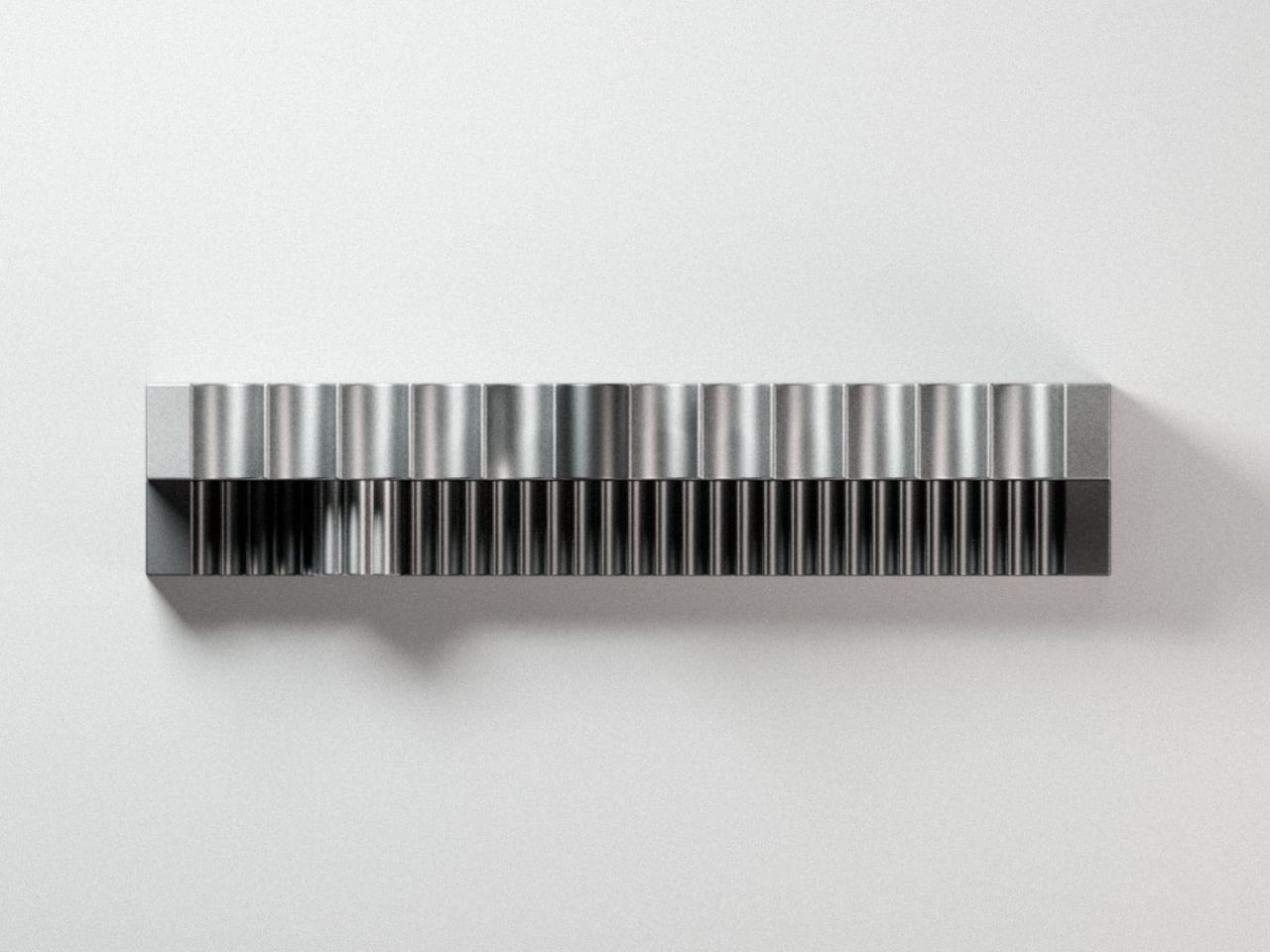
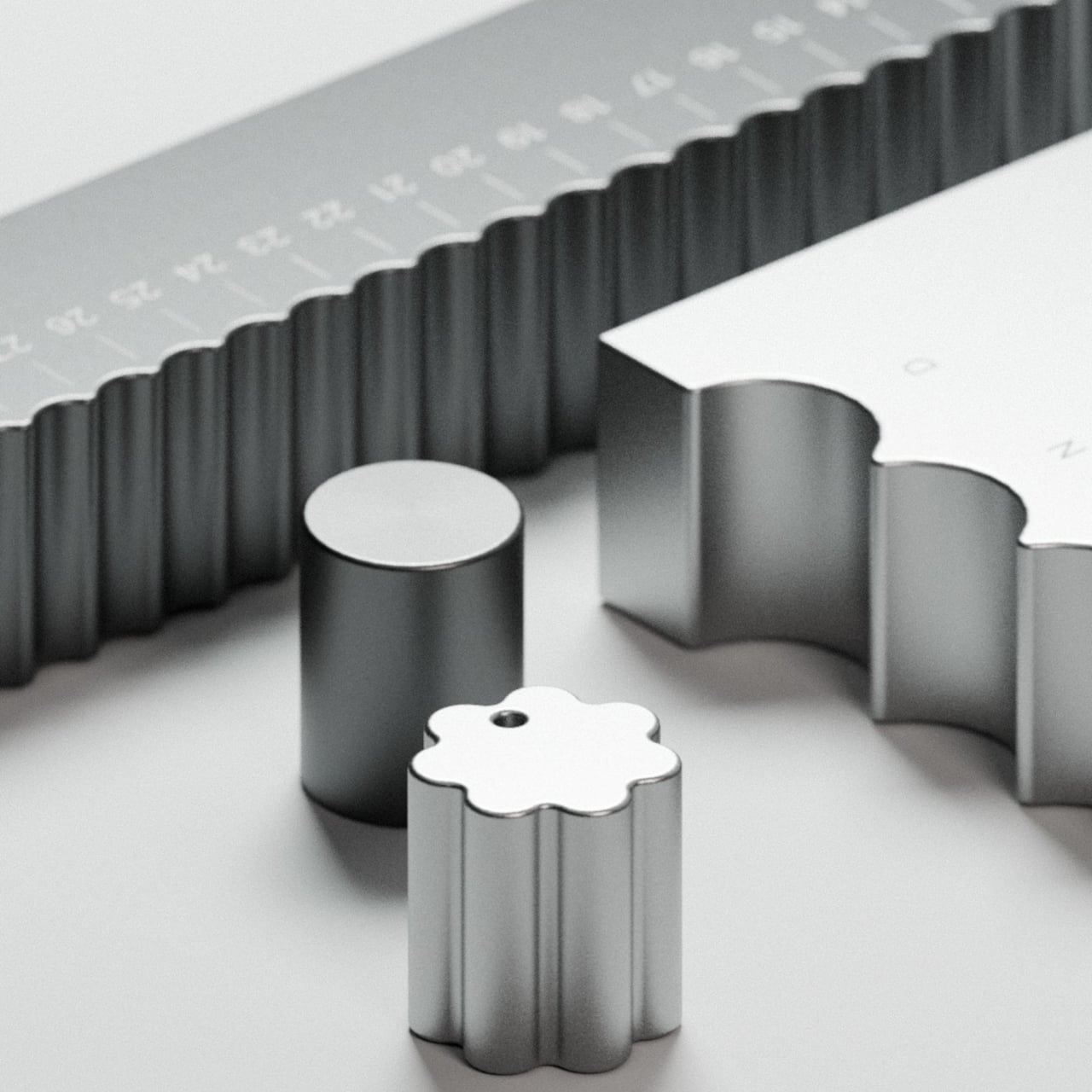
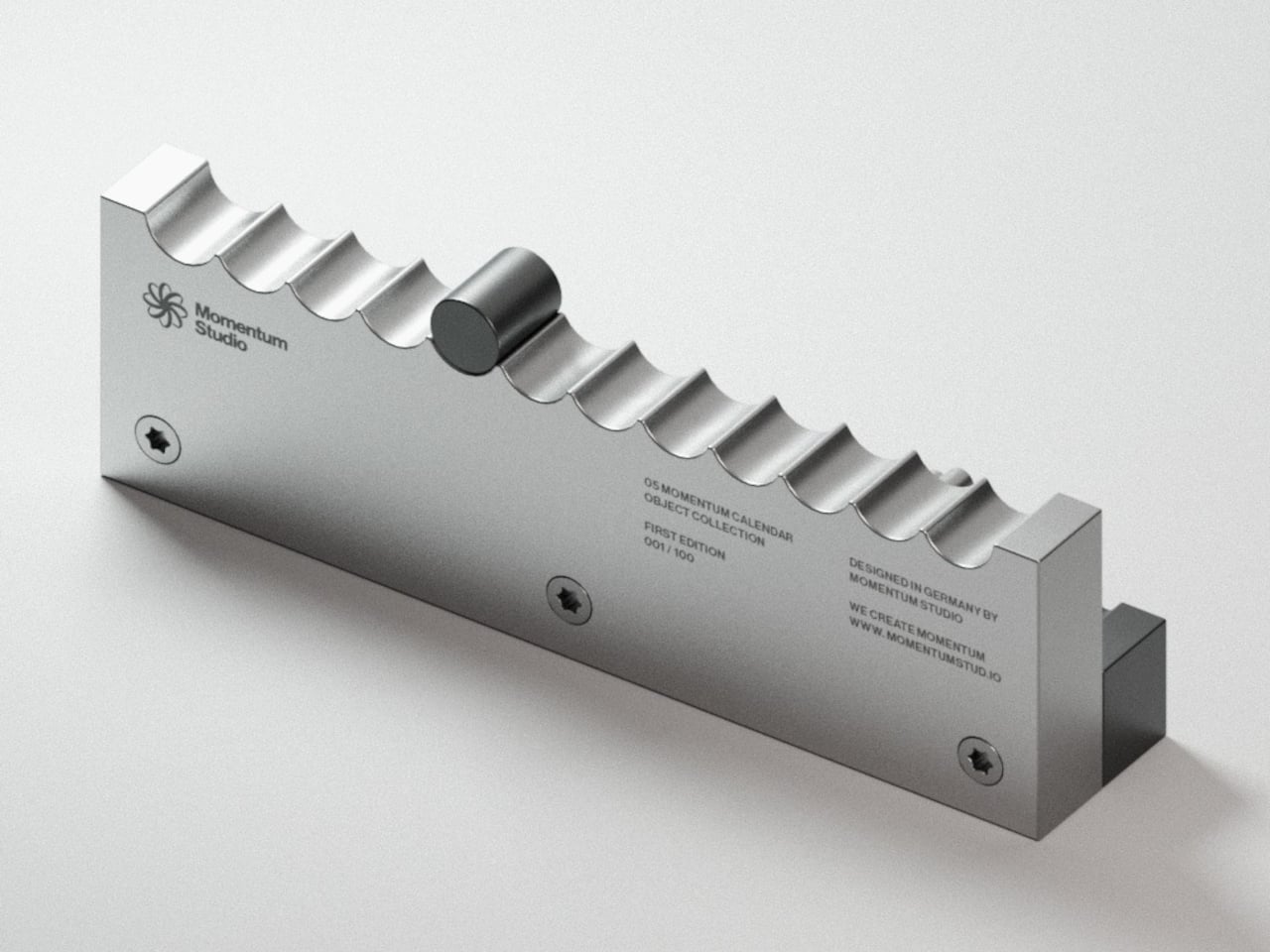
The calendar sits as a stepped aluminum block, angled so both tracks face you at once. The top holds 12 scalloped arches, one for each month, where a smooth cylindrical marker rests in a gentle depression. The front runs 31 ribbed channels numbered across the days, where a flower-shaped marker with corrugated edges clicks into each position like a gear finding its tooth.
That’s where the haptic element matters, and it’s more meaningful than it sounds. There’s something grounding about reaching over each morning to nudge a metal marker one slot further, feeling the resistance as it settles into place. It takes two seconds, but those two seconds make the date something you’ve done rather than something you’ve simply glanced at from across the room.
The studio calls it “a physical manifestation of time,” which might read as a lofty claim until you consider how little physical presence calendars have anymore. The Momentum Calendar doesn’t tell you the date so much as invite you to acknowledge it. On a desk or a shelf, it works as both a functional object and a sculptural piece, without pretending to be anything else.
The aluminum body reinforces that sense of permanence. Momentum Studio describes all objects in the collection as milled from solid blocks of aerospace aluminum, and the Momentum Calendar carries that weight literally. It’s the kind of material that makes something feel like it belongs on a shelf for good, rather than something you’d swap out seasonally. The ridged texture adds depth without veering into decoration.
The First Edition is limited to 100 numbered pieces, with each unit’s position in the run engraved onto the back. What’s interesting is that the calendar’s entire premise depends on you showing up for it every single day. A phone calendar stays current because a server keeps it that way. This one is only accurate because you chose to make it so, which might be the most honest thing any calendar has attempted.
Travel chargers have always been a bit of a negotiation. You pack a power bank for the long haul, then stuff a wall adapter in separately because the power bank only helps when there’s no outlet. End up with two items taking up bag space, two cables to hunt for, and the occasional moment of realizing you forgot one of them on the nightstand back at the hotel.
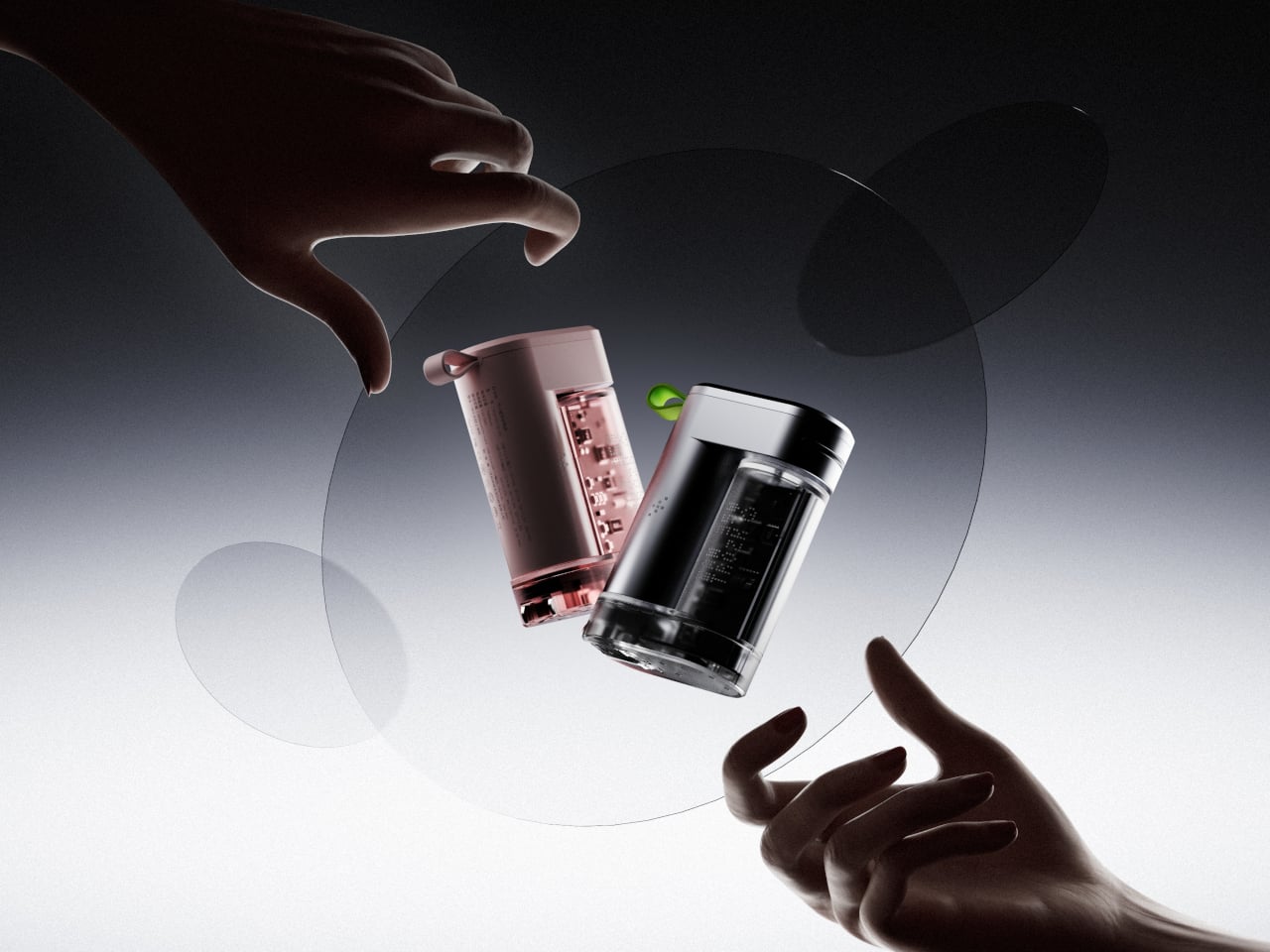
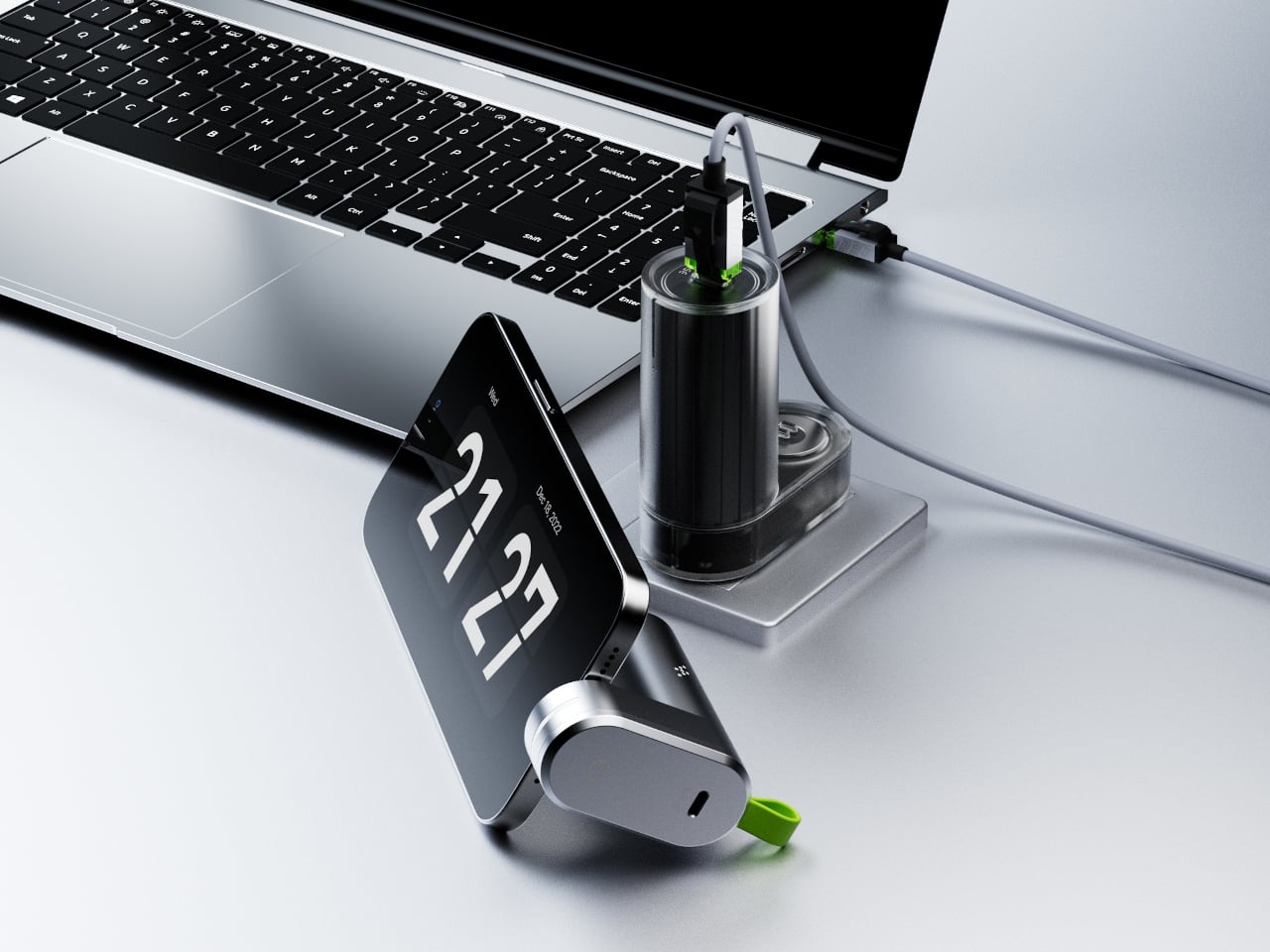
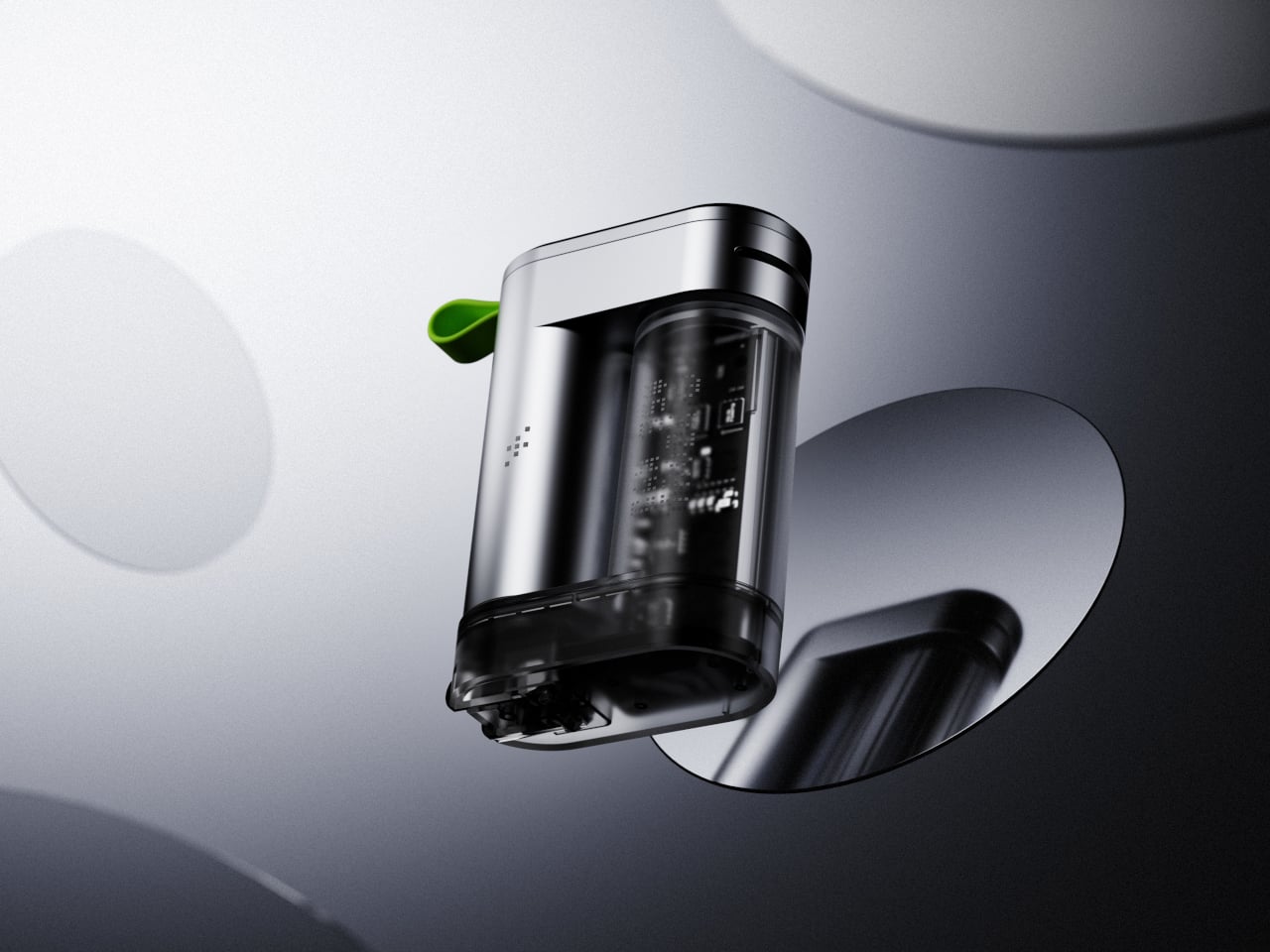
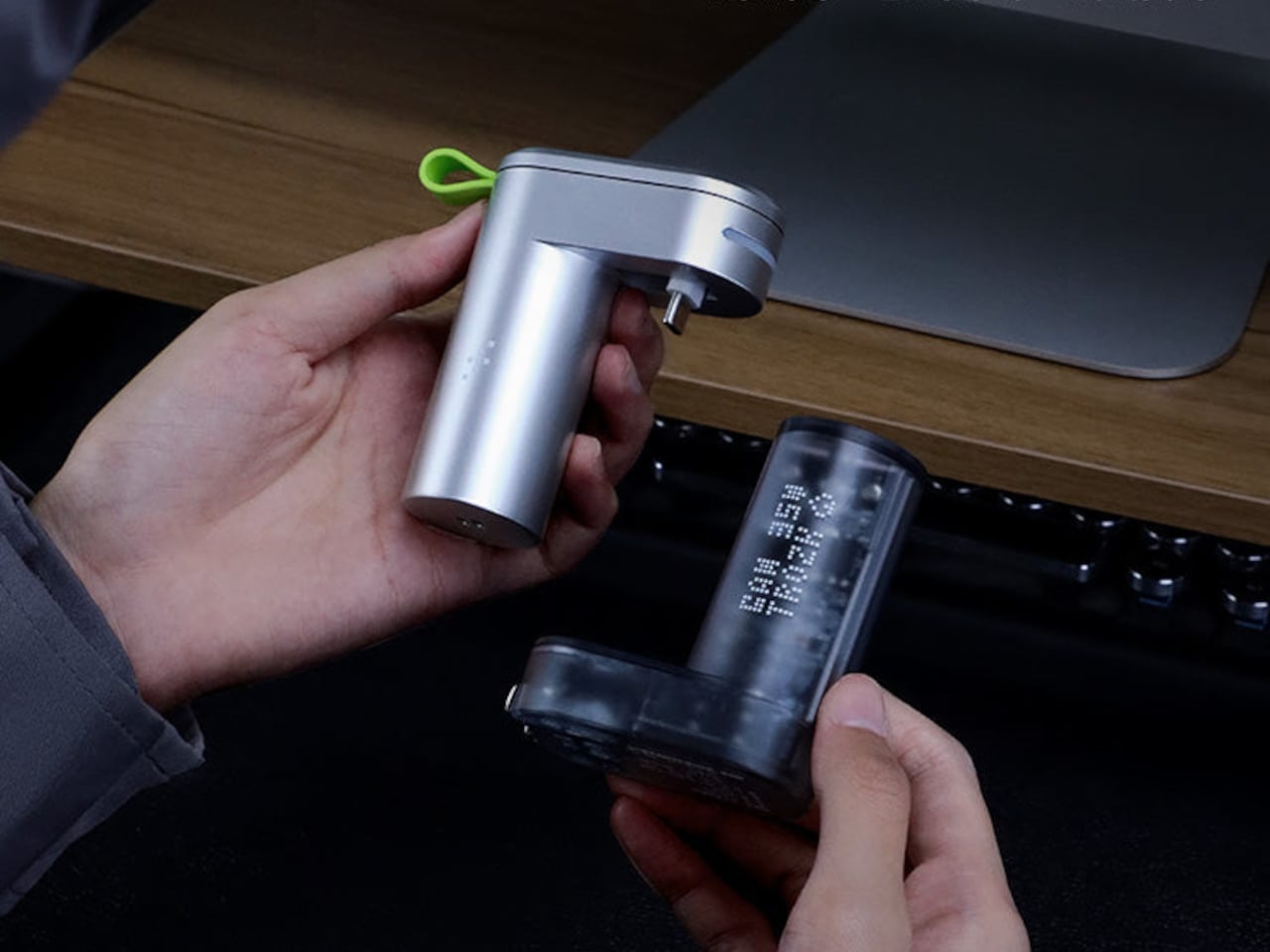
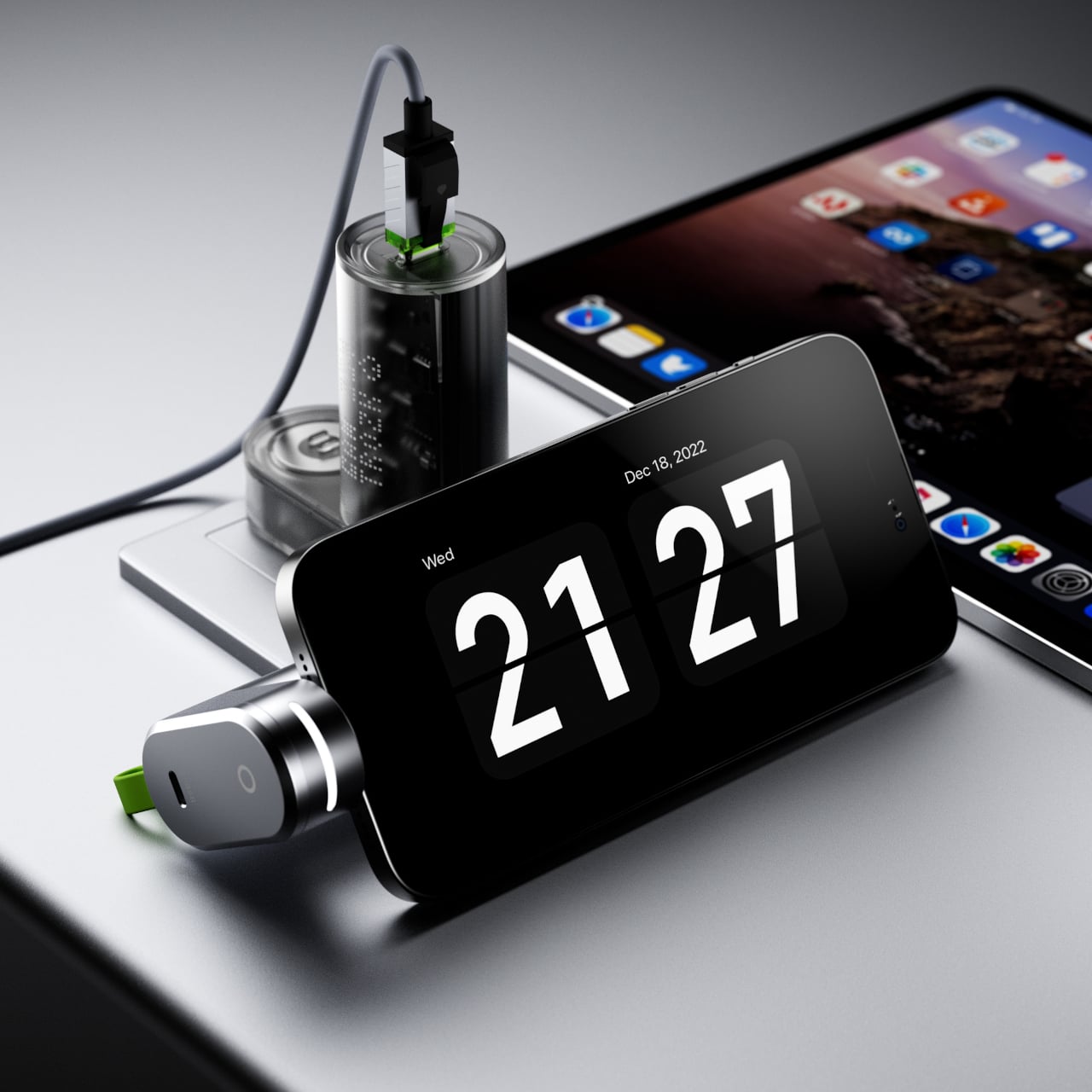
Trozk’s Binary Star tries to settle that negotiation for good. It’s a 3-in-1 device that pairs a 6,800mAh power bank with a 35W GaN wall adapter and throws in a phone stand for good measure. The two units clip together into a single compact form, which is where the “binary star” metaphor earns its keep, two objects perpetually orbiting each other, feeding the same energy cycle.
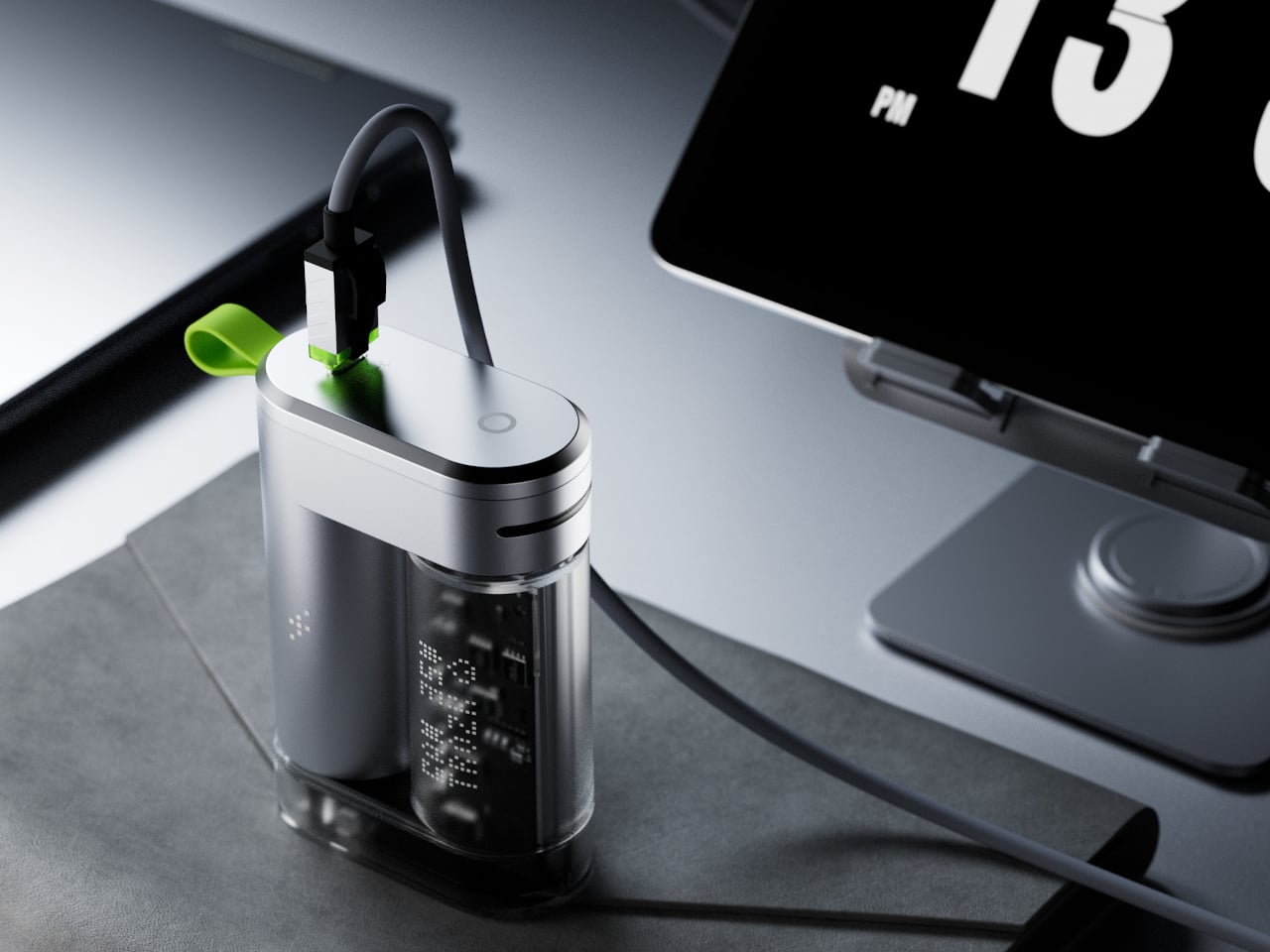
The design is the reason most people will notice the Binary Star before they read a single spec. The charging unit has a transparent body that puts the internal circuitry on full display, giving the whole thing a cyberpunk sensibility. A small green or pink loop at the top adds a pop of color against silver or pink housing, respectively, and doubles as a carry loop for clipping onto a bag.
The adapter side handles up to 35W through third-generation gallium nitride technology, which runs cooler and more efficiently than traditional silicon-based chargers. The power bank can push up to 22.5W, and all three ports across both units support fast charging. That means a phone, a pair of earbuds, and a tablet can all be drawing power at the same time without any of them getting shortchanged.
Inside the power bank are 26650 lithium cells, a step up from the more common 18650 format, contributing to longer battery life and better thermal stability. A pulsing star track light on the body keeps tabs on the remaining charge at a glance, so there’s no need to press a button or fire up an app to figure out how much runway you have left.
The phone stand feature is easy to overlook, but it’s probably the most welcome surprise for a desk setup. Rather than propping a phone against a keyboard while the Binary Star charges it, the design accommodates a phone at a comfortable viewing angle. It’s a small touch, but it’s the kind of detail that makes a charging device feel more considered than the average palm-sized brick in its price range.
At $49.99, the Binary Star sits comfortably below what you’d spend buying a quality GaN charger and a separate power bank of comparable capacity. That price covers both units, the green carry loop, and three fast-charging ports that all deliver real speed. For anyone who’s grown tired of managing a collection of charging accessories every time they leave the house, it’s a clean and credible solution.