Want Action Buttons on your Samsung Galaxy S24 Ultra? This Aramid Fiber case gives you three extra buttons

Most smartphone cases just act as a protective cover for your device, or an intermediary hub for attaching accessories. PITAKA’s new PinButton Case actually gives your smartphone new features. With three extra buttons on the left edge, the PinButton Case for the Galaxy S24 Ultra gives you three ‘Action Buttons’ that open apps or trigger features, allowing you to press buttons instead of scroll, minimize, swipe, and open apps from an app tray. Better still, the PinButton Case also comes with MagSafe compatibility, turning your Samsung Galaxy S24 Ultra into a better version of itself with features that would make Apple fanboys rather jealous!

Designer: PITAKA

Click Here to Buy Now: $63 $69.99 (Use Coupon Code “YD10%OFF” to get 10% off). Hurry, deal ends in 48-hours!

A protective Samsung Galaxy S24 Ultra MagSafe case with PinButtons

The PinButton Case is the logical next step for Pitaka’s case-making efforts. While the company has perfected the art of building some spectacularly beautiful MagEZ cases for both iOS and Android devices (with a glue-free Amber Magnet Film on the inside and patented woven Aramid fibers on the outside), the PinButton Case comes as the evolutionary upgrade to those cases. The PinButton sports a TPU bumper that cushions your phone from accidental drops, but upgrades the back with a woven Aramid fiber plate that’s 5X stronger than steel and can withstand impact and scratches without letting your phone face the brunt of the damage. A luxurious Nappa leather interior cushions the S24 Ultra’s glass back, keeping it scratch or crack-free. In between the two sits an array of magnets that gives your S24 Ultra MagSafe compatibility, allowing you to use a slew of third-party accessories or even PITAKA’s own MagEZ accessories with your phone.

Customized PinButtons for quick access to preset apps.

The crown jewel, however, has to be the actual buttons on the PinButton Case. Most phones come with 3 buttons – 2 for volume control, and 1 for standby mode… but the PinButton Case gives your phone a total of 6 buttons. These three extra buttons sit on the left edge of the phone, relying on NFC technology to function. Working just like the Action Button does on the latest iPhones, these three buttons are programmed to trigger any app, tool, or routine you choose, giving you a whole host of possibilities. You can use the buttons to work smart home features, open the music app or your favorite playlist, activate Silent or Do Not Disturb, work as a camera shutter button, or even serve as a shortcut to your favorite app like Maps, TikTok, or WhatsApp.

These ‘PinButtons’ can be customized right in the S24 Ultra’s Settings app. Set up an NFC shortcut or routine, and then press any of the PinButtons to assign the shortcut to that button. Setting up all the buttons takes under a minute, but saves so much time by eliminating the need to minimize apps, scroll through app trays, or switch between two active apps. In fact, the PinButtons even work faster than the iPhone’s own Action Button, which needs to be long-pressed to work.

Most people slap a case on their phone just as a protective measure… but the concept of adding a case that brings extra features to your phone just feels low-key incredible. More so, PITAKA’s had a long history building cutting-edge cases, so the PinButton Case is no different, providing stellar physical protection to your smartphone from drops, bumps, scratches, or any impact-based damage. Subtle lips on your screen as well as camera lenses give them a layer of added protection, and that gorgeous woven Aramid fiber back looks positively luxurious, while bringing space-grade durability to your device. An inclusion of a super-slim magnet array within the case means your Galaxy S24 Ultra can be used in tandem with all of Pitaka’s MagEZ accessories (as well as other MagSafe-compatible products), whether it’s a power bank, a wallet, or a car mount. If you do attach your phone to a car mount frequently, we recommend assigning one of the PinButtons to either Maps or Waze for quick access, with the other linked to Spotify for your favorite car playlist. The third one’s up to you, although if you really want to piss off Apple-lovers, turn it into a camera shutter so when the iPhone 16 with the Capture Button drops, you can say – Android (or PITAKA) did it first!

Click Here to Buy Now: $63 $69.99 (Use Coupon Code “YD10%OFF” to get 10% off). Hurry, deal ends in 48-hours!

The post Want Action Buttons on your Samsung Galaxy S24 Ultra? This Aramid Fiber case gives you three extra buttons first appeared on Yanko Design.
5 Exciting New Features of the Sonos Roam 2 You’ll Love

Sonos has unveiled the second generation of its smallest portable speaker, the Roam 2, priced at $179. This new model offers several improvements over its predecessor, enhancing usability and simplifying setup. The device can now function as a Bluetooth speaker straight out of the box, removing the need for initial setup through the Sonos app on a home Wi-Fi network. This is facilitated by the addition of a dedicated Bluetooth pairing button on the back, making the pairing process more straightforward than the previous model. Despite these changes, the new speaker retains the compact design and impressive sound quality that made the original a favorite among users.

Designer: Sonos

The battery life has been optimized, offering slightly longer usage time, with up to 10 hours of continuous playback on a single charge. The monochromatic logo design now matches the color of the speaker, available in Olive, Sunset, Wave, Black, and White. Enhanced tactile buttons have been introduced, improving usability based on customer feedback. The speaker retains popular features such as Sound Swap and the ability to share audio from a Bluetooth-compatible source across an entire Sonos system. While the battery is not user-replaceable like the Move and Move 2, Sonos CEO Patrick Spence emphasized that customer feedback has driven the prioritization of tactile buttons and immediate usability. Although the driver layout remains unchanged, Sonos claims that this model delivers rich, detailed sound and bass with the clarity, depth, and fullness expected from a larger speaker. It is also dustproof and fully waterproof, with an IP67 rating, ensuring it can handle various environmental conditions.

One notable change is the removal of Google Assistant support, a result of ongoing legal disputes between Sonos and Google. However, the Roam 2 supports Amazon Alexa and the Sonos Voice assistant, ensuring users still have robust voice control options.

In addition to this latest portable speaker, Sonos has introduced its first-ever pair of headphones, the $449 Ace. According to Sonos, the Ace headphones surpass the AirPods Max in several key areas. Firstly, the Ace headphones offer a longer battery life, providing up to 40 hours of playback compared to the AirPods Max’s 20 hours. This means users can enjoy their music for extended periods without needing to recharge. Secondly, the Ace headphones feature enhanced noise-canceling technology, which Sonos claims offers superior performance in both high and low-frequency ranges, ensuring a more immersive listening experience in various environments. Lastly, the Ace headphones come with a customizable sound profile through the Sonos app, allowing users to fine-tune their audio preferences, a feature not available on the AirPods Max.

Sonos Ace in Black and Soft White

Both new products showcase Sonos’s commitment to expanding its lineup while maintaining high standards of sound quality and design. The Roam 2 is now available for purchase globally, including at Best Buy and sonos.com, in five color options: Olive, Sunset, Wave, Black, and White. Alongside these product launches, Sonos is rolling out updates and bug fixes for the Sonos app, improving features such as Screen reader and VoiceOver and adding the ability to edit alarms, a much-requested feature.

Are you looking forward to summer, spending time next to the pool, beach, or lake, or want to amplify your music or podcast? If so, the Roam 2 might be just what you need, or perhaps it could make the perfect gift for Father’s Day. With enhancements that reflect Sonos’s dedication to providing high-quality audio experiences, this speaker is both user-friendly and versatile. Whether for home use or on-the-go adventures, the new portable speaker is designed to meet diverse listening needs with style and reliability.

The post 5 Exciting New Features of the Sonos Roam 2 You’ll Love first appeared on Yanko Design.

Spidique Chair Harmonizes Computational Intelligence And Human Touch For A Sustainable Future

The introduction of plastic in manufacturing has been a double-edged sword, celebrated for its unmatched convenience and versatility, yet criticized for its environmental impact. The true ecological footprint of plastic largely depends on its post-production management. Efficient recycling significantly diminishes its environmental harm. Embracing sustainable design by minimizing plastic use while achieving robust and elegant structures is a path toward eco-friendly innovation. Inspired by this philosophy, the designer of Spidique created a plastic-based chair, using advanced simulations to ensure structural integrity and aesthetic appeal.

Designer: Siqi Yang

Spidique draws inspiration from renowned designers Ross Lovegrove and Luigi Colani. Lovegrove is known for using cutting-edge technology to craft futuristic and organic forms, evident in Spidique’s mesh-like structure reminiscent of Lovegrove’s Formula 1 metal perfume bottle. Colani’s mastery of round, organic shapes is seen in the chair’s fluid lines. These influences combine to create a design that marries modern technology’s mechanical precision with seasoned craftsmanship’s artistic touch.

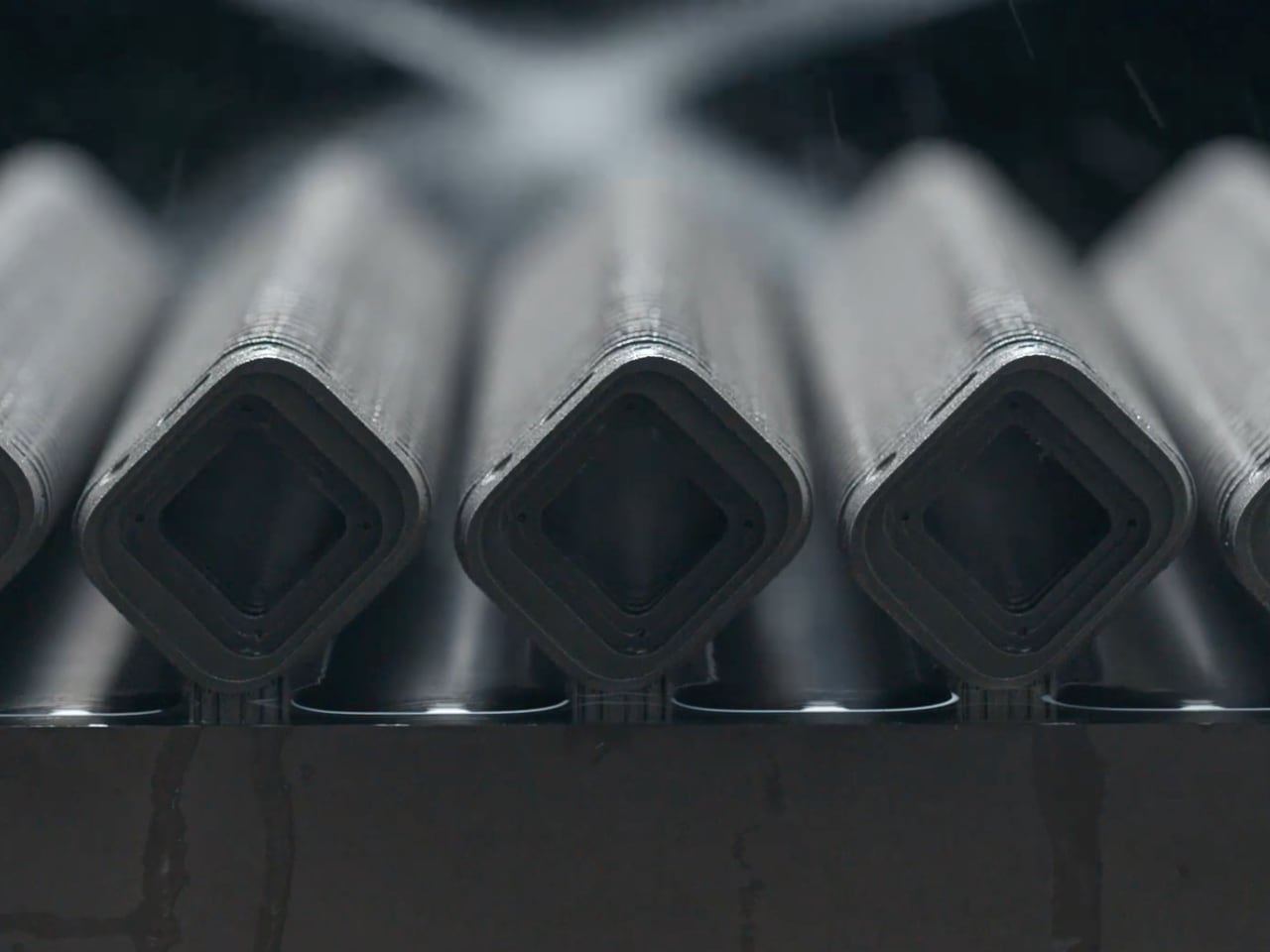
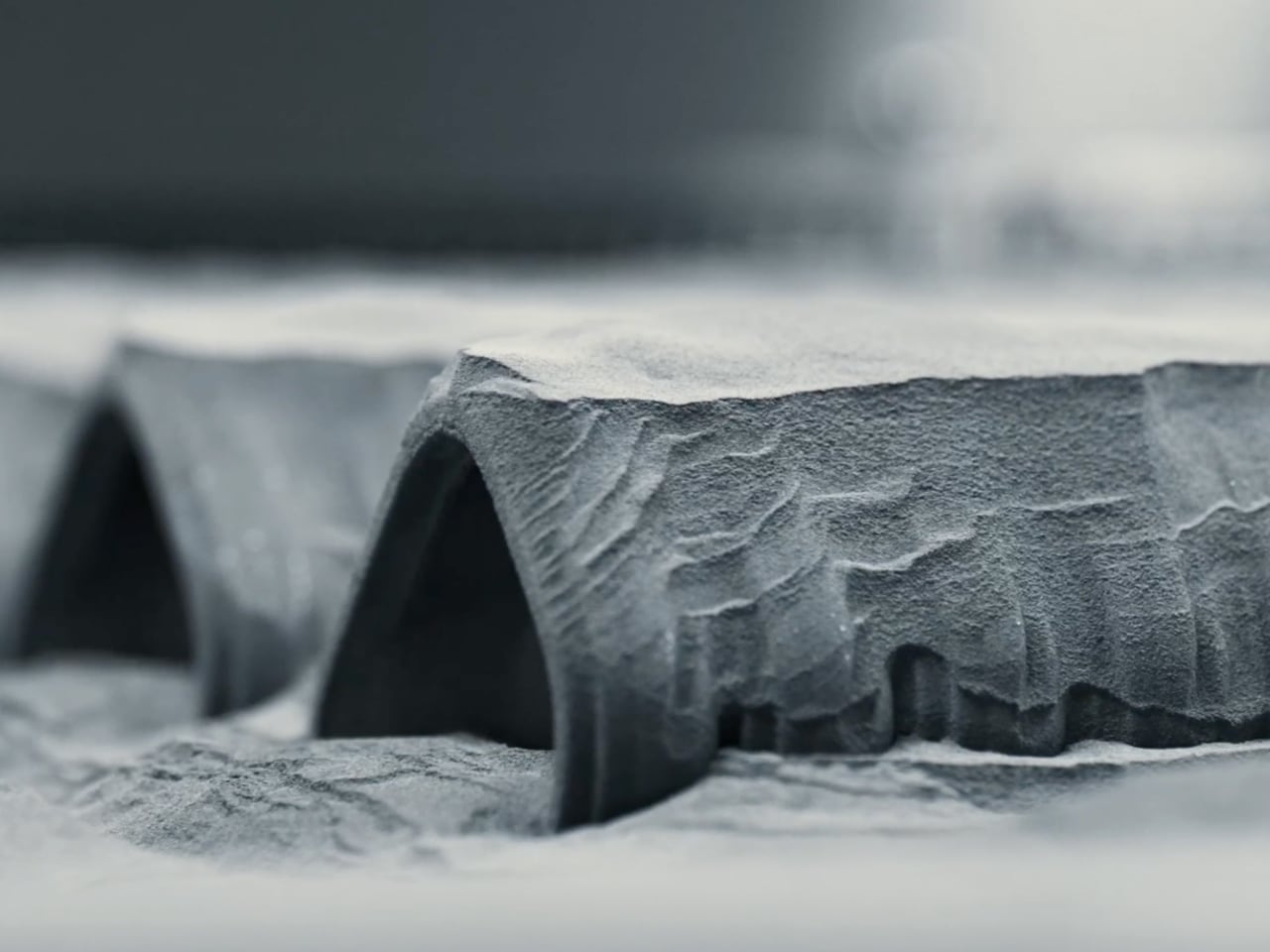
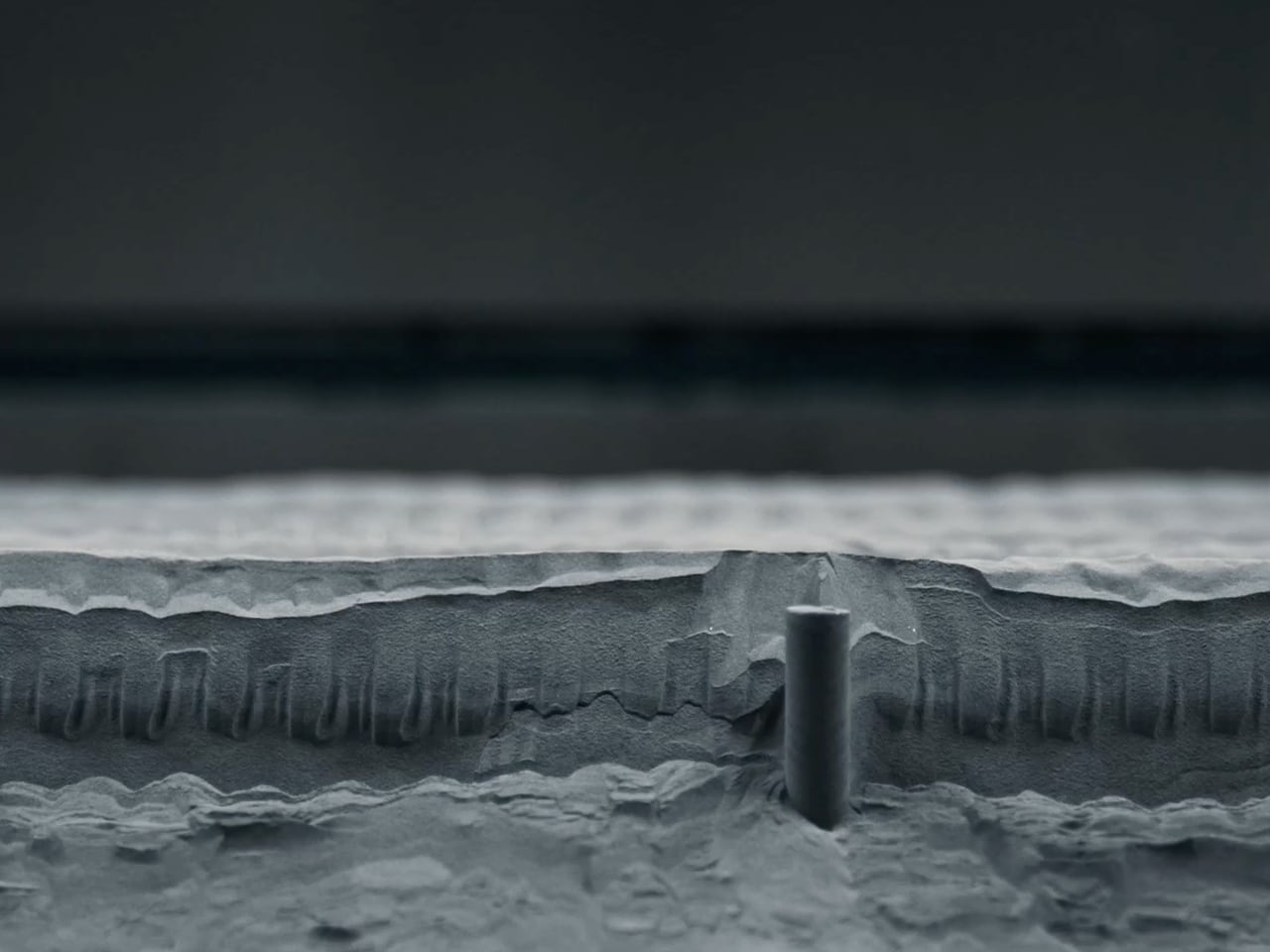
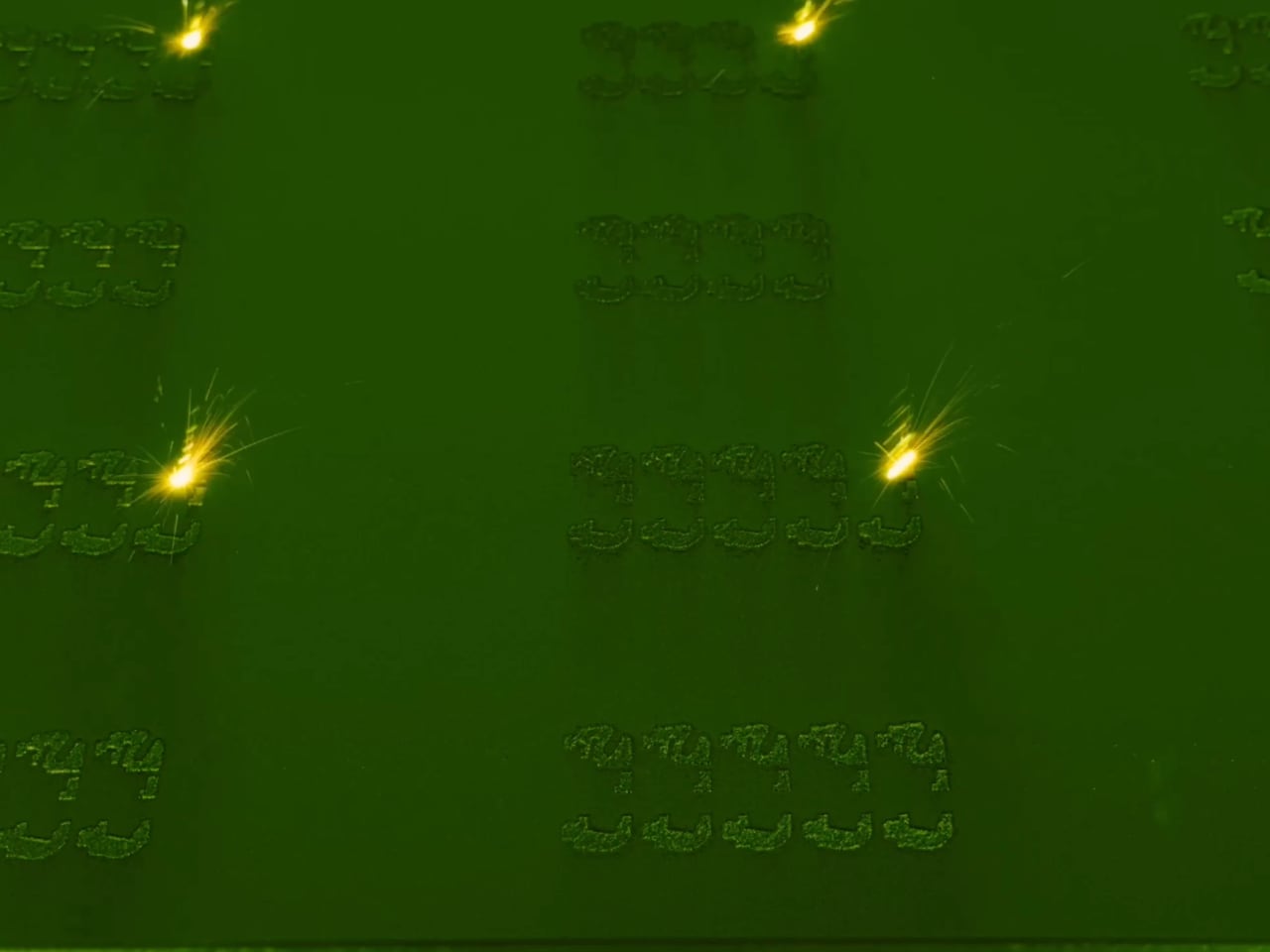
Spidique’s manufacture relies on 3D printing technology, utilizing Ameba software and the Bidirectional Evolutionary Structural Optimization (BESO) algorithm. This algorithm is critical for topological optimization, designing a chair that is both structurally sound and material-efficient.

The design process unfolds in several stages, beginning with algorithm execution, where parameters are set to generate the chair’s initial shape. This is followed by evaluation and refinement, where designers assess the initial model for ergonomic and aesthetic qualities, making necessary adjustments to enhance comfort and visual appeal. Next, the refined model is prototyped using 3D printing technology and undergoes rigorous testing for comfort, durability, and user feedback. Based on this feedback, further refinements are made to ensure the design is optimal for production.

The iterative process continues until the design achieves the desired balance of comfort, aesthetics, and sustainability. This process highlights the interaction between computational precision and human-centric design. While the algorithm provides a precise and optimized structure, the human touch ensures the design meets ergonomic and aesthetic standards.

The designer’s research emphasizes 3D printing technology in furniture manufacturing, exploring its potential to drive innovation and enhance sustainability. A comparative analysis contrasting traditional furniture production with 3D-printed methods involved surveys of 20 furniture designers and 100 consumers, along with creating multiple prototypes using CAD software and 3D printers. Findings revealed that 3D printing could reduce material waste by approximately 25% and shorten production time by about 30%, highlighting its potential for significant environmental and commercial benefits.

The post Spidique Chair Harmonizes Computational Intelligence And Human Touch For A Sustainable Future first appeared on Yanko Design.
The Airseekers Ultimate AI-Powered Robotic Lawnmower Mows Your Yard So You Don’t Have To

Experience top-tier automated lawn care with Airseekers TRON, the AI-powered robotic mower that redefines precision and convenience. Featuring 360-degree vision and auto-mulching capabilities, this advanced mower seamlessly cuts and mulches grass clippings, eliminating the hassle of disposal and simplifying your lawn maintenance routine. Equipped with a state-of-the-art 6-camera AI Vision navigation system and a TOF sensor, TRON captures extensive visual data, allowing it to plan the most efficient cutting paths and expertly avoid obstacles. This ensures precise localization and performance even in areas with weak GPS signals. Designed to handle complex terrains easily, TRON is your perfect partner for maintaining a pristine lawn, making traditional mowers obsolete. Embrace the future of lawn care with TRON unparalleled technology and intelligent design.

Designer: Airseekers

Click Here to Buy Now: $1299 $2499 ($1200 off). Hurry, only 3-days left! Raised over $2,030,000.

Experience the future of yard maintenance with our advanced, full-range visual technology. This innovation allows you to achieve precise localization and a comprehensive 360-degree perception of your yard. Gone are the days of dealing with inconvenient perimeter wires, complex manual setups, or the need for RTK stations. Instead, Airseekers technology enables you to map your yard in three dimensions using the power of AI panoramic perception. This cutting-edge feature ensures seamless and smooth lawn maintenance, even in areas with weak signal reception. This technology is designed to make lawn maintenance easy and hassle-free, giving you more time to enjoy your beautifully kept yard.

Enjoy worry-free mowing with the AI vision system, which skillfully identifies and avoids obstacles. The mower cuts, shreds, and mulches grass and leaves as it goes, laying finely chopped clippings back onto the soil for a neat and attractive lawn. Streamline your lawn maintenance with self-guided navigation, efficient path planning, auto-recharging, and uninterrupted mowing, eliminating the need to empty clippings midway.

Experience a straightforward setup, eliminating the need for manual wiring or RTK base stations. The 6-camera and TOF sensor system provides a comprehensive 360-degree view for in-depth lawn analysis. Using the app, you can effortlessly create virtual boundaries, designate no-go zones, and configure pathways between multiple zones.

This AI mower outperforms RTK-only models with a wide 360-degree vision for top precision and full lawn coverage, getting it right on the first try. Set your custom paths, angles, and patterns to match your lawn’s shape. Armed with six cameras and a TOF sensor, including three RGB cameras, dual stereo vision cameras, and one rear camera, the Air Vision system provides a detailed 360-degree view and depth insights. By analyzing extensive visual data using advanced AI algorithms, it ensures precise, stable positioning without RTK stations or signal poles.

The expansive multi-lens field of view continuously monitors every direction, enabling smarter obstacle avoidance. The system dynamically adjusts to static and moving targets in real-time, ensuring smooth operation without getting stuck. Leveraging AI deep learning and TOF sensors, the mower offers human-like perception for obstacle avoidance.

This advanced technology excels in narrow spaces and weak signal areas, maintaining performance under trees, close to eaves, or along tight fences. Its high-redundancy, multi-camera system captures vast visual data, staying stable even if a camera fails. Efficiently cutting and mulching grass and leaves, the mower spreads finely chopped debris evenly over the soil, ensuring a clump-free, nourished lawn.

Robust Algorithms Handling Extreme Situations: High-redundancy, multi-camera system ensures stability by capturing vast visual data, allowing seamless takeover if a camera fails or shakes.

Discover the sleek FlowCut Mowing system, featuring an X-shaped vortex chamber that uses aerodynamics to vacuum grass upwards, ensuring crisp cuts every time. The dual-layer blades swiftly shred grass while the chamber expertly mulches, creating a perfect, carpet-like lawn in one smooth motion. Enjoy the neatly trimmed grass without uneven edges, keeping your lawn healthy and visually appealing.

FlowCut Mowing System: The X-shaped chamber vacuums grass for crisp cuts, while dual-layer blades shred and mulch for a perfect, carpet-like lawn.

The adjustable cutting chamber offers a versatile mowing height range from 1.2 to 3.5 inches, ensuring the perfect trim while preventing grass scalping. With its anti-clogging cutting deck, the mower easily handles thick grass. The X-shaped vortex chamber maintains a steady airflow for seamless operation, making cutting through grass effortless.

Mastering Tall, Thick, and Wet Grass: Adjustable cutting height from 1.2 to 3.5 inches prevents scalping.

Enhance your lawn’s charm with precise app control, crafting vibrant patterns without height adjustments. The powerful rear-wheel drive, larger front wheels, and high-clearance EV chassis improve passability across various terrains. An intelligent self-rescue system enables smooth disengagement and continuous operation with automatic reverse and turning actions if stuck.

When Others Get Stuck, TRON Prevails: Powerful drive, high clearance, and smart self-rescue system.

The mower can climb hills up to a 65% slope and effortlessly traverse uneven ground or potholes. The 30-degree inward-angled wheels reduce grass tearing and ensure stability during straight-line driving. An edge-cutting mode ensures clean lawn boundaries.

This mower features a detachable and interchangeable battery, boosting convenience and adaptability. Powered by a high-capacity battery, it offers a reliable 3-hour runtime per charge and a quick 120-minute charging time, surpassing traditional gas-powered options. The robot autonomously recharges at low battery, precisely docking in GPS-challenged areas, and resumes mowing right where it left off.

High-Capacity Battery Excels Gas Power: TRON’s large battery provides 3-hour runtime, surpassing traditional gas-powered options.

Multi-tiered security measures prevent theft, including app alerts, GPS tracking with PIN code protection, and real-time location monitoring. The person who first sets up the mower is recognized as the owner, with the ability to authorize family members.

Meeting IPX6 waterproof standards, the mower is easy to clean with a convenient handle for lifting and washing the blades. Intuitive controls streamline complex functions, and a rain sensor triggers an automatic return to the charging station during rain. OTA updates continuously improve performance and features, enhancing precision over time with AI learning.

Diverse connectivity options offer easy remote management, including 4G, Wi-Fi, and Bluetooth. Autonomous operation is maintained with a programmed schedule, free from constant connectivity needs. The standard cutting width of 220mm efficiently covers about 250 square meters per hour, with an optional larger cutting disc kit for increased efficiency.

Changing cutting discs takes less than three minutes, and the “Quick Cut Mode” available in the app allows the mower to cover up to 400 square meters in just an hour with the larger cutting disc. Comprehensive safety features ensure protection for people, pets, and wildlife.

Great news for backers! Airseekers offers free 3D files and design blueprints for DIY mower garages with every pledge for TRON or TRON Max. These will be emailed directly to our valued backers at the end of the campaign, allowing for easy customization and cost savings.

Experience the future of lawn care with Airseekers’ AI-powered precision, intelligent obstacle avoidance, no wiring or signal issues, and hassle-free mulching for neat lawns.

Click Here to Buy Now: $1299 $2499 ($1200 off). Hurry, only 3-days left! Raised over $2,030,000.

The post The Airseekers Ultimate AI-Powered Robotic Lawnmower Mows Your Yard So You Don’t Have To first appeared on Yanko Design.
Solar-Powered Fridge Doesn’t Require Electricity And Can Run For 40 Hours Without Power

In the privileged corners of the world, it’s easy to take for granted the amenities that define modern life—consistent electricity, reliable refrigeration, and an abundance of technological conveniences. However, a significant portion of the global population struggles to access what many consider basic necessities. This disparity underscores a broader issue: our comforts, powered by unsustainable practices, contribute to long-term environmental degradation. EasyFreeze finds a good balance between the two, embracing more sustainable alternatives, which is not just a nod to the past but a necessary step toward a viable future.

Designer: Amped Innovation

Imagine living in Lagos, Nigeria, where daily power outages can last for hours. In such conditions, a conventional refrigerator is nearly useless, and consequently, very few people own one. However, Amped Innovation, a forward-thinking startup, has developed a game-changing solution: the EasyFreeze, a solar-powered fridge designed to operate efficiently even with an unreliable grid or completely off-grid. This innovation is particularly transformative for regions rich in solar energy but poor in infrastructure.

The EasyFreeze is a meticulously designed fridge and freezer capable of refrigeration in under 20 minutes (reaching 8ºC) and freezing in less than an hour (0ºC). Unlike typical cold storage solutions, it maintains its temperature for up to 40 hours during power outages or on cloudy days, ensuring reliability in even the most challenging conditions.

A significant innovation within EasyFreeze is its use of an “ice battery” instead of traditional lithium-ion batteries. Lithium-ion batteries, while common, are expensive, prone to overheating, have a shorter lifespan, and pose safety risks. The ice battery system in EasyFreeze utilizes ice pouches embedded within the refrigerator walls to absorb and release heat. These pouches are cooled by solar panels during the day or by grid power when available, enabling the fridge to remain cold for extended periods without active power. This system not only enhances safety and durability but also significantly reduces costs.

Amped Innovation is rolling out the EasyFreeze across more than a dozen countries in sub-Saharan Africa and Asia, focusing on communities that are hardest to reach. Small businesses, such as corner stores, benefit immensely from the ability to sell cold beverages and ice, while medical clinics and hospitals can safely store medicines and vaccines at precise temperatures. The fridge’s design prioritizes off-grid efficiency, with proprietary circuits, software, and mechanical designs to deliver city-like performance in rural settings.

One of the distinguishing features of the EasyFreeze is its durability. Unlike many other solar refrigerators that fail within a year of use, the EasyFreeze is built to last. The equipment is assembled locally to avoid steep import fees and reduce costs, ensuring affordability without compromising on quality. This holistic approach to product design and distribution makes EasyFreeze not only efficient but also economically viable.

The EasyFreeze uses R-600a refrigerant, which has zero ozone depletion potential (ODP) and a very low global warming potential (GWP). It is at least 38% more energy-efficient than other market options, thanks to its powerful 225W compressor and thick, 75mm closed-cell polyurethane insulation. These features ensure the fastest cool-down times and the longest autonomy—maintaining efficient cold storage for up to 18 times longer than other freezers during power outages.

While the EasyFreeze is not inexpensive, retailers charge around $900, it remains within reach of middle-class families in countries like Nigeria. This price point reflects a commitment to quality and long-term affordability, prioritizing the total cost of ownership over the initial purchase price. Amped Innovation’s focus on high-quality materials and efficient design means EasyFreeze offers unmatched value, making it accessible to a broader audience.

The EasyFreeze’s utility extends beyond developing regions. Following the wildfires in Maui in 2023, the fridge garnered interest from residents in Hawaii. With electricity costs in Hawaii being exceptionally high, EasyFreeze offers a payback period of just two years, making it an economically attractive solution for both disaster resilience and everyday use.

As we acknowledge the privileges that many of us enjoy, it is crucial to recognize the pressing need for sustainable innovations that can bridge the gap for those less fortunate. The EasyFreeze exemplifies how thoughtful, eco-friendly design can transform lives, providing reliable refrigeration in areas with unreliable power. Amped Innovation’s focus on efficiency, durability, and affordability positions EasyFreeze to become a conventional choice for refrigeration in parts of Africa and Asia that receive ample sunlight. This remarkable appliance not only meets the immediate needs of its users but also paves the way for a more sustainable future.

The post Solar-Powered Fridge Doesn’t Require Electricity And Can Run For 40 Hours Without Power first appeared on Yanko Design.
Sony’s new BRAVIA speakers are like wearing a home theater around your neck

No it isn’t a neck pillow, and it isn’t even one of those wearable air conditioners, the BRAVIA Theater U is – wait for it… a neckphone. Sort of like a headphone but not placed on your head, the Theater U is Sony’s alternative to booming soundbars and complicated home theater setups. If speakers are for human ears to listen to, why not just directly place them near your ears to begin with? The Theater U immerses you in 360° spatial sound without immersing your entire house. Wear it around your neck, pair it with a device using either a cable or Bluetooth, and the Theater U brings great audio to your ears without blocking the entire world out. Moreover, you can pair multiple neck-speakers to the same playback device like your TV, so that more than one person can listen to a movie or TV show at any given point in time.

Designer: Sony

This isn’t the first attempt at a neckband speaker, but Sony is incorporating its latest tech to create a compelling option. The key feature is Sony’s X-Balanced speaker unit, housed in a lightweight and flexible design. This unit promises clear acoustics and powerful sound pressure for a rich and satisfying listening experience.

But the real magic lies in the 360 Spatial Sound Personalizer. This tech, combined with compatible BRAVIA TVs, creates a customized Dolby Atmos experience. Essentially, the speaker tailors the sound to your unique head shape for a truly immersive effect. It’s like having a personal mini home theater draped around your neck. Given its proximity to your ears, you don’t need to crank up the volume to hear sounds the way you would an actual speaker system – this means fairly personal listening that won’t disturb anyone else beyond a certain radius.

The BRAVIA Theater U’s versatility extends well beyond movie nights. With an IPX4 splash-proof rating, you can wear it worry-free during light workouts or even take it poolside (just be mindful of splashes). Built-in voice pickup technology ensures clear communication during calls, making it a handy companion for work-from-home video conferences.

The speaker boasts Bluetooth connectivity for seamless pairing with various devices, not just your BRAVIA TV. Think laptops, tablets, and smartphones – you can use it for gaming, listening to music, or watching videos on the go. And for those who want to share the immersive experience, the Speaker Add function lets you connect another BRAVIA Theater U for a synchronized audio experience with a friend.

Battery life is a respectable 12 hours on a single charge, with a quick-charge function that delivers an hour of playback with just a 10-minute plug-in. This makes it ideal for extended movie marathons or long commutes.

The Sony BRAVIA Theater U Wireless Neckband Speaker is available for pre-order now for $299.99, fairly decent considering it’s replacing soundbars which are priced in the same range, but giving you the benefit of portability. While it might not be for everyone, it offers a unique and innovative way to experience immersive audio without disturbing those around you.

The post Sony’s new BRAVIA speakers are like wearing a home theater around your neck first appeared on Yanko Design.
Want a quick power nap at work? This clever chair will help you catch a few winks

Exhaustion is an epidemic. A staggering 62% of adults worldwide struggle with sleep deprivation, leading to a domino effect on health and productivity. Enter the Power Nap Chair, a revolutionary furniture design that tackles this challenge head-on.

Designed by Martin Tsankov, the idea of the Power Nap Chair came from his friend and business partner Milen Kisov, who discovered that power naps helped significantly boost his productivity at work. Scientifically proven to enhance cognitive function, memory, and cardiovascular health, short 15-30 minute naps are a game-changer. But finding a suitable space for napping at work has traditionally been a hurdle. Existing solutions like sleeping pods are bulky and expensive (not to mention that most offices don’t have them), and napping at your desk isn’t just uncomfortable, it’s also frowned upon… but the Power Nap chair offers a slick, cozy, and effective alternative.

Designers: Martin Tsankov & Milen Kisov

Sort of like a lounge chair meets a baby stroller, the Power Nap Chair comes with a relaxing design that you can lay down in, and a hood that cocoons you in your own personal private bubble. Simplicity reigns supreme – the chair is free of distracting technology, fostering complete disconnection. This makes it perfect for both open-plan offices and compact workspaces. Sustainability is woven into the very fabric of the chair. Carefully chosen, fully recyclable materials are used throughout, minimizing environmental impact.

The Power Nap Chair is built with three core components: a metal frame, an upholstered wooden body, and a foldable hood. The frame is crafted from machine-bent and powder-coated carbon steel profiles, echoing the chair’s triangular design for a sturdy foundation. The body is constructed from 104 individual CNC-milled birch plywood triangles, meticulously hand-sanded, and finished with non-toxic linseed oil. Each triangle is then encased in flame-resistant, biodegradable memory foam before being upholstered in a comfortable woolen fabric. The hood, made from the same fabric, is specially designed to fold for easy storage while providing essential privacy for napping users.

“Our main challenge is reversing societal stigma around resting in the workplace by creating a product fit for a modern lifestyle where relaxation and productivity intersect,” says designer Martin Tsankov, who won an A’ Design Award this year for the Power Nap Chair. The chair looks inviting, comfortable, and has a unique low-poly aesthetic that your eyes are sure to fall in love with right before they shut for your quick nap. The chair holds a design patent, although it isn’t in production just yet. A final prototype was, however, exhibited at the Stockholm Furniture Fair in February 2024.

The post Want a quick power nap at work? This clever chair will help you catch a few winks first appeared on Yanko Design.
The Art of Speed: Julie Mehretu’s BMW M Hybrid V8 Art Car

Julie Mehretu’s BMW M Hybrid V8 Art Car

In the heart of Paris, at the iconic Centre Pompidou, the air buzzed with anticipation. Art lovers, racing enthusiasts, and curious onlookers gathered, all drawn by the promise of a unique revelation. This was no ordinary exhibit; it was the world premiere of Julie Mehretu’s BMW Art Car, the 20th in a storied lineage that melds the worlds of high art and high performance.

Designer: BMW + Julie Mehretu

Julie Mehretu’s BMW M Hybrid V8 Art Car Art Car

Julie Mehretu, renowned for her expansive, intricate canvases, stood before the crowd, her excitement palpable. She had transformed the BMW M Hybrid V8, a machine of sheer power and precision, into a dynamic piece of art. This wasn’t just a car but a performative painting set to race in the legendary 24 Hours of Le Mans.

As the cover was pulled off the car, I can only imagine the gasps rippling through the audience. The vehicle’s surface was a riot of colors and forms, inspired by Mehretu’s monumental painting “Everywhen.” She had digitally altered photographs, layering dot grids, neon veils, and her signature black markings to create a three-dimensional masterpiece. This artwork was not confined to a gallery but was destined for the grueling, high-speed arena of Le Mans.

Mehretu’s painting “Everywhen”

In her studio, surrounded by sketches and digital models, Mehretu had envisioned the car as it would appear at breakneck speeds, the colors and shapes blurring into an exhilarating visual experience. “I imagined the car as if it had raced through my painting,” she explained. “I wanted it to seem like the car had absorbed the painting, transforming into something new and dynamic.”

This vision of speed and art was more than a personal achievement; it was a continuation of a legacy. The BMW Art Car series began in 1975 when French racing driver Hervé Poulain commissioned artist Alexander Calder to paint his car. Over the years, this intersection of art and motorsport has attracted legends like Andy Warhol, Roy Lichtenstein, and Jeff Koons, each artist bringing their unique perspective to BMW’s high-performance vehicles.

Julie Mehretu’s BMW M Hybrid V8 Art Car Art Car

Mehretu’s creation stood proudly among these iconic predecessors. Her Art Car showcased her artistic ingenuity and the technical brilliance of the BMW M Hybrid V8. Underneath the vibrant exterior lay a hybrid electric drivetrain capable of producing 640 horsepower and reaching speeds of 345 km/h. This blend of art and engineering made the BMW Art Car series so compelling.

In the weeks leading up to Le Mans, the car stopped at the Concorso d’Eleganza at Villa d’Este, where it was displayed alongside other historic BMW Art Cars. As Mehretu presented her creation, she spoke of the collaboration between artist and engineer, of turning a race car into a canvas that captured the essence of movement and energy.

Mehretu’s process of envisioning the Art Car involved imagining the physical and emotional experience of racing at high speeds. In her studio, she surrounded herself with sketches and digital models, immersing herself in motorsport and engineering. Her goal was to create a car that would not only perform on the track but also convey a sense of kinetic energy and fluidity through its design.

“I wanted the car to feel as if it had raced through my painting,” she said, highlighting her desire to merge art and performance. Mehretu’s artistic vision was to make the car appear as though it had absorbed the painting, transforming it into something new and dynamic. This transformation was visual and conceptual, as the car embodied the fusion of speed, art, and technology.

The car’s design elements—digitally altered photographs, layered dot grids, neon veils, and black markings—were meticulously chosen to create a sense of movement and energy. These elements, characteristic of Mehretu’s work, were applied to the three-dimensional surface of the car using 3D mapping technology. The result was a vehicle that seemed in perpetual motion, even stationary.

But the story didn’t end there. Mehretu’s involvement with BMW extended beyond the racetrack. She and the automaker had launched the PanAfrican Translocal Media Workshops, a series of events to nurture young artists across Africa. These workshops, set to tour cities like Dakar, Marrakech, and Cape Town, would culminate in a grand exhibition at the Zeitz Museum of Contemporary Art Africa. The fusion of art, technology, and social responsibility would inspire a new generation of creators.

Leading up to Le Mans, Mehretu’s BMW Art Car made an appearance at the Concorso d’Eleganza at Villa d’Este. This prestigious event, held on the picturesque shores of Lake Como, brought together a collection of historic and contemporary BMW Art Cars. Here, the 20th Art Car stood alongside works by Alexander Calder, Frank Stella, Roy Lichtenstein, Andy Warhol, Jenny Holzer, and Jeff Koons. Each of these artists had left their mark on BMW’s vehicles, creating a lineage of art that celebrated innovation and creativity.

In a special presentation, Julie Mehretu discussed her creation with Adrian van Hooydonk, Head of BMW Group Design. Their conversation delved into the process of transforming a race car into a performative piece of art, highlighting the collaborative effort between artist and engineer. Mehretu reflected on her experience at Daytona, where she witnessed the BMW M Hybrid V8 in action, feeling the power and precision that would soon bring her art to life on the racetrack.

Julie Mehretu’s BMW Art Car symbolizes artistic and technological synergy. As it sped down the track at Le Mans, the vibrant colors and dynamic forms would blur into a visual spectacle, capturing the essence of art and speed. This Art Car exemplified the power of creative collaboration and the enduring legacy of the BMW Art Car series, a tradition that continues to push the boundaries of what is possible in the worlds of art and motorsport.

The post The Art of Speed: Julie Mehretu’s BMW M Hybrid V8 Art Car first appeared on Yanko Design.

Futuristic mini PC is like a spaceship ready to take gaming to new heights

Is there a reason why desktops and even mini PCs mostly come in flat boxes? Electronics are still rigid objects, and they have to adhere to flat or similarly boxy designs with today’s engineering limitations. As such, a tower or a box is the most space-efficient container for these pieces that work together to provide all your computing needs. But what if space was less important than aesthetics, especially with today’s more compact hardware? That’s the kind of revolutionary mindset that this mini PC is trying to present with a chassis that is almost literally out of this world, looking more like a spaceship that’s ready to take off and elevate your gaming, and it does so literally as well.

Designer: ACEMAGIC

Mini PCs are no longer that alien to people’s ears, especially thanks to the popularity of the non-PC Mac mini and Mac studio. These computers emphasize compact designs that save you some desk space while still cramming as much power in a tiny boxy. That doesn’t have to be the only design available, however, especially with how small some computer components have become. After all, the latest breed of handheld gaming PCs are technically portable mini PCs, though with even bigger constraints when it comes to performance.

The ACEMAGIC M2A is a mini PC that throws design conventions out the door. Technically, its hardware can all fit in what would be a slim and minimalist rectangular box, but that would be boring and completely unoriginal. Instead, the company aimed to make its product stand out, almost literally, but making it look like a spacecraft similar to those you’d see on sci-fi flicks and shows. Specifically, the main body itself tapers slightly to the side and then splits upward and downward into fins. The style is largely polygonal, which matches the sci-fi theme, with LED accents in front and on the tip of the wings for added flavor.

The design admittedly takes up more vertical space on your desk, and it won’t be something you can conveniently place underneath your monitor (unless that monitor is set up on an ergonomic stand or arm). It is, after all, designed more to have some visual impact rather than space savings, but it does have one practical benefit, whether intentional or not. The bottom fins act as legs that lift the mini PC up, allowing for better airflow into the bottom-mounted fans.

Internally, the ACEMAGIC M2A tries to be a compact gaming PC, and it seems to meet that description, depending on your needs. It practically uses hardware from 2022, so it might not be up to snuff when it comes to more demanding AAA titles today. There are definitely more powerful mini gaming PCs in the market today, ones with the latest CPUs and GPUs, which makes you wonder if this spaceship-like computer’s high price tag is really worth that distinctive design.

The post Futuristic mini PC is like a spaceship ready to take gaming to new heights first appeared on Yanko Design.
Sonos Ace challenges Apple’s AirPods Max with superior headphones

Stepping into the highly competitive personal audio market, Sonos launches the Ace, their first over-ear headphones. In a landscape dominated by heavyweights like Apple’s AirPods Max, the Sonos Ace aims to be the brand’s ace in the hole, promising to deliver an unparalleled listening experience. Crafted with precision and care, these headphones are designed to combine high fidelity sound with exceptional comfort and a sleek, timeless design. The Ace better live up to its name, offering a compelling alternative in a market where excellence is the baseline expectation.

Sonos Ace in Black and Soft White

Designer: Sonos

Reflecting a meticulous design process that spans over three years, the Sonos Ace emerges as a product of intense collaboration across technical and creative disciplines. Aki Laine, director of industrial design at Sonos, described the Ace as a pair of headphones that feel as good as they look. Available in two sophisticated colors, Sonos Black and Soft White, these headphones were carefully selected to ensure inclusivity and appeal. The headphones use flexible plastics for a lightweight feel and sturdy metals for structural integrity. The ear cushions and headband are covered in vegan leather, providing a durable yet soft touch that supports extended wear.

Sonos Ace in Black

Sonos Ace Soft White

Sonos Ace Soft White

Aki Laine emphasized the importance of comfort in the Ace’s design, noting, “The lightweight memory foam and vegan leather ensure comfort for long-term use.” The headband and ear cushions are padded with memory foam, designed to conform to various head shapes and sizes. This attention to detail ensures a secure fit without exerting excessive pressure, even accommodating accessories like glasses and earrings. The design also incorporates visual and tactile cues, such as the textured logo and color-coded ear cups, to help users quickly orient and operate the headphones. Comfort is a key focus for the Sonos Ace, ensuring that users can wear the headphones for long periods without discomfort. Extensive testing was conducted to achieve the right clamping force and weight distribution, making sure the headphones are stable and provide a snug fit without causing hotspots. The ear cups are designed to accommodate various ear sizes and shapes, enhancing overall comfort.

Engineered to deliver a high-quality audio experience, the Sonos Ace excels in acoustic performance across different media types. Each ear cup houses custom-designed 40mm dynamic drivers, providing precise and accurate sound across all frequencies. With eight microphones, four on each side (three external and one internal), the Ace delivers advanced active noise cancellation. The external microphones detect ambient noise, while the internal microphones monitor and adjust the sound in real-time to optimize the listening experience. This setup ensures that whether you’re immersed in music, podcasts, or movies, the audio remains clear and immersive.

Controls on the right ear cup: Slide the Content Key up or down to adjust volume. Press it to pause or resume content and take calls. Another button lets you quickly switch between ANC and Aware mode.

Reverting to an analogue hardware user interface, the Sonos Ace enhances ease of use without relying on visual confirmation, and I’m so delighted that they did. The tactile, mechanical slider—dubbed the Content Key—allows users to adjust volume, skip tracks, and manage calls with ease. It provides a reliable and intuitive alternative to touch controls, which can be prone to errors. This thoughtful design extends to the headphones’ connectivity options. The Ace supports both wireless and wired connections, making it versatile for various use cases. Multipoint connectivity allows the headphones to connect to two devices simultaneously, enabling effortless switching. Additionally, a single button press lets the Ace connect with Sonos home theater systems, offering an immersive Dolby Atmos experience with dynamic head tracking.

Integrating several eco-friendly features into the Ace supports sustainability. The headphones incorporate 70% post-consumer recycled plastic in their construction. The carry case, made from 75% recycled polyester derived from plastic bottles, complements this commitment to sustainability. Additionally, the ear cushions are easily replaceable, extending the product’s lifespan and reducing waste. Aki Laine highlighted Sonos’s dedication to creating long-lasting products, saying, “At Sonos, we are committed to creating products that last. The Ace incorporates 70% recycled plastic and features replaceable ear cushions, aligning with our sustainability goals.”

Boasting impressive battery life and convenient charging options, users can enjoy up to 30 hours of listening with active noise cancellation enabled. A rapid charge feature provides three hours of playback with just a three-minute charge, ensuring you never miss a beat even when time is short. The smart power management includes auto-pause sensors that stop playback when the headphones are removed, conserving battery life.

Sonos Ace is perfect for remote work

The post Sonos Ace challenges Apple’s AirPods Max with superior headphones first appeared on Yanko Design.