Design is an ever-evolving stream, innovation often stems from addressing everyday challenges. The KOI Cloths Hanger PD1 is a testament to this principle, as it sets out to tackle the inconveniences associated with traditional clothes hangers. Recognizing the limitations of bulky and non-portable designs, the KOI Hanger introduces a clean, minimal, and modular approach, redefining the way we organize our wardrobes.
Traditional clothes hangers, while serving their basic purpose, have long been associated with a lack of portability and impractical bulkiness. Recognizing this shortcoming, the creators of KOI set out to redefine the clothes hanger, envisioning a product that not only serves its fundamental purpose but also aligns with the contemporary lifestyle where convenience and versatility are paramount.
The KOI Clothes Hanger emerges from a design brief that prioritizes innovation and user-centricity. Focusing on modularity and portability, the objective was to create a clothes hanger that seamlessly integrates into the lives of individuals who prioritize convenience, versatility, and style in their wardrobe organization. The result is a sleek and minimalistic design that addresses the drawbacks of traditional hangers while introducing a range of features that cater to the modern user.
This hanger boasts a clean and minimalistic aesthetic that aligns with modern design sensibilities. Its modular design allows for easy assembly and disassembly, promoting hassle-free use. The primary body and head attachment interlock seamlessly through a snaplock mechanism, ensuring a secure and effortless connection between the male and female components. This not only enhances the user experience but also adds a touch of sophistication to the product.
At the heart of this hanger is its innovative snaplock mechanism. The primary body and head attachment fit together with precision, providing a reliable and user-friendly solution for various applications. This mechanism not only ensures a secure connection but also simplifies the process of assembling and disassembling the hanger, offering users a hassle-free experience.
One of the standout features is its universal attachment. Part A’s male component and Part B’s female counterpart ingeniously fit together via the versatile snaplock mechanism. This design not only guarantees a secure connection but also provides users with the flexibility to choose multiple orientation options. The KOI Hanger adapts to diverse needs and configurations, making it a versatile solution for various wardrobe setups.
This Hanger goes beyond conventional expectations by introducing a saree attachment (An Indian traditional garment). This innovative addition allows users to hang a variety of clothes, including shawls, ties, scarves, and more. The saree attachment, with its option for multiple orientations, transforms into an all-in-one component, catering to the diverse wardrobe needs of users.
The KOI Cloths Hanger stands as a testament to the power of innovation in addressing everyday challenges. By reimagining the traditional clothes hanger, KOI has not only created a practical solution but also introduced an element of style and versatility to the realm of wardrobe organization. As we embrace a future where design meets functionality seamlessly, this Hanger sets a new standard for what a clothes hanger can be.
Gone are the days when lighting designs were boring and typically designed objects that did nothing but add light to a living space. A well-designed lighting fixture should not only have the ability to illuminate any living space but also add that extra oomph factor! I mean, of course, we need them to see in the dark, but as highly functional as they should be, a lighting fixture also needs to be aesthetically pleasing, adding an attractive and visually soothing element to your home or office space. From a ghost-like chandelier to a unique book-mounted reading light– these innovative lighting designs are what you need to elevate your living or working space!
1. Sunne Light
Called the Sunne Light, this innovative solar light is self-powered and it harvests sunlight during the day to ensure your home is lit up throughout the night. The extraordinary sunlight-mimicking lamp collects solar energy, while also powering itself using that energy.
Why is it noteworthy?
The Sunne light features photovoltaic cells that are designed to be hung in front of a window. It is a suspended lighting fixture that collects solar energy through the day and then uses that energy at night to illuminate your home. It has an integrated battery that stores the solar energy it collects.
What we like
Collects solar energy and uses it to power itself
Remains suspended in air, not occupying any precious real estate in your home
What we dislike
Heavy price tag
Since the lamp is suspended, it could be difficult to clean and maintain
2. Chapeaux Table Lamp
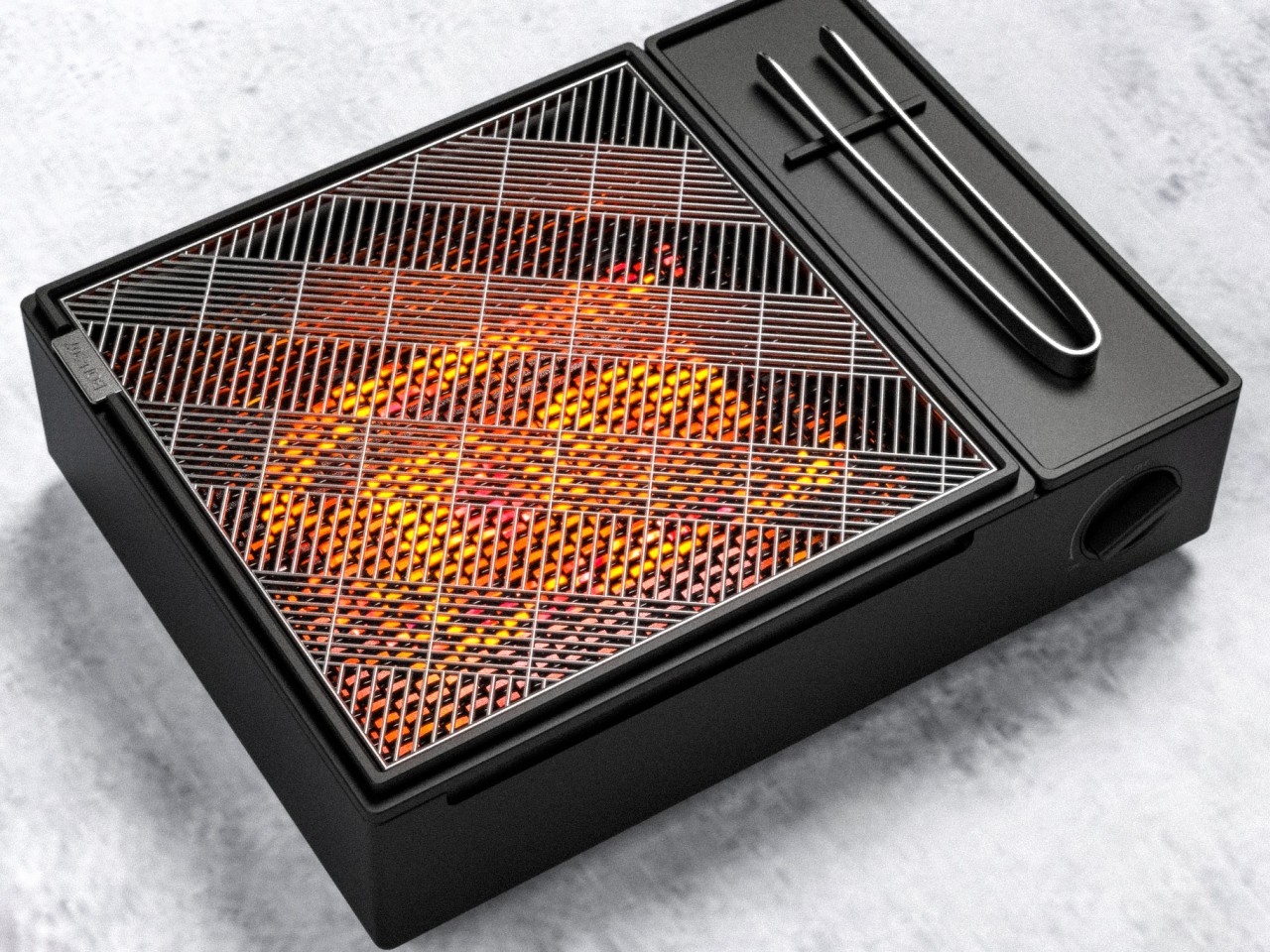
The stunning Chapeaux Table Lamp is considered worthy to be part of a magic show. It is an enchanting and mesmerizing lighting fixture that will instantly grab your attention owing to its super unique design.
Why is it noteworthy?
One of the focal features of the lamp is the transparent pyrex body which is accentuated with a cylindrical steam that widens up at both ends. The bottom section supports and stabilizes the lamp while the top embraces the hat diffuser. Once the lamp is switched on, the entire body is highlighted with pretty subtle reflections.
What we like
Features a floating light source, that subtly conceals all the technical bits
What we dislike
Since it is transparent, it needs to be cleaned regularly, to ensure it doesn’t have a dirty/murky appearance
3. Amber Crystal Light
Gingko’s Amber Crystal Light looks like a fortune-telling orb that rests on a wooden base, with intricate designs etched into the center of the glass orb. Once you switch the light on, the art scatters light in different directions, producing a stunning glowing effect that borders on visual magic.
Why is it noteworthy?
The Crystal Light features five different artworks within the crystal orb – dandelion, galaxy, the solar system, Saturn, and a motif of Earth as a globe. The different motifs represent different emotions such as hope, serenity, curiosity, and a genuine love for space, science, and nature.
What we like
Offers up to 16 hours of stunning illumination with gorgeous designs
What we dislike
The lamp seems quite fragile and breakable, so should be kept away from kids and pets
4. Soft Serve Lamp
The Soft Serve Lamp is an adorable lighting design by Stockholm design studio Crème Atelier, and mimics a “swirly ice cream”. It is available in a range of delicious sorbet colors!
Why is it noteworthy?
The Soft Serve lamp is 3D-printed and is inspired by pastries and desserts, which in my opinion makes a great source of inspiration for lighting designs.
What we like
Made to order, which makes the entire production method pretty swift and sustainable according to the agency
What we dislike
Seems more decorative than functional to be honest
5. Emotional Lab Light
Dubbed the Emotional Lab Light, this unique and ethereal-looking lighting design was created by interior designer Hania Jneid. Jneid was inspired by chemistry sets, and she drew influence from them to create her eclectic and elaborate floor lamp.
Why is it noteworthy?
The Emotional Lab floor lamp includes a tall and slender metal lamp that provides support to multiple beaker-like glass vessels that illuminate any space they’re placed into with a warm and inviting flow.
What we like
Influenced by the designer’s childhood memories of chemistry lab
What we dislike
Looks easily breakable and fragile, and not very moveable
6. Skyview
Dubbed Skyview, these lamps can be utilized for light therapy, but they also manage to be quite aesthetically pleasing. They are designed by Bios by “documented scientific research”, which means they can simulate exposure to sunlight in the comfort of your home.
Why is it noteworthy?
The lamps can simulate sunlight even when the sun is not out. They’re also well-designed, allowing them to naturally merge with your home, ensuring they don’t look out of place in your living room, bedroom, or home office.
What we like
Can be programmed to adjust to the time of day and the natural light outside
What we dislike
Hefty price tag, which may not be accessible to everyone
7. Bowie 2.0
The Bowie 2.0 is a genius reading light that illuminates not only the pages of your book but also your entire room. The light is designed like a leather fashion accessory that can be clipped onto the left and right sides of your book cover.
Why is it noteworthy?
The LEDs are built into the light’s strap, casting a soft and lovely glow that is still strong enough to let you read in the pitch dark. It casts warm LED light on your pages, letting you read with ease, turn pages, and move around without the light causing any discomfort,
What we like
Features touch-sensitive brightness settings built in that let you adjust the LED brightness to suit your needs and requirements
What we dislike
8. Ghost Chandelier
As its name suggests, the Ghost Chandelier is ghostly and ghoulish yet quite graceful. It is a simple and alluring lighting design, that instantly captures your attention, and has you completely mesmerized.
Why is it noteworthy?
Created by Kristian Sofus Hansen and Tommy Hyldahl of NORR11 for the Danish design studio, the artistic lighting design intends to cast a myriad range of shapes and patterns in your home. The stunning piece is inspired by minimalist art.
What we like
The chandelier looks different from different viewpoints
Builds a moody and seductive ambiance in your home
What we dislike
Looks difficult to clean and maintain
9. Matin Lamp
Designed by Inga Hempe, the Matin Lamp is a contemporary and modern interpretation of a common lighting fixture that uses a steel wire frame to condense the form to its most basic.
Why is it noteworthy?
Its unique pleated lampshade gives a distinctive character to the product, creating a play of shapes and shadows that contrast with its plain block of color.
What we like
The lamp is a harmonious contrast of order and chaos with repeating patterns of flowers, petals, and leaves
What we dislike
The lamp may be too quirky and eclectic for some
10. Nebula Desk Lamp
Designed by COG Design Studio, the Nebula Desk Lamp is a basic yet defined form of lighting built via repetition, transformation, and an innovative and unique combination of distinctive geometric shapes.
Why is it noteworthy?
The Nebula Desk Lamp was designed by giving a subtle and formative beauty to flat shapes using three-dimensional changes in direction and bending. This creates a refreshed and interesting form for a lighting design.
What we like
The innovative design gives the impression of a nebula in space, which lends the design its name
What we dislike
There is no option to change/customize the design as needed
Camping tools have gone through a serious transformation over the years. So much so that today you can cut down on how much you want to pack and still have all the essentials you will need at the camp. Case in point, the Camfy that is bringing an innovation to the camping knives, scissors, tongs, and a skewer holder to make this trend stronger.
Given what may, knives and scissors are considered two of the most essential tools you must have when you’re on an adventure or a trip to a campsite. Preparing a gourmet meal or sitting by the barbeque at the beach are part of every outdoorsy must but if you are not carrying the right gear, you are left wondering when the moment of truth arrives.
That said, it’s not the selection of the right tools, in fact, the correct tools you are carrying should be safe and useful. If the knife for instance is not securely kept in the sheath it can cause serious injury when pulling out of the camping kit. Camfy has pulled out a unique knife from its repertoire to give campers a meaningful tool.
The camping knife is designed to retract back into its sheath immediately after use. A combination of a small knife and saw, this cleverly thought knife is created to prevent accidental incidents that can happen when the knife is not kept in the sheath after its use. It has an interesting spring mechanism triggered by a button. On the press of a button, the knife would spring back into the handle, which is also a sheath.
The compact and useful tool next in the Camfy design league is the scissor and tong unification. The wonderful idea marries the scissor with the tong at the end of the blade that can grip food, so it can be used in unison for cutting and grilling meat and other food.
The most enticing here on the list of tools is the skewer holder to facilitate grilling. Designed after the clothes pin, this brushed metal item has little holes in the top to hold the skewers over the fire to grill. Camfy has almost all the things you need on hand to create gourmet outdoor meals, but if there is anything else, we are sure the designer can rethink convenience and safety for the same.
3D scanning has traditionally been the domain of big production studios and companies because of the size of the equipment and their prohibitive costs. With the arrival of handheld scanners, however, the doors were thrown wide open for anyone in any field to make their own 3D models from real-world objects, whether it’s for fun, art, health, or profit.
Typical handheld 3D scanners work great when working with small objects that are no larger than the device itself. Of course, real-world objects like car parts, whole vehicles, and even human bodies are quite big and push these smaller scanners to the limit. Enter the new Revopont RANGE 2, the latest in a line of lightweight but powerful 3D scanners designed to handle large objects without breaking a sweat, making sure that your creativity and productivity aren’t limited by the size of your model.
Revopoint RANGE 2 is a portable handheld dual depth camera structured infrared light 3D scanner designed for capturing large objects like furniture, people, and vehicles.
Because handheld 3D scanners work by guiding the depth cameras across and around the target, the devices need to be able to capture a great amount of detail with great depth quickly and steadily with accuracy and precision. That’s a rather tall order for a small device, especially one that is made to be accessible to both amateurs and pros alike, but Revopoint’s expertise really shines through with the upgrades that its RANGE 2 3D scanner packs in a compact and portable form. For example, thanks to new depth cameras that have double the sensor size, the Revopoint RANGE 2 can work on a distance ranging from 400 mm to 1,300 mm, a 60% increase that makes it even faster to capture large objects compared to the previous generation, and can scan an area up to 860 x 1380 mm in size.
Scan of the body by Revopoint RANGE 2. Image credit: PUTV
Range isn’t the only thing that’s bigger and better on the RANGE 2, of course. Four flash LEDs banish shadows for a more uniform color capture, while an improved RGB camera with a bigger aperture is able to capture more color information, ensuring clear color capture with higher levels of detail for more accurate textures and realistic-looking 3D models. An upgraded tracking system utilizes the device’s built-in 9-axis IMU (Inertial Measuring Unit) to keep the scan steady even if your hands aren’t. Four Infrared LED fill lights also make it easier to recognize markers, resulting in more accurate frame stitching in marker mode.
Angel Candelabra scanned with Revopoint RANGE 2. Image credit: dfodaro
Thanks to these powerful features, the Revopoint RANGE 2 is even more versatile and as flexible as before. With Wi-Fi 6 and USB-C connections, you can be assured that transmitting critical data will be fast and stable. As before, the scanner is compatible with Windows, macOS, Android, and iOS devices, functioning in handheld mode or set on a stand in front of a turntable. And with the Revo Scan 5 software, the scanning process couldn’t be easier, especially with post-processing features, such as frame editing, hole filling, overlap detection, etc, to enhance your workflow.
With the Revopoint RANGE 2 3D scanner, you have a whole new world of large objects you will be able to scan. You can easily scan car or mechanical parts, offering a cost-effective and high-performance way to study them through reverse engineering or produce replacements. Archaeologists, scientists, and museum creators can now also digitize artifacts to preserve them for posterity or turn them into XR experiences. And, of course, artists and creators now have a portable yet powerful tool to bring their ideas to life. Scanning big objects for your big projects will no longer be a problem with the new and improved Revopoint RANGE 2!
Touted as the world’s first power-bank with its own turbo-cooling feature, the Icemag power bank keeps itself (and your phone) breezy while charging. An ultra-silent fan moves at speeds of 8000 RPM, actively cooling the battery pack inside while the Icemag wirelessly charges your phone, preventing anything from heating up during the charging process.
Sharge has pretty much solidified its reputation for building some of the most incredible-looking charging equipment of our time. Whether it’s the transparent 170W power bank with its own LED display, or the tiny yet indomitable Flow Mini power bank that’s small enough to blend right into your phone’s design, becoming its dedicated second battery, Sharge’s built a rather wonderful ecosystem of charging gear that’s both powerful and unmistakably eye-catching. The Icemag joins that ecosystem as a first for both Sharge and the world – the 10,000mAh MagSafe battery pack comes with its own active cooling system that pushes hot air out from around the lithium-ion battery, increasing its life and overall efficiency as it charges your phone. It also comes as a rather opportune time, as Apple silently killed its own MagSafe power bank, leaving a void in the marketplace.
The Icemag has the same proportions as Apple’s MagSafe power bank, albeit with that aforementioned cooling system and a whopping 10,000mAh battery that charges your entire phone twice over with enough extra juice left to spare for a third charge. It sports Sharge’s unmistakable aesthetic, with a transparent panel on the front that lets you peer into the electronics inside – namely the lithium ion battery, the PCB, and that active cooling system.
The active cooling system kicks in the second the Icemag is connected to a device (whether through MagSafe or via USB-C cable). The tiny fan outputs an impressive 8000 RPM, helping circulate air within the Icemag to keep the battery actively cooled (rather than relying on a metal heat-sink like other charging apparatus). The fan operates at a deadly silent <25dB, and it was practically inaudible in the buzz and chatter of the CES floor. What was noticeable, however, was the RGB lighting around the fan that changed colors as the Icemag juiced your device. It served as a nice visual indicator of the Icemag’s activity, especially given Sharge’s tech-geek and gamer-centric audience.
The compact power bank snaps satisfyingly onto the back of your MagSafe phone, beginning the charging process instantly. An indicator on the side shows exactly how much power the Icemag’s battery still has, while a USB-C port on the base supports both power in as well as out. This means the USB-C port can be used to charge the Icemag itself or can be used to connect the Icemag to another phone to charge it conventionally (without using the MagSafe wireless charging feature). The Icemag supports pass-through charging too, letting you charge it while it wirelessly juices your smartphone, and as far as charging speeds go, the Icemag’s wireless charging coil outputs a maximum 7.5W. If you want to tap into higher speeds, connecting your phone/device via USB-C gives you an output of 20W, charging your gadgets significantly faster for when you’re in a bind.
The Icemag balances its responsibilities of being handy, eye-catching, and functional rather well. It’s compact for its capacity and weighs just 223 grams (7.9 ounces), allowing it to securely attach to the back of your phone without any problems. The 10,000mAh battery is absolutely perfect for people who blow through their phones during the day, giving you an extra battery that can support your phone multiple times. The transparent aesthetic and active cooling system, however, steal the limelight for the gorgeous nerdy-cool aesthetic they give the Icemag. The term nerdy-cool probably gets used literally in this sense because of the Icemag’s ability to keep itself at manageable temperatures as it charges your phone. I dare you to find a MagSafe power bank that’s as gorgeously functional as this one…
Too Little, Too Early… The Wehead has a long way to go before it can be taken seriously, on both hardware and software fronts.
As we coursed the floors of the Showstoppers event at CES, my eyes landed on something familiar. I made eye contact (to the best of my ability to make eye contact with a set of virtual eyes) with the $5000 Wehead device, which I had just reported on just mere weeks ago. It sat on a lone table in the corner of the massive ballroom where the event was being held, with a few people basically gathering the courage to talk to it. Obviously, I wanted to really get a sense of what it was like to chat with an AI, but also to see whether this $5000 device was worth the hype. Long story short, the Wehead was a bit of a mess from top to bottom. The hardware lacked the kind of finesse you’d expect from a premium product, and the software failed miserably at processing requests amidst the buzz of all the people around it.
The Wehead was first envisioned as a one-of-a-kind teleconferencing device that could allow you to speak to people via video-chatting apps, but instead of staring at a screen, have you stare at a head that moved and responded to the actions of the person on the other end of the call. Somewhere down the line, the company made its transition to turning it into a ChatGPT-esque assistant that would use AI to answer queries and augment life. The difference between the Wehead and something like ChatGPT, Siri, or Google Assistant? The fact that Wehead actually had a face, which, at least in theory, would add a more immersive, believable aspect to the entire experience.
The problem, however, lay in two broad domains – firstly, the Wehead was a solution in search of a problem. The lack of a facial component to AI may be a problem, but it isn’t a problem that demands a $5000 multi-screen bionic robot. Secondly, even if that were true, the Wehead itself was a rather shoddily assembled device, using four mobile phones, a shotgun mic, and a speaker to give ChatGPT an anthropomorphized touch.
For starters, just a look at the Wehead revealed the fact that its four screens were actually smartphones assembled together into one large Macgyvered solution. The screen element with the Wehead’s eyes actually had a visible front-facing camera cutout. Above it sat an off-brand shotgun microphone that captured vocal input, and below, a small speaker where you’d expect the Wehead’s throat to be. The four screens displayed parts of the Wehead’s face, which emoted and responded to the Wehead talking, listening, and interacting.
However, even though the hardware seemed to be put together by a bunch of engineering students, the Wehead failed to deliver. Its face was perpetually pixelated, which impacted the Wehead’s already dwindling realism. There was a severe mismatch between the audio and the face’s movements, adding further problems to the mix… and finally, the Wehead just couldn’t seem to grasp anything anyone said. Sure, the event was crowded, resulting in a lot of background noise, but the Wehead still managed to fail at the basic questions it grasped. When Wehead got stuck in one of its “I’m sorry, I don’t understand” feedback loops, someone from the company came by to get it to stop responding, but it took them 3 tries to get Wehead to stop. A lot can be attributed to the general event’s background chatter, but that practically set the AI head up for failure, showing its clear lack of being able to isolate audio before processing it.
Here’s the thing though… I do think the Wehead holds great potential. It just needs a LOT of work before it can justify that price tag. For starters, maybe ditch the smartphone displays for something more unique like a curved OLED… and hide the microphone and speaker, so it isn’t that obvious that this was put together using hardware bought at Best Buy. A talking head running ChatGPT sounds impressive, but the illusion sure falls apart when it looks like a college project, and when the Wehead itself can barely pick up anything you say to it.
NASA has officially revealed the X-59, an experimental aircraft developed in partnership with Lockheed Martin, marking a significant milestone in aviation history. This plane has a unique stretched-out arrowhead shape and is painted in red, white, and blue to redefine supersonic flight. The X-59 has an ambitious yet profound mission: to break the sound barrier over land while minimizing the sonic boom to a level that won’t startle those on the ground.
The X-59’s design is a marvel of aerospace engineering. Its most striking feature is its elongated nose, measuring 38 feet long, which is over one-third of its total length of 99 feet and 7 inches. This design is integral to the aircraft’s ability to reduce sonic boom intensity. Within this innovative structure, there’s a compartment for a single pilot. However, the X-59 breaks conventional norms by having a flush cockpit with the aircraft’s surface, eliminating the need for a forward windshield. Instead, pilots will rely on an advanced camera system and a screen inside the cockpit, providing them with a virtual view of their surroundings.
The two NASA test pilots operating the X-59 are equipped with a state-of-the-art 4K monitor, replacing the traditional glass windshield. Despite this unconventional setup, the aircraft does include traditional windows, although these do not offer a direct forward view. Instead, a glass canopy allows the pilot to look up or to the sides, enhancing spatial awareness. Interestingly, the aircraft also features two additional windows that offer limited forward visibility due to the placement of a wing assembly known as a canard. This innovative design prompted a humorous exchange, with lead test pilot David Nils Larson joking about a “Wonder Woman mod” for see-through metal canards.
The X-59 also boasts the eXternal Visibility System (XVS), a cutting-edge feature combining images from two cameras outside the aircraft with advanced terrain data. This system ensures pilots have comprehensive visual information, even without direct forward visibility. The aircraft is equipped with two distinct camera systems: a high-definition camera on the top and a retractable camera on the bottom. The latter is crucial for having a view of the runway and retracting during flight to maintain aerodynamic efficiency and reduce sonic boom impact.
NASA’s X-59 aircraft is specifically designed to reduce the effects of breaking the sound barrier. Typically, when an aircraft flies at speeds of approximately 925 miles per hour at an altitude of around 55,000 feet, it produces shockwaves that create a loud sonic boom. However, the X-59 aims to produce a milder “thump” sound instead. The aircraft’s careful design, including its long nose, plays a crucial role in achieving this. The long nose helps to space out the shockwaves created by the aircraft, preventing them from merging into a louder sonic boom.
While the X-59 is ready to roll out, its flight tests are scheduled for later this year. The pilots, having practiced in simulators, acknowledge that the X-59 may not be the easiest aircraft to handle, but its purpose transcends conventional flight performance. This aircraft is not just about breaking speed records; it’s about revolutionizing supersonic travel over land in a quiet and discreet manner.
In conclusion, the X-59 marks a pivotal moment in aviation history. It combines innovative design with cutting-edge technology and holds the potential for faster and quieter travel in the future. As this aircraft prepares to take to the skies, it carries with it the hopes and aspirations of the aviation industry, where the barriers of sound and efficiency are overcome with ingenuity and vision.
Industrial designer Mary Lempres has unveiled a groundbreaking bio-cement structure named Reef Rocket, inspired by the intricate and resilient nature of oyster reefs. Designed to combat coastal flooding, filter seawater, and foster biodiversity, Reef Rocket utilizes biomimicry principles to mimic the functionalities of naturally occurring oyster reefs.
The structure comprises two bio-cement modules with ridged surfaces that can be stacked to form a distinctive rocket-like shape when assembled underwater. Lempres collaborated with bio-geotechnical specialist Ahmed Miftah to develop a unique method for growing plant-derived cement, drawing parallels to the irrigation systems used for plant cultivation.
Biomimicry, the practice of seeking solutions to human design challenges in nature, guided Lempres in creating ridged modules that emulate coastal oyster reefs. These reefs naturally filter algae from seawater, attract aquatic organisms, dissipate wave energy, mitigate storm surges, and manage eroding coastlines.
The bio-cement modules are formed by pouring a non-toxic solution containing a crude extract from globally grown plants over crushed aggregate. The aggregate, sourced in New York City, consists of crushed glass and oyster shells recovered from local restaurants and New York Harbour.
Lempres explained that the substrate, saturated for three to nine days, becomes natural concrete as the extracted biocatalyst causes minerals to form “mineral bridges” between the glass and shell waste. The resulting product is water-resistant, durable, and comparable to standard concrete but with the added benefit of being environmentally friendly and sustainable.
What sets Reef Rocket apart is its ability to grow in any environment without the need for heat or burning fossil fuels. Lempres emphasized its affordability and scalability as a sustainable alternative to traditional cement. The bio-concrete shares chemical similarities with the material oysters use to grow their reefs, but the key difference lies in the speed of growth, with Reef Rocket taking only several days compared to millennia for natural oyster reefs.
Lempres and her team experimented with “hundreds” of prototypes before settling on prefabricated molds for the modules. These molds allow the bio-cement to be packed and set without the need for heat or chemicals, offering an accessible and efficient assembly process.
Reef Rocket’s deliberate design prioritizes small size, lightweight construction, and ease of assembly, aiming to make the innovative solution accessible to a broad audience. Lempres envisions a future where durable materials can be grown like crops, regenerating waste and mitigating environmental pollution. The project stands as a testament to the potential of biomimicry and sustainable design in addressing the challenges posed by climate change and coastal resilience. Reef Rocket represents a significant step towards harmonizing human infrastructure with the resilient and regenerative capacities of the natural world.
News for all the gamers around who are looking for a mouse upgrade! GravaStar, a renowned name in innovative gaming accessories, has recently introduced two amazing gaming mouse designs that promise to revolutionize the gaming experience. The Mercury M1 Pro and Mercury M2, the latest additions to GravaStar’s lineup, are now available for pre-order, capturing the attention of gamers worldwide with their advanced technology, ergonomic features, and customizable options.
The Mercury M1 Pro stands out with its robust yet lightweight magnesium alloy body, available in two stylish versions: the Silver Mist, equipped with both 1K and 4K dongles and the Gunmetal Gray, featuring a 1K dongle. The gaming mouse boasts a high-precision 26,000 DPI sensor powered by the PAW3395 chip, ensuring unparalleled accuracy in every movement.
The TUROSPEED Wireless Technology embedded in the M1 Pro guarantees a stable and reliable connection, essential for intense gaming sessions. The mouse’s customization options include GLOWSYNC RGB lighting and five programmable buttons, allowing gamers to tailor their experience to their unique preferences.
The Mercury M2 takes a different approach with its distinctive hollowed-out design, reducing the weight to a mere 79 grams. This innovative design not only makes the mouse lighter but also enhances airflow, keeping your hand cool during extended gaming sessions. Like its counterpart, the M2 features a high-accuracy 26,000 DPI sensor, a 1K Hz polling rate, and offers versatile connectivity options, including 2.4G, Bluetooth, and wired connections.
The M2’s adaptability extends to its customizable features, including five LIGHTSYNC RGB modes and programmable buttons. Gamers can seamlessly switch between different modes to match their gaming environment and style.
The Mercury M1 Pro and M2 gaming mice by GravaStar boast an impressive set of specifications tailored to meet the demanding needs of gamers. Crafted with a magnesium alloy construction, these mice combine strength with a lightweight design. The high-precision 26,000 DPI sensor, powered by the PAW3395 chip, ensures unparalleled accuracy in every movement. The incorporation of TUROSPEED Wireless Technology guarantees a stable and reliable connection during intense gaming sessions.
The innovative hollowed-out design of the mice not only reduces weight for enhanced maneuverability but also improves airflow, keeping hands cool during extended gameplay. Operating at a 1K Hz polling rate, these gaming mice provide a responsive and lag-free experience. Beyond their technical prowess, these gaming mice embody the vision of Yong Huang, the creative mind behind GravaStar, who meticulously designed them with a focus on merging performance and aesthetics. Far from being mere peripherals, the Mercury M1 Pro and M2 exemplify GravaStar’s commitment to producing durable, lightweight, and highly customizable gaming devices that resonate with the discerning preferences of gamers.
As gamers eagerly await the release of the Mercury M1 Pro and M2 gaming mice, it’s evident that these devices go beyond being simple tools. They reflect GravaStar’s dedication to enhancing the gaming experience through innovative design and personalization. Whether opting for the sleek Silver Mist or the robust Gunmetal Gray, users are choosing devices poised to elevate their gaming to new heights with precision, comfort, and style.


I love coffee, I need it to start my day, or else I simply refuse to start my day! It’s the boost of energy, dose of motivation, and rush of serotonin that I need every morning. And, I’m pretty sure that’s the case for most of us. There is a different satisfaction and pleasure in sipping caffeine that you know is the result of your hard work, something precariously prepared with your personal touch to it. And if you’re someone who’s chasing that feeling, then a unique, innovative, and interactive coffee machine is all you need, and ninety-five percent of the battle is won (the other five percent is you setting aside your laziness and operating the machine)! From a warm and gentle capsule coffee machine to the Tesla of coffee machines – this collection of super cool and easy-to-use coffee machines will start you off on your coffee brewing journey. Cheers!
1. xBloom
Called the Tesla of Coffee Machines, the futuristic xBloom is the first coffee machine with an innovative Autopilot feature that makes preparing coffee super easy and an art. It is a super sleek and pristine coffee machine that looks like it jumped out of a sci-fi movie!
Why is it noteworthy?
Designed by ex-Apple employees, the xBloom identifies, grinds, dispenses, brews, and pours your coffee for you! It uses some of the finest beans sourced from the top roasters worldwide, providing you with the finest cup of coffee ever.
What we like
It quite literally feels as if a professional barista made you a cup of coffee, creating an elevated coffee-drinking experience
Equipped with the power of NFC technology
What we dislike
The xBloom does not accommodate instant coffee, which could be inconvenient for some coffee drinks
2. Brewster
Brewster is a battery-powered coffee machine of the future that satisfies your random coffee cravings with complete convenience and precision, enabling you to enjoy the perfect cup of coffee anytime, anywhere.
Why is it noteworthy?
Brewster is more than just a coffee machine, it is a lifestyle innovation designed for the future. It features a convenient compact design, that makes it super easy to carry around.
What we like
Battery-powered design, that doesn’t need to be tethered to a chord
Intuitive design that supports a hassle-free coffee-making experience
What we dislike
It’s a conceptual design, so we’re not sure how functional and practical it will be as a real product
3. The Drip Pod Youbi
The Drip Pod Youbi is a game-changer, as it is designed to be a portable coffee drip machine that completely revamps the coffee-making experience. The Drip Pod Youbi can be placed anywhere in your home, whether it’s your living room, home office, or outdoor sanctuary.
Why is it noteworthy?
The Drip Pod Youbi is a capsule-type coffee machine that is inspired by a combination of portability and elegance. It features subtle curves within a sturdy square body. It is a sleek and practical machine.
What we like
Lightweight design with a large handle that makes it easy to carry around
What we dislike
It is a conceptual design, so we don’t know how well it will translate into a tangible product
4. DOTS
DOTS is a portable coffee machine that works specifically for automated vehicles but can be utilized in other on-the-go scenarios as well. The portable coffee machine is an excellent option for those long car journeys!
Why is it noteworthy?
It has a removable bottom to adapt to whatever or wherever you’re using it. It also uses coffee capsules instead of the usual brewing method to make it easier to use.
What we like
A control or lever lets you adjust the intensity of the extraction method from the capsule
What we dislike
It has a lid to place a straw on it, but sipping hot coffee with a straw seems weird and uncomfortable
5. F1
Dubbed the F1, this portable and sleek wireless coffee grinder works automatically and manually. It features industrial-grade conical burrs, and a motor that provides 100 grind settings, allowing you to prepare fresh coffee when you’re at home or even out camping!
Why is it noteworthy?
Features a built-in fold-out collection tray, and allows you to hot-swap for one-button electric grinding or a hank-crank for a more hands-on grinding experience. The grinder is the size of a small thermos, and can easily fit into bags and suitcases.
What we like
Travel-friendly grinder with Scandinavian minimalism
What we dislike
You need to remove the motor, before washing it in the dishwasher
6. Coffee Jockey
Commissioned by machine manufacturer Moak, this eye-catching and innovative coffee machine is designed to be brutalist, modernist, and minimal. It is designed by Italian industrial designer Odo Fioravanti.
Why is it noteworthy?
Called the CJ (Coffee Jockey), the coffee machine includes various geometric shapes that have been bundled up together to create a design that is simple and beautiful. It has a soft pastel color which imparts the espresso machine with a classy and refined look.
What we like
You can prepare more coffee in one go, by placing two coffee cups in the front and getting two sizable espresso shots out of one process
What we dislike
The new coffee blend and capsule system are not shown yet, so we are not sure of its functionality
7. Shelbru’s Carafes
Shelbru’s innovative carafe design makes preparing cold brew a fun, efficient, and simplified process. It enables you to prepare and serve cold coffee in the carafe itself, without the hassle of dealing with filter bags, which tend to drip all over the place.
Why is it noteworthy?
The carafes make enough coffee concentrate for almost 3 jugs of cold brew, owing to its dual-layer metal filtration system that performs the task of a disposable coffee filter without producing any single-use waste.
What we like
Creates the easiest, smoothest cold-brew concentrate that you can either pour over ice, into milk
What we dislike
The metal filter is a bit loose, and sometimes the coffee seeps out
8. Woolly Capsule Coffee Machine
Called the Woolly capsule coffee machine concept, this unique coffee machine has a soft and approachable aesthetic that is made up of straight lines and a muted color palette.
Why is it noteworthy?
The coffee machine consists of wooden panels and metallic accents that contrast interestingly against the textured plastic surface of the body, creating a unique composition that is appealing to the eyes.
What we like
Soft muted aesthetic unlike the typical coffee machines we come across
Amped with embedded touch-sensitive buttons on the panel that take interaction to a whole new level
What we dislike
A wooden body and coffee-stained fingers may disrupt the aesthetics of the machine
9. BURRUS
The BURRUS coffee grinder is far apart from any other standard grinder you’ve seen. It features both automatic and hand-cranked mechanisms and a circular display on top that allows you to sift through various settings depending on the kind of grind you want and need.
Why is it noteworthy?
The BURRUS coffee grinder is equipped with a magnetically docking wooden collector mug at the bottom and it efficiently gathers all your grounds and transports them to your coffee maker. It also has an integrated precision scale that allows you to measure out every gram of coffee you grind.
What we like
Equipped with a wireless charging pad that powers the automatic grinder’s motor
What we dislike
Hefty price tag
10. Breeze Coffee Machine
The Breeze Coffee Machine is designed by South Korean coffee brand Dongsuh and it is a unique capsule coffee machine with a twist. It features a refreshing soft color palette with white, charcoal, and pink variants.
Designed by the South Korean coffee brand Dongush, this innovative capsule coffee machine has a twist. It features a refreshing soft color palette with white, charcoal, and pink variants.
Why is it noteworthy?
The coffee machine features a ridged surface wrapped around the base, which contrasts with the smoother texture of the head. The tall water tank at the back complements the subdued hues of the machine, sending a message of calm.
What we like
The design includes a more tactile interface to operate the machine, using marked LED-backlit buttons at the top of the head
What we dislike
There is no knowledge shared on how to make the process reduce wastage or make it more sustainable