Yale Engineers Created a 3D-Printed Carbon-Fiber Cello That That Never Cracks or Warps

Traditional wooden cellos and violins are exquisite but fragile. They crack in dry weather, warp in humidity, and require constant environmental monitoring. A professional instrument can cost tens of thousands of dollars, yet one bad flight or unexpected temperature change can cause irreversible damage. This vulnerability has long kept quality instruments out of reach for traveling musicians, students in varied climates, and performers who need reliability above all else.

Forte3D’s answer combines 3D printing technology with carbon fiber construction. The team, led by Yale student Elijah Lee and co-founder Alfred Goodrich, created instruments with flat carbon fiber panels and 3D printed polymer components that maintain their shape regardless of environmental conditions. The sound quality matches traditional instruments because the team used computer-aided design to control every structural element and dial in the acoustics precisely. These instruments also include adjustable string heights and smooth tuning mechanisms, making them accessible for players at different skill levels.

Designer: Forte3D

The project originated from a practical challenge. Lee’s orchestra director asked if he could use his early 3D printing skills to design a cello that was strong, low cost, and easy for more people to use. Rather than simply replicating traditional designs in new materials, Lee and Goodrich rethought the entire structure. They tested different thicknesses and configurations using computer-aided design tools, discovering they could shape the sound in more controlled ways than traditional luthiers. This digital precision allowed them to dial in the acoustics by controlling every part of the structure.

The final design breaks from tradition in significant ways. The top and back panels are made from carbon fiber and shaped as flat and concave surfaces rather than carved forms. The ribs and neck come from 3D printed polymer material. However, certain classical elements remain unchanged because they work perfectly as they are. The sound post, fingerboard, and bridge are still made using traditional methods and materials, creating a hybrid that respects acoustic principles while embracing modern durability.

Carbon fiber’s core advantage is its stability. Unlike wood, which expands and contracts with atmospheric changes, carbon fiber maintains its dimensions regardless of humidity or temperature. This means musicians can bring their instruments to outdoor performances, different climates, or even extreme environments without worrying about structural damage. The material also eliminates the need for specialized maintenance products. A simple cloth and common household cleaners are sufficient to keep these instruments in excellent condition.

Forte3D also addressed playing comfort, which directly affects technique and long-term health. When strings sit too high or too low, musicians experience hand pain and their personal technique becomes harder to execute. The team built in an adjustable string height system that lets each player move the strings up or down using a small tool that comes with the instrument. The cello also includes smoothly moving tuning pegs and tools for stopping wolf tones, which are unwanted resonances that plague certain notes on string instruments. A printed guide ensures the bridge sits in the correct position, and all these design elements work together to support both playing comfort and sound production.

The violin version carries the same philosophy. Players can adjust string height to match their needs, and the body features a hole at the back to support sound flow. Like the cello, it ships with strings and tuning pegs designed for easier tuning. Both instruments handle weather changes and physical bumps that would damage wooden counterparts. For the Forte3D team, these instruments are not about making a style statement. They focus on what musicians actually need, which means less worry about damage, easier carrying, simpler care, and lower cost. The result is an instrument that honors centuries of acoustic development while finally freeing musicians from the constraints that wood has always imposed.

The post Yale Engineers Created a 3D-Printed Carbon-Fiber Cello That That Never Cracks or Warps first appeared on Yanko Design.

Student Team Builds Modular EV You Can Actually Repair Yourself

In most modern EVs, the battery pack lives deep inside a sealed structure that only brand-approved technicians ever see. A student team in the Netherlands decided that design logic works against long-term sustainability and affordability, so they built ARIA, a compact electric city car that treats owner repair as a core feature rather than an afterthought. The bright blue prototype with its upward-opening doors represents the tenth vehicle from TU/ecomotive at Eindhoven University of Technology, and it carries a philosophy that feels almost countercultural in 2025: if you own it, you should be able to fix it.

Designer: Students at TU/ecomotive at Eindhoven University of Technology

The name stands for “Anyone Repairs It Anywhere,” and the team took that promise seriously. Six independent battery modules sit accessible from the vehicle’s side without needing a lift. Exterior panels are designed for quick removal and refitting using standardized fasteners, so cosmetic damage can be addressed at home. A companion app reads the car’s status and walks owners through maintenance procedures. The team even ships a built-in toolbox with the vehicle, which signals exactly how they expect ARIA to be used.

What makes this project notable is not the ambition alone. Student teams have built conceptual EVs before, including earlier TU/ecomotive prototypes that scrubbed CO2 from the air or used recycled ocean plastic. ARIA differs because it tackles a problem that actually keeps EV owners awake at night: repair costs that can exceed the vehicle’s value when something goes wrong.

Why Modularity Changes the Repair Equation

Traditional EV battery packs are monolithic units, heavy and powerful but designed as single replaceable components. When one cell cluster degrades or fails, the entire pack often needs replacement. With too few mechanics trained on electric drivetrains and proprietary diagnostic systems locking out independent shops, repairs drag on for weeks. Costs climb into thousands of dollars. Some owners simply scrap functional vehicles because fixing them costs more than replacement.

ARIA’s architecture inverts that logic completely. The 12.96 kWh battery capacity splits across six independent modules, each weighing just 12 kilograms. Each of the six battery modules is light enough to handle manually, so an owner can remove a faulty unit and slot in a replacement instead of changing out an entire pack. The app identifies which module is underperforming, and the side-access design means you can reach it without crawling under the car or booking shop time.

The body panel system follows the same philosophy. A Summa student specifically devised the modular exterior approach, prioritizing repair speed over traditional automotive construction. If a fender gets scratched in a parking lot, the idea is to keep the fix in your driveway instead of at a service center: unbolt the damaged section, order a replacement, and install it yourself. According to the team, the whole process moves fast enough to make body shop appointments feel unnecessary.

This granular approach to vehicle architecture extends beyond convenience into genuine sustainability territory. Extending a vehicle’s usable lifespan by making repairs accessible keeps functional cars out of recycling streams longer. The environmental calculus of EVs depends heavily on how long vehicles stay on the road, since manufacturing emissions only pay off over years of use. A car you can maintain yourself has a better chance of reaching that payoff.

The Numbers Behind the Concept

ARIA reaches a maximum speed of 56 mph with a range of approximately 137 miles on a full charge. Those numbers position it firmly as an urban commuter, not a highway cruiser. The specifications make sense for the repair-focused mission: simpler systems mean fewer components that can fail and more accessible maintenance when they do.

The battery modules are accessible without specialized equipment. Team member Marc Hoevenaars, a computer science student at TU/e, emphasized that repositioning components requires no tools or prior experience. The diagnostic app reads vehicle status and provides maintenance guidance, essentially serving as a digital repair manual tailored to the specific car.

Built in approximately one year by students from TU Eindhoven, Fontys, and Summa, ARIA represents what a small team can accomplish when unconstrained by legacy manufacturing processes. The bright blue exterior and dramatic upward-opening doors add visual flair, but the real engineering statement lives in the underlying architecture.

Where ARIA Fits in a Crowded Concept Space

Modular vehicle concepts have appeared before with mixed results. The German startup ElectricBrands developed XBUS, imagining Lego-like body swaps that would let owners transform a camper into a pickup truck. Funding shortfalls stalled that project. Kia’s PV5 uses electromagnetic “Easy Swap” technology for commercial fleet reconfiguration between taxi and cargo van modes, but targets businesses with dedicated infrastructure rather than individual owners.

ARIA pursues something different: enabling owners to maintain their own vehicles rather than transforming them into other configurations. The team points to Europe’s emerging right-to-repair rules, which currently focus on appliances and electronics, as the policy backdrop for their work. Their argument is that passenger EVs should be held to the same standard of openness and longevity, and ARIA serves as their working example of how that might look in practice. Team manager Taco Olmer frames ARIA as a right-to-repair showcase, arguing that EV owners deserve genuine control over their vehicles rather than being locked into dealer-only service networks.

Reality Check: What ARIA Is and Is Not

The team has no plans to commercialize ARIA, which means the prototype’s long-term durability under actual driving conditions remains untested. Whether the modular design proves as repair-friendly as claimed after hundreds of hours on real roads is an open question. Splitting a vehicle into smaller independent modules might introduce maintenance challenges that traditional integrated designs avoid, particularly around weather sealing and connection reliability over time.

The specifications also limit practical applications. A 137-mile range and 56 mph top speed work fine for urban commuting in the Netherlands, where distances are short and speed limits modest. Drivers with longer commutes or highway requirements would find ARIA insufficient regardless of how easy it is to repair.

Still, the project succeeds as a proof of concept and a policy statement. If a student team can build an owner-repairable EV in roughly a year, the major manufacturers choosing sealed, dealer-dependent designs are making a business decision rather than following engineering necessity. Whether that message reaches the automotive industry remains to be seen, but ARIA at least demonstrates the alternative exists.

The post Student Team Builds Modular EV You Can Actually Repair Yourself first appeared on Yanko Design.

Inception’s Anti-Gravity Hallway Fight Scene Just Got Rebuilt in 2,395 LEGO Bricks

In 2010, Christopher Nolan delivered one of cinema’s most unforgettable sequences: a zero-gravity hallway fight that defied physics and redefined practical effects. The scene from Inception featured Joseph Gordon-Levitt battling an opponent while their dreamworld corridor rotated around them, mirroring a van tumbling down a hill in another layer of reality. Nolan’s commitment to practical filmmaking led him to construct a massive rotating set where actors performed the entire sequence for real, creating what many consider a masterclass in tactile, analog special effects.

Now, a LEGO builder known as AboveBricks180 has recreated that iconic moment in brick form, complete with a working rotation mechanism. The 2,395-piece MOC (My Own Creation) doesn’t just capture the aesthetic of the hotel hallway. It brings the scene to life with a hand-crank system that lets you physically rotate the corridor, repositioning the minifigures mid-fight just like in the film. Currently seeking support on LEGO Ideas with 770 backers and counting, this build represents both technical ambition and genuine love for one of modern cinema’s most inventive sequences.

Designer: AboveBricks180

Building a stable rotating mechanism in LEGO that can support its own weight while maintaining structural integrity across multiple axes is legitimately difficult (as Nolan will tell you from larger-scale real-life experience). You’re essentially creating a drum that needs to spin smoothly without the whole thing collapsing or jamming, all while keeping minifigures positioned on surfaces that become walls, then ceiling, then floor. AboveBricks180 solved this with a hand-crank lever mounted at the back, connecting to the cylindrical hallway section through what appears to be a geared system housed in that dark grey mechanical compartment visible in the side views. The entire assembly sits on a display base that provides both stability and theatrical presence, with the “INCEPTION” nameplate doing some heavy lifting in terms of presentation. Fifteen years after the film’s release and people are still building elaborate tributes to a single three-minute sequence, which tells you something about how deeply that hallway fight embedded itself in pop culture consciousness.

Look at the color work and interior detailing. The film’s hotel corridor had this specific warm brown and tan aesthetic, almost Art Deco in its geometric simplicity, and this MOC captures it down to the wall sconces with their cream-colored light elements, the vertical brown slat work on the ceiling, the white ceiling panels, the door frames. Strip away the movie-accurate design work and you’re left with a clever mechanical toy. Add in the precise replication of Nolan’s set design and suddenly you have something that feels like it belongs in the film’s universe. The builder used Bricklink Studio for the design work, which tracks given the complexity involved. You can’t eyeball 2,395 pieces and hope for the best.

Turn that crank and watch the hallway rotate while Arthur and his opponent stay locked in their fighting poses. You can stage the scene at any angle you want, recreating different moments from the sequence. Arthur hanging from what’s now the ceiling? Rotate. Both grappling on the floor as it becomes a wall? Keep turning. This interactivity transforms the build from static sculpture into something closer to a kinetic toy, which feels appropriate given LEGO’s roots as a play system rather than just a modeling medium. Too many Ideas submissions lately treat LEGO as purely an artistic medium for adults, forgetting that the best sets balance display appeal with actual functionality. This one remembers.

Getting to 10,000 supporters on the Ideas platform means LEGO reviews it for potential production. Right now this sits at 770 with 403 days remaining, which feels achievable given Inception’s enduring cultural footprint. The rotating hallway scene specifically has staying power because it represents practical filmmaking at its most ambitious, the kind of thing that makes people go “wait, they actually built that?” when they learn no CGI was involved. AboveBricks180 clearly understands this, building something that honors both Nolan’s commitment to physical effects and the scene’s place in modern cinema history. Whether LEGO greenlights this for production or it remains a fan creation, the MOC succeeds at translating one medium’s impossible physics into another’s playful reality. You spin a crank and gravity shifts. Dreams feel real while we’re in them, and apparently so do LEGO sets when someone builds them with this much care. Vote for the build on the LEGO Ideas website here.

The post Inception’s Anti-Gravity Hallway Fight Scene Just Got Rebuilt in 2,395 LEGO Bricks first appeared on Yanko Design.

Iris Sconce: Hand-Shaped Glass Wall Light Where No Two Are Identical

Most LED sconces are thin metal plates and diffusers, designed to disappear into a wall and quietly meet a lumen spec. That approach is efficient but rarely memorable. The Iris Sconce by Siemon & Salazar is the opposite, a fixture that leans into glass and bronze as expressive materials and treats light as something sculpted rather than simply emitted, turning a functional wall mount into a small piece of living craft.

The studio describes Iris as a piece that uses mottled clear thick glass and a cast-bronze heat sink to balance ancient craft with a forward-looking spirit. Each sconce is shaped by hand, with molten crystal poured directly and manipulated immediately, so no molds are used and no two patterns are alike. The result is a fixture that feels more like a living object than a repeated product, where the character comes from the glass itself.

Designers: Caleb Siemon, Carmen Salazar

The glass is lead-free crystal that starts as a glowing pool poured from a crucible, then worked while still hot to create ripples, grooves, and thickness variations. That hot-forming process, without molds, means each disc has its own outline and internal weather. For a designer or homeowner, that translates into a wall of light where every piece has a slightly different voice, and where the surface feels more like water frozen mid-flow than a stamped shade.

The cast-bronze element at the center acts as both a heat sink for the LED and a visual anchor. Its rough, hammered surface contrasts with the smooth glass, and it reads like a pupil, a seed, or a small meteor embedded in crystal. The bronze conducts heat away from the LED, but it also brings warmth and weight to the composition, grounding the otherwise ethereal glass and giving the sconce a core you can read even from across the room.

The thick, textured glass behaves more like a lens than a shade, bending and scattering light into a halo on the wall. The LED sits behind the bronze center, so light spills around it into the glass and then out into the room as a corona of streaks and soft gradients. The effect is less about a beam and more about a field, turning a blank wall into part of the fixture itself.

Iris is sized to work as a single focal point above a mirror or as a series along a corridor, and it can be mounted on walls or ceilings. Because no molds are used, grouping several creates a field of related but non-identical eyes or flowers, which suits projects where lighting is meant to be seen. The integrated LED keeps the profile relatively shallow, and the bronze heat sink means the fixture can run for years without fading.

Iris reminds you that even a code-compliant LED fixture can carry the marks of molten glass and cast metal. Each sconce is genuinely unique, not just in finish but in shape and pattern. For people tired of flat panels and generic cylinders, it feels like a small argument for bringing a bit of studio craft back into the everyday act of turning on the lights, where every time you flip a switch, you are also lighting up a piece that was poured, shaped, and cooled into something one of a kind.

The post Iris Sconce: Hand-Shaped Glass Wall Light Where No Two Are Identical first appeared on Yanko Design.

Auk Mini Grows 4 Herbs on Your Counter, No App or Pump Required

The usual indoor herb story goes like this: supermarket pots that die in a week, plastic hydroponic kits that look like lab equipment, and a general mismatch between those gadgets and a carefully considered kitchen. Auk Mini is a Scandinavian take on the problem, a compact indoor garden designed to live on the counter without screaming appliance, especially in its new cork-wrapped edition that adds sustainable texture to clean lines.

Auk Mini is the smaller sibling to Auk’s original six-pot system, a four-pot hydroponic planter that has already sold more than 100,000 units. The base is now available wrapped in natural cork, alongside oak and walnut finishes, turning the planter into something closer to furniture than a gadget. It ships with a 100-day money-back guarantee and has won awards from T3 and Esquire, but the story is the cork and how it changes presence.

Designer: Auk

The core hardware is a 17.5 × 8.5 inch base with four oval pots over a 0.8 gallon reservoir, flanked by wooden uprights holding a full-spectrum LED bar. There is no pump or app; you fill the tank, add nutrients, set the light cycle, and plants wick water through coco fiber. The light runs a long “summer day” schedule, and you top up water every week or two, checking the side wheel that turns red when empty.

The material mix uses recyclable ABS for the base, recycled aluminum for the light, and American timber for the uprights, then adds the cork wrap. Cork brings warmth, texture, and a sustainable story, softening the white plastic and metal into something that feels at home next to cutting boards and ceramics. The oak and walnut options do a similar job, but cork has a quieter, more neutral presence that works across more interiors.

Auk Mini ships with basil and parsley seeds, but you can use any brand’s seeds, as the system deliberately avoids pod lock-in. Herbs and salads are usually ready in four to six weeks, tomatoes and chilies in eight to twelve. The ideal temperature is around 69–79 °F, and a single crop can last four to ten months if you harvest little by little from the top, encouraging new growth and keeping the plants productive.

Maintenance is a simple loop: refill water and nutrients, harvest regularly, and occasionally swap out the coco fiber. Auk sells refill kits with coco fiber and nutrients for $35, and recommends fresh fiber for each new crop, though you can reuse it. Cleaning between crops is a quick rinse and wipe, not a full teardown, which keeps the system feeling more like a kitchen tool than a science project.

Auk Mini, especially in cork, is designed to disappear into daily life. It is a planter that looks good enough to leave out, a light that doubles as a soft counter glow, and a routine that boils down to topping up water and snipping herbs. For people who want fresh basil without babysitting pots on a windowsill or dealing with finicky smart gardens, it feels like a quiet, well-designed compromise between nature and the realities of indoor living.

The post Auk Mini Grows 4 Herbs on Your Counter, No App or Pump Required first appeared on Yanko Design.

These 5 Christmas Gifts for Designers Just Replaced Our Entire Home Office Setup

The best workspace tools seamlessly integrate into your creative flow, making every interaction feel intentional. For designers who spend hours surrounded by materials, implements, and ideas, the objects on their desk become extensions of their thinking process. This holiday season presents an opportunity to replace utilitarian clutter with pieces that spark joy through thoughtful design and refined aesthetics.

These five gifts represent a different approach to workspace essentials. Each one reimagines everyday tools through the lens of considered design, transforming mundane interactions into moments of tactile pleasure. From Japanese steelwork to magnetic innovation, these pieces prove that functional objects deserve the same design attention we give to creative projects themselves. They elevate workspaces not through decoration but through intelligent form meeting purposeful function.

1. Stellar Edge Scissors

The moment you pick up these scissors, you understand why they come from Seki, Japan’s legendary blade-making region. Their asymmetrical handles challenge expectations while delivering surprising comfort, creating a sculptural presence that commands attention on any desk. The seamless stainless steel construction catches light beautifully, turning a cutting tool into an object worth displaying. When designers reach for scissors dozens of times daily, that repeated interaction deserves this level of refinement and visual consideration.

What makes these scissors exceptional goes beyond their museum-worthy appearance. The blade geometry ensures clean, effortless cuts through various materials, from delicate tracing paper to thick cardstock. That perfect balance point makes extended cutting sessions feel weightless rather than tedious. The polished finish resists fingerprints while providing just enough grip for control. These scissors transform routine tasks into satisfying rituals, proving that tools designed with genuine care create measurably better experiences throughout your workday.

What we like

  • The architectural form creates an instant focal point on any workspace surface.
  • Japanese stainless steel maintains razor sharpness through thousands of cuts.
  • Ergonomic engineering makes asymmetrical handles surprisingly comfortable for extended use.
  • Seamless construction and polished finish elevate them beyond typical office supplies.

What we dislike

  • The premium price point places them out of reach for budget-conscious buyers.
  • Their artistic appearance might make colleagues hesitant to borrow them for quick tasks.

2. Magboard Clipboard

Traditional notebooks impose structure before you’ve captured a single thought. This magnetic clipboard system throws out those constraints, letting you work with loose sheets that can be rearranged, removed, or inserted as ideas evolve. The hardcover design provides solid backing for writing anywhere, whether you’re sketching at your desk or capturing inspiration during a standing meeting. That simple magnet and lever mechanism holds up to thirty sheets securely while making page changes effortless and intuitive.

The beauty lies in removing friction from your creative process. Tear out pages that don’t work, reorder sequences that do, and add fresh sheets without committing to bound permanence. The water-resistant cover protects your work while staying easy to clean, making it genuinely portable rather than precious. For designers who think visually and need to see multiple concepts simultaneously, this system supports fluid thinking rather than forcing linear progression through pre-bound pages.

Click Here to Buy Now: $45.00

What we like

  • Magnetic binding system lets you reorganize pages instantly without tearing or waste.
  • Hardcover backing provides a stable writing surface for standing or mobile work sessions.
  • Water-resistant construction protects notes while remaining lightweight and portable.
  • Minimalist design strips away unnecessary features that complicate simple note-taking.

What we dislike

  • Loose sheets can scatter if the clipboard accidentally opens in a bag.
  • The system requires maintaining a supply of appropriately sized paper for ongoing use.

3. Everlasting All-Metal Pencil

Pencils break, dull, and disappear precisely when you need them most. This metal alternative writes like graphite but never requires sharpening, combining a special alloy core with an aluminum body that feels substantial without being heavy. The marks it leaves behave exactly like traditional pencil writing, erasing cleanly and refusing to bleed when you add watercolor or markers over your sketches. It’s the kind of tool that makes you forget about the tool itself and focus entirely on the marks you’re making.

The engineering behind its “everlasting” claim deserves attention. Rather than soft graphite that wears away with each stroke, this alloy core releases tiny particles that create marks without significant material loss. You get consistent line weight and darkness through thousands of uses. For designers who sketch constantly throughout their day, eliminating the sharpen-write-sharpen cycle removes an annoying interruption from creative flow. The metal construction also means no snapped leads or splintered wood to derail your momentum mid-thought.

Click Here to Buy Now: $19.95

What we like

  • No sharpening required means uninterrupted sketching and writing sessions.
  • Alloy core provides consistent line quality through extensive use.
  • Standard erasers remove marks cleanly without special techniques.
  • Compatible with watercolor and water-based markers since the core doesn’t bleed or smear.

What we dislike

  • The metal body lacks the warmth and texture some prefer from traditional wooden pencils.
  • Line darkness may not satisfy those who love the rich blacks from soft graphite grades.

4. Quick Access Pencil Sharpener Stand

This disc-shaped object solves the eternal problem of misplaced sharpeners through brilliant simplicity: your pencil stands in the sharpener when not in use. The walnut wood cover and anodized aluminum base create an elegant desktop presence that justifies permanent placement rather than drawer banishment. That specially angled sharpening mechanism extends pencil life while reducing waste, making each sharpening session more purposeful. The brass mechanism prevents accidental opening, keeping shavings contained until you’re ready to empty them.

Beyond functional innovation, this piece brings warmth to workspaces dominated by glass and metal. The wood’s natural grain patterns ensure each sharpener carries a unique character, while the magnetic connection between cover and base provides satisfying tactile feedback. Designers who still value traditional pencils for sketching gain both a reliable sharpening solution and a sculptural desktop accent. It’s the kind of thoughtful industrial design that makes everyday interactions feel special rather than merely efficient or functional.

Click Here to Buy Now: $55.00

What we like

  • Dual function as a sharpener and a stand keeps everything organized in one elegant object.
  • Specially angled blade prolongs pencil life while creating less waste.
  • Walnut wood adds natural warmth to typically cold office environments.
  • Strong magnet prevents accidental spills while providing satisfying closing feedback.

What we dislike

  • The single-pencil capacity doesn’t accommodate designers who work with multiple pencils simultaneously.
  • Premium materials and construction result in a higher price than basic sharpeners.

5. reMarkable Paper Pro Move

Digital notes often disappear into folders, never to resurface. This E Ink tablet bridges analog satisfaction with digital organization, offering that pen-on-paper texture designers crave while maintaining searchable, shareable files. The 7.3-inch color display fits comfortably in jacket pockets while providing enough real estate for meaningful sketching and notation. At $449, it occupies premium territory, yet the refined materials and thoughtful engineering justify the investment for designers serious about capturing ideas throughout their day.

The included Marker stylus delivers genuine tactile feedback that makes extended writing sessions genuinely pleasurable rather than tolerable. The E Ink screen eliminates eye strain from backlit displays, letting you work comfortably for hours without fatigue. Magnetic attachment keeps the stylus secure during transport while adding minimal bulk. The responsive surface captures subtle pressure variations, making sketches feel natural and expressive. For designers transitioning between physical and digital workflows, this device removes friction while maintaining the creative experience of working on actual paper.

What we like

  • The color E Ink display provides comfortable viewing during extended creative sessions.
  • Pocketable size makes it genuinely portable without sacrificing usable screen space.
  • Tactile feedback from the Marker stylus creates an authentic pen-on-paper sensation.
  • Magnetic stylus attachment prevents loss while keeping the profile slim and portable.

What we dislike

  • The $449 price point represents a significant investment compared to paper notebooks.
  • E Ink refresh rates can’t match the instant response of traditional paper or iPad displays.

Wrapping Up Workspace Elevation

Transforming a workspace isn’t about adding decoration. These five gifts demonstrate how reimagining fundamental tools creates measurably better daily experiences. Each piece removes friction from creative work while bringing visual refinement to surfaces where designers spend countless hours. They’re investments in the quality of repeated interactions, understanding that the tools you touch dozens of times daily deserve genuine design consideration and thoughtful engineering.

The best Christmas gifts for designers don’t gather dust on shelves. They integrate seamlessly into existing workflows while quietly elevating every interaction. From Japanese scissors to magnetic clipboards, these pieces prove that functional objects can spark joy through intelligent form and purposeful design. They’re reminders that workspace elevation comes from choosing tools that respect both your creative process and your aesthetic sensibilities.

The post These 5 Christmas Gifts for Designers Just Replaced Our Entire Home Office Setup first appeared on Yanko Design.

Tom Black Carves Travertine Tables That Look Like They’re Floating

Stone coffee tables often default to simple slabs or blocks, heavy objects that sit on the floor and announce their weight. More interesting pieces treat stone as something to carve and balance, not just to drop into a room. Coffee Table 01 and Side Table 01 by Tom Black lean into that second approach, using one curved gesture to make Italian travertine feel lighter, paired with a contrasting metal inlay that turns solid into void.

Coffee Table 01 is an exploration of form with a classic Italian materiality, carved from travertine with a soft curvature to the underside that gives a sense of floating and elevation. The top is not a flat slab, but a long trough lined with brushed metal, and this inverse layering of a metal finish into stone sets up a contrast in both finish and form, cool against warm, reflective against matte.

Designer: Tom Black

The underside curve lifts the edges off the floor so the table reads as a solid volume that barely touches the ground. The concave channel on top mirrors that curve, turning the center into a controlled void rather than a flat surface. The metal inlay sharpens that void, catching light differently from the travertine and making the negative space feel as intentional as the stone around it, a second reading of the same carved gesture.

Side Table 01 is designed as the partner to Coffee Table 01 that can also stand alone. It shares the same exploration of form and material but takes a different approach to curvature. Instead of resting directly on the floor, the curved upper element sits on a rectangular base, and that base is what highlights the juxtaposition between curve and block, between the flowing top and the grounded plinth beneath.

The side table effectively rotates the coffee table’s gesture into a more vertical, totem-like object. The travertine trough becomes shorter and more upright, while the rectangular base grounds it. The relationship between the two parts, curved top and rectilinear plinth, makes the piece read as a small monument, echoing the coffee table’s floating mass but with a different emphasis in the room, more punctuation than sprawl.

The choice of Italian travertine brings a sense of permanence and architecture, with its horizontal veining and warm tone playing against the cool, brushed metal inlay. The stone offers classic materiality, while the metal introduces a precise, almost industrial note. Together, they feel less like a decorative veneer and more like a small section cut from a larger, imagined building, where structure and surface are the same thing.

Coffee Table 01 and Side Table 01 operate as a family. The coffee table stretches low and horizontal between seating, the side table stands as a vertical accent beside a sofa or chair, and both share the same carved gesture and material palette. For anyone who likes furniture that behaves like small pieces of architecture, these two feel like a quiet study in how far one curve can go when you pair it with the right material and the right inlay to make the mass feel like it might lift off the floor.

The post Tom Black Carves Travertine Tables That Look Like They’re Floating first appeared on Yanko Design.
This 11g Keychain Knife Has a Tungsten Tip You Swap, Never Sharpen

Most keychain cutters feel like afterthoughts. Plastic shells with soft blades that struggle with packing tape, bend on zip ties, and disappoint when needed. The gap between how often a small sharp edge would be useful and how rarely those tools work is frustrating. Small does not have to mean flimsy, but most micro knives settle for exactly that, leaving you hunting for scissors or borrowing someone else’s blade when boxes arrive.

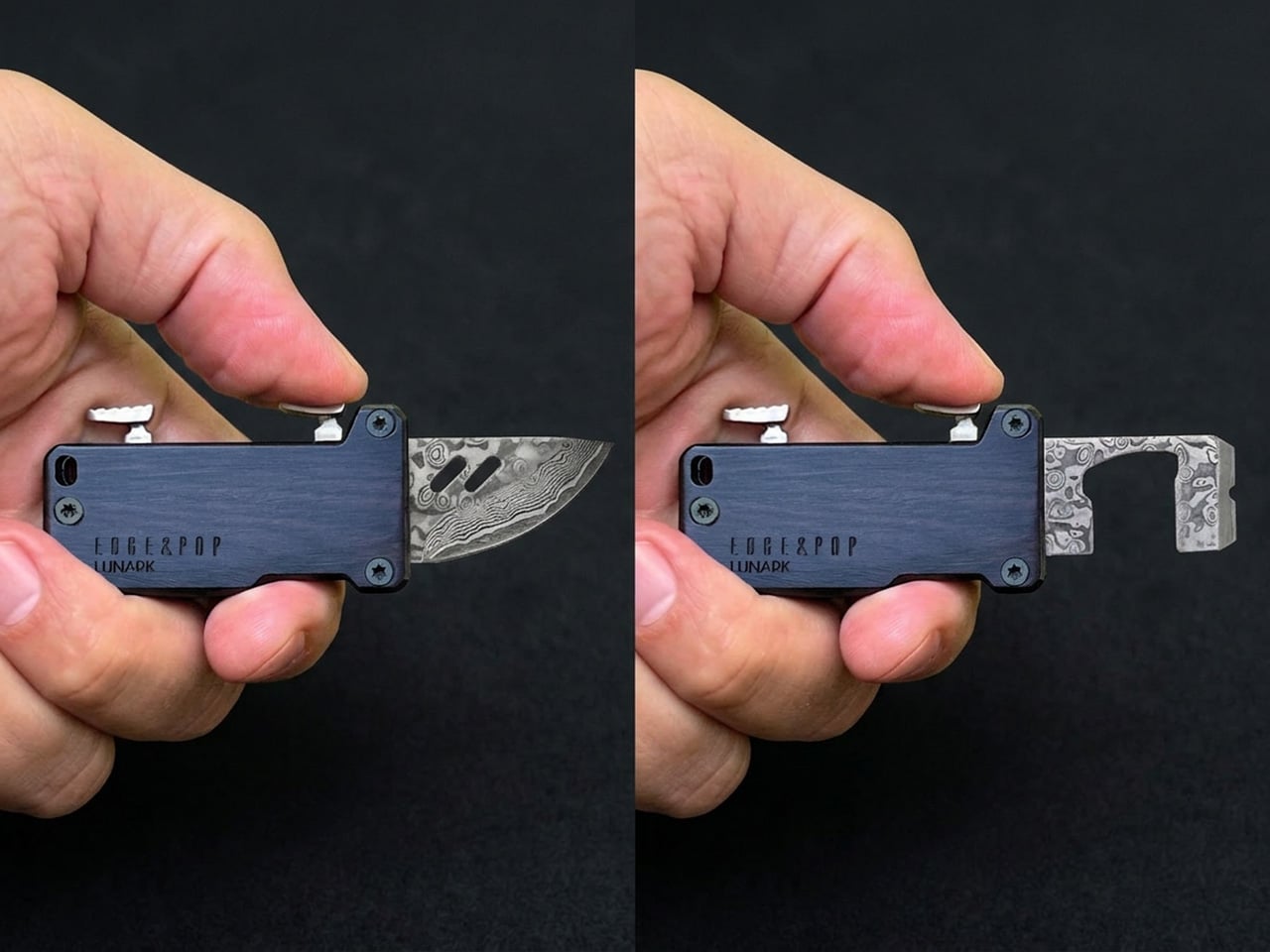
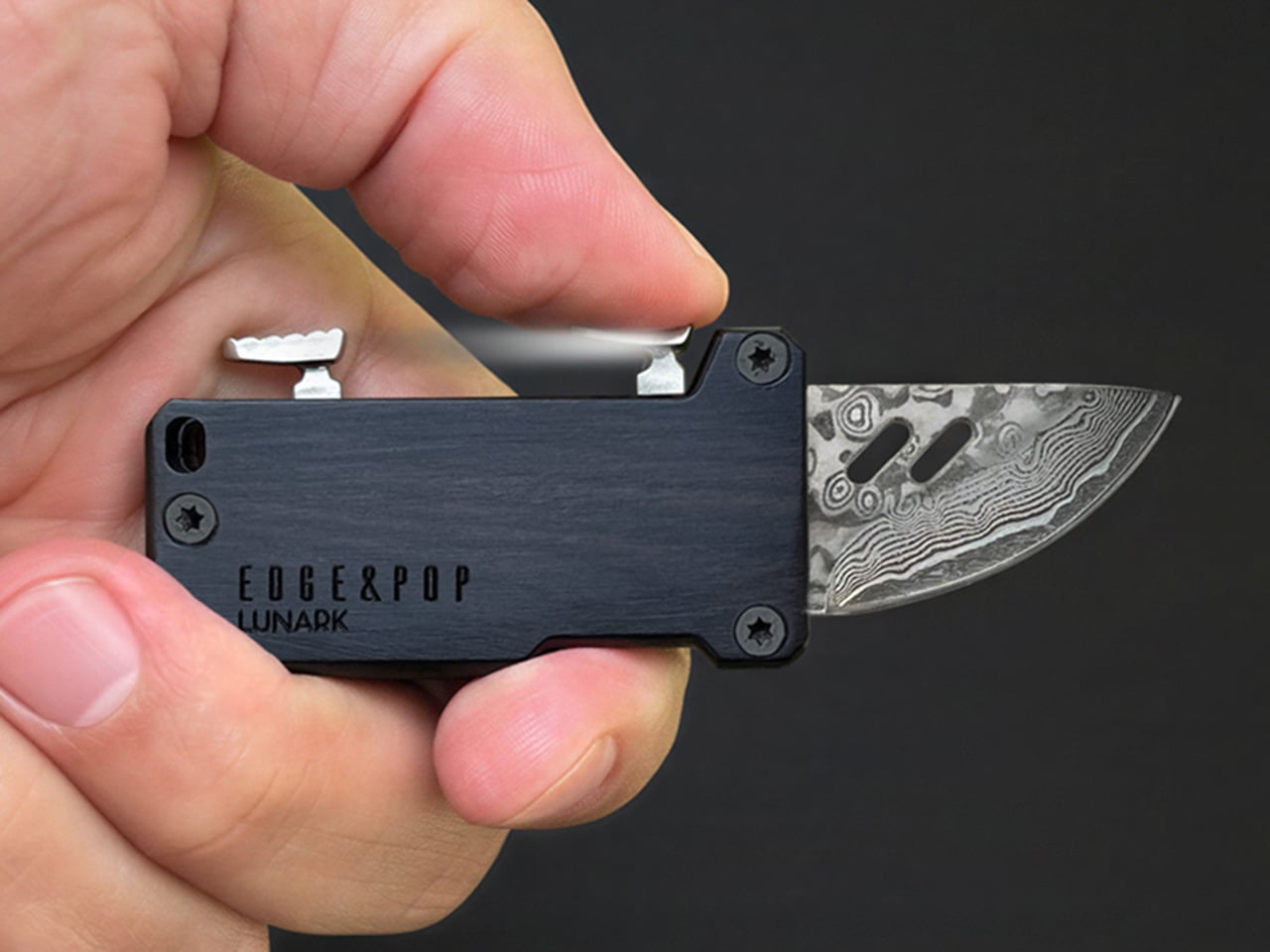
The Z3RO mini knife rebuilds the category from the materials up. It weighs 11g, measures around 5cm, and combines a tungsten cutting tip, carbon fiber body, and titanium backbone in a package that fits on a keychain without feeling like a toy. Instead of plastic or aluminum, Z3RO feels closer to pocket tech or minimalist jewelry, something you notice when you pick it up rather than ignore until it breaks.

Designer: YSMART Design Team

Click Here to Buy Now: $74 $120 (38% off). Hurry, only a few left!

The cutting tip is tungsten alloy, the same material used in surgical blades and industrial cutters, rated at Mohs hardness nine. It shrugs off cardboard, cord, plastic tags, and thick tape without dulling quickly or chipping like softer steel. It handles tasks that show up constantly, opening boxes, slicing cable ties, trimming threads, and cutting shrink wrap. Sharp enough to feel precise, hard enough to stay that way through months of daily cutting and abuse.

Instead of sharpening a tiny, ultra-hard edge, Z3RO uses a replaceable cutter head that swaps out in seconds without tools. When the tip eventually loses its bite, you pop in a fresh one. The body becomes a long-term object while the working edge is treated like a precision consumable. You replace the blade, not the tool, and the carbon fiber shell ages gracefully without looking worn after weeks of heavy pocket carry.

Most small knives lean on plastic or aluminum to save weight. Z3RO goes for woven carbon fiber wrapped around a titanium core, keeping the weight at eleven grams while still feeling solid. The material combination offers natural resistance to rust, sweat, moisture, and impacts, so it does not corrode in damp pockets or degrade from drops. It is the kind of material choice expected in high-end gear, not something dangling from house keys.

The mechanism is a magnetic quick-release using internal neodymium magnets instead of fiddly sliders. One firm pull separates the body, the cutter snaps into position with a click, and it is ready. The magnets hold everything with zero wobble, so it feels precise rather than loose. This matters when your other hand is holding a box, rope, or bag you do not want to drop while fumbling for a blade.

Everyday moments shift when a sharp, instantly accessible cutter lives on your keychain or neck lanyard. Cutting packing tape becomes one motion instead of clawing at it. Freeing a stuck zipper pull takes seconds. Trimming a cable tie or slicing shrink wrap happens without hunting for scissors. The tool turns minor annoyances into quick actions, and that quiet utility adds up, making it something you reach for multiple times daily without thinking.

The carbon fiber sheen, titanium accents, and slim silhouette make Z3RO look more like gear art than a utility blade. Color options like Stealth Black, Neo Blue, and Volt Green add personality without sacrificing the minimalist shape. It is the sort of object people notice when you set keys down, even if they do not immediately realize it cuts. The woven texture and metal details read as intentional design rather than generic hardware fare.

Z3RO exists because everyday carry has matured past cheap freebies into a space where materials, mechanics, and longevity matter. A tiny knife built from tungsten, carbon fiber, and titanium, with a magnetic quick-release and replaceable head, feels like a natural evolution. It reminds you that even the smallest tools can be designed with the same care as big ones, and sometimes the best gear is what you forget you are carrying until you actually need it.

Click Here to Buy Now: $74 $120 (38% off). Hurry, only a few left!

The post This 11g Keychain Knife Has a Tungsten Tip You Swap, Never Sharpen first appeared on Yanko Design.
How an RC Pilot Built the Most Technically Accurate LEGO Plane You’ve Seen

Most LEGO builders start with the instructions. Simons_Studio started with experience building actual radio-controlled aircraft, then wondered if the same principles could work with plastic bricks. The answer turned out to be yes, and in some ways, LEGO proved easier since every connection stays perfectly aligned without adjustment.

The Red Bull Extra Aerobatic Plane showcases this aviation-first approach to LEGO building. Rather than simply creating a brick shell shaped like an airplane, the builder constructed an actual airframe using proper longitudinal bracing and wing structures. At just under 1,000 pieces and 1/14 scale, this model balances impressive size with buildable complexity, making it a compelling candidate for LEGO’s official product lineup.

Designer: Simons_Studio

Lowkey there’s something fascinating about watching someone apply real engineering knowledge to a toy medium that makes you reconsider what that medium can do. Simons_Studio brought RC aircraft building experience to this Red Bull Extra, which explains why the fuselage tapers convincingly instead of looking like stacked rectangles trying their best. LEGO fights you on curves. The plastic wants right angles, wants to stack in predictable increments, wants to betray its modular origins at every turn. That rear fuselage section apparently took multiple attempts and different techniques before it worked, but the final result flows from cockpit to tail without those telltale bumps where one building method gives up and another takes over. You can see it in the profile shots, how the dark grey maintains its line.

The wings use actual longerons running lengthwise with plates acting as structural spars and ribs. If that sounds excessive for a display model, consider that this approach gives the wings proper internal geometry instead of being solid brick masses. Real aircraft wings are essentially fabric or metal stretched over a skeleton, and replicating that logic in LEGO means the proportions naturally fall into place. The thickness-to-chord ratio looks right because the structure underneath enforces it. It’s the difference between sculpting something to look like a wing versus building something that is fundamentally wing-shaped, even if it’ll never see airflow.

The Red Bull livery stretches across 48 centimeters of fuselage and a 55-centimeter wingspan, which puts this squarely in the display model category rather than something you’d swoosh around the living room. Those yellow wing tips and lightning bolt tail graphics capture the brand’s energy without sliding into corporate sponsorship territory. The color blocking works because it follows the aircraft’s actual lines instead of fighting them. At 1/14 scale with just under 1,000 pieces, this sits in an interesting space for LEGO Ideas submissions. Complex enough to justify the price point an official set would command, accessible enough that someone with intermediate building experience could tackle it over a weekend.

Now the Lycoming O-480 engine sitting behind that propeller deserves its own conversation. This is a six-cylinder horizontally-opposed powerplant, the kind you’d find in actual Extra aerobatic aircraft. Simons_Studio modeled it with a blue crankcase, white cylinder heads complete with cooling fins, and accessories in red and yellow positioned where they’d actually sit on the real thing. We’re talking about replicating individual cooling fins on cylinders, the sort of detail that lives in shadow and could easily be skipped. But then there’s the exhaust system, which uses custom-bent chrome LEGO bars to route individual pipes away from each cylinder in those distinctive curves. On a real Extra, this exhaust setup does real work during airshows, mixing smoke oil with hot gases to generate colored trails. Getting those curves right means someone heated LEGO bars and shaped them by hand, which is definitely off-label use of the parts.

That exhaust detailing matters beyond aesthetics. Anyone who’s spent time at airshows can spot an Extra’s exhaust configuration from the flight line, and those curves are part of the aircraft’s visual signature. Replicating them accurately signals that this build understands its subject matter at a level beyond “red and blue plane with wings.” The cockpit continues this pattern with a full instrument panel mimicking actual Extra avionics layouts, modern digital displays below representing GPS navigation systems, and proper canopy framing with curved transparency. Most LEGO aircraft put a seat in there and move on. This one recognizes that aerobatic pilots experience serious g-forces in that space and the cockpit deserves proportional attention to the exterior.

LEGO’s been oddly conservative with aircraft in their lineup. Military stuff runs into guideline issues around weapons and warfare, which eliminates a huge chunk of aviation history from consideration. But civilian aircraft don’t generate the same enthusiasm outside of specific niches, and planes generally demand more sophisticated building techniques than cars or buildings. This Extra threads through that narrow gap as a legitimate performance aircraft with name recognition that happens to be completely civilian.

LEGO Ideas MOCs (My Own Creations) needs 10,000 supporters for a project to get reviewed, and this one’s sitting at 361 with over a year to go. The platform’s algorithm favors early momentum, so that’s a concerning gap. LEGO’s been bizarrely stingy with aircraft sets, partly because military guidelines eliminate a huge chunk of aviation history, partly because planes demand building techniques that scare off casual customers. This Extra threads a narrow path: civilian aircraft with legitimate performance credentials, complex enough for adult builders but not so esoteric that it lacks mainstream appeal. Whether it hits that supporter threshold depends on whether aviation nerds and LEGO enthusiasts overlap enough to create critical mass. The build quality deserves it. The question is whether 9,639 more people will care. If you consider yourself a part of that demographic, head down to the LEGO Ideas website and cast your vote for this build!

The post How an RC Pilot Built the Most Technically Accurate LEGO Plane You’ve Seen first appeared on Yanko Design.
Huawei Wi Fi 7 Mesh Router Turns Connectivity into Sculptural Lighting

Most mesh routers exist to be hidden. They sit behind television consoles, inside media cabinets, anywhere out of sight. Huawei’s Wi-Fi 7 Mesh Router rejects that premise entirely-it was designed to occupy a shelf the way a sculptural lamp or a blown-glass vase might, demanding visibility rather than tolerating it. The system ships as a main router paired with up to two extenders, and every unit in the family brings aesthetic presence to a category that usually hides function. Whether that ambition translates into livable design depends on how much visual weight a room can absorb.
Form and First Impression

The main unit rises vertically under a tall transparent dome, and the first impression lands somewhere between illuminated glassware and a miniature architectural model. A sculpted cone sits inside the chamber, channeling warm LED light upward through fine vertical ribs that stretch the glow into elongated streaks. The gradient begins deep amber at the base, fades toward soft cream near the midpoint, and dissolves into near-invisibility at the dome’s crown. Under morning sun the dome reads as a sculptural artifact with subtle internal texture; under evening lamps it becomes a warm, glowing presence that anchors an entire corner of a room.

That visual prominence carries a trade-off worth acknowledging early. The dome’s height and luminosity demand attention in a way that softer network hardware does not. In quieter rooms-bedrooms, reading nooks, minimalist spaces-the persistent glow may feel like a permanent nightlight rather than a subtle accent. Huawei leans fully into the decorative category, and the result works best in spaces that already embrace statement objects.

Material Language

Huawei appears to use a dense transparent polymer that mimics the refraction and clarity of hand-blown glass. Close inspection reveals the material catches daylight differently than it catches artificial light, giving the object a living quality that shifts throughout the day. Fine vertical channels line the inner cone and catch the LEDs, stretching them into long streaks that resemble molten glass rising through a chimney. The effect positions the router closer to ambient lighting than consumer electronics.

Placement matters here. The design reads best on open shelving in a living area, a console table near an entryway, or a display ledge in a modern kitchen. Treating it as background hardware-tucked beside a television or wedged into a media cabinet-misreads the intent entirely.

Hidden Engineering

Functional elements remain invisible by design, but the engineering underneath is anything but minimal. Ports sit inside a recessed cavity on the underside, tucked into the dark base, so cables disappear the moment the device rests on a flat surface. The separation between glowing dome and utilitarian base gives the impression of a clean floating cylinder even though Ethernet, power, and every technical connection remain accessible.

Weight distribution pulls toward the base-intentional, since the main router includes active cooling with a built-in fan for high-throughput scenarios. That engineering decision affects form directly: the base must accommodate thermal management, which explains the unit’s footprint relative to passive competitors. The dark matte finish stays quiet, letting the luminous chamber dominate, but the chassis is doing real work underneath.

One detail that rarely survives the translation from engineering to marketing: Huawei literally etched the antennas into the sculpted mountain shape inside the dome. Six antennas-three for 2.4GHz, three for 5GHz-run along the contours of the internal cone, hidden in plain sight. The design team integrated signal hardware into the decorative structure rather than bolting it on as an afterthought. That level of form-function synthesis is rare in consumer networking equipment, and it suggests the industrial design team had genuine authority over the final product rather than decorating an engineering prototype.

The Satellite System

Satellite extenders interpret the same visual language in a shorter, more restrained form. Huawei’s briefing compared them to elegant whisky glasses-a fair analogy. Each unit features smoked outer walls with spaced vertical ribs that break the internal gradient into a soft, pulsing glow. The warm tone matches the main router but feels more intimate, less theatrical.

These units read as decorative accents on a shelf rather than technical equipment. No protruding antennas, no plastic ventilation grilles, no indicator LEDs screaming status codes from across the room. A candle holder or compact speaker would sit just as naturally in the same arrangement. The restraint here is notable-Huawei resisted the temptation to differentiate the satellites through size or brightness, which keeps the family identity coherent.

Interaction Design

Both the main router and each satellite include a flush touch surface on the top, letting users adjust lighting modes directly from the device. The touch panel sits flush with the rim, preserving the cylindrical outline-no buttons, no visible interface elements, no mechanical disruption. The top surface remains dark and reflective when inactive, reinforcing the contrast with the illuminated body below.

That restraint suggests confidence in the form itself. Huawei trusts the design enough to let it speak without interface clutter. The interaction layer exists, but it never competes with the sculptural presence.

The Placement Tension

The system’s visual cohesion raises a practical question that Huawei’s marketing sidesteps. Mesh networks exist to blanket a home in wireless coverage, which means placing extenders in locations optimized for signal propagation-hallways, stairwell landings, rooms far from the main router. Huawei designed units beautiful enough to display prominently, but optimal placement for aesthetics rarely aligns with optimal placement for coverage.

A living room shelf may showcase the extender perfectly while delivering weaker signal to a home office two walls away. Buyers should expect to choose between form and function in at least one placement decision, and that tension deserves acknowledgment. The router rewards homes where signal-optimal spots happen to be visible spots-and punishes homes where they don’t.

System Coherence

Material consistency across the system reinforces the family identity in ways that most mesh systems ignore. The polymer domes, the dark matte bases, the warm LED gradients, and the vertical rib detailing all repeat across main unit and satellites. Nothing about the extenders looks like a compromise or an accessory-they read as intentional companions rather than technical necessities.

That coherence reflects a design philosophy that treats network hardware as a coordinated interior collection rather than a primary device surrounded by lesser satellites. The approach borrows from furniture design, where a sofa and matching armchairs share fabric and form language. It’s an unusual strategy for networking equipment, and it pays off visually.

Design Verdict

Together, these choices carve out a new category for consumer networking equipment. Huawei positions the Wi-Fi 7 Mesh Router not as infrastructure but as decor, borrowing visual cues from glass art, ambient lighting, and sculptural furniture rather than traditional electronics. The approach invites users to display their network hardware rather than hide it-a genuine inversion of the category’s usual logic.

That ambition has limits worth naming. The design rewards specific interiors-modern, curated, comfortable with statement objects-and punishes others. A room already crowded with visual noise may find the router’s glow overwhelming. A household that treats connectivity as invisible utility may resent paying for aesthetics they plan to hide. The placement tension between signal optimization and display value will frustrate anyone expecting both without compromise.

Huawei built a router for people who want their home network to carry emotional weight through form and material alone. The system achieves this without abandoning its technical identity: Wi-Fi 7 support, six integrated antennas, active cooling, and mesh scalability all remain intact beneath the decorative surface. For everyone else, the category’s quieter options remain available.

The post Huawei Wi Fi 7 Mesh Router Turns Connectivity into Sculptural Lighting first appeared on Yanko Design.