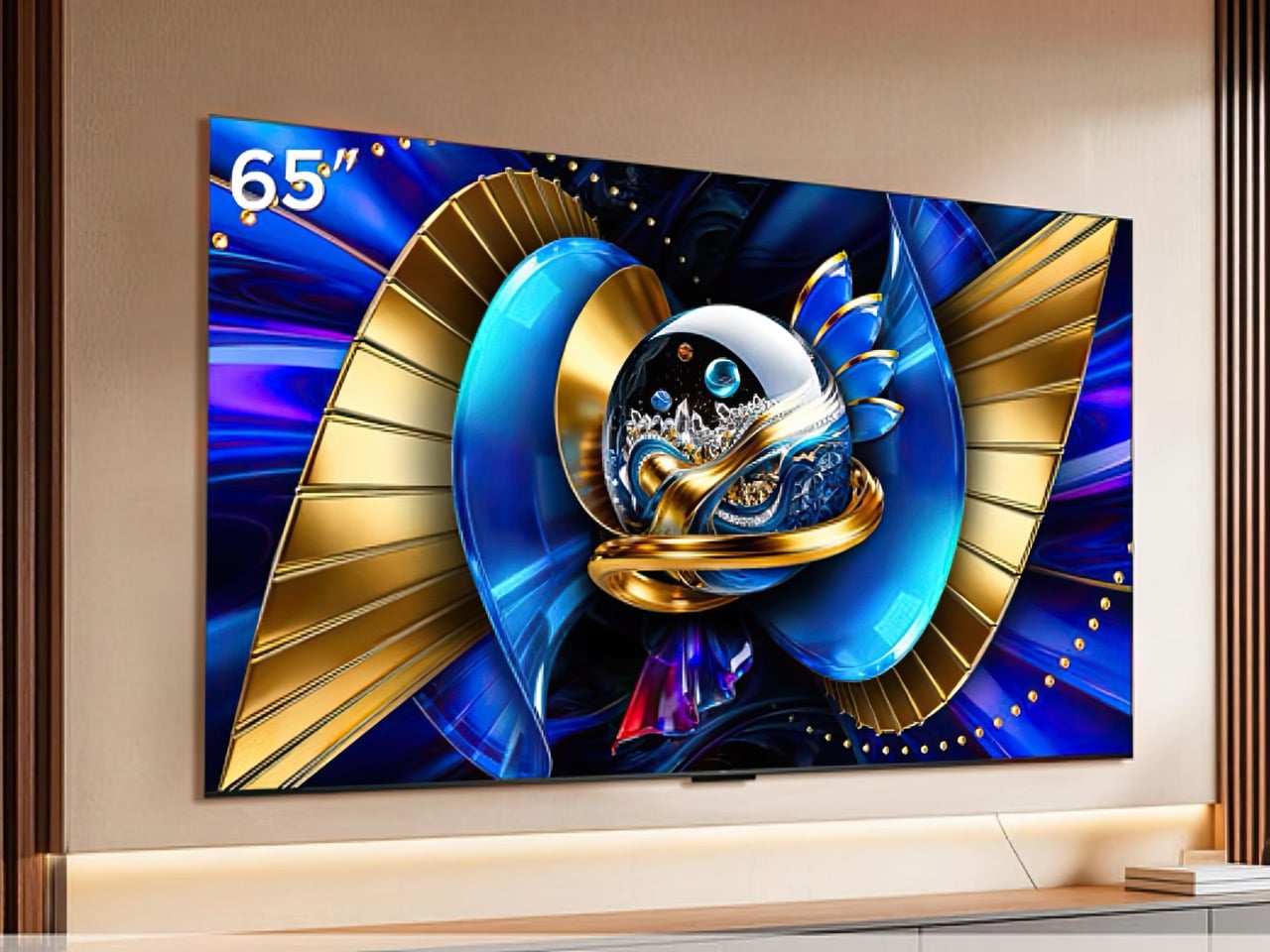
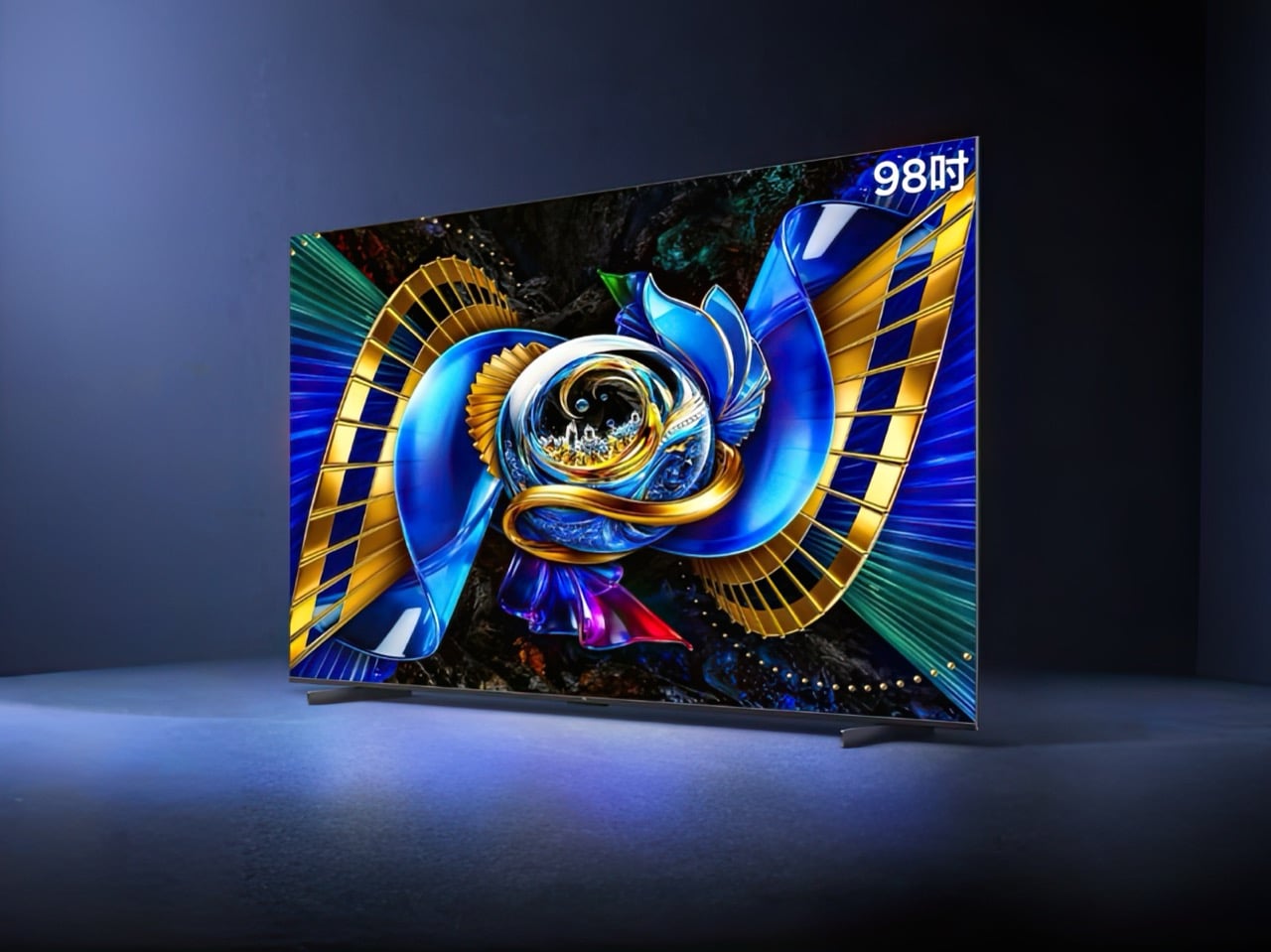
Premium television specs used to live behind premium price tags, a sorting mechanism that kept the best picture quality safely out of reach for most buyers. TCL has spent the last few years dismantling that barrier, and the T7M Pro SQD-Mini LED feels like the wall finally came down. For 6,199 yuan (roughly $900), you get 1,152 local dimming zones, full BT.2020 color coverage, and 2,200 nits of peak brightness. Those numbers belong to televisions that typically cost two or three times as much, yet here they are in sizes from 65 inches for just $900 up to a whopping 98-inch variant priced at a fairly reasonable $2,178.
The T7M Pro uses TCL’s SQD-Mini LED technology, which pairs quantum dot color filters with precise Mini LED backlighting. The company engineered a new panel that filters light more accurately, outputting cleaner colors with less contamination. A 4K screen runs at 150Hz natively, upgradable to 300Hz for gaming. Lingkong UI 3.0 handles the software side with AI-powered picture optimization and content recommendations. TCL kept the chassis at 60mm thick for near-flush wall mounting. The lineup launches in China across four sizes, and the pricing suggests TCL has stopped chasing flagship competitors and started outspeccing them at half the cost.
Designer: TCL
BT.2020 is the actual color space HDR content gets mastered in, the standard filmmakers use when they finish a movie. Most televisions claim wide color support but only hit 70 to 85 percent of that range, then fake the rest by stretching values. TCL claims the T7M Pro covers the full 100 percent through its Super Butterfly Wing Star Display panel, which uses better materials to filter light more cleanly. Cheaper quantum dot screens mix wavelengths and produce muddy colors. This one supposedly keeps red, green, and blue separate and pure. If that holds up in actual use, you’re seeing colors the way the director intended them.
TCL packed 1,152 dimming zones into the T7M Pro, letting different parts of the screen brighten or dim independently. That matters when you’re watching HDR content where a bright explosion needs to pop against a dark sky without making the whole screen glow. The 2,200 nits of peak brightness means highlights stay detailed instead of blowing out into white blobs. Whether 1,152 zones eliminate all the halo effects around bright objects depends on how large each zone is and how smart the processing is. We won’t know until someone tests it properly, but the number alone puts it in serious territory.
The television runs at 150Hz natively, smooth enough for high frame rate gaming and sports. Push it to 300Hz through motion smoothing if you like that soap opera look, though most people turn that off immediately. Four HDMI 2.1 ports with full bandwidth mean your PlayStation 5 or Xbox Series X can output 4K at 120Hz without compromise. Variable refresh rate and auto low latency mode are both here, which have become expected features on any TV that calls itself gaming-ready. TCL clearly built this thing with console players in mind, not just movie watchers.
Lingkong UI 3.0 runs the software side with a card-based layout and zero boot ads, already a win over most smart TV platforms that force you through commercials just to turn the thing on. The AI component learns your viewing habits and adjusts picture settings automatically, plus it suggests content based on what you watch. How pushy those recommendations get will determine whether this feels helpful or annoying. A quad-core processor with 4GB of RAM keeps things moving, which matters when you’re jumping between streaming apps or adjusting settings mid-movie.
Samsung’s QN90D Mini LED TV with similar specs costs around $1,800 for the 65-inch model. Sony’s X95L Mini LED sits near $2,000. Both deliver great picture quality, but neither performs twice as well to justify twice the price. TCL is counting on buyers to do the math and realize they’re paying for a badge, not better technology. That argument gets even stronger with the 98-inch T7M Pro at $2,178, a size where Samsung and Sony regularly charge $4,000 or more. The performance gap between a $2,000 TV and a $900 TV used to be massive. Now it’s mostly marketing.
TCL launched the T7M Pro in China first with no confirmed international release date, though the company already sells Mini LED TVs globally so a wider rollout seems inevitable. For anyone willing to import or wait for official availability, this television makes flagship picture quality accessible without flagship pricing. The question it forces on established brands is simple and uncomfortable: what exactly are buyers paying extra for when the panel specs are identical?
I pulled out my phone at the airport gate to check my boarding time, then spent the next fifteen minutes scrolling TikTok. I nearly missed my flight. The phone wasn’t lying when it said Gate 23, but somewhere between the lock screen and actually standing up, Instagram happened, then Twitter, then one more reel. We’ve all been that person. The issue is architectural: smartphones were built to be everything machines, and everything machines are terrible at being sometimes machines.
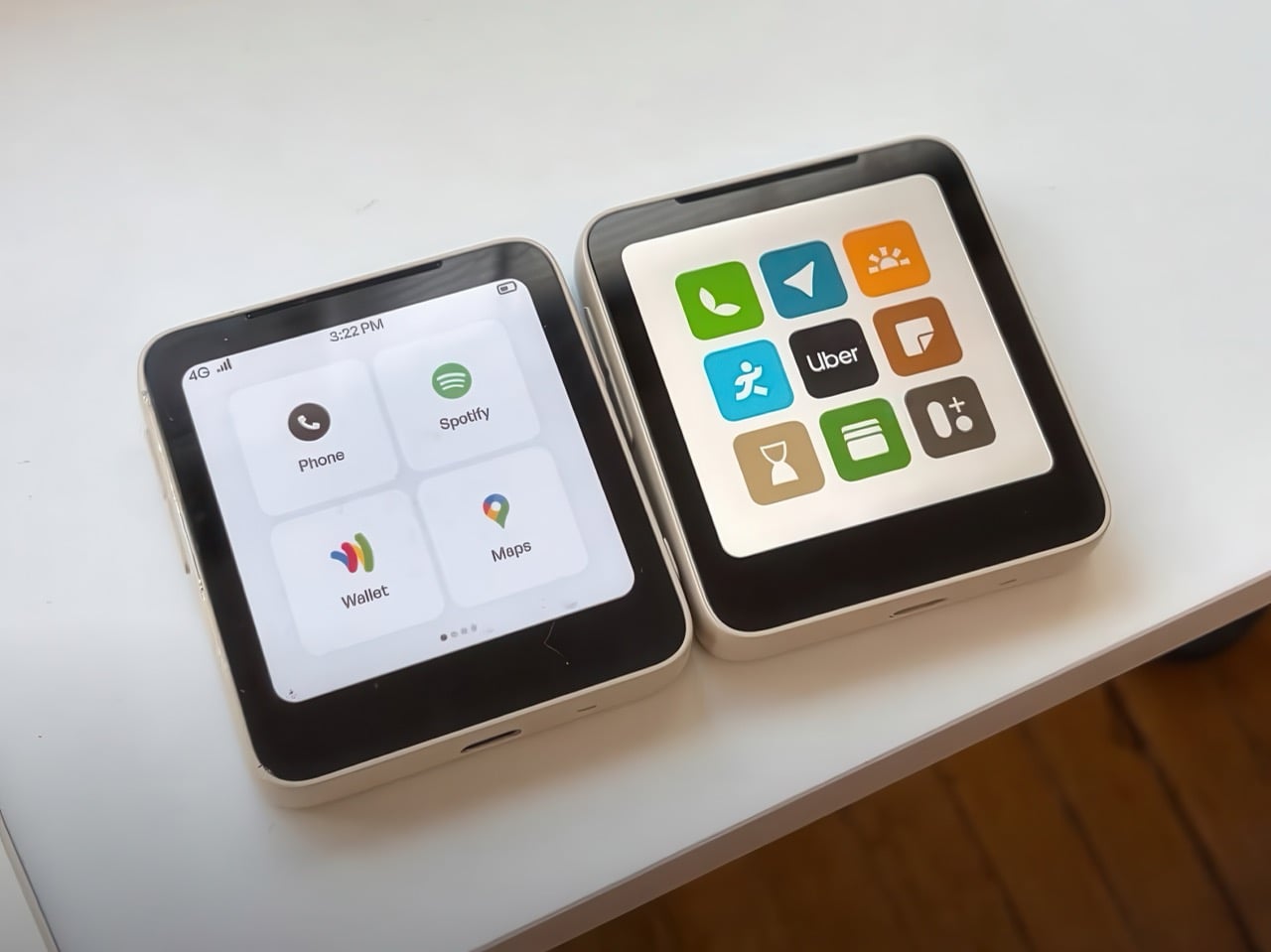
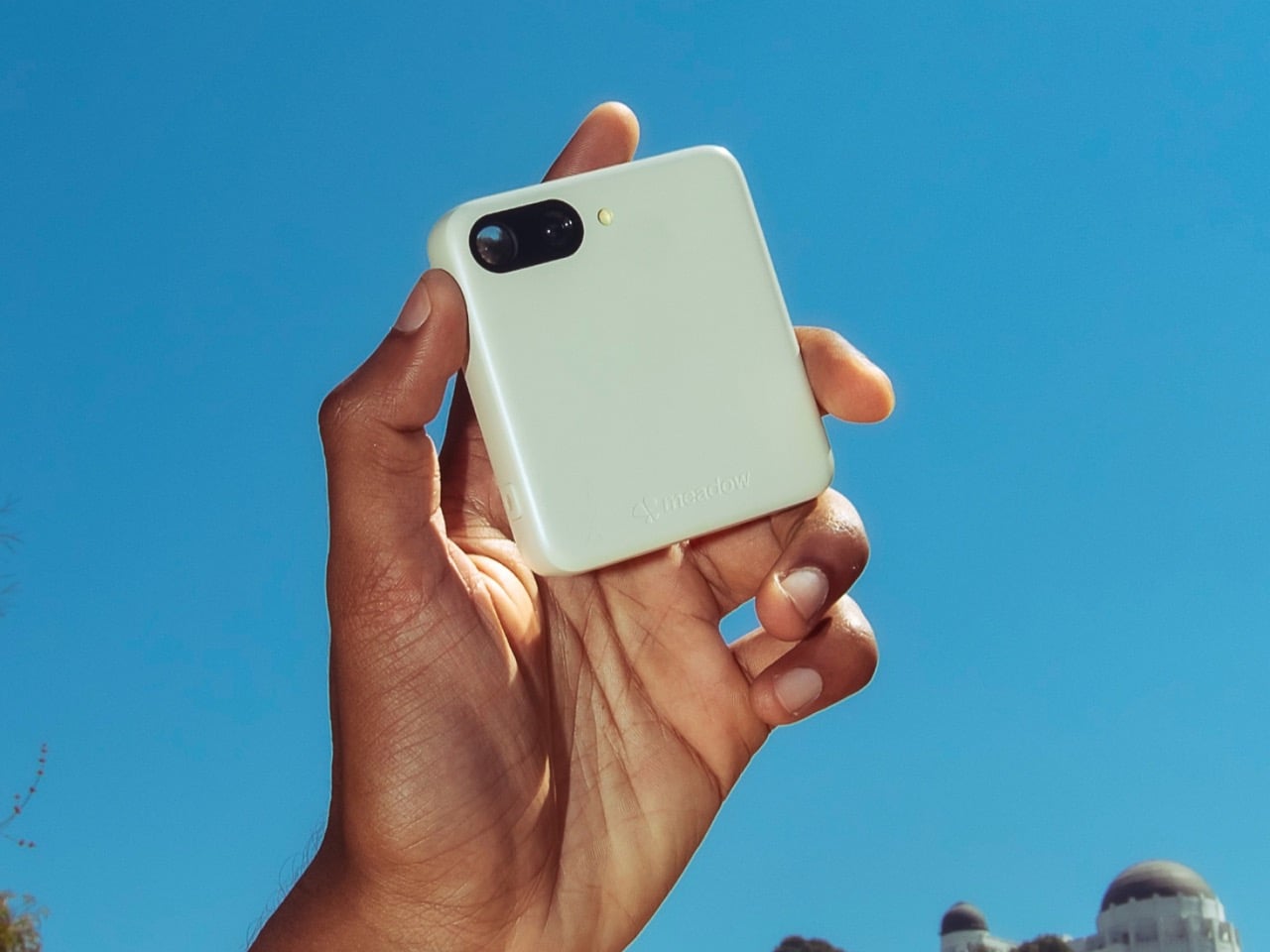
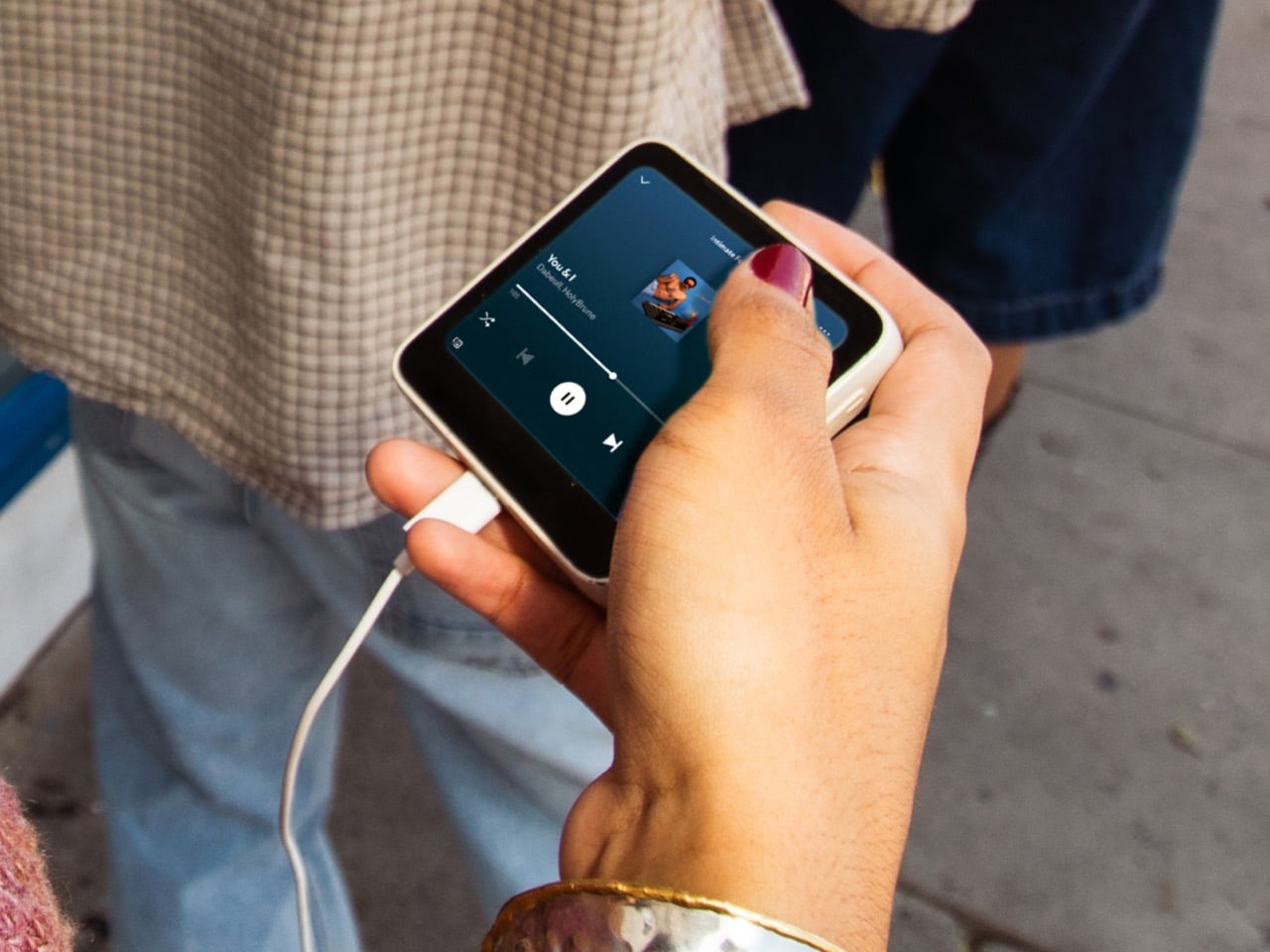
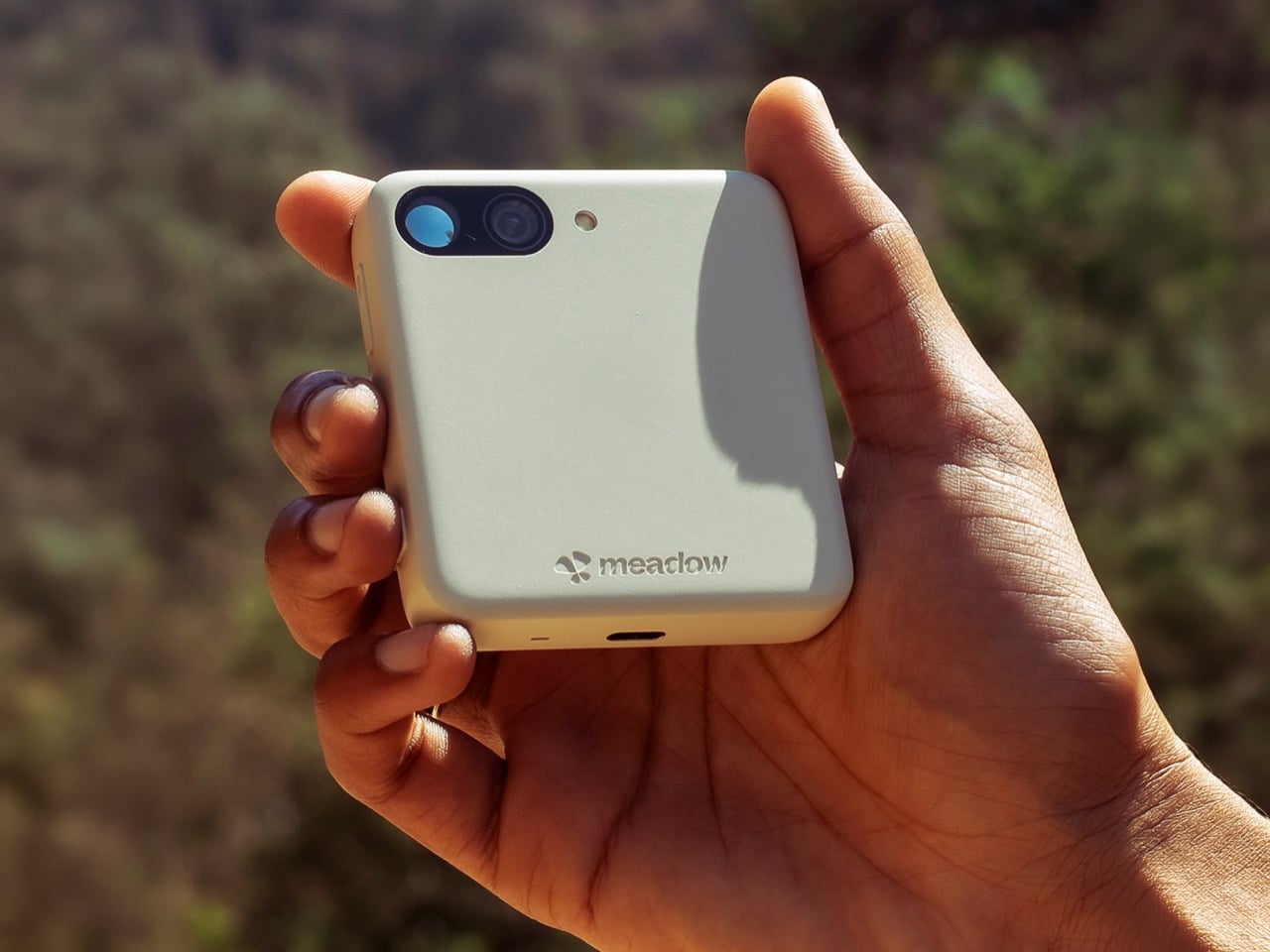
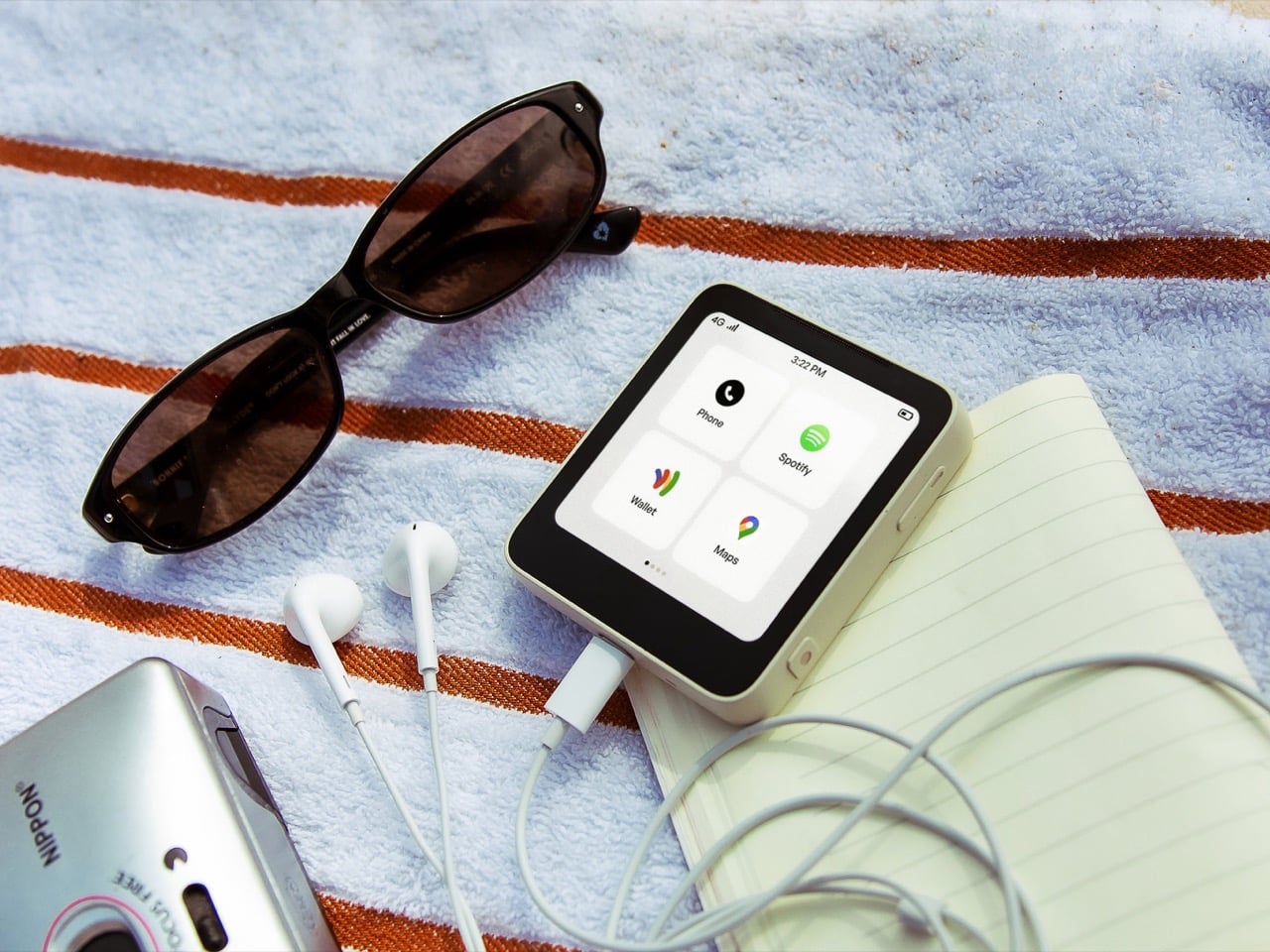
Meadow, a San Francisco startup, thinks the solution sits between the extremes. Their $399 phone launching June 2026 runs a curated set of actually useful apps (Spotify, Uber, Maps, a camera) while completely excluding the attention-draining ones (Instagram, TikTok, email, web browsers). You get a private phone number that only your contacts can reach, a 3-inch screen deliberately too small for binge-watching, and 4G connectivity without the infinite scroll tax. It’s a 4-ounce slab of recycled polycarbonate that wants to get you through your day, then get out of your way.
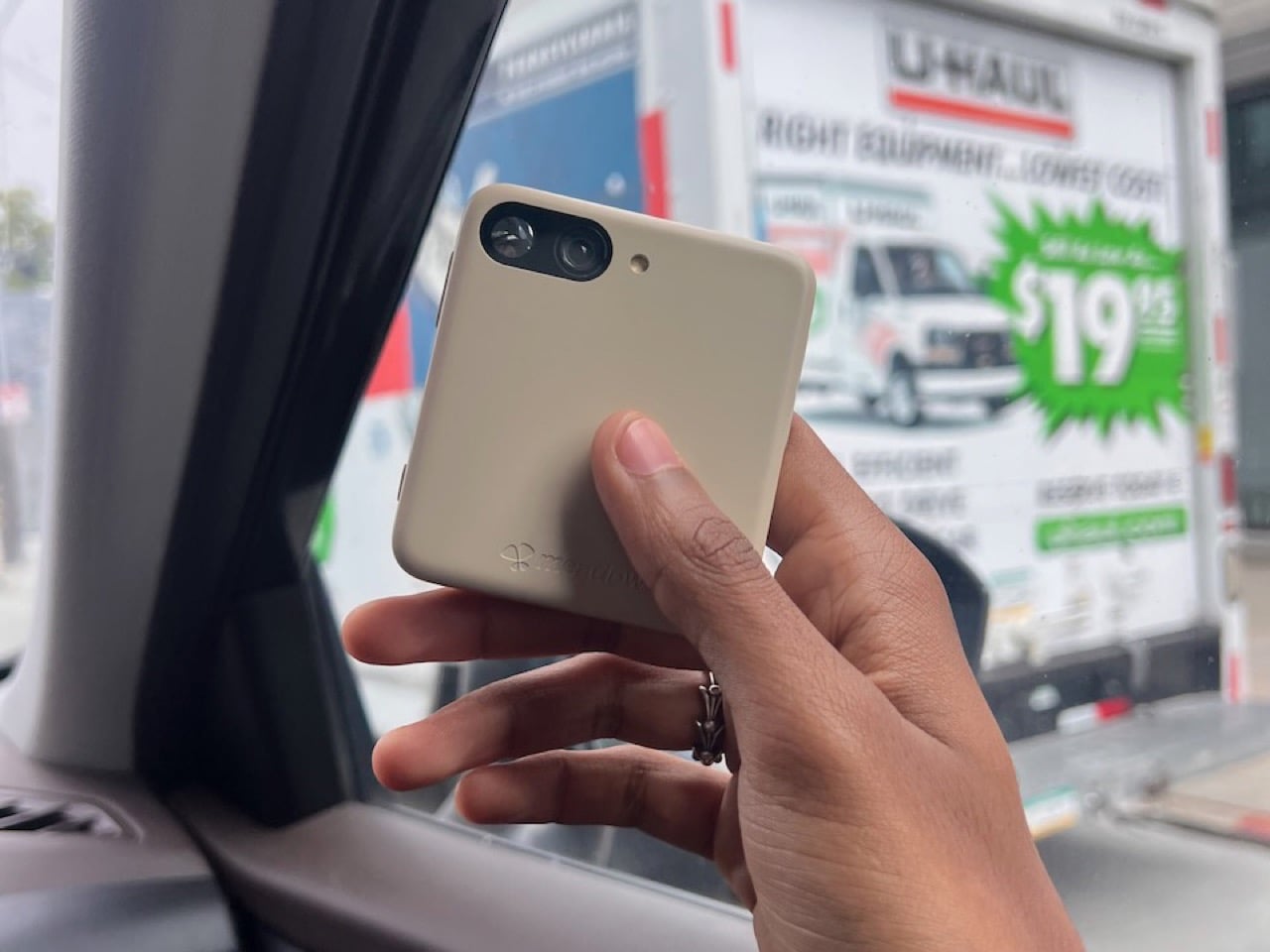
The 3-inch TFT LCD measures roughly 1.3 x 2 inches in total device footprint, making this closer to an iPod nano than a modern smartphone. The screen is big enough to read a map or control Spotify, but small enough that watching a YouTube video feels like punishment. The 13MP ultrawide camera captures memories without turning you into a content creator. The whole package weighs 4 ounces and fits in a coin pocket, which means you can actually forget you’re carrying it.
The minimalist phone market has been wrestling with this problem for years, and everyone keeps arriving at slightly different conclusions. The Unihertz Titan 2 resurrects the BlackBerry Passport form factor with a physical QWERTY keyboard and a 4.5-inch square screen, betting that tactile typing will make you more productive and less prone to mindless scrolling. It works for some people. The Clicks Communicator takes a similar approach but positions itself explicitly as a secondary device, the thing you carry when your real phone stays home. The iKKO Mind One shrinks everything down to credit card size with a rotating camera, targeting travelers who want maximum portability. Mudita’s Kompakt goes full ascetic with an E-ink screen, no app store, and a hardware kill switch that physically disconnects the microphones and camera.
Meadow splits the difference. You get real apps from real services, the ones that genuinely make modern life easier. Spotify and Apple Music mean you’re not stuck with MP3s loaded via iTunes like it’s 2008. Uber and Maps mean you can actually navigate an unfamiliar city without printing directions. Strava means your runs still sync. The camera means you can capture moments. Notes, weather, clock, fitness tracking, all present. What’s missing is the entire category of apps designed to consume your attention rather than assist your life. No browser means no falling into Wikipedia rabbit holes at 1 AM. No email client means work can’t chase you into the evening unless you’ve specifically decided to check it on another device. No social media means no feeds, no reels, no endless scroll.
When you activate Meadow, you get a number that functions like an allowlist. Only people you’ve added as contacts can call or text you. Everyone else hits a wall. No spam calls about your car’s extended warranty. No texts from political campaigns. No unknown numbers at dinner. Your main phone can be dead or turned off and you still won’t miss calls that matter, because Meadow routes them through your main number. Setup takes five minutes at home, no carrier calls required. The eSIM activation happens through the Meadow app, and you’re off to the races.
The device ships with 128GB of storage, 6GB of memory, and a battery rated for one to two days depending on usage. Fast charging helps. The included accessories (action case, beach pouch, charging cable) suggest Meadow knows exactly who this is for: people who want to go outside and do things without their phone becoming the main character of the experience. Pre-orders are open now at meadow.so for $399, with shipping starting June 2026 and a nine-month free subscription ($10 per month after that for unlimited calls, texts, and photo storage). The first units hit doorsteps in May according to the delivery schedule, which means summer 2026 could be the season a bunch of people finally stop doomscrolling at the beach.
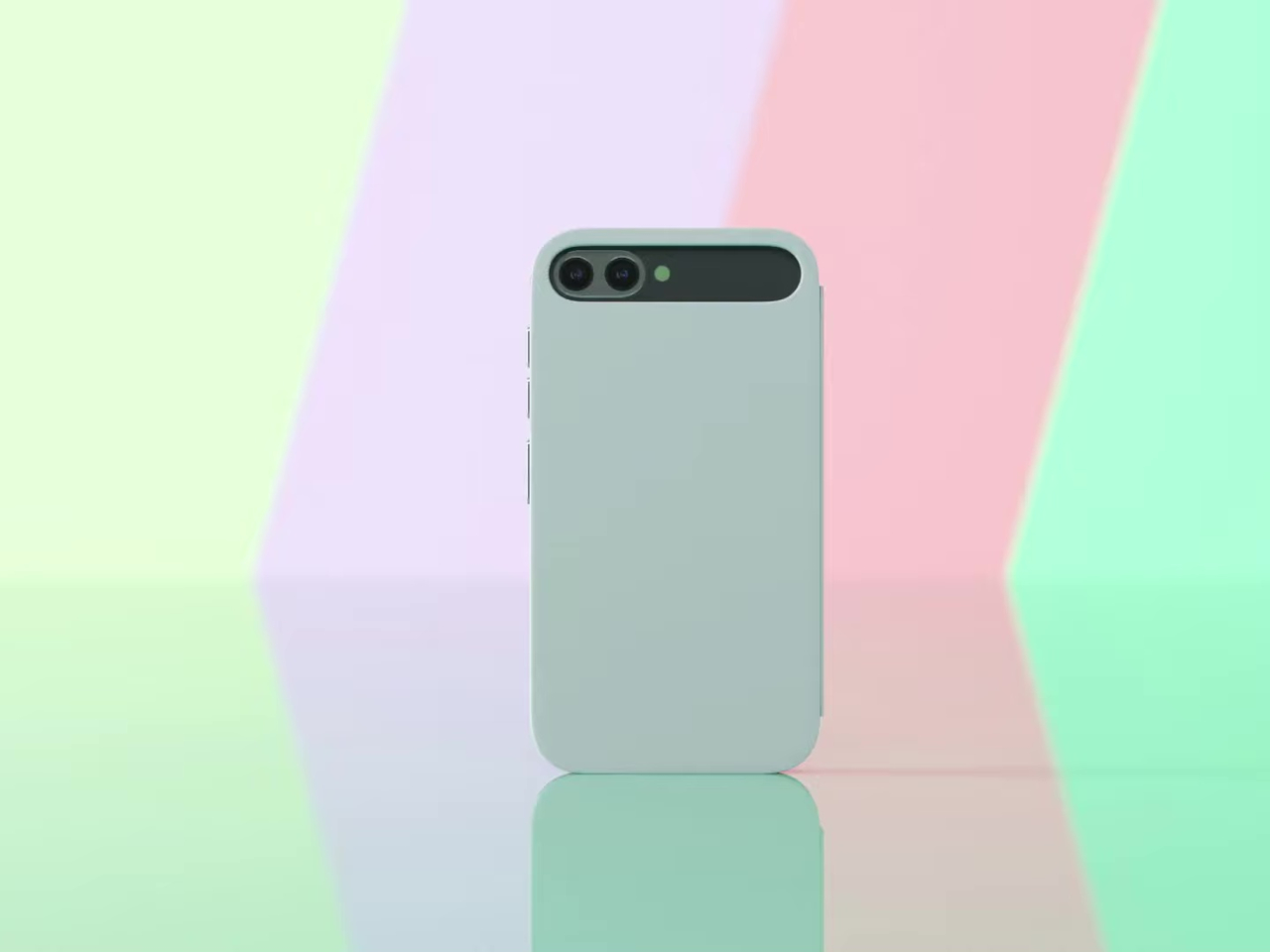
Smartphone cases have become one of the more predictable corners of the mobile accessory market. Most of them do exactly what you’d expect: wrap around the phone, absorb some impact, and stay out of the way. A few go further with card slots or battery packs, but the core idea hasn’t changed much in years. You’re still waking the screen every time you want a quick glance at the time.
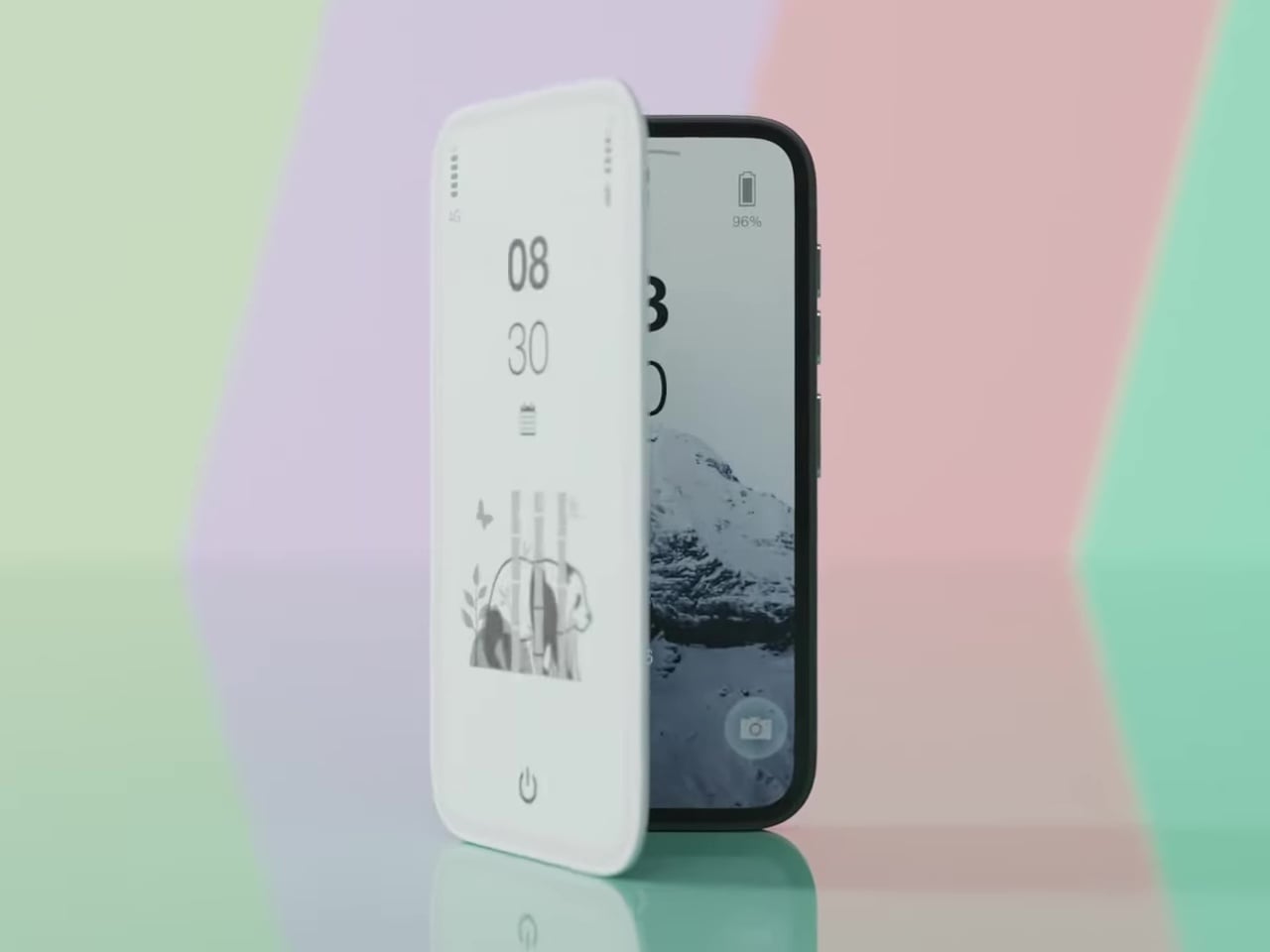
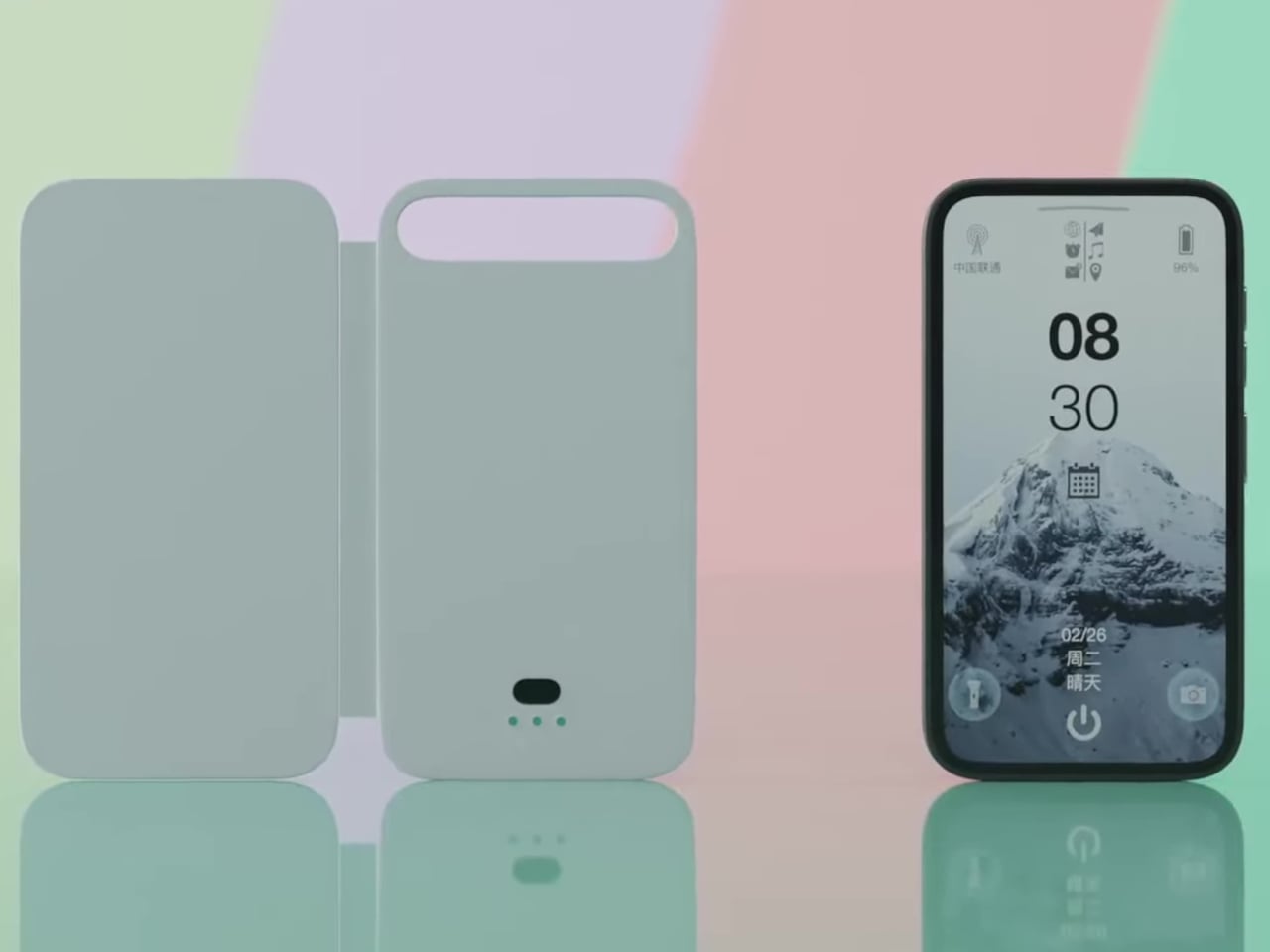
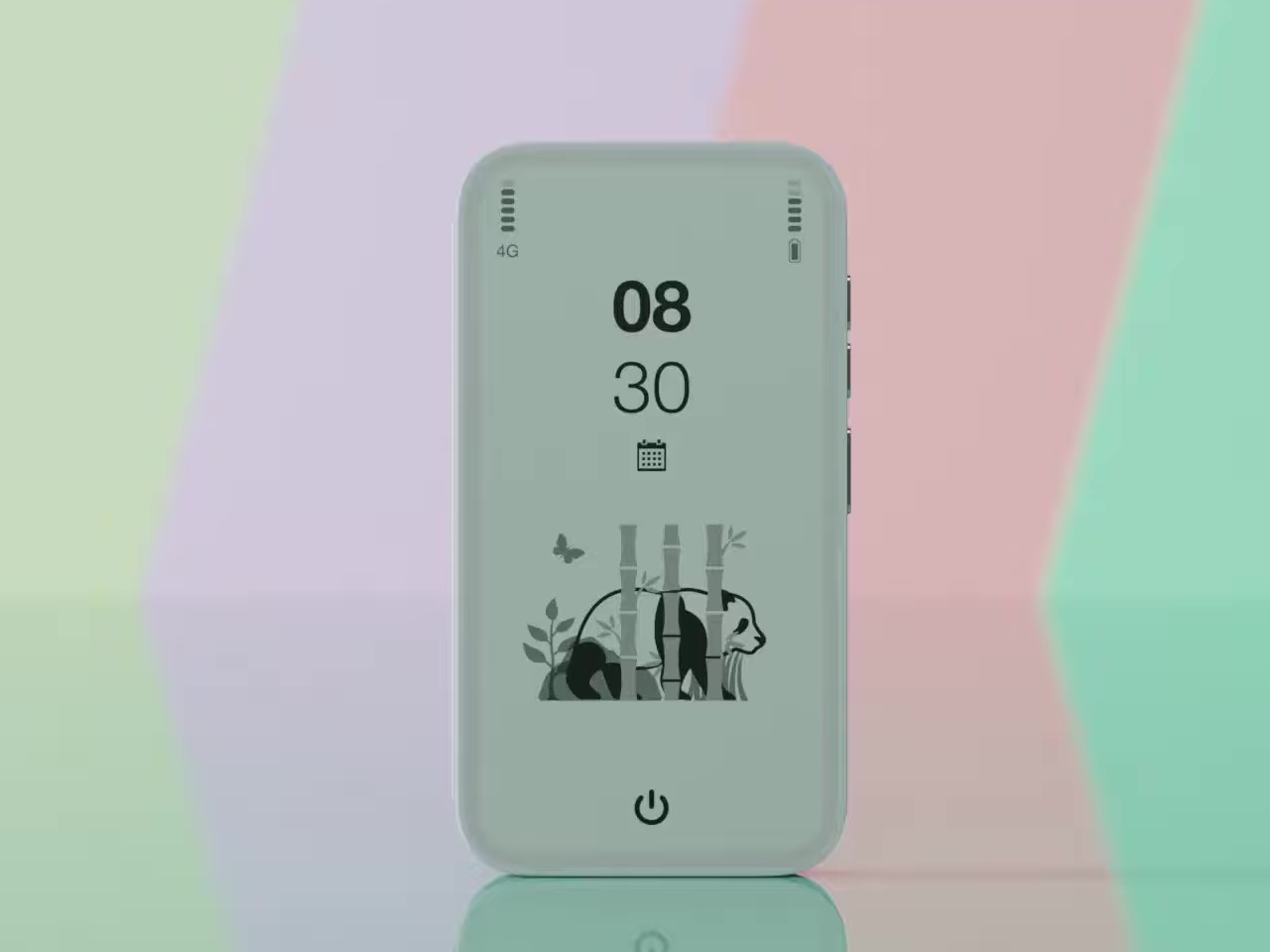
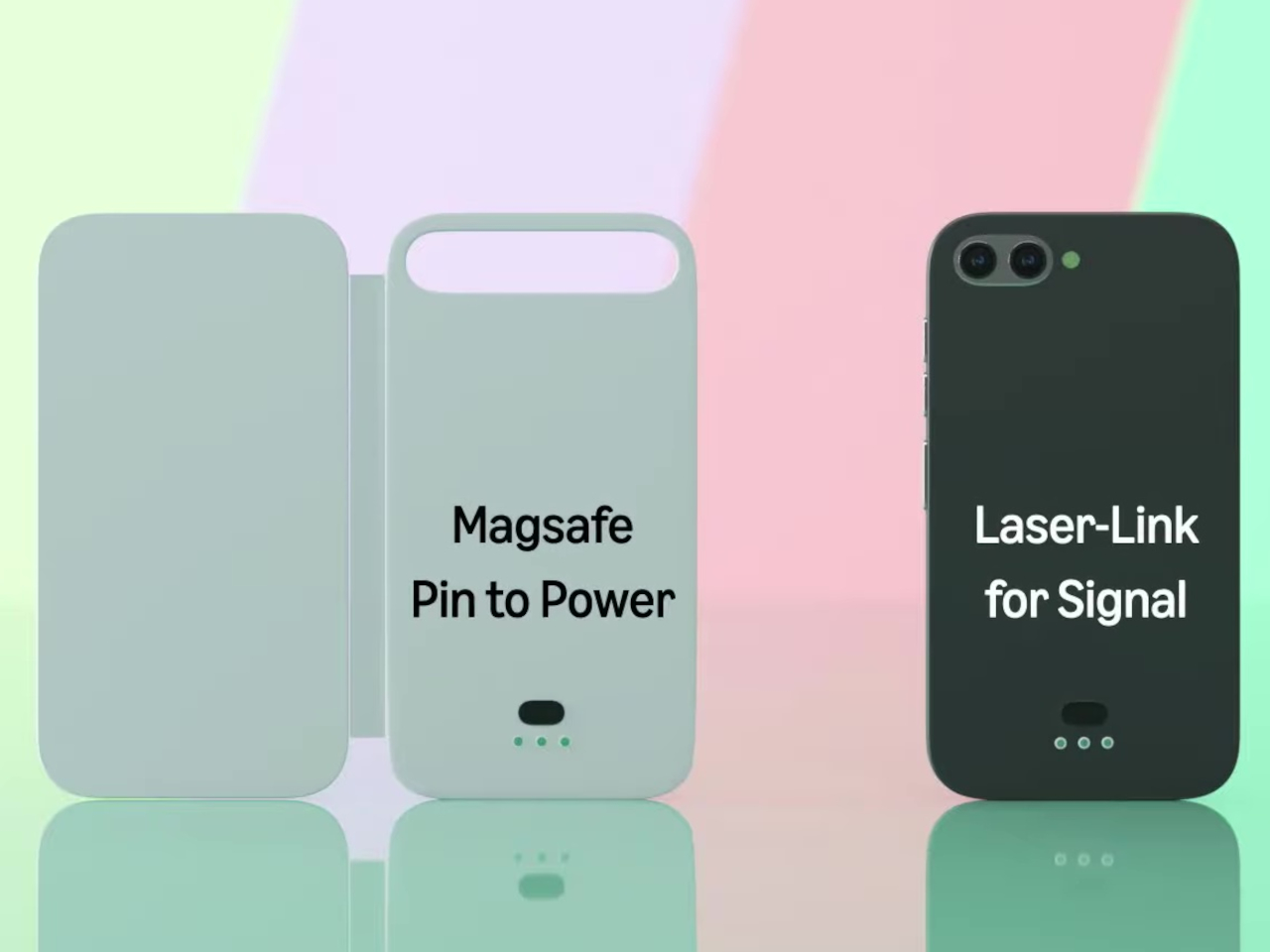
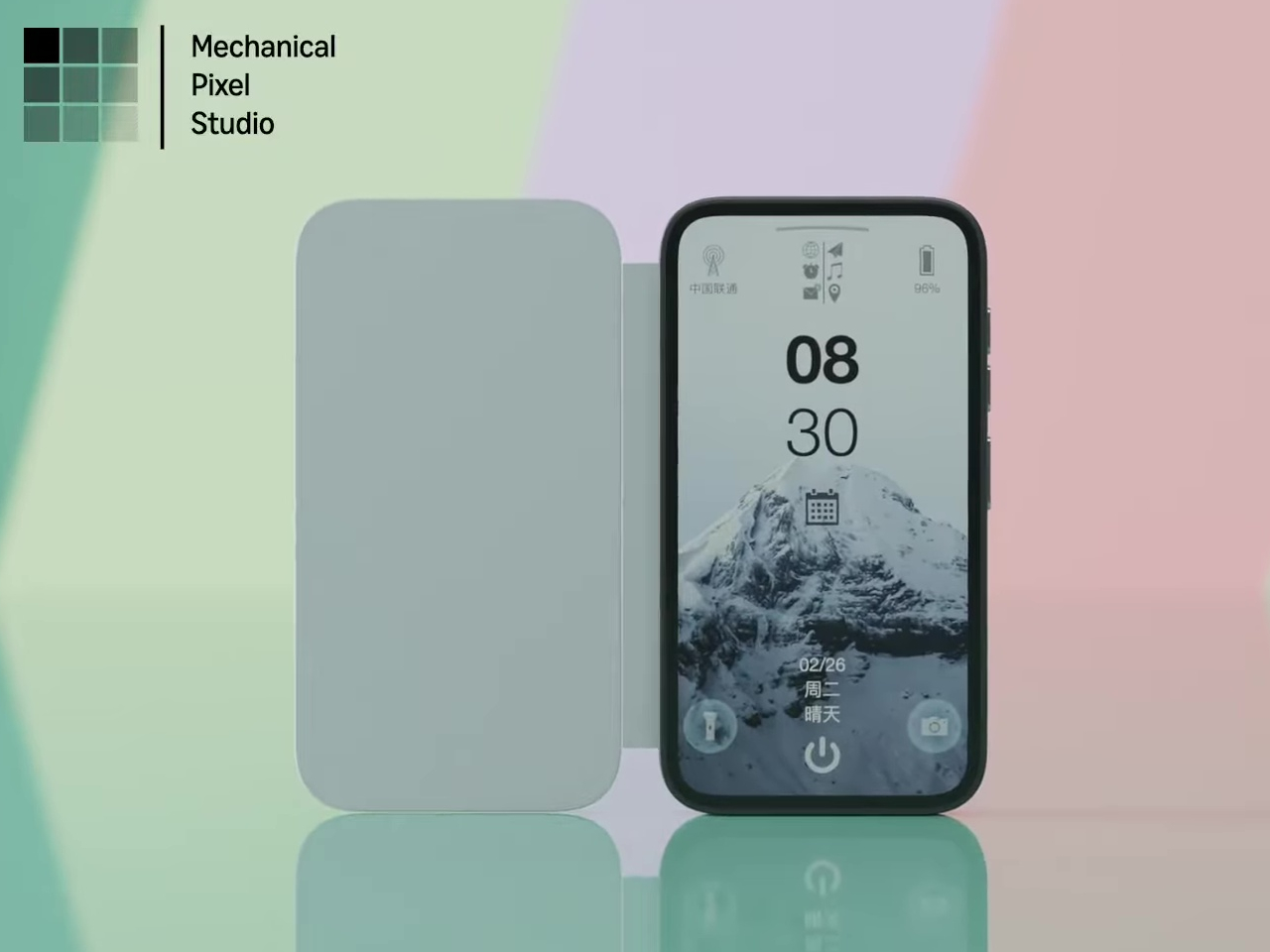
Pixel Dynamics’s E Ink Flip Cover concept takes a simpler approach. It’s a flip-style case with an E Ink screen on the outer panel, so even when the cover is shut, and the phone is locked, you can still check the time, date, battery level, and signal without waking the main display. E Ink only draws power when the image changes, making it a natural fit for an always-on panel.
Designer: Pixel Dynamics
There’s more to the display than status data, though. Beyond the time, date, and connectivity readouts, you can set it to show ambient illustrations that make the cover feel more personal, less like a utility panel, and more like something worth looking at. An E Ink screen isn’t going to win awards for visual richness, but for something that stays visible all day without demanding attention, that’s a reasonable ask.
The case attaches to the phone through a MagSafe-style magnetic system, snapping into place without any physical ports. Power is handled through contact pins that draw directly from the phone’s battery, so there’s nothing to charge separately and no second battery bloating the profile. That’s a smart call; one of the quickest ways to kill an otherwise good accessory concept is to make the user manage another charging cable.
Data between the case and the phone travels through what the concept calls Laser-Link, pitched as a higher-efficiency alternative to Bluetooth or NFC. The idea is that replacing radio-based communication with a laser signal gets you faster data transfer with less power overhead and no interference issues. It’s still concept-level technology, of course, so there aren’t any real specs to evaluate, but the thinking behind it is sound.
Put it together, and the pitch is easy to follow. You keep the phone in your pocket or face-down on a desk, and the E Ink panel handles quick glances that don’t need the main screen, saving the battery drain of waking an OLED display dozens of times a day. When you do need the full phone, flipping the cover open gets you there just as fast as any other case.
That said, a few things here are easier to propose than to build. Laser-Link doesn’t have a clear path to production yet, and it raises obvious questions about reliability when the phone and case aren’t perfectly aligned. The E Ink display part is more grounded, since that technology already exists in other accessories.
The phone case hasn’t had a genuine design moment in quite a while, and a concept that starts asking what the outer panel can actively do for you is a reasonable place to start that conversation. It still has a long road before reaching any shelf, but for a category that’s mostly been stuck recycling the same rigid shells, that’s actually not a bad place to be.
The entryway tends to be the most neglected spot in any home when it comes to design. Things pile up at the door, and most of the solutions people reach for, plastic key hooks, adhesive strips, wire baskets, tend to prioritize function so heavily that they end up looking like afterthoughts. It’s a corner of the home that rarely gets the same design attention as the living room or kitchen.
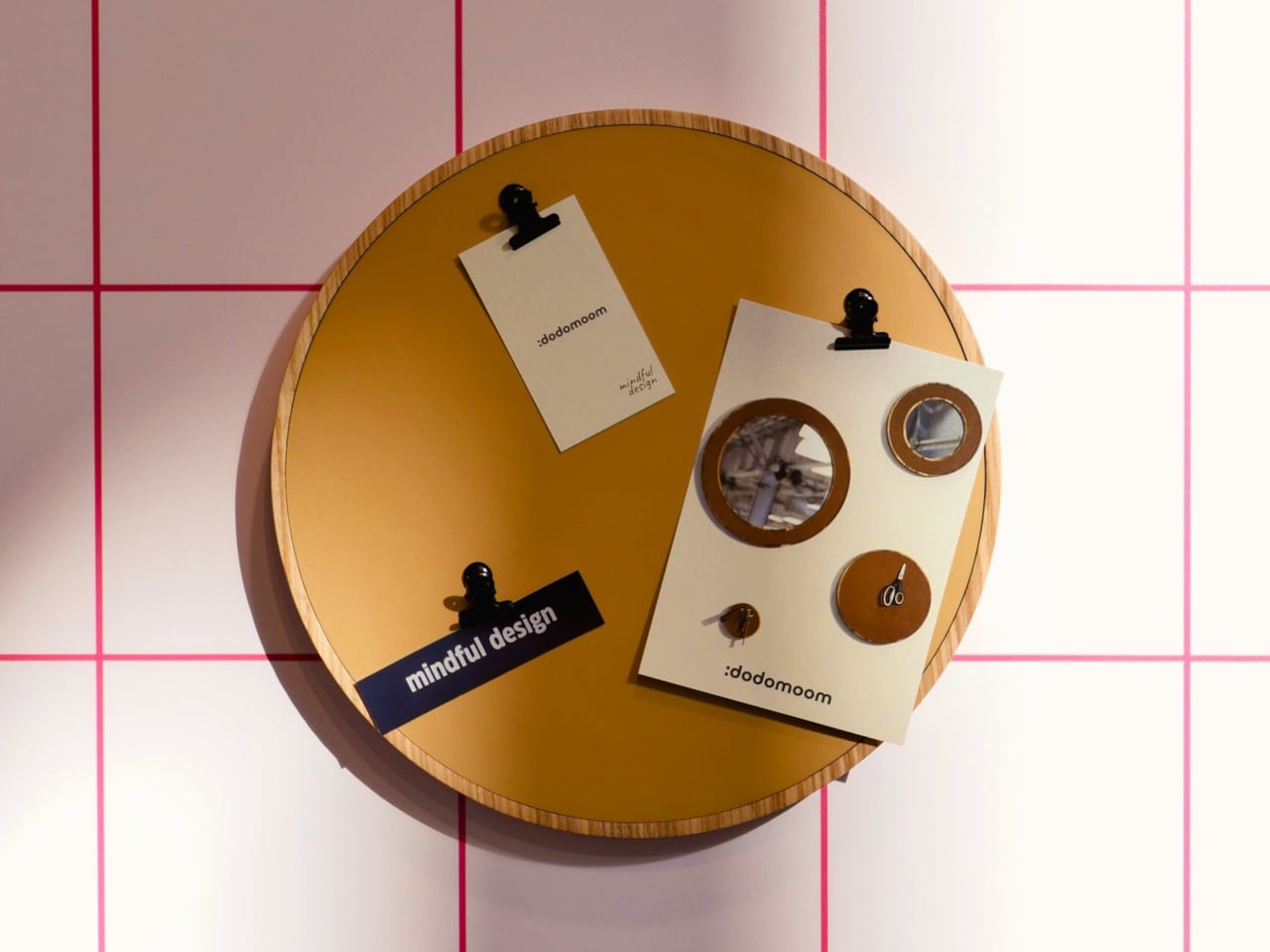
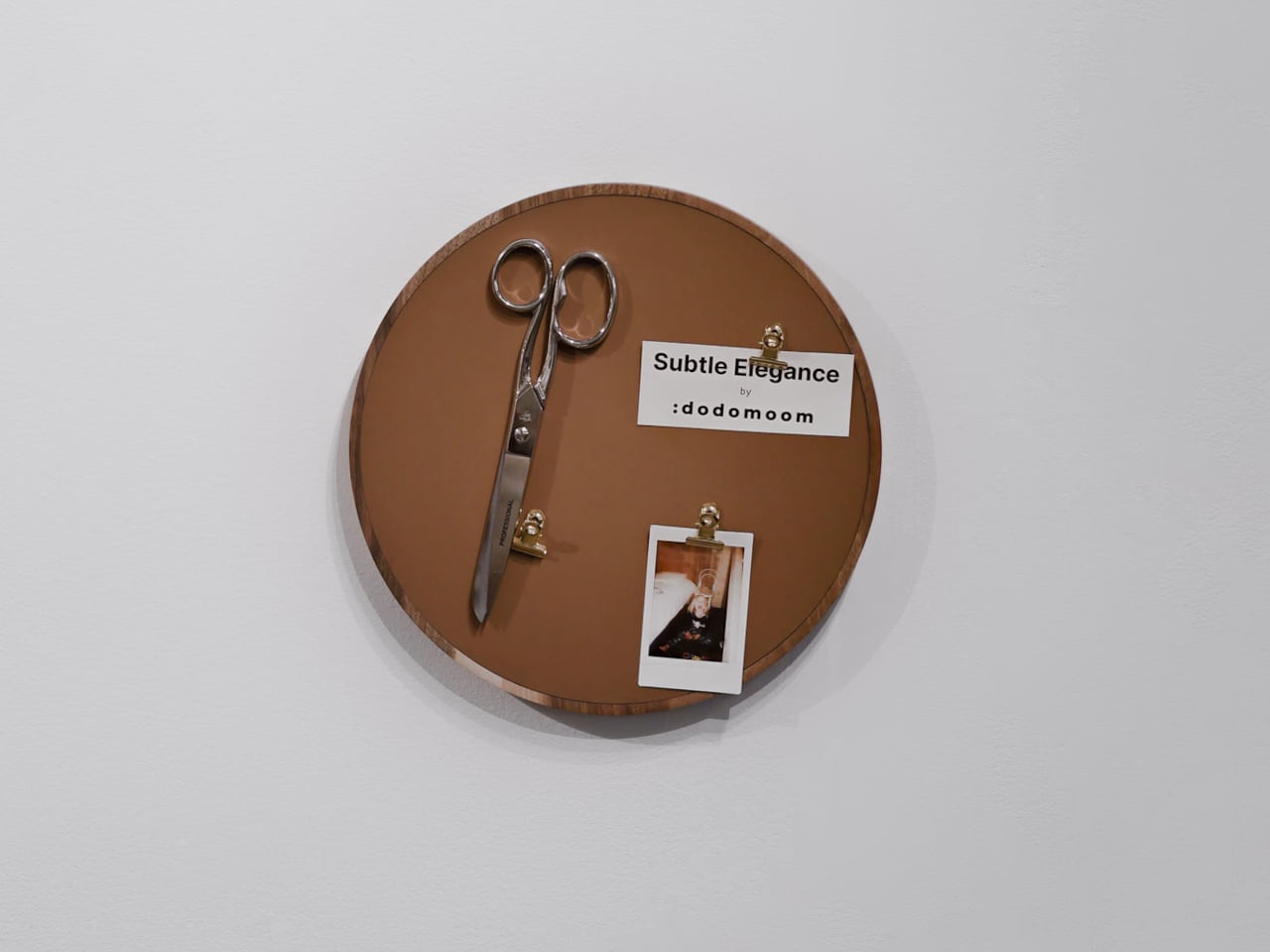
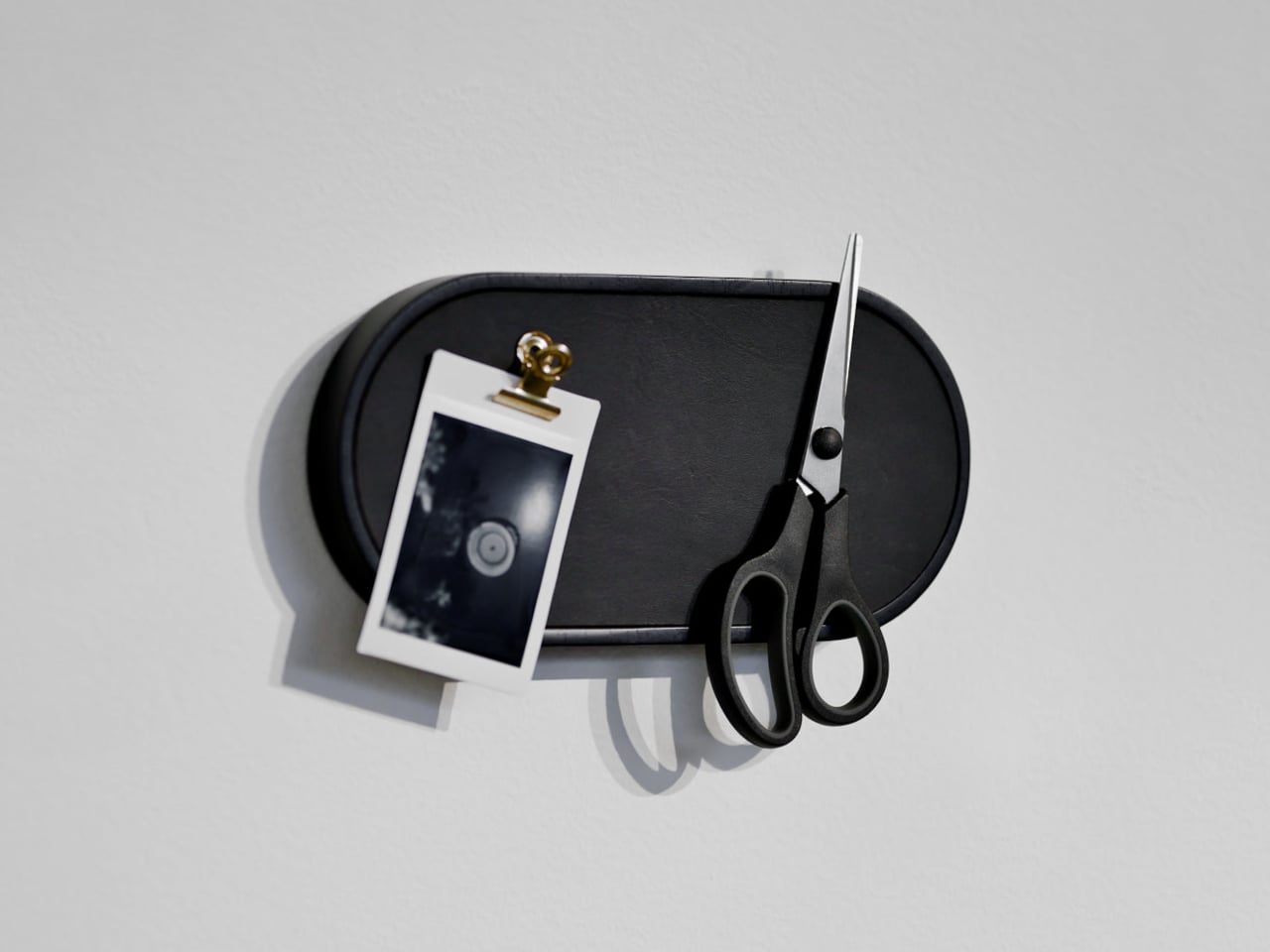
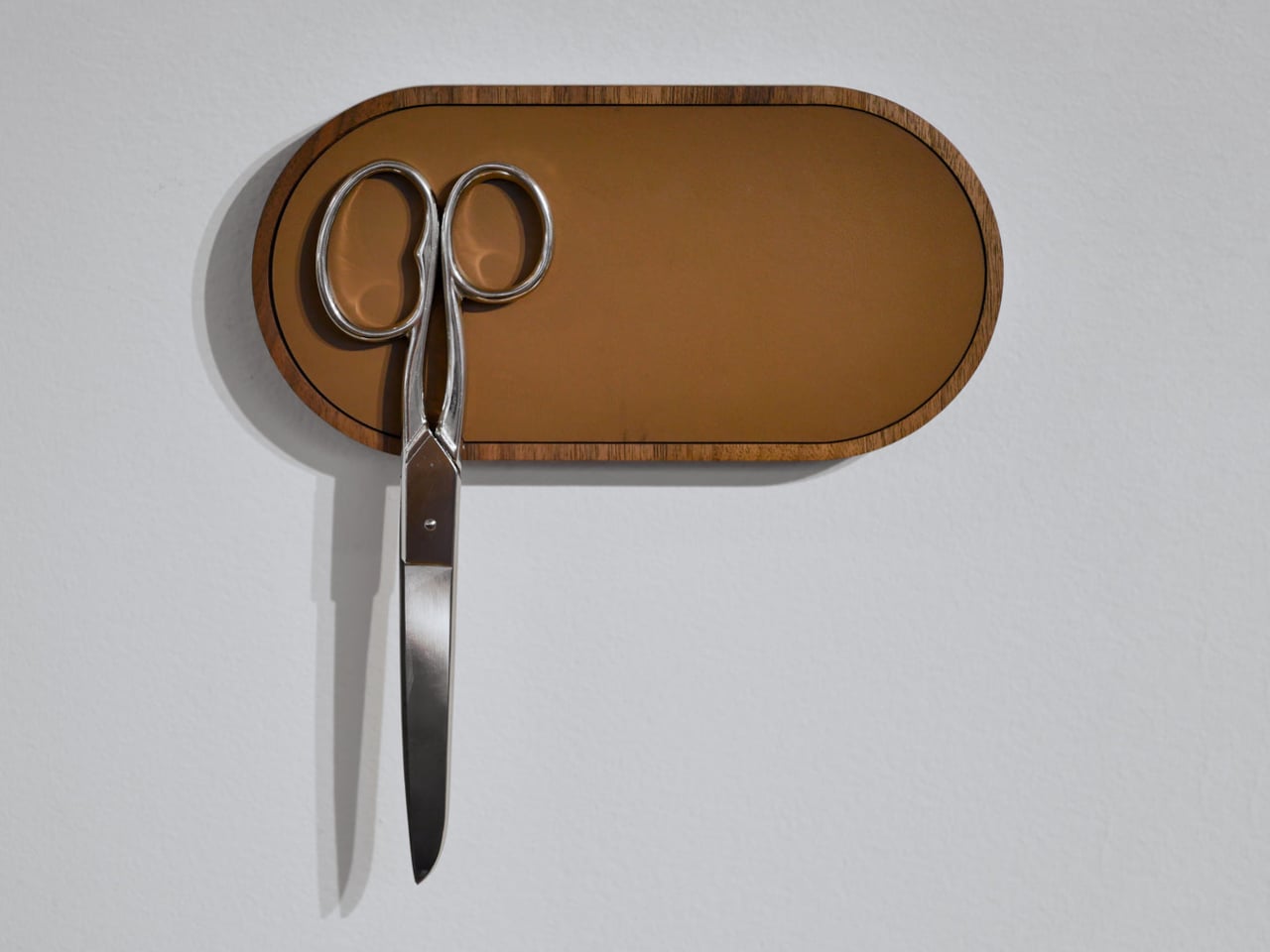
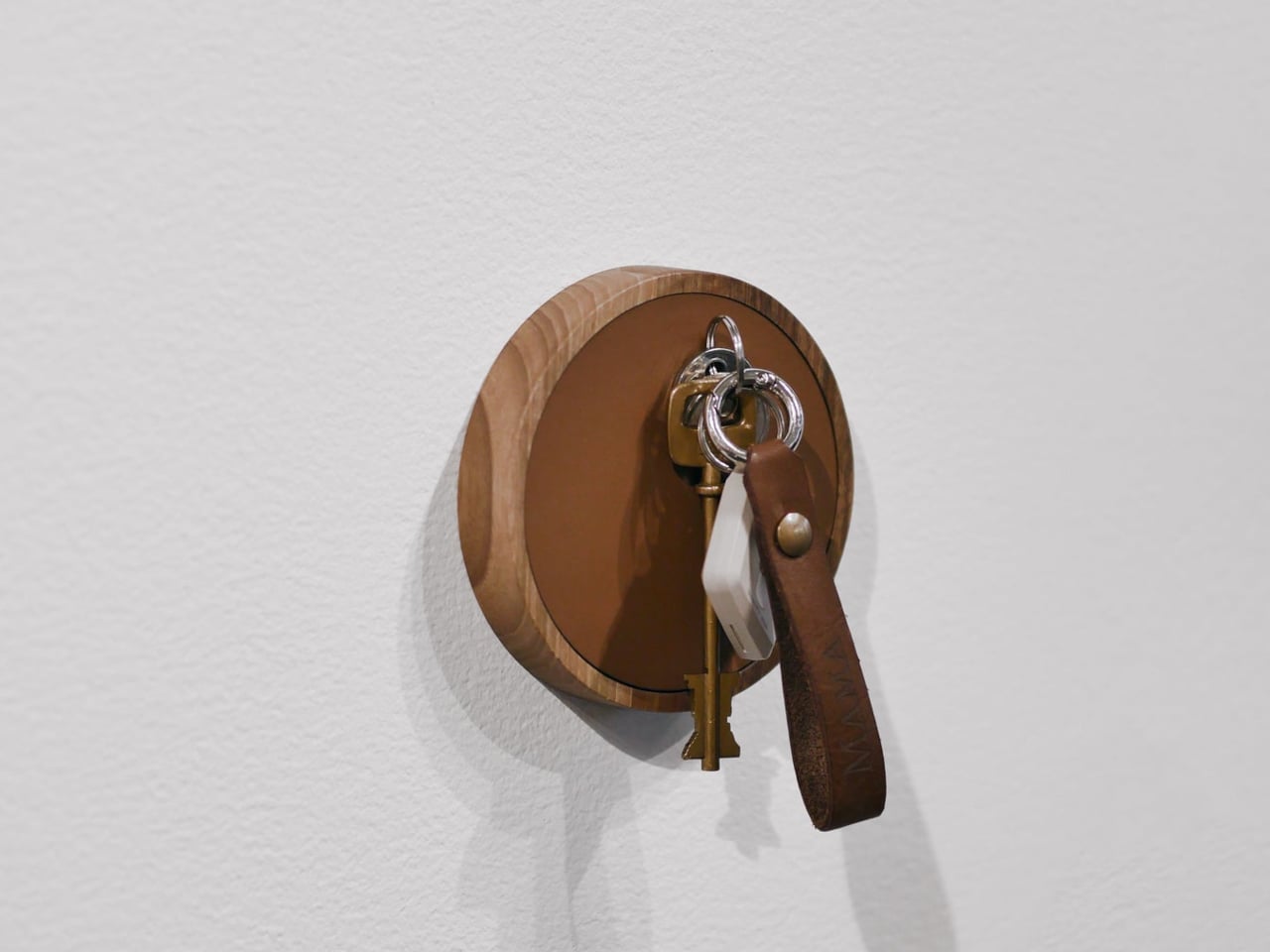
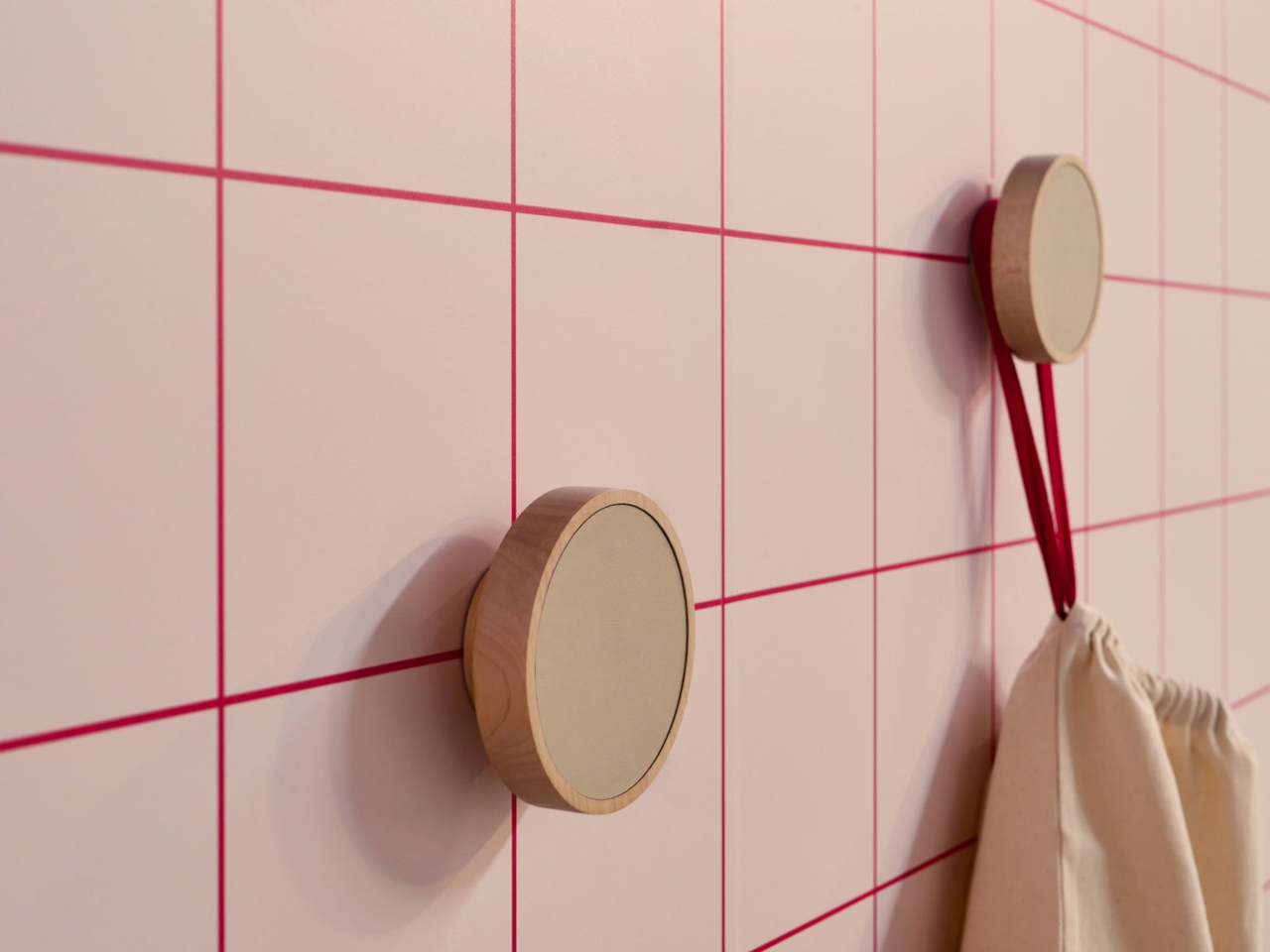
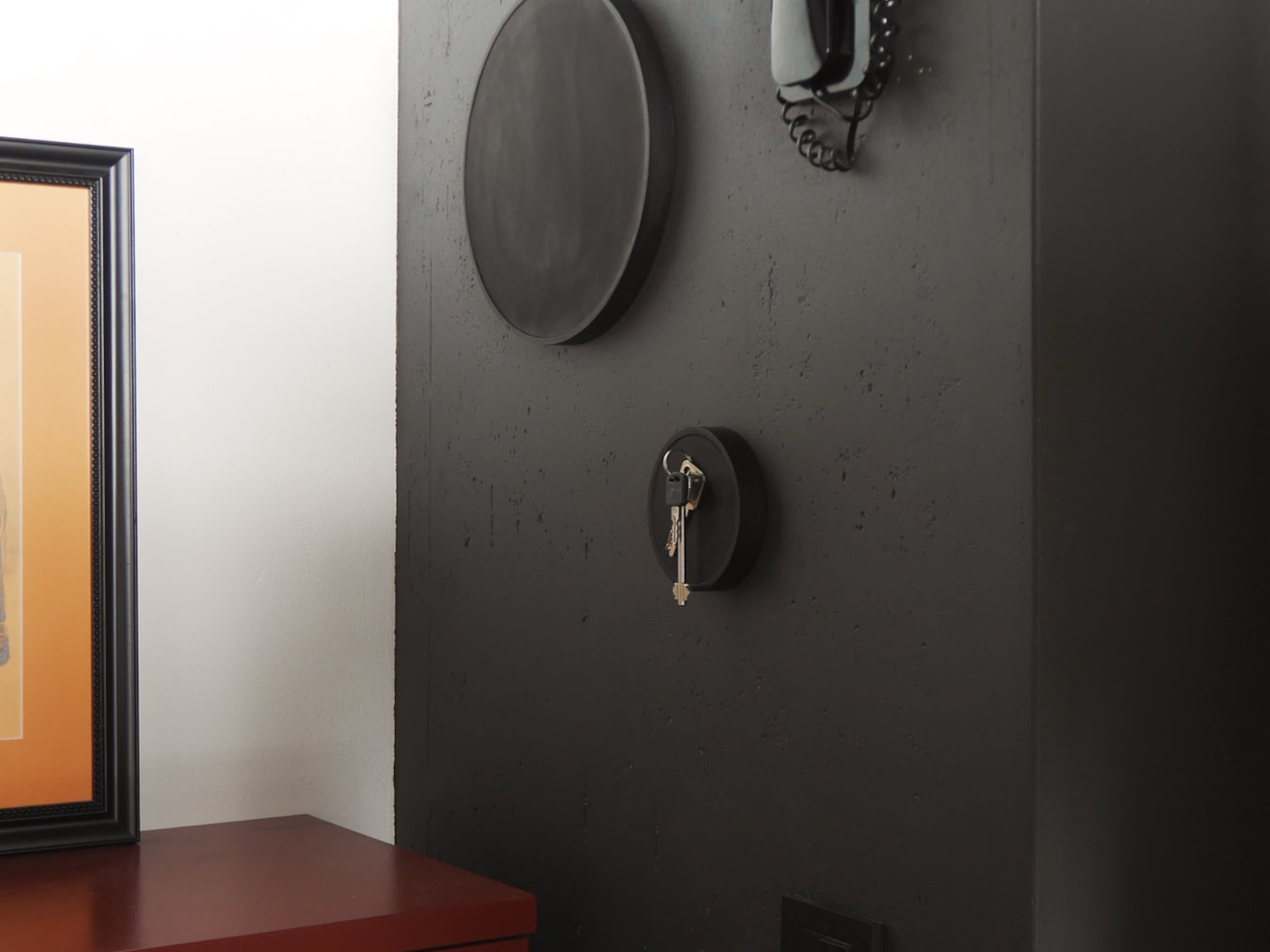
Ukrainian design brand dodomoom takes a different approach with its Magnetic Holders & Hooks collection. Designed by Andrii Burzi, the pieces combine natural wood and smooth leather to make something that looks far more like wall decor than a key holder. That impression, though, isn’t the whole story. Beneath the leather surface, a precision magnetic system does the actual work of holding keys and other small metal objects.
That hidden mechanism is part of what makes the collection so satisfying to use. There’s no hook to loop your keys onto, no notch to fumble with when your hands are full. You just bring your keys close to the surface, and the magnets hold them flat against the leather face. Burzi described the reaction from people who try it: “It isn’t magic. It’s precision.”
The collection has six pieces in total, ranging from the compact Nordic Little Magnetic Holder to the larger Nordic Family Magnetic Holder, which can hold up to four sets of keys at once and measures roughly 8 inches square. You can mount any of them with 3M adhesive tape or standard screws, giving you the option to hang them without committing to permanent hardware on the wall.
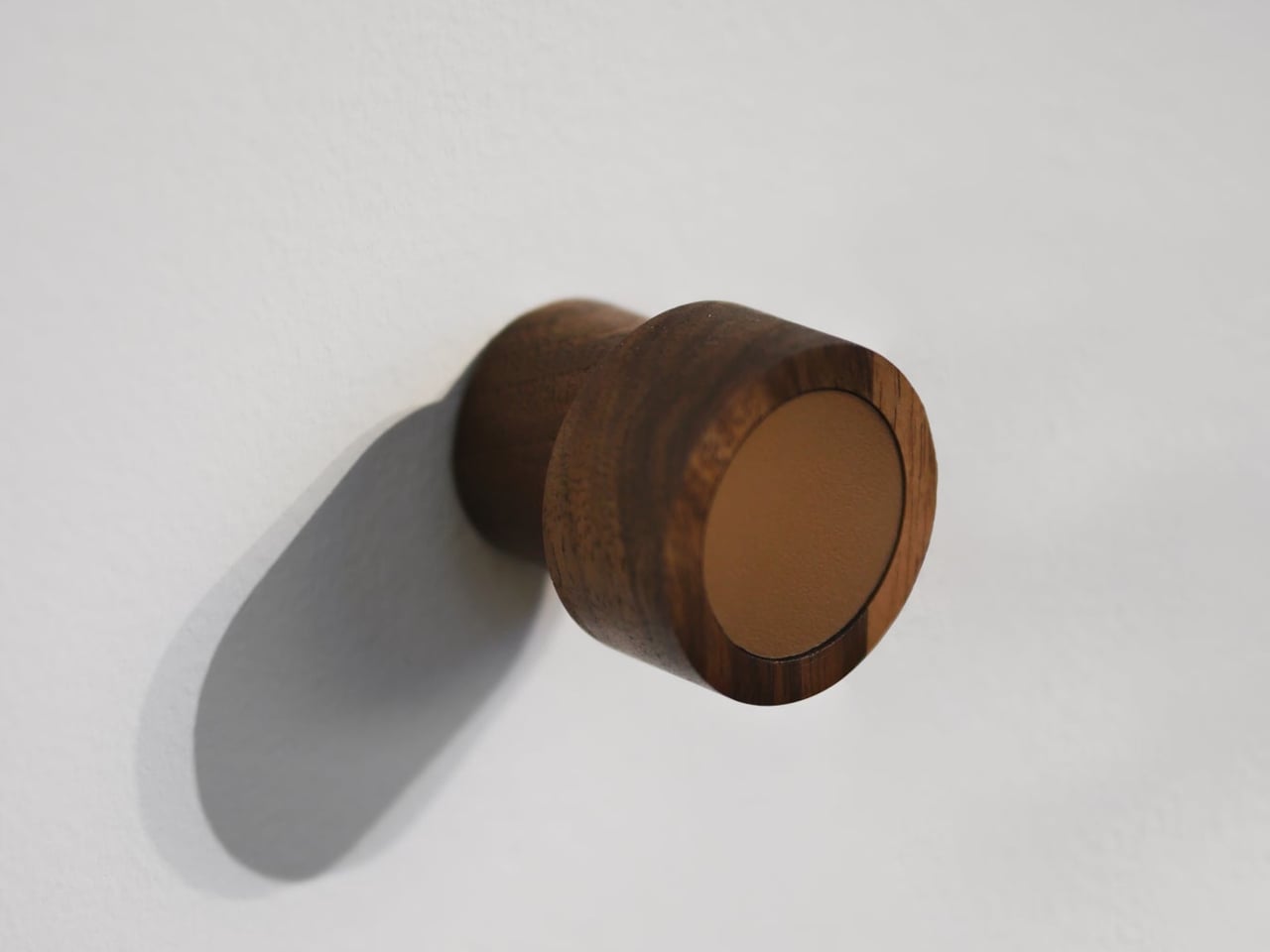
Each piece is available in walnut, ash, or maple, with a Night Black option in painted ash for spaces with a darker palette. The leather inlay sits against the wood base, and the combination reads as considered rather than decorative for its own sake. These aren’t objects that need to be explained; you’d be happy having them on the wall even if they didn’t hold a single key.
The collection also includes the Nordic Little Coat Hook, which follows the same material language as the rest of the holders. That consistency matters if you’re planning to use more than one piece on the same wall, and dodomoom clearly anticipated that. The Nordic Line is designed with modularity in mind, so pairing a key holder with a coat hook feels more like a deliberate arrangement than an accidental one.
The Nordic Family Magnetic Holder is priced at $98, which puts it closer to a considered purchase than an impulse buy. That’s a fair trade-off for something that pulls double duty as a decorative object and doesn’t make you stare at an ugly key rack every time you come home. Most entryway solutions make you pick between looking good and working well, and dodomoom doesn’t put you in that spot.
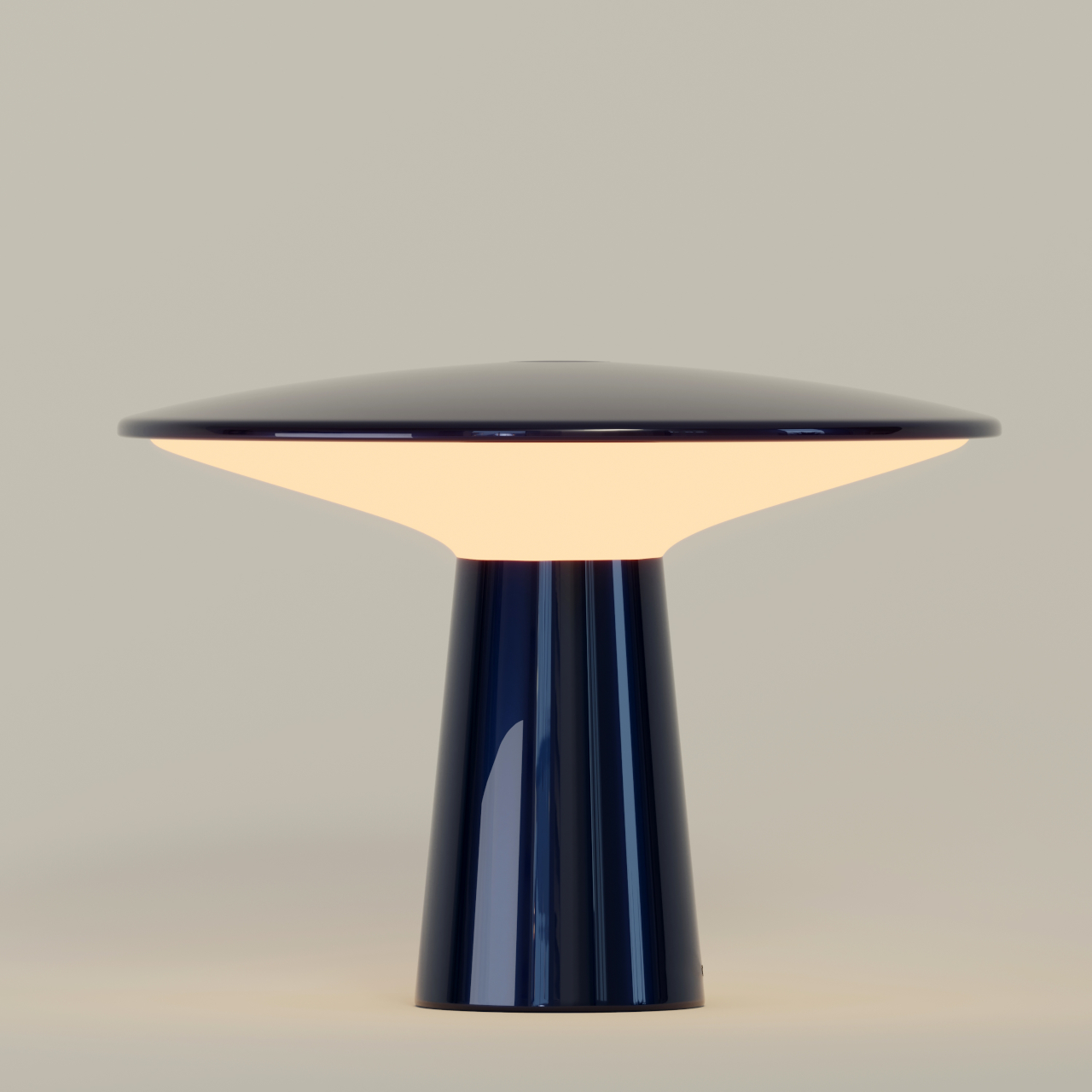
The lamp has gotten interesting again. What was once a fixture relegated to task lighting and matching living room sets has turned into something more intentional, especially among people who care about how their spaces feel at different times of day. Cordless, portable table lamps have become a genuine category of their own, offering the kind of flexibility that hard-wired fixtures simply can’t.
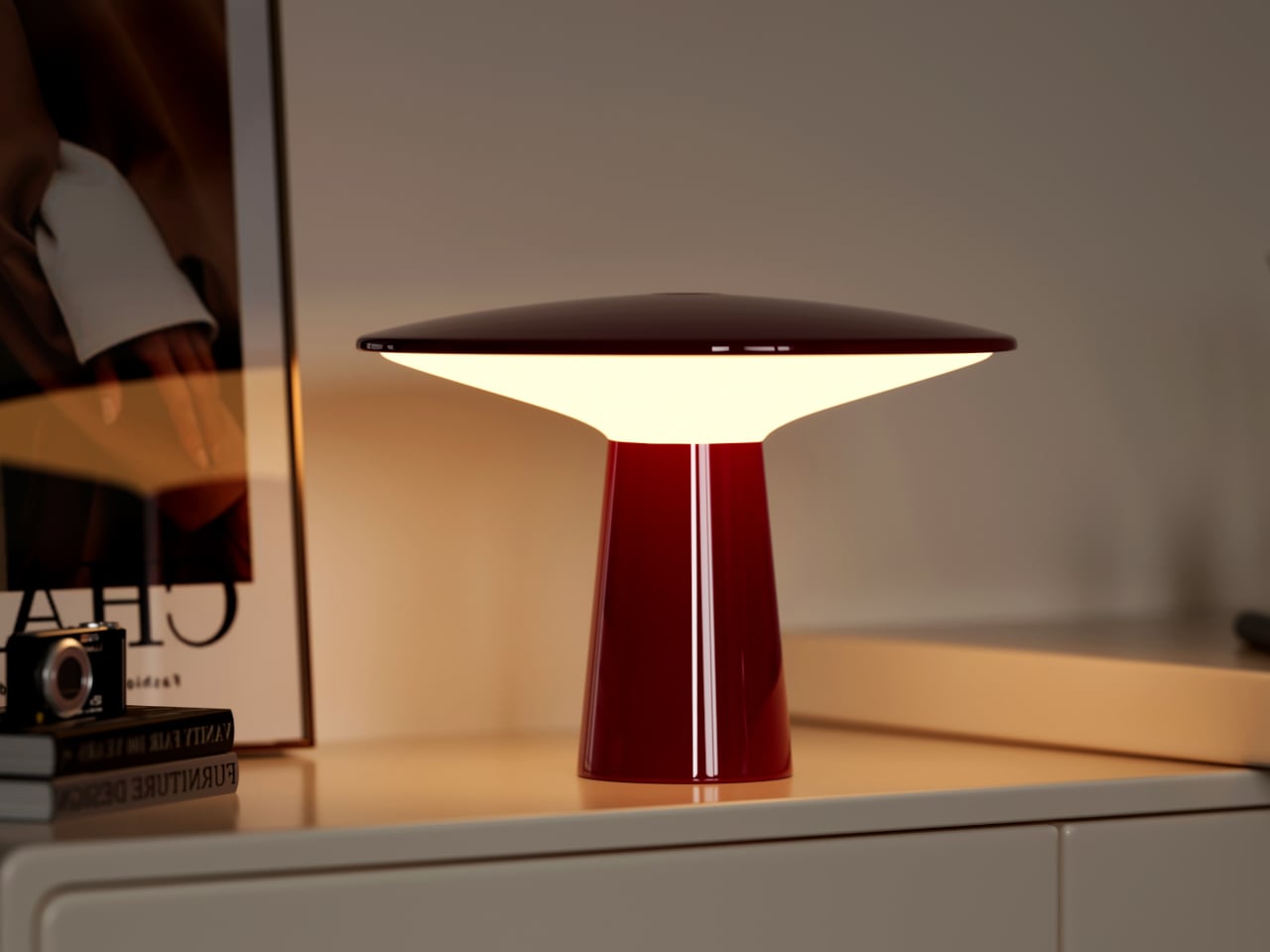
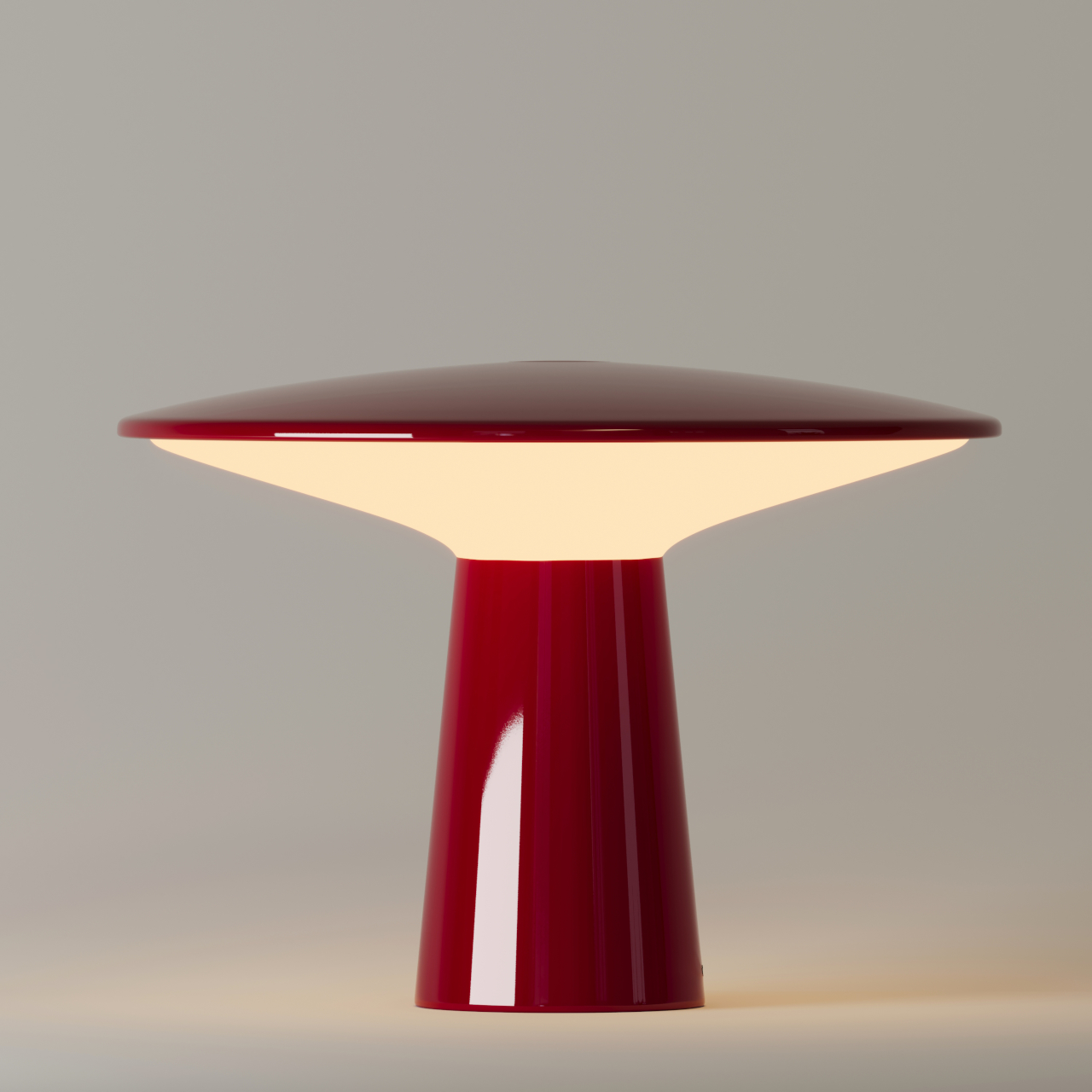
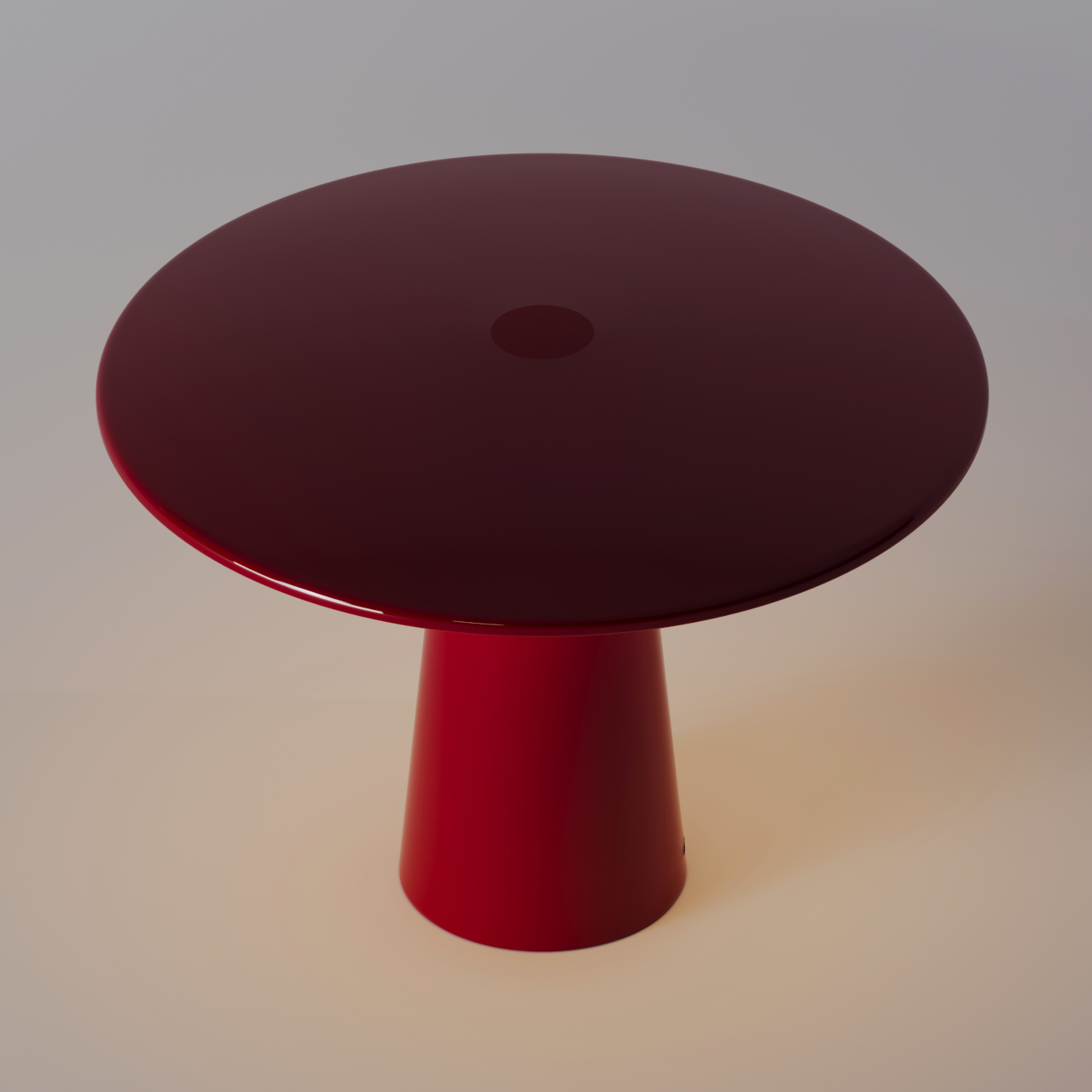
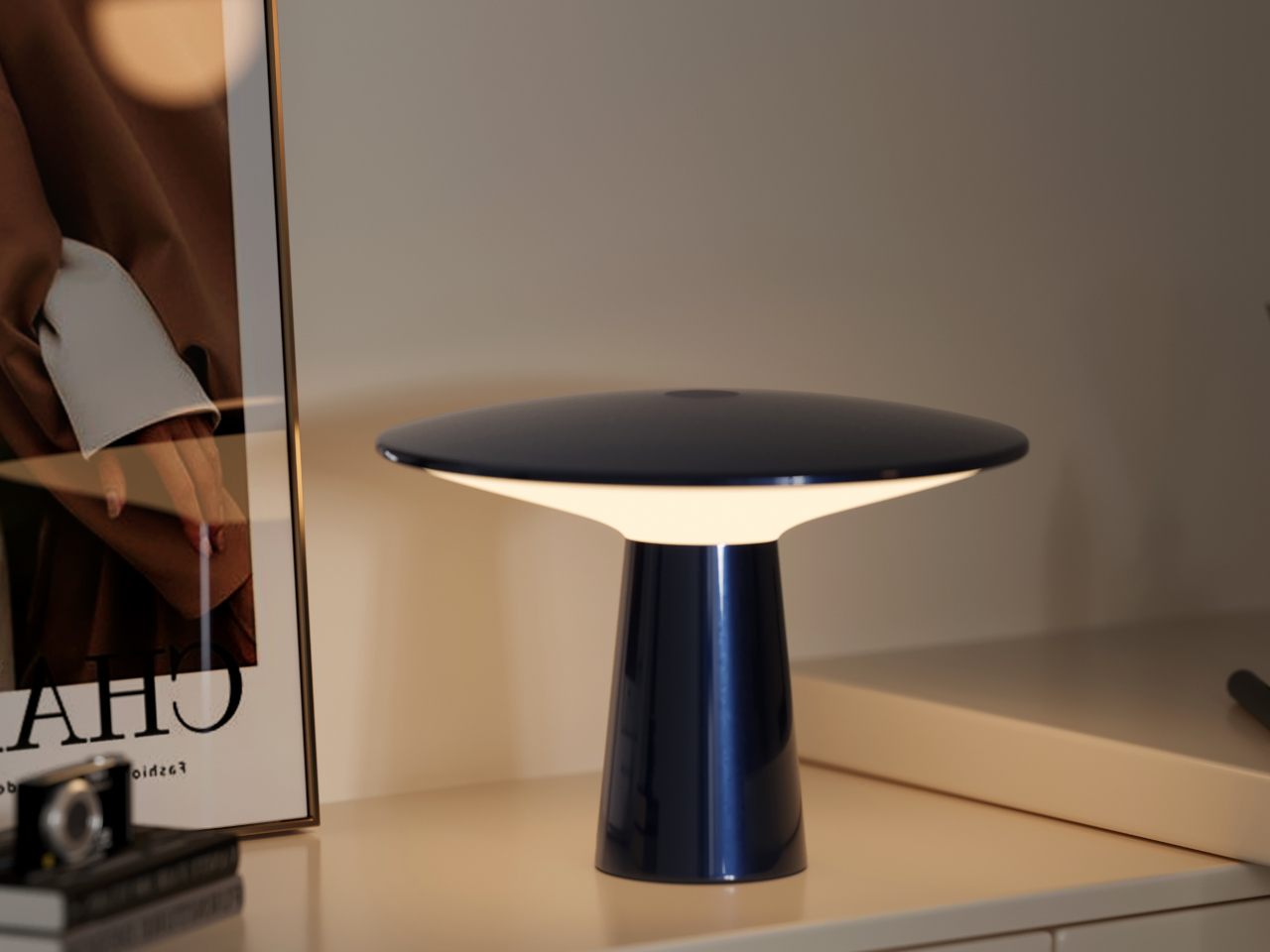
Designer Rahi Seyedi’s Monir, developed for Rey Studio, slots right into that world while carrying a concept that goes a bit further than most. The 29cm cordless lamp is inspired by the way moonlight sits between the sky and the earth, and that idea drives every decision in the design, from the shape of its dome to the materials holding it all together.
Designer: Rahi Seyedi
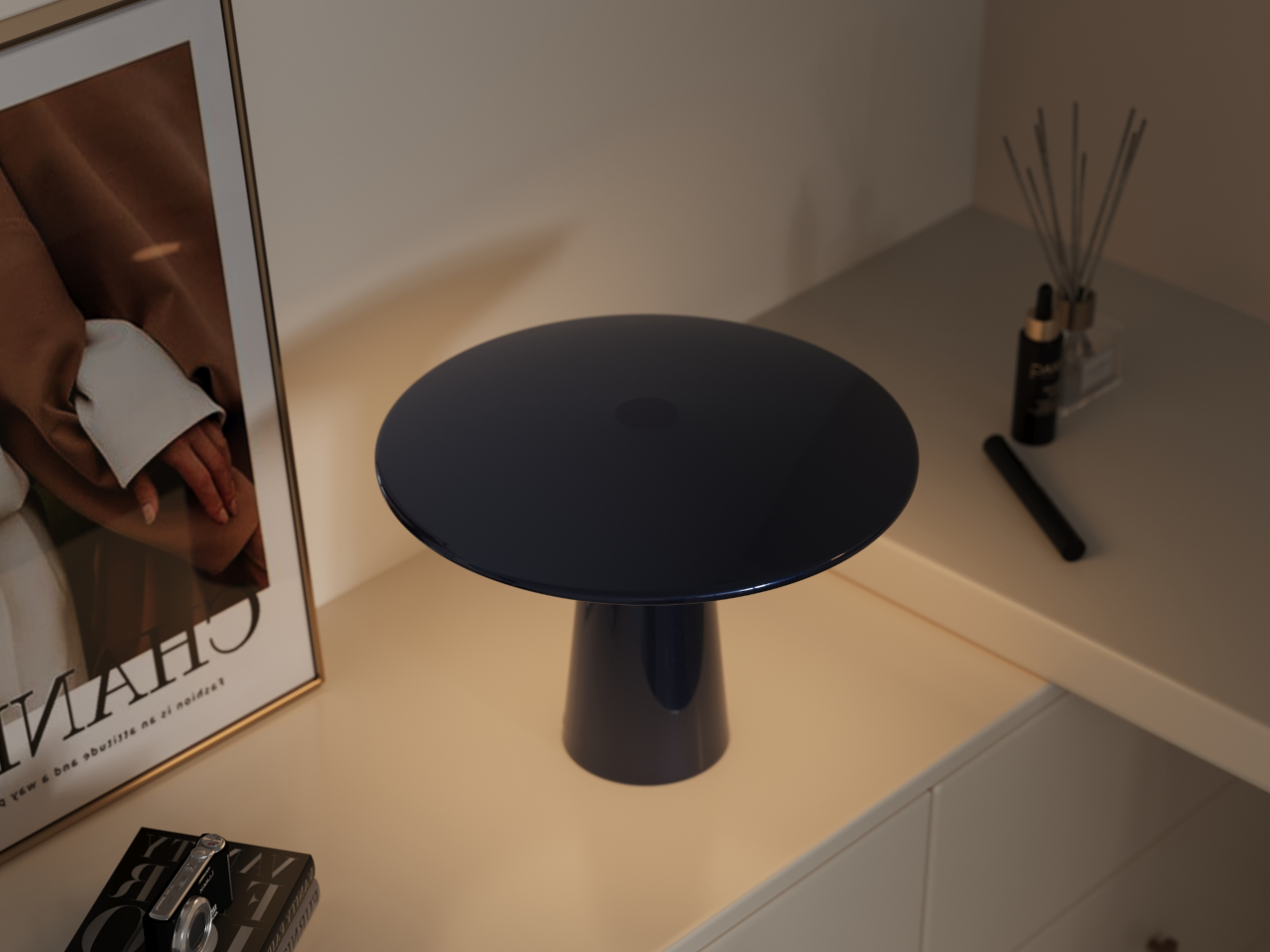
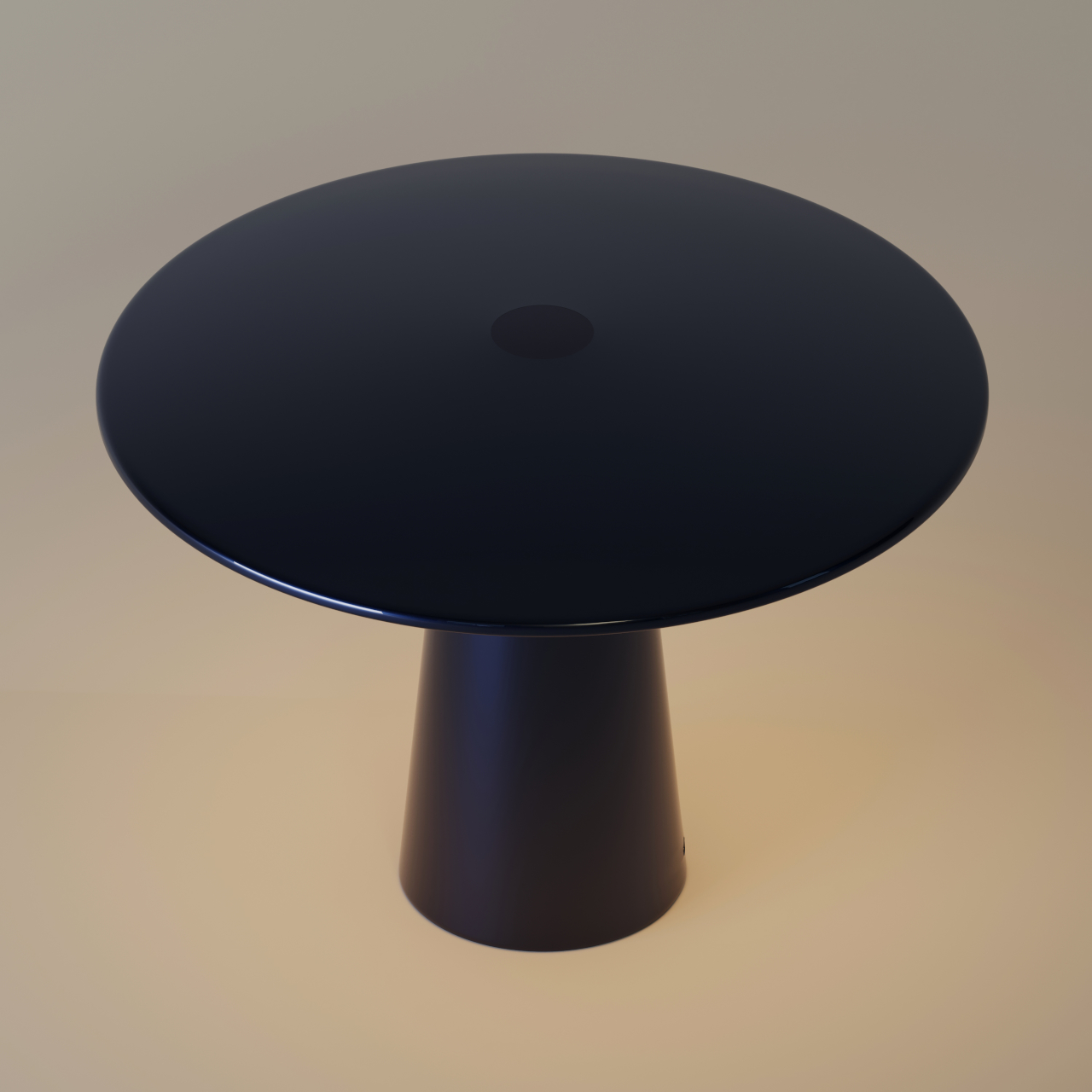
The form reads pretty clearly once you know what it’s referencing. A dark, grounded base anchors the lamp below, standing in for the weight of the earth, while the translucent dome above lets the LED ring scatter light in a way that mimics the gentle diffusion of moonlight. Nothing about the design is there for decoration alone. Every detail serves the concept, and you can tell.
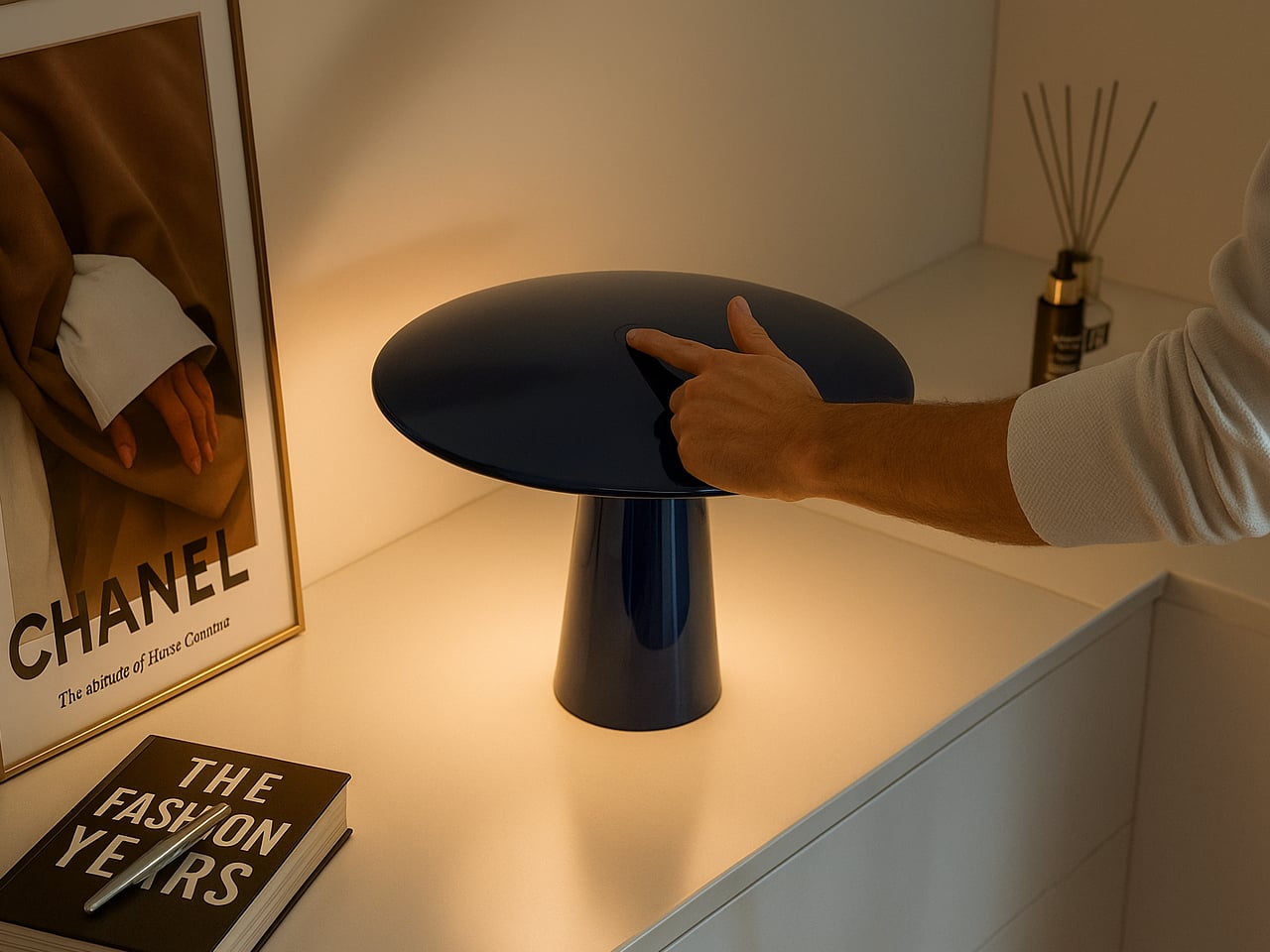
Using it is about as frictionless as a lamp can get. A tap switches it on, and gently rotating the upper section moves through three brightness levels. That’s it. There’s no app, no remote, and nothing to configure before you can actually use it. You just pick it up, place it where you want it, and adjust the brightness until the light feels right.
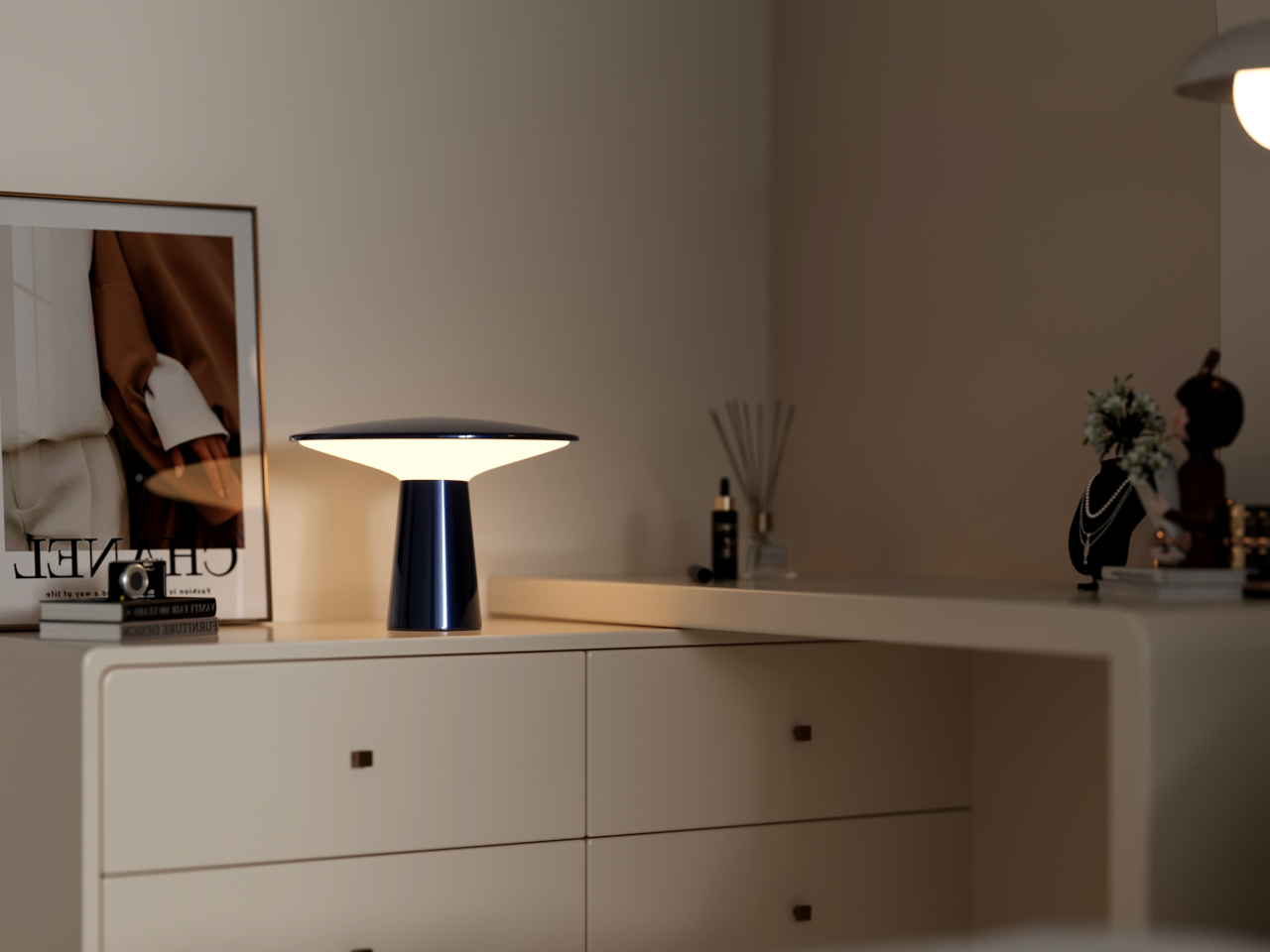
On a desk, Monir keeps things steady without being intrusive. The diffused glow is warm enough to take the edge off the contrast between a bright screen and a dark room, which is exactly what you want during a long stretch of work or reading. It doesn’t replace proper task lighting, of course, but it makes the hours you spend at a desk noticeably more comfortable.
Move it to a side table when the day winds down, and the lamp takes on a different role entirely. At its lowest settings, the warmth it puts out is the kind that encourages you to put your phone down and actually be in the room. Overhead lights off, Monir on, and the space feels genuinely different in a way that’s hard to explain but pretty easy to appreciate.
Sustainability was factored into Monir well before the final form was settled, and it shows. The base and dome are both made from 100% recycled aluminum, while the diffuser uses bio-based polycarbonate, a plant-derived material that doesn’t end up in a landfill. For something that asks so little of you visually and physically, that’s not a small thing, and as lighting objects go, Monir keeps its intentions quiet and its results remarkably clear.
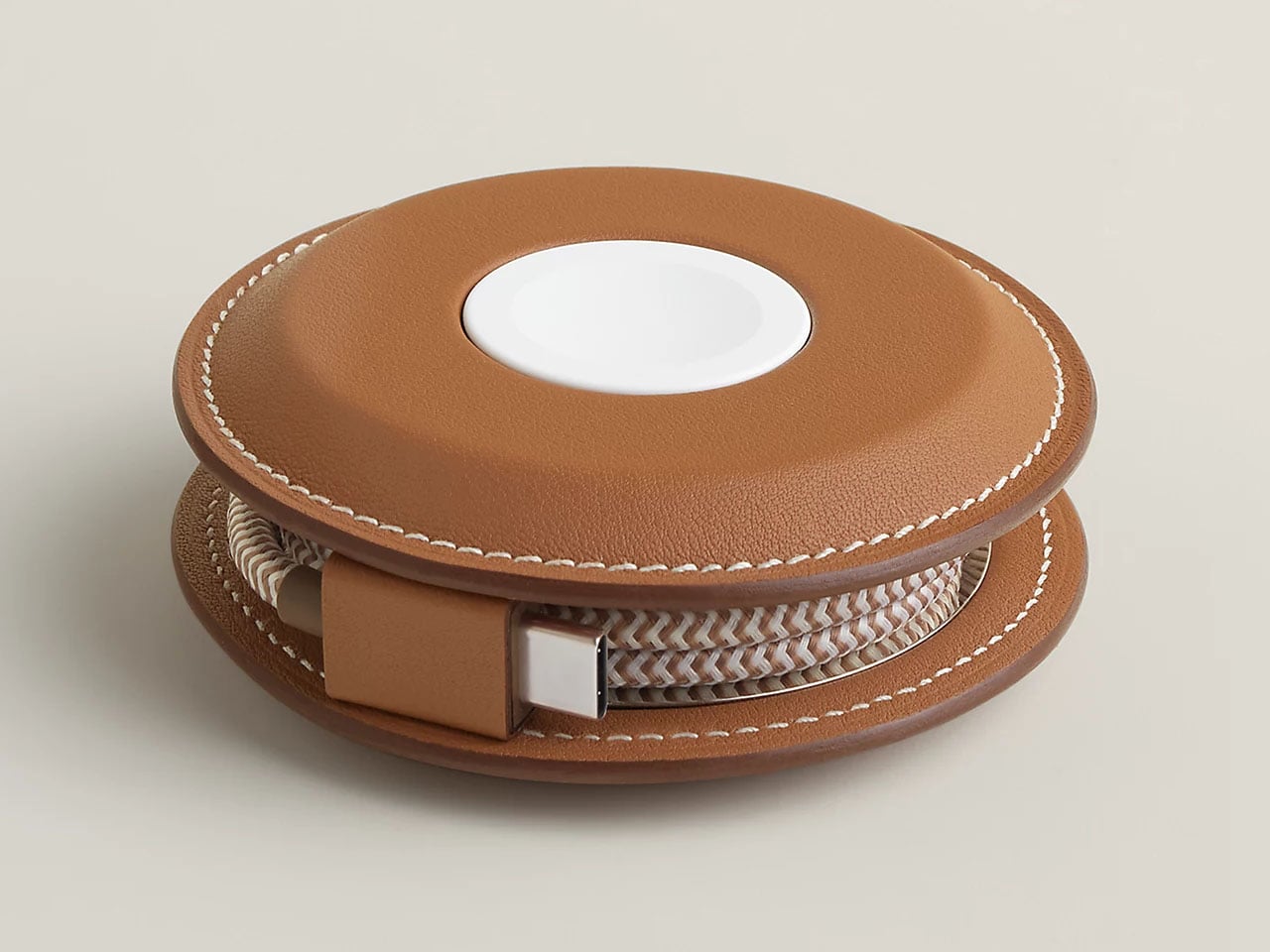
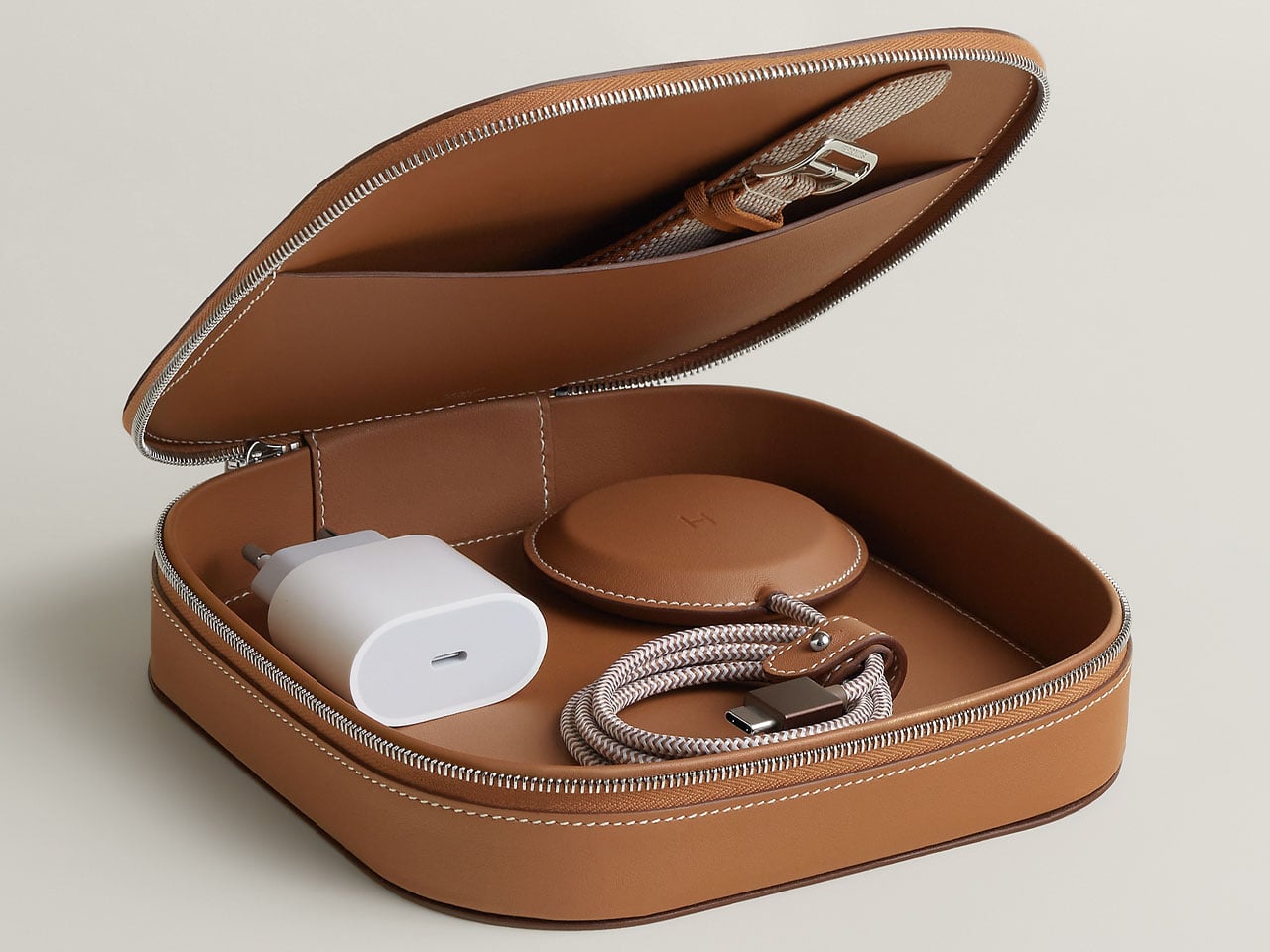
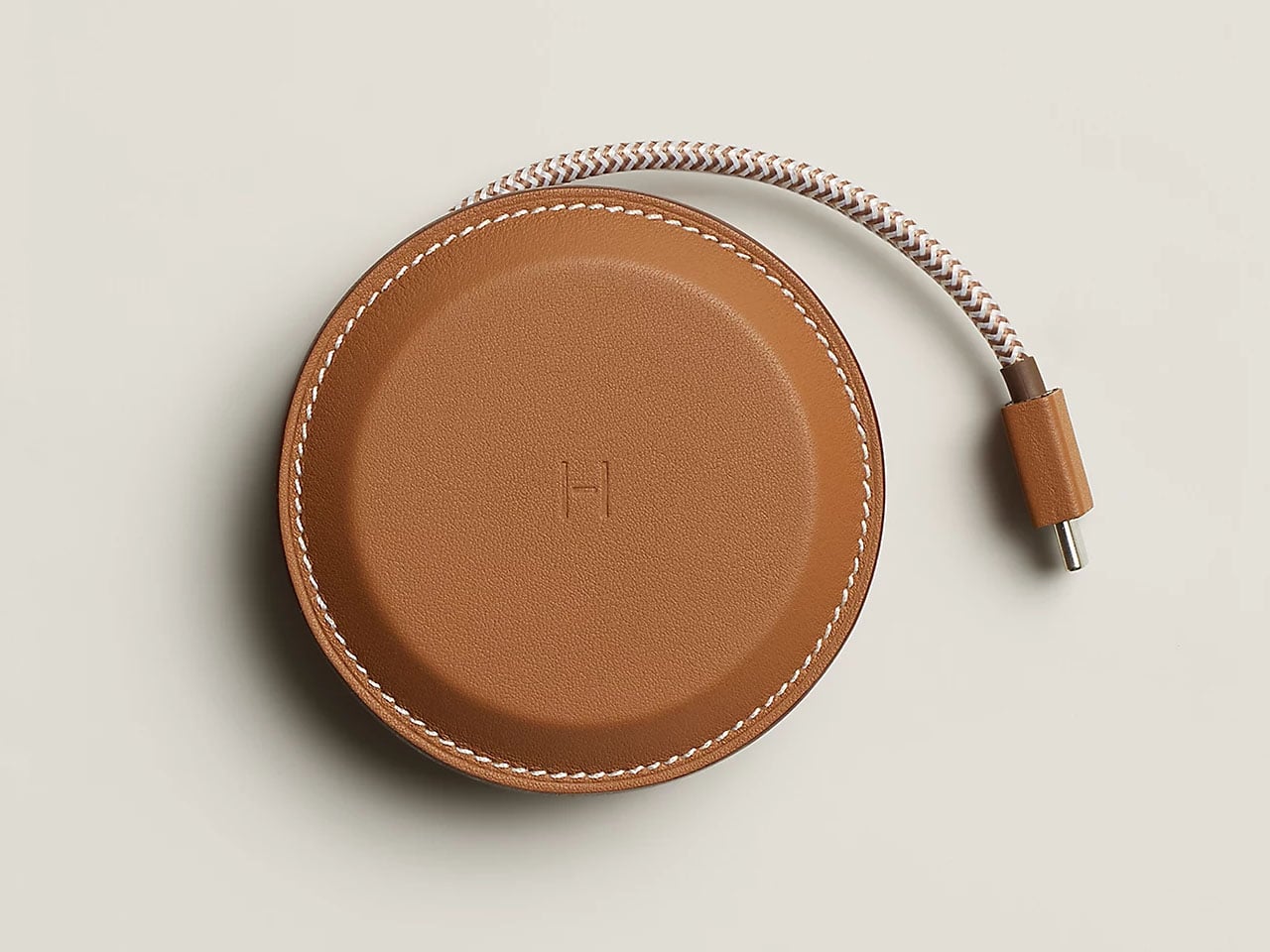
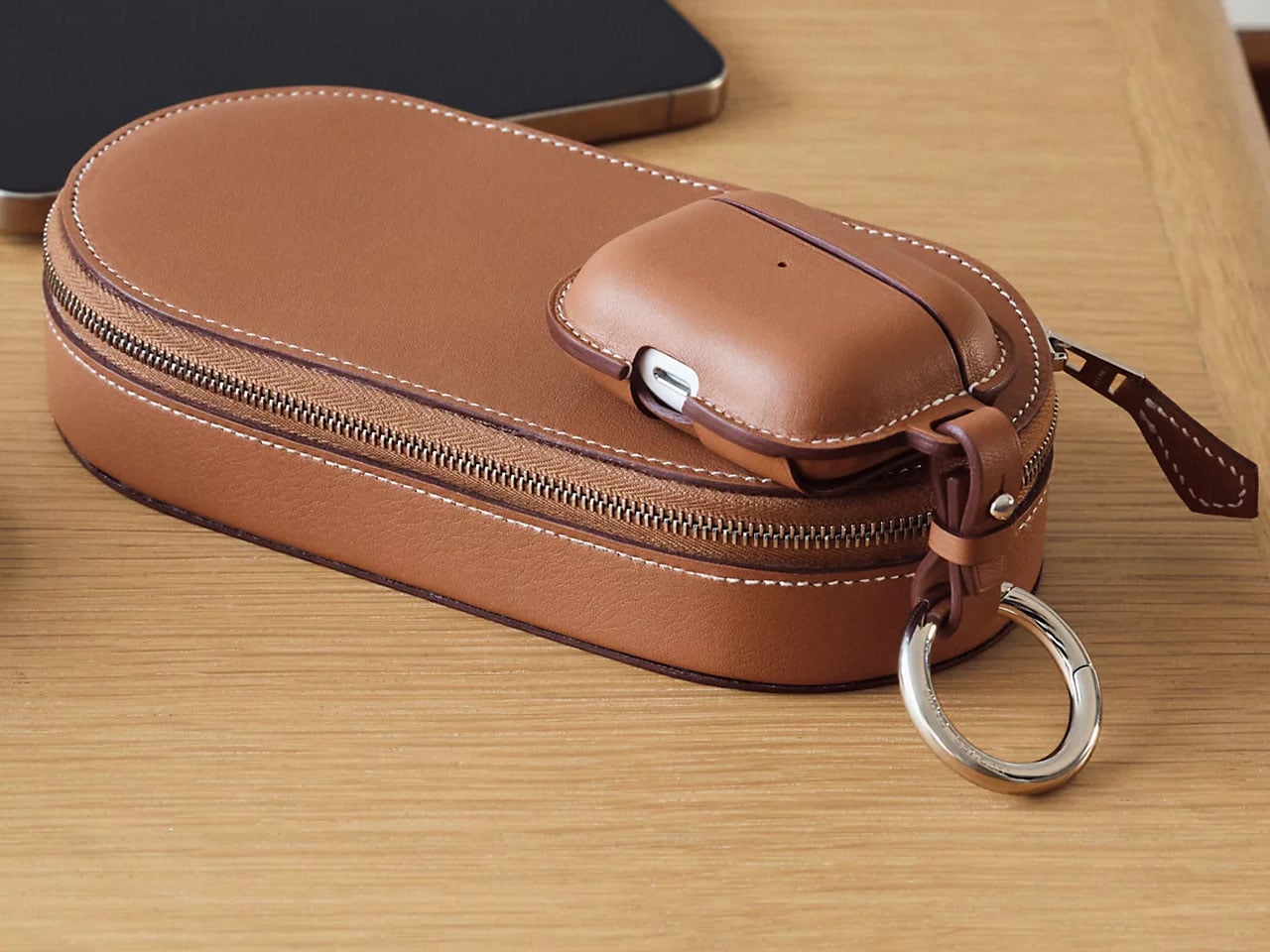
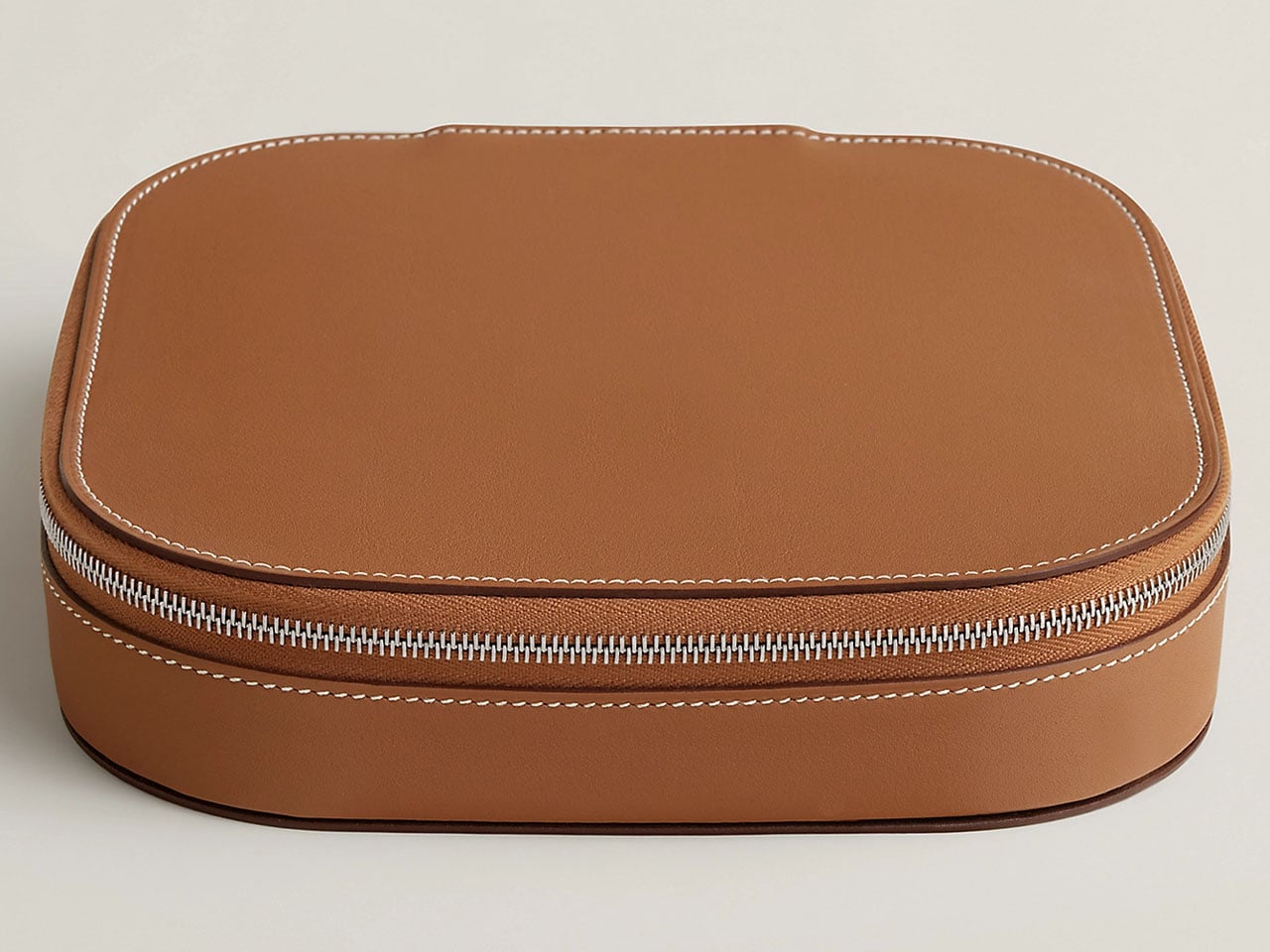
There are MagSafe chargers, and then there is the Hermes Paddock Yoyo Charger. The French luxury brand has crafted a leather charger case for your Apple devices that costs much more than the iPhone 17 Pro Max or the MacBook Air. This accessory comes as a part of the Hermes spring tech collection, which includes the Paddock Solo charger, Grand Paddock Case, and the Paddock Duo Charger.
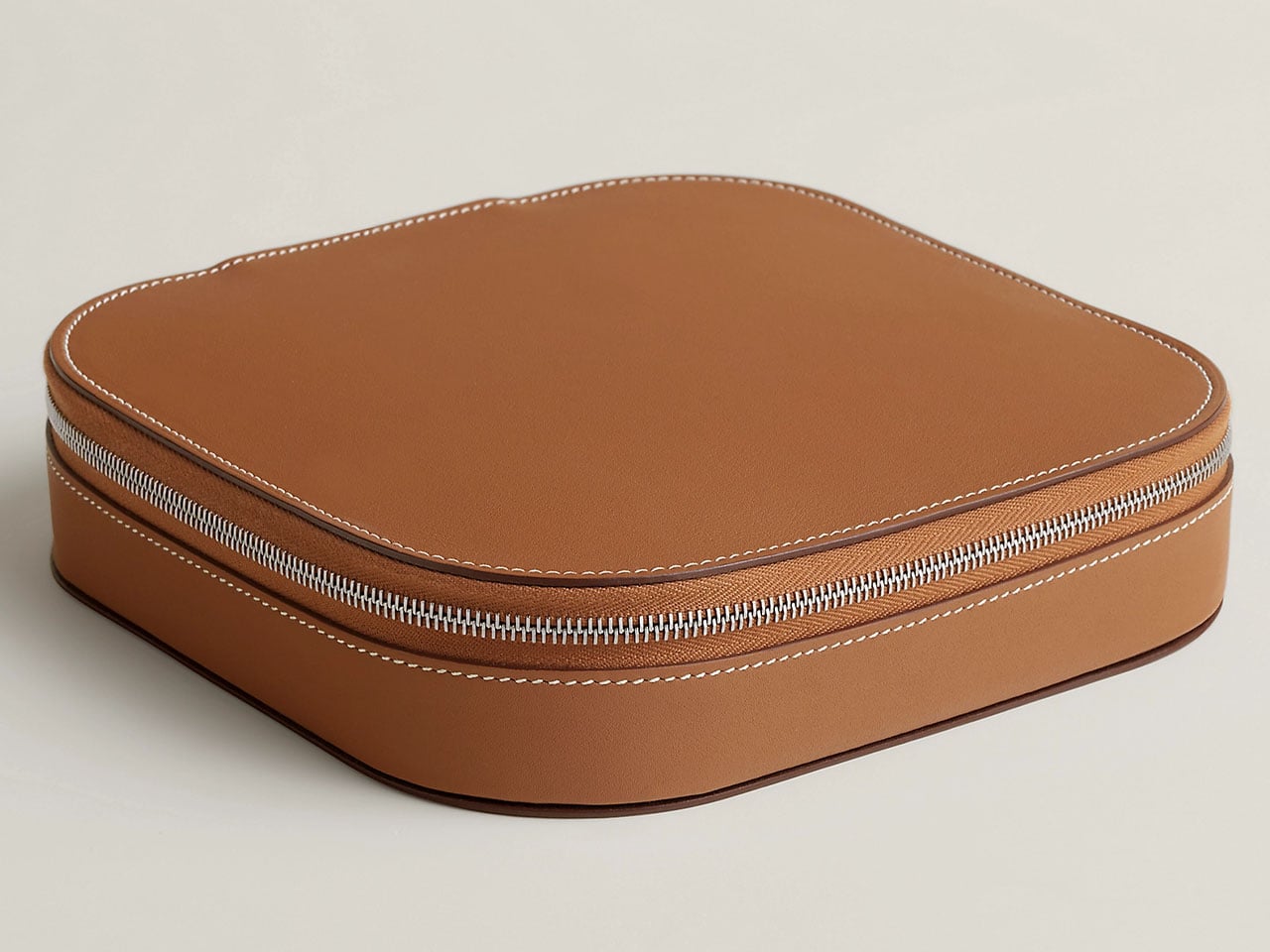
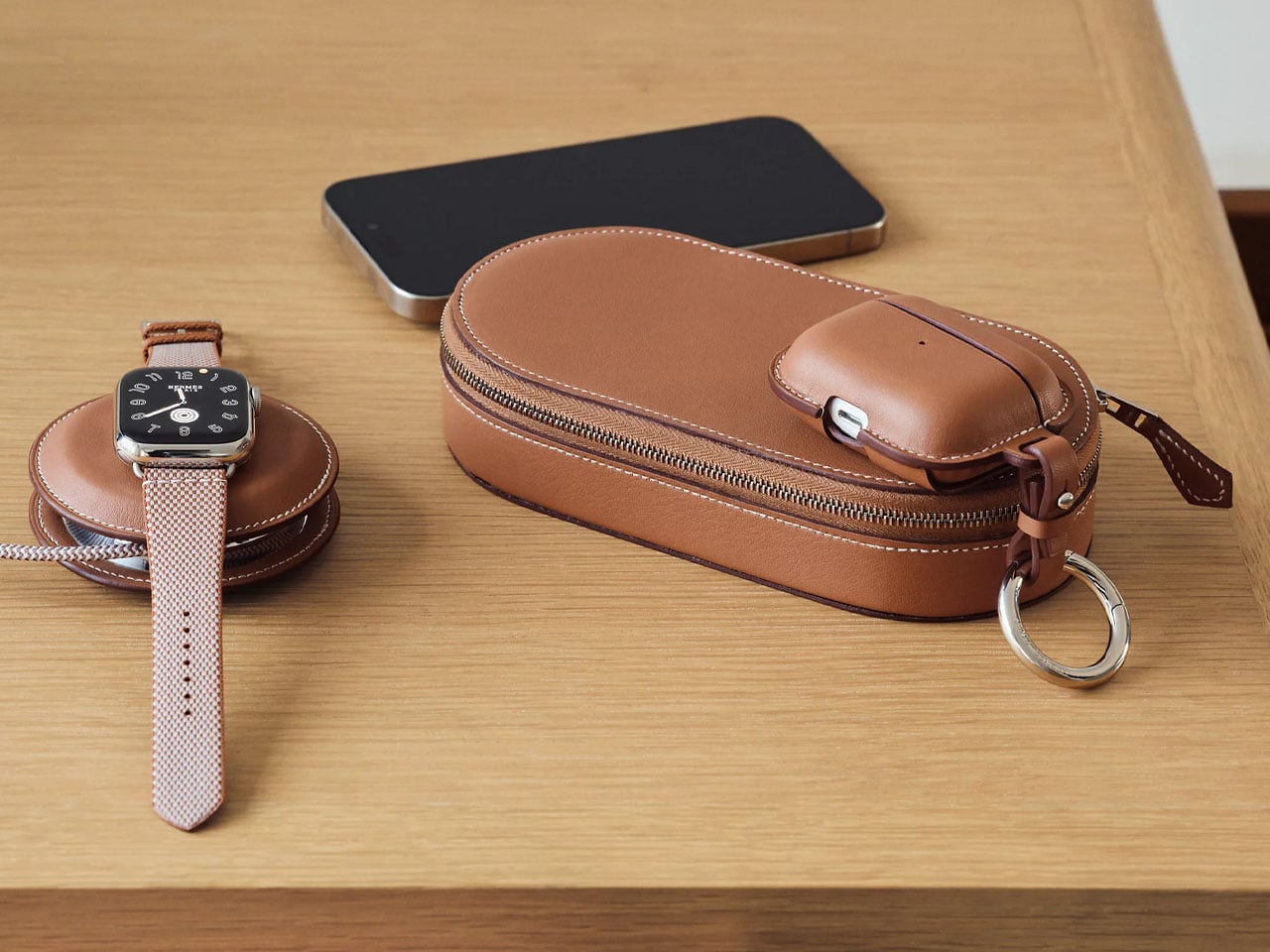
This new collection of leather-wrapped charging accessories for Apple devices by Hermes is certainly targeted at the rich and famous. Clearly, style and status symbols are at the fore in this line-up, but we got most intrigued by the unique design of the Yoyo Charger and the subtle luxury of the Grand Paddock Case.
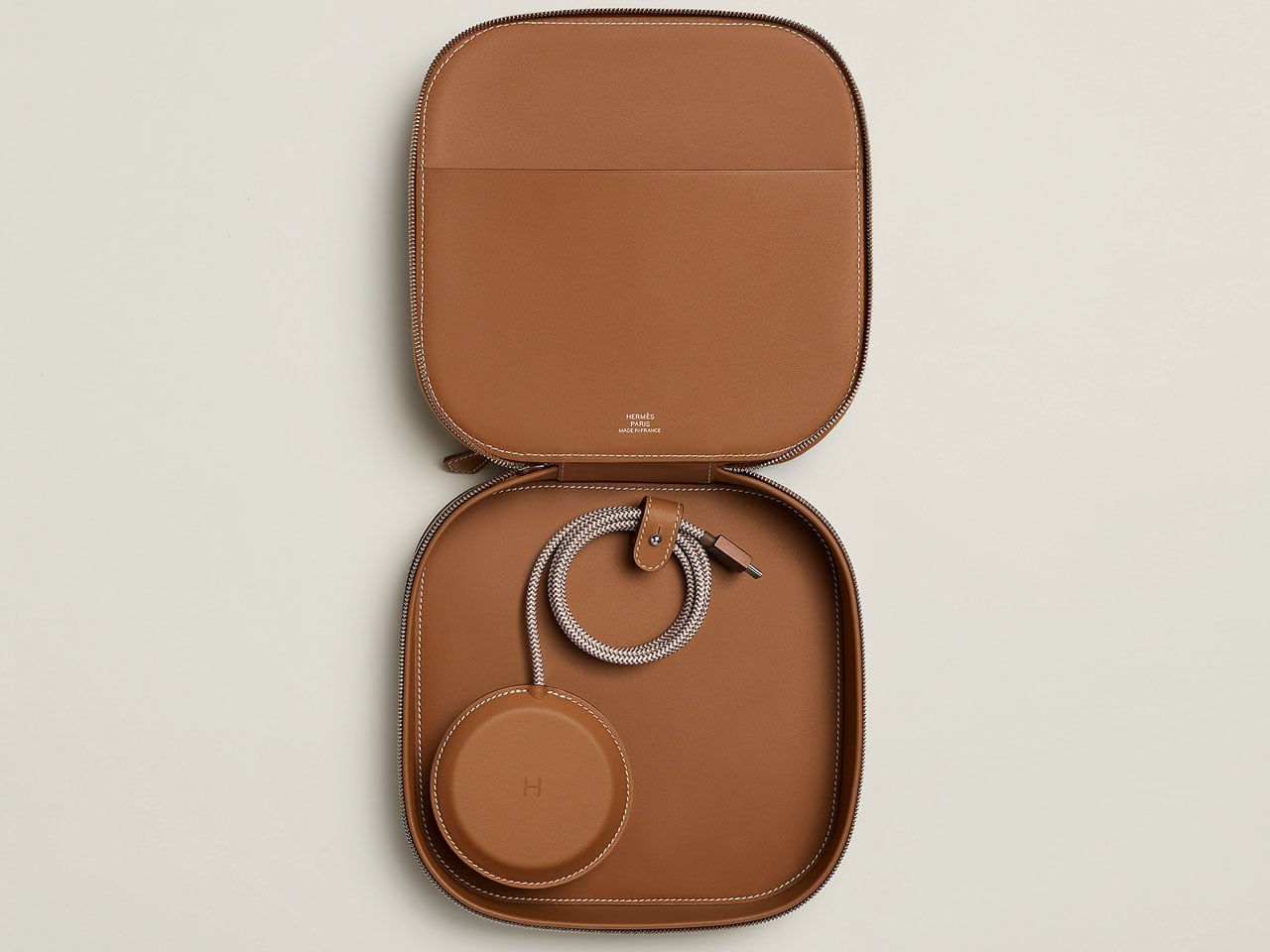
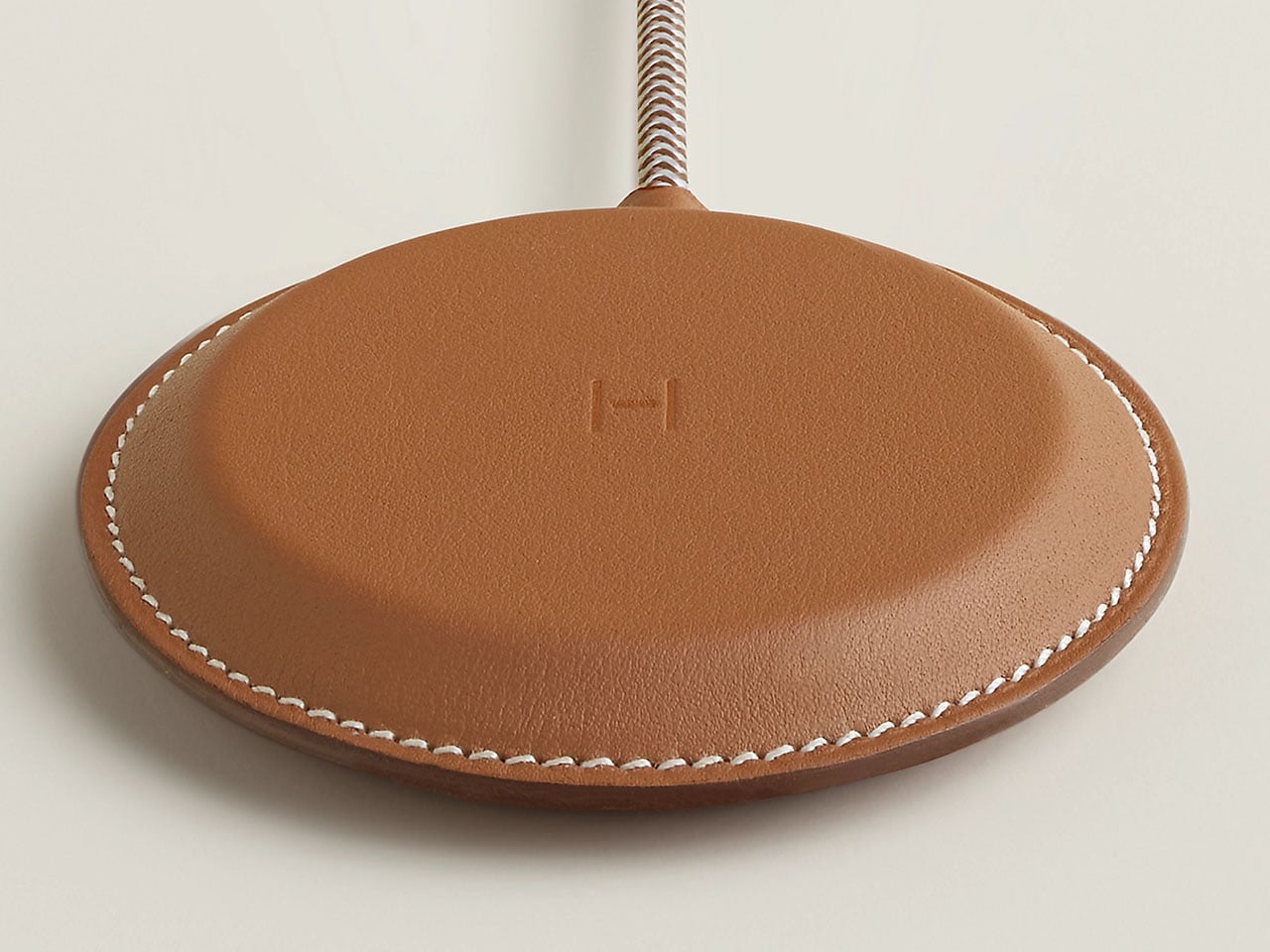
Both the Yoyo Charger and the Grand Paddock Case are crafted in Gold Swift calfskin with artisan-level saddle stitching. The use of premium materials and attention to detail make it opulent to the feel and touch. The Yoyo Charger has two MagSafe charging zones for fast charging of your multiple Apple gadgets like iPhone, AirPods, or Apple Watch. Complementing the yoyo-shaped charger is the travel-ready Grand Paddock Case, which comes with an inner storage pocket and doubles as a protective casing for the Yoyo Charger.
The internal charging system relies on MagSafe and Qi-compatible wireless charging technology, making it compatible with MagSafe-enabled iPhones starting from the iPhone 12 generation, as well as other wireless charging accessories. Power is delivered through a USB-C connection, and the charging system requires a minimum 20W power input to function properly. While a USB-C cable is included with the charger, the package notably does not include a wall power adapter, meaning users must supply their own power brick.
While this might feel unusual given the price point, it aligns with the increasingly common practice among electronics brands to exclude power adapters from accessory packages. Pricing across the Hermès charging collection highlights the brand’s focus on exclusivity rather than affordability. The Paddock Solo charger starts at around $1,250, while the Yoyo and Paddock Duo chargers are priced at approximately $1,750. When paired with the larger leather carrying cases, the price climbs dramatically. The Yoyo Charger bundled with the Grand Paddock Case reaches around $5,150, a price that exceeds many premium laptops and smartphones.
For most users, the functionality of these chargers will be similar to far more affordable wireless charging pads available on the market. However, for collectors of Hermès leather goods or those who appreciate the blend of luxury fashion with everyday technology. The French luxury high-fashion house has collaborated with Apple for years, most notably through luxury Apple Watch bands, and this charging accessory lineup extends that partnership into the broader ecosystem of Apple devices.
Cherry blossom season in Japan is one of the shortest windows in the travel calendar. Full bloom in Tokyo peaks around March 26 to April 3. Kyoto follows a few days later. Each city holds its peak for roughly a week before the petals fall. The parks fill before sunrise. The trains are packed. The days move fast, and the light does not repeat. What you brought matters more than it usually does, because there is no second shot at the season and no nearby store stocking the specific things that make the difference between a fluid trip and a frustrating one. These nine designs were not built for airport shelves or generic packing lists. They were made to be used — on the flight over, under the trees, and everywhere in between.
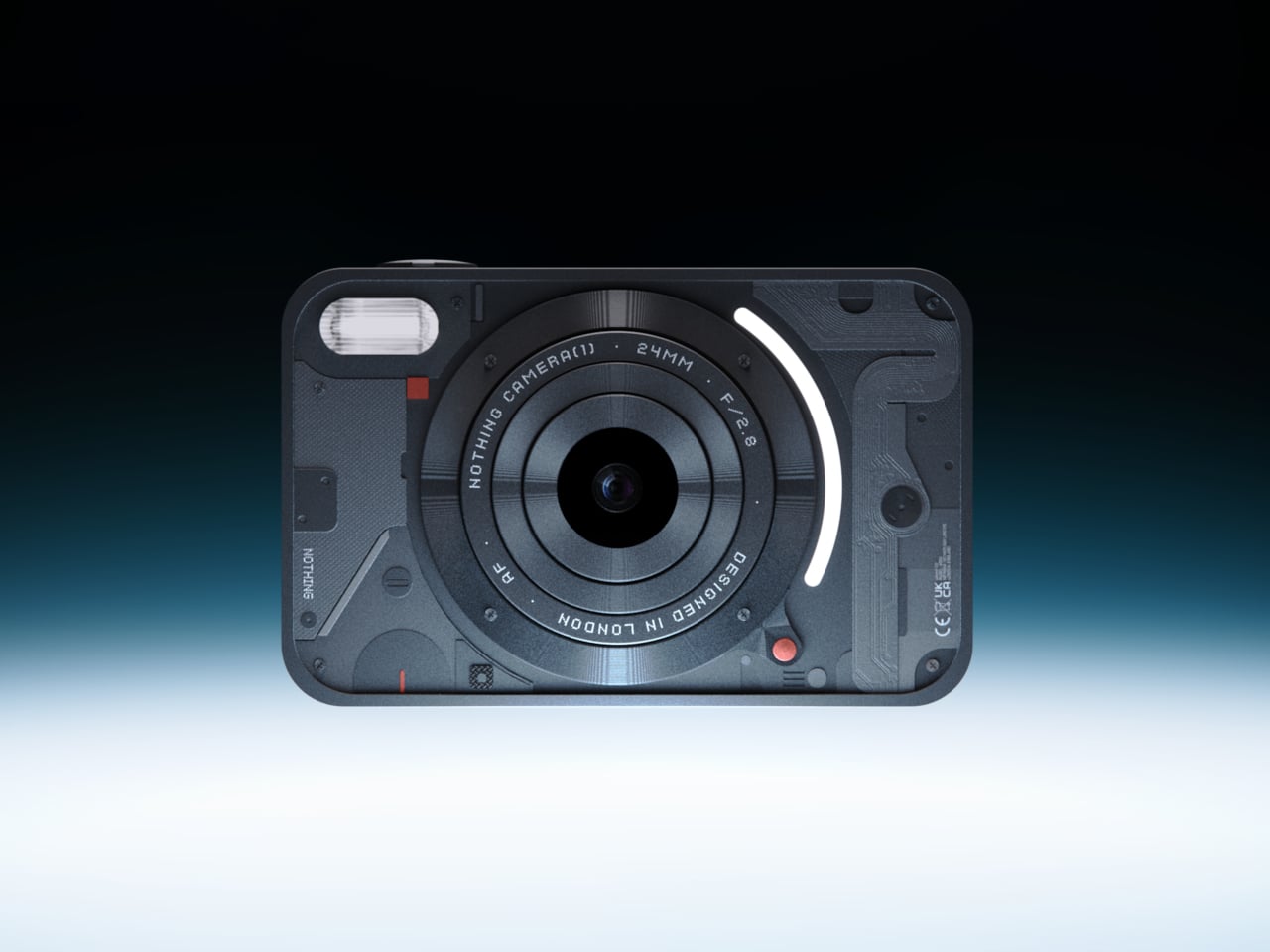
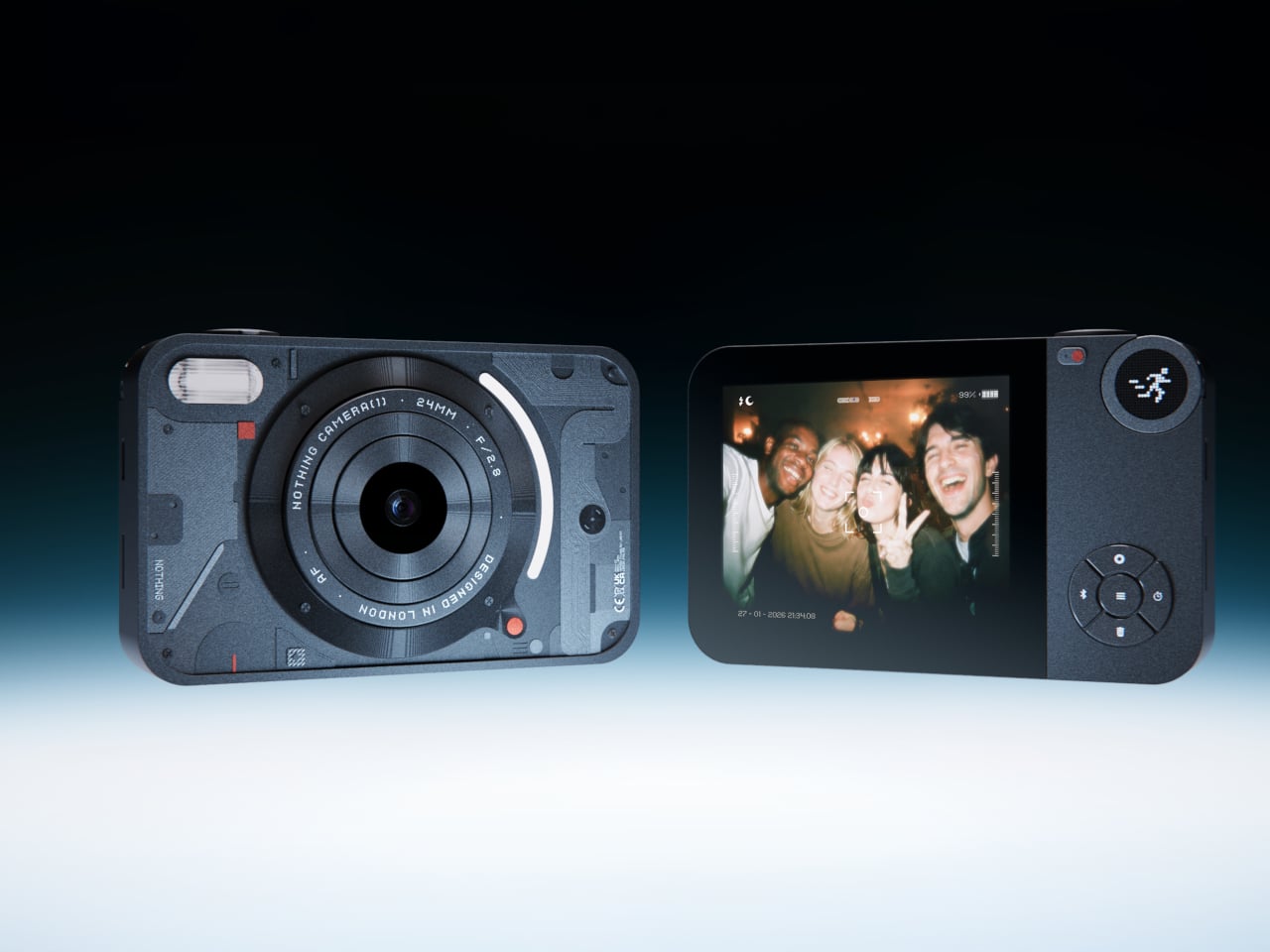
1. Camera (1) — A Tactile Digicam for a Screen-Tired Generation
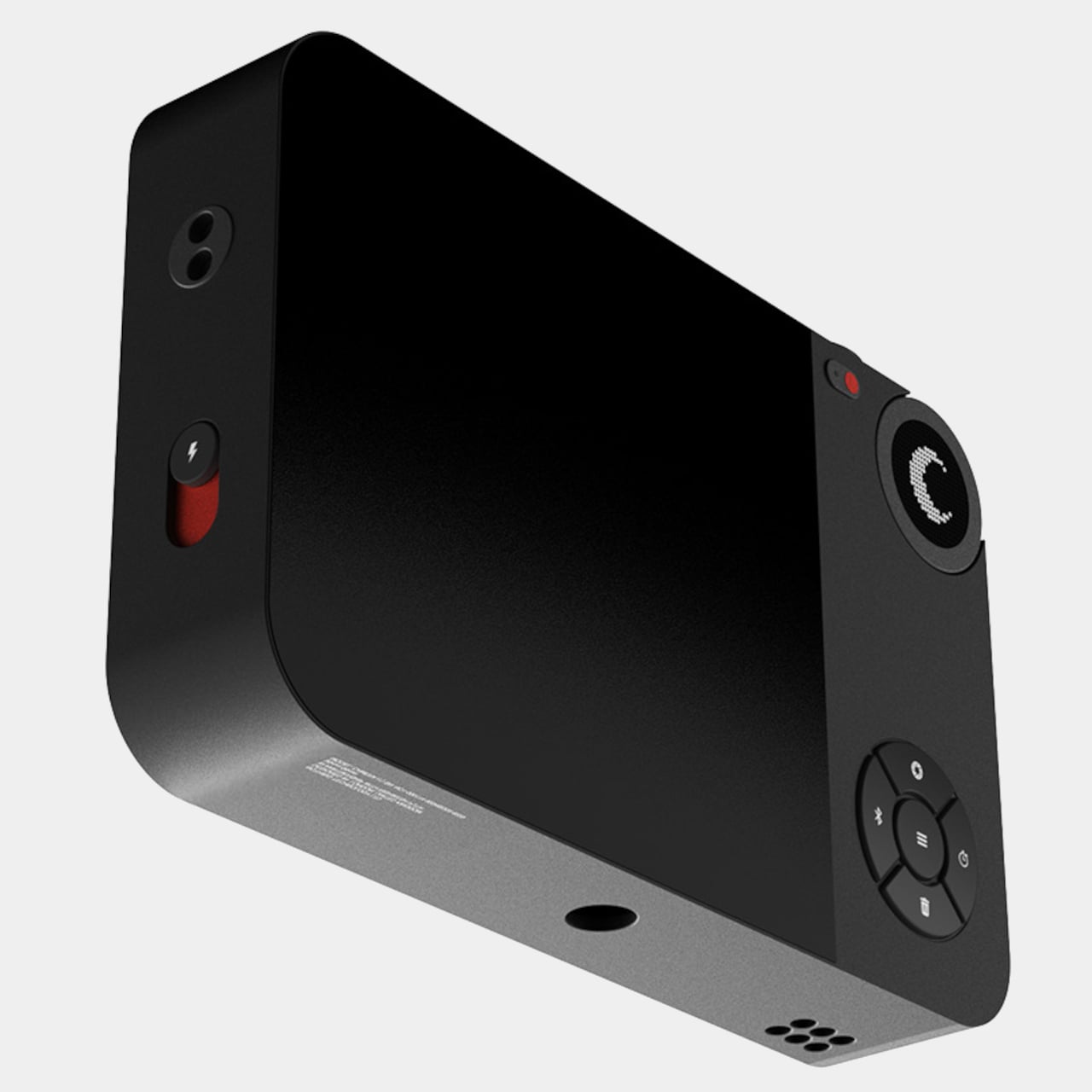
Camera (1) is a compact, metal-bodied camera with softly rounded corners, sized to slip into a pocket but solid enough to fill the hand with the right kind of weight. All the main controls live on one edge — shutter, a circular mode dial with a tiny glyph display, and a simple D-pad — reachable without shifting grip or navigating a touchscreen. Inspired by Nothing’s transparent, hardware-forward design language, it carries the confidence of a device that has thought carefully about how a person actually holds something. The rear display stays out of the way because it is designed to.
In Japan, during cherry blossom season, the light changes fast, and the best moments do not hold for a menu scroll. Petals falling across a stone lantern at Ueno. A crowded riverbank at golden hour along the Meguro. Camera (1) puts the full interaction in your fingers — twist the lens ring to frame, feel the shutter click, glance at the dial glyph to confirm mode. It encourages you to look at the scene rather than at the screen, which is the right priority when the thing in front of you is a path of blooming trees reflected in a temple pond.
What We Like
Single-edge control layout gives full shutter, mode, and navigation access in one hand without lifting your eyes from the scene
Pocketable metal body is carry-on ready and solid enough for full walking days across multiple cities
What We Dislike
Currently a concept design, meaning production availability and final specifications are not yet confirmed
No touchscreen requires an adjustment period for those accustomed to modern smartphone-style interfaces
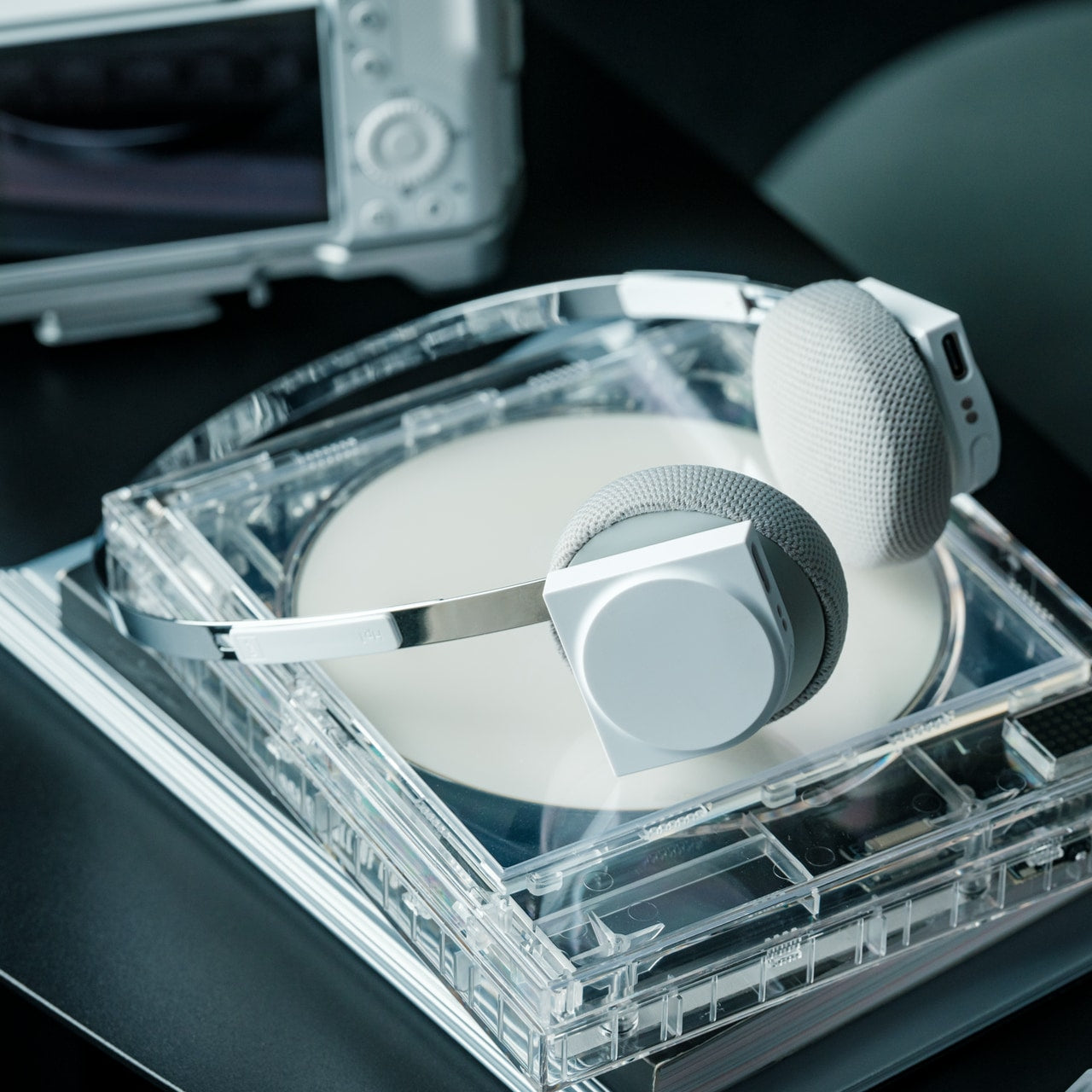
2. StillFrame Headphones — Listening as a Physical Ritual
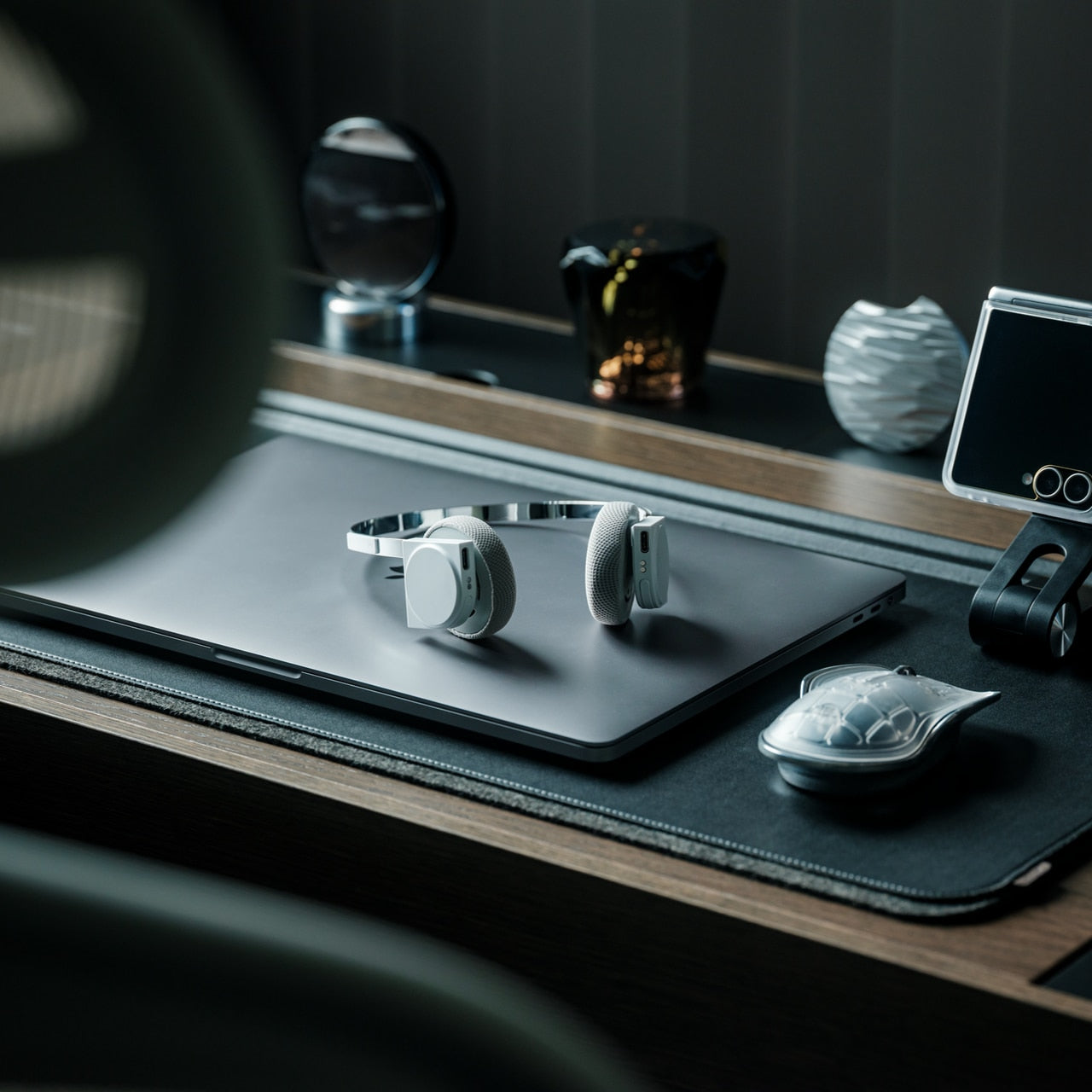
StillFrame wireless headphones are built around a specific idea: that listening should feel like something. The form echoes the quiet geometry of 80s and 90s CD hardware — measured proportions, nothing aggressive. The 40mm drivers deliver a wide, open soundstage that shapes quiet tracks into something more spatial, turning melodic textures into landscapes rather than noise. Noise-cancelling engages when the environment demands it. Transparency Mode opens the sound field when the world is worth hearing. Featherlight but full in the hand, it sits in quiet dialogue with a ClearFrame CD Player from a time when music had weight.
The flight to Tokyo runs roughly 14 hours from the US West Coast. Noise-cancelling carries you through the worst of the cabin without asking you to fight it. On the other side of that flight — on the Shinkansen between cities, in a ryokan at night with rain on a wooden roof, walking through a park where petals are already on the ground — Transparency Mode brings Japan back in without pulling the music out. Cherry blossom season moves at the pace of the trees, not the internet. StillFrame is designed for exactly that tempo.
Noise cancelling and Transparency Mode cover the full range of environments a Japan trip demands, from the cabin to the temple garden
On-ear form is lighter and less fatiguing than over-ear alternatives across long travel days
What We Dislike
On-ear design provides less passive isolation than over-ear headphones in the noisiest cabin environments
Premium audio hardware adds a carefully packable item to a carry-on already optimized for volume
3, Benro Theta — The Tripod That Refuses to Compromise
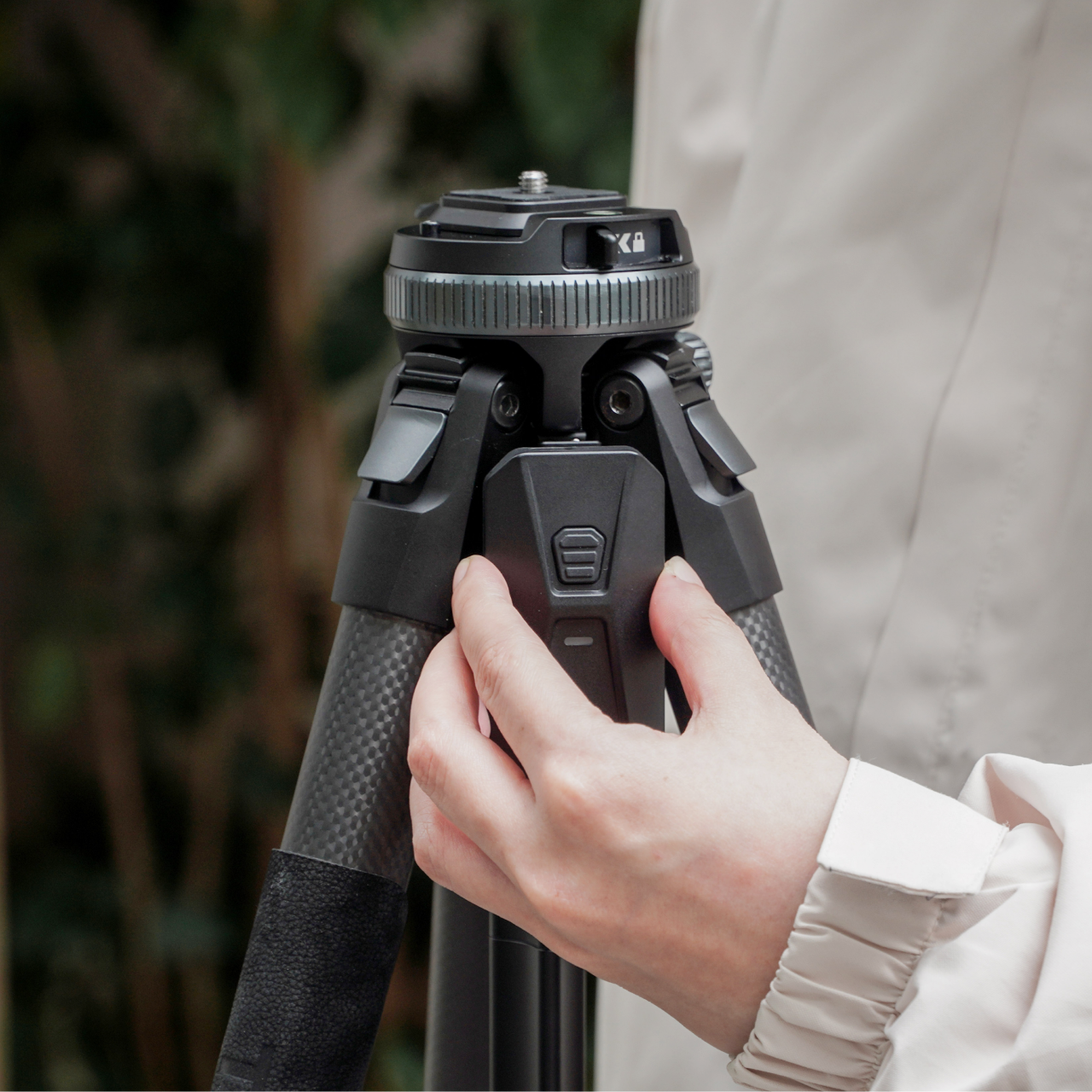
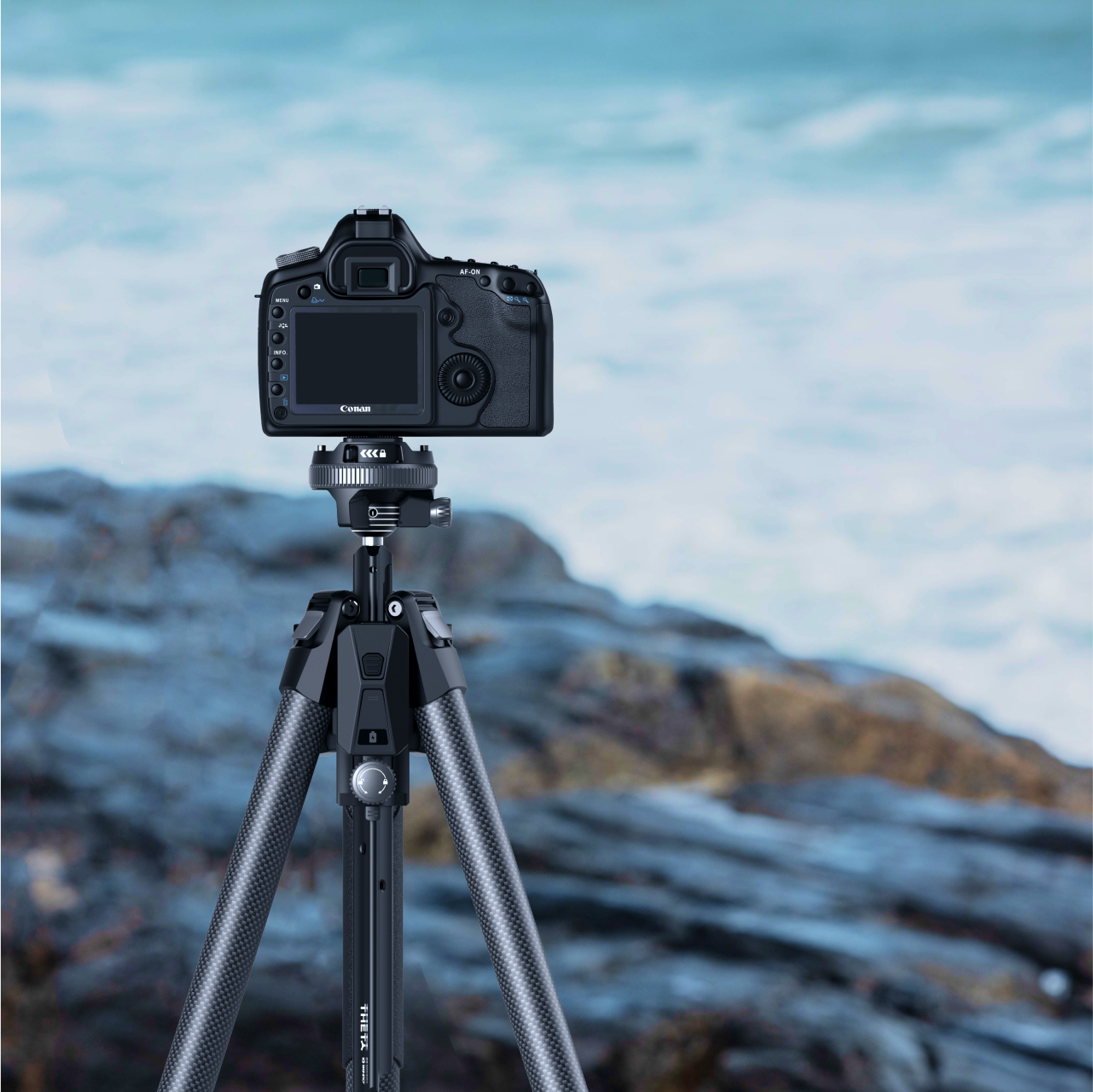
The Benro Theta is a tripod that refuses to accept the standard trade-off between portability and capability. Rapid leg deployment, automatic leveling, remote camera control, automatic exposure adjustment, and livestreaming support — all in a package compact enough to carry into a city without rethinking your bag. It does not present itself as a scaled-down version of a better product. The engineering is serious, the footprint is small, and that combination requires actual design effort to achieve, rather than simply removing features until something fits in a daypack.
Sakura season in Japan is a photographer’s season, and the locations that make the best photographs require patience, positioning, and speed. Setting up at Maruyama Park in Kyoto before the light peaks, or along the Philosopher’s Path before the morning crowds arrive, leaves no room for a slow tripod. The Theta’s rapid leg deployment means seconds between pulling it out and having a steady frame. Remote camera control means a solo traveler can step into the shot. Carry-on compatible without the overhead bin negotiation that full-size tripods demand, it earns its space before you even land.
What We Like
Rapid leg deployment and automatic leveling cut setup time dramatically in crowded, fast-changing outdoor locations
Remote camera control gives a solo photographer full control over framing without being physically behind the viewfinder
What We Dislike
Smart Modules that extend the Theta’s full capability are excluded from the standard pack and sold separately, increasing the total cost
The depth of technical features may exceed what casual photographers need on a trip built around handheld shooting
4. TMB Modular Bottle — A Bottle That Adapts to the Day
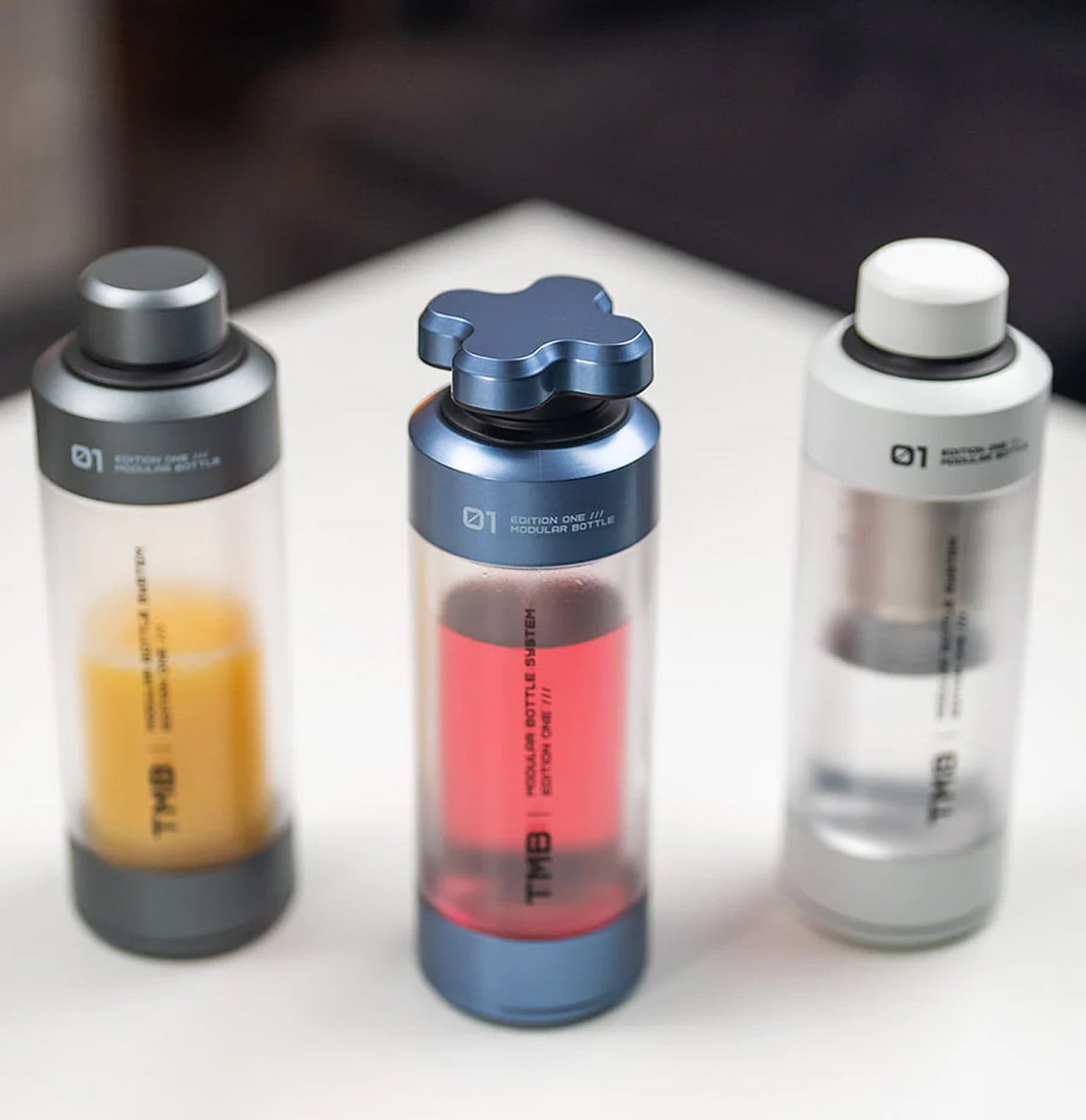
The TMB Modular Bottle starts from a premise most hydration products avoid: no single bottle works equally well for a long-haul flight, a full city day, and a trail hike. The borosilicate glass interior preserves drink flavor without absorbing taste or odor — a genuine material distinction from the steel and plastic alternatives that dominate this category. A translucent mid-section gives a constant read on remaining liquid. Every component is designed to be replaced individually, so a worn exterior case or cracked cap becomes a five-minute fix rather than a full replacement.
Japan’s tap water is among the cleanest in the world, and refilling throughout cherry blossom season is both practical and culturally appropriate in a country with almost no public trash cans. The TMB Modular Bottle handles morning tea, a full afternoon of water, and whatever comes between, without carrying the previous drink into the next. Cherry blossom season means long days on foot across multiple neighborhoods — Yanaka to Ueno, Arashiyama to Gion — and a bottle designed to adapt to those hours without failing them earns its volume in the carry-on.
What We Like
Borosilicate glass interior preserves drink flavor completely, with none of the taste transfer found in steel or plastic alternatives
Modular construction means worn components can be individually swapped, extending the product’s useful life significantly
What We Dislike
Glass interior is heavier and requires more careful packing than steel alternatives on a long-haul flight
Multiple modular components mean more individual parts to track across a multi-city itinerary
5. AirTag Carabiner — The Lightest Peace of Mind in the Bag
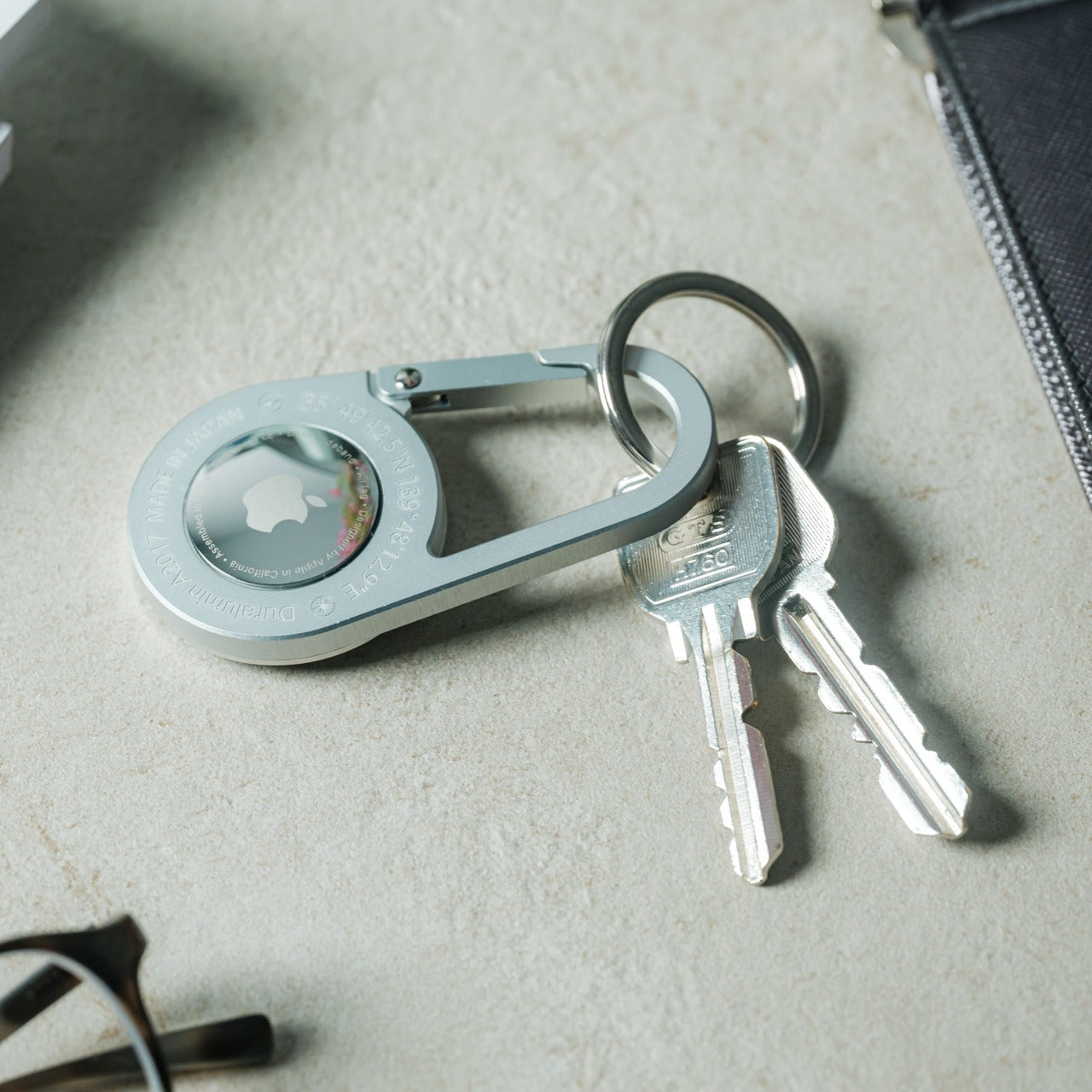
The AirTag Carabiner is made from Duralumin composite alloy — the same material used in aircraft, spaceships, and boats — which makes its lightness feel like a technical achievement rather than a shortcut. It clips directly onto bag straps, handles, or umbrella loops and turns an Apple AirTag into a permanent part of the bag rather than a separate object to remember. Individually hand-crafted and available in treated alloy, untreated Brass, and Stainless Steel. The AirTag itself is not included, but the carabiner makes a strong case for buying one before the trip.
The cherry blossom season is the peak of tourism in Japan. Parks like Ueno and Shinjuku Gyoen draw enormous crowds through late March and early April, trains between cities run at capacity, and moving a bag through a country where getting lost requires a language you may not speak adds a layer of cognitive friction the trip does not need. One carabiner on the main bag strap. One on the umbrellas you will inevitably set down somewhere and nearly walk away from. The GPS network handles the rest. For a carry-on trip built around doing things rather than managing them, this is a small object with an outsized return.
Aircraft-grade Duralumin composite alloy delivers structural reliability at a weight that adds nothing meaningful to the overall load
Clips onto existing bag hardware with no case, pouch, or added setup required
What We Dislike
Apple AirTag must be purchased separately, adding to the total cost of a complete tracking setup
Designed exclusively for AirTag, making it incompatible with other location tracker formats
6. PWR 27 — The Power Bank That Actually Keeps Up
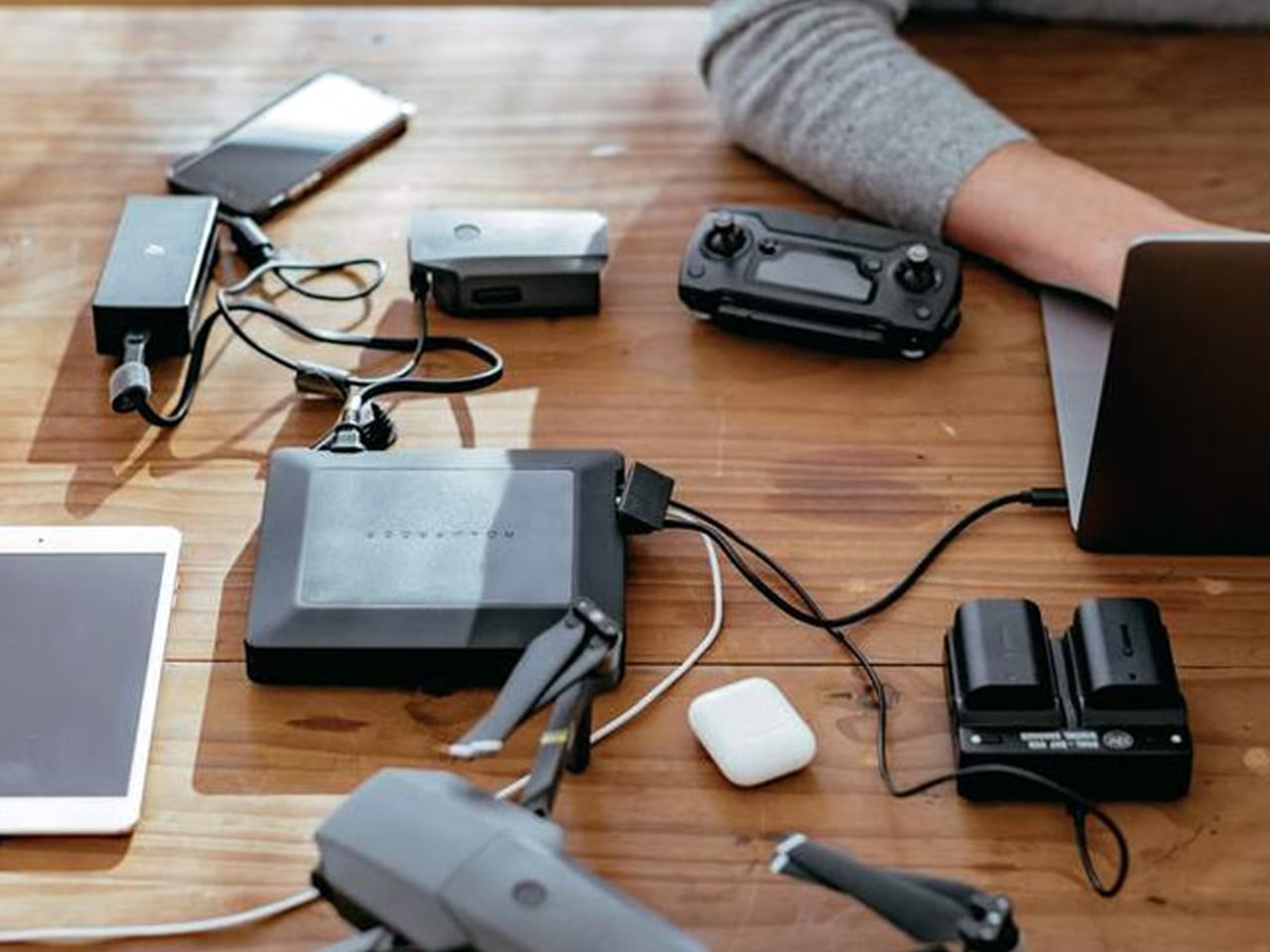
The PWR 27 is a 27,000 mAh power bank with an AC outlet, rated at 99 wH — the maximum battery capacity permitted in carry-on luggage by the TSA and all international air regulations. It charges four devices simultaneously, carries an IP67 dust and waterproof rating, is drop-proof and crushproof to significant tolerances, and features integrated solar battery life extension, an industry first for an AC power bank. It does not ask you to choose between the capacity a long trip demands and the ability to board the plane with it.
Japan runs on apps: navigation, IC transit cards, real-time translation, camera apps, and the constant map-checking that moving between Tokyo, Kyoto, and Osaka requires. A full day of cherry blossom season in any major city will drain a phone twice before dinner. The PWR 27 handles all four devices at once and keeps working in the rain, which matters in a spring season known for sudden, wind-driven showers. Power banks that are smaller and lighter are easy to find. Power banks at this capacity that fly legally, survive getting soaked, and charge a laptop mid-Shinkansen are not.
What We Like
Maximum TSA-permitted capacity of 99 wH guarantees full legal compliance without any sacrifice in power availability
IP67 waterproofing and crushproof construction make it genuinely dependable in Japan’s unpredictable spring weather
What We Dislike
At 27,000 mAh, the physical weight is heavier than compact power banks, which registers across full walking days
7. Ori Frameless Umbrella — The World’s First Umbrella Without Ribs
The Ori umbrella was founded by MIT engineers and origami specialists. Its canopy structure uses the Miura fold — the same origami-derived engineering NASA deploys for spacecraft structures — which means there are no metal ribs, no fabric stretched over a frame, and no traditional failure point waiting for a windy Tuesday. The canopy itself becomes the structure. The result is a compact cylinder that stores like a pen and opens into a full umbrella. Billed as the world’s first frameless umbrella, the engineering behind that claim is real, and it shows in the form.
Spring in Japan brings unpredictable rain, and sakura season specifically delivers the kind of sudden gusts that destroy conventional folding umbrellas in minutes at the worst possible moment. The Ori’s frameless construction removes the single failure mode that makes cheap travel umbrellas frustrating and expensive ones still unreliable. The cylindrical form fits a jacket inner pocket or a bag side pocket that a standard folding umbrella profile cannot reach. Walking Philosopher’s Path in Kyoto in the rain while the petals come down around you is one of the better versions of that walk. Being dry enough to stay in it makes all the difference.
What We Like
Frameless, rib-free construction eliminates the primary failure point of conventional compact umbrellas in wind and heavy rain
Cylindrical form fits pockets and bag slots that standard folding umbrella profiles cannot reach
What We Dislike
As a newer product, long-term durability data for the origami-based canopy in sustained heavy rain remains limited
Premium engineering is reflected in a price point above standard compact travel umbrellas
8. Inseparable Notebook Pen — The Pen That Never Leaves the Book
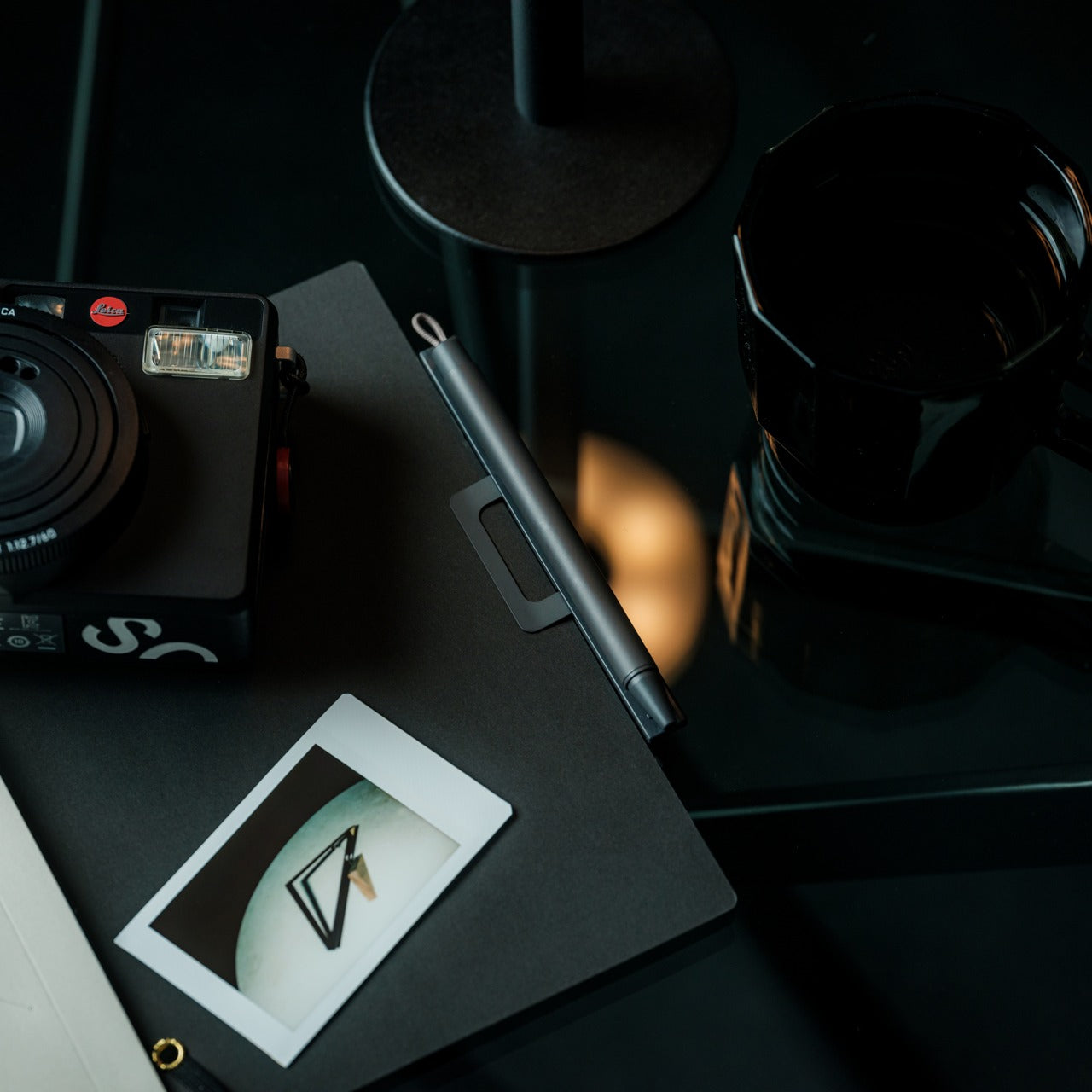
The Inseparable pen is designed to live permanently attached to a notebook. A magnetic clip holds it flush against the cover. A built-in silencer makes the detachment and reattachment quiet rather than abrupt. The form is minimal, the grip is comfortable, and the ink flow is smooth — all by deliberate design choice. It does not compete with the notebook for attention. The goal from the start was a writing instrument that becomes an extension of the book itself, always within reach, never a separate thing to locate when the thought arrives and the moment is already passing.
Japan, during cherry blossom season, produces the kind of experiences worth writing rather than photographing. The name of the temple you want to return to. The smell of a specific lane in Yanaka at dusk. The precise quality of afternoon light through sakura petals at Shinjuku Gyoen. A notebook and a pen that are never separated mean nothing interrupts the move from thought to page. Packing a journal without a reliable pen attached to it is a half measure. The Inseparable pen completes it, quietly and without asking for any attention of its own.
Magnetic clip keeps the pen permanently attached to the notebook, removing the friction of searching when the moment arrives
Minimalist form and smooth ink flow make it a genuine pleasure to use rather than simply a functional object
What We Dislike
Designed specifically as a notebook companion rather than a standalone pen, limiting its versatility as a general writing tool
Magnetic attachment performance may vary depending on the notebook cover material and thickness
9. CleanseBot — The Travel Robot That Sanitizes the Room You Sleep In
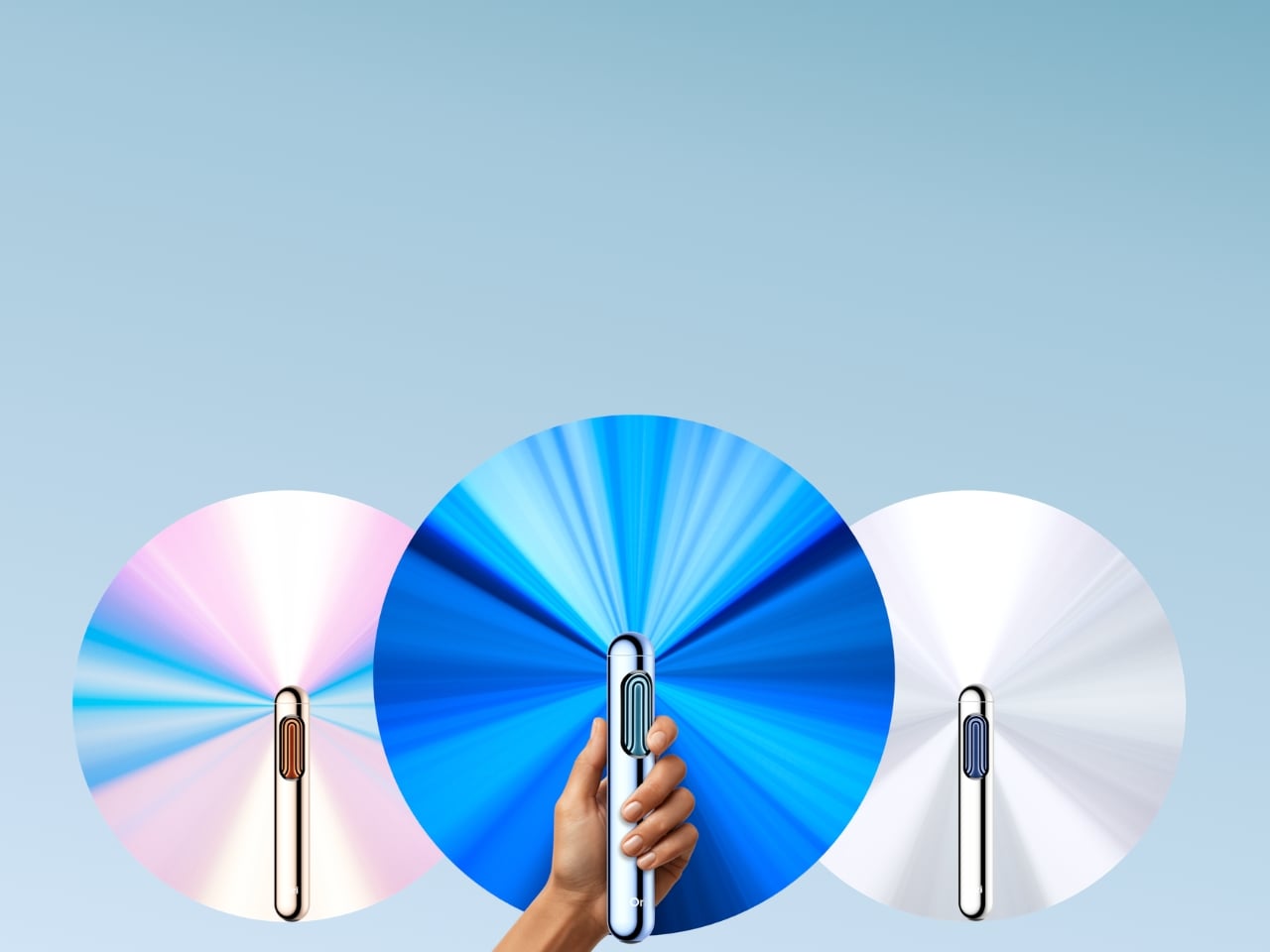
CleanseBot is a travel robot with 18 sensors and four UV-C lamps, designed to sanitize hotel surfaces autonomously. Independently tested to kill 99.99% of E. coli, it navigates across beds, desks, and surfaces without manual direction. The UV-C light extends its sanitation capability beyond contact surfaces to airborne pathogens. It is compact enough to carry in a standard travel bag and smart enough to complete a full sanitation cycle while you unpack, check tomorrow’s weather, and figure out which train to take to the morning blossom spots.
Cherry blossom season is the busiest tourism window in Japan. Hotels and guesthouses turn over quickly during peak weeks, with rooms running at capacity from late March through early April. The CleanseBot is not a paranoid product — it is a calibrated one. Running it across the bed and key surfaces takes two minutes of setup and leaves a room measurably cleaner than the one you walked into. For a trip across multiple accommodations in Tokyo, Kyoto, and Osaka, the reassurance compounds over time. Small, autonomous, and easy to forget once it has run its cycle, which is exactly the standard a good travel object should meet.
What We Like
UV-C sanitation, independently verified to eliminate 99.99% of E. coli, provides measurable assurance rather than theoretical comfort
Autonomous operation via 18 sensors requires no manual guidance, freeing you to settle in rather than direct the process
What We Dislike
Adds volume and weight to a carry-on already carefully balanced for a long-haul trip
Maximum sanitation effectiveness requires clear, unobstructed surface access, which limits performance on heavily layered or textured bedding
Pack Smart, Stay Present — The Only Packing Philosophy That Survives Sakura Season
Cherry blossom season does not wait. The bloom window is roughly a week in each city, and the days inside it move faster than any itinerary accounts for. The nine objects on this list were chosen because each one does a specific job well — and because none of them requires your attention to do it. The camera keeps your eyes on the scene. The headphones adapt to the environment without asking. The carabiner tracks your bag silently. The CleanseBot runs while you sleep. The Ori opens in a second and closes in another. Good carry-on packing for a trip like this is not about having everything — it is about bringing only what earns its space and then forgetting it is there. These nine do exactly that.
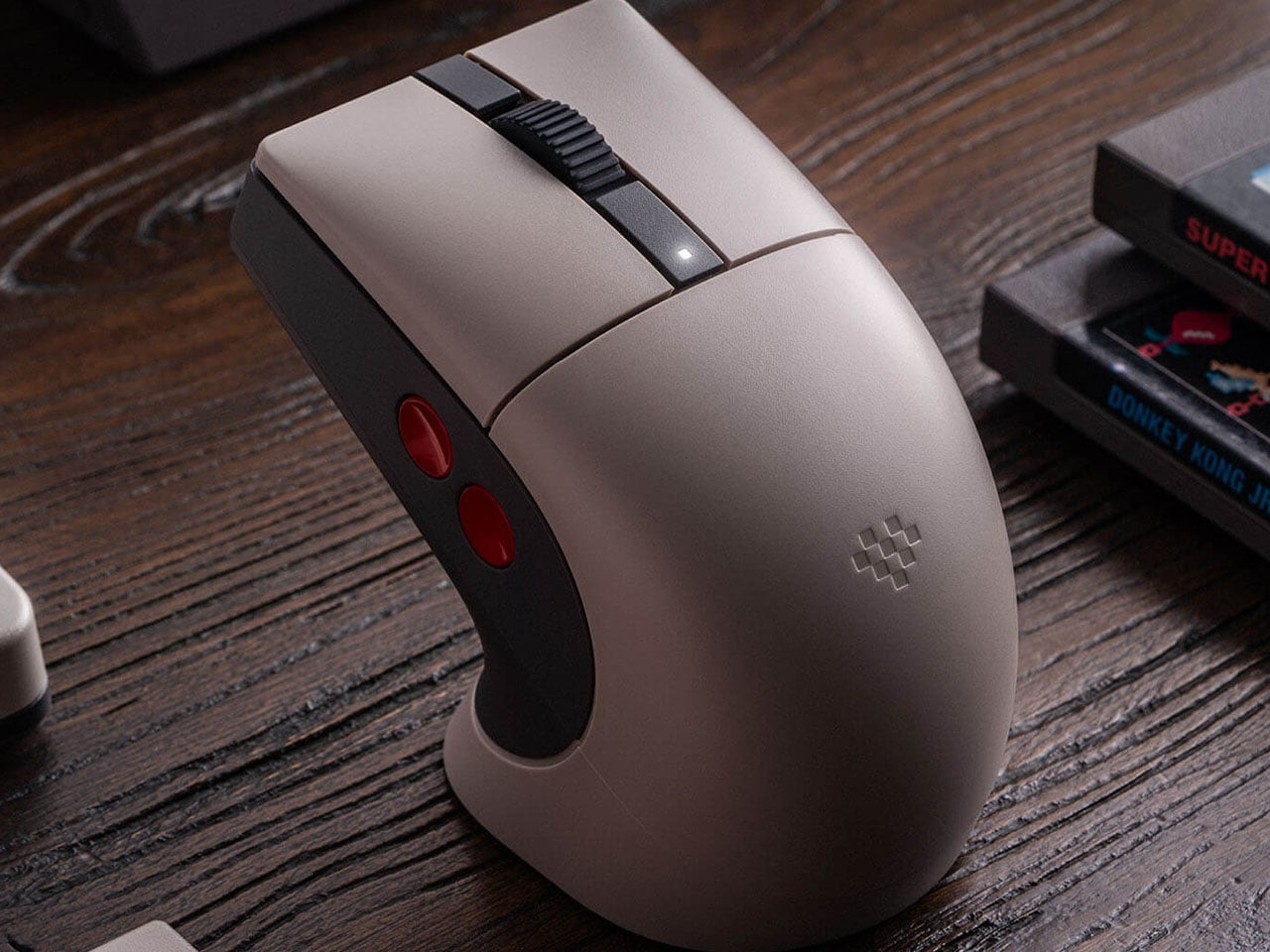
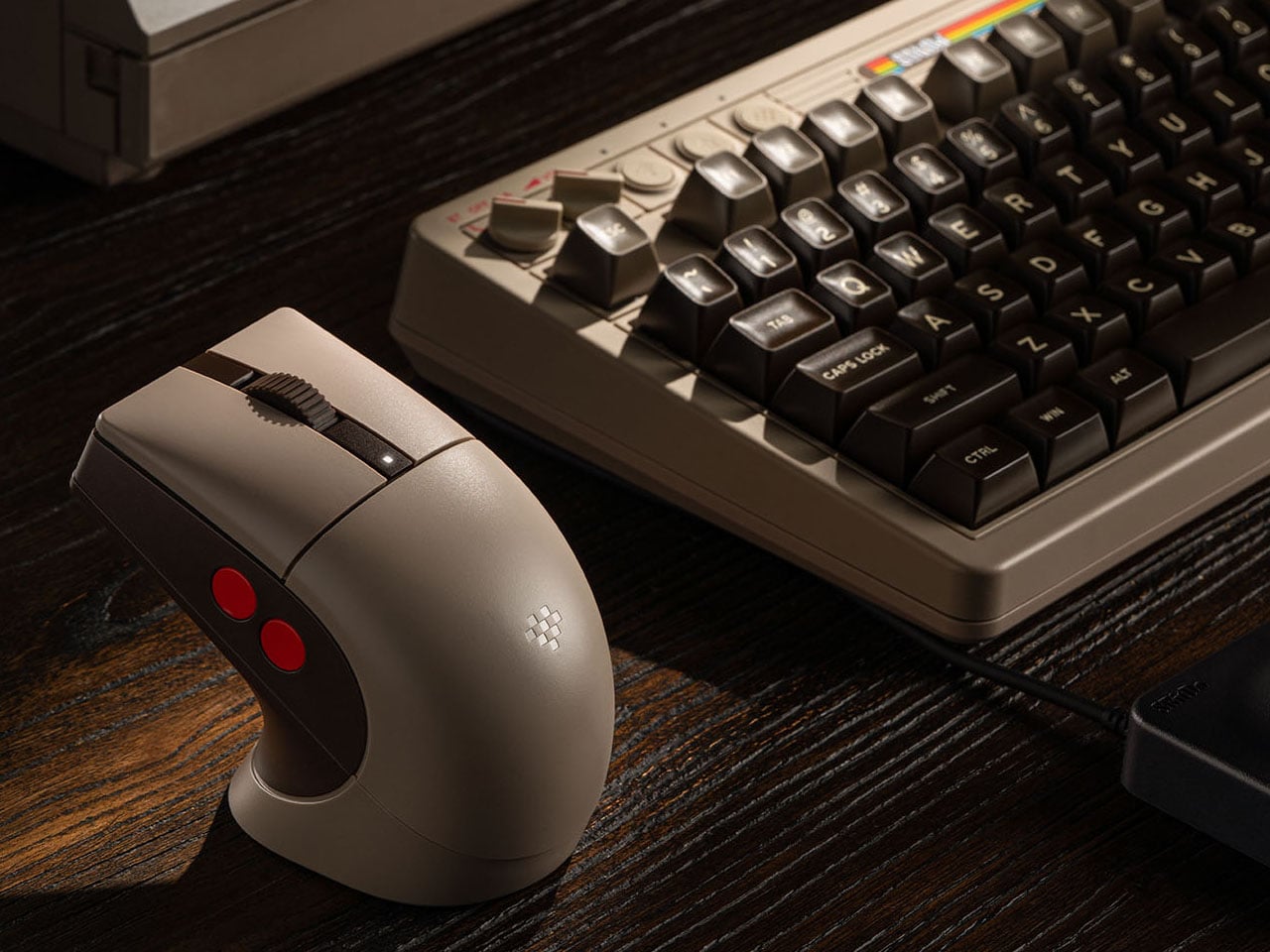
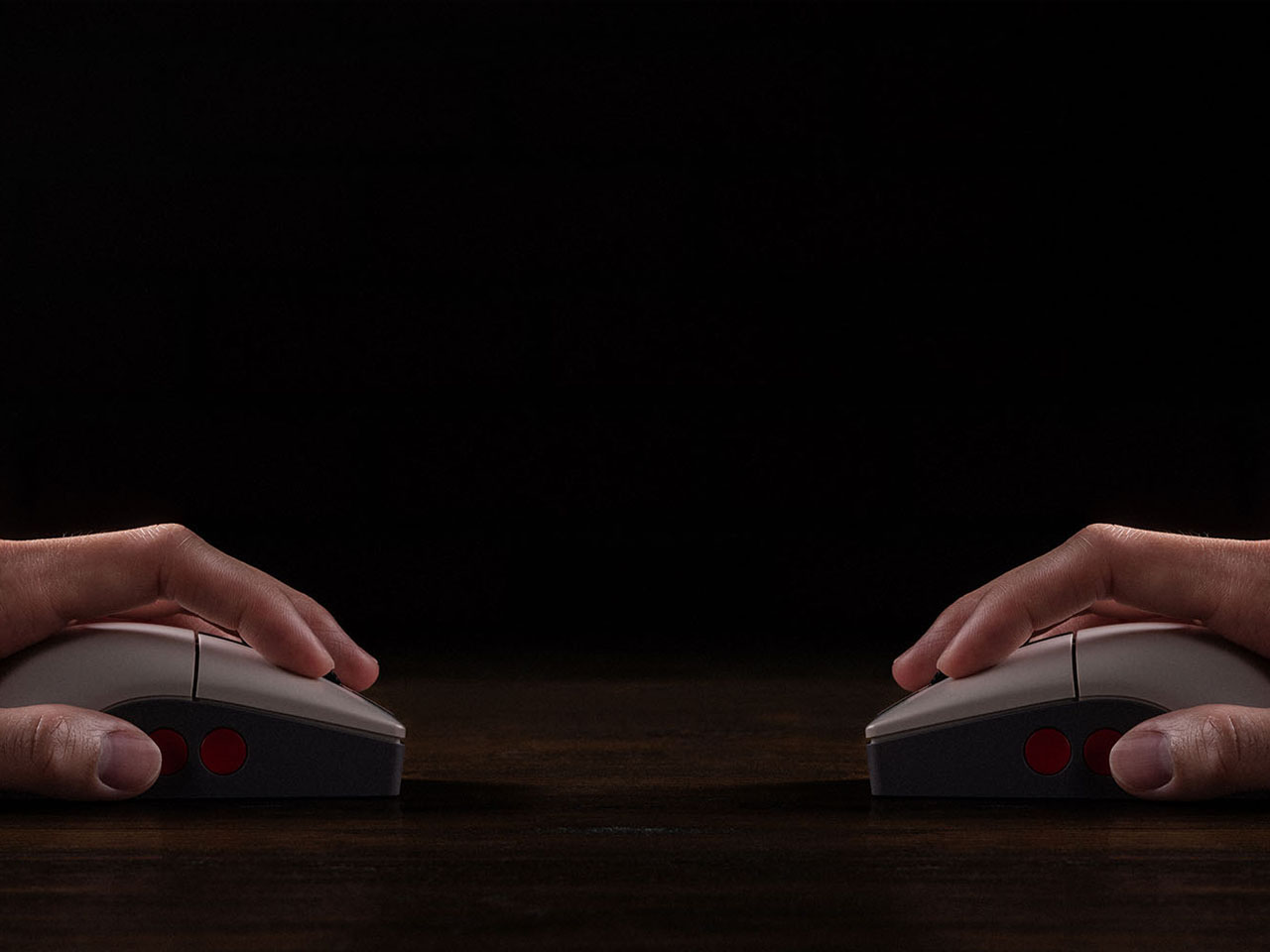
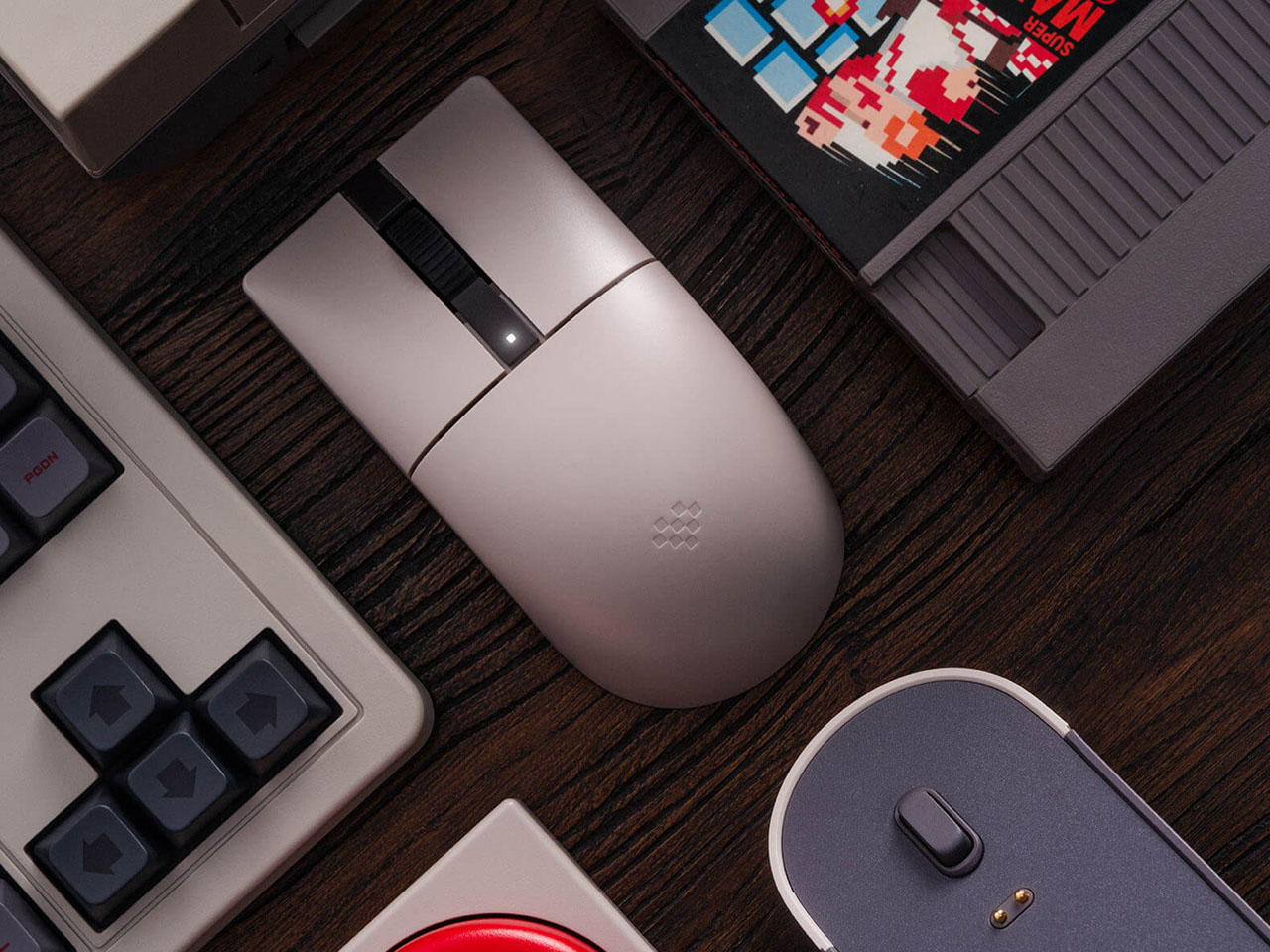
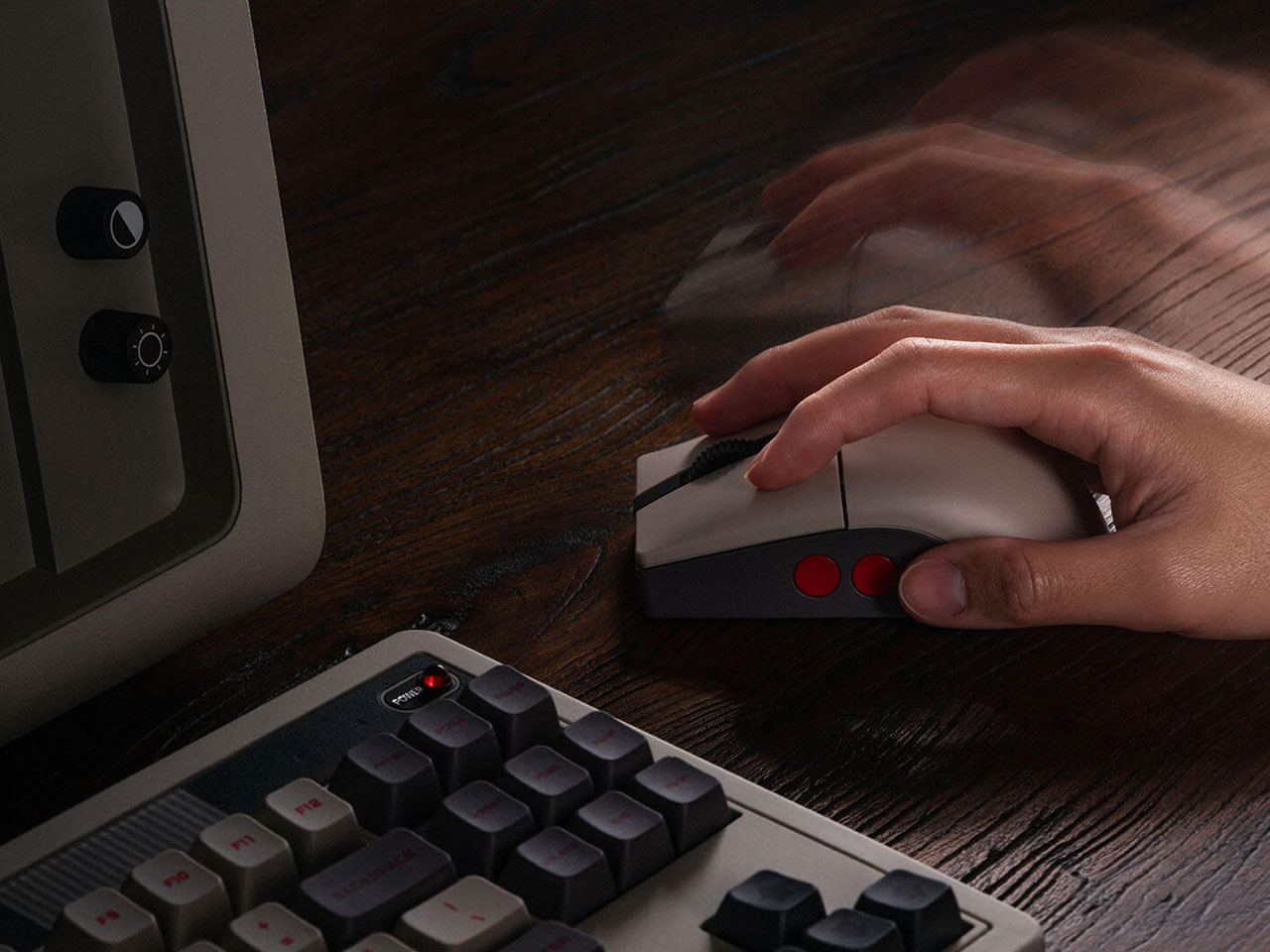
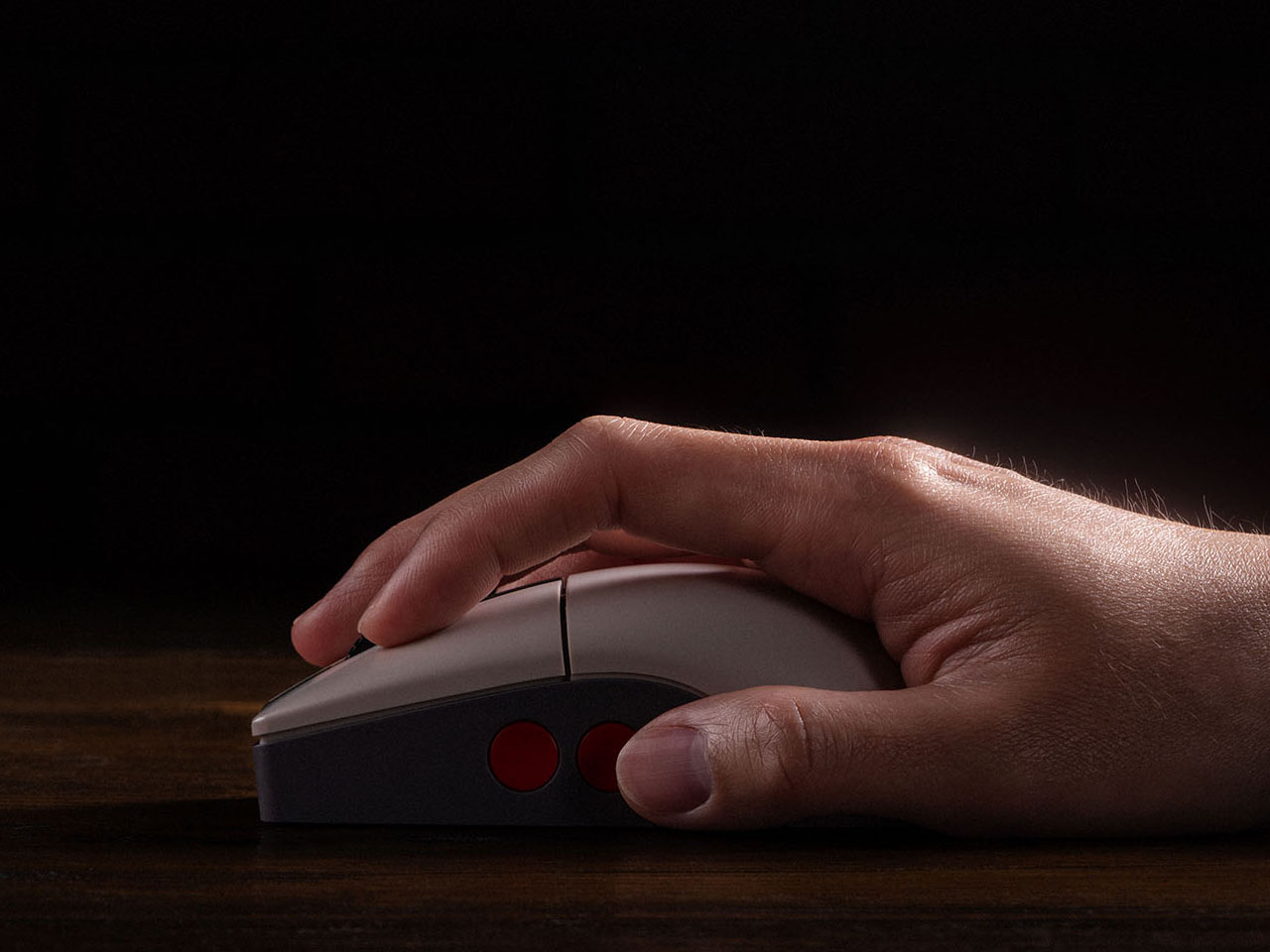
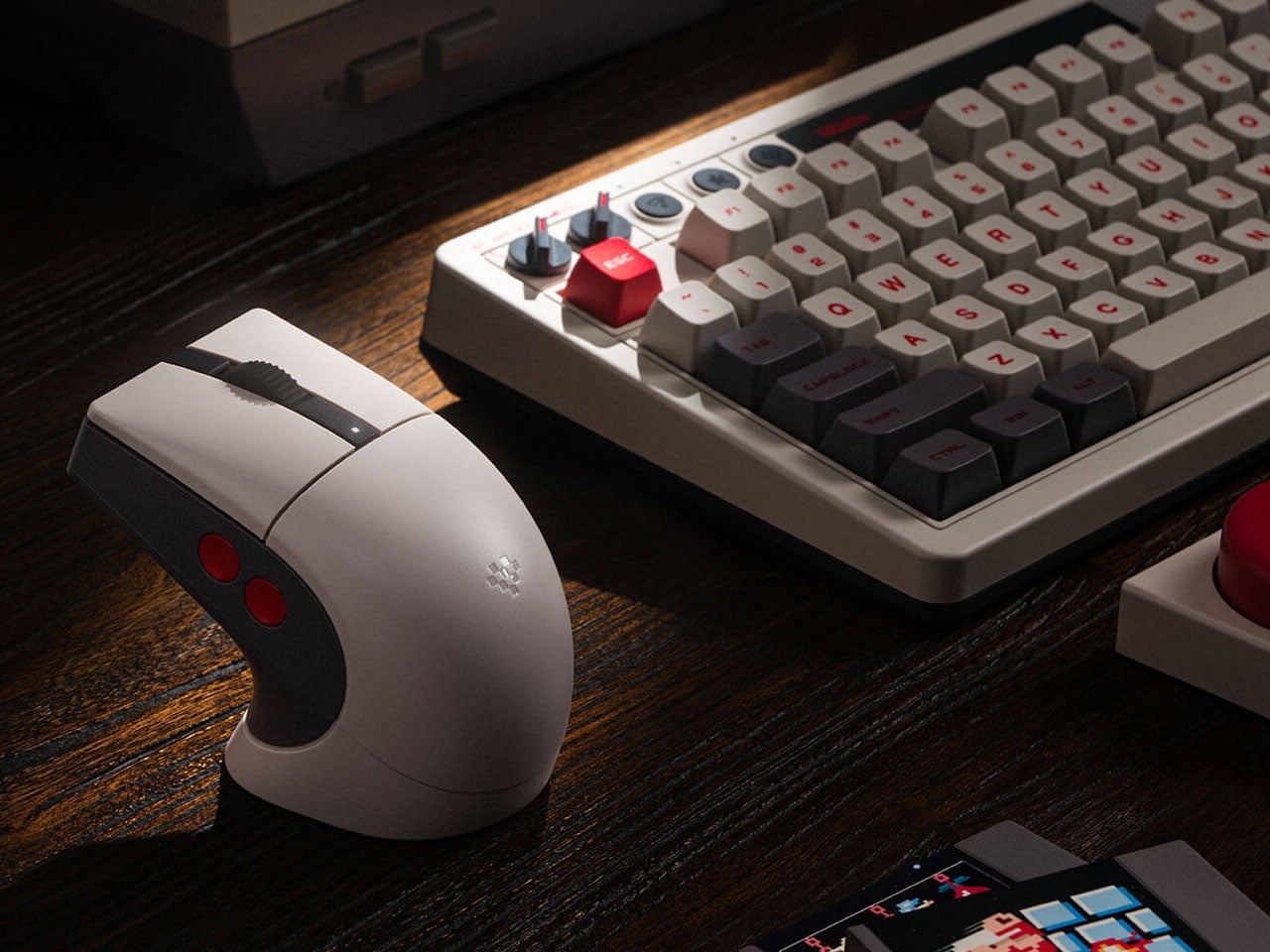
8BitDo, well-known for its quality gaming accessories, has a strong hold on retro-themed PC accessories, such as keyboards and numpads. Their Retro R8 mouse lineup, which already has the Xbox Edition and N Edition, now gets another variant of the peripheral. Like other mice in the R8 range, the C64-Edition is an eye candy mouse that pairs with your keyboard setup perfectly.
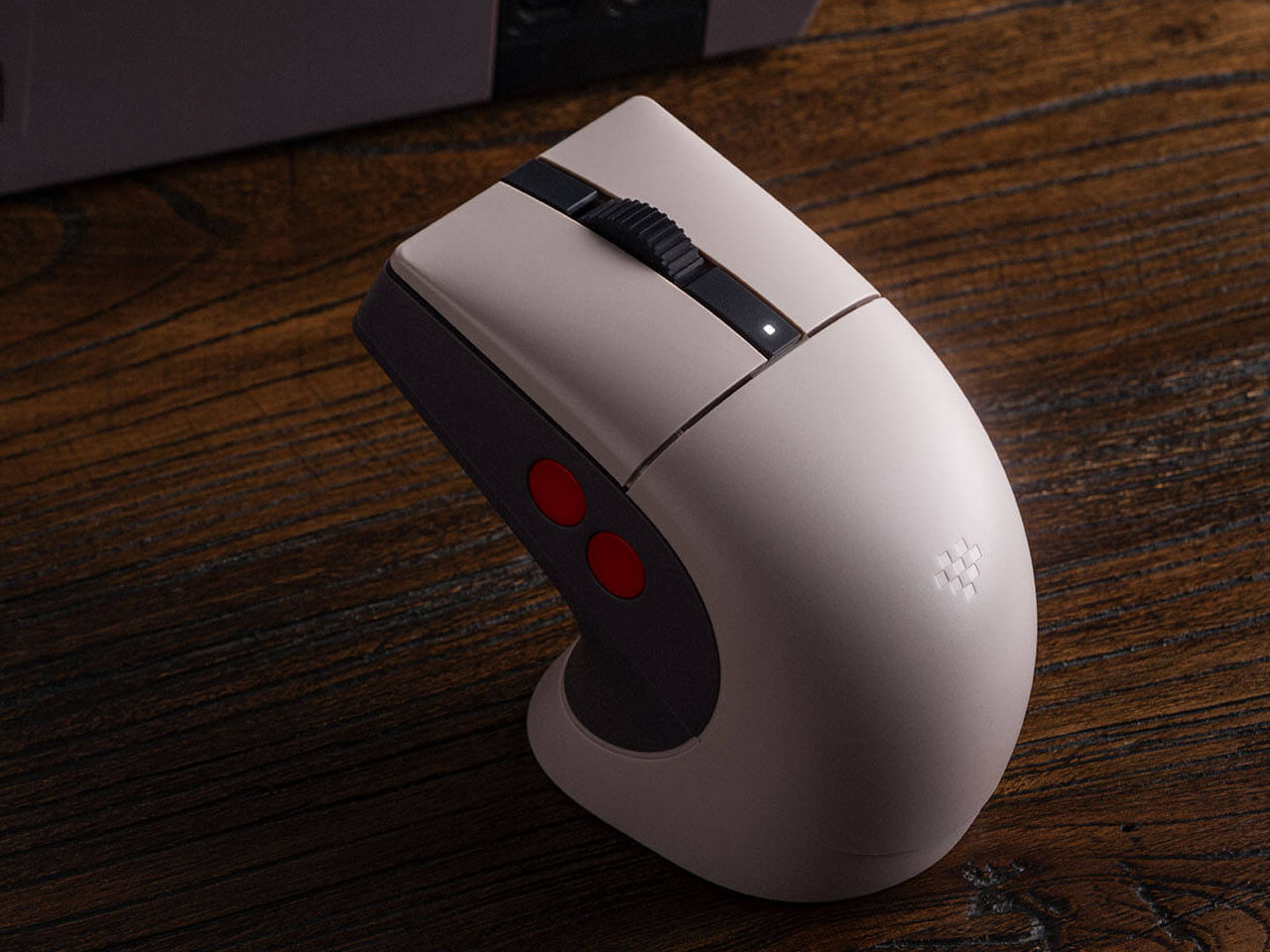
Themed on the Analouge 3D N64-themed controller, the C64 Edition evokes the nostalgic memories of the 8-bit era. Those who already own the Commodore 64 version will want to add this one to their collection. While it is unclear at this moment if this one has the Kailh Sword GM X micro switches used in the N Edition, it still gives keen gamers another one to choose from the 8BitDo lineup. The Commodore elements are slapped all over this retro mouse with the stripe logo on the charging dock and the familiar color theme.
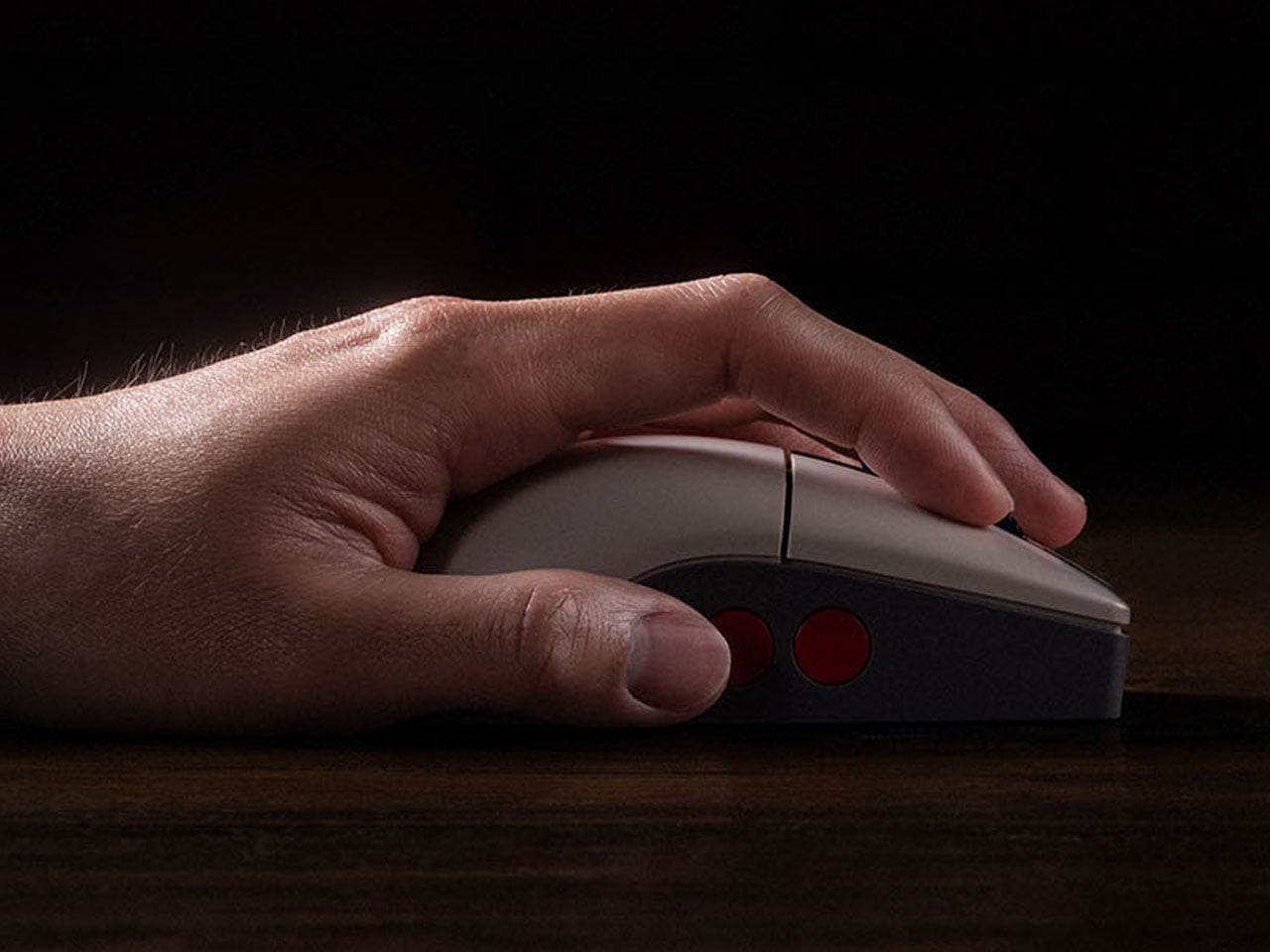
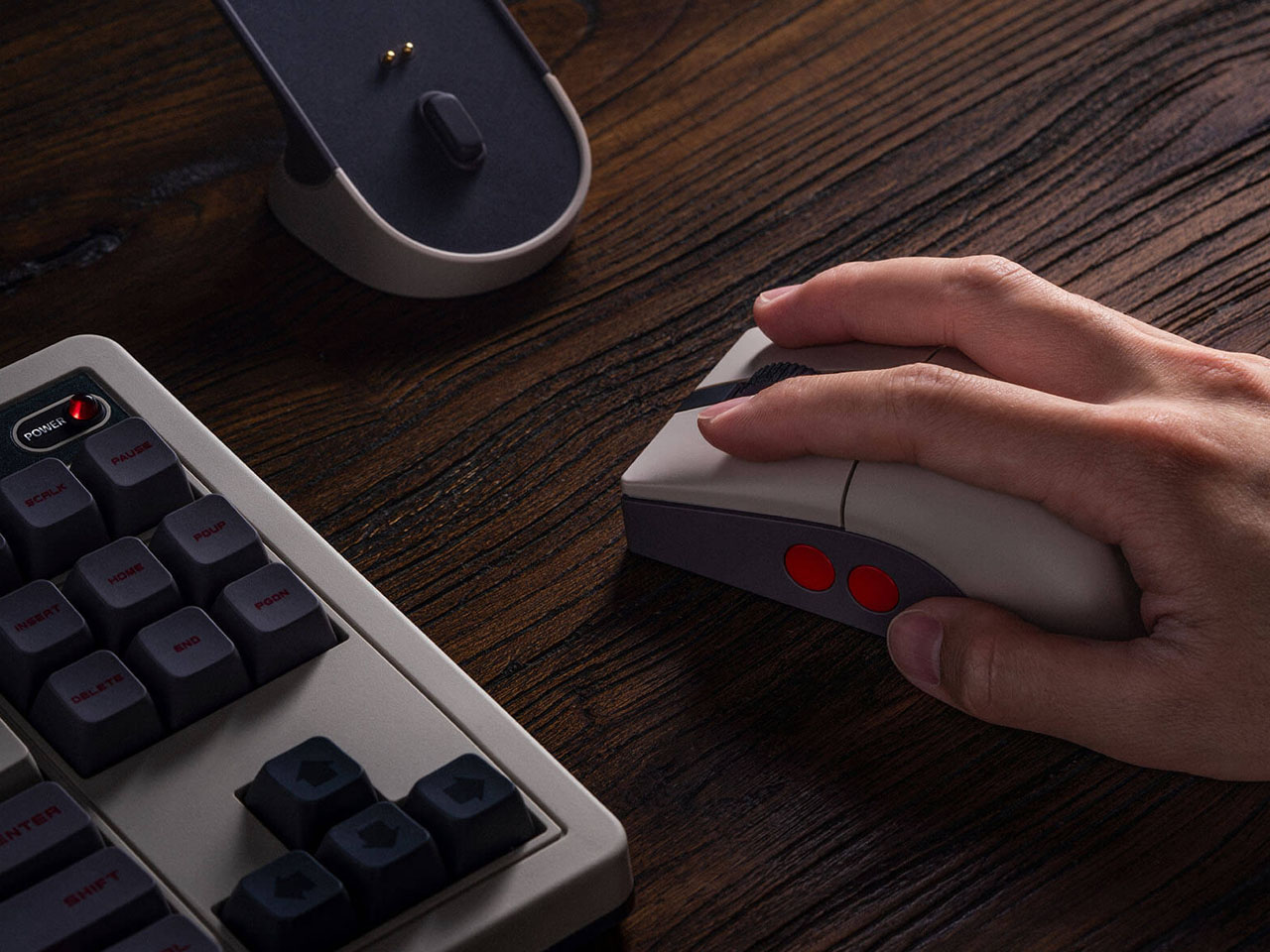
The mouse measures 115 mm x 58 mm x 39.4 mm, and the accompanying dock on which it rests is 115.17 mm x 58 mm x 45.88 mm. The dock also functions as a signal extension module for consistent wireless connectivity and negligible latency. The Retro R8’s symmetrical shape allows it to be used comfortably by both left- and right-handed users, with software support enabling quick switching between modes. Despite its vintage aesthetic, the mouse weighs just about 77 grams, making it relatively lightweight and well-balanced for long usage sessions. Customizable side buttons further enhance usability, allowing users to assign shortcuts, macros, or specific commands through the companion Ultimate Software on PC.
Retro R8 C64 N Edition can be paired to your other devices via Bluetooth LE 5.3, 2.4 GHz, and of course, wired. The signal extension mode of the dock is attributed to the 2.4 GHz connection. Like other mice in the Retro R8 family, it is designed to balance nostalgic styling with modern gaming performance. Internally, the mouse is powered by a high-performance PAW 3395 sensor that supports six adjustable sensitivity levels ranging from 50 DPI to as high as 26,000 DPI, allowing users to fine-tune cursor precision for both productivity tasks and gaming. The device also supports adjustable polling rates, reaching up to 8,000 Hz when connected through a wired setup for ultra-responsive input.
Powering the accessory is a 450 mAh rechargeable lithium-ion battery. Depending on the connection mode and polling rate settings, the mouse can deliver up to around 100 hours of battery life over Bluetooth, while the 2.4 GHz wireless mode typically offers between 26 and 105 hours of use. Charging takes approximately 2.5 hours, and the included dock doubles as a convenient stand that keeps the desk setup organized while ensuring the mouse remains ready for action. Priced at $50, the Retro R8 C64 Edition has all that it takes to bring nostalgia to your desk.
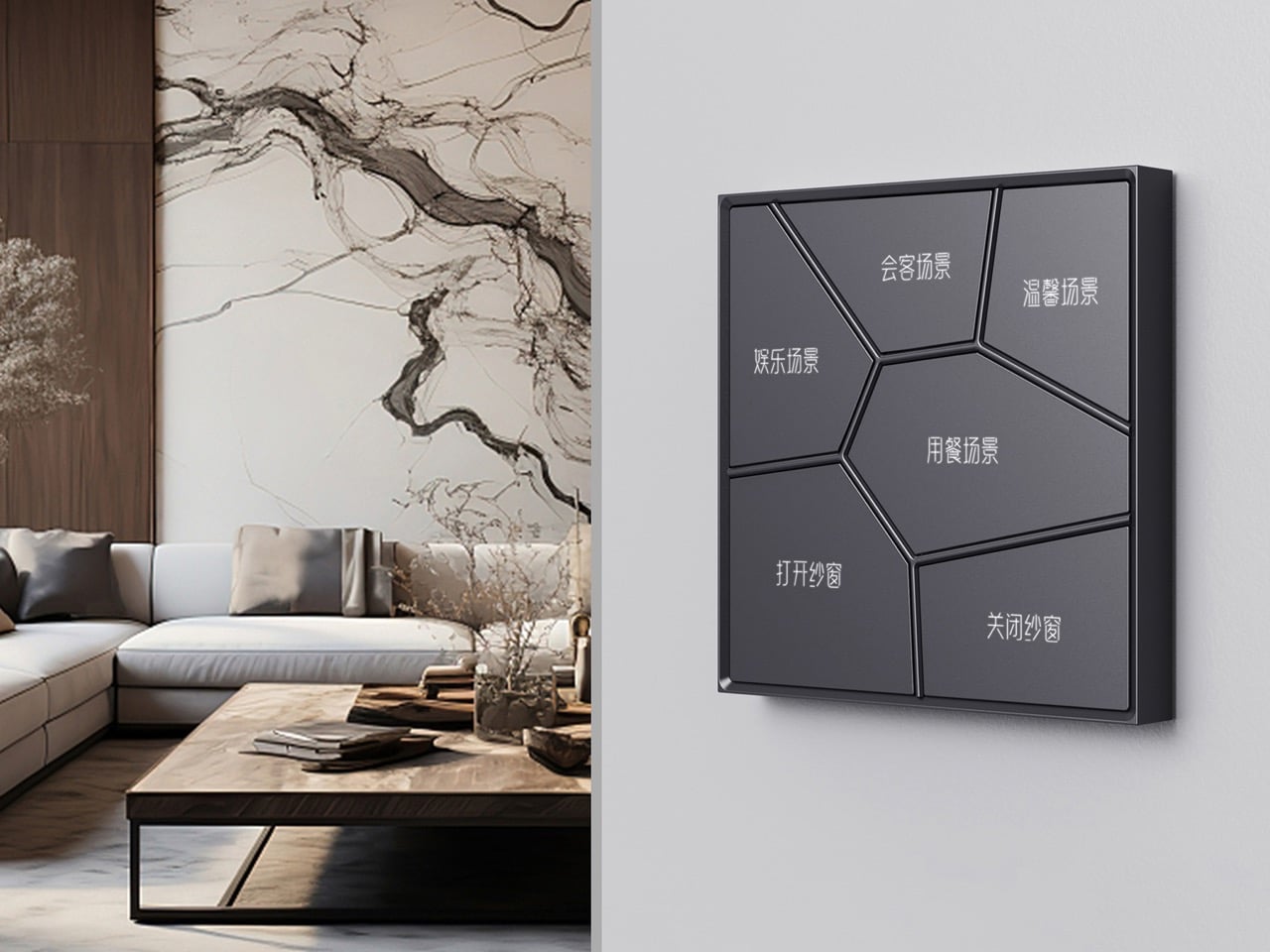
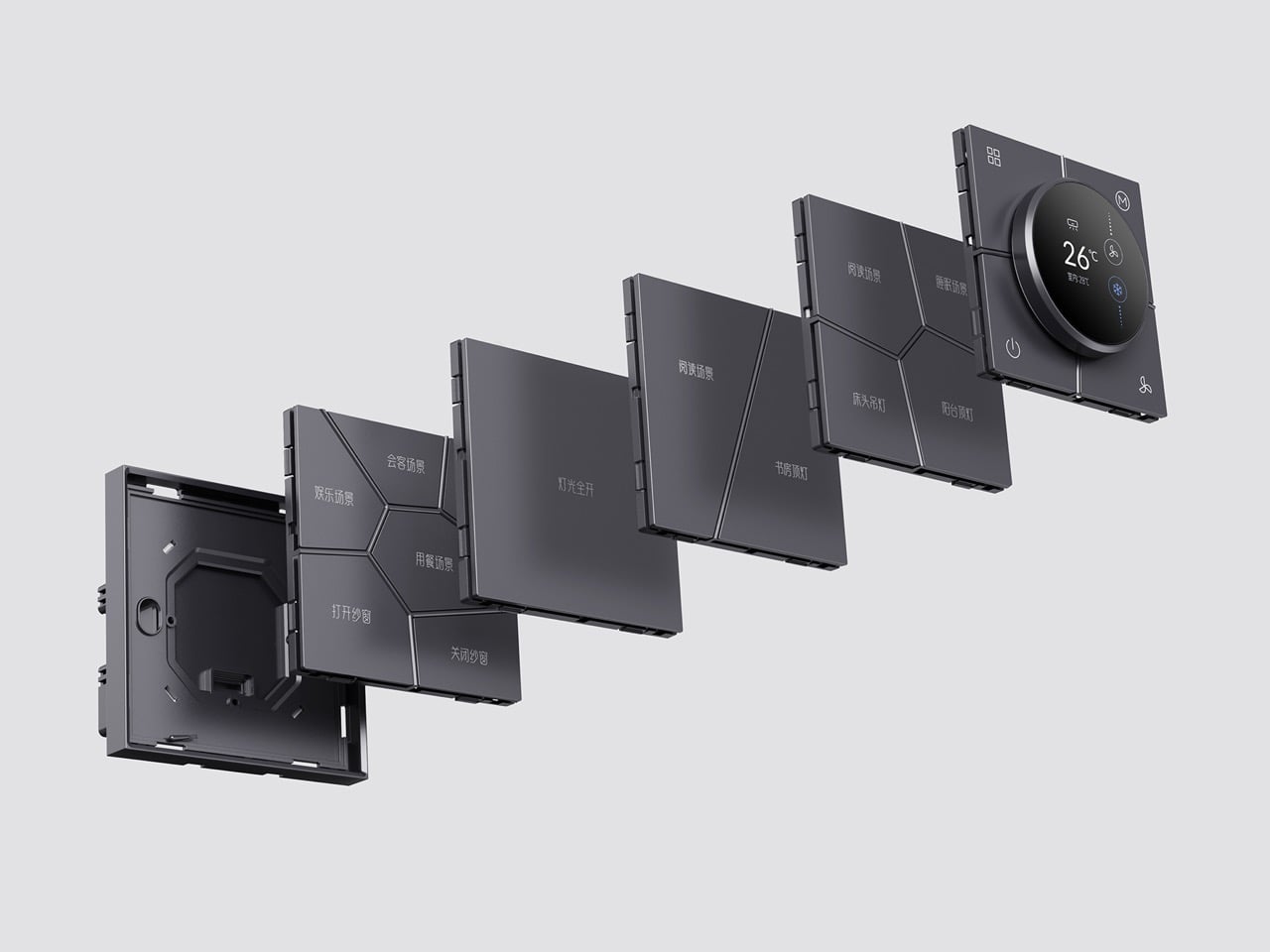
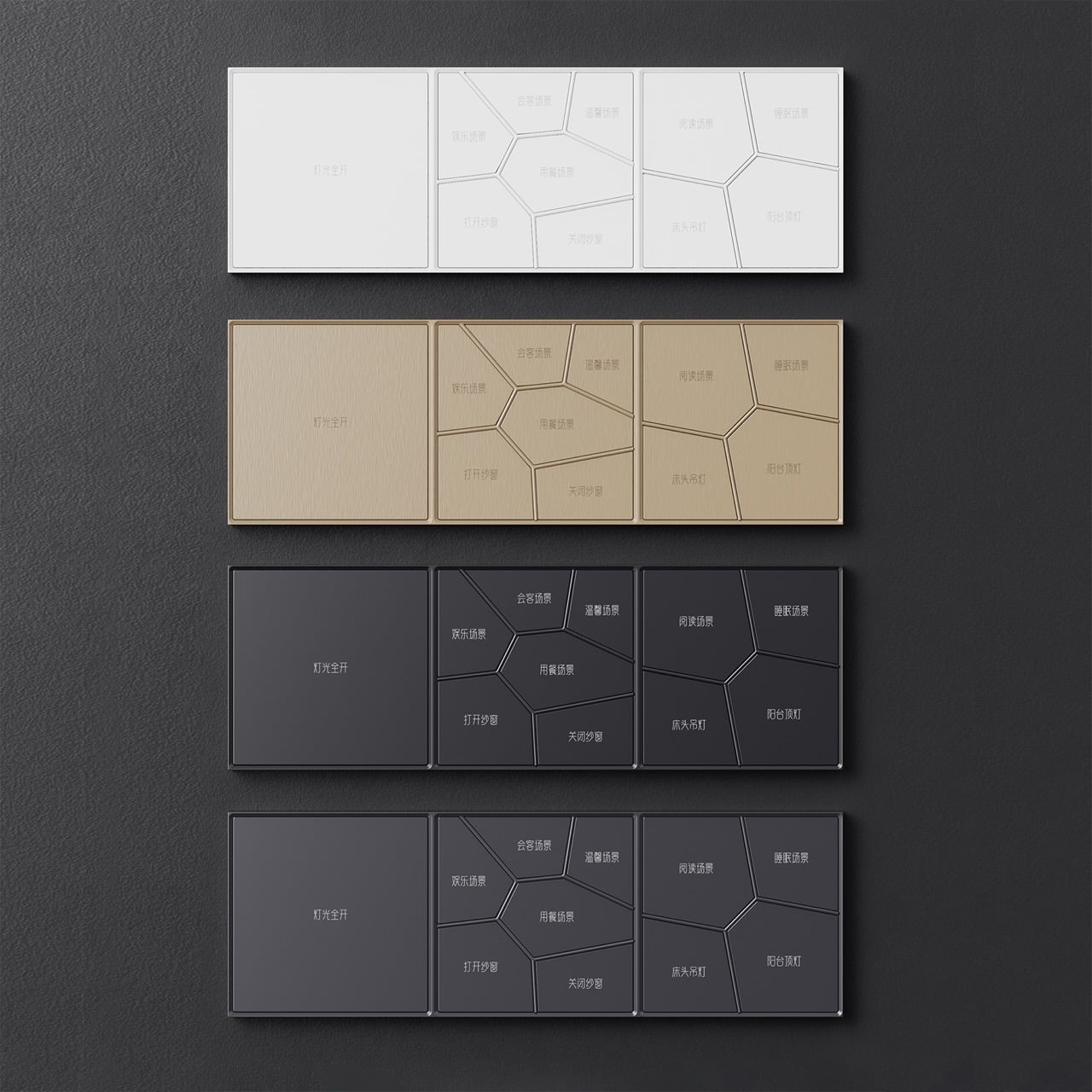
Most wall switches exist to be ignored. You flip them without looking, never registering the object itself, because there is nothing to register. HDL Automation’s Inkslab panel series makes that kind of invisibility impossible. The surface is divided into irregular polygonal cells radiating outward from a central point, a geometry lifted directly from the perforated stone lattice windows of classical Suzhou gardens. Each cell is a button. The ornament and the interface are the same thing.
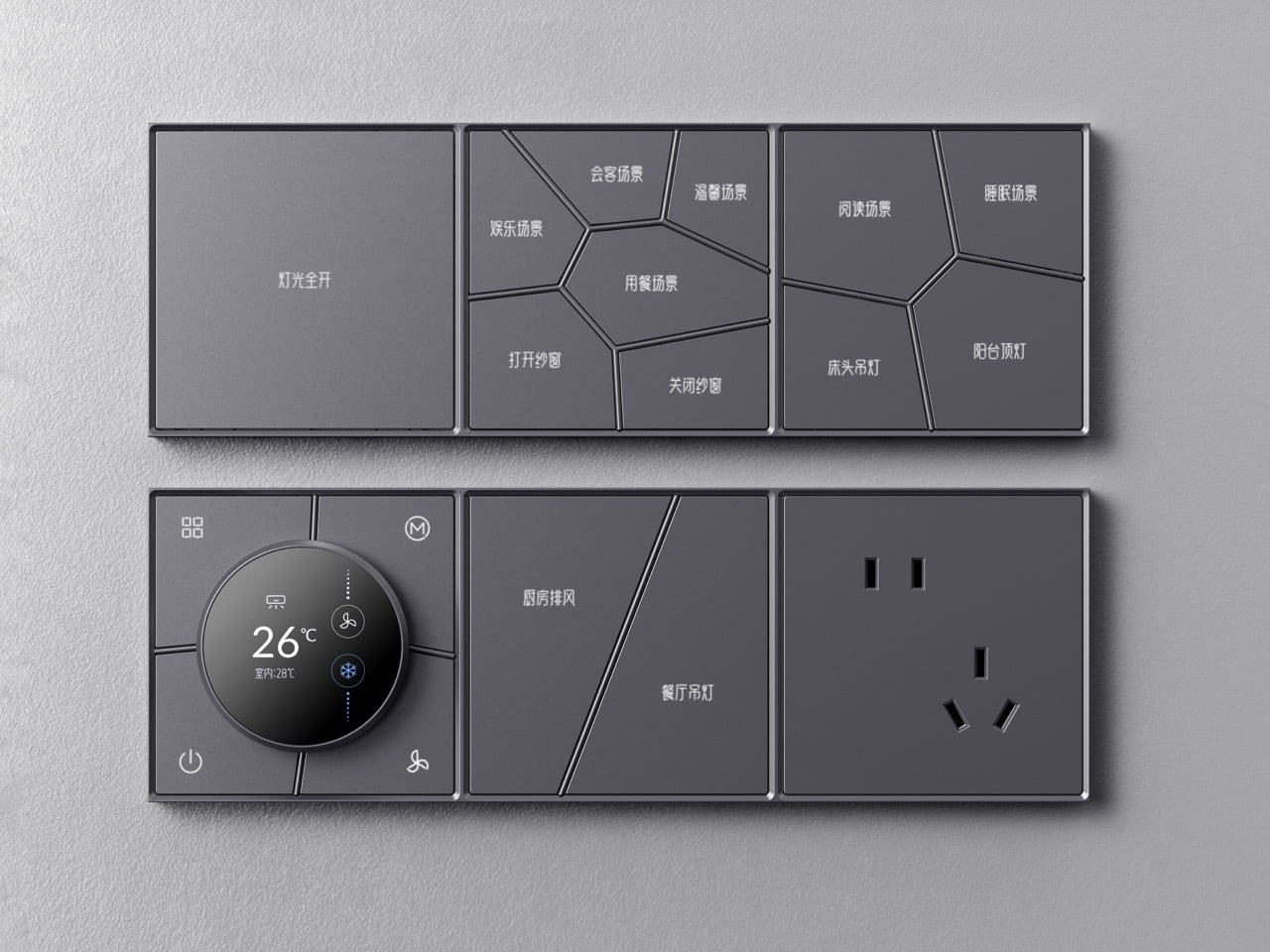
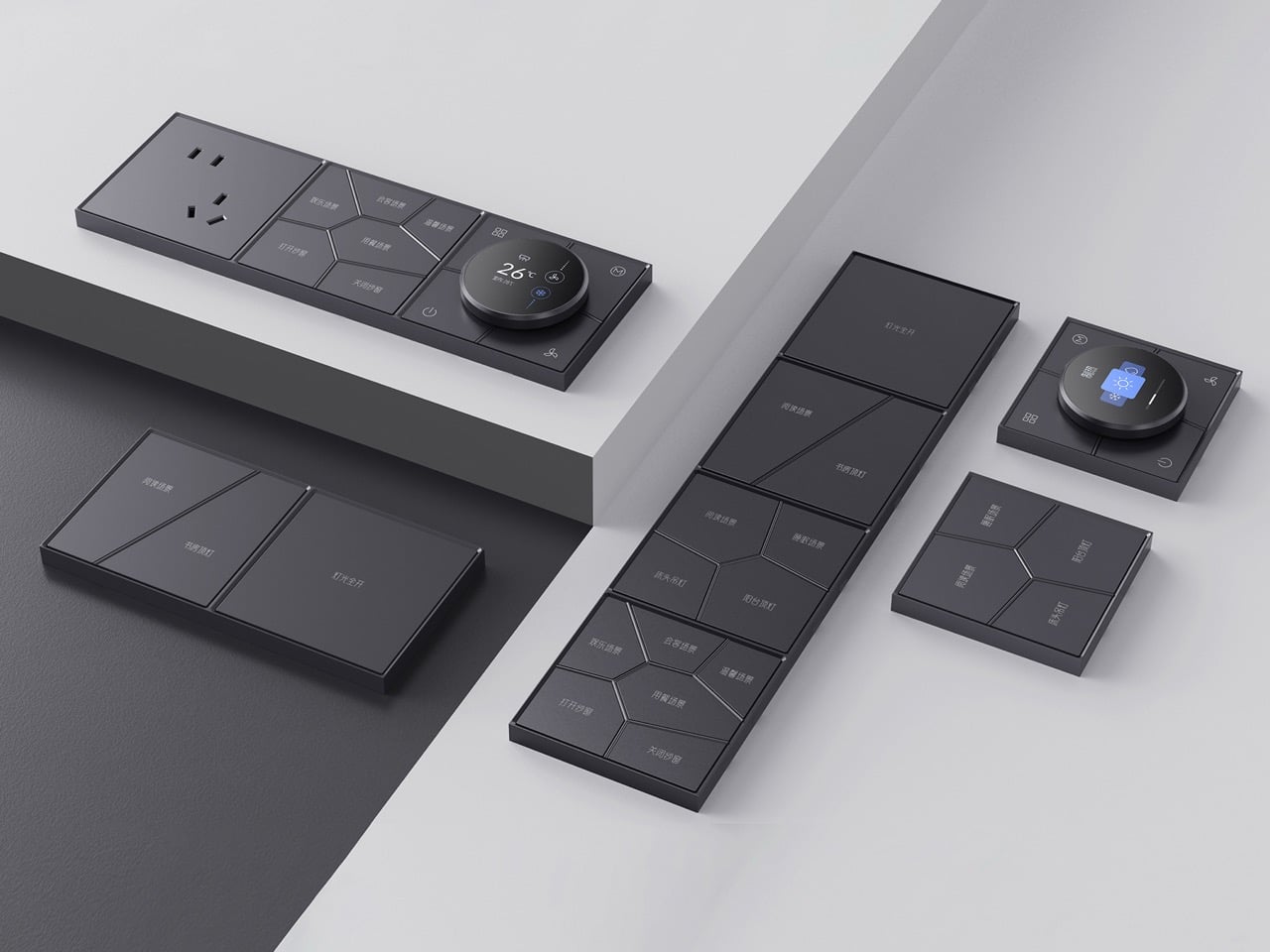
That formal discipline carries through the entire system. Inkslab is a modular series that tiles horizontally and vertically, mixing scene-selector panels, a circular HVAC control knob, power outlets, and single-button tiles into wall-mounted configurations as long or compact as the space demands. It comes in white, brushed champagne gold, matte black, and slate gray, and at 86 x 86 mm per tile, it sits flush against a wall with the quiet confidence of something that belongs there.
Designer: Hdl Automation Co., Ltd.
Classical Chinese perforated windows, called “leaky windows” in the original parlance, use irregular polygon grids to divide a wall surface into discrete framed voids. The geometry is simultaneously structural, decorative, and spatial. Inkslab takes that logic and runs it through an interface problem: how do you lay out multiple buttons on a 86 x 86 mm square without it looking like a grid of sad rectangles? The answer turns out to be Suzhou, and it works.
Each tile clips onto a shared wall bracket, and you can run them in any combination horizontally or vertically. The exploded product imagery shows the layering clearly: bracket, individual functional tiles, frame. Mix a three-tile scene-selector run with a power socket tile and the circular HVAC knob module, and you have a fully integrated wall panel covering lighting scenes, climate control, and power in one coherent visual strip. The round knob module in particular is well-considered, its circular display reading temperature and fan settings without interrupting the overall geometry of the panel it sits in.
Instead of manually programming scene modes through an app, the system learns from usage patterns and suggests scenes based on time of day and behavior. Paired with the proximity sensor that wakes the LED backlighting when you approach and cuts it when you leave, the panel behaves more like an attentive object than a passive one. HDL has been in the building automation space since the 1980s, when the company’s founder developed China’s first digital dimming controller, so the intelligence running underneath the Inkslab aesthetic has serious pedigree behind it.
The brushed champagne gold colorway reads closer to high-end architectural hardware than consumer electronics, and the anodizing process gives the aluminum surface a resistance to wear and corrosion that keeps it looking that way over time. Skin-friendly paint on the non-metal variants sounds like a small detail but matters on something you physically touch dozens of times a day. The 10 mm depth keeps the panel from protruding awkwardly from the wall, which is one of those specifications that sounds trivial until you see a chunky smart panel jutting off a freshly plastered surface.
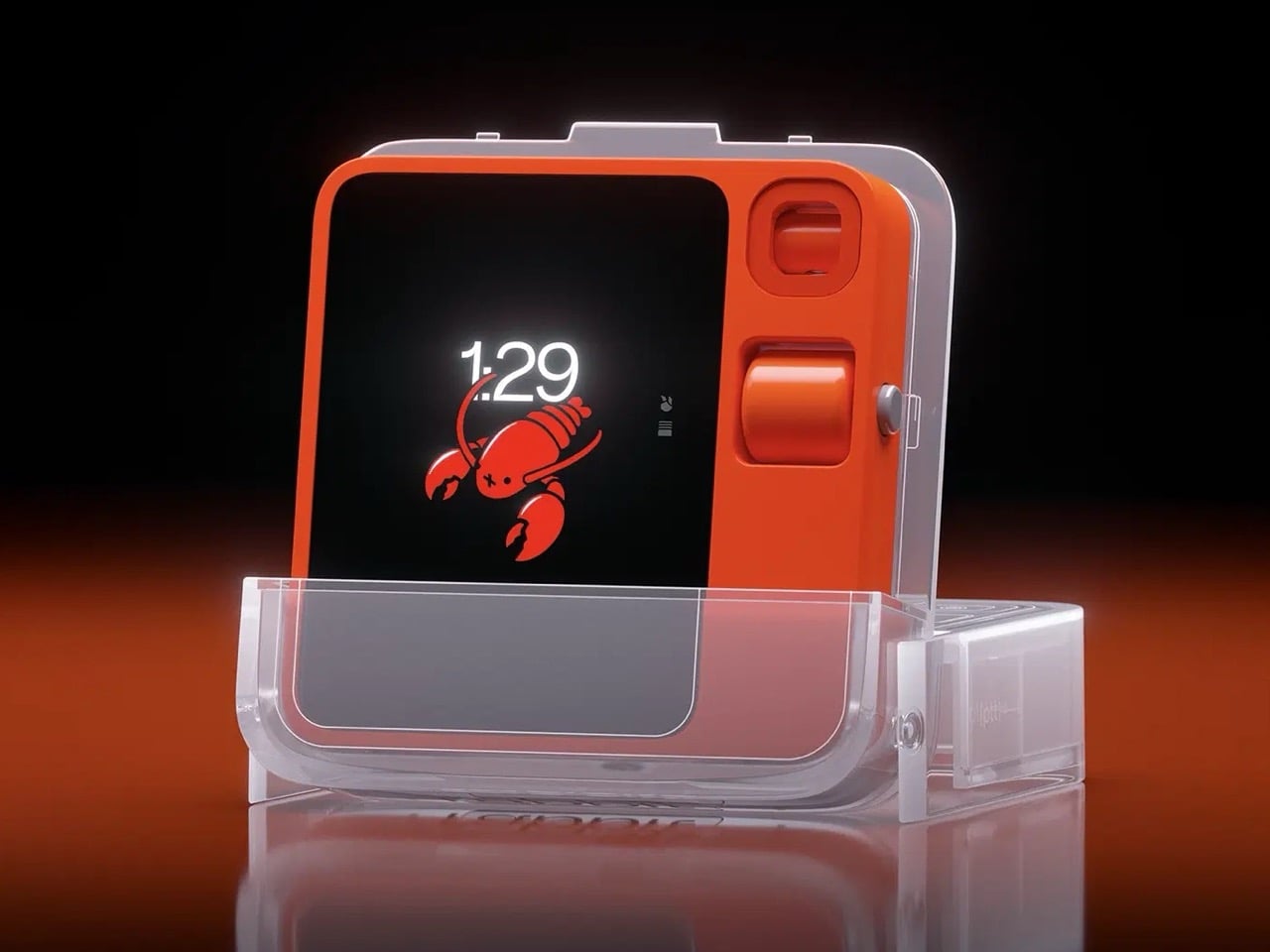
There is a version of the Rabbit R1 story that ends in 2024. The device launches to enormous hype off the back of a viral CES presentation, ships to early adopters who find it half-finished and frustrating, earns a wave of scathing reviews, and quietly disappears the way most failed AI gadgets do. Humane’s AI Pin followed that trajectory almost exactly, discontinued in early 2025 after HP acquired the company. The R1 did not follow it, though the reasons why have less to do with any brilliant pivot than with stubbornness, incremental software updates, and a fair amount of luck.
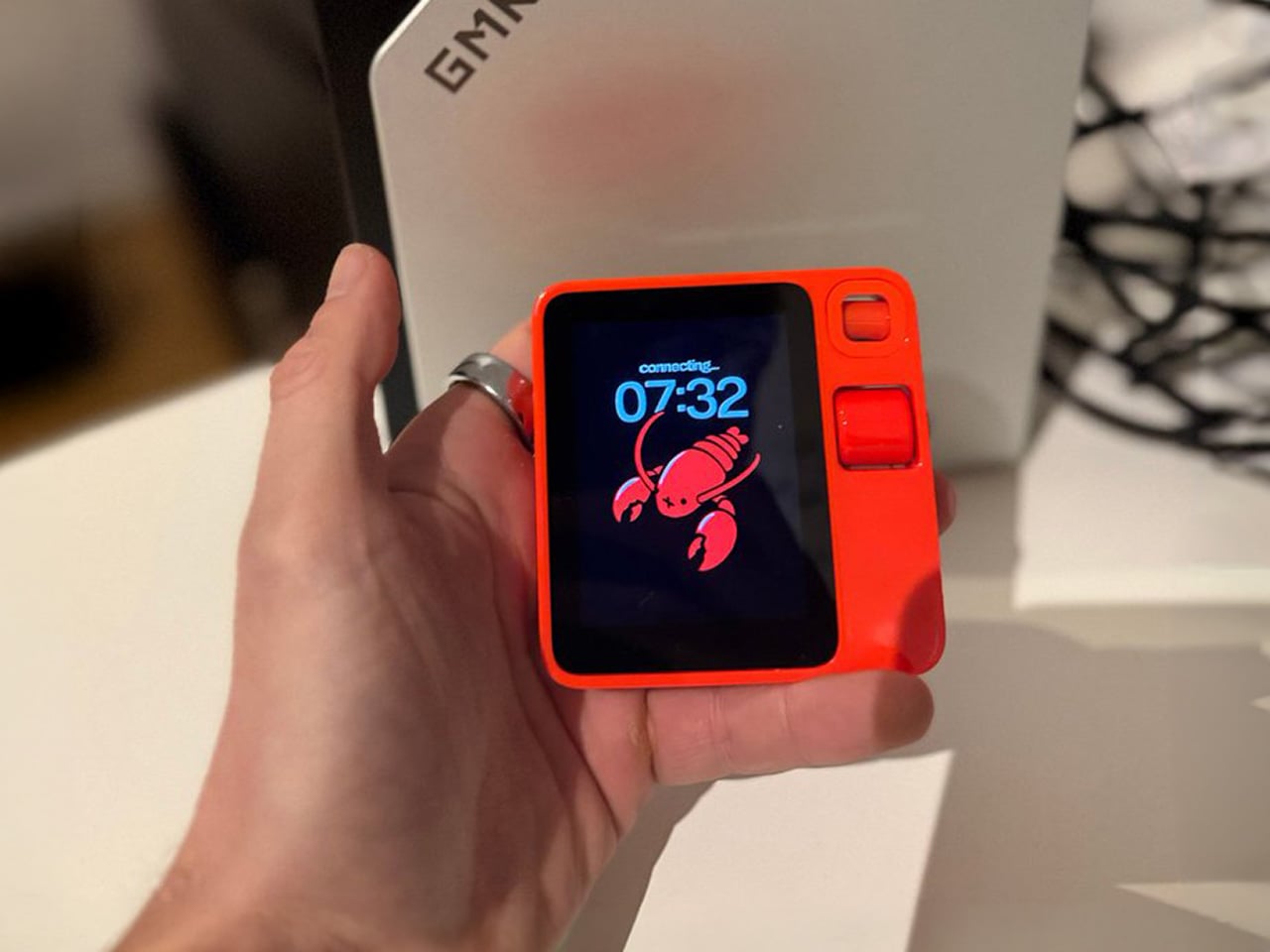
By January 2026, two years of over-the-air updates had produced a device functional enough to sustain a renewed community of users and developers. Then OpenClaw arrived on the R1, and the conversation changed in a way that felt less like a product announcement and more like something clicking into place. OpenClaw, the open-source autonomous AI agent that had exploded from obscurity to 60,000 GitHub stars in 72 hours, had always carried a hardware problem at its core. The R1, as it turned out, had most of the solution already built in.
Designer: Rabbit
OpenClaw (formerly Clawdbot, then Moltbot, changing names three times in a single week) is an open-source autonomous AI agent that exploded from 9,000 to over 60,000 GitHub stars in 72 hours in late 2025. Austrian developer Peter Steinberger built it as a self-hosted agent runtime that connects AI models to your local machine, messaging apps, calendar, email, and file system. You control it by sending messages through WhatsApp, Telegram, Discord, or Slack, like you’re DMing a particularly capable assistant. OpenClaw can browse the web, manage your inbox, schedule meetings, summarize documents, and execute shell commands autonomously, with persistent memory that lets it remember context across weeks. The problem OpenClaw always carried was the lack of native voice interaction on dedicated hardware, and the R1 had exactly that hardware sitting in a drawer gathering skepticism.
Rabbit integrated OpenClaw in January 2026 as an alpha feature, requiring users to set up their own OpenClaw gateway and connect it to the R1. Push the talk button, speak a command, and OpenClaw executes it through your existing setup. The R1 becomes a voice interface for an agent that can genuinely act on your behalf, making the device something closer to what Lyu promised two years ago. The possibilities depend entirely on how you configure OpenClaw, which can expand through over 100 community-built skills. Security risks are real and well-documented (over 400 malicious add-ons were found on the skill hub in early 2026), but for users willing to manage that complexity, the R1 finally has a use case that feels native to the hardware rather than bolted on.