Foldable iPhone Needs to Happen: 5 Reasons Why Foldable Phones are Here to Stay

Apple just announced what might be the biggest upgrade to the iPad line since the iPad Pro was introduced in 2015. In addition to switching to an OLED panel, with all the benefits that it entails, as well as gaining a new Apple Pencil Pro, the new iPad Pro is possibly one of if not the thinnest tablets in the market, especially for its 13-inch size. But while Apple’s new tablets are definitely worthy of attention, the company’s fans are still holding their breath for a foldable iPhone. Rumors claim that could be coming in two years, but it could also be canned at the last minute, just like the AirPower wireless charging mat if the design and performance don’t meet the meticulous company’s standards. Then again, some probably consider foldable devices as a passing fad, but that couldn’t be farther from the truth. Apple should launch a foldable phone sooner rather than later because these devices aren’t going away, and here are the reasons why.

Designer: Semin Jun

1. Content is Still King

Chances are, you’re using your phone less for calls and more for content, which does include activities like instant messaging and chatting. The screen is the most important part of the device because it is the part that we see and use the most. Content is the primary reason for having a smartphone, whether it’s for consuming content or sometimes even creating it, so any technology that lets people enjoy more content or gives them more ways to enjoy content is always a winner. Is it any wonder, then, why phablets or phones with large screens are now the norm, despite how much Apple ridiculed its size at first?

Foldable devices solve this in two ways. Large foldable phones in the style of the Google Pixel Fold offer an experience similar to a mini iPad mini that you can still shove in your pocket and use as a regular phone to some extent. In theory, it delivers the best of both worlds, with a screen that can contain as much content as possible while still in a portable format.

Conversely, clamshell-style foldables like the Samsung Galaxy Z Flip series strike the problem from the opposite end. It provides a screen experience that’s exactly like a normal large phone but lets you conveniently cram the device in very small purses and pockets. It still prizes the role of content but delivers it in a design that doesn’t get in your way because of its size.

2. Falling Prices

One of the reasons why people avoid foldable phones and why they see them as luxurious fads is because of their rather mind-blowing prices. Yes, it’s expected that novel technologies and designs would cost more at the start, but foldable phones have been around for almost half a decade now, and yet most still cost a premium flagship and a half. Fortunately, things are changing for the better, even if slowly.

Designer: nubia

As the technologies and components become more common, the cost of their production will start to decrease as well. Given that there’s still plenty of room for newer designs that will involve more costs, high-end foldable phones won’t be going away any time soon. At the same time, however, that still leaves the door wide open for options on the lower rung of the price ladder. The new nubia Flip 5G, for example, is currently the most affordable among the relatively cheaper clamshell foldables. Sure, it does cut corners in a few aspects, but that is also proof that you can have “mid-tier” foldable phones in this market.

There’s definitely a great deal of interest in a cheaper book-style foldable, and that might be coming this year if not from Samsung then from its growing number of rivals. Admittedly, it might take another year before more affordable foldables become more common, but it’s something that will happen sooner rather than later.

3. Design Refinement

Even after five years, the foldable phone design is still relatively young. Given how it strays so far from normal phones, it’s not surprising that perfection still feels so far away. In other words, there’s still much to be done, and smartphone makers continue to push the boundaries, refusing to settle for the status quo. In a way, it’s a matter of pride for these brands, as well as refusing to admit defeat after investing so heavily in foldable designs.

Images courtesy of AppleInsider

Foldable phones are getting thinner to the point that a folded phone no longer feels like you have two regular phones stacked together. At the same time, others are cramming more powerful and larger cameras into these ultra-thin devices, trying to get them on the same playing field as any other flagship model. While standard smartphone designs seem to have settled down after many tumultuous years, things are just heating up for foldables. There’s still a lot to be explored, and we’re far from reaching the peak.

4. Stylish Trendsetters

Smartphones have graduated from being technological products that only tech-savvy people can truly appreciate to lifestyle items that reflect the owner’s design tastes and personal preferences. Smartphone expressiveness is becoming an important factor in how people choose devices these days, from the design of the cameras to the overall style of the phone itself. That’s part of the reason why “flip” foldable phones are reported to be outselling their larger cousins, precisely because they bring back that classy image of flip phones from decades ago.

Designer: Honor

Yes, you can dress up your regular phone slab as much as you want, but the way you open and close a foldable phone is going to be fashionable for quite a while. And you can also dress them up as much as you want, and may even offer more customization options and creativity with the styles of cases and accessories used. Everything you can do on standard phones, you can also do with foldables but with more pizzazz and a “wow!” factor.

There’s also the aspect of offering more customization options inside as well. The foldable screen is a bigger canvas you can play on, and some external Cover Screens can get creative with their designs as well. It’s a new playground for designers and creative users who want to truly make their smartphones an extension of themselves.

5. Innovation Has Just Begun

Foldable phones are just the start, however, because they are the most accessible and easiest to comprehend. Once the idea of foldable screens has become cemented in people’s minds, it will be easier to introduce newer designs that can provide even better solutions. The current foldable designs are far from perfect, but they’re paving the way for future foldable devices.

Designer: Samsung

We’re already seeing that in the PC market with the introduction of foldable laptops, but we don’t need to go that far for proof. Samsung has already shown off working prototypes of tri-fold devices that turn the phone into a larger, and more conventional tablet design. We’ll see other foldable technologies unfold (no pun intended) in the future as well, including a phone that folds both ways. And don’t forget those rollable screens that offer an alternative answer to the same screen size problem.

Apple is rumored to unveil a foldable laptop next year, with a foldable iPhone following in 2026. Honestly, the order should probably be reversed, given how MacBook owners are more meticulous about how new designs affect functionality, sometimes negatively. Either way, Apple really needs to jump on this train soon, not just because it’s trending but because it can have a significant impact in driving innovation in this space forward by leaps and bounds.

The post Foldable iPhone Needs to Happen: 5 Reasons Why Foldable Phones are Here to Stay first appeared on Yanko Design.

Trashboard is a more sustainable skateboard that uses recycled aircraft carbon

To most people outside of that community, a skateboard is nothing more than a wooden plank on wheels with sometimes outrageous artwork painted on it. The probably surprising reality is that a great deal of design and engineering goes into making these skateboards to keep them aerodynamic while also light and sturdy. While it’s fine to stick to nearly perfected traditions when it comes to materials and processing, there’s also a need to push the envelope in order to design a product that will not only stand the test of time but will also help the planet last a little bit longer as well. That’s the kind of innovation that this seemingly normal sustainable skateboard brings to the market with a little help from airplane maker Airbus.

Designer: François Jaubert

To be fair, much of a skateboard’s composition, particularly its deck, already uses sustainable materials like wood. That said, there’s also such a thing as the overuse of fresh wood, which can lead to deforestation and other related environmental consequences. While skateboards themselves can be recycled or upcycled, the use of recycled materials like recycled wood hasn’t exactly born much fruit.

Enter the Trashboard, a sustainable design that uses recycled materials that aren’t wood. Building upon an earlier project that successfully used packaging cardboard to make a surfboard, the Trashboard combines recycled and upcycled materials to make a unique deck that still feels like the genuine item. In particular, it uses upcycled carbon from discarded aeronautic components courtesy of Airbus to minimize the use of raw new materials. It also uses compressed recycled cardboard for the deck’s flex core and binds the layers together using bio-sourced epoxy resin.

From the outside, you wouldn’t even realize that the Trashboard is made differently. It still retains the same standard form that gives skateboards their smooth gliding power, and it also has rather artistic prints, though leaning more towards a monochromatic tone that gives the decks a more elegant aesthetic. All in all, Trashboard promises to deliver the same exhilarating cruising experience, while also allowing skaters to share in the responsibility of helping keep our planet alive.

The post Trashboard is a more sustainable skateboard that uses recycled aircraft carbon first appeared on Yanko Design.

Google Pixel 8a official: A more affordable way to experience Google’s AI

Even before AI and machine learning became buzzwords, Google was already utilizing these technologies behind the scenes to power services like Search and Google Assistant. In line with recent trends, however, it has started applying and advertising AI for anything and everything, especially for its Pixel devices. AI features, however, are normally accessed through online services, which incurs security and privacy issues, or on the device itself, which requires powerful hardware that’s often available only on more expensive flagships. That’s the kind of situation that the new Google Pixel 8a is trying to change, offering a more accessible device to access Google’s AI-powered features and services for years on end.

Designer: Google

The Pixel 8a is practically the Pixel 8 in both design and spirit. It has the exact same appearance, though in a slightly smaller size and one important change in materials. The back of this newer Pixel phone is a matte composite instead of the Pixel 8’s glass rear. The color options available are also slightly different, with the Pixel 8a leaning more towards fun and saturated hues like Aloe green and Bay blue. Otherwise, the two are almost exactly identical, which some Pixel fans have grown pretty fond of.

The Pixel 8a even shares the same Tensor G3 processor as the current flagship, though we won’t be surprised if we find out later that it has been dialed down a bit. That said, it still has enough power to support almost all of Google’s AI features on the Pixel, from Circle to Search to Gemini assistant for summarizing pages or notes to removing background noise from recorded video. There will still be some features exclusive to the Pixel 8, of course, but you can already enjoy most of what’s available on the Pixel 8a, especially when it comes to photography.

It will definitely need it because one of the biggest corners that Google had to cut was the camera system. Neither the 64MP main camera nor the 13MP ultra-wide has autofocus, and both have slightly lower specs than the Pixel 8. In other words, the Pixel 8a will rely more heavily on AI and algorithms to compensate for the camera hardware’s limitation. There are also some other key differences, like a slower (but still fast) 18W charging speed.

All in all, you’re getting nearly the same Pixel 8 experience for $200 less, with the Pixel 8a going for $499 for 128GB of storage and $549 for the first-ever 256GB option for a Pixel “a” series. Aside from the camera, none of the “downgrades” are deal-breakers, making the Pixel 8a a very worthwhile investment for the future, especially since the phone will also be getting Android updates for seven years.

The post Google Pixel 8a official: A more affordable way to experience Google’s AI first appeared on Yanko Design.

Odd pen holder has a unique way to showcase your favorite writing tool

The key design elements for a pen holder or pen pot are pretty simple. It just needs to be tall enough to support writing instruments of different heights without them tipping over and would have enough room for at least a handful of pens, pencils, markers, and the like. Beyond that, the designer is free to interpret the shape of the container, and some even have dividers to segregate the different tools. But while pen holders are a convenient way to keep your pens together, they don’t really make it easy to pick out your favorite one from among the bundle. Some people would use a separate stand just for that single pen, which takes up unnecessary space on your desk. This concept design has a rather curious answer to the problem, one that pretty much leaves a conspicuous hole in the middle of the pill-shaped pot.

Designer: Liam de la Bedoyere

Usually, having a hole in the middle of a container is considered to be a defect, one that not only weakens the structure of the shape but also mars its visual integrity. After, something that cuts through an otherwise clean and whole form is sure to bother one’s aesthetic sense. In this case, however, that hole is not only intentional but also functional, setting the Void Pen Pot apart from your run-of-the-mill pen holders.

The hole that runs through the body of the pill-shaped container actually provides a convenient resting place for your most-used pen or pencil. Instead of wasting time and effort looking for that pen among half a dozen similar-looking rods, you can simply pull it out from its hole and start using it immediately. And when you’re done, you can just shove it back in to wait for the next time you need it.

Since that hole practically bisects the container, it also acts as a built-in divider that lets you group your pens into two. That said, this also means you’re not able to maximize the entire space of the container for your pens, specifically the area above and below the “tunnel” made by this hole.

The concept comes in two flavors, four if you consider the pen holder can be pill-shaped or a conventional can. One design employs a polished chrome body, while the other tries to adopt Japanese minimalist brand MUJI’s signature frosted polypropylene, both with cork bottoms. While the function of having an odd yet special place for your favorite pen is definitely useful, it still raises the question of whether such a quirky design will be appealing or off-putting instead, with a pen sticking out from an otherwise blemish-free surface.

The post Odd pen holder has a unique way to showcase your favorite writing tool first appeared on Yanko Design.

Innovative Bluetooth keyboard turns its surface into a giant touchpad

Wireless keyboards are nothing new. Whether you’re on a desktop trying to escape the tangle of cables or on a laptop wanting to expand your limited set of keys, a wireless keyboard offers a bit more freedom and flexibility than other keyboards. That said, they still have the same limitations, namely, requiring a separate mouse or touchpad to move the computer cursor around. Not only does that take up more desk space, it also means another device you might forget or lose along the way. Some Bluetooth keyboards add a tiny touchpad off to the side, but that comes at the cost of reducing the number of keys available on the keyboard. This ingenious solution gives the best of both worlds by practically turning the entire keyboard into one giant touchpad you can swipe and pinch, just like any other touchpad.

Designer: Igor Solovyov (Industrial Designer, Clevetura)

Laptops have the advantage of having both a keyboard and a pointing device in a single body, but their arrangement is hardly the best in terms of ergonomics and flexibility. Wireless keyboards with built-in trackpads, on the other hand, try to cram this component in an already small space but still manage to sacrifice keys like the numeric keypad. It’s almost as if there’s no ideal design that solves this problem, but the CLVX 1 boldly tries to think outside the box while offering a keyboard that, at least on paper, matches the functionality of many Bluetooth keyboards in the market today.

1

In a nutshell, the middle area of the CLVX 1 keyboard is touch-sensitive and functions like a giant touchpad. Thanks to a special slippery coating, you can effortlessly glide your finger across that area to move the mouse around without snagging on the edges of the keys. You can even pinch to zoom or perform any other touch gestures, just like a normal trackpad. As a bonus, the top row of function keys also functions as a slider that you can smoothly swipe without even having to look, making it just as easy to control the volume or any other function you program into the gesture. The keyboard promises that it won’t mix up typing and gestures, as it automatically disables touch detection once you press a key. And in case you’re wondering about mouse button presses, the keyboard has dedicated physical buttons below the spacebar for those actions.

In all other aspects, the CLVX 1 boasts a laundry list of features available on many wireless keyboards and then some. It has a 110-key layout, which is far more than your typical Bluetooth keyboard, and uses scissor switches. The RGB lighting also has a few tricks, like following your finger as you glide over the keys. You can pair up to three devices with it via Bluetooth, but you can also connect to a device using USB-C for a fourth connection.

The CLVX 1 is definitely an intriguing design, but its mettle still needs to be tested in real-world use. The smoothness of swiping over keys will definitely be the biggest point of concern, but the typing experience of having those keys so close together is also an important consideration. Nevertheless, it definitely deserves some praise for thinking outside the box to deliver a design that doesn’t compromise just to mix two functions in one.

The post Innovative Bluetooth keyboard turns its surface into a giant touchpad first appeared on Yanko Design.

Google Pixel 8a: News, Rumors, Price, and Release Date

Google’s annual developer conference is fast approaching, and with it comes announcements of new devices that will showcase the company’s software for years to come. The Google Pixel Fold 2, which may be known as the Google Pixel 9 Pro Fold, is already making headlines and becoming the center of attraction, but it is hardly the only mobile device expected to be unveiled this month. As part of the more affordable “a” series, the Pixel 8a may sound uninteresting at first glance, but a few leaks and rumors paint a more curious picture of the Google Pixel 8a, making it a feasible candidate to be your 2024 purchase.

Designer: Google

Google Pixel 8a: Design

For those terribly disappointed by rumors of the changes that the Pixel 9 series will be making to a distinctive design, the Google Pixel 8a will offer a refuge. It still bears the same aesthetics of its namesake, namely a rounder and gentler appearance coupled with the “visor” camera design that Google’s phones have been using for three generations now. That said, the Pixel 8a will bring its own twist, making it perhaps even more interesting than its predecessor.

Image courtesy of: SmartPrix

For one, there are clues showing a matte surface for the phone’s rear rather than the traditional glass. This not only improves the grip of the device but also a bit of visual embellishment. This material change could go hand in hand with the “fun” colors that will be available for the phone, which might include Blue and Red, though those could also just be new official cases.

Image courtesy of: TechDroider

Perhaps a bit more interesting is the information provided by Evan Blass, a.k.a. evleaks, about the sustainability story of the Pixel 8a. There’s mention of the use of recycled materials, which could refer to either the back panel, the aluminum frame, or both. It will definitely be a huge design win if the Pixel 8a turns out to be Google’s most sustainable phone, especially considering how long it will be supported.

Google Pixel 8a: Specs and Software

In line with its current practice, we don’t expect to see a huge difference when it comes to the Pixel 8a’s hardware. It will be borrowing the same Tensor G3 as the Pixel 8a, but perhaps a bit watered down in performance. The display will be a new 120Hz panel, up from the Pixel 7a’s 60Hz, with an even brighter 1400 nits. The same trio of cameras that’s on the Pixel 7a will make its way to this year’s budget phone, so don’t expect a world of difference in terms of image output. What’s new is a 256GB storage option, which also shakes the pricing up a bit.

In other words, the Pixel 8a will be a very incremental update to the Pixel 7a and a step down from the Pixel 8. It’s not a surprising state of affairs, as it gives Pixel fans an option to grab the Google experience without burning a hole through their wallets. What will make all these worthwhile, however, is the software that runs on the device, and that one is expected to be fresh and new, at least compared to the hardware.

The Pixel 8a will naturally run Android 14 at launch, with updates to Android 15 immediately coming. More importantly, however, it will be running parts of Google’s Gemini AI suite, with tons of AI-powered features for search, photography, and more. Google is also promising 7 years of software updates, quite a feat in the mobile world, though it’s not clear how many of those will be actual Android upgrades versus security patches.

Google Pixel 8a: Price and Release Date

With Google I/O set for May 14, the timeline for revealing new devices is just around the corner. There are rumors that the Pixel Fold 2/Pixel 9 Pro Fold will be announced a few days earlier, but there’s no reason to expect the Pixel 8a to get special treatment. If Google doesn’t break from traditions, orders for the phone will start on that day as well.

As for the price, Google is thankfully keeping the figures the same, at least for the base model. For 128GB of storage, the Pixel 8a will go for $499, or the same launch price as the Pixel 7a. This year, however, a 256GB model is supposedly in the works, and that will go for $599. They’re not exactly “cheap,” but they’re still well below the usual $800 to $1,000 that consumers pay for with a brand-new flagship.

Google Pixel 8a: Final Thoughts

It’s not really strange that smartphone companies and their marketing engines tend to focus on the more expensive high-end products. After all, those are what make the most profits and also have the biggest expenses. That’s not to say they’re always the best, and definitely not for all people. The Google Pixel 8a, despite the stigma of being a “cheaper” version of a flagship, seems to be shaping up to be one interesting design and could be more worth your money in the long run.

The post Google Pixel 8a: News, Rumors, Price, and Release Date first appeared on Yanko Design.

Ultra-minimalist clipboard made from a sheet of metal has a built-in light

You’ve probably had your share of seeing articles, YouTube videos, and Instagram posts about beautifully crafted notebooks and journals. Despite the prevalence of smartphones, computers, and digital devices, there is still a very strong culture around paper notebooks and the tools that support their use. That said, notebooks aren’t the only medium for this kind of creative activity, and loose-leaf paper has some benefits as well, at least as long as you have a way of keeping them together or writing on them on a flat surface. This extremely simple clipboard offers that kind of experience for artists, architects, and engineers, and it even adds a feature you’ve probably never seen on any clipboard before.

Designer: Studio SHFT

Clipboards have been around for decades, maybe even centuries, but very few people actually give them a second thought. You’d usually see them in offices, store rooms, or even on the field to hold a few sheets of paper together, mostly checklists or forms to be filled while standing up. Unfortunately, that underestimates the utility of this tool, and this all-metal clipboard demonstrates how you can take advantage of its features with a few ingenious design details.

The most striking thing about the FOLD B is that it’s made from a single sheet of stainless steel. Although most clipboards are often made with plastic, cardboard, or even cork, a steel one isn’t at all unheard of yet extremely rare. Even rarer is the fact that it’s really just one flat sheet of metal, without even a clip to keep paper in place.

That function is instead delegated to two small cylindrical magnets that are strong enough to hold the paper down, though probably only a single sheet as well. The idea is to use the clipboard not as an organizer for loose-leaf paper but as a drawing board or canvas. You place a sheet of paper, “pin” it down with those two magnets, and start drawing, drafting, or writing to your heart’s content. The clipboard’s elevated rear drives home the fact that it’s really made for this kind of use case.

While it doesn’t have a paper clip, The one thing that does protrude from the top of the clipboard is a small rechargeable lamp. This assists the user to keep on working even in darker spaces, though it’s still better to have a properly lit environment anyway. This lamp is connected to the clipboard with screws, so it’s completely possible to remove it if you feel that it hinders rather than helps. Curiously, this built-in lighting also opens the design to more uses, like a guest book or a menu holder for restaurants.

The post Ultra-minimalist clipboard made from a sheet of metal has a built-in light first appeared on Yanko Design.

Futuristic car interior concept makes you feel like you’re driving a giant robot

A great deal of interest has been poured into future car designs, most of which are envisioned to be self-driving vehicles. The reason for this is pretty simple, visionaries want to turn car cabins into moving hotel rooms, delivering luxurious and stylish comfort that lets passengers relax, enjoy, and ever socialize without having to pay attention to the traffic. We’re still far away from the future, however, and some car owners might prefer a different kind of ambiance and experience when driving. This car interior concept, for example, offers a different view of the future, one that makes you feel more like you’re inside the cockpit of a spaceship or, more accurately, a giant robot.

Designer: Advait Taware

Of the many Japanese franchises that became a big hit worldwide, Gundam is perhaps the most iconic when it comes to giant piloted robots. Although the brand has a wide variety of robot designs, perhaps the most popular ones involve a particular white, blue, and red theme with plenty of flat panels, sharp edges, and polygonal surfaces. Gundam has inspired generations of toy collectors, enthusiasts, and even designers, one of which turned that motif into something that can actually be realistic, even if you don’t have a mecha to pilot.

A giant robot cockpit is probably the last thing you’d imagine for the car of the future. After all, those robots were often used for militaristic purposes, though some might say that daily commute traffic makes them feel that way. That said, the Gundam Interiors concept does have a certain charm to it, providing a futuristic driving experience that is, ironically, more steeped in present reality than the self-driving concepts that automobile makers and tech companies are trying to paint. In other words, it still requires the driver to be in control, providing seats in front and a steering wheel.

Of course, the designs of these components are anything but typical for this concept. The U-shaped steering wheel, for example, looks more like the controls of a plane than a car. A tall display in the middle of the wheel provides immediate information and controls, which is important since the instrumentation dashboard is quite far in front, too far to reach for any interaction. The seats are also atypical of car seats, adopting an almost angular shape that looks aerodynamic, almost like a small aircraft itself.

The cabin of this futuristic car is filled with such hard, edgy design elements, but the use of lighter tones like white and light gray softens the visual to some extent. Ironically, the exterior of this futuristic car is the thematic opposite of its interior, sporting a smooth and curved chassis not unlike the typical self-driving car concepts you’d see lately. It’s an interesting juxtaposition that does give the design a bit of character but could also prove to be a bit incoherent in terms of overall themes.

The post Futuristic car interior concept makes you feel like you’re driving a giant robot first appeared on Yanko Design.

Bag-like portable lamp concept takes a page from traditional Korean lanterns

Lamps are a normal part of everyday life, giving light and creating moods anywhere, anytime, even during the day. Conventional lamp designs involve fixtures placed on walls, hanging from ceilings, or even standing up from floors and desks, all of them permanent or semi-permanent. Of course, some lamps can be carried, and there was a time when these were the only kind of lamps that lit up houses and paths as what we now call “lanterns.” Most portable lamps these days take a more practical and space-efficient shapes like cylinders and boxes, but this design concept throws convention out the window with a lamp design that looks like a cross between a traditional paper lantern and a modern bag.

Designer: Hyejin Cho

Once upon a time, all sources of light were pretty much fire hazards. Metal lanterns used combustible kerosene and paper lanterns enclosed candles in, well, paper. The latter was a common design in Asia, like the Korean Chorong which used white cloth covering a wooden frame to protect the candle inside from blowing winds. Of course, we have electricity and LEDs today to make all of that safer, but there’s also a certain charm to the sight of a lantern’s fabric billowing gently in the wind.

This portable lamp design concept brings that past aesthetic to the present but with a few modern twists. The lamp, named after that same Chorong lantern, tries to capture the unique visual of the fabric-covered lighting but uses 3D-printed transparent PLA to achieve the same effect. Rather than going for a straightforward box, the shape of the container twists and bends, almost like how the cloth would have behaved in the past.

The light source itself is a white sphere with a dozen or so LEDs inside providing illumination. The lamp’s steel base not only serves as a stable foundation but also as a compartment to hide the electronics, including a rechargeable battery. This modern Chorong also deviates from the traditional design by using a handle that uses anodized aluminum and stands only on two sides of the “lantern,” namely, the front and the back. This gives the lamp an unusual appearance and experience of carrying a bag instead of a lamp.

Chorong wouldn’t be the first to try to recreate a traditional lantern design with modern materials, but it is one that isn’t too concerned about staying faithful to the original. It tries to capture the spirit of the design, one that not only illuminates but also inspires with its organic beauty, and reinterprets it in a way that shows off modern materials and techniques. That said, this design concept is more for show and might be impractical to actually use outdoors unless you’re just bringing it out to the backyard to enjoy a calm night under the stars.

The post Bag-like portable lamp concept takes a page from traditional Korean lanterns first appeared on Yanko Design.
Glucose monitor and insulin pump concept is a sustainable way to keep tabs on diabetes

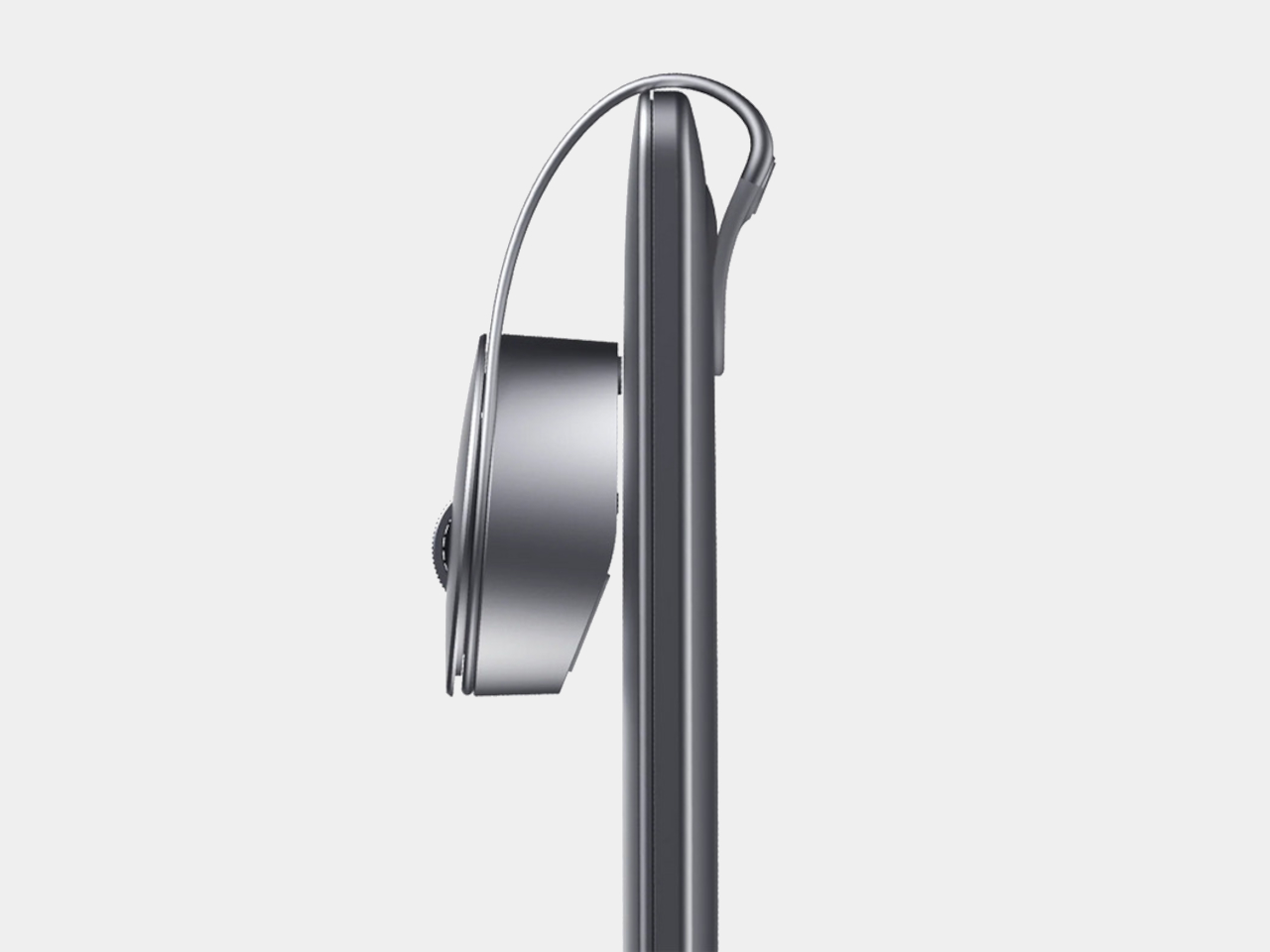
Of the many disorders that afflict people today, diabetes is perhaps the literally most painful one to monitor and maintain. Even with advancements in medical technology, pricking your finger is still the most accurate way to measure blood sugar levels. At the same time, taking in insulin often involves painful and tedious injections. And it isn’t just humans who are hurting from these, but the environment also suffers from all the waste these life-saving tools produce. It’s probably high time to have a glucose monitor and insulin delivery system that is not only painless and convenient but also sustainable, which is exactly what this minimalist-looking device concept is proposing.

Designer: Maxwell Stevens

CGMs or Continuous Glucose Monitors are one of the less invasive methods of keeping tabs on your blood sugar levels, though most do require inserting a sensor under the skin that is read by a device that sticks to your body over that site. When it comes to injecting insulin, on the other hand, insulin pumps remove the need to always pierce your skin for every injection, as a needle stays in its position for a day or two before needing to be replaced, unless the pump is one that actually stays on your body and above your skin. If these two devices sound almost related, it’s because they really are, and the Ingo CGM and insulin pump concept actually combines these two functions into a single, reusable, and sustainable device.

This oval-shaped device combines two critical functions in a single compact design that diabetes patients can discreetly wear on their bodies. Ingo can even have different colors to match skin tones so they won’t stand out as much as more obvious medical devices. There’s also the element of convenience as the device can be easily recharged on a wireless base, while the CGM sensor and pump needle are integrated into the sensor patches that stick over your skin.

Ingo also differs from existing CGMs and insulin pumps in the way that it tries to reduce the amount of waste as much as possible. Instead of disposable parts, it uses reusable components and recyclable patches, lessening the burden on the environment that these solutions often place on the planet. The rechargeable device and refillable insulin tank also prolong the life of the product or at least those parts that shouldn’t have to be thrown away frequently. Ingo is definitely an interesting proposal for a more humane and more environment-friendly way to keep diabetes patients living healthy and meaningful lives while also taking care of the planet they’re living on.

The post Glucose monitor and insulin pump concept is a sustainable way to keep tabs on diabetes first appeared on Yanko Design.