One Architect Quietly Ditched Rent for a 1sqm Treehouse Office

Munich has some of the steepest commercial rents in Germany, and anyone who has tried to lease even a modest studio space knows the arithmetic rarely works in a small firm’s favor. Brokers, multi-year contracts, square footage priced by the centimeter. When the Munich architecture practice Opposite Office needed a new home base, founder Benedikt Hartl looked at those numbers and decided the smartest move wasn’t a smaller office or a coworking membership. It was no office at all, at least not the kind anyone pays rent on.

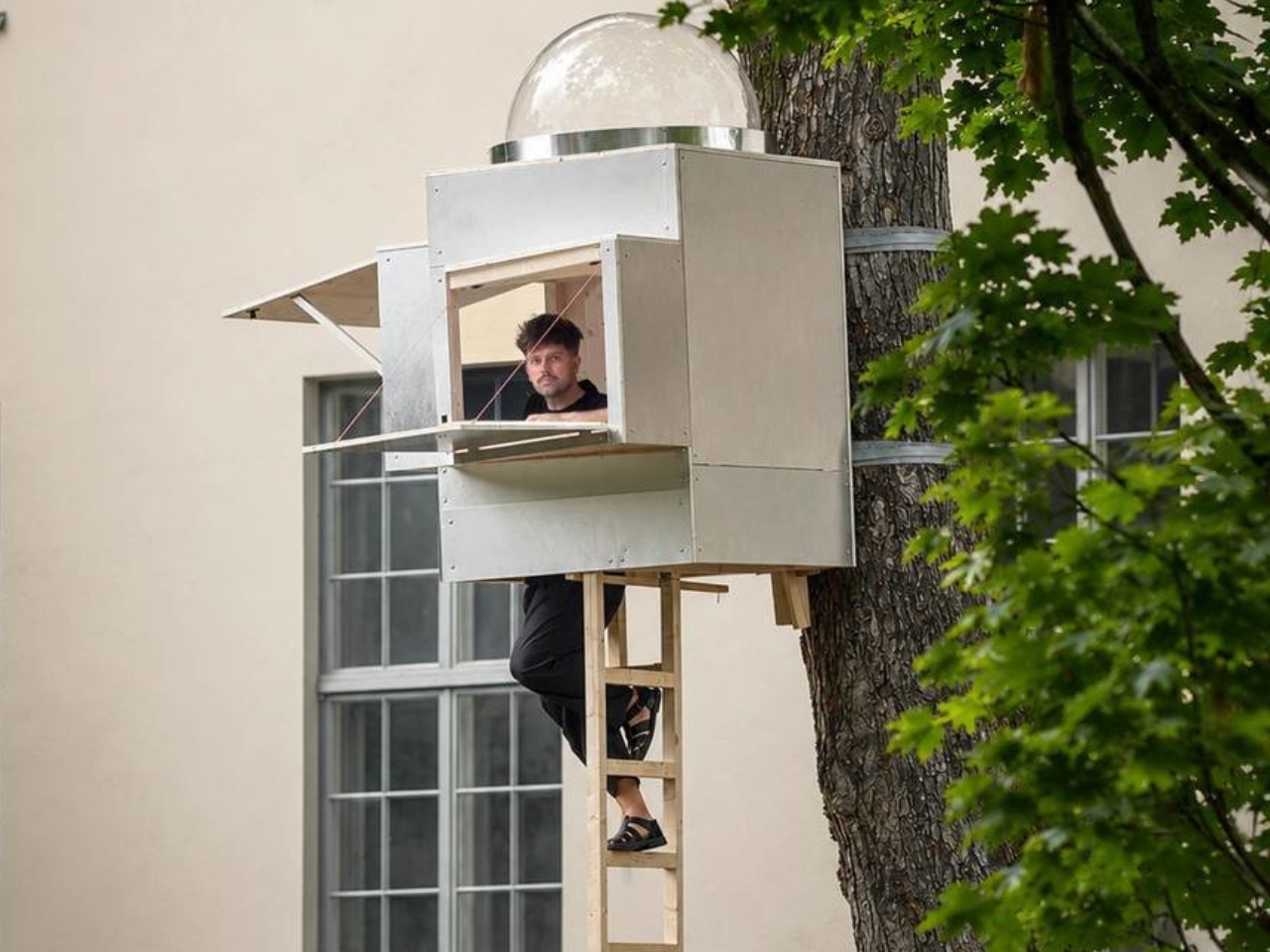
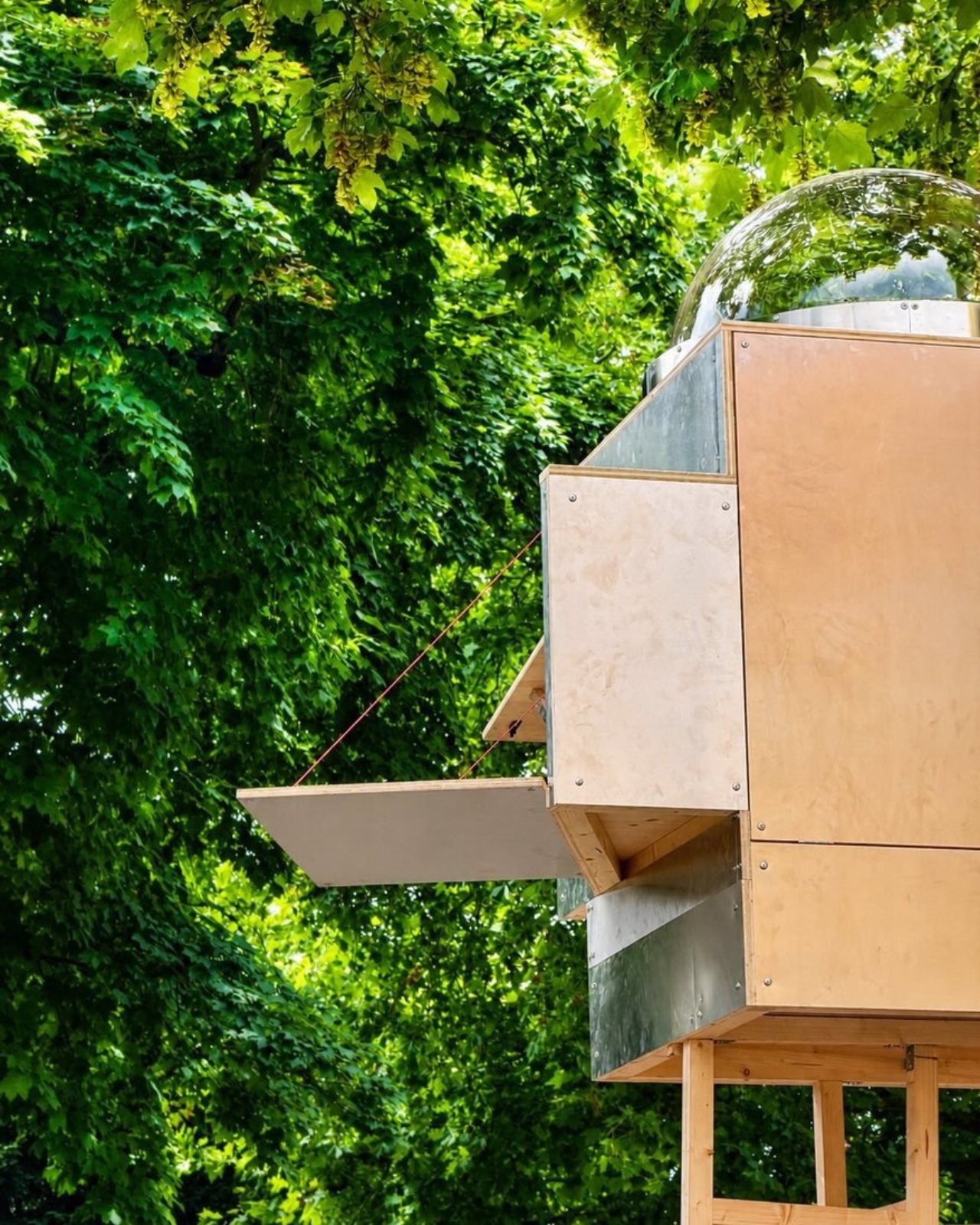
The result is Baumhaus Office, a roughly one-square-meter cube strapped to a tree on the campus of Bauhaus-Universität Weimar, built from spruce timber, plywood, and an aluminum shell that Hartl half-jokingly describes as “UFO-like.” A ladder gets you up to it. Inside, there’s shelving, a small desk, and fold-down panels that expand the workspace just enough to fit two or three people if everyone keeps their elbows in. A domed skylight sits overhead, so instead of staring at a drop ceiling, you get a view of the canopy. Two ratchet straps, cushioned with protective matting so the bark doesn’t suffer, hold the whole thing to the trunk. Hartl secured permission from the university’s president to install it there temporarily, and he’s designed it to come down just as easily and go up somewhere else.

Designer: Benedikt Hartl
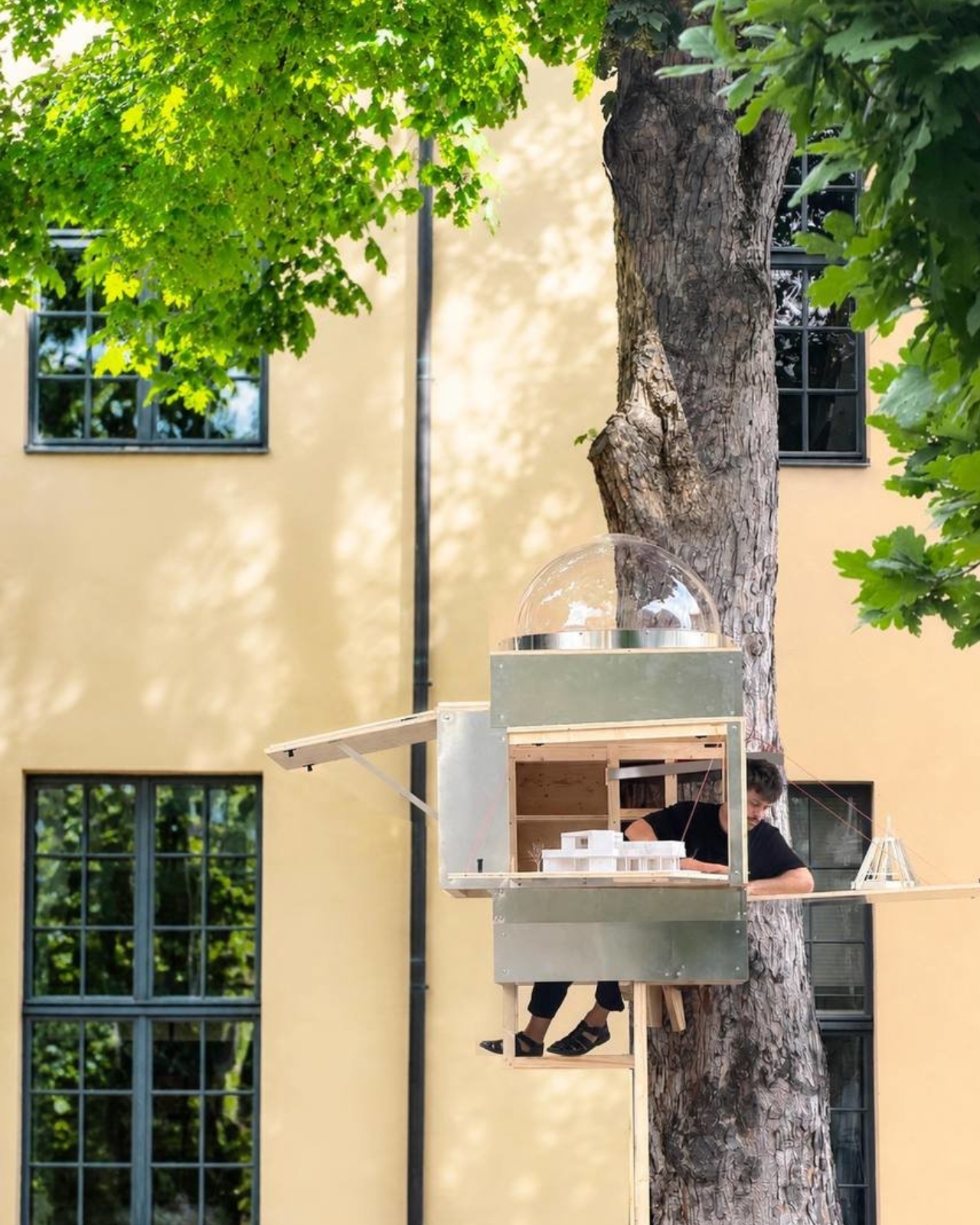
His explanation for the whole exercise is refreshingly blunt. Rather than compete with Munich’s rental market, he moved the office out of it entirely and into the trees. He’s also put out an open call, only half-kidding, for anyone with a spare tree and a good view who doesn’t intend to charge him for it.
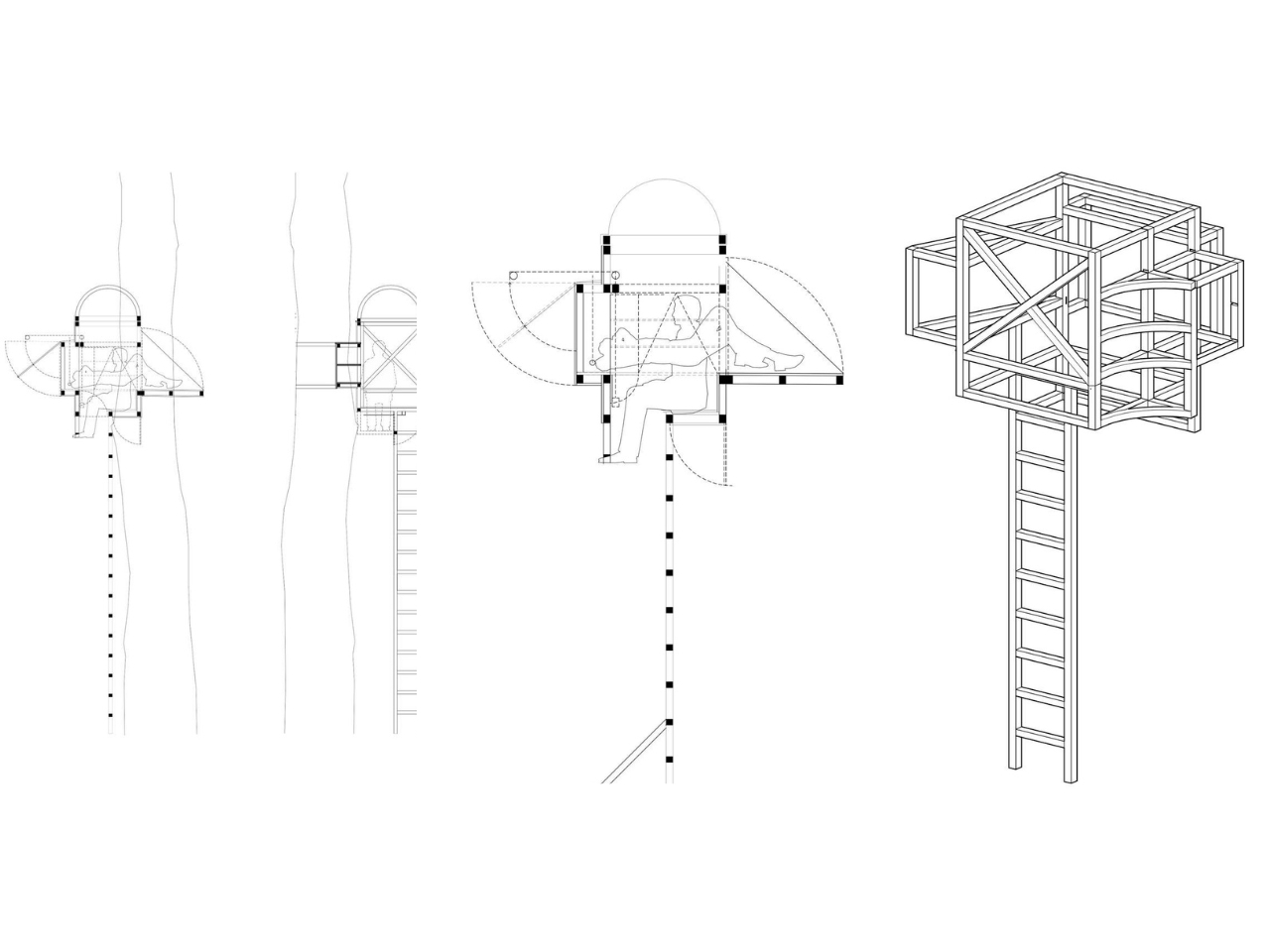
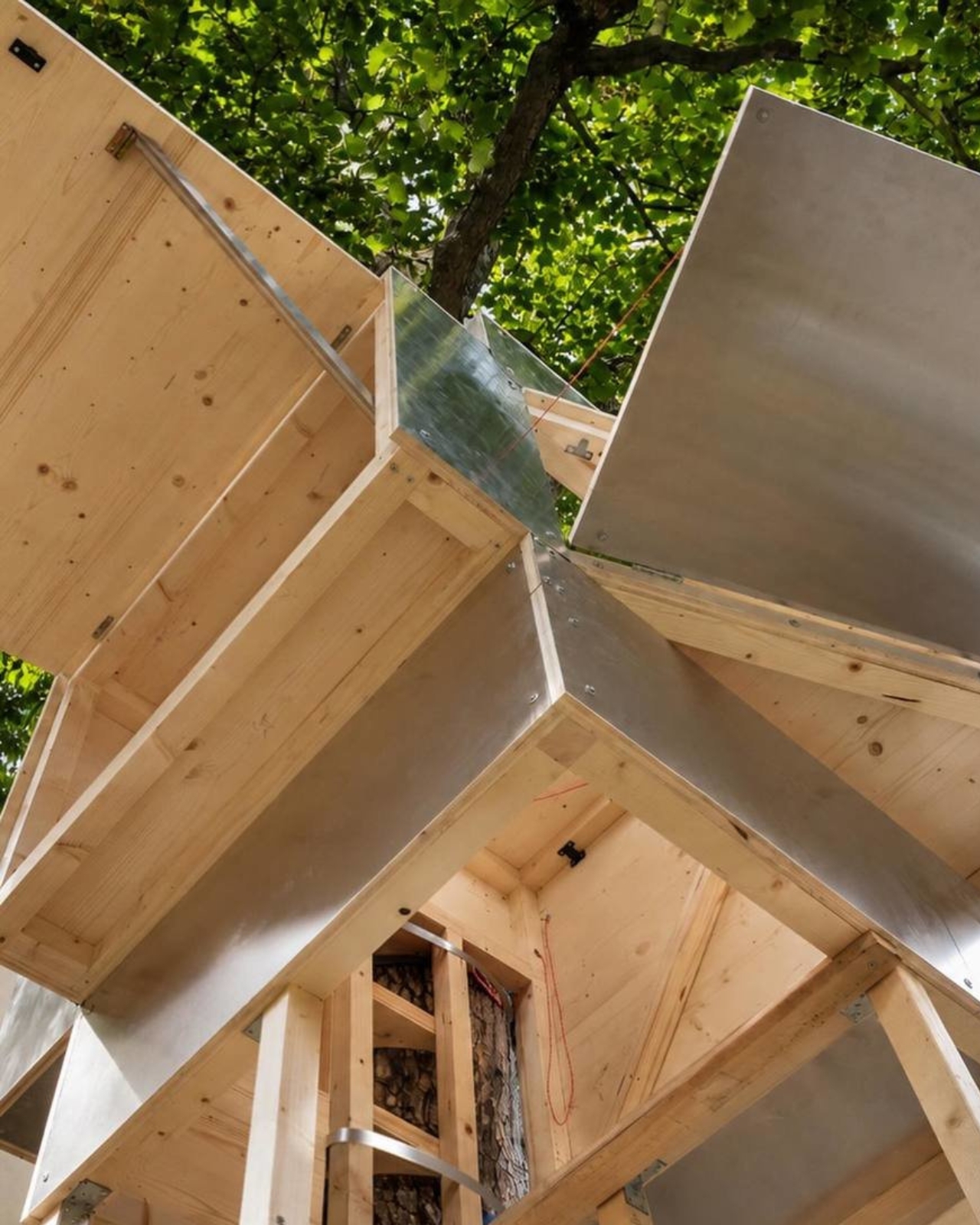
There’s an obvious punchline in a firm shrinking its footprint to one square meter, but the joke has a point buried in it. Opposite Office already works across borders on projects that rarely require a fixed headquarters, so the studio started asking why it needed a permanent lease at all. That question lands differently depending on where you’re reading this, but it lands. Downtown office towers in plenty of American cities have sat half empty for years now, landlords still pricing space as if 2019 never ended, and companies quietly deciding that a conference room and a Zoom link cover most of what used to require a floor plan. Baumhaus Office takes that same skepticism about commercial real estate and pushes it to its logical, slightly absurd conclusion. If the point of an office is a roof, a desk, and a door you can close, a tree does two of those things for free.
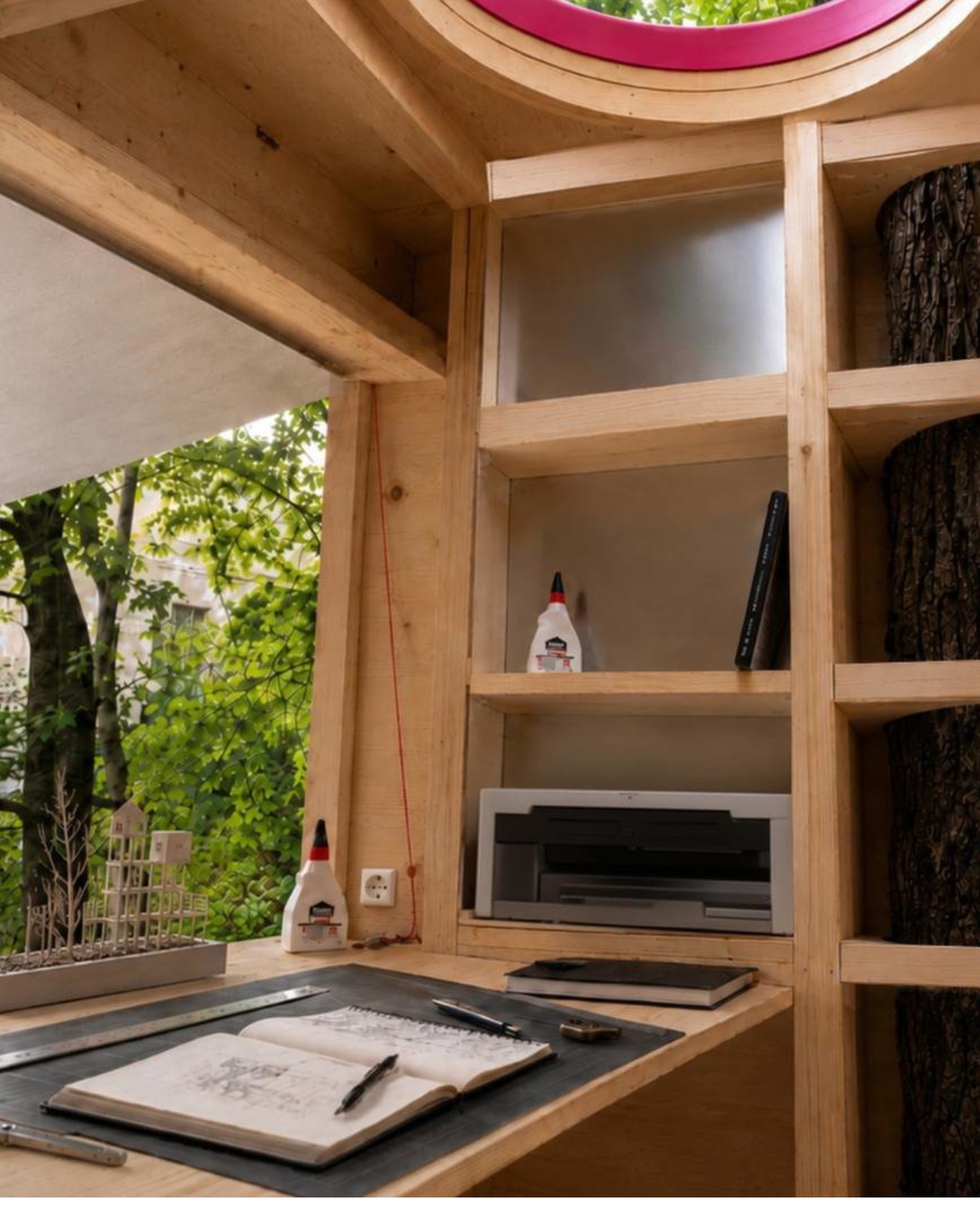
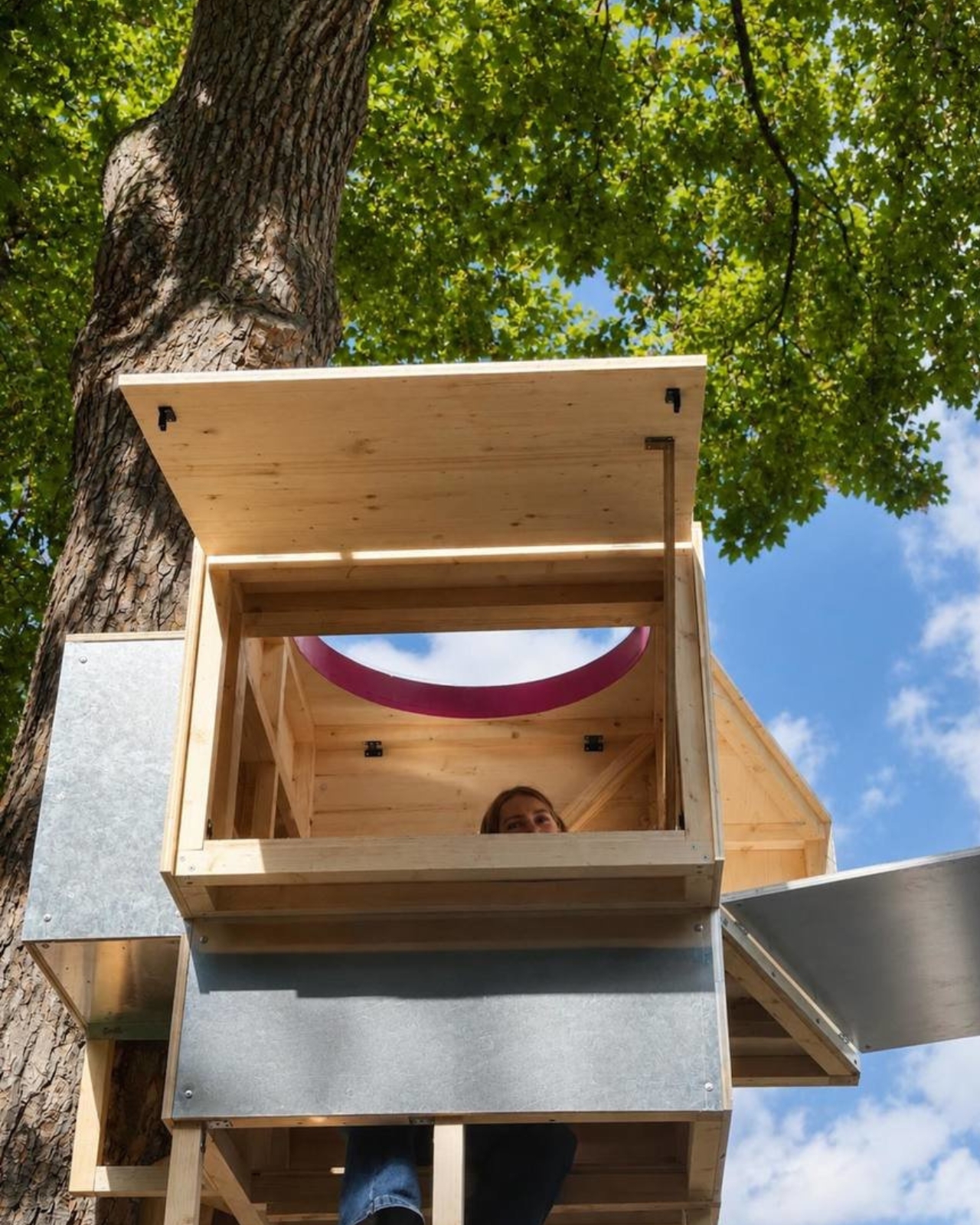
Opposite Office has framed the project as a nod to Cosimo, the boy in Italo Calvino’s “The Baron in the Trees” who abandons ground level entirely and never comes back down. I like that reference more than the usual sustainability talking points that get bolted onto projects like this. It’s not really about wood versus concrete. It’s about changing your vantage point on purpose, even briefly, to see whether the thing you assumed you needed was actually optional the whole time.
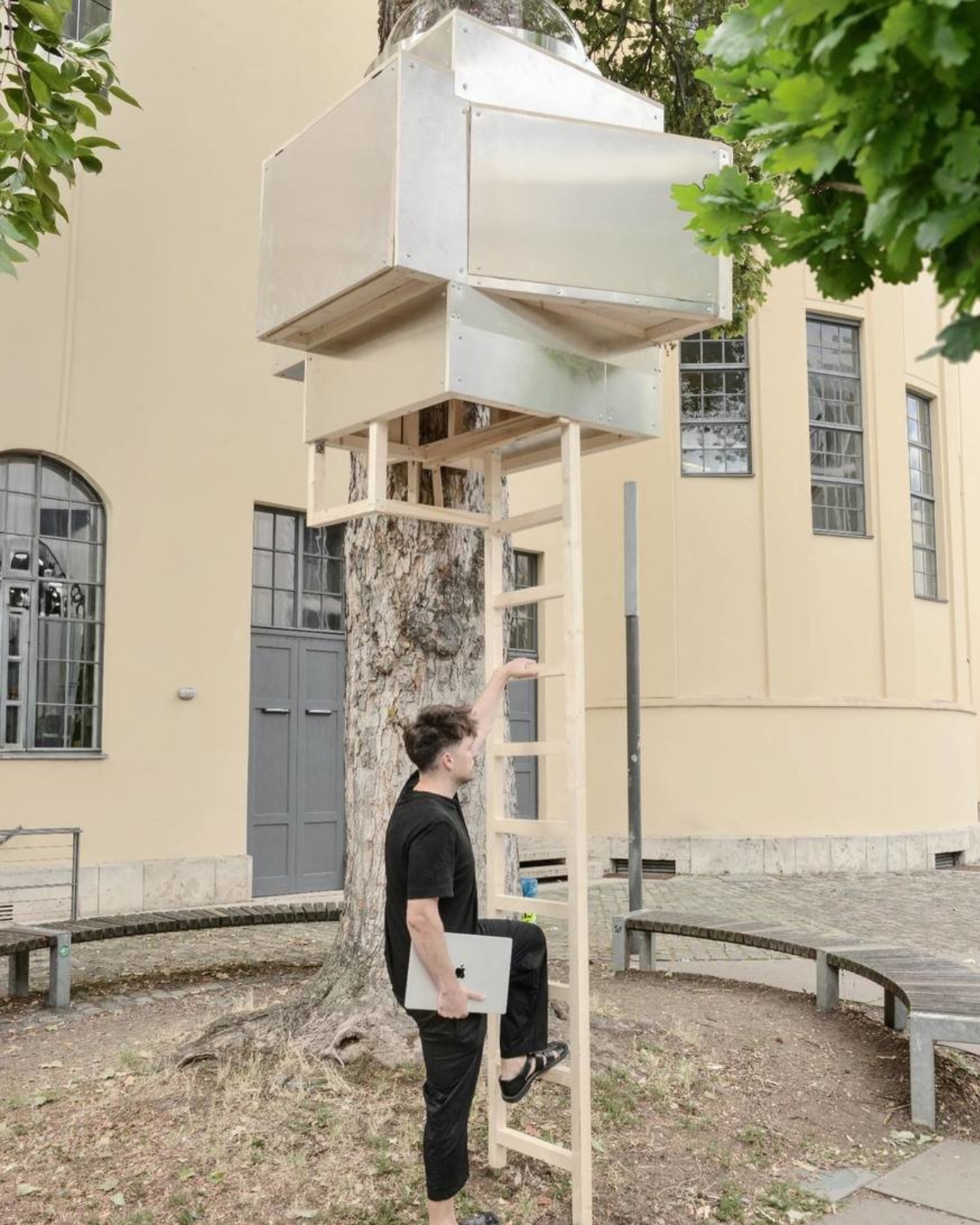
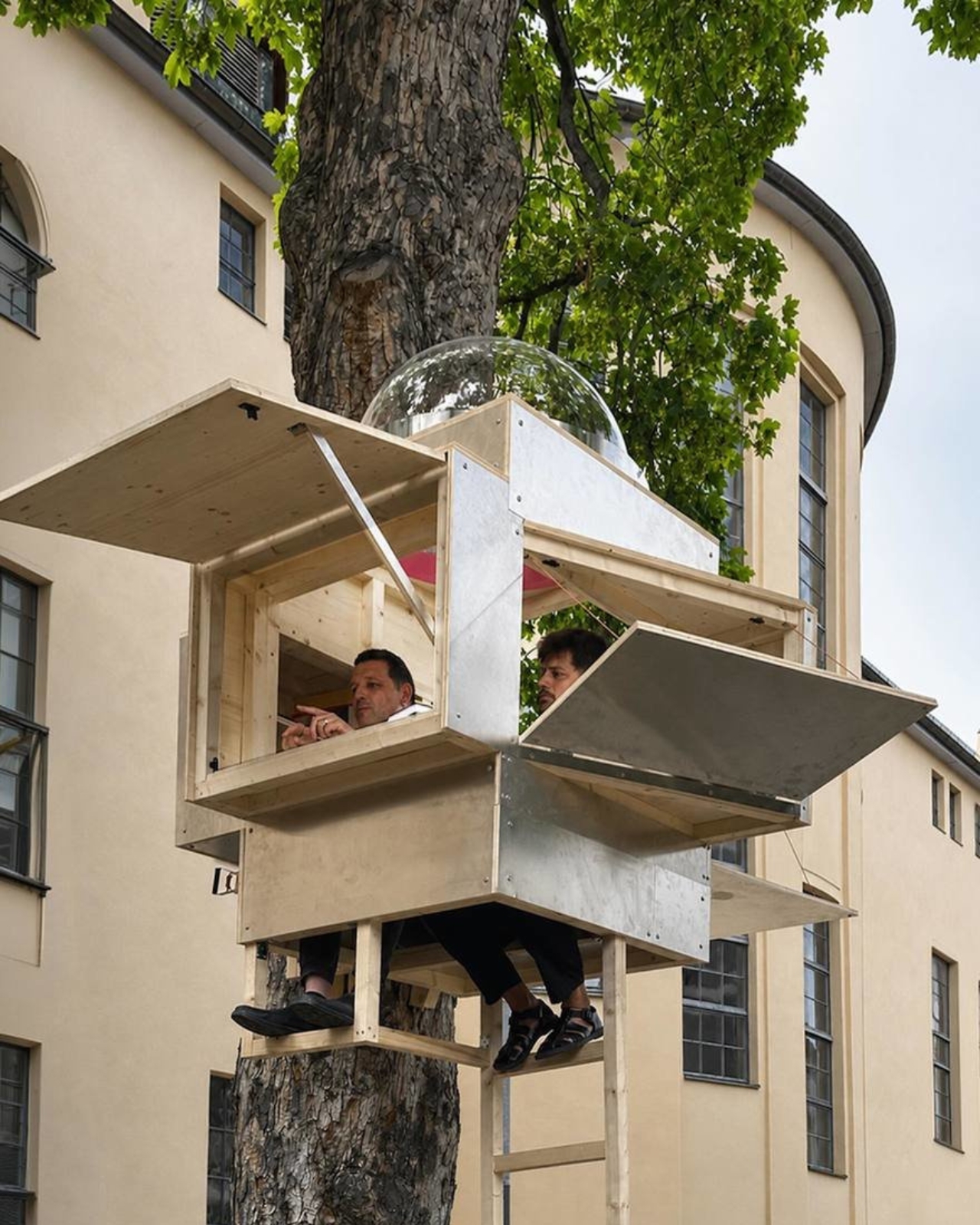
I’ll admit the practical side of me has questions. Winter in Thuringia is not gentle, and a plywood cube with a skylight is not insulation in any serious sense. But treating this as a permanent HQ misses the point Hartl is making. It’s a provocation with a ladder, built to prove that an architecture studio’s real asset is the people doing the thinking, not the address on the lease. Whether or not Baumhaus Office survives its first real storm, it’s already done its job: it made a very expensive problem look, for a moment, genuinely small.
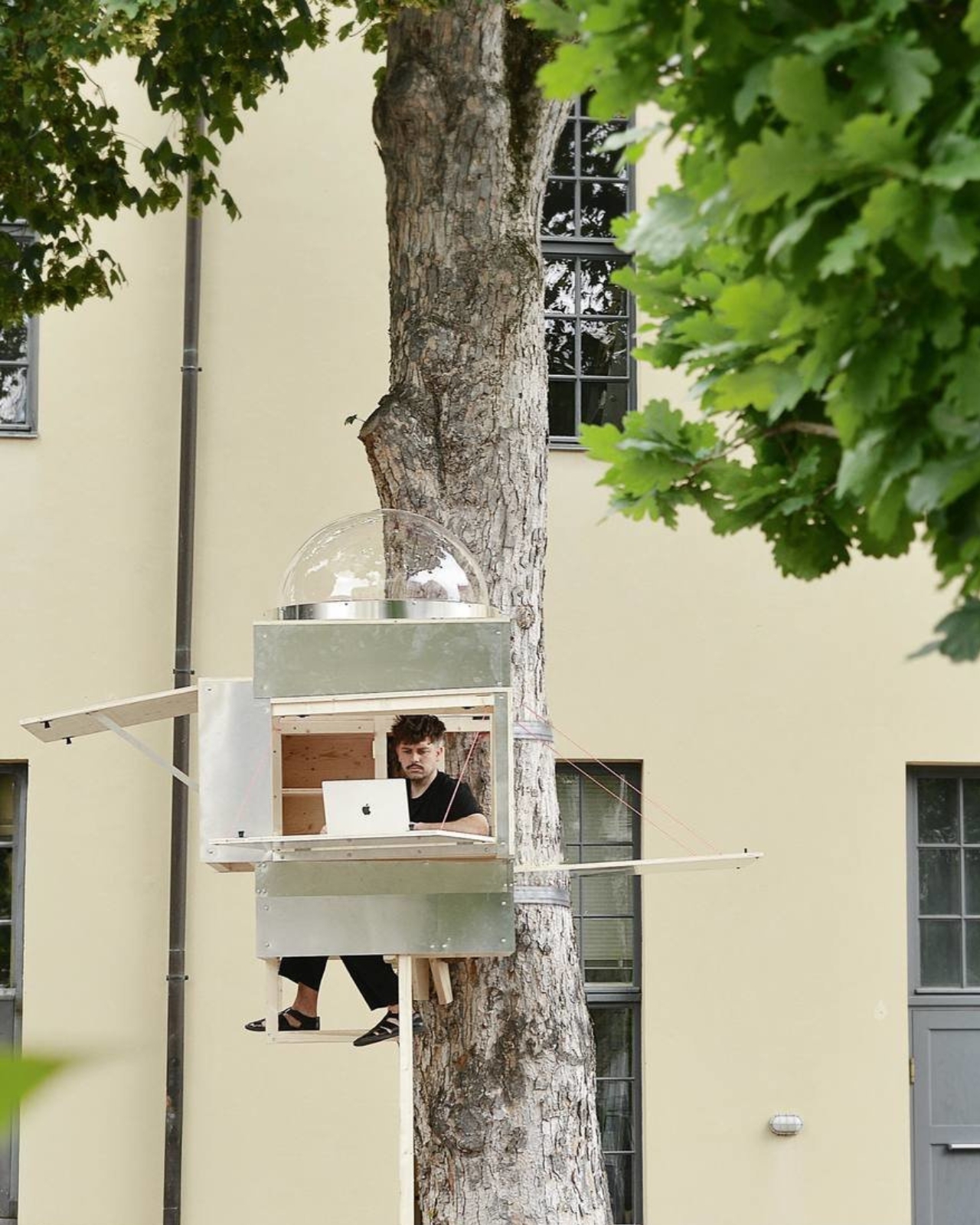
The post One Architect Quietly Ditched Rent for a 1sqm Treehouse Office first appeared on Yanko Design.
A Barn-Inspired Treehouse in the Italian Alps With a Rope Net Bed

The best design ideas rarely start from scratch. They start from something forgotten, something already proven, and ask what happens if you push it further. That’s exactly what Studio Officina82 did with TreeBOX, a timber retreat perched in an oak canopy in Garessio, a small town in Italy’s Ligurian-Piedmontese Alps.

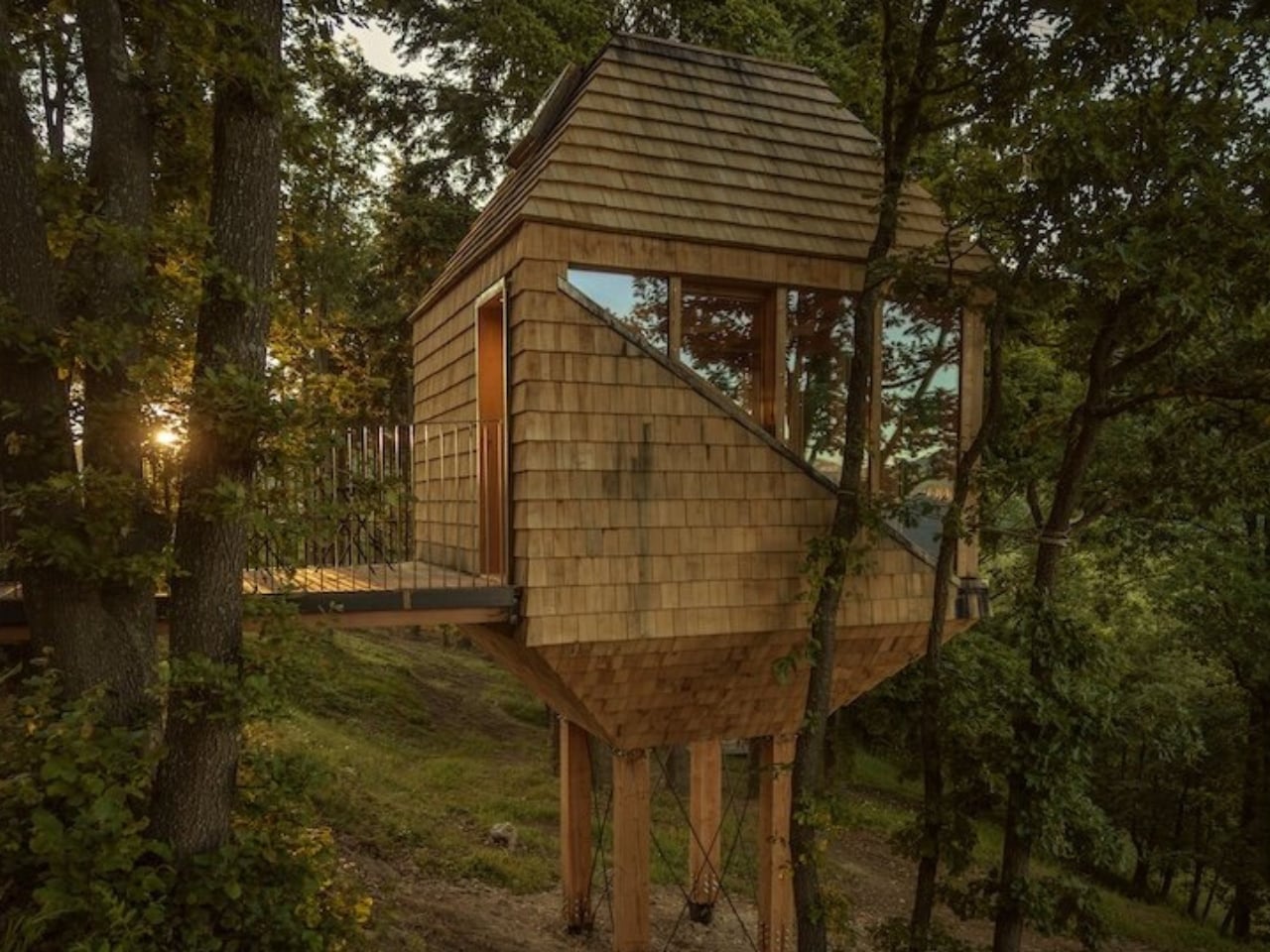
The inspiration came from the barchi, a type of traditional hay barn native to this region. What made the barchi clever, and quietly brilliant, was the movable roof. Supported by just four wooden posts, the roof could be raised or lowered depending on how much hay was stacked beneath it. It was rural engineering at its most economical: no excess, just function. Officina82 looked at that upward motion, that simple mechanical gesture of a roof rising toward the sky, and turned it into architecture.

Designer: Studio Officina82

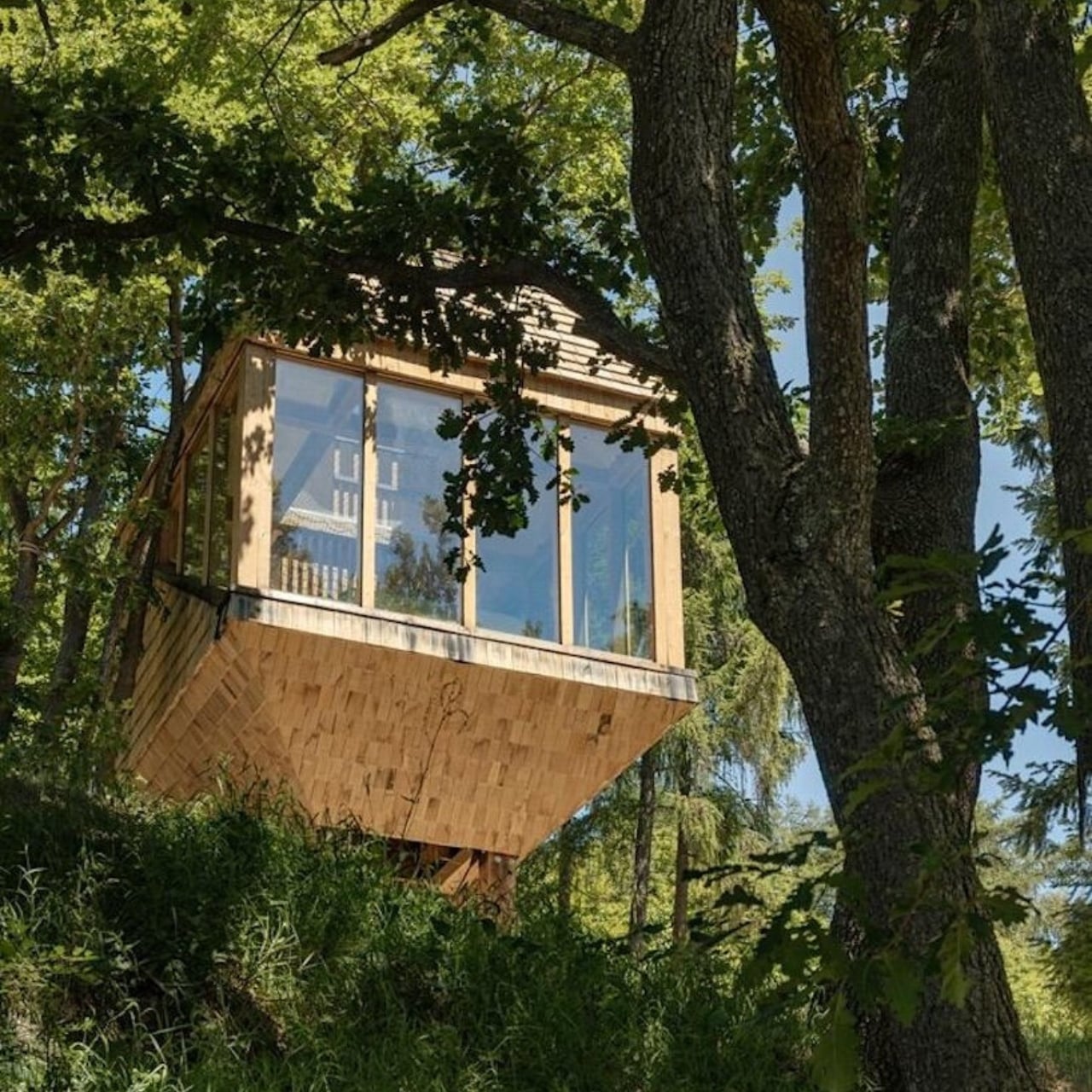
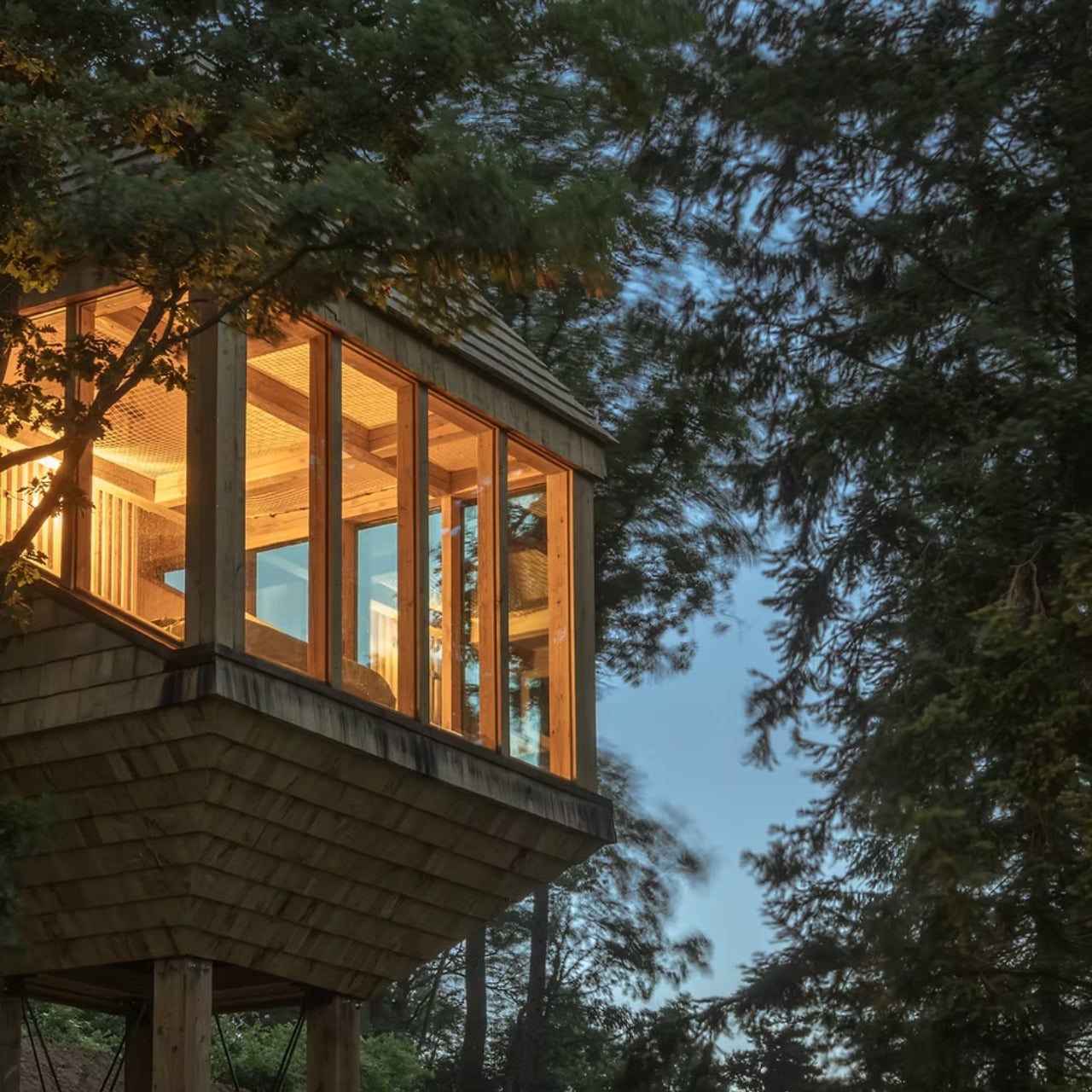
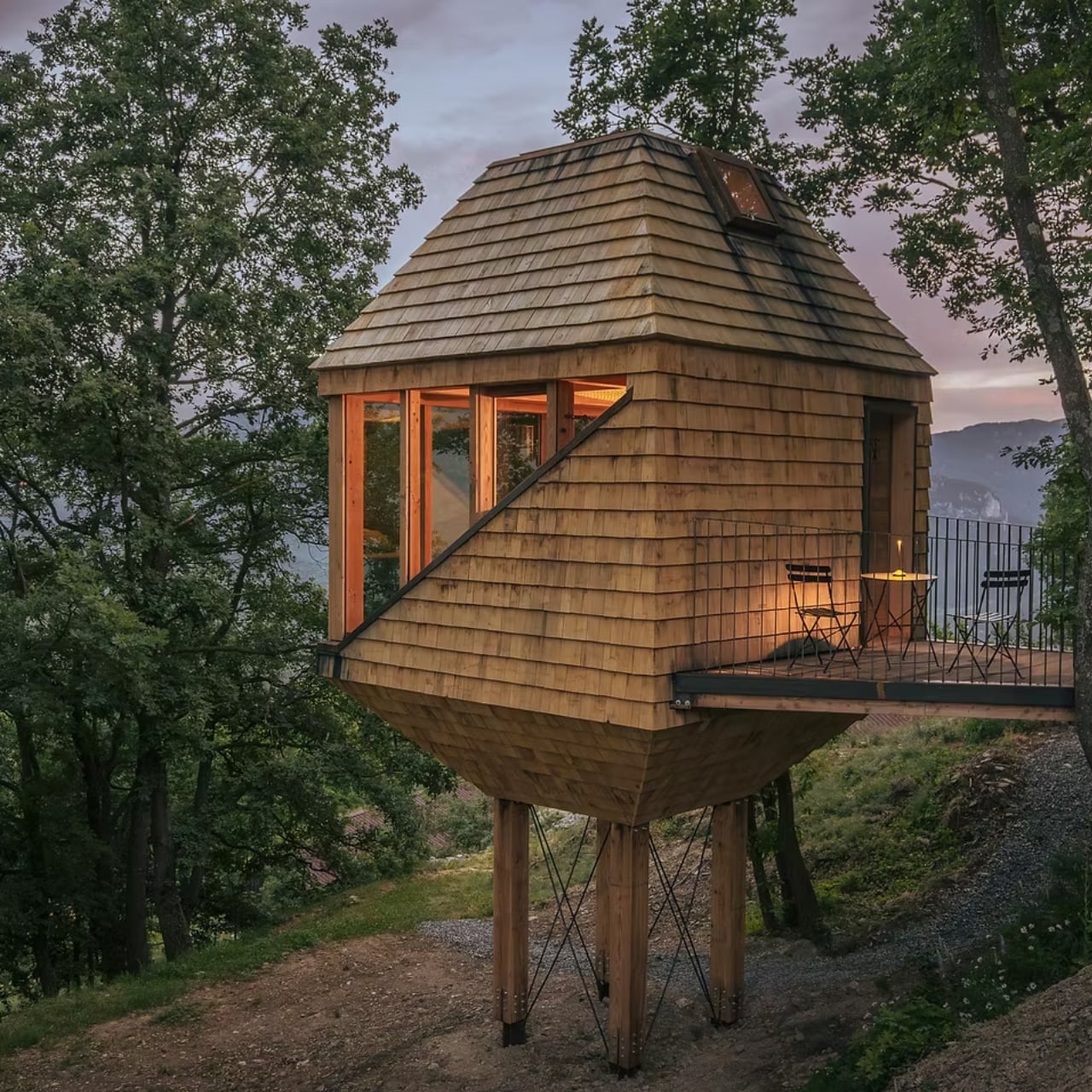
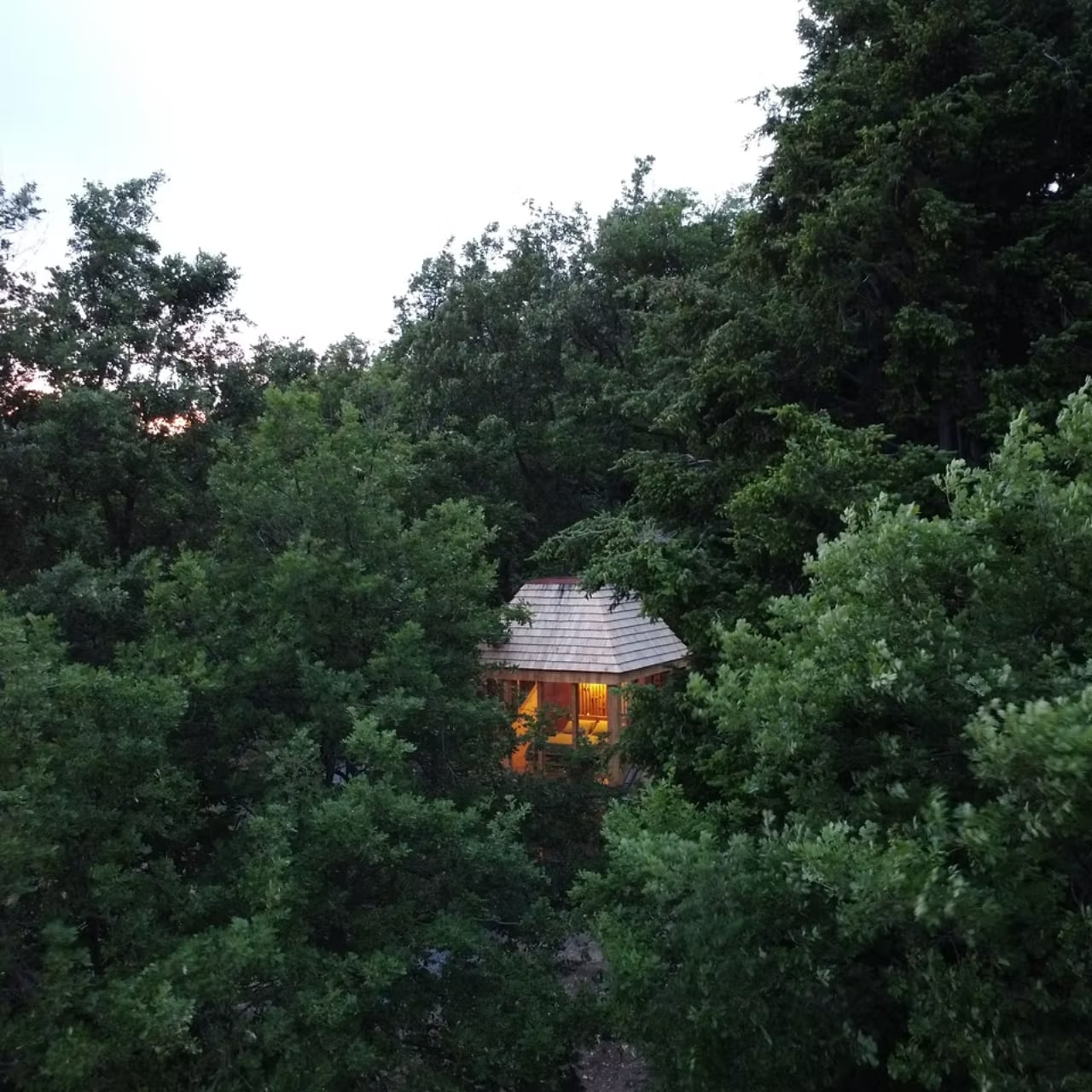
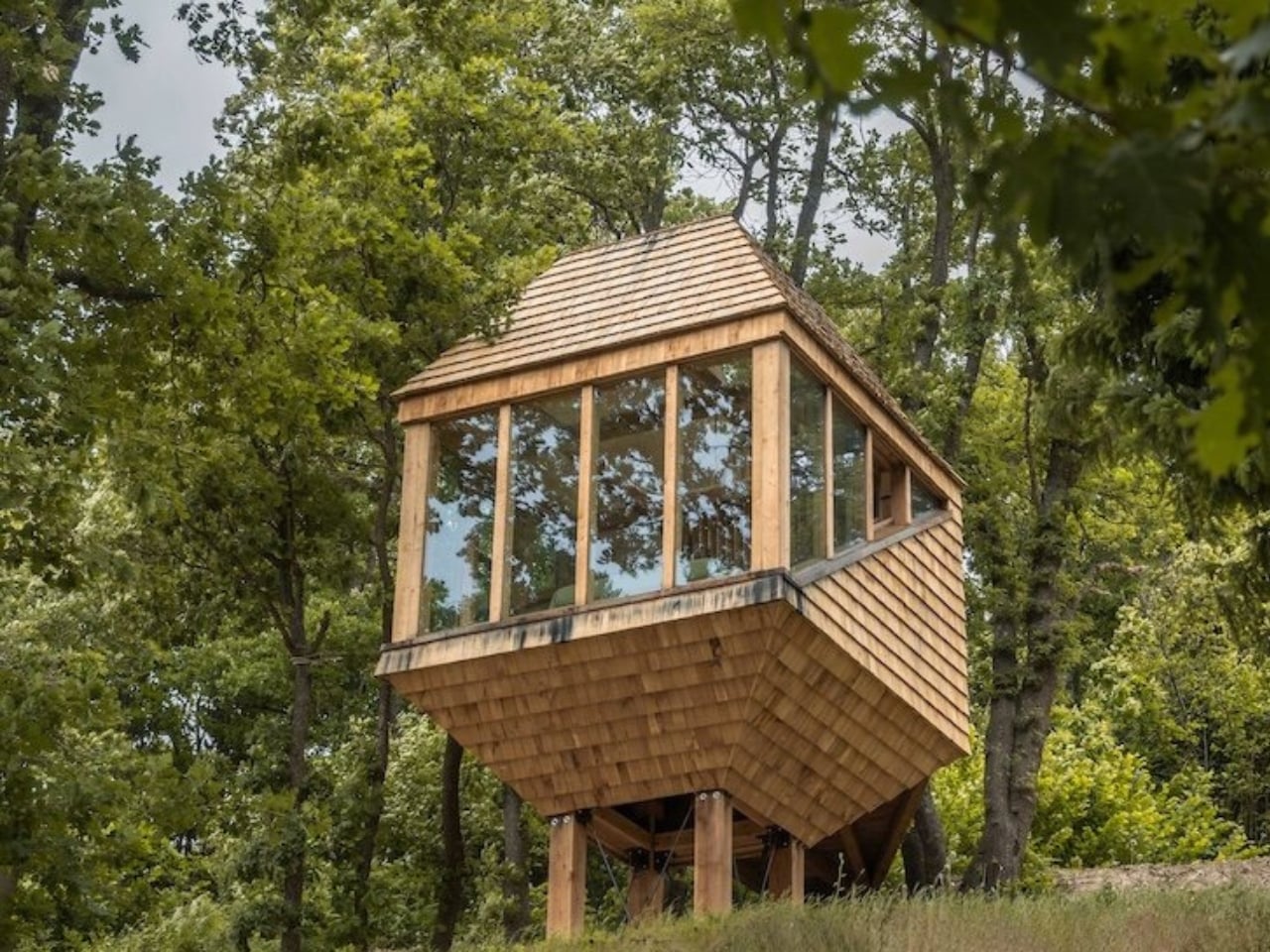
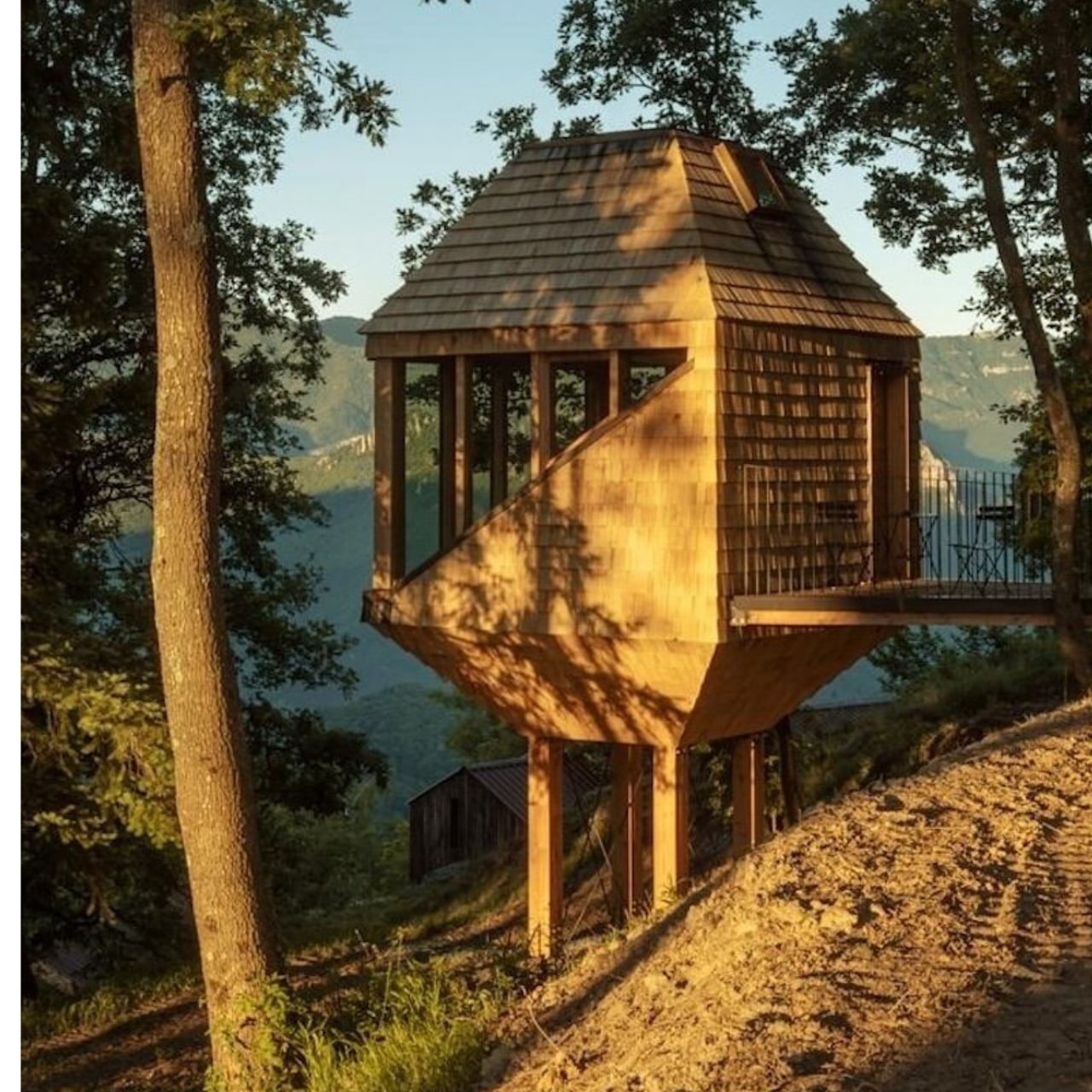
The result is a cabin that looks less like something built and more like something that grew. TreeBOX sits elevated on slender wooden posts, its faceted form rising through the branches like the roof just kept going and never stopped. Timber shingles wrap the entire structure, covering the roof, walls, and tapered underside, giving it a continuous skin that reads as almost organic from a distance. Against the trunks and branches surrounding it, the cabin disappears just enough to feel like it belongs without pretending to be something it’s not. That balance is harder to get right than most people realize, and Officina82 nails it.

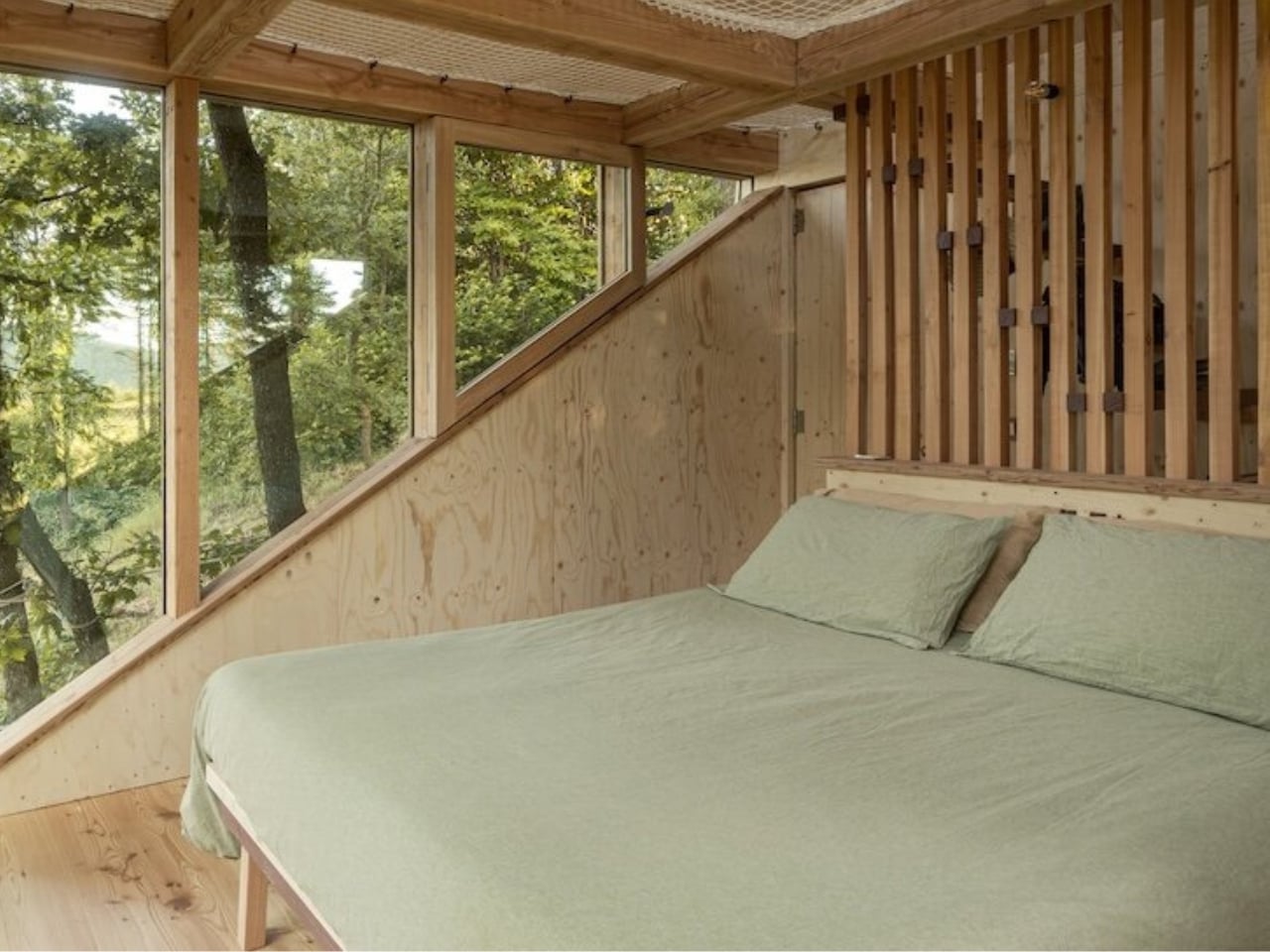
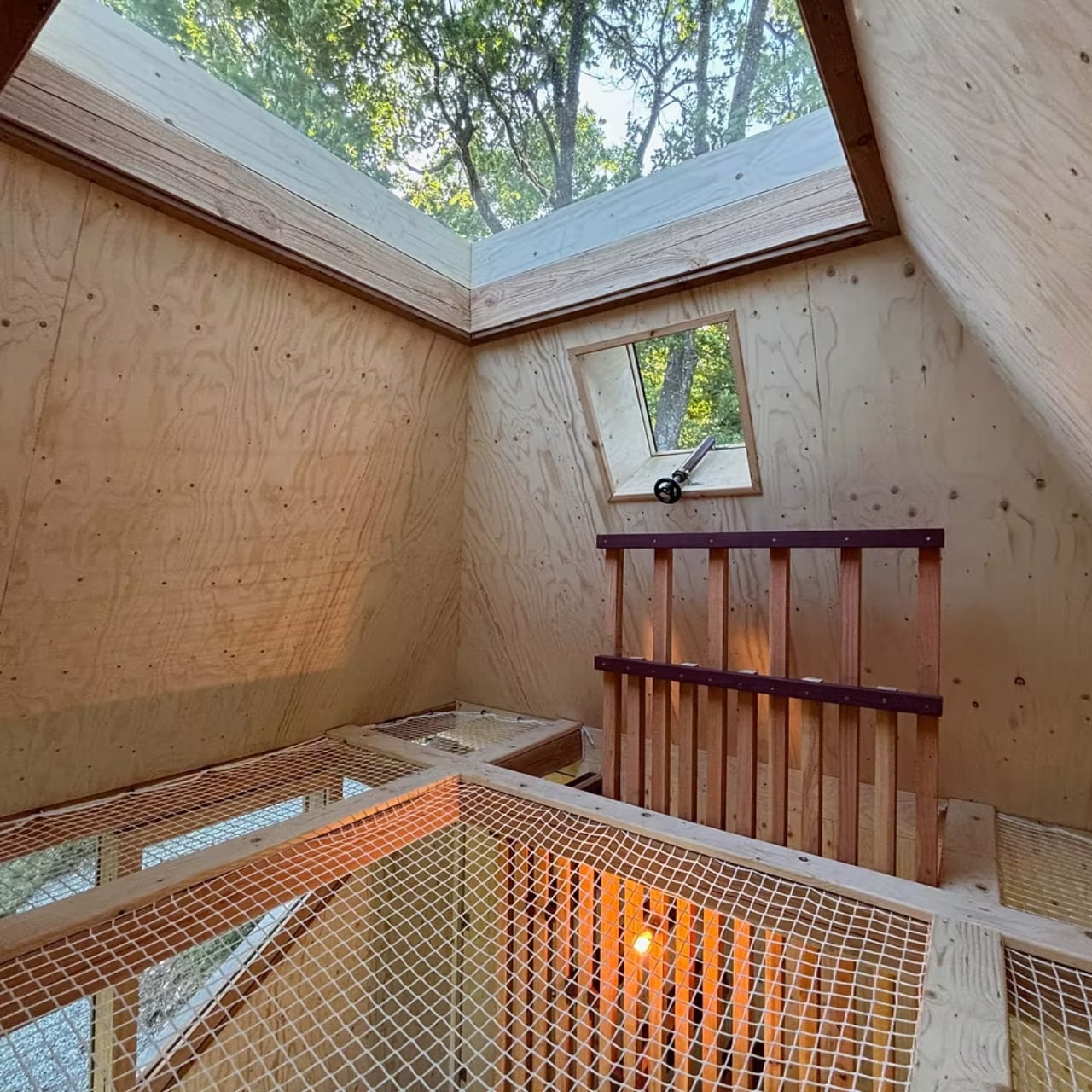
Inside, the space makes a strong argument for restraint. The footprint is compact, but the vertical drop of over four meters turns that constraint into a genuine atmospheric quality. Plywood lines the walls, pale and honest about what it is. A rope net hangs suspended beneath a rooflight, offering a secondary resting spot that has no practical justification whatsoever and is entirely compelling because of it. You’d lie up there in the afternoon light coming through the skylight and feel like a kid who stumbled into a very sophisticated version of what they always wanted.

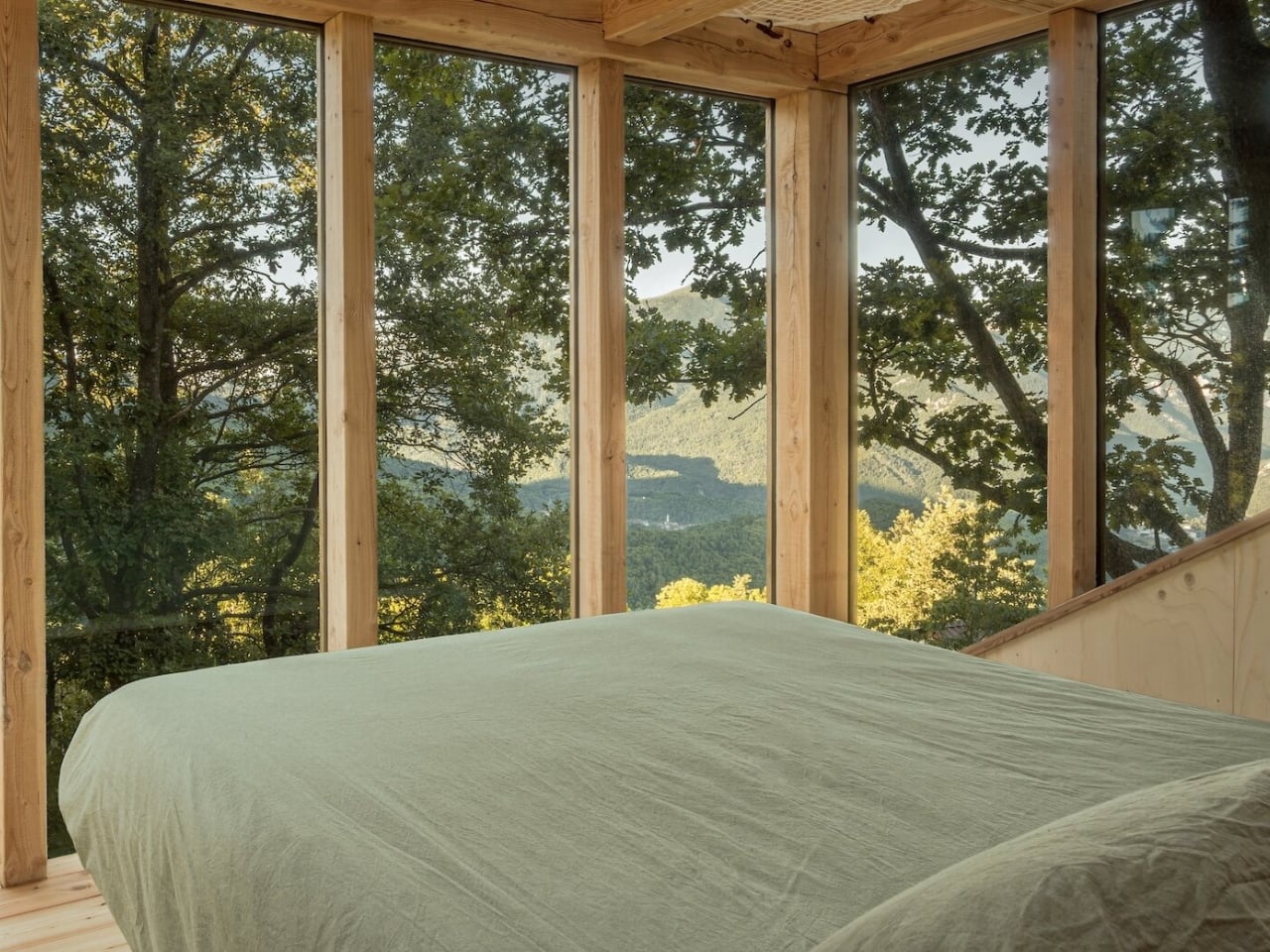
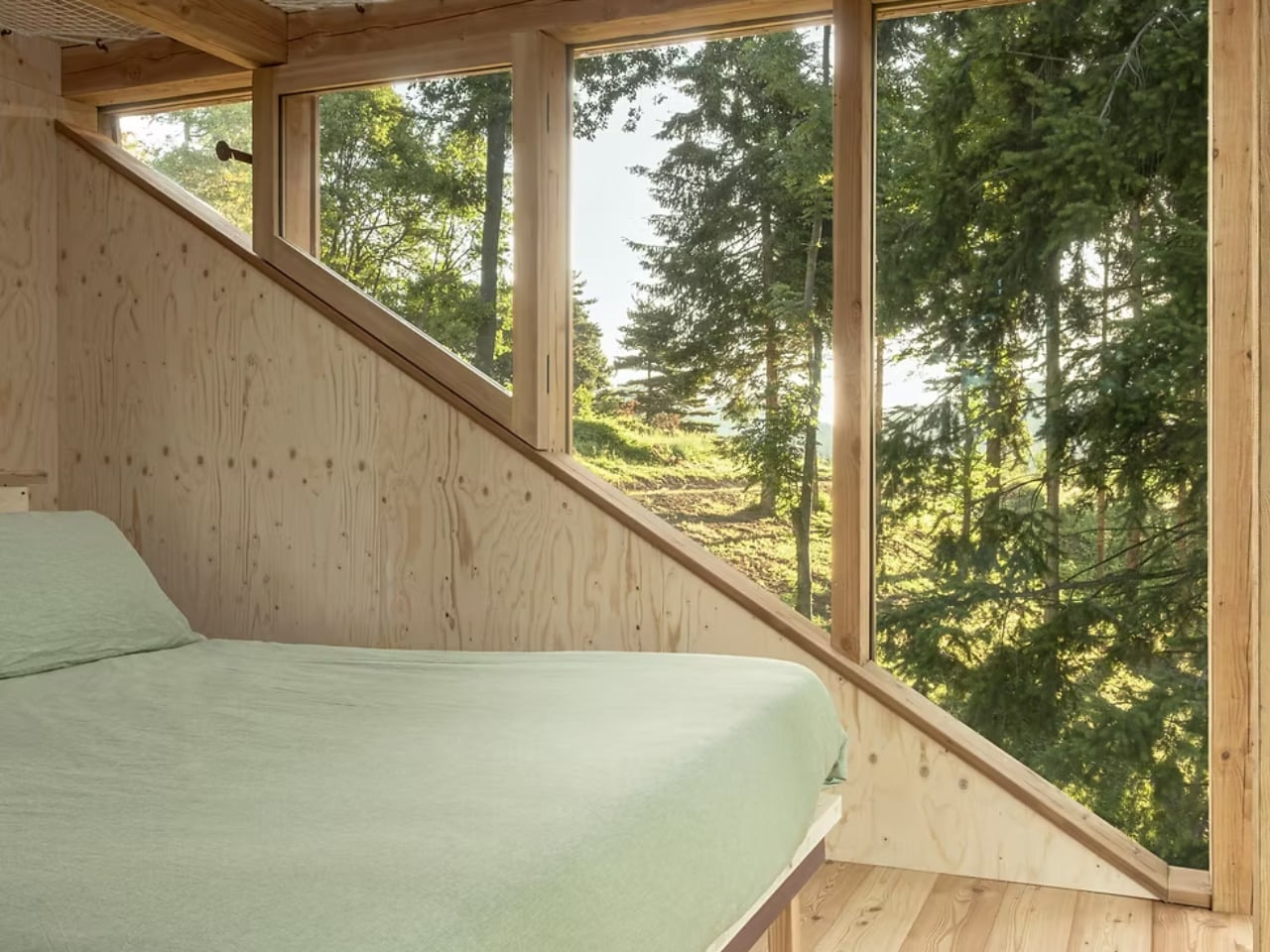
The sleeping area sits at the glazed front of the cabin, positioned directly against floor-to-ceiling windows. A king-size bed dressed in sage-green linen faces the tree line, and beyond it, mountain ridges. The bed and the glass and the trees form a single composition. It’s the kind of view you don’t photograph because you sense the photograph would only disappoint you later.

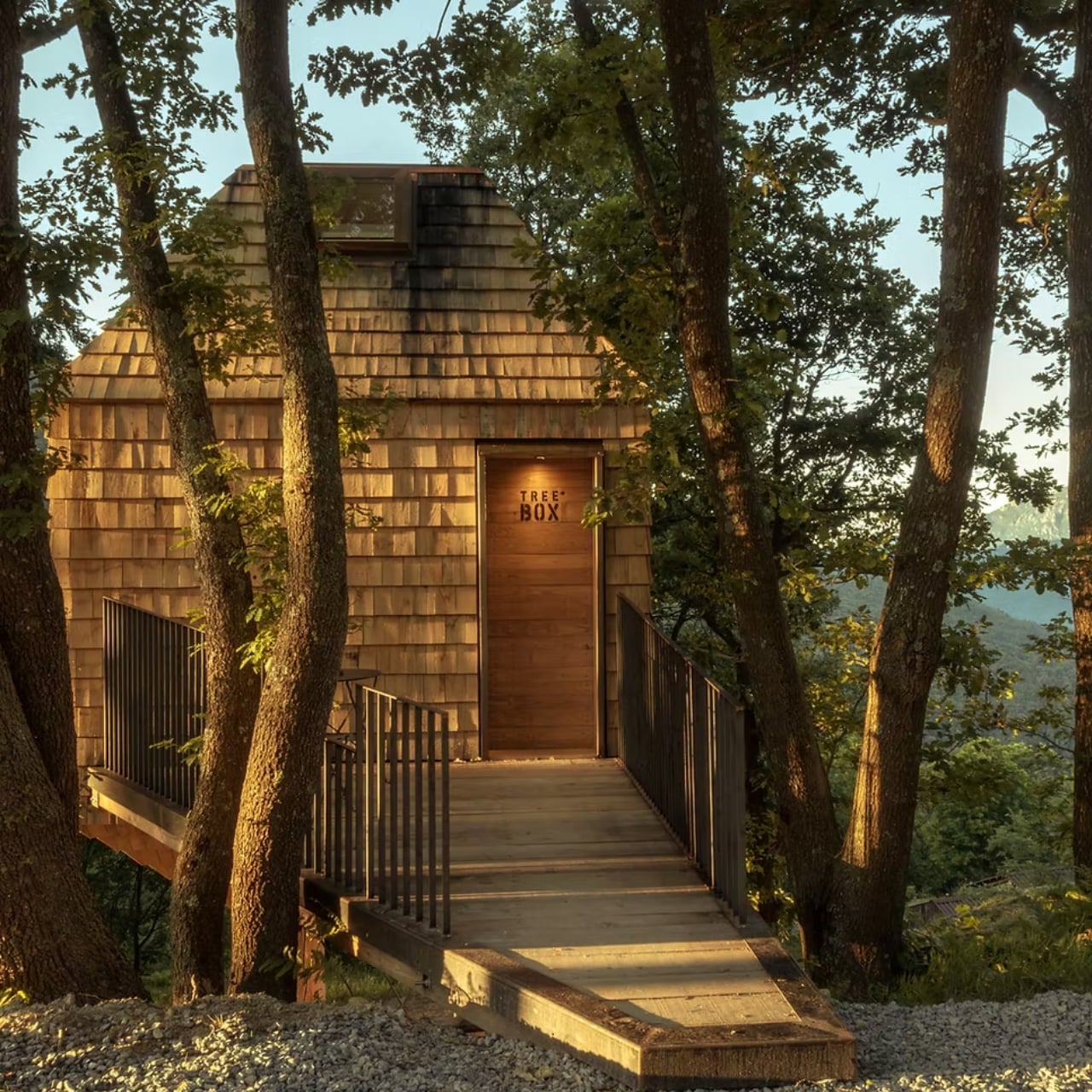
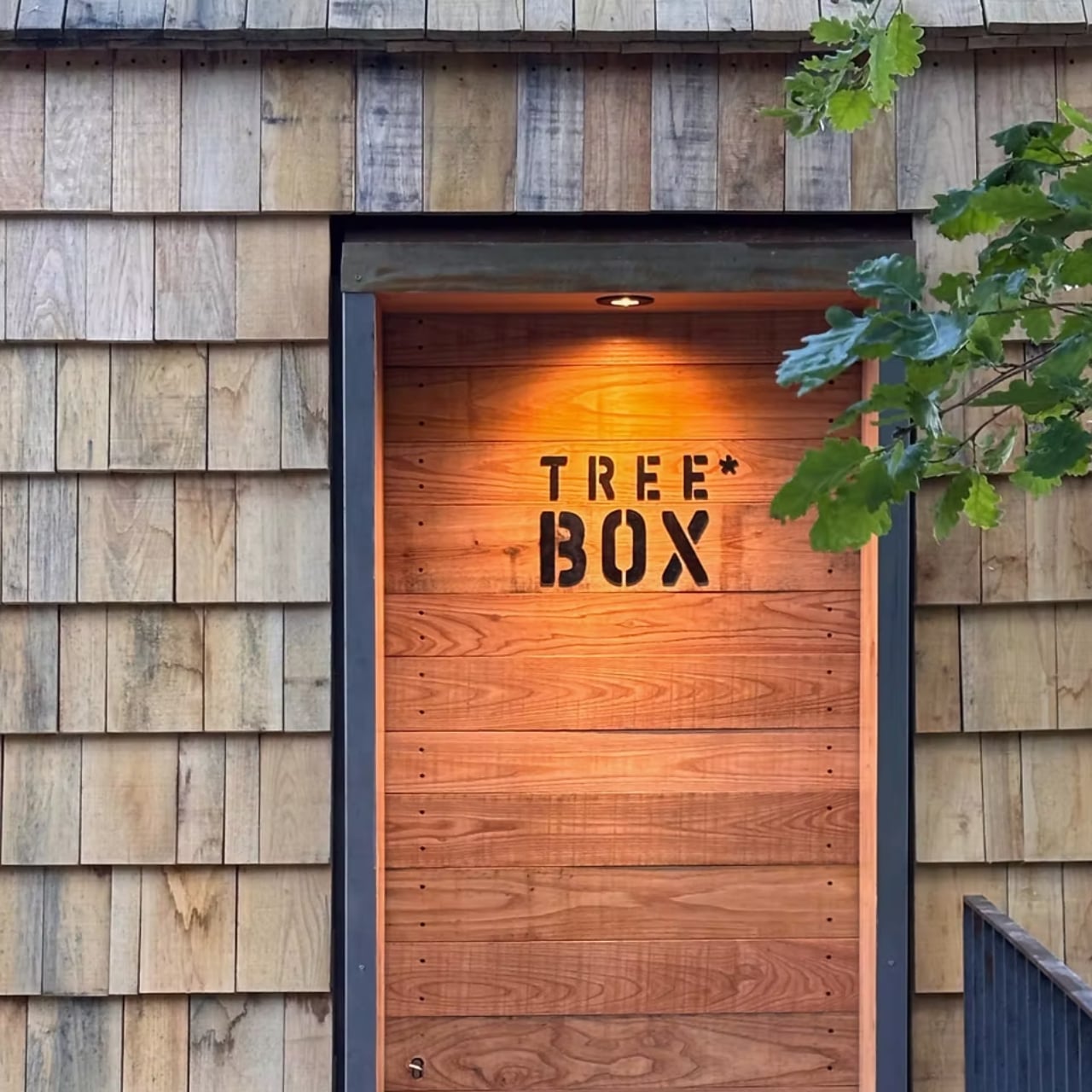
There’s a balcony, too, fitted with a simple bistro set. Nothing elaborate. Just enough to sit with coffee while the forest does what forests do in the early morning. At night, the cabin takes on a different character entirely. Its entrance glows softly, the name “TreeBOX” carved and illuminated above the doorway, visible from the path below. More noticeable after dark than in daylight, which feels intentional and a little poetic.

TreeBOX is part of Selucente, a broader hospitality project built around the recovery of the alpine hamlet of Alpisella. The ambition is to develop the territory through landscape, architecture, and design rather than despite it, which is a rarer commitment than the architecture world sometimes admits. Too often, boutique retreats use nature as wallpaper while remaining architecturally disconnected from the place they occupy. TreeBOX refuses that approach. Every decision, the posts, the shingles, the orientation, the rope net, traces back to context. To history. To a barn that was already doing exactly what it needed to do before anyone decided to call it design.

That’s ultimately what makes this project worth paying attention to. It doesn’t reach for novelty as an end in itself. It asks a genuinely interesting question: what if the vernacular already had the answer, and all we needed to do was follow it upward? The barchi gave Officina82 a concept. The oak forest in Garessio gave it a place. Together, they produced a cabin that feels both completely of its time and somehow ageless. That combination doesn’t come along very often. When it does, it’s worth stopping to look up.

The post A Barn-Inspired Treehouse in the Italian Alps With a Rope Net Bed first appeared on Yanko Design.