Beethoven Gets a 200th Anniversary LEGO Set Complete With Für Elise Sheet Music

Beethoven composed his Ninth Symphony completely deaf. He never heard a single note of it performed, yet it remains one of the most emotionally overwhelming pieces of music ever written. That particular detail about his life has a way of stopping people cold, the idea that the instrument of his perception was gone, and yet the music kept coming, arguably better than ever. There are very few stories in human history that capture creative resilience quite like his.

Fan designer CousinExcitedCactus has channeled that legacy into a 358-piece LEGO Ideas set timed to a significant milestone: March 26, 2027 marks the 200th anniversary of Beethoven’s passing. The result is a compact, modular display set with a grand piano, a Beethoven minifigure, a candlelit writing table, and a removable “Für Elise” sheet music backdrop, plus a surprisingly moving recreation of his grave monument in Vienna.

Designer: CousinExcitedCactus

The piano is the heart of this build, and it’s different from your average modern day grand piano. The design draws from two instruments Beethoven actually owned and played: the Érard grand gifted to him in 1803, and the Conrad Graf fortepiano he used in his final years, by which point his hearing was almost entirely gone. Both instruments were period pieces with a lighter, more intimate tone than the thundering concert grands of today, and the LEGO recreation captures that sense of a working composer’s instrument rather than a showpiece. The lid is propped open, strings are visible inside, and a small sheet of music rests on the stand, the kind of atmospheric detail that makes a display scene feel lived-in rather than staged.

The candelabra beside the piano is a three-flame setup rendered with white cylinder candles and transparent flame elements, casting the whole scene in an implied warm glow. The Beethoven minifigure stands on a warm-toned wooden stage floor, white hair, dark formal coat, red cravat, with his signature in gold script on a nameplate tile at the front edge. Behind everything, a large printed tile carries the full opening bars of “Für Elise” in period calligraphy, functioning simultaneously as a backdrop panel and the set’s most immediately recognizable design element. It is a clever piece of dual-purpose design, the kind of thing that looks obvious only after someone else has already thought of it.

My favorite detail, though, is the grave monument. The builder has included a fully separate modular sub-build recreating Beethoven’s actual resting place at Vienna’s Zentralfriedhof, a white obelisk on a columned base with “Beethoven” lettered across the front, pink flowers at the perimeter, and a golden butterfly at the apex. The reverse side of the “Für Elise” sheet music tile features a printed reproduction of the grave, which means the backdrop itself does double duty depending on which way you face it. That is a genuinely thoughtful design decision.

The set currently sits at 720 supporters on LEGO Ideas, the fan platform where community-made MOCs (My Own Creations) gather votes toward the 10,000-vote threshold required to trigger an official LEGO design review. With 414 days left on the clock, there is plenty of time to get it there. If you want to see this one make it to store shelves in time for the 2027 anniversary, head to the LEGO Ideas page and cast your vote here.

The post Beethoven Gets a 200th Anniversary LEGO Set Complete With Für Elise Sheet Music first appeared on Yanko Design.
Beethoven Gets a 200th Anniversary LEGO Set Complete With Für Elise Sheet Music

Beethoven composed his Ninth Symphony completely deaf. He never heard a single note of it performed, yet it remains one of the most emotionally overwhelming pieces of music ever written. That particular detail about his life has a way of stopping people cold, the idea that the instrument of his perception was gone, and yet the music kept coming, arguably better than ever. There are very few stories in human history that capture creative resilience quite like his.

Fan designer CousinExcitedCactus has channeled that legacy into a 358-piece LEGO Ideas set timed to a significant milestone: March 26, 2027 marks the 200th anniversary of Beethoven’s passing. The result is a compact, modular display set with a grand piano, a Beethoven minifigure, a candlelit writing table, and a removable “Für Elise” sheet music backdrop, plus a surprisingly moving recreation of his grave monument in Vienna.

Designer: CousinExcitedCactus

The piano is the heart of this build, and it’s different from your average modern day grand piano. The design draws from two instruments Beethoven actually owned and played: the Érard grand gifted to him in 1803, and the Conrad Graf fortepiano he used in his final years, by which point his hearing was almost entirely gone. Both instruments were period pieces with a lighter, more intimate tone than the thundering concert grands of today, and the LEGO recreation captures that sense of a working composer’s instrument rather than a showpiece. The lid is propped open, strings are visible inside, and a small sheet of music rests on the stand, the kind of atmospheric detail that makes a display scene feel lived-in rather than staged.

The candelabra beside the piano is a three-flame setup rendered with white cylinder candles and transparent flame elements, casting the whole scene in an implied warm glow. The Beethoven minifigure stands on a warm-toned wooden stage floor, white hair, dark formal coat, red cravat, with his signature in gold script on a nameplate tile at the front edge. Behind everything, a large printed tile carries the full opening bars of “Für Elise” in period calligraphy, functioning simultaneously as a backdrop panel and the set’s most immediately recognizable design element. It is a clever piece of dual-purpose design, the kind of thing that looks obvious only after someone else has already thought of it.

My favorite detail, though, is the grave monument. The builder has included a fully separate modular sub-build recreating Beethoven’s actual resting place at Vienna’s Zentralfriedhof, a white obelisk on a columned base with “Beethoven” lettered across the front, pink flowers at the perimeter, and a golden butterfly at the apex. The reverse side of the “Für Elise” sheet music tile features a printed reproduction of the grave, which means the backdrop itself does double duty depending on which way you face it. That is a genuinely thoughtful design decision.

The set currently sits at 720 supporters on LEGO Ideas, the fan platform where community-made MOCs (My Own Creations) gather votes toward the 10,000-vote threshold required to trigger an official LEGO design review. With 414 days left on the clock, there is plenty of time to get it there. If you want to see this one make it to store shelves in time for the 2027 anniversary, head to the LEGO Ideas page and cast your vote here.

The post Beethoven Gets a 200th Anniversary LEGO Set Complete With Für Elise Sheet Music first appeared on Yanko Design.

This LEGO Hannah Montana House Has a Rotating Miley-to-Hannah Transformation and Fans Need It

Twenty years after Hannah Montana premiered on Disney Channel, Miley Cyrus stepped back onto a replica of the Stewart family living room for a Disney+ anniversary special that sent millennials and Gen Z into a collective spiral. The show, which ran from 2006 to 2011, quickly snowballed from a children’s series about a girl living a double life into something much bigger: sold-out tours, chart-topping hits, a blockbuster movie, and the making of a generation-defining superstar. Cyrus had famously declared Hannah dead back in 2013, and spent the better part of a decade distancing herself from the blonde wig. Coming back, then, felt like something. The artist has come full circle, at peace with her past and embracing it as an important part of who she is.

Riding that wave of perfectly timed nostalgia, LEGO Ideas builder KnightVibrantKnees100 has submitted a brick-built recreation of the Stewart family home that is, frankly, just as detailed as anything Miley walked back into. The MOC (My Own Creation) covers the living room, the kitchen, and a transformation mechanism that actually rotates a Miley minifigure into Hannah Montana, which is either the most delightful play feature of the year or the most emotionally loaded one, depending on how much of your childhood this show occupied.

Designer: KnightVibrantKnees100

The build is an open-plan interior display, and the amount crammed into it is impressive. The living room anchors the right side of the model with the green sofa, a pair of striped armchairs, a coffee table scattered with magazine tiles, and a red boombox sitting on the shelf behind. A guitar leans in the corner. Bookshelves with colorful spines run along the back wall. Plants are everywhere, which feels accurate to the show’s slightly overstuffed, lived-in aesthetic. The kitchen on the left is even more packed: a stickered fridge covered in magnets, a stovetop, a wall clock, a sink with a minifig doing dishes, and the “EAT” sign spelled out in round letter tiles on the wall above, exactly as it appeared on screen. The warm browns, tans, and muted blues hold together as a color palette in a way that genuinely evokes the show’s production design rather than just approximating it.

The minifigure lineup covers the full Stewart household and then some. Miley, Robby Ray, and Jackson are all present, alongside Lily (complete with crossbody bag and skateboard) and Oliver, decked out in his green hoodie and headphones and carrying a boombox tile. Hannah Montana gets her own separate minifigure in full pink-and-teal pop star gear, microphone in hand.

My favorite detail, though, is the transformation mechanism. Tucked into the upper level of the build, a rotating turntable platform sits inside a pink-lined doorframe niche flanked by small yellow globe lights, like a backstage dressing room that doubles as a stage entrance. Miley stands on it as her everyday self, and a simple rotation reveals Hannah in her place. It is a genuinely clever building solution, and it captures the show’s central gimmick with more wit than you’d expect from a handful of plastic bricks.

The build currently has 621 supporters on the LEGO Ideas platform, with 418 days left to reach the 10,000-vote threshold that would put it in front of LEGO’s internal review team. If you grew up watching Miley Stewart fumble her way through a double life in that Malibu living room, this one is worth your vote. Head to the LEGO Ideas page and cast it here!

The post This LEGO Hannah Montana House Has a Rotating Miley-to-Hannah Transformation and Fans Need It first appeared on Yanko Design.
LEGO Minesweeper Captures the Windows 95 Game That Ruined Office Productivity

If you worked in an office during the Windows 95 era, you knew the drill. The boss walks past, you alt-tab from Solitaire to a spreadsheet, and if you’re feeling particularly bold, you minimize Minesweeper and hope nobody notices the gray grid burned into your retinas. The game was a workplace epidemic, a logic puzzle disguised as a productivity killer, and it came free with every copy of Windows from 1992 onwards. Robert Donner and Curt Johnson created it for Microsoft in 1990, and within a few years, conservative pundits were literally calling it a threat to American business productivity.

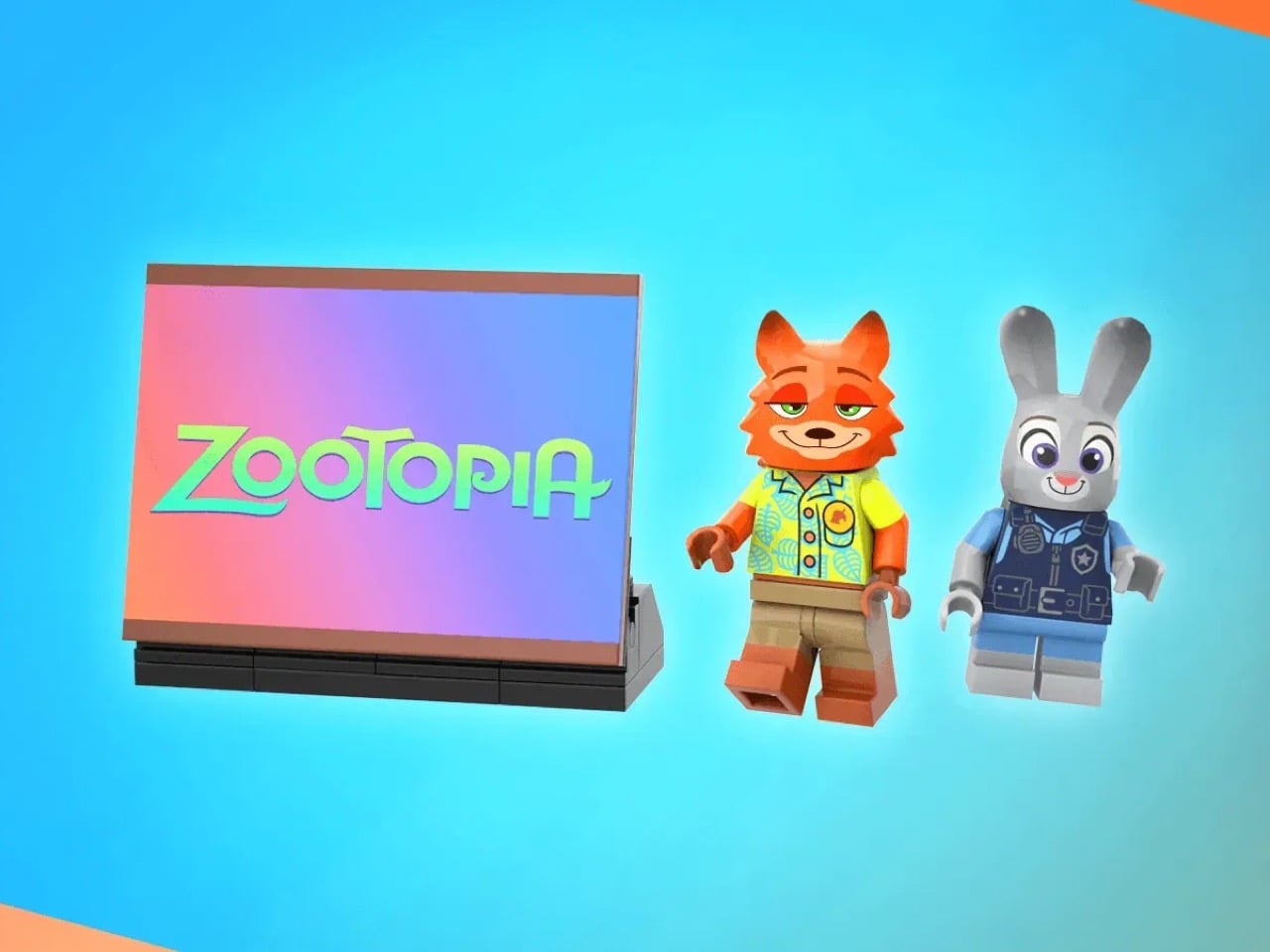
LEGO builder carlos_silva94 has taken that gray grid of anxiety and turned it into something you can hold, a fully functional brick-built recreation of the classic game complete with textured tiles, working digital displays, and that iconic yellow smiley face that judged your every click. The build captures the aesthetic of Windows 95 with surprising accuracy, from the raised tile surfaces to the seven-segment displays counting down your mines and ticking up your time. It’s desk toy nostalgia executed in the exact medium that makes sense for anyone who spent their childhood (or their entire career) staring at numbered squares and sweating over where to click next.

Designer: carlos_silva94

The grid itself uses LEGO’s textured tiles to differentiate between covered squares (those nerve-wracking gray unknowns) and revealed tiles showing the numbered clues. The numbers themselves appear to be rendered using printed tiles or stickers, capturing that chunky digital font that defined early computer graphics. The digital displays at the top, showing both the mine counter and the timer, are built using classic seven-segment configurations, the kind that would tick up second by second while you frantically tried to deduce which square was safe and which one would end your game in a shower of pixelated explosions.

My favorite detail, however, is that yellow smiley face sitting front and center. In the original game, that face was your emotional barometer. Click a tile and it would wince in anticipation. Hit a mine and it would go cross-eyed with cartoon death. Clear the board and it would throw on sunglasses like it had just won a prize. Here, rendered in LEGO form, it just sits there with that same placid expression, a tiny plastic reminder of all the times you gambled on a 50/50 guess and lost spectacularly.

The build is designed to be customizable, which is a smart move given the nature of the game. Carlos mentions that builders could easily swap tiles to create their own puzzles, turning this from a static display piece into something you could actually interact with. Whether that means physically rearranging LEGO tiles to simulate a Minesweeper game or just using it as a conversation starter on your desk, the modularity adds a layer of functionality that elevates it beyond pure nostalgia bait.

What makes this particularly appealing as a potential LEGO Ideas set is how perfectly it fits the “desk toy for adults who grew up with this stuff” category. It’s compact, rectangular, instantly recognizable, and carries enough cultural weight that anyone who spent time on a Windows PC between 1992 and 2012 will immediately get it. LEGO has leaned into retro tech and gaming nostalgia before with sets like the NES and the Atari 2600, and Minesweeper occupies that same cultural real estate. It’s a piece of digital history that defined an era of computing, rendered in a format that actually makes sense to build with bricks.

The MOC currently sits at just over 1,100 supporters on the LEGO Ideas platform, with 578 days left to reach the 10,000 vote threshold that triggers an official LEGO review. If this brings back memories of frantic clicking, pattern recognition, and the cold dread of accidentally right-clicking when you meant to left-click, head over to the LEGO Ideas page and cast your vote. Just try not to lose an entire afternoon doing it.

The post LEGO Minesweeper Captures the Windows 95 Game That Ruined Office Productivity first appeared on Yanko Design.
Daft Punk’s Get Lucky Gets a 298-Piece LEGO Tribute With That Iconic Gradient Sun

Summer 2013 belonged to Daft Punk. “Get Lucky” was everywhere, an inescapable groove machine that turned the French robots into genuine pop stars after years of underground credibility. The song marked a massive sonic pivot for the duo, trading their signature electro-crunch for live instrumentation, bringing in Nile Rodgers to lay down those disco guitar lines and Pharrell Williams to deliver one of the smoothest vocal performances of the decade. The music video leaned into a specific aesthetic: performers silhouetted against a radiant sunset, all warmth and golden light, capturing the analog soul of Random Access Memories in a single visual.

LEGO builder MINECRAFTBUILDHAX has bottled that exact vibe in a 298-piece display model. The build recreates the sunset performance scene with Daft Punk’s iconic helmeted duo front and center, flanked by a guitarist and backed by a stepped gradient sun that transitions from deep orange to warm brown. The stage sits on a sleek framed base with a printed plaque, designed to look right at home on a bookshelf or desk. Pharrell’s missing from the lineup due to licensing realities, but the essence of that moment is fully intact.

Designer: MINECRAFTBUILDHAX

Chrome silver for Thomas Bangalter, metallic gold for Guy-Manuel de Homem-Christo. Getting those faceted helmet surfaces to read correctly at minifigure scale takes thoughtful part selection, and MINECRAFTBUILDHAX nailed it. Both figures stand on a raised black stage platform with their instruments properly positioned, Thomas with his bass guitar on the left, Guy-Manuel seated at a compact drum kit in the center. A guitarist holding an electric guitar fills the right side, channeling Nile Rodgers’ energy even if the man himself couldn’t make the licensing cut.

Behind them, layered warm-toned plates stack in a stepped pyramid formation, creating a gradient that flows from dark brown at the top through medium brown and into bright orange at the horizon line. It mimics the glowing warmth of the “Get Lucky” single cover art perfectly, where the setting sun bathes everything in golden-hour magic. Solid bricks do the work here rather than transparency or lighting elements, keeping things approachable while maintaining visual punch.

Guy-Manuel’s drum kit packs surprising detail for the compact scale. Cymbals, tom drums, and a kick drum all appear in dark grey and black, with enough space on the bass drum to imagine a Daft Punk logo (though the builder kept it clean). Standard LEGO instrument molds handle the guitars, simple but effective, letting those helmets and that massive sun backdrop command attention.

A black platform extends beyond the performance area, creating visual breathing room and giving the whole thing museum-quality presentation. Gold script along the front edge reads “DAFT PUNK / GET LUCKY” in a hand-drawn style, elevating this from diorama to display piece. It signals shelf-next-to-your-vinyl-collection placement, not shoved-in-a-bin-with-other-minifigures treatment.

Just days-old on the LEGO Ideas platform, this MOC (My Own Creation) faces a long climb to the 10,000-vote threshold needed for LEGO’s official review on the Ideas platform. At 298 pieces, it would land in the affordable impulse-buy range if it ever hit retail shelves, perfect for music fans who want a tactile reminder of one of the decade’s biggest songs without committing to a massive build. If you’re still riding the “Get Lucky” high after all these years (and honestly, who isn’t), head over to the LEGO Ideas website and cast your vote. This one deserves to exist on more shelves than just the builder’s.

The post Daft Punk’s Get Lucky Gets a 298-Piece LEGO Tribute With That Iconic Gradient Sun first appeared on Yanko Design.
This LEGO Gear Train Takes 90 Trillion Years to Complete One Rotation

If you’ve ever stared at one of Mondrian’s compositions and thought “this would make a great gear train,” congratulations, you think like a LEGO Ideas builder. The rest of us are just catching up. The Eternal Mosaic bridges the gap between abstract expressionism and mechanical engineering in a way that shouldn’t work but absolutely does, turning the rigid geometry of De Stijl into a functioning monument to exponential mathematics.

This 655-piece build contains a 46-stage compound gear reduction using 24-tooth to 8-tooth ratios at every step. When you compound that reduction across all 46 stages, you get a total ratio of roughly 9 billion trillion to 1. At a standard motor speed of 100 RPM, the first gear completes a rotation every 0.6 seconds. The final gear, embedded in a colorful Mondrian-inspired wall, will complete its first full rotation in approximately 90 trillion years. The universe is 13.8 billion years old. Do the math. This machine outlasts reality itself, and it does so while looking like it belongs in the Museum of Modern Art.

Designer: The Art of Knowledge

What makes this build technically fascinating is how it visualizes exponential decay in a way that your brain can actually process. The designer breaks down the timeline at key stages. Each of the 46 stages uses a simple 24-tooth to 8-tooth reduction, a 3:1 ratio that seems almost polite on its own. But compound that across 46 stages and the numbers become absurd. Stage 10 takes about 10 hours to complete one rotation, roughly a full night’s sleep. Stage 18 clocks in at around 75 years, an average human lifetime. By stage 24, you’re looking at 55,000 years, the entire span from the Stone Age to today. Stage 32 hits 4 billion years, the age of Earth itself. And then the final stage stretches out to 90 trillion years, which is 6,500 times longer than the universe has existed. Each gear is a canvas, a stepping stone through time rendered in primary colors.

The construction itself is a hybrid of LEGO Technic and System bricks. The gears themselves are pure Technic, frictionless axles and pins doing the mechanical heavy lifting. But the structure surrounding them is classic System bricks and slopes arranged in Mondrian’s signature palette of red, yellow, blue, black, and white. Each gear stage becomes a canvas, a shifting mosaic that layers industrial function with abstract art. It’s the kind of crossover that shouldn’t work but absolutely does, turning what could have been a dry physics demonstration into something you’d actually want on display.

The build uses efficient footprint design, packing all 46 stages into a relatively compact rectangular base. The gears are stacked vertically in places, layered horizontally in others, creating a dense mechanical core that feels more like a sculpture than a gearbox. The colored slopes and bricks aren’t decorative afterthoughts, they’re structural elements that support the Technic skeleton while creating that distinctive Mondrian aesthetic. It’s museum-quality kinetic art that also happens to be a functioning lesson in exponential mathematics.

The Eternal Mosaic is currently gathering votes on the LEGO Ideas platform, sitting at 55 supporters with 58 days left to hit the first milestone of 100 votes. If you want to see this beautifully strange collision of art and engineering hit the 10,000-vote threshold and get reviewed by LEGO’s internal team, head over to the LEGO Ideas website and cast your vote. Just don’t expect to see that final gear move in your lifetime. Or anyone’s lifetime. Or the lifetime of the cosmos itself.

The post This LEGO Gear Train Takes 90 Trillion Years to Complete One Rotation first appeared on Yanko Design.
Stay Classy, San Diego: This LEGO Anchorman Set Recreates the Entire Channel 4 Newsroom in 1,500 Bricks

Anchorman: The Legend of Ron Burgundy turned twenty in 2024, and somehow, the film has only gotten funnier with age. What started as a Will Ferrell comedy about a hilariously fragile male ego navigating the very real 1970s newsroom gender wars became one of the most quoted, most meme’d, most endlessly rewatchable comedies in modern American film history. “I’m kind of a big deal,” “I love lamp,” “60% of the time it works every time” – the lines are so deeply embedded in pop culture at this point that people quote them without even knowing where they came from. San Diego’s most legendary fictional anchor deserves better than a passing reference in a listicle, and LEGO Ideas builder footonabrick clearly agrees.

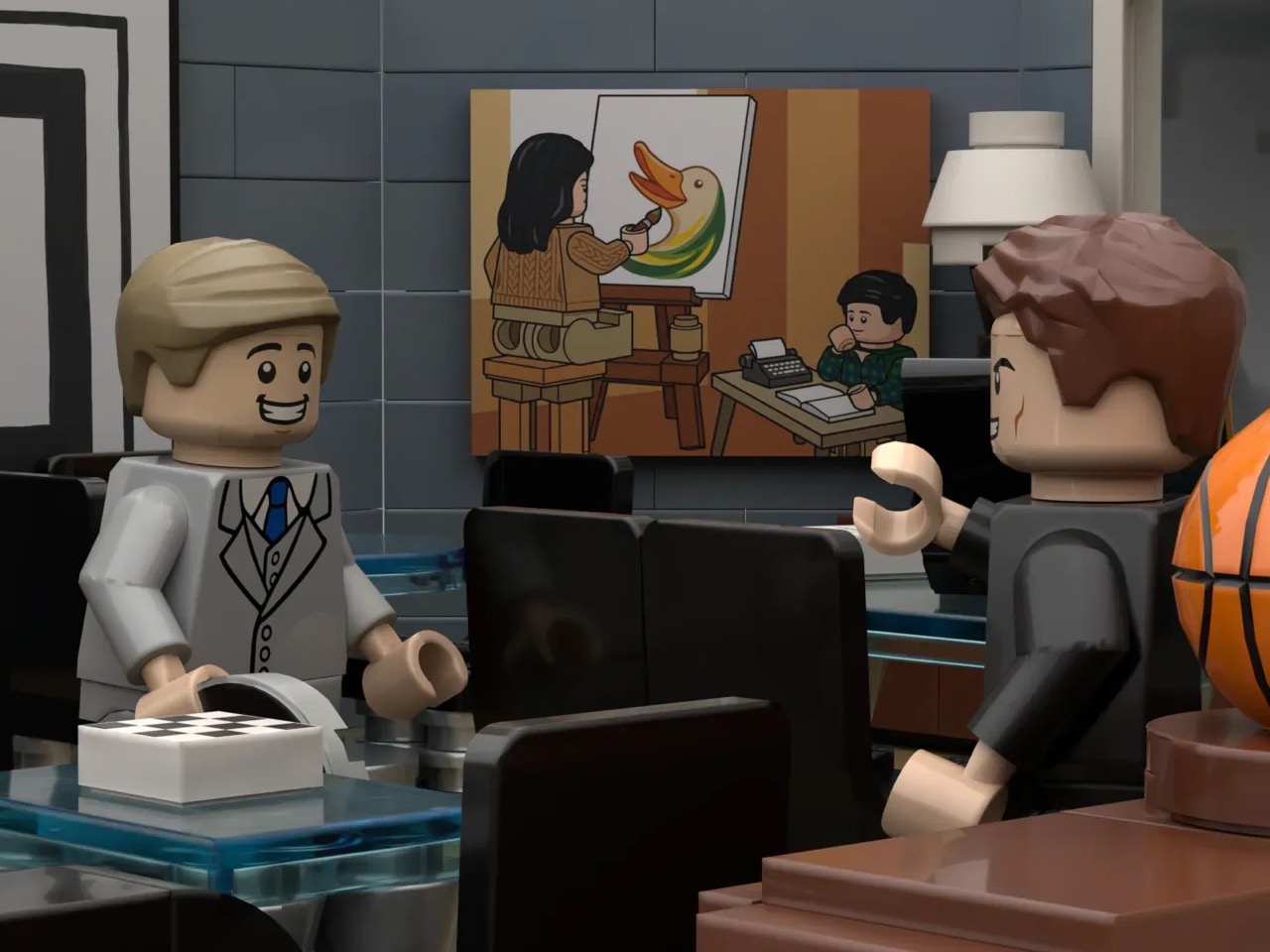
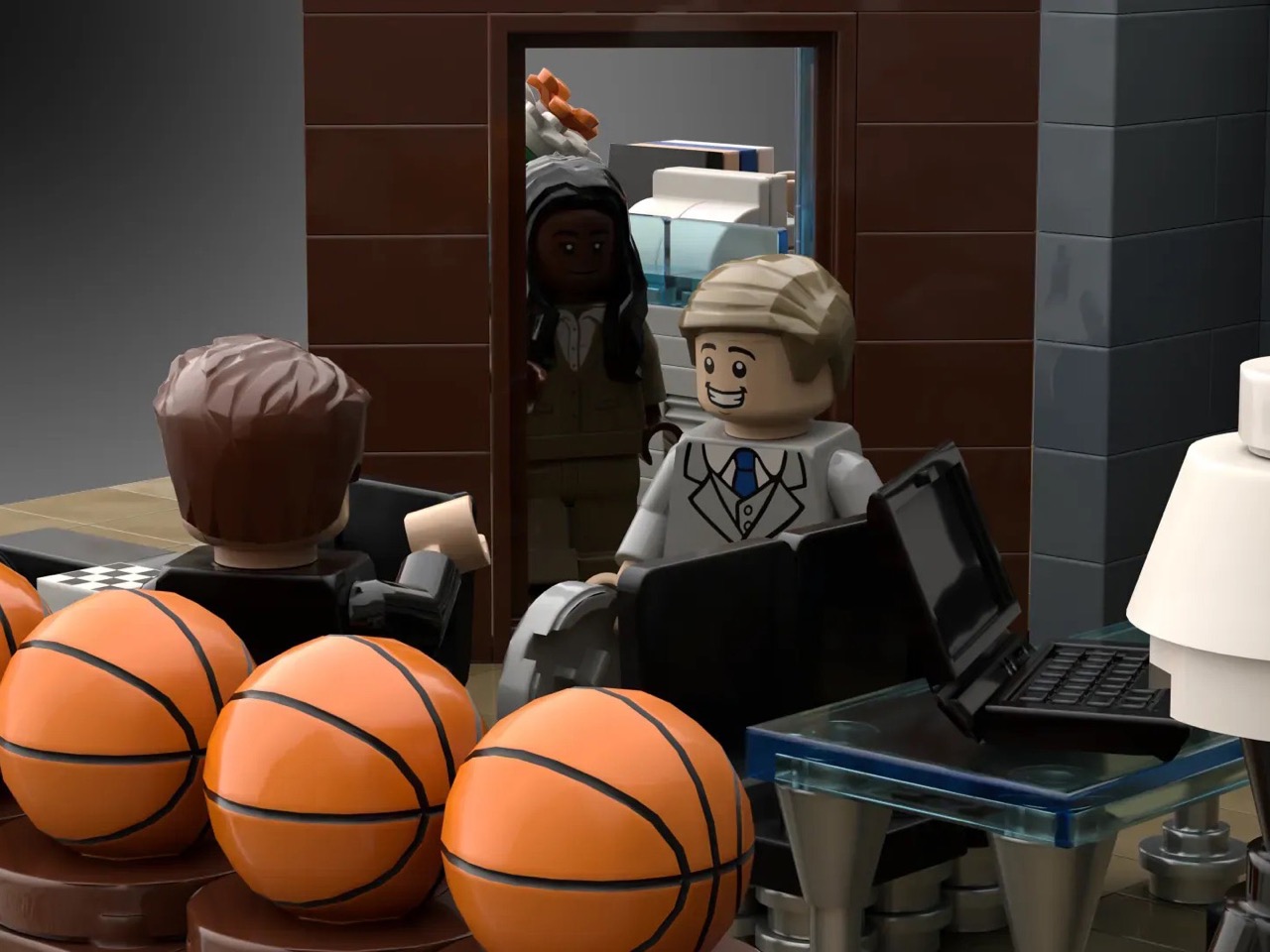
The result is a just-over-1,500-piece MOC (My Own Creation) that reconstructs the Channel 4 News Team’s world with an almost obsessive attention to detail, covering the broadcast studio, the newsroom offices, and even the KVWN news van parked out front. The studio section is immediately recognizable: a curved tan backdrop wall, three wall clocks ticking away above the anchor desk, dual blue Channel 4 News Team screens flanking the set, and the full team seated behind that iconic brown desk with their Channel 4 mugs. It looks like a freeze-frame from the film, and that’s entirely the point.

Designer: footonabrick

The broadcast desk is the centerpiece, and footonabrick nails the warm tan-and-brown palette of that gloriously dated 70s newsroom aesthetic. Ron and Veronica sit front and center behind their Channel 4 mugs, with Brian Fantana, Champ Kind, and Brick Tamland flanking them across the curved desk. The curved wall behind them is one of the trickier builds to pull off cleanly in LEGO, and the segmented panel construction keeps it looking smooth without losing the layered depth of the real set. Camera equipment on the studio floor, a boom-arm mic stand, and a vanity mirror station on the side round out the production floor detail beautifully.

Turn to the office areas and you’ll find a bunch of details and easter eggs. Ron’s private office has his nameplate desk, a glass of scotch rendered in a transparent amber round piece, and a “Missing” poster for Baxter tucked onto a side shelf. Brian Fantana’s cologne closet, one of the film’s most beloved gags, is recreated with an open cabinet stocked with colourful brick-built bottles, with a “Brian Fantana” book sitting on his desk for good measure. The hallway outside features a glass-panel wall looking into Ron’s office, and a Ron Burgundy door nameplate that even Veronica would have to respect. My favorite detail, though, is the row of four team portrait tiles mounted on the exterior office wall, each one a miniature LEGO-art-style illustration of the Channel 4 crew. Tiny, considered, and completely unnecessary in the best way.

The eight minifigures are pitch-perfect. Ron arrives in his burgundy suit with a jazz flute and a scowl that says “I have many leather-bound books.” Brick Tamland, naturally, comes with his trident. Champ has his signature cowboy hat, Fantana carries what appears to be a cologne bottle, and Veronica is rendered in her pink suit with that particular expression of someone perpetually tolerating Ron’s nonsense. Baxter the dog is included as a separate figure, and there’s even a bonus Ron on a tiny red bicycle, which is exactly the kind of specific deep-cut that separates a good MOC from a great one.

footonabrick’s Anchorman set is currently gathering votes on LEGO Ideas, the community platform where fan-created MOCs (My Own Creations) need 10,000 supporters to trigger an official LEGO review and potential retail production. With 344 votes on the board and 421 days left on the clock, there’s plenty of runway. If you want to see this land on store shelves, head to the LEGO Ideas page and cast your vote. You stay classy.

The post Stay Classy, San Diego: This LEGO Anchorman Set Recreates the Entire Channel 4 Newsroom in 1,500 Bricks first appeared on Yanko Design.
Legendary 3,424-Brick Michael Jordan LEGO Poster Actually Bursts Out of Its Own Frame

There’s a photograph that has lived rent-free in the collective memory of sports culture for nearly four decades. Michael Jordan, ball palmed in his right hand, left arm trailing, legs split mid-air, frozen somewhere between the free-throw line and the rim during the 1988 Slam Dunk Contest. Nike turned it into a logo. Sneakerheads turned it into a religion. And somewhere along the way, the Jumpman silhouette stopped being a basketball image and became something closer to a universal symbol of human ambition, the visual shorthand for defying what should be physically possible. We’ve seen it screenprinted, embroidered, laser-cut, and tattooed. But rendered in 3,424 LEGO bricks, jutting out of a framed mosaic canvas at nearly 107 centimeters tall? This one has the visual authority of a gallery piece.

LEGO Ideas is the fan-driven platform where builders submit their own creations (MOCs, or My Own Creations, in the community’s vernacular) and the public votes on which ones deserve to become real retail sets. Hit 10,000 votes, and LEGO’s internal team formally reviews the submission for potential production. The community has produced some genuinely remarkable work over the years, but every so often something surfaces that feels less like a toy pitch and more like a legitimate design object. LAFS85’s Michael Jordan tribute is exactly that. It’s a relief sculpture, a mosaic, a framed poster, and a courtside diorama all collapsed into a single build, and it’s currently gathering momentum on the platform with a Staff Pick designation already in hand.

Designer: LAFS85

The central concept here is a relief sculpture mounted on a brick-built canvas, and the execution is what separates this from a standard LEGO Art mosaic. Rather than keeping everything flush and flat, LAFS85 has pushed Jordan’s figure forward off the background plane using layered brickwork, so the figure genuinely protrudes from the frame. The effect, especially in the front-facing renders, is arresting. Jordan looks like he’s mid-flight toward you, ball raised, and the bold pixelated “23” dominating the dark background behind him only amplifies the drama. The builder used SNOT (Studs Not On Top) techniques throughout the figure to capture the flow of the jersey fabric and the muscular geometry of the legs, which is exactly the kind of decision that an industrial designer notices and appreciates. Flat tile surfaces read as smooth fabric. Angled plates suggest tension in the limbs. The red and white of the Chicago Bulls uniform pops hard against the dark grey background bricks, and the brick-built recreation of Jordan’s signature in the lower corner is a genuinely lovely finishing touch.

My favorite detail, though, is the tiny courtside diorama that sits at the base of the frame. It’s a micro-scale hardwood court complete with the painted free-throw area in Bulls red, a custom Jordan minifigure dribbling on the baseline, and a beautifully proportioned basketball hoop with a transparent backboard and a weighted red stanchion. The scale contrast between the enormous relief portrait looming above and this tiny matchbook-sized court below is genuinely witty, and it gives the whole piece a kind of narrative arc. The legend on the wall, the player on the court, the moment suspended between the two. At approximately 89.6 centimeters wide, the full assembly is a serious statement piece, the kind of thing you’d actually want above your desk rather than tucked in a display cabinet.

LAFS85 describes the project as a fusion of 2D art and 3D sculpture, a tribute to the Jumpman spirit that honors the greatness of the player without leaning on external logos or licensed branding. That restraint is smart, both practically for LEGO Ideas approval purposes, and aesthetically because it keeps the focus on the craftsmanship rather than the IP. The build has already earned a Staff Pick designation from the LEGO Ideas team, which is a meaningful signal of quality, and it’s sitting at just over 2,059 supporters with 564 days remaining to reach the 5K milestone on the way to the full 10,000 votes needed for an official LEGO review. The only thing I’d wish for in a retail version is an alternate colorway, a black and pinstripe away-jersey variant would make this an absolute must-buy twice over. Until then, head to the LEGO Ideas page and cast your vote here.

The post Legendary 3,424-Brick Michael Jordan LEGO Poster Actually Bursts Out of Its Own Frame first appeared on Yanko Design.
This LEGO Tiramisu Might Be the Most Realistic LEGO Food Set Anyone Has Ever Built

Tiramisu has a strong claim to being the world’s most universally loved dessert. It crossed out of northeastern Italy sometime in the late 1960s, hit restaurant menus across Europe and America through the 80s and 90s, and somewhere along the way became the default “fancy dessert” of the home cook who wanted to impress without turning on the oven. The name translates roughly to “pick me up,” which is exactly what a shot of espresso-soaked ladyfingers and mascarpone cream does. LEGO Ideas creator Micdud has now built one out of 1,106 bricks, nearly at 1:1 scale, and the result is the kind of MOC that makes you do a double-take.

The build is a corner slice served on a decorative round plate, complete with chocolate drizzle, cream dollops, and a fork mid-bite suspended in the air on a transparent support. The cocoa topping alone is a masterclass in using disparate brown elements to simulate an organic, dusty texture. Micdud even hid a raspberry made from a red clown hairpiece and blueberries built from purple astronaut helmets under the garnish. Food MOCs live and die by their surface detail, and this one gets every layer right.

Designer: Micdud

The corner piece allows you to see the full lady-fingers without their cross-sections. There’s just so much detail that it’s easy to get lost focusing on just one part. Although that’s exactly what makes this ‘dish’ such a winner. It triggers a primordial response of hunger the minute you see it. The colors are perfect, the cross section is gorgeous, and the details even on the plate WILL make your mouth water. Cutting two faces open lets those layers read in amber and white bricks, while the outer two faces show the savoiardi as rounded bumps with cream spilling over them. The build is doing two different surface textures at once, and pulling both off cleanly at 27 by 27 centimeters is no small thing for a 1,106-piece model.

The MOC (My Own Creation) is presented on a round plate, adding to its flair. The chocolate scroll work and cream rosettes ringing the edge give the whole scene a plated, restaurant-ready quality that keeps it from reading as a lone brick sculpture sitting on a flat disc. The suspended fork is the finishing touch, a freshly cut bite floating mid-air on a transparent support brick, the kind of detail that commits fully to the storytelling and makes the whole thing feel like a frozen moment rather than a display piece.

Unlike most LEGO Ideas submissions, this one isn’t rendered. From the looks of it, and just the imprefections in the detail, Micdud already built the design out. That’s impressive on its own, because it shows exactly what the Tiramisu would look like. For the uninitiated, LEGO Ideas is the company’s portal for fan-made submissions, allowing enthusiasts to create their own LEGO builds and vote for their favorite ones. Any MOC that crosses the 10,000 vote mark gets reviewed by LEGO’s internal team and then potentially turned into a box set. Micdud’s Tiramisu is just mere days old on the platform and it’s already amassed 240 votes (including my own). If you want to have it hit that 10k mark, head down to the LEGO Ideas forum and cast your vote (it’s free!) Let’s get this MOC produced before October this year so we can enroll it in the Tiramisu World Cum in Italy this year!

The post This LEGO Tiramisu Might Be the Most Realistic LEGO Food Set Anyone Has Ever Built first appeared on Yanko Design.
Someone Built a True-Scale LEGO Velociraptor Skeleton and I Can’t Wait To Buy One

Jurassic Park lied to you. The velociraptors that terrorized a kitchen full of children and hunted Jeff Goldblum through tall grass were modeled after Deinonychus, a considerably larger North American cousin, because the filmmakers thought the real animal’s name sounded cooler than its actual dimensions warranted. The real Velociraptor mongoliensis stood about 1.6 feet at the hip and weighed roughly as much as a medium-sized dog. Formidable, certainly, but built to the scale of a farmyard bird rather than an apex predator capable of coordinated ambushes.

Which is exactly what makes this LEGO Ideas submission by creator Terraxz so interesting. Built to true scale from paleontological measurements of a juvenile V. mongoliensis specimen, the model sits at approximately 120 cm long and 40 cm tall on a museum-style display stand. It has the ribcage, the vertebrae, the sickle claw, the whole skeleton rendered in tan brick. LEGO has been on a fossil skeleton tear lately, but nobody has attempted one at actual 1:1 scale until now.

Designer: Terraxz

LEGO’s Dinosaur Fossils line began as a fan submission that became the 910-piece Ideas set 21320, featuring T. rex, Triceratops, and Pteranodon skeletons at 1:32 scale. LEGO then escalated with the Jurassic World set 76968, a 3,145-piece T. rex skeleton stretching over 105 cm at 1:12 scale, which launched in March 2025 and immediately became the largest Jurassic World set the company had ever produced. Every iteration in this lineage has been a scaled-down representation, a display piece calibrated for shelf real estate rather than scientific fidelity. Terraxz is doing something structurally different: the model matches the actual size of the animal it depicts, which reframes the whole exercise from decorative object to physical argument about what the creature actually was.

Look at the skull closeup and you can see individual tooth rows built from stacked brick elements, fenestrae represented as open negative space through clever plate offsetting, and a jawline that actually captures the elongated low-profile snout that distinguishes V. mongoliensis from the broader-headed Hollywood version. The spine runs in a proper S-curve, the tail extends horizontally as it should for a bipedal theropod using it as a counterbalance, and the legs are proportioned correctly for an animal that stood 0.5 meters at the hip rather than eye level. The black display armature borrows the same museum-mount language as LEGO’s official sets, with cross-braced vertical supports that would look at home in any natural history gallery.

A fully adult V. mongoliensis reaches around 1.8 to 2 meters in length, which would push this build into genuinely unwieldy display territory. Choosing a juvenile specimen is a calibrated decision that keeps the model physically manageable while maintaining the true-scale claim, and it maps to real fossil record data: a complete juvenile skeleton described from the Djadochta Formation gives the builder a legitimate scientific reference point rather than an averaged extrapolation. Terraxz has a catalog of related MOCs on Rebrickable, including a true-scale V. mongoliensis skull, so this submission is the culmination of an ongoing paleontology project rather than a standalone pitch.

LEGO Ideas requires 10,000 supporter votes within the submission window for a design to enter official review, and Terraxz currently sits at just over 1,000 with 605 days remaining. That’s enough time to accrue the votes needed to turn this into a retail set. I’m pretty sure that a whole bunch of people beyond
paleontologists would like a to-scale velociraptor skeleton adorning their bedroom or hallway. The submission is live on the LEGO Ideas website, and it takes about thirty seconds to cast your vote, so what exactly are you waiting for?

The post Someone Built a True-Scale LEGO Velociraptor Skeleton and I Can’t Wait To Buy One first appeared on Yanko Design.