The Worst and Best Ways to Sharpen your EDC Pocket Knife

Everyday carry (EDC) knives are a trusty companion for many, whether you’re navigating the great outdoors or handling day-to-day tasks in the city. A sharp knife isn’t just a matter of convenience; it’s a crucial aspect of safety and functionality (you really don’t want to be stuck with a blunt knife in an emergency situation). However, maintaining that sharp edge can be a challenge, especially with the myriad of sharpening techniques and tools available. Some methods can enhance your blade’s performance, while others can cause more harm than good. Here, we delve into the worst and best ways to sharpen your EDC knife. Although these methods practically apply to knives of all kinds (like kitchen knives, etc.), we’re looking through the lens of maintaining EDC blades in particular, which people often spend hundreds of dollars on. An EDC knife might first and foremost be a knife, but for many, it’s also a work of art worth marveling at and collecting. Many of these knives are designed by experts and enthusiasts, requiring decades of skill, precise machinery (or sometimes even handcrafted mastery), and high-quality materials. Improperly caring for or sharpening such knives feels like a crime, doesn’t it? Let’s take a look at the worst, and the best ways to care for your EDC knife collection.

The Worst Ways to Sharpen an EDC Knife

1. Using a Glass Surface or Ceramic Mug

It might seem like a clever hack to use the unglazed bottom of a ceramic mug or a glass surface to sharpen your knife. After all, it’s often depicted in survival movies and touted in emergency preparedness forums (and guilty as charged, I’ve used this hack too). However, this technique is far from ideal for maintaining your EDC knife to perfection. The problem lies in the inconsistent abrasiveness of these surfaces. Ceramic mugs, while somewhat effective in a pinch, lack the uniform grit needed for a precise edge. The surface can be too coarse or too fine, leading to an uneven sharpening job. Moreover, using glass can cause the knife to slip, posing a safety hazard and potentially leading to a chipped blade. Sure, it’s a lovely hack that even Serious Eats recommends for home-chefs who don’t have their own honing rod or whetstone… but if you truly care about your EDC collection, the bottom of a mug isn’t the best place to be sharpening your prized knives.

2. Power Tools Like Bench Grinders

Power tools such as bench grinders might seem like a quick and easy solution to sharpen your knife, but they are more suited for heavy-duty tasks like reshaping tools rather than fine-tuning delicate knife edges. The primary issue with using a bench grinder for your EDC knife is the excessive heat generated during the grinding process. This heat can cause the steel to lose its temper, resulting in a blade that is brittle and prone to breaking.

Additionally, bench grinders remove material VERY quickly, which can lead to an uneven edge and significant wear on your blade. The aggressive nature of these tools makes it challenging to control the sharpening process, increasing the risk of creating an uneven bevel or completely ruining the knife. For those who value precision and the longevity of their knife, bench grinders are best avoided for routine sharpening tasks.

3. Cheap, Coarse Pull-Through Sharpeners

Pull-through sharpeners are widely available and often marketed for their convenience and ease of use. However, a cheap one off AliExpress or Temu will do you much more harm than good. The problem with pull-through sharpeners is that they use fixed abrasive materials that can remove too much metal from your blade unevenly. This aggressive removal process can damage the edge, leading to a shorter lifespan for your knife.

Moreover, these sharpeners usually set a fixed angle that may not match the original bevel of your knife, resulting in a less efficient cutting edge. The convenience of pull-through sharpeners comes at the cost of precision and control, which are crucial for maintaining a high-quality edge on your EDC knife. Instead of opting for these quick fixes, consider more controlled methods that allow you to maintain the knife’s intended geometry and sharpness.

4. Improvised Rock Sharpening

While it might be tempting to use natural rocks as makeshift sharpeners, especially in a survival situation, this method is highly inconsistent and can cause significant damage to your knife. Rocks found in nature vary widely in their abrasiveness and can introduce grit or contaminants that scratch and dull the blade rather than sharpen it. The uneven surface of a rock can also lead to an inconsistent edge, making your knife less reliable.

In emergency situations where no other options are available, using a rock might be your only choice. However, it should not be a regular practice for maintaining your EDC knife. For routine sharpening, it’s best to stick to purpose-made tools that provide a consistent and controlled sharpening experience, ensuring your knife stays in top condition.


The Best Ways to Sharpen an EDC Knife

1. Whetstones

Whetstones are the gold standard for sharpening knives, offering a controlled and precise method for maintaining your blade. They come in various grits, typically ranging from coarse to fine, allowing you to handle everything from reshaping a damaged edge to polishing a razor-sharp finish. Using a whetstone requires some practice and patience, but the results are well worth the effort.

Start by soaking the whetstone in water (if it’s a water stone) to ensure smooth sharpening. Place the stone on a stable surface and hold your knife at a consistent angle, typically around 15-20 degrees. Begin by using the coarse side of the stone, moving the blade in a smooth, sweeping motion across the stone to establish a new edge. Once you have a burr (a slight ridge of metal along the edge), switch to the finer side of the stone to refine and polish the edge.

Whetstones allow for a high level of control over the sharpening process, ensuring that you can maintain the original bevel and achieve a razor-sharp edge. The investment in a good set of whetstones pays off in the quality and longevity of your knife’s edge, making it a must-have for serious knife enthusiasts.

2. Diamond Stones

Diamond stones are another excellent option for sharpening EDC knives. They are composed of small, industrial-grade diamonds embedded in a metal plate, making them extremely durable and effective at quickly sharpening a blade. Unlike whetstones, diamond stones do not require soaking, and they can be used dry or with a little water for lubrication.

One of the significant advantages of diamond stones is their consistency and speed. They can remove material more efficiently than traditional whetstones, making them ideal for quick touch-ups or more substantial sharpening tasks. To use a diamond stone, follow a similar process to whetstone sharpening: maintain a consistent angle and use smooth, controlled strokes to sharpen the blade.

Diamond stones come in various grits, allowing you to perform coarse sharpening and fine-honing with the same tool. Their durability and ease of use make them a favorite among knife enthusiasts who want a reliable and efficient sharpening solution.

3. Ceramic Rods

Ceramic rods are excellent for honing, which is the process of maintaining an already sharp edge rather than performing a full sharpening. These rods are typically used after sharpening with whetstones or diamond stones to refine the edge and keep it in top condition between more intensive sharpening sessions.

Using ceramic rods is straightforward. Hold the rod vertically or at a slight angle and draw the knife blade down the rod, maintaining a consistent angle. Repeat this process on both sides of the blade, ensuring even honing. Ceramic rods are gentle on the knife’s edge and help maintain its sharpness without removing significant material.

For EDC knife users who want to keep their blades in peak condition with minimal effort, ceramic rods are an excellent tool for regular maintenance. They are compact, easy to use, and effective at keeping your knife sharp and ready for action.

4. Stropping

Stropping is the final step in achieving a razor-sharp edge and involves using a leather strop to polish and refine the blade. A strop is typically a piece of leather mounted on a flat surface or a hanging strip, and it may be used with or without a stropping compound to enhance its effectiveness.

To strop your knife, hold the blade at a consistent angle and draw it backward along the leather, moving away from the edge to avoid cutting into the strop. Repeat this process on both sides of the blade. Stropping removes any remaining burr from the sharpening process and polishes the edge to a mirror finish.

This step is essential for achieving the highest level of sharpness and ensuring the blade cuts smoothly and effortlessly. Stropping is an easy and effective way to maintain your knife’s edge, especially when combined with regular sharpening and honing.

5. Professional Sharpening Services

Sometimes, leaving the sharpening to the professionals is the best choice, especially if your knife is very dull or damaged. Professional sharpening services use a combination of techniques and tools to restore your blade to its optimal sharpness without risking its integrity.

Professionals typically use high-quality whetstones, diamond stones, and other precision tools to achieve a perfect edge. They have the experience and skill to handle various blade types and steels, ensuring that your knife is sharpened correctly and efficiently.

Using a professional service can be particularly beneficial for those who lack the time or confidence to sharpen their knives themselves. It’s an investment in the longevity and performance of your EDC knife, providing peace of mind that your blade is in expert hands.

6. Guided Sharpening Systems

Guided sharpening systems are designed to make the sharpening process foolproof by providing preset angles and multiple sharpening options. These systems often include ceramic stones, diamond plates, and strops, offering a comprehensive solution for maintaining your knife’s edge.

Using a guided system is straightforward. The knife is clamped into the device, and the sharpening stones are guided along the blade at a consistent angle. This setup ensures that even beginners can achieve a precise and consistent edge without the guesswork involved in freehand sharpening.

Guided sharpening systems are an excellent choice for those who want a reliable and user-friendly way to keep their EDC knives sharp. They take the complexity out of the sharpening process, making it accessible to everyone, regardless of skill level.


Maintaining a sharp edge on your EDC knife is essential for its performance and safety. While there are many methods to sharpen a knife, not all are created equal. Techniques like using a ceramic mug, power tools, and cheap pull-through sharpeners can cause more harm than good, leading to a damaged or dull blade. On the other hand, investing in quality tools like whetstones, diamond stones, ceramic rods, and guided sharpening systems ensures a sharp, reliable edge.

For those who prefer a professional touch, professional sharpening services offer an expert solution,

while stropping provides the final polish to achieve a razor-sharp finish. By choosing the right sharpening methods and tools, you can keep your EDC knife in top condition, ready to tackle any task with ease and precision.

So, the next time you consider sharpening your knife, skip the makeshift methods and opt for techniques that will enhance your blade’s performance and longevity. After all, a well-maintained knife is a cut above the rest, ready to slice through your daily challenges without a hitch. Just remember, keep the dishwasher for your dishes and the bench grinder for your tools—your knife deserves better.

The post The Worst and Best Ways to Sharpen your EDC Pocket Knife first appeared on Yanko Design.
Tiny yet Mighty Titanium + Carbon Fiber Pocket Knife is Smaller and Lighter than your House Key

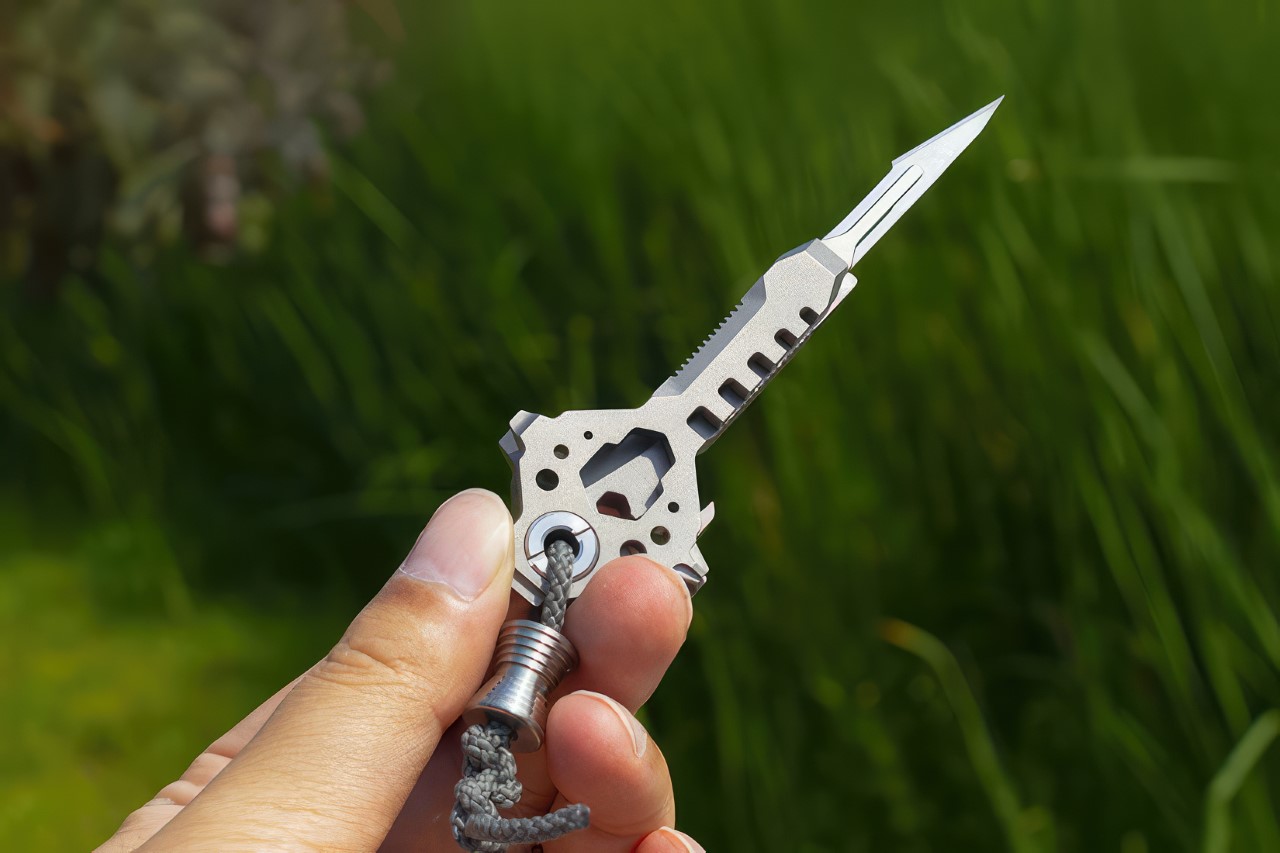
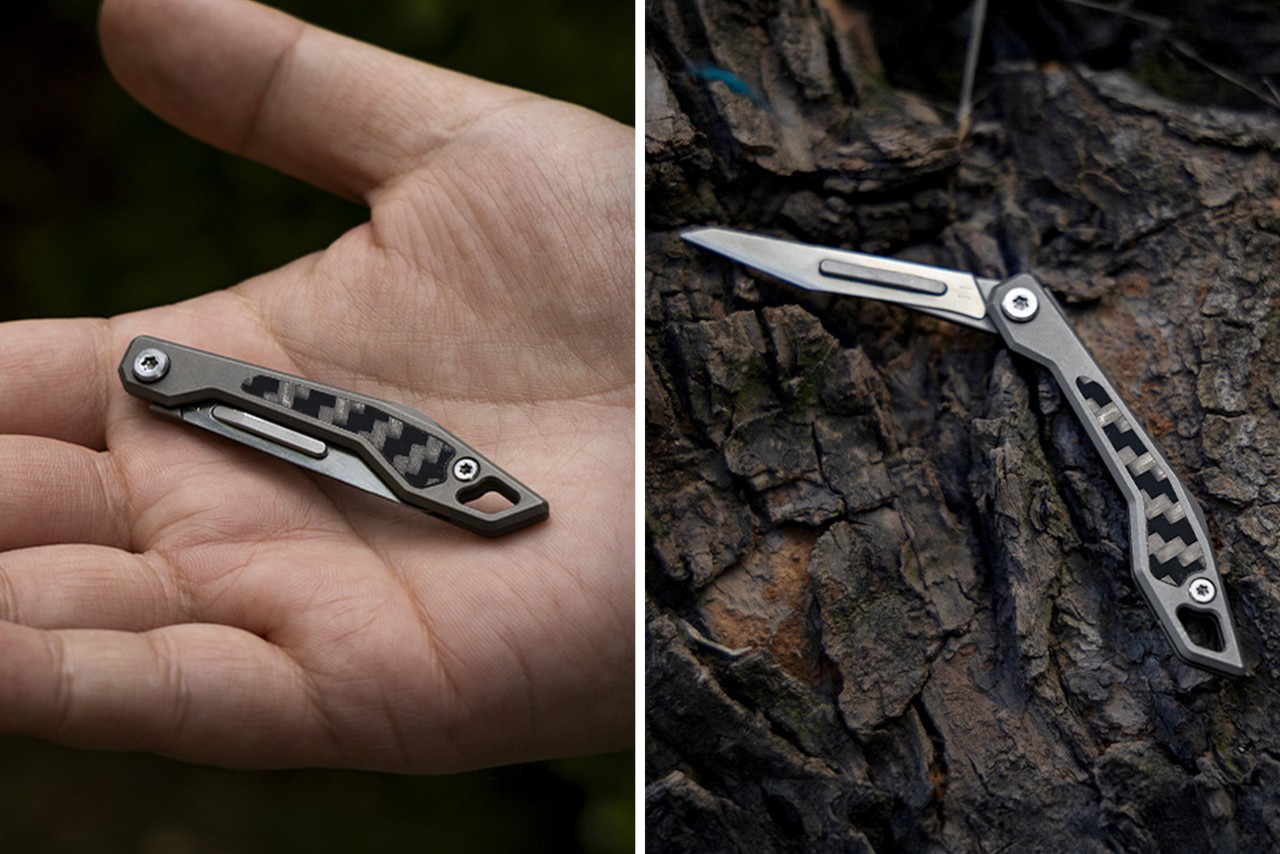
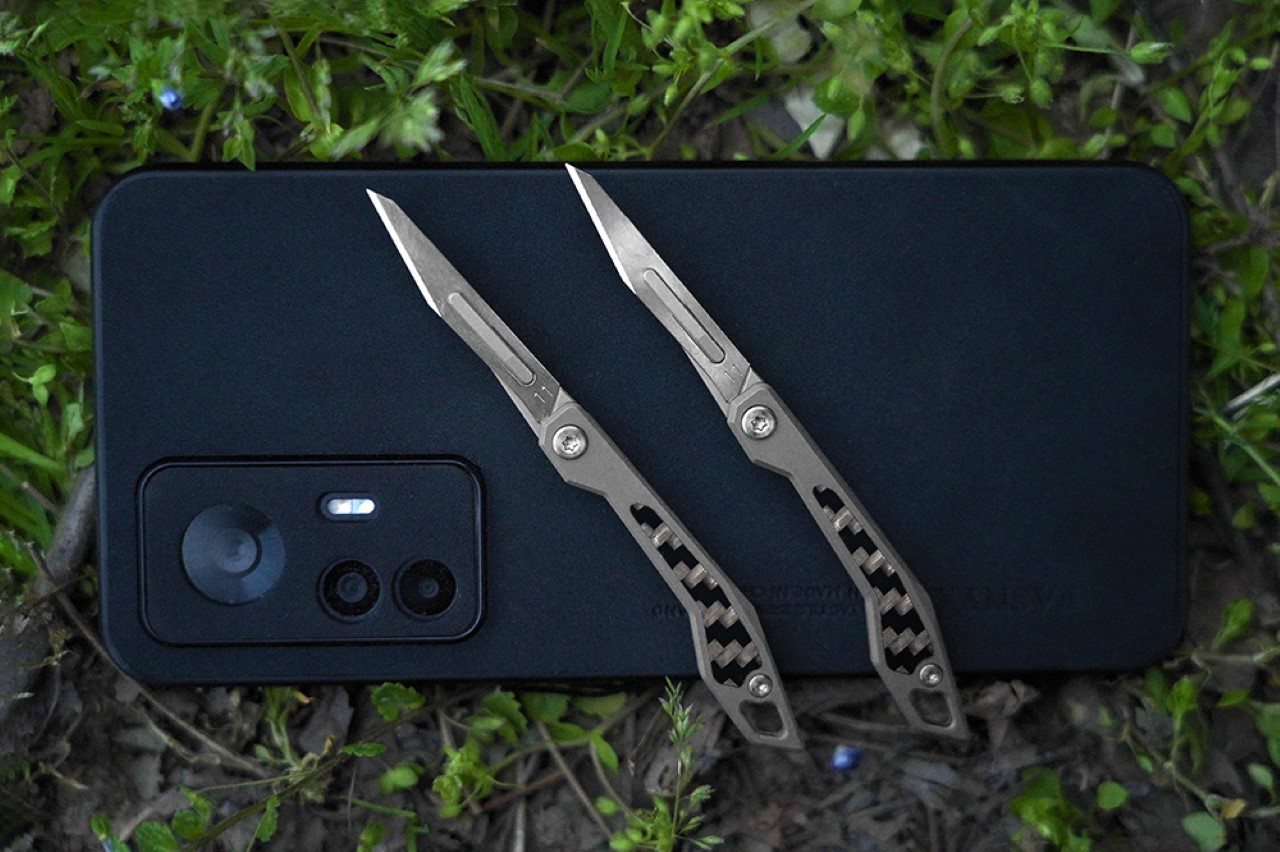
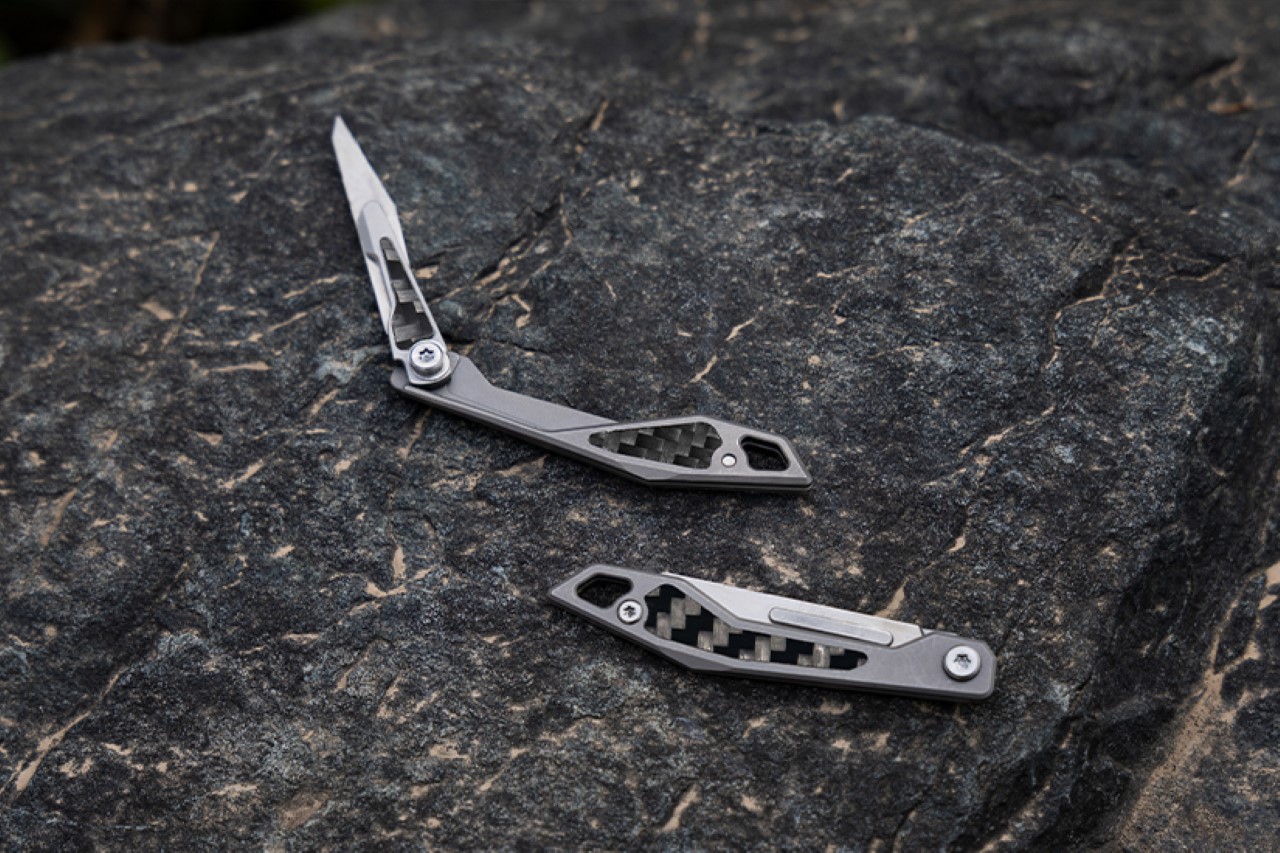
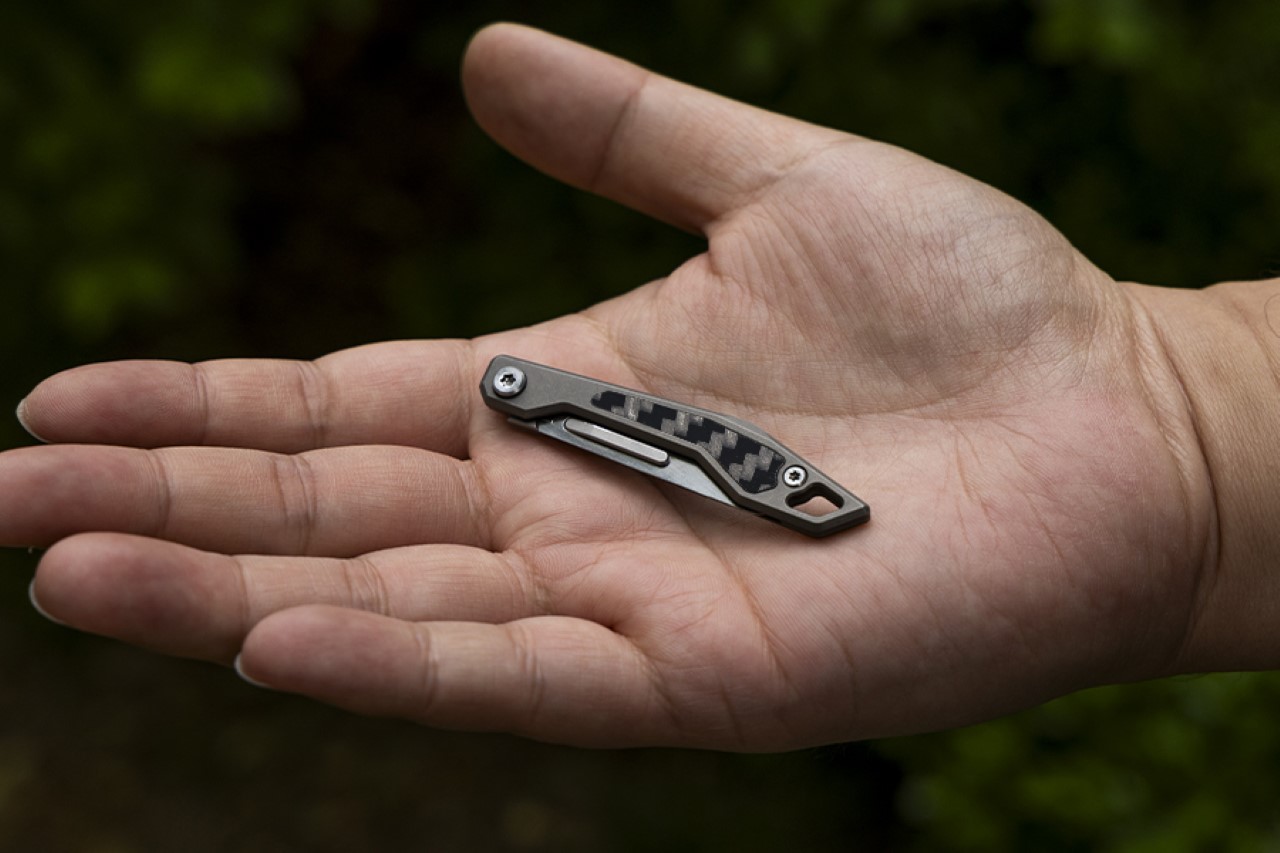
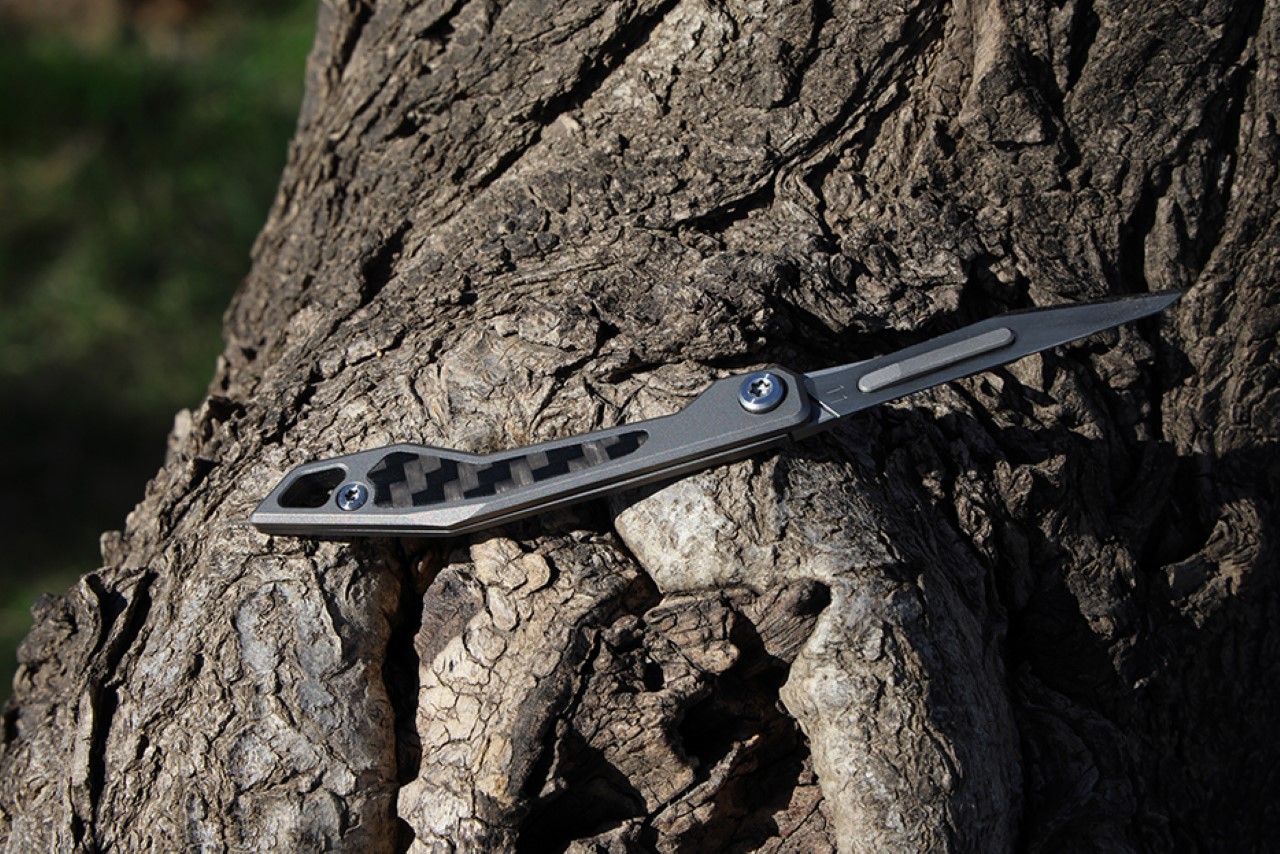
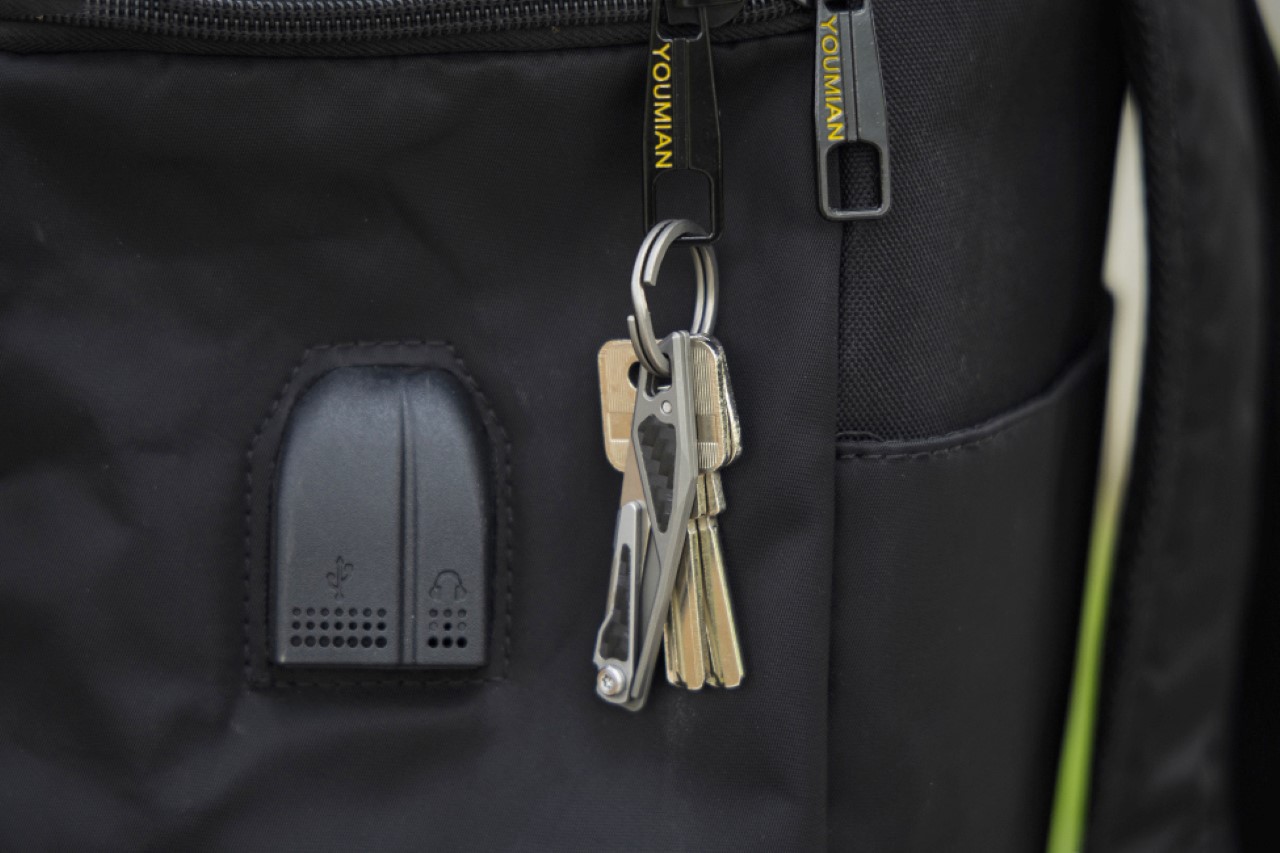
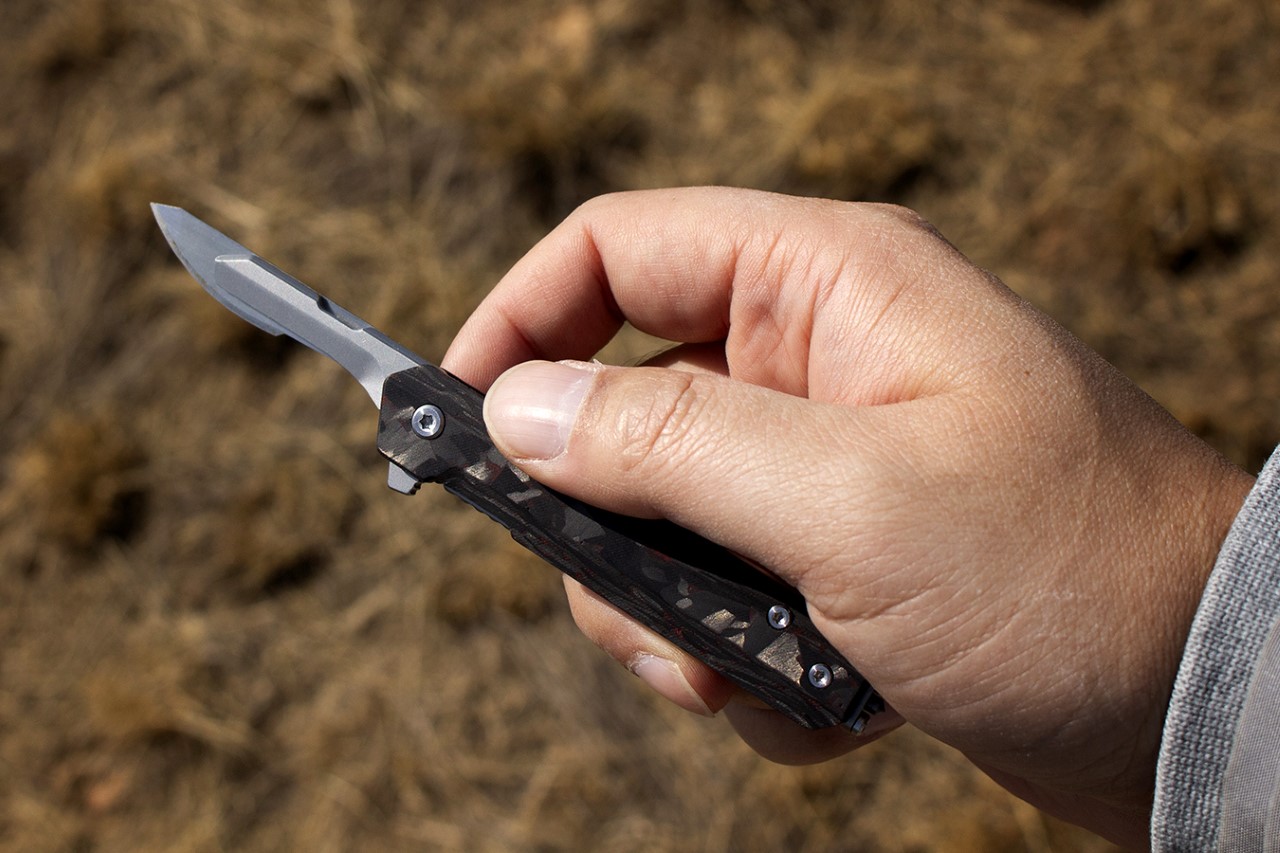
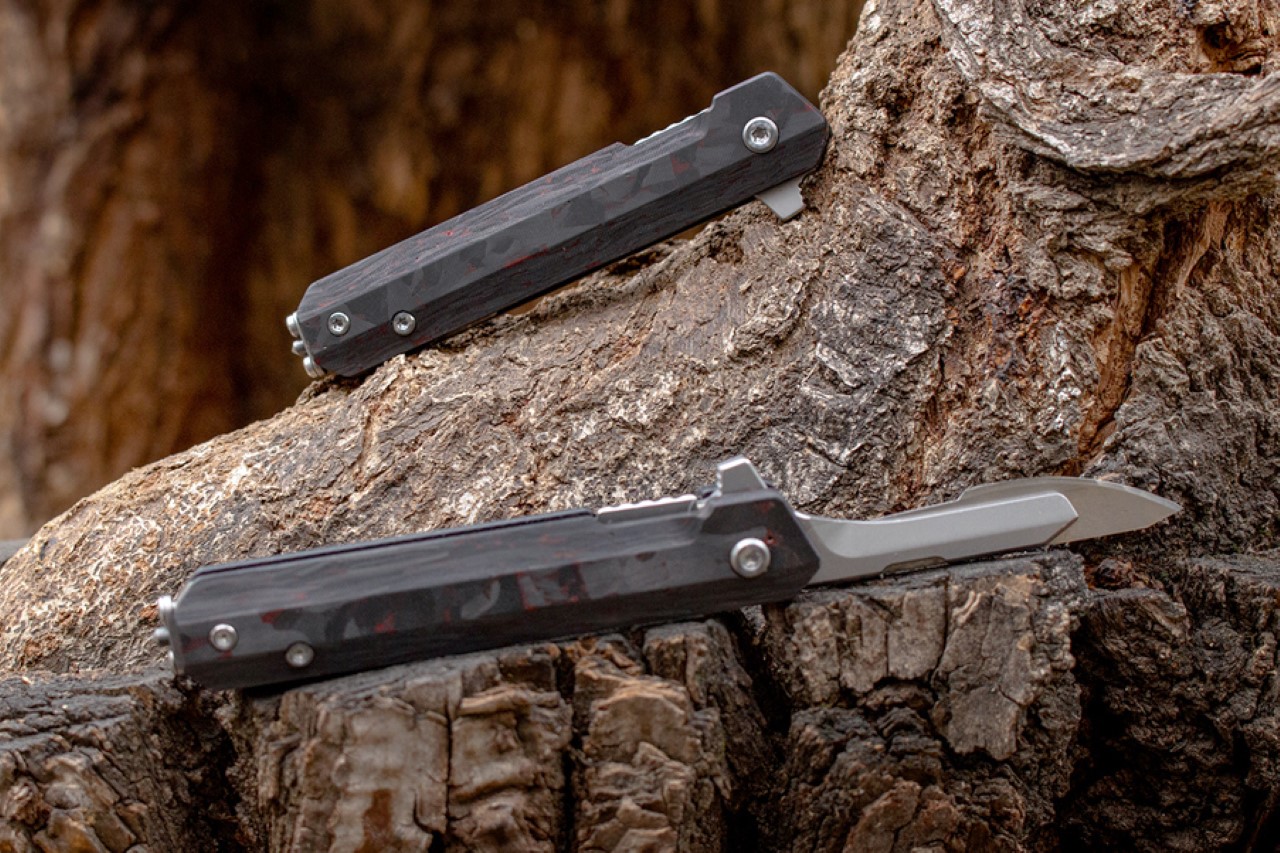
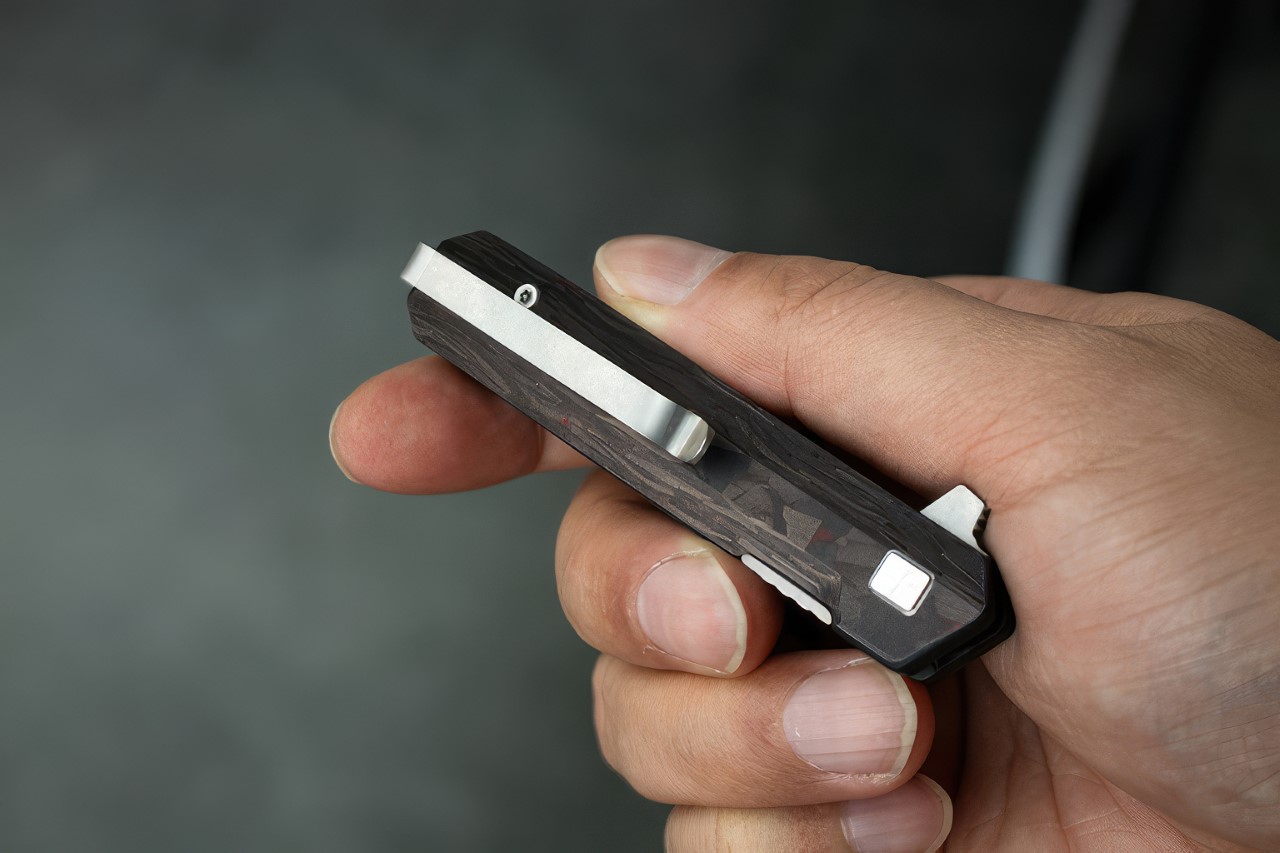
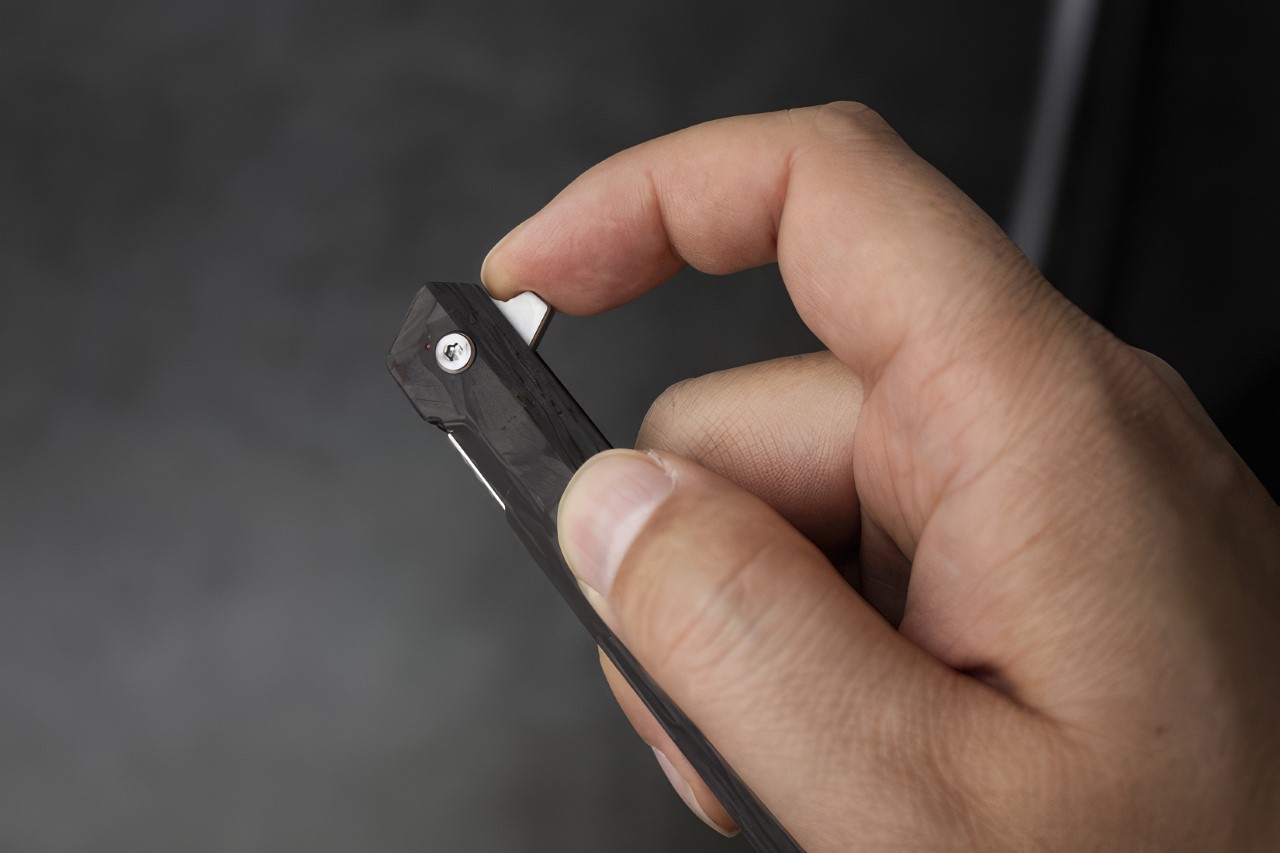
It doesn’t get smaller than this, lighter than this, or more viciously sharp than this. Measuring a mere 57mm (2.5 inches) when shut and weighing just 5.6 grams (0.19 ounces), the WaspArmor Micro Folding Scalpel floats like a butterfly and stings like a bee… or a wasp, as its name would suggest. Its titanium and carbon fiber body gives it a classy-yet-durable build, and the replaceable scalpel blade means never having to sharpen your knife ever again. Quite impressive for a blade tiny enough to attach to your keychain.

Designer: AlloyX

Click Here to Buy Now: $39 $55 (29% off) Hurry! Only 15 left of 560 units.

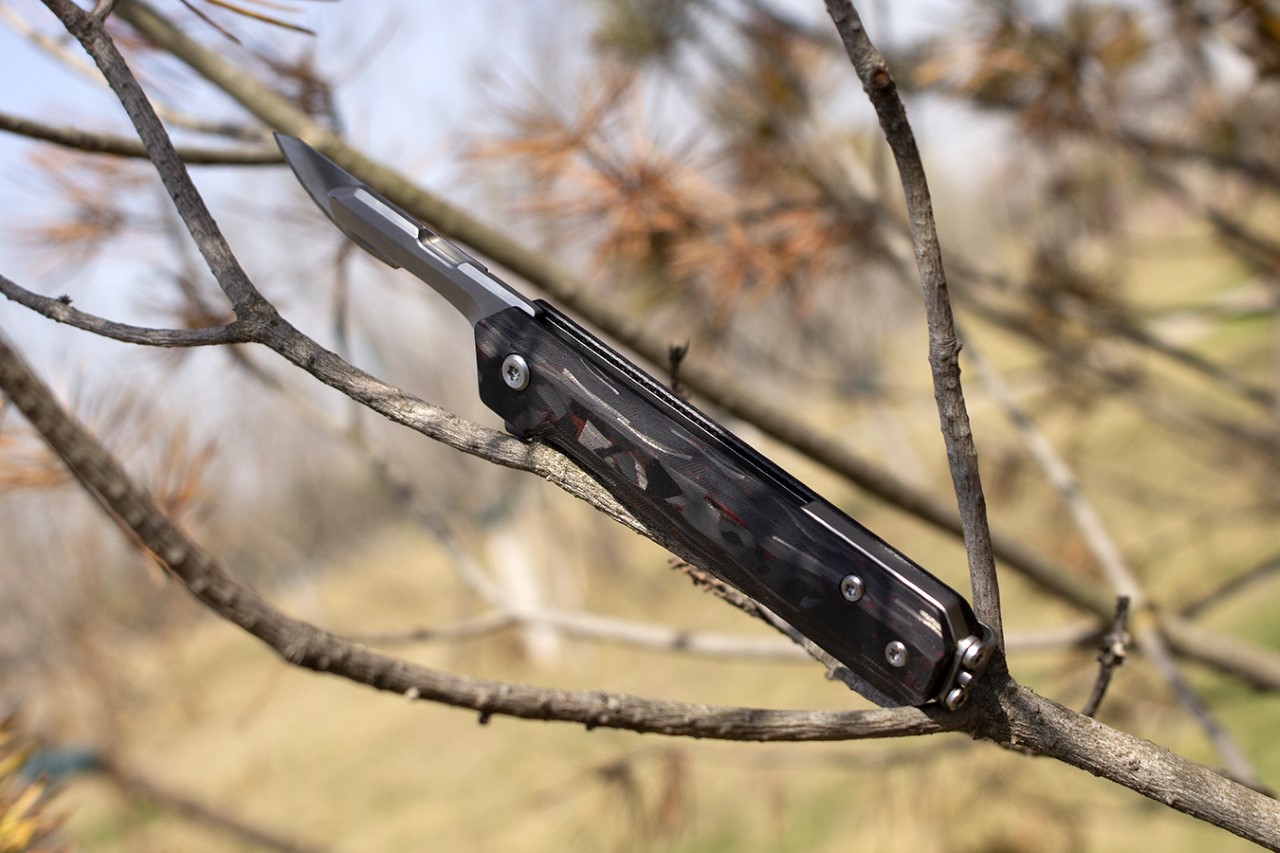
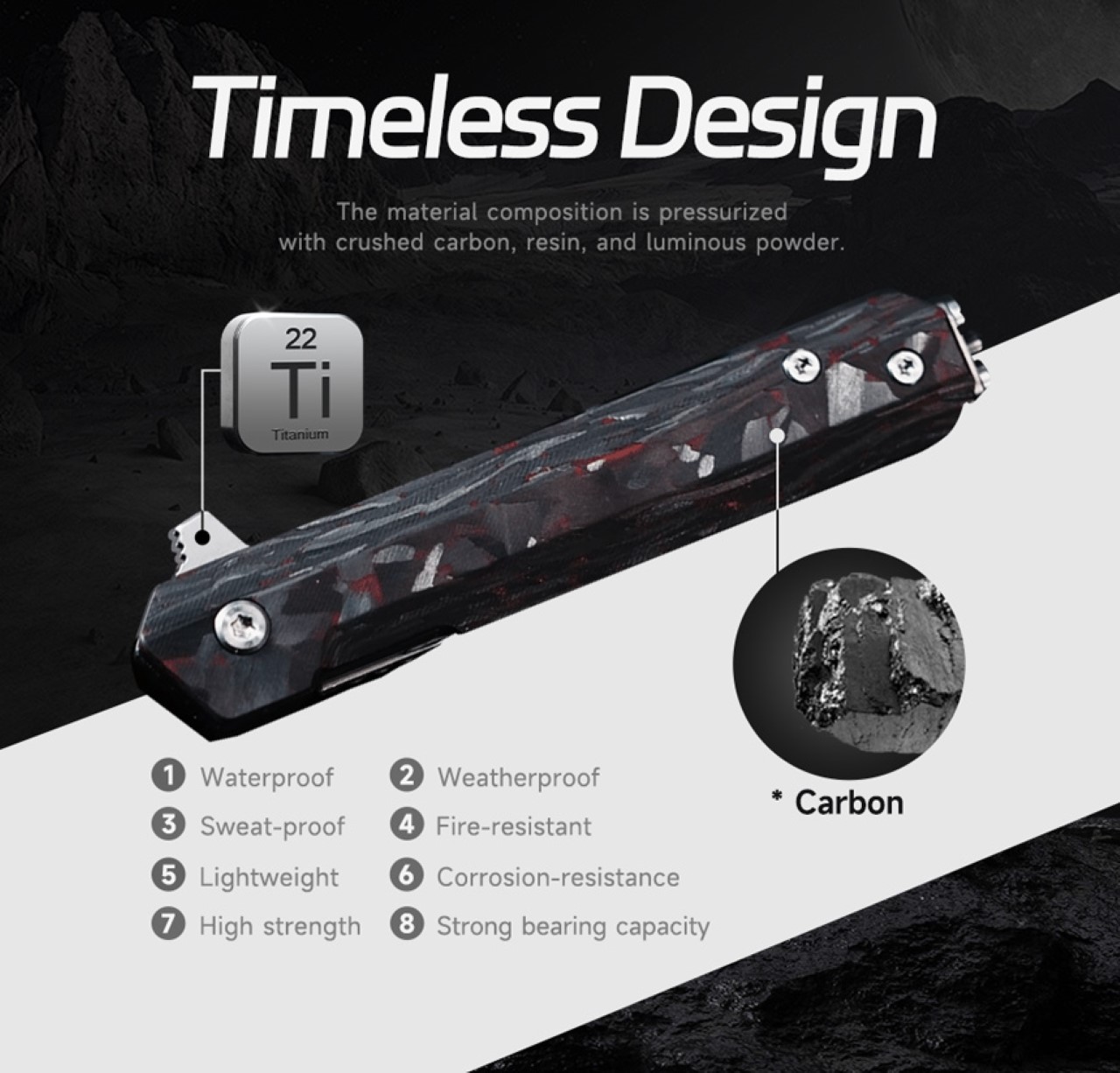
Smaller than even your index finger when closed, the WaspArmor is like the chihuahua of pocket knives, tiny yet so audacious and aggressive you’re bound to take it seriously. The knife comes with a few clever tricks up its sleeve, but it all starts with the titanium and carbon fiber construction. Both materials are known for their incredible strength-to-weight ratio, which made them the perfect selection for the WaspArmor knife. The Titanium body gives the knife its durability, resilience, and ability to withstand corrosion, etc. Three carbon fiber inserts on the sides of the handle give the WaspArmor a unique aesthetic while providing a mildly textured grip that makes holding and maneuvering the scalpel easy.

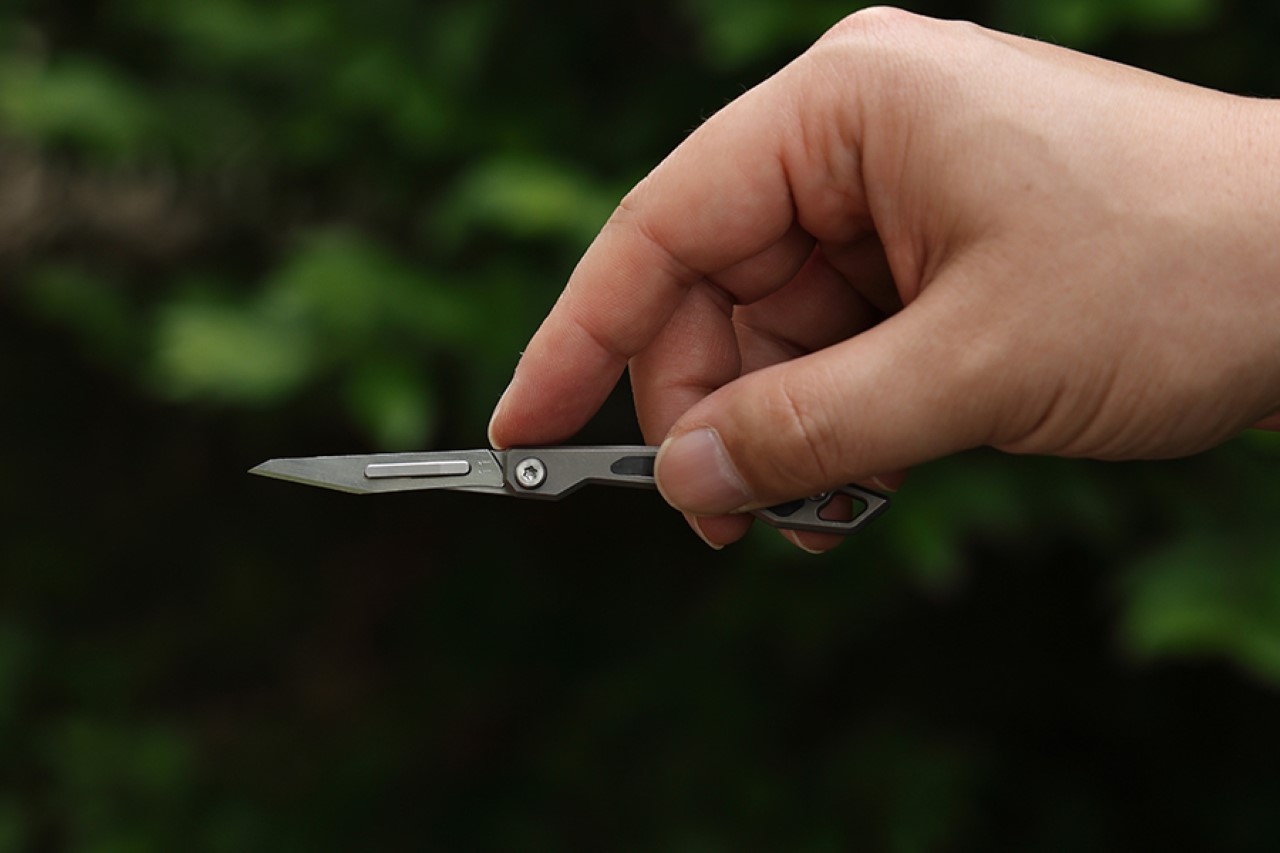
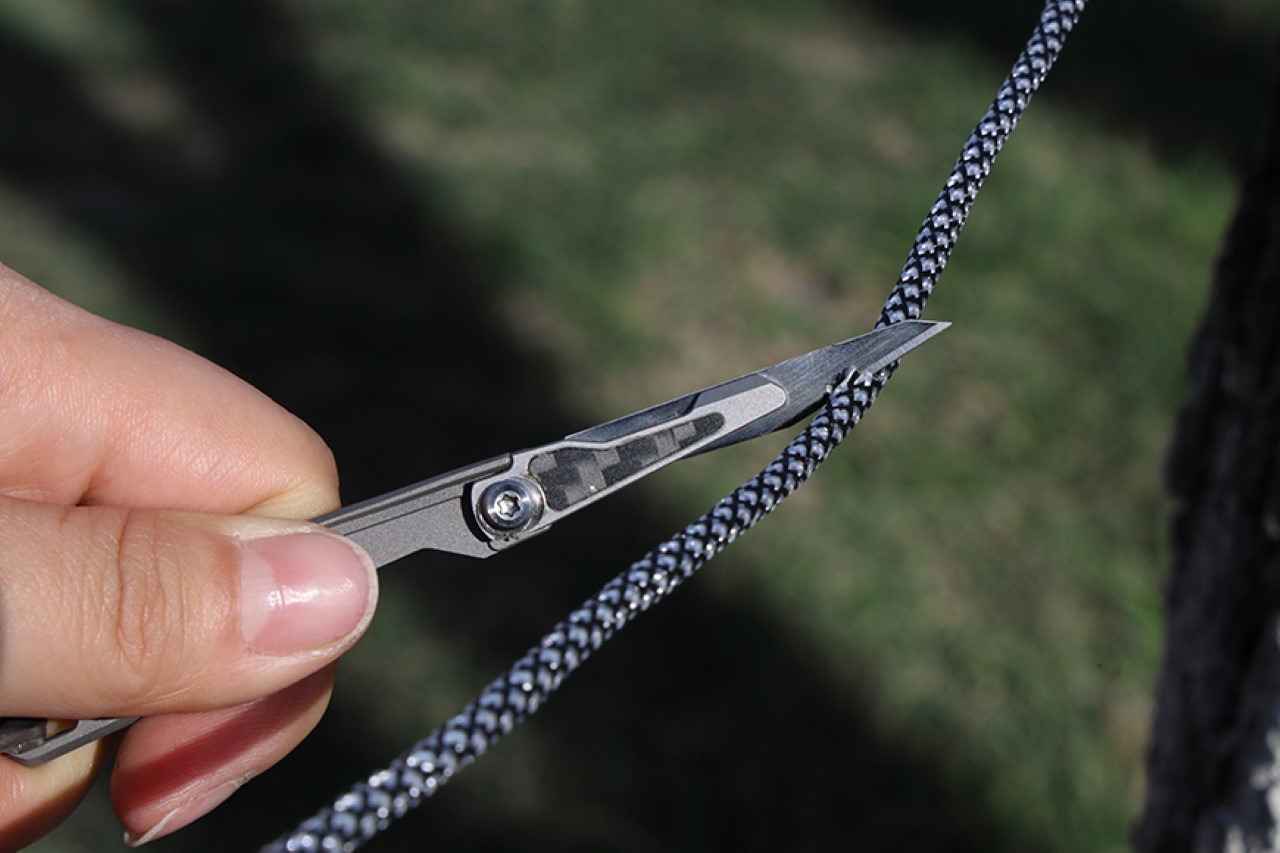
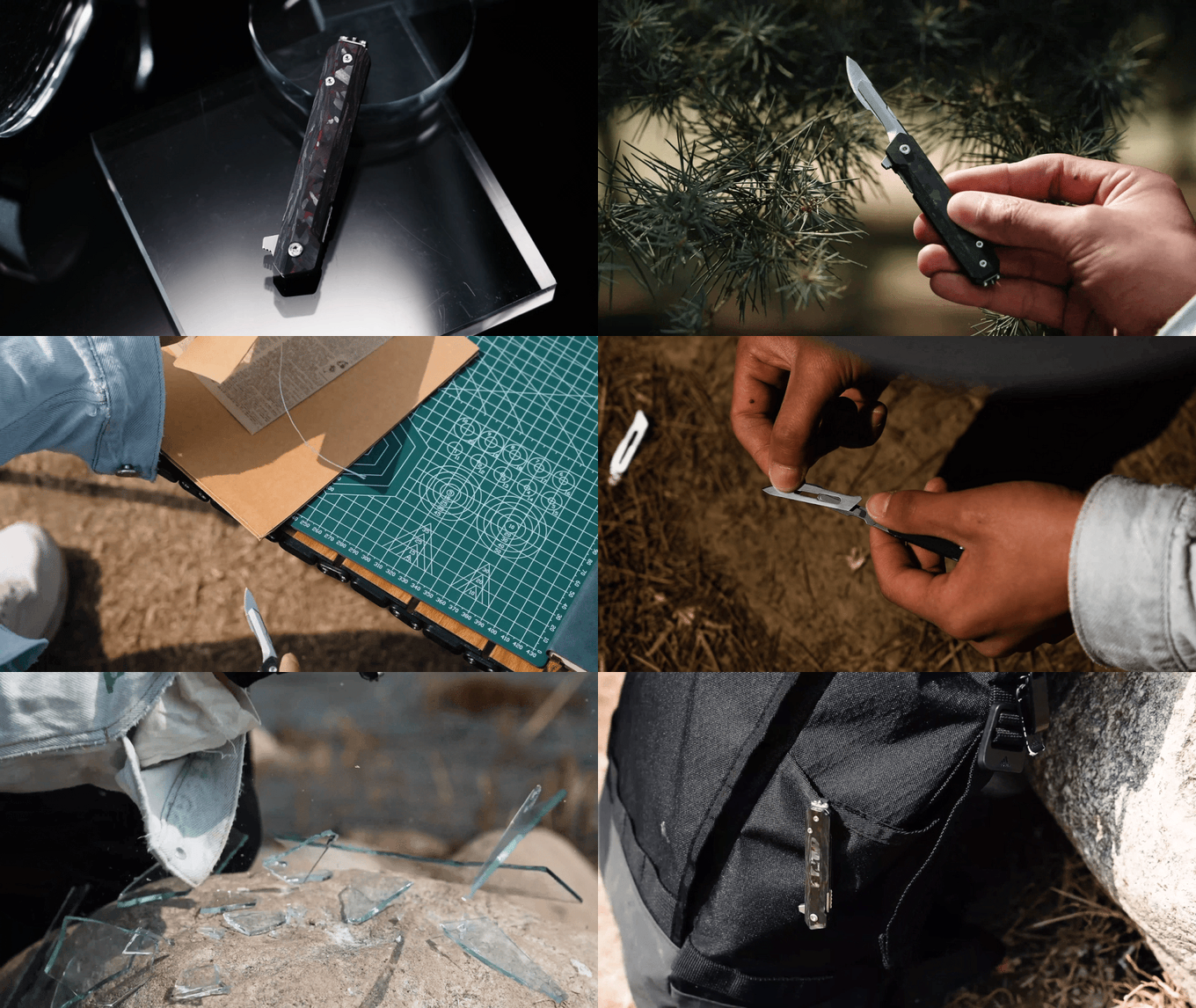
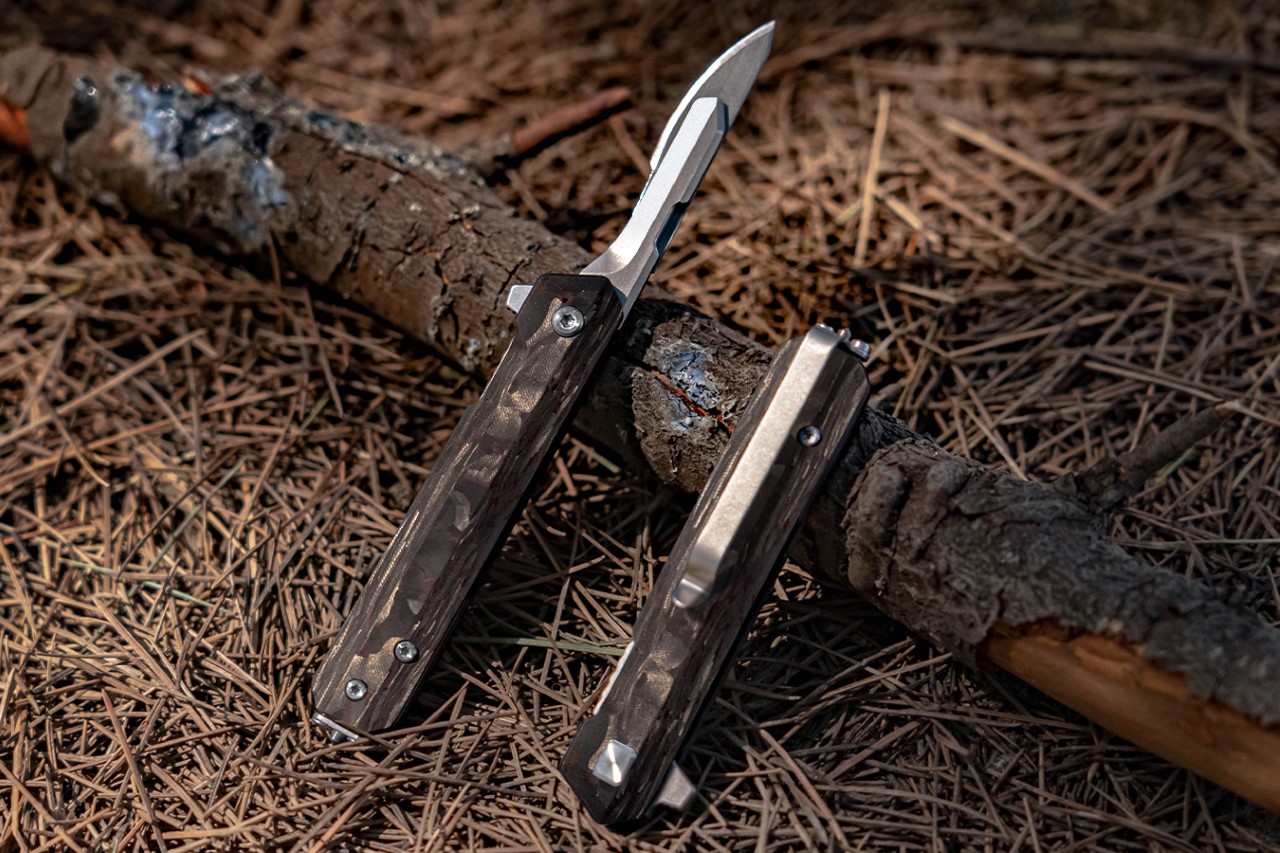
A simple fold-out arm reveals the WaspArmor’s small but seriously sharp blade. While most pocket knives come with their own built-in blades, the WaspArmor relies on standard Scalpel blades that clip right into the knife’s design. The reason for this is three-fold – for starters, scalpel blades are deadly sharp. They glide right through pretty much anything, making them perfect for opening boxes, piercing packets, whittling wood, or even slicing tough paracord. The pointed tip and sharp edge make the scalpel blade a formidable piece of hardware, and these blades are readily available, which means you can simply buy a pack of them (they even come in different designs) for replacing whenever.

The second reason is that instead of sharpening/maintaining your WaspArmor, you can simply ditch an old blade for a new one, saving energy and time, while keeping your knife fresh and usable for decades. The third reason is that a knife with a removable blade is invariably TSA-safe. In case you happen to have the WaspArmor on you while entering an airport, you can simply ditch the blade and carry the rest of the knife with you. Removing and replacing the blade on your WaspArmor is easy but not too easy that the blade comes apart on its own. The blade can only be removed when the knife is open at a 120° angle, ensuring it never comes undone by accident.

The WaspArmor’s compact design still has enough room for clever detailing. A hidden back-lock lets the blade snap into its open position, so the blade doesn’t accidentally shut while in use. The handle’s small design is still ergonomic to hold and use, which is quite a functional win for anyone who’s serious about buying and using this knife on a daily basis. The compact handle still has enough space for a cutout that you can slide a lanyard/carabiner through or even your keychain ring. The knife is small and light enough to sit among your keys, being accessible in a split second, whenever you need a cutting instrument.

That small, accessible size is what makes the WaspArmor so incredible. You could use it to open Amazon parcels, sharpen pencils, cut tiny twigs/branches outdoors, scrape a flint to start a fire, slice through a paracord, cut a seatbelt to get out of a messy situation, or even defend yourself with a tough, sharp blade that will never disappoint.

Each WaspArmor features a CNC-machined Titanium handle, with those Carbon Fiber inserts that give the overall knife its distinct character. Even though it’s a tiny piece of EDC, it’s designed to be reliably safe, with the blade holding its position, and the swinging arm locking in both open and closed modes, so your knife doesn’t accidentally disassemble or worse… hurt anyone. The WaspArmor Micro Folding Scalpel starts at a discounted $39, which includes the WaspArmor itself, along with 10 replaceable scalpel blades (you can buy more at any medical or stationery store), a titanium keyring, and free global shipping.

Click Here to Buy Now: $39 $55 (29% off) Hurry! Only 15 left of 560 units.

The post Tiny yet Mighty Titanium + Carbon Fiber Pocket Knife is Smaller and Lighter than your House Key first appeared on Yanko Design.

Compact MagSafe Flashlight is perfect for everything from iPhone photography to outdoor adventures

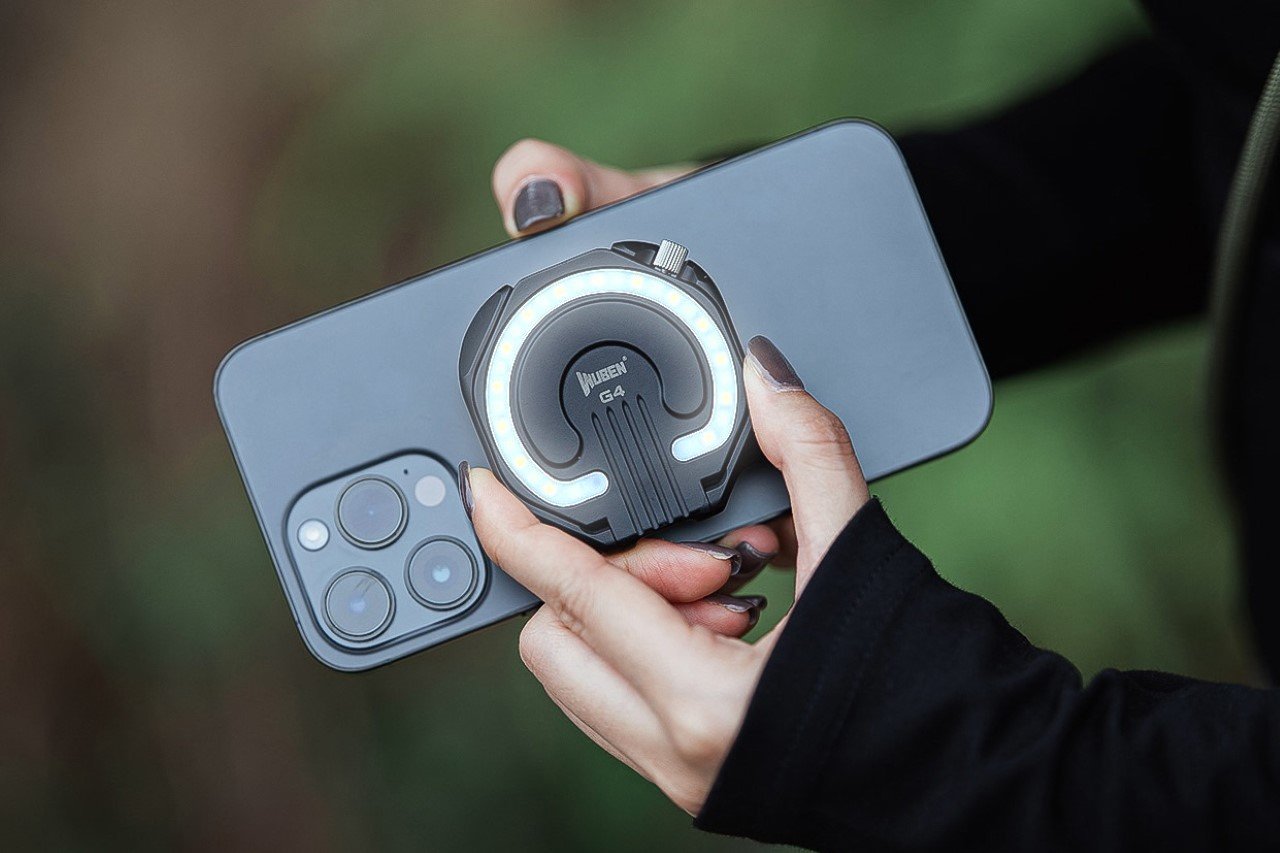
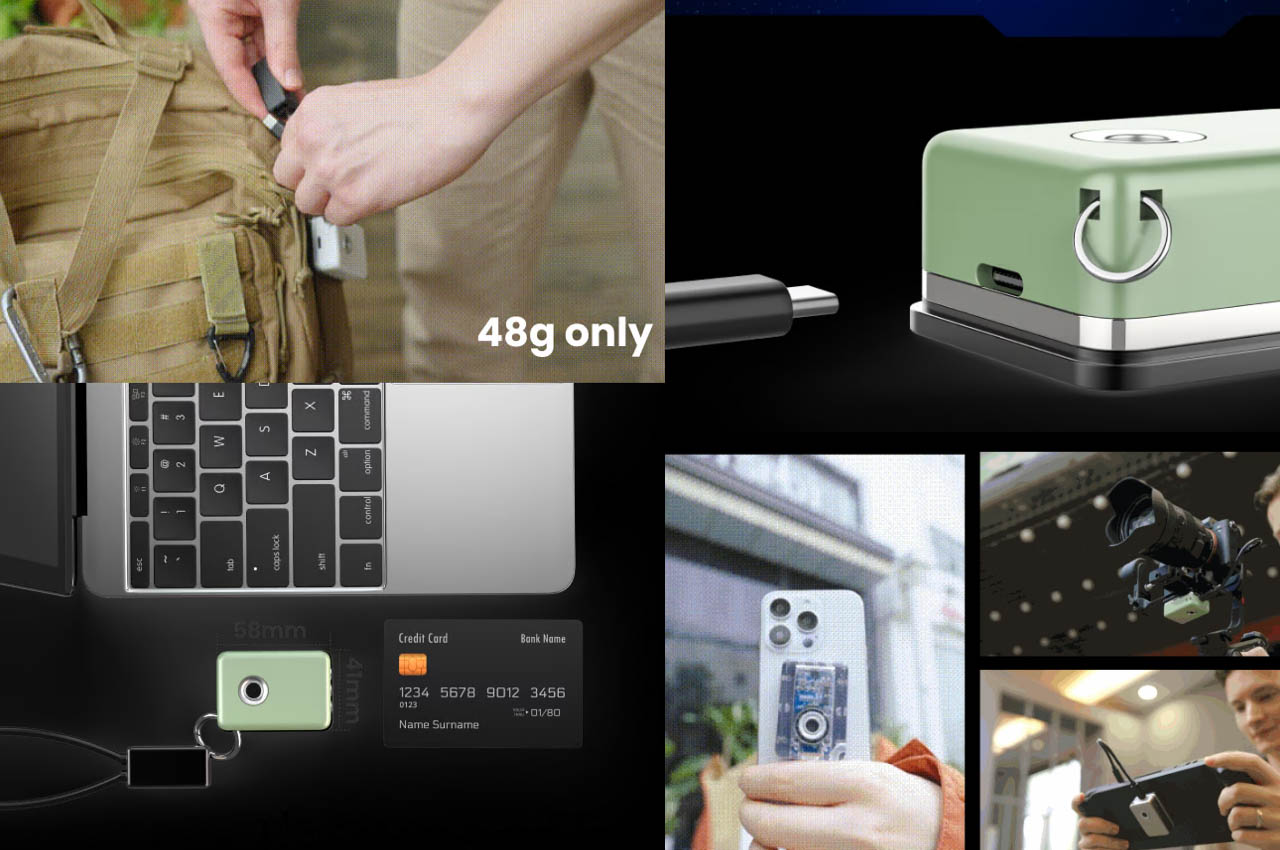
With a stunning 300 lumens of brightness, the WUBEN E1 is 6 times more powerful than your smartphone flashlight, making it perfect for selfies, vlogging, outdoor trips, emergencies, and even reading. The best part, it snaps right onto the back of your phone, giving you a compact ring-light on demand, so you don’t have to use your phone’s crummy excuse for a flashlight. And when you’re not using the light, you can use it as a stand to prop your phone up at any angle.

The WUBEN E1 is proof that MagSafe was an incredible idea. While Apple merely designed the feature to support chargers and attach wallets, MagSafe has spawned a whole host of third-party accessories, from finger grips to tripods, power banks, EDC, and now the E1 flashlight. A perfect example of an accessory that nobody knows they want but everyone definitely needs, the WUBEN E1 straps a powerful lighting device to the back of your phone. Much more effective than your smartphone’s native flashlight, the WUBEN E1 sports a ring of 28 LEDs that create a bright ring light that’s perfect for selfies or for exploring the outdoors. The light sits on a hinge that serves as a stand for your phone, while also letting you face the light forwards or backward, giving you the option of even using it for selfies. Plus, multiple brightness levels and three color temperature settings (warm, neutral, cool) give you way more freedom than your smartphone flashlight could even dream of.

Designer: WUBEN

Click Here to Buy Now: $39 $49 (20% off) Hurry, limited units at discounted price. Raised over $133,000.

For context, the iPhone 15’s flashlight maxes out at 50 lumens – ask any photographer and they’ll tell you that is far too little for effective flash photography. The WUBEN E1, however, overshoots the smartphone flashlight’s brightness by about 6x, giving you a light that’s much more effective in a variety of scenarios, whether it’s finding your keys in the dark or taking beautiful low-light selfies.

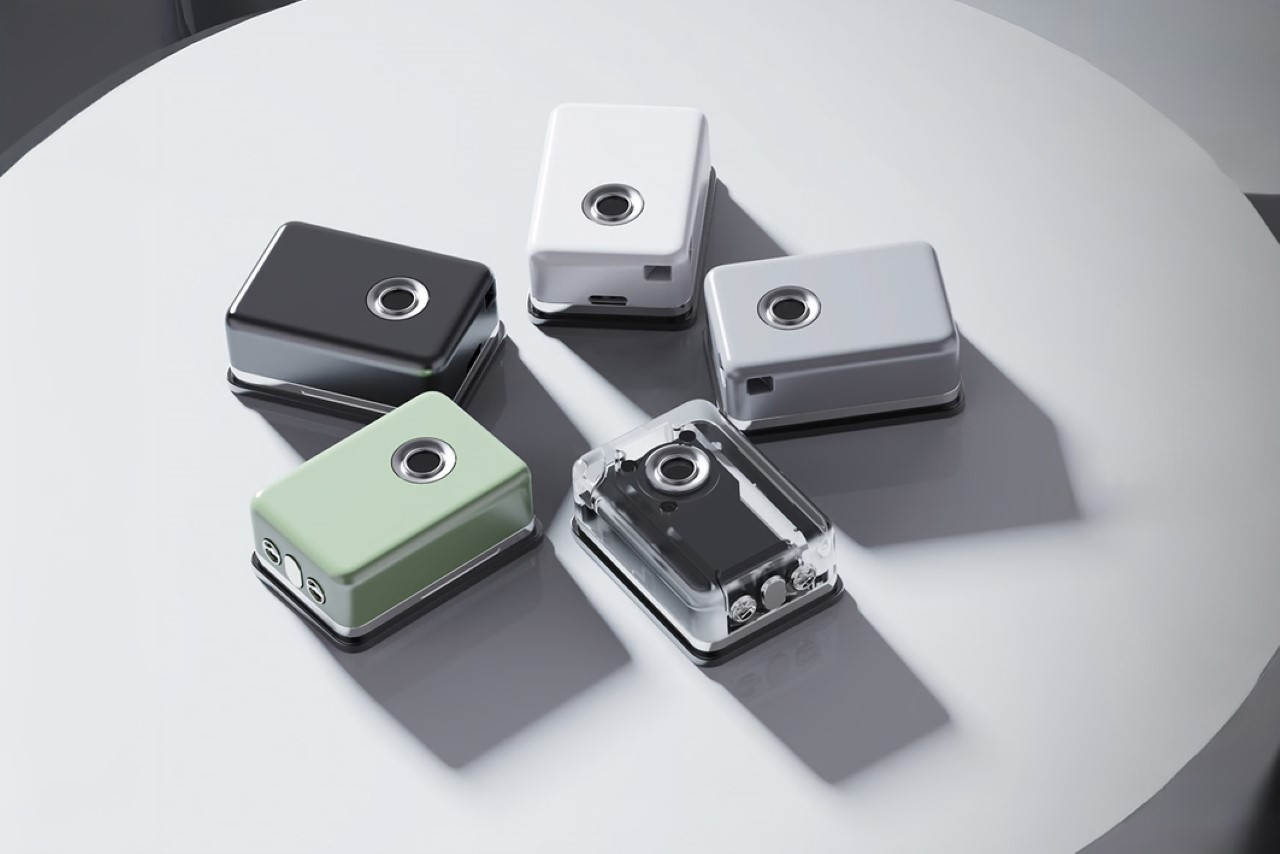
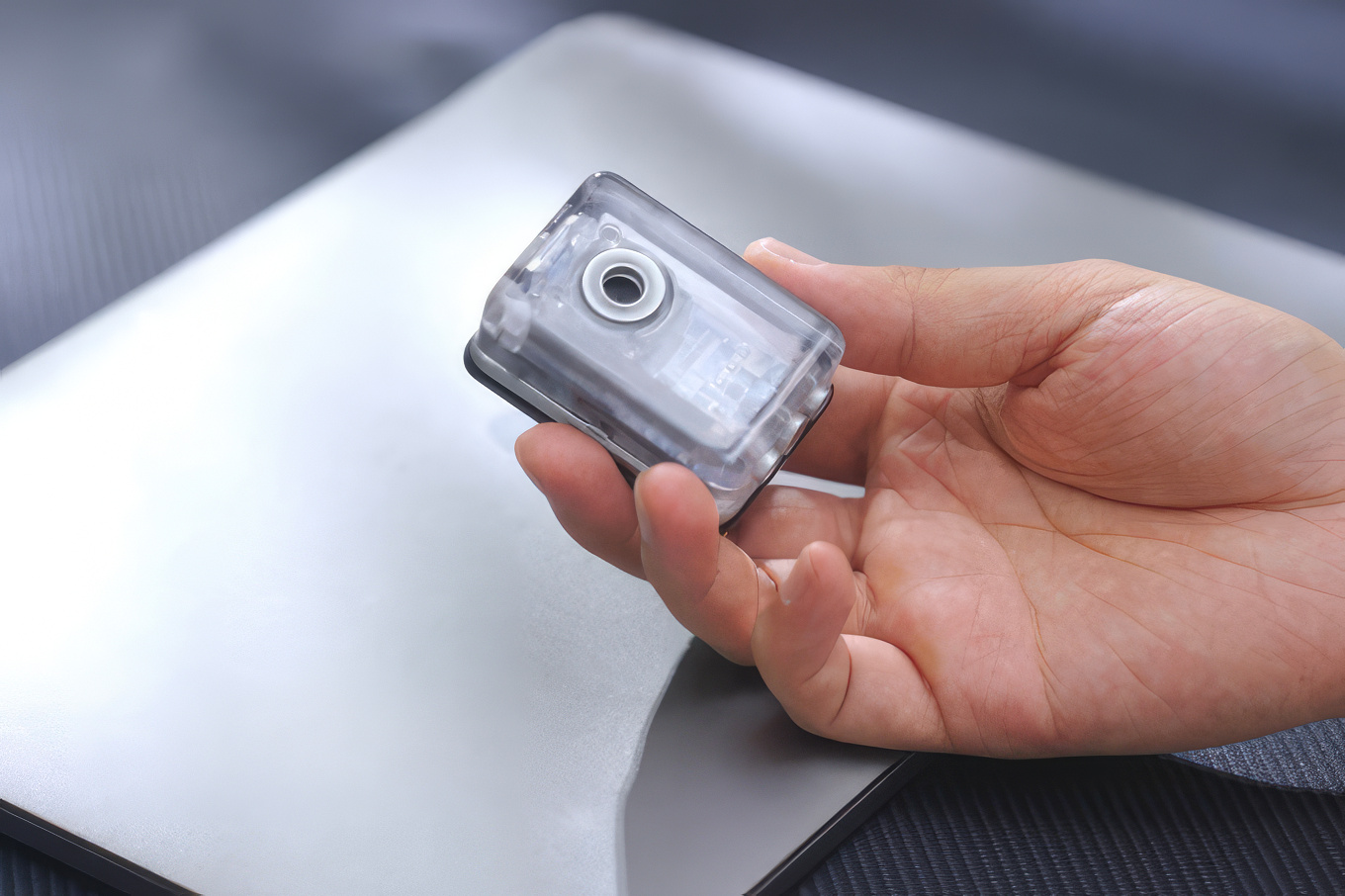
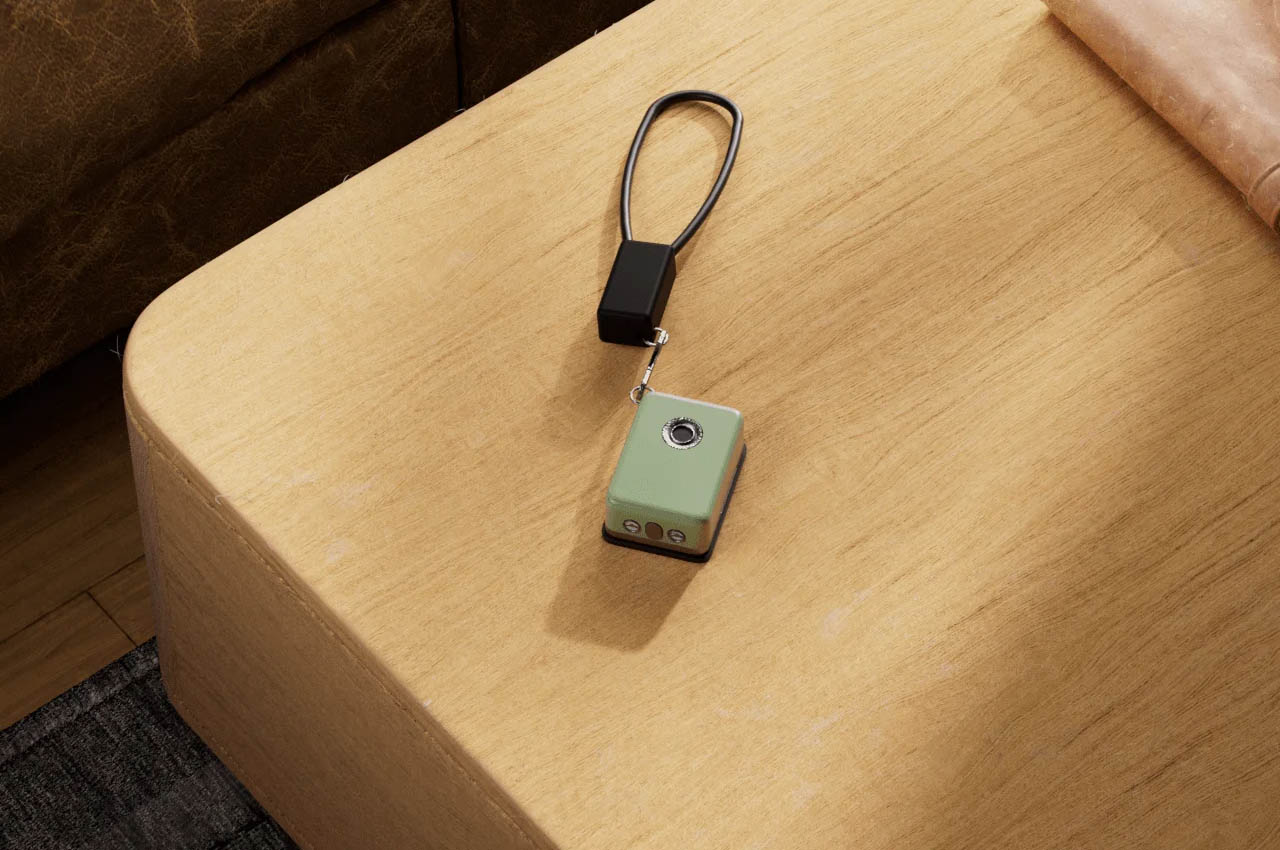
Slightly smaller than a hockey puck, the WUBEN E1 packs a series of 28 LEDs in its compact design, and can be used either independently or while securely snapped to the back of your MagSafe-compatible smartphone. On its own, the WUBEN E1 is a pretty handy little flashlight that can be held in your hand, attached to the hood of your car (or any metal surface), or even propped up on any flat-ish plane for instant lighting. Snap it onto the back of your smartphone, however, and you’ve got yourself a powerful tool for selfies, vlogging, or even outdoor adventures.

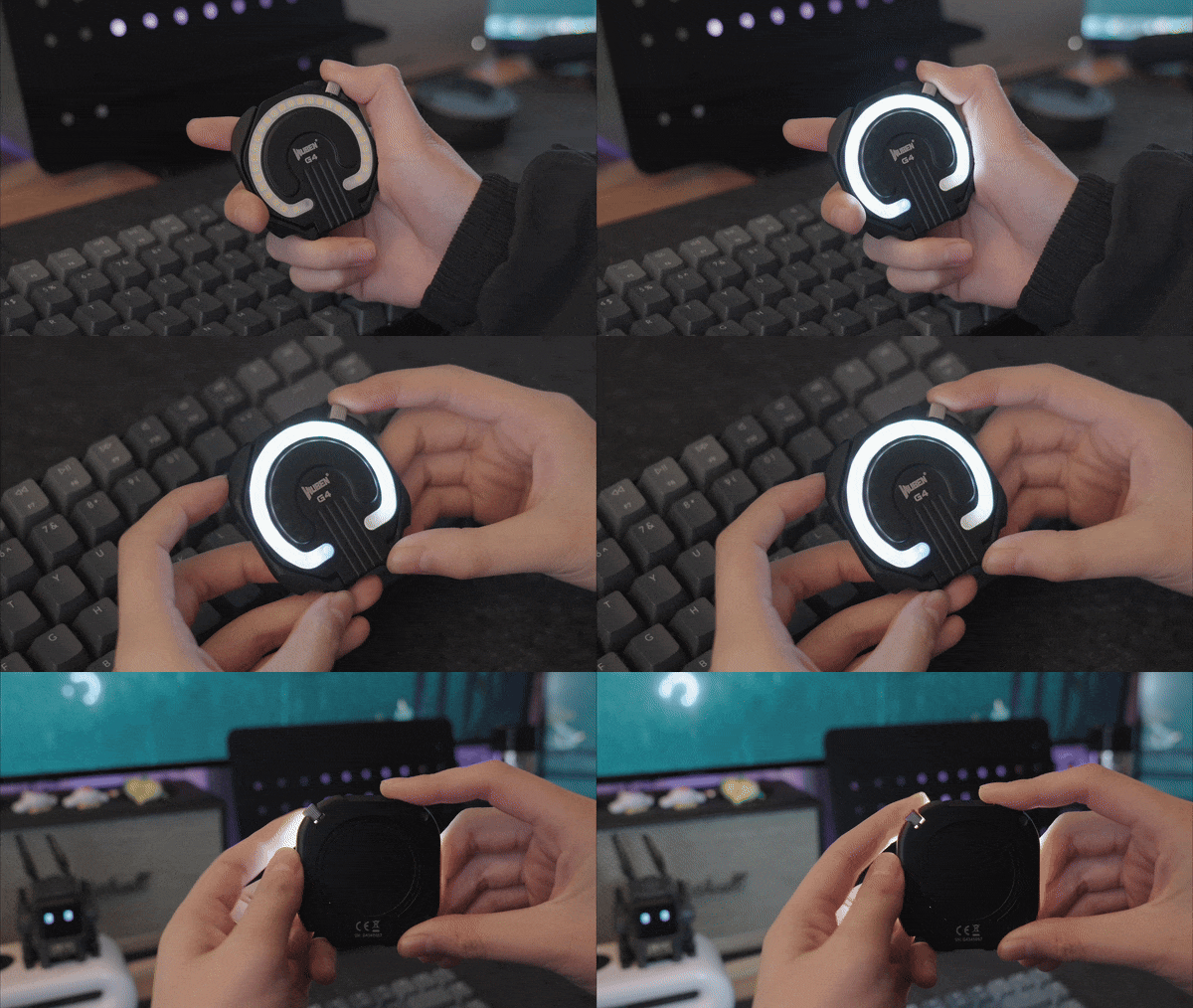
The WUBEN E1 operates entirely thanks to a crown located on the rim beside the LEDs. Similar to the ones found on a watch, the crown can be pushed to activate the light or cycle through temperature settings, and can be rotated to adjust the brightness. Keeping things gloriously simple, the E1 doesn’t come with an app or any settings that would complicate its use. It’s simply a great, intuitive, sleek EDC light that just so happens to attach to the back of your phone.

Attaching the WUBEN E1 to your phone gives you two distinct benefits. The light’s hinged arm lets you use the E1 as a stand for your phone, propping it up in pretty much any angle you choose. The second, more obvious benefit, is the fact that it replaces your phone’s flashlight with something far more versatile and powerful. The LED ring is 6x more powerful than your phone’s native flashlight, and the hinged arm lets you face the lights anywhere, creating a great makeshift camera light that’s just wonderful for low-light shots, vlogs, or even vanity selfies. Weirdly enough, the LED ring also makes your iPhone look somewhat like a Nothing Phone (1), which feels ironic and slightly hilarious. iPhone users get the last laugh, however, because the E1 is so much more capable than the Nothing Phone’s notification LEDs.

Each E1 comes made from lightweight Magnesium alloy, giving the EDC flashlight a weight of just 36 grams or 1.26 ounces. At just 6mm thin, the WUBEN E1 fits comfortably onto the back of your phone without really jutting out or obstructing regular phone usage. It’s also slim enough to slide directly into your pocket with or without your phone, reinforcing its portability. A 320mAh battery gives the flashlight anywhere between 30 minutes of usage (on its brightest setting) or 50 hours of on-time (on its lowest setting), while a USB-C port on the base of the light lets you charge your device.

The WUBEN E1 starts at $39, and for $69 you’ll get the E1 along with a metal tripod stand/selfie stick that sits between the flashlight and your phone, turning your cutting-edge phone into a comprehensive photo and videography device. The Wuben E1 ships globally starting July 2024.

Click Here to Buy Now: $39 $49 (20% off) Hurry, limited units at discounted price. Raised over $133,000.

The post Compact MagSafe Flashlight is perfect for everything from iPhone photography to outdoor adventures first appeared on Yanko Design.

Ultra-Light Tactical Titanium Pocket Knife Tips Scales at Just 1.3 Ounces

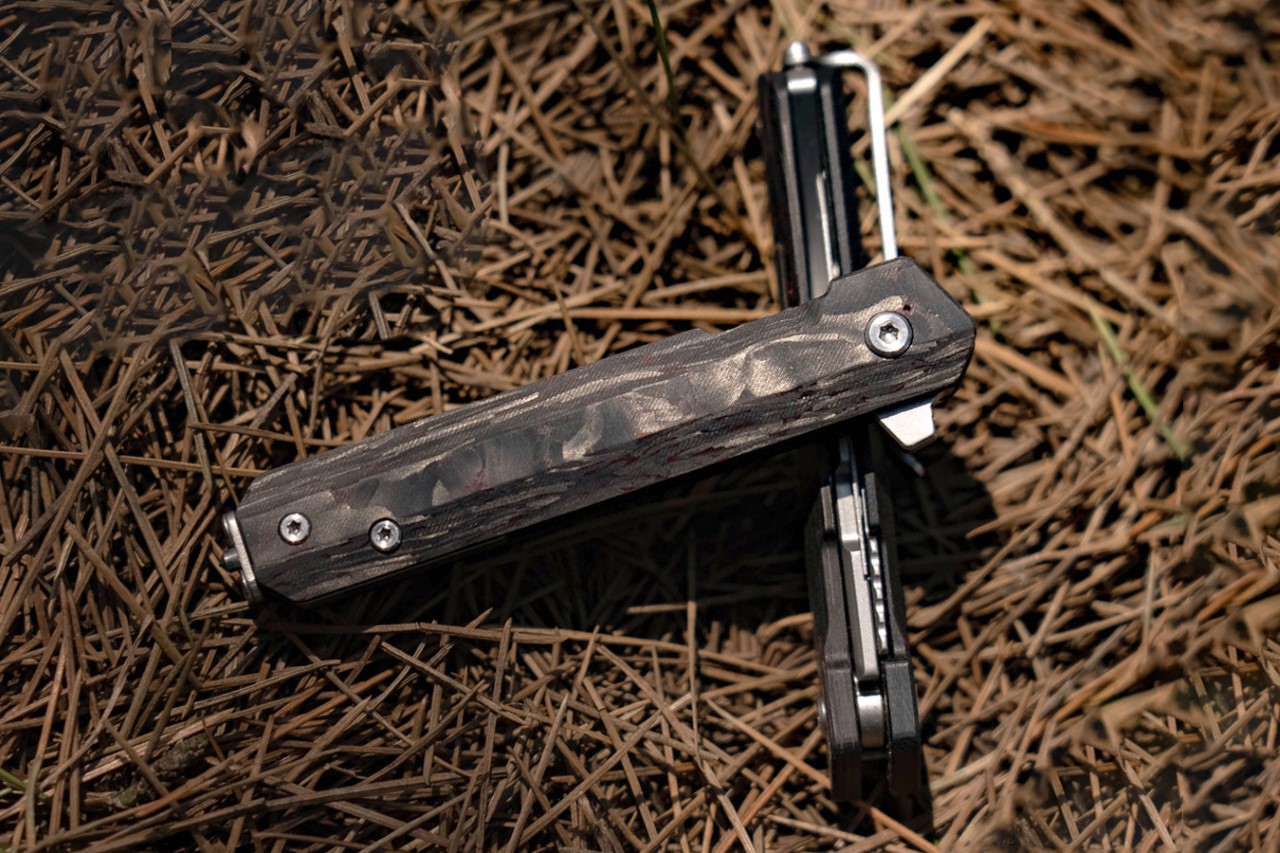
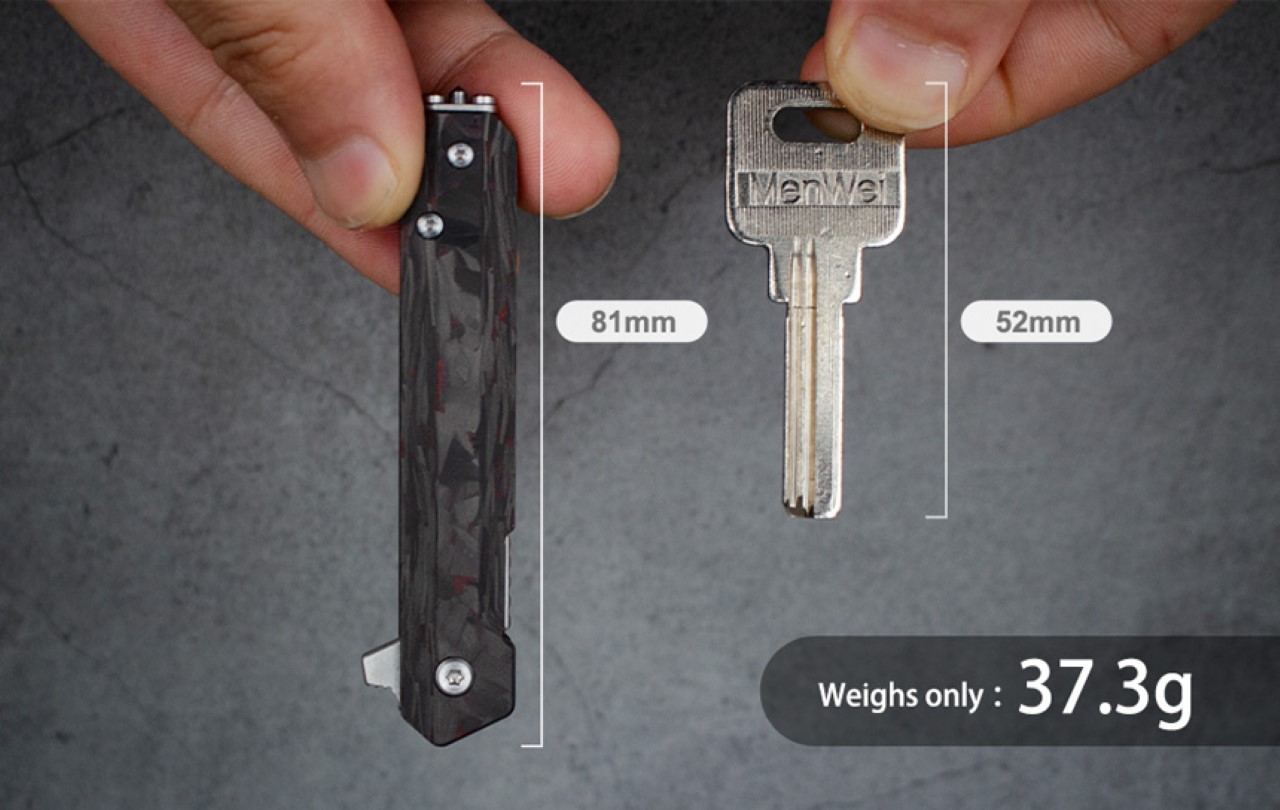
There are multiple schools of thought when it comes to pocket knives – you’ve got one school that says pocket knives (or any EDC) should be highly rugged, durable, and scary-looking so as to fend off enemies. Another says that pocket knives should serve as multitools that have a myriad of functions to help you overcome any situation. The third school of thought, and the one that I subscribe to personally, is that a pocket knife should be useful when you need it, and invisible when you don’t. The SerpBlade falls squarely into the third school of thought while teasing the first two ever so slightly. At 37 grams or 1.3 ounces, the SerpBlade is lighter than an empty AirPods case (that’s for you metric-hating folks!), but it packs a scalpel blade at one end, and a tungsten steel glass breaker at the other end. It’s also made of titanium and carbon fiber, two of the most durable and resilient materials known to mankind. Whether it’s opening boxes or defending yourself from life-threatening situations, the SerpBlade comes in very handy, and when you’re done, its lightweight compact design disappears into your pocket like thin air.

Designer: TrekGear

Click Here to Buy Now: $59 $79 (25% off) Hurry! Only 9 days left.

The beauty of the SerpBlade lies in its sheer simplicity. Come and think about it, all of the pocket knife’s features can be broken down into four distinct parts – its blade, its glass-breaker, its materials, and the overall design.

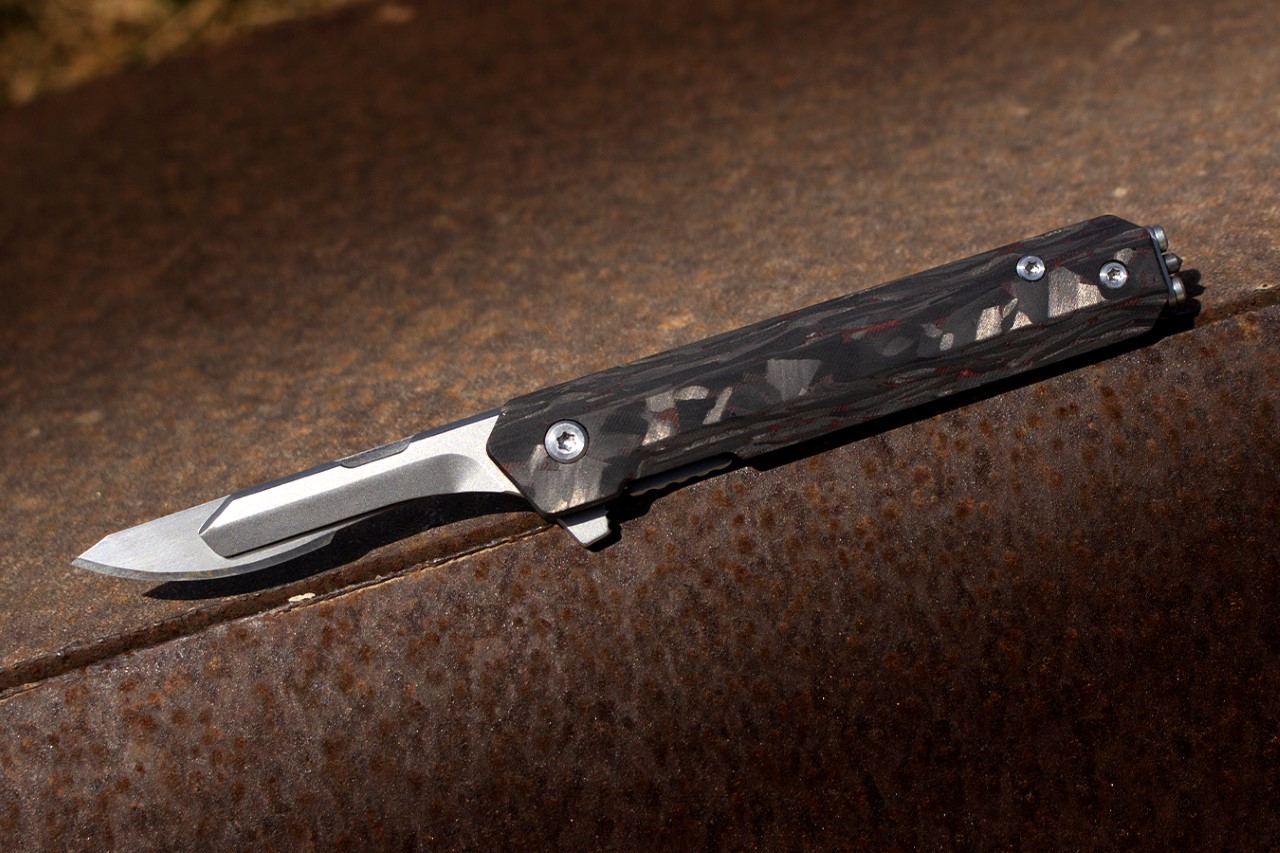
The SerpBlade strangely enough doesn’t come with a blade built-in. Instead, it relies on any standard scalpel-style surgical blade that snaps right into the knife’s blade holder. Made from surgical steel, these blades are ridiculously sharp (ask any doctor or surgeon), and can handle everything from cardboard and paper to even cutting through wood. Readily available pretty much everywhere, the surgical scalpel blades come in a variety of profiles, so you can choose a shape that suits your needs best. A drop-point or clip-point is usually the crowd favorite, but a nice tanto-style blade really gives the SerpBlade a wicked demeanor. The fact that the SerpBlade ditches a built-in blade for a removable one gives you two significant advantages – for starters, you don’t need to worry about ever having to sharpen your blade again. If a blade grows dull or even breaks, simply ditch it for a new one. It’s simple, fast, and frankly, sustainable because you aren’t throwing out an entire knife just because the blade is damaged or dull. The second major advantage is that the SerpBlade, as a result, is TSA-friendly, as now you can simply ditch the blade and carry the EDC with you while traveling anywhere.

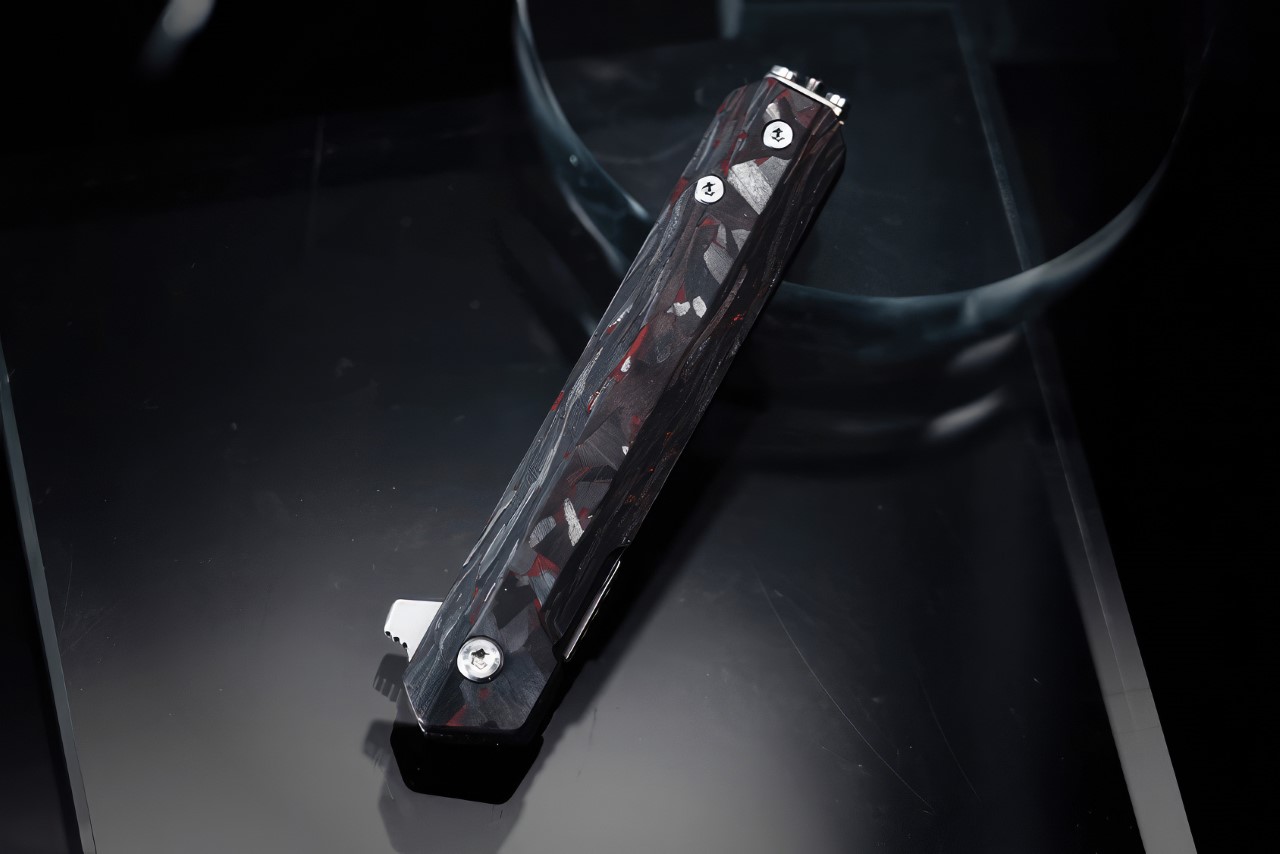
Flip the knife over and you’ve got a tungsten-steel glass-breaker on the reverse end. A great addition to the SerpBlade (I don’t know why more EDC knives don’t have glass breakers in them), this little feature comes in extremely handy when you need to make a quick getaway. The glass-breaking tip can easily shatter through hard laminated glass panels like the ones found in cars, giving you the ability to easily escape in the case of an emergency. The sharp surgical blade CAN cut through seatbelts too, although a serrated knife or a seatbelt cutter would be much more suited to the specific task at hand.

The materials play a crucial role in the SerpBlade’s appeal, given that they allow the knife to be durable, maneuverable, and so easy-breezy to use that you’ll find yourself reaching for the SerpBlade over other EDC knives. The pocket knife comes with a titanium armature that’s sandwiched between a two-piece carbon fiber handle. Sure, this makes the knife lightweight, it also makes the knife incredibly durable (you’re sure to use it for a lifetime if not more), but the combination of titanium and carbon fiber allows the SerpBlade to also be fire-resistant, waterproof, and corrosion-proof. Titanium doesn’t rust or oxidize the way steel does, and both titanium and carbon fiber can resist high temperatures while also being relatively inert to chemicals. In short, your lightweight knife is also 10-20x more durable than an all-steel knife or a steel knife with wooden handles.

On the design front, the SerpBlade is as slim and slender as they come. At 81mm in length (just over 3 inches), the SerpBlade is the perfect blend between compact and ergonomic. A deep pocket clip allows you to securely carry your SerpBlade in your pocket, and a lanyard hole (that’s now been added to the final design) lets you attach your SerpBlade to a carabiner or paracord too. It was built to be your trusty sidekick for trekking, camping, hunting, gardening, wilderness survival, emergency use, and even something as benign as opening boxes and envelopes or papercraft.

The knife features a single-handed flip-to-open mechanism that deploys in under a second, letting you go from 0 to 100 in the blink of an eye. A roller bearing mechanism makes the flip-out buttery smooth, while a liner lock holds the blade in place while you’re using the knife, ensuring it doesn’t shut on you mid-job. The titanium arm that holds the surgical scalpel blade lets you change blades in a jiffy too. All you need to do is slide out the old blade and add a new one and you’re good to go. Change blades whenever an old one goes dull or breaks, or even if you’re in the mood for something different!

The SerpBlade comes in a single color, although each carbon fiber handle has a unique flake pattern that differs from knife to knife. The EDC starts at a discounted $59, which includes the pocket knife itself, along with ten No.23 surgical blades included. The Serpblade ships globally for free starting July 2024.

Click Here to Buy Now: $59 $79 (25% off) Hurry! Only 9 days left.

The post Ultra-Light Tactical Titanium Pocket Knife Tips Scales at Just 1.3 Ounces first appeared on Yanko Design.

This tiny rapid-deploy tactical pocket knife is like the Napoleon of EDC

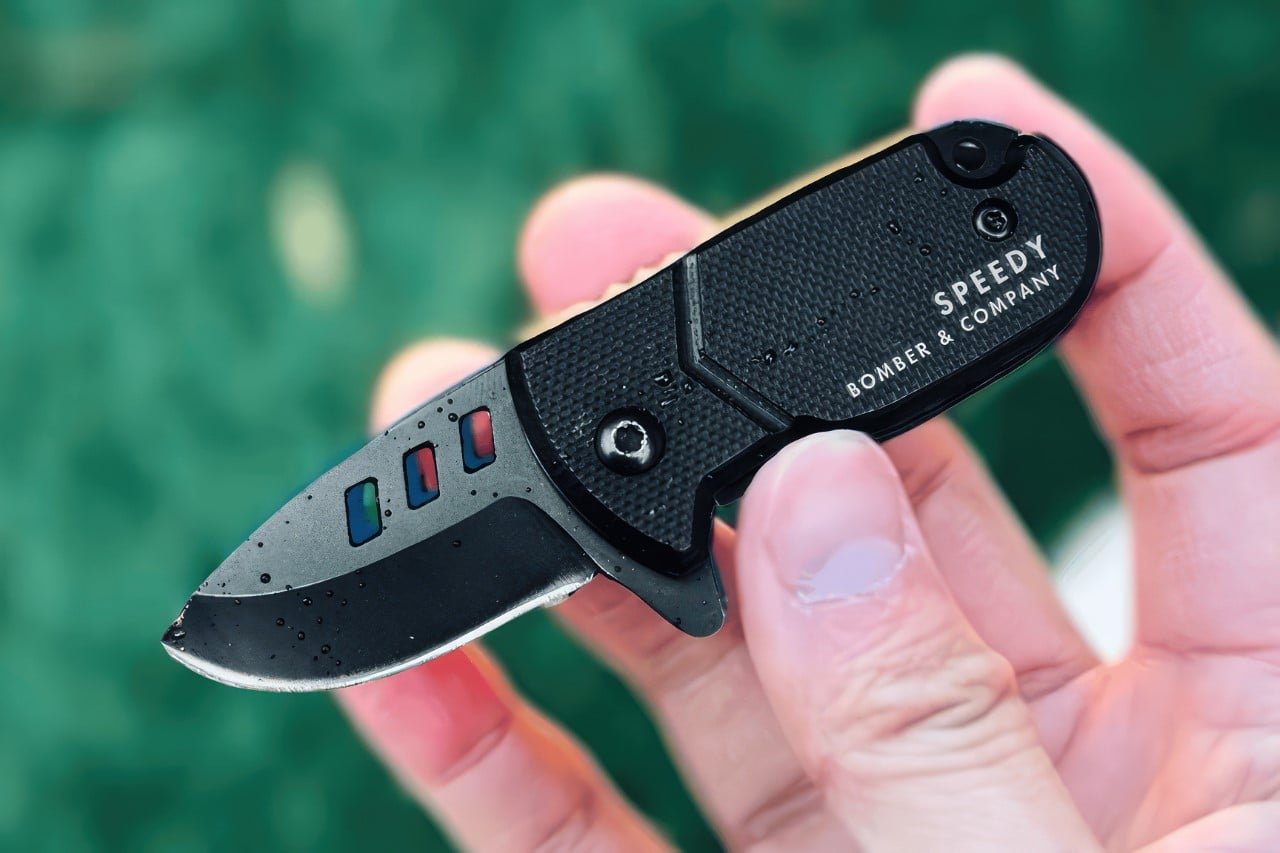
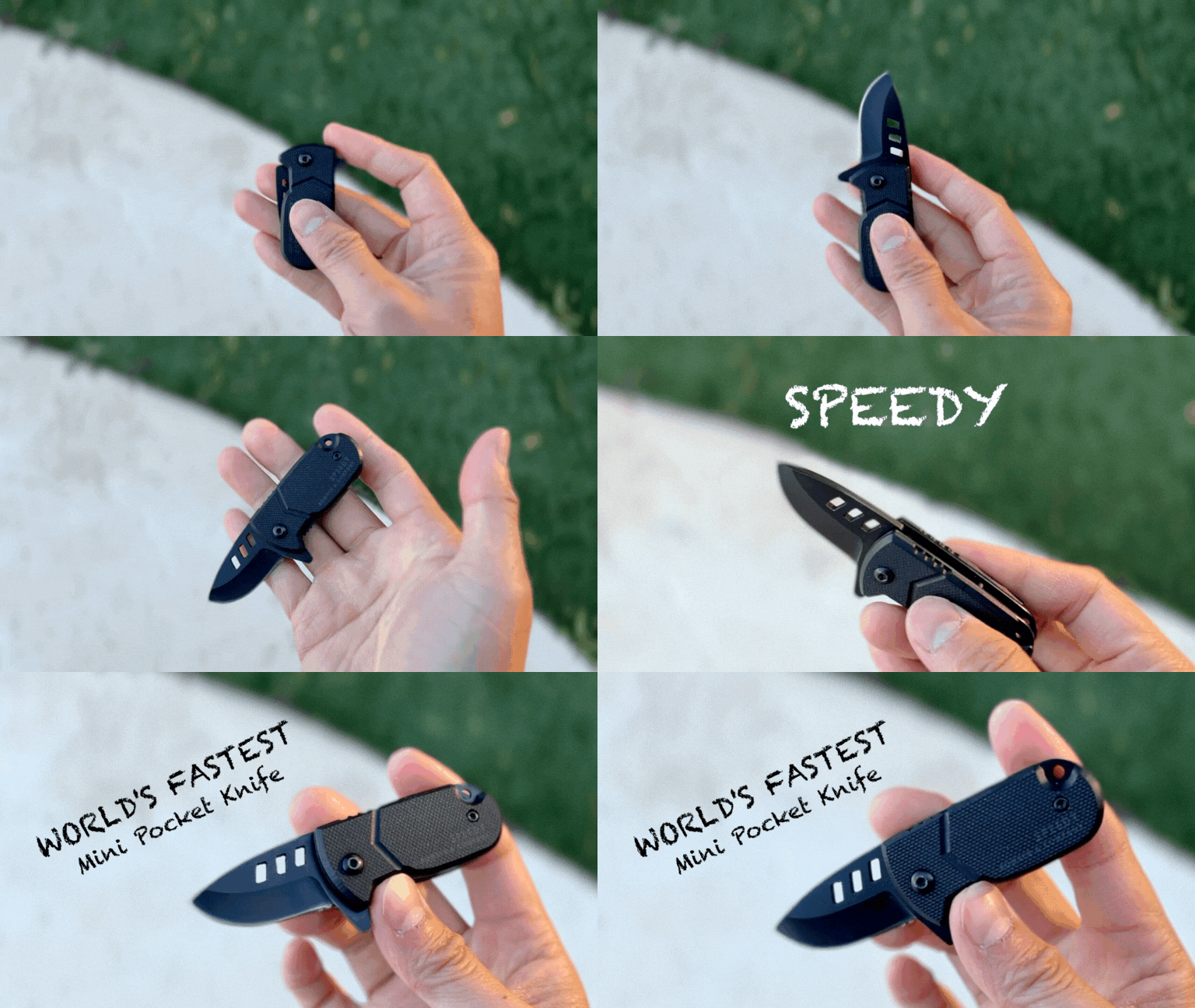
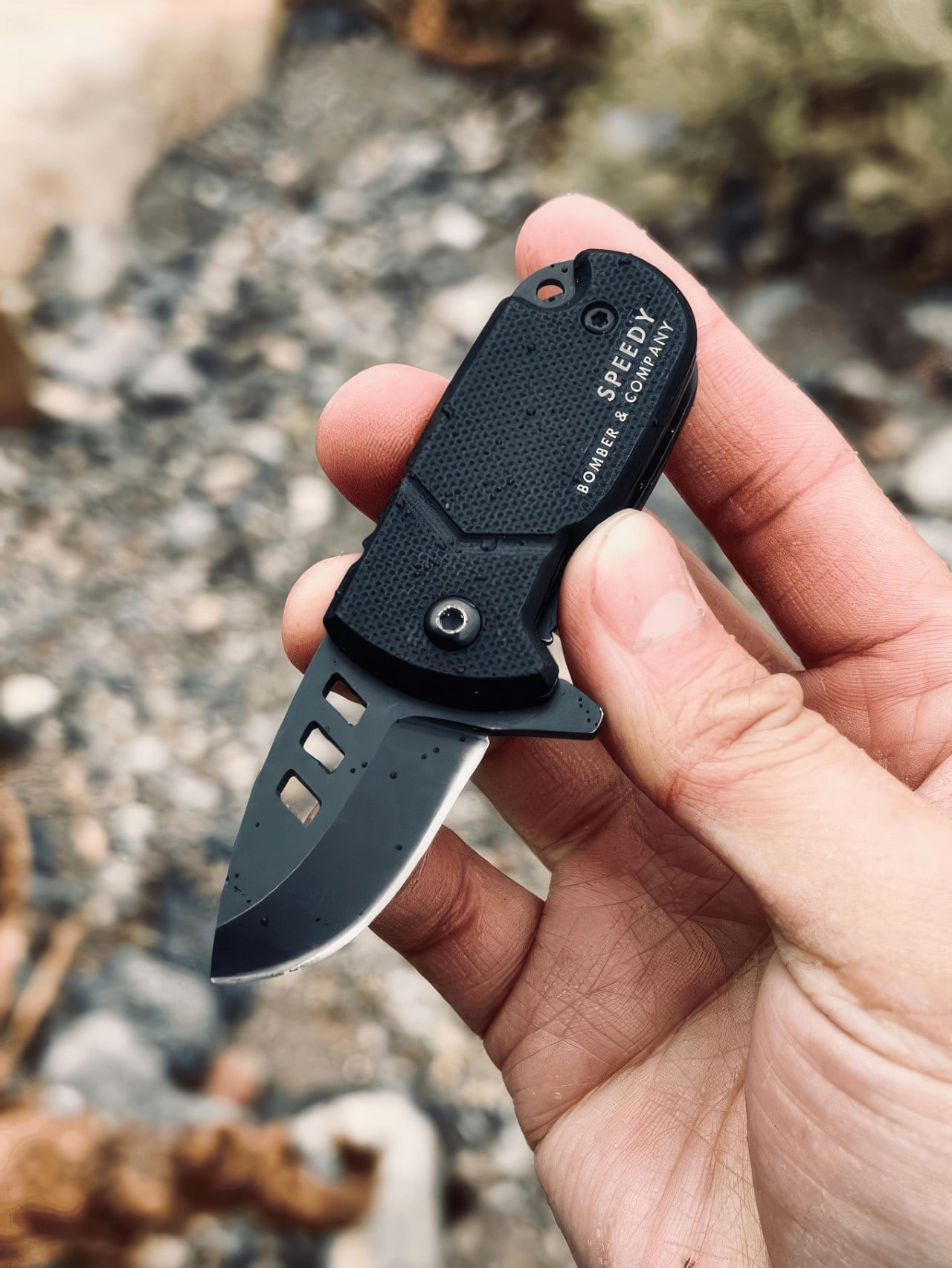
The name Speedy seems rather apt for the world’s fastest-deploying tiny pocket knife, don’t you think?

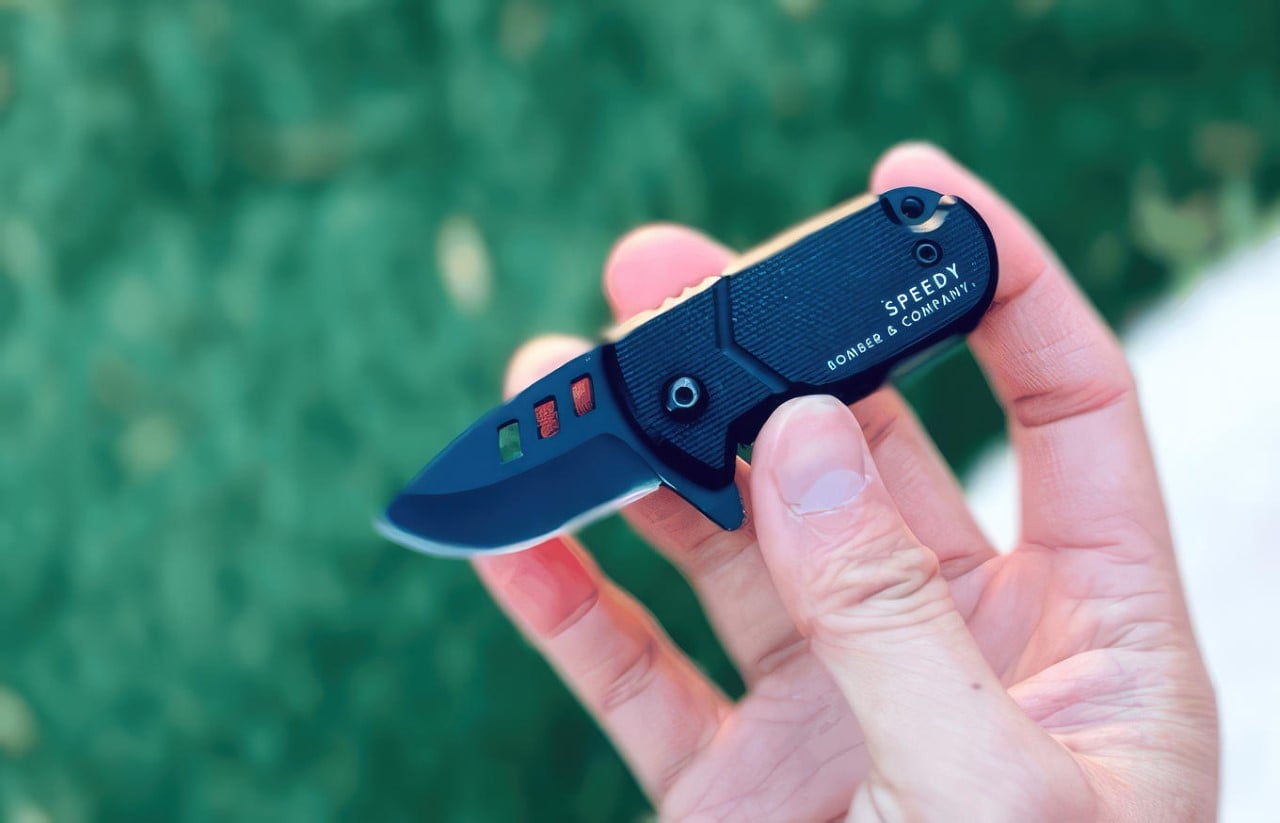
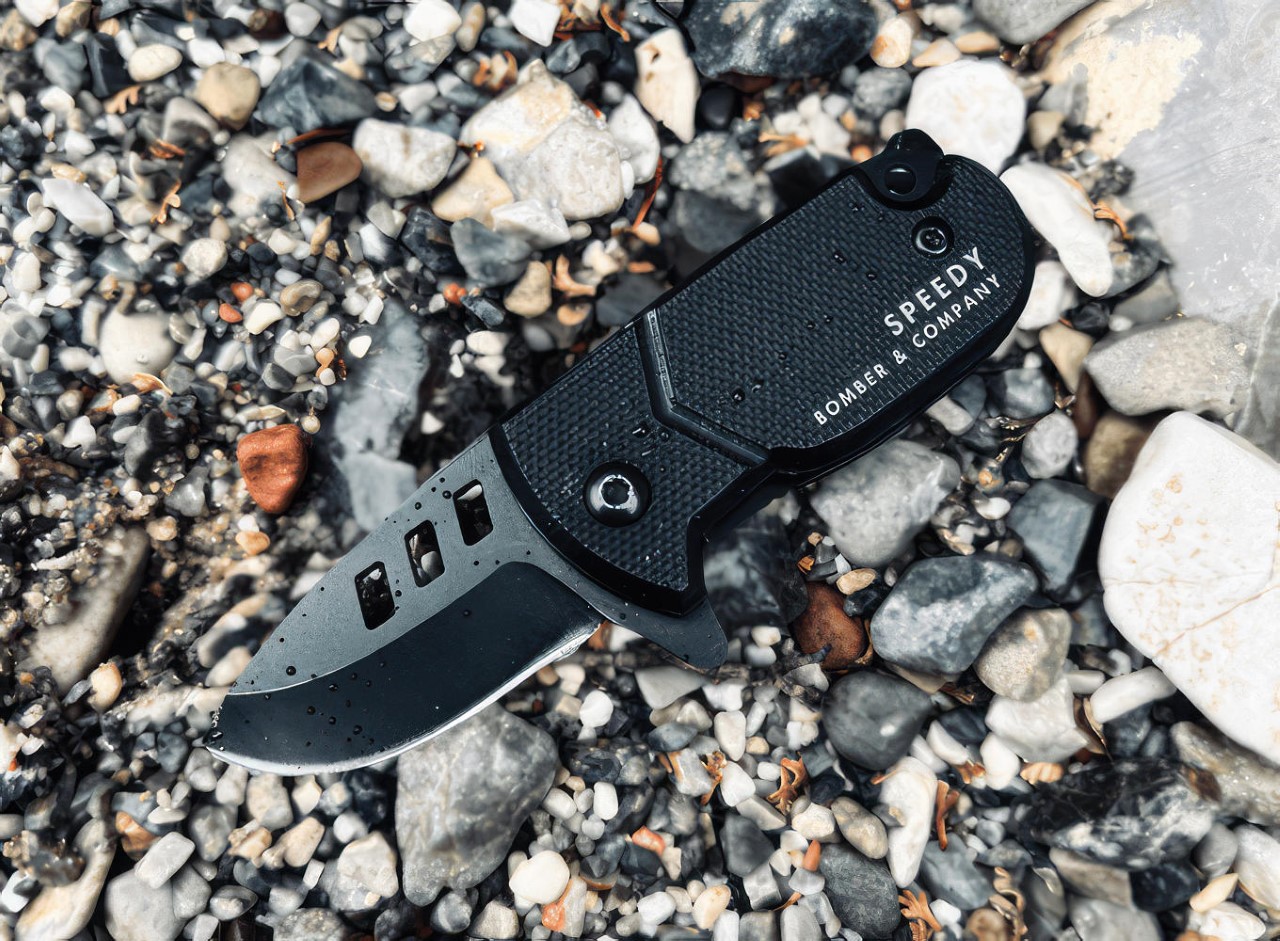
With a spring-loaded action that allows you to flip open the blade in record time, the Speedy is a tiny yet handy EDC that’s roughly the size of your car’s key fob (but slimmer). Armed with a 440 Carbon stainless steel blade encased within a G10 fiberglass handle, the entire knife weighs just 1.6 ounces, measures a minuscule 2.2 inches (58 millimeters), and has a tiny 1.45-inch (37 millimeters) blade that may seem diminutive, but is more than capable of being your tactical sidekick in an emergency.

Designer: Bomber & Company

Click Here to Buy Now: $25 Hurry, only 13 days left! Raised over $275,000.

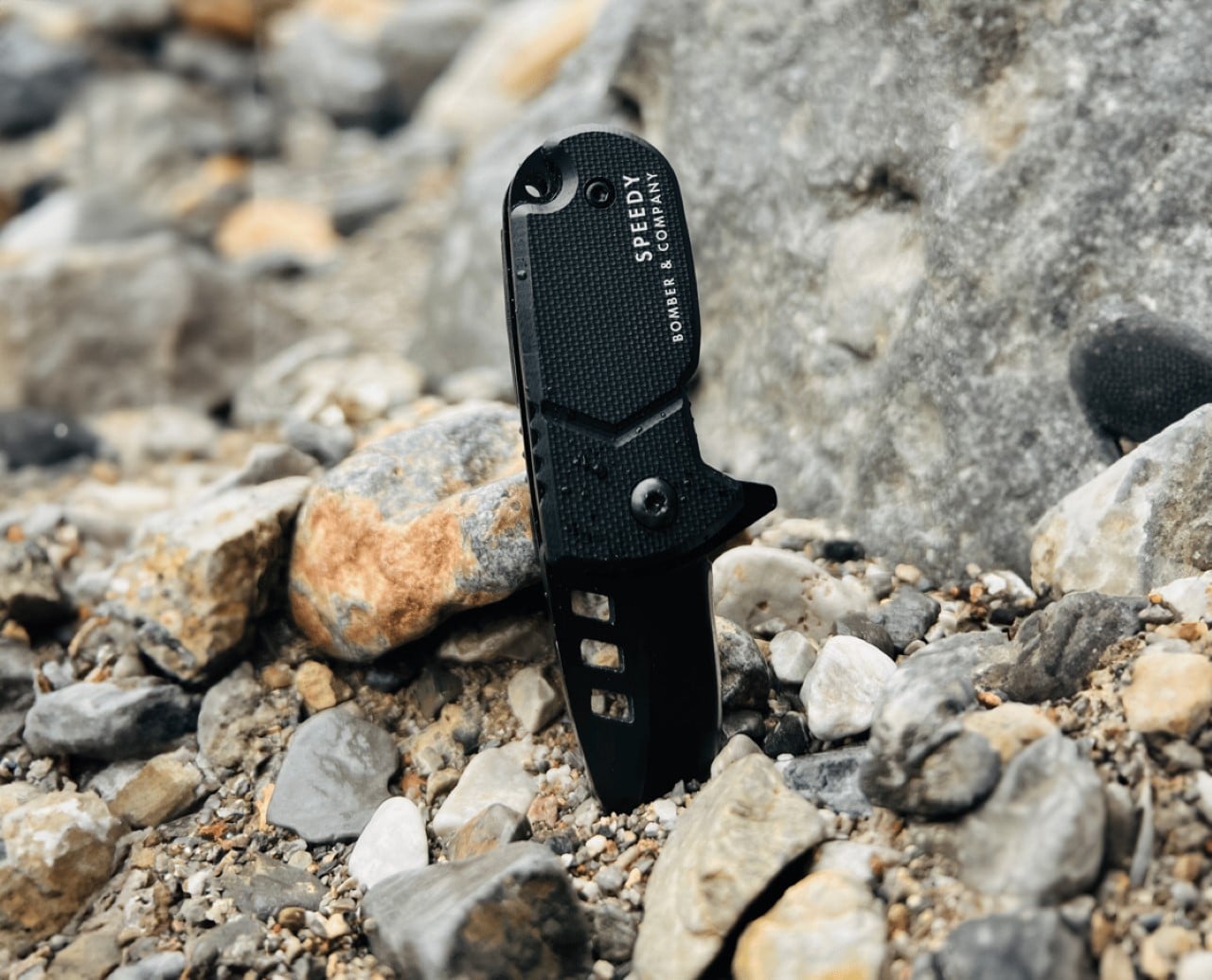
The Speedy comes from the folks at Bomber & Company, a seasoned EDC brand that debuted on Kickstarter in 2014, quickly rising through the ranks to become one of the hottest knifemakers on the platform, having sold over 1 million pocket knives in the past decade. The company’s developed its unique aesthetic over its 7 product campaigns, and the Speedy fits well into the the Bomber & Company’s visual language with its all-black design, fiber handle, and coated blade. Where it shines, however, is in the insides, which power the blade’s deployment. A strategically placed spring helps the Speedy unsheathe its blade in practically a millisecond, allowing single-hand deployment in the blink of an eye.

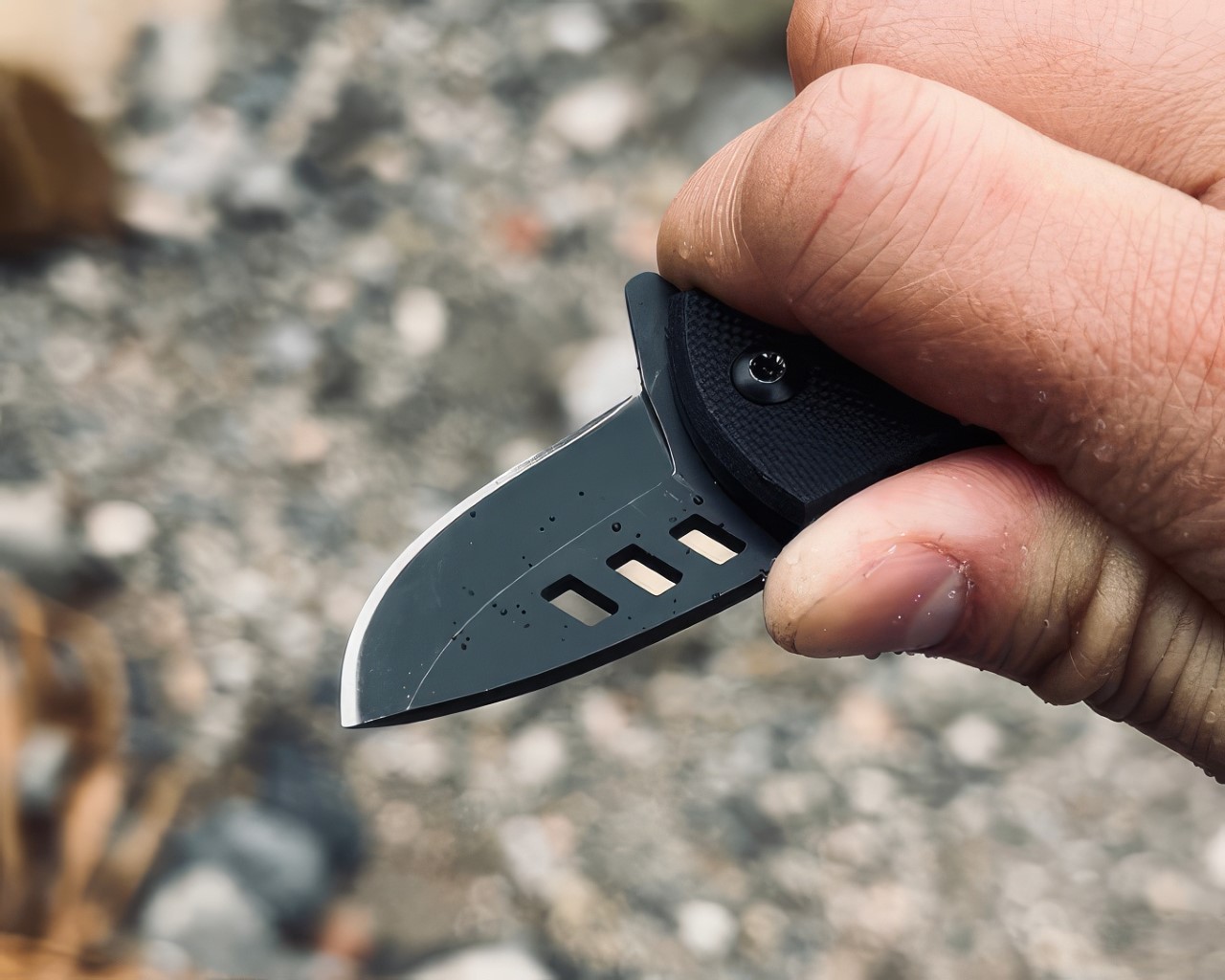
Once deployed, you’re equipped with a 1.45-inch small-size carbon steel blade with a drop-point design. The drop-point is perhaps the most classic blade style given its versatility. With a straight edge that curves at the tip, you’re left with a blade that’s great for cutting, slicing, carving, piercing, and even whittling. The carbon-steel blade cuts through materials like they’re butter, comfortably slicing through paper and cardboard, leather, and even through wood.

Cutouts in the blade’s design help reduce weight as well as decrease friction while slicing, allowing the knife to glide through materials.

Even for its ludicrously small size, the Speedy is quite grippy and easy to maneuver. The flipper acts as a nice finger guard, and that 2.2-inch handle is enough for a sturdy reliable grasp as you use the blade. A liner lock holds the blade in place while you’re cutting, allowing you to tuck it back into the handle only when you’re done using the Speedy.

The tiny EDC knife comes with an all-black design (how very Henry Ford Model T of them), and sports a keyring hole at the end of the handle that lets you string the blade on a keychain or even attach a carabiner so you can carry your Speedy however you wish. The knife is priced at $25 with global shipping, although for $50 you can grab a 3-pack for gifting to your friends, family, and fellow EDC enthusiasts. After all, you never know when you’ll need a fast-deploying tactical blade to get yourself out of a pickle…

Click Here to Buy Now: $25 Hurry, only 13 days left! Raised over $275,000.

The post This tiny rapid-deploy tactical pocket knife is like the Napoleon of EDC first appeared on Yanko Design.

Designed after a serpent, the Craighill Sidewinder pocket knife is an eye-candy for the collector

Some of us have an uncanny love for knives, and in them, foldable knives. Not many, but of course a few of these foldable knives are created to get the toughest job done, and then there are a few amid them that are crafted for the collectors. An eye-candy for the latter is the Sidewinder, which is also an impending workhorse from Craighill.

Born to a brand “rooted in curiosity, ingenuity, and satisfaction” designing knives that are “beautiful and intriguing,” the Sidewinder draws its name from a namesake serpent known for its characteristic sideways gait. The knife has a unique handle and opening mechanism that mimics the Sidewinder slithering smoothly on the sand.

Designer: Craighill

Crafted to disrupt the appearance and functioning of the traditional pocket knives, the Sidewinder is the idea of Craighill but it was designed in a years-long collaboration with Chen Chen and Kai Williams. The outcome is a knife with little focus on functioning and longevity and more on style and substance, which may not make it the best option as an EDC for the outdoor, but would be a perfect conversation starter.

The opening mechanism that is high on ingenuity is easy to open with one hand. The handle is made in a two-piece hinge – one comprises stone-washed finish and the other has black PVD-coated stainless steel – that moves like the Sidewalker over to separate and join when the knife is opened and closed respectively.

The Sidewalker knife weighs 5.6 ounces to let you feel slight heft in the hand or your pocket. The knife measures 2.5 inches long; it has a fine tip and deep belly for everyday usage. But it’s the interlocking opening and closing mechanism that makes the biggest and most defining highlight of the knife. The interesting thing also is that even though the foldable knife is highly portable, it will make a great décor item on the desk or shelf where it is going to attract everyone.

The post Designed after a serpent, the Craighill Sidewinder pocket knife is an eye-candy for the collector first appeared on Yanko Design.

This 6-in-1 Titanium Multitool comes handy in every tactical, outdoor, and emergency scenario

Rather aptly named the JOAT, or Jack Of All Trades, this modular multitool holds the unique distinction of being the perfect EDC to have on you for practically any sort of crisis. Whether it’s gear that needs fixing or beer that needs opening, the JOAT’s uniquely equipped to help. Made from titanium and with modular elements that stack together magnetically, the JOAT has its own fold-out scalpel blade, set of hex-wrenches, pry-bar, portable saw, magnetic screw-bit holder, and a bottle opener… all in one thumb-sized form factor that fits around your keychain. The magnetic modules snap apart, making them easy to use individually, and they’re all crafted from titanium, so they’ll practically last a lifetime.

Designer: Fetos Studio

Click Here to Buy Now: $69 $89 (22% off) Hurry! Only 5 Days Left!

While most multitools try to cram as much functionality into the tiniest form factor (we’re looking at you, Victorinox), the JOAT’s approach is a tad bit different. It uses magnetic modules that let you pull different parts of the EDC apart, giving you individual tools that are easier to use without any of that bulk associated with larger multitools. Need a knife? Just take the knife module out. Need a wrench? You don’t have to worry about any of the other tools while you’re working the wrench.

The scalpel knife is perhaps the JOAT’s most standout feature. Unlike most knives that have fixed edges, the JOAT uses a standard removable/replaceable scalpel blade that you can attach to its folding arm. You can easily attach any standard scalpel blade to the JOAT, removing it during travel (so the multitool is TSA-friendly), or replacing just the blade when its edge wears out. Standard scalpel blades are ridiculously sharp, giving your EDC multitool a great outdoor or tactical advantage. The pointed tip and deadly-sharp edge are perfect for piercing, cutting, slicing, carving, shaving, or doing anything you’d require a portable knife for. That means easily being able to navigate any outdoor situations that require a cutter, or any potential self-defense scenarios where a tactical blade could prove to be handy. The blade’s replaceable design makes maintaining your JOAT easy, allowing you to just swap out old blades for new ones instead of sitting and sharpening your knife like you would with most other multitools.

Any good multitool needs to have a bit-driver, and the JOAT takes its name and reputation seriously. Really a jack of all trades, the multitool packs a bit driver and holder in one of its three modules, allowing you to store as many as two standard 1/4″ hex bits of your choice. Although most people recommend having an Allen-bit and a flathead bit handy at all times, the JOAT lets you choose exactly which bits you want to carry along with you, letting you either stick to traditional picks or go super obscure if you’re fixing things like tech or any special gear. When in need, just take the bit you want and dock it into its holder and you have a makeshift screwdriver for any sudden emergencies when your regular toolkit isn’t around.

Got some nuts and bolts that need tightening, the JOAT packs an entire bunch of hex wrenches in its third module, along with a bottle-opener for good measure. Ranging from an M2 wrench to an M6 wrench, the standalone module is grippy and easy to maneuver, allowing you to quickly tighten or loosen bolts. The fact that the JOAT’s modules are detachable and independently usable means you can potentially use the hex wrench and the screwdriver as separate tools, allowing you to hold and tighten with the same multitool.

Finally, the JOAT’s base platform comes with its own pry tool, along with a blunt serrated edge that doubles as a nail file or even a primitive saw for buffing/filing down wood, plastic, or even soft metals. That titanium build proves rather handy here, given its status as the strongest metal known to humankind.

At just 80mm (a little above 3 inches) in length, the JOAT’s exceptionally pocket-friendly. It weighs 1.8 ounces (51.5 grams) and comes with its own loop that lets you secure it to a carabiner or even to your keychain. The all-titanium multitool starts at $69, and for another $7 you could get yourself the leather strap and titanium machined keyring to go with your EDC (shown above). If the idea of a nude metal multitool doesn’t appeal to you, there’s even an option to get a PVD black version of the JOAT for an extra $11. The all-in-one EDC multitool ships globally, and although it doesn’t come with an explicit warranty, the fact that it’s machined from grade 5 titanium should speak volumes for its durability. Let’s just say, this might be the last EDC you’ll ever need to buy…

Click Here to Buy Now: $69 $89 (22% off) Hurry! Only 5 Days Left!

Click Here to Buy Now: $69 $89 (22% off) Hurry! Only 5 Days Left!

The post This 6-in-1 Titanium Multitool comes handy in every tactical, outdoor, and emergency scenario first appeared on Yanko Design.

The $33 Gerber Quadrant Pocket Knife comes with a gorgeous bamboo handle and a ‘lifetime’ warranty


It’s rare to see knives that look like the Gerber Quadrant. Most knives have extremely classic drop-point or tanto-style blades (close your eyes and think of a pocket knife, chances are you’ve thought of one of those two), so seeing a blade like the one on the Quadrant is refreshing. The Quadrant is less of a hardcore outdoor knife and more of a pocket blade worthy of being a part of your sophisticated EDC collection. Make no mistake, the 7Cr17MoV steel blade is extremely capable, and comes with this hyper sheepsfoot profile that’s perfect for cutting and slicing, but the Quadrant isn’t your average ultra-rugged tactical blade – it’s a suave piece of gear that balances sophistication with outdoorsy… and to highlight that fact, the Quadrant has this gorgeous dual-material handle, featuring a robust metal body along with an immaculately smooth bamboo wood insert that gives the Quadrant its signature style.

Click Here to Buy Now

The Quadrant’s blade feels almost reminiscent of a barbershop blade, with its rectangular profile. More popularly known as a sheepsfoot (for its sheep hoof-shaped tip) or a wharncliffe type blade, this particular style usually has a straight running edge that’s perfect for cutting/slashing. The lack of a defined tip makes this knife unsuitable for piercing, but some would suggest that this actually enhances the knife’s safety, while ensuring it’s used exactly in specific applications.

The knife’s silhouette is relatively rectangular, but the Gerber Quadrant makes up for it with its gorgeous design. The 7Cr17MoV steel blade features an anodized spine with a metallic edge that gives it a dual-tone finish, while the handle itself has two materials – the metal and the bamboo wood, creating an aesthetic that’s unmistakable. The knife sports a flipper for easily deploying the 2.7″ blade, with a frame lock that secures the blade in place while cutting.

The overall EDC is rather compact, measuring in at 4 inches when closed, and 6.7 inches when opened. At 4.3 ounces (121.9 grams), the Quadrant is lighter than most, making it a perfect EDC for carrying around indoors or outdoors. A pocket clip on the flipside of the handle lets you easily secure the Quadrant to your pocket or a pouch in your backpack, allowing you to whip it out when you need a handy, reliable blade. Gerber also offers a limited lifetime warranty on the knife, covering any product defects in assembly, manufacturing, or material choice.

Click Here to Buy Now

The post The $33 Gerber Quadrant Pocket Knife comes with a gorgeous bamboo handle and a ‘lifetime’ warranty first appeared on Yanko Design.

The Kershaw Misdirect is a sub-$30 Small Pocket Knife with the Attitude of a Big EDC Blade

A part of Kershaw’s ‘Starter Series’, the Misdirect is designed to be compact, affordable, and reliable, making it perfect for people looking for their first EDC blade. However, that minimalist design, stone-washed reverse tanto blade, and smooth stainless steel are sure to captivate even seasoned EDC collectors and knife aficionados. Sitting at just 4-inches when closed and weighing just 3.2 oz. (93 g), the Misdirect is a masterclass in classic knife design – it’s small, but has a larger-than-life attitude, and can handle benign tasks indoors, as well as work equally well in tactical outdoor situations.

Click Here to Buy Now

With a blade that measures just 2.9 inches, the Misdirect falls closely short of the 3-inch margin required to be called a medium-to-large blade knife. The sub-3-inch blade comes crafted from 4Cr13 steel, with a BlackWash™ stonewashed finish that bestows a rather rustic appeal upon the blade. However, the sharp, slightly curved belly, and the reverse tanto profile make the blade highly capable of all sorts of tasks, from cutting and piercing to slashing, scraping, and even chopping with a rocking motion thanks to the slightly curved edge. Meanwhile, jimping on the top of the blade gives you a nice place to comfortably rest your thumb, while the knife’s flipper acts as a nice cross-guard to keep your index finger in place.

A flipper lets you quickly and reliably deploy the blade with either your thumb or index finger, while a frame lock holds the blade in place so it doesn’t shut while in use. To disengage the blade, just pry open a cutout in the frame and the blade comfortably folds back, getting secured shut for the next time you need your EDC.

The Misdirect has a satisfyingly slim stainless steel handle that measures 0.38 inches (9.8 mm) thick, with a built-in wide lanyard holder and a pocket clip that can be arranged in three different positions. Threaded holes on either side of the handle let you place the clip in multiple orientations, giving the Misdirect a unique customizability so you can stash it in your pocket just the way you want it, deploying it in seconds as you pull it out.

Given that the knife is a part of Kershaw’s Starter Series, it boasts an incredible under-$30 price tag that makes it a compelling purchase if you’re looking to own your first EDC blade. With how good it looks and how well it performs, it might just be your last purchase too!

Click Here to Buy Now

The post The Kershaw Misdirect is a sub-$30 Small Pocket Knife with the Attitude of a Big EDC Blade first appeared on Yanko Design.
The Kershaw Iridium is a highly-dependable pocket knife with a classic design and a sub-$100 price tag

If there ever was an emoji for a pocket knife, it would probably look like the Kershaw Iridium. Designed with an aesthetic that I can only describe as a modern classic, the Iridium ticks all the boxes with its clean aesthetic, grippy aluminum handle, more-than-capable D2 steel blade with a spear-point profile, and Kershaw’s new DuraLock technology that secures the blade in its open position while it’s in use. The Iridium is dependable, ambidextrous, and folds down to a 4.5-inch form factor that weighs a mere 3.3 ounces and fits right in your pocket after use.

Designer: Kershaw

Click Here to Buy Now

The Iridium boasts a comfortable 6061-T6 aluminum handle with a gray anodized finish. Its ambidextrous DuraLock mechanism ensures secure blade lockup, while the reversible deep-carry pocket clip makes it convenient for both left and right-handed users. The entire build uses black-oxide hardware for a sleek look and added durability.

At 7.9 inches overall and a weight of 3.3 ounces, the Iridium finds a comfortable balance between pocketability and functionality. The 4.5-inch closed length makes it easy to carry daily, while the 8-inch overall length tackles various EDC and outdoor tasks.

The Iridium’s crown jewel is its 3.4-inch D2 high-carbon tool steel blade. D2 steel offers excellent edge retention and wear resistance, making it ideal for everyday cutting chores. The blade features a utilitarian drop-point profile and a thickness of 0.107 inches, providing enough strength for tougher jobs. Jimping at the base of the spine enhances grip during precise cuts.

Deployment is smooth and effortless thanks to the KVT ball-bearing pivot system. The blade can be opened using dual thumb studs or a simple flick of the wrist with the DuraLock mechanism engaged. Kershaw backs the Iridium with a lifetime warranty, giving the EDC an heirloom quality so you can pass it down to your children.

The Kershaw Iridium is a compelling choice for those seeking a full-size, well-built EDC knife without breaking the bank. It boasts high-performance materials, a comfortable design, and a versatile blade profile – all at an accessible price tag. The Iridium is also available in a blacked-out version and a reverse tanto blade variant for people looking for something a little more edgy and unconventional.
Click Here to Buy Now

The post The Kershaw Iridium is a highly-dependable pocket knife with a classic design and a sub-$100 price tag first appeared on Yanko Design.