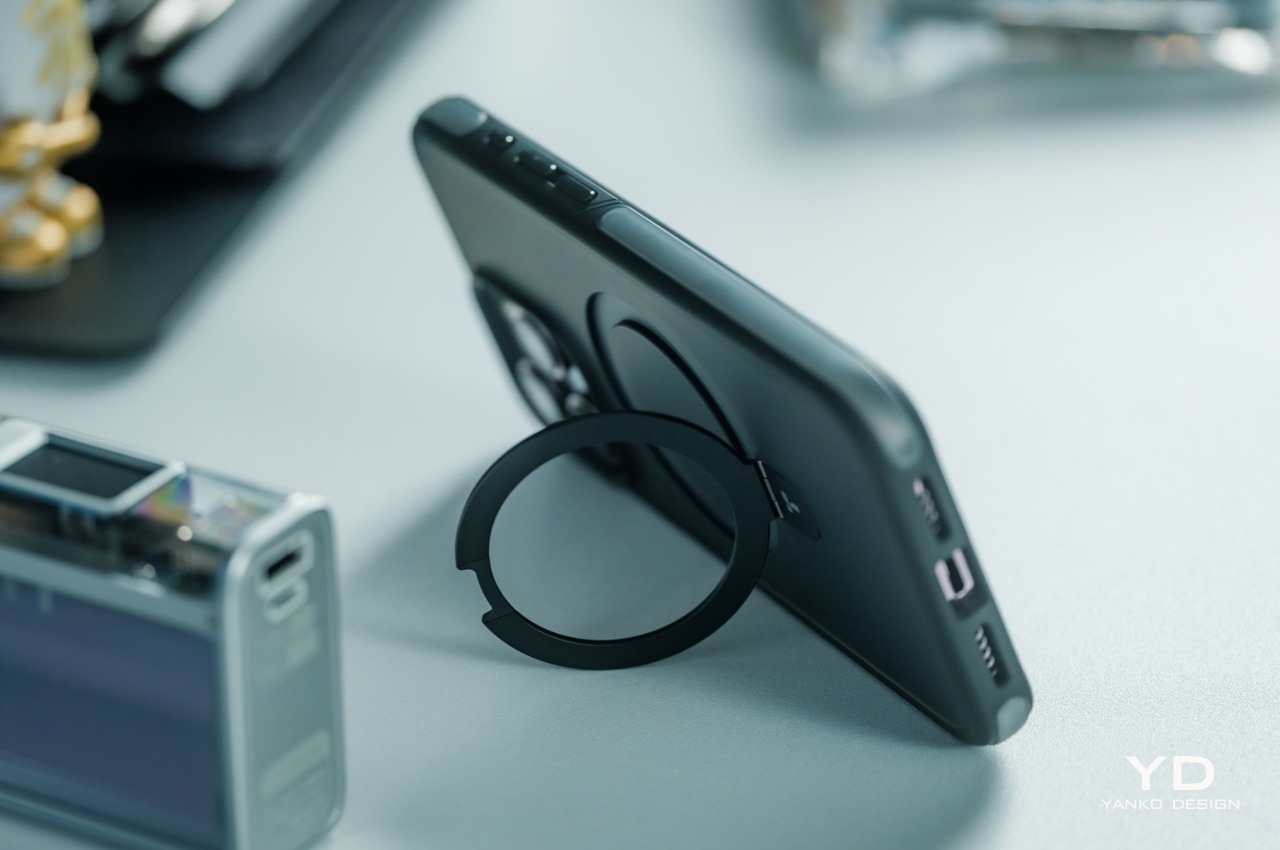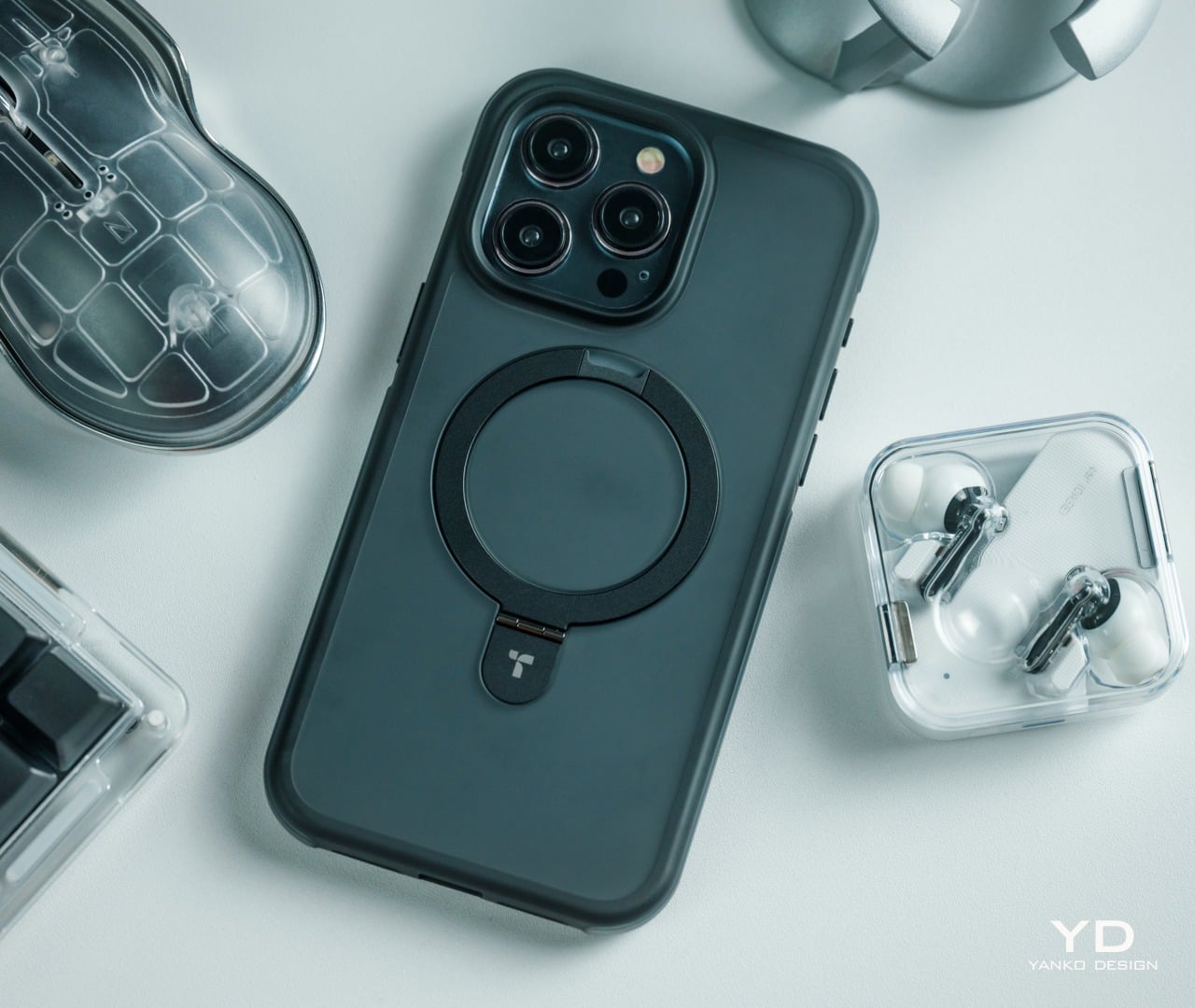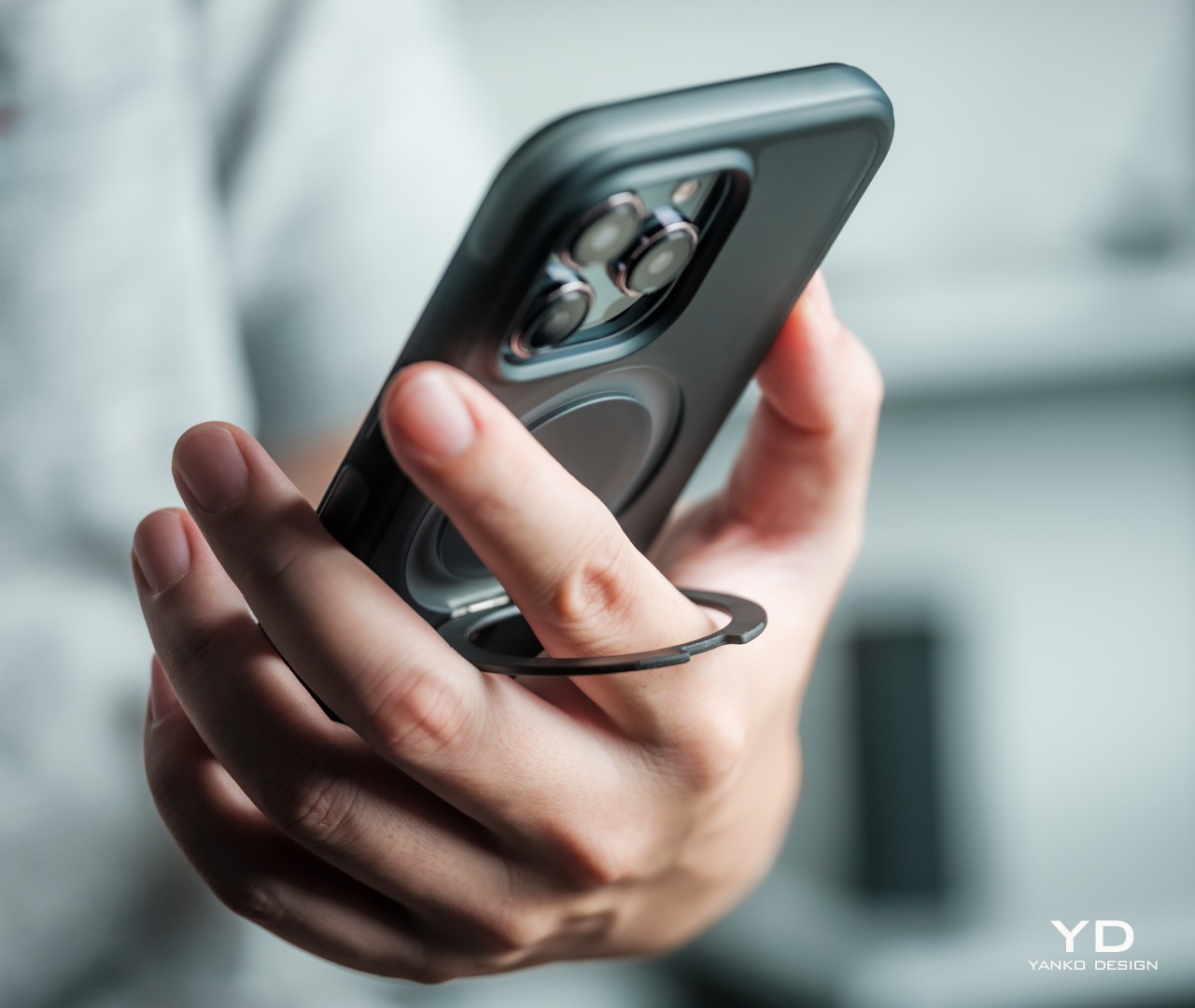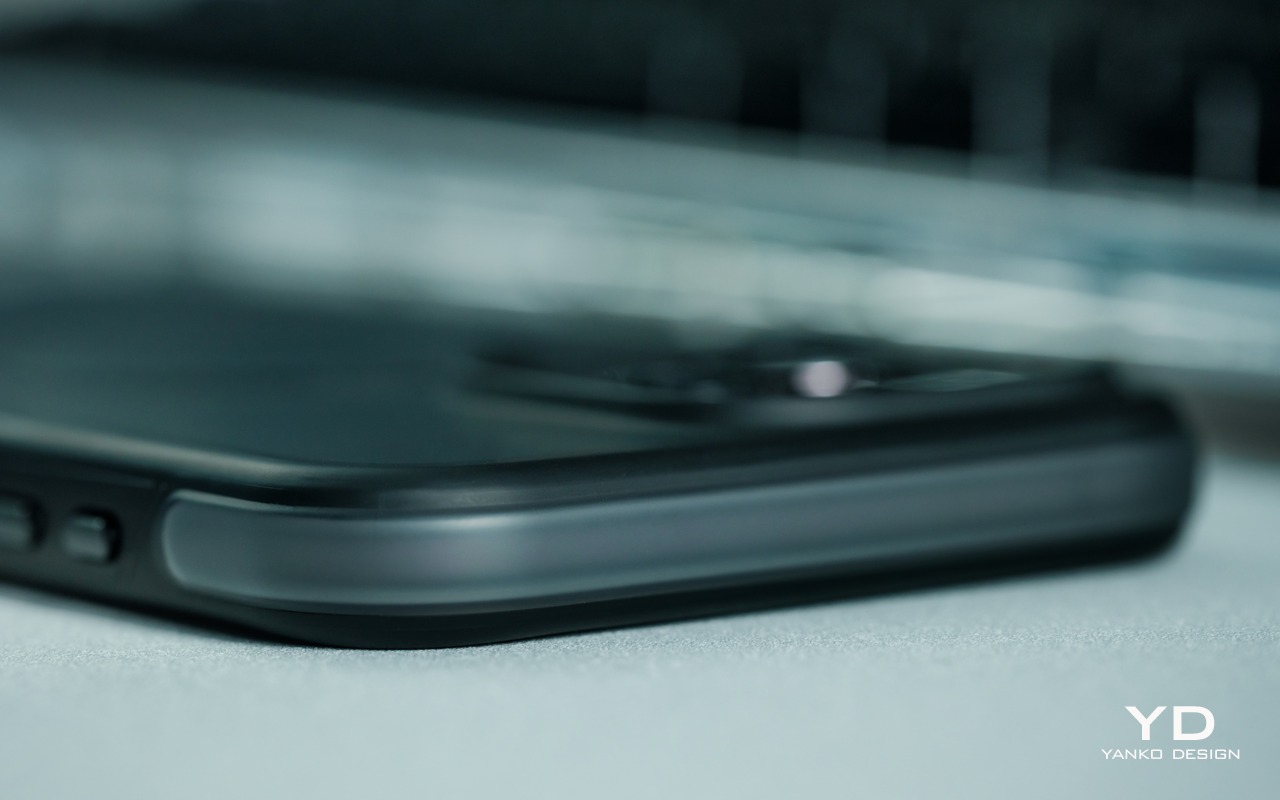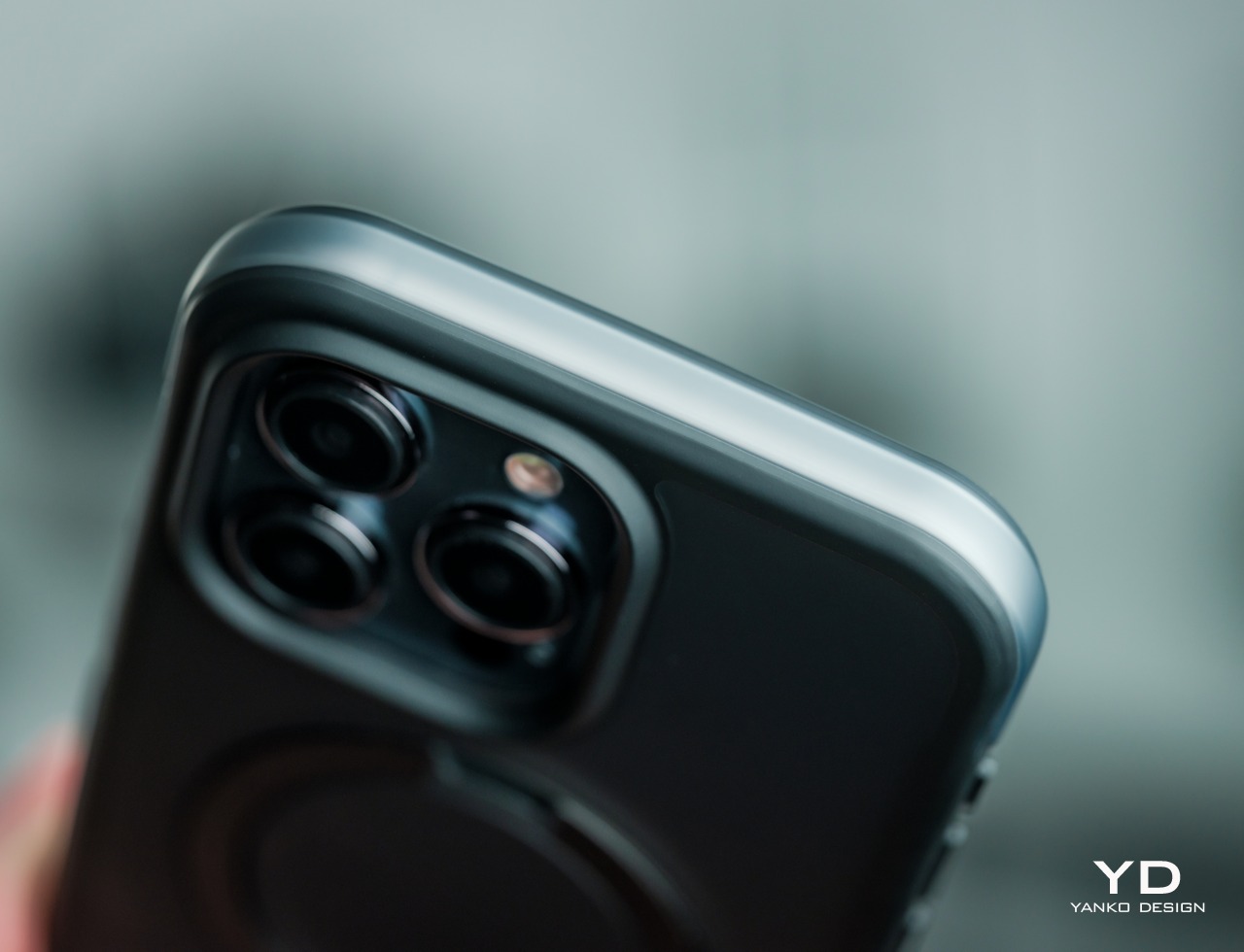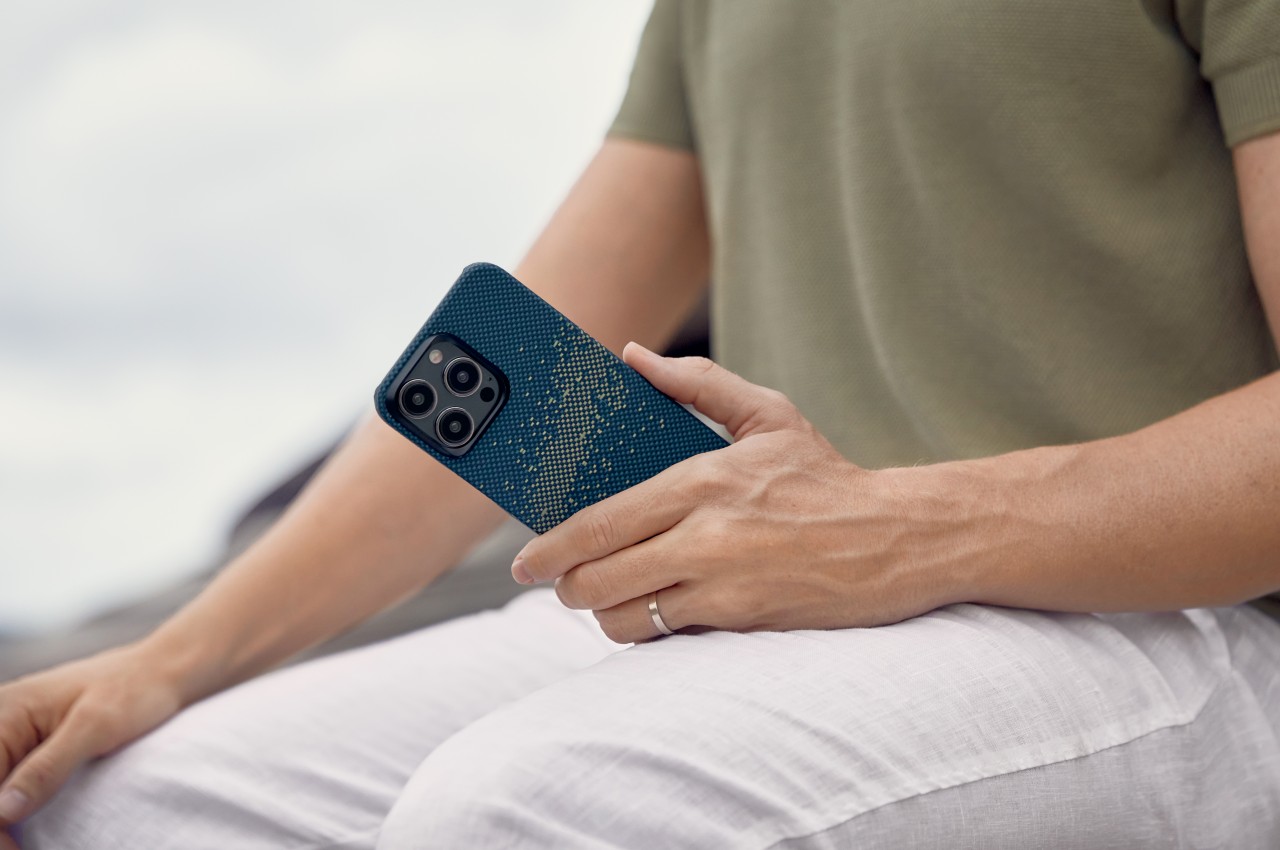
GameBaby is a protective case that transforms iPhones into retro gaming handhelds

Video gaming is still a thriving and lucrative industry, and you don’t even need to own an expensive and heavy handheld PC to enjoy it. With Apple now allowing emulators into the App Store, there is a vast new source of titles to play, some of which aren’t exactly conducive to tapping on a flat screen. Game controllers for iPhones aren’t always the best solution, especially if it means carrying an extra accessory in your pocket. But what if you never had to remove that controller in the first place? That’s the idea behind this genius iPhone accessory that’s a GameBoy-like controller when you need it and a quirky protective case when you don’t.

Designer: Bitmo Lab

There are iPhone-compatible game controllers that attach to the smartphone but only makes sense if you hold it sideways like a Nintendo Switch. You can’t leave these permanently on the phone, of course, which means you’ll have to make sure you always bring it with you when the craving to play strikes. That could be a fleeting moment, however, that quickly evaporates while you try to strap the controller, turn it on, and pair it with the phone. Plus, the landscape orientation really only works for modern mobile games, not the ones from decades past.

GameBaby is an innovative design that solves that problem while also paying homage to some of video gaming history’s greatest hits. It’s technically a two-part case for the phone that slides onto the top and bottom of the phone. The critical difference is that you can flip the bottom half around, revealing actual working buttons in the familiar layout of many old-school handheld consoles, particularly the GameBoy which served as this accessory’s inspiration.

Since the buttons go over the lower half of the iPhone screen, it offers direct input without the lag of Bluetooth or even USB connections. It also means there are no batteries to be worried about either. It’s really simply just a layer of buttons that give you a more tactile feeling than mashing your finger against the glass. And when you’re done playing, simply slide the case off, flip it again, and go on with your regular life.

The catch to this simple yet useful design is that it really only works with emulators that play retro games made for old consoles like NES, GameBoy, and similar. It works best with the Delta emulator now available on iOS, and Bitmo Lab has custom emulator skins designed specifically to match the layout of the physical buttons. The even bigger catch, however, is that GameBaby is only available for the iPhone 15 Pro Max and the upcoming iPhone 16 Pro Max, and only in a banana yellow and white color theme.

The post GameBaby is a protective case that transforms iPhones into retro gaming handhelds first appeared on Yanko Design.
3D Printed CMF Phone 1 cases thrive in the phone’s innovative modular design

The dream of the modular smartphone proposed by the likes of Project Ara and the LG G5 might have failed to become lasting reality, but there is more than one way to actually implement a modular design. Unveiled just last month, the CMF Phone 1 by Nothing tackled the problem from a different angle, one that didn’t change the smartphone design formula too much while still kicking the doors wide open for modular accessories. It’s not surprising that there was a sudden burst of creativity trying to take advantage of this new platform, and thanks to 3D printing, we can behold some of the rather curious ideas creators have when pushing the possibilities of this modular system to the extreme.

Designers: w1utree, BuildBryce, Kaburuk

To be clear, the CMF Phone 1 itself isn’t modular, but its removable back cover invites all kinds of modular accessories and attachments. As long as you can screw it on the back of the phone and retain its usability, everything is fair game. Those accessories can range from simple loops and stands to bottle openers and miniature Nerf guns. As long as you can 3D print it, anything’s possible.

1

The Modular Sliding System, for example, has a creative design that integrates three sliding modules that can be a pen, an SD card holder, and even a comb. The top and bottom sliding modules unfortunately have to be curved to take into account the position of the screws on the CMF Phone 1’s back. Switching out modules is quite simple, and there’s plenty of room for other tools that you might want to always have in your pocket all the time.

The Brick Case is a bit less ambitious but even more creative, and yes, it practically turns the CMF Phone 1 into one large LEGO-like brick. At first glance, it might seem like a cosmetic design only, putting a LEGO scene on the back of your phone when that can only be appreciated or used if the phone is placed face down on a table. With some imagination and design work, however, it might be possible to 3D print functional modules as well, like one that puts a pad of sticky notes on the back of your phone.

1

Coming completely out of the left field, the Foam Dart Launcher turns the CMF Phone 1 into a toy. It’s pretty much a one-shot mini Nerf gun, used to surprise friends or colleagues. It obviously has no practical benefit, but it does demonstrate the wide range of possibilities offered by the simple yet ingenious modular design of the CMF Phone 1.

The post 3D Printed CMF Phone 1 cases thrive in the phone’s innovative modular design first appeared on Yanko Design.
Smartphone enclosure concept helps develop good relaxation habits

As powerful and as useful as our smartphones might be, they can also be stumbling blocks not only for productivity but also for mental health. Incessant notifications and the fear of missing out (FOMO) add to the stress and anxiety of the modern world. Of course, ditching your smartphone is no longer an option these days, which is why several designs try to meet the problem halfway, many utilizing minimalist interfaces or drab gray screens to limit our smartphone interaction. Those, however, only solve one part of the problem, leaving many people still unused to taking breaks or relaxing. This concept design for a smartphone accessory tries to do exactly that, keeping your phone safely away from your reach while also helping you get into the habit of taking good breaks from time to time.

Designer: Jeongmin Ham

The most basic strategy people use to avoid distractions from their phones is to put it away, either at a distance or inside a drawer, creating some friction or obstacle to getting the phone instantly. While it can be an effective strategy for some, it’s also a missed opportunity for the smartphone to do something, well, smart. Short of using it as a timer, which can also lead to temptations, it can perhaps be utilized for some other function while keeping its normal distracting features at bay.

FIKA is a concept design for an accessory that does exactly that, keeping your smartphone from distracting you but also putting it to good use in training you to take breaks and use those breaks wisely. It is pretty much a cage or enclosure where you put the phone in, blocking complete use of the device except for a small circular window to a part of the screen. This is the only place where you’ll be able to see the phone’s guidance on how to take a break properly, somewhat like guided meditation apps that have become quite popular these days.

The idea for FIKA is to not just simply put your phone away to avoid distractions but also to develop good habits of taking breaks. And while different people take breaks differently, not everyone has an idea of how to do so properly, so FIKA can suggest certain actions like breathing exercises. Over time, the reminders and the case might not even be needed anymore, as you would have developed the habit and willpower to do it on your own.

The concept design sadly leaves a lot of questions unanswered, like how one will be prevented from just fishing out the phone without some locking mechanism. It also doesn’t mention how the circular window actually works, whether it is just a hole that leaves a part of the phone’s screen exposed or if it’s a touch-sensitive surface that “passes” touches through to the phone inside. Still, the core idea is interesting enough to warrant further thought, especially in an age where people’s mental and physical health has been in decline due to smartphones and overworking.

The post Smartphone enclosure concept helps develop good relaxation habits first appeared on Yanko Design.
Smartphone enclosure concept helps develop good relaxation habits

As powerful and as useful as our smartphones might be, they can also be stumbling blocks not only for productivity but also for mental health. Incessant notifications and the fear of missing out (FOMO) add to the stress and anxiety of the modern world. Of course, ditching your smartphone is no longer an option these days, which is why several designs try to meet the problem halfway, many utilizing minimalist interfaces or drab gray screens to limit our smartphone interaction. Those, however, only solve one part of the problem, leaving many people still unused to taking breaks or relaxing. This concept design for a smartphone accessory tries to do exactly that, keeping your phone safely away from your reach while also helping you get into the habit of taking good breaks from time to time.

Designer: Jeongmin Ham

The most basic strategy people use to avoid distractions from their phones is to put it away, either at a distance or inside a drawer, creating some friction or obstacle to getting the phone instantly. While it can be an effective strategy for some, it’s also a missed opportunity for the smartphone to do something, well, smart. Short of using it as a timer, which can also lead to temptations, it can perhaps be utilized for some other function while keeping its normal distracting features at bay.

FIKA is a concept design for an accessory that does exactly that, keeping your smartphone from distracting you but also putting it to good use in training you to take breaks and use those breaks wisely. It is pretty much a cage or enclosure where you put the phone in, blocking complete use of the device except for a small circular window to a part of the screen. This is the only place where you’ll be able to see the phone’s guidance on how to take a break properly, somewhat like guided meditation apps that have become quite popular these days.

The idea for FIKA is to not just simply put your phone away to avoid distractions but also to develop good habits of taking breaks. And while different people take breaks differently, not everyone has an idea of how to do so properly, so FIKA can suggest certain actions like breathing exercises. Over time, the reminders and the case might not even be needed anymore, as you would have developed the habit and willpower to do it on your own.

The concept design sadly leaves a lot of questions unanswered, like how one will be prevented from just fishing out the phone without some locking mechanism. It also doesn’t mention how the circular window actually works, whether it is just a hole that leaves a part of the phone’s screen exposed or if it’s a touch-sensitive surface that “passes” touches through to the phone inside. Still, the core idea is interesting enough to warrant further thought, especially in an age where people’s mental and physical health has been in decline due to smartphones and overworking.

The post Smartphone enclosure concept helps develop good relaxation habits first appeared on Yanko Design.
Cute tiny desktop PC is a gaming-inspired case for the Raspberry Pi 5

The Raspberry Pi, lovingly called RPi by fans, did for electronics what 3D printing did for design. It allowed almost anyone to come up with interesting, innovative, and sometimes just amusing projects that need a very small and cheap computer to function. The size of a credit card and less than $100 (going as low as $35 even!), the Raspberry Pi is a barebones and naked single-board computer (SBC) that you can insert almost anywhere and add to any design. That said, there are some use cases for the RPi that require a proper enclosure and those are a dime a dozen these days. This one case, in particular, goes over the top and puts the small pocket-sized computer inside a box that, for all intents and purposes, looks like a miniaturized gaming desktop, complete with multiple fans and RGB lighting.

Designer: Sunfounder

Truth be told, this Raspberry Pi 5 case really goes overboard considering the limitations of the computer in terms of performance. You’ll only ever be able to play very light computer games on it, so associating it with a gaming desktop seems out of character, but it definitely gives it some style. Then again, we did see an even more exaggerated liquid cooling system for the Raspberry Pi that makes this case actually look reasonable.

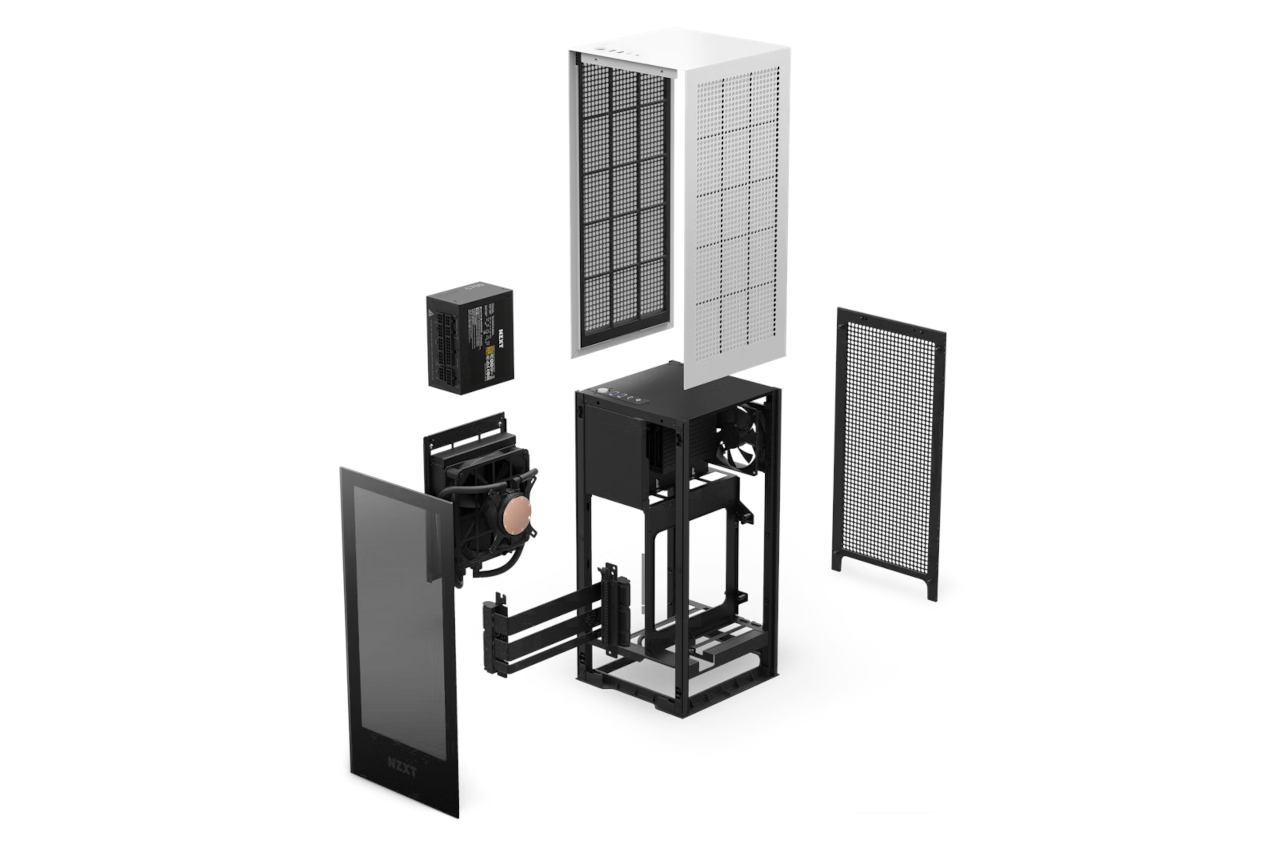
The Pironman 5, as the case is called, is also unlike the majority of Raspberry Pi cases in that it’s actually made of aluminum instead of plastic, just like a typical desktop tower. And like many gaming PCs these days, one side and a part of its back it made of transparent acrylic that lets you take a peek into the computer’s innards, not that there’s that much to see anyway. The RPi, after all, is just a single board that has everything soldered into it, but the case does have a few interesting bits that will make it worth looking into.

There are three fans, which is again overkill, and two of them have RGB lighting. Equally interesting is how the case exposes all the RPi’s ports on the case’s back, just like what you’d expect from a desktop computer, despite the board having those ports on different sides. There’s even a way to access the GPIO pins without opening up the case, making expansion and modification super easy. You can add an NVMe SSD or control the computer with an IR remote control, all of which are not available in the base Raspberry Pi.

The Pironman 5 is cute and eccentric, and few will probably be using the case aside from a few niche situations. It makes the single-board computer look more interesting and more usable as a desktop computer, but you pay the price in terms of space, power consumption, and the literal $80 cost. Then again, that’s the beauty of the culture that the RPi started, allowing anyone and everyone to come up with interesting designs, even if they turn out to be impractical in the end.

The post Cute tiny desktop PC is a gaming-inspired case for the Raspberry Pi 5 first appeared on Yanko Design.
World’s smallest smartphone turns into a gaming handheld with this case

Gaming smartphones are quite the novelty in the mobile world, but despite their advertised or actual gaming chops, they often lack the necessary controls that would put them on par with consoles. Conversely, most of these gaming smartphones have designs that make them a little less appropriate for more formal environments with their flashy RGB lighting and distinctive motifs. A middle ground between these two extremes would be to slap on some controllers on “normal” but premium handsets, effective but also a little too mundane these days. This rather unusual phone case, however, tries to add a new flavor to mobile gaming by introducing not only an unusual controller design but also by making it exclusive to one of the weirdest and cutest smartphones in the market.

Designer: Sugar Cubes (via Retro Dodo)

The Unihertz Jelly Star is obviously not your typical smartphone. With a size that’s no larger than a credit card, the tiny device is advertised as the world’s smallest Android 13 smartphone, a title no one will probably try to wrest away from it anyway. With a 3-inch screen, a transparent colored back, and some rather reasonable specs for its size, the Jelly Star is probably also the world’s cutest smartphone.

A Chinese accessory maker by the name of Sugar Cubes is taking that cuteness and turning it into something that even gamers will find alluring. Rather than simply attaching controllers, which would be gigantic compared to the Jelly Star, you will instead insert the tiny phone into a large, boxy case that transforms it into a rather unusual gaming handheld that is more reminiscent of the “Game & Watch” devices of old than any modern handheld console. Even the controls themselves are in non-standard locations, even though they provide most of the standard buttons, including a joystick.

There seem to be two designs for the Sugar Cube Jelly. One has the Unihertz Jelly Star lying horizontally and near the top, giving the device a more Game Boy-like appearance, though short in stature. The other has the phone standing vertically in the middle, flanked by two sets of controls, a design closer to the Nintendo Switch by some stretch of the imagination. Details on how the small phone will be inserted into the case are still slim, though it seems that the vertical design will simply have the Jelly Star slip into the case from the side, with one of the controllers swinging open like a flap.

The unconventional and eye-catching design of the Sugar Cube Jelly makes it perfect for branded merchandise, theming the colors and decals accordingly. That said, there’s still no word on when this product will actually hit the market, or if it will even be made available outside of China. Even then, the Unihertz Jelly Star isn’t exactly oozing with power, so while you might be able to comfortably run some retro games via emulation, forget about boasting your odd contraption while playing Genshin Impact.

The post World’s smallest smartphone turns into a gaming handheld with this case first appeared on Yanko Design.
Rimowa Chess Attache offers a luxurious way to carry your luxurious game pieces

Chess is a game that spans centuries and while the basic mechanics haven’t changed much, it has taken various forms over the course of its very long history. Chess sets today come in a variety of styles, from cheap plastic to fragile class, from classic designs to abstract geometric shapes. Some sets, usually the expensive ones, are kept safely at home, while others go wherever their owners go, ready to challenge a fellow enthusiast at a moment’s notice. Rimowa, best known for making premium luggage and bags, is trying its hand at striking a middle ground with a high-quality aluminum chess set housed in a signature Rimowa case, ready to travel and make you the envy of all your chess colleagues.

Designer: Rimowa

Portable chess sets do exist, but the most common design you might see is a thick wooden board that folds in the middle to transform into a miniature suitcase for the wooden pieces. It’s practical and, to be fair, a bit sustainable, but also terribly uninspiring. Nothing lights a chess enthusiast’s fire better than a captivating and elegant chess set, one that embodies the long-lasting legacy of a game that had enchanted and beguiled even monarchs.

The new Rimowa Chess Attache is both a homage to the classic chess design but also a rejuvenation with a more modern aesthetic. Each chess piece is crafted from black and silver (for white) anodized aluminum, emblazoned with a laser-engraved Rimowa monogram. The board, though made of wood, is wrapped in leather materials and has magnets that keep the pieces steadily in place until you or your opponent is ready to make the next move. That board’s aluminum frame also bares Rimowa’s logo, signifying its place in the brand’s selection of premium products.

Of course, this wouldn’t be a Rimowa product if there is no travel container involved, and indeed, a major part of the Chess Attache’s appeal is exactly that attache case. The small suitcase’s rounded edges and ribbed faces carry the hallmarks of Rimowa’s iconic design language. Inside, the chess pieces like in compartments cut out from foam and a suede-like microfiber, securing them in place until the time comes for them to be taken out and played. A delicate protective leather layer then sits in between the pieces and the magnetic wooden board that’s secured to the attache with premium leather straps.

Of course, there’s also plenty of Rimowa branding to be found inside, from the black leather lining down to the monogram-engraved snaps of the leather straps. Every inch of the design screams luxury product, and it’s probably good that a metallic lock system is integrated directly into the case’s shell. Whether it’s the chess set itself or the case that carries them, this Rimowa Chess Attache elevates not just your game but also your traveling experience.

The post Rimowa Chess Attache offers a luxurious way to carry your luxurious game pieces first appeared on Yanko Design.
Ceramic-inspired keyboard brings a splatter of Italian design to your desk

Computer keyboards are often regarded as purely utilitarian products. Aside from the RGB lighting that gaming-focused keyboards have, the majority of the designs tend to lean towards black or white color schemes, with a few colorful exceptions here and there. These input devices are rarely considered works of art, or even anything related to art. Of course, there is a very small number that doesn’t fit inside this box, putting as much attention to aesthetics as is paid to performance and ergonomics. This rather peculiar keyboard design, for example, splatters a variety of colors on the case, recreating an artistic style used by Italian artisans to create their rather unique and artistic ceramic.

Designer: Brazen Studio

Some people might have preconceived notions of what ceramic products look like, either completely brown like clay jars or pure white with elaborate patterns painted on their glossy surfaces. Italy, however, has another and rather unique variation to that design, employing a technique called “schizatto,” which literally means splatter, to glaze and decorate their ceramics. The end result is, as the name suggests, a splattering of paint drops with random shapes and volume, giving the design a unique and whimsical character.

That’s the kind of unconventional appearance that the Mason60 keyboard cases deliver, adding not just visual interest but also an element of fun to your computer use. Each keyboard case is individually hand-crafted using this artistic technique, making every single one an exclusive limited edition product of sorts. And since no two splatters will ever be the same, each case carries its own personality, reflecting not just physics but the artist’s “brush” during the time of its creation as well.

The Mason60 Schizzato series doesn’t stop at just mimicking the appearance of those artisan ceramics. Made from gypsum resin composite, the cases give keyboards a heft that’s not unlike those very same ceramic products. The material is also polished to give it a glossy finish that one might even mistake for real marble. In other words, the Mason60 will really make your keyboard look and feel like an authentic Italian ceramic product, or at least something that definitely looks artistic from any angle.

It’s too easy to take for granted how a simple change to the keyboard’s appearance could affect your use of the computer. Yes, it won’t directly affect your typing experience, at least depending on the kind of keys and switches you will be pairing with these cases, but it will affect your mental state at the very least. If you spend a lot of time in front of the computer, having something beautiful and interesting always in your sight could definitely help perk up your mood and stimulate your brain. Plus, it never hurts to have something so novel and unique as a conversation starter and maybe even a source of envy among your friends.

The post Ceramic-inspired keyboard brings a splatter of Italian design to your desk first appeared on Yanko Design.
Pad & Quill leather accessories for Apple products live on in new brand

The design and especially the price of Apple’s devices easily mark these products as luxurious goods. Thus it’s not that unusual for owners to be overprotective of their expensive investments, covering them up with protective cases that sometimes trade style for protection. Fortunately, there is a class of accessories that actually add even more class to these devices, particularly through the use of luxurious materials like leather. For more than a decade, the name “Pad & Quill” became synonymous with these leather accessories, offering elegant protection for Apple’s premium products, but it, unfortunately, had to file for bankruptcy last year. The name might be gone, but its legacy now lives on in a new brand from the same founder, continuing the practice of delivering high-end leather products to match your equally high-end iPhone, iPad, or MacBook.

Designer: Brian Holmes

Nothing says stylish luxury better than leather. There will always be arguments regarding the way it’s sourced and produced, but there’s little debate that the material is immediately associated with premium products. Some smartphones even try to ride on that trend by slapping some vegan leather on their backs, but the real deal is harder to pull off unless it’s on an accessory.

Pad & Quill is a name that Apple fans have looked to when it comes to those leather accessories, but due to the recent pandemic, the business had to close down a few months ago. That’s not to say there’s no longer a market for premium leather Apple accessories, just that the brand folded due to circumstances. Thankfully, P&Q’s founder isn’t calling it quits and has started a new endeavor with a new name but with the same mission.

Burton Goods will continue the legacy of offering high-quality leather cases for Apple’s latest products. It isn’t just about using leather, though, and the brand is promoting its precision craftsmanship, attention to detail, and practical functionality alongside the material. Of course, these accessories also serve to protect your precious Apple devices while also being durable products themselves.

At the moment, Burton Goods’ selection of products is limited to Apple’s latest models, from the iPhone to the iPad Pro to the MacBook Pro to even the Apple Watch. There are also plans to include leather bags that will bring these all together, but the exact timeline for their appearance has yet to be revealed. The revival of Pad & Quill’s spirit does also resurrects the question of the sustainability of genuine leather, and it might be a good opportunity for this niche market to reassess that aspect of luxury for the sake of future generations.

The post Pad & Quill leather accessories for Apple products live on in new brand first appeared on Yanko Design.
Clicks QWERTY keyboard iPhone case brings back the joy of typing

Remember the days when you could swiftly type a long response on your phone in just seconds? Even if you didn’t own a BlackBerry, our amazing human brains managed to evolve to adapt to the esoteric T9 input, resulting in a flurry of thumbs hammering out text at mind-blowing speeds. Just like with pen and paper, there are benefits to having physical keys to type with, including muscle memory, accuracy, and sheer satisfaction. Those are the joys that this new case is trying to bring to the iPhone by snapping on a full yet tiny QWERTY keyboard that gives creators the power to turn text into stories, quickly and accurately.
Designers: Michael Fisher and Kevin Michaluk

Although the BlackBerry is now a footnote in history, there was a time when it was the de facto standard of productivity. It’s a bit ironic that its most iconic feature is all but a memory today when text is even more critical in mobile life. From notes to todos to captions to messages, we type plenty of text on our touchscreen smartphones, which painfully drives home the fact that these smooth, flat surfaces have terrible ergonomics and haptics for such an activity. There have been a few attempts at resurrecting the BlackBerry or at least bringing the physical QWERTY keyboard to smartphones, but Clicks is trying to differentiate itself by projecting a fun and creative character that’s more in line with today’s creators.

For one, the cases distance themselves from the drab and serious styles of business-minded BlackBerry clones by embracing colors and curves, whether it’s the yellow Bumblebee or even the gray London Sky. Perhaps to avoid any litigation like its forebears, Clicks adopts circular keys with some spacing in between, giving the keyboard a more whimsical appearance. Regardless of the design, the Clicks QWERTY case has the same mission as all other QWERTY cases before it, bringing a familiar sensation to upgrade the typing experience. Best of all, the keyboard no longer eats up half your screen, leaving room for more content.

Using the case itself is as simple as pie. You slide the iPhone in from the top, carefully align the Lightning or USB-C connector, and snap the top on. The case doesn’t have a battery of its own, which makes it lighter and cheaper, so it draws power from the iPhone itself. It does support pass-through charging so you don’t have to remove the case just to charge the iPhone. The one drawback of its simple design is that MagSafe accessories won’t stick to it, but you can still enjoy wireless charging on a flat horizontal surface.

The Clicks QWERTY keyboard case is compatible only with the iPhone 14 and iPhone 15 models, though their availability won’t happen all at the same time. The $139 price tag is going to be debatable, especially for those who aren’t yet convinced of the advantages of having a physical keyboard at the cost of making a tall phone even taller. But for creators who find themselves always pecking at their phone’s screen, this quirky accessory is a done deal.

The post Clicks QWERTY keyboard iPhone case brings back the joy of typing first appeared on Yanko Design.