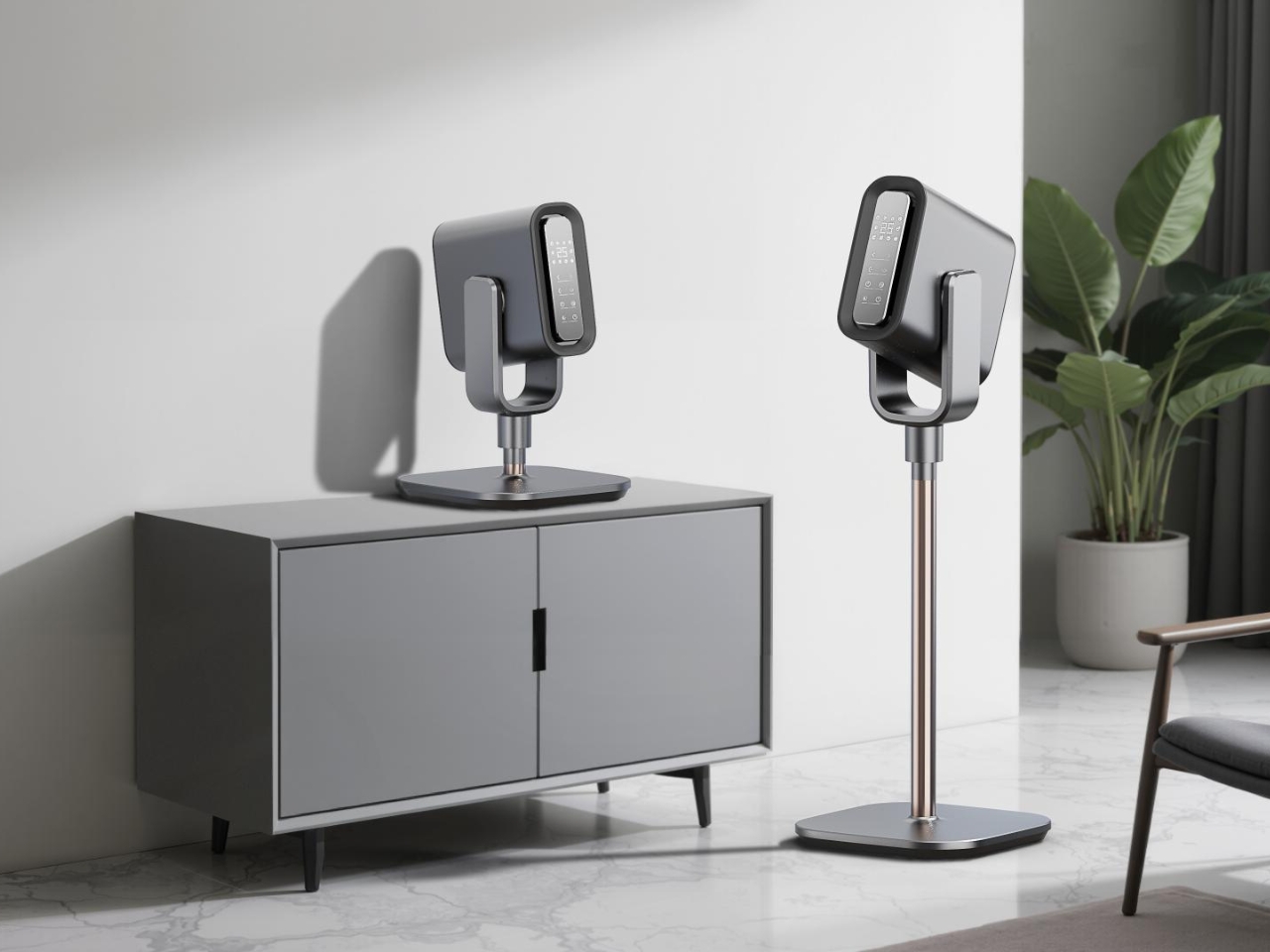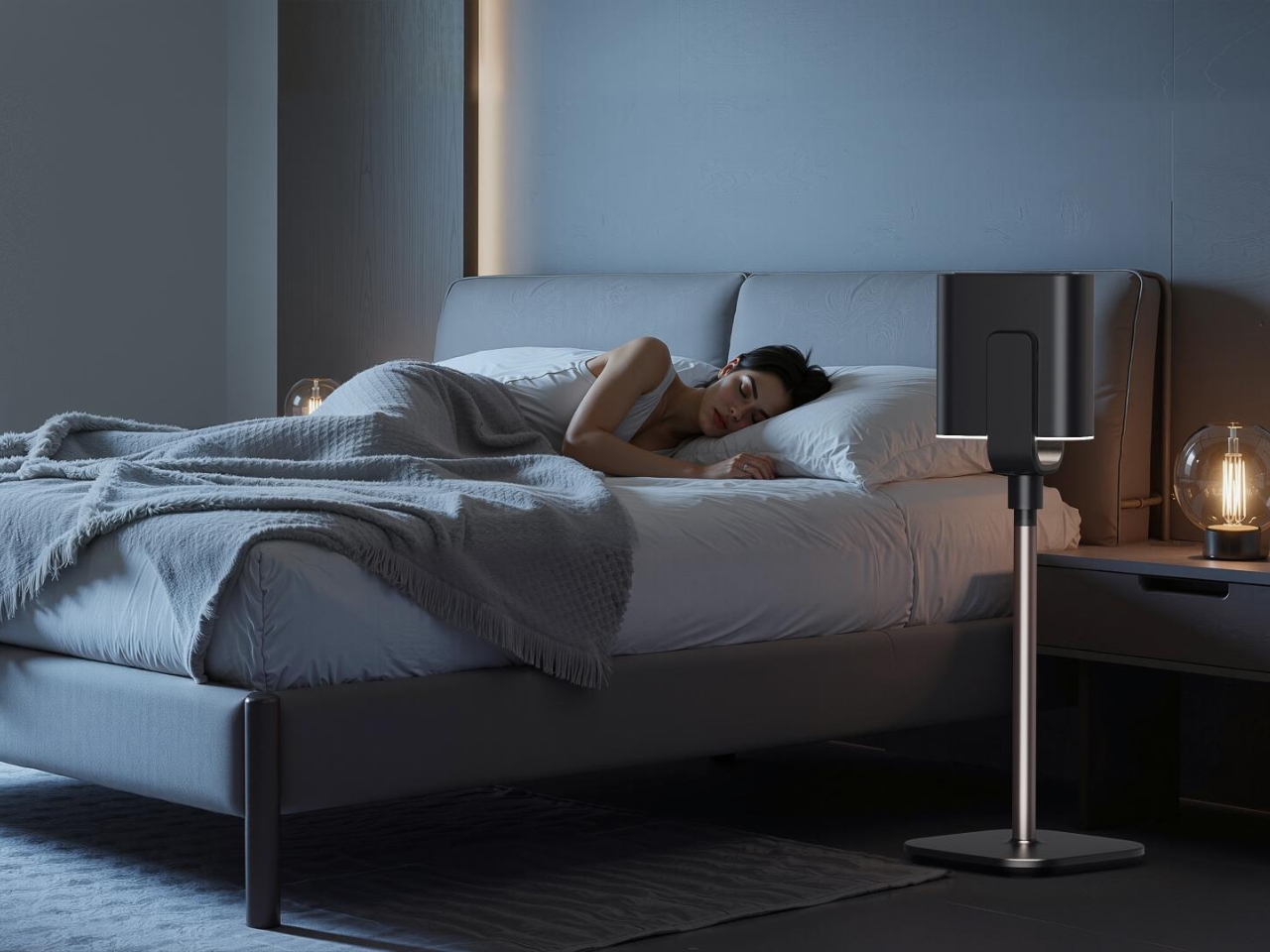
This ceiling fan hides an 80W Hi-Fi speaker and smart lighting in one sleek unit

You get light from above. You get wind from above too. So at some point, somebody was bound to ask the obvious next question, why not sound from above as well? Ceiling fans have spent years quietly doing side quests with built-in lamps, remote controls, and the occasional smart feature, but this feels like the first time one has aimed for proper living room territory. The lamp-plus-fan combo has always felt like a polite upgrade to an appliance nobody was particularly excited about.

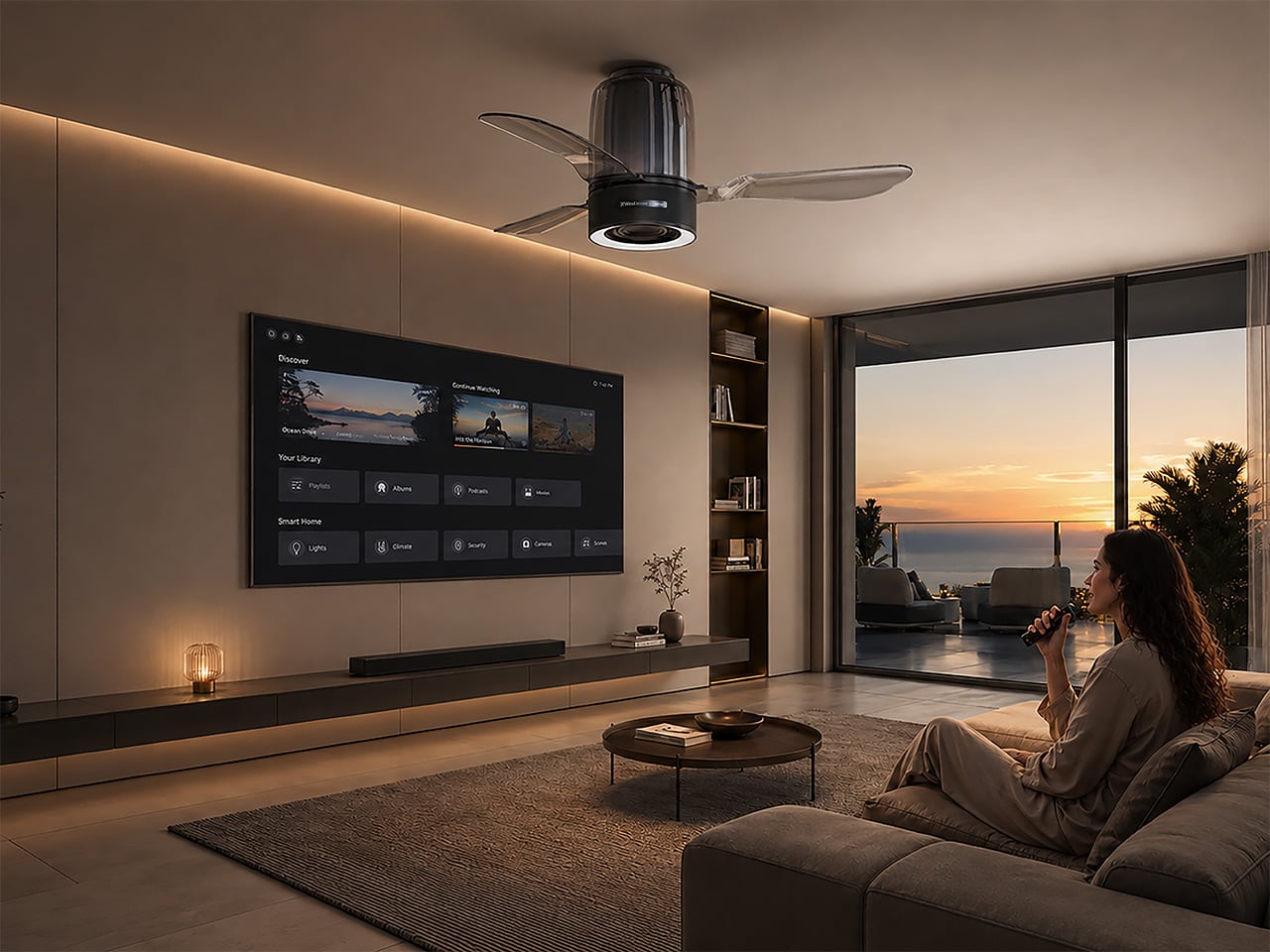
WindGroove’s AirFi One takes that idea and runs with it, folding a Hi-Fi audio system, atmospheric lighting, and airflow into a single ceiling-mounted fixture. The audio setup is co-developed with Jamo, the Danish speaker brand founded in 1968, which gives the whole thing considerably more credibility than your average gadget trying to do five jobs at once. It’s one of those products that sounds slightly absurd for about three seconds, right up until you realize how much floor space your speakers and fans have been stealing this whole time.

Brand: WindGroove

Click Here to Buy Now: $480 $815 (40% off, use coupon code “YD15”). Hurry, deal ends in 48-hours!
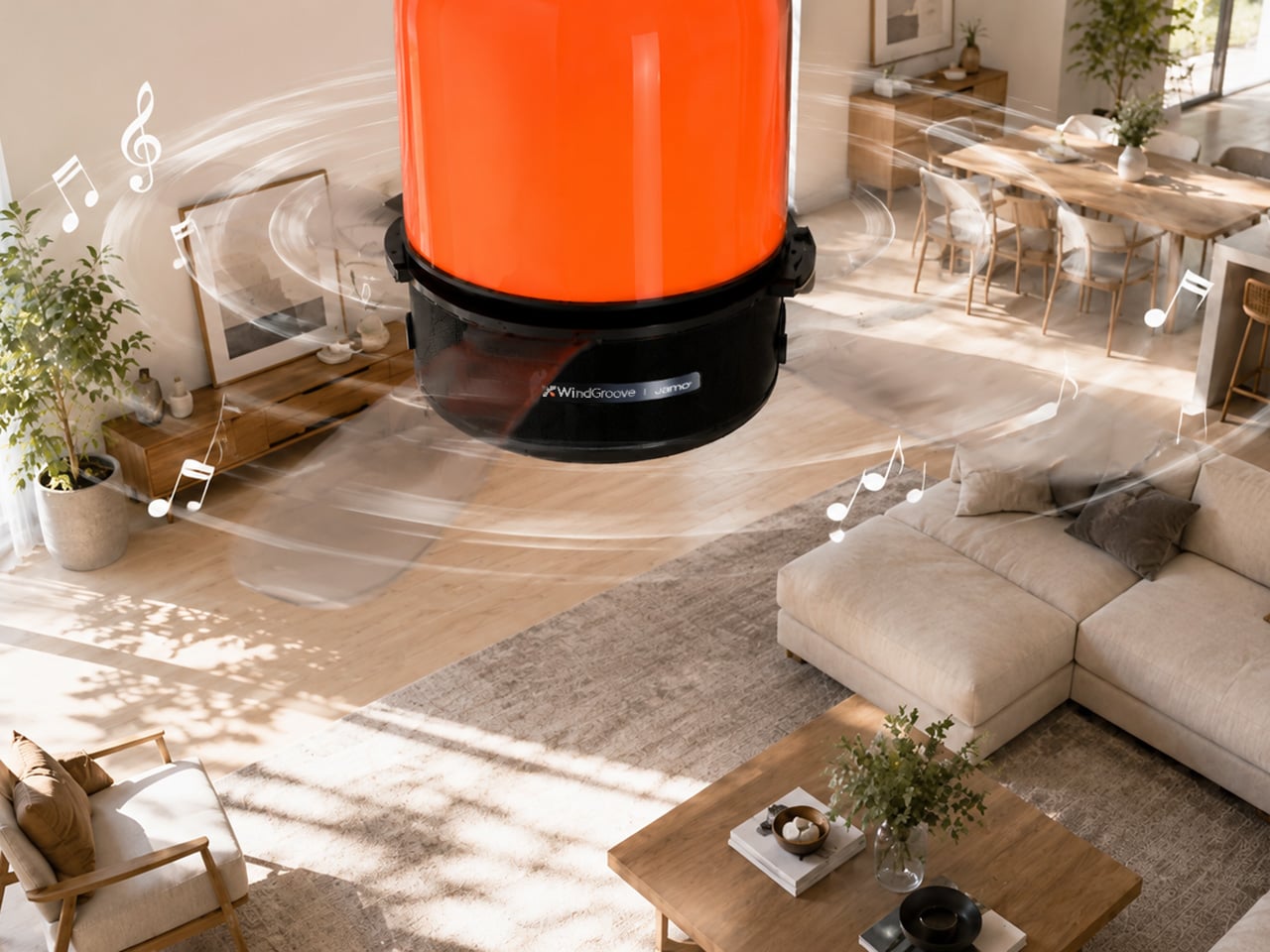
Putting a speaker inside a spinning mechanical system is, acoustically speaking, a problem that mostly did not exist before. Motors generate vibration, and that vibration travels through metal housings and mounting hardware until it finds a speaker driver to rattle. At higher fan speeds, the blades also create periodic air pressure variations at blade-pass frequency, a rhythmic pulse that can cause a speaker cone to flutter and introduce distortion into the output. Positioning the speaker overhead compounds the issue further, because the ceiling acts as a large reflective surface, creating phase cancellation and comb filtering effects where certain frequencies pile up while others cancel out. Nailing clean Hi-Fi sound out of a product that is also spinning at variable speeds, mounted above a live listening environment, is a genuinely impressive engineering feat.
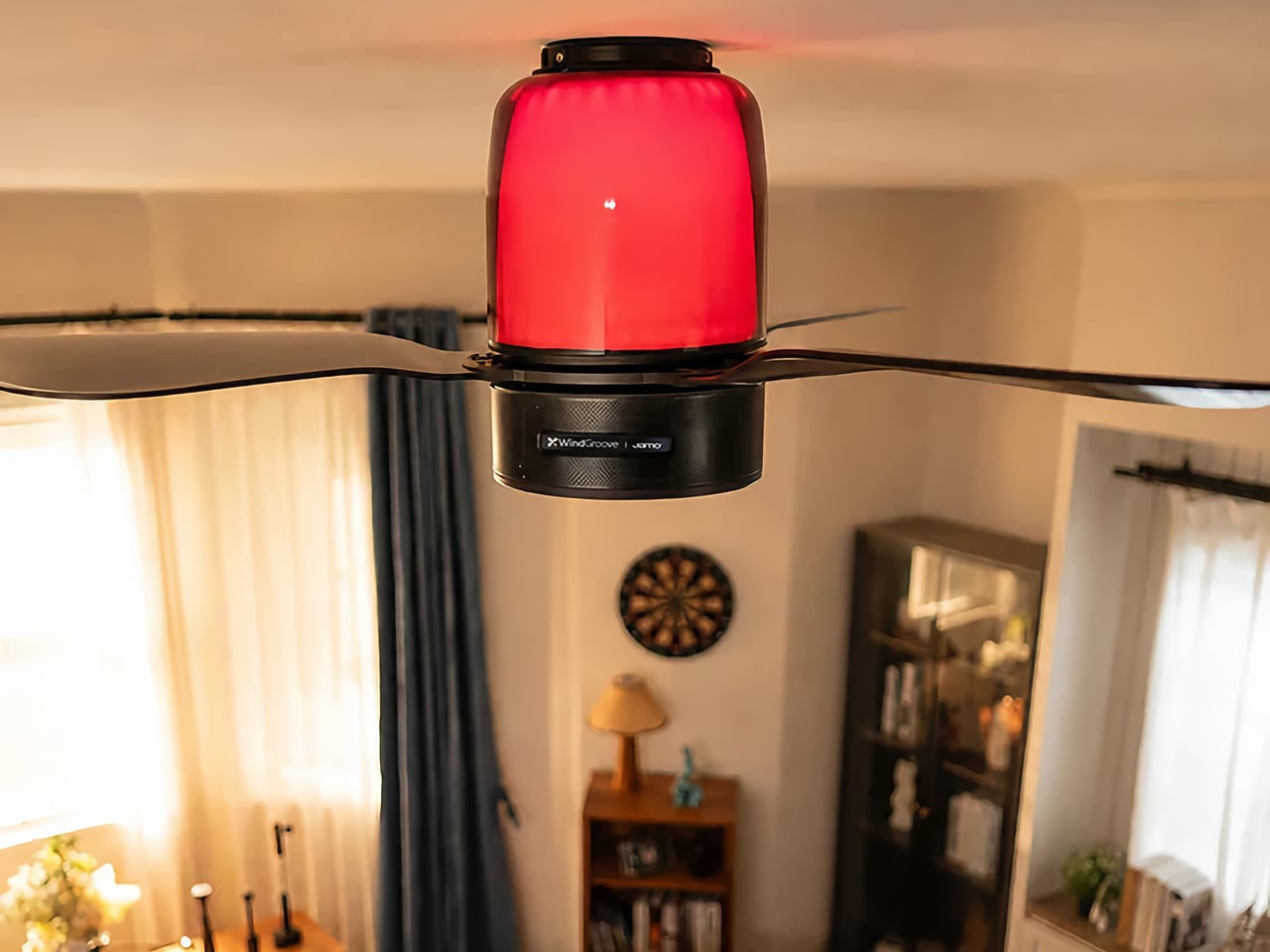
WindGroove’s entire design thesis rests on one idea: technology should dissolve into the room, not announce itself from it. Making that happen acoustically meant solving real engineering problems, because a spinning motor introduces vibration into a speaker chassis and rotating blades create periodic air pressure pulses that can rattle a driver into distortion. Intelligent DSP processing that corrects for ceiling reflection and overhead projection in real time is WindGroove’s most elegant solution, allowing the speaker to disappear into the architecture and still fill a room properly. Total harmonic distortion is rated at 1% or below, keeping music sounding like music rather than like hardware working hard. A motor running at under 32 decibels reduces mechanical vibration at the source, so the DSP has considerably less chaos to correct for.
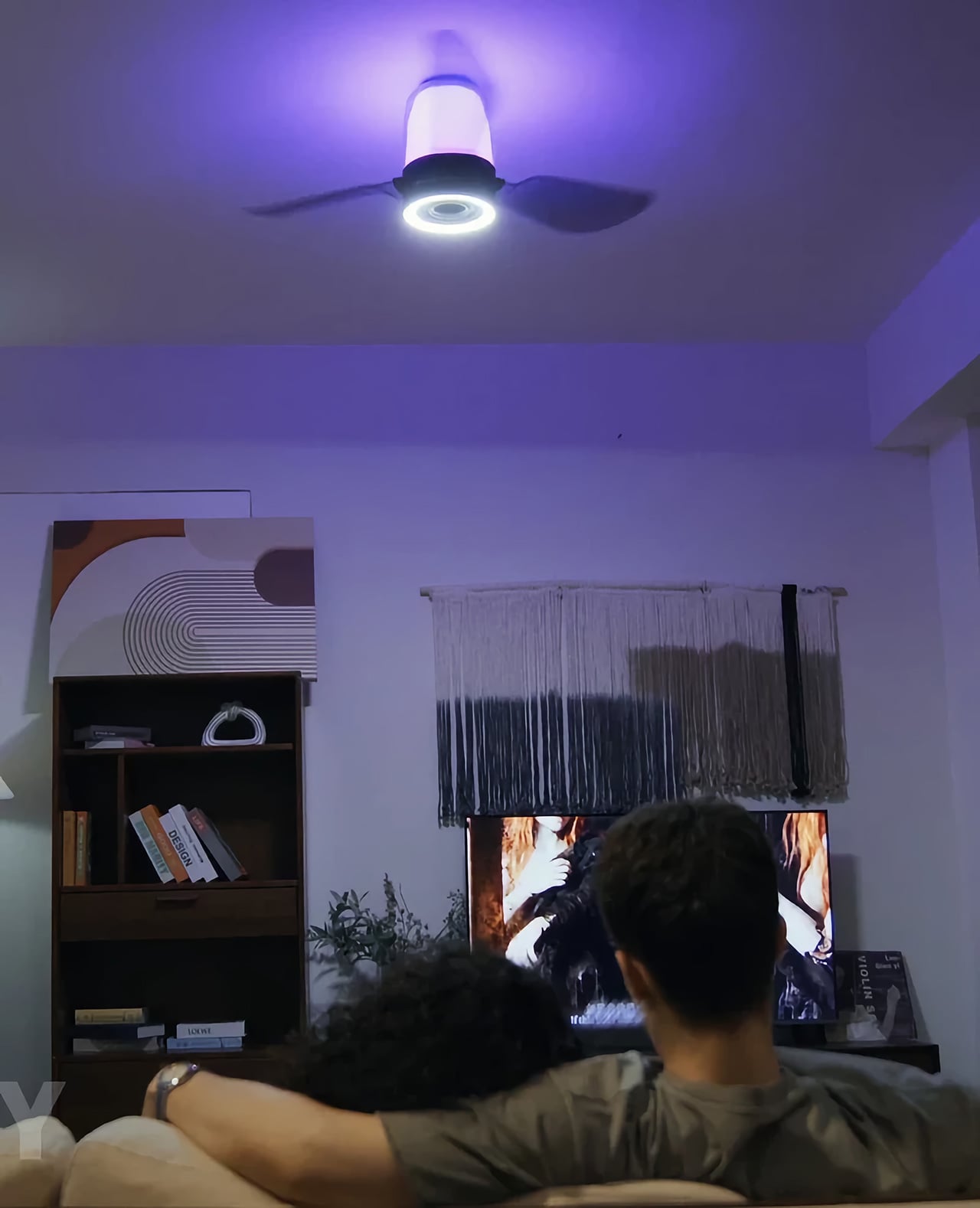
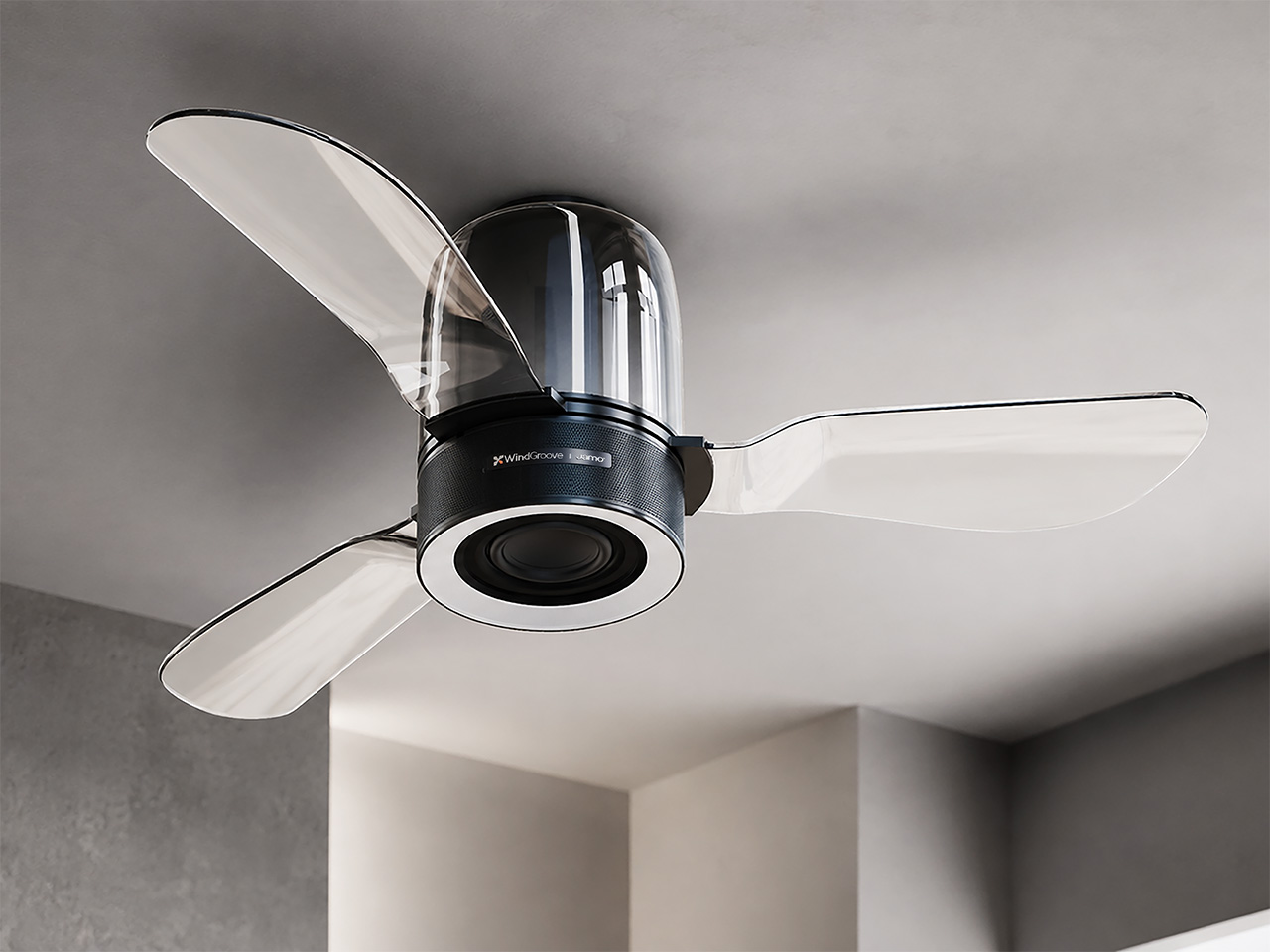
Jamo has been building musically balanced speakers rooted in Scandinavian design since 1968, and that acoustic philosophy is what WindGroove borrowed for the tuning here. The 80W 3-way setup, twin 15W mid-high drivers plus a dedicated 50W subwoofer, carries real Hi-Fi ambitions rather than the polite background-audio compromise most integrated appliances settle for. Frequency response runs from 45Hz to 20kHz, wide enough to cover genuine bass texture and crisp high-frequency clarity across the full spectrum of recorded music. Bringing in a heritage audio brand rather than speccing the cheapest available driver stack reflects WindGroove’s conviction that invisible technology still needs to perform at the highest level when you actually sit down and listen. Putting a Jamo-tuned 80W Hi-Fi system inside a ceiling fan is the kind of product decision that only makes sense if you believe the room should come first, and the hardware should figure itself out.

The fan boasts a maximum airflow of 4621 CFM at under 32 decibels, quiet enough to run while music is playing without competing with it, and the blade direction reverses seasonally so the unit pulls its weight year-round. The dual-zone lighting system combines everyday illumination with immersive ambience. The lower section serves as the primary light source, providing bright, even illumination for the entire room. You can choose from three color temperatures – warm white for a cozy, relaxing glow, natural white for comfortable everyday lighting, or cool white for a crisp, energizing feel. Stepless dimming lets you fine-tune the brightness to suit everything from winding down at night to working, reading, or getting ready in the morning.
Picture a Friday evening where you dim the lights, the room shifts to a warm amber glow, the fan hums almost imperceptibly overhead, and the music you put on actually sounds like the artist intended it to. No speaker on a shelf eating into the bookcase. No standing fan taking up the corner you always meant to do something with. No three apps open at once trying to get everything to behave. The ceiling handles it, and the room just feels right in a way that is surprisingly hard to explain to someone who has not experienced it.

AirFi One is priced at $499 at retail and is available for purchase right now on WindGroove’s website.. Sure, you could just duct-tape a Bluetooth speaker to your fan and call it a day – but having an 80W sound system built into your ceiling fan isn’t something everyone can boast of.

Click Here to Buy Now: $480 $815 (40% off, use coupon code “YD15”). Hurry, deal ends in 48-hours!

The post This ceiling fan hides an 80W Hi-Fi speaker and smart lighting in one sleek unit first appeared on Yanko Design.


The Paper Fan Just Lost Its Ribs. It’s Better For It.

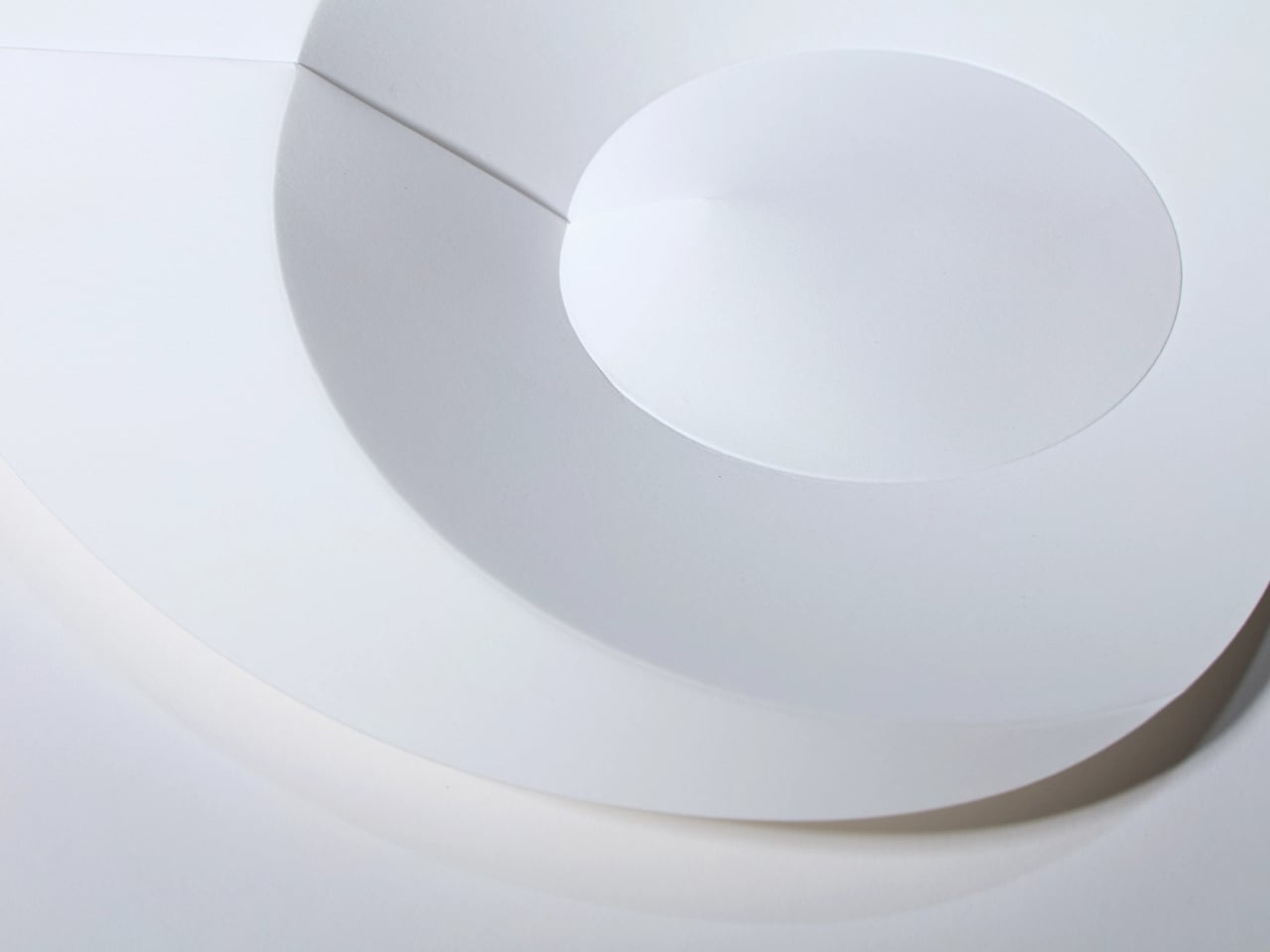
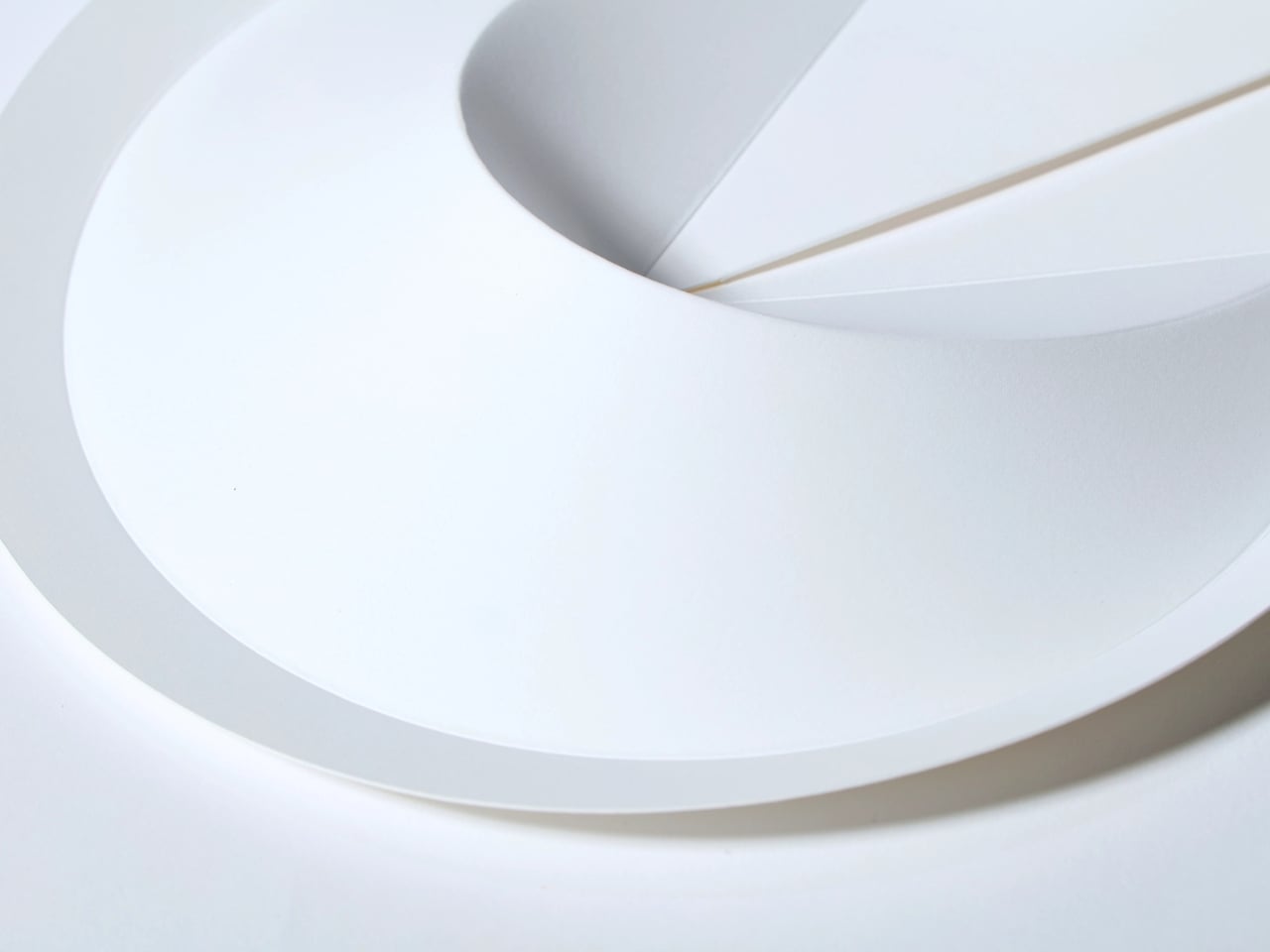
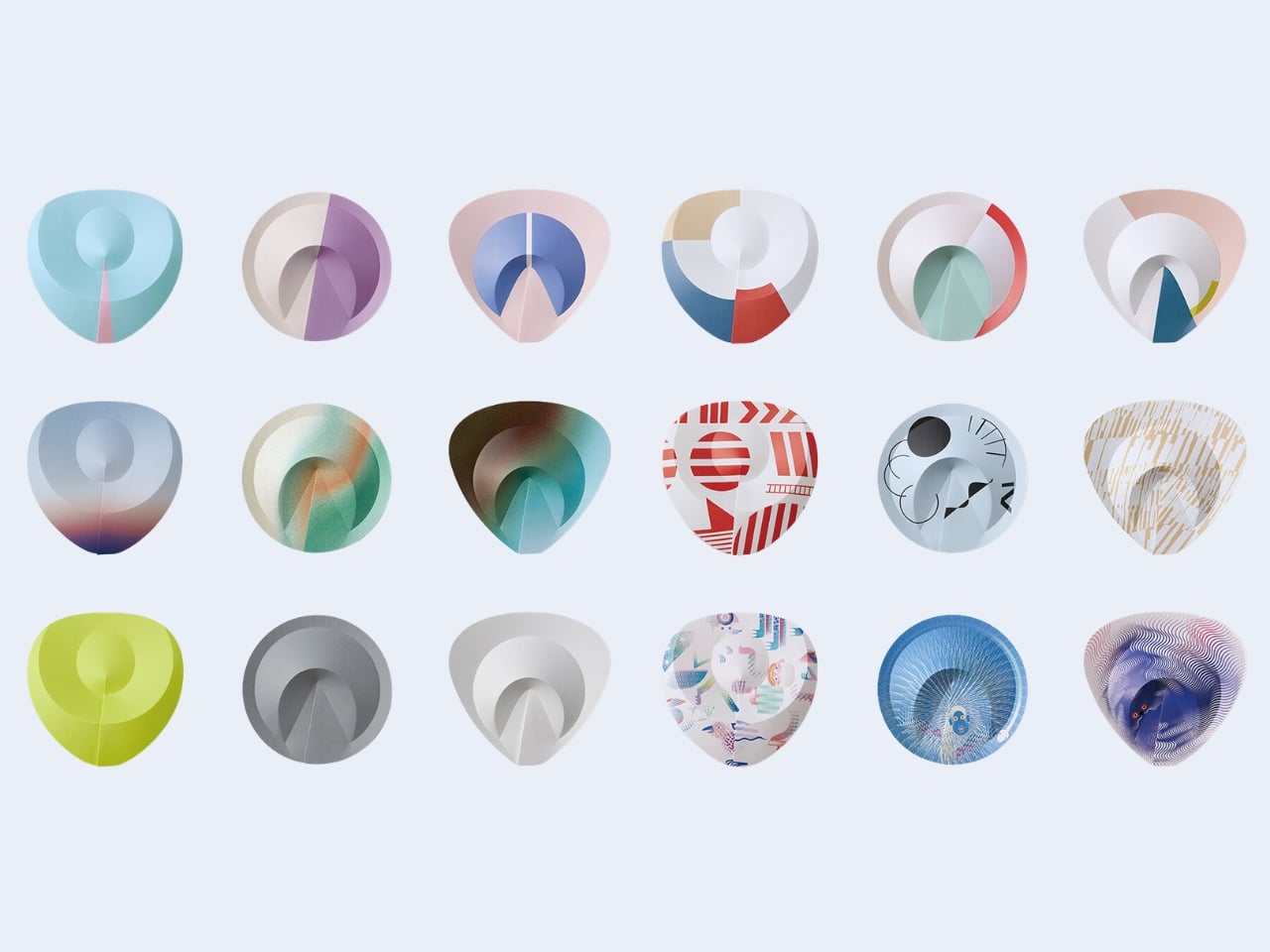
The Japanese paper fan is one of those objects that seems to have already said everything it has to say. It’s been refined over centuries, grown into a cultural icon, and been replicated so many times that it barely registers as a design object anymore. It’s just a fan. You flap it at yourself on a hot day and move on. So when KUMAnoTE and Professor Jun Mitani released Orikaze, a ribless folded paper fan that holds its shape through geometry alone, it felt like a genuinely unexpected development.

Let me explain the “ribless” part, because it’s more interesting than it sounds. Traditional Japanese fans, whether the folded sensu or the flat uchiwa, rely on an internal skeleton. Bamboo ribs, plastic frames, some kind of structure embedded within the paper to keep everything in shape. Without that skeleton, a fan is just a floppy sheet of material. Orikaze removes the skeleton entirely and replaces it with something far more elegant: the fold itself.

Designers: KUMAnoTE x Jun Mitani

The design uses a system of mountain and valley folds that transforms a single flat sheet of paper into a self-supporting structure. The geometry does the engineering. The paper doesn’t need a spine because the folds create rigidity, distribute force, and hold the form together. Professor Jun Mitani, who researches computational origami at the University of Tsukuba, brought the mathematical backbone to this project, and you can feel that precision in the result. It’s not just a clever idea pitched in a studio meeting. It’s a concept grounded in real structural logic.

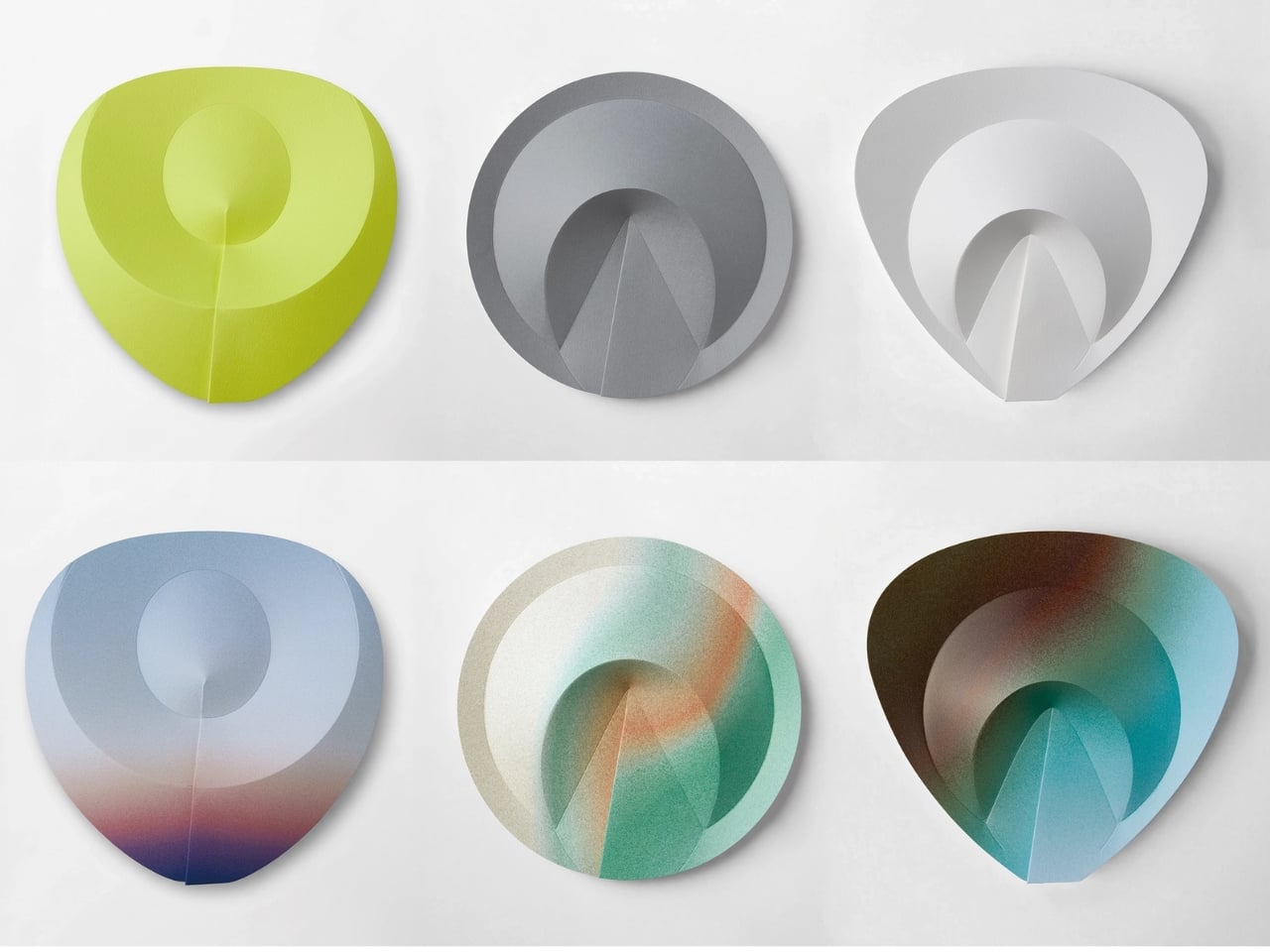
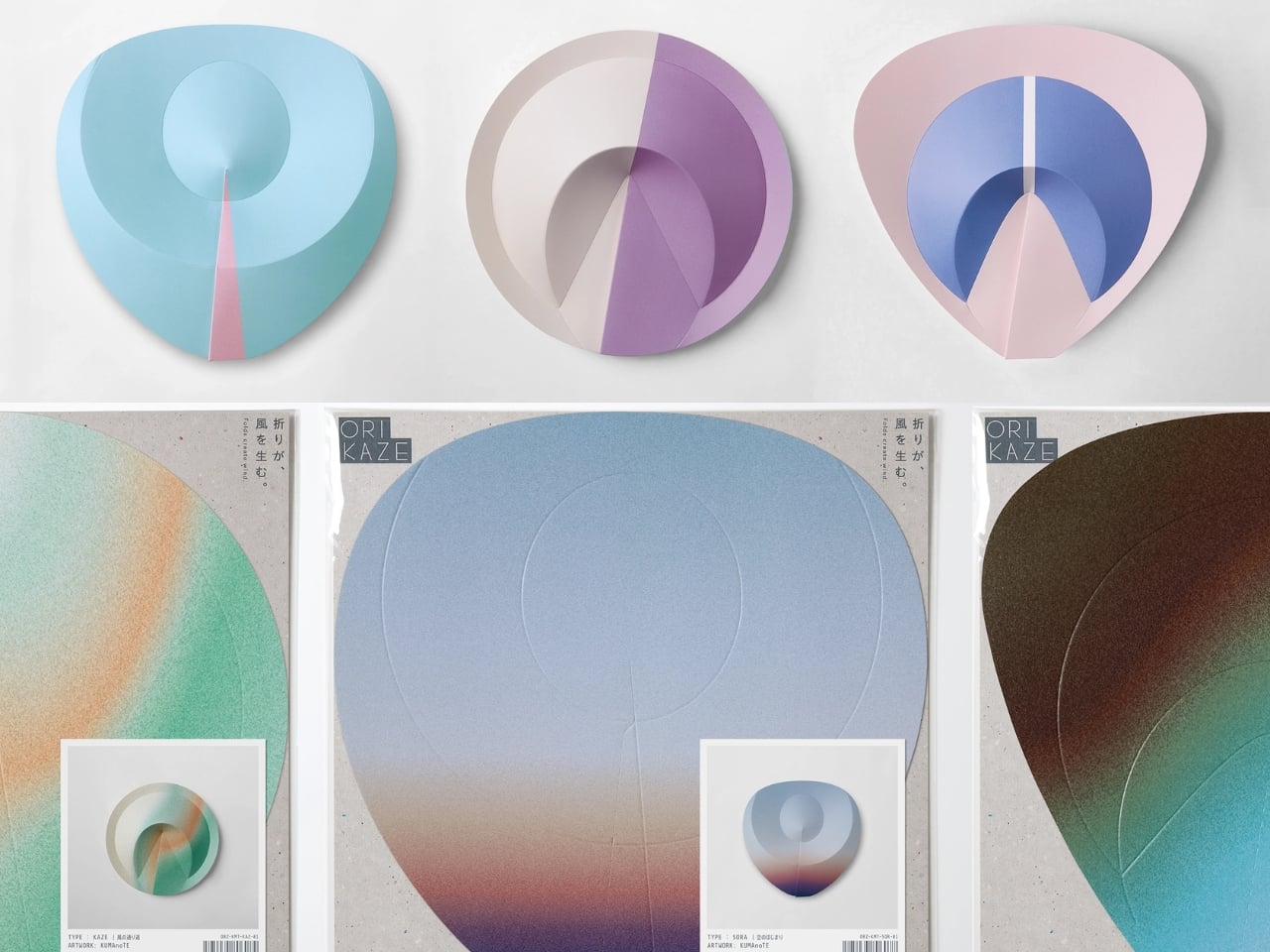
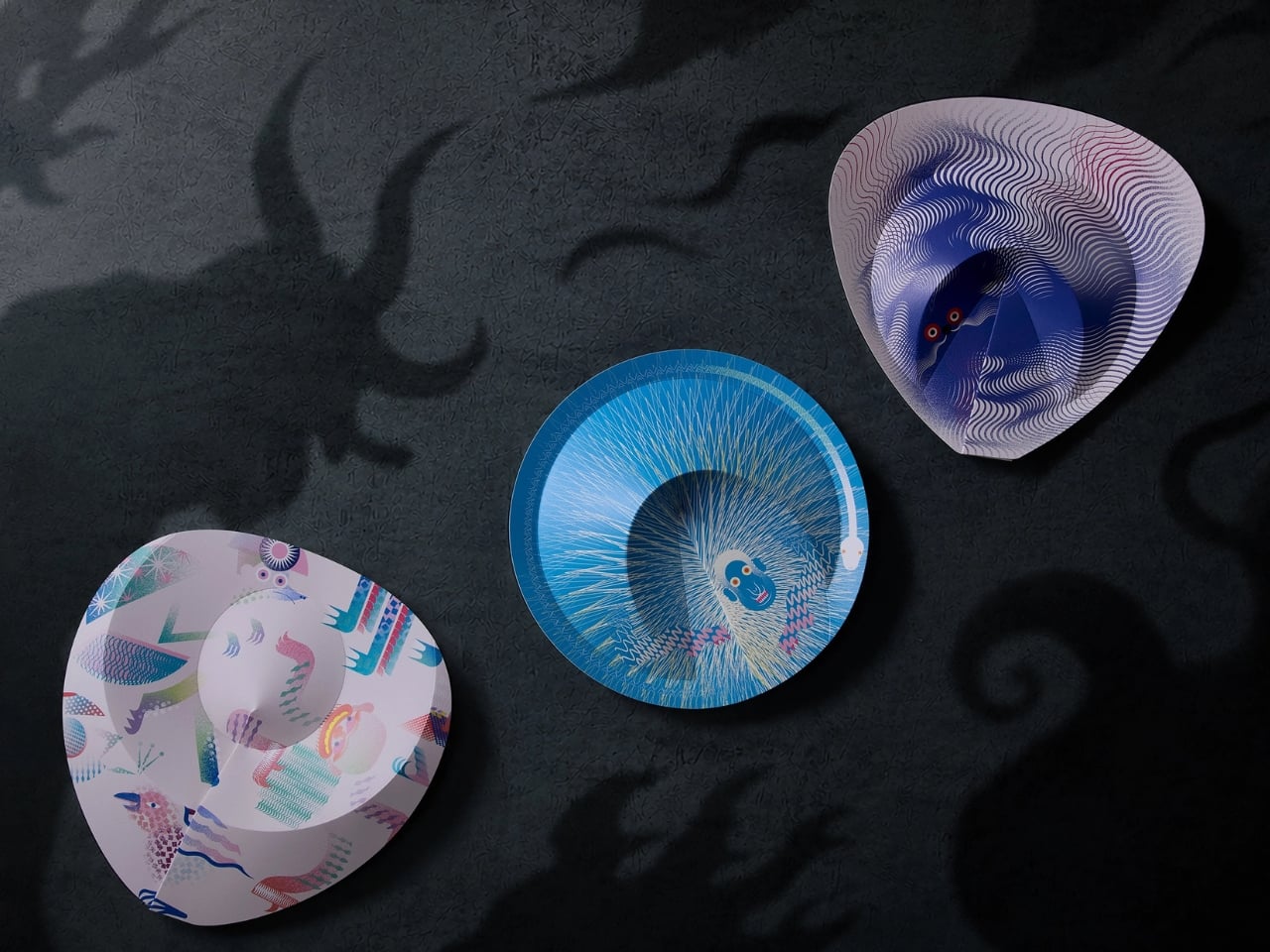
Orikaze comes in three forms, named SORA, KAZE, and TSUCHI. Sky, wind, and earth. KUMAnoTE could have just called them A, B, and C, or given them abstract model numbers, but the naming choice tells you something about how seriously the studio took the project. These are elemental references, and the visual result earns them. The folded surfaces catch light differently depending on the angle, throwing subtle patterns of shadow across the paper as you move the fan. It shifts. It breathes. For an object this simple, it does a remarkable amount of visual work.

The design also exists in graphic editions. KUMAnoTE collaborated with graphic designer COYA on versions featuring Japanese yokai folklore motifs, and with Japanese fashion brand SNEEUW on a separate set. The structural logic remains the same across all editions; only the visual layer changes. That flexibility reveals something important about what Orikaze actually is. It’s not just a fan. It’s a design platform, a structure capable of carrying different visual conversations without losing its essential character.

Orikaze was presented at Interior Lifestyle Tokyo 2026 and is scheduled for release in summer 2026. Interior Lifestyle Tokyo is a trade show with genuine curatorial weight, so the placement isn’t incidental. The audience there isn’t shopping for novelties. They’re looking at direction, at ideas that signal where design is going. That context positions Orikaze as exactly what it appears to be: a serious design object that happens to be a fan.

My honest read on this project is that it succeeds because it doesn’t try to replace the traditional fan. It converses with it. The sensu has survived for over a thousand years because it solves a basic human problem well and does it beautifully. Orikaze doesn’t argue against that. It asks: what if we looked at the same problem with fresh eyes and different tools? What does paper actually need in order to become a fan? And then it answers that question through mathematics rather than materials.

That kind of thinking, where the constraint becomes the creative engine rather than the limitation, is rare in design. Most redesigns add. They layer on new materials, new mechanisms, new technology. Orikaze subtracts. It removes the internal frame and trusts the paper to do more than we usually ask of it. The result is lighter, quieter, and somehow more considered than anything with more moving parts. That restraint is the whole point. And the paper fan, it turns out, still has things to say.

The post The Paper Fan Just Lost Its Ribs. It’s Better For It. first appeared on Yanko Design.

A Rectangular Bladeless Fan? This Design Breaks All the Rules

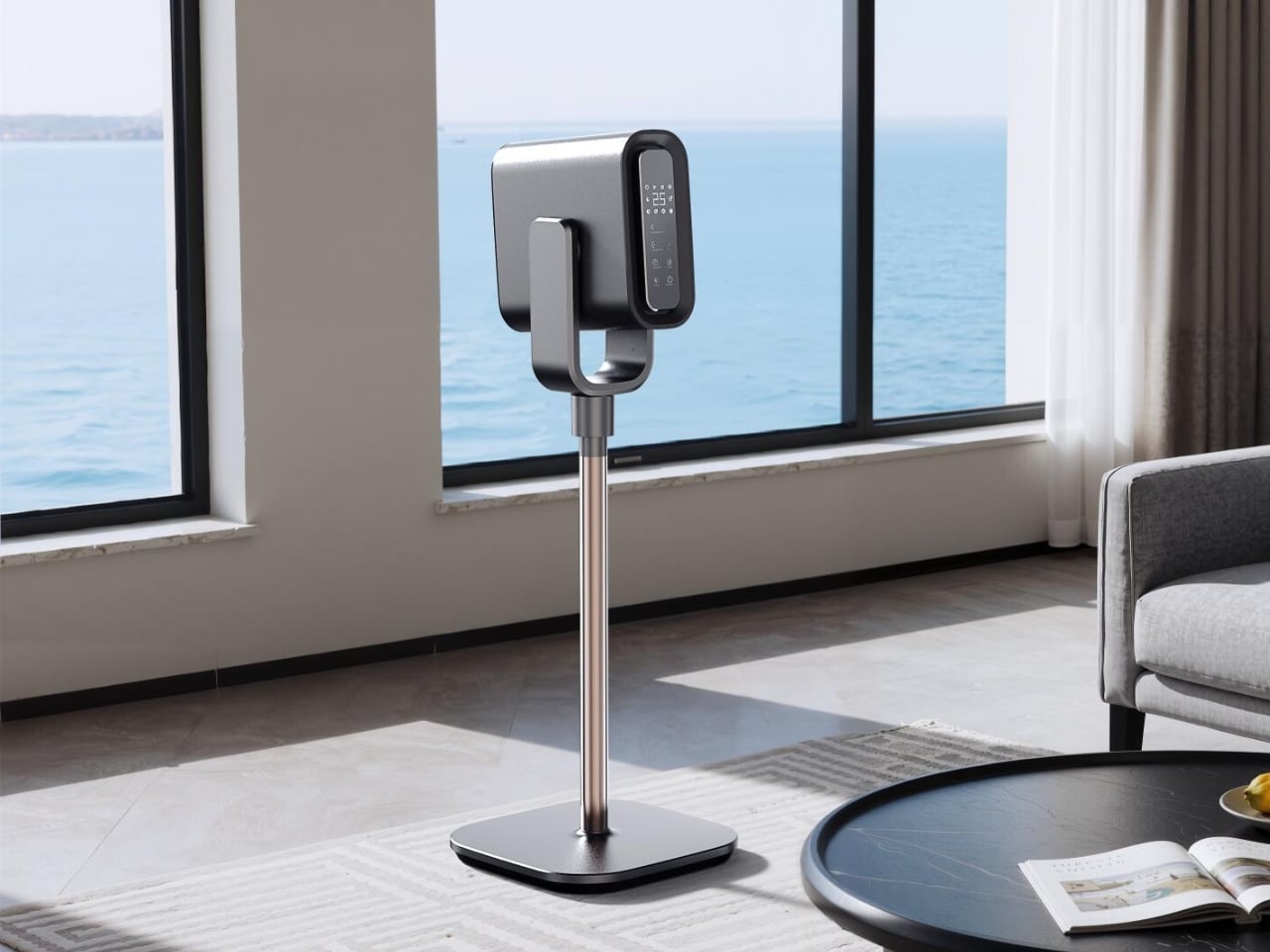
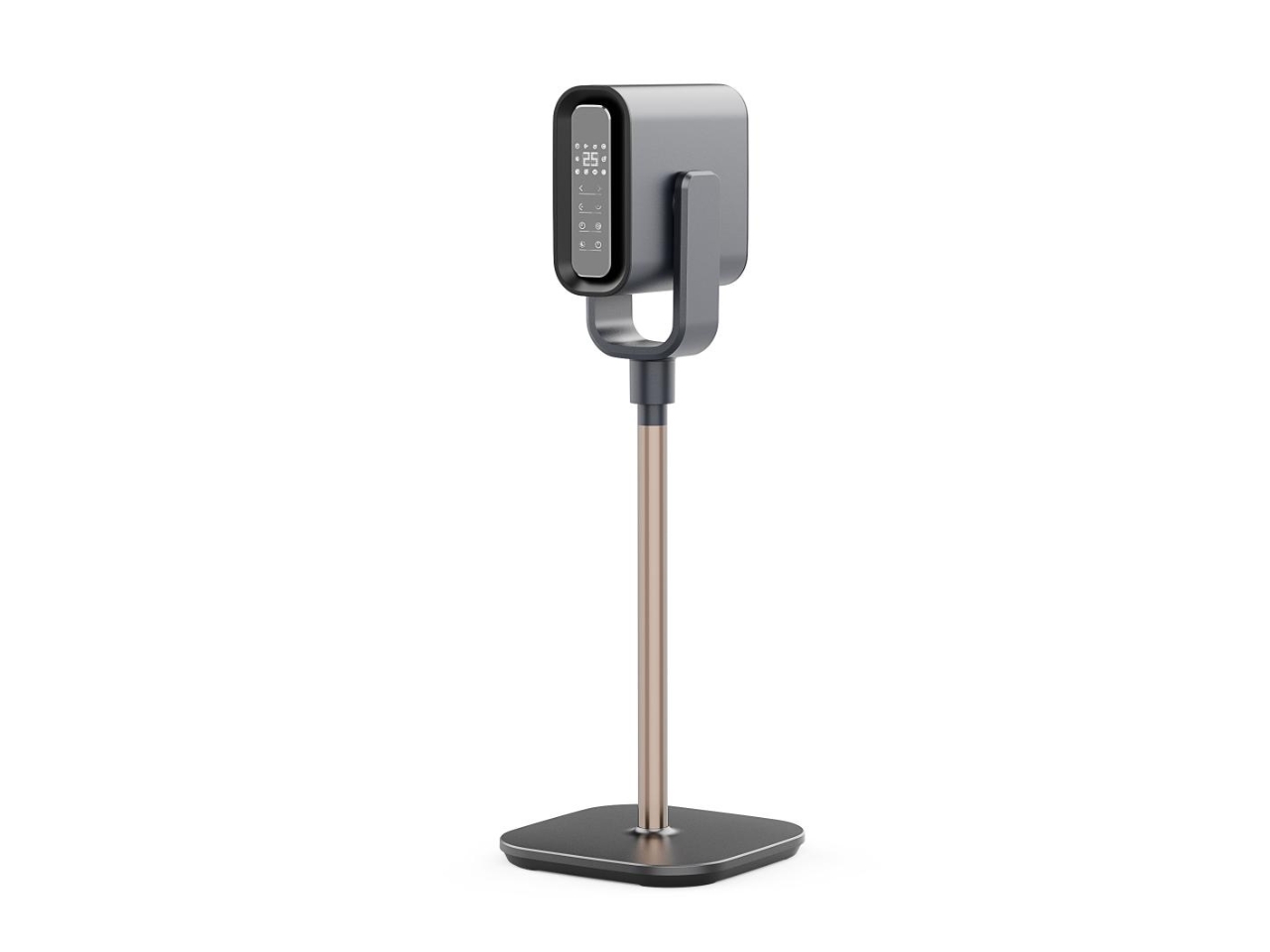
You know how some designs just make you stop scrolling? That’s exactly what happened when I came across this bladeless fan by Foshan Perfect Industrial Design. It’s not your typical circular fan that we’ve all gotten used to seeing since Dyson popularized the concept. This one’s rocking a square base, and honestly, it’s kind of genius.

Let me explain why this caught my attention. We’ve been conditioned to think that fans, bladeless or not, should be round. It makes sense, right? Air flows in circular patterns, so circular fans seem like the natural choice. But here’s where this design gets interesting. The team behind this fan decided to challenge that assumption and built their concept around a square-based design language. And it’s not just about being different for the sake of standing out.

Designer: Foshan Perfect Industrial Design

The real innovation here is what they’re calling 5D air circulation. Now, I’ll admit that sounds like marketing speak at first, but stick with me. Traditional bladeless fans work by hiding a propeller in the base that sucks air in and pushes it through a ring-shaped opening. The expelled air creates what’s called negative pressure, which pulls even more surrounding air through the ring, multiplying the airflow by up to 15 times.

This square design takes that concept and apparently amplifies it with a focused air duct system. Instead of just sending air in one general direction like circular fans tend to do, this focused duct system accelerates and directs the airflow more precisely. Think of it like the difference between a garden hose with a regular nozzle versus one with a spray gun attachment. Same water source, but way more control and power.

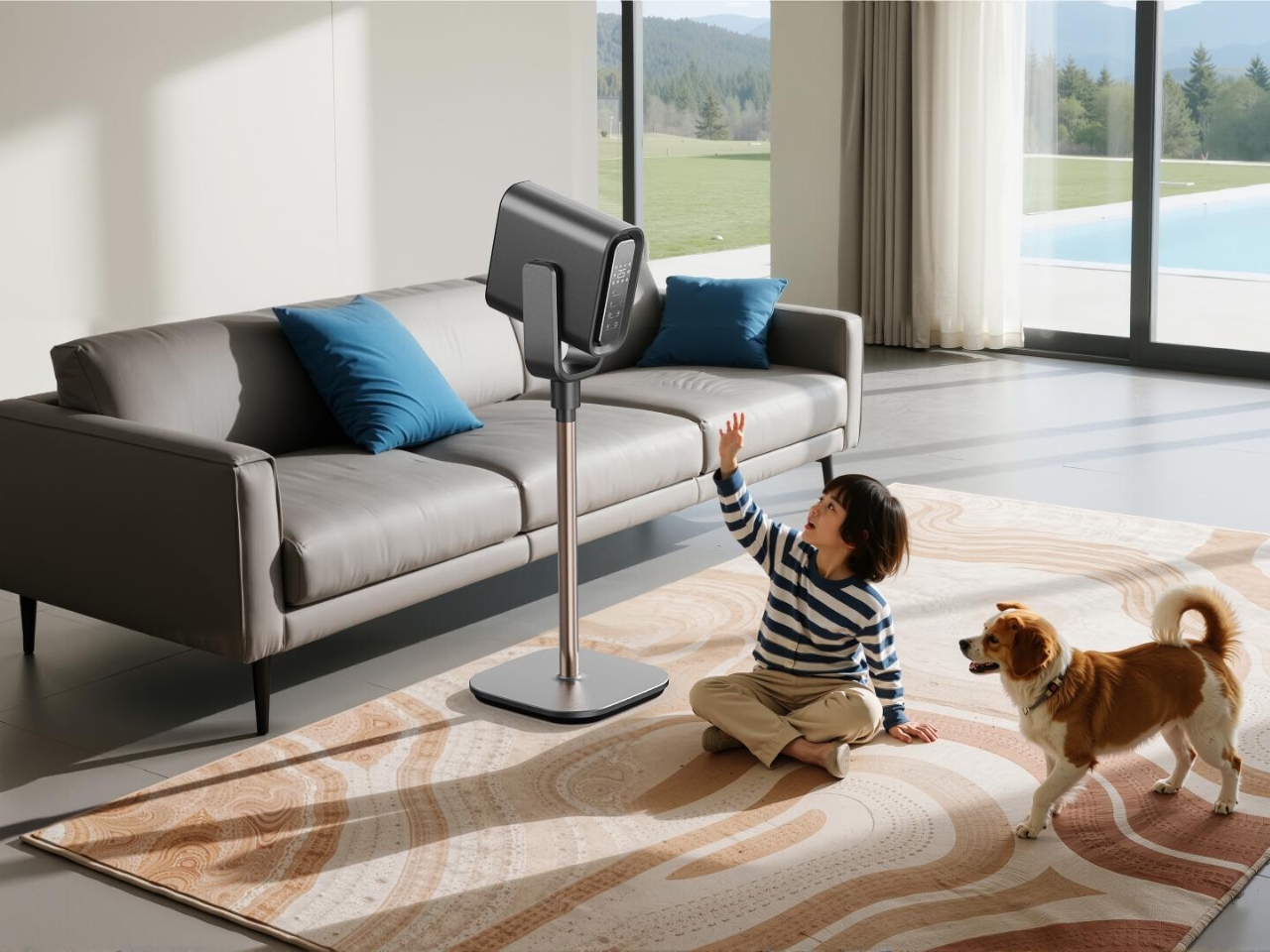
What I find particularly clever about the square form factor is how it fits into modern living spaces. Most of our furniture, shelves, and room layouts are based on right angles and straight lines. A square-based fan just sits more naturally on a desk, side table, or shelf without that awkward “where do I put this round thing” moment we’ve all experienced. It’s one of those design decisions that seems obvious once you see it, but took real creative thinking to actually execute.

The bladeless fan category itself has come a long way since it first hit the market. These devices are safer than traditional fans because there are no exposed blades that curious kids or pets can stick their fingers into. They’re also typically quieter and more energy-efficient. But they’ve mostly followed the same aesthetic playbook, which is why seeing a square interpretation feels refreshing.

This design won recognition from the MUSE Design Awards, which celebrates innovative product design across categories. And it’s not hard to see why. It takes an established product category and reimagines it in a way that’s both functional and aesthetically interesting. The square form doesn’t just look different, it potentially offers better spatial efficiency and air direction control. I think what makes this design work is that it doesn’t sacrifice function for form. The square base isn’t just a stylistic choice; it’s integrated with the technical improvements like that focused air duct system. That’s the sweet spot in product design, where aesthetics and engineering work together rather than competing for attention.

For anyone who’s into tech, design, or just appreciating when everyday objects get thoughtfully reimagined, this fan is worth a second look. It’s a reminder that even in mature product categories, there’s still room for innovation when designers are willing to question the assumptions we’ve all been making. Sometimes the best ideas come from asking the simplest questions, like “does a fan really need to be round?” Whether this square bladeless fan becomes the new standard or remains a cool design experiment, it’s already succeeded in making us think differently about an appliance we barely notice. And that’s kind of the whole point of good design, isn’t it?

The post A Rectangular Bladeless Fan? This Design Breaks All the Rules first appeared on Yanko Design.
Stay Cool Anywhere With the Ultimate Portable Air Duster Fan for Any Adventure

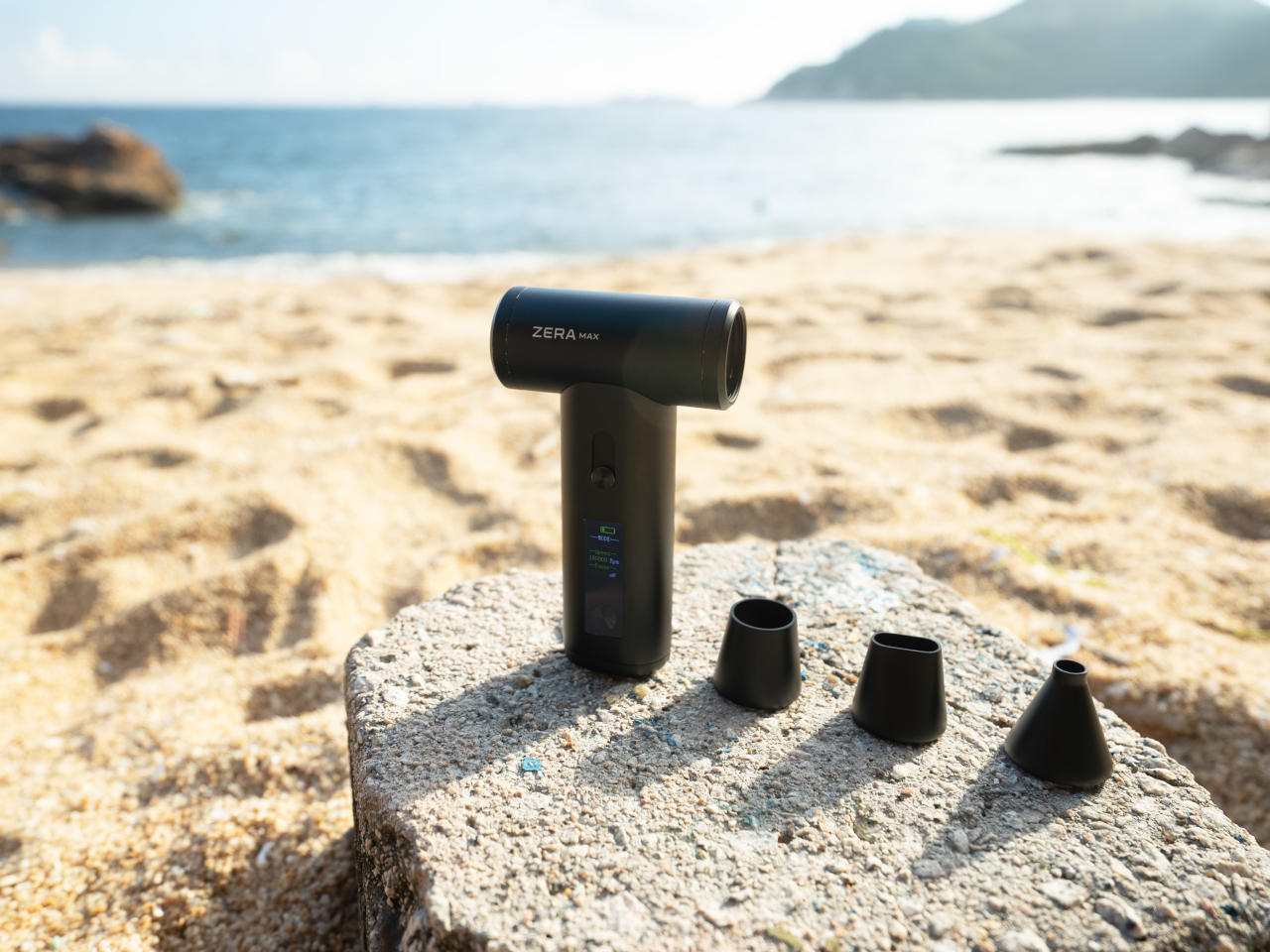
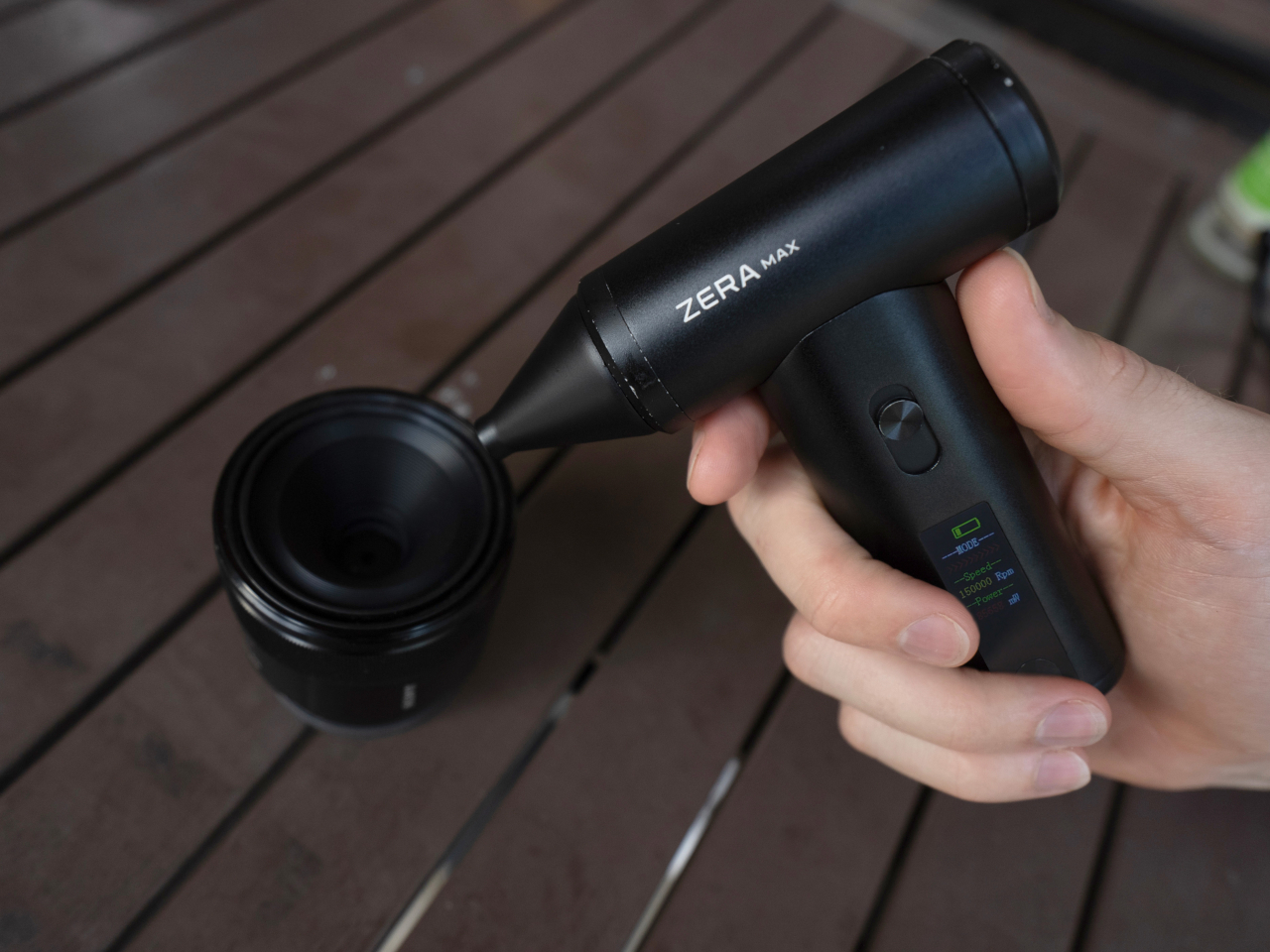
Imagine being in the great outdoors, basking in nature’s beauty, but also sweating profusely and feeling sluggish under the oppressive sun. You might not believe it, but your body definitely feels both days and nights getting hotter. Portable fans are the rage these days, but many of them require you to carry large bottle-sized contraptions that sacrifice your comfort just to beat the heat. That’s where ZERA MAX comes in, a revolutionary portable air duster fan designed to keep you cool and comfortable no matter where your adventures take you. Meticulously crafted to seamlessly combine power, portability, and stunning design, this handheld turbine delivers the wind you need to keep cool and look cool anytime. Whether you’re an avid camper, a dedicated hiker, or someone just looking to conquer the summer heat, the ZERA MAX promises to bring indoor comfort to your outdoor experiences.

Designer: ZERA

Click Here to Buy Now: $89 $159 (44% off). Hurry, deal ends soon! Raised over $106,000.

1

What sets the ZERA MAX apart at first glance is its sleek, ergonomic, and pocket-sized design. Crafted from aluminum alloy, this fan is lightweight yet incredibly durable, making it an indispensable companion for any outdoor activity. Its modern and minimalist aesthetic is a visual delight, ensuring it doesn’t just function well but looks good doing it. The convenience of its compact build cannot be overstated – you can effortlessly slip it into your backpack, hiking gear, or beach bag, giving you the freedom to carry it wherever you go, unlike other fans that are as large as water bottles. This blend of style and practicality ensures that relief from the heat is always within arm’s reach.

1

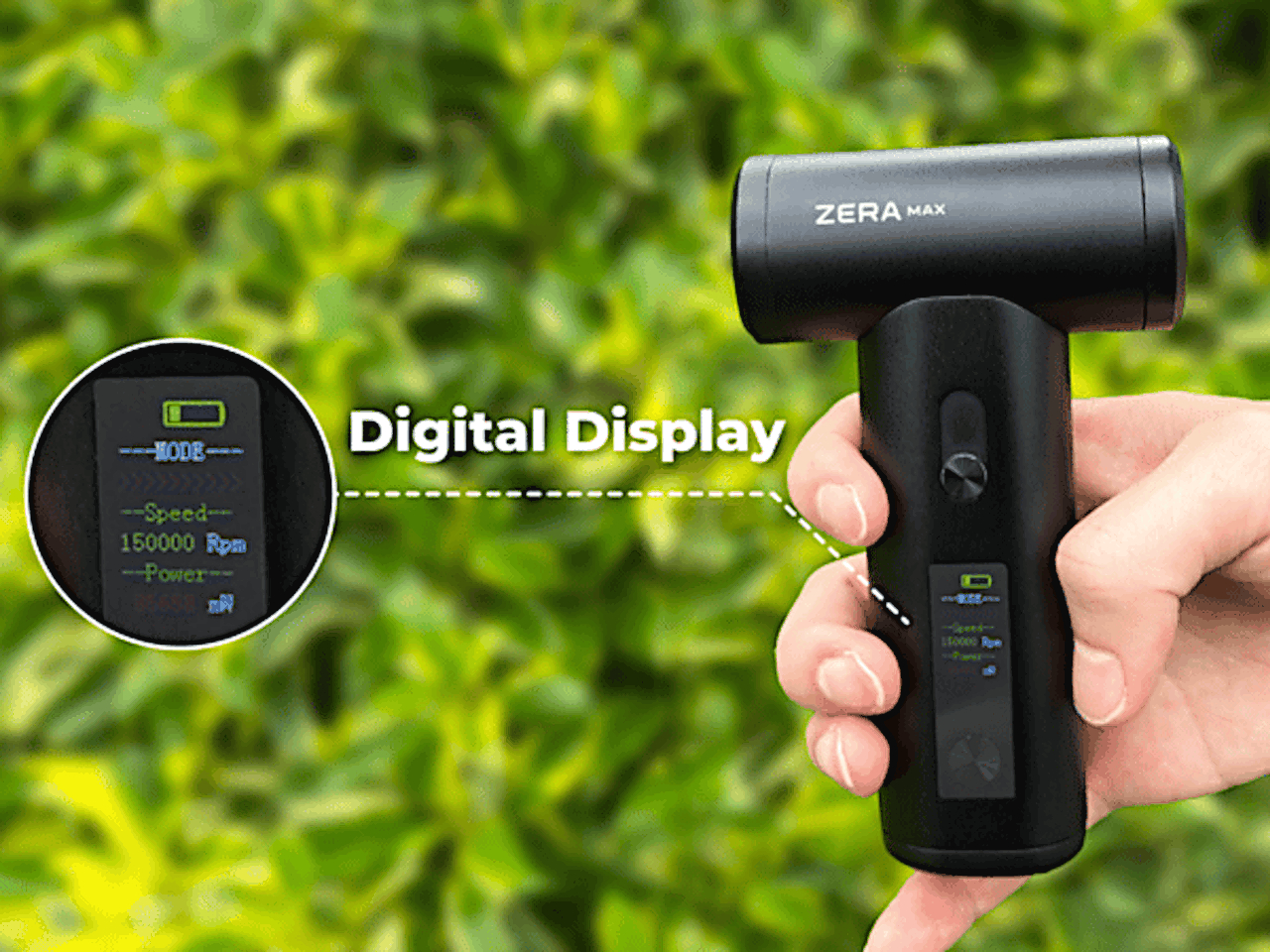
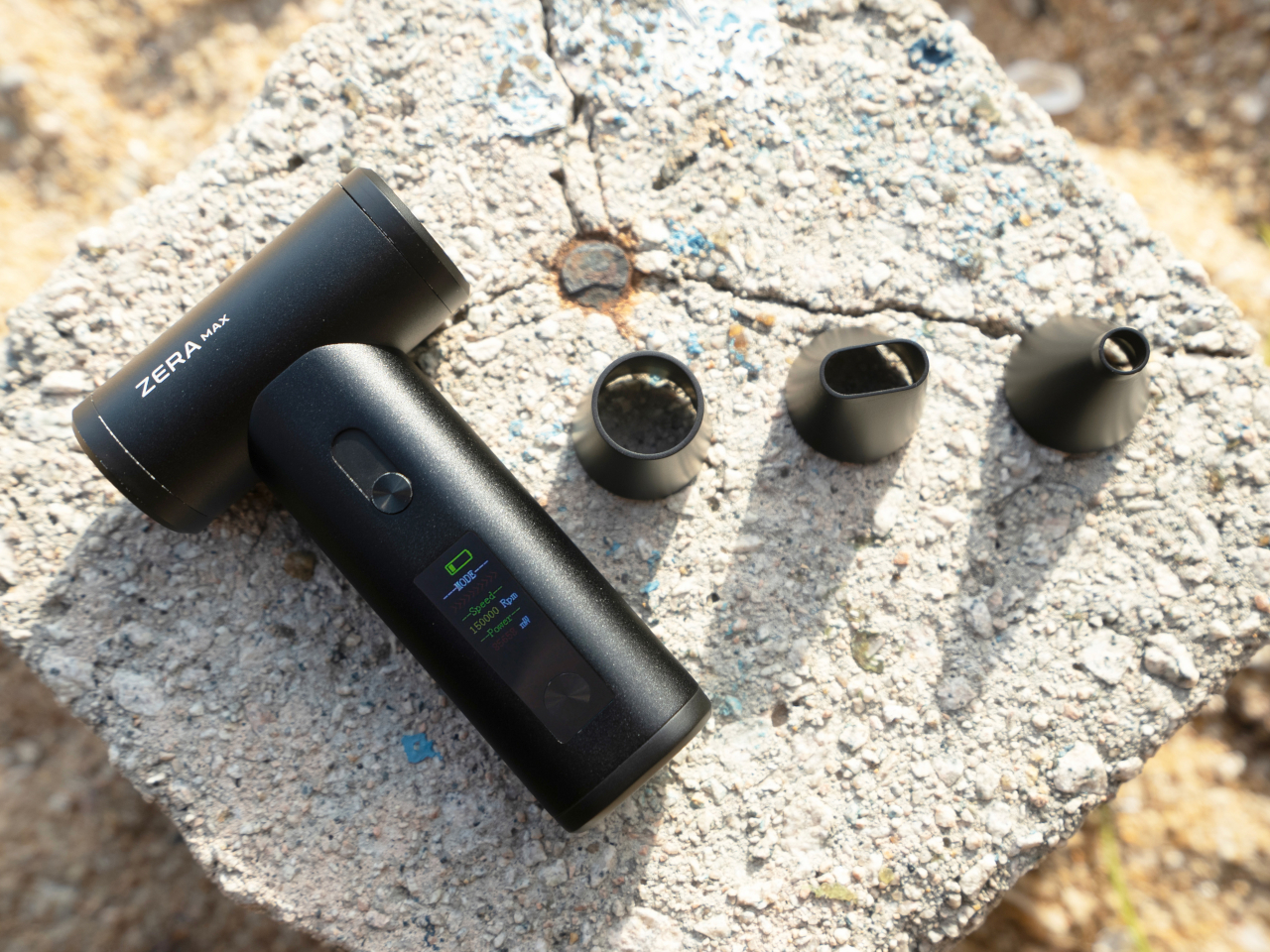
The relief is delivered by a small yet powerful wind turbine with a top speed of 150,000 rpm. With a simple sliding button, you can customize the speed that you need, whether it’s a gentle breeze for a mellow afternoon or a strong gust to keep the sweltering midday heat at bay. All the information you need is available at a glance on the handle’s digital display, whether it’s battery charge or speed. It’s these thoughtful features that distinguish the ZERA MAX as a versatile tool, perfect for any situation you might find yourself in.

But the ZERA MAX isn’t just a fan – it’s a powerhouse of functionality. Picture this: you’ve just reached your camping spot, and with a quick switch, your fan doubles as an air duster to swiftly blow away dirt from your equipment. It’s a dream come true for outdoor enthusiasts who often have to deal with dusty environments and gear. It can also function as a vacuum, an air mattress and ball inflator, an eyeglasses cleaner, and more. All these functions are made possible with a variety of interchangeable nozzles that quickly snap and stay on thanks to a strong rare-earth magnet on the fan’s nose. These features are not just convenient but essential, ensuring your gear stays clean and functional, allowing you to focus on enjoying your adventure.

1

With such a powerful wind turbine in your pocket, the last thing you’d want is for your portable air duster fan to die after just half an hour of use. Thanks to a large 4,000mAh battery in the handle, that’s never a worry and you can enjoy a comfortable breeze for up to 3 hours. And when it does come to juice up the ZERA MAX, its fast USB-C charging makes sure you’ll be up and ready again in no time. It is designed to keep up with your energetic lifestyle, providing uninterrupted comfort throughout your outdoor excursions. With its harmonious fusion of innovative design, exceptional functionality, and versatile adaptability, this handheld wind turbine redefines what a portable fan can be. Whether you’re embracing the outdoors, trying to survive a hot day, setting up a mattress, or simply cleaning your laptop, the ZERA MAX is ready to revolutionize your adventures, wherever the wind blows, especially if the wind isn’t blowing at all.

Click Here to Buy Now: $89 $159 (44% off). Hurry, deal ends soon! Raised over $106,000.

The post Stay Cool Anywhere With the Ultimate Portable Air Duster Fan for Any Adventure first appeared on Yanko Design.