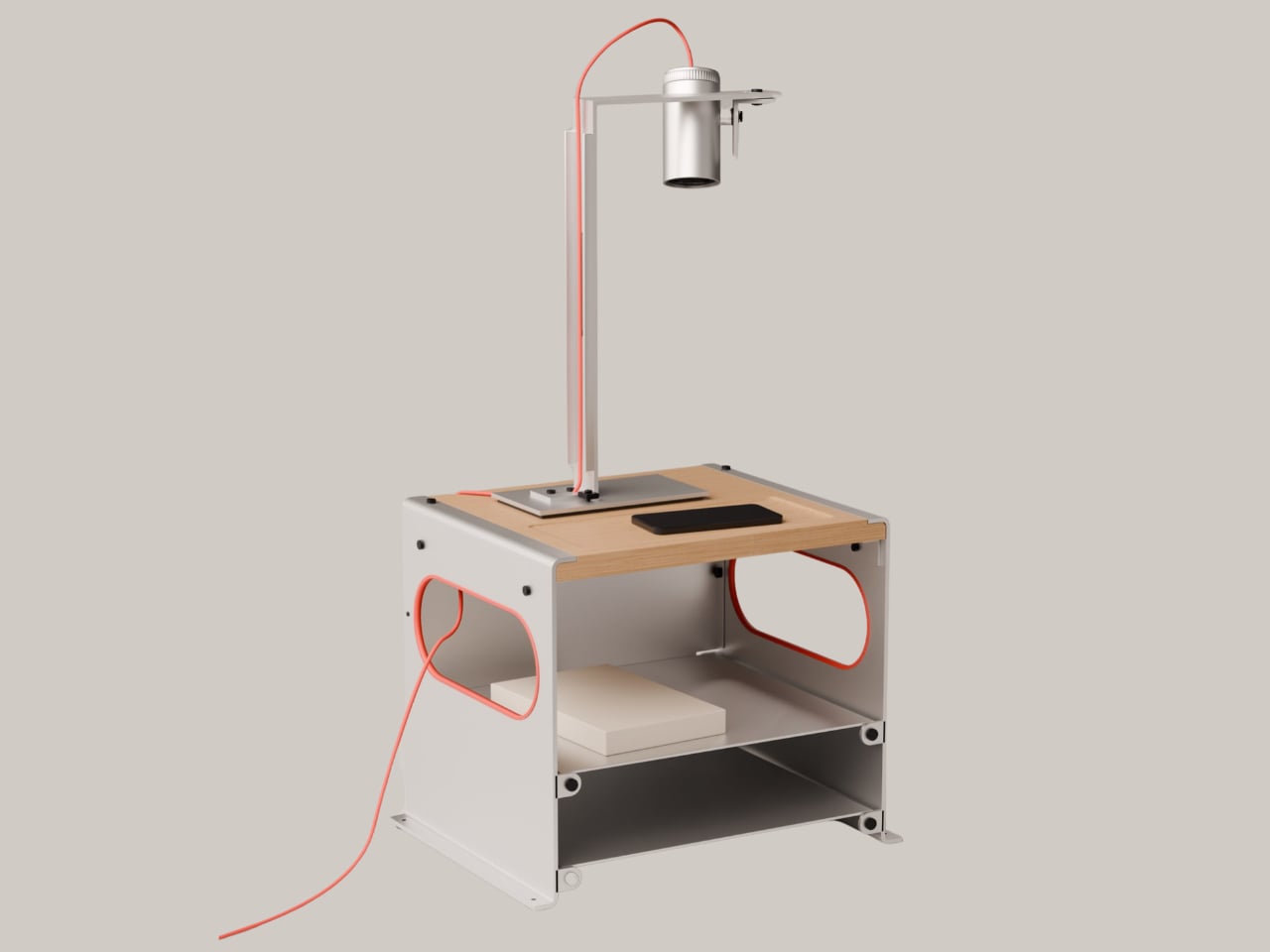
A visible bolt doesn’t bother me nearly as much as a piece of furniture I can’t figure out how to fix. Concealed connections make for a clean silhouette, but permanently glued parts can complicate repairs when only one component needs attention. Sometimes, seeing how an object holds together is more reassuring than a perfectly seamless finish.
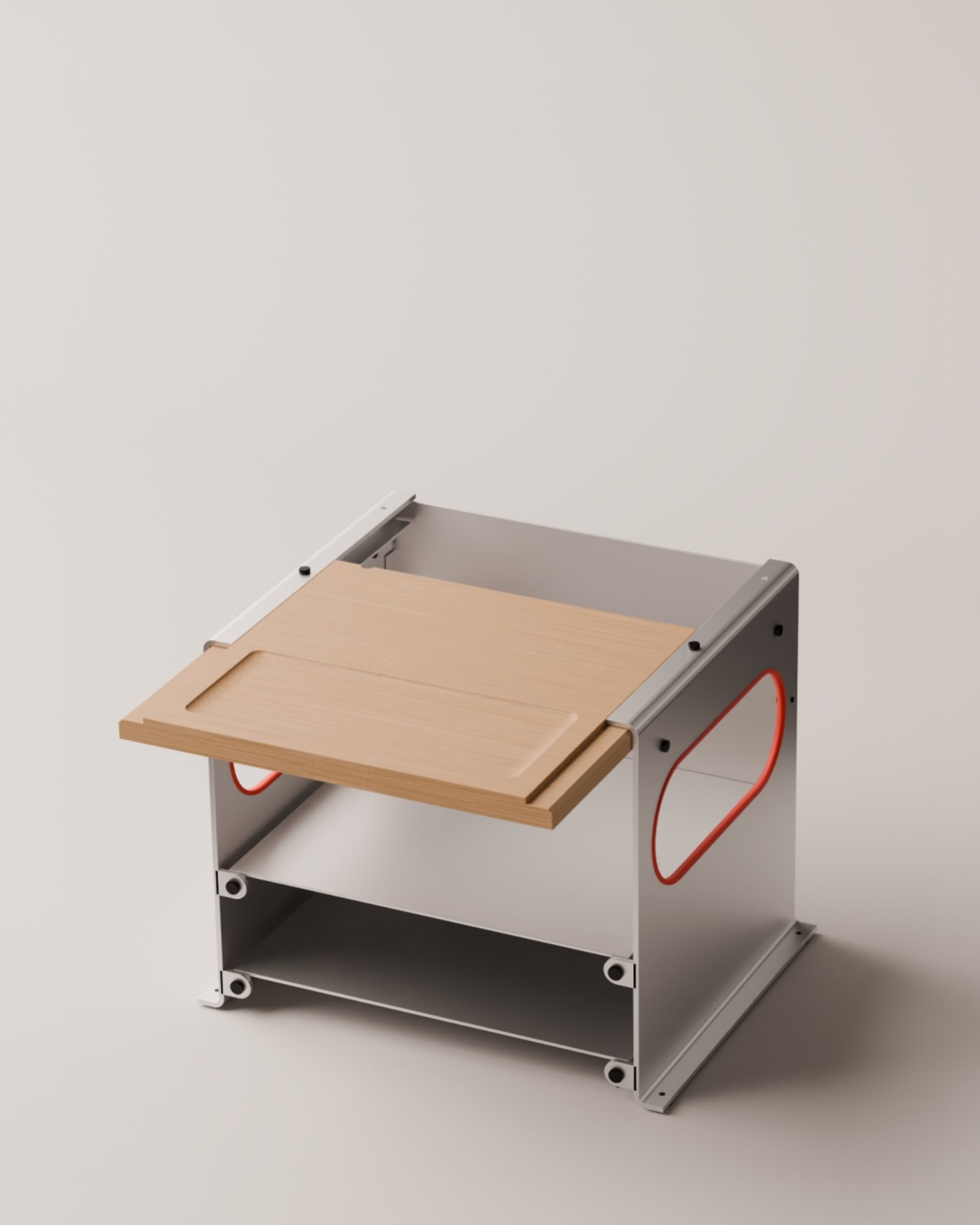
Designer Connor Niels van Egmond makes that openness the starting point for Frame T-01, a bedside table from Studio van Egmond’s Open Construction, Collection 01. Folded aluminum sides support a solid oak top, with bolts instead of glue keeping the assembly together. Every part is designed to separate, including the oak surface, which lifts out in one piece. The exposed hardware isn’t an unfinished detail. It’s central to the table’s appeal.
Designer: Connor Niels van Egmond
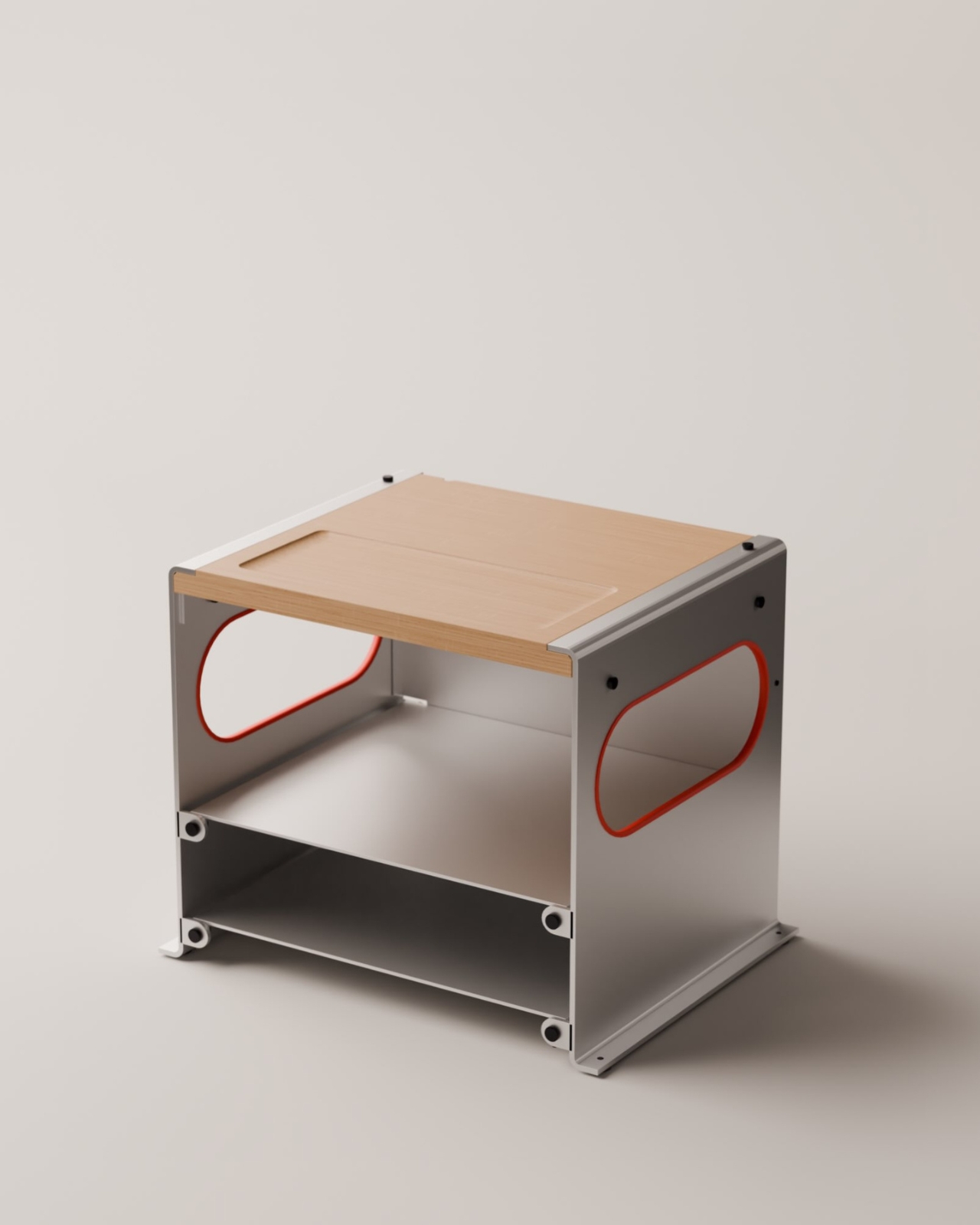
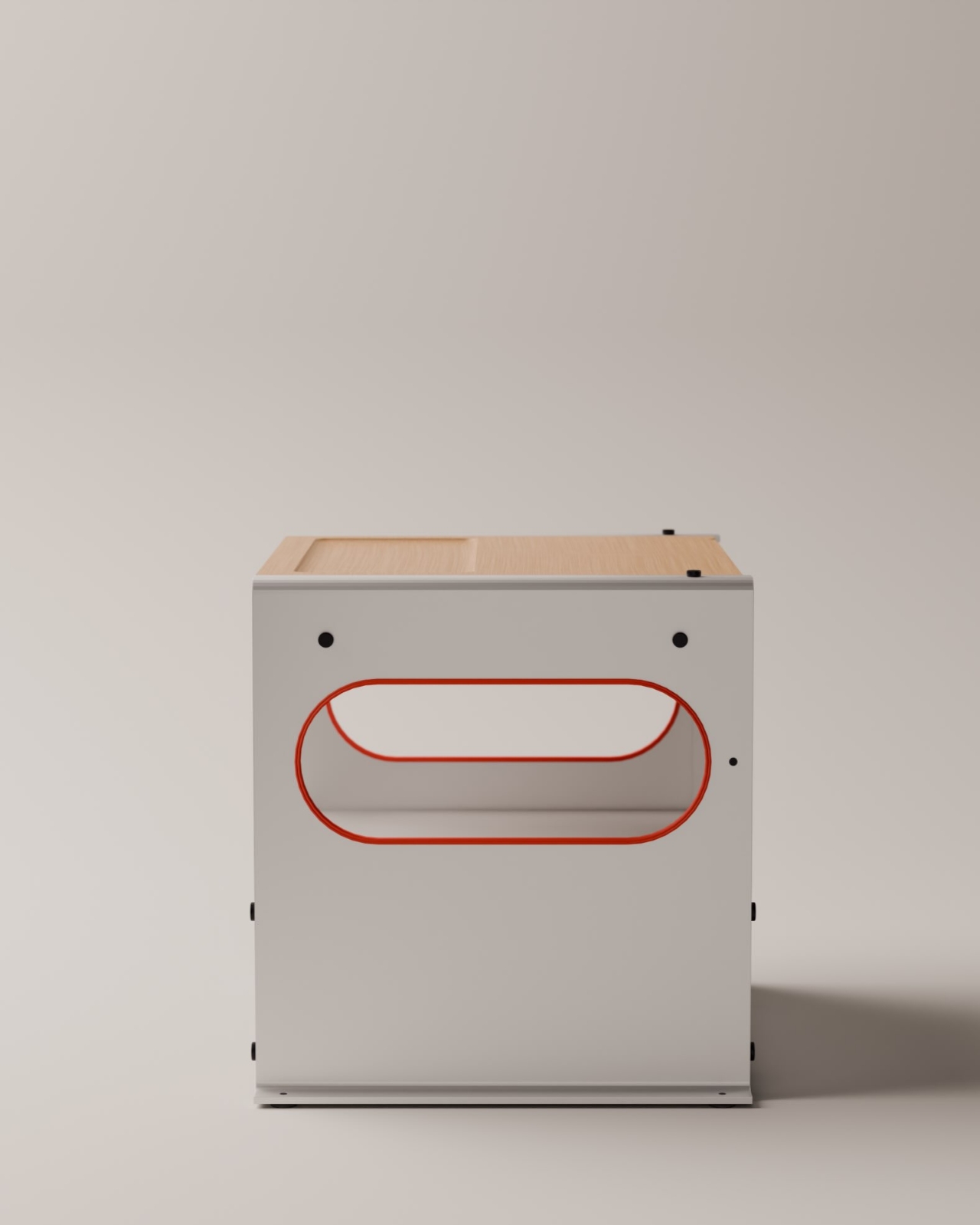
Visually, it lands somewhere between workshop equipment and a carefully composed piece of bedroom furniture. The silver-colored panels have an almost utilitarian bluntness, but the large, rounded openings in the sides keep them from looking like blank walls. Red outlines trace those openings, adding a little graphic energy without covering the whole object in color. To my eye, those loops are what stop the table from taking itself too seriously.
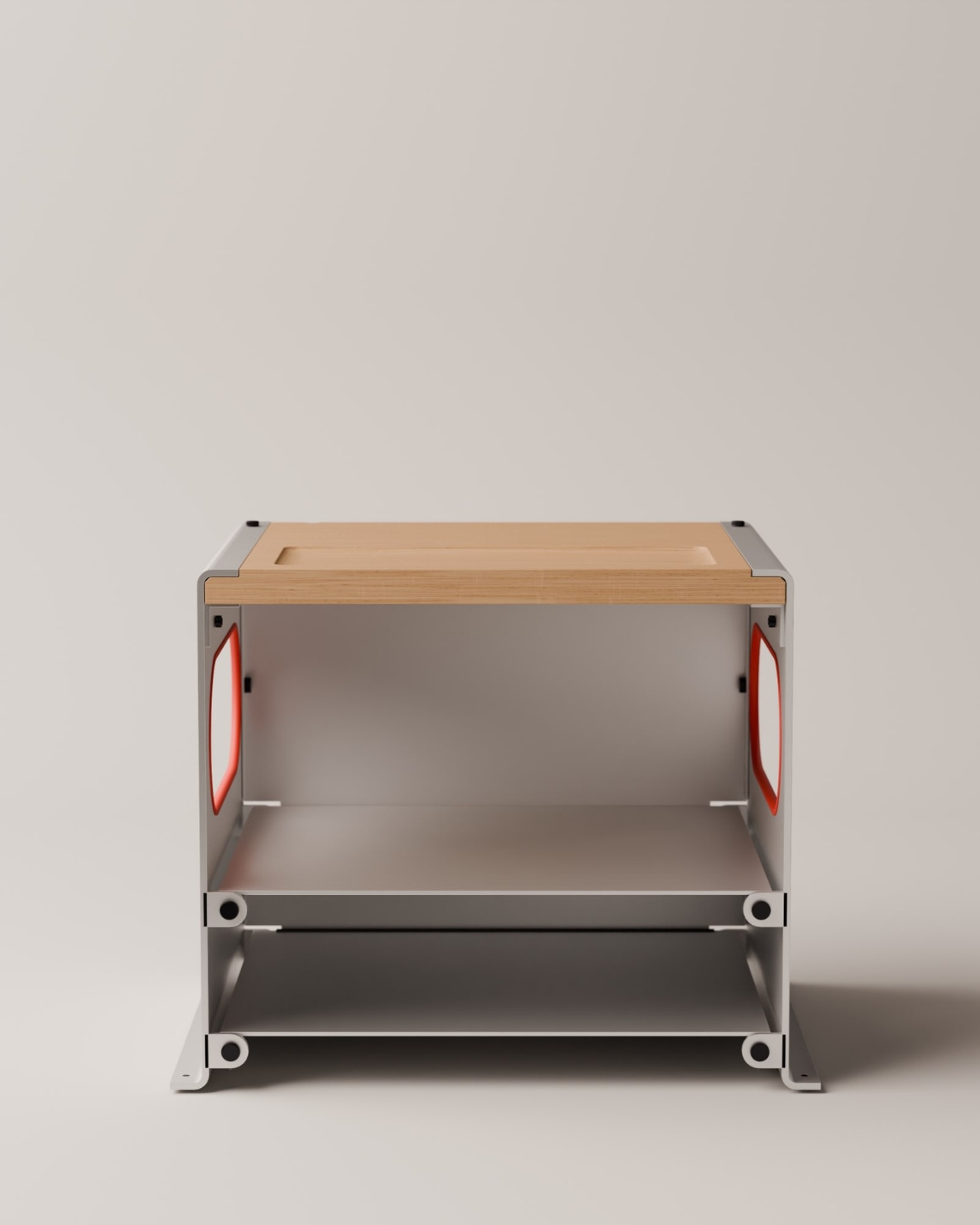
The oak does a different job. Against all that metal, its grain gives your eye somewhere softer to land. The images also show a shallow recessed area across much of the top, leaving a raised perimeter around it. I read that as a useful bit of surface definition for a phone or glasses, although it shouldn’t be mistaken for a promise that nothing will slide off.
Beneath it, two open shelves divide the storage into a taller compartment and a shallower lower space. A book fits into the styling without making the table look crowded. Actual bedside life might be less photogenic. Open storage means whatever you put there stays visible, so anyone hoping to shut a drawer on charging cables and miscellaneous clutter will need a different arrangement.
The listed dimensions are 444 × 348 × 364 millimeters, or roughly 17.5 × 13.7 × 14.3 inches. That gives it a compact overall envelope, though checking the proportions against your bed would matter more than admiring it in isolation. Leveling glides are included, too. They’re an appropriately unglamorous detail for a design that puts so much emphasis on how its components fit together.
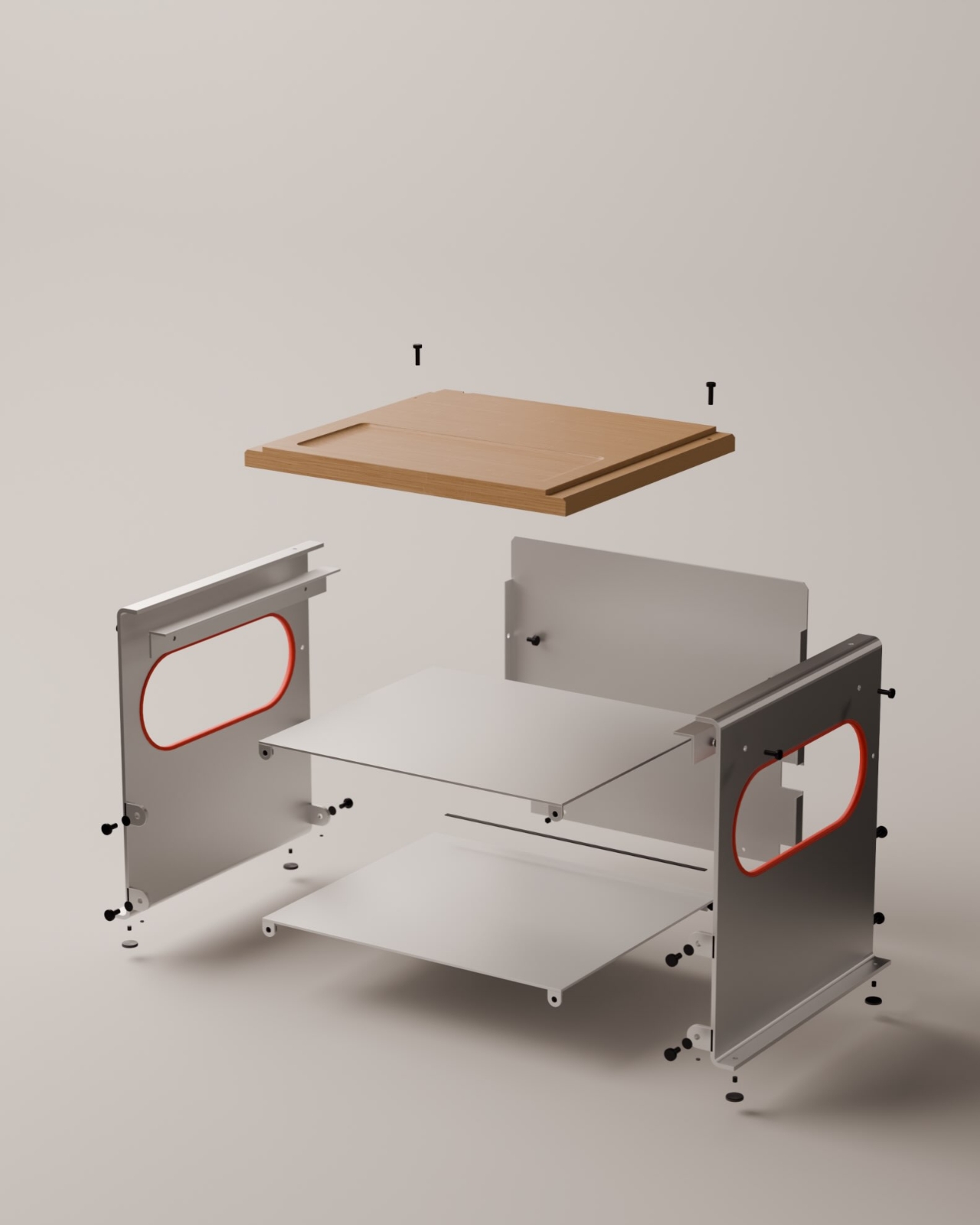
A single back panel keeps the frame square, according to the designer’s description. That explanation matters because the table isn’t simply a pair of metal sides with shelves suspended between them. The rear panel has a structural role. The folds, fasteners, and panel arrangement become easier to understand in the supplied exploded image, where the separate pieces are laid out in space.
The project also specifies a route for a lamp cable down inside the back. It’s a sensible concession to the fact that exposed construction and exposed household clutter aren’t equally appealing. You can enjoy seeing how a table is assembled without wanting a cord hanging across its front. I appreciate that distinction. The design’s openness feels more considered when it still leaves room for a little housekeeping.
Being able to separate the oak, shelves, and side panels suggests possibilities for repair or refinishing, rather than replacing the entire table. Those are possibilities, not established services: the supplied information doesn’t identify replacement-part support. Still, accessible connections are a meaningful starting point. A damaged top would at least be a distinct component to address, rather than an inseparable part of the whole.
I’d happily leave the bolts visible. The red accents would be more dependent on the room, but they’re also the detail that makes this particular table memorable. Frame T-01 asks you to live with its construction in plain sight, including the storage that won’t hide your mess. In return, it offers an object whose individual pieces remain understandable, accessible, and separable.
The post A Nightstand Without Glue, Designed to Come Apart first appeared on Yanko Design.